Cerca:locate

Generi
Tutto
MYSTIC JUNGLE & THE IGOR'S MAGIC GUITARS - ROCK THE DISCO / SHABA RIDDIM 7"

West Hill Studio is the place where the sound that has defined all the productions and artistic projects connected to the Periodica Records label was developed.
 Located in the hills of Naples, it’s a private recording studio immersed in a small woodland and isolated from the city. A small wooden lodge and vintage equipment made it possible to create and convey, through music and ideas, a precise musical aesthetic that transcends contemporaneity and current trends.
The catalogue is personally curated by Mystic Jungle – born Dario Di Pace – music and executive producer and founder of both Periodica and Futuribile, released exclusively on vinyl and in limited editions. Well known for a distinctive sound that has unpredictably ranged from mutant-disco to soft-rock and reggae-inflected explorations for over a decade, he now presents two new electronic funk/rock tracks in collaboration with Serbian guitarist Igor Sekulovič. A pair of deliberately raw cuts, with the B-side conceived as an homage to a seminal 1985 digital reggae riddim built from a preset on the Casiotone MT-40

non in magazzino

Ordina ora e ordineremo l'articolo per te presso il nostro fornitore.


Last In: 24 days ago
Nanook Of The North - Heide

Nanook of the North is back with their second album, following the enthusiastically received 2018 debut "Nanook of the North," (Denovali) The duo of a composer and violinist Stefan Wesołowski and electronic producer Piotr Kaliński were acclaimed by Boiler Room, The Wire or NPR. Bob Boilen of Tiny Desk Concerts called Nanook of the North's performance "one of the wow moments of SXSW". Their new material is a raw and minimalist sonic landscape, practically devoid of percussive elements but featuring vocals by an acclaimed mezzo-soprano Margarita Slepakova. As with the debut, the music on "Heide" is rooted in nature and its primordiality. The title of the album alludes to wildness and untamedness, and the material was recorded last winter in a village located in the middle of forests in the northern Poland, which is clearly felt in the atmosphere of the 9 new tracks on "Heide".

Stefan Wesołowski is a Polish composer and violinist, author of critically acclaimed original albums and film music scores. Associated with publisher Mute Song and record labels like Important Records, Lakeshore Records, Ici D'ailleurs and Back Lot Music. He is an author of original soundtrack to „Listen to me Marlon” (Universal) - Oscar-shortlisted and BAFTA-nominated documentary on Marlon Brando directed by Stevan Riley and original soundtrack to Irish feature film by Nathalie Biancheri entitled „Wolf” (Focus Features), starring Lily-Rose Deep and George MacKay, premiered 2021 at Toronto Interational Film Festival.

Piotr Kaliński is na electronic music producer and guitarist. Based in Gdańsk, Poland. Associated with record labels like R&S Records and Instant Classic. Member of Hinode Tapes, Hatti Vatti and JANKA bands. One of the most active figures in Polish alternative scene - in last few years he performed live in many countries across Europe, Japan, Korea and United States. Kaliński is an author of original music for short films, fashion brands campaigns like Calvin Klein or Paul Smith and games (i.e. „Cyberpunk 2077”).

Margarita Slepakova is a coloratura mezzo-soprano specialized in the field of historical practices of early music. Based in Switzerland, she is a renowned opera, concert, and recital singer, collaborating with ensembles and orchestras all over Europe. Slepakova is a founder of Le Sommeil project, specializing in French music of the 17th century. She sang in many concert halls and opera houses including Carnegie Hall and Royal Albert Hall during BBC Proms. Margarita also performs contemporary music and has premiered pieces written especially for her voic

non in magazzino

Ordina ora e ordineremo l'articolo per te presso il nostro fornitore.


Last In: 30 days ago
Rafael Anton Irisarri - Points of Inaccessibility

A chance meeting in Mexico City set Points of Inaccessibility into motion. When Ibero-American composer Rafael Anton Irisarri crossed paths with Dutch media artist Jaco Schilp at MUTEK in 2024, a conversation about how technology shapes perception revealed an unexpected common ground. Schilp invited Irisarri to a spring 2025 residency at Uncloud, the Utrecht-based collective he co-founded, where Irisarri's sound began to take form amid an environment shaped by Schilp’s visual research.

The Uncloud studio was located inside the former Pieter Baan Centre, a forensic psychiatric prison where suspects of violent crimes were once confined. Its long history of silence and containment shaped the atmosphere in which the project developed. Within this setting, Irisarri coaxed long bowed-guitar tones through a network of pedals and looping systems. The raw gestures thickened into a vaporous and architectural field of sound. Schilp processed the material through a custom point-cloud software patch that produced images in continuous flux. The visuals flickered, dissolved and reformed like memories that resist coherence, functioning as a digital Rorschach that reflected the observer’s own perception.

Amid these spectral echoes, the project evolved into an examination of how the past persists within present signals. Memory endures as residue and interference, continually shaping perception even when its source has faded.

Schilp’s visual process required a continuous stream of sound in real time. Irisarri improvised throughout the residency, generating material that allowed the visuals to develop in parallel. Once back in his New York studio, he began shaping the recordings by carving pathways through the improvisations and mapping selected passages into MIDI. This process allowed him to build outward from the bowed-guitar material with minimal overdubs, adding Prophet 5 textures, Moog bass and strings that expanded the harmonic field while keeping the original performances at the center. To refine the structure, Abul Mogard provided editorial input, working with Irisarri’s stems to guide transitions and strengthen the overall pacing. The material, originally created under conditions of immediacy and constraint, evolved into a fully realized work through careful revision, patience and sustained reworking.

The title engages the geographic concept of the Poles of Inaccessibility, locations defined solely by their distance from all surrounding points. Irisarri adapts this idea to the conditions of digital life, where new forms of inaccessibility arise through the informational enclosures that structure perception. What appears to be a fully connected network often produces a deeper kind of separation, one shaped by the filtering logic of the systems that mediate experience. In this sense, the digital sphere mirrors its geographic counterpart. We inhabit spaces saturated with signals, yet the possibility of genuine contact becomes increasingly remote.

At its core, Points of Inaccessibility considers what can be understood as the new rituals of capitalist realism. Irisarri uses the term digital shamanism to describe the forms of simulated connection that organize contemporary life. These systems promise comfort through algorithms, influencers and AI interlocutors, yet they often reproduce the same conditions that generate loneliness in the first place. What appears as connection becomes the echo of connection, a sequence of gestures that imitate solidarity while withholding it. Like the geographic poles, these rituals are defined by distance. They pull us into environments where everything is illuminated, yet meaningful proximity becomes increasingly rare. In this sense, the work approaches a hauntology of the present, a reflection on futures that have stalled and intimacies that have been thinned by the algorithmic infrastructures that surround us.

This thematic tension unfolds across the album’s four movements. Faded Ghosts of Clouds introduces the work with textures that rise and dissipate in slow cycles, creating an atmosphere that resists clear definition. Breaking the Unison occupies a pivotal position in the sequence and focuses on the moment when the individual and the system fall out of alignment. Its shifting patterns trace the scattering of signals that once suggested connection, revealing the instability at the heart of contemporary perception. Signals from a Distant Afterglow forms the center of the album and features vocals by Karen Vogt, whose presence enters the sound field like a fragile transmission shaped by distance and delay. The closing piece, Memory Strands, follows motifs that appear, recede and briefly intersect before returning to quiet. Across these movements, the album outlines a landscape in which emergence and disappearance continually inform one another.

Listening to Points of Inaccessibility is an encounter with a sound field that is constantly in flux. Elements surface briefly, shift position and recede, creating a sense of motion that resists stable interpretation. The music moves between closeness and vastness, carrying traces of memory while withholding a clear point of resolution.

The album’s visual identity completes the project’s conceptual arc. In Mexico City, where Irisarri and Schilp first met, Daniel Castrejón transformed stills from Schilp’s point-cloud visuals into the cover image. The final artwork captures a single suspended frame of the digital material, a moment extracted from a field that is normally in constant motion. Its surface recalls the texture and abstraction found in the work of Catalan artist Antoni Tàpies, where material presence and erasure coexist within the same plane.

What emerges is a work that examines the tension between technological systems and human presence. Points of Inaccessibility asks whether connection is still possible within environments shaped by mediation and delay, or whether we have become isolated points within the very networks that promise proximity. What possibilities for relation persist within environments organized by algorithms and interruption? And how are we meant to understand presence when so much of it is constructed at a distance?

Points of Inaccessibility will be released on BioVinyl on February 6, 2026, with audiovisual performances planned throughout 2026.

Mastered by Stephan Mathieu
Artwork by Jaco Schilp
Design and layout by Daniel Castrejón
Artist photo by Iulia Alexandra Magheru.

non in magazzino

Ordina ora e ordineremo l'articolo per te presso il nostro fornitore.


Last In: 30 days ago
ELIZABETH DAVIS - FLOWERS

ELIZABETH DAVIS

FLOWERS

12inchSON12-006
SOUTH OF NORTH
13.02.2026

'Flowers', the new EP from Elizabeth Davis, finds itself at the cross-section of many factors. In part, it’s the result of Davis’ obsession with a seminal folk song. But it also coincides with her rediscovery of the voice and language as an instrument. It was recorded during an autumn residency at Sternhagen Gut, the cultural refuge run by Gudrun Gut and Thomas Fehlmann, located deep in the Uckermark countryside halfway between Berlin and the Baltic coast.

The six tracks on 'Flowers' all take Pete Seeger’s ‘60s protest-folk song 'Where Have All The Flowers Gone' as their starting point. However, they veer off in different directions, from vocal loops and deconstructed lyrics, to instrumental drones and glitchy, manipulated rhythm tracks. Like many musicians, Davis has learnt composition by a process of disassembly, analyzing musical works piece by piece, and 'Flowers' began as one such forensic exercise. “But sometimes,” says Davis, “a source is so loaded up on meaning that the studies and experiments can become worthwhile and meaningful works in their own right.” 'Flowers' began to take on a life of its own, raising renewed questions about age-old themes such as war, authorship, translation and historical structures.

Davis is no stranger to cover versions. From studying violin to playing in free jazz and punk bands, interpreting other artists’ works has long been a key part of her musical approach. And since her radio show 'Deep Puddle' recently drew to a close after seven years, her experiments with narration and sound collage have found their way into her musical work once again. For 'Flowers', she cut up the source material (with a nod to Gysin and Burroughs), and reassembled the lyrics, the musical notes, and recordings by different performers, to create uncanny new forms.

But perhaps the biggest influence on 'Flowers' was conversations about music, art and pop subcultures with Gut. These dialogues helped Davis find a balance between far-out sound design experiments and catchy melodies, combining a certain avant-garde element and modern day songcraft. And it’s this sense of conversation, this revisiting of topics and renewal of ideas, that will keep us coming back to 'Flowers' long into the future.

pre-ordina ora13.02.2026

dovrebbe essere pubblicato su 13.02.2026


Last In: 2026 years ago
DAVID WALTERS - TI LOVE LP 2x12"

In his own time, in his own tone and in his own company.

‘Win and lose without losing oneself’’ This line from French rapper Oxmo Puccino greatly accompanied David Walters while composing his fourth studio album. Over the eleven tracks on ‘Ti Love’, David took his time to find the right tone and in turn, tell his truth.

‘Ti Love’, is a French-Creole abbreviation for “petite love”, meaning ‘little love’, evoking that sweet fondness found in those small gestures and little acts of kindness.

Think of things like young kids' brotherly love or a stranger lending you a helping hand, while expecting nothing in return. It’s these motions that allow this album to feel full of real life, carried by beating drums that also pull at our heart strings.

Basing himself in a small village in Martinique, where David had not long since scattered the ashes of his late mother, the multi-instrumentalist decided to remain there and let the writing of Ti Love pour out from deep inside him. Taking influence from around the island, the energy from his makeshift studio set up in Fort de France, allowing a resilient yet grieving man to recount, let go and come to terms with his recent loss.

So embracing these new circumstances, on the rugged coastal Caribbean island of Martinique, David took up an artist’s residency in the island’s capital Fort de France, located near the town’s port is the ‘Manoir des Artistes’, a bustling recording studio space. A place where the walls shake as the latest sounds being created are blasted by locals and visitors alike. Most studio doors are wide open; as music here is a huge part of everyday life, feedback from encouraging neighbouring musicians is on hand and welcomed. A contrast to the isolation often assumed with working in more traditional music studios.

It was here in this stimulating environment that David recorded Ti Love’s initial demos.

With his first collaborator onboard, Neeweed, a 25-year-old producer and gospel expert who David met at the Martinique Jazz Festival.

Of the album’s initial versions of the record David recollects: ‘It took me three years to write it, then I rewrote it, reworked it. In the end I'm really glad I stepped back and listened to myself.’ I found a great ally in GUTS, who ended up being the artistic director of the record”

David surrounded himself with the right people who helped him express himself in the best possible way. He called on other friends and musical comrades; album opener and title track, ‘Ti Love’ features the incomparable Fatoumata Diawara (World Circuit Records / Africa Express) and further along additional production came in from; Izem, Art Of Tones, and GUTS himself, who all added just the right amount of ‘little love’ to this

project. Further helping hands came from Californian producer and DJ Captain Planet, who David was introduced to a few years ago. Closer to home, here in Europe, the German producer Bluestaeb appears on two tracks: the very catchy disco funk ‘Mr Maraboo’ and ‘Kite Koule’, the latter being the first single lifted from the album, where David invited Nigerian guitarist Keziah Jones.

Elsewhere on the album, fellow Heavenly Sweetness recording artist Blundetto contributed two tracks; the reggae ‘Voodoo Love’, which is David's tribute to Studio One, and the very sweet and resilient ‘Bon Voyage’, which closes the album... "It's gold, it doesn't need anything changing.” remarked David - ‘Bon Voyage’ is a goodbye to his mother, whose voice called him from the bottom of the sea one night while he was surfing during the full Moon.

Released almost 20 years after his debut album ‘AWA’ released on French imprint Ya Basta, home to Gotan Project and many others, David boasts a long list of radio supporters including; Gilles Peterson, Cerys Matthews and Don Letts at the BBC, while further field Cosmo Radio in Germany, and KCRW in Los Angeles.

On this new record, David has shown sincerity and vulnerability, while still honouring the infectious groove that he is known for the world over. Despite the upsets, a little love can indeed go a long way.

CREDITS:
Produced by Bluestaeb / Blundetto / Captain Planet / Izem / Art of Tones
A&R : Guts
Mixed by Mr Gib @ Onetwopassit
Except "Bon Voyage” and "Voodoo Love" mixed by Jerome “Blackjoy” Carron
Mastered by Benjamin Joubert @ Biduloscope
Art by Elliott Walters

non in magazzino

Ordina ora e ordineremo l'articolo per te presso il nostro fornitore.


Last In: 41 days ago
Força Maior - Morte Lilás LP

Força Maior

Morte Lilás LP

12inchPERF004
Perf
09.02.2026

Força Maior combines the vital saxophone explorations of Pedro Alves Sousa with the infinitely subtle electronic processing of Pedro Tavares. Sousa (aka Má Estrela) is known for manipulating his woodwind through guitar pedalboards & amplifiers, creating far-from-ordinary sonics rooted in unceasing curiosity. For his part, Tavares (aka funcionário) conjoins video & sound work to create space for the pensive wanderings where memory and imagination interlace.

The album Morte Lilás was recorded over a week in June 2023 in Pedro Alves Sousa's family farm, located in the village of Ferreirim, near Lamego, in Portugal. The partly abandoned farm served as the residency, studio, and inspiration for the album: it is a 400-year-old granite farm that belonged to a member of the "40 conspirators"—a group that led the revolution for Portugal's independence from Spain in the 17th century.

Morte Lilás is a remarkable album of committed meditation. Each day on the farm was a recording day for the two Pedros: Sousa on sax & electronics, Tavares on sampler & processing. Apart from slight sonic incursions from the surrounds—the birds on 'Quinta à tarde'—and the sporadic use of sine tones, the source sounds all start from the saxophone. It is then processed both by Sousa & Tavares. The album unfolds as a saxophonic tapestry that breathes with quiet intensity. Each piece invites close listening, revealing fine gestures and tonal shifts that shape a contemplative, ambient space. Força Maior move with calm precision.

The album opens with the unhurried overture 'Quinta à Tarde' a Portuguese pun on Eno's Thursday Afternoon that announces the textures at play. Sousa's breathy entrance is paired with a soft, delicately shifting, backdrop. As the track progresses, time seems to stretch. The arrangement resists urgency, favouring subtle evolution over dramatic turns. Pensive layers shift & drift, creating a sense of suspended motion that brings the listener into the environs of Morte Lilás. 'Quinta à Tarde' is a long-form fade, shifting emphasis from Sousa to Tavares.

'Cubos' continues the gauzy feel, but with a more up-tempo tilt. Rhythmic clicks & pings setup a swung time for the sax to interpose melodic lines that are fed back & bent with cascading delays. Força Maior in distilled form.

Força Maior is in top form on the title track 'Morte Lilás', a sprawling centrepiece that showcases their command of atmosphere & emotional pacing. By turning up the reverberation & leaning into a continuous format, they dissolve the gap between hypnotic trance & articulate reverie. Then, a moment of stillness. The track pauses, not abruptly but like a tide pulling back, revealing the contours beneath. What follows is a return to the album's more relaxed architecture: understated rhythms, softened textures, and a sense of spaciousness that opens space for reflection. It is a transition that feels organic, as if the song itself needed to exhale before settling back into its contemplative groove.

'Menta' is another short-form miniature of the band's signature contours: beautiful loops of air pressure gradients that carry an emotive weight & light.

The album closes with 'Cascata do Inferno'. The title suggests violence, but the music whispers instead—an atmospheric cascade of breath & tone that emerges in slow, deliberate waves. Short melodic cycles are matched by shimmering electronic chords. It's a piece that rewards patience, draws the listener in to drift downstream, eyes closed, into the serene turbulence of its current.

pre-ordina ora09.02.2026

dovrebbe essere pubblicato su 09.02.2026


Last In: 2026 years ago
Anar Band with E.M. de Melo e Castro - Dou Dou Doudo: Ao Vivo Na Cooperativa Árvore

Audio taken from a live performance by Anar Band (Jorge Lima Barreto and Rui Reininho) with E.M. de Melo e Castro in November of 1978 at Cooperativa Árvore, Porto. The performance was filmed. A segment was included in »Obrigatório Não Ver«, a weekly programme presented by Ana Hatherly on Public Television’s Second Channel. It was not possible to determine the exact date of the event, and no documentation seems to be available in the relevant archives.

»Encontro que Tenho« and »Profissões«: these titles are specific to this release. Having failed to locate the respective poems after a thorough search in E.M. de Melo e Castro’s body of work, it was deduced both texts were created for the occasion.

Even without a full contextualisation, the sound transmits the spirit of cultural agitation proper to these sessions. When this show happened, Anar Band were Jorge Lima Barreto (ARP Odyssey synthesizer) and Rui Reininho (Ibanez double-neck guitar), with the addition of E.M. de Melo e Castro, whom we shall call a poet but whose creative intervention was far reaching. Besides poetry, also continued his efforts in linking up diverse artistic areas (painting, drawing, collage, performance, video) and his official training in textile engineering. He was one of the artists featured in Henri Chopin's »OU Revue« in 1966, establishing his natural connection to the European concrete/visual/sound-poetry avant-garde. Melo e Castro was also proficient in the agitation of minds and political awareness. A good example in »Profissões«, where initially separate professionals (an intellectual, a fisherman, a soldier, a factory worker) are gradually mixed in a show of interdependency. Symbolically, through his words one listens to a transformation of society, although the same conclusion arises twice: surplus always finds its way to the hands of the capitalists.

That was the state of affairs many were looking to change, an economic and social malaise that the 1974 Revolution in Portugal fully uncovered, when dissident voices could finally be heard in public. Each in his own way, all three participants in this recording were non-believers in the structure of society such as it was presented. Through his books and press writings, mainly concerned with Jazz, Jorge Lima Barreto pushed his way into Portuguese artistic and critical circles since the late 1960s. Consciously and unwittingly, he collected enemies and pointed them by name, people he labelled as reactionary, people who delayed progress, social and cultural mixes, the avant-garde; they even delayed the chaos from which new forms and attitudes arise.

Rui Reininho, a non-conformist by heart, experienced incomprehension from an early age. His anarchic ways, a tendency to baffle others, were revealed through the choice of clothes and accessories, public behaviour, and »real life« performances. Just as Lima Barreto, and even together with him, he enjoyed provoking the extremes: Maoists on one side, right-wing conservatives on the other. He translated leftist books and joined Anar Band precisely on the day a duck or swan or goose (one of them) was thrown on stage in Porto, 1976.

This record documents a concrete action, a snapshot of the agitation, something we have no problem calling punk activism, something which allowed two people with little to no musical training to play and record music. By then, Anar Band had managed to release their only LP in 1977. It’s this performance, however, that reveals the naked rawness of the music: improvisation, mutual listening, and choice of intervention between both musicians and Melo e Castro, clearly sensing when the synth has to change tone, the voice has to make pauses, the guitar punctuates both and finds the space to… scream. The sound was captured by the film crew, adding to the rawness: the instruments are palpable, the voice often too close to the mic. Everything was preserved. First time on disc.

pre-ordina ora30.01.2026

dovrebbe essere pubblicato su 30.01.2026


Last In: 2026 years ago
U.e. (Ulla) - Hometown Girl

U.e. (Ulla)

Hometown Girl

12inch28912-1
28912
23.01.2026

Groggy, engrossing new work from Ulla under their newly minted U.e. tag, riffing to the sublime on a set of (mostly) acoustic reveries that tap into the kind of smokey vapours favoured by the likes of Vincent Gallo, Voice Actor, Jonnine.

A new year, label, album and handle for Ulla, a multifaceted artist who has draped our pages with wonder, under numerous aliases and collabs, for almost a decade. On ‘Hometown Girl’ they distill transience and flux into a quiet set of chamber works subtly resembling the room recorded nuance of their ‘Jazz Plates’ side with Perila - here taken a step further into more elusive, low-lit dimensions.

In a mode that’s wistful and melancholic, listening to the album’s dozen discrete pieces feels like leafing thru a journal of hand-written notes, reflecting on the feelings that come with separation from loved ones and displacement from familiarity. Ulla performed and recorded all of the instruments themselves, lending a tangible tactility to layered arrangements of woodwind, keys, strings, drums and voice, lightly speckled with electronics and perfused with open window field recordings.

They locate a crackling frisson of personality in the voice notes and day-dreaminess of their mottled inscapes, gauzily demarcating lines between past and present selves. In that aesthetic and approach we can also hear similarities to Jonnine’s blue-skied ‘Southside Girl’ or crys cole’s poetic sensuality, often leaning into the domestic surreal.

A frayed, opening salutation ‘Good Morning’ signals a delirious half hour in Ulla’s company, variously swaying to the downstroked jazz swing of a ‘Lavender (NF)’ spritzed with clarinet, whilst ‘Froggy Explorer’ stirs the air like Jan Jelinek on a barely-there tip. The Basinski-esque fritz of degraded loops really snags the imagination along with a twinkling nightlight ‘Ball’, as the album opens out into its most fully resolved songs with a closing couplet of disarming wonders ‘Drawing of Me’, and a blurry ‘Mute’ that feels like Ulla 〜almost〜 reveals too much before retreating back into the shadows.

pre-ordina ora23.01.2026

dovrebbe essere pubblicato su 23.01.2026


Last In: 2026 years ago
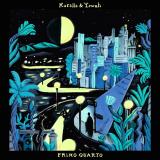
Koralle & Yawuh - Primo Quarto LP
  • A1: Fantasmi
  • A2: Irreversible
  • A3: Three Steps (Feat. Anti Lilly)
  • A4: Eclissi (Feat. Phlocalyst)
  • A5: She's Lonely
  • A6: Mind States (Feat. Physical Graffiti)
  • A7: Shangri-La (Feat. Lorenzo Morresi)
  • B1: Piramide
  • B2: Moonlit
  • B3: Until We Lift It (Feat. Tiff The Gift)
  • B4: Nuwa (Feat. Saib)
  • B5: Lift
  • B6: Everything Is Floating

Italian jazz beat maestros Koralle & Yawuh team up for their first collab album, 'Primo Quarto'.

'Primo Quarto' is a record full of late-night tales about beats and jazz (you guessed it) and a musical friendship that manifested itself in an apartment building in Bologna after dark. Thirteen tracks were produced and mixed on the first floor (where Yawuh lives) and on the fourth floor (where Koralle’s studio is located). With the help of an A-list of local musicians (Matteo Magnaterra, Piergiorgio Perrella, Giovanni Tamburini, Gianluca Arcesilai), three MCs from the US (Anti Lilly, Tiff The Gift, Physical Graffiti), and producer friends Saib (Berlin), Phlocalyst (Luz), and Lorenzo Morresi (Milan).
“'Primo Quarto' is an Italian expression that refers to the first quarter of the moon,” Koralle and Yawuh explain. “The lunar phase when the moon is half illuminated and half in shadow. For us, this moment captures the emotional core of the album: a balance between light and dark, the seen and the hidden, clarity and mystery.”
Artwork by Japanese illustrator Tomo Oriyama.

pre-ordina ora28.11.2025

dovrebbe essere pubblicato su 28.11.2025


Last In: 2026 years ago
Impérieux - In and Out EP

Impérieux (aka Alper Durmush) is a beatmaker extraordinaire hailing from Kircaali / Kardjali: since antiquity a hub of mythical music, located at the crossroads of Bulgaria, Turkey and Greece.
After conquering the hearts and feet of the scene with his stunning debut album Rezil and the follow-up Fena EP, Impérieux caps off his stellar year with a seven track mini album on Macro. Its effortlessly mesmerizing tracks consolidate the outlines of
forward-leaning club music.
Experimentation is a well-established facet of Impérieux’ approach to the adventurous techno (left)field, but the In and Out EP brings to the table his most condensed dance floor material so far. Holistically captivating hooks, bass lines and rolling rhythms: The next step after several years of exploration and refinement.
Unpredictability, bound together by a consistent, modernist glint. From the raw jacking of Gips to the warm euphoria of Baka, from the darbuka frenzy of Duman to the cutting friction of Trese – a triumph.

non in magazzino

Ordina ora e ordineremo l'articolo per te presso il nostro fornitore.


Last In: 3 months ago
Atsuko Hatano - Cells #5

Atsuko Hatano

Cells #5

CassetteSAUNA043CS
Cassauna
05.11.2025

Tape

Atsuko Hatano is a contemporay classical Viola player who works with electronics to add textures and layers to her sound. Located in Tokyo, Japan, she is a commanding instrumentalist and composer who constructs innovative compositions with strings and layered electronics.
Cells #5 is an orchestral collection and sequel to her previous album Cells #2 which will also be released on cassette via Imprec’s Cassauna label. Cells #5 required three years to complete and the work features the artist’s signature methodology where the instrumental performances are gradually enveloped by multiple layers of a string orchestration.
When not playing solo Atsuko is extremely active recording, collaborating and playing live with Jim O’ Rourke, Eiko Ishibashi, Mocky, Midori Hirano and many more acts.

Atsuko Hatano: Violin, Viola, Cello, Contrabass, Piano (track 1), Xylophone, Oscillator and Chorus

Guest Musicians:
Eiko Ishibashi: Piano, Marimba, Vibraphone
Yuko Ikoma: Accordion
Natsumi Kudo: Horn and flugelhorn
Icchie: Trumpet, Flugelhorn, Piccolo Trumpet
Tatsuhisa Yamamoto: Snare Drum

Composed and Mixed by Atsuko Hatano. Mastered by Jim O’Rourke. Cover by Saskia Griepink.

non in magazzino

Ordina ora e ordineremo l'articolo per te presso il nostro fornitore.


Last In: 4 months ago
Poole - Ben Beinn LP

Poole

Ben Beinn LP

12inchP002
Pentacle
10.10.2025

A hill repeating its own name.

Ben Beinn — mountain mountain — an imagined summit, recursive and unstable.

Poole’s new album Ben Beinn follows 2024’s In a River Shadow, and deepens his exploration of environment, voice, and abstraction. If the previous record moved with flowing water and submerged hymns, Ben Beinn climbs into elemental instability: passing storms, coded skies, and sodden ground.

Across ten tracks, Poole entangles the Celtic New Age sound world — traditional instrumentation (flute, low whistle, bagpipe, piano, strings) — with synthesis, environmental recordings, and abstracted voice. The sound palette is tactile — marked by microtonal harmony, swelling dissonance, and a breathy naïvety. Voices in Gaelic, Norwegian, and English surface and dissolve, stretched beyond recognition — more weather than word.

The album’s title refers to a tautological hill — Ben Beinn, or “mountain mountain” — a recursive site where motifs surface, fracture, and re-emerge. On 365 Days of Rain, rainfall data becomes a rhythmic lattice that slips from metrical order. 1000 opens the record in cinematic emergence: mountain icicles and frozen streams swell into strings and breathy melodic weight. Pulling from the connective folktales of hill and mountain trolls — “Dance for a thousand years,” Poole writes, “for jeg har sovet tidlig så lenge.”

Recorded in Scotland between 2024–2025, Ben Beinn draws from environmental recordings of frozen hill passes, storm drains, and peat bogs using contact mics and hydrophones. Rather than simply reflecting place, these recordings press against it — layering the sonic materiality of landscape with synthesis and song. An inflection point between fabrication — folk music as performed identity, a carrier of story — and its obfuscation through digital networks, where tradition is refracted into plural forms.

Musical reference points include the emotionally saturated textures of Inoyama Land, the folk-electronic hybrids of Eli Storbekken, the hyperrealist collage practices of Noah Creshevsky, and the disquieting sonic simulations of James Ferraro. While Ferraro captures the uncanny surfaces of networked life, Ben Beinn turns inward — toward a located listening, shaped by weather, memory, and terrain.

The second in a triptych that began with In a River Shadow, Ben Beinn continues Poole’s excavation of environmental and folk material through contemporary methods. If the first record submerged itself in flowing water and submerged hymns, this one is shaped by the slow pressures of land and sky — a music of erosion, recurrence, and elemental presence.

pre-ordina ora10.10.2025

dovrebbe essere pubblicato su 10.10.2025


Last In: 2026 years ago
Jessica93 - 666 Tours de Periph'

Jessica93

666 Tours de Periph'

12inchBBLP192
Born Bad Records
10.10.2025

Jessica93, prodigal bastard of our glorious french squat scene, relocated on Born Bad : this is no picnic. Geoffroy Laporte, alone against all odds, alternates bass and guitar to build harsh loops with a drum machine spitting pre-Gulf War patterns. That’s where it gets tricky : every musical posse claims him. Grunge, sure, but Jessica doesn’t indulge in necrophilia. His circuit is punk, he doesn’t dress the part though. Cold wave, the atmosphere fits somehow, but the gear does not. The self-confident rock horde saw him playing with hair in his eyes… but he never joined the Party. Metal had something to say but sadly, nobody listened. Maybe it's time to give it a rest and let Jessica93 cook his great misery broth on her own, called « 666 tours de périph’ » (666 laps on the beltway). Witnessing Jessica93 live makes you dread that he'll get up the next morning, drive 200 miles and one nap later kick it again, when it takes us a good week to recover from the bad half of that same evening. Like so many other unknown soldiers during our very own world war of music, he patrols small venues relentlessly.


At the heart of this cultural pentacle painted by french weirdos Bryan's Magic Tears, and Carine Krinator, Jessica93 has built a sound validated by years of chosen vagrancy, birthing bands with joyously stupid monikers, in the humid jungle of small labels. Jessica93's debut album had a track celebrating Omar Little, HBO’s gay bandit from Baltimore. This story begins on the beltway, where Florence Rey, accidental copkiller turned to political icon of the 90’s. Geoffroy offers his brilliant analysis : " C’est la police qui nous tire d’ssus / C’est mon trou d’balle qui leur chie d’ssus « (Police shoots us down / my dripping asshole gets the job done).


A previous album was haunted by bedbugs, this one is essentially about love, a delicious scourge just as hard to eradicate. Two black diamonds peek out of the LP : ’’La colline du crack’’, heartbreak song about the ultimate temptation of violent delights, located on crackhead central in Paris. The brilliant chorus, ‘Take my hand and come with me to Crack Hill’ will put an end to the rumours, almost everything was really false. And Bébé Requin, alternative obituary that’ll make you shiver, where our nice couple states ‘’on kiffe la drogue dure et les ptits chiens’ (‘we love hard drugs and little dogs’). And that is the reason we face the wall of sound jostled by unnecessary shoulder thrusts: those nice fat chunks of charcoal poetry, hidden under light sarcasm.


The rest of the record demonstrates the know-how acquired in loop-by-loop construction of ruins that are pleasant to squat in together. There’s your classic doom delicatessen, with bits of heavy metal inside, crafted with the manic care typical of hard wankers. Arthur Satàn, who produced and mixed the album at home in Bordeaux, helped him get his head out of the reverb safe house. And Jessica93 took the opportunity to switch to the dark side of the language : french at last. Worth the wait ! Sing along : « nique sa mère / nique sa grosse mère » (translate that yourself).

pre-ordina ora10.10.2025

dovrebbe essere pubblicato su 10.10.2025


Last In: 2026 years ago
RUBEY HU - IN DIFFERENT ROOMS LP

RUBEY HU

IN DIFFERENT ROOMS LP

12inchMTS-N1002-1
Music That Shapes
10.10.2025

“Warning! Night Time Listening Advised!”

In early spring 2023, with the end of COVID-19 in China, MK helped produce this album for Rubey. Focusing on the piano atmosphere and framework of the Night Piano Project, MK added some flowing sounds and textures to Rubey’s original tracks using a guitar, delay effects, and a synthesizer. At the same time, Ding Mao, another member of the band Hualun, contributed on two tracks. Of course, all production processes were completed at night; capturing the quiet atmosphere of traditional Eastern natural landscapes and transforming them with indoor amorous feelings. These melodies and notes wander and travel through different times and spaces, and ultimately converge in different rooms.

“In Different Rooms” is the second solo album by Rubey, a keyboardist from the band Hualun. It is also Rubey’s second album release since producing the soundtrack for the movie “Virgin Blue” in 2022. It includes 8 works created between 2020 and 2023. Rubey and MK are located in Beijing and Shenzhen respectively. Just like many of Hualun’s works, the original idea for “In Different Rooms” came from Rubey’s daily piano improvisation practice. Named the “Night Piano Project”, Rubey would spend his nights playing his YAMAHA electric piano.

pre-ordina ora10.10.2025

dovrebbe essere pubblicato su 10.10.2025


Last In: 2026 years ago
SIR RICHARD BISHOP - HILLBILLY RAGAS

SIR RICHARD BISHOP

HILLBILLY RAGAS

12inchDC956
DRAG CITY
26.09.2025

Our favorite six-string shaman is waving that axe around again! Sir Richard Bishop wrenches forth fresh damnable truth and beauty from a musical kamikaze run through histories both known and unknown. Turning a gimlet eye to the American Primitive guitar style, Sir Rick applies his own bloodthirsty interpretive methods on a self-described "excursion into the dark woods," to locate - and play along with - the Primitive"s moonshine-fed inner savage.

pre-ordina ora26.09.2025

dovrebbe essere pubblicato su 26.09.2025


Last In: 2026 years ago
SIR RICHARD BISHOP - HILLBILLY RAGAS (TAPE)

SIR RICHARD BISHOP

HILLBILLY RAGAS (TAPE)

CassetteDCC956
DRAG CITY
26.09.2025

Our favorite six-string shaman is waving that axe around again! Sir Richard Bishop wrenches forth fresh damnable truth and beauty from a musical kamikaze run through histories both known and unknown. Turning a gimlet eye to the American Primitive guitar style, Sir Rick applies his own bloodthirsty interpretive methods on a self-described "excursion into the dark woods," to locate - and play along with - the Primitive"s moonshine-fed inner savage.

pre-ordina ora26.09.2025

dovrebbe essere pubblicato su 26.09.2025


Last In: 2026 years ago
WEDNESDAY - BLEEDS

WEDNESDAY

BLEEDS

12inchDOCLP428
Dead Oceans
19.09.2025
  • Reality Tv Argument
  • Bleeds
  • Townies
  • Wound Up Here (By Holdin On)
  • Elderberry Wine
  • Phish Pepsi
  • Candy Breath
  • The Way Love Goes
  • Pick Up That Knife
  • Wasp
  • Bitter Everyday
  • Carolina Murder Suicide
  • Gary's Ii
disponibile anche

LTD. ECO MIX VINYL


Can a self-portrait be a collage? Can empathy be autobiographical? What's the point of living if we're not trying to understand all the horror and humor that surrounds everything? These are a few of the questions lurking under the bleachers of Wednesday's new album Bleeds, an intoxicating collection of narrative-heavy Southern rock that_like many of the most arresting passages from the North Carolina band's highlight reel so far_thoughtfully explores the vivid link between curiosity and confession. Bleeds is not only the best Wednesday record_it's also the most Wednesday record, a patchwork-style triumph of literary allusions and outlaw grit, of place-based poetry and hair-raising noise. Karly Hartzman_founder, frontwoman, and primary lyricist_credits Wednesday's tightened grasp on their own identity to time spent collaborating on previous albums, plus a tour schedule that's been both rewarding and relentless. "Bleeds is the spiritual successor to Rat Saw God, and I think the quintessential `Wednesday Creek Rock' album," Hartzman said, articulating satisfaction with the ways her band has sharpened its trademark sound, how they've refined the formula that makes them one of the most interesting rock bands of their generation. "This is what Wednesday songs are supposed to sound like," she said. "We've devoted a lot of our lives to figuring this out_and I feel like we did." Just like Rat Saw God, one of the defining rock & roll records of the 2020s so far, Bleeds came together at Drop of Sun in Asheville and was produced by Alex Farrar, who's been recording the band since Twin Plagues. Hartzman again brought demos to the studio, where she and her bandmates _X andy Chelmis (lap steel, pedal steel), Alan Miller (drums), Ethan Baechtold (bass, piano), and Jake "M.J." Lenderman (guitar) _ worked as a team to bulk-up the compositions with the exact right amounts of country truth-telling, indie-pop hooks, and noisy sludge. More than ever, the precise proportions were steered by the lyricism_not only its tone or subject matter, but also the actual sound of the words, as well as Hartzman's masterfully subjective approach to detail selection. Every image or scene is filtered through Hartzman's agile, writerly brain. The particulars deemed essential all contain revelations about Hartzman's specific obsessions and vulnerabilities, about the fragmented way she processes the world. Maybe sometimes the best way to locate truth or pain or dignity within your own life story, Bleeds suggests, is by crawling into someone else's.

pre-ordina ora19.09.2025

dovrebbe essere pubblicato su 19.09.2025


Last In: 2026 years ago
WEDNESDAY - BLEEDS

WEDNESDAY

BLEEDS

12inchDOCLPC1428
Dead Oceans
19.09.2025

Can a self-portrait be a collage? Can empathy be autobiographical? What's the point of living if we're not trying to understand all the horror and humor that surrounds everything? These are a few of the questions lurking under the bleachers of Wednesday's new album Bleeds, an intoxicating collection of narrative-heavy Southern rock that_like many of the most arresting passages from the North Carolina band's highlight reel so far_thoughtfully explores the vivid link between curiosity and confession. Bleeds is not only the best Wednesday record_it's also the most Wednesday record, a patchwork-style triumph of literary allusions and outlaw grit, of place-based poetry and hair-raising noise. Karly Hartzman_founder, frontwoman, and primary lyricist_credits Wednesday's tightened grasp on their own identity to time spent collaborating on previous albums, plus a tour schedule that's been both rewarding and relentless. "Bleeds is the spiritual successor to Rat Saw God, and I think the quintessential `Wednesday Creek Rock' album," Hartzman said, articulating satisfaction with the ways her band has sharpened its trademark sound, how they've refined the formula that makes them one of the most interesting rock bands of their generation. "This is what Wednesday songs are supposed to sound like," she said. "We've devoted a lot of our lives to figuring this out_and I feel like we did." Just like Rat Saw God, one of the defining rock & roll records of the 2020s so far, Bleeds came together at Drop of Sun in Asheville and was produced by Alex Farrar, who's been recording the band since Twin Plagues. Hartzman again brought demos to the studio, where she and her bandmates _X andy Chelmis (lap steel, pedal steel), Alan Miller (drums), Ethan Baechtold (bass, piano), and Jake "M.J." Lenderman (guitar) _ worked as a team to bulk-up the compositions with the exact right amounts of country truth-telling, indie-pop hooks, and noisy sludge. More than ever, the precise proportions were steered by the lyricism_not only its tone or subject matter, but also the actual sound of the words, as well as Hartzman's masterfully subjective approach to detail selection. Every image or scene is filtered through Hartzman's agile, writerly brain. The particulars deemed essential all contain revelations about Hartzman's specific obsessions and vulnerabilities, about the fragmented way she processes the world. Maybe sometimes the best way to locate truth or pain or dignity within your own life story, Bleeds suggests, is by crawling into someone else's.

non in magazzino

Ordina ora e ordineremo l'articolo per te presso il nostro fornitore.


Last In: 6 months ago
BASSOLINO - POPOLI DEL MARE

Bassolino

POPOLI DEL MARE

7"-VinylJAKARTA195
JAKARTA
16.09.2025

Dario Bassolino is pianist, producer and composer born in Naples, where he currently resides. With an eclectic taste and an genre-defying musical ability, he has produced for and played alongside alt-R&B vocalist LNDFK, jazz-funk legend Nicola Conte, Early Sounds boss Pellegrino and has collaborated with Nu Genea, Kurtis Rosenwinkel and rapper Pink Siifu to name a few. Inspired by the Brazilian funk greats Hermeto Pascoal and Airto Moreira and their Italian counterparts such as Franco Califano, Lucio Battisti, Panella, Enzo di Domenico and Gennaro D'Auria. Bassolino’s live show has a very organic form and is inspired by jazz, funk and disco improvisation, having extensive experience playing to enthusiastic international audiences as a session musician at prestigious festivals Primavera Sound, Montreux Jazz festival, Dour Festival and We Out Here.

Bassolino's new release is located where the sea begins and the sky ends. Two tracks that carry the horizon drawing a straight line between Naples, Tunisi and Beirut. A thin but tangible line that unites the Mediterranean poles. Hence the concept of "Popoli del Mare", the multiform sound waves intertwine a composition with an incessant rhythm: the Afro contamination of Charif Megarbane finds a fit with the Italian and dreamy harmonies of Bassolino. Baid Alik is a song of love and hope. The sound, purely inspired by the research of Habibi Funk, evokes the memory of an ancestral past shared by Bassolino with the Tunisian singer Marzouk Mejri.
His voice, halfway between proto- rap and melodic, mix perfectly to the disco-cinematic instrumental.

non in magazzino

Ordina ora e ordineremo l'articolo per te presso il nostro fornitore.


Last In: 4 months ago
Various - Dolores: Salsa & Guaracha From 70's French West Indies

In Guadeloupe, many people think that jazz and ka music are like a ring and a finger. To some extent, the same could be said about so called Latin music and the music played in the French West Indies.

Both aesthetics were born in the Caribbean and bear so many connections that they can easily be considered cousins. In constant dialogue, there are lots of examples of their fruitful alliance and have been for a while. The English country dance that used to be practiced in European lounges came to be called kadrille in Martinique and contradanza in Cuba. They both featured additional percussion instruments inherited from the transatlantic deportation. Drawing from shared feelings about the same traumatized identity – later to be creolized – it would be hard not to assume that they were meant to inspire each other. The golden age of the orchestras that graced the Pigalle nights during the interwar period further proves the point. As soon as the 1930s, Havana-born Don Barreto naturally mixed danzón and biguine music in a combo based at Melody's Bar. In the following decade, Félix Valvert, a conductor who was born and raised in Basse-Terre in Guadelupe, also worked wonders in Montparnasse with La Coupole, which was an orchestra made up of eclectic musicians. Afro- Caribbean performers of various origins were often hired on rhythm and brass sections in jazz bands, which used to enliven the typical French balls of the capital. In the 1930s and onwards, Rico’s Creole Band was one of them.


Martinican violinist-clarinettist Ernest Léardée, who would become the king of biguine music as well as the main figure of French Uncle Ben's TV commercials (a dark stigma of post-colonial stereotypes), had musicians from the whole Caribbean sphere play at his Bal Blomet – and they all enchanted "ces Zazous-là" (according the words of Léardée's biguine-calypso piece). In les Antilles (French for French West Indies), music history started to speed up in the 1950s, when trade expanded and radio stations grew bigger. The Guadelupean and Martiniquais youth tuned in their old galena radio sets to South American and Caribbean music. As for the women traders, les pacotilleuses, they bought and sold goods across different islands (the "passing of items through various hands" was thought to be most pleasurable) and brought back countless sounds in their luggage. Such was the case of Madame Balthazar, who once returned from Puerto Rico with the first 45rpm and 33rpm to ever enter Martinique.

Out of this adventure was created the famous Martinican label La Maison des Merengues, a music business she opened and undertook with her husband and which proved to be a major landmark. At the end of the 1950s, in Puerto Rico, Marius Cultier competed in the Piano International Contest playing a version of Monk's Round 'Midnight. He won the first prize and this distinction foreshadowed everything that was to come. Cultier, the heretic Monk of jazz, was quickly praised for writing superb melodies, always tinged with a twist that conferred a unique sound to his music. It didn't take long for the gifted self-taught musician to get to play with Los Cubanos, making a name for himself thanks to his impressive maestria on merengues.

The rest is history. Besides, in the late 1950s, Frantz Charles-Denis, born into the upper middle class in Saint-Pierre and better known by his first name Francisco, went back home after working at La Cabane Cubaine – a club located rue Fontaine where he had caught the Latin fever. Francisco's music was therefore heavily marked by his Cuban cousins' influence, which gave the combos he led a specific style and also led to renewal. Things were swinging hard in La Savane, located in the main square in Fort-de-France. He set up the Shango club close by and tested out the biguine lélé there, a new music formula spiced up with Latin rhythms. Soon afterwards, fate had him fly to Puerto Rico and Venezuela.

As for percussionist Henri Guédon (percussions were only a part of his many talents), he was born in Fort-de-France in May 22nd 1944, the day marking the celebration of the abolition of slavery. As an old man, he could remember that in " his father's Teppaz, a lot of hectic 6/8 music was constantly playing...". In the opening lines of his Lettre à Dizzy, a small illustrated collection of writings published by Del Arco, he highlighted the huge impact that cubop had on him as a teenage boy, around 1960. He eventually turned out to be the lider maximo in La Contesta, a big band steeped in Latin jazz. He was also the one who originated the word zouk to describe music which brought the sound of the New York barrio to Paris. It was the culmination of a journey that started in Sainte-Marie: "a mythical place for bélé, the equivalent of Cuban guaguancó". In the early 1960s, the tertiary economy developed to the detriment of agriculture. Yet rural life was where roots music emerged in Martinique and in Guadeloupe.

Record companies played a major part in the process of Latin versions sweeping across the islands – before reaching everywhere else. Producer Célini, boss of the great Aux Ondes label, and Marcel Mavounzy, both the head of Émeraude records - a firm which was founded in 1953 - as well as the brother of famous saxophonist Robert Mavounzy, were big names to bear in mind. Although there were many of them - all of whom are featured on this record - Henri Debs was definitely the major figure in the recording adventure. He proved to be so influential that he even got compared to Berry Gordy. In the mid 1950s, when he acquired his first Teppaz, he worked on his first compositions: a bolero and a chachacha. Then, he became the one man who made people discover Caribbean music, from calypso to merengue. He was among the first ones to rush out to San Juan, Puerto Rico, to buy records and distribute them through a store run by one of his brothers in Fort-de-France. He had members of the Fania All Star come and perform there, which he was madly proud about. He was also the first one to pay attention to Haitian music, such as compas direct and various other rhythms which would soon flood the market. As a result, many of the combos hitting his legendary studio would end up boosted by widespread "Afro-Latin" rhythms. However, he never denied his identity: gwo ka drums were given a major role, although they were instruments which had long been banned from the "official" music spheres. The present selection bears witness to such a creative swarming. Here are fourteen tracks of untimely yet unprecedented cross-fertilization: all types of music rooted in the Creole archipelago have found their way, whatsoever, to the tracklisting. Whether originating from the city or being more rural, they all go back to what Edouard Glissant, in an interview about the place of West Indian music in the Afro-American scope, called "the trace of singing, the one which got erased by slavery." "It is so in jazz, but also in reggae, calypso, biguine, salsa... This trace also manifests through the drums, whether Guadelupean, Dominican, Jamaican or Cuban... None of them being quite the same. They all point to the idea of a trace, seeking it out and connecting to each other through it. This is the hallmark of the African diaspora: its ability to create something new, in relation to itself, out of a trace. It may be the memory of a rhythm, the crafting of a drum, a means of expression which doesn't resort to an old language but to the modalities of it." The opening track features one of the emblematic orchestras of this aesthetic identity, criscrossing many music types from the archipelago. The 1974 Ray Barretto guajira – Ray Barretto was a major New York drummer influenced by Charlie Parker and Chano Pozzo – is magnificently performed by Malavoi, a legendary Fayolais group (i.e from Fort-de-France). Additionally, the compilation ends on a piece by Los Martiniqueños de Francisco. It symbolically closes the circle as it is a genuine potomitan of Martinique culture which also functions as a tireless campaigner for Afro-Caribbean music. Practicing the danmyé rounds (a kind of capoeiria) to the rhythm of the bèlè drum, it delivers a terrific Caterete, a kind of champeta of Afro- Colombian obedience which was originally composed by Colombian Fabián Ramón Veloz Fernández for the group Wgenda Kenya. The icing on the cake is Brazilian Marku Ribas, who found refuge in Martinique in the early 1970s, bringing his singing to the last trance-inducing track. These two "versions" convey the whole tone of a selection composed of rarities and classics of the tropicalized genre, swarming with tonic accents and convoluted rhythms. It is the sort of cocktail that the West Indians never failed to spice up with their own ingredients. For instance, the Los Caraïbes cover of Dónde, a famous Cuban theme composed by producer Ernesto Duarte Brito, has a typical violin and features renowned Martinique singer Joby Valente and his piquant voice.


The track used to be – or so we think – their only existing 45rpm. The meaningful Amor en chachachá by L'Ensemble Tropicana, a band which included Haitian musicians among whom was composer and leader Michel Desgrotte, also recalls how Latin music was pervasive in the tropics in the mid-1960s. They were the ones keeping people dancing at Le Cocoteraie in Guadelupe and La Bananeraie in Martinique. Around the same time, another "foreign" band, Congolese Freddy Mars N'Kounkou's Ryco Jazz, achieved some success on both islands by covering Latin jazz classics – such as their adaptation of Wachi Wara, a "soul sauce" by Dizzy Gillespie and Chano Pozo whose interweaving of strings and percussions can have anyone hit the dancefloor. How can you resist Dap Pinian indeed, a powerful guaguancó by Eugene Balthazar, performed by the Tropicana Orchestra and published by the Martinique-founded La Maison des Merengues? It also acts as a symbol of the maelstrom at work. Going by the name Paco et L'orchestre Cachunga, Roger Jaffory used to play guaguancó too: his Fania-inspired Oye mi consejo is one example of his style. Baila!!!!! Dancing was also one of the Kings' focus points. Oriza is a Puerto Rican bomba and a "classic" originally composed by Nuevayorquino trumpeter Ernie Agosto, which reserves major space for brasses, giving it a special sheen.

Emerging from the New York barrios crucible was also La Perfecta, a Martinique group originating from Trinidad, whose name directly references the totemic Eddie Palmieri figure as well as his own band, also called La Perfecta. Here they borrow Toumbadora from Colombian producer and composer Efraín Lancheros and interpret it by emphasizing percussions, which set fire to the track even more than the wind instruments. The same goes for Martinique's Super Jaguars, who use Tatalibaba – a composition by Cuban guitarist Florencio "Picolo" Santana which was made famous by Celia Cruz & La Sonora Matencera – as a pretext for sending their cadences into a frenzy. In a more typically salsa vein, the Super Combo, a famous Guadelupean orchestra from Pointe-Noire that was formed around the Desplan family and had Roger Plonquitte and Elie Bianay on board, adapt Serana, a theme by Roberto Angleró Pepín, a Puerto Rican composer, singer and musician also known for his song Soy Boricua. Here again, their vision comes close to surpassing the original. In the 1970s, L'Ensemble Abricot provided a handful of tracks of different syles, hence reaching the pinnacle of the art of achieving variety and giving pleasure. They played boleros, biguines, compas direct, guaguancó and even a good old boogaloo - the type they wanted to keep close to their hearts for ever, "pour toujours", as they sang along together in one of their songs. Léon Bertide's Martinican ensemble excelled at the boogaloo which had been composed by Puerto Rican saxophonist Hector Santos for the legendary El Gran Combo.


Three years later, in 1972, Henri Guédon, with the help of Paul Rosine on the vibraphone, tackled the Bilongo made famous by Eddie Palmieri. Such a classic!!!!! And so were the Aiglons, the band from Guadelupe: choosing to execute Pensando en tí, a composition by Dominican Aniceto Batista, on a cooler tempo than the original, they noticeably used a wonderfully (un)tuned keyboard in place of the accordion. On the high-value collectible single – the first one released by Les Aiglons under the Duli Disc label – there is a sticker classifying the track under the generic name "Afro". Now that is what we call a symbol. Jacques Denis

non in magazzino

Ordina ora e ordineremo l'articolo per te presso il nostro fornitore.


Last In: 8 days ago
Haswell & Hecker - UPIC Diffusion Session #23

Russell Haswell and Florian Hecker have both a long history with Mego/Editions Mego. Individual releases have peppered the Mego catalogue since Haswell’s Live Salvage 1997->2000 cd release (MEGO 012) in 2001 and the debut Hecker release IT ISO161975 (MEGO 014) in 1998.

The individual exploration of sonic phenomena by these two practitioners has resulted in both being highly regarded for their uncompromising approach to sound as matter. Russell Haswell and Florian Hecker came together as a collaborative duo with the now-legendary record Blackest Ever Black, somewhat inexplicably, on the classical imprint of Warner Brothers.

In 2025, Hecker and Haswell return with a new album featuring the two-channel edit produced initially for their UPIC DIFFUSION SESSION #23, performed as a live diffusion across 8-channels at the X100 Festival, Berlin, 2023, celebrating the 100th anniversary of Xenakis' birth.

This record furthers the duo's exploration of Xenakis's UPIC system as the sole instrument. The UPIC is a computer music system that generates sound from visual input. The original intention of the system developed by Xenakis was to make a utopian tool for producing new sounds accessible to all, independent of formal training. One can locate footage of Xenakis and a group of children making drawings for the system in the 70's.

The duo set off experimenting with a diverse array of hand-drawn images to feed the UPIC system including news photographs of disasters and atrocities, "food porn" through to depictions of the natural world and microscopic images of molecular structures (including 'the blackest ever black'). The resulting eccentric audio from these images is claimed by the artists to heighten synaesthesia and is as mysterious as it is baffling.

Throughout UPIC DIFFUSION SESSION #23 frequency clusters move and morph in the most unusual manner, shifting and stretching into shapes that hint at some kind of magical process. What starts out deceptively simple soon unravels into a large array of sonic mayhem. Symbolic jet planes are shredded by a swarm of insects, a metal bowl howls into the void, a tiny tin toy crawls into a thicket with the resolute aura of a black hole. A burning geyser of laser forms liquid shrapnel. This is sound as an alchemical process, a constant chimerical flow into the netherworld and is the net result of the decades long radical investigations by the two artists involved. UPIC DIFFUSION SESSION #23 is a direct, rich and rewarding listen for those willing to invest time into the outer limits.

non in magazzino

Ordina ora e ordineremo l'articolo per te presso il nostro fornitore.


Last In: 6 months ago
Roy of the Ravers v Jake Buckley - Isle of Acid

Roy of the ravers launches into party season in summer 2025, having acquired the aptly named Isle of Acid, located between the Cornish and Irish coastlines, but the evil Kikumoto, vowing to destroy the Roy 303 had tracked down Roy's Isle of Acid and set sail from ROLAND LABS HQ in Japan... can Roy complete the rave and get all the ravers to safety before kikumoto arrives...?!

non in magazzino

Ordina ora e ordineremo l'articolo per te presso il nostro fornitore.


Last In: 6 months ago
Various - Gelato Italiano Vol. 3 EP

Gelateria Fisotti (a real gelato spot located in Otranto, Apulia) chose to give life to the "Gelato Italiano" project in 2023, with the idea of creating a soundtrack that would be able to enter the Gelateria spaces as a protagonist. A compilation that presents the contributions of different artists, moving between disco, house, broken-beat, with different nuances within it, almost like the various flavors of an ice cream and which this year reaches its 3rd volume. The sound is unfailingly summery, in balance between "body" and "sweetness"

non in magazzino

Ordina ora e ordineremo l'articolo per te presso il nostro fornitore.


Last In: 8 months ago
BLACK MOON CIRCLE - A MILLION LEAGUES BEYOND-MOSKUS SESSIONS: VOL I
  • Drifting Across The Plains
  • Snake Oil
  • Serpent
  • Psychedelic Spacelord (Lighter Than Air)

Black Moon Circle return with A Million Leagues Beyond - a powerful new album recorded live at Trondheim"s intimate and legendary Moskus club. Since 2014, the Norwegian trio has built a devoted following with their heavy blend of space rock, psychedelia, and raw jamming energy, earning acclaim for both studio albums and immersive live performances. Moskus is a small bar located in Trondheim that hosts about 70 concerts every year, showcasing genres as diverse as jazz, country, Americana, rock, progressive jazz and occasionally psychedelic hard rock. With a capacity of around 80, the audience faces the stage which barely has room for drums and a couple of amplifiers. Feeding off the intimate atmosphere, Black Moon Circle have done what they do best, conjuring up heavily improvised jams out of thin air.

pre-ordina ora11.07.2025

dovrebbe essere pubblicato su 11.07.2025


Last In: 2026 years ago
Midnight Rodeo - Chaos Era LP

Signing with FatCat Records in 2022, and having released four singles to date, Nottingham-based Midnight Rodeo have now delivered their debut album, “Chaos Era”.

Extensive, relentless touring (sold-out hometown shows,The Great Escape, Dot To Dot, and Kendall Calling) created a tight-knit family, their pleasure in playing as an ensemble is instantly evident on the album. When asked about this they’ll explain, “We want people to tap into why we are always smiling on stage.”

The songs are collaborative efforts. Their different musical backgrounds result in a genre criss-crossing and totally unique creative collisions. Bassist Harry says, “What we do is Dada-istic. The drums play hooks, the bass plays parts usually taken by brass, the guitar’s playing West Coast psyche over disco rhythms.”

Written over a prolonged period of time, the songs on the album can be viewed as a kind of coming-of-age “suite”, as the unit of 20-somethings wrestle with subjects such as relationships, shifting social dynamics, changing hopes and dreams. The LP’s title refers to tumultuous personal events they’ve helped each other through. Reinforcing their bonding. With no pointed political agenda, the album is about “escape”. “We want people to dance”, they say.

The band recorded the album with Samana’s Franklin Mockett. Making full use of the acclaimed duo’s residential studio, located deep in the Welsh countryside, during an Indian summer heatwave. The aim was to remove all distractions, and, with Mockett’s assistance, capture the group as live, and as analogue, as possible. For 10 days, in sometimes 16 hour sessions, music, incense, and whiskey flowed, while vintage amp valves glowed.

Just like the band’s live performances, “Chaos Era” is packed with a palpable joy. The exhilaration of creation in each others company. Its punchy production is most definitely meant to be played loud.

pre-ordina ora11.07.2025

dovrebbe essere pubblicato su 11.07.2025


Last In: 2026 years ago
Cate Francesca Brooks - Lofoten
  • 1: North
  • 2: Aspect From The Window
  • 3: Arna
  • 4: Polar Day
  • 5: In Wonder
  • 6: Transient Light
  • 7: Like Breathing Statues
  • 8: Shale
  • 9: In The Blue Hour
  • 10: Floes
  • 11: Further North
  • 12: Polar Night

There are imagined landscapes we all carry within us—dreamed,
half-remembered, or just beyond reach. Lofoten, the new album by
Cate Francesca Brooks on Clay Pipe Music, is a musical reflection on one such place.
Located above the Arctic Circle, Norway's Lofoten Islands are known for their dramatic peaks, open seascapes, and distinctive red fishing cabins dotting the shoreline. Though Brooks has never visited this remote northern region, it became an unexpected source of inspiration.
The project began when Cate listened to a narrated "sleep story" set in the islands. Intrigued, she researched the region and found herself drawn to its stark beauty."I fell in love with creating an impression of somewhere I would probably never visit, but felt a real affinity with," she explains.
This ambitious album translates that connection into sound. Through carefully crafted electronics, melodic themes, richly layered textures and big production, Brooks captures the essence of Lofoten—its icy light, vast horizons, and profound quiet."The other thing that happened around the same time was the first lockdown here in the UK. I had taken the opportunity of having some extra time to learn a new (to me) method of synthesis; that of the Synclavier, which uses one aluminium wheel and an array of buttons to control every parameter of the sound.
"I took to it with intrigue and before I knew it, I had built up hundreds of original sounds, many of which were perfect for the textures I could hear in my head for Lofoten. So that (along with a Prophet synth and a TR-808) became the sound world." Lofoten stands as an evocative testament to how music can transport us to distant places, transforming geographical limitations into imagined creative possibilities.

pre-ordina ora30.06.2025

dovrebbe essere pubblicato su 30.06.2025


Last In: 2026 years ago
Mark Springer + Neil Tennant + Sacconi Quartet - Sleep of Reason LP 2x12"

I fell into a deep sleep of reason Everything broken and hence when I woke up from that deep sleep of reason it all made sense

A Unique Artistic Partnership This project represents a distinct and carefully considered artistic endeavor. Developed by Mark Springer (Rip, Rig and Panic) and Neil Tennant (The Pet Shop Boys), it combines a suite for piano, quartet, and quintet with vocals, accompanied by lyrics offering thoughtful introspection. The collaboration explores the intersection of divergent creative approaches-one characterized by radical expression, the other by meticulous craftsmanship. The result is a work that invites reflection and demonstrates the potential of disciplined artistic dialogue.

The Sources of the Project Neil Tennant: I bought a book of Goya's print series Los Caprichos which had inspired Mark's music and saw that the artworks were a satirical, cruel, nightmarish portrayal of the politics, corruption and culture of his era, exploring his dreams - or nightmares - while exposing the double standards of the ruling establishment. The lyrics I wrote for "Sleep of Reason", in response to Los Caprichos, are intended to be sardonic and dreamlike, looking back to Goya's nightmares but then reflecting on my experiences in 21st Century popular culture and media in which I have located the "monsters" Goya saw in his dreams. It often feels like we're living in an era dominated by monsters with their grotesque egos hollering through social media, unfiltered and untruthful, leaving a trail of wreckage behind them. Maybe it's always felt like that.

non in magazzino

Ordina ora e ordineremo l'articolo per te presso il nostro fornitore.


Last In: 9 months ago
Minyo Crusaders - Tour Of Japan LP

Minyo Crusaders

Tour Of Japan LP

12inch180GLP06
180g
13.06.2025

"For Japanese people, min'yo is both the closest, and most distant, folk music" explains band-leader Katsumi Tanaka. "We may not feel it in our daily, urban lives, yet the melodies, the style of singing and the rhythm of the taiko drums are engrained in our DNA".

Initially indifferent to min'yo, a tragic event in recent Japanese history set Tanaka on his current path: "Following the Tohoku earthquake of 2011, I reflected on my life, work and identity. A fan of world music, I began searching for Japanese roots music I could identify with. Discovering mid-late 20th century acts like Hibari Misora, Chiemi Eri and the Tokyo Cuban Boys, I was captivated by their eccentric arrangements and how they mixed min'yo with latin and jazz music."

Lead singer Freddie Tsukamoto fell for min'yo after hearing a song from his hometown on a TV competition whilst in a restaurant. It was a revelation – until then he had been an aspiring jazz singer yet was uncomfortable singing in English. The restaurateur told him a min'yo teacher was his neighbour and the two connected. Tanaka and Freddie formed Minyo Crusaders in 2011 in Fussa, a city where the US military Yokota Air Base is located, in western Tokyo.

Recruiting other local musicians versed in afro and latin rhythms, they began hosting jam sessions at the Banana House, a building that was previously part of the military base and that used to house US soldiers. The band started recording their music, and their debut album "Echoes Of Japan" was released in 2017. It received huge acclaim in Japan and abroad, and was also released by British label Mais Um in 2019. Several European tours followed, as well as some US and South America gigs.

In this second opus, the Minyo Crusaders take us on a trip to Japanese folk songs fused with latin rhythms. Their unique arrangements breathe new life to classics like Kiso Bushi, Sado Okesa or Soran Bushi, among many other min'yo songs from all over Japan that were originally performed by Japanese fishermen, coal miners and sumo wrestlers hundreds of years ago. The magical groove created here proves once again that the Minyo Crusaders are one of the most dynamic representatives of the current Japanese world music scene. Yoi Yoi, Enjoy!

pre-ordina ora13.06.2025

dovrebbe essere pubblicato su 13.06.2025


Last In: 2026 years ago
VARIOUS - BOCCACCIO LIFE - 1987-1993 - PART 1/4

Belgian label Music Man Records presents Boccaccio Life 1987-1993, a new compilation offering a fresh perspective on the legacy of the iconic Belgian club Boccaccio - often associated with the short-lived New Beat movement. The 40-track compilation highlights the raw and futuristic early house and techno sounds that were heard in the pioneering club.

Located in rural Destelbergen (Belgium), just a stone's throw from Ghent, Boccaccio has secured its place among legendary venues like Paradise Garage in New York and The Haçienda in Manchester. Its bold fusion of emerging electronic genres such as New Beat, Acid, House, and Techno was way ahead of its time, drawing music lovers and clubbers from across Belgium and beyond. Sundays at Boccaccio were unlike anywhere else-offering sounds you couldn't hear anywhere else.

Boccaccio Life 1987-1993 is carefully curated by resident DJ Olivier Pieters and club regular Stefaan Vandenberghe, standing as the ultimate testament to a club that was more than just a venue. For those who experienced it, it was a community - a way of life. Hence the club's full name: Boccaccio Life.

This compilation stands as a testament to an innovative time in electronic music, capturing the raw, futuristic sounds of early house and techno. It sheds light on another side of Boccaccio, one that goes far beyond the short-lived New Beat scene. A carefully curated selection of 40 tracks, resonating with those who were there by offering familiar classics, while also reaching a new generation-those who never experienced it firsthand.

With tracks from Blake Baxter, Virgo, Frankie Knuckles, Tyree, and A GuyCalled Gerald, the unmistakable influence of black American pioneers is clear-the originators of the first analog house and techno sounds. On the other hand, UK sound innovators such as The Orb and LFO bring both sharp textures and rough breakbeats to the table.

Club staple tracks include dreamy excursions from Roger Sanchez under his Egotrip moniker, the relentless basement house of Circus Bells by Robert Armani on Dance Mania, an uplifting take on a hip-house cut from The D.O.C. (Portrait of A Masterpiece in the CJ Ed-Did-It Mix), a timeless remix of UK Formation's Age of Chance from 1994, and an alternate take on The Tape by Boccaccio club regular and Belgian producer Frank De Wulf, taken from his B-Sides project.

While not always the obvious hits, these tracks have gracefully withstood the test of time, and were exclusive to Sundays at Boccaccio. Now, they are finally available to experience together in one collection,offering a timeless snapshot of a unique era.

non in magazzino

Ordina ora e ordineremo l'articolo per te presso il nostro fornitore.


Last In: 3 months ago
VARIOUS - BOCCACCIO LIFE - 1987-1993 - PART 3/4

Belgian label Music Man Records presents Boccaccio Life 1987-1993, a new compilation offering a fresh perspective on the legacy of the iconic Belgian club Boccaccio - often associated with the short-lived New Beat movement. The 40-track compilation highlights the raw and futuristic early house and techno sounds that were heard in the pioneering club.

Located in rural Destelbergen (Belgium), just a stone's throw from Ghent, Boccaccio has secured its place among legendary venues like Paradise Garage in New York and The Haçienda in Manchester. Its bold fusion of emerging electronic genres such as New Beat, Acid, House, and Techno was way ahead of its time, drawing music lovers and clubbers from across Belgium and beyond. Sundays at Boccaccio were unlike anywhere else-offering sounds you couldn't hear anywhere else.

Boccaccio Life 1987-1993 is carefully curated by resident DJ Olivier Pieters and club regular Stefaan Vandenberghe, standing as the ultimate testament to a club that was more than just a venue. For those who experienced it, it was a community - a way of life. Hence the club's full name: Boccaccio Life.

This compilation stands as a testament to an innovative time in electronic music, capturing the raw, futuristic sounds of early house and techno. It sheds light on another side of Boccaccio, one that goes far beyond the short-lived New Beat scene. A carefully curated selection of 40 tracks, resonating with those who were there by offering familiar classics, while also reaching a new generation-those who never experienced it firsthand.

With tracks from Blake Baxter, Virgo, Frankie Knuckles, Tyree, and A GuyCalled Gerald, the unmistakable influence of black American pioneers is clear-the originators of the first analog house and techno sounds. On the other hand, UK sound innovators such as The Orb and LFO bring both sharp textures and rough breakbeats to the table.

Club staple tracks include dreamy excursions from Roger Sanchez under his Egotrip moniker, the relentless basement house of Circus Bells by Robert Armani on Dance Mania, an uplifting take on a hip-house cut from The D.O.C. (Portrait of A Masterpiece in the CJ Ed-Did-It Mix), a timeless remix of UK Formation's Age of Chance from 1994, and an alternate take on The Tape by Boccaccio club regular and Belgian producer Frank De Wulf, taken from his B-Sides project.

While not always the obvious hits, these tracks have gracefully withstood the test of time, and were exclusive to Sundays at Boccaccio. Now, they are finally available to experience together in one collection,offering a timeless snapshot of a unique era.

non in magazzino

Ordina ora e ordineremo l'articolo per te presso il nostro fornitore.


Last In: 3 months ago
VARIOUS - BOCCACCIO LIFE - 1987-1993 - PART 4/4

Belgian label Music Man Records presents Boccaccio Life 1987-1993, a new compilation offering a fresh perspective on the legacy of the iconic Belgian club Boccaccio - often associated with the short-lived New Beat movement. The 40-track compilation highlights the raw and futuristic early house and techno sounds that were heard in the pioneering club.

Located in rural Destelbergen (Belgium), just a stone's throw from Ghent, Boccaccio has secured its place among legendary venues like Paradise Garage in New York and The Haçienda in Manchester. Its bold fusion of emerging electronic genres such as New Beat, Acid, House, and Techno was way ahead of its time, drawing music lovers and clubbers from across Belgium and beyond. Sundays at Boccaccio were unlike anywhere else-offering sounds you couldn't hear anywhere else.

Boccaccio Life 1987-1993 is carefully curated by resident DJ Olivier Pieters and club regular Stefaan Vandenberghe, standing as the ultimate testament to a club that was more than just a venue. For those who experienced it, it was a community - a way of life. Hence the club's full name: Boccaccio Life.

This compilation stands as a testament to an innovative time in electronic music, capturing the raw, futuristic sounds of early house and techno. It sheds light on another side of Boccaccio, one that goes far beyond the short-lived New Beat scene. A carefully curated selection of 40 tracks, resonating with those who were there by offering familiar classics, while also reaching a new generation-those who never experienced it firsthand.

With tracks from Blake Baxter, Virgo, Frankie Knuckles, Tyree, and A GuyCalled Gerald, the unmistakable influence of black American pioneers is clear-the originators of the first analog house and techno sounds. On the other hand, UK sound innovators such as The Orb and LFO bring both sharp textures and rough breakbeats to the table.

Club staple tracks include dreamy excursions from Roger Sanchez under his Egotrip moniker, the relentless basement house of Circus Bells by Robert Armani on Dance Mania, an uplifting take on a hip-house cut from The D.O.C. (Portrait of A Masterpiece in the CJ Ed-Did-It Mix), a timeless remix of UK Formation's Age of Chance from 1994, and an alternate take on The Tape by Boccaccio club regular and Belgian producer Frank De Wulf, taken from his B-Sides project.

While not always the obvious hits, these tracks have gracefully withstood the test of time, and were exclusive to Sundays at Boccaccio. Now, they are finally available to experience together in one collection,offering a timeless snapshot of a unique era.

non in magazzino

Ordina ora e ordineremo l'articolo per te presso il nostro fornitore.


Last In: 76 days ago
ALEPHER - DODGES AIM 2 xCS
 
20

This material was released digitally via Belgian label, Stroom as single tracks, as well as located on the Internet Archive as a free download in the form of 4 bulky sides (A,B,C,D) as it was originally conceived. Now available for the first time as physical, compact double MC-set via Tax Free Records.

Alepher “Dodges Aim” was made by iRiAi Verlag and TRii Compiler ca. between 2020-24.

pre-ordina ora06.06.2025

dovrebbe essere pubblicato su 06.06.2025


Last In: 2026 years ago
CINDYTALK - CAMOUFLAGE HEART

Cindytalk

CAMOUFLAGE HEART

12inchDAISLP1214
Dais Records
23.05.2025
  • It's Luxury
  • Instinct (Backtosense)
  • Under Glass
  • Memories Of Skin And Snow
  • The Spirit Behind The Circus Dream
  • The Ghost Never Smiles
  • A Second Breath
  • Everybody Is Christ
  • Disintegrate

Cindytalk is the mercurial, expressionist outlet of Scottish artist Cinder, inspired by the crossroads of exploratory UK post-punk and early European industrial. Her work thrives on chance and transformation, collaging elements of noise, balladry, soundtrack, catharsis, and improvisation. "We were trying to find our own space," says Cinder of the formative period Camouflage Heart emerged from, amidst a move from Edinburgh to London and Cinder's evolving exploration of gender identity, well before culture at large was equipped to understand. With contemporary discourse we see that the project manifested her transgender ideas as visceral music. The guttural, feral sound marked a notably darker turn from The Freeze's sixyear run on the fringes of punk. Changing the project's name became vital, not just because they kept hearing the former was already taken, but the desire to embody the spiritual and sonic shift, "to uncover new pathways_to feminize it," she says. Cinder, with bandmates David Clancy and John Byrne, arrived at Cindytalk, a winking nod to Sindy, the British fashion doll rival to Barbie known then for its pull-string talking mechanism. "The goal was to have a more interesting narrative, more interesting dialogue. Music was ultimately my only way of talking to people. That was my conversation with the world, an abstracted conversation_an attempt to make some kind of tiny, tiny mark, if possible, you hope somebody will notice." Over the years, Cinder has heard from fans who did pick up on the signals and find refuge in Camouflage Heart. Camouflage Heart plays with tension and pace, from creeping to feverish to claustrophobic. The percussion moves between restless marches and barely-there pulses; for some parts, they scratched and hit a tin bath, among other objects. Guitar lines vibrate and stab as Cinder contorts her voice freely. She pulls poetry from a cerebral abyss, like "make the snake in your eye, pierce the camouflage heart" on the slow-droning centerpiece "The Spirit Behind the Circus Dream." In that register is raw power, both vulnerable and menacing, an ability to locate something deep and emotionally charged within. "I still remember that person who was way too intense for their own good," Cinder reflects. "I couldn't make a record like that now, certainly not vocally, while that anger hasn't dissipated; there's still a kind of warrior." For all the destruction and disintegration of Camouflage Heart, Cinder maintains the objective was never full-on fatalistic; these songs seek not to destroy but to poke and provoke, to transform and heal, to find cracks of light in a crumbling world. She points to the last lines of the opening track, "It's Luxury": "Don't look down," the lyric pines through static and rhythm. Cinder extrapolates, "I'm essentially saying, just keep fucking going. As time went on, for me, that falling became flying. Camouflage Heart is the beginning of believing in flight."

pre-ordina ora23.05.2025

dovrebbe essere pubblicato su 23.05.2025


Last In: 2026 years ago
LOS  DARLINGS DE HUANUCO - SINGLES FROM 1970 - 1980

In the Andes of Peru, in a valley formed by the Huallaga River, lies the city of Huanuco. There, a little over fifty years ago, the emblematic cumbia band Los Darlings de Huánuco was born, and since then their compositions have gone around the world, bringing their homeland to the ears of music lovers and collectors. Adversities kept them away from music for two decades, but in spite of this, they marked a parallel path and created their own history in the maximum splendor of Peruvian cumbia. In a valley formed by the Huallaga River lies a temperate land located on the eastern slopes of the central Andes of Peru: Huánuco. A little more than seventy years ago, in that land of mountains and starry skies at almost 2,000 meters above sea level, Juan Nájera was born. A multifaceted musician by profession, he did not always have the privilege of being able to dedicate his life to music. For almost ten years he ran a family hardware store in Huánuco and then a mechanic shop on La Marina Avenue in Lima. He was also a truck driver. A decade of military dictatorships in Latin America made the artist's path very hard in the region, and Peru was no exception. Nájera was only nineteen when his first son was born. He had to make a living and the possibilities for entrepreneurship were slim. But if we go back in history, Juan Nájera was, first and foremost, a boy who dreamed of becoming a musician. Later, he was a boy who made it. Los Darlings de Huánuco managed to cross borders, not only in the capital of Peru, but also abroad. There are many collectors and music lovers around the world who seek and appreciate their songs, musical gems that have toured different latitudes and have managed to position this band from the Peruvian countryside in the most remote places on the planet. In a country characterized by its centralism, where opportunities in the countryside are much scarcer than in the capital, where the foreigner is greeted with more warmth than the local, and where getting ahead, especially in the musical field, implies an extraordinary effort, Los Darlings de Huánuco managed to take their sound to where they never thought it would be possible. From the Andes to the skyscrapers, from the heart of Huánuco to the immensity of other continents.

non in magazzino

Ordina ora e ordineremo l'articolo per te presso il nostro fornitore.


Last In: 10 months ago
Friendship - Caveman Wakes Up
  • 1: Salvage Title
  • 2: Tree Of Heaven
  • 3: Betty Ford
  • 4: Free Association
  • 5: Hollow Skulls
  • 6: Artex
  • 7: Love Vape
  • 8: Wildwood In January
  • 9: Resident Evil
  • 10: All Over The World
  • 11: Fantasia

An album for sleeping and waking, walking and driving, hunting and fishing, for loitering outside a roadhouse on the haunted tundra. Okay in elevators, not great for dinner. On Caveman Wakes Up, Friendship’s new album and second for Merge Records, the band’s historically capacious definition of country music grows wider still. Shambolic guitars are offset by flute pads, bleary poetry is set against a Motown rhythm section, a song about Jerry Garcia and First Lady Betty Ford fades out with a drum solo, like if Talk Talk came from a dingy Philadelphia basement and was fronted by James Tate. Songwriter Dan Wriggins’ ragged baritone cuts through eleven murky, swirling country-rock songs with profound lyrical substance and sincerity. Like an alarm clock incorporated into the edge of a dream, Caveman Wakes Up belongs equally to the conscious and subconscious mind, fraught with background, steeped in reference and experimentation, delivered casually and as a dire warning, dedicated, above all, to music’s creative soul. Over the years, dedication has paid off. Friendship has become a kind of reverse supergroup,
wherein the band itself and each individual member are located centrally in an increasingly prominent scene of young folk and country musicians and songwriters. Drummer Michael Cormier O’Leary leads the instrumental collective Hour and, along with bassist Jon Samuels, runs Dear Life Records, home to friends and peers who count Friendship as a major influence including MJ Lenderman, Florry, and Fust. (Samuels also plays lead guitar in MJ Lenderman and the Wind). Guitarist Peter Gill’s band 2nd Grade records prolifically. Wriggins began writing the songs of Caveman Wakes Up on a downtuned classical guitar of Lenderman’s and finished on a barely tuned piano in an apartment he shared with Sadurn’s G DeGroot.
In the summer of 2023, Wriggins had just left the Iowa Writers’ Workshop, where his love for poetry and mistrust for the academic poetry world grew in tandem. A relationship fell apart, and Wriggins crashed for several weeks at Lenderman and Wednesday’s Karly Hartzman’s home in North Carolina, where he recorded the first demos of “Resident Evil,” “All Over the World,” and “Love Vape.” Wriggins returned to Philadelphia, and the band got to work on new ideas, finally tracking the album in five days with engineer Jeff Ziegler (Mary Lattimore, War on Drugs). Wriggins recorded vocals with Love the Stranger engineer Bradford Kreiger, and organ, violin (Jason Calhoun), and flute (Adelyn Strei) were recorded by Lucas Knapp in a West Philadelphia church.

pre-ordina ora16.05.2025

dovrebbe essere pubblicato su 16.05.2025


Last In: 2026 years ago
Viceroys - Heart Made of Stone (Raw Cut)

Part 2 of our 1980 Taxi showcase, and it's heavier than the first. Here is one of Sly & Robbie's most loved productions, in its initial raw dubplate form. In August 1980, this raw cut of the haunting lovelorn classic first started to make its way out there on dubplate, in this spare, cavernous heavy mix without the synthesizer and syndrum sounds that would eventually adorn the final released mix. As tapes of these type of early mixes made for sound systems more often than not were not saved or archived, we're overjoyed to have located this one and brought it out. Like our previous Viceroys Taxi releases, this is some of the heaviest music of its day, in its pure initial form like you would have heard Shaka or other serious sounds playing thru the end of 1980.

non in magazzino

Ordina ora e ordineremo l'articolo per te presso il nostro fornitore.


Last In: 10 months ago
Cadaver - Hymns of Misanthropy
  • Maltreated Mind Makes Man Manic
  • Chained To His Fate
  • Nowhere To Hide
  • Sunset At Dawn
  • From The Past
  • Breaking Through
  • Misanthropic Anthem
  • Death Has To Wait
  • Through The Pain
  • Drowned In Dreams

CADAVER, one of Norway's first and most influential death metal bands, has carved a distinctive path through the annals of extreme music. Formed in 1988 in Fredrikstad by Anders Odden (guitar/vocals) and Ole Bjerkebakke (drums/vocals), the band emerged from the ashes of their earlier black metal project, Baphomet. Their vision blended thrash and death metal with progressive influences from bands like Voivod and the chaotic insanity of Napalm Death, forging a sound that defied conventions. In 2024, Anders Odden delved deep into CADAVER 's history, unearthing unreleased material that offers a fascinating glimpse into the band's formative years. Before signing with Earache Records in 1992, CADAVER had worked on what would eventually become their second album, ...In Pains. During this period, they recorded raw and unpolished versions of many tracks in the same studio where Hallucinating Anxiety was born. These early recordings featured working titles that were later changed, and among them was a song titled "Maltreated Mind Makes Man Manic," which was never completed at the time. Anders revisited these hidden gems at Studio Tomb, located in Råde, Norway—the very place where CADAVER was first formed. With the old lineup reunited for this session, they finished the additional recordings necessary to bring their original vision to life. The result is Hymns of Misanthropy, a newly completed album from 1991 that will finally see the light of day through Listenable Records in April 2025. This release showcases CADAVER's unique approach to extreme music and highlights their previously underappreciated influence on the early Norwegian black metal scene. With Hymns of Misanthropy, listeners can experience a raw and powerful chapter of CADAVER's history, demonstrating once again that they were never just a typical death metal band. Instead, they remain an ever-evolving force that consistently pushes the envelope of what extreme music can achieve.

pre-ordina ora09.05.2025

dovrebbe essere pubblicato su 09.05.2025


Last In: 2026 years ago
Various - BOCCACCIO LIFE - 1987-1993 10x12" LP (Boxset)
 
40

(10x12" box set, limited to 1000 copies, with premium finishing, uniquely numbered, incl. 10 records in individually printed sleeves, a booklet detailing the club's history & exclusive stickers) Boccaccio has secured its place among legendary venueslike Paradise Garage in New York and The Hacçinda in Manchester. Its bold fusion of emerging electronic genres such as New Beat, Acid, House, and Techno was way ahead of its time, drawing music lovers and clubbers from across Belgium and beyond.


Belgian label Music Man Records presents Boccaccio Life 1987-1993, a new compilation offering a fresh perspective on the legacy of the iconic Belgian club Boccaccio - often associated with the short-lived New Beat movement. The 40-track compilation highlights the raw and futuristic early house and techno sounds that were heard in the pioneering club.

Located in rural Destelbergen (Belgium), just a stone's throw from Ghent, Boccaccio has secured its place among legendary venues like Paradise Garage in New York and The Hacçinda in Manchester. Its bold fusion of emerging electronic genres such as New Beat, Acid, House, and Techno was way ahead of its time, drawing music lovers and clubbers from across Belgium and beyond. Sundays at Boccaccio were unlike anywhere else-offering sounds you couldn't hear anywhere else.

Boccaccio Life 1987-1993 is carefully curated by resident DJ Olivier Pieters and club regular Stefaan Vandenberghe, standing as the ultimate testament to a club that was more than just a venue. For those who experienced it, it was a community - a way of life. Hence the club's full name: Boccaccio Life.

This compilation stands as a testament to an innovative time in electronic music, capturing the raw, futuristic sounds of early house and techno. It sheds light on another side of Boccaccio, one that goes far beyond the short-lived New Beat scene. A carefully curated selection of 40 tracks, resonating with those who were there by offering familiar classics, while also reaching a new generation-those who never experienced it firsthand.

With tracks from Blake Baxter, Virgo, Frankie Knuckles, Tyree, and A Guy Called Gerald, the unmistakable influence of black American pioneers is clear-the originators of the firstanalog house and techno sounds. On the other hand, UK sound innovators such as The Orb and LFO bring both sharp textures and rough breakbeats to the table.

Club staple tracks include dreamy excursions from Roger Sanchez under his Egotrip moniker, the relentless basement house of Circus Bells by Robert Armani on Dance Mania, an uplifting take on a hip-house cut from The D.O.C. (Portrait of A Masterpiece in the CJ Ed-Did-It Mix), a timeless remix of UK Formation's Age of Chance from 1994, and an alternate take on The Tape by Boccaccio club regular and Belgian producer Frank De Wulf, taken from his B-Sides project.

While not always the obvious hits, these tracks have gracefully withstood the test of time, and were exclusive to Sundays at Boccaccio. Now, they are finally available to experience together in one collection, offering a timeless snapshot of a unique era.

non in magazzino

Ordina ora e ordineremo l'articolo per te presso il nostro fornitore.


Last In: 8 months ago
Deniis Mpale - Our Boys Are Doing It
  • A1: Our Boys Are Doing It 19:33
  • B1: Dennis Groove 10:03
  • B2: Orlando 9:52

By the mid-1970s, trumpeter Dennis Mpale was a consummate musician with an auspicious resume that located him at all the key turning points in the evolution of modern South African jazz. In his mid-20s, he led the trumpet section of Chris McGregor’s Castle Lager Big Band and participated in the ensemble’s landmark 1963 album Jazz/The African Sound. 1968 saw him recording I Remember Nick with The Soul Giants, which joined a wave of notable late-1960s releases, including The Mankunku Quartet’s Yakhal' Inkomo and The Chris Schilder Quintet’s Spring, that ignited the ambitions of South African jazz artists and producers in the 1970s. In 1975, Mpale co-founded the “rock jazz” ensemble Roots, inaugurating the era of jazz fusion in South Africa and opening the door for Pacific Express and Spirits Rejoice.

By 1977, Mpale had earned the right to an album of his own and, having participated in the 1975 recording of Abdullah Ibrahim’s African Herbs, turned to producer Rashid Vally of the As-Shams/The Sun label for his solo debut. Vally financed the project and seized an opportunity to license it to the local subsidiary of a major international label. As such, Our Boys Are Doing It was issued in South Africa on the Mercury label in 1977. Featuring saxophone heavyweight Kippie Moketsi, the album was a response to the global direction taken by trumpeter Hugh Masekela on The Boy's Doin' It in 1975. In contrast, seeped in the bump jive style of popular urban township music, Our Boys Are Doing It was a manifesto for an authentic, exuberant, homegrown variety of South African jazz.

pre-ordina ora18.04.2025

dovrebbe essere pubblicato su 18.04.2025


Last In: 2026 years ago
Bob Marley & the Wailers - Soul Revolution Ii
  • A1: Keep On Moving 2:57
  • A2: Don't Rock My Boat 4:25
  • A3: Put It On 3:22
  • A4: Fussing & Fighting 2:18
  • A5: Duppy Conqueror V/4 3:10
  • A6: Memphis 2:00
  • B1: Riding High 2:38
  • B2: Kaya 2:28
  • B3: African Herbman 2:16
  • B4: Stand Alone 2:00
  • B5: Sun Is Shining 2:05
  • B6: Brain Washing 2:31

Pressed on smoky blue vinyl. 1971 classic album with new analogue mastering. Released on the Upsetter label, celebrating the groundbreaking collaboration between Bob Marley and The Wailers and Lee 'Scratch' Perry

The classic album now returns with new analogue mastering and stunning smoky blue vinyl pressing Released in Jamaica in 1971, Soul Revolution Part II is the follow-up to Bob Marley and the Wailers' 1970 debut album Soul Rebels. Going from strength to strength on the material they recorded for Lee Perry, this 12-tracker constitutes another crop of exceptional early-roots reggae anthems. Some of the songs are among the more widely lauded efforts in the repertoire of Bob Marley, Peter Tosh and Bunny Wailer. 'Don't Rock My Boat', 'Duppy Conqueror', 'Sun Is Shining' are about the most acclaimed of them and sound better than ever on this newly remastered edition using vintage analogue gear. Recorded at the famed Randy's Studio (also known as Studio 17) located at 17 North Parade in Kingston, Jamaica, this is the second full-length collaboration (and last!) between Bob Marley and the Wailers and producer Lee 'Scratch' Perry!

pre-ordina ora18.04.2025

dovrebbe essere pubblicato su 18.04.2025


Last In: 2026 years ago
Articoli per pagina:
N/ABPM
Vinyl