Cerca:lets dance

Generi
Tutto
John Rocca - I Want It To Be Real EP

(Late Nite Tuff Guy & Farley 'Jackmaster' Funk Remixes)

An ‘80s dance classic from the legend John Rocca, gets a fresh new take from Aussie edit king Late Nite Tuff Guy alongside a remastered reissue of Chicago house royalty Farley 'Jackmaster' Funk’s 1987 Hot House Piano Remix.

The main man behind jazz funk favourites, Freeez, John Rocca took to the studio in ’84 and whipped up an electro-fied steamer in the form of ‘I Want It To Be Real’. Tantalizing synthwork, beefed up basslines, gated snares and pure ‘80s vocals, it’s a melting pot of influences with a catchiness that caused a serious stir.

This special double header of remixes kicks off with a brand new mix from Late Nite Tuff Guy. He builds up the brilliance with masterful effect, keeping the vocal in the back pocket till the final frontier whilst adding in some buttery new synth magic and deft filtering to the mix.

On the flip, Chicago house don Farley 'Jackmaster' Funk’s 1987 remix homes in on those blissful piano and vocal stabs for a dubbed out ‘Hot House Piano Mix’. Spiritual keys laid down with passion that will be sure to get any dancefloor hot under the collar.

DJ Feedback:

OPTIMO/ JD TWITCH
Nice! The Farley mix is an all time classic. Lovely version from LNTG.

GERD JANSON
I have love for this.

GRAEME PARK/ THE HACIENDA
I vividly remember playing this record the day it was released while working at Selectadisc in Nottingham like it was yesterday. I played it the same night at The Garage club not long after I started DJing there. It brings back some great memories and this superb remix is just wonderful. Its made me get all bleary eyed and tingly. Absolutely tremendous stuff.

AXEL BOMAN
Love this

KAI ALCE / NDATL
This is a HOT EDIT from Late Nite Tuff Guy!

A LOVE FROM OUTER SPACE/ SEAN JOHNSON
Killer - love it

NORM TALLEY
I love this!

CROSSTOWN REBELS
Nice one!!

JACQUES RENAULT / LETS PLAY HOUSE
LOVE the classic Farley piano mix and the LNTG version is a fun take too!

OSUNLADE/ YORUBA
LOVE THIS!!

DANIELE BALDELLI
Love this classic, and now more love for both new remixes

DANNY TENNAGLIA
I really like this remix

DANNY KRIVIT/ BODY & SOUL
Nice

DJ KEMIT/ ARRESTED DEVELOPMENT
An incredible beefed up edit of an international dance floor classic. 10/10

HELENA STAR / NTS
Amazing record, those chords!!

LOUISE CHEN/ NTS
I’d love to play this.

ERIC DUNCAN/ RUB N TUG
This ones cool.

MAKE A DANCE / BEN
Yes yes yes pease love the original so much.

HOT TODDY/ CRAZY P
The Farley mix is a total winner which is a new one on me, LNTG mix is pretty tasty also

TERRY FARLEY
Yes please. A big early House lesson for me BITD

SUB CLUB HARRI
Realy diigin this.

GROOVE ARMADA / TOM FINDLAY
Love this, production is so good!

In Stock

Disponibile in Stock e pronto per la spedizione

Kölsch - Now Here No Where LP 2x12"

2025 Repress

On his fourth album proper, Now Here No Where, Danish producer Kölsch (aka Rune Reilly Kölsch) is charting new terrain. Fans of his ‘years trilogy’ – 1977, 1983 and 1989, released on Kompakt over the past decade – were privy to a kind of sonic diary, an autobiography, tracking the artist’s early years through three albums of superior, meticulously rendered techno. Calling in collaborators where needed – most notably, the strings of Gregor Schwellenbach – there was still something deeply personal going down, not quite hermetic, but internally focused; the albums proved not only Kölsch’s mastery of his chosen form, but also his capacity to make techno personal, individual, and to trace histories of the self through music. But on Now Here No Where, Kölsch finds his feet firmly planted in the present. Reflecting on his new album, he notes, “It is fascinating to write about memories and feelings that have had years to manifest and develop, but how would I approach current emotions?” It’s a good question: our past coheres through the narratives we build around memories, but the moment we’re in, the newness of the now-ness, is harder to navigate; this story is as yet untold. For Kölsch, this makes Nowhere Now Here “an album about life in the year 2020. A time defined by confusion, misinformation and environmental challenges. It is an emotional interpretation of personal and mental challenges, observations and personal growth.” Kölsch does this with music that effortlessly balances emotional heft with the dancefloor’s brimming desires. It’s a space that Kölsch has navigated for a while now – one of techno’s breakthrough acts, an in-demand DJ across the globe and a prolific and restlessly creative producer, he’s also Kompakt’s biggest-selling act – but Now Here No Where ratchets up the lushness, making for a delirious drift across twelve tracks that are at once perfectly poised and deeply trippy. “Great Escape” is an elegant swoon, an opener that pivots on a sigh and a prayer; then “Shoulder Of Giants” bustles into view, subliminal clatter and an aching violin line giving way to a riff that glows with fluorescence and iridescence. “Remind You” combines an odd ECM jazziness with notes from a twenty-first century torch song; “Sleeper Must Awaken” mines huge buzzing synths and lets them float, in and out of sync, with reduced, ticking beats; “Traumfabrik” (dream factory – there’s a giveaway) is oddly lush, the tones malleable and plastic, morphing across a glitching undertow. There are sad, emotional washes of strings throughout the penultimate “While Waiting For Something To Care About”, while “Romtech User Manual”’s patterns twist and shape in the light. Throughout, Kölsch never keeps his eye off the dancefloor, and you can tell this is his still his home. “The amount of energy and joy I experience every time I perform, has a profound effect on me. It has inspired me so much of late and has become an integral part of my musicality.” “The way we join in expressing our hope for the future every weekend has given me so much,” Kölsch concludes. The club as a temporary autonomous zone, as a space both of freedom and of politics; somehow, that’s all here, Now Here No Where. “Most of all, it is an album about hope.”

Auf seinem vierten Album “Now Here No Where” betritt der dänische Produzent Kölsch (alias Rune Reilly Kölsch) neues Terrain. Seine Trilogie mit den Jahreszahlen 1977, 1983 und 1989, die in den letzten zehn Jahren bei Kompakt erschienen war, hatte seine Fans durch eine Art akustisches Tagebuch, eine Autobiografie geführt, die die frühen Jahre des Künstlers über die Länge von drei großartig produzierten Techno-Alben nachgezeichnet hatte. Wo es nötig war, wurden Kollaborateure hinzugezogen - allen voran für die Streicher, arrangiert von Gregor Schwellenbach -, dennoch zeichnete die Musik immer auch etwas zutiefst Persönliches aus, etwas nicht Hermetisches, auf eine bestimmte Art immer auch nach Innen fokussiert. Die Alben bewiesen nicht nur, wie sehr Kölsch die von ihm gewählte äußere Form beherrscht, sondern auch seine Fähigkeit, Techno zu etwas Persönlichem und Individuellem zu machen und der eigene Geschichte durch Musik näher zu kommen.

Auf “Now Here No Where” steht Kölsch nun mit beiden Beinen fest auf dem Boden der Gegenwart. Mit Blick auf sein neues Album stellt er fest: "Es ist faszinierend, über Erinnerungen und Gefühle zu schreiben, die Zeit hatten, sich zu manifestieren und zu entwickeln, aber wie nähere ich mich meinen aktuellen Emotionen?”. Eine gute Frage: Unsere Vergangenheit wird im Innersten zusammengehalten durch Geschichten, die aus Erinnerungen entstehen, aber der Moment, in dem wir uns befinden, die Neuheit des Neuen, ist schwieriger zu beschreiben; die Geschichte ist noch nicht erzählt. Für Kölsch ist “No Here Now Where” daher "ein Album über das Leben im Jahr 2020. Eine Zeit, die von Verwirrung, Desinformation und ökologischen Herausforderungen geprägt ist. Es geht dabei um die emotionale Interpretation von persönlichen und mentalen Herausforderungen, von Beobachtungen und der eigenen, individuellen Weiterentwicklung".

Kölsch tut dies mit Musik, die mühelos kleine Gefühlsausbrüche mit den großen Sehnsüchten der Tanzfläche in Einklang bringt. Es ist dieser Zwischenraum, in dem sich Kölsch schon seit einiger Zeit bewegt, als weltweit gefragter und gefeierter Live Act, DJ und so unermüdlicher wie kreativer Produzent (nicht umsonst ist Kölsch der “biggest-selling-artist” bei Kompakt), doch “Now Here No Where” treibt all das noch weiter auf die Spitze: ein enormer Sog entsteht, der uns über zwölf Tracks hinweg gefangen hält wie ein perfekt ausbalancierter Trip. Der Opener "Great Escape" ist pure Eleganz, ein Track, der irgendwo zwischen Seufzer und Gebet hin und her schwankt; dann drängt "Shoulder Of Giants" ins Blickfeld, ein unterschwelliges Geklapper, eine wehende Geige, schließlich ein schillernder Riff, der in der Dunkelheit zu leuchten und zu glühen scheint.

"Remind You" kombiniert seltsamen ECM-Jazz mit einem sentimentalen Liebeslied des 21. Jahrhunderts; "Sleeper Must Awaken" schürft im Bergwerk riesiger Synthesizer, mal im Takt, mal aus dem Takt ticken die minimalen Beats; "Traumfabrik" ist ungewöhnlich “lush”, die einzelnen Töne, geschmeidig und modelliert, zerfließen in einem glitzernden Abgrund. Das vorletzte Stück "While Waiting For Something To Care About" wird von traurigen, emotionalen Strings untermalt, während sich die Strukturen von "Romtech User Manual" im Licht drehen und immer wieder neu formieren. Die ganze Zeit über behält Kölsch die Tanzfläche im Auge, und man merkt ihm an, dass sie immer noch sein Zuhause ist: "Die Menge an Energie und Freude, die ich bei jedem Auftritt erlebe, hat eine tiefe Wirkung auf mich. Sie hat mich gerade in letzter Zeit stark inspiriert und ist zu einem integralen Bestandteil meiner Musik geworden.”

"Die Art und Weise, wie wir an jedem Wochenende gemeinsam unsere Hoffnung auf eine bessere Zukunft zum Ausdruck bringen, hat mir viel gegeben", so Kölsch abschließend. Die Vision des Clubs als eine temporäre autonome Zone, als ein Raum von großer Freiheit aber auch von politischen Ideen, das ist irgendwie alles hier drin, Now Here No Where. "Es ist vor allem ein Album über Hoffnung."

In Stock

Disponibile in Stock e pronto per la spedizione

NO WAY BACK MAGAZINE - BETTER WAYS FORWARD THROUGH MUSIC AND SUBCULTURE STORIES, 1979-1994 - LEARNING FROM, NOT LONGING FOR

After all of the fun had - and, if we may brag a bit - the acclaim for NWB001, we're back with a follow-up.

So here's NWB002. Our start and end points shift this time (1979–1997 vs 1977-1989) but again the focus is on revolutionary moments in music and subculture.

We've got pieces from The Face, i-D, Time Out, Village Voice, Rolling Stone, Mixmag, The Observer and - a particularly big pleasure - Collusion magazine. We've got brilliant photography, too, documenting seminal afterdark moments. And we've put it all together with much love, craft and attention to detail.

This is material that lets us experience culture in its rawest form. In-the-moment and before endless layers of post-rationalisation have kicked in. Breakthrough events in dance music, hip-hop and pop – and parallel shifts in art, design and fashion. Inspirational, ground-level creativity and enterprise that set the scene(s) for subsequent decades.

We hope you enjoy reading NWB002 as much as we enjoyed bringing it together.

Inside No Way Back 002

Behind The Groove - the epic 1983 feature by Steven Harvey in David Toop's Collusion magazine, charting the NYC disco underground

Photographer Steve Eichner documenting the club kids scene at The Limelight, Palladium, Tunnel and Club USA

Year zero reporting as The Face's Sheryl Garratt visits Chicago in 1986, witnessing the emergent house sound

The Mudd Club - 'disco for punks' as Rolling Stone put it; the Lower East Side party which arguably spawned a thousand indie discos

In the 'socialist city' of Sheffield, meanwhile, Jon Savage heads for a night of sharp clothes and even sharper moves at Jive Turkey

Paul Morley writing in Time Out in 1988 on the tension materialising between glossy style mags and the the monochrome music press

The House That Rap Built - Village Voice celebrates the short but sweet glory years of hip-house

Mixmag in 1992 on the 'return of sex' to clubs like Roxy and the Sound Factory

Images and commentary from Eddie Otchere, rewinding to jungle's halcyon days

Kodwo Eshun reporting on jungle's full-throttle ascent for i-D in 1994

+ Editor’s notes, supporting commentary, playlists, and covers, spreads and imagery from original titles

ISSN - 2977-8530

pre-ordina ora24.04.2026

dovrebbe essere pubblicato su 24.04.2026

Regent vs. Chontane - Versus 001

Regent vs. Chontane

Versus 001

12inchMRV001
Mutual Rytm
24.04.2026

Mutual Rytm spawns new sub-label ‘Versus’ with debut EP from longtime techno associates Regent and Chontane. Continuing to expand its creative world, SHDW’s Mutual Rytm imprint now introduces ‘Versus’ - a new sub- label crafted for creative symbiosis between two artists across one shared release. Opening the series with authority, Regent and Chontane man the debut offering - two close friends and native Berliners who have been shaping techno for more than 15 years. Both long-standing members of the Mutual Rytm family, having released multiple times here before, the pair have always created music informed by life immersed in their local scene. Having both mutually influenced one another over the years, here they present their shared interpretation of techno with individual artistic DNA, forming a unified sound that represents the best of both worlds. Regent goes first, leaning towards functional, anthemic, dance-floor-focused techno. ‘Ephemera’ is tight, minimal but forceful; ‘Slow Burn’ has synth tension rising through the dark, next to glitchy percussion; and ‘Afterglow’ lets in more light, bringing otherworldly synths that hang above the groove and consume your focus. Chontane then explores a more musical and unconventional approach. ‘Plaxaric’ is supple, warm, and deep techno that tunnels into an abyss. ‘Grounding Factor’ is just as economical in design, but with introverted funk and evolving layers of sound. ‘Mental Lab’ spins out into complex rhythms inspired equally by IDM, jungle, and techno. It’s a mental workout as well as a physical one. Both artists add a pair of digital bonus tracks. Regent’s ‘Control Room’ and ‘Rarely Enough’ deliver elevated, hypnotic tools, before Chontane’s ‘Escore’ and ‘Outside In’ bring extroverted drum patterns along with contrasting melodic unease

In stock dal19.05.2026


Last In: 3 days ago
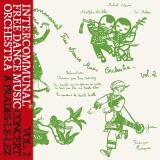
Intercommunal Free Dance Music Orchestra - Vol. 2 Concert A Prades Le Lez

Concert at Prades-le-Lez marks the origins of the Intercommunal Free Dance Music Orchestra. In 1974, François Tusques and his companions (Michel Marre, Jo Maka, Adolf Winkler and Guem), in the spirit of Don Cherry or Chris McGregor, playfully dismantle all borders and all styles of creative music.

On this second volume, the Intercommunal builds unprecedented soundscapes around a song of revolt, a dance tune, or a burst of dissonance. The journey is unforgettable, no question about it. On repeat listening, it even becomes… lunar!

“The music that we make is primarily meant to be listened to live,” warned a leaflet from the Intercommunal Free Dance Music Orchestra. This is precisely why the (restored!) reissue of the two volumes of Concert at Prades-le-Lez, recorded on January 25 and 26, 1974 by François Tusques and his comrades, is such an important event.

In 1971, after recording a series of albums that would leave a lasting mark on French jazz (Free Jazz, of course, with Michel Portal, François Jeanneau, Bernard Vitet, Beb Guérin and Charles Saudrais, but also Le Nouveau Jazz with Barney Wilen, or the solo Piano Dazibao), François Tusques founded the Intercommunal—a grouping whose very name called for the fraternization of the various communities making up the country: Our music will help, we hope, to resolve the contradictions that exist between workers be longing to different communities, by breaking down various forms of national chauvinism, and more particularly the chauvinism of certain French people toward the cultures of Third World countries… Long live the friendship between the peoples of the whole world!

Among the great records made by the Intercommunal Free Dance Music Orchestra, the two volumes of Concert at Prades-le-Lez come first, before L’Inter Communal, Vol. 4, Le Musichien, and Après la marée noire (four titles already reissued by Souffle Continu). François Tusques and his companions (Michel Marre and Jo Maka on saxophones, Adolf Winkler on trombone, and Guem on percussion) performed on January 25 and 26, 1974 at the Moulin de Prades-le-Lez, a few kilometers from Montpellier. It was thus in the southern region of Occitanie that the first echoes of this musical vision of a borderless brotherhood were recorded.

“We’re not among the Colonels,” the Intercommunal reassures us right away, performing a stride piano tune carried by African winds that the audience cannot resist for long. The energy is already striking and it never lets up throughout these two recordings, from start to finish: jazz, blues, traditional music, minimalism, even funk… The musicians of the Intercommunal have heard a lot of great music and now delight in reinventing it by mixing it all together.

“We want the song form to take its place as a weapon in the struggle against capitalist exploitation and all those who oppress us morally and materially,” declared an Intercommunal leaflet, quoting Jean-Baptiste Clément, author of the lyrics to “Le Temps des cerises.” The struggle was therefore serious—but it did not prevent François Tusques and his group from waging it in a festive spirit: each piece on Concert at Prades-le- Lez sends out a call for love and fraternity. Fifty years later, the message remains as relevant as ever—and once again, it is François Tusques who makes it heard.

pre-ordina ora17.04.2026

dovrebbe essere pubblicato su 17.04.2026

Intercommunal Free Dance Music Orchestra - Vol. 1 Concert A Prades Le Lez
  • On N'est Pas Chez Les Colonels
  • Intercommunal Blues
  • Mazir
  • Kan-Ha-Diskan - We Shall Over Come
  • African Rythm-N-Logy
disponibile anche

2


Concert at Prades-le-Lez marks the origins of the Intercommunal Free Dance Music Orchestra. In 1974, François Tusques and his companions (Michel Marre, Jo Maka, Adolf Winkler and Guem), in the spirit of Don Cherry or Chris McGregor, playfully dismantle all borders and all styles of creative music.

On this first volume, the Intercommunal takes its audience from New Orleans to Brittany and on to North Africa. The journey was bold, without a doubt—and its memory remains unforgettable.

“The music that we make is primarily meant to be listened to live,” warned a leaflet from the Intercommunal Free Dance Music Orchestra. This is precisely why the (restored!) reissue of the two volumes of Concert at Prades-le-Lez, recorded on January 25 and 26, 1974 by François Tusques and his comrades, is such an important event.

In 1971, after recording a series of albums that would leave a lasting mark on French jazz (Free Jazz, of course, with Michel Portal, François Jeanneau, Bernard Vitet, Beb Guérin and Charles Saudrais, but also Le Nouveau Jazz with Barney Wilen, or the solo Piano Dazibao), François Tusques founded the Intercommunal—a grouping whose very name called for the fraternization of the various communities making up the country: Our music will help, we hope, to resolve the contradictions that exist between workers be longing to different communities, by breaking down various forms of national chauvinism, and more particularly the chauvinism of certain French people toward the cultures of Third World countries… Long live the friendship between the peoples of the whole world!

Among the great records made by the Intercommunal Free Dance Music Orchestra, the two volumes of Concert at Prades-le-Lez come first, before L’Inter Communal, Vol. 4, Le Musichien, and Après la marée noire (four titles already reissued by Souffle Continu). François Tusques and his companions (Michel Marre and Jo Maka on saxophones, Adolf Winkler on trombone, and Guem on percussion) performed on January 25 and 26, 1974 at the Moulin de Prades-le-Lez, a few kilometers from Montpellier. It was thus in the southern region of Occitanie that the first echoes of this musical vision of a borderless brotherhood were recorded.

“We’re not among the Colonels,” the Intercommunal reassures us right away, performing a stride piano tune carried by African winds that the audience cannot resist for long. The energy is already striking and it never lets up throughout these two recordings, from start to finish: jazz, blues, traditional music, minimalism, even funk… The musicians of the Intercommunal have heard a lot of great music and now delight in reinventing it by mixing it all together.

“We want the song form to take its place as a weapon in the struggle against capitalist exploitation and all those who oppress us morally and materially,” declared an Intercommunal leaflet, quoting Jean-Baptiste Clément, author of the lyrics to “Le Temps des cerises.” The struggle was therefore serious—but it did not prevent François Tusques and his group from waging it in a festive spirit: each piece on Concert at Prades-le- Lez sends out a call for love and fraternity. Fifty years later, the message remains as relevant as ever—and once again, it is François Tusques who makes it heard.

pre-ordina ora17.04.2026

dovrebbe essere pubblicato su 17.04.2026

Iivana Mišukka & Arja Kastinen - Iivana Mišukka (Tape)
  • 01: Maanitus &Amp; Tšiižik
  • 02: Markka
  • 03: Melkutus
  • 04: Letška
  • 05: Kuuen Parin Hoirola
  • 06: Brišatka
  • 07: Tšiižik
  • 08: Kirkonkellot
  • 09: Kirkonkellot Korkea
  • 10: Hoirola, 3 Parin
  • 11: Lippa
  • 12: Kyngäkiža
  • 13: Ristakondra
  • 14: Vanha Polkka
  • 15: Viistoista
  • 16: Vanha Valssi
  • 17: Kiberä
  • 18: Maanitus Kuokan Kanteleella
  • 19: Tuuti Lasta Nukkumahe
disponibile anche

Vinyl


Death Is Not The End present a further volume of Arja Kastinen's eerie amalgamations of 110 year old wax cylinders with her own meticulously transcribed takes, this time focussing in on Armas Otto Väisänen's field recordings of kantele player Iivana Mišukka (b. 1861 d.1919).

"Ivana Mišukka (1861–1919) was one of the Karelian kantele players recorded by the folk music researcher Armas Otto Väisänen on wax cylinders in 1916 and 1917. In the early 20th century, the remote areas of Border Karelia were undergoing the final phase of a transformation in musical culture, with the ancient runo song tradition giving way to newer forms of music. This transition is reflected in Mišukka's repertoire and choice of instrument. The ancient small kantele, hollowed out of a single piece of wood, was already rare at the turn of the century. Mišukka's kantele was a new type of instrument with 26 strings, constructed of several parts, but he played it using the traditional plucking technique. Like other Border Karelian kantele players, his repertoire consisted of music rooted in runosong culture, as well as newer dances and songs from the east and west. Most of the recorded material falls into the latter category.

Ivan Bogdanov Mišukka was born out of wedlock in Suursara village, Suistamo, on 1 May 1861. He began playing the kantele at the age of five or six, quickly mastering the instrument. In adulthood, he was considered one of the area's best master players. Mišukka was landless for most of his life and lived in different parts of the Suistamo parish. His first wife, Tekla Markintytär, died in 1897 at the age of 40, and his second wife, Jevdokia Filipintytär Jeminen, died in 1907 at the age of 50. Seven children were born from the first marriage, two of whom died young. The third wife, Maria Ignatintytär Gurnan (Kuurnanen), was a well-known master of lamentations. Together with Maria, Iivana Mišukka worked as a tenant farmer in the village of Suursara. Mišukka suffered from rheumatism, which prevented him from participating in physical work like Maria. This was apparently partly the reason why Iivana Mišukka went to earn extra money by playing the kantele on gig trips. He often had other traditional artists from Suistamo as his travelling companions, such as the runosingers Konstantin Kuokka and Iivana Onoila. Iivana Mišukka died in Leppäsyrjä village, Suistamo, on 18 May 1919 at the age of 58, and his kantele was donated to Teppana Jänis.

Mišukka only used 14 of the 26 strings on his kantele, playing the same tunes either a fourth higher or lower. He tuned his kantele to the major scale using fifths, except for a low seventh scale degree on the upper strings, but not below the fundamental. Since he did not use the seventh note of the scale on the upper strings at all, he could use the major scale both lower and a fourth higher with this tuning. According to Mišukka, the sound of higher, or 'finer', strings is 'more beautiful', while that of lower ones is 'greater'. Among runosingers, the size of the thirds varied, ranging from major to minor to neutral. A similar phenomenon can be observed in kantele tunings, where the third, sixth and seventh scale degrees vary in a comparable way.

During a meeting, Väisänen suggested that Mišukka play the smaller kantele belonging to Konstantin Kuokka. The idea was to bring it closer to the horn to improve the recording quality. However, the kantele was completely out of tune, and now Mišukka tuned it to the Lydian scale (track 18).

Using the old plucking technique, Mišukka placed his right middle finger on the fundamental tone, his right index finger on the second scale degree, his left middle finger on the third scale degree and his left index finger on the fourth scale degree, and his right thumb on the fifth. The thumb also played the notes above the fifth note of the scale. As Mišukka remarked to Väisänen: 'Peigaloll' tuloo enemb ruadoa' (the thumb has to do more work). However, he did not use the seventh note of the scale on the upper strings at all. Below the fundamental note, he played the seventh and sixth notes of the scale with his right middle finger of and the fifth note of the scale with his right ring finger. This fifth scale degree below the fundamental is almost always used as a drone. Sometimes, when the melody required it, Mišukka, like other players, also varied the fingering. He would also occasionally strike the same string with the side of his fingernail after plucking it.

The wax cylinder recordings of Karelian kantele players are kept in the archives of the Finnish Literature Society in Helsinki, Finland. Copies were made of them onto reel-to-reel tapes in both the 1960s and 1980s. The 1960s copies are mono and the 1980s copies are stereo. However, not all kantele recordings from these decades have survived.

The sound of the kantele is difficult to hear in wax cylinder recordings due to its low volume, and it occasionally becomes completely obscured by noise. During the copying process, the cylinder sometimes rotates unevenly, resulting in breaks or jumps in the music. Additionally, the rotation speed of the cylinder in the copies does not correspond to the performance speed of the original music, which alters the pitch. However, since Väisänen's precise notes are available in the archive, it is possible to deduce the melodies, their speed, and the tuning level of the kantele in the recordings. Of the copies of the original recordings from the 1960s and 1980s, I have selected the one that best met the requirements of this publication and adjusted the speed of the recording to align with Väisänen's notes. To enhance the listening experience, I have replayed the songs, which now partly overlap the old recordings on this release."

— Arja Kastinen

pre-ordina ora27.03.2026

dovrebbe essere pubblicato su 27.03.2026

Iivana Mišukka & Arja Kastinen - Iivana Mišukka LP

Death Is Not The End present a further volume of Arja Kastinen's eerie amalgamations of 110 year old wax cylinders with her own meticulously transcribed takes, this time focussing in on Armas Otto Väisänen's field recordings of kantele player Iivana Mišukka (b. 1861 d.1919).

"Ivana Mišukka (1861–1919) was one of the Karelian kantele players recorded by the folk music researcher Armas Otto Väisänen on wax cylinders in 1916 and 1917. In the early 20th century, the remote areas of Border Karelia were undergoing the final phase of a transformation in musical culture, with the ancient runo song tradition giving way to newer forms of music. This transition is reflected in Mišukka's repertoire and choice of instrument. The ancient small kantele, hollowed out of a single piece of wood, was already rare at the turn of the century. Mišukka's kantele was a new type of instrument with 26 strings, constructed of several parts, but he played it using the traditional plucking technique. Like other Border Karelian kantele players, his repertoire consisted of music rooted in runosong culture, as well as newer dances and songs from the east and west. Most of the recorded material falls into the latter category.

Ivan Bogdanov Mišukka was born out of wedlock in Suursara village, Suistamo, on 1 May 1861. He began playing the kantele at the age of five or six, quickly mastering the instrument. In adulthood, he was considered one of the area's best master players. Mišukka was landless for most of his life and lived in different parts of the Suistamo parish. His first wife, Tekla Markintytär, died in 1897 at the age of 40, and his second wife, Jevdokia Filipintytär Jeminen, died in 1907 at the age of 50. Seven children were born from the first marriage, two of whom died young. The third wife, Maria Ignatintytär Gurnan (Kuurnanen), was a well-known master of lamentations. Together with Maria, Iivana Mišukka worked as a tenant farmer in the village of Suursara. Mišukka suffered from rheumatism, which prevented him from participating in physical work like Maria. This was apparently partly the reason why Iivana Mišukka went to earn extra money by playing the kantele on gig trips. He often had other traditional artists from Suistamo as his travelling companions, such as the runosingers Konstantin Kuokka and Iivana Onoila. Iivana Mišukka died in Leppäsyrjä village, Suistamo, on 18 May 1919 at the age of 58, and his kantele was donated to Teppana Jänis.

Mišukka only used 14 of the 26 strings on his kantele, playing the same tunes either a fourth higher or lower. He tuned his kantele to the major scale using fifths, except for a low seventh scale degree on the upper strings, but not below the fundamental. Since he did not use the seventh note of the scale on the upper strings at all, he could use the major scale both lower and a fourth higher with this tuning. According to Mišukka, the sound of higher, or 'finer', strings is 'more beautiful', while that of lower ones is 'greater'. Among runosingers, the size of the thirds varied, ranging from major to minor to neutral. A similar phenomenon can be observed in kantele tunings, where the third, sixth and seventh scale degrees vary in a comparable way.

During a meeting, Väisänen suggested that Mišukka play the smaller kantele belonging to Konstantin Kuokka. The idea was to bring it closer to the horn to improve the recording quality. However, the kantele was completely out of tune, and now Mišukka tuned it to the Lydian scale (track 18).

Using the old plucking technique, Mišukka placed his right middle finger on the fundamental tone, his right index finger on the second scale degree, his left middle finger on the third scale degree and his left index finger on the fourth scale degree, and his right thumb on the fifth. The thumb also played the notes above the fifth note of the scale. As Mišukka remarked to Väisänen: 'Peigaloll' tuloo enemb ruadoa' (the thumb has to do more work). However, he did not use the seventh note of the scale on the upper strings at all. Below the fundamental note, he played the seventh and sixth notes of the scale with his right middle finger of and the fifth note of the scale with his right ring finger. This fifth scale degree below the fundamental is almost always used as a drone. Sometimes, when the melody required it, Mišukka, like other players, also varied the fingering. He would also occasionally strike the same string with the side of his fingernail after plucking it.

The wax cylinder recordings of Karelian kantele players are kept in the archives of the Finnish Literature Society in Helsinki, Finland. Copies were made of them onto reel-to-reel tapes in both the 1960s and 1980s. The 1960s copies are mono and the 1980s copies are stereo. However, not all kantele recordings from these decades have survived.

The sound of the kantele is difficult to hear in wax cylinder recordings due to its low volume, and it occasionally becomes completely obscured by noise. During the copying process, the cylinder sometimes rotates unevenly, resulting in breaks or jumps in the music. Additionally, the rotation speed of the cylinder in the copies does not correspond to the performance speed of the original music, which alters the pitch. However, since Väisänen's precise notes are available in the archive, it is possible to deduce the melodies, their speed, and the tuning level of the kantele in the recordings. Of the copies of the original recordings from the 1960s and 1980s, I have selected the one that best met the requirements of this publication and adjusted the speed of the recording to align with Väisänen's notes. To enhance the listening experience, I have replayed the songs, which now partly overlap the old recordings on this release."

— Arja Kastinen

pre-ordina ora27.03.2026

dovrebbe essere pubblicato su 27.03.2026

T.S.O. - Gluttony EP

T.S.O.

Gluttony EP

12inchSKSS001
SPECIAL K.
17.03.2026

7SINS SERIES is a collection of seven EPs, each associated with one of the seven deadly sins. Curated by Pau Pérez, the series is released on the SpecialK Records label, driven by Carlos Caballer, and brings together seven producers, each responsible for shaping a distinct release.

LUTTONY is the first EP in the 7SINS SERIES. This release is driven by a clear mission: constant, no-compromise groove. Each track is built around catchy basslines that set the pulse from the very first bar, wrapping the listener in a hypnotic sound that never lets up. Inspired by part of the current Valencia sound, the project focuses on energy, rhythm, and club-oriented atmospheres. No detours, no filler—music made straight for the dance floor.

non in magazzino

Ordina ora e ordineremo l'articolo per te presso il nostro fornitore.


Last In: 60 days ago
ADMIRAL FREEBEE - RAW FUN

ADMIRAL FREEBEE

RAW FUN

12inchNL004
NOORDERLAAN
27.02.2026

Uw energieboost in plaatvorm: zo klinkt de nieuwe Admiral Freebee. Geboren uit een oerdrive om samen met zijn vrienden slash helden muziek te maken en de studio in te duiken. Openingstrack Seeking A Friend zet meteen de toon: drums zwellen aan, een snedige riff valt in en Tom Van Laere giet er een rauw ‘Armageddooon’ over uit. De wereld staat in brand en Admiral Freebee is er niet blind voor, maar het spelplezier staat voorop. Uptempo, groovy, dansbaar zelfs, met synths en welgemikte opzwepende HEY’s: negen songs lang spatten good times uit de muziek, van eerste single Q&A With Myself over knallers als Future Fathers Of Utopia en The Hunger. Zoals we van Admiral Freebee gewend zijn, is er ook ruimte voor humor en een introspectieve blik. Maar vergis je niet, een schoothondje is hij niet (No One’s Puppy). In slottrack Dog That Never Dies gaat de voet van het gaspedaal en legt het enige ingetogen nummer het album neer, als een synthese van alle thema’s die aan bod komen. En we mogen gerust zijn: met Admiral Freebee gaat het goed, en zowel hij als zijn muziek lopen over van het plezier. Even alle zorgen vergeten en genieten van pure fun.

——————————————————

Your energy boost in record form: that’s how the new Admiral Freebee album sounds. Born from a primal desire to make music with his friends aka heroes and dive into the studio. Opening track Seeking A Friend sets the tone: drums swell, a sharp riff takes centre stage and Van Laere lets out a raw ‘Armageddooon’. The world is on fire and Admiral Freebee does not turn a blind eye, but first we have some fun. Uptempo, groovy, danceable even, with funky synths and a bunch of infectious HEYs: for nine songs good times are all over the place, from first single Q&A With Myself to bangers like Future Fathers Of Utopia and The Hunger. As always with Admiral Freebee, there’s also room for humor and he doesn’t shy away from introspection either. And make no mistake: Tom Van Laere is no lapdog (No One’s Puppy). Closing track Dog That Never Dies is the only intimate song on the album and sounds like a synthesis of all the album’s themes. And rest assured: Admiral Freebee is doing fine, and both him and his music are bursting with joy. So leave your worries behind for a moment and have some raw fun.

Picture by Ed Templeton/ Courtesy Tim Van Laere Gallery

Artwork by Jelle Jespers

Admiral Freebee is Tom Van Laere – Tim Coene, Senne Guns en Laurens Billiet. Recorded in summer 2025.

pre-ordina ora27.02.2026

dovrebbe essere pubblicato su 27.02.2026

ADMIRAL FREEBEE - RAW FUN

ADMIRAL FREEBEE

RAW FUN

12inchNL004LTD
NOORDERLAAN
27.02.2026

Uw energieboost in plaatvorm: zo klinkt de nieuwe Admiral Freebee. Geboren uit een oerdrive om samen met zijn vrienden slash helden muziek te maken en de studio in te duiken. Openingstrack Seeking A Friend zet meteen de toon: drums zwellen aan, een snedige riff valt in en Tom Van Laere giet er een rauw ‘Armageddooon’ over uit. De wereld staat in brand en Admiral Freebee is er niet blind voor, maar het spelplezier staat voorop. Uptempo, groovy, dansbaar zelfs, met synths en welgemikte opzwepende HEY’s: negen songs lang spatten good times uit de muziek, van eerste single Q&A With Myself over knallers als Future Fathers Of Utopia en The Hunger. Zoals we van Admiral Freebee gewend zijn, is er ook ruimte voor humor en een introspectieve blik. Maar vergis je niet, een schoothondje is hij niet (No One’s Puppy). In slottrack Dog That Never Dies gaat de voet van het gaspedaal en legt het enige ingetogen nummer het album neer, als een synthese van alle thema’s die aan bod komen. En we mogen gerust zijn: met Admiral Freebee gaat het goed, en zowel hij als zijn muziek lopen over van het plezier. Even alle zorgen vergeten en genieten van pure fun.

——————————————————

Your energy boost in record form: that’s how the new Admiral Freebee album sounds. Born from a primal desire to make music with his friends aka heroes and dive into the studio. Opening track Seeking A Friend sets the tone: drums swell, a sharp riff takes centre stage and Van Laere lets out a raw ‘Armageddooon’. The world is on fire and Admiral Freebee does not turn a blind eye, but first we have some fun. Uptempo, groovy, danceable even, with funky synths and a bunch of infectious HEYs: for nine songs good times are all over the place, from first single Q&A With Myself to bangers like Future Fathers Of Utopia and The Hunger. As always with Admiral Freebee, there’s also room for humor and he doesn’t shy away from introspection either. And make no mistake: Tom Van Laere is no lapdog (No One’s Puppy). Closing track Dog That Never Dies is the only intimate song on the album and sounds like a synthesis of all the album’s themes. And rest assured: Admiral Freebee is doing fine, and both him and his music are bursting with joy. So leave your worries behind for a moment and have some raw fun.

Picture by Ed Templeton/ Courtesy Tim Van Laere Gallery

Artwork by Jelle Jespers

Admiral Freebee is Tom Van Laere – Tim Coene, Senne Guns en Laurens Billiet. Recorded in summer 2025.

pre-ordina ora27.02.2026

dovrebbe essere pubblicato su 27.02.2026

Dialog - DOT 4

Dialog

DOT 4

12inchDOT004
Dot Records
21.01.2026

Dub techno modernists Dialog return for another exploration of echo chamber electronics featuring more meditative mantras from vocalist Benji.

The fourth entry in their ongoing vinyl series balances the upfront, dancefloor-focused 'Chant' with the mellow, trip-hop leaning 'Silence'. Both tracks bristle with the richly detailed, high-definition sound that has made Dialog's tracks stand out since the beginning of the project. In true dub fashion, both tracks come as vocal and instrumental versions, with an additional 'Scape' ambient mix of 'Silence' that lets the nuanced synth work shine through.

non in magazzino

Ordina ora e ordineremo l'articolo per te presso il nostro fornitore.


Last In: 3 months ago
Charlotte de Witte - Rave On Time EP

Repress!

Belgian tastemaker Charlotte de Witte returns to her own KNTXT to serve up the well regarded label's seventh EP. Rave On Time is about reminding us of the joys of being lost on the dance floor and is another hard hitting EP filled with her distinctive techno energy.

Charlotte is at the centre of her own musical movement, with a hard hitting, no frills style. Her powerful grooves, whether solo or in collaboration with the likes of Chris Liebing, come laced with ambient and synth beauty. She has mesmerised crowds all over the world as well as at her own special KNTXT events, and has been as creative as ever during lockdown, as this new EP shows.

Says the artist herself of this latest offering, "Rave On Time. Three words that probably have never been more relevant. In a time where raving feels like a distant memory, it seems increasingly important to bring music back in our lives, in reverse. Let's not forget where we came from and let's not lose hope. We'll be together again soon. Rave On Time."

Opener Rave On Time is built on hammering, distorted kicks that bend you to their whim. Freaky vocals and monstrous hits add extra pressure and ensure you stay locked before shooting laser synths and retro hoover sounds bring the rave. There's No One Left To Trust keeps up the energy with scintillating synths rattling over rock solid drum programming that never lets up. The World Inside is brain frying material, with serrated synths firing out and growing ever more acid as the groove pounds on. Common Era is brilliant hands in the air acid-trance-techno that froths with energy and flashing strobes. Finally, vinyl only track 'Wahr Ist Sie Dann’ is a distorted, brain melting techno workout with brutalist kicks and vast walls of synths that are hugely powerful.

As ever from de Witte, this is pure, unadulterated club music that makes a gargantuan impact.

non in magazzino

Ordina ora e ordineremo l'articolo per te presso il nostro fornitore.


Last In: 66 days ago
FRANKIE BONES - "GHETTO TECHNICS “THE COMPILATION” VOL. 1

MOST SOUGHT AFTER & HARDEST TO FIND IN NYC TECHNO/HOUSE/GHETTO HISTORY.

We proudly welcome Frankie Bones to our label with a compilation of what is in my opinion one of the grails of the music for dancing in dark clubs and warehouse raves.

GHETTO TECHNICS is now compiled in 2 volumes for maximum dancefloor damage, remastered for the greatest impact but preserving all the essence and aesthetic, including & unreleased tunes from the time.

FOR TRUE DISC-JOCKEYS & COLLECTORS.
OFTENPLUSNEVERMINUS+8
H.

non in magazzino

Ordina ora e ordineremo l'articolo per te presso il nostro fornitore.


Last In: 3 days ago
Teppana Jänis & Arja Kastinen - Teppana Jänis LP

Teppana Jänis was born in the village of Uuksujärvi in Suistamo on 21 June 1850. After becoming blind in the late 19th century, he went house to house, supporting himself by playing the kantele, a traditional Finnish and Karelian plucked string instrument belonging to the southeast Baltic box zither family. He performed at dances and in schools, and also participated in the Suistamo kantele and runosong competitions in 1911.

In the summers of 1916 and 1917, the young folk music researcher Armas Otto Väisänen (1890-1969) made collecting trips to Border Karelia. His aim was to collect kantele tunes, laments and shepherd melodies, which were confusingly few in the archives. The 1916 trip was financed by the Finnish Literature Society, who provided a phonograph for recording purposes. In 1917, the trip was financed by the Kalevala Society and the recording was carried out using a parlograph. During these two summers, Väisänen recorded kantele players in the parishes of Suojärvi, Korpiselkä, Suistamo, Tuupovaara, Kitee and Impilahti. Väisänen met Teppana Jänis in both summers and transcribed 22 kantele melodies from him. He recorded 14 of these on wax cylinders.

This LP, titled simply 'Teppana Jänis' fuses and intertwines the original raw cylinder recordings with replayed pieces by Kantele player and researcher Arja Kastinen together with the now late Finnish folk musician Taito Hoffrén, taking into account the additional information and notes found in Väisänen's sheet music manuscripts. Warm thanks to the Finnish Literature Society for permission to use the archive recordings, to Risto Blomster for his invaluable assistance, and to the Karelian Cultural Foundation.

pre-ordina ora05.09.2025

dovrebbe essere pubblicato su 05.09.2025

DJ Narciso - Capítulo Experimental

This new "Experimental Chapter" by DJ Narciso comes as no surprise, really. Autonomous in the motorization of his music, pushing for progress within the framework of an undeniable (inescapable?) heritage. Twisting and bending sound every step of the way, Narciso definitely keeps in touch with the dancefloor, offering the always much needed transcendence through distinctive, non-linear melodies and patterns. The artist pursues a direct link with bodies in motion but seldom in the expected, institutionalized way club culture is being largely promoted.

This is challenging dance music, proud statements of difference. Narciso's previous record was named "Diferenciado". Now we get "Dificuldades", a track that simultaneously carries the weight of being somewhat odd and the difficulties of life. Check how the piano is venting, freestyle, communicating a feeling, and then lets itself get stuck in a loop, but that's exactly when the groove really starts flowing. And then another layer. It's like direct speech.

A common assertion of pride is found in the origin of the artists. The ghetto as a place where any transformation projects more power precisely because of... inherent difficulties. As others (including himself) did in more or less obvious ways, Narciso clearly states "I come from the ghetto" ( "Não Sabes" ). Twice the value. At least. Almost every segment of music in this album ends up sounding heavily emotional, reaffirming what may be - perversely - a well-known characteristic of Portuguese music: melancholy.

"Não Quero" begins side B as a march maybe more significant than a thousand words, such is the ominous tone of its texture. Next track is another lunar tarraxo, pulling down the shades. Then, "Dor de Barriga" lets things loose again, steering clearly off road, shouting this way and that until a peaceful resolution comes. In "Livra-me Desta", vocal snippets blend into synth snippets, disembodied voices abandon all traces of humanity and finally mutate into different entities that, towards the end, again sound vaguely human but now we find ourselves doubting. Closer "Bob" is a rather classic percussion track with plenty of echo, reverb and an unconscious nod to dodecaphonic music. Unlikely? No, the structural ADN of this music is made up of elements western and eastern, southern and northern. To say all-over-the-place is usually not flattering but in this case the expression translates as wonder, surprise, The Unexpected, and reveals Narciso perfectly at ease inside the nucleus of creation.

pre-ordina ora01.08.2025

dovrebbe essere pubblicato su 01.08.2025

Gabriel Kelly - Gabriel Kelly

Gabriel Kelly

Gabriel Kelly

12inch2931409REJ
recordJet
11.07.2025

Mit großer Vorfreude präsentiert Gabriel Kelly sein mit Spannung erwartetes Debütalbum, das die Grenzen zwischen Rock und Rap auf aufregende Weise verwischt. Nachdem Gabriel über zehn Jahre lang mit seiner Familie musikalisch unterwegs war und vergangenes Jahr im TV Format "Lets Dance" als Sieger hervorging, widmet er sich nun der Musik als Solo-Künstler.

pre-ordina ora11.07.2025

dovrebbe essere pubblicato su 11.07.2025

Santana - Moonflower LP 2x12"
  • A1: Dawn/Go Within
  • A2: Carnaval
  • A3: Let The Children Play
  • A4: Jugando
  • A5: I’ll Be Waiting
  • A6: Zulu
  • B1: Bahia
  • B2: Black Magic Woman/Gypsy Queen
  • B3: Dance Sister Dance (Baila Mi Hermana)
  • B4: Europa (Earth’s Cry Heaven’s Smile)
  • C1: She’s Not There
  • C2: Flor D’luna (Moonflower)
  • C3: Soul Sacrifice/Head, Hands & Feet
  • D1: El Morocco
  • D2: Transcendence
  • D3: Savor/Toussaint L’overture

Santana Bridges the Divide Between Live and Studio Material on Moonflower: 1977 Double Album Features Extraordinary Performances, Soulful Vibes, and Dynamic Mix of Latin, Rock, Funk, and Blues
Sourced from the Original Master Tapes and Strictly Limited to 3,000 Numbered Copies: Mobile Fidelity’s 180g 33RPM 2LP Set Plays with Audiophile-Quality Detail, Balance, and Imaging
1/4” / 15 IPS original analogue non-Dolby master to DSD 256 to analogue console to lathe


Though it may seem strange now, Moonflower stood for nearly 15 years as Santana’s first and only live record released in the United States. This despite the fact that roughly half of the double album consists of new studio songs, including a zesty cover of the Zombies classic “She’s Not There” that reached the Top 30 of the singles charts.

However unconventional, the “split” strategy went over like gangbusters. Moonflower reached the Top 10 of the Billboard Top 200 and achieved double-platinum status — feats the group would not again replicate for 22 years. These, and the beautiful quality of the program itself, are among the reasons why the 1977 effort remains viewed by critics and fans alike as must-have Santana.

Sourced from the original master tapes, pressed at Fidelity Record Pressing in California, housed in a Stoughton jacket, and strictly limited to 3,000 numbered copies, Mobile Fidelity’s 180g 33RPM 2LP set of Moonflower presents the record in audiophile sound for the first time on a domestic reissue. Part of the MoFi’s Santana catalog restoration series, this collectible version features quiet surfaces and black backgrounds that expose the critical details, liquid tones, and dynamic interplay central to Santana’s music.

The enhanced sonics extend not only to Carlos Santana’s six-string wizardry, but to the rhythmic, melodic, and vocal elements that course throughout both the studio and live cuts on Moonflower. The grip and depth of the bass lines; the wash of the organ; the scope and carry of the vocals; the extension and weight of the low-end frequencies; the rich textures of the guitars, percussive devices, and keyboards: all appear amid wide, balanced soundstages and image with right-sized dimensionality.

Significantly rooted in the styles and approaches that inform the group’s first three records, Moonflower captures the final appearances of iconic percussionist Jose “Chepito” Areas and go-to keyboardist Tom Coster on a Santana album. As he did during the preceding five-year stretch, Coster inhabits a large role here, sharing songwriting credits on a majority of the new cuts and helping steer the arrangements toward spiritually minded albeit concise directions that encompass vibrant Latin, rock, and blues themes that began to escape the ensemble shortly after his departure.

Close your eyes and feel the warmth of the sun on the R&B-kissed “I’ll Be Waiting,” anchored by Carlos Santana’s gliding fretwork and Greg Walker’s creamy vocals. Enter the cosmic universe of “Zulu,” on which Coster’s nimble phrasing opens the gate to polyrhythmic beats, knotty grooves, and interlocking funk. Grab the album cover and drift off to paradise amid the equally evocative “Flor d’Luna (Moonflower),” a romantic slow dance that Carlos Santana ensures tiptoes en route to its blissful destination. Channeling a different spirit animal, the guitarist later lets loose on the hard-hitting “El Morocco,” on which he seemingly engages in a shootout with himself and wades into the rippling psychedelia that elevated the band’s early material.

Speaking of the past, Moonflower triumphs on that level as well. In more ways than one, the live selections — and the caliber of the performances — chosen for inclusion represent an abbreviated greatest-hits survey of the band up to that point. And, at the very least, a convincing argument about why Santana had progressed into one of the most formidable bands you could hope to see on a stage in the mid ‘70s.

Simultaneously representative and illustrative of the group’s breadth, tracks stem from the collective’s eponymous debut, Abraxas, and Santana III as well as the then-more recent Amigos and Festival. Whether you fall for the sidewinding spell of a spicy rendition of “Black Magic Woman/Gypsy Queen,” lose your head to the positively epic momentum of “Soul Sacrifice/Head, Hands & Feet,” or keep dropping the needle on the savory grace of the brilliant reading of “Europa (Earth’s Cry Heaven’s Smile),” this pressing of Moonflower puts you — and Santana’s first-chapter legacy — in good hands.

pre-ordina ora30.06.2025

dovrebbe essere pubblicato su 30.06.2025

Oshana - Origins EP

Oshana

Origins EP

12inchALT016
Altered Circuits
15.05.2025

"After a first appearance on the "Various 1" EP, Oshana now makes her full release debut on Altered Circuits. The "Origins EP" is, in the artist's words, a collection of old-meets-new four-to-the-floor club flavours. Originating from her live set practice, it's a proper representation of where she's currently at: making a push for the bigger and bolder. Her obvious talent for meticulously stacking textures doesn't stop her from shifting to the stripped-back and straightforward when needed. The constant throughout is a sensibility for the dancefloor, which never lets anything get in the way of groove and rhythm. "Above We Soar" drops right into the action with a menacing bassline and equally gloomy synthesizer layering. The cut's gothic-black palette works a charm merging palpable tension with restraint. It builds for 4 minutes towards a drop - and then a slamming acid line succeeds in cranking the energy even up another notch. "Space And Time Dimensions" is a loopy roller which, by the sound of its reverb levels and ambient noises, might have been recorded at a missile silo. The stretched vocal samples and ever-evolving drums propel it forward in a vintage, Chicago house type way. There's a moment of calm when those briefly fall away; one of its quirky basslines subsequently makes room for a slick little polyrhythm sine, and everything clicks even more. On the other side, "Girls In The Front" doesn't loosen the reins either, as hefty kicks and another sturdy bassline immediately set the tone. The air appears charged with static electricity, and Oshana's way of niftily adding and subtracting seamlessly draws the listener into a groovy trip. 5 minutes fly by, and then the lead still has to emerge. The one that eventually comes in is huge and hypnotic. Topped off with a selection of vocals that burst with impatience, the track hints at the anthemic. Closer "Origins" taps into a more progressive and trance side with its modulated formant bassline, jittery arpeggiator lead and heavily flanged flourishes. A gust of electronic flutes and sleek chords take a turn for the - almost - idyllic. Not for long: not uncharacteristically, it switches back to the main beat and back into more ambiguous yet familiar territory."

non in magazzino

Ordina ora e ordineremo l'articolo per te presso il nostro fornitore.


Last In: 7 months ago
Dukwa - Zeitgeist

Dukwa

Zeitgeist

12inchSLACKER010
Slacker 85
07.05.2025

‘Zeitgeist’, the debut LP from celebrated Italian electronic music producer Dukwa, begins with a timeless dancefloor equation; swung drums, a clattering cobwell and flickering hi-hats lurch forward into a serious bassline. Within seconds, dancers are flung into the house anthem ‘You Don’t Want It’ that’s equally raw and charismatic, sensual and powerful. For the next forty-five minutes of rhythm, melody and studio trickery, ‘Zeitgeist’ continues to bend time, eras and bodies.

Having released EPs on respected labels including Numbers, Gudu and Diynamic Records, invariably with the support of Jackmaster, Peggy Gou and Solomun, Dukwa folds into the Slacker85 philosophy with ease, laying down a statement of intent that’s squarely for the dancers. Indebted to a youth digging in Florence’s record stores, embracing the peerless Italian rave scene, as well as his recent appearances at Circoloco and Kappa Future, ‘Zeitgeist’ subverts it’s knowing title to dance between styles with an urgency you can feel in your heels.

Before long, Dukwa is smoothly oscillating between acid overdrive and weightless house on ‘Catch All’, while the balance between softness and severity is refined even further on ‘Show Me’, showcasing the record’s first euphoric breakdown, a heads down, hands up moment that sacrifices none of his organic flow. Ably mastering many corners of his record box, ‘Avec Moi’ makes a confident left turn into tunneling trance, interspersed with a sensual french vocal.

‘All You Need’ provides the record’s beating heart, Dukwa’s overarching philosophy front and center around layers of synthesised groove, build and release: “The world is full of fighting, ignorance and greed, but right here on the dancefloor - the rhythm’s all you need”. Meanwhile, ‘My Turn’ channels more cinematic instincts, zoning in on an elegant piano riff in order to unravel a quietly epic deep house trip.

As ‘Zeitgeist’ heads toward its conclusion, Dukwa effortlessly squeezes the most emotive juice from his well-oiled studio. ‘Sad Eyes’ possesses the emotional punch of many vintage end-of-night anthems, still driving yet touched with a wistful ecstasy. Finally, for closing passage ‘Stck1’, Dukwa truly lets the machines sing, capturing a brief symphony of harmonising modulations that dip into weirdo electronica, without ever skipping his signature beats.

non in magazzino

Ordina ora e ordineremo l'articolo per te presso il nostro fornitore.


Last In: 7 months ago
NACKLEY - ANGER MANAGEMENT EP

Music possesses an incredible ability to transform raw emotion into an expansive array of expression. Nackley knows this ideation well. Having spent years working behind the scenes as an agent, Bordello’s latest discovery now steps fully into the spotlight with Anger Management, channeling the turbulence of transition into sound.

Cathartic and charged compositions are at the heart of this four-track release. Acid-dipped keys are both delicate and direct in the driving highs of Return of the Gecko, a track pulsing with raw energy. The crueler side of the music industry isn’t so much parodied here as it is dismissed entirely—Nackley lets the music do the talking. Sublime Desolation is pure dancefloor dynamite, where synth sirens detonate and explosive rhythm commands movement.

Been A Long Time arrives dripping in attitude. Breaks and a juddering bassline face off with a hustling 303 hook, harmonies weaving through deep sonic textures. A renewed confidence courses through the release as Nackley explores a range of styles, closing with the synth romance of Heartbreaker—an addictive blend of keyboards, guitar strings, and enveloping vocals are the emotive ingredients of this tear-streaked work of 1980s-inspired joy.
And joy is exactly what Anger Management delivers—a healing triumph and a bold debut declaration from a rising talent.

non in magazzino

Ordina ora e ordineremo l'articolo per te presso il nostro fornitore.


Last In: 5 months ago
Modus Pitch - Re:Polyism

»Re:Polyism« is a track-by-track reinterpretation of Friedrich »Fritz« Brückner’s 2022 debut solo album as Modus Pitch, »Polyism,« through artists affiliated with Altin Village & Mine and/or former collaborators of the prolific Leipzig-based musician and producer. Each track from »Polyism« has been remixed or reworked by different artists such as Modeselektor, Angel Bat Dawid, Maya Shenfield or Mouse on Mars member and HJirok producer Andi Toma, but the album—mastered by Tim Roth a.k.a. Sin Maldita and released as a strictly limited vinyl LP with reimagined artwork by Carmen Orschinski—follows the original record’s tracklist. This makes »Re:Polyism« a veritable musical prism, refracting the creativity inherent to Brückner’s genre-transcending original works through other people’s artistic lenses to create an even more colourful end result.

First off are the Gebrüder Teichmann with their take on opener »Drive,« carefully adding more depth and uncanny sounds to the jazzy, drum-focused piece. Unsurprisingly, Modeselektor go a lot further with their remix »Rainbow,« turning the two-minute track into a dubstep-adjacent banger with infectious synth work that is twice as long and comes with a mind-melting breakdown. With their take on »Hilltop Jacuzzi,« Peaking Lights turn the blissful original into a piece that calls to mind experiments at the intersection of dub, ambient, and industrial music in the mid-1990s. Cloud Management radically transform the eerie »Compound Eye Dialogue« into a rhythmically charged mid-tempo post-krautrock epic, while the Seekers International’s »Jelly Roll Dub« of »Gelée Royale« uses the original’s lush textures to turn up the intensity even further.

On the flipside, Andi Thoma gives the intricate synth pop/breakcore fusion of »Suspender« a similarly dubwise treatment before venturing into gqom territory, pulling it out of the leftfield and straight onto the dancefloor—peak-time use only. Maya Shenfeld then brings her trademark modular synth work to »Outer Veil,« accentuating the focus on Hendrik Otremba’s uncanny spoken word performance even further. This sets the mood perfectly for vocal experimentalist Agnese Menguzzato working her singular magic. Under her hands and with her voice, the multi-layered ambient soundscapes of »Lava Fans« become even larger-than-life-like than before. When Angel Bat Dawid takes the menacing drones of »Iridescent Path« as a template for a trap-inspired beat over which she lets loose on the clarinet, that serves as both the ultimate counterpoint and perfect coda to »Re:Polyism.«

These nine reinterpretations of the highly diverse source material underline Brückner’s singular approach to music-making while also emphasising their makers’ idiosyncratic talents. This makes »Re:Polyism« more than simply a remix album—it’s a polylogue between visionary minds.

pre-ordina ora28.03.2025

dovrebbe essere pubblicato su 28.03.2025

Derya Yıldırım & Grup Şimşek - Yarın Yoksa

Produced by Grammy Nominated producer Leon Michels (El Michels Affair, Clairo). Big Crown Records is proud to present Derya Yıldırım & Grup Şimşek’s latest album Yarın Yoksa. The show stopping intensity of Derya backed by the psychedelic soul of Grup Şimşek with production by Leon Michels has yielded a stand out record that challenges genre with a broad appeal and a powerful message. They refer to themselves as “outernational” over international as they say it suggests a sound that’s more inclusive or “beyond borders.” Derya, who sings and plays the bağlama, is German born to Turkish parents. Drummer Helen Wells is Berlin-based by way of South Africa while keyboard player Graham Mushnik and guitar/bass player Antonin Voyant are both French. The collective influences they bring to Anatolian music make for a completely unique and fresh sound that both pushes the genre forward and champions its rich heritage. Yarın Yoksa which translates to If There Is No Tomorrow delves into deeply personal pain and collective resistance with a central thread of loss, longing, and hope for change running throughout. The lyrics are poetic and rely heavily on symbolic language, metaphors, and storytelling while the music shifts track to track making each tune stand out on its own but work together perfectly as an album. “Cool Hand”, the first single released on Big Crown in September of 2024, is a beautiful juxtaposition of intensity and light-heartedness over a thoroughly infectious groove. The message is poetic and complicated, repeatedly declaring “I love you, I’m crazy about you” but ultimately finding a sense of peace through accepting a broken heart. “Direne Direne” is a protest song that embodies the struggle and tireless pursuit of justice encouraging people to resist oppression. Derya’s lyrics soar over the psych-soul musical backdrop as her story of personal struggle transforms to a universal call for resilience and strength. The slow and weighty vibe of “Yakamoz” lets onto the meaning of the lyrics even to those who don’t understand Turkish. It is a deeply moving song that captures the profound emotions connected to displacement and loss without knowing if you will ever return. The steady groove of the band, along with the anguished vocals paint a vivid picture of the devastation experienced by the protagonist who ultimately realizes that her roots are within her and anywhere she goes is her home. Nine of the tunes on the album are original compositions but they also take on three Anatollian folk songs with their own inimitable approach. The acapella introduction of “Misket”, a folk song from Ankara/Türkiye, will stop you in your tracks. The tune deals with death and how the living cope and continue a relationship with those who have passed away. Another traditional tune from Sivas that they put their signature sound to is “Hop Bico”, a tune about a playful character named Bico who is a symbol of vitality and spirit. The synth intro grabs your ear from the first note and the earworm chorus encouraging Bico to lead the group in celebration and embrace life through dance has the same effect on everyone who hears it. The band has taken a big step forward that you can hear on this record. Derya’s passion and authenticity is front and centre and the music is too moving to deny. Yarın Yoksa is sure to captivate the hearts and minds of all those who hear it, and just wait till you hear them play it live… Upcoming Tour Dates (+More To Be Added): 18th March The Deaf Institute, Manchester / 19th The Jam Jar, Bristol / 20th Scala, London / 21st Norwich Arts Centre.

non in magazzino

Ordina ora e ordineremo l'articolo per te presso il nostro fornitore.


Last In: 10 months ago
Derya Yıldırım & Grup Şimşek - Yarın Yoksa

Produced by Grammy Nominated producer Leon Michels (El Michels Affair, Clairo). Big Crown Records is proud to present Derya Yıldırım & Grup Şimşek’s latest album Yarın Yoksa. The show stopping intensity of Derya backed by the psychedelic soul of Grup Şimşek with production by Leon Michels has yielded a stand out record that challenges genre with a broad appeal and a powerful message. They refer to themselves as “outernational” over international as they say it suggests a sound that’s more inclusive or “beyond borders.” Derya, who sings and plays the bağlama, is German born to Turkish parents. Drummer Helen Wells is Berlin-based by way of South Africa while keyboard player Graham Mushnik and guitar/bass player Antonin Voyant are both French. The collective influences they bring to Anatolian music make for a completely unique and fresh sound that both pushes the genre forward and champions its rich heritage. Yarın Yoksa which translates to If There Is No Tomorrow delves into deeply personal pain and collective resistance with a central thread of loss, longing, and hope for change running throughout. The lyrics are poetic and rely heavily on symbolic language, metaphors, and storytelling while the music shifts track to track making each tune stand out on its own but work together perfectly as an album. “Cool Hand”, the first single released on Big Crown in September of 2024, is a beautiful juxtaposition of intensity and light-heartedness over a thoroughly infectious groove. The message is poetic and complicated, repeatedly declaring “I love you, I’m crazy about you” but ultimately finding a sense of peace through accepting a broken heart. “Direne Direne” is a protest song that embodies the struggle and tireless pursuit of justice encouraging people to resist oppression. Derya’s lyrics soar over the psych-soul musical backdrop as her story of personal struggle transforms to a universal call for resilience and strength. The slow and weighty vibe of “Yakamoz” lets onto the meaning of the lyrics even to those who don’t understand Turkish. It is a deeply moving song that captures the profound emotions connected to displacement and loss without knowing if you will ever return. The steady groove of the band, along with the anguished vocals paint a vivid picture of the devastation experienced by the protagonist who ultimately realizes that her roots are within her and anywhere she goes is her home. Nine of the tunes on the album are original compositions but they also take on three Anatollian folk songs with their own inimitable approach. The acapella introduction of “Misket”, a folk song from Ankara/Türkiye, will stop you in your tracks. The tune deals with death and how the living cope and continue a relationship with those who have passed away. Another traditional tune from Sivas that they put their signature sound to is “Hop Bico”, a tune about a playful character named Bico who is a symbol of vitality and spirit. The synth intro grabs your ear from the first note and the earworm chorus encouraging Bico to lead the group in celebration and embrace life through dance has the same effect on everyone who hears it. The band has taken a big step forward that you can hear on this record. Derya’s passion and authenticity is front and centre and the music is too moving to deny. Yarın Yoksa is sure to captivate the hearts and minds of all those who hear it, and just wait till you hear them play it live… Upcoming Tour Dates (+More To Be Added): 18th March The Deaf Institute, Manchester / 19th The Jam Jar, Bristol / 20th Scala, London / 21st Norwich Arts Centre.

non in magazzino

Ordina ora e ordineremo l'articolo per te presso il nostro fornitore.


Last In: 12 months ago
Recut - Narcotic Tango

Recut

Narcotic Tango

12inchRECUTMUSIC006
RECUT MUSIC
24.03.2025

Recut, the elusive DJ and producer whose roots trace back to Southern Italy but whose sound resonates globally, is back with a scorching new release titled "Narcotic Tango". This four-track EP, out on vinyl only, is a deep dive into the raw energy of Acid House and Chicago's underground, delivering an unforgettable experience for both DJs and dancefloors alike.

Opening with "Narcotic Tango", Recut lays down a track with intense rhythmic drive. The throbbing bassline and shimmering hi-hats combine with a tantalizing arpeggio that elevates the track to a hypnotic level. It’s a club banger with an irresistible groove, and once you’ve heard it, you won’t forget it. Next up, "Acid Street" transports listeners into a world of deep, dark synthetic atmospheres. The pounding drum machine and the rumbling analog bassline carry the track forward like an unstoppable force, while the overall vibe conjures a sense of gritty dancefloor energy that never lets up. "Jack On Acid" brings the heat with an unapologetically raw Chicago-inspired sound.

With a deep, looping acid groove and a steady, driving rhythm, it channels the essence of the Windy City’s storied dance music tradition, offering pure, unfiltered Acid House energy. Finally, "Feel The Heat" kicks things into overdrive with its infectious blend of New York house and Latin-infused vibes. This track is all about dancing until the break of dawn, breaking boundaries with its smooth yet aggressive energy and contagious rhythm. Recut’s unmistakable style shines through, blending the wild, experimental spirit of Acid House with the raw, soulful energy of Chicago House. Whether you're a vinyl collector, a club DJ, or simply a lover of pure dancefloor joy, this EP is an essential addition to your collection. A seasoned DJ and producer with a passion for underground sounds, Recut has been carving his name in the electronic music scene for years. With his eclectic mix of influences and cutting-edge production skills, he continues to push boundaries and captivate audiences worldwide.

In stock dal19.05.2026


Last In: 87 days ago
Peverelist - Pulse Echo EP

The fourth instalment in Pev's Pulse series finds him further widening the scope of his sound as he touches on the distinct energies which inform his unique strain of soundsystem techno.

'Pulse XIII' deals in stark, tweaked-out acid lines cutting through a taut drum machine backbone, balanced out with a sci-fi pad which lets you know its Pev at the controls. 'Pulse XIV' finds him dialling up his jungle roots once more for a dreamy excursion into diced up breaks, cascading synths and dislocated piano chord chops. There's a deeper dub techno spirit to 'Pulse XV' and 'Pulse XVI' deals in the raw, bleep-informed jack tracks that have started to creep into Pev's sound as the Pulse series has evolved.

Livity Sound is a label set up by Peverelist in 2011 as a vehicle for a raw and exploratory strain of UK techno, rooted in the heritage of UK dance music and sound system culture. It has since become one of the UK's foremost protagonists for cutting edge underground electronic music.

non in magazzino

Ordina ora e ordineremo l'articolo per te presso il nostro fornitore.


Last In: 15 months ago
Rene Wise - Moving Pressure 02

2025 Repress

With Moving Pressure 02, Rene Wise allows us to dip into a psychedelic undercurrent, yet maintaining a very grounded mentality. Its an effortlessly rolling type of minimalism, but lets be clear; its a type of minimalistic spirit backed up by a rich, kaleidoscopic sound design. MP02 is an immersive batch of mystical dance floor journeys which, in four steps, navigates the realms of gaseous sound design to more subaquatic dynamics, working with a palette of serpentine rhythms that pull us into his distinctive, subtly hypnotic world.

A1 Silo Cybin opens the release with the artists unmistakable kick drum pattern, the heartbeat of his sound. Theres a trippy, swampy energy here, enhanced by robotic vocals and broken claps that weave polyrhythms into the track. The minimalist core pulses with playful energy, while detailed textural elements softly emerge like a waves bubbling foam. Up next we have Complicated, which offers a more minimalist composition, yet injected with rich rhythmic structures. Small circular modulations swirl in the background, filling the air with a delicate yet persistent energy, while his signature vocal snippets further enhance the groove. On the B side, Rough Escorts taps into a brighter psychedelic dimension, conjuring the ethos and trademark of Moving Pressure as a whole. Listen closely a fine connection to Wises previous work on MP01 shines through, maintaining the sonic coherence of the project while pushing further into a lush space. B2 Bleep Police, dives into dystopian bleep territory. Here, the artist strips techno down to its essence, intertwining bleeps with percussion into a hyper rhythmic whole.

A living organism composed of intricately layered sonic structures. A variegated interplay of texture and rhythm. Multi dimensional sound. Welcome to Moving Pressure 02.

non in magazzino

Ordina ora e ordineremo l'articolo per te presso il nostro fornitore.


Last In: 10 days ago
Wolfgang Voigt - Earquake 1998 LP  2x12"

So, people. The penultimate edition of the Earquake Vinyl series is coming up. 1998. A great year for experiments on the edge of techno-laws and far beyond. Whether he lets the Schaffel bass drum dance with “Galoppmusik” or explores the resilience of trance through exuberant cluster atonality with “Loikum” on the riot label Auftrieb. Wolfgang Voigt's musical 360 degree universe mutates in all directions and once again reaches for the stars. Of course, a finely chiseled pinch of All/M:I:5 should not be missing, as should a generous measure of “Diskoschleifen 2000”, an art-music concept that saves disco from itself through abstraction and deconstruction, right? You have to go through that now.

So, Leute. Die vorletzte Ausgabe der Earquake Vinyl Reihe steht an. 1998. Ein super Jahr für Experimente am Rande der Techno-Gesetze und weit darüber hinaus. Ob er nun mit „Galoppmusik“ die gerade Bassdrum Schaffel tanzen lässt, oder mit „Loikum“ auf dem Krawall-Label Auftrieb die Belastbarkeit von Trance durch überbordende Cluster-Atonalität auslotet. Wolfgang Voigts musikalisches 360 Grad Universum mutiert in alle Himmelsrichtungen und greift mal wieder nach den Sternen. Da darf natürlich ebenso wenig eine fein-ziselierte Prise All/M:I:5 fehlen, wie ein gerüttelt Maß „Diskoschleifen 2000“, Konzeptkunst-Musik die vermittels Abstraktion und Dekonstruktion Disko vor sich selbst rettet, oder? Da müsst ihr jetzt durch.

non in magazzino

Ordina ora e ordineremo l'articolo per te presso il nostro fornitore.


Last In: 3 months ago
Luke Wyland - Kuma Cove

Luke Wyland

Kuma Cove

12inchBALMAT13
Balmat
22.11.2024

“Music is my forever cove,” writes Portland, Oregon’s Luke Wyland of the ideas that give shape to Kuma Cove, his latest album under his own name. Though named after a real place on the Oregon coast, Kuma Cove casts its gaze far beyond the sightseer’s line of vision. Recorded live in the studio and blurring obvious lines between computer-based composition and electro-acoustic instrumentation, it is an album about flow, borders, transitory states, and shelter. Composed of discontinuous ripples and repetitions (“I’m forever searching for a better descriptor than looping, which feels too simple and flattened by overuse,” Wyland says), shaped into richly emotive arcs, and informed by his experience as a person who stutters, it is also an album about identity, self-expression, and the energies that sluice through and across what we perceive as linear time—like floodwaters seeking an exit, like streams running into the sea.

Artist’s Statement:
I made this record while spending significant time in the woods by the Sandy River in Corbett, Oregon,
where I've had my studio for the last five years. It is a diary of spontaneous live recordings edited to highlight the moments of clarity that emerge from long-form improvisations. These compositions express a slowing internal rhythm. An unwinding. A somatic recalibration as I enter middle age. A newly empowered vulnerability.

Here are the internalized cadences of my stutter, flowing freely from my fingers. The musicality of my disfluency is revealed in its frictions, elongations, and foreshortenings. Disruptions in linear time, where the bubbling cadences of my stutter find unexpected pathways, reveal the elasticity of the present moment. This is my idiosyncratic language, shaped and inspired by my disability. Subliminally mirroring internal processes, neural firings, cognitive entanglements...

The title, Kuma Cove, refers to a beloved cove on the coast of Oregon my wife and I return to yearly. There has always been something so magnetic about coves. The way they cradle one from the overwhelming enormity of the ocean beyond, muting a primordial fear. I experience these improvisations as ecosystems I'm able to inhabit for stretches of time, embodying the particular rhythms and sensorial textures within each. Music is my forever cove. Everything you hear is created live in Ableton on a setup I've been honing for 15 years. I celebrate MIDI and computer music as an extension of self and strive to make it as expressive as any analog instrument. I was a visual artist for the first half of my life and quickly adapted those skills to composing and producing on a computer. The transition felt natural within the landscape of DAW's interfaces, especially as a synesthete. Ableton and its community of Max creators continue to surprise me with its expansiveness.

I'm forever searching for a better descriptor than looping, which feels too simple and flattened by overuse. I envision sonic loops as tangled masses of time, three-dimensional knots spinning on tilted axes, or overlapping wreaths refracting out a myriad of colors. My practice is continually refocusing my ear to what is revealed in the repetitions, searching for the fingerprint of each. I find it incredible how technology lets us manipulate time like this. Nothing on this record is quantized or locked to a universal bpm. Experiencing numerous tempos at once feels important. Recordings as mirrors. Freedom from expected (conversational) flow as we hold time for each other.
-Luke Wyland, August 2024

Artist Bio:
Luke Wyland is an interdisciplinary artist, composer, and performer based in Portland, OR (USA). Wyland has been releasing critically acclaimed records for the past 20 years in the groups AU and Methods Body, as LWW, and under his own name, working with such labels as New Amsterdam, Beacon Sound, Balmat, The Leaf Label, and Aagoo Records. As a person who stutters, Wyland’s approach to music is informed by his idiosyncratic relationship with language. Wyland believes deeply in the cathartic power of live performance as a means for collective healing. Through an interdisciplinary art practice that focuses on improvisation, somatic embodiment, bespoke tuning systems, the cadences of disfluent speech, and time manipulation technologies, he’s collaborated with choreographers, high-school choirs, filmmakers, sound designers, and renowned musicians such as John Niekrasz, Holland Andrews, Colin Stetson, and Abraham Gomez-Delgado. He’s also the co-creator of the “It’s A Fucking Miracle” dance class with Tahni Holt.
Wyland has toured nationally and internationally and performed at the Whitney Museum, Ecstatic Music Festival, Issue Project Room, PICA’s Time-Based Arts Festival, End of the Road Festival, and Les Nuits Botanique, among others.

non in magazzino

Ordina ora e ordineremo l'articolo per te presso il nostro fornitore.


Last In: 15 months ago
Joeski  ft. Troy Dillard - Music Is My Home

Joeski returns to Crosstown Rebels with ‘Music Is My Home’, featuring the vocals of Troy Dillard. The release, landing on 25th October 2024, features a remix by label regular Made By Pete alongside a ‘Dub’ mix.

A pioneering figure in the house music scene for over two decades, Joeski continues to show his mastery in blending rhythmic grooves with emotional depth. Known for his signature fusion of classic house with Afro and Latin influences, the Brooklyn-born, Queens-raised DJ/producer and Maya label boss has maintained his influential presence globally, with releases on an endless list of leading labels. Here, he delivers once again with an impressive return to Damian Lazarus’ Crosstown Rebels imprint with ‘Music Is My Home’ —a track that merges rhythmic beats with regular collaborator Troy Dillard’s emotive vocals.

‘Music Is My Home’ is a sonic journey, paying homage to the roots of house while showcasing Joeski's seasoned touch. Led by Dillard’s impassioned vocals, the track’s soulful rhythm, deep bassline, and atmospheric melodies make it a standout and emotive slice of modern house music. Label favourite Made By Pete steps up on remix duties, with the UK talent delivering an expansive production aimed at the dancefloor with wonky grooves and swirling synths, perfect for after-hour moments. Rounding out the release is the ‘Dub’ mix, a stripped-back version that lets the groove speak for itself.

non in magazzino

Ordina ora e ordineremo l'articolo per te presso il nostro fornitore.


Last In: 11 months ago
Uzu Moon - Paradise, Forever EP

Back In Stock!

Debuting on Fluid Funk with a lush and lax voyage dreamy coastal scapes, Dutch artist Uzu Moon dishes out feel-good, Cali-funk-informed vibes by the dozen over the course of four delectably smooth tracks, infused with elements of LA beat, soulful house and post-balearic elevation - including a rework from Cody Currie.

A bespoke late-summer joint to bump out loud in your open-top, "Asa" gets the ball rolling slo-mo style, brittle piano stabs chiming alongside mangled rap samples, playful acid spurts and a languid jazzy shuffle to drive it all. Funky synth hooks blazing, "Sunder, Love" lets off washed-out RnB vibrations over beds of 303-emulating squelch, topped off with a guitar solo a la Santana like you're chilling out in Venice Beach.

"When I Get Home, I'll Know It's Over" then heads for the opposite side of the Pacific with its koto-esque resonances, soft tapping drums and rugged acid loops weaving a melancholia-laced, loungey narrative for the dance floor and not. "Sunder, Love" as reshaped by Shall Not Fade affiliate Cody Currie revs things up two notches further, turning the original into a doped-up chugger, primed for sustained hustlin' n bustlin' in the ballroom with its convulsive congas and vaporous melody fluttering like a groovy butterfly.

non in magazzino

Ordina ora e ordineremo l'articolo per te presso il nostro fornitore.


Last In: 17 months ago
EVA808 - LETS B HAVIN U EP

Eva808

LETS B HAVIN U EP

12inchEXIT102
Exit Records
04.09.2024

After releasing my album 'ÖÐRUVÍSI,' which was a very personal and emotionally challenging project, I felt the need to make something weird and energetic for the club. I’m really into tunes that feel both slow and fast simultaneously.

The first track on the EP, 'Let’s be Havin u,' was initially hard to place genre-wise, i ended up sending it to Darren, who loved it and wanted to sign it. Releasing on Exit kinda feels like earning a black belt as a producer hah. I never imagined that a decade after buying Exit 12”s in 2014, I’d be releasing my own music on the label.

When I started making the EP, I had just begun performing again. I often saw people on the dance floor, too out of it to enjoy the music and often some of them having to be carried by their friends to backstage. This made me wanna make tunes for the dance floor as a bit of a statement on this. I first tested 'Let’s be Havin u' at Prikið in Reykjavik, sounded mad on the little old funktion one. The moment I knew that I was onto something with the EP was when I was Performing in Bristol at Thekla for my friend Boofy. It was wild, the ceiling started leaking during the show. I Love Bristol, feels like home to me.

Most of the percussion and hats on the EP are made with an Elektron Model Cycles, and the synths and pads are from a 80s Yamaha hybrid FM/sample synth I found at a thrift store. It doesn’t have MIDI, so I have to record perfect takes for chords and melodies. I often use pedals afterwards or resample the sounds for more tonal control.

I enjoy digging for records with unique breaks to sample, as I feel this is lacking nowadays. I usually make all my drums from scratch but when I use breaks I like it to be something I haven’t heard before. The alien percussion sound in the last track is actually me biting my teeth together, resampled repeatedly and ran through pedals and interfaces. I also recorded myself chewing gum for the second track to give it that hand on the hip feel. Most of the EP is made with hardware, outboard gear, or real-life recordings.

I’m not concerned about the EP fitting a specific genre or playlist. Too many artists play it safe by focusing on their Spotify stats and abandoning projects that don’t work instantly. I think also Obsessive nostalgia stifles innovation, keeping things stuck in a loop by replicating to the tee, tunes from 2 decades ago. I get it, but there has to be a middle ground sometimes.

non in magazzino

Ordina ora e ordineremo l'articolo per te presso il nostro fornitore.


Last In: 18 months ago
Lina Filipovich - Idealized

Filipovich is one of a kind. The Belarus-born, Paris-based artist works in a multitude of media - found footage films, painting, silkscreening and performance to name a few. It's her musical output that has caught the attention of late, though, with Filipovich dropping a run of releases in recent years which began with 2021's Magnificat on Time Released Sound. Filipovich takes as much of a novel approach to her music-making as she does with her other artistic endeavours - Magnificat was centred around treated samples of Sergei Rachmaninov's All-Night Vigil, and she's also combined classical composition with contemporary electronic techniques on her subsequent drops.

For Idealized, Filipovich's debut on Sheffield's Central Processing Unit, she maintains the gothic air which characterised her previous releases and applies it to a record of widescreen contemporary techno joints. These tracks represent something of a gear shift for CPU, a label which has long made its name by delivering top-quality electro and machine-funk jams, but such is the quality of Idealized that these superbly-executed techno productions are sure to win over label fans both old and new.

Idealized is very much schooled in the German tradition of minimal/dub techno. Tracks like 'Physical', 'Wave' and 'Dance Minor' all anchor themselves on single, steady drum pulses and delay-drenched single-chord loops. Filipovich generally lets the central idea of these tracks play out across several minutes while introducing increasingly disorientating elements into the rest of the mix - wiccan atmospherics, clashing chords, spiralling delays and so forth. It's an approach at once respectful of Filipovich's predecessors - Basic Channel, Deepchord, Ellen Allien and so on - but also full of idiosyncrasies and individuality.

Many of the club cuts here hardwire us into the moody, murky environs of the darkest Berlin Basements. 'Ultra Red' rides forward on a crisp drum machine snap, a menacing burble of bassline and an eerie single-note synth whistle in the upper end of the mix; 'Dance Minor' shows off a bit of KiNK in the brain-bending modular loop that waxes and wanes at its centre; the second-half run from 'Wave' to closer 'Small Cave' travels ever-further out into deep space - the kick drums remain insistent, yet the textural elements are delivered with an edge and flair that evidences Filipovich's ability to think outside the box.

Filipovich's unusual methods, and the influence of sound art and electroacoustic composition on her music, are drawn out further when Idealized steps away from the dancefloor. 'Hydra' comes off like a more gothic version of Pole - its central pulse draws from dub techno but never quite settles into a danceable groove, and this beat is combined with the kind of unnerving keyboard work that would make John Carpenter proud. Although closer 'Small Cave' eventually locks into another dark-room techno roller, the opening section of the track delivers a weightless soundscape of bright, tinny chords and a scene-setting field recording.

Idealized, the first drop on Central Processing Unit from Paris-based Belarusian Lina Filpovich, broadens the label's horizons with a selection of finely crafted minimal/dub techno joints.

RIYL: Andy Stott, Deepchord, Ellen Allien, Moritz von Oswald

non in magazzino

Ordina ora e ordineremo l'articolo per te presso il nostro fornitore.


Last In: 10 months ago
The Fatback Band - Lets Do It Again LP
  • A1: Street Dance
  • A2: Free Form
  • A3: Take A Ride (On The Soul Train)
  • A4: Wichita Lineman
  • A5: Baby, I'm A Want You
  • B1: Let's Do It Again
  • B2: Goin' To See My Baby
  • B3: Give Me One More Chance
  • B4: Green Grass Of Home

Formed by drummer Bill Curtis in 1970 the Fatback Band signed to Perception Records who issued this debut album in America in 1972.

Recorded at Blue Rock Studio in New York, “Let’s Do It Again” featuring the soon to be patented Fatback sound, the album included originals like ‘Street Dance’ – that became a Billboard R&B hit in 1973 – ‘Free Form’, ‘Take A Ride (On The Soul Train)’ , ‘Give Me One More Chance’, ‘Goin’ To See My Baby’ and the title track. There were also cover versions of Jimmy Webb’s ‘Wichita Lineman’, David Gates ‘Baby I’m A Want You’ and the evergreen ‘Green Green Grass Of Home’.

“Let’s Do It Again” has been out of print for many years and Ace are delighted to be reissuing it on vinyl – with the full cooperation of Fatback founder Bill Curtis.

pre-ordina ora28.06.2024

dovrebbe essere pubblicato su 28.06.2024

Hardway Bros ft. Beth Cassidy - Murky EP

Hardway Brosft.Beth Cassidy

Murky EP

12inchREKIDS245
Rekids
26.06.2024

Hardway Bros teams up with Beth Cassidy on Rekids for a timeless ode to the legendary Murk Records The release includes a ‘coral way’ dub mix and a remix by Erol Alkan and Richard Norris’ Beyond The Wizards Sleeve.

Sean Johnston is the man behind Hardway Bros, an alias well known for wobbly, downtempo, and synth-laced disco jams which have appeared on the likes of Is it Balearic? Whiskey Pickle, and Throne of Blood over the last decade. On this single, which is a love letter to legendary early 90s label Murk Records, Johnston links with vocalist Beth Cassidy, known for her work as part of Manchester’s Sea Fever and Section 25.

Hardway Bros’ wonderful 'Murky' is deep and sensual house music. The vocal brings sultry charm, unfolding in soulful style over whimsical ambient pads and chunky drums. It oozes with character and harks back to actual songwriting of days gone by.

Beyond The Wizard's Sleeve is an alias of dance music pioneers Erol Alkan and Richard Norris. It was established to bring psyched-out, acid touches to the dance floor and has resulted in a critically acclaimed album on Alkan’s Phantasy Sound and much more. Their excellent Re-Animation is eight minutes of drawn-out disco chug, loose grooves and masterful chord work. Up last is a Coral Way dub that strips things back to the beats, layers in plenty of cosmic FX, and lets your imagination run wild on the tripped-out synth leads that pan between the stars.

non in magazzino

Ordina ora e ordineremo l'articolo per te presso il nostro fornitore.


Last In: 17 months ago
Posture & The Grizzly - Busch Hymns (10th Anniversary Remaster)

Available on “Green Tea” colored vinyl, limited to 300. Remixed by Chris Teti & remastered by Kris Crummet for 10th Anniversary. Recommend If You Like: Prince Daddy & the Hyena, Into It. Over It., Blink-182. Maybe it always had to be this way. Posture & the Grizzly formed in Connecticut, in '08, and churned out a couple of demo tapes before dropping their debut LP in early 2014. Busch Hymns was scrappy and raw, all weed smoke and pent-up fury. Songs like "Egg Nog Drunk Off Hilary Duff's Piss" (yeah) and "You Know I Know What You Did Last Summer" exemplify the band's charm perfectly crystalline, wobbly leads ready to burst under bouncy hooks equal parts snarl and singalong. Just a glance at the tracklist lets you know what Posture & the Grizzly's all about: eight goofily titled songs in and out in eighteen minutes. Just in time for the LP's tenth anniversary, it's been given a remix by The World Is…'s Chris Teti, who originally produced and engineered the album back in 2013, along with remastering from Kris Crummett (Knuckle Puck, Dance Gavin Dance). Sometimes when an album like this is remastered, it loses some of its charm; the gloss crowds out the grit, the whole thing is recolored a bit too bright. But not so on Busch Hymns—these songs are crisper, but that doesn't mean they're cleaner. J. Nasty's throaty howls are as ragged as ever, but this time around they stand out against Piss Malone and Cabbage Pile's rhythm section, no longer straining for spotlight but basking in it. Their sound would get streamlined a bit over the course of their next two albums, I Am Satan and Posture & the Grizzly, replacing some of Busch Hymns's bite with a clearer-eyed sparkle and a newfound melodicism. Busch Hymns stands now as a document of the cult punks' early days, a transitional period from their throat-shredding demo days to their all-too-brief time as a pop-punk juggernaut. It's clearer than ever with the Busch Hymns remaster that Posture & the Grizzly was meant to sound like this, was meant for more than basement shows and beer-soaked floors. In this light, Busch Hymns is more than a transitional period; it's a glimpse into the greatness to come. So if you're sick of listening to modern punk too, then quit it. Listen to Busch Hymns instead

pre-ordina ora31.05.2024

dovrebbe essere pubblicato su 31.05.2024

House of Black Lanterns - Back to Back Special

It’s been a minute, but Sneaker Social Club is gassed to facilitate the return of the mighty House Of Black Lanterns, locking in for the dankest 2-step flex in a sincere ode to pirate radio culture. Dylan Richards has always displayed an affinity for low-end pressure threaded through his versatile HOBL output on Houndstooth and his prior work as King Cannibal, but he’s never dialled in to UKG with this much focus before.

The A side comes on strong with ‘Back To Back Special’, a dark garage creeper with negative space so vast it becomes all consuming — all the better for the ample MC toasting and spring reverb FX splashes to ping out around the skeletal, hard-knocking swing and snarling bass. ‘Out To The Private Number’ maintains the theme, flipping soulful UKG tropes into an ice-cold update for these malevolent times.

On the flip, Richards pushes the formula further out with ‘Slew’, which deploys hardcore-minded bass hooks in a devilishly dissected rhythmic framework and amps up the yard intensity on the MC source material to create a deadly intersection of garage, rave and dancehall. ‘Summon Like’ dials up the eeriness and lets the growl of the bass take centre stage in a potent, unnervingly minimalist dance wrecker that simply confirms the crystal clear vision Richards is pursuing on this record.

It’s a devout love letter to the edgiest of garage’s golden era without being limited to a simple genre study. Instead, a broad church of soundsystem exaltation gets expressed through the Richards’ elevated production vocabulary, capturing the shockout, mind-blowing spirit of the most trailblazing plates when they first got dropped on an unsuspecting crowd.

non in magazzino

Ordina ora e ordineremo l'articolo per te presso il nostro fornitore.


Last In: 23 months ago
Tyree Cooper - Still Smoking 2 Dis II

Originally released in `96, TYREE is reissuing this classic DANCE MANIA EP for 2023. Released at the height of Chicago's infamous "Ghetto House Era," with tunes like "IT'S ALL GOOD," and "LET IT GO," this record has been in constant demand for over 20 years. Play it loud and play it now.

non in magazzino

Ordina ora e ordineremo l'articolo per te presso il nostro fornitore.


Last In: 8 months ago
THEE J JOHANZ PRESENTS - TRIPTECH JOURNEYS VOL.1 THERE IS POWER IN LOVE

The new 12” series on Ballyhoo Records is dedicated to what label owner ‘Thee J Johanz’ describes as ‘Triptech Journeys’. The series takes the listener on a journey traversing old school house to mystical acid and everything in-between.

On volume 1, titled ‘There Is Power In Love’, side a gives us ‘Afrobot and Steven Pieters’ who deliver the perfect message of love. The artist ‘Strange’ then provides us with his stunning Indian style Charanjit Singh rag reworks. We then have raving madness from Goa’s finest ‘Deka’ whose track ‘Dance with me’ was a secret weapon played at a number of major festivals over the summer.

Flip it over to side b, we have ‘Thee J Johanz’ providing us with the perfect intro/outro tool for DJs (lets face it, there is simply not enough good ones on vinyl!) We then have ‘Sintaro Fujita,’ Ballyhoo’s best Japanese friend, delivering sharp and mystical vibes with his track ‘Are We Still Friends.’ Last but by no means least, snake charmer ‘Sid Ua’ slows it all down leaving us in a trance like state with his stunning track ‘Feels Familiar.’ Weird and wonderful music from a fabulous bunch of weird and wonderful talented outsiders, this cannot be missed!

non in magazzino

Ordina ora e ordineremo l'articolo per te presso il nostro fornitore.


Last In: 2 years ago
Articoli per pagina:
N/ABPM
Vinyl