
non in magazzino
Ordina ora e ordineremo l'articolo per te presso il nostro fornitore.
Last In: 4 years ago
Ordina ora e ordineremo l'articolo per te presso il nostro fornitore.

180g Heavy double vinyl LP with liner notes by Tyran Grillo. Limited Japanese Obi for the first pressing. Original artwork by Russell Mills and photography by Jean-Baptiste Mondino.
The third Time Capsule is a body of dub reinterpretations by celebrated producer Bill Laswell of Ethiopian singer Gigi. Curated by Tokyo record collector, music researcher and seasoned reissue supervisor Ken Hidaka, it is the first time Illuminated Audio is pressed to vinyl after its CD release in 2003.
Ejigayehu Shibabaw was born in 1974 in Chagni, northwestern Ethiopia and by pursuing a career as a singer, went against her father’s strict, traditional gender roles. As Gigi, she embraced the same musical freedom she had strived for in her personal life, incorporating the Ethiopian church, funk, hip-hop, West and South African music into her work. She first settled in Nairobi, then Addis Ababa, where she quickly established herself as one of the city’s leading singers. A move to San Francisco in 1998 led to a long and fruitful creative partnership with bassist and producer Bill Laswell.
Around the same time, Chris Blackwell had stepped away from Island Records to start the art house film company and label Palm Pictures. He took an interest in Gigi and together with Laswell, pulled together an all-star cast of musicians for her self-titled US debut album, including Herbie Hancock, Pharoah Sanders and Wayne Shorter. It won international critical acclaim, not just for its musicianship but for making Gigi a “defining voice for the Ethiopian expatriate community”, as journalist Tyran Grillo praises in his Time Capsule liner notes. From the nation-defining 1896 victory over Italian invaders to the quiet revolutionaries who wear simple shemma garments, Grillo believes the themes in Gigi make it “a shower of sunlight on her homeland for those ignorant of its struggles.”
After its success, Blackwell encouraged them to go back into the studio to rethink the album and Illuminated Audio was born. “Anyone can make a voice sound worldly”, Grillo remarks, “but rare are those who can make one sound inner-worldly.” Gigi was clear with Laswell to give her vocals a minor role “because it’s already been done.” Instead her Amharic verse is fleeting, exhaling through the textures like ghostly fragments; soaring yet muted. Yet the album is still titled under her name, an assertion by Laswell of her central role in the album’s creation. Not only was it a fully endorsed project by Gigi, but she would be present throughout its development, giving feedback on half-finished ideas as Laswell played them back in the studio. “It works perfectly”, she reflected after the album’s release. “We wanted to capture the whole spirit of each track, and Bill’s remixes create a different music language that really puts you in a pleasant place”.
This new vocabulary takes its lead from a technical approach that Laswell had been perfecting during a furtive creative period at the turn of the millennium. Much like his ambient interpretations of Miles Davis (Panthalassa, 1998), Bob Marley (Dreams of Freedom, 1997), and Carlos Santana (Divine Light, 2001), Laswell approached Illuminated Audio by returning to the original multitrack masters. Gigi wasn’t just reworked, but recomposed into an expansive lattice of instruments, submerged in a watery ambience of dub and trance undercurrents.
Sonically, this new language that Gigi refers to, is manifested by the original album’s more understated parts being pushed to the fore. Explaining his contrasting methods, Laswell saw Gigi as being “put together in a way that fits”. Contrastingly, in Illuminated Audio, “a lot of things that I featured in the remix weren’t as audible in the original.” Instrumentation laying near-dormant, deep in the mix, are brought to the fore: the acid rock guitar and Wayne Shorter’s saxophone on ‘Tew Ante Sew’, Graham Haynes’ flugelhorn on ‘Nafekeñ’, Laswell’s bass on ‘Kahn’, the melodica in Mengedegna or the floating synths and talking drums in ‘Gud Fella’.
Brought to his attention by mentor DJ Nori, Hidaka describes Illuminated Audio as a “masterful sonic exploration into ethereal ambience and dub” and made sure this reissue also contained a full remaster to give its “deep musicality” much better dynamics and density in the overall sound. Hidaka admits that Laswell's music “is sometimes so out-there, it is often misunderstood” and, indeed, to dub album non-believers this might seem like a prolific producer imposing himself on another artist’s work; eternally developing rearrangements that never quite get to its destination. But that’s missing its true power and triumph. This is more than the reissue of a remix, but “a wholly unique musical entity”, as Hidaka describes. Illuminated Audio refers to the illuminated manuscripts that comprise the major part of Ethiopian art and its new compositions stand in proud solitude as a rare body of reworks that both informs and enhances their originals.
dovrebbe essere pubblicato su 05.10.2026

"Lofi Girl x Secret Lair: beats to cast to" brings two worlds together, matching the distinct rhythm of Magic: The Gathering and soothing lofi study music. Soft card shuffles, land taps, and double-sleeved ASMR blend naturally into warm, lofi beats engineered for deep focus. Smooth down the tension of a complex stack, keep your heart rate cool during a tough topdeck, and let every turn flow naturally.
Join Lofi Girl's dad as he shares his passion with his daughter, letting her peek into the art of deck building one card at a time.
Tap in, tune out, and may the best deck win.
dovrebbe essere pubblicato su 04.12.2026

In an engrossing lattice of polyrhythmic beat science and deep atmospheric meditation, Samurai Music is thrilled to welcome Marco Shuttle to the fold for the Sumud EP.
Since his early years locked into the 00s London techno scene, Marco Sartorelli has developed as an artist entirely on his own terms. Through the rush of new ideas and cross-pollination that has characterised cutting-edge techno over the past 20-odd years, Sartorelli has travelled as Marco Shuttle from one considered stylistic concept to the next. On his own Eerie label and across expansive releases for respected outposts such as Spazio Disponibile, Incensio and Astral Industries, he's taken an exploratory approach to rhythm and spatial design while always drawing on intentional thematic frameworks, creating distinctive and immersive dance music in the process.
As Samurai Music continues to celebrate the rich seams of inspiration where deep techno and drum & bass intersect, Sartorelli's malleable, mysterious strain of drum work fits right in and sets a captivating tone for the label's operations in 2026. 'Sumud' is a steely drum mantra dealing in fractured patterns with the primal patina of the early Artificial Intelligence era, while 'Las Dunas de Taroa' leans on gently pulsing melancholia undulating at a half-time pace. 'Iso 50' taps into raw, analogue minimalism once more, evoking the sound of Roman Flugel's Ro70 records in their icy, alien formation. Completing the set, we're guided towards the tense electronica of 'Polylayering What I've Got', where uneasy melodic chimes interlock with intricately programmed drum machines.
There's a distinct sense of golden-era, mid-90s electronica coursing through Sumud EP, but Sartorelli shrouds the classic tools at his disposal in his subtle signature atmospherics, pushing towards a plain of expression that transcends time.
Disponibile in Stock e pronto per la spedizione

Dr. Caligari was notoriously out of his mind — a genius fixated on experiments and a former lecturer at the Department of Experimental Phonetics. His students, Spacelunch included, spoke of him with cautious admiration: “Too smart to be normal; too bold to stop.” His laboratory looked like a hand-welded cosmos: cables everywhere, diodes, and the soft hiss of electricity.
“What’s that?” Spacelunch nodded toward the large glass dome.
“My new invention that allows sound to become tangible. Care to take a look?”
The Professor and Cat carefully stepped inside.
“You’re about to be the first to witness the voice of space!”
“Hey, we didn’t sign up for this!”
“Doesn’t that make the experiment more interesting?”
Caligari smiled and turned a dial. Their bodies stretched like strands of pasta and vanished. An instant later, they found themselves in another dimension: towers of transistors and coils rose into the sky, the air thrummed with low-frequency oscillations, and every flash of light carried the rhythm of a sonic lattice. Almost at once, the image wavered like old film, went black, and then snapped back to the laboratory. Caligari sat at the console, eyes fixed on the monitors. “It worked,” he whispered. “Perfect phase alignment!”
Disponibile in Stock e pronto per la spedizione
Continuing its faithful documentation of the early years of Monolake, Field Records proudly present the first-ever vinyl pressing of seminal 1999 album Interstate. In a kaleidoscopic lattice of micro-rhythms and exquisitely dynamic textural work, Robert Henke and Gerhard Behles fully collaborated for the final time on this record — and created an electronica landmark in the process.
Monolake's evolution from their earlier dub-techno-tinted works saw their exploration of Max/MSP go further out. The duo yielded greater complexity in the behaviour of their sound palette to achieve an organismic quality that remains an enduring influence on so many strands of experimental electronic music today. Interstate is a vivid record that builds up eight different ecosystems of sound and subtly threads elegant grooves through their root structures.
There's a house-like undulation to the low-end driving 'Tangent-I' and 'Tangent-II', but the infinitesimally detailed layers of sound on top swoon from techno synth shimmers to trickling waters, snaking delay trails and pin prick percussion. You can hear the unmistakable, snappy rhythmic thrust of drum & bass driving 'Ginza', but here it's used as an engine for the crispest array of designer percussion and dub-soaked synth chirrups. Across every track, Henke and Behles demonstrate a potent combination, both groovily instinctive and eternally fascinating to try and pick apart.
After Interstate, Behles departed to focus entirely on the development of Ableton Live and Henke steered Monolake towards a leaner — but no less pioneering — sound. Every Monolake record has its own unique context and sound, and the circumstances of Interstate could never be repeated. Capturing the leaps in progress that were being made in digital music production at the end of the millennium, it's an information-rich document of a moment in time that still sounds wildly futuristic 27 years later.
Disponibile in Stock e pronto per la spedizione

After a sold out first release, NY’s Superflux is back for Round Two with a debut release from arguably the most unsung hero of the Midwest underground. Uplink is a REDACTED-based hardware specialist known for their work running a series of labels and organizing parties that have helped define the region’s sound for more than a decade. Crafted using time-honored tools of the trade, these four dubby, tracky, and raw cuts – lifted from live stereo board recordings – will sit comfortably alongside releases from STL, Skudge, and MRSK.
The A1, Audio Sport, is a dubby groover with almost-steppy hats and bit of bite; a reverb-drenched lattice of delayed pads bends your sense of time and space until you realize you’re 12 hours into the warehouse function and someone’s just thrown a piano off the roof. A2, Blue Untitled, is a deep stomper reminiscent of the early WAX records. A big & shifty bassline turns this into a true head-nodder. B1, Temporary Machine 1, is a more subdued dubbed-out tech house cut anchored on a rolling bassline and flanked by dusty percussion and prescriptive stabs. Proper warm up tackle or hazy after-afters fodder: the choice is yours. Connoisseurs of a fine B2 rejoice – this one is it. Dokta is a moody, tripped out late night techno affair with a dash of bounce for good measure. All that hisses is gold.
Written by Colin Boardway
Disponibile in Stock e pronto per la spedizione

Blue Lake reveals his most ambitious album yet, which finds its visionary creator Jason Dungan harnessing the collective alchemy of his band, with ten spirited tracks that resonate with a powerful directness, evoking an ecological connection to the wider world.
The solo project (Blue Lake), now on its fifth album, found its name and inspiration via Don Cherry's 1974 live album, sparking a creative epiphany in Dungan, who set off on a path into his own untapped sonic world, guided by what he cited as the emotional potential found within non-lyrical composition. With a newly inspired ethos aimed toward creating direct and simple instrumental music imbued with a deep sense of feeling, Jason began combining an array of musical elements that gave rise to his highly revered album 'Sun Arcs' (2023), with its "ornate, zither-led lattices" (Pitchfork, Best New Music). Conceived in the blissful isolation of a Swedish cabin set in the woods, this was music that soundtracked spring in full bloom. Then, in contrast to the solitary approach of 'Sun Arcs', the highly lauded mini-album 'Weft' (2025) began to set the tone for a more band-oriented approach to delivering the Blue Lake sound. Jason had by this time experienced a special collective energy with his band during a swathe of live performances, which he then sought to harness and distill on 'The Animal', leading him to take the project into a traditional recording studio (The Village) and its limitless potential along with his gifted cohorts.
'The Animal' at its core vividly celebrates human collaboration and is deeply rooted in a sense of community and non-hierarchical connectivity. The group's creative alchemy transcends outwards and beyond the musicians performing together, to summon an inclusive, existential and ecological connection to the wider world and its inhabited spaces. The album contemplates the idea of the human as an animal as Dungan explains: "I'm quite fascinated in thinking about humans more as part of the animal environment and not as something that's so separated into a "human" realm, or sitting on top of a hierarchical pyramid. So the Animal is also me, or us - that we are just living, existing, in the same way as a piece of moss or a sparrow or a cow.
'The Animal' is a form of musical metamorphosis, still acoustic, yet more amplified, elevating it to new dimensions. The Blue Lake project takes on a new lease of life to encompass collaboration with Jason Dungan bound in a universal connectivity, resulting in his most ambitious album to date. A harmonious rejoicing that cements his reputation as a transformative presence in contemporary music.
Disponibile in Stock e pronto per la spedizione

432HERTZ BERLIN Returns With a Fierce Second Vinyl: “303rd Dimensions”
After the hypnotic depths of its debut release, 432HERTZ BERLIN surges back with a blistering six-track compilation crafted for the more daring corners of the dancefloor.
“303rd Dimensions” is a raw and relentless journey through acid-laced techno and electro, where analog grit meets mind-expanding energy.
The label continues to push boundaries, cementing its place in Berlin’s underground with a second release that’s as functional as it is uncompromising.
Side A: Acid Pressure and Dancefloor Dynamics
• A1: Cognitive Dissonance – Dan Piu
An acid-drenched techno voyage from Dan Piu, where 90s-inspired psycho vocals intertwine with layered pads and driving TB-303 lines. Tension builds, reality blurs.
• A2: Reverse – Rinaldo Makaj
Rinaldo Makaj delivers a raw analog workout with “Reverse”: pounding drums, sizzling acid riffs, and sensual vocal snippets collide in a late-night warehouse ritual.
• A3: TAR 1000 – Electric City
A full-throttle electro weapon — massive analog sound design, laser-sharp grooves, and pure machine funk engineered for peak-time destruction.
Side B: Acid Tension and Mind Games
• B1: Drop The Bass – Gela
Obscure, elegant, and acid-infused — Gela crafts a stripped-back electro trip that hypnotizes dancers with subtle menace and percussive clarity.
• B2: Pressure – Mathii
Mystical vocals echo through a lattice of electro arpeggios, as Mathii channels tension and atmosphere into a slow-burning, magnetic groove.
• B3: Functionality – Gianluca Pellerano
A masterclass in minimal effectiveness — Gianluca Pellerano’s contribution is pure dancefloor utility, built with MPS precision, rhythmic control, and vocal finesse.
A Testament to Underground Electronic Music
Curated by Rinaldo Makaj, 432HERTZ BERLIN's second vinyl release is a powerful testament to the boundless creativity and diversity of underground electronic music.
Disponibile in Stock e pronto per la spedizione

On his new album ‚forge’, ambient artist KMRU explores the blend of melody and noise, rhythm and drone. ‚forge’ marks the third release on Seil Records for the Nairobi born and Berlin based producer. Made up of 10 tracks, the album effortlessly wanders from intimate compositions over field recordings to deep and rich soundscapes.
The result feels like a living, breathing organism. Music you can immerse yourself in. Like few others, the 27 year old producer carved a niche of his own, capturing the essence of his raw live performances to form a highly unique listening experience that transcends what ambient music is known for.
‚forge‘ can both exist in the background as well as front and center. Filled with intricate details and vast sonic vistas, it invites the listeners to lose themselves in the music. It’s gentle, yet uncompromising; soft and warm, yet growly and dense.
Disponibile in Stock e pronto per la spedizione
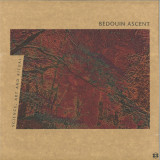
'Science, Art And Ritual' is a story of ‘process'. Growing up in Harrow (a then quiet suburb of London) in the 70’s and 80’s from the age of about 10, Kingsuk Biswas aka Bedouin Ascent's ears opened up to sound as he scanned the airwaves. The undeniable righteousness of 80’s dub via David Rodigan’s Roots Rockers shows was the first prominent influence he received, and with punk roots —and his burgeoning record collection— became exposed to the breathless post punk experimentation that followed in the early 80’s sweeping up free jazz, noise, dub and much more. Throughout though, he maintained his fascination with Indian Classical music which was a mainstay in his parent’s house and spoke with the same infinite space as Joy Division's 'Unknown Pleasures', and King Tubby’s Studio dispatches. Through those teens he assembled and de-assembled, knocking about with fellow travellers —punk bands, garage, space rock, noise. Something was happening. On-U Sound, ECM, Factory Records kept him plugged in and sane.
At that time Kingsuk's core studio setup revolved around his vintage Gretsch, Fender Jazz, Moog, TR-606 and rudimentary FX. He added congas, folk instruments, pipes, hand percussion, gongs, and jammed out shards of funk, noise, jazz fusion, electro and ambience into his hungry Tascam Portastudio. By 1987 these had morphed into what we’d now refer to broadly as techno, but the genre didn't exist beyond the reverberating walls of his bedsit, and he hadn’t yet plugged into the global conversation.
'Science, Art And Ritual' was released in 1994 by Rising High Records and was presented as Bedouin Ascent's debut album, although 'Music for Particles' (released in 1995, again on Rising High) was recorded even before —'SAR' sessions span from 1992-1993, whereas 'Music for Particles' were earlier from 1989-1992, with some older 4-track references from about 1986 too.
Weaved in throughout the album are subconscious references to music that Kingsuk heard in the past that still remained within sight as companions. The opening track "Ancient Ocean III", referencing the extinct ocean Tethis, unapologetically channels Tackhead, Colourbox, Mantronix and Lee Perry. The style was also deliberately juxtaposed to the prevailing sound in techno at the time, which had locked onto a rigid form of symmetrical kicks and light snare drums. Elsewhere 80’s soul and funk are frozen and captured in fragile glass lattices. Electric pianos resound throughout, such as in "He Is She", probably a half-memory of 70’s MOR radio from childhood sleepy night drives. A duel between kick drums from three generations of Roland drum machines —TR-808, TR-707 and R-8— is a central theme in "Transition-R", all in conversation, calling and responding. These were not just machines to Bedouin Ascent, but part of an extended family, with heart and soul.
Three decades after seeing the light, Lapsus is proud to present a special 30th anniversary reissue of this
left-field techno gem in a repackaged and redesigned edition. All pressed on a deluxe 3LP marbled vinyl and including a limited lithographic insert print of the original album cover. All tracks have been restored and remastered directly from the original DAT tapes, and the album also features previously unreleased tracks such as "In the Clouds" and "Thru Water" —regularly performed live at that time and produced in the same period as the album sessions in 1993.
'Science, Art And Ritual’ may refer to esoteric traditions in Indian philosophy, but equally embodies the collision of the science, the art and the ritual that is at the core of being immersed in a deep musical journey.
Disponibile in Stock e pronto per la spedizione

Mannequin Records is proud to present the official reissue of Caroline K's outstanding 1987 album, "Now Wait For Last Year."
This haunting, wistful work of post-industrial synthesizer music sees the late Nocturnal Emissions co-founder only solo record, which has accrued a fervent cult following over the past 40 years, and copies of the original pressing are today extremely rare and sought-after.
The music on "Now Wait For Last Year" seems to exist firmly outside of it. Tags like industrial, minimal synth or proto-techno can't really do justice to the richly cinematic sound-world that Caroline K describes: from the sustained ambient tension of sidelong opener "The Happening World" to the future-primitive rhythms and stately piano flourishes "Animal Lattice", and the melancholic, deep-frozen synth sequences of "Cheart".
For fans of Throbbing Gristle, Chris Carter, Nocturnal Emissions and even early Detroit techno lovers should pay special attention to it.
All selections composed, arranged and played by Caroline K
Recorded and produced by Caroline K
Photograph by Jake Kirkwood
Original design by Nigel Ayers
The first five tracks of Now Wait For Last Year were originally released as a vinyl LP by Earthly Delights in 1987
Disponibile in Stock e pronto per la spedizione
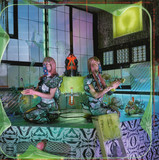
Berlin club and party-starters Sameheads return to black wax on April 10th with “ZEUG!”, a 4-track EP from various celebrated artists, who join forces in new and unheard ways for a stack of outernational and spaced-out dancefloor jams for creative dance floors worldwide and beyond.
Berlin-based CROSSLUCID, AKA Sylwana Zybura and Tomas C. Toth, have delivered another stunning example of their perception-bending otherworldly viewpoint with the artwork for the release. A purely analog production, fusing clever lighting tricks, hand-made props, and a healthy dose of shaving foam and dry ice… This “Cult of the Cosmic Swamp” chimes with the weird tribal rhythms contained on the record.
First up is Mameen 3 (a side-project from Brussels selector DJ Sofa) & Romanian pioneer Rodion G.A with ‘Planet Cluj’, a suitably off-world excursion through a fun-packed disco hall in some far-off colony where layered synths are stacked, elements seeping through one another to form a mesh of groove.
Anatolian Weapons’ cosmic fireside ritual, ‘Chant 3’, heats up the A2 with vibrant and punchy percussion loops woven together with a worldwide chorus of chanters. Building continuously, the tough workout is dosed up with a bassline saturated in attitude for a high-energy finish.
Picking up on the B side are KRENG (a morphic form composed of Don’t DJ and Dane Close), who slow the pace down with a latticed beatwork combining robust dance formulas and blasting syncopation. Letting the rhythm do the legwork for the first half of the track, the pair then pour out a sludged mess of grime-infused bass over the percussive chaos.
Silvia Kastel and Wilted Woman close proceedings as SHAKEY with a dubwise workout that straddles b-side house obscurity and stoned live dub improvisation: steel drums patter at the windows of Paradise Garage as Larry Levan fights off the vampires alongside Scientist.
The release is celebrated at Sameheads on April 10th with an extremely rare live show from Rodion G. A., an appearance from INVERSIONS label owner Milo Smee, and a b2b from Don’t Dj & Dane Close. Limited to 300 pieces, this record will find a home in the stacks of DJ’s willing to step outside genre and convention.
Disponibile in Stock e pronto per la spedizione

Legacy Chicago craftsman Mark Nelson’s latest offering as Pan. American is less a distillation or divergence than it is a return to his musical and spiritual beginnings. Spare, subdued, and largely acoustic, A Son unfurls like late summer dusk on the edge of town, expansive but intimate.
Motivated by notions of “moving backward” and tracing roots – as well as a couple years of hammered dulcimer lessons – the album’s nine songs were written and recorded in his home in Evanston, Illinois, and honed during a recent solo tour in Europe. The emphasis on uncluttered arrangements and the centrality of the guitar and vocals reveal these songs as the most direct and emotional statement of his career.
Nelson cites everything from June Tabor, The Carter Family, Suicide and Jimmy Reed as oblique inspirations, though his truest muse was creative self-inquiry: “What does music do, Where does music start? How simple can it be? How honest can it be?”
After decades of mining post-rock pathways and latticework electronics in Labradford and early Pan. American, A Son strips away ornament and distraction in favor of a direct gaze into the heart of what is.
Disponibile in Stock e pronto per la spedizione
Josh Mason’s new collection, "Wave Salt +7," emerges from an oblique origin. Unearthed from a dormant hard drive, it documents a set of work sessions only partially recoverable, their original continuity and intent fractured by time and technical failure. What remains is a constellation of mercurial gestures that proves, against all odds, to be entirely consonant with Mason’s ongoing musical concerns.
In a sense, the very condition of partiality proves generative, with elision operating on multiple levels - structural, sonic, and archival - shaping both the music itself and the circumstances of its (re)appearance. Phrases surface only to be truncated or displaced, hovering at the edge of resolution, and transitions are implied rather than fully enacted. Absence functions not as a deficit, but as an important compositional resource.
Central to the album’s sound is a distinctive use of vocoding. Deployed not to simulate vocal presence but as a tool for tonal sculpting, it yields a shifting lattice of smeared harmonics, angular melody, and attenuated noise. Sounds are pressed through one another, their edges softened, shifted, or selectively erased, producing surfaces simultaneously articulated and porous. Rather than reconstructing a lost whole, the album posits a mode of listening attuned to gaps, interruptions, and unstable forms. Even so, in keeping with Mason’s broader practice, this music remains grounded in melodic logic and a distinctly human scale, ensuring that its fragmentary structures register not solely as experiments, but as expressions of proximity and feeling.
dovrebbe essere pubblicato su 29.05.2026

In an engrossing lattice of polyrhythmic beat science and deep atmospheric meditation, Samurai Music is thrilled to welcome Marco Shuttle to the fold for the Sumud EP.
Since his early years locked into the 00s London techno scene, Marco Sartorelli has developed as an artist entirely on his own terms. Through the rush of new ideas and cross-pollination that has characterised cutting-edge techno over the past 20-odd years, Sartorelli has travelled as Marco Shuttle from one considered stylistic concept to the next. On his own Eerie label and across expansive releases for respected outposts such as Spazio Disponibile, Incensio and Astral Industries, he's taken an exploratory approach to rhythm and spatial design while always drawing on intentional thematic frameworks, creating distinctive and immersive dance music in the process.
As Samurai Music continues to celebrate the rich seams of inspiration where deep techno and drum & bass intersect, Sartorelli's malleable, mysterious strain of drum work fits right in and sets a captivating tone for the label's operations in 2026. 'Sumud' is a steely drum mantra dealing in fractured patterns with the primal patina of the early Artificial Intelligence era, while 'Las Dunas de Taroa' leans on gently pulsing melancholia undulating at a half-time pace. 'Iso 50' taps into raw, analogue minimalism once more, evoking the sound of Roman Flugel's Ro70 records in their icy, alien formation. Completing the set, we're guided towards the tense electronica of 'Polylayering What I've Got', where uneasy melodic chimes interlock with intricately programmed drum machines.
There's a distinct sense of golden-era, mid-90s electronica coursing through Sumud EP, but Sartorelli shrouds the classic tools at his disposal in his subtle signature atmospherics, pushing towards a plain of expression that transcends time.
Ordina ora e ordineremo l'articolo per te presso il nostro fornitore.
Yellow Vinyl
Blue Lake reveals his most ambitious album yet, which finds its visionary creator Jason Dungan harnessing the collective alchemy of his band, with ten spirited tracks that resonate with a powerful directness, evoking an ecological connection to the wider world.
The solo project (Blue Lake), now on its fifth album, found its name and inspiration via Don Cherry's 1974 live album, sparking a creative epiphany in Dungan, who set off on a path into his own untapped sonic world, guided by what he cited as the emotional potential found within non-lyrical composition. With a newly inspired ethos aimed toward creating direct and simple instrumental music imbued with a deep sense of feeling, Jason began combining an array of musical elements that gave rise to his highly revered album 'Sun Arcs' (2023), with its "ornate, zither-led lattices" (Pitchfork, Best New Music). Conceived in the blissful isolation of a Swedish cabin set in the woods, this was music that soundtracked spring in full bloom. Then, in contrast to the solitary approach of 'Sun Arcs', the highly lauded mini-album 'Weft' (2025) began to set the tone for a more band-oriented approach to delivering the Blue Lake sound. Jason had by this time experienced a special collective energy with his band during a swathe of live performances, which he then sought to harness and distill on 'The Animal', leading him to take the project into a traditional recording studio (The Village) and its limitless potential along with his gifted cohorts.
'The Animal' at its core vividly celebrates human collaboration and is deeply rooted in a sense of community and non-hierarchical connectivity. The group's creative alchemy transcends outwards and beyond the musicians performing together, to summon an inclusive, existential and ecological connection to the wider world and its inhabited spaces. The album contemplates the idea of the human as an animal as Dungan explains: "I'm quite fascinated in thinking about humans more as part of the animal environment and not as something that's so separated into a "human" realm, or sitting on top of a hierarchical pyramid. So the Animal is also me, or us - that we are just living, existing, in the same way as a piece of moss or a sparrow or a cow.
'The Animal' is a form of musical metamorphosis, still acoustic, yet more amplified, elevating it to new dimensions. The Blue Lake project takes on a new lease of life to encompass collaboration with Jason Dungan bound in a universal connectivity, resulting in his most ambitious album to date. A harmonious rejoicing that cements his reputation as a transformative presence in contemporary music.
dovrebbe essere pubblicato su 27.03.2026

Loaded with tension and anchored by bold textural and stylistic contrasts, Sam Slater’s third solo full-length finds the British sound artist, composer, and engineer grappling with his creative contradictions head-on.
Having spent a life time in bands and producing records, Sam transitioned somewhat by accident through his work with Johan Johansson into working as a composer on high profile projects such as his collaboration with Hildur Guðnadóttir on the Grammy Award-winning Joker and Chernobyl, and with Pulitzer Prize-winning journalist Mstyslav Chernov on the soundtrack to the lauded 2000 Meters to Andriivka. Having a vast set of interests and influences is an asset when helping realise a directors vision for a soundtrack, but one's own musical voice can end up being constrained. In Lunng, Slater has gone back to his wildly divergent range of influences and rather than shy away from the extremes, he's used them to create a singular vision.
Take the opening track “Heatsick”: Slater imagines an extravagant fusion of 2000s drone metal and vintage British brass, welding ear-splitting overdriven drones and blown-out choral vocals to stirring trombone swells from veteran player Hilary Jeffery. On paper, it’s hard to imagine—but Slater’s intentionality conducts these polarizing elements into a surreal blur of sonic extremes, with the guitars’ relative harshness softened by Jeffery’s eerily nostalgic colliery echoes.
His last solo album, I do not wish to be known as a Vandal (Bedroom Community, 2022), showcased this breadth by assembling a team of collaborators including Sam Dunscombe and Yair Elazar Glotman. On this record he’s linking up with acclaimed multi-instrumentalist Maria W. Horn, idiosyncratic sax virtuoso Bendik Giske, versatile percussionist Adam Betts, and the aforementioned Jeffery, Slater ushers these players toward a lattice of calculated confutations.
Working to explore the tension between the divergent practices of his collaborators—Lunng was meant to be challenging. On “Praya”, Giske’s familiar overblown horn phrases are almost vaporized, vanishing among Slater’s weightless synths and Horn’s chillingly hoarse vocals. There are traces of Horn’s Funeral Folk project, but Slater shifts the emphasis, letting her voice brush past the other elements like a hallucination.
Slater’s use of extremes isn’t just in the micro; dynamics drive the album’s overall flow. “Praya” sets the stage for the record’s heaviest, most prickly moment: “Passengers”. Here, Horn’s voice cracks, rasps, and gurgles over serrated synths and Betts’ ritualistic drums. Slater turns an industrial symphony into a folk opera—dark, dramatic, and strangely beautiful—etched with Giske’s fluttering phrases.
But the mood soon shifts. Slater careens toward chaos, unleashing double-time rhythms and piercing textures familiar to anyone with a soft spot for classic black metal. These grotesque incongruities are deliberate; Slater surveys years of musical conflict and leans in, using dissent as fuel to build kinetic energy.
The weight of sentimentality bears down on “Black Metal Rewind (Night Drive Astra, 2006)”, melting teenage memories into hypnagogic ambience—shoegaze dreams whirled with angelic choral delusions. On “Death by Nostalgia, 1688”, he ventures further into polarizing territory, distorting AutoTuned voices with cryptic strings and medieval tonalities, unsettling any stable sense of past or present.
In this record Slater focuses on pure energy, color, and mood. Lunng distills years of listening into a bracing brew—boiling each sound down to its essence, then serving it with unflinching intent.
John Twells, 2025
dovrebbe essere pubblicato su 05.02.2026

“sitting in the terminal at Barcelona airport, health safety warnings echo through empty architecture. feeling slow, and fast, out of sync with rituals and routines. structure and rhythm disintegrate into micro gestures appearing in random order, a daily psychedelia... amid all of the chaos and distraction in the last few years, it’s only through letting go that I've found solid ground to stand on.”
These are some of the experiences and reflections that gave shape to Slipstream, a hallucinatory mini-album by the artist PVAS and the fourth release on Objekt's label, Kapsela. Slipstream is an aural document of PVAS's interior life, conceived not as a grab-bag of DJ-friendly tracks (although it’s clearly inspired by the club) but as a single, delicately crafted artistic statement. The entire record is shrouded in a flickering haze, worn through by smudged breakbeats and wiry drum machines. “Wetland”, with its swampy percussion and crystalline arps, echoes T++ and Kraftwerk. The radiant incandescence of “Gathering Drift” recalls GAS or Monolake's “Hong Kong.” Sampled breakbeats dip and swerve asymmetrically through “Boba” and “Terminal”. Across the record, textures and voices are reshaped by PVAS's homemade algo-software, UMT, which, in PVAS’ own words, “reconstructs one audio file by sampling another, resulting in output that merges their aesthetic qualities, creating rhythm with non-rhythmic sound files and abusing the stereo field.” But the most striking union of technology and poetic self-exploration comes at the end of the record, in the title track, from words murmured through a classic vocoder:
“when i stop framing myself as a boundaried stone
immovable, and powerful, and heavy
when i stop figuring my deepest space as my own
something which i am solely responsible
i surrender, i surrender”
PVAS is Jordan Juras, a Berlin-based artist who grew up outside of Windsor, Ontario. He has released solo EPs on Isla and xpq?, and is half the duo NUG (3XL, West Mineral Ltd.). In addition to developing music software professionally, he has used his UMT software on records by Lyra Pramuk and Dylan Kerr. Slipstream was recorded from 2022 to 2025.
Written and produced by PVAS
Mixed by TJ Hertz
Mastered by Anne Taegert at D&M
Artwork and design by Brodie Kaman
Ordina ora e ordineremo l'articolo per te presso il nostro fornitore.

Recital releases The Holy Restaurant, the new full-length album by Derek Baron, and their first solo LP since Curtain (Recital, 2020).
The album is built from years of miniature transcriptions of improvisations, functioning in many ways as a sister to Curtain. Half-thoughts and mistakes are revisited, gilded, and illuminated. The floorboards of the album are laid with piano, organ, string pads, while serrated accruements (distortions, flourishes, and recording interferences) step and drop overhead. The resulting conflux, as Baron notes in the accompanying booklet “becomes the point and the problem to explore.”
The second track “Oven Girls” opens with us galloping on a horse in some video-game meadow on a bed of MIDI strings. Abruptly, a helicopter soars over us and we transition to a latticed guitar and woodwind exploration. The album rolls on in this fashion, juxtaposing musical half-sentences within a museum of sounds rag-picked from history and daily life. Emotional interviews with Midwestern friars who build and sell caskets are set against gothic piano and guitar duets. On “Music in the Casket,” A disorienting and hilariously epic guitar solo erupts. The penultimate titular piece, “The Holy Restaurant,” sets a text written by Baron’s grandfather. A small chorus voices his words, echoing the humanistic storytelling of “Blue” Gene Tyranny’s A Letter From Home. Under sunlit piano progressions, a fleet of smokey trumpets emerges.
Running throughout the album is a series of “traces”: short melodic phrases painted over again and again with different real and MIDI instrumentation. The “luxurious asceticism of doubling” as Baron puts it. They explain, “Part of the allure for me is that the ‘original’ material is itself kind of thin, sketchy, meaningless, maybe calling attention to itself only by way of a felicitous mistake. Hearing, transcribing, and learning what was basically only ever played first on accident becomes the guiding concern.”
The album’s shifting, variegated forms and voices pass quickly; the record feels both comforting and elusive, suitable for any hour of the day.
The Holy Restaurant features guest players Ed Atkins, Lucy Liyou, Quentin Moore, Emily Martin, Dominic Frigo, Jacob Wick, and several of Baron’s family members. It is released in a limited edition vinyl pressing of 200 copies, accompanied by a booklet of effusive program notes by the composer, alongside an assemblage of photographs, scores, and artwork.
Ordina ora e ordineremo l'articolo per te presso il nostro fornitore.

Mister Water Wet returns to Soda Gong with "Things Gone and Things Here Still," an album that radically expands the project’s purview while preserving the homespun warmth and oblique tactility that have long defined Iggy Romeu’s work. Where earlier records tilted toward the dusty swing of sample-based beatcraft or spectral minimalist jazz, here Romeu opens the frame to a more ensemble-minded approach, inviting a stellar cast of supporting musicians, including SG alumni Memotone and K. Freund, into the fold.
The result is an album that feels both broader and more intimate, with live instrumentation such as piano, strings, and reeds woven into MWW’s signature lattice of hand percussion, production sleights, and slippery time signatures. Acoustic and electronic textures bend toward each other like plants angling for the same light: bowed strings blur into vaporous pads, brushed drums scatter under riffing guitars, a horn phrase lingers in the same space as a cracked cassette loop.
A tension between decay and presence - the “things gone” and the “things here still” - runs throughout the record. At times, the music evokes a chamber session refracted through waterlogged tape; at others, it recalls the afterimage of a hip-hop instrumental slowed into an oneiric haze. In the world of MWW, memory functions less as nostalgia and more as a living fabric - mutable and resonant. "Things Gone and Things Here Still" finds Iggy Romeu at his most expansive, offering up a generous record of open spaces and porous boundaries.
Ordina ora e ordineremo l'articolo per te presso il nostro fornitore.

Skin/Glove is the second LP by Belgian musician Mathieu Serruys, following the release of his B.A.A.D.M. debut On Germaine Dulac back in 2014. Compiled over the course of a fortnight, the record features material recorded over the past five years: creaks of ice buckling under heat, thick hums like nauseating headaches, plumes of evaporated organ hymns, frostbitten crackles of dying tape loops. These disparate sources are unified by the pervasive corrosion of pain and time, which presses into the surface of every sonic object. Melodies splinter under the strain of being pulled apart; drones tremble under the gathering gravity of fatigue; dissonances flicker like candles on the brink of extinguishment. Yet despite the emotional density of the material itself, the process of composition provides a route toward comprehending how these sounds and experiences are connected. Skin/Glove reads as a constellatory map of adversity and grief, beautifully coalesced through the cathartic distance of retrospect, haunted by the sibilant whispers of distinct memories in dialogue, latticed by lesions that fatefully and poignantly intersect.
Ordina ora e ordineremo l'articolo per te presso il nostro fornitore.

A hill repeating its own name.
Ben Beinn — mountain mountain — an imagined summit, recursive and unstable.
Poole’s new album Ben Beinn follows 2024’s In a River Shadow, and deepens his exploration of environment, voice, and abstraction. If the previous record moved with flowing water and submerged hymns, Ben Beinn climbs into elemental instability: passing storms, coded skies, and sodden ground.
Across ten tracks, Poole entangles the Celtic New Age sound world — traditional instrumentation (flute, low whistle, bagpipe, piano, strings) — with synthesis, environmental recordings, and abstracted voice. The sound palette is tactile — marked by microtonal harmony, swelling dissonance, and a breathy naïvety. Voices in Gaelic, Norwegian, and English surface and dissolve, stretched beyond recognition — more weather than word.
The album’s title refers to a tautological hill — Ben Beinn, or “mountain mountain” — a recursive site where motifs surface, fracture, and re-emerge. On 365 Days of Rain, rainfall data becomes a rhythmic lattice that slips from metrical order. 1000 opens the record in cinematic emergence: mountain icicles and frozen streams swell into strings and breathy melodic weight. Pulling from the connective folktales of hill and mountain trolls — “Dance for a thousand years,” Poole writes, “for jeg har sovet tidlig så lenge.”
Recorded in Scotland between 2024–2025, Ben Beinn draws from environmental recordings of frozen hill passes, storm drains, and peat bogs using contact mics and hydrophones. Rather than simply reflecting place, these recordings press against it — layering the sonic materiality of landscape with synthesis and song. An inflection point between fabrication — folk music as performed identity, a carrier of story — and its obfuscation through digital networks, where tradition is refracted into plural forms.
Musical reference points include the emotionally saturated textures of Inoyama Land, the folk-electronic hybrids of Eli Storbekken, the hyperrealist collage practices of Noah Creshevsky, and the disquieting sonic simulations of James Ferraro. While Ferraro captures the uncanny surfaces of networked life, Ben Beinn turns inward — toward a located listening, shaped by weather, memory, and terrain.
The second in a triptych that began with In a River Shadow, Ben Beinn continues Poole’s excavation of environmental and folk material through contemporary methods. If the first record submerged itself in flowing water and submerged hymns, this one is shaped by the slow pressures of land and sky — a music of erosion, recurrence, and elemental presence.
dovrebbe essere pubblicato su 10.10.2025

Ukrainian composer Katarina Gryvul presents her third LP, SPOMYN, on Subtext. SPOMYN ('recollection') is an exploration of memory’s fragile, fragmented nature, revealing how it shapes the core of who we are. Each track is a fragment — a flicker of something lost, distorted, or forgotten — brought to life through unmediated emotion, acting as an invocation of continuity, connecting us to those who came before us and the fleeting moments of their existence that still resonate within us, and become elements in the lattice of our own selves. Gryvul’s corrupted choral pop compositions, augmented with full frequency electronic and organic experimentation, characterize SPOMYN’s uncanny and chimeric sound. Much like the blurred edges of memory itself, SPOMYN resists resolution, inviting listeners to disintegrate into worlds that linger in shadow and evoke the beauty of the unknowable.
Following her last LP Tysha (‘silence'), released in early 2022 on the Ukrainian imprint Standard Deviation, SPOMYN finds itself in a changed and fractured world in which the urgency to maintain a clear remembrance of the past in the face of erasure and misinformation is ever increasing.
Katarina Gryvul explores the simultaneously fixed and fluid nature of collective and personal narratives by filtering the remembrances of her cultural and musical experience through an idiosyncratic and intuitive approach to music production. The result is aggressively iconoclastic while holding dear the essence of the traditions she has inherited. Katarina Gryvul is a classically trained composer, violinist, and music producer. She blends concept of holophony with avant-garde techniques to develop distinct soundscapes through instruments, voice, analog synths and spatial audio.
dovrebbe essere pubblicato su 31.05.2025

Panos Alexiadis is a sound artist based in Athens, Greece, active in the field of contemporary electro-acoustic music. He founded and co-curated the tape label Thalamos, a home for exploratory sounds, where some of his own works also found their place. Marking a return after a period of (sonic) reflection, Cestrum Nocturnum is an album of remembrance and renewal. Through a lattice of self-sampled piano, fragmented voices, field recordings, and transient digital traces, Alexiadis composes a space of warmth—an electronic tapestry woven from the ephemeral. Across six pieces, sound unfolds like memory: layered, textured, dissolving at the edges yet leaving an imprint. A meditation on the cyclical nature of being and the often unnoticed beauty that quietly persists, even in the darkest hours. Cestrum Nocturnum is both a shelter and a signal.
--
The night has a thousand eyes,
And the day but one;
Yet the light of the bright world dies
With the dying sun.
The mind has a thousand eyes,
And the heart but one:
Yet the light of a whole life dies
When love is done.
Francis William Bourdillon, 1899
--
All music composed, recorded & mixed by Panos Alexiadis
Spoken word on 'But One' & ‘Follower' by Fotini Stamatelopoulou
'The Night Has a Thousand Eyes' poem by Francis William Bourdillon
Mastered by Christophe Albertijn
dovrebbe essere pubblicato su 09.05.2025

Neon Pink Vinyl. For their tenth LP in a career spanning more than two decades, Tulsa's Unwed Sailor deliver their heaviest riffs, loudest squalls, and most deeply textured arrangements yet. Cruel Entertainment is a catalogue of contrasts - dissonance and harmony, hardcore crunch and post-rock grandeur, complexity and catchiness - that adds a vibrant new dimension to the second phase of their discography, spanning thus far from 2019's landmark Heavy Age up to the "vivid, starry-eyed psychedelia" (AllMusic) of 2024's Underwater Over There. Opener and lead single, "Rock Candy", roars in with a gale of feedback, pounding drums, and nimble bass, until a latticework of howling guitars ushers us into a more goth-tinged space. It's a characteristically intricate, energetic composition that flows with remarkable ease between its parts, and wastes not a moment of its three minutes. "Monster Collecting" brings a rare combination of melancholic and driving energy, reminiscent of avowed heroes New Order, but ups the ante with a tight, fastpaced rhythm section and litany of guitar lines, until opening up into a cascade of reverberating textures and tenuous sweetness. According to Ford, the title Cruel Entertainment refers to "the hardships of being an artist and musician in the crowded, imbalanced world of social media and streaming," where the completion of a new work demands that the creator also be a promoter, content strategist, and agent, among many other intensifying challenges. Pointedly drawing inspiration from noisier, rowdier bands - including Fugazi, Quicksand, and Cherubs - here they seek a much-needed catharsis in the ongoing fight to keep the creative soul intact. Second side standout, "Monty Donahue", typifies this form of release, as massive, mid-tempo percussion leads a fluid low end theme - inspired by the dual bass assault of Dianogah - and Swatzell's chords burst into shimmering nebulas across a labyrinthine arrangement that's equally loud and beautiful. Title track, "Cruel Entertainment", is a mosaic of sound for which Ford's bass provides the mortar: taut drums list between the channels, washes of guitar stretch to the horizon, and metallic heaviness punctuates the drift. There is a confident immensity here, proving that, although Unwed Sailor have witnessed a wild amount of changes in the music industry, their knack for creating complex, vital, and masterfully produced work remains untouched.
dovrebbe essere pubblicato su 09.05.2025

Antigone is a chilling look at our already-alternate reality, coming from inside Eiko Isibashi"s own head. Her band brings a wide array of sounds and moods, shading pop, funk and jazz, ambient, electronic and musique concrète in a bittersweet latticework. Interlocking her new songs in seamless long-play flow with the compositional ambitions of her acclaimed soundtrack work, Eiko"s expressions are epic and intimate. 2025 will never be the same!
dovrebbe essere pubblicato su 28.03.2025

Emergent polymath Brother Aten makes his first outing on Bruk with an icy slice of system-ready
minimalism, guided by the cooly detached voice of Ze R.
Taking cues from cult sci-fi and early 80s no wave, Fragmented Dystopia is a crystal clear
statement trimmed of all unnecessary baggage. The title spells out the mood — Aten's
soundscapes are stark and synthetic machine mantras punched out on outboard instruments
navigating gritty, futuristic zones.
On 'Unavailable' steadily humming drones shape the space in which Ze R. hovers, initially
delivering a deadpan denial before their humanity sneaks in as the track snakes through an
intricate lattice of crisp digital percussion. Short and razor-sharp two-parter 'Fragmented Dystopia'
finds an even sparser corner to occupy within Aten's subtly cyberpunk vision, where Ze R.'s
scattered words cut a measured figure delivered at acute angles before breaking into wilder forms
at the end of Part 2.
Originally from Brooklyn and now based in Berlin, Brother Aten has been weaving a fascinating
tapestry of audio and visual work as MAF. His artwork examines the fraught relationship between
technology and society. Ze R. explores dimensions of sexuality, subjectivity and individualism
through writing, performance and community organisation.
dovrebbe essere pubblicato su 28.02.2025

On his new album ‚forge’, ambient artist KMRU explores the blend of melody and noise, rhythm and drone. ‚forge’ marks the third release on Seil Records for the Nairobi born and Berlin based producer. Made up of 10 tracks, the album effortlessly wanders from intimate compositions over field recordings to deep and rich soundscapes.
The result feels like a living, breathing organism. Music you can immerse yourself in. Like few others, the 27 year old producer carved a niche of his own, capturing the essence of his raw live performances to form a highly unique listening experience that transcends what ambient music is known for.
‚forge‘ can both exist in the background as well as front and center. Filled with intricate details and vast sonic vistas, it invites the listeners to lose themselves in the music. It’s gentle, yet uncompromising; soft and warm, yet growly and dense.
Ordina ora e ordineremo l'articolo per te presso il nostro fornitore.

Rediscovered and compiled for release shortly before her death in November 2023, Further Selections from the Electric Harpsichord presents a never-before-heard recording of composer and artist Catherine Christer Hennix's early magnum opus. Originally debuted in 1976 at the festival Brouwer's Lattice at Stockholm's Moderna Museet, The Electric Harpsichord has steadily mystified fans and students of Western minimalist music for its implacable, transformative qualities, and the long-held, relative obscurity of its creator. Like the work of Hennix's close friend La Monte Young, the piece is set in just intonation and focuses on the transcendental potentials of precise tuning, inspired by their studies with Pandit Pran Nath. Composed of bursts of oscillating, synthetic tones using a carefully retuned synthesizer and a tape-based system for feedback delay, the sounds swirl, twinkle, and appear to bend time, space, and perception. Additional, sustained chords on the sheng, most likely played by her Deontic Miracle bandmate Hans Isgren, are present at the opening of the piece and reemerge towards the end of the recording. The release of Further Selections constitutes the most comprehensive original recording of this foundational work to date. Originally billed as The Well-Tuned Organ during its debut in Sweden, The Electric Harpsichord has developed a legendary reputation, predicated on a twenty-six minute fragment salvaged and circulated by Hennix's friend Henry Flynt. Promoting its importance on multiple occasions, Flynt aired the work on WBAI radio, organized a pair of tape concerts at New York alternative arts spaces in 1970s, and later penned a 1998 essay which served as the liner notes to its eventual CD release in 2010. For him, this work not only represented a sterling milestone in minimal sonic aesthetics, but also spawned a new genre that he dubbed "hallucinogenic/ecstatic sound environments (HESE)," which in turn inspired his own drone-like compositions. Gradually, interest in the recording led to a spate of archival projects, public performances, and new compositions by Hennix in the 2010s, in turn drawing into focus her multifarious practice, which includes serious contributions towards mathematics, poetry, sculpture, Noh drama, philosophy, and light art. Since 2018, Blank Forms has spearheaded a comprehensive publication effort in support of her work, including the writing collection Poësy Matters and Other Matters (2018); archival recordings like Selected Early Keyboard Works (2018) and The Deontic Miracle's Selections from 100 Models of Hegikan Roku (2019); and recent compositions such as Blues Alif Lam Mim (2021) and Solo for Tamburium (2023).
dovrebbe essere pubblicato su 25.10.2024

Human Worth are proud to present the killer debut EP 'God Pile' from Leeds duo Grub Nap, featuring members of Thank, Dvne and Cattle, with a portion of proceeds donated to charity. Grub Nap are a 50/50, double headed, four legged, semi haggered, party at the front business at the back mash up of Dan Barter (Dvne, Joe Pesci) and Steve Myles (Thank, Cattle, Groak, Khuda). They first played together in a hardcore band in their late teens and have teamed back up to churn out sludgecore for folks with short attention spans and no interest in wizards or flag waving. A reunited earful, a midlife distraction, a questionable whiff from the back of the fridge. Crawl on in, the water’s foul. 'God Pile' is a golden brown, 15 minute, crumbly, introspective riff lattice. Snappy(ish) songs about greed, crippling anxiety, suburban nuclear mishaps and flagellant rozzers – 6 knuckle dragging clods of down tuned insolent rage. So pummelling is their racket, that they caught the ears of "supergroup" Empire State Bastard (featuring members of Biffy Clyro, Oceansize and Slayer) who invited the duo on the debut UK tour. Human Worth have pressed up a limited edition of black vinyl, with a stunning etching on side B featuring the art of Steve Myles, with 10% of all proceeds donated to Leeds Mind – promoting positive mental health and wellbeing and providing help and support to those who need it most.
dovrebbe essere pubblicato su 30.08.2024

Fourth volume of Library Music miniatures by Daniel O’Sullivan (Ulver, Æthenor, This is Not This Heat, etc) for VHF, this time commissioned by the legendary German Music Library, Sonoton. Another sampling of O’Sullivan’s versatility and brilliance as a composer, performer, and sound designer, the focus on The Pastoral Machine is more “electronic” compared to the three previous albums O’Sullivan recorded for KPM (also issued on LP by VHF), with simpler arrangements and a focus on gentle and emotive synthesised soundworlds. Even without as many full ensemble arrangements, there’s still a wealth of diversity—“Empathogen” opens the record with latticed arpeggiating sequences recalling Japanese “environmental music” or Persian Surgery-era Terry Riley, “Fruit Of Stream Entry” burbles with gentle ripples evoking the album’s title, while “The Silversmith Of Space” mines a simple chord sequence evoking Eno’s ’70s classic short instrumentals. “Superstrings” is a series of hypnotic overlapping guitar patterns, like a lost Ash Ra or Achim Reichel track. The brief “Star Lore” is a heavy highlight with deep bass washes and grainy, tape-laminated melodies, followed immediately by Rose Keeler Schaffeler’s vocal feature on “The Oscillating Love” recalling futurist new-age pop in the vein of Enya or Virginia Astley. Housed in a jacket and heavy euro-style inner featuring collages by O’Sullivan, soon to be the subject of an art book published by Timeless Editions in mid-2024.
dovrebbe essere pubblicato su 09.08.2024

Pleasure Planet’s kaleidoscopic debut album has been a long time coming, but good things come to those who wait. Developed over years of late-night studio improvisations, ‘Pleasure Planet’ is an affectionate and colorful patchwork of the New York City-based trio’s knotted influences that’s suspended between the rave and the chill-out room, weaving glistening pads and chunky basslines into vocal earworms and warm, saturated rhythmic cycles. Bandmates Andrew Potter, Kim Ann Foxman and Brian Hersey enter into a lysergic dialog with their discrete personal musical histories, drawing inspiration from vintage EBM, ambient music and heady early ’90s West Coast rave sounds and launching these classic elements into a transcendent new sonic universe.
Celebrated DJ and producer Foxman was a lead singer of Hercules and Love Affair when she first ran into DC rave veteran Potter, and the two rapidly realized their musical interests overlapped. So when Potter was recording with his studiomate Hersey, a NYC underground club scene mainstay, and they needed to bring in a vocalist, the choice was simple. Working together was a refreshing, freeing experience for the three seasoned artists, and the more they experimented, the closer they became; Foxman ended up moving into the studio, and Pleasure Planet was manifested into existence. “We’re like family,” says Potter. “We’re always on the same page – we couldn’t make this music solo.”
For Foxman, the open-ended jam sessions provided her with a chance to try something new, a few steps from the dancefloor-forward DJ tracks she’s best known for producing. And as the trio pooled their adolescent rave memories, reflecting on them with more mature ears, they began to develop the signature sound that was first heard on the Throne Of Blood-released ‘Animals’ 12″. Pleasure Planet aren’t trying to re-capture the past, but suggest a poetic contemplation that layers their recollections and musical obsessions into a hypnotic sci-fi dream. Harnessing a self-described “Aladdin’s cave” of analog and digital gear that help galvanize the timeline, they bridge the gap between avant-pop and icy bleep techno, curving suggestive words through lattices of tightly-engineered electronics.
On ‘Endless’, Foxman’s voice is echoed into a glistening haze that hovers around ethereal pads and tense, electroid pulses. Slow-moving and evocative, it’s a track that capture the open endedness of post-rave euphoria, touching the afterparty but moving far beyond the material world. She’s more recognizable on ‘Alien’, the album’s most upfront track, singing in a glassy, upper-register coo over urgent bass bumps, taut guitars and florid electronic atmospheres. “Are you an alien, or are you an angel?” she asks, fractalizing the borders between genres. And the band’s sense of cosmic togetherness bubbles to the surface on ‘Saved by the Bells’, a meditative after-hours experiment that diminishes the pulsing beats for a moment to bring out a spectrum of interconnected, serpentine melodies.
Modular bleeps and echoing percussion anchor the swooning ‘Planet Love’, one of Pleasure Planet’s most recent compositions and one of the album’s most outwardly psychedelic cuts, while the urgent and anthemic ‘Go With Madness’ steps back towards the main stage, evaporating Foxman’s memorable calls into a thumping procession of analog drums and squelchy, acidic bass tweaks. But they save the best for last, tugging at the heartstrings with ‘Remember (In Dreams)’, a giddy spiral of blipping synth arpeggios and haunting, reverberated chorals. It’s the perfect way to conclude an album that cryptically gestures towards the vulnerability of friendship, celebrating the shared experiences that result in some of the most meaningful memories of all.
Ordina ora e ordineremo l'articolo per te presso il nostro fornitore.

On her sophomore album "Germ in a Population of Buildings", upsammy moves through her surroundings with the curiosity of a place-bending landscape architect. The album is rooted in her interest for ambiguous environments in constant shift, and the feeling of discovering strange patterns in different ecosystems. Often, the Amsterdam-based artist finds herself zooming in and out beyond a place's most recognizable surface features to inhabit the microscopic and gigantic. Gathering field recordings and evocative environmental sounds, she shapes this source material into vibrating electro-acoustic rhythms and unstable, psychedelic textures. upsammy's debut album, 2020's critically-acclaimed "Zoom", was praised for its careful reimagining of IDM, evolving vignettes that nodded towards the dancefloor without being shackled to its rigid set of rules. On "Germ in a Population of Buildings" her process has evolved considerably; the skeletal trace of IDM is still present but it's been trapped in amber, allowing her unique sonic landscape to develop organically. 'Being is a Stone' is a proof of concept in many ways, layering upsammy's contorted voice in rickety patterns beneath a lattice of fragile rhythms and faintly melancholy synths. It's never immediately obvious where the sounds are coming from - a hiccuping beat might be glass cracking underfoot, and larger pulses could be wet concrete, rusted iron or bent plastic. As the sounds develop they morph into each other, demolishing what came before and building on top of the ornamental wreckage. On the dynamic 'Constructing', upsammy's sound design fluxes through hyperactive bass music structures, abstracting expectations at every turn. Often her sounds are whisper quiet, rattling and vibrating until heavier masonry drops and disrupts the structure. And when discernible rhythms subside into the background, like on the album's eerie title track, they become almost illusory, morphing between the real world and the electronic. upsammy's processed voice works like a bridge between these realms, snaking between stark, whimsical melodies on 'Patterning', arching from AutoTuned detachment into cooing, dreamy intimacy. By considering the harmonies between each location she's visited, upsammy has been able to build a unique topology that's an uncanny digital amalgam of her lived experience. It's a thoughtful alternative in an era more concerned with flatting the landscape than crumpling it and examining its peaks and troughs.
Ordina ora e ordineremo l'articolo per te presso il nostro fornitore.

The EP by Bézier "Negative Velocity" sees the Californian artist (now for a few years a Berlin resident) initiate the launch of their new German-based record label "Körperspannung".
For 'Negative Velocity', Bézier collaborated with Bay Area drummer and avant-garde musician Dave Easlick taking live recordings of him on a drum kit warping and wrapping his pieces into curves and ellipses to project mappings outward into the atmosphere. From Easlick's source material Bézier generates a technological, multi-dimensional landscape through mental manipulation of sound waves bending the fabric of time and space. For both the title track and on the b-side 'Diabolical Embroidery' the lattice work here involved sampling and resampling every puncture from Easlick to atomize, pressurise, polish and disintegrate into fine particulate matter while reassembling parts back together fortifying the sonic tapestry further.
'Deep Sea State' is an exercise showcasing the raw form of Easlick's drumming but laced with an adamantium frame. Melodies from Bézier's musical training past haunt the entire interlude.
Ordina ora e ordineremo l'articolo per te presso il nostro fornitore.

Horo proudly presents the long-awaited fourth studio album, Forces of Consciousness, by Ancestral Voices.
Following Liams first venture, 'Night of Visions,' a diary of a physical and life-changing journey to South America, he took a trip into seismic, dark, and heavy frequencies with his second LP, 'Divination,' which plunges into the notion of ritual. The third LP delved into the cosmic, devising custom tuning systems for the meditative 'Navagraha'.
Liam continues this conceptual approach that threads his work together with Forces of Consciousness - an exploratory dive into metaphysics, how consciousness creates reality, and how sound exists to bind and sustain our thoughtforms in harmony.
"I am fascinated by the intricate workings and unexplained phenomena beyond the physical. This has become a journey as I seek to understand the interconnectedness of all things. The threads that bind us to this experience.
Everything is consciousness; all things in existence are inherently conscious, including living and non-living entities. Consciousness is not merely a product of our brains and bodies but a fundamental universal aspect.
Consciousness creates reality; our consciousness shapes our perception of the world. Our thoughts and beliefs play a significant role in shaping the reality we experience.
While intangible thoughts cannot be measured physically, they shape our reality tremendously. Our thoughts significantly impact the world around us.
We are waveforms, and everything around us is sound. Sound plays a vital role in maintaining balance, whether the sound of a chirping bird, the whistles of dunes, or the resonance of the Earth.
As a collective, we make up chords that continuously merge and try to find a harmonious balance that sustains our consciousness. In essence, thought forms coexist to create harmonic structures, a lattice of electrical current that manifests as the lives we live every day."
The patterns change with the observer.
Matter is a limitation of consciousness.
That which was first was the immeasurable.
The harmonies remain.
Ordina ora e ordineremo l'articolo per te presso il nostro fornitore.

Continuing his rippin’ run of stellar EPs on the likes of Limousine Dream and Pleasure Club, Rudolf C rolls through with a new plate of precision engineered hardware for DATA DISK. The cryptic cabal laying down the 1’s and 0’s at DD have been tracking Rudi’s work via stealth satellite since his early production and A&R work at his own Salt Mines imprint. Smitten with his maximalist mutations, we’ve skulljacked four tracks of recursive, roiling Techno directly from Rudi’s brainstem and lovingly laid them wax. Mild acidity throughout has etched continuous looping grooves onto the medium, allowing the end user to retransmit this DATA through their choice of high-powered audio amplification system.
Ordina ora e ordineremo l'articolo per te presso il nostro fornitore.

**Ltd First Pressing on Black/Red Splatter Vinyl** Introducing Observers “The Age of the Machine Entities” an instrumental heavy metal reimaginin of Stanley Kubrick and Arthur C Clarke's 2001 A Space Odyssey. Observers is a new project fronted by Martin Kennedy whose ambient rock band All India Radio has seen music used in CSI, One Tree Hill and many more. Canadian metal titan Devin Townsend even covered an All India Radio song that he fell in love with while on holiday. Kennedy has also released over fifteen albums with Steve Kilbey of psychedelic rock legends The Church. Kennedy says “I’ve been fascinated by 2001 A Space Odyssey ever since my mum took me to see it in the 1970s. It blew my mind. I started making my own 2001 inspired super 8 movies, I collected everything I could afford and I’m still obsessed with it into my adult years.” “The Age of the Machine Entities” is entirely instrumental and takes us on a cosmic journey through melodic metal, atmospheric riffs and psychedelic ambient sequences with echoes of Gojira, Black Sabbath and Tangerine Dream and the early 70’s work of Pink Floyd. Indeed treats us to a searing metal version of the obscure but fan favourite “The Narrow Way Part 2” from the Floyd’s Umma Gumma. The album was mixed by Joe Haley from Tasmania’s legendary Psycroptic and the line up is Rich Gray (Annihilator) on bass, Chris Bohm on drums, and guest soloists including Joe Haley and Jake Weber. The all important visual aspect is brought to life by Ryan T Hancock (known for work with King Buffalo, ᴀɢɴᴏxɪᴀ, Robot God), who created the mesmerizing album artwork. Observers' "The Era of Machine Entities" is a fusion of artistic brilliance that pays homage to the timeless mystery of "2001: A Space Odyssey.”
dovrebbe essere pubblicato su 08.03.2024

Mount Maxwell returns with another full-length journey into memory, melody, and geography - this time roaming beyond the BC environs of his previous records into a stranger, less knowable country. While still woozily nostalgic in the vein of Only Children and The People’s Forest, this outing feels more exploratory and wide ranging in scope, with a denser mixture of influences at play. The somnambulistic drift of Sea of Milk sets the stage with a series of wavering synth pulses that push us languidly toward land, eventually setting us down on the sands of Maze Crete, where a shadowy latticework of hand drums, flutes and synths await. From there we ascend to the aptly named Sky Eye, a rolling mixture of acoustic beats and analog string machines that gives us our first bird’s eye view of the album’s landscape. A Long Road pushes the acoustic instrumentation further, with shimmering tambourine marking time for a collection of hand drums and shakers, while Ages summons up an occult-like dream of glacial arpeggios and whispering synths. Slow Moves and Tree Motion float effortlessly along on beds of lazy congas and woodblocks before finally giving way to the title track - a heady juggernaut of distorted synths and trundling rhythms that propels us through the album’s second half like a locomotive through darkening hills. Drawing the record to a close, the gently repeating keyboard phrase of Mist blooms unexpectedly into a rainbow of human voices before evaporating into the oceanic swells of Hi Traveller. And there Littlefolk leaves us as it found us; adrift in a rolling sea.
dovrebbe essere pubblicato su 24.11.2023

David Eugene Edwards has always been larger than life. His music with innovative heavy droning folk band Wovenhand, and before that the haunting revivification of high lonesome sound antique Americana of 16 Horsepower breathed a near apocalyptic sense of urgency and power into musical archetypes long abandoned in the latter-20th Century. On his first-ever solo album under his own name, Hyacinth, David Eugene Edwards delivers a sound uniquely his own, with a vulnerability and introspection unheard from him before. Stripping back the heavy rock of his recent work with Wovenhand, Hyacinth puts the man's voice, and sparing instrumentation into the main focus. There's a somber beauty and world-weary tone throughout these songs. The album could've been considered a slight return to the more melodic sounds of 16 Horsepower's Secret South (2000) and the first, self-titled Wovenhand album (2002). But there's more going on here: a rhythmic, pulsating undercurrent reminiscent of the tape loops and rudimentary rhythms of 80s Industrial post-punk as well as 808 Drill Style beats. The overall effect is often as if we're hearing the clock ticking away our own mortality. "Hyacinth was a sort of vision," Edwards says. "A dream. I sought out of my old wooden banjo and nylon string guitar a hidden path. Secrets they had kept from me within themselves all these years and created a new Mythos to myself of philosophical and spiritual ideas or concepts." Once he'd harnessed the music within, he enlisted multi-instrumentalist and producer Ben Chisholm (The Armed, Chelsea Wolfe, Converge) to help him realize the album's recording and mix. "Overall, the album is a weaving of narratives ancient and modern, of humankind's search for understanding of this world we find ourselves in and of each other. In all its simplicity and complexity," Edwards continues. "Hyacinth is a reference to the Greek myth of Apollo. And, the word meaning a precious stone and blue larkspur flower of purple and pall."
dovrebbe essere pubblicato su 29.09.2023
