quête:late echo express

Genres
Tout
Andrei Rusu - I've Lost Control

Malka Tuti is proud to present the solo debut EP by mister Andrei Rusu, 
 one half of Khidja.

After a series of stellar remixes in the past year to Cosmo Vitelli (on Im a Cliché), Dadalus & Bikarus, Santaka & Nic Arizona, Rusu is finally ready to present his own original solo materials to the world.


Ahead of a full LP planned on MT for later this year, Rusu is presenting us with 2 fresh new tracks. The A-side is a 120bpm dirty and distorted super- trippy banger for the biggest floors and the darkest rooms.

On the B-side Rusu collaborates with an artist known to the followers of the label - Decha, who contributes her signature expressive vocals on this half time industrial dub track. This time however, the vocals run through the hands of Rusu who soaks them with distortion and even more punk attitude, almost echoing the energies of the late Genesis P-Orridge.

The release includes 2 remixes by a couple of master remixers who also happen to be part of our extended family. 


Remixing the title track, and off the success of his 2 incredible albums
released on 2023 (Music From Memory & Offen), Philipp Otterbach supplies a remix for the books, channeling the original track’s intensity through oceans of reverb, whimsical samples and addictive trippy rhythms.
For the Hedesch Remix we’ve asked one of our favourite remixers out there aka Black Merlin to contribute his cut and boy he didn’t disappoint (does he ever?)


Black Merlin supplied us with a long and addictive psychedelic synthetic and very dubby journey for the b-side.

pas en stock

Commandez maintenant et nous commanderons l'article pour vous chez notre fournisseur.


Last In: 2 years ago
KALI MALONE - ALL LIFE LONG LP 2x12"

Kali Malone's anticipated new album "All Life Long" is a collection of music for pipe organ, choir, and brass quintet composed by Kali Malone, 2020 - 2023. Choral music performed by Macadam Ensemble and conducted by Etienne Ferschaud at Chapelle Notre-Dame-de-L'Immaculée-Conception in Nantes. Brass quintet music performed by Anima Brass at The Bunker Studio in New York City. Organ music performed by Kali Malone and Stephen O'Malley on the historical meantone tempered pipe organs at Église Saint-François in Lausanne, Orgelpark in Amsterdam, and Malmö Konstmuseum in Sweden. Kali Malone composes with a rare clarity of vision. Her music is patient and focused, built on a foundation of evolving harmonic cycles that draw out latent emotional resonances. Time is a crucial factor: letting go of expectations of duration and breadth offers a chance to find a space of reflection and contemplation. In her hands, experimental reinterpretations of centuries-old polyphonic compositional methods become portals to new ways of perceiving sound, structure, and introspection. Though awe-inspiring in scope, the most remarkable thing about Malone's music is the intimacy stirred by the close listening it encourages. Malone's new album All Life Long, created between 2020 - 2023, presents her first compositions for organ since 2019's breakthrough album The Sacrificial Code alongside interrelated pieces for voice and brass performed by Macadam Ensemble and Anima Brass. Over the course of twelve pieces, harmonic themes and patterns recur, presented in altered forms and for varied instrumentation. They emerge and reemerge like echoes of their former selves, making the familiar uncanny. Propelled by lungs and breath rather than bellows and oscillators, Malone's compositions for choir and brass take on expressive qualities that complicate the austerity that has defined her work, introducing lyricism and the beauty of human fallibility into music that has been driven by mechanical processes. At the same time, the works for organ, performed by Malone with additional accompaniment by Stephen O'Malley on four different organs dating from the 15th to 17th centuries, underscore the mighty, spectral power that those rigorous operations can achieve. All Life Long simmers in an ever-shifting tension between repetition and variation. The pieces for brass, organ, and voice are alternated asymmetrically, providing nearly continuous timbral fluctuation across its 78-minute runtime even as thematic material reiterates. Each composition's internal framework of fractal pattern permutations has the paradoxical effect of creating anticipated keystone moments of dramatic reverie and lulling the listener into believing in an illusory endlessness. On an even more granular level, the historical meantone tuning systems of each organ used, and the variable intonation of brass and voice, provide further points of emotional excavation within the harmony. The titular composition "All Life Long" appears twice on the album, first as an extended canon for organ and again in the final quarter, compactly arranged for voice In the latter, Malone pairs the music with "The Crying Water" by Arthur Symons, a poem steeped in language of mourning and eternity. For organ, "All Life Long" moves with a patient stateliness, the drama concentrated in moments when shifting tonalities generate and release dissonance and ecstasy. For voice, each word is saturated with feeling, the singers swooping gracefully downward to capture the melancholy of the narrator's relationship to the timeless tears of the sea. "Passage Through The Spheres," the album's opening piece, contains lyrics in Italian pulled from Giorgio Agamban's essay In Praise of Profanation. In it, Agamban defines profanation as, in part, the act of bringing back to communal, secular use that which has been segregated to the realm of the sacred, a process Malone enacts each time she performs on church organs. This is not music of praise, or of spiritual revelation, but it is an artistic enactment of translating the indescribable. It carries the gravity of liturgical chant, and its fixation on the infinite, but draws its weight from the earthly realm of human experience. A music that draws the listener into the present moment where they can discover themselves within the interwoven musical patterns that can come to resemble the passage of days, weeks, years, a lifetime.

pas en stock

Commandez maintenant et nous commanderons l'article pour vous chez notre fournisseur.


Last In: 5 months ago
Cosmic Link - Cosmic Link LP

Cosmic Link

Cosmic Link LP

12inchHNLP004
High Noon
24.11.2023

A quietly funky collection that repays repeated play by creating a mesmeric, almost
hypnotic, cocoon to lose yourself in" Echoes
Examining our relationship with the cosmos as well as more intimate liaisons closer
to home; new transatlantic future soul duo Cosmic Link are set to release their
eponymous debut album on 24th November.
The duo consists of Florida based Jay Myztroh and Bristol based producer Ben
Dubuisson, best known for the Hundred Strong project. Citing influences of Erykah
Badu, Prince, Alice Coltrane, Stevie Wonder and Esperanza Spalding; the album
crosses cosmic soul/RnB, low-end weighted hip hop, and conscious jazz. While the
musical vibrations lay down a groove on a sensory level, the lyrics prompt deeper
subconscious thought.
Under a “Cosmic” header, side one of the album starts with ‘Let It Go’, a song about
releasing the things that no longer serve you in your life, before exploring
meditation (‘Quiet Time’), karma, and responsibility in the way you live your life
(‘Metaphysical’).
Side two of the album is grouped with the theme “Link” and as narrative, explores
the evolution of a relationship: ‘Cellphone’ expresses the desire to be close to
someone, ‘Shoot’ is the introduction to the courting stage, and ‘Show U Love’ is a
request to take a step into a committed relationship.
“All of these songs are personal,” says Jay. “They explore either my experiences or are
written to me as understandings to help me navigate this plane of existence. The
personal nature of the music is what makes it universal to all humans”.
The overall theme of the album is summed up in the lyrics of the closing title track,
“Our motion is perpetual/together we move/at the speed of life/ intertwined by our
timelines/which coincide”.
Jay explains, “There is no separating the all from the source. With all living things
being products of the Cosmos, we are forever linked to it. We all share a source, atimeline, a planet, air, a sun etc. We are linked by simply being and doing the things
beings do”.
Introduced by mutual artist friends, the catalyst for their collaboration was the 2017
album 'Black Diamonds' by Jay's previous project Stono Echo, produced by the late,
great Paten Locke. Over the course of a few years they began remotely exchanging
music and lyrics, building a catalogue of finished tracks. During this time, Myztroh
was also completing his Masters degree in choral conducting that focused on
discovering and promoting compositions from the African Diaspora. Run by Ben
Dubuisson, High Noon Music has been based in Bristol since the early 2000s,
releasing records by artists including Ben’s own Hundred Strong, plus Boca 45,
Joseph Malik, Kali Phoenix, One Cut, Mr Fantastic, and Numskullz.

pré-commande24.11.2023

il devrait être publié sur 24.11.2023


Last In: 2026 years ago
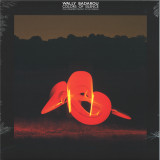
Wally Badarou - Colors Of Silence (LP)

Synth pioneer and musical polymath, Wally Badarou is a genius. But you know that already. A vinyl version of his majestic Colors Of Silence has been craved by the Balearic cognoscenti ever since its low-key 2001 release. Indeed, when we first started work on Be With, we asked some pals with exquisite taste what their dream release would be. We asked Balearic legend Moonboots and, without hesitation, he said Colors Of Silence by Wally Badarou. We didn't know Wally had made this album. And most still don't. But that's about to change.

Colors Of Silence is ostensibly a new age album. As ever though, Wally's sophisticated synth textures and expressive keyboard runs are so full of character, so full of life, that this work of art transcends any easy genre categorisation. It's simply stunning, throughout. It sounds like A.r.t. Wilson or Suzanne Kraft, with traces of CFCF and Jonny Nash. But it was made a good decade earlier than the work of these modern giants. Sometimes, it doesn't seem far from some Larry Heard albums.

Island Records founder Chris Blackwell's friend Nathalie Delon asked Wally to provide music for the yoga DVD she was to release. Lack of time on both sides made them agree on using "quality demos" Wally had in his ideas bank. It's understandable why Colors Of Silence remains somewhat of a lost gem. As Wally explains: "Total lack of promotion made it an 'intimate' release, which was exactly what I was looking for: just a buzz-maker and time-buyer that would allow me to concentrate on the real thing as soon as I'd have time, which could also turn into a rare collecting item later, once the final versions made their way to success. You never know."

Over the years, Colors Of Silence has become a true cult record for the ambient/Balearic heads.

The beguiling but brief "Dance In The Dust" is the shuffling, hyper-percussive, hypnotic opener. It gives way to the deep serenity of "Amber Whispers". It's a gliding, divine, mini melodic masterpiece. It'll make you swoon in its extreme beauty. The bright and breezy "Where Were We" follows, a tropical, reggae-tinged bounce through the islands.

The uptempo groove is maintained on the keys-drizzled soca-funk of "The Lights Of Kinshasa" before Side A is rounded out with "Pictures Of You". It starts with stately, melancholic, unadorned piano and this alone would make for a beautiful song. But Wally always gives us that bit extra and he effortlessly introduces warm, dreamy pads and minimal, slo-mo percussion to augment a frankly stunning piece of work.

Ushering in Side B, Wally's mesmeric piano playing is to the fore again, in the intro to uber-chilled "Serendipity For Two". The playing becomes more mellifluous as the track progresses and adds warmth through exotic percussion, woodwind, sweeping synths and digi-drums. It has echoes of, er, Echoes. It segues seamlessly into the more propulsive, wavy "Smiles By The Millions". If you're not nodding and grinning along widely to the gently throbbing bassline underpinning this, we can't help you. The meditative "Higher Still" follows, cinematic in feel and ever so slightly sinister with the strings. It sounds particularly Badalamenti-esque, if you ask us.

That unmistakable, almost peculiar Badarou funk - so lyrical, so texturally rich and so rhythmically spacious - is all over "Oriental". Next up, "Days To Wonder" brings the serenity back, insistent yet melodic keys, as if played in a place of worship, coupled with birdsong, conjure a kind of instant nostalgia for halcyon days of youth. The contemplative "Dawn Of Europa" is a sombre, beatless, ambient journey whilst the glorious, too-brief "Crystal Falls" features soft percussion and sparkle before fully glistening with some gentle head-nod beats. Wally brings this incredible collection to a mellow, tender close with the graceful "Purple Lines".

There can be few artists more under-appreciated given their vast influence than Wally Badarou. His solo work practically defined the sound of the Balearic DJs of the 1980s, and thus the more sophisticated sound of dance culture thereafter. A synth specialist, Badarou was the long-time associate of Level 42. He was one of the Compass Point All Stars (with Sly and Robbie, Barry Reynolds, Mikey Chung and Uziah "Sticky" Thompson), the in-house recording team of Compass Point Studios responsible for a series of albums in the 1980s recorded by Grace Jones, Tom Tom Club, Mick Jagger, Black Uhuru, Gwen Guthrie, Jimmy Cliff and Gregory Isaacs. Badarou's keyboard playing could also be heard on albums by Robert Palmer, Marianne Faithfull, Herbie Hancock, M (Pop Muzik), Talking Heads, Manu Dibango and Miriam Makeba. He also produced Fela Kuti. Phew!

Meticulously remastered and cut by both Simon Francis and Cicely Balston respectively, it has been pressed to the highest possibly quality at Record Industry in Holland. Special thanks must go to Apiento from Test Pressing who first introduced us to Wally and facilitated all those early zoom meetings. It couldn't have happened without his help. Not least on pulling the art together, too, which features striking original photography by Mads Perch. Benji Roebuck of Roebuck Press did his thing brilliantly in art working the whole package to completion. All in all: essential.

pas en stock

Commandez maintenant et nous commanderons l'article pour vous chez notre fournisseur.


Last In: 15 months ago
Duke - Early Instrumentals LP

Having toured the world with Mczo and been at the helm of his own studio Pamoja Records since he was just 18, influential Singeli producer Duke, now 25, is one of Tanzania's busiest club alchemists. On his acclaimed solo debut "Uingizaji Hewa" we were introduced to his idiosyncratic "hip-hop Singeli" sound, a slower cousin to the Dar Es Salaam-rooted hard 'n fast club template that takes as much special sauce from Busta Rhymes and Eminem as it does the 200BPM clatter of genre veterans Jay Mitta and Sisso. On September's "Sounds Of Pamoja," we were treated to a closer look into Duke's studio, and specifically at his work with the city's best young MCs like Dogo Kibo, Pirato MC and MC Kuke. "Early Instrumentals" allows us to witness the depth of Duke's evolution with a selection of unearthed genre melting Singeli mutations laid completely bare without vocals. This 11-track set features some of his most arresting hybrid dance music yet, expressing his visionary fusion of contemporary rave sounds, US rap attitude, and Tanzanian dance history. While the roots of Singeli are in taraab, a popular fusion of East African and Middle Eastern traditional dance rhythms and melodies, Duke steers the sound into a synth-led, syncopated firework display that sounds spry and futuristic. Centered arounda bumping staccato melody and urgent synth strings 'Dukelo Fl Sing' echoes the lo-swung swagger of early Dr. Dre productions, but kicks the tempo into overdrive, decorating any gaps with flickering late-nite synths. 'Beat Kali Duke' meanwhile drives carnival trance leads through hard and fast rolls of kick drums, whistles and woodblock cracks. It's not all completely high speed either: 'Duke Selecta' is almost afro-house, with slow, sexy bass and woozy vocal melodies, and 'KKKKKKKKKKKKKKK' absorbs the propulsive spirit of South African gqom. "Early Instrumentals" is the most varied picture we've been presented yet of Duke's rousing dance cocktail. IT's a physical call to action that assures listeners the genre is for movement, not headphone listening

pré-commande08.11.2023

il devrait être publié sur 08.11.2023


Last In: 2026 years ago
A.R. Kane - A.R. Kive LP 4x12"

A.r. Kane

A.R. Kive LP 4x12"

4x12inchRGIRL133
ROCKET GIRL
08.09.2023

A.R. Kive collates the three most astonishing works from that most miraculous of duos - A.R. Kane - comprising the ‘Up Home’ EP from 1988 that signified the band’s dawning realisation of their own powers and possibilities, their legendary debut LP ‘sixty nine’ (1988) and its kaleidoscopic, prophetic double-LP follow up ‘i’ (1989).

In founder-member Rudy Tambala’s new remastering, the music on these pivotal transmissions from the birth of dream pop, have been reinvigorated and re-infused with a new power, a new depth and intimacy, a new height and immensity. Vivid, timeless and yet always timely whenever they’re recalled, these records still force any listener to realise that despite the habits of retrospective myth-making and the
safe neutering effects of ‘genre’, thirty years have in no way dimmed how resistant and dissident to critical habits of categorisation A.R. Kane always were. Never quite ‘avant-pop’ or ‘shoegaze’ or ‘post-rock’ or any of those sobriquets designed to file and categorise, A.R. Kive is a reminder that those genres had to be coined, had to be invented precisely to contain the astonishing sound of A.R. Kane, because
previous formulations couldn’t come close to their sui generis sound and suggestiveness. This is music that pointed towards futures which a whole generation of artists and sonic explorers would map out. Now beautifully repackaged, remastered and fleshed out with extensive sleeve notes and accompanying materials, ‘A.R. Kive’ reveals that 35 years on it’s still a struggle to defuse the revolutionary and inspirational possibility of A.R. Kane’s music.

A.R. Kane were formed in 1986 by Rudy Tambala and Alex Ayuli, two second-generation immigrants who grew up together in Stratford, East London. From the off the pair were outsiders in the culturally mixed (cockney/Irish/West Indian/Asian) milieu of the East End, with Alex and Rudy’s folks first generation immigrants from Nigeria and Malawi, respectively. The two of them quickly developed and fostered an innate and near-telepathic mutual understanding forged in musical, literary and artistic exploration. Like a lot of second-generation immigrants, they were ferocious autodidacts in all kinds of areas, especially around music and literature. Diving deep into the music of afro-futurist luminaries such as Sun Ra, Miles Davis, Lee Perry and
Hendrix, as well as devouring the explorations of lysergic noise and feedback from contemporaries like Sonic Youth and Butthole Surfers, they also thoroughly immersed themselves in the alternate literary realities of sci-fi and ancient history (the fascination with the arcane that gave the band their name), all to feed their voracious cultural thirsts and intellectual curiosity.

It was seeing the Cocteau Twins performing on Channel 4 show the Tube that spurred A.R. Kane into being - “They had no drummer. They used tapes and technology and Liz Fraser looked completely otherworldly with those big eyes. And the noise coming out of Robin’s guitar! That was the ‘Fuck! We could do that! We could express ourselves like that!’ moment”, recalls Tambala - and through a mix of
confidence, chutzpah, ad hoc almost-mythical live shows and sheer innocent will the duo debuted with the astonishing ‘When You’re Sad’ single for One Little Indian in 1986. Immediately dubbed a ‘black Jesus & Mary Chain’ by a press unsure of WHERE to put a black band clearly immersed in feedback and noise, what was immediately apparent for listeners was just how much more was going on here - a
tapping of dub’s stealth and guile, a resonant umbilicus back to fusion and jazz, the music less a conjuration of past highs than a re-summoning of lost spirits.
The run of singles and EPs that followed picked up increasingly rapt reviews in the press, but it was the ‘Up Home EP’ released in 1988 on their new home, Rough Trade that really suggested something immense was about to break. Simon Reynolds noted the EP was: Their most concentrated slab of iridescent awesomeness and a true pinnacle of an era that abounded with astounding landmarks of guitar-reinvention, A.R. Kane at their most elixir-like.

If anything, the remastered ‘Up Home’ that forms the first part of ‘A.R. Kive’ is even more dazzling, even more startling than it was when it first emerged, and listening now you again wonder not just about how many bands christened ‘shoegaze’ tried to emulate it, but how all of them fell so far short of its lambent, pellucid wonder. This remains intrinsically experimental music but with none of the frowning orthodoxy those words imply. A.R. Kane, thanks to that second generation auto-didacticism were always supremely aware about the interstices of music and magic, but at the same time gloriously free in the way they explored that connection within their own sound, fascinated always with the creation of ‘perfect mistakes’ and the possibilities inherent in informed play.

‘sixty nine’ the group’s debut LP that emerged in 1988 had
critics and listeners struggling to fit language around A.R. Kane’s sound. As a title it was telling - the year of ‘Bitches Brew’, the year of ‘In A Silent Way’, the erotic möbius between two lovers - and as originally coined by the band themselves, ‘dream pop’ (before it became a free-floating signifier of vague import) was entirely apposite for the music A.R. Kane were making. Crafted in a dark small basement studio in which Tambala recalls the duo had “complete freedom - We wanted to go as far out as we could, and in doing so we discovered the point where it stops being music”. There was an irresistibly dreamy, somnambulant, sensual and almost surreal flow to ‘sixty nine’s sound, but also real darkness/dankness, the ruptures of the primordial and the reverberations of the subconscious, within the grooves of remarkable songs like ‘Dizzy’ and ‘Crazy Blue’. Alex’s plangent vocals floated and surged amidst exquisite peals of refracted feedback but crucially there was BASS here, lugubrious and funky and full of dread, sonic pleasure and sonic disturbance crushed together to make music with a center so deep it felt subcutaneous, music constructed from both the accidental and the deliberate, generous enough to dance with both serendipity and chaos. ‘sixty nine’ remains - especially in this remastered iteration - ravishing, revolutionary.

The final part of this ‘A.R. Kive’ contains 1989’s astonishing double-LP ‘i’ which followed up on ‘sixty nine’s promise and saw the duo fully unleash their experimental pop sensibilities over 26 tracks, plunging the A.R. Kane sound into a dazzlingly kaleidoscopic vision of pop experiment and play. Suffused with new digital technologies and combining searingly sweet and danceable pop with perhaps the duo’s strangest and boundary-pushing compositions, the album did exactly what a great double-set should do - indulge the artists sprawling pursuit of their own imaginations but always with a concision and an ear for those moments where pop both transcends and toys with the listeners expectations. Jason Ankeny has noted that “In retrospect, ‘i’ now seems like a crystal ball prophesying virtually every major musical development of the 1990s; from the shimmering techno of ‘A Love from Outer Space’ to the liquid dub of ‘What’s All This Then?’, from the alien drone-pop of ‘Conundrum’ to the sinister shoegazer miasma of ‘Supervixens’ — it’s all here, an underground road map for countless bands to follow.” Perhaps the most overwhelmingly all-encompassing transmission from A.R. Kane, ‘i’ bookended a three year period in which the duo had made some of the most prophetic and revelatory music of the entire decade.

After ‘i’ the duo’s output became more sporadic with Tambala and Ayuli moving in different directions both geographically and musically, with only 1994’s ‘New Clear Child’ a crystalline re-fraction of future and past echoes of jazz, folk and soul, before the duo went their separate ways. Since then, A.R. Kane’s music has endured, not thanks to the usual sepia’d false memories that seem to maintain interest in so much of the musical past, but because those who hear A.R. Kane music and are changed irrevocably, have to share that universe which A.R. Kane opened up, with anyone else who will listen. Far more than other lauded documents of the late 80s it still sounds astonishingly fresh, astonishingly livid and vivid and necessary and NOW.

pré-commande08.09.2023

il devrait être publié sur 08.09.2023


Last In: 2026 years ago
Arovane - Seismograf LP

Arovane

Seismograf LP

CassetteDAUW56CS
Dauw
21.07.2023

In line with his recent body of work, Uwe Zahn bundled minimal compositions telling narratives situating in the melodic realm of ambient music. On first sight, it seems common that one can enter or construct such stories through the melodies these compositions offer. However, melodies never stand on their own – maybe only theoretically – but in fact truly reveal their magic through the sonical context they’re embedded in. To Zahn, a crucial part of his practice is all about this latter notion. Finding the sweet – and sometimes hidden – spots in sound-design that allow him to express the narratives he wants to share. ‘Seismograf’ could be seen as an ode to this exploration and devoted to the practice of listening - to hear sounds that are otherwise inaudible.

“i am like a seismometer for sound structures that are hidden deep under the surface. an ear on the ground, on the earth. the other ear listens to the sky, the birds, the clouds, the wind.” Arovane

Arovane is the moniker of German based composer and sound-designer Uwe Zahn who’s working in the field of minimal electronica and experimental music. In the late 1990’s his work reached a wider audience through releases on pivotal IDM labels DIN and City Centre Offices. In recent years, he released music on 12k and Puremagnetik and collaborated with Taylor Deupree, Porya Hatami and Synkro among others.

pré-commande21.07.2023

il devrait être publié sur 21.07.2023


Last In: 2026 years ago
Lee Tracy & Isaac Manning - Is it What You Want

As the sun sets on a quaint East Nashville house, a young man bares a piece of his soul. Facing the camera, sporting a silky suit jacket/shirt/slacks/fingerless gloves ensemble that announces "singer" before he's even opened his mouth, Lee Tracy Johnson settles onto his stage, the front yard. He sways to the dirge-like drum machine pulse of a synth-soaked slow jam, extends his arms as if gaining his balance, and croons in affecting, fragile earnest, "I need your love… oh baby…"

Dogs in the yard next door begin barking. A mysterious cardboard robot figure, beamed in from galaxies unknown and affixed to a tree, is less vocal. Lee doesn't acknowledge either's presence. He's busy feeling it, arms and hands gesticulating. His voice rises in falsetto over the now-quiet dogs, over the ambient noise from the street that seeps into the handheld camcorder's microphone, over the recording of his own voice played back from a boombox off-camera. After six minutes the single, continuous shot ends. In this intimate creative universe there are no re-takes. There are many more music videos to shoot, and as Lee later puts it, "The first time you do it is actually the best. Because you can never get that again. You expressing yourself from within."

"I Need Your Love" dates from a lost heyday. From some time in the '80s or early '90s, when Lee Tracy (as he was known in performance) and his music partner/producer/manager Isaac Manning committed hours upon hours of their sonic and visual ideas to tape. Embracing drum machines and synthesizers – electronics that made their personal futurism palpable – they recorded exclusively at home, live in a room into a simple cassette deck. Soul, funk, electro and new wave informed their songs, yet Lee and Isaac eschewed the confinement of conventional categories and genres, preferring to let experimentation guide them.

"Anytime somebody put out a new record they had the same instruments or the same sound," explains Isaac. "So I basically wanted to find something that's really gonna stand out away from all of the rest of 'em." Their ethos meant that every idea they came up with was at least worth trying: echoed out half-rapped exhortations over frantic techno-style beats, gospel synth soul, modal electro-funk, oddball pop reinterpretations, emo AOR balladry, nods to Prince and the Fat Boys, or arrangements that might collapse mid-song into a mess of arcade game-ish blips before rallying to reach the finish line. All of it conjoined by consistent tape hiss, and most vitally, Lee's chameleonic voice, which managed to wildly shape shift and still evoke something sincere – whether toggling between falsetto and tenor exalting Jesus's return, or punctuating a melismatic romantic adlib with a succinct, "We all know how it feels to be alone."

"People think we went to a studio," says Isaac derisively. "We never went to no studio. We didn't have the money to go to no studio! We did this stuff at home. I shot videos in my front yard with whatever we could to get things together." Sometimes Isaac would just put on an instrumental record, be it "Planet Rock" or "Don't Cry For Me Argentina" (from Evita), press "record," and let Lee improvise over it, yielding peculiar love songs, would-be patriotic anthems, or Elvis Presley or Marilyn Monroe tributes. Technical limitations and a lack of professional polish never dissuaded them. They believed they were onto something.

"That struggle," Isaac says, "made that sound sound good to me."

In the parlance of modern music criticism Lee and Isaac's dizzying DIY efforts would inevitably be described as "outsider." But "outsider" carries the burden of untold additional layers of meaning if you're Black and from the South, creating on a budget, and trying to get someone, anyone within the country music capital of the world to take your vision seriously. "What category should we put it in?" Isaac asks rhetorically. "I don't know. All I know is feeling. I ain't gonna name it nothing. It's music. If it grabs your soul and touch your heart that's what it basically is supposed to do."

=

Born in 1963, the baby boy of nine siblings, Lee Tracy spent his earliest years living amidst the shotgun houses on Nashville's south side. "We was poor, man!" he says, recalling the outhouse his family used for a bathroom and the blocks of ice they kept in the kitchen to chill perishables. "But I actually don't think I really realized I was in poverty until I got grown and started thinking about it." Lee's mom worked at the Holiday Inn; his dad did whatever he had to do, from selling fruit from a horse drawn cart to bootlegging. "We didn't have much," Lee continues, "but my mother and my father got us the things we needed, the clothes on our back." By the end of the decade with the city's urban renewal programs razing entire neighborhoods to accommodate construction of the Interstate, the family moved to Edgehill Projects. Lee remembers music and art as a constant source of inspiration for he and his brothers and sisters – especially after seeing the Jackson 5 perform on Ed Sullivan. "As a small child I just knew that was what I wanted to do."

His older brother Don began musically mentoring him, introducing Lee to a variety of instruments and sounds. "He would never play one particular type of music, like R&B," says Lee. "I was surrounded by jazz, hard rock and roll, easy listening, gospel, reggae, country music; I mean I was a sponge absorbing all of that." Lee taught himself to play drums by beating on cardboard boxes, gaining a rep around the way for his timekeeping, and his singing voice. Emulating his favorites, Earth Wind & Fire and Cameo, he formed groups with other kids with era-evocative band names like Concept and TNT Connection, and emerged as the leader of disciplined rehearsals. "I made them practice," says Lee. "We practiced and practiced and practiced. Because I wanted that perfection." By high school the most accomplished of these bands would take top prize in a prominent local talent show. It was a big moment for Lee, and he felt ready to take things to the next level. But his band-mates had other ideas.

"I don't know what happened," he says, still miffed at the memory. "It must have blew they mind after we won and people started showing notice, because it's like everybody quit! I was like, where the hell did everybody go?" Lee had always made a point of interrogating prospective musicians about their intentions before joining his groups: were they really serious or just looking for a way to pick up girls? Now he understood even more the importance of finding a collaborator just as committed to the music as he was.

=

Isaac Manning had spent much of his life immersed in music and the arts – singing in the church choir with his family on Nashville's north side, writing, painting, dancing, and working various gigs within the entertainment industry. After serving in the armed forces, in the early '70s he ran The Teenage Place, a music and performance venue that catered to the local youth. But he was forced out of town when word of one of his recreational routines created a stir beyond the safe haven of his bohemian circles.

"I was growing marijuana," Isaac explains. "It wasn't no business, I was smoking it myself… I would put marijuana in scrambled eggs, cornbread and stuff." His weed use originated as a form of self-medication to combat severe tooth pain. But when he began sharing it with some of the other young people he hung out with, some of who just so happened to be the kids of Nashville politicians, the cops came calling. "When I got busted," he remembers, "they were talking about how they were gonna get rid of me because they didn't want me saying nothing about they children because of the politics and stuff. So I got my family, took two raggedy cars, and left Nashville and went to Vegas."

Out in the desert, Isaac happened to meet Chubby Checker of "The Twist" fame while the singer was gigging at The Flamingo. Impressed by Isaac's zeal, Checker invited him to go on the road with him as his tour manager/roadie/valet. The experience gave Isaac a window into a part of the entertainment world he'd never encountered – a glimpse of what a true pop act's audience looked like. "Chubby Checker, none of his shows were played for Black folks," he remembers. "All his gigs were done at high-class white people areas." Returning home after a few years with Chubby, Isaac was properly motivated to make it in Music City. He began writing songs and scouting around Nashville for local talent anywhere he could find it with an expressed goal: "Find someone who can deliver your songs the way you want 'em delivered and make people feel what you want them to feel."

One day while walking through Edgehill Projects Isaac heard someone playing the drums in a way that made him stop and take notice. "The music was so tight, just the drums made me feel like, oh I'm-a find this person," he recalls. "So I circled through the projects until I found who it was.

"That's how I met him – Lee Tracy. When I found him and he started singing and stuff, I said, ohhh, this is somebody different."

=

Theirs was a true complementary partnership: young Lee possessed the raw talent, the older Isaac the belief. "He's really the only one besides my brother and my family that really seen the potential in me," says Lee. "He made me see that I could do it."

Isaac long being a night owl, his house also made for a fertile collaborative environment – a space where there always seemed to be a new piece of his visual art on display: paintings, illustrations, and dolls and figures (including an enigmatic cardboard robot). Lee and Issac would hang out together and talk, listen to music, conjure ideas, and smoke the herb Isaac had resumed growing in his yard. "It got to where I could trust him, he could trust me," Isaac says of their bond. They also worked together for hours on drawings, spreading larges rolls of paper on the walls and sketching faces with abstract patterns and imagery: alien-like beings, tri-horned horse heads, inverted Janus-like characters where one visage blurred into the other.

Soon it became apparent that they didn't need other collaborators; self-sufficiency was the natural way forward. At Isaac's behest Lee, already fed up with dealing with band musicians, began playing around with a poly-sonic Yamaha keyboard at the local music store. "It had everything on it – trumpet, bass, drums, organ," remembers Lee. "And that's when I started recording my own stuff."

The technology afforded Lee the flexibility and independence he craved, setting him on a path other bedroom musicians and producers around the world were simultaneously following through the '80s into the early '90s. Saving up money from day jobs, he eventually supplemented the Yamaha Isaac had gotten him with Roland and Casio drum machines and a Moog. Lee was living in an apartment in Hillside at that point caring for his dad, who'd been partially paralyzed since early in life. In the evenings up in his second floor room, the music put him in a zone where he could tune out everything and lose himself in his ideas.

"Oh I loved it," he recalls. "I would really experiment with the instruments and use a lot of different sound effects. I was looking for something nobody else had. I wanted something totally different. And once I found the sound I was looking for, I would just smoke me a good joint and just let it go, hit the record button." More potent a creative stimulant than even Isaac's weed was the holistic flow and spontaneity of recording. Between sessions at Isaac's place and Lee's apartment, their volume of output quickly ballooned.

"We was always recording," says Lee. "That's why we have so much music. Even when I went to Isaac's and we start creating, I get home, my mind is racing, I gotta start creating, creating, creating. I remember there were times when I took a 90-minute tape from front to back and just filled it up."

"We never practiced," says Isaac. "See, that was just so odd about the whole thing. I could relate to him, and tell him about the songs I had ideas for and everything and stuff. And then he would bring it back or whatever, and we'd get together and put it down." Once the taskmaster hell bent on rehearsing, Lee had flipped a full 180. Perfection was no longer an aspiration, but the enemy of inspiration.

"I seen where practicing and practicing got me," says Lee. "A lot of musicians you get to playing and they gotta stop, they have to analyze the music. But while you analyzing you losing a lot of the greatness of what you creating. Stop analyzing what you play, just play! And it'll all take shape."

=

"I hope you understood the beginning of the record because this was invented from a dream I had today… (You tell me, I'll tell you, we'll figure it out together)" – Lee Tracy and Isaac Manning, "Hope You Understand"

Lee lets loose a maniacal cackle when he acknowledges that the material that he and Isaac recorded was by anyone's estimation pretty out there. It's the same laugh that commences "Hope You Understand" – a chaotic transmission that encapsulates the duality at the heart of their music: a stated desire to reach people and a compulsion to go as leftfield as they saw fit.

"We just did it," says Lee. "We cut the music on and cut loose. I don't sit around and write. I do it by listening, get a feeling, play the music, and the lyrics and stuff just come out of me."

The approach proved adaptable to interpreting other artists' material. While recording a cover of Whitney Houston's pop ballad "Saving All My Love For You," Lee played Whitney's version in his headphones as he laid down his own vocals – partially following the lyrics, partially using them as a departure point. The end result is barely recognizable compared with the original, Lee and Isaac having switched up the time signature and reinvented the melody along the way towards morphing a slick mainstream radio standard into something that sounds solely their own.

"I really used that song to get me started," says Lee. "Then I said, well I need something else, something is missing. Something just came over me. That's when I came up with 'Is It What You Want.'"

The song would become the centerpiece of Lee and Isaac's repertoire. Pushed along by a percolating metronomic Rhythm King style beat somewhere between a military march and a samba, "Is It What You Want" finds Lee pleading the sincerity of his commitment to a potential love interest embellished by vocal tics and hiccups subtlely reminiscent of his childhood hero MJ. Absent chord changes, only synth riffs gliding in and out like apparitions, the song achieves a lingering lo-fi power that leaves you feeling like it's still playing, somewhere, even after the fade out.

"I don't know, it's like a real spiritual song," Lee reflects. "But it's not just spiritual. To me the more I listen to it it's like about everything that you do in your everyday life, period. Is it what you want? Do you want a car or you don't want a car? Do you want Jesus or do you want the Devil? It's basically asking you the question. Can't nobody answer the question but you yourself."

In 1989 Lee won a lawsuit stemming from injuries sustained from a fight he'd gotten into. He took part of the settlement money and with Isaac pressed up "Saving All My Love For You" b/w "Is It What You Want" as a 45 single. Isaac christened the label One Chance Records. "Because that's all we wanted," he says with a laugh, "one chance."

Isaac sent the record out to radio stations and major labels, hoping for it to make enough noise to get picked up nationally. But the response he and Lee were hoping for never materialized. According to Isaac the closest the single got to getting played on the radio is when a disk jock from a local station made a highly unusual announcement on air: "The dude said on the radio, 107.5 – 'We are not gonna play 'Is It What You Want.' We cracked up! Wow, that's deep.

"It was a whole racist thing that was going on," he reflects. "So we just looked over and kept on going. That was it. That was about the way it goes… If you were Black and you were living in Nashville and stuff, that's the way you got treated." Isaac already knew as much from all the times he'd brought he and Lee's tapes (even their cache of country music tunes) over to Music Row to try to drum up interest to no avail.

"Isaac, he really worked his ass off," says Lee. "He probably been to every record place down on Music Row." Nashville's famed recording and music business corridor wasn't but a few blocks from where Lee grew up. Close enough, he remembers, for him to ride his bike along its back alleys and stumble upon the occasional random treasure, like a discarded box of harmonicas. Getting in through the front door, however, still felt a world away.

"I just don't think at the time our music fell into a category for them," he concedes. "It was before its time."

=

Lee stopped making music some time in the latter part of the '90s, around the time his mom passed away and life became increasingly tough to manage. "When my mother died I had a nervous breakdown," he says, "So I shut down for a long time. I was in such a sadness frame of mind. That's why nobody seen me. I had just disappeared off the map." He fell out of touch with Isaac, and in an indication of just how bad things had gotten for him, lost track of all the recordings they'd made together. Music became a distant memory.

Fortunately, Isaac kept the faith. In a self-published collection of his poetry – paeans to some of his favorite entertainment and public figures entitled Friends and Dick Clark – he'd written that he believed "music has a life of its own." But his prescience and presence of mind were truly manifested in the fact that he kept an archive of he and Lee's work. As perfectly imperfect as "Is It What You Want" now sounds in a post-Personal Space world, Lee and Isaac's lone official release was in fact just a taste. The bulk of the Is It What You Want album is culled from the pair's essentially unheard home recordings – complete songs, half-realized experiments, Isaac's blue monologues and pronouncements et al – compiled, mixed and programmed in the loose and impulsive creative spirit of their regular get-togethers from decades ago. The rest of us, it seems, may have finally caught up to them.

On the prospect of at long last reaching a wider audience, Isaac says simply, "I been trying for a long time, it feels good." Ever the survivor, he adds, "The only way I know how to make it to the top is to keep climbing. If one leg break on the ladder, hey, you gotta fix it and keep on going… That's where I be at. I'll kill death to make it out there."

For Lee it all feels akin to a personal resurrection: "It's like I was in a tomb and the tomb was opened and I'm back… Man, it feels so great. I feel like I'm gonna jump out of my skin." Success at this stage of his life, he realizes, probably means something different than what it did back when he was singing and dancing in Isaac's front yard. "What I really mean by 'making it,'" he explains isn't just the music being heard but, "the story being told."

Occasionally Lee will pull up "Is It What You Want" on YouTube on his phone, put on his headphones, and listen. He remembers the first time he heard his recorded voice. How surreal it was, how he thought to himself, "Is that really me?" What would he say to that younger version of himself now?

"I would probably tell myself, hang in there, don't give up. Keep striving for the goal. And everything will work out."

Despite what's printed on the record label, sometimes you do get more than one chance.

pas en stock

Commandez maintenant et nous commanderons l'article pour vous chez notre fournisseur.


Last In: 3 years ago
Ezéchiel Pailhès - Mélopée

On his fourth solo album, much as in Oh! (2020), the French composer, pianist and vocalist follows his ongoing exploration of the crossroads between poetry and songs, piano and synth, old-time verses and contemporary sounds. Inspired by the rhythms, effects and speech patterns of urban music, he also delivers, with a warm and moving voice, the texts of three poetesses from the past.
Since 2013, Ezéchiel Pailhès has been crafting a unique French synth pop. On his first three albums, he switched between songs inspired by poetry, instrumental ballads and electronica with hummed
choruses. This latest record is a collection of eleven new songs, two of which he wrote: "Opaline" and "Ni toi, ni moi" (neither you nor me). The others are adaptations of poems written in the 16th, 18th and
19th centuries by French poetesses Louise Labé (1524-1566), Marceline Desbordes-Valmore (1786- 1859) and Renée Vivien (1877-1909).
Poetesses from the past...
From classical music to songs, poetry adaptation is an old French tradition. "My universe has always embraced the musicality of this literary genre," the artist recalls. He actually started this project in 2017 with poems and sonnets by William Shakespeare, Pablo Neruda, Victor Hugo and above all Marceline Desbordes-Valmore, who can be heard again on songs such as "Dors-tu?" (Are you sleeping?),
"Élégie" or "L'attente" (The wait). A figure of romanticism, the author left her mark on the early 19th century through the quality of her texts and her formal inventions, particularly praised by Balzac, and
apparently a decisive influence on Verlaine and Baudelaire. "Marceline's poetry is very musical," says Ezéchiel admiringly. "Her use of rhythm and repetition sounds great and takes on a new perspective when set to music. In fact, she wrote some of her texts with singing in mind.”
“Ces longs secrets dont l'amour nous accuse, Viens-tu les rompre en songe à mes genoux ? Dors-tu, ma vie ! ou rêves-tu de moi ?”
“These long secrets for which love accuses us, Do you come to my knees to break them in a dream?
Are you sleeping, my life! or do you dream of me” (“Dors-tu ?”, after “Les pleurs” (the tears), 1833)
Besides her, we find the more famous, and rebellious, Renée Vivien, whose texts inspired three songs, "Regard en arrière" (Looking backwards), "Mélopée" (Melopoeia) and "La fille de la nuit" (The
night girl). Sometimes nicknamed "Sapho 1900", this figure of lesbian culture and, more broadly, of female genius, combined in her work the themes of desire, dreams, melancholy and the relationship with nature.
“Ta forme est un éclair
Ton sourire est l’instant Tu fuis, lorsque l’appel
T’implore, ô mon Désir !”
"Your shape is a spark of lightning
Your smile, the very moment
You flee, when the calling
Begs you, O my Desire!"
(After “Parle-moi, de ta voix pareille à l’eau courante” (Speak to me, with a voice like flowing waters) and “Ta forme est un éclair” (Your shape is a spark of lightning), Renée Vivien, 1901)
Lastly, with "Tant que mes yeux" (As long as my eyes), Ezéchiel was inspired by a 1555 poem by Renaissance poet Louise Labé, whose main topic explored female love, physical and spiritual desire,
and the torments and pains they generate.
" At the start of the project ", Ezéchiel continues, " I was interested in many poets, men and women, past and present, before my selection was narrowed down to these three female authors. Their works,
often written in difficult or secret conditions, express a raging romanticism, a passionate soul, fuelled by desperate and tormented love. I found it interesting, as a man coming from another world and time, to face this otherness, to trade viewpoints. Obviously, I could loudly claim that the album was the result of a concept, that it reflects today's world, and that it allows me to explore the notion of gender,
giving visibility to the work of a few women, while at the same time pairing these ancient texts with a more modern and rhythmic music, and obviously, there is some truth in that. But more than anything, I
wanted to serve the text itself, to express the emotion and connection I felt with these works.”
Today's rhythms and prosody...
Ezéchiel Pailhès combines texts from French literature with electronic music, its effects and rhythms, as well as a form of scansion that echoes rap, R&B or the current fusion between hip hop and pop,
which is part of our musical background and that of younger generations. "I wanted to cross-reference texts from the beginning of the century with this type of music. I wanted to use today’s techniques to tell the tale of different daily lives and experiences.
The album is thus marked by contemporary electronic orchestrations, in which he drops his favourite instrument, the piano, and his digital collage technique to use more extensive synth melodies, enhanced by drum machines, bringing a gentle and bright vibe to the romantic texts. Lastly, we can hear slight digital tones of Auto-Tune, which Ezéchiel uses sparingly and inventively.

Beyond its sophistication, the term "melopoeia" means a "sung declamation", a "recitative song", sometimes interpreted in a monotonous way. On this album, it could also refer to a sense of phrasing, which does not come from rap, but rather from jazz, Ezéchiel's first love. " In the past, I tried to hide my jazz culture, but it naturally came back on this new album, as can be heard, for instance, in Regard en arrière.” With its verses anchored in our literary memory, the following track "Mélopée", perfectly illustrates the album's vision. It manages to transcend eras, mixing past romanticism with a modern
prosody, fuelled by the nonchalance of hip hop and the warm chords of jazz.
“Qu’un hasard guide enfin mon désespoir tranquille
Vers l’eau d’une oasis ou les berges d’une île,
Où je puisse dormir, mon voyage accompli,
Dans la sécurité profonde de l’oubli”
"May chance guide my quiet sorrow, at last
To the water of an oasis, the shores of an island,
Where I may sleep, having traveled my way,
In the safe depths of oblivion".
(After “Sillages” (Trails), René Vivien, 1908)

pas en stock

Commandez maintenant et nous commanderons l'article pour vous chez notre fournisseur.


Last In: 3 years ago
Lee Tracy & Isaac Manning - Is it What You Want LP

As the sun sets on a quaint East Nashville house, a young man bares a piece of his soul. Facing the camera, sporting a silky suit jacket/shirt/slacks/fingerless gloves ensemble that announces "singer" before he's even opened his mouth, Lee Tracy Johnson settles onto his stage, the front yard. He sways to the dirge-like drum machine pulse of a synth-soaked slow jam, extends his arms as if gaining his balance, and croons in affecting, fragile earnest, "I need your love… oh baby…"

Dogs in the yard next door begin barking. A mysterious cardboard robot figure, beamed in from galaxies unknown and affixed to a tree, is less vocal. Lee doesn't acknowledge either's presence. He's busy feeling it, arms and hands gesticulating. His voice rises in falsetto over the now-quiet dogs, over the ambient noise from the street that seeps into the handheld camcorder's microphone, over the recording of his own voice played back from a boombox off-camera. After six minutes the single, continuous shot ends. In this intimate creative universe there are no re-takes. There are many more music videos to shoot, and as Lee later puts it, "The first time you do it is actually the best. Because you can never get that again. You expressing yourself from within."

"I Need Your Love" dates from a lost heyday. From some time in the '80s or early '90s, when Lee Tracy (as he was known in performance) and his music partner/producer/manager Isaac Manning committed hours upon hours of their sonic and visual ideas to tape. Embracing drum machines and synthesizers – electronics that made their personal futurism palpable – they recorded exclusively at home, live in a room into a simple cassette deck. Soul, funk, electro and new wave informed their songs, yet Lee and Isaac eschewed the confinement of conventional categories and genres, preferring to let experimentation guide them.

"Anytime somebody put out a new record they had the same instruments or the same sound," explains Isaac. "So I basically wanted to find something that's really gonna stand out away from all of the rest of 'em." Their ethos meant that every idea they came up with was at least worth trying: echoed out half-rapped exhortations over frantic techno-style beats, gospel synth soul, modal electro-funk, oddball pop reinterpretations, emo AOR balladry, nods to Prince and the Fat Boys, or arrangements that might collapse mid-song into a mess of arcade game-ish blips before rallying to reach the finish line. All of it conjoined by consistent tape hiss, and most vitally, Lee's chameleonic voice, which managed to wildly shape shift and still evoke something sincere – whether toggling between falsetto and tenor exalting Jesus's return, or punctuating a melismatic romantic adlib with a succinct, "We all know how it feels to be alone."

"People think we went to a studio," says Isaac derisively. "We never went to no studio. We didn't have the money to go to no studio! We did this stuff at home. I shot videos in my front yard with whatever we could to get things together." Sometimes Isaac would just put on an instrumental record, be it "Planet Rock" or "Don't Cry For Me Argentina" (from Evita), press "record," and let Lee improvise over it, yielding peculiar love songs, would-be patriotic anthems, or Elvis Presley or Marilyn Monroe tributes. Technical limitations and a lack of professional polish never dissuaded them. They believed they were onto something.

"That struggle," Isaac says, "made that sound sound good to me."

In the parlance of modern music criticism Lee and Isaac's dizzying DIY efforts would inevitably be described as "outsider." But "outsider" carries the burden of untold additional layers of meaning if you're Black and from the South, creating on a budget, and trying to get someone, anyone within the country music capital of the world to take your vision seriously. "What category should we put it in?" Isaac asks rhetorically. "I don't know. All I know is feeling. I ain't gonna name it nothing. It's music. If it grabs your soul and touch your heart that's what it basically is supposed to do."

=

Born in 1963, the baby boy of nine siblings, Lee Tracy spent his earliest years living amidst the shotgun houses on Nashville's south side. "We was poor, man!" he says, recalling the outhouse his family used for a bathroom and the blocks of ice they kept in the kitchen to chill perishables. "But I actually don't think I really realized I was in poverty until I got grown and started thinking about it." Lee's mom worked at the Holiday Inn; his dad did whatever he had to do, from selling fruit from a horse drawn cart to bootlegging. "We didn't have much," Lee continues, "but my mother and my father got us the things we needed, the clothes on our back." By the end of the decade with the city's urban renewal programs razing entire neighborhoods to accommodate construction of the Interstate, the family moved to Edgehill Projects. Lee remembers music and art as a constant source of inspiration for he and his brothers and sisters – especially after seeing the Jackson 5 perform on Ed Sullivan. "As a small child I just knew that was what I wanted to do."

His older brother Don began musically mentoring him, introducing Lee to a variety of instruments and sounds. "He would never play one particular type of music, like R&B," says Lee. "I was surrounded by jazz, hard rock and roll, easy listening, gospel, reggae, country music; I mean I was a sponge absorbing all of that." Lee taught himself to play drums by beating on cardboard boxes, gaining a rep around the way for his timekeeping, and his singing voice. Emulating his favorites, Earth Wind & Fire and Cameo, he formed groups with other kids with era-evocative band names like Concept and TNT Connection, and emerged as the leader of disciplined rehearsals. "I made them practice," says Lee. "We practiced and practiced and practiced. Because I wanted that perfection." By high school the most accomplished of these bands would take top prize in a prominent local talent show. It was a big moment for Lee, and he felt ready to take things to the next level. But his band-mates had other ideas.

"I don't know what happened," he says, still miffed at the memory. "It must have blew they mind after we won and people started showing notice, because it's like everybody quit! I was like, where the hell did everybody go?" Lee had always made a point of interrogating prospective musicians about their intentions before joining his groups: were they really serious or just looking for a way to pick up girls? Now he understood even more the importance of finding a collaborator just as committed to the music as he was.

=

Isaac Manning had spent much of his life immersed in music and the arts – singing in the church choir with his family on Nashville's north side, writing, painting, dancing, and working various gigs within the entertainment industry. After serving in the armed forces, in the early '70s he ran The Teenage Place, a music and performance venue that catered to the local youth. But he was forced out of town when word of one of his recreational routines created a stir beyond the safe haven of his bohemian circles.

"I was growing marijuana," Isaac explains. "It wasn't no business, I was smoking it myself… I would put marijuana in scrambled eggs, cornbread and stuff." His weed use originated as a form of self-medication to combat severe tooth pain. But when he began sharing it with some of the other young people he hung out with, some of who just so happened to be the kids of Nashville politicians, the cops came calling. "When I got busted," he remembers, "they were talking about how they were gonna get rid of me because they didn't want me saying nothing about they children because of the politics and stuff. So I got my family, took two raggedy cars, and left Nashville and went to Vegas."

Out in the desert, Isaac happened to meet Chubby Checker of "The Twist" fame while the singer was gigging at The Flamingo. Impressed by Isaac's zeal, Checker invited him to go on the road with him as his tour manager/roadie/valet. The experience gave Isaac a window into a part of the entertainment world he'd never encountered – a glimpse of what a true pop act's audience looked like. "Chubby Checker, none of his shows were played for Black folks," he remembers. "All his gigs were done at high-class white people areas." Returning home after a few years with Chubby, Isaac was properly motivated to make it in Music City. He began writing songs and scouting around Nashville for local talent anywhere he could find it with an expressed goal: "Find someone who can deliver your songs the way you want 'em delivered and make people feel what you want them to feel."

One day while walking through Edgehill Projects Isaac heard someone playing the drums in a way that made him stop and take notice. "The music was so tight, just the drums made me feel like, oh I'm-a find this person," he recalls. "So I circled through the projects until I found who it was.

"That's how I met him – Lee Tracy. When I found him and he started singing and stuff, I said, ohhh, this is somebody different."

=

Theirs was a true complementary partnership: young Lee possessed the raw talent, the older Isaac the belief. "He's really the only one besides my brother and my family that really seen the potential in me," says Lee. "He made me see that I could do it."

Isaac long being a night owl, his house also made for a fertile collaborative environment – a space where there always seemed to be a new piece of his visual art on display: paintings, illustrations, and dolls and figures (including an enigmatic cardboard robot). Lee and Issac would hang out together and talk, listen to music, conjure ideas, and smoke the herb Isaac had resumed growing in his yard. "It got to where I could trust him, he could trust me," Isaac says of their bond. They also worked together for hours on drawings, spreading larges rolls of paper on the walls and sketching faces with abstract patterns and imagery: alien-like beings, tri-horned horse heads, inverted Janus-like characters where one visage blurred into the other.

Soon it became apparent that they didn't need other collaborators; self-sufficiency was the natural way forward. At Isaac's behest Lee, already fed up with dealing with band musicians, began playing around with a poly-sonic Yamaha keyboard at the local music store. "It had everything on it – trumpet, bass, drums, organ," remembers Lee. "And that's when I started recording my own stuff."

The technology afforded Lee the flexibility and independence he craved, setting him on a path other bedroom musicians and producers around the world were simultaneously following through the '80s into the early '90s. Saving up money from day jobs, he eventually supplemented the Yamaha Isaac had gotten him with Roland and Casio drum machines and a Moog. Lee was living in an apartment in Hillside at that point caring for his dad, who'd been partially paralyzed since early in life. In the evenings up in his second floor room, the music put him in a zone where he could tune out everything and lose himself in his ideas.

"Oh I loved it," he recalls. "I would really experiment with the instruments and use a lot of different sound effects. I was looking for something nobody else had. I wanted something totally different. And once I found the sound I was looking for, I would just smoke me a good joint and just let it go, hit the record button." More potent a creative stimulant than even Isaac's weed was the holistic flow and spontaneity of recording. Between sessions at Isaac's place and Lee's apartment, their volume of output quickly ballooned.

"We was always recording," says Lee. "That's why we have so much music. Even when I went to Isaac's and we start creating, I get home, my mind is racing, I gotta start creating, creating, creating. I remember there were times when I took a 90-minute tape from front to back and just filled it up."

"We never practiced," says Isaac. "See, that was just so odd about the whole thing. I could relate to him, and tell him about the songs I had ideas for and everything and stuff. And then he would bring it back or whatever, and we'd get together and put it down." Once the taskmaster hell bent on rehearsing, Lee had flipped a full 180. Perfection was no longer an aspiration, but the enemy of inspiration.

"I seen where practicing and practicing got me," says Lee. "A lot of musicians you get to playing and they gotta stop, they have to analyze the music. But while you analyzing you losing a lot of the greatness of what you creating. Stop analyzing what you play, just play! And it'll all take shape."

=

"I hope you understood the beginning of the record because this was invented from a dream I had today… (You tell me, I'll tell you, we'll figure it out together)" – Lee Tracy and Isaac Manning, "Hope You Understand"

Lee lets loose a maniacal cackle when he acknowledges that the material that he and Isaac recorded was by anyone's estimation pretty out there. It's the same laugh that commences "Hope You Understand" – a chaotic transmission that encapsulates the duality at the heart of their music: a stated desire to reach people and a compulsion to go as leftfield as they saw fit.

"We just did it," says Lee. "We cut the music on and cut loose. I don't sit around and write. I do it by listening, get a feeling, play the music, and the lyrics and stuff just come out of me."

The approach proved adaptable to interpreting other artists' material. While recording a cover of Whitney Houston's pop ballad "Saving All My Love For You," Lee played Whitney's version in his headphones as he laid down his own vocals – partially following the lyrics, partially using them as a departure point. The end result is barely recognizable compared with the original, Lee and Isaac having switched up the time signature and reinvented the melody along the way towards morphing a slick mainstream radio standard into something that sounds solely their own.

"I really used that song to get me started," says Lee. "Then I said, well I need something else, something is missing. Something just came over me. That's when I came up with 'Is It What You Want.'"

The song would become the centerpiece of Lee and Isaac's repertoire. Pushed along by a percolating metronomic Rhythm King style beat somewhere between a military march and a samba, "Is It What You Want" finds Lee pleading the sincerity of his commitment to a potential love interest embellished by vocal tics and hiccups subtlely reminiscent of his childhood hero MJ. Absent chord changes, only synth riffs gliding in and out like apparitions, the song achieves a lingering lo-fi power that leaves you feeling like it's still playing, somewhere, even after the fade out.

"I don't know, it's like a real spiritual song," Lee reflects. "But it's not just spiritual. To me the more I listen to it it's like about everything that you do in your everyday life, period. Is it what you want? Do you want a car or you don't want a car? Do you want Jesus or do you want the Devil? It's basically asking you the question. Can't nobody answer the question but you yourself."

In 1989 Lee won a lawsuit stemming from injuries sustained from a fight he'd gotten into. He took part of the settlement money and with Isaac pressed up "Saving All My Love For You" b/w "Is It What You Want" as a 45 single. Isaac christened the label One Chance Records. "Because that's all we wanted," he says with a laugh, "one chance."

Isaac sent the record out to radio stations and major labels, hoping for it to make enough noise to get picked up nationally. But the response he and Lee were hoping for never materialized. According to Isaac the closest the single got to getting played on the radio is when a disk jock from a local station made a highly unusual announcement on air: "The dude said on the radio, 107.5 – 'We are not gonna play 'Is It What You Want.' We cracked up! Wow, that's deep.

"It was a whole racist thing that was going on," he reflects. "So we just looked over and kept on going. That was it. That was about the way it goes… If you were Black and you were living in Nashville and stuff, that's the way you got treated." Isaac already knew as much from all the times he'd brought he and Lee's tapes (even their cache of country music tunes) over to Music Row to try to drum up interest to no avail.

"Isaac, he really worked his ass off," says Lee. "He probably been to every record place down on Music Row." Nashville's famed recording and music business corridor wasn't but a few blocks from where Lee grew up. Close enough, he remembers, for him to ride his bike along its back alleys and stumble upon the occasional random treasure, like a discarded box of harmonicas. Getting in through the front door, however, still felt a world away.

"I just don't think at the time our music fell into a category for them," he concedes. "It was before its time."

=

Lee stopped making music some time in the latter part of the '90s, around the time his mom passed away and life became increasingly tough to manage. "When my mother died I had a nervous breakdown," he says, "So I shut down for a long time. I was in such a sadness frame of mind. That's why nobody seen me. I had just disappeared off the map." He fell out of touch with Isaac, and in an indication of just how bad things had gotten for him, lost track of all the recordings they'd made together. Music became a distant memory.

Fortunately, Isaac kept the faith. In a self-published collection of his poetry – paeans to some of his favorite entertainment and public figures entitled Friends and Dick Clark – he'd written that he believed "music has a life of its own." But his prescience and presence of mind were truly manifested in the fact that he kept an archive of he and Lee's work. As perfectly imperfect as "Is It What You Want" now sounds in a post-Personal Space world, Lee and Isaac's lone official release was in fact just a taste. The bulk of the Is It What You Want album is culled from the pair's essentially unheard home recordings – complete songs, half-realized experiments, Isaac's blue monologues and pronouncements et al – compiled, mixed and programmed in the loose and impulsive creative spirit of their regular get-togethers from decades ago. The rest of us, it seems, may have finally caught up to them.

On the prospect of at long last reaching a wider audience, Isaac says simply, "I been trying for a long time, it feels good." Ever the survivor, he adds, "The only way I know how to make it to the top is to keep climbing. If one leg break on the ladder, hey, you gotta fix it and keep on going… That's where I be at. I'll kill death to make it out there."

For Lee it all feels akin to a personal resurrection: "It's like I was in a tomb and the tomb was opened and I'm back… Man, it feels so great. I feel like I'm gonna jump out of my skin." Success at this stage of his life, he realizes, probably means something different than what it did back when he was singing and dancing in Isaac's front yard. "What I really mean by 'making it,'" he explains isn't just the music being heard but, "the story being told."

Occasionally Lee will pull up "Is It What You Want" on YouTube on his phone, put on his headphones, and listen. He remembers the first time he heard his recorded voice. How surreal it was, how he thought to himself, "Is that really me?" What would he say to that younger version of himself now?

"I would probably tell myself, hang in there, don't give up. Keep striving for the goal. And everything will work out."

Despite what's printed on the record label, sometimes you do get more than one chance.

pas en stock

Commandez maintenant et nous commanderons l'article pour vous chez notre fournisseur.


Last In: 3 years ago
FREDERIK CROENE - SOLASTALGIA EP

Frederik Croene

SOLASTALGIA EP

12inchCORTIZONA016
CORTIZONA
16.09.2022

Vessels promise an escape from responsibilities towards the landscape, they facilitate our avoidance of conscientiously feeling our attachment to the mainland. The visual nothingness of deep water and clean horizons fools the brain and delivers a treacherous feeling of independence.

We ignore the truths expressed by landscapes, so we mould them into urban projects for our strange desires. We clean up the irrationalities by which nature constructs itself. Then we look up to the skies, where the abstractions we have to draw in our minds should reside and inspire us.

We peer into the various shades of blue above the waters, the emptiness guarantees possibilities of our abstractions becoming realities. The apathetic stare into neat, straight horizons transforms our ancestral landscape into dirt and danger, when looking back to it.

To be on a ship under quarantine, is an upside down experience, for the promised escape has turned into a forced paralysis. The Lima flag (? - ? ?, in morse code), presented on the outer sleeve of this record, indirectly demands of all passengers to stay aboard and contemplate their escape from the land they now desire to return to.

These four piano pieces could be considered as a classical sonata (allegroadagio-scherzo-rondo). In a recital they are accompanied by four video pieces by artist Karl Van Welden. We picked the videos out of his extensive archive, choosing images intuitively while listening to the piano music. The theme of ships relating to quarantine thus came unannounced but of course, we were in the middle of the pandemic at the time.

Solastalgia was already waiting as a title for the new album before march 2020. I first came across the word in Underland, a book by Robert Macfarlane (2019). He defines the word as "The unhappiness of people whose landscapes are being transformed about them by forces beyond their control". These forces and this unhappiness are, I believe, what constitutes the modern human. Solastalgia, about the music We haven't found them yet, the words to talk to each other about the worrying signs of climate change. Feeling worried when walking on autumn leaves in the beginning of August should be completely normal. But how do we communicate about it? We don't want to be just the next hysterical doomer.

With this music I try to focus on the climate pain itself, gently inviting the listener to investigate their latent feelings of unease and growing concerns about the environment. As in real life, we circumvent the real issues because they are just too big, there are no words, no expressions yet.

This album tries, in four different attempts, to carve out a path towards communicating about a deeper pain that eventually will connect us all. My general method is to start with a comforting melody, full of fake nostalgia, which, after changing gear to autodestruct mode, morphs into a painful question mark.

The first part sets off with an idyllic melody, accompanied by repeated notes, as a far, muted echo of an alarm. The melody starts to explain itself painfully into a dissonant whirlwind in the high register, sounding not unlike Ravel's Gaspard de la Nuit bravura. In the second piece a warm Beatles like melody (And I love her) gets confronted with the weird hippie mantra of a later Lennon song War is over, if you want it. Sentences get reduced to syllables and result in lonely notes that crash and shiver under the burden of too much meaning. Like Shostakovich's latest work, the Sonata for viola and piano.

The descending melody of Bach's Erbarme dich, Mein Gott is echoed in the upper and lower voicings of the third piece, juxtaposed to a typical, threatening Ennio Morricone Western dotted rhythm accompaniment. This rhythm eventually evolves into citing the 1972 Captain Beefheart early ecological warning song Blabber and Smoke (there's a big pane/pain in your window, it's gonna hang you all,... dangle you all). Towards the middle of the piece, the music explodes and the three layers get dispersed all over the keyboard in a virtuosic maelstrom towards another painful question mark. The bitter answer is going back to business with a barely noticeable citation of the first notes of the RZA's Liquid Swords album.

The final piece is some kind of mantra, the same 7/4 pulse all throughout the piece. The dampers of all A's and B's on the keyboard are released by the middle pedal, thus sustaining an ever present resonance. Melodic cells alternate in shifting quantifications with small, bell like percussive cluster playing. While composing this piece an image crept up: walking out of the church on Sunday morning, tolling bells enthusiastically moderating the churchgoers' small talk in the local dialect. Apparently I have tried to evoke this kind of conversation, but injecting it with fictitious alarming conversation topics, the contemporary.

Frederik Croene (August '22)

pré-commande16.09.2022

il devrait être publié sur 16.09.2022


Last In: 2026 years ago
Bob Dylan - Nashville Skyline

For an artist whose career is flush with enigma, myth, and disguise, Nashville Skyline still surprises more than almost any other Bob Dylan move more than four decades after its original release. Distinguished from every other Dylan album by virtue of the smooth vocal performances and simple ease, the 1969 record witnesses the icon's full-on foray into country and trailblazing of the country-rock movement that followed. Cozy, charming, and warm, the rustic set remains for many hardcore fans the Bard's most enjoyable effort. And most inimitable. The result of quitting smoking, Dylan's voice is in pristine shape, nearly unidentifiable from the nasal wheeze and folk accents displayed on prior records.

Mastered on our world-renowned mastering system and pressed at RTI, this restored 45RPM analog version zeroes in on the shocking purity and never-again-replicated croon of Dylan's vocals. Enhanced, too, are the images associated with the calmly strummed and picked acoustic guitars and decay connected to the fading notes. The dimensions and ambience of the Columbia studio translate via subtle echoes and natural blend of instruments melding with one another, akin to honey integrating with tea. Providing comparably soothing effects, relaxing vibes pour forth from this reissue, which affords this masterpiece the fidelity it's always deserved. Wider grooves mean more information reaches your ears.

"Is it rolling, Bob?," Dylan famously queries producer Bob Johnston at the beginning of "To Be Alone With You," indicating the laissez-faire feelings that surrounded the sessions and helped yield the laidback, convivial music defining the album – arguably the most unique in the artist's vast catalog. While he dipped his toes into country waters on the preceding John Wesley Harding, Nashville Skyline throws its collective arms around the style in bear-hug fashion and drops any obvious folk references. Everything from the songs' moods to the amicable arrangements reacts against the era's turmoil and popular sounds.

This beautiful and beautifully executed effort might stand as Dylan's most effective protest ever, even if many missed the point upon original release. Advocating peace, love, and old-world allure without calling attention to any characteristic in an overly forward manner, Dylan frames the songs as ballads, rags, lullabies, and gentle honky-tonk dances. He adheres to expeditious brevity, keeping the arrangements tight and free of any filler, thus allowing the melodies to immediately work their magic and place hummable memories inside listeners' heads.

Indeed, if any Dylan masterpiece is overlooked, it's Nashville Skyline. In addition to his superb singing and infallible songs, Dylan enjoys backing from a crackerjack assembly of Nashville session musicians including Charlie Daniels, Marshall Grant, W.S. Holland, Charlie McCoy, Ken Buttrey, and Norman Blake. Country pros, and their respective performances, don't come any better.

As much as on any of his records, Dylan resides in a good place, mentally and emotionally. The idyllic, warmhearted environs of Nashville Skyline stand apart now just as they did in the late 1960s. The sincerity conveyed on the inviting "Lay Lady Lay," relief sighed on the romantic "Tonight I'll Be Staying Here With You," and unlimited promise expressed on the jittery "To Be Alone With You" parallel the lessons-learned yearning and genuine desire found on "One More Night," bracing "I Threw It All Away," and eternal "Girl From the North Country," performed to perfection with Johnny Cash.

pré-commande07.08.2022

il devrait être publié sur 07.08.2022


Last In: 2026 years ago
Düve - Part 1

Düve

Part 1

12inchMES006
Mesma Records
24.01.2022

Together, René Audiard and Ali Cakir are Düve: The symbiosis of René Audiard's electronic programming virtuosity and Ali’s expressive oud playing. Their first EP on Mesma, “Part 1”, compiles four diverse productions compatible with late night dances as well as escapist mind-wandering. Combining elements of dance music with improvisational oud performance and poetry, Part 1 oscillates between house, experimental music and free jazz. As a return to beat-based electronic music, Düve’s Part 1 reconnects Mesma to its love for moody microscopic house.

The opening track, “Baglama”, introduces Ali’s acoustic presence with an atonal improvisation, soon turning into a rough and upbeat rhythmic jam under’s Soren electronic direction.
“Djinn Tonic” is an intricately layered progression of loops generating an unsettling atmosphere, both futuristic and nostalgic.
Following the introductions, the full breadth of Düve’s project is developed in Avvad: A dark, textured and moody journey into an ever-changing world of echoed and looped oud phrases over a familiar house beat, connecting the whole to smokey underground dance floors.
Finally, “Santr”, the EP’s longest piece, is a hypnotic promenade led by Ali’s voice and oud and accompanied by Soren’s chopped up drums and bouncy bass — an expressive and performative track, evoking dance music only in a volatile manner.

pas en stock

Commandez maintenant et nous commanderons l'article pour vous chez notre fournisseur.


Last In: 4 years ago
Function - Existenz 4x12"

Function

Existenz 4x12"

4x12inchTRESOR315NOCOVER
Tresor
23.12.2021

H- side is etched
The American cable-television industry exploded in the 1980s, pushing broadcasts of diverse programming and emissions of low-laying cultures into homes. Community stations piggybacked on the digital developments of the time, extending their existence through telephony and broadcast a iliates. For those growing up in this time, in locations such as New York City, the localized communications beamed into their homes exposed them to an impressionable array of disparate sounds and visions.
Move into the 1990s and New York was filled to the brim of emergent cultures drawing from this ebullition of communication. From Rammellzee’s shapeshifting to the late Judy Russell and Frank and Karen Mendez’s Nu Groove imprint fusing reggae, poetry and house, nascent ideas emanated from the city walls, from within stores such as Sonic Groove store and on VHS releases such as Stakker’s The Evil Acid Baron Show, a legendary technicolor psychedelic trip along the wildest frontiers of acid house. As scenes expanded and identities developed, such individuals weather the events of the visceral now, expressing themselves right into an unpredictable future.
Function’s long career has seen him uncover a vast range of sonic identities, a mainstay through house, techno and industrial with collaborations with the likes of Regis, Damon Wild alongside his highly influential Infrastructure imprint. With influences deeply tied to pop art, rave and gay scenes, and early memories of block-parties emitting Kraftwerk and Strafe, he found himself seeking out the undercover illegal nights of the 90s on a quest of sexual unearthing, mixing the ever-yearning escapology mission of disco with the influential DJ sets of Jeff Mills.
For his new album Existenz, he marks a clear step away from the corporeal techno of his recent releases. Pivoting around themes of religion, sexuality, trauma and healing, it is a work expansive and celebratory, a clear liberation from a deeply internalized past. Formed from a collection of recordings made in a period from late 2016 to mid 2019, Existenz takes the form of a creative outburst in reaction to a number of traumas - recent, childhood and throughout Function’s life. Life partner Stefanie Parnow assisted the production process in its entirety, providing inspiration, spiritual healing and featuring vocal contributions.
Cosmic synths soar and swoop in ‘Pleasure Discipline’ through towering stacks of rhythm that stutter and creak to a halt before rebooting, a firm robotic response to human intervention. ‘Zahlensender’ reflects a spatial tetris of urban life, as digitalization set within an XYZ matrix confronts the sprawling city. Constant arpeggiated meditations echo synaptic transmissions, e ecting a dissolution of boundaries. ’The Approach’ recalls the unification of the self, a state of delirium non-subjective and smooth, as all connections and functions give way to simple intensities of feeling, crossing the threshold into spirituality. ’Golden Dawn’, featuring Stefanie Parnow, marks a further elevation of dubbed-out euphoria, as once more positive rays emerge. His ode to the effortless short-trip urban navigation 'Kurzstrecke' finds Function in motion, upfront and bold, snapshots of conversation and flickers of light. 'Ertrinken' finds metallic bass jabs swamping snipped synthetic voices, with hidden stores of emotion set as a nod to the history of vocoders as a tool for encrypted military communication. House icon Robert Owens features on 'Growth Cycle' and 'Be', entrenching a celebratory atmosphere over Function's clubwise leanings. Closing track 'Downtown 161' reflects the unmistakeable filtered and squashed interjections of television, and sampled dance vocals - a sound for the curious, dreamers and dancers.
With Existenz, Function reveals an essential body of work, spread over 4LP - thought experiments on the role of identity and spirituality after a lifetime of upheaval and trauma. Leading up until the release date, Function will undertake an album promo tour with select dates - A/V shows at Berlin Atonal and Rural festival in Japan, and three dates as part of his Bassiani residency.

pas en stock

Commandez maintenant et nous commanderons l'article pour vous chez notre fournisseur.


Last In: 4 years ago
Biffy Clyro - The Myth of The Happily Ever After

Biffy Clyro will release the surprise new project ‘The Myth of the Happily Ever After’ on October 22nd. The record is a homegrown project that represents a reaction to their #1 album ‘A Celebration of Endings’ and a rapid emotional response to the turmoil of the past year. It is the ying to the yang of ‘A Celebration’, the other-side-of-a-coin, a before-and-after comparison: their early optimism of 2020 having been brought back to earth with a resounding thud. It’s the product of a strange and cruel time in our lives, but one that ultimately reinvigorated Biffy Clyro.

“This is a reaction to ‘A Celebration of Endings’,” says vocalist / guitarist Simon Neil. “This album is a real journey, a collision of every thought and emotion we’ve had over the past eighteen months. There was a real fortitude in ‘A Celebration’ but in this record we’re embracing the vulnerabilities of being a band and being a human in this twisted era of our lives. Even the title is the polar opposite. It’s asking, do we create these narratives in our own minds to give us some security when none of us know what’s waiting for us at the end of the day?”

Grounded by lockdown, Biffy Clyro recorded ‘The Myth’ in a completely different way to how they approached ‘A Celebrations’. Rather than spending months in Los Angeles, they traded one West Coast for another by recording for just six weeks in their rehearsal room (converted DIY style into a fully functional studio by rhythm section brothers James and Ben Johnston) in a farmhouse closer to their homes.

The trio went in with the intention of completing some unfinished songs from ‘A Celebration’, but instead ‘The Myth’ took over as it started to take shape late in 2020, with everything written and recorded within a ten-mile radius. Traditionally, 90% of Biffy songs have been written in Scotland before the band head to London or Los Angeles for recording, but this represented the first time they’ve ever recorded in their homeland. As Simon jokes, “It’s our first full-on tartan album!”

‘The Myth’ blends experimental flourishes with flashes of old school Biffy. ‘Existed’ is the moment that shaped the record an elegant expression of self-doubt that redefines the sonics of the band’s catalogue of vulnerable slowburners, while ‘DumDum’ is an even bigger departure, having been constructed primarily around soft synths sampled from Simon’s voice. And ‘Slurpy Slurpy Sleep Sleep’ is just as audacious a closer as ‘Cop Syrup’ from ‘A Celebration’. It also represents one of a selection of “easter eggs” or “turns of phrase” that subtly complement and contrast the two records.

At the other extreme, devoted fans will connect with the feral anger of ‘A Hunger In Your Haunt’, the arena-scaled drama of ‘Errors In The History of God’ and the sheer catchiness of ‘Witch’s Cup’.

‘The Myth’ has been launched alongside the new track ‘Unknown Male 01’. In six adventurous minutes, the band explore every facet they’re renowned for, taking in the unguarded emotion of its introduction, a skewed off-kilter breakdown, and a jagged, spiralling riff that builds towards a cataclysmic crescendo. The song reflects on friends who have taken their own lives.

“When you lose people that you love deeply and have been a big part of your life, it can make you question every single thing about your own life,” he says. “Like a lot of creative people, I struggle with dark thoughts. If you’re that way inclined you realise you’re staring at darkness, but you don't want to succumb. Those moments don’t stop. As the song says, ‘The devil never leaves.’ There’s never a day where you wake up thinking, ‘I feel great, it won’t cross me ever again.’”

A recurring concept of the album is the power of personal convictions, which have taken on an almost religious fervour via the echo chambers of social media and news platforms. But that idea has the nuance to rise above contrasting sides of an argument, arguing that greater unity and open-mindedness is the only way forward. Elsewhere, it spans everything from gaslighting to the ultimate devotion of cults and the beautiful failure of a Japanese racehorse.

‘The Myth of the Happily Ever After’ is now available to pre-order here, with ‘Unknown Male 01’ provided as an instant download. It will be released on CD and digital formats, as well as a limited edition red vinyl which is packaged with a must-have bonus CD for fans: full audio of the acclaimed livestream show that Biffy Clyro performed at Glasgow Barrowland in August 2020 to commemorate the release of ‘A Celebration of Endings’.

After headlining Reading and Leeds in August, Biffy Clyro will also play further large-scale outdoor gigs this summer at Cardiff Bay and Glasgow Green. Plans for 2022 are also taking shape, with April’s long sold-out ‘Fingers Crossed’ intimate tour and a huge Saturday night headline set at Download. Please see the band’s official website for a full list of shows and ticket information.

pré-commande22.10.2021

il devrait être publié sur 22.10.2021


Last In: 2026 years ago
SA-ROC - THE SHARECROPPER'S DAUGHTER BONUS VINYL

(Deluxe Edition) (translucent tri-coloured vinyl LP + MP3 download code in spot-varnished sleeve)

LP comes in gold foil lamination jacket housing printed record sleeve with 1x translucent gold, black & white insomnia effect vinyl, marketing sticker and free digital download card. The Sharecropper's Daughter Bonus Vinyl contains six new tracks serving as a companion piece to Sa-Roc's already acclaimed Rhymesayers debut, The Sharecropper's Daughter, released in October of 2020. These new songs further showcase Sa-Roc's sharp skills as a lyricist, and her gift for captivating melodies and engaging content, featuring production from Sol Messiah and Evidence, as well as a guest verse from MF DOOM. The lead single for the bonus vinyl, "Wild Seeds" is a lyrical testament to the beauty, mysticism, and wisdom of the elders and ancestors who've guided and bolstered generations of Black women through history's assault and neglect of them. With a title inspired by the sci-fi novel Wild Seed by visionary author Octavia Butler, the song serves as a celebration of women such as Queen Nanny, Harriet Tubman, Sojourner Truth and many others, whose legacies inform future generations of their propensity to bloom under the harshest of conditions. "Just like wild seeds, we remain unfettered and unbroken, adding beauty and immeasurable value to a world that chooses not to acknowledge us," Sa-Roc states, "but our very existence is the only acknowledgement we require." Throughout the songs of The Sharecropper's Daughter Bonus Vinyl, Sa-Roc maintains a concise blend of thought provoking commentary and razor sharp lyricism. On the opening track, "Options", she delivers a raw and searing testimony of the dedicated yet, all too often, underappreciated artist, reminding us to give our flowers to the living while we're still able. "The Great Escape" examines humankind's tendency to try to mask the unsavory elements of our past we're either unwilling or unable to confront head on. Echoing both sentimentality and sorrow, "Reconstruction of the Heart" recalls some of Roc's childhood memories and muses on the many ways in which our earliest experiences can scar, strengthen, and shape the very core of who we'll become. The Sharecropper's Daughter Bonus Vinyl chapter fittingly comes to a close with "The Rebirth", which remarks on the plight of the vulnerable artist and the quest for balance between creative transparency and overexposure. Here, Sa-Roc labors through her discomfort and commits to being brutally honest about the experiences that have informed her expression and made her a better artist. Featured guest, the late MF DOOM continues this line of thinking, offering his own unique observations, "Quick as a quitter will fold, some of what glitters is gold. Same story is old, getting left in the blistering cold. Broken souls get remold with little arbitration. Fortune favors the bold as does incarceration." This bonus vinyl pulls no punches in showcasing Sa-Roc's continual growth as an artist who, as NPR recently put it, "is a modern day griot whose aura radiates calm in a world of chaos."

pas en stock

Commandez maintenant et nous commanderons l'article pour vous chez notre fournisseur.


Last In: 4 years ago
The Reds, Pinks and Purples - Uncommon Weather

From the many musical lives of artist Glenn Donaldson emerges The Reds, Pinks and Purples, a project that sifts out the purest elements of pop music and in the process chronicles the point of view of an assiduous San Francisco-based songwriter. The Reds, Pinks and Purples’ third album, called Uncommon Weather, is both an elusive portrait of San Francisco––during one of its fluctuations as an untenable place for musicians and artists––and also a self-portrait, however inverted, of a songwriter who has dispatched another treasured collection of timeless sounding DIY-pop songs.

How The Reds, Pinks and Purples arrived here is a story with many roots, the most consequential of which is perhaps the musical aftermath of his earlier band, The Art Museums, whose brief tenure in the late ’00s coincided with an explosive period of the Bay Area rock scene and was followed by a hermetic musical period of Donaldson’s. Disenchanted with the dissolution of his band, Donaldson averted the DIY-pop sound with an instrumental, conceptual project called FWY! but meanwhile started a habitual songwriting practice, sharing nascent songs with friends in an email exchange. In 2013–2014, The Reds, Pinks and Purples took shape as the moniker for Glenn’s most direct expressions in the DIY-pop mode, enabled by this new disciplined output. By then, San Francisco was already a changed place. The tragic loss of his former bandmate in Art Museums was another source of discontinuity and rupture. You can hear in The Reds, Pinks and Purples’ earliest songs this grappling with life, anxiety, and atrophying subcultures. For an artist with an overriding interest in the aesthetic principles of discrete musical genres, this turn toward his immediate world for subject matter was a major shift, setting The Reds, Pinks and Purples apart from Donaldson’s other musical ventures.

Preceding the release of Uncommon Weather was the Reds, Pinks and Purples’ 2nd album, one of the record buying joys of 2020, You Might Be Happy Someday, and, earlier, their first proper full length Anxiety Art, a title that might nod to the classic Television Personalities song “Anxiety Block.” Donaldson’s music continuously reckons with the influence of Dan Treacy, whose own forays into drum-machines, echo, and reverb in the early 1990s is an important reference point for The Reds, Pinks and Purples’ musical template. Paul Weller, Robert Smith, and Sarah Records also come to mind. But, as important, Donaldson sees his projects as visual expressions too, often blurring the lines of records and physical art objects. They could just as well be “art multiples” as well as records. The pattern for Reds, Pinks and Purples’ records is to document San Francisco’s Inner Richmond district in photographs: the muted, pastel colours and unpeopled compositions unfold in a series of images that read like counter-melodies to Donaldson’s distinctive voice, a vocal tone that always complements the colours.

Self-recorded and mostly self-performed, Uncommon Weather features pinnacle versions of songs Donaldson has honed since the beginning of the project. The album arrives with grateful timing, quick on the heels of You Might Be Happy Someday, and alleviating, for a brief window at least, whatever it is that keeps us coming back to this elemental music. Donaldson imagines his listeners are just like himself: fascinated and addicted to the spiritual power of uncomplicated pop classics. Anthony Atlas

pré-commande26.07.2021

il devrait être publié sur 26.07.2021


Last In: 2026 years ago
Nate Morgan - Journey Into Nigritia

Re-mastering by: Ray Staff at Air Mastering, Lyndhurst Hall, London

Morgan was one of the most active artists in the Los Angeles underground jazz scene, and a member of the late great Horace Tapscott‘s artist collective Union of God’s Musicians and Artists Ascension (UGMAA). He performed alongside Tapscott, and other Nimbus recording artists like Jesse Sharps, who he introduced to Tapscott. He also performed with Arthur Blythe, Gary Bartz, Azar Lawrence, as well as soul icons Willie Hutch (notably on the Foxy Brown soundtrack) and Rufus & Chaka Khan. Most recently he contributed to Carlos Niño’s 2016 album Flutes, Echoes, It’s All Happening!, and was a part of Niño and vocalist Dwight Trible’s soul-jazz group Build An Ark (which also featured Tribe’s Phil Ranelin).

Journey Into Nigritia was Morgan’s debut as a leader, and the first of three recordings he released for Nimbus West. The album has a strong post-Coltrane spiritual feel, with some modal-based melodies, and some fiery solos from saxophonist Dadisi Komolafe. The record also features a solid rhythm section featuring bassist Jeff Littleton and drummer Fritz Wise.

Review by T J Gorton

At the dawn of the Reagan years, LA jazz pianist Nate Morgan recorded his first album for Nimbus West. Journey Into Nigritia portrays an artist marked by the icons of his day, and striving for reinvention. Although he came from a solid jazz background, coming up through the Pan Afrikan People's Arkestra, Morgan found more exciting work with pop bands in the seventies, including glory years with Rufus w/Chaka Khan. On Journey into Nigritia, Morgan re-embraces jazz. Included in the band are Jeff Littleton on bass, Fritz Wise on drums, and Dadisi Komolafe on alto sax.

The collection opens with the Trane-ish Mrafu. Komolafe blasts off in short order, and while the modal chording recalls Tyner, Morgan shows flashes of the nimble loquacious gift that define him. While Alice Coltrane incense perfumes "Morning Prayer, Morgan's devotional sincerity and personnel expression triumph.

Suitably complex with yearning minors, Mother features the trio performing a memorable composition. Littleton's deep-note sustain contrasts Wise's shimmering cymbals, while Morgan tells heart-wrenching truth. With a somewhat solemn theme, He Left Us a Song regularly bursts through into straight-ahead fast break sprints up and down the court. The unexpected "Study in C.T. offers an homage to Cecil Taylor and Morgan's musical roots with free improvisations on a dense and spiky theme. The exhilarating result has Morgan exploring his own way, with a winking slinging of jagged bass chords halfway through.

While a quarter century's experience has nurtured Morgan's prodigious gifts beyond this ambitious debut, Journey Into Nigritia offers enjoyable insights into his artistic evolution, while adding another precious title to the discography of one of the most woefully under-recorded greats of our time.

pré-commande30.06.2021

il devrait être publié sur 30.06.2021


Last In: 2026 years ago
Angel Olsen - Song of the Lark... and Other Far Memories

4LP box set including Angel Olsen’s latest two albums, ‘All
Mirrors’ and ‘Whole New Mess’, as well as an LP of bonus
audio. Also includes 40-page book including photo shoot
outtakes, pictures from the recording of these albums,
handwritten lyrics and items of meaning to Angel.
Originally conceived as a double album, ‘All Mirrors’ and
‘Whole New Mess’ were distinct parts of a larger whole, twin
stars that each expressed something bigger and bolder than
Angel Olsen had ever made. Released in 2019, ‘All Mirrors’
is massive in scope and sound, tracing Olsen’s ascent into
the unknown, to a place of true self-acceptance, no matter
how dark, or difficult, or seemingly lonely. ‘All Mirrors’ is
colossal, moving, dramatic in an Old Hollywood manner.
Recorded before ‘All Mirrors’ but released after, ‘Whole New
Mess’ is the bones and beginnings of the songs that would
rewrite Olsen’s story. This is Angel Olsen in her classic style:
stark solo performances, echoes and open spaces, her voice
both whispered and enormous. ‘All Mirrors’ and ‘Whole New
Mess’ presented the two glorious extremes of an artist who,
in these songs, became new by embracing herself entirely.
Now, with ‘Song of the Lark… And Other Far Memories’,
these twin stars become a constellation with the full extent of
the songs’ iterations: all the alternate takes, B-sides, remixes
and re-imaginings are here, together. Alongside, a 40-page
book collection tells a similar story, not just through outtakes
and unseen photos but through the smaller, evocative
details: handwritten lyrics, a favourite necklace, a beaded
chandelier. As if it could be more plainly stated (there’s
nothing more), Angel adds one cover here: a loving,
assertive rendition of Roxy Music’s ‘More Than This’.
It is a definitive collection, not just of these songs but of their
revelations and their writer, from their simplest origins to their
mightiest realizations.

pré-commande07.05.2021

il devrait être publié sur 07.05.2021


Last In: 2026 years ago
Mosquitoes - Mosquitoes

Mosquitoes

Mosquitoes

10inchWOE002
World Of Echo
02.03.2021

Clive Phillips, Dominic Goodman, Peter Blundell are Mosquitoes, a somewhat inscrutable London-based outfit in operation for something close to seven years now, and have released music across a host of celebrated and broad-minded underground labels. Give or take the occasional interview in the less-straight parts of the music press, this is as much formal biography as their music has thus far allowed, for there's something essentially unknowable at the centre of what makes Mosquitoes what they are. So murky is their early history in fact, the first two self-released Mosquitoes records seemed to disappear from sight before really becoming visible. As more records have emerged, those first communications accumulate new meanings, acting as vital documents in tracking the evolution of a band who stand at the vanguard of contemporary British music.

The second of these records, recorded to tape in summer 2016 and first released as a single-sided 12" under the name MOS-002, is arguably the first true iteration of Mosquitoes. Now fittingly renamed Mosquitoes for its reissue as a dubplate-style 10" on World of Echo on 5th March, these five cryptically titled, shape-shifting tracks, see the trio embrace a near-genre-less fluidity, and in doing so express a unique combination of both freedom and intent. By design or instinct, Mosquitoes stand at their own inverted rock nexus, presenting a music that's turned inside out, and in doing so, music that twists the listener the same way.

In that sense, Mosquitoes plug into a long lineage of DIY savant iconoclasts, those outliers who would deny orthodoxy in order to excavate new languages and ideas - The Dead C, This Heat, the anti-formalism of No Wave, David Toop's General Strike. As such, Mosquitoes rely on a musical pluralism in order to take it apart - you must know how something is made before you reassemble it anew. Labelling this an EP may possibly underplay the breadth and ambition of what's on show. Later records would arguably be more cohesive, but what stands as particularly startling with this early work is their fearless and all-encompassing dive into the avant garde. Consider the anti-rockism of the scorched earth 90s re-imagined through a distinctly avant filter of free jazz and dub aesthetics. And it's the latter which perhaps shapes Mosquitoes most, dub the perfect vehicle for the articulation of such wilful anti-formalism. Make no mistake, this is music that's unafraid to be tough, to demand something of the listener and to not ask permission. And to bear witness to a rejection of formalism so aggressively pursued is to be reconciled.

pas en stock

Commandez maintenant et nous commanderons l'article pour vous chez notre fournisseur.


Last In: 5 years ago
Los Wembler's de Iquitos - Lamento Selvatico

Names You Can Trust is proud to present a special collaboration with Barbès Records and the legendary godfathers of cumbia amazónica, Los Wembler's de Iquitos. Featuring two songs mixed expressly for 7-inch directly from the reels of their 2019 album, VISIÓN DEL AYAHUASCA, it's the latest entry in the group's historic canon of a particular brand of bonafide psychedelia, a worthy addition to a catalog of recordings that have made their way around the world to fans, DJs and sound systems since the group's beginnings in the late '60s.

The band's 50 year-old origin story begins when electric instruments started showing up at the port city of Iquitos, Peru. This seminal moment of international trade at the gateway to the Amazon inspired a shoemaker named Solomon Sanchez to start a band with his five sons. Los Wembler's were the first band in the capital of the Peruvian Amazon to play popular local rhythms with electric guitars. Their revolutionary sound, fuzzy lysergic guitar helixes wrapped around melancholic melodies, would go on to have an enormous impact on the whole of South American popular music, echoing throughout the continent and further, into the States and eventually across the world.

The past few years have seen a new wave of interest in the band's music. Los Wembler's, the sons, now fathers and grandfathers themselves, have brought their trademark sound on recent tours to Mexico, Europe and North America, where it has been embraced by a new generation of musicians and listeners.

As Los Wembler's prepared for a lengthy tour in 2020 to coincide with this new 7-inch issue, the world abruptly changed course. The COVID-19 outbreak has had particularly devastating consequences in the Peruvian Amazon. With an urban density of around a million people, Iquitos is the largest isolated city in the world, reachable only by boat or plane and surrounded by the vastness of the rainforest. A buzzing multicultural city, Iquitos was catapulted into modernity during the late 19th century's rubber fever. It is home to not only the members of Los Wembler's, but several legendary and influential musicians who helped lay the groundwork for the roots of chicha, the distinctively Peruvian brand of cumbia.

pas en stock

Commandez maintenant et nous commanderons l'article pour vous chez notre fournisseur.


Last In: 5 years ago
Sarah Davachi - Gave In Rest

Sarah Davachi

Gave In Rest

12inchBING137LP
Ba Da Bing
30.10.2018

Sarah Davachi presents her masterpiece, Gave In Rest. Her most fully studio-recorded album ever, she collaborates with Montreal heavyweights to create an album that uses both modern minimalism and early church music as departure points.

Sarah Davachi has quickly risen in prominence since her first release five years ago, and Gave In Rest represents her highest artistic achievement. By infusing her compositional style within a predilection for medieval and Renaissance music, Davachi unearths a new realm of musical reverence, creating works both contemplative and beatific, eerie yet essentially human. Gave In Rest is a modern reading of early music, reforming sacred and secular sentiments to fit her purview and provide an exciting new way to hear the sounds that exist around us.

Between January and September of 2017, Sarah Davachi lived in flux; storing her belongings in Vancouver, she spent the summer in Europe, occasionally performing in churches and lapidariums and seeking respite from her transitional state while surrounded by such storied history. This latest album echoes that emotional state of solitude and ephemerality, reaching towards familiar musical landscapes but from oblique perspectives.

'I named each track after a particular time of day as a way of expressing my experiencing different moments of quietude, how morning and night are both independent and interconnected entities in this regard,' she says. Her titles evoke canonical phrases referring to morning or evening prayers, as well as Latin and German phrasings for metaphors about the time of day. 'From my perspective, there is a lot of loneliness on this record, and I think it is as much about beginnings as endings,' she continues. 'In a way, it's about the prospect of the unknown as it manifests alongside a very inward form of grieving—really the essence of what constitutes a period of transition.

Davachi has mined a bottomless landscape where listeners can witness music's participation in their solitudes. Gave In Rest lends a voice to her personal exploration with a firm, intuitive stance.

Tracklisting

pas en stock

Commandez maintenant et nous commanderons l'article pour vous chez notre fournisseur.


Last In: 7 years ago
Various - African Scream Contest 2

African Scream Contest 2

A great compilation can open the gate to another world. Who knew that some of the most exciting Afro-funk records of all time were actually made in the small West African country of Benin Once Analog Africa released the first African Scream Contest in 2008, the proof was there for all to hear, gut-busting yelps, lethally well- drilled horn sections and irresistibly insistent rhythms added up to a record that took you into its own space with the same electrifying sureness as any favourite blues or soul or funk or punk sampler you might care to mention.

Ten years on, intrepid crate-digger Samy Ben Redjeb unveils a new treasure- trove of Vodoun-inspired Afrobeat heavy funk crossover greatness. Right from the laceratingly raw guitar fanfare which kicks o Les Sympathics' pile-driving opener, it's clear that African Scream Contest II is going to be every bit as joyous a voyage of discovery as its predecessor. And just as you're trying to get o the canvas after this one-punch knock out, an irresistible Afro-ska romp with a more than subliminal echo of the Batman theme puts you right back there. Ignace De Souza and the Melody Aces' Asaw Fofor" would've been a killer instrumental but once you've factored in the improbably-rich-to-the-point-of-being-Nat-King-Cole-influenced lead vocal, it's a total revelation.

The screaming does not stop there, in fact it's only just beginning. But the

strange thing about African Scream Contest II's celebration of unfettered Beninese creativity is that it would not have been possible without the assistance of a musician who had been trained by the Russian secret services to "search and destroy" enemies of the country's (then) Marxist-Leninist president Mathieu Kerekou.

Already familiar to fans of the first African Scream Contest as a mainstay of ruthlessly disciplined military band Les Volcans de la Capitale, Lokonon André vanished in a cloud of dust at Ben Redjeb's behest with a list of names and some petrol money, only to return a few days later having miraculously tracked down every single name he'd been given. The source of this Afrobeat bounty-hunter's impressive people-finding skills - his training with the KGB - highlights the tension between encroaching authoritarian politics and fearless expressions of personal creative freedom which is the back-story of so much great African music of the 60s and 70s. Happily, in this instance, Lokonon was tracking the artists down to oer them licensing deals, rather than to arrest them.

Where some purveyors of vintage African sounds seem to be strip-mining the

continent's musical heritage with no less rapacious intent than the mining companies and colonial authorities who previously extracted its mineral wealth, Samy Ben Redjeb's determination to track this amazing music to its human sources pays huge karmic dividends.

Like every other Analog Africa release, African Scream Contest II is illuminated by meticulously researched text and eortlessly fashion-forward photography supplied by the artists themselves. Looming large - alongside Lokonon André - in the cast of biopic-worthy characters to emerge from this seductive tropical miasma is visionary space-nerd Bernard Dohounso, who laid the foundations for Benin's vinyl predominance by importing and assembling the turntables that would play the products of his Bond villain-acronymed pressing plant SATEL, a factory that would revolutionise the music industry in the whole region.

The scene documented here couldn't have been born anywhere else but in the Benin Republic , and the prime reason for that is Vodoun. It's one of the world's most complex religions, involving the worship of some 250 divinities, where each divinity has its own specific set of rhythms, and the bands introduced on the African Scream Contest series and other compilations from that country were no less diverse than that army of dierent Gods. At once restless pioneers and masters of the art of modernising their own folklore, the mystic sound of Vodoun was their prime source of inspiration.

One especially irascible Vodoun-adept was Antoine Dougbe, who styled himself The devil's prime minister' while turning ancestral rhythms into satanically alluring modern beats. As Orchestre Poly-Rythmo songwriter Pynasco has observed sagely, Evil is not elsewhere, evil extends into the house'. And African Scream Contest II is a gloriously cinematic road-trip through an undiscovered realm of music lore whose familiarity is every bit as thrilling as its otherness.

Written by Ben Thomson, March 2018

pas en stock

Commandez maintenant et nous commanderons l'article pour vous chez notre fournisseur.


Last In: 7 years ago
Kylie Minogue - Golden

Kylie Minogue

Golden

12inch4050538360806
BMG Rights Management
09.04.2018

Limited Edition Clear Vinyl

Includes 12' Vinyl and Deluxe CD album, 30 page hard back book

Now that I've been to Nashville,' Kylie Minogue says with audible affection, I understand. It's like some sort of musical ley-line...'

Golden, Kylie's fourteenth studio album, is the result of an intensive working trip to the home of Country music, a city whose influence lingered on long after the pop legend and her team returned to London to finish the record: We definitely brought a bit of Nashville back with us,' she states. The album is a vibrant hybrid, blending Kylie's familiar pop-dance sound with an unmistakeable Tennessee twang. It was Jamie Nelson, Kylie's long-serving A&R man, who first came up with the concept of incorporating a Country element' into Kylie's tried-and-trusted style. That idea sat there for a little while, with Minogue and her team initially unsure about how to bring it to life. Then, when Grammy-winning songwriter Amy Wadge's publisher suggested Kylie should come over to collaborate in Nashville, a city Kylie had previously never visited, something clicked. You know when you're so excited about something,' she recalls, that you repeat it an octave higher and double the decibels I was like that. 'Nashville! Yes! Of course I would!'. I hoped it would help the album to reveal itself. I thought 'If I don't get it in Nashville, I'm not going to get it anywhere.''

Kylie's Nashville trip involved working alongside two key writers, both with homes in the city. One was British-born songwriter Steve McEwan (whose credits include huge Country hits for Keith Urban, Kenny Chesney and Carrie Underwood), and the other was the aforementioned Amy Wadge, another Brit (best known for her mega-selling work with Ed Sheeran). It was then a truly international project: Golden was mainly created with African-German producer Sky Adams and a list of contributors including Jesse Frasure, Eg White, Jon Green, Biff Stannard, Samuel Dixon, Danny Shah and Lindsay Rimes, and there's a duet with English singer Jack Savoretti.

However, the album's agenda-setting lead single Dancing was, significantly, first demoed with Nathan Chapman, the man who guided Taylor Swift's transition from Country starlet to Pop megastar. If anyone knows how to mix those two genres, Chapman does. Nathan was the only actual Nashvillean I worked with. He's got a huge studio in his house, which is probably due to his success with Taylor... there's plenty of platinum discs of her, and others on his walls.' There's something of the spirit of Peggy Lee's Is That All There Is, of Dylan Thomas' Do Not Go Gentle Into That Good Night, even of Liza Minnelli's Cabaret about Dancing, a song which not only opens the album but sets out its stall, providing a microcosm of what is to come. You've got the lyrical edge, that Country feel, mixed with some sampling of the voice and electronic elements, so it does what it says on the label. And I love that it's called 'Dancing', it's immediately accessible and seemingly so obvious, but there's depth within the song.'

The experience of simply being in Nashville was an overwhelming one, before Kylie had even arrived. Once I knew I was going to Nashville, people talked about the place with such enthusiasm. They said without doubt I would love it and, I would come back with songs. They were sending lists of restaurants, coffee shops and bars. It really was a beautiful and genuine response and it felt like I was about to have a life changing experience and in a way, I did.' The reality came as something of a surprise, when she found a far more modern metropolis than the vintage one she'd envisaged. I thought it would be like New Orleans: little houses and bars, with music spilling out onto the street. It reminded me more of Melbourne: apartment blocks going up everywhere! The main strip, Broadway, where the honky tonk bars are, that's where the street was filled with music and it was just amazing.' Mainly, Minogue remembers the heat and humidity. It was 100 degrees. It was like it was raining with no rain.' She also relished the chance to wander around unrecognised, visit a few venerable music bars and soak in the atmosphere. I didn't get to the Grand Ole Opry or the music museums but I managed to go to a couple of the institutions there like The Bluebird Cafe and The Listening Room, and just by being there, through some kind of osmosis, you get this rejuvenated respect for The Song, and the writing of The Song. There's no hoo-hah around it. There's a singer-songwriter there, talking about the song and singing the song, to an audience who are there to listen. Although, I have to confess I was guilty of starting to clap too soon during a long pause at the end of one of the songs. The guy made a bit of a joke out of it and got a laugh from it, but I thought 'Of all people in the audience, no...''

It's probably no coincidence, therefore, that every track on Golden is a Kylie co-write, making it arguably her most personal album to date. The end of 2016 was not a good time for me,' she says, referring to well-documented personal upheavals, so when I started working on the album in 2017, it was, in many ways, a great escape. Making this album was a kind of saviour. I'd been through some turmoil and was quite fragile when I started work on it, but being able to express myself in the studio made quick work of regaining my sense of self. Writing about various aspects of my life, the highs and lows, with a real sense of knowing and of truth. And irony. And joy!'

The songwriting process allowed Kylie to get a few things out of her system. Initially, she admits, it was cathartic, but it also wasn't very good. I think I was writing too literally. But I reached a point where I was writing about the bigger-picture, and that was a breakthrough. It made way for songs like Stop Me From Falling and One Last Kiss. It also meant I had enough distance to write an autobiographical song, like A Lifetime To Repair, with a certain amount of humour. The countdown in that song: 'Six-five-four-three, too many times...'. I don't know if that will be a single, but I can just imagine a girl with framed pictures of past boyfriends, and kind of going 'Oh god, when am I going to get this right'' When she listens back to Golden, Kylie can vividly hear the Nashville in it. It is, she'll agree, probably the first time that a Kylie album has sounded like the place it was made. You wouldn't normally relate my songs to the cities. Can't Get You Out Of My Head sounds more like Outer Space than London. But Shelby '68, for example, was written in London but it was done with Nashville in mind. It's about my Dad's car, and my brother recorded Dad driving it! I don't think I'd have written a number of the songs, including Shelby '68 and Radio On without having had that Nashville experience.'

The latter, she says, is about music being the one to save you.' Throwing herself into the making of the record, she says, crystallised that idea. If there's one love that will always be there for you, it's music. Well, it is for me, anyway.' That song, in particular, carries nostalgic echoes of the golden age of Country, as heard through Medium Wave transistors and tinny home stereos in the distant past. Like any child of the Seventies, Kylie had a basic grounding in Country music, mainly absorbed from older family members. My Step-Grandfather was born in Kentucky and though he lived most of his adult life in Australia, he never stopped listening to his beloved Country artists.' If there's any classic Country singer whose imprint can be heard on Golden, it's Dolly Parton.

Kylie saw Dolly live for the first time at the end of 2016, at the Hollywood Bowl. It was like seeing the light,' she beams. It was incredible. Everyone, whether they know it or not, is a Dolly Parton fan. When I was in Nashville, I did pick up a T-shirt that said 'What Would Dolly Do' Maybe that should be my mantra.' And, whether consciously or otherwise, there's a timbre and trill to Kylie's vocals on Radio On that is distinctly Parton-esque. My delivery is quite different on this album,' she says. A lot of things are 'sung' less. The first time I did that was with Where The Wild Roses Grow. On the day I met Nick Cave, when I recorded my vocals, he said 'Just sing it less. Talk it through, tell the story.' This album wasn't quite to that extreme, but a lot of the songs were done in fewer takes, to just capture the moment and keep imperfections that add to the song. I remember on my last album, a lot of producers were trying to take out literally every vibrato they heard. And that's not natural to my voice. I mean, I can make myself sound like a robot, but it's nice to sound like a human!' Working within the Country genre also gave Kylie permission to write in the Nashville vernacular. Because we were going there, I wasn't afraid to have lines like 'When he's fallen off the wagon we'd still dance to our favourite slow song', 'Ten sheets to the wind, I was all confused', 'I'll take the ride if it's your rodeo'. The challenge of bringing a Country element to the album made the process feel very fresh to me, kind of like starting over. I started to look at writing a different way, singing a different way.'

If ever Kylie lost confidence in the Country-Pop concept, and found herself pondering This is great, but back in the real world - my real world - how will this work', Jamie Nelson was there to badger her into sticking to the path. We found a way to make it a hybrid with what we'll call my 'usual' sound. It had to stay 'pop' enough to stay authentic to me, but country enough to be a new sound for this album. The closer we zoomed in, and the more we honed it, I knew Jamie was right. We sacrificed good songs that weren't right for this album, because we wanted it to be as cohesive as possible. The songs that were hitting the mark were these ones, so we decided to be strong, and that's how we wrapped up the album. What he said, that stuck with me, was that 'I'd hate to get to the end of this and really wish we'd gone for it.'' Having worked with Kylie for so long, Nelson was able to put this latest shift of direction into perspective. He said 'You've traditionally done it throughout your career. You had your PWL time, then you did a complete turn when you went to deConstruction, then another complete turn with Spinning Around, and R&B dance-pop, and then another turn with Can't Get You Out Of My Head, icy synth-pop, and this is another one.' He was right. It felt like the right time to have a change sonically. New label, new stories to tell, and a new decade almost upon me.'

Kylie Minogue will, it's scarcely believable, turn 50 this year. This looming milestone is partly behind the album's title, and title track. I had this line that I wanted to use: 'We're not young, we're not old, we're golden' because I'm asked so often about being my age in this industry. This year, I'll be 50. And I get it, I get the interest, but I don't know how to answer it. And that line, for my personal satisfaction, says it as succinctly as possible. We can't be anyone else, we can't be younger or older than we are, we can only be ourselves. We're golden. And the album title, Golden, reflects all of this. I liked the idea of everyone being golden, shining in their own way. The sun shines in daylight, the moon shines in darkness. Wherever we are in life, we are still golden.' One of the album's shiniest moments is Raining Glitter, an exuberant banger which ventures closest to Kylie's traditional dance-pop comfort zone. Eg White, who is one of the producers and writers and a great character, was talking about disco one day. I said 'I love disco, but you know the brief.' We needed to be going down the Country lane, so to speak. But we managed to bring them both together. When I wrote it, I was thinking about the Jacksons video for Can You Feel It where they're sprinkling glitter over everyone. And I think there's a Donna Summer record that's got that feel to it. I think that's my job: I basically leave a trail of glitter after every show I do anyway.'

Kylie is looking forward to the challenge of incorporating the Golden material into her live shows. Mixing these songs in with my existing catalogue is going to be fun. And it could be fun to do some of those songs with just a guitar. It'll make my acoustic set interesting...'Her incredibly loyal fans - to whom one Golden song, Sincerely Yours, is intended as a love letter' - will, she believes, have no problem with her latest stylistic shift. My audience have been with me on the journey, so I shouldn't be afraid that they won't come with me on this part. I've had fun with it, and I'm sure they will too.'

The time spent making Golden has, Kylie says, been a time of creative and personal renewal. I've met some amazing people, truly inspiring writers and musicians. My passion for music has never gone away, but it's got bigger and stronger.' And if there's an overriding theme to the record, it is one of acceptance. We're all human and it's OK to make mistakes, get it wrong, to want to run, to want to belong, to love, to dream. To be ourselves.'

I was able to both lose and find myself whilst making this album.'

pas en stock

Commandez maintenant et nous commanderons l'article pour vous chez notre fournisseur.


Last In: 7 years ago
Edit Select - Cyclic Undulations Pt. 1 2x12"

Long-term Soma collaborator Tony Scott drops his debut album with the label under his Edit Select alias, the perfectly crafted experience, 'Cyclical Undulations'. Having released with Soma under his Percy X moniker for years and having countless hits under his belt, Scott reinvented himself as Edit Select. Known for his dark, expressive and expansive music, Edit Select has become once of the most well respected and renowned artists in the genre. With this latest full length, he continues to explore the furthest reaches of the Deep Techno spectrum.

The Cyclical Undulations journey begins with Insta Grain, a mesmeric odyssey of ebbing pads and sparse percussive elements that seem to drift of into the expanse. A perfect opener before the first foray into more 4x4 territory begins with Above Ground a pulsating affair before Two Step Phase, a more stripped back affair, reminiscent of earlier Percy X works in it's 90s heyday. Undulation, more propulsive in it's approach, melds warping synth hooks alongside spectral tones. Horizon#1 follows in a similar vein yet drift into slightly more hypnotic territory as recurrent tones lead the track. Scott flourishes with yet more machine-throb crafting Close Up & In The Beginning She Was, both stacked with subtle nuances of his stylised percussion lost across dream like states. The later half of the album has a distinct minimalistic approach yet seem to provide maximal output with every beat. Horizon#2 is dark and ominous yet still characterised by a tough percussive element. Contact, produced in collaboration with Claudio PRC, delves into more submerged sounds with heavy sub bass and echoed drums, finishing of with Towards The E; a shuffling broken beat affair with after hours vibes and an endearing ethereal quality.

Cyclical Undulations demonstrates a mature sense of production from Edit Select. An assured collection of material, each track providing a striking insight into a true artistic mind.

pas en stock

Commandez maintenant et nous commanderons l'article pour vous chez notre fournisseur.


Last In: 3 years ago
Various - Uno (2x12")

Various

Uno (2x12")

2x12inchSIL007
Silencio
07.11.2017

Silencio celebrates the first year of the label with a double-pack vinyl aptly titled Uno.
Comprising of new and established artists, the tracks on Uno collectively summarize the the feel of this label's year, while giving us a hint of what to expect in the year to come.
Click Box & Stefan Dichev kick off the release with 'Memories'. Presenting a collaborative production that will prove over and over again why sound is one of the strongest senses tied to memory. Engineered with emotionally responsive rhythms that roll into a rocksteady baseline, this track evokes feelings with finesse. "Memories" also features funky squiggle sounds and trailing even-tempered tones to punctuate its procession. This is one you'll want to relive every time the opportunity arises.
New comer Wave Particle Singularity has done it again. 'Virtue' is a tremendous track that will quickly establish itself as one of your new favorite things. The drum sequence, accented by beguiling background sounds and curious vocals, gallops throughout this selection with all its feet off the ground together in each smooth stride. Plus, it also comes fully equipped with a pleasingly unpredictable pace in the form of some moody, well-orchestrated changes that result in a perfectly adjusted attitude. Never a dull moment on the dance floor.
Guaranteed.
Kepler.'s latest offering 'Tool A' possess all the qualities one would normally associate with a fine wine because the taste left on the palate after its consumption is both complex and satisfying. During its ascent, effects that compress a thousand echoes into a single sample ride alongside an active baseline that ripples accordingly. Subtle, flavorful snippets bleep and bloop in complete balance, giving this cut a coordinated, contemplative vibe that brings everything into focus.
With his first track on Silencio, Yuuki Hori's 'Scene 5' is truly a unique item. This electromechanicaly exotic sounding export from Japan makes an impression with layers that are neatly stacked and minimal to the max. Its main feature, a sample that seemingly mimics the mating call of a male bullfrog, rhythmically ribbits in harmony with the beat, bellowing over the entirety of this track. All the various elements of this composition come together in a natural way that feels symbiotic and sounds superb.
Another Silencio first, Jorge Ciccioli's 'TD8' has a deliberate intention to create momentum, with a deep, penetrating baseline that rises to the occasion by descending the darkest depths of its own digital horizon. In the midst of the mix the listener is greeted with a clever chorus that effectively sounds like air vibrating, or in layman's terms "blowing", within an empty glass bottle. As it goes through the motions, observe how every note is noticeably nuanced in an effort to reflect the subtle changes that take place.
Closing out the release and year for Silencio, is Laughing Man with 'Reach Out'. Hard, heavyand heavenly are all terms that could be used to express the sentiment of this selection.
Notice how right from the get go this production profoundly pounds out its agenda with a solid, speedy beat that relentlessly rocks throughout the recording. Accompanied by aseries of wavy, spirited vocal layers, ringing bells and an inspired intersection of cymbals,this track is one hell of a ride that will enable you to make contact with the other side.

pas en stock

Commandez maintenant et nous commanderons l'article pour vous chez notre fournisseur.


Last In: 7 years ago
Lives Of Angels - Elevator To Eden

Dark Entires is honored to reissue the long out of print debut album Elevator to Eden by LIVES OF ANGELS. Lives of Angels was the brainchild of GERALD O'CONNELL from London, England. In 1974 he worked at CBS studios mastering recordings from tape to disc. By 1977 he joined his first band MYSTERY PLANE, led by school mate Mark Harvey and later joined by his soon-to-be wife Catherine. Gerald branched off in 1980 forming Lives of Angels as an outlet for his own compositions. He recorded, produced and played all of the instruments on Elevator to Eden' between 1981 and 1983, using a primitive set up of drum machines, one keyboard, guitar and a tape echo. Influenced by the Krautrock sounds of Neu! and Amon Duul II as well as US psychedelic rock, Lives of Angles crafted their own unique post-punk sound. Elevator to Eden was originally released in 1983 on cassette by Color Tape Records, the label started by Gary Ramon of Modern Art. Then in 1986 Fire Records remixed and re-released the album on vinyl but the band was not happy with the mixes. This reissue features the original 4-track cassette mixes of Elevator To Eden on vinyl for the first time ever. The LP includes 9 songs featured on the original Color Tapes release. All songs have been remastered for vinyl by GEORGE HORN at Fantasy Studios in Berkeley directly from the original master tapes. Each LP comes with unreleased photos, original artwork and a lyrics for all songs.

pas en stock

Commandez maintenant et nous commanderons l'article pour vous chez notre fournisseur.


Last In: 8 years ago
Donor - Against All LP 2x12"

hile it may seem as though it's been a quiet year in the studio for Brooklyn-based DJ/Producer Greg Schappert (aka Donor), his first full-length album entitled Against All on Chicago-based Prosthetic Pressings, will prove otherwise.

This 10-track release is a tour de force of formidable intensity and suspense and Donor wastes no time creating an ethereal realm right from the start. By taking a deep dive into a dystopian world full of distant transmission like voices, expressed through field recordings taken in and around New York City, Donor successfully paints a picture of what could be his unsettling vision of the future. While it may be difficult to explain how this album progresses throughout, there is something below the surface tying everything together, leaving us with a feeling of despair in that the world does not end how it is likely to be perceived through this beautiful or haunting, yet sophisticated, soundtrack. Alien invasions, civil war, post apocalyptic mayhem, call it what you will, Donor sets the stage for an unsettling vision of the not so distant future that can be heard in his thought provoking debut LP.

Donor's time spent overseas living in countries like Spain and Japan, his love for Birmingham Industrial Techno and early Dutch and Detroit Electro, combined with his upbringing on John Carpenter films, have all contributed to Donor creating his unique, yet recognizable sound.
Feedback:
Audio Injection / Droid Recordings
Yeah my boy Greg getting down! Great album!!
Leonard Posso / Thema
Hands down one of the best bodies of work to date from Greg aka Donor! SOLID PACKAGE! Many of these will get played throughout the night! Big Ups Donor and PP!
Vidal / Droid Recordings
nice sounds
Ergin Karabulut / FAZE Magazin
ok
DJ Nori / Posivision
cool dark essence.
Paul Clarke / Dj Mag
Not exactly heartwarming but lots of good stuff if you like it bleak.....
Mark EG / Core Magazine, Tilllate Magazine
IP Test
Nerk / V-Records / De:Bug
dark & minimal (in a good way)
Exberliner
!
Frank Hilpert / Freshguide (5x Regional A5 Mag) , Freshguide BLN, Freshguide MDL, erwischt.org/
Big - Review to follow.
Berlin Mitte Institut / Berlin Mitte Institut
More IDM than techno. Some interesting tracks on this album.
David Marcia / Phuturelabs, Phuturelabs
Good stuff. Considering for review and radio play.
Bleed / De:Bug
considering for review
Benoît Carretier / Tsugi
solid one tx
Pawel Gzyl / Nowamuzyk
killer1
Laurent Diouf / MCD magazine / WTM radio show
another wtm's playlist is coming soon...;)
Alland Byallo / Nightlight Music, Bad Animal, Pokerflat
Fantastic album. Deep, dark, nasty. Pure mood (and some seriously heavy BOOM).
Solomun
Hello, i am downloading and pre checking all promos for Solomun. I will give you a personal feedback if he plays and supports this release. Thanks a lot and have a great day.
Solenoid / Graphene / Belief System
wikked album of deep ritualistic techno ...
Electric Indigo
cool tracks here. station a14, ip test and own exile are my favorites after first listen. thank you!
Corin Arnold / BLN FM
sounding good, support!
RADIO CAMPUS BESANCON / THE VINYL GUERILLA
not really for me ... DJ Gaogao
Riyaz Khan / Diversions on chry105.5fm
like the shifting tensions and brooding atmospheres throughout!
Fabian Birke / WOMR College Radio / BLN.FM
For radio play, thanks
Andrew Grant (Circo Loco)
Own Excile is very good
Slam / Soma Records
cool album thanx
Sebastian Roya (Connaisseur)
Bomb! nice job!
Matthias Springer / Diametral / Chillkyway
great release, brainsqueezing!
DJ Hyperactive
good tune on here man
Patrick Bateman (Tic Tac Toe / Connect Four)
Hands On, Calling, Menace Is Mine & In Your Place are the ones for me. As always full quality from Donor!
Jonas Kopp / Curle, Deeply Rooted House
Will check properly , thanks.
HalfStereo
Dark moods is what i like...
Angel Molina ( Sonar / Tresor )
LOVE this dark & hypnotic release. Tracks like 'Menace Is Mine', 'Station A14', 'Counter' or 'Fault Is Found' are absolutely fantastic. thanks!!!
Scuba (Hotflush)
thanks. downloading for scuba!
Bryan Zentz / Minus / Thoughtless / Portlandia
I am miserably late on this—but really like it on quick listen. In Your Place and Us For Them are awesome. Looking forward to listening all the way through. Thanks!
Pär Grindvik / Little White Earbuds
thanks
Dr Hoffmann / Blind Spot
Great release, digging most of the tunes. thanks
Philip Downey / Swoon / pastlessonfuturetheories blog
Like Calling, IP Test, Us for Thenm, Fault, could try some on radio.
Tim Thaler / Bln.fm
downloading
Lukasz (Nermal) Napora / Audioriver Festival, Radio 4 Poland
great stuff. eager to listen to it from wavs
Vito Camaretta / Chain D.L.K
Interesting sonorities
Noah Pred / Thoughtless Music
Stark business worthy of a deeper listen.
2000 And One (100% Pure, Intacto) / 100% Pure
Oh yes perfect intermezzo stuff :)
Alexi Delano / AD ltd, Plus 8
Will have a proper listen.
Echologist (Steadfast) / Third Ear, Echocord
really liking this. fresh beats and trippy hypnotic vibes. look forward to spending time with this.
john1 / Bedrock
downloading
James Zabiela / Renaissance
In Your Place is nice in a bleak way.
Marcel Dettmann / MDR, Ostgut Ton
thx
Richie Hawtin / Minus, Richie Hawtin
downloaded for r hawtin
The Advent / Tresor
fantastic.. pure techno here.. Donor - Station A14 Donor - IP Test
Andrew Weatherhall / Rotters Golf Club
Downloading obo Andrew Weatherall
Noice Podcast Series
very nice Techno...
Samuli Kemppi / Prologue
Great album. Donor in top shape. Full support!
Lee Holman
Good album of deep dark sounds. Especially like Station A14. Thank you!
Benna Schneider / Harry Klein
some nice tunes here ,that I´ll play out surely
Douglas Fugazi / Medellinstyle
Yeah! Sounds really good. Thanks!
Plastic Lounge @ Freies Radio Freudenstadt
good tecno,playing
Kyle Geiger / Drumcode
Really like Space Station!
Paul Ritch
thx a lot for the promo
Dave Angel / Apollo, Rotation Records, Polydor/Love, OuterRythum, React Records, Island
Thanks! Will let you know if supporting.
Luciano Esse / Safari Electronique, Out-Er, Leftroom, Material Series
Great sounds, but I couldn't use them in set! Thanks anyway!
Arnaud Le Texier / Affin, Bass Culture, Cocoon, Children Of Tomorrow, Syncrophone.
Some inspiring tracks on this album! Thx
Henning Lösch / Radio Dreyeckland Freiburg
last exit Brooklyn...:-)
Roko (Sub.fm/B.O.M.B.)
OH shit this is good!!
Sigha / Immerse / Hotflush / Avian
loving this, many thanks
Jerzy Przezdziecki / Recognition Records, Boshke Beats Records
raw and mental. i like.
Alex Tolstey / Triangle Eyes/Boshke Beats Records
ho ho! review to follow
Alan Fitzpatrick
epic! love this.!

pas en stock

Commandez maintenant et nous commanderons l'article pour vous chez notre fournisseur.


Last In: 5 years ago
Santonio Echols (incl. Orlando Voorn & Duane Evans Mix) - Bella

Subwax Bcn is very proud to present our new sister label Detroit Dancer! On this first release we give you no other one than detroit legend Santonio Echols! Mr Santonio got famous in the late 90's with vital releases on label's such as KMS , Serious Grooves, Made In Detroit, Express, Siren and Tresor, from which he made a true mark in techno history. On this release you get three tracks of pure detroit dancing moods and including a fresh remix from Orlando Voorn, another pioneer in the world of detroit sounds!

pas en stock

Commandez maintenant et nous commanderons l'article pour vous chez notre fournisseur.


Last In: 8 years ago
Articles par page:
N/ABPM
Vinyl