
pre-ordina ora12.06.2026
dovrebbe essere pubblicato su 12.06.2026
dovrebbe essere pubblicato su 12.06.2026
dovrebbe essere pubblicato su 29.05.2026

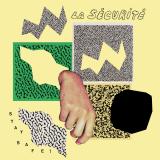
On his fourth solo album, much as in Oh! (2020), the French composer, pianist and vocalist follows his ongoing exploration of the crossroads between poetry and songs, piano and synth, old-time verses and contemporary sounds. Inspired by the rhythms, effects and speech patterns of urban music, he also delivers, with a warm and moving voice, the texts of three poetesses from the past.
Since 2013, Ezéchiel Pailhès has been crafting a unique French synth pop. On his first three albums, he switched between songs inspired by poetry, instrumental ballads and electronica with hummed
choruses. This latest record is a collection of eleven new songs, two of which he wrote: "Opaline" and "Ni toi, ni moi" (neither you nor me). The others are adaptations of poems written in the 16th, 18th and
19th centuries by French poetesses Louise Labé (1524-1566), Marceline Desbordes-Valmore (1786- 1859) and Renée Vivien (1877-1909).
Poetesses from the past...
From classical music to songs, poetry adaptation is an old French tradition. "My universe has always embraced the musicality of this literary genre," the artist recalls. He actually started this project in 2017 with poems and sonnets by William Shakespeare, Pablo Neruda, Victor Hugo and above all Marceline Desbordes-Valmore, who can be heard again on songs such as "Dors-tu?" (Are you sleeping?),
"Élégie" or "L'attente" (The wait). A figure of romanticism, the author left her mark on the early 19th century through the quality of her texts and her formal inventions, particularly praised by Balzac, and
apparently a decisive influence on Verlaine and Baudelaire. "Marceline's poetry is very musical," says Ezéchiel admiringly. "Her use of rhythm and repetition sounds great and takes on a new perspective when set to music. In fact, she wrote some of her texts with singing in mind.”
“Ces longs secrets dont l'amour nous accuse, Viens-tu les rompre en songe à mes genoux ? Dors-tu, ma vie ! ou rêves-tu de moi ?”
“These long secrets for which love accuses us, Do you come to my knees to break them in a dream?
Are you sleeping, my life! or do you dream of me” (“Dors-tu ?”, after “Les pleurs” (the tears), 1833)
Besides her, we find the more famous, and rebellious, Renée Vivien, whose texts inspired three songs, "Regard en arrière" (Looking backwards), "Mélopée" (Melopoeia) and "La fille de la nuit" (The
night girl). Sometimes nicknamed "Sapho 1900", this figure of lesbian culture and, more broadly, of female genius, combined in her work the themes of desire, dreams, melancholy and the relationship with nature.
“Ta forme est un éclair
Ton sourire est l’instant Tu fuis, lorsque l’appel
T’implore, ô mon Désir !”
"Your shape is a spark of lightning
Your smile, the very moment
You flee, when the calling
Begs you, O my Desire!"
(After “Parle-moi, de ta voix pareille à l’eau courante” (Speak to me, with a voice like flowing waters) and “Ta forme est un éclair” (Your shape is a spark of lightning), Renée Vivien, 1901)
Lastly, with "Tant que mes yeux" (As long as my eyes), Ezéchiel was inspired by a 1555 poem by Renaissance poet Louise Labé, whose main topic explored female love, physical and spiritual desire,
and the torments and pains they generate.
" At the start of the project ", Ezéchiel continues, " I was interested in many poets, men and women, past and present, before my selection was narrowed down to these three female authors. Their works,
often written in difficult or secret conditions, express a raging romanticism, a passionate soul, fuelled by desperate and tormented love. I found it interesting, as a man coming from another world and time, to face this otherness, to trade viewpoints. Obviously, I could loudly claim that the album was the result of a concept, that it reflects today's world, and that it allows me to explore the notion of gender,
giving visibility to the work of a few women, while at the same time pairing these ancient texts with a more modern and rhythmic music, and obviously, there is some truth in that. But more than anything, I
wanted to serve the text itself, to express the emotion and connection I felt with these works.”
Today's rhythms and prosody...
Ezéchiel Pailhès combines texts from French literature with electronic music, its effects and rhythms, as well as a form of scansion that echoes rap, R&B or the current fusion between hip hop and pop,
which is part of our musical background and that of younger generations. "I wanted to cross-reference texts from the beginning of the century with this type of music. I wanted to use today’s techniques to tell the tale of different daily lives and experiences.
The album is thus marked by contemporary electronic orchestrations, in which he drops his favourite instrument, the piano, and his digital collage technique to use more extensive synth melodies, enhanced by drum machines, bringing a gentle and bright vibe to the romantic texts. Lastly, we can hear slight digital tones of Auto-Tune, which Ezéchiel uses sparingly and inventively.
Beyond its sophistication, the term "melopoeia" means a "sung declamation", a "recitative song", sometimes interpreted in a monotonous way. On this album, it could also refer to a sense of phrasing, which does not come from rap, but rather from jazz, Ezéchiel's first love. " In the past, I tried to hide my jazz culture, but it naturally came back on this new album, as can be heard, for instance, in Regard en arrière.” With its verses anchored in our literary memory, the following track "Mélopée", perfectly illustrates the album's vision. It manages to transcend eras, mixing past romanticism with a modern
prosody, fuelled by the nonchalance of hip hop and the warm chords of jazz.
“Qu’un hasard guide enfin mon désespoir tranquille
Vers l’eau d’une oasis ou les berges d’une île,
Où je puisse dormir, mon voyage accompli,
Dans la sécurité profonde de l’oubli”
"May chance guide my quiet sorrow, at last
To the water of an oasis, the shores of an island,
Where I may sleep, having traveled my way,
In the safe depths of oblivion".
(After “Sillages” (Trails), René Vivien, 1908)
Ordina ora e ordineremo l'articolo per te presso il nostro fornitore.

Comes with POSTER and digi dowload
Destruction by IND (Artist) - English version below.
Ce morceau est une tentative d'allégorie de la situation actuelle, entre confinement collectif et confinement individuel, ou comment en etant seul l'on peut se retrouver confiné en nous meme, et comment ce regard sur soi peut se transformer en catharsis si on ose le soutenir.
C'est un peu expérimental, j'espere que ça vous parlera!
C'est l'histoire de quelqu'un posé chez lui, seul.Dans sa solitude l'anxiété monte, et pour tenter d'attenuer cela, il décide de sortir à l'extérieur.il passe la porte de chez lui, se retrouve dans la rue, sous la pluie, dans l'orage.Les rues sont vides, vides comme son intérieur à lui, et ce vide ne fais que grandir cette anxiété qui le prend.Il marche, explore, pense, se perd, et finit par trouver un batiment dont il ne connait pas vraiment l'origine ni le but. Ca ressemble à une usine abandonnée, mais l'est ce vraiment?il décide d'entrer, se retrouve a l'intérieur, il fait sombre, l'angoisse grandit en lui.Pour retrouver un peu de lumière, il entrouvre une porte qu'il avait aperçu en entrant, au fond de la salle principale, et sort dans une petite court intérieur, quelques plantes ont poussé. Au fond de cette cours, et bien qu'il sache pertinemment, à l'image de son intérieur a lui, que certaines portes ne doivent pas,ne doivent plus être ouverte, il trouve une lourde porte de metal et l'ouvre.
Devant lui des escaliers, qui le mènent dans la cave, dans sa cave, a l'intérieur de lui meme, là ou la lumière n'arrive plu.Et attiré par la noirceur il descend.
Ses pas résonnent , et arrivé en bas, il découvre ce qu'il n'aurait pas du voir.alors l'instinc de survie reprends ses droits, et il court, il court et s'enfui, remonte les escaliers, ressort du batiment et revient dans la rue, vide, mais en sécurité, l'angoisse a disparue, car des fois, se confronter a notre noirceur la plus enfoui, permet de la mettre en lumière, et ainsi la dompter.
his track is a kind of allegory, a trial to express the feeling of these weird times , the lockdown we live ,wich is as external as its internal...How the anxiety grow and how our internal vibe could be felt as empty as the streets around us while seeing nobody all day long.
This is the story of someone, at home.He feel the anxiety grow in him, and decide to go outside, but all the streets are empty,like himself. he walk and as he walk the anxiety continue to grow.Finally he find a building, unknowing if its a factory or what but its abandonned, ,he goes inside to explore, arrive in an indoor course, and see a door...being intrigued, he decide to open this door and to go down the stairs he have in front of him...The more he descend, the more the fear and anxiety grow, as he goes down inside his mental.Finally he arrive in the basement, and what he see is too rude for him, and so he decide to run and escape from this, from himslef.
he run run run, go upstaris, open the doors and arrive in the street, safe.And without any anxiety, because sometimes, to go face to face with our deepest dark side, let us put light on it, and so let us tame it.
Ordina ora e ordineremo l'articolo per te presso il nostro fornitore.
