Cerca:la pointe

Generi
Tutto
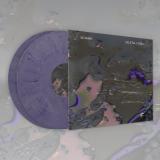
La Pointe - Umbra

La Pointe

Umbra

12inchSTM005A
Secret Teachings
28.01.2025

La Pointe debut on Damian Lazarus’ Secret Teachings with ‘Umbra’, featuring remixes from Nathan Fake and Jonny Rock. The experimental label opens its 2025 schedule on 24th January with the Geneva-based trio’s warping original backed by a pair of late-hours remixes from two of the best in the scene.

Emerging from a confluence of rave culture and artistic mastery, La Pointe make an impressive label debut on Damian Lazarus’ Secret Teachings imprint with the enigmatic ‘Umbra’. The release, set for 24th January, is accompanied by stellar remixes from revered producer Nathan Fake and the ever-versatile Jonny Rock, delivering a sonic journey that transcends the ordinary. La Pointe, a trio formed by Geneva-based techno pioneers Crowdpleaser and Entlet alongside New York City’s Jonny Sender, represents a fusion of cultural and musical legacies. Rooted in the dynamic after-hours scenes of Geneva and New York’s underground club culture, the trio creates music that is both innovative and steeped in tradition. Their studio, located in an old factory by the meeting point of the Rhone and Arve rivers, lends its name—and its industrial inspiration—to their project.

The original mix of ‘Umbra’ is a hypnotic exploration of light and shadow, blending atmospheric melodies with deep, pulsating rhythms—a testament to their ability to craft soundscapes that resonate emotionally and physically. Nathan Fake’s remix ventures into intricate, textural layers, marrying ethereal tones with electronic intensity. Jonny Rock injects a raw, off-kilter groove and late-hours energy into his reinterpretation, blending his eclectic influences from disco, funk, house, and beyond. The genesis of La Pointe is as captivating as its sound. Crowdpleaser and Entlet are celebrated architects of Geneva’s rave scene, running the legendary after-hours party The Shark for over a decade and hosting luminaries like Alexander Robotnik, Boo Williams, and Sonja Moonear. Jonny Sender, a stalwart of New York’s downtown music revolution in the 80s to 00s and bass player of post-punk band KONK, brought his unique perspective honed in venues like Mudd Club to the trio when he moved to France. This debut appearance on Secret Teachings is not just a collection of influences but a narrative woven from decades of underground culture and musical exploration - making it a perfect fit for Lazarus’ label as he continues to champion boundary-pushing artistry, curveball signings and inspired remix curation.

In Stock

Disponibile in Stock e pronto per la spedizione

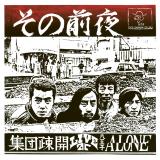
Shūdan Sokai - Live At 八王子 Alone

First time reissue of JP free jazz rarity, pre-Seikatsu Kōjyō Iinkai group.

The single album self-released by the quartet Shūdan Sokai in 1977 is one of the most vital documents of mid-seventies Japanese free jazz, documenting Tokyo’s free scene at the precise moment when it began to shift to a handful of tiny venues on the western fringes of the city. In Free Jazz in Japan, Teruto Soejima identifies the extant venue Aketa no Mise in Nishi-Ogikubo as the pioneer of this decamping from the centre: a cramped basement beneath a rice shop, seating just 20 people. Musician-run, operated on a shoestring, these spaces offered a vital site for community, creativity, and a small measure of financial independence — “even though it was in a basement, in spirit it was a loft.”

Among the most active of the new venues was Alone in Hachiōji, nearly an hour from Shinjuku, in a district shaped by universities, lower rents, and a thriving counterculture. Originally opened in 1973 as a jazu kissa, Alone was unusually spacious and equipped with a stage, grand piano, and drum kit. Around 1974, Junji Mori and Yasuhiro Sakakibara began working there, booking free jazz players on weekends and establishing the venue as a crucial hub. Mori recalls early appearances by figures including Kazutoki Umezu, Toshinori Kondo, and others who would define the scene.

In early 1976, Umezu and pianist Yoriyuki Harada — recently returned from New York’s loft jazz environment, where they had played with musicians such as David Murray and William Parker — formed Shūdan Sokai with Mori and drummer Takashi Kikuchi. The name, meaning “mass evacuation,” pointed to their self-chosen exile in Hachiōji. With Alone as their home base, the quartet developed a music characterized by an infectious sense of enjoyment and a willingness to integrate free jazz with elements of song structure. Harada switched between piano and bass; the group experimented with rap-like vocal pieces, jabbering nursery rhymes over bass rhythms.

They returned to Alone on December 24 to record Sono zen’ya (Eve), releasing it on their own Des Chonboo Records, partially funded by advertisements from local businesses printed on the rear cover. The closing “Ballad for Seshiru,” dedicated to Harada’s newborn son, unfolds over a delicate piano melody that moves into emphatic chords as intertwining alto lines rise and spiral.

Alone closed in September 1977, and Shūdan Sokai soon dissolved, later morphing into the expanded Seikatsu Kōjyō Iinkai Orchestra. What remains is a recording rooted in a specific place and moment: a fiercely independent scene sustained by small rooms, close listening, and collective commitment.

pre-ordina ora10.04.2026

dovrebbe essere pubblicato su 10.04.2026


Last In: 2026 years ago
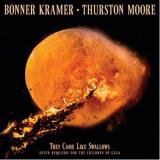
BONNER KRAMER | THURSTON MOORE - THEY CAME LIKE SWALLOWS - SEVEN REQUIEMS FOR THE CHILDREN OF GAZA LP
  • 1: Urn Burial
  • 2: The Redness In The West
  • 3: The Third Migration
  • 4: They Came Like Swallows
  • 5: The Living Theater
  • 6: The Oceans Are Crying
  • 7: Insight
disponibile anche

Black Vinyl


They Came Like Swallows is the first album-length collaboration between Thurston Moore and Kramer (now officially Bonner Kramer), two giants of alternative/ experimental music. The accomplishments and influence of these two artists in the world of independent music cannot be overstated and the result of their artistic union is a startlingly cohesive statement that burns through landscapes of primitive outsider rock, avant-garde composition, progressive ambient and further locales boldly and beautifully unnamable. “Kramer and I reconnected in Miami, Florida, a few years back, many many years after each of us had departed NYC on separate life adventures. It was only a matter of time before Kramer and I started making plans to record together and with his irrepressible due diligence he quickly set up a mobile recording contraption in the pad I was decamped in, the Florida sunshine flowing through the palm leaves, lithe lizards skittering across the windowsills, and we just went for it.

Kramer had the idea to cover a Joy Division tune, a left turn from the improvisations we had been tracking, though wholly in keeping with both our sensibilities of light and dark unifying in transcendent songwriting, both of us devotees of 'the song' as well as 'the freedom.’ What transpired is They Came Like Swallows, a session we immediately felt should exist as a prayer to the war-torn souls of the families of Palestine continually decimated by the brutality of genocide. We agreed beyond words to offer our music as a sonic activism and as a beneficent energy. This album is our duo exchange for human dignity, it is our soul music for any semblance of a peaceful planet.” ~ Thurston Moore “For the first time in our nearly 45 years of friendship, we had identical time windows open to make a record together,” recounts Kramer. After all this time not a moment is wasted as the duo immediately taps into the heightened core of improvisational tension across these seven offerings. Volcanic opener “Urn Burial” notches a similar historic union (John Cale and Terry Riley) to meet the circumstances of the moment, with swirling mists of organ and pounding toms over guitar that thickens the atmosphere with jagged, grimy dissonance.

Solemn strings open the second track, “The Redness In The West,” with Kramer’s cello and viola in dueling bow beneath the high tension drive and sustain of Thurston’s electric guitar, tapping out a Morse code of tension that mounts endlessly into a fog of inevitable war by the end. Moore and Kramer’s sense of experimentalism is in free and full grandeur throughout They Came Like Swallows, though the duo keep a strong and constant sideways eye on melody, composition and architecture, to the ends that any strict lines between song and improvisation are blurred beyond qualification.

As if to punctuate this point, Swallows closes with a nightwork cover of Joy Division’s “Insight,” a doleful coda that breathes out with a solemn inner grace under Thurston’s instantly stylistically recognizable guitar melodies as they weave into he and Kramer’s unison voices. As the lone vocal piece and only traditional ‘song’ form on the album, “Insight” is unique to this set and as a closing statement draws connective lines back to the kind of dynamic, electrified melodicism that wove deep, melancholy patterns into the untamed fire of Sonic Youth’s Sister and Daydream Nation. In the album’s final moments, the two voices repeat the lyric “I’m not afraid anymore” as mantra, underscoring the heavy, unsettled themes and methods that preceded it. Kramer describes the creative process of They Came Like Swallows: “I had composed and recorded a few pieces at my home studio over the course of a couple weeks. Thurston was spending the winter in South Florida, so I flew down and spent a few days recording his guitar parts in his home there. Watching him spontaneously compose his parts was pretty astonishing, to say the least. Once we'd finished working on those pieces, we began improvising and following wherever the music pointed us, and another few pieces were born. We got straight to it, without anything driving us other than the joy of finally working together.

My personal goal was to remain present and catch as many surprises as I could from Thurston's guitar work, and there were plenty during those few days. We had a fucking blast.” Thurston’s contributions here will be readily familiar to any acolytes of his other works, the through-line between his inspired playing, cradled in Kramer’s meticulous, solid arrangements. “If I had to make this record again, I'd do it all exactly the same way,” Kramer says. “It’s like jazz, you don't think about it. You just do it. It was miraculous, and you don't fuck with a miracle.”

pre-ordina ora01.05.2026

dovrebbe essere pubblicato su 01.05.2026


Last In: 2026 years ago
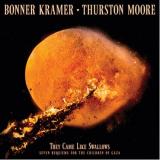
BONNER KRAMER | THURSTON MOORE - THEY CAME LIKE SWALLOWS - SEVEN REQUIEMS FOR THE CHILDREN OF GAZA LP

They Came Like Swallows is the first album-length collaboration between Thurston Moore and Kramer (now officially Bonner Kramer), two giants of alternative/ experimental music. The accomplishments and influence of these two artists in the world of independent music cannot be overstated and the result of their artistic union is a startlingly cohesive statement that burns through landscapes of primitive outsider rock, avant-garde composition, progressive ambient and further locales boldly and beautifully unnamable. “Kramer and I reconnected in Miami, Florida, a few years back, many many years after each of us had departed NYC on separate life adventures. It was only a matter of time before Kramer and I started making plans to record together and with his irrepressible due diligence he quickly set up a mobile recording contraption in the pad I was decamped in, the Florida sunshine flowing through the palm leaves, lithe lizards skittering across the windowsills, and we just went for it.

Kramer had the idea to cover a Joy Division tune, a left turn from the improvisations we had been tracking, though wholly in keeping with both our sensibilities of light and dark unifying in transcendent songwriting, both of us devotees of 'the song' as well as 'the freedom.’ What transpired is They Came Like Swallows, a session we immediately felt should exist as a prayer to the war-torn souls of the families of Palestine continually decimated by the brutality of genocide. We agreed beyond words to offer our music as a sonic activism and as a beneficent energy. This album is our duo exchange for human dignity, it is our soul music for any semblance of a peaceful planet.” ~ Thurston Moore “For the first time in our nearly 45 years of friendship, we had identical time windows open to make a record together,” recounts Kramer. After all this time not a moment is wasted as the duo immediately taps into the heightened core of improvisational tension across these seven offerings. Volcanic opener “Urn Burial” notches a similar historic union (John Cale and Terry Riley) to meet the circumstances of the moment, with swirling mists of organ and pounding toms over guitar that thickens the atmosphere with jagged, grimy dissonance.

Solemn strings open the second track, “The Redness In The West,” with Kramer’s cello and viola in dueling bow beneath the high tension drive and sustain of Thurston’s electric guitar, tapping out a Morse code of tension that mounts endlessly into a fog of inevitable war by the end. Moore and Kramer’s sense of experimentalism is in free and full grandeur throughout They Came Like Swallows, though the duo keep a strong and constant sideways eye on melody, composition and architecture, to the ends that any strict lines between song and improvisation are blurred beyond qualification.

As if to punctuate this point, Swallows closes with a nightwork cover of Joy Division’s “Insight,” a doleful coda that breathes out with a solemn inner grace under Thurston’s instantly stylistically recognizable guitar melodies as they weave into he and Kramer’s unison voices. As the lone vocal piece and only traditional ‘song’ form on the album, “Insight” is unique to this set and as a closing statement draws connective lines back to the kind of dynamic, electrified melodicism that wove deep, melancholy patterns into the untamed fire of Sonic Youth’s Sister and Daydream Nation. In the album’s final moments, the two voices repeat the lyric “I’m not afraid anymore” as mantra, underscoring the heavy, unsettled themes and methods that preceded it. Kramer describes the creative process of They Came Like Swallows: “I had composed and recorded a few pieces at my home studio over the course of a couple weeks. Thurston was spending the winter in South Florida, so I flew down and spent a few days recording his guitar parts in his home there. Watching him spontaneously compose his parts was pretty astonishing, to say the least. Once we'd finished working on those pieces, we began improvising and following wherever the music pointed us, and another few pieces were born. We got straight to it, without anything driving us other than the joy of finally working together.

My personal goal was to remain present and catch as many surprises as I could from Thurston's guitar work, and there were plenty during those few days. We had a fucking blast.” Thurston’s contributions here will be readily familiar to any acolytes of his other works, the through-line between his inspired playing, cradled in Kramer’s meticulous, solid arrangements. “If I had to make this record again, I'd do it all exactly the same way,” Kramer says. “It’s like jazz, you don't think about it. You just do it. It was miraculous, and you don't fuck with a miracle.”

pre-ordina ora01.05.2026

dovrebbe essere pubblicato su 01.05.2026


Last In: 2026 years ago
Various - Straight Outta Tenggara: Southeast Asian Hip-Hop, 1990s-2000s MC (TAPE)
  • A | Side A
  • B | Side B

Another DINTE tape curated by cult WFMU show and blogger Bodega Pop; Gary Sullivan's long-running project rooted in a passion for digging for music in bodegas and cell-phone stores across NYC's boroughs. This edition focuses in on late 1990s and early 00s hip-hop & rnb from across Southeastern Asia.

"While on a work trip to Chicago in the mid-2000s, I was craving a bowl of pho. A bit of sleuthing led me to hop on the red line "L" up to Argyle Street, ground zero of Chicago's Little Saigon. In the 1960s, Chicago restaurateur Jimmy Wong invested in property on Argyle Street with a vision to build the city's new Chinatown, a kind of mall with pagodas, trees, and reflecting pools. In 1971, the Hip Sing Association, a labor/criminal organization, established itself in the area, and along with Wong, they bought up 80% of the buildings on a three-block stretch of the street. Wong reportedly broke both hips in an accident, leaving his dream to wither; in 1979, Charlie Soo of the Asian American Small Business Association brought it back to life.

Soo expanded the area into a vibrant mix of Chinese, Vietnamese, and other Southeast Asian businesses, pushing for renovations, including an Argyle station facelift and the Taste of Argyle festival. At the time I exited the station and crossed the street to get a better look at a shop with a poster for A Vertical Ray of the Sun in the window, the area was home to some 37,000 Vietnamese residents.

Opening the door, I was gobsmacked by a cavernous Southeast Asian media store, bigger than any I'd been to in Dallas, Montreal, New York, or Seattle. I spent some time at the bins, pulling out collections by some of my then-favorite singers — Giao Linh, Khánh Ly, Phương Dung — before approaching the register to ask the young woman behind the counter if the they carried any Vietnamese rap. It was a longshot, I knew, but if such a thing existed on physical media and anyone carried it, it would be this place.

'Have you heard Vietnamese rap?' she replied, her tone of voice and facial expression betraying a comically exaggerated level of distaste. I admitted my ignorance but assured her that I had long cultivated a high threshold for cheesy pop music of all kinds and genuinely tended to like hip hop from around the world.

She rolled her eyes and pointed to an area I had missed. I walked toward a far corner of the store and knelt over a small box on the floor sparsely populated with CDs, VCDs, and cassettes. I pulled out half a dozen Vietnamese hip hop compilations and a strange-looking CD with a cavalcade of odd typefaces in a queasy multitude of colors: THAILAND RAP HIT, it boasted, with 泰國 "燒香" 勁歌金曲 below it. The information on the back provided an address in Kuala Lumpur and the titles in Thai and English translation. The first track included three simplified Chinese characters after the English-language version of the title, "The Chinese Association": 自己人.

WTF was going on here? Walking back to the register, I waved the CD, asking "What's up with this one?" She gave me a look. I placed it on the counter so she could bask in the cover's full glory. She shrugged. "I'm guessing it's Thai rap?" She looked disappointed in me when I said I'd take it.

It turned out to be a Malaysian pressing of half-Chinese Thai hip hop artist Joey Boy's third album, Fun Fun Fun from 1996, and it completely changed my sense what the genre could sound like. The rapper's self-assured, effortless, silly-but-cool rapid-fire delivery weaved in and out of the most bizarre, antic beats I'd ever heard. The six Vietnamese hip hop CDs were a mixed bag, mostly "serious" sounding mimicry of US rapping over predictable production, but the highs were very high. When I got home and listened to it all, I made a point to find as much hip hop from this part of the world as I could.

The tracks collected here provide a limited but potent reflection of the two-decade ascendency
and ultimate world-takeover of hip hop, as it displaced rock and its endless variants for millions of listeners. This not a fair and balanced overview of regional production: I've only included tracks from Cambodia, Indonesia, Myanmar, Philippines, Thailand, and Vietnam. Nor is this a biggest or most important artists collection; instead, I've tried to recapture the pure visceral thrill of that first time I heard Joey Boy, choosing bangers that sound like nothing else, from nowhere else."

—Gary Sullivan

In Stock

Disponibile in Stock e pronto per la spedizione

BARRY "EPOCH" TOPPING - BIRDCAGE
  • 1: Birdcage
  • 2: Conception
  • 3: Radon
  • 4: Natality - Stage 1
  • 5: Raptor
  • 6: Fission - Stage 2
  • 7: Cradle - Stage 3
  • 8: Ascent - Stage 4
  • 9: Raptor
  • 10: Ceyx - Stage 5
  • 11: Ingress
  • 12: Arboreality 1.0 // Grace Bid - Stage 6
  • 13: Arboreality 2.0 // Aged Crib
  • 14: Arboreality _ // Boxing Day
  • 15: Dryad ~Dormir Ou Se Réveiller
  • 16: Halcyon
  • 17: Dreamstate
  • 18: Nest

Black vinyl with Starlight Sparkle effect. Barry "Epoch" Topping returns with the long-awaited soundtrack to BIRDCAGE. The widely celebrated game is the debut release of POLYGON BIRD Games. BIRDCAGE is a fast-paced, vertical scrolling shoot 'em up that blends the explosive action of 90s arcade classics, with modern gameplay and storytelling. What is the value of a bullet, when you wield a sword? While players have been praising BIRDCAGE for transferring retro aesthetics into modern times, the incomparable soundtrack is always pointed out for the same reasons. Entering Barry Topping, who gained recognition for the famous Paradise Killer game soundtrack and lately continued to spread those funky city pop vibes with his very own project The Needs. But for BIRDCAGE it was time to stray from his "trademark sound" and explore a different sonic space he had always been passionate for as well.


[e] 5RAPTOR [FLEDGLING]


[i] 9RAPTOR [MOTHER]

pre-ordina ora19.06.2026

dovrebbe essere pubblicato su 19.06.2026


Last In: 2026 years ago
Low End Activist - Airdrop II MC (CASS)

Continuing his refraction of the rave continuum into pointedly dislocated, delicately bruising sound system meditations, Low End Activist returns to Peak Oil with a second instalment in his Airdrop series. This time around, he channels the ghosts of foundational tech-step and the quantum leaps of late-90s D&B to provide the inspirational fuel for his skeletal, astral constructions. A strong stylistic thread continues to weave through the LEA output from his earlier self-released EPs and Sneaker Social Club albums, where haunted atmospherics, blown out subs and snatches of breaks dart around each other in empty dancehalls, but the finer point of the sound design and synthesis makes very specific references to landmark moments in hardcore's evolution.

By weaving his own autobiography into the music, the Activist maintains a fundamental theme of his work to date. 'Colin's Golf', 'Smithy's Porsche,' 'Merv's Lazy Eye' and 'Brillo's Teeth' are all personal codes harking back to the formative Oxford rave scene. With the framework in place, he uses textures, timbres and studio tricks from scene-leading pioneers and local heroes of the era as ingredients in thoroughly modernist concoctions. None of the reference points are deployed as literal callbacks — they're waymarkers for the creative process and faint triggers bedded deep into Airdrop II's strange formations. Fleeting sonics might trigger latent memories for those who were there. For everyone else, Airdrop II is another step further along rave's eternally unspooling odyssey, guided by decades of precedents on a path into the future.

In Stock

Disponibile in Stock e pronto per la spedizione

Franz Kirmann - Almadies MC

Franz Kirmann

Almadies MC

CassetteBYTES32
Bytes
27.11.2025

The electronic producer Franz Kirmann returns to Bytes for his eighth solo album. The “Almadies” are long wooden boats used by Senegalese fishermen. It is also the name of the neighborhood where Kirmann grew up, in the suburbs of Dakar, Senegal, near the Atlantic Ocean. "These new compositions are the result of sound experiments conducted over the past few months and reflections on the concept of mind-constructed geographies," Kirmann explains. "The way memories and souvenirs shape an image of a place or country that is part reality, part fantasy, part cliché, yet also deeply personal. This experience is influenced by education, social background, history, and other socio-economic factors. " The ten tracks are crafted from collages of electronic sounds blended with field recordings from various places Kirmann has visited — from Dakar to the Caribbean, as well as London and Paris. His aim is to blur the line between electronically generated sounds and real soundscapes, creating music where it becomes difficult to distinguish the real from the constructed. All the sounds on the album were produced using synthesizers and field recordings. No drum machines, percussion or traditional acoustic instruments were used. Influences include Brian Eno and John Hassell’s Fourth World, Vol. 1: Possible Musics (1980), described by Hassell as "a unified primitive/futuristic sound combining features of world ethnic styles with advanced electronic techniques" , which also works in the context of Almadies. Another big influence was Ariel Kalma’s Le Temps Des Moissons (1975) as well as artists including O Yuki Conjugate and Robert Aiki Aubrey Lowe to Susumu Yokota and Michael Banabila.

In Stock

Disponibile in Stock e pronto per la spedizione

TORRE - PHOCAEA VOL.1

TORRE

PHOCAEA VOL.1

12inchMV01
MusiqVoyage
14.11.2025

Musiq Voyage sets sail with its debut release by TORRE Bros, a producer duo from Aix-en-Provence. A heartfelt tribute to Marseille and the Mediterranean through two shimmering Space Disco cuts: Gyptis and La Pointe Rouge.
Remixed by the legendary Moplen, Alex From Tokyo, and Julien HBT, this EP blends house, boogie, and balearic vibes into a warm and elegant sonic journey.
//
After cruising their native Provence and spinning on the mythical shores of Ibiza with their iconic pink-and-blue DJ truck, the Musiq Voyage crew is proud to launch their new label with a sun-soaked debut EP.
Rooted in Mediterranean soul, Phocaea Vol. 1 features longtime friends and local legends TORRE Bros (Jean-Marc & Patrick Torre), producers from Aix-en-Provence with over two decades of musical exploration—from disco and house to hybrid electronic jams. Known for underground hits like Corps à Corps and Baleora, supported by artists such as Carl Craig, the duo now pays tribute to Marseille, their beloved coastal city.

A1 – Gyptis
Named after the legendary princess said to have founded Marseille, Gyptis is a lush space-disco homage to the city’s ancient roots—where Greek sailors met local tribes, and myth met the Mediterranean.
A2 – Gyptis (Moplen Remix)
Italian disco don Moplen (Chaka Khan, Talking Heads, Loose Change) delivers a floor-ready rework—elevating the groove with cosmic flair while keeping the original’s dreamy vibe.
B1 – La Pointe Rouge
A sonic postcard of one of Marseille’s most iconic seaside spots—sunsets, sailing, and slow walks by the sea. Built on a strong boogie beat, 80s synths, and balearic textures.
B2 – La Pointe Rouge (Alex From Tokyo & Julien HBT Remix)
Legendary DJ/producer Alex From Tokyo (Tokyo Black Star, Innervisions) teams up with Parisian underground figure Julien HBT (Demented, with François X) for a deep, syncopated reimagining. Infused with Chicago house and leftfield boogie influences, this remix flips the original into a spaced-out late-night groover.
More than just a legendary DJ, Alex From Tokyo has built a global career bridging cultures and sounds. After growing up in Japan, he returned to Paris in the early ’90s and co-founded A Deep Groove with DJ Deep and DJ Gregory, launching one of France’s first underground dance radio shows on FG 98.2 FM.
A key link between Europe and Japan, Alex worked with labels like F Com, Mr Bongo, and Yellow Productions, before living in NYC, Berlin, and beyond.

In Stock

Disponibile in Stock e pronto per la spedizione

CHITO KAWACHI - CHITOTIHC/KULA-KURA LP 2x12"

Words courtesy of FOND/SOUND –

What makes チトチック/クラクラ (CHITOTIHC/KULA-kura) so fascinating is that, in some weird way, it’s a meeting of minds and musical language of disparate artists at the forefront of a new kind of groove. There might be no “L” in the Japanese language but that doesn’t stop it from trying to find a working substitute. Similarly, Chito enlisted members from his Asiabeat and East Pulse, others from Mu-Project, K2, and Adi, and brought in Haruomi Hosono to play mercurial bass. In the great expanse of experimental Japanese-made pop music all of them might have gone in “out-there” in separate directions but on this record it was Chito who pointed their focus all on the same track.

“Bayou (バイヨー)” presents this floating idea of dance music with beats and rhythms that hover among the ethereal. Other like “Scribble Dance (らくがき)” use Harry’s acid bass lines to dig cavernous grooves that only come up for air via adrenaline-fueled jumps by Haruo Kubota’s quite Adrian Belew-esque guitar lines. Perhaps, Discipline-era King Crimson is an apt comparison to what Chito and his crew pull off here.

Where Discipline signaled a way to reconcile the most out-there polymeter music of prog with the more satisfying parts of post-punk and the new electronic wave, so to do I think チトチック/クラクラ (CHITOTIHC/KULA-kura) has that bit of heart/spirit in mind. This is the out-there of Japanese experimental music satisfying the best parts of the, then, new electronic wave. It takes a certain degree of proficiency and sheer chutzpah to go from “11” to the wonderfully impressionistic, ambient minimalism of a track like “Sanghyang (サンヤン)”.

It’s the joy of not knowing what each new track will hold and just letting yourself follow the hard-working hands of such learned musicians that brings the most out of Chito’s vision. It’s this very liquid music that keeps you on your toes on tracks like “Astral Lamp (無影灯)”. Tracks like “Jagg-chagg (ジャグチャグ)” and “Filament (フィラメント)” present a fourth world music bifurcated in exponential parts by the glitch of newer, modern, electronic modalities, intersected by expressions by differing voices. Every track you switch to presents a new way to get lost in the many phases and places Chito wants you to travel to.

In the end, as always, it’s not the destination but the journey through it that plants this album in your memory. – Diego Olivas

In Stock

Disponibile in Stock e pronto per la spedizione

Dave Aju & Rodney - We Still Dancin

Following the lush listening LP outing by KAMM, the EG team is back in fine floorrocking form, this time with both label operatives on the dials as Rodney joins Dave Aju for his debut co-production. And what a debut it is: Highly-potent, raw, swinging house music of the highest order, complete with knocking 909 kicks, thick slapping snares, and a hypnotic melodic call-and-response tonal section that keeps things properly lifted and moving throughout. The vox evoke label boss Aju’s earlier catalog work, and he’s in particularly pointed mode here, spitting fire spoken word lines calling out various questionable corners of the dance music scene and humanity on the whole. A bold light-shining display during notably dark times, defending the once-sacred underground dance space against runaway trends of ego-driven capitalism, online image over actual skill sets, and the beyond low-ball barrier of entry into the arena. But by the time the soulful chorus lines hit and rise us up and onward toward the blissful musical finish, it is clear that this is in fact a unifying floor anthem and that indeed despite our differences amidst disheartening global chaos, at least “We Still Dancin". As always with the seasoned DJ-focussed three-piece Elbow Grease EP offerings, here we have the full A-side OG Vocal Mix cut at a crispy and tight 45rpm, a deliciously stripped and leveled-up EG Dub Mix on the B1, and finally the uplifting B2 Vibe Mix which doubles-down as half ambient instrumental builder and essential acapellacapella

In Stock

Disponibile in Stock e pronto per la spedizione

Aerae - Nefanda

Aerae

Nefanda

12inchSMDE51
Samurai Music
25.07.2025

Plying refracted rhythms with an exacting poise, Aerae arrives on Samurai Music with a fully formed sound that plumbs the depths between techno immersion and D&B beat science.

An accomplished, palpable tension runs throughout Nefanda, Aerae's second solo release. Following up on the meditative pulse of her debut album on Annulled Music last year, the Paris-based artist digs deeper into ominous atmospheres filled with evocative reverb decays and taut, dynamic drum work - tools she wields to Redner tracks with specific meaning, coded by the Latin framing that runs through all aspects of her musical output. Contemplating the ancient language as an inescapable part of her European roots, on Nefanda Aerae ruminates on external trials and inner impulses, and conjures a jaw-clenching soundtrack to match.

'Mons' (translation: 'Mountain') speaks to challenges, strength and spiritual ascent, marked out by an urgent thrum of conga slaps and a 4/4 kick around the 170 BPM mark that finds power in minimalism even at the relatively high tempo.
The title track opts for a more broken framework, pivoting pointed percussion around a deft sub pulse while turning up the intensity with an exacting poise.

'Nefanda' translates as 'unspeakable,' or 'too horrific to name,' and the fraught, synthetic wraiths contorting through the track convey the dread the title implies.
'Fovea' (translation: 'pit') burrows deeper into spatial design with a looming low end rumble and subliminal sound sculpture, shaping out a dark, introspective chasm tipped towards disassociation. It's a powerful statement in any setting, but the all-consuming bass feels especially crafted for full, physical sound system immersion.

'Phrenesis' (translation: 'frenzy') rounds the EP out in fierce form, building up a high-pressure arrangement from ambient beginnings with ruthless control. There's a sense of duality in motion between half-time and double-time rhythmic elements, every incremental shift adding to the intensity of the track with the elegant, impactful touch that has fast become Aerae's calling card.

Finding her own language within the dialogue between techno, D&B and dark ambient, Aerae's music makes a vivid impression thanks to the ideas and intention that drive her in the studio. Nefanda confirms her status as a leading light in deep, psychedelic dance music, making something extremely personal that also reaches out beyond notions of the self like all the best transcendental music.

In Stock

Disponibile in Stock e pronto per la spedizione

Les Nkenda - Le Cercle Biblique Evangelique C.B.E LP

We’re proud to present the first-ever official reissue of Les Nkenda — a rare and genre-blending spiritual gem from 1982, originally released in the Republic of Congo by the Cercle Biblique Évangélique (C.B.E.) of Pointe-Noire and produced by Adam Julien Koubemba on the small Adamsol Record Edition label. Pressed in extremely limited quantities and virtually impossible to find for decades, Les Nkenda has become a “holy grail” among collectors of African music. Fully remastered from the original tapes, it returns on vinyl for the first time since its initial release. More than a reissue, this is a revelation — a powerful fusion of gospel, psychedelic groove, folk, soulful funk, and Afro-Latin rhythms. Recorded in Pointe-Noire, the album channels the raw spirit of 1980s Congo with vibrant multilingual vocals and rich, polyrhythmic textures. Both hypnotic and deeply emotional, Les Nkenda is music made without compromise — once lost, now revived for a new generation of collectors, diggers, and seekers of the extraordinary.

In Stock

Disponibile in Stock e pronto per la spedizione

Mr. Thelonious - Don’t It Drive You Crazy/Don’t It Drive You Crazy 7"

Side A
Don’t It Drive You Crazy (Break Edit) — The Pointer Sisters
Originally from the 1978 LP Energy, this is prime disco-era Pointer Sisters. The OG cut is beloved for its rolling rhythm section, and this edit zones straight in on the drum passages DJs & beatmakers have quietly relied on for years. Tight, punchy & perfect for looping under blends or quick cut-ins.

Side B1
In My Body’s House (Sample Drum Break Edit) — Gene Chandler
Lifted from Gene Chandler’s 1979 album Get Down, a late-career disco-funk gem. The drums here are the story: steady kick, crisp hats & a pocket that sits comfortably across disco, boogie & hip-hop-adjacent sets. This edit isolates the break for maximum flexibility behind the decks or in the studio.

Side B2
Don’t It Drive You Crazy (Sample Drum Break Edit) — The Pointer Sisters
A second, more surgical take on the same Pointer Sisters groove, focused almost entirely on the drum break itself. Think intros, beat tools & sample-ready loops.

Bottom line
A straight-up DJ weapon from start to finish. Disco breaks, clean edits & zero overthinking.

pre-ordina ora

Questo articolo non è stato ancora rilasciato. È possibile pre-ordinare il prodotto ora.


Last In: 2026 years ago
Arnaud Rebotini & Acid Washed - Enlightenment Theory (E)

SKYLAX RECORDS proudly unveils the final chapter in its monumental 4-part saga — SKYLAX BLACK 4: Enlightenment Theory. This visionary series, bringing together two of France’s most iconic electronic artists — ARNAUD REBOTINI and ACID WASHED — was never just a collection of records. It was a journey through the deepest layers of the underground — a conceptual project where each release was a coded message, each track a fragment of a greater whole. On the A-side, Enlightenment Theory explodes with fierce urgency — an anthem forged in the spirit of Underground Resistance, echoing the soulful intensity of early ’90s Detroit without imitation. It’s bold, emotional, and militantly underground — a future classic cloaked in defiance and elegance. On the B-side: B1. Space Is The Place channels the weightless gravity of dub techno at its purest — all echo chambers and endless delay, a direct line to the Berlin school of Basic Channel, Maurizio, and Deepchord. B2. Beyond Current Biological Constraints closes the chapter in deep space — an electro masterwork evoking Drexciya, full of aquatic melancholy and cybernetic funk. It’s not retro — it’s timeless. With this last installment, the puzzle is complete. The meaning is revealed: R.A.V.E. — four records forming one powerful word. One timeless idea. A tribute to everything this culture stands for: raw energy, emotional truth, sonic innovation, and spiritual depth. This project could only be born on SKYLAX RECORDS — a label that has always stood apart. Uncompromising. Devoted to physical formats. Fiercely loyal to the culture. While others chase trends, SKYLAX continues to chart a different course — one rooted in the sacred codes of house, techno, electro, and beyond. It is no exaggeration to say that SKYLAX is one of the last true purist strongholds of underground music — and this series, with its layered meanings and fearless artistry, is proof. From Redshifts to Blueshifts to Artificial Darwinism then Vision Quest, every chapter has pointed toward this moment. Now, with Enlightenment Theory, the full vision is revealed. RAVE is not just a word — it is the truth. A philosophy. A myth reborn. The circle is complete. The message endures. The legacy lives on.

pre-ordina ora

Questo articolo non è stato ancora rilasciato. È possibile pre-ordinare il prodotto ora.


Last In: 2026 years ago
DJ Jus Ed - Mash Up EP

Subterranean stalwart and Underground Quality boss Jus Ed reworks a trio of archive tracks on his 'Mash Up' EP, embracing production with newfound freedom as he continues his ceaseless creative journey. The Bridgeport native has been turning out raw, uncompromising house jams for decades, routinely delivering dancefloor fire. Here, the freak flex of '209 Remix' powers over a relentless synth hook, with vocal cuts, rhythmic bleeps and emotive pads completing the stripped-back sonic landscape. The brooding dub traction of 'Back To Basics' sees hypnotic chords drift over sleazy drums as vocal delays roll into the distance before Ed gets some gripes off his chest via 'Fack Ass Muthafukas' i sending a disapproving message to someone or other, with pointed spoken words jibing over a sinister bass hook.

In Stock

Disponibile in Stock e pronto per la spedizione

Akae Beka x Chronixx - Black Carbon

Before Zero Records present the Akae Beka Vocal and Version Series. This represents a turning point in the presence of Vaughn Benjamin, the voice of Akae Beka and Midnite’s presence in the sound system world, merging the vocal and version sound system culture with the deeply spiritual music and word sound of Akae Beka and Tippy I Grade.

Two of the deepest thinkers in reggae music, Vaughn Benjamin and Chronixx, trade reflections on their collaboration, ‘Black Carbon.’ Originally released on the 2021 album ‘Polarities,’ the song is available for the first time as a vinyl single, backed by its dub version. Adorned with the swirling flute of Sheldon Bernard (Beres Hammond, Harmony House) and David Pransky’s brittle, Kora-like mandolin, the twin reggae intellects, with their uniquely delicate voices, introspect on how ‘all ah we forward from the same carbon.’ The song’s message juxtaposes the unity that binds us with a critique of the prevailing narratives and structures that weaken this bond. It underscores the universal truth that we all originate from the same elemental blackness—a truth mirrored throughout humanity and the entire spectrum of creation. Yet, it pointedly highlights how this shared essence is often unrecognised or undervalued in the social and political realms, especially for nations and diasporas connected by the original human hue. The A-side vocal mix is followed by Tippy I’s lavish, questing dub, bringing the instrumentation to the fore. Produced by Vaughn and Zion I Kings.

Each 7” vinyl sleeve has the lyrics transcribed and printed on the back. This series represents more than a collection of music; it is a multifaceted, intellectual and spiritual revelation encapsulated in melody, tone and beat. The never before released dub versions complement each vocal mix with grace and innovation, creating the perfect settings for reflection and integration of the lyrics.

In Stock

Disponibile in Stock e pronto per la spedizione

Various - Akasaka Soul Funk 1969-1977

Various

Akasaka Soul Funk 1969-1977

12inch180GWALP07
180g
11.03.2025

At the start of the 60s, a new wave of gospel-influenced jazz started to emerge, with hits such as Art Blakey & The Jazz Messengers' "Moanin'" and Cannonball Adderley's "Work Song" epitomizing this evolution in the genre. The terms "soul jazz" and "funky jazz" were coined as a way to describe this new sound that was making an impact in the US and also on the other sides of the Atlantic and Pacific oceans.

In 1964, Ray Charles made his first visit to Japan. Then, in 1968, Martha & The Vandellas and Stevie Wonder set foot in the country, followed by Sam & Dave in 1969, Ike & Tina Turner in 1970, and B.B. King in 1971. The TV show "Soul Train" also began airing in Japan in the early 1970s. A watershed moment happened in 1973 when Sammy Davis Jr. was cast in a TV commercial for Suntory whisky — and the influence of the US Black entertainment world had really landed, with soul, jazz, and funk artists becoming household names.

Nippon Columbia played a pivotal role during this turning point. The company had contracts with Buddah Records and Blue Thumb Records, releasing notable works by artists such as Gladys Knight & The Pips, Curtis Mayfield, The Crusaders, and The Pointer Sisters. At the same time, the label was also releasing several Japanese soul, jazz, and funk projects under the lead of music director Jiro Inagaki. Inagaki, a saxophonist who began his professional career in the early 1950s, honed his skills at U.S. military camps, where he shared his love of music with the Black servicemen. In the 1960s, he played with drummer Hideo Shiraki's band, which was widely considered to be Japan's representative group of the funky jazz movement. Later, Inagaki went on to pursue more cutting-edge sounds with his Soul Media project, including being a pioneering figure in the "jazz rock" genre. By working closely with Inagaki and his various musical projects, Nippon Columbia really placed the company at the center of an exciting and important period in Japanese music.

In 1965, Nippon Columbia opened a recording studio in Tokyo's Akasaka neighborhood. Akasaka was also home to the first ever discotheque in Japan, the legendary MUGEN, which ran from 1968 to 1987 and where many acts performed, including Con Funk Shun, the Bar-Kays, Ike & Tina Turner, B.B. King, Sam & Dave, Three Degrees, and Edwin Starr, as well as many local Japanese singers and musicians. This melting pot of creativity in the area led to the recording of many singles and albums by Japanese artists that were infused with the sounds of soul and funk. Most of these recordings were not available outside of Japan and remain rare and unknown musical gems. The selection you are holding in your hands is an explosive collection of 10 essential tracks released by the legendary Nippon Columbia label between 1969 and 1977, capturing the raw, unapparelled energy that was flowing through the air of the Akasaka streets at this electrifying time. Enjoy!

---

180GWALP07 - Manufactured and distributed by 180g.

In Stock

Disponibile in Stock e pronto per la spedizione

Dennis Liber / Lex - Club Eden EP

Rocksteady Disco welcomes Dennis Liber & Lex for a standout debut here. Their four-tracker captures the magic of musical nights spent down in Mexican hotspot Tulum with organic and airy grooves aplenty. 'Una Sera D'Estate' (feat Max Giovara) exodus late-night warmth and loved-up vibes with its melodic bassline and disco-tinged house drums. 'End Of The Line' is more lively but is no less direct with its big drums and pointed bass phrasings. Liber then goes solo for the dreamy, Italo-tinged yet tropical 'Playa Eden' and wonderfully escapist closer 'Hidden Island' complete with Balearic beats and the sound of singing dolphins.

In Stock

Disponibile in Stock e pronto per la spedizione

Low End Activist - Municipal Dreams LP 2x12"

On his latest full-length, Low End Activist swerves towards weightless grime and suspended hardcore miniatures to tell a very personal story. The UK-rooted producer continues his habit of zeroing in on a distinct approach for each release, leaving a logical breadcrumb trail of soundsystem science in his wake as he channels decades of bass absorption into 14 atmospheric cuts that prize patience and precision over obvious club functionality.

Municipal Dreams plays out as a semi-autobiographical tour through the Blackbird Leys estate that the Activist grew up on. It’s a lived reflection on inequality and the ripple effect it has in working class communities, using the sonic palette to set the mood and scattering pointed samples throughout to spell out the story.

In sampling the exhaust of a stolen Subaru Impreza, ‘TWOC’ looks back to the recreational car theft which was standard entertainment for the kids in his community. There’s an underlying idea that this ‘council estate sport’ wouldn’t have been so prevalent if there were public services and opportunities presented to the scores of disaffected youth looking for somewhere to direct their energy and frustration.

In ‘Just A Number (Institutionalised)’ LEA alludes to the shattered juvenile detention system, growing up seeing friends and family members locked up at ease with little to no support on being released back into society, just meant that the same cycles of behaviour would play out over and over.

‘Violence’ samples from a short film shot by the drama division of the Blackbird Leys Youth Club to evoke the physical threat which formed a background hum to life on the estate. The industrial mechanics of the local car factory, which served an integral role as a workplace for many in the community, gets sampled in ‘They Only Come Out At Night’ while the ‘Everyone I look up to are either junkies or criminals’ sample in ‘Broke’ looks to a lack of positive role models.

Municipal Dreams isn’t a one-note indictment of life on the estate, ‘Innocence’ captures the simplicity of a child at birth before their environment has time to shape them. The Hope interludes cut through the grim honesty of the longer tracks while a subtle thread of wry humour finds its way into some of the talking heads cutting through the signature LEA murk.

But honesty is the operative word here, and the message feels all the more meaningful at a time when the UK’s social divisions are laid bare in the wake of a devastating stretch of austerity. Returning to Blackbird Leys to shoot images for the photo-zine and album cover, the Activist found the local community centre being demolished. The local pub stands derelict, its faded Welcome sign a grimly ironic portent of the options facing children of the estate in the wider world.

Funnelling his memories, hopes and fears into a singular twist on the bass weight tradition, LEA captures evocative scenes that land somewhere between kitchen sink realism and rave futurism.

In Stock

Disponibile in Stock e pronto per la spedizione

EM + STAV - Endless

Em+Stav

Endless

12inchJOYLIFT001
JoyLift
17.11.2023

Building on their shared exploration of forward-leaning UK club sounds, EM + STAV herald the arrival of their new label JoyLift with the Endless EP. Having entrenched themselves within the free-spirited landscape of Bristol’s music community, the pair home in on a focused sound which draws on the city’s storied bass mutations as a springboard for their own take on modernist dance music.

There’s a tough, brooding quality to Endless EP which speaks to the meditative pressure of soundsystem immersion, but equally EM + STAV build out evocative, shifting narratives within that club-ready framework. From dubwise processing to deft sound design, a broad church of processes are wielded to shape out these pieces, and physicality comes in many forms whether in weightless sub lines or pointed, angular drum programming. Given their long-standing connection to developments within the underground music scene, there’s a keen instinct for the dynamic shifts which can set a dance alight, while the ill- defined shape of the wider genre-not-genre allows plenty of space for movement and experimentation.

Alongside the three original productions from EM + STAV, kindred spirit Forest Drive West steps up for a remix of ‘Odd' which aligns with the aesthetic intentions of JoyLift while demonstrating the idiosyncratic qualities associated with the scene’s most vital artists. The cohesive feel of Endless EP extends to Luke Griffin’s artwork, in which natural source material undergoes heavy processing to wind up in a striking new form, shot through with colour but ultimately shrouded in a moodiness that harks back through the lineage of hardcore-rooted UK dance music.

By its very nature the future is unwritten for JoyLift, but EM + STAV’s new project commits itself to an ever-evolving palette of sound, rendered as music with a strong sense of identity - tracks to shake the dance without resorting to obvious tropes, responding to and feeding into the inspiring tides of ideas emanating from the environment around them.

In Stock

Disponibile in Stock e pronto per la spedizione

Lårry - How Was That For You

Lårry

How Was That For You

12inchBRUK4
BRUK
13.03.2023

The next transmission from planet BRUK comes courtesy of Lårry, an enigmatic artist ploughing an individualist furrow through various fields of electronic expression, one hand tweaking the tiller and the other casually dismissing the rules of rave. You might have caught their sharply-pointed sound on Super Hexagon or Awkwardly Social, or perhaps stumbled across their fabled 2021 live performance from Fitzroy in Berlin, or even unconsciously swayed to something spun in a set any time over the past five years. Lårry's discography is modest but mighty, and How Was That For You builds into that idea with four
precise tools for forward-leaning soundsystem communion. From the fractalised barbs of electronica stepper 'In Water' to patiently dread-eyed wobbler 'Angela's Knife', 'Uniform Uninform's icy incisions to the snaking spiral staircase of 'Yargachin', this is brain fodder first and foremost, with bassweight impact threaded through as an added bonus. Keeping fine company amongst the other oddities inhabiting the Bruk mandate, Lårry continues to keep us on our toes, literally and figuratively.

In Stock

Disponibile in Stock e pronto per la spedizione

Dies Lexic - Lexicon Hall

Dies Lexic is a duo by Inês Tartaruga Água and Xavier Paes. Part of Favela Discos collective and label, they explore the channelling potentialities of sound, wandering between spectrums, ethereal soundscapes and zones of sonic subduction through means of DIY electro-acoustic instruments, amplified objects, electronics and composition processes based on repetition, language, chaosmosis and error.

Lexicon Hall, the long overdue debut album by the Portuguese duo of intrepid sound explorers, is a sort of digital ayahuasca, an intense psychedelic journey guided by drums and harshly bowed strings, channelling voices from other planes and fusing them with Dies Lexic’s very own distinctive voice. If you close your eyes hard enough you can probably see Tony Conrad waving hello in the middle of a dark jungle that is inhabited by tribes of our ancestors.


Artists bio:
Inês Tartaruga Água is a multidisciplinary artist, focused on the issues of deep ecology and radical regeneration, sound explorer and practitioner of DIY philosophy as well as collaborative and participatory practices in public space. Participates in collective exhibitions since 2013, highlighting the “XIII International Biennial of Artistic Ceramics” (Aveiro, 2017), “Убежище / Suoja / Shelter Festival - Laboratory” (Helsinki, 2019), «48 часов Новосибирск» (Siberia, 2019), or “Soundscapes” (Bahrain, 2019), and has her first individual artistic residency “Méhtēr: Matter, Form and Transformation” at Júlio Dinis Museum in Ovar (2018). Recently, Água has debuted sound pieces in Casa de Serralves (Porto, 2021) and in Casa das Conchas (Spain, 2021).

Xavier Paes is a transdisciplinary artist based in Porto. He divides his practice between visual arts, sound, performance, gleaning improvisation and multi-instrumentalism, focusing on ideas such as acoustic phenomena, repetition, resonant and sympathetic bodies, echo and ecology. He has presented his work at institutions, galleries, festivals, kiosks, raves and after-parties, highlighting places such as Serralves Museum, Oliva Arts Center, Porto Municipal Gallery, Stichting Centrum (The Hague), OCCII and Vondelbunker (Amsterdam), La Pointe Lafayette and L'international (Paris), STUK (Louven), Overtoon (Brussels) and Villa Arson (Nice).

In Stock

Disponibile in Stock e pronto per la spedizione

KJETIL JERVE - THE SOUNDTRACK OF MY HOME LP

Home is a powerful concept with an abstract definition. This solo album takes those subjective ideas and unifies them under one roof. Evolving from Jerve’s #dailypiano posts in 2019, ‘The Soundtrack of My Home’ relays thoughts and improvisations that trace his journey from childhood home to adult and now, father. Nurturing a mood or feeling, each song begets a sonorous story of someone close to him, expressed through the language of piano playing.

Jerve makes use of his hands as a human step sequencer, often programming two or more motifs of varying lengths in a polymetric fashion. These melodic patterns and arpeggios evolve at varying rates but grow around clear progressions with standard 8-bar forms.

The first track - ‘Kjetil’ enters with an earnest, gentle and endearing character - like a young river near its source. As with such a river, it will grow to varied sizes throughout the album but must begin as a humble expression from the source. The following titles sketch his interpretations of the people that have made up his home.

There is a theme across the album that unites the songs, so much so that differentiating tracks can at times be difficult. Though, Jerve punctuates this overarching mood with a few distinct structures, as found in tracks ‘Karoline’ (wife), ‘Espen’ (brother) and ‘Sven’ (father). ‘Turid’ (daughter) and ‘Jon Eirik’ (brother) seem less directive and welcome more intrigue, reminiscent of a curious child wandering through the dappled light of a forest.

‘Iben’ (daughter) and ‘Eivor’ (daughter) have a hypnotic, three-pointed melodic structure that leaves the listener suspended; transfixed - while ‘Sussi’ (cat) carries unique momentum and suitably feline autonomy. ‘Mette’ (mother) has a mood of ascending, like that of a child's upward gaze at their maternal carer. Utterly nuanced in structure, Jerve leaves ample space for subjective interpretation and allows the listener to weave their own life into the tones.

As expected from the founder of Dugnad rec - this album signifies a deeply personal sentiment. Sometimes we are forced to confront the music and other times, we are left to wonder. Here, we find a balance and unity that allows little thoughts and worries to drift away, bringing us warmly to rest in the present. The LP edition's bonus track features producer/performer extraordinaire Stian Balducci, drawing a line to the next chapter of piano-based music from Dugnad rec: TOKYO TAPES: PIANO RECYCLE.

In Stock

Disponibile in Stock e pronto per la spedizione

COOL MARITIME - BIG EARTH ENERGY LP

Having crested the west coast modular-ambient wave in just a few releases - including 2018's Sharing Waves on the influential LA experimental imprint Leaving Records - Sean Hellfritsch has swapped the mossy analog synth improvisations of his prior output for refined melodic arrangements dressed in sprightly dawn-of-digital textures. Big Earth Energy plumbs the depths of Hellfritsch's multimedia mind and naturalist heart, spinning an impressionistic narrative world off of cultural touchstones like the PC game MYST, and the work of Studio Ghibli composer Joe Hisaishi. Inspired by the aforementioned, and guided by Hellfritsch's experience as an animator and filmmaker, Big Earth Energy is the soundtrack to a hypothetical video game with a pointedly ecological premise, and a twist of psychedelic charm. In Hellfritsch's imagined virtual journey, the player assumes the perspective of a treefrog sixty-five-million years ago, hopping epochs with each new level, forming a comprehensive picture of the massive changes the planet has gone through over the eons. The ultimate goal of the game is not to amass resources, defeat enemies, or gain power, but to fully witness the unfolding of one of the biggest systems of energy imaginable - or as the album's creator puts it - "to explore the incomprehensibly vast energetic expression and mystery that is Earth." Big Earth Energy is steeped in exploratory RPG intrigue, possibility, and contemplation, lovingly overlaid with Miyazaki-an sentiments and aesthetics. The through-composed, organic, meandering synthesis heard on previous Cool Maritime albums has been fully replaced by meticulous polygonal arrangements that recall the computerized sheen of late 80s work by composers like Hiroshi Yoshimura, and Yoichiro Yoshikawa - using true-to-period gear no less. Even given its referentiality, Big Earth Energy comes off as forward-facing where so much reminiscent music remains fixed to a bygone moment in pop culture. Hellfritsch has created a musical world where the endless verdancy of the biosphere finds its parallel in the golden age of early 1990s video games, and late 80s Japanese environmental music, all while pointing to a hopeful planetary and artistic future that vindicates the motives of all of these muses.

In Stock

Disponibile in Stock e pronto per la spedizione

DJ DOG & Double Dancer - Rebound Lounge 2

Oh so you thought that was it with RELO1 "Funny idea but we wont ever hear from those goofy guys again." You were so wrong. We spent 7 months in the studio and pulled another 3 pointer out of the hat with a bat. RELO2 is here from the Rebound Lounge label and production project brought to you by DJ Dog(aka DJ Fett Burger) & Double Dancer.

In Stock

Disponibile in Stock e pronto per la spedizione

Purple Disco Machine - Defected presents House Masters - Purple Disco Machine (3x12")

Grammy award-winning titan of dance music Purple Disco Machine joins the illustrious list of Defected House Masters with a celebratory compilation. The German producer, DJ and global household name Tino Pointek, AKA Purple Disco Machine, is the blueprint for what makes a successful dance music artist in the modern age; respected on the underground scene while achieving major crossover success with remixes for the likes of Sir Elton John, Dua Lipa and Mark Ronson. The crate digging kingpin of house and disco first landed on Defected over a decade ago, and has since delivered remixes of iconic tracks like Fatboy Slim’s ‘Praise You’ and the London label’s top tracks including Shakedown’s ‘At Night’ and ‘Coma Cat’ by Tensnake – as well as striking originals like ‘Beat Fantasy’. From edits of the classics to remixes of the modern, as well as uplifting originals, Purple Disco Machine has birthed a distinct sound that is instantly recognisable, one that is not afraid to reference or not reference and is always bursting with joy. Across Defected presents House Masters: Purple Disco Machine, the full breadth of the iconic German selector’s sound is felt from the 2019 smash hit ‘Dished (Male Stripper)’ to deep cuts like his re-work of Fallout’s ‘The Morning After’ as well as remixes of legendary tracks like ‘Lola’s Theme’ by The Shapeshifters and Spiller’s ‘Groovejet’ featuring Sophie Ellis-Bextor. Defected presents House Masters: Purple Disco Machine is here to showcase the sound of a bona fide electronic maverick in full.

non in magazzino

Ordina ora e ordineremo l'articolo per te presso il nostro fornitore.

HighSchool - FOREVER AT LAST LP
  • A1: Frosting
  • A2: New York, Paris And London
  • A3: De Facto
  • B1: Sirens
  • B2: Jerry
  • B3: Forever At Last

Forever at Last - the debut EP by Melbourne’s HighSchool - is finally back in print on vinyl. Six brilliant tracks that introduced the world to an exciting new band, it’s been out of print long enough and is being reissued ahead of their 35-date World tour. Produced by Archie Shannon (Floodlights), the band’s ingenuity shines with them effortlessly mining myriad influences. Where first singles ‘Frosting’ and ‘New York, Paris and London’ delighted with their potent mix of sun-dappled indie pop and industrial post-punk, their next two ‘De Facto’ and ‘Sirens’ pointed to the dancefloor with the band infusing DFA / New Order / Future Islands sounds while the final pair saw ‘Jerry’ taking a darker turn, playing on the band’s gothic image before closer and title track ‘Forever at Last’ pushed the synth to the fore. A perfect record.

Eco-vinyl pressing

pre-ordina ora20.02.2026

dovrebbe essere pubblicato su 20.02.2026


Last In: 2026 years ago
Anar Band with E.M. de Melo e Castro - Dou Dou Doudo: Ao Vivo Na Cooperativa Árvore

Audio taken from a live performance by Anar Band (Jorge Lima Barreto and Rui Reininho) with E.M. de Melo e Castro in November of 1978 at Cooperativa Árvore, Porto. The performance was filmed. A segment was included in »Obrigatório Não Ver«, a weekly programme presented by Ana Hatherly on Public Television’s Second Channel. It was not possible to determine the exact date of the event, and no documentation seems to be available in the relevant archives.

»Encontro que Tenho« and »Profissões«: these titles are specific to this release. Having failed to locate the respective poems after a thorough search in E.M. de Melo e Castro’s body of work, it was deduced both texts were created for the occasion.

Even without a full contextualisation, the sound transmits the spirit of cultural agitation proper to these sessions. When this show happened, Anar Band were Jorge Lima Barreto (ARP Odyssey synthesizer) and Rui Reininho (Ibanez double-neck guitar), with the addition of E.M. de Melo e Castro, whom we shall call a poet but whose creative intervention was far reaching. Besides poetry, also continued his efforts in linking up diverse artistic areas (painting, drawing, collage, performance, video) and his official training in textile engineering. He was one of the artists featured in Henri Chopin's »OU Revue« in 1966, establishing his natural connection to the European concrete/visual/sound-poetry avant-garde. Melo e Castro was also proficient in the agitation of minds and political awareness. A good example in »Profissões«, where initially separate professionals (an intellectual, a fisherman, a soldier, a factory worker) are gradually mixed in a show of interdependency. Symbolically, through his words one listens to a transformation of society, although the same conclusion arises twice: surplus always finds its way to the hands of the capitalists.

That was the state of affairs many were looking to change, an economic and social malaise that the 1974 Revolution in Portugal fully uncovered, when dissident voices could finally be heard in public. Each in his own way, all three participants in this recording were non-believers in the structure of society such as it was presented. Through his books and press writings, mainly concerned with Jazz, Jorge Lima Barreto pushed his way into Portuguese artistic and critical circles since the late 1960s. Consciously and unwittingly, he collected enemies and pointed them by name, people he labelled as reactionary, people who delayed progress, social and cultural mixes, the avant-garde; they even delayed the chaos from which new forms and attitudes arise.

Rui Reininho, a non-conformist by heart, experienced incomprehension from an early age. His anarchic ways, a tendency to baffle others, were revealed through the choice of clothes and accessories, public behaviour, and »real life« performances. Just as Lima Barreto, and even together with him, he enjoyed provoking the extremes: Maoists on one side, right-wing conservatives on the other. He translated leftist books and joined Anar Band precisely on the day a duck or swan or goose (one of them) was thrown on stage in Porto, 1976.

This record documents a concrete action, a snapshot of the agitation, something we have no problem calling punk activism, something which allowed two people with little to no musical training to play and record music. By then, Anar Band had managed to release their only LP in 1977. It’s this performance, however, that reveals the naked rawness of the music: improvisation, mutual listening, and choice of intervention between both musicians and Melo e Castro, clearly sensing when the synth has to change tone, the voice has to make pauses, the guitar punctuates both and finds the space to… scream. The sound was captured by the film crew, adding to the rawness: the instruments are palpable, the voice often too close to the mic. Everything was preserved. First time on disc.

pre-ordina ora30.01.2026

dovrebbe essere pubblicato su 30.01.2026


Last In: 2026 years ago
Carolina Chocolate Drops - Genuine Negro Jig (15th Anniversary Edition) (LP 2x12")

**2010 Grammy Award Winner: Best Traditional Folk Album **

‘Marvelous…exuberant’ - Rolling Stone

Nonesuch Records releases a fifteenth anniversary edition of Carolina Chocolate Drop’s 2010 Grammy Award-winning album Genuine Negro Jig, featuring founding band members Dom Flemons, Rhiannon Giddens, and Justin Robinson. The reissue includes the original album and nine bonus tracks: seven previously unreleased tracks plus a 2025 remaster of ‘City of Refuge’ and a 2025 mix of ‘Memphis Shakedown’. This release marks the album’s first time on vinyl since its original pressing in 2010.

Genuine Negro Jig was released on February 16, 2010, reaching the top ten on the Billboard Folk chart and the top of the Bluegrass chart. It won the 2011 Grammy Award for Best Traditional Folk Album. Produced by Joe Henry, it was the first of three releases on Nonesuch followed by The Carolina Chocolate Drops/ Luminescent Orchestrii EP (2011) and the Grammy nominated album Leaving Eden (2012), produced by Buddy Miller. Widely acclaimed as one of 2010’s best, Genuine Negro Jig appeared in year-end lists of NPR, Paste, and more, and was featured in Rolling Stone’s 25 Best Country-Soul Albums in 2024.

“Genuine Negro Jig remains fresh fifteen years later not only because of the Carolina Chocolate Drops’ influence on American popular culture but also because it’s an excellent record in itself,” says Dr. Dwandalyn Reece and Dr. Steven Lewis of the Smithsonian National Museum of African American History and Culture in the album’s liner notes.

Carolina Chocolate Drops formed after band members Dom Flemons, Rhiannon Giddens, and Justin Robinson met at the Black Banjo Gathering in Boone, NC in 2005. All three trained in the Piedmont banjo and fiddle musical tradition under the tutelage of Joe Thompson, who was one of the last musicians of his era and his community to carry on the southern Black string band tradition. While old-time Southern string music is often associated with Caucasian musicians from Appalachia, Giddens pointed out in an NPR interview that “it seems that two things get left out of the history books. One, that there was string band music in the Piedmont, period. And that Black folk was such a huge part of string tradition.” Carolina Chocolate Drops sought to not only correct this misunderstanding but also to keep the centuries-old string music tradition alive and developing.

The members of Carolina Chocolate Drops, who came from diverse musical backgrounds, shared singing duties and swapped instruments throughout their sets. The band recently reunited for a single show at Rhiannon Giddens’ Biscuits and Banjos festival in Durham, North Carolina in April 2025. In celebration of the 20th Anniversary of the Black Banjo Gathering, the documentary Don’t Get Trouble In Your Mind: The Carolina Chocolate Drops’ Story by Filmmaker John Whitehead was released on Amazon Prime, Apple TV, and YouTube Free4all streaming platforms.

pre-ordina ora23.01.2026

dovrebbe essere pubblicato su 23.01.2026


Last In: 2026 years ago
The Transcendence Orchestra - All Skies Have Sounded LP 2x12"

Gonzen, uminari or retumbos. Perhaps you've heard these sounds? They're known to occur all over the world and, as one might expect, humans have strained to offer various explanations for these unsettling emissions that materialise unbidden from the sky.

We like to say that we've understood what's happening so that we can move on. Tidy up the loose ends and don't scare the horses. Nothing wrong with that in good measure, but there's something to be said for the Haudenosaunee peoples' explanation. They pointed out that the Great Spirit hasn't finished their work of shaping the earth and is making a fair bit of noise while they're at it.

If you accept that many questions never truly get answered, in fact can or should never truly be answered, you may be able to tune your mind to this collection of lingering sonic detonations. If you accept that the work is ongoing, our labours seldom done, that there's not much point talking about the end of anything, you may be ready to join us. It's not our task to finish it, nor are we free to desist.

non in magazzino

Ordina ora e ordineremo l'articolo per te presso il nostro fornitore.


Last In: 69 days ago
lip cream - 9 Shocks Terror
  • 1: Terror
  • 2: Breakin
  • 3: Cold Lover
  • 4: Kick Out The Jam
  • 5: Amateur Baby (素人娘)
  • 6: Enough Time
  • 7: 9Th Nightmare
  • 8: Shock Treatment
  • 9: R.i.p. Off

This is the ultimate mini-album that can proudly be called LIP CREAM! “9 SHOCKS TERROR” has remained timeless since its original release in 1986, embodying incomparable speed and a level of perfection that defines Japanese hardcore. Opening with ‘TERROR,’ which goes straight into reverse audio and needle skips, the song structure charges forward relentlessly, shaking off the catchy, humorous, and approachable vibe that had previously defined LIP CREAM. Naoki's noisy yet melodic guitar, Pill's wild drums, Minoru's heavy yet high-speed bass, and JhaJha's intense shouts that still allow the lyrics to be clearly heard—all these elements fuse together to create powerful tracks that have reached an unprecedented sound. Recorded at Shinjuku JAM Studio, ‘9 SHOCKS TERROR’ was composed primarily by Minoru and Naoki, with lyrics and artwork by JhaJha. JhaJha's hand-drawn jacket illustration was a parody of THE FUZZTONES' album “Cinderella”. Additionally, an English translation of the lyrics is included for this RELAPSE release, helping English-speaking listeners understand the unique world of LIP CREAM. Interestingly, the title “9 SHOCKS TERROR” was revised to “9 SHOCKING TERROR” on the 2007 CD reissue by ONI Label. This revision was made after illustrator PUSHEAD, who has a long-standing relationship with LIP CREAM, pointed out a grammar error. However, the original title has been restored out of respect for the original work for this RELAPSE reissue. Following the release of this album, LIP CREAM launched their self-managed national tour “BLOODY SUMMER TOUR,” and fans who bought the album rushed to the gig. Additionally, during a show at Doshisha University in Kansai in the autumn of the same year, torches were brought onto the stage and Jha Jha set them ablaze, causing absolute chaos (footage of this incident can be viewed in the video “LIP CREAM ONLY”).

pre-ordina ora19.12.2025

dovrebbe essere pubblicato su 19.12.2025


Last In: 2026 years ago
ensemble 0 - L'Incroyable Femme Des Neiges

ensemble 0 (pronounced zero) is a band /contemporary music ensemble, whose line-up and instruments can change according to the repertoire performed. Directed by Stéphane Garin and Sylvain Chauveau, performing pieces by, mostly, contemporary composers including its own members, and working with numerous collaborators.

The year 0 of ensemble 0 was 2004, when four friends decided to assemble a vessel, essentially dedicated to acoustic music for the present time. A light and adaptable vessel, of varying geometry and geography (its members are based in different cities and countries, including France, Catalonia and Belgium.)

Zero, in cartography, is the reference level from which altitudes are erected. In other words, where the field of possibilities stands. Depending on the chosen direction, the disentangled or deciphered compositions, the musicians and instruments brought in, ensemble 0 performs upon a unique range of reliefs. First, its own compositions are specifically performed by the pulsating heart of the collective, i.e. a trio made of Sylvain Chauveau (acoustic guitar, glockenspiel), Stéphane Garin (metallic percussions) and Joël Mérah (acoustic guitar). Then, with a contemporary repertoire the ensemble expands according to the needs of each work. ensemble 0 occasionally performs pieces by Moondog, Julius Eastman or Ligeti but is particularly keen on living composers such as Tristan Perich, Michael Pisaro or Rachel Grimes.

Here, ensemble 0 plays in according to the movie: L’Incroyable Femme Des Neiges (directed by Sébastien Betbeder with Blanche Gardin and Philippe Katerine) a soundtrack with their own strong and beautiful imprint.

pre-ordina ora28.11.2025

dovrebbe essere pubblicato su 28.11.2025


Last In: 2026 years ago
The Beths - Auckland, New Zealand, 2020 LP 2x12"

The Beths

Auckland, New Zealand, 2020 LP 2x12"

2x12inchCAK177LPC
Carpark Records
24.10.2025

The anticipation is there in Elizabeth Stokes’ solo guitar riff under the opening lines of “I’m Not Getting Excited”: a frenetic, driving force daring a packed Auckland Town Hall to do exactly the opposite of what the track title suggests.

As the opener of The Beths’ Auckland, New Zealand, 2020 expands to include the full band, the crowd screeches and bellows. It’s a collective exhalation, in one of the few countries where live music is still possible.

The album title, and film of the same name, deliberately include the date and location, lead guitarist Jonathan Pearce says. “That’s the sensational part of what we actually did.” In a mid-pandemic world, playing to a heaving, enraptured home crowd feels miraculous.

In March 2020, everything seemed on track for another huge year for The Beths. Home after an 18-month northern hemisphere tour, they had just finished recording sophomore album Jump Rope Gazers and were primed for more extensive touring. But within days, New Zealand’s lockdown split the band between three separate houses. All touring was cancelled.

“It was existentially bad,” Stokes says. As well as worrying about economic survival, they lost something crucial to the band’s identity: live performance. “It's a huge part of how we see ourselves... What does it mean, if we can't play live?”

The band found an outlet through live-streaming, returning to the do-it-yourself mentality of their early days to connect with a global audience. The album and film have their genesis in that urge to share the now-rare experience of a live show, as widely as possible.

The fuzzy-round-the-edges live-streams pointed the way aesthetically. Native birds, wonkily crafted by the band from tissue paper and wire, festoon the venue’s cavernous ceiling while house plants soften and disguise the imposing pipes of an organ. The presence of the film crew isn’t disguised: much of the camerawork is handheld; full of fast zooms and pans.

With much of the material still fresh, the band was less focused on re-invention than playing “a good, fast rock show”, Pearce says. The tempo is up on crowd favourites “Whatever” and “Future Me Hates Me” (released as a live single on its third anniversary) as both band and audience feed off the mutual energy in the room.

Certain songs have taken on special resonance post-Covid. Pearce has found “Out Of Sight”, a tender rumination on long-distance relationships, hits particularly hard with live audiences.

Album closer “River Run” visibly brings Stokes to tears as a mix of achievement and relief kicks in. “You can finally relax at that point … You play the last note, breathe out a sigh and look up - and you’re in a giant room full of people happy and smiling.”

pre-ordina ora24.10.2025

dovrebbe essere pubblicato su 24.10.2025


Last In: 2026 years ago
RAZEN - MIRAGES

Razen

MIRAGES

12inchK132
KRAAK
17.10.2025

SHADOWY FIGMENTS OF UNRELENTING SONIC SEEKINGS
The magic lantern music of Razen spirals into ever more fanatic territory with the addition of turntablist Guilhem All from Brest. Vietnamese flute, oscillator, chopped-up vinyls and a range of
uncomfortable techniques bring about a series of sandblown, rock-encrusted desert mirages.
MORE INFO SOON
credits
releases October 15, 2025

Recorded by Mathieu Grillo, with assistant engineer Gaia Lufrano
Recorded at Echo Chamber in Volta, Molenbeek on March 4,5 & 6, 2025
Mixed by Mathieu Grillo, with assistant engineer Gaia Lufrano
Mastered by Frédéric Alstadt

Artwork: Aurora/ ChromaGrid drawing by Wilfried Pulinckx

Brecht Ameel: oscillator & harmonium
Kim Delcour: sáo trúc, fijfer, chalumeau, santur
Guilhem All: turntables

Thank you: Arne and Mich at Volta & AB

pre-ordina ora17.10.2025

dovrebbe essere pubblicato su 17.10.2025


Last In: 2026 years ago
Various - Dolores: Salsa & Guaracha From 70's French West Indies

In Guadeloupe, many people think that jazz and ka music are like a ring and a finger. To some extent, the same could be said about so called Latin music and the music played in the French West Indies.

Both aesthetics were born in the Caribbean and bear so many connections that they can easily be considered cousins. In constant dialogue, there are lots of examples of their fruitful alliance and have been for a while. The English country dance that used to be practiced in European lounges came to be called kadrille in Martinique and contradanza in Cuba. They both featured additional percussion instruments inherited from the transatlantic deportation. Drawing from shared feelings about the same traumatized identity – later to be creolized – it would be hard not to assume that they were meant to inspire each other. The golden age of the orchestras that graced the Pigalle nights during the interwar period further proves the point. As soon as the 1930s, Havana-born Don Barreto naturally mixed danzón and biguine music in a combo based at Melody's Bar. In the following decade, Félix Valvert, a conductor who was born and raised in Basse-Terre in Guadelupe, also worked wonders in Montparnasse with La Coupole, which was an orchestra made up of eclectic musicians. Afro- Caribbean performers of various origins were often hired on rhythm and brass sections in jazz bands, which used to enliven the typical French balls of the capital. In the 1930s and onwards, Rico’s Creole Band was one of them.


Martinican violinist-clarinettist Ernest Léardée, who would become the king of biguine music as well as the main figure of French Uncle Ben's TV commercials (a dark stigma of post-colonial stereotypes), had musicians from the whole Caribbean sphere play at his Bal Blomet – and they all enchanted "ces Zazous-là" (according the words of Léardée's biguine-calypso piece). In les Antilles (French for French West Indies), music history started to speed up in the 1950s, when trade expanded and radio stations grew bigger. The Guadelupean and Martiniquais youth tuned in their old galena radio sets to South American and Caribbean music. As for the women traders, les pacotilleuses, they bought and sold goods across different islands (the "passing of items through various hands" was thought to be most pleasurable) and brought back countless sounds in their luggage. Such was the case of Madame Balthazar, who once returned from Puerto Rico with the first 45rpm and 33rpm to ever enter Martinique.

Out of this adventure was created the famous Martinican label La Maison des Merengues, a music business she opened and undertook with her husband and which proved to be a major landmark. At the end of the 1950s, in Puerto Rico, Marius Cultier competed in the Piano International Contest playing a version of Monk's Round 'Midnight. He won the first prize and this distinction foreshadowed everything that was to come. Cultier, the heretic Monk of jazz, was quickly praised for writing superb melodies, always tinged with a twist that conferred a unique sound to his music. It didn't take long for the gifted self-taught musician to get to play with Los Cubanos, making a name for himself thanks to his impressive maestria on merengues.

The rest is history. Besides, in the late 1950s, Frantz Charles-Denis, born into the upper middle class in Saint-Pierre and better known by his first name Francisco, went back home after working at La Cabane Cubaine – a club located rue Fontaine where he had caught the Latin fever. Francisco's music was therefore heavily marked by his Cuban cousins' influence, which gave the combos he led a specific style and also led to renewal. Things were swinging hard in La Savane, located in the main square in Fort-de-France. He set up the Shango club close by and tested out the biguine lélé there, a new music formula spiced up with Latin rhythms. Soon afterwards, fate had him fly to Puerto Rico and Venezuela.

As for percussionist Henri Guédon (percussions were only a part of his many talents), he was born in Fort-de-France in May 22nd 1944, the day marking the celebration of the abolition of slavery. As an old man, he could remember that in " his father's Teppaz, a lot of hectic 6/8 music was constantly playing...". In the opening lines of his Lettre à Dizzy, a small illustrated collection of writings published by Del Arco, he highlighted the huge impact that cubop had on him as a teenage boy, around 1960. He eventually turned out to be the lider maximo in La Contesta, a big band steeped in Latin jazz. He was also the one who originated the word zouk to describe music which brought the sound of the New York barrio to Paris. It was the culmination of a journey that started in Sainte-Marie: "a mythical place for bélé, the equivalent of Cuban guaguancó". In the early 1960s, the tertiary economy developed to the detriment of agriculture. Yet rural life was where roots music emerged in Martinique and in Guadeloupe.

Record companies played a major part in the process of Latin versions sweeping across the islands – before reaching everywhere else. Producer Célini, boss of the great Aux Ondes label, and Marcel Mavounzy, both the head of Émeraude records - a firm which was founded in 1953 - as well as the brother of famous saxophonist Robert Mavounzy, were big names to bear in mind. Although there were many of them - all of whom are featured on this record - Henri Debs was definitely the major figure in the recording adventure. He proved to be so influential that he even got compared to Berry Gordy. In the mid 1950s, when he acquired his first Teppaz, he worked on his first compositions: a bolero and a chachacha. Then, he became the one man who made people discover Caribbean music, from calypso to merengue. He was among the first ones to rush out to San Juan, Puerto Rico, to buy records and distribute them through a store run by one of his brothers in Fort-de-France. He had members of the Fania All Star come and perform there, which he was madly proud about. He was also the first one to pay attention to Haitian music, such as compas direct and various other rhythms which would soon flood the market. As a result, many of the combos hitting his legendary studio would end up boosted by widespread "Afro-Latin" rhythms. However, he never denied his identity: gwo ka drums were given a major role, although they were instruments which had long been banned from the "official" music spheres. The present selection bears witness to such a creative swarming. Here are fourteen tracks of untimely yet unprecedented cross-fertilization: all types of music rooted in the Creole archipelago have found their way, whatsoever, to the tracklisting. Whether originating from the city or being more rural, they all go back to what Edouard Glissant, in an interview about the place of West Indian music in the Afro-American scope, called "the trace of singing, the one which got erased by slavery." "It is so in jazz, but also in reggae, calypso, biguine, salsa... This trace also manifests through the drums, whether Guadelupean, Dominican, Jamaican or Cuban... None of them being quite the same. They all point to the idea of a trace, seeking it out and connecting to each other through it. This is the hallmark of the African diaspora: its ability to create something new, in relation to itself, out of a trace. It may be the memory of a rhythm, the crafting of a drum, a means of expression which doesn't resort to an old language but to the modalities of it." The opening track features one of the emblematic orchestras of this aesthetic identity, criscrossing many music types from the archipelago. The 1974 Ray Barretto guajira – Ray Barretto was a major New York drummer influenced by Charlie Parker and Chano Pozzo – is magnificently performed by Malavoi, a legendary Fayolais group (i.e from Fort-de-France). Additionally, the compilation ends on a piece by Los Martiniqueños de Francisco. It symbolically closes the circle as it is a genuine potomitan of Martinique culture which also functions as a tireless campaigner for Afro-Caribbean music. Practicing the danmyé rounds (a kind of capoeiria) to the rhythm of the bèlè drum, it delivers a terrific Caterete, a kind of champeta of Afro- Colombian obedience which was originally composed by Colombian Fabián Ramón Veloz Fernández for the group Wgenda Kenya. The icing on the cake is Brazilian Marku Ribas, who found refuge in Martinique in the early 1970s, bringing his singing to the last trance-inducing track. These two "versions" convey the whole tone of a selection composed of rarities and classics of the tropicalized genre, swarming with tonic accents and convoluted rhythms. It is the sort of cocktail that the West Indians never failed to spice up with their own ingredients. For instance, the Los Caraïbes cover of Dónde, a famous Cuban theme composed by producer Ernesto Duarte Brito, has a typical violin and features renowned Martinique singer Joby Valente and his piquant voice.


The track used to be – or so we think – their only existing 45rpm. The meaningful Amor en chachachá by L'Ensemble Tropicana, a band which included Haitian musicians among whom was composer and leader Michel Desgrotte, also recalls how Latin music was pervasive in the tropics in the mid-1960s. They were the ones keeping people dancing at Le Cocoteraie in Guadelupe and La Bananeraie in Martinique. Around the same time, another "foreign" band, Congolese Freddy Mars N'Kounkou's Ryco Jazz, achieved some success on both islands by covering Latin jazz classics – such as their adaptation of Wachi Wara, a "soul sauce" by Dizzy Gillespie and Chano Pozo whose interweaving of strings and percussions can have anyone hit the dancefloor. How can you resist Dap Pinian indeed, a powerful guaguancó by Eugene Balthazar, performed by the Tropicana Orchestra and published by the Martinique-founded La Maison des Merengues? It also acts as a symbol of the maelstrom at work. Going by the name Paco et L'orchestre Cachunga, Roger Jaffory used to play guaguancó too: his Fania-inspired Oye mi consejo is one example of his style. Baila!!!!! Dancing was also one of the Kings' focus points. Oriza is a Puerto Rican bomba and a "classic" originally composed by Nuevayorquino trumpeter Ernie Agosto, which reserves major space for brasses, giving it a special sheen.

Emerging from the New York barrios crucible was also La Perfecta, a Martinique group originating from Trinidad, whose name directly references the totemic Eddie Palmieri figure as well as his own band, also called La Perfecta. Here they borrow Toumbadora from Colombian producer and composer Efraín Lancheros and interpret it by emphasizing percussions, which set fire to the track even more than the wind instruments. The same goes for Martinique's Super Jaguars, who use Tatalibaba – a composition by Cuban guitarist Florencio "Picolo" Santana which was made famous by Celia Cruz & La Sonora Matencera – as a pretext for sending their cadences into a frenzy. In a more typically salsa vein, the Super Combo, a famous Guadelupean orchestra from Pointe-Noire that was formed around the Desplan family and had Roger Plonquitte and Elie Bianay on board, adapt Serana, a theme by Roberto Angleró Pepín, a Puerto Rican composer, singer and musician also known for his song Soy Boricua. Here again, their vision comes close to surpassing the original. In the 1970s, L'Ensemble Abricot provided a handful of tracks of different syles, hence reaching the pinnacle of the art of achieving variety and giving pleasure. They played boleros, biguines, compas direct, guaguancó and even a good old boogaloo - the type they wanted to keep close to their hearts for ever, "pour toujours", as they sang along together in one of their songs. Léon Bertide's Martinican ensemble excelled at the boogaloo which had been composed by Puerto Rican saxophonist Hector Santos for the legendary El Gran Combo.


Three years later, in 1972, Henri Guédon, with the help of Paul Rosine on the vibraphone, tackled the Bilongo made famous by Eddie Palmieri. Such a classic!!!!! And so were the Aiglons, the band from Guadelupe: choosing to execute Pensando en tí, a composition by Dominican Aniceto Batista, on a cooler tempo than the original, they noticeably used a wonderfully (un)tuned keyboard in place of the accordion. On the high-value collectible single – the first one released by Les Aiglons under the Duli Disc label – there is a sticker classifying the track under the generic name "Afro". Now that is what we call a symbol. Jacques Denis

non in magazzino

Ordina ora e ordineremo l'articolo per te presso il nostro fornitore.


Last In: 7 days ago
I H8 CAMERA - LIVE AT L’ARCHIDUC – BRUSSELS MAY 2023 LP 2x12"

I H8 Camera is the improvisation collective of ‘Master of Ceremonies’ Rudy Trouvé who, for more than 15 years now, has been leading an ever-changing line-up of absolute top-notch musicians through an insane adventure across rock, jazz, folk, krautrock, no wave, post-punk...boundless improvisation starting from a few brief pointers...innovative, contrary, abrasive and often very brilliant.

This double album was recorded during a 5 day residency at the famous club L’Archiduc in Brussels with a killer line up of Rudy Trouvé (Guitar, vocals) Stef Kamil Carlens (Bass, vocals), the late and dearly missed Matt Watts (Vocals), Teun Verbruggen (Drums), Teuk Henri (Guitar) and Jef Mercelis (Korg MS 10). Guest appearances by a.o. Roland Van Campenhout (Guitar) and Catherine Graindorge (Violin).
An intense and adventurous album, super hot CBGB’s vibes in Brussels!

pre-ordina ora05.09.2025

dovrebbe essere pubblicato su 05.09.2025


Last In: 2026 years ago
Giuseppe Ielasi / Jack Sheen - The Vestige LP

The Vestige is the first fruit of a new intergenerational collaboration between Giuseppe Ielasi, a quietly prolific key contributor to the European experimental music scene for over twenty years, and Jack Sheen, a young composer-conductor-sound artist from Manchester whose recent projects have seen him moving seamlessly from enigmatic chamber music composition and installations to conducting the London Symphony Orchestra. Their materials and working methods differ significantly, with Ielasi having focussed for many years on electro-acoustic techniques alongside his ongoing commitment to the guitar, and Sheen primarily composing for traditional instruments. More important, though, is what they share: a fascination with what Sheen calls “mysterious, liminal musical material,” using irregular repetition and cyclical forms to create structures at once alive with activity and almost static, as well as a rigorous exploration of spatial diffusion and the interaction of sound event and environment. Working individually with a library of acoustic instrument sounds from Sheen’s recent projects and Ielasi’s guitar, the pair eventually met for several days at Ielasi’s home studio in Monza, sculpting the fourteen pieces that make up The Vestige. Like Ielasi and Sheen’s solo works, the record shows an exquisite attention to details of sequencing and pacing, the sound palette and compositional approach consistent throughout while each piece asserts its own identity. The twenty-five seconds of the opening piece serve as an entrée into the record’s distinctive world of sound: repeated chirps fluctuate in volume as they move across the stereo spectrum, woven between strangled snatches of string glissando against a backdrop of percussive ticks, long tones, and white noise. Across the remaining thirteen pieces, Ielasi and Sheen sketch further dimensions of the ambiguous space, where distinctions between pitch and noise, repetition and irregularity, electronic and acoustic remain pointedly unclear. As the record’s title suggests, the origins of the sounds we hear have become remote: while at moments we get flashes of timbres and attacks that could come from wind instruments, bowed strings, or prepared guitar, these remain vestigial traces, glimpsed through a veil of shifting white noise textures. These textures are themselves difficult to trace, suggesting artefacts of the recording process, electronic synthesis, amplified room sound, rubbed instruments or objects. The Vestige shows an unusual degree of attention to frequency range as a compositional tool, something it shares with the hyper-subtle variations of Ielasi’s electroacoustic works and the deliberately ‘unbalanced’ midrange-heavy ensemble of Sheen’s Sub. Here, movement between episodes is as much about adding or removing a frequency band as it is about changes in density, harmonic content, or instrumental texture. Tracks are marked by the sudden appearance of subbass or exaggeration of high frequencies in otherwise similar material, contributing to our sense that these fourteen pieces are like different views on a scene that we can never quite see clearly. While calling up a range of past music, from the early works of Rolf Julius to Simha Arom’s recordings of layered polyrhythms embedded in the background sounds of central African villages to the temporal distortions and layered hiss of DJ Screw, the alluring and disconcerting world of The Vestige is entirely its own.

non in magazzino

Ordina ora e ordineremo l'articolo per te presso il nostro fornitore.


Last In: 7 months ago
Jas Shaw - Between The Seed And The Timber

Between The Seed And The Timber is a cycle of six songs exploring ritual and mystical aspects of the modern era. At times both noir and psychedelic, they evoke a strong sense of nostalgia for a disappearing age. In contrast to industrial music’s dystopian semiotics, Jas Shaw challenges us to hear sounds inspired by machinery, electricity and mechanisation in a new light.

“I made the synth parts for a Swans gig,” says Shaw. “As SMD we’d supported Swans. James was away doing some production but I didn’t want to pass it up, so I offered to open solo. It turned out the gig was sooner than expected so I made all these synth things to do live.”

Shaw put the tracks to one side and forgot about them, only returning to them years later. “You know when you’ve changed as a person and you listen back to something from a different angle? I suddenly could hear what I had been after. It reminded me of experiences I’d had at Swans gigs. I wanted to achieve that energy and charge.”

Dubbing techniques are crucial to the sound of the record. “I set up a few synths on a table and had my mixer running loads of auxes back into the desk so it was all on the edge of feeding back. Then I realised that if I put a mic into the desk I’d have an extra feedback route. I found a setting where I could get it to build when I pointed the mic at the monitors but then turning it away you could put the brakes on the regen.”

Between The Seed And The Timber is Jas Shaw’s inaugural release for the London based, Kindred-affiliated TEETH label. TEETH is rooted in a reverence for texture, space, and sonic decay - amplifying experimental sounds that blend dreamlike melodies with weathered landscapes. Each release informs the next, with every track as vital as the last to complete the whole set.

Orchestrated by Jojo Mathiszig-Lee, founder of London’s Kindred, the label celebrates like-minded talent from the community, providing a platform for transgressing music.

Artworks are made by Scarlet Griffiths.

pre-ordina ora25.07.2025

dovrebbe essere pubblicato su 25.07.2025


Last In: 2026 years ago
Mary Chapin Carpenter - Come On Come On
  • 1: The Hard Way
  • 2: He Thinks He Ll Keep Her
  • 3: Rhythm Of The Blues
  • 4: I Feel Lucky
  • 5: The Bug
  • 6: Not Too Much To Ask (With Joe Diffie)
  • 7: Passionate Kisses
  • 8: Only A Dream
  • 9: I Am A Town
  • 10: Walking Through Fire
  • 11: I Take My Chances
  • 12: Come On Come On

Come On Come On isn’t just Mary Chapin Carpenter’s most popular album, with sales of 3 million copies. It’s also a contemporary country landmark. No less than seven of its songs became country hits: “I Feel Lucky,” “I Take My Chances,” “Not Too Much to Ask,” “The Hard Way,” “He Thinks He’ll Keep Her,” and two inspired covers, of Dire Straits’ “The Bug” and Lucinda Williams’ “Passionate Kisses.” More importantly, though, this 1992 release pointed the way towards what country music would become in the 21st century with its savvy seasoning of pop and soft-rock sounds into a more personal style of country songwriting from a female point of view. If you’re thinking that sounds familiar, you’re not wrong; Come On Come On’s prodigious commercial prowess isn’t the only thing this record has in common with the early work of Taylor Swift. But, it also crossed over into the rock realm in a way that, arguably, Swift’s records have not; the flourishing Americana and alt-country audiences of the early ‘90s ate this album up, and guest stars like Rosanne Cash, The Indigo Girls, and Shawn Colvin just upped its street cred. Somehow, this classic record has never (come on!) made it to vinyl; we’re making up for a whole lot of lost time with a grape vinyl pressing housed inside a color inner sleeve with lyrics. Essential!

pre-ordina ora11.07.2025

dovrebbe essere pubblicato su 11.07.2025


Last In: 2026 years ago
Articoli per pagina:
N/ABPM
Vinyl