Search:la funk mob

Styles
All
Miles Davis - E.S.P.  LP 2x12"

A landmark recording and masterful symphony of performance, composition, and execution, Miles Davis' E.S.P. established the template jazz would follow for the following decade. The 1965 record splits the gap between accessible hard-bop and the cutting-edge approach Davis increasingly pursued into the 1970s. Adventurous, sophisticated, and yet altogether cohesive, E.S.P. stands out not only due to its elastic compositions but via its chemistry, interplay, and feeling attained by the instrumentalists. The first album Davis' classic second quintet made together, it's also very arguably the group's best. Never before has the effort been experienced in such transformational sound.

Pressed at RTI, this 180g 45RPM 2LP set of E.S.P. renders the music's dynamics, pitch, colors, and textures with lifelike realism and proper scale. Reference-caliber separation, wall-to-wall soundstages, and distinct images magnify the intensity and beauty of Davis and Co.'s creations. Whether it's the distinctive snap of Tony Williams' drum sticks against the snare head, air moving through Davis' trumpet, acoustic thrum of Ron Carter's bass, or upper register of Herbie Hancock's piano, the sound is better than you'd even hear in the most intimate jazz clubs. Prepare to be swayed on every level.

For many, E.S.P. looms among the decade's best albums if only because of the significance of Davis' line-up. While Hancock, Williams, and Carter are holdovers that began playing with one another on 1963's Seven Steps to Heaven, Wayne Shorter functions as the secret weapon and key addition responsible for this ensemble hitting a new peak. Indeed, the saxophonist helped pen two of the seven compositions here – notably, E.S.P. is entirely comprised originals and clocked in as one of the longest-running jazz LPs issued at the time – and, more importantly, grants Davis the confidence and leeway necessary for the eruption of enigma, steadiness, and tension.

As he did with John Coltrane year earlier, Davis hangs back and picks his moments to solo, with Shorter stepping up to supply the churn. Their bandmates respond in kind, itching to take off into new stratospheres all the while keeping their improvisations grounded and connected to the piece at hand. Guided by Davis' visions and inspired by current boundary-pushing works by the likes of Ornette Coleman, Cecil Taylor, and Coltrane, the magnificent results spark with variation, harmony, emotion, energy, and brilliant movement.

Interlocking lines drive "Little One," alternating rhythms pulse through the funky "Eighty-One," melodies soar on the balladic "Iris," the aptly titled "Mood" broods over minor-key structures, and "Agitation" – goosed by a two-minute percussive introduction by Williams – delivers on its promise. No record – and no group of musicians – have ever balanced coherent themes and exploratory playing in better fashion than Davis' quintet on E.S.P. It's the avant-garde record even jazz traditionalists love, and essential on every level.

pre-order now31.05.2024

expected to be published on 31.05.2024


Last In: 2026 years ago
Miles Davis - Bitches Brew LP 2x12"

"Listen to This." As the original working title for Bitches Brew, the instruction and invitation resonates to this day as the best way to approach a record that shattered conventions, altered music history, and, more than five decades after its original release, still sounds far ahead of its time. The aural Mount Rushmore of jazz fusion, Bitches Brew is rightly ranked by virtually every significant outlet among the 100 greatest albums ever made in any genre. Sewn together with vibrant colours, voodoo textures, and ethereal moods, the 1970 landmark emerges with supreme detail on Mobile Fidelity's definitive 180g 33RPM 2LP set.

Sourced from the original master tapes and pressed on 180g vinyl at RTI, this numbered-edition version of Bitches Brew joins the audiophile ranks of other essential Miles Davis sets reissued by Mobile Fidelity. Having established new possibilities for studio-recording techniques, the record can now be experienced to maximum degree by way of a pressing that widens and deepens the soundstage, opens up separation between instruments, and broadens the dynamic range. If ever a jazz album can be said to have gone to outer space and back, this is it.

Davis conceived Bitches Brew by having the musicians stand in a semi-circle, where he pointed at them with vague directions for tempo, solos, and cues. The collective improvisation and interplay spawned a galaxy of melodies and grooves later spliced together by producer Ted Macero. On this reissue, these creations take shape with utmost realism. Compositions stretch across black backgrounds and paint abstract canvasses on par with those of Axis: Bold As Love and Abraxas. Juxtaposed percussion, loose jams, and melodic segues explode with impressionistic verve.

And "verve" defines Bitches Brew. Gathering a Hall of Fame-worthy lineup of musicians and tweaking it according to his desires, Davis follows through on his idea to "put together the greatest rock and roll band you ever heard." Central to his proposition is the presence of two (and sometimes three) drummers and two bassists, a tactical move that thrusts rhythms into central focus. Akin to the futuristic album cover art, the drum-driven suites head toward distant universes and uncharted territories. At once hypnotizing and grooving, they chart maverick adventures with quixotic rock, funk, and R&B elements.

Conceptually, Davis described Bitches Brew as "a novel without words" and "an incredible journey of pain, joy, sorrow, hate, passion, and love." The vast psychedelic expanses of warped echoes, liquid reverb, and tape loops confirm such ambitious contrasts of light and dark, fear and hope. Yet the most absolute characteristic of this watershed effort lies in how it resists definitive interpretation and encourages free thought — the very principles with which Davis conceived the everlasting beauty and fascination that remain Bitches Brew.

pre-order now31.05.2024

expected to be published on 31.05.2024


Last In: 2026 years ago
Bruce Springsteen - The Wild, The Innocent & The E Street Shuffle LP

Released only eight months after his exhilarating debut, Bruce Springsteen's The Wild, the Innocent & the E Street Shuffle contains rousing dispatches from the boardwalk, the street, the beach, and the bedroom. It explodes with energy, dares to dream, teases with humour, crackles with tragedy, clings to hope, and overflows with discovery, youthfulness, and personality. It features an unforgettable cast of characters — corner boys, teenage hustlers, doomed lovers, jazz men, junk men, factory girls, fortune tellers, alley cats, pimps, escorts, and more — illuminated by vivid colour, breathtaking detail, and poetic action.

Musically, the heartfelt 1973 record is inhabited by sympathetic vignettes and cinematic arrangements steeped in rock 'n' roll, soul, jazz, and R&B. It finds the New Jersey native looking beyond the parameters of his preceding record and seeking to move on from environments he knows well (and chronicles here) by rushing headlong toward unknown territories, adventures, and people. Underpinned by the singer-guitarist's ambitious poetic enterprise and will to succeed, The Wild, the Innocent & the E Street Shuffle is the album on which Springsteen becomes the Boss.

Mastered on Mobile Fidelity's renowned mastering system, pressed at RTI on MoFi SuperVinyl, and strictly limited to 7,500 numbered copies, Mobile Fidelity's UltraDisc One-Step 180g 33RPM LP set is the definitive-sounding version of Springsteen's sophomore record. Benefitting from SuperVinyl’s nearly non-existent noise floor, superb groove definition, and dead-quiet surfaces, The Wild, the Innocent & the E Street Shuffle plays with a clarity, energy, presence, and openness that complement the expressiveness, dynamics, and scope of the seven restless songs that comprise a work Rolling Stone ranked the 345th Greatest Album of All Time.

Beyond the audiophile sonics that practically place you behind the console at 914 Sound Studios — listen to the separation between the instruments, natural decay of the notes, interplay within the widescreen soundstaging, and nothing-to-lose youthfulness of Springsteen’s voice — this reissue takes seriously this record’s influential merit by presenting it in packaging that underlines its status. Tucked in a beautiful slipcase, the LP is housed in a special foil-stamped jacket with faithful-to-the-original graphics. This reissue is made for listeners who prize sound quality and who want to engage themselves in everything involved with the invigorating set that busted Springsteen loose from the club circuit and landed him on the radio

Determined to liberate anyone within earshot and unafraid to come on strong, The Wild, the Innocent & the E Street Shuffle serves as the debut of the E Street Band — not only heard but seen for the first time by most of the public courtesy of the back-cover photograph. This is where saxophonist Clarence Clemons, organist-accordionist Danny Federici, and pianist David Sancious step out of the shadows — and drummer Vini Lopez and bassist Garry Tallent again stoke a fiery rhythmic engine that helps drive the untamed, reimagined big-band swing of “Kitty’s Back,” breathless R&B thrust of “Rosalita (Come Out Tonight),” and carefree dance steps of the funky “The E Street Shuffle.”

Of course, the main attraction remains a then-24-year-old visionary on the precipice of becoming a sensation and turning a then-bloated rock scene on its head. Recorded over three months while Springsteen and company were busy touring his debut LP, The Wild, the Innocent & the E Street Shuffle reflects the high-octane approach the vocalist embraced onstage and drifts away from the label-dictated acoustic-based frameworks of his debut. The set also witnesses Springsteen deepening his observational skills, with narratives such as the romantically tinged “4th of July, Asbury Park (Sandy)” and redemptive epic “Incident on 57th Street” mirroring changes taking place in the singer’s own life, small towns, and America at large.

A thrilling collision of memories, reflections, and composites — Sandy, Rosalita, and the latter’s parents are all based on actual people Springsteen knew, as is the community depicted in the opening track — the aptly titled The Wild, the Innocent & the E Street Shuffle resonates decades on due to its truths, authenticity, and spirit. Those characteristics — as well as the fact that many of its lengthy songs come on as the equivalent of sweaty, feverish soul revue that won’t stop until you’ve been exhausted — also explain how this now-iconic album triumphed over the reservations of industry “experts” that both demanded Springsteen re-record it and instructed deejays not to play it.


Yet there’d be no stopping a record that saw the past, present, and future, a band whose will would not be denied, and a phenomenon who was born to run. A never-ending invitation to act real cool and stay up all night, The Wild, the Innocent & the E Street Shuffle always feels alright.

pre-order now31.05.2024

expected to be published on 31.05.2024


Last In: 2026 years ago
Cedar Walton - Mobius

Cedar Walton

Mobius

12inchBEWITH150LP
Be With Records
22.04.2024

Don't judge a book by its cover. Judge a record by its cover.

And, perhaps, its title.

Cedar Walton's Mobius is as outrageously, disorientatingly brilliant as the stunning jacket design, featuring the legendary jazz pianist morphing into a mobius strip, set against a beautiful sky filled with cumulus clouds. A proper jazz-funk fusion slapfest, Mobius is a stellar electric set from - essentially - one *hell* of a SUPERBAND.

Yes, in addition to Walton's Fender Rhodes wizardry, Mobius is elevated by Ryo Kawasaki's stinging electric guitar, pristinely clear vocals by Adrienne Albert and Lani Groves, rootsy percussion by Ray Mantilla and Omar Clay, alto and baritone from Charles Davis, trumpet from Roy Burrowes, Gordon Edwards on bass and Frank Foster's tenor sax. Oh and did we mention STEVE GADD ON DRUMS?!?!

Gem after gem of looping, bliss-inducing gold, it's an incredibly revelatory album. It presents a thrilling synthesis of R&B, funk, blues and hard bop (with a hint of rock), all driven by an idiosyncratic electronic keyboard. Walton, a giant in the jazz world, got quite the workout every time he played, from piano to arp synthesizer to clarinet to electric piano to mini-moog and back again.

Mobius was Cedar Walton's debut for RCA in 1975. The versatile artist confirmed his abilities as a player, composer, interpreter and arranger with this stunning record, and his own bright compositions offered a springboard for the improvisations of the different soloists. Coltrane's "Blue Trane" is the first classic to be given the funkafied Mobius treatment, Ryo Kawasaki let loose all over neck-snapping Gadd-drum gold before the horns take a fiery turn and subsequently give way to Cedar's virtuosity. A sparkling b-boy break version of Thelonious Monk's "Off Minor" (featuring an absolutely *fire* solo from Walton) really sets proceedings alight. Of the three original pieces, the shuffling, percussive power of "Soho" is just absolutely mind bending Latin-influenced jazzy soul whilst the mellow vibes of "The Maestro" bring elegant, sumptuous soul. And then there's the effortlessly funky "Road Island Red". Just too, too good.

Cedar Walton was born in Dallas, Texas, on January 17, 1934 and began his professional career in 1959 when he began touring for several years with the J.J. Johnson Quintet. He later joined the Art Farmer-Benny Golson Jazztet and then Art Blakey's Jazz Messengers. Pretty solid credentials, right? While based in New York City, Cedar played with such luminaries as Donald Byrd, Eddie Harris, Blue Mitchell, Kenny Dorham, Lee Morgan, Freddie Hubbard, Jimmy Heath and Milt Jackson. Without question, he was one of the most complete and gifted musicians of his time and Mobius provides proof of that. The fresh, danceable tracks, all firmly rooted in the living tradition of blues and gospel, are skilfully presented by a master who enjoyed keeping abreast of contemporary tastes and was always keen to renew his language.

As the album notes state: “Mobius, which is the theoretical shape of the infinite universe, makes use of the most modern recording techniques and synthesizers. We mastered and mixed so that it’s hotter than the competition, which should help radio play and in-store demonstration.” Indeed. Mobius is really gorgeous mid-70s fusion, ranging from the funky to the ecstatic. It's an absolute MONSTER that will completely blow you away; and, yes, it's as wild and hypnotic as the cover. The audio for Mobius has been carefully remastered by Be With regular Simon Francis, ensuring it sounds better than ever. Cicely Balston's expert skills have made sure nothing is lost in the cut whilst the records have been pressed to the highest possible standard at Record Industry in Holland. The original, iconic sleeve has been restored here at Be With HQ as the finishing touch to this long overdue re-issue.

out of Stock

Order now and we will order the item for you at our supplier.


Last In: 23 months ago
VARIOUS - BROWN ACID: THE EIGHTEENTH TRIP
also available

Black


EIGHTEEN AND I LIKE IT… (MISC. COLOURED VINYL))if you survived trips 1-17 with one tiny speck of psychedelic sunshine intact, Brown Acid The 18th Trip will be your coming of age nightmare. Vintage underground '70s hard rock, coming at you from bizarre angles, local scene wasteland America when everybody was out for themselves and the drugs went bleak. The guitars kill, the attitude is twisted, even the sex is headed down the wrong road. Real people, no compromise, pure and potent. Get stoked, take the 18th Trip and know that the artists will get paid for pulverizing your soul! "People… are you ready?, 'cause the music now is getting so heavy"… Back Jack out of St. Louis, Missouri in 1974 launch our trip with "Bridge Waters Dynamite". It's an invocation to rock flashing on Mark Farner whooping up a Grand Funk crowd, then getting to the point quickly with berserk guitar assaults. Heavy riff with power chord stalks beneath as you take their advice… get loose and blow up the past. Smokin' Buku Band dropped my jaw with the audacious track "Hot Love" coming on like some fractured fever dream burlesque of Led Zep moves out of Hollywood in 1980. Swooping elongated vocals above, a total Zep chord move at the end of each verse. Writer/producer Steve Shauger aka Shag Stevens gets a brilliantly messed up sound quality here, the ideal polar opposite of slick. The extended guitar break is an epitome of serendipitously crude virtuosity, simply outrageous! Coming at you from way outta left field is "Moby Shark" by Atlantis, a hilarious and strange Baltimore pre-punk vibed dose of D.I.Y. meets hard rock. Lon Talbot is the mastermind, the flip side of this impossibly rare Mekon Records label single was featured in an obscure 1978 B-movie titled "The Alien Factor". Follow the lyrics closely, when the ominous jaws jaws jaws start coming after you you you… the song's big hook is so preposterously catchy the shark attack feels like good news. Inquiring minds should know that the band formerly known as Atlantis can now be found by searching for the Lon Talbot Group! Tommy Stuart and the Rubberband's "Peeking Through Your Window" from 1970 opens with a spooky organ riff, slips into a gushy fuzz/organ groove akin to "Mustache In Your Face” by Pretty. The singer creates downright creepy vibes, a stalker peeking through the girl's mind like a peeping Tom at the window up to no good. The lyrics evoke a disturbing scenario. Tommy Stuart also made a strange LP titled Hound Dog Man in 1977 and some terrific rare garage singles under the names Magnificent Seven and The Omen & Their Love in the mid '60s. Nothing better than an angry two chord guitar attack with cowbell to set the stage for this rant about getting "Ripped Off" by love. Taken from their rare 1977 LP on Dynamite Records, Chicago Triangle was Marvey Esparza, Dave Guereca, Jose 'Tarr' Perez and Robert Aguilera. They unleash such strong brain-scrubbing wah wah frenzy in the guitar break here that it seems to perversely mock it's own intensity! Like I said, Brown Acid the 18th Trip comes at you from all kinds of uncanny angles. Damnation of Adam Blessing out of Cleveland, Ohio unleashed a stone killer psychedelic hard rock classic "Cookbook" in the late '60s, this track "Nightmare" from 1973 has them cooking again at full power. A different singer, name change to Damnation and then Glory, unleashing a deadly dose of dark progressive heavy rock drama peaking when spooky 'oooo-wa-oooo' background vocals emerge during a bizarre spoken bit. It unfolds like a mini-epic and includes some remarkably brutal guitar and turbulent organ, too. "Swing your sword, all aboard… bid farewell to the dreamer" Dalquist exclaims. Cynical view of human nature, idealism is over, war is coming, it always does. Opens with a cold menacing riff and atmosphere reminiscent of "Synthezoid Heartbreak" by Maya. Mournful despondent vocals ride an insistent churning groove, gnarly guitar break moves into free noise territory. This rare track is from a local various artists benefit album titled Kangaroo Jam issued for the Waco Family Abuse Center in Texas circa 1980. The Pawnbrokers "Realize" is prime proto heavy rock emerging out of psychedelic garage roots in 1968 Fargo, North Dakota. Unusual arrangement, terrific sustain guitar tones like on the first Blue Cheer LP, even a rip on Hendrix "Manic Depression" with unison voice and guitar ascent near the end. They made three 45s and were active from '65 to '69. Hats off to Blake English, Kent Richey, Paul Rogne and Steve Harrison, you nailed it in just a hair over two minutes! As pure and creative as the original psychedelic garage hard rock gets. Parchment Farm from Union, Missouri gigged with the likes of ZZ Top and Foghat back in the day and unleashed the amazing "Songs Of The Dead" in 1971. Primitive riff/chord pattern dosed with some funky prog moves, sky turning black, 'is this heaven or hell' type disoriented confusion… may as well grab your guitar and sing songs to the dead. Robert 'Ace' Williams on bass, Paul Cockrum on guitar, Gary Reed on keys and Micky Waterman on drums, replacing Mike Dulany (R.I.P.) Cool that they use the Blue Cheer misspelling from Vincebus Eruptum for the band name! Ominous organ, thick minimalist fuzz riff, funky psychedelic wah wah flashes and freaky sex combine in one twisted dance titled "Rockin' Chair" by Brothers Of The Ghetto. Out of Chicago in 1975 with some Santana atmospherics and a delicious fuzz wah screamin' guitar break, the groove is highlighted by an off the wall vocal which sounds eerily detached in a subtly sleazy way. Rene Maxwell is the writer of this hard-rock boogie-down hybrid straight out of the twilight zone. It was issued on Ghetto, a subsidiary of the peculiar Kiderian label that released the Creme Soda LP. Now that your head is totally skewered, go Back Jack and play side one again! (Words by Paul Major)

pre-order now19.04.2024

expected to be published on 19.04.2024


Last In: 2026 years ago
VARIOUS - BROWN ACID: THE EIGHTEENTH TRIP
also available

Coloured


EIGHTEEN AND I LIKE IT… (MISC. COLOURED VINYL))if you survived trips 1-17 with one tiny speck of psychedelic sunshine intact, Brown Acid The 18th Trip will be your coming of age nightmare. Vintage underground '70s hard rock, coming at you from bizarre angles, local scene wasteland America when everybody was out for themselves and the drugs went bleak. The guitars kill, the attitude is twisted, even the sex is headed down the wrong road. Real people, no compromise, pure and potent. Get stoked, take the 18th Trip and know that the artists will get paid for pulverizing your soul! "People… are you ready?, 'cause the music now is getting so heavy"… Back Jack out of St. Louis, Missouri in 1974 launch our trip with "Bridge Waters Dynamite". It's an invocation to rock flashing on Mark Farner whooping up a Grand Funk crowd, then getting to the point quickly with berserk guitar assaults. Heavy riff with power chord stalks beneath as you take their advice… get loose and blow up the past. Smokin' Buku Band dropped my jaw with the audacious track "Hot Love" coming on like some fractured fever dream burlesque of Led Zep moves out of Hollywood in 1980. Swooping elongated vocals above, a total Zep chord move at the end of each verse. Writer/producer Steve Shauger aka Shag Stevens gets a brilliantly messed up sound quality here, the ideal polar opposite of slick. The extended guitar break is an epitome of serendipitously crude virtuosity, simply outrageous! Coming at you from way outta left field is "Moby Shark" by Atlantis, a hilarious and strange Baltimore pre-punk vibed dose of D.I.Y. meets hard rock. Lon Talbot is the mastermind, the flip side of this impossibly rare Mekon Records label single was featured in an obscure 1978 B-movie titled "The Alien Factor". Follow the lyrics closely, when the ominous jaws jaws jaws start coming after you you you… the song's big hook is so preposterously catchy the shark attack feels like good news. Inquiring minds should know that the band formerly known as Atlantis can now be found by searching for the Lon Talbot Group! Tommy Stuart and the Rubberband's "Peeking Through Your Window" from 1970 opens with a spooky organ riff, slips into a gushy fuzz/organ groove akin to "Mustache In Your Face” by Pretty. The singer creates downright creepy vibes, a stalker peeking through the girl's mind like a peeping Tom at the window up to no good. The lyrics evoke a disturbing scenario. Tommy Stuart also made a strange LP titled Hound Dog Man in 1977 and some terrific rare garage singles under the names Magnificent Seven and The Omen & Their Love in the mid '60s. Nothing better than an angry two chord guitar attack with cowbell to set the stage for this rant about getting "Ripped Off" by love. Taken from their rare 1977 LP on Dynamite Records, Chicago Triangle was Marvey Esparza, Dave Guereca, Jose 'Tarr' Perez and Robert Aguilera. They unleash such strong brain-scrubbing wah wah frenzy in the guitar break here that it seems to perversely mock it's own intensity! Like I said, Brown Acid the 18th Trip comes at you from all kinds of uncanny angles. Damnation of Adam Blessing out of Cleveland, Ohio unleashed a stone killer psychedelic hard rock classic "Cookbook" in the late '60s, this track "Nightmare" from 1973 has them cooking again at full power. A different singer, name change to Damnation and then Glory, unleashing a deadly dose of dark progressive heavy rock drama peaking when spooky 'oooo-wa-oooo' background vocals emerge during a bizarre spoken bit. It unfolds like a mini-epic and includes some remarkably brutal guitar and turbulent organ, too. "Swing your sword, all aboard… bid farewell to the dreamer" Dalquist exclaims. Cynical view of human nature, idealism is over, war is coming, it always does. Opens with a cold menacing riff and atmosphere reminiscent of "Synthezoid Heartbreak" by Maya. Mournful despondent vocals ride an insistent churning groove, gnarly guitar break moves into free noise territory. This rare track is from a local various artists benefit album titled Kangaroo Jam issued for the Waco Family Abuse Center in Texas circa 1980. The Pawnbrokers "Realize" is prime proto heavy rock emerging out of psychedelic garage roots in 1968 Fargo, North Dakota. Unusual arrangement, terrific sustain guitar tones like on the first Blue Cheer LP, even a rip on Hendrix "Manic Depression" with unison voice and guitar ascent near the end. They made three 45s and were active from '65 to '69. Hats off to Blake English, Kent Richey, Paul Rogne and Steve Harrison, you nailed it in just a hair over two minutes! As pure and creative as the original psychedelic garage hard rock gets. Parchment Farm from Union, Missouri gigged with the likes of ZZ Top and Foghat back in the day and unleashed the amazing "Songs Of The Dead" in 1971. Primitive riff/chord pattern dosed with some funky prog moves, sky turning black, 'is this heaven or hell' type disoriented confusion… may as well grab your guitar and sing songs to the dead. Robert 'Ace' Williams on bass, Paul Cockrum on guitar, Gary Reed on keys and Micky Waterman on drums, replacing Mike Dulany (R.I.P.) Cool that they use the Blue Cheer misspelling from Vincebus Eruptum for the band name! Ominous organ, thick minimalist fuzz riff, funky psychedelic wah wah flashes and freaky sex combine in one twisted dance titled "Rockin' Chair" by Brothers Of The Ghetto. Out of Chicago in 1975 with some Santana atmospherics and a delicious fuzz wah screamin' guitar break, the groove is highlighted by an off the wall vocal which sounds eerily detached in a subtly sleazy way. Rene Maxwell is the writer of this hard-rock boogie-down hybrid straight out of the twilight zone. It was issued on Ghetto, a subsidiary of the peculiar Kiderian label that released the Creme Soda LP. Now that your head is totally skewered, go Back Jack and play side one again! (Words by Paul Major)

pre-order now19.04.2024

expected to be published on 19.04.2024


Last In: 2026 years ago
MILES DAVIS - On The Corner LP

Miles Davis' boundlessly influential On the Corner was so far ahead of its time upon release in 1972, the jazz cognoscenti rejected its groundbreaking concoction as middling in nature. Yet time has a way of righting wrongs and shifting views by adding needed context and perspective to visionary ideas, music, and approaches — the likes of which fill Davis' boldest and most controversial — undertaking. Designed to bring the focus back on the groove and bottom-end frequencies, the funk-loaded On the Corner revolutionized jazz. It also set new standards for record production, presaging remixing and electronica by more than a decade. And the work has never sounded more thrilling thanks to this very special pressing.

Sourced from the original master tapes and pressed on MoFi SuperVinyl, Mobile Fidelity's numbered-edition 180g 33RPM SuperVinyl LP of On the Corner exposes the internal mechanisms, free-associated playing, and then-unmatched studio techniques in vivid fashion. The low end, crucial to every composition here, is both heard and felt, with locked-in bass lines and low-range percussion conveyed as taut, solid, and visceral passages. You can discern the multiple layers of rhythm Davis employed on complex tracks such as "Black Satin," as On the Corner stands as his first effort to use overdubbing and multiple tape machines. As a pioneer, Davis likely would’ve loved MoFi’s groundbreaking SuperVinyl profile that features the lowest-possible analogue noise floor as well as pristine transparency, dead-quiet surfaces, and superb groove definition.

New degrees of spaciousness and airiness — equally important to the musique concrete arrangements — give the impression Davis and Co.'s creations float in space. Instruments are portrayed in three-dimensional manners, rhythmic loops retain tonal purity, and horn solos skitter across an extra-wide soundstage that takes listeners into Columbia's Studio E. Mobile Fidelity's SuperVinyl LP captures Teo Macero's innovative production — and the trumpeter's cutting-edge aural collages — in definitive fashion.

Heavily inspired by Sly and the Family Stone, On the Corner portrays street vibes and remains Davis' Blackest-sounding record. The conscious attempt to connect with youthful audiences tapped into rock and funk is evident not only on the colorful cartoon cover art depicting hot-pants and zoot-suit revelers, but in the music's emphasis of recurring drum and bass grooves. Distinct from Davis' earlier fusion experiments, the record's long-misunderstood set dials back improvisation in favor of beats, loops, and atmospherics that generate trance-like effects. While Davis utilizes his band for core duties — Chick Corea and Herbie Hancock prominently figure — he also relies on an all-star cast of side-men for concentrated soloing and additional support.

With rhythm providing the basic foundation, other notes fall into place, with their positioning steered by Macero and Davis' editing-room techniques. Looking to the manipulation-based work of Karlheinze Stockhausen and teaming with Stockhausen disciple Paul Buckmaster, Davis re-imagines what grooves constituted and could accomplish throughout On the Corner. The shapes of the songs become completely transformed as they progress. Faint melodies, spacey chords, chunky riffs, wah-wah fills, and repeated motifs bounce in and out of a sonic funhouse that wouldn't be out of place at a Harlem block party.

Exotic, intrepid, and filled with Davis' "jungle sound," On the Corner remains daringly hip more than four decades later.

pre-order now31.03.2024

expected to be published on 31.03.2024


Last In: 2026 years ago
MILES DAVIS - A Tribute To Jack Johnson LP

Miles Davis' A Tribute to Jack Johnson is the best jazz-rock record ever made. Equally inspired by the leader's desire to assemble the "greatest rock and roll band you have ever heard,” his adoration of Johnson, and Black Power politics, Davis created a hard-hitting set that surges with excitement, intensity, majesty, and power. Bridging the electric fusion he'd pursued on earlier efforts with a funkier, dirtier rhythmic approach, Davis zeroes in on concepts of spontaneity, freedom, and identity seldom achieved in the studio — and just as infrequently accepted by the mainstream.

Sourced from the original analog master tapes, pressed on MoFi SuperVinyl, and housed in a Stoughton jacket, Mobile Fidelity's 180g LP reissue brings it all to fore with startling realism. Benefitting from SuperVinyl’s nearly inaudible noise floor, superb groove definition, and clean, ultra-quiet surfaces, this 180g LP showcases everything — from the bold tonality of the headliner's white-hot trumpet solos to the decay of crashing cymbals, carry of wiry guitar notes, and echoes of the studio — in reference fashion.

Bristling with exuberance, Davis' high-register passages explode with authority and commanding presence. Around him, a barrage of urgent backbeats, knifing riffs, and supple bass lines emerge amidst black backgrounds. One of the most prominent differences long-time fans will notice is how much more aggressive, immediate, and vibrant the music sounds, with those aspects central to the composer's original desires.

Utilizing wah-wah and distortion, the go-to instrumentalist of the performances— guitarist John McLaughlin — attacks with a nasty edge, slashing style, and vicious streak that allows A Tribute to Jack Johnson< cross the until-then-impenetrable divide between rock and jazz. Davis puts both feet in the former camp and erases any gap. The stories of the record’s creation are nearly as legendary as the sounds within: Two sessions, multiple jams, different sets of musicians (several uncredited), and near-miraculous production perfectionism that made it all appear cohesive.

The least-well-known masterpiece of Davis' career, the 1971 record — seamlessly assembled and spliced together by producer Teo Macero — was a victim of limited record-label promotion. Audiences also didn’t immediately know what to make of its original cover art — faithfully replicated here. In addition, the powers that be at Columbia Records were directing the public’s attention to Miles at Fillmore, a completely different kind of album guided by two keyboardists. A Tribute to Jack Johnson practically lives in a different universe, one from the future. To many listeners who did manage to hear it — among them critic/musician Robert Quine, Stooges leader Iggy Pop, and renowned critic Robert Christgau — it surpassed everything that came before.

Indeed, Davis treated it as a personal manifesto: An opportunity to salute the Black championship boxer admired for his threatening image to the establishment and impeccable taste in clothes, cars, women and music. Davis explains in the liner notes his affinity for Johnson — a stance mirrored by the defiant music, which hits with a prize fighter's force and reflects the graceful elegance with which a pugilist navigates the ring — and closes the album with a Johnson quote read by Brock Peters.

Inspired not only by Johnson but by Jimi Hendrix and Sly Stone, Davis changed his approach and his band. He surrounds himself with a cadre of musicians in their 20s and, in the case of bassist Michael Henderson, a 19-year-old fresh from touring with Stevie Wonder. Henderson gives Davis what he requested: boogie-based grooves that don’t lose shape or direction. Soprano saxophonist Steve Grossman, drummer Billy Cobham, and organist Herbie Hancock adhere to a similar aesthetic that prizes brazenness, innovation, and energy.

In that vein, during a portion of “Yesternow,” Davis segues into a separate performance (which became known in its entirety as “Willie Nelson”) played by guitarists McLaughlin and Sonny Sharrock, bass clarinetist Bernie Maupin, keyboardist Chick Corea, bassist Dave Holland, and drummer Jack DeJohnette. Dig it!

Talking with jazz scholar Bill Milkowski — who himself noted how McLaughlin’s unrestrained style, decibel-forward volumes, and rapid-fire power chords engendered himself to the rock crowd at the same time that his harmonics and syncopation still definitely made him a jazz player — guitarist Henry Kaiser summed up part of the appeal of A Tribute to Jack Johnson as well as anyone, saying: “It’s a jazz record that way way more open than other jazz records at the time, but still not free jazz. McLaughlin’s rhythm guitar playing on ‘Right Off’ — the use of different chords in a rock shuffle than what anybody had used before — was revolutionary.”

And to think that’s just one aspect of a record that contains multitudes. “Never let them forget it.” Indeed.

pre-order now15.03.2024

expected to be published on 15.03.2024


Last In: 2026 years ago
Chris Chambers & Homma Honganji - Phunk Mob EP

Introducing the latest release on Phunkation records - a funky techno banger record that will get you up and dancing! Drawing influences from classic techno and funk, this release is sure to be a hit on the dance floor.
Featuring a pumping bass line, a catchy synth hook and a groovy beat, it's destined to keep you moving all night long.
This one-of-a-kind release is sure to get you into the groove with its dirty drums and infectious energy, perfect for a peak time occasion. Whether you're hitting the club or just having a dance party at home, this is the record to get you in to the mood. Don't miss out on this must-have release from Chris Chambers & Homma Honganji - get it now and get ready to dance!

out of Stock

Order now and we will order the item for you at our supplier.


Last In: 21 months ago
Teddy Bryant - Dinner For Two LP

Teddy Bryant's second album, "Dinner For Two," is a diverse collection of music that spans multiple genres, including Hip Hop, Street Soul, Neo Soul, Contemporary Jazz, Funk, and House. Despite its many layers, the album maintains a cohesive theme. Teddy aimed to create a cinematic experience for the listener, with each song taking them on a unique adventure. The album features collaborations with Stimulator Jones, Morris Mobley, and Stella Zekri Ouiddir, and is dedicated to exploring themes of romance, adventure, and imagination through music that inspires dancing, loving, and grooving. Teddy Bryant is thrilled to share this incredible work of art with the world.

pre-order now19.01.2024

expected to be published on 19.01.2024


Last In: 2026 years ago
Van Halen - Van Halen LP

Van Halen did more than announce to the world the earthshaking arrival of a revolutionary guitarist. Performed by an enterprising California quartet that took its name from two of its principal members, the 1978 debut ripped headlines away from punk, injected fresh energy into a then-moribund rock 'n' roll scene, reimagined how heavy music and throwback pop could coexist, and invited everyone to experience the top-down pleasures of a beach-front Saturday night every day of the week no matter where they lived. Painstakingly restored by Mobile Fidelity Sound Lab, and the first of a multi-album series in an exciting partnership between the famous reissue label and Van Halen, Van Halen delivers feel-good thrills and hormonally charged desires like never before.

Limited to 12,000 numbered copies, pressed on dead-quiet MoFi SuperVinyl at RTI, and mastered from the original analogue master tapes, Mobile Fidelity's ultra-hi-fi UltraDisc One-Step 180g 45RPM 2LP collector's edition pays tribute to the record's merit and allows fans to experience Van Halen's original blend of raw power, Hollywood flair, and vaudeville fun for generations to come. Playing with reference-setting sonics that elevate a 10-times-platinum landmark whose importance cannot be quantitatively measured, this definitive version provides a clear, clean, transparent, balanced, and turn-the-volume-up-to-11 view of an album that birthed entirely new styles. Since MoFi's unique SuperVinyl compound allows you to crank the decibels to your wildest desires without risking noise-floor interference, prepare to not only hear but feel Van Halen in your chest, no fifth-row concert seat necessary.

The premium packaging and gorgeous presentation of the UD1S Van Halen pressing befit its extremely select status. Housed in a deluxe box, it features special foil-stamped jackets and faithful-to-the-original graphics that illuminate the splendor of the recording. No expense has been spared. Aurally and visually, this UD1S reissue exists as a curatorial artefact meant to be preserved, touched, and examined. It is made for discerning listeners that prize sound quality and production, and who desire to fully immerse themselves in the art – and everything involved with the album, from the iconic cover art to the meticulous finishes and, yes, of course, Eddie Van Halen's pioneering fretwork and his brother Alex's double-bass percussion.

Indeed, could a piece of music that transformed how countless guitarists approached their instrument be more fittingly named than "Eruption"? Likely not, and in just 102 seconds, Eddie Van Halen rewrote, reimagined, and reconfigured a vocabulary last significantly updated a decade earlier by fellow six-string wizard Jimi Hendrix. Akin to the Washington State legend, Eddie Van Halen developed his own techniques and tones all the while making his seismic accomplishments seem effortless. Devoid of the pretence, ego, and showiness that infected many of his imitators, the Dutch native sticks to a straightforward approach that underlines the authority, prowess, and visionary scope of his playing and then-unheard-of finger-tapping skills. Throughout Van Halen, he establishes himself as an instant idol – a savant whose otherworldly combination of breadth, poise, feel, speed, force, and melody seems beamed in from another galaxy.

As does nearly every song on the record, whose cohesiveness and dynamic put into perspective the advanced chemistry and one-for-all spirit the youthful band had out of the gates. Having paid its dues for years in bars and clubs – going as far as recording a 24-track demo for Kiss bassist Gene Simmons at Village Recorders only to be spurned by management companies that felt its music wouldn't go anywhere – Van Halen finally got a deserved break when Warner Bros. executives signed the group in 1977. The subsequent recording sessions further testify on behalf of the band's synergy and alignment. Completed in just a few weeks with producer Ted Templeman, Van Halen was primarily cut live in the studio with minimal overdubs and edits. The explosiveness, energy, and electricity remain definitive, and as heard on this UD1S set, put the group on a private stage – humming amplifiers, Frankenstrat guitar, bright spotlights, sweaty headbands, and then some.

Van Halen yielded just one hit in the form of a Top 40 single (a breathless cover of the Kinks' "You Really Got Me") but practically every song on the revered LP has become a staple. Named the 202nd Greatest Album of All Time by Rolling Stone and considered by countless experts as one of the best debuts in history, the record displays what can happen with four distinct talents gel and strive for the same purposes. In Van Halen's case, the latter almost always involved partying, freedom, sex, and, in the immortal words of singer David Lee Roth, living "life like there's no tomorrow." The celebration manifests from the opening notes of the strutting "Runnin' with the Devil" – announced with the blare of droning car horns, Michael Anthony's robust bass line, and Alex Van Halen's thumping drumming – and continues through the conclusion of the white-hot "On Fire," goosed by Eddie Van Halen's race-track-ready lines, Roth's flamboyant deliveries, and the rhythm section's cat-like pounce.

Picking out individual highlights on Van Halen is akin to trying to count all the stars in a clear nighttime desert sky: There are far too many to identify, once you see one you notice another dozen you didn't spot before, and the cluster is best enjoyed as a whole. What's evident over repeat listens is the sheer diversity, a fact that's often overlooked: The high harmonies and background funk of "Jamie's Cryin'"; the insistent cane-and-a-tophat shuffle and doo-wop shoo-bop vocal break on "I'm the One"; the throwback acoustic blues that spreads into fast-paced, single-entendre wildfire on the Roth-led standout interpretation of John Brim's "Ice Cream Man." Like the man says, on Van Halen, all the flavours are guaranteed to satisfy.

More About Mobile Fidelity UltraDisc One-Step and Why It Is Superior


Instead of utilizing the industry-standard three-step lacquer process, Mobile Fidelity Sound Lab's new UltraDisc One-Step (UD1S) uses only one step, bypassing two processes of generational loss. While three-step processing is designed for optimum yield and efficiency, UD1S is created for the ultimate in sound quality. Just as Mobile Fidelity pioneered the UHQR (Ultra High-Quality Record) with JVC in the 1980s, UD1S again represents another state-of-the-art advance in the record-manufacturing process. MFSL engineers begin with the original master recordings, painstakingly transfer them to DSD 256, and meticulously cut a set of lacquers. These lacquers are used to create a very fragile, pristine UD1S stamper called a "convert." Delicate "converts" are then formed into the actual record stampers, producing a final product that literally and figuratively brings you closer to the music. By skipping the additional steps of pulling another positive and an additional negative, as done in the three-step process used in standard pressings, UD1S produces a final LP with the lowest noise floor possible today. The removal of the additional two steps of generational loss in the plating process reveals tremendous amounts of extra musical detail and dynamics, which are otherwise lost due to the standard copying process. Every conceivable aspect of vinyl production is optimized to produce the most perfect record album available today.

MoFi SuperVinyl


Developed by NEOTECH and RTI, MoFi SuperVinyl is the most exacting-to-specification vinyl compound ever devised. Analogue lovers have never seen (or heard) anything like it. Extraordinarily expensive and extremely painstaking to produce, the special proprietary compound addresses two specific areas of improvement: noise floor reduction and enhanced groove definition. The vinyl composition features a new carbonless dye (hold the disc up to the light and see) and produces the world's quietest surfaces. This high-definition formula also allows for the creation of cleaner grooves that are indistinguishable from the original lacquer. MoFi SuperVinyl provides the closest approximation of what the label's engineers hear in the mastering lab.

pre-order now22.12.2023

expected to be published on 22.12.2023


Last In: 2026 years ago
Bob Dylan - Good As I Been To You

Sourced from the Original Master Tapes and Presented in Audiophile Sound for the First Time: Mobile Fidelity’s Numbered-Edition 180g SuperVinyl LP Plays with Riveting Detail
Three decades before he released The Philosophy of Modern Song — an insightful book devoted to 66 tunes that both impacted his career and the music world at large — Bob Dylan issued Good As I Been to You. The under-heralded 1992 album, Dylan’s first solo acoustic album in nearly 30 years and first all-covers effort in nearly 20 years, can be seen as a prophetic prelude to what has become the Nobel Laureate’s celebrated late-career arc. It’s also an absorbing continuation of the custom Dylan has embraced since he first picked up a guitar.


Sourced from the original master tapes, pressed at RTI, and housed in a Stoughton jacket, Mobile Fidelity's numbered-edition 180g SuperVinyl LP of Good As I Been to You reveals the immediacy, detail, and stripped-down nature of recording sessions that took place in Dylan’s garage studio in California. Simple, raw, and unplugged, the record presents Dylan in peak form — and showcases a diversity of vocal phrasing, soulful chording, harmonica accents, and close-up ambience that on this reissue emerge like never before. As the first-ever audiophile edition of this almost-lost classic, this LP also benefits from SuperVinyl’s extraordinary properties: a nearly inaudible noise floor, superb groove definition, and dead-quiet surfaces among them.

Recorded and mixed by Micajah Ryan, and supervised by Debbie Gold, Good As I Been to You took shape at Dylan’s home shortly after the singer-songwriter completed sessions in Chicago with a full band. Unaccompanied, he again gravitated to existing works — in this case, traditional folk music — and, with Gold serving as a trusted advisor, performed the songs in multiple keys and tempos until he arrived at what he desired. That careful, determined albeit loose, organic approach emanates from this reissue, on which each note, movement, and space come across more directly, fully, and immediately than on the original formats. It helps draw a through-line to Another Side of Bob Dylan (1964) as well as the similarly themed follow-up, World Gone Wrong (1993) and immersive old-world storytelling of Tempest (2012) and Rough and Rowdy Ways (2020).

Well before Dylan made those renowned 21st century LPs, however, he needed to find a way out of a funk that — save for his 1989 collaboration with Daniel Lanois, Oh Mercy — followed him for years. As author Clinton Heylin reported Dylan admitting in 1997: “My influences have not changed — and any time they have done, the music goes off to a wrong place. That’s why I recorded two LPs of old songs, so I could personally get back to the music that’s true for me.”

Truth: Few, if any, concepts better encapsulate Good As I Been to You. It resonates with the same originality, honesty, resolve, and age- and time-defying relevance as the seminal Anthology of American Folk Music that fired Dylan’s imagination as a kid in small-town Minnesota and, later, per Greil Marcus’ That Old Weird America book, informed Dylan and the Band’s Basement Tapes sessions. This record also contains the type of music Dylan was playing during his acoustic sets at his period Never Ending Tour shows; within a year of the record’s release, Dylan would play half the album’s songs live.

As for those songs: Rife with strange mystery, common circumstance, and epic adventure, the stories appeal to our base instincts. Their themes — jealousy, temptation, sacrifice, love, revenge, identity, opportunity — operate on a fundamentally human level immune to trends, generations, or eras. They’re ancient and modern, serious and comical, open and disguised, simple and multi-layered. They talk of vengeance and justice (“Frankie & Albert”; “Jim Jones”), romance and tenderness (“Tomorrow Night,” “Froggie Went a Courtin’”), the troubled and trouble-free (“Hard Times,” “Sittin’ on Top of the World”). They lend voice to lovers scorned and freed (“Blackjack Davey”), the used and users (“Diamond Joe”), the powerful and powerless (“Arthur McBride,” “Canadee-I-O”), the followed and followers (“Little Maggie”). And akin to much of Dylan’s finest output, things are not always what they appear to be.

Spanning country, folk, sea shanty, bluegrass, and blues motifs, Good As I Been to You re-confirms Dylan’s position as an elite interpreter and sculptor — not of just structure but emotion. Dylan delivers the tunes as if he’s known them forever. He plays with a subtle sense of mischievousness and retains a largely upbeat demeanour; his eyes seemingly twinkle as he sings and picks. His guitar serves as the guidepost for shuffles, boogies, ballads, and mess-arounds while his innate feel for each specific arrangement and melody helps inform pacing, tone, attack.

Like a great author, he understands the importance of adhering to concision, luring an audience, holding their attention, and maximizing the impact of details, actions, and unexpected turns. Though already coarse and ragged, his voice feels ideal for the subject matter and his phrasing — from the clever ways he stretches syllables to underline meanings on the surprise twists of “Canadee-I-O” to the sheer delight he gets from singing “rowdy-dow-dow” on the protest song “Arthur McBride” — outstanding.

pre-order now15.12.2023

expected to be published on 15.12.2023


Last In: 2026 years ago
Run DMC - Raising Hell

Run-D.M.C.'s Raising Hell remains the turning point at which hip-hop crashed through mainstream barriers and never left. Anchored by the crossover smash "Walk This Way," the 1986 blockbuster still sounds like a revolution unfolding in real time. It has everything – hard-rock riffs, turntable scratching, itchy rhythms, hit singles – not the least of which are the trio's invigorating raps and inseparable chemistry. And now it's the first rap record afforded audiophile treatment, courtesy of Mobile Fidelity.

Sourced from the original master tapes and pressed on MoFi SuperVinyl, the reissue label's numbered-edition 180g 33RPM SuperVinyl LP elevates Raising Hell to sonic heights on par with its musical and cultural significance. Ranked the 123rd Greatest Album of All Time by Rolling Stone, 43rd on Pitchfork's Greatest Albums of the 1980s, one of the Top 100 Albums of All Time by TIME – and included on "Best of" lists by Spin, Paste, XXL, Entertainment Weekly, and basically every other significant media outlet – the triple-platinum effort rocks the house.

Benefitting from the ultra-low noise floor and groove definition of SuperVinyl, Raising Hell unleashes a torrent of massive dynamics and tsunami of frequency-plumbing details underlined by Rick Rubin's taut, crisp, albeit raw and streetwise production. Just as the Queens-based group both defined what hip-hop could represent – and displayed just how big it could get – Rubin's work melded ear-worm hooks, savvy drum loops, metal-leaning guitars, and, of course, Run and D.M.C.'s cross-fire lyrical interplay into watertight frameworks bursting with ideas, tones, samples, and beats. Heard anew on Mobile Fidelity vinyl, Raising Hell is in every regard the aural equivalent of a direct-to-console 1970s classic. And it sounds as fresh as hell.

As for the music, it ranks among the most influential, inventive, and invigorating ever released – rap or otherwise. Vanguard artists such as Ice-T, Eminem, Jay-Z, and Public Enemy's Chuck D – who declared it his all-time favorite and "the first record that made me realize this was an album-oriented genre" – have testified on behalf of its brilliance. And never mind the presence of the Top 5 single "Walk This Way," whose power helped make Aerosmith's Steven Tyler and Joe Perry relevant for the first time in nearly a decade – and literally put Run-D.M.C. in bedrooms ranging from the Bronx to Bartlett to Bad Axe.

Look instead to the rest of the entirely filler-free set, be it the corkscrew turns, slippery wordplay, and "My Sharona"-meets-"Mickey" mixology of the boisterous "It's Tricky," the fat-but-minimized bass grooves and warped turntable wobble of the hysterical "You Be Illin'," chimes-accented inertia and boombox-on- shoulder thunder of the now-iconic "Peter Piper," or voice-as-percussion attack of the funky "Is It Live." With Raising Hell, the answer to the question is always affirmative – a sensation bolstered by the fact the group always had something to say.

The definition of Golden Age Hip-Hop in every way, Run-D.M.C. avoids the negativity and misogyny that later plagued the style, spinning assertive tales about identity (the biographical and culture-changing "My Adidas"), work ethics ("Perfection"), and, most notably, pride (the Harriet Tubman- and Malcom X.-referencing "Proud to Be Black"). Pavement-packed inner cities, tree-lined suburbs, and cornfield-rimmed rural areas would never again be the same. And rocking a rhyme that's right on time would become trickier than ever.

pre-order now31.10.2023

expected to be published on 31.10.2023


Last In: 2026 years ago
ALAIN GORAGUER - LA PLANÈTE SAUVAGE LP 2x12"

At the 1973 Cannes Film Festival, a feature-length animated film caused a sensation and won the Special Jury Prize: La Planète Sauvage by René Laloux, with phantasmagorical drawings by Roland Topor. For this philosophical tale of anticipation, where men are used as domestic toys by blue giants, the Draags, the celebrated composer Alain Goraguer unleashes his inspiration with a haunting main theme of great melodic clarity, soaring and hypnotic atmospheres, but also pursues funky rhythms with wah-wah on guitar, as if reaching out to Isaac Hayes from Shaft. Over the decades, the acclaim of La Planète Sauvage has been growing in crescendo, both the film and its score, revered by new generations as a psychedelic summit, an Everest of French pop. Artists from the new world, from rap and hip-hop cultures, such as A$ap Mob, Madlib, Mac Miller and many others, have dipped into it for samples or remixes. As La Planète Sauvage celebrates its half-century, Cam Sugar presents a new deluxe edition of the soundtrack, mixed from the recently discovered multi-track tapes, including 7 previously unreleased tracks and 3 alternate mixes. Produced under the expert supervision of Patrick Goraguer, Alain's son, this is released as Deluxe gatefold 2LP (including a special illustrated zine) and CD digipack. Listening to this complete album will confirm the spellbinding power of La Planète Sauvage is intact.

out of Stock

Order now and we will order the item for you at our supplier.


Last In: 2 years ago
A.R. Kane - A.R. Kive LP 4x12"

A.r. Kane

A.R. Kive LP 4x12"

4x12inchRGIRL133
ROCKET GIRL
08.09.2023

A.R. Kive collates the three most astonishing works from that most miraculous of duos - A.R. Kane - comprising the ‘Up Home’ EP from 1988 that signified the band’s dawning realisation of their own powers and possibilities, their legendary debut LP ‘sixty nine’ (1988) and its kaleidoscopic, prophetic double-LP follow up ‘i’ (1989).

In founder-member Rudy Tambala’s new remastering, the music on these pivotal transmissions from the birth of dream pop, have been reinvigorated and re-infused with a new power, a new depth and intimacy, a new height and immensity. Vivid, timeless and yet always timely whenever they’re recalled, these records still force any listener to realise that despite the habits of retrospective myth-making and the
safe neutering effects of ‘genre’, thirty years have in no way dimmed how resistant and dissident to critical habits of categorisation A.R. Kane always were. Never quite ‘avant-pop’ or ‘shoegaze’ or ‘post-rock’ or any of those sobriquets designed to file and categorise, A.R. Kive is a reminder that those genres had to be coined, had to be invented precisely to contain the astonishing sound of A.R. Kane, because
previous formulations couldn’t come close to their sui generis sound and suggestiveness. This is music that pointed towards futures which a whole generation of artists and sonic explorers would map out. Now beautifully repackaged, remastered and fleshed out with extensive sleeve notes and accompanying materials, ‘A.R. Kive’ reveals that 35 years on it’s still a struggle to defuse the revolutionary and inspirational possibility of A.R. Kane’s music.

A.R. Kane were formed in 1986 by Rudy Tambala and Alex Ayuli, two second-generation immigrants who grew up together in Stratford, East London. From the off the pair were outsiders in the culturally mixed (cockney/Irish/West Indian/Asian) milieu of the East End, with Alex and Rudy’s folks first generation immigrants from Nigeria and Malawi, respectively. The two of them quickly developed and fostered an innate and near-telepathic mutual understanding forged in musical, literary and artistic exploration. Like a lot of second-generation immigrants, they were ferocious autodidacts in all kinds of areas, especially around music and literature. Diving deep into the music of afro-futurist luminaries such as Sun Ra, Miles Davis, Lee Perry and
Hendrix, as well as devouring the explorations of lysergic noise and feedback from contemporaries like Sonic Youth and Butthole Surfers, they also thoroughly immersed themselves in the alternate literary realities of sci-fi and ancient history (the fascination with the arcane that gave the band their name), all to feed their voracious cultural thirsts and intellectual curiosity.

It was seeing the Cocteau Twins performing on Channel 4 show the Tube that spurred A.R. Kane into being - “They had no drummer. They used tapes and technology and Liz Fraser looked completely otherworldly with those big eyes. And the noise coming out of Robin’s guitar! That was the ‘Fuck! We could do that! We could express ourselves like that!’ moment”, recalls Tambala - and through a mix of
confidence, chutzpah, ad hoc almost-mythical live shows and sheer innocent will the duo debuted with the astonishing ‘When You’re Sad’ single for One Little Indian in 1986. Immediately dubbed a ‘black Jesus & Mary Chain’ by a press unsure of WHERE to put a black band clearly immersed in feedback and noise, what was immediately apparent for listeners was just how much more was going on here - a
tapping of dub’s stealth and guile, a resonant umbilicus back to fusion and jazz, the music less a conjuration of past highs than a re-summoning of lost spirits.
The run of singles and EPs that followed picked up increasingly rapt reviews in the press, but it was the ‘Up Home EP’ released in 1988 on their new home, Rough Trade that really suggested something immense was about to break. Simon Reynolds noted the EP was: Their most concentrated slab of iridescent awesomeness and a true pinnacle of an era that abounded with astounding landmarks of guitar-reinvention, A.R. Kane at their most elixir-like.

If anything, the remastered ‘Up Home’ that forms the first part of ‘A.R. Kive’ is even more dazzling, even more startling than it was when it first emerged, and listening now you again wonder not just about how many bands christened ‘shoegaze’ tried to emulate it, but how all of them fell so far short of its lambent, pellucid wonder. This remains intrinsically experimental music but with none of the frowning orthodoxy those words imply. A.R. Kane, thanks to that second generation auto-didacticism were always supremely aware about the interstices of music and magic, but at the same time gloriously free in the way they explored that connection within their own sound, fascinated always with the creation of ‘perfect mistakes’ and the possibilities inherent in informed play.

‘sixty nine’ the group’s debut LP that emerged in 1988 had
critics and listeners struggling to fit language around A.R. Kane’s sound. As a title it was telling - the year of ‘Bitches Brew’, the year of ‘In A Silent Way’, the erotic möbius between two lovers - and as originally coined by the band themselves, ‘dream pop’ (before it became a free-floating signifier of vague import) was entirely apposite for the music A.R. Kane were making. Crafted in a dark small basement studio in which Tambala recalls the duo had “complete freedom - We wanted to go as far out as we could, and in doing so we discovered the point where it stops being music”. There was an irresistibly dreamy, somnambulant, sensual and almost surreal flow to ‘sixty nine’s sound, but also real darkness/dankness, the ruptures of the primordial and the reverberations of the subconscious, within the grooves of remarkable songs like ‘Dizzy’ and ‘Crazy Blue’. Alex’s plangent vocals floated and surged amidst exquisite peals of refracted feedback but crucially there was BASS here, lugubrious and funky and full of dread, sonic pleasure and sonic disturbance crushed together to make music with a center so deep it felt subcutaneous, music constructed from both the accidental and the deliberate, generous enough to dance with both serendipity and chaos. ‘sixty nine’ remains - especially in this remastered iteration - ravishing, revolutionary.

The final part of this ‘A.R. Kive’ contains 1989’s astonishing double-LP ‘i’ which followed up on ‘sixty nine’s promise and saw the duo fully unleash their experimental pop sensibilities over 26 tracks, plunging the A.R. Kane sound into a dazzlingly kaleidoscopic vision of pop experiment and play. Suffused with new digital technologies and combining searingly sweet and danceable pop with perhaps the duo’s strangest and boundary-pushing compositions, the album did exactly what a great double-set should do - indulge the artists sprawling pursuit of their own imaginations but always with a concision and an ear for those moments where pop both transcends and toys with the listeners expectations. Jason Ankeny has noted that “In retrospect, ‘i’ now seems like a crystal ball prophesying virtually every major musical development of the 1990s; from the shimmering techno of ‘A Love from Outer Space’ to the liquid dub of ‘What’s All This Then?’, from the alien drone-pop of ‘Conundrum’ to the sinister shoegazer miasma of ‘Supervixens’ — it’s all here, an underground road map for countless bands to follow.” Perhaps the most overwhelmingly all-encompassing transmission from A.R. Kane, ‘i’ bookended a three year period in which the duo had made some of the most prophetic and revelatory music of the entire decade.

After ‘i’ the duo’s output became more sporadic with Tambala and Ayuli moving in different directions both geographically and musically, with only 1994’s ‘New Clear Child’ a crystalline re-fraction of future and past echoes of jazz, folk and soul, before the duo went their separate ways. Since then, A.R. Kane’s music has endured, not thanks to the usual sepia’d false memories that seem to maintain interest in so much of the musical past, but because those who hear A.R. Kane music and are changed irrevocably, have to share that universe which A.R. Kane opened up, with anyone else who will listen. Far more than other lauded documents of the late 80s it still sounds astonishingly fresh, astonishingly livid and vivid and necessary and NOW.

pre-order now08.09.2023

expected to be published on 08.09.2023


Last In: 2026 years ago
Paul Jackson - Black Octopus LP

Rare Jazz-Funk album from 1978 by Headhunters founder.
Featuring an all-star line-up including Herbie Hancock.
Originally released in 1978 on Tobisha EMI Japan.
First vinyl reissue outside of Japan released in collab w/Totown Records. Comes with double side insert.

Paul Jackson (born in Oakland, California in 1947) needs little introduction. Paul began playing bass at the age of nine and was considered by many of his teachers to be a musical prodigy. Jackson was known as a “Musician’s Musician” and shaped a sound that launched a new direction in contemporary music: the so-called ‘Pulse Playing’, a trademark sound of close-meshed funk grooves combined with sensational rhythms. With this innovative approach, he influenced entire generations of jazz and funk musicians to come. Paul’s compositions were sampled by big acts from the likes of Prince, TLC, Mobb Deep and NWA…just to name a few.

Paul Jackson was a founding member of the Headhunters under Herbie Hancock (THE group responsible for their ground-breaking fusion and jazz-funk compositions that took the world by storm in the 70’s). The solid union between Hancock and Jackson has been especially evident in the many international tours they have made together…not to mention that he participated on most of the Headhunters albums and Herbie’s solo albums.

Paul has also worked as a producer and as a studio/live musician alongside acts such as Santana, Sonny Rollins and The Pointer Sisters. He was a frequent guest performer at renowned international festivals such as the Montreux and Newport events. Jackson’s composing has not gone without recognition and was nominated for Grammy Awards in 1974, 1975 and 1976. Like other highly talented, creatively motivated engineers of music, Paul has expanded his career to other mediums such as playing on blockbuster movie soundtracks such as “Death wish” and “Dirty Harry”.

Paul Jackson also wrote five solo albums worth listening to – including the monster of an album that is known as “Black Octopus” which is considered to be a kind of lost Headhunters album.

His debut album “Black Octopus” saw the light of day in 1978 and is a total piece of art filled with abstract sticky funky grooves, floating electric piano playing, strong thumping bass lines, raw heavy drums and amazing vocal acrobatics (Jackson himself takes vocals in 3 out of 5 songs, and his soulful singing voice strikes an emotional chord that does not go unnoticed).

On “Black Octopus” you’ll also find some of the best all-star musicians from the likes of Alphonse Mouzon (Roy Ayers, Betty Davis, Azar Lawrence)…and last but not least fellow Headhunters Bennie Maupin and Herbie Hancock himself.

With “Black Octopus” Paul Jackson wrote the book on how a jazz-funk-fusion album should sound like. The fact that the album was only distributed in Japan at the time (Jackson resided in Tokyo since the late 70’s, where he passed away in 2021) continues to increase its reputation as an album that is VERY hard to find. This is a must-have gem…not only for fans of jazz, funk and rare grooves, but also for DJs and collectors around the globe.

pre-order now31.08.2023

expected to be published on 31.08.2023


Last In: 2026 years ago
Penny Goodwin - Too Soon You're Old

First time the full version of the Jazz-Funk classic LP track 'Too Soon Your Old' has been cut to 45, essential.

Penny Goodwin grew up in Milwaukee, Wisconsin singing in church with Al Jarreau, doing weddings, talent competitions and bar mitzvahs. When she left school she started singing in popular mob run clubs such as Alfie's, Sardino's, and King's Four graduating to clubs in Chicago and Caesar's Palace in Vegas.
Despite her huge talent only this one studio LP exists, a mix of covers by Marvin Gaye, Gill Scott Heron plus original songs by herself and manager Sy Lefco. The LP also featuring strings by members of the Chicago Symphony Orchestra and jazz guitar legend Phil Upchurch.
It's one of the great american jazz vocal LP's by Milwaukee's unsung Queen of jazz.

out of Stock

Order now and we will order the item for you at our supplier.


Last In: 2 years ago
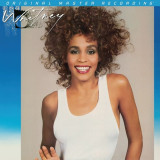
Whitney Houston - Whitney

Whitney did more than turn Whitney Houston into a pioneering sensation known around the world by her first name. Originally released in June 1987, the singer's blockbuster sophomore record became the first album by a female artist to debut at No. 1 on the Billboard 200 chart — a position it claimed for a total of 11 weeks en route to selling more than 10 million copies in the U.S. The Diamond platinum effort also contains four No. 1 Hot 100 hits that, when combined with the three chart toppers from her 1985 debut, gave her seven consecutive No. 1 singles — an accomplishment that no other artist has accomplished. Commercially and creatively, Whitney stands on hallowed ground — especially now that the record plays with a sound that puts into perspective just how extraordinary, engaging, and vital Houston's music remains.


Mastered from the original master tapes and pressed on MoFi SuperVinyl at RTI, Mobile Fidelity's 180g 33RPM SuperVinyl LP of Whitney invites listeners to experience the Rock & Roll Hall of Fame inductee's pivotal album in audiophile quality for the very first time. Free of the dynamic limitations and tonal flatness prevalent on prior vinyl and CD pressings, it lets the music breathe and reveals the copious detail, nuance, and texture within the immaculately produced songs. MoFi's SuperVinyl profile offers further advantages in the forms of a nearly inaudible noise floor, dead-quiet surfaces, and superb groove definition.

In addition to featuring extreme clarity and immediacy, this numbered-edition reissue does wonders for the attribute that inspired more than 20 million people around the globe to add Whitney to their record collections: that inimitable voice. Houston's trademark mezzo-soprano — an acrobatic instrument equally capable of taking off on fantastic flights and unwinding for hushed meditations — benefits from the fantastic airiness and transparency afforded by this meticulously restored edition. Whitney has never sounded or looked better. The crossover landmark deserves nothing less.

Issued just two years after Houston's breakthrough debut, Whitney immediately signalled the genre-defying singer's intent to continue to push ahead and expand her palette. Shot by photographer Richard Avedon, the album cover depicts an iconic image of Houston — captured with a gleaming smile, bright eyes, teased-out afro, toned arms, and a right hand that appears to wave a friendly hello — whose active, athletic profile stands in contrast to the extremely formal sit-down shot of her that graces her '85 record. The change is telling: Whitney overflows with unfettered joy, rhythmic vibes, and deep-seated emotions that forever endeared her to the hearts and minds of countless listeners — and which set the standard for the wave after wave of divas that followed in her footsteps.

It's no coincidence that the first track on Whitney is the declarative "I Wanna Dance with Somebody (Who Loves Me)." Like Michael Jackson's "Billie Jean" and Madonna's "Material Girl," the feel-good smash is one of the quintessential '80s gems — a lithe, melodic, celebratory release of pent-up energy and loneliness that glides across club floors, shouts to the rooftops, and shrugs off any concerns about vulnerability or embarrassment. Houston's swooping voice moves in sync with the sleek beats and dipping-and-diving synths. She practically takes her fellow musicians by their hand and leads them in a blissful dance that nobody would dare sidestep. Focusing on Houston's singing — a task made challenging only because of the impossible-to-ignore hooks and grooves — showcases the virtuosic facets of not only her register but her control, discipline, smoothness, and warmth.

That she replicates those feats for the entirety of the nearly 53-minute-long album makes Whitney that much more special. Houston reaches back and channels her childhood gospel training on the R&B-flared "So Emotional"; effortlessly slips into Quiet Storm mode on the duet with her mother, gospel great Cissy Houston, on "I Know Him So Well"; flirts with smooth jazz and collaborates with tenor saxophonist Kenny G on the lush "Just the Lonely Talking Again"; conjures dreamscapes and shadow-boxes with supple funk on a romantic cover of the Isley Brothers' "For the Love of You"; and, for the majestic power ballad "Didn't We Almost Have It All," displays the sky-scraping reach of her vocals amid a grand arrangement made even bigger by Houston's sweeping performance and triumphant finish.

Houston's once-in-a-generation talents weren't lost on the adoring public, radio deejays, or industry experts. In addition to harbouring four No. 1 hits and receiving nominations for four Grammy Awards, Whitney generated another Top 10 success in the guise of the Afro-Cuban-leaning "Love Will Save the Day." The album also netted Houston four American Music Awards; two Billboard Music Awards; back-to-back People's Choice Awards; a Soul Train Award; and various other accolades. It all makes the crux of the Washington Post's July '87 review of the album appear prophetic: "Her voice sounds stronger still and the songs are varied but so consistent she could garner 10 Top 10s out of a field of 11."


That claim still holds true. A brilliant fusion of pop, R&B, smooth jazz, and soul, Whitney is a showstopper – and one of the key reasons Houston is the most-awarded female artist of all time.

pre-order now14.08.2023

expected to be published on 14.08.2023


Last In: 2026 years ago
CANNONBALL ADDERLEY - Somethin' Else (2x12")

Julian Cannonball Adderley's only Blue Note album, Somethin' Else, would likely forever be famous in music lore if just for the presence of Miles Davis. The iconic composer/trumpeter steps into the role of sideman on the 1958 set, one of just a handful of times he'd make such a move after the calendar passed the mid-1950s. Yet evaluating Somethin' Else strictly on Davis' involvement misses the big picture. Plain and simple, Adderley's jubilant work remains a jazz landmark due to the chemistry of its Hall of Fame personnel, enthusiasm of its participants, and sophistication of its arrangements – not to mention the reference-grade production and inclusion of the definitive renditions of two all-time jazz standards.

Limited to 6,000 numbered copies, pressed on dead-quiet MoFi SuperVinyl at RTI, and mastered from the original master tapes, Mobile Fidelity's ultra-hi-fi UltraDisc One-Step 180g 45RPM 2LP collector's edition pays tribute to the record's merit and includes the bonus track "Allison's Uncle." Offering reference-calibre sonics, this spectacular collector's version provides a clear, transparent, ultra-dynamic, and up-close view of a cornerstone effort that witnesses Adderley and Davis sharing horn duty alone for the only time in their fabled careers – an arrangement that occurred as a result of Adderley having joined Davis' majestic sextet a year prior.

The premium packaging and beautiful presentation of the UD1S Somethin' Else pressing befit its extremely select status. Housed in a deluxe slipcase, it features special foil-stamped jackets and faithful-to-the-original graphics that illuminate the splendour of the recording. No expense has been spared. Aurally and visually, this UD1S reissue exists as a curatorial artefact meant to be preserved, touched, and examined. It is made for discerning listeners that prize sound quality and production, and who desire to fully immerse themselves in the art – and everything involved with the album, from the iconic photos to the gorgeous finishes.

The vibrant potency reveals itself openly on an analogue set that provides full-range reproduction of an ensemble that also includes pianist Hank Jones, bassist Sam Jones, and drummer Art Blakey. Each and every snare hit, downbeat, and cymbal splash registered by the latter take on realistic proportions, blooming and decaying as they would right in front of you on a stage. Jones' foundational bass lines register with uncommon depth and palpability, the litheness of the strings and fullness of the instrument epitomizing the definition of rhythm. Stellar, too, are the surefooted 88s. Sublime in scale, tonality, and attack, with the delineation such you can practically separate the white and black keys in your mind. As for that liquid interplay between Adderley and Davis? Breathtakingly lifelike in timbre, naturalism, purity, and presence. This collector's version takes you there – there being Rudy Van Gelder's legendary New Jersey studio in March 1958 to witness it all unfold, again and again.

For reasons that extend far beyond the outstanding playing and flawless repertoire, Somethin' Else is without question a record you'll always want to watch and hear come together. As veteran critic Bob Blumenthal observed writing about the album four decades after its release, "The instant rapport achieved by the quintet is thus the product of much shared and common history, though the tensile strength that they create throughout created a totally unique feeling that can be attributed to the sensitive musicianship of all concerned, including the supposedly hard bopping leader and drummer." Such inimitable feeling, or emotion, courses throughout every passage, and no where more obviously than on "Autumn Leaves" and "Love for Sale."

Without question, the discreet interpretations of the Johnny Mercer and Cole Porter songs, respectively, found on Somethin' Else have long been considered part of jazz's alluring mystique. Adderley and Davis bring contrasting approaches to the table yet sound of a singular mind on "Autumn Leaves," with the latter's muted trumpet and the headliner's lush alto saxophone dovetailing into a performance that endures as a blueprint for expression, counterpoint, sophistication, fluidity, and linearity. Blues, melody, and romance pour from their horns. Their bandmates, picking up on the intimate vibe and calm mood here – as well as on the spry, head-over-heels spirit of "Love for Sale" – join in on the conversation with sharp economy and float-on-air roundedness.

Not to undersell the other three numbers, all deserving five-star status. Twelve measures in length, the title track offers a slow burn in swing. Written by Adderley's brother, Nat, the 12-bar "One for Daddy-O" transmits funk flavors. The closing "Dancing in the Dark" pops with lushness and temptation, its stream of bold colours and understated textures calling for a moonlight twirl, or at least fantasies suggestive of a memorable night. Somethin' else, indeed.

pre-order now11.08.2023

expected to be published on 11.08.2023


Last In: 2026 years ago
Chet  Baker - Live In Rosenheim 2x12"

Chet Baker's Live In Rosenheim is the live recording at the 5th Rosenheimer Jazz Liv(f)e Tage on April 17th, 1988. It is his last recording as a quartet featuring Nicola Stilo on flute, Marc Abrams on bass, and Luca Flores on piano. Chet can be heard on trumpet, vocal and piano with a choice of tunes including Hank Mobley's "Funk In Deep Freeze”, Duke Ellington's "In A Sentimental Mood", Arthur Jobim's "Portrait In Black And White" and more tracks.

Live In Rosenheim is available as a 35th anniversary edition of 1500 individually numbered copies on white coloured vinyl and includes liner notes on the back sleeve.

pre-order now04.08.2023

expected to be published on 04.08.2023


Last In: 2026 years ago
Various - WGANDA KENYA / KAMMPALA GRUPO LP

A wild and funky collection of Afro grooves that was ahead of its time in 1977 and has become a collector’s item in recent years, especially due to the growing international interest in Colombian picó sound system culture. Fruko and his studio bands Wganda Kenya and Kammpala Grupo treat us to a diverse set of African and Caribbean styles, laced with crazy synths, psychedelic guitar and infectious pan-African polyrhythms. By the time Discos Fuentes released the album “Wganda Kenya Kammpala Grupo” in 1977, Wganda Kenya’s discography was expanding with many 45 singles and appearances in various artists collections. The group’s 1975 debut record “África 5.000” was a full length LP in the U.S. and a various artists compilation in Colombia, which was followed by the self-titled long player the following year. However, Kammpala Grupo, which shared the album’s title and was credited to three songs on the record, had never appeared before, yet was basically the same studio group as Wganda Kenya. Most likely the creation of this short-lived studio band was just a ploy by the label to make it seem like there were more groups playing the type of exotic afro tracks favored by the picotero DJs of Colombia’s Caribbean coast (especially in Barranquilla and Cartagena). 1974 Discos Fuentes’ management had sent musician, band leader and producer Julio Ernesto “Fruko” Estrada to the coast on an A&R mission to discover what people were dancing to in the verbenas (communal open air neighborhood parties) run by the owners of picó sound systems (decorated mobile DJ rigs). Always game for an adventure, Fruko was tasked with bringing some popular examples of these esoteric, hard-to-find African, French and Dutch Antillean records back to Medellín to serve as inspiration (or to outright copy) so that the label could enter into the growing regional market and spread its popularity to the interior of Colombia and other Latin American countries via its own studio creation, Wganda Kenya. Fuentes was always returning to exploit the rich African-rooted culture of the coast as it had with the cumbia and other regional genres before, so in a way it was not surprising that they were attuned to this particular niche phenomenon from a marginalized sector of the population. The most popular genres with the champeta dancers in the 70’s and 80’s were styles like Congolese rumba, highlife, afrobeat, juju, mbaqanga and soukous as well as the music of Haiti, Guadeloupe, Martinique, Curaçao and Dominica, all of which were fiercely guarded by the DJs who had managed to acquire them often through extreme means of travel, barter and intense digging. The record kicks off with the joyful ‘El Gallo Africano’ which features exquisite interplay between Sepúlveda’s highlife style guitar and an authentic-sounding African style saxophone, perhaps played by Carlos Piña. In reality it was ‘Go Call Police Chief’ by prolific Nigerian highlife guitarist Chief Oliver Sunday Akanite, aka Oliver De Coque. Next up is Kammpala Grupo’s ‘La Yuca Rayá’ (‘Grated Yuca’), written by Isaac Villanueva in a style he termed son haitiano which sounds much more like Zimbabwe Shona mbira music. Wganda Kenya’s ‘Caimito’ (star apple, a type of tropical fruit), on the other hand, is actually a cover of a relatively well-known Haitian merengue song. Kammpala Grupo then takes us from the French Antilles to the multi-cultural discotheques of Paris, where a cover version of Black Soul’s Afro-boogie anthem ‘Black Soul Music’ is retooled and renamed ‘King Kong’, perhaps in a nod to the 1976 remake of the monster flick of the same name. Side two introduces us to the infectious merengue rebita of Angola via ‘La riphyta’ with “Paparí”, aka Mariano Sepúlveda, doing the vocals and faithfully replicating the Angolan guitar style. ‘La Trompeta Loca’ (‘The Crazy Trumpet’), probably the nuttiest track on the album, is an ingenious cover of ‘Ye Gbawa Oo Baba (Tribute To Nigeria)’ by Joe Mensah of Ghana. As with all their covers of African tunes, this rendition tightens up the original with some pop sheen, more consistent drumming and higher production values, remaking it into a powerful slow-burning dance floor filler. This is followed by one of the most powerfully original songs to come out of the entire Wganda Kenya project, Mike Char’s reggae anthem ‘El Nativo’ with Joe Arroyo on vocals. The record ends on a more authentically Caribbean sounding note with the instrumental ‘El testamento’, a cheerful islands banger with bright brass, syncopated calypso beats and chunky cuatro guitar (or ukulele). The original was in the mento genre and titled ‘Sweet meat’, written and recorded by Jamaican trumpeter Bobby Ellis. First time reissue. 180g vinyl.

pre-order now30.06.2023

expected to be published on 30.06.2023


Last In: 2026 years ago
Bruce Springsteen - Greetings From Asbury Park

ULTRADISC ONE-STEP BOX SET OF BRUCE SPRINGSTEEN'S 1973 DEBUT PLAYS WITH AUDIOPHILE SOUND: LIMITED TO 7,500 NUMBERED COPIES.

1/4" / 15 IPS analogue master to DSD 256 to analogue console to lathe

Teeming with identifiable characters, youthful romanticism, vivid narratives, and sophisticated arrangements, Greetings from Asbury Park, N.J. is a personal postcard from the heart, soul, and mind of a rock ’n’ roll lifer bent on discovering his world and what lays beyond it. The 1973 album establishes many of the signature themes and sounds Bruce Springsteen would embrace throughout his unparalleled career. No wonder a majority of the songs — “Blinded by the Light,” “Lost in the Flood,” “Spirit in the Night” included — remain staples of the New Jersey native’s fabled concerts.

Sourced from the original analog master tapes, pressed at RTI on MoFi SuperVinyl, and strictly limited to 7,500 numbered copies, Mobile Fidelity's UltraDisc One-Step 180g 33RPM LP set is the definitive-sounding version of Springsteen’s daring debut. Afforded the benefits of SuperVinyl’s nearly non-existent noise floor, Greetings from Asbury Park, N.J. plays with a clarity, directness, and emotionalism that practically whisks you into the New York office in which Springsteen — accompanied by then-manager Mike Appel — played a few originals for legendary Columbia Records executive John Hammond and earned a record deal.

That solo-centric aspect of Greetings from Asbury Park, N.J. — credited only to Springsteen and featuring only a handful of accompanying musicians — helps make it unique in his catalogue. So do the acoustic-based frameworks, revealed on this pressing with newly exposed detail, nuance, and immediacy. The music emerges with an openness that gives flight to the Boss’ storytelling. His words flow with unbridled, stream-of-conscious pacing and vibrant imagery; they pay homage to and update a tradition established by Bob Dylan, Woody Guthrie, and Jack Kerouac. Equally important, Springsteen’s still-underrated vocal performances can now be appreciated in full-range fidelity. Earnest, transparent, and sincere, his singing comes across with an urgency that distinguishes him from the era’s singer-songwriter mold and a raw energy that underlines his unflinching belief in rock ’n’ roll.

Recorded in just three weeks, Greetings from Asbury Park, N.J. also stands out by way of its insightful artwork. Designed by Grammy winner John Berg, the inviting cover is appointed with images of the local landmarks, beachfronts, and geography that provide the backdrops for some of the songs. Those graphics are complemented by the beautiful packaging of Mobile Fidelity’s UD1S edition. Tucked in a sleek slipcase, the LP is housed in a special foil-stamped jacket with faithful-to-the-original graphics. In every way, this reissue is made for listeners who prize sound quality and who want to engage themselves in everything involved with this invigorating album.

An aspirational declaration by a then-23-year-old musician who was already a seasoned veteran of the Jersey Shore bar-band scene, Greetings from Asbury Park, N.J. can in many ways be seen as a semi-fictional autobiography released more than four decades before Springsteen penned his official tome. Elaborate, descriptive, and absorbing, Springsteen’s lyrics spark with the enthusiasm and exuberance of a wide-eyed adventurer ready for possibility, excitement, and fun — but who is also mindful of loss, pain, and disappointment. Words often tumble and collide like dice spilling from a jar; shaken and fully intact, they pour forth with purpose and without self-conscious concern.

One of two songs composed after label president Clive Davis cited the need for a radio-friendly single, the opening “Blinded by the Light” provides an unforgettable introduction. It flares with a blend of confidence, fun, and poetry that helps define Greetings from Asbury Park, N.J. Crackling with wiry guitars, funky chords, Clarence Clemons’ cool-toned saxophone, and action-packed lyrics, the shuffle simultaneously expands and contracts — and establishes Springsteen as a master of rhyme, alliteration, and breathless expression. The thread continues on “Growin’ Up.” Steered by ascending piano lines, soulful grooves, and frisky rhythms, the coming-of-age confessional is at once rebellious and controlled, fearless and vulnerable, honest and boastful. It is a tale to which multiple generations still relate.

Such universality has always been a Springsteen trademark. It surfaces throughout Greetings from Asbury Park, N.J., as does another Boss hallmark: the importance of friendship and tight bonds. These concepts relate to the fact many of the songs — see the feverish “Does This Bus Stop at 82nd Street?,” strutting “It’s So Hard to Be a Saint in the City,” and tender “For You,” the latter complete with brilliant Hammond organ shading — are directly tied to the friends, acquaintances, places, and happenings he knew. “Lost in the Flood,” whose cinematic drama and epic scope hint at the directions Springsteen would pursue on his next LP, extends that familiarity while addressing the kind of socially conscious issues with which he’s forever been associated.

Balancing the label’s vision of him as a folk-based singer-songwriter and his own desire to play rock ‘n’ roll with a full band, Springsteen never again made a record like Greetings from Asbury Park, N.J. One of the most captivating debuts in history, it heralds the start of a legacy whose import Springsteen seemingly foretells on “Blinded by the Light”: “He’s gonna make it tonight.” And how.

pre-order now30.04.2023

expected to be published on 30.04.2023


Last In: 2026 years ago
Lyrics Born - Vision Board

“This is me at my most imaginative, freakiest, and yet still most grounded and introspective,” says Japanese American rapper/actor Lyrics Born not only about his new album Vision Board, but also his “self” and his existence. “I feel like a new man! I’m healthier physically, spiritually, mentally, and emotionally.” The lead single and video “Diamond Door” is a pop/rap banger that lands you with an infectious barb and keeps you hooked for days, and is a thinly-veiled tribute to a particular style of female appreciation, but it can also be taken as a welcome mat to the new era of Lyrics Born. The accompanying video which shows Lyrics Born in his current physical form - svelte, stylish and with a confident swagger - reinforces this next chapter in his life. 60 pounds lighter, he lost the weight during the pandemic when he knew he needed to make a change. “Touring was becoming harder, and I was having all these weird health problems, but nothing that anybody could put their finger on,” he explains “My anxiety was high. I was not sleeping well. I was on the verge of really bad health.” And this improvement brought more confidence which shows in his new album. Vision Board is a focused affair that found him stretching his creativity farther and challenging himself to write in a way he’s never written before. Recorded primarily in New Orleans and produced by Rob Mercurio of Galactic (who also produced 2015’s Real People and 2018’s Quite a Life), it posited him in a new environment that helped his creative juices flow even more fluidly. “There’s nothing like recording in the Crescent City. It just gets in your blood, and the results are always funky and wild.” “This is about as psychedelic as I’ve ever been,” LB says. “I’m so proud of this album. I’m in a different space. The world is in a different space, and I wanted to celebrate that, loosen up and really create some imagery and share some emotion that I never have. I was listening to a lot of Shuggie Otis; a lot of obscure psychedelic soul and later Temptations,” he explained. “This is like if Alice in Wonderland was Japanese.” Vision Board was also inspired by another Bay Area rap luminary, although one who’s no longer with us - Gift of Gab. The dexterous Blackalicious MC and fellow Quannum Projects alum had a profound effect on Lyrics Born’s life, both creatively and philosophically. “I asked myself on some of these songs: ‘How would Gab approach them?’” he said. “I’d play with certain cadences, certain styles; I tried to stretch stylistically, lyrically and vocally on every single song. None of the patterns are the same.” Lyrics Born’s vulnerability shines through on the nine-track effort, something he’s not ashamed to admit (nor should he be). At one point during the pandemic, he was losing one friend, peer or family member every other week - from Zumbi of Zion I to Gift of Gab to Digital Underground’s Shock G. While many of the songs are deeply introspective, he had to “write some fun shit,” too. Celebratory horns, uptempo rhythms and fiery bars pepper the project from start to finish, and truly encapsulate Lyrics Born’s evolution of not just a groundbreaking Asian-American MC but also a human being. As the only Asian-American MC to release 10 studio albums, the first Asian-American to play major music festivals like Coachella and Lollapalooza and the first Asian-American to release a greatest hits compilation, Lyrics Born has been breaking barriers his entire life - and he’s not going to stop anytime soon. From the bombastic and tribal “I’m the Best Rapper in the World” with its self-winking boastfulness to the playful scat of “Bang Bang Bang” that slinks like an outtake from West Side Story, to the smooth and seductive “Who's The Best? (Dear Young LB)," to the psychedelic and swoony ”Alligator Boots” with it dreamy “Walk on the Wildside”-esque reverby sway, Vision Board sees Lyrics Born tackling different tones, textures and genres without fear and making them completely his own. It's an eclectic body of work that boasts more synths, more psychedelia and is generally more abstract.

pre-order now17.03.2023

expected to be published on 17.03.2023


Last In: 2026 years ago
Various - Around The World – A Daft Punk Tribute LP
out of Stock

Order now and we will order the item for you at our supplier.

Eagles - On The Border 2X12"

With its name indicative of the music's boundary-testing diversity and Southwestern inspiration, On the Border finds the Eagles leaving everything on the table and embracing a harder edge that takes the band out of more relaxed territory and establishes it as a group that knows how – and wants – to rock. Glenn Frey, Don Henley, new member Don Felder, and company immediately announce their intent on the defiant album-opening hit "Already Gone" and never look back, crafting a gem of a record that from start to finish is arguably their most consistent and balanced effort.

Limited to 10,000 numbered copies, pressed on dead-quiet MoFi SuperVinyl at RTI, and mastered from the original analogue master tapes, Mobile Fidelity's ultra-hi-fi UltraDisc One-Step 180g 45RPM 2LP collector's edition pays tribute to the record's significance and enhances the experience for generations to come. Playing with reference sonics that elevate an effort revered by audiophiles, it provides a lively, dynamic, transparent, and intimate view of a release whose contemporary importance continues to grow. The opportunity to zero in on the particulars of the Eagles' golden harmonies, distinct vocal timbres, and cohesive interplay has never been better.

Visually, the premium packaging and gorgeous presentation of the UD1S On the Border pressing befit its select status. Housed in a deluxe box, it features special foil-stamped jackets and faithful-to-the-original graphics that illuminate the splendor of the recording. No expense has been spared. From every angle, this UD1S reissue exists as a curatorial artefact meant to be preserved, touched, and examined. It is made for discerning listeners that prize sound quality and production, and who desire to fully immerse themselves in the art – and everything involved with the album, from the iconic Navajo cover painting to the meticulous finishes.

And with On the Border, there's plenty to take in and soak up. Declared by famed critic Robert Christgau as "the Eagles' best album," the 1974 set claims a rich backstory. Initially recorded amid tumultuous sessions with producer Glyn Johns in London shortly after the release of the group's sophomore Desperado set, On the Border took a new turn after the band elected to scrap most of the prior work, return to its native California, and team with producer Bill Szymczyk to give the material less of a smooth, polished sheen and more toughness. Szymczyk also afforded the Eagles more input and freedom in the arrangements, and suggested adding another guitarist to play on "Good Day in Hell." Felder got the call, and so won over the Eagles with his skills, he quickly became the fifth member of the band.

While the late-arriving Felder only plays on one other album cut, "Already Gone," his mates more than prove their muster on the remainder of a double-platinum affair that established the Eagles as a force whose range transcended the calmer country-leaning style it perfected on their first two LPs. Primarily written by Jackson Browne and shelved during the Desperado sessions due to its higher-energy nature, the throttle-twisting "James Dean" ricochets with barbed riffs and rebellious swagger. Listen without limits to how Szymczyk's raw production stamps the song with a leather-and-jeans cool befitting its protagonist. Similarly rugged, the slide-guitar-fueled "Good Day in Hell" boasts its own mean streak. And the funk-laced, boot-stomping title track cautions "don't you tell me 'bout your law and order." Throughout On the Border, the Eagles are in no mood to mess around.

Not that the band skirts sentimental territory. On one of the era's finest covers, the Eagles nail the bittersweet feelings and bring high-definition detail to the vivid scenery of Tom Waits' "Ol' '55," a song the group makes its own. The rustic ballad "My Man" serves as a tribute to the recently deceased Gram Parsons, with singer-guitarist Bernie Leadon taking the lead on the microphone as he pours his heart out to his former Flying Burrito Brothers mate. And when it comes to romance, is it possible to top "Best of My Love"? Graced with Henley's honey-dipped vocals, refined wordless group harmonies, brushed drums, and the gentle strum of acoustic guitars, the Johns-produced cut soared to Number One and set the stage for what would soon be the Eagles' reality: global dominance.

More About Mobile Fidelity UltraDisc One-Step and Why It Is Superior
Instead of utilizing the industry-standard three-step lacquer process, Mobile Fidelity Sound Lab's new UltraDisc One-Step (UD1S) uses only one step, bypassing two processes of generational loss. While three-step processing is designed for optimum yield and efficiency, UD1S is created for the ultimate in sound quality. Just as Mobile Fidelity pioneered the UHQR (Ultra High-Quality Record) with JVC in the 1980s, UD1S again represents another state-of-the-art advance in the record-manufacturing process. MFSL engineers begin with the original master recordings, painstakingly transfer them to DSD 256, and meticulously cut a set of lacquers. These lacquers are used to create a very fragile, pristine UD1S stamper called a "convert." Delicate "converts" are then formed into the actual record stampers, producing a final product that literally and figuratively brings you closer to the music. By skipping the additional steps of pulling another positive and an additional negative, as done in the three-step process used in standard pressings, UD1S produces a final LP with the lowest noise floor possible today. The removal of the additional two steps of generational loss in the plating process reveals tremendous amounts of extra musical detail and dynamics, which are otherwise lost due to the standard copying process. The exclusive nature of these very limited pressings guarantees that every UD1S pressing serves as an immaculate replica of the lacquer sourced directly from the original master recording. Every conceivable aspect of vinyl production is optimized to produce the most perfect record album available today.

pre-order now30.12.2022

expected to be published on 30.12.2022


Last In: 2026 years ago
James Taylor - JT LP

James Taylor

JT LP

12inchMFSL1-354
MFSL Records
16.12.2022

James Taylor's best-selling record since 1970's hallmark Sweet Baby James, the triple-platinum JT takes its permanent place as one of the singer's most enduring albums — an affair that gorges on country, blues, and rock styles as well as incisive songwriting. As the pre-eminent singer-songwriter's Columbia debut, it catapulted Taylor back into the limelight and re-established his place as the era's leading-edge folk-rock troubadour.

Sourced from the original analog master tapes and pressed at RTI, Mobile Fidelity's numbered-edition 180g LP possesses a warmth, immediacy, and intimacy absent from other pressings. The singer's comforting voice, breath control, and enchanting guitar lines sound as if they pour right out of the studio control room. Similarly, the splendid array of backing instrumentation is balanced, vivid, and dynamic. Taylor should always sound this realistic, warm, and lively.

More than any other of his records, JT features all sides of Taylor's lyrical persona. Optimistic, content material fills half of the 1977 set while Taylor reveals a darker, moodier identity on a number of songs that keep the 12-track set alternating between shade and light, shadow and sun. He turns romantic and blissful on the touching ballad "There We Are," praises the power of love on "Your Smiling Face," and enchants with the graceful "Secret O'Life."

In addition to channeling domestic bliss, Taylor expresses surprise and cynicism on "Honey Don't Leave L.A.," delves into despair on "Another Grey Morning," and invites sardonic tones on "Bartender's Blues." The result is a complete picture of an extraordinary songwriter and an accurate sketch of the mixed emotions many of us feel when it comes to romance. Taylor's ability to capture deep-seated feelings and set them to lyrical and musical poetry explains why we relate to him on such a meta-level. It's also why his music, including JT, remains timeless.

Taylor doesn't do it all alone. JT benefits from an all-star support cast. Carly Simon and Linda Ronstadt supply background vocals, saxophone great David Sanborn plays the horn, Russ Kunkel mans the percussion, and arranger David Campbell oversees the strings and woodwinds. It's no wonder why many fans consider this gorgeous collection of Laurel Canyon pop-rock Taylor's finest.

Whether you've never heard this record or know it inside and out, this reissue will open your ears to previously hidden details ranging from pedal-steel guitar accents to honky-tonk tonalities. Taylor's funky rhythms, too, gain in stature, as does his command of pace and tempo.

pre-order now16.12.2022

expected to be published on 16.12.2022


Last In: 2026 years ago
Run DMC - Run DMC

RUN-D.M.C.'S PATH-BREAKING SELF-TITLED DEBUT BENEFITS FROM DEFINITIVE RESTORATIVE TREATMENT
Mastering Source to Be Determined Closer to Production Date


The impact, influence, and importance of Run-D.M.C.'s self-titled debut – the album that invented hardcore hip-hop and bridged rap, rock, and funk in then-unparalleled ways – cannot be measured. The first full-length record released by Profile Records, the 1984 set permanently changed the sound of music, broadcast streetwise wisdom to every corner of the country, and made the notion of a one-man band a distinct reality. Produced by Russell Simmons and Larry Smith – and bolstered by an incendiary blend of staccato deliveries, stark beats, aggressive exchanges, evocative hooks, and socially conscious messages – Run-D.M.C. still hits listeners in the jaw with the same intensity it did nearly 40 years ago when it could be heard booming from ghetto blasters carried around city blocks nationwide.

Sourced from the original master tapes and pressed on MoFi SuperVinyl, Mobile Fidelity's numbered-edition 180g SuperVinyl 33RPM LP is the definitive-sounding version of this groundbreaking work.

pre-order now16.12.2022

expected to be published on 16.12.2022


Last In: 2026 years ago
Nas - It Was Written LP

Nas

It Was Written LP

12inchGET51310LP
GET ON DOWN
25.11.2022

Repressed! Illmatic, the 1994 studio debut of Nasir "Nas" Jones, was more than just a critical success for the Queensbridge-based rapper. At a time when East Coast hip-hop was increasingly being taken less seriously than their West Coast counterparts, Illmatic's raw jazz and soul-based production, dire atmosphere and lyrics, coupled with Nas' uncompromising flow was integral in restoring interest in the East Coast as a hotbed of hip-hop artistry. Along with key releases from Wu-Tang Clan and Notorious B.I.G.,it shifted attention away from the funky, dayglo synth-based G-funk coming out of California and back to the grimy streets of New York. After such an unprecedented debut record, expectations were understandably high for Nas' follow-up. What came next threw critics and fans for a loop, but was no less influential than Illmatic, and would become the most commercially successful album in the entirety of Nas' discography. The 1996 sophomore follow-up was titled It Was Written, and in contrast to the urban bleakness of his debut, had Nas dipping his toes into the world of mafioso rap. Amidst production from heavy hitters like Trackmasters, Dr. Dre, L.E.S., Havoc of Mobb Deep, and Illmatic-collaborator DJ Premier, among others, Nas weaves evocative narratives of gang warfare, downtrodden neighborhoods, drug deals gone awry, and gangsta triumph, against a backdrop of samples from Sam Cooke, Etta James, the Isley Brothers, and even Chuck Mangione. It Was Written was not hard up for top-tier guests either, featuring major guest turns from Lauryn Hill and Joel "JoJo" Hailey of K-Ci & JoJo. It also introduced the world to The Firm, the brief Nas-led supergroup featuring rappers AZ, Foxy Brown, and Cormega. It even managed to cause some minor controversy in the hip-hop community for its collaboration with West Coast producer Dr. Dre, at a time when the East Coast/West Coast rap feud was reaching a fever pitch, briefly attracting the ire of one Tupac Shakur. Not only was It Was Written received warmly by critics, but became a major commercial success, reaching the top of the Billboard 200 charts, reaching platinum sales status four times, and alongside albums like Raekwon's Only Built 4 Cuban Linx, helped usher in the era of mafioso rap in the mainstream. It rendered chart hits out of singles like the Eurhythmics-mimicking "Street Dreams", and the Grammy-nominated "If I Ruled The World (Imagine That)", and proved to be a major influence on artists like Kendrick Lamar, Lupe Fiasco, and many more.

out of Stock

Order now and we will order the item for you at our supplier.


Last In: 3 years ago
Art Blakey & The Jazz Messengers - Hard Bop

Some of the greatest jazz musicians of all time have passed through Art Blakey's Jazz Messengers: Horace Silver, Hank Mobley, Kenny Dorham, Wayne Shorter and Donald Byrd, among many others. However brief their stay, working with the demanding and full-throttle drummer not only increased their visibility, but also their chops and interpretive capacity. Blakey's ability to drum up the best players in the game may have even eclipsed his superhuman ability to play drums.

Altoist Jackie McLean, trumpeter Bill Hardman, bassist Spanky deBrest, and pianist Sam Dockery deliver whole-bop goodness on five propulsive, fiery tracks. True to its title, this LP bops hard, with a ferocious swing, boundless energy and telepathic communication between players - especially Blakey and Hardman. Considering the rhythmic demands of Blakey's locomotive playing style, this was an incredible achievement.

Impex Records has cut this gorgeous 180-gram LP with the original analogue mono master tapes and without computer processing of any kind. You hear all the vivacious interplay that occurred on that weekend in 1957 when Blakey and crew forged a bold new vision of muscular, funky jazz. This is music that still resonates over 50 years later. Not to be missed!

pre-order now31.10.2022

expected to be published on 31.10.2022


Last In: 2026 years ago
The Mighty Mocambos - Scenarios LP

A unique longplayer by Germany's Funk champions The Mighty Mocambos: 'Scénarios' is a wild journey through iconic performances captured on 8-track tape, including celebrated versions of breakdance favourites like 'Axel F.' And 'Let The Music Play' as well as brand new original material composed especially for recordings in unusual settings.

Hamburg's deep funk chefs are known for their intuitive recordings that capture the energy of a live performance, and with this record they go all the way.

Just before the pandemic, the group recorded an in-store live session at legendary Hamburg record shop Groove City and taped an impromptu performance at JAM PDM! breakdance battle in Potsdam. Both were released on vinyl 45s, quickly sold out and became secret weapons for DJs. While most bands shifted their stage to the studio in 2020, producing an abundance of isolated lockdown-inspired material, the Mighty Mocambos – never shy of an antidote - took the mobile version of their recording studio on the road.

With no audience allowed at the Pitt Hopkins Music Session charity concert, the group used the occasion to compose meditative folk-soul instrumentals to be performed exclusively on stringed instruments. Sweaty funk does not work via video stream, but the format provided a welcome opportunity to create something entirely different. Even without electricity and drums, the cinematic "Four Two Three" and "Silent Heroes" are unmistakably recognizable as Mocambo themes.

When you follow Nina Simone's credo that an "artist's duty is to reflect the times", it became evident that once the world slowly started opening up again, further concerts would be captured on the group's portable Fostex R-8 tape machine. Luckily, restrictions fell on the very evening that the band hit the open air stage at the Import Export in Munich on September 11th 2021. The extended afrobeat-inspired jam on J.J. Cale's "Carry On" witnesses people celebrating and dancing together again for the first time after a year and the manic "Munich Psycholympics" unleashes all bottled-up energies that had being lying dormant.

The slightly kafka-esque "Ghost Walk" was taped during a soundcheck for a concert that was eventually called off for safety reasons, reflecting once more the uncertainty of the time. The last scénario sees the Mighty Mocambos returning to a packed indoor venue, playing "Let The Music Play" to a audience of b-boys and -girls – a testament to the sheer power of music. Featured as an encore here, an acoustic version of "Where Do We Go From Here?" (originally recorded with Lee Fields) closes the record and its restless voyage through unusual recording situations.

"Scénarios" differs drastically from other live albums as it does not seek to replicate existing material from studio albums. All songs were written or arranged especially for the live recordings in order to combine the group's DJ-friendly trademark sound with added vibes and momentum from the audience. Most of them were recorded while they were performed in public for the first time ever.

Comes in gatefold sleeve & includes download voucher.


d 04: Theme from Beverly Hills Cop (Axel F) Live

out of Stock

Order now and we will order the item for you at our supplier.


Last In: 2 years ago
Guido Möbius - A Million Magnets

Much of a million magnets sounds as if Möbius has left the music to its own devices. As if he has given it space instead of closing it in and channelising. Little seems to be organised, reflected or calculated. Rather it booms and pulses and chugs and swells.

In 2015 Möbius invited the drummer Andrea Belfi to record with him for his album Batagur Baska (Shitkatapult 2016). They spent a whole day in the studio at Funkhaus Nalepastraße, Berlin. Belfi implemented ideas from Möbius for various pieces and contributed his own ideas. Everything was recorded although in the end only one hi-hat track was used. All the other recordings were left to snooze and be forgotten in a folder on the computer. Years later Möbius discovered them again by chance during a train journey. He decided to answer Belfi’s powerful and concentrated drumming.

If sound recordings are used on specific tracks they start to lead a life of their own. Möbius mostly left Belfi’s recordings unedited. He took them as a trigger for the structure and character of new tracks. So we get the opening track Abayanga with its stoic pulse and airy cymbals. Or Schlucht with such restless drums, fluttering feedback and the mantra-like spoken-song of Yuko Matsuyama. The magical How To Never Make Up is almost a song: feverish percussion (Andrea Belfi on rimshots, Ansgar Wilken on the table top), a rich bass and the other worldly singing by Jana Plewa.

The accordion on Windjammer seems to blow in all directions at the same time, propelled by Belfi’s hounding cymbal playing. Side B starts with a reflection of Windjammer: Discrete Wiring. Guitar riffs in endlessly circling movement and Yuko Matsuyama’s voice and all that it conjures up. Feed Me Fog freely improvised with on drums and feedback is simply complete as a self-contained piece. The singing on Chayyam comes from the Cambodian Prak Chum, who’s voice can also be heard on the title track of Batagur Baska.

pre-order now02.09.2022

expected to be published on 02.09.2022


Last In: 2026 years ago
King Sporty - Dance To The Music

The Konduko 7" series ends with the 4th and possibly best single with Noel Williams aka King Sporty's cover version of Bob Marley's Them Belly Full, here released as Dance To The Music.

First released on the Natty Dread album of 1974, it was Marley's first album working away from Peter Tosh and Bunny Wailer and was a spiritually charged political and social statement, also featuring classics No Women, No Cry, Lively Up Yourself and Rebel Music.

As an associate and friend from their Studio One days, William's version makes sense, in the tradition of covers throughout reggae's history. Appearing a year late, the 1975 single came in Jamaican and US pressings, a nod to Konduko's roots, having started in Kingston before the move to Miami in the earlier part of the decade.

A warning against allowing the poor to go hungry, with the prophetic "a hungry mob is an angry mob", the cover includes a lot of the Miami feel Sporty was incorporating. With instrumentation again from the Ocean Liners KC And Sunshine backing band), the horns and guitar raise the soul, with counter keys, Part 1 is a straight vocal, while Part 2 is close to a Version but more than an instrumental and in its title, shows its funk and soul background too. A perfect end to the series, the uplifting tracking belies the powerful message, bringing the Miami swing to the JA groove once more.

out of Stock

Order now and we will order the item for you at our supplier.


Last In: 3 years ago
Martin James - French Connections

• Revised reissue of the acclaimed first-ever book-length investigation into French Touch.
• Back in print for the first time since 2004.
• Updated version features previously unpublished interviews with Daft Punk, Laurent Garnier, Cerrone, Jean Jacques Perrey, Motorbass, Chris Le Friant (aka Bob Sinclar), Air, Etienne de Crecy, La Funk Mob, Cassius, The Micronauts, Stardust, Benjamin Diamond, Modjo, DJ GilbR, i-Cube, DJ Cam and many more...

During the second half of the 1990s, Paris experienced a dance music revolution thanks to groundbreaking artists like Daft Punk, Air, Super Discount, Motorbass, Cassius, Dimitri from Paris, Bob Sinclar and many, many more. It was a scene that became known as French Touch and was heralded throughout the world as the epitome of dance music cool, forever placing Paris on the dance culture map.

Journalist and author Martin James was there right from the start, documenting the scene from its inspirations to its earliest moments and onto its global breakthrough. In the process, he inadvertently provided the French Touch moniker that became adopted throughout the world.

Drawing on a dazzling array of exclusive interviews with the biggest names in French electronic music history, French Connections explores France’s significant contribution to dance music culture that paved the way for the French Touch explosion.

“Endlessly informative and thoroughly enjoyable, James manages to bring even the most boring artists (Air) to vibrant life with his energetic prose and rich imagery.” Bob Stanley, Mojo

“(James) has a rare, imagistic talent for evoking the unearthly sounds of modern dance music.” The Guardian

“Viva Monsieur James! Essential reading for all fans of Gallic grooves.” DJ Mag

“If ever a book was overdue then it’s this one, which charts the influence of French electronica on the world outside the hexagon over the past decade or so… tres bien.” Select

pre-order now24.06.2022

expected to be published on 24.06.2022


Last In: 2026 years ago
Various - Day By Day EP

Various

Day By Day EP

12inchLENG059
LENG RECORDS
03.06.2022

For the label’s next release, the team at Leng Records has decided to offer-up something a little bit different: a 12” compilation of little-known and hard-to-find Balearic gems selected by friend of the label Paul Beckett.

Plucked from the dusty corners of his collection, the five tracks on show are quietly colourful, tactile and musically rich excursions that effortlessly blur the boundaries between genres and sound terrific blasting from speakers on a humid Mediterranean or Adriatic afternoon.

First up is Ray & John’s languid, subtly disco-tinged ‘Day By Day (Instrumental)’, which originally featured on the flipside of the Italian duo’s sole single from 1984. Rich in rubbery bass guitar, sequenced synth-bass, sharp disco guitar licks, Fairlight stabs, dreamy chords and occasional chanted vocals, it sounds like Please-era Pet Shop Boys reclining at a Rimini pool party after copious amounts of happy pills.

It’s followed by Angel’o’s ‘Angelo’, a turn-of-the-80s gem picked from the band’s long-forgotten album, Dream Machine. Marked out by warming electric piano motifs, squelchy synth-bass and hazy lead vocals, the track successfully mixes krautrock and space rock sounds with the then fresh sound of synth-pop.

Next up is All Trouvee’s ‘Darling’, a thoroughly overlooked 1987 single whose minimalistic sleeve artwork lists each of the now-classic – and then cutting edge – synthesizers used to make the sun-soaked blend of mid-80s synth disco, AOR pop and sunset-ready jazz-funk piano solos.

Equally as impactful is Angel’s ‘Tomorrow Night’, a classic – if little-known – chunk of glossy, laidback synth-pop from 1980 that sounds like something you’d hear on AM radio stations in the early hours of the morning. Its’ sound – all delay-laden Linn drums, synth-horns, Nile Rodgers style guitar licks and echoing lead lines – was actually far sighted for the time but would become more familiar to listeners as synth-pop boomed in the mid 1980s. Those who buy the digital version of the EP will also have access to a longer, club-style mix as well as the short version featured on the 12”.

Rounding off a fine package is ‘Feeling Action’ by Eggs Time, a deliciously warm and woozy chunk of fretless bass-sporting Italian pop/West Coast jazz-rock fusion plucked from a real since of buried treasure: an Italian compilation called – for reasons that aren’t clear – Moby Dick. There’s certainly a tinge of both yacht rock and blue-eyed soul about the track’s gorgeous blend of FM synth sounds, eyes-closed jazz guitar solos, unfussy beats and sweet female lead vocals. It provides a fittingly horizontal finish to a collection packed to the rafters with long-overlooked, sun-baked treats.

out of Stock

Order now and we will order the item for you at our supplier.


Last In: 20 months ago
Moonbrew & Paolo Apollo Negri - The LEM Tales - Chapter One

Words have a force of their own: a life generated by their meaning and by the imaginary world they refer to; a power increased by the dynamic interplay with other words. Just put 'Moon' and 'Apollo' together, and you'll be almost inevitably transported to mankind's greatest adventure: the Moon landing and, before that, the space race between the US and USSR, the early missions, and the incredible technological challenges faced at the time by astronauts and engineers.

It is against this imaginative background that beat-maker and bass player Moonbrew and organist and keyboardist Paolo Apollo Negri conceived The LEM Tales project. Their collaboration, too, is the coming together of 'Moon' and 'Apollo', and of their two worlds: a sonic universe where hip hop meets funk, pop merges with jazz, old school interacts with new possibilities, and urban and space blend into something new.

The LEM Tales - Chapter One narrates the space race from the American point of view. This vinyl edition, which includes two exclusive tracks (*) not on the digital release, takes us on a journey from "Project Gemini" - NASA's second human spaceflight program - to "Tranquillity Base" (*) (the site on the Moon where Armstrong and Aldrin landed and walked in July 1969) , through tracks titled "Capsule Communicator" (the individual in the mission control center who maintained communication with the astronauts in space), "EMU" (Extravehicular Mobility Unit, better known as the spacesuit), "Saturn V" (a threestage, liquid-fuelled rocket used between 1967 and 1973), and "Mercury Seven" (*) (the group of seven astronauts chosen for the Mercury Program in 1959).

Inspired by iconic images that are part of our collective visual memory, Moonbrew and Apollo's first collaborative effort tries to provide a contemporary sonic representation of what the past means to us today – and, perhaps, will mean to future generations. It does so through a feast of vintage synthesizers, transistor and tonewheel organs, string machines, electric pianos, tube amplifiers, obscure analogue devices, electric bass, and modern samplers.

An old-school hip hop approach was used in the first stages of writing the album: individual drums hits from old, dusty records were first sampled and then physically played on real instruments to create patterns and build up the rhythm section. Moonbrew then laid down the electric bass grooves and Apollo layered his dreamy, evocative vintage keyboards on top. The result is a combination of different styles, sounds and genres that is fresh, original and contemporary while being clearly influenced by many musical legends of the past.

The LEM Tales - Chapter One is released by Four Flies in partnership with Record Kicks.

out of Stock

Order now and we will order the item for you at our supplier.


Last In: 4 years ago
Bill Withers - Greatest Hits

Bill Withers

Greatest Hits

12inchMFSL1-445
MFSL Records
24.11.2021

Bill Withers created mellow, downhome-style soul for barely more than a decade before electively retreating from the industry to pursue craftsman interests. Yet over the course of the handful of albums he made for Sussex and CBS, the Appalachian native struck lasting emotional chords in legends ranging from Booker T. Jones to Stephen Stills—not to mention the millions of listeners that fell under the spell of now-standard tracks such as “Lean on Me,” “Use Me,” and “Ain’t No Sunshine.” The antithesis of the sweaty R&B shouter that prowled the edge of stages, Withers dealt in calm and vulnerability. Serving as a template for modern British soul contemporaries like Sam Smith and an extension of the timeless fare explored by Van Morrison, Curtis Mayfield, and Al Green, Bill Withers’ Greatest Hits belongs in every music lover’s library.


Mobile Fidelity’s reissues of the 1981 compilation provide a transparent view of Withers’ relaxing timbre and the subtle grooves underlining his arrangements. Characteristics ranging from the tension of the guitars, funky bends of the bass, whisper-soft coo of the formal strings, airiness of the backing harmonies, and sharpness of the snare drum emerge with utmost clarity and lifelike presence. Always prized for its naked honesty and pure conviction, Withers’ music positively caresses the senses on this LP and SACD, the unadulterated production and beautiful soundscapes revealed anew with each listen. You won’t find a better-sounding roots R&B collection.

pre-order now24.11.2021

expected to be published on 24.11.2021


Last In: 2026 years ago
The Allergies - Promised Land

The Allergies

Promised Land

12inchJAL356V
Jalapeno
27.09.2021

The Allergies are back with a new album – Rejoice! And the feel-good funk, hip-hop swagger, and dusty vintage loops, is everything you need right now.

Across the 13 tracks, producers Rackabeat and DJ Moneyshot dig deep into their souls, as well as their record collections, serving up a day-glo blast of super positive sampledelia that'll have you smiling from ear to ear.

Built from scratch during lockdown, each song offers up a world to lose yourself in, free from any and all dark clouds. It's their Promised Land, and everyone is welcome to bask in the sunshine.

Along for the ride is LA rap legend, Andy Cooper Ugly Duckling, soul sensation Marietta Smith, dance music heavyweight, Dynamite MC, and the unmistakable voice of hip-hop royalty, Lyrics Born.

Everyone got the memo, as career-best performances roll one after the other. And each singer, rapper, scratcher, and sampler, unites through the power of good good music.

Highlights on the LP include the swamp blues meets half-time hip-hop monster, 'Lean On You'. The Latin funk bomb, 'Move On Baby'. Soul rollers 'New Thing' and 'Are You Ready', and the show-stopping and stirring Moby-ish beat banger, 'Promised Land'.

Almost a concept album, the idea of fresh starts, strange new worlds, loss, solidarity, freedom, and the communities we find in clubs, festivals, and making and sharing music, began to come out, organically, through the song-writing process.

"In a weird way the album wrote itself," says DJ Moneyshot. "We'd be lost in our own little world of hypnotic loops as days passed, and samples jumped out of the shelves, and just started to make sense as they got chopped and layered into these tracks."

Early support for the singles, and response from fans across the globe, suggests that this, their fifth album, really could be something special. Come on in…

out of Stock

Order now and we will order the item for you at our supplier.


Last In: 4 years ago
Cliff Nobles & Russell Evans & The Nite Hawks - My Love Is Getting Stronger / The Bold

With their latest release, "Matasuna Records" brings together two songs from 1966 that were originally released on "J-V/Atlantic Records" & "ATCO Records". Now officially reissued for the first time on 7inch vinyl. Aside from the same release year, the two songs - a Northern Soul joint by "Cliff Nobles" and a Mod Jazz tune by "Russell Evans & The Nite Hawks" - seem to have little in common. However, both are delicacies for any dance floor and combine an irrepressible energy. The two songs thus fit perfectly together on this hot & fiery 45!

"My Love Is Getting Stronger" by "Cliff Nobles" on the A-side is not only a super rare soul gem whose original single cost at least $700 dollars. The song can also be considered one of the best (Northern) soul tunes. A grooving bass, infectious drums & bongos meet great orchestrated horns driven by Nobles' raw yet sweet voice. A smokin' soul cut for any dance floor.

The instrumental "The Bold" by "Russell Evans & The Nite Hawks" on the B-side brings out the same irrepressible energy. The deep bassline, drumbreaks and funky guitar riffs introduce this terrific song. A deep organ joins in perfect interplay and enchants the listener. A great groover that shouldn't leave any record box!

"Cliff Nobles", born in 1944 in "Groove Hill" (Alabama) got into singing in his high school choir in "Mobile" (Alabama). He also became the lead singer of a popular local group called "The Delroys". After school, he moved to Philadelphia to work on his career. He recorded 3 songs for "Atlantic Records", which went unnoticed. He later formed the band "Cliff Nobles & Co" in "Norristown" with "Benny Williams" (bass), "Bobby Tucker" (lead guitar) and "Tommy Soul" (drums).

Through demo tapes, Nobles came to the attention of producer "Jesse James", who began to write songs for the band and helped them get a contract with "Phil L.A. Of Soul" Records. The first release bombed, but the second single, "Love Is All Right/The Horse", brought success. Ironically, the instrumental B-side "The Horse," which Nobles didn't even perform on, became a huge hit. It reached #2 on the charts, sold over 1 million copies and was awarded a gold record by the R.I.A.A..

However, subsequent releases failed to match his success, and he retired from the music business in the early 1970s. Nobles died in October 2008 at the age of 67 in "Norristown", Pennsylvania.

out of Stock

Order now and we will order the item for you at our supplier.


Last In: 4 years ago
The Allergies - Love Somebody

The Allergies

Love Somebody

7"-VinylJAL355V
Jalapeno
06.09.2021

Hold onto your hats! The Allergies are back in the building. Yes, the UK beatmakers have got an absolute one-two punch with this new 7" single, as both sides are fire-in-the-hole, future classics in the making, ready to soothe your soul and ignite the party.

Leading the way is the vintage funk and beefed-up breaks bomb, 'Love Somebody'. A mix of crazy up-tempo grooves and loops, snatches of reworked soul samples, deft scratching, and dancefloor energy up the wazoo. It's that unique Allergies signature sound, with a whole new splash of club-rocking polish smothered on top.

Oh, my… And holding its own on the B-side of this release is the title track from that feverishly anticipated full length album, 'Promised Land'. This beaty, meaty, Moby meets Fatboy Slim-style anthem, will have your loins stirred, and feet tapping with its next-level sampling skills, and hugs-all-around, end-of-a-festival wonderment.

out of Stock

Order now and we will order the item for you at our supplier.


Last In: 4 years ago
Biesmans - Trains, Planes & Automobiles 2x12"

What began as a challenge to fight creative stagnation, soon grew into a fully-fledged audio-visual project for Belgian DJ, producer and live artist, Biesmans. Setting himself the goal of making three tracks per week for a month, he re-scored ‘80s pop culture moments – including films, TV shows and games, resulting in a brilliant 12-track work encompassing new wave, indie, dark wave, electro and
disco.
Moving his modular-heavy studio to Berlin in 2014, the ensuring years saw Joris Biesmans drop heat on Correspondent, Disco Halal, AEON, 17 Steps and Future Disco. He’s been a core member of Watergate
family since his arrival in the capital, working as the club’s sound technician. He made his debut on Watergate Records in 2020 with the well-received ‘Electric Love’ EP.
The ‘Planes, Trains & Automobiles’ album took shape in April last year as the lockdown was starting to take grip and Biesmans needed a positive distraction. Ensconced in the music of his childhood and ‘80s
pop cultural fodder, he locked himself in his studio and set about creating, later digging through archival footage to match the music. Biesmans, who previously undertook work scoring films, was so absorbed by the process, he’d sometimes do it in reverse; allowing the vintage media be the guide. Throughout the period, the clips were shared each Monday, Wednesday and Friday on his Instagram, building up a firm following from fans, friends and colleagues. And thus, the project found its wings, developing into an album.
Throughout the dozen tracks, highlights are plentiful; from the neon ambience of the Kraftwerk-inspired ‘ ‘Cosmic Cruise’, which later accompanied a smoky scene between Tom Cruise and Rebecca de Mornay in ‘Risky Business’; the sun-soaked, retro-pop title track, which became the album’s first single, and was paired with a jubilant dance scene from the Breakfast Club; ‘Cold Void’, the album’s second single, which saw Biesmans link up with fellow Belgians Boi Wonder and Tom the Bomb for a dark wave creation built around a heavy guitar solo and set against a backdrop of Blade Runner clips; and the silky electro funk of ‘Another World’ that soundtracks scenes from Miami Vice.
Biesmans explains about ‘Planes, Trains and Automobiles’: “I started this as a lockdown challenge, in which I would make three tracks per week for a month, alongside providing videos where I re-scored
footage of 80s pop culture moments. Inspired by the movie of the same name, I picked the title because it ties to the theme of ‘mobility’. Our society is based upon being mobile and when Corona hit us, we
could taste a bit of being immobile. As an artist that meant, I could focus on making music 100%. No distractions, no weekend gigs, no parties just making music. This new lifestyle resulted in my first album.
A journey into the past but looking forward to the future, experimenting with other genres and techniques to make a real album that goes beyond club music.”

out of Stock

Order now and we will order the item for you at our supplier.


Last In: 15 months ago
Items per Page:
N/ABPM
Vinyl