
nicht am Lager
Bestelle jetzt und wir bestellen den Artikel für dich beim Lieferanten.
Last In: vor 7 Monaten
Bestelle jetzt und wir bestellen den Artikel für dich beim Lieferanten.

Tartelet is pleased to kick off 2026 with a display of warm-hearted tech funk from Italian house maestro Paffetti. Having made his name with a strong run of sample-rooted deep house as Black Loops, Riccardo Paffetti unveils a new alias to explore a more club-focused, trippy sound.
Even with the shift in sonic focus, Paffetti maintains a razor-sharp instinct for low-downgrooving deep house dynamics that course through every inch of the UTOPIA EP. It's plain to hear in the rolling bassline and shuffling drums that mark out 'B.Y.M. ' and the disco-licked strut of 'Escucha Me'. The difference is the decoration on top, where mind-massaging zips and pings and artful samples add a subtle touch of psychedelia to the sophisticated house music blend.
Across five cuts, UTOPIA unfolds with a strong sense of momentum and melodic intent, marking a confident new phase in Paffetti’s ongoing exploration of deep, hypnotic club sounds.
Bei uns am Lager und sofort versandfertig

Back in the early 1990s as Acid Jazz began a period of extraordinary commercial success where acts like the Brand New Heavies and Jamiroquai sold millions of records, and US groups such as A Tribe Called Quest, The Roots and Digable Planets were actively influenced by what was being played in London, the whole scene was being fuelled by a small number of clubs, led by Gilles Peterson’s Sunday afternoons at Dingwalls but taking in nights in Leeds, Bari, Munich, Tokyo, Stockholm and New York. In those clubs funky jazz, latin boogaloo and 70s soul soundracks competed for time on the dance floor with import records from New York, and the latest sounds coming out of bedrooms and makeshift basement studios that created contemporary sounds out of the past.
Acid Jazz’s Eddie Piller and Dean Rudland have put together this compilation of the sort of sounds that we were playing at the time. They are releases on Acid Jazz and other label’s that surrounded the scene and they were mainly made by people we knew from either around the club scene, behind the counters of our favourite record shops, or from trips to New York or Europe. They range from The Ballistic Brother anthem ‘Blacker’ to the jazz house of A-Zel - a Roger Sanchez mix that still sounds fresh today. We have the Humble Soul’s instrumental version of ‘Beads Things And Flowers’ which at the time was only available as a DJ special on Acetate. There is the presence of A Man Called Adam before they went to Ibiza, and the early Mo’ Wax (before they went Trip Hop) single by Marden Hill ‘Come On’.
These records could fill a dance floor in seconds and we feel that they are today largely forgotten, as they were non-album, underground club records. It’s time to celebrate them!
Bei uns am Lager und sofort versandfertig
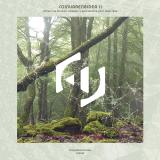
Una interpretación de Soinuarenbidea II debería partir de esta premisa: todo es posible, nada es aleatorio, y en sí mismo es un imposible de aleatoriedades. El escenario planteado explora la idea de realidad aumentada desde una percepción sonora, ambiental y colectiva. La obra transita hacia adelante y hacia atrás recreando experiencias extintas de porvenir incierto, tratando de facilitar un fin pacificador. Cada pieza sonora se crea, se despliega, se repliega y se destruye, en una torsión permanente de toda la realidad que hace posible cada fragmento musical, cada identidad acústica, cada espacio sonoro. Lo onírico, la ficción, y el viaje están continuamente presentes, y es en el transitar de cada fragmento donde se produce el diálogo de la exposición musical. Los elementos de esta ficción se recrean continuamente, en un continuum donde se entrelazan y se van contorsionando a medida que crecen o decrecen con cada fragmento de síntesis concreta. Los temas explícitamente musicales son el magma que conduce a dar voluptuosidad al disco, siendo la piel un contexto o límite que en sí mismo fluctúa indefinidamente en texturas y configuraciones posibles. Y la urdimbre del silencio es la síntesis que está continuamente presente y que trata de cohesionar los fragmentos en continua colisión expresiva. Las grabaciones de campo proporcionan el material sonoro concreto, y como un fractal sonoro cada una de ellas ofrece diferentes grados de interpretación que a su vez conduce a nuevos fragmentos y nuevas creaciones. Así que se puede pensar que esta es una síntesis de una posible realidad, pero interpretable en infinidad de maneras. Un movimiento y una estaticidad implícitas que generan estructuras y dinámicas acústicas. Lo que se escucha no es real, pero en sí mismo forma parte de la realidad, creando un escenario expectante. Lo cinematográfico, plástico y teatral, danzante y dinámico cobra importancia en este juego, porque se trata de contar una historia, una experiencia recreada desde los puntos de vista del arte visual. Es a su vez hilo conductor y entretenimiento, discurso político y puro divertimento. Es desde este espacio de convivencia artística que tiene sentido la totalidad y justifica el formato sonoro planteado. La contradicción de la obra es patente en el formato, y es a su vez el planteamiento de una accidentalidad en el devenir vital. Contenedor de Ruido recoge todas estas contradicciones y las manifiesta en la obra Soinuarenbidea II. Es una historia sonora, es un cuento acústico. Es un fragmento de vitalidad en imágenes audibles. Es una invitación a la reflexión, a la crítica, al disfrute, a la meditación, a la celebración. Y sobre todo es esperanzadora apreciación de la realidad como algo maleable que confeccionamos colectivamente, que requiere de una paciente observación y la participación colectiva global, en un mundo finito pleno de diversidades y del que ignoramos prácticamente todo, al que deberíamos volver con respeto y devoción.
Soinuarenbidea II-ren interpretazio batek premisa honetatik abiatu beharko luke: dena da posible, ezer ez da ausazkoa, eta, berez, ausazkotasun ezinezko bat da. Planteatutako agertokiak errealitate areagotuaren ideia aztertzen du, soinu-, ingurumen- eta talde-pertzepzio batetik abiatuta. Lanak aurrera eta atzera egiten du, etorkizun zalantzagarriko esperientzia desagertuak birsortuz eta helburu baketsua lortzen saiatuz. Soinu-pieza bakoitza sortu, hedatu, tolestu eta suntsitu egiten da, musika-zati bakoitza, identitate akustiko bakoitza eta soinu-espazio bakoitza ahalbidetzen dituen errealitate osoaren etengabeko bihurdura batean. Onirikoa, fikzioa eta bidaia etengabe daude presente, eta pasarte bakoitzaren joan-etorrian gertatzen da musika-erakusketaren elkarrizketa. Fikzio honen elementuak etengabe birsortzen dira, continuum batean, non sintesi zati zehatz bakoitzarekin hazi edo txikitu ahala elkar lotzen eta bihurritzen diren. Esplizituki musikalak diren gaiak diskoari atsegintasuna ematera eramaten duen magma dira, azala testuingurua edo muga izanik, testura eta konfigurazio posibleetan mugarik gabe aldatzen dena. Eta isiltasunaren irazkia etengabe presente dagoen sintesia da, zatiak etengabeko adierazpen-talkan kohesionatzen saiatzen dena. Landa-grabazioek soinu-material zehatza ematen dute, eta soinu-fraktal batek bezala, horietako bakoitzak interpretazio-maila desberdinak eskaintzen ditu, eta horrek, aldi berean, zati eta sorkuntza berrietara eramaten du. Beraz, pentsa daiteke errealitate posible baten sintesia dela, baina hamaika modutan interpreta daitekeena. Egitura eta dinamika akustikoak sortzen dituzten mugimendu eta estatikotasun inplizitu bat. Entzuten dena ez da erreala, baina, berez, errealitatearen parte da, eta agertoki espektakularra sortzen du. Zinematografikoak, plastikoak eta antzerkikoak, dantzariak eta dinamikoak garrantzia hartzen dute joko honetan, ikusizko artearen ikuspegitik birsortutako istorio bat, esperientzia bat, kontatzea baita helburua. Aldi berean, hari gidaria eta entretenimendua da, diskurtso politikoa eta dibertimendu hutsa. Elkarbizitzarako espazio artistiko honetatik osotasunak zentzua du eta planteatutako soinu-formatua justifikatzen du. Obraren kontraesana nabarmena da formatuan, eta, aldi berean, bizi-bilakaeran istripu-tasa bat planteatzea da. Zarata-edukiontziak kontraesan horiek guztiak jasotzen ditu eta Soinuarenbidea II obran adierazten ditu. Soinu istorio bat da, ipuin akustiko bat. Bizitasun zati bat da, irudi entzungarrietan. Hausnarketarako, kritikarako, gozamenerako, meditaziorako eta ospakizunerako gonbidapena da. Eta, batez ere, itxaropentsua da errealitatea modu kolektiboan egiten dugun gauza xaflakor gisa hautematea, behaketa pazientea eta partaidetza kolektibo globala eskatzen dituena, dibertsitatez betetako mundu mugatu batean, ia guztia kontuan hartzen ez duguna, eta errespetuz eta debozioz itzuli beharko genukeena.
An interpretation of Soinuarenbidea II should start from this premise: everything is possible, nothing is random, and in itself is an impossible randomness. The proposed scenario explores the idea of augmented reality from a sonic, environmental, and collective perception. The work moves back and forth, recreating extinct experiences of an uncertain future, seeking to facilitate a peaceful end. Each sound piece is created, unfolds, retreats, and is destroyed, in a permanent twisting of all reality that makes each musical fragment, each acoustic identity, each sonic space possible. The dreamlike, the fictional, and the journey are continually present, and it is in the transit of each fragment that the dialogue of the musical exposition takes place. The elements of this fiction are continually recreated, in a continuum where they intertwine and contort as they grow or diminish with each fragment of concrete synthesis. The explicitly musical themes are the magma that leads to the work's voluptuousness, the skin being a context or boundary that in itself fluctuates indefinitely in possible textures and configurations. And the warp of silence is the synthesis that is continually present and seeks to unite the fragments in a continuous expressive collision. The field recordings provide the concrete sound material, and like a sonic fractal, each one offers different degrees of interpretation that in turn lead to new fragments and new creations. So one can think of this as a synthesis of a possible reality, but interpretable in an infinite number of ways. An implicit movement and staticity that generate acoustic structures and dynamics. What is heard is not real, but in itself is part of reality, creating an expectant scenario. The cinematic, plastic and theatrical, dance and dynamic aspects take on importance in this game, because it is about telling a story, an experience recreated from the perspective of visual art. It is at once a common thread and entertainment, political discourse and pure entertainment. It is from this space of artistic coexistence that the whole makes sense and justifies the proposed sound format. The contradiction of the work is evident in its format, and it is, in turn, the presentation of an accidentality in the course of life. Noise Container gathers all these contradictions and manifests them in the work Soinuarenbidea II. It is a sound story, an acoustic tale. It is a fragment of vitality in audible images. It is an invitation to reflection, to critique, to enjoyment, to meditation, to celebration. And above all, it is a hopeful appreciation of reality as something malleable that we collectively craft, requiring patient observation and global collective participation, in a finite world full of diversity and of which we know practically nothing, to which we should return with respect and devotion.
Paisajes sonoros, diseño sonoro, drones y música grabada, realizada y arreglada para Contenedor de Ruido por David Aranaz. Coro: Basandere Ahotsak. Producido y mezclado por David Aranaz. Mástering: Estanis Elorza. Fotografía: David Aranaz. Texto: David Aranaz. Traducción: Saioa Aranaz Oreja. Trabajo y Diseño artístico: Cristina Martinez. Edición: Contenedor de Ruido Producciones y Sarbide Music. Distribución: Contenedor de Ruido.
Contenedor de Ruido agradece el apoyo en la realización de Soinuarenbidea II al coro Basandere Ahotsak y en especial a Eva Orbara Goicoa.
Soinuarenbidea II está dedicado al pueblo palestino.
Paisajes y objetos Sonoros, samplers y otras músicas transformadas para Soinuarenbidea II
Burlada: Paseos sonoros matinales por Merindad de Sangüesa, Calle Mayor, Capuchinas, Parque Uranga y varias iglesias y plazas. Pasajes del cotidiano: basura de papel, cristal y plástico.
Pamplona: Cementerio de San José. CEIP Sanduzelai /// Quinto Real: Fábrica de Armas, Puerto de Urkiaga y alrededores. Suite del silencio, bosques en movimiento /// Fábrica de armas de Orbaiceta: regatas, biosques, paseo sonoro hasta regata /// Belate: Puerto de Belate y alrededores. Vacas en pradera junto a las turberas /// Bardenas Reales: Suite de guitarra y Suite del silencio, estepa desértica /// Austria: Tranvías de Graz y Viena. Muchedumbre del metro de Viena.
Voces cinematográficas de: Matanza en Texas, Robocop, Espíritu Sagrado, Solo los Amantes Sobreviven, Voces de Gaza, Yojimbo, Terciopelo Azul, Los 7 Magníficos.
La pista A2 está dedicada a la memoria de David Lynch.
La pista B4 está dedicada a Eva Orbara Goicoa.
Pista A4: Contiene interpretaciones de piano de Three Piano Pieces Op.11 de Arnold Schoenberg.
Pista A5: Es una interpretación expandida con síntesis FM del Concerto Op. 24 - Etwas lebhaft - de Anton Webern.
Pista A7: Contiene la canción Besarkatu ninduzun (Letra de Josune López y música de Josu Elberdin) en interpretación de Basandere Ahotsak en la iglesia de Burutain bajo la tormenta.
Pista B2: Contiene la canción Recuerdos de la Alhambra (Fernando Tárrega) en interpretación torsionada de David Aranaz Sarasa.
Pista B14: Contiene la canción Agur María (Letra y Música de Estíbaliz Robles “Estitxu” y arreglo exclusivo de Alfonso Ortiz para Basandere Ahotsak) en interpretación de Basandere Ahotsak.
Equipamiento para Soinuarenbidea II.
Micros de condensador SE7, configuración XY y ORTF; Micros de cinta ORTIZ LUTHIER configuración XY y Blumlein; Grabadoras MARANTZ y ZOOM; Sintetizadores y samplers Elektron MONOMACHINE SPS-1, MACHINEDRUM SFX6 y MODEL:SAMPLES. Dave Smith MOPHO. Torso Electronics S-4. Sintetizador Modular 333 DIY; Guitarra clásica ALHAMBRA 6P; Esculturas Sonoras tipo Baschet, cristal y metales; Mesa Soundcraft FX16ii; Interface de Audio RME Babyface Pro FS; DAW Logic Pro; Procesamiento de modelado analógico con Acústica Audio, Waves, Softube, Brainworx, Sonible, Analog Obsesion, Tokio Dawn. Metering de Logic y RME DigiCheck . Amplificación Hafler PRO2400. Monitorización BW DM602 S3. Mezcla digital; Mastering híbrido.
erscheint voraussichtlich am 30.01.2026

Barro Music Label sigue apostando por el techno más duro y oscuro y por eso, su lógico paso siguiente era publicar un EP de NX1. Necesitaríamos mucho espacio para describir todo lo que significa NX1, pero dejémoslo en que es el proyecto de los barceloneses Surit y Samot con el que llevan varios años reventando amplificadores y haciéndonos bailar hasta la extenuación. Con este AKA han publicado en sellos tan top como Bite, Semantica, Planete Rouge y Earwiggle, además de en Nexe Records, su propia casa (discográfica). Ahora podemos escuchar sus últimos temas en Barro, en un disco que reúne cuatro temas y una remezcla de Nöle. No será la última vez que los veamos juntos, ya que han unido fuerzas para crear un nuevo sello llamado Kätte que ya ha publicado su primera referencia.
En BR1 nos traen un contundente temazo de techno industrial post-apocalíptico dominado por un bombo atronador en el que destacamos el gran diseño de sonido. Los dos siguientes temas están más enfocados a la pista y son una gran muestra del lado más duro y oscuro de NX1. BR2 es una composición hipnótica con sonidos industriales y afilados con un bombo con una pegada tremenda y un bajo que se te queda marcado en la piel. Y aunque parezca imposible, el EP continúa con un tema incluso más duro: BR3. NX1 alcanzan una intensidad increíble en esta composición, marcada por unos sintetizadores saturados, un sonido duro y agresivo y un sample que te ordena obedecer. Para el siguiente tema, bajan los BPMs y se centran en crear una atmósfera industrial, que nos inspira imágenes de carreteras desiertas y ciudades abandonadas. Por su parte Nöle, pilla BR2 y le da protagonismo a los samples vocales mientras juega con el ritmo, creando otro irresistible rompepistas.
Support from: Dave Clarke, Phase Fatale, The Hacker, Lokier, NX1, Unhuman, Alienata, Reka, and many more.
Texto: El Garaje de Frank
Bestelle jetzt und wir bestellen den Artikel für dich beim Lieferanten.

Bestelle jetzt und wir bestellen den Artikel für dich beim Lieferanten.

‘The Oakland band’s wide-ranging debut is a whirlwind of biting critique, nervy post-punk guitars, and absurdist humor. Rarely does a first record speak with such a trenchant voice.’ 7.5 PITCHFORK
‘Post-punk lovers have a new act to follow" - PASTE
Fake Fruit’s visceral indie rock operates so firmly in the present that it’s transportive and unmooring. The Oakland trio’s songs careen with volatile energy and lead singer Ham D’Amato’s lyrics are enveloped with acerbic humor and resonant perceptiveness. Though their new LP Mucho Mistrust is a sly reference to a beloved Blondie lyric, the title encapsulates both the anxieties of daily life, a bloodless music industry, and global capitalism as well as the clear-eyed skepticism needed to rebel against it. Across 12 propulsively unpredictable tracks, the album is both their most collaborative and most immediate yet.
Following the 2021 release of Fake Fruit’s self-titled debut LP, the band’s personal lives hit a turbulent and transformational period. “There were big life changes and I was so close to boiling over,” says D’Amato. “I left a bad relationship, entered a more stable and loving one, got diagnosed with alopecia, and I'm turning 30 soon too.” This personal upheaval was channeled into the explosive lead single “Mucho Mistrust.” The track is simultaneously disorienting and direct, with clanging guitars from Alex Post, off-kilter drums from Miles MacDiarmid, and D’Amato snarling, “How you gonna blame me / when you could’ve done something about it / it’s not right / How you gonna marinate me / in shitty things overnight.” She explains, “This song was a snapshot of how I got through a difficult year.”
Recorded live at the Bay Area’s Atomic Garden studio with producer Jack Shirley (Deafheaven, Home Is Where), the band’s palpable ferocity shines throughout the record. Single “Más o Menos” is searing punk, with buzzsaw guitars and surging bass. It’s a clenched-fist song, one where D’Amato sings, “I decided to assert myself / After I lost all my sense of self.” Later in the track, D’Amato, who is Chicana, sings in Spanish, “¡No me hables! / ¡No escuchare!” While some of these songs deal in heartbreak, they are charged with way bigger themes. “There's also wanting to break up with capitalism and feeling upset about things politically,” says D’Amato.
For the band, these themes are personal. “I'm managing us while I'm in between changing diapers in my day job as a nanny,” says D’Amato. “Everyone in the band still believes in it and is motivated to keep wading through the bullshit.” On this album, they had no choice but to bet on themselves and each other. No track broadcasts their evolution better than the single “Cause of Death,” which morphs from a gorgeous sax-laden banger to something cathartic and anthemic.
As adventurous and righteous as Mucho Mistrust gets, there’s still an inviting core that never takes itself too seriously. From the ripping “Cause of Death,” which self-deprecatingly takes aim at anxiety and indecision, to the searing title track, Fake Fruit imbue their songs with humor and heart. “Our band is fun,” says D’Amato. “My number one coping mechanism for all of life is to joke about it. Even when the album talks about serious things, I am proud of how funny it can be.”
erscheint voraussichtlich am 23.08.2024

In 1959, a family friend went to the home of Paco de Lucía and Pepe de Lucía where he made several recordings with a Grundig TK46 tape recorder. This tape disappeared in 1967 and, after a long search process, was rediscovered in 2022, when a restoration process started using AI tools.
The historical value of this recording is incalculable and it gathers in 21 pieces an anthology of flamenco where most of its variants are represented (tangos, soleá, seguiriyas, bulerías...).
It is, in short, the definitive recording to illustrate the transition from classical flamenco to modern flamenco as we know it today.
erscheint voraussichtlich am 07.05.2024

Punk Rock Isn't Dead... It Lives in South America! Das schreiben sich Los Problemas selbst auf die Fahne! Die chilenische Punk-Rock- und Oi!-Band "Los Problemas" hat ihr mit Spannung erwartetes Debütalbum herausgebracht. Die LP mit dem Titel "El Ultimo de su Especie" markiert einen Meilenstein in der Karriere der Band und festigt, was sie über mehrere Jahre hinweg, von der Veröffentlichung von Singles bis hin zu ihrer ersten EP "Malos Vecinos" (2020), gezeigt haben. Es ist ein energiegeladenes Album geworden, das Einflüsse von Punk und Oi! mit deutlichen Anklängen an Bands wie The Crack, Cock Sparrer, Sex Pistols und andere verwandte Gruppen vermischt. Das Album ist sehr melodisch, macht Spaß und ist durchzogen von scharfen Gitarren, die manchmal an den Glam-Rock der 1970er Jahre erinnern, aber mit einer Essenz und Haltung, die eng mit dem Punk verbunden ist, besonders im Bereich des Oi! oder "Reality Punk". Das Album enthält 11 neue Originalsongs und eine kühne Interpretation von David Bowies ikonischem Song "Héroes", in dem die Band ihr erzählerisches Können und ihre einzigartige Herangehensweise an den vergangenen Ruhm unter Beweis stellt. 180 gr. schwarz/grün marmoriert, weltweit 500 handnumerierte Exemplare. SPA "El Ultimo de su Especie" es un álbum enérgico, que fusiona influencias del punk y el Oi!, con claras resonancias de bandas como The Crack, Cock Sparrer, Sex Pistols y otros grupos afines. Este disco es altamente melódico, fácil de escuchar y está impregnado de guitarras afiladas que en momentos nos recuerdan al glam rock de los años 70, pero con una esencia y actitud ligada al punk y especialmente a la rama del Oi! o "reality punk."
erscheint voraussichtlich am 26.01.2024

Una epopeya electro-techno-cyberpunk es la nueva aventura que nos propone la referencia 18 de HC Records, donde alta tecnologia, radiaciones gamma e incursiones en la matriz se entremezclan con los futuristas ritmos rotos del artista andaluz C-System bajo su
encarnación Spectrums Data Forces.
Hackeamos los códigos de acceso del sistema del ritmo que nos permiten escuchar los primeros sonidos del track que da nombre al Ep, X-Tremely Deeply, una secuencia tan épica, como obsesiva e hipnótica, aderezada y reforzada por un inteligente uso de arpegios
ácidos y etéreos pads. A modo de reflejo en el hielo, el segundo corte de la cara A excita nuestra glándula pineal guiándonos en el lisérgico remix firmado por el artista inglés Featherstone. Herrumbre, óxido, procesos mecanizados y propulsiones de pura energía se
alternan en formato rítmico en Sector 90, primer track de la cara B, que combina en industrial armonía electro y techno fusionando primitivos y contundentes ritmos rotos con oscuras y abisales secuencias melódicas cargadas del primigenio espíritu trance.
El track B2 titulado Viny, nombre del gato del productor, sigue la senda de melodías densas y reconfortantes, como el ronroneo de un felino, sin perder un ápice de dinámica y emoción. El último tramo del surco de vinilo corresponde al remix elaborado por el músico Ampler
Clap a Viny, que redirige la composición hacia parajes sonoros misteriosos y casi terroríficos dignos de un Slasher de los 80´s o un futurista Giallo.
Como es habitual los bonus track en formato digital cierran la experiencia sonora en esta decimoctava referencia, por un lado 36th que aborda una oscura espiral electro saturada por siniestras secuencias sobre un huracán de metálicos y demoledores ritmos rotos. Y por otro Raw Rat, composición que parte de un minimalista ritmo inicial que crece y evoluciona en cada uno de sus ciclos como en el nacimiento y expansión de un cuásar. De nuevo dentro del apartado gráfico encontramos un encomiable cuidado y mimo por el
detalle, dirigido por Daniel Requeni y a su vez los videos elaborados por Frank-F dotan de una quinta dimensión al concepto artístico global. El master como es habitual corresponde a Steve Voidloss en Black Monolith Studios en Londres (UK).
Bestelle jetzt und wir bestellen den Artikel für dich beim Lieferanten.

In a hyperactive 40-minute, 18-track suite that runs like a boombox mixtape, the two prolific multi-media artists contemplate community, transformation, and the future through the programmatic format of a pirate radio station for the people.
erscheint voraussichtlich am 01.08.2023

In a hyperactive 40-minute, 18-track suite that runs like a boombox mixtape, the two prolific multi-media artists contemplate community, transformation, and the future through the programmatic format of a pirate radio station for the people.
erscheint voraussichtlich am 01.08.2023

New Future City Radio is the first duo collaboration of longtime creative partners Damon Locks & Rob Mazurek. In a hyperactive 40-minute, 18-track suite that runs like a boombox mixtape, the two prolific multi-media artists contemplate community, transformation, and the future through the programmatic format of a pirate radio station for the people. It"s a deep avant-garde echo of the legendary Bomb Squad (Locks even sounding a bit like a tape-delayed Check D on the vox), with beat artifacts spanning the whole gamut from pre to post golden era hip-hop - mixing OG Brooklyn boombox sound with the sci-fi boom-bap of late 90s Def Jux and/or Dan The Automator"s 75 Ark.
erscheint voraussichtlich am 28.07.2023

New Future City Radio is the first duo collaboration of longtime creative partners Damon Locks & Rob Mazurek. In a hyperactive 40-minute, 18-track suite that runs like a boombox mixtape, the two prolific multi-media artists contemplate community, transformation, and the future through the programmatic format of a pirate radio station for the people. It"s a deep avant-garde echo of the legendary Bomb Squad (Locks even sounding a bit like a tape-delayed Check D on the vox), with beat artifacts spanning the whole gamut from pre to post golden era hip-hop - mixing OG Brooklyn boombox sound with the sci-fi boom-bap of late 90s Def Jux and/or Dan The Automator"s 75 Ark.
erscheint voraussichtlich am 28.07.2023

Landmark albums deserve to be released on Glorious Vinyl, and that's why Lovemonk is presenting the first ever vinyl edition of Martín Buscaglia's 2006 corker, El Evangelio Según Mi Jardinero.
"Brain, brain, thanks for being in my head and not in my knee, if not, I wouldn't be able to kneel down to pray or keep that promise I cannot reveal". Those are the first words (translated from Spanish) of 'Cerebro, Orgasmo, Envidia y Sofía', the song that kicks off El Evangelio Según Mi Jardinero, the fourth album by Uruguayan pop genius Martín Buscaglia and his second on Lovemonk.
El Evangelio is a wonderful collection of deliciously cheeky and brutally honest songs composed by a man who was lucky enough to grow up in a home where several of his home country's cultural greats (Eduardo Mateo, Urbano Moraes, Rubén Rada, all three of legendary candombe innovators El Kinto, and Hugo Fattoruso, of Opa) would drop by to chat, write and hang out. They, and other heroes like Marvin Gaye, Tom Waits, Stevie Wonder, and Jorge Ben, have had a lasting influence on Martín's music, and it's no different on El Evangelio. Martín wrote most of the songs and plays all kinds of instruments, conventional and not so conventional (the ravanahatha - an ancient bowed, stringed instrument used in South Asia, different toys such as the Simon device and a carousel), and there are cameos by the likes of Arnaldo Antunes, Nicolás Ibarburu and Juana Molina.
El Evangelio Según Mi Jardinero is a dazzling piece of work that will make you dance your ass of and take you to place you haven't visited since childhood. Even 12 years on, the at times complex songs actually sound deceptively simple and stunningly fresh.
Bestelle jetzt und wir bestellen den Artikel für dich beim Lieferanten.

The story of Del cuarto rojo (From The Red Room) began in March 2020, when the Peruvian composer and percussionist Manongo Mujica received a call notifying him that the visual artist Rafael Hastings, his friend of almost half a century, had passed away. Since then, and in the midst of the pandemic, Manongo Mujica began a personal journey searching for sounds, which has resulted in a new set of pieces that evoke the memory of a friendship. Del cuarto rojo (From The Red Room), subtitled Homenaje sonoro escuchando la pintura de Rafael Hastings (Sound Tribute Listening To Rafael Hastings' Paintings), is Manongo Mujica's new album, and it has also motivated the preparation of a new show by the dancer and choreographer Yvonne von Mollendorff, wife of Hastings. The history of this friendship dates back to 1974, when a young Manongo returned to Lima, after ten years living in London, while young Rafael Hastings and Yvonne von Mollendorff settled in Peru after a long period in Europe. Since then, the collaborations between these artists have been continuous, always marked by an experimental impetus. The attitude of listening to images and painting sounds was more than a metaphor and became a code that identified them and a way of working, where the crossing of disciplines set the tone, both in video works and in unusual visual / conceptual scores, works of dance and experimental music, in the context of a creative effervescence that renewed the arts and music in Lima in the 70s. Del cuarto rojo is an album that integrates many of the musical resources developed by Mujica. It is an amalgam that well sums up his own language: from the creation of environments with extended techniques and objects, to experiments in jazz fusion; from the use of field recordings and sound montages to compositions with string arrangements: everything around the hypnotic pulse of percussion and drums, which oscillate between moments of subtlety and explosive improvisation. The album features the participation of outstanding musicians such as Pauchi Sasaki (violin), José Quezada (cello), Terje Evensen (electronic effects), Jean Pierre Magnet (Saxophone), Cristobal, Daniel and Gabriel Mujica (sons of Manongo Mujica, on percussion, string and wind arrangements). It is published in vinyl LP and includes a full color 12-page booklet with a sample of Rafael Hastings' visual art, which also illustrates the album cover.
erscheint voraussichtlich am 30.12.2022

Edition of 250 UNITS
English short Version
Almost five years after the inaugural compilation "El sol desde oriente", Passat Continu releases "El ser y el tiempo", the first solo recordings of the Tenerife musician Javier Segura, a set of seven
compositions that make up a true exceptionality in the panorama of Spanish experimental music and that have never before been uncovered for listening. This sound document recorded between 1976 and 1978 is presented remastered from its original tapes and with a bonus track, with the invaluable collaboration of Juan Belda.
panish Version
Casi cinco años después del recopilatorio inaugural “El sol desde oriente”, Passat Continu lanza “El ser y el tiempo”, las primeras grabaciones en solitario del músico tinerfeño Javier Segura, un conjunto de siete composiciones que conforman una auténtica excepcionalidad en el panorama de la música experimental española y que nunca antes han sido destapadas para su escucha. Este documento sonoro registrado entre 1976 y 1978 se presenta remasterizado de sus cintas originales y con una canción extra, con la inestimable colaboración de Juan Belda.
Existe cierto consenso en llamar transición española al período que va del fallecimiento de Francisco Franco, el 20 de noviembre de 1975, a la ratificación mediante referéndum de la Constitución, el 6 de
diciembre de 1978. Años de agitación y anhelo democrático que la población vive con gran intensidad. Aquejada por una larga enfermedad, la madre de Javier Segura fallece en 1976. El
tinerfeño tiene entonces 21 años y acaba de salir de su primera experiencia discográfica como compositor en el cuarteto Huellas. Como todo el mundo entonces, Segura se ha educado en un colegio
religioso. Es allí donde empieza a cultivar interés en la música, el cine y la filosofía “dentro de mí existía, y aún persiste, la idea de que somos un espejo donde algo o alguien se mira para reconocerse. Es una idea que surge de la lectura de “El ser y el tiempo” de Martin Heidegger.”
Con el objetivo de seguir dando forma a las ideas, Segura destina la totalidad de sus ingresos a la compra de equipamiento, experimentando en el desván de casa en los ratos libres. Se adentra en sesiones extenuantes utilizando la metodología de las músicas de corte concreto, grabando encima de un casete Sony, reproduciendo encima de otro al tiempo que mete más instrumentación por la entrada del micrófono. Así varias veces hasta sobreponer tres, cuatro y hasta cinco capas. En 1977 se hace con dos Tascam de carrete abierto de cuatro pistas. Las cintas grabadas en los casetes Sony se pasan al magnetofón para luego volver a encima del mismo, y así una y otra vez. En sus más de 40 minutos de duración, en “El ser y el tiempo” suenan flautas, saxos, un vibráfono, un piano, un violín, un arpa, un salterio turco, un Crumar DS-2, sintetizador monofónico de dos osciladores y de más de 50 kilos de peso popularizado por Sun Ra en los años 70 e incluso unas placas de metal.
erscheint voraussichtlich am 25.11.2022

RATA NEGRA from Madrid deliver twelve songs of dark, crude and moody punk on their debut LP. Formed of members from JUANITA Y LOS FEOS and LA URSS this power trio have distilled the negativity and uncertainly of the young Spanish generation and transformed it into perfectly crafted punk songs. Sharply turning snaps of daily life into melodic anthems for a doomed generation, musically RATA NEGRA fence between dark melodic OC punk a la RIKK AGNEW solo debut album and Spanish Punk ’83 via KGB/ VULPESS. Imagine the non keyboard tracks of Yugoslavian KAOS mixed with LA’S X melody, add to it a layer of distortion and a dose of vital desperation and you get close to RATA NEGRA’s sound. Oído Absoluto comes housed in a reverse board sleeve with printed inner. Both designed by guitarist Fa of Croke Studio and it is released as a collaboration between Beat Generation in Madrid and La Vida Es Un Mus Discos in Hackney.
erscheint voraussichtlich am 20.05.2022

HIGHLIGHTS: Objetos Musicais is a collection of 13 sound pieces created by artists from South America and Switzerland, who work in an intermediate zone among the craft of luthiers, visual arts and experimental music. Their works evoke the visionary ideas of Walter Smetak, a Swiss composer who lived in Salvador, Bahia (Brazil) Smetakian spirit tunes in with a new community of contemporary artists, who relate to the work of the so-called "experimental luthiers": artists who build their own instruments, lead them towards radical extended versions or take the exploration towards the building of resonant machines. DESCRIPTION: Objetos Musicais is a collection of 13 sound pieces created by artists from South America and Switzerland, who work in an intermediate zone among the craft of luthiers, visual arts and experimental music. Their works evoke the visionary ideas of Walter Smetak, a Swiss composer who lived in Salvador, Bahia (Brazil). Smetak was a pioneer of musical experimentation in that country and developed, in the 60s and 70s, a musical poetics that was captured in two seminal albums, Smetak (1974) and Interregno (1980), both of which, after being out of print for a long time, have been reissued today, hence the motivation for this tribute. On those two albums, Smetak combined Afro-Brazilian ritual traditions, theosophy, microtonality studies, collective improvisation and the use of unconventional musical instruments, which he called Plasticas Sonoras. Smetak came to build around 150 acoustic instruments, many of which are true sound sculptures of great visual impact. This latter aspect is the most directly evoked one on this album-and it so happens that the Smetakian spirit tunes in with a new community of contemporary artists, who relate to the work of the so-called "experimental luthiers", artists who build their own instruments (Marco Scarassatti, Phillipp Laeng, Maria Anália), lead them towards radical extended versions (Ruben Dhers, Claudio Merlet), develop hybrid projects involving instruments and sound sculpture (Javier Bustos, Alvaro Icaza and Verónica Luyo, Juan Pablo Egúsquiza, Edgardo Rudnitzky) or take the exploration towards the building of resonant machines (Nicole L'Huillier, O Grivo, Zimoun, Cod.Act), without these categories being mutually exclusive, but rather tending to mix, thereby opening up new sonic possibilities. This new community of artists has begun to create a whole new field of research and, in a way, a new discipline, understandable within the context of this new paradigm opened by the maker culture, which has pushed creators and developers from all over the world to conceive alternative-anti-hegemonic and DIY-forms of production. Therefore, this collection allows the artists to evoke Walter Smetak but also to connect his work to this new scene-to which it precedes-a link for this new art that makes its way at some point among the work of experimental luthiers, sound art, experimental music and the DIY ethics. Curated by Luis Alvarado and Chico Dub. Art by René Sánchez. Limited edition of 300 copies on vinyl. This project is part of the experimental music and sound art platform Incidencias Sonoras: COINCIDENCIA, by the Swiss Arts Council Pro Helvetia.
erscheint voraussichtlich am 05.11.2021

LTD editon - Orange vinyl and high quality download codes
Homemade synthesizers, banjo, guitar, recycled toys and broken electronic beats .. there’s more to Solo Moderna than just an unconditional love for analog tweaking. From his native town of Tilburg, Netherlands, Multi-instrumental virtuoso Bas Voorn is peaking in on all corners of the world, infusing Mento, ska, cumbia, Balkan, dancehall, dembow or afrohouse, into his minimal, joyful, 8-bit, approach towards electronica, to create strangely syncopated, ridiculously infectious grooves. It’s as if Kraftwerk and Señor Coconut went on a trip to Africa, the Balkans, the Caribbean and South America, and "Republica Moderna" emerged from these adventures. From the Balkan-Dembow of “Escúchame Como Soy” and the cumbia of the Washington-based Empresarios in “La Bandolera”, to the sun- kissed, afrohouse vibe of “Sonido SID Africano” and the west African “Republica de chonta”, Solo Moderna gleefully shifts from the acoustic to the synthesized to create a surprisingly coherent work. For Solo Moderna, life is not something to be taken so seriously. Instruments are toys, and Earth and it’s cultural diversity a playground. It is this unique lightheartedness and flippancy, moving you to smile, dance and enjoy life as it is, that makes Solo Moderna one of the few artists you can recognize immediately after an 8- bar snippet of a song heard in any club around the corner. Republica Moderna, his 3rd album to date, is a vibrant, delightfully upbeat, timeless homage to the world’s musical diversity.
This is GCLP157
It's an Orange LP and brings download Codes
Bestelle jetzt und wir bestellen den Artikel für dich beim Lieferanten.

REPRESSED !!
Most famous for his Remix of Stevie Wonder "Signed Sealed Delivered", Smash Hunter aka 'DJ Smash' was released on the Mowtown Remixed project, alongside such heavyweight bedfellows as DJ Spinna, Jazzy Jeff and King Britt. Smash was also prolific compiler, producer and label boss for the acclaimed Fat Jazzy Grooves series on New Breed Jazz.
Bestelle jetzt und wir bestellen den Artikel für dich beim Lieferanten.
