Cerca:king tree

Generi
Tutto
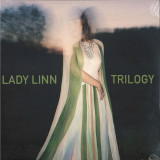
LADY LINN - TRILOGY LP

Lady Linn

TRILOGY LP

12inchGR014LP
GENTLE RECORDINGS
21.04.2023

It is no longer a secret that Lady Linn has a very rich and unique voice with a versatility that is second to none, ensuring that she is right at home in a myriad of styles.

She proved exactly that in her new 'trilogy', a series of three E.P.'s - 'I'm Fine', 'Sea of Trees' & 'Nocturne'- each one telling its own unique story, and now bundled on the album 'Trilogy'.

The common thread throughout the album is her affinity with jazz, soul and dance, but also lyrically, various themes return: the tenderness within family life, melancholy, nature, and the magic of the dance floor.

There is also a clear evolution with the arrangements going from a sober, stripped-down quasi-electronic sound of the JX-03 on 'I'm fine' (with contributions from Gustaph, Gregory Frateur and producer Frederik Segers) to dreamy and warm analog synths by producer Joris Caluwaerts on 'Sea of Trees', to an organic, energetic sixties sound on 'Nocturne' with starring role for her partner and bass player Filip Vandebril and partners in crime: The Magnificent Seven, arranger Frederik Heirman and producer Jan Chantrain.

In addition to a selection of the three EPs, 'Trilogy' also includes the extra song 'Hurricane', one of Linn's personal favorites, recorded at Daft Studios with The Magnificent Seven:

'I had just watched a documentary on Laurel Canyon (on the topic of Los Angeles - the epicentre of the 'counter culture' or better 'hippie culture' - in the late 60's and early 70's and the habitat of The Mamas and the Papas, Frank Zappa, Jim Morrison, etc.) which fed my fascination for the 60's that I already had thanks to my parents. The way in which music was created and recorded in that era is a dream for every musician, me included. With the surplus in time due to the lack of gigs during the pandemic the time was right to follow my dream and record in the Daft Studios with my own band. I felt a bit like Carol King behind my piano, but I was also inspired by Joni Mitchell.'

A quote from the lyrics of 'Hurricane': 'I wanna feel the wind like the birds outside/Dive like a seagull, enter the water from flight/Into the deep I slide'.

'A very personal song about losing yourself and the longing for freedom. I composed this one specifically with 60's songs in mind, with loads of modulations and pretty complex chords.'

Lady Linn wrote a versatile trilogy, inspired by a diverse set of influences that had her digging in music history in a very original and contemporary way. She also made her mark on the sound of the productions. On both 'I'm Fine' and 'Nocturne' she was co-producer.

non in magazzino

Ordina ora e ordineremo l'articolo per te presso il nostro fornitore.


Last In: 2 years ago
Umber - Sometimes That Light, That Shine, Seemed Like A Pretty Nice Thing

Wistful, quietly positive, and a little bit melancholic; ambient artist Umber is set to release kaleidoscopic new album ‘Sometimes that light, that shine, seemed like a pretty nice thing’ on 17th March 2023. Focused on melodies that engage the heart as much as the mind, the album brings his electronic influences to the fore, combining shimmering soundscapes with a throbbing pulse of movement.

Umber, the project of Nottingham based Alex Steward, has been steadily releasing sublime music since 2011. Living in a small town provides Alex with a balance between the peace of rolling green fields and the energy of community. This life on the edge of the countryside comes across in his music, which finds the verve of night life enveloped in organic textures and environments.

Wistful, quietly positive, and a little bit melancholic; ambient artist Umber is set to release kaleidoscopic new album ‘Sometimes that light, that shine, seemed like a pretty nice thing’ on 21st April 2023. Focused on melodies that engage the heart as much as the mind, the album brings his electronic influences to the fore, combining shimmering soundscapes with a throbbing pulse of movement.

Umber, the project of Nottingham based Alex Steward, has been steadily releasing sublime music since 2011. Living in a small town provides Alex with a balance between the peace of rolling green fields and the energy of community. This life on the edge of the countryside comes across in his music, which finds the verve of night life enveloped in organic textures and environments.

Alex draws from his experience as a part time palliative care giver, which has had a significant impact on this record. He says, “Through caring for elderly patients, whose time is in short supply, I have discovered that life needs to be celebrated. Even if it’s just playing a game of Scrabble or the way that the shadows of trees dance on a living room wall on a sunny day; there is beauty everywhere. Sometimes we just need to slow down and look a little harder.”

The evocative track titles stem from phrases Alex has heard or read, with the album’s title taken from Stephen King’s book The Shining. They range from the literal (‘It Is Going To Be Ok’, ‘The Last Perfect Day’) to the oblique (‘Hologram Shut Stability’, ‘Sun House Chant’), bestowing the everydayness of fleeting inputs and thought processes to more conscious mantras.

“I feel that my music taps into a part of who we all are”, says Alex. “I try to create music that will emotionally resonate with the listener. Ultimately the album is about finding hope in the smallest actions, something that can often be overlooked or discarded in a world that doesn’t always make a lot of sense.”

Umber’s ‘Sometimes that light, that shine, seemed like a pretty nice thing’ is set to be released on vinyl and digital formats via California-based label Subtempo on 17th March 2023.

pre-ordina ora21.04.2023

dovrebbe essere pubblicato su 21.04.2023


Last In: 2026 years ago
ANJIMILE - GIVER TAKER

On Giver Taker, the gorgeous debut album by Anjimile, death and life are always entwined, wrapping around each other in a dance of reverence, reciprocity, and, ultimately, rebirth. Giver Taker is confident, intentional and introspective. Anjimile Chithambo (they/them, he/him) wrote much of the album while in treatment for drug and alcohol abuse, as well as while in the process of living more fully as a nonbinary trans person. Loss hovers over the album, whose songs grieve for lost friends ("Giver Taker") and family members ("1978") along with lost selves ("Maker," "Baby No More," "In Your Eyes.") But here, grief yields an opening: a chance for new growth. Each song on the album is its own micro-journey, adding up to a transformative epic cycle created in collaboration with bandmate Justine Bowe of Photocomfort and New-York based artist/producer Gabe Goodman. "1978" and "Maker" both begin as Sufjan Stevens-esque pastoral ballads with Chithambo's mesmerizing voice foregrounded against minimal instrumentation and swell into the realm of the majestic through the addition of warm, steady instrumentation (informed by the mix of 80's pop and African music Chithambo's Malawi-born parents played around the house) and harmonies by Bowe. "In Your Eyes" starts out hushed and builds to a crescendo via a mighty chorus inspired by none other than the Lion King. The allusion is fitting: each song encapsulates a heroic voyage, walked alone until accompanied by kindred souls. The choirs present throughout are equally deliberate. Chithambo grew up as a choir boy himself, and several songs (notably "Maker") grasp not only towards reconciliation between his trans identity and his parents' strong religious beliefs, but towards reclaiming his trans identity as an essential part of his own spirituality.

pre-ordina ora14.04.2023

dovrebbe essere pubblicato su 14.04.2023


Last In: 2026 years ago
Bobo Stenson Trio - Sphere LP

Die Fähigkeit des Bobo Stenson Trios, weitreichende Idiome und ein breit gefächertes Repertoire im Rahmen seines eigenständigen Ausdrucks zu umfassen, ist inzwischen so etwas wie ein Markenzeichen der Gruppe geworden und brachte The New York Times zu der Aussage, der Pianist mache ”erhabene KlaviertrioPlatten, ohne jemals zu viel zu spielen.

Es pulsiert, bewegt sich in Wellen mit langen improvisierten
Phrasen; es ist lebendig”. Das erfahrene Trio zeigt sich auf Sphere als besonders eingespielte Einheit und bewegt sich auf zugleich subtile und eigenwillige Weise durch eine Reihe von Eigenkompositionen
sowie Melodien, die von diversen skandinavischen Komponisten stammen.

Der schwedische Pianist hat in jahrzehntelanger Zusammenarbeit mit ECM und Manfred Eicher – der, wie Bobo sagt, ”die besten
Qualitäten der Musiker hervorhebt” und die Platte produziert hat – eine einzigartige Mischung aus verschiedenen musikalischen Strömungen entwickelt und verfeinert. Die Mitstreiter des Pianisten, Anders Jormin am Bass und Schlagzeuger Jon Fält, die den Bandleader seit Cantando (2008) begleiten, sind mehr als ideale musikalische Partner für Bobos sanften Anschlag und unendliches Verlangen nach Zusammenspiel. Bobo: ”Wir spielen nie ’von der Stange’. Die Dinge kristallisieren sich aus dem Moment heraus und
wir passen uns dem an. Das ist die Quintessenz.
Das macht die Freude des Zusammenspiels aus; nie das Gleiche zweimal zu machen, und mit Entschlossenheit.”

pre-ordina ora17.03.2023

dovrebbe essere pubblicato su 17.03.2023


Last In: 2026 years ago
Felt - Gold Mine Trash

Felt

Gold Mine Trash

12inch1972-01
1972-
03.03.2023

Lawrence Hayward knew that he wanted to be a pop star as a teen, and he devised a plan to release ten albums and ten singles over ten years to make that dream come true. A particular and determined individual, he would only be known as Lawrence from that day forward. His hopes for stardom would be pinned on his newly formed band, the succinctly named Felt. Soon signed to Cherry Red Records, Lawrence’s achingly cool vocals and the group’s way with walking melodies were evident on their debut for the label, “Something Sends Me To Sleep.” This compilation collects material from Felt’s Cherry Red period of 1981 to 1985, kicking off with that confident start, assembling numerous high points, and closing with their biggest hit, “Primitive Painters.”

This phase of the band is defined by the songwriting partnership and unique interplay of Lawrence and guitarist Maurice Deebank, with Deebank’s stylish and confident playing the envy of many of their counterparts. He delivers a constant string of shimmering hooks that wrap themselves around and over top of Lawrence’s more traditional beat combo song structures, as if trying to fit four songs worth of ideas into a pre-set radio friendly cutoff time. It works wonderfully as Lawrence always counters with a solid bedrock.

In one of many brushes with the brass ring, in 1984 Felt recorded versions of “Dismantled King Is Off The Throne” and “Sunlight Bathed The Golden Glow,” for the newly formed and Warners-backed label Blanco y Negro, in hopes that the band would follow their A+R man Mike Alway to the executive suite. Despite putting forward two of their finest songs, it was not to be. While major label dreams had to remain on the shelf, fans were delighted to be able to hear these beautifully stripped down and more direct versions when this compilation was released a few years later.

By 1985 the Felt roller coaster was something Maurice Deebank was constantly getting on and off of. As Gary Ainge always kept the beat, and Lawrence never lost focus, they were joined by local teen prodigy Martin Duffy on keyboards, filling out the arrangements, and following Deebank’s racing six-string cascades in “The Day The Rain Came Down” you can even hear a tiny hint of the next phase of the band in Duffy’s organ before Maurice swoops to the finish. The newly expanded Felt would then put everything they had into making one of the defining releases of the 80s: “Primitive Painters.”

pre-ordina ora03.03.2023

dovrebbe essere pubblicato su 03.03.2023


Last In: 2026 years ago
Felt - Gold Mine Trash

Felt

Gold Mine Trash

12inch1972-01XP
1972-
03.03.2023

Lawrence Hayward knew that he wanted to be a pop star as a teen, and he devised a plan to release ten albums and ten singles over ten years to make that dream come true. A particular and determined individual, he would only be known as Lawrence from that day forward. His hopes for stardom would be pinned on his newly formed band, the succinctly named Felt. Soon signed to Cherry Red Records, Lawrence’s achingly cool vocals and the group’s way with walking melodies were evident on their debut for the label, “Something Sends Me To Sleep.” This compilation collects material from Felt’s Cherry Red period of 1981 to 1985, kicking off with that confident start, assembling numerous high points, and closing with their biggest hit, “Primitive Painters.”

This phase of the band is defined by the songwriting partnership and unique interplay of Lawrence and guitarist Maurice Deebank, with Deebank’s stylish and confident playing the envy of many of their counterparts. He delivers a constant string of shimmering hooks that wrap themselves around and over top of Lawrence’s more traditional beat combo song structures, as if trying to fit four songs worth of ideas into a pre-set radio friendly cutoff time. It works wonderfully as Lawrence always counters with a solid bedrock.

In one of many brushes with the brass ring, in 1984 Felt recorded versions of “Dismantled King Is Off The Throne” and “Sunlight Bathed The Golden Glow,” for the newly formed and Warners-backed label Blanco y Negro, in hopes that the band would follow their A+R man Mike Alway to the executive suite. Despite putting forward two of their finest songs, it was not to be. While major label dreams had to remain on the shelf, fans were delighted to be able to hear these beautifully stripped down and more direct versions when this compilation was released a few years later.

By 1985 the Felt roller coaster was something Maurice Deebank was constantly getting on and off of. As Gary Ainge always kept the beat, and Lawrence never lost focus, they were joined by local teen prodigy Martin Duffy on keyboards, filling out the arrangements, and following Deebank’s racing six-string cascades in “The Day The Rain Came Down” you can even hear a tiny hint of the next phase of the band in Duffy’s organ before Maurice swoops to the finish. The newly expanded Felt would then put everything they had into making one of the defining releases of the 80s: “Primitive Painters.”

pre-ordina ora03.03.2023

dovrebbe essere pubblicato su 03.03.2023


Last In: 2026 years ago
Various - Boss Reggae

Various

Boss Reggae

12inchCLD-LP005
STUDIO ONE
17.02.2023

Studio One was founded by Clement "Coxsone" Dodd1 in 1954, and the first recordings were cut in 1963 on Brentford Road in Kingston.12 Amongst its earliest records were "Easy Snappin" by Theophilus Beckford, backed by Clue J & His Blues Blasters, and "This Man is Back" by trombonist Don Drummond. Dodd had previously issued music on a series of other labels, including World Disc, and had run Sir Coxsone the Downbeat, one of the largest and most reputable sound systems in the Kingston ghettos.
In the early 1960s, the house band providing backing for the vocalists were the Skatalites[3] (1964–65), whose members (including Roland Alphonso, Don Drummond, Tommy McCook, Jackie Mittoo, Lester Sterling and Lloyd Brevett) were recruited from the Kingston jazz scene by Dodd. The Skatalites split up in 1965 after Drummond was jailed for murder, and Dodd formed new house band the Soul Brothers (1965–66), later named the Soul Vendors (1967) and Sound Dimension (1967-). From 1965 to 1968 they played 9 a.m. to 5 p.m., 5 days a week, 12 rhythms a day (about 60 rhythms a week) with Jackie Mittoo as music director, Brian Atkinson (1965–1968) on bass, Hux Brown on guitar, Harry Haughton (guitar), Joe Isaacs on drums (1966–1968), Denzel Laing on percussion, and on horns (some initially and some throughout): Roland Alphonso, Dennis 'Ska' Campbell, Bobby Ellis, Lester Sterling, among others on horns during the era of Rock Steady. Headley Bennett, Ernest Ranglin, Vin Gordon and Leroy Sibbles were included among a fluid line-up, to record tracks directed by Jackie Mittoo at Studio One from 1966-1968.
During the night hours at Studio One from 1965-1968, singers like Bob Marley, Burning Spear, The Heptones, The Ethiopians, Ken Boothe, Rita Marley, Marcia Griffiths, Judy Mowatt, Alton Ellis, Delroy Wilson, Bunny Wailer[4] and Johnny Nash, among others, would put on headphones to sing lyrics to original tracks recorded by the Soul Brothers earlier each day. These seminal recordings included "Real Rock" (by Sound Dimension), "Heavy Rock", "Jamaica Underground", "Wakie Wakie", "Lemon Tree", "Hot Shot", "I'm Still In Love With You", "Dancing Mood", and "Creation Rebel".
Jackie Mittoo, Joe Isaacs, and Brian Atkinson left Studio One in 1968, recorded drums and bass for Desmond Dekker's and Toots' biggest hits at other Kingston studios, then moved to Canada. Hux Brown stayed in Jamaica to record on the soundtrack The Harder They Come, The Harder They Fall, and toured in Nigeria with Toots and the Maytals and Fela Kuti. The Soul Brothers (a.k.a. Sound Dimension) formed the basis of reggae music in the late 1960s, being versioned and re-versioned time after time over decades by musicians like Shaggy, Sean Paul, Snoop Lion, The Clash, String Cheese Incident, UB40, Sublime, and countless other Billboard originals and remakes trying to emulate their original Rock Steady sound at Coxsone's Studio One.
The label and studio were closed when Dodd relocated to New York City in the 1980s.

pre-ordina ora17.02.2023

dovrebbe essere pubblicato su 17.02.2023


Last In: 2026 years ago
Signe Marie Rustad - Particles of Faith

"Hello It’s Me" sings Signe Marie Rustad in her crystal clear, inimitable voice. And with that, she’s back, three years after the release of her successful third album, When Words Flew Freely. The above lyric is taken from a song bearing the same name, the first single off Rustad’s fourth album, Particles of Faith. Known for her poetic lyrics and vivid songwriting, and backed by a tight knit band that’s been with her for years, Rustad’s new album offers a natural transition from the already classic When Words Flew Freely (WWFF). However, Particles of Faith also brings something completely new and fresh. WWFF presented a broader, organic and piano-driven Laurel Canyon-sound, and less of the americana sound present on Rustad’s first two releases. Particles of Faith is harder to place in any genre, other than in the broader singer-songwriter tradition, helmed by pioneers such as Joni Mitchell and Carole King. But Rustad also points to a host of other inspirations. Alternative pop/rock from the 80’s and 90’s have always been a big influence on Rustad, and on Particles of Faith, this is more evident than ever. R.E.M., Fiona Apple, Crowded House and Tori Amos were important components both in the artist’s record collection and on her TV screen via MTV. Seeing as this era was also the golden age of the saxophone, it was only natural to include a three-minute-long sax solo, courtesy of acclaimed Norwegian jazz musician Harald Lassen – a solo that “made me cry” says Rustad. The album is produced by Rustad along with indie pop hero Kenneth Ishak. “This is the music coursing through my veins,” says Rustad about the album. Rustad has been critically acclaimed ever since her 2012 debut, but with WWFF, things really took off. Rave reviews, inclusion on several year-end lists, live performance on Norway’s biggest talk show and a booking to Norway’s biggest festival followed the release. The album was awarded a Spellemann award (Norwegian Grammy) for lyricist of the year. After widespread touring since the fall of 2019, Rustad’s performance on Øyafestivalen’s main stage in August 2022, marked the wrap up of the WWFF project, while it simultaneously introduced the next chapter, announcing the new album with the performance of two new songs. The songs on the album are snapshots from a life, and “particles of faith” refers to keeping the faith in yourself, love, the people around you and the world in general throughout everything that you endure in life. It can be a kind of strength that you may think comes from the outside, but is actually found inside of us.

pre-ordina ora17.02.2023

dovrebbe essere pubblicato su 17.02.2023


Last In: 2026 years ago
Signe Marie Rustad - Particles of Faith

"Hello It’s Me" sings Signe Marie Rustad in her crystal clear, inimitable voice. And with that, she’s back, three years after the release of her successful third album, When Words Flew Freely. The above lyric is taken from a song bearing the same name, the first single off Rustad’s fourth album, Particles of Faith.

Known for her poetic lyrics and vivid songwriting, and backed by a tight knit band that’s been with her for years, Rustad’s new album offers a natural transition from the already classic When Words Flew Freely (WWFF). However, Particles of Faith also brings something completely new and fresh.

WWFF presented a broader, organic and piano-driven Laurel Canyon-sound, and less of the americana sound present on Rustad’s first two releases. Particles of Faith is harder to place in any genre, other than in the broader singer-songwriter tradition, helmed by pioneers such as Joni Mitchell and Carole King. But Rustad also points to a host of other inspirations.

Alternative pop/rock from the 80’s and 90’s have always been a big influence on Rustad, and on Particles of Faith, this is more evident than ever. R.E.M., Fiona Apple, Crowded House and Tori Amos were important components both in the artist’s record collection and on her TV screen via MTV. Seeing as this era was also the golden age of the saxophone, it was only natural to include a three-minute-long sax solo, courtesy of acclaimed Norwegian jazz musician Harald Lassen – a solo that “made me cry” says Rustad. The album is produced by Rustad along with indie pop hero Kenneth Ishak. “This is the music coursing through my veins,” says Rustad about the album.

Rustad has been critically acclaimed ever since her 2012 debut, but with WWFF, things really took off. Rave reviews, inclusion on several year-end lists, live performance on Norway’s biggest talk show and a booking to Norway’s biggest festival followed the release. The album was awarded a Spellemann award (Norwegian Grammy) for lyricist of the year. After widespread touring since the fall of 2019, Rustad’s performance on Øyafestivalen’s main stage in August 2022, marked the wrap up of the WWFF project, while it simultaneously introduced the next chapter, announcing the new album with the performance of two new songs.

The songs on the album are snapshots from a life, and “particles of faith” refers to keeping the faith in yourself, love, the people around you and the world in general throughout everything that you endure in life. It can be a kind of strength that you may think comes from the outside, but is actually found inside of us.

pre-ordina ora17.02.2023

dovrebbe essere pubblicato su 17.02.2023


Last In: 2026 years ago
Dub Specialist - Bionic Dub Part One

Studio One was founded by Clement "Coxsone" Dodd1 in 1954, and the first recordings were cut in 1963 on Brentford Road in Kingston.[1][2] Amongst its earliest records were "Easy Snappin" by Theophilus Beckford, backed by Clue J & His Blues Blasters, and "This Man is Back" by trombonist Don Drummond. Dodd had previously issued music on a series of other labels, including World Disc, and had run Sir Coxsone the Downbeat, one
of the largest and most reputable sound systems in the Kingston ghettos.
In the early 1960s, the house band providing backing for the vocalists were the Skatalites[3] (1964–65), whose members (including Roland Alphonso, Don Drummond, Tommy McCook, Jackie Mittoo, Lester Sterling and Lloyd Brevett) were recruited from the Kingston jazz scene by Dodd. The Skatalites split up in 1965 after Drummond was jailed for murder, and Dodd formed new house band the Soul Brothers (1965–66), later named the Soul Vendors (1967) and Sound Dimension (1967-). From 1965 to 1968 they played 9 a.m. to 5 p.m., 5 days a week, 12 rhythms a day (about 60 rhythms a week) with Jackie Mittoo as music director, Brian Atkinson (1965–1968) on bass, Hux Brown on guitar, Harry Haughton (guitar), Joe Isaacs on drums (1966–1968), Denzel Laing on percussion, and on horns (some initially and some throughout): Roland Alphonso, Dennis 'Ska' Campbell, Bobby Ellis, Lester Sterling, among others on horns during the era of Rock Steady. Headley Bennett, Ernest Ranglin, Vin Gordon and Leroy Sibbles were included among a fluid line-up, to record tracks directed by Jackie Mittoo at Studio One from 1966-1968.
During the night hours at Studio One from 1965-1968, singers like Bob Marley, Burning Spear, The Heptones, The Ethiopians, Ken Boothe, Rita Marley, Marcia Griffiths, Judy Mowatt, Alton Ellis, Delroy Wilson, Bunny Wailer[4] and Johnny Nash, among others, would put on headphones to sing lyrics to original tracks recorded by the Soul Brothers earlier each day. These seminal recordings included "Real Rock" (by Sound Dimension), "Heavy Rock", "Jamaica Underground", "Wakie Wakie", "Lemon Tree", "Hot Shot", "I'm Still In Love With You", "Dancing Mood", and "Creation Rebel".
Jackie Mittoo, Joe Isaacs, and Brian Atkinson left Studio One in 1968, recorded drums and bass for Desmond Dekker's and Toots' biggest hits at other Kingston studios, then moved to Canada. Hux Brown stayed in Jamaica to record on the soundtrack The Harder They Come, The Harder They Fall, and toured in Nigeria with Toots and the Maytals and Fela Kuti. The Soul Brothers (a.k.a. Sound Dimension) formed the basis of reggae music in the late 1960s, being versioned and re-versioned time after time over decades by musicians like Shaggy, Sean Paul, Snoop Lion, The Clash, String Cheese Incident, UB40, Sublime, and countless other Billboard originals and remakes trying to emulate their original Rock Steady sound at Coxsone's Studio One.

pre-ordina ora10.02.2023

dovrebbe essere pubblicato su 10.02.2023


Last In: 2026 years ago
OSI - Blood (Re-Issue + Bonus)

Osi

Blood (Re-Issue + Bonus)

12inch03984160301
Metal Blade
20.01.2023
disponibile anche

Marble Vinyl


New for 2023 Metal Blade Records reissues the brilliant third album from OSI, featuring Jim Matheos (Fates Warning), Kevin Moore (ex Dream Theater, Chroma Key) and Gavin Harrison (Porcupine Tree, King Crimson) on drums throughout. The album also features a guest appearance from Mikael Åkerfeldt (Opeth) on "Stockholm", which the Swedish musician composed together with the two O.S.I. masterminds, and also included are three bonus tracks, one of which is a harmonic cover of Elliott Smith's "Christian Brothers". In 'Blood', O.S.I. have succeeded in creating a lasting album at the crossroads between rock and progressive metal. Music that alternates between atmospherically dense and aggressively demanding elements, while effortlessly transcending barriers between different styles and genres.

pre-ordina ora20.01.2023

dovrebbe essere pubblicato su 20.01.2023


Last In: 2026 years ago
OSI - Blood (Re-Issue + Bonus)
disponibile anche

Black Vinyl


New for 2023 Metal Blade Records reissues the brilliant third album from OSI, featuring Jim Matheos (Fates Warning), Kevin Moore (ex Dream Theater, Chroma Key) and Gavin Harrison (Porcupine Tree, King Crimson) on drums throughout. The album also features a guest appearance from Mikael Åkerfeldt (Opeth) on "Stockholm", which the Swedish musician composed together with the two O.S.I. masterminds, and also included are three bonus tracks, one of which is a harmonic cover of Elliott Smith's "Christian Brothers". In 'Blood', O.S.I. have succeeded in creating a lasting album at the crossroads between rock and progressive metal. Music that alternates between atmospherically dense and aggressively demanding elements, while effortlessly transcending barriers between different styles and genres.

pre-ordina ora20.01.2023

dovrebbe essere pubblicato su 20.01.2023


Last In: 2026 years ago
Wailing Souls - Firehouse Rock Deluxe LP 2x12"

•A touchstone LP from the beginning of reggae's 'post-Bob Marley era,’ Wailing Souls’ Fire House Rock was released by Greensleeves in 1981 to enduring acclaim. The title track became Wailing Souls’ most popular, anthemic song. Features production by Henry Junjo Lawes, backing by the Roots Radics with mixes by Scientist.

•For the Record Store Day 2022 edition, the original mixes were transferred from reel-to-reel to a pristine 24-bit/96k digital master. These are paired in a deluxe gatefold sleeve with a bonus 12-inch single disc of alternate, extended mixes originally released through VP’s Jah Guidance imprint.

•Sticker application; 180g Heavyweight Vinyl Pressing Gatefold sleeve with full-colour Inner Bags featuring rare photos and extensive notes.

pre-ordina ora09.12.2022

dovrebbe essere pubblicato su 09.12.2022


Last In: 2026 years ago
O.R.k. - Inflamed Rides

O.r.k.

Inflamed Rides

12inchKSCOPE1195
KSCOPE
25.11.2022

2015 DEBUT ALBUM FROM O R K AVAILABLE FOR THE FIRST TIME ON
VINYL
"An electric storm that takes no prisoners but could seduce an army"
Prog"Impressive debut" Drummer
"Expertly done" Rock a Rolla
A band comprising some of contemporary music's most revered creators, O.R.K.
released their debut album 'Inflamed Rides' in 2015. The band are: accomplished
singer & composer LEF (lead vocals), Pat Mastelotto (drums, King Crimson), Colin
Edwin (bass, ex-Porcupine Tree) & Carmelo Pipitone (guitars, Marta Sui Tubi).
'Inflamed Rides' is an intriguing collaborative debut release which defies easy
categorisation. A primordial & energetic fusion of playful acoustic psychedelia,
precise math rock & intense ambient electronica, the album delivers a
soundscape rich with controlled chaos, much praised on release.
This new Kscope edition has been remastered in 2022 by Francesco Guadalupi.
Available for the first time ever on vinyl, pressed on a stunning blue edition.

pre-ordina ora25.11.2022

dovrebbe essere pubblicato su 25.11.2022


Last In: 2026 years ago
Daniela Gesundheit - Alphabet of Wrongdoing Boxset 2x12

Limited Edition Double LP Box Set with 108 page Hardcover Libretto Book and CD (500 copies).

Alphabet of Wrongdoing was set in motion a few years ago when Daniela was invited by Toronto songwriter Jennifer Castle to sing “‘a couple of acapella prayers to clear the space” ahead of her LA show. It was the first time Daniela had sung Jewish ceremonial prayers outside of a ritual context. Audience members were enthralled and stayed for hours after the show to ask questions about what they had heard and experienced. The title of the project comes from the prayer Ashamnu, or Alphabet of Wrongdoing. In a ritual context, a congregation would stand and recite, in alphabetical order, beating their chests with each admittance, all of the ways they may have missed the mark in the past year. This communal act of forgiveness is a form of spiritual accounting. “This music is for challenging junctures,” says Daniela, “when we have more questions than answers. I consult tradition when I am at such an impasse; It provides an antidote to the constant content update or disappointment of the news cycle. To make an album of reimagined Jewish liturgy is my way of saying we can re-work, but we cannot obliterate; matter just does not behave that way. We know what we have destroyed, but we don’t yet know what we will create. This is me hitting pause before we re-build -- consulting tradition, listening to my tradition, in case it carries any hints.” The accompanying video was directed and filmed by Johnny Spence and features dancers Erin Poole and Devon Snell. The video depicts two figures dressed in warm pinks and reds traverse a stark, barren snowscape. They are followed and encircled by iridescent color trails that appear at times to be celebratory shadows, at times prayer shawls, at times pestering consciences. A dual Canadian-American citizen, Daniela Gesundheit is a vocalist, composer, and cantor. As a member of Snowblink, Daniela writes non-denominational devotional pop music. She is also a member of the band Hydra, a collaboration between Feist and LaForce. She was a featured vocalist alongside Brian Eno on Owen Pallet’s In Conflict and on astronaut Chris Hadfield’s Songs From a Tin Can- the first record ever to be recorded in space. She sings traditional Jewish liturgy for Shir Libeynu, the first queer-inclusive synagogue in Toronto and officiates lifecycle rituals throughout the US and Canada.

Track list: 1. Thirteen Qualities - Adonai Adonai 2. Our Father Our King - Avinu Malkeinu 3. In the New Year - B'Rosh Hashanah 4. My Cup Overflows - Cosi Revaya 5. All Our Vows - Kol Nidre 6. Alphabet of Wrongdoing – Ashamnu 7. Self-Seclusion – Hitbodedut 8. The Great Confession - Al Cheyt 9. All Our Departed - El Malei Rachamim 10. Psalm of David - Mizmor L'David 11. She is a Tree of Life - Etz Hayim Hi 12. Who is Like You - Mi Chamocha 13. Opposite the Seraphim 14. Priestly Blessing II - Birkat Kohanim 15. Blessing for New Experiences – Shehechiyanu 16. Filled With Motherlove the Thousands Within – Shema 17. Priestly Blessing - Birkat Kohanot 18. The Just Will Blossom Like the Date Palm - Psalm 92 - Tzadik Ka'Tamar

pre-ordina ora25.11.2022

dovrebbe essere pubblicato su 25.11.2022


Last In: 2026 years ago
Various - Santa's Funk & Soul Christmas Party Vol.4

** INITIAL 400 LPs CONTAIN A BONUS 7" OF A RARE XMAS SOUL 45! **

** THE 4th VOLUME OF RARE & HIP-SHAKING SEASONAL GROOVES!! **

Dear Santa, we just loved "Santa's Funk & Soul Christmas Party," Volumes 1-3 TRLP-9013, TRLP-9027, TRLP-9050, and we have really tried to be good this year! Please bring us a whole 'nother album's worth of rare and obscure Christmas-themed funk and soul!

When the third volume of "Santa's Funk & Soul Christmas Party" was released in 2015, everybody involved was certain that it would be the final one. For years, the curators had been looking for "Christmas Rare Grooves" until they finally realized there was nothing left to discover that would justify a fourth volume. Sure, it would have been an easy task to dig through the catalogues of major labels to come up with 40 minutes of more-or-less trivial Christmas soul music. But who on earth would want that kind of album? Since the foundation of Tramp Records in 2003, the label has gained a high reputation as one of the very few German reissue labels of obscure funk, soul, and jazz music. 99% of the songs originate from 7" singles, the small and handy standard-format of the 1960s, which, like Santa's sleigh magically circling the planet on Christmas Eve, spins at forty-five revolutions per minute on the turntable.

So, what can you expect from this, the fourth volume of a series which had ostensibly been completed with only three volumes? After some seven years of digging across the world wide web with open ears and eyes, never tiring of the hundreds of (mainly) shitty songs, hoping to find that kind of monster soul or funk track that constituted the hallmark of the previous volumes, the compilers slowly and surprisingly began to see a fourth volume taking shape. Finally, after more than two thousand days, a complete album's worth of quality tunes had been discovered and secured for release.

"Santa's Funk & Soul Christmas Party Vol. 4" contains a highly diverse selection of obscure Christmas songs. For example, take Bey Ireland's garage-mod-rocker "All I Want For Christmas Is A Go-Go Girl," is something to get you go-going around the tree! Do you prefer mirror-balls to tinsel? Check out Bill Deal with Pure Pleasure. Too fast? How about the dazzling-melancholic "I Won't Be Home For Christmas"? Do you prefer rap music while you wrap presents? Then your choice is going to be Hot & Sassy. Old-School-Hip Hop at its best. Every single song has a compelling reason to be included in this extraordinary selection. Not least is the opening track by Sharon Jones & the Dap-Kings. Their contribution represents the soul sound of the 21st century. Charming soul music with sociocritical lyrics, something you rarely find in the current musical landscape.

Even though the selected tracks that the two compilers and their worker elves proudly present on "Santa's Funk & Soul Christmas Party Vol. 4" are unbelievable, they are very real and will be the surprise gift from Santa this season that can be enjoyed year-round! It took seven years to complete, but believe us when we say it was well worth the wait. Merry Christmas, everybody!

Key selling points:

- initial 400 LPs contain a BONUS 7" of a ULTRA-RARE Christmas soul 45

- ALL but one song appear on CD, Vinyl LP and digital for the very first-time

- the vinyl LP comes with a full album download code

- fold-out CD-booklet and gatefold LP come with liner notes and label scans

non in magazzino

Ordina ora e ordineremo l'articolo per te presso il nostro fornitore.


Last In: 3 years ago
Big Joanie - Back Home

Black feminist punk band Big Joanie have announced their upcoming second album 'Back Home', set for release 4th November on Daydream Library Series in the UK and Kill Rock Stars in the US. The brand new album 'Back Home' follows on from last month's one-off single 'Happier Still', and the release of their 2020 single ‘Cranes in the Sky’, a cover of Solange Knowles released on Jack White’s Third Man Records. Recorded at Hermitage Works Studios in North London, 'Back Home' was produced and mixed by Margo Broom (Goat Girl, Fat White Family) and features violin courtesy of Charlotte Valentine of the experimental art rock project No Home, who recently collaborated with the LA-based artist SASAMI. 'Back Home' is a dramatic leap forward for the band; the band build on their tightly knit, lo-fi punk formula to bring forth a collage of blazing guitars, down tempo dance punk, and melancholic strings that evoke the full depth of the band’s expansive art punk vision. The album title references a search for a place to call home, whether real or metaphysical. “We were really ruminating on the idea of a home and what it means,” explains Stephanie. “It’s about the different ideas of home, whether that’s here in the UK, back in Africa or the Caribbean, or a place that doesn’t really exist; it’s neither here nor there." The band worked with multidisciplinary artist Angelica Ellis to design the striking embroidered cover art, which is a depiction of Chardine’s nephew at the barbers. The artwork is a reference to the embroidered wall hangings popular in Caribbean homes post-Windrush that were a callback to the homes they left behind. The album’s strength lies in the band’s bold and varied new sound. Album opener ‘Cactus Tree’ is an eerie, gothic folk tale that tells the story of a woman waiting for her lover while a wall of euphoric harmonies and screaming feedback roll in the background. Lead single ‘Happier Still’ is a driving, Nirvana-influenced track that grapples with the idea of wanting to push through a depressive episode. Inspired equally by the melodic rock of Hüsker Dü and the mystical sensibilities of Stevie Nicks, closer ‘Sainted’ brings the club-ready sentiment of the 2018 single ‘Fall Asleep’ to its natural conclusion. Big Joanie live dates 2022 Sun 31st July - Liverpool International Festival @ Camp & Furnace Sat 20th August - La Route Du Rock Festival St Malo, France Sun 28th August - Greenbelt Festival, Kettering, United Kingdom Could the song splits across the sides be changed to this: Side A 1.Cactus Tree 2.Taut 3.Confident Man 4.What Are You Waiting For? 5.In My Arms 6.Your Words 7.Count to Ten Side B: 1.Happier Still 2.Insecure 3.Today 4.I Will 5.In My Arms (Reprise)6.Sainted


[l] 12 IN MY ARMS [REPRISE]

pre-ordina ora04.11.2022

dovrebbe essere pubblicato su 04.11.2022


Last In: 2026 years ago
Big Joanie - Back Home

Black feminist punk band Big Joanie have announced their upcoming second album 'Back Home', set for release 4th November on Daydream Library Series in the UK and Kill Rock Stars in the US. The brand new album 'Back Home' follows on from last month's one-off single 'Happier Still', and the release of their 2020 single ‘Cranes in the Sky’, a cover of Solange Knowles released on Jack White’s Third Man Records. Recorded at Hermitage Works Studios in North London, 'Back Home' was produced and mixed by Margo Broom (Goat Girl, Fat White Family) and features violin courtesy of Charlotte Valentine of the experimental art rock project No Home, who recently collaborated with the LA-based artist SASAMI. 'Back Home' is a dramatic leap forward for the band; the band build on their tightly knit, lo-fi punk formula to bring forth a collage of blazing guitars, down tempo dance punk, and melancholic strings that evoke the full depth of the band’s expansive art punk vision. The album title references a search for a place to call home, whether real or metaphysical. “We were really ruminating on the idea of a home and what it means,” explains Stephanie. “It’s about the different ideas of home, whether that’s here in the UK, back in Africa or the Caribbean, or a place that doesn’t really exist; it’s neither here nor there." The band worked with multidisciplinary artist Angelica Ellis to design the striking embroidered cover art, which is a depiction of Chardine’s nephew at the barbers. The artwork is a reference to the embroidered wall hangings popular in Caribbean homes post-Windrush that were a callback to the homes they left behind. The album’s strength lies in the band’s bold and varied new sound. Album opener ‘Cactus Tree’ is an eerie, gothic folk tale that tells the story of a woman waiting for her lover while a wall of euphoric harmonies and screaming feedback roll in the background. Lead single ‘Happier Still’ is a driving, Nirvana-influenced track that grapples with the idea of wanting to push through a depressive episode. Inspired equally by the melodic rock of Hüsker Dü and the mystical sensibilities of Stevie Nicks, closer ‘Sainted’ brings the club-ready sentiment of the 2018 single ‘Fall Asleep’ to its natural conclusion. Big Joanie live dates 2022 Sun 31st July - Liverpool International Festival @ Camp & Furnace Sat 20th August - La Route Du Rock Festival St Malo, France Sun 28th August - Greenbelt Festival, Kettering, United Kingdom Could the song splits across the sides be changed to this: Side A 1.Cactus Tree 2.Taut 3.Confident Man 4.What Are You Waiting For? 5.In My Arms 6.Your Words 7.Count to Ten Side B: 1.Happier Still 2.Insecure 3.Today 4.I Will 5.In My Arms (Reprise)6.Sainted


[l] 12. IN MY ARMS [REPRISE]

pre-ordina ora04.11.2022

dovrebbe essere pubblicato su 04.11.2022


Last In: 2026 years ago
Various - Tens Collected 2x12"

Various

Tens Collected 2x12"

2x12inchMOVLP2941
Music On Vinyl
27.10.2022
 
29

The Decades Collected compilations are part of the new Collected compilation series, which is a collaboration between Universal Music and Music On Vinyl. The compilations bring together the biggest names of each decade, combined with forgotten hits and less discovered gems, giving the listener an experience of listening to their favorite tunes while uncovering new musical grounds at the same time.

Various Artists - Tens Collected features Sam Smith “Stay With Me”, Lorde “Royals”, The Weeknd “Starboy”, Dua Lipa “Be The One”, Niall Horan “Slow Hands” and Ellie Goulding “Love Me Like You Do” amongst others.

non in magazzino

Ordina ora e ordineremo l'articolo per te presso il nostro fornitore.


Last In: 2 years ago
Naomie Klaus - A Story Of A Global Disease

After a crush at the Brussels World Fair in 1900, King Leopold II decided, for his own personal pleasure, to have the Japanese Tower and Japanese Gardens built. In order to create this little relocated Asian paradise, he had the wood, sculptures, paintings, ornaments, trees, workers, and their know-how imported. For a few years, he invited his entourage to enjoy it during large banquets and private receptions. He then had the idea of transforming the Japanese Tower into a luxury restaurant, but he died. This magnificent place remains closed to the public except during an annual opening.

"A Story of a Global Disease" is a short tale about artificial paradises of globalization, a melancholic walk through the exotic relics of free trade, where whim, appropriation, and appearances take precedence over otherness. Here, geishas eat chips, Europeans confuse Tokyo and Beijing, and tribal ceremonies begin with samples and drumkits.

These tracks have been initially recorded for the “ON THE GO” Beursschouwburg’s project in Oct. 2020. It has been originally and properly released on shiny pinky tape by the fantastic Bamboo Shows imprint and includes an unreleased track (Walk With Your Romance).

Naomie Klaus is a young artist from Marseille based in Brussels. In love with performance, constantly flirting with cinema and acting, Naomie seems to conceive her music as a big playground, a free zone of mischief in which she likes to experiment and interpret different identities, different characters. The result is funambulistic, a hybrid and synthetic form of a thousand influences that we can't really characterize: 90' Techno, loud Trip-hop, languid Pop, nonchalant Post-punk, dracular mass... Naomie Klaus doesn't know on which foot to dance and invites us to join a zone of in-between, has fun to plunge us in her strange tales for adults, where the princesses we meet are armed, hysterical, nymphos and badly dressed.

Following a B.F.E proposal to release on a limited vinyl edition, Teenage Menopause from France & Moli Del Tro from Brussels joined the project. Rude66 remastered these gems and Harrisson made the artwork.

pre-ordina ora21.10.2022

dovrebbe essere pubblicato su 21.10.2022


Last In: 2026 years ago
Isokratisses - Cry With Tears: Greek-Albanian Songs of Many Voices

Isokratisses (Greek for "women who sing the "iso" or "drone") is a vocal ensemble comprised of eight women who carry the ancient tradition of polyphonic songs from Epirus: a region in northern Greece and southern Albania. Born and reared in the Greek speaking villages around Deropoli and Politsani in Albania, the women of Isokratisses have sung these songs since childhood. The group ranges in age from 19 to 56 with some sisters in the group as well as an aunt. They were nurtured by this archaic music, listening and singing it with their family and friends. The songs were passed down from generation to generation. The group started its artistic activity in 2015, after the singer Anna Katsi took the initiative to encourage the younger members to perform regularly. The communal nature of polyphonic singing is a way of revitalizing an art that has declined in recent years and to reassert the primacy of female voices in the southern Balkans. Singing these songs builds an invisible bridge that connects the present with the past, the memories of childhood travel with the immediacy of daily life. On Oct 14, 2022, Third Man Records will release a full album of these solo polyphonic songs, with Grammy-winning producer Christopher King. "It is social music, woven into the fabric of poor, marginalized, and disenfranchised communities. Many of the songs are variations of mirologia (songs of fate, songs of morning) that used to be sung throughout the southern Balkans but have largely disappeared on an informal cultural level except for Epirus. Structurally, the songs are pentatonic (five notes with no semitones) and are composed of three or four distinct melodic voices that weave together in an organic yet unexpected way. The remaining members of the group provide the iso or “drone” that is the low tonic note of the melody." - Chris King.

non in magazzino

Ordina ora e ordineremo l'articolo per te presso il nostro fornitore.


Last In: 3 years ago
Lee Tracy & Isaac Manning - Is it What You Want

As the sun sets on a quaint East Nashville house, a young man bares a piece of his soul. Facing the camera, sporting a silky suit jacket/shirt/slacks/fingerless gloves ensemble that announces "singer" before he's even opened his mouth, Lee Tracy Johnson settles onto his stage, the front yard. He sways to the dirge-like drum machine pulse of a synth-soaked slow jam, extends his arms as if gaining his balance, and croons in affecting, fragile earnest, "I need your love… oh baby…"

Dogs in the yard next door begin barking. A mysterious cardboard robot figure, beamed in from galaxies unknown and affixed to a tree, is less vocal. Lee doesn't acknowledge either's presence. He's busy feeling it, arms and hands gesticulating. His voice rises in falsetto over the now-quiet dogs, over the ambient noise from the street that seeps into the handheld camcorder's microphone, over the recording of his own voice played back from a boombox off-camera. After six minutes the single, continuous shot ends. In this intimate creative universe there are no re-takes. There are many more music videos to shoot, and as Lee later puts it, "The first time you do it is actually the best. Because you can never get that again. You expressing yourself from within."

"I Need Your Love" dates from a lost heyday. From some time in the '80s or early '90s, when Lee Tracy (as he was known in performance) and his music partner/producer/manager Isaac Manning committed hours upon hours of their sonic and visual ideas to tape. Embracing drum machines and synthesizers – electronics that made their personal futurism palpable – they recorded exclusively at home, live in a room into a simple cassette deck. Soul, funk, electro and new wave informed their songs, yet Lee and Isaac eschewed the confinement of conventional categories and genres, preferring to let experimentation guide them.

"Anytime somebody put out a new record they had the same instruments or the same sound," explains Isaac. "So I basically wanted to find something that's really gonna stand out away from all of the rest of 'em." Their ethos meant that every idea they came up with was at least worth trying: echoed out half-rapped exhortations over frantic techno-style beats, gospel synth soul, modal electro-funk, oddball pop reinterpretations, emo AOR balladry, nods to Prince and the Fat Boys, or arrangements that might collapse mid-song into a mess of arcade game-ish blips before rallying to reach the finish line. All of it conjoined by consistent tape hiss, and most vitally, Lee's chameleonic voice, which managed to wildly shape shift and still evoke something sincere – whether toggling between falsetto and tenor exalting Jesus's return, or punctuating a melismatic romantic adlib with a succinct, "We all know how it feels to be alone."

"People think we went to a studio," says Isaac derisively. "We never went to no studio. We didn't have the money to go to no studio! We did this stuff at home. I shot videos in my front yard with whatever we could to get things together." Sometimes Isaac would just put on an instrumental record, be it "Planet Rock" or "Don't Cry For Me Argentina" (from Evita), press "record," and let Lee improvise over it, yielding peculiar love songs, would-be patriotic anthems, or Elvis Presley or Marilyn Monroe tributes. Technical limitations and a lack of professional polish never dissuaded them. They believed they were onto something.

"That struggle," Isaac says, "made that sound sound good to me."

In the parlance of modern music criticism Lee and Isaac's dizzying DIY efforts would inevitably be described as "outsider." But "outsider" carries the burden of untold additional layers of meaning if you're Black and from the South, creating on a budget, and trying to get someone, anyone within the country music capital of the world to take your vision seriously. "What category should we put it in?" Isaac asks rhetorically. "I don't know. All I know is feeling. I ain't gonna name it nothing. It's music. If it grabs your soul and touch your heart that's what it basically is supposed to do."

=

Born in 1963, the baby boy of nine siblings, Lee Tracy spent his earliest years living amidst the shotgun houses on Nashville's south side. "We was poor, man!" he says, recalling the outhouse his family used for a bathroom and the blocks of ice they kept in the kitchen to chill perishables. "But I actually don't think I really realized I was in poverty until I got grown and started thinking about it." Lee's mom worked at the Holiday Inn; his dad did whatever he had to do, from selling fruit from a horse drawn cart to bootlegging. "We didn't have much," Lee continues, "but my mother and my father got us the things we needed, the clothes on our back." By the end of the decade with the city's urban renewal programs razing entire neighborhoods to accommodate construction of the Interstate, the family moved to Edgehill Projects. Lee remembers music and art as a constant source of inspiration for he and his brothers and sisters – especially after seeing the Jackson 5 perform on Ed Sullivan. "As a small child I just knew that was what I wanted to do."

His older brother Don began musically mentoring him, introducing Lee to a variety of instruments and sounds. "He would never play one particular type of music, like R&B," says Lee. "I was surrounded by jazz, hard rock and roll, easy listening, gospel, reggae, country music; I mean I was a sponge absorbing all of that." Lee taught himself to play drums by beating on cardboard boxes, gaining a rep around the way for his timekeeping, and his singing voice. Emulating his favorites, Earth Wind & Fire and Cameo, he formed groups with other kids with era-evocative band names like Concept and TNT Connection, and emerged as the leader of disciplined rehearsals. "I made them practice," says Lee. "We practiced and practiced and practiced. Because I wanted that perfection." By high school the most accomplished of these bands would take top prize in a prominent local talent show. It was a big moment for Lee, and he felt ready to take things to the next level. But his band-mates had other ideas.

"I don't know what happened," he says, still miffed at the memory. "It must have blew they mind after we won and people started showing notice, because it's like everybody quit! I was like, where the hell did everybody go?" Lee had always made a point of interrogating prospective musicians about their intentions before joining his groups: were they really serious or just looking for a way to pick up girls? Now he understood even more the importance of finding a collaborator just as committed to the music as he was.

=

Isaac Manning had spent much of his life immersed in music and the arts – singing in the church choir with his family on Nashville's north side, writing, painting, dancing, and working various gigs within the entertainment industry. After serving in the armed forces, in the early '70s he ran The Teenage Place, a music and performance venue that catered to the local youth. But he was forced out of town when word of one of his recreational routines created a stir beyond the safe haven of his bohemian circles.

"I was growing marijuana," Isaac explains. "It wasn't no business, I was smoking it myself… I would put marijuana in scrambled eggs, cornbread and stuff." His weed use originated as a form of self-medication to combat severe tooth pain. But when he began sharing it with some of the other young people he hung out with, some of who just so happened to be the kids of Nashville politicians, the cops came calling. "When I got busted," he remembers, "they were talking about how they were gonna get rid of me because they didn't want me saying nothing about they children because of the politics and stuff. So I got my family, took two raggedy cars, and left Nashville and went to Vegas."

Out in the desert, Isaac happened to meet Chubby Checker of "The Twist" fame while the singer was gigging at The Flamingo. Impressed by Isaac's zeal, Checker invited him to go on the road with him as his tour manager/roadie/valet. The experience gave Isaac a window into a part of the entertainment world he'd never encountered – a glimpse of what a true pop act's audience looked like. "Chubby Checker, none of his shows were played for Black folks," he remembers. "All his gigs were done at high-class white people areas." Returning home after a few years with Chubby, Isaac was properly motivated to make it in Music City. He began writing songs and scouting around Nashville for local talent anywhere he could find it with an expressed goal: "Find someone who can deliver your songs the way you want 'em delivered and make people feel what you want them to feel."

One day while walking through Edgehill Projects Isaac heard someone playing the drums in a way that made him stop and take notice. "The music was so tight, just the drums made me feel like, oh I'm-a find this person," he recalls. "So I circled through the projects until I found who it was.

"That's how I met him – Lee Tracy. When I found him and he started singing and stuff, I said, ohhh, this is somebody different."

=

Theirs was a true complementary partnership: young Lee possessed the raw talent, the older Isaac the belief. "He's really the only one besides my brother and my family that really seen the potential in me," says Lee. "He made me see that I could do it."

Isaac long being a night owl, his house also made for a fertile collaborative environment – a space where there always seemed to be a new piece of his visual art on display: paintings, illustrations, and dolls and figures (including an enigmatic cardboard robot). Lee and Issac would hang out together and talk, listen to music, conjure ideas, and smoke the herb Isaac had resumed growing in his yard. "It got to where I could trust him, he could trust me," Isaac says of their bond. They also worked together for hours on drawings, spreading larges rolls of paper on the walls and sketching faces with abstract patterns and imagery: alien-like beings, tri-horned horse heads, inverted Janus-like characters where one visage blurred into the other.

Soon it became apparent that they didn't need other collaborators; self-sufficiency was the natural way forward. At Isaac's behest Lee, already fed up with dealing with band musicians, began playing around with a poly-sonic Yamaha keyboard at the local music store. "It had everything on it – trumpet, bass, drums, organ," remembers Lee. "And that's when I started recording my own stuff."

The technology afforded Lee the flexibility and independence he craved, setting him on a path other bedroom musicians and producers around the world were simultaneously following through the '80s into the early '90s. Saving up money from day jobs, he eventually supplemented the Yamaha Isaac had gotten him with Roland and Casio drum machines and a Moog. Lee was living in an apartment in Hillside at that point caring for his dad, who'd been partially paralyzed since early in life. In the evenings up in his second floor room, the music put him in a zone where he could tune out everything and lose himself in his ideas.

"Oh I loved it," he recalls. "I would really experiment with the instruments and use a lot of different sound effects. I was looking for something nobody else had. I wanted something totally different. And once I found the sound I was looking for, I would just smoke me a good joint and just let it go, hit the record button." More potent a creative stimulant than even Isaac's weed was the holistic flow and spontaneity of recording. Between sessions at Isaac's place and Lee's apartment, their volume of output quickly ballooned.

"We was always recording," says Lee. "That's why we have so much music. Even when I went to Isaac's and we start creating, I get home, my mind is racing, I gotta start creating, creating, creating. I remember there were times when I took a 90-minute tape from front to back and just filled it up."

"We never practiced," says Isaac. "See, that was just so odd about the whole thing. I could relate to him, and tell him about the songs I had ideas for and everything and stuff. And then he would bring it back or whatever, and we'd get together and put it down." Once the taskmaster hell bent on rehearsing, Lee had flipped a full 180. Perfection was no longer an aspiration, but the enemy of inspiration.

"I seen where practicing and practicing got me," says Lee. "A lot of musicians you get to playing and they gotta stop, they have to analyze the music. But while you analyzing you losing a lot of the greatness of what you creating. Stop analyzing what you play, just play! And it'll all take shape."

=

"I hope you understood the beginning of the record because this was invented from a dream I had today… (You tell me, I'll tell you, we'll figure it out together)" – Lee Tracy and Isaac Manning, "Hope You Understand"

Lee lets loose a maniacal cackle when he acknowledges that the material that he and Isaac recorded was by anyone's estimation pretty out there. It's the same laugh that commences "Hope You Understand" – a chaotic transmission that encapsulates the duality at the heart of their music: a stated desire to reach people and a compulsion to go as leftfield as they saw fit.

"We just did it," says Lee. "We cut the music on and cut loose. I don't sit around and write. I do it by listening, get a feeling, play the music, and the lyrics and stuff just come out of me."

The approach proved adaptable to interpreting other artists' material. While recording a cover of Whitney Houston's pop ballad "Saving All My Love For You," Lee played Whitney's version in his headphones as he laid down his own vocals – partially following the lyrics, partially using them as a departure point. The end result is barely recognizable compared with the original, Lee and Isaac having switched up the time signature and reinvented the melody along the way towards morphing a slick mainstream radio standard into something that sounds solely their own.

"I really used that song to get me started," says Lee. "Then I said, well I need something else, something is missing. Something just came over me. That's when I came up with 'Is It What You Want.'"

The song would become the centerpiece of Lee and Isaac's repertoire. Pushed along by a percolating metronomic Rhythm King style beat somewhere between a military march and a samba, "Is It What You Want" finds Lee pleading the sincerity of his commitment to a potential love interest embellished by vocal tics and hiccups subtlely reminiscent of his childhood hero MJ. Absent chord changes, only synth riffs gliding in and out like apparitions, the song achieves a lingering lo-fi power that leaves you feeling like it's still playing, somewhere, even after the fade out.

"I don't know, it's like a real spiritual song," Lee reflects. "But it's not just spiritual. To me the more I listen to it it's like about everything that you do in your everyday life, period. Is it what you want? Do you want a car or you don't want a car? Do you want Jesus or do you want the Devil? It's basically asking you the question. Can't nobody answer the question but you yourself."

In 1989 Lee won a lawsuit stemming from injuries sustained from a fight he'd gotten into. He took part of the settlement money and with Isaac pressed up "Saving All My Love For You" b/w "Is It What You Want" as a 45 single. Isaac christened the label One Chance Records. "Because that's all we wanted," he says with a laugh, "one chance."

Isaac sent the record out to radio stations and major labels, hoping for it to make enough noise to get picked up nationally. But the response he and Lee were hoping for never materialized. According to Isaac the closest the single got to getting played on the radio is when a disk jock from a local station made a highly unusual announcement on air: "The dude said on the radio, 107.5 – 'We are not gonna play 'Is It What You Want.' We cracked up! Wow, that's deep.

"It was a whole racist thing that was going on," he reflects. "So we just looked over and kept on going. That was it. That was about the way it goes… If you were Black and you were living in Nashville and stuff, that's the way you got treated." Isaac already knew as much from all the times he'd brought he and Lee's tapes (even their cache of country music tunes) over to Music Row to try to drum up interest to no avail.

"Isaac, he really worked his ass off," says Lee. "He probably been to every record place down on Music Row." Nashville's famed recording and music business corridor wasn't but a few blocks from where Lee grew up. Close enough, he remembers, for him to ride his bike along its back alleys and stumble upon the occasional random treasure, like a discarded box of harmonicas. Getting in through the front door, however, still felt a world away.

"I just don't think at the time our music fell into a category for them," he concedes. "It was before its time."

=

Lee stopped making music some time in the latter part of the '90s, around the time his mom passed away and life became increasingly tough to manage. "When my mother died I had a nervous breakdown," he says, "So I shut down for a long time. I was in such a sadness frame of mind. That's why nobody seen me. I had just disappeared off the map." He fell out of touch with Isaac, and in an indication of just how bad things had gotten for him, lost track of all the recordings they'd made together. Music became a distant memory.

Fortunately, Isaac kept the faith. In a self-published collection of his poetry – paeans to some of his favorite entertainment and public figures entitled Friends and Dick Clark – he'd written that he believed "music has a life of its own." But his prescience and presence of mind were truly manifested in the fact that he kept an archive of he and Lee's work. As perfectly imperfect as "Is It What You Want" now sounds in a post-Personal Space world, Lee and Isaac's lone official release was in fact just a taste. The bulk of the Is It What You Want album is culled from the pair's essentially unheard home recordings – complete songs, half-realized experiments, Isaac's blue monologues and pronouncements et al – compiled, mixed and programmed in the loose and impulsive creative spirit of their regular get-togethers from decades ago. The rest of us, it seems, may have finally caught up to them.

On the prospect of at long last reaching a wider audience, Isaac says simply, "I been trying for a long time, it feels good." Ever the survivor, he adds, "The only way I know how to make it to the top is to keep climbing. If one leg break on the ladder, hey, you gotta fix it and keep on going… That's where I be at. I'll kill death to make it out there."

For Lee it all feels akin to a personal resurrection: "It's like I was in a tomb and the tomb was opened and I'm back… Man, it feels so great. I feel like I'm gonna jump out of my skin." Success at this stage of his life, he realizes, probably means something different than what it did back when he was singing and dancing in Isaac's front yard. "What I really mean by 'making it,'" he explains isn't just the music being heard but, "the story being told."

Occasionally Lee will pull up "Is It What You Want" on YouTube on his phone, put on his headphones, and listen. He remembers the first time he heard his recorded voice. How surreal it was, how he thought to himself, "Is that really me?" What would he say to that younger version of himself now?

"I would probably tell myself, hang in there, don't give up. Keep striving for the goal. And everything will work out."

Despite what's printed on the record label, sometimes you do get more than one chance.

non in magazzino

Ordina ora e ordineremo l'articolo per te presso il nostro fornitore.


Last In: 3 years ago
Lee Tracy & Isaac Manning - Is it What You Want LP

As the sun sets on a quaint East Nashville house, a young man bares a piece of his soul. Facing the camera, sporting a silky suit jacket/shirt/slacks/fingerless gloves ensemble that announces "singer" before he's even opened his mouth, Lee Tracy Johnson settles onto his stage, the front yard. He sways to the dirge-like drum machine pulse of a synth-soaked slow jam, extends his arms as if gaining his balance, and croons in affecting, fragile earnest, "I need your love… oh baby…"

Dogs in the yard next door begin barking. A mysterious cardboard robot figure, beamed in from galaxies unknown and affixed to a tree, is less vocal. Lee doesn't acknowledge either's presence. He's busy feeling it, arms and hands gesticulating. His voice rises in falsetto over the now-quiet dogs, over the ambient noise from the street that seeps into the handheld camcorder's microphone, over the recording of his own voice played back from a boombox off-camera. After six minutes the single, continuous shot ends. In this intimate creative universe there are no re-takes. There are many more music videos to shoot, and as Lee later puts it, "The first time you do it is actually the best. Because you can never get that again. You expressing yourself from within."

"I Need Your Love" dates from a lost heyday. From some time in the '80s or early '90s, when Lee Tracy (as he was known in performance) and his music partner/producer/manager Isaac Manning committed hours upon hours of their sonic and visual ideas to tape. Embracing drum machines and synthesizers – electronics that made their personal futurism palpable – they recorded exclusively at home, live in a room into a simple cassette deck. Soul, funk, electro and new wave informed their songs, yet Lee and Isaac eschewed the confinement of conventional categories and genres, preferring to let experimentation guide them.

"Anytime somebody put out a new record they had the same instruments or the same sound," explains Isaac. "So I basically wanted to find something that's really gonna stand out away from all of the rest of 'em." Their ethos meant that every idea they came up with was at least worth trying: echoed out half-rapped exhortations over frantic techno-style beats, gospel synth soul, modal electro-funk, oddball pop reinterpretations, emo AOR balladry, nods to Prince and the Fat Boys, or arrangements that might collapse mid-song into a mess of arcade game-ish blips before rallying to reach the finish line. All of it conjoined by consistent tape hiss, and most vitally, Lee's chameleonic voice, which managed to wildly shape shift and still evoke something sincere – whether toggling between falsetto and tenor exalting Jesus's return, or punctuating a melismatic romantic adlib with a succinct, "We all know how it feels to be alone."

"People think we went to a studio," says Isaac derisively. "We never went to no studio. We didn't have the money to go to no studio! We did this stuff at home. I shot videos in my front yard with whatever we could to get things together." Sometimes Isaac would just put on an instrumental record, be it "Planet Rock" or "Don't Cry For Me Argentina" (from Evita), press "record," and let Lee improvise over it, yielding peculiar love songs, would-be patriotic anthems, or Elvis Presley or Marilyn Monroe tributes. Technical limitations and a lack of professional polish never dissuaded them. They believed they were onto something.

"That struggle," Isaac says, "made that sound sound good to me."

In the parlance of modern music criticism Lee and Isaac's dizzying DIY efforts would inevitably be described as "outsider." But "outsider" carries the burden of untold additional layers of meaning if you're Black and from the South, creating on a budget, and trying to get someone, anyone within the country music capital of the world to take your vision seriously. "What category should we put it in?" Isaac asks rhetorically. "I don't know. All I know is feeling. I ain't gonna name it nothing. It's music. If it grabs your soul and touch your heart that's what it basically is supposed to do."

=

Born in 1963, the baby boy of nine siblings, Lee Tracy spent his earliest years living amidst the shotgun houses on Nashville's south side. "We was poor, man!" he says, recalling the outhouse his family used for a bathroom and the blocks of ice they kept in the kitchen to chill perishables. "But I actually don't think I really realized I was in poverty until I got grown and started thinking about it." Lee's mom worked at the Holiday Inn; his dad did whatever he had to do, from selling fruit from a horse drawn cart to bootlegging. "We didn't have much," Lee continues, "but my mother and my father got us the things we needed, the clothes on our back." By the end of the decade with the city's urban renewal programs razing entire neighborhoods to accommodate construction of the Interstate, the family moved to Edgehill Projects. Lee remembers music and art as a constant source of inspiration for he and his brothers and sisters – especially after seeing the Jackson 5 perform on Ed Sullivan. "As a small child I just knew that was what I wanted to do."

His older brother Don began musically mentoring him, introducing Lee to a variety of instruments and sounds. "He would never play one particular type of music, like R&B," says Lee. "I was surrounded by jazz, hard rock and roll, easy listening, gospel, reggae, country music; I mean I was a sponge absorbing all of that." Lee taught himself to play drums by beating on cardboard boxes, gaining a rep around the way for his timekeeping, and his singing voice. Emulating his favorites, Earth Wind & Fire and Cameo, he formed groups with other kids with era-evocative band names like Concept and TNT Connection, and emerged as the leader of disciplined rehearsals. "I made them practice," says Lee. "We practiced and practiced and practiced. Because I wanted that perfection." By high school the most accomplished of these bands would take top prize in a prominent local talent show. It was a big moment for Lee, and he felt ready to take things to the next level. But his band-mates had other ideas.

"I don't know what happened," he says, still miffed at the memory. "It must have blew they mind after we won and people started showing notice, because it's like everybody quit! I was like, where the hell did everybody go?" Lee had always made a point of interrogating prospective musicians about their intentions before joining his groups: were they really serious or just looking for a way to pick up girls? Now he understood even more the importance of finding a collaborator just as committed to the music as he was.

=

Isaac Manning had spent much of his life immersed in music and the arts – singing in the church choir with his family on Nashville's north side, writing, painting, dancing, and working various gigs within the entertainment industry. After serving in the armed forces, in the early '70s he ran The Teenage Place, a music and performance venue that catered to the local youth. But he was forced out of town when word of one of his recreational routines created a stir beyond the safe haven of his bohemian circles.

"I was growing marijuana," Isaac explains. "It wasn't no business, I was smoking it myself… I would put marijuana in scrambled eggs, cornbread and stuff." His weed use originated as a form of self-medication to combat severe tooth pain. But when he began sharing it with some of the other young people he hung out with, some of who just so happened to be the kids of Nashville politicians, the cops came calling. "When I got busted," he remembers, "they were talking about how they were gonna get rid of me because they didn't want me saying nothing about they children because of the politics and stuff. So I got my family, took two raggedy cars, and left Nashville and went to Vegas."

Out in the desert, Isaac happened to meet Chubby Checker of "The Twist" fame while the singer was gigging at The Flamingo. Impressed by Isaac's zeal, Checker invited him to go on the road with him as his tour manager/roadie/valet. The experience gave Isaac a window into a part of the entertainment world he'd never encountered – a glimpse of what a true pop act's audience looked like. "Chubby Checker, none of his shows were played for Black folks," he remembers. "All his gigs were done at high-class white people areas." Returning home after a few years with Chubby, Isaac was properly motivated to make it in Music City. He began writing songs and scouting around Nashville for local talent anywhere he could find it with an expressed goal: "Find someone who can deliver your songs the way you want 'em delivered and make people feel what you want them to feel."

One day while walking through Edgehill Projects Isaac heard someone playing the drums in a way that made him stop and take notice. "The music was so tight, just the drums made me feel like, oh I'm-a find this person," he recalls. "So I circled through the projects until I found who it was.

"That's how I met him – Lee Tracy. When I found him and he started singing and stuff, I said, ohhh, this is somebody different."

=

Theirs was a true complementary partnership: young Lee possessed the raw talent, the older Isaac the belief. "He's really the only one besides my brother and my family that really seen the potential in me," says Lee. "He made me see that I could do it."

Isaac long being a night owl, his house also made for a fertile collaborative environment – a space where there always seemed to be a new piece of his visual art on display: paintings, illustrations, and dolls and figures (including an enigmatic cardboard robot). Lee and Issac would hang out together and talk, listen to music, conjure ideas, and smoke the herb Isaac had resumed growing in his yard. "It got to where I could trust him, he could trust me," Isaac says of their bond. They also worked together for hours on drawings, spreading larges rolls of paper on the walls and sketching faces with abstract patterns and imagery: alien-like beings, tri-horned horse heads, inverted Janus-like characters where one visage blurred into the other.

Soon it became apparent that they didn't need other collaborators; self-sufficiency was the natural way forward. At Isaac's behest Lee, already fed up with dealing with band musicians, began playing around with a poly-sonic Yamaha keyboard at the local music store. "It had everything on it – trumpet, bass, drums, organ," remembers Lee. "And that's when I started recording my own stuff."

The technology afforded Lee the flexibility and independence he craved, setting him on a path other bedroom musicians and producers around the world were simultaneously following through the '80s into the early '90s. Saving up money from day jobs, he eventually supplemented the Yamaha Isaac had gotten him with Roland and Casio drum machines and a Moog. Lee was living in an apartment in Hillside at that point caring for his dad, who'd been partially paralyzed since early in life. In the evenings up in his second floor room, the music put him in a zone where he could tune out everything and lose himself in his ideas.

"Oh I loved it," he recalls. "I would really experiment with the instruments and use a lot of different sound effects. I was looking for something nobody else had. I wanted something totally different. And once I found the sound I was looking for, I would just smoke me a good joint and just let it go, hit the record button." More potent a creative stimulant than even Isaac's weed was the holistic flow and spontaneity of recording. Between sessions at Isaac's place and Lee's apartment, their volume of output quickly ballooned.

"We was always recording," says Lee. "That's why we have so much music. Even when I went to Isaac's and we start creating, I get home, my mind is racing, I gotta start creating, creating, creating. I remember there were times when I took a 90-minute tape from front to back and just filled it up."

"We never practiced," says Isaac. "See, that was just so odd about the whole thing. I could relate to him, and tell him about the songs I had ideas for and everything and stuff. And then he would bring it back or whatever, and we'd get together and put it down." Once the taskmaster hell bent on rehearsing, Lee had flipped a full 180. Perfection was no longer an aspiration, but the enemy of inspiration.

"I seen where practicing and practicing got me," says Lee. "A lot of musicians you get to playing and they gotta stop, they have to analyze the music. But while you analyzing you losing a lot of the greatness of what you creating. Stop analyzing what you play, just play! And it'll all take shape."

=

"I hope you understood the beginning of the record because this was invented from a dream I had today… (You tell me, I'll tell you, we'll figure it out together)" – Lee Tracy and Isaac Manning, "Hope You Understand"

Lee lets loose a maniacal cackle when he acknowledges that the material that he and Isaac recorded was by anyone's estimation pretty out there. It's the same laugh that commences "Hope You Understand" – a chaotic transmission that encapsulates the duality at the heart of their music: a stated desire to reach people and a compulsion to go as leftfield as they saw fit.

"We just did it," says Lee. "We cut the music on and cut loose. I don't sit around and write. I do it by listening, get a feeling, play the music, and the lyrics and stuff just come out of me."

The approach proved adaptable to interpreting other artists' material. While recording a cover of Whitney Houston's pop ballad "Saving All My Love For You," Lee played Whitney's version in his headphones as he laid down his own vocals – partially following the lyrics, partially using them as a departure point. The end result is barely recognizable compared with the original, Lee and Isaac having switched up the time signature and reinvented the melody along the way towards morphing a slick mainstream radio standard into something that sounds solely their own.

"I really used that song to get me started," says Lee. "Then I said, well I need something else, something is missing. Something just came over me. That's when I came up with 'Is It What You Want.'"

The song would become the centerpiece of Lee and Isaac's repertoire. Pushed along by a percolating metronomic Rhythm King style beat somewhere between a military march and a samba, "Is It What You Want" finds Lee pleading the sincerity of his commitment to a potential love interest embellished by vocal tics and hiccups subtlely reminiscent of his childhood hero MJ. Absent chord changes, only synth riffs gliding in and out like apparitions, the song achieves a lingering lo-fi power that leaves you feeling like it's still playing, somewhere, even after the fade out.

"I don't know, it's like a real spiritual song," Lee reflects. "But it's not just spiritual. To me the more I listen to it it's like about everything that you do in your everyday life, period. Is it what you want? Do you want a car or you don't want a car? Do you want Jesus or do you want the Devil? It's basically asking you the question. Can't nobody answer the question but you yourself."

In 1989 Lee won a lawsuit stemming from injuries sustained from a fight he'd gotten into. He took part of the settlement money and with Isaac pressed up "Saving All My Love For You" b/w "Is It What You Want" as a 45 single. Isaac christened the label One Chance Records. "Because that's all we wanted," he says with a laugh, "one chance."

Isaac sent the record out to radio stations and major labels, hoping for it to make enough noise to get picked up nationally. But the response he and Lee were hoping for never materialized. According to Isaac the closest the single got to getting played on the radio is when a disk jock from a local station made a highly unusual announcement on air: "The dude said on the radio, 107.5 – 'We are not gonna play 'Is It What You Want.' We cracked up! Wow, that's deep.

"It was a whole racist thing that was going on," he reflects. "So we just looked over and kept on going. That was it. That was about the way it goes… If you were Black and you were living in Nashville and stuff, that's the way you got treated." Isaac already knew as much from all the times he'd brought he and Lee's tapes (even their cache of country music tunes) over to Music Row to try to drum up interest to no avail.

"Isaac, he really worked his ass off," says Lee. "He probably been to every record place down on Music Row." Nashville's famed recording and music business corridor wasn't but a few blocks from where Lee grew up. Close enough, he remembers, for him to ride his bike along its back alleys and stumble upon the occasional random treasure, like a discarded box of harmonicas. Getting in through the front door, however, still felt a world away.

"I just don't think at the time our music fell into a category for them," he concedes. "It was before its time."

=

Lee stopped making music some time in the latter part of the '90s, around the time his mom passed away and life became increasingly tough to manage. "When my mother died I had a nervous breakdown," he says, "So I shut down for a long time. I was in such a sadness frame of mind. That's why nobody seen me. I had just disappeared off the map." He fell out of touch with Isaac, and in an indication of just how bad things had gotten for him, lost track of all the recordings they'd made together. Music became a distant memory.

Fortunately, Isaac kept the faith. In a self-published collection of his poetry – paeans to some of his favorite entertainment and public figures entitled Friends and Dick Clark – he'd written that he believed "music has a life of its own." But his prescience and presence of mind were truly manifested in the fact that he kept an archive of he and Lee's work. As perfectly imperfect as "Is It What You Want" now sounds in a post-Personal Space world, Lee and Isaac's lone official release was in fact just a taste. The bulk of the Is It What You Want album is culled from the pair's essentially unheard home recordings – complete songs, half-realized experiments, Isaac's blue monologues and pronouncements et al – compiled, mixed and programmed in the loose and impulsive creative spirit of their regular get-togethers from decades ago. The rest of us, it seems, may have finally caught up to them.

On the prospect of at long last reaching a wider audience, Isaac says simply, "I been trying for a long time, it feels good." Ever the survivor, he adds, "The only way I know how to make it to the top is to keep climbing. If one leg break on the ladder, hey, you gotta fix it and keep on going… That's where I be at. I'll kill death to make it out there."

For Lee it all feels akin to a personal resurrection: "It's like I was in a tomb and the tomb was opened and I'm back… Man, it feels so great. I feel like I'm gonna jump out of my skin." Success at this stage of his life, he realizes, probably means something different than what it did back when he was singing and dancing in Isaac's front yard. "What I really mean by 'making it,'" he explains isn't just the music being heard but, "the story being told."

Occasionally Lee will pull up "Is It What You Want" on YouTube on his phone, put on his headphones, and listen. He remembers the first time he heard his recorded voice. How surreal it was, how he thought to himself, "Is that really me?" What would he say to that younger version of himself now?

"I would probably tell myself, hang in there, don't give up. Keep striving for the goal. And everything will work out."

Despite what's printed on the record label, sometimes you do get more than one chance.

non in magazzino

Ordina ora e ordineremo l'articolo per te presso il nostro fornitore.


Last In: 3 years ago
Joni Mitchell - The Asylum Albums (1972-1975) LP (5x12")
  • E1: You Turn Me On I’m A Radio (Live)
  • E2: Big Yellow Taxi (Live)
  • E4: Woodstock (Live)
  • F1: Cactus Tree (Live)
  • F2: Cold Blue Steel And Sweet Fire (Live)
  • F3: Woman Of Heart And Mind (Live)
  • F4: A Case Of You (Live)
  • F5: Blue (Live)
  • G1: Circle Game (Live)
  • G2: People’s Parties (Live)
  • G3: All I Want (Live)
  • G4: Real Good For Free (Live)
  • G5: Both Sides Now (Live)
  • H1: Carey (Live)
  • H2: The Last Time I Saw Richard (Live)
  • H3: Jericho (Live)
  • H4: Love Or Money (Live)
  • A1: Banquet (2022 Remaster)
  • A2: Cold Blue Steel And Sweet Fire (2022 Remaster)
  • A3: Barangrill (2022 Remaster)
  • A4: Lesson In Survival (2022 Remaster)
  • A5: Let The Wind Carry Me (2022 Remaster)
  • A6: For The Roses (2022 Remaster)
  • B1: See You Sometime (2022 Remaster)
  • B2: Electricity (2022 Remaster)
  • B3: You Turn Me On I’m A Radio (2022 Remaster)
  • B4: Blonde In The Bleachers (2022 Remaster)
  • B5: Woman Of Heart And Mind (2022 Remaster)
  • B6: Judgement Of The Moon And Stars (Ludwig’s Tune)
  • C1: Court And Spark (2022 Remaster)
  • C2: Help Me (2022 Remaster)
  • C3: Free Man In Paris (2022 Remaster)
  • C4: People’s Parties (2022 Remaster)
  • C5: Same Situation (2022 Remaster)
  • D1: Car On A Hill (2022 Remaster)
  • D2: Down To You (2022 Remaster)
  • D3: Just Like This Train (2022 Remaster)
  • D4: Raised On Robbery (2022 Remaster)
  • D5: Trouble Child (2022 Remaster)
  • D6: Twisted (2022 Remaster)
  • I1: In France They Kiss On Main Street (2022 Remaster)I
  • I2: The Jungle Line (2022 Remaster)
  • I3: Edith And The Kingpin (2022 Remaster)
  • I4: Don’t Interrupt The Sorrow (2022 Remaster)
  • I5: Shades Of Scarlett Conquering (2022 Remaster)
  • J1: The Hissing Of Summer Lawns (2022 Remaster)
  • J2: The Boho Dance (2022 Remaster)
  • J3: Harry’s House/Centerpiece (2022 Remaster)
  • J4: Sweet Bird (2022 Remaster)
  • J5: Shadows And Light (2022 Remaster)
  • E3: Rainy Night House (Live)

Joni Mitchell was at a turning point 50 years ago. After making four acclaimed albums with Reprise Records, including her 1971 masterpiece Blue, she left the label to join the brand-new Asylum Records in 1972. Over the next seven years, Mitchell would record some of the most acclaimed music of her career while changing her musical direction by adding more jazz elements into her song writing. The evolution culminated in 1979 with Mingus, her collaboration with jazz titan Charles Mingus, and her studio last album for Asylum.

The Asylum Albums (1972-1975), the next instalment in the Joni Mitchell archive series, explores the beginning of that prolific era. The collection features newly remastered versions of For The Roses (1972), Court And Spark (1974), the double live album Miles Of Aisles (1974), and The Hissing Of Summer Lawns (1975). All four were recently remastered by Bernie Grundman. The Asylum Albums (1972-1975 will be available on 23rd September on 5-LP 180-gram vinyl (Limited Edition Of 20,000) and as a 4CD set. The cover art for the set features a previously unseen painting by Mitchell. The set also includes an essay by friend and fellow Canadian Neil Young.

The Asylum Albums (1972-1975), follows Mitchell’s musical evolution over four albums as she embraced more jazz-inspired pieces and moved away from the folk and pop of her early years. It includes essential tracks like her first Top 40 hit, “You Turn Me On, I’m A Radio” and her highest-charting (#7) single “Help Me,” plus favourites like “Free Man In Paris,” “Raised On Robbery” and “In France They Kiss On Main Street.” Mitchell has been intimately involved in producing the collection, lending her vision and personal touch to every element.


l b6. Judgement Of The Moon And Stars (Ludwig’s Tune) 2022 Remaster


[x] e1. You Turn Me On I’m A Radio (Live) [2022 Remaster]
[y] e2. Big Yellow Taxi (Live) [2022 Remaster]
[2022 Remaster]
[xa] e4. Woodstock (Live) [2022 Remaster]
[xb] f1. Cactus Tree (Live) [2022 Remaster]
[xc] f2. Cold Blue Steel And Sweet Fire (Live) [2022 Remaster]
[xd] f3. Woman Of Heart And Mind (Live) [2022 Remaster]
[xe] f4. A Case Of You (Live) [2022 Remaster]
[xf] f5. Blue (Live) [2022 Remaster]
[xg] g1. Circle Game (Live) [2022 Remaster]
[xh] g2. People’s Parties (Live) [2022 Remaster]
[xi] g3. All I Want (Live) [2022 Remaster]
[xj] g4. Real Good For Free (Live) [2022 Remaster]
[xk] g5. Both Sides Now (Live) [2022 Remaster]
[xl] h1. Carey (Live) [2022 Remaster]
[xm] h2. The Last Time I Saw Richard (Live) [2022 Remaster]
[xn] h3. Jericho (Live) [2022 Remaster]
[xo] h4. Love Or Money (Live) [2022 Remaster]

pre-ordina ora23.09.2022

dovrebbe essere pubblicato su 23.09.2022


Last In: 2026 years ago
ROBIN CAROLAN & SEBASTIAN GAINSBOROUGH - THE NORTHMAN (O.S.T.) LP  2x12"
 
43
disponibile anche

Red Vinyl

Cassette


"Rob wollte, dass sich die Welt von The Northman rau und ungemütlich anfühlt, als wäre es mit Schlamm und getrocknetem Blut bedeckt, also war es wichtig, dass die Musik dies widerspiegelt." Die Komponisten Robin Carolan (Tri-Angle Records) und Sebastian Gainsborough (Vessel) wurden vor eine Aufgabe epischen Ausmaßes gestellt, als Regisseur Rob Eggers (The VVitch, The Lighthouse) sie bat, die Filmmusik für seinen ehrgeizigen Film The Northman zu schreiben. Sie mussten eine Filmmusik schaffen, die sowohl die immensen Recherchen zur Authentizität dieses historischen Stücks aus der Wikingerzeit würdigte; als auch den filmischen Maximalismus des Films für ein modernes Publikum ergänzte. Die Künstler gingen bis an die Grenzen ihrer Kreativität und das Ergebnis ist ein wunderschönes Klangbild, das den Hörer mitten in den Film versetzt. Beim Arrangieren der Partitur zogen die Komponisten den Musiker und Ethnographen Poul Hoxbro zu Rate, um sich inspirieren zu lassen und einen Einblick in die Geschichte der Wikingermusik zu erhalten. Da Robin und Sebastian aus dem Bereich der elektronischen Musik kommen, waren sie keinerlei Beschränkung auf eine kleine Auswahl von Musikinstrumenten unterworfen, nutzten diese aber als Ausgangsbasis. "Elektronische Musik hat ein fast grenzenloses Potenzial, wenn es darum geht, Klänge zu erzeugen, und das ist natürlich eine unglaubliche Sache, aber man kann auch in ein Wurmloch geraten und sich darin manchmal verlieren. Diese Gefahr besteht nicht, wenn man nur ein paar Hauptinstrumente hat, auf die man zurückgreifen kann" so Robin Carolan. Sie benutzten traditionelle Instrumente wie die Tagelharpa, die Langspil, die Kravik-Lyra und die Säckpip, um die filmische Welt von The Northman zu erschaffen, aber sie nahmen sich auch kreative Freiheiten, indem sie Instrumente wie Trommeln hinzufügten, von denen einige Wissenschaftler glauben, dass sie in der Musikkultur der Wikinger keine große Rolle gespielt hätten, einfach weil es keine archäologischen Beweise für echte Trommeln gibt. "Eines der Stücke sollte den Klang eines Bullroarers nachahmen; ein uraltes Instrument, das in heiligen Ritualen oder in der Schlacht zur Einschüchterung von Feinden eingesetzt wird. Es erzeugt einen wirklich verwirrenden, röhrenden Vibrato-Sound und tiefe Frequenzen, die wahnsinnige Entfernungen zurücklegen können." sagt Robin auf die Frage nach einem der einzigartigeren Aspekte der Partitur. Alle Beteiligten haben so viel Mühe in ihre Recherchen und ihre Kreativität gesteckt, und dieser Reichtum ist in jedem Stück offensichtlich. Das Album als Ganzes ist ein cineastisches Meisterwerk aus Klang und Atmosphäre, wunderschön und verstörend zugleich, genau wie der Film, den es so wunderbar begleitet.

pre-ordina ora01.07.2022

dovrebbe essere pubblicato su 01.07.2022


Last In: 2026 years ago
ROBIN CAROLAN & SEBASTIAN GAINSBOROUGH - THE NORTHMAN (O.S.T.) LP 2x12"
 
43
disponibile anche

Black Vinyl

Cassette


"Rob wollte, dass sich die Welt von The Northman rau und ungemütlich anfühlt, als wäre es mit Schlamm und getrocknetem Blut bedeckt, also war es wichtig, dass die Musik dies widerspiegelt." Die Komponisten Robin Carolan (Tri-Angle Records) und Sebastian Gainsborough (Vessel) wurden vor eine Aufgabe epischen Ausmaßes gestellt, als Regisseur Rob Eggers (The VVitch, The Lighthouse) sie bat, die Filmmusik für seinen ehrgeizigen Film The Northman zu schreiben. Sie mussten eine Filmmusik schaffen, die sowohl die immensen Recherchen zur Authentizität dieses historischen Stücks aus der Wikingerzeit würdigte; als auch den filmischen Maximalismus des Films für ein modernes Publikum ergänzte. Die Künstler gingen bis an die Grenzen ihrer Kreativität und das Ergebnis ist ein wunderschönes Klangbild, das den Hörer mitten in den Film versetzt. Beim Arrangieren der Partitur zogen die Komponisten den Musiker und Ethnographen Poul Hoxbro zu Rate, um sich inspirieren zu lassen und einen Einblick in die Geschichte der Wikingermusik zu erhalten. Da Robin und Sebastian aus dem Bereich der elektronischen Musik kommen, waren sie keinerlei Beschränkung auf eine kleine Auswahl von Musikinstrumenten unterworfen, nutzten diese aber als Ausgangsbasis. "Elektronische Musik hat ein fast grenzenloses Potenzial, wenn es darum geht, Klänge zu erzeugen, und das ist natürlich eine unglaubliche Sache, aber man kann auch in ein Wurmloch geraten und sich darin manchmal verlieren. Diese Gefahr besteht nicht, wenn man nur ein paar Hauptinstrumente hat, auf die man zurückgreifen kann" so Robin Carolan. Sie benutzten traditionelle Instrumente wie die Tagelharpa, die Langspil, die Kravik-Lyra und die Säckpip, um die filmische Welt von The Northman zu erschaffen, aber sie nahmen sich auch kreative Freiheiten, indem sie Instrumente wie Trommeln hinzufügten, von denen einige Wissenschaftler glauben, dass sie in der Musikkultur der Wikinger keine große Rolle gespielt hätten, einfach weil es keine archäologischen Beweise für echte Trommeln gibt. "Eines der Stücke sollte den Klang eines Bullroarers nachahmen; ein uraltes Instrument, das in heiligen Ritualen oder in der Schlacht zur Einschüchterung von Feinden eingesetzt wird. Es erzeugt einen wirklich verwirrenden, röhrenden Vibrato-Sound und tiefe Frequenzen, die wahnsinnige Entfernungen zurücklegen können." sagt Robin auf die Frage nach einem der einzigartigeren Aspekte der Partitur. Alle Beteiligten haben so viel Mühe in ihre Recherchen und ihre Kreativität gesteckt, und dieser Reichtum ist in jedem Stück offensichtlich. Das Album als Ganzes ist ein cineastisches Meisterwerk aus Klang und Atmosphäre, wunderschön und verstörend zugleich, genau wie der Film, den es so wunderbar begleitet.

pre-ordina ora01.07.2022

dovrebbe essere pubblicato su 01.07.2022


Last In: 2026 years ago
ROBIN CAROLAN & SEBASTIAN GAINSBOROUGH - THE NORTHMAN (O.S.T.) LP
 
43
disponibile anche

Black Vinyl

Red Vinyl


"Rob wollte, dass sich die Welt von The Northman rau und ungemütlich anfühlt, als wäre es mit Schlamm und getrocknetem Blut bedeckt, also war es wichtig, dass die Musik dies widerspiegelt." Die Komponisten Robin Carolan (Tri-Angle Records) und Sebastian Gainsborough (Vessel) wurden vor eine Aufgabe epischen Ausmaßes gestellt, als Regisseur Rob Eggers (The VVitch, The Lighthouse) sie bat, die Filmmusik für seinen ehrgeizigen Film The Northman zu schreiben. Sie mussten eine Filmmusik schaffen, die sowohl die immensen Recherchen zur Authentizität dieses historischen Stücks aus der Wikingerzeit würdigte; als auch den filmischen Maximalismus des Films für ein modernes Publikum ergänzte. Die Künstler gingen bis an die Grenzen ihrer Kreativität und das Ergebnis ist ein wunderschönes Klangbild, das den Hörer mitten in den Film versetzt. Beim Arrangieren der Partitur zogen die Komponisten den Musiker und Ethnographen Poul Hoxbro zu Rate, um sich inspirieren zu lassen und einen Einblick in die Geschichte der Wikingermusik zu erhalten. Da Robin und Sebastian aus dem Bereich der elektronischen Musik kommen, waren sie keinerlei Beschränkung auf eine kleine Auswahl von Musikinstrumenten unterworfen, nutzten diese aber als Ausgangsbasis. "Elektronische Musik hat ein fast grenzenloses Potenzial, wenn es darum geht, Klänge zu erzeugen, und das ist natürlich eine unglaubliche Sache, aber man kann auch in ein Wurmloch geraten und sich darin manchmal verlieren. Diese Gefahr besteht nicht, wenn man nur ein paar Hauptinstrumente hat, auf die man zurückgreifen kann" so Robin Carolan. Sie benutzten traditionelle Instrumente wie die Tagelharpa, die Langspil, die Kravik-Lyra und die Säckpip, um die filmische Welt von The Northman zu erschaffen, aber sie nahmen sich auch kreative Freiheiten, indem sie Instrumente wie Trommeln hinzufügten, von denen einige Wissenschaftler glauben, dass sie in der Musikkultur der Wikinger keine große Rolle gespielt hätten, einfach weil es keine archäologischen Beweise für echte Trommeln gibt. "Eines der Stücke sollte den Klang eines Bullroarers nachahmen; ein uraltes Instrument, das in heiligen Ritualen oder in der Schlacht zur Einschüchterung von Feinden eingesetzt wird. Es erzeugt einen wirklich verwirrenden, röhrenden Vibrato-Sound und tiefe Frequenzen, die wahnsinnige Entfernungen zurücklegen können." sagt Robin auf die Frage nach einem der einzigartigeren Aspekte der Partitur. Alle Beteiligten haben so viel Mühe in ihre Recherchen und ihre Kreativität gesteckt, und dieser Reichtum ist in jedem Stück offensichtlich. Das Album als Ganzes ist ein cineastisches Meisterwerk aus Klang und Atmosphäre, wunderschön und verstörend zugleich, genau wie der Film, den es so wunderbar begleitet.

pre-ordina ora01.07.2022

dovrebbe essere pubblicato su 01.07.2022


Last In: 2026 years ago
Savage Master - Those Who Hunt At Night

Shadow Kingdom Records is proud to present Savage Master's highly
anticipated fourth album, 'Those Who Hunt at Night' on CD and Red &
Black Tears colored vinyl'.One of the most exciting and electrifying bands
in today's occult heavy metal scene, during the first six years, Savage
Master swiftly built an impressive canon of work
Now Savage Master stands taller than ever and surveys those they leave in the
dust with their fourth full-length, 'Those Who Hunt at Night'. All too perfectly titled,
'Those Who Hunt at Night' sees Savage Master going in for the kill, keeping their
unyielding-as-steel sound whilst sharpening it yet further with their clearest and
most powerful production to date. In fact, that palpable professionalism
profoundly impacts that sound - timeless electricity, eternal glory, boundless
energy, authentically ancient but no tired ""retro"" retread, with the immediately
recognizable vocals of Stacey Savage leading the charge - so much so, one could
put the album alongside such early/mid '80s stunners as Judas Priest's Point of
Entry (moody and dynamic) or Jag Panzer's Ample Destruction (locomotion and
drama). Which is to say nothing of the subtle- but- crucial placement of vintage
synths across the 36- minute album, giving all nine songs a unique twist that
altogether make the record a unified experience. Still, from the impeccably
constructed hooks to the broader range of tempos they explore, Savage Master's
creativity here seems to know no bounds whilst keeping their core intact.

pre-ordina ora30.06.2022

dovrebbe essere pubblicato su 30.06.2022


Last In: 2026 years ago
Cleveland Francis - Beyond The Willow Tree 2x12"

Beyond The Willow Tree is a hauntingly beautiful anthology of folk songs chronicling the experience of a young black man growing up in the segregated south. A balanced mix of covers and originals, Cleveland Francis’ body of work seamlessly blends deep, soulful vocals with the stripped-down acoustic instrumentation of folk. In the late 60’s Francis coined the term “soulfolk”, playing his genre bending music across college campuses and coffee shops while earning a medical degree at William & Mary.

These songs serve as a missing link between soul and folk music, suppressed by the harsh political landscape of a music industry heavily influenced by racial stereotypes. “If you were black, you played blues or soul music … I wanted to play folk music,” Cleveland professed.

Included in this double LP set is Cleveland Francis’ entire 1970 self-released album Follow Me, featuring the original artwork and liner notes printed inside the gatefold. The second LP takes you Beyond The Willow Tree with unreleased demos recorded in 1968 along with one 45 only single recorded in 1970.

“These recordings are a look into my soul through a long and lonely journey to understand feelings of my childhood, poverty, racial segregation, bigotry, war, love and hope. It represents my attempt to express and come to terms with all that I have seen and felt as a Black man growing up in America.” - Cleveland Francis

non in magazzino

Ordina ora e ordineremo l'articolo per te presso il nostro fornitore.


Last In: 2 years ago
Pauline Oliveros - Accordion & Voice

Pauline Oliveros' Accordion & Voice is available on LP for the first time since it was originally released in 1982. Cut at Golden and pressed at RTI for maximum fidelity.

Pauline Oliveros was an electronic music pioneer, accordionist, composer and educator who resided in Kingston, New York. Her instrument was tuned in Just Intonation and she often included it in her meditative improvisational music. Her music is not meditative in the sense that it is intended for listening to while meditating, rather each piece is a form of meditation, such as her aptly titled Sonic Meditations.

A central figure in post-war electronic art music, Oliveros is one of the original members of the San Francisco Tape Music Center (along with Morton Subotnick, Ramon Sender, Terry Riley, and Anthony Martin), which was the resource on the U.S. West coast for electronic music during the 1960s. The Center later moved to Mills College, where she was its first director, and is now called the Center for Contemporary Music. Oliveros often improvises with the Expanded Instrument System, an electronic signal processing system she designed, in her performances and recordings.

“Accordion & Voice was the first of my recordings as a soloist. I was living in an A-frame house in a meadow just below Mount Tremper at Zen Mountain Center. I had a wonderful view of the graceful saddle mountain top. When away on a performance trip I would imagine the mountain as I played Rattlesnake Mountain. I followed the feelings and sensations of my many experiences of the mountain - the changing colors of the season, the breezes and winds blowing through the grasses and trees. Horse Sings From Cloud taught me to listen to the depth of a tone and to have patience. Rather than initiating musical impulses of motion, melody and harmony I wanted to hear the subtlety of a tone taking space and time to develop. The tones linger and resonate in the body, mind, instrument and performance space. My thanks to Important Records for bringing these pieces to be heard again.” ~ Pauline Oliveros, 2007

pre-ordina ora27.05.2022

dovrebbe essere pubblicato su 27.05.2022


Last In: 2026 years ago
Luke Una Presents - E Soul Cultura LP 2x12"

Luke Unapresents

E Soul Cultura LP 2x12"

2x12inchMRBLP244
Mr Bongo
16.05.2022

With some of the best DJs and selectors there is a certain mysterious sound or underlying feeling which unites the music they play, regardless of genre, year or tempo Luke Una is a master of telling a story through music and this compilation is a perfect example of his musical alchemy in action. Featuring tracks from Yusef Lateef, Airto Moreira, Crooked Man, Henri Texier and many more, it is a collection of new, old, rare and under-discovered music from around the world, all united by Luke under the banner of "E-Soul Cultura".It's best described by Luke himself, who writes: "As the 5AM city sleeps and the strobe lights are slowly turned off, we gather on the wrong side of town in a transcendental journey alone together. We are the late night disenfranchised holding on in various after parties, flats, lofts, random kitchens and basements into the outer cosmos with É Soul Cultura.

Music from exotic tear jerkers, Afro- spiritual jazz, cosmic Brazilian celestial grooves, machine street soul, dark horses, lost B- sides, £1 bargain- bin bombs, hidden gems, late night Italo dubbing, deep velvet N.Y.C garage, bass buggin sonic futurism, wrong speed 33BPM pitched up +8 new beat, majestic sunset strings, sweet vocals from heaven, no half steppin jazz dancing in outer- space and odd numbers. Yes… magical moments, together, holding on in witness protection suburban cul- de- sacs and Castle Court flats. Cosmic É high, 3000ft above the city getting evangelical to murky, wonky timeless beautiful music. This thing of ours dreaming of better days. Fail we may, sail we must, the sun will come up again."

non in magazzino

Ordina ora e ordineremo l'articolo per te presso il nostro fornitore.


Last In: 5 months ago
THE CUTTHROAT BROTHERS & MIKE WATT - THE KING IS DEAD

Die Record Store Day-Veröffentlichung "The King Is Dead" von den Cutthroat Brothers und Mike Watt war ein solcher Erfolg, dass das Album am 29.4.2022 in einer Vinyl-Neuauflage erscheint.
The Cutthroat Brothers sind ein Duo aus echten Barbieren, die Sweeney Todds des Rock. Jason Cutthroat an Gesang & Gitarre und Donny Paycheck am Schlagzeug. Für das Album "The King Is Dead" holte sich das Duo eine weitere Punkrock-Ikone ins Boot, Mike Watt. Jack Endino (Mudhoney, The Sonics, Screaming Trees, L7, Soundgarden) produzierte, mischte und masterte diese LP. Das Album hat den North Pacific-Sound in sich. Ihre Songs handeln von Blut, Tod, Drogen, Sex, schwarzer Magie und schlechten Beziehungen, wenn auch nicht unbedingt in dieser Reihenfolge.

pre-ordina ora29.04.2022

dovrebbe essere pubblicato su 29.04.2022


Last In: 2026 years ago
CORNERSHOP - ENGLAND IS A GARDEN

In the latest of a series of albums that have mirrored the exceptional story of the band itself, Cornershop return with a new album ‘England Is A Garden’ on March 6th 2020 on Ample Play Records. It is an album that strides in an upbeat fashion, to deliver a full listening experience, bringing songs of experience, empire, protest and humour, steeped in the way only Tjinder Singh would come with.

Listen to a first taste of the album now, ‘No Rock: Save In Roll’, that is to say that there is not one without the other, that rock, for all its focus on death is the saviour of life.

The anvil here is music itself, and a celebration of Tjinder’s birth place - The Black Country, which also gave birth to heavy metal that has gone on to influence the world to dirty rock, whether the streets are lined with pylons or palm trees, the Black Country has allowed us to see things differently.
So the sound here goes back to Englands’ Midlands with two thumbs up to the feeling of hearing heavy metal from the back of a stage, as we all ride on and await the female backing vocals of our song to come in.

pre-ordina ora11.02.2022

dovrebbe essere pubblicato su 11.02.2022


Last In: 2026 years ago
Gavin Harrison - Sanity & Gravity + Bonus Track

25TH ANNIVERSARY OF GAVIN HARRISON'S DEBUT ALBUM REISSUED
Gavin Harrison has established himself as one of the most revered
drummers in the progressive rock scene in recent years
As a member of Pineapple Thief, Porcupine Tree & King Crimson at one time or
another, as well as guesting on numerous acclaimed recordings, he has secured a
reputation as one of the most thrilling drummers around.
In 1997 Gavin released 'Sanity & Gravity', an impressively ego- free debut solo
release featuring performances from a stellar line-up including Mick Karn, Richard
Barbieri, Jakko Jakszyk (21st Century Schizoid Band) & Dave Stewart (Egg,
National Health). Avoiding making a typical 'solo' drum album as a means of
demonstrating his prodigious technique, Gavin created an expressive & emotional
album that is strong on both groove & melody.
In his own words, "faced with the prospect of making a 'solo' drum album I
decided I would take a more experimental approach to playing my instrument,
rather than make a record of fast fashy solos & flls to try & show off my
technique. I felt there was a way to express emotion from the drums played with
the attitude of "blowing" on a saxophone or "twiddling" around on a piano."
The original album has gone on to gain legendary status in the 25 years following
its original conception with the CD fetching high sums on the resale market.
Kscope is now thrilled to present the album reissued & remastered with an
exclusive bonus track & new original artwork for the anniversary. Essential
listening!
'SANITY & GRAVITY' WILL BE ISSUED VIA KSCOPE

pre-ordina ora28.01.2022

dovrebbe essere pubblicato su 28.01.2022


Last In: 2026 years ago
The City of Prague Philharmonic Orchestra - Music from The Lord of the Rings Trilogy
 
19

Take a trip through the Middle Earth with the soundtrack of the Lord of the Rings trilogy, played by the City of Prague Philharmonic Orchestra on this limited edition triple album.

pre-ordina ora21.01.2022

dovrebbe essere pubblicato su 21.01.2022


Last In: 2026 years ago
Articoli per pagina:
N/ABPM
Vinyl