
pre-ordina ora08.07.2022
dovrebbe essere pubblicato su 08.07.2022
dovrebbe essere pubblicato su 08.07.2022

Repress back in soon, now on black vinyl. Genre: Rock-Alternative; Dreampop, Indiepop, Lo-fi. RIYL: Jesus and Mary Chain, Galaxie 500, Belle and Sebastian, Sarah Records.
The purest a band can aim for is to present their milieu as a time capsule from the morning of. April Magazine deals deep in the hypnagogic charm of their surroundings. Since the 2018 release of “Shirley Don’t” a sneaky classic that first turned ears outside their SF Bay Area home the band has stirred out a handful of cryptic indie pop recordings nestled in warm aerosol hiss and scrappy hand-drawn cover art. Music that glints in the far back of an urban daydream where guitars could be bells, bells could be voices, and voices hardly find use in words. If The Ceiling Were A Kite is a document of things losing definition and time gone slack. The songs on If The Ceiling Were A Kite were recorded over a span of about two years, after Peter, Mike and Kati started playing together around a four track cassette player in Peter’s bedroom. Other kindred spirits like Julia Waves, Ian Collins, Anthony Comstock OBC, Zach Vito, and eventually David Diaz joined in on some of the recordings and live shows adding to the collective ‘whatever works’ ethos of April Magazine. April Magazine is Peter Hurley, Katiana Mashikian, Mike Ramos, David Diaz.
dovrebbe essere pubblicato su 08.07.2022
Felicia Atkinson’s music always puts the listener somewhere in particular. There are two categories of place that are important to »Image Langage«: the house and the landscape. Inside and outside, different ways of orienting a body towards the world. They are in dialogue, insofar as in the places Atkinson made this record—Leman Lake, during a residency at La Becque in Switzerland, and at her home on the wild coast of Normandy—the landscape is what is waiting for you when you leave the house, and vice-versa. Each threatens—or is it offers, kindly, even promises? —to dissolve the other. Recognizing the normalization of home studios these days, she revisited twentieth-century women artists who variously chose, and were chosen by, their homes as a place to work: the desert retreats of Agnes Martin and Georgia O’Keefe, the life and death of Sylvia Plath. Building a record is like building a house: a structure in which one can encounter oneself, each room a song with its own function in the project of everyday life.
At times listening to »Image Langage« is immediate, something like visiting a house by the sea, sharing the same ground, being invited to witness Atkinson’s acts of seeing, hearing, and reading in a sonic double of the places they occurred. In an aching moment of clarity in »The Lake is Speaking,« a pair of voices emerge out of the primordial murk of piano and organ, accompanying the listener to the edge of a reflective pool that makes a mirror of the cosmos. "I open my feet to fresh dirt, and the wet grass. I hold your hand. You hold his hand. In the distance without any distance. The comets, the stars." At other times, listening to »Image Langage« is more like being in a theatre, the composition a tangle of flickering forms and media that illuminate as best they can the darkness from which we experience it. On »Pieces of Sylvia,« a noirish orchestra drones and clatters beneath and around a montage of vocal images, stretching the listener across time, space, subjectivities. Atkinson says that "Image Langage" is like the fake title of a fake Godard film. There is indeed something cinematic about Atkinson’s work—not cinematic in the sense that it sounds like the score for someone else’s film, but cinematic in the sense that it produces its own images and langage and narratives, a kind of deliberate, dimensional world-building in sound.
»Image Langage« is built from instruments recorded as if field recordings, sound-images of instruments conjured from a keyboard, instruments Atkinson treats like characters, what she calls “a fantasy of an orchestra that doesn’t exist.” And then, speaking of Godard, there are the monologues, operating as both experimental-cinematic device and a literary style of narration. Voice can be a writerly anchor or a wisp of a textural presence. Atkinson’s capacious and slippery speech plunges into and out of the compositional depths, shifting shapes, channelling the voices of any number of beings, subjectivities, or elements of her surroundings—not unlike her midi keyboard, able to speak as a vast array of instruments.
»Image Langage« is an environmental record, in the vastest sense of the world. It is about getting lost in places imagined and real; it registers, too, the dizzying feeling of moving between such sites. It puts forth a concept of self that is hopelessly entangled with the rest of the world, born of both the ache of distance and the warmth of proximity.
For Félicia Atkinson, human voices inhabit an ecology alongside and within many other things that don’t speak, in the conventional sense: landscapes, images, books, memories, ideas. The French electro-acoustic composer and visual artist makes music that animates these other possible voices in conversation with her own, collaging field recording, MIDI instrumentation, and snippets of essayistic langage in both French and English. Her own voice, always shifting to make space, might whisper from the corner or assume another character’s tone. Atkinson uses composing as a way to process imaginative and creative life, frequently engaging with the work of visual artists, filmmakers, and novelists. Her layered compositions tell stories that alternately stretch and fold time and place, stories in which she is the narrator but not the protagonist.
dovrebbe essere pubblicato su 08.07.2022

Ordina ora e ordineremo l'articolo per te presso il nostro fornitore.

Highly awaited new album from longtime British Blues/
Americanastalwart Todd Sharpville
"Medication Time" explores a period of hislife 16 years ago, where the stress of a
child contact battle duringa messy breakup resulted in a total breakdown and a 2
month stayin a mental hospital in West Wales. "I wasn't emotionally prepared
forthe sudden separation from my children that came with the divorce. Upuntil
then I was somewhat of a control freak, so the realisation thatcontrol is but an
illusion never really dawned on me until I found myself floored by
reactivedepression, suicidal, & sectioned within a state- run facility. Men rarely
discuss these kindof emotions with one another, so they can often surprise the
hell out of us and prove tobe too overwhelming to cope with. Being a musician, I
was lucky that I was able to fit thepracticalities of my working life around my
predicament. I also have some amazing friends.I managed to get back on my
feet. Many people don't have these luxuries. Many fall by thewayside and never
get back up again." "Medication Time" examines & expresses many of the
emotions that led to thebreakdown, the hospital stay, and the slow climb back to
figurative normality. 12 relevant tracks (9 originals & 3 quirky covers), recorded in
West Greenwich Rhode Island,produced by 2-time Grammy nominee & multi BMA
winner Duke Robillard. Featuringtwo duets: one with Detroit artist Larry McCray,
the other with Rhode Island's own SugarRay Norcia.
dovrebbe essere pubblicato su 07.07.2022

'Hallival' is the long awaited debut album from Leeds based folk singer
and songwriter Iona Lane, Having found herself fascinated by folklore
and folk stories from across the UK 'Hallival' is inspired by natural
landscapes, scientific discoveries, equality, human relationships and the
supernatural, all tied together by a strong sense of place and a love for
being in wild places - creating something truly special.The name 'Hallival'
is taken after one of the mountains on the Isle of Rum, which inspired the
writing for the opening track 'Western Tidal Swell'
Karine Polwart and Julie Fowlis, amongst others, selected 'Western Tidal Swell' to
win Feis Rois'/NatureScots' In Tune With Nature competition in 2020.With Andy
Bell on production, Iona and her band ventured to Watercolour Music (Ardgour,
Highlands) for a week of recording in April 2020. The studio was chosen due to
it's stunning location - every day the team woke up to herds of deers guarding the
studio, ever changing weather and phenomenal views over to Ben Nevis 'Hallival'.
The lead single from the album 'Humankind', featuring Jenny Sturgeon on
backing vocals, was written from the depths of the Lake District in Wasdale just
before the first lockdown. Being the closing track on the album, it reflects on how
important humans are to each other and the kindness that we can bring
particularly whilst feeling isolated, a feeling that we all know too well after the
past couple of years.
'Schiehallion' was written after discovering the Schiehallion Experiment that was
carried out in 1774. During the experiment scientists from the Royal Society used
the shape and location of Schiehallion to calculate the mass of the Earth for the
first time. After a summer of calculations on the hill, the scientists and locals had
a party in a nearby bothy. The fiddler got so drunk that they burnt their violin and
the bothy to the ground. 'Schiehallion' features Lauren MacColl on fiddle and
Rachel Newton on harp.
Stemmed from being read 'Stone Girl Bone Girl, The Life of Mary Anning' by
Laurence Ann Holt as a child, Iona's song 'Mary Anning' focuses on the life of the
groundbreaking paleontologist who lived and worked in Lyme Regis in the 1800s.
Mary made vast contributions to the scientific world, however, due to her being a
woman she was unable to present her findings and would often end up selling
them to her male colleagues. Up until very recently Mary Anning has had little
credit for her work.
Having studied under the tuition of Nancy Kerr, Jim Moray and Stuart McCallum,
Iona has been praised throughout the scene for her delicate yet powerful vocals,
which have captivated audiences up and down the country.
Iona was chosen by Karine Polwart to receive the Taran Guitars Young Players
Bursary 2020. Since receiving the bursary luthier Rory Dowling, of Taran Guitars,
has designed and built a bespoke instrument for Iona's music.
dovrebbe essere pubblicato su 07.07.2022

Even in its moodiest, most downbeat moments there's a spark of energy
that bursts out of A Face In Your Life, the new album from Pet Fox.Where
past efforts played around with after-the-fact layering of instrumentation,
the band's third full-length comes alive in the moment
Tracked live in one room, without the use of a metronome, the ten songs that
unravel across the album capture Theo Hartlett (Guitar/ Vocals), Morgan Luzzi
(Bass), and Jesse Weiss (Drums) in their rawest, most immediate form. Touching
upon notions of anxiety and self-doubt, A Face In Your Life travails the depths of
these themes while also offering little snippets of hope and guidance along the
way. Indeed, the album's sprawling opening track 'Settle Even' is billed as a selfhelp pamphlet, a reminder to the band themselves and those listening that there
will always be people in the world looking out for us, even when that feels like an
impossible feat. An inspired collection of riffs that twists and turns into varying
shapes throughout, Pet Fox never outstay their welcome in the half-an-hour or of
A Face In Your Life but do more than enough to make the kind of impression that
leaves you wanting to journey back through the shadows, to unpick the little knots
of the ideas they're exploring here. It was brought to life by just three people in
one room but it lends itself to something way beyond that; the never- ending
search for coping mechanisms in the messiest of worlds.
dovrebbe essere pubblicato su 07.07.2022

Repress!
Leeward, released in 1978 on Union record, is the second album by tenor and soprano saxophonist Mabumi Yamaguchi. Here the quartet comprises of Ikuo Sakurai on bass, Hideo Sekine on drums and Ichiro Doi on piano and electric piano.
Leeward opens with “Dawn” a long and slow piece led by a Fender Rhodes played in flanger mode, on which Mabumi Yamaguchi expresses a certain melancholy, which we also find on “Dewdrop”, a duet piece with Ichiro Doi at the piano. The rhythm picks up on “Distant thunder”, a kind of jazz-funk samba in which Mabumi Yamaguchi lets each of his musicians take a long chorus before ending by taking up the haunting theme of this superb piece.
The beautiful “Leeward” closes the album in a slightly more traditional but equally mastered style. It is not known if the cover of this album contributed to its lack of success when it was released, but it is almost impossible today to find an original pressing of this record.
It should be noted that Mabumi Yamaguchi is still active and that he continues to release records and perform in concert in Tokyo (dates to be found on his website mabumi).
Ordina ora e ordineremo l'articolo per te presso il nostro fornitore.

After two UK #1 albums, 2 million album sales and an array of international acclaim, you might’ve thought you knew what to expect from Royal Blood. Those preconceptions were shattered when they released ‘Trouble’s Coming’ last summer. Hitting a melting pot of fiery rock riffs and danceable beats, they delivered something fresh, unexpected and yet entirely in tune with what they’d forged their reputation with.
The reaction was phenomenal, with highlights including 20 million streams, a premiere as Annie Mac’s Hottest Record and a run on Radio 1’s A-list and earned alternative radio support and media attention across the globe. In short, Royal Blood are primed to be bigger than ever before. That feat is set to be realised when they release their eagerly anticipated third album ‘Typhoons’ on April 30th via Warner Records.
When Mike Kerr and Ben Thatcher sat down to talk about making a new album, they knew what they wanted to achieve. It involved a conscious return to their roots, back when they had made music that was influenced by Daft Punk, Justice, and Philippe Zdar of Cassius. It also called for a similar back-to-basics approach to what had made their self-titled debut album so thrilling, visceral and original.
“We sort of stumbled on this sound, and it was immediately fun to play,” recalls Kerr. “That’s what sparked the creativity on the new album, the chasing of that feeling. It’s weird, though - if you think back to ‘Figure it Out’, it kind of contains the embryo of this album. We realised that we didn’t have to completely destroy what we’d created so far; we just had to shift it, change it. On paper, it’s a small reinvention. But when you hear it, it sounds so fresh.”
Those traits pulsate throughout the new single and title track. Kerr’s spiralling bass riff casts an hypnotic allure as it grows in intensity, while his vocals switch at will between a raw rock roar and a soulful falsetto. It’s underpinned by Thatcher’s thundering beats, his taut rhythms infused with groove-laden hi-hats.
After setting the tone with ‘Trouble’s Coming’, the album opens in breathless, take-no-prisoners style with the fierce metallic grooves of ‘Who Needs Friends’ hitting an early visceral peak. Royal Blood further reference their fresh array of influences by deploying vocodered vocals on ‘Million & One’ before dynamically switching between the biggest contrasts of their sound with ‘Limbo’. Already a fan favourite having been a regular during the duo’s 2019 shows, ‘Boilermaker’ lives up to its reputation and is more than matched by ‘Mad Visions’, which evokes a hyper-aggressive Prince. It ends with a final surprise in the shape of the stark piano ballad ‘All We Have Is Now’, a vulnerable and revealing reminder to live in the moment.
That song’s unguarded sentiments gives the album a redemptive finale. Whether directly or allusively, the album focuses on exploring the flipside of success that they’ve experienced. It comes from the realisation that success is much more complicated than it seems and that having the time to regain perspective is a precious commodity which becomes ever more elusive. The situation called for reflection and change, which Kerr addressed in Las Vegas. He downed an espresso martini and declared it to be his last drink, and soon discovered that his new-found sobriety would have a positive impact upon his creativity and life as a whole.
That new approach manifested itself in the duo’s decision to produce the majority of ‘Typhoons’ themselves. ‘Boilermaker’ was produced by Queens of the Stone Age frontman Josh Homme, the two bands having first connected when Royal Blood supported them on a huge North American tour. Meanwhile, the multiple Grammy Award winner Paul Epworth produced ‘Who Needs Friends’ and contributed additional production to ‘Trouble’s Coming’.
Ordina ora e ordineremo l'articolo per te presso il nostro fornitore.

Basic Rhythm returns to his Jungle roots for his final release with Planet Mu. Harking back to the golden era of the mid 90s, but with a contemporary slant, Basic Rhythm hands in three dance floor killers, with a remix from the grim reaper himself, Loxy. The titular track, Cool Down The Dance, opens with a jittery fragmented drum pattern and wooshing stereo effects, lending a slightly disorienting feel to the intro before the well known vocal refrain leads into a monster amen drop. Deep subs, amen breaks and steely stabs roll out this dance floor banger. This is followed up with an absolute behemoth of a track. Horse Mout’ utilises an infamous vocal sample in a fresh way, building upon the intro with waves of dubwise effects before launching into a devastating onslaught. With support from scene stalwarts DJ Storm and Flight this one has been smashing up dance floors! The third track is a remix of Cool Down The Dance by Loxy, bringing his inimitable cool production style to the fore, stripping away the amen layers to reveal something for the darker corners of the dance. One for the head noders and the eyes down crew. The final track, Satta, is a nod to the dub of Augustus Pablo, King Tubby, and On U Sound. A slow boiling minimal intro that drops into the extreme minimalism of just a kick drum and sub bass line belies the swagger of the eventual drop. Swinging drums in an almost military pattern tumble and stagger around the core line of kick drum and sub bass, lending this an almost drunken air.
Ordina ora e ordineremo l'articolo per te presso il nostro fornitore.

The 2 revelations from OKUPE productions offers here pure bangers of a kind... with a smily camouflage ambiance. Party time !
Ordina ora e ordineremo l'articolo per te presso il nostro fornitore.

Orange Vinyl
The 2 revelations from OKUPE productions offers here pure bangers of a kind... with a smily camouflage ambiance. Party time !
Ordina ora e ordineremo l'articolo per te presso il nostro fornitore.

Ordina ora e ordineremo l'articolo per te presso il nostro fornitore.

Time Cow & Ossia take 2 tracks from Jabu’s 2020 album ‘Sweet Company’ into unfamiliar (and dance floor friendly) territory. Side A sees ‘Us Alone’ gets transformed by Time Cow from slo-mo tearjerker into syrupy disco wrecker, managing to somehow touch on reference points everywhere from east LA lowrider anthems through 00s garage and all propelled fwd by an eyeball shaking low end pressure. On the flip Ossia takes snatches of the original ‘Slow Down’ and flashes them in around a 4/4 and a synth melody, fragments of Daniela’s vocal floating like a half remembered conversation. Later Rakhi’s strings come in but in a more unsettling way than the original, eventually dissolving to a kind of Majora’s Mask (in dub) conclusion. All terrain / all weathers - club / bbq / afterparty / late night introspection sessions.
Ordina ora e ordineremo l'articolo per te presso il nostro fornitore.

"Rob wollte, dass sich die Welt von The Northman rau und ungemütlich anfühlt, als wäre es mit Schlamm und getrocknetem Blut bedeckt, also war es wichtig, dass die Musik dies widerspiegelt." Die Komponisten Robin Carolan (Tri-Angle Records) und Sebastian Gainsborough (Vessel) wurden vor eine Aufgabe epischen Ausmaßes gestellt, als Regisseur Rob Eggers (The VVitch, The Lighthouse) sie bat, die Filmmusik für seinen ehrgeizigen Film The Northman zu schreiben. Sie mussten eine Filmmusik schaffen, die sowohl die immensen Recherchen zur Authentizität dieses historischen Stücks aus der Wikingerzeit würdigte; als auch den filmischen Maximalismus des Films für ein modernes Publikum ergänzte. Die Künstler gingen bis an die Grenzen ihrer Kreativität und das Ergebnis ist ein wunderschönes Klangbild, das den Hörer mitten in den Film versetzt. Beim Arrangieren der Partitur zogen die Komponisten den Musiker und Ethnographen Poul Hoxbro zu Rate, um sich inspirieren zu lassen und einen Einblick in die Geschichte der Wikingermusik zu erhalten. Da Robin und Sebastian aus dem Bereich der elektronischen Musik kommen, waren sie keinerlei Beschränkung auf eine kleine Auswahl von Musikinstrumenten unterworfen, nutzten diese aber als Ausgangsbasis. "Elektronische Musik hat ein fast grenzenloses Potenzial, wenn es darum geht, Klänge zu erzeugen, und das ist natürlich eine unglaubliche Sache, aber man kann auch in ein Wurmloch geraten und sich darin manchmal verlieren. Diese Gefahr besteht nicht, wenn man nur ein paar Hauptinstrumente hat, auf die man zurückgreifen kann" so Robin Carolan. Sie benutzten traditionelle Instrumente wie die Tagelharpa, die Langspil, die Kravik-Lyra und die Säckpip, um die filmische Welt von The Northman zu erschaffen, aber sie nahmen sich auch kreative Freiheiten, indem sie Instrumente wie Trommeln hinzufügten, von denen einige Wissenschaftler glauben, dass sie in der Musikkultur der Wikinger keine große Rolle gespielt hätten, einfach weil es keine archäologischen Beweise für echte Trommeln gibt. "Eines der Stücke sollte den Klang eines Bullroarers nachahmen; ein uraltes Instrument, das in heiligen Ritualen oder in der Schlacht zur Einschüchterung von Feinden eingesetzt wird. Es erzeugt einen wirklich verwirrenden, röhrenden Vibrato-Sound und tiefe Frequenzen, die wahnsinnige Entfernungen zurücklegen können." sagt Robin auf die Frage nach einem der einzigartigeren Aspekte der Partitur. Alle Beteiligten haben so viel Mühe in ihre Recherchen und ihre Kreativität gesteckt, und dieser Reichtum ist in jedem Stück offensichtlich. Das Album als Ganzes ist ein cineastisches Meisterwerk aus Klang und Atmosphäre, wunderschön und verstörend zugleich, genau wie der Film, den es so wunderbar begleitet.
dovrebbe essere pubblicato su 01.07.2022

"Rob wollte, dass sich die Welt von The Northman rau und ungemütlich anfühlt, als wäre es mit Schlamm und getrocknetem Blut bedeckt, also war es wichtig, dass die Musik dies widerspiegelt." Die Komponisten Robin Carolan (Tri-Angle Records) und Sebastian Gainsborough (Vessel) wurden vor eine Aufgabe epischen Ausmaßes gestellt, als Regisseur Rob Eggers (The VVitch, The Lighthouse) sie bat, die Filmmusik für seinen ehrgeizigen Film The Northman zu schreiben. Sie mussten eine Filmmusik schaffen, die sowohl die immensen Recherchen zur Authentizität dieses historischen Stücks aus der Wikingerzeit würdigte; als auch den filmischen Maximalismus des Films für ein modernes Publikum ergänzte. Die Künstler gingen bis an die Grenzen ihrer Kreativität und das Ergebnis ist ein wunderschönes Klangbild, das den Hörer mitten in den Film versetzt. Beim Arrangieren der Partitur zogen die Komponisten den Musiker und Ethnographen Poul Hoxbro zu Rate, um sich inspirieren zu lassen und einen Einblick in die Geschichte der Wikingermusik zu erhalten. Da Robin und Sebastian aus dem Bereich der elektronischen Musik kommen, waren sie keinerlei Beschränkung auf eine kleine Auswahl von Musikinstrumenten unterworfen, nutzten diese aber als Ausgangsbasis. "Elektronische Musik hat ein fast grenzenloses Potenzial, wenn es darum geht, Klänge zu erzeugen, und das ist natürlich eine unglaubliche Sache, aber man kann auch in ein Wurmloch geraten und sich darin manchmal verlieren. Diese Gefahr besteht nicht, wenn man nur ein paar Hauptinstrumente hat, auf die man zurückgreifen kann" so Robin Carolan. Sie benutzten traditionelle Instrumente wie die Tagelharpa, die Langspil, die Kravik-Lyra und die Säckpip, um die filmische Welt von The Northman zu erschaffen, aber sie nahmen sich auch kreative Freiheiten, indem sie Instrumente wie Trommeln hinzufügten, von denen einige Wissenschaftler glauben, dass sie in der Musikkultur der Wikinger keine große Rolle gespielt hätten, einfach weil es keine archäologischen Beweise für echte Trommeln gibt. "Eines der Stücke sollte den Klang eines Bullroarers nachahmen; ein uraltes Instrument, das in heiligen Ritualen oder in der Schlacht zur Einschüchterung von Feinden eingesetzt wird. Es erzeugt einen wirklich verwirrenden, röhrenden Vibrato-Sound und tiefe Frequenzen, die wahnsinnige Entfernungen zurücklegen können." sagt Robin auf die Frage nach einem der einzigartigeren Aspekte der Partitur. Alle Beteiligten haben so viel Mühe in ihre Recherchen und ihre Kreativität gesteckt, und dieser Reichtum ist in jedem Stück offensichtlich. Das Album als Ganzes ist ein cineastisches Meisterwerk aus Klang und Atmosphäre, wunderschön und verstörend zugleich, genau wie der Film, den es so wunderbar begleitet.
dovrebbe essere pubblicato su 01.07.2022

"Rob wollte, dass sich die Welt von The Northman rau und ungemütlich anfühlt, als wäre es mit Schlamm und getrocknetem Blut bedeckt, also war es wichtig, dass die Musik dies widerspiegelt." Die Komponisten Robin Carolan (Tri-Angle Records) und Sebastian Gainsborough (Vessel) wurden vor eine Aufgabe epischen Ausmaßes gestellt, als Regisseur Rob Eggers (The VVitch, The Lighthouse) sie bat, die Filmmusik für seinen ehrgeizigen Film The Northman zu schreiben. Sie mussten eine Filmmusik schaffen, die sowohl die immensen Recherchen zur Authentizität dieses historischen Stücks aus der Wikingerzeit würdigte; als auch den filmischen Maximalismus des Films für ein modernes Publikum ergänzte. Die Künstler gingen bis an die Grenzen ihrer Kreativität und das Ergebnis ist ein wunderschönes Klangbild, das den Hörer mitten in den Film versetzt. Beim Arrangieren der Partitur zogen die Komponisten den Musiker und Ethnographen Poul Hoxbro zu Rate, um sich inspirieren zu lassen und einen Einblick in die Geschichte der Wikingermusik zu erhalten. Da Robin und Sebastian aus dem Bereich der elektronischen Musik kommen, waren sie keinerlei Beschränkung auf eine kleine Auswahl von Musikinstrumenten unterworfen, nutzten diese aber als Ausgangsbasis. "Elektronische Musik hat ein fast grenzenloses Potenzial, wenn es darum geht, Klänge zu erzeugen, und das ist natürlich eine unglaubliche Sache, aber man kann auch in ein Wurmloch geraten und sich darin manchmal verlieren. Diese Gefahr besteht nicht, wenn man nur ein paar Hauptinstrumente hat, auf die man zurückgreifen kann" so Robin Carolan. Sie benutzten traditionelle Instrumente wie die Tagelharpa, die Langspil, die Kravik-Lyra und die Säckpip, um die filmische Welt von The Northman zu erschaffen, aber sie nahmen sich auch kreative Freiheiten, indem sie Instrumente wie Trommeln hinzufügten, von denen einige Wissenschaftler glauben, dass sie in der Musikkultur der Wikinger keine große Rolle gespielt hätten, einfach weil es keine archäologischen Beweise für echte Trommeln gibt. "Eines der Stücke sollte den Klang eines Bullroarers nachahmen; ein uraltes Instrument, das in heiligen Ritualen oder in der Schlacht zur Einschüchterung von Feinden eingesetzt wird. Es erzeugt einen wirklich verwirrenden, röhrenden Vibrato-Sound und tiefe Frequenzen, die wahnsinnige Entfernungen zurücklegen können." sagt Robin auf die Frage nach einem der einzigartigeren Aspekte der Partitur. Alle Beteiligten haben so viel Mühe in ihre Recherchen und ihre Kreativität gesteckt, und dieser Reichtum ist in jedem Stück offensichtlich. Das Album als Ganzes ist ein cineastisches Meisterwerk aus Klang und Atmosphäre, wunderschön und verstörend zugleich, genau wie der Film, den es so wunderbar begleitet.
dovrebbe essere pubblicato su 01.07.2022

Die Geschichte von The Boppers begann wie ein Märchen über ein paar Teenager aus Stockholm, die zur falschen Zeit am richtigen Ort waren.
Sie gründeten die Band 1977, als der Punkrock auf der ganzen Welt explodierte, und ihre Interpretation des Doo Wop und Rock n Roll der 50er Jahre hätte nicht unpassender sein können, aber sie weigerten sich, sich anzupassen und machten daraus einen Erfolg.
Ihr Debütalbum 'Number One', das hauptsächlich Coverversionen ihrer 50er-Jahre-Lieblingslieder von Roy Orbison, Dion & Belmonts usw. enthielt, verkaufte sich in Schweden über 450 000 Mal! Eine Empfehlung für Fans von Bands wie Rockpile, Drifters, Darts, Dion, Beach Boys, Chuck Berry, Marcels, Blasters, Stray Cats oder Coasters!
dovrebbe essere pubblicato su 01.07.2022

Ordina ora e ordineremo l'articolo per te presso il nostro fornitore.

Echoes of this summer's 'Shango' still shimmer through systems as Detroit's Waajeed continues to make good on his promise: to 'put paint where it ain't.'
After years of soul, funk and hip-hop explorations as a founding member of the Platinum Pied Pipers (among many other innovative escapades) and, most recently, a soulful remix of Amp Fiddler on Kenny Dixon's Mahogany Music, Waajeed is building on the fresh line of house grooves he commenced this summer. His first pedigree dancefloor tracks in almost 20 years, he taps directly into the source and builds with his own soulful bricks. It's working, too; DJ-wise he's playing alongside Moodyman, Mr. Scruff and Carl Craig this fall, while 'Shango' has enjoyed heavyweight support by The Black Madonna, Carl Craig, Jackmaster, Gilles Peterson and many notable selectors.
Ordina ora e ordineremo l'articolo per te presso il nostro fornitore.

Repress incoming...
Far Out Recordings proudly presents Milton Nascimento's Maria Maria. Recorded in 1974 and unreleased until almost thirty years later, the album was written as the soundtrack to a ballet which dealt with the legacy of slavery in Brazil. Raw, atmospheric and emotionally charged, Maria Maria reveals one of Brazil's greatest ever songwriters at his creative peak. Featuring an all-star cast of fellow Brazilian legends including Nana Vasconcelos, Joao Donato, Paulinho Jobim, and members of Som Imaginario, Maria Maria holds what Milton considers to be the definitive versions of some of his classic songs, including 'Os Escravos De Jó' and 'Maria Maria'.
Originally released in 2003 as a double CD package, with Milton Nascimento's 1984 follow up ballet soundtrack Ultimo Trem, Maria Maria will be available on vinyl for the very first time from December 2019, with Ultimo Trem set for vinyl release early 2020.
Milton Nascimento possesses one of the most immediately recognizable voices in Brazilian music: high and sweet and as breathtakingly sublime as that of any soul singer. It was this voice that the legendary Brazilian singer Elis Regina fell in love with back in 1964, having heard Milton perform his song 'Canção do Sal (Sultry Song)' at a private party in Sao Paulo. Ellis went on to record the song in 1967 -giving Milton his first hit in Brazil and beginning a career that has spanned over 50 years.
Born in Rio on the 26th October 1942, Milton moved with his adoptive parents at the age of 18 months to Tres Pontas, a rural town in the state of Minas Gerais, 500 miles north of Rio. He began his musical career as a young teenager, singing in a crooner style he learnt from listening to Brazilian singers and US groups such as The Platters on the radio. Hungry for more opportunities to perform, Milton moved to Belo Horizonte, the capital of Minas Gerais, at the age of twenty. By the beginning of the 60s Milton had made a name for himself both as an accomplished singer and guitarist.
Milton became part of a local network of musicians, film makers, dancers, theatre directors and writers that included the journalist and song writer Fernando Brant as well as lyricist Marcio Borges and his younger brother Lo Borges. Together these four wrote and produced what would become Milton's milestone album, 'Clube da Esquina (Club on the Corner)'. The originality of 'Club da Esquina' shaped the local scene, and it reflects the essence of 'the Nascimento Sound'. Milton's religious upbringing as an Afro-Brazilian Catholic saw him exposed to church choral music from an early age. His love of this genre of music is apparent in both his celestial falsetto and vocal choral arrangements. This collection also displays his early fascination with evocative, non-verbal, scat-style singing, spare, harmonic guitar work and local folk music, jazz and rock.
In 1976, Milton and Fernando Brant teamed up with a new contemporary dance company called Grupo Corpo, whose Argentinian choreographer Oscar Araiz, would become a collaborator with the two musicians. Together, they conceived a show based on the composite life story of the daughter of a black slave called Maria. Nascimento wrote music to Brant's lyrics and "Maria Maria" was premiered in the main theatre of the Belo Horizonte Palacio das Artes that year. "Fernando wrote the lyrics for the ballet, but there were originally no lyrics for the theme song, "Maria Maria'". Milton and Fernando worked on the lyrics together, basing them on folk stories about black women of the countryside. Adds Milton "These memories are mostly things that we witnessed – Fernando and I – rather than what we experienced ourselves.
Milton's music is impressionistic, emotional and romantic. Relying on songs without lyrics as well as evocative vocalizing and choruses, Milton experimented heavily with Afro-Brazilian percussion and taped jungle sounds. His composing method for these recordings was highly unconventional: "I wrote the music for 'Maria Maria' in a tiny Rio apartment with friends and their kids running around and having fun! I love to be in noisy places, surrounded by people", he says.
The music on 'Maria Maria' was performed by an impressive group of young musicians who are today household names in Brazilian music, including Naná Vasconcelos (percussion and effects), Toninho Horta (guitars) and Paulo Moura (sax). Several vocalist including Naná Caymmi, Fafá de Belém, Beto Guedes, and Milton himself, had hits in years to come with reworkings of these songs.
Milton says his compositions follow his visions "like a movie", and he believes that reflects his long love affair with cinema. "I only began composing because of enjoying the movies so much," he says. "I wrote my first song "Peace for the Coming Love" after seeing 'Jules et Jim' (the cult 60s French film directed by François Truffaut), with my friend Marcio Borges. We went early in the morning and watched it four or five times in a row, then went to Márcio's home and wrote the song."
The songs also include solo spoken passages set to music, clearly influenced by this style of French art cinema. On the title track, Maria's story is narrated and translated to music through the use of African Percussion, drums and metal signifying the field slave tools of the day. 'Trabalhos (Works)' runs to work rhythms and whipcracks: no words, just pain. 'Lília' documents the beating of the slave woman. After 'A Chamada (The call)' and the triumphant 'Era Rei e Sou Escravo (I was a king now I am a slave' things begin to turn and Milton employs tropical jungle cries to symbolize freedom. 'Santos Catholicos x Candomble (Catholic Saints vs Candomble)' represents the battle between African and European religions through the music of both sides. Milton's heavenly falsetto pours into 'Francisco' and 'Pai Grande (Great Father)' and the outstanding 'Eu Sou Uma Preta Velha Aqui Sentada no Sol (I'm an old black lady, sitting under the sun)' conjures images of an old woman sitting deep in the forest, her memories painted in drums, piano and voices.
Ordina ora e ordineremo l'articolo per te presso il nostro fornitore.

“Still Lives” is the third solo full length by the Finnish composer Marja Ahti, following a pair of releases on the Hallow Ground imprint. As a collection, it may be seen as a series of studies on the liminality of the listening act and an investigation into the physicality of sound. Ahti forges vivid electroacoustic environments from field recordings, analog synthesizers, acoustic feedback, magnetic tape and digital processing, resulting in a set of articulate, prickly, and surprising compositions. In the artist’s words, “These pieces could be conceived of as vanitas paintings of a kind – selections of mundane or archetypal objects, sounds that have their own distinct qualities, but exist only by virtue of being temporary events. From another angle, one could think of them as shrines – objects assembled and set in a particular relationship to each other, charging each other in their given constellations.” Marja Ahti (b. 1981) is a musician and composer based in Turku, Finland. Originally from Sweden, Ahti has been a part of the Finnish experimental music scene for more than ten years in different constellations. She is currently active in the duo Ahti & Ahti with her partner and as a member of the Himera artist/organizer collective.
dovrebbe essere pubblicato su 01.07.2022

2022 repress
Aussie DJ and producer DJ Life has been a name on everyone’s lips since surfacing as one of progressive dance music’s most exciting emergers. Stellar releases have come on Dansu Discs and Echocentric Records, with remixes from fellow prog-trance-techno influencers Adam Pits and Rudolf C, cementing his place at the top of the long-blend rise.
Now, debuting on Distant Horizons, DJ Life produces four typically entrancing cuts of hypnotic, stylish and straight-up fun dance music with its crosshairs fixated firmly on those dark, sweaty, underground nights.
‘Gnagnag’ gets the warm-up underway with its playful M1 chords and punchy kicks; a marching-on-the-spot number that was born to get silly to. ‘Zweop’ takes the tempo up a notch as we swap the waft for a heads-down aesthetic; a heady-blend of tech-house (the good kind) and prog creating a peak-time cruiser.
‘Behemoth’ presses pause on the trippy 4x4 in favour of wobbly basslines and breaks - much in the vein of the excellent Casa Voyager crew - electro feels and glowing atmospherics taking you on a 6-minute trip driving down the desert highway, before ‘Acidophilus’ sees us out with? You guessed it. A hefty dose of synthy acid to guide you into the wee hours.
Ordina ora e ordineremo l'articolo per te presso il nostro fornitore.

The Silvertones were steeped in the grand tradition of Jamaican vocal trios along with other greats such as The Heptones, The Abyssinians and The Kingstonians. Formed in 1964 by Delroy Denton, Keith Coley and Gilmore Grant, the group recorded under a variety of names in the ska and rocksteady era for Duke Reid’s Treasure Isle and Coxsone Dodd’s Studio One, before hooking up with producer Lee “Scratch” Perry.
Originally released in 1973, The Silvertones’ debut Silver Bullets was recorded at Perry’s Black Ark studio with vocal tracks captured at King Tubby’s Dromilly Avenue studio in a marathon, all-night session. While firmly planted in roots reggae, Silver Bullets’ dense harmonies and relaxed vibe harken back to rocksteady. The album marks an interesting point in Jamaican music where the past and the future are visible in the grooves of a single LP—from classic rocksteady-tinged love songs like “That’s When It Hurts” and “Rock Me In Your Soul” to the Rasta anthem “Rejoice Jah Jah Children.”
Antarctica Starts Here presents the first widely available domestic release of Silver Bullets. This reissue is part of an archival series that focuses on Trojan’s essential ’60s and ’70s catalogue. Liner notes by JR Gonne.
Ordina ora e ordineremo l'articolo per te presso il nostro fornitore.

Limited White Teal & Beige Vinyl. Spencer Zahn's second record for Cascine emerged from a series of piano sketches born of daily improvisations in Kingston, New York, where he relocated during the pandemic after 14 years in the buzz of Brooklyn. Inspired by the space and pace of upstate life, he explored a more restrained, resonant mode of playing, letting chords delay all the way to silence, until the seeds of songs took shape. Zahn accompanied himself on upright bass, finessing each piece without cluttering it, focusing on the notion of "the instrument in a room. Recruiting long-time collaborator Andy Highmore for piano duties, the duo booked time at Figure 8 Recording in Prospect Heights to craft the lulling, lyrical 12-track suite of Pale Horizon. The tonality of the instruments was central to Zahn's vision, fusing them to feel like a single entity, with upright bass blending in an elegant gradient with the low strings on the piano. An air of Keith Jarrett and Ryuichi Sakamoto hangs over the collection, acoustic and unhurried, stately but subdued, ruminative daydream melodies heard on the breeze in a quiet garden.
dovrebbe essere pubblicato su 01.07.2022

Unstoppable elders of the L'Entourloop collective, King James and Sir Johnny, are proud to present on June 10, 2022 their long-awaited third and new album entitled "Clarity in Confusion". Featuring Alborosie, Promoe, Degiheugi, General Levy, The Architect ...
It is now official, 2022 will mark the return of the tireless seniors of the collective L'ENTOURLOOP! After a break to devote themselves to the creation of a new album and a new live show that promises to be exceptional, they are back on the road, more determined than ever!
The success of their last albums "Chickens in Your Town" (2015) and "Le Savoir-Faire" (2017), with their unique "Banging hip-hop inna Yardie Style" never cease to seduce sound-system, vinyl and French classics fans, all over the world.
Ordina ora e ordineremo l'articolo per te presso il nostro fornitore.
When words trail off at the beginning of claire rousay’s »everything perfect is already here«, ornate instrumentation is waiting to fill a void left by the breakdown of language. Yet it becomes clear as we trace rousay’s collaged sonic pathway that breakdown, of meaning and also of melody, is also a place to rest. everything perfect… is made up of two extended compositions that cycle between familiarity and unknowing. There are seemingly infinite ways to feel in response to these pieces of music, which shift tone across their languid duration, earnest like a familiar song but unbound from the emotional didacticisms of lyrical voice and pop form.
rousay builds a fluid landscape around the acoustic contributions of Alex Cunningham (violin), Mari Maurice (electronics and violin), Marilu Donovan (harp), and Theodore Cale Schafer (piano), whose respective melodies weave gently in and out, sometimes steady, sometimes aching, sometimes receding altogether in deference to less overtly musical sounds. That is, percussive texture in the form of unvarnished samples and field recordings: the rattle and rustle and the stops and starts of life unfurling, voices sharing memories nearly out of reach, doors closing, wind against a microphone. Everything comes from somewhere in particular, possessing the veneer of the diaristic, but sound’s provenance is secondary here and so these details become tangled and fused. On this release I hear such details not as individual ornaments or stories but the collective architecture of the greater composition. It’s an architecture that is not quite formed and thus full of openings out to the world unfolding.
“The world unfolding,” that’s a kind way of saying change, movement, loss, transformation. Things rousay here indexes, not without shards of desire or pain, still somehow what I hear is coarse peace in the in-between. These two pieces sweep you away and then bring you to earth, but which is which, anyway? Where am I now? What is different outside of me? What is different inside of me? Um. I think. everything is perfect is already here, like the answers to these questions, is loose and beautiful in surprising ways.
The music guides a certain experience of the world around. In claire’s music there is this marriage—not just a pairing or juxtaposition but an interrelationship, an eventual confusion—of song/texture, narrative/abstraction, figure/ground. Everything comes from somewhere in particular but not just the voices, the field recordings, the what is being said or meant, what matters is the where you are now. There are so many ways of anchoring oneself in the present, some have to do with fantasy or storytelling and some with accepting what is.
These two compositions find peace between these modes. They sweep you away and then bring you to earth, but which is which, anyway? Their mode of feeling is inquisitive. Where am I now? What has changed outside of me? What has changed inside of me? The music, like the answers to these questions, is loose and beautiful in surprising ways.
Ordina ora e ordineremo l'articolo per te presso il nostro fornitore.

Inspiriert von der Black Lives Matter Bewegung formuliert der britische Pianist und Komponist Alexis Ffrench seine Lebensaufgabe: Mit klassischer Musik möchte er für eine Gesellschaft der Vielfalt, Gleichheit und des gegenseitigen Respekts eintreten. Auf seinem Album "Truth" bringt er seine Vision zum Erklingen. "Was ist meine Aufgabe in der Welt" - diese grundlegende Frage versucht der britische Pianist und Komponist Alexis Ffrench mit seinem Album "Truth" für sich zu beantworten. Die Frage geht für den Sohn jamaikanischer Einwanderer auf den Tod von George Floyd zurück. Schockiert sah Alexis Ffrench das Video von Floyds Ermordung durch einen Polizisten am 25. Mai 2020. Ungläubig und überwältigt setzte er sich an sein Piano und begann zu komponieren. Musik zu schreiben, war der Weg für Alexis Ffrench mit den Bildern umzugehen. "Nach der Trauer kam die Wut, dann die Hilflosigkeit", erklärt er, "Ich fragte mich, wie ich als Musiker an den Protesten teilhaben könne, weil ich in dieser Zeit in der Pandemie isoliert war. Ich begann auf meine eigene, kleine Weise am Klavier. Es war Aktivismus für mich selbst, denn ich musste mich beteiligt fühlen, und es war mir wichtig, mit meiner Musik die Hoffnungen und Ängste zum Ausdruck zu bringen und andere zu ermutigen, ihre eigene Stimme zu erheben." Alexis Ffrench verfolgte die Berichterstattung über die weltweiten Demonstrationen der entstehenden Black Lives Matter Bewegung und untermalte die Szenen protestierender Menschenmassen mit Musik. Das Stück "Walk With Us (For Black Lives Matter)" veröffentlichte er bereits 2020 als Single. Andere Kompositionen aus dieser Zeit bilden die Grundlage für sein Album "Truth".Sein Engagement für mehr Vielfalt und Chancengleichheit durchzieht die Karriere von Alexis Ffrench wie ein roter Faden. Zusammen mit dem Princes Trust unterstützt er ein Programm, das Kindern aus besonders benachteiligten Familien Zugang zu Musikunterricht ermöglicht. Zudem hat Alexis Ffrench, der selbst aus finanziell bescheidenen Verhältnissen kommt, zusammen mit dem Sony Music UK Social Justice Fund ein jährliches Stipendium für People of Color an der Royal Academy of Music ins Leben gerufen. Auch er konnte nur dank eines Stipendiums dort studieren und war damals einer von nur zwei Schwarzen Studierenden in seinem Jahrgang. Alexis Ffrench vergleicht sich jedoch nicht mit einem Politiker, der Kraft seines Amtes Veränderungen herbeiführt. Sein Medium ist die Musik und sein Ziel, Menschen über alle Vorurteile hinweg zusammenzubringen, schlägt sich in seiner ganz eigenen Art des Komponierens nieder. "Meine Kompositionen sind kurz und wie ein Popsong strukturiert, weil ich so mit meinen Melodien die größte Wirkung erzielen kann", erklärt er. Seiner Vision, möglichst viele Menschen mit seiner Musik zu verbinden, ist er seit seinem Sony-Debütalbum im Jahr 2018 in großen Schritten nähergekommen. In Großbritannien ist Alexis Ffrench nicht nur ein Medienstar und kann Top 30 Charts-Erfolge feiern, er ist auch einer der meist-gestreamte Pianisten weltweit. Mit "Truth" hat Alexis Ffrench seine künstlerische Vision nun weiter gefasst. Das Album mag zwar aus Gefühlen der Trauer, Verzweiflung und Wut geboren sein, es ist jedoch von einer ungebrochen positiven Vision für eine Gesellschaft der Gleichheit, Vielfalt und des gegenseitigen Respekts getragen, die Alexis Ffrench mit den sanften Tönen seines Pianos in den Raum malt.
dovrebbe essere pubblicato su 01.07.2022

Minru is the project of Caroline Blomqvist, a Swedish musician based in Berlin. Woven from light and shadow, the interplay of her folk and indie-rock blend appears from a personal space of finding life after death. On her debut LP »Liminality« she paints melody in soft tones, whispering secrets to navigate feelings of loss.
Built around winding layers of acoustic guitar, piano, and strings, Minru is a surprisingly uplifting and stirring testament to Blomqvist’s own suffering from the passing of someone close to her. Returning to Berlin from Sweden feelings of grief, confusion, and pain travelled with her, and these emotions prompted the journey both of and within the album, heard as a dreamlike actualisation of wandering lost between them. "I read that Carl Jung used the word "»Liminality«” to describe the psychological process of transitioning. I instantly felt seen; it reflected my own experience and the feelings I carried whilst making the album – a sense of the old certainties being gone, but the new not being quite there yet,” she says.
Defined as "the threshold separating one space from another" »Liminality« moves between feeling the ground beneath your feet fall away, fighting through the darkness and the doubt, and the emerging shades of hope and light as you painstakingly make peace with mortality and find yourself as a person again. "I am happy to have encapsulated this moment of time in sound," Blomqvist says, "it will always be there as a memory."
Flourishing from a preferred position of solitude, »Liminality« sees Blomqvist’s vision radiate with intensity from her home-based studio in Neukölln - a small, 2-room apartment with squeaky old wooden floors. Capturing the intimacy of the space, she recorded vocals and synth on gear partly borrowed from friends (to swiftly reunite it with its owners), and the songs flow with a stream of consciousness as feelings become entwined with melody. Time-restraint drew the process to a natural close, preventing Blomqvist from losing herself to experimentation. “Maybe I would have been stuck in »Liminality«, trying out sounds forever,” she suggests of the way ‘Into the well’s instrumental swims into a warm stream of synth pads. "It’s the cosiest moment on the album,” she says, “Cosy is a feeling I always strive for in life."
Finished and self-produced at a Berlin-Lichtenberg recording studio alongside musical friends (Povel Widestrand, Tobias Blessing, Sunniva Lilian Shaw Of-Tordarroch, Marlene Becher and Liv Solveig Wagner), the result is beautifully detailed and rich like the folk of her Swedish roots. First picking up a guitar as a kid and becoming obsessed with it, she would skip school to spend extra hours mastering the instrument, grappling to perfect the ‘Stairway to Heaven’ intro. “As a child I was fascinated by my dad’s acoustic guitars around the house and would hit the strings to make them sound,” she recalls. After attending music high school in Gothenburg and playing in bands during her teens, Blomqvist later moved to Germany. As well as enjoying walks at Tempelhofer Feld and coffee at Leuchtstoff café, she performed with Tuvaband, Adna, and Tara Nome Doyle and played in Berlin venues Loophole and Schokoladen, where music became her world. With the passing of time she felt a growing urge to find an outlet for her own songs; Minru was the answer along with her first »Yearnings« EP.
Now writing whenever she returns to Sweden, within the calm and stillness of her family’s mountainside cabin, her skilfully constructed arrangements summon the comforting atmosphere of home. “I hope listeners will feel inspired to slow down a bit, create, draw, cook something. Just be in the moment that is now.” »Liminality« is the kind of record that rewards attention. Give this album your time, it will give you its soul.
dovrebbe essere pubblicato su 01.07.2022

Kaiju is the floor-shaking, speaker-knocking new album from Canibus, one of hip-hop’s greatest lyricists who continues to push himself as an artist. It also serves as his first solo release since 2015’s excellent Time Flys, Life Dies... Phoenix Rise, which was produced entirely by Bronze Nazareth. It’s only fitting, then, that ‘Bus would once again work with only one producer for this project, which finds him spitting mind-melting bars over beats from Oxnard, CA beatsmith/rapper Body Bag Ben.
The 11 tracks on Kaiju strike a balance between personal experiences and striking grandiosity that ‘Bus expertly crafts with his pen. They also all boast the rewind-worthy lyrics you’d want from one of the genre’s most creative and truly timeless talents. You can hear this immediately on the opening track, “Curmudgeon,” where he spits raw bars with his signature growl over BBB’s monstrous production. That vibe carries on throughout the record, from the snarling, DMX-assisted “Entameta (Remix)” through to the hip-hop epic of “Verzuz.”
This is truly Canibus at his best, blending surrealist wordplay and turns-of-phrase with sharp, witty commentary about the state of the world today. Even better, he’s backed by some of BBB’s best production to date, which rumbles and stomps as much as it sounds like it’s covered in a thick layer of grime. It’s much like the inspiration for the album’s title—a giant monster (kaiju, in Japanese) like Godzilla rising from a slumber, ready to wreak havoc on his opponents.
dovrebbe essere pubblicato su 01.07.2022

“I’ve been playing since I was 11 years old,” says Charlie Gabriel, the most
senior member of the legendary Preservation Hall Band. “I never did anything in
my life but play music. I’ve been blessed with that gift that God gave me, and I’ve
tried to nurse it the best way I knew how.”
While he’s faced plenty of challenges nursing that gift for more than 78 years,
none likely rank with last winter’s passing of his brother and last living sibling,
Leonard, lost to COVID-19. For the first time ever, Gabriel put down his horn,
filling his days and weeks instead with dark reflection, a stubborn despondency
broken now and then by regular chess matches in the studio kitchen of Hall
leader Ben Jaffe, working overtime to bring his friend some light.
One such afternoon also included Joshua Starkman, sitting off in a corner
playing his guitar and half-watching the chess from a distance. When Charlie
returned the next day, he brought his saxophone. “I was just inspired to try it, to
play again. It had been a long time, and a guitar makes me feel free. I do love the
sound of a piano, but it takes up a lot of a space, keeps me kind of boxed in.”
That day was to be the first session for ‘Eighty Nine’, almost entirely the work of
Gabriel, Jaffe and Starkman, recorded mostly right there, in the kitchen, by Matt
Aguiluz.
Charlie Gabriel’s first professional gig dates to 1943, sitting in for his father in
New Orleans’ Eureka Brass Band. As a teenager living in Detroit, Charlie played
with Lionel Hampton, whose band then included a young Charles Mingus, later
spending nine years with a group led by Cab Calloway drummer J.C. Heard.
While he’s also fronted a bebop quintet, played and/or toured with Ella
Fitzgerald, Tony Bennet, Aretha Franklin and many more, this is the first time his
name appears on the front of a record, as a bandleader.
Since 2006, Gabriel has been a member of the Preservation Hall Jazz Band,
featuring prominently on ‘That’s It, So It Is’, and ‘Tuba to Cuba’. ‘Eighty Nine’ was
different, and not simply due to a smaller ensemble. “We had no particular plan,
or any particular insight on what we were gonna do. But we were enjoying what
we were doing, jamming, having a musical conversation,” Charlie says, further
musing, “Musical conversations cancel out complications.”
The album includes six standards and three newer pieces on which Gabriel is a
writer: ‘Yellow Moon’, ‘The Darker It Gets’ and ‘I Get Jealous’. The record also
marks Charlie’s return to his first instrument, clarinet, on many of the tracks. “The
clarinet is the mother of the saxophone,” he says. “I started playing clarinet early
in life, and this taught me the saxophone.”
Finally, ‘Eighty Nine’ includes three tracks of Charlie singing. “I always sung, but
it wasn’t my forte to become a singer,” he says. “The truth is, people often
develop a real relationship with a song once they hear the words. Sometimes I
enjoy singing them.”
First pressing on translucent gold Loser Edition coloured vinyl
dovrebbe essere pubblicato su 01.07.2022

Midland are an American country music trio. Having released an EP last summer en route, Midland’s Cameron Duddy, Mark Wystrach and Jess Carson are on the verge of arriving at their ultimate destination with The Last Resort: Greetings From on May 6 via Big Machine Records. The trio spent the pandemic exploring their creative depths, from progressive Country that grew out of “Urban Cowboy” through Dwight Yoakam’s post-traditionalism and arrive with their third studio album. As Midland’s “Sunrise Tells The Story” rises at Country radio, the two-time GRAMMY® nominees dial in their Laurel Canyon-cum-Bakersfield sound for a tension that also promises release. Falling harder than the singer imagined throughout the spicy hook-up song, melting harmonies lean into a more erotically charged proposition. RADIO: BBC Radio 2, BBC local stations (session on BBC Radio Ulster), CountryLine's 'Artist Of The Month', Absolute Radio Country, Downtown Country, Smooth Country PRESS: Entertainment Focus (5* review), Building Our Own Nashville (5* review), Maverick, Americana UK, RNR Magazine, SW London Magazine, country specialist outlets Socials: TW: 62.3K, FB: 307.9K, IG: 276K, TikTok: 91.5K
dovrebbe essere pubblicato su 01.07.2022

Valentina Goncharova's fundamental conceptual musical work released in full uncut form as part of Hidden Harmony Lost Tapes series (HHLTS01). Restored and mastered from the original 6.3 mm analog tapes. A large-scale work comprising eleven parts of varied, brooding, mystical reflection in which the author alters the instrumentation to fit both programmatic and musical character of each section.
Includes a 12-page booklet, which detailly explains the album's conceptual basis, background and creation context, and provides insights into unique sound recording and technical solutions adapted during the album recording in 1988. Created and written with direct involvement of V. Goncharova and I. Zubkov.
From the Liner notes:
"My task is to allow the listener to penetrate deeper into the music. The music is wholly improvisational. It has no concept in the rational sense of the word. It’s concept is purely intuitive. It presumes The Law of Analogies: “As above so below. Man is the same as the Universe. The Universe is the same as Man.” ("Emerald Tablet” by Hermes Trismegistus"). This intuition is a kind of rephrased logic which uses many more symbols which contain not only philosophical but also imaginative meanings/ visionary interpretations.
This music is a stream of consciousness in its purest form: not an imitation of a stream, as in the ‘suggestive poetry’ of the 20th century, but a stream where one flow is superimposed on another (a multilateral passage of recording). And, if we think this flow of music will be better understood under the influence of a verbal flow, then the verbal flow should also be more intuitive and associative, as objective for this short write-up you are currently reading.
Ocean did not appear within the coordinate system of logical scientific thinking of the last four centuries. It can be said that it is based on an intuitive concept of representations of the world which are captured in music figuratively. Similar to how myths were created in time immemorial with only partial support from verbal associations. Ocean is an experience of passing the Human Soul and Mind through the different states of the material world: birth, development, and achievement of perfection, transformation at the points of The Way and Silence, the manifestation of the harmony of the world (Om), which until then had remained in a latent state. It is averse to both mainstream contemporary physics and fringe scientific research. It exists outside their explanatory power.
Ocean is the source of all forms that can receive their life within time and space. Here it is. It has everything: beautiful and terrible, good and evil, self-sacrifice and betrayal. Boundless love and inspired creativity. But contact does not happen immediately. The memory of a bygone civilization is still fresh, and of the dearest things left with it."
Written, performed and produced by Valentina Goncharova
Composition A1 to C4 recorded in Kose subdistrict, Tallinn, Estonia (Recording period August-October 1988)
Composition D1 recorded in artist´s home studio in Lasnamäe subdistrict, Tallinn, Estonia (Recording period May 2021)
dovrebbe essere pubblicato su 01.07.2022

DJ Different's alter ego Terra Form explores the artist's tougher, uncompromising self; creating music that meets the needs of the dance-floor with the added ability to load us all into hyper-space. It's electro but with an added sense of largeness, combining carefully selected sounds with rawness at the center.
'Agripinaa' opens the EP with its commanding kick drums and mind-altering electronics, sending a signal for those willing enough to hear it. 'Trinity' then finds the perfect balance between grit and emotion; distorting naturally airy synths and proving that beauty can be found even in the most murky of sounds.
After the record's raucous opening, the ear-wiggling synths and wide-eyed electronics of 'Hydraulics Chamber' lure us back in, before the record takes a surprising turn - the stripped-back grooves of 'XV-88' show Terra Form's ability to use only a few nuanced sounds in both a playful and endearing way, while leading us perfectly down the meandering path to the record's closing sequence.
'MasterBlaster' couldn't be a better suited name and covers almost all the bases. A time-shifting, kinetic overcast that's both palpable and unapologetic. The Swedish based producer has never reached for the brakes since his career began, merging genres and melting minds. Now the age of Terra Form has well and truly begun.
Ordina ora e ordineremo l'articolo per te presso il nostro fornitore.

Sam Cooke was such an important pioneer of soul music that he was commonly known as the king of the genre. His distinctive emotive voice is one of the most easily recognizable of all in popular music and his work paved the way for countless other giants, including Otis Redding, Marvin Gaye, Curtis Mayfield and Al Green, among many others. A native of Clarksdale in northwest Mississippi that was raised in Chicago, he was the fifth of eight children born to a Pentecostal minister. Beginning his career with his siblings as The Singing Children, he led gospel group The Highway QCs in his teens and then joined The Soul Stirrers, reaching greater glory upon going solo in the mid-1950s, when he scored the first of many number-one hits for the short-lived Keen label, and then reached a wider audience upon switching to RCA in 1960. My Kind Of Blues was recorded for the label in 1961 (just as Cooke was launching his own SAR Records imprint), being a collection of show tunes and jazz standards, delivered in a soulful blues style by Cooke atop lush orchestration, arranged and conducted by trumpeter and bandleader, Sammy Lowe. Highlights include a soave version of Duke Ellingston’s “I’m Just A Lucky So And So,” a cool cut of “Nobody Loves You When You’re Down And Out,” a stirring take of George Gershwin’s “But Not For Me” and a lovely rendition of Irving Berlin’s “The Song Is Ended.”
dovrebbe essere pubblicato su 30.06.2022

Charlie Griffiths, guitarist for British Progressive Metal band Haken, proudly presents his debut solo album ‘Tiktaalika’. With musical roots still firmly in the progressive realm, Charlie draws from his love of old-school 80s thrash, 90s tech-metal and alternative rock. Running the gamut from melodic to avant-garde to straight-up heavy, you might say Tiktaalika bridges the gap between King Crimson and King Diamond! This concept album was 375 million years in the making, with the 9 tracks drawing inspiration from themes of geological time, fossilisation, transformation and humanity’s connections with each other and the planet we inhabit. The Griffiths-penned lyrics are given voice by some of the best vocalists in the business: Tommy Rogers (Between the Buried And Me), Danïel De Jongh (Textures), Vladimir Lalić (Organised Chaos) and Neil Purdy (Luna’s Call). The album also features a host of guest musicians: Drummer Darby Todd (Martin Barre, Frost, Devin Townsend), Keyboard wizard Jordan Rudess (Dream Theater) and Saxophonist Rob Townsend (Steve Hackett). The album was mixed by Adam ‘Nolly’ Getgood and mastered by Ermin Hamidovic. The artwork was created by Dan Goldsworthy. Available as Limited CD, Gatefold 180g 2LP+CD & as Digital Album.
dovrebbe essere pubblicato su 30.06.2022

Charlie Griffiths, guitarist for British Progressive Metal band Haken, proudly presents his debut solo album ‘Tiktaalika’. With musical roots still firmly in the progressive realm, Charlie draws from his love of old-school 80s thrash, 90s tech-metal and alternative rock. Running the gamut from melodic to avant-garde to straight-up heavy, you might say Tiktaalika bridges the gap between King Crimson and King Diamond! This concept album was 375 million years in the making, with the 9 tracks drawing inspiration from themes of geological time, fossilisation, transformation and humanity’s connections with each other and the planet we inhabit. The Griffiths-penned lyrics are given voice by some of the best vocalists in the business: Tommy Rogers (Between the Buried And Me), Danïel De Jongh (Textures), Vladimir Lalić (Organised Chaos) and Neil Purdy (Luna’s Call). The album also features a host of guest musicians: Drummer Darby Todd (Martin Barre, Frost, Devin Townsend), Keyboard wizard Jordan Rudess (Dream Theater) and Saxophonist Rob Townsend (Steve Hackett). The album was mixed by Adam ‘Nolly’ Getgood and mastered by Ermin Hamidovic. The artwork was created by Dan Goldsworthy. Available as Limited CD, Gatefold 180g 2LP+CD & as Digital Album.
dovrebbe essere pubblicato su 30.06.2022

dovrebbe essere pubblicato su 30.06.2022
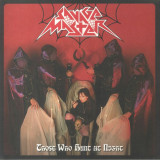
Shadow Kingdom Records is proud to present Savage Master's highly
anticipated fourth album, 'Those Who Hunt at Night' on CD and Red &
Black Tears colored vinyl'.One of the most exciting and electrifying bands
in today's occult heavy metal scene, during the first six years, Savage
Master swiftly built an impressive canon of work
Now Savage Master stands taller than ever and surveys those they leave in the
dust with their fourth full-length, 'Those Who Hunt at Night'. All too perfectly titled,
'Those Who Hunt at Night' sees Savage Master going in for the kill, keeping their
unyielding-as-steel sound whilst sharpening it yet further with their clearest and
most powerful production to date. In fact, that palpable professionalism
profoundly impacts that sound - timeless electricity, eternal glory, boundless
energy, authentically ancient but no tired ""retro"" retread, with the immediately
recognizable vocals of Stacey Savage leading the charge - so much so, one could
put the album alongside such early/mid '80s stunners as Judas Priest's Point of
Entry (moody and dynamic) or Jag Panzer's Ample Destruction (locomotion and
drama). Which is to say nothing of the subtle- but- crucial placement of vintage
synths across the 36- minute album, giving all nine songs a unique twist that
altogether make the record a unified experience. Still, from the impeccably
constructed hooks to the broader range of tempos they explore, Savage Master's
creativity here seems to know no bounds whilst keeping their core intact.
dovrebbe essere pubblicato su 30.06.2022

Soul icon Otis Redding made immeasurable contributions to the form. As a singer-
songwriter, producer, arranger and talent scout, Redding was responsible for some of the
music’s biggest and most lasting hits during the 1960s, though his death in an airplane crash
in 1967 brought his life and career to a tragically premature end. He was born Otis Redding
Junior in 1941 in the small town of Dawson, Georgia, the son of a sharecropper and preacher,
and moved to the city of Macon at the age of two, where he learned to sing at the Vineville
Baptist Church. After singing in the high school band, he performed weekly gospel songs on
radio station WIBB, winning local talent contests after being inspired by Little Richard and
Sam Cooke. Since his father became ill with tuberculosis, Redding began supporting the
family at the age of 15, working as a gas station attendant, a digger of water wells, and
occasionally by playing piano with pianist Gladys Williams at the Hillview Springs Social
Club. Then, in 1958, Redding had a repeat prize run at a talent contest held by broadcaster
Hamp Swain, bringing him first into a group called Pat T Cake and the Mighty Panthers, and
later into Little Richard’s band (during a time when Richard switched rock and roll for
gospel). Moving to Los Angeles in late 1960, debut single “She’s All Right” was issued on
the Trans World label (a subsidiary of Al Kavelin’s Lute Records), credited to The Shooters
featuring Otis; following the birth of their first child and his subsequent marriage to Zelma
Atwood, Redding recorded the popular “Shout Bamalam” for Macon’s Confederate Records
(who swiftly reissued it on the Orbit label since some radio stations objected to the original
label’s confederate flag logo, during a time of terrible racial segregation in the South).
Redding cut the movingly emotive “These Arms Of Mine” at Stax studios in Memphis in
1962, backed by Booker T and the MGs, which surfaced on the subsidiary Volt label in
October, reaching the charts some six months later (and eventually selling a reported 800,000
copies). Subsequent singles “What My Heart Needs” and “Pain In My Heart”/“Something Is
Worrying Me,” recorded in September 1963, formed the bulk of debut album, Pain In My
Heart, which was padded out by standard cover tunes of songs such as “I Need Your Lovin’,”
Ben E King’s “Stand By Me” and Little Richard’s “Lucille.” The album, which surfaced at
the start of 1964, reached the top 20 of the US R&B chart and also hit the Billboard Hot 100;
this edition has an alternate track listing that includes the Trans World debut single tracks
“She’s All Right” and “Getting’ Hip,” as well as “Mary Had A Little Lamb,” the B-side to
“That’s What My Heart Needs.” Carefully remastered, spinning at 45 rpm for enhanced qudio quality.
dovrebbe essere pubblicato su 30.06.2022
