Disponible en stock et prêt pour l'expédition
quête:kid mark
Commandez maintenant et nous commanderons l'article pour vous chez notre fournisseur.
Derniere entrée: 47 jours
A FISTFUL OF WAX is an extension for some very special projects of our beloved deep house SKYLAX RECORDS' sub - label WAX CLASSIC. A Fistful of Wax is back with its fourth volume! This offshoot originally began as an avenue for showing off some of the overflowing great talent we have floating about the Wax Classic sub-label, but with the growing reception of our previous three releases, it has developed itself into its own uniquely successful imprint. In a time when a lot of the hot records of the moment are made by highly distinguished producers with years of success under their belts, it is easy to forget how much good house music can come out of the underground by relatively fresh names. With AFX4, we are only scratching the surface once again, yet we have 5 special tracks from a group of producers who, if not already, will stay on your radar for the foreseeable future.The A side features tracks from Erman & Abtomat (of Série Limitée Records fame) and Kid Mark (Head honcho of Killax Recordings). We start off deep with the aptly named 'How Deep Can You Go', easily the most soothing of the bunch. 'Fantasy '95' takes it up a notch for those who wish to, with classic 90s chords and accompanying bass and horns. Over on the flip side, we hear 'Won't Get To Heaven' by Californian newcomer, An Expresso. Being a self confessed New Jersey style house addict, this hits in all the right places for those familiar with the sounds of NJ legend George Lockett Jr, aka Jerzzey Boy. Shin continues things with 'Phara', a percussive stormer with one of the hardest hitting leads you will hear for a good while. This one is a sure fire hit! Last, but by no means least is Rosenhaft's 'Voyager'. Fans of early UK Garage, perk up your ears because this could have easily been a tune you would have heard on your favourite pirate radio station back in '97.If you are still on the fence about the record at this point, you are in the wrong place. This record has it all for lovers of the 90s house sound! Whether you are of the deeper persuasion or the more garagey persuasion, the US or the UK side of things, there is something here for almost everyone on A Fistful of Wax 4.
Commandez maintenant et nous commanderons l'article pour vous chez notre fournisseur.
Last In: 15 months ago
Analog Fingerprints Vol. 0 is a compilation bringing together the early 2000s works of Marco Passarani under his Analog Fingerprints alias, collecting key tracks originally released on Rome’s Plasmek and Pigna labels.
For Numbers, the story starts long before the label itself. In their formative years, digging in Glasgow’s Rubadub, Passarani’s records felt like dispatches from a future city. Releases on his own Nature Records and on labels such as Generator and Interr-Ference Communications were mind blowing: rooted in Detroit techno, Chicago house and electro, yet pushing somewhere new. Much like fellow travellers Autechre, who would remix him in 2001, Passarani’s music balanced machine funk with restless experimentation.
Information was scarce, and you would hear these records first on the dancefloor or at listening stations in shops like Rubadub. Print fanzines like Ear and early web outposts such as Forcefield offered only fragments. But there was a palpable axis forming between Detroit techno and a new European wave of record labels including Skam, Rephlex, Clone, Viewlexx and Nature itself. It was the sound that defined Saturday nights at Rubadub’s ‘69’ parties in Paisley, just outside of Glasgow.
Passarani’s records, in particular, were instrumental in bringing together the future Numbers co-founders. Richard had already booked him pre-Numbers; meanwhile Calum (Spencer) and Jack (Jackmaster), then 16/17 year olds working alternate Saturdays in Rubadub, were so enamoured with the Roman sound that they travelled to Rome for the Bitz Festival in 2003 to seek out Passarani and Lory D at their source.
The first Analog Fingerprints release landed as a 12” on Plasmek in 2001, following the fractured, IDM-leaning 6 Katun material. For Passarani, the project marked a recalibration. A DJ first and foremost, he had moved into production via early computer setups, from a Commodore Amiga through primitive PC audio, Cubase and Logic, later experimenting with Ableton. The IDM scene had offered a playground for trial and error, but there was always a tension between abstraction and the dancefloor. Analog Fingerprints became the bridge: still intelligent, but with more dance than distance. After years of broken beats and complex arrangements, he wanted directness without surrendering identity.
Working closely with Francesco de Bellis and Mario Pierro in the Pigneto district, the trio formed Pigna as a vehicle for reclaiming a more accessible dance sound, deliberately steering away from the minimal wave beginning to dominate Europe. Sessions were fast, instinctive, often stretching late into the night with friends dropping by. It was a studio as social space, production as collective energy.
“In that constant search for balance, Analog Fingerprints was my way of expressing something closer to the classic dance floor. The track 'Tribute' - a tribute to my favourite early Detroit techno track of all time, 'First Bass' by Separate Minds - came after I realised I had almost lost my connection with the dance floor. The simplest step was to take inspiration from early Chicago and Detroit and twist it in our Roman ‘Pigna’ way. My goal was to create more accessible dancefloor tracks by mixing my unconscious Italo roots with my teenage love for that early US sound, ensuring the result was as far as possible from the minimal sound that was starting to dominate everywhere.” - Marco Passarani
Technically, the Analog Fingerprints tracks span a transitional era: Roland TR-909, SH-101 and Alpha Juno hardware met early software experiments. A Novation Drumstation rack stood in for the unattainable TR-808, syncing with TB-303 and TR-606. Yet the true secret weapon was Jeskola Buzz, a tracker-style modular environment that allowed step-by-step parameter control and strange melodic constructions, later exported into the audio sequencer. Even the lead on ‘Tribute’ came from an early PPG Wave-style plugin. It was hybrid thinking at a moment when digital tools still felt unstable but full of possibility for technologists like Passarani.
Behind the music sat Finalfrontier, a loose Roman collective orbiting Nature and Plasmek. Distribution and production were intertwined; importing obscure records into Italy built connections with like-minded outsiders across Europe and the US. Expensive phone bills and fax machines forged an “electronix network” that linked Rome to Clone, Viewlexx, Skam, Rephlex, Rubadub and Detroit’s Underground Resistance. There was a shared sense of survival and resistance, of operating against commercial systems.
Passarani recalls “The first time I found a sheet of paper inside an Underground Resistance 12” with info about upcoming releases... and a huge picture of Spock on the back. Imagine that: you love the music, you love Star Trek, and there’s someone on the other side of the ocean sharing those same values and sounds. It was the perfect match. We even gave our original company the suffix ‘Finalfrontier’: that says it all.”
Feedback in that era arrived physically: distributor faxes, conversations with visiting DJs, the experience of playing abroad and meeting kids who had connected with the records. Glasgow became a key node in a scattered outlier network. Passarani personally brought the first two Nature releases to Fat Cat in London, playing them in-store. Shortly after, a fax arrived from Rubadub in Glasgow requesting copies.
“I still remember that phone buzz and the fax paper slowly sliding out, with someone I didn’t know saying they wanted 75 copies of Nature 001. Or like the time we got a fax from the Rephlex crew just saying, “Hello Nature Records, Keep up the good work.” That was how we knew the message was getting through. It was a fantastic feeling; just one piece of thermal fax paper as an analog notification - the mood for the entire week would change.” - Passarani
The connection to Glasgow has since stretched across generations. As Passarani reflects, links often fracture as scenes renew themselves, but in Glasgow something different happened. New and old mixed seamlessly. There was a visible trust in what came before, and a willingness to carry it forward rather than discard it. Observed from Rome, it was deeply encouraging.
Analog Fingerprints Vol. 0 captures that moment of exchange: Rome to Glasgow, Detroit to Europe, experiment to dancefloor. It documents an artist recalibrating his sound and a network of scenes discovering one another in real time, connected by vinyl, faxes and shared intent.
il devrait être publié sur 26.03.2026
Last In: 2026 years ago
- A1: I Need A Break
- A2: Little Claws
- A3: Kill The Lie
- A4: Set In Motion
- A5: Wrong Shape
- B1: Don’t Gotta Think About U
- B2: No Regular No Chance
- B3: Everything’s Under Control (Feat. Pink Siifu)
- B4: Really Really Right
LA-based producer Real Bad Man and LA musician Genevieve Artadi announce their new collaborative album Everything Is Under Control, out October 3rd via the producer’s own Real Bad Man Records. Alongside the announcement, the duo are sharing two new singles from the forthcoming album, “Don’t Gotta Think About U” and “Little Claws”. The former is an electro pop banger that propels Artadi’s intoxicating vocals to the forefront and arrives with an accompanying visual. With Everything Is Under Control, Real Bad Man is proving his versatility as a producer, crafting intricate and lively electronic-forward foundations for an old friend in Genevieve to explore an eclectic, funky approach to her vocals.
Speaking about the single, Artadi says, "'Don’t Gotta Think About U' is about a person celebrating the explosion of her most recent unhealthy romantic relationship. Her spitefulness and delusion of freedom indicate she’s still inside the pattern she hasn’t yet realized she keeps signing herself up for. The sound is melancholic pop, the thread that has always tied Adam and me together despite our musical differences."
"I love juxtaposing dense drums and a very pretty voice," Real Bad Man says of collaborating with Artadi. "That’s what 'Don’t Wanna Think About U' is. We’re also trying to make something catchy at the same time, that’s what I’ve always been drawn to musically is blending genres and moods and get them to work together. As well as pulling Genevieve away from what she does with Knower and her solo stuff.
Real Bad Man’s collaboration with Artadi is a radical shift in approach for the producer, whose previous full-length projects this year were rooted in the distinct strain of underground hip-hop that he’s amassed an extensive catalog in. Everything Is Under Control marks an entirely different, and unpredictable, sonic approach for the duo, embracing experimentation and synth-led electronica that’s reminiscent of Artadi’s work as part with Pollyn (her former band with Adam/Real Bad Man) as well as current duo KNOWER with Louis Cole. Real Bad Man’s latest project extends his prolific run of collaborations this year, embarking in a new genre and sound entirely after releasing full-length projects with ZelooperZ (Dear Psilocybin), Boldly James (Conversational Pieces) and Willie The Kid (Midnight) in the first half of 2025.
Known for her complex, yet playful writing style, Genevieve Artadi has made a name for herself through four solo albums that stretch the gambit of jazz, dream pop and dance music. The last three albums were released on iconic label Brainfeeder Records and the fourth (Another Leaf) was made as part of her being a composer-in-residence with Sweden’s Norrbotten Big Band. She’s also been an accomplished collaborator with her bands Expensive Magnets, Pollyn and KNOWER, and performing and recording with the likes of Thundercat and Snarky Puppy.
Check out “Don’t Gotta Think About U” and “Little Claws” above, see below for more details on Everything Is Under Control and stay tuned for more from Real Bad Man coming soon.
il devrait être publié sur 03.04.2026
Last In: 2026 years ago
A guitar stands alone in Wedding, that metropolitan biotope in the western center of Berlin, caught in constant transformation between idyll and abyss. It lets its gaze wander, unsettled, almost shy, until it encounters a trumpet, with which it begins a cautious, then ever more intimate pas de deux.
Welcome to the second studio album by the Berlin-based band Conic Rose.
The album title Wedding is no coincidence. The story of Conic Rose is closely intertwined with the Berlin neighborhood that gives the record its name. The band's studio is located here, and both studio albums were created in the immediate vicinity of the small river Panke. This place settles over the music like a warming patina. The album feels as though the musicians and the neighborhood have invited one another to get to know each other. Not least because Wedding also means marriage. These marriages between a band and an urban landscape, a fading past and an emerging future, fear and hope - unfold in every single song on Wedding.
For their second album, Conic Rose repositioned themselves completely. Not in terms of personnel, but in the question of how to move forward. Conic Rose still sound like Conic Rose; their distinctive blend of cinematic jazz, ambient textures and guitar-led contemporary music remains untouched. And yet Wedding is, in many ways, the conceptual counterpart to their debut album Heller Tag. Where the debut documented movement within an urban setting, Wedding describes a state of being. Behind every piece seems to hover a large question mark.The group opens up its palette, allowing more influences, becoming at once more subtle, more profound, more filigree. It is less about definition than about the spaces in between. The most immediately striking difference from the previous album is the strong presence of the guitar. In Bertram Burkert's playing, many voices seem to converge. His yearning openness forms an equal counterpoint to Döben's trumpet and flugelhorn. Blurred and layered sounds occasionally make the ground seem to slip away beneath one's feet, while Döben's gliding lines create both closeness and distance. Together, the band express in a deeply subtle way a sense of life that corresponds precisely to our time. Something lurks in the background, omnipresent yet still unnameable. Conic Rose need no words to convey this feeling of uncertainty with remarkable eloquence. Perhaps this has something to do with Wedding being a place of confrontational introspection, but Conic Rose confront the escape from escape itself. With the recording and release of Wedding, this process is far from complete. The seed only begins to grow in the listener's ear. With every listen and the echo it leaves behind in memory, the studio bud continues to bloom. The album is merely the point of departure. What ultimately matters is what it sets in motion within those who encounter it.
il devrait être publié sur 17.04.2026
Last In: 2026 years ago
- Rift
- Eastside
- Coffee
- Cicada
- Tea Leaves
- Alone With Me
- Ghost Keeper
- Tornado
- Wall
- Ginger Lemonade
Good Kid ist keine typische Rockband; sie sind wahrscheinlich der größte Indie-Act, von dem du noch nie gehört hast. Was als Projekt von fünf kanadischen Informatikstudenten begann, die sich von ihren Aufgaben ablenkten – Nick Frosst (voc), Jon Kereliuk (drums), Michael Kozakov (bass), David Wood (git) und Jacob Tsafatinos (git) –, entwickelte sich rasant zu etwas viel Größerem und einer riesigen globalen Community, die Menschen willkommen heißt, sich so zu zeigen, wie sie sind. Mit vier erfolgreichen EPs im Gepäck liefert Good Kids Debütalbum "Can We Hang Out Sometime?" die energiegeladenen Hooks und innovativen Riffs, die zu ihrem Markenzeichen geworden sind, und wagt sich gleichzeitig mutig in neue Gefilde vor. Langjährige Fans finden hier die typischen Good-Kid-Kracher, die sie lieben, aber auch die Band, die in ihrem bisher rauesten Werk neue Soundfarben, Rhythmen und Wendungen erkundet. Produziert von Grammy-Preisträger John Congleton (St. Vincent, Wallows, Lana Del Rey) in Los Angeles.
il devrait être publié sur 30.04.2026
Last In: 2026 years ago
Good Kid ist keine typische Rockband; sie sind wahrscheinlich der größte Indie-Act, von dem du noch nie gehört hast. Was als Projekt von fünf kanadischen Informatikstudenten begann, die sich von ihren Aufgaben ablenkten – Nick Frosst (voc), Jon Kereliuk (drums), Michael Kozakov (bass), David Wood (git) und Jacob Tsafatinos (git) –, entwickelte sich rasant zu etwas viel Größerem und einer riesigen globalen Community, die Menschen willkommen heißt, sich so zu zeigen, wie sie sind. Mit vier erfolgreichen EPs im Gepäck liefert Good Kids Debütalbum "Can We Hang Out Sometime?" die energiegeladenen Hooks und innovativen Riffs, die zu ihrem Markenzeichen geworden sind, und wagt sich gleichzeitig mutig in neue Gefilde vor. Langjährige Fans finden hier die typischen Good-Kid-Kracher, die sie lieben, aber auch die Band, die in ihrem bisher rauesten Werk neue Soundfarben, Rhythmen und Wendungen erkundet. Produziert von Grammy-Preisträger John Congleton (St. Vincent, Wallows, Lana Del Rey) in Los Angeles.
il devrait être publié sur 30.04.2026
Last In: 2026 years ago
- 1: Die In Cleveland
- 2: High Resolution
- 3: Don?T Wear Me Out
- 4: Fear Of The Living
- 5: Sanctuary
- 6: Dead Alive
- 7: Public Meltdown
- 8: Depression Song
- 9: One And Only Girl
- 10: Pill
- 11: The World Doesn?T Need Your Jive
San Diego’s Mrs. Magician has always bent surf music and punk into something delightfully off-kilter — sun-soaked, hook-heavy power pop with a lyrical fixation on life’s darker undercurrents. Their 2012 debut, Strange Heaven, was a nihilistic pop statement that grew into a cult classic. The 2016 follow-up, Bermuda, sharpened the edges with punchy, nervy songwriting. Both records were produced by John Reis (Rocket From The Crypt, Hot Snakes, Drive Like Jehu), cementing the band’s place in Southern California’s underground lineage. Now, in 2026, Mrs. Magician reemerges with their long-awaited third LP, Spiritual Hangover. Recorded at Dave Grohl’s Studio 606 and Singing Serpent Studios with producer Christian Cummings, Spiritual Hangover finds songwriter Jacob Turnbloom trading youthful nihilism for something more reflective. Where earlier records wrestled with existential dread through anthemic defiance, this new collection embraces uncertainty — an admission of ignorance in the face of the human condition, paired with a genuine longing for connection and understanding. The humor remains. The hooks are sharper than ever. But the perspective has shifted.
These songs feel less like a declaration of dominance and more like a celebration of fragility — an acknowledgment that life is fleeting, confusing, and still worth enjoying. The album features Andrew Montoya (drums) and Mark Rivera (bass) of The Sess, Ian Fowles (guitar) of The Aquabats, and John Reis (guitar). Spiritual Hangover channels the bright urgency of late-’70s power pop through a distinctly Californian lens — warm, melodic, and irresistibly alive. “Super fun, well crafted, with great melodies. It gives me that late ’70s power pop energy I loved so much as a kid. Every track has something joyous to grab onto. In a world full of bleak news, Spiritual Hangover is a warming blast of California sunshine.” — Walter Schreifels (Gorilla Biscuits/Quicksand)
il devrait être publié sur 15.05.2026
Last In: 2026 years ago
- A1: Hurts And Noises
- A2: Wake Up
- A3: I Don't Wanna Be A Rich
- A4: Terrorist Bad Heart
- A5: Provocate
- A6: Lucifer Sam (Pink Floyd)
- B1: Happy!?
- B2: So Lazy
- B3: I Feel Down
- B4: Stupido
- B5: Guilty
- B6: Caroline Says (Loo Reed)
UILTY RAZORS, BONA FIDE PUNKS.
Writings on the topic that go off in all directions, mind-numbing lectures given by academics, and testimonies, most of them heavily doctored, from those who “lived through that era”: so many people today fantasize about the early days of punk in our country… This blessed moment when no one had yet thought of flaunting a ridiculous green mohawk, taking Sid Vicious as a hero, or – even worse – making the so-called alternative scene both festive and boorish. There was no such thing in 1976 or 1977, when it wasn’t easy to get hold of the first 45s by the Pistols or the Clash. Few people were aware of what was happening on the fringes of the fringes at the time. Malcolm McLaren was virtually unknown, and having short hair made you seem strange. Who knew then that rock music, which had taken a very bad turn since the early 1970s, would once again become an essential element of liberation? That, thanks to short and fast songs, it would once again rediscover that primitive, social side that was so hated by older generations? Who knew that, besides a few loners who read the music press (it was even better if they read it in English) and frequented the right record stores? Many of these formed bands, because it was impossible to do otherwise. We quickly went from listening to the Velvet Underground to trying to play the Stooges’ intros. It’s a somewhat collective story, even though there weren’t many people to start it.
The Guilty Razors were among those who took part in this initial upheaval in Paris. They were far from being the worst. They had something special and even released a single that was well above the national average. They also had enough songs to fill an album, the one you’re holding. In everyone’s opinion, they were definitely not among the punk impostors that followed in their wake. They were, at least, genuine and credible.
Guilty Razors, Parisian punk band (1975-1978). To understand something about their somewhat linear but very energetic sound, we might need to talk about the context in which it was born and, more broadly, recall the boredom (a theme that would become capital in punk songs) coupled with the desire to blow everything off, which were the basis for the formation of bands playing a rejuvenated rock music ; about the passion for a few records by the Kinks or the early Who, by the Stooges, by the Velvet mostly, which set you apart from the crowd.
And of course, we should remember this new wave, which was promoted by a few articles in the specialized press and some cutting-edge record stores, coming from New York or London, whose small but powerful influence could be felt in Paris and in a handful of isolated places in the provinces, lulled to sleep by so many appalling things, from Tangerine Dream to President Giscard d’Estaing...
In 1975-76, French music was, as almost always, in a sorry state ; it was still dominated by Johnny Hallyday and Sylvie Vartan. Local rock music was also rather bleak, apart from Bijou and Little Bob who tried to revive this small scene with poorly sound-engineered gigs played to almost no one.
In the working class suburbs at the time, it was mainly hard rock music played to 11 that helped people forget about their gruelling shifts at the factory. Here and there, on the outskirts of major cities, you still could find a few rockers with sideburns wearing black armbands since the death of Gene Vincent, but it wasn’t a proper mass movement, just a source of real danger to anyone they came across who wasn't like them. In August 1976, a festival unlike any other took place in Mont-de-Marsan – the First European Punk Festival as the poster said – with almost as many people on stage as in the audience. Yet, on that day, a quasi historical event happened, when, under the blazing afternoon sun, a band of unknowns called The Damned made an unprecedented noise in the arena, reminiscent of the chaotic Stooges in their early adolescence. They were the first genuine punk band to perform in our country: from then on, anything was possible, almost anything seemed permissible.
It makes sense that the four+1 members of Guilty Razors, who initially amplified acoustic guitars with crappy tape recorder microphones, would adopt punk music (pronounced paink in French) naturally and instinctively, since it combines liberating noise with speed of execution and – crucially – a very healthy sense of rebellion (the protesters of May 1968 proclaimed, and it was even a slogan, that they weren’t against old people, but against what had made them grow old. In the mid-1970s, it seemed normal and obvious that old people should now ALSO be targeted!!!).
At the time, the desire to fight back, and break down authority and apathy, was either red or black, often taking the form of leafleting, tumultuous general assemblies in the schoolyard, and massive or shabby demonstrations, most of the time overflowing with an exciting vitality that sometimes turned into fights with the riot police. Indeed, soon after the end of the Vietnam War and following Pinochet’s coup in Chile, all over France, Trotskyist and anarcho-libertarian fervour was firmly entrenched among parts of the educated youth population, who were equally rebellious and troublemakers whenever they had the chance. It should also be noted that when the single "Anarchy in the UK" was first heard, even though not many of us had access to it, both the title and its explosive sound immediately resonated with some of those troublemakers crying out for ANARCHY!!! Meanwhile, the left-wing majority still equated punks with reckless young neo-Nazis. Of course, the widely circulated photos in the mainstream press of Siouxsie Sioux with her swastikas didn’t necessarily help to win over the theorists of the Great Revolution. It took Joe Strummer to introduce The Clash as an anti-racist, anti-fascist and anti-ignorance band for the rejection of old-school revolutionaries to fade a little.
The Lycée Jean-Baptiste Say at Porte d’Auteuil, despite being located in the very posh and very exclusive 16th arrondissement of Paris, didn’t escape these "committed" upheavals, which doubled as the perfect outlet for the less timid members of this generation.
“Back then, politics were fun,” says Tristam Nada, who studied there and went on to become Guilty Razors’ frontman. “Jean-Baptiste was the leftist high-school in the neighbourhood. When the far right guys from the GUD came down there, the Communist League guys from elsewhere helped us fight them off.”
Anything that could challenge authority was fair game and of course, strikes for just about any reason would lead to increasingly frequent truancy (with a definitive farewell to education that would soon follow). Tristam Nada spent his 10th and 11th unfinished grades with José Perez, who had come from Spain, where his father, a janitor, had been sentenced to death by Franco. “José steered my tastes towards solid acts such as The Who. Like most teenagers, I had previously absorbed just about everything that came my way, from Yes to Led Zeppelin to Genesis. I was exploring… And then one day, he told me that he and his brother Carlos wanted to start a rock band.” The Perez brothers already played guitar. “Of course, they were Spanish!”, jokes their singer. “Then, somewhat reluctantly, José took up the bass and we were soon joined by Jano – who called himself Jano Homicid – who took up the rhythm guitar.” Several drummers would later join this core of not easily intimidated young guys who didn’t let adversity get the better of them.
The first rehearsals of the newly named Guilty Razors took place in the bedroom of a Perez aunt. There, the three rookies tried to cover a few standards, songs that often were an integral part of their lives. During a first, short gig, in front of a bewildered audience of tough old-school rockers, they launched into a clunky version of the Velvet Underground's “Heroin”. Challenge or recklessness? A bit of both, probably… And then, step by step, their limited repertoire expanded as they decided to write their own songs, sung in a not always very accurate or academic English, but who cared about proper grammar or the right vocabulary, since what truly mattered was to make the words sound as good as possible while playing very, very fast music? And spitting out those words in a language that left no doubt as to what it conveyed mattered as well.
Trying their hand a the kind of rock music disliked by most of the neighbourhood, making noise, being fiercely provocative: they still belonged to a tiny clique who, at this very moment, had chosen to impose this difference. And there were very few places in France or elsewhere, where one could witness the first stirrings of something that wasn’t a trend yet, let alone a movement.
In the provinces, in late 1976 or early 1977, there couldn’t be more than thirty record stores that were a bit more discerning than average, where you could hear this new kind of short-haired rock music called “punk”. The old clientele, who previously had no problem coming in to buy the latest McCartney or Aerosmith LP, now felt a little less comfortable there…
In Paris, these enlightened places were quite rare and often located nex to what would become the Forum des Halles, a big shopping mall. Between three aging sex workers, a couple of second-hand clothes shops, sellers of hippie paraphernalia and small fashion designers, the good word was loudly spread in two pioneering places – propagators of what was still only a new underground movement. Historically, the first one was the Open Market, a kind of poorly, but tastefully stocked cave. Speakers blasted out the sound of sixties garage bands from the Nuggets compilation (a crucial reference for José Perez) or the badly dressed English kids of Eddie and the Hot Rods. This black-painted den was opened a few years earlier by Marc Zermati, a character who wasn’t always in a sunny disposition, but always quite radical in his (good) choices and his opinions. He founded the independent label Skydog and was one of the promoters of the Mont-de-Marsan punk festivals. Not far from there was Harry Cover, another store more in tune with the new New York scene, which was amply covered in the house fanzine, Rock News (even though it was in it that the photos of the Sex Pistols were first published in France).
It was a favorite hang-out of the Perez brothers and Tristam Nada, as the latter explained. “It’s at Harry Cover’s that we first heard the Pistols and Clash’s 45s, and after that, we decided to start writing our first songs. If they could do it, so could we!”
The sonic shocks that were “Anarchy in the UK”, “White Riot” or the Buzzcocks’s EP, “Spiral Scratch” – which Guilty Razors' sound is reminiscent of – were soon to be amplified by an unparalleled visual shock. In April 1977, right after the release of their first LP, The Clash performed at the Palais des Glaces in Paris, during a punk night organised by Marc Zermati. For many who were there, it was the gig of a lifetime…
Of course, Guilty Razors and Tristam were in the audience: “That concert was fabulous… We Parisian punks were almost all dressed in black and white, with white shirts, skinny leather ties, bikers jackets or light jackets, etc. The Clash, on the other hand, wore colourful clothes. Well, the next day, at the Gibus, you’d spot everyone who had been at this concert, but they weren’t wearing anything black, they were all wearing colours.”
It makes sense to mention the Gibus club, as Guilty Razors often played there (sometimes in front of a hostile audience). It was also the only place in Paris that regularly scheduled new Parisian or Anglo-Saxon acts, such as Generation X, Siouxsie and the Banshees, the Slits, and Johnny Thunders who would become a kind of messed-up mascot for the venue. A little later, in 1978, the Rose Bonbon – formerly the Nashville – also attracted nightly owls in search of electric thrills… In 1977, the iconic but not necessarily excellent Asphalt Jungle often played at the Gibus, sometimes sharing the bill with Metal Urbain, the only band whose aura would later transcend the French borders (“I saw them as the French Sex Pistols,” said Geoff Travis, head of their British label Rough Trade). Already established in this small scene, Metal Urbain helped the young and restless Guilty Razors who had just arrived. Guitarist for Metal Urbain Hermann Schwartz remembers it: “They were younger than us, we were a bit like their mentors even if it’s too strong a word… At least they were credible. We thought they were good, and they had good songs which reminded of the Buzzcocks that I liked a lot. But at some point, they started hanging out with the Hells Angels. That’s when we stopped following them.”
The break-up was mutual, since, Guilty Razors, for their part, were shocked when they saw a fringe element of the audience at Metal Urbain concerts who repeatedly shouted “Sieg Heil” and gave Nazi salutes. These provocations, even still minor (the bulk of the skinhead crowd would later make their presence felt during concerts), weren’t really to the liking of the Perez brothers, whose anti-fascist convictions were firmly rooted. Some things are non-negotiable.
A few months earlier (in July 1978), Guilty Razors had nevertheless opened very successfully for Metal Urbain at the Bus Palladium, a more traditonally old-school rock night-club. But, as was sometimes the case back then, the night turned into a mass brawl when suburban rockers came to “beat up punks”.
Back then, Parisian nights weren’t always sweet and serene.
So, after opening as best as they could for The Jam (their sound having been ruined by the PA system), our local heroes were – once again – met outside by a horde of greasers out to get them. “Thankfully,” says Tristam, “we were with our roadies, motorless bikers who acted as a protective barrier. We were chased in the neighbouring streets and the whole thing ended in front of a bar, with the owner coming out with a rifle…”
Although Tristam and the Perez brothers narrowly escaped various, potentially bloody, incidents, they weren’t completely innocent of wrongdoing either. They still find amusing their mugging of two strangers in the street for example (“We were broke and we simply wanted to buy tickets for the Heartbreakers concert that night,” says Tristam). It so happened that their victims were two key figures in the rock business at the time: radio presenter Alain Manneval and music publisher Philippe Constantin. They filed a complaint and sought monetary compensation, but somehow the band’s manager, the skilful but very controversial Alexis, managed to get the complaint withdrawn and Guilty Razors ended up signing with Constantin with a substantial advance.
They also signed with Polydor and the label released in 1978 their only three-track 45, featuring “I Don't Wanna be A Rich”, “Hurts and Noises” and “Provocate” (songs that exuded perpetual rebellion and an unquenchable desire for “class” confrontation). It was a very good record, but due to a lack of promotion (radio stations didn’t play French artists singing in English), it didn’t sell very well. Only 800 copies were allegedly sold and the rest of the stock was pulped… Initially, the three tracks were to be included on a LP that never came to be, since they were dropped by Polydor (“Let’s say we sometimes caused a ruckus in their offices!” laughs Tristam.) In order to perfect the long-awaited LP, the band recorded demos of other tracks. There was a cover of Pink Floyd's “Lucifer Sam” from the Syd Barrett era – proof of an enduring love for the sixties’ greats –, “Wake Up” a hangover tale and “Bad Heart” about the Baader-Meinhof gang, whose actions had a profound impact on the era and on a generation seeking extreme dissent... On the album you’re now discovering, you can also hear five previously unreleased tracks recorded a bit later during an extended and freezing stay in Madrid, in a makeshift studio with the invaluable help of a drummer also acting as sound engineer. He was both an enthusiastic old hippie and a proper whizz at sound engineering. Here too, certain influences from the fifties and sixties (Link Wray, the Troggs) are more than obvious in the band’s music.
Shortly after a final stormy and rather barbaric (on the audience’s side) “Punk night” at the Olympia in June 1978, Tristam left the band ; his bandmates continued without him for a short while.
But like most pioneering punk bands of the era, Guilty Razors eventually split up for good after three years (besides once in Spain, they’d only played in Paris). The reason for ceasing business activities were more or less the same for everyone: there were no venues outside one’s small circuit to play this kind of rock music, which was still frightening, unknown, or of little interest to most people. The chances of recording an LP were virtually null, since major labels were only signing unoriginal but reassuring sub-Téléphone clones, and the smaller ones were only interested in progressive rock or French chanson for youth clubs. And what about self-production? No one in our small safety-pinned world had thought about it yet. There wasn’t enough money to embark on that sort of venture anyway.
So yes, the early days of punk in France were truly No Future!
il devrait être publié sur 22.05.2026
Last In: 2026 years ago
DJ Support: Mousse T, Todd Terry, Young Pulse, Angelo Ferreri, Melvo Baptiste, Richard Earnshaw, Micky More & Andy Tee, Dr Packer, Hatiras, DJ Rae, Mark Picchiotti, Birdee, Shaka Loves You, Yasmin, Saison, Michael Gray, DJ Spen and Hatiras
A Touch Of Love goes from strength to strength with EP8 in the vinyl series. Label boss Seamus Haji reps the A side with his latest faves ‘Fire’ with his good friend Mike Dunn serving up the unmistakable vocals on a funk fuelled Firestarter followed by his collab with the New York diva Kathy Brown over the sexually charged disco chugger ‘Dancing’. On the AA side new kid on the clock from Barcelona Osner hit big with his outing ‘It’s Good’ with a nod to the 70’s with a modern twist for peak-time dancefloors whilst Italy’s fast rising underground hero Gledd continues the theme with the blues & soul injected thumper ‘Move Me’.
il devrait être publié sur 29.05.2026
Last In: 2026 years ago
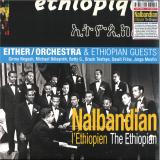
The Éthiopiques series returns! Essential archive recordings from an extremely fruitful period in Ethiopian music.
Before “Swinging Addis” took over the world, there was Moussié Nerses Nalbandian — the Armenian-born composer who shaped modern Ethiopian music. Mentor, arranger, and pioneer, he laid the foundations of Ethio-jazz.
This Éthiopiques volume revives his forgotten legacy, recorded live by Either/ Orchestra First issue ever with new exclusive photos and in depth liner 8-page insert.
“Ethiopian jazzmen are the best musicians that we have seen so far in Africa.
They really are promising handlers of jazz instruments.”
Wilbur De Paris
(1959, after a concert in Addis Ababa)
አዲስ፡ዘመን። *Addis zèmèn* **A new era.**
The time is the mid-1950s and early 1960s, just before "Swinging Addis" bloomed – or rather boomed – onto the scene. Brass instruments are still dominant, but the advent of the electric guitar, and the very first electronic organs, are just around the corner. Rock’n'Roll, R’n’B, Soul and the Twist have not yet barged their way in. Addis Ababa is steeped in the big band atmosphere of the post-war era, with Glenn Miller's *In the* *Mood* as its world-wide theme song, neck and neck with the Latin craze that was in vogue at the same period. Life has become enjoyable once again, with the return of peace after the terrible Italian Fascist invasion of Ethiopia (1935-1941). The redeployment of modern music is part and parcel of the postwar reconstruction. *Addis zèmèn* – a new era – is the watchword of the postwar period, just as it was all across war-torn Europe.
The generation who were the young parents of baby boomers** were the first to enjoy this musical renaissance, before the baby boomers themselves took over and forever super-charged the soundtrack of the final days of imperial reign. Music is Ethiopia's most popular art form, and very often serves as the best barometer for the upsurge of energy that is critical for reconstruction. Whether it be jazz in Saint-Germain-des-Prés or the *zazous* who revolutionised both jazz and French *chanson* after the *Libération*, be it Madrid's post-Franco Movida, or Dada, the Surrealists and *les années folles* that followed World War I, the periods just after mourning and hardship always give rise to brighter and more tuneful tomorrows. Addis Ababa, as the country's capital, and the epicentre of change, was no exception to this vital rule.
**Two generations of Nalbandian musicians**
Nersès Nalbandian belonged to a family of Armenian exiles, who had moved to Ethiopia in the mid-1920s. The uncle Kevork arrived along with the fabled "*Arba Lidjotch*", the** "*40 Kids*", young Armenian orphans and musicians that the Ras Tafari had recruited when he visited Jerusalem in 1924, intending to turn their brass band into the official imperial band. If Kevork Nalbandian was the one who first opened the way of modernism, pushing innovation so far as to invent musical theatre, it was his nephew Nersès who would go on to become, from the 1940s and until his death in 1977, a pivotal figure of modern Ethiopian music and of the heights it. Going all the way back to the 1950s. Nothing less. And it is Nersès who is largely to thank for the brassy colours that so greatly contributed to the international renown of Ethiopian groove. While the younger generations today venture timidly into the genealogy of their country's modern music, often losing their way amidst a distinctly xenophobic historiographical complacency, many survivors of the imperial period are still around to bear witness and pay tribute to the essential role that "Moussié Nersès" played in the rise of Abyssinia's musical modernity.
Given the year of his birth (15 March 1915), no one knows for sure if Nersès Nalbandian was born in Aintab, today Gaziantep (Turkiye/former Ottoman Empire) or on the other side of the border in Alep, Syria... What is certain is that his family, like the entire Armenian community, was amongst the victims of the genocide perpetrated by the Turks. Alep, the place of safety – today in ruins.
Before Nersès then, there was uncle Kevork (1887-1963). For a quarter of a century, he was a whirlwind of activity in music teaching and theatrical innovation. *Guèbrè Mariam le Gondaré* (የጎንደሬ ገብረ ማርያም አጥቶ ማግኘት, 1926 EC=1934) is his most famous creation. This play included "ten Ethiopian songs" — a totally innovative approach. According to his autobiographical notes, preserved by the Nalbandian family, Kevork indicates that he composed some 50 such pieces over the course of his career. This shows just how much he understood, very early on, the critical importance of song as Ethiopia's crowning artistic form. Indeed, for Ethiopian listeners, the most important thing is the lyrics, with all their multifarious mischief, far more than a strong melody, sophisticated arrangements or even an exceptional voice. (This is also why Ethiopians by and large, and beginning with the artists and producers themselves, believed for a long time — and wrongly — that their music could not possibly be exported, and could never win over audiences abroad, who did not speak the country's languages).
Last but not least, one of Kevork's major contributions remains composing Ethiopia's first national anthem – with lyrics by Yoftahé Negussié.
Nersès Nalbandian moved to Ethiopia at the end of the 1930s, at the behest of his ground-breaking uncle. Proficient in many instruments (pretty much everything but the drums), conductor, choir director, composer, arranger, adapter, creator, piano tuner, purveyor of rented pianos,... he was above all an energetic and influential teacher. From 1946 onwards, thanks to Kevork's connexion, Nersès was appointed musical director of the Addis Ababa Municipality Band. In just a few years, Nersès transformed it into the first truly modern ensemble, thanks to the quality of his teaching, his choice of repertoire, and the sophistication of his arrangements. It was this group that would go on to become the orchestra of the Haile Selassie Theatre shortly after its inauguration in 1955, which was a major celebration of the Emperor's jubilee, marking the 25th anniversary of his on-again-off-again reign.
At some point or other in his long career, Nersès Nalbandian had a hand in the creation of just about every institutional band (Municipality Band, Police Orchestra, Imperial Bodyguard Band, Army Band, Yared Music School…), but it was with the Haile Selassie Theatre – today the National Theatre – that his abilities were most on display, up until his death in 1977. To this must be added the development of choral singing in Ethiopia, hitherto unknown, and a sort of secret garden dedicated to the memory of Armenian sacred music, and brought together in two thick, unpublished volumes. Shortly before his death (November 13, 1977), he was appointed to lead the impressive Ethiopian delegation at Festac in Lagos, Nigeria (January-February 1977).
His status as a stateless foreigner regularly excluded him from the most senior positions, in spite of the respect he commanded (and commands to this day) from the musicians of his era. Naturally gifted and largely self-taught, Nerses was tirelessly curious about new musical developments, drawing inspiration from the very first imported records, and especially from listening intensely to the musical programmes broadcast over short-wave radio – BBC *First*. A prolific composer and arranger, he was constantly mindful of formalising and integrating Ethiopian parameters (specific “musical modes”, pentatonic scale, and the dominance of ternary rhythms) into his “modernisation” of the musical culture, rather than trying to over-westernise it. It even seems very probable that *Moussié* Nerses made a decisive contribution to the development of tighter music-teaching methods, in order to revitalise musical education during this period of prodigious cultural ferment. Flying in the face of all the historiographical and musicological evidence, it is taken as sacrosanct dogma that the four musical modes or chords officially recognised today, the *qǝñǝt* or *qiñit* (ቅኝት), are every bit as millennial as Ethiopia itself. It would appear however that some streamlining of these chords actually took place in around 1960. It was only from this time onward that music teaching was structured around these four fundamental musical modes and chords: *Ambassel*, *Bati*, *Tezeta* and *Antchi Hoyé*. A historical and musical “details” that is, apparently, difficult to swallow, especially if that should honour a *foreigner*. Modern Ethiopian music has Nersès to thank for many of its standards and, to this day, it is not unusual for the National Radio to broadcast thunderous oldies that bear unmistakable traces of his outrageously groovy touch.

Disponible en stock et prêt pour l'expédition
DJ Support: Black Legend, David Penn, Mark Knight, Ronnie Herel, Dr Packer, RAE, Claptone, Curtis Jay, Oliver Heldens, TCTS, ESSEL, Ladies On Mars, Sam Feldt, DJ Spen, ManyFew, Sister Bliss & more.
Fool’s Paradise’s latest Sampler sees 4 big releases from Mark Knight, Mark Dedross, Sam Karlson, Alex Preston, Mo’Funk, Secret Weapons (AU), Kid Massive and Rubber People.
Disponible en stock et prêt pour l'expédition
- A1: Jerome Isma-Ae - "Wahrnehmung
- A2: Qrion – „Klingt Gut“
- A3: Markus Homm – „Can't Live Without You“
- B1: Dino Lenny & Nuiton - "Beste Zukunft
- B2: Alexex Kennon - "Back To You" (Feat. Lunar June)
- B3: Grigor & Serve Cold - "Man Spürt Es
- C1: Einmusik & Ash Nova - "I've Been Changing
- C2: D-Nox & Stereo Underground - "Shooting Stars
- C3: Paul Roux - "Kids
- D1: Trilucid & Brett Gould - "The Purpose
- D2: Spada - "Geräuchert
- D3: Aikon & Saint Code - "Feel
The Unique series returns, showcasing 12 brand new and original tracks from some of the world’s most exciting producers. With tracks from Jerome Isma-Ae, Dino Lenny & Nuiton, Einmusik, Ash Nova, Qrion, Trilucid & Brett Gould, Markus Homm, D-Nox & Stereo Underground, Spada, Alex Kennon feat. Lunar June, AIKON & SAINT CODE, Grigoré & Serve Cold and Paul Roux.
Disponible en stock et prêt pour l'expédition
- A1: The Bird
- A2: Heart Don't Stand A Chance
- A3: The Waters Ft. Bj The Chicago Kid
- A4: The Season/Carry Me
- A5: Put Me Thru
- A6: Am I Wrong Ft. Schoolboy Q
- A7: Without You Ft. Rapsody
- A8: Parking Lot
- B1: Lite Weight Ft The Free Nationals United Fellowship Choir
- B2: Room In Here Ft. The Game & Sonyae Elise
- B3: Water Fall (Interluuube)
- B4: Your Prime
- B5: Come Down
- B6: Silicon Valley
- B7: Celebrate
- B8: The Dreamer Ft. Talib Kweli & Timan Family Choir
The two-time GRAMMY Nominated timeless album, Malibu. After dropping his debut album, Venice, in 2014, and then being featured on six tracks on Dr. Dre’s Compton album in 2015, 2016’s Malibu marked a major landmark moment in Anderson .Paak’s now storied career and paved the way for him to be the household name he is today. Known by many as one of the best live performers around, and with countless brand collaborations, sold out tours, chart topping albums, and even a joint album with the legendary Bruno Mars to his name, it’s safe to say that Anderson .Paak has reached Icon status. This classic catalog piece features appearances from Schoolboy Q, The Game, BJ The Chicago Kid, and more.
Disponible en stock et prêt pour l'expédition
- A1: Cigarettes In The Theatre
- A2: Come Back Home
- A3: Do You Want It All?
- A4: This Is The Life
- A5: Something Good Can Work
- B1: I Can Talk
- B2: Undercover Martyn
- B3: What You Know
- B4: Eat That Up, It's Good For You
- B5: You Are Not Stubborn
- C1: Something Good Can Work (The Twelves Remix)
- C2: Costume Party
- C3: Something Good Can Work (Ted & Francis Remix)
- C4: What You Know (Cassian Remix)
- D1: Kids
- D2: I Can Talk (Moulinex Remix)
- D3: Come Back Home (Myd Remix)
- D4: Something Good Can Work (Original Demo)
- D5: I Can Talk (French Horn Rebellion Remix)
Mit "Tourist History" veröffentlicht die britisch-irische Indieband Two Door Cinema Club eines der einflussreichsten Debütalben der 2010er Jahre in einer besonderen 15th Anniversary Edition. Das Album, das 2010 erschien, gewann den Choice Music Prize als Irish Album of the Year und markierte den Start einer Weltkarriere, die von Festival-Headliner-Shows bis zu über 1 Milliarde Streams von "What You Know" führte.
Zur Feier des Jubiläums erscheint Tourist History in drei liebevoll gestalteten Formaten - inklusive bisher unveröffentlichter Remixe und Raritäten.
Seit dem Garageprojekt in Bangor haben Alex Trimble, Sam Halliday und Kevin Baird eine beeindruckende Karriere hingelegt - mit Top-10-Alben wie Beacon, Gameshow, False Alarm und Keep On Smiling und ausverkauften Touren weltweit. Diese Jubiläumsausgabe ist ein Muss für Indie-Fans und Sammler - ein Meilenstein moderner Gitarrenmusik.
Cet article n'a pas encore été publié. Vous pouvez pré-commander le produit maintenant.
Last In: 2026 years ago
- Hotel California
- New Kid In Town
- Life In The Fast Lane
- Wasted Time
- Wasted Time (Reprise)
- Victim Of Love
- Pretty Maids All In A Row
- Try And Love Again
- The Last Resort
The moment the instantly recognizable intertwined guitar passage on the title track to the Eagles' Hotel California begins, the record's genius becomes obvious all over again. Ranked the 118th Greatest Album of All Time by Rolling Stone, certified by RIAA as the third best-selling LP in history, and considered the foundation on which the Golden State's mid-‘70s music scene was built, the 1976 landmark is a music staple immune to shifts in trends, eras, and styles. Fearlessly addressing the chaos and consequences of American life, its songs remain strikingly prescient and gain creedence with each passing day.
Mastered from the original analogue master tapes, pressed on MoFi SuperVinyl, and limited to 17,500 numbered copies, Mobile Fidelity's UltraDisc One-Step 180g 45RPM 2LP vinyl box set ensures you will want to permanently check into and never leave this particular Hotel California. Up to the herculean task of standing head and shoulders above all prior reissues, this collectible edition plays with extreme clarity, organic richness, tube-like warmth, massive dynamics, and microscopic levels of detail. You'll be able to practically smell the colitas and feel the breeze in your hair. Songs come across with an epic sweep and feature immersive, front-to-back soundstages that allow the music unprecedented air, roominess, and separation. As for the noise floor? It's basically as invisible as the spirits that waft in the corridors of the unforgettable title song.
Aesthetically, the premium packaging and presentation of the UD1S Hotel California pressing befit its esteemed status. Housed in a deluxe box, it features gorgeous foil-stamped jackets and faithful-to-the-original graphics that illuminate the splendour of the recording. From every angle, this UD1S reissue exists as a curatorial artefact meant to be preserved, touched, and examined. It is made for discerning listeners that prize sound quality and production, and who desire to fully immerse themselves in the art – and everything involved with the album, from the renowned cover art to the meticulous finishes.
Indeed, the opportunity to zero in on all the particulars of the 26-million-selling Eagles record dubbed "a legitimate rock masterpiece" by vaunted Los Angeles Times scribe Robert Hilburn has never been better. A global phenomenon that marked the band debut of guitarist-singer Joe Walsh, Hotel California continues to resonate and connect with listeners of all generations taken by its narrative depth, stark directness, picturesque melodies, daring majesty, and ardent emotionalism. Adorned with a breathtaking exterior photograph of the Beverly Hills Hotel that serves as the simultaneously haunting and alluring cover art, and rounded out by a rear-cover shot of the Lido Hotel lobby that reinforces a notion that teeters between permanence and transience, Hotel California is brilliantly tied to a specific place that functions as a universally understood metaphor for the American Dream.
Confronting the darker undercurrents and oft-ignored constructs attached to that romantic notion, the record's songs revolve around a host of shared themes: excess, mobility, stability, illusion, fame, destruction, and idealism included. Notably, Hotel California appeared at a crucial junction in American history: During the country's bicentennial and amid escalating controversies related to the Vietnam War, energy crisis, and governmental corruption. That the Eagles manage to channel such cultural, social, and economical matters into a cohesive, stately, big-picture statement is alone a stupendous feat. That the album's reach, boldness, vitality, accessibility, and understated intensity have never waned make it a marvel.
Reflecting on Hotel California 40 years after its original release, and indirectly explaining its enduring appeal and increasing relevance, singer-songwriter Don Henley confirmed the record pertains to the "loss of innocence, the cost of naiveté...the difficulties of balancing loving relationships and work, trying to square the conflicting relationship between business and art; the corruption in politics, the fading away of the Sixties dream of ‘peace, love and understanding.'"
It can be argued that Henley and company squarely hit on and drove home those ideas in the surreal title track, chart-topping "Life in the Fast Lane," and grand "The Last Resort" alone. But that would miss the forest for the trees. Experienced as an unbroken whole, complete with the pristinely shot imagery and physical grooves, Hotel California unfolds like a geography-conscious saga by James Michener and plays like colour-saturated movie shot on 70mm film by Martin Scorsese. It's about our collective and individual decisions – and the shape of our past, present, and future. And, just like that conjured by our imaginations, Hotel California continues to take on a life of its own.
More About Mobile Fidelity UltraDisc One-Step and Why It Is Superior
Mobile Fidelity Sound Lab's UltraDisc One-Step (UD1S) technique bypasses generational losses inherent to the traditional three-step plating process by removing two steps: the production of father and mother plates, which are created to yield numerous stampers from each lacquer that is cut. For UD1S plating, stampers (also called "converts") are made directly from the lacquers. Since each lacquer yields only one stamper, multiple lacquers need to be cut. Mobile Fidelity's UD1S process produces a final LP with the lowest-possible noise floor. The removal of two steps of the plating process also reveals musical details and dynamics that would otherwise be lost due to the standard multi-step process. With UD1S, every aspect of vinyl production is optimized to produce the best-sounding vinyl album available today.
MoFi SuperVinyl
Developed by NEOTECH and RTI, MoFi SuperVinyl is the most exacting-to-specification vinyl compound ever devised. Analogue lovers have never seen (or heard) anything like it. Extraordinarily expensive and extremely painstaking to produce, the special proprietary compound addresses two specific areas of improvement: noise floor reduction and enhanced groove definition. The vinyl composition features a new carbonless dye (hold the disc up to the light and see) and produces the world's quietest surfaces. This high-definition formula also allows for the creation of cleaner grooves that are indistinguishable from the original lacquer. MoFi SuperVinyl provides the closest approximation of what the label's engineers hear in the mastering lab.
Cet article n'a pas encore été publié. Vous pouvez pré-commander le produit maintenant.
Last In: 2026 years ago
Featuring: Coby Sey, Mica Levi and Mark Pell (Good Sad Happy Bad / Micachu & The Shapes)
‘Affectionately’ is the debut album by London based songwriter and musician Raisa K. With self produced instrumentals supporting Raisa’s signature vocal performance, the record delves into the intricate emotional cycles of relationships with heartfelt sincerity. Melodies appear simple and direct, while the themes explored present a great level of complexity. Whether about trust, kindness, doubt, frustration, annoyance, regret, honesty, insecurity, loneliness or friendship, each of the album’s twelve songs lie somewhere in between a diary and a letter.‘Affectionately’ is almost entirely produced on Raisa’s laptop and written in her home in London, as well as finding small pockets of time on trains and buses, during breaks at work, during the kids' nap-times, at the playground, in the park. The production's backbone is formed by a synthesiser sample, weaving together a range of recordings and sonic textures.
This creates a consistent expression where diverse electronic styles merge with Raisa's crisp, candid vocals in unique and personal songwriting. Some listeners might recognise Raisa’s voice and musical language from records by the band Good Sad Happy Bad, which she is a part of. While ‘Affectionately’ certainly moves in its own space, a kinship with fellow London artists is also present, as the record includes a feature with Coby Sey as well as instrumental contributions from long-time collaborators Marc Pell and Mica Levi.
Disponible en stock et prêt pour l'expédition
- A1: Yves Deruyter - The Rebel (40 Years Yves Deruyter Rework)
- A2: F.u.s.e. Vs Lfo - Loop
- B1: Two Pieces - Magic Bells (Final Mix)
- B2: Channel X - Rave The Rhythm
- B3: Master Techno - My Noise
- C1: Circuit Breaker - Overkill
- C2: Dj Misjah - Karin's Paradox
- D1: Technicida - Purgatorio
- D2: Meng Syndicate - Sonar System
- D3: Epilepsia - Epilepsia
- E1: Insider - Destiny
- E2: Symphony Of Love - Quantum Leap
- F1: Ramin Feat. 2 Stripes - Brainticket
- F2: Peyote - Alcatraz
- G1: A.paul - Juice
- G2: The Effect - Green Angel (Angel Mix)
- H1: Cybersonik - Technarchy
- H2: Dna - La Serenissima
- H3: Tronikhouse - The Savage & Beyond (Savage Reese Mix)
- I1: Yves Deruyter - Back To Earth (40 Years Yves Deruyter Rework)
- I2: Dream Concept - Shy Kid (In Rhythm Mix)
- I3: All In One - Mama's Kick
- J1: F.u.s.e. - Substance Abuse
- J2: Dj Bountyhunter - The Bountyhunter
- L2: The Wavecatcher - Flight Dh2126
- M1: Yves Deruyter - Feel Free (40 Years Yves Deruyter Rework)
- M2: Methadon - Synthetic Fruits
- N1: Edge Of Motion - Set Up 707
- N2: Reese & Santonio - Rock To The Beat
- N3: Mechanical Soul Saloon - Punos
- O1: Plastikman - Panikattack
- O2: Reese - Funky Funk Funk
- P1: The Prodigy - Charly (Alley Cat Mix)
- P2: Phantasia - Inner Light
- P3: Second Chance - In Paradise
- Q1: Final Exposure - Vortex
- Q2: Quazar - Dragonfighters
- R1: Ecstasy Club - Jesus Loves The Acid
- R2: Quadrophonia - Quadrophonia
- S1: Illuminatae - Tremora Del Terra
- S2: Josh Wink - Higher State Of Consciousness (Tweekin Acid Funk Mix)
- T1: Phuture - Rise From Your Grave (Wild Pitch Mix)
- T2: Black Scorpion Aka Steve Rachmad - Empyrion
- J3: Cybersonik - Backlash
- K1: Robert Armani - Circus Bells (Full Length Original Mix)
- K2: Photon Inc. Feat. Paula Brion - Generate Power (Wild Pitch Mix)
- L1: L.s.g. - Netherworld (Dj Randy's Smoke Free Remix)
Celebrating 40th anniversary of Yves Deruyter's musical career with this 10 x 12" Vinyl Box Set. Including tracks from F.U.S.E. vs LFO, Tronikhouse, Robert Armani, L.S.G., Edge Of Motion, Plastikman, The Prodigy, Ecstasy Club, and the master himselfYves Deruyter.
Yves Deruyter - 40 Years at the Pinnacle of the Night
Forty years. A rollercoaster of a musical career, meandering through five decades, leaving timeless marks on the collective dancefloor memory. Yves Deruyter is the exception that proves the rule. An icon behind the decks, celebrated far beyond national borders for his legendary sets, impeccable musical choices, and the anthems released under his name. The result of collective effort, where Yves, with his vision and unique touch, consistently left his mark-transforming good tracks into inescapable bombs that still resonate through time.
If you've spent forty years living to the pulse of music, the night is in your DNA. Yves Deruyter, a DJ to the core-the real deal. The man who bent the night to his will, dragging weekend vibes into the workweek like a warrior, a true master behind the turntables who made his people dance. His beats: the oxygen that generations lived on.
Yves sharpened his musical weapons in the early '90s within the iconic afterparty scene of Barocci and The Globe-places that became sanctuaries in Belgium's endless night. Here, die-hard dancefloor warriors, cutting-edge music lovers, and night owls from the four corners of the globe gathered. They willingly followed Yves' masterful mixing and his razor-sharp set construction. Clubs with a more conventional timeframe were the next step, with the iconic Cherrymoon as his home base for years-alongside endless guest DJ spots and global gigs. From there, the underground pulsed through Yves' hands and crates, reaching ever-larger crowds-without ever compromising for commercial or crossover sounds. Yves stayed true to his choices, lifting his audience to euphoric heights like a craftsman, armed with his hits, hidden gems, and freshly unearthed nuggets.
From the pounding energy of Rave City to the flippy, epic flashes of Calling Earth-tracks that not only captured the spirit of the times but conquered dancefloors worldwide. This isn't just music; it's a time capsule-a connection between generations and a reminder of the energy from a golden era.
With musical partners like Roel Butzen, Frederico Santini, M.I.K.E. Push, and more recently, Insider, Yves forged a sound that etched its place into rave and dance history. From The Rebel to The House of House, parts of Yves' musical taste have become immortal pillars of dance music heritage. In the early rave days, he topped Belgium's DJ rankings year after year, elevating every club he played to the highest echelons of popularity. The same held true for the records where his name appeared like a badge of honor.
From The Globe to the globe itself-it seemed almost written in the stars. Yves, thestar DJ, became one of the instigators of the electronic music storm that put Belgium on the global map-a storm that never subsided. Festivals like Love Parade, Mayday, I Love Techno, Nature One, and Tomorrowland saw Yves as a trusted force, effortlessly commanding crowds and turning dancefloors inside out. Forty years later, that storm still ignites partygoers, vibrates through dancefloors, and keeps entire generations moving.
Even today, Yves still holds a steady residency with Yves Deruyter and Friends at Club Moustache, where his concept always sells out. Here, both fresh talent and seasoned DJs deliver a killer blend of modern electronic dance music and timeless classics, creating an atmosphere that hooks the crowd every single time.
Because partying doesn't need an excuse. But forty years? That deserves the spotlight-not as a mere milestone, but as a showcase of timelessness. Music mutates, reinvents itself for new generations, yet retains the same impact as that very first time. Yves proves that forty is just a number, and relevance isn't about trends-it's about vision, energy, and an unmistakable touch. His sets? Indestructible. His sound? A heartbeat echoing through time.

And Yves? He doesn't live in the past. Today, Yves distills those four decades into a compilation capturing the essence of his career. Belgian beats, interpreted and refined into a sound that powered raves around the world. Ten vinyls featuring not just a fiercely curated selection that contextualizes the magic of his early days, but also new versions of three unbeatable anthems-potent hits designed to turn dancefloors upside down in wonder, without losing a shred of their soul. Yves remains a beacon in the night, a searchlight for that one perfect beat-always relevant, always chasing that magical moment.
Yves Deruyter-a name spoken in the same breath as the greats of the scene. A ten-vinyl compilation is more than a celebration; it's a well-earned trophy. As unique, indestructible, and uncompromising as the man himself.
Disponible en stock et prêt pour l'expédition
‘Belgium is too small for pianist Alex Koo’ – De Tijd
‘Stunningly original’ – Downbeat Jazz Magazine
‘Fabulous technique, sounding downright genius at times.’ – London Jazz News
‘When listening, Keith Jarrett’s name came to mind several times. Not because Koo’s playing is similar to that of the American master, but because it is of the same exceptionally high level.’ – Trouw
‘Koo’s compositions and playing are absolutely world class.’ – Written in Music
The son of a Belgian missionary sent to Japan in the seventies and a Japanese peace activist, pianist and composer Alex Koo refuses to be boxed into any traditional category. As the renowned German Jazzthetik magazine put it, "Alex Koo defies categorization."
With ten uniquely personal tracks, Blame It on My Chromosomes is more than a musical statement; it is a form of self-therapy. "The only way not to spiral into depression as a jazz musician nowadays is to vent and lose yourself in the music," Koo shares. "Music needs a purpose beyond self-promotion. For me, it's about accepting who I am and letting go of anything else."
Featuring celebrated trumpeter Ambrose Akinmusire on two tracks, Blame It on My Chromosomes highlights Koo's fearless versatility. One of these tracks, "Jonass," is dedicated to Koo's childhood friend who tragically passed away, adding a deeply personal layer to the album. "When we were kids, we would skate and do stupid things with shopping carts, inspired by Jackass," Koo recalls. "That's why we called Jonas 'Jonass'-he had the biggest smile you could imagine, his laugh was contagious, yet he also was the most reckless one among us."
Koo, praised as "stunningly original" (Downbeat Jazz Magazine), is known for creating music that transcends genre boundaries, blending jazz, indie, contemporary classical and film music with innovative freedom. A native of rural West-Flanders, Belgium, he began his musical journey as a classical piano prodigy at the age of five. In his teens, he developed a passion for jazz and improvisation, earning praise from jazz legends such as Kurt Elling, Kenny Werner, and Brad Mehldau. Koo has even been described as "of the same rare high level as Keith Jarrett" (Trouw). His 2019 album, Appleblueseagreen, featuring Mark Turner and Ralph Alessi, was included in Downbeat's Best Albums of the Year.
Alongside Koo, Blame It on My Chromosomes features his longstanding trio, whose fearless interplay brings the album's narrative to life. The trio, with Koo on piano, Dré Pallemaerts on drums, and Lennart Heyndels on bass, represents the very best of the Belgian jazz scene. Their intuitive chemistry and artistry are the driving force behind the album's emotive power, with special guest Ambrose Akinmusire adding a transcendent layer on two standout tracks.
Disponible en stock et prêt pour l'expédition
You’re NEXUS 21, central to the dizzy zeitgeist of the 1991 adrenaline rammed UK House Music juggernaut, and you have just recorded a masterpiece of an album MIND MACHINES.
DON’T DO IT LIKE THAT - somehow even though your record label love the album it does not get released.
DO IT LIKE THIS - it finally gets issued now.
When Mark Archer and Chris Peat flew back from a seminal recording session at Kevin Saunderson’s KMS Studio in Detroit there was a palpable feel of excitement. Instead of merely paying homage to their Techno forerunners, they were now creating their own just as innovative waveforms.
In the can was a gem - DON’T DO IT LIKE THIS, DO IT LIKE THAT. Motor City songstress Donna Black had unconsciously seemed to add Ma to the start of her name and her recorded in the dark vocals helped conjure up an almost Madonna and a drum machine meets Techno hybrid. This it was agreed could be a huge breakthrough single which - preceded by strategically released set up tracks - would build up Nexus 21’s surely inevitable rise to glory. And the release of the MIND MACHINES album. But it never happened. Instead one day Mark and Chris burst into Network’s Birmingham office excitedly brandishing no less than 8 new recordings infused with a propulsive Rave energy flash compared to their more cerebral Nexus 21 work. The label agreed that the new tracks should be released under a new artist name and an initial suggestion. Alien 8 replaced by Altern 8. What was planned as temporary dalliance became a long term relationship. You all know the score - Altern 8 became surf riders supreme on the rave tsunami, not just music makers but myth creators. The plan has been to run Nexus 21 and Altern 8 parallel, a kind of schizophrenic experiment by two men, a drum machine and a mad for it record company. History shows that Altern 8 became too DOMIN 8 and the lovingly recorded Nexus 21 album was left on the proverbial shelf (actually a box in Birmingham)
So now MIND MACHINES finally meets the World. First thing that screams out that it hasn’t half aged well. Obviously it is a wet dream for the anoraks of electronica, that goes without saying. But above and beyond the history lesson of how 2 young UK techno mad kids got the dots from Detroit and deconstructed them to create something very British the music they created, sometimes naive but frequently knowledgeable, sounds .. well just great.
The four Detroit recordings - NEXODUS, TOGETHER, DON’T DO IT LIKE THAT, DO IT LIKE THIS and EVERYTHING (NO STATUES) - variously feature contributions from Motor City luminaries Marc Kinchen and Anthony Shakir.
Only two of the twelve recordings were properly released in 1990/1991 with two more making it on a withdrawn white label 12 inch at the time. Three of the tracks, including a live recording at London’s Brain Club that has been retrieved from a DAT that was thought to have disappeared, are previously unreleased. And as well as two previously unreleased much altered versions of Nexus 21 gems there is the legendary much tougher mix of the duo’s signature techno treasure Self Hypnosis.
NEXUS 21
LOST AND NOW FOUND
Disponible en stock et prêt pour l'expédition
Santos’ first release for Matt Edwards’ Rekids imprint, the four-track ‘We Were All Kids Once’ EP, is a continuation of the experienced producer’s output on his own Let Me Understand Records, which has seen a staggering amount of support from DJs since it’s launch in 2018.
Traversing rugged, tracky, Relief-influenced House/Techno (‘One Day’), drummy grooves (‘Don’t Touch’ and ‘Rollercoaster’) and cosseting beat-down Deep House (‘Someone’), ‘We Were All Kids Once’ is one of those genuinely essential EPs that provides exceptionally consistent dancefloor ammunition across it’s breadth.
With the likes of Ryan Elliott, Honey Dijon, Ame, Raresh, Luke Slater, Enzo Siragusa, Ben Sims and more supporting his output over the past few years, Santos is in the form of his career. While releases like the breakthrough ‘Camels’ and the anthem ‘Hold Home’ mark Santos as a producer of note at the turn of the century, his four solo albums and, most recently, his Let Me Understand Records EPs have proved he’s an artist that is constantly pushing forward.
Santos’ EPs regularly fall into the ‘if you know, you know’ category of various tastemakers across Disco, House and Techno and ‘We Were All Kids Once’ neatly displays why.
Disponible en stock et prêt pour l'expédition
Dalmata Daniels third LP comes from Rapha, marking his return to the label after contributing to its split and compilation series. Known for bold acid treatments and dark, futuristic tones, Rapha takes his craft to new heights on Midnight Dancer, which also features remixes by CT Kidobo and PRZ. The album opens with I Win U Win, pulling listeners into an adventure of pulsing basslines and cosmic, minimal electro. CT Kidobos remix then twists it into a darker, seductive French-inspired club sound. The third track, ...And Them, continues the journey of the opener with mechanical beats and textured soundscapes, while Alien Dance highlights Raphas signature sharp, distinct style leaving a strong mark on the deep electro club scene.
On the flip side, Midnight Dancer plunges into a hypnotic realm of haunting echoes and distorted rhythms, with heavy basslines reverberating through the darkest corners of the mind. PRZs remix of the title track retains the original groove but adds a cleaner, equally impulsive electro edge perfect for the club. The albums final tracks, Lost Start and Galactico, round off the journey with shimmering electro patterns and eerie, alien soundscapes, leaving an unforgettable impression.
In Midnight Dancer, Rapha showcases his ability to blend industrial grit with cosmic melodies, delivering hard-hitting electro suited for both club play and immersive listening at home or on a night ride. Be warned DDLP03 is limited to 150 copies, housed in a Studio Jetski designed jacket with a digital download card and shrink wrap.
Disponible en stock et prêt pour l'expédition
We present you the sixth installment of our white label only vinyl series, Esuoh White 006. Four track V.A. featuring Kid Mark, Chris Fry, Owain 124, Ezequiel G & George Feely.
Order now. Collecting orders for repress.
Last In: 20 months ago
Revisiting Duncan Forbes’ debut solo album ‘Return Of The Strobelight Kid’ on 49North we now have three wonderfully fresh takes on three different tracks from the album.
First up we have Kassian who tackle ‘Floating’ and they step up to the mark with grace and turn in a peak time, hypnotic, yet melodic, tech house groover that will light up any dancefloor.
Next Borai takes on ‘Another World’ and using the sweeping analogue strings from the original he lets them soar over funk fuelled shuYling hats and clattering snares. He draws you in gently and when the bass drops, buckle up for the ride !
The third and final remix comes from none other than Legowelt. His no holes barred high energy take on ‘Serendipity’ is full of analogue warmth and grabs you right from the start. Layers of electro charged arpeggiated lines fuse with the strings from the original underpinned by a driving rhythm to propel you forward into the future and beyond.
The 49North journey continues..........
Disponible en stock et prêt pour l'expédition
- A1: Strawberry Rash 03 07
- A2: Your Wedding 02 42
- A3: 37 Push Ups 02 17
- A4: Stalled On The Tracks 03 24
- A5: One Less Star 02 59
- A6: Golden 01 14
- A7: When You Walk 03 05
- B1: I Am Star Wars! 02 49
- B2: Connections 02 10
- B3: When The Power Goes Out 01 25
- B4: Chosen One 03 12
- B5: What Kind Of Angel 03 25
- B6: Stick In The Mud 05 02
Out on the street, indie rock was an exciting way of life for boys and girls alike in the gay 90s. Here's a couple of voices from the fertile Denver scene, Lisa and Hilarie of Secret Square, picking a favorite from the Drag City young galaxy of stars. In addition to Secret Square, Hilarie played drums and sang for The Apples In Stereo and today plays and sings in The High Water Marks. Lisa played bass with Neutral Milk Hotel for a little while and later played guitar, sang and led the band Late Night in Los Angeles.
Lisa Janssen: Way back in 1993, I was working in a record store in Denver, CO. My employee pick of the month was Julius Caesar by Smog. I told the kids, BUY THIS, it's the GREATEST record EVER. I love it so much I'm going to MARRY IT. Raw, fragile, desperation, then triumph over desperation. Bill Callahan knew a special, secret language. My lecherous boss had the audacity to ask me, "What does he mean by "I am Star Wars Today?"
Disponible en stock et prêt pour l'expédition
- A1: Mulatu Astatqe - Munaye
- A2: Mulatu Astatqe - Meche Dereshe
- A3: Tesfa Maryam Kidane - Yetesfa Tezeta
- A4: Mulatu Astatqe - Kasalefkut Hulu
- A5: Mulatu Astatqe - Tezeta
- B1: Bahta Gebre Hiwot - Ewnet Yet Lagegnesh
- B2: Mulatu Astatqe - Yegele Tezeta
- B3: Mulatu Astatqe - Bemgnot Alnorm
- B4: Mulatu Astatqe - Yekermo Saw
- B5: Tesfa Maryam Kidane - Heiwote
Reissue of the original ethiopian vinyl compilation. 180g vinyl + heavy cardboard cover.
"Ethiopians' deep-seated ethiocentrism, the legacy of a thousand years of history, has contributed in no small way to their music's strong national identity, particularly impervious to any African influences. Latin influences, so pervasive in the great musical centers of West Africa and the Congo, have been similarly rebuffed, despite the brilliant attempts of a musician like Mulatu Astatke. He was the first and for a long time the only Ethiopian to have studied music abroad (England and USA). In the late '60s, he brought back 'ethio-jazz', as well as a passion for Latin rhythms that was not readily shared by the Ethiopian audience. As early as 1966, he released a single and two LPs in the US entitled Afro-Latin Soul (and a third LP, Mulatu of Ethiopia in 1972), with his Ethiopian Quintet composed of American and Latin-American musicians (Worthy Records). That was three years before Fela's first American tour and six years prior to Manu Dibango's key breakthrough with the release of Soul Makossa in the Western 'pre-World music' market. All this goes to show how much the history of the African continent's musical modernity should be reconsidered in light of the Ethiopian adventure, even though this lone spark bore little relation, musically or ideologically to the musical revolutions initiated most notably by Ghanian highlife, South African jazz, Congolese rumba or, much later on, by Fela."
Disponible en stock et prêt pour l'expédition
London Records and Central Station Records join forces for a spectacular array of new music releases. As the first offering, David Penn takes on the Sex-O-Sonique classic from 1997, which samples the Herbie Hancock anthem 'I Thought It Was You'. David Penn, a master of his craft, has earned critical acclaim for his innovative approach to house music and his ability to create infectious grooves that resonate with audiences worldwide.
Full Intention aka Sex-O-Sonique also deliver their own updated version for 2023.
DJ support:
Bob Sinclar, Eliza Rose, Jamie Jones, Oliver Heldens, Mark Knight, Mousse T, Anton Powers, Just Kiddin, Roger Sanchez, Bakermat, Westend, Sgt Slick, Kokiri, Hector Romero, Horse Meat Disco, Kevin McKay, Michael Gray, Superlover, Watermat, Russell Small (Freemasons), Sugarstarr, Dario D'Attis
Disponible en stock et prêt pour l'expédition
Voted DJ Mag’s Underground Hero in 2022, DJ & producer Lauren Flax has been a fixture in Brooklyn’s electronic scene for two decades. On her latest project Liz & Lauren EP, she teams up with Liz Wight of shoegaze techno duo Pale Blue, whose sultry vocals explore questions of love and isolation to the tune of Detroit house and acidic techno.
Flax and Wight became fast friends in 2021 after being introduced by Pale Blue member & 2MR co-founder Mike Simonetti, who’d enlisted Flax to remix Pale Blue’s “Breathe.” Naturally, when Flax needed a vocalist for some tracks she was working on shortly after, she knew just who to call. “I was in my last year of grad school doing an internship in community mental health helping kids cope with the trauma of the pandemic,” Wight says of the time. She channelled this experience as she wrote and recorded the lyrics to Liz & Lauren EP from her home in Los Angeles.
As a result, the lyrics on Liz & Lauren EP are open-ended musings on connection, isolation, and convention. Lead single “Fix Everything” can be read both as an indictment of the trappings of marriage or, on Flax’s view, a rousing call to action, applicable to issues ranging from the degradation of the environment to the attack on LGBTQ+ rights in America. As the EP progresses, Wight’s airy vocals consider the pitfalls of love, from the destructive power of infatuation to the pain of outgrowing a relationship.
Sonically, Liz & Lauren EP feels like a natural progression from Flax’s first release on 2MR, 2021’s Out Of Reality, which saw her exploring a more minimalist production style for the first time in her work. “I Don’t Want To Hurt You” and “Fix Everything” pulse with bright, dynamic production, while slow burner “Return To Love” takes a sparser approach, anchored by a muted drumbeat and a simple, earworm synth refrain. “I’d Risk It All To Be With You” is a masterful balance of both; it even gets the club treatment on the EP’s closing remix, courtesy of Flax’s friends Mark Archer and Simon Neale (Shadow Child) of MASC.
Liz & Lauren EP is an impassioned collection that showcases both Flax and Wight’s artistry in equal measure. For both artists, it’s a testament to stepping outside the norm (DJing for Flax, performing in Pale Blue for Wight) and collaborating with others, the fruits of which are sure to be felt on the dancefloor for years to come.
Disponible en stock et prêt pour l'expédition
This year marks the 10th anniversary of Portugal. The Man’s Evil Friends. Released in 2013, the album features the singles “Evil Friends”, "Purple Yellow Red and Blue" and "Modern Jesus". On June 30th, Atlantic Records will reissue Evil Friends on white vinyl, and on Clear Vinyl for RSD stores.
Disponible en stock et prêt pour l'expédition
- A1: Ciência
- A2: Iix 03
- A3: Qliq 07
- A4: Untitled 01
- A5: #04
- A6: Butô 05
- A7: Nandemo 12
- A8: Sem Título I
- A9: Spam 08
- A10: Qliq 02
- A11: Lctrnc 08
- A12: Sem Título
- B1: Excerto Da Trilha Sonora Do Vídeo "The Kids
- B2: Sjc 01
- B3: Spam 05
- B4: Croquis 2 06
- B5: Nandemo 05
- B6: Mimevoc 05
- B7: #03
- B8: Lctrnc 06
- B9: Spam 12
- C1: Mbiẽta 02
- C2: Ar 02
- C3: Mbiẽta 01
- C6: #1
- C7: Sjc 06
- C8: Cnandemo 08
- C9: Qliq 08
- C10: Mbiẽta 05
- D1: Sem Título
- D2: Cerâmica 03
- D3: Cerâmica 06
- D4: Cerâmica 08
- D5: Spam 10
- D6: Sjc 04
- D7: Qliq 05
- D8: #06
- D9: Qliq 09
- D10: Sim
- C4: Ar 05
- C5: Untitled 02
Tracks are mixed together.
"In this album, Akira Umeda mixes 42 recordings, dated between 1988 and 2018, which, in a sense, reflect the incredible range of his creative work: from songs, to ambient music; from field recordings to prank calls. The cassette tapes, whose contents make up this double-LP, had been stored in Umeda’s house in São José dos Campos, in São Paulo, Brazil.
Restless, and easily bored, Akira moved seamlessly from one activity to another – he was a little bit of everything (and nothing at all). Such people usually go unnoticed and unrecognized, something which Umeda found perfectly acceptable. Nevertheless, unlike most people, he had no right to see himself in this light – in the light of ephemerality and anonymity –, for in everything he tried his hand at, he inevitably left an impressive and distinctive mark.
The term cruising refers to the practice of seeking and obtaining instant, no-strings-attached sexual gratification with strangers. Akira Umeda was well-acquainted with this term, but his practice of it was not restricted to the aforementioned context. Rather it extended into all spheres of his life and work. A historian by training, he later became a ceramicist, a photographer, a visual artist, a draftsman, a graphic designer, a DJ, a musician, an audio technician, a writer, a researcher... He made forays into a myriad of artistic and academic fields – with a single intention: to achieve a specific objective and promptly exit stage left, as it were."
Disponible en stock et prêt pour l'expédition
Repress!
One of the gems on the smash hit album 'Soulmatic', Purple Disco Machine & Boris D'Lugosch's, 'Love For Days' gets the remix treatment three ways.
First up the master Kenny Dope - crisping up that shuffling rhythm with some added percussion and synthesiser arps to turn what was already a peak time soulful anthem, into a close to 8 minute extended journey drawing you in more and more with each build up and breakdown. Next up the PDM offers up an extended mix of the original, a welcome sight for those DJs on the club scene who have been rinsing this since the album dropped last year.
Finally, Motez takes you into raunchy, r&b tinged, garage territory, really honing in on Karen Harding's incredible vocals whilst incorporating brooding pads and sweeping fx's to create a special twist on the original.
DJ Support:
Aeroplane (Aeropop / Eskimo Recordings), Klingande / Kungs / Michael Calfan c/o (Unity Group Promo Sorter), Autograf (Counter Records), Treasure Fingers (Psycho Disco! / Fool's Gold), Malente (Southern Fried Records), Satin Jackets c/o (Eskimo Recordings / N.E.W.S.), Eric Sharp (9G Records), Gregor Salto c/o (Spinnin' Records), DJ Blake Jarrell (Armada Music), Jerome Price (Throne Room Records), DJ Licious (Spinnin' Records), Travis Emmons (Weapons Music), Electronic Youth (KMS), Solidisco (Fool's Gold / Ultra) :: Mark Knight c/o (Toolroom Knights), Mike Mago (Boemklatsch), Muzzaik (Spinnin' / Toolroom), The Disco Boys (We Play Music), Trevor Mac (Jalapeno Sound System), Ferdinand Weber (Spinnin' Deep), LCAW (Ultra), Plastic Plates (Sweat it Out), Mark Lower (Nurvous), Don Diablo c/o (Axtone / Spinnin' Records), Eton Messy, Après (Love & Other Records), Spada (Ego Music / Hysterical), Eelke Kleijn (Spinnin' / Suara), Horsemeat Disco (Strut Records / K7! Records), Horsemeat Disco (Strut Records / K7! Records), Adriana Lucia (Get Physical), Broc Roc (Dj B-Roc of The Knocks), Chordashian (Mullet Records), Hector Romero (Saw Recordings), Just Kiddin (Nervous Records)
Idris Elba c/o (Connaisseur Records / 7Wallace), Klingande / Kungs / Michael Calfan c/o (Unity Group Promo Sorter), Shiba San c/o (Suara / CUFF), Malente (Southern Fried Records), Rudimental (Asylum / Big Beat), Sirus Hood (Under No Illusion / Dirtybird), Marc Spence (This Ain't Bristol / Skint), Martin Solveig c/o (Spinnin' Records), Horsemeat Disco (Strut Records / K7! Records), Riva Starr c/o (Hot Creations), Mike Mago (Boemklatsch), Kokiri (Love & Other), Fred Falke (Work It Baby Records), Claptone c/o (Exploited), Roger Sanchez (Stealth Records / Astrx), Don Diablo c/o (Axtone / Spinnin' Records), Icarus (FFRR / SubSoul), Pezzner (Dirtybird), Jourdan Bordes (Phonetic Recordings), Mahalo (Toolroom / Bunny Tiger), AC Slater (Night Bass), Chordashian / Felix Feygin (Mullet Records), Fei-Fei Wang, Kristina Sky (Ultra / Armada), Thee Cool Cats (Toolroom / Bunny Tiger), Solidisco (Fool's Gold / Ultra), Infected Mushroom c/o (HOMmega Productions), DJ Blake Jarrell (Armada Music),Travis Emmons (Weapons Music), Human Life (LIFEX / Exploited), Treasure Fingers (Psycho Disco! / Fool's Gold), Hector Romero (Saw Recordings), and Danny Howard (BBC Radio 1 / Nothing Else Matters)
Disponible en stock et prêt pour l'expédition
Next up on Toolroom’s 4-track vinyl sampler series is a tasty collab from label founder, Mark Knight and dance music royalty, Armand van Helden, a fresh new edit of a revered club weapon from Julio Navas, Gustavo Bravetti and David Amo, Kiss FM regular, majestic and Sydney-native Alex Preston.
Up first label boss, Mark Knight enlists Grammy nominated Armand van Helden for their debut collaboration, 'The Music Began To Play'. Kicking off with a hard-hitting house groove and electrified bassline that drives the record, before dropping into the track's golden moment and sampling the 1979 classic disco cut 'I Don't Need No Music' by T.J.M; a gem of a record that encapsulates both Mark and Armand’s love for classic cuts.
Next up, a record that became a cult hit of the underground and one that defines the true sound of Toolroom's heritage, Julio Navas, Gustavo Bravetti and David Amo’s 'Raw'. Refreshed for 2022, we see one of France's hottest exports, Tony Romera, deliver a high energy, club focused remix of 'Raw', bringing the classic club record back to dancefloors and sound systems across the globe!
Up next is another heater from Majestic, who debuts on Toolroom with ‘Annie’. Recapping one of the hottest summers on record, Majestic embodies the Balearic, Ibizan heat, sampling Kid Creole & the Coconuts 1982 hit, 'Annie I’m Not Your Daddy', turning a slice of calypso / disco, into a club ready record for the dancefloor. From the brass melody to the hooky guitar riff, majestic lays down his signature style with a Groove Armada-esque vibe throughout.
Rounding things off is label favourite, Alex Preston with his unique blend of 4 to the floor dance music and live funk guitar riffs that have swept through clubs, moving feet, and bringing those feel-good vibes. Ticking all the right boxes on this one, 'Hunching' kicks off with its infectious groove and bassline, throwing in some lush strings, guitar flits and an 80's inspired saxophone break that adds some serious flavour to the record.
Disponible en stock et prêt pour l'expédition
Since he first emerged at the end of 1999 with instant UK garage classic Re-Rewind, Craig David has scored 25 UK top 40 singles (16 of them top 10), nine UK top 40 albums (five of them top 10) and amassed over 5 billion (!) streams worldwide. In fact, over 1.5 billion of those came via his most recent releases, 2016's chart-topping comeback album, Following My Intuition, and 2018's career consolidating The Time Is Now. If you're more used to the old school metrics, that's 20m global sales. And speaking of global, he's played sold out tours everywhere from America to Australia, Japan to Germany. Across his twenty-plus year career, he's collaborated with the likes of Sting, Kano, Diplo and KSI, while also becoming one of the biggest DJs in Ibiza via his TS5 soundsystem. Award-wise we're talking 14 Brit Award nominations, two Grammy nominations, four MOBO awards and three Ivor Novellos honouring his songwriting. It's impressive, sure, but that's the past. It's ephemera. “I always feel like you need to be more real-time and present in the now,” David confirms.
That present involves an excellent new album, his eighth, in the shape of next year's 22. “It's 22 years since the first album, it will be 2022 when the album drops,” he explains of the title. This month sees the arrival of 22's glorious, MNEK-assisted lead single Who You Are, which cocoons a feel-good pop lyric about being present in a pristine UK garage casing courtesy of producer Digital Farm Animals. Like all Craig David classics it feels both box fresh and warmly nostalgic. “It will live in the world this song,” David says. “It feels so authentic, it has intention. Put on Who You Are to try and talk to someone that needs help.”
The idea of putting a smile on people's faces is at the heart of 22, an album whose title itself reflects myriad different themes. “There's also a spiritualism in the number 22 and what it represents,” he says. “In numerology it's a very powerful number and in terms of angel numbers it's bringing balance and equilibrium to my life. We're in a world where there's a lot of me against you, and so it's bridging the gap.” The title also represents distance; it's a date stamp that marks his career longevity. So what does the album's contents say about Craig David in 2022? “At its core it's still very much everything I've honoured since I was a kid, but in some ways I'm being more playful,” he says. “Loosening up the chains of my history. My debut is probably the most clear expression of who I am because it was my first outing – it's everything you are. So on this album there's that energy mixed with the wisdom and experience I can bring to the world. I've not mastered anything yet, I'm a newcomer still.” Still very much born to do it, just older and wiser.
Disponible en stock et prêt pour l'expédition
- A1: Hit List (Feat. 38 Spesh)
- A2: All In (Feat. Eto)
- A3: Blissful Agony (Feat. J. Arrr, Mad Squablz)
- A4: Lone Wolf
- A5: Calm Before The Storm
- A6: A Most Dreadful Symphony (Feat. Crystal Caines)
- B1: Toxic Love
- B2: Burning Bridges
- B3: Chaotic Ceremony
- B4: Short Notice (Feat. Lloyd Banks)
- B5: Late Nights Early Mournings
Ransom and V Don connect on their highly anticipated collaborative album, "Chaos Is My Ladder", and just as expected, Jersey City's emcee technical bars perfectly fit V Don's cinematic soundscape. Alongside guest appearances by Lloyd Banks, 38 Spesh, Eto, J. Arrr, Mad Squablz and Crystal Caines, the two have crafted a perfect record for their already incredible catalogues, with Ransom coming on the heels of "This Life Made Me" and his "No Rest For The Wicked", and V Don’s most recent collaboration "Deutsche Marks 3" with Willie The Kid.
il devrait être publié sur 13.03.2026
Last In: 2026 years ago
Nachdem Ásgeir jahrelang mit Übersetzern wie John Grant zusammengearbeitet und die Poesie seines Vaters, Einar Georg Einarsson, vertont hat, betritt er nun neues Terrain: Zum ersten Mal in seiner langen und gefeierten Karriere hat er die Texte komplett selbst verfasst.
Ásgeir wird seit Langem für seinen detailreichen Folk-Pop, die opulente Produktion und sein sehnsüchtiges, gefühlvolles Falsett gefeiert. „Julia“ markiert eine Wende – nicht nur hin zu lyrischer Eigenständigkeit, sondern auch zu kathartischer Direktheit, mit Songs, die nicht nur meisterhaft vorgetragen, sondern auch durchlebt wirken. „Das war irgendwie das erste Mal, dass ich die Texte völlig allein geschrieben habe“, erzählt er. „Es war beängstigend. Ich versuche immer noch, mich darin zu finden. Aber ich habe versucht, mich zu öffnen, und habe in diesem Prozess viel gelernt. Es war auf jeden Fall therapeutisch für mich.“
Dieses neue Gefühl der Verletzlichkeit zieht sich durch die zehn Stücke des Albums, die über einen Zeitraum von fast zwei Jahren geschrieben und aufgenommen wurden. Viele der Songs entstanden zunächst auf der Gitarre, wobei Ásgeir auf Schlichtheit setzte und Melodie, Klarheit und Bedeutung in den Vordergrund stellte. Die Produktion, gemeinsam mit seinem langjährigen Weggefährten Guðm. „Kiddi“ Kristinn Jónsson entwickelt, bleibt organisch und zurückhaltend – und gibt so Ásgeirs Stimme, und vor allem seiner Stimme als Songwriter, den nötigen Raum.
Der aus Nashville stammende Cellist Nathaniel Smith, den Ásgeir als „Zauberer“ beschreibt, steuert hier und im gesamten Album atmosphärische Klangteppiche bei. Mit improvisierten Melodien verleiht er den Stücken Leben und Tiefe – auf eine Weise, die Ásgeir sich zuvor nicht vorgestellt hatte.
Commandez maintenant et nous commanderons l'article pour vous chez notre fournisseur.
Derniere entrée: 26 jours
Written during a period of geographic and artistic transition, Country Music traces Severin Black’s movement from London to Berlin, unfolding through cycles of isolation and adaptation. Composed on the city’s periphery, the album’s material was continually dismantled and reassembled, reflecting a process of both artistic and personal reconstruction. The album marks a shift in production methodology, moving away from the immediacy of summed live takes toward a more deliberate, stratified multitrack approach. Sparse yet hypnotic, the record distills layers of sound formed by constant relocation, recurrent solitude, and a recalibration of instinct. In many ways, it echoes the experience of exile, not in a political sense but in the quieter, more insidious form of displacement that alters one’s perception of time and self. The music drifts between structure and dissolution, a reflection of existing at the threshold of different spaces—both physically and sonically.

The shedding of the previously used Nape moniker signaled a decisive sonic transformation, informed by extended time spent in the Pyrenees and a renewed engagement with folkloric material. Severin began playing the clarinet while making this record, and though its presence is minimal, it reveals itself as an interest in acoustic simulation, particularly the digital approximations of classical instruments that emerged within 1990s synthesizer technology. This interrogation of authenticity and mediation parallels the album’s thematic engagement with memory, where recollection functions not as a retrieval of fixed experience but as an iterative process of distortion and reconstruction. The relocation to Berlin reignited an affinity for grime music, evident in the syncopated brass of Pilgrim Wine and the fractured vocal layers of March, while memories of childhood in rural Wales permeate the record’s atmospheric spaces. The album includes contributions from longtime collaborator Vanessa Bedoret and Berlin-based artist Pavel Milyakov (Buttechno).
Country Music situates itself within an unresolved dialogue—between past and speculative futures, between folk lineage and digital fragmentation, between place and its embodied and sonic traces. What emerges is not a fixed statement but a process, an ongoing negotiation between what is left behind and what is brought forward. Words by Chantal Michelle
Mastered by Owen Pratt / Design by Severin Black / Center label image by Nicky Kidd / Back cover text by Alya Kanıbelli
Commandez maintenant et nous commanderons l'article pour vous chez notre fournisseur.
Derniere entrée: 29 jours
- A1: Quiet Life
- A2: Against The Current
- A3: Smoke
- A4: Ferris Wheel
- A5: Universe Beyond
- B1: Julia
- B2: Sugar Clouds
- B3: Stranger
- B4: In The Wee Hours
- B5: Into The Sun
Nachdem Ásgeir jahrelang mit Übersetzern wie John Grant zusammengearbeitet und die Poesie seines Vaters, Einar Georg Einarsson, vertont hat, betritt er nun neues Terrain: Zum ersten Mal in seiner langen und gefeierten Karriere hat er die Texte komplett selbst verfasst.
Ásgeir wird seit Langem für seinen detailreichen Folk-Pop, die opulente Produktion und sein sehnsüchtiges, gefühlvolles Falsett gefeiert. „Julia“ markiert eine Wende – nicht nur hin zu lyrischer Eigenständigkeit, sondern auch zu kathartischer Direktheit, mit Songs, die nicht nur meisterhaft vorgetragen, sondern auch durchlebt wirken. „Das war irgendwie das erste Mal, dass ich die Texte völlig allein geschrieben habe“, erzählt er. „Es war beängstigend. Ich versuche immer noch, mich darin zu finden. Aber ich habe versucht, mich zu öffnen, und habe in diesem Prozess viel gelernt. Es war auf jeden Fall therapeutisch für mich.“
Dieses neue Gefühl der Verletzlichkeit zieht sich durch die zehn Stücke des Albums, die über einen Zeitraum von fast zwei Jahren geschrieben und aufgenommen wurden. Viele der Songs entstanden zunächst auf der Gitarre, wobei Ásgeir auf Schlichtheit setzte und Melodie, Klarheit und Bedeutung in den Vordergrund stellte. Die Produktion, gemeinsam mit seinem langjährigen Weggefährten Guðm. „Kiddi“ Kristinn Jónsson entwickelt, bleibt organisch und zurückhaltend – und gibt so Ásgeirs Stimme, und vor allem seiner Stimme als Songwriter, den nötigen Raum.
Der aus Nashville stammende Cellist Nathaniel Smith, den Ásgeir als „Zauberer“ beschreibt, steuert hier und im gesamten Album atmosphärische Klangteppiche bei. Mit improvisierten Melodien verleiht er den Stücken Leben und Tiefe – auf eine Weise, die Ásgeir sich zuvor nicht vorgestellt hatte.
il devrait être publié sur 13.02.2026
Last In: 2026 years ago
- Scrape The Pot
- Railroad Avenue
- Victor Charlie
- 4: 99 Special
- Groundhogs Day (Feat. T.f)
- Brazil (Feat. Primo Profit)
- 8: Wings (Feat. Bruiser Wolf)
- Ocean Drive
- Bulletproof Chicken
- Clientele Freestyle
- Fluegame
- Scooby Sweaters
Two of the most respected voices in the underground connect for a heavyweight collaboration that's been a long time coming — BULLETPROOF CHICKEN is out now!
CRIMEAPPLE, the bilingual New Jersey spitter known for razor-sharp wordplay and a steady run of cult-favorite projects like Aguardiente and his collaborations with DJ Muggs, cementing his spot as a force in modern hip-hop.
On the boards, V DON has become a staple for his signature dark, cinematic production style. From Harlem to the world, he’s laced tracks for the likes of Boldy James, Estee Nack, A$AP Rocky, Dave East, Benny The Butcher among several otehrs, while also building his own lane with the underground classics like Omerta and his Deutsche Marks and Blue Note series with Willie The Kid. His beats balance grit and atmosphere, making him one of the most sought-after producers in the underground and beyond.
With BULLETPROOF CHICKEN, the two bring their worlds together — sharp rhymes, moody textures, and guest appearances from T.F, Bruiser Wolf, and Primo Profit only add more weight. This album is a testament to where both artists are right now, rising higher with every drop, carrying the underground to new levels.
il devrait être publié sur 13.02.2026
Last In: 2026 years ago
- A1: State Of The Nation Featuring – Damon Albarn
- A2: 3030
- A3: The Fantabulous Rap Extravaganza Featuring – Prince Paul
- A4: Things You Can Do
- B1: Positive Contact
- B2: St. Catherine St. Featuring – Beans, Mr. Lif, P. Wingerter, Peanut Butter Wolf, Verna Brown
- B3: Virus
- B4: Upgrade (A Brymar College Course)
- B5: New Coke Featuring – Mark Ramos-Nishita
- C1: Mastermind
- C2: National Movie Review Featuring – Brad Roberts
- C3: Madness
- C4: Meet Cleofis Randolph The Patriarch Featuring – Mc Paul Barman
- C5: Time Keeps On Slipping Featuring – Damon Albarn
- C6: The News (A Wholly Owned Subsidiary Of Microsoft Inc.) Featuring – Hafdis Huld
- D1: Turbulence (Remix) Remix – Mark Bell
- D2: The Fantabulous Rap Extravaganza Part 2 Featuring – Prince Paul
- D3: Battlesong
- D4: Love Story
- D5: Memory Loss Featuring – Sean Lennon
- D6: The Assman 640 Speaks
Following the release of Deltron 3030, all three members participated in the Gorillaz' self-titled debut album. With Del aka Deltron Zero on vocals, Dan the Automator aka The Cantankerous Captain Aptos on production, and Kid Koala aka Skiznoid the Boy Wonder on turntables, this album takes the listener on a paranoid journey set in a dystopian year 3030 dealing with viruses, the apocalypse, an oppressive government, and a war waged against a huge company called the Corporate Bank of Time that rules the universe, all to the well-crafted and consistent musical backing of the Automator. Appearances by Damon Albarn (The Gorillaz, Blur), Prince Paul, Peanut Butter Wolf, DJ Money Mark, Paul Barman, Mark Bell (Bjork, production), Sean Lennon, and Mr. Lif compliment Del's vocal style and add the right amount of flavor to this classic period piece.
il devrait être publié sur 06.02.2026
Last In: 2026 years ago