
pré-commande28.10.2022
il devrait être publié sur 28.10.2022
il devrait être publié sur 28.10.2022

2022 repress.
Vickie Chérie and Leo Bear Creek, aka The Pirouettes, need no introduction: after two albums (Carrément Carrément, 2016, and Monopolis, 2018), incessant tours in France and abroad (culminating in triumphant concerts at the Cigale and the Olympia), and numerous collaborations, the duo has become one of the most striking and endearing figures in French pop today.
But after the announcement of their separation in love, one could fear the end of the musical adventure. Not at all, the Pirouettes are back with a new album whose title, Equilibre, is not insignificant.
"Equilibre tu es un rêve inatteignable" says the eponymous song. And yet, balance is the goal that Vickie and Leo have set for themselves in order to continue working together: an ideal of wisdom to which to turn, in the midst of the turmoil, and which has guided the Pirouettes, both as artists and as human beings, during the writing and composition of this new album. They had to relearn how to work together, put aside conflicts and mood swings, and find resources of calm and empathy. But their common will to write a new chapter, to continue to tell their story, for themselves as well as for the fans, resulted in a result as generous as it was touching.
This new album, balance obliges, takes more into consideration the desires of each one and gives more voice to personal expression. No more unison, everyone can now take turns expressing their point of view and asserting their personality. From this point of view, the idea of the double album is quite symbolic: to produce two equal sets and put 9 songs on each side of the scale.
il devrait être publié sur 28.10.2022

2022 repress.
Monopolis.
It is in this fictional capital of the West, imagined by Michel Berger for Starmania, that the Pirouettes have decided to settle down to write their second long format: an album that wants to be more narrative, giving pride of place to storytelling, whether in the form of a love story, a true/false diary, or even... an oriental tale.
A perspective, a decentring and a will to open up which is also felt in terms of composition, since the duo has this time collaborated with several musician friends (Dodi El Sherbini, Lewis OfMan, Krampf, or Vaati). A way of renewing themselves of course, but above all of surpassing themselves, and of keeping ahead of the competition.
il devrait être publié sur 28.10.2022
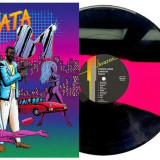
Repressed on Neon Pink and Black Vinyl ! This single LP edition of Piñata has been lacquered at half speed master by Metropolis Mastering in London for the highest fidelity and is housed in an 80s themed cover variant exclusively for Record Store Day 2021. Piñata, the acclaimed effort from Freddie Gibbs and Madlib is a perennial best seller. For RSD 2021 Gibbs and Madlib replace Crockett and Tubbs for a follow up to the blaxploitation inspired “Pinata: The 1974 Version”, with the 80s fueled “Pinata: The 1984 Version.” Though we promise, no mullets or ugly Ferraris.
Released in 2014. Continues to be a best seller. Never issued with this varriant cover.
il devrait être publié sur 28.10.2022

‘Running Out Of Time’ is the first physical single to be taken from Billy Sullivan’s forthcoming debut solo album - due early 2023.
“Lyrically it’s about the idea that once you hit your late twenties, you’re running out of time. That you immediately have to sort a job, a house, relationship, kids. For the only aim to be stability within a mundane scenario. But we’re still fed this idea of ‘normality’ in a time where it’s harder than ever to achieve what is expected. I suppose it’s a response to not living up to those expectations
il devrait être publié sur 28.10.2022

From their new millennium rise to MTV superstardom through pop-punk’s modern resurgence that has introduced their iconic, multi-platinum sound to new audiences around the world, SIMPLE PLAN have been an indelible part of pop culture for more than two decades because they’ve never lost sight of what got them there in the first place: their fans.It’s this same sense of mutual respect that’s fully on display on “The Antidote,” the first single from their sixth studio album, HARDER THAN IT LOOKS., their first new music since 2016’s Taking One For The Team, and the most authentically Simple Plan album since 2004’s Still Not Getting Any. Free agents for the first time in their storied career, the band kept their circle tight during the recording process, enlisting longtime songwriting partners like We The Kings’ Travis Clark and producers Brian Howes and Jason Van Poederooyen (who worked on the band’s 2011’s album Get Your Heart On!) and Zakk Cervini (blink-182, Good Charlotte). From the skyscraping choruses of “Congratulations” and “Ruin My Life” (ft. Sum 41’s Deryck Whibley) to the unflinching poignancy of the album-closing “Two,” which instantly ranks alongside “Perfect” and “Untitled (How Could This Happen To Me?)” as one of the band’s best closers ever, HARDER THAN IT LOOKS certainly respects Simple Plan’s storied career – and the same spirit that helped the band sell 10 million albums worldwide – without being overtly reverent. The album-opening “Wake Me Up (When This Nightmare’s Over)” is a cathartic rush of familiarity and freshness – not to mention a bit lyrically prescient, as the COVID-19 pandemic hit shortly after the band wrapped the album. (“We certainly didn’t set out to write a pandemic album,” Bouvier says with a laugh. “It’s funny how some of the songs might seem like that, though.”) There are even spiritual successors to early material, like the glass-half-full skate-punk-leaning “Best Day Of My Life,” quite a 180 for a band who put a song called “The Worst Day Ever” on their genre-defining, Platinum-selling 2002 debut No Pads, No Helmets...Just Balls. But you won’t find an ounce of fat on the 10-song album, no obvious plays to recapture the radio waves they claimed in the early aughts with smash hits like “I’d Do Anything,” “I’m Just A Kid” and “Addicted.”
il devrait être publié sur 28.10.2022

In 2019, Le Chant du Monde celebrated the 130th
Anniversary of the birth of Charlie Chaplin. In
2020, the label celebrated the 80th Anniversary of
the film ‘The Great Dictator’. In 2021, they
celebrated the 100th Anniversary of the movie ‘The
Kid’. This year (2022), Le Chant du Monde
celebrate the 70th Anniversary of the movie
‘Limelight’.
To celebrate these 70 years, here is a special
edition deluxe 180g vinyl LP (full mono remastered
version) in luxurious packaging outside the norm
(casebound book).
The release brings together the entire music of the
film, as well as many bonuses completely
unreleased to date, accompanied by a large format
booklet of 24 pages, including unpublished texts
and photos.
An edition that will delight Chaplin lovers as much
as collectors of beautiful vinyl editions
il devrait être publié sur 28.10.2022

Taylor Swift’s new studio album Midnights is available everywhere on October 21st. It’s a collection of music written in the middle of the night, a journey through terrors and sweet dreams. The floors we pace and the demons we face - the stories of 13 sleepless nights scattered throughout Taylor’s life.
Each Vinyl Album Includes:
- Unique marbled color vinyl disc
- 13 Songs
- Collectible album jacket with unique front and back cover art
- Unique marbled color vinyl disc
- Collectible album sleeve (each side features a different full-size photo of Taylor)
- Full-size gatefold photo
- A collectible 8-page lyric booklet with never-before-seen photos
Commandez maintenant et nous commanderons l'article pour vous chez notre fournisseur.
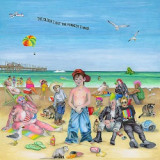
The Older I Get, the Funnier I Was, which follows Thomas’ brilliant 2020 HBO special The Golden One and his Can't Believe You're Happy Here EP released earlier this year, surveys a range of emotion and offers a broad sonic palette, moving between pop punk, electro, and the obvious influence of the singer-songwriters he grew up listening to in early childhood. It conjures the ennui of Bright Eyes alongside the barefaced storytelling of John Prine, the overstuffed lists of Fred Thomas with the lackadaisical humor of Colleen Green, among many others.
Thomas attributes the dexterity of the record to Duterte, who recorded and engineered most of it in addition to serving up plenty of encouragement when Thomas got down on the process. “As a comic, I used to test out new songs during sets to see if the funny bits were hitting, but since I wrote this in isolation I ended up writing lyrics and worrying less about making jokes,” Thomas says. That said, the album’s plenty funny. Stand-out and lead single “Rigamarole” opens with a Thomas-voiced infomercial that recalls his oft-cited lookalike Jim Carrey as the Grinch, before launching into a buoyant pop song about being depressed.
Whitmer Thomas will admit that when he traveled home to small town Gulf Shores, Alabama to record his HBO stand-up special, The Golden One, he expected to be greeted as a returning hero, a conquering king, or at minimum, a guy with a moderately successful career as an entertainer in Los Angeles. “I expected a big welcome home, open arms, but when I went back I realized: nobody fucking knows me. Nobody remembers me,” Thomas says. “In the years I’d been performing that show, I’d been romanticizing my childhood in this mythologized place, but the visit made me see that I’m not really from there anymore.”
The sense of alienation compounded when Thomas recognized how few people in town remembered his mom, to whom The Golden One is dedicated and largely about. Thomas grew up watching her perform with her twin sister at the legendary Flora-Bama Lounge, where he set the special, and still counts her as one of his musical influences. His new album, The Older I Get, the Funnier I Was, isn’t overtly about his mom, her presence is deeply felt throughout. While in Gulf Shores, Thomas discovered dozens of her old recordings, all of which had been wrecked by Katrina, but upon returning to LA, Thomas paid “a fancy place in Hollywood” to fix the tapes and hired Melina Duterte (Jay Som, Bachelor, Routine) to mix them. The two struck up a collaborative friendship, and Thomas had the sound of his mom’s voice back. “I was listening to songs she recorded when she was about my age, just these heartfelt, sweet Americana songs,” he says. “I decided then that I wanted to lose the Ian Curtis voice I always sing with; I wanted to do what came naturally, because my mom always sounded like herself, even when she was singing some cheesy reggae song about, like, Jamaica.”
Thus he went into The Older I Get, the Funnier I Was knowing it was time to retire his darkwave persona, and leaning into his natural, chirpier voice, which he says sounds “like a 12-year-old’s.” It makes sense: much of the album chronicles what Thomas calls “being a kid and feeling like you have no control and overcompensating by being annoying.” “So much of the album is about witnessing drug and alcohol addiction as a kid and seeing what it does to people, but also realizing that there's nothing you can do about it,” Thomas says. It’s familiar territory (see: “Partied to Death”) but the methodology is different this time around; true to its title, The Older I Get, the Funnier I Was isn’t always looking for laughs. Thomas might’ve left his hometown behind, but his kid self is still tagging along, a Peter Pan shadow he can’t untether himself from. The first line he sings on The Older I Get, the Funnier I Was is: “There should be a room at every party where you can just sit and watch a movie.” Find a 12-year-old who wouldn’t say the same.
il devrait être publié sur 21.10.2022

il devrait être publié sur 21.10.2022

"It's an album that will no doubt inspire the creation of new bands and artists, a collection of songs that record store employees will recommend to unsuspecting kids looking for something out of the mainstream, and who are ready to have their minds warped." - Flood "Medicine Singers push powwow music into the avant garde" - The Fader The debut album by Medicine Singers is a genre-smashing kaleidoscope of sound combining traditional powwow music with elements of psychedelic punk, spiritual jazz, and electronics in a stunning blend. Building on years of collaboration between Yonatan Gat and Eastern Algonquin powwow group Eastern Medicine Singers, the album features contributions from an all-star cast including jaimie branch, Laraaji, Ikue Mori, Thor Harris (Swans), Joe Rainey, and Ryan Olson (Gayngs). "I look at it like this, everybody is my brother and sister, no matter where they come from," says Medicine Singers leader Daryl Black Eagle Jamieson. "If their culture or music is different, I want to learn about it, and I want to play with them. I think it's our responsibility as artists to show the world that life is not about war and hate. Life is about music, peace, and culture. We need to communicate with people of different cultures and backgrounds. We need to show people how we can work together and make something beautiful." One Dollar of each Medicine Singers album sale goes to the Pocasset Pocanoket Land Trust.
il devrait être publié sur 21.10.2022

Commandez maintenant et nous commanderons l'article pour vous chez notre fournisseur.

„Lance Butters rappt nicht wie jeder!“
Fast genau 10 Jahre nach seiner Debut EP veröffentlichte er im August 2022 die SOMMER EP.
Nun erscheint am 21.10.2022 endlich die dazugehörige Vinyl.
Allein das Cover verrät: Hier warten keine typischen Sommer Vibes auf die Hörer*innen.
Auf der 7 Track EP gibt Lance einen Einblick in seine persönliche Entwicklung der letzten Jahre. Trotz
Depression, Trennung, und Therapie hat er sich nicht selbst verloren.
Die brutale Ehrlichkeit mit der er den Prozess hin zu seiner Heilung beschreibt, gleicht einer Katharsis.
Wer jetzt jedoch ein weinerliches Release erwartet, liegt falsch. Die neu erhaltene Stärke strahlt durch die
ganze EP und zeigt einen Lance Butters in absoluter Höchstform.
Die unverwechselbar immersiven Beats von kidney paradise, bieten der Lyric einen Klangteppich, der sich
bis ins Mark frisst.
Diesen SOMMER wird man so leicht nicht vergessen.
il devrait être publié sur 21.10.2022

Commandez maintenant et nous commanderons l'article pour vous chez notre fournisseur.

As the sun sets on a quaint East Nashville house, a young man bares a piece of his soul. Facing the camera, sporting a silky suit jacket/shirt/slacks/fingerless gloves ensemble that announces "singer" before he's even opened his mouth, Lee Tracy Johnson settles onto his stage, the front yard. He sways to the dirge-like drum machine pulse of a synth-soaked slow jam, extends his arms as if gaining his balance, and croons in affecting, fragile earnest, "I need your love… oh baby…"
Dogs in the yard next door begin barking. A mysterious cardboard robot figure, beamed in from galaxies unknown and affixed to a tree, is less vocal. Lee doesn't acknowledge either's presence. He's busy feeling it, arms and hands gesticulating. His voice rises in falsetto over the now-quiet dogs, over the ambient noise from the street that seeps into the handheld camcorder's microphone, over the recording of his own voice played back from a boombox off-camera. After six minutes the single, continuous shot ends. In this intimate creative universe there are no re-takes. There are many more music videos to shoot, and as Lee later puts it, "The first time you do it is actually the best. Because you can never get that again. You expressing yourself from within."
"I Need Your Love" dates from a lost heyday. From some time in the '80s or early '90s, when Lee Tracy (as he was known in performance) and his music partner/producer/manager Isaac Manning committed hours upon hours of their sonic and visual ideas to tape. Embracing drum machines and synthesizers – electronics that made their personal futurism palpable – they recorded exclusively at home, live in a room into a simple cassette deck. Soul, funk, electro and new wave informed their songs, yet Lee and Isaac eschewed the confinement of conventional categories and genres, preferring to let experimentation guide them.
"Anytime somebody put out a new record they had the same instruments or the same sound," explains Isaac. "So I basically wanted to find something that's really gonna stand out away from all of the rest of 'em." Their ethos meant that every idea they came up with was at least worth trying: echoed out half-rapped exhortations over frantic techno-style beats, gospel synth soul, modal electro-funk, oddball pop reinterpretations, emo AOR balladry, nods to Prince and the Fat Boys, or arrangements that might collapse mid-song into a mess of arcade game-ish blips before rallying to reach the finish line. All of it conjoined by consistent tape hiss, and most vitally, Lee's chameleonic voice, which managed to wildly shape shift and still evoke something sincere – whether toggling between falsetto and tenor exalting Jesus's return, or punctuating a melismatic romantic adlib with a succinct, "We all know how it feels to be alone."
"People think we went to a studio," says Isaac derisively. "We never went to no studio. We didn't have the money to go to no studio! We did this stuff at home. I shot videos in my front yard with whatever we could to get things together." Sometimes Isaac would just put on an instrumental record, be it "Planet Rock" or "Don't Cry For Me Argentina" (from Evita), press "record," and let Lee improvise over it, yielding peculiar love songs, would-be patriotic anthems, or Elvis Presley or Marilyn Monroe tributes. Technical limitations and a lack of professional polish never dissuaded them. They believed they were onto something.
"That struggle," Isaac says, "made that sound sound good to me."
In the parlance of modern music criticism Lee and Isaac's dizzying DIY efforts would inevitably be described as "outsider." But "outsider" carries the burden of untold additional layers of meaning if you're Black and from the South, creating on a budget, and trying to get someone, anyone within the country music capital of the world to take your vision seriously. "What category should we put it in?" Isaac asks rhetorically. "I don't know. All I know is feeling. I ain't gonna name it nothing. It's music. If it grabs your soul and touch your heart that's what it basically is supposed to do."
=
Born in 1963, the baby boy of nine siblings, Lee Tracy spent his earliest years living amidst the shotgun houses on Nashville's south side. "We was poor, man!" he says, recalling the outhouse his family used for a bathroom and the blocks of ice they kept in the kitchen to chill perishables. "But I actually don't think I really realized I was in poverty until I got grown and started thinking about it." Lee's mom worked at the Holiday Inn; his dad did whatever he had to do, from selling fruit from a horse drawn cart to bootlegging. "We didn't have much," Lee continues, "but my mother and my father got us the things we needed, the clothes on our back." By the end of the decade with the city's urban renewal programs razing entire neighborhoods to accommodate construction of the Interstate, the family moved to Edgehill Projects. Lee remembers music and art as a constant source of inspiration for he and his brothers and sisters – especially after seeing the Jackson 5 perform on Ed Sullivan. "As a small child I just knew that was what I wanted to do."
His older brother Don began musically mentoring him, introducing Lee to a variety of instruments and sounds. "He would never play one particular type of music, like R&B," says Lee. "I was surrounded by jazz, hard rock and roll, easy listening, gospel, reggae, country music; I mean I was a sponge absorbing all of that." Lee taught himself to play drums by beating on cardboard boxes, gaining a rep around the way for his timekeeping, and his singing voice. Emulating his favorites, Earth Wind & Fire and Cameo, he formed groups with other kids with era-evocative band names like Concept and TNT Connection, and emerged as the leader of disciplined rehearsals. "I made them practice," says Lee. "We practiced and practiced and practiced. Because I wanted that perfection." By high school the most accomplished of these bands would take top prize in a prominent local talent show. It was a big moment for Lee, and he felt ready to take things to the next level. But his band-mates had other ideas.
"I don't know what happened," he says, still miffed at the memory. "It must have blew they mind after we won and people started showing notice, because it's like everybody quit! I was like, where the hell did everybody go?" Lee had always made a point of interrogating prospective musicians about their intentions before joining his groups: were they really serious or just looking for a way to pick up girls? Now he understood even more the importance of finding a collaborator just as committed to the music as he was.
=
Isaac Manning had spent much of his life immersed in music and the arts – singing in the church choir with his family on Nashville's north side, writing, painting, dancing, and working various gigs within the entertainment industry. After serving in the armed forces, in the early '70s he ran The Teenage Place, a music and performance venue that catered to the local youth. But he was forced out of town when word of one of his recreational routines created a stir beyond the safe haven of his bohemian circles.
"I was growing marijuana," Isaac explains. "It wasn't no business, I was smoking it myself… I would put marijuana in scrambled eggs, cornbread and stuff." His weed use originated as a form of self-medication to combat severe tooth pain. But when he began sharing it with some of the other young people he hung out with, some of who just so happened to be the kids of Nashville politicians, the cops came calling. "When I got busted," he remembers, "they were talking about how they were gonna get rid of me because they didn't want me saying nothing about they children because of the politics and stuff. So I got my family, took two raggedy cars, and left Nashville and went to Vegas."
Out in the desert, Isaac happened to meet Chubby Checker of "The Twist" fame while the singer was gigging at The Flamingo. Impressed by Isaac's zeal, Checker invited him to go on the road with him as his tour manager/roadie/valet. The experience gave Isaac a window into a part of the entertainment world he'd never encountered – a glimpse of what a true pop act's audience looked like. "Chubby Checker, none of his shows were played for Black folks," he remembers. "All his gigs were done at high-class white people areas." Returning home after a few years with Chubby, Isaac was properly motivated to make it in Music City. He began writing songs and scouting around Nashville for local talent anywhere he could find it with an expressed goal: "Find someone who can deliver your songs the way you want 'em delivered and make people feel what you want them to feel."
One day while walking through Edgehill Projects Isaac heard someone playing the drums in a way that made him stop and take notice. "The music was so tight, just the drums made me feel like, oh I'm-a find this person," he recalls. "So I circled through the projects until I found who it was.
"That's how I met him – Lee Tracy. When I found him and he started singing and stuff, I said, ohhh, this is somebody different."
=
Theirs was a true complementary partnership: young Lee possessed the raw talent, the older Isaac the belief. "He's really the only one besides my brother and my family that really seen the potential in me," says Lee. "He made me see that I could do it."
Isaac long being a night owl, his house also made for a fertile collaborative environment – a space where there always seemed to be a new piece of his visual art on display: paintings, illustrations, and dolls and figures (including an enigmatic cardboard robot). Lee and Issac would hang out together and talk, listen to music, conjure ideas, and smoke the herb Isaac had resumed growing in his yard. "It got to where I could trust him, he could trust me," Isaac says of their bond. They also worked together for hours on drawings, spreading larges rolls of paper on the walls and sketching faces with abstract patterns and imagery: alien-like beings, tri-horned horse heads, inverted Janus-like characters where one visage blurred into the other.
Soon it became apparent that they didn't need other collaborators; self-sufficiency was the natural way forward. At Isaac's behest Lee, already fed up with dealing with band musicians, began playing around with a poly-sonic Yamaha keyboard at the local music store. "It had everything on it – trumpet, bass, drums, organ," remembers Lee. "And that's when I started recording my own stuff."
The technology afforded Lee the flexibility and independence he craved, setting him on a path other bedroom musicians and producers around the world were simultaneously following through the '80s into the early '90s. Saving up money from day jobs, he eventually supplemented the Yamaha Isaac had gotten him with Roland and Casio drum machines and a Moog. Lee was living in an apartment in Hillside at that point caring for his dad, who'd been partially paralyzed since early in life. In the evenings up in his second floor room, the music put him in a zone where he could tune out everything and lose himself in his ideas.
"Oh I loved it," he recalls. "I would really experiment with the instruments and use a lot of different sound effects. I was looking for something nobody else had. I wanted something totally different. And once I found the sound I was looking for, I would just smoke me a good joint and just let it go, hit the record button." More potent a creative stimulant than even Isaac's weed was the holistic flow and spontaneity of recording. Between sessions at Isaac's place and Lee's apartment, their volume of output quickly ballooned.
"We was always recording," says Lee. "That's why we have so much music. Even when I went to Isaac's and we start creating, I get home, my mind is racing, I gotta start creating, creating, creating. I remember there were times when I took a 90-minute tape from front to back and just filled it up."
"We never practiced," says Isaac. "See, that was just so odd about the whole thing. I could relate to him, and tell him about the songs I had ideas for and everything and stuff. And then he would bring it back or whatever, and we'd get together and put it down." Once the taskmaster hell bent on rehearsing, Lee had flipped a full 180. Perfection was no longer an aspiration, but the enemy of inspiration.
"I seen where practicing and practicing got me," says Lee. "A lot of musicians you get to playing and they gotta stop, they have to analyze the music. But while you analyzing you losing a lot of the greatness of what you creating. Stop analyzing what you play, just play! And it'll all take shape."
=
"I hope you understood the beginning of the record because this was invented from a dream I had today… (You tell me, I'll tell you, we'll figure it out together)" – Lee Tracy and Isaac Manning, "Hope You Understand"
Lee lets loose a maniacal cackle when he acknowledges that the material that he and Isaac recorded was by anyone's estimation pretty out there. It's the same laugh that commences "Hope You Understand" – a chaotic transmission that encapsulates the duality at the heart of their music: a stated desire to reach people and a compulsion to go as leftfield as they saw fit.
"We just did it," says Lee. "We cut the music on and cut loose. I don't sit around and write. I do it by listening, get a feeling, play the music, and the lyrics and stuff just come out of me."
The approach proved adaptable to interpreting other artists' material. While recording a cover of Whitney Houston's pop ballad "Saving All My Love For You," Lee played Whitney's version in his headphones as he laid down his own vocals – partially following the lyrics, partially using them as a departure point. The end result is barely recognizable compared with the original, Lee and Isaac having switched up the time signature and reinvented the melody along the way towards morphing a slick mainstream radio standard into something that sounds solely their own.
"I really used that song to get me started," says Lee. "Then I said, well I need something else, something is missing. Something just came over me. That's when I came up with 'Is It What You Want.'"
The song would become the centerpiece of Lee and Isaac's repertoire. Pushed along by a percolating metronomic Rhythm King style beat somewhere between a military march and a samba, "Is It What You Want" finds Lee pleading the sincerity of his commitment to a potential love interest embellished by vocal tics and hiccups subtlely reminiscent of his childhood hero MJ. Absent chord changes, only synth riffs gliding in and out like apparitions, the song achieves a lingering lo-fi power that leaves you feeling like it's still playing, somewhere, even after the fade out.
"I don't know, it's like a real spiritual song," Lee reflects. "But it's not just spiritual. To me the more I listen to it it's like about everything that you do in your everyday life, period. Is it what you want? Do you want a car or you don't want a car? Do you want Jesus or do you want the Devil? It's basically asking you the question. Can't nobody answer the question but you yourself."
In 1989 Lee won a lawsuit stemming from injuries sustained from a fight he'd gotten into. He took part of the settlement money and with Isaac pressed up "Saving All My Love For You" b/w "Is It What You Want" as a 45 single. Isaac christened the label One Chance Records. "Because that's all we wanted," he says with a laugh, "one chance."
Isaac sent the record out to radio stations and major labels, hoping for it to make enough noise to get picked up nationally. But the response he and Lee were hoping for never materialized. According to Isaac the closest the single got to getting played on the radio is when a disk jock from a local station made a highly unusual announcement on air: "The dude said on the radio, 107.5 – 'We are not gonna play 'Is It What You Want.' We cracked up! Wow, that's deep.
"It was a whole racist thing that was going on," he reflects. "So we just looked over and kept on going. That was it. That was about the way it goes… If you were Black and you were living in Nashville and stuff, that's the way you got treated." Isaac already knew as much from all the times he'd brought he and Lee's tapes (even their cache of country music tunes) over to Music Row to try to drum up interest to no avail.
"Isaac, he really worked his ass off," says Lee. "He probably been to every record place down on Music Row." Nashville's famed recording and music business corridor wasn't but a few blocks from where Lee grew up. Close enough, he remembers, for him to ride his bike along its back alleys and stumble upon the occasional random treasure, like a discarded box of harmonicas. Getting in through the front door, however, still felt a world away.
"I just don't think at the time our music fell into a category for them," he concedes. "It was before its time."
=
Lee stopped making music some time in the latter part of the '90s, around the time his mom passed away and life became increasingly tough to manage. "When my mother died I had a nervous breakdown," he says, "So I shut down for a long time. I was in such a sadness frame of mind. That's why nobody seen me. I had just disappeared off the map." He fell out of touch with Isaac, and in an indication of just how bad things had gotten for him, lost track of all the recordings they'd made together. Music became a distant memory.
Fortunately, Isaac kept the faith. In a self-published collection of his poetry – paeans to some of his favorite entertainment and public figures entitled Friends and Dick Clark – he'd written that he believed "music has a life of its own." But his prescience and presence of mind were truly manifested in the fact that he kept an archive of he and Lee's work. As perfectly imperfect as "Is It What You Want" now sounds in a post-Personal Space world, Lee and Isaac's lone official release was in fact just a taste. The bulk of the Is It What You Want album is culled from the pair's essentially unheard home recordings – complete songs, half-realized experiments, Isaac's blue monologues and pronouncements et al – compiled, mixed and programmed in the loose and impulsive creative spirit of their regular get-togethers from decades ago. The rest of us, it seems, may have finally caught up to them.
On the prospect of at long last reaching a wider audience, Isaac says simply, "I been trying for a long time, it feels good." Ever the survivor, he adds, "The only way I know how to make it to the top is to keep climbing. If one leg break on the ladder, hey, you gotta fix it and keep on going… That's where I be at. I'll kill death to make it out there."
For Lee it all feels akin to a personal resurrection: "It's like I was in a tomb and the tomb was opened and I'm back… Man, it feels so great. I feel like I'm gonna jump out of my skin." Success at this stage of his life, he realizes, probably means something different than what it did back when he was singing and dancing in Isaac's front yard. "What I really mean by 'making it,'" he explains isn't just the music being heard but, "the story being told."
Occasionally Lee will pull up "Is It What You Want" on YouTube on his phone, put on his headphones, and listen. He remembers the first time he heard his recorded voice. How surreal it was, how he thought to himself, "Is that really me?" What would he say to that younger version of himself now?
"I would probably tell myself, hang in there, don't give up. Keep striving for the goal. And everything will work out."
Despite what's printed on the record label, sometimes you do get more than one chance.
Commandez maintenant et nous commanderons l'article pour vous chez notre fournisseur.

- The Complete 1988 Film Score by John Massari - Available For The First Time On Vinyl 180 Gram Violet and Blue Vinyl (Light In The Attic Exclusive Variant) - Exclusive Liner Notes by Composer John Massari - Exclusive Liner Notes by Killer Klowns Co-Creator Stephen Chiodo - Heavyweight 12" x 12" Art Print - Old-Style Tip-On Jackets with Matte Satin Coating // KILLER KLOWNS FROM OUTER SPACE have finally landed at Waxwork Records! After much anticipation, we are thrilled to present the official 1988 Original Motion Picture Soundtrack by John Massari for the very first time on vinyl! Would you believe someone if they told you a circus tent-shaped spaceship landed in your small town and was abducting your neighbors to store them in cotton candy cocoons? In this '80's cult classic, teens Mike Tobacco (Grant Cramer) and Debbie Stone (Suzanne Snyder) have to fight both the diabolical bozos and the local law enforcement's disbelief to save themselves and their community! The original score to Killer Klowns From Outer Space is kicked off by the classic 80's horror movie theme track, Killer Klowns (From Outer Space) by California punk band, The Dickies. The 'nightmare merry-go-round' continues with a smattering of menacing electronic brass sections, electric guitar, bombastic drum machine beats, & harpsichord combined with sci-fi synth elements to capture the ultra-specific origins of the antagonists. Massari's score to Klowns is a retro-synth joyride from start to finish featuring immediately recognizable cues from the beloved 80's cult-classic! Waxwork Records is thrilled to present the official Killer Klowns From Outer Space double LP, released for the first time on vinyl. Complete with 180 gram "Cotton Candy" and "Popcorn" vinyl, deluxe packaging, new artwork by Ruiz Burgos, old-style tip-on jackets with matte coating, a heavyweight 12"x12" art print, and liner notes by composer Massari and Klowns co-creator Stephen Chiodo!
il devrait être publié sur 14.10.2022

Unlearn is the long awaited fourth album of DJ and producer 2econd Class Citizen. It marks the artist's return back to the newly relaunched label Equinox Records. Their previous collaborations achieved high acclaim for their genre bending fusion of hip hop, electronica and folk music.
The new album is an exploration of an artist journeying beyond their conventional confines. It is a musical adventure peppered with vintage samples concerning the perception of reality and our struggles with conforming to a broken society.
Unlearn is the most musically accomplished work of 2econd Class Citizen to date. As one would expect the drum programming, scratching and production is on point. Several tracks feature soothingly melodic and energetic passages of jazz saxophone from Leroy Horns and electric guitar riffs provided by long term collaborator Paul Drury.
2econd Class Citizen, real name Aaron Thomason, resides in Brighton, UK. He is also a painter and visual artist fascinated with abstraction and the chaos of mixing colours. His musical approach on the new LP draws many parallels to this creative process. An original painting from the artist forms the albums striking cover.
Equinox Records is run by DJ Scientist in Germany. The Unlearn project marks the 51st release and provides the perfect launch vehicle for the dormant label to rise again. The vinyl release of Unlearn as well as the single Be Together signify the first stops in a release plan which will please fans of the label.
FEEDBACK:
"Woah! It's sounds rad! Really heavy and cinematic!"
Kid Koala
"A dark and deep dive into a world of dense and diced samples and moody muted melodies. Would sit well next to Shadow's freakier forays into fractured funk. Or Format's last psychy LP, for sure."
DJ Moneyshot of The Allergies
"I love it. The new treatments with the additional instruments sound great, especially the horns. Glad to see that Equinox is back in action. Dope cover art."
Dday One
"It sounds like 2econd Class Citizen has been at a mountaintop retreat studying and meditating and came back with some superpowers."
Buddy Peace
il devrait être publié sur 14.10.2022

il devrait être publié sur 14.10.2022

The long awaited debut album from ROE – winner of Northern Irish Music Prize’s Best Emerging Artist. Recorded and Produced by Tommy McLaughlin (Villaghers/SOAK) in the wilds of Donegal in 2021, ‘That’s When The Panic Sets In’ is truly vibrant release, with rich contrast between ROE’s introspective anxieties and the colourful palette that she’s thrown across them. Hear the development and evolution of an artist and their style in real time over the course of 12 joyous, introspective and beautiful tracks.
il devrait être publié sur 14.10.2022

As this album represents a spiritual return to a foundational past, sonically this record is likewise about going back to our fundamentals and our roots; when Eon and I were two kids with guitars in a bedroom figuring out some songs. Our last album, Mass, featured so many parts. We recorded it in New Orleans at Preservation Hall with a thirteen-piece horn section, percussionists, strings, etc. For the most part, it’s tough to find any guitar on the record. So we decided to simplify and reconnect with what inspired us. We kept the ingredients limited, the palate simple. We went back to our beginnings and rediscovered the joy of just playing on an acoustic, and a bass through a small amp, with a vocal. We spent our days like we used to when we were younger. We hung out and talked about music. If it was sunny we went to the beach. We played some tennis. Then in the afternoon we might play through some ideas. If it sounded good in the front room of the house, we took it to the studio.
il devrait être publié sur 14.10.2022

Between electronic music and traditional Indian music, dive into the heart of this subtle mix thanks to the leading artists of the genre!
Commandez maintenant et nous commanderons l'article pour vous chez notre fournisseur.
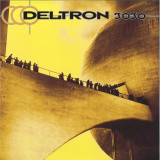
The super group Deltron 3030 is composed of producer Dan the Automator, rapper Del tha Funkee Homosapien and DJ Kid Koala and sometimes features guest artists who also take on varying futuristic pseudonyms. Originally released in 2000 on the now-defunct 75ARK record label, this hip hop concept album was released the same year as the Gorillaz' first 12" and is on a similar plane. Following the release of Deltron 3030, all three members participated in the Gorillaz' self-titled debut album. With Del aka Deltron Zero on vocals, Dan the Automator aka The Cantankerous Captain Aptos on production, and Kid Koala aka Skiznoid the Boy Wonder on turntables, this album takes the listener on a paranoid journey set in a dystopian year 3030 dealing with viruses, the apocalypse, an oppressive government, and a war waged against a huge company called the Corporate Bank of Time that rules the universe, all to the well-crafted and consistent musical backing of the Automator. Appearances by Damon Albarn (The Gorillaz, Blur), Prince Paul, Peanut Butter Wolf, DJ Money Mark, Paul Barman, Mark Bell (Bjork, production), Sean Lennon, and Mr. Lif compliment Del's vocal style and add the right amount of flavor to this classic period piece.
Commandez maintenant et nous commanderons l'article pour vous chez notre fournisseur.

Fabrice Lig has melody running through his veins. On his quest to explore his deep love for the bitter-sweet yearning of Motor City techno, his tracks transcend trends. Over his three-decade spanning career he has refined his blend of soul-infused dance music to striking effect. His gift for a catchy hook is unmatched. His new studio album "The Mental Bandwidth" shows his musical range as a producer once again. On the album's twelve tracks, he effortlessly traverses, cosmic house, funkified techno and electronica, combining his trademark quirky melodies with playful songwriting and dance floor focused beats. The album format is giving Lig enough space to explore his musical ideas from different directions while staying true to the overall atmosphere. "The idea for the album was to go back to the fundamentals of the original Detroit sound and to find new ways of expressing that soul in my music - as I've been doing for years", explains Lig. With Ann Saunderson and the former Kraftwerk-member Wolfgang Flur, the album features two heavy-weight collaborations that connect the "The Mental Bandwidth" to Detroit's musical legacy, too. Slikk Tim aka Garry Grittness also has a cameo in the form of a funky bassline on "Healing", the pop-infused Ann Saunderson collaboration. The title of the album is inspired by Lig's lecture of Sendhil Mullainathan and Eldar Shafir book "Scarcity: Why Having So Little Means So Much" which explores new approaches to reduce poverty. "The authors discovered that the mental bandwidth of poor people is sometimes really low because of short term issues they are facing and are forced to solve", explains Lig. Those issues are reducing the mental bandwidth for long term thinking capacities, which in turn has consequences for the decision making process. An example: before the quality of education of poor kids is increased, the quality of life they have must be increased. This increases the capacities of the kids to learn more than solely better educational programs.
Commandez maintenant et nous commanderons l'article pour vous chez notre fournisseur.

Driving electro tracks by Detroit Grand Pubahs and UR member Bileebob. Comes with a solid acid infused Derek Plaslaiko remix. "Bileebob was living in the lofts at 1217 Griswold when I first met him, this is one of the seminal places that the post Music Institute Detroit scene grew out of. People who lived there performed or threw parties in their lofts for rent money, other people living at 1217 included Buzz Goree, the founders of Paxahau, De3n System. Bileebob's an amazing and unique part of the Detroit scene, having created music and art for years, performing locally and internationally as a member of the Detroit Grand Pubahs and UR, releasing on Underground Resistance, and had a regular zine for so many years. When he sent us the promo for "Star Cross" from his personal Bandcamp page, we loved it, and for the second No Way Back stream both BMG & Derek ended up playing it. We just loved the song, so we asked him if we could give it the full release, and we had Derek Plaslaiko remix it. We've included an unreleased amazing tough electro mix of "Network", a song currently on his Bandcamp page. Digitally we've included another more raw mix of "Network" and an after the after party 1217 kind of comedown jam "Club Kid Up All Night"."
Commandez maintenant et nous commanderons l'article pour vous chez notre fournisseur.

Commandez maintenant et nous commanderons l'article pour vous chez notre fournisseur.

B. Bravo (aka Adam Mori) returns to Bastard Jazz with the long-awaited follow-up to his 2017 debut LP, "Paradise," with a fresh full-length offering: "Vizionz." Replete with his signature future funk vibes, infectiously soulful grooves, and talkbox excursions, "Vizionz" sees the multifaceted artist take the classic West Coast into outer space. If B. Bravo's last album sought to get lost in paradise - enjoying the moment here and now - "Vizionz" looks forward, feet placed firmly in an established LA vibe, while the matured eyes of a veteran producer gaze keenly to the future.
"Vizionz" arrives following a slew of diverse singles, which highlight B. Bravo's stunning versatility as a songwriter, producer, and collaborator. Last year's "Lifted (What U Waiting 4)" came first, at the end of May, 2020, pairing g-funk talk-box verses and synth lines with rich vocal harmonies and a dance-floor-ready beat. Frequent collaborator Reva DeVito (Miami Horror, Kaytranada) makes a standout vocal appearance on "Fly Bye," the second single. Here, Adam surrounds Reva's vocals with ambient pads, a Dilla-inspired beat, and an irresistible bassline, while Reva's dreamily sings about getting away from it all. The final single, "Believe," sees Chuck Inglish (of the famed duo The Cool Kids) rhyme in his distinctive baritone over a bass-heavy instrumental meant to rattle some car stereos.
The singles offer a view into the rest of the album: Solo B. Bravo joints include "Moon Bounce," a talk-box boogie jam begging for late-night drives with the top down; the largely-instrumental synth improvisation, "Midnight Rider;" the upbeat "Penelope," which showcases Adam's vocal and harmonic prowess; a bumping g-funk interlude, with "Flip Out;" as well as the laid back album opener, "Da Essence."
Further vocal assists come by way of Sally Green on the flirty "10/10," and Rojai on the slow jam ""No Regrets" . Both singers have worked on B. Bravo projects in the past, with Rojai additionally joining forces with Adam to form the duo Kool Customer, whose self-titled debut album was released on Bastard Jazz in 2018. Two more hip-hop-leaning tracks are aided by Def Sound ("Back Times Two") and Nico Fasho ("Ms. Stardust"); leaning heavy into outerspace G-Funk Hip-Hop vibes.
Taken as a whole, "Vizionz" is a much needed boost of serotonin: Uncompromisingly positive, sometimes nostalgic, sometimes aspirational, but always funky. The range of styles is a testament to Adam's indelible production chops, songwriting skill, and ability to collaborate. While it has been a long 5 years since "Paradise," "Vizionz" proves more than worth the wait.
Born and raised in California, with roots in Japan, B. Bravo's signature style of Cosmic Funk and late night synth grooves have made him a favorite among DJ's, dancers, and music lovers worldwide. A tasteful producer, sought after remixer, party rocking DJ, master of the talkbox, band leader, and alumnus of the Red Bull Music Academy, Mr. Bravo is an accomplished performer both at home and abroad.
Heavily inspired by the synthesizer-enhanced R&B grooves of the late '70s and early '80s, B. Bravo debuted in 2009 with the seven-track "Analog Starship" EP. A deeper impression was made the following year with a shorter extended play, "Computa Love," the title track of which was supported by BBC DJ Benji B months prior to release. Additional strides were made with a batch of singles and EPs that followed throughout the next few years, as Bravo toured and performed at numerous festivals around the world.
His relationship with the Brooklyn tastemaker label, Bastard Jazz Recordings, began in 2016 with the 7" single "I'm For Real / Stay The Night' (which notably featured a Mr. Carmack remix of the latter). Bravo's debut solo LP quickly followed with 2017's critically acclaimed "Paradise" - which shone a light on vocalists and frequent collaborators Reva DeVito, Trailer Limon, Kissey, and Lauren Faith - with a remix album appearing six months later.
Additional solo releases have found a home on Gilles Peterson's Brownswood Recordings and Frite Nite, while production credits have appeared on releases from the legendary Blue Note Records, HW&W, All City, Friends of Friends, and Tokyo Dawn. B. Bravo has worked on projects with the likes of Salva, Mr. Carmack, Teeko, DJ Lean Rock, Reva DeVito, Lauren Faith, and Kate Stewart.
Having toured throughout the US, Latin America, Europe and Asia, he's shared the stage with performers like Erykah Badu, Flying Lotus, DāM-FunK, Hudson Mohawke, at a world-spanning range of festivals such as Detroit Electronic Music Fest, HARD LA, Northern Nights, Laneway Singapore, Sonar in Barcelona, Snowglobe, SXSW, Basscoast, Do-Over, Low End Theory, Boiler Room, and Soulection.
B. Bravo's "Vizionz" LP is out on Brooklyn's Bastard Jazz Recordings Spring, 2022.
Commandez maintenant et nous commanderons l'article pour vous chez notre fournisseur.

Kids Return is first and foremost a great story of friendship since childhood between Adrien Rozé and Clément Savoye . It is between their small Parisian studio and a house suspended between the mountains of the Pyrenees that their pieces are born, then orchestrated by a string quartet in the countryside. From this trip was born a dreamlike and sensory music, a call to dream. Music that takes root out of time.
Forever Melodies is Kids Return's first album, it follows their first four singles, released between 2021 and today (Melody, Our Love, Orange Mountains, Forever). This album is ten skilfully refined pop tracks (“Some bands tell you 'We made 35 songs to keep 8', we made 10 songs to keep 10”) imbued with nostalgia, with an astonishing sincerity (breakups, stories of friendships, love, physical anguish, the transition to adulthood), a boundless love for dressing melodies. This album was orchestrated as a wonderful intimate journey, in space and time: the film of their lives.
il devrait être publié sur 07.10.2022

The Neapolitan producer makes a comeback on Horisontal Mambo with an ideal follow-up to his previous LP “Palinuro Phonebox”
and once again teams up with label boss Prins Thomas for some mixdown touches.
Halfway between italoboogie and Balearic beats, Chalet Miseno is a nostalgic ode to some 90s “estate italiana” holidays seen through the eyes of a kid.
From the catchy beats of the title track (with its roaring motorbike intermezzo) and “Dragonara Punch”, to the dreamy soundscapes of “Luna Mirabilis”
this album is guaranteed to be the perfect soundtrack to a hot summer (and a refresher for the long winter).
Commandez maintenant et nous commanderons l'article pour vous chez notre fournisseur.

Star Feminine Band: a 2020 debut, first journey and a 2022 return! Though not exactly a world music label, Born Bad took up the challenge and released Star Féminine Band's debut album in late 2020. Heaps of acclaims and praise and the whole shebang, then boom: the tour that was to materialize, live, all of the band and its entourage's hopes got cancelled due to Covid. After a long delay, the band finally managed to get to Europe, performing on the Transmusicales Festival, as well as for TV stations like Arte, TV5 and BBC to much acclaim. "Once they played, Born Bad and the band clearly had a "mission accomplished" feeling - that all the energy put into this was worth it, starting with the critics who abounded at the Transmusicales to weigh the phenomenon. They left convinced, just like the audience, enthralled by the direct, live formula. The sequel to the adventures of these new ambassadors for Unicef? They persist and sign with a feverish and energetic soundtrack in which nabo, peulh and waama are enlivened with drum lines and spiced up with more "modern" sounds, spreading words of tolerance and kindness. Simple and direct, they speak of their reality, of the ills of young women who don't always have a choice. Often out of school and destined to selling peanuts, bananas or gari on the roadside, most of the girls around there don't have a future. Forced marriage, precocious pregnancies_ "These kids are heroines!", continues Born Bads JB who, by welcoming them in a record studio, allowed for the formula to be sharpened into a sort of garage band with an afro twist. Thanks to the English lessons that their manager Jérémie Verdier has been providing every Sunday night for two years over videoconference, the girls even experimented with English lyrics in "We Are Star Feminine Band" and "Woman Stand Up". In Paris is the happy outcome of that challenge. Vinyl LP in printed under sleeve with French + UK linernotes + Download code * Digipak CD includes 12 pages booklet with French + UK linernotes.
il devrait être publié sur 07.10.2022

Dreamers is the new project from the legendary British saxophonist and composer Mark Lockheart featuring Elliot Galvin (Dinosaur, Elliot Galvin Trio), Tom Herbert (Polar Bear, The Invisible) and Dave Smith (Robert Plant). Stylistically free and psychedelic in nature, the release of Dreamers signals a new trajectory for the musician who has already featured on a wide ranging and diverse catalogue of albums including Radiohead's Kid A. As a founding member of Loose Tubes and Polar Bear, Mark Lockheart has always remained ahead of the curve and has constantly explored new directions in his own music. Dreamers epitomises this adaptation and evolution, allowing the music to speak beyond the boundaries of genre and predictability. Mark has created an album which is direct and unpretentious but also surprising and unexpected.
il devrait être publié sur 07.10.2022

Der ’CEO of good music’, Pusha T, veröffentlicht am 02.09. sein 4. Soloalbum ”It’s Almost Dry” auf Vinyl.
Der Song ”Diet Coke”, in dessen Video er mit Song-Produzenten Kanye West performt, hat bereits einen Vorgeschmack auf das Album des New Yorker Rappers geboten. Das Follow Up zu ”Daytona” umfasst 12 Songs und ist nach ”Diet Coke” und ”Hear Me Clearly” gemeinsam mit NIGO ein erneuter Beweis, weshalb Pusha T für sein lyrisches Können und seine knallharten Punchlines gefeiert wird.
Commandez maintenant et nous commanderons l'article pour vous chez notre fournisseur.

"Formed more than three decades ago in 1989 only to fall into a slumbering hibernation lasting until last year, Swedish hard rock outfit NESTOR decided to reunite, reinvent the iconography of rock and restore its glory in 2021 with their debut album – yes, their debut album – Kids in a ghost town. With friendship as the fundament of this unique, seemingly unbreakable bond, NESTOR are back for good and better than ever! Upon its initial release, NESTOR’s acclaimed first album, Kids in a ghost town, sent their fans on a journey back in time to the 80s, both in sound and spirit, as well as with their completely self-produced music videos – all of which spurred a nomination for a Swedish Hard Rock/Metal Grammis-Award! This is an album of such impressive scale in fact, that Napalm Records has decided to re-release Kids in a ghost town in various exclusive edition, set for release on September 30, 2022! NESTOR embraces influence from the 80s with a sense of nostalgia and authenticity. With glossy production, NESTOR takes you straight back to the golden age of rock music, openly displaying their influences – from Bon Jovi and Aerosmith to Journey and Foreigner. With over 30 years of existence, NESTOR turn back time while being one of the hottest newcomers of modern rock music, with millions of streams on Spotify and hundreds of thousands of views on YouTube to boot, even having shared stages with the almighty ALICE COOPER, hard rock powerhouse H.E.A.T. and supporting the legendary KISS in Stockholm on their 2022 stadium tour! The re-release of Kids in a ghost town includes the critically acclaimed full-length album as digital album, CD, Black Vinyl LP and cassette tape, as well as a limited edition wooden boxset (+ exclusive 7"" sun yellow transparent vinyl, 3 guitar picks, CD - Digisleeve & wristband) and Die Hard red transparent vinyl (+ exclusive 7"" vinyl & patch)." Single Blurb: "Swedish rock ambassadors NESTOR embrace influences from the 80s with a sense of nostalgia and authenticity on their single ""Signed in Blood""! With glossy production, NESTOR takes you straight back to the golden age of rock music - openly displaying their influences - from Bon Jovi and Journey to Aerosmith. NESTOR turn back time while being one of the hottest newcomers of modern rock music with millions of streams on Spotify alone! "
il devrait être publié sur 30.09.2022

The final sixer from ‘Watergate 28’ LP mixed by Biesmans inside 3 months, a testament to his talent and
intense focus. Featuring collabs with Mathew Jonson, Mala Ika, TomTheBomb, Johannes Albert, Kid Simius
and another solo cut from the Belgian producer’s 17 original tracks for W28, arguably the label’s most
ambitious to date. And this EP’s a banger.
Commandez maintenant et nous commanderons l'article pour vous chez notre fournisseur.

‘Was there ever a more perfect film for Glass’s lyrical manner? He refers to his own past, but the way in which the material is treated transforms it inevitably into that eternal present. Such a feeling of fragile beauty is a rare achievement.’ – Gramophone
‘Simple and complex by turn, Glass’s score adds dignity and depth to the movie, and to the tragedies and triumphs, big or small, of ordinary life.’
– Guardian
‘Underpinning the anguish at the heart of The Hours a beautiful score. Glass’s motifs capture the passage of time and the universality of human experience.’ – Classic FM’s Best Soundtracks
Nonesuch releases Philip Glass’s award-winning soundtrack to The Hours on vinyl for the first time to coincide with its 20th anniversary and Glass’ 85th birthday concert season. Originally released in December 2002, Glass’s score to the Academy Award-winning film was itself nominated for an Academy Award, as well as a Golden Globe and a Grammy, and went on to win a BAFTA and a Classical BRIT.
Directed by Stephen Daldry, The Hours is the story of three women searching for more potent, meaningful lives. Based on Michael Cunningham’s 1999 Pulitzer Prize–winning novel, with a screenplay by David Hare, the film interweaves the stories of three women – a book editor in New York (Meryl Streep), a young mother in California (Julianne Moore), and the author Virginia Woolf (Nicole Kidman). Their stories intertwine, and finally come together in a surprising, transcendent moment of shared recognition.
Philip Glass’s score was conducted by Nick Ingman, with Michael Reisman on piano and the Lyric Quartet, and recorded at Abbey Road Studios and Air Studios, London. The score was a key element in this acclaimed triptych of dramatic tales. ‘The inter-cutting of personal stories over a wide span of time,’ said NPR, ‘is held together by a single music approach.’
In his original liner note, Michael Cunningham wrote, ‘Each novel I’ve written has developed a soundtrack of sorts; a body of music that subtly but palpably helped shape the book in question. The one constant since I started trying to write novels, however – my only ongoing act of listening fidelity – has been the work of Philip Glass. I love Glass’s music almost as much as I love Woolf’s Mrs. Dalloway. Glass, like Woolf, is more interested in that which continues than he is in that which begins, climaxes, and ends; he insists, as did Woolf, that beauty often resides more squarely in the present than it does in the present’s relationship to past or future. So, when I heard he’d agreed to contribute the music to the film version of The Hours, it seemed both inevitable and too good to be true. I’m not sure if I can offer any higher praise than this: When I saw the movie with the music added, I thought automatically of how I could use the soundtrack, when it came out, to help me finish my next book.’
“This is a movie about art and how art affects life," explains Philip Glass. “The story is very complicated and the music could take on a very important role in the film, as I saw it – to make it viewable, to make it comprehensible, so the stories of the three women in the film didn’t seem separate, that they were tied together. The music had to be the thread that tied the movie together. There’s no question that the emotional point of view is conveyed by the music. Music is the arrow you shoot in the air. Everything follows that.’
Born in Baltimore, Maryland, in 1937, Philip Glass is a graduate of the University of Chicago and the Juilliard School. By 1974, Glass had created a large collection of music for The Philip Glass Ensemble. The period culminated in the landmark opera, Einstein on the Beach. Since Einstein, Glass’s repertoire has grown to include music for opera, dance, theater, orchestra, and film. His scores have received Academy Award nominations (including Kundun and The Hours, both released on Nonesuch, as well as Notes on a Scandal) and a Golden Globe (The Truman Show). Recent works include Glass’s memoir, Words Without Music, Glass’s first Piano Sonata, opera Circus Days and Nights, and Symphony No. 14. Glass received the Praemium Imperiale in 2012, the US National Medal of the Arts from President Barack Obama in 2016, and 41st Kennedy Center Honors in 2018.
Nonesuch’s relationship with Glass began in 1985, with the release of the score for Paul Schrader’s Mishima. In addition to The Hours (2002) and Kundun (1997), over the years other Glass works on Nonesuch have included Einstein on the Beach (1993), Music in Twelve Parts (1996), the soundtracks for Powaqqatsi (1988) and Koyaanisqatsi (1998), Glass Box (2008), and Kronos Quartet’s Performs Philip Glass (1995), amongst others.
il devrait être publié sur 30.09.2022

‘MOUNTAINOUS WHITE VINYL’ LIMITED TO 500 WORLDWIDE
Devotional is a new collaborative album with Greg Anderson (sunn O))), Goatsnake, Engine Kid) + vocalist and violinist Petra Haden, who first worked with Anderson during his time in Goatsnake, as well as on the second SUNN O))) studio album, ØØ Void.
il devrait être publié sur 30.09.2022
LP black vinyl repress with download card included. CD is available and in stock now (FIRECD289). Ahead of its time, ‘And Don’t The Kids Just Love It’ was Television Personalities’ influential debut album released in 1981 and features ‘I Know Where Syd Barrett Lives’. The legendary lo-fi release sees them produce British inspired 60s pop and post-punk that captured the period and ‘sounds remarkably prescient’ (Pitchfork’s Best 100 albums of the 1980s). With the formidable Daniel Treacy at its core, Television Personalities remain one of new wave’s longest serving and seminal artists with a career spanning over three decades. The indie visionaries directly influenced virtually every major pop uprising of the period including artists as diverse as The Jesus and Mary Chain, Pavement and Creation’s Alan McGee. “They provided the inspiration and motivation for me to start the label.” Alan McGee, Creation Records. “A remarkably influential album that holds up extremely well.” Allmusic. Track Listing 1 This Angry Silence 2 The Glittering Prizes 3 World Of Pauline Lewis 4 A Family Affair 5 Silly Girl 6 Diary Of A Young Man 7 Geoffrey Ingram 8 I Know Where Syd Barrett Lives 9 Jackanory Stories 10 Parties In Chelsea 11 La Grande Illusion 12 A Picture Of Dorian Gray 13 The Crying Room 14 Look Back In Anger
il devrait être publié sur 29.09.2022

On the brink of releasing his eighth album, Example is beginning a new chapter. Having spent well over a decade in the game, the UK mainstay has crafted a career drenched in accolades: Platinum albums, chart-topping singles, headline festivals slots, and a lengthy stint releasing inescapable anthems that bridge the gap between electronic, rap and pop. Still, Example isn't ready to hang up his boots just yet; rather, he's preparing for the most important release of his career.
Commandez maintenant et nous commanderons l'article pour vous chez notre fournisseur.

"Living as a queer, androgynous person, I have always seen the world
beyond the binary"" - That's Kyle Kidd (all pronouns) talking about their
debut solo album, Soothsayer
"Those who came before me," they say, "were deeply connected through
spirituality, with the gift to see the future wielded through the powers of ritual."
Kidd titled the album Soothsayer on the basis of this ancestral background. But
the title doesn't just reference a term, it clarifies what the album is: an expansive
rendering of life beyond the binary, balancing self- possession and selfpreservation, the challenges of vulnerability and the redemptive possibilities of
love -- all in a half- hour. Solo debut from member of Mourning A
BLKstar.Performs with Algiers and Richard Kennedy. Two singles with music
videos. Europe tour coinciding with album rollout.
il devrait être publié sur 28.09.2022

SECOND TITLE IN THE LOCKDOWN TRILOGY 'CLAUSTROPHOBIC
UNIVERSE' NOW AVAILABLE ON VINYL.In 2020, Polish Prog multiinstrumentalist Mariusz Duda (Riverside, Lunatic Soul) decided to
conduct an experiment
He set out to create a third music world, independent of his band 'Riverside' &
solo project, Lunatic Soul. A world which would differ stylistically from the
previous two & underline the first steps he took in music.
30 years ago, a certain shy boy fascinated by the works of Jean Michel Jarre,
Vangelis & Tangerine Dream, locked himself up in his room & started to think up
his original music stories. He recorded them on cassette tapes, created covers
for them & arranged them on the shelf next to those of his masters. 30 years
later, when the world was taken over by a pandemic & an international lockdown,
Mariusz was beamed back to his childhood bedroom, where he was reading &
drawing comic books, playing games, listening to lots of music from cassette
tapes... & recording his own electronic sounds. "Why not do it again?" he thought
to himself, feeling inspired. "Why not create a new project where I will play only
the keyboards? And why not sing it just like I used to when I was a kid? Simply
'Mariusz Duda'".
And that's exactly what he did. Between 2020 & 2021, he recorded & released
online three electronic albums that make up the "Lockdown Trilogy".
'Claustrophobic Universe' is not an album inspired by books about astronomy &
astrophysics. It's an album about a journey into our mind. The universe here is a
metaphor for our escape from reality, escape to the place where we soothe our
response to stimuli.
MARIUSZ DUDA'S SECOND IN THE TRILOGY IS OUT VIA KSCOPE
il devrait être publié sur 28.09.2022

As the sun sets on a quaint East Nashville house, a young man bares a piece of his soul. Facing the camera, sporting a silky suit jacket/shirt/slacks/fingerless gloves ensemble that announces "singer" before he's even opened his mouth, Lee Tracy Johnson settles onto his stage, the front yard. He sways to the dirge-like drum machine pulse of a synth-soaked slow jam, extends his arms as if gaining his balance, and croons in affecting, fragile earnest, "I need your love… oh baby…"
Dogs in the yard next door begin barking. A mysterious cardboard robot figure, beamed in from galaxies unknown and affixed to a tree, is less vocal. Lee doesn't acknowledge either's presence. He's busy feeling it, arms and hands gesticulating. His voice rises in falsetto over the now-quiet dogs, over the ambient noise from the street that seeps into the handheld camcorder's microphone, over the recording of his own voice played back from a boombox off-camera. After six minutes the single, continuous shot ends. In this intimate creative universe there are no re-takes. There are many more music videos to shoot, and as Lee later puts it, "The first time you do it is actually the best. Because you can never get that again. You expressing yourself from within."
"I Need Your Love" dates from a lost heyday. From some time in the '80s or early '90s, when Lee Tracy (as he was known in performance) and his music partner/producer/manager Isaac Manning committed hours upon hours of their sonic and visual ideas to tape. Embracing drum machines and synthesizers – electronics that made their personal futurism palpable – they recorded exclusively at home, live in a room into a simple cassette deck. Soul, funk, electro and new wave informed their songs, yet Lee and Isaac eschewed the confinement of conventional categories and genres, preferring to let experimentation guide them.
"Anytime somebody put out a new record they had the same instruments or the same sound," explains Isaac. "So I basically wanted to find something that's really gonna stand out away from all of the rest of 'em." Their ethos meant that every idea they came up with was at least worth trying: echoed out half-rapped exhortations over frantic techno-style beats, gospel synth soul, modal electro-funk, oddball pop reinterpretations, emo AOR balladry, nods to Prince and the Fat Boys, or arrangements that might collapse mid-song into a mess of arcade game-ish blips before rallying to reach the finish line. All of it conjoined by consistent tape hiss, and most vitally, Lee's chameleonic voice, which managed to wildly shape shift and still evoke something sincere – whether toggling between falsetto and tenor exalting Jesus's return, or punctuating a melismatic romantic adlib with a succinct, "We all know how it feels to be alone."
"People think we went to a studio," says Isaac derisively. "We never went to no studio. We didn't have the money to go to no studio! We did this stuff at home. I shot videos in my front yard with whatever we could to get things together." Sometimes Isaac would just put on an instrumental record, be it "Planet Rock" or "Don't Cry For Me Argentina" (from Evita), press "record," and let Lee improvise over it, yielding peculiar love songs, would-be patriotic anthems, or Elvis Presley or Marilyn Monroe tributes. Technical limitations and a lack of professional polish never dissuaded them. They believed they were onto something.
"That struggle," Isaac says, "made that sound sound good to me."
In the parlance of modern music criticism Lee and Isaac's dizzying DIY efforts would inevitably be described as "outsider." But "outsider" carries the burden of untold additional layers of meaning if you're Black and from the South, creating on a budget, and trying to get someone, anyone within the country music capital of the world to take your vision seriously. "What category should we put it in?" Isaac asks rhetorically. "I don't know. All I know is feeling. I ain't gonna name it nothing. It's music. If it grabs your soul and touch your heart that's what it basically is supposed to do."
=
Born in 1963, the baby boy of nine siblings, Lee Tracy spent his earliest years living amidst the shotgun houses on Nashville's south side. "We was poor, man!" he says, recalling the outhouse his family used for a bathroom and the blocks of ice they kept in the kitchen to chill perishables. "But I actually don't think I really realized I was in poverty until I got grown and started thinking about it." Lee's mom worked at the Holiday Inn; his dad did whatever he had to do, from selling fruit from a horse drawn cart to bootlegging. "We didn't have much," Lee continues, "but my mother and my father got us the things we needed, the clothes on our back." By the end of the decade with the city's urban renewal programs razing entire neighborhoods to accommodate construction of the Interstate, the family moved to Edgehill Projects. Lee remembers music and art as a constant source of inspiration for he and his brothers and sisters – especially after seeing the Jackson 5 perform on Ed Sullivan. "As a small child I just knew that was what I wanted to do."
His older brother Don began musically mentoring him, introducing Lee to a variety of instruments and sounds. "He would never play one particular type of music, like R&B," says Lee. "I was surrounded by jazz, hard rock and roll, easy listening, gospel, reggae, country music; I mean I was a sponge absorbing all of that." Lee taught himself to play drums by beating on cardboard boxes, gaining a rep around the way for his timekeeping, and his singing voice. Emulating his favorites, Earth Wind & Fire and Cameo, he formed groups with other kids with era-evocative band names like Concept and TNT Connection, and emerged as the leader of disciplined rehearsals. "I made them practice," says Lee. "We practiced and practiced and practiced. Because I wanted that perfection." By high school the most accomplished of these bands would take top prize in a prominent local talent show. It was a big moment for Lee, and he felt ready to take things to the next level. But his band-mates had other ideas.
"I don't know what happened," he says, still miffed at the memory. "It must have blew they mind after we won and people started showing notice, because it's like everybody quit! I was like, where the hell did everybody go?" Lee had always made a point of interrogating prospective musicians about their intentions before joining his groups: were they really serious or just looking for a way to pick up girls? Now he understood even more the importance of finding a collaborator just as committed to the music as he was.
=
Isaac Manning had spent much of his life immersed in music and the arts – singing in the church choir with his family on Nashville's north side, writing, painting, dancing, and working various gigs within the entertainment industry. After serving in the armed forces, in the early '70s he ran The Teenage Place, a music and performance venue that catered to the local youth. But he was forced out of town when word of one of his recreational routines created a stir beyond the safe haven of his bohemian circles.
"I was growing marijuana," Isaac explains. "It wasn't no business, I was smoking it myself… I would put marijuana in scrambled eggs, cornbread and stuff." His weed use originated as a form of self-medication to combat severe tooth pain. But when he began sharing it with some of the other young people he hung out with, some of who just so happened to be the kids of Nashville politicians, the cops came calling. "When I got busted," he remembers, "they were talking about how they were gonna get rid of me because they didn't want me saying nothing about they children because of the politics and stuff. So I got my family, took two raggedy cars, and left Nashville and went to Vegas."
Out in the desert, Isaac happened to meet Chubby Checker of "The Twist" fame while the singer was gigging at The Flamingo. Impressed by Isaac's zeal, Checker invited him to go on the road with him as his tour manager/roadie/valet. The experience gave Isaac a window into a part of the entertainment world he'd never encountered – a glimpse of what a true pop act's audience looked like. "Chubby Checker, none of his shows were played for Black folks," he remembers. "All his gigs were done at high-class white people areas." Returning home after a few years with Chubby, Isaac was properly motivated to make it in Music City. He began writing songs and scouting around Nashville for local talent anywhere he could find it with an expressed goal: "Find someone who can deliver your songs the way you want 'em delivered and make people feel what you want them to feel."
One day while walking through Edgehill Projects Isaac heard someone playing the drums in a way that made him stop and take notice. "The music was so tight, just the drums made me feel like, oh I'm-a find this person," he recalls. "So I circled through the projects until I found who it was.
"That's how I met him – Lee Tracy. When I found him and he started singing and stuff, I said, ohhh, this is somebody different."
=
Theirs was a true complementary partnership: young Lee possessed the raw talent, the older Isaac the belief. "He's really the only one besides my brother and my family that really seen the potential in me," says Lee. "He made me see that I could do it."
Isaac long being a night owl, his house also made for a fertile collaborative environment – a space where there always seemed to be a new piece of his visual art on display: paintings, illustrations, and dolls and figures (including an enigmatic cardboard robot). Lee and Issac would hang out together and talk, listen to music, conjure ideas, and smoke the herb Isaac had resumed growing in his yard. "It got to where I could trust him, he could trust me," Isaac says of their bond. They also worked together for hours on drawings, spreading larges rolls of paper on the walls and sketching faces with abstract patterns and imagery: alien-like beings, tri-horned horse heads, inverted Janus-like characters where one visage blurred into the other.
Soon it became apparent that they didn't need other collaborators; self-sufficiency was the natural way forward. At Isaac's behest Lee, already fed up with dealing with band musicians, began playing around with a poly-sonic Yamaha keyboard at the local music store. "It had everything on it – trumpet, bass, drums, organ," remembers Lee. "And that's when I started recording my own stuff."
The technology afforded Lee the flexibility and independence he craved, setting him on a path other bedroom musicians and producers around the world were simultaneously following through the '80s into the early '90s. Saving up money from day jobs, he eventually supplemented the Yamaha Isaac had gotten him with Roland and Casio drum machines and a Moog. Lee was living in an apartment in Hillside at that point caring for his dad, who'd been partially paralyzed since early in life. In the evenings up in his second floor room, the music put him in a zone where he could tune out everything and lose himself in his ideas.
"Oh I loved it," he recalls. "I would really experiment with the instruments and use a lot of different sound effects. I was looking for something nobody else had. I wanted something totally different. And once I found the sound I was looking for, I would just smoke me a good joint and just let it go, hit the record button." More potent a creative stimulant than even Isaac's weed was the holistic flow and spontaneity of recording. Between sessions at Isaac's place and Lee's apartment, their volume of output quickly ballooned.
"We was always recording," says Lee. "That's why we have so much music. Even when I went to Isaac's and we start creating, I get home, my mind is racing, I gotta start creating, creating, creating. I remember there were times when I took a 90-minute tape from front to back and just filled it up."
"We never practiced," says Isaac. "See, that was just so odd about the whole thing. I could relate to him, and tell him about the songs I had ideas for and everything and stuff. And then he would bring it back or whatever, and we'd get together and put it down." Once the taskmaster hell bent on rehearsing, Lee had flipped a full 180. Perfection was no longer an aspiration, but the enemy of inspiration.
"I seen where practicing and practicing got me," says Lee. "A lot of musicians you get to playing and they gotta stop, they have to analyze the music. But while you analyzing you losing a lot of the greatness of what you creating. Stop analyzing what you play, just play! And it'll all take shape."
=
"I hope you understood the beginning of the record because this was invented from a dream I had today… (You tell me, I'll tell you, we'll figure it out together)" – Lee Tracy and Isaac Manning, "Hope You Understand"
Lee lets loose a maniacal cackle when he acknowledges that the material that he and Isaac recorded was by anyone's estimation pretty out there. It's the same laugh that commences "Hope You Understand" – a chaotic transmission that encapsulates the duality at the heart of their music: a stated desire to reach people and a compulsion to go as leftfield as they saw fit.
"We just did it," says Lee. "We cut the music on and cut loose. I don't sit around and write. I do it by listening, get a feeling, play the music, and the lyrics and stuff just come out of me."
The approach proved adaptable to interpreting other artists' material. While recording a cover of Whitney Houston's pop ballad "Saving All My Love For You," Lee played Whitney's version in his headphones as he laid down his own vocals – partially following the lyrics, partially using them as a departure point. The end result is barely recognizable compared with the original, Lee and Isaac having switched up the time signature and reinvented the melody along the way towards morphing a slick mainstream radio standard into something that sounds solely their own.
"I really used that song to get me started," says Lee. "Then I said, well I need something else, something is missing. Something just came over me. That's when I came up with 'Is It What You Want.'"
The song would become the centerpiece of Lee and Isaac's repertoire. Pushed along by a percolating metronomic Rhythm King style beat somewhere between a military march and a samba, "Is It What You Want" finds Lee pleading the sincerity of his commitment to a potential love interest embellished by vocal tics and hiccups subtlely reminiscent of his childhood hero MJ. Absent chord changes, only synth riffs gliding in and out like apparitions, the song achieves a lingering lo-fi power that leaves you feeling like it's still playing, somewhere, even after the fade out.
"I don't know, it's like a real spiritual song," Lee reflects. "But it's not just spiritual. To me the more I listen to it it's like about everything that you do in your everyday life, period. Is it what you want? Do you want a car or you don't want a car? Do you want Jesus or do you want the Devil? It's basically asking you the question. Can't nobody answer the question but you yourself."
In 1989 Lee won a lawsuit stemming from injuries sustained from a fight he'd gotten into. He took part of the settlement money and with Isaac pressed up "Saving All My Love For You" b/w "Is It What You Want" as a 45 single. Isaac christened the label One Chance Records. "Because that's all we wanted," he says with a laugh, "one chance."
Isaac sent the record out to radio stations and major labels, hoping for it to make enough noise to get picked up nationally. But the response he and Lee were hoping for never materialized. According to Isaac the closest the single got to getting played on the radio is when a disk jock from a local station made a highly unusual announcement on air: "The dude said on the radio, 107.5 – 'We are not gonna play 'Is It What You Want.' We cracked up! Wow, that's deep.
"It was a whole racist thing that was going on," he reflects. "So we just looked over and kept on going. That was it. That was about the way it goes… If you were Black and you were living in Nashville and stuff, that's the way you got treated." Isaac already knew as much from all the times he'd brought he and Lee's tapes (even their cache of country music tunes) over to Music Row to try to drum up interest to no avail.
"Isaac, he really worked his ass off," says Lee. "He probably been to every record place down on Music Row." Nashville's famed recording and music business corridor wasn't but a few blocks from where Lee grew up. Close enough, he remembers, for him to ride his bike along its back alleys and stumble upon the occasional random treasure, like a discarded box of harmonicas. Getting in through the front door, however, still felt a world away.
"I just don't think at the time our music fell into a category for them," he concedes. "It was before its time."
=
Lee stopped making music some time in the latter part of the '90s, around the time his mom passed away and life became increasingly tough to manage. "When my mother died I had a nervous breakdown," he says, "So I shut down for a long time. I was in such a sadness frame of mind. That's why nobody seen me. I had just disappeared off the map." He fell out of touch with Isaac, and in an indication of just how bad things had gotten for him, lost track of all the recordings they'd made together. Music became a distant memory.
Fortunately, Isaac kept the faith. In a self-published collection of his poetry – paeans to some of his favorite entertainment and public figures entitled Friends and Dick Clark – he'd written that he believed "music has a life of its own." But his prescience and presence of mind were truly manifested in the fact that he kept an archive of he and Lee's work. As perfectly imperfect as "Is It What You Want" now sounds in a post-Personal Space world, Lee and Isaac's lone official release was in fact just a taste. The bulk of the Is It What You Want album is culled from the pair's essentially unheard home recordings – complete songs, half-realized experiments, Isaac's blue monologues and pronouncements et al – compiled, mixed and programmed in the loose and impulsive creative spirit of their regular get-togethers from decades ago. The rest of us, it seems, may have finally caught up to them.
On the prospect of at long last reaching a wider audience, Isaac says simply, "I been trying for a long time, it feels good." Ever the survivor, he adds, "The only way I know how to make it to the top is to keep climbing. If one leg break on the ladder, hey, you gotta fix it and keep on going… That's where I be at. I'll kill death to make it out there."
For Lee it all feels akin to a personal resurrection: "It's like I was in a tomb and the tomb was opened and I'm back… Man, it feels so great. I feel like I'm gonna jump out of my skin." Success at this stage of his life, he realizes, probably means something different than what it did back when he was singing and dancing in Isaac's front yard. "What I really mean by 'making it,'" he explains isn't just the music being heard but, "the story being told."
Occasionally Lee will pull up "Is It What You Want" on YouTube on his phone, put on his headphones, and listen. He remembers the first time he heard his recorded voice. How surreal it was, how he thought to himself, "Is that really me?" What would he say to that younger version of himself now?
"I would probably tell myself, hang in there, don't give up. Keep striving for the goal. And everything will work out."
Despite what's printed on the record label, sometimes you do get more than one chance.
Commandez maintenant et nous commanderons l'article pour vous chez notre fournisseur.
