Buscar:khan jamal

Estilos
Todo
  • 1
Khan Jamal - Give The Vibes Some

On “Cold Sweat,” James Brown famously called to “give the drummer some.” In 1974, Philadelphia vibraphonist Khan Jamal called to Give the Vibes Some, with superb results. Pianist and composer Jef Gilson’s PALM label gave Jamal the platform he needed to deliver a thorough exploration of contemporary vibraphone. After launching PALM in 1973, Gilson quickly demonstrated that he would only produce records not found anywhere else. Give the Vibes Some, PALM number 10, was another confirmation of this guiding principle.

Raised and based in Philadelphia, Khan Jamal took up the vibes in 1968, after two years in the army during which he was stationed in France and Germany. Decisively drawn to the instrument by the work of the Modern Jazz Quartet’s Milt Jackson, Jamal studied under Philadelphia vibraphone legend Bill Lewis and soon made his debuts in the local underground.

Early in 1972, Jamal made his first recording, with the Sounds of Liberation. The band attempted an original fusion of conga-heavy grooves with avant-garde jazz soloing. Saxophonist Byard Lancaster, an important figure in Jamal’s development, contributed much of the solo work. Later in 1972, Jamal made his leader debut with Drum Dance to the Motherland, a reverb-drenched, never-to-be-replicated experiment with live sound processing. Both albums appeared on the tiny musician-run Dogtown label.

“We couldn’t get no play from nowhere. No gigs or recording sessions or anything. So I took off for Paris,” Jamal recalled in a Cadence interview with Ken Weiss. “Within a few weeks, I had a few articles and I did a record date. It didn’t make me feel good about America.” That was in 1974, while Byard Lancaster was recording the music gathered on Souffle Continu’s recent The Complete PALM Recordings, 1973-1974.

Jamal’s record date delivered Give the Vibes Some. At its core, it was an exploratory solo vibraphone album, even if two tracks added (through technological resourcefulness?) a très célèbre French drummer very much into Elvin Jones appearing under pseudonym for contractual reasons. Another track, for which Jamal switched to the vibes’s wooden ancestor, the marimba, added young Texan trumpeter Clint Jackson III. The most notable article published on Jamal during this stay in France was a Jazz Magazine interview. Jamal’s last word there were “The Creator has a master plan/drum dance to the motherland.” “Give the vibes some” could be added to this programmatic statement.

No en stock

Haga su pedido ahora y le encargaremos el artículo en nuestro proveedor.


Ültimo hace: 3 Meses
Khan Jamal - Give the Vibes Some
  • 1: Pure Energy 09:8
  • 2: Clint 06:53
  • 3: 5.000 Feet Up 1:19
  • 4: Give The Vibes Some 05:51

On “Cold Sweat,” James Brown famously called to “give the drummer some.” In 1974, Philadelphia vibraphonist Khan Jamal called to Give the Vibes Some, with superb results. Pianist and composer Jef Gilson’s PALM label gave Jamal the platform he needed to deliver a thorough exploration of contemporary vibraphone. After launching PALM in 1973, Gilson quickly demonstrated that he would only produce records not found anywhere else. Give the Vibes Some, PALM number 10, was another confirmation of this guiding principle.


Raised and based in Philadelphia, Khan Jamal took up the vibes in 1968, after two years in the army during which he was stationed in France and Germany. Decisively drawn to the instrument by the work of the Modern Jazz Quartet’s Milt Jackson, Jamal studied under Philadelphia vibraphone legend Bill Lewis and soon made his debuts in the local underground.


Early in 1972, Jamal made his first recording, with the Sounds of Liberation. The band attempted an original fusion of conga-heavy grooves with avant-garde jazz soloing. Saxophonist Byard Lancaster, an important figure in Jamal’s development, contributed much of the solo work. Later in 1972, Jamal made his leader debut with Drum Dance to the Motherland, a reverb-drenched, never-to-be-replicated experiment with live sound processing. Both albums appeared on the tiny musician-run Dogtown label.


“We couldn’t get no play from nowhere. No gigs or recording sessions or anything. So I took off for Paris,” Jamal recalled in a Cadence interview with Ken Weiss. “Within a few weeks, I had a few articles and I did a record date. It didn’t make me feel good about America.” That was in 1974, while Byard Lancaster was recording the music gathered on Souffle Continu’s recent The Complete PALM Recordings, 1973-1974.


Jamal’s record date delivered Give the Vibes Some. At its core, it was an exploratory solo vibraphone album, even if two tracks added (through technological resourcefulness?) a très célèbre French drummer very much into Elvin Jones appearing under pseudonym for contractual reasons. Another track, for which Jamal switched to the vibes’s wooden ancestor, the marimba, added young Texan trumpeter Clint Jackson III. The most notable article published on Jamal during this stay in France was a Jazz Magazine interview. Jamal’s last word there were “The Creator has a master plan/drum dance to the motherland.” “Give the vibes some” could be added to this programmatic statement.

Reservar21.11.2025

debe ser publicado en 21.11.2025


Ültimo hace: 2026 Años
Khan Jamal - Give The Vibes Some

Black vinyl / 505mcn paper / 30 x 60 cm Insert with full interview to Khan Jamal II + extended liner notes printed on 300 gram Büttenpapierfabrik Gmund "No Color No Bleach" paper with exclusive pictures & much more!

Personnel:
Khan Jamal - Vibraphone, Marimba
Clint Jackson III - Trumpet
Hassan Rashid - Drums

Notes:
It's quite simple, if you have a good connection with music, to find things that should be reissued due to their exceptional quality, but, like a diviner, being able to unravel the problems related to the licensing of a record, well, that's much more difficult. Finding someone is Sherlock's job! After 4 years, Khan Jamal II (son of Khan Jamal) delighted us with a "Let's go my guy".
Khan Jamal doesn't need much introduction: Born Warren Robert Cheeseboro, he was a jazz vibraphone and marimba player from Philly. He founded the band Sounds of Liberation in 1970 with Byard Lancaster. In 1974, during one of his many trips to the old continent, he recorded this album in France at Jeff Gilson's Palm studio. It is a delicate game of lucid and intense contrasts between Christian Vander's drums provides a rock oriented touch, the marimba and the vibes with influences from the lands of the rising sun of Jamal and the composed trumpet of Clint Jackson III which anchor "Give the vibes Some" in a sort of Space Age Jazz era.
In the end, you know what? This album is a transcendent journey into yourself, like an intense session of meditation...even if "35.007 Feet Up" could easily be played by Jeff MiIls in his DJ Set!

No en stock

Haga su pedido ahora y le encargaremos el artículo en nuestro proveedor.


Ültimo hace: 12 Meses
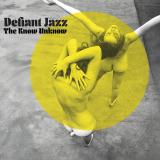
Khan Jamal - Infinity

Khan Jamal

Infinity

12inchJAZZR006
Jazz Room Records
12.04.2021

Vibe's Maestro Khan Jamal's "Infinity" features a Stellar line up, a drums and percussion-rich sextet that includes Legends Byard Lancaster and Sunny Murray amongst others. The music stands up to anything released on the great Jazz labels like Blue Note, Prestige, Verve or Impulse.

The most well known tune is "The Known Unknown" which has been featured on several compilations back in the 1990's , but the whole album is one of those records that is a complete undiscovered gem.

Self released in 1984 and long out of print, original copies fetch $1000 and upwards, so Jazz Room Records are proud and pleased to bring this Spiritual Soul Jazz highly in-demand Holy Grail out to a wider audience.

No en stock

Haga su pedido ahora y le encargaremos el artículo en nuestro proveedor.


Ültimo hace: 2 Años
Byard Lancaster - Mother Africa

'A few months after recording Us, Lancaster recorded Mother Africa along with Clint Jackson III, a trumpeter, partner of Khan Jamal or Noah Howard on other recordings.
On march 8th, 1974, Lancaster and Jackson headed up a group composed of Jean-François Catoire (electric and double bass), Keno Speller (percussion) and Jonathan Dickinson (drums). Together, they create an immediate impression. From the first seconds of We The Blessed, they develop a free jazz which rapidly abandons any virulence under the effect of blues and soul based interventions.
When Gilson’s composition Mother Africa begins, listeners are transported into the studio, listening to the musicians setting up: chatting and joking… Then comes the melody: a dozen or so notes of a repeated theme which is accelerated and deformed according to their whims… The jazz played by the association Byard Lancaster / Clint Jackson III is rare: creative AND recreational. We the blessed, is apt listening to this again today!'

Reservar27.03.2026

debe ser publicado en 27.03.2026


Ültimo hace: 2026 Años
John Lamkin - Hot

John Lamkin

Hot

12inchJAZZR041
Jazz Room Records
11.03.2025

Since the first release 5 years ago, Jazz Room Records has released an eclectic and interesting selection of releases.

From the Jazzy commercialism of the Take Vibe version of The Stranglers "Golden Brown" (5,000 vinyl single sales) to the 1960's Headshop Sounds of West Coast Fluteman Eric Ghost.

Other notable releases on Jazz Room include the critically lauded album by Vibraphonist Khan Jamal "Infinity", a compilation of Japanese tough funk fusionists indigo jam unit put together by DJ Colin Curtis, Nuyorican Latin House from Tata Vasquez, Jazz Dance Madchester Rave from Cruisic and some South African Holy Grail grooves from Abacothozi! The latest release is the Underground Latin J-Jazz of Copa Salvo, first introduced to London by DJ & Music Legend Jean-Claude.

Next up is an in demand Jazz Funk Obscurity from Educator and Trumpet Player John Lamkin whose self released album "Hot" saw the light of day in 1984 then disappeared into the Rare Jazz ether.

Currently changing hands for €300 and upwards it's again about to see the light of day in 2025!

This is an album that is aptly named with all the elements we love: Latin, Funk, Soul, Jazz and all round Double Hipness. What a Hot item it is too. From the Funky as it gets opening bars of "Ticket" through the Rio bound flight "722", taking in a visit to Wonderland with some Soul Jazz Vocal stylings on "Flower Power" and the Funkiest 17 minute Journey to Trumpet Enlightenment in the Title track "Hot" which is, true to its name, Scorching by the finish line is reached.

Already getting Big Ups on UK Jazz Funk Scene Founder Colin Curtis's Cult Radio Show "Jazz Dance Fusion" it's gonna be getting plenty of plays worldwide at the "Hottest" radio stations and funkiest jazz dance nights near you soon!

Ross Allen: It's brilliant!! Perry Louis: Massive! Dr Bob Jones:I Love Big Time!Colin Curtis: Killer!

Disponible

En el almacen y preparando para el envío

Byard Lancaster - The Complete Palm Recordings 1973-1974 (5x12") (BOXSET)

Souffle Continu records presents Byard Lancaster – The Complete Palm Recordings 1973-1974, the definitive package of Philadelphia-born jazz wizard Byard Lancaster including his 4 legendary albums released on Jef Gilson’s Palm Records in the 1970s, Us, Mother Africa, Exactement and Funny Funky Rib Crib, along with the first ever standalone edition of Love Always, a fifteen minute modal jazz beauty plus a 20 page booklet with rare photos and in-depth article about Byard Lancaster’s Parisian years by Pierre Crépon.

At the beginning of the 1960s, at the Berklee College of Music, Byard Lancaster met some feisty friends: Sonny Sharrock, Dave Burrell and Ted Daniel. It is easy to see why he rapidly became involved in free jazz. Once he was settled in New York, he appeared on Sunny Murray Quintet, recorded under the leadership of the drum crazy colleague of Albert Ayler.

In 1968, the saxophonist and flutist recorded his first album under his own name: It’s Not Up To Us. The following year he came to Paris in the wake of... Sunny Murray. He would come back to France in 1971 (again with Murray) and in 1973 (without Murray for a change). This is when he met Jef Gilson, the pianist and producer who encouraged him to record under his own name again. On Palm Records (Gilson’s label), he would release four albums: Us, Mother Africa, Exactement and Funny Funky Rib Crib.

“Us”, the first of the four records was recorded on November 24th, 1973 with Sylvin Marc on electric bass (a Fender... Lancaster?) and the evergreen Steve McCall on drums.

On the album, the trio works from the John Coltrane model; free jazz shook up by the timely contributions of the bassist, followed by a mesmerizing atmospheric music. Then, Lancaster delivers a sinuous solo path, which is a reminder of his unique tone. On the album’s companion single, the trio launches into great black music of a different genre which would lead the clairvoyant François Tusques to claim that Byard Lancaster is an “authentic representative of soul/free jazz”, to sum up this is Great Black Music! A few months after recording “Us”, Lancaster recorded “Mother Africa” along with Clint Jackson III, a trumpeter, partner of Khan Jamal or Noah Howard on other recordings.

On march 8th, 1974, Lancaster and Jackson headed up a group composed of Jean-François Catoire (electric and double bass), Keno Speller (percussion) and Jonathan Dickinson (drums). Together, they create an immediate impression. From the first seconds of “We The Blessed”, they develop a free jazz which rapidly abandons any virulence under the effect of blues and soul based interventions. When Gilson’s composition “Mother Africa” begins, listeners are transported into the studio, listening to the musicians setting up: chatting and joking... Then comes the melody: a dozen or so notes of a repeated theme which is accelerated and deformed according to their whims... The jazz played by the association Byard Lancaster / Clint Jackson III is rare: creative AND recreational. “We the blessed”, is apt listening to this again today!

The recording of “Exactement” required two sessions in the studio: February 1st and May 18th 1974 – in between the two dates, Lancaster recorded, alongside Clint Jackson, the excellent Mother Africa.

Two names appear on the cover of “Exactement”: Lancaster (Byard) and Speller (Keno). Byard Lancaster wanted to be precise, moving regularly from one instrument to another: first on piano, which was the first instrument he learned. On “Sweet Evil Miss Kisianga”, his inspiration is first and foremost Coltrane (even if leaning more towards Alice than John), this announces the storm to follow.

It is Lancaster’s horn-playing which really stands out: on alto (the sound of which is transformed by an octavoice on one track, "Dr. Oliver W. Lancaster") or soprano saxophones, as well as on flute or bass clarinet, the musician walks a tightrope making the most of all the risks he takes. Using the full register of his instruments, he has fun with the possibilities.

Then, Lancaster invokes or evokes Ornette Coleman, Eric Dolphy and even Prokofiev, before going into a danse alongside Keno Speller on percussion. Above all, he has a unique sound. Byard Lancaster, on whatever instrument he plays and by continually seeking, always ends up hitting the right note... ends up by playing exactement the note he had to play.

“Funny Funky Rib Crib” is an unforgettable recording (made up of several sessions dating from the middle of 1974) of creative jazz overwhelmed by funk and soul. If Lancaster had already made successful albums in the same genre – notably New Horizons, under the name Sounds Of Liberation which he co-led with Khan Jamal –, this one is an homage to James Brown and Sammy Davis enjoying the company of a host of guests including François Tusques (electric piano), Clint Jackson III (trumpet), François Nyombo (guitar), Joseph Traindl (trombone)...

Funny Funky Rib Crib’s cover is a three-quarter profile portrait of the saxophonist (who can also be heard on flute, piano and even vocals), however, on the record, it is the whole group, inspired and frenetic, that tests the melodies of “Just Test”, “Dogtown” or “Rib Crib” – the two versions of which display leader Lancaster’s art of nuance. On both sides of the album, the group also moves into a calmer groove, infused by blues and soul, “Work And Pray” and “Loving Kindness” are meditative tracks where listeners can lay back and relax before asking for more: Funny Funky Rib Crib!

The magnificent “Love Always” was originally released on the fourth (and last) volume of the Jef Gilson Anthology series released in 1975.
Recorded on 8th March 1974, it is a beautiful 15-minute-long modal jazz piece. Four notes from the bass (the relentless Jean-François Catoire, who makes up the rhythm section alongside drummer Jonathan Dickinson and percussionist Keno Speller), and the group is up and running!
On piano, Gilson shows the subtle tact of a sideman, leaving the lions’ share of the place to the horns. This allows us to hear the trumpet of Clint Jackson III and the alto (which sometimes sounds almost flute-like) of Byard Lancaster each staking their claim in a long hallucinatory march which moves from moments of direct exaltation to profoundly sensitive collective playing. And if further proof was required of the confidence that Byard Lancaster and Jef Gilson inspire, “Love Always” provides it on this one sided release exclusive to the box set.

Disponible

En el almacen y preparando para el envío

Clint Jackson III, Byard Lancaster - Mother Africa

At the beginning of the 1960s, at the Berklee College of Music, Byard Lancaster met some feisty friends: Sonny Sharrock, Dave Burrell and Ted Daniel. It is easy to see why he rapidly became involved in free jazz. Once he was settled in New York, he appeared on Sunny Murray Quintet, recorded under the leadership of the drum crazy colleague of Albert Ayler.


In 1968, the saxophonist and flutist recorded his first album under his own name: It’s Not Up To Us. The following year he came to Paris in the wake of… Sunny Murray. He would come back to France in 1971 (again with Murray) and in 1973 (without Murray for a change). This is when he met Jef Gilson, the pianist and producer who encouraged him to record under his own name again.

On Palm Records (Gilson’s label), he would release four albums: Us, Mother Africa, Exactement and Funny Funky Rib Crib.


A few months after recording “Us”, Lancaster recorded “Mother Africa” along with Clint Jackson III, a trumpeter, partner of Khan Jamal or Noah Howard on other recordings.

On march 8th, 1974, Lancaster and Jackson headed up a group composed of Jean-François Catoire (electric and double bass), Keno Speller (percussion) and Jonathan Dickinson (drums).


Together, they create an immediate impression. From the first seconds of “We The Blessed”, they develop a free jazz which rapidly abandons any virulence under the effect of blues and soul based interventions.

When Gilson’s composition “Mother Africa” begins, listeners are transported into the studio, listening to the musicians setting up: chatting and joking… Then comes the melody: a dozen or so notes of a repeated theme which is accelerated and deformed according to their whims… The jazz played by the association Byard Lancaster / Clint Jackson III is rare: creative AND recreational. “We the blessed”, is apt listening to this again today!

This CD edition contains a bonus track, the magnificent “Love Always” that was originally released on the fourth (and last) volume of the Jef Gilson Anthology series released in 1975.


Recorded on 8th March 1974, it is a beautiful 15-minute-long modal jazz piece. Four notes from the bass (the relentless Jean-François Catoire, who makes up the rhythm section alongside drummer Jonathan Dickinson and percussionist Keno Speller), and the group is up and running!

On piano, Gilson shows the subtle tact of a sideman, leaving the lions’ share of the place to the horns. This allows us to hear the trumpet of Clint Jackson III and the alto (which sometimes sounds almost flute-like) of Byard Lancaster each staking their claim in a long hallucinatory march which moves from moments of direct exaltation to profoundly sensitive collective playing.

Reservar05.12.2025

debe ser publicado en 05.12.2025


Ültimo hace: 2026 Años
MONDE UFO - FLAMINGO TOWER

Monde Ufo

FLAMINGO TOWER

12inchFIRELP777
Fire Records
08.07.2025

Monde UFO follow the celebrated ‘7171’ album with a trip to the mysterious ‘Flamingo Tower’. In the shadows of the Los Angeles bustling music scene, the enigmatic collective led by visionary Ray Monde create a trance-like fusion of psychedelia and avant jazz, mantra-like evocations, brash moody ambience and passages reminiscent of long-lost library music.

Magnifying Monde UFO’s idea of musical chaos, their early sonic escapades into off-kilter exotica is now elevated with sweeping atmospheric waves of sound inspired by an eclectic brew of Arto Lindsey, Khan Jamal’s ‘Drum Dance To The Motherland’, Keith Hudson, Milford Graves, Marion Brown, Don Cherry and Lennie Tristano.

Cast deep into number theory with occasional quasi-religious touchstones, ‘Flamingo Tower’ bustles with background sounds overlaid with intimate melodies conjuring plenty of suitably strange illusions; a synthetic orchestra plays baroque pop, a guitar is set to auto destruct and Ray Monde’s hushed vocals carry a bracing narrative. It’s an evocative album, one for the heavy music nerds, sprinkled with ear candy and proliferated by mysterious numbers which litter the song titles.

“Monde UFO wander through a humid mist of exotic samba shuffles, shamanic whispers, and reverberating laser beam synthesizers.” New Commute

No en stock

Haga su pedido ahora y le encargaremos el artículo en nuestro proveedor.


Ültimo hace: 8 Meses
Baikida Carroll - Orange Fish Tears

'In 1972, trumpeter Baikida Carroll and some of his colleagues from the Black Artists Group (more precisely saxophonist/flutist Oliver Lake, trombonist Joseph Bowie, drummer Charles "Bobo" Shaw and trumpeter Floyd LeFlore) took the advice of their friends in the Art Ensemble Of Chicago and left their native Missouri to come and discover the bright lights of Paris for themselves. The following year they would even get the chance to record their only album which would rapidly attain mythical status and a collector’s item: “In Paris, Aries 1973”.

Therefore, it was not surprising that they crossed paths with Jef Gilson in the capital. He was always on the lookout for new artists for his recently formed Palm label and had been active on many fronts in jazz since the end of the 50s. The French bandleader / pianist / composer / sound engineer had already recorded, in the preceding months other American musicians who would go on to have great careers: Byard Lancaster, Keno Speller, Clint Jackson III, Khan Jamal... Gilson therefore offered Baikida Carroll the chance to record his first album under his own name, which would be the 13th release on the label. Carroll logically asked Oliver Lake to join him. He also recruited Manuel Villaroel, a young Franco-Chilien pianist from the group Matchi-Oul, who had already released an album on Futura in 1971 and would release another on Palm in 1976. The group was completed with the addition of Brazilian percussionist Naná Vasconcelos, who had just released a well-received album on the Saravah label. They were ready to enter the studio for the 3rd, 4th and 5th June 1974.

The first side of the album is divided into two long tracks which send free jazz back to its long-lost African roots. The opener “Orange Fish Tears” indeed rolls out a jungle of percussion of all sorts and sizes -the whole group is involved- which weave and mix together reaching a point where all bearings are lost, lending a sense of wonder to the majestic entry of the brass and woodwinds, flying suddenly out from the undergrowth. “Forest Scorpion” (sic) is a real voodoo ceremony where a venomous percussive groove backs the fiery solos from keyboards and saxophone in a furious trance. A warning; after these two tracks listeners are physically and emotionally wiped out!

The other side is more introspective. Deliberately using dissonance and repetition, “Rue Roger” -the only composition by Oliver Lake- in a long dialogue between trumpet and saxophone, could almost remind us of Terry Riley in his favourite ballpark. “Porte D'Orléans”, the fourth and final track on the album, has the group back to their old tricks in a long hallucinatory jam which owes as much to the contemporary music of György Ligeti as to the most angst-ridden Jerry Goldsmith soundtrack music (remember the heavy chords which beat through “Planet of the Apes»).

With these two sides, and in under 45m, Baikida Carroll and his musicians show just what they can do, from cerebral to charnel without ever simplifying things. This is an essential album if you are a fan of free-wheeling avant-garde music from the Art Ensemble of Chicago to Sonic Youth and including Shabaka Hutchings and Rob Mazurek. For those with good taste, in other words.'

No en stock

Haga su pedido ahora y le encargaremos el artículo en nuestro proveedor.


Ültimo hace: 2 Años
John Hicks Trio - I’ll Give You Something To Remember Me By

In the late 1980s, the renowned American jazz pianist, composer, and arranger John Hicks formed one of the most influential ensembles consisting of musicians that had played music at the highest level all their lives and gained their status as both stand-alone artists and important sidemen. Each of them had participated in many of jazz’s great moments and all shared the ability, documented on many albums, to inspire their fellow musicians to even greater heights. The ‘John Hicks Trio’ had several line-up changes over the years that included greats such as Clifford Barbaro (Strata East, Blue Note, Sun Ra Arkestra, Charles Tolliver), Clint Houston (Prestige, Nina Simone, Roy Ayers, Azar Lawrence), Ray Drummond (Freddie Hubbard, Art Blakey, Lalo Schifrin), Marcus McLaurine (Muse, Verve, Weldon Irvine, Kool & The Gang) and Victor Lewis (Steve Grossman, Stan Getz, Charles Mingus, Cedar Walton, Chet Baker).

On the album we are presenting you today (I’ll Give You Something To Remember Me By from 1988) the trio consists out of some of the biggest and best players in the jazz, funk and soul scenes:

On piano we have the Atlanta based trio’s bandleader JOHN HICKS (1941-2006). He served as a leader on more than 30 albums and played as a sideman on more than 300 other recordings. After being taught piano by his mother, Hicks went on to study at Lincoln University of Missouri, Berklee College of Music, and the Juilliard School. After playing with a number of different artists during the early ’60s (including Oliver Nelson and being part of Pharoah Sanders’s first band) he joined Art Blakey & The Jazz Messengers in 1964. In the early ’70s he taught jazz history and improvisation at Southern Illinois University before resuming his career as a recording artist. Next to his many solo recordings for labels such as Strata East and Concord, Hicks would collaborate with all the big names in the scene, including Archie Shepp, Mingus and Alvin Queen. In 2014 & 2015, J Dilla paid homage to John Hicks by sampling two of his songs.

On drums we have the legendary IDRIS MUHAMMAD (1939-2014) who to this day is still considered as one of the most influential drummers covering a multitude of genre-transcending styles. Born in New Orleans, he showed early talent as a percussionist and began his professional career while still a teenager, playing on Fats Domino’s ‘Blueberry Hill’. He then toured with Sam Cooke and would later go on to work with Curtis Mayfield. Next to his landmark solo recordings for Prestige Records, Idris would collaborate with iconic musicians and acts from the likes of Manu Dibango, Ahmad Jamal, Melvin Sparks, Charles Earland, Walter Bishop, Ceasar Frazier, Roberta Flack, Gato Barbieri, Nathan Davis, Sonny Rollins, Lou Donaldson, Galt MacDermot, Lonnie Smith…and countless others. Idris Muhammad’s work was sampled by renowned performers such as Drake, Beastie Boys and Fatboy Slim.

On bass we have CURTIS LUNDY (born 1955) who originates from Florida. Lundy is a well-respected bass player (and a master of his instrument), choir director, arranger, composer and producer who was part of performances and recordings of renowned acts and artists such as Pharoah Sanders, Frank Morgan, Cole Porter, Chico Freeman, Khan Jamal… and many others!

On I’ll Give You Something To Remember Me By (recorded at the legendary Dutch Studio 44 in March 1987 and released on Limetree Records in 1988) the listener is treated to eight majestic tracks of the highest caliber (including an excellent Thelonious Monk cover-tune) and features a remarkable outing of advanced musicianship by three jazz-giants in their prime, delivering an inspirational gem of an album.

These recordings sound as successful, young and vibrant as ever! Expect supercharged ragtime Post Bop with striking notes, no-holds-barred musicianship, high swinging solos, screaming choruses and plenty of solid virtuosity to spare. The up tempo none stop Latin beat is complimented by the terrific drum solos of Idris Muhammad and the rhythmic bass strokes of Curtis Lundy. This electrifying set of tracks makes this release a bonafide hit and a must have for any self-respecting jazz fan or collector.

Reservar10.03.2023

debe ser publicado en 10.03.2023


Ültimo hace: 2026 Años
Byard Lancaster - Soul Unity LP 2x12"

Byard Lancaster

Soul Unity LP 2x12"

2x12inchKOS015LP
Komos
01.07.2022

Komos presents Soul Unity by Byard Lancaster.'From Sex Machine to A Love Supreme’ was Byard Lancaster’s musical motto.

The saxophonist and flutist from Philadelphia has released cult albums under his own name from the late 60's until his death in 2012 and features on recordings from Larry Young, Doug Hammond, Sunny Murray among other major jazz musicians. He also co-founded the mythical band Sounds of Liberation with his friends Khan Jamal and Monnette Sudler.

Soul Unity is a devotional journey through Great Black Music, from Africa to Coltrane, from Spirituals to Now, searching for the Source behind the forms. It features Byard Lancaster's close friends Khan Jamal from ‘Sounds of Liberation’, Keno Speller from ‘Lafayette Afro-Rock Band’, Alfie Pollitt, former musical director for Teddy Pendergrass and Men On A Mission, a Gospel quartet.

Produced by Antoine Rajon, now A&R of Komos, it was recorded in one take on a sunny Saturday afternoon of 2005 in Philadelphia at Morning Star Studios. First vinyl edition, remastered and cut by Frank Merritt at The Carvery.

No en stock

Haga su pedido ahora y le encargaremos el artículo en nuestro proveedor.


Ültimo hace: 3 Años
Various - Spiritual Jazz 11: SteepleChase

Founded in 1972, SteepleChase Records is one of the most significant and prolific European jazz record labels. With a catalogue running to well over 200 titles, the Copenhagen-based imprint has recorded and released music from some of the greatest names in jazz, including Dexter Gordon, Andrew Hill, Jackie McLean, Horace Parlan, Chet Baker and Stan Getz.

Starting out by recording visiting Americans when they performed at the legendary Café Montmartre, founder Nils Winther was encouraged to start the label by none other than the great Jackie McLean, who was the first artist to release a record on the new imprint. From there, Steeplechase rapidly grew into one of the foremost labels to document European jazz with all its distinctive originality and style.

With a particular emphasis on recording front rank American artists who had chosen the expatriate life in Europe, Steeplechase was first in line to document the sounds of the greats as they developed in exile. Featuring in-demand tracks from the likes of Billy Gault, Johnny Dyani and Khan Jamal, and unearthing deep cuts from greats like Jackie McLean and Mary Lou Williams, our Spiritual Jazz 11: Steeplechase pays tribute to one of Europe's most important jazz labels.

No en stock

Haga su pedido ahora y le encargaremos el artículo en nuestro proveedor.


Ültimo hace: 5 Años
  • 1
Artículos por página
N/ABPM
Vinyl