quête:jus wan

Genres
Tout
Jim Ghedi - Wasteland LP

Jim Ghedi

Wasteland LP

12inchBR022LPRB
Basin Rock
01.05.2026

Wasteland is a record that is unafraid to plunge into the darkness of the modern world and embrace the weirder, edgier and more unnerving moments that come from doing so. It is an album that captures all the enormity of life from the micro to the macro, zooming in on the personal as well reflecting on broader societal issues.

“Wasteland is about the idea of a place once known or familiar that is now broken down and unrecognisable,” says Ghedi. “It’s about exploring the process of watching someone’s surroundings and environment collapse.” And within that you have a lot going on. “It also explores death, personal loss, grief, mental health and how the natural world provides solace and meaning for that loss and how these worlds blur into one another.”
Ghedi has always been an artist that in many ways perfectly encompasses folk music in its purest form but he is also someone that frequently pushes the boundaries of that label and no more so is that apparent than on this record. As like previous albums, such as 2018’s A Hymn for Ancient Land and 2021’s In the Furrows of Common Place, Ghedi uses traditional folk songs as a means to explore contemporary issues via modern and experimentally-leaning music. “With the traditional material on this album I wanted to find songs with content that resonated with me,” says Ghedi. “But also that were based roughly around the north of England.” This is a central underlying theme to the album for Ghedi. The feelings of loss, erosion, and degradation are often most pronounced in working class communities and this was something he wanted to weave in. “It was important to voice and choose material that represented or expressed issues that correlated with things going on around me.”

However, as remarkable as some of the traditional material is, some of the most arresting work on the album is Ghedi’s entirely original compositions. Lead single ‘Wasteland’ is a stunning piece of work that while rooted in an environment being corrupted and broken – “there’s violence on these hills” Ghedi sorrowfully sings, before claiming this is no longer somewhere that can be called home – it is also a stirringly beautiful composition that soars and glides as it opens up, as sweeping strings swoop and in and out of Ghedi’s twangy electric guitar.

The decision to incorporate more fuller sounds, such as electric guitar and huge drums, results in a notable shift and evolution in tone for Ghedi. “The lyrical content needed something more band-driven and loud to deliver them,” he explains. “Incorporating the electric guitar in my songwriting was also a big part of opening the sound up, using drop tunings pushed me to use my voice in a wider range, which forced me to use falsetto a lot which I haven’t previously done before. That then opened the sound up and gave me creative ideas for bigger arrangements and to sonically really push things.”

What Ghedi has done in creating his masterpiece is construct a remarkable space where deeply intimate and personal feelings coexist with reflections on environment, place and society, while also interweaving historical context via traditional songs. Wasteland is as much of a world to explore and exist in as much as it is an album, with Ghedi carving out his distinctly unique sonic language and voice to explore that singular environment.

pré-commande01.05.2026

il devrait être publié sur 01.05.2026

Jolanda Moletta - Oceanine

Jolanda Moletta

Oceanine

12inchBNSD098
Beacon Sound
01.05.2026

Oceanine, Jolanda Moletta’s third album and her first for Beacon Sound, is a powerful and ethereal statement of artistic community. Expanding on her previous work, each track represents a collaboration with a different female vocalist, with the foundational elements being generated entirely by her own voice. By turns haunting, enchanting, and inspiring, you won’t want to come up for air once you’ve been pulled under. Representing a
musical practice that is distinctly feminist, this is an album with a longer view in mind, to an age when the altars were to goddesses and women were centered as powerful beings representing the earth’s cycles of regeneration and renewal. Oceanine then, in all its beauty, can be viewed as an album of survival. It is deeply transportive, accessing something that lies within all of us. As the late, great Lithuanian folklorist and archaeologist Marija Gimbutas noted, “We must refocus our collective memory. The necessity for this has never been greater as we discover that the path of 'progress' is extinguishing the very conditions for life on earth.”

Jolanda Moletta is a multimedia artist and one-woman electronic choir. She creates wordless compositions through extended vocal techniques, integrating wearable-controlled live processing, alongside symbolic visuals. Moletta considers her performances to be a collective ritual and creates her Sonic & Visual Spells following the cycles of nature and the moon. Jolanda's 2022 critically acclaimed album Nine Spells was released on the Ambientologist label, followed by Night Caves on Whitelabrecs in 2025. Moletta’s artistic practice is a radical and spiritual journey through sound art, ritual, and the symbolic archaeology of the feminine.

Oceanine is inspired by sirens, water nymphs, and the timeless call of the sea. At its core lies Jolanda’s deep, lifelong connection to the Mediterranean Sea and to the ancient and modern myths and folklore that have emerged from its waters. Growing up by the Mar Ligure, Jolanda was surrounded by stories carried by salt, wind, and waves: legends of sirens, echoes of ancient voices, and the sea as both origin and oracle. This intimate relationship with the Mediterranean is not merely a backdrop, but a living source that shapes Oceanine’s emotional, symbolic, and sonic world.

Each track features a different female vocalist, creating a rich tapestry of voices, styles, and perspectives. This artistic choice not only broadens the album’s sonic palette, but also deepens its narrative core: celebrating the power, beauty, and mystique of feminine energy through myth, history, and sound.

The entire album is built exclusively from the human voice, processed and layered, yet always remaining voice, and nothing else. For each piece, Jolanda invited every vocalist involved to contribute a raw stem: a short, unedited melodic fragment of just a few seconds, inspired by the album’s themes. These intimate vocal seeds became the foundation of each track: the guest artists’ voices appear as brief, melodic stems, while the entire surrounding “orchestral” fabric is created solely from Jolanda’s own layered and processed voice. In this way, Jolanda’s voice becomes the Ocean itself, embracing, absorbing, and carrying the sirens’ calls within a vast, immersive soundscape. Every song is a unique expression of the feminine experience, revealing its depth, complexity, and emotional range, echoing the call of the sea and the many faces of the siren archetype.

The figure of the siren has transformed across centuries. In myths of Ancient Greece and Rome, sirens were hybrid beings, part woman, part bird, whose irresistible songs lured sailors to their doom. During the Middle Ages, the image shifted toward the half-woman, half-fish figure, often associated with temptation and danger. Historically, the voice of women has often been feared. Sirens were considered harbingers of misfortune not simply because they seduced or destroyed, but because they were powerful liminal beings.

In Ancient Greek, sirens functioned as psychopomps: figures who existed between worlds and guided souls, especially between life and death. Their songs were believed to carry forbidden knowledge, including prophetic insight and the ability to reveal truths about fate and the future. The danger of the sirens lay in what they revealed: knowledge that humans were not meant, or ready, to hear.

Oceanine confronts this legacy head-on. The voices heard throughout the album are not merely beautiful: they are dark and luminous, wild and enchanting, magical, soothing, dreamy, and at times fractured or distorted. They whisper, lament, beckon, and enchant. Like sirens, they skim the surface of the water and sink into its depths, hovering on the edge between tenderness and danger, vulnerability and power. They rise toward the sky, dissolve into mist, and return as echoes charged with raw, elemental emotion: voices that seduce, warn, mourn, and remember. They refuse to be reduced to decoration.

Alongside the album’s release in May, Oceanine will also unfold as a visual and performative work through a short art film. The film includes a live session recorded inside a sea cave facing the Mar Ligure, the very coastline where Jolanda spent her childhood, dreaming of sirens and listening to the sea as if it were speaking directly to her. This site-specific performance reconnects the music to its place of origin, allowing the voice to resonate within stone, water, and air, and transforming the cave into both a sanctuary and a threshold between myth and reality.

What if the sirens’ songs were considered dangerous because they carried another truth, an ancient truth long forgotten?

Oceanine embraces the idea that we are still deeply woven into myth. Though we may see ourselves as rational and modern beings, our world is saturated with ancient symbols and archetypes, often distorted, simplified, or stripped of their original meaning. And if those symbols are allowed to shift, if the mirror once held by the siren becomes an invitation to look beyond appearances and into what has been obscured, then we may finally uncover a deeper truth and reclaim the voice that was always ours.

Oceanine is not just an album. It is a reclamation, a spell, and a call from the depths.

pré-commande01.05.2026

il devrait être publié sur 01.05.2026

Various - Toolroom Sampler Vol. 14

Repress 2026

DJ Support from Danny Howard, Annie Mac, Mistajam, Pete Tong, Charlie Hedges, Kraak & Smaak, Maxinne, Todd Terry, Alex Preston, Full Intention, GW Harrison, DJ Rae, Rudimental, Alaia & Gallo, Illyus & Barrientos, Johan S, David Penn, Sam Divine, Riva Starr, Claptone, Nice7, Dario D’Attis, Mousse T, S-Man, Huxley, KC Lights, Friend Within, Dombresky, Gorgon City, Chris Lake, Format:B, Pirupa, TCTS, Alan Fitzpatrick, Low Steppa, Mat.Joe, Raumakustik, Eskuche

The next of Toolroom’s 4 track vinyl sampler series kicks off with a bang(er!). Welcoming CHANEY back onto the label with possible his finest release to date in the shape of ‘I Choose You’. On Toolroom alone he has amassed over 40m streams across leading streaming stores in just 3 years and can add massive imprints like Defected, Insomniac and Perfect Havoc to his list of musical successes. Everything in this record is 100% original and written by CHANEY himself from the self-played bass line, lush rhodes chords and distinctive, poignant vocals.

Next up is Gene Farris who has been a mainstay on Toolroom in recent years and is a regular artist at our label events all over the World. ‘In My Heart’ lands as an exciting collab with the Basura Boyz, a duo also hailing from Gene’s hometown of Chicago and the chemistry between the 3 of them is evident from the first beat! A super cool, stripped back vocal tech house track that sits in that sweet spot of club and specialist radio.

Kicking off the B-side is Deeper Purpose who returns to Toolroom alongside Jalja & Lazy Joe, after his debut club weapon ‘Stutter’ dropped on the label last year. He has had success across all the scene’s leading imprints over the past 12 months including Fisher’s Catch n Release, Experts Only and Repopulate Mars and this record is an anthem in the making! Jalja is on vocal duties, the vocalist that shot to fame after her huge ‘Hanging Tree’ record alongside Michael Bibi. She adds her trademark ethereal vibe to the record and delivers a typically killer hook - This is a real EAR WORM!!

Wrapping things up on Sampler 14 is a very exciting collaboration from 2 of the scene’s brightest shining new stars; Tony Romera and Crusy. Having been die-hard Toolroom fans for many years, this record came about during a conversation about old Toolroom records, and how they collectively wanted to emulate that slightly progressive tech house but bring it right up to date. And they have certainly done that! A real peak-time dance floor moment here with insane production and a unique, intense build up that is already causing maximum mayhem!

Countless radio plays on Radio 1 from Danny Howard, Sarah Storie, Pete Tong

Other notable radio plays – Kiss FM, Toolroom Radio, Sirius XM, Data Transmission Radio, Radio 1 Dance Anthems, Radio 1 Party Anthems, Rinse FM, Select Radio, Tomorrowland Radio

pas en stock

Commandez maintenant et nous commanderons l'article pour vous chez notre fournisseur.


Derniere entrée: 33 jours
Various - ROOMIES 2 LP

Various

ROOMIES 2 LP

12inchSON021
SONHOUSE RECORDS
01.05.2026
 
8

The second season of the funny and heartfelt fiction series by Flo Van Deuren and Kato De Boeck takes us along as Bibi and Ama move on to the next chapter of their lives and into their new, unexpected home: an old daycare building. With school no longer providing structure and their wallets running on empty, they dive headfirst into adulthood.

This results in eight new episodes that, like the main characters, have grown up, yet remain just as hilarious and moving as ever.

With the second season of Roomies, the show’s award-winning music makes its return. This time with a powerful soundtrack featuring Eefje de Visser, Ategha (Ahlaam Teghadouini) & Mickael Karkousse (Goose), Maria Iskariot, and Porcelain ID.

“(Tijdbom) Tikkend” is a dark, electronic track that feels like a constant run: sometimes away from the other, sometimes right toward them. It captures the feeling of running out of time, losing each other, and wanting to reconnect. That push-and-pull dynamic felt like a perfect fit for Roomies, where relationships, drama, and fun are always intertwined. - Eefje de Visser

“Whatever Happens” came together in a very organic way, and you can hear that in the track. Raw, genuine, and effortless. What’s unique is that we hadn’t even met until a few days before. Ahlaam walked into the studio and said, “I’ve prepared something.” That opening line alone was fantastic and immediately showed confidence and courage. “Perfect,” I thought. Then we turned the volume up to maximum, and I listened as Ahlaam sang right by my ear. Instant goosebumps! - Mickael Karkousse

pré-commande01.05.2026

il devrait être publié sur 01.05.2026

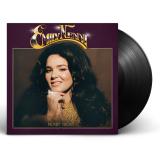
Emily Nenni - Movin' Shoes LP

Emily Nenni

Movin' Shoes LP

12inch607396593217
New West Records
01.05.2026
également disponible

GOLD VINYL


Whenever Emily Nenni is onstage, she welcomes everybody to the dancefloor. The California-born, Nashville-based singer-songwriter wants the honkytonk to be a place of escape, where fans can shed their troubles for a few hours and feel safe and free. “I’m always watching the dancefloor and making sure everybody’s being respectful.” Or, as she sings on the supremely funky title track to her new album Movin’ Shoes, “Here’s where you dress for you and dance the way that you want to.”

Movin’ Shoes is an album about how we treat each other and how we treat ourselves. Confident in its touchstones and compassionate in its insights, Movin’ Shoes eloquently and wryly blends southern soul from Memphis and Muscle Shoals with southern rock from Macon and outlaw country from Austin. Making Movin’ Shoes was a process of discovery for Nenni. Musically she found all new ways to combine the disparate artists she loves so much, and lyrically she found all new ways to relate to herself and to others. “We should at all times acknowledge and accept the fact that we’re imperfect people,” she explains. “We all make mistakes and we should all rethink the way we go about things. I am flawed. Everyone around me is flawed. But that’s not a bad thing. It just means we’re all human. This album is about making mistakes and learning from them. I’m always trying to put that into my songs.”

pré-commande01.05.2026

il devrait être publié sur 01.05.2026

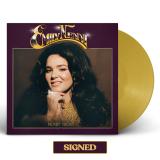
Emily Nenni - Movin' Shoes LP
également disponible

Black Vinyl


Whenever Emily Nenni is onstage, she welcomes everybody to the dancefloor. The California-born, Nashville-based singer-songwriter wants the honkytonk to be a place of escape, where fans can shed their troubles for a few hours and feel safe and free. “I’m always watching the dancefloor and making sure everybody’s being respectful.” Or, as she sings on the supremely funky title track to her new album Movin’ Shoes, “Here’s where you dress for you and dance the way that you want to.”

Movin’ Shoes is an album about how we treat each other and how we treat ourselves. Confident in its touchstones and compassionate in its insights, Movin’ Shoes eloquently and wryly blends southern soul from Memphis and Muscle Shoals with southern rock from Macon and outlaw country from Austin. Making Movin’ Shoes was a process of discovery for Nenni. Musically she found all new ways to combine the disparate artists she loves so much, and lyrically she found all new ways to relate to herself and to others. “We should at all times acknowledge and accept the fact that we’re imperfect people,” she explains. “We all make mistakes and we should all rethink the way we go about things. I am flawed. Everyone around me is flawed. But that’s not a bad thing. It just means we’re all human. This album is about making mistakes and learning from them. I’m always trying to put that into my songs.”

pré-commande01.05.2026

il devrait être publié sur 01.05.2026

Bruno Mars - The Romantic LP

Bruno Mars

The Romantic LP

12inch0075678590511
Atlantic
29.04.2026
  • A1: Risk It All
  • A2: Cha Cha Cha
  • A3: I Just Might
  • A4: God Was Showing Off
  • B1: Why You Wanna Fight?
  • B2: On My Soul
  • B3: Something Serious
  • B4: Nothing Left
  • B5: Dance With Me
également disponible

Tape Cassette


The Romantic, the new album from Bruno Mars. The fourth studio album from the global superstar and 16 time GRAMMY® Award-winning artist marks Mars' first solo album release since 2017's 24k Magic and follows chart topping collaborations with Anderson .Paak as Silk Sonic, as well as smash hits with Lady Gaga and ROSÉ.

Available for pre-order on the 9th January at 5AM GMT and set for release on the 27th February 2026.

Sixteen-time GRAMMY® Award winner and thirty-three-time GRAMMY® Award nominee Bruno Mars is a celebrated singer, songwriter, producer, and musician who is one of the best-selling artists of all time and now continuously the number-one most listened-to artist on Spotify. With recent hits like “APT.” with ROSÉ and “Die With A Smile” with Lady Gaga—the latter earning him two nominations for “Song Of The Year” and “Best Pop Duo/Group Performance” at the 67th Annual GRAMMY® Awards—Mars has celebrated another extraordinary year in music. Among his robust list of accolades, some of which include “Album of the Year” for 24K Magic at the 60th Annual GRAMMY® Awards and “Record of The Year” for Silk Sonic’s “Leave The Door Open” at the 64th Annual GRAMMY® Awards, Mars has held the number one global song for more weeks than any artist in 2024 with both “APT.” and “Die With A Smile.”

pas en stock

Commandez maintenant et nous commanderons l'article pour vous chez notre fournisseur.


Derniere entrée: 33 jours
Various - NOW That's What I Call 70s Soul (3x12")
  • A1: Al Green – Let's Stay Together
  • A2: Marvin Gaye - What's Going On
  • A3: Diana Ross - Ain't No Mountain High Enough (Single Version)
  • A4: Stevie Wonder - Signed, Sealed, Delivered (I'm Yours)
  • A5: Commodores - Easy (Album Version)
  • A6: Bill Withers - Ain't No Sunshine
  • A7: The Stylistics - You Make Me Feel Brand New (Let's Put It All Together Version)
  • A8: Rose Royce – Wishing On A Star
  • B1: Jackson 5 - I Want You Back (Single Version)
  • B2: Smokey Robinson & The Miracles - The Tears Of A Clown (Single Version / Mono)
  • B3: The Supremes - Nathan Jones
  • B4: Frankie Valli And The Four Seasons - The Night (1972 Album Version)
  • B5: Chairmen Of The Board – Give Me Just A Little More Time
  • B6: The Trammps - Hold Back The Night
  • B7: The O'jays - Love Train
  • B8: The Blackbyrds – Walking In Rhythm
  • B9: Heatwave - Always And Forever (Single Version)
  • C1: The Temptations - Papa Was A Rollin' Stone (Edited)
  • C2: Isaac Hayes - Theme From "Shaft" (Remastered 1991 Album Version)
  • C3: Ike & Tina Turner - Proud Mary
  • C4: James Brown - Get Up I Feel Like Being A Sex Machine
  • C5: Edwin Starr - War
  • C6: Sly & The Family Stone - Family Affair (Single Version)
  • C7: The Delfonics - Didn't I (Blow Your Mind This Time)
  • C8: Billy Paul - Me And Mrs Jones (Single Version)
  • D1: The Floaters - Float On (Single Version)
  • D2: Minnie Riperton - Lovin' You
  • D3: The Isley Brothers - Summer Breeze, Pt 1
  • D4: William Devaughn - Be Thankful For What You Got (Part I)
  • D5: Detroit Emeralds – Feel The Need In Me
  • D6: The Moments - Jack In The Box
  • D7: Raydio - Jack And Jill
  • D8: The Tymes - Ms Grace
  • E1: Barry White - Can't Get Enough Of Your Love, Babe
  • E2: Aretha Franklin – Until You Come Back To Me (That's What I'm Gonna Do)
  • E3: Al Green – Tired Of Being Alone
  • E4: Gladys Knight & The Pips - Midnight Train To Georgia
  • E5: Timmy Thomas – Why Can’t We Live Together (7" Glades Version) (2013 Remaster)
  • E6: George Benson – The Greatest Love Of All
  • E7: Diana Ross - Theme From Mahogany (Do You Know Where You're Going To) (Single Version)
  • E8: Jackson 5 - I'll Be There
  • F1: Freda Payne – Band Of Gold
  • F2: Ann Peebles - I Can't Stand The Rain
  • F3: Marvin Gaye - Let's Get It On (Single Version)
  • F4: Harold Melvin & The Blue Notes Featuring Teddy Pendergrass - If You Don't Know Me By Now
  • F5: The Stylistics - Can't Give You Anything (But My Love)
  • F6: The Three Degrees - When Will I See You Again (Single Version)
  • F7: Deniece Williams - Free (Single Version)
  • F8: Earth, Wind & Fire - After The Love Has Gone (Single Version)
  • F9: Commodores - Three Times A Lady (Single Version)

NOW That’s What I Call 70s Soul brings together 50 era-defining tracks from one of the most powerful decades in soul music, featuring classics from Motown legends, Philly Soul pioneers, smooth balladeers and funk innovators – all pressed across 3LPs on beautiful blue vinyl… Out April 24th!

LP1 opens with one of the decade’s most recognisable love songs: Al Green’s ‘Let’s Stay Together’, a US #1 and UK Top 10 hit that became his signature recording. It’s followed by Marvin Gaye’s ‘What’s Going On’, the socially conscious masterpiece and title track from his landmark 1971 album, and Diana Ross’ Ain’t No Mountain High Enough’, which topped the US chart and became her first solo #1. Stevie Wonder’s ‘Signed, Sealed, Delivered (I’m Yours)’ remains one of Motown’s most joyful recordings and comes before Commodores’ ‘Easy’ introducing Lionel Richie’s smooth ballad vocals. The side also includes Bill Withers’ timeless ‘Ain’t No Sunshine’, a Grammy-winning classic, and The Stylistics’ lush ballad ‘You Make Me Feel Brand New’, a UK Top 3 smash, before closing with Rose Royce’s beautiful ‘Wishing On A Star’, one of the most loved soul ballads of the era.

Flip the LP over and The Jackson 5’s ‘I Want You Back’ – the group’s explosive debut single opens the side. Smokey Robinson & The Miracles’ ‘The Tears Of A Clown’ became a UK #1 and is followed by The Supremes’ Nathan Jones’ showcasing the group’s evolving psychedelic-soul sound. Northern Soul classics from Frankie Valli & The Four Seasons with ‘The Night’, Chairmen Of The Board’s Top 3 smash ‘Give Me Just A Little More Time’ and The Trammps’ ‘Hold Back The Night’. The O’Jays’ joyous ‘Love Train’ leads to The Blackbyrds’ Walking In Rhythm’, before the side closes with the romantic classic ‘Always And Forever’ from Heatwave.

LP2 opens with The Temptations’ epic ‘Papa Was A Rollin’ Stone’, a Grammy-winning US #1 remains one of the most stunning recordings from the Motown catalogue, is followed by Isaac Hayes’ ‘Theme From “Shaft”’, an Academy Award-winner and a US #1 smash. More funk follows from Ike & Tina Turner, James Brown with one of his key tracks ‘Get Up (I Feel Like Being A) Sex Machine’, Edwin Starr’s powerful anti-Vietnam protest song ‘War’, and Sly & The Family Stone’s hugely influential ‘Family Affair’. The Delfonics’ sublime ‘Didn’t I (Blow Your Mind This Time)’ comes ahead of Billy Paul’s timeless ‘Me And Mrs. Jones’ which closes the side…the other side begins with the 1977 #1 from The Floaters with ‘Float On’, before the breathtaking vocals of Minnie Riperton on ‘Lovin’ You’. The Isley Brothers’ Summer Breeze’ and William DeVaughn’s ‘Be Thankful For What You Got’ have become enduring classics and are followed by a run of ‘80s pop-chart crossover hits completing LP2 from Detroit Emeralds, The Moments Raydio and The Tymes’ #1 ‘Ms. Grace’.

LP3 opens with the unmistakable voice of Barry White and his US #1 hit ‘Can’t Get Enough Of Your Love, Babe’, before Aretha Franklin’s ‘Until You Come Back To Me (That’s What I’m Gonna Do)’, delivers one of her smoothest performances. Al Green’s ‘Tired Of Being Alone’ and Gladys Knight & The Pips’ ‘Midnight Train To Georgia’ are followed by minimalist soul classic ‘Why Can’t We Live Together’ from Timmy Thomas, and the side closes with a trio of defining ballads:- George Benson’s ‘The Greatest Love Of All’ Diana Ross’ ‘Theme From Mahogany (Do You Know Where You’re Going To)’ and The Jackson 5’s ‘I’ll Be There’, their biggest hit…while over on the final side…Freda Payne’s #1 ‘Band Of Gold’, opens alongside Ann Peebles’ influential and much covered ‘I Can’t Stand The Rain’.Marvin Gaye’s sensual ‘Let’s Get It On’ became another US #1, while Harold Melvin & The Blue Notes featuring Teddy Pendergrass deliver the contemporary standard ‘If You Don’t Know Me By Now’. Three massive UK #1s are next…The Stylistics with ‘Can’t Give You Anything (But My Love)’, The Three Degrees’ peerless ‘When Will I See You Again’ and Deniece Williams’ ‘Free’. This amazing collection closes with two timeless ballads: Earth, Wind & Fire’s ‘After The Love Has Gone’, a Grammy-winning classic, along with ‘Three Times A Lady’, a huge worldwide #1 for the Commodores.


NOW That’s What I Call 70s Soul, 50 defining tracks from one of music’s greatest decades. Out April 24th.

pas en stock

Commandez maintenant et nous commanderons l'article pour vous chez notre fournisseur.


Derniere entrée: 34 jours
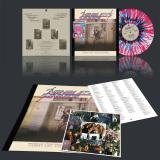
Andre Kronert, Kronert - DRIVE IT LIKE YOU STOLE IT LP

With no compromises on sound quality and an exclusive pressing designed for true vinyl enthusiasts, KRONERT002 is more than just a record—it's a collectible statement of artistry and innovation. Don’t miss your chance to own a piece of this journey.

Pushing sonic exploration even further, KRONERT002 embodies the raw essence of underground house music, capturing its energy, groove, and timeless appeal. This limited Coloured Splatter/Split vinyl is more than just a record—it’s a statement, a collector’s piece for those who live and breathe the rhythm.

Kronert crafts a hypnotic blend of rolling basslines, shuffled drum patterns, and atmospheric pads, seamlessly fusing classic house elements with a forward-thinking approach. The EP’s warm textures and intricate grooves ensure its versatility—whether igniting peak-time dance floors or setting the tone for deep, late-night sessions.

pas en stock

Commandez maintenant et nous commanderons l'article pour vous chez notre fournisseur.


Derniere entrée: 20 jours
Mindless Sinner - Turn On The Power LP
  • 1: We Go Together
  • 2: I'm Gonna (Have Some Fun)
  • 3: Turn On The Power
  • 4: Live And Die
  • 5: Left Out On My Own
  • 6: Here She Comes Again
  • 7: Standing On The Stage
  • 8: Voice Of The Doomed
  • 9: Tears Of Pain

Purple Haze started out in Linköping in 1981. When singer Christer Göransson joined them towards the end of the year, they soon changed their moniker to Genocide (after the Judas Priest song of the same name) and supported local metal heroes Axewitch. A final name change was to follow: In August 1983, the band, now called Mindless Sinner, recorded a four-track demo entitled »Master Of Evil«, consisting of the title track, “Broken Freedom”, “Key Of Fortune” and “Screaming For Mercy”. This attracted Swedish label Fingerprint Records, and they in turn released the NWOBHM-inspired material as a mini-album with an awful cover and getting the band’s name wrong (spelling it Mindless Sinners). By then, the line-up of the band was Anders Karlsson (bass), Magnus Danneblad (guitar), Jerker Edman (guitar), Tommy Johansson (drums) and vocalist Christer Göransson. »Master Of Evil« originally saw the light of day on Fingerprint in January 1984. This was followed by the second album »Turn On The Power« in 1986 as Christer Göransson explains: “Well, »Turn On The Power« was actually recorded in October 1984, the same year as »Master Of Evil« was released. But the record label was almost out of business by 1985, so as a result »Turn On The Power« didn’t come out until January 1986, and shortly after the label went bust.” Just like on the debut, the cover was once again pretty weird. “Same story,” says the singer. “Blame the label again. We wanted a band photo for the cover but once more Fingerprint didn’t listen. We didn’t know who this girl was at all. And once again we saw the cover for the first time when we visited our local record store.” “I guess »Turn On The Power« was more of a straight heavy metal album compared to »Master Of Evil«,” describes Christer Göransson the band’s follow-up record, “better playing and better songs on »Turn On The Power«. Even though we love »Master Of Evil«. I guess it didn’t sell that much as the label went bankrupt, but the reactions were great.” Mindless Sinner played as much as they could in Sweden at the time but didn’t venture outside their home country. Over the years, their music has often been compared to the Tygers Of Pan Tang from England but Christer Göransson doesn’t see too many similarities: “We really love Tygers Of Pan Tang but I don’t think they were a big influence. It was more Judas Priest, Iron Maiden, Saxon, Black Sabbath, Ozzy Osbourne and Dio.” Shortly after the release of »Turn On The Power«, the band cut their name short to Mindless. According to Christer Göransson, this is why: “It was the sign of the times really. We wanted a more melodic kinda style and we just thought it was better to change the name to Mindless. But looking back now we should have stuck to our guns.”

pré-commande24.04.2026

il devrait être publié sur 24.04.2026

Niklas Paschburg - L'Ècho De Bretagne LP
  • 01: Paimpol
  • 02: Marché
  • 03: Le Port
  • 04: À La Maison
  • 05: La Vie Lente
  • 06: Bandes
  • 07: Adieu

A century-old grand piano, a secluded house surrounded by the greenery of Brittany, no internet connection, and a reel-to-reel recorder.L'Écho de Bretagne, the new EP by Niklas Paschburg, set for release from fall 2025 via Nettwerk Music Group, is a solo piano record as essential as it is intense. An album made of silences, space, slowness. A music that doesn't chase impact, but truth.

the album release is march 26th - 2026.

If his previous work, Mexican Alps (2025), marked the first time the German composer and producer created an ambient-electronic album without his instrument of choice, the piano, L'Écho de Bretagne emerges as a direct response to that absence. "It was exactly the lack of piano that brought about the need for this new record, which instead puts that instrument, so vital to me, at the very center, stripping everything else away," Niklas explains.

Born in 1994, Paschburg has shaped over the years a musical path deeply connected to travel, nature, and introspection. From his debutTuur Mang Welten(2016) toOceanic(2018),Svalbard(2020),Panta Rhei(2023), and the aforementionedMexican Alps— alongside soundtracks, remixes, and collaborations with artists like RY X, Hania Rani, Ásgeir, and Bryan Senti — his sound bridges neoclassical, electronic, ambient, and pop-driven composition.

WithL'Écho de Bretagne, the Hamburg-born, Berlin-based musician continues his exploration by seeking solitude in nature, much like he did onSvalbard, but this time with an even more radical choice: disconnecting completely from the internet, and switching off both computer and smartphone for a while, in order to fully immerse himself in his new music. "I rented an old cottage in Paimpol, Brittany, where I knew there was a grand piano," he recounts. "When I got there, I discovered that not only was the piano more than a hundred years old, but it was also of an unknown brand, never restored, and quite difficult to play. But that gave it a unique character, and I didn't give up. Sure, it was an instrument left to its own fate, I couldn't play anything too fast. But how fascinating was that? I'm convinced that setting limits, instead of giving yourself total freedom when composing, can become an extraordinary source of inspiration."

As for the decision to temporarily detach from a life that demands we stay constantly connected, Niklas describes it as both a creative and human experiment. "I had my laptop and phone with me, just in case, but I kept them turned off. That choice made me wantL'Écho de Bretagneto be a fully analog work, even in how it was recorded." A way of clearing the mind. "I don't think I've ever been as calm as I was during those days in Paimpol. Even though I was working on a very specific project and didn't have much time, that period was more relaxing than any vacation."

Not that it was free of hiccups. "I'd borrowed a reel-to-reel recorder small enough to travel with me, but after recording a session on the piano, I realized it wasn't working properly, the sound was distorted, full of crackles. I got worried, because I wasn't near any big city where I could find a technician. Luckily, I figured out the problem was the old tape reels I had brought along. That was the only time I had to go online, to order new ones. But it was just for a moment. I shut everything off again right after." At that point, Niklas was waiting for the new tapes to arrive. He found out, completely by chance, from a local UPS courier that they had been delivered to a nearby village. "Since my phone was off, I couldn't track the shipment. So one day I asked this delivery guy, who didn't know anything about it. But from that point on, we'd see each other daily and talk… That's what being disconnected also means: reconnecting with people around you, even strangers. It was thanks to that courier that I found out where the tapes had ended up. And he even helped me get them back, writing directions for me on a scrap of paper."

But there's another element that makes this new EP unique.L'Écho de Bretagnewas recorded entirely live; its tracks are all improvised, complete with their imperfections. This approach leads to a sound that is pure, profoundly organic, and deeply authentic, intentionally preserved to give the listener the feeling of a live performance happening in their own living room. The touch of fingers on the keys, the breath of the wood, the tension of the vibrating string, all become part of the music. There is no construction, only expression. "Even now, when I listen back to it, I feel that moment I gave myself to step away from everything: from reality, from words, from noise." The result is a collection of suspended melodies and atmospheres, reflecting a state of the soul. A refuge from the rush of time. A pause from the world.

pré-commande24.04.2026

il devrait être publié sur 24.04.2026

Onna - Onna Last Live 1983 LP 2x12"

Onna Last Live 1983 includes the final performance by the original line-up of Onna, the psych-rock project of revered Japanese manga artist, Keizo Miyanishi. Onna’s legend has largely rested, until now, on one self-released and self-titled seven-inch from 1983. Reissued by Holy Mountain in 2009, its rediscovery, along with several archival live and studio sets that leaked out across the 2000s, signalled to a wider audience the power of Miyanishi’s strikingly hypnotic songwriting. With Onna Last Live 1983, though, we hear the group’s perfect line-up performing at its peak.

While Miyanishi was the core member and conceptualist of Onna, the other members of the group would also go on to make significant contributions to the Japanese underground. Guitarist Michio Kurihara would eventually be known for his membership of YBO2, Ghost and White Heaven, and collaborations with the likes of Boris and Damon & Naomi. Drummer Ken Matsutani formed Marble Sheep & The Run-Down Sun’s Children and The Mickey Guitar Band, while also running the Captain Trip label. Joined by the late bass player Yasui Yutaka, to whom the album is dedicated, this quartet only performed live in 1983; the live set here was recorded at Silver Elephant.

It’s a different line-up to the Onna duo that’s documented on their single. After Miyanishi and fellow manga artist Mafuyu Hiroki recorded that material, Miyanishi decided he wanted to start playing gigs; Hiroki left, and Kurihara, Matsutani and Yutaka joined soon after. This line-up allowed Miyanishi to significantly expand Onna’s powers, leading to a sound that Kurihara once described to Ptolemaic Terrascope magazine as “repetitive and heavy, yet quite orthodox.”

The songs here are simple yet deeply effective in their repetitive power, generally revolving around two or three simply strummed chords for guitar. Bass and drums repeatedly lock into mantra-like grooves as Kurihara’s guitar scales the walls, with Miyanishi’s consumptive moans and sighs sent torquing through FX. The cumulative effect of the seven songs here is very heavy indeed; if the prologue “Always…” drifts beautifully through five minutes of placid, beseeching melancholy, the epilogue, “Never Seen A Light Like This”, spirals out into sixteen minutes of glazed-over psych-rock, completely monomaniacal and thrilling in its slow-motion tumult.

Throughout, you can hear Miyanishi and co. reaching for something ineffable, something beyond and between the notes. It’s a phenomenal performance; it’s also no surprise that the group disintegrated after this show, given its intensity. Matsutani and Yutaka left after the Silver Elephant show, with Miyanishi and Kurihara continuing through the first half of 1984 firstly as a duo, and then a trio with new drummer Yoshiki Ueonyama. Kurihara left soon after. But Onna Last Live 1983 is proof plenty of the powers of the original Onna quartet, sending their Rallizes/Velvets dream-mantras off into darkened, stormy skies.

pré-commande24.04.2026

il devrait être publié sur 24.04.2026

New Bomb Turks - Nightmare Scenario LP
  • A1: Point To A Point Blank
  • A2: Automatic Teller
  • A3: End Of The Great Credibility Race
  • A4: Too Much
  • A5: Killer's Kiss
  • A6: Continental Cats
  • A7: Instrumental Bonus Track
  • B1: Spanish Fly By Night
  • B2: The Roof
  • B3: Your Beaten Heart
  • B4: Turning Tricks
  • B5: Wine & Depression
  • B6: Quarter To Four

Back in 1990 the New Bomb Turks got together as four Ohio State University students who just wanted to rock. 10 years later they are already on their 7th studio album: Nightmare Scenario.

New Bomb Turks return to their snaggle-toothed first mistress — hard-driving, no-holds-barred American punk rock. With the guitar jive of Chuck Berry, the blinding ferocity of Motörhead and the snot of The Dead Boys, singer Eric Davidson and his backing trio fire off a dozen grenades of authentic old-school three-chord riff-rock in little over a half-hour, with nary a pause for breath between tracks. You can’t quibble with the four-on-the-floor intensity of tunes like opening salvo Point To A Point Blank. It was recorded over four days and nights, the only break being a jaunt over to a bar to see a reunited Real Kids, their first show in years, which floored the band and only added more mezcal to the fire.

Nightmare Scenario is available as a limited edition of 500 individually numbered copies on violet vinyl and includes an insert.

pré-commande24.04.2026

il devrait être publié sur 24.04.2026

Camp Claude - Never Say Never LP
  • A1: World With Your Name
  • A2: I Just Want It All
  • A3: Speak Softly
  • A4: Heaven Can Wait
  • A5: Heartbeat
  • A6: Never Say Never
  • A7: High Flames
  • B1: Tell Me
  • B2: Keep Going On
  • B3: Crash Crash
  • B4: Go!
  • B5: This Country
  • B6: Close 2 U
  • B7: A Day Away

An album that calls forth urgent desires, bold claims and the right to dream in the face of a reality that stifles hope.
Because Camp Claude never stands still, because the trio always wants more, it ignites with Diane's fire, Mike's freedom and Léo's conviction, and with NEVER SAY NEVER bets on 14 tracks that are electric, powerful and lightning-sharp.
Plural and perfectly eclectic, NEVER SAY NEVER inhabits an intangible musical and temporal space.
Like a mixtape, this new album reveals new sensations with every track, a prayer to be played on repeat, a kind of magic formula made of electro rhythms, retro synths and shoegaze guitars.

pré-commande24.04.2026

il devrait être publié sur 24.04.2026

Tarlung - Axis Mundi LP

Tarlung

Axis Mundi LP

12inchREX2601LP
Argonauta Records
24.04.2026
  • Static Noise
  • The Valley Of Nowhere
  • Burning Out
  • Sea Of Drowned Souls
  • Swans
  • Full Circle
  • Between Earth And Moon
  • Axis Mundi

Vienna sludge doom masters TARLUNG return with their most focused and destructive statement to date. Axis Mundi is a massive slab of low tuned heaviness forged in the darkest corners of sludge and doom.
Built on suffocating riffs, dragging tempos, chugging grooves and feral vocal delivery, TARLUNG create a sound that feels both crushing and hypnotic. The band move between oppressive sludge weight, bleak doom atmospheres and abrasive noise soaked tension, shaping long, immersive compositions that pull the listener into a collapsing sonic landscape.
While rooted in nasty, direct sludge doom, TARLUNG also explore experimental textures, subtle dynamic shifts and rare moments of contemplation within the chaos, only to be swallowed again by waves of uncompromising brutality. This is an album made for listeners who want weight, tension and depth, not just volume.

For Fans Of: YOB, Crowbar, Weedeater, Iron Monkey, Dopethrone, Thou, SUMA

pré-commande24.04.2026

il devrait être publié sur 24.04.2026

Tokyo Blade - Night Of The Blade LP
  • 1: Someone To Love
  • 2: Night Of The Blade
  • 3: Rock Me To The Limit
  • 4: Warrior Of The Rising Sun
  • 5: Unleash The Beast
  • 6: Love Struck
  • 7: Dead Of The Night
  • 8: Lightning Strikes (Straight Through The Heart)

Around 1983 it looked as if Tokyo Blade were destined to become the next Iron Maiden. But somehow it wasn’t to be – history was not kind to them! In the end Tokyo Blade never became the next superstars of the glorious New Wave Of British Heavy Metal movement. “Night Of The Blade” was the follow-up to Tokyo Blade's extremely successful self-titled debut album. The band's second record was originally released in 1984 on the English Powerstation label and contained classic Tokyo Blade songs such as “Lightning Strikes”, “Unleash The Beast” or the title track. On the other hand, Tokyo Blade presented some more melodic numbers such as “Someone To Love” or “Rock Me To The Limit”. This slight alteration of the band's musical direction was partly due to the change of the vocalist (Alan Marsh was substituted by Vicki Wright). Guitarist Andy Boulton comments on the differences between Marsh and Wright: “Vic was a different person to Alan, but Alan had been a friend I had known for quite a long time and was a key figure in the band's early success, it was a sad day when we parted ways. Alan was just different from Vic and he had his own distinct sound. I don't want to talk about who was better or whatever, it's for the fans to decide. The material on 'Night Of The Blade' was all brand new, no leftovers from from Killer or Genghis Khan.” Tokyo Blade's debut (1983) and “Night Of The Blade” (1984) are two of the best albums of the entire New Wave Of British Heavy Metal period. “Night Of The Blade” was recorded by Vicki James Wright (vocals), Andy Boulton (guitar), John Wiggins (guitar), Andy Wrighton (bass) and Steve Pierce (drums). High Roller Records is proud to re-issue this long-deleted classic once again on glorious vinyl.

pré-commande24.04.2026

il devrait être publié sur 24.04.2026

Elephanz - LOVE. HURT. REPEAT LP
  • A1: Follow Your Love
  • A2: That's In My Head
  • A3: The Novel Of Our End
  • A4: Mother
  • A5: I Don't Wanna Know
  • B1: My Feet On The Ground
  • B2: Invisible
  • B3: Streets Of Rage
  • B4: In A Porcelain Shop
  • B5: What Is Love

Fifteen years after their first album "Time for a Change", and drawing on the experience of two others ("Elephanz" 2017, and "Rien de personnel" 2023), ELEPHANZ now returns with a fourth album that carries the scent of first loves, the kind you sing from the heart with your hands gripping a guitar.

"Love. Hurt. Repeat." tells, across ten songs, the story of a return to oneself, like coming home after years spent roaming the world, only to realize that everything you needed to understand yourself was already there at the starting line.

To help you understand what this new album makes me feel, I'd like to tell you about my first meeting with Jon and Max in 2009, when I became the band's bassist. Sixteen years ago, I discovered these two young men and set off in their family Kangoo van on my very first tour.

Through our early rehearsals around the piano of their childhood, I discovered their love for pop music in all its breadth, always in search of harmonies and melodies that touch the heart in the simplest way and gently ease your sorrows along the way. With them, I learned to appreciate the mainstream hits I had previously dismissed on principle, and I discovered the demanding art of melody as I listened to them sing about love and friendship through unforgettable catchphrases.

Listening today to some of the songs from their new album, I think back to those two young men with a big-city rock look, shut away in the living room of their family home, talking only about leaving that dull countryside behind to live the big life in the capital (Streets of Rage). What I once took for a kind of revenge against the hostile environment of their adolescence was in fact an almost vital need to find their place among others, to feel understood in order to feel at ease in their own skin.

Today, I find them again with the same guitar and the same inexpensive Juno as back then, but with the confidence shaped by years of concerts, writing, studio encounters, and all kinds of experimentation. The music of this fourth album has never been so close to that of their earliest days, but their voices have been set free. They no longer sing about who they dreamed of becoming, but about who they have always been, their most distant concerns, sometimes even their darkest ones, yet always in search of the light.

It is as if ELEPHANZ had to travel all the way around the world to come face to face with themselves again. There is no longer any shame in being who you are, and it is even the best way to understand yourself, to exist and to heal. To heal from grief and heartbreak, to understand the child you once were and the one who carried them (Mother), to forgive yourself and finally learn to love yourself.

That is what makes this record as sensitive as it is powerful and strikingly truthful. It was written and recorded like a cry, live, in just a few weeks, using the instruments of their beginnings: sharp bass and drums, powerful guitars, and synthesizers that are at times soaring, at times carriers of liberating melodies. The art of ballads remains, as does that of universal pop songs.

There is a beautiful urgency here, the urgency of finding oneself again in order to understand oneself through both pain and beauty, and "Love. Hurt. Repeat." is its most perfect expression.

pré-commande24.04.2026

il devrait être publié sur 24.04.2026

Object Hours - Solved By Walking LP

Leather-jacket krautrock? Indeed. Welcome to the world of Carrboro NC's Object Hours. These generous saviors consist of three Triangle scene lifers who all worship the riff but imagine what happens if the riff fell into the middle of your favorite CAN LP. Yes, it lives up to the hype.

"Solved By Walking" was recorded in the winter of 2025 at Betty's in the Chapel Hill woods, these are mighty rock slabs ready for all seasons. Rock believers have felt the ripples and knew the day was coming. Object Hours is a band that fits right in on stage alongside acts as varied as Kim Gordon and Tropical Fuck Storm, bringing the house down in these and similar moments. These are songs that groove, peel paint, sandblast, inspire unconscious movement, make your head bob - frequently all at the same time. These are the jams inspired by the time that you heard "Fun House" coming out of that dude's car with the windows down in the middle of the summer, the ones inspired by the kids who own 3 copies of "Daydream Nation," the ones who listen to the last 1:30 of Wire's "Too Late" over and over. This is the band that has a timer on stage so they don't keep each song playing for days on end, the band whose Bandcamp bio succinctly summarizes their approach thusly: "We try to keep songs under 25 minutes for your sake." Every word here should be inspiration for you to *want* and *need* to hear this record and every word here is true. Just you wait.

Real heads know and the rest of the heads are getting ready to find out. Get ready for Object Hours' "Solved By Walking".

pré-commande24.04.2026

il devrait être publié sur 24.04.2026

Edits by Mr K - I Couldn't Love You More

Introducing the near-mythical Boyd Jarvis/Danny Krivit remix of Sade’s 1992 (LP-only) downtempo masterpiece ‘Couldn’t Love You More.’ Originally making the rounds in 2008, this release finally sees the light of day in a completely remastered and sonically optimized 12" version for RSD 2026. Mr. K combines the irresistibly flawless qualities of the original with Jarvis’s epic keyboard jam, extending it into a magnificently evolving fourteen-minute dancefloor classic. Crucially, for those who were able to get their hands on the first issue of this rare gem, the sonic faults that marred that pressing have been completely eliminated, and we can finally hear this rework as it was intended by Mr. K and the late, great house legend Jarvis himself. With a lengthy instrumental on the flip side, this twelve-inch single is fully primed for warm ups, late nights, balearic beach sets or anywhere you want to just want to bask in the warm chords and lush arrangement of a true modern RnB classic.

pas en stock

Commandez maintenant et nous commanderons l'article pour vous chez notre fournisseur.


Derniere entrée: 45 jours
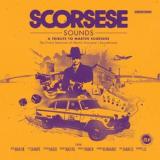
Various - Scorcese Sounds - A Tribute To Martin Scorsese (2x12")
  • A1: Dean Martin - You're Nobody Till Somebody Loves You
  • A2: Tony Bennett - Rags To Riches
  • A3: The Ink Spots - Whispering Grass (Don't Tell The Trees)
  • A4: The Shirelles - I Met Him On A Sunday (Aka "Da Doo Ron Ron")
  • A5: Robert & Johnny - You're Mine
  • A6: Howlin' Wolf - Smokestack Lightning
  • A7: The Cramps - The Creature From The Black Leather Lagoon
  • B1: Jimmy Smith - Walk On The Wild Side
  • B2: Jimpson & Group - The Murderer's Home
  • B3: Santo & Johnny - Sleep Walk
  • B4: Lonnie Johnson - Tomorrow Night
  • B5: Glenn Miller & His Orchestra - Moonlight Serenade
  • B6: Muddy Waters - Hoochie Coochie Man
  • B7: The Berlin Radio Symphony Orchestra - Radetzky March
  • C1: The Harptones - Life Is But A Dream
  • C2: Bing Crosby With Victor Young's Orchestra - Just One More Chance
  • C3: Charlie Parker - I'll Remember April
  • C4: Johnnie Ray - Cry
  • C5: Benny Goodman - Moonglow
  • C6: Lavern Baker - Tweedlee Dee
  • C7: Frankie Carle - I Want A Girl (Just Like The Girl)
  • D1: Ray Charles - Come Rain Or Come Shine
  • D2: Bo Diddley - Road Runner
  • D3: Brenda Lee - I'm Sorry
  • D4: The Marvelettes - Please Mr. Postman
  • D5: Jackie Gleason - Melancholy Serenade
  • D6: The Hot Club Of France With Django Reinhardt & Stéphane Grappelli - What Is This Thing Called Love
  • D7: The Danleers - One Summer Night
pré-commande17.04.2026

il devrait être publié sur 17.04.2026

Various - Tchic Tchic: French Bossa Nova 1963-1974  Colored Edition LP 2x12"
  • A1: Les Masques - Il Faut Tenir (1969)
  • A2: Isabelle Aubret - Casa Forte (1971)
  • A3: Christianne Legrand - Hlm Et Ciné Roman (1972)
  • A4: Jean Constantin - Pas Tant D'chichi Ponpon (1972)
  • A5: Billy Nencioli & Baden Powell - Si Rien Ne Va (1969)
  • B1-: Marpessa Dawn - Le Petit Cuica (1963)
  • B2: Jean-Pierre Sabar - Vai Vai (1974)
  • B3: Sophia Loren - De Jour En Jour (1963)
  • B4: Isabelle - Jusqu’à La Tombée Du Jour (1969)
  • B5: Sylvia Fels - Corto Maltesse (1974)
  • C1: Frank Gérard - Comme Une Samba (1972)
  • C2: Ann Sorel - La Poupée Des Favellas (1971)
  • C3: Charles Level - Un Enfant Café Au Lait (1971)
  • C4: Andrea Parisy - Les Mains Qui Font Du Bien (1970)
  • C5: Audrey Arno - Quand Jean-Paul Rentrera (1969)
  • C6: Aldo Frank - T’as Vu Ce Printemps (1970)
  • D1: Christianne Legrand - Cent Mille Poissons Dans Ton Filet (1972)
  • D2: Clarinha - Lemenja (1970)
  • D3: Hit Parade Des Enfants - Aquarela (1976)
  • D4: Jean-Pierre Lang - Tendresse (1965)
  • D5: Magalie Noël - Une Énorme Samba (1970)
  • D6: Françoise Legrand - La Lune

Ever since the late 1950s bossa-nova revolution, Brazil’s influence on French music has been undeniable. Pierre Barouh, Georges Moustaki and a vast array of lesser known artists, all made the Musica Popular Brasileira (MPB) an axis of promotion at the service of a cool and metaphysical, modern and mixed Brazilian lifestyle. Some were seduced by the poetic languors of the bossa, some were looking for fun, and others just loved the American hybridization of jazz-bossa, jazz-samba.


What is bossa nova? One of its creators, Joao Gilberto said: "Its style, cadence, everything is samba. At the very start, we didn't call it bossa nova, we sang a little samba made up of a single note - Samba de uma nota so .... The discussion around the origins of bossa nova is therefore useless”. It is nevertheless useful to remember that these magnificent Brazilian songs, which the guitarist describes as samba, were shifted and balanced around improbable chords. "I like things that lean, the in-betweens that limp with grace," said Pierre Barrouh, quoting Jean Cocteau.


With emotion, arrangements for violin and supple guitar licks, bossa nova rapidly changed. A transformation that can be heard in the Tchic, tchic, French Bossa Nova 1963-1974 compilation, the result of a cultural reappropriation, which traveled through the United States and supplemented itself in France.

A musical revolution that has remained significant, bossa nova was born in Rio. From 1956 to 1961, Brazil lived through its golden years. In five years, the country had invented its modernist style. Elected president in 1956, Juscelino Kubitschek de Oliveira, an elegant man with a broad forehead, brandished a promising slogan: "Fifty years of progress in five years". He quickly got to work. Not worried about increasing debt, he launched the project for a new federal capital, Brasilia, designed by the communist architect Oscar Niemeyer. Volkswagen opened state-of-the-art factories and created the “fusquinha”, the Beetle. In Rio, the Vespa made its first appearance. The Arpoador Surf Club crew run into the “girl” from Ipanema, Helô Pinheiro - the tanned garota ("chick"), between a flower and mermaid, who at 17 walked by the Veloso bar, where the fiery author and composer, Tom Jobim and Vinicius de Moraes, were getting drunk on whiskey. From then on, bossa symbolized cool.

In 1958, Joao Gilberto recorded Chega de Saudade, which the directors of Philips denied, calling it "music for fagots". The marketing director, who believed in it, secretly pressed 3000 78-inch vinyls and distributed them at schools around Rio, creating a tidal wave.

American jazzmen then took over. In particular, trumpeter Dizzy Gillespie and guitarist Charlie Byrd. In November 1962, the Brazilian Ministry of Foreign Affairs funded a "Bossa-Nova" concert at Carnegie Hall in New York, inviting the genre’s pioneers. Unprepared, the show soon turned to disaster. But the troupe was invited to the White House by Jackie Kennedy. The first lady loved "the new beat" and in particular Maria Ninguem, a song by Carlos Lyra, later covered by Brigitte Bardot.

In Brazil, the 1964 military coup quickly ended this euphoria. The destructive atmosphere that ensued pushed many Brazilian musicians to leave, if not to exile. Thus, Tom Jobim, Sergio Mendes and Joao Gilberto arrived to the United States. In New York, Joao Gilberto met saxophonist Stan Getz. At the time, he was married to the Bahianese Astrud Weinert Gilberto, who had a German father. She had never sung before, but she knew how to speak English. Getz therefore asked her to replace her husband on The Girl From Ipanema. The Getz/Gilberto record with Tom Jobim on piano, was released in March 1964. Phil Ramone, the "pope of pop" was in charge of sound.

Bossa nova arrived in Paris through the classic “guitar-voice” channel (Pierre Barouh, Baden Powell, Moustaki…) But France loved jazz and Paris had already welcomed its American contributors. All these good people were to pass through Saint-Germain-des-Prés. The cabaret l'Escale became the Mecca of Latin American sound where one could find Pierre Barrouh and his friends, such as the Camara Trio, samba-jazz aces, whose only record was published by the Saravah label. With a band strangely called Les Masques (a band that included Nicole Croisille and Pierre Vassiliu, among others), the Camara Trio recorded an interesting Brazilian Sound, including the track Il faut tenir which is present on this tasty compilation of rarities.

Other enlightened musicians can also be found on the compilation, such as Jean-Pierre Sabar (songwriter for Hardy, Auffray, Leforestier ...) and the French pop rock organist Balthazar. In 1975, Sabar recorded Aurinkoinen Musiikkimatka on a Finnish label, which featured the crazy Vai, Vai, included on this record. We are now following the footsteps of Brazilian electronic musicians such as Sergio Mendes, Eumir Deodato or Marcos Valle who created funk and disco sounds on their keyboards and synthesizers. A style that influenced Véronique Sanson when she wrote Jusqu’à la Tombée de la nuit in 1969 for Isabelle de Funès, the niece of Louis and a great friend of Michel Berger - Sanson did end up singing this track on her 1992 Sans Regret record.


The pinnacle of exoticism and travel, Sylvia Fels’ Corto Maltese includes bongos, sea mist and ocean sounds. The title was taken from Jacky Chalard’s concept album written in 1974, Je suis vivant, mais j’ai peur (I am alive, but I am scared), based on Gilbert Deflez’s science fiction novel.


However, bossa nova extended the scope of popularity. "In the 1970s, I was a fan of Sergio Mendes, Getz / Gilberto. I fell in love with this music that I knew because I had been an orchestral singer, " explained Isabelle Aubret, who in 1971 delivered a composite record of covers by the very funky Jorge Ben, Orfeu Negro, Tom Jobim, Vinicius de Morais and Jean Ferrat. "I recorded this album for Meys Records in Paris, far from Brazil, with wonderful musicians, François Raubert, Roland Vincent, Alain Goraguer...". The latter wrote the arrangements for Casa Forte, a very percussive title borrowed from Edu Lobo, one of the initiators of the bossa who spent time in California. "Jazz and bossa came together and produced very rhythmic music. I love singing, it allows me to dream, to have fun, to feel a high on stage, and these songs brought me joy, made me swing, my singing felt like a dance.”


The world tours of French singers and their desire for the tropics, often brought them to Rio with its hills, forests, caipirinhas and tanned bodies. There are surprises though, like this Iemenja (Iemenja is the goddess of the sea in the Afro-Brazilian candomblé religion). Not unlike the composer and musician Jean-Pierre Lang, based in Sao Paulo, Claire Chevalier taught Brazil to Brazil. In 1970, the singer and painter published a 45-inch vinyl, Mon mari et mes amants (My husband and my lovers), under the improbable pseudonym of Clarinha (little Claire). She was then living in Rio, with her husband, Joël Leibovitz, who founded a band called Azimuth, and who owned a record label specialized in "sambas enredos" songs for samba school parades.


For its B side, she asked Pierre Perret to come up with lyrics for a song composed by Carlos Imperial: "Oh goddess of the sea, o goddess Iemenja, I bring a white rose to adorn your long hair ..." . "Perret came to see us, and we had fun, remembers Joël Leibovitz. We wrote Lemenja for fun, we recorded it at the Havaí studio, behind the Central do Brasil the central station. Erlon Chaves, the arranger who worked with Elis Regina, joined us" adding his share of Afro-Brazilian percussions and funky brass to the mix.

There is a common misunderstanding in Franco-Brazilian history: that bossa, admittedly hedonistic, is perceived as funny, even though the poets who wrote the texts are often philosophizing on the human condition. Its French interpreters pull it towards a carnival inspired universe, far removed from its fundamental essence. Thus, Jean Constantin covered the famous Samba da minha terra, an ode to the art of samba written by the classic Bahian composer Dorival Caymmi, renaming it with the enticing title of Pas tant de tchi tchi pompon: "On your pier there is no tchi tchi / when you arch your back, you know everything is alright ”(lyrics by Gérard Calvi). This expedited bossa aims for the absurd, but retains a certain elegance.

Indeed, Jean Constantin was not an idiot, the rather large man had a huge mustache and liked fantasy, (Les pantoufles à papa, Le pacha, inspired by cha-cha-cha-cha, salsa and jazz) but he was also the lyricist of Mon manège à moi interpreted by Edith Piaf, the composer of Mon Truc en plume by Zizi Jeanmaire and the soundtrack of François Truffaut’s 400 Blows. Le Poulpe, published in 1970, from which this bossa is extract, was arranged by Jean-Claude Vannier, an accomplice of Serge Gainsbourg’s Melody Nelson. In short: "There is enough of samba / By looking at the parasol / Because my poor cabeza / Is going to die in the sun".

Even the American actress Marpessa Down, who was at the heart of the bossa nova revolution with her role as Euridyce in Marcel Camus’ film Orfeu Negro, winner of the 1959 Cannes Palme d'or, fed the clichée with Je voudrais parler au petit cuica - "Tell me how you manage to always make people want to dance / It's true, I must admit that I cannot resist your magic" - in consequence, once can hear the cuica, a little drum inherited from the Bantu.


But bossa nova had many angles. Societal, of course, pushing actresses who were symbols of women's liberation like Brigitte Bardot, Jeanne Moreau, or Sophia Loren to engage in the exercise of accelerated bossa. In February of 1963, Sophia Loren made a record in French in Rome, Je ne t'aime plus, featuring the song De jour en jour, a bossa written by two Italians, Armando Trovajoli and Tino Fornai, which was released a little later by Barclay. Bossa accompanied the 1960s, a decade of moral liberation. Ann Sorel, who interpreted La Poupée des favellas, caused a sensation with L’amour à plusieurs, a provocative song written by Frédéric Bottom and Jean-Claude Vannier. As for the actress Andrea Parisy, she displayed her bourgeois cheekiness in Marcel Carné's Les Tricheurs before interpreting Les mains qui font du bien. And Magalie Noël, the friend of Boris Vian, who sung Johnny fais-moi mal, was hired to sing Une énorme Samba, composed by Alain Goraguer (arranger to Gainsbourg, Bobby Lapointe and Jean Ferrat) with lyrics by Frédéric Botton.

But in the end, of what wood is bossa nova made of? The answer is given by Christianne Legrand, daughter of Raymond the conductor, and sister to Michel the composer: "With me, with jà" - jà means "immediately" in Portuguese. In 1972, the singer, an expert in vocal jazz and a member of the Double Six, published Le Brésil de Christianne Legrand. Two songs included on the Tchic Tchic compilation that demonstrate how bossa, jazz, funk, rock, etc. work like a swiss army knife: the music is used to denounce broken systems, or miracles, HLM et ciné roman, Cent mille poissons dans ton filet, two songs from the O Cafona soundtrack, a successful telenovela broadcast, at the time in black and white, on TV Globo. The first was adapted in French by the fighter and friend of the Legrand tribe, Agnès Varda. The second is content with a play on words, jostling them into a summer fun.


Véronique Mortaigne

pré-commande17.04.2026

il devrait être publié sur 17.04.2026

Various - Naive Melodies (Tape)

Various

Naive Melodies (Tape)

CassetteBBE424CTP
BBE Music
17.04.2026

Naive Melodies is a bold and visionary tribute to the music of Talking Heads, reinterpreted through the lens of Black musical innovation. Curated by Drew McFadden — the creative mind behind BBE’s acclaimed Modern Love (David Bowie tribute album) — this new collection dives deep into the Afro-diasporic rhythms and experimental soul roots that helped shape Talking Heads’ unmistakable New Wave sound. Inspired by artists like Fela Kuti, Parliament, and Al Green — whose influences loomed large in the band’s rhythmic DNA — Naive Melodies shines a light on the Black music traditions that underpinned their artistry. Far from a conventional tribute, Naive Melodies reframes the band’s catalog through the voices and visions of a new generation of genre-defying artists. These interpretations illuminate the foundational grooves and sonic textures that fueled Talking Heads’ rhythm-forward aesthetic, bringing them full circle with authenticity. “With Naive Melodies, I wanted to spotlight the deep and often overlooked influence of Black music on the sound of Talking Heads, drawing from the rhythmic foundations of Afro-diasporic traditions, soul, gospel, Latin, and spiritual jazz. This project is a chance to reimagine Talking Heads’ legacy through the lens of the very innovations that helped shape it, bringing those influences to the forefront through the voices of today’s most forward-thinking artists.” — Drew McFadden The album features a globally minded lineup, including Liv.e, Bilal, Rogê, Miguel Atwood-Ferguson, Aja Monet, Georgia Anne Muldrow, Theo Croker, Kenny Dope, Rosie Lowe, Pachyman, W.I.T.C.H., and more — spanning Afrobeat, jazz, soul, funk, gospel, dub, electronica, orchestral, and Latin styles. It reflects not only the boundary-pushing ethos of Talking Heads, but also the influence of Black music as a cultural force that helped shape it. This is not just a tribute album — it’s a recontextualization. A cultural conversation. A rhythmic reawakening.

pré-commande17.04.2026

il devrait être publié sur 17.04.2026

BCUC - The road is never easy

BCUC – Bantu Continua Uhuru Consciousness – have been channeling the spirit of Soweto for over twenty years. Indigenous funk, hip-hop consciousness, and punk rock energy fused into something utterly original and deeply rooted. Their mantra: Music for the people, by the people, with the people. From humble beginnings rehearsing in a shipping container, a stone's throw from the church where Desmond Tutu organized the escape of the most wanted anti-Apartheid activists, they kept believing in their dream of self-empowerment. Today they command festival stages worldwide: Glastonbury West Holts, Roskilde, Afropunk Brooklyn, WOMAD, Fusion, Sziget, FMM Sines, Beaches Brew, Boomtown, Colours of Ostrava, Couleur Café – to name just a few. In 2023, BCUC were honoured with the prestigious WOMEX Artist Award, an accolade usually reserved for more established artists, in recognition of their fearless work and transcendent live performances.

THE ROAD IS NEVER EASY

The Road Is Never Easy is BCUC's fifth album and their debut on Outhere Records. On this new offering, BCUC take listeners on another Afro-psychedelic journey into the soul of Soweto. It feels like a gospel sermon colliding with a punk concert, "guaranteed to touch untapped corners of your soul" (OkayAfrica). BCUC's music is deeply rooted in history and echoes the voices of the ones who came before. The road was never easy for the people of Soweto who originally came to work in the mines of Egoli, the City of Gold, Johannesburg. When apartheid finally ended after a long struggle, it was hoped that life would improve. But more than 30 years later, many of those initial hopes and dreams are still waiting to be fulfilled. This album is about that struggle. The album contains 10 brand new songs – a record for BCUC, whose previous albums featured an average of 3 songs. It represents the culmination of more than two decades of performing together and building a reputation as a powerful live act. These ten songs encapsulate that same live energy, each one building gradually and drawing you into BCUC's Afro-psychedelic stream of consciousness. It's a seismic tour de force through life in Soweto today. Songs like Amakhandela (Breaking All the Chains) connect history to daily life: "How is this precious metal inflicting so much pain in us," sing BCUC, "this government has been telling us we are free, but we don't benefit from being free." The album also talks about all the hopes and dreams that remain: "I have too many wishes and dreams in my head," BCUC sing in Um duma khanda, "I think I am losing my mind". The album ends with the soothing Matla a rona ke Bophelo, "our strength is life", praising the spirits and thanking the elders for protection. The Road Is Never Easy is about the harsh reality of life in Soweto, where "people always carry heavy loads". BCUC are street poets trying to deal with that burden: sometimes revolutionary, sometimes soothing, but always hopeful and compassionate. "When you are from Soweto you can't retreat nor surrender." (Sebenzela)

RECORDING

The album was largely recorded in Munich, Germany during tour breaks over two sessions, each three days long. It took place in a small studio located in a German WW II bunker converted into rehearsal spaces. The songs were recorded in one take altogether in one room, with only a few overdubs added, mainly backing vocals, by BCUC at Fourways studio in Johannesburg. BCUC have created their own distinctive way of writing, or rather, finding and creating their songs. The recording process is like an improvised live performance. They bring their ideas into a zone where the music, the rhythm and the spirits take over until the song starts to form. In this Afro-psychedelic zone BCUC create their unique poetry that feeds on the dreams still dreamt, the hopes, the fears and the temptations lingering everywhere. BCUC's songs need to breathe and time to build. The right take was the one when the song took over, and just like their live performances, no one knew beforehand where the song would take them. During the recording, BCUC just let it all flow out: inner turmoil, cries of rebellion, but also resilience and a search for healing, love, unity and compassion. You don't have to be from Soweto to feel the deep meaning and impact of this music. In these times of so much hate and division, BCUC are like a campfire for people to gather around.

PRODUCTION & ARTWORK

"BCUC have a unique magic," says Outhere's Jay Rutledge, who produced the album. "It blew our minds. It's like punk and pure gospel at the same time. Their music can make you dance and it can make you cry, all at the same time. And when the song is over, you feel you're not alone in this world anymore. We felt compelled to do this." The album cover is based on a matchbox design, matches being a common household item in South Africa even today. "These were the matches people used to burn government buildings and cars," explain BCUC. Little messages, addresses, or phone numbers used to be scribbled on the back of these boxes; each one a reminder of the strength, resilience, and resistance that once drove the struggle for freedom in Soweto. BCUC keep this flame burning. The Road Is Never Easy is a heavy spiritual road trip, a deep dive into the subconscious of Soweto and a quest for truth, justice and sanity in this crazy world. BCUC tackle the harsh realities of the voiceless, guided by the spirit world of their ancestors. Rather than reinforcing stereotypes of poverty, BCUC's portrayal of Africa is one rich in tradition, rituals and beliefs. "We bring fun and Afro-psychedelic fire from the hood," says vocalist Kgomotso Mokone.

pas en stock

Commandez maintenant et nous commanderons l'article pour vous chez notre fournisseur.


Derniere entrée: 33 jours
THE STONE ROSES - The Remixes (2x12")

THE STONE ROSES

The Remixes (2x12")

2x12inch19802947081
Sony Music
14.04.2026
  • A1: Made Of Stone (808 State Mix)
  • A2: I Am The Resurrection (Jon Carter Mix)
  • A3: Fools Gold (Grooverider’s Mix)
  • B1: One Love (Utah Saint’s Mix)
  • B2: I Wanna Be Adored (Bloody Valentine Edit)
  • B3: Fools Gold (Top Won Mix)
  • C1: Elephant Stone (Mint Royale Remix)
  • C2: Waterfall (12” Remix)
  • C3: She Bangs The Drums (Elephant Remix)
  • D1: Shoot You Down (The Soul Hooligan Remix)
  • D2: Waterfall (Justin Robertson’s Mix)
  • D3: Elizabeth My Dear (Kinobe Remix)

Always a dancefloor friendly act, The Remixes (originally issued 25 years ago) is the sound of the Roses biggest tunes revisited by many of the foremost names in UK dance music at that time – including legends such as Paul Oakenfold and Steve Osborne and fellow Mancunians 808 State and A Guy Called Gerald. With fully restored artwork, including notes from the remixers, this 2LP set features some tracks that have really stood the test of time. “808 State turns ‘Made of Stone’ into an aggressive, high-pitched piece of electro-pop. Rabbit in the Moon earns points simply for…. making over ‘I Wanna Be Adored’ into a slow acid house excursion. Elephant dares to twist ‘She Bangs the Drums’ into an echoing, spooky vocoder workout.”

pas en stock

Commandez maintenant et nous commanderons l'article pour vous chez notre fournisseur.


Derniere entrée: 48 jours
Guilty Razors - Complete Recordings 1977 - 1978

UILTY RAZORS, BONA FIDE PUNKS.


Writings on the topic that go off in all directions, mind-numbing lectures given by academics, and testimonies, most of them heavily doctored, from those who “lived through that era”: so many people today fantasize about the early days of punk in our country… This blessed moment when no one had yet thought of flaunting a ridiculous green mohawk, taking Sid Vicious as a hero, or – even worse – making the so-called alternative scene both festive and boorish. There was no such thing in 1976 or 1977, when it wasn’t easy to get hold of the first 45s by the Pistols or the Clash. Few people were aware of what was happening on the fringes of the fringes at the time. Malcolm McLaren was virtually unknown, and having short hair made you seem strange. Who knew then that rock music, which had taken a very bad turn since the early 1970s, would once again become an essential element of liberation? That, thanks to short and fast songs, it would once again rediscover that primitive, social side that was so hated by older generations? Who knew that, besides a few loners who read the music press (it was even better if they read it in English) and frequented the right record stores? Many of these formed bands, because it was impossible to do otherwise. We quickly went from listening to the Velvet Underground to trying to play the Stooges’ intros. It’s a somewhat collective story, even though there weren’t many people to start it.
The Guilty Razors were among those who took part in this initial upheaval in Paris. They were far from being the worst. They had something special and even released a single that was well above the national average. They also had enough songs to fill an album, the one you’re holding. In everyone’s opinion, they were definitely not among the punk impostors that followed in their wake. They were, at least, genuine and credible.

Guilty Razors, Parisian punk band (1975-1978). To understand something about their somewhat linear but very energetic sound, we might need to talk about the context in which it was born and, more broadly, recall the boredom (a theme that would become capital in punk songs) coupled with the desire to blow everything off, which were the basis for the formation of bands playing a rejuvenated rock music ; about the passion for a few records by the Kinks or the early Who, by the Stooges, by the Velvet mostly, which set you apart from the crowd.
And of course, we should remember this new wave, which was promoted by a few articles in the specialized press and some cutting-edge record stores, coming from New York or London, whose small but powerful influence could be felt in Paris and in a handful of isolated places in the provinces, lulled to sleep by so many appalling things, from Tangerine Dream to President Giscard d’Estaing...
In 1975-76, French music was, as almost always, in a sorry state ; it was still dominated by Johnny Hallyday and Sylvie Vartan. Local rock music was also rather bleak, apart from Bijou and Little Bob who tried to revive this small scene with poorly sound-engineered gigs played to almost no one.
In the working class suburbs at the time, it was mainly hard rock music played to 11 that helped people forget about their gruelling shifts at the factory. Here and there, on the outskirts of major cities, you still could find a few rockers with sideburns wearing black armbands since the death of Gene Vincent, but it wasn’t a proper mass movement, just a source of real danger to anyone they came across who wasn't like them. In August 1976, a festival unlike any other took place in Mont-de-Marsan – the First European Punk Festival as the poster said – with almost as many people on stage as in the audience. Yet, on that day, a quasi historical event happened, when, under the blazing afternoon sun, a band of unknowns called The Damned made an unprecedented noise in the arena, reminiscent of the chaotic Stooges in their early adolescence. They were the first genuine punk band to perform in our country: from then on, anything was possible, almost anything seemed permissible.

It makes sense that the four+1 members of Guilty Razors, who initially amplified acoustic guitars with crappy tape recorder microphones, would adopt punk music (pronounced paink in French) naturally and instinctively, since it combines liberating noise with speed of execution and – crucially – a very healthy sense of rebellion (the protesters of May 1968 proclaimed, and it was even a slogan, that they weren’t against old people, but against what had made them grow old. In the mid-1970s, it seemed normal and obvious that old people should now ALSO be targeted!!!).
At the time, the desire to fight back, and break down authority and apathy, was either red or black, often taking the form of leafleting, tumultuous general assemblies in the schoolyard, and massive or shabby demonstrations, most of the time overflowing with an exciting vitality that sometimes turned into fights with the riot police. Indeed, soon after the end of the Vietnam War and following Pinochet’s coup in Chile, all over France, Trotskyist and anarcho-libertarian fervour was firmly entrenched among parts of the educated youth population, who were equally rebellious and troublemakers whenever they had the chance. It should also be noted that when the single "Anarchy in the UK" was first heard, even though not many of us had access to it, both the title and its explosive sound immediately resonated with some of those troublemakers crying out for ANARCHY!!! Meanwhile, the left-wing majority still equated punks with reckless young neo-Nazis. Of course, the widely circulated photos in the mainstream press of Siouxsie Sioux with her swastikas didn’t necessarily help to win over the theorists of the Great Revolution. It took Joe Strummer to introduce The Clash as an anti-racist, anti-fascist and anti-ignorance band for the rejection of old-school revolutionaries to fade a little.

The Lycée Jean-Baptiste Say at Porte d’Auteuil, despite being located in the very posh and very exclusive 16th arrondissement of Paris, didn’t escape these "committed" upheavals, which doubled as the perfect outlet for the less timid members of this generation.
“Back then, politics were fun,” says Tristam Nada, who studied there and went on to become Guilty Razors’ frontman. “Jean-Baptiste was the leftist high-school in the neighbourhood. When the far right guys from the GUD came down there, the Communist League guys from elsewhere helped us fight them off.”
Anything that could challenge authority was fair game and of course, strikes for just about any reason would lead to increasingly frequent truancy (with a definitive farewell to education that would soon follow). Tristam Nada spent his 10th and 11th unfinished grades with José Perez, who had come from Spain, where his father, a janitor, had been sentenced to death by Franco. “José steered my tastes towards solid acts such as The Who. Like most teenagers, I had previously absorbed just about everything that came my way, from Yes to Led Zeppelin to Genesis. I was exploring… And then one day, he told me that he and his brother Carlos wanted to start a rock band.” The Perez brothers already played guitar. “Of course, they were Spanish!”, jokes their singer. “Then, somewhat reluctantly, José took up the bass and we were soon joined by Jano – who called himself Jano Homicid – who took up the rhythm guitar.” Several drummers would later join this core of not easily intimidated young guys who didn’t let adversity get the better of them.

The first rehearsals of the newly named Guilty Razors took place in the bedroom of a Perez aunt. There, the three rookies tried to cover a few standards, songs that often were an integral part of their lives. During a first, short gig, in front of a bewildered audience of tough old-school rockers, they launched into a clunky version of the Velvet Underground's “Heroin”. Challenge or recklessness? A bit of both, probably… And then, step by step, their limited repertoire expanded as they decided to write their own songs, sung in a not always very accurate or academic English, but who cared about proper grammar or the right vocabulary, since what truly mattered was to make the words sound as good as possible while playing very, very fast music? And spitting out those words in a language that left no doubt as to what it conveyed mattered as well.
Trying their hand a the kind of rock music disliked by most of the neighbourhood, making noise, being fiercely provocative: they still belonged to a tiny clique who, at this very moment, had chosen to impose this difference. And there were very few places in France or elsewhere, where one could witness the first stirrings of something that wasn’t a trend yet, let alone a movement.

In the provinces, in late 1976 or early 1977, there couldn’t be more than thirty record stores that were a bit more discerning than average, where you could hear this new kind of short-haired rock music called “punk”. The old clientele, who previously had no problem coming in to buy the latest McCartney or Aerosmith LP, now felt a little less comfortable there…
In Paris, these enlightened places were quite rare and often located nex to what would become the Forum des Halles, a big shopping mall. Between three aging sex workers, a couple of second-hand clothes shops, sellers of hippie paraphernalia and small fashion designers, the good word was loudly spread in two pioneering places – propagators of what was still only a new underground movement. Historically, the first one was the Open Market, a kind of poorly, but tastefully stocked cave. Speakers blasted out the sound of sixties garage bands from the Nuggets compilation (a crucial reference for José Perez) or the badly dressed English kids of Eddie and the Hot Rods. This black-painted den was opened a few years earlier by Marc Zermati, a character who wasn’t always in a sunny disposition, but always quite radical in his (good) choices and his opinions. He founded the independent label Skydog and was one of the promoters of the Mont-de-Marsan punk festivals. Not far from there was Harry Cover, another store more in tune with the new New York scene, which was amply covered in the house fanzine, Rock News (even though it was in it that the photos of the Sex Pistols were first published in France).
It was a favorite hang-out of the Perez brothers and Tristam Nada, as the latter explained. “It’s at Harry Cover’s that we first heard the Pistols and Clash’s 45s, and after that, we decided to start writing our first songs. If they could do it, so could we!”
The sonic shocks that were “Anarchy in the UK”, “White Riot” or the Buzzcocks’s EP, “Spiral Scratch” – which Guilty Razors' sound is reminiscent of – were soon to be amplified by an unparalleled visual shock. In April 1977, right after the release of their first LP, The Clash performed at the Palais des Glaces in Paris, during a punk night organised by Marc Zermati. For many who were there, it was the gig of a lifetime…
Of course, Guilty Razors and Tristam were in the audience: “That concert was fabulous… We Parisian punks were almost all dressed in black and white, with white shirts, skinny leather ties, bikers jackets or light jackets, etc. The Clash, on the other hand, wore colourful clothes. Well, the next day, at the Gibus, you’d spot everyone who had been at this concert, but they weren’t wearing anything black, they were all wearing colours.”

It makes sense to mention the Gibus club, as Guilty Razors often played there (sometimes in front of a hostile audience). It was also the only place in Paris that regularly scheduled new Parisian or Anglo-Saxon acts, such as Generation X, Siouxsie and the Banshees, the Slits, and Johnny Thunders who would become a kind of messed-up mascot for the venue. A little later, in 1978, the Rose Bonbon – formerly the Nashville – also attracted nightly owls in search of electric thrills… In 1977, the iconic but not necessarily excellent Asphalt Jungle often played at the Gibus, sometimes sharing the bill with Metal Urbain, the only band whose aura would later transcend the French borders (“I saw them as the French Sex Pistols,” said Geoff Travis, head of their British label Rough Trade). Already established in this small scene, Metal Urbain helped the young and restless Guilty Razors who had just arrived. Guitarist for Metal Urbain Hermann Schwartz remembers it: “They were younger than us, we were a bit like their mentors even if it’s too strong a word… At least they were credible. We thought they were good, and they had good songs which reminded of the Buzzcocks that I liked a lot. But at some point, they started hanging out with the Hells Angels. That’s when we stopped following them.”

The break-up was mutual, since, Guilty Razors, for their part, were shocked when they saw a fringe element of the audience at Metal Urbain concerts who repeatedly shouted “Sieg Heil” and gave Nazi salutes. These provocations, even still minor (the bulk of the skinhead crowd would later make their presence felt during concerts), weren’t really to the liking of the Perez brothers, whose anti-fascist convictions were firmly rooted. Some things are non-negotiable.
A few months earlier (in July 1978), Guilty Razors had nevertheless opened very successfully for Metal Urbain at the Bus Palladium, a more traditonally old-school rock night-club. But, as was sometimes the case back then, the night turned into a mass brawl when suburban rockers came to “beat up punks”.

Back then, Parisian nights weren’t always sweet and serene.

So, after opening as best as they could for The Jam (their sound having been ruined by the PA system), our local heroes were – once again – met outside by a horde of greasers out to get them. “Thankfully,” says Tristam, “we were with our roadies, motorless bikers who acted as a protective barrier. We were chased in the neighbouring streets and the whole thing ended in front of a bar, with the owner coming out with a rifle…”
Although Tristam and the Perez brothers narrowly escaped various, potentially bloody, incidents, they weren’t completely innocent of wrongdoing either. They still find amusing their mugging of two strangers in the street for example (“We were broke and we simply wanted to buy tickets for the Heartbreakers concert that night,” says Tristam). It so happened that their victims were two key figures in the rock business at the time: radio presenter Alain Manneval and music publisher Philippe Constantin. They filed a complaint and sought monetary compensation, but somehow the band’s manager, the skilful but very controversial Alexis, managed to get the complaint withdrawn and Guilty Razors ended up signing with Constantin with a substantial advance.

They also signed with Polydor and the label released in 1978 their only three-track 45, featuring “I Don't Wanna be A Rich”, “Hurts and Noises” and “Provocate” (songs that exuded perpetual rebellion and an unquenchable desire for “class” confrontation). It was a very good record, but due to a lack of promotion (radio stations didn’t play French artists singing in English), it didn’t sell very well. Only 800 copies were allegedly sold and the rest of the stock was pulped… Initially, the three tracks were to be included on a LP that never came to be, since they were dropped by Polydor (“Let’s say we sometimes caused a ruckus in their offices!” laughs Tristam.) In order to perfect the long-awaited LP, the band recorded demos of other tracks. There was a cover of Pink Floyd's “Lucifer Sam” from the Syd Barrett era – proof of an enduring love for the sixties’ greats –, “Wake Up” a hangover tale and “Bad Heart” about the Baader-Meinhof gang, whose actions had a profound impact on the era and on a generation seeking extreme dissent... On the album you’re now discovering, you can also hear five previously unreleased tracks recorded a bit later during an extended and freezing stay in Madrid, in a makeshift studio with the invaluable help of a drummer also acting as sound engineer. He was both an enthusiastic old hippie and a proper whizz at sound engineering. Here too, certain influences from the fifties and sixties (Link Wray, the Troggs) are more than obvious in the band’s music.

Shortly after a final stormy and rather barbaric (on the audience’s side) “Punk night” at the Olympia in June 1978, Tristam left the band ; his bandmates continued without him for a short while.

But like most pioneering punk bands of the era, Guilty Razors eventually split up for good after three years (besides once in Spain, they’d only played in Paris). The reason for ceasing business activities were more or less the same for everyone: there were no venues outside one’s small circuit to play this kind of rock music, which was still frightening, unknown, or of little interest to most people. The chances of recording an LP were virtually null, since major labels were only signing unoriginal but reassuring sub-Téléphone clones, and the smaller ones were only interested in progressive rock or French chanson for youth clubs. And what about self-production? No one in our small safety-pinned world had thought about it yet. There wasn’t enough money to embark on that sort of venture anyway.

So yes, the early days of punk in France were truly No Future!

pas en stock

Commandez maintenant et nous commanderons l'article pour vous chez notre fournisseur.


Derniere entrée: 52 jours
WILD NOTHING - LIFE OF PAUSE (LENTICULAR SLEEVE) [SIGNED PRINT ED]
  • 1: Reichpop
  • 2: Lady Blue
  • 3: A Woman's Wisdom
  • 4: Japanese Alice
  • 5: Life Of Pause
  • 6: Alien
  • 7: To Know You
  • 8: Adore
  • 9: Tv Queen
  • 10: Whenever I
  • 11: Love Underneath My Thumb

White vinyl. Signed Print Edition. When Jack Tatum began work on Life of Pause, his third full-length to date, he had lofty ambitions: Don't just write another album; create another world. One with enough detail and texture and dimension that a listener could step inside, explore, and inhabit it as they see fit. "I desperately wanted for this to be the kind of record that would displace me," he says. "I'm terrified by the idea of being any one thing, or being of any one genre. And whether or not I accomplish that, I know that my only hope of getting there is to constantly reinvent. That reinvention doesn't need to be drastic, but every new record has to have its own identity, and it has to have a separate set of goals from what came before." What came before: a rightfully acclaimed, much beloved display of singular pop craftsmanship. Tatum's dreamy, unexpected 2010 debut, Gemini, was written while he was still a student at Virginia Tech University. Its equally disarming follow-up, 2012's Nocturne, marked the first time he'd been able to bring his bedroom recordings into a studio, to be performed and fully realized with the help of other musicians. There has been a set of wonderfully expansive EPs in between_each hinting at new directions and punctuating previous ideas_but with Life of Pause, Tatum delivers what he describes as his most "honest" and "mature" work yet, an exquisitely arranged and beautifully recorded collection of songs that marry the immediate with the indefinable. "I allowed myself to go down every route I could imagine even if it ended up not working for me," he says. "I owe it to myself to take as many risks as possible. Songs are songs and you have to allow yourself to be open to everything." After a prolonged period of writing and experimentation, recording took place over several weeks in both Los Angeles and Stockholm, with producer Thom Monahan (Devendra Banhart, Beachwood Sparks) helping Tatum in his search for a more natural and organically textured sound. In Sweden, in a studio once owned by ABBA, they enlisted Peter, Bjorn and John drummer John Ericsson and fellow Swedish Radio Symphony Orchestra veteran Pelle Jacobsson, to contribute drums and marimba. In California, at Monahan's home, Tatum collaborated with Medicine guitarist Brad Laner and a crew of saxophonists. From the hypnotic polyrhythms of "Reichpop" to the sugary howl of "Japanese Alice" to the hallucinogenic R&B of "A Woman's Wisdom," the result is a complete, fully immersive listening environment. "I just kept things really simple, writing as ideas came to me," he says. "There's definitely a different kind of `self' in the picture this time around. There's no real love lost, it's much more a record of coming to terms and defining what it is that you have_your place, your relationships. I view every record as an opportunity to write better songs. At the end of the day it still sounds like me, just new."

pré-commande10.04.2026

il devrait être publié sur 10.04.2026

The Dahmers - Creature Feature LP

This is the Dahmers third album “Creature Feature” and the band continues to dig deeper in to a world of dark things, the things that don't belong, provokes, gives you the creeps or just makes you want to look away. “Our vision has been to explore and develop the bands sound but also to maintain the bands profound and colorful essence. “We want people to get excited when they hear the album, take them with us to another planet and make 'em forget about all the trouble in the world for a while” - Christoffer Karlsson (Lead singer/guitar)
The album was recorded and co-produced by Johan Gustafsson aka “The Johan and only” from the Hives in studio Ingrid in Stockholm. There's a new level and feel to the production with guest musicians on some tracks. With instruments like brass, cello, flute and piano the songs reaches their full true potential, along with added synth elements this gives the band a fresh feel. There's a wide variety of songs on the album where every track has it's very own theme, sound and characteristics. Where deep subjects like darkness, sorrow and alienation are being explored along with the bands continuing homage to the classic slasher and giallo flicks of the 70's and 80's, but also songs about a Swedish fakir, cults, rats and creatures from outer space. This album is a celebration to trash culture and to the underdogs, all delivered with a catchy uplifting chorus that The Dahmers is known for.
Creature Feature will be released on the bands own label Eerie sounds and will be out on February Friday the 13th.

pré-commande10.04.2026

il devrait être publié sur 10.04.2026

Jeffrey Lewis & Voltage - Bad Wiring LP
  • 1: Exactly What Nobody Wanted
  • 2: Except For The Fact That It Isn't
  • 3: My Girlfriend Doesn't Worry
  • 4: Depression! Despair!
  • 5: Till Question Marks Are Told
  • 6: Lps
  • 7: Knucklehead/Happy Rain
  • 8: Take It For Granted
  • 9: In Certain Orders
  • 10: Where Is The Machine
  • 11: Dogs Of My Neighborhood
  • 12: Not Supposed To Be Wise

‘Bad Wiring’ by Jeffrey Lewis & The Voltage, originally released in 2019 and long ago sold out, is re-released in UK/Europe on Blang Records. Recorded in Nashville by Roger Moutenot (Lou Reed, Yo La Tengo, Sleater-Kinny) the album blends raw lo-fi garage-punk with acoustic interludes. His trademark literate lyrics, moving between the poignant and the hilarious, shift from personal anxieties to existential dread (often in the same song eg, ‘My Girlfriend Doesn't Worry'), record stores ('LPs') and under-appreciated artists ('Exactly What Nobody Wanted'). The album was greeted with widespread acclaim in 2019 with many reviewers declaring it his best yet. Jeffrey Lewis & The Voltage play End Of The Road in September with a UK/Europe tour planned to follow.
Press For Bad Wiring In 2019:
" The “and about our relationship” refrain of ‘My Girlfriend Doesn’t Worry’ will have you replaying the album instantly." grade A- Robert Christgau, Consumer Guide (top albums of the year 2019).
" terrific wordplay." ******* Rob Hughes, Uncut
"Thick with the evergreen anti-folkie's charm." **** Mojo
"Electrifying, again." **** Q Magazine.
"one of the most consistently enjoyable records Lewis has made in his 18-year career." ********- HotPress
"possibly his best studio album yet." **** The Skinny.
"Jeff Lewis sits comfortably with Lou Reed and Leonard Cohen as an exemplary songwriter. Reed always strived for street cool and Cohen’s words were imbued with mysticism and his love of women. Lewis has the courage to open up his heart and lay out all the horrible neurosis, paranoia, and despair that we all fall prey to. Reed the cool, Cohen the mystic and Lewis the honest. A better triumvirate you couldn’t hope for.” Louder Than War.
"There’s a strong suggestion that this is the best album his written to date and after listening to just a handful of songs you’d be hard-pushed to disagree – you’ll also be left wondering why in the hell Lewis is not better known than he is, this album is filled with unforgettable songs that set his songwriting apart from anything else you’re likely to hear today." Folk Radio UK.

pré-commande10.04.2026

il devrait être publié sur 10.04.2026

MELANIE BAKER - SOMEBODY HELP ME, I'M BEING SPONTANEOUS!
  • Aaaaaaa Ahhhhhhhh!!!!
  • Sad Clown
  • Haha!
  • Bored
  • Why Would I Want To Be Just Like You?
  • Cabin Fever
  • My Head Fell Off Last Night
  • Real Life
  • City Strange
  • Bye Bye, Loser Blues
  • Slugs
  • You'll Get Better

Melanie Baker komponiert Musik über alles, was schmerzt, und alles, was sich gut anfühlt. Sie lebt in Newcastle (Großbritannien) und schreibt mit unerschütterlicher Ehrlichkeit - Songs, die zwischen lauter Katharsis und leisen Geständnissen, zwischen absurdem Humor und tiefer Verletzlichkeit schwanken. Mit hämmernden Trommeln, verzerrten Gitarren und zarter lyrischer Präzision greift Baker den Mut und den Geist des Alternative Rock der 90er Jahre durch eine queere, moderne Linse wieder auf.

pré-commande10.04.2026

il devrait être publié sur 10.04.2026

UPSAMMY / VALENTINA MAGALETTI - SEISMO

A cocktail of rebellious queer vocal fragments, deceptive percussive granules and swaying hammered vibrations, upsammy and Valentina Magaletti's first collaboration trembles with suspense. The seeds of 'Seismo' were sown following a commission from Amsterdam's Rijksmuseum to soundtrack an exhibition of work from the Museum Boijmans van Beuningen in Rotterdam and the duo didn't want to approach their collaboration flippantly. So, wandering the museum's maze of rooms, they recorded various improvised percussive sounds with their arsenal of microphones, using the space to inform various rhythms and textures that were sculpted later into electroacoustic vignettes. This was just the starting point, though; as Magaletti and upsammy began performing together, the project evolved and 'Seismo' began to take shape. The duo had struck on a salient aesthetic concept, using mostly digital and acoustic mallet instruments to blur the boundary between their roles and create friction between the synthetic and the authentic. And the finished record is a phantasmagoric push-and-pull between its various conflicting elements: harmony and dissonance, randomness and predictability, openness and constraint. 'Seismo' isn't the first time that upsammy has studied her environment in search of revelation. On her acclaimed second album, 2024's 'Germ in a Population of Buildings', the Amsterdam-based DJ, producer and multidisciplinary artist erected her complex, unorthodox rhythms and eerie melodies around a modernist frame of field recordings collected in various cityscapes, countering heavyweight basslines with subtle, microscopic sounds. London-based Italian vanguard Magaletti, meanwhile, has applied her unique logic to innumerable projects at this point, working with everyone from batida icon Nídia and hardcore-dub outfit Moin to French writer Fanny Chiarello and British bass scientist Shackleton. For years she's approached the drums with criticism, attempting to challenge any preconceptions, something that's most visible on 2020's 'A Queer Anthology of Drums'. And both artists' thoughtful perspectives are welded together seamlessly on 'Seismo', a dizzying suite of eight eccentric statements that's fragile but never insecure, gauzy but not indistinct. An unnerving sense of space characterizes 'It Comes to an End' as Magaletti's in situ improvisations herald for upsammy's microscopic glitches and chiming pitch-bent melodies. It's almost unbalancing to witness the track's impossible dimensionality, the interplay between reverberant marimba hits and bone-dry synths, or percussion that's been recorded and processed in consciously different settings. A new architecture emerges in the sound itself that the two artists scan and explore meticulously, testing its boundaries with undulating hybridized rhythms on the invigorating 'Superimposed' and offsetting the powdery drums with liquified smacks and alien voices. The duo's vibrations are knotted with piano flourishes on 'Hyperlocalize', balanced with artificial clanks and clangs that disappear into the track's sonorous atmosphere, replaced by whispers and half-hallucinated insectoid chirps. 'Seismo' is an album that feeds off the energy generated by its juxtapositions: the tension and anticipation that's melted by rapid, hyperactive movement and the finely drawn rhythms disrupted by a layer of indistinct, barely perceptible microsounds. It's a collaboration that sounds like two minds challenging each other but not wrestling, each peering from their own distinct vantage point and imagining a third landscape shaped by optimistic, queer vibrations.

pas en stock

Commandez maintenant et nous commanderons l'article pour vous chez notre fournisseur.


Derniere entrée: 39 jours
DOODSESKADER - THE CHANGE IS ME
  • 01: Glass Mask On
  • 02: Celebrity Culture Simp Farm
  • 03: Please Just Make It Stop
  • 04: No Laughter Left In Me
  • 05: Weaponizing My Failures
  • 06: Unthinking My Every Thought
  • 07: Insignificant Other
  • 08: It Keeps On Stinging
  • 09: I Took A Pill In Vilvoorde
  • 10: Suffering In Technicolor

DOODSESKADER clearly haven’t had enough of redefining boundaries – they’ve only just gotten started. Tim De Gieter and Sigfried Burroughs return on April 3rd, 2026 with their third full-length album, The Change Is Me, a rollercoaster that can only be described as the unstable lovechild between witch house, hip-hop, industrial dream pop, and stadium rock that can’t decide if it wants to watch the world burn or shout from the rooftops that we need to save it. Their combination of grungy 90s melodies with distorted synths, sludgy bass, hard tuned vocals, rapping, singing, and explosions of undiluted rage at the current state of the world leave you wondering just exactly what it was you smoked last night, and if it was too much or not enough. The Change Is Me is an album that grabs you by the arm and asks if you’re ready to go on a grand adventure, then pulls you into its chaos before you can say “yes” or “no.”

Tim and Sigfried aren’t just breaking the boundaries between genres; they’re breaking out of their own Year cycle, a path they had laid out for themselves at the band’s inception in 2020. Up until now, the duo had set out to document their “journey to getting better” through writing one album each year: Year Zero (2020), Year One (2022), and most recently Year Two (2024). After spending eight months throughout 2024 and 2025 writing, recording, producing and mixing Year Three, the band scrapped the finished record entirely. Playing shows while simultaneously navigating the process of mixing Year Three created a sort of disconnect – the people that they were when they wrote that record and the people that playing shows made them become were no longer one and the same. “We’re people with faults and strengths, and we realized we needed to accept it. That’s equal parts bleak and liberating. If you’re so focused on self-improvement, you can’t even applaud yourself for how far you’ve come,” the band explains. “This project is meant to be a document of us and of the human condition, not a self-improvement handbook designed to keep us all stuck on what may or may not have happened to us or because of us in the past.”

DOODSESKADER chose instead to embark anew on a week-long creative journey in Tim’s own Much Luv Studio with one goal in mind: to make an album that captures who they are right now. Finally writing everything together in the same room for the first time in years, the process of bringing "The Change Is Me" to life was captured by Diana Lungu in their latest documentary, "Now I Know You See Me", out December 2nd, 2025.

"The Change Is Me" marks the beginning of DOODSESKADER’s shift into a more positive era, both musically and conceptually. Over the course of the 40-minute record we hear the two friends unite in a fight against a world that grows more and more disappointing, a concept made crystal clear in tracks like “Celebrity Culture Simp Farm,” “It Keeps On Stinging,” and of course the album’s epic closer “Suffering In Technicolor.” While their previous albums saw them trying to outrun their pasts and arrive at a better version of themselves, here the search for some external or internal revelation that will “make them better” is no more. It’s been replaced by the realization that change isn’t something we force: it’s gradual, and more importantly, it’s something that’s already there – we just need to reach out and accept it.

The band’s live appearances over the last several years have been instrumental in shaping their ideology. On stage is where the duo find connection; not only with the audience, but also with each other. Their sold-out release shows at Ancienne Belgique (2022) and VierNulVier (2024) have proven that they are one of Belgium’s must-see acts. Abroad, their energy has translated into a month-long EU/UK tour with French band Alcest in 2024, as well as appearances at festivals such as Roadburn Festival (NL), Eurosonic (NL), Hellfest (FR), Mystic Fest (PL), Jera On Air (NL), ArcTanGent (UK), Fluff Fest (CZ) and more.

"The Change Is Me" is out April 3rd, 2026 on DOODSESKADER’s own label, 45 Records.

pré-commande03.04.2026

il devrait être publié sur 03.04.2026

VARIOUS - SCORSESE SOUNDS - Scorsese Sounds - A Tribute To Martin Scorsese LP 2x12"
  • Dean Martin - You're Nobody Till Somebody Loves You
  • Tony Bennett - Rags To Riches
  • The Ink Spots - Whispering Grass (Don't Tell The Trees)
  • The Shirelles - I Met Him On A Sunday (Aka "Da Doo Ron
  • Robert & Johnny - You're Mine
  • Howlin' Wolf - Smokestack Lightning
  • The Cramps - The Creature From The Black Leather Lagoon
  • Jimmy Smith - Walk On The Wild Side
  • Jimpson & Group - The Murderer's Home
  • Santo & Johnny - Sleep Walk
  • Lonnie Johnson - Tomorrow Night
  • Glenn Miller & His Orchestra - Moonlight Serenade
  • Muddy Waters - Hoochie Coochie Man
  • The Berlin Radio Symphony Orchestra - Radetzky March
  • The Harptones - Life Is But A Dream
  • Bing Crosbywithvictor Young's Orchestra - Just One Mo
  • Charlie Parker - I'll Remember April
  • Johnnie Ray - Cry
  • Benny Goodman - Moonglow
  • Lavern Baker - Tweedlee Dee
  • Frankie Carle - I Want A Girl (Just Like The Girl)
  • Ray Charles - Come Rain Or Come Shine
  • Bo Diddley - Road Runner
  • Brenda Lee - I'm Sorry
  • The Marvelettes - Please Mr. Postman
  • Jackie Gleason - Melancholy Serenade
  • The Hot Club Of France Withdjango Reinhardt&Stéphane
  • The Danleers - One Summer Night

Scorsese Sounds - A Tribute To Martin Scorsese - The Finest Selection of Martin Scorsese"s Soundtracks Martin Scorsese ist nicht nur ein Meister des Films, sondern auch ein Virtuose der Musikauswahl. Mit "Scorsese Sounds" erleben Sie die unverwechselbare Klangwelt seiner größten Werke - von epischen Gangster-Sagas bis hin zu psychologischen Dramen und zeitlosen Klassikern. Diese exklusive Doppel-Vinyl vereint die Essenz der Soundtracks, die Scorseses Filme zu Kult gemacht haben. Jeder Track ist sorgfältig ausgewählt, um die Atmosphäre und Emotionen der legendären Szenen einzufangen - von der rauen Energie des New Yorker Untergrunds bis zur eleganten Nostalgie vergangener Zeiten. Ein Muss für Cineasten, Vinyl-Liebhaber und alle, die die Magie von Bild und Ton schätzen. Tauchen Sie ein in die musikalische DNA eines der größten Regisseure unserer Zeit.

pré-commande03.04.2026

il devrait être publié sur 03.04.2026

JOHN ANDREWS & THE YAWNS - Streetsweeper LP

John Andrews has spent the past few years tucked away in Red Hook, Brooklyn - a neighborhood that sits just beyond the natural drift of the city. Once shaped by maritime industry and later a haven for artists in search of vast warehouse space, its history and isolation give it a quiet magnetism. Streetsweeper, the fifth album by John Andrews & The Yawns, reflects that vantage point-tranquil, self-contained, and curious about the movements most people overlook.
Just a few cobblestone blocks from the freight-ship-lined harbor, Andrews wrote dozens of new songs at his electric piano. Nine of them found their way to Los Angeles to be recorded with Luke Temple, who played guitar and some bass. Drummer Noah Bond and bassist Kevin Louis Lareau, both longtime members of The Yawns and Cut Worms, form the rhythm section. Will Henriksen of Florry played fiddle on “Something To Be Said,” while Emily Moales of Star Moles sang harmonies recorded remotely by Kevin Basko at Historic New Jersey.
Red Hook may not be the easiest neighborhood to reach, but that distance gives it a singular glow-one Andrews sneaks into every note of Streetsweeper. The Super 8 video for “Something To Be Said,” shot by Hilla Eden, wanders through its streets like a hazy love letter. The album offers a similar invitation: step off the main road, linger a little, and notice the small, overlooked moments that make a place-and a life-rich. Andrews has swept those margins with care, leaving songs that listen, observe, and stay with you.

pré-commande03.04.2026

il devrait être publié sur 03.04.2026

JOHN ANDREWS & THE YAWNS - Streetsweeper LP

John Andrews has spent the past few years tucked away in Red Hook, Brooklyn - a neighborhood that sits just beyond the natural drift of the city. Once shaped by maritime industry and later a haven for artists in search of vast warehouse space, its history and isolation give it a quiet magnetism. Streetsweeper, the fifth album by John Andrews & The Yawns, reflects that vantage point-tranquil, self-contained, and curious about the movements most people overlook.
Just a few cobblestone blocks from the freight-ship-lined harbor, Andrews wrote dozens of new songs at his electric piano. Nine of them found their way to Los Angeles to be recorded with Luke Temple, who played guitar and some bass. Drummer Noah Bond and bassist Kevin Louis Lareau, both longtime members of The Yawns and Cut Worms, form the rhythm section. Will Henriksen of Florry played fiddle on “Something To Be Said,” while Emily Moales of Star Moles sang harmonies recorded remotely by Kevin Basko at Historic New Jersey.
Red Hook may not be the easiest neighborhood to reach, but that distance gives it a singular glow-one Andrews sneaks into every note of Streetsweeper. The Super 8 video for “Something To Be Said,” shot by Hilla Eden, wanders through its streets like a hazy love letter. The album offers a similar invitation: step off the main road, linger a little, and notice the small, overlooked moments that make a place-and a life-rich. Andrews has swept those margins with care, leaving songs that listen, observe, and stay with you.

pré-commande03.04.2026

il devrait être publié sur 03.04.2026

Yungmorpheus & Real Bad Man - The Chalice & The Blade LP 2x12" +7"

Real Bad Man and YUNGMORPHEUS are excited to announce their new album The Chalice & The Blade is out now. The album features Boldy James, Kool Keith, Grip, Blu, Fatboi Sharif, and more.

YUNGMORPHEUS is a highly innovative rapper that consistently endeavors to redefine the boundaries of originality and elevate the art of lyricism. Earlier this year, YUNGMORPHEUS dropped his critically acclaimed album “From Whence It Came” which received praise from The FADER, NPR, SPIN, and was hailed by QUIP Mag as “Everything you need from a hip-hop record.”

Since 2020, Prolific LA-based producer and designer Adam Weissman (Real Bad Man) has been on a sensational run releasing albums with Boldy James, Smoke DZA, and Pink Siifu. The Chalice & The Blade will be Real Bad Man’s third album of the year following his remarkable collaborations with Blu (“Bad News”) and Kool Keith (“Serpent”).

The Chalice & The Blade showcases a unique ambiance marked by a stoney and atmospheric quality, interspersed with elements of funk. Real Bad Man explains the album making process, "I always tailor the music to the artist I’m collaborating with. I sent Morpheus a bunch of beats that he’d sound good over and once he started picking them, that set the path. We’d record and I’d make more beats, and move stuff around, get rid of some songs and record new ones. It was a good process. I like being able to adjust as we go, I think that makes for a good album. We left some songs on the cutting room floor. Cream rises."

YUNGMORPHEUS discussing the new album, “‘The Chalice & The Blade’ is an album primarily rooted in dichotomies; contemplation of action vs action itself, inner locus vs outer locus, pursuit for self vs pursuit for others. Honesty is always the centerpiece. Play if you want cause I’m not!”

On The Chalice & The Blade, the seamless synergy between Real Bad Man and YUNGMORPHEUS takes center stage, showcasing an extraordinary chemistry that elevates every track to new heights of musical innovation.

pré-commande03.04.2026

il devrait être publié sur 03.04.2026

Chris Acker - Famous Lunch LP

Chris Acker

Famous Lunch LP

12inchLPGRHL024C2
GAR HOLE RECORDS
03.04.2026

Chris Acker’s latest collection of songs, Famous Lunch, is in his words, a “growing pains album.” When writing the record, the New Orleans' based folk musician found himself hunting for a voice that wasn’t just an imitation of the one he’d been using on the last 30 songs he’d made. “At the same time, I worked hard to find a certain voice for myself over the previous 3 records and I didn’t want to abandon that.”

While the album finds him continuing to transcribe life’s fleeting and provocative banalities with refreshing grace, the songs on Famous Lunch are intentionally more absurd, stylizing his lyricism as both poetic and disarming simultaneously— commencing with “Sh*t Surprise”—an earworm with a vernacular that stays true to its title. Inspired by George Saunders and Sasha Pearl (and wanting to make a song that sounds like Eagles saying the word “sh*t” over and over), “Sh*t Surprise” is the most Chris Acker song possible, in that its earnestness arrives in spades and comes varnished with a one-of-a-kind, spectacular gnarliness. “We’d match our breath in the upstairs room and we’d hold together ‘til I smelled like you,” Acker sings, before nose-diving into that unforgettable chorus about stepping in a smelly, disgusting pile of sh*t.

More than anything else, Famous Lunch finds Chris Acker at his most sentimental and grateful, as he sings about Bunn coffee machines, gas pumps smelling like “the underside of a fingernail” in August, “10-inching” bread, stealing country club lawn-mower motors, father-son fables, impatient buffet lines, and a broom that “hasn’t been used since the last time I used it.” Acker’s eye for detail remains, and his lexicon includes phrasings that spin out like a hypnotic wash cycle. Seeing the world through his eyes, language remains something worth falling into—growing pains and all.

pré-commande03.04.2026

il devrait être publié sur 03.04.2026

JOE WESTERLUND - CURIOSITIES FROM THE SHIFT
  • A1: Nu Male Uno
  • A2: Peebles 'N' Stones
  • A3: Tem
  • A4: Fone
  • A5: Can Tangle
  • B1: Persurverance
  • B2: Furahai
  • B3: Ecstatic Guataca
  • B4: A Trance Delay
  • C1: Midpoint
  • C2: Elegy (For Olaibi)
  • C3: Felt Like Floating

In den letzten fünf Jahren hat sich Joe Westerlund intensiv mit der Clave beschäftigt, dem metrischen Muster, das zunächst die afro-kubanische und lateinamerikanische Musik geprägt hat und dann in fast alle Bereiche des Jazz und Rock Einzug gehalten hat. Was bedeutete es, dass eine Idee so flexibel war, dass sie so viele Formen annehmen konnte und dabei doch ihre eigene Essenz behielt? Das Ergebnis ist für Westerlund ein Sprung ins Unbekannte: Curiosities from the Shift, ein 12-Track-Spielplatz mit endlos verwobenen Beats und Melodien, auf dem Westerlunds Begeisterung für die Clave auf seinen experimentellen Umgang mit Texturen trifft und seine rhythmische Symphonie mit Freunden Hand in Hand geht, die diesen Raum gemeinsam mit ihm gestalten. Die dreiteilige Suite, die die erste Hälfte von Curiosities ausmacht, beginnt mit den Schrottplatz-Percussions und den entzückenden Bass-Splashes, die ,Tem" umrahmen, und endet mit dem surrealistischen Boom-Bap von Daumenklavieren und Shakers auf ,Can Tangle". Diese Stücke strahlen eine hart erkämpfte Freude aus, als würde Westerlund sich in Echtzeit daran erfreuen, eine potenzielle Sackgasse zu entdecken, aber trotzdem seinen eigenen Weg nach vorne zu finden. Diese Songs wurden zu einer Art Arbeitsplan für das Terrain, das Westerlund auf Curiosities erkundet, vom glorreichen Call-and-Response-Opener ,Nu Male Uno" bis zum unheimlich amorphen Schlussstück ,Felt Like Floating". Alle diese Songs zeichnen sich durch einen erkennbaren Rhythmus aus, wie den galoppierenden Gang in der Mitte von ,Midpoint" und den kopfnickenden Puls, der sich durch ,Persurverance" schlängelt, dessen Name augenzwinkernd falsch geschrieben ist, um seiner Aussprache aus North Carolina via Wisconsin zu entsprechen. Aber das sind nur Sprungbretter für andere Texturen, Stimmungen und Ideen, wie die New-Age-Anklänge - schimmernde Metallophone, zwitschernde Vögel, zurückhaltende Flöten -, die ,Midpoint" durchziehen, oder die Dub-artigen Delays und Gamelan-Hymnen, die ,Persurverance" durchziehen. Dies ist zutiefst vielschichtige Musik, deren treibender Kern durch eine Reihe überraschender Entscheidungen ausgeglichen wird. Bittersüße und Freude, Trauer und Befreiung, Seufzer und Lächeln: All das ist hier vorhanden und verflechten sich bis ins Unendliche. In den Monaten nach den ersten Sessions wandte sich Westerlund an Freunde - darunter Tim Rutilli von Califone, den Saxophonisten Sam Gendel, den Trompeter Trever Hagen und die Violinisten Libby Rodenbough und Chris Jusell. Es waren seine am gründlichsten komponierten und präzisesten Werke, aber er wollte hören, was passierte, wenn seine Freunde in Echtzeit darauf reagierten. Sie lieferten Anmut, Tiefe und Gefühl, wobei ihre Parts den Vorhang zu verborgenen Winkeln rhythmischer Welten öffneten. Westerlund gibt bereitwillig zu, dass er von der Betonung des Grooves und des Metrums des Albums überrascht ist, die sich von abstrakten Klängen abhebt. Nachdem er so lange mit Bands gelebt und gearbeitet hatte, ging er davon aus, dass er mit grundlegenden Metren fertig war. Diese 12 Songs verschmelzen so viele von Westerlunds Leidenschaften zu endlos faszinierenden Stücken, die mit vertrauten Elementen seine Abenteuer ins Unbekannte übertragen. Verspielt, aber zart, wehmütig, aber wundersam, von Beats angetrieben, aber nicht an sie gebunden - dies ist Westerlunds bisheriges Vermächtnis, das Soloalbum, das einen Blick auf eine musikalische und emotionale Landschaft eröffnet, die vielleicht sogar noch reichhaltiger ist, als er es sich jemals hätte vorstellen können.

pas en stock

Commandez maintenant et nous commanderons l'article pour vous chez notre fournisseur.


Derniere entrée: 61 jours
DURAND JONES & THE INDICATIONS - PRIVATE SPACE
  • 1: Love Will Work It Out
  • 2: Witchoo
  • 3: Private Space
  • 4: More Than Ever
  • 5: Ride Or Die
  • 6: The Way That I Do
  • 7: Reach Out
  • 8: Sexy Thang
  • 9: Sea Of Love
  • 10: I Can See

Nach dem "makellosen und zeitlosen Soul" (The Guardian) des 2019er-Vorgängers "American Love Call" öffnet "Private Space" von Durand Jones & The Indications die Tür zu einer breiteren Palette von Klängen und führt die Band kühn in eine synthielastigere Soul-Welt aus mit Streichern durchsetzten Disco-Beats. Das harmonische Zusammenspiel zwischen Aaron Frazers sanftem Falsett am Schlagzeug und Durand Jones' kräftigem Gesang sitzt noch immer tadellos und wird von Blake Rhein (Gitarre), Steve Okonski (Tasten) und Mike Montgomery (Bass) perfekt abgerundet. The Indications bleiben auch auf ihrem dritten Album wahre Meister darin, Revival-Sounds mit einer modernen Haltung zu verschmelzen. "Private Space" atmet den Geist der vergangenen Disco-Ära und die zehn Tracks liefern so eine dringend benötigte Dosis Eskapismus nach diesem turbulenten Jahr 2020. Das Album entstand nachdem die Band einen Großteil des Jahres getrennt voneinander verbracht hatte. Die Freude des Wiedersehens und am kreativen Miteinander ist auf "Private Space" jederzeit spürbar. Der hoffnungsvolle Sound setzt auf die Idee, dass Freude uns befreien kann. Die Kraft eines guten Songs, ein Licht in der Dunkelheit zu sein. Bandleader DURAND JONES fasst es treffend zusammen: "At the end of the day, I just want people to close their eyes and forget where they are. Just the way a Stevie Wonder album does for me."

pré-commande27.03.2026

il devrait être publié sur 27.03.2026

Articles par page:
N/ABPM
Vinyl