Suche:john white

Styles
Alle
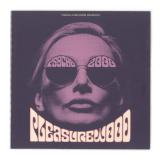
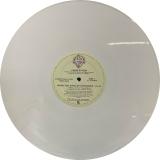
Various - Tchic Tchic: French Bossa Nova 1963-1974  Colored Edition LP 2x12"
  • A1: Les Masques - Il Faut Tenir (1969)
  • A2: Isabelle Aubret - Casa Forte (1971)
  • A3: Christianne Legrand - Hlm Et Ciné Roman (1972)
  • A4: Jean Constantin - Pas Tant D'chichi Ponpon (1972)
  • A5: Billy Nencioli & Baden Powell - Si Rien Ne Va (1969)
  • B1-: Marpessa Dawn - Le Petit Cuica (1963)
  • B2: Jean-Pierre Sabar - Vai Vai (1974)
  • B3: Sophia Loren - De Jour En Jour (1963)
  • B4: Isabelle - Jusqu’à La Tombée Du Jour (1969)
  • B5: Sylvia Fels - Corto Maltesse (1974)
  • C1: Frank Gérard - Comme Une Samba (1972)
  • C2: Ann Sorel - La Poupée Des Favellas (1971)
  • C3: Charles Level - Un Enfant Café Au Lait (1971)
  • C4: Andrea Parisy - Les Mains Qui Font Du Bien (1970)
  • C5: Audrey Arno - Quand Jean-Paul Rentrera (1969)
  • C6: Aldo Frank - T’as Vu Ce Printemps (1970)
  • D1: Christianne Legrand - Cent Mille Poissons Dans Ton Filet (1972)
  • D2: Clarinha - Lemenja (1970)
  • D3: Hit Parade Des Enfants - Aquarela (1976)
  • D4: Jean-Pierre Lang - Tendresse (1965)
  • D5: Magalie Noël - Une Énorme Samba (1970)
  • D6: Françoise Legrand - La Lune

Ever since the late 1950s bossa-nova revolution, Brazil’s influence on French music has been undeniable. Pierre Barouh, Georges Moustaki and a vast array of lesser known artists, all made the Musica Popular Brasileira (MPB) an axis of promotion at the service of a cool and metaphysical, modern and mixed Brazilian lifestyle. Some were seduced by the poetic languors of the bossa, some were looking for fun, and others just loved the American hybridization of jazz-bossa, jazz-samba.


What is bossa nova? One of its creators, Joao Gilberto said: "Its style, cadence, everything is samba. At the very start, we didn't call it bossa nova, we sang a little samba made up of a single note - Samba de uma nota so .... The discussion around the origins of bossa nova is therefore useless”. It is nevertheless useful to remember that these magnificent Brazilian songs, which the guitarist describes as samba, were shifted and balanced around improbable chords. "I like things that lean, the in-betweens that limp with grace," said Pierre Barrouh, quoting Jean Cocteau.


With emotion, arrangements for violin and supple guitar licks, bossa nova rapidly changed. A transformation that can be heard in the Tchic, tchic, French Bossa Nova 1963-1974 compilation, the result of a cultural reappropriation, which traveled through the United States and supplemented itself in France.

A musical revolution that has remained significant, bossa nova was born in Rio. From 1956 to 1961, Brazil lived through its golden years. In five years, the country had invented its modernist style. Elected president in 1956, Juscelino Kubitschek de Oliveira, an elegant man with a broad forehead, brandished a promising slogan: "Fifty years of progress in five years". He quickly got to work. Not worried about increasing debt, he launched the project for a new federal capital, Brasilia, designed by the communist architect Oscar Niemeyer. Volkswagen opened state-of-the-art factories and created the “fusquinha”, the Beetle. In Rio, the Vespa made its first appearance. The Arpoador Surf Club crew run into the “girl” from Ipanema, Helô Pinheiro - the tanned garota ("chick"), between a flower and mermaid, who at 17 walked by the Veloso bar, where the fiery author and composer, Tom Jobim and Vinicius de Moraes, were getting drunk on whiskey. From then on, bossa symbolized cool.

In 1958, Joao Gilberto recorded Chega de Saudade, which the directors of Philips denied, calling it "music for fagots". The marketing director, who believed in it, secretly pressed 3000 78-inch vinyls and distributed them at schools around Rio, creating a tidal wave.

American jazzmen then took over. In particular, trumpeter Dizzy Gillespie and guitarist Charlie Byrd. In November 1962, the Brazilian Ministry of Foreign Affairs funded a "Bossa-Nova" concert at Carnegie Hall in New York, inviting the genre’s pioneers. Unprepared, the show soon turned to disaster. But the troupe was invited to the White House by Jackie Kennedy. The first lady loved "the new beat" and in particular Maria Ninguem, a song by Carlos Lyra, later covered by Brigitte Bardot.

In Brazil, the 1964 military coup quickly ended this euphoria. The destructive atmosphere that ensued pushed many Brazilian musicians to leave, if not to exile. Thus, Tom Jobim, Sergio Mendes and Joao Gilberto arrived to the United States. In New York, Joao Gilberto met saxophonist Stan Getz. At the time, he was married to the Bahianese Astrud Weinert Gilberto, who had a German father. She had never sung before, but she knew how to speak English. Getz therefore asked her to replace her husband on The Girl From Ipanema. The Getz/Gilberto record with Tom Jobim on piano, was released in March 1964. Phil Ramone, the "pope of pop" was in charge of sound.

Bossa nova arrived in Paris through the classic “guitar-voice” channel (Pierre Barouh, Baden Powell, Moustaki…) But France loved jazz and Paris had already welcomed its American contributors. All these good people were to pass through Saint-Germain-des-Prés. The cabaret l'Escale became the Mecca of Latin American sound where one could find Pierre Barrouh and his friends, such as the Camara Trio, samba-jazz aces, whose only record was published by the Saravah label. With a band strangely called Les Masques (a band that included Nicole Croisille and Pierre Vassiliu, among others), the Camara Trio recorded an interesting Brazilian Sound, including the track Il faut tenir which is present on this tasty compilation of rarities.

Other enlightened musicians can also be found on the compilation, such as Jean-Pierre Sabar (songwriter for Hardy, Auffray, Leforestier ...) and the French pop rock organist Balthazar. In 1975, Sabar recorded Aurinkoinen Musiikkimatka on a Finnish label, which featured the crazy Vai, Vai, included on this record. We are now following the footsteps of Brazilian electronic musicians such as Sergio Mendes, Eumir Deodato or Marcos Valle who created funk and disco sounds on their keyboards and synthesizers. A style that influenced Véronique Sanson when she wrote Jusqu’à la Tombée de la nuit in 1969 for Isabelle de Funès, the niece of Louis and a great friend of Michel Berger - Sanson did end up singing this track on her 1992 Sans Regret record.


The pinnacle of exoticism and travel, Sylvia Fels’ Corto Maltese includes bongos, sea mist and ocean sounds. The title was taken from Jacky Chalard’s concept album written in 1974, Je suis vivant, mais j’ai peur (I am alive, but I am scared), based on Gilbert Deflez’s science fiction novel.


However, bossa nova extended the scope of popularity. "In the 1970s, I was a fan of Sergio Mendes, Getz / Gilberto. I fell in love with this music that I knew because I had been an orchestral singer, " explained Isabelle Aubret, who in 1971 delivered a composite record of covers by the very funky Jorge Ben, Orfeu Negro, Tom Jobim, Vinicius de Morais and Jean Ferrat. "I recorded this album for Meys Records in Paris, far from Brazil, with wonderful musicians, François Raubert, Roland Vincent, Alain Goraguer...". The latter wrote the arrangements for Casa Forte, a very percussive title borrowed from Edu Lobo, one of the initiators of the bossa who spent time in California. "Jazz and bossa came together and produced very rhythmic music. I love singing, it allows me to dream, to have fun, to feel a high on stage, and these songs brought me joy, made me swing, my singing felt like a dance.”


The world tours of French singers and their desire for the tropics, often brought them to Rio with its hills, forests, caipirinhas and tanned bodies. There are surprises though, like this Iemenja (Iemenja is the goddess of the sea in the Afro-Brazilian candomblé religion). Not unlike the composer and musician Jean-Pierre Lang, based in Sao Paulo, Claire Chevalier taught Brazil to Brazil. In 1970, the singer and painter published a 45-inch vinyl, Mon mari et mes amants (My husband and my lovers), under the improbable pseudonym of Clarinha (little Claire). She was then living in Rio, with her husband, Joël Leibovitz, who founded a band called Azimuth, and who owned a record label specialized in "sambas enredos" songs for samba school parades.


For its B side, she asked Pierre Perret to come up with lyrics for a song composed by Carlos Imperial: "Oh goddess of the sea, o goddess Iemenja, I bring a white rose to adorn your long hair ..." . "Perret came to see us, and we had fun, remembers Joël Leibovitz. We wrote Lemenja for fun, we recorded it at the Havaí studio, behind the Central do Brasil the central station. Erlon Chaves, the arranger who worked with Elis Regina, joined us" adding his share of Afro-Brazilian percussions and funky brass to the mix.

There is a common misunderstanding in Franco-Brazilian history: that bossa, admittedly hedonistic, is perceived as funny, even though the poets who wrote the texts are often philosophizing on the human condition. Its French interpreters pull it towards a carnival inspired universe, far removed from its fundamental essence. Thus, Jean Constantin covered the famous Samba da minha terra, an ode to the art of samba written by the classic Bahian composer Dorival Caymmi, renaming it with the enticing title of Pas tant de tchi tchi pompon: "On your pier there is no tchi tchi / when you arch your back, you know everything is alright ”(lyrics by Gérard Calvi). This expedited bossa aims for the absurd, but retains a certain elegance.

Indeed, Jean Constantin was not an idiot, the rather large man had a huge mustache and liked fantasy, (Les pantoufles à papa, Le pacha, inspired by cha-cha-cha-cha, salsa and jazz) but he was also the lyricist of Mon manège à moi interpreted by Edith Piaf, the composer of Mon Truc en plume by Zizi Jeanmaire and the soundtrack of François Truffaut’s 400 Blows. Le Poulpe, published in 1970, from which this bossa is extract, was arranged by Jean-Claude Vannier, an accomplice of Serge Gainsbourg’s Melody Nelson. In short: "There is enough of samba / By looking at the parasol / Because my poor cabeza / Is going to die in the sun".

Even the American actress Marpessa Down, who was at the heart of the bossa nova revolution with her role as Euridyce in Marcel Camus’ film Orfeu Negro, winner of the 1959 Cannes Palme d'or, fed the clichée with Je voudrais parler au petit cuica - "Tell me how you manage to always make people want to dance / It's true, I must admit that I cannot resist your magic" - in consequence, once can hear the cuica, a little drum inherited from the Bantu.


But bossa nova had many angles. Societal, of course, pushing actresses who were symbols of women's liberation like Brigitte Bardot, Jeanne Moreau, or Sophia Loren to engage in the exercise of accelerated bossa. In February of 1963, Sophia Loren made a record in French in Rome, Je ne t'aime plus, featuring the song De jour en jour, a bossa written by two Italians, Armando Trovajoli and Tino Fornai, which was released a little later by Barclay. Bossa accompanied the 1960s, a decade of moral liberation. Ann Sorel, who interpreted La Poupée des favellas, caused a sensation with L’amour à plusieurs, a provocative song written by Frédéric Bottom and Jean-Claude Vannier. As for the actress Andrea Parisy, she displayed her bourgeois cheekiness in Marcel Carné's Les Tricheurs before interpreting Les mains qui font du bien. And Magalie Noël, the friend of Boris Vian, who sung Johnny fais-moi mal, was hired to sing Une énorme Samba, composed by Alain Goraguer (arranger to Gainsbourg, Bobby Lapointe and Jean Ferrat) with lyrics by Frédéric Botton.

But in the end, of what wood is bossa nova made of? The answer is given by Christianne Legrand, daughter of Raymond the conductor, and sister to Michel the composer: "With me, with jà" - jà means "immediately" in Portuguese. In 1972, the singer, an expert in vocal jazz and a member of the Double Six, published Le Brésil de Christianne Legrand. Two songs included on the Tchic Tchic compilation that demonstrate how bossa, jazz, funk, rock, etc. work like a swiss army knife: the music is used to denounce broken systems, or miracles, HLM et ciné roman, Cent mille poissons dans ton filet, two songs from the O Cafona soundtrack, a successful telenovela broadcast, at the time in black and white, on TV Globo. The first was adapted in French by the fighter and friend of the Legrand tribe, Agnès Varda. The second is content with a play on words, jostling them into a summer fun.


Véronique Mortaigne

vorbestellen17.04.2026

erscheint voraussichtlich am 17.04.2026

Fruit & Veg - Vol. 2

Fruit & Veg

Vol. 2

12inchVFS056RP
Vinyl Fanatiks
14.04.2026

2026 Black Vinyl Repress

We are extremely excited to share with you this wonderful piece of old skool hardcore. Created in Bristol in 1993 and released on a limited white label back then, this record has become a holy grail over the past 30 years. Very rare, very sought after and 100% original West Country vibes.

Written by Rich Williams, who emigrated to LA many years ago and James Towler – producer for John Lydon these days! These guys were on some next level vibes when they wrote this ultimate slice of darkcore rave!

Pressed by the mighty Phil ‘The Vinylman’ East on 180g heavyweight vinyl. This release is a bespoke product as no one record is the same. Designed to look like the planet Jupiter and part of a 4 vinyl Cosmik series.

Is it dark enough???

nicht am Lager

Bestelle jetzt und wir bestellen den Artikel für dich beim Lieferanten.


Last In: vor 5 Tagen
ANNIE & THE CALDWELLS - WRONG / I MADE IT REMIXES

The history of house and disco music is full of gospel soul singers creating anthemic bangers for the dance floor. Annie and the Caldwells, a family band from West Point, Mississippi, are the latest to join their ranks.

============================

This collection — featuring remixes from musclecars, Kornél Kovács, Alexis Taylor (of Hot Chip), and disco icons Nicky Siano and Justin Strauss — follows the release of the Caldwells’ wildly acclaimed debut Can’t Lose My (Soul) Luaka Bop, Spring 2025. Hailed as “a masterpiece” by The Guardian (★★★★★), and one of the best albums of the year by The Times, MOJO, UNCUT, and The Economist, Can’t Lose My (Soul) found fans all over the world — like Sir Elton John, who called their album “A great, great record that I insist you go out and buy.”

“I was blown away when I first heard the original version of ‘Wrong’,” says Kornel Kovács, whose remix of “Wrong” appears on this white label. “Deborah’s voice floored me, as well as the background singers. One of the greatest vocal performances I’ve heard, let alone worked with. The result is a club-ready take that’s become a highlight in my recent DJ sets.”

Producers Brandon Weems and Craig Handfield (of musclecars) had a similar experience when they heard the family for the first time: “We quickly fell in love with the groovy bassline and the choir vocals,” said Craig. “We thought it’d be fitting to put our own spin on it, while paying homage to those jive brothers from Tulsa. The uplifting keys paired with the punch of the drums, rounded out with that organ…this one is sure to bring a joyful noise!”

Annie Caldwell and her family have since performed in more than twenty countries on four continents, and recently made a star turn on the UK's preeminent music program Later... with Jools Holland. They’re hitting the road again in 2026. Watch this space.


[c] Wrong [You Dropped a Bomb] - Extended Wooden Dance Floor Mix (A Nicky Siano Production) 6:48

nicht am Lager

Bestelle jetzt und wir bestellen den Artikel für dich beim Lieferanten.


Last In: vor 23 Tagen
Guilty Razors - Complete Recordings 1977 - 1978

UILTY RAZORS, BONA FIDE PUNKS.


Writings on the topic that go off in all directions, mind-numbing lectures given by academics, and testimonies, most of them heavily doctored, from those who “lived through that era”: so many people today fantasize about the early days of punk in our country… This blessed moment when no one had yet thought of flaunting a ridiculous green mohawk, taking Sid Vicious as a hero, or – even worse – making the so-called alternative scene both festive and boorish. There was no such thing in 1976 or 1977, when it wasn’t easy to get hold of the first 45s by the Pistols or the Clash. Few people were aware of what was happening on the fringes of the fringes at the time. Malcolm McLaren was virtually unknown, and having short hair made you seem strange. Who knew then that rock music, which had taken a very bad turn since the early 1970s, would once again become an essential element of liberation? That, thanks to short and fast songs, it would once again rediscover that primitive, social side that was so hated by older generations? Who knew that, besides a few loners who read the music press (it was even better if they read it in English) and frequented the right record stores? Many of these formed bands, because it was impossible to do otherwise. We quickly went from listening to the Velvet Underground to trying to play the Stooges’ intros. It’s a somewhat collective story, even though there weren’t many people to start it.
The Guilty Razors were among those who took part in this initial upheaval in Paris. They were far from being the worst. They had something special and even released a single that was well above the national average. They also had enough songs to fill an album, the one you’re holding. In everyone’s opinion, they were definitely not among the punk impostors that followed in their wake. They were, at least, genuine and credible.

Guilty Razors, Parisian punk band (1975-1978). To understand something about their somewhat linear but very energetic sound, we might need to talk about the context in which it was born and, more broadly, recall the boredom (a theme that would become capital in punk songs) coupled with the desire to blow everything off, which were the basis for the formation of bands playing a rejuvenated rock music ; about the passion for a few records by the Kinks or the early Who, by the Stooges, by the Velvet mostly, which set you apart from the crowd.
And of course, we should remember this new wave, which was promoted by a few articles in the specialized press and some cutting-edge record stores, coming from New York or London, whose small but powerful influence could be felt in Paris and in a handful of isolated places in the provinces, lulled to sleep by so many appalling things, from Tangerine Dream to President Giscard d’Estaing...
In 1975-76, French music was, as almost always, in a sorry state ; it was still dominated by Johnny Hallyday and Sylvie Vartan. Local rock music was also rather bleak, apart from Bijou and Little Bob who tried to revive this small scene with poorly sound-engineered gigs played to almost no one.
In the working class suburbs at the time, it was mainly hard rock music played to 11 that helped people forget about their gruelling shifts at the factory. Here and there, on the outskirts of major cities, you still could find a few rockers with sideburns wearing black armbands since the death of Gene Vincent, but it wasn’t a proper mass movement, just a source of real danger to anyone they came across who wasn't like them. In August 1976, a festival unlike any other took place in Mont-de-Marsan – the First European Punk Festival as the poster said – with almost as many people on stage as in the audience. Yet, on that day, a quasi historical event happened, when, under the blazing afternoon sun, a band of unknowns called The Damned made an unprecedented noise in the arena, reminiscent of the chaotic Stooges in their early adolescence. They were the first genuine punk band to perform in our country: from then on, anything was possible, almost anything seemed permissible.

It makes sense that the four+1 members of Guilty Razors, who initially amplified acoustic guitars with crappy tape recorder microphones, would adopt punk music (pronounced paink in French) naturally and instinctively, since it combines liberating noise with speed of execution and – crucially – a very healthy sense of rebellion (the protesters of May 1968 proclaimed, and it was even a slogan, that they weren’t against old people, but against what had made them grow old. In the mid-1970s, it seemed normal and obvious that old people should now ALSO be targeted!!!).
At the time, the desire to fight back, and break down authority and apathy, was either red or black, often taking the form of leafleting, tumultuous general assemblies in the schoolyard, and massive or shabby demonstrations, most of the time overflowing with an exciting vitality that sometimes turned into fights with the riot police. Indeed, soon after the end of the Vietnam War and following Pinochet’s coup in Chile, all over France, Trotskyist and anarcho-libertarian fervour was firmly entrenched among parts of the educated youth population, who were equally rebellious and troublemakers whenever they had the chance. It should also be noted that when the single "Anarchy in the UK" was first heard, even though not many of us had access to it, both the title and its explosive sound immediately resonated with some of those troublemakers crying out for ANARCHY!!! Meanwhile, the left-wing majority still equated punks with reckless young neo-Nazis. Of course, the widely circulated photos in the mainstream press of Siouxsie Sioux with her swastikas didn’t necessarily help to win over the theorists of the Great Revolution. It took Joe Strummer to introduce The Clash as an anti-racist, anti-fascist and anti-ignorance band for the rejection of old-school revolutionaries to fade a little.

The Lycée Jean-Baptiste Say at Porte d’Auteuil, despite being located in the very posh and very exclusive 16th arrondissement of Paris, didn’t escape these "committed" upheavals, which doubled as the perfect outlet for the less timid members of this generation.
“Back then, politics were fun,” says Tristam Nada, who studied there and went on to become Guilty Razors’ frontman. “Jean-Baptiste was the leftist high-school in the neighbourhood. When the far right guys from the GUD came down there, the Communist League guys from elsewhere helped us fight them off.”
Anything that could challenge authority was fair game and of course, strikes for just about any reason would lead to increasingly frequent truancy (with a definitive farewell to education that would soon follow). Tristam Nada spent his 10th and 11th unfinished grades with José Perez, who had come from Spain, where his father, a janitor, had been sentenced to death by Franco. “José steered my tastes towards solid acts such as The Who. Like most teenagers, I had previously absorbed just about everything that came my way, from Yes to Led Zeppelin to Genesis. I was exploring… And then one day, he told me that he and his brother Carlos wanted to start a rock band.” The Perez brothers already played guitar. “Of course, they were Spanish!”, jokes their singer. “Then, somewhat reluctantly, José took up the bass and we were soon joined by Jano – who called himself Jano Homicid – who took up the rhythm guitar.” Several drummers would later join this core of not easily intimidated young guys who didn’t let adversity get the better of them.

The first rehearsals of the newly named Guilty Razors took place in the bedroom of a Perez aunt. There, the three rookies tried to cover a few standards, songs that often were an integral part of their lives. During a first, short gig, in front of a bewildered audience of tough old-school rockers, they launched into a clunky version of the Velvet Underground's “Heroin”. Challenge or recklessness? A bit of both, probably… And then, step by step, their limited repertoire expanded as they decided to write their own songs, sung in a not always very accurate or academic English, but who cared about proper grammar or the right vocabulary, since what truly mattered was to make the words sound as good as possible while playing very, very fast music? And spitting out those words in a language that left no doubt as to what it conveyed mattered as well.
Trying their hand a the kind of rock music disliked by most of the neighbourhood, making noise, being fiercely provocative: they still belonged to a tiny clique who, at this very moment, had chosen to impose this difference. And there were very few places in France or elsewhere, where one could witness the first stirrings of something that wasn’t a trend yet, let alone a movement.

In the provinces, in late 1976 or early 1977, there couldn’t be more than thirty record stores that were a bit more discerning than average, where you could hear this new kind of short-haired rock music called “punk”. The old clientele, who previously had no problem coming in to buy the latest McCartney or Aerosmith LP, now felt a little less comfortable there…
In Paris, these enlightened places were quite rare and often located nex to what would become the Forum des Halles, a big shopping mall. Between three aging sex workers, a couple of second-hand clothes shops, sellers of hippie paraphernalia and small fashion designers, the good word was loudly spread in two pioneering places – propagators of what was still only a new underground movement. Historically, the first one was the Open Market, a kind of poorly, but tastefully stocked cave. Speakers blasted out the sound of sixties garage bands from the Nuggets compilation (a crucial reference for José Perez) or the badly dressed English kids of Eddie and the Hot Rods. This black-painted den was opened a few years earlier by Marc Zermati, a character who wasn’t always in a sunny disposition, but always quite radical in his (good) choices and his opinions. He founded the independent label Skydog and was one of the promoters of the Mont-de-Marsan punk festivals. Not far from there was Harry Cover, another store more in tune with the new New York scene, which was amply covered in the house fanzine, Rock News (even though it was in it that the photos of the Sex Pistols were first published in France).
It was a favorite hang-out of the Perez brothers and Tristam Nada, as the latter explained. “It’s at Harry Cover’s that we first heard the Pistols and Clash’s 45s, and after that, we decided to start writing our first songs. If they could do it, so could we!”
The sonic shocks that were “Anarchy in the UK”, “White Riot” or the Buzzcocks’s EP, “Spiral Scratch” – which Guilty Razors' sound is reminiscent of – were soon to be amplified by an unparalleled visual shock. In April 1977, right after the release of their first LP, The Clash performed at the Palais des Glaces in Paris, during a punk night organised by Marc Zermati. For many who were there, it was the gig of a lifetime…
Of course, Guilty Razors and Tristam were in the audience: “That concert was fabulous… We Parisian punks were almost all dressed in black and white, with white shirts, skinny leather ties, bikers jackets or light jackets, etc. The Clash, on the other hand, wore colourful clothes. Well, the next day, at the Gibus, you’d spot everyone who had been at this concert, but they weren’t wearing anything black, they were all wearing colours.”

It makes sense to mention the Gibus club, as Guilty Razors often played there (sometimes in front of a hostile audience). It was also the only place in Paris that regularly scheduled new Parisian or Anglo-Saxon acts, such as Generation X, Siouxsie and the Banshees, the Slits, and Johnny Thunders who would become a kind of messed-up mascot for the venue. A little later, in 1978, the Rose Bonbon – formerly the Nashville – also attracted nightly owls in search of electric thrills… In 1977, the iconic but not necessarily excellent Asphalt Jungle often played at the Gibus, sometimes sharing the bill with Metal Urbain, the only band whose aura would later transcend the French borders (“I saw them as the French Sex Pistols,” said Geoff Travis, head of their British label Rough Trade). Already established in this small scene, Metal Urbain helped the young and restless Guilty Razors who had just arrived. Guitarist for Metal Urbain Hermann Schwartz remembers it: “They were younger than us, we were a bit like their mentors even if it’s too strong a word… At least they were credible. We thought they were good, and they had good songs which reminded of the Buzzcocks that I liked a lot. But at some point, they started hanging out with the Hells Angels. That’s when we stopped following them.”

The break-up was mutual, since, Guilty Razors, for their part, were shocked when they saw a fringe element of the audience at Metal Urbain concerts who repeatedly shouted “Sieg Heil” and gave Nazi salutes. These provocations, even still minor (the bulk of the skinhead crowd would later make their presence felt during concerts), weren’t really to the liking of the Perez brothers, whose anti-fascist convictions were firmly rooted. Some things are non-negotiable.
A few months earlier (in July 1978), Guilty Razors had nevertheless opened very successfully for Metal Urbain at the Bus Palladium, a more traditonally old-school rock night-club. But, as was sometimes the case back then, the night turned into a mass brawl when suburban rockers came to “beat up punks”.

Back then, Parisian nights weren’t always sweet and serene.

So, after opening as best as they could for The Jam (their sound having been ruined by the PA system), our local heroes were – once again – met outside by a horde of greasers out to get them. “Thankfully,” says Tristam, “we were with our roadies, motorless bikers who acted as a protective barrier. We were chased in the neighbouring streets and the whole thing ended in front of a bar, with the owner coming out with a rifle…”
Although Tristam and the Perez brothers narrowly escaped various, potentially bloody, incidents, they weren’t completely innocent of wrongdoing either. They still find amusing their mugging of two strangers in the street for example (“We were broke and we simply wanted to buy tickets for the Heartbreakers concert that night,” says Tristam). It so happened that their victims were two key figures in the rock business at the time: radio presenter Alain Manneval and music publisher Philippe Constantin. They filed a complaint and sought monetary compensation, but somehow the band’s manager, the skilful but very controversial Alexis, managed to get the complaint withdrawn and Guilty Razors ended up signing with Constantin with a substantial advance.

They also signed with Polydor and the label released in 1978 their only three-track 45, featuring “I Don't Wanna be A Rich”, “Hurts and Noises” and “Provocate” (songs that exuded perpetual rebellion and an unquenchable desire for “class” confrontation). It was a very good record, but due to a lack of promotion (radio stations didn’t play French artists singing in English), it didn’t sell very well. Only 800 copies were allegedly sold and the rest of the stock was pulped… Initially, the three tracks were to be included on a LP that never came to be, since they were dropped by Polydor (“Let’s say we sometimes caused a ruckus in their offices!” laughs Tristam.) In order to perfect the long-awaited LP, the band recorded demos of other tracks. There was a cover of Pink Floyd's “Lucifer Sam” from the Syd Barrett era – proof of an enduring love for the sixties’ greats –, “Wake Up” a hangover tale and “Bad Heart” about the Baader-Meinhof gang, whose actions had a profound impact on the era and on a generation seeking extreme dissent... On the album you’re now discovering, you can also hear five previously unreleased tracks recorded a bit later during an extended and freezing stay in Madrid, in a makeshift studio with the invaluable help of a drummer also acting as sound engineer. He was both an enthusiastic old hippie and a proper whizz at sound engineering. Here too, certain influences from the fifties and sixties (Link Wray, the Troggs) are more than obvious in the band’s music.

Shortly after a final stormy and rather barbaric (on the audience’s side) “Punk night” at the Olympia in June 1978, Tristam left the band ; his bandmates continued without him for a short while.

But like most pioneering punk bands of the era, Guilty Razors eventually split up for good after three years (besides once in Spain, they’d only played in Paris). The reason for ceasing business activities were more or less the same for everyone: there were no venues outside one’s small circuit to play this kind of rock music, which was still frightening, unknown, or of little interest to most people. The chances of recording an LP were virtually null, since major labels were only signing unoriginal but reassuring sub-Téléphone clones, and the smaller ones were only interested in progressive rock or French chanson for youth clubs. And what about self-production? No one in our small safety-pinned world had thought about it yet. There wasn’t enough money to embark on that sort of venture anyway.

So yes, the early days of punk in France were truly No Future!

nicht am Lager

Bestelle jetzt und wir bestellen den Artikel für dich beim Lieferanten.


Last In: vor 30 Tagen
Lisa Decker - Soliloquise LP

2026 Repress

Lisa Decker returned with her second studio album "Soliloquise" one year after her debut album "Serendipity" in 2021 with Japanese Jazz trio Nautilus from Tokyo and a superb single remix of "Everytime" by Pat Van Dyke featuring rapper John Robinson.

For this project she worked on eight new songs. Half of the album is arranged by Nautilus and the other half is produced by SaturnVybz who is known for his works with/and projects like Slick Walk, The Ruff Cats and Jazzanova.

Getting a step forward and conceptually a bit different this release gets the "Oonops Drops" FLIP SERIES treatment which means: Side A and Side B are made by different artists or differentiate from each other like the first volume with Nautilus X Anna Sato & Toshiyuki Sasaki (OD006LP).

Songs like "Free", "Let's Wake Up" and "Summer Child" with their feel warm note of groovy, jazzy pop and the more swing-jazz tune "Rimy Whitewater" meet guitar-electronic touched songs like "Love And Hope", "On My Way" and "True Blue" or her dreamt away track "Stay With Me" with smooth bouncy beats and with an atmosphere for being the perfect soundtrack for a night ride on deserted streets.

Lisa is careful about the artwork and after working together with renowned artist Lindsey Kustusch from San Francisco on her first album she collaborates with local artist Sebastian Maria Otto who is known for his signature art style and exhibitions from Germany to Japan.

Lisa will perform live in Hanover, the 20th May at roof top of the Historical Museum together with Nautilus. Japan meets Germany. Lucky coincidence or: "Serendipity".

nicht am Lager

Bestelle jetzt und wir bestellen den Artikel für dich beim Lieferanten.


Last In: vor 2 Jahren
WILD NOTHING - LIFE OF PAUSE (LENTICULAR SLEEVE) [SIGNED PRINT ED]
  • 1: Reichpop
  • 2: Lady Blue
  • 3: A Woman's Wisdom
  • 4: Japanese Alice
  • 5: Life Of Pause
  • 6: Alien
  • 7: To Know You
  • 8: Adore
  • 9: Tv Queen
  • 10: Whenever I
  • 11: Love Underneath My Thumb

White vinyl. Signed Print Edition. When Jack Tatum began work on Life of Pause, his third full-length to date, he had lofty ambitions: Don't just write another album; create another world. One with enough detail and texture and dimension that a listener could step inside, explore, and inhabit it as they see fit. "I desperately wanted for this to be the kind of record that would displace me," he says. "I'm terrified by the idea of being any one thing, or being of any one genre. And whether or not I accomplish that, I know that my only hope of getting there is to constantly reinvent. That reinvention doesn't need to be drastic, but every new record has to have its own identity, and it has to have a separate set of goals from what came before." What came before: a rightfully acclaimed, much beloved display of singular pop craftsmanship. Tatum's dreamy, unexpected 2010 debut, Gemini, was written while he was still a student at Virginia Tech University. Its equally disarming follow-up, 2012's Nocturne, marked the first time he'd been able to bring his bedroom recordings into a studio, to be performed and fully realized with the help of other musicians. There has been a set of wonderfully expansive EPs in between_each hinting at new directions and punctuating previous ideas_but with Life of Pause, Tatum delivers what he describes as his most "honest" and "mature" work yet, an exquisitely arranged and beautifully recorded collection of songs that marry the immediate with the indefinable. "I allowed myself to go down every route I could imagine even if it ended up not working for me," he says. "I owe it to myself to take as many risks as possible. Songs are songs and you have to allow yourself to be open to everything." After a prolonged period of writing and experimentation, recording took place over several weeks in both Los Angeles and Stockholm, with producer Thom Monahan (Devendra Banhart, Beachwood Sparks) helping Tatum in his search for a more natural and organically textured sound. In Sweden, in a studio once owned by ABBA, they enlisted Peter, Bjorn and John drummer John Ericsson and fellow Swedish Radio Symphony Orchestra veteran Pelle Jacobsson, to contribute drums and marimba. In California, at Monahan's home, Tatum collaborated with Medicine guitarist Brad Laner and a crew of saxophonists. From the hypnotic polyrhythms of "Reichpop" to the sugary howl of "Japanese Alice" to the hallucinogenic R&B of "A Woman's Wisdom," the result is a complete, fully immersive listening environment. "I just kept things really simple, writing as ideas came to me," he says. "There's definitely a different kind of `self' in the picture this time around. There's no real love lost, it's much more a record of coming to terms and defining what it is that you have_your place, your relationships. I view every record as an opportunity to write better songs. At the end of the day it still sounds like me, just new."

vorbestellen10.04.2026

erscheint voraussichtlich am 10.04.2026

Chris Liebing - Evolver LP 2x12"

Chris Liebing's first full solo techno LP, 'Evolver' is released on 27th March 2026, via his own CLR imprint. The German techno don's LP features a host of collaborators across music, images, and artwork. Luke Slater, Charlotte De Witte, Speedy J, The Advent, Terence Fixmer, Pascal Gabriel, Daniel Miller contribute to the music, while long-time collaborators Studio Bergfors deliver design, and legendary photographer Anton Corbijn shot Liebing for the project.

The Evolver LP is the sum total of Chris Liebing's three decades at the beating heart of techno. It's the record only someone whose first break as a techno DJ was playing five hours at Sven Väth's infamous Omen in Frankfurt - and who has ridden out every twist and turn of life and subcultures since, while remaining rooted in the true school, dark, sweaty techno sweat pits of the world - could have made. It's the result of deep introspection, but it's about utter immediacy. It's the sound of someone previously driven along by compulsion and happenstance at last finding the confidence to be utterly intentional about their practice, allowing them to take the most classic, familiar, proven elements from the past and render them completely new.

Evolver is also Liebing's first completely solo album. There are collaborations, yes: with old friends from the OG techno generation, Luke Slater, Speedy J, and The Advent, all on uncompromising form, and with new generation figurehead Charlotte De Witte, who provides a thrilling narration of total surrender to the moment on acid clarion call "Symphonie des Seins". But unlike all Liebing's albums to date, there's no co-pilot. Every structure, every mixdown, every choice serves his singular vision of how his untold immersion in the surging currents of the world's greatest clubs should sound. The elements are all those forged in the white heat of Omen and Tresor in the mid 90s - brutal repetition, titanium kick drums, industrial atmospherics, but also dark rave euphoria, ever present surging acid lines just on the cusp of trance, and just enough human voices to remind you of bodies on the dance floor - but rendered with all the extraordinary accumulated skill and technological developments since then.

It's Chris's vision entirely, his musings on sound, technology, and life birthing tracks like "Roy Batty." Inspired by thoughts of AI becoming sentient and hungering for more life like Rutger Hauer's titular Blade Runner character, it was one of the first tracks to emerge and a foundation stone for the album. And in pursuit of that vision, it's built like a "proper album". The anticipation and menace of intro "Unfold" tip over into the glowing hot high drama psychedelia of "Symphonie…" then the breathless headlong rush of The Advent collab and on through an unfolding narrative that goes deep, goes dark, opens out into grand vistas, takes strange turns before finally landing on the alien landscape of… well… "Endtrack".

Not everything is pummelling on Evolver - the dazzling title track feels like you've been welcomed into the courtly dance of a higher dimension civilisation, and the audacious Speedy J collab "Shaping Frequencies" is a beatless flow that tests the boundaries between signal and noise. But for all its complexity, conceptualism, and stylistic branching out, every last part unmistakably powered by that dark techno-cavern energy above all else. All of it positively radiates the qualities of Liebing's greatest work and sets to date - but somehow even more so than before. Whether you're listening for aesthetic inspiration, cerebral stimulation or just that raw physical power, this album will sweep you up into its momentum and won't let go of you until it's done.

nicht am Lager

Bestelle jetzt und wir bestellen den Artikel für dich beim Lieferanten.


Last In: vor 38 Tagen
Taupe - waxing | waning

Taupe

waxing | waning

12inchMIN75LP
Minority Records
06.03.2026
  • 1: Lemonade Tycoon
  • 2: Anti-Bird-Spike-Bird-Nest
  • 3: Interlude (Stride)
  • 4: Allcapsallbold
  • 5: Pet Boss

Taupe’s latest album release, waxing | waning delivers jazz experimentalism, ‘skronk’, avant-rock, and electronics, by the Glasgow-based trio, due out via Minority Records. Across its seven tracks, waxing | waning captures Taupe’s approach – bold and boundary pushing – shaped by a fresh shift in the band’s dynamic and compositional approach.

Taupe’s waxing | waning, co-composed and realised by its players in a studio that was once an undertaker’s premises in Glasgow, is an absolutely affirmative album, an act of cultural defiance in desperate times.

Comprising Mike Parr-Burman (guitar, bass guitar, electronics), Jamie Stockbridge (alto and baritone saxophones) and Alex Palmer (drum kit, percussion), Taupe work up a storm of skronk, free jazz and harmolodic frenzy whose closest relations include Zu, Melt Banana and John Zorn. However, waxing | waning is from its opening, stuttering blasts, an exercise in seeking out and claiming new territory, finding unique and novel permutations in which jazz, rock, electronics interbreed at breakneck pace. Here is a group determined to say and do things they don’t get to say and do elsewhere in their musical lives.

‘Lemonade Tycoon’ hits the ground skronking. It’s cubistic jazz, cumulative in its impact, avoiding the white lines of the conventional freeway, bridling, bustling, coming at you from all angles – a three way conversation of astonishing rapidity, fast track, telepathic communication – everyone from James Chance to Albert Ayler coming at you at once, before morphing in to a spidery scrawl of electronics and furious percussion. ‘Anti-Bird-Spike BirdNest’s‘ title somehow sums up the sort of mental images evoked by the music – its sheer creative disobedience, as if being chased in vain, like a delivery rider evading capture by ICE agents -– shapeshifting, assuming different shades, sprouting metal quills and, in its midsection, seeming almost to swallow itself alive, before regurgitating itself in a sublime mess.

‘Interlude (Stride)’ is not exactly ambient, more a horizontal enmeshment of percussion, drones, reverberant noise, electronics, a sonic mulch. ‘allcapsallbold' reminds of early Aksak Maboul, in its playfulness, a haywire series of short phrases, subject to mechanical interference, a complex weave of irregular rhythms, increasingly eloquent sax phraseology and caustic guitars, which land heavier and heavier. ‘Pet Boss' is the new jazz equivalent of a highly evolved, mature conversation among brilliant equals, sharp, empathetic, complementary, rising to a collective, joyful noise. On the title track, electronics descend like a shower of bright particles, intensifying in their luminosity, whitening the skies, as sax and drums kick up a tempestuous, spontaneously sculpted noise that summons the ghosts of the great free jazz players, before a dark calm descends slowly. Finally, ‘Turn Push Kick’, a burgeoning chatterstorm of electronics, before the group kicks in, at angles to one another, led by abrasive guitars, reminiscent of Sunn O))) in their ritualistic concussion, riffing, digging deep amid squealing sax and piledriving percussion.

vorbestellen06.03.2026

erscheint voraussichtlich am 06.03.2026

Julius Hemphill - Dogon A.D.

Julius Hemphill's debut record, 1972's Dogon A.D., was self-produced for his Mbari imprint, and it was issued with a beautiful black-and-white cover. Very DIY. The label's name writ large along the bottom edge, like it was the band's name. It's a quartet record featuring Hemphill on alto and flute, with Baikida Carroll on trumpet, Abdul Wadud on cello, and Phillip Wilson on drums – a classic jazz front line/rhythm section format, but nothing conventional about the way the music sounds.

The long track – from where the LP takes its title – is one of the key epic statements of new jazz in the era. Among its remarkable distinctions, it manages to draw on Wilson's schizoid experience having been a member of the Paul Butterfield Blues Band and the first drummer for the Art Ensemble of Chicago, in making an 11/8 rhythm into a staggeringly funky thing of joy. Over the course of fourteen and a half minutes, Hemphill builds a nearly continuous solo, his spiritual blood brother Wadud sawing the cello with a deep blues soulfulness that is raw and mantra-like in its repetitive incantation. It feels right and wrong in equal measure, the theme carrying its own piquancy with honked barnyard dissonances and some contrary motion between the horns and string. Most of all, it takes its own sweet time, in no hurry to get anywhere in particular, but out for a righteous stroll. – John Corbett (excerpt from the liner notes)

vorbestellen06.03.2026

erscheint voraussichtlich am 06.03.2026

Antibalas - Security (2x12")

Antibalas

Security (2x12")

2x12inchMOVLP3997C
Music On Vinyl
20.02.2026
  • A1: Beaten Metal
  • A2: Filibuster X
  • B1: Sanctuary
  • C1: Hilo
  • C2: War Hero
  • D1: I.c.e
  • D2: Age

Antibalas established themselves in the late 1990s as a burning, tough, horn, bass and drum driven Afrobeat ensemble cut from the Fela Kuti mold, who were politically savvy and socially conscious. Their live shows have been incendiary events where rhythm and perspiration from completely crazy, booty-shaking audience members shared something deeper and wider than the music itself. Security is Antibalas' fourth album. It was co-produced by the band with John McEntire from Tortoise.

The group, whose name means "bulletproof" in Spanish, has indeed proved they possess the mettle to not only survive but also thrive by employing a musical arsenal that has become known worldwide. Initially using the revolutionary blueprint of afrobeat as a launching pad, the dozen-strong members of Antibalas weave a rich tapestry of latin, jazz, classical, funk and soul into their horn-driven mix. Words fail in trying to describe the result: simultaneously polyrhythmic and political, independent and contagious, and the reason why many have credited the band for introducing afrobeat's framework to a new generation.

Security is available as a numbered limited edition of 500 copies on white vinyl and is packaged in a gatefold sleeve.

vorbestellen20.02.2026

erscheint voraussichtlich am 20.02.2026

Care - Love Crowns and Crucifies LP 2x12"
  • 1: On The White Cloud (Full Instrumental)
  • 2: Flaming Sword
  • 3: An Evening In The Ray
  • 4: Besides One
  • 5: My Boyish Days
  • 6: Whatever Possessed You
  • 7: Nature Prayed Upon
  • 8: Temper Temper
  • 9: Diamonds And Emeralds (Deadly Nightshade)
  • 10: Chandeliers
  • 11: A Sad Day For England
  • 12: Cymophane
  • 13: Love Crowns And Crucifies
  • 14: Besides Four
  • 15: Flaming Sword Demo Version
  • 1: My Boyish Days 2-Inch Version
  • 2: Such Is Life
  • 3: Caretaking
  • 4: Soldiers And Sailors
  • 5: Diamonds And Emeralds
  • 6: Besides Three
  • 7: White Cloud
  • 8: What Kind Of World
  • 9: Colour And Sound
  • 10: Whatever Possessed You 12-Inch Version
  • 11: Misericorde
  • 12: Flaming Sword -Inch Version
  • 13: Besides Two
  • 14: My Boyish Days Demo Version
auch erhältlich

Ian Broudie sleeve


“The blueprint was simple: Hot Chocolate rhythms, George Murray bass lines, classical music instruments with pop sensibilities. We, the architects, however, were complicated.” Paul Simpson, 2025 Needle Mythology, the label founded by music writer, author and broadcaster Pete Paphides, is thrilled to announce the release of the much-mythologised ‘lost’ album by CARE – the group made up of IAN BROUDIE and PAUL SIMPSON Prior to forming Care, Ian and Paul had been very active in the Liverpool post-punk scene. Ian played alongside Holly Johnson, Jayne Casey, Budgie and Bill Drummond in Big In Japan, before joining the Original Mirrors. He also produced several early records by Echo and the Bunnymen, most notably the albums Crocodiles and Porcupine. Paul had played with school friend and future Bunnyman Will Sergeant in Industrial Domestic and the founding line-up of The Teardrop Explodes, before going on to form The Wild Swans. CARE were brought together late in 1982 by mutual friend Will Sergeant, when Paul was looking for someone to play a guitar part for a new song he had written. Ian obliged and asked him to return the favour by singing on one of his songs Tall Ships. When Bunnymen manager Bill Drummond heard the result, now retitled My Boyish Days (Drink To Me), he secured the pair a deal with Arista on the back of it. Care would go on to release three acclaimed singles over the course of a twelve-month period between 1983 and 1984 – My Boyish Days (Drink To Me), Flaming Sword and Whatever Possessed You – before Simpson, still struggling to come to terms with the break-up of his previous band decided not to continue. Although top 40 success eluded Care in the UK, the group quickly found an adoring fanbase in the Philippines, where all three singles became huge hits. Love Crowns and Crucifies marks the first vinyl release of the previously unheard songs gathered together on 1997’s Diamonds and Emeralds CD. Working closely with Paul Simpson and with the approval of Ian Broudie, Needle Mythology has been given access to the original quarter-inch tapes which housed everything that Broudie and Simpson recorded together.

vorbestellen13.02.2026

erscheint voraussichtlich am 13.02.2026

Care - Love Crowns and Crucifies LP 2x12"
  • 1: On The White Cloud (Full Instrumental)
  • 2: Flaming Sword
  • 3: An Evening In The Ray
  • 4: Besides One
  • 5: My Boyish Days
  • 6: Whatever Possessed You
  • 7: Nature Prayed Upon
  • 8: Temper Temper
  • 9: Diamonds And Emeralds (Deadly Nightshade)
  • 10: Chandeliers
  • 11: A Sad Day For England
  • 12: Cymophane
  • 13: Love Crowns And Crucifies
  • 14: Besides Four
  • 15: Flaming Sword Demo Version
  • 1: My Boyish Days 2-Inch Version
  • 2: Such Is Life
  • 3: Caretaking
  • 4: Soldiers And Sailors
  • 5: Diamonds And Emeralds
  • 6: Besides Three
  • 7: White Cloud
  • 8: What Kind Of World
  • 9: Colour And Sound
  • 10: Whatever Possessed You 12-Inch Version
  • 11: Misericorde
  • 12: Flaming Sword -Inch Version
  • 13: Besides Two
  • 14: My Boyish Days Demo Version
auch erhältlich

Paul Simpson sleeve


“The blueprint was simple: Hot Chocolate rhythms, George Murray bass lines, classical music instruments with pop sensibilities. We, the architects, however, were complicated.” Paul Simpson, 2025 Needle Mythology, the label founded by music writer, author and broadcaster Pete Paphides, is thrilled to announce the release of the much-mythologised ‘lost’ album by CARE – the group made up of IAN BROUDIE and PAUL SIMPSON Prior to forming Care, Ian and Paul had been very active in the Liverpool post-punk scene. Ian played alongside Holly Johnson, Jayne Casey, Budgie and Bill Drummond in Big In Japan, before joining the Original Mirrors. He also produced several early records by Echo and the Bunnymen, most notably the albums Crocodiles and Porcupine. Paul had played with school friend and future Bunnyman Will Sergeant in Industrial Domestic and the founding line-up of The Teardrop Explodes, before going on to form The Wild Swans. CARE were brought together late in 1982 by mutual friend Will Sergeant, when Paul was looking for someone to play a guitar part for a new song he had written. Ian obliged and asked him to return the favour by singing on one of his songs Tall Ships. When Bunnymen manager Bill Drummond heard the result, now retitled My Boyish Days (Drink To Me), he secured the pair a deal with Arista on the back of it. Care would go on to release three acclaimed singles over the course of a twelve-month period between 1983 and 1984 – My Boyish Days (Drink To Me), Flaming Sword and Whatever Possessed You – before Simpson, still struggling to come to terms with the break-up of his previous band decided not to continue. Although top 40 success eluded Care in the UK, the group quickly found an adoring fanbase in the Philippines, where all three singles became huge hits. Love Crowns and Crucifies marks the first vinyl release of the previously unheard songs gathered together on 1997’s Diamonds and Emeralds CD. Working closely with Paul Simpson and with the approval of Ian Broudie, Needle Mythology has been given access to the original quarter-inch tapes which housed everything that Broudie and Simpson recorded together.

vorbestellen13.02.2026

erscheint voraussichtlich am 13.02.2026

Group Rhoda - Phase 5 LP

Group Rhoda

Phase 5 LP

12inchDE-356
Dark Entries
12.02.2026

Group Rhoda returns to Dark Entries with Phase 5, a new LP of synthesizer-driven art-pop. An integral member of the West Coast electronic music scene, Mara Barenbaum has been writing, performing, and plunging into oneiric depths as Group Rhoda since 2009. Barenbaum’s songcraft is at once stylistically diffuse and laser-focused, a synesthetic approach that allows her to effortlessly glide between genres and soundworlds while centering her singular poetics. On Phase 5, her fifth LP as Group Rhoda, we find Barenbaum waxing nondualistic. Lines between fairytale and fact, between nature and art, between subject and object all dissolve under contemplation.

The songs on Phase 5 are perpetually in-between states, deftly shifting form at the blink of an eye. With sleight of hand, “Field Tone” transmutes from brooding John Carpenter-esque electro into vocoder-driven space disco. “Dragon Pine” darts from cosmic dub to cybernetic dancehall and back again. The uptempo darkwave-leaning number “Aeolian Crossing” dissolves into the void, like sand falling through one’s fingers, like a retreating wave. The cover artwork for Phase 5 is by Shawn Reed, and features purple lilies and light refracted through water. All songs on this album were mastered by Ruud Lekx. The digital version of Phase 5 will be released via Katabatik, a label and sound system that Barenbaum has had close ties to for the past decade.

nicht am Lager

Bestelle jetzt und wir bestellen den Artikel für dich beim Lieferanten.


Last In: vor 40 Tagen
Lukas Traxel - One-Eyed Daruma LP

Swiss artist Lukas Traxel releases his powerful debut album One-Eyed Daruma on We Jazz Records, March 10. The trio features Traxel on double bass, Otis Sandsjö on sax and Moritz Baumgärtner on drums. Compact, deep, and organic to the bone, Traxel & co's sound echoes the innovations of rhythmically driven avantgarde jazz while keeping things moving at all times. There's both drive and freedom to this sound.
ONe-Eyed Daruma features eight new compositions by Traxel, who crafted the outline for the album while dealing with the loss of his father. The group came together after an open invitation from the Zurich jazz club Moods to present a new group. The trio of Traxel, Sandsjö and Baumgärtner creates a full, symphonic, and powerful body of sound despite the instrumentation without a harmony instrument. The trio functions as a collective where the boundaries between composition, melody, and accompaniment are in flux, while keeping the common goal of creating new music together in sight at all times. Traxel reports that after playing bass in various groups with guitar and/or piano, he wanted to create a counterpoint of sorts with his new group and specifically go about it with a more sparse setup. As One-Eyed Drama proves, the idea behind the trio dynamic is a strong one and the unit makes use of their extra space in creating evocative, moody, swinging creative jazz with a distinguishable fingerprint of its own.
Lukas Traxel says:

"The process of composing this music while dealing with the loss of a loved one resulted in a writer's block at first. The notes would just not flow out of my pen until I noticed a mysterious-looking figure in the right upper corner of my piano. It was a daruma, an eyeless figure that in the Japanese tradition brings luck and prosperity. According to the myth, the first eye must be drawn onto the figure while expressing a wish. The second eye can be added only if the wish comes true. My daruma is meant to stay one-eyed as my wish, strongly connected and intertwined with my now gone father, is not meant to be fulfilled. The feeling of unfulfillment and imperfection of life serves as a common thread throughout this album, right down to its title. In a similar fashion, a composition remains incomplete until it is interpreted by musicians, and given form as music. That being said, for me playing together with this trio symbolises the upside: the sense of fulfillment in music and life.

Our musical influences include the American composer and singer Caroline Shaw, Swiss pianist Colin Vallon's trio, and composer/singer-songwriter Gabriel Kahane. In addition, I have listened a lot to the trio albums of Jimmy Guiffre and Sonny Rollins. Besides that, my musical heroes like Charlie Haden, John Coltrane, and Keith Jarrett always flow into the music. Another very important influence in the music is the work of American visual artist Agnes Martin, in whose works the imperfection of a multiplicity of repetitions results in a lively big whole in the end. (See "Wild Flower")

Live, the trio takes a lot of freedom in interpreting this music, yet we have a deeper, almost pop-like attitude towards the live performance as an experience. For me it's always important to build a strong narrative with the band while on stage."

One-Eyed Daruma by Lukas Traxel is released on 10 March 2023 by We Jazz Records on LP/CD/digitally. The LP edition is shelved in an inside-out sleeve and pressed on white vinyl. The CD is housed in a cardboard digisleeve with UV lacquer finish.

nicht am Lager

Bestelle jetzt und wir bestellen den Artikel für dich beim Lieferanten.


Last In: vor 3 Jahren
John Cale - Vintage Violence LP
  • 1: Hello, There
  • 2: Gideon's Bible
  • 3: Adelaide
  • 4: Big White Cloud
  • 5: Cleo
  • 6: Please
  • 7: Charlemagne
  • 8: Bring It On Up
  • 9: Amsterdam
  • 10: Ghost Story
  • 11: Fairweather Friend

'Vintage Violence' is John Cale's first post-Velvet Underground album and was originally released in 1970. Cale's signature sound with the Velvets was purposefully rough and aurally challenging, but 'Vintage Violence' is a startlingly user-friendly piece of mature, intelligent pop with a smooth, satin finish. The Welsh rocker shows a pop craftsman at work on ten tracks that reference everything from Country Rock to Beach Boys harmonies to The Band-style Americana and beyond.

A1 Hello, There
A2 Gideon's Bible
A3 Adelaide
A4 Big White Cloud
A5 Cleo
A6 Please

B1 Charlemagne
B2 Bring It On Up
B3 Amsterdam
B4 Ghost Story
B5 Fairweather Friend

vorbestellen30.01.2026

erscheint voraussichtlich am 30.01.2026

EMILY SCOTT ROBINSON - APPALACHIA

Auf ihrem dritten Album bei Oh Boy Records und ihrem fünften seit Beginn ihrer Karriere vor einem Jahrzehnt stellt Emily Scott Robinson erneut ihre Meisterschaft als Performerin und Geschichtenerzählerin unter Beweis. Mit Appalachia - aufgenommen in den Dreamland Recording Studios mit dem Grammy-nominierten Produzenten Josh Kaufman - öffnet sich Robinson für Experimente und singt mit ihrer kristallklaren Stimme über Widerstandsfähigkeit, Liebe, Trauer und Hoffnung. Robinsons Talent ist keine Überraschung - sie ist mittlerweile eine erfahrene Tournee-Künstlerin, sowohl im In- als auch im Ausland. Ihre Alben ,Traveling Mercies" (2019) und ,American Siren" (2021) landeten jeweils ganz oben auf den Jahresendlisten ,Best Country and Americana Albums" des Rolling Stone und ,10 Best Country Albums" von Stereogum. Sie wurde von der Washington Post, Billboard, American Songwriter und No Depression gelobt und erreichte mit ihrem Song ,Let 'Em Burn" Platz 19 der NPR-Liste ,100 Best Songs of 2021". Es war ihre 2020 veröffentlichte Single ,The Time for Flowers", eine Hymne der Hoffnung, die sie zu Hause inmitten der globalen Pandemie aufgenommen hatte, die die Aufmerksamkeit von Oh Boy Records auf sich zog, dem 1981 von John Prine gegründeten Independent-Label. Robinson ergriff die Gelegenheit, sich dem freigeistigen und beliebten Plattenlabel anzuschließen, das das Erbe ihres Helden weiterführt. Robinson ist überzeugt, dass die Songs auf ,Appalachia" die besten sind, die sie je geschrieben hat - sie singt über ihre an Demenz erkrankte Großmutter, einen Saloon voller schillernder Charaktere, in dem nur Bargeld akzeptiert wird, und über ihre Dankbarkeit für das Leben trotz aller Schwierigkeiten. Das Album enthält ein Duett mit dem Grammy-Gewinner John Paul White, das die Liebe feiert, die mit Narben und Alter einhergeht, sowie eine Hymne für alle, die jemals gescheitert sind oder hinter ihren Erwartungen zurückgeblieben sind. ,Es gibt etwas, das ich bei jeder Platte, die ich mache, tue", sagt sie. ,Ich verwebe ein Gebet darin und bitte darum, dass all diese Songs ihren Weg zu allen finden, die sie brauchen. Ich bitte diese Songs, von Nutzen zu sein, den Menschen zu helfen, Freude zu finden und zu erleben."
vorbestellen30.01.2026

erscheint voraussichtlich am 30.01.2026

Various - Wizzz! French Psychorama Volume 5 (67-75)

The journey through French-speaking pop archives continues with this fifth volume, packed with fuzz, gimmicks, and dissent. Far from the charts, the selected tracks display a great creative freedom, often backed by corrosive humor. Welcome to the surprising, kaleidoscopic, and colorful world of the late sixties and early seventies, Wizzz!
Born in Montauban, Robert Pico stumbled into music by chance when he met René Vaneste, then artistic director at Pathé-Marconi. René brought him to Paris to record his first 45 RPM EP in 1964. A year later, Pierre Perret introduced him to Vogue, where he recorded his second album with Claude Nougaro’s orchestra. Sylvie Vartan then introduced him to RCA, where he recorded four singles, including the astonishing "Chien Fidèle," a track backed by a hair-rising fuzz guitar. Alongside his solo career, he also composed for other artists like Alain Delon (the song was recorded but remains unreleased), Magali Noël, Bourvil, and Georges Guétary. In the Paris of the sixties, he mingled with Mireille Darc, Elsa Martinelli, Marie Laforêt, France Gall, Françoise Hardy, Petula Clark, Régine, Dani, Serge Gainsbourg, Joe Dassin, Franck Fernandel, Charles Level, and Roland Vincent. Despite his efforts and winning a Grand Prix Sacem for his final record, Robert Pico didn’t achieve the expected success in show business and decided to leave Paris and return to the Southwest, where he devoted himself to writing. He is the author of 23 books (including Delon et Compagnie, Jean-Marc Savary Editions 2025, a memoir about his youth and his many encounters). Today, he is relieved to never have become a celebrity and devotes himself to his work with passion.
In 1969, the Franco-Italian movie Erotissimo was released, directed by Gérard Pirès (who later directed Taxi in 1998, written and produced by Luc Besson). This pop comedy features Annie Girardot, Jean Yanne, Francis Blanche, Serge Gainsbourg, Nicole Croisille, Jacques Martin, and Patrick Topaloff. The soundtrack was written by Michel Polnareff and William Sheller, with lyrics by Jean-Lou Dabadie. "La Femme Faux-cils," performed by Annie Girardot. It recounts the feelings of a rich CEO's wife who seeks to develop her sex appeal under the influence of advertisement and magazines. Groovy, sparkling and light, this track, with ITS lush arrangements humorously critiques consumer society and feminine beauty standards.
“Je suis l’Etat” (1967) is the flagship track of the first EP by singer-songwriter Spauv Georges, aka Georges Larriaga, better known as Jim Larriaga (1941-2022). Born into a family of bakers, the young man was initially planning to become a hairdresser when he discovered English-speaking music through Elvis Presley and the Beatles. After this revelation, he decided he would become a songwriter and gave himself five years to succeed. He recorded his first two EP’s independently for RCA under the pseudonym Spauv Georges; meaning “that poor George”, a nickname given to him by the mother of her friend Jean-Pierre Prévotat (future drummer of the Players, Triangle, or Johnny Hallyday). Portraying a depressed and eccentric young man, Spauv Georges created corrosive and amusing songs that didn’t reach a wide audience, despite a TV appearance with Jean-Christophe Averty.
Supported by his loyal friend and fellow songwriter Jean-Max Rivière, Georges Larriaga met the future singer Carlos in the early '70s, then Sylvie Vartan’s assistant. He wrote songs for Carlos, including the popular "La vie est belle," "Y’a des indiens partout," and "La cantine", which went onto become a huge hit in 1972. He also composed for Claude François (“Anne-Marie”, 1971), Charlotte Julian (“Fleur de province”, 1972), helped launch child singer Roméo (who sold 4 million records), and later wrote the hit "Pas besoin d’éducation sexuelle" (1975) for the young Julie Bataille. In 1971, Jim recorded an album for Disc'Az: “L’univers étrange et fou de Jim Larriaga”, which featured pop gems like “La maison de mon père”.
The story of the song "Zoé" began when Pierre Dorsay, artistic director at Vogue Records, asked Swiss singer and musician Pierre Alain to write a song for a new female singer. The inspiration came when he realized that Zoé (the artist's name) was also the name of France's first atomic battery, created in 1948, which consisted of uranium oxide immersed in heavy water! The lyrics reflect a bubbling energy that must be handled with caution, while the instrumentation echoes this atomic theme, notably with the use of a theremin.
Zoé’s career lasted only as long as a single 45 RPM, but it seems Christine Fontane was the vocalist behind this pseudonym, who is known for several EPs, a good "popcorn" album in 1964, and a handful of children’s singles in the '70s. Regardless, the photograph on the cover is of a different girl entirely.
Later, Pierre Alain continued his career, writing songs for himself, Marie Laforêt, Danièle Licari, Alice Dona, Arlette Zola (3rd place in Eurovision 1982), and achieving multiple gold and platinum records in Canada. Also an inventor with several patents, president of the Romande Academy, and head of the French Alliance in Geneva, he now composes atonal music, books, and poetry. Moreover, he is also the host of "Les Mardis de Pierre Alain" at "Le P'tit Music'Hohl" in Geneva.
Filled with oriental choruses and fuzz guitar, "Fou" is from Jacques Da Sylva's only EP released by Vogue in 1967. Despite the quality of this recording, all traces of this singer disappear after this first effort.
Valentin is a baroque pop singer born in Belgium. He is the songwriter and composer of most of the tracks on his three singles released in the late 60s in Canada. A legend says that he reincarnated himself as Jacky Valentin during the 1970s for a rock'n'roll revival career in Belgium, but his older brother sadly debunked this story. Valentin's first two singles were arranged by Claude Rogen, a Parisian session pianist who had come to Canada to promote the song “Mister A Gogo”, a cover of David Bowie’s “Laughing Gnome”, adapted by singer Delphine, his wife at the time. Far from his usual network, Claude Rogen arranged music for Polydor, including the arrangements for “Je suis un vagabond” in 1969, a jerk tune with string arrangements and a furious optimism.
Jacques Malia wrote, composed, and recorded his only 45 EP for Festival in 1966. “Histoire de gitan” is an incredible beat track with bohemian scat that tells the story of a gypsy musician who came to Paris to make it in the Music-Hall, to no avail. The hero of the song and its author probably shared a similar fate, as Jacques Malia faded into anonymity after this remarkable attempt.
Bernard Jamet recorded two EPs for Barclay in the late sixties and co-wrote several songs with Christine Pilzer, Pascal Danel, and prolific songwriters Michel Delancray and Mya Simile. The track “Raison Légale” (1968), his masterpiece, immerses the listener in a courtroom right when a murderer is being judged, with jerk rhythm and free arrangements. A unique, paranoid, judicial, and psychedelic oddity.
Jean-Pierre Lebrot-Millers started his career in show business in 1967 as a singer and songwriter for the Philips label. After three singles, he wrote several songs of a new kind with his friend Pierre Halioche, in the midst of the sexual liberation movement and the democratization of drugs. With provocative lyrics, “Les filles du hasard” and “Barbara au Chapeau Rose” were released on a Philips singles in 1968. The character of Barbara was inspired by a queen of Parisian nightlife during the psychedelic years: model Charlotte Martin, who dated Eric Clapton from 1965 to 1968, then Jimmy Page from 1970 to 1983. Jean-Claude Petit’s arrangements, with a table-filled intro, soul brass, and Hendrixian guitar, emphasize the flamboyance of a hedonistic and sexy character, whose dog is named Junkie because “Junkie est un nom exquis”! The track was recorded live in three takes with a full orchestra.
Upon its release, the record was censored by Europe 1 and RTL due to its references to drug use. Jean-Pierre Lebrot was then banned from the airwaves and later dismissed by his record label. He changed his artist name to Jean-Pierre Millers, while his companion Pierre Halioche became D. Dolby for a new dreamy composition, “Chilla”, which Jean-Pierre produced himself with arrangements by Jean Musy. Once again, the song was immediately censored everywhere. After this setback, he decided to stop singing and started taking on odd jobs to support his Swedish wife and their son until the day he met Jean-Pierre Martin, then production manager at Decca, who had worked with Manu Dibango. Martin offered Jean-Pierre Lebrot-Millers, then employed at Rank Xerox, the position of artistic director at Decca. He accepted and became, a year later, promotion director (radio, press, TV). He worked on Julio Iglesias’s first album for Decca, which became a massive hit and allowed him to meet Claude Carrère. The latter asked him to write new songs and find their performers, much like a “talent scout.” It’s through him that Jean-Pierre discovered Julie Pietri and Corinne Hermès. He composed “Ma Pompadour” for Ringo, Sheila’s husband, and took the microphone again for the syncope hit “Rendez-Vous” in 1982.
That same year, Jean-Pierre Lebrot-Millers tried to release a track for which he had heavily gone into debt: “Si la vie est un cadeau”. Having recorded it in London, he presented it to numerous professionals, all of whom refused to get involved. The same thing happened with Antenne 2 and the Sacem when he proposed the song as France’s entry for Eurovision. He then met Haïm Saban, who was producing cartoon soundtracks and had just launched the Goldorak theme song. Saban, having listened to the song, declared it had the potential to become a hit. He sent Jean-Pierre and Corinne Hermès to meet the CEO of the Luxembourg radio and television network. The latter received them, asked to hear a verse and chorus a cappella in his office, and immediately hired them to represent Luxembourg at Eurovision 1983. They reworked the arrangements and recorded a new version with Haïm Saban as co-producer. The song ended up winning Eurovision 1983, a great comeback for our hero. He continued producing and hung out with the band Nacash in Belgium when a couple came to introduce their daughter for an impromptu audition in a hotel room. The girl sang “Les démons de minuit” while dancing to a radio cassette. Impressed, he had her take singing lessons for a year and composed a song for her (for which he had the melody and title, but no lyrics). This required him to go on the hunt for a lyricist, who ended up being Guy Carlier. They recorded the song, which was initially a ballad, at Bernard Estardy’s CBE studio, and gave the singer a new name: Melody. They showed the song around their industry network without success. Later, Estardy called Jean-Pierre to suggest changing the rhythm and making it pop-rock. Orlando, Dalida’s brother, liked the result and decided to co-produce the track. “Y’a pas que les grands qui rêvent » became a classic hit. The song has since been covered by Juliette Armanet (as a ballad, like the original) and Valentina.

Born into an aristocratic Breton family, Hervé Mettais-Cartier worked as a DJ at Queen Kiss, a nightclub in Poitiers, where he formed the band Les Concentrés with Michel (an actor) and Christian (a radio technician). Together, they created a repertoire of whimsical songs (“Ma bique est morte”, “J’suis un salaud”, “Fils de dégénéré”...) that they performed on stage dressed in white (in homage to “concentrated milk”). They performed at Bliboquet and Olympia in 1968 for the 10th edition of the “Relais de la chanson Française” organized by L’Humanité-Dimanche and Nous les Garçons et les Filles, sponsored by Pepsi Cola. Winners in the author-composer category, alongside Danish singer Dorte, their visibility allowed them to record a 45, and appear on television in Jean-Christophe Averty’s show. The A-side of the disc features Bruno le ravageur, a casatchok dedicated to Bruno Caquatrix, the director of Olympia, nicknamed in the song “Coq Atroce” or “croque-actrices”. The B-side is dedicated to “Fils de dégénéré”, a quirky tribute to Hervé's aristocratic roots, mixing absurdity with sophisticated vocal harmonies.
After Les Concentrés, Hervé Mettais-Cartier formed the duo La Paire et sa Bêtise with his friend Olivier Robert. They performed in Parisian cabarets and toured with Pierre Vassiliu. In the late 1970s, Hervé began a solo career. He recorded two albums for the Motors label in 1978 and 1979, which did not achieve their anticipated success due to lack of promotion. In 1980, he met Bernadette, with whom he started a family and created a “Chansons à voir” (songs to see) show that he performed until his death at the end of 2024.

Publicité comes from the final EP by the Missiles (Ducretet Thomson, 1966), a disc that also includes “La (nouvelle) guerre de cent ans”, featured on Volume 4 of our Wizzz! series. Please refer to the booklet for the story of the band.

“He’s 1.82 meters tall, 28 years old, weighs 135 kg, is black and Belgian”: this is the description of singer Hegesippe on the back of his sole single (Decca, 1967). He appears on the album cover wearing a Greek toga, like a hippie gag – we are at the end of the year 1967. In “Le crédo d’Hegesippe”, this former bodyguard of Antoine and the Charlots plays the delightful card of the thick brute converted to Flower-Power and non-violence, with arrangements by Jean-Daniel Mercier, aka Paul Mille.
“Ethéro-disco” was released on a promotional record for clients of the Maréchal company (Liège, Belgium) for the New Year 1979. Over a funky rhythm, celebrity impersonations (Brigitte Bardot, Jacques Dutronc, Fernandel…) deliver an enigmatic text about pharmaceutical products like ether, bismuth, and aspartate. The track was composed by Dan Sarravah (responsible for Joanna's “Hold-up inusité” featured on Wizzz! Volume 3) and Tony Talado, who was also a singer (one 45 in 1967), songwriter (with over a dozen credits between 1964 and 1985 in various styles from surf music to disco), author (Devenez Végétarien, Dricot Editions, 1985), ad designer, and psychologist.

Décollez-les is on the A-side of Mamlouk's only single, a pseudonym for Marsel Hurten, who is known for his work on several EPs in the late sixties, as well as composing music for Hervé Vilard’s “Capri, c’est fini”, Claude Channes' “La Haine”, Annie Philippe’s “On m’a toujours dit”, and Nancy Holloway’s “Panne de Cœur”.
This strange song, with Afrobeat horns and absurd dialogues between a chef and his kitchen staff, is the result of a collaboration between Marsel Hurten and one of his neighbors, a photographer from Pavillon-sous-Bois (93), where the musician settled after returning from the Algerian War. A music video was shot to promote the record.
Marsel Hurten was born in Tourcoing (59) into a musical family. At a young age, he joined the brass band founded by his grandfather, playing the piston before studying trumpet at the conservatory, as well as teaching himself how to play the guitar. As an orchestra musician, he toured in France, Belgium, Germany, and England. He released a series of solo 45’s between 1965 and 1968 for the DMF and Az labels before stopping recording to focus on working for other artists (Gilles Olivier, Noëlle Cordier…).
“L’amour nu” (Vogue, 1971) is the work of the short-lived Belgian band Mozaïque. The track, written by singer Jacques Albin, closely resembles another of his compositions, “Carré Blanc”, which he recorded in 1969 for Disc’AZ.
Represented by the Lumi Son micro-label based in Marignane (Côte d'Azur), Jean-Marc Garrigues released two 45 RPMs in the late sixties, defending the French jerk sound. The song “Je dis Non” is a short, joyful ode to youth, pop music, and rebellion.
Songwriter and performer Jacques Penuel released three singles. The first one, “Astronef 328” (Fontana, 1969), features a dizzying series of chords punctuated by sound effects, a sci-fi story, and arrangements by Jean-Claude Vannier.

We would like to sincerely thank Pierre Alain, Moon Blaha, Marsel Hurten, Bastien Larriaga, Jean-Pierre Lebrot-Millers, Bernadette Mettais-Cartier, Robert Pico, Olivier Robert, Claude Rogen, Micky Segura.

nicht am Lager

Bestelle jetzt und wir bestellen den Artikel für dich beim Lieferanten.


Last In: vor 3 Monaten
Carolina Chocolate Drops - Genuine Negro Jig (15th Anniversary Edition) (LP 2x12")

**2010 Grammy Award Winner: Best Traditional Folk Album **

‘Marvelous…exuberant’ - Rolling Stone

Nonesuch Records releases a fifteenth anniversary edition of Carolina Chocolate Drop’s 2010 Grammy Award-winning album Genuine Negro Jig, featuring founding band members Dom Flemons, Rhiannon Giddens, and Justin Robinson. The reissue includes the original album and nine bonus tracks: seven previously unreleased tracks plus a 2025 remaster of ‘City of Refuge’ and a 2025 mix of ‘Memphis Shakedown’. This release marks the album’s first time on vinyl since its original pressing in 2010.

Genuine Negro Jig was released on February 16, 2010, reaching the top ten on the Billboard Folk chart and the top of the Bluegrass chart. It won the 2011 Grammy Award for Best Traditional Folk Album. Produced by Joe Henry, it was the first of three releases on Nonesuch followed by The Carolina Chocolate Drops/ Luminescent Orchestrii EP (2011) and the Grammy nominated album Leaving Eden (2012), produced by Buddy Miller. Widely acclaimed as one of 2010’s best, Genuine Negro Jig appeared in year-end lists of NPR, Paste, and more, and was featured in Rolling Stone’s 25 Best Country-Soul Albums in 2024.

“Genuine Negro Jig remains fresh fifteen years later not only because of the Carolina Chocolate Drops’ influence on American popular culture but also because it’s an excellent record in itself,” says Dr. Dwandalyn Reece and Dr. Steven Lewis of the Smithsonian National Museum of African American History and Culture in the album’s liner notes.

Carolina Chocolate Drops formed after band members Dom Flemons, Rhiannon Giddens, and Justin Robinson met at the Black Banjo Gathering in Boone, NC in 2005. All three trained in the Piedmont banjo and fiddle musical tradition under the tutelage of Joe Thompson, who was one of the last musicians of his era and his community to carry on the southern Black string band tradition. While old-time Southern string music is often associated with Caucasian musicians from Appalachia, Giddens pointed out in an NPR interview that “it seems that two things get left out of the history books. One, that there was string band music in the Piedmont, period. And that Black folk was such a huge part of string tradition.” Carolina Chocolate Drops sought to not only correct this misunderstanding but also to keep the centuries-old string music tradition alive and developing.

The members of Carolina Chocolate Drops, who came from diverse musical backgrounds, shared singing duties and swapped instruments throughout their sets. The band recently reunited for a single show at Rhiannon Giddens’ Biscuits and Banjos festival in Durham, North Carolina in April 2025. In celebration of the 20th Anniversary of the Black Banjo Gathering, the documentary Don’t Get Trouble In Your Mind: The Carolina Chocolate Drops’ Story by Filmmaker John Whitehead was released on Amazon Prime, Apple TV, and YouTube Free4all streaming platforms.

vorbestellen23.01.2026

erscheint voraussichtlich am 23.01.2026

Death Cult - Paradise Now LP 2x12"
  • 83: Rd Dream
  • Christians
  • Gods Zoo (These Times)
  • Brothers Grimm
  • Ghost Dance
  • Butterflies
  • A Flower In The Desert
  • Resurrection Joe
  • Horse Nation
  • Go West
  • Hollow Man
  • Dreamtime
  • Spiritwalker
  • Rain
  • Moya
  • She Sells Sanctuary

Vier Jahrzehnte nach ihrer Gründung schreiben Ian Astbury und Billy Duffy ein neues Kapitel in der Geschichte von The Cult. Gemeinsam mit John Tempesta (Bass) und Charlie Jones (Schlagzeug) ließen sie 2023 ihre legendäre Frühphase Death Cult für eine exklusive Konzertreihe wieder aufleben - eine Hommage an die Ursprünge einer der einflussreichsten britischen Rockbands der 1980er-Jahre. Das Ergebnis dieser intensiven Rückkehr erscheint am 16. Januar 2026 unter dem Titel "PARADISE LIVE" - ein 16 Songs starkes Live-Album, aufgenommen am 18. November 2023 in der ehrwürdigen Albert Hall in Duffys Heimatstadt Manchester. "PARADISE LIVE" erscheint als Doppel-LP im exklusiven "Black on White"-Splatter-Design, auf CD sowie digital. Das edle Artwork zeigt ein schwarz auf schwarz geprägtes Schmetterlingsmotiv - entworfen von Ian Astbury und kunstvoll neu interpretiert von Carter O"Sullivan (Beggars Art Department). Die Black-Splatter-Edition ist ausschließlich über den Band-Webshop erhältlich, während die White-Splatter-Edition im regulären Handel erscheint. Der Weg von The Cult begann 1981 mit Southern Death Cult, deren gleichnamiges Album posthum 1983 erschien. Noch im selben Jahr gründeten Astbury und Duffy Death Cult - der Beginn einer kreativen Partnerschaft, die seit über 40 Jahren Bestand hat. Bereits 1984 entwickelte sich daraus The Cult, die im selben Jahr ihr gefeiertes Debüt "Dreamtime" veröffentlichten. Mit "PARADISE LIVE" schließen Astbury und Duffy den Kreis - ein intensives, authentisches Live-Dokument, das Vergangenheit, Gegenwart und Zukunft einer außergewöhnlichen Band miteinander verbindet.

vorbestellen16.01.2026

erscheint voraussichtlich am 16.01.2026

FACS - WISH DEFENSE LP

FACS

WISH DEFENSE LP

12inchTIMLPC2194
Trouble In Mind Records
12.12.2025

The duality of "man" is a subject that has been explored in art for centuries, from writings of the Bible to Descartes, all the way up to filmmakers like Lynch, Cronenberg, & Carpenter. Who is your "true self" & what do they want? With their sixth studio album "Wish Defense" (again for longtime home Trouble In Mind Records), Chicago trio FACS take a good, long look in the mirror to face themselves. The return of original member Jonathan Van Herik - who stepped away from the group just before their debut album "Negative Houses" was released in 2018 - replacing longtime bassist Alianna Kalaba brings renewed vigor & a marked angularity from the band's more recent output. The songs still hit hard, but the approach is sideways - the roles have changed since Van Herik's original tenure & his previous time with Case & powerhouse drummer Noah Leger in Disappears; now on bass, Van Herik was originally the group's guitar player and features on the debut, while current guitarist Brian Case played bass. This role reversal has helped the band's dynamic, offering up a different musical perspective than before, now revisiting the trio's long-going collaboration with some distance and time. Case notes that the lyrics on "Wish Defense" revolve around doppelgängers or "doubles", tackling the idea of facing yourself and observing your ideas and motivations. Look no further than the album's title track; "Enter the mirror / Double walker / An intimate / Wish defense / Is it real? / You beside me / The detail / Terrifying / Abject self / Your grief / A public / Performance". Case lays out the entire album's theme in one stanza; Are your actions & emotions your true self? Or are they a performative aspect of that "other" person you put forward? Case says that ultimately the sentiment is "_don't let the bastards get you down, there's something beyond this moment, like hope - but not in the naive belief that ultimately people are good". "Wish Defense"s artwork is also a subtle reference to "Negative Houses"' art, returning to that album's black & white starkness & minimalism. The album's checkerboards everywhere are offset reflections of themselves, mirrored with the album's lyrics printed front & center on the cover. Everything is out in the open. A final note; "Wish Defense" is the last album engineered by Steve Albini. Two days were recorded at Electrical Audio in early May of 2024 before Steve's untimely passing, with renowned engineer & friend Sanford Parker stepping in to finish the session 24 hours later, tracking the last bits of vocals and overdubs. Longtime collaborator John Congleton mixed the album as Albini would have; in Electrical Audio's A room, off the tape, using Albini's notes about the session.

vorbestellen12.12.2025

erscheint voraussichtlich am 12.12.2025

JOHNNY THUNDERS & WAYNE KRAMER - GANG WAR LP 2x12"
  • Ramblin' Rose
  • London Boys
  • These Boots Are Made For Walking
  • M.i.a
  • The Harder They Come
  • Endless Party
  • I'd Much Rather Be With The Boys
  • I'll Go Crazy
  • Hey Thanks
  • The Courageous Cat
  • Just Because I'm White/Bright Lights Big City
  • Around And Around
  • The Harder They Come
  • Ten Commandments Of Love
  • Like A Rolling Stone
  • Endless Party
  • Do You Love Me?
  • London Boys (Max's, May 1980)
  • I'd Much Rather Be With The Boys (Max's, May 1980)
  • Endless Party (Max's, May 1980)
  • Just Because I'm White/Bright Lights Big City (Max's, M
  • Like A Rolling Stone (Max's, May 1980)

In 1979, Johnny Thunders, renowned Heartbreakers and New York Dolls guitarist, teamed up with Wayne Kramer, the legendary guitarist of Detroit"s seminal MC5, to form "GANG WAR" - an alliance that lasted the best part of a year. Johnny had just released his So Alone album, and Wayne was not long out of jail after serving two of four years for a coke bust. Although Gang War released no records and were without a label - at the time they were an underground act - in retrospect the collaboration is looked on as a "rock fantasy" supergroup. These live Toronto, Boston & New York recordings bear testimony to this unique partnership between two celebrated rock guitar icons.

vorbestellen28.11.2025

erscheint voraussichtlich am 28.11.2025

Gil Scott-Heron - The Revolution Will Not Be Televised (Gatefold Version) LP
  • A1: The Revolution Will Not Be Televised
  • A2: Sex Education: Ghetto Style
  • A3: The Get Out Of The Ghetto Blues
  • A4: No Knock
  • A5: Lady Day And John Coltrane
  • A6: Pieces Of A Man
  • B1: Home Is Where The Hatred Is
  • B2: Brother
  • B3: Save The Children
  • B4: Whitey On The Moon
  • B5: Did You Hear What They Said?

This compilation of the best of Gil Scott-Heron’s Flying Dutchman output was originally released in 1974 and pulled together tracks from his first three albums “Small Talk At 154th And Lennox” (1970), “Pieces Of A Man” (1971) and “Free Will” (1972).

Ace first reissued this album on vinyl in the UK in 2017 (BGPD 306) although that version came in a single sleeve with a printed inner.
This version restores “The Revolution Will Not Be Televised” to its original Flying Dutchman format in a gatefold sleeve. The music and words - pressed on 180gm vinyl - are as relevant today as they were in the early 1970s.

vorbestellen28.11.2025

erscheint voraussichtlich am 28.11.2025

The Ornette Coleman Double Quartet - Free Jazz LP
  • A1: Part 1
  • B1: Part 2

Free Jazz: A Collective Improvisation is a studio album by American jazz saxophonist Ornette Coleman, released in September 1961.
The album features what Coleman called a "double quartet," i.e., two self-contained jazz quartets: each with a reed instrument, trumpet, bass, and drums.

The two quartets are heard in separate channels, with Coleman's working quartet at the time in the left channel, and the second quartet, including
the former Coleman rhythm section of Charlie Haden and Ed Blackwell, on the right.

The two quartets play simultaneously. Free Jazz was the first album-length improvisation at thirty-seven minutes, unheard of at the time.

The original LP package incorporated Jackson Pollock's 1954 painting The White Light. The cover is a gatefold with a cutout window in the lower right corner allowing a glimpse of the painting;

opening the cover revealed the full artwork, along with liner notes by critic Martin Williams.
Free Jazz served as the blueprint for later large-ensemble free jazz recordings such as Ascension by John Coltrane and Machine Gun by Peter Brötzmann.

Free Jazz is available as a limited edition of 1000 individually numbered copies on white vinyl.

vorbestellen14.11.2025

erscheint voraussichtlich am 14.11.2025

THE MOUNTAIN GOATS - THE CORONER'S GAMBIT
  • Jaipur
  • Elijah
  • Trick Mirror
  • Island Garden Song
  • The Coroner's Gambit
  • Baboon
  • Scotch Grove
  • Horseradish Road
  • Family Happiness
  • Onions
  • Bluejays And Cardinals
  • Shadow Song
  • There Will Be No Divorce
  • Insurance Fraud #2
  • The Alphonse Mambo
  • We Were Patriots
auch erhältlich

Cassette


Limited edition colored vinyl 2024 reissue housed in a reproduction of the 15" x 18" white paper bag printed with both the original text from 2000 and brand-new liner notes by John Darnielle.

vorbestellen14.11.2025

erscheint voraussichtlich am 14.11.2025

Various - NOW That's What I Call An Era - Disco: 1973-1980 (3x12")
  • A1: Chic – Le Freak (Edit)
  • A2: Sister Sledge – We Are Family (Single Edit)
  • A3: Gloria Gaynor - I Will Survive (Single Version)
  • A4: Sylvester – You Make Me Feel (Mighty Real)
  • A5: Chaka Khan – I'm Every Woman
  • A6: Candi Staton – Young Hearts Run Free
  • A7: Diana Ross - Upside Down
  • A8: Sheila & B. Devotion – Spacer (7'' Edit)
  • B1: Amii Stewart – Knock On Wood (7” Edit)
  • B2: The Three Degrees - Givin' Up Givin' In
  • B3: Eruption - I Can't Stand The Rain
  • B4: Boney M. - Daddy Cool
  • B5: Village People – Ymca
  • B6: Michael Zager Band - Let's All Chant
  • B7: Lipps Inc. - Funkytown (Single Version)
  • B8: Dee D. Jackson - Automatic Lover
  • C1: Donna Summer - Macarthur Park (Single Version)
  • C2: Earth, Wind & Fire With The Emotions - Boogie Wonderland
  • C3: Mcfadden & Whitehead - Ain't No Stoppin' Us Now (Single Version)
  • C4: Marvin Gaye - Got To Give It Up
  • C5: Harold Melvin & The Blue Notes Featuring Teddy Pendergrass - The Love I Lost (Single Version)
  • C6: George Mccrae – Rock Your Baby
  • C7: Tina Charles - I Love To Love
  • C8: Andrea True Connection - More, More, More (Single Version)
  • D3: A Taste Of Honey - Boogie Oogie Oogie
  • D4: Diana Ross - Love Hangover
  • D5: Grace Jones - I Need A Man
  • D6: Amanda Lear - Follow Me (Single Version)
  • D7: Patrick Juvet – I Love America
  • D8: Frantique - Strut Your Funky Stuff (Single Version)
  • E1: Baccara - Yes Sir, I Can Boogie
  • E2: Belle Epoque – Black Is Black
  • E3: Alicia Bridges - I Love The Nightlife (Disco 'Round) (Single Version)
  • E4: Rose Royce - Car Wash (Single Version)
  • E5: The Real Thing – Can You Feel The Force (7” Single Version)
  • E6: Kool & The Gang - Ladies Night (Edit)
  • E7: Barry White - You See The Trouble With Me (Single Version)
  • E8: Yvonne Elliman - If I Can't Have You
  • F1: Elton John - Are You Ready For Love ('79 Version Radio Edit)
  • F2: Heatwave - Boogie Nights
  • F3: The Emotions - Best Of My Love
  • F4: Labelle - Lady Marmalade (Single Version)
  • F5: Cheryl Lynn - Got To Be Real
  • F6: Odyssey - Native New Yorker
  • F7: Thelma Houston - Don't Leave Me This Way (Single Version)
  • F8: Donna Summer - Last Dance (Single Version)
  • D1: Frankie Valli & The Four Seasons – December, 1963 (Oh, What A Night)
  • D2: The Trammps – Disco Inferno (Single Edit)

NOW Music proudly presents the next release in our “NOW That’s What I Call An Era” series – NOW That's What I Call An Era - Disco: 1973-1980 – a dazzling celebration of the golden age of disco.


This stunning 3LP set, pressed on blue, violet and pink vinyl, showcases 48 essential tracks that lit up the dancefloors, charts, and airwaves at the height of disco fever — an era when glittering anthems, euphoric grooves, and iconic vocal performances defined nightlife around the world.


LP1 opens in iconic style with Chic’s monumental ‘Le Freak’ followed by Sister Sledge’s equally legendary ‘We Are Family’, and Gloria Gaynor’s empowering #1 ‘I Will Survive’. Anthems follow from Sylvester with ‘You Make Me Feel (Mighty Real)’ and Chaka Khan with ‘I’m Every Woman’, ahead of the timeless ‘Young Hearts Run Free’ by Candi Staton and the first side finishes with production by Chic’s Nile Rodgers and Bernard Edwards on massive hits for Diana Ross with ‘Upside Down’, and Sheila & B. Devotion with ‘Spacer’. Flip the LP over for Amii Stewart’s version of ‘Knock On Wood’ followed by The Three Degrees, Eruption and the first smash from Boney M., ‘Daddy Cool’. The Village People topped the chart with ‘YMCA’ which has become an enduring party favourite, which leads to the infectious ‘Let’s All Chant’ from the Michael Zager Band, Lipps Inc. with ‘Funkytown’ and to close the first LP, sci-fi disco from Dee D. Jackson with ‘Automatic Lover’.


LP2 begins with Donna Summer’s epic version of ‘MacArthur Park’, before Earth, Wind & Fire with The Emotions bring pure euphoria on ‘Boogie Wonderland’, and McFadden & Whitehead with the floor-filling ‘Ain’t No Stoppin’ Us Now’. Great vocals from Marvin Gaye and Harold Melvin & The Blue Notes come ahead of George McCrae’s ‘Rock Your Baby’, one of the collections’ earliest and inspirational moments. UK artist Tina Charles hit the top with ‘I Love To Love’, and Andrea True Connection complete the side with the ear-worm ‘More More More’ whilst over on the other side legends Frankie Valli & The Four Seasons hit dancefloor gold and the #1 spot with ‘December, 1963 (Oh, What A Night)’, ahead of The Trammps with their era-defining ‘Disco Inferno’. A Taste Of Honey, Grace Jones and a second appearance from Diana Ross are up next – before the LP closes with an enduring classic, ‘Follow Me’ from Amanda Lear, Patrick Juvet’s ‘I Love America’, and Frantique with ‘Strut Your Funky Stuff’.


LP3 bursts to life with the international smash and UK #1, ‘Yes Sir, I Can Boogie’ from Baccara, before a huge hit cover from Belle Epoque with ‘Black Is Black’. Next; Alicia Bridges, Rose Royce and UK chart toppers The Real Thing, ahead of funk-infused disco brilliance from Kool & The Gang and Barry White – whilst the side closer is Yvonne Elliman’s ‘If I Can’t Have You’, from the Saturday Night Fever soundtrack and over on the final side there’s a stellar run of Disco nuggets: kicking off with Elton John’s irresistible ‘Are You Ready For Love’, originally released in 1979 and a #1 in 2003 along with ‘Boogie Nights’ from Heatwave, The Emotions with ‘Best Of My Love’, and LaBelle’s influential ‘Lady Marmalade’. The anthemic ‘Got To Be Real’ from Cheryl Lynn is next ahead of the trio of closing tracks: Odyssey with the sublime ‘Native New Yorker’, Thelma Houston’s Grammy-winning ‘Don’t Leave Me This Way’, and fittingly, Donna Summer’s iconic ‘Last Dance’, ending the collection in perfect style.


An unforgettable journey through the songs that defined the dancefloor: NOW That’s What I Call An Era – Disco: 1973-1980 — the definitive celebration of disco’s golden age.

nicht am Lager

Bestelle jetzt und wir bestellen den Artikel für dich beim Lieferanten.


Last In: vor 5 Monaten
Various - Chicago Boogie Vol 4

Chicago's premier boogie purveyors STAR CREATURE dig deep with 4 extremely rare cuts, 3 of them being white whale level impossible to find & the 4th commanding big bucks online! Includes songs by TIGER JACK, SOUL INVADERS, MOTHERFOX, and PYRAMID PLUS. Heavyweight vinyl and heavyweight reverse board jacket. Due out Nov. 10.

“Let’s Bounce” was originally issued on Ajana as one of their only 2 releases, the first being earlier from Central Power System on Numero Group’s The Chicago Party compilation. Tiger Jack remained elusive, both Jack and a copy of his record until we stumbled upon a contact and were able to get in touch and stitch together the fully extended mix of this Punk Funk Boogie Bopper. Speaking of Numero Group, The 2nd track of Side 1 comes from an assist from the reissue Gods themselves as they blessed us with this never-sold-on-discogs soulful side of Boogie Slap issued on one-and-done label Magikal. When asked about the track, songwriter CA Williams said they recorded it for a restaurant jingle. Probably the best one we’ve ever heard.

Side 2 starts off with an absolute Modern Soul Monster with Motherfox’s Hot Shot. John Harris came by Star Creature’s South Side of Chicago HQ to chop it up and share some stories on Motherfox and his other passion project most deep funkers would known as Carver High. This record has reached insane demand the past few years as it’s a certified floor filler for all scenes - peak big budget sound packed into a small DIY package, total package. Track 2 delivers the full version of the ever mysterious Pyramid Plus providing the Titular Tune “Comin’ At Ya’” as vocoded talkboxed low slung, spaced out Boogie Banger.

nicht am Lager

Bestelle jetzt und wir bestellen den Artikel für dich beim Lieferanten.


Last In: vor 3 Monaten
Nick Cave & Warren Ellis - Lawless
  • 1: Fire And Brimstone
  • 2: Burnin' Hell
  • 3: Sure 'Nuff 'N Yes I Do
  • 4: Fire In The Blood
  • 5: White Light / White Heat
  • 6: Cosmonaut
  • 7: Fire In The Blood / Snake Song
  • 8: So You'll Aim Towards The Sky
  • 9: Fire In The Blood
  • 10: Fire And Brimstone
  • 11: Sure 'Nuff 'N Yes I Do
  • 12: White Light / White Heat
  • 13: End Crawl
  • 14: Midnight Run

None other than Nick Cave helped director John Hillcoat with the screenplay for the movie Lawless, while he also took great care of the movie’s soundtrack. Cave and fellow musician Warren Ellis form the core of The Bootleggers, a country and bluegrass ensemble that welcome a string of guests artist like Emmylou Harris, Ralph Stanley and Mark Lanegan. The Lawless soundtrack contains cover versions of artists such as Velvet Underground and Captain Beefheart and also features original compositions by Cave/Ellis and the great Willie Nelson. Lawless is a studded movie by director John Hillcoat (The Road, The Proposition) about a gang of bootleggers in Virginia during the Great Depression. And when we say star-studded, we really mean it: Guy Pierce, Gary Oldman, Tom Hardy and Shia LeBoeuf signed up for the gritty and evocative story about brothers who try to create their own American Dream during Prohibition. Lawless is available as a limited edition edition of 750 numbered copies on smoke coloured vinyl and includes an 8-page booklet with movie pictures and liner notes by Hal Willner and director John Hillcoat.

vorbestellen07.11.2025

erscheint voraussichtlich am 07.11.2025

Grooverider - Grooverider Presents The Prototype Years (2x12")
  • A1: Codename John Feat. Grooverider - Dreams Of Heaven
  • A2: John B. - Secrets
  • B1: Optical - Grey Odyssey
  • B2: Matrix - Optical
  • B3: Codename John Feat. Grooverider - Deep Inside
  • C1: Dillinja - Silver Blade
  • C2: Ed Rush & Fierce - Locust
  • D1: Codename John Feat. Grooverider - Warned
  • D2: Boymerang - Still
  • D3: Lemon D - City Lights

Along with his long-time DJ partner Fabio and contemporaries Goldie and LTJ Bukem, Grooverider is known as one of the originators of the UK jungle/drum and bass scene. In the early nineties he founded Prototype Recordings which soon became the home of many influential 12” singles that showcased a new side of breaks-heavy electronic music: deep, gritty, and futuristic. In 1997 Grooverider put together a collection of 12 heavy hitters from the Prototype catalogue, some of which previously only available as white label promos on acetate such as Dillinja’s “Silver Blade” and Ed Rush & Fierce’s “Locust”. Lemon D’s “City Lights” was previously only available on acetate and the CD version of this release. Now, after more than 25 years, a selection of these tracks is available again in the form of a DJ-friendly double LP. Finding these tracks separately will be very difficult, so don’t miss your chance to snag yourself a copy of this one. The Prototype Years is now available as a limited edition of 750 individually numbered copies on translucent red coloured vinyl.

nicht am Lager

Bestelle jetzt und wir bestellen den Artikel für dich beim Lieferanten.


Last In: vor 5 Monaten
Various - Kuschelrock Christmas LP 2x12"
  • Chris Rea - Driving Home For Christmas 3:57
  • Melanie Thornton - Wonderful Dream (Holidays Are Coming) 3:51
  • Jona Lewie - Stop The Cavalry 2:56
  • Frankie Goes To Hollywood - The Power Of Love 5:30
  • Chicago - Sleigh Ride 3:55
  • Coldplay - Christmas Lights 4:03
  • Sarah Connor - Christmas In My Heart 4:48
  • Bing Crosby With The Ken Darby Singers & John Scot - White Christmas 3:05

Auf Doppelvinyl bietet Kuschelrock die schönsten Weihnachtslieder. 24 Titel mit Wham!, Chris Rea, Melanie Thornton, José Feliciano, Shakin Stevens, Kelly Clarkson, Coldplay, Frankie Goes To Hollywood, Bing Crosby und vielen mehr

vorbestellen24.10.2025

erscheint voraussichtlich am 24.10.2025

Allen Ginsberg - First Blues LP 2x12"
 
24

"Rags, Ballads & Harmonium Songs. Chanteys, Come-All-Ye's, Aborigine Song Sticks. Gospel, Improvisations, Renaissance Lyrics, Blake Hymns, Bluegrass, Hillbilly Riffs, Country & Western, 50's R&B, Dirty Dozens & New Wave"

Allen Ginsberg's recorded opus gets its first ever full vinyl reissue on a gatefold double vinyl LP replete with photography by Robert Frank. Containing studio-recorded performances that he wrote, performed and taped in sessions taking place between 1971 and 1981 - featuring Bob Dylan, Arthur Russell, Anne Waldman, David Mansfield, Perry Robinson, David Amram and many other friends and contemporaries.

A selection of what were arguably "demos" for this record were originally recorded by the legendary Harry Smith at his apartment in the Chelsea Hotel in the early 70s, and this would later appear on Folkways as First Blues: Rags, Ballads & Harmonium Songs.

Sit, you sit down
Breathe when you breathe
Lie down, you lie down
Walk where you walk

Talk when you talk
Cry when you cry
Lie down, you lie down
Die when you die credits

Issued under license from the Allen Ginsberg estate. With thanks for Peter Hale, Peter Wright & John Allen.


c 03: Jimmy Berman (Gay Lib Rag) feat. Bob Dylan, David Amram, Perry Robinson, Happy Traum, Jon Sholle, Surya, Moruga, Peter Orlovsky & Anne Waldman

nicht am Lager

Bestelle jetzt und wir bestellen den Artikel für dich beim Lieferanten.


Last In: vor 6 Monaten
White Noise Sound - Fold-In Time – WNS1 Remixed LP
  • A1: Sunset - Sonic Boom Remix (Ft/ Cian Ciaran)
  • A2: There Is No Tomorrow - Resurrection Machine Remix
  • A3: Fires In The Still Sea - Timothy J. Fairplay Remix
  • B1: Blood - Hardway Bros Remix
  • B2: No Place To Hide - Sonic Boom Remix
  • B3: Sunset - Phil Kieran Remix

Following the reissue of their acclaimed debut album in July - Rocket Girl Records is proud to announce the second transmission in the triptych of releases from Welsh sonic alchemists, White Noise Sound (WNS): an exultant, transmutational remix album celebrating the band’s admired self-titled inaugural LP featuring Pete Kember/Sonic Boom, Cian Ciaran (Super Furry Animals), Phil Kieran (techno producer/DJ), Sean Johnson (Hardway Bros) and Timothy J Fairplay (Andrew Weatherall’s Scrutton Street Circle).

WNS’s cult 2010 self-titled debut saw the band channelling their own chimeric wall-of-sound - an incantation in layers of feedback, kosmische rhythms and celestial distortion.  Now, that spell is rewritten.

Fold In Time - WNS1 Remixed sees an extraordinary line-up of artists from across the psychedelic and electronic spectrums dive deep into the band’s original recordings, dynamically reimagining the sonic architecture - unearthing new forms, hidden frequencies and arcane resonances.

Furthering the mythology of an album revered in underground circles - by peers and critics alike - these remixes push the band’s hypnotic, feedback-soaked sound into entirely new dimensions.  Expect deep psych, repetitive beats, acid purity, expansive dubbed-out landscapes and spectral ambient drones.  Tracks collapse and re-emerge, shimmering with new light.

“We wanted to honour the spirit of the original album while inviting some of our favourite artists to completely destroy it,” says White Noise Sound’s Adam Tovey.

vorbestellen17.10.2025

erscheint voraussichtlich am 17.10.2025

CULT - Hidden City

CULT

Hidden City

2x12inchCOOKLPX621
Cooking Vinyl
17.10.2025
  • 1: Dark Energy
  • 2: No Love Lost
  • 3: Dance The Night
  • 4: In Blood
  • 5: Birds Of Paradise
  • 6: Hinterland
  • 1: G O A T
  • 2: Deeply Ordered Chaos
  • 3: Avalanche Of Light
  • 4: Lilies
  • 5: Heathens
  • 6: Sound And Fury

"“The strongest Cult songs in years.” ★★★★ --The Guardian

Remastered for vinyl by Justin Shturtz at Sterling Sound, and cut by John Webber at Air Studios. Pressed on Limited Edition Coloured vinyl: LP1 red, LP2 white vinyl.

Hidden City is The Cult’s tenth studio album - produced by Bob Rock and written by Ian Astbury and Billy Duffy. It’s the final part of a trilogy that witnessed the rebirth of the band, beginning with ‘Born Into This’ (2007), which evolved into ‘Choice of Weapon’ (2012), and arrived fully formed, kicking and screaming with the seductive ‘Hidden City’

The sonic assault of ‘Dark Energy’ is the perfect intro to this album. Peel away the layers of this 12 track master class in space and time, and you will discover a band in their absolute prime. Which comes as no surprise, as the Cult have existed in the shadows and wild spaces since their inception."

vorbestellen17.10.2025

erscheint voraussichtlich am 17.10.2025

ED SANDERS & THE FUGS - The Secret Index To The Past - (Limited Edition)
  • A1: Monet’s Hay
  • A2: I Want To Know: Feat. John Sebastian
  • A3: Memory Gardens
  • A4: Just Get Going
  • A5: The Secret Index To The Past
  • B6: Yank Back America
  • B1: A Prayer For All The Animals Killed By Our Vehicles Over The Century
  • B2: Ah, Sunflower: Feat. John Sebastian
  • B3: I Am Waiting
  • B4: Exorcism Of The White House
  • B5: Genius Doesn’t Wait Around
vorbestellen15.10.2025

erscheint voraussichtlich am 15.10.2025

JOHN CARPENTER - HALLOWEEN: ORIGINAL SOUNDTRACK - LP 2x12"

JOHN CARPENTER

HALLOWEEN: ORIGINAL SOUNDTRACK - LP 2x12"

2x12inchSBRLPC12231
Sacred Bones Records
14.10.2025
 
45

Bone White & Orange Splatter Vinyl. John Carpenters Soundtracks für die jüngste Halloween-Trilogie, die er zusammen mit seinen langjährigen Mitarbeitern Cody Carpenter und Daniel Davies komponierte, markierten die Rückkehr des legendären Regisseurs und Komponisten zur Filmmusik nach fast zwei Jahrzehnten Pause. Halloween (2018), Halloween Kills (2021) und Halloween Ends (2022) wurden alle von David Gordon Green inszeniert, der Carpenter bereits früh in die Vorproduktion einbezog und ihn schließlich als ausführenden Produzenten und Soundtrack-Komponisten für die Trilogie engagierte. Halloween Expanded, ursprünglich 2019 veröffentlicht, erscheint nun in einer brandneuen Verpackung und ist damit ein neues Highlight für Fans, das sie ihrer Sammlung hinzufügen können. Halloween aus dem Jahr 2018 war ein Erfolg, der die kühnsten Träume aller Beteiligten übertraf. Der Film startete mit den höchsten Einspielzahlen in der Geschichte von Blumhouse und den höchsten in der Geschichte der Halloween-Reihe. Es war unvermeidlich, dass bald zwei Fortsetzungen, Halloween Kills und Halloween Ends, grünes Licht erhielten. Green unterschrieb für die Regie beider Filme, wollte aber nicht davon ausgehen, dass John, Cody und Daniel für die Filmmusik zurückkehren würden. ,Ich nehme nichts als selbstverständlich hin", sagt er. ,Man hofft also, dass sie eine gute Erfahrung gemacht haben. Ich weiß, dass wir Spaß an dem Projekt hatten, aber man weiß nie, wie die zeitlichen und finanziellen Interessen der Leute aussehen und all diese Dinge. Die Realitäten des Geschäfts, des Filmemachens, laufen nicht immer so reibungslos ab. Aber es gab keine Probleme. Wir sahen uns an und sagten: ,Wie können wir das hinbekommen? Lassen Sie es uns noch einmal versuchen.` Zweimal." Die erweiterte Version von Halloween enthält mehr als 28 Minuten zusätzliche Musik aus dem Film und bietet ein noch vollständigeres, immersives Hörerlebnis. Das zusätzliche Material der erweiterten Ausgabe umfasst insgesamt 24 neue Titel, die auf zwei weiteren Seiten der Deluxe-Doppel-LP verteilt sind. Diese neue erweiterte Ausgabe enthält brandneues Artwork von Chris Bilheimer und ein exklusives 24x36-Zoll-Poster, das von Creepy Duck entworfen wurde. Erweiterte Versionen der Soundtracks zu ,Halloween Kills" und ,Halloween Ends" sowie ein Box-Set mit allen drei erweiterten Editionen werden ebenfalls am selben Veröffentlichungstag bei Sacred Bones erhältlich sein.

nicht am Lager

Bestelle jetzt und wir bestellen den Artikel für dich beim Lieferanten.


Last In: vor 6 Monaten
John Rolodex - Teenage Ravers EP

Suburban Base proudly welcomes John Rolodex to the label, a heavyweight of the Canadian Drum & Bass and Jungle scene with an international legacy. With past releases on iconic imprints including Metalheadz, V Recordings, Dread, and his own Machinist Music, John Rolodex now makes his Suburban Base debut.

His new 4–track EP, Teenage Ravers, is a powerful statement that bridges past and present. Channelling the raw energy and euphoria of the original rave and jungle movement, Rolodex pays tribute to the foundations while pushing the sound forward with his trademark weight and precision.

The EP features four distinct cuts:
- Teenage Ravers
- Hidden World
- Undignified Pt. 1
- Undignified Pt. 2

In true Suburban Base style, the vinyl release is something special: a limited–edition white pressing, complete with a unique ‘dove’ ecstasy tablet–style centre label, a nostalgic nod to the early rave era and a future collector’s piece.

nicht am Lager

Bestelle jetzt und wir bestellen den Artikel für dich beim Lieferanten.


Last In: vor 6 Monaten
DEATH AND VANILLA - WHISTLE AND I'LL COME TO YOU

Swedish trio Death And Vanilla follow their much-praised re-imagined soundtracks to `Vampyr' (2017) and `The Tenant' (2018) with their interpretation of the soundtrack to cult 1968 TV show `Whistle And I'll Come To You'. Ltd White Vinyl LP, Soundtrack / Electronic / Indie At a time when post-ambient electronica and bedevilled folk music are co-habiting, and the public's interest in Pagan rites and rituals has been sparked by a new generation of fans. The bizarre storyline of Whistle And I'll Come To You seems even more pertinent_ and strangely haunting. The Jonathan Miller-adapted 1968 ghost story was originally part of BBC's Omnibus series and featured Michael Horden as a fussy professor who discovers an ancient whistle which summons up the spirits. A black and white folkloric tale in the style of The Wicker Man, the original TV programme received rave reviews. The esoteric live score was recorded at the Hypnos Theatre in Malmö. The 42-minute soundtrack utilises stuttering tape loops on `Intro' before breathing new life into the primitive John Carpenter-like drum machine on `Supernatural Breakfast', while `Walk On The Beach 2' sounds like a hauntological rendition of a Broadcast classic. Indeed, that effect is amplified on `Nightmares', with its swirling wind and other-worldly choral effect, before the feeling of some supernatural presence is suggested on the penultimate cut `Evidence Of Spiritualism'.

vorbestellen10.10.2025

erscheint voraussichtlich am 10.10.2025

Ian Anderson - Walk Into Light (LP)

Ian Anderson

Walk Into Light (LP)

12inch2982531MDF
SNAPPER
10.10.2025
  • Fly By Night
  • Made In England
  • Walk Into Light
  • Trains
  • End Game
  • Black & White Television
  • Toad In The Hole
  • Looking For Eden
  • User-Friendly
  • Different Germany

Walk into Light“, gemeinsam geschrieben und aufgenommen mit Keyboarder Peter-John Vettese (ebenfalls ein Jethro-Tull-Kollaborateur), orientierte sich stärker am aufkommenden Synthie-Pop-Stil der 80er Jahre. Introspektiver und persönlicher im Ton, spiegelten Stücke wie „Fly by Night“ und „Made in England“ Andersons wachsende Faszination für das moderne Leben, Technologie und Isolation wider.

Die elektronischen Texturen des Albums beeinflussten Tulls nächste Veröffentlichung „Under Wraps“ (1984) – das synthielastigste und polarisierendste Werk der Band. Rückblickend diente „Walk into Light“ als kreatives Testfeld und bereitete den Weg für ein neues Kapitel in Andersons Solokarriere und Jethro Tulls sich entwickelndem Sound.

Diese Single-Sleeve-LP-Edition von „Walk into Light“ auf schwarzem Vinyl enthält Audiomaterial, das von John Webber in den Londoner AIR Studios mit halber Geschwindigkeit neu gemastert wurde.

vorbestellen10.10.2025

erscheint voraussichtlich am 10.10.2025

Walter Trout - Common Ground (2x12")
  • A1: Maybe A Fool
  • A2: Open Book
  • A3: Her Other Man
  • B1: Common Ground
  • B2: Danger Zone
  • B3: Hudson Had Help
  • C1: Loaded Gun
  • C2: Song For My Guitar
  • C3: Eyes Of A Child
  • D1: No Regrets
  • D2: Wrapped Up In Blues
  • D3: Excess Baggage

After its original release in 2010, Walter Trout's Common Ground is back on vinyl, for the first time as a 2LP. The critically acclaimed album by the American blues guitarist, singer and songwriter reached #6 on the Billboard Blues chart and made waves in the UK charts as well. The album showcases a collection of powerful, emotionally charged songs including, amongst other, the tracks "Maybe A Fool", "Common Ground", and "Her Other Man"._x000d__x000a_Common Ground is produced by legendary producer and Grammy Award-winner John Porter, who is known for his work with blues icons B.B. King and Buddy Guy. The record features top-tier musicians Kenny Aronoff, James "Hutch" Hutchinson and Jon Cleary, all adding depth and expertise to the dynamic arrangements._x000d__x000a_Common Ground is available as a 15th anniversary edition of 1000 individually numbered copies on green, white & black marbled vinyl and includes an insert with lyrics.

vorbestellen10.10.2025

erscheint voraussichtlich am 10.10.2025

SIX FINGER SATELLITE - SEVERE EXPOSURE LP 2x12"
  • Bad Comrade
  • Parlour Games
  • White Queen To Black Night
  • Pulling A Train
  • Simian Fever
  • Cock Fight
  • Dark Companion
  • Where Humans Go
  • Rabies (Baby's Got The)
  • Board The Bus
  • Love (Via Machine)
  • Blue Melodica
  • The Magic Bus
  • Hans Pocketwatch
  • The Well-Tempered Monkey
  • Like To Get To Know You
  • The Greek Arts
  • White Temples

Limitierte Loser Edition: "Coke-Bottle Clear & Orange Vinyl" 2LP // 30-jähriges Jubiläum der Neuauflage des Noise-Rock-Klassikers ,Severe Exposure" von Six Finger Satellite aus dem Jahr 1995 auf farbigem Vinyl, Doppel-LP, komplett remastered, inklusive der EP ,Machine Cuisine" von 1994 und einem Download mit 17 Bonustracks // Für Fans von The Jesus Lizard, Gang of Four, Devo, Shellac, LCD Soundsystem, Les Savy Fav. // Sub Pop feiert das 30-jährige Jubiläum von Six Finger Satellites zweitem Album ,Severe Exposure" mit einer erweiterten Doppel-LP-Edition des Albums. Zusätzlich zum Originalalbum enthält ,Severe Exposure: Deluxe Edition" eine Bonus-12"-EP mit der ,Machine Cuisine EP" von 1994 und einen Download mit 17 zusätzlichen Songs, darunter seltene Singles, Compilation-Tracks und unveröffentlichtes Material. Das gesamte Material wurde von JJ Golden neu gemastert und die Vinyl-Platten sind in einem schönen Slipcase mit individuellen Covern für jede LP verpackt. Six Finger Satellite wurde 1990 in Providence, Rhode Island, von J. Ryan (Gesang/Keyboards), John MacLean (Gitarre), Peter Phillips (Gitarre), Chris Dixon (Bass) und Rick Pelletier (Schlagzeug) gegründet und unterschrieb kurz darauf einen Vertrag bei Sub Pop für die EP ,Weapon". 1993 veröffentlichten sie ihr bahnbrechendes Debütalbum ,The Pigeon Is the Most Popular Bird" und 1995 ,Severe Exposure". ,Severe Exposure" war ein Vorbote des Post-Punk- und Synth-orientierten Rock-Revivals der frühen 2000er Jahre, indem es den bissigen, angespannten Post-Punk-Sound der Band um Synthesizer ergänzte. Damals schrieb Trouser Press: ,,Rabies (Baby's Got The)` und ,Simian Fever` sind animalisch aggressiv und chaotisch, während sie gleichzeitig die synthetische Digitone-Lust der New Wave teilen." Und die SF Weekly lobte es als ,ein Party-Album, das man genau dann auflegt, wenn man möchte, dass ,bestimmte Leute` nach Hause gehen." Und es ist das Lieblingsalbum von Seth Jabour von Les Savy Fav! In seinen Worten: ,Ich bin immer wieder überrascht, wie sehr ich es liebe und wie wichtig es für uns während unserer Entwicklung als Band war." Severe Exposure ist das meistverkaufte Album der Band und wurde von der Band in ihrem eigenen Studio, The Parlour, in Providence, Rhode Island, aufgenommen.

vorbestellen12.09.2025

erscheint voraussichtlich am 12.09.2025

Artikel pro Seite:
N/ABPM
Vinyl