
No en stock
Haga su pedido ahora y le encargaremos el artículo en nuestro proveedor.
Ültimo hace: 4 Años
Haga su pedido ahora y le encargaremos el artículo en nuestro proveedor.

Khan presents: Jammin Unit - Remote Car Babe
Jammin' Unit is not only my brother but one of the most prolific producer of electronic music since the early days of techno. He is one half of legendary electronic super group Air Liquide and made his way into history books with tracks like 'If The Was No Gravity' and 'Revelation' lately featured on Nina Kraviz - Fabric 91 mix.
'Remore Car Babe' was originally released on clear 10' via Temple Records NYC in 1997 and is now remastered by the man himself for our 2018 ears. Re-issued on 12' black vinyl for more gain and better audio quality.
In his own words he describes the 4 track e.p. as: 'The sound was created for headphone listening during remote car racing. Enhancing the feel of speed and aggressiveness was the goal'.
To me it feels like a manga comic strip eched on vinyl. No headphone necessary to go on this speed racing trip of extacy and pounding bliss.
A re-issue I am especially proud of to hear on dance-floors around the globe.
'Don't eat before going to sleep but Do eat before going out!'
Yours sincerely,
Khan (Of Finland)
Haga su pedido ahora y le encargaremos el artículo en nuestro proveedor.

En el almacen y preparando para el envío
The unconscious element to the conscious process.
The practice of dub techno and its tendrils is a fundamental for me, both aesthetically and from an engineering perspective.
I start every recording session with a dub inspired jam, the first piece I ever recorded in 1996 was an effort to recreate Phylyps Trak with only a Korg X3 and an Ibanez PUE5 (borrowed from Gary Howell). It was an awesome introduction to jamming, and the footing stones of noise, delay and saturation were explored with my foot hard on the enthusiasm pedal.
These practice jams are in some sense cathartic, the first step taken again & again, which helps me move forwards each session and additionally helps to 'warm the circuits' both of myself and the machines.
After realising the genius of Basic Channel is akin to the genius of peasant food, using every ingredient with nothing left to waste, (up to and including the oft maligned working noise of the machines themselves), this was a watershed moment for my own subjective progression. No longer tied to just emulation of something inspiring, but taking these learned tools into other areas of music helped to break free from a strong current of influence and also to progress into other areas with the new toolbox.
Dub:
The importance of the dub pioneers should never be understated, in modern music and my own practice. Yet with my initial inspiration being two german dudes issuing extreme techno variants with obscured label designs, who then signposted their listeners to their own inspirations (via their Wackies re-issues or nodded to on their Rhythm & Sound/Burial Mix sub-labels), meant that I started late and travelled backwards.
Learning to notice the live mixing of Mikey Dread or Lee Perry when the faders are bleeding through even when turned down, (echoed in BC's Quadrant Dub), or the brash send effects literally thrown into the mix also taught me that 'rough' mixing can inject a recording with life, uniqueness and the most right wrongness. Looking back Basic Channels very few elements helped me realise that the rules to be understood, are also the best ones to be broken.
Push the mixer into the red.
Amp that noise up from the tape delay cos it sounds sick.
Pseudo side-chain effects cos the kicks are way too loud and the mixer can't sum it nicely.
Spam the send knob into the delay units now, now and now.
Carelessness.
Noise:
Once I wrapped my head around the intrinsic 'noise' element that set those records apart, this became a torchlight into the alt noise movements which I was tentatively exploring at the time, and also is evidently a connection or thread into them.
Whether the Industrial/Post Punk UK scene (This Heat, TG, A Tent, F.E.) or the prolific output of the US Noise scene (Wolf Eyes, Live & Shave in LA, and subsequently following the lineage all the way back to Chrome's Alien Soundtracks), I had finally discovered a connection from techno to this 'free for all' corner of music.
This input from the Noise arena of sound is, in my experience, an all important step for a sonic artist, taking it's roots and extending out from Stockhausen/Pierre Henry and utilised/warped/mangled by thousands of adventurous pioneers ever since, I now see the line separating the high brow and the low brow is actually an artery carrying information from the head to the heart.
Vault is a selection of these jams that precede each of my solo recording sessions, for 30 years I've recorded hundreds of these 'workouts'. They are never intended as serious statements, just moments of naive enjoyment, yet most importantly they are time & space captured as practice.
The objective is always a warm up exercise, but sometimes those exercises turn a different corner, with a certain focus or direction dependent on what random samples are left in my machines from the previous session, instead of conscious choices, these unconscious elements can facilitate those 'positive mistakes' that make a piece of sound retain a different feel or colour and thus become special, or at least special to the creator.
I am quite conscious that the 'record everything' aspect of my ethos has been invaluable in cataloguing and saving these jams, while the attitude of carelessness during this process (after all, it's only a warm up jam) invites more enjoyment than seriousness ever could. Even if you don't feel the piece at the time, record it, because some years later it may well fit, or become relevant in a way you never intended.
-Miles
debe ser publicado en 30.09.2026

Bringing together the elder statesman of the Zulu guitar Madala Kunene and internationally acclaimed Sibusile Xaba, kwaNTU pulls two generations of South African guitar mastery into a single point of focus. Under-represented on recordings outside of South Africa, Madala Kunene (b. 1951), the ‘King of the Zulu Guitar’, is revered as the greatest living master of the Zulu guitar tradition. Sibusile Xaba, whose collaboration with Mushroom Hour Half Hour reaches back to his first recording in 2017 (Open Letter To Adoniah/Unlearning), has garnered international acclaim for his unique voice and virtuoso guitar stylings, which bring together multiple South African guitar lineages in an original, spiritualised fusion. Collaborating with Mushroom Hour and New Soil for kwaNTU, the two players come together to weave a filigree sonic fabric which reaches down to the heartwood of Zulu guitar music but moves resolutely outward, building on the past to create a deeply rooted statement about present conditions and future travels. kwaNTU – which can be roughly translated ‘the place of the life-spirit’ – is also conclave of teacher and student, as Xaba has been taught by Kunene for the last decade. Meditative, rich and sonically sui generis, kwaNTU finds these two musicians linking up within the inimitable space of sound and spirit that they share through Kunene’s teaching.
The great masters of South African music have not all had equal exposure. For many years the generation of musicians who were exiled during apartheid took centre stage, as the regime made it very difficult for those at home to be heard. More recently, a new cohort of important voices, especially in jazz, has broken through to international consciousness. But for the generation of musicians in between – those who shone like beacons in the most difficult final years of apartheid and immediately afterward – international recognition has been slow in coming.
Madala Kunene, ‘the King of the Zulu Guitar’, is among this number. A revered figure for current generations of South African musicians, Kunene began his recording career in 1990, at the bitter end of apartheid, with a now classic self-titled LP for David Marks’ storied Third Ear imprint. Born in 1951 in Cato Manor, near Durban, he had determined to be a musician from early childhood, and by the time he first entered a recording studio he had already had a long career as a popular performer. His virtuoso absorption and transformation of the venerable Zulu maskanda guitar tradition and his richly spiritualised approach to music immediately marked him out as someone special, and in the years that followed, Kunene cemented his position as one of South Africa’s musical elders. He is without doubt the grand master of the Zulu guitar tradition, but his sound and sensibility ranges far beyond it into varied sonic terrain, and he has collaborated with a wide range of musicians both at home and abroad. Now in his mid-seventies, he remains a shining light for those that are making music in contemporary South Africa.
‘He is really an amazing person,’ says the guitarist Sibusile Xaba, who has been mentored by Kunene for over a decade, and now invites a collaboration with him on kwaNTU. ‘As a mentor, he's really powerful in showing us the way. For us to have this opportunity to make music together and have a project together is really a blessing to me.’
Xaba himself grew up in Newcastle, KwaZulu-Natal, where his mother had been in a band and his father sang in a church choir, and from early childhood Xaba played homemade tin guitars. He only later realised that music was his calling. ‘I just loved music. I was fortunate. My parents loved music. And when it was time for me to leave home and go to study outside Newcastle, I knew that music was what I wanted to do. There was no second option. It was just music.’ Moving to Pretoria to study music formally, Xaba committed himself to his craft, developing a unique style that draws on both US jazz masters such as Wes Montgomery and Jim Hall, and the rich and varied heritage of the South African guitar, from inspirational jazz players such as Allen Kwela and Enoch Mthalane, to the music of the Malombo groups and Dr. Philip Tabane (Xaba has previously collaborated with Dr. Tabane’s late son, Thabang), and the Zulu guitar tradition embodied by Kunene.
‘I was really in love with the jazz guitar, I really admired it, and I was digging a lot in that direction,’ says Xaba, recalling his first encounter with Kunene’s music, over a decade ago. ‘And then one day on my timeline, Kunene popped up, and I was like – “What's this sound?” I was so connected to it. It really touched me deep. I started checking out his records, and then I found out he's from the same region as I am, which is Zululand.’ After Kunene played a show at the Afrikan Freedom Station in Johannesburg, Xaba make contact with him, and visited him at home in Durban. They struck up a friendship, and Xaba became the elder’s student, as Kunene began to pass on his knowledge and his inimitable way of playing.
kwaNTU is a tribute to this relationship and the deep learning that has defined it. The album was recorded in Zululand in the town of Utrecht, at a cultural centre called Kwantu Village, which gives its name to the album. ‘It's such a broad word,’ Xaba says, ‘but the elders teach us that Ntu is basically an energy, almost chi, an energy, a force that all living beings have within them. It's a living energy, so kwaNTU is like, almost the place of this energy.’ The two men sequestered themselves for five days of jamming, improvising and planning, and then the session was recorded in one take over a single night, with Gontse Makhene joining on percussion and backing vocals and Fakazile on vocals. Other voices and overdubs were later added in the studio in Johannesburg.
The result is a rich and meditative recording that finds two generations in a deeply engaged dialogue. Teaching and passing on his knowledge, the elder Kunene has brought Xaba into a space of sound and knowledge that they now share; Xaba’s own practice of deep communion with nature and his dedication to his musical craft make him the perfect interlocutor for Kunene. The result is an album that foregrounds the two musicians engaged at the highest levels of responsive listening, sympathetic unity, and collaborative concentration. Bringing an elder statesman of South African music to an international listening audience for the first time in decades by pairing him with one of South Africa’s most important new voices, kwaNTU is a meeting of generations and a powerful demonstration of musical lineage and continuity.
‘Before music, there is sound,’ Xaba observes, speaking of Kunene’s unique approach to music. ‘And sound is like a common compartment…it's not restricted to particular people or particular geographic places, you know what I mean? It's sound. Everybody can hear it. So when he constructs that sound into music, I think everybody resonates with the energy behind his construction of sound into song. Here at home, we really love him for preserving our history through the guitar, through his stories as well the music, the songs that he writes. We really, really admire him.’
En el almacen y preparando para el envío
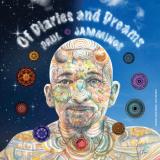
The album has 17 tracks and features many well known musicians that are currently active on the recording and gig circuits. The artwork is very eye catching and the songs comprehensive despite being multi genre. There is a musicians profiles booklet insert in the vinyl and only the front cover can be seen online, the rest of the artwork is appealing to collectors.
debe ser publicado en 15.05.2026

Official reissue. New remastering vinyl of the 1979 LP by Colin Potter + "silver edition" Gatefold cover + complete NWW list on Gatefold inner.
Chance Meeting on a Dissecting Table of a Sewing Machine and an Umbrella is the debut album by British experimental unusual and absurd music group Nurse With Wound, released on their own United Dairies label in 1979. An unusual record which blends noise and jamming.
The album's equally unusual title is a quote from the surreal, poetic novel Les Chants de Maldoror by Uruguayan-born French author Isidore-Lucien Ducasse, written under the pseudonym Comte de Lautréamont.It has been included in the "100 Records That Set the World on Fire (While No One Was Listening)" by TheWire in 1998, and is one of the records that have had a lasting impact on avant-garde, experimental and psychedelic music.It was on this record that the famous "NWW list" appeared for the first time, featuring dozens of names of musicians and groups who had influenced Nurse With Wound - a list that now serves as a treasure map for many collectors of the genre and fans of outsider music. It's been replicated here in the innersleeve of the gatefold.
Haga su pedido ahora y le encargaremos el artículo en nuestro proveedor.

Another excellent find here, an unreleased dub/instrumental album compiled by Lloydie Slim at the end of the 70s, featuring exclusive dubwise & instrumental cuts to many of his rhythms from earlier in the decade. As a bonus we've added 2 more tracks to the original 10 track album tape - the vocal & dub cuts to Johnny Clarke's "I'll Never Fall in Love Again", one of Slim's personal favorites of his productions. This single was originally released in 1975 in JA on his Don One label, and again in New York a few years later on his namesake Ivanhoe the Conqueror label. This album is a great listen which reminds us of the classic Channel 1 Revolutionaries instrumentals of the mid/late 70s.
debe ser publicado en 26.01.2026

An electrified meeting of minds, Candy Girl is a lost 1975 session by jazz pianist Mal Waldron, recorded in Paris with core members of the mighty Lafayette Afro Rock Band, the American funk unit who had made France their home and whose deep grooves would later be mined by generations of hip-hop producers.
By 1975, Waldron was a decade into his self-imposed exile from the United States—a transformed musician who had reassembled his sound in Europe and Japan after a devastating breakdown in the early '60s. His post-1969 output had stripped jazz down to its core elements: modal intensity, locked grooves, and hypnotic repetition. Candy Girl doesn’t interrupt this trajectory—it extends it, wrapping Waldron’s minimalist mantras around the funked-up chassis of the Lafayette rhythm section.
Originally released in microscopic quantities on the Calumet label and long shrouded in obscurity, Candy Girl was recorded spontaneously in the studio of French producer Pierre Jaubert, whose Paris HQ had become the workshop for both avant-garde jazz (Archie Shepp, Art Ensemble of Chicago, Steve Lacy) and psychedelic funk (Lafayette Afro Rock Band AKA Ice). This session finds Waldron jamming freely with bassist Lafayette Hudson, drummer Donny Donable, and keyboardist Frank Abel on clavinet, Moog and more—laying down raw, unfiltered instrumental funk with an experimental edge.
Highlights include the low-slung vamp of “Home Again”, the crisp, break-laden groove of “Red Match Box”, and the mesmeric swirl of the title track “Candy Girl” —a minor-key electric piano waltz with hints of cosmic soul. There's even a deep cut for the crate diggers: the somber yet meditative “Dedication to Brahms”, where Waldron deconstructs the Romantic composer’s third symphony into a sparse jazz reverie.
Unlike his polished sessions for Japanese labels or the avant-garde swing of his earlier Prestige work, Candy Girl feels more spontaneous, even accidental — and that’s part of its power. It’s a document of Waldron as bandleader, collaborator, and explorer, captured in the midst of a vibrant, cross-cultural scene in mid-70s Paris. Never officially issued with a cover and barely released at all, Candy Girl is a rare convergence of two underground traditions: Waldron’s Euro-exile electric jazz and the raw, sampled-future funk of the Lafayette Afro Rock Band. Now finally resurfaced, it deserves its rightful place in both stories.
Haga su pedido ahora y le encargaremos el artículo en nuestro proveedor.

Blue House Rockin’ is the result of a unique collaboration between Soul Sugar and Dub Shepherds — two projects united by a shared love for roots reggae, vintage studio gear, and warm analog sound.
The album was recorded live over two intense days at Blue House Studio by Christophe “French kiss” Adam, using ribbon and tube microphones from the ’50s and ’60s from the ’50s and ’60s, a Hammond organ, upright piano, Fender bass and Gibson guitars, classic amps and preamps, along with drums, syndrums and percussion. The sessions were transferred to a 24-track tape machine, and final mixes were crafted the old-school way by the Dub Shepherds at their own Bat Records Studio, using analog consoles and hardware vintage effects.
The tracklist brings together deep cuts, timeless classics, and original compositions. Curtis Mayfield’s Give Me Your Love and Aaron Frazer’s My God Has a Telephone (Colemine Records) — two soul gems, one vintage, one modern — are reimagined in reggae style, both featuring the great Jolly Joseph on lead vocals, working wonders with his falsetto. He also shines on Hold My Hand, a sweet and mellow original composition with lovers rock flair, written on the spot during the session.
Other standout moments include the soulful fire of UK singer Shniece McMenamin, who lights up Family Affair (Mary J. Blige / Dr. Dre) — flipped into a fiery hip-hop-meets-reggae version packed with energy and attitude.
Instrumentals like Disco Jack, Choice of Music, and Drum Song — all originally composed by Jamaican organ legend Jackie Mittoo — bring Guillaume “Booker G” Metenier’s Hammond work to the front. The playful exchange between organ, guitar, and a rock-solid rhythm section is elevated by swirling spring reverb, dub echoes, and filter sweeps.
The album’s explosive title track — Blue House Rock — was composed and recorded on the spot at the end of the session. A raw, greasy groove that sounds like The Meters jamming at Studio One or a lost instrumental from a Beastie Boys B-side.
Blue House Rockin’ is a vibrant blend of soulful roots reggae and funk, wrapped in the deep, dusty tones of analog tape. A joyful and authentic studio experience, captured live — and played loud.
debe ser publicado en 19.09.2025

A meeting of minds and bodies on a heady percussive trip with no clear destination, captured live at Espacio Cultural El Tanque in Tenerife. With both imaginary and lived in tropical sceneries coalescing the two units, both Tenerife's Lagoss and Kampala's Abagwagwa (aka Nihiloxica) find a common thread to disentangle cartographies. As if it was bound to happen. As it did.
Taking Abagwagwa's relentless barrage of polyrhythms as a starting point to jammin' excursions that never falter into self indulgence, brimming with ideas and spirits pulled from East African traditions, Free Jazz cosmologies, Dub tactics, urban sonic warfare and different strains of psychedelia through a vast array of drums, percussion, flutes, skewed synths, ecstatic vocals and electronic processing.Blessed with the xamanic drumming of João Pais Filipe on two tracks and feeling equally indebted to both bands' vision all the while commiting to a newfound sense of wonder, 'Island Slang' is a celebration that's truly alluring in its search for some sort of 'Universal Consciousness' - to quote Alice Coltrane - for which we're now invited to tag along. You are all welcome.
debe ser publicado en 20.06.2025

It’s abundantly clear from the first bars of their 5th studio album Through Other Reflection, that this is, and could only ever be, The Soundcarriers. From the enchanting vocal duets of folk-bidden Chanteuses Leonore Wheatley and Dorian Conway; to the precise bass lines of Paul Isherwood and the limber, jazz-cool, Hal Blaine-esque drums of his his co-songwriter Adam Cann; from the fairy-like flutes, 60s-garage guitars and organ sounds pilfered from the archives of exotica - listening to the Soundcarriers resembles a rediscovery of all the most prized, esoteric corners of the 1960s, all bundled up, warped and refracted through the quartet’s astutely modern cultural lens. Channelling Tropicalia, Middle Eastern psychedelic Jazz/Funk, The French Library sounds of Nino Nardini, and a whole host of lavish obscurites beside, Through Other Reflection delivers another sonic adventure from one of the most unique and distinctive voices of British Psychedelia. After an 8 year wait for their album 4 - 2022’s Wilds - it thankfully didn’t take so long for the follow-up this time round. In many ways, this feels like a companion to Wilds; recording again at their Nottingham warehouse studio, Through Other Reflection retains that same organic glow, all the passions and imperfections of a tightly clipped unit jamming out these living, breathing pop-art nuggets as if straight onto the acetate.”We wanted to keep an air of spontaneity with this album and not get too bogged with the recording process”, explains Cann, “It was more a case of getting the songs as tightly written and arranged as possible first so we could get them down quickly in the studio. It always takes longer than you think” Less packed with strident pop hooks as its predecessor however, the music of Through… has been given extra licence to breathe, stretch out, and wander more uncharted terrains. While gleaming psych-pop of tracks like ‘The City Was’, or ‘Already Over’ confidently carry on from where they left off, from the album’s 2nd track ‘Always’, the trip becomes a little less predictable. Starting out as a smoky Procol Harum-meets-French-Psych organ ballad, the music drifts, as if of its own accord into an eerie, garage trance that lingers, cycles, and hypnotises, growing ever stranger, reaching ever-further away from its point of conception. And almost every track on Through Other Reflections holds that outer-body moment, where the band fix themselves on a limber, lysergic groove, lose all grip on time and reality, and melt themselves away into a liquid state of blind euphoria. There are sequences on this record that feel more like rituals than songs, built upon a single hypnotic rhythm which, like the centre of a vortex, pulling everything under its beatific command. Take the finale to ‘What We Found’ for instance, sounding like a ghostly march across the psychedelic moors, or ‘Feel The Way’, where a single athletic drum-loop rises and rises, growing ever more urgent and suspenseful underneath its frantic harpsichords and rasping flutes. Full of such rich stylisms as these, The Soundcarriers showcase themselves as abstract storytellers par excellence by virtue of their textures and arrangements alone. Resembling Romantic composer Maurice Ravel, but if he had just a four-piece rock band at his disposal, Through Other Reflects is rich with detail; there’s shakers, rattles, clarinets, booming drums; there’s synthesiser swarms, chiming xylophones, vintage organs and experimental Cluster & Eno-esque ambiences. Within all this nuance the music flows like some undisclosed narrative swathed in a magnetic secrecy. “It almost comes across like a story in some ways”, says Cann of the album, “the music is quite sectional with elements of exotica and cinematic type layers, it's a good balance of grooves, tunes and weirdness”. No more is this “epic cinematic feel” heard more proudly than on short instrumental ‘Sonya’s Lament” - its innate, hauntological atmospheres befitting a Peter Strickland soundtrack, or the classics of Lex Baxter, the so-called ‘Founder of Exotica’ himself. On the other hand, providing a greasier undercurrent to all these bucolic sounds is a leaning towards a more “direct” lyricism referencing more “external concerns. Laying down the first tracks for the album in the wintry gloom of pre-lockdown 2020, and drawing inspiration from time spent in Berlin, Through Other Reflections returns to some of the post-apocalyptic futurism explored in 2014’s Entropicalia - a loose concept album inspired by J.G Ballard’s The Drowned World. “The songs explore a disillusionment with the way things are going particularly after 40 years of neoliberalism”, says Cann, “They follow that folk-song tradition of wanting to escape to an imagined time, but here it’s more urban than pastoral. The first couple of ideas I came up with when doing some music in Berlin and had some time to wander aimlessly. And think the atmosphere seeped in, particularly on The City Was and Already Over. He continues, “One aspect of the title, ‘Through Other Reflections’ is about synthesis and layers of influence. How things can be filtered through other things and change the perspective. This is something you get in cities as well.” Though, as with everything The Soundcarriers make, “It can mean anything. It also just sounds kind of cool.”
debe ser publicado en 09.12.2024

It’s abundantly clear from the first bars of their 5th studio album Through Other Reflection, that this is, and could only ever be, The Soundcarriers. From the enchanting vocal duets of folk-bidden Chanteuses Leonore Wheatley and Dorian Conway; to the precise bass lines of Paul Isherwood and the limber, jazz-cool, Hal Blaine-esque drums of his his co-songwriter Adam Cann; from the fairy-like flutes, 60s-garage guitars and organ sounds pilfered from the archives of exotica - listening to the Soundcarriers resembles a rediscovery of all the most prized, esoteric corners of the 1960s, all bundled up, warped and refracted through the quartet’s astutely modern cultural lens. Channelling Tropicalia, Middle Eastern psychedelic Jazz/Funk, The French Library sounds of Nino Nardini, and a whole host of lavish obscurites beside, Through Other Reflection delivers another sonic adventure from one of the most unique and distinctive voices of British Psychedelia. After an 8 year wait for their album 4 - 2022’s Wilds - it thankfully didn’t take so long for the follow-up this time round. In many ways, this feels like a companion to Wilds; recording again at their Nottingham warehouse studio, Through Other Reflection retains that same organic glow, all the passions and imperfections of a tightly clipped unit jamming out these living, breathing pop-art nuggets as if straight onto the acetate.”We wanted to keep an air of spontaneity with this album and not get too bogged with the recording process”, explains Cann, “It was more a case of getting the songs as tightly written and arranged as possible first so we could get them down quickly in the studio. It always takes longer than you think” Less packed with strident pop hooks as its predecessor however, the music of Through… has been given extra licence to breathe, stretch out, and wander more uncharted terrains. While gleaming psych-pop of tracks like ‘The City Was’, or ‘Already Over’ confidently carry on from where they left off, from the album’s 2nd track ‘Always’, the trip becomes a little less predictable. Starting out as a smoky Procol Harum-meets-French-Psych organ ballad, the music drifts, as if of its own accord into an eerie, garage trance that lingers, cycles, and hypnotises, growing ever stranger, reaching ever-further away from its point of conception. And almost every track on Through Other Reflections holds that outer-body moment, where the band fix themselves on a limber, lysergic groove, lose all grip on time and reality, and melt themselves away into a liquid state of blind euphoria. There are sequences on this record that feel more like rituals than songs, built upon a single hypnotic rhythm which, like the centre of a vortex, pulling everything under its beatific command. Take the finale to ‘What We Found’ for instance, sounding like a ghostly march across the psychedelic moors, or ‘Feel The Way’, where a single athletic drum-loop rises and rises, growing ever more urgent and suspenseful underneath its frantic harpsichords and rasping flutes. Full of such rich stylisms as these, The Soundcarriers showcase themselves as abstract storytellers par excellence by virtue of their textures and arrangements alone. Resembling Romantic composer Maurice Ravel, but if he had just a four-piece rock band at his disposal, Through Other Reflects is rich with detail; there’s shakers, rattles, clarinets, booming drums; there’s synthesiser swarms, chiming xylophones, vintage organs and experimental Cluster & Eno-esque ambiences. Within all this nuance the music flows like some undisclosed narrative swathed in a magnetic secrecy. “It almost comes across like a story in some ways”, says Cann of the album, “the music is quite sectional with elements of exotica and cinematic type layers, it's a good balance of grooves, tunes and weirdness”. No more is this “epic cinematic feel” heard more proudly than on short instrumental ‘Sonya’s Lament” - its innate, hauntological atmospheres befitting a Peter Strickland soundtrack, or the classics of Lex Baxter, the so-called ‘Founder of Exotica’ himself. On the other hand, providing a greasier undercurrent to all these bucolic sounds is a leaning towards a more “direct” lyricism referencing more “external concerns. Laying down the first tracks for the album in the wintry gloom of pre-lockdown 2020, and drawing inspiration from time spent in Berlin, Through Other Reflections returns to some of the post-apocalyptic futurism explored in 2014’s Entropicalia - a loose concept album inspired by J.G Ballard’s The Drowned World. “The songs explore a disillusionment with the way things are going particularly after 40 years of neoliberalism”, says Cann, “They follow that folk-song tradition of wanting to escape to an imagined time, but here it’s more urban than pastoral. The first couple of ideas I came up with when doing some music in Berlin and had some time to wander aimlessly. And think the atmosphere seeped in, particularly on The City Was and Already Over. He continues, “One aspect of the title, ‘Through Other Reflections’ is about synthesis and layers of influence. How things can be filtered through other things and change the perspective. This is something you get in cities as well.” Though, as with everything The Soundcarriers make, “It can mean anything. It also just sounds kind of cool.”
debe ser publicado en 30.08.2024

It’s abundantly clear from the first bars of their 5th studio album Through Other Reflection, that this is, and could only ever be, The Soundcarriers. From the enchanting vocal duets of folk-bidden Chanteuses Leonore Wheatley and Dorian Conway; to the precise bass lines of Paul Isherwood and the limber, jazz-cool, Hal Blaine-esque drums of his his co-songwriter Adam Cann; from the fairy-like flutes, 60s-garage guitars and organ sounds pilfered from the archives of exotica - listening to the Soundcarriers resembles a rediscovery of all the most prized, esoteric corners of the 1960s, all bundled up, warped and refracted through the quartet’s astutely modern cultural lens. Channelling Tropicalia, Middle Eastern psychedelic Jazz/Funk, The French Library sounds of Nino Nardini, and a whole host of lavish obscurites beside, Through Other Reflection delivers another sonic adventure from one of the most unique and distinctive voices of British Psychedelia. After an 8 year wait for their album 4 - 2022’s Wilds - it thankfully didn’t take so long for the follow-up this time round. In many ways, this feels like a companion to Wilds; recording again at their Nottingham warehouse studio, Through Other Reflection retains that same organic glow, all the passions and imperfections of a tightly clipped unit jamming out these living, breathing pop-art nuggets as if straight onto the acetate.”We wanted to keep an air of spontaneity with this album and not get too bogged with the recording process”, explains Cann, “It was more a case of getting the songs as tightly written and arranged as possible first so we could get them down quickly in the studio. It always takes longer than you think” Less packed with strident pop hooks as its predecessor however, the music of Through… has been given extra licence to breathe, stretch out, and wander more uncharted terrains. While gleaming psych-pop of tracks like ‘The City Was’, or ‘Already Over’ confidently carry on from where they left off, from the album’s 2nd track ‘Always’, the trip becomes a little less predictable. Starting out as a smoky Procol Harum-meets-French-Psych organ ballad, the music drifts, as if of its own accord into an eerie, garage trance that lingers, cycles, and hypnotises, growing ever stranger, reaching ever-further away from its point of conception. And almost every track on Through Other Reflections holds that outer-body moment, where the band fix themselves on a limber, lysergic groove, lose all grip on time and reality, and melt themselves away into a liquid state of blind euphoria. There are sequences on this record that feel more like rituals than songs, built upon a single hypnotic rhythm which, like the centre of a vortex, pulling everything under its beatific command. Take the finale to ‘What We Found’ for instance, sounding like a ghostly march across the psychedelic moors, or ‘Feel The Way’, where a single athletic drum-loop rises and rises, growing ever more urgent and suspenseful underneath its frantic harpsichords and rasping flutes. Full of such rich stylisms as these, The Soundcarriers showcase themselves as abstract storytellers par excellence by virtue of their textures and arrangements alone. Resembling Romantic composer Maurice Ravel, but if he had just a four-piece rock band at his disposal, Through Other Reflects is rich with detail; there’s shakers, rattles, clarinets, booming drums; there’s synthesiser swarms, chiming xylophones, vintage organs and experimental Cluster & Eno-esque ambiences. Within all this nuance the music flows like some undisclosed narrative swathed in a magnetic secrecy. “It almost comes across like a story in some ways”, says Cann of the album, “the music is quite sectional with elements of exotica and cinematic type layers, it's a good balance of grooves, tunes and weirdness”. No more is this “epic cinematic feel” heard more proudly than on short instrumental ‘Sonya’s Lament” - its innate, hauntological atmospheres befitting a Peter Strickland soundtrack, or the classics of Lex Baxter, the so-called ‘Founder of Exotica’ himself. On the other hand, providing a greasier undercurrent to all these bucolic sounds is a leaning towards a more “direct” lyricism referencing more “external concerns. Laying down the first tracks for the album in the wintry gloom of pre-lockdown 2020, and drawing inspiration from time spent in Berlin, Through Other Reflections returns to some of the post-apocalyptic futurism explored in 2014’s Entropicalia - a loose concept album inspired by J.G Ballard’s The Drowned World. “The songs explore a disillusionment with the way things are going particularly after 40 years of neoliberalism”, says Cann, “They follow that folk-song tradition of wanting to escape to an imagined time, but here it’s more urban than pastoral. The first couple of ideas I came up with when doing some music in Berlin and had some time to wander aimlessly. And think the atmosphere seeped in, particularly on The City Was and Already Over. He continues, “One aspect of the title, ‘Through Other Reflections’ is about synthesis and layers of influence. How things can be filtered through other things and change the perspective. This is something you get in cities as well.” Though, as with everything The Soundcarriers make, “It can mean anything. It also just sounds kind of cool.”
debe ser publicado en 30.08.2024

2024 Repress
Imagine a held-up-in-traffic Wayne Shorter arriving late to a Weather Report studio session and Joe Zawinul, Victor Bailey, and Omar Hakim filling in the time by jamming on a grooving house cut. Had that happened, it might have sounded a little bit like “It Never Stops,” one of two ultra-fresh tracks on Kaidi Tatham's Yore debut. Jazz and house are obviously distinct genres, yet as this irresistible cut makes clear swing is common to both. The other track, the cerebrally titled “One for the Brain,” locates itself closer to house music proper but is no less appealing for doing so.
Given the jazzy vibe of “It Never Stops,” it's fitting that Benji B once deemed Tatham the "Herbie Hancock of the United Kingdom.” Regarded as one of the originators of the Broken Beat sound, the UK-based multi-instrumentalist has worked with many an artist, from Bugz In The Attic and The Herbaliser to DJ Jazzy Jeff, and his session work credits list Slum Village, Amy Winehouse, Soul II Soul, and others. His own discography includes EPs and releases for labels such as 2000 Black, First World Records, Theo Parrish's Sound Signature, Eglo Records, and now, of course, Yore.
“It Never Stops” rolls in on a wave of silky synthesizer textures and percolating precision with a tight, funky groove that instantly pulls you into its velvety world. Triangles, electric bass, and clavinet add collective radiance to the material as the tune struts its way into your psyche. As if to make the jazz connection even more explicit, Tatham works an acoustic piano solo into the cut's second half before shifting focus back to the groove for the coda. “One for the Brain,” by comparison, digs into its chugging house pulse with fervour whilst also sweetening the arrangement with painterly synth flourishes. This one charges with breathless determination and like “It Never Stops” nods in jazz's direction with the inclusion of a freewheeling piano solo. Every minute and second on this strictly limited 12“ release seem's meaningful. No Represses / Limited 200 Copies.
Haga su pedido ahora y le encargaremos el artículo en nuestro proveedor.

Pull the Rope, the new record by Ibibio Sound Machine, casts the Eno Williams and Max Grunhard-led outfit in a new light. The hope, joy, and sexiness of their music remain, but, further honing the edge of their acclaimed 2022 album Electricity, the connection they aim to foster has shifted venues from the sunny buoyancy of a sunlit festival to a sweat-soaked, all-night dance club. Williams and Grunhard attribute this shift to a matter of collaborators, recording Pull the Rope with Sheffield-based producer Ross Orton (Arctic Monkeys, M.I.A.) over the course of two weeks. The way the pair wrote songs changed significantly_rather than Eno penning lyrics to music generated by Max and company's jamming, Orton started with Eno and Max writing together before adding the band. With less time in the studio and a new way of considering how they built songs, the duo found making decisions about Pull the Rope's sound quicker and more instinctual than before. "Ross is from Sheffield, which has an edgier, more industrial vibe than London," Grunhard explains. "He hears things differently than us, is more grounded in rave and grungier sounds, and knew when to add drums or push the instrumentation more. It was very different for us, but it lends itself to where Ibibio Sound Machine is going." In melding their songwriting process, Grunhard and Williams have, impossibly, pulled the trick of making Ibibio Sound Machine a tighter band than ever before, building out from their core in a way that highlights the electrifying group of musicians they play with. Rather than recording with the full band in the room, Pull the Rope was sculpted, elements added and shaped by Grunhard, Williams, and Orton along the way. As a result, Pull the Rope is a nimble, sleek machine that's thrilling from the first note of the opening title track, Eno's otherworldly voice and PK Ambrose's throbbing bass driving through a kaleidoscopic array of house, post-punk, funk, Afrobeat and disco, bangers and ballads, making an argument for unity that begins on the dancefloor. "We are the places we grew up, the places we've been, and the people we've met along the way," Williams says. "Hopping around the globe, we've found that people are fundamentally the same_they're people. Opposing sides push and pull, but there is an alternative to war, violence, and suffering." Lead single "Got to Be Who U Are" literally globetrots, name checking locales across the world that would feel disparate were it not for how well-traveled they are. Eno growing up in the musical melting pot of the Ibibio region of Nigeria and Max being a conservatory-trained musician from Australia, one could call their meeting in London and formation of Ibibio Sound Machine predestined. "Mama Say" and "Let My Yes Be Yes" touch themes of female empowerment. They're indicative of the band's depth as they push further into the electronic; "Mama Say" hits notes of electropop while "Let My Yes Be Yes" fuses electro to Afrobeat. Ibibio Sound Machine have always imbued their music with political consciousness, and the light that shines through in Williams' vocals and voice has never felt more necessary. The sound of Pull the Rope, then, is hope in darkness, bliss in spite of bleakness. Once again, Ibibio Sound Machine are here to provide the soundtrack to the best night of your life, and the better world to come.
debe ser publicado en 03.05.2024

Pull the Rope, the new record by Ibibio Sound Machine, casts the Eno Williams and Max Grunhard-led outfit in a new light. The hope, joy, and sexiness of their music remain, but, further honing the edge of their acclaimed 2022 album Electricity, the connection they aim to foster has shifted venues from the sunny buoyancy of a sunlit festival to a sweat-soaked, all-night dance club. Williams and Grunhard attribute this shift to a matter of collaborators, recording Pull the Rope with Sheffield-based producer Ross Orton (Arctic Monkeys, M.I.A.) over the course of two weeks. The way the pair wrote songs changed significantly_rather than Eno penning lyrics to music generated by Max and company's jamming, Orton started with Eno and Max writing together before adding the band. With less time in the studio and a new way of considering how they built songs, the duo found making decisions about Pull the Rope's sound quicker and more instinctual than before. "Ross is from Sheffield, which has an edgier, more industrial vibe than London," Grunhard explains. "He hears things differently than us, is more grounded in rave and grungier sounds, and knew when to add drums or push the instrumentation more. It was very different for us, but it lends itself to where Ibibio Sound Machine is going." In melding their songwriting process, Grunhard and Williams have, impossibly, pulled the trick of making Ibibio Sound Machine a tighter band than ever before, building out from their core in a way that highlights the electrifying group of musicians they play with. Rather than recording with the full band in the room, Pull the Rope was sculpted, elements added and shaped by Grunhard, Williams, and Orton along the way. As a result, Pull the Rope is a nimble, sleek machine that's thrilling from the first note of the opening title track, Eno's otherworldly voice and PK Ambrose's throbbing bass driving through a kaleidoscopic array of house, post-punk, funk, Afrobeat and disco, bangers and ballads, making an argument for unity that begins on the dancefloor. "We are the places we grew up, the places we've been, and the people we've met along the way," Williams says. "Hopping around the globe, we've found that people are fundamentally the same_they're people. Opposing sides push and pull, but there is an alternative to war, violence, and suffering." Lead single "Got to Be Who U Are" literally globetrots, name checking locales across the world that would feel disparate were it not for how well-traveled they are. Eno growing up in the musical melting pot of the Ibibio region of Nigeria and Max being a conservatory-trained musician from Australia, one could call their meeting in London and formation of Ibibio Sound Machine predestined. "Mama Say" and "Let My Yes Be Yes" touch themes of female empowerment. They're indicative of the band's depth as they push further into the electronic; "Mama Say" hits notes of electropop while "Let My Yes Be Yes" fuses electro to Afrobeat. Ibibio Sound Machine have always imbued their music with political consciousness, and the light that shines through in Williams' vocals and voice has never felt more necessary. The sound of Pull the Rope, then, is hope in darkness, bliss in spite of bleakness. Once again, Ibibio Sound Machine are here to provide the soundtrack to the best night of your life, and the better world to come.
Haga su pedido ahora y le encargaremos el artículo en nuestro proveedor.

Japanese alt-rock band BO NINGEN are delighted to announce they will be releasing an alternative soundtrack album to cult director Alejandro Jodorowsky's seminal film 'The Holy Mountain', set for release on 15th March 2024 via Alcopop! Records on double CD and a limited box set of triple vinyl, each in their own unique colour In partnership with Deeper Into Movies, the band will also be hosting a very special live performance of their alternative soundtrack at EartH, Hackney on 1st March 2024 --a 700 capacity tiered seated venue with original Art Deco features and state of the art L-ISA sound system, to provide the best possible experience of this must-see-and-hear event.
Commenting on the release, Kohhei Matsuda (guitar/synth) and Monchan Monna (drums) said: "We wanted to make something more than 'a band jamming to the film' live score. To do so, we tried to decipher the secret of Jodorowsky's alchemy to reach our own Holy Mountain, reflecting the underlying structure of the film-- which is delusional at sight, yet mystically logical throughout--in each stage of the music. It was quite an experience to work on the piece that way, diving deep into the director's vision where the border between the reality, delusion, the film, and real life blurs. Trying not to drown in it all, we had to find our own path back to our own version of reality. This is an aural representation of our own version of the film. We hope each of you find your own way to your own version of The Holy Mountain through reliving this mind-altering journey with us."
The band originally performed their alternative soundtrack to the film 'Holy Mountain' in July 2019 for 2 sold out nights at the Rio Cinema in Dalston, where it was nominated for 'Best Event Cinema Campaign Of The Year 2019'. During the brief latter periods of the pandemic when the band were allowed to travel internationally between London and Japan, BO NINGEN at last managed to reconvene as a unit in London to finally commit the soundtrack to record.
debe ser publicado en 15.03.2024

"For every copy of one of the great and collectible rock albums one finds on Peru's stalwart MAG label, one has a dashed dream about finding Tarkus, one of South America's whispered hard rock holy grails. I've never found one, and I've been looking for the better part of two decades. It's a fiery set of Black Sabbath style jamming and worthy of its praise." - Eothen Alapatt aka Egon (Now Again) The Peruvian-Argentinian band Tarkus was only together for six months and recorded only one album, but the record's unprecedented sound and the limited number of copies released made it legendary for fans of hard rock in Latin America. Recorded under the influenced by the Argentinian groups Almendra, Pappo, Manal and Led Zeppelin and Black Sabbath from the United Kingdom. Details: The only album released by Peruvian band Tarkus (featuring members of Telegraph Avenue), from 1972, is a heavy psych/hard rock masterpiece with echoes of Led Zeppelin, Black Sabbath and Deep Purple. Only a handful of promotional copies were made available at the time of its release, making it for years a true lost classic and one of the rarest records of Latin American rock. Tarkus was born after the 1971 split of Telegraph Avenue, one of the most popular Peruvian bands at the time. TA member Walo Carrillo was joined by Argentinian musicians Guillermo Van Lacke, whom he had met previously in Lima, and 16-year-old Darío Gianella. They got together and started making music very influenced by bands such as Black Sabbath, Led Zeppelin, Cream, Deep Purple_ They immediately developed a heavy, hard rock sound uncommon in Peru, and asked former Telegraph Avenue member Alex Nathanson to join them. They recorded their first album between April and May of 1972 for the MAG record label, which was expecting something closer to Telegraph Avenue and didn't know how to market such a heavy sound. Soon after, guitarist and main composer Darío Gianella decided to leave the band to follow his religious faith, just before they presented their debut LP live. As a result, the band disintegrated without making their official debut and only a few copies of the album were actually distributed. Time has given this LP the significance it rightly deserves as one of the foundations of Latin American hard rock, and Munster is proud to present this new vinyl reissue.
debe ser publicado en 10.11.2023

Following their sold-out launch at London’s iconic KOKO, Mercury Prize-winning MC, producer and creative Skepta and
renowned Lord Of The Mics founder Jammer are keeping things moving in impressive fashion as they continue to establish their new Más Tiempo project. Taking the sound from London to Miami and Milan via high-profile DJ sets before returning to Ibiza for the collective’s debut at the World’s #1 Club Hï alongside The Martinez Brothers, the co-founders unite once again as they deliver the second instalment of their house-focused imprint.
Set for release on 30th June 2023, the BBK mainstays are joined by British singer-songwriter and OddChild Music favourite Etta Bond, who reunites with the Big Smoke Records boss following their 2012 record ‘Mastermind’, as they serve up a resonant and soulful anthem built for the summer months with ‘Touching My Body’ - showcasing a deeper, more profound side to their sound.
Harnessing Bond’s alluring and absorbing vocals and weaving rich sun-soaked melodies, crisp percussion arrangements and
sweeping, warping leads around them to create a captivating journey through sounds, ‘Touching My Body’ welcomes a
production built for bustling daytime terraces and memorable early hours moments in equal measure.
Welcoming another new name to the Más Tiempo family, the B-side brings an impactful label debut from fellow Grime talent and London-based musician/producer Jus Jammin, who steps out under Jammin and showcases his own explorations into house music. Here on ‘Down Shovel’ he draws for sharp snappy drums, zig-zagging synths, bubbling leads and warped vocals, serving up a heavy slice of dancefloor ammunition that has been making some serious noise in Skepta’s recent DJ sets.
Haga su pedido ahora y le encargaremos el artículo en nuestro proveedor.

Haga su pedido ahora y le encargaremos el artículo en nuestro proveedor.

Das Album Bob Marley mit dem Titel ”Africa Unite” ist das Ergebnis von den besten afrikanischen Künstlern, um die größten Hits von Bob Marley neu zu interpretieren. Auf dem Album sind Künstler wie Davido, Rema, Sarkodie, Ayra Starr, Tiwa Savage, Fireboy DML, Oxlade & Tems zu hören, die jeweils einen Klassiker von Bob Marley neu interpretieren. Dieses verbindende Projekt symbolisiert den Einfluss, den Bob Marley auf das moderne Afrika hatte. Africa Unite für die Welt!
Ab dem 04.08 als CD und auf roten und schwarzem Vinyl verfügbar.
debe ser publicado en 04.08.2023

re:discovery records is proud to release for the first time, a vinyl edition of 'Two Zeroes' by Grain for it's 25th anniversary.
Grain was a west coast project that emerged out of the psychedelic music and art scenes in Los Angeles in the early 1990s. After a few of their tracks were featured on the key chill out compilations United State of Ambience 1&2 and Excursions in Ambience
and many local live performances, they released two ep's on local labels. Shortly after in 1998, 'Two Zeroes' the full length project appeared. A west coast chill out classic that unfortunately did not get much disribution outside the west coast let alone to the world.
To classify this album is very hard. Think early Jammin Unit with a touch of the Orb and dash of west coast breakbeat and chill out styles and you still can't fully pin it down. A unique album that sonically, was leaps and bounds ahead of most albums in this style thanks to sound designer, audio instalation architect, scientist and artist Jimmy Johnson along with illustrator and fellow sonic artist Peter Ehrlich. Featured on double vinyl with updated artwork by the original designer, Kevin Hanley and presented on beautiful gatefold with a shimmering silver vinyl to match. This could be one of the discoveries of the year for those that have never heard this album. Dare to Dream with us.
Haga su pedido ahora y le encargaremos el artículo en nuestro proveedor.

Balearic believers rejoice! Japanese tropical-fusioneers Coastlines are back with the worldwide vinyl release of Coastlines 2. The follow-up to their classic debut, this is the sound of Coastlines's global influences. If the dedication to intricate sonic details is particularly Japanese, the overarching feel captures the sprawling grandeur of the international balearic community. As they put it, Coastlines 2 presents "a more precise and beautifully polished magic hour." If that isn't Balearic, we don't know what is.
Takumi Kaneko and Masanori Ikeda don’t radically alter their sumptuous template with this second LP; and we wouldn't want them to. Yet with a more focused flow from first track to last, both Coastlines and Be With feel this is an even stronger album than their first. One thing that hasn't changed is the use of instrumentals instead of words to express their themes; namely, "the emotional expression of being soaked."
Opener "Tenderly" is appropriately titled, a gentle Latin shuffle easing you back into the Coastlines sound. An organ-heavy synthy exotica that's in step with Lovelock's contemporaneous "Washington Park". Their über-horizontal take on Hawkshaw & Bennett's "Mile High Swinger" (from Synthesiser And Percussion, reissued by Be With!) evokes cocktails-by-the-pool as the sun slowly sets. The blunted deep jazz-funk swing of "Alicia" is a rearranged reimagining of the Gabor Szabo song from his classic Jazz Raga LP. This here sounds like an outtake from The Chronic.
As the sun goes down, "Combustione Lenta" soundtracks the relaxing slow burn of an idyllic bonfire on an isolated beach. Displaying a beautiful new side of Coastlines, we're treated to Moments In Love vibes and melancholic guitar arcs. The piano-laden early morning wonder of "Night Cruise" started life as a completely different song, but the duo found a particularly good loop from the initial sketch and reconstructed it into this sophisticated 80s instrumental soul groove. "Waves And Rays" is all undulating acid waves and lighthouse light. A chopped and screwed steel drum G-Funk with soaring synths and nods toward the squelchy machine soul of Mtume and Jam & Lewis. Yes, *that* good.
The bouncy futureboogie cosmic chug of "Sky Island" represents the beginning of the sunrise, casting images of 80s Japanese fusion and definitely one to play out early doors to get the crowd stepping. "Area Code 868" is the strutting staccato sound of Joe Sample waking up in the Caribbean to craft his piano funk drenched in sunshine. Accordingly, the tentative, naive melodies of "Sand Steps" represent that vivid feeling first thing in the morning, as you step on to the sandy beach in the sunshine and take a deep breath. The world is yours.
The emotional, organ-piano-steel drum-driven "Song For My Mother" is a slo-mo show of sincere gratitude to all the great mothers. "Yasmin's Theme" is Coastlines's Brazilian homage, recalling for them that early summer feeling. It's propelled laconically by the carnival beat of batucada`s big bass surdo drum and complimented by sweeps of warm keys and radiant vocal harmonies. Blissful beatless closer "Asafuji" conjures a scene from a wonderful morning spent with the people of Shizuoka, the symbolic mountain of Japan, Mt Fuji and its inhabitants. It sounds like Dâm-FunK jamming with Sabres Of Paradise.
Coastlines 2 was painstakingly crafted, across the pandemic, at Masanori's rented place in Tokyo and then brought back to his home studio and worked on slowly and repeatedly. With limited time to see each other, the duo became more united in their "consciousness with natural progress."
Mastered by Simon Francis and cut by Cicely Balston at Air Studios, this magnificent double LP has been pressed by the good people at Record Industry.
Haga su pedido ahora y le encargaremos el artículo en nuestro proveedor.
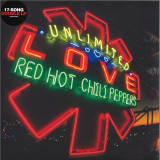
Red Hot Chili Peppers will unveil their new album and twelfth full-length offering, Unlimited Love Warner Records, on April 1, 2022. It notably marks their first recording with guitarist John Frusciante since 2006 and first with producer and longtime collaborator Rick Rubin since 2011. To herald Unlimited Love, the Los Angeles band just shared the first single and music video “Black Summer.”
“Our only goal is to get lost in the music. We (John, Anthony, Chad and Flea) spent thousands of hours, collectively and individually, honing our craft and showing up for one another, to make the best album we could. Our antennae attuned to the divine cosmos, we were just so damn grateful for the opportunity to be in a room together, and, once again, try to get better. Days, weeks and months spent listening to each other, composing, jamming freely, and arranging the fruit of those jams with great care and purpose. The sounds, rhythms, vibrations, words and melodies had us enrapt.
We yearn to shine a light in the world, to uplift, connect, and bring people together. Each of the songs on our new album UNLIMITED LOVE, is a facet of us, reflecting our view of the universe. This is our life’s mission. We work, focus, and prepare, so that when the biggest wave comes, we are ready to ride it. The ocean has gifted us a mighty wave and this record is the ride that is the sum of our lives. Thank you for listening, we hope you enjoy it.
ROCK OUT MOTHERFUCKERS!” - Anthony Kiedis, Flea, Chad Smith, John Frusciante
On lead track “Black Summer,” ethereal guitar underlines introspective lyrics as the rhythm unlocks a hypnotic drum groove highlighted by evocative bass. It quietly inhales only to exhale with a massive refrain, “It’s been a long time since I made a new friend, waiting on another black summer to end,” before a guitar solo echoes to the heavens and back.
Unlimited Love resumes a three-decade partnership with Rick Rubin Johnny Cash, Adele. Their creative collaboration spans legendary albums, including the diamond-selling Blood Sugar Sex Magik 1991, Californication 1999, By The Way 2002, and Stadium Arcadium 2006.
The interplay between the band borders on intergalactic once again—yet elevated to another stratosphere altogether. Unlimited Love represents the united spirit of four individual souls still fearlessly exploring the future of their eternal friendship and musical congregation.
This summer, Red Hot Chili Peppers will launch their first tour in support of Unlimited Love. They’ve invited a dynamic cohort of guests along for the ride at select dates, including Anderson.Paak & The Free Nationals and Thundercat and will be playing stadium dates in the UK in June 2022.
Haga su pedido ahora y le encargaremos el artículo en nuestro proveedor.

Cerrot is a Puerto Rican artist that currently resides in Barcelona. "Iteritax" is his solo debut trip after appearances on Nina Kraviz's stream-turned-compilation Hot Steel series. He recorded the 11-track EP in 2020 after falling into a flow that saw him create several tracks a day. The Plasma distortion unit pedal is at the core of the EP's raw, harsh and undone style. "Iteritax" is defined by strong percussion and a variety of modular synth recordings. "What started out as daily jam sessions effortlessly transformed into tracks and ultimately this EP. This approach has allowed me to tap into an infinite source of inspiration. Once I started jamming I had so many routes to take and it all just flowed for me. This same sense of freedom is what I aim to bring out in people with these tracks." - Cerrot
Haga su pedido ahora y le encargaremos el artículo en nuestro proveedor.

Music in Exile is excited to announce a new 12” maxi-single release from the “King of Music”, GORDON KOANG. Titled Coronavirus / Disco, this double-A-side release share’s Gordon’s messages of peace, love and positivity, and is his first original offering since his acclaimed Unity album was released in late 2020.
The first single, Coronavirus, was penned by Koang in July 2020 as a response to his personal experiences of the global pandemic. As his hometown of Melbourne went into lockdown, Gordon resided in the outer suburbs of Melbourne with his cousin, Paul, and his four-stringed, guitar-like instrument, the thom. Throughout this single, Gordon offers his condolences to those affected by the pandemic, alongside messages of his faith in frontline workers and the hope that circumstances will improve soon. “People suffer a lot. I ask that God gives the doctors the big wisdom to defeat the coronavirus. When people hear my song, I hope that this music counsels them. The song has a lot of meaning, it is telling them to be hopeful.”
With the cancellation of a national tour and numerous festival appearances, Covid-19 had not only impacted Gordon’s career here in Australia but also his opportunity to visit family he hadn’t seen in five years. After receiving Australian permanent residency, Gordon and Paul were now able to visit family in Uganda, however this was made incredibly difficult due to border closures and the potential health risks. Taking a last minute opportunity, Gordon and Paul travelled to Africa and whilst excited to visit their families, they also experienced the impact of the pandemic on their home communities. “In Africa, it is not like us here, there is no medicine and in Africa there is also no Centrelink if you are in lockdown. It is difficult getting services. Even getting food is difficult.”
After two weeks in hotel quarantine, Gordon and Paul returned to Melbourne, eager to record music once more. With lockdown lifting, Gordon headed to the studio with a new band featuring Zak Olsen (ORB, Traffik Island) Jack Kong (Baked Beans, Traffik Island), David “Daff” Gravolin (ORB), and Jesse Williams (Leah Senior, Girlatones). This new release is the result of these studio sessions, jamming and recording at Button Pusher in Preston, Melbourne.
For the DJ’s out there, both tracks will feature on a limited edition, 12” maxi single vinyl complete with pull-out poster from Gordon, encouraging listeners to stay positive during this difficult time.
“My condolences to you, my audience in lockdown. We are all suffering from coronavirus. Let us stand firm and be strong. Let us look after each other, until the time comes when God brings us together. I give my condolences to people who have died of coronavirus, in aged care and disability. We are heartbroken for everyone. Let us take it easy, and pray in our houses, all around the world. If you believe in God, pray to the God you believe in, and they will help you. God will give us the chance to go back to normal and open all events. Even if it is a bad time now, there will be a change and it will be a good time for us. Thank you to everyone.” - Gordon Koang
debe ser publicado en 30.07.2021

Eine neu überarbeitete ”Island Years”-Auflage des klassischen Bob-Marley-Boxsets, zum ersten Mal auch auf Vinyl. Mit Marleys vielen Klassikern von ”Concrete Jungle” über ”Redemption Song” bis hin zu seltenen 12”-Mixen, B-Seiten, jamaikanischen Singles und Alternates. ”Songs Of Freedom: The Island Years” erscheint als 6LP-Set.
Das 6LP-Set auf schwarzem Standard-Vinyl (180 g) enthält ein 20-seitiges Booklet mit seltenen Fotos,
mehreren Essays und Titelinformationen.
Haga su pedido ahora y le encargaremos el artículo en nuestro proveedor.

Jimi Tenor & Bizz O.D. met 1989 in a Helsinki club called Berlin. They decided to move to New York City in 1992 to start the band "Public Extacy" which never saw the light of day. A few years later, Jimi had already left NYC but was visiting so the two met to record "Bizz O.D. & Jimi Tenor's Traffic E.P.". Released in 1995 on OZON Records founded by nobody else but Jammin' Unit and Biochip C. Originally a 3 track e.p.but we at Temple Traxx thought that it was the right time to remaster and reissue this acid jewel and add an unreleased bonus track called "Girls" in this limited edited edition. This 4 track e.p. shows once more that the two artists are real inovators and pioneers of a sound that is hipper than ever in 2020.
Haga su pedido ahora y le encargaremos el artículo en nuestro proveedor.

Haga su pedido ahora y le encargaremos el artículo en nuestro proveedor.

On March 29, Eric Copeland delivers Trogg Modal Vol. 2, the counterpart to last October's Vol. 1. The former Black Dice member's 'Freakbeat 4/4' agenda gets further refined here - Vol. 2 is more laid-back than the first, but still highly danceable. Self-described as 'late Night Flight proto tekno,' the tracks pulse with thick layers of percussion, melodic fever dreams, and riffs wrung through a taffy puller. Eric's textured, off-the-cuff approach to dance music adds a refreshing element of spontaneity and 'jamming' to a climate of uncanny smoothness and polish.
Where Vol. 1 was composed of 'rippers,' Vol. 2 travels at its own pace, continuing to showcase Eric's ability to recontextualize 4/4 tracks as psychedelic contortions, from the squelchy vibrations of 'BS Dropout' to the blithe, video arcade soundtrack 'High Score Zed.' Taken together, the two volumes of Trogg Modal showcase the versatility of one of the most continuously exciting experimental artists of the past twenty years - arriving in 2019 with his mischievous sense of adventure firmly intact.
debe ser publicado en 29.03.2019
