Cerca:jacques

Generi
Tutto
Various - Wizzz! French Psychorama Volume 5 (67-75)

The journey through French-speaking pop archives continues with this fifth volume, packed with fuzz, gimmicks, and dissent. Far from the charts, the selected tracks display a great creative freedom, often backed by corrosive humor. Welcome to the surprising, kaleidoscopic, and colorful world of the late sixties and early seventies, Wizzz!
Born in Montauban, Robert Pico stumbled into music by chance when he met René Vaneste, then artistic director at Pathé-Marconi. René brought him to Paris to record his first 45 RPM EP in 1964. A year later, Pierre Perret introduced him to Vogue, where he recorded his second album with Claude Nougaro’s orchestra. Sylvie Vartan then introduced him to RCA, where he recorded four singles, including the astonishing "Chien Fidèle," a track backed by a hair-rising fuzz guitar. Alongside his solo career, he also composed for other artists like Alain Delon (the song was recorded but remains unreleased), Magali Noël, Bourvil, and Georges Guétary. In the Paris of the sixties, he mingled with Mireille Darc, Elsa Martinelli, Marie Laforêt, France Gall, Françoise Hardy, Petula Clark, Régine, Dani, Serge Gainsbourg, Joe Dassin, Franck Fernandel, Charles Level, and Roland Vincent. Despite his efforts and winning a Grand Prix Sacem for his final record, Robert Pico didn’t achieve the expected success in show business and decided to leave Paris and return to the Southwest, where he devoted himself to writing. He is the author of 23 books (including Delon et Compagnie, Jean-Marc Savary Editions 2025, a memoir about his youth and his many encounters). Today, he is relieved to never have become a celebrity and devotes himself to his work with passion.
In 1969, the Franco-Italian movie Erotissimo was released, directed by Gérard Pirès (who later directed Taxi in 1998, written and produced by Luc Besson). This pop comedy features Annie Girardot, Jean Yanne, Francis Blanche, Serge Gainsbourg, Nicole Croisille, Jacques Martin, and Patrick Topaloff. The soundtrack was written by Michel Polnareff and William Sheller, with lyrics by Jean-Lou Dabadie. "La Femme Faux-cils," performed by Annie Girardot. It recounts the feelings of a rich CEO's wife who seeks to develop her sex appeal under the influence of advertisement and magazines. Groovy, sparkling and light, this track, with ITS lush arrangements humorously critiques consumer society and feminine beauty standards.
“Je suis l’Etat” (1967) is the flagship track of the first EP by singer-songwriter Spauv Georges, aka Georges Larriaga, better known as Jim Larriaga (1941-2022). Born into a family of bakers, the young man was initially planning to become a hairdresser when he discovered English-speaking music through Elvis Presley and the Beatles. After this revelation, he decided he would become a songwriter and gave himself five years to succeed. He recorded his first two EP’s independently for RCA under the pseudonym Spauv Georges; meaning “that poor George”, a nickname given to him by the mother of her friend Jean-Pierre Prévotat (future drummer of the Players, Triangle, or Johnny Hallyday). Portraying a depressed and eccentric young man, Spauv Georges created corrosive and amusing songs that didn’t reach a wide audience, despite a TV appearance with Jean-Christophe Averty.
Supported by his loyal friend and fellow songwriter Jean-Max Rivière, Georges Larriaga met the future singer Carlos in the early '70s, then Sylvie Vartan’s assistant. He wrote songs for Carlos, including the popular "La vie est belle," "Y’a des indiens partout," and "La cantine", which went onto become a huge hit in 1972. He also composed for Claude François (“Anne-Marie”, 1971), Charlotte Julian (“Fleur de province”, 1972), helped launch child singer Roméo (who sold 4 million records), and later wrote the hit "Pas besoin d’éducation sexuelle" (1975) for the young Julie Bataille. In 1971, Jim recorded an album for Disc'Az: “L’univers étrange et fou de Jim Larriaga”, which featured pop gems like “La maison de mon père”.
The story of the song "Zoé" began when Pierre Dorsay, artistic director at Vogue Records, asked Swiss singer and musician Pierre Alain to write a song for a new female singer. The inspiration came when he realized that Zoé (the artist's name) was also the name of France's first atomic battery, created in 1948, which consisted of uranium oxide immersed in heavy water! The lyrics reflect a bubbling energy that must be handled with caution, while the instrumentation echoes this atomic theme, notably with the use of a theremin.
Zoé’s career lasted only as long as a single 45 RPM, but it seems Christine Fontane was the vocalist behind this pseudonym, who is known for several EPs, a good "popcorn" album in 1964, and a handful of children’s singles in the '70s. Regardless, the photograph on the cover is of a different girl entirely.
Later, Pierre Alain continued his career, writing songs for himself, Marie Laforêt, Danièle Licari, Alice Dona, Arlette Zola (3rd place in Eurovision 1982), and achieving multiple gold and platinum records in Canada. Also an inventor with several patents, president of the Romande Academy, and head of the French Alliance in Geneva, he now composes atonal music, books, and poetry. Moreover, he is also the host of "Les Mardis de Pierre Alain" at "Le P'tit Music'Hohl" in Geneva.
Filled with oriental choruses and fuzz guitar, "Fou" is from Jacques Da Sylva's only EP released by Vogue in 1967. Despite the quality of this recording, all traces of this singer disappear after this first effort.
Valentin is a baroque pop singer born in Belgium. He is the songwriter and composer of most of the tracks on his three singles released in the late 60s in Canada. A legend says that he reincarnated himself as Jacky Valentin during the 1970s for a rock'n'roll revival career in Belgium, but his older brother sadly debunked this story. Valentin's first two singles were arranged by Claude Rogen, a Parisian session pianist who had come to Canada to promote the song “Mister A Gogo”, a cover of David Bowie’s “Laughing Gnome”, adapted by singer Delphine, his wife at the time. Far from his usual network, Claude Rogen arranged music for Polydor, including the arrangements for “Je suis un vagabond” in 1969, a jerk tune with string arrangements and a furious optimism.
Jacques Malia wrote, composed, and recorded his only 45 EP for Festival in 1966. “Histoire de gitan” is an incredible beat track with bohemian scat that tells the story of a gypsy musician who came to Paris to make it in the Music-Hall, to no avail. The hero of the song and its author probably shared a similar fate, as Jacques Malia faded into anonymity after this remarkable attempt.
Bernard Jamet recorded two EPs for Barclay in the late sixties and co-wrote several songs with Christine Pilzer, Pascal Danel, and prolific songwriters Michel Delancray and Mya Simile. The track “Raison Légale” (1968), his masterpiece, immerses the listener in a courtroom right when a murderer is being judged, with jerk rhythm and free arrangements. A unique, paranoid, judicial, and psychedelic oddity.
Jean-Pierre Lebrot-Millers started his career in show business in 1967 as a singer and songwriter for the Philips label. After three singles, he wrote several songs of a new kind with his friend Pierre Halioche, in the midst of the sexual liberation movement and the democratization of drugs. With provocative lyrics, “Les filles du hasard” and “Barbara au Chapeau Rose” were released on a Philips singles in 1968. The character of Barbara was inspired by a queen of Parisian nightlife during the psychedelic years: model Charlotte Martin, who dated Eric Clapton from 1965 to 1968, then Jimmy Page from 1970 to 1983. Jean-Claude Petit’s arrangements, with a table-filled intro, soul brass, and Hendrixian guitar, emphasize the flamboyance of a hedonistic and sexy character, whose dog is named Junkie because “Junkie est un nom exquis”! The track was recorded live in three takes with a full orchestra.
Upon its release, the record was censored by Europe 1 and RTL due to its references to drug use. Jean-Pierre Lebrot was then banned from the airwaves and later dismissed by his record label. He changed his artist name to Jean-Pierre Millers, while his companion Pierre Halioche became D. Dolby for a new dreamy composition, “Chilla”, which Jean-Pierre produced himself with arrangements by Jean Musy. Once again, the song was immediately censored everywhere. After this setback, he decided to stop singing and started taking on odd jobs to support his Swedish wife and their son until the day he met Jean-Pierre Martin, then production manager at Decca, who had worked with Manu Dibango. Martin offered Jean-Pierre Lebrot-Millers, then employed at Rank Xerox, the position of artistic director at Decca. He accepted and became, a year later, promotion director (radio, press, TV). He worked on Julio Iglesias’s first album for Decca, which became a massive hit and allowed him to meet Claude Carrère. The latter asked him to write new songs and find their performers, much like a “talent scout.” It’s through him that Jean-Pierre discovered Julie Pietri and Corinne Hermès. He composed “Ma Pompadour” for Ringo, Sheila’s husband, and took the microphone again for the syncope hit “Rendez-Vous” in 1982.
That same year, Jean-Pierre Lebrot-Millers tried to release a track for which he had heavily gone into debt: “Si la vie est un cadeau”. Having recorded it in London, he presented it to numerous professionals, all of whom refused to get involved. The same thing happened with Antenne 2 and the Sacem when he proposed the song as France’s entry for Eurovision. He then met Haïm Saban, who was producing cartoon soundtracks and had just launched the Goldorak theme song. Saban, having listened to the song, declared it had the potential to become a hit. He sent Jean-Pierre and Corinne Hermès to meet the CEO of the Luxembourg radio and television network. The latter received them, asked to hear a verse and chorus a cappella in his office, and immediately hired them to represent Luxembourg at Eurovision 1983. They reworked the arrangements and recorded a new version with Haïm Saban as co-producer. The song ended up winning Eurovision 1983, a great comeback for our hero. He continued producing and hung out with the band Nacash in Belgium when a couple came to introduce their daughter for an impromptu audition in a hotel room. The girl sang “Les démons de minuit” while dancing to a radio cassette. Impressed, he had her take singing lessons for a year and composed a song for her (for which he had the melody and title, but no lyrics). This required him to go on the hunt for a lyricist, who ended up being Guy Carlier. They recorded the song, which was initially a ballad, at Bernard Estardy’s CBE studio, and gave the singer a new name: Melody. They showed the song around their industry network without success. Later, Estardy called Jean-Pierre to suggest changing the rhythm and making it pop-rock. Orlando, Dalida’s brother, liked the result and decided to co-produce the track. “Y’a pas que les grands qui rêvent » became a classic hit. The song has since been covered by Juliette Armanet (as a ballad, like the original) and Valentina.

Born into an aristocratic Breton family, Hervé Mettais-Cartier worked as a DJ at Queen Kiss, a nightclub in Poitiers, where he formed the band Les Concentrés with Michel (an actor) and Christian (a radio technician). Together, they created a repertoire of whimsical songs (“Ma bique est morte”, “J’suis un salaud”, “Fils de dégénéré”...) that they performed on stage dressed in white (in homage to “concentrated milk”). They performed at Bliboquet and Olympia in 1968 for the 10th edition of the “Relais de la chanson Française” organized by L’Humanité-Dimanche and Nous les Garçons et les Filles, sponsored by Pepsi Cola. Winners in the author-composer category, alongside Danish singer Dorte, their visibility allowed them to record a 45, and appear on television in Jean-Christophe Averty’s show. The A-side of the disc features Bruno le ravageur, a casatchok dedicated to Bruno Caquatrix, the director of Olympia, nicknamed in the song “Coq Atroce” or “croque-actrices”. The B-side is dedicated to “Fils de dégénéré”, a quirky tribute to Hervé's aristocratic roots, mixing absurdity with sophisticated vocal harmonies.
After Les Concentrés, Hervé Mettais-Cartier formed the duo La Paire et sa Bêtise with his friend Olivier Robert. They performed in Parisian cabarets and toured with Pierre Vassiliu. In the late 1970s, Hervé began a solo career. He recorded two albums for the Motors label in 1978 and 1979, which did not achieve their anticipated success due to lack of promotion. In 1980, he met Bernadette, with whom he started a family and created a “Chansons à voir” (songs to see) show that he performed until his death at the end of 2024.

Publicité comes from the final EP by the Missiles (Ducretet Thomson, 1966), a disc that also includes “La (nouvelle) guerre de cent ans”, featured on Volume 4 of our Wizzz! series. Please refer to the booklet for the story of the band.

“He’s 1.82 meters tall, 28 years old, weighs 135 kg, is black and Belgian”: this is the description of singer Hegesippe on the back of his sole single (Decca, 1967). He appears on the album cover wearing a Greek toga, like a hippie gag – we are at the end of the year 1967. In “Le crédo d’Hegesippe”, this former bodyguard of Antoine and the Charlots plays the delightful card of the thick brute converted to Flower-Power and non-violence, with arrangements by Jean-Daniel Mercier, aka Paul Mille.
“Ethéro-disco” was released on a promotional record for clients of the Maréchal company (Liège, Belgium) for the New Year 1979. Over a funky rhythm, celebrity impersonations (Brigitte Bardot, Jacques Dutronc, Fernandel…) deliver an enigmatic text about pharmaceutical products like ether, bismuth, and aspartate. The track was composed by Dan Sarravah (responsible for Joanna's “Hold-up inusité” featured on Wizzz! Volume 3) and Tony Talado, who was also a singer (one 45 in 1967), songwriter (with over a dozen credits between 1964 and 1985 in various styles from surf music to disco), author (Devenez Végétarien, Dricot Editions, 1985), ad designer, and psychologist.

Décollez-les is on the A-side of Mamlouk's only single, a pseudonym for Marsel Hurten, who is known for his work on several EPs in the late sixties, as well as composing music for Hervé Vilard’s “Capri, c’est fini”, Claude Channes' “La Haine”, Annie Philippe’s “On m’a toujours dit”, and Nancy Holloway’s “Panne de Cœur”.
This strange song, with Afrobeat horns and absurd dialogues between a chef and his kitchen staff, is the result of a collaboration between Marsel Hurten and one of his neighbors, a photographer from Pavillon-sous-Bois (93), where the musician settled after returning from the Algerian War. A music video was shot to promote the record.
Marsel Hurten was born in Tourcoing (59) into a musical family. At a young age, he joined the brass band founded by his grandfather, playing the piston before studying trumpet at the conservatory, as well as teaching himself how to play the guitar. As an orchestra musician, he toured in France, Belgium, Germany, and England. He released a series of solo 45’s between 1965 and 1968 for the DMF and Az labels before stopping recording to focus on working for other artists (Gilles Olivier, Noëlle Cordier…).
“L’amour nu” (Vogue, 1971) is the work of the short-lived Belgian band Mozaïque. The track, written by singer Jacques Albin, closely resembles another of his compositions, “Carré Blanc”, which he recorded in 1969 for Disc’AZ.
Represented by the Lumi Son micro-label based in Marignane (Côte d'Azur), Jean-Marc Garrigues released two 45 RPMs in the late sixties, defending the French jerk sound. The song “Je dis Non” is a short, joyful ode to youth, pop music, and rebellion.
Songwriter and performer Jacques Penuel released three singles. The first one, “Astronef 328” (Fontana, 1969), features a dizzying series of chords punctuated by sound effects, a sci-fi story, and arrangements by Jean-Claude Vannier.

We would like to sincerely thank Pierre Alain, Moon Blaha, Marsel Hurten, Bastien Larriaga, Jean-Pierre Lebrot-Millers, Bernadette Mettais-Cartier, Robert Pico, Olivier Robert, Claude Rogen, Micky Segura.

non in magazzino

Ordina ora e ordineremo l'articolo per te presso il nostro fornitore.


Last In: 55 days ago
Cléa Vincent - Speakeasy
  • A1: Bienvenue Au Speakeasy
  • A2: Draskapha
  • A3: Mellow Mood
  • B1: Minute Papillon
  • B2: Quadro
  • B3: Sans Faire

Already fifteen years that Cléa Vincent has been stepping on stage with that childlike fervor, that passion for pop and its elasticity, from her early days in Parisian bars to last year’s show at the Bataclan for the release of her third album Advitam Æternamour. You could say she needs no introduction, her name being inseparable from some of the most exciting work to emerge in contemporary French independent music. From the very beginning, she asserted her taste for spontaneous, candid, sunlit music, turning her songs not only into spaces of introspection but also into small capsules for dialogue. She collaborates constantly, with Kim Giani, Jeanne Balibar, Alison Wheeler, Jacques, NUSKY & VAATI, João Selva, Les Clopes…driven by a desire for sharing, for visions that meet and collide across genres. Alongside her work as a composer, she dedicates herself to giving a voice to the artists around her, notably through her show Sooo Pop, broadcast on YouTube in 2018 and 2019, where she welcomed guests as varied as Christophe, Moodoïd, Mathilde Fernandez, Katerine, and The Pirouettes. Like others of her generation, she claims the influence of francophone pop from the 1980s, but rather than being a successor to Jacno, Cléa draws from everything that shapes her era, fully plugged into the present, its faces, its energies, its collisions. She travels too, a way of reshuffling the cards of her inspiration, and her discovery of South America, of bossa nova and samba during her tour dates, became the catalyst for her series of EPs Tropi-Cléa.

pre-ordina ora23.01.2026

dovrebbe essere pubblicato su 23.01.2026


Last In: 2026 years ago
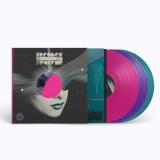
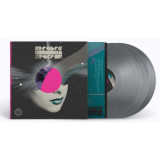
Various - Strobes in Space LP 3x12"
non in magazzino

Ordina ora e ordineremo l'articolo per te presso il nostro fornitore.


Last In: 24 days ago
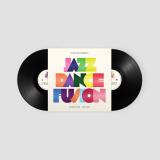
Various - Colin Curtis Presents Jazz Dance Fusion Volume 4, Pt. 2 LP (2x12")
  • 09: Chris Bangs &Amp; Nova Vida - My Only (Geemix)
  • 01: Venus Dodson - Mother Of The Future
  • 02: Jacques Schwarz-Bart - Mendé
  • 03: Guinu - Eletromandinga (Extended Version)
  • 04: Stefano Di Santis - Nova Laze
  • 05: Geew - Kyoto
  • 06: Mary Greer Mudiku &Amp; Oneness Of Juju - I Face East
  • 07: Alfredo Dias Gomes - Vaya Mulatto
  • 08: Juju - Wanting Touch (Instrumental)
  • 10: Lifetime - I&Apos;Ll Bet You Thought I&Apos;D Never Find You
  • 11: Tres-Men - Samba De-La Cruz
  • 12: Miho Nobuzane - Ponteio
  • 13: El Caballo Y Su Orquesta - Mambo De Papi

Colin Curtis Jazz Dance Fusion Vol 4

Colin Curtis is back! with another finely curated selection of the best Jazz Dance Fusion records he could find.

Volume 4 reflects a combination of new music, unreleased music, and tracks that have never been on vinyl before or have not attained the recognition they deserve. Packed with great Jazz Dance music from the UK and all around the world. The whole purpose of these compilations is to introduce you to fantastic talent and allow you to then go and explore all their works and keep this movement moving!

With brand new & exclusive releases, extremely rare tracks, and many only available on Vinyl for the first time from Brazil, Cuba, Japan, Italy, USA, UK, and beyond. Showcasing another insight into Colin Curtis's world of Jazz Dance Fusion and highlighting the sheer diversity & talent on offer from Vocal Jazz, Salsa, and Latin Spoken Word to Sambas & Fusion, It's All Here!

"Fasten your Seatbelts for a Jazztastic ride !!" - COLIN CURTIS


i 09: Chris Bangs & Nova Vida - My Only (Geemix) feat. Klei


i 09: Chris Bangs & Nova Vida - My Only (Geemix) [feat. Klei]


[i] 09: Chris Bangs & Nova Vida - My Only (Geemix) [feat. Klei]


[i] 09: Chris Bangs & Nova Vida - My Only (Geemix) [feat. Klei]

pre-ordina ora05.12.2025

dovrebbe essere pubblicato su 05.12.2025


Last In: 2026 years ago
The Questions - Best Answer LP
  • 1: Beehive!!
  • 2: Questions - Theme
  • 3: Koi No Yokan
  • 4: Le Cactus
  • 5 45:
  • 6: Honey Pye
  • 7: I Want You
  • 8: Brighton Beach
  • 9: Howling Bowl
  • 10: I Am I
  • 11: I Got My Mojo Working
  • 12: Yoakenotori Ga Naita

Their original pop-infused songs blend rock, punk, and garage rock, and--together with their wild stage presence--have made them unforgettable to anyone who sees them live. Last year, the power trio even provided the soundtrack for a Ryukyu Nissan commercial--appearing in it themselves. Now, it's time for their debut LP: "Best Answer"! The album is incredibly catchy and versatile. From wild, lo-fi punk instrumentals like "Beehive!!" and "Howling Bowl", to cool pop- punk tracks like "I Want You", "45", and "Questions- theme".

There are also danceable garage punk songs like "Brighton Beach", "Koi no yokan", and "Yoakenotori ga naita". The track "I am I" references the SONICS' guitar sound and adds cool Japanese female vocals, screams, and harmonies. The album also includes two wild, punky cover versions: the R&B classic "I Got My Mojo Working", and a charming yet incredibly cool take on Jacques Dutronc's "Les Cactus". And with "Honey Pye", they even deliver a catchy off- beat tune with a feelgood pop-punk attitude. This album is top-quality Japanese rock--from beginning to end!

pre-ordina ora05.12.2025

dovrebbe essere pubblicato su 05.12.2025


Last In: 2026 years ago
Philipp Sarde - Le Regard Musical

Ohne Musik kein Kino. Ohne Philippe Sarde kein französisches Kino!
Philippe Sarde ist einer der größten Filmkomponisten. Das ist umso bemerkenswerter, als er seine gesamte
Karriere in Frankreich und bei französischen Produktionen verbracht hat. Er ist verantwortlich für die
Musik von „Les choses de la vie“ (Claude Sautet), „Mort d’un pourri“ (George Lautner), „Beau-père“
(Bertrand Tavernier), „La guerre du feu“ (Jean-Jacques Annaud) und „Music Box“ (Costa Gavras). Es
brauchte ein „Best Of“, um die 50-jährige Karriere dieses Giganten zu feiern. In 40 Titeln durchquert er
Epochen, Genres und Atmosphären. Unverzichtbar für jeden großen Musikfan. Dieses Album ist als CD
und Doppel-Vinyl erhältlich und enthält Auszüge aus den 40 Original-Soundtracks der Filme, die 10 Jahre
lang bei BMG digital veröffentlicht wurden, sowie den Titel „La chanson d’Hélène“ aus dem B.O. „Les
choses de la vie“.

pre-ordina ora21.11.2025

dovrebbe essere pubblicato su 21.11.2025


Last In: 2026 years ago
Mauricio Einhorn - Mauricio and Horns LP 2x12"

'Mauricio and Horns' by Bossa Nova legend and harmonica master Mauricio
Einhorn is produced by Jacques Muyal, with the Idriss Boudrioua Orechestra
arranged by Rafael Rocha and with guest artists Paquito D'Rivera and Lula
Galvao
In jazz, we all know the harmonica master, Mr. "Baron" Toots Thielemans, but we are
equaly fortunate to have our "Prince", Mauricio Einhorn. His early contributions in the
1950s to the birth of the Samba Jazz movement in Brazil played a pivotal role in the
creation of Bossa Nova, a genre that quickly became an integral part of the jazz world.
The influence of jazz on Brazilian music - exemplified by the great Carlos Lyra in
"Influencia Do Jazz" - was so profound that local musicians embraced it to forge a
new musical identity. Many of Einhorn's compositions have become timeless
standards performed worldwide since the early 1950s and '60s.
Together with another giant of the scene, alto saxophonist Idriss Boudrioua,
Mauricio's music gets an even grander presentation than ever before. This time, he
teamed up with an exceptionally talented young musician: a big band arranger and
trombonist named Rafael Rocha, who wrote all the arrangements and conducted the
recordings. Rafael's arrangements are nothing short of magical. They are never
overdone, always respecting the beauty of the original harmonies while infusing them
with his deep passion for jazz. His trombone solos recall the phrasing of Frank
Rosolino, and he modulates the pieces with swirling harmonies that evoke the very
roots of Brazilian jazz. In every track, Rafael enhances Mauricio's elegant and
expressive phrases without ever overpowering the artist, creating a "wall of sound"
that gracefully floats alongside Mauricio.

pre-ordina ora21.11.2025

dovrebbe essere pubblicato su 21.11.2025


Last In: 2026 years ago
OPEN SKY UNIT - OPEN SKY UNIT

OPEN SKY UNIT

OPEN SKY UNIT

12inchSDBANLP21LTD
SDBAN ULTRA
11.11.2025
 
6
disponibile anche

STANDARD VERSION


On November 7, 2025, the Belgian label Sdban Records will release a reissue of the mythical Open Sky Unit (1974) by the eponymous jazz fusion group featuring Micheline and Jacques Pelzer, Steve Houben, Ron Wilson, Janot Buchem and Michel Graillier. The album returns on vinyl, highlighting a pivotal moment in Belgian jazz history, where soul, funk, and free improvisation came together in a vibrant and family-driven project.

Formed in the early 1970s as a homage to Dave Liebman's group Open Sky, Open Sky Unit grew out of informal jam sessions in Liège, Belgium, into a unique collective. One of the central figures was Jacques Pelzer, father of drummer and vocalist Micheline Pelzer, alongside his second cousin, saxophonist/flutist Steve Houben, bass player Janot Buchem, percussionist Michel Graillier and American pianist/composer Ron Wilson.

Their 1974 debut album was released on the Duchesne classical music label, run by Pelzer's brother-in-law. The group's sound carefully balanced jazz and soul and was largely directed by Wilson, a Californian pianist and singer who settled in Liège and nearby Maastricht after his army service. Wilson composed the entire repertoire. Open Sky Unit was recorded live at Jazzland club in Liège, and the band made several short tours in Belgium and abroad (including Tunisia) until around 1975-1976, when Houben left for Boston to study at the Berklee College of Music.

Although the original live recording from 1974 was not technically perfect, the group succeeded in capturing their heartfelt live energy. Tracks such as Open Sky, Sunshine Star, and Passion and Compassion are striking examples of this. Years later, the album version of Sunshine Star found its way onto Funky Chicken (2014), the compilation that not only brought the track back into the spotlight but also marked the beginning of Sdban Records.

In addition to the standard reissue, a limited edition of 200 copies will be released for collectors, featuring a 7" single of Ron Wilson's Sunshine Star as a special bonus. This single was originally released in 1973 with the acoustic version of Sunshine Star (piano and vocals) on the B-side, recorded a few months before the longer jazz-funk version later featured on the LP Open Sky Unit. The A-side, Peace Is The Answer, was only released on that single at the time and is now being reissued for the very first time. The 7" is thus a faithful and long-awaited reissue of a rare piece of Belgian jazz history, it's intimate, soulful, and an ideal complement to theexisting and well-known LP.

Although the band never achieved a major international breakthrough, they were highly valued in progressive European jazz circles and later secured a place in anthologies such as Utopic Cities: Progressive Jazz in Belgium 1968-1979. The reissue of Open Sky Unit brings their music back into the spotlight and reaffirms their role as key figures in the Belgian jazz scene of the seventies.

pre-ordina ora11.11.2025

dovrebbe essere pubblicato su 11.11.2025


Last In: 2026 years ago
OPEN SKY UNIT - OPEN SKY UNIT

Open Sky Unit

OPEN SKY UNIT

12inchSDBANLP21
SDBAN ULTRA
07.11.2025

On November 7, 2025, the Belgian label Sdban Records will release a reissue of the mythical Open Sky Unit (1974) by the eponymous jazz fusion group featuring Micheline and Jacques Pelzer, Steve Houben, Ron Wilson, Janot Buchem and Michel Graillier. The album returns on vinyl, highlighting a pivotal moment in Belgian jazz history, where soul, funk, and free improvisation came together in a vibrant and family-driven project.

Formed in the early 1970s as a homage to Dave Liebman's group Open Sky, Open Sky Unit grew out of informal jam sessions in Liège, Belgium, into a unique collective. One of the central figures was Jacques Pelzer, father of drummer and vocalist Micheline Pelzer, alongside his second cousin, saxophonist/flutist Steve Houben, bass player Janot Buchem, percussionist Michel Graillier and American pianist/composer Ron Wilson.

Their 1974 debut album was released on the Duchesne classical music label, run by Pelzer's brother-in-law. The group's sound carefully balanced jazz and soul and was largely directed by Wilson, a Californian pianist and singer who settled in Liège and nearby Maastricht after his army service. Wilson composed the entire repertoire. Open Sky Unit was recorded live at Jazzland club in Liège, and the band made several short tours in Belgium and abroad (including Tunisia) until around 1975-1976, when Houben left for Boston to study at the Berklee College of Music.

Although the original live recording from 1974 was not technically perfect, the group succeeded in capturing their heartfelt live energy. Tracks such as Open Sky, Sunshine Star, and Passion and Compassion are striking examples of this. Years later, the album version of Sunshine Star found its way onto Funky Chicken (2014), the compilation that not only brought the track back into the spotlight but also marked the beginning of Sdban Records.

In addition to the standard reissue, a limited edition of 200 copies will be released for collectors, featuring a 7" single of Ron Wilson's Sunshine Star as a special bonus. This single was originally released in 1973 with the acoustic version of Sunshine Star (piano and vocals) on the B-side, recorded a few months before the longer jazz-funk version later featured on the LP Open Sky Unit. The A-side, Peace Is The Answer, was only released on that single at the time and is now being reissued for the very first time. The 7" is thus a faithful and long-awaited reissue of a rare piece of Belgian jazz history, it's intimate, soulful, and an ideal complement to theexisting and well-known LP.

Although the band never achieved a major international breakthrough, they were highly valued in progressive European jazz circles and later secured a place in anthologies such as Utopic Cities: Progressive Jazz in Belgium 1968-1979. The reissue of Open Sky Unit brings their music back into the spotlight and reaffirms their role as key figures in the Belgian jazz scene of the seventies.

pre-ordina ora07.11.2025

dovrebbe essere pubblicato su 07.11.2025


Last In: 2026 years ago
Ruth - Polaroïd Roman Photo (40th Anniversary Edition) + 7"

INTEMPORARY AND INDETRONABLE FRENCH COLD WAVE CLASSIC in a SPECIAL EDITION to celebrate the 40th anniversary of this mythical album.


This edition includes a 45T with 2 previously unreleased tracks, available nowhere else.


Thierry Müller, who initiated the RUTH project, is not at his first try when the album POLAROÏD/ROMAN/PHOTO including the eponymous track is released in 1985. His older brother Patrick along with one of their cousins make his musical education and he quickly becomes familiar with contemporary and experimental music. He starts quite early to tinker sounds on old tape recorders by himself but it is in 1977 that Thierry launches with some friends his first group, ARCANE, while studying at the School of Applied Arts. Their sound is weird, a mixture of saturated scratches and feedback tapes: there is no discographic or scenic testimony of this experience.


Alongside ARCANE, Thierry is already working solo on his ILITCH project / concept, an experimental and innovative work, whose first album Periodmindtrouble is released in 1978 on the Oxigène label. Despite insubstantial sales, this album brings Thierry recognition and success in the very elitist circles of experimental and underground music.


ILITCH’s musical bias was too narrow for Thierry’s ceaseless experimental curiosity, parallel to these activities, he therefore develops a Punk project called RUTH ELLYERI with the author, actress and photographer Murielle Huster. The title is an anagram of Thierry Müller (the complete name is Ruth M. Ellyeri). The character is meant to impersonate one of his schizophrenic facets and allows him to extend his field of expressions to musical styles differing from those in ILITCH.

From this work, the very cult punk piece Mescalito emerges, song that can be found on the mythical but unfortunately very rare compilation 125g de 33 1/3 tours (1979) of the Oxigène label (first “french punk” sampler). At the end of 1978, he meets Philippe Doray at the Oxigene office. Doray is another big name of French experimental music. Thierry moves to his home near Rouen, a remote farmhouse with a music studio made of odds and ends.


They work on their respective creations but meet from time to time on experimentations in common, including CRASH (a tribute to JG Ballard) As early as 1982, a first version of the track Polaroïd/Roman/Photo is out under the name of the project RUTH. “I wanted to write a piece to make the girls dance and make fun of the boys. I plugged a small handmade clock on my Farfisa organ as a sequencer. I had a small Roland synth-guitar, I put the organ in it and that’s how it started.” Philippe is quite amused by the idea of working on a more Pop project and offers to write the text. Thierry works on other tracks for the future LP and asks some friends to write other texts : Edouard Nono, visual artist, writes the lyrics of Mots, Frédérique Lapierre those of Misty Mouse and Tu m’ennuies . It is her voice you hear on these 2 tracks and on the first version of Polaroïd/Roman/Photo. Later, Thierry settles down in the Anagramme recording studio to carry out acoustic sound recordings. But when the sessions are over, the 2 musicians are not too happy with the results of Polaroïd/Roman/Photo: according to them, they lack “flamboyance”. They decide then to record a new female voice with a professional singer and the sound engeneer Patrick Chevalot offers to mix the track in the Synthesis studio “so that it blows out”.


With his tape ready and the help of Jacques Pasquier (S.C.O.P.A. / Invisible records where Ilitch’s second album, 10 Suicides, is released) he starts to contact record companies. “I visited almost all the major record companies and was thrown out every time. Only at RCA’s I found someone interested in my music. It was Francis Fottorino who had signed Kas Product but when it reached the the big boss, no way! Philippe Constantin from Virgin records raised some hope but in vain.


The album was finally released in 1985 with Paris Album, a small independant label.” The album barely sells 50 copies in 1985, despite the eponymous title as a potential success. « In 2004, 2 DJs Marc Colin and Ivan Smagghe discover the track Polaroïd/Roman/Photo and decide to exhume it from oblvion. They release it on a compilation called So Young but so cold (Tigersushi) and then with Born Bad records on the BIPPP compilation in 2008. Thanks to them, the track and the album start a new life.


Alongside his activity as graphic designer, Thierry Müller carries on producing music under his name, those of ILITCH and RUTH for his own creations and various collaborations.

non in magazzino

Ordina ora e ordineremo l'articolo per te presso il nostro fornitore.


Last In: 55 days ago
Fred P - Distant Travels EP

Francois Kevorkian (Wave) : Lovely EP, atmospheric vibes.
Chris Udoh (Various) : Lovely !!!
Lea Lisa (Phonica Records / Folklor Club) : Fred P is a master of deep house. Live Long Love & When in Miami for me.
Will Hofbauer (Third Place, Wisdom Teeth, Rinse) : nice n deep ty!
Radio Slave (Rekids) : The King is back and what an EP ! Full support.
Jon Hester (Rekids, EDEC, Les Enfants Terribles, L.A.G.) : Lovely vibes on When In Miami and Live Long Love!
Jacques Renault : Nice EP, into When In Miami and The Heights in particular
Danny Howells (Dig Deeper) : Love Fred so much, always the highest quality music with soul. All four are stunners.
Dan Beaumont (Chapter 10 / NTS) : Always brilliant.. deeep! When in Miami for me
DJ Sprinkles (Comatonse) : thank you
Kai Alce (Real Soon) : Live Long Fred P!
Tomoki Tamura (Holic Trax) : pure class, deep house
Raresh (ar:pi:ar) : super! thanks
Laurent Garnier : FRED P alwayssssssssssssssss
Marcel Dettmann : thx
Archie Hamilton (Microhertz / FUSE) : Nice thanks
DVS1 : thanks
Alinka (Twirl, Classic, Crosstown Rebels, Batty Bass) : Beautiful tracks
Pat Hyland (Northside Loft Society) : Fred P is a master of deep. AWEsome EP!
Thor (Thor-Thule Records) : Another great release by the master of Deep House. Full support
Colin Dale : One of my fave producers from way back! Excellent 4 tracker with all the cuts 'hittin' the mark'. Will rotate & support.
Geir Aspenes (G-Ha (Sunkissed)) : Thank u
Jaye Ward (Dalston Super Store / Netil Radio) : Syncrophone just continues to churn out the goodness.. love Fred P too. so deep and full of the good soul ace! thx
Ame (Innervisions) : thanks
Domenic Cappello (Subclub) : love this
Greg Gow (Restructured / Transmat / KMS) : cool vibes full support
Jerome Sydenham (Ibadan) : When Miami is the business! Overall nice E.P!
Bill Brewster (NTS) : FRED P RETURNS!
Bailey Ibbs (Metafloor Records / Habits / Dansu Discs) : Live Long Love <3

In stock dal31.03.2026


Last In: 7 days ago
Various - Dolores: Salsa & Guaracha From 70's French West Indies

In Guadeloupe, many people think that jazz and ka music are like a ring and a finger. To some extent, the same could be said about so called Latin music and the music played in the French West Indies.

Both aesthetics were born in the Caribbean and bear so many connections that they can easily be considered cousins. In constant dialogue, there are lots of examples of their fruitful alliance and have been for a while. The English country dance that used to be practiced in European lounges came to be called kadrille in Martinique and contradanza in Cuba. They both featured additional percussion instruments inherited from the transatlantic deportation. Drawing from shared feelings about the same traumatized identity – later to be creolized – it would be hard not to assume that they were meant to inspire each other. The golden age of the orchestras that graced the Pigalle nights during the interwar period further proves the point. As soon as the 1930s, Havana-born Don Barreto naturally mixed danzón and biguine music in a combo based at Melody's Bar. In the following decade, Félix Valvert, a conductor who was born and raised in Basse-Terre in Guadelupe, also worked wonders in Montparnasse with La Coupole, which was an orchestra made up of eclectic musicians. Afro- Caribbean performers of various origins were often hired on rhythm and brass sections in jazz bands, which used to enliven the typical French balls of the capital. In the 1930s and onwards, Rico’s Creole Band was one of them.


Martinican violinist-clarinettist Ernest Léardée, who would become the king of biguine music as well as the main figure of French Uncle Ben's TV commercials (a dark stigma of post-colonial stereotypes), had musicians from the whole Caribbean sphere play at his Bal Blomet – and they all enchanted "ces Zazous-là" (according the words of Léardée's biguine-calypso piece). In les Antilles (French for French West Indies), music history started to speed up in the 1950s, when trade expanded and radio stations grew bigger. The Guadelupean and Martiniquais youth tuned in their old galena radio sets to South American and Caribbean music. As for the women traders, les pacotilleuses, they bought and sold goods across different islands (the "passing of items through various hands" was thought to be most pleasurable) and brought back countless sounds in their luggage. Such was the case of Madame Balthazar, who once returned from Puerto Rico with the first 45rpm and 33rpm to ever enter Martinique.

Out of this adventure was created the famous Martinican label La Maison des Merengues, a music business she opened and undertook with her husband and which proved to be a major landmark. At the end of the 1950s, in Puerto Rico, Marius Cultier competed in the Piano International Contest playing a version of Monk's Round 'Midnight. He won the first prize and this distinction foreshadowed everything that was to come. Cultier, the heretic Monk of jazz, was quickly praised for writing superb melodies, always tinged with a twist that conferred a unique sound to his music. It didn't take long for the gifted self-taught musician to get to play with Los Cubanos, making a name for himself thanks to his impressive maestria on merengues.

The rest is history. Besides, in the late 1950s, Frantz Charles-Denis, born into the upper middle class in Saint-Pierre and better known by his first name Francisco, went back home after working at La Cabane Cubaine – a club located rue Fontaine where he had caught the Latin fever. Francisco's music was therefore heavily marked by his Cuban cousins' influence, which gave the combos he led a specific style and also led to renewal. Things were swinging hard in La Savane, located in the main square in Fort-de-France. He set up the Shango club close by and tested out the biguine lélé there, a new music formula spiced up with Latin rhythms. Soon afterwards, fate had him fly to Puerto Rico and Venezuela.

As for percussionist Henri Guédon (percussions were only a part of his many talents), he was born in Fort-de-France in May 22nd 1944, the day marking the celebration of the abolition of slavery. As an old man, he could remember that in " his father's Teppaz, a lot of hectic 6/8 music was constantly playing...". In the opening lines of his Lettre à Dizzy, a small illustrated collection of writings published by Del Arco, he highlighted the huge impact that cubop had on him as a teenage boy, around 1960. He eventually turned out to be the lider maximo in La Contesta, a big band steeped in Latin jazz. He was also the one who originated the word zouk to describe music which brought the sound of the New York barrio to Paris. It was the culmination of a journey that started in Sainte-Marie: "a mythical place for bélé, the equivalent of Cuban guaguancó". In the early 1960s, the tertiary economy developed to the detriment of agriculture. Yet rural life was where roots music emerged in Martinique and in Guadeloupe.

Record companies played a major part in the process of Latin versions sweeping across the islands – before reaching everywhere else. Producer Célini, boss of the great Aux Ondes label, and Marcel Mavounzy, both the head of Émeraude records - a firm which was founded in 1953 - as well as the brother of famous saxophonist Robert Mavounzy, were big names to bear in mind. Although there were many of them - all of whom are featured on this record - Henri Debs was definitely the major figure in the recording adventure. He proved to be so influential that he even got compared to Berry Gordy. In the mid 1950s, when he acquired his first Teppaz, he worked on his first compositions: a bolero and a chachacha. Then, he became the one man who made people discover Caribbean music, from calypso to merengue. He was among the first ones to rush out to San Juan, Puerto Rico, to buy records and distribute them through a store run by one of his brothers in Fort-de-France. He had members of the Fania All Star come and perform there, which he was madly proud about. He was also the first one to pay attention to Haitian music, such as compas direct and various other rhythms which would soon flood the market. As a result, many of the combos hitting his legendary studio would end up boosted by widespread "Afro-Latin" rhythms. However, he never denied his identity: gwo ka drums were given a major role, although they were instruments which had long been banned from the "official" music spheres. The present selection bears witness to such a creative swarming. Here are fourteen tracks of untimely yet unprecedented cross-fertilization: all types of music rooted in the Creole archipelago have found their way, whatsoever, to the tracklisting. Whether originating from the city or being more rural, they all go back to what Edouard Glissant, in an interview about the place of West Indian music in the Afro-American scope, called "the trace of singing, the one which got erased by slavery." "It is so in jazz, but also in reggae, calypso, biguine, salsa... This trace also manifests through the drums, whether Guadelupean, Dominican, Jamaican or Cuban... None of them being quite the same. They all point to the idea of a trace, seeking it out and connecting to each other through it. This is the hallmark of the African diaspora: its ability to create something new, in relation to itself, out of a trace. It may be the memory of a rhythm, the crafting of a drum, a means of expression which doesn't resort to an old language but to the modalities of it." The opening track features one of the emblematic orchestras of this aesthetic identity, criscrossing many music types from the archipelago. The 1974 Ray Barretto guajira – Ray Barretto was a major New York drummer influenced by Charlie Parker and Chano Pozzo – is magnificently performed by Malavoi, a legendary Fayolais group (i.e from Fort-de-France). Additionally, the compilation ends on a piece by Los Martiniqueños de Francisco. It symbolically closes the circle as it is a genuine potomitan of Martinique culture which also functions as a tireless campaigner for Afro-Caribbean music. Practicing the danmyé rounds (a kind of capoeiria) to the rhythm of the bèlè drum, it delivers a terrific Caterete, a kind of champeta of Afro- Colombian obedience which was originally composed by Colombian Fabián Ramón Veloz Fernández for the group Wgenda Kenya. The icing on the cake is Brazilian Marku Ribas, who found refuge in Martinique in the early 1970s, bringing his singing to the last trance-inducing track. These two "versions" convey the whole tone of a selection composed of rarities and classics of the tropicalized genre, swarming with tonic accents and convoluted rhythms. It is the sort of cocktail that the West Indians never failed to spice up with their own ingredients. For instance, the Los Caraïbes cover of Dónde, a famous Cuban theme composed by producer Ernesto Duarte Brito, has a typical violin and features renowned Martinique singer Joby Valente and his piquant voice.


The track used to be – or so we think – their only existing 45rpm. The meaningful Amor en chachachá by L'Ensemble Tropicana, a band which included Haitian musicians among whom was composer and leader Michel Desgrotte, also recalls how Latin music was pervasive in the tropics in the mid-1960s. They were the ones keeping people dancing at Le Cocoteraie in Guadelupe and La Bananeraie in Martinique. Around the same time, another "foreign" band, Congolese Freddy Mars N'Kounkou's Ryco Jazz, achieved some success on both islands by covering Latin jazz classics – such as their adaptation of Wachi Wara, a "soul sauce" by Dizzy Gillespie and Chano Pozo whose interweaving of strings and percussions can have anyone hit the dancefloor. How can you resist Dap Pinian indeed, a powerful guaguancó by Eugene Balthazar, performed by the Tropicana Orchestra and published by the Martinique-founded La Maison des Merengues? It also acts as a symbol of the maelstrom at work. Going by the name Paco et L'orchestre Cachunga, Roger Jaffory used to play guaguancó too: his Fania-inspired Oye mi consejo is one example of his style. Baila!!!!! Dancing was also one of the Kings' focus points. Oriza is a Puerto Rican bomba and a "classic" originally composed by Nuevayorquino trumpeter Ernie Agosto, which reserves major space for brasses, giving it a special sheen.

Emerging from the New York barrios crucible was also La Perfecta, a Martinique group originating from Trinidad, whose name directly references the totemic Eddie Palmieri figure as well as his own band, also called La Perfecta. Here they borrow Toumbadora from Colombian producer and composer Efraín Lancheros and interpret it by emphasizing percussions, which set fire to the track even more than the wind instruments. The same goes for Martinique's Super Jaguars, who use Tatalibaba – a composition by Cuban guitarist Florencio "Picolo" Santana which was made famous by Celia Cruz & La Sonora Matencera – as a pretext for sending their cadences into a frenzy. In a more typically salsa vein, the Super Combo, a famous Guadelupean orchestra from Pointe-Noire that was formed around the Desplan family and had Roger Plonquitte and Elie Bianay on board, adapt Serana, a theme by Roberto Angleró Pepín, a Puerto Rican composer, singer and musician also known for his song Soy Boricua. Here again, their vision comes close to surpassing the original. In the 1970s, L'Ensemble Abricot provided a handful of tracks of different syles, hence reaching the pinnacle of the art of achieving variety and giving pleasure. They played boleros, biguines, compas direct, guaguancó and even a good old boogaloo - the type they wanted to keep close to their hearts for ever, "pour toujours", as they sang along together in one of their songs. Léon Bertide's Martinican ensemble excelled at the boogaloo which had been composed by Puerto Rican saxophonist Hector Santos for the legendary El Gran Combo.


Three years later, in 1972, Henri Guédon, with the help of Paul Rosine on the vibraphone, tackled the Bilongo made famous by Eddie Palmieri. Such a classic!!!!! And so were the Aiglons, the band from Guadelupe: choosing to execute Pensando en tí, a composition by Dominican Aniceto Batista, on a cooler tempo than the original, they noticeably used a wonderfully (un)tuned keyboard in place of the accordion. On the high-value collectible single – the first one released by Les Aiglons under the Duli Disc label – there is a sticker classifying the track under the generic name "Afro". Now that is what we call a symbol. Jacques Denis

non in magazzino

Ordina ora e ordineremo l'articolo per te presso il nostro fornitore.


Last In: 8 days ago
Ahmad Jamal - The Essence, Vol. 1 (LP 2x12")
  • A1: Oui Bien Sur "Flight
  • A2: Toulouse
  • B1: The Essence
  • B2: Lover Man (Jimmy Davis, Ram Ramirez, James Sherman)
  • C1: Catalina
  • C2: Autumn Leaves (Joseph Kosma, Johnny Mercer, Jacques Prévert)
  • D1: Street Of Dreams (Sam M. Lewis, Victor Young)
  • D2: Bahia (Ary Barroso)

Als Ahmad Jamal 1995 dieses Album veröffentlichte, war es wie ein frischer Windstoß für den Jazz - befreit von der Eintönigkeit junger Musiker, die nur ihre Vorbilder imitierten.
Mit neuer Energie, vertrauten Weggefährten wie Idris Muhammad und James Cammack, sowie Gästen wie George Coleman und Manolo Badrena, zeigt Jamal, warum er zu den unverwechselbaren Größen des Jazz gehört.
Sein Spiel: kraftvoll, elegant, voller Dynamik und mit einem Sound, den man sofort erkennt. Dieses Album ist vielleicht sein stärkstes der 90er - ein Meisterwerk, das man nicht vergisst.

pre-ordina ora02.09.2025

dovrebbe essere pubblicato su 02.09.2025


Last In: 2026 years ago
GREER - BIG SMILE

Greer

BIG SMILE

12inch880951
Epitaph Europe
29.08.2025
  • Omnibus
  • One In The Same
  • Had Enough
  • With Might Of Worms
  • Miracle Fighting Red Baron
  • Franken
  • 1994:
  • Test Virgin Opposites
  • Fighter Pilot Eats A Lemon
  • Demolition
  • She Knows
  • Mugwump
  • Audio_77

After a two-year hiatus from recording, the OC based band reconvened in 2023, returning to where it all started: drummer Lucas Ovalle"s garage. It was in this familiar environment that Ovalle, guitarist lead singer Josiah, guitarist Corbin Jacques,and bassist Seth Thomson learned how to be friends again and shared all the anxieties and revelations they"d endured on hiatus through crafting songs. The 13 songs that make up Big Smile are the band"s emotional champions that track the tumultuous period between the start of their break and the peace they found on their way back to each other. In the studio with fellow California legends Rob Schnapf (The Vines, Beck) and Matt Schuessler (Kurt Vile, Cat Power), GREER grew up again, taking more ownership over their sound and learning to speak producer-ese. Big Smile is the sound of a band exorcising their demons, learning to trust themselves, and asserting themselves with newfound earnestness and maturity. It"s the sound of a band that"s fallen in love with rocking out again. It"s the sound of friends rediscovering each other and the magic that they can create together when they embrace each other"s vulnerable side. With Big Smile, GREER has arrived as a serious, and seriously fun, alt rock band with diversity of sound and unity of vision.

pre-ordina ora29.08.2025

dovrebbe essere pubblicato su 29.08.2025


Last In: 2026 years ago
Doris Dennison - Earth Interval

The discovery of Doris Dennison's score represents a genuine musicological breakthrough—what once would have been "a tree falling in the woods" thirty years ago now holds the potential to render "a thunderous clap in our minds." While researching Anna Halprin's lesser-known collaborators, scholar Tom Welsh uncovered the archives of AA Leath, one of Halprin's principal dancers. Buried within these materials was Dennison's handwritten score for Earth Interval, dated May 1956. Born in Saskatchewan, Canada, in 1908, and raised near Seattle, Dennison (1908-2009) encountered John Cage while teaching Dalcroze eurythmics at the Cornish College of the Arts. She joined Cage's earliest percussion quartet—alongside Margaret Jansen, the composer and his wife Xenia—in the group widely regarded as having performed the first complete concert of percussion music in the United States. This historic December 1938 concert was followed by tours and the landmark May 1941 performance at the California Club, comprising Cage and Lou Harrison's Double Music, the premiere of Cage's Third Construction, and Harrison's 13th Simfony.

As Bradford Bailey observes in his extensive liner notes, Earth Interval demonstrates "an extraordinary balance of elements that imbues the piece with a sense of clarity, directness, and constraint that is both distinct and ahead of its time." The work's most remarkable innovation lies in its approach to extended techniques, particularly Dennison's notation for the central movement: "In 2nd movement, 1st player lowers + raises a gong into a tub of water while beating." This technique, absorbed from Cage's experimental vocabulary, generates what Bailey describes as "fields of acoustic abstraction that bend and warp time through sustained resonances, beat, and space." The temporal sophistication of these manipulations anticipated Karlheinz Stockhausen's Mikrophonie I (1964) and Annea Lockwood's water-based sound investigations by over a decade. After joining Mills College as dance accompanist, Dennison maintained crucial connections to the Bay Area's experimental scene, collaborating with figures like Merce Cunningham and programming Cage's music throughout the 1950s.

Comprising three movements—Land Form, Air Tide, and Earth Play—Earth Interval is scored for recorder, drums, gongs, maracas, muted gongs, and bowl gongs. In total, the piece is just under eight minutes: "a fleeting glimmer of moment in time, a life spent at the cutting edge, and a singular creative vision that packs a powerful punch." When viewed in historical context, placed in contrast to roughly contemporaneous avant-garde percussion works by Cage, Harrison, Louis Thomas Hardin (Moondog), and Harry Partch, or important precursors like Edgard Varèse's Ionisation (1931) and Henry Cowell's Ostinato Pianissimo (1934), it's clear that Dennison was following her own path. Earth Interval is not derivative. It is a precursor to what was yet to come, alluding to developments of avant-garde and experimental music that wouldn't begin to appear on the cultural landscape until the 1970s and '80s, with the emergence of Post-Minimalism and more idiosyncratic artists and ensembles like Midori Takada, Ros Bandt, Peter Giger, Frank Perry, Christopher Tree, Michael Ranta, Gamelan Son of Lion, and Niagara.

This recording by Chicago's Third Coast Percussion, captured in March 2022, represents the first complete documentation of this pioneering work. The ensemble's interpretation reveals the piece's remarkable contemporaneity while maintaining its historical specificity. Where Cage, Harrison, and Partch employed "self-consciously off-kilter polyrhythms," Dennison's rhythmic sensibility anticipates minimalist developments by nearly a decade, yet integrates "forceful rests, as well as sharp shifts in sonic character, tempo, and meter, that break the momentum and breathe a sense of life into the piece's structure." This positions her work closer to Post-Minimalism decades before its emergence. The architectural approach demonstrates Dennison's understanding that "the composer almost entirely disappears" in favor of phenomenological listening experience, creating what might be called an egoless music that places its realities and meaning entirely in the ear of the beholder. The present recording, realized by Chicago's distinguished Third Coast Percussion ensemble, represents a significant achievement in experimental music scholarship and performance practice. As specialists in the Cage tradition and contemporary percussion repertoire, Third Coast Percussion approached Earth Interval with the historical sensitivity and technical precision required to illuminate Dennison's subtle compositional innovations. The March 2022 recording sessions, engineered by Colin Campbell, capture both the work's intimate chamber music qualities and its bold exploration of extended techniques. The ensemble's interpretation reveals the piece's remarkable contemporaneity—its ability to speak directly to current musical concerns while maintaining its historical specificity.

This recording serves multiple scholarly functions: it provides the first complete documentation of Dennison's compositional voice, offers insight into the broader network of experimental music practitioners surrounding Cage and Harrison, and demonstrates the sophisticated level of compositional thinking that was occurring within the Bay Area's dance-music collaborations of the 1950s. The work's emphasis on phenomenological listening—what might be called an "egoless" approach to musical experience—places it within a lineage of American experimental music that prioritizes perceptual process over compositional personality. The work's original obscurity—limited to AA Leath's performances at venues like the 1957 Pacific Coast Arts Festival at Reed College—paradoxically allowed it to remain "entirely on its own terms," free from the constraints of historical categorization. Drawing on Jacques Derrida's Archive Fever, the argument emerges that "the archive can acknowledge, celebrate, and resurrect" overlooked voices, transforming our understanding of experimental music history. The present Blume edition, featuring Third Coast Percussion's authoritative interpretation, includes a lavishly illustrated 16-page booklet designed by Bruno Stucchi / dinamomilano, containing complete scholarly apparatus, historical photographs, and detailed production notes. This recording enables "cross-temporal intersectionality," allowing Dennison to "belong to a newly formed and more dynamic understanding of the present and past," demonstrating how forgotten voices can reshape entire historical narratives when given proper scholarly attention and performance advocacy.

pre-ordina ora01.08.2025

dovrebbe essere pubblicato su 01.08.2025


Last In: 2026 years ago
VARIOUS ARTISTS - SPIDER-MAN: INTO THE SPIDER-VERSE
  • A1: Blackway (2) & Black Caviar (2)– What's Up Danger
  • A2: Post Malone & Swae Lee– Sunflower
  • A3: Jaden Smith– Way Up
  • A4: Nicki Minaj & Anuel Aa Feat. Bantu– Familia
  • A5: Aminé– Invincible
  • A6: Duckwrth & Shaboozey– Start A Riot
  • A7: Juice Wrld Feat. Seezyn– Hide (Album Version)
  • B1: Thutmose– Memories
  • B2: Ski Mask (3) & Jacques Feat. Coi Leray & Lougotcash– Save The Day
  • B3: Beau Young Prince– Let Go
  • B4: Lil Wayne & Ty$ Feat. Xxxtentacion– Scared Of The Dark (Album Version)
  • B5: Dj Khalil Feat. Denzel Curry, Ybn Cordae, Swavay, Trevor Rich– Elevate
  • B6: Vince Staples– Home
pre-ordina ora17.06.2025

dovrebbe essere pubblicato su 17.06.2025


Last In: 2026 years ago
MIAM MONSTER - MIAM	SOLEIL NOIR
  • Soleil Noir
  • La Rivière
  • L'ombre Du Couloir
  • Sophie
  • Le Miroir
  • La Vitrine
  • Véronique
  • Ma Ville
  • L'origine Du Monde

A cult album by Belgian songwriter and producer Benjamin Schoos, aka Miam Monster Miam, Soleil Noir (2005) celebrates its 20th anniversary with an exclusive vinyl reissue.A haunting album at the crossroads of British folk, cinematic blues, and introspective French chanson. Evoking Nick Drake, Leonard Cohen, Léo Ferré, and Ry Cooder, it unfolds a melancholic poetry elevated by the words of filmmaker Olivier Smolders and lush orchestrations, featuring the Liège Philharmonic Orchestra and the intricate fingerpicking guitar work of Jacques Stotzem.A nocturnal and spellbinding record, where narrative tension and raw emotion intertwine.

pre-ordina ora06.06.2025

dovrebbe essere pubblicato su 06.06.2025


Last In: 2026 years ago
VARIOUS - POP PSYCHÉDÉLIQUE (LES EXTRAS) LP

Don’t call it a sequel, it isn’t a Part Deux, ‘Pop Psychédélque: Les Extras’ is simply another slice of fine French Psychedelic Pop from Two-Piers, the label that brought you the groundbreaking compilation ‘Pop Psychédélique’ in 2021. L’es Extras’ is the perfect partner for the original and brings you a whole new bunch of quite simply brilliant pieces of French Pop and Psychedelic flavours from the 1960’s right up into the 2000s.

Pressed on Limited Edition Coloured vinyl for Record Store Day 2025 this is an essential purchase for anyone with a love of French Psychedelic Pop, or anyone who just loves great music for that matter.

‘Pop Psychédélique: Les Extras’ features some of the finest French pop divas of the 1960’s & 1970’s such as Jacqueline Taieb, Brigitte Bardot, Christe Laume, Brigitte Fontaine, alongside artists like Marie Laforêt’s wonderful take on the Rolling Stones ‘Paint it Black’, and the brilliant ‘Les Cactus’ by Jacques Dutronc. Fast forward to the 2010’s and we have tracks from the French Psych scene and lush curiousities from Brigitte, Étienne Daho, The Limiñanas and Ricky Hollywood added into the mix. This Record Store Day Vinyl release includes hard to find tracks on vinyl for the first time.

French Pychedelic Pop, a scene so joyous you can’t help but fall in love…. Les Extras anyone?

pre-ordina ora30.05.2025

dovrebbe essere pubblicato su 30.05.2025


Last In: 2026 years ago
Gershon Kingsley - Music To Moog By
  • Hey, Hey
  • Scarborough Fair
  • For Alisse Beethoven
  • Sheila
  • Pop Corn
  • Twinkle, Twinkle
  • Nowhere Man
  • Sunset Sound
  • Trumansburg Whistle
  • Paperback Rider

Bob Moog’s invention of the analog Moog synthesizer ignited an explosion of creativity across the music spectrum. On the classical side, there was Isao Tomita and Wendy Carlos; on the more avant-garde side, such artists as Mort Garson and Craig Leon used the new technology to explore the limits of sound production while rockers like Keith Emerson incorporated the technology into their music. And, of course, there was also a silly pop side to the synth mania, or “moogsploitation” as some wags put it; albums by The Moog Machine, The Happy Moog, and other similarly-entitled acts provide good examples of that. But the one man straddling all these camps was Gershon Kingsley. Kingsley studied with John Cage before making a pair of groundbreaking albums with fellow electronic music pioneer Jean-Jacques Perry (their “Baroque Hoedown” was the theme for the Main Street Electrical Parade attractions in Walt Disney theme parks). Kingsley then embarked on a solo career and scored an instant hit with this album, 1968’s Music to Moog By, and its signature track, “Pop Corn.” “Popcorn” (one word) became an international smash for Hot Butter four years later, but Music to Moog By also caught consumer ears with its blend of originals, classical, and especially versions of Beatles tunes (though you will have to excuse the egregious misspelling of “Paperback Writer” as “Paperback Rider”)! Ever in pursuit of pop music’s most eccentric manifestations, we at Real Gone are proud to reissue Music to Moog By for the first time in the U.S., complete with the 8-page “The Book of Moog” that was inside some original copies. Strawberry with black swirl pressing limited to 900 copies!

pre-ordina ora09.05.2025

dovrebbe essere pubblicato su 09.05.2025


Last In: 2026 years ago
Akiyo - Excursions In Gwoka Vol 2

Repress!

Excursions in Gwoka vol. 2 is another adventurous outing for the Beauty & the Beat label that takes them ever deeper into the gwoka scene of Guadeloupe. it is the celebrated carnival outfit Akiyo who are in focus here with two tracks taken from second and supremely hard-to-find long player, Mouvman, in 1993. 'Deboule' is a real heater with bustling drum funk and chatting tribal vocals all run through with synth wizardry from Marie-Galante Jacques-Marie Basses. 'Blo' is just as steamy and intern with percussion, whistles and big beats all making quite the impact. Breakplus adds a London twist to 'Deboule' while CW adds a cosmic air to 'Blo.'

non in magazzino

Ordina ora e ordineremo l'articolo per te presso il nostro fornitore.


Last In: 10 months ago
ROME - Civitas Solis LP
  • A1: La France Nouvelle
  • A2: In Brightest Black
  • A3: Tomorrow We Live
  • A4: Food For Powder
  • A5: Ad Vindicta
  • A6: By Tradition
  • B1: Dannazione
  • B2: Bring Me The Head Of Romanez
  • B3: The Western Wall
  • B4: White Flags
  • B5: Jupiter
  • B6: Mar'yana
  • B7: Men Against Time
  • B8: Herculaneum

A Man Against Time...

Die Schatten des Krieges verdunkeln Europa. Die 20er Jahre des neuen Jahrtausends erwecken beklemmende Erinnerungen an jene Zwischenkriegszeit einhunderte Jahre zuvor, aus der unweigerlich der Zweite Weltkrieg entstand. Nun steht die Ukraine in Flammen, täglich bedrängt von russischen Angriffen. Und Europa ist zerrissen in diesem Konflikt, der oft nur wie der Vorbote eines viel größeren Katastrophe wirkt.
Jerome Reuter hat mit seiner Band ROME die Musik als Mittel gewählt, Europas Schicksal zu kommentieren und zu verarbeiten. Seit 2005 schreibt er Lieder und Konzeptalben, die sich den Schlüsselmomenten der Geschichte widmen, ihre Mythen und Narrative reflektieren und kommentieren. Dabei behandelt er historische Themen aus einer künstlerischen Distanz, dekonstruiert Ereignisse und Ideologeme, betrachtet sie aus unterschiedlichsten Perspektiven und gibt sie uns als Frage zurück. Er wird vom mal melancholischen, mal wütenden Zeitzeugen zum teilnehmenden Beobachter, aus dessen individualsubjektiver Sicht die Dinge unmittelbar mit Pathos aufgeladen erscheinen. Mit ROME sollen wir erkennen, beobachten, erschauern und erschrecken, aber auch neu erstrahlen: "We walk in brightest Black towards the Sun".

Reuters Songwriting gleicht oft einer Reise, auf der sich visuelle Eindrücke mit persönlichen Gesprächen mischen. Als lese man in seinem Tagebuch nach einem turbulenten Tag, der persönlich reflektiert und schließlich in ikonische Metaphern gegossen wird. "Civitas Solis" soll ausdrücklich nicht als Konzeptalbum verstanden werden, wie wir es zuvor so oft von ROME erleben durften. Immer schien sich Reuter ganz jenen Themen zu verschreiben, ging in emotionaler Hingabe und Identifikation auf, nur um dann wieder Distanz einzunehmen, um das Geschehen aus einer neuen Perspektive und in anderem Licht zu betrachten.

Jerome Reuter ist ein Suchender auf den verschlungenen Wegen der Geschichte, getrieben von einer Sehnsucht nach Europa, dem Mythos, der Utopie - zwischen aufgeklärtem Manifest und irrationaler Festung. Als zentrale Metapher dient ihm diesmal Civitas solis, der "Sonnenstaat" aus der utopischen Schrift des Dominikaners Tommaso Campanella (1623). Darin wird der wirtschaftliche und politische Aufbau eines idealen Staates imaginiert - eine der ersten gesellschaftlichen Utopien. In der Welt von ROME kann dieses Modell höchst ambivalent gelesen werden, denn Reuter bewegt sich von jeher assoziativ zwischen Anarchismus und Traditionalismus.

Stilistisch bedient sich ROME auf "Civitas Solis" einer ungewöhnlichen Bandbreite - angelegt zwischen der Liedermacherkunst von Jacques Brel, Leonard Cohen und Townes van Zandt, kalten Dark Wave-Akkorden und akzentuierten Akustikgitarren. Das Wechselbad aus martialischen Hymnen und introspektiven Balladen kehrt zu zahlreichen Schlüsselmomenten aus zwanzig Jahren Bandgeschichte zurück und wie alle ROME-Alben wirft es vor allem Fragen auf. Provozierende Fragen. Was wird unsere Zukunft bringen? Und was bedeutet das für Europa? Uns bleibt nichts übrig, als in die Fern blicken, "standing on the Western Wall". Jerome Reuter ist ein "Man against Time" und mit ihm bezeugen wir den Sturm.

pre-ordina ora25.04.2025

dovrebbe essere pubblicato su 25.04.2025


Last In: 2026 years ago
MARC ALMOND & MICHAEL CASHMORE - FEASTING WITH PANTHERS LP 2x12"

A stellar collaboration between composer Michael Cashmore (Current 93) and vocalist Marc Almond of Soft Cell fame. Two complementary creative sensibilities in intimate interlock; supreme compositional and vocal talents fusing to make uniquely dramatic musical and vocal interpretations of searing beauty and insight. Specifically, this suite of songs feature the heightened lyricism of a stunning array of cult poets, both contemporary and of yesteryear. 'Feasting With Panthers' is a stellar collaboration between composer Michael Cashmore (Current 93) and vocalist Marc Almond of Soft Cell fame, in the nearest thematic echo and nod, in the latter's vast back catalogue, to the darker gothic influences of his celebrated Marc And The Mambas period and his acclaimed 'L'Absinthe' and 'Jacques' twisted chanson solo albums. This album's defining aesthetic is the setting of outsider poems to music. Poems by Count Eric Stenbock plus unique lyrical translations - by celebrated poet Jeremy Reed - of works by Jean Genet, Jean Cocteau, Arthur Rimbaud, Paul Verlaine, as well as Reed's own poetry. The emphasis throughout is on 'decadent' poems of thwarted love, ill-fated romance, self-destruction and death: many poems are woven with homo-eroticism, laced with opium dreamstates and all are accompanied by Michael Cashmore's haunting and melancholic music that lends the verses a deft yearning for beauty and a bittersweet, melancholic longing for lost innocence and youth. Originally released in 2011 and long since deleted, 'Feasting With Panthers' is now restored to back catalogue availability as a double vinyl album - it's first ever vinyl edition - with a variant of the original album artwork and two printed, full colour inner sleeves complete with lyrics and pictures and featuring four bonus tracks. The album was recorded over several years by the artists sending music files back and forth by e-mail and post; the artists never once recording together in the studio. Berlin based Michael Cashmore worked at home composing the music, playing all of the instruments and adding Marc's vocals from files recorded in London. The resulting album is a glorious union of sensual talents, both in voice and music, complementing the intriguing and evocative poetic texts. The project began after Current 93's David Tibet gave Marc a book of poems by the Baltic German poet Count Stanislaus Eric Stenbock. Marc was instantly attracted to the dark eroticism and the melancholic yearning of the verse and, so, contacted Michael Cashmore, whom he had previously worked with on Current 93's reading of 'Idumea'. He felt Michael would have the right understanding of the verse with his intricate, beautiful musical compositions. From this, the project developed to include many of Marc's favourite poems by some of his favourite 'outsider' poets with common thematic ground.

pre-ordina ora25.04.2025

dovrebbe essere pubblicato su 25.04.2025


Last In: 2026 years ago
Intercommunal Free Dance Music Orchestra - Vol. 4 Jo Maka

Rerelease of the fourth album of the Intercommunal Free Dance Music Orchestra recorded with the Guinean saxophonist Jo Maka. The title says it all: Vol.4 – Jo Maka.

The Intercommunal Free Dance Music Orchestra was created in 1971 by an “old hand” of French free jazz, François Tusques. Free Jazz, was also the name of the recording made by the pianist and other like-minded Frenchmen (Michel Portal, François Jeanneau, Bernard Vitet, Beb Guérin and Charles Saudrais) in 1965. But, six years later Tusques had had his fill of free jazz.

So he then founded the Inter Communal, an association a name under which the different communities could become closer and compose, simply. In 1976, on the first album: L’Inter Communal, we can already hear Tusques playing without borders in the company of Carlos Andreu, Ramadolf, Michel Marre and Jo Maka (as a conclusion to this Vol. 4, we can hear them in 1977 at the Moulin de Prades Le Lez). Over the next decade, the, association kept going with concerts at the Dunois theatre, in 1980 and 1981, it welcomed old hands and new recruits (Bernard Vitet, Jean-Jacques Avenel, Jacques Thollot, Sylvain Kassap…).

If Vol. 4 – Jo Maka is an homage to the Guinean saxophonist, who passed away a few months before the release of this selection of concert recordings, it also displays a proud collective inspiration! One foot in the blues, and ears open to everything else, Tusques begins with a lament that the Company rapidly transforms into a joyful dance (“Vive la Commune”), weaves a full-blown party piece (“Poses ton fardeau et remets la machine en route”, “7 rue des prêcheurs”, “Mazir”) or gets fabulous with Mingus (“Fable Of Faubus”). And there you have it, with so many revolutions François Tusques is almost back to free jazz.

pre-ordina ora04.04.2025

dovrebbe essere pubblicato su 04.04.2025


Last In: 2026 years ago
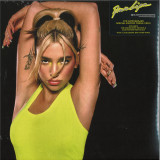
Dua Lipa - Future Nostalgia LP 3x12"
 
36

Dua Lipa veröffentlicht zum bevorstehenden 5-jährigen Jubiläum ihres mit einem GRAMMY Award ausgezeichneten und mit Platin zertifizierten zweiten Studioalbum Future Nostalgia eine 3LP Special-Edition.
Gepresst auf einer gelben Splatter-Vinyl und zwei schwarzen Vinyl, enthält das 3-LP-Set die 11 OriginalTracks des Albums sowie die Deluxe Moonlight Edition und das Remix-Album Club Future Nostalgia.

non in magazzino

Ordina ora e ordineremo l'articolo per te presso il nostro fornitore.


Last In: 7 months ago
Clara Mann - Rift

Clara Mann

Rift

12inchCON992LP
The state51 Conspiracy
15.03.2025

Mesmeric, confessional alt-folk with hints of americana - weaving beautiful stories with deep and poignant lyricism and relatable storytelling, creating a sense of familiarity even in the ambiguous, leaving no choice but to feel everything with her. Mann’s debut album,

- Clara Mann’s evocative debut album Rift navigates the fractured environment of the in-between—those liminal spaces exposed between light and dark, growth and remorse, loss and reclamation. It is a record that makes a strong case for hope, those luminescent silver linings in the dark. With Rift, Clara Mann acknowledges the cracks through which both despair and hope can seep. It is a deeply personal record, yet it is universally resonant, holding the mirror up to herself and to the world around her. It is a record that reflects on embracing our fault lines, navigating the ruptures that can erupt from them and moving forwards, in motion, with a renewed sense of self and aliveness. Mann’s debut album, Rift is all of her—her past, her present, her emotions, her experiences—and now, it is for you.

- Influenced by artists like Jacques Brel, Edith Piaf, Judee Sill, and Tom Waits, Mann has a deep love and care for songwriting

- The album was primarily recorded at the 4AD Studios in London, produced and mixed by Fabian Prynn (Martha Skye Murphy, Ex:Re, Fabiana Palladino) who carefully facilitated an imaginative space for Mann to express the playful, strange and real parts of herself

- She has previously toured and collaborated with the likes of Daniel Rossen (Grizzly Bear), Billie Marten, Skullcrusher, Bill Ryder-Jones, Youth Lagoon and Willie J Healey

pre-ordina ora15.03.2025

dovrebbe essere pubblicato su 15.03.2025


Last In: 2026 years ago
Blasé - Blablabla

Blasé

Blablabla

12inchREC224
Record Makers
14.03.2025

Blasé is a French-American pop artist, composer, arranger, producer, singer and author. Since his childhood and adolescence in New York, he experimented, mixed together 70s rock, electronic music, disco and hiphop, to create a sound that will take him directly to Paris with his first band Haute, with Anna Majidson. A first hit will be born, «Shut Me Down», whose session Colors accumulates more than 30 million views on YouTube.

After this first success, and following numerous collaborations with various artists such as Agoria, DJ Pone, Lala&ce, Niro or Jwles, he found his musical signature and started solo. The UFO Blasé released his first EP «Why Blasé? » in 2023 on Record Makers label, a unique fusion of Chic, The Strokes and Manu Chao.

Blasé releases his first album «BLABLABLA» in 2025, an album that stands as a personal manifesto of his sound obsessions that open almost as many tracks: 15 original titles in search of the groove.

With his educated ears to the radio and charts across the Atlantic, he honors this generous vision of pop that encompasses old-school hip-hop, R&B, jazz, funk, disco and new-wave, and navigates between different styles in the manner of American artists. Some songs are in French while others are in English, featuring singer Anna Majidson, rapper Jwles, and the late American artist Cola Boyy. So we go on «BLABLABLA» from a studio haunted by Quincy Jones to a cellar where he rehearses The Cure of «Boys Don’t Cry».

non in magazzino

Ordina ora e ordineremo l'articolo per te presso il nostro fornitore.


Last In: 11 months ago
Patricia Kaas - Piano Bar

Patricia Kaas

Piano Bar

12inchMOVLPR3594
Music On Vinyl
28.02.2025

Piano Bar is the sixth studio album by French pop and chanson singer Patricia Kaas. It is the first album on which Kaas sings partly in English. The album includes covers and interpretations of Jacques Brel, Yves Montand and Gilbert Bécaud. It became one of Kaas' most successful albums in Europe, selling over half a million copies. Piano Bar is a limited edition of 1000 numbered copies on turquoise coloured vinyl.

pre-ordina ora28.02.2025

dovrebbe essere pubblicato su 28.02.2025


Last In: 2026 years ago
Patricia Kaas - Sexe Fort

Patricia Kaas

Sexe Fort

12inchMOVLPS3595
Music On Vinyl
28.02.2025

Sexe Fort is the seventh studio album by Patricia Kaas. With this album, the singer has maintained her status as one of the most important chansonniers of her generation. The album is notable for its many collaborations with important French singers and songwriters such as Jean-Jacques Goldman, Stephan Eicher, Pascal Obispo, Patrick Fiori, Louis Bertignac and Renaud. The album was a huge success in Belgium, France and Switzerland and had "Où Sont Les Hommes" as a popular single. This is the first time the album has been released as an LP. Sexe Fort is a limited edition of 1000 numbered copies on white coloured vinyl.

pre-ordina ora28.02.2025

dovrebbe essere pubblicato su 28.02.2025


Last In: 2026 years ago
Clarence Peters - The Magnetic Atmospher

Black vinyl / 505mcn paper / Insert with extensive liner notes by Tony Higgins printed on 200 gram "Shiro Eco"paper and a special Manifesto with exclusive pictures printed on 90 gram Favini recycled paper.

Personnel:
Clarence Peter - Drum
Patrick Gauthier - Piano
Jean-Jacques Avenel - Bass
Steve Potts - Sax

Notes:
We're delighted to announce the reissue one the most sought-after European private press spiritual jazz albums: The Magnetic Atmospher by Clarence Peters Quartet. Never reissued in its entirety before, The Magnetic Atmosphere is a solid album of deep, post modal spiritual jazz that will appeal to fans of the Strata East, Tribe, and Black Jazz labels.
Resident in France since the 1970s, drummer Peter recorded the album with a French rhythm section: Patrick Gauthier on piano, and Jean-Jacques Avenel on bass. On sax is American-born Steve Potts, resident in France since 1970 and, like bassist Jean-Jacques Avenel, alumni of Steve Lacy.
The Magnetic Atmospher features four killer tracks, all composed by Peter. This is an opportunity to hear a truly remarkable record and sells for hundreds of dollars on the collector circuit. Long thought to be missing in action, we tracked Clarence Peter down and secured the license, direct from the man himself. (Tony Higgins)

pre-ordina ora14.02.2025

dovrebbe essere pubblicato su 14.02.2025


Last In: 2026 years ago
U-ziq - Challenge Me Foolish

'Challenge Me Foolish' is an almost lost album of µ-Ziq material circa 1998-99, an era that saw Mike Paradinas release 'Royal Astronomy' on the now defunct Virgin subsidiary Hut records, and also tour with Björk.

It's an era of his music that's definitely worth re-exploring, in which Mike went against the grain by producing music that was baroque, melodic and whimsical, while the IDM movement he was lumped with made instrumental music that was often neurotic and complicated. His taste for melody and dreamy beauty above roughness and intricacy confused people who were hanging on too tightly to the rules. He even brought in Japanese vocalist Kazumi, adding an extra human touch.

'Challenge Me Foolish' is something of a companion to the Royal Astronomy record, arguably even better given the fresh ears selecting the material. It's imbued with a confident sense of pastoral colour, and a gentle optimism, utilising bells, studied orchestral arrangements and airy synthesisers that sit the album somewhere between, Jean Jacques Perrey (the French electronic composer whose whimsy was always balanced with serious innovation and chops) and the colourful, optimistic soundtracks of Joe Hisaishi. There's a strange sense of the old and new throughout, the sentimental and utopia, with nary a hint of darkness. Even when the album dips into the hyperkinetic rhythms of jungle, the melodies and mood still retain a sense of gentle warmth. Dive into peak time Paradinas.

non in magazzino

Ordina ora e ordineremo l'articolo per te presso il nostro fornitore.


Last In: 13 months ago
C Duncan - It's Only A Love Song LP
  • It's Only A Love Song
  • Lucky Today
  • Trieste Clair De Lune
  • Worry
  • The Space Between Us
  • Think About It
  • Delirium
  • Sadness
  • Surface Of A Fantasy
  • Reprise
  • Time And Again

Mit bezaubernden Streichern, verzückten Bildern, klassizistischen Melodien und verträumten Harmonien ist es ein Album der orchestralen Pop-Romantik in ihrer erhabensten Form: ein Album, das von Herzen kommt und von einem tiefen Schmerz der ständigen Sehnsucht erwärmt wird.
Auf Alluvium aus dem Jahr 2022 hatte Chris seine breit gefächerten Geschichten als fruchtbaren Boden für eine Platte mit vielschichtigen Tönen und Stilen genutzt. It’s Only a Love Song kommt einer Song-Suite näher, die makellos sequenziert, aufwendig arrangiert und in persönlichen Liebeserfahrungen und Verlusten verankert ist.

Sein neues Album ist sein nächster großer Schritt nach vorne, eine herzergreifende Liebeserklärung an die Romantik, die den Himmel berührt und die Kinosäle füllt. Zu seinen erklärten Einflüssen gehören neben den Carpenters und Scott Walker auch Michel Legrand, Bernsteins West Side Story und die Filme von Jacques Demy, dessen Die Regenschirme von Cherbourg mit Musik aufwartet, die Herzen zum Singen bringt. „Es ist fast schon hyperromantisch, was ich liebe“, erklärt Chris: ‚So in der Musik, wo man an einen Punkt kommt, an dem das Herz eigentlich nicht mehr kann.‘ Strahlend und verzückt bringt einen It’s Only a Love Song genau dorthin.

pre-ordina ora31.01.2025

dovrebbe essere pubblicato su 31.01.2025


Last In: 2026 years ago
LA FEMME - MYSTERE LP 2x12"

Die französischen Pop.-Connaisseure aus Paris, LA FEMME, veröffentlichen ihr zweites Album ,Mystère".

Die Band hat die kulturelle Landschaft des modernen Paris massiv beeinflusst und ihre Musik an beiden Seiten der Stadt an der Seine verortet: im Glamour und an den weniger glamourösen Schauplätzen. Seit der Veröffentlichung ihres Debüts ,Psycho Tropical Berlin" haben LA FEMME prominente Bewunderer gesammelt: darunter die Regisseure Jacques Audiard und Romain Gavras, Legenden wie JEAN MICHEL JARRE und Hedi Slimane sowie eine stetig wachsende junge Fangemeinde, die ihnen den Titel ,French Best New Band of the Year" bei den französischen Music Awards und Plätze ganz oben in den französischen Charts einbrachte; dazu sorgten TV-Werbespots von Aplles, Renault und Sonos mit der Musik von LA FEMME für gespitzte Ohren.

Die Band kehrt mit einem psychedelischeren Sound und einer ganzen Reihe von Gastsängerinnen zurück, die eine Schneise durch die härtesten Elektrobeats schlagen. LA FEMME feiern ihre wunderbare Heimatstadt und hinterfragen das Ver- und Entlieben. ,Mystère" ist tatsächlich eine Kollektion von Kurzgeschichten über Liebe und Verlust. Jeder einzelnen Song überspringt Sprachbarrieren durch reine Melodie. Der retrofuturistische Surfpop-Sound der Band beruft sich noch immer auf den gleichen glamourös-punkigen Krach wie zuvor, doch dieses Mal ist er durchzogen von einer Zusammenstellung eleganter Einflüsse zwischen ENNIO MORRICONE, dem Disco-Rock von MARIE ET LES GARCONS und THE VELVET UNDERGROUND.

,Mystère" ist ein Fundament für die neue LA FEMME Vorliebe für orientalische Klänge; türkischen Disco, Tuareg Blues, mittelalterliche Psychedelia lehnen sich an an BRIAN ENO und PINK FLOYD.

non in magazzino

Ordina ora e ordineremo l'articolo per te presso il nostro fornitore.


Last In: 14 months ago
Jesse Maas - ODD EP

Jesse Maas

ODD EP

12inchKEYR001
Key Records
10.12.2024

DJ Support: Enzo Siragusa, Chris Stussy, Toman, Mateo Dufour

In mid-2020, we proudly introduced Key Records, a platform for exceptional artists like Mennie, Mateo Dufour, Cosenza, Local Dub, Sidney Charles, Locklead, and Laidlaw, to name just a few who have been part of our journey.

With 25 digital releases under our belt, we’re now ready to embark on the next chapter. Our first vinyl release will feature Jesse Maas, alongside a remix by T. Jacques, the mastermind behind Nuances De Nuit.

Thank you for your ongoing support. Enjoy the music!

non in magazzino

Ordina ora e ordineremo l'articolo per te presso il nostro fornitore.


Last In: 17 days ago
My Mine - Hypnotic Tango EP

Repress.

The Italo dance classic that Carl Craig sampled for the legendary 69 track 'Rushed'

Finally available again on Dark Entries


We are honored to announce the next 12 in Dark Entries Editions is one of the all time Italo Disco club classics: My Mine - 'Hypnotic Tango'. My Mine were the trio of Stefano Micheli (vocals, keyboards), Carlo Malatesta (vocals, keyboards), and Danilo Rosati (drums, keyboards) formed from the ashes of Italian New Wave group Ipnotico Tango in 1982. They shifted focus from the experimental post punk sounds towards something more commercial with which to try and enter the market, namely to make a record. At that time Carlo was studying in Bologna and he had heard about producer and arranger Mauro Malavasi famous at that time for the many hits produced for Macho, Peter Jacques Band, Change, Luther Vandross, Ritchie Family. The group handed Malavasi a demo tape and four days later they were invited to Fonoprint Studios to record their first single, 'Hypnotic Tango'.

Utilizing new electronic instruments like the now legendary Roland TB-303, Danilo improvised a simple but effective synthesizer bass line and passed it through the Roland Echo until something magical came out. 'Hypnotic Tango' was released on Progress Record in 1983 and became an international hit across Europe and US dance clubs in New York, Detroit and Chicago, capturing the imagination of House and Techno producers. In 1987 the legendary Frankie Knuckles remixed 'Hypnotic Tango' at Seagrape Studios in Chicago, with assistance from studio engineers Tommy White and Brett Wilcotts. Originally released on Danica Records as the 'Powerhouse Mix' paying tribute to the Windy City club atmosphere and adding his own "sighs" in the track as well. The Hypnotic Remix This reissue presents 4 mixes of 'Hypnotic Tango' including the 'Hypnotic Mix' only appearing together once before in 1990 on Rams Horn Records. All songs are remastered for vinyl by George Horn at Fantasy Studios in Berkeley. The vinyl comes housed in a jacket with original artwork and includes an insert with photos and liner notes by Stefano Micheli. 'Look on the floor and all is spinning round, Someone told me this was just a dance And take a chance I ain't met before..Do you think I really have a chance"

non in magazzino

Ordina ora e ordineremo l'articolo per te presso il nostro fornitore.


Last In: 9 months ago
Waldir Calmon - Airport Love Theme / Afro Som

Repress!

You know it's going to be a heavy record when DJ / collector Mr Thing asks you to keep a look out for a copy on your next digging trip to Brazil. Add on top of that, being sampled by Madlib on the track 'Curls’ on his Madvillain album!

Taken from Waldir Calmon's 'Waldir Calmon E Seus Multisons' album on Copacabana (1970), from looking at this unassuming record cover featuring a middle-aged man sporting an impressive pair of glasses you wouldn't expect it to become the fabric to one of the songs from the iconic 'Madvillain’ album. But… like many things in life, you shouldn’t judge a book by its cover. 'Airport Love Theme’, like its name suggests, falls into full-on lounge territory. It’s feel-good music made to be the soundtrack for a utopian world that never really was. Yet behind the silky-smooth groove is an addictive earworm waiting to be heard.

'Afro Son' taken from the same album, pushes things in a different direction towards a sound that is more firmly rooted in the Brazilian tradition. This quirky 60's-breakbeat-funk groove is reminiscent of French artist Jean Jacques Perrey's 'E.V.A.', also from 1970, in its melody and backbeat, where the Moog synthesizer of Perrey is replaced with a more orchestrated sound by Calmon. This track is magical, cinematic and breakbeat-laden with a hidden unknown exoticism.

Waldir Calmon had an active career in music working from the '50s right up until his passing in 1982. His career started early, forming his first ensemble at the age of fourteen, originally working in bands in nightclubs and writing jingles. He progressed in the early '50s to a long-running career working in television. In addition to his television work, he had success with his recording vocation, mixing in the same musical circles as greats such as Tom Jobi, João Gilberto and Doris Monteiro.

• Next installment in BRAZIL 45 Series.
• Sampled by Madlib on the track ‘Curls’ from his ‘Madvillain’ album.
• Quirky, cinematic, breakbeat-laden exoticism.

non in magazzino

Ordina ora e ordineremo l'articolo per te presso il nostro fornitore.


Last In: 4 years ago
VARIOUS - BLUES GREATEST HITS LP 2x12"
  • Muddy Waters - Mannish Boy
  • Robert Johnson - Sweet Home Chicago
  • Leadbelly - Where Did You Sleep Last Night
  • Johnny Otis - Willie And The Hand Jive
  • C.b. & Axe Gang - Rosie
  • Buddy Guy - First Time I Met The Blues
  • Popa Chubby - Carrying On The Torch Of The Blues
  • Lucky Peterson - Four Little Boys
  • Lightnin' Hopkins - Mojo Hand
  • T-Bone Walker - T-Bone Blues
  • B.b. King - Three O'clock Blues
  • Screamin' Jay Hawkins - I Put A Spell On You
  • Vera Hall - Trouble So Hard
  • Ray Charles - Mr. Charles' Blues
  • Bo Diddley - I'm A Man
  • Fats Domino - Blue Monday
  • Memphis Slim - Lonesome
  • Otis Rush - All Your Love
  • Booker T. & The M.g.'s - Green Onions
  • Champion Jack Dupree - Junker's Blues
  • Jean-Jacques Milteau - Down In Mississippi
  • John Lee Hooker - Boom Boom
  • Big Mama Thornton - Hound Dog
  • Ike Turner & The Kings Of Rhythm - I'm Lonesome Baby
  • Bobby 'Blue' Bland - It's My Life, Baby
  • Elvis Presley - G.i. Blues
  • Howlin' Wolf - Smokestack Lightnin
  • Chuck Berry - Driftin' Blues
  • Slim Harpo - I'm A King Bee

Nach Funk, Soul und Reggae entdecken Sie in der neuen Ausgabe der Greatest Hits-Sammlung alle Blues-Hits. Muddy Waters, Robert Johnson, BB King, John Lee Hooker... Die größten und legendärsten Bluesmusiker auf einer schönen Vinyl 2LP

pre-ordina ora15.11.2024

dovrebbe essere pubblicato su 15.11.2024


Last In: 2026 years ago
Bobby Jaspar - Barclay 1959 LP

2024 Repress

Re-mastered from original stereo master tapes.

Limited edition 1000 copies.

180 gr vinyl pressed by Pallas in Germany.

Deluxe high-gloss flipback album jacket.

Facsimile reissue using the original cover art (front photo is lost).

Double insert using an original photo by JP Leloir from 1959.

Each record has been visually checked to prevent defects.

Recorded December 19 and 20, 1958 at the studio Hoche, Paris.

Original LP issue: Barclay 84.063.

Belgian jazz artist Bobby Jaspar died far too young at age 37 in 1963, but fortunately made a handful of memorable dates as a leader. This is the last studio session under his name. Jaspar sticks exclusively to flute on these December 1958 studio recordings. He’s joined by drummer Kenny Clarke, Sadi Lallemand or Michel Hausser (who also doubles on xylophone) on vibes, and either Paul Rovere or Jymie Merritt on bass, as well as percussionist Humberto Canto (on one of the two sessions). Jaspar’s soft arrangements prove very appealing for his originals, standards such as ‘Lullaby of the Leaves’ and ‘There Will Never Be Another You’, and classic jazz tunes (an exotic ‘Misterioso’ and a Latin-flavored ‘Chasin’ the Bird’, the latter featuring Hausser on xylophone). This is easily one of Jaspar’s finest recordings as a leader.

Ken Dryden / All Music

Bobby Jaspar (Flute)
Michel Hausser (Vibes) (tracks 1 to 4, 6,8,9)
Sadi Lallemand (Vibes) (tracks 5,7,10)
Paul Rovère (Bass) (tracks 1 to 4, 6,8,9)
Jymie Merritt (Bass) (tracks 5,7,10)
Humberto Canto (Percussion)
Kenny Clarke (Drums)

pre-ordina ora11.11.2024

dovrebbe essere pubblicato su 11.11.2024


Last In: 2026 years ago
The Montgolfier Brothers - Seventeen Stars

Fully Restored Vinyl Remaster & Restored Original CD Release Artwork For Vinyl With
Memorabilia Assemblage Full Colour Inner-Sleeve
“A pitch-perfect exercise in the type of literary pop music that I felt had gone amiss since
Factory stopped releasing records. “ Alan McGee (On 17 Stars – The Guardian 2009 )
After a short label hiatus, Caroline True Records are delighted to bring you a limited
vinyl edition of a classic Salford /Manchester album.
The Montgolfier Brothers, Mark Tranmer (GNAC) & Roger Quigley (At Swim Two Birds)
initially released “Seventeen Stars” on the Salford-based Vespertine label in 1999.
Much critical acclaim & appreciation from pop dynamo Alan McGee led to a 2000 re
release on his nascent post-Creation Poptones imprint.
“So we ended up pressing records as usual. Our first record was Seventeen Stars by the
Montgolfier Brothers, a baroque, cinematic classic that almost no-one has ever heard.” Alan
McGee (On Poptones in “Creation Stories: Riots, Raves & Running A Label” 2013 )
Since that moment, “Seventeen Stars” has gathered universal plaudits & affection,
along with occasional live performances from the group.
To mark the 20th anniversary of the original release, CTR have remastered this brilliant
work for vinyl. The sleeve expands the original Vespertine CD release artwork to LP
size. Beautiful, memorable, fragile ... An album that proves the longevity of great
songwriting, tunes and textures that stay with you.
“An exquisitely beautiful elegy to a lifetime of misspent opportunities.”. (Exclaim – USA 2000)
For lovers of Felt, The Durutti Column, Jacques Brel, The Blue Nile & François de Roubaix.
This is a vinyl only strictly limited-edition release with no repress.

non in magazzino

Ordina ora e ordineremo l'articolo per te presso il nostro fornitore.


Last In: 17 months ago
Intercommunal Free Dance Music Orchestra - Le Musichien

The Intercommunal Free Dance Music Orchestra was created in 1971 by French free jazz pianist legend, François Tusques. Free Jazz, was also the name of the 1965 recording Tusques made along with and other Michel Portal, François Jeanneau, Bernard Vitet, Beb Guérin and Charles Saudrais. Six years later, in 1971 Tusques would go ahead of free jazz.

Wondering if free jazz wasn’t a bit of a dead end together with Barney Wilen (Le Nouveau Jazz) or even solo (Piano Dazibao and Dazibao N°2), Tusques formed the Inter Communal Free Dance Music Orchestra, an association under the banner of which the different communities of the country would come together and compose, quite simply. If at first the structure was made up of professional musicians from the jazz scene it would rapidly seek out talent in the lively world of the MPF (Musique Populaire Française).French Popular Music, ndlt

As with L’Inter Communal a few years earlier, Le Musichien follows on from the group of varying musicians that Tusques had conceived as a “people’s jazz workshop”. In 1981, at the famous Paris address, 28 rue Dunois, the pianist sang with his partner Carlos Andreu “Le Musichien”, an Afro-Catalan tale over an exceptional bass line from Jean-Jacques Avenel backed by percussion from Kilikus, saxophones from Sylvain Kassap and Yebga Likoba and trombone from Ramadolf which presented a myriad of constellations. The sky has no limits, let’s make the most of it.

“Les Amis d’Afrique” is recorded the following year, at the ‘Tombées de la Nuit’ festival in Rennes, bassist Tanguy Le Doré would weave with Tusques the fabric on which would evolve an explosive “brotherhood of breath”: Bernard Vitet on trumpet, Danièle Dumas and Sylvain Kassap on saxophones, Jean-Louis Le Vallegant and Philippe Le Strat on... bombards. With hints of modal jazz inspired by Coltrane or Pharoah Sanders, the Intercommunal Free Dance Music Orchestra is an ecumenical project which speaks to the whole world.

non in magazzino

Ordina ora e ordineremo l'articolo per te presso il nostro fornitore.


Last In: 17 months ago
Articoli per pagina:
N/ABPM
Vinyl