
pas en stock
Commandez maintenant et nous commanderons l'article pour vous chez notre fournisseur.
Last In: 10 months ago
Commandez maintenant et nous commanderons l'article pour vous chez notre fournisseur.

Martin Scorsese ist einer der wichtigsten Filmregisseure der New-Hollywood-Ära. Dank Filmen wie »Taxi Driver« (1976), »Raging Bull« (1980), »The Wolf of Wallstreet« (1986), »Goodfellas« (1990), »Casino« (1995) und »The Irishman« (2019).
Außerdem erhielt Scorsese zahlreiche Auszeichnungen, darunter einen Academy Award, vier BAFTA Awards, drei Emmy Awards, einen Grammy Award und drei Golden Globe Awards. Hier sind Songs von Dean Martin, Frank Sinatra über Ella Fitzgerald, Dinah Washington, sowie Howlin Wolf und John Lee Hooker vertreten. Auf dem vorliegenden Soundtrack-Album sind somit 21 Stücke aus der Filmmusik der erfolgreichsten Scorseses Film-Meisterwerke enthalten.
h Walk on the wild side part 1 (1962) from casino & the color of money
h Walk on the wild side [part 1] (1962) from casino & the color of money
[h] Walk on the wild side [part 1] (1962) from casino & the color of money
[h] A8 | Walk on the wild side [part 1] (1962) from casino & the color of money
Commandez maintenant et nous commanderons l'article pour vous chez notre fournisseur.

il devrait être publié sur 15.07.2025

il devrait être publié sur 15.07.2025

il devrait être publié sur 14.07.2025

Originally released in late 2012, the third John Foxx And The Maths album brings together collaborations with The Soft Moon (the post-punk psychedelia of the title-track); Gazelle Twin (including the strikingly beautiful 'Changelings'); New York duo Xeno & Oaklander and Ghostly International's Matthew Dear, plus a Pink Floyd cover and some new Foxx/Benge material. This includes the rich analogue glow of 'Walk' and apocalyptic ballad 'Only Lovers Left Alive'. Meanwhile, regular Maths live band member Hannah Peel plays violin on 'My Town’. This new vinyl reissue includes only the vocal tracks from the album.
il devrait être publié sur 11.07.2025

Accomplished Polish beat-maker Emapea has made memorable appearances on many Cold Busted label compilations – such as in the IWYMI and Bust Free series – and has been selected for inclusion in Mark Farina’s next Mushroom Jazz installment. All this activity has mouths watering for the debut full length album from Emapea, and the appearance of Seeds, Roots & Fruits doesn’t disappoint one bit. Featuring sixteen exceptional tracks ranging from hip hop to acid jazz to psychedelic trip hop in the style of Mo’Wax, Emapea’s long player is indeed, as a wise man once said, “a journey into sound.” Seeds, Roots & Fruits rises above the average beats album to reveal the enduring depth of this young producer
il devrait être publié sur 11.07.2025

From his early-’60s days as hip shaker Twistin’ Harvey to his late-’70s nights on the light up dance floor in search of a “Disco Lady,” Harvey Scales survived scrapes with the pop charts, bankrupt record companies, walk outs, sit ins, strikes, price hikes, lay offs, and under table payoffs over a 40 year career. Compiled here for the first time are Scales’ Cuca and Magic Touch recordings, 27 slabs of cracker jack R&B, stomping northern soul, divorce-ridden deep soul, feverish funk, and hustling disco spread across 2 LPs and housed in a deluxe gatefold jacket.. Bill Dahl’s in depth notes document the entire sordid affair, with dozens of period photos and ephemeral bits illustrating the accompanying 20 page book. So necessary.
il devrait être publié sur 11.07.2025

From his early-’60s days as hip shaker Twistin’ Harvey to his late-’70s nights on the light up dance floor in search of a “Disco Lady,” Harvey Scales survived scrapes with the pop charts, bankrupt record companies, walk outs, sit ins, strikes, price hikes, lay offs, and under table payoffs over a 40 year career. Compiled here for the first time are Scales’ Cuca and Magic Touch recordings, 27 slabs of cracker jack R&B, stomping northern soul, divorce-ridden deep soul, feverish funk, and hustling disco spread across 2 LPs and housed in a deluxe gatefold jacket.. Bill Dahl’s in depth notes document the entire sordid affair, with dozens of period photos and ephemeral bits illustrating the accompanying 20 page book. So necessary.
il devrait être publié sur 11.07.2025

Come On Come On isn’t just Mary Chapin Carpenter’s most popular album, with sales of 3 million copies. It’s also a contemporary country landmark. No less than seven of its songs became country hits: “I Feel Lucky,” “I Take My Chances,” “Not Too Much to Ask,” “The Hard Way,” “He Thinks He’ll Keep Her,” and two inspired covers, of Dire Straits’ “The Bug” and Lucinda Williams’ “Passionate Kisses.” More importantly, though, this 1992 release pointed the way towards what country music would become in the 21st century with its savvy seasoning of pop and soft-rock sounds into a more personal style of country songwriting from a female point of view. If you’re thinking that sounds familiar, you’re not wrong; Come On Come On’s prodigious commercial prowess isn’t the only thing this record has in common with the early work of Taylor Swift. But, it also crossed over into the rock realm in a way that, arguably, Swift’s records have not; the flourishing Americana and alt-country audiences of the early ‘90s ate this album up, and guest stars like Rosanne Cash, The Indigo Girls, and Shawn Colvin just upped its street cred. Somehow, this classic record has never (come on!) made it to vinyl; we’re making up for a whole lot of lost time with a grape vinyl pressing housed inside a color inner sleeve with lyrics. Essential!
il devrait être publié sur 11.07.2025

The debut album from Addy Weitzman, ‘Light Months Will Fly Over Us’ explores new-wave, romantic pop and art rock with elegance and ambition, drawing from Weitzman’s scattered network of collaborators, as well as a “frighteningly vast” personal archive of compositions. Sequenced by Seth Troxler and released on his Slacker 85 label, it represents a pivot in musical direction for the imprint, and a showcase for the songwriting craft Weitzman honed as a member of cult electro duo Footprintz, and Montreal synth-pop projects The Beat Escape and Dawn to Dawn.
The title Light Months Will Fly Over Us is derived from a line in a poem by the Russian writer Anna Ahkmatova. Weitzman was immediately struck by its “hopefulness, its mystery… it gives the feeling of being suspended, hanging in a dream-like state”. This interpretation has been translated to the album, rich in memorable songwriting that nonetheless invites the listener to lean in further. Delicately mixed by engineer Pierre Guerineau, known for his work alongside Marie Davidson, each of the eight tracks gently interrogates life’s greater mysteries; fear, love and salvation, each defining and revealing the human soul.
Opener ‘End of The Line’ invites us into an immediately lush space of lounge lizard existentialism, soft brass and piano helping Weitzman introduce “where the journey begins and the fantasy dies”. Across orchestral arrangements arranged by Adam Wilcox, whose sensitive, ambitious compositions are weaved throughout the album, ‘Beyond The Speed of Life’ brings to mind the laments of Scott Walker. Navigating vulnerability via grandeur, Weitzman’s earnest vocals flourish in wide-eyed call-and-response with the object of a transcendent love affair.
Alongside collaborator, Richard Lamb, the next chapter of the LP plunges into contrasting machine-driven moods; the wry, bubbling ‘Entertainment Is All I Wanted (And I Found It)’ is imbued with the playfulness and experimentation of 80s electronic pioneers such as Fad Gadget, while the tougher, icier ‘Stranger To Your Kind’ shifts in a more instrumental direction, recalling Weitzman’s dancefloor experience, as well as contemporaries such as Matthew Dear.
Album centerpiece and striking first single ‘Running & Returning’ is the first of a suite of three tracks in collaboration with Weitzman’s The Beat Escape and Dawn to Dawn bandmate, Patrick Boivin. Blending lush saxophones and angular guitars with a wistful melodic touch and lyrics, its irresistible art-rock rhythm provides the foundation for one of Weitzman’s most involving vocal performances.
It’s followed by an anthem for existential absurdity: ‘Ice Cream Candle’ provides a driving acceptance that “the more and more you learn, the less you understand”; Weitzman submits to this uncertainty with equal grace on ‘No Man’s Land’, as baroque invocations of “words swept through the fields” and meeting “where the water lilies grow” give way to a blistering guitar solo, humbly riding hypnotic percussion.
For the compassionate finale of Light Months Will Fly Over Us, Weitzman narrates the experience of ‘Gabrielle’, a woman slipping between rooms between shuttered blinds in the towering city, “where cigarettes and roses fill the air.”
As lyrically delicate as it is musically ambitious, Light Months Will Fly Over Us is a sublime debut album, enriched with care, love and much-needed enchantment.
Commandez maintenant et nous commanderons l'article pour vous chez notre fournisseur.

Born and raised in small Texas towns, the members of Good Looks met and began playing together in Austin. Songwriter Tyler Jordan grew up in a South Texas coastal town dominated by the petrochemical industry, his childhood steeped in the tension between nature and industry, exploitation abundantly present and the wealth gap on full display. His father's church, described by Tyler as "cult-like in its intensity," was homebase and where he learned to sing. Tyler eventually met lead guitarist Jake Ames in the late-night song-swap circles of the Kerrville Folk Festival campground (where they would also meet Buck Meek and Adrienne Lenker pre-Big Thief). They shared their mutual love of the Texas hill country canon (Blaze Foley, Townes Van Zandt, and Willie Nelson), a love of cheap diner food, thrift store baseball caps, and a healthy dose of harmless shit-talking. They began playing in bands together, backing up other songwriters and taking turns in the spotlight. They sought out producer Dan Duszynski (Loma, RF Shannon, Jess Williamson) to engineer their debut album. What would form was Good Looks, a blue-collar political indie-rock band with healthy doses of Replacements swagger and shimmering, desert rock riffs not unlike The War On Drugs.
il devrait être publié sur 11.07.2025

When Elvis joined the Army in 1958, Ricky Nelson was the young man who, it was predicted, would fill the King’s blue suede shoes. He went on to become a country-rock pioneer, but everybody still remembered his pop hits. Ricky Nelson's teenage celebrity typecast him for life, but these recordings from his heyday reveal a solid musician who matured and grew over time. It’s also fair to say that his later music opened the door for the Eagles, featuring ex-Stone Canyon Band bass player Randy Meisner, to pass through. It was more than a sympathy vote that saw Nelson posthumously inducted into the Rock and Roll Hall of Fame in 1987.
il devrait être publié sur 11.07.2025

Girl groups have come and gone over the years, but the Crystals’ name, along with the Ronettes, has become synonymous with the groundbreaking early-Sixties wave promoted by producer Phil Spector. As well as including some of their early recordings, the songs featured here on this 180g Vinyl set retain their period charm thanks to what one critic called the Crystals’ ‘sweet-butstreetwise vocal magic.’ File the music under Brill Building, GirlGroup Pop or whatever you choose, it wears its half a century of history lightly
il devrait être publié sur 11.07.2025

Full of Hell Coagulated Bliss bio Full of Hell burst forth with incredible force from the small, dagger-shaped city of Ocean City, Maryland, 15 years ago. Over five full-lengths, five collaborative full-lengths, and countless splits, EPs, singles, and noise compilations, they’ve evolved at extraordinary speed, their music becoming more complicated and technical without ever slowing down or losing its soul. Everything on a Full of Hell album feels like a blur: smears of guitar, harsh noise shaken like gravel in a bag, singer Dylan Walker’s snarl and bite carrying him into outer space or into the core of the earth. They’re coiled, interlocking, impossible to penetrate, and they move with alarming speed. They have now reached terminal velocity. Having created their own context, they’re now able to walk around within it, to survey its terrain, to visit far corners and see who’s nearby. Coagulated Bliss sounds like Full of Hell, but it’s nothing like any Full of Hell record that’s come before it.
il devrait être publié sur 11.07.2025

Originally released in 1981 ‘Carry On Oi!!’ hit No.4 in the Independent Chart.
It “introduced” the likes of The Business, The Partisans, Blitz, Red Alert and The Ejected alongside ‘veterans’ such as The 4 Skins and Infa Riot
Now re-issued on vinyl complete with a gatefold sleeve and original inner bag, Previous vinyl re-issues of ‘Oi! The Album’ (AHOYLP 72)
and ‘Strength Thru Oi!’ (AHOYLP 230) have all proved strong sellers and we expect ‘Carry On Oi!’ to do the same.
il devrait être publié sur 11.07.2025

il devrait être publié sur 11.07.2025

il devrait être publié sur 11.07.2025

Repress!
New Scene was a project created in the late 80’s by Arno Müller and Markus Barth. They were part of the roaster of the German label BOY Records together with acts like Time Modem, Cybex Factor and “O”. New Scene released in 1989/90 two singles/mega-mixes under the title of “Out of Control”, becoming both classics in the German Techno scene. Their third single “Tonight” also turned to a big success in the clubs and pushed New Scene to release their debut and only full-length album “Waves” in 1992.
Limited edition re-release with remastered audio and expanded double vinyl including as bonus the b-side “The Fog”.
Commandez maintenant et nous commanderons l'article pour vous chez notre fournisseur.

Repress!
In the mid-1970s, a force of nature swept across the continental United States, cutting across all strata of race and class, rooting in our minds, our homes, our culture. It wasn’t The Exorcist, Goodbye Yellow Brick Road, or even bell-bottoms, but instead a book called The Secret Life of Plants. The work of occultist/former OSS agent Peter Tompkins and former CIA agent/dowsing enthusiast Christopher Bird, the books shot up the bestseller charts and spread like kudzu across the landscape, becoming a phenomenon. Seemingly overnight, the indoor plant business was in full bloom and photosynthetic eukaryotes of every genus were hanging off walls, lording over bookshelves, and basking on sunny window ledges. The science behind Secret Life was specious: plants can hear our prayers, they’re lie detectors, they’re telepathic, able to predict natural disasters and receive signals from distant galaxies. But that didn’t stop millions from buying and nurturing their new plants.
Perhaps the craziest claim of the book was that plants also dug music. And whether you purchased a snake plant, asparagus fern, peace lily, or what have you from Mother Earth on Melrose Avenue in Los Angeles (or bought a Simmons mattress from Sears), you also took home Plantasia, an album recorded especially for them. Subtitled “warm earth music for plants…and the people that love them,” it was full of bucolic, charming, stoner-friendly, decidedly unscientific tunes enacted on the new-fangled device called the Moog. Plants date back from the dawn of time, but apparently they loved the Moog, never mind that the synthesizer had been on the market for just a few years. Most of all, the plants loved the ditties made by composer Mort Garson.
Few characters in early electronic music can be both fearless pioneers and cheesy trend-chasers, but Garson embraced both extremes, and has been unheralded as a result. When one writer rhetorically asked: “How was Garson’s music so ubiquitous while the man remained so under the radar?” the answer was simple. Well before Brian Eno did it, Garson was making discreet music, both the man and his music as inconspicuous as a Chlorophytumcomosum. Julliard-educated and active as a session player in the post-war era, Garson wrote lounge hits, scored plush arrangements for Doris Day, and garlanded weeping countrypolitan strings around Glen Campbell’s “By the Time I Get to Phoenix.” He could render the Beatles and Simon & Garfunkel alike into easy listening and also dreamed up his own ditties. “An idear” as Garson himself would drawl it out. “I live with it, I walk it, I sing it.”
But as his daughter Day Darmet recalls: “When my dad found the synthesizer, he realized he didn’t want to do pop music anymore.” Garson encountered Robert Moog and his new device at the Audio Engineering Society’s West Coast convention in 1967 and immediately began tinkering with the device. With the Moog, those idears could be transformed. “He constantly had a song he was humming,” Darmet says. “At the table he was constantly tapping.” Which is to say that Mort pulled his melodies out of thin air, just like any household plant would.
The Plantae kingdom grew to its height by 1976, from DC Comics’ mossy superhero Swamp Thing to Stevie Wonder’s own herbal meditation, Journey Through the Secret Life of Plants. Nefarious manifestations of human-plant interaction also abounded, be it the grotesque pods in Invasion of the Body Snatchers or the pothead paranoia of the US Government spraying Mexican marijuana fields with the herbicide paraquat (which led to the rise in homegrown pot by the 1980s). And then there’s the warm, leafy embrace of Plantasia itself.
“My mom had a lot of plants,” Darmet says. “She didn’t believe in organized religion, she believed the earth was the best thing in the whole world. Whatever created us was incredible.” And she also knew when her husband had a good song, shouting from another room when she heard him humming a good idear. Novel as it might seem, Plantasia is simply full of good tunes.
Garson may have given the album away to new plant and bed owners, but a decade later a new generation could hear his music in another surreptitious way. Millions of kids bought The Legend of Zelda for their Nintendo Entertainment System back in 1986 and one distinct 8-bit tune bears more than a passing resemblance to album highlight “Concerto for Philodendron and Pothos.” Garson was never properly credited for it, but he nevertheless subliminally slipped into a new generations’ head, helping kids and plants alike grow.
Hearing Plantasia in the 21st century, it seems less an ode to our photosynthesizing friends by Garson and more an homage to his wife, the one with the green thumb that made everything flower around him. “My dad would be totally pleased to know that people are really interested in this music that had no popularity at the time,” Darmet says of Plantasia’snew renaissance. “He would be fascinated by the fact that people are finally understanding and appreciating this part of his musical career that he got no admiration for back then.” Garson seems to be everywhere again, even if he’s not really noticed, just like a houseplant.
Commandez maintenant et nous commanderons l'article pour vous chez notre fournisseur.

Formed in the town of New Mills, Derbyshire in 1980, Oi legends Blitz revitalised the UK punk scene of the era, their incendiary debut Voice Of A Generation a massive commercial success, but the 1983 follow-up Time Empire Justice had a different line-up and new wave orientation, pointing to fissures in the group; then, in 1990, guitarist/multi-instrumentalist Nidge Miller teamed up with former Attack frontman Gary Basnett for The Killing Dream, a studio swansong that revived the name with Nidge fully in control. Devotees will love the sterling guitar work on this final piece of the Blitz jigsaw.
il devrait être publié sur 05.07.2025

Zur Feier des 40-jährigen Jubiläums des Debütalbums „First And Last And Always“ von The Sisters Of Mercy wird am 4. Juli 2025 ein 4LP-Set aus schwarzem und rot marmoriertem Vinyl veröffentlicht.
Es enthält das Originalalbum sowie die drei EPs, die vor der Veröffentlichung erschienen sind - „Body & Soul“, „Walk Away“ und „No Time To Cry“. Jede EP enthält Bonustracks, die nicht auf dem Album enthalten sind. Das Hauptalbum wird auch als eigenständige LP im Original-Gatefold-Jacket mit bedruckter Innentasche und auf schwarzem und rot marmoriertem Vinyl erhältlich sein.
il devrait être publié sur 04.07.2025

Texas-based Ben Hixon and Atlanta's Stefan Ringer collide on this new split EP for the increasingly vital Dolfin label. It is Ringer who starts with a tight, grinding groove on 'Moving Walkway' with spoken word snippets and kaleidoscopic synth sequences bringing a trippy and unusual energy to the menacing bass. His 'PLGLY' (SR Big Room mix) is then a heavy beatdown with synths that snap and crack while jazzy percussion and dark vocals bring extra character. Hixon's 'Feels Extremely Good' is a busy, off-balance mix of deep house drums and mind-melting synth refrains while 'My Family' offer a blissed-out and soul-drenched closer.
Commandez maintenant et nous commanderons l'article pour vous chez notre fournisseur.

For 15 years, female-fronted quintet LEONOV have been honing their captivating brand of celestial doom metal. Named after Aleksej Leonov, the first human to take a walk in space, the Norwegians combine the melancholic slow burn of King Woman with the ethereal heaviness of Subrosa and an incredible voice that undeniably reminds of Julie Christmas. Shape of Ash showcases the refined sound of a band that has been around for quite a while_ a band whose career has been a similar slow burn as their music, yet a band that has managed to stay together and create music throughout all these years, despite the odds of families and the real world. Like staring into a purgatory bonfire, listening to `Shape of Ash' is a powerfully entrancing experience. Dealing with themes of helplessness, uncertainty, conflict and resolution, these four songs touch upon the many adversities of life. On Shape of Ash, LEONOV create moments of primordial heaviness on which Tåran's unique voice floats atop, blends in effortlessly in some moments and takes reserved distance in others. With the 4 songs that make up this stunning EP, the band sets the bar incredibly high for their upcoming full length album. We can't wait for it! FOR FANS OF GGGOLDDD, King Woman, Marriages, Subrosa, Cult of Luna, Julie Christmas, Chelsea Wolfe, True Widow, Spurv
il devrait être publié sur 04.07.2025

il devrait être publié sur 04.07.2025

il devrait être publié sur 04.07.2025

"Quit to Play Chess" is the final studio album of Cola Boyy, who tragically passed away in March 2024 after winning the hearts of neo-disco and funk enthusiasts, from Los Angeles to Paris, from Coachella to London.
After a critically acclaimed EP (Black Boogie Neon, 2018), a debut album (Prosthetic Boombox, 2021), and collaborations with the likes of MGMT, Benny Sings and The Avalanches, the self-proclaimed Disabled Disco Innovator was able to finish his new album, groovier than ever.
Without boundaries of styles, tinted with hiphop, R'n'B and drum & bass, and faithful to his very unique flow, Cola Boyy offers one last record in his image: 12 generous, inventive, psychedelic and passionate tracks. An album painting a nuanced yet lyrical portrait of its era, drawing on the diversity of the contemporary world to offer anthems for those who are in lack of them.
The album is a work of goldsmith on the production side, with music craftsmen like Andrew VanWyngarden (MGMT), Jared Solomon (producer of SZA, Lola Young, Remi Wolf, Fousheé...), Nate Fox (Chance The Rapper, Lil Wayne) and Lewis OfMan, who build "Quit to Play Chess" as the most current and genuine project of its author...
il devrait être publié sur 04.07.2025

Throughout their history, Booker T. & The MG's racked up Top 40 hits, had their songs covered by artists as diverse as The Ventures, Count Basie, and Tom Petty & The Heartbreakers, were inducted into the Rock and Roll Hall of Fame, received a Grammy Lifetime Achievement award, and continued being the band of choice in collaborations with legends such as Bob Dylan & Neil Young. 1965’s Soul Dressing features the legendary The Mar-Keys’ horn section, who add gravity to their soul sound, while Side Two might be the most fantastic late-night come-down album side of all time. And bonus points for the hints of ‘mod’ sprinkled around (even the U.K.’s Small Faces covered their original track “Plum Nellie”).
il devrait être publié sur 04.07.2025

Bump, skip, hats, jack, jack, jack. Danny. Kenny. 'Little' Louie. Junior. FK. Sound Factory. Twilo. Body & Soul jus'born. When a walk to the Alphabets still has you checking your shoulder. NYC going through changes, condos just on the horizon.
Strictly, King Street, MAW and a myriad of the City's labels were ahead of the pack. Like many, Ear Candy had its moment. Chopped vocals sampled, looped and riding a bass and kick as only an analogue can do. 'Yer can I listen to the new Maxi' Boom, talking, talking, talking. Reasons to release Brian, Persian or whoever comes next, alongside today's producers is that the lineage carries on. Right FYI Chris!Better than today No. Different. Keep digging, keep debating, keep on keeping on as only that 4/4 kick and rumble can move...you.
Discover the Mystery.
Commandez maintenant et nous commanderons l'article pour vous chez notre fournisseur.

Commandez maintenant et nous commanderons l'article pour vous chez notre fournisseur.

The blues, born in the cotton fields of the American South, emerged from makeshift instruments and simple harmonies rooted in African heritage. It captured the struggles, hopes, and fleeting joys of laborers enduring harsh conditions, with its hallmark "blue note" adding a unique dissonance to this evocative musical style.
As industrialization progressed, the blues migrated to urban centers like Chicago and New Orleans, evolving with modern instruments and expanding themes to reflect urban struggles, sensual nights, and existential despair. This period birthed many of the musicians who later formed the American Folk and Blues Festival (AFBF), an initiative started in 1950s Germany to introduce Europe to the genre and counter its reductive reputation as a precursor to jazz.
The Lost Recordings celebrates these legendary artists through restored performances from the 1962 Olympia in Paris and the 1963 Stadttheater in Bremen. Featured artists include John Lee Hooker, Memphis Slim, Sonny Terry, Brownie McGhee, T-Bone Walker, Helen Humes, and others, showcasing the depth and evolution of the blues.
From intimate duos like Brownie McGhee and Sonny Terry’s harmonica-guitar interplay to T-Bone Walker’s electrifying group performances, each act demonstrates the genre's versatility and influence. John Lee Hooker’s solo mastery mesmerized audiences, while T-Bone Walker pioneered the electric guitar's place in blues, inspiring legends like B.B. King.
The album also highlights Sonny Boy Williamson, whose charismatic harmonica and profound sensitivity defined his performances. These concerts take listeners on a journey through the authentic sound of the blues, traversing America’s history and foreshadowing its transformative impact on global music.
il devrait être publié sur 30.06.2025

Santana Bridges the Divide Between Live and Studio Material on Moonflower: 1977 Double Album Features Extraordinary Performances, Soulful Vibes, and Dynamic Mix of Latin, Rock, Funk, and Blues
Sourced from the Original Master Tapes and Strictly Limited to 3,000 Numbered Copies: Mobile Fidelity’s 180g 33RPM 2LP Set Plays with Audiophile-Quality Detail, Balance, and Imaging
1/4” / 15 IPS original analogue non-Dolby master to DSD 256 to analogue console to lathe
Though it may seem strange now, Moonflower stood for nearly 15 years as Santana’s first and only live record released in the United States. This despite the fact that roughly half of the double album consists of new studio songs, including a zesty cover of the Zombies classic “She’s Not There” that reached the Top 30 of the singles charts.
However unconventional, the “split” strategy went over like gangbusters. Moonflower reached the Top 10 of the Billboard Top 200 and achieved double-platinum status — feats the group would not again replicate for 22 years. These, and the beautiful quality of the program itself, are among the reasons why the 1977 effort remains viewed by critics and fans alike as must-have Santana.
Sourced from the original master tapes, pressed at Fidelity Record Pressing in California, housed in a Stoughton jacket, and strictly limited to 3,000 numbered copies, Mobile Fidelity’s 180g 33RPM 2LP set of Moonflower presents the record in audiophile sound for the first time on a domestic reissue. Part of the MoFi’s Santana catalog restoration series, this collectible version features quiet surfaces and black backgrounds that expose the critical details, liquid tones, and dynamic interplay central to Santana’s music.
The enhanced sonics extend not only to Carlos Santana’s six-string wizardry, but to the rhythmic, melodic, and vocal elements that course throughout both the studio and live cuts on Moonflower. The grip and depth of the bass lines; the wash of the organ; the scope and carry of the vocals; the extension and weight of the low-end frequencies; the rich textures of the guitars, percussive devices, and keyboards: all appear amid wide, balanced soundstages and image with right-sized dimensionality.
Significantly rooted in the styles and approaches that inform the group’s first three records, Moonflower captures the final appearances of iconic percussionist Jose “Chepito” Areas and go-to keyboardist Tom Coster on a Santana album. As he did during the preceding five-year stretch, Coster inhabits a large role here, sharing songwriting credits on a majority of the new cuts and helping steer the arrangements toward spiritually minded albeit concise directions that encompass vibrant Latin, rock, and blues themes that began to escape the ensemble shortly after his departure.
Close your eyes and feel the warmth of the sun on the R&B-kissed “I’ll Be Waiting,” anchored by Carlos Santana’s gliding fretwork and Greg Walker’s creamy vocals. Enter the cosmic universe of “Zulu,” on which Coster’s nimble phrasing opens the gate to polyrhythmic beats, knotty grooves, and interlocking funk. Grab the album cover and drift off to paradise amid the equally evocative “Flor d’Luna (Moonflower),” a romantic slow dance that Carlos Santana ensures tiptoes en route to its blissful destination. Channeling a different spirit animal, the guitarist later lets loose on the hard-hitting “El Morocco,” on which he seemingly engages in a shootout with himself and wades into the rippling psychedelia that elevated the band’s early material.
Speaking of the past, Moonflower triumphs on that level as well. In more ways than one, the live selections — and the caliber of the performances — chosen for inclusion represent an abbreviated greatest-hits survey of the band up to that point. And, at the very least, a convincing argument about why Santana had progressed into one of the most formidable bands you could hope to see on a stage in the mid ‘70s.
Simultaneously representative and illustrative of the group’s breadth, tracks stem from the collective’s eponymous debut, Abraxas, and Santana III as well as the then-more recent Amigos and Festival. Whether you fall for the sidewinding spell of a spicy rendition of “Black Magic Woman/Gypsy Queen,” lose your head to the positively epic momentum of “Soul Sacrifice/Head, Hands & Feet,” or keep dropping the needle on the savory grace of the brilliant reading of “Europa (Earth’s Cry Heaven’s Smile),” this pressing of Moonflower puts you — and Santana’s first-chapter legacy — in good hands.
il devrait être publié sur 30.06.2025

In December 2024, The Lost Recordings released the first volume of this legendary concert, recorded on October 11, 1960, at the Olympia by Miles Davis and his quartet, joined by saxophonist Sonny Stitt. Alongside pianist Wynton Kelly, bassist Paul Chambers, and drummer Jimmy Cobb, they formed an ensemble of exceptional musicality.
Now comes the second part of this remarkable concert.
In 1960, Miles returned to Paris for the fourth time in 12 years. Just months earlier, he had performed there with John Coltrane in a turbulent concert, marking the end of their collaboration. In October, at the Olympia, he rediscovered a stage he loved in a city he had fallen for back in 1949. "I loved being in Paris, I loved the way I was treated there," he would later say.
Since 1949, his music had evolved. From his immersion in Parkerian bebop to his collaboration with Gil Evans, he refined his style, developing a more spacious jazz inspired by Ahmad Jamal and enriched by his classical training. The soundtrack of Elevator to the Gallows in 1957 was a turning point, foreshadowing the pinnacle of Kind of Blue in 1959.
From the opening notes of Stardust, a previously unreleased piece, Miles sets the tone—seduction and lyricism. With a track attributed to Sonny Stitt, the swing settles in. The atmosphere intensifies with ‘Round Midnight, followed by Walking, where Stitt and Davis engage in a masterful exchange. If I Were a Bell and Fran Dance offer a more introspective moment before Two Bass Hit reignites the energy. The concert reaches its peak with So What and All of You, as Miles captivates the audience until the final notes of The Theme.
Our quest to recover the full concert began in 2022 when a friend sent us a photo of magnetic tapes in Brittany. A label reading "Miles Davis – Olympia 1960" caught our attention. After two years of research spanning France, the United States, and Stockholm, we are proud to present, for the first time, the complete version of this legendary concert.
il devrait être publié sur 30.06.2025

The Spanish Queen (of the Piano)
She had small, square hands. She was 1.52 m tall. As a child, she banged her head on the floor to be allowed to play the piano. She was Catalan. She was a pianist—one of the greatest. Her mission? To spread the Spanish repertoire. Her name was Alicia de Larrocha.
When she passed away in 2009 at age 89, Nelson Freire wrote, "I truly loved her; she was a modest woman, and her playing shone like the sun." Acclaimed worldwide, she stood alongside Victoria de Los Angeles as one of Spain’s finest artists.
Larrocha’s journey began at three, seated at a piano. At four, she studied under Frank Marshall, a student of Granados. By six, she was performing publicly; by eleven, she played Mozart’s Coronation Concerto with Madrid’s Symphony Orchestra, astonishing audiences. Despite her small hands, she developed an airy, precise touch, even daring to record Rachmaninov’s Third Concerto. But beyond technical mastery, her playing held a profound sense of life and imagination.
Though trained in Bach, Mozart, and Chopin, Larrocha fought to bring Spanish composers to global audiences. Albéniz and Granados owe much of their fame to her. Her international breakthrough came in the 1950s when an American impresario heard her Spanish recordings and invited her to the U.S., where she triumphed.
Her performances honored Spain’s musical heritage. From Soler’s sonatas to Granados' Goyescas, she infused each note with nuance. She brought Goya’s paintings to life in El Pelele and mastered the dark contrasts of Surinach’s Canción y Danza. Albéniz’s Iberia demanded both power and delicacy—qualities she commanded effortlessly.
Her final tribute was to her friend Francis Poulenc, performing his Toccata—a soaring farewell.
As one admirer put it in 1982, "She walked toward a piano too big for her, sat, placed her hands on the keys… and became the queen."
Alicia De Larrocha, Piano
il devrait être publié sur 30.06.2025

My Boy Lollipop is the debut album by Jamaican singer Millie Small, capturing the infectious energy of the early ska movement. Driven by the global success of the title track, a genre-defining hit, the album delivers a lively mix of upbeat rhythms, playful melodies, and Millie’s unmistakable high-pitched vocals. With a blend of ska, pop, and R&B influences, it's a vibrant showcase of the sound that helped bring Jamaican music to international audiences. A must-have for fans of classic ska and timeless feel-good tunes.
il devrait être publié sur 30.06.2025

il devrait être publié sur 30.06.2025

Mockys neues Album - und das erste auf Stones Throw - 'Music Will Explain (Choir Music Vol. 1)' dreht sich um die menschliche Stimme und versucht, die Essenz des Menschseins in einer zunehmend digitalen und künstlichen Welt einzufangen.
Mocky lud Freunde und Kollaborateure ein, sich in seiner Garage um ein Mikrofon zu versammeln und eine bewusste Mischung aus menschlichen Harmonien, Live-Instrumenten und analogen Aufnahmen, die nur Menschen machen können, zu kreieren.
Seine Fingerabdrücke sind in der Musik vieler Künstler zu finden: Er produzierte für Feist, Kelela, Moses Sumney und Vulfpeck und wurde von GZA, Kanye West und Cordae gesampelt.
Für den Anime Carole and Tuesday von Shinichiro Watanabe komponierte er die preisgekrönte Filmmusik.
Für Fans von: Benny Sings, Feist, Eddie Chacon, Helado Negro, Sault, Michael Kiwanuka, Jamie Lidell.
il devrait être publié sur 27.06.2025

il devrait être publié sur 27.06.2025
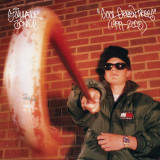
"Chasing the funky symphonies that filled my head and my dreams..."
December 25th, 2023 - an Instagram post. Stimulator Jones shared half a dozen FIRE tracks from his beat tape archive. We were immediately drawn to the rough hewn boom bap.
"I'd release that", Rob commented.
Hours of material was shared and the result is this: Cool Green Trees (1999-2005). A collection of beats and loops Stimulator Jones created between the ages of 14-20 at home in his basement, bedroom and computer room in Roanoke, Virginia.
You will not believe the profound soulful genius contained within these naive schoolboy melodies.
December 25th, 1998 - 25 years ago to the day and his much-coveted Yamaha SU10 sampler was finally bestowed upon young Stimmy AKA Sam Lunsford: "I immediately hooked up a CD Walkman to the input jack and looped the beginning two bars of Grover Washington Jr.'s "Mercy Mercy Me". I don't know what exactly was so thrilling about hearing two measures of music repeating over and over but it was so infectious and hypnotizing and enthralling to me. I'll never forget that ecstatic rush of making my first loop - an uncontrollable, gleeful smile plastered all over my face." When you hear the pocket breakbeat symphonies featured here on Cool Green Trees, you'll feel the same sense of frisson.
In the wake of his Stones Throw breakthrough - Exotic Worlds & Master Treasures - Stimulator Jones was pegged by many as a 90s throwback artist. However, he literally IS a 90s artist. He's been recording music most of his life and he's now 40. He created the bulk of Cool Green Trees as a teenager. Everything before 2004 was recorded when Sam was still in school. He was in 8th grade when he made the 1999 tracks - he didn't even have his learner's permit. This album is a snapshot of a young man in a simpler time. Things were still mysterious back then and he was flying blind, relying on his ears and having to figure things out for himself: "I had no road map for becoming a beatmaker. I have been collecting music since I was a kid, I am a lifelong digger and seeker of cool and interesting sounds. I was there in the golden age of Hip Hop, and while I may have been a suburban white kid in Roanoke, Virginia, I was tuned in and I bought so many classic albums when they came out. I was attracted to Hip Hop because of the musical and poetic quality. I was hypnotized by the rhythms, partially because I was a drummer. I didn't brag about collecting my breakbeat records or making beats - it was something I did in isolation. It wasn't something I generally wanted to bring attention to and it didn't really score me any cool points. I certainly wasn't flexing on social media about it."
Hell, he can do that now!
Opener "Pharoah Jones" was inspired by Yesterday's New Quintet and Madlib's ability to capture that classic 70s sound whilst playing all the instruments. Sam created this one stoned afternoon by laying down a 2 bar loop and a shaker loop on his Yamaha SU700 sampler. He hung a microphone from the ceiling and played his Yamaha Stage Custom drum kit over the top before adding ender Rhodes and playing his dad's Selmer tenor sax through an Electro Harmonix Memory Man echo pedal. Yes! Up next, "Ghost Gospel" utilises a dope loop from a gospel record and adds some soul-funk drums overtop, whilst working that filter knob. Says Sam: "The loop reminded me of something Ghostface would rap over. The sample was in 3/4 waltz time but I flipped it for a 4/4 groove, a technique I picked up from RZA. "Ill Feeling" uses sped-up pieces from a dusty old funk record and putting them over a classic NOLA drum loop; gain chopping up a slow, bluesy 3/4 time signature and bending it to a 4/4 groove. Classy shit. "Capital Punishment" features drums tapped in live, inspired by MF Doom's Special Herbs series. "Do Not Adjust" consists loops found on a compilation of 70s French music at Happy's Flea Market, a classic Roanoke digging spot.
The sublime, evocative title track, "Cool Green Trees" was created when Sam was still living at home. He dumped samples off his SU10 into the family desktop and arranged them in a demo version of Pro Tools: "This track was sort of my ode to the DJ Shadow style of sample based production. Super spacey, slow, and moody. The heavily filtered drums were inspired by Alec Empire's 'Low on Ice' album. I later added some scratches and sounds from a Spider Man storybook record." "Chill Scratch" snags the final bit of a bossanova record and pairs it with a drum loop before adding experimental scratching run through an Electro Harmonix Memory Man echo pedal. "Poisonous Fumes" was made using a sampler, mixer and a turntable; a kind of mixtape beat collage with added scratches and sounds from various records. Using dialogue from superhero records was a nod to Madlib. "Welcome Aboard The Starship" is dark, downtempo trip-hop with a spooky bent. Sam paired a slow, hard drum loop with a guitar sample grabbed off a psychedelic rock record. To finish, he added various backwards sounds and weird atmospheric effects and a little scratching. Swoon.
Side B opens with "Keep On Runnin", made on a borrowed Roland SP202 sampler. Having always loved the sound of the Lo-Fi filter on those machines, reminiscent of the Emu SP1200, Sam always imagined Del or another of the Hieroglyphics crew rapping over this beat. You can certainly hear why. "Sounds Impossible" sees Sam experimenting with layering multiple kick samples at different volumes to create patterns similar to those heard by Showbiz and Lord Finesse during their God-level 1995 period. "Painted Faces" was made by chopping up a REDACTED record which he had gotten from Happy's Flea Market and paired it with a REDACTED drum loop. By the time Sam recorded "The Knew Style", he had acquired a shitty old 1960s portable turntable off eBay. It didn't function properly when he bought it but his brother opened it up, cleaned it out and got it working: "I remember he told me that there was a bunch of sand inside of it when he opened it up, as if its previous owner had taken it to the beach. I would take that turntable on my Happy's Flea Market digs so I could preview records...that's how I found this loop."
"Chicken Wing Blues Sauce" loops up a classic blues joint and pairs it with some REDACTED drums. A bit of filtering and arranging et voilà! "Kool Breeze", from 1999, is one of Sam's oldest surviving beats, as is "Sexx Bullets". The Roots sampled the same record, leaving Sam frustrated yet vindicated. "Soul Child" was an early SU10 creation, looping a dusty old Soul Children 45 and pairing it with 70s rock drum loops to great effect. "Take Off Runnin" was another loop found digging with a portable turntable. Paired with some boom bap drums it makes for a hypnotic head-nod groove. "Centurian" was intended to be a little beat interlude a la Pete Rock. The sample is from a sun-dappled soft-psych record and it's paired with a Robin Trower drum loop that just happens to fit perfectly. Sometimes you slap things together kind of haphazardly and magic happens. "Bozack" was the first beat Sam made using Pro Tools, his first foray into using chopped sounds instead of loops, an exciting new world. "Church" is beat interlude using a Phil Upchurch loop with the "Long Red" drums - a favourite break of Dilla et al. Sam was really on a tear in late 2004, probably because he was unemployed and phoneless and able to just make beats all day. He made "Splash One" on a borrowed Yamaha SU700 and again was experimenting with tapping the drums in live with his fingers, instead of using a loop or sequenced pattern. Channeling 9th Wonder, Sam used a water splash sound effect from a Batman record as a percussive element, hence the title (also a 13th Floor Elevators reference). The main loop is a backwards portion of one of his favourite Roy Ayers songs.
"Hank" is another fun little beat interlude thing, created on a borrowed Roland SP202 sampler with the fantastic Lo-Fi effect that resembled the Emu SP1200 at a fraction of the price. "73 goatee", from 99, is another of his oldest surviving beats, created in his bedroom with his Yamaha SU10 and his brother's Vestax MR-300 4-track recorder: "This one will always feel special. I can remember having a feeling all the way back then on the night that I created it that this was a solid beat with a catchy loop. There was something in the Fender Rhodes melody that resonated with me emotionally, and I had never heard a producer sample that portion before. I felt like I had found my own unique sound, my own unique loop. It came from an Ahmad Jamal '73. I actually even recorded myself rapping and scratching over this beat way back then, I still have that version in all its imperfect sloppy glory."
Sam explains just how much these tracks mean to him: "They all have immense historical and sentimental value and I'm proud of them. These beats come from an innocent, simple time when I was just figuring out how to craft these sounds. They're something very personal to me. They are the initial part of a journey that I really was taking *alone*. There was no YouTube. I couldn't Google shit. I didn't even know any other beatmakers, producers or DJs in my town that could teach me anything. It was always just me, alone, in a room with some equipment - chasing the funky symphonies that filled my head and my dreams. What I was doing wasn't cool. Most of my peers thought I was a weirdo and couldn't care less. Creating these sounds was an anti-social endeavour. In a sense, I felt like it was me against the world, and all I had to instruct and assist me were the recordings produced by my heroes - RZA, DJ Premier, Erick Sermon, Beatminerz, Showbiz, Diamond D, Beatnuts, Prince Paul, The Bomb Squad, Pete Rock, Q-Tip, E-Swift, Mista Lawnge, DJ Shadow, Cut Chemist, Peanut Butter Wolf, El-P and so many more...I dedicate this collection to them, and to my older brother Joe who has always been a musical and technical guiding light for me.
This was a time before every kid was a self-described producer and beatmaker, before everyone had a DAW, before Kanye and "chipmunk soul", before Red Bull beat battles, before there was any social media beyond chat rooms and AOL Instant Messenger, before Soundcloud, before SP-404 mania, before lo-fi beats to study to, before Splice, before targeted ads for MIDI chord packs, etc. In 99 when I told people that I had a sampler and made beats I was mostly met with bewildered confusion and indifference. Kids and adults alike would wonder why I got this weird machine for Christmas instead of something worthwhile like a Playstation or a mountain bike or even a guitar for that matter because at least that could be used to make "real music". Back then, sampling was still not widely respected as an art form - it was seen as lazy, talentless and unoriginal at best and outright criminal theft at worst. I had gotten respect for playing drums and guitar and things of that nature but this was a step in the wrong direction in the eyes of many."
The cover photo is a picture of Sam standing on his back porch in the latter part of 1998, just before he got his first sampler. He was 13 years old, in 8th grade. His dad took the picture with his 35mm film camera: "I actually wanted to be pointing my dad's .22 pistol at the camera lens but he wouldn't let me. He gave me an old walking cane to use instead. The Tommy Hilfiger puffer jacket came from the lost and found at William Fleming High School where my mom worked as a secretary. I was thrilled when she brought it home because we never spent money on expensive name brand clothing like that - we were for the most part strictly a sale rack, bargain bin, thrift store, yard sale, flea market kind of family when it came to clothes. My watch is some cheap off-brand fake gold department store watch." Mastering for this vinyl edition was overseen by Be With regular Simon Francis and it was cut by the esteemed Cicely Balston at Abbey Road Studios to be pressed in the Netherlands by Record Industry.
Commandez maintenant et nous commanderons l'article pour vous chez notre fournisseur.

• The Hidden Cameras freuen sich, anlässlich des 15-jährigen Jubiläums von »Origin: Orphan« das Remix-Album »Origin: Orphan Remixed« zu veröffentlichen.
• Die Leadsingle des Albums, der Remix von »Colour of a Man« von den Pet Shop Boys zeigt den brillanten Trademark-Sound des berühmten Duos.
• Und auch Holy Fuck wurden nach einem Mix gefragt und sie lieferten einen Remix getreu ihrer elektronischen Lo-Fi Ästhetik.
Commandez maintenant et nous commanderons l'article pour vous chez notre fournisseur.
