Cerca:initial research

Generi
Tutto
  • 1
Peter Patzer - PATTERNS LP

Peter Patzer

PATTERNS LP

12inchJBH111LP
Trunk
02.02.2026
  • A1: Sunrise
  • A2: Bryce
  • A3: Arches
  • A4: Totem
  • A5: Waters And Geysirs
  • A6: Indian Summer
  • A7: Opening
  • B1: Cpu
  • B2: Soft Edge
  • B3: Las Vegas
  • B4: Rhythm Score
  • B5: Space Shuttle
  • B6: Disco Funk

Once again Trunk Records comes through with an album of sublime 1980s new age synthwave
music from an artist and library company you have never heard of.

With most Trunk LPs we write the story about how Jonny came across the music. And yes, this LP is no different...over to Jonny…

“My first encounter with Peter Patzer was when I was writing and researching the updated and fully expanded version of The Music Library Book, published by Fuel. The initial book - called The Music Library, was the first ever overview of library music and the wild, unpredictable graphic art of their sleeves. It was first published in 2005 and featured about 400 sleeves and about 120 library companies over 200+ pages. The book was based on over a decade of intense library LP collecting by myself and a handful of other geeky weirdos and made for fascinating and revealing reading and looking. It was a great education for many entering this odd, hidden musical world for the first time. The book quickly sold out.

A few years later the price of the original book had gone bananas. But the geeky weirdos like me had all carried on voraciously consuming and collecting library music so I strongly felt the first book could easily be doubled in size with new info, new sleeves and many newly discovered lost library companies. Which is exactly what I set about doing. The Music Library expanded edition came out in 2015. You have to realise here that The Music Library book was very much a first - until its unexpected arrival (and even the arrival of the much larger expanded edition) there was no published survey, accessible catalogue or anything about international library music. It was still an odd old world shrouded in some historical mystery - even the internet had not really caught up. And I was still finding unusual British one-off library LPs, more unusual Italian library diversions, hidden French funky things and then I finally found Peter Patzer. From Germany.

Hidden away in a very obscure music library corner. All on his own.Peter was unusual in that he was an artist and musician who made his own music and issued it all on his own library, called Crea Music, based out of Bremen in North Germany. Over a series of eight whitevinyl LPs produced in the 1980s Peter Patzer created synth heavy experiments for possible use in film, TV, video and anything else coming along. All his LPs had the same simple red, white and blue sleeve and a typed name and number. Across the eight LPs Peter goes to musical space, creates post-disco funk,travels to Vegas, goes all geological and more.

The eight Peter Patzer / Crea Music LPs are as follows:

01 - Puddy’s Bus 02 - Straight Line 03 - Pos-Attractions 04 - Patterns 05 - Canyons 06 - MIls Maniac 07 - Classic Themes 08 - Formation 17

This is a compilation of some of the music featured across those eight LPs, and yes, it was initially
licensed a few years ago but I held it back as I wasn’t sure people were quite ready for the plugged-inway out drifting 1980s electro sound of Peter Patzer with his synth washes, rhythms and chords. Or maybe I wasn’t ready. Anyway it’s here now... and if this sells out there could be another Peter Patzer LPbut with all his longer 7 minute compositions which there wasn’t room for here.

In Stock

Disponibile in Stock e pronto per la spedizione

Andrea Belfi - Eternally Frozen

Eternally Frozen consists of a series of canon based compositions for brass ensemble, percussion and synthesizer by Andrea Belfi. The canon is an ancient compositional technique in which an initial melody is imitated at a specified time interval by one or more parts, creating illusionary never-ending musical journeys.

The work is inspired by the evocative image of the Deprong Mori, a mythological bat with the alleged ability to fly through solid matter by bending atoms by its natural skill of audio echolocation. The myth suggests that one of these bats had been “eternally frozen” in a wall of solid lead in 1952 by the researcher of the Rockefeller University, Donald R. Griffith. This story is exhibited in a display at the Museum of Jurassic Technology in Los Angeles, an institution renowned for both speculative, fantastical reinforcement of mythology and playful and beguiling distortions of mysterious could-be truths.

Both the canon and the “frozen” Deprong Mori are man-made illusory simulations of eternity. Their attempt is to create mirages, where the insinuation of facts is more meaningful than the reality.

After many years of sonic explorations with percussion, drums, and electronics, Belfi is here projecting himself as a composer through the direction of an astonishing brass ensemble in the realization of these canonic works. There are evident echoes of the works of Arthur Russell, Miles Davis, Moondog, William Basinski, and the Italian soundtrack tradition of Ennio Morricone and Egisto Macchi.

In Stock

Disponibile in Stock e pronto per la spedizione

Lagoss / Banha Da Cobra - Aquapelagos Vol.1 Atlantico

Introducing the first volume on the “Aquapelagos" series - a collection of split LPs where selected artists offer their own take into water surrounded cultures and communities. After the initial release of the Anthology compilation Aquapelago in 2022 (Discrepant ,CREP91) this first volume opens up the series with a sound journey inspired by the majestic and sometimes furious Atlantic Ocean. The music was recorded throughout special artists residencies held during the Keroxen Festival in 2020 in Santa Cruz de Tenerife where throughout a week each band recorded their own free vision of an aquapelagic Atlantic culture. Philip Hayward, the Australian researcher who coined the term Aquapelago also joins the proceedings with extensive sleeve notes.

Side 1 is provided by LAGOSS – a band comprised of Tenerife based veteran producers, Gonçalo F. Cardoso, Mladen Kurajica and Daniel García while Side 2 is provided by Banha da Cobra, comprising Lisbon-based musicians Mestre André and Carlos Godinho. Both ensembles have addressed aquatic themes in their prior work, LAGOSS having represented phantom islands on a series of vivid cameo tracks released as Imaginary Island Music Volume 1 (Discrepant, 2020) and Banha da Cobra having staged a performance within the Mãe D'Água reservoir in Lisbon in 2018, drawing on recordings of place and objects within it to conjure the liquid history of the city.

In Stock

Disponibile in Stock e pronto per la spedizione

AL “MAN” MUNTZIE AND THE EMBRACEABLES - AL “MAN” MUNTZIE AND THE EMBRACEABLES

We stumbled onto Al Muntzie’s under the radar soul beauty ‘Die Happy’ after conducting an interview with Joe Quarterman for a feature on our website.
It got us salivating about the prospect of further productions, which Joe had recorded, but had perhaps been overlooked. ‘Die Happy’ was originally released in 1976 and was the only release on S.B. Moon Records. The record has a crossover vibe as it sits beautifully between modern soul, funk, and proto-disco.
Initial research didn’t shed much light onto the background of the song. The trail was sparse, other than the record appearing on the sales list of rare-soul collectors and record dealers. So we decided to go back to the source and find out about the record directly from Joe himself.
“I met Al Muntzie through my bass guitar player, Elliot Adams. Elliot informed me that Al was looking for a song that was funky and suitable for a group. At that time, 1976 - 79, I had written the words and melody to ‘Die Happy” and Elliot cranked out a mean bass part that gave the song life. He should be credited as co-writer for his outstanding bass part. At this time my band, FreeSoul, had dis-banded and worked as sideman musicians.
Elliot and I made a demo of the song on a cassette and we let Al Muntzie hear it: he liked it. We set a recording date at the Omega Recording Studio in northern Virginia. We used a combination of two bands; FreeSoul and Experience Unlimited (EU). Al sang lead vocal and me and the Embracebles did the background vocals. Al was very cooperative and did not say much during the session. He followed my direction and got the job done.
The session took all day into the late evening hours where we mixed and mastered the tune to perfection. We had a good time creating this work of art.” We are forever thankful to Joe for giving us the opportunity to present this fantastic production by Al, Elliot, and Joe, and to give it the new lease of life, which it rightfully deserves. Produced by the legendary Joe Quarterman

In Stock

Disponibile in Stock e pronto per la spedizione

Quinie - Forefowk, Mind Me LP

The record is largely sung in Scots language, one of Scotland’s three official languages along with Gaelic and English. “Scots gives me a way of expressing myself which is connected directly with the landscapes I love. It brings the songs alive and it is a fascinating language. The name of the record is in Scots - Forefowk means the people who came before, or ancestors. When we say ‘mind me,’ we can mean a few things- remind, remember, watch over or care for me. The record explores how tradition needs to be constantly reconnected with, built upon, looked after, and shared.”
Quinie sings with a style inspired by Scottish Traveller singers. “I began singing unaccompanied Scots Song in 2015 after hearing Scots Traveller singer Sheila Stewart on the radio. Initially I felt like I shouldn't sing these songs because I'm not a Traveller, and I saw people around me doing that in a way that made me uncomfortable. But on the other hand this music made sense to me and I felt driven to learn. Over the years I have met Traveller friends who taught me that settled people sharing these songs could contribute to raising awareness. Scottish Travellers are marginalised and discriminated against in modern Scotland, despite being custodians of so many of our important traditions. So I started to perform them and tell this story. From there I built on my repertoire and started writing my own songs”.
To develop this record, Quinie travelled across Argyll with her horse. They went on a pilgrimage of sorts through the ancient landscapes of the West of Scotland to explore the interconnected relationships between people, ancestors, animals, and place. The album’s vinyl release is accompanied by a book and film, documenting this unusual research process.
Forefowk, Mind Me was recorded in August 2024 at The Big Shed in Highland Perthshire with support from Creative Scotland. Quinie is accompanied by an ensemble of musicians: Ailbhe Nic Oireachtaigh (viola), Oliver Pitt (duduk, bouzouki, percussion), Harry Górski-Brown (small pipes, violin), and Stevie Jones (double bass, recording, and mixing). Each of these artists brings their own distinctive voice, bridging contemporary experimental practice with worlds of traditional and early music.

pre-ordina ora03.04.2026

dovrebbe essere pubblicato su 03.04.2026

Quinie - Forefowk, Mind Me LP

Quinie

Forefowk, Mind Me LP

12inchUTR171LPXB
Upset the Rhythm
03.04.2026out soon

The record is largely sung in Scots language, one of Scotland’s three official languages along with Gaelic and English. “Scots gives me a way of expressing myself which is connected directly with the landscapes I love. It brings the songs alive and it is a fascinating language. The name of the record is in Scots - Forefowk means the people who came before, or ancestors. When we say ‘mind me,’ we can mean a few things- remind, remember, watch over or care for me. The record explores how tradition needs to be constantly reconnected with, built upon, looked after, and shared.”
Quinie sings with a style inspired by Scottish Traveller singers. “I began singing unaccompanied Scots Song in 2015 after hearing Scots Traveller singer Sheila Stewart on the radio. Initially I felt like I shouldn't sing these songs because I'm not a Traveller, and I saw people around me doing that in a way that made me uncomfortable. But on the other hand this music made sense to me and I felt driven to learn. Over the years I have met Traveller friends who taught me that settled people sharing these songs could contribute to raising awareness. Scottish Travellers are marginalised and discriminated against in modern Scotland, despite being custodians of so many of our important traditions. So I started to perform them and tell this story. From there I built on my repertoire and started writing my own songs”.
To develop this record, Quinie travelled across Argyll with her horse. They went on a pilgrimage of sorts through the ancient landscapes of the West of Scotland to explore the interconnected relationships between people, ancestors, animals, and place. The album’s vinyl release is accompanied by a book and film, documenting this unusual research process.
Forefowk, Mind Me was recorded in August 2024 at The Big Shed in Highland Perthshire with support from Creative Scotland. Quinie is accompanied by an ensemble of musicians: Ailbhe Nic Oireachtaigh (viola), Oliver Pitt (duduk, bouzouki, percussion), Harry Górski-Brown (small pipes, violin), and Stevie Jones (double bass, recording, and mixing). Each of these artists brings their own distinctive voice, bridging contemporary experimental practice with worlds of traditional and early music.

pre-ordina ora

Questo articolo non è stato ancora rilasciato. È possibile pre-ordinare il prodotto ora.

Quinie - Forefowk, Mind Me LP

The record is largely sung in Scots language, one of Scotland’s three official languages along with Gaelic and English. “Scots gives me a way of expressing myself which is connected directly with the landscapes I love. It brings the songs alive and it is a fascinating language. The name of the record is in Scots - Forefowk means the people who came before, or ancestors. When we say ‘mind me,’ we can mean a few things- remind, remember, watch over or care for me. The record explores how tradition needs to be constantly reconnected with, built upon, looked after, and shared.”
Quinie sings with a style inspired by Scottish Traveller singers. “I began singing unaccompanied Scots Song in 2015 after hearing Scots Traveller singer Sheila Stewart on the radio. Initially I felt like I shouldn't sing these songs because I'm not a Traveller, and I saw people around me doing that in a way that made me uncomfortable. But on the other hand this music made sense to me and I felt driven to learn. Over the years I have met Traveller friends who taught me that settled people sharing these songs could contribute to raising awareness. Scottish Travellers are marginalised and discriminated against in modern Scotland, despite being custodians of so many of our important traditions. So I started to perform them and tell this story. From there I built on my repertoire and started writing my own songs”.
To develop this record, Quinie travelled across Argyll with her horse. They went on a pilgrimage of sorts through the ancient landscapes of the West of Scotland to explore the interconnected relationships between people, ancestors, animals, and place. The album’s vinyl release is accompanied by a book and film, documenting this unusual research process.
Forefowk, Mind Me was recorded in August 2024 at The Big Shed in Highland Perthshire with support from Creative Scotland. Quinie is accompanied by an ensemble of musicians: Ailbhe Nic Oireachtaigh (viola), Oliver Pitt (duduk, bouzouki, percussion), Harry Górski-Brown (small pipes, violin), and Stevie Jones (double bass, recording, and mixing). Each of these artists brings their own distinctive voice, bridging contemporary experimental practice with worlds of traditional and early music.

pre-ordina ora17.06.2025

dovrebbe essere pubblicato su 17.06.2025

Ard Bit & Radboud Mens - Marking A Boundary With The Turning Point LP 2x12"

In Marking A Boundary With The Turning Point, Ard Bit and Radboud Mens explore the tension between stasis and movement. Operating within the realm of drone and electroacoustic music, they construct a sonic landscape where sustained tones and microscopic events constantly shape and reshape each other. What initially appears static reveals itself to be rich with detail: tiny acoustic shifts breathe life into apparent stillness, inviting focused and attentive listening. The album emerged from a process where sound research, improvisation, and sound design merge. Self-built instruments, the search for timbre and texture, and recordings of the learning process itself form the foundation of these compositions. Rather than following a traditional musical structure, the result is a sonic field in which the minimal continually transforms, depending on the listener's perspective. Ard Bit (Ard Janssen) is a composer, sound artist, and field recordist based in Rotterdam, trained at the Institute of Sonology in The Hague. His work moves between improvisation and system-based composition, exploring the space between ambient, drone, and sound art. Radboud Mens is a sound artist with a decades-long practice grounded in minimalism, acoustic subtlety, and physical resonance. His work focuses on the perception of sound, the materiality of audio, and the creation of spatial listening experiences. Together, they present a layered and handcrafted album that doesn't narrate but questions. Marking A Boundary With The Turning Point is not a boundary, it's an invitation to listen beyond expectation.

pre-ordina ora09.06.2025

dovrebbe essere pubblicato su 09.06.2025

Quinie - Forefowk, Mind Me LP

The record is largely sung in Scots language, one of Scotland’s three official languages along with Gaelic and English. “Scots gives me a way of expressing myself which is connected directly with the landscapes I love. It brings the songs alive and it is a fascinating language. The name of the record is in Scots - Forefowk means the people who came before, or ancestors. When we say ‘mind me,’ we can mean a few things- remind, remember, watch over or care for me. The record explores how tradition needs to be constantly reconnected with, built upon, looked after, and shared.”
Quinie sings with a style inspired by Scottish Traveller singers. “I began singing unaccompanied Scots Song in 2015 after hearing Scots Traveller singer Sheila Stewart on the radio. Initially I felt like I shouldn't sing these songs because I'm not a Traveller, and I saw people around me doing that in a way that made me uncomfortable. But on the other hand this music made sense to me and I felt driven to learn. Over the years I have met Traveller friends who taught me that settled people sharing these songs could contribute to raising awareness. Scottish Travellers are marginalised and discriminated against in modern Scotland, despite being custodians of so many of our important traditions. So I started to perform them and tell this story. From there I built on my repertoire and started writing my own songs”.
To develop this record, Quinie travelled across Argyll with her horse. They went on a pilgrimage of sorts through the ancient landscapes of the West of Scotland to explore the interconnected relationships between people, ancestors, animals, and place. The album’s vinyl release is accompanied by a book and film, documenting this unusual research process.
Forefowk, Mind Me was recorded in August 2024 at The Big Shed in Highland Perthshire with support from Creative Scotland. Quinie is accompanied by an ensemble of musicians: Ailbhe Nic Oireachtaigh (viola), Oliver Pitt (duduk, bouzouki, percussion), Harry Górski-Brown (small pipes, violin), and Stevie Jones (double bass, recording, and mixing). Each of these artists brings their own distinctive voice, bridging contemporary experimental practice with worlds of traditional and early music.

non in magazzino

Ordina ora e ordineremo l'articolo per te presso il nostro fornitore.


Last In: 10 months ago
TIM GRUCHY / MICHAEL KRILICH - JUNGLES (ORIGINAL FULL-LENGTH VERSION) / ARNHEM LAND (EXTENDED VERSION)

Limited Edition 12"

Left Ear are delivering two previous unreleased Australian ‘experimental’ electronic tracks from the 80’s and honoring them with a split 12” release.

Side A: Features an unreleased full-length version of Tim Gruchy’s Jungles, a solo electro-percussive piece recorded in Tim’s Lab D’Avoid studio in Brisbane. The track is emblematic of his style during an era when he worked extensively in music, both as a percussionist and primarily with electronics, including early analog synths.

A shorter version was originally released on the Meanjin (Brisbane) art collective ZIP’s Eye Ear EP book package in 1986 and, more recently, on Left Ear’s Antipodean Anomalies 2 compilation.

This original version of Jungles was initially part of the soundtrack for the ZIP Performing Group’s infamous Ironing Board Dances. Footage of the performance was treated through a Fairlight synthesizer, mixed with hand-painted slides, and transferred to VHS for various film festivals.

Side B: Michael Krillich’s Arnhem Land began its journey in 1982 in a shared house in North Bondi. Inspired by Brian Eno and David Byrne’s My Life in the Bush of Ghosts, he experimented with tape loops, cut-ups, and samples, incorporating synthesizers, effects pedals, a drum machine, and an unknown sample from an Australian Aboriginal record. This creation became part of his cassette release, Thematic Variations.

In 2010, Krillich uploaded an unreleased extended version of Arnhem Land from Thematic Variations to YouTube, which was shared by record dealer Matt Bowden with Left Ear Records, who pursued to release it on vinyl. Their search to uncover the sample’s origins led them to Arnhem Land Vol. 1 (1957), recorded by Peter Elkin in the Daly River region.

After years of research and through the guidance of Professor Allan Marrett and local custodians, the sample was verified as a “Wangga” ceremonial song sung by George Morkai, an Emmiyangarl man. Rights to the song had passed through generations to Tobias Worumbu, who granted us permission for its use, bringing Arnhem Land full circle.

pre-ordina ora31.03.2025

dovrebbe essere pubblicato su 31.03.2025

44th Move - Anthem LP

44th Move

Anthem LP

12inchACRELP017
Black Acre
14.03.2025

44th Move is the combined creative force of pianist & composer Alfa Mist, alongside drummer & producer Richard Spaven. As individuals, the duo have solidified their unrivalled reputations as world class Jazz talents, as exemplified by Alfa’s hugely influential albums such as ‘Antiphon’ & ‘Variables’ and Richard's legendary drum work with the likes of Flying Lotus and Goldie. Initially causing a stir back in 2020 when their joint project first emerged with their genre busting forays into Dance and Hip Hop.

Moving into 2025, they now prepare to elevate the levels, and unleash their debut collaborative album ‘Anthem’ via trailblazing Bristolian label Black Acre. Presenting their debut LP, the pair strive to continue the tradition of adopting a mindstate centred around research and development - pushing themselves to continually learn and grow, raising the bar and uplifting the art form.

Launching with first single ‘The Move’, cascading chords elegantly pave the way for Detroit-based rapper Quelle Chris to take centre-stage and deliver purpose-driven lyrics, calling for grit and consistency through life’s challenges. Second single ‘Free Hit’ deploys a scattered junglist break, punctuated by mysterious chord progressions and an enticing, gradually unfurling brass section. Also featuring guest appearances from Bristol turntablist royalty Awkward, ‘Anthem’ moves seamlessly through diverse sonic terrains, the LP traverses Hip-Hop, Techno & DnB, whilst remaining firmly its Jazz-centric sensibilities. On the album’s creation, Richard Spaven says - "The essence of 44th Move is to take the traditional disciplines of live musicianship into electronic forms and compositions. Alfa and I have an aligned appetite to break new ground with every project we do and this is the core ethos of the album".A refined, shifting and accomplished album, it highlights the moment of magic waiting to happen when great minds meet

non in magazzino

Ordina ora e ordineremo l'articolo per te presso il nostro fornitore.


Last In: 9 months ago
Solar X - Outer x Mer LP 2x12"

Solar X

Outer x Mer LP 2x12"

2x12inchGXD003
GALAXIID
27.09.2024

For the past two decades, Dr Roman Belavkin (Solar X) has been deeply involved in AI research and mathematics at British universities. His albums from the 1990s are a testament to an era defined by the early internet-bulletin boards, FTP sites and mailing lists. In keeping with this, Solar X's music sounds surprisingly futuristic, a romantic artifact of a time eagerly anticipating tomorrow.

Following the re-issue of Solar-X's "Xrated" in 2019, GALAXIID is releasing his debut "Outre X Mer". All tracks are from the original DAT tapes and have been remastered for this release. "Pozdno Utrom", "Dileg" and "Solar X" were originally released on the "Outre X Mer EP" on Defective Records in 1995. Other tracks are out on vinyl and digital platforms for the first time.

"I was homebound for two years between 1992 and 1994, and the only way I could escape was through computer networks and writing," Belavkin recalls. Before the nasty car accident he was a member of the USSR/Russia national wushu team. Confined to his home, Belavkin started creating tracks based on ideas from his school days in the late 1980s, when he first recorded melodies on cassette tapes. This time, however, he fused those sounds with Soviet analogue synthesizers and PC sound cards. He shared these tracks via email with friends in different countries, becoming part of the "Analogue Heaven" mailing list, a community of enthusiasts united by their passion for analogue synthesis dating back to the 1960s.

During his initial pursuit of a PhD in Computer Science, Roman wanted to explore the intersection of what electronic music could offer humanity, the potential for AI to experience emotions, and whether emotions enhance or hinder intellect. These themes resonate in the music of Solar X. The album embodies ambient techno with intricate rhythms and ear caressing melodies, choppy percussion and blissful synths, making it both tranquil and danceable. Like a shimmering spaceship navigating between anxious dreams and visions, it transports the listener to a naively hopeful era yet to come.

non in magazzino

Ordina ora e ordineremo l'articolo per te presso il nostro fornitore.


Last In: 10 months ago
Michèle Bokanowski - Cirque

The Circus is a place of lights and colors, but also of shadows, even darkness. Admittedly, it delights children and makes adults laugh. But you only need one rainy autumn evening near a circus tent and the smell of fodder to think of the sadness of the clowns, the endless training of the animals and the freaks who are hidden in some caravan... cinema, the essence of the circus – movement, light, danger and burlesque – will have been admirably rendered in Notes on the circus by Jonas Mekas (1966), one of the inventors of the filmed diary. With Cirque, Michèle Bokanowski does similar work, entirely dedicated to spinning, in the musical field.

She distinguished herself in particular in the composition of musique concrète, among others Tabou and Trois chambres d'inquiétudes, after having studied with Pierre Schaeffer and Éliane Radigue. The latter, great lady of drone and minimalism, fell under the spell of Cirque and wrote the booklet for the piece as a poem.

The piece, divided into five movements, is based on the handling and editing of recordings captured within one or more circuses (this is not specified and is of no importance) between 1988 and 1993. The initial allegro reveals the gallop of a horse joined gradually by other images. The idea of the circular space of the circus tent is immediatly and magnificently rendered and will be constantly recalled by an insistent use of the loop technique. Children's laughter, applause and drum rolls are thus sheared, repeated before being brutally interrupted. Accordion interludes and the distortion of sounds create a dreamlike atmosphere. This beautiful nightmare reminds us, to quote Éliane Radigue, the "Magic of childhood still living in the heart of man even beyond its abrupt end."

Words by Alexandre Galand, from the book “Field Recording – L’usage sonore du monde en 100 albums” (ed. Le mot et le reste, 2012)

Major member of the french musique concrète scene, Michèle Bokanowski was born on August 9, 1943 in Cannes, FR, to a musician mother and a writer father. She now lives and works in Paris.
Music lover since adolescence, it was relatively late, at the age of 22, that Michèle Bokanowski decided to study composition. Reading In Search of a Concrete Music by Pierre Schaeffer was decisive. After classical training on harmony, she met Michel Puig, a student of René Leibowitz, who taught her writing and analysis based on the Treatise of Schönberg. In September 1970 she began a two-year internship in the ORTF Research Department under the direction of Pierre Schaeffer. She takes part in the same time in a research group on sound synthesis, studies musical computing at the Faculty of Vincennes and electronic music with Éliane Radigue.
Her main works are intended for concert: Pour un pianiste, Trois chambres d’inquiétude, Tabou, Phone Variations, Cirque, L’étoile Absinthe, Chant d’Ombre, Enfance, Rhapsodia, Cadence, Elsewhere. She has also composed for theater (with Catherine Dasté), dance (with choreographers Hideyuki Yano, Marceline Lartigue, Bernardo Montet) and cinema: music for the short films of Patrick Bokanowski and his two feature films L'Ange ( 1982) and A Solar Dream (2016).

pre-ordina ora23.08.2024

dovrebbe essere pubblicato su 23.08.2024

Horacio Vaggione - Schall / Rechant LP

A discreet but essential figure in the field of musical creation, Horacio Vaggione has been crafting an ambitious, precise and highly significant body of work for over the last fifty years, coupled with a demanding research activity. This disc offers four purely electroacoustic pieces which illustrate, each in their own way, this singular and fascinating grammar developed by Horacio Vaggione, a complex but fertile grammar which establishes a very special relationship between structure and texture, between matter and formula, to create a fascinating musical space, made up of polyphonies and metamorphoses. (François Bonnet, Paris, 2022)

--

«Schall» (1994), 07’30

Schall exclusively uses piano sounds sampled and processed with various digital techniques. The sound palette focuses on several shapes of various sizes which reiterate, altered to varying degrees, throughout the process. The granular paradigm is clearly assumed here, as is also that of the interactions between various temporal scales. Basically, there is a concern for the articulation of micro-events. The piece essentially plays with low-intensity frames, composed of various planes and punctuated by stronger objects, in a kind of polyphonic dialogue between proximity and distance. (H. V.)

«Rechant» (1995), 15’51

Initially, a few brief sounds of instrumental origin — percussions, flutes, strings. Processed by means of various digital techniques, projected on various temporal scales, analyzed and re-synthesized, worked in their parts (in their saliences), articulated in their edges as well as in their interactions, these sounds show, as Bachelard would say, «pluralism under identity». I thus tried to compose morphologies by targeting properties contained in the material and by projecting them on temporal perspectives of all sizes. The title, an allusion to the old polyphonic technique, refers to the iterative content of these morphologies as well as to the modalities of their interweaving. (H. V.)

«24 Variations» (2001), 09’50

The word «variations» applies here to the morphological transformations of the material, as well as to the various contexts in which these transformations appear. The result can be heard as a continuous interaction between sound particles of different sizes, composed of several layers, reflecting a preoccupation with detailed articulation spanning different time scales. (H. V.)

«Gymel» (2002), 09’25

In Gymel I tried to compose a space-trajectory using layered sounds, produced by morphological operations (splits, clusterings) that spread out from location to location in variously dense objects. The space was treated through phase-decorrelation, a technique which I use extensively, both to create spaces and to locate sounds and movements within a polyphonic (stratified) context. (H. V.)

pre-ordina ora12.01.2024

dovrebbe essere pubblicato su 12.01.2024

species of fishes - Some Songs Of A Dumb World LP 2x12"

Some Songs Of A Dumb World

'The light at sunset is mysteriously pinkish.'

After Trip Trap, TRIP's sub-label GALAXIID releases the debut album by the Species Of Fishes duo. The record, originally released by the Dutch experimental label Korm Plastics in 1994, has influenced two generations of post-Soviet musicians. 'Some Songs of a Dumb World' is like a quest that you can either take up or appreciate as a mosaic of different music styles.

Igor Kolyadny and Vitaly Stern initially worked separately but later shared ideas during home sessions to build their own psychedelic world. They used a large number of cassette samples, including the voices of physicists, paranormal researchers, astronomers, and wildlife TV show hosts, combining them with pulsating rhythms inspired by various electronic music genres. The result, as the duo
described it in an Inverted Audio interview), is 'a sort of alienated, extraterrestrial, studying view on the sound component of human activity.'

For the very first time, the tracks from the debut album by Species Of Fishes are now available on vinyl. The double LP reissue with the refreshed version of the original artwork includes the original tracks, mixed between 1993 and 1994, but re-edited and remastered by Igor Kolyadny in 2021. Two tracks were released on the lesser-known follow-up 'Songs of a Dumb World Part 2', while "Salmon Hunting/Kaluga-Mars" is being released for the first time.

non in magazzino

Ordina ora e ordineremo l'articolo per te presso il nostro fornitore.


Last In: 2 years ago
Najib Alhoush & The Free Music - Free Music (Part 1)

Avid Habibi Funk listeners may be familiar with Libyan composer / producer Najib Alhoush, who’s track “Ya Aen Daly” - the Bee Gee’s “Stayin Alive” cover - was included in our second compilation. While the original track never excited us, Najib’s version managed to strip it from its pop approach that had taken over disco during the genre`s peak. At that time, disco tracks mostly were aiming to appeal to the widest audience possible. Najib had turned the original track into something different and very unique. Upon further research we found that Najib was actually the singer and founder of The Free Music band alongside Fakhreddin, Salim Jibreel, Abdulrazzak ‘Kit-Kat’, Mukhtar Wanis and Mohameed Al Rakibi.
Initially, we only licensed Najib Alhoush’s “Ya Aen Daly” from Yousef Alhoush, Najib’s son, who was pleased to hear that there was interest in his father’s music form someone abroad. In the process of exchanging and learning about Najib’s music and career, our understanding was that The Free Music only recorded the one album. This couldn’t be further from the truth, in fact, there were ten albums produced by the group, all impressively coherent with a clear influence from disco, soul, funk and reggae.
The Free Music album was probably the longest it ever took us to gather information, photos and musical source material in a good enough quality to be reissued. This is largely due to the complicated political situation in Libya, compounded by the fact that Libya is still largely cut off from international payment systems, so getting an advance payment to the right person can be a process that takes weeks. The same goes for getting master tapes to a studio abroad and afterwards back to Libya.
When we look for music that works under the umbrella of Habibi Funk, we often come across albums where bands experimented with influences from Soul, Jazz, Funk, Disco and more, usually on a single track or two but then they often go down to a different path for the rest of the album. This was not the case for The Free Music. All their albums are fully dedicated to their unique blend of Disco, Reggae and Funk and it feels that when we made the selection for this album, we could have chosen a completely different number of tracks and the album would be been equally strong.
The lead-off single is the stupendously groovy “Ana Qalbi Ehtar” out February 3rd along with LP pre-order to capitalize on Bandcamp Friday. From the outset, the rhythmic strumming of the funkified guitars give way to the galloping drums and bass, opening up to anthemic vocals and rounding out with a blistering guitar solo, a certified disco-funk classic through-andthrough.
Second single, out February 17th is the disco slammer “Hawelt Nensa Ghalaak.” Guitars, harmonized horns, synths and bouncing bass and drums collide w/ spaced out vox to make the track a dancefloor sureshot for any party.
Third single is “Mathasebnish,” out March 3rd, a pure disco-funk slammer if there ever was one – with stabbing horns, funky bass riffs, a riding rhythm guitar and anthemic vocals, rounded out with stunning flute and guitar solos – the track will surely be on repeat along with the arrival of warmer weather.
Album focus track “Men Awel Marra” is another standout disco-infused tune, showcasing the immense creativity out of Najib and The Free Music. This past summer we finally had the opportunity to get together with Yousef face-to-face at a coffee shop in Istanbul’s central Istiklal road together with our friend Anas El Horani. Yousef told us the whole story of how his father got into music, the start of the band and his father’s continued conflicts with the Gaddafi regime that probably kept his career from becoming even bigger. As always, both vinyl and CD come with an extensive booklet featuring background on The Free Music and Najib Alhoush, including words from Najib’s son, Yousef, as well as unseen photos, cassettes and more.

non in magazzino

Ordina ora e ordineremo l'articolo per te presso il nostro fornitore.


Last In: 12 months ago
Gianni Brezzo - Soundscapes Vol.1 - Music For Harlequins

Gianni Brezzo, the jazz affiliated band / studio project led by Cologne-based producer maestro Marvin Horsch, has a diverse musical profile that is reflected both in his genre-hopping as well as his creative output. Along with producing for Cologne bands like Keshavara, Woman and Xul Zolar, Gianni has released a number of EP and LP’s since 2017, including 2021’s “The Awakening” which featured vocal appearances from Berlin/Tel Aviv based singer / producer J.Lamotta and soul singer Otis Junior from Louisville, Kentucky. Gianni’s 2022 LP “Tutto Passa,” released on Jakarta Records, was a meditation around Marvin’s relationship to Italian culture, accompanied by research into Italian composers of the 60’s / 70’s such as Piero Umiliani, Stelvio Cipriani and Armando Trovajoli to more recent work by Sven Wunder. This was quickly followed up with EP “Amoria,” an extension of the themes grown from “Tutto Passa.” Gianni’s tracks have consistently placed on Editorial Lists including Spotify’s “State Of Jazz” (509k Likes) and “Café / Croissant” (200k Likes), and “lofi beats” (4.8M Likes) and most recently was synced in an episode of Gossip Girl for HBO US. Gianni’s latest excursion, “Soundscapes Vol. 1 – Music for Harlequins” is a special kind of release, one that ventures into worlds familiar, yet undeniably foreign and exciting. Gianni journeys through baroque pastures and medieval acoustics to bring forth an aural palette of colorful, timeless arrangements that fit comfortably in the sonic pocket. Featuring lush and nuanced instrumentation, all seamlessly melded together within Gianni’s groove-driven framework, the tracks on “Harlequins” present thematic moods that act as sonic windows into an enduring past. Jakarta is ecstatic to share such a project, with limited 300 vinyl initially pressed, arriving March 10th, 2023.

pre-ordina ora10.03.2023

dovrebbe essere pubblicato su 10.03.2023

Various - Jukebox Mambo Vol.4 (2x12")

Various

Jukebox Mambo Vol.4 (2x12")

2x12inchJMANLP136
Jazzman
27.02.2023
 
23

Ten years after our initial survey of Afro-Latin accented rhythm & blues from the mid-century, Jazzman proudly presents a fourth installment, packed with as many musical surprises as the first. With music plucked from an era spanning the late 1940s into the early 60s, Jukebox Mambo IV highlights yet again the unparalleled musical creativity of the post war era, and shows how the infusion of afro-latin rhythms was key to these revolutions.

Lovingly and painstakingly researched and curated, the album boasts 23 tracks, many previously uncompiled, touching on jazz, blues, doo wop, calypso, rock & roll, gospel and more. Featuring individual track notes for every song along with some never seen before photographs of the artists, Jukebox Mambo Vol IV maintains the same high production values of each previous volume, and indeed the wider Jazzman catalogue.

non in magazzino

Ordina ora e ordineremo l'articolo per te presso il nostro fornitore.


Last In: 3 years ago
GASPAR CLAUS - Scaphandre

Gaspar Claus

Scaphandre

12inchIF2082
InFiné
03.02.2023

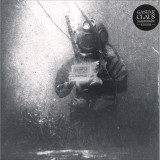
Scaphandre' is the story of an image found in a lost time on the internet a few years ago. It inspired two sound pieces conceived so that one can dive into it as into the sea.
Once their composition was finished, I looked for the origin of this image. It is one of the very first submarine pictures in history, taken by Louis Boutan in 1893 in the bay of Banyuls-sur-Mer... my home town. The original photo as well as a fantastic series of archives documenting this event can be found at the Arago Laboratory, where I often went as a child, after school, amazed by what the researchers were showing me. They just had never told me this story.
This is how this record found its scenery.
Gaspar Claus


The two pieces Gaspar Claus brought together on Scaphandre form an abstract and mysterious B-side of Tancade, released in the fall of 2021. Both composed during the long, initial period of his first album's conception, this mini album's two episodes, each tinged with minimal and noisy abstractions, unfold more than 10 minutes of total immersion into the abyss of experimental music on the first, and drone for the second.

In their own way, these tracks are a form of raw, unadorned escape, a film negative of the cellist's surface creations, which we know are bathed in sunshine and fresh air.

'Inside' is a moment of distraction while Gaspar worked on a film soundtrack. The title took time to mature in the musician's head, abandoned then picked up again and modified until it found its signature progression of strings where time seems suspended. The reverberations dress its fourteen-minute sound canvas in a way that is reminiscent of endless, sub-marine darkness.

'Beyond' was recorded in three takes during a writing session for his first album with David Chalmin in the Basque Country. The post-production phase required a long process of refinement to obtain this invasive sound material that cuts the listener off from their real environment and films them with a hypnotic feeling of depths and apnea.

Taken in 1898 by Louis Boutan a few dozen kilometres from the beach of Tancade in Banyuls sur mer - Gaspar's family village - the photographs of Scaphandre seal the vinyl sleeve with a unique auditory experience presenting the submerged side of the cellist. Obscure, dense, haunting, excitingly weightless.

non in magazzino

Ordina ora e ordineremo l'articolo per te presso il nostro fornitore.


Last In: 3 years ago
Various Arists - Electronic Jugoton Vol 1 LP 2x12"
 
26

Synthetic Music From Yugoslavia 1980-1989

"The galloping technical progress in the second half of the last century dominated all spheres of daily life, art and culture. In the music industry machines took over the role of classical instruments and did not stop at RnR, punk nor industrial music. No one could resist the challenge, but also the prevailing trends in the 80s. The music industry was influenced by the electronic virus globally, not sparing even the remotest corners of the planet, producing bands like Depeche Mode, New Order, Soft Cell or lesser known ones like Liquid Liquid, Section 25, The Wake as well as the pioneers of the electronic music Silver Apples, Pierre Henry,etc .
What was going on in the music industry of former Yugoslavia and at Jugoton, the biggest YU music label at that time? The all over answer is given by a new release of Everland Music: Electronic Jugoton - Synthetic music from Yugoslavia 1964. - 1989. Vol. 1

Electronic Jugoton is the first part of two double albums, where the second part will even go back to pre-electronic music from 1964. Both double albums were initially released by Croatia Records (ex-Jugoton) in 2014 on a 2CD set with no less than two and a half hours of material (47 songs, 35 performers), showing the contemporary trend of Jugoton at that time towards avant-garde and provocative directions in electronic music. This untimely compilation is released for the first time on vinyl now on two double LPs, housed in gatefold sleeves by Everland Music, where part 2 will be released in 2023.
The brave and insightful creators of the compilation Electronic Jugoton, veteran crate diggers Višeslav Laboš and Zeljko Luketić, have excelled at reconstructing the musical past of electronic music in Yugoslavia from 1964 – 1989. Jugoton's extensive research included the most exciting and progressive moments of pop and disco music, early rap, electronic responses of new wave, RnR, post punk and industrial bands to the current trend of the 80s, but also pioneers of avant-garde electronic music.

Electronic Jugoton part 1 is officially opened by the band Laboratorija with the song Devica 69, which opens a window to a completely new and experimental world in former Yugoslavia.Laboš and Luketić have boldly chosen the material without reservations, suggesting that for the first time in one place we have a section of forgotten, unique underground bands like Beograd, Data, Brazil, The Master Scratch band, DU DU A and beyond.
Besides the excellent underground bands, we find popular performers of the time performing less well-known songs: Denis & Denis, Oliver Mandić, Slađana & Neutral Design.

Electronic Jugoton part 2 is partly dedicated to unique electronic music in the performance of important Yugoslav punk, new wave, RnR and industrial bands: Zana, Pekinška patka, Električni orgazam and Borghesia, while the second part of the material is focused on avant-garde early electronic music in Yugoslavia, where the works of composers Igor Savin, Branimir Sakac, Igor Kuljerić and Miroslav Miletić were presented. Luketić and Laboš rescued the obscure electronic tune Elektra by Zdenka Kovačiček, who was at that time Jugoslovska Soul and funk diva.

The uniqueness and quality of this compilation are also audio stories for children, which were extremely fertile ground for an experimentation with electronic sounds, as they should be highly imaginative to attract the attention of the childrens. Electronic Jugoton is also the first compilation in which the listener will find fragments of interviews with actors from the time gave for Jugoton Express. This was a series of promo vinyls printed in extremely small quantities in the 80's and intended to be exclusively for radio stations. An average of 30 minutes of promotion material and interviews with musicians were available for the first time through this compilation.

The value of this compilation is time and priceless. The only question is whether you will be fast enough to catch your copy of the limited double vinyl editions!"

non in magazzino

Ordina ora e ordineremo l'articolo per te presso il nostro fornitore.


Last In: 3 years ago
RADUAN - TAKI-NAKI-NAKI EP

The sixth release on Italian imprint Tempo Dischi comes from Alessandro Bernabeo, aka Raduan, the Italian DJ and producer behind 'Taki-Naki-Naki', one of the most eclectic and unconventional electronic records made in Italy in the late 1980s.

"At the age of 7, I started attending a music school learning to play the piano. At 11 I began working as a speaker in various radio stations, and at 14, I joined Punto Radio where I grew up professionally and launched my own radio show, PLAY MUSIC, under the name Alessandro Giordani. The success was impressive, and thanks to my friend Gianfranco di Lizio, I also started my DJ career by playing in some of the best dance clubs under the artist name Raduan or Rad-one. Mixing funk, soul, afro and cosmic disco in my music gave me a chance to meet and establish relationships with many of the protagonists of this new musical scene, like l’Ebreo, Fari, Maselli, Claudio Mozart Rispoli, Pery, Rubens. In 1988 I was a resident DJ in a well-known club at the time, the 'RIO CLUB', and together with my keyboardist and percussionist, I had the idea to produce a maxi single. The song was recorded in about 40 hours without sleep at the Cicero Bros studio in Cassino in April 1988, with the support of Lino Rufo, a great artist from Molise, as well as his dear friend and old producer Toni Ochiello. The initial project was completely reworked. The original sampled drums were coupled with an acoustic one, and new melodies and fantastic spacey new sounds and effects were created by keyboardist Bengha. The hypnotic and repetitive voice of Cristina, Claudio Baglioni's background vocalist at the time, and that of Jamaica, originally from Mauritius, made the project even more interesting. 'Taki Naki Naki' is an Italo song, with Cosmic disco and Afro influences, and it's the title track of the EP originally released in June 1988 on Bmg Ariola, ex RCA. The EP includes two other songs 'Nightflight' and 'Hiroshima'. The record was a big hit in all the Italian Disco clubs and launched me into the international dance music scene. It was a fantastic time, with different styles of music and House Music was also on the way. There was a lot of research spirit and the people of the club were ready for various types of change. This record has left a mark, international DJs and shops from all over the world still contact me to ask if I have a vinyl copy left in my archive."

non in magazzino

Ordina ora e ordineremo l'articolo per te presso il nostro fornitore.


Last In: 2 years ago
Marco Monfardini - Detect

Marco Monfardini

Detect

12inchAES003
Aesthetical
01.04.2022

Vinyl Edition of 300 copies

Aesthetical in collaboration with Sync presents "Detect" by Marco Monfardini.

Originally developed as an audio/video live performance, Marco Monfardini based his research for Detect on the decoding of inaudible sounds, sound generated by electromagnetic emissions left from electronic devices and inaudible to the human ear. By using various electro-smog detectors Marco Monfardini creates a sort of detection mapping where electromagnetic emissions are the starting point for the sonorous development of each single composition.

A path that creates a parallel with our lives by questioning how much these emissions affect unconsciously our choices, tastes and perceptions, seeking a relationship between the massive use of technology in everyday life and our emotional state.
The album Detect is developed in 15 tracks in continuous play, an imperfect, faulty mosaic inhabited by invisible beings manifesting themselves in the form of sound streams, mutable entities that find a definitive form in the pattern of the compositional structure.

The album opens with “aR1 detection", sounds of pure detection place themselves in the sound space giving the initial coordinates for the exploration of unconscious parallel areas. The boundaries transform and gradually expand until they flow into the structure of "kernel variations", a growing rhythmic pattern decodes the impulses projecting a perspective that dissolves in the unstable and fluctuating electromagnetic emissions of the subsequent "[a]3020t detection", "binary defect "and "core[2] ". “[A.box]emission” confronts the use of sound downloaded random from internet sample banks and the emissions generated during the download itself, micro sound fragments arrange themselves in an organized and regular pattern, shaping a rhythmic structure. The first part ends with the short “[sa]6030” and “[det]x1a”, absence and presence provide an alternation of movements, inaudible and elusive signals all trying to establish a contact with our perception. “det : scan” opens the second part of Detect, a sort of scanning, leaving EMF (electromagnetic field) textures, a static multilayer that progressively expands until it dissolves into the rhythmic emissions of a common smartphone “[4s]detection”.The track “[rs]zone” " is pushing itself deeper, two minutes of sound speleology that reveal the existence of sound artifacts that seem to vanish getting in contact with the light accented by the bass drum of "[det] 0100+" a constant, rhythmic pumping, a luminous pulsation that reveals an apparent void, which seems to subside entering in the winding and waving atmosphere of "conductive [area]" and "[s3] microfunktion". Detect comes to the end with “[emf]terminal” a mirror of the unarrestable technological acceleration intercepting the flow of data that feeds the system of communication , digital micro waste suffocates the living space by centering up the invisible in an unconscious map.

[a] A1

[c] A3

[e] A5 core[2]
[f] A6 [A.box]emission (2)
[g] A7

[i] B2 [4s]detection
[j] B3
[k] B4 [det]0100+
[l] B5 conductive[area]
[m] B6 [s3]microfunktion
[n] B7 [emf]terminal

pre-ordina ora01.04.2022

dovrebbe essere pubblicato su 01.04.2022

Brotherhood Band - Leather Pants

Red hot Modern Soul 45 recorded in Memphis, Tennessee in 1985. Big thanks to Robert Garcia @mrbighappy & Daniel Mathis @quartzwatches for the research and words on this one!!

Brotherhood Band was started by Ernest Coleman(EC) and Clint Hyson, who met thorough a US Navy band called "Mid-South", which was the US Navy's premier musical organization operating out of Millington, Tennessee (20 min outside of Memphis). The group initially played as an instrumental jazz band. In keeping up with the times, they shifted gears towards a more contemporary sound. Shortly after, they decided to cut a single. Enter "Nicci's Theme", which is the B-side here and it's a beautiful jazz tune EC wrote for a girl he fell in love with. This song was supposed to be his door way in, but he actually never opened the door with her.

A few weeks later Clint called EC and played this syncopated bass line for him over the phone. And then EC being the ladies man that he was wrote the lyrics to "Leather Pants" to it. Part of the lyrics read "The pants they stretch, but they don't bust. Enough to make a blind man cuss", but it originally read as, "The pants they stretch, but they don't bust. Enough to make a PREACHER cuss". The song was ready, but they needed to find a singer. That's when member Richard Owens mentioned that he had a young cat back in Atlanta named Taji. In a gamble Taji drove up to Memphis for the Sunrise recording studio session to record the track. According to EC when Taji laid the vocals down he took the song to the next level. In fact it was so impactful that EC, who is now a Grammy producer, still references Taji's sessions when working with new artist.

After the single dropped the group played at Memphis hot spots, Bills Twilight Lounge and Club No Name. EC even had an idea to host a local leather pants contest as a way to promote the song. This lead to a frenzy of women seeking to be "Miss Leather Pants".

non in magazzino

Ordina ora e ordineremo l'articolo per te presso il nostro fornitore.


Last In: 4 years ago
Brotherhood Band - Leather Pants

Red hot Modern Soul 45 recorded in Memphis, Tennessee in 1985. Big thanks to Robert Garcia @mrbighappy & Daniel Mathis @quartzwatches for the research and words on this one!!

Brotherhood Band was started by Ernest Coleman(EC) and Clint Hyson, who met thorough a US Navy band called "Mid-South", which was the US Navy's premier musical organization operating out of Millington, Tennessee (20 min outside of Memphis). The group initially played as an instrumental jazz band. In keeping up with the times, they shifted gears towards a more contemporary sound. Shortly after, they decided to cut a single. Enter "Nicci's Theme", which is the B-side here and it's a beautiful jazz tune EC wrote for a girl he fell in love with. This song was supposed to be his door way in, but he actually never opened the door with her.

A few weeks later Clint called EC and played this syncopated bass line for him over the phone. And then EC being the ladies man that he was wrote the lyrics to "Leather Pants" to it. Part of the lyrics read "The pants they stretch, but they don't bust. Enough to make a blind man cuss", but it originally read as, "The pants they stretch, but they don't bust. Enough to make a PREACHER cuss". The song was ready, but they needed to find a singer. That's when member Richard Owens mentioned that he had a young cat back in Atlanta named Taji. In a gamble Taji drove up to Memphis for the Sunrise recording studio session to record the track. According to EC when Taji laid the vocals down he took the song to the next level. In fact it was so impactful that EC, who is now a Grammy producer, still references Taji's sessions when working with new artist.

After the single dropped the group played at Memphis hot spots, Bills Twilight Lounge and Club No Name. EC even had an idea to host a local leather pants contest as a way to promote the song. This lead to a frenzy of women seeking to be "Miss Leather Pants".

pre-ordina ora25.02.2022

dovrebbe essere pubblicato su 25.02.2022

Apparel Wax - 010 + Apparel Wax Plectrum, first 200 Copies

This time you'll find the Wax's #plectrum with the vinyl; a little gadget to stimulate your musical fantasies. (only for the first 200 orders!)

Four years and ten releases later we can say that Apparel Wax -the vinyl-faced hero- has been able to always renew itself and its sound because, as our manifesto says, we try not to submit to any genre. We wanted every release to be the outcome of a long research through uncommon sounds and APLWAX010, yet again, is an unidentified sonic object picked up by our radar. The last one though! We didn't plan it, we just felt like the time has come -eventually- to close this beautiful chapter. More than one factor led us to take this decision: the progressive concern about the planet (therefore the impossibility to keep producing plastic bags and gadgets), the desire to leave at our peak and to invent something new are just two of them. The constant process behind the renewal of our sound -which we embraced ten years ago with the birth of Apparel Music- sometimes passes through hard choices and we need to feel again that sensation of 'void' in order to create something fresh, different, as we did when we started Apparel Wax. We won't drag our masked hero to a point of sonic stagnation. We'd like to send you all a big greeting and a heartfelt thanks for every second of your time spent listening to Apparel Wax, it literally meant the world to us. What was initially just a bold idea became a musical reference point for many people around the world, and we will be forever grateful to y'all because, without you, it would have never been possible. Finally, a huge thanks to all the artists involved in the project. They contributed with their art to a bigger cause, the biggest: music. YOU are the true masked heroes, you are Apparel Wax. As for us, we'll live on and our sound too. Our ideas, our passion and dedication for the one and only thing that really makes us happy will never die. Something new will always come on our end because that's our purpose, our philosophy. Manman, what a journey has been, now on to the next one!

non in magazzino

Ordina ora e ordineremo l'articolo per te presso il nostro fornitore.


Last In: 2 years ago
Francesco Cavaliere & Tomoko Sauvage - Viridescens

Francesco Cavaliere and Tomoko Sauvage embody a tactile audio visual display, radiating the color green into sounds and painting meditative music. By transforming collected objects into invented instruments and scenography, each motif becomes a dedication to a specific situation, an anecdote or a symbol, sometimes real and other times absurd, that the artists have encountered through their travels and conversations: the Chinese myth about a man wearing a green hat, naming convention of Japanese traffic lights, or even the imaginary chants of frolicking twin dolphins. This inspired the duo’s personal research on experimenting with raw and synthesized idiophones, stage landscape design, spontaneous field recording and organized improvisation.

For their installation and performance, Cavaliere and Sauvage assemble a green cabinet of curiosities - instrumentarium combining water, glass, clay, bamboo xylophones, metallophones and synthesizers. Tomoko describes in an interview: “When you are actually surrounded by green musical instruments, it has a calming effect as if you were looking at a forest or mountain.” Surrounding themselves with amulets and fluorescent fluids, the duo transcend into a musical imagination that connects scores, choreography and sculpture. Motions like crisscrossing the stage, feeling the presence of a perfectly plump leaf as it strikes a glass bowl, minerals slipping through fingers, all resonate to the soothing sounds of splashing water. There’s an intuitive yet methodical nature to this conceptual approach to composition reminiscent of the fluxus art movement. The pair’s initial motif was to play Henning Christiansen’s Green Music, whose score turned to be nonexistent. By then, their green dream was already flourishing in their mind, retracing the path of so-called environmental music from Walter Tilgner, Knud Viktor, to the likes of Kankyo-Ongaku and Hiroshi Yoshimura.

Since there is a strong visual element to their work, witnessing this captivating site specific performance may be imperative in understanding the range and influence of the color green and the impact on the sounds they create together. On ‘Viridescens’, the first release by Cavaliere and Sauvage, we are invited to experience these recordings in a more musical context. Acting like an intermediary, the duo transport us to their special planet, enlivened by animal voices, wind, and aquatic creatures dancing across a luminous aurora.

non in magazzino

Ordina ora e ordineremo l'articolo per te presso il nostro fornitore.


Last In: 4 years ago
Kelan Philip Cohran & The Hypn - Kelan Philip Cohran & The Hypn

Cuernavaca / Stateville / Frankincense And Myrrh / Apsara / Ancestral / Spin / Zincali


Approaching his eighty-fifth birthday, sharp and lean, Phil Cohran lives a couple of blocks from the lake on the north side of Chicago. His modest apartment is filled with a palpable richness. His cornet and trumpets, zithers, French horn, harp and frankiphones (an electric kalimba of his own invention); his beloved telescope; African art; a mural of the Chinese monastery where Muslim monks bestowed on him the name Kelan ('holy scripture'); hand-printed posters from the culture wars of 1960s Chicago; all reflect a life dedicated not just to music, but also to science and astronomy, to history and activism. In its range of subject matter the track-list of Kelan Philip Cohran & The Hypnotic Brass Ensemble embodies this invigorating and all-embracing curiosity: a Mexican hill-town filled with perfume and flowers... an Illinois state prison where Cohran taught inmates in the 1960s... heavenly dancers in the temples of Cambodia... a tribute to a sixteenth-century Venetian musicologist. Welcome to the musical world of Kelan Philip Cohran.
Cohran was born in Mississippi and grew up in St Louis. In the immediate post-war years St Louis was a jazz heartland, home of stalwarts like Clark Terry and Oliver Nelson (both of whom he played with), not to mention a genius called Miles Davis. In 1950 Cohran moved to another heartland, Kansas City, where he played trumpet in one of the hardest swinging swing-groups, led by Jay McShann (who famously had given Charlie Parker his first job). With McShann he spent 'the best year of my life', touring as far as Mexico and playing proto-rock'n'roll in Texas with the likes of Big Mama Thornton on vocals. Back in St Louis Cohran led his own group, the Rajas Of Swing, whose show involved wearing red jackets, grey slacks, blue suede shoes and turbans.
Then in the mid-50s he moved to Chicago. He had a small group with a friend, the legendary tenor saxophonist John Gilmore, whose regular gig was to play at Sarah Vaughan's weekly 'birthday' parties, an excuse for the Sassy One to splash the cash and have some fun. ('What, Sarah Vaughan would sing with you and John Gilmore' 'No way, Sarah didn't sing, she was too busy partying.') And in 1959, through Gilmore, he was invited to join Sun Ra's Arkestra, at a crucial period in the evolution of that extraordinary group. Effortlessly wrapping traditions as divergent as boogie-woogie and electronica in an Afro-centric, intergalactic mythology of his own making, Sun Ra casts a huge shadow across conventional narratives of jazz history. 'With Sunny', Cohran simply says, 'I found my own voice'.
You can hear the emergence of this voice on the LP Angels And Demons At Play, recorded in 1960 - Sun Ra's masterpiece from the period. On the track Music From The World Tomorrow, against the urgent whipped and chopped percussion of the Arkestra, it is Cohran's zither, initially bowed and then plucked and strummed, which is the track's magic ingredient. More profoundly it was Sun Ra's example - his defiant self-confidence and sense of purpose - that set Cohran on his own (to quote another Ra composition) 'pathway to unknown worlds'. Indeed this spirit of self-belief led Cohran to turn down the invitation to accompany the Arkestra when Sun Ra moved east in 1961.
Staying in Chicago, Cohran founded the Affro-Arts Theater and performed with the Artistic Heritage Ensemble, recording the group for his own Zulu Records imprint. (Co-members went on to become Earth Wind & Fire; Cohran taught the group's leader Maurice White the mysteries of the frankiphone). The AACM, a musicians' collective of immense influence and importance, had its first meeting in Cohran's front room. With Oscar Brown Jr and Gene Page he wrote and performed in a show celebrating the nineteenth-century Afro-American poet Paul Lawrence Dunbar. He taught music tirelessly in schools and prisons. His studies into music theory and history led him to the discovery of a key book in his life, Gioseffo Zarlino's treatise on harmony, published in Venice in1558. Astronomy is another passion and another area of expertise. One of the gems of the Cohran discography is African Skies, with its lovely harp playing, commissioned by the Chicago Planetarium in 1993.
In Chicago he also raised a large family. Many of his children have gone on to become professional musicians; eight of them are the Hypnotic Brass Ensemble. For each of them, their first teacher was their father, who famously insisted on giving them music lessons not just for several hours after school, but for several hours before school as well. Their father's music was all around them as children; they all vividly remember lying in bed at night not being able to sleep because their father was rehearsing with the Jazz Workshop downstairs.
For the Hypnotic Brass Ensemble, the voyage to where they are now - whether tearing up festivals from Glastonbury to Melbourne, or touring with Gorillaz, or recording their first album on Honest Jon's - has involved a necessary stepping away from their father's shadow. Phil Cohran is the first to recognise this, happily allowing their sound - heavy on the funk, with the urgency of hip hop never far away - to blossom.
But likewise this album is for all of them a natural step. Recorded in Chicago in June 2011, the idea was beautifully simple - 'my music and their band' as Phil puts it, 'we don't have to rattle on more than that'. Only to point out perhaps that here - in the majestic surge of Zincali, for instance, or in the sheer verve and bounce of Cuernevaca - is music not just filled with the warmth of home. This is music that plumbs the depths and rings with joy.

'Cuernevaca is a town in the mountains south of Mexico City. I was there in 1950 when I was on the road with Jay McShann's band. It's a place close to paradise, a city filled with the fragrance of flowers. I always wanted to go back... In 1974 I taught workshops at the prison in Stateville, the Big House where Al Capone spent time. There's a huge wall around the prison, and once I took Hypnotic there - ha - to see what the future holds for them... Makeda, the Queen of Sheba, sent a caravan of gifts to King Solomon - a caravan that took more than a day to pass one point - and the main gifts were Frankincense And Myrrh... I wrote Apsara in 1967, when Jackie Kennedy was in the news with her visit to the temple of Angkor Wat in Cambodia. Apsara were celestial beings, dancers who brought forth the civilization of ancient Cambodia, by dancing in the holy nectar called Amrita... Ancestral is a meditation drone written for my Friday-night residence at the Ethiopian Diamond Restaurant in Chicago's Rogers Park... Spin is the latest of these compositions. Everything in the cosmos spins, from the smallest objects we can see in a microscope to the largest galaxies. Spin is the motion of all things whether it looks like it or not... Zincali is a name Spanish gypsies call themselves. 'Zin', East Africa; 'cali', the people. One of the offshoots in my research into Moorish Spain has led me to Gioseffo Zarlino, the sixteenth-century master of music at St Mark's in Venice. It's said that Bach lost his sight reading Zarlino's treatise on counterpoint. His greatest composition is his setting of the Song of Songs - 'Nigra Sum', 'I am black'. This is my tribute to Zarlino and to the zincali.'

non in magazzino

Ordina ora e ordineremo l'articolo per te presso il nostro fornitore.


Last In: 4 years ago
MANU DIBANGO - AFRICADELIC LP

The strange and majestic musical beast that is Africadelic was Dibango’s follow-up to Soul Makossa, but it was initially released on Louis Delacour’s library music label, Mondiaphone, before “Soul Makossa” became an international phenomenon. As a
Mondiaphone release, it was aimed at television and film producers seeking atmospheric background music, so the original titles are simply “Theme No 1,” “Theme No 2,” etc, with corresponding rhythmic notations such as “3/4 Africain,” “Afro Beat 12/8” and “Medium Soul Beat,” though once “Soul Makossa” hit the stratosphere, subsequent reissues bore actual song titles. In any case, the album is simply wonderful, a driving mix of Afro soul, funk and jazz, with an undercurrent of Latin percussion throughout, given further shades by rock guitar and soul organ, as heard on “African Battle” and the title track; opener “Soul Fiesta” builds
dramatic percussive tension before Dibango drops a killer vibraphone riff, while “African Carnival” makes the most of the full horn section, Dibango’s sax soloing giving room for complex polyrhythmic percussion breaks. “Oriental Sunset” has beautiful vibraphone from
Dibango too, as well as a thrilling flute melody, “Monkey Beat” and “Wa Wa” are funky soul struts and “Percussion Storm” has the band marching off into the African sunset as Dibango unleashes another killer vibraphone melody. Listening back to the album now, it is hard to believe that the whole shebang was written in a couple of days and committed to tape within the space of a week, but that is all more testimony to the greatness of Manu Dibango, one of African music’s true pioneers. Play loud and often for best effect!

non in magazzino

Ordina ora e ordineremo l'articolo per te presso il nostro fornitore.


Last In: 4 years ago
Ed Kelly & Friend - Pharoah Sanders

In 1978 Pharoah Sanders went into the studio with pianist, Ed Kelly, who was an important figure in the local San Francisco and Oakland jazz scene. The two of them recorded six tracks which ranged from covers of standards, through soul jazz through to two real gems. The album was originally released as Ed Kelly and Friend due to Pharoah being contracted to Arista Records at the time. Indeed, as you can see, the cover shows Kelly playing next to Pharoah’s hat, shoes and Selmer tenor saxophone.

Rainbow Song, a Kelly composition, opens matters in a manner far removed from Pharoah’s work on his Impulse albums (although there had been a dramatic change of course when he signed with Arista and recorded). This is firmly in Grover Washington Junior territory with a liberal sprinkling of oh so tasteful strings. The Master’s sound is full and mighty as ever.

With the radio track out of the way it is business as hoped for and Newborn is a Sanders composition that burns with intensity. The power of his solo is as good as anything he has produced and he runs over the full span of the tenor’s range and onwards into territory lesser known or explored by 99% of sax players.

Sam Cooke’s You Send Me is treated with reverence and respect, with Pharoah delivering a sensitive and heartfelt rendition and ending with some extraordinary phonics, which we will meet again on later albums. Kelly’s accompaniment complements Sander’s playing before he receives his own space for a shimmering yet restrained solo which discloses what this non-pianist assumes to be an agile right hand.

Answer Me My Love is an early 50’s ballad with a fascinating back story. On its initial release in post-war Britain, covers of this fine melody stirred sufficient controversy for the song to be banned by the BBC. What led to it being barred from broadcast on the Light Programme and treated like Anarchy For The UK, Wet Dream and Give Ireland Back To The Irish? I can reveal that the reason for this draconian action was that the original version was entitled ‘Answer Me, My Lord’. In the olden days, it seems that a direct appeal to God was considered to be blasphemous- especially if set in a secular or selfish. Further research indicates that Nat King Cole made the most celebrated recording and that Bob Dylan used to sing it live in the 1990’s, presumably during his overtly Christian phase. Anyway, it is a grand tune.

Pharoah went on to record at least three studio versions of his great anthem You’ve Got To Have Freedom but the one here is the earliest incarnation that I am aware of. It is also the most restrained treatment of the theme, although Pharoah’s solo shows his ability to play with fire and power over the entire range of the horn. There’s plenty of space for Kelly’s piano too and he provides an elegant setting for Sanders’ exploratory work.

pre-ordina ora15.01.2021

dovrebbe essere pubblicato su 15.01.2021

Stephan Mathieu & Ekkehard Ehlers - Heroin

Stephan Mathieu&Ekkehard Ehlers

Heroin

2x12inchKEPLARREV03LP
Keplar
27.10.2020

Between Christmas 2000 and New Year 2001 producers Ekkehard Ehlers and Stephan Mathieu recorded an album of warm, soft, delicately crackling electronic music in the space of that week. It was christened with the ambivalent title "Heroin" and was released on CD via the label Brombron in 2001 and later in 2003 re-issued on Kit Clayton's Orthlorng Musork on double-LP with remixes the pair had commissioned as expansions.

17 years later Heroin sees its first vinyl release to include all 13 tracks from the original CD track-list on this LP + 12“ set. The centerpiece "Herz" finally receives its long deserved vinyl treatment (side C, at 45rpm) and on the flip side Thomas Brinkmann contributes a mirror in a magnificent remix of that very piece on side D.

Ehlers and Mathieu were both highly prolific solo artists during the period 2000-2004, and in just two years after the initial release of "Heroin" each had produced over half a dozen new solo recordings: among them the serial masterpiece Ehlers' "Plays" (Cornelius Cardew, Hurbert Fichte, John Cassavetes, Albert Ayler, Robert Johnson) released as 5 stunning LPs in a series on Staubgold, while Mathieu's 'Full Swing Edits' spread over five 10" records plus his album 'FrequencyLib' on Mille Plateaux, 'Die Entdeckung des Wetters' on Lucky Kitchen and ‘The Sad Mac’ on Atsushi Sasaki’s Headz label were greeted to critical acclaim.

Both artists were expanding their conceptual sonic approaches in the glow of developing laptop technologies which would to these times in 2020 seem quite primitive, but these two in that period used the state-of-the-art to aid and abet their conceptual visions, while at times the duo used unorthodox experimentation - yet always had a distinctively melodic and musical form at its heart and soul.

Ehlers can be seen as a conceptualist, as a meta-musician who interrogates the mediums and methods of sound production - reflecting on the conditions and possibilities of improvisation (e.g. "Plays Albert Ayler") and exploits ideas of mutation and distortion of popular aesthetics played out within a ghostly form of divine pop beauty in his project März.

Mathieu, originally a drummer and co-founder of what has come to be known as the Berlin 'Echtzeitmusik' scene. His approach could be similarly described as working a critical analyst and researcher: Subtly and precisely working in the realm of processing as a method of intervening in melodious/harmonic analog sound sources.

Ehlers and Mathieu may not think too much about their singular productions and publications outcomes, but instead concentrate on the process and musical personality that characterizes their gesture- style itself stays in the background - and they usher a music from small minimal sound sources coaching a patient music of slow intervention - much like a refraction of light than a concrete painting or a blurred photograph - beatus accident.

And indeed, "Heroin" is an album that embraces the happy accident being made up of reduced, often very catchy and very direct micro hooks which seem laser-guided into a space accepting obvious melodic beauty in what feels like an observation of musics unfolding and revealing it's DNA, embed with for a kind of yearning for innocence and naiveté - as if Satie were on the jukebox in "The Crying of Lot 49". Not to say the music is "reduced", but rather: 'restricted' and born from acceptance of limitations, and the artists allowing the sounds to just "be.." with some incremental degrees of coercion.

The album not only sounds like that of 2 producers who are both dreamers and scientists, but that Ehlers and Mathieu chose to work with these means in a dialogue together to reduce pop music to its musical/tonal core, it is not Pop music anymore, rather a ghostly pointilistic itteration of song. "Heroin" is located at this transition, around that point at which tracks, that were or could have become pop compositions, irrevocably slip into a static harmonic nirvana. We are invited to follow the arch of Heroin in a slow-motion morphine musical haze.

Heroin sounded timeless when originally released and proof is that it remains so, one wishes that Ehlers and Mathieu would convene again for a week, a month or an entire year to continue this process of slow rumination, picking affectionately over the sounds they both love - and then maybe when everything is condensed, evaporated they would write more songs with those sonic refractive elements that remain.

non in magazzino

Ordina ora e ordineremo l'articolo per te presso il nostro fornitore.


Last In: 5 years ago
Sammy Osmo (Legowelt) - Schaduw Horizon

Sammy Osmo(Legowelt)

Schaduw Horizon

2x12inchUTTER6
Utter
09.09.2020

Utter presents Danny Wolfers' aka Legowelt's cult spywave album 'Schaduw Horizon' on vinyl for the first time. Initially released on CDR on Wolfers' Strange Life label back in 2008, this DX7-drenched soundtrack was influenced by real locations near Wolfers' coastal dune studio in The Hague.

Set in the depths of the cold war at an abandoned zoo, it scores the imaginary story of Percival, a NATO animal parapsychologist researching the extra-sensory powers of a Siamese cat and a chess-playing chimpanzee named Albert. After the Soviets discover the project, Percival's team members are assassinated one by one, forcing him and his animal friends to escape in a small sailboat towards a mysterious island...

The album has been remastered by Wolfers then transferred and cut by Helmut Erler at D&M. It is housed in a deluxe gatefold sleeve that opens to reveal detailed stories behind each track, while the entire back cover is a life-size chess board for any budding Alberts wishing to play a game. A special 'confidential documents' envelope completes the package and contains a map of the abandoned zoo, a top secret letter including coordinates of the locations featured in the story, DX7 schematics, foldable chess pieces and a 'Schaduw Horizon' sticker.

non in magazzino

Ordina ora e ordineremo l'articolo per te presso il nostro fornitore.


Last In: 5 years ago
Perhaps - 7.0

Perhaps

7.0

12inchREPOSELP091
Riot Season
31.03.2020

LIMITED EDITION 300 ONLY WHITE VINYL

There was a terrible egregious shift in vibration the day the transmission arrived. It came to me in a dream, as was natural for these particular occurrences, and left no time for preparation. The sound was unmistakable, a low baritone that echoed wildly and reeked of ancient fumes. A deeply monumental and monolithic apparition stood before what appeared to be a crowd of hexagonal beings. The vibrations worked through them in an apparent communicatory way, though would be impossible to translate in any logical linguistic fashion. I don’t know how but I knew they were aware of me, though their disposition was imminent of their consciousness as being collective, rather than individual; and were largely unbothered by my presence.
 
Once the transmission had finished it was clear that there had been a tamper. The kind of which Id seen  before, and had resulted in definite yet undefinable change in the fabric of reality.
 
I initially stumbled upon the odd and highly dangerous musical practices of Perhaps while on an assignment in Bermuda. There had been rumors of a local tribesman partaking in occult practices, of which I knew was native strictly to the Goat Bleeding Bad Men of the Congolese jungle. These rumors intrigued my journalistic nature, so I took the afternoon off in the hopes to possibly glean something that would be an easy pitch to a tabloid back home.
 
Upon arrival it was clear there was a strange foreign intervention within the community of the tribe, which was largely uninhabited upon first glance. Much of the surrounding foliage had been strung with the entrails of various animals and there were several disturbing fixtures composed of bones and various organs lining the commune. I managed to track down the tribesman, who appeared to be in some deep trance and was entirely unable to communicate, though seemed to be fixated on a single task: the drawing of a peculiar symbol. My researching the symbol resulted in only one hit, a piece of musical literature by a band Perhaps, who I later found to be recording in the area just weeks before.
 
It didn’t take long for me to become fully fixated on Perhaps, who were anything but coy about their whereabouts and metaphysical practices. Wherever they went a small commune followed, which was typically composed of deranged acid freaks, occultists, and Norweigian dairy farmers who had sold all their assets to follow the band after “hearing their music speak from the mountains”. After managing to crack into one of their camps that was stationed in an abandoned motel, I spoke with Jim Haney of Perhaps regarding their cultish practices, who gave little in way of detail but claimed to be working towards a deconstruction of reality through a linguistic utilization of vibration.
 
My stint with the cosmic beings through the telekinetic transmission had lead to one conclusion; that Perhaps have been in the works on something new. It seems as if they may have landed on the result which Haney had mentioned years ago. Through my continued interest I’ve procured the names of other members of this current project, which include: Sean Mcdermott, Tom Weeks, Ricky Petraglia, David Khoshtinat, Ben Talmi, Makoto Kawabata, Lucas Brode, Isiah Mitchell, Olivia Kieffer, Tyler Skoglund, Chang Chang. Though I can’t say exactly what is to come, it seems as if the ideas that were proposed during my initial meet may have been surpassed. Perhaps’ plans have begun to surface, and we are all at risk, for whatever that means. The great column and the vibrational prismic beings have shifted their attention to earthly matters, it would be foolhardy to not heed their warning. Though, self-preservation may be an impossibility.
 
Sam Hailstone Dec 24/ 2019

non in magazzino

Ordina ora e ordineremo l'articolo per te presso il nostro fornitore.


Last In: 5 years ago
DJ Different - Wilcoxia poselgeri

Wilcoxia poselgeri can be found primarily in South and West
Texas, as well as the adjoining Mexican state of Coahulia.
Sometimes referred to as the “Lead Pencil Cactus” or “Dahlia
Hedgehog Cactus” due to its slender stems and tuberous
Dahlia-like root system, Wilcoxia poselgeri grows in the sandy
soils of hills and valleys on either side of the Rio Grande. When
in bloom Wilcoxia poselgeri produces large, moderately
fragrant pink flowers that open during the day and close at
night. Initially erect, Wilcoxia poselgeri gradually begins
sprawling amongst its surroundings as it matures to support
the growing weight of new stems. Regarded as a slow-growing
yet uniquely beautiful specimen, Wilcoxia poselgeri’s relative
ease of cultivation makes it a remarkable addition to any
collection. Our botanists strive to source and produce highquality specimens to enrich your mind as well as your ears.
After many months in the field our team has returned with a
diverse selection of sonic seedlings. Following a series of
meticulous experiments in our research facility each seedling
has been deemed safe for general propagation and cleared for
release.

non in magazzino

Ordina ora e ordineremo l'articolo per te presso il nostro fornitore.


Last In: 4 years ago
Mike Cooper - White Shadows In The South Seas LP 2x12"

White Shadows In The South Seas is the title of a book written in 1919 by Frederick O'Brien as part of a trilogy he wrote based on his experiences living in the Pacific islands in the early part of the 20th century. His book was taken as the starting point for a film to be directed, initially, by Robert Flaherty (famous at the time for his groundbreaking documentary / fiction film Nanook Of The North) with W.S.Van Dyke as his support. The film, ultimately, apart from the title, had little to do with O'Brien's book and Flaherty left the film after a few months leaving Van Dyke to finish it.

I purchased O'Brien's book, along with many others, from Basement Books, a secondhand bookstore in Melbourne/Australia. Part of my 'Islomania' and on going fascination with all things Pacific. When I discovered there was a 1929 silent film based on the book I sought it out and started to present it as part of my 'Live Music/Silent films' repertoire. Tabu by Frederick Murnau, which coincidently also had Flaherty as co-director originally, was the first film I ever wrote / improvised a score for and presented as a live film/music performance. My repertoire extends to over 23 films now.

My eclectic and diverse musical and artistic interests extend into 'Hawaiian', 'Exotica', 'Ambient' and 'Electronic' Music. I have produced several volumes of so called 'Electronic, Ambient, Exotica' on CD and Vinyl, including Kiribati, Globe Notes, Rayon Hula ( on Vinyl, CD and digital format ) and most recently, New Globe Note on Vinyl and White Shadows In The South Seas on CD.
White Shadows In The South Seas features some of the music presented in my live screenings of the 1929 silent film.

The film is the story of Dr. Matthew Lloyd, an alcoholic doctor who is disgusted by the exploitation by white people of the natives on a Polynesian island. The natives dive for pearls, however, numerous accidents occur and one diver dies. In anger, Dr. Lloyd punches Sebastian, the employer. As revenge and to prevent further interruption of his activities, he tricks Dr. Lloyd onto a ship with a diseased crew (thinking they are ill) and his men rough him up and send the ship off into a storm. Dr. Lloyd survives and is washed ashore on an island where none of the natives have ever seen a white man before. Lloyd is rescued and ultimately falls in love with the chief's daughter, who is Taboo, hence Lloyd is prevented from pursuing his love for her. An incident occurs and a young boy is thought to have drowned but Lloyd is able to revive him, earning him points and permission with the chief's daughter. Lloyd begins to realise that the local islanders have no sense of the value of the black pearls which grow in abundance around their island and he starts to dive for them and collect them. One morning the white man Sebastian unexpectedly turns up on a scooner and starts to offer the islanders trade for their pearls. Llloyd tries to interrupt the encounter and is shot and dies. His wife and the islanders morn for his dead body and, symbolically, the passing of a way of life.

Mike Cooper plays - Electric and acoustic lap steel guitars / electronics / Zoom Sampletrack / Kaos Pad / Casio SK1 / Korg Drum Machine / Self Made Instruments.

It also features field recordings made on Pulau Ubin by Mike Cooper during a month as Artist In Residence for The Artist Village / Singapore.

I would like to acknowledge and thank Lawrence English (Room40 Records) for his assistance and encouragement with the original recordings and the CD version of White Shadows In The South Seas.

All music written and played by Mike Cooper PRS/MCPS - except Po Mahina (trad. Arr. Cooper) and Hilo Hanakahi (trad. Arr. Cooper)

Recorded and Mixed at the Steelworks in Rome 2012/2013.

A White Shadow In The South Seas
In February 2014 'A White Shadow In The South Seas' was the title of an audio-visual installation I made at the Teatro In Scatola in Rome, Italy, presented as part of a series of sound installations titled 'Visitazioni' produced by Proposte Sonore.

The essay below, as well as our collection of Hawaiian shirts, Exotica and Hawaiian vinyl records, was an inspiration for this installation.

'..the transformation and reconstitution of the souvenir commodity as an indigenous ethnic art form and a scarce relic of Hawai'i's romanticized past...' from - Clothing and Textile Reasearch Journal - From Kitsch to Chic by Marcia A. Morgado.

And....
Michael Thompson's Rubbish Theory (1979)
' ...a critical aspect of Western culture is the pre-disposition to see objects in terms of two overt categories: the transient and the durable. Objects identified as transient have finite life spans and lose value over time, whereas those identified as durable have infinite lives and over time increae in value....category assignments are arbitrary, but once assigned a category membership determines relative value. Fashion apparel-by defenition-is assigned to the transient category; paintings commonly are designated durables....how is it that transient objects.. ( e.g. Hawaiian shirts and vinyl records ) ..sometimes become durables.

Objects assigned to the rubbish category are largely invisible, have no value and, ideally, no life span. Fashion for example, no longer worn and relegated to the back of the wardrobe has fallen into the covert rubbish category. But rubbish can be rescued and transformed. Thompson says ' What I believe happens is a transient object gradually declining in value and in expected life span may slide across into rubbish. Here it exists in a timeless and valueless limbo where it has a chance to be re-discovered and be successfully transformed to a durable. Such transferes are radical: objects gradually slide from transcience to rubbish, but the transformation from rubbish to durable involves an all-or-nothing leap across two boundaries, that separating the worthless from the valuable and that between the covert and the overt. Things drift into obscurity but they leap into prominence.

The delightful consequence of this hypothesis is that in order to study the social control of value we must study rubbish.

The rubbish-to-durable transformation is accompanied by the development of highly specialized knowledge derived from the discovery of subtle variations and complex details that went unnoticed in the objects transient stage. The discoveries initiate renewed interest in the object and its market value begins to climb. As prices soar beyond the reach of ordinary people, the object becomes available only in high priced collectors' markets. Furthermore, as market values rise, the aesthetic value of the object undergoes a reassessment as well, and it becomes increasingly apparent that the objects intrinsic beauty has been overlooked. Ultimately the object is re -assigned as a durable and becomes recognized as a timeless classic.

Exotica, Ambience and Pacificism - A dialogue with Mike Cooper & Professor Philip Hayward Deputy Pro Vice Chancellor of Research Southern Cross University, Lismore, Australia.

non in magazzino

Ordina ora e ordineremo l'articolo per te presso il nostro fornitore.


Last In: 10 years ago
Le Stim - Tribute To Muhammad Ali (We Crown The King)

With MEL013, Melodies International are extremely proud to bring you at last, a disco anthem from Detroit that was originally recorded in 1980 and dedicated to the 'King Of The Champion Fighters': Le Stim - A Tribute to Muhammad Ali (We Crown The King).

Le Stim was a band formed by lead vocalist Donald Jennings in the late 70s. Now an ordained deacon back in Detroit, Jennings was brought up in a gospel environment and was said to be born to sing. Growing up picking up songs from the likes of Nat King Cole, Ella Fitzgerald or Sam Cooke, Jennings frequently performed for family and friends and went on to sing for audiences in New York, St. Louis and all around Detroit.

We Crown The King is a song written in the mid 70s by the late Herbert Andrei Duncan, also from Detroit. Duncan approached Jennings with the song who was initially reluctant to sing it because it took him out of his usual vocal range. However, Duncan finally (thankfully!) managed to persuade Jennings after five years to record a tune that would prove to become a party anthem decades later.

Remembering Duncan, Jennings says: 'Andrei was positive..inquisitive.... and determined. I was only 18 or 19 years old at the time and remember Andrei coming over to my house.... He had a cellphone in his car!.. I remember going to Andrei's house, and he said he wanted to do the track. Andrei did not take no for an answer! The answer had to be yes! However Andrei didn't have any money to record the song with. So we made a deal. In exchange for the use of his P.A., Loc (the drummer) provided the seventeen musicians for Le Stim to record 'We Crown The King'. The session itself was recorded at a studio in Southfield, Michigan.
According to Jennings, Muhammad Ali did hear the track back then and liked it! Le Stim were in touch with Ali's management and were about to meet him on a number of occasions which unfortunately didn't work out.

Licensing this record has proven to be Melodies' biggest research effort as of yet and has involved visiting it's author, Duncan's former house in Detroit only to discover it had burned down and that his family had moved years ago. It wouldn't have been possible without the invaluable help of Jeremy from Rain&Shine records (NZ) who then managed to track down the family back in Texas!

Officially licensed, remastered and cut to half-speed lacquers at 45rpm (instead of it's original 33rpm format) to bring the shine out of the top end - MEL013 comes forth in it's original 12' vinyl format with exclusive Melodies stickers and digitally too.

non in magazzino

Ordina ora e ordineremo l'articolo per te presso il nostro fornitore.


Last In: 16 months ago
Fanon Flowers - Strong Interaction Ep

Mechanisms Industries owner Fanon Flowers extends the PRRUKBLK catalog with a slice of wax in his signature style. Vivid synth work with repetitive sequences that linger through the listeners mind long after the initial listen. ''Strong Interaction EP'' is combined of 4 dancefloor cuts on the moody side of things. Beautiful patches and lucid hats come together in a wash of dancefloor oriented techno.

non in magazzino

Ordina ora e ordineremo l'articolo per te presso il nostro fornitore.


Last In: 2 years ago
  • 1
Articoli per pagina:
N/ABPM
Vinyl