Suche:indica

Styles
Alle
Rumbleton - Codex Indica EP

Longtime friend of the Sweet Sensi Crew, Rumbleton brings his distinct style of Amenism, dubwise, bass RUMBLE junglism. For side A we get the future classic Codex Indica; a deep meditation on dub and junglism. On the side B, Rumbleton meets DJ Clear for Sweet Sensi Records first foray into true Drum Funk. Here we have a taste of what it would be like if soundclash met drum funk junglism.

DJ Support
Mantra, DJ Trax, Double O, Coco Bryce
Yorobi, Ben LQ (Australia), Tim Reaper, Kid Lib +More

nicht am Lager

Bestelle jetzt und wir bestellen den Artikel für dich beim Lieferanten.


Last In: vor 6 Jahren
Esox Lucius - Esox Lucius Lp

Esox Lucius

Esox Lucius Lp

12inchMIRRORTRAX001
Mirror Trax
23.02.2018

Mirror Trax proudly presents it's first release: the Esox Lucius EP by Esox Lucius! Born in the late 90's, Esox Lucius seems to have soaked up his environment quickly. Old school flavour transmitted to the depths where Esox Lucius roams seems to be the recipe for elementary and spaced-out techno. Nimbus on the A side is a classic techno track reminiscent of the X-Mix days! It's soothing melody and driving bass will propel you towards the clouds, cruise-missile style. On the B side, the first track Indica is a high-speed techno train. Driven by it's resonant lead and shifting snares, B1 will definitely leave you as high and disoriented as the name implies. Common thread on the B side seems to be a Hague-ish influence, as the closing track is a heavy grinding techno track with a hint of electro. B2 will definitely sink your ship so make sure The Hoff is around!

300 copies available.

nicht am Lager

Bestelle jetzt und wir bestellen den Artikel für dich beim Lieferanten.


Last In: vor 7 Jahren
Lifted - Movie (TAPE)

Lifted

Movie (TAPE)

CassetteOT007CS
Outside Time
05.06.2026

Filmmaking and music-making share a common element of worldbuilding. Whole cloth, environments are raised in which a perspective can be placed; the viewer, the listener, is taken on a ride into the unknown for a time. Movie, the newest album by DMV-based duo Lifted, is like a film shot with microphones rather than cameras, using the pacing, spatialization, and semiotics of cinematic sound design to lead us through a surreal soundworld that draws as much from Foley artistry as dub, jazz, and electronic music. Musical elements and field recordings shift in and out of focus, collaged in spontaneous improvisation sessions on CDJs by the core duo of Andrew Field-Pickering (Max D, Dolo Percussion, Beautiful Swimmers) and Matt Papich (Co La, Ecstatic Sunshine). We may not see where we are, but our ears give us all the information we need.

We open on a pedal steel, played by More Eaze, but it’s been warped and slowed, gradually pitching upward until it's met by drums and electronics. Imagine the THX logo emerging onscreen. Movie is bookended by two related themes, “The Ice Chewers (Opening Credits), ” and “Midnight Snack (End Credits), ” giving the spatial experiments at the heart of the record form and focus. If there’s a broader narrative to latch onto, it’s in the transition moments, the juxtaposition of various field recordings that indicate movement of characters through space and life happening at its own pace. Tracks are defined by other thematic elements: a wandering piano in "Repossessed, " the drone of Duncan Moore’s bagpipe on “Melts Very Nasty, ” the delicate dance of Dustin Wong’s guitar over Jeremy Hyman’s drums on “Midnight Snack. ” Even with such an expansive ensemble cast, the focus remains squarely on the flow from one scene to the next.

Robert Altman’s use of sonic perspective shifting, as well as Apichatpong Weerasethakul’s intricate construction of environmental ambience and aural representations of the unknown, were both inspirational for Lifted’s focus on sound as a way to establish set and setting in film. We hear Altman especially in the way dialogue emerges and recedes: as Papich puts in a sandwich order, as Field-Pickering browses the grocery store. These techniques have been a part of the duo’s arsenal in Lifted and their own projects for years, but here, without the mandate to make something overtly musical, they are foregrounded and placed in crisp focus. Here is another way to listen to the world, to understand how time, place, and personality are communicated through sound as Lifted closes the gap between artforms. What you can’t see only drives the imagination to more brilliantly invent.

vorbestellen05.06.2026

erscheint voraussichtlich am 05.06.2026

JOSÉ CARLOS SCHWARZ & LE COBIANA DJAZZ - LUA KI DI NOS LP

2026 Repress

In the beginning of the 1970’s, Guinea-Bissau was a country broken up into many ethnic groups and at the heart of a war for independence. By reviving traditional musical genres as Gumbé and singing in guinean Kriol, José Carlos Schwarz & Cobiana Djazz established an immediate affective bond with their audiences. Through its music and politically engaged spirit of the lyrics, the band played a significant role in shaping the social and political consciousness of the masses. As well as influencing local bands like Super Mama Djombo and giving back a deep sense of cultural identity to bissau-guineans.

The explosive birth of Cobiana Djazz brought about other kinds of detonation. Schwarz became involved in urban guerilla activities which resulted in several bombings in the centre of Bissau, leading to his imprisonment and torture. He remained in lockup for a total period of about 2 years, between 1972 and 1974.

The process of decolonisation, in the wake of the Portuguese revolution of 25 April 1974, led to the recognition, during the same year, of the sovereign nation of Guinea-Bissau.

Schwarz, a key figure in the fight for independence, played an important part in the transition to the democratic regime, profiting from his popularity as an artist. Soon, his criticism (underscoring opportunism and irresponsibility in high places) became a thorn in the side of the political elite. Uneasy with the disquieting effects of his work, government officials effectively separated the author from the masses by assigning him to the embassy in Havana.

José Carlos Schwarz met a tragic and untimely death at the age of 27, when his plane crashed on arrival at Cuba's José Martí International Airport, on May 271th 1977.

Hailed by african giants like Orchestra Baobab, Letta Mbulu or Miriam Makeba (with whom he recorded his first and only solo album), “Zé Carlos” and his poetry won a lasting position in the annals of Guinea-Bissau. However, this collection of songs remains relatively unknown outside the country and its diasporas.

We are proud to offer, in close collaboration with the Schwarz family, this first official reissue on vinyl. Remastered and pressed on heavyweight vinyl.

vorbestellen05.06.2026

erscheint voraussichtlich am 05.06.2026


Last In: vor 5 Jahren
AARON FRAZER - IT'S A SHAME / THE FOOL
  • 1: It's A Shame
  • 2: The Fool

Colemine ist stolz darauf, die neueste 45er von Aaron Frazer zu präsentieren. Diese hier ist etwas ganz Besonderes. Zwei Tracks mit der Rhythmusgruppe der legendären Cold Diamond & Mink, dem Rückgrat des finnischen Soul-Labels Timmion. Die A-Seite ist ein neuer Track: ,It's A Shame". Und es ist vielleicht wirklich schade, dass dieser Titel es nicht auf die "Into The Blue" LP geschafft hat, denn er ist ein echter Knaller. Meisterhaft von Aaron und Produzent Alex Goose zusammengestellt und arrangiert, besticht der Track durch knackige Drums, Aarons charakteristisches, seidiges Falsett und wunderschöne Streicharrangements. Du wirst den Refrain noch tagelang vor dich hin summen. Die B-Seite ist der Album-Closer auf ,Into The Blue" - und das aus gutem Grund. Es fühlt sich wirklich wie ein süßer und gefühlvoller Abgesang am Ende eines Films an. Ein Klagelied über die Höhen und Tiefen der Liebe, das Gefühl, angesichts des Scheiterns dumm dazustehen, aber trotzdem weiterzumachen. Es fühlt sich an wie ein verlorenes Sample, das von Aaron und Goose gekonnt ins Hier und Jetzt geholt wurde. Für Fans von Durand Jones & The Indications, Pale Jay, Jason Ngonda, Thee Sacred Souls, Neil Frances, Khruangbin.

vorbestellen12.06.2026

erscheint voraussichtlich am 12.06.2026

LA POLLA RECORDS - DONDE SE HABLA
  • 1: Los Monos
  • 2: Canarios Y Jilgueros
  • 3: Ocho Mariposas
  • 4: El Animal Sin Nombre
  • 5: Conejas Y Gallinas
  • 6: Rata (Parte 1)
  • 7: Rata (Parte 2)
  • 8: El Perro Salvaje
  • 9: El Avestruz
  • 10: Confusion
  • 11: El Cerdo
  • 12: Escorpion
  • 13: El Pingüino
  • 14: Ciervos,Corzos Y Gacelas
  • 15: Las Hormigas
  • 16: Todos Los Animales Privando Juntos En El Bar

This album, recorded in 1988 at Elkar Studios in Lasarte, is a happy accident, like much of La Polla Records' early output, by Jean Phocas (who also worked with other bands of the genre such as Cicatriz) and César Ibarretxe. It was lovingly designed, with a medieval atmosphere for the cover (by Txefo, Joseba Olalde and Txarly) featuring a huge scroll containing five tarot cards, a back cover in the same style with heraldic figures, and a meticulous presentation of the lyrics with separate spellings for each song, on a double sheet with photos of piglets suckling from their mother on one side and various images on the other. With animals as the common thread for the songs, it represents the confirmation that the concept album had arrived on the national punk scene. Perhaps a work of maturity, the band's traditional objectives disappear from the lyrics, and although there is still room for specific protests and chronicles of nights of alcohol and violence (such as those of La Rata), the emphasis is on revelling in the description of all kinds of personal, psychotic and hallucinatory hells. Evaristo confessed to being influenced by Umberto Eco's book The Name of the Rose (1980) in the making of this work. Far from indicating any departure from the foundations laid in previous works, it shows that the spectrum of the anti-establishment struggle the group was committed to was broad. A very complete album.

vorbestellen12.06.2026

erscheint voraussichtlich am 12.06.2026

X-Ray Spex - Obsessed With You (The Early Years) LP
 
8
auch erhältlich

Neon Orange vinyl


Obsessed With You The Early Years' is an official release of the early X-Ray Spex demo recordings which would evolve into the celebrated pioneering 'Germ Free Adolescents' album. Also includes early versions of classic Punk pioneering debut single tracks 'Oh Bondage, Up Yours!' and 'I Am A Cliché’.

Recorded in 1977, the majority of these recordings feature original saxophonist Lora Logic and capture the raw instinctive power of the band who seemed to arrive fully formed despite their youth. The iconic vocal stylings of Poly Styrene immortalised here are even more visceral than what was recorded for the final product and further indicate just how much inspiration they lent Bikini Kill's Kathleen Hanna and the Riot Grrrls that followed. Elsewhere, an early take on 'Germ Free Adolescence' has subtle electronic influences that hint at a potential future the band didn't hang around long enough to fulfil.

This fascinating document is released in various limited edition vinyl formats. 'Day-Glo' orange or 'Day-Glo' pink vinyl with laser die-cut outer sleeve and 'Day-Glo' inserts. The sleeve design is based on original Poly Styrene artwork and brand new sleeve notes from Paul Dean and Lora Logic also feature. Also available on Compact Disc and Digital.

vorbestellen12.06.2026

erscheint voraussichtlich am 12.06.2026

Byrds - Younger Than Yesterday LP
  • A1: So You Want To Be A Rock 'N' Roll Star
  • A2: Have You Seen Her Face
  • A3: C.t.a. - 102
  • A4: Renaissance Fair
  • A5: Time Between
  • A6: Everybody's Been Burned
  • B1: Thoughts And Words
  • B2: Mind Gardens
  • B3: My Back Pages
  • B4: The Girl With No Name
  • B5: Why

Younger Than Yesterday is The Byrds' fourth album and was originally released in 1967. As on its predecessor, the album features elements of psychedelic rock like experimenting with new musical textures, including brass instruments and reverse tape effects.

On the other hand, the first country and western influences can be found on the album, being early indicators of the country rock direction the band would pursue on their later albums. Younger Than Yesterday is considered one of The Byrds' finest albums., as illustrated by the fact that Rolling Stone magazine, who ranked the album at #124 on their 2003 list of The 500 Greatest Albums of All Time.

Younger Than Yesterday is available as a limited edition of 1500 individually numbered copies on turquoise vinyl.

vorbestellen19.06.2026

erscheint voraussichtlich am 19.06.2026

Laid Back - Born To Fly LP

Laid Back

Born To Fly LP

12inchBMVI011
BROTHER MUSIC
26.06.2026

Laid Back in Top Form: New Music Flowing After 47 Years
After 47 years together, the iconic Danish duo Laid Back continue to defy expectations, entering a new and remarkably productive creative phase.
Their upcoming album, Born to Fly, captures their unmistakable sound while showcasing a renewed sense of energy and inspiration

“We feel like we are meant to make music. And when we play music, it feels like we’re flying,” says John Guldberg, reflecting on the album’s title and spirit.

Long known for their unhurried approach to releasing music, Laid Back now find themselves in unfamiliar territory. Guldberg describes a surge in creativity that has
turned their process on its head.
“It’s kind of funny — Laid Back has always taken its time making records. We’ve been behind schedule for most of our career. Now it’s the opposite:
I’m actually starting to worry about whether I’ll have time to release everything I’ve got in me,” he says.

Their current workflow reflects this momentum. Guldberg develops initial ideas,which he shares with Tim Stahl, who then brings them to life with vocals and instrumentation.
“When he sends me something and I start singing and playing on it, that’s when it really becomes Laid Back,” says Stahl.

The duo’s creative output has accelerated to such an extent that even ahead of the release of Born to Fly, they already have enough material prepared for more than a double album for their next project.

“It’s about making the most of the time you have left. I used to feel there was plenty of time and no need to rush. Now time feels much more valuable,” Guldberg adds
.
Alongside their creative resurgence, Laid Back are also seeing a shift in their audience demographics. Streaming data and live performances indicate a growing younger fanbase — a development that has taken the duo by surprise.
“I’m really looking forward to getting back out on stage. We still have the urge to perform, and we love making people happy. That’s what our music is for,” says Stahl.
Born to Fly is set for release across CD, vinyl, and digital formats. Laid Back will also perform in selected cities across Europe later this year 2026.

“We hope people can hear that we’ve grown — and that it still makes sense for us to make new music,” says Guldberg.

vorbestellen26.06.2026

erscheint voraussichtlich am 26.06.2026

SPIRIT CARAVAN - ELUSIVE TRUTH
  • 1: Spirit Caravan
  • 2: Black Flower
  • 3: Retroman
  • 4: Find It
  • 5: Futility's Reasons
  • 6: Cloudy Mirror
  • 7: Elusive Truth
  • 8: Darkness & Longing
  • 9: Lifer City
  • 10: Outlaw Wizard
  • 11: The Departure (Of Quetzalcoatl)
auch erhältlich

Black Vinyl


Purple vinyl, limited to 300 copies. On this, Spirit Caravan's second foray into the long-player format, the band has collectively slowed down the tempo, and dropped the mood into even more contemplative territory. As the grandfather of modern stoner rock, Wino has certainly dipped his guitar picks in LSD this time around. Even though the engineering and production is bone dry and bottom heavy, Wino's psychedelic guitar work -- especially his stinging, busy leads -- has been ratcheted up a few clicks, even if the overall aesthetic is darker, and the superb musicianship from the trio simplified. The listener may be reminded of Hawkwind powered by an enormous diesel engine. As a title, Elusive Truth may indicate Wino's searching nature as a musician, and his attempt to continue down the sonic path through darkness, and through light. With this album, the listener is most certainly in darker territory. - All Music

vorbestellen26.06.2026

erscheint voraussichtlich am 26.06.2026

SPIRIT CARAVAN - ELUSIVE TRUTH
  • 1: Spirit Caravan
  • 2: Black Flower
  • 3: Retroman
  • 4: Find It
  • 5: Futility's Reasons
  • 6: Cloudy Mirror
  • 7: Elusive Truth
  • 8: Darkness & Longing
  • 9: Lifer City
  • 10: Outlaw Wizard
  • 11: The Departure (Of Quetzalcoatl)
auch erhältlich

LTD. PURPLE VINYL


Reissue. On this, Spirit Caravan's second foray into the long-player format, the band has collectively slowed down the tempo, and dropped the mood into even more contemplative territory. As the grandfather of modern stoner rock, Wino has certainly dipped his guitar picks in LSD this time around. Even though the engineering and production is bone dry and bottom heavy, Wino's psychedelic guitar work -- especially his stinging, busy leads -- has been ratcheted up a few clicks, even if the overall aesthetic is darker, and the superb musicianship from the trio simplified. The listener may be reminded of Hawkwind powered by an enormous diesel engine. As a title, Elusive Truth may indicate Wino's searching nature as a musician, and his attempt to continue down the sonic path through darkness, and through light. With this album, the listener is most certainly in darker territory. - All Music

vorbestellen26.06.2026

erscheint voraussichtlich am 26.06.2026

Baba Stiltz - Relief 7"
  • A1: Original
  • B1: Instrumental Version
  • B2: Demo Version

Baba Stiltz continues to showcase his songwriting capabilities with Relief.
Backed by Ilari Larjosto on drums, Relief sees Stiltz delving deeper into the slacker-country territory explored on his last album, Paid Testimony, though here the sound is more refifined and hi-fifi. The track hints at the indie apathy of decades past while maintaining a distinctly contemporary sensibility.
A dubby yet fractured-sounding bassline and sparse three- chord verse structure intertwine with Theo Stocks’ beautiful lap steel arrangement, while Larjosto’s steady, Moe Tucker- esque drumming keeps the song moving forward.
Lyrically, Stiltz navigates pop songwriting tropes with restraint and precision. The repeated refrain of “congratulations” feels both strung-out and melodic, while fragmented, Garielle Lutz- like imagery — “tick tock, wrist watch, clif bar, trunk car, its cargo” — quietly sets the scene. Somehow, the juxtaposition resolves elegantly.
When asked about the theme of the song, Stiltz simply responded: “There is relief in acceptance.”
With Relief, Stiltz offers another compelling glimpse into his evolving songwriting practice, and perhaps an indication of what is still to come. The release follows a prolifific start
to the year for Stiltz, including Blurb 2 with Okay Kaya, co- production, writing and mixing work on Ana Roxanne’s Poem 1, and co-production and mixing on the SY3 EP for Music From Memory.

vorbestellen17.07.2026

erscheint voraussichtlich am 17.07.2026

Akusmi - Fleeting Future (LP)

Akusmi

Fleeting Future (LP)

12inchTU001LPRP
Tonal Union
10.04.2026

2026 Repress

Akusmi is the project moniker of French-born, London based composer, multi-instrumentalist and producer Pascal Bideau, who signs to the new Tonal Union imprint for the release of his album 'Fleeting Future.' With its hallucinatory, genre-defying blend of minimalism, cosmic jazz and Fourth World influences, and in its quest for optimism in the face of unknown and limitless possibility. 'Fleeting Future' stands apart as an inventive and inspirational debut.

The creation of the album's richly colourful and multi-layered sound world was originally inspired by Bideau's journey to Indonesia, where he immersed himself in traditional Gamelan and gong music. Many of the themes, motifs and melodies on 'Fleeting Future' seed from the 'Slendro' scale, one of the essential tuning systems used in Gamelan. However it is not musical scales, but scales as in the size or extent of things that most fascinates Bideau, specifically he explains; "the compelling way things dramatically change when you shift from any given scale to another."

The album connects directly to nature and the wider world in its evocation of perceptive shifts and transitions from microscopic to macro scale, as evidenced by the opening title track 'Fleeting Future', on which a simple dotted saxophone line morphs and billows into synths, brass and strings, indicating the musical voyage that lies ahead. Like the start of a journey or adventure it is full of anticipation, its arborescent growth conveying the optimism of the unknown and of limitless possibility. The album centrepiece 'Neo Tokyo' is a vibrating, ebullient mass of colliding elements which feels like zooming in to the electron level, as it teeters on the edge of chaos. The title is a reference to Katsuhiro Otomo's Akira, a dizzying work of art set in a sprawling futuristic metropolis.

'Yurikamome', meanwhile, is an imaginary soundtrack inspired by Bideau's yearning to visit Japan which he fuels by watching Youtube videos of drives and rides through Japanese landscapes and cities. "It's amazing" he adds, "that we have the ability to access almost anywhere in the world and see what it's like, that people document it and upload it. It's never going to be any replacement for the real thing, but with places that really touch you, it works." The track is named after a Japanese monorail train line which rides from Shinbashi to Toyosu, a last journey that feels like a new beginning.


'Fleeting Future' was composed and recorded by Bideau between 2017 and 2019 in his North London studio and features additional contributions recorded in Berlin by Florian Juncker (trombone), Ruth Velten (saxophone) and regular collaborator Daniel Brandt of Brandt Brauer Frick (drums / electronic percussion). Having been living through uncertain times, one thing that keeps spiralling into the unknown is the future, about which Bideau leaves us with a final thought:

"The future is fascinating: It is constantly readjusting to new events. I feel we left a linear approach to the future to enter an arborescent one where all the data and information we have about what could happen is exponentially ever-growing. Following a branch might allow you to glimpse into what it may become, but the evolution of the whole picture might very well render the prediction totally obsolete, and even meaningless. In that sense, there is not one future but innumerable ones all cancelling each other. That's what makes it fleeting."

Auf Lager

Bei uns am Lager und sofort versandfertig

Ayū - Spiral Motion

Ayū

Spiral Motion

12inchHARMONY023
Harmony Rec.
02.02.2026

Ayū returns to his home imprint with another EP, marking his second solo outing on the label. Whether operating alone or alongside Alfred Czital, Ayū has shaped a signature sound that fuels long nights and tightly packed dancefloors. Spiral Motion sees him dive further into his deeper, late-hour aesthetic. Smooth, yet hypnotic, and built for those moments when the room locks into a shared groove.

Side-A is a systematic prog compulsion. Starting with Ayū’s ‘Come on,’ the track deploys a strictly sequential energy curve, using its paced and nearly robotic vocal anchors as a command-line for dance-floor madness. A2, ‘Pure NRG’, as the name indicates, it’s an energy-based weapon built on a heavy bassline. Instrumental elements that add up sequentially through fades, boops, and rougher vocals.

Adding fuel to the EP, side B is dedicated to remixes of A-side creations. B1 by IN2STELLAR delivers the tech-house version of ‘Come on’. Drummy and spatial, the track builds up towards an explosion of rhythm. B2 crafted by D.Tiffany inverts ‘Pure NRG’ and presents it through a darker lens. Slowly, but surely, the track emphasizes shadow and minimal texture, flavored by D.Tiff’s tone & style.

Auf Lager

Bei uns am Lager und sofort versandfertig

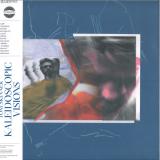
Tom Skinner - Kaleidoscopic Visions LP

Drummer-composer Tom Skinner announces Kaleidoscopic Visions, his second solo album, out 26th September 2025 via Brownswood Recordings and International Anthem

Kaleidoscopic Visions unfolds across two distinct sonic landscapes. Side A presents entirely instrumental compositions performed by Skinner's live Bishara band—bassist Tom Herbert, cellist Kareem Dayes, and Robert Stillman and Chelsea Carmichael on various woodwinds and reeds—with electric guitar on two tracks courtesy of Portishead's Adrian Utley. A drummer-composer bringing his wealth of experience to bear on the role of bandleader, Skinner composed primarily on guitar, embracing the freedom that came with writing on his secondary instrument.
These compositions include "Auster," dedicated to late novelist Paul Auster, and "Margaret Anne," which honours Skinner's mother Anne Shasby, a former classical concert pianist prodigy who abandoned her own promising career in the face of systemic misogyny, only to impart on her son what Skinner calls "the gift of music."

Skinner’s musical world opens further on Side B, where a collection of poised vocal collaborations stretch out from jazz and improvisation towards a more dream-like, soulful sound. The centerpiece is "The Maxim," a ten-minute collaboration with Grammy Award-winning Meshell Ndegeocello, a dubby, spacious meditation on life and death, delivered with a free-spirited grace. For Skinner, working with Ndegeocello—whom he first saw at Glastonbury as a teenager in 1994—represents a full-circle moment, indicative of the indirect paths and inspirational detours that have shaped his life.
The album goes on to feature South Carolina-based singer Contour (Khari Lucas) who appears on the low-lit soul ballad ‘Logue’, and closes with ‘See How They Run’, featuring London keyboardist-vocalist Yaffra (Jonathan Geyevu). It is the album’s most overtly lyrical track, an articulate exposition of jazz-inflected spoken word that speaks not only to the genre-fluid nature of the music but the breadth of Skinner’s palette.
This should come as no surprise. On Kaleidoscopic Visions, one of London’s most vital musical figures gives us a sparkling glimpse of the multi-coloured lens through which his unique sound is now refracting.

Auf Lager

Bei uns am Lager und sofort versandfertig

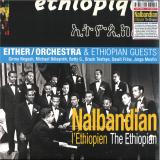
NALBANDIAN THE ETHIOPIAN & EITHER/ORCHESTRA - NALBANDIAN THE ETHIOPIAN (ETHIOPIQUES)

The Éthiopiques series returns! Essential archive recordings from an extremely fruitful period in Ethiopian music.

Before “Swinging Addis” took over the world, there was Moussié Nerses Nalbandian — the Armenian-born composer who shaped modern Ethiopian music. Mentor, arranger, and pioneer, he laid the foundations of Ethio-jazz.

This Éthiopiques volume revives his forgotten legacy, recorded live by Either/ Orchestra First issue ever with new exclusive photos and in depth liner 8-page insert.

“Ethiopian jazzmen are the best musicians that we have seen so far in Africa.
They really are promising handlers of jazz instruments.”

Wilbur De Paris
(1959, after a concert in Addis Ababa)

አዲስ፡ዘመን። *Addis zèmèn* **A new era.**
The time is the mid-1950s and early 1960s, just before "Swinging Addis" bloomed – or rather boomed – onto the scene. Brass instruments are still dominant, but the advent of the electric guitar, and the very first electronic organs, are just around the corner. Rock’n'Roll, R’n’B, Soul and the Twist have not yet barged their way in. Addis Ababa is steeped in the big band atmosphere of the post-war era, with Glenn Miller's *In the* *Mood* as its world-wide theme song, neck and neck with the Latin craze that was in vogue at the same period. Life has become enjoyable once again, with the return of peace after the terrible Italian Fascist invasion of Ethiopia (1935-1941). The redeployment of modern music is part and parcel of the postwar reconstruction. *Addis zèmèn* – a new era – is the watchword of the postwar period, just as it was all across war-torn Europe.
The generation who were the young parents of baby boomers** were the first to enjoy this musical renaissance, before the baby boomers themselves took over and forever super-charged the soundtrack of the final days of imperial reign. Music is Ethiopia's most popular art form, and very often serves as the best barometer for the upsurge of energy that is critical for reconstruction. Whether it be jazz in Saint-Germain-des-Prés or the *zazous* who revolutionised both jazz and French *chanson* after the *Libération*, be it Madrid's post-Franco Movida, or Dada, the Surrealists and *les années folles* that followed World War I, the periods just after mourning and hardship always give rise to brighter and more tuneful tomorrows. Addis Ababa, as the country's capital, and the epicentre of change, was no exception to this vital rule.

**Two generations of Nalbandian musicians**
Nersès Nalbandian belonged to a family of Armenian exiles, who had moved to Ethiopia in the mid-1920s. The uncle Kevork arrived along with the fabled "*Arba Lidjotch*", the** "*40 Kids*", young Armenian orphans and musicians that the Ras Tafari had recruited when he visited Jerusalem in 1924, intending to turn their brass band into the official imperial band. If Kevork Nalbandian was the one who first opened the way of modernism, pushing innovation so far as to invent musical theatre, it was his nephew Nersès who would go on to become, from the 1940s and until his death in 1977, a pivotal figure of modern Ethiopian music and of the heights it. Going all the way back to the 1950s. Nothing less. And it is Nersès who is largely to thank for the brassy colours that so greatly contributed to the international renown of Ethiopian groove. While the younger generations today venture timidly into the genealogy of their country's modern music, often losing their way amidst a distinctly xenophobic historiographical complacency, many survivors of the imperial period are still around to bear witness and pay tribute to the essential role that "Moussié Nersès" played in the rise of Abyssinia's musical modernity.
Given the year of his birth (15 March 1915), no one knows for sure if Nersès Nalbandian was born in Aintab, today Gaziantep (Turkiye/former Ottoman Empire) or on the other side of the border in Alep, Syria... What is certain is that his family, like the entire Armenian community, was amongst the victims of the genocide perpetrated by the Turks. Alep, the place of safety – today in ruins.
Before Nersès then, there was uncle Kevork (1887-1963). For a quarter of a century, he was a whirlwind of activity in music teaching and theatrical innovation. *Guèbrè Mariam le Gondaré* (የጎንደሬ ገብረ ማርያም አጥቶ ማግኘት, 1926 EC=1934) is his most famous creation. This play included "ten Ethiopian songs" — a totally innovative approach. According to his autobiographical notes, preserved by the Nalbandian family, Kevork indicates that he composed some 50 such pieces over the course of his career. This shows just how much he understood, very early on, the critical importance of song as Ethiopia's crowning artistic form. Indeed, for Ethiopian listeners, the most important thing is the lyrics, with all their multifarious mischief, far more than a strong melody, sophisticated arrangements or even an exceptional voice. (This is also why Ethiopians by and large, and beginning with the artists and producers themselves, believed for a long time — and wrongly — that their music could not possibly be exported, and could never win over audiences abroad, who did not speak the country's languages).

Last but not least, one of Kevork's major contributions remains composing Ethiopia's first national anthem – with lyrics by Yoftahé Negussié.
Nersès Nalbandian moved to Ethiopia at the end of the 1930s, at the behest of his ground-breaking uncle. Proficient in many instruments (pretty much everything but the drums), conductor, choir director, composer, arranger, adapter, creator, piano tuner, purveyor of rented pianos,... he was above all an energetic and influential teacher. From 1946 onwards, thanks to Kevork's connexion, Nersès was appointed musical director of the Addis Ababa Municipality Band. In just a few years, Nersès transformed it into the first truly modern ensemble, thanks to the quality of his teaching, his choice of repertoire, and the sophistication of his arrangements. It was this group that would go on to become the orchestra of the Haile Selassie Theatre shortly after its inauguration in 1955, which was a major celebration of the Emperor's jubilee, marking the 25th anniversary of his on-again-off-again reign.

At some point or other in his long career, Nersès Nalbandian had a hand in the creation of just about every institutional band (Municipality Band, Police Orchestra, Imperial Bodyguard Band, Army Band, Yared Music School…), but it was with the Haile Selassie Theatre – today the National Theatre – that his abilities were most on display, up until his death in 1977. To this must be added the development of choral singing in Ethiopia, hitherto unknown, and a sort of secret garden dedicated to the memory of Armenian sacred music, and brought together in two thick, unpublished volumes. Shortly before his death (November 13, 1977), he was appointed to lead the impressive Ethiopian delegation at Festac in Lagos, Nigeria (January-February 1977).

His status as a stateless foreigner regularly excluded him from the most senior positions, in spite of the respect he commanded (and commands to this day) from the musicians of his era. Naturally gifted and largely self-taught, Nerses was tirelessly curious about new musical developments, drawing inspiration from the very first imported records, and especially from listening intensely to the musical programmes broadcast over short-wave radio – BBC *First*. A prolific composer and arranger, he was constantly mindful of formalising and integrating Ethiopian parameters (specific “musical modes”, pentatonic scale, and the dominance of ternary rhythms) into his “modernisation” of the musical culture, rather than trying to over-westernise it. It even seems very probable that *Moussié* Nerses made a decisive contribution to the development of tighter music-teaching methods, in order to revitalise musical education during this period of prodigious cultural ferment. Flying in the face of all the historiographical and musicological evidence, it is taken as sacrosanct dogma that the four musical modes or chords officially recognised today, the *qǝñǝt* or *qiñit* (ቅኝት), are every bit as millennial as Ethiopia itself. It would appear however that some streamlining of these chords actually took place in around 1960. It was only from this time onward that music teaching was structured around these four fundamental musical modes and chords: *Ambassel*, *Bati*, *Tezeta* and *Antchi Hoyé*. A historical and musical “details” that is, apparently, difficult to swallow, especially if that should honour a *foreigner*. Modern Ethiopian music has Nersès to thank for many of its standards and, to this day, it is not unusual for the National Radio to broadcast thunderous oldies that bear unmistakable traces of his outrageously groovy touch.

Auf Lager

Bei uns am Lager und sofort versandfertig

Delta - Slippin’ Out (2x12")

Delta

Slippin’ Out (2x12")

2x12inchPLEXUS002
Circuitry
12.12.2025

“From Birmingham and centred around the extraordinary songwriting talent of James and Patrick Roberts – initially as The Sea Urchins and since 1993 as Delta – they’ve only just got round to releasing their debut album, Slippin’ Out. It is a work of some beauty”. 9/10 NME ALBUM OF THE MONTH, 2000

“It’s classicist for sure, shot through with the influence of The Beatles, Byrds and Buffalo Springfield. In James’ downright beautiful closing ballad ‘I Want You’ one can also discern the school of ambitious English balladry that peaked in about 1968: The Casuals, Love Affair, Barry Ryan. The impression of accomplished old-schoolery is only furthered by the dizzying string arrangements penned by Louis Clark Jnr, son and namesake of the one-time orchestral chief of Electric Light Orchestra” – Mojo lead review, 2000


Having ended the 90s with the spirited ‘Laughing Mostly’ compilation of singles and demos (Guardian Album Of The Week) Delta finally released their debut studio album of twelve songs in the summer of 2000 on the Dishy Recordings label. Accepting that this might be their sole studio album the band threw everything at these recordings allowing it to exist in its own sphere, unbothered by their contemporary generation and disregarding the idea of even releasing a single.

Recorded at DEP International there was a notable difference to the scruffier, looser charm of their 1990s recordings, a tighter focus developed by having the experienced Lenny Franchi mixing the LP with them. Lenny had been working with a number of Island artists including My Bloody Valentine and Tricky so knew his way around a desk. There was also the question of budget (a few months passed between recording and mixing whilst funds were raised) so every day counted. Ultimately though you can hear the joy in the recordings, even amongst the melancholy and angst. As James recently recalled in an interview in Shindig! Magazine: “It was such a big deal for us. It’s one of my fondest memories doing that record. Everyone was happy. If there’s anything that I’d stand by, I think it would be that”

Louis Clark Jr joined the band towards the end of the ‘90s and brought a classically-trained element to the recordings particularly with his string arrangements. For ‘Cuckoo’, ‘I Want You’ and the prophetic ‘We Come Back’ Louis brought in eight players from the Birmingham Conservatoire; the baroque style is partly why the record often receives comparisons to Love’s ‘Forever Changes’.

On release ‘Slippin’ Out’ was a big favourite with writers at the NME, Mojo and The Guardian again and before long the band were signed to Mercury/Universal for their second studio album ‘Hard Light’, a far more expensive and expansive love affair. It was a temporary palatial home where things quietly fell apart again, but that’s another chapter.

“If long-term memory is nothing more than selective editing and only pop’s most weighty visceral works are built to last then it’s quite possible that in 50 years the Britpop era will be best recollected for the two bands it ostracised. Earlier this year we met Shack and thought their story of mercurial brilliance indicated the biggest music biz oversight of the 90s. We were wrong because we hadn’t met Delta yet. This is richer and more engrossing than anything by Shack” 

Auf Lager

Bei uns am Lager und sofort versandfertig

Thought Leadership - Ace Of Swords LP

On a "Balearic-Jazz trip", the phenomenally hyped Thought Leadership returns with another X ideas: the deck this time chooses the Ace of Swords. In the acclaim garnered by III of Pentacles, there were many whispers of “Balearic” from those in the know. As soon as you drop the needle on XI you will be basking in turbo Balearica.

Originally out on cassette only, we present the first ever vinyl issue. It's a hideously limited pressing of 300 for the world, so don't sleep on this.

The sonic palate has been augmented by the addition of synth and bass; there are more guitar layers, more pedals and more organic drums this time – a much fuller production. Still DIY, and still recorded straight to multitrack, just ever so slightly grander in scale; think a rough-hewn, long-lost Claremont 56 cut and you’ll have some idea of how XI opens this future classic LP.

The touchstones so key to the vision of Pentacles (Cocteau Twins, Dif Juz, Durutti Column) are all still present and correct; XII could be a piece from Extractions, XIII is pure Garlands-era Guthrie and, now with the shuffling jazz drums, XV makes TL even more LC – but more disparate influences are found this time out too. ECM guitar legends John Abercrombie and Pat Metheny in the more considered melodic phrasing and harmonic structure of the ideas and a nod to the cosmic Balearic spirit in the overall vibe, means more is offered to the listener across Swords.

XVI and XVII are the biggest indicators to Thought Leaderships’ new found love of The Real Book and their grasp of jazz chords. The former sounds like if Mike Hedges had produced on a heavily sedated ECM date in the early 80s, whilst the latter is Bright Size Life condensed into a most post-punk shard of Strat conversation. The syrupy Phase 90 on the lead parts lends much weight to the guitar melodies, a beautiful tonal counterpoint to the Vox-ish chimes of the plangent chords we’ve all come to love.

The flip again treats us to three extended, improvised jams. XVIII owes as much to Canterbury as it does to Krautrock, another modal voyage through the stars. Light the incense and drift away, guided by delayed cymbals and weaving ribbons of guitar. XIX has almost a New-Wave/Sophisti-Pop energy to it in tone, if not in structure and execution. Something almost Tears for Fears-esque in the chiming chorus guitars. An interesting outlier that has already received a lot of love from those that have heard it. XX is the starkest idea, and the only piece this time with no drums. What we do get, however, is a free exploration over a two chord-vamp. It’s Harvest Time meets Planet Caravan and a fitting end to this Balearic jazz trip.

Be With is honoured to present the first ever vinyl release of Ace Of Swords, carefully remastered by Be With's engineer Simon Francis to ensure it sounds better than ever after its initial tape release. Cicely Balston's expert skills have made sure nothing is lost in the cut at Abbey Road Studios whilst the records have been pressed to the highest possible standard at Record Industry, in Holland. The original tape cover artwork, so crucial to Thought Leadership's striking visual aesthetic, has been rejigged for vinyl issue here at Be With.

The last one flew. You have been warned.

Auf Lager

Bei uns am Lager und sofort versandfertig

Carly Simon - No Secrets (2x12")
  • A1: The Right Thing To Do
  • A2: The Carter Family
  • B1: You’re So Vain
  • B2: His Friends Are More Than Fond Of Robin
  • B3: We Have No Secrets
  • C1: Embrace Me, You Child
  • C2: Waited So Long
  • D1: It Was So Easy
  • D2: Night Owl
  • D3: When You Close Your Eyes

Carly Simon’s No. 1 smash “You’re So Vain” lingers as one of the most clever and famous songs ever recorded. The subject of mass speculation ever since its release, soon after which it occupied the top spot on multiple Billboard charts for weeks, the anthem kept a captive public guessing at the identity of its smug subject for decades. The question surrounding the protagonist’s identity remained perhaps the only mystery on the otherwise sexually open and autobiographically daring No Secrets, Simon’s commercial breakthrough and ‘70s singer-songwriter staple.

Sourced from the original master tapes, pressed at Fidelity Record Pressing in California, strictly limited to 3,000 numbered copies, and housed in a Stoughton gatefold jacket, Mobile Fidelity’s 180g 45RPM 2LP set affords the platinum-certified 1972 effort the finest sonic treatment it’s received on vinyl. Helmed by Richard Perry and recorded at London’s Trident Studios — where Beatles, David Bowie, and Elton John captured landmark LPs — No Secrets touts exceptional production qualities highlighted by this restorative reissue.

Audiophiles and record collectors, take note: This is the first time No Secrets has been available on 45RPM. The wider grooves and dead-quiet surfaces pay instant dividends. Simple, elegant, and disarming, songs seemingly float amid wide, deep soundstages. Simon’s voice takes on a confident, assertive tenor that emerges with accurate imaging, balanced tonality, and palpable presence. String arrangements and backing vocals come through with similar realism.

Enhanced by an all-star cast — Simon’s then-husband James Taylor, Paul and Linda McCartney, Mick Jagger, Lowell George, Klaus Voorman, Bobby Keys, Jim Keltner, Nicky Hopkins, and Bonnie Bramlett are among the renowned musicians who lend a hand — No Secrets advances Simon’s themes of personal introspectiveness, no-holds-barred reflectiveness, and feminist-inspired boldness. She makes every moment of No Secrets worth savoring. Simon invests her all in the songs, handling beautiful ballads, sassy folk-rock numbers, and bluesy fare with calm, composure, and candor.

While acknowledging her own regrets (“You’re So Vain”) and loss (“The Carter Family”), Simon champions the highs (“The Right Thing to Do”) and pains (“His Friends Are More Than Fond of Robin”) of love in a sincere manner indicative of her maturity as both an artist and singer. The New York native distinguishes “When You Close Your Eyes” with deep-rooted spirituality, recalls childhood joys via charming sentimentality on “It Was So Easy,” and and takes ownership of her persona on a cover of Taylor’s “Night Owl.”

“We have no secrets
/We tell each other everything,” Simon sings at the record’s midpoint, encapsulating both the themes and bravura of an effort that was nominated for four Grammy Awards and saw her write or co-write every song but one. Combined with Perry’s savvy instrumental arrangements, her self-assured performances and forthright lyrics grant No Secrets an edginess and relevance immune to the ravages of time.

vorbestellen

Der Artikel ist noch nicht erschienen. Du kannst den Artikel jetzt vorbestellen, dieser ist nach Wareneingang für dich versandbereit.

Deadbeat & Paul St Hilaire - The Infinity Dub Sessions

Deadbeat & Paul St Hilaire

The Infinity Dub Sessions

3x12inchBLKRTZ008
Blkrtz
Release unknown

2026 Repress

Deadbeat & Tikiman's occasional collaborative performances have since blown the minds of many audiences

Deadbeat. Tikiman. Infinity. Dub. A quadrangle of such obvious statement and perfect musical inference may very well never have been uttered for those of the wholly weeded out persuasion. Indeed, when the great book of Dub music is written the names Scott Monteith and Paul St Hilaire will undoubtedly figure highly in its chapters devoted to recent years. Monteith, the last great prodigal son of the doctrine handed down from the Blue Mount of Lord Scratch and King Tubby, St Hilaire the undisputed voice of a generation, those fanatical warrior monks, followers of the most Holy House of Ernestus and Von Oswald incarnate.

Having developed a fast friendship from their very first meeting in Montreal at the premier Micro Mutek event a decade ago, Deadbeat and Tikiman's occasional collaborative performances have since blown the minds of audiences from Berlin to Tokyo and many points in between. No great surprise then that their first album length venture is a Tour de Force of Dub music of the highest order.

Nearly a year in the making, the genetic code of Deadbeat's Infinity Dubs series gets shot through with a Dreader than Dread Kingstonian logic, hi hats dropping back from the three to the one, Tikiman at his most militant, poetic, fierce, and flowing. These are the recordings of two lions uncaged, and none who bare witness shall escape their fiery judgement.

If music is truly eternal, here be two voices which shall echo in infinity with all the weight, reverence, and dire power unleashed with every tectonic bass hit, and every whimsical turn of phrase. And if these eight burnt offerings are any indication of what happens when these two sit down for a session of smoke and reasoning, here's hoping they choose to do it frequently. Dub without end. Ad Infinitum.

vorbestellen

Der Artikel ist noch nicht erschienen. Du kannst den Artikel jetzt vorbestellen, dieser ist nach Wareneingang für dich versandbereit.


Last In: vor 7 Jahren
The Computer Controlled Minds - Track trax

The "TRACK TRAX EP" is the new vinyl of the "Computer Controlled Minds"
The yellow vinyl clearly indicates the direction – ACID!
As the name suggests, it will be a fast-paced race.
On the A side, our track days start with a driving track, it quickly becomes clear that this will not be a leisurely Sunday ride. It's going to be a tough race. When approaching the apex, it is always important to remain seated and open the tap slowly.
The second track is a confession of love to Kerb, he wants to be loved and touched. But this love also harbors great dangers. If you drive too hard over the limit, the Kerb will pay back mercilessly.
With B1, the DOWNSIDER brings ecstatic acid acceleration to the slopes. If the braking point is exceeded, it can fall massively to the ground. The experienced technoracer has everything under control and brings the necessary momentum to the next straight.
As the race goes on, the strength dwindles and a clean line becomes more and more difficult, but at the same time it is the key to the thrill. The struggle with body and machine becomes clear, every action makes the body burn. Giving up is out of the question, the race is only over with the chequered flag. But now off to the bar!
Last but not least on the B-side, two short bonus sounds for all mix DJs

The Computer Controlled Minds show their clear roots, ACID and hard RACE.
TCCM can be booked as a live act via insta: __NEXT_DOOR__. You will never forget the race!

vorbestellen

Der Artikel ist noch nicht erschienen. Du kannst den Artikel jetzt vorbestellen, dieser ist nach Wareneingang für dich versandbereit.

Chris Isaak - Heart Shaped World (2x12")
  • A1: Heart Shaped World
  • A2: I’m Not Waiting
  • A3: Don’t Make Me Dream About You
  • B1: Kings Of The Highway
  • B2: Wicked Game
  • C1: Blue Spanish Sky
  • C2: Wrong To Love You
  • C3: Forever Young
  • D1: Nothing’s Changed
  • D2: In The Heat Of The Jungle
  • D3: Diddley Daddy

There was nothing in contemporary music like Chris Isaak’s Heart Shaped World when it hit shelves in June 1989. More than three decades later, the singer-songwriter’s third album still sounds unique — and claims a backstory nearly as fascinating as the retro-leaning material and standout performances that propelled it to sales of more than 2.5 million copies. Home to the Top 10 smash “Wicked Game,” the set remains a masterful mood piece that invites you to pour a late-night drink, sit in a dimmed room, and relish Isaak’s elegant albeit raw ruminations on love, relationships, and questionable decisions.

Sourced from the original master tapes, pressed at Fidelity Record Pressing, strictly limited to 3,000 numbered copies, and featuring the bonus track “Diddley Daddy,” Mobile Fidelity's UltraDisc One-Step 180g 45RPM 2LP box set of Heart Shaped World unearths the staggering inner details, saturated tones, and brilliant atmospherics of the crisp production. It brings you up close and personal with Isaak’s spectacular singing — impeccably controlled, tense, brooding, steamy, smoldering, haunted — situated amidst stripped-down backdrops that allow every note to fully bloom and decay.

While Isaak’s ever-steady baritone remains the anchor, the contributions of his trusty backing band, the aptly named Silvertone, come across with just as much cool, command, and realism. The indispensable playing of guitarist James Calvin Wilsey particularly emerges with superb clarity and dimensionality. The character of his 1965 Fender Stratocaster, shivering twang of his spring-coiled fills, and his signature use of reverb, delay, and vibrato seamlessly match Isaak's patient deliveries and the band’s unhurried rhythms. Experienced on UD1S with ultra-black backgrounds and a nearly invisible noise floor, Heart Shaped World is in every regard a demonstration disc.

The premium packaging of this UD1S pressing befits its elevated status. Housed in a deluxe slipcase, it features foil-stamped jackets and faithful-to-the-original graphics. Aurally and visually, this reissue is for discerning listeners who desire to immerse themselves in everything involved with the album, not the least of which is the cover art depicting a lost-in-thought Isaak staring ahead and sitting in what appears to be an efficiency apartment. The image epitomizes the record’s lonesome temperaments and pensive themes.

Of course, if not for director David Lynch hand-picking two cuts from Heart Shaped World for his 1990 film Wild at Heart, the record would’ve probably suffered the same fate as Isaak’s prior efforts and gone unnoticed by the mainstream. Despite receiving raves from outlets such as NME, Chicago Tribune, and Rolling Stone upon its original release, the album stalled in the lower quadrants of the Billboard charts and, after a few weeks, dropped off.

Cue the ear of Lee Chesnut. Then the music director for a large Atlanta radio station, Chesnut heard the instrumental version of “Wicked Game” on Lynch’s soundtrack and started airing the album rendition at all hours of the day. Aided by a sensual video featuring Isaak and supermodel Helena Christensen, the song found its way into the public consciousness by early ‘91 and helped make Isaak a most unlikely mainstream star in an era where his techniques had little to nothing in common with popular tastes.

Despite its vintage vibes and shared DNA with legends such as Roy Orbison, Chet Baker, and Glen Campbell, Heart Shaped World transcends nostalgia, rockabilly, and throwback tropes. For all the melodrama and sadness at hand, Isaak’s gorgeously transparent singing dives deep underneath emotional surfaces. He mines subtleties that indicate his feelings go beyond heartbreak and anguish, and occasionally suggest frustration, menace, and anger. You can hear it in his quivering falsetto, and the slow and methodical ways he allows delicate whispers to break into shadowy phrasing that crosses over to the darker sides of romance and desire.

That approach bolsters the title track, which suggests calm yet moves on ominous currents — its simmering pace and snare-drum snappiness foreshadowing Isaak raising the volume and urgency during the coda. The southwestern-tinged “Wrong to Love You” plays with similar concepts of hesitation, unease, and discord, Isaak careful never to fully erupt and give anything away. His poised deliveries offer a master class in the art of insinuation and hurt on “Nothing’s Changed,” sent up with a wordless backing chorus and crackling guitar lines straight out of a Memphis blues joint.

Heart Shaped World further boosts its merit via its abundant stylistic variations, from the upbeat country-and-western trot of “I’m Not Waiting” and Spanish acoustic shimmer of the jazz-based ballad “Blue Spanish Sky” to the swinging horn-accompanied grooves of “Don’t Make Me Love You” and desert smokiness of the understated “Kings of the Highway.” On the latter, Isaak comes across as resigned and absolute. His singing and pain worm their way into your soul, and echo akin to the way the music prepares to strike when you least expect.

“Trouble going 'round,” Isaak croons right as the album begins. “Trouble going down.” Damn straight.

vorbestellen

Der Artikel ist noch nicht erschienen. Du kannst den Artikel jetzt vorbestellen, dieser ist nach Wareneingang für dich versandbereit.

BEN BERTRAND - RELIC RADIATION

BEN BERTRAND

RELIC RADIATION

12inchSTRLP-108
Stroom
20.10.2025

The occasion of possibility runs through Ben Bertrand's new album Relic Radiation. It is all backdrops and layers. Hints of the emotive and the distant. Confronting the classical with what is new, looking for an expressive space. Melancholy, not melancholy. Contemplation on a midnight blizzard. Dust motes in a sunbeam. Sand dunes and microwaves.

Ever since 2018 and the release of his first solo album, Ben Bertrand has been working up his own interpretation of the bass clarinet as an instrument of the avant-garde. Touching upon ambient and cosmic as well as earthy sceneries, his is a gentle musical paradox come to life. Let go of explicit pleasantries, Relic Radiation is the polymathic interpretation of a frozen intercom, of a subdued intent of contact. The music is competent and familiar, distant without being distant. There is no predefined form or context here. It is a different kind of colour.

As musical moments and modi become enormous, things break down into exploration. On the crystal shores of perception, Relic Radiation leaves a lot of space for interpretation. It is never loud, although it works loud. An at times almost sequenced feel to treated and overdubbed bass clarinet and clarinet notes adds to a feeling of paradox. Every voice, every gesture indicates a way in. The electron is now an immeasurable wave."

Auf Lager

Bei uns am Lager und sofort versandfertig

Tom Skinner - Kaleidoscopic Visions LP

Drummer-composer Tom Skinner announces Kaleidoscopic Visions, his second solo album, out 26th September 2025 via Brownswood Recordings and International Anthem

Kaleidoscopic Visions unfolds across two distinct sonic landscapes. Side A presents entirely instrumental compositions performed by Skinner's live Bishara band—bassist Tom Herbert, cellist Kareem Dayes, and Robert Stillman and Chelsea Carmichael on various woodwinds and reeds—with electric guitar on two tracks courtesy of Portishead's Adrian Utley. A drummer-composer bringing his wealth of experience to bear on the role of bandleader, Skinner composed primarily on guitar, embracing the freedom that came with writing on his secondary instrument.
These compositions include "Auster," dedicated to late novelist Paul Auster, and "Margaret Anne," which honours Skinner's mother Anne Shasby, a former classical concert pianist prodigy who abandoned her own promising career in the face of systemic misogyny, only to impart on her son what Skinner calls "the gift of music."

Skinner’s musical world opens further on Side B, where a collection of poised vocal collaborations stretch out from jazz and improvisation towards a more dream-like, soulful sound. The centerpiece is "The Maxim," a ten-minute collaboration with Grammy Award-winning Meshell Ndegeocello, a dubby, spacious meditation on life and death, delivered with a free-spirited grace. For Skinner, working with Ndegeocello—whom he first saw at Glastonbury as a teenager in 1994—represents a full-circle moment, indicative of the indirect paths and inspirational detours that have shaped his life.
The album goes on to feature South Carolina-based singer Contour (Khari Lucas) who appears on the low-lit soul ballad ‘Logue’, and closes with ‘See How They Run’, featuring London keyboardist-vocalist Yaffra (Jonathan Geyevu). It is the album’s most overtly lyrical track, an articulate exposition of jazz-inflected spoken word that speaks not only to the genre-fluid nature of the music but the breadth of Skinner’s palette.
This should come as no surprise. On Kaleidoscopic Visions, one of London’s most vital musical figures gives us a sparkling glimpse of the multi-coloured lens through which his unique sound is now refracting.

Auf Lager

Bei uns am Lager und sofort versandfertig

Various - 80s Techno Tracks - Vinyl Edition 4

Die Kult-Reihe geht weiter! „80s Techno Tracks – Vinyl Edition 4“ ist die neueste Ausgabe der erfolgreichen Compilation-Serie, die die elektrisierende Energie der 1980er Clubszene auf Vinyl bringt. Diese Edition vereint erneut rare und legendäre Extended Versions von wegweisenden TechnoTracks, die das Fundament der heutigen Clubkultur legten.

Mit dabei sind Szenegrößen wie Westbam, Noise Control, OFF und viele mehr – in voller Länge, remastered und bereit für den Plattenteller. Ein Muss für Sammler, DJs und alle, die die Wurzeln des elektronischen Sounds feiern wollen.

Auf Lager

Bei uns am Lager und sofort versandfertig

Glass Beams - Mirage

Glass Beams

Mirage

12inchRREP07
Research Records
02.04.2025

Repress!

Research Records indicate their inclination for cosmic instrumentation and kraut pervaded polyrhythms once again with an introduction to newcomer Glass Beams. Recorded at the beginning of 2020, Mirage is the first release from the artist, issuing four compositions that lend from a profusion of sounds and influences.

The album's opener and title Mirage arrives with a coiling vocal mantra that conspires with a sliding bassline and transcendent synthwork, reminiscent of early 70's prog jams yet inverted and futuristic. Taurus is a brisk arrangement, steeped with spaghetti-western elements and space-jazz to pave the way for the agile Kong. Rife with psych-fusion guitar phrases and instrumentation, Kong unfolds like a forecast lysergic voyage. The finale Rattlesnake nudges the serpent with intergalactic scales and spellbinding riffs. We may not know much about the enigmatic Glass Beams but Mirage is one epic inauguration, leaving the listener with more questions than answers.

Auf Lager

Bei uns am Lager und sofort versandfertig

Various - ECHOES OF ITALY – THE BIRDS OF PARADISE – EARLY 90S HOUSE VIBES VOL.2 (2x12")

Googling “paradise house”, the first results to pop up are an endless list of European b&b’s with whitewashed lime façades, all of them promising “…an unmatched travel experience a few steps from the sea”. Next, a little further down, are the institutional websites of a few select semi-luxury retirement homes (no photos shown, but lots of stock images of smiling nurses with reassuring looks). To find the “paradise house” we’re after, we have to scroll even further down. Much further down.

It feels like yesterday, and at the same time it seems like a million years ago. The Eighties had just ended, and it was still unclear what to expect from the Nineties. Mobile phones that were not the size of a briefcase and did not cost as much as a car? A frightening economic crisis? The guitar-rock revival?! Certainly, the best place to observe that moment of transition was the dancefloor. Truly epochal transformations were happening there. From America, within a short distance one from the other, two revolutionary new musical styles had arrived: the first one sounded a bit like an “on a budget” version of the best Seventies disco-music – Philly sound made with a set of piano-bar keyboards! – the other was even more sparse, futuristic and extraterrestrial. It was a music with a quite distinct “physical” component, which at the same time, to be fully grasped, seemed to call for the knotty theories of certain French post-modern philosophers: Gilles Deleuze, Félix Guattari, Paul Virilio... Both those genres – we would learn shortly after – were born in the black communities of Chicago and Detroit, although listening to those vinyl 12” (often wrapped in generic white covers, and with little indication in the label) you could not easily guess whether behind them there was a black boy from somewhere in the Usa, or a girl from Berlin, or a pale kid from a Cornish coastal town.

Quickly, similar sounds began to show up from all corners of Europe. A thousand variations of the same intuition: leaner, less lean, happier, slightly less intoxicated, more broken, slower, faster, much faster... Boom! From the dancefloors – the London ones at least, whose chronicles we eagerly read every month in the pages of The Face and i-D – came tales of a new generation of clubbers who had completely stopped “dressing up” to go dancing; of hot tempered hooligans bursting into tears and hugging everyone under the strobe lights as the notes of Strings of Life rose up through the fumes of dry ice (certain “smiling” pills were also involved, sure). At this point, however, we must move on to Switzerland.

In Switzerland, in the quiet and diligent town of Lugano, between the 1980s and 1990s there was a club called “Morandi”. Its hot night was on Wednesdays, when the audience also came from Milan, Como, Varese and Zurich. Legend goes that, one night, none less than Prince and Sheila E were spotted hiding among the sofas, on a day-off of the Italian dates of the Nude Tour… The Wednesday resident and superstar was an Italian dj with an exotic name: Don Carlos. The soundtrack he devised was a mixture of Chicago, Detroit, the most progressive R&B and certain forgotten classics of old disco music: practically, what the Paradise Garage in New York might have sounded like had it not closed in 1987. In between, Don Carlos also managed to squeeze in some tracks he had worked on in his studio on Lago Maggiore. One in particular: a track that was rather slow compared to the BPM in fashion at the time, but which was a perfect bridge between house and R&B. The title was Alone: Don Carlos would explain years later that it had to be intended both in the English meaning of “by itself” and like the Italian word meaning “halo”. That wasn’t the only double entendre about the song, anyway. Its own very deep nature was, indeed, double. On the one hand, Alone was built around an angelic keyboard pattern and a romantic piano riff that took you straight to heaven; on the other, it showcased enough electronic squelches (plus a sax part that sounded like it had been dissolved by acid rain) to pigeonhole the tune into the “junk modernity” section, aka the hallmark of all the most innovative sounds of the time: music that sounded like it was hand-crafted from the scraps of glittering overground pop.

No one knows who was the first to call it “paradise house”, nor when it happened. Alternative definitions on the same topic one happened to hear included “ambient house”, “dream house”, “Mediterranean progressive”… but of course none were as good (and alluring) as “paradise house”. What is certain is that such inclination for sounds that were in equal measure angelic and neurotic, romantic and unaffective, quickly became the trademark of the second generation of Italian house. Music that seemed shyly equidistant from all the rhythmic and electronic revolutions that had happened up to that moment (“Music perfectly adept at going nowhere slowly” as noted by English journalist Craig McLean in a legendary field report for Blah Blah Blah magazine). Music that to a inattentive ear might have sounded as anonymous as a snapshot of a random group of passers-by at 10AM in the centre of any major city, but perfectly described the (slow) awakening in the real world after the universal love binge of the so-called Second Summer of Love.

For a brief but unforgettable season, in Italy “paradise house” was the official soundtrack of interminable weekends spent inside the car, darting from one club to another, cutting the peninsula from North to centre, from East to West coast in pursuit of the latest after-hours disco, trading kilometres per hour with beats per minute: practically, a new New Year’s Eve every Friday and Saturday night. This too was no small transformation, as well as a shock for an adult Italy that was encountering for the first time – thanks to its sons and daughters – the wild side of industrial modernity. The clubbers of the so-called “fuoriorario” scene were the balls gone mad in the pinball machine most feared by newspapers, magazines and TV pundits. What they did each and every weekend, apart from going crazy to the sound of the current white labels, was linking distant geographical points and non-places (thank you Marc Augé!) – old dance halls, farmhouses and business centres – transformed for one night into house music heaven. As Marco D’Eramo wrote in his 1995 essay on Chicago, Il maiale e il grattacielo: “Four-wheeled capitalism distorts our age-old image of the city, it allows the suburbs to be connected to each other, whereas before they were connected only by the centre (…) It makes possible a metropolitan area without a metropolis, without a city centre, without downtown. The periphery is no longer a periphery of any centre, but is self-centred”.

“Paradise house” perfectly understood all of this and turned it into a sort of cyber-blues that didn’t even need words, and unexpectedly brought back a drop of melancholic (post?)-humanity within a world that by then – as we would wholly realise in the decades to come – was fully inhuman and heartless. A world where we were all alone, and surrounded by a sinister yellowish halo, like a neon at the end of its life cycle. But, for one night at least, happy."

Auf Lager

Bei uns am Lager und sofort versandfertig

Harvestman - Triptych : Part Three LP

Woven together from home studio recordings that span two decades, and with some notable guest appearances including; The Bug, Douglas Leal of Deafkids, Wayne Adams of Petbrick, Dave French of Yob and Sanford Parker, this final part of the Harvestman Triptych seeks once again for a lost world, with the voice of poet Ezra Pound extolling the virtues of "gathering from the air a live tradition".
Cloudy Clear plus Black Galaxy effect vinyl in dub style jacket. Limited and Non-Returnable.
At its heart, music has always been a questioning of inheritance – a dialogue with predecessors and forebears, the forging of one’s own perspective in relation to what has come before, and for some, a plunge into the boundless realms between. For Steve Von Till, that process has always taken on an added dimension to become the most sacred of tasks. Whether through the apocalyptic uprising of Neurosis, the sonic deconstructions of their sister project, Tribes of Neurot, the invocatory intimacy of his eponymous solo albums or his instrumental psychedelic reveries in the guise of Harvestman, that dialogue has never just been with musical influences, but with what underpins them: the primordial, elemental forces now banished to the peripheries of our contemporary consciousness, yet still broadcasting a signal for all who will listen.

Drawn to the megaliths, ruins and ancient sites mapped out along the British and European mainland’s geographical and psychic landscapes, the folklore and apocrypha forever resurfacing as portals from a rational world, Triptych is a meditation forged from traces and residues, and an hallucinatory recollection of artists who have tapped into that enduring otherworldliness embedded within us all. It’s a dream diary narrating a passage through Summer Isle where Flying Saucer Attack are wafting out of a window, a distant Fairport Convention are being remixed by dub master Adrian Sherwood, celestial scanners Tangerine Dream are trying to drown out Bert Jansch and Hawkwind are playing Steeleye Span covers, all prised out of time yet bound to its singularity.

"Herne's Oak" provides seismic bass waves that physically halt the track in its steps - giant footfalls as Herne's antlers themselves are dragged along a corridor. Another curious and mysterious piece of British folklore brought to life by Harvestman.

If Triptych is a multi- and extra-sensory experience, it extends to the remarkable glyph-style artwork of Henry Hablak, a map of correspondences from a long-forgotten ancient and advanced civilization. As with Triptych itself, it’s an echo from another time, an act of binding, a guide to be endlessly reinterpreted, and a signpost to the sacred that might not indicate where to look, but how.

Cover art is by Henry Hablak, who also designed the art for Part One and Part Two.

Auf Lager

Bei uns am Lager und sofort versandfertig

Aaron Frazer - Bad News / Done Lyin

FOR FANS OF... Durand Jones & The Indications, Pale Jay, Kelly Finnigan, Niel Frances, Bobby Oroza, Holly Walker. Colemine Records is proud to present a brand new 45 from Aaron Frazer featuring two tracks from his debut LP. The funky and drum heavy "Bad News" has a timely message at a time when people willfully ignore the warnings about everything from climate change to systematic racism. Frazer recorded the tune in Nashville and he brought together a bevy of talented musicians, including members of The Memphis Boys, who backed Dusty Springfield on "Son of a Preacher Man" and Aretha Franklin on "Natural Woman." On the flip, "Done Lyin'" shows Aaron's vulnerability throughout the song. Heavy and tough production from Dan Auerbach paired with Frazer smoothly singing his heart out is a match made in sweet soul heaven. Introducing, LP that this 45 comes from has been streamed 78.8 million times on Spotify alone. Aaron Frazer has 5.2 million monthly listeners and 70k followers on Spotify

Auf Lager

Bei uns am Lager und sofort versandfertig

VARIOUS - 80s Techno Tracks - Vinyl Edition 3 LP

Die lang erwartete Fortsetzung der beliebten Serie ist endlich
da: „80s Techno Tracks Vinyl Edition 3“. Diese Compilation
ist ein absolutes Muss für alle Vinyl-Liebhaber und Fans
klassischer Techno-Tracks aus den 1980er Jahren.

Mit großer Sorgfalt und Leidenschaft zusammengestellt, bringt
diese Edition die Essenz der 80er Techno-Szene direkt zu
Ihnen nach Hause. Jeder Track wurde sorgfältig ausgewählt,
um die Vielfalt und den Pioniergeist dieser einflussreichen
Musikära widerzuspiegeln. Von pulsierenden Basslinien bis
hin zu hypnotischen Synthesizer-Melodien – diese Sammlung
bietet eine beeindruckende Palette an Klängen, die die
damalige Clubszene revolutioniert haben.

Auf Lager

Bei uns am Lager und sofort versandfertig

Harvestman - Triptych : Part Two LP

Ruby Red - Transparent - Galaxy effect vinyl in dub style jacket (jacket sleeve with center hole cut out so label of LP shows through) a black paper inner sleeve and poly bag.

PART ONE’ METAL HAMMER - 8/10 review. FOR FANS OF : Lustmord, Om, Sunn O))) . “An exercise in freeform ambience, ritualistic repetition and the rapturous, womb-like power of bass…strange and affecting. We remain lucky to share in the great man’s vision.”


At its heart, music has always been a questioning of inheritance – a dialogue with predecessors and forebears, the forging of one’s own perspective in relation to what has come before, and for some, a plunge into the boundless realms between. For Steve Von Till, that process has always taken on an added dimension to become the most sacred of tasks. Whether through the apocalyptic uprising of Neurosis, the sonic deconstructions of their sister project, Tribes of Neurot, the invocatory intimacy of his eponymous solo albums or his instrumental psychedelic reveries in the guise of Harvestman, that dialogue has never just been with musical influences, but with what underpins them: the primordial, elemental forces now banished to the peripheries of our contemporary consciousness, yet still broadcasting a signal for all who will listen.
Drawn to the megaliths, ruins and ancient sites mapped out along the British and European mainland’s geographical and psychic landscapes, the folklore and apocrypha forever resurfacing as portals from a rational world, “Triptych” is a meditation forged from traces and residues, and an hallucinatory recollection of artists who have tapped into that enduring otherworldliness embedded within us all. It’s a dream diary narrating a passage through Summer Isle where Flying Saucer Attack are wafting out of a window, a distant Fairport Convention are being remixed by dub master Adrian Sherwood, celestial scanners Tangerine Dream are trying to drown out Bert Jansch and Hawkwind are playing Steeleye Span covers, all prised out of time yet bound to its singularity.
Woven together from home studio recordings that span two decades, this latest outing as Harvestman finds parallels with nature’s cycles not just in its release dates but in the repeated structure that binds each album, like an imprint refracted through three separate strata. As with April’s “Part One” and the forthcoming “Part Three”, “Part Two”, starts on a collaboration with Om bassist and long-term friend of Steve’s, Al Cisneros, with a dub take opening the B-Side. Here, the opening track, “The Hag Of Beara Vs The Poet”’s languid, tribal groove expands into a chromatic wash, like an endless drip of oil spreading out under a midsummer haze.
A filtering of the alpha-state travelogues of its predecessor, “Part Two” reaches even deeper into primal yet pristine states. It journeys from the undulating drone and slow-thawing wonder of “The Falconer”, as if the Myst soundtrack were being broadcast from outer space, through “Damascus”’s perpetual-motion, dreamtime bazaar and “Vapour Phase”s seismograph frequencies measuring supernatural tremors to “The Unjust Incarceration”s distorted bagpipes, sounding a noise-frayed lament
If “Triptych” is a multi- and extra-sensory experience, it extends to the remarkable glyph-style artwork of Henry Hablak, a map of correspondences from a long-forgotten ancient and advanced civilization. As with “Triptych” itself, it’s an echo from another time, an act of binding, a guide to be endlessly reinterpreted, and a signpost to the sacred that might not indicate where to look, but how.

Auf Lager

Bei uns am Lager und sofort versandfertig

Bombay S Jayashri - Shravanam

2024 repress.

Dive into the spiritual depths of Carnatic Music (Southern Indian classical music) - An enchanting journey of devotion and transcendence pulsates with raw sincerity and profound spirituality, casting a spell that transcends boundaries of belief.

Originally released on CD in 2000 from South Indian Carnatic music label and reissued on vinyl and digital first time in 2019 by Time Capsule. New 2024 repress vinyl has different tracks on the B side and it still remains as the reverse cut as the 2019 version.

2024 new vinyl repress with different track list on the side B. Reverse Cut Vinyl - This record plays from the inner groove to the outer groove. Comes with a hype sticker.

Born into a musician family steeped in the south Indian tradition of vocal music, the Mumbai-raised singer took advantage of the city’s cosmopolitism to study northern Hindustani disciplines, one of the few vocalists to train in both. Now revered as one of the greatest living exponents of Carnatic music, she received an Oscar nomination for her work on Ang Lee’s Life of Pi.

Within the first minute of opener Sada Bada (Slokam), Jayashri’s intensely spiritual vocals give a clear indication of why she has been increasingly embraced by a new generation of western listeners who’ve made the natural leap from ambient soundscapes to new age and devotional music. Accompanied on the following Bhajeham Bhajeham by a hypnotic rhythmic backing of mridangam drums, bells and the drone of a tambura, over its epic twenty-minute length she stretches her voice into a variety of spellbinding forms – her softly enunciated dedications to Shiva enveloping you with their immersive warmth and cosmic beauty. Keshvaya Namaha is an invocation to Lord Vishnu, the protector of creation and one of the other major deities of the Hindu tradition, while Raghavam recites the names and attributes of two of his most popular avatars: the heroic Rama and the playful, loving Krishna.

One of the album’s new-found devotees is label boss Kay Suzuki: “every time I listen I’m amazed at how such a small ensemble can create such a deep musical landscape. The incredible production plays a big part. That intricate percussion sounds so clear and sits in all the right pockets rhythmically and sonically. Just by following this groove I’m put into a timeless zone, but when her voice hits on top of that gorgeous drone sound and I focus on the details of her small melodies within melodies, my heart centres and I find myself in a blissful place.”

As professor of cultural and political theory in Universicty of East London, Jeremy Gilbert states in the album’s liner notes, the mesmerising sincerity and deep spirituality of these songs present an intense and spiritual charge that will appeal to an audience well beyond believers and devotees of Hinduism.

Auf Lager

Bei uns am Lager und sofort versandfertig

Turntable / Plattenspieler - Reloop SPIN

Features

Portable turntable for vinyl lovers & scratch artists
Mobile fun with your turntable, anywhere you go
Outstanding for mobile scratching and cutting
Out of the box: comes with 7'' scratch vinyl, pre-installed 45-mm-crossfader & cartridge, integrated speaker, Bluetooth audio receiver, USB recording function, slipmat, and dust cover
High-grade 7''-scratch-record: professionally recorded samples for scratching and beats for juggling
Bluetooth audio streaming: wireless streaming of music or beats to the device
Smart USB recording: direct recording of scratches & cuts to USB in MP3 format
Can also be used for digitizing vinyl
Integrated speaker on the turntable's left
3 selectable speeds (33 1/3, 45 & 78 rpm)
Extremely stable tone arm with transport lock
Cartridge with excellent tracking features
Precise 45-mm-crossfader with two-rail glide technology
Crossfader can be installed on preferred side (both-way)
Two headphones connections for listening and monitoring
AUX input facilitates connection of several turntables (daisy chain)
Easy battery charging via USB PSU or USB power bank (sold separately)
Installed start/stop button
Precise speed adjustment via pitch control with +/-20 %
Tone control to adjust low frequencies by +/- 10 dB
Volume control for AUX input and master/headphones
Power LED indicates the turntable's operational status
7'' record puck adaptor with holder
Anti-skip rubber feet for secure stand
Especially sturdy and portable shape factor with optional battery operation
Additional protection thanks to dust cover; can be transported via carrying handle when closed
Locking of dust cover for safe transport
Can be operated with regular USB PSU (5 V, 2 A), USB power bank or batteries (sold separately)
Batteries can be inserted into battery compartment on the device's bottom 2x Li-Ion 18650 (sold separately)
Incl. 7'' scratch vinyl, pre-installed cartridge, slipmat, dust cover, puck adapter, USB cable, instruction manual and Super Spin Duck Looper app

Technical Data

Belt drive
Inputs: AUX 3.5 mm stereo, Bluetooth audio
Outputs: master RCA, USB (USB-A), headphones 3.5/6.3 mm stereo
Recording format: MP3 with 192 kbit/s
Recording quality: 16 bit / 44.1 kHz
Battery type: 2x Li-Ion 18650 (batteries sold separately)
Power supply: 5 V, 2 A micro USB (PSU sold separately)
Dimensions: 370 x 95 x 260 mm
Weight: 2 kg

Auf Lager

Bei uns am Lager und sofort versandfertig

Turntable / Plattenspieler / Audio-Technica - AT-LP140XP

The AT-LP140XP fully manual professional DJ turntable features a high-torque direct-drive motor and anti-resonant, mass-damped, die-cast aluminium platter to ensure stable, on-axis rotation at 33-1/3, 45, and 78 RPM. It is equipped with an S-shaped tonearm with height adjustment, adjustable tracking force (counterweight) and adjustable dynamic anti-skate control.

Audio-Technica has been a leader in phono cartridge design for more than 50 years, and that expertise shows in the durable, high-output AT-XP3 DJ cartridge with 0.6 mil conical bonded stylus included with the turntable. It comes pre-mounted to an AT-HS6 universal ½"-mount headshell.

Designed to connect to components with a dedicated phono input, the turntable comes with a detachable dual RCA output cable which supplies a strong 5.5 mV phono output.

Additional professional features include a start/stop button; forward and reverse play; selectable high-accuracy quartz-controlled pitch lock and pitch change slider control with +/-8%, +/-16%, and +/-24% adjustment ranges; a stroboscopic platter with speed indicator; a retractable plug-type stylus target light; and a removable hinged dust cover.

Experience high-fidelity audio and professional DJ performance
Direct-drive, high-torque servo motor with speed stabilization
Fully manual operation
Adjustable dynamic anti-skate control
Selectable 33/45/78 RPM speeds
Professional anti-resonance, mass-damped, die-cast aluminium platter with felt mat
AT-HS6 universal ½"-mount headshell and AT-XP3 DJ cartridge with 0.6 mil conical bonded stylus
Balanced S-shaped tonearm with hydraulically damped lift control, height adjustment, and lockable rest
Dedicated phono-level output (5.5 mV)
Stroboscopic platter with speed indicator
Forward/reverse operation and variable pitch control with quartz speed lock
Retractable plug-type target light for easier cueing in low light
Damped base construction for reduced low-frequency feedback coloration
Includes: detachable RCA output cable (dual RCA male to dual RCA male), power cable, 45 RPM adapter, counterweight, felt mat, and removable hinged dust cover

Turntable
Bauart 3-speed, fully manual operation
Motor High-torque DC motor
Antriebsart Direct drive
Geschwindigkeiten 33-1/3 RPM, 45 RPM, 78 RPM
Plattenteller Die-cast aluminium

Auf Lager

Bei uns am Lager und sofort versandfertig

Ortofon Stylus - Concorde MKII Scratch

Ortofon Stylus

Concorde MKII Scratch

ERSATZNADEL176249
Ortofon
10.04.2024

* ONLY FOR THE NEW CONCORDE GENERATION !!!


The SCRATCH stylus features

Replacement stylus offers a tactile feedback when seating, indicating a snug and secure fit, while a cut-out area in the front allows for far more accurate needle drops.

• Larger, wider and more robust stylus body
• Easier to grip and handle
• Better fix by metal spring
• Tactile feedback of correct mount
• Large stylus viewing cut‐out


Stylus SCRATCH Technical data

Output voltage at 1000Hz, 5cm/sec. - 10 mV
Channel balance at 1kHz - 1 dB
Channel separation at 1kHz - 22 dB
Channel separation at 15 kHz - 15 dB
Tracking ability at 315 Hz at recommended tracking force - 120 μm
Compliance, dynamic lateral - 14 μm/m N
Stylus type - Spherical R 18 μm

Tracking force range - 3 - 5 g
Tracking force recommended - 4 g
Concorde cartridge weight - 18.5 g
Recommended exclusively for Concorde MkII SCRATCH

Auf Lager

Bei uns am Lager und sofort versandfertig

Bardino - Memória da Pedra Mãe LP

Bardino

Memória da Pedra Mãe LP

12inchJAZZEGO009
Jazzego
08.04.2024

Diogo Silva, Nuno Fulgêncio and Rui Martins collectively go by the name Bardino. With their sound consisting of an inventive mix of
electronica, rock, jazz, the Porto-based trio are pushing their sound into unchartered waters. A feeling that will be reinforced after
experiencing their new album, ‘Memória da Pedra Mãe’.
Their enthralling music draws upon the imagery of the beautiful and rugged scenery of their home country. ‘Centelha’ , their previous
album (released by Saliva Diva in 2020) was recorded in Chaves,
in the very remote region of Trás-os-Montes. Their 207 EP of the same name was created in the rustic heart of Serra das Meadas. In this
latest offering, the mention of "Pedra Mãe" (Mother Stone), refers to a rare geological phenomenon popularly known as "breeder stones"
found in isolated, deserted, and inhospitable places. On the inspiration of the new album, they explain that they want to refer to "the
importance of collective memory in the cohesion and identity of communities and the process of creating new memories, a process that
is both natural and conflicting, since it mirrors a tension between past, present and future".
The album was recorded in the summer of 2023 at Arda Recorders in Porto and produced by João Brandão and Rui Martins. In this
new material, Bardino's resources expand: Nuno Fulgêncio's drums, Diogo Silva's bass and Rui Martins' veritable arsenal of keyboards
(acoustic and electric piano, various synthesisers) are augmented by the alto and tenor saxophones of Brian Blaker (who stands out in
"Memória" and "Black Mica"), the guitar of Leonardo Outeiro (who features on "Punctum No 2") and, already indicating their affiliation
with the Porto label Jazzego, Hugo Oliveira, who records as Minus & MRDolly (and is a guest on "Pedra Mãe") and Sérgio Alves, aka
AZAR AZAR (who plays piano and Moog on "Tília"). Bardino's entry into the increasingly unavoidable Jazzego catalogue also reinforces
their obvious links to a new wave of projects that have been experimenting with different tangents to the notion of "jazz", taking this
music as part of a wider set of coordinates.
Over the course of eight tracks, and clearly benefiting from the distinct imprint of the recognised quality work of João Brandão, one of
Portugal's current best producers, Bardino presents dense, deeply cinematic music of the highest definition, in which the different
instruments translate a broad emotional and visual landscape, with solos of enormous elegance arranged over grooves that induce the
idea of movement. All the musical coordinates mentioned earlier are present, but perhaps in this new material you can feel a greater
fluidity, certainly the result of honing the vision of the central trio through a vast experience collected on stages all over the country. And
there are even echoes of a decidedly Portuguese songbook, as is so clearly felt in "O Semeador", something new in the range of aesthetic
references embraced by Bardino. This is, in fact, music that thrives on a benign tension between past, present and future, in the sense
that it embraces traditions and history, seeks a new framework in this diverse now and dares to project itself forward. Because the future
is the best of all locations.

Auf Lager

Bei uns am Lager und sofort versandfertig

Weldon Irvine - Weldon & The Kats

Weldon Irvine was one of the finest American jazz pianist and composers of his generation. He released several classic albums man of which are now being reissued thanks to P-Vine, but not before being fully remastered for the occasion. Weldon and The Kats was one that he put out on his own label Nodlew Records after releasing some albums through RCA and Strata-East. It is perfectly indicative of his style and has his early work 'Mr.P.C' on it, which was recorded in 1968 with Steve Grossman on tenor sax and sometime Miles Davies associate Lenny White on drums. This one has never been reissued before so snap it up before it goes again.

Auf Lager

Bei uns am Lager und sofort versandfertig

Fred Hush - Secret 4

Fred Hush

Secret 4

12inchSECRET004
White Label
24.03.2023

Blue Marbled Vinyl

A1 Fred Hush - Close Your Eyes
This track is cracking and is the unofficial follow up to open your eyes. Some sounds have been taken from OYE and mixed with new sounds and a new discreet vocal. For the people who like hypnotic long and deep climaxes.

A2 Fred Hush - I Say (Remix Noseda)
I SAY is a niche record released on Emmanuel Top's Fokalm label. This version is a remix by techno man Noseda known from Ragnarok Berlin and releases on Deborah De luca's Solamente label.

B1 Emmanuel Top Acid Phase (Fred Hush & Dimitri Andreas Rework)
Acid Phase, an unbelievable record that is hard to match, was repackaged by Fred Hush & Dimitri Andreas. A slightly dreamier and more melodic tone was indicated in a compelling beat. This version was released before but quickly sold out. Played by Sven Vath.

B2 Fred Hush - I Say (Remix Klaudia Gawlas)
International DJ Star Klaudia Gawlas also let her go for a while to make her own version. Very strong sound and an unmissable second break that certainly works on the dance floor.

Auf Lager

Bei uns am Lager und sofort versandfertig

Artikel pro Seite:
N/ABPM
Vinyl