Buscar:hüner

Estilos
Todo
BOTCH - AMERICAN NERVOSO (25TH ANNIVERSARY RE-ISSUE)  LP

Standard Black Vinyl LP w/ Foil stamped jacket, printed inner sleeves + DL card. Legendary Tacoma, Washington mathcore/hardcore/metal band Botch's debut full-length American Nervoso was originally recorded in 1998, eventually becoming one of the most ground-breaking records during a pivotal shift in heavy music. Now, the band's debut album is set to be re-issued on Sargent House 25 years after its original release. The album features white-hot guitar action, scathing vocals, sweet bass moves, and torrential drums, smashing existing precepts of hardcore and redefining both the word and the music for a generation of kids and grizzled vets alike. Bassist Brian Cook, guitarist David Knudson, drummer Tim Latona, and vocalist Dave Verellen formed Botch in 1993, eventually becoming one of the most significant bands of their time. Their final show was June 15, 2002, the same day as the release of their final EP, An Anthology of Dead Ends. The members would go on to play in These Arms Are Snakes, Minus the Bear, and Russian Circles, among others, with acclaim for the band coming mostly post-breakup. Over 20 years since they played their final show, Botch are reuniting for select dates in the Pacific Northwest in February 2023. 25th anniversary re-issue of Botch's critically lauded debut album. Botch have their first live performances in over 20 years for early 2023. Botch have been included on "Most Influential lists" by outlets like Decibel, Rock Sound, Alternative Press, A.V. club + more

Reservar31.03.2023

debe ser publicado en 31.03.2023

Angstskrig - Angstkrig LP

'Angstkrig' handelt vom unmenschlichen Druck der modernen Welt auf den Menschen und den psychischen Folgen. Die Songs thematisieren Situationen bis zum Nervenzusammenbruch. Das riffbetonte, zweite Album der dänischen Black-Metaller hüllt den Hörer ein in eine großartige Dunkelheit aus norwegischem Schwarz, schwedischer Melodie, dänischem Groove und isländischer Melancholie. Produziert von Frederik Brandt Jakobsen (Disillusionist, Sharon Stone, DÓTTIR) im Hikikomori Studio. Mit Gastauftritten des Gitarristen Mendel (Aborted), Nils Courbaron (Sirenia), Carl Mörner Ringström und des dänischen Rappers Jøden.

Reservar31.03.2023

debe ser publicado en 31.03.2023

Angstskrig - Angstskrig

Angstskrig

Angstskrig

12inchDZLP098
DESPOTZ RECORDS
31.03.2023

'Angstkrig' handelt vom unmenschlichen Druck der modernen Welt auf den Menschen und den psychischen Folgen. Die Songs thematisieren Situationen bis zum Nervenzusammenbruch. Das riffbetonte, zweite Album der dänischen Black-Metaller hüllt den Hörer ein in eine großartige Dunkelheit aus norwegischem Schwarz, schwedischer Melodie, dänischem Groove und isländischer Melancholie. Produziert von Frederik Brandt Jakobsen (Disillusionist, Sharon Stone, DÓTTIR) im Hikikomori Studio. Mit Gastauftritten des Gitarristen Mendel (Aborted), Nils Courbaron (Sirenia), Carl Mörner Ringström und des dänischen Rappers Jøden.

Reservar31.03.2023

debe ser publicado en 31.03.2023

Various - ce Notes 002

Various

ce Notes 002

12inchVN002
Voice Notes
21.03.2023

Voice Notes 002 – and this time , in time honoured memorial of our sister label London housing Trust (that we finished a few years ago after 10 releases ) . we present a 5 track Various Artist ep – featuring 5 artists – and introducing Dance , Rodney Bennet and Pyramids of Space to the label .

The A side begins with a track from label boss Toby / Alphonse – called Rujac – a deep bleepy( Roland Juno 60 for the nerds ) breakbeat trip that had a very early outing from Truly Madly in his Dimensions mix and picked up a few ID requests… followed by another Voice Notes behind the scenes facilitator… Rodney Bennet – with some straight up - old fashioned deep house goodness – rolling bass and just wait for that floating hook .

On the B side a track we ve been sitting on a long time finally sees the light of day – from Toby Tobias – Streets of Gold – with an Alphonse remix – a looping , hypnotic breakbeat acid builder with a huge bass line and a pleasant surprise at the end – this track features a hand from former LHT man Façade as well …
Next up is Pyramids of Space first outing on the label , watch out for much more of them on the next release , some early ambient techno pioneers from Cornwall – if you are one of the holders of the rare Green Tape then lucky you – also might know them from Mordant Music – anyway I digress – this track Quantis perfectly sums them up – deep and dark , soothing techno to transport you to another place .This unreleased gem comes from 1999, but a future version of 1999…

And finally friend of the label – head man of Blank Mind records and all round DON – Dance ( Sam Purcell ) –we managed to prise a favourite from his sick Blowing up the Workshop mix .. and gave it a slight extension – a wonderful way to finish off the ep , slow bassline orientated ambient house of the highest order .


Check your Voice Notes …

No en stock

Haga su pedido ahora y le encargaremos el artículo en nuestro proveedor.


Ültimo hace: 2 Años
Aboriginal Voices - Instant Music

For a quarter of an hour, Zürich was the navel of the world. Let's look back: at New York's CBGB's, pre-punks were shredding away, Malcolm McLaren, as a man with a fine-tuned taste for the hip, imported the sound to London, where his sweetheart Vivienne Westwood dressed the test-tube band The Sex Pistols. A few pop magazines later (we are in an analog world!) punk bands sprouted everywhere, like shiny pimples on poorly fed teenagers. Contrary to legend, even back then, it was often those with a musical background who were the most successful. One such example, Henrich "Wüste" Zwahlen, who had learned the violin, attended a jazz school and went into prog-rock before joining the Nasal Boys, one of the first punk bands in Zürich. The scene included the female band Kleenex (cover: Fischli of art heroes Fischli/Weiss), whose minimalism was praised by the London music press, while the world's most important rock theorist, Greil Marcus, wrote an ode highlighting Zürich's role as the birthplace of Dadaism. A fertile ground for the militant youth movement that exploded in 1980 and stirred up the city of banks, protestantism and boredom with raw wit and expressive violence. Gathering at concerts of local bands and fueled by endogenous and artificial substances - they paid homage to exuberance and self-indulgence.
The mantra of "everything-is-possible" was driven forward on the musical front by progress in terms of means of production: analog electronic instruments were no longer reserved for hippie nerds, who sat in front of large plug-in boards like autistic-psychedelic switchboard operators connecting cables for their sound carpets. Now snazzy stage personnel elicited fast-paced sounds from handy devices often made in Japan. Kraftwerk was fashionable, the Zurich duo Yello experimented with new synthetic sounds, and the groundbreaking album "Alles Ist Gut" by the Düsseldorf based duo D.A.F. (Deutsch Amerikanische Freundschaft) was released, which chanted its program of provocation times danceability with lines such as "Tanz den Jesus Christus, tanz the Mussolini, tanz the Adolf Hitler." In England meanwhile, electronically backed New Romantic bands were replacing New Wave. The Human League, Heaven 17, Duran Duran, OMD, Depeche Mode or Visage stormed the charts.
In Zürich's underground, the duo Aboriginal Voices caused a stir at that time. A couple, good-looking, styled, looking cool into the cold neon light, with a danceable beat and sequenced electro sounds, to which Micheline gave a very unique touch when she sang in French and English. Micheline had a classical piano education, had left home early, worked as a lighting technician in a strip joint and at Booster, the hottest boutique in town (one of the relicts that still exists). Voilà: a musician who was as stylish as she was tough. She was already playing with Wüste in the band "Doobie Doos", a band where everyone played an instrument they didn't master. In 1980 the Aboriginal Voices were formed, initially with vocalist Magda Vogel (of later UnknownmiX fame), who was trained as a classical singer.

Frustrated by organizational friction and constant hassles with band lineups, Wüste and Misch decided to do everything as a twosome: self-mixed, self-styled, self-produced. With the top-of-the-line Linn drum machine clocking the beat, Wüste's guitar and Micheline on the Yamaha synthesizer created a unique sound of danceable electronic music. Whereby the Aboriginal Voices acted as a kind of proto-influencer, receiving the latest equipment to try out, especially since they made it a point not to work with tapes, but to design everything for live shows. They had an interface built for the legendary Roland MC-4B, who sequenced the modular Roland System 100M but where one output controlled a light show synchronized with the sound. A pioneering act that fit well into the DIY spirit of punk, with its self-distributed tapes and fuck-you attitude towards the cretins of the music industry. Consequently only two cassettes and an EP were released. There was something futuristic about the sound, the vestiary style and the electronics, while the attitude remained rebellious. Of course something so deeped in the Zeitgeist wasn't meant to last. Wüste moved to New York, Micheline stayed in Zurich, both still active in the music scene to this day.

Sven Regener, head of the band Element of Crime and one of Germany's most successful pop writer said a few years ago when asked if he knew of any Swiss music: "Of course! In 1983, a Swiss band called Aboriginal Voices played with us at a festival in Zurich. Great, avant-garde electro-pop. That was my first encounter."

If you ever saw them live, you never forgot them, and so over the years you belonged to a teeny-tiny circle of insiders, happy to be joined after all these years by new aficionados who appreciate the sound of that quarter-hour, when Zurich was ravishing, creative and exciting.

- Thomas Haemmerli

No en stock

Haga su pedido ahora y le encargaremos el artículo en nuestro proveedor.


Ültimo hace: 3 Años
CONSTANT SMILES - KENNETH ANGER

Over the last half decade, the music collective Constant Smiles has produced a prolific output of acclaimed music, culminating in their forthcoming record Kenneth Anger, masterfully brought to life by engineer Jonathan Schenke (Parquet Courts, Liars, Dougie Pool). The group is known most recently for their much-praised debut album for Sacred Bones records, Paragons, an emotionally resonant offering of indie folk masterpieces that all confront the internal ways we process our struggles with intimacies, addiction and humanity produced by Ben Greenberg. Constant Smiles' primary singer/songwriter Ben Jones uses the creative process as a tool for working through deeply transformative periods in his life. The band's indie folk music lays bare this internal process, but on Kenneth Anger, the music shifts to synth pop and looks externally, examining creativity, community, ritual, and their place in the healing process. Ritual takes a primary role in the eponymous Kenneth Anger. Not only is auteur Kenneth Anger himself known for his sensorial depictions of ritual, Jones often used the films as a silent visual back drop during his song writing sessions, a ritual that grounded the creation of the album. And while the director's use of saturated color inspired the warm `80s synth style production, the director's trailblazing spirit of authenticity also pushed Jones through his most vulnerable expression to date. While the narrative undertones of the songs deal with fear and isolation and anxiety, the songs themselves were created through the healing process of ritual, and enriched with collaboration, community and trust. The resulting music produces a balm that can genuinely recalibrate the nervous system. The listener journeys through the depths of every track while being lifted and guided by the music's transformative, hypnotic power and this illustrates one of the foundational accomplishments of the album. Just as a Kenneth Anger film explores the underbelly of the unconscious through often soothing visuals, Kenneth Anger the album conjures the underworld into a series of synth pop classics.

Reservar03.03.2023

debe ser publicado en 03.03.2023

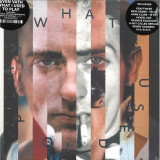
Sven Väth - What I Used To Play (12x12" boxset)
 
36

For this uniquely personal retrospective spread over twelve vinyl discs, Sven Väth takes us back to the early days of his DJ career. On What I Used To Play we meet great pioneers of electronic music, gifted percussionists, obscure wave bands, and innovative producers of a bygone 'new electronic' era. Rough beats and irresistible grooves from the identification stage of house, techno, and acid remind us not just how far electronic music has evolved over the past four decades, but how great it was to dance to EBM, techno, and house for the very first time.

If there is one protagonist of the electronic music scene who has remained curious, innovative and at the very cutting edge of music for over four decades, it's Sven Väth. His multi-layered artist albums and Sound of the Season mix compilations have been defining the genre for over two decades, and even today, he is constantly on the lookout for the next top tune to add to the highlights of his next set. At least, that's the case when he's not producing them himself as an artist or remixer. "Actually, it's always been part of my DNA to think ahead," and nothing had been further from his mind than looking back at his past, but when in spring of 2020 the international DJ circuit had to be scaled down to virtually zero, the 'restless traveler' suddenly had time. Time to stop and reflect on "how it actually was back then, at the very beginning of my career..."

"It was a great trip and with every track, beautiful memories came flooding back".
In the London apartment, he had just moved into, Sven has set up a "little music room", where he cocooned himself for several days, "to look way back for the first time and review my musical journey through the eighties, so to speak."

The interim result was six thematically oriented playlists with a grand total of 120 tracks from 'early 80s' to 'Balearic late 80s', together with excursions into afrobeat, European new wave, and EBM sounds and a few epochal techno/house tracks from the USA in between. From these 'Best of Sven Väth's favorites', the project What I Used To Play crystallized. Sven remembers how the Cocoon team reacted to his proposal: "They found the idea of making a compilation out of it MEGA from the beginning and everyone said 'Sven, go for it', but then, of course, the work really started, namely, to clear the rights and to get clean sounding masters of the up to 40-year-old tracks. There was also disappointment, of course. We couldn't clear certain titles because the rights holders in the USA had fallen out with each other or simply disappeared from the scene. In short, it wasn't easy, but now I can safely say we got the most important tracks."

Finally, after two years of research, curation, design, and administrative fine-tuning, the "little retrospective" from 1981 to 1990 is available. The exquisitely packaged, and three-kilo heavy box set is not only physically impressive, WIUTP is also the definitive record of Sven Väth's musical development. On each of the twenty-four sides of vinyl, you can trace track by track, what influenced him during which phase, and how he took off as a DJ from his parents' Queen's Pub straight into the spotlight at Dorian Gray. There and at Vogue (later OMEN), Sven became the style-defining player in the DJ booth that he still is today.


1981 - 1990: Future Sounds of Now

In the early eighties, the crowd in clubs like Vogue and Dorian Gray danced to what nowadays we call 'dance classics' - mainly disco, funk, soul, and chart pop. It was up to a new generation of DJs, including Sven Väth, the youngest protagonist in the Rhine-Main area at the time, to create their own club-ready music mix. Good new tracks and potential floor-fillers were rarities that had to be sought out and found, in order to prove oneself worthy.
Without MP3s, internet streaming, or other digital download possibilities, music didn't just gravitate to the DJ, instead, it had to be tracked down. In well-stocked record stores in Frankfurt and Wiesbaden or even in Amsterdam, London, or New York, Sven and friends sourced the material for countless magical nights. On WIUTP we can follow Sven's very personal journey through this wild, innovative era in which synth-pop, funk, hip-hop, and disco were successively replaced as 'club music' by house, techno, acid, and breakbeat. By the end of the decade, it was clear to see that these once exotic 'fringe' phenomena would soon become 'mass' phenomena.


Early 80s

Dirty Talk by the Italian-American duo Klein & M.B.O. represents the most innovative phase of the Italo-disco genre in the early eighties like no other track. Mario Boncaldo (I) and Tony Carrasco relied entirely on the original synthetic drum and percussion sounds of the Roland TR-808, coupled with the raunchy vocals of Rossana Casale and guitar accents of Davide Piatto. Of course, other tracks from this period were also influential in style, most notably Unit by Logic System, which worked as the perfect soundtrack to the laser lighting system at the legendary Dorian Gray club. With stomping beats and robotic rap interludes, Bostich by Yello also belongs on Sven's eternal playlist - after all, it caught the attention of Afrikaa Bambaataa, who invited the Swiss duo to perform at the Roxy in New York in 1983.


EBM Wave - Mid 80s

From today's point of view, the almost ten-minute-long, downtempo track Giant by Matt Johnson's band project The The, would probably not be considered an obvious club classic. However, a closer (re)listen reveals the rhythmic intricacies of the percussion overdubs by JG Thirlwell (aka Foetus) on Johnson's composition, and it becomes clear why this exceptional piece of music is one of Sven's absolute favorites. Other classics from this phase include Kaw-Liga by the mysterious The Residents, the hypnotic-synthetic Our Darkness by Anne Clark (and David Harrow), and last but not least, the somber, monotonous anthem Where Are You? by 16Bit, one of Sven Väth's projects together with Michael Münzing, Luca Anzilotti from 1986.


US House - Late 80s

You certainly can't talk about Chicago house without mentioning Frankie Knuckles. The resident DJ at the Warehouse not only gave the name to an entire genre, but also produced epochal floor fillers on the Trax label like the timeless Your Love, sung (and moaned) by Jamie Principle. Acid house protagonists Phuture also hail from Chicago, and on We Are Phuture (also released on Trax) we hear the chirping acid sounds of the legendary Roland TB-303 in full effect. Another featured classic is No UFO's by Detroit's Model 500 aka Juan Atkins, who is rightly considered the 'Godfather of Techno' even if the genre-defining track from 1985 still breathes with the spirit of hip-hop and electro from the first breakdance era.


Afrobeat

Le Serpent, by Algerian-born Abdelmadjid Guemguem, is a track that sounds completely different from everything else on WIUTP. Made in 1978, it's a monumental, rousing groove created without bass or synths, just with five congas! Even though Guem sadly passed away in 2021, his immortal, acoustic beats are understood all over the world and will continue to enrich many thousands of DJ sets for years to come. Another classic that not only Sven appreciates beyond measure is Hugh Masekela's Don't Go Lose it, Baby. In addition to being one of the most important jazz pioneers, the trumpeter and freedom fighter from Johannesburg was very experimental, integrating electronic sounds into his music in later years, in a similar vein to Miles Davis and Herbie Hancock. Dutch jazz pianist Jasper van't Hof's afrobeat project Pili Pili has also aged well. The trance-like, almost sixteen-minute-long track of the same name, manages to fill a whole side on the seventh of twelve vinyl discs in the WIUTP box.


UK-US-Euro - Late 80s

Time for a change of scene, in the truest sense of the word, and from a musical perspective, this section is like landing on another planet. First up is Andrew Weatherall's classic remix of Primal Scream's Loaded, featuring the iconic Peter Fonda sample (lifted from the 1966 biker film Wild Angels) that came to personify the mood triggered by the British Second Summer of Love in the late eighties: "We wanna be free to do what we wanna do, and we wanna get loaded...". This period also saw the emergence of M/A/R/R/S whose only single, 1987's Pump Up The Volume, became a club classic with support from DJ legend CJ Mackintosh. In this most eclectic of sections, we also encounter New York house and reggae producer Bobby Konders and his seminal Nervous Acid.


Balearic - Late 80s

Those who know him, know that Sven had already lost his heart to the 'magic island' of Ibiza as a teenager, so with that in mind, the WIUTP project couldn't end without a Balearic chapter. Inspired by Manuel Göttsching's E2-E4, the immortal, eponymously titled Sueño Latino belongs in there without question. Equally popular on the island was, and still is Break 4 Love by Raze, which thinking about it, would also fit perfectly into the house chapter. Last, but not least, there's an overdue reunion with Sven Väth himself, in his role as frontman of the successful Frankfurt trio OFF. Together with Michael Münzing and Luca Anzilotti (later of Snap!) this 'Organization For Fun' created the off-the-wall club hit Electric Salsa in 1986 which incidentally turned into an international chart smash, putting Sven in the enviable position of having to decide between pop stardom and a DJ career. Well, we all know how that decision turned out and the rest, as they say, is history. A not insignificant part of his story is What I Used To Play. Enjoy!

No en stock

Haga su pedido ahora y le encargaremos el artículo en nuestro proveedor.


Ültimo hace: 8 Meses
Various - Network Remixes - Volume One 2x12"

The Art and Soul of Network is well and truly captured on this beautiful collection.

Fittingly for a remix selection, Network’s iconic artwork is reconstructed by Trevor Jackson, the designer of those original graphics. He has lovingly reworked the maverick indie house label’s distinctive branding for this 2 x 12 double album selection which rewinds to some of Network’s finest moments.

Network was based in Birmingham but as this release demonstrates had an international outlook and an alchemist touch for joining together disparate talents which lent itself well to the world of remixology.

Dave Lee’s remix,when he was working under his Joey Negro pseudonym, of The Reese Project’s awesome Direct Me is arguably his finest ever work. The original track fused Detroit electronica with the Motor City’s ever present Soul Music stirrings. Dave simply made the superlative perfect . The result was not only an iconic Network release but one of House Music’s greatest recordings.

There was possibly no better example of Network’s deft touch when it came to selecting unlikely combinations of people to work together than Day By Day. . Andrew Pearce, a raw but incredibly gifted 18 years gospel singer, was plucked of the streets of Wolverhampton and promptly despatched to Detroit where producer Kevin Saunderson and songwriter Ann Saunderson gave him the complete Reese Project template on the mesmerising Day By Day. Then Chez Damier & Ron Trent were drafted in to create their Urban Sound Gallery masterpiece of a remix. It truly is a gem.

Ann Saunderson is also central to Surreal’s hypnotic Happiness, not only as songwriter but as the vocalist too. Network then did their “let’s try this” thing by letting loose Italian house godfathers The Fathers Of Sound on the track parts. They threw down and created a progressive (but dreamy) house anthem that is to this day massively in demand.

Slo Moshun’s game changer (House slows down into Hip Hop then ramps up back into House) Bells Of New York was produced by Mark Archer & Danny Taurus.It became huge literally overnight. Various attempts to remix it were tried but in the end it was back to Mark who demonstrated that sometimes the original creator of a track is best able to re-imagine it by coming up with his much loved Beefy Bells remix.

Inner City’s stark and brutal Ahnonghay saw Kevin Saunderson going back to his Detroit Techno roots. Fittingly it was one of the UK’s disciples of that innovative Belleville Three era,Dave Clarke, who supplied the awesome remix contained here.

Rhythmatic’s Mark Gamble created a British Bleep House anthem with the sledgehammer Demonz. The original won the support of John Peel with repeated BBC Radio plays underlining incessant club plays. Again it’s the original artist who does that remix thing best with Mark’s Sequel mix managing to improv his classic original.

Neal Howard’s Indulge was the debut Network release. His music sounded like it was from another planet and he was hailed as Chicago’s answer to Detroit genius Derrick May..Here we present Derrick’s Mayday remix of To Be Or Not To Be which was the flip to Indulge. This was Network’s debut release, and it is hard to imagine a label having a more euphoric greeting card.

The album concludes with a remix of a track recorded at a live concert in 1989.. To be clear THE TRACK that defined that year’s Acid House cultural revolution. Derrick May brought along Carl Craig to perform with him as Rhythim Is Rhyhim when invited to support Inner City at London’s Town And Country Club . Luckily Kool Kat - the predecessor to Network - recorded for posterity an historic rendition of Strings Of Life. Roll on a few years and Network went into the vaults and asked Ashley Beedle to work on the tape. He completely remoulded it and conjured up a new incarnation of Strings Of Life.

Network - we coninue…

No en stock

Haga su pedido ahora y le encargaremos el artículo en nuestro proveedor.


Ültimo hace: 87 Días
Various - guerrilla girls! she-punks & beyond 1975-2016
 
25

• “Guerrilla Girls!”, Ace Records’ much-anticipated first release of 2023, takes us on a thrilling ride from punk’s mid-70s origins, via the left-field post-punk groups, jangly female combos, grunge bands and vigilante Riot Grrrls of the 80s and 90s, to the she-punk bands of recent years – a five-decade alternative to the macho hegemony of rock.

• The collection highlights songs that emerged out of a dynamic underculture of female creative expression. What unites the featured artists is a healthy disregard for the way the music industry ties up its female performers into pretty, neo-liberal packages. From Patti Smith, universal mother of the punk movement, to the Bags, Bikini Kill and Skinny Girl Diet, this music is anti-A&R. Including lesser-known names such as San Francisco street punk Mary Monday and London-based experimentalists pragVec, it shows that, rather than being a few novelty bands existing on the margins, these performers represent a stronger, more three-dimensional version of the female experience.

• Glorious resistance was on display in the first wave of UK female-fronted punk bands. Poly Styrene’s charged vocals on X-Ray Spex’s ‘Iama Poseur’, for instance, were a deliberate refusal to be a pretty punkette. With 15 year-old Lora Logic on saxophone, X-Ray Spex epitomised a fearless, self-defined agency that was at odds with the pastel shades and flowery, submissive Laura Ashley version of 1970s girlhood. By the early 80s, there was a hugely vibrant scene propelled by the diverse rhythms and voices of post-punk feminism. Lora Logic had left X-Ray Spex to form the interweaving textures of Essential Logic, the Mo-dettes mangled ska and off-kilter pop, and Birmingham band Au Pairs sliced political rigour into their lyrics and funky guitar work.

• Some female artists took that elemental energy into pop, creating pop-punk with a twist. We’ve Got A Fuzzbox And We’re Gonna Use It!! made a statement on music technology and female power with a cheeky play on words. Their song ‘Rules And Regulations’ shows that what Guerrilla Girls do well is debunking – taking genres of popular song and turning them inside out – like the way the Pandoras and the Pussywillows would amp up the driving beat and high vocals of the 60s girl group style, and subvert it with a DIY garage element.

• In its fanzine culture, use of montage and DIY music, 90s Riot Grrrl bands such as Bikini Kill and Bratmobile drew direct inspiration from 70s punk, articulated through the prism of Third Wave feminism. Too often, Riot Grrrl gigs were invaded by men intent on heckling “the enemy”. Liz Naylor, manager of British Riot Grrrl band Huggy Bear, says that their concerts became war zones. From the US grunge and Riot Grrrl scenes emerged more female instrumentalists, with bands such as L7 and Babes In Toyland proving that it was possible to recruit cutting-edge drummers, bass players and guitarists. Lori Barbero, whose relentless power drumming is a major element of Babes In Toyland, took the one instrument that has been a staple of male rock’n’roll and made it her muse.

• In the 2000s a new generation of girl-punk bands drew on the Riot Grrrl underculture to form their own sound. London trio the Tuts refashioned C86, Riot Grrrl and lush dream pop on songs like the ironically titled ‘Let Go Of The Past’, while the Regrettes injected shots of ska and doo wop into their explosive West Coast pop-punk. What began with Patti Smith and 70s punk has grown into a vast, spikey infrastructure of girl music. Many take inspiration from their foremothers, like Skinny Girl Diet whose vigilante feminism and punk distortion has been championed in return by Viv Albertine of the Slits. As long as these female artists stay aware of their musical vision and what they are trying to express – in a sense, A&R themselves – the underculture will continue to grow and flower. And this “Guerrilla Girls!” compilation is a celebration of that power.


• The back sleeve of the release features a scene-setting introductory essay by Lucy O’Brien (author of She Bop: The Definitive History Of Women In Popular Music). Each of the two discs come in a swanky inner bag containing a track commentary by compiler Mick Patrick (Ace Records’ long-serving champion of female artists of all persuasions) and exclusive interviews with many of the featured artists by Vim Renault and Lene Cortina (founders of the Punk Girl Diaries webzine).

Reservar27.01.2023

debe ser publicado en 27.01.2023

Molly - Picturesque

Molly

Picturesque

12inchSCR255LP
SONIC CATHEDRAL
26.01.2023

The album’s seemingly brief tracklisting belies a work of great beauty and depth, and one which turned into a one-man crusade for singer/guitarist Lars Andersson, intertwining deeply personal stories with his love for the era of Romanticism. “Every time I go to a museum and I’m about to pass through the era of Romanticism I stop in awe,” says Lars of the enduring appeal of the 18th century artistic movement. “Whatever it is – stories, paintings, music – it triggers something deep within me, something profoundly human. It really hits a nerve, and it utterly immerses me to a point where I can’t move.” The album replicates this feeling; a gloriously over-the-top blend of Slowdive and Sigur Rós, mixed with the single-mindedness of Daniel Johnston and the noisiness of Nirvana, it’s as bold and beautiful and every bit as ornate as the art that inspired it. Unlike their acclaimed debut, 2019’s All That Ever Could Have Been, which gradually came into focus with a 15-minute opening track, Picturesque hits home from the very first note of the short and sweet opener, ‘Ballerina’. That’s not to say there aren’t epics here – ‘Metamorphosis’ is essentially a 12-minute suite of three movements; blistering closer ‘The Lot’ is 11 minutes of Swans-inspired heaviness – but everything is much more direct and focused. This isn’t an album to lose yourself in, it’s one to get swept away by. “‘More is more’ was definitely the credo when making this record,” agrees Lars. “A big inspiration were bands like Pond and the way they manage to fill their songs up with stuff to the absolute maximum. While I definitely tried to give the listener some room to breathe at certain points and while, in good old post-rock fashion, it still builds up and breaks down, it relies much more on simple melody and harmony as opposed to noisy experimentation to transport feeling.” Never more so than on the first single, ‘The Golden Age’, which is the album’s centrepiece; a soaring slice of über-shoegaze that is so stunning you can’t take your eyes or ears off it. Like all the songs on the album, it’s based around a fairy-tale from the Romantic era. In this case, it’s Heinrich von Ofterdingen by the German poet, author and philosopher Novalis (other influences are: The Steadfast Tin Soldier by Hans Christian Andersen; The Seven Ravens and Hans in Luck by the Brothers Grimm; Undine by Friedrich de la Motte Fouqué and The Golden Pot by E.T.A. Hoffmann), with Lars drawing parallels between the titular character’s mystical and romantic searchings and his own personal quest. This is apt as the album has been an overriding obsession for Lars for the past two-and-a-half years; as well as writing and recording the songs (bandmate Phillip Dornauer played drums), he also mixed and mastered them at his Alpine Audio studio and Picturesque is very much his Brian Wilson or Kevin Shields moment. MOLLY were in the middle of their European tour when Covid hit in early 2020, forcing Lars to retreat back to his home outside Innsbruck and giving him time and space to think about every detail of the record. “Well, I was on a quest I guess,” he admits. “Like everyone, I was stranded at home and at some point I just said to myself, ‘If not now, then when?’ It was an intense process. I’ve worked on music from other bands and artists before but producing and mixing your own music is an utterly different animal. It was probably the most intense thing I’ve ever done, but it was also incredibly rewarding and the feeling of it all coming together piece by piece is incomparable.” The artwork is just as effective. “I think of Radiohead’s OK Computer – what you hear on the record is what you see on the cover,” explains Lars. “We were inspired by what we call ‘wimmelbilder’ hidden pictures in German, a very specific style in art where there are a lot of little things happening. When you see it from further away, it looks organic like a lost painting from the area of Romanticism, but the closer you look the more digital it gets. It’s a nice analogy.” He’s right, it perfectly sums up the conflict between Romanticism and 21st century life. “Romanticism was basically an answer to the Industrial Revolution as well as the social and political norms of the Age Of Enlightenment,” concludes Lars. “Now, we all live in a much more industrialised, materialistic, individualistic and sterile society than any early Romanticist could have ever possibly imagined. Over 200 years later the Romanticists have lost the battle.” With the divine and downright pulchritudinous Picturesque, MOLLY begin the fightback.1.Ballerina 2.Metamorphosis 3.The Golden Age 4.Sunday Kid 5.So To Speak 6.The Lot

No en stock

Haga su pedido ahora y le encargaremos el artículo en nuestro proveedor.


Ültimo hace: 3 Años
Yuki Hayashi - My Hero Academia: Season 6 (Original Series Soundtrack)

Die offizielle Vinyl zur gefeierten 6. Staffel von "My Hero Academia" - eine der beliebtesten Shonen-Anime-Serien weltweit - begleitet die andauernden, nerventreibenden Abenteuerreisen im Hero-Reich mit epischen Melodien und Vocals!Sie enthält Yuki Hayashis kompletten Score zur Fortsetzung, einschließlich der fan-favourite Tracks "Revengers" und "Weeee Are Fuxkin Super Hero!!".Die exklusive Edition erscheint mit zwei grün-gefärbten LP-Discs, die alle in einer wunderschönen Gatefold-Hülle mit lebhaftem Artwork aus der Serie verpackt sind - ein absolutes Must-Have-Produkt für treue Fans.

Reservar05.01.2023

debe ser publicado en 05.01.2023

Adrian Younge, Ali Shaheed Muhammad & Henry Frankling - HENRY FRANKLIN JID014

A native of Los Angeles, Henry Franklin came of age while the city was producing a crop of exciting jazz talent. Frankin’s lasting impact on jazz can be evidenced by the long list of legends who sought him out for tours and recording sessions, Stevie Wonder, Bobby Humphrey, Freddy Hubbard, & Pharaoh Sanders to name a few. Franklin’s solo output is best remembered for his two solo outings with the Black Jazz label- “The Skipper” & “The Skipper At Home”. Together, they form one of the most compelling diptychs in the entire post-bop canon. Recognised by his peers and contemporaries, Franklin’s entry for Jazz Is Dead gives the living legend his flowers and recognises the contributions The Skipper has made as one of jazz’s most influential heartbeats.

Reservar19.12.2022

debe ser publicado en 19.12.2022

PROLAPSE - POINTLESS WALKS TO DISMAL PLACES 2x12"

Deluxe reissue of their 1994 debut album.
Completely remastered under band supervision.
Pressed on burgundy vinyl and Presented in a gatefold matt laminated gatefold sleeve, with spot UV varnish .
Features the original LP plus a bonus disc with the Cherry Red E.P tracks, plus a 16-page booklet containing photos, reviews, and sleevenotes from Mick Derrick, Steve Mack & John Robb.
Combining a metronomic krautrock beat played by a monster drummer, looping guitars and a boy/girl vocal that sounded like a bickering bed-sit argument turned into song, Prolapse had all the manic intensity of a nervous breakdown set against a backdrop of inventive guitar work and a really tough rhythm section. There were hints of the Fall, krautrock, PiL and a touch of the pure golden pop of Blondie along with the sense of restless dislocation shared by many of the post-punk bands.
Prolapse arrived in the middle of the Britpop era and their tense, almost neurotic music clashed with the stadium-filling, jolly knees- up pop that dominated the indie mainstream of the time. By 1996 indie had become the mainstream in terms of record sales and sound and was strutting around at the opposite end of the cultural spectrum to the indie bands of the Eighties and their war against popular culture. Late arrivals Prolapse were the last gasp of this genuine independence.

No en stock

Haga su pedido ahora y le encargaremos el artículo en nuestro proveedor.


Ültimo hace: 3 Años
Violators Of The English Language - Violators Of The English Language LP

Emanating from a ‘prehistoric’ existence near the end of the last millennium, Andy Votel and his slightly older college mates were once best recognised in Mancunian clubs and bars as teenage vinyl nerds and bum-fluffed battle rappers under the collective name Violators Of The English Language (which in acronymic form explains Andy’s own exotic pen-name).

As steadfast supporters of the 1980s / 90s Brit-core rap scene coming out of London, the multicultural Violators’ Mancunian accents were perhaps a bridge-too-far to secure dream job contracts for humble labels like Kold Sweat and Music Of Life. An unlikely constructive meeting with Gang Starr’s DJ Premier (while Andy helped out at a radio station), plus playing warm up DJ sets for countless US rap heroes might have temporarily added inspirational fuel to the fire, but after an active period combining graffiti, rapping, scratching, obsessive record digging and beat making into their daily operations, adulthood eventually began to rear its unwelcome head.

A decade later, Andy Votel and his digging skills would begin to provide direct sample material for the likes of Madlib, Mos Def, Jay Z, Nas, Dr Dre, Ghostface Killa and Action Bronson, amongst others, and the Violators’ black book of breakbeats and catalogue numbers soon began to feed a same-butdifferent rap beast.

For a project that has taken thirty years, it would be totally inadequate to call the formation of Hypocritical Beatdown Records a lockdown-project. There’s a deep history and psychology in these records by Violators Of The English Language and their spin-off groups Magnets (Rap Group) and ProVerbs, that combines stage-fright, loss, pride, creative-schizophrenia, racial inequality, surrealism, personal politics, brotherhood, artistic-constipation, better judgment, love, anti-love, soul searching and much more.

As well as Andy Votel taking care of both production and part of the microphone duties, some might recognise fellow MC and solo recording artist Figure Of Speech as a prominent voice here. The trio of Magnets (Rap Group) sees Andy also joined by local B-Girl legend Jeni Chan aka Penny Chew, and rapper and DJ Benjamin Hatton who has previously recorded with Kid Acne, The Mongrels and Sheffield’s Invisible Spies’ long-running squadron. Widely respected visual artist Rick Myers (now living in Massachusetts) also contributed scratches for many of these recordings via file sharing and custom dub-plates to keep the Violators’ authentic line-up intact, as well as galvanising the crew’s semi-reluctant art-school roots.

Extra production credits for the label also go to Sean Canty from Demdike Stare, and the late great Dan Dwayre aka Black Lodge (Mo Wax) who sadly passed away during the completion of these recordings. The members of Violators Of The English Language who you’ve not yet heard of will quickly make themselves known as the needle drops on this long-mooted debut vinyl release.

No en stock

Haga su pedido ahora y le encargaremos el artículo en nuestro proveedor.


Ültimo hace: 3 Años
Richie Culver - I Was Born By The Sea LP

With I was born by the sea, Richie Culver brings to a close a period of intense introspection and emotional reckoning with a debut album that serves as both an optimistic statement of intent and a final glance back at the painful places it explores. Following recent work with Blackhaine and Pavel Milyakov, I was born by the sea picks up where Culver’s EP for Italian label Superpang, Post Traumatic Fantasy, leaves off, painting an unabashed portrait of contemporary malaise, detailing a life lived behind closed doors, pinned under the crushing weight of austerity, sapped of the strength to do anything other than gaze out to sea and all the grey possibilities it represents. Where Post Traumatic Fantasy saw Culver returning to his hometown of Hull after a period spent entangled in London’s relentless sprawl, his first full length project reaches further back to his formative years working in a caravan factory and going to raves in and among Hull’s outskirts. Unspooling like a fever dream, I was born by the sea is the anxious clutter of a racing mind spoken clearly, a stark reflection on how it feels to have too many ideas and too much time to act on them.

Though unquestionably a snapshot of a time of significant difficulty, Culver reflects on this period with tender empathy and pitch-black humour, stitching together unflinching observations from England’s neglected corners, ‘there’s more mobility scooter repair shops and bookies than there are bookshops,’ and devastating vignettes of everyday struggle, ‘tears on the tin foil’, with surreal depictions of industrial grit, ‘skimming stones in a small pond by the slaughterhouse’. His DIY approach to production stretches the rough sinew that connects these fragments of memory, a process he describes as using a paired back collection of synths and drum machines to the best of his ability, ‘but to the least of their capabilities,’ wringing out visceral sound with self-taught urgency. During the album’s most impressionistic passages it’s as though Culver has transposed past internal turmoil into powerfully resonant noise, the Sisyphean sonics of ‘Create A Lifestyle Around Your Problems’, which evokes in its concrète clatter and MRI machine barrage the sound of making the same mistake again and again, or the stuttered jumble of ‘Its Hard To Get To Know You,’ its garbled vocal modulation and frayed edges of distortion channeling the paranoia of somebody listening to muffled voices through thin plaster, climbing the walls of their bedroom with the curtains closed, a nervous breakdown in stereo.

In counterpoint to this glides the ever-present spirit of the dance floor, which haunts the record from the moment it is invoked in its first few seconds. Opening onto a sea wall of bright synthesis, the stuttering vocals and bass tone chops of ‘Nervous Energy’ dump us directly into post rave ecstasy, the echoing cry of a voice amplified by loudspeaker carrying the loose energy and surge of crowds moving in darkness. The incessant, dead phone line beep of ‘Pigeon Flesh’ builds to a pulse that suddenly swells into an anxious technoid surge, shapeshifting at lysergic speed into head shrinking audio hallucinations, a descent into the void of the present via machine music hypnosis. Even ‘Its Hard To Get To Know You’ summons the ego death drive of hardcore techno within its scorched textures, flickering indiscernibly between attritional noise and frazzled hardware stomp. Paying homage to both the parties of his youth and a countless succession of Sundays spent offering himself up within Berghain’s hallowed architecture, Culver’s experiments in addressing his formative relationship with rave provide an energetic glimpse at where he might take his sound next.

Between spikes of propulsive energy and grim mood pieces Culver returns to suspended passages of aching, glacial drift, the cold swell of the North Sea, accompanied by some of his heaviest testimonials. The gauzy ebb of ‘Daytime TV,’ its tumbling loops reminiscent of boats bobbing off a distant shore, sees the artist at his most checked out, slumped in front of his television, seven days a week. ‘I used to dream of doing something,’ he admits, ‘anything to get out of this town.’ ‘Love Like An Abscess’ pairs swirling currents of ambient shimmer with violent images of baseball bats lying next to beds and blood-stained mattresses, next to which Culver pleads in a desperate mumble, ‘let our love grow, like a broken abscess.’ Yet it’s with the album’s final word and title track that Culver reveals a glimmer of cautious optimism, a parting gesture of exposition and closure. ‘I knew I had to get away,’ he asserts, ‘so I did and I never looked back.’ What follows builds from a low throb, the flutter of a tiny heartbeat, to a resonant glow, embellished with unfurling synthetic burbles, oil rigs sparkling in the distance, golden light spilling across the sea. In reckoning with the place he had to escape, Richie Culver is now free to look towards the promise of something new, something hopeful.

No en stock

Haga su pedido ahora y le encargaremos el artículo en nuestro proveedor.


Ültimo hace: 3 Años
Ataxia - Out Of Step LP 2x12"

Having torn up raves for well over a decade, the Detroit duo Rickers and Ted Krisko AKA Ataxia present their debut longplayer ‘Out Of Step’. Featuring guest spots from close peers DJ Minx, Andrés and Mr Joshooa, they twist house, techno, electro, breakbeat and rave into revitalized new shapes; embellished with a touch of soul, funk and hip hop. With backgrounds in hardcore and punk, Ataxia’s debut is suffused with that energy, attitude, and approach; this is raw, lean and unashamedly no-nonsense dance floor tackle that goes straight for the jugular. Heavily analogue, the album experiments with tape saturation, which harks back to the duo’s formative years in bands, recording demos to cassettes. These straight-up, in-the-red tracks give preference to overdriven drum machines, rather than generic polished sheen, but conversely, it’s all deceptively well-crafted too; ‘Out Of Step’ is a standout record that’s big in character, bringing to mind the renegade spirit of Underground Resistance, and the bombastic brilliance of The Prodigy and Chemical Brothers.

Defiantly optimistic despite the state of the world, a “life is good” vocal sample meets minor chords sliding over 808 hats on the exemplary house/techno pumper ‘Detroit Gospel’, before a lighter moment on the album, but no less impactful with its hefty low-end thump, is ‘Pine Island’ featuring Motor City hero Andrés. Together they cook up a Motown-inspired house cut awash with horn swells and backup singers, bouncing to wide swung funk bass, in classic 313 style. ‘Language’ turns the club on its head – busting out one of the most distinct basslines in recent times, and bristling with buzzy, undulating chords, whilst ‘Maxia’ features influential Detroit royalty DJ Minx. Inspired by her classic ‘A Walk In The Park’, with a fat distorted kick and stealthy bass groove, this is low-slung, stripped-back, heads-down coolness. The high-tech funk of ‘Spit In Your Percolator’, is laser-guided in its efficiency, with a strobe-like, increasingly intensifying energy, peppered with clever, tripped up vocal chops. With the next cut, conveyor belt noises and fast churning low-end gives way to a dubbed-out breakdown, on the deep breakbeat roller ‘98 Degrees’. Charged with a blistering, rave intensity, ‘Number Streets’, is a futuristic distorted techno workout that booms through the subs, whilst ‘The Formulator’ mixes filtered snippets, abstract synth noises and melodic bleeps with a bassline echoing Paperclip People’s ‘The Floor’. Closer to the UK definition of hardcore, combining 4/4 and breakbeat, ‘The Pusher’ evokes the spirit of late 80s orbital raves, adding a natty keys solo, and deadly bass used sparingly, for even deadlier effect. ‘Feels Like’ sees Rickers and Ted team up their studiomate and fellow TV Lounge resident and club booker, Mister Joshooa. Inspired by Photek but also almost UKG in style, this breakbeat session is stamped with MJ’s signature chopped vocals and intricate rhythmic interplay. The bubbling, wobbly loose swing of ‘WM’ is constructed around a classic chopped-up MTV cribs sample, with a filtered vocal creating a far out psychedelic effect – all of which is propelled apace by a huge bruising LFO. The LP concludes in fine style with ‘Dance The Bridge’, where bouncy beats and wigged-out keys meet bright, gently uplifting synth chords that bring a clear-skied mood; ending the record as it began, on an optimistic note.

‘Out Of Step’ marks another chapter in the ongoing relationship between Life and Death co-founder DJ Tennis and Ataxia. Their connection goes back to the earliest days of the label, where they played gigs together on some of Tennis’ initial visits to Detroit. It’s a friendship that’s blossomed organically over the last decade through their shared love of punk and hardcore, and led to the fruition of one of Ataxia’s most compelling projects to date. Labels to release Ataxia’s output include legendary Detroit techno imprints Planet E and KMS, plus the seminal American house label Nervous Records. Their catalogue also includes music for Visionquest, Leftroom, 20/20 Vision and Seth Troxler’s Play It Say It.

No en stock

Haga su pedido ahora y le encargaremos el artículo en nuestro proveedor.


Ültimo hace: 12 Meses
Charbel Haber - A Common Misunderstanding of the Speed of Light

Charbel Haber is Lebanese musician, performer, visual artist and composer from Beirut. His work has seen him collaborate with artists from a wide range of disciplines - film, video art, visual art, theatre, dance - both in Lebanon and abroad.

As a solo artist and as a member of post-punk band Scrambled Eggs, he has composed music for directors Khalil Joreige and Joana Hadjithomas, Ghassan Salhab, Mohamad Malas, video artists Lamia Joreige and Akram Zaatari, Maqamat dance company and playwrights Rabih Mroueh and Lina Saneh, to name but a few. His prolific and collaborative career includes free improv group Johnny Kafta Anti-Vegetarian Orchestra, psychedelic Arabic music ensembles Malayeen and Orchestra Omar, cold wave band The Bunny Tylers and minimal ambient duo Good Luck In Death. He is the founder of Those Kids Must Choke and co-founder of Johnny Kafta's Kids Menu - two experimental record labels - and he has recorded and collaborated with notable artists from the fields of free rock and improv such as Oiseaux-Tempête, Radwan Moumneh, Tarek Atoui, Jean Francois Pauvros, The Ex, Michael Zerang, Mats Gustafson, Eddie Prevost, Xavier Charles and Tony Buck.

And once again, here I am telling you to go look for the truth and its beauty in the words of dead poets, in the little tales of ravaged cities, in aborted dreams, in the melancholy of the ruins of tomorrow, in meaningless plastic totems, in the enigmatic end of restless fools.

I'll be here long after you all disappear.

These are the first and last sentences from Charbel Haber's latest offering, A Common Misunderstanding of the Speed of Light: a multi-media musing on the chronic and the chronological, the subversive nature of time. This combination of a record and book observes the slow passing of life and the illusion of retrogradation in his every day. Simply by documenting - via image, text and tune - Haber assigns value to everything that is cast in amber by this project. There's an acceptance and appreciation of the destitution he witnesses, it is an homage given in overlapping forms.

ACMOTSOL has two parts. The book, hardcover in an embossed orange, features photographs and texts taken from Haber's personal digital diary spanning from 2020 to the start of 2022. Broken into six chapters - named for the six tracks on the record - the entries are an artist's log of sorts during a peculiar period of global hyper stagnation and navigating the aftermath of the Beirut explosions. The 96 pages highlight Haber's interest in decay, negative space and the temporality of the human condition. Instead of presenting the images and texts as they were originally paired online, they're reordered and recontextualized in the book. New connections are formed, as tenuous and fleeting as the content they surround. The images interrupt the texts in many instances, forcing pauses and inviting distraction.

At the center of the book is a sudden burst of orange pages, with stylized pluckings of the text framing a QR-code that grants access to the record. With the brilliant orange covers and matching innards, pregnant with the music at the core, it's almost as if these central pages act as a way to turn the book inside out. There, the book's purpose is altered, fixated on a mirror image of itself. It forms a self-completing arc for the project, a loop.

ACMOTSO's second half is that mirrored album. Six tracks totalling just under 52 minutes. The music could be a continuation of his solo albums Of Palm Trees and Decompositions (2016) and It Ended Up Being a Good Day Mr. Allende (2012), an exploration into the expansiveness of seemingly simple loops of a lilting guitar. Careful electronic effects add dimensions or reground the listener. There's a swelling of sound, the illusion of the push of space before it retracts back into itself or fades into the distance. Much like the images and texts the music complements, the songs challenge the purity of cycles. Endings are beginnings, beginnings are endings or is everything just the middle? Haber is quietly and elegantly grappling with the troublesome act of place-making. In music, in words and in visual storytelling.

ACMOTSOL is a work that can be calming or disorienting, depending on what is requested of it. Similar to the way loops and cycles can signify both meditation and mania. The tendrils of Haber's past - his home of Beirut, fictional and real characters encountered, authors read, films watched, composers listened, walks taken - knit themselves together for a presentation of our immediate present. An evidence of a happening. A considered project of time.

All photographs, texts and music by Charbel Haber. Album mixed by Radwan Ghazi Moumneh. Design by Maziyar Pahlevan. Printed by Albe De Coker in Belgium.

This dual-part project will be released on XX XXX 2022 on 'Other People.'

Description by Nereya Otieno.

Reservar11.11.2022

debe ser publicado en 11.11.2022

Arallu - Death Covenant LP

Für Fans von: Absu, Melechesh, Moonspell, Rotting Christ, Nile.
Unheiliger Black Metal aus dem Heiligen Land, durchtränkt von nahöstlichen Klängen und Mystik! Eine Beschwörung der Jahrtausende alten
Finsternis!
Die fünfköpfige Black/Death-Metal-Band Arallu stammt aus der israelischen Siedlung Ma'ale Adummim in Israel und ist seit fünfundzwanzig
Jahren im Metal-Underground unterwegs.
Der Name Arallu stammt aus der mesopotamischen Mythologie und bezeichnet das Reich der Unterwelt, das von der Göttin Ereshkigal und dem
Gott Nergal regiert wird und in dem die Toten gerichtet werden. Die Musik von Arallu dreht sich um die traditionellen, altorientalischen Melodien
der Landsleute Melechesh, die Hochgeschwindigkeits-Wildheit von Bands wie Angelcorpse und Absu, und dem atmosphärischen Gefühl legendärer Acts wie den zuvor erwähnten Melechesh und Absu.
Im Jahr 2019 hat die Band das Album "En Olam" veröffentlicht, und dieses Werk hat Arralus bereits bekanntes Talent in der Underground-Extrem-Metal-Gemeinde gefestigt. "Death Covenant" ist das siebte Full-Length-Studioalbum der Band und bietet dem Hörer eine atemberaubende
Mischung aus okkultem Black Metal und alten sumerischen und nahöstlichen Klängen. Die Riffs, die hier zu finden sind, werden die Hörer mit
ihrer Raserei von melodischen Tremolo-Riffs, die mit einigen unheimlichen Folk-Instrumenten verwoben sind, zufriedenstellen. Die Elemente in
der Gitarrenabteilung, die mit einigen Folkinstrumenten wie einer Saz und einer Darbuka vermischt sind, zeigen, wie die Band den Metal erfolgreich auf seinen Kern reduziert und das verleiht dem Gesamtergebnis von Arallus Musik einen zusätzlichen Punch und eine gewisse Schwere im
unteren Bereich. Er liegt im Grunde genommen gleichmäßig unter den Gitarren und unterstützt sie mit einigen dicken Linien, die den Streichern
ein tieferes Gefühl verleihen und den Tracks eine bedrohliche Atmosphäre verleihen. Auch die Schlagzeugsektion fesselt die Aufmerksamkeit des
Publikums mit einer Vielzahl von zerstörerisch stampfenden Kontrabässen bis hin zu orientalischem Tribal-Drumming, das viel dazu beiträgt, dass
die Atmosphäre intakt zu halten. Die Platte ist voll von hohen, durchdringenden Schreien und Kreischen, die eine dunkle und raue Klanglandschaft schaffen. Diese bösartigen Schreie werden manchmal mit unheimlichen Backing Vocals, die die Brutalität extremer Death- und Black-Metal-Musik mit den alten nahöstlichen Skalen des Materials verbinden. "Death Covenant" zeigt auch die bisher stärkste Produktion der Band in den
fünfundzwanzig Jahren ihres Bestehens.
Mit "Death Covenant" haben Arallu ein bedrohliches und atmosphärisches Biest in diesem Metal-Stil geschaffen. Die Israelis haben ein grausames
Album vorgelegt, das kaum mit seinen Vorgängern vergleichbar ist.

Reservar11.11.2022

debe ser publicado en 11.11.2022

Arallu - Death Convenant

Arallu

Death Convenant

12inchHHHR202257LP
HAMMERHEART RECORDS
11.11.2022

Unholy Black Metal from the Holy Land, drenched in Middle-Eastern tones and mystique! An invocation of thousands of years of Darkness! Hailing from the urban Israeli settlement called Ma’ale Adummim in Israel, Arallu is a five-piece Black/Death Metal act that has been around the metal underground for twenty-five years. The band got the name Arallu from the Mesopotamian mythology, as it is the name of the underworld kingdom ruled by the goddess Ereshkigal and the god Nergal, where the dead are judged. Arallu’s music revolves around the traditional ancient Middle Eastern melodies of fellow countrymen Melechesh, the high speed savagery of bands like Angelcorpse and Absu, and the atmospheric feel of legendary acts like before mentioned Melechesh and Absu. In 2019 the band had released the record called “En Olam”, and that opus has solidified Arralu’s already known talent to the underground extreme metal community. “Death Covenant” is the band’s seventh full-length studio offering and the album offers the listeners a very stunning infusion of occult Black Metal music with the ancient Sumerian and Middle Eastern sound. The riffs found in here will satisfy the listeners with its frenzy of melodic tremolo picked riffs that is intertwined with some eerie folk instrumentation. The elements in the guitar department, thrown in with a few folk instruments such as a saz and a darbuka, reveals how the band had successfully stripped metal down to its core and added a personal touch of their own special flair. them and it provides that extra punch and low-end heaviness to the overall outcome of Arallu’s music. It basically lies steadily beneath the guitars as it backs them up with some thick lines that give a more deep feel to the strings and dispenses an ominous atmosphere to the tracks. The drum section also catches the audience’s attention with a variety of destructive pummeling double bass blasting to some Middle Eastern tribal drumming that helps a lot in terms of keeping the atmosphere intact. The record is filled with high-pitched piercing shrieks and screams which create a dark and raw soundscape. These vicious shrieks are sometimes jacked up with some uncanny backing vocals that tie together the brutality of extreme death and Black Metal music to the ancient Middle Eastern scales of the material. “Death Covenant” also parades the band’s strongest production to date in their twenty-five years of existence. Arallu had created a menacing and atmospheric beast in this style of metal with their release of “Death Covenant”. These Israelis had put out a savage album that is hardly comparable to its predecessors.

Reservar11.11.2022

debe ser publicado en 11.11.2022

Sunda Arc - Tides

Sunda Arc

Tides

12inchGONDLP035LE
Gondwana Records
08.11.2022

Sunda Arc are brothers Nick Smart and Jordan Smart. Best known as key members of folk and jazz influenced minimalists Mammal Hands, their Sunda Arc project takes inspiration from the likes of Jon Hopkins, Rival Consoles, Moderat and Nils Frahm as well as their own music world. Their debut EP 'Flicker' was released in December 2018 and now the duo are set to release their debut LP, 'Tides' on 7th February 2020.

Named for a volcanic arc in the Indian Ocean, created by the process of massive tectonic plates colliding, Sunda Arc strives to mingle electronic and acoustic sounds until they become almost indistinguishable from each other. It's a process where they draw the acoustic properties and quirks out of electronic sounds and find the electronic potential in acoustic sounds. "Finding the ghost in the machine or blending the human elements of playing live is something we are always trying to explore in our work.

Experimentation is a large part of our process and we tend to combine carefully composed material with chaotic ideas to find the balance between the two" — Sunda Arc 'Tides', their debut album, takes its name from the idea of unseen forces that can affect our lives in myriad ways, being pushed and pulled and at the whim of powerful forces outside of our control as well as offering a nod to things such as the tides on our planet, tectonic plate movements and weather systems. There are often chaotic elements in these systems that function in a way that produce a type of controlled randomness on a large scale. This is something they try to reflect in their music by adopting some of the ways these systems work into musical sequences, and using ideas such as chaos theory to control musical parameters. "Tides is a reference to themes we were thinking a lot about during the making of this album. These include the similarities between macro and micro systems, or the circulatory and nervous systems in the body. Things that produce a type of controlled randomness on a large scale". — Sunda Arc 'Hymn', the first single from the album, uses Nick's voice sampled and played back through a keyboard to create a human yet electronic feel.

It mixes soft vocals with heavier electronic elements to create a danceable yet human sound world. 'Dawn', is best described as uplifting-techno, its use of repeated phrases building in intensity and variations to put you into a hypnotic state whilst also being industrial and danceable. 'Daemon' is one of the tracks that really resonates live. Drawing on the sound of UK dubstep it's intense but fun and the bass clarinet blends with synths at the end to create a sound almost like a vocal. 'Secret Window' brings forward another side of the band, focusing around a lo-fi recording of felted piano and bass clarinet.

These are blended with granularised and processed versions of themselves which emerge like ghosts of the instruments throughout the track. 'Cluster' is another key track. It utilises a small group of notes looped in an unusual way to create a sense of cascading patterns over a solid danceable drum groove. It emphasises soprano sax blended into the sound world half-way through to lift into the final section.

No en stock

Haga su pedido ahora y le encargaremos el artículo en nuestro proveedor.


Ültimo hace: 3 Años
Simon Shaheen - The Music Of Mohamed Abdel Wahab LP

Reissue of the oud / viola virtuoso SIMON SHAHEEN's interpretations of pieces by one of the Middle East's most important 20th Century composers, MOHAMED ABDEL WAHAB. Produced by BILL LASWELL, remastered for vinyl at D&M Berlin.

MOHAMED ABDEL WAHAB (1902-1991) was "a giant in the world of Middle Eastern entertainment" (Al Jadid Magazine) - as singer, actor and composer – and is commonly considered "the father of modern Egyptian song". After a visit to Paris, he revolutionized the film industry by introducing the genre "musical film" to the Arabic world, the movie "The White Rose" in which he starred broke all records and to this day is frequently presented in Cairo's cinemas. But in 1950, WAHAB left the film industry to focus on singing and composing – he wrote over 1800 songs (among others for Umm Kalthoum, an iconic artist in the Arabic music in her own right) that were deeply rooted in classical Arabic music but also laid the foundation for a new era of Egyptian music as WAHAB was open to Western elements such as waltz rhythms or even rock'n'roll in Abdel Halim Hafez's song "Ya Albi Ya Khali". He also composed several national anthems (Tunisia, Oman, Libya, United Arabic Emirates) and re-composed the Egyptian national anthem "Belady Belady Belady", based on the original by Sayed Darwish. WAHAB received several decorations of Arabic states, and at his death in 1991, Egypt honored its famous son with a huge military funeral at the Rabia al-Adawiya Mosque in Cairo, the six-horse carriage procession carrying his coffin was actually led by the prime and foreign ministers, followed by the ministers of defense, interior and culture!


SIMON SHAHEEN (born 1955) is the perfect choice for WAHAB's compositions. Born into a family of gifted musicians, he learned playing the oud at the age of 5 and the violin shortly thereafter. He earned degrees in Arabic literature and music performance at the Tel Aviv University, and later pursued further studies at Hebrew University of Jerusalem and after his emigration to the USA (in 1980) at the Manhattan School of Music and Columbia University. SHAHEEN lives in New York where he founded the Near Eastern Music Ensemble and Qantara, a formation that blends traditional Arabic Music with elements of Jazz and classical music, and he also has been organizing the Annual Arab Festival of Arts called Mahrajan al-Fan since 1994. The same year he received a National Heritage Fellowship from the National Endowment for the Arts at the White House. Solo albums like Saltanah (Water Lily Acoustics), Turath (CMP) or Taqasim (Lyrichord) underline his importance as one of the most significant Arab musicians, performers, and composers of his generation. His work incorporates and reflects a legacy of Arabic music, while it forges ahead to new frontiers, embracing many different styles in the process. SHAHEEN has participated in many cross-cultural musical projects with artists as diverse as Henry Threadgill, Vishwa Mohan Bhatt, or the Jewish klezmer ensemble The Klezmatics, contributed to the soundtracks for The Sheltering Sky and Malcolm X and composed the entire score for the United Nations sponsored documentary, For Everyone Everywhere, celebrating the 50th anniversary of the United Nations Human Rights Charter. SHAHEENS biggest success was the Qantara album Blue Flame (2001) which has been nominated for eleven Grammy Awards.

Besides all his activities as performer, he dedicates a good part of his time to working with schools and universities, including Julliard, Columbia, Cornell, Princeton, Brown, Harvard, Yale, University of California in San Diego, University of Michigan in Ann Arbor and many others.
The Music Of Mohamed Abdel Wahab was originally released in 1990 on Axiom, the record label curated by iconic producer and bass player Bill Laswell, and has been carefully remastered for this vinyl reissue at D&M, Berlin.


Press quotes:
"Master oud player and composer Simon Shaheen finds the perfect mix on this collection of Mohammed Abdel Wahab's pieces … seven wonderful interpretations sparkling with oud and strings interplay." Stephen Cook / AllMusic


"Shaheen's violin soars over a slicing string section and a bed of percolating percussion, while accordion, oud, finger cymbals and a chorus of singers weave in and out. Produced with sparkling clarity by Bill Laswell … this record opens a new world of harmonic and melodic possibilities to ears accustomed to Western pop." Greg Kot / Chicago Tribune


Musicians:
Simon Shaheen: Oud, Violin, Viola
Najib Shaheen: Oud
Sheikh Taha: Accordion
Anton Hajjar: Ney
Paula Bing: Flute
Ramzi Bisharat: Tabla
Hanna Mirhige: Mizhar
Michael Baklouk: Daff
Bobby Farah: Sagat
Ibrahim Salman: Quanoun
Artemis Theodos, Gabriel Palka, Nessim Dakwar, Kamil Shajrawi: Violin
Mike Richmond: Double Bass
Michael Finkel, Vladimir Greenberg: Cello
Laura Shaheen, Louise Salman, Maurice Chedid, Nermine Rawi,
Simon Shaheen, Youssef Kassab: Chorus

No en stock

Haga su pedido ahora y le encargaremos el artículo en nuestro proveedor.


Ültimo hace: 3 Años
Chorusgirl - Collapso Calypso

Collapso Calypso is the long-awaited third album from dreampop artist Chorusgirl. Initially planned for release in 2020, but the pandemic and a nervous breakdown brought everything to a screeching halt. It took Silvi Wersing - aka Chorusgirl - the rest of 2020 and 2021 to rebuild her life and reconsider everything, including her music and the band. She decided to relocate from London to her small hometown in Germany, to become a carer for her increasingly ill father and to take Chorusgirl back to its roots as a solo project, just like in 2014. She revisited old demos and wrote a few more songs, and steadily worked to complete the album as an anchor at a time of turmoil. With the album charting her progress back to health, she decided to call it Collapso Calypso, a riff on taking her despair for a dance. The album includes a multitude of references from music and film and features Silvi's trademark self-reflective lyrics on the themes of coming through a crisis, grief, resilience, and ultimately letting go, or the inability thereof, all set to the sounds of 60s girl groups and her favourite bands from the 80s. The release follows on from 2018 album Shimmer and Spin (Reckless Yes) and the self-titled 2015 debut (Fortuna Pop). “Chorusgirl pertain to a certain kind of cold, detached dreaminess you’d associate with a label like 4AD in its prime: their overall sound being seemingly informed by Lush’s successful hybrid of classic pop, fiery punk and shimmering soundscapes. … Yet, rather than reliving a sound there’s a sense here that Chorusgirl are more intent on reinventing it. Look no further than their debut self-titled LP for conviction.” (8/10) Line of Best Fit “Chorusgirl’s sound is distinctly London (although, more the London of the 80s than of now) but it’s also the sound of escaping London. (…) It’s the feeling of sleeping with the bedroom window open for the first time in months and waking up with a fresh wafting across your face.” Noisey “Chorusgirl explore universal themes with the catchiest of tunes, thundering rhythms, a wry sense of self and fascinating multi-meaning lyrics.” (8/10) Louder Than War “There’s no slack on the album – from the starting gate to the finish line, Chorusgirl bristle with static and nerves.” … Chorusgirl are simple, until they’re not. You might recognise the distant spirits, the razor chords, the surfy snarls. But where other bands coast on borrowed sound, Wersing bends it to her own life, creating a space that resonates with insight and empathy. Ever felt separate from the human race? Be comforted, for here is your kind.” (7/10) Drowned In Sound This is a record with teeth… one of the most impressive first albums of a year rich in strong debuts.” (5/5) NARC Magazine “Sparkling with bright rhythms and jangling pop…with hints of something shadier, bittersweet and more potent.” London In Stereo “Lovingly smudged guitars” (7/10) Loud & Quiet

Reservar30.10.2022

debe ser publicado en 30.10.2022

Lee Tracy & Isaac Manning - Is it What You Want

As the sun sets on a quaint East Nashville house, a young man bares a piece of his soul. Facing the camera, sporting a silky suit jacket/shirt/slacks/fingerless gloves ensemble that announces "singer" before he's even opened his mouth, Lee Tracy Johnson settles onto his stage, the front yard. He sways to the dirge-like drum machine pulse of a synth-soaked slow jam, extends his arms as if gaining his balance, and croons in affecting, fragile earnest, "I need your love… oh baby…"

Dogs in the yard next door begin barking. A mysterious cardboard robot figure, beamed in from galaxies unknown and affixed to a tree, is less vocal. Lee doesn't acknowledge either's presence. He's busy feeling it, arms and hands gesticulating. His voice rises in falsetto over the now-quiet dogs, over the ambient noise from the street that seeps into the handheld camcorder's microphone, over the recording of his own voice played back from a boombox off-camera. After six minutes the single, continuous shot ends. In this intimate creative universe there are no re-takes. There are many more music videos to shoot, and as Lee later puts it, "The first time you do it is actually the best. Because you can never get that again. You expressing yourself from within."

"I Need Your Love" dates from a lost heyday. From some time in the '80s or early '90s, when Lee Tracy (as he was known in performance) and his music partner/producer/manager Isaac Manning committed hours upon hours of their sonic and visual ideas to tape. Embracing drum machines and synthesizers – electronics that made their personal futurism palpable – they recorded exclusively at home, live in a room into a simple cassette deck. Soul, funk, electro and new wave informed their songs, yet Lee and Isaac eschewed the confinement of conventional categories and genres, preferring to let experimentation guide them.

"Anytime somebody put out a new record they had the same instruments or the same sound," explains Isaac. "So I basically wanted to find something that's really gonna stand out away from all of the rest of 'em." Their ethos meant that every idea they came up with was at least worth trying: echoed out half-rapped exhortations over frantic techno-style beats, gospel synth soul, modal electro-funk, oddball pop reinterpretations, emo AOR balladry, nods to Prince and the Fat Boys, or arrangements that might collapse mid-song into a mess of arcade game-ish blips before rallying to reach the finish line. All of it conjoined by consistent tape hiss, and most vitally, Lee's chameleonic voice, which managed to wildly shape shift and still evoke something sincere – whether toggling between falsetto and tenor exalting Jesus's return, or punctuating a melismatic romantic adlib with a succinct, "We all know how it feels to be alone."

"People think we went to a studio," says Isaac derisively. "We never went to no studio. We didn't have the money to go to no studio! We did this stuff at home. I shot videos in my front yard with whatever we could to get things together." Sometimes Isaac would just put on an instrumental record, be it "Planet Rock" or "Don't Cry For Me Argentina" (from Evita), press "record," and let Lee improvise over it, yielding peculiar love songs, would-be patriotic anthems, or Elvis Presley or Marilyn Monroe tributes. Technical limitations and a lack of professional polish never dissuaded them. They believed they were onto something.

"That struggle," Isaac says, "made that sound sound good to me."

In the parlance of modern music criticism Lee and Isaac's dizzying DIY efforts would inevitably be described as "outsider." But "outsider" carries the burden of untold additional layers of meaning if you're Black and from the South, creating on a budget, and trying to get someone, anyone within the country music capital of the world to take your vision seriously. "What category should we put it in?" Isaac asks rhetorically. "I don't know. All I know is feeling. I ain't gonna name it nothing. It's music. If it grabs your soul and touch your heart that's what it basically is supposed to do."

=

Born in 1963, the baby boy of nine siblings, Lee Tracy spent his earliest years living amidst the shotgun houses on Nashville's south side. "We was poor, man!" he says, recalling the outhouse his family used for a bathroom and the blocks of ice they kept in the kitchen to chill perishables. "But I actually don't think I really realized I was in poverty until I got grown and started thinking about it." Lee's mom worked at the Holiday Inn; his dad did whatever he had to do, from selling fruit from a horse drawn cart to bootlegging. "We didn't have much," Lee continues, "but my mother and my father got us the things we needed, the clothes on our back." By the end of the decade with the city's urban renewal programs razing entire neighborhoods to accommodate construction of the Interstate, the family moved to Edgehill Projects. Lee remembers music and art as a constant source of inspiration for he and his brothers and sisters – especially after seeing the Jackson 5 perform on Ed Sullivan. "As a small child I just knew that was what I wanted to do."

His older brother Don began musically mentoring him, introducing Lee to a variety of instruments and sounds. "He would never play one particular type of music, like R&B," says Lee. "I was surrounded by jazz, hard rock and roll, easy listening, gospel, reggae, country music; I mean I was a sponge absorbing all of that." Lee taught himself to play drums by beating on cardboard boxes, gaining a rep around the way for his timekeeping, and his singing voice. Emulating his favorites, Earth Wind & Fire and Cameo, he formed groups with other kids with era-evocative band names like Concept and TNT Connection, and emerged as the leader of disciplined rehearsals. "I made them practice," says Lee. "We practiced and practiced and practiced. Because I wanted that perfection." By high school the most accomplished of these bands would take top prize in a prominent local talent show. It was a big moment for Lee, and he felt ready to take things to the next level. But his band-mates had other ideas.

"I don't know what happened," he says, still miffed at the memory. "It must have blew they mind after we won and people started showing notice, because it's like everybody quit! I was like, where the hell did everybody go?" Lee had always made a point of interrogating prospective musicians about their intentions before joining his groups: were they really serious or just looking for a way to pick up girls? Now he understood even more the importance of finding a collaborator just as committed to the music as he was.

=

Isaac Manning had spent much of his life immersed in music and the arts – singing in the church choir with his family on Nashville's north side, writing, painting, dancing, and working various gigs within the entertainment industry. After serving in the armed forces, in the early '70s he ran The Teenage Place, a music and performance venue that catered to the local youth. But he was forced out of town when word of one of his recreational routines created a stir beyond the safe haven of his bohemian circles.

"I was growing marijuana," Isaac explains. "It wasn't no business, I was smoking it myself… I would put marijuana in scrambled eggs, cornbread and stuff." His weed use originated as a form of self-medication to combat severe tooth pain. But when he began sharing it with some of the other young people he hung out with, some of who just so happened to be the kids of Nashville politicians, the cops came calling. "When I got busted," he remembers, "they were talking about how they were gonna get rid of me because they didn't want me saying nothing about they children because of the politics and stuff. So I got my family, took two raggedy cars, and left Nashville and went to Vegas."

Out in the desert, Isaac happened to meet Chubby Checker of "The Twist" fame while the singer was gigging at The Flamingo. Impressed by Isaac's zeal, Checker invited him to go on the road with him as his tour manager/roadie/valet. The experience gave Isaac a window into a part of the entertainment world he'd never encountered – a glimpse of what a true pop act's audience looked like. "Chubby Checker, none of his shows were played for Black folks," he remembers. "All his gigs were done at high-class white people areas." Returning home after a few years with Chubby, Isaac was properly motivated to make it in Music City. He began writing songs and scouting around Nashville for local talent anywhere he could find it with an expressed goal: "Find someone who can deliver your songs the way you want 'em delivered and make people feel what you want them to feel."

One day while walking through Edgehill Projects Isaac heard someone playing the drums in a way that made him stop and take notice. "The music was so tight, just the drums made me feel like, oh I'm-a find this person," he recalls. "So I circled through the projects until I found who it was.

"That's how I met him – Lee Tracy. When I found him and he started singing and stuff, I said, ohhh, this is somebody different."

=

Theirs was a true complementary partnership: young Lee possessed the raw talent, the older Isaac the belief. "He's really the only one besides my brother and my family that really seen the potential in me," says Lee. "He made me see that I could do it."

Isaac long being a night owl, his house also made for a fertile collaborative environment – a space where there always seemed to be a new piece of his visual art on display: paintings, illustrations, and dolls and figures (including an enigmatic cardboard robot). Lee and Issac would hang out together and talk, listen to music, conjure ideas, and smoke the herb Isaac had resumed growing in his yard. "It got to where I could trust him, he could trust me," Isaac says of their bond. They also worked together for hours on drawings, spreading larges rolls of paper on the walls and sketching faces with abstract patterns and imagery: alien-like beings, tri-horned horse heads, inverted Janus-like characters where one visage blurred into the other.

Soon it became apparent that they didn't need other collaborators; self-sufficiency was the natural way forward. At Isaac's behest Lee, already fed up with dealing with band musicians, began playing around with a poly-sonic Yamaha keyboard at the local music store. "It had everything on it – trumpet, bass, drums, organ," remembers Lee. "And that's when I started recording my own stuff."

The technology afforded Lee the flexibility and independence he craved, setting him on a path other bedroom musicians and producers around the world were simultaneously following through the '80s into the early '90s. Saving up money from day jobs, he eventually supplemented the Yamaha Isaac had gotten him with Roland and Casio drum machines and a Moog. Lee was living in an apartment in Hillside at that point caring for his dad, who'd been partially paralyzed since early in life. In the evenings up in his second floor room, the music put him in a zone where he could tune out everything and lose himself in his ideas.

"Oh I loved it," he recalls. "I would really experiment with the instruments and use a lot of different sound effects. I was looking for something nobody else had. I wanted something totally different. And once I found the sound I was looking for, I would just smoke me a good joint and just let it go, hit the record button." More potent a creative stimulant than even Isaac's weed was the holistic flow and spontaneity of recording. Between sessions at Isaac's place and Lee's apartment, their volume of output quickly ballooned.

"We was always recording," says Lee. "That's why we have so much music. Even when I went to Isaac's and we start creating, I get home, my mind is racing, I gotta start creating, creating, creating. I remember there were times when I took a 90-minute tape from front to back and just filled it up."

"We never practiced," says Isaac. "See, that was just so odd about the whole thing. I could relate to him, and tell him about the songs I had ideas for and everything and stuff. And then he would bring it back or whatever, and we'd get together and put it down." Once the taskmaster hell bent on rehearsing, Lee had flipped a full 180. Perfection was no longer an aspiration, but the enemy of inspiration.

"I seen where practicing and practicing got me," says Lee. "A lot of musicians you get to playing and they gotta stop, they have to analyze the music. But while you analyzing you losing a lot of the greatness of what you creating. Stop analyzing what you play, just play! And it'll all take shape."

=

"I hope you understood the beginning of the record because this was invented from a dream I had today… (You tell me, I'll tell you, we'll figure it out together)" – Lee Tracy and Isaac Manning, "Hope You Understand"

Lee lets loose a maniacal cackle when he acknowledges that the material that he and Isaac recorded was by anyone's estimation pretty out there. It's the same laugh that commences "Hope You Understand" – a chaotic transmission that encapsulates the duality at the heart of their music: a stated desire to reach people and a compulsion to go as leftfield as they saw fit.

"We just did it," says Lee. "We cut the music on and cut loose. I don't sit around and write. I do it by listening, get a feeling, play the music, and the lyrics and stuff just come out of me."

The approach proved adaptable to interpreting other artists' material. While recording a cover of Whitney Houston's pop ballad "Saving All My Love For You," Lee played Whitney's version in his headphones as he laid down his own vocals – partially following the lyrics, partially using them as a departure point. The end result is barely recognizable compared with the original, Lee and Isaac having switched up the time signature and reinvented the melody along the way towards morphing a slick mainstream radio standard into something that sounds solely their own.

"I really used that song to get me started," says Lee. "Then I said, well I need something else, something is missing. Something just came over me. That's when I came up with 'Is It What You Want.'"

The song would become the centerpiece of Lee and Isaac's repertoire. Pushed along by a percolating metronomic Rhythm King style beat somewhere between a military march and a samba, "Is It What You Want" finds Lee pleading the sincerity of his commitment to a potential love interest embellished by vocal tics and hiccups subtlely reminiscent of his childhood hero MJ. Absent chord changes, only synth riffs gliding in and out like apparitions, the song achieves a lingering lo-fi power that leaves you feeling like it's still playing, somewhere, even after the fade out.

"I don't know, it's like a real spiritual song," Lee reflects. "But it's not just spiritual. To me the more I listen to it it's like about everything that you do in your everyday life, period. Is it what you want? Do you want a car or you don't want a car? Do you want Jesus or do you want the Devil? It's basically asking you the question. Can't nobody answer the question but you yourself."

In 1989 Lee won a lawsuit stemming from injuries sustained from a fight he'd gotten into. He took part of the settlement money and with Isaac pressed up "Saving All My Love For You" b/w "Is It What You Want" as a 45 single. Isaac christened the label One Chance Records. "Because that's all we wanted," he says with a laugh, "one chance."

Isaac sent the record out to radio stations and major labels, hoping for it to make enough noise to get picked up nationally. But the response he and Lee were hoping for never materialized. According to Isaac the closest the single got to getting played on the radio is when a disk jock from a local station made a highly unusual announcement on air: "The dude said on the radio, 107.5 – 'We are not gonna play 'Is It What You Want.' We cracked up! Wow, that's deep.

"It was a whole racist thing that was going on," he reflects. "So we just looked over and kept on going. That was it. That was about the way it goes… If you were Black and you were living in Nashville and stuff, that's the way you got treated." Isaac already knew as much from all the times he'd brought he and Lee's tapes (even their cache of country music tunes) over to Music Row to try to drum up interest to no avail.

"Isaac, he really worked his ass off," says Lee. "He probably been to every record place down on Music Row." Nashville's famed recording and music business corridor wasn't but a few blocks from where Lee grew up. Close enough, he remembers, for him to ride his bike along its back alleys and stumble upon the occasional random treasure, like a discarded box of harmonicas. Getting in through the front door, however, still felt a world away.

"I just don't think at the time our music fell into a category for them," he concedes. "It was before its time."

=

Lee stopped making music some time in the latter part of the '90s, around the time his mom passed away and life became increasingly tough to manage. "When my mother died I had a nervous breakdown," he says, "So I shut down for a long time. I was in such a sadness frame of mind. That's why nobody seen me. I had just disappeared off the map." He fell out of touch with Isaac, and in an indication of just how bad things had gotten for him, lost track of all the recordings they'd made together. Music became a distant memory.

Fortunately, Isaac kept the faith. In a self-published collection of his poetry – paeans to some of his favorite entertainment and public figures entitled Friends and Dick Clark – he'd written that he believed "music has a life of its own." But his prescience and presence of mind were truly manifested in the fact that he kept an archive of he and Lee's work. As perfectly imperfect as "Is It What You Want" now sounds in a post-Personal Space world, Lee and Isaac's lone official release was in fact just a taste. The bulk of the Is It What You Want album is culled from the pair's essentially unheard home recordings – complete songs, half-realized experiments, Isaac's blue monologues and pronouncements et al – compiled, mixed and programmed in the loose and impulsive creative spirit of their regular get-togethers from decades ago. The rest of us, it seems, may have finally caught up to them.

On the prospect of at long last reaching a wider audience, Isaac says simply, "I been trying for a long time, it feels good." Ever the survivor, he adds, "The only way I know how to make it to the top is to keep climbing. If one leg break on the ladder, hey, you gotta fix it and keep on going… That's where I be at. I'll kill death to make it out there."

For Lee it all feels akin to a personal resurrection: "It's like I was in a tomb and the tomb was opened and I'm back… Man, it feels so great. I feel like I'm gonna jump out of my skin." Success at this stage of his life, he realizes, probably means something different than what it did back when he was singing and dancing in Isaac's front yard. "What I really mean by 'making it,'" he explains isn't just the music being heard but, "the story being told."

Occasionally Lee will pull up "Is It What You Want" on YouTube on his phone, put on his headphones, and listen. He remembers the first time he heard his recorded voice. How surreal it was, how he thought to himself, "Is that really me?" What would he say to that younger version of himself now?

"I would probably tell myself, hang in there, don't give up. Keep striving for the goal. And everything will work out."

Despite what's printed on the record label, sometimes you do get more than one chance.

No en stock

Haga su pedido ahora y le encargaremos el artículo en nuestro proveedor.


Ültimo hace: 3 Años
Roman Flügel - Balmy Evening

Roman Flügel

Balmy Evening

12inchMULE283
Mule Musiq
14.10.2022

Beautifully drunken it hums, the piano in “PianoPiano”, the last tune of “How to Spread Lies”, the first EP by Roman Flügel for the Hamburg based label Dial in the year 2010. Or take “Strich”, a peculiar electrical slow-motion grinder, out on his “Mutter” EP for Klang Electronic in 2006. Since long, the renowned Berlin based DJ and producer is investigating in spheres beyond the dance, the groove, the ecstasy. Zones, where the molecules harmonize, senses relieve, and the soul quietens. All his last albums, “All The Right Noises” (Dial), “Themes I-XIII” (ESP Institue), “Eating Darkness” (Running Back) have moments of tension and relaxation in a deep harmonious connection.

Now “Balmy Evening”, a sundown record for sunup’s. Eleven notions in adventurous journey music, embracing the freedom of structure, blurring the musical pulse into harmonic meditation and mysteriously grooving zones, leaving all unnecessary accessories behind. A quality, that many of his collaborative and solo productions from past 30 years comprise. Still, most of them squint on the dance floor, where jack is king. Not so “Balmy Evening”, where real party bangers are absent. There are moving tunes like the slow Kraftwerk-melody-leaning funkateer “Duftschulter”, or the artificially jacking “Greenhouse”, where nervous Synth patterns ball along soft breaks and decreet kicks. Also, “Super Sonne”, an odd, seemingly improvised synth conversation might ask some souls out for a dance.

But all others, like “Atmosphere”, “Frei”, Dolphins, “Goth”, or “Ambienteuse”, rather seek for the tranquil in each one’s spirit. Listeners need be ready for surprises. Ready for impulsive ideas, linked to a harmonious flow, always ready to grow. An album full of silence, utterly loud, beautifully diverse humming, displaying a playful, exploratory side of a celebrated club music producer, to whom atoms dance in manifold ways.

No en stock

Haga su pedido ahora y le encargaremos el artículo en nuestro proveedor.


Ültimo hace: 3 Años
Flash - Flash LP

Flash

Flash LP

12inchMUS261
La Vida Es Un Mus
14.10.2022

FLASH'S debut album is an unassuming hi-energy primitive punk breath of fresh air. Hailing from all over the Gipuzkoan coast their debut LP is far from being the members first rodeo, with too many bands and activities to bore you with. FLASH comes at you as a fully formed band who know what they want and know how to get it. Sonically FLASH takes equally from their local legends LA PERRERA, fuckwave visionary MOPO MOGO, the pop-edge hardcore of ZERO BOYS, and the weird punk to come out of the Midwest in the last few years to create a truly magic record without a second of filler. With lyrics sung in both Spanish and their basque fishing hometown slang their attitude comes across loud and clear. Monotony, authority, armies of has-beens, and conformist punks get a pounding, while self-doubt, anxiety, and an ode to our dear punk also get a lyric share. All-in-all eleven tracks of radical, critical, wild and humble timeless punk rock which will leave you wanting more with each play. FLASH LP was recorded and mixed by Aritz Aranburu who besides playing guitar and writing some of the lyrics also took care of the album design with mastering by Maxime Smadja. Genre: Alternative / Punk & Hardcore

Track list: 1. Nazkauta Nitxiok 2. Antitodo 3. Sentencia 4. Bihotz Gorrak 5. Ansiedad 6. Incontrolable 7. Saco De Arena 8. Mundua Neria Dek 9. Polizi Zikina 10. Herri Hau 11. Querido Punk

Reservar14.10.2022

debe ser publicado en 14.10.2022

Ezéchiel Pailhès - Mélopée

On his fourth solo album, much as in Oh! (2020), the French composer, pianist and vocalist follows his ongoing exploration of the crossroads between poetry and songs, piano and synth, old-time verses and contemporary sounds. Inspired by the rhythms, effects and speech patterns of urban music, he also delivers, with a warm and moving voice, the texts of three poetesses from the past.
Since 2013, Ezéchiel Pailhès has been crafting a unique French synth pop. On his first three albums, he switched between songs inspired by poetry, instrumental ballads and electronica with hummed
choruses. This latest record is a collection of eleven new songs, two of which he wrote: "Opaline" and "Ni toi, ni moi" (neither you nor me). The others are adaptations of poems written in the 16th, 18th and
19th centuries by French poetesses Louise Labé (1524-1566), Marceline Desbordes-Valmore (1786- 1859) and Renée Vivien (1877-1909).
Poetesses from the past...
From classical music to songs, poetry adaptation is an old French tradition. "My universe has always embraced the musicality of this literary genre," the artist recalls. He actually started this project in 2017 with poems and sonnets by William Shakespeare, Pablo Neruda, Victor Hugo and above all Marceline Desbordes-Valmore, who can be heard again on songs such as "Dors-tu?" (Are you sleeping?),
"Élégie" or "L'attente" (The wait). A figure of romanticism, the author left her mark on the early 19th century through the quality of her texts and her formal inventions, particularly praised by Balzac, and
apparently a decisive influence on Verlaine and Baudelaire. "Marceline's poetry is very musical," says Ezéchiel admiringly. "Her use of rhythm and repetition sounds great and takes on a new perspective when set to music. In fact, she wrote some of her texts with singing in mind.”
“Ces longs secrets dont l'amour nous accuse, Viens-tu les rompre en songe à mes genoux ? Dors-tu, ma vie ! ou rêves-tu de moi ?”
“These long secrets for which love accuses us, Do you come to my knees to break them in a dream?
Are you sleeping, my life! or do you dream of me” (“Dors-tu ?”, after “Les pleurs” (the tears), 1833)
Besides her, we find the more famous, and rebellious, Renée Vivien, whose texts inspired three songs, "Regard en arrière" (Looking backwards), "Mélopée" (Melopoeia) and "La fille de la nuit" (The
night girl). Sometimes nicknamed "Sapho 1900", this figure of lesbian culture and, more broadly, of female genius, combined in her work the themes of desire, dreams, melancholy and the relationship with nature.
“Ta forme est un éclair
Ton sourire est l’instant Tu fuis, lorsque l’appel
T’implore, ô mon Désir !”
"Your shape is a spark of lightning
Your smile, the very moment
You flee, when the calling
Begs you, O my Desire!"
(After “Parle-moi, de ta voix pareille à l’eau courante” (Speak to me, with a voice like flowing waters) and “Ta forme est un éclair” (Your shape is a spark of lightning), Renée Vivien, 1901)
Lastly, with "Tant que mes yeux" (As long as my eyes), Ezéchiel was inspired by a 1555 poem by Renaissance poet Louise Labé, whose main topic explored female love, physical and spiritual desire,
and the torments and pains they generate.
" At the start of the project ", Ezéchiel continues, " I was interested in many poets, men and women, past and present, before my selection was narrowed down to these three female authors. Their works,
often written in difficult or secret conditions, express a raging romanticism, a passionate soul, fuelled by desperate and tormented love. I found it interesting, as a man coming from another world and time, to face this otherness, to trade viewpoints. Obviously, I could loudly claim that the album was the result of a concept, that it reflects today's world, and that it allows me to explore the notion of gender,
giving visibility to the work of a few women, while at the same time pairing these ancient texts with a more modern and rhythmic music, and obviously, there is some truth in that. But more than anything, I
wanted to serve the text itself, to express the emotion and connection I felt with these works.”
Today's rhythms and prosody...
Ezéchiel Pailhès combines texts from French literature with electronic music, its effects and rhythms, as well as a form of scansion that echoes rap, R&B or the current fusion between hip hop and pop,
which is part of our musical background and that of younger generations. "I wanted to cross-reference texts from the beginning of the century with this type of music. I wanted to use today’s techniques to tell the tale of different daily lives and experiences.
The album is thus marked by contemporary electronic orchestrations, in which he drops his favourite instrument, the piano, and his digital collage technique to use more extensive synth melodies, enhanced by drum machines, bringing a gentle and bright vibe to the romantic texts. Lastly, we can hear slight digital tones of Auto-Tune, which Ezéchiel uses sparingly and inventively.

Beyond its sophistication, the term "melopoeia" means a "sung declamation", a "recitative song", sometimes interpreted in a monotonous way. On this album, it could also refer to a sense of phrasing, which does not come from rap, but rather from jazz, Ezéchiel's first love. " In the past, I tried to hide my jazz culture, but it naturally came back on this new album, as can be heard, for instance, in Regard en arrière.” With its verses anchored in our literary memory, the following track "Mélopée", perfectly illustrates the album's vision. It manages to transcend eras, mixing past romanticism with a modern
prosody, fuelled by the nonchalance of hip hop and the warm chords of jazz.
“Qu’un hasard guide enfin mon désespoir tranquille
Vers l’eau d’une oasis ou les berges d’une île,
Où je puisse dormir, mon voyage accompli,
Dans la sécurité profonde de l’oubli”
"May chance guide my quiet sorrow, at last
To the water of an oasis, the shores of an island,
Where I may sleep, having traveled my way,
In the safe depths of oblivion".
(After “Sillages” (Trails), René Vivien, 1908)

No en stock

Haga su pedido ahora y le encargaremos el artículo en nuestro proveedor.


Ültimo hace: 3 Años
Lee Tracy & Isaac Manning - Is it What You Want LP

As the sun sets on a quaint East Nashville house, a young man bares a piece of his soul. Facing the camera, sporting a silky suit jacket/shirt/slacks/fingerless gloves ensemble that announces "singer" before he's even opened his mouth, Lee Tracy Johnson settles onto his stage, the front yard. He sways to the dirge-like drum machine pulse of a synth-soaked slow jam, extends his arms as if gaining his balance, and croons in affecting, fragile earnest, "I need your love… oh baby…"

Dogs in the yard next door begin barking. A mysterious cardboard robot figure, beamed in from galaxies unknown and affixed to a tree, is less vocal. Lee doesn't acknowledge either's presence. He's busy feeling it, arms and hands gesticulating. His voice rises in falsetto over the now-quiet dogs, over the ambient noise from the street that seeps into the handheld camcorder's microphone, over the recording of his own voice played back from a boombox off-camera. After six minutes the single, continuous shot ends. In this intimate creative universe there are no re-takes. There are many more music videos to shoot, and as Lee later puts it, "The first time you do it is actually the best. Because you can never get that again. You expressing yourself from within."

"I Need Your Love" dates from a lost heyday. From some time in the '80s or early '90s, when Lee Tracy (as he was known in performance) and his music partner/producer/manager Isaac Manning committed hours upon hours of their sonic and visual ideas to tape. Embracing drum machines and synthesizers – electronics that made their personal futurism palpable – they recorded exclusively at home, live in a room into a simple cassette deck. Soul, funk, electro and new wave informed their songs, yet Lee and Isaac eschewed the confinement of conventional categories and genres, preferring to let experimentation guide them.

"Anytime somebody put out a new record they had the same instruments or the same sound," explains Isaac. "So I basically wanted to find something that's really gonna stand out away from all of the rest of 'em." Their ethos meant that every idea they came up with was at least worth trying: echoed out half-rapped exhortations over frantic techno-style beats, gospel synth soul, modal electro-funk, oddball pop reinterpretations, emo AOR balladry, nods to Prince and the Fat Boys, or arrangements that might collapse mid-song into a mess of arcade game-ish blips before rallying to reach the finish line. All of it conjoined by consistent tape hiss, and most vitally, Lee's chameleonic voice, which managed to wildly shape shift and still evoke something sincere – whether toggling between falsetto and tenor exalting Jesus's return, or punctuating a melismatic romantic adlib with a succinct, "We all know how it feels to be alone."

"People think we went to a studio," says Isaac derisively. "We never went to no studio. We didn't have the money to go to no studio! We did this stuff at home. I shot videos in my front yard with whatever we could to get things together." Sometimes Isaac would just put on an instrumental record, be it "Planet Rock" or "Don't Cry For Me Argentina" (from Evita), press "record," and let Lee improvise over it, yielding peculiar love songs, would-be patriotic anthems, or Elvis Presley or Marilyn Monroe tributes. Technical limitations and a lack of professional polish never dissuaded them. They believed they were onto something.

"That struggle," Isaac says, "made that sound sound good to me."

In the parlance of modern music criticism Lee and Isaac's dizzying DIY efforts would inevitably be described as "outsider." But "outsider" carries the burden of untold additional layers of meaning if you're Black and from the South, creating on a budget, and trying to get someone, anyone within the country music capital of the world to take your vision seriously. "What category should we put it in?" Isaac asks rhetorically. "I don't know. All I know is feeling. I ain't gonna name it nothing. It's music. If it grabs your soul and touch your heart that's what it basically is supposed to do."

=

Born in 1963, the baby boy of nine siblings, Lee Tracy spent his earliest years living amidst the shotgun houses on Nashville's south side. "We was poor, man!" he says, recalling the outhouse his family used for a bathroom and the blocks of ice they kept in the kitchen to chill perishables. "But I actually don't think I really realized I was in poverty until I got grown and started thinking about it." Lee's mom worked at the Holiday Inn; his dad did whatever he had to do, from selling fruit from a horse drawn cart to bootlegging. "We didn't have much," Lee continues, "but my mother and my father got us the things we needed, the clothes on our back." By the end of the decade with the city's urban renewal programs razing entire neighborhoods to accommodate construction of the Interstate, the family moved to Edgehill Projects. Lee remembers music and art as a constant source of inspiration for he and his brothers and sisters – especially after seeing the Jackson 5 perform on Ed Sullivan. "As a small child I just knew that was what I wanted to do."

His older brother Don began musically mentoring him, introducing Lee to a variety of instruments and sounds. "He would never play one particular type of music, like R&B," says Lee. "I was surrounded by jazz, hard rock and roll, easy listening, gospel, reggae, country music; I mean I was a sponge absorbing all of that." Lee taught himself to play drums by beating on cardboard boxes, gaining a rep around the way for his timekeeping, and his singing voice. Emulating his favorites, Earth Wind & Fire and Cameo, he formed groups with other kids with era-evocative band names like Concept and TNT Connection, and emerged as the leader of disciplined rehearsals. "I made them practice," says Lee. "We practiced and practiced and practiced. Because I wanted that perfection." By high school the most accomplished of these bands would take top prize in a prominent local talent show. It was a big moment for Lee, and he felt ready to take things to the next level. But his band-mates had other ideas.

"I don't know what happened," he says, still miffed at the memory. "It must have blew they mind after we won and people started showing notice, because it's like everybody quit! I was like, where the hell did everybody go?" Lee had always made a point of interrogating prospective musicians about their intentions before joining his groups: were they really serious or just looking for a way to pick up girls? Now he understood even more the importance of finding a collaborator just as committed to the music as he was.

=

Isaac Manning had spent much of his life immersed in music and the arts – singing in the church choir with his family on Nashville's north side, writing, painting, dancing, and working various gigs within the entertainment industry. After serving in the armed forces, in the early '70s he ran The Teenage Place, a music and performance venue that catered to the local youth. But he was forced out of town when word of one of his recreational routines created a stir beyond the safe haven of his bohemian circles.

"I was growing marijuana," Isaac explains. "It wasn't no business, I was smoking it myself… I would put marijuana in scrambled eggs, cornbread and stuff." His weed use originated as a form of self-medication to combat severe tooth pain. But when he began sharing it with some of the other young people he hung out with, some of who just so happened to be the kids of Nashville politicians, the cops came calling. "When I got busted," he remembers, "they were talking about how they were gonna get rid of me because they didn't want me saying nothing about they children because of the politics and stuff. So I got my family, took two raggedy cars, and left Nashville and went to Vegas."

Out in the desert, Isaac happened to meet Chubby Checker of "The Twist" fame while the singer was gigging at The Flamingo. Impressed by Isaac's zeal, Checker invited him to go on the road with him as his tour manager/roadie/valet. The experience gave Isaac a window into a part of the entertainment world he'd never encountered – a glimpse of what a true pop act's audience looked like. "Chubby Checker, none of his shows were played for Black folks," he remembers. "All his gigs were done at high-class white people areas." Returning home after a few years with Chubby, Isaac was properly motivated to make it in Music City. He began writing songs and scouting around Nashville for local talent anywhere he could find it with an expressed goal: "Find someone who can deliver your songs the way you want 'em delivered and make people feel what you want them to feel."

One day while walking through Edgehill Projects Isaac heard someone playing the drums in a way that made him stop and take notice. "The music was so tight, just the drums made me feel like, oh I'm-a find this person," he recalls. "So I circled through the projects until I found who it was.

"That's how I met him – Lee Tracy. When I found him and he started singing and stuff, I said, ohhh, this is somebody different."

=

Theirs was a true complementary partnership: young Lee possessed the raw talent, the older Isaac the belief. "He's really the only one besides my brother and my family that really seen the potential in me," says Lee. "He made me see that I could do it."

Isaac long being a night owl, his house also made for a fertile collaborative environment – a space where there always seemed to be a new piece of his visual art on display: paintings, illustrations, and dolls and figures (including an enigmatic cardboard robot). Lee and Issac would hang out together and talk, listen to music, conjure ideas, and smoke the herb Isaac had resumed growing in his yard. "It got to where I could trust him, he could trust me," Isaac says of their bond. They also worked together for hours on drawings, spreading larges rolls of paper on the walls and sketching faces with abstract patterns and imagery: alien-like beings, tri-horned horse heads, inverted Janus-like characters where one visage blurred into the other.

Soon it became apparent that they didn't need other collaborators; self-sufficiency was the natural way forward. At Isaac's behest Lee, already fed up with dealing with band musicians, began playing around with a poly-sonic Yamaha keyboard at the local music store. "It had everything on it – trumpet, bass, drums, organ," remembers Lee. "And that's when I started recording my own stuff."

The technology afforded Lee the flexibility and independence he craved, setting him on a path other bedroom musicians and producers around the world were simultaneously following through the '80s into the early '90s. Saving up money from day jobs, he eventually supplemented the Yamaha Isaac had gotten him with Roland and Casio drum machines and a Moog. Lee was living in an apartment in Hillside at that point caring for his dad, who'd been partially paralyzed since early in life. In the evenings up in his second floor room, the music put him in a zone where he could tune out everything and lose himself in his ideas.

"Oh I loved it," he recalls. "I would really experiment with the instruments and use a lot of different sound effects. I was looking for something nobody else had. I wanted something totally different. And once I found the sound I was looking for, I would just smoke me a good joint and just let it go, hit the record button." More potent a creative stimulant than even Isaac's weed was the holistic flow and spontaneity of recording. Between sessions at Isaac's place and Lee's apartment, their volume of output quickly ballooned.

"We was always recording," says Lee. "That's why we have so much music. Even when I went to Isaac's and we start creating, I get home, my mind is racing, I gotta start creating, creating, creating. I remember there were times when I took a 90-minute tape from front to back and just filled it up."

"We never practiced," says Isaac. "See, that was just so odd about the whole thing. I could relate to him, and tell him about the songs I had ideas for and everything and stuff. And then he would bring it back or whatever, and we'd get together and put it down." Once the taskmaster hell bent on rehearsing, Lee had flipped a full 180. Perfection was no longer an aspiration, but the enemy of inspiration.

"I seen where practicing and practicing got me," says Lee. "A lot of musicians you get to playing and they gotta stop, they have to analyze the music. But while you analyzing you losing a lot of the greatness of what you creating. Stop analyzing what you play, just play! And it'll all take shape."

=

"I hope you understood the beginning of the record because this was invented from a dream I had today… (You tell me, I'll tell you, we'll figure it out together)" – Lee Tracy and Isaac Manning, "Hope You Understand"

Lee lets loose a maniacal cackle when he acknowledges that the material that he and Isaac recorded was by anyone's estimation pretty out there. It's the same laugh that commences "Hope You Understand" – a chaotic transmission that encapsulates the duality at the heart of their music: a stated desire to reach people and a compulsion to go as leftfield as they saw fit.

"We just did it," says Lee. "We cut the music on and cut loose. I don't sit around and write. I do it by listening, get a feeling, play the music, and the lyrics and stuff just come out of me."

The approach proved adaptable to interpreting other artists' material. While recording a cover of Whitney Houston's pop ballad "Saving All My Love For You," Lee played Whitney's version in his headphones as he laid down his own vocals – partially following the lyrics, partially using them as a departure point. The end result is barely recognizable compared with the original, Lee and Isaac having switched up the time signature and reinvented the melody along the way towards morphing a slick mainstream radio standard into something that sounds solely their own.

"I really used that song to get me started," says Lee. "Then I said, well I need something else, something is missing. Something just came over me. That's when I came up with 'Is It What You Want.'"

The song would become the centerpiece of Lee and Isaac's repertoire. Pushed along by a percolating metronomic Rhythm King style beat somewhere between a military march and a samba, "Is It What You Want" finds Lee pleading the sincerity of his commitment to a potential love interest embellished by vocal tics and hiccups subtlely reminiscent of his childhood hero MJ. Absent chord changes, only synth riffs gliding in and out like apparitions, the song achieves a lingering lo-fi power that leaves you feeling like it's still playing, somewhere, even after the fade out.

"I don't know, it's like a real spiritual song," Lee reflects. "But it's not just spiritual. To me the more I listen to it it's like about everything that you do in your everyday life, period. Is it what you want? Do you want a car or you don't want a car? Do you want Jesus or do you want the Devil? It's basically asking you the question. Can't nobody answer the question but you yourself."

In 1989 Lee won a lawsuit stemming from injuries sustained from a fight he'd gotten into. He took part of the settlement money and with Isaac pressed up "Saving All My Love For You" b/w "Is It What You Want" as a 45 single. Isaac christened the label One Chance Records. "Because that's all we wanted," he says with a laugh, "one chance."

Isaac sent the record out to radio stations and major labels, hoping for it to make enough noise to get picked up nationally. But the response he and Lee were hoping for never materialized. According to Isaac the closest the single got to getting played on the radio is when a disk jock from a local station made a highly unusual announcement on air: "The dude said on the radio, 107.5 – 'We are not gonna play 'Is It What You Want.' We cracked up! Wow, that's deep.

"It was a whole racist thing that was going on," he reflects. "So we just looked over and kept on going. That was it. That was about the way it goes… If you were Black and you were living in Nashville and stuff, that's the way you got treated." Isaac already knew as much from all the times he'd brought he and Lee's tapes (even their cache of country music tunes) over to Music Row to try to drum up interest to no avail.

"Isaac, he really worked his ass off," says Lee. "He probably been to every record place down on Music Row." Nashville's famed recording and music business corridor wasn't but a few blocks from where Lee grew up. Close enough, he remembers, for him to ride his bike along its back alleys and stumble upon the occasional random treasure, like a discarded box of harmonicas. Getting in through the front door, however, still felt a world away.

"I just don't think at the time our music fell into a category for them," he concedes. "It was before its time."

=

Lee stopped making music some time in the latter part of the '90s, around the time his mom passed away and life became increasingly tough to manage. "When my mother died I had a nervous breakdown," he says, "So I shut down for a long time. I was in such a sadness frame of mind. That's why nobody seen me. I had just disappeared off the map." He fell out of touch with Isaac, and in an indication of just how bad things had gotten for him, lost track of all the recordings they'd made together. Music became a distant memory.

Fortunately, Isaac kept the faith. In a self-published collection of his poetry – paeans to some of his favorite entertainment and public figures entitled Friends and Dick Clark – he'd written that he believed "music has a life of its own." But his prescience and presence of mind were truly manifested in the fact that he kept an archive of he and Lee's work. As perfectly imperfect as "Is It What You Want" now sounds in a post-Personal Space world, Lee and Isaac's lone official release was in fact just a taste. The bulk of the Is It What You Want album is culled from the pair's essentially unheard home recordings – complete songs, half-realized experiments, Isaac's blue monologues and pronouncements et al – compiled, mixed and programmed in the loose and impulsive creative spirit of their regular get-togethers from decades ago. The rest of us, it seems, may have finally caught up to them.

On the prospect of at long last reaching a wider audience, Isaac says simply, "I been trying for a long time, it feels good." Ever the survivor, he adds, "The only way I know how to make it to the top is to keep climbing. If one leg break on the ladder, hey, you gotta fix it and keep on going… That's where I be at. I'll kill death to make it out there."

For Lee it all feels akin to a personal resurrection: "It's like I was in a tomb and the tomb was opened and I'm back… Man, it feels so great. I feel like I'm gonna jump out of my skin." Success at this stage of his life, he realizes, probably means something different than what it did back when he was singing and dancing in Isaac's front yard. "What I really mean by 'making it,'" he explains isn't just the music being heard but, "the story being told."

Occasionally Lee will pull up "Is It What You Want" on YouTube on his phone, put on his headphones, and listen. He remembers the first time he heard his recorded voice. How surreal it was, how he thought to himself, "Is that really me?" What would he say to that younger version of himself now?

"I would probably tell myself, hang in there, don't give up. Keep striving for the goal. And everything will work out."

Despite what's printed on the record label, sometimes you do get more than one chance.

No en stock

Haga su pedido ahora y le encargaremos el artículo en nuestro proveedor.


Ültimo hace: 3 Años
LAURA NYRO - AMERICAN DREAMER LP (Boxset 8x12")

Madfish are extremely proud to present:

LAURA NYRO - AMERICAN DREAMER

An 8LP Deluxe Vinyl Box Set housing 7 of Laura’s breathtaking original albums - More Than A New Discovery, Eli And The Thirteenth Confession, New York Tendaberry, Christmas And The Beads Of Sweat, Gonna Take A Miracle, Smile & Nested, alongside an original LP of Rarities & Live Recordings.

During the singer/songwriter movement in the late ‘60s and early ‘70s, Laura Nyro was one of the most celebrated tunesmiths of her day. She penned soulful, literate songs that took the folky introspection of her peers and infused it with elements of soul, R&B, jazz, and gospel, giving them an emotional heat that set her apart. Nyro was a hugely respected recording artist, whose confident piano work and rich, expressive vocals made other sonic trailblazers such as Miles Davis and Alice Coltrane navigate towards her. She has influenced the greatest of songwriters - Bob Dylan, Joni Mitchell, Elton John, Neil Young, Carole King, Kate Bush and Elvis Costello among them. That influence continues today being heard in the works of Alicia Keys, Tori Amos, Suzanne Vega, Jenny Lewis and more. Nyro’s wonderfully
expressive and poetic songs – of which many became major hits by other artists, most notably The 5th Dimension, Three Dog Night and Barbra Streisand – remain hallmarks of outstanding quality. ‘Eli’s Comin’, ‘Gibsom Street’, ‘Wedding Bell Blues’, ‘And When I Die’, ‘Stoned Soul Picnic’, ‘Map To The Treasure’, ‘Sweet Blindness’ and ‘Stoney End’ are magnificent examples. Nyro was 18 years old when
she signed her first recording contract and wrote the songs for which she is likely to be best remembered. By the time she was 22, she had become one of the most successful composers in American popular music. But at the age of just 24, she drew back from her creativity and fame, battered and drained by the sheer energy and nerve required to sustain her career. Fortunately for those of us who loved her music, that was not the end of the story. She returned briefly to the fray for three turbulent years in the mid-to-late 1970s, and then enjoyed a final decade of artistic achievement and public acclaim, before illness took her from us at the tragically early age of 49 in 1997. Nyro found her early fame challenging yet despite living under an unrelenting spotlight, she was able to create this series of utterly beautiful
and stunningly unique albums.

Reservar31.08.2022

debe ser publicado en 31.08.2022

Cocoon Records - Cocoon Compilation T 6x12"

Cocoon Recordings presents: Cocoon Compilation T

Limited Vinyl Box Set including 6x blue vinyl & download code

Another year, another expertly curated compilation touches down courtesy of Cocoon Recordings. Somehow, the world keeps turning and with it the Cocoon universe keeps expanding, causing subtle yet persuasive shifts in the sonic soundscape that continue to
capture and captivate the imagination. In time-honored tradition the old guard and the new combine with devastating effect, to define the current state of play…
Veteran Techno producer Stephen Brown makes it clear the compilation series is back with a bang, opening things up in epic fashion with the lucid dreamscape ‘Level Steps’ - a true work of art. Another heavy-weight hitter steps straight up in the form of Claude von Stroke, who adds his own unique swagger to proceedings with those trademark shuffling beats and freaky, hypnotic bleeps scuffling for dominance on ‘Moody Fuse’. Denis Horvat then slows things down on ‘Monomono’, with post-raveNew Release Information
abstractions and disobedient synth-patches causing mayhem before the track finally unfolds in all its terrifying beauty.
Motoring on, the collection wastes no time reaching that familiar tipping point as we enter the techno phase of the journey. A very special appearance from Daniel Avery makes it all the more worthwhile amid a dense forest of chiming melodies and blistering electrical surges on ‘Your Future Looks Different In The Light’, before Jeroen Search’s aptly titled ‘Subversive Elements’ lead us deeper and
deeper, into the matrix.
Marco Bailey then kicks off a triptych of trance with some massive filtered piano action on ‘Kanai’ that’s destined to trigger a serotonin smile with everyone it touches. Revisiting the huge,
ever-growing pulsating brain of planet Orb, Damiano van Erckert continues the loved-up vibe on the gorgeously titled ‘500 People 500 Hearts 1 Love’, expertly complimenting the classic ambience with
some slick 909 snare and cymbal interplay. The melodic pull of ‘Vision99’ then signifies that the party is peaking at just the right moment as YOKTO concocts a glistening, psychedelic groove. The
emotional resonance climbs ever higher with brittle melodies endlessly circling a lush, throbbing bass drone to create the sense of something stirring out of reach.
Just when you think the acid sound is done and dusted, up pops a track like Jonathan Kaspar’s ‘CCC’ that somehow manages to offer an entirely new perspective. Riding in on a wave of expectant
arpeggios, the squelching bass and noise filter go toe to toe before Kaspar gets busy with a freaky tempo excursion that’ll be destroying dance floors all year long. ‘The Art of Electronics’ is, as the title
suggests, another superlative example of pure analogue fire, served up by UK legend, Andrew Meecham aka The Emperor Machine. The funk starts to flow as the bass drops, the machines cut loose and a swarm of cascading bleeps ride the trans-europa express to oblivion.
Electro overlord Carl Finlow, has come to define the UK take on the genre over the last couple of decades. Here, he makes his long overdue label debut, taking us into the closing straight with a
nervous sliver of dystopian futurism, complete with molten basslines and a fuzzy logic that underpins the tight, laser-guided groove on ‘Surface Control’. DeFeKT then draws this great adventure to a close
with the deliciously dark robo-disco overtones of ‘Terraform’ creating a dusky landscape that skillfully seduces the listener before the tension finally breaks in a wash of ecstatic chords.
All in all, it’s a supremely ambitious collection of tracks, generously featuring some of the most inspirational and durable artists of their respective generations. In fact, is this perhaps the best Cocoon
Compilation to date

No en stock

Haga su pedido ahora y le encargaremos el artículo en nuestro proveedor.


Ültimo hace: 6 Meses
UNIDA - COPING WITH THE URBAN COYOTE
Reservar29.07.2022

debe ser publicado en 29.07.2022

THE HIT PARADE - PICK OF THE POPS VOL.1

14 track vinyl version of the 2012 CD compilation. Pressed on pale blue vinyl, with printed lyric inner sleeve. First time on vinyl. Includes poster and postcard.
A swish compilation LP featuring fourteen of the most memorable songs in the career of the top notch indie band THE HIT PARADE.
Entitled ‘PICK OF THE POPS (VOL1)’ the LP collects together the most poignant moments in the career of THE HIT PARADE, and includes their thoughtful recording for Sarah Records “In Gunnersbury Park”, their tubthumping single for Minty Fresh USA “Hitomi” as well as other cuts, both cheerful and desolate in style, that feature CATH CARROLL (Factory Records), AMELIA FLETCHER (Heavenly and Talulah Gosh) and HARVEY WILLIAMS (Another Sunny Day and The Field Mice).
THE HIT PARADE was formed by JULIAN HENRY with his school friends MATT MOFFATT and RAYMOND WATTS in 1984 when they released their first single ‘Forever’ on JSH RECORDS. Since then they’ve clung to the sensibilities of pure pop and have become a curiosity item with their retro attitudes and songs about dead writers, disused swimming pools and failed love affairs.
Their early vinyl singles were lauded by John Peel, the NME and Melody Maker, the now defunct weekly paper that published JULIAN HENRY’S writing. In the 1990s the band toured alongside Edwyn Collins, The Milkshakes and Sarah Records notables, and signed to Japanese and US labels, releasing a sequence of albums that have since become collectible.

Reservar15.07.2022

debe ser publicado en 15.07.2022

The Kosmik Kommando A.k.a. Mike Dred - Overmind 2x12"

Black Vinyl Repress

For the third release on De:tuned we proudly present The Kosmik Kommando AKA Mike Dred. Mike hardly needs an introduction; considered as one of the masters of the Roland TB-303 Mike has been releasing records under various aliases since the early 90s. He has recorded for high profile labels such as R&S and Rephlex as well as his own Machine Codes label. Together, with Aphex Twin, Mike was behind the Universal Indicator releases which are among the most collectible and sought after records in techno history.

De:tuned has worked closely with Mike to develop an 8 track project that gives props to the American Psychologist Timothy Leary and his proposed theory of 'The Eight-Circuit Model of Consciousness'. This model describes 8 circuits of information that operate within the human nervous system. Each circuit refers to a different sphere of activity, enhanced by experimentation with a particular substance. Each circuit also represents a higher stage of evolution than the one before it and the higher the circuit, the fewer the people have activated it as the higher four circuits exist for those who migrate to outer space and live extraterrestrially.

The 8 Models are applied to the track titles that present a varied collection integrating acid house, techno, electro and rave culture.

3 of the tracks on offer here were written exclusively for Mike's live performance at the De:tuned 'Meeting of Minds' event in June 2012, which was Mike's first full live show in 3 years.

This 8 track project will be available on limited 180 gr white double vinyl with label and sleeve artwork by Mike himself. Stay Tuned!

No en stock

Haga su pedido ahora y le encargaremos el artículo en nuestro proveedor.


Ültimo hace: 3 Años
The Kosmik Kommando A.k.a. Mike Dred - Overmind 2x12"

2022 Silver Vinyl Repress

For the third release on De:tuned we proudly present The Kosmik Kommando AKA Mike Dred. Mike hardly needs an introduction; considered as one of the masters of the Roland TB-303 Mike has been releasing records under various aliases since the early 90s. He has recorded for high profile labels such as R&S and Rephlex as well as his own Machine Codes label. Together, with Aphex Twin, Mike was behind the Universal Indicator releases which are among the most collectible and sought after records in techno history.

De:tuned has worked closely with Mike to develop an 8 track project that gives props to the American Psychologist Timothy Leary and his proposed theory of 'The Eight-Circuit Model of Consciousness'. This model describes 8 circuits of information that operate within the human nervous system. Each circuit refers to a different sphere of activity, enhanced by experimentation with a particular substance. Each circuit also represents a higher stage of evolution than the one before it and the higher the circuit, the fewer the people have activated it as the higher four circuits exist for those who migrate to outer space and live extraterrestrially.
The 8 Models are applied to the track titles that present a varied collection integrating acid house, techno, electro and rave culture.

3 of the tracks on offer here were written exclusively for Mike's live performance at the De:tuned 'Meeting of Minds' event in June 2012, which was Mike's first full live show in 3 years.

This 8 track project will be available on limited 180 gr white double vinyl with label and sleeve artwork by Mike himself. Stay Tuned!

No en stock

Haga su pedido ahora y le encargaremos el artículo en nuestro proveedor.


Ültimo hace: 6 Meses
Black - Human Features 7"

Black

Human Features 7"

7"-VinylON407
Optic Nerve
29.06.2022

Part of The Optic Sevens 4.0 Reissue Series.
Limited to 800 copies worldwide. Please check your allocation with your sales rep.
Pressed on White Vinyl.
Includes postcard and poster. Non-Returnable.
Colin Vearncombe may be forever associated with the worldwide hit ‘Wonderful Life’ but 6 years earlier Black released this incredible single.
Evocative of The Smiths (although this was released years earlier) it contains all the elements of a classic indie single.

No en stock

Haga su pedido ahora y le encargaremos el artículo en nuestro proveedor.


Ültimo hace: 3 Años
The Monochrome Set - Volume, Contrast, Brilliance Vol.1

Includes 2 bonus tracks.
Originally released in 1983 this hugely rewarding record acted as a round up of the group’s career to date and was of immeasurable value to fans. It’s aged well, too.
Comprising of A and B sides from their Rough Trade released singles plus extracts from sessions for Radio 1, Capital Radio and EMI Records, this LP contains unique versions of such classic tracks as “The Jet Set Junta” and “He’s Frank (Slight Return)”.
Oddities, and jocular moments run through the album, including John Peel introducing “Fat Fun” and thinking aloud that those Monochrome boys might be having a pop at him. The fact that it includes a wish list of the band’s best songs to this point in their career is another reason to recommend it.
Previously they may have made a handful of slightly-off-target albums, but this 1983 compilation is a front-to-back joy, fast, restless and perfectly sequenced. It plays like a cohesive album.
Includes 2 bonus tracks from the February 1979 Peel Session ‘Love Goes Down The Drain’ & ‘Noise (Eine Kleine Symphonie)’.

Reservar17.06.2022

debe ser publicado en 17.06.2022

Various - Northern Soul Anthems 2x12"
 
33

Demon Music is proud to bring together a selection of popular and exciting classic Northern Soul Anthems on a new 2LP thirty-three track collection. These are the original recordings by some familiar names and one or two that may have passed you by.

As the Sixties came to a close and the initial success of labels like Atlantic and Motown began to wane, there remained a dedicated fanbase of Soul devotees who would rather be out on the floor than wearing flowers in their hair. They continued to seek out new and previously overlooked releases, many on small labels that had never enjoyed chart success, making surprise hits of a few in the process.

Northern Soul could easily have passed into music history as a fad, something on the fringes of mainstream popular music; instead its popularity has remained and even grown. It is no longer the preserve of venues in the north of England (who had always attracted coachloads of devotees from across the nation), with Soul clubs opening in Europe, Asia, Australia and even - in perhaps the ultimate example of "coals to Newcastle" – America

Every few years Northern Soul enjoys a resurgence in popularity and welcomes a new generation of younger fans, keepers of the faith. This collection is for those with a passing interest and fans both old and
new - music fashions may change but the quality, the infectious excitement and the urge to get up and dance has endured in these fantastic records.

Reservar27.05.2022

debe ser publicado en 27.05.2022

Charlie Hickey - Nervous At Night

 Born into a musical family, as a child Charlie Hickey would obsessively
watch videos of his parents on tour in their old band Uma, learning all the
lyrics that he loved but didn’t understand. This introduction to music sowed a
seed and Hickey was soon writing songs of his own, playing on the guitars
that lay around him and singing about the little details of his school days. He
continued throughout his teen years, his songs becoming an outlet for the
growing anxieties that Hickey now understands to be Obsessive Compulsive
Disorder.
 This journey has led to ‘Nervous At Night’, Hickey’s debut album which is
released via Phoebe Bridgers’ Saddest Factory Records. Where 2021’s
‘Count The Stairs’ EP was an attempt to capture the rawness of his
performance, ‘Nervous At Night’ comes alive within its production, Hickey
and producer Marshall Vore leaning into their perfectionist tendencies to find
the best version of each track. “He’s always interested in how you can push
things further but also reigns them in when necessary,” Hickey says. “I think
that’s the true hallmark of a good producer.”
 Hickey calls it a pop record but admits that sonically it moves in many
directions, an amalgamation of his love for the folk singers of yesteryear and
more contemporary peers, from Taylor Swift and The 1975 to the Californian
songwriter and producer Blake Mills. This shifting of styles - from the album’s
quiet heavy-hearted ballads to its more gleaming, hook-led tracks - mirrors
its overarching theme: life’s graceless passage between teenage years and
adulthood.
 And so we have ‘Planet With Water’, a plaintive love song that bristles with
nostalgia, Hickey singing of phone calls after school, of hearing a neighbour’s
TV through the wall. Elsewhere, ‘Mid Air’ holds a similar weight, Hickey
singing of “spinning in mid-air, waiting for somewhere to land, or some face
to show up” as the song flourishes around his voice, delicately accompanied
by guest turns from fellow LA musicians Harrison Whitford, Christian Lee
Hutson and Mason Stoops.
 ‘Nervous At Night’ comes alive in its juxtapositions, chronicling the constant
push and pull of life, both its stagnancy and motion. Chiefly though, this is an
album about connection, how even through those struggles we rely on the
people around us to keep moving forwards. “I’d like to write songs that are
for everyone, that let people into my inner world while also hopefully making
people feel less alone on their own. I hope that these songs can be there for
somebody the way my favorite songs have been for me.”
 Collaborated with MUNA on track ‘Seeing Things’.
 2022 live shows include The Great Escape and SXSW, as well as shows in
London, NY and LA’s Troubadour. Recent US tour with Samia.
 LP available on opaque yellow vinyl.

Reservar20.05.2022

debe ser publicado en 20.05.2022

Charlie Hickey - Nervous At Night

 Born into a musical family, as a child Charlie Hickey would obsessively
watch videos of his parents on tour in their old band Uma, learning all the
lyrics that he loved but didn’t understand. This introduction to music sowed a
seed and Hickey was soon writing songs of his own, playing on the guitars
that lay around him and singing about the little details of his school days. He
continued throughout his teen years, his songs becoming an outlet for the
growing anxieties that Hickey now understands to be Obsessive Compulsive
Disorder.
 This journey has led to ‘Nervous At Night’, Hickey’s debut album which is
released via Phoebe Bridgers’ Saddest Factory Records. Where 2021’s
‘Count The Stairs’ EP was an attempt to capture the rawness of his
performance, ‘Nervous At Night’ comes alive within its production, Hickey
and producer Marshall Vore leaning into their perfectionist tendencies to find
the best version of each track. “He’s always interested in how you can push
things further but also reigns them in when necessary,” Hickey says. “I think
that’s the true hallmark of a good producer.”
 Hickey calls it a pop record but admits that sonically it moves in many
directions, an amalgamation of his love for the folk singers of yesteryear and
more contemporary peers, from Taylor Swift and The 1975 to the Californian
songwriter and producer Blake Mills. This shifting of styles - from the album’s
quiet heavy-hearted ballads to its more gleaming, hook-led tracks - mirrors
its overarching theme: life’s graceless passage between teenage years and
adulthood.
 And so we have ‘Planet With Water’, a plaintive love song that bristles with
nostalgia, Hickey singing of phone calls after school, of hearing a neighbour’s
TV through the wall. Elsewhere, ‘Mid Air’ holds a similar weight, Hickey
singing of “spinning in mid-air, waiting for somewhere to land, or some face
to show up” as the song flourishes around his voice, delicately accompanied
by guest turns from fellow LA musicians Harrison Whitford, Christian Lee
Hutson and Mason Stoops.
 ‘Nervous At Night’ comes alive in its juxtapositions, chronicling the constant
push and pull of life, both its stagnancy and motion. Chiefly though, this is an
album about connection, how even through those struggles we rely on the
people around us to keep moving forwards. “I’d like to write songs that are
for everyone, that let people into my inner world while also hopefully making
people feel less alone on their own. I hope that these songs can be there for
somebody the way my favorite songs have been for me.”
 Collaborated with MUNA on track ‘Seeing Things’.
 2022 live shows include The Great Escape and SXSW, as well as shows in
London, NY and LA’s Troubadour. Recent US tour with Samia.
 LP available on opaque yellow vinyl.

Reservar20.05.2022

debe ser publicado en 20.05.2022

Screensaver - Clean Current/Repeats 7"

Light Green Marbled Vinyl
Naarm/Melbourne 4-piece screensaver is back with a double A-side 7-inch single just 6-months after delivering their 10-track debut album Expressions of Interest on Upset the Rhythm (UK) and Heavy Machinery (AU) to positive international response.
See praise for the record on Maximum Rock ‘n’ Roll, KEXP, and Post Trash. The album has also been a regular feature on Henry Rollin’s KCRW Santa Monica radio show.
The band return with two distinctly different tracks that extend upon the blend of post-punk, new wave and synth-punk on their debut.
Side A, Clean Current is a burst of high-energy: nervy guitars and groovy bass underpinned with krautrock drums and cosmic synth noise, overlayed with delay heavy vocals. Repeats is the flipside of the coin, a moody post-punk stomper, led by gritty sawtooth synth, chorus-soaked guitar, textural percussion and soaring vocals. Lyrically Clean Current spits out retorts aimed at the engulfing nature of anxiety whilst Repeats critiques the repetition of modern life, languishing human existence.

No en stock

Haga su pedido ahora y le encargaremos el artículo en nuestro proveedor.


Ültimo hace: 3 Años
Artículos por página
N/ABPM
Vinyl