
Сделать предзаказ30.04.2026
он должен быть опубликован на 30.04.2026
он должен быть опубликован на 30.04.2026

он должен быть опубликован на 30.04.2026

он должен быть опубликован на 30.04.2026

Nonesuch Records releases Let X=X, by Laurie Anderson with Sexmob. This triple-LP/double-CD set was recorded live during a 2023 tour by Anderson and the jazz band Sexmob – Steven Bernstein and Briggan Krauss on brass, Kenny Wollesen on percussion, Douglas Wieselman on winds and guitar, and Tony Scherr on bass. Its cover and interior packaging feature paintings by Anderson. The album features 23 songs, including many favourites from throughout Anderson’s career, performed in new arrangements – plus one by Lou Reed and Metallica, ‘Junior Dad’. Anderson and Sexmob play more US and international dates this spring and summer (details below).
The New York Times said Anderson and Sexmob’s concert at the Brooklyn Academy of Music (BAM) ‘wasn’t a historical recreation of past recordings; Sexmob’s sound is a beefier one than on Anderson’s albums. With musicians who can double on electric guitar and bass clarinet, its members offered a rich range of textural variation throughout the evening.’
Laurie Anderson is one of America’s most renowned – and daring – creative pioneers. Her work, which encompasses music, visual art, poetry, film, and photography, has challenged and delighted audiences around the world for more than 40 years. In a recent 60 Minutes profile, Anderson Cooper said she ‘is a pioneer of the avant-garde, but... that doesn’t begin to describe what she creates... It’s experienced by audiences who come to see her perform: singing, telling stories, and playing strange violins of her own invention... she blends the beautiful and the bizarre, challenging audiences with homilies and humor. She blurs boundaries across music, theater, dance, and film.’ The Washington Post has said she ‘doesn’t just tell stories; she draws out every word with a kind of physical pleasure, tasting its flavor as she probes the everyday mysteries of life.’
Anderson released her first album with Nonesuch Records, the critically lauded Life on a String, in 2001. Her subsequent releases on the label include Live in New York (2002); Homeland (2010); the soundtrack to her acclaimed film Heart of a Dog (2015); and her Grammy-winning collaboration with Kronos Quartet, Landfall (2018). Nonesuch released a re-mastered edition of Big Science in 2007 for its 25th anniversary, followed by a vinyl LP re-issue in 2021; the album includes Anderson’s beloved, surprise hit, song, ‘O Superman’, which also is featured on Let X=X. Her recent Nonesuch release was 2024’s Amelia, about renowned female aviator Amelia Earhart’s tragic last flight.
Anderson’s virtual-reality film La Camera Insabbiata, with Hsin-Chien Huang, won the 2017 Venice Film Festival Award for Best VR Experience, and, in 2018, Skira Rizzoli published her book All the Things I Lost in the Flood: Essays on Pictures, Language and Code, the most comprehensive collection of her artwork to date. Recent exhibitions and installations of Anderson’s work include Habeas Corpus at New York’s Park Avenue Armory; her largest exhibition to date, The Weather, at Washington, DC’s Smithsonian’s Hirshhorn Museum of Modern Art; and Looking into a Mirror Sideways at Stockholm’s Moderna Museet, which was her largest European exhibition to date.
Laurie Anderson was awarded the 2024 Stephen Hawking Medal for Science Communication, along with Christopher Nolan and David Attenborough, and the International Astronomical Union named a minor planet in her honour: Asteroid 270588, Laurieanderson. That same year, she was awarded a Grammy Lifetime Achievement Award.
он должен быть опубликован на 08.05.2026

Emerging from the sun-drenched haze of their previous releases, the Belgo-Italian duo descend into the shadows with Trabajando El Flex, their third record to date. This is their gloomiest strike yet, a mutant wave manifesto built on a raw DIY ethos. Imagine pulsing basslines and ghostly vocals soundtracking your deepest, most illicit desires. Channeling the spirit of a major influence which is Coil, this album could have been called "Music to Play in the Dark(rooms)." It's a lethal fusion where New Beat, EBM, Dub, Italo, and New Wave lock into a singular, hypnotic atmosphere. Their world is a wild ride from Bear-Santa Claus Fantasms to Burning Churches and Amphetamine rooms, reflected in both their playful - not-to-be-taken-seriously - lyrics and a genre-shattering sound. Their debut was a a lost reel; their second, a dream, Trabajando El Flex is the raw, slow-burning, and beautifully unclean night that consumes both. It's a flawless fit for the after-hours ruin of the Pinkman universe.
Есть у нас в наличии и готов к отправке

он должен быть опубликован на 11.05.2026

Есть у нас в наличии и готов к отправке
Есть у нас в наличии и готов к отправке
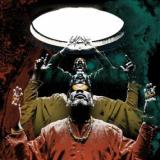
Time To Get On Board A New Black Universal Express.
With each new recording Anthony Joseph presents an imaginative, personal vision of contemporary black culture, and The Ark is yet another compelling album by the award-winning Trinidadian poet and musician. This second part of a sequence of two albums launched with last year’s Rowing Up River To Get Our Names Back, finds Joseph giving full vent to his desire to explore many thought-provoking themes. However, there is a specific thread running through the glorious offering of sounds.
”I was especially interested in the idea of using Afrofuturism as a means of using the future in order to correct the wrongs of the past,” explains Joseph. “And so a lot of lyrics reimage or imagine an alternate black history. At the same time there are elements of autobiography.” The aforesaid cultural phenomenon, a view of the black experience through the prism of science fiction and ancient Egypt and Africa, as mapped out by visionaries from music and literature such as Sun Ra, Parliament-Funkadelic and Octavia E. Butler, has previously inspired Joseph. His 2006 novel The African Origins Of UFOs was a multi-hued work, and the new music shows how Joseph
has, much like all significant artists, gone on to broaden his conceptual palette, creating beguiling new stories and images set to startling rhythms and tones. Tracks such as ‘James’, with its taut, crisp bass and dubbed-up brass, and ‘Transposition Of Space (Glissant)’, a potent evocation of the influential Martiniquan theorist set in a haze of jazz guitar and ambient synthesizers, are marvels of text-sound painting.
As for ‘Baron Samedi’, shaped by a languid, almost wounded guitar line and slow rise of horns that frame Joseph’s journey to the ‘mountain of fire, almost touching the sky’ it is an epic blend of commanding vocal delivery and dramatic sonic tapestry.
Joseph led the Spasm band in the early 2000s and recorded well-received albums such as Bird Head Son and Time, in which songs were largely based on spirituals or chants enhanced by improvisation. But his musical curiosity has naturally led to collaborations, and the new work is produced by Dave Okumu, the prodigiously talented guitarist-vocalist-composer known as the leader of Mercury Music Prize-nominated The Invisible, and who was also a member of the seminal band Jade Fox.
Having first performed together at a show curated by influential saxophonist-flautist Shabaka Hutchings at the storied Total Refreshment Centre In London during lockdown, Joseph and Okumu struck up a rapport that further developed when the former guested on he latter’s album. With the connection made Joseph knew Okumu was the ideal producer for this latest project, which has a freewheeling, almost black psychedelic thing. After sifting through demos and loops the guitarist made on pro-tools the poet started to live with the music. Many months later words began to take shape. Joseph then went into the studio with Okumu’s band and set about creating a magnum opus. Boasting a stellar cast such as vocalist Eska Mtungwazi, trumpeter Byron Wallen and keyboardist Nick Ramm, The Ark is a highly intricate musical mosaic framed by simmering funk grooves, wily jazz improvisation and haunting dub effects. Through the use of many genres the music has simply become its own genre.
The Ark can be perceived as a vessel or means of transport to new worlds, along the lines of Sun Ra’s Ark or Funkadelic’s Mothership, and the material it contains is a unique blend of who Anthony Joseph is and how he sees the world and society in these stimulating, challenging times. “It balances the personal with the universal in a much more vulnerable, accessible way than on previous albums,” Joseph explains.
“It has become less about a personal experience and more about a collective, communal experience in which the artist is conduit, messenger, urban griot.”
он должен быть опубликован на 22.05.2026

Reissue for the first time of original Ethiopian 7inch with the beautiful artwork. 6 different 7inch plus a poster and 6 stickers included in a boxset. Track Selection, by Francis Falceto (ethiopiques series founder and Ethiopian music specialist).
Following the success of volume 1, sold out at the record store day 2017, Heavenly Sweetness decided with Francis Falceto to give a follow up to this boxset of Ethiopian singles. Francis plunged into his impressive collection of
Ethiopian records to bring out colourful pearls. There are great names of the golden age of Ethiopian music such as Mahmoud Ahmed, Alemayehu Eshete, Ali Mohamed Birra but also less known artists to be rediscovered as Muluquen Melesse, Alayew Mesfin or Seyoum Gebreyes.
This box is a tribute to the Ethiopian music producer Ali Tango, who produced most of these EP's.
Есть у нас в наличии и готов к отправке
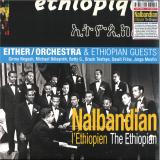
The Éthiopiques series returns! Essential archive recordings from an extremely fruitful period in Ethiopian music.
Before “Swinging Addis” took over the world, there was Moussié Nerses Nalbandian — the Armenian-born composer who shaped modern Ethiopian music. Mentor, arranger, and pioneer, he laid the foundations of Ethio-jazz.
This Éthiopiques volume revives his forgotten legacy, recorded live by Either/ Orchestra First issue ever with new exclusive photos and in depth liner 8-page insert.
“Ethiopian jazzmen are the best musicians that we have seen so far in Africa.
They really are promising handlers of jazz instruments.”
Wilbur De Paris
(1959, after a concert in Addis Ababa)
አዲስ፡ዘመን። *Addis zèmèn* **A new era.**
The time is the mid-1950s and early 1960s, just before "Swinging Addis" bloomed – or rather boomed – onto the scene. Brass instruments are still dominant, but the advent of the electric guitar, and the very first electronic organs, are just around the corner. Rock’n'Roll, R’n’B, Soul and the Twist have not yet barged their way in. Addis Ababa is steeped in the big band atmosphere of the post-war era, with Glenn Miller's *In the* *Mood* as its world-wide theme song, neck and neck with the Latin craze that was in vogue at the same period. Life has become enjoyable once again, with the return of peace after the terrible Italian Fascist invasion of Ethiopia (1935-1941). The redeployment of modern music is part and parcel of the postwar reconstruction. *Addis zèmèn* – a new era – is the watchword of the postwar period, just as it was all across war-torn Europe.
The generation who were the young parents of baby boomers** were the first to enjoy this musical renaissance, before the baby boomers themselves took over and forever super-charged the soundtrack of the final days of imperial reign. Music is Ethiopia's most popular art form, and very often serves as the best barometer for the upsurge of energy that is critical for reconstruction. Whether it be jazz in Saint-Germain-des-Prés or the *zazous* who revolutionised both jazz and French *chanson* after the *Libération*, be it Madrid's post-Franco Movida, or Dada, the Surrealists and *les années folles* that followed World War I, the periods just after mourning and hardship always give rise to brighter and more tuneful tomorrows. Addis Ababa, as the country's capital, and the epicentre of change, was no exception to this vital rule.
**Two generations of Nalbandian musicians**
Nersès Nalbandian belonged to a family of Armenian exiles, who had moved to Ethiopia in the mid-1920s. The uncle Kevork arrived along with the fabled "*Arba Lidjotch*", the** "*40 Kids*", young Armenian orphans and musicians that the Ras Tafari had recruited when he visited Jerusalem in 1924, intending to turn their brass band into the official imperial band. If Kevork Nalbandian was the one who first opened the way of modernism, pushing innovation so far as to invent musical theatre, it was his nephew Nersès who would go on to become, from the 1940s and until his death in 1977, a pivotal figure of modern Ethiopian music and of the heights it. Going all the way back to the 1950s. Nothing less. And it is Nersès who is largely to thank for the brassy colours that so greatly contributed to the international renown of Ethiopian groove. While the younger generations today venture timidly into the genealogy of their country's modern music, often losing their way amidst a distinctly xenophobic historiographical complacency, many survivors of the imperial period are still around to bear witness and pay tribute to the essential role that "Moussié Nersès" played in the rise of Abyssinia's musical modernity.
Given the year of his birth (15 March 1915), no one knows for sure if Nersès Nalbandian was born in Aintab, today Gaziantep (Turkiye/former Ottoman Empire) or on the other side of the border in Alep, Syria... What is certain is that his family, like the entire Armenian community, was amongst the victims of the genocide perpetrated by the Turks. Alep, the place of safety – today in ruins.
Before Nersès then, there was uncle Kevork (1887-1963). For a quarter of a century, he was a whirlwind of activity in music teaching and theatrical innovation. *Guèbrè Mariam le Gondaré* (የጎንደሬ ገብረ ማርያም አጥቶ ማግኘት, 1926 EC=1934) is his most famous creation. This play included "ten Ethiopian songs" — a totally innovative approach. According to his autobiographical notes, preserved by the Nalbandian family, Kevork indicates that he composed some 50 such pieces over the course of his career. This shows just how much he understood, very early on, the critical importance of song as Ethiopia's crowning artistic form. Indeed, for Ethiopian listeners, the most important thing is the lyrics, with all their multifarious mischief, far more than a strong melody, sophisticated arrangements or even an exceptional voice. (This is also why Ethiopians by and large, and beginning with the artists and producers themselves, believed for a long time — and wrongly — that their music could not possibly be exported, and could never win over audiences abroad, who did not speak the country's languages).
Last but not least, one of Kevork's major contributions remains composing Ethiopia's first national anthem – with lyrics by Yoftahé Negussié.
Nersès Nalbandian moved to Ethiopia at the end of the 1930s, at the behest of his ground-breaking uncle. Proficient in many instruments (pretty much everything but the drums), conductor, choir director, composer, arranger, adapter, creator, piano tuner, purveyor of rented pianos,... he was above all an energetic and influential teacher. From 1946 onwards, thanks to Kevork's connexion, Nersès was appointed musical director of the Addis Ababa Municipality Band. In just a few years, Nersès transformed it into the first truly modern ensemble, thanks to the quality of his teaching, his choice of repertoire, and the sophistication of his arrangements. It was this group that would go on to become the orchestra of the Haile Selassie Theatre shortly after its inauguration in 1955, which was a major celebration of the Emperor's jubilee, marking the 25th anniversary of his on-again-off-again reign.
At some point or other in his long career, Nersès Nalbandian had a hand in the creation of just about every institutional band (Municipality Band, Police Orchestra, Imperial Bodyguard Band, Army Band, Yared Music School…), but it was with the Haile Selassie Theatre – today the National Theatre – that his abilities were most on display, up until his death in 1977. To this must be added the development of choral singing in Ethiopia, hitherto unknown, and a sort of secret garden dedicated to the memory of Armenian sacred music, and brought together in two thick, unpublished volumes. Shortly before his death (November 13, 1977), he was appointed to lead the impressive Ethiopian delegation at Festac in Lagos, Nigeria (January-February 1977).
His status as a stateless foreigner regularly excluded him from the most senior positions, in spite of the respect he commanded (and commands to this day) from the musicians of his era. Naturally gifted and largely self-taught, Nerses was tirelessly curious about new musical developments, drawing inspiration from the very first imported records, and especially from listening intensely to the musical programmes broadcast over short-wave radio – BBC *First*. A prolific composer and arranger, he was constantly mindful of formalising and integrating Ethiopian parameters (specific “musical modes”, pentatonic scale, and the dominance of ternary rhythms) into his “modernisation” of the musical culture, rather than trying to over-westernise it. It even seems very probable that *Moussié* Nerses made a decisive contribution to the development of tighter music-teaching methods, in order to revitalise musical education during this period of prodigious cultural ferment. Flying in the face of all the historiographical and musicological evidence, it is taken as sacrosanct dogma that the four musical modes or chords officially recognised today, the *qǝñǝt* or *qiñit* (ቅኝት), are every bit as millennial as Ethiopia itself. It would appear however that some streamlining of these chords actually took place in around 1960. It was only from this time onward that music teaching was structured around these four fundamental musical modes and chords: *Ambassel*, *Bati*, *Tezeta* and *Antchi Hoyé*. A historical and musical “details” that is, apparently, difficult to swallow, especially if that should honour a *foreigner*. Modern Ethiopian music has Nersès to thank for many of its standards and, to this day, it is not unusual for the National Radio to broadcast thunderous oldies that bear unmistakable traces of his outrageously groovy touch.
Есть у нас в наличии и готов к отправке

After the resounding success of its first edition, the legendary Lagoa club, temple of techno and hard techno in Menin, strikes back with LAGOA TRAX Vol. 2, a second vinyl release that promises to shake dancefloors with four explosive tracks crafted by the club’s emblematic resident DJs: DJ HS, Manu Kenton, Jamie Dill, and Max Walder.
Faithful to the spirit of Lagoa, these four pillars of the club deliver a new collection of powerful productions, raw, energetic, and forged for peak-time moments. Each track embodies the unmistakable sound that has made Lagoa’s nights legendary: relentless rhythms, hypnotic synths, and an intensity that ignites the crowd from the first beat.
Already tested and approved on Lagoa’s iconic dancefloor, these tracks have quickly become essential weapons in the sets of the club’s residents. LAGOA TRAX Vol. 2 is much more than a collector’s item, it’s a pure concentrate of the club’s energy, a sonic tribute to its unique atmosphere, and a must-have for all lovers of techno.
Français
Après le succès retentissant du premier volume, le légendaire club Lagoa, temple de la techno et hard techno à Menin, revient en force avec LAGOA TRAX Vol. 2, un second vinyle explosif qui réunit quatre morceaux inédits signés par les résidents emblématiques du club : DJ HS, Manu Kenton, Jamie Dill et Max Walder.
Fidèles à l’esprit Lagoa, ces quatre figures incontournables livrent ici une série de productions puissantes, taillées pour le dancefloor. Des rythmiques percutantes, des montées hypnotiques et une intensité sans concession : chaque titre capture l’énergie brute et la signature sonore unique qui font la réputation des nuits Lagoa depuis plus de trois décennies.
Déjà testés et approuvés sur le système légendaire du club, ces quatre tracks sont de véritables bombes, prêtes à retourner n’importe quel dancefloor. LAGOA TRAX Vol. 2 s’impose ainsi comme bien plus qu’un simple vinyle : c’est une immersion totale dans l’âme du club, une déclaration d’amour à la techno, et un objet de collection pour tous les passionnés.
Есть у нас в наличии и готов к отправке

This single gets together two rare and important tracks from legendary producer Lee “Scratch” Perry with singer Neville Grant.
SICK AND TIRED, the great vocal version of RETURN OF THE DJANGO, was released in 1973 on Downtown (DT.509) whilst
BLACK MAN’S TIME was released in 1972 on the Upsetter label.
These two outstanding tracks are in our opinion the best of Neville Grant’s recordings and among Lee Perry’s very best productions of this era.
As such, they were featured on several top compilations but are both quite rare as singles and highly collectable today…
Есть у нас в наличии и готов к отправке

Stepping out of the shadows with refined precision, Saktu returns to Heisenberg with the Fucha EP – a sharp, hypnotic exploration of minimal groove. Sleek rhythms, tactile textures, and playful low-end pressure define this trio of deep, late-night rollers.
Balancing raw functionality with subtle artistry, the Fucha EP captures the essence of what makes Heisenberg a beacon in the modern minimal scene. Crafted for the floor, tested in the booth
Есть у нас в наличии и готов к отправке

The label say:
"Guts unearthed this afro-caribbean gem "Vini Ouais" by Djingo Typical Band for his Straight from the Decks compilation. Inspired, Art of Tones created an unofficial remix—a heartfelt tribute to this French Guiana treasure. It quickly lit up dance floors, shared among DJs like GUTS, Antal, Radio Meuh... and many more...
Here comes the official release, the remix is set to become a dancefloor banger.
Guts a déniché cette pépite de biguine-zouk signée Djingo Typical Band, "Vini Ouais", et l’a aussitôt intégrée à sa compilation à succès Straight from the Decks. Séduit à son tour, le talentueux producteur et remixeur Art of Tones en propose un remix non officiel, véritable déclaration d’amour à ce bijou venu de Guyane française.
Très vite, le titre revisité enflamme les dancefloors, circulant discrètement entre quelques DJ privilégiés, comme un secret bien gardé. Face à l’engouement et aux nombreuses demandes, le remix sort enfin officiellement, pour le plus grand plaisir de tous. Il est désormais joué par Antal, Laurent Garnier, Radio Meuh, Guts, Art of Tones, et bien d'autres, révélant un groove irrésistible qui met tout le monde d’accord."
Есть у нас в наличии и готов к отправке

Есть у нас в наличии и готов к отправке

For the seventh installment of his Hardspace series, Len Faki selects three standout tracks from his personal vault - polishing them up with signature flair for maximum impact.
The A-side features a powerhouse mix of Jimmy Edgar´s Strike. Len Faki brings extra drive and spatial depth to the mix: sizzling hi-hats pan sharply across a tight stereo field, vocal chops flicker in and out, and the groove is stripped, slick, and forceful. A subtle reverb treatment adds atmosphere without compromising punch.
On the B-side, Faki dives into Robert Armani's 1994 album Right to Silence, revisiting two Chicago-style jacking tracks that are nodding to the Dance Mania era.
Up rides on a fierce hi-hat shuffle and a pounding stomp, centered around a bold vocal loop that captures the rough, battle-cry attitude of classic Chicago jack tracks. Faki's edit sharpens the angles and tightens the structure, giving the track even more bite.
Road Tour originally leaned on a harsh, detuned lead synth. Len´s Hardspace version removes the abrasive top line and lets the looping arp take center stage, which subtly shifts in tone and pans across the stereo field. The groove doesn't push forward so much as it sways side to side, creating a warped sense of motion. A pitched-up vocal sample-half command, half tease-injects just the right dose of jack attitude.
HS007 channels the raw, functional energy of vintage Chicago trax through Faki's modern lens - respectful to its roots, but fully tuned for today's sound systems.
Есть у нас в наличии и готов к отправке

This is in fact a cover of "You'll Lose A Good Thing" a slow 1962 R&B hit written, played and sung by Barbara Lynn. In our humble opinion this cracking 60’s reggae cover is vastly superior to the original with its frantic electric guitar introduction, the cool harmonica solo in the middle and Audrey’s gorgeous vocals set against the up-tempo riddim. "You'll Lose A Good Thing" is a rare early Reggae track that does rock.
An absolute must!
An original Dandy Livingstone composition, “Love Me Tonight” showcases Audrey’s tender, soulful side. Layered horns and bubbling keys back her sensual but restrained vocals. The song sits at the crossroads of lovers rock and early reggae offering a romantic storm of yearning and groove.
Very popular with the Skinhead crowd back then, it is yet another rare great track from Audrey and it complements perfectly You’ ll Lose A Good Thing on the A side!
Есть у нас в наличии и готов к отправке

Есть у нас в наличии и готов к отправке

Есть у нас в наличии и готов к отправке

Available in an exclusive red vinyl edition, the "Red Shiva" EP invites listeners to dive into a captivating sonic universe, blending enchanting melodies and punchy rhythms. Early support from Mha iri (Drumcode), M.I.K.E. Push (Bonzai), Dave Davis (Laark), DJ Fire (Bonzai), Tom Leclercq (Exreme), DJ HS (Lagoa)…
Есть у нас в наличии и готов к отправке

180 G. BLACK VINYL WITH LINER NOTES IN CREOLE, FRENCH, ENGLISH
Originally released in 1979, "Spiritual Sound" lives up to its name, a soaring, triumphant album, six tracks of spirit magic from Guadeloupe.
Telluric, intense, terribly alive, the gwoka drums of Guadeloupe carry the identity of a painful and fervent island. Marked forever by the crime of slavery, Guadeloupe's créolité cherishes the ka drums and their natural environment: the low-pitched boula drum with male goatskin, the high-pitched soloist makè drum with female goatskin, the chacha, ti bwa, triangle, calabash and other percussion instruments that surround them, and the voices - the fiery, proud, timbred, urgent voices of the gwoka.
This album is also a legend for its voices: in his then dazzling youth, singer Lukuber Séjor was one of the first gwoka artists to largely feminize the chorus of répondè, who converse with his text delivered in a straight and powerful voice.
And everything here sets new standards. In 1979, Mizik Filamonik - Spiritual Sound proclaimed a spiritual patriotism of ferocious intensity. The album by Lukuber Séjor - whose spelling alone is a battle - sets out to give Guadeloupe the intangible weapons of self-respect and self-knowledge, through a singular practice of traditional music.
The genesis of gwoka music is less straightforward than one might imagine... The drums performed the servile task of accompanying the work of slaves in the fields and during the “corvées” imposed by the administration, before being freely practiced by the common people after the abolition of 1848. At the heart of the conviviality of the Guadeloupeans furthest from the cities - geographically and socially - the gwoka drums come out for carnival, funeral wakes and neighborhood celebrations, but also during strikes, fits of anger and armed vigils of the riots and revolts that have punctuated the island's history. For generations, governors of the colony and then the prefects of the overseas department of Guadeloupe have been viewing the gwoka as a potential for turbulence and a threat to public order.
But as the Beatlesmania, “chanson engagée” and rock revolutions unfolded in Europe, young people turned to the drums of mizik a vié nèg (“bad negro music”, in Creole), which Guadeloupeans had learned to despise by following the “assimilation” process advocated by the school system and most of the political class. At the end of the sixties, in a Guadeloupe mourning the deadly repression of the May 1967 social movement, they played traditional music, refusing to wrap it up in tourist prettiness and madras folk costumes. Instinctively, they played a rough and contemporary gwoka, led by the incendiary Guy Konkèt. This was the era of decisive 45 rpm records such as Robert Loyson's Kann a la richès, which brought to light the fieriest words of union rallies.
At his home in Sainte-Anne, Lukuber Séjor played with flautist Olivier Vamur and his brother Claude Vamur, who cobbled together a drum kit from tin crockery and became, a few years later, the most influential drummer in Kassav'.
These were the years of the Bumidom program, when young Guadeloupeans were encouraged to emigrate to mainland France. At the age of twenty, Lukuber Séjor embarked on the liner Irpinia, disembarking at Le Havre and taking the train to the Gare Saint-Lazare - the route taken by thousands of young West Indians who went on to study or looked for work, all the while trying to maintain a link with their homeland. In this case, it's at the Antony university residence, where Lukuber played the drum and participated in a thousand gwoka updates and aggiornamentos, while exile reinforced the need for a spiritual link with the native land.
In 1978, Guy Konkèt played at the Salle Wagram, a historic event for West Indian music. After serving as répondè - i.e. backing vocalist - on one of his home-recorded albums, Lukuber joined his live band. Little by little, he became one of the key artists on a circuit parallel to French show business. At a student party in Caen, he met a young woman from Martinique who, at the time, was more motivated by her ambitions as a visual artist than by her vocation as a musician. Her name was Jocelyne Béroard and, a few years before she plunged into the Kassav' adventure and became the greatest West Indian singer of her generation, she designed the cover of Lukuber Séjor's LP.
This ambition was obvious and imposed its will. A more or less regular band was formed, with Roger Raspail, Rudy Mompière and Éric Danquin on ka drums, Claude Vamur on ti bwa, Olivier Vamur and Françoise Lancréot on flutes and Annick Noël on keyboards. Lukuber Séjor is set on wanting to extend the gwoka palette to other instruments, as the jazz-rock revolution opens a thousand new doors. Annick Noël will play a wide range of timbres and textures on electric piano and synthesizer. Another novelty: the répondè are two men and two women, Roger Raspail, Olivier Vamur, Françoise Lancréot and Maryann Mathéus ...
Mizik Filamonik - Spiritual Sound is a self-production in which the singer and leader sank all his savings, allowing him no more than a single day in the studio. The first side is more of a musical manifesto, with the first two tracks, Éritage and Penn é plézi, being instrumentals. The third, Son, forcefully celebrates the need for Guadeloupeans to connect with the gwoka. In fact, Jocelyne Béroard's cover shows a tambouyé in the shadow of a cloudy sky, against which a radiant sun is rising and whose light will soon flood the entire landscape. The silhouette and face of this man strongly evoke the immense Vélo, master of the ka, rejected at the time on the fringes of society.
The second side of the LP is surprising. Formally, three tracks are explicitly linked like the three parts of a triptych. Primyé voyaj evokes the appalling tribulation of Africans deported as slaves to Guadeloupe; dézyèm voyaj speaks of the Bumidom program and the economic, political and social forces driving young Guadeloupeans towards the mirage of prosperity in France; twazyèm voyaj closes the cycle with the emigrants' return from Europe after years away from their island...
This gwoka, obsessed with the need to save Guadeloupe spiritually, appeals far beyond the politicized audience. Mizik Filamonik - Spiritual Sound instantly became a classic, although Lukuber Séjor never really made a career for himself as a musician.
After all, the album was released in 1980, with no promotional resources in France or Guadeloupe - and therefore no concerts. The thirty-two-year-old author, composer and performer made his own third trip back to Guadeloupe. He set up a small woodworking business, which he lost in Hurricane Hugo in 1989. His other activity, teaching in a medical-educational institute, became the core of his professional life. He continued to be an active campaigner - a campaigner for the Creole language, a campaigner for the reawakening of identity, a campaigner for special education, a campaigner for a thousand causes that he ignited with his generous and perceptive enthusiasm, such as the defense of breadfruit fries...
The echoes of his 1979 album have not died down. Of course, the use of Penn é plézi as the theme tune for Radio Guadeloupe's funeral notices from 1980 to 1992 kept him in the collective memory, but he continues to sing and compose sporadically, as with his all-female
vocal group Vwapoulouéka... Still convinced that music is a means of liberating the spirit, he continues the journey of a young man eager to deploy the power of Creole music and language.
Bertrand Dicale
Есть у нас в наличии и готов к отправке

2025 Repress
Searchlight Moonbeam is the new narrative compilation from Time Is Away (Jack Rollo and Elaine Tierney) whose eponymous monthly NTS Radio shows, tinctured fusions of fugitive sounds and reverie-inducing archival speech, have won them an ardent following. It follows from the London-based duo’s Ballads, a remarkable driftwerk released on A Colourful Storm in 2022.
Searchlight Moonbeam is an autumnal dreamscape, intimate and vespertine, pensive and irresolute. An imagined community where differences drop off and resonances emerge – between Maher Shalal Hash Baz affiliates Kasumi Trio, Taiwanese score composer Chen Ming Chang whose ‘Rainwater’ (written for Hou Hsiao-Hsien’s 1986 film Dust In The Wind) is exquisitely heartbroken, and the plangent improvisations of self-taught French pianist Delphine Dora.
Revelations are frequent: the bedsit isolationism of Bo Harwood and John Cassavetes’ ‘No One Around to Hear It’ (from The Killing of a Chinese Bookie); the narked minimalism of Klang (an early 2000s band formed by ex-Elastica guitarist and featuring prize-winning experimental novelist Isabel Waidner on bass); the etude-grooves and echoic wobble of below-the-radar French avant-gardists Omertà ; the beautiful, plaintively dubby ‘Is It You?’ by Slapp Happy; a psych-tinged reimagining of PiL’s ‘Poptones’ by Simon Fisher Turner (one half of Deux Filles, and here, recording for él as The King of Luxembourg) that's as perverse as the cover of Throbbing Gristle’s 20 Jazz Funk Greats.
Searchlight Moonbeam is the musical analog of an Italo Calvino novel or a medieval fable. Associative, intuitive, borderless. Emotional and mysterious. Endowed with the tactility of Braille. A private language that is both unknowable and understood. It is a record of the seasons, for the seasons.
2023 marks the tenth anniversary of Time Is Away’s first broadcast. Featuring an evocative essay by writer Jeremy Atherton Lin and disarming cover art by Penny Davenport, Searchlight Moonbeam showcases Rollo and Tierney’s still-unrivalled talent for gloaming melodies, disques du crépuscule, ensorcelled storytelling.
Есть у нас в наличии и готов к отправке

Here is our Hot Sauce Volume 5 showcasing some seriously groovy and rare Rocksteady,
Boss and Reggay tracks mixed expertly for yet another thrilling early Reggae experience on vinyl.
Here is the much anticipated volume 5 of the HOT SAUCE compilation LPs dedicated to the Trojan related labels between 1965 and 1975.
HOT SAUCE volume 5 features outstanding original Rocksteady, Boss Reggae and early Reggae (“Reggay”) tracks including rare songs, overlooked gems, hidden treasures and a couple of hits. The record labels showcased on this fourth volume are Amalgamated, Bread, Downtown, Duke, Explosion, Grape, Harry J Records , JJ Records, Rio, Splash, Upsetter and Techniques.
The tracks here have been selected according to their musical interest firstly, their rarity, and their complementarity.
These tracks are all outstanding tracks, “killer tracks”, there is no “filler” whatsoever.
Particular attention has been paid to the way the songs are sequenced (or “mixed”) so that the album builds up nicely and gradually, generally starting
with the Rocksteady songs on the A side and the 70s songs on the B side.
The HOT SAUCE series is a musical journey across Trojan and its labels showcasing early Jamaican Reggae’s diverse musical genres and outstanding artists.
Since the early 70s’ “Tighten Up” and “Club Reggae” series, no compilations have really explored these labels in depth on vinyl.
It might be the last volume of the series as we know it so we wanted to make a splash for volume 5.
It is a nod to self-censored lewd Reggae covers from Trojan and Pama in early 70s. So don't fret,
a collectible yellow sticker has been strategically applied on the shrink-wrap to cover Miss Rocksteady's bottom!!
With its striking cover and its thrilling Reggay selection, volume 5 is bound to become another successful album in the Hot Sauce series...
Есть у нас в наличии и готов к отправке

Vibes Addikt kicks off 2025 with an explosive first release: the new single from Samuel Sanders, "One D". A track that pays tribute to the sounds of 90s raves while infusing a resolutely modern and impactful energy.
Samuel Sanders, known for his incisive productions and contributions to prestigious labels like Ghoststyle, Invasion, and Kevlar, makes his grand return with a track that hits hard. "One D" draws direct inspiration from the old-school rave vibes, featuring deep basslines, acid synths, and a hypnotic atmosphere that sweeps the listener into an energetic, danceable spiral.
As a bonus, N.O.B.A. offers a remix that completely reinvents the track, amplifying its immersive and impactful dimension, perfect for energizing the most intense sets. His remix enhances the hypnotic aspect of "One D", while adding the brutal and modern touch that is N.O.B.A.'s signature.
The EP continues with "Azekor" (B2), a track that will literally take over the dancefloors. Designed for the peak moments of a night, "Azekor" is a hypnotic techno track with an unrelenting groove, ideal for those high-energy club moments.
With this first release on Vibes Addikt, Samuel Sanders makes a bold entrance into 2025. "One D" and "Azekor" are must-hear tracks, true anthems for fans of raw, hypnotic techno capable of taking over the dancefloors.
Early support from Dave Davis, Youri Parker, Furax, DJ HS, Franky Kloeck, Tom Leclercq…
Есть у нас в наличии и готов к отправке

180G BLACK VINYL
Since Outlaws in 2020, Ludivine Issambourg's flute has not cooled down. How could it have, when with that album of Hubert Laws covers, it had reached incandescence? Still panting, burning despite the lid of its case left wide open, it awaited the opportunity to continue the adventures that Master Laws himself had praised.
A continuation? Above The Laws isn't quite that.
Although his name still appears, Hubert L. is no longer the sole guide in exploring the vast galaxies of jazz-funk. Through covers but especially as an enhancer of her own compositions, Ludivine has invoked the spirit and intangible presence of Jeremy Steig, Ronald Sneijder, and Bobby Humphrey—the legends of the flute.
Guided by an unescapable groove, with a musical dial set to the late 70s and early 80s, Ludivine has enlisted the help of a brass section this time, a true propulsion engine for funk that can also shift to a soulful breath if the moment calls for it. Supporting the keyboards, there's a Moog laying down its rich layers or twisting tones.
The flutes are used like levers to stabilize the flight or, conversely, to make it soar even faster through the measures. The alto version, which Ludivine had previously used sparingly, adds the necessary velvety note when it’s time to embark on smoother destinations. Speeding up the tempo to make passengers rise from their seats as if danger were imminent; calming the atmosphere to put them in a reassuring cocoon where they can let their thoughts and spirits wander, the improvisations find their place in the compositions observed from the porthole. Detached from gravity, yet still very much in tune with the vibe of cities marked as hot spots on the current jazz scene radar, it's the scent of these streets that permeates some tracks of Above The Laws.
Directed from the control tower by Eric Legnini, Chassol, Alex Finkin, and Michaël Lecoq, Above The Laws benefits from a few stops along the way where precious connections are established. Nils Landgren and his trombone in the colors of the Swedish flag, Laurent De Wilde for a chase between flute and Fender Rhodes, Céline Bonacina’s saxophone for an Afrobeat detour.
But it's at the edge of a journey where organic intensity has continued to assert itself without losing power that Ludivine connected with Brian Jackson for a cover of "Angel Dust," a track from the era when he and his partner Gil Scott-Heron were creating soul masterpieces. One of them featured a flutist by the name of Hubert Laws.
The starting point of Ludivine's latest jazz-funk explorations also becomes the endpoint. Elevated by the ten tracks of Above The Laws, Ludivine Issambourg closes a loop where she has placed her flute and its flourishes in an undeniably leading role. Opening the doors to ambitious orchestrations, unexplored horizons, she weaves into her compositions the experiences, places, and encounters that have shaped her.
Есть у нас в наличии и готов к отправке
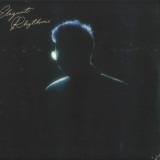
DJ support: Tim Sweeney, Make A Dance, Parris, Pleasure Voyage, Camillo Miranda
Back yard - Back yard is the first single from the new Teen Daze album, Elegant rhythms, and features singer-songwriter Andy Shauf on drums, and LA jazz staple, Sam Wilkes, on bass. This is a stark change in sound for Teen Daze, who’s last album Interior was an exploration of neon-lit House music. Back yard is a mellow groover, conjuring up images of Laurel Canyon in the 70s, yet still with its flourishes of contemporary sounds.
We’re out of phase again - We’re out of phase again is another vulnerable glimpse into the inner world of Teen Daze, and marks the release of his most personal album to date, Elegant rhythms. In contrast to the synthesized, digital world of his prior album, Interior, here we’ve been brought into a lush, organic arrangement, brought to you in large part to the stunning bass playing by Sam Wilkes. While the verses pulse forward, the chorus slows things down, and evokes the sophisti-pop sounds of The Blue Nile. This track is a stunning showcase of the world of Elegant rhythms.
Nothing’s gonna change my love - Teen Daze returns with his second single of the year, Nothing’s gonna change my love. The stark change in sound, as heard on previous single Back yard, is on display here again: a smouldering, 2 and a half minutes of slow jazz-pop, indebted to the great Sade, or perhaps the feeling of leaving downtown LA at 2 AM. Lyrically, we hear a story of a love, challenged by the unpredictable nature of our lives. This may be Teen Daze’s smoothest song to date.
Neighbourhood - Neighbourhood is the third single from the recently announced LP from Teen Daze, Elegant Rhythms. Along with Andy Shauf on the drums, and Sam Wilkes on the bass, Teen Daze gives us a languid tour of his quiet neighbourhood. The sun has set on the pleasant, tree-lined streets, and a stranger, more surreal environment presents itself. The song plods forward at an extremely comfortable pace, held down by the paradoxically loose-yet-tight rhythm section. Lyrically, we walk around the Neighbourhood at night, and while the chorus reveals a type of sobriety, the vibe of the song makes it easy to feel a little…effected.
Fade away - Fade away sets the tone for Elegant Rhythm’s side B: a deeply personal, though somewhat veiled, confession of loss. How does it feel to grieve something that was never really here? A smouldering, slowly progressing first half erupts in synthetic noise, and then fades into the ether with it’s repeating refrain, “I can feel you / feel you fade away / when there’s nothing / nothing left to say”.
Fall ahead - A sweet piano tune which serves as a quiet break in the record, intended to help the listener reflect and take a moment of pause before we reach the final two songs on the album.
HST underwater - The penultimate track on the record tells a story where the narrator finds themself in an alien, yet oddly familiar place. Arpeggios soaked in crystal blue water flow through the stereo field, while the narrator, vocoded and drenched in autotune, searches for meaning and purpose in a confusing world. This is one of Teen Daze’s most cinematic, emotional songs yet.
In the rain - It’s never really made explicitly clear on this record, but a lot of these songs find Teen Daze wrestling with life as a new father, and this song, the final on the album, expresses the fears of generational trauma. A touching, tender ode to his children, we hear Teen Daze at his most personal and vulnerable. The falling rain surrounds some absolutely breathtaking bass playing from Sam Wilkes, and Teen Daze’s signature ambient keyboard sounds.
Radio Support: Ruf Dug (Soup To Nuts on NTS)
Есть у нас в наличии и готов к отправке

" In 2022, Guts brought together his musical family for his ‘Estrellas’ album. An ambitious project that brought together musicians from: Franc, Cuba and various African countries. For a journey that was as rich artistically as it was humanly. The list of superlatives was almost endless, "Formidable", "incredible", "unforgettable" and "magical" all thrown into the pot, during these magical moments in the Dakar studio. From the seventeen tracks heard on the original album, three have been entrusted to the expert and inventive hands of four producers, who have come up with new interpretations bringing Africa and the Caribbean together for a modern dancefloor.
‘Por Que Ou Ka Fe Sa’ (Poirier Remix)
From his studio in Montreal, Canadian Poirier has opted for a strong groove and relentless bass drum to keep out intruders, putting vocalists David Walters and Brenda Navarrete in a rhythmic cocoon. Accompanied in a slightly moody bassline that adds some driving muscle to the track. The hooky guitar line eventually gives way to the saxophone that emerges from the mix to parade around the front line. The original electric piano is replaced by a synth pad that loops and spins driving the track to its conclusion.
‘Por Que Ou Ka Fe Sa’ (David Walters Remix)
Before recording this track, David Walters and Brenda Navarette didn't even know each other. So in the magic of the moment that brought them together is a genuine and sincere artistic bond. It is no longer Guts but David who is at the musical helm, and before they too can savour the connection between the two artists, the dancers will have to pass through an overheated corridor where a Caribbean rhythm resonates with percussion. Digital and woodwind swirl and clash until the vocal encounter with the artists. It's a moment of respite that's as suspended as it is life-saving, because the exit is also via the famous corridor.
‘San Lazaro’ (Bosq Remix)
On Bosq’s mix, he’s opted to maintain things focused on the dancefloor, keeping the percussion persistent for the unleashed bodies of the dancers to smile. It's once again the walking bass line rises to the forefront of the groove, softening the shocks of the relentless kick drum. Roberto Valdes's timeless piano has disappeared, while guitars float and add to the atmosphere. The track is no longer awash in cigar smoke. Under Akemis's powerful vocals the low ceiling has disappeared, and the open roof is more a brass-lit spectacle. That doesn't make things any less overheated though, this one is sweaty until the end.
‘Medewui’ (Captain Planet Remix)
Captain Planet brings the dancer’s attention to the Afrobeat flavored jam that rocked the original, highlighting the Pat Kalla & Assane Mboup duet. Despite the track remaining mid tempo, laying back is no longer the order of the day as this mix really develops. The drums are more present jolting along with the organ in the first half. Once all the storytellers have taken their microphones, the rhythmic beats are doubled and the track is carried towards a frenzy of Afro-Latin dancing. Fired up by the brass and percussion, it’s this almost switch up that takes hold of the second part of the tune, with some righteous authority and relentless piano and trumpet."
Есть у нас в наличии и готов к отправке

Repress.
The follow up of the acclaimed first volume of this compilation, a real discovery for many DJs and music lovers worldwide who didn't know that much about Zouk or DIY electronic music of the french west indies.
.
The selectors Julien Achard and Nicolas Skliris continue the excavation of French Antillas vinyl from the 80's and the 90's and for this second volume, they found some really exciting new references which should be soon « classics » on the dancefloors.
Есть у нас в наличии и готов к отправке

Musician, composer, bandleader and musical rubik’s cube, Laurent Bardainne is a saxophonist who trained at The Paris Conservatory.
He’s collaborated with Pharrell Williams, Cassius and Philippe Katerine to name just a few and presents here his latest project, ‘Tigre d’eau Douce’ Also co-founder of electro rock band Poni Hoax (Tigersushi Records), Limousine, a duet with Camelia Jordana and more recently Sabrina & Samantha for Ed Banger. This album, sees a return to his first love of jazz, The Tigre d’eau Douce, represents a species doomed to disappear. So using melodies, chants and solos as an escape guide, his tenor saxophone takes us to a higher place,
one where John Coltrane and the great figures of jazz reside. These LP tracks bounce between the grooves and soul of the 1970’s, where
percussion and saxophone pave the way. ‘Marvin’ allows the fluffy keys of the Hammond organ to open out into a pensive melody that feels familiar. Carrying on the journey, the tough asphalt of hip hop is visited on tracks like ‘Bachibouzouk’ and ‘Felin M chant’, whereas more tropical themes are explored on tracks like ‘Kinshasa’.
Есть у нас в наличии и готов к отправке

Есть у нас в наличии и готов к отправке
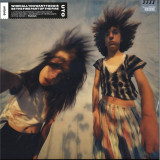
When all you want to do is be the fire part of fire… say it to yourself and then say it again. Repeat it like a mantra. It’s what UTO did.
Anyone familiar with the UTO’s lauded 2022 debut Touch The Lock, which Pitchfork praised for its “prismatic synth pop”, will be aware of the variegated nature of what they do. This album is just as colourful, with Neysa’s vocalwork sparking similarities to Kim Gordon’s off-kilter vocals, which they both ceremoniously jets through a post-electronica blender mixing stylized indie sleaze productions with 90s breakbeats.
While they might appear as a singular entity to others, UTO wrote large sections of this album apart, converging by the fireside to discuss the day’s work before coming together to hone and finish the songs. 2023 was, by their own admission, a difficult year, and that’s reflected in the Dantean themes expressed in songs such as the lead single ‘Zombie’, which arrived at the end of November as a taster for the new record; the latter’s dark heart is belied by the skittering beats, glitchy electronics and pummeling sequencers that elevate it from the void.
From fire, early man’s discovery, to AI, humanity’s next great adventure - with all of the wonders and complexities of human relationships in between - When all you want to do is be the fire part of fire really is about life, the universe and everything. Just remember, be the flame, not the moth.
Есть у нас в наличии и готов к отправке

After touring the globe showcasing their A/V moshpit-inducing live show, they are revealing their new musical creations to an unsuspecting public. Never Sleep are proud to present a landmark moment in the Japanese hardcore new rave scene. The blinding lights of DEATH RAVE point to an untraveled journey, a sci-fi fusion of black metal, gabber, cyberpunk, performance art and techno. It’s their first for the Berlin label (founded by Gabber Eleganza) following 2021’s EP Principle of Light Speed Variance. Full description VMO aka Violent Magic Orchestra break through the darkness and herald a spectacular mould-melting sound on their forthcoming album DEATH RAVE. After touring the globe showcasing their A/V moshpit-inducing live show, they are revealing their new musical creations to an unsuspecting public. Never Sleep are proud to present a landmark moment in the Japanese hardcore new rave scene. The blinding lights of DEATH RAVE point to an untraveled journey, a sci-fi fusion of black metal, gabber, cyberpunk, performance art and techno. It’s their first for the Berlin label (founded by Gabber Eleganza) following 2021’s EP Principle of Light Speed Variance. Ahead of the release VMO have brought their digital harcore to festivals around the globe, including Roadburn Festival, BANG FACE Weekender, Brutal Assault extreme music festival, Le Guess Who?, CTM Berlin and Dark Mofo. Their performance is the ultimate extreme visual music project in which techno, black metal, and industrial unite to create a ritual from the near future, 2099. All visual art and stage setting is provided by non-touring member, artist and programmer Kezzardrix (who has been visual director for millennium parade and BABYMETAL previously).The power consumption of a VMO show is equivalent to 56 guitar amplifiers, 5000W, a mind-expanding supreme noise and light experience. The band members all go by the names of classic black metal bands rendered in the Japanese katakana script; “ダークスローン”; “メイヘム”, and “エンペラー”. Their new LP is the first to feature lead vocalist ザスター. The record features guest vocals from extreme metal icon Attila Csihar, known for singing with Mayhem and Sunn O))). Other featured artists include Dylan Walker, singer of Full of Hell, punk-techno artist Infinity Division (aka Ash Luk), Icelandic darkwavers Kælan Mikla and Ican Harem of Gabber Modus Operandi. The result is a leap forward from their 2016 debut, where they have found a singularity where death metal meets Kraftwerk, or Rephlex goes black. Dressed in corpse paint and other hell-raising looks, onstage they are like “Shinigami (death gods) from the Death Note manga”. Singles Venom, Supergaze and Martello Mosh Pit featuring Gabber Eleganza have been released in the lead up to the record and have been shocking techno dance floors too with their hi-NRG-symphonic doom-gaze. They have shared their video for Planet Helvetech (here), created by Berlin-based Patrick Defasten. Helvetech combines the Norwegian word for hell (hevlete) with techno and is a reference to the infamous black metal shop founded by Mayhem’s Euronymous. It’s a song that imagines time travel from 2099 on the planet Helvetech (where VMO comes from) to 1990s Oslo. In 2023, they performed at the CTM festival in Berlin, as well as at Berghain, receiving rave reviews. At Sydney’s leading multi-sensory SOFT CENTER festival they drove the crowd into a frenzy on the 17 metre X 30 metre jumbo screen. They have also collaborated with artists, performing at the two day installation by the trailblazing Tianzhuo Chen - The Shepherd - at the Kyoto International Performing Arts Festival in 2021 here. At Sónar 2023, VMO provided the music for Taiwanese visual artist Yuen Hsieh’s work about virtual life after death DIGITAL AFTERLIFE AGENCY here. VMO will tour the world again for the new record, with appearances at ROSKILDE and media art and music fest Sónar 2024 announced so far and the DEATH RAVE experience getting bigger and bigger.
Есть у нас в наличии и готов к отправке

When all you want to do is be the fire part of fire… say it to yourself and then say it again. Repeat it like a mantra. It’s what UTO did.
Anyone familiar with the UTO’s lauded 2022 debut Touch The Lock, which Pitchfork praised for its “prismatic synth pop”, will be aware of the variegated nature of what they do. This album is just as colourful, with Neysa’s vocalwork sparking similarities to Kim Gordon’s off-kilter vocals, which they both ceremoniously jets through a post-electronica blender mixing stylized indie sleaze productions with 90s breakbeats.
While they might appear as a singular entity to others, UTO wrote large sections of this album apart, converging by the fireside to discuss the day’s work before coming together to hone and finish the songs. 2023 was, by their own admission, a difficult year, and that’s reflected in the Dantean themes expressed in songs such as the lead single ‘Zombie’, which arrived at the end of November as a taster for the new record; the latter’s dark heart is belied by the skittering beats, glitchy electronics and pummeling sequencers that elevate it from the void.
From fire, early man’s discovery, to AI, humanity’s next great adventure - with all of the wonders and complexities of human relationships in between - When all you want to do is be the fire part of fire really is about life, the universe and everything. Just remember, be the flame, not the moth.
Есть у нас в наличии и готов к отправке

The AT-LP140XP fully manual professional DJ turntable features a high-torque direct-drive motor and anti-resonant, mass-damped, die-cast aluminium platter to ensure stable, on-axis rotation at 33-1/3, 45, and 78 RPM. It is equipped with an S-shaped tonearm with height adjustment, adjustable tracking force (counterweight) and adjustable dynamic anti-skate control.
Audio-Technica has been a leader in phono cartridge design for more than 50 years, and that expertise shows in the durable, high-output AT-XP3 DJ cartridge with 0.6 mil conical bonded stylus included with the turntable. It comes pre-mounted to an AT-HS6 universal ½"-mount headshell.
Designed to connect to components with a dedicated phono input, the turntable comes with a detachable dual RCA output cable which supplies a strong 5.5 mV phono output.
Additional professional features include a start/stop button; forward and reverse play; selectable high-accuracy quartz-controlled pitch lock and pitch change slider control with +/-8%, +/-16%, and +/-24% adjustment ranges; a stroboscopic platter with speed indicator; a retractable plug-type stylus target light; and a removable hinged dust cover.
Experience high-fidelity audio and professional DJ performance
Direct-drive, high-torque servo motor with speed stabilization
Fully manual operation
Adjustable dynamic anti-skate control
Selectable 33/45/78 RPM speeds
Professional anti-resonance, mass-damped, die-cast aluminium platter with felt mat
AT-HS6 universal ½"-mount headshell and AT-XP3 DJ cartridge with 0.6 mil conical bonded stylus
Balanced S-shaped tonearm with hydraulically damped lift control, height adjustment, and lockable rest
Dedicated phono-level output (5.5 mV)
Stroboscopic platter with speed indicator
Forward/reverse operation and variable pitch control with quartz speed lock
Retractable plug-type target light for easier cueing in low light
Damped base construction for reduced low-frequency feedback coloration
Includes: detachable RCA output cable (dual RCA male to dual RCA male), power cable, 45 RPM adapter, counterweight, felt mat, and removable hinged dust cover
Turntable
Bauart 3-speed, fully manual operation
Motor High-torque DC motor
Antriebsart Direct drive
Geschwindigkeiten 33-1/3 RPM, 45 RPM, 78 RPM
Plattenteller Die-cast aluminium
Есть у нас в наличии и готов к отправке

Есть у нас в наличии и готов к отправке

Есть у нас в наличии и готов к отправке

This is the first re-release on 7inch vinyl single of the early Reggae classic “She Caught The Train” by Ray Martell released in 1970 on the Trojan sublabel Joe in the U.K. and later covered by UB 40 in 1983. This original song, a huge hit, has featured on many compilations but has never been repressed as a single, until now…
It was initially released with the track “Tea House From Emperor Roscoe” by Dice The boss on the B side (which we will also release separately on the 22nd of March 2024). On this release, we chose to showcase a super rare Ray Martell song, the gorgeous “Cora” initially released on Attack in 1970.
About Joe Mansano:
“She Caught The Train” was credited to Joe Mansano, real name Joel Mansano who also produced the song. Joel was a Trinidadian who moved to London in 1963. He was a record shop seller, song writer and producer and became heavily involved in the early reggae era producing and writing tracks for several Jamaican artists, enough for Trojan to dedicate a label to him: the “Joe” label aimed at the emerging Skinheads market. He also owned a shop the Joe's Record Centre in Brixton and recorded two handfuls of singles under the name Joe The boss…
About Ray Martell:
“Cora” is credited to Ray Martell himself and was produced by Philligree, an alias for Graham Goodall and Phil Chen. The Philligree duo produced about 20 very interesting singles on a variety of labels with artist such as Desmond Dekker, Millie, Pat Sandy and Ray Martell among others between 1969 and 1970. Although “She Caught The Train” is indeed a famous track, little is known about Ray Martell aka Martel Robinson. Ray was born in St Catherine parish in Jamaica in September 1943. He started to sing at school and church and later on moved to U.K. where he kept on singing in clubs in Coventry and Birmingham … He eventually moved to London where he recorded 4 great tracks in 1970 “She Caught The Train” on Joe, “Cora” and “Loving Lover” on Attack, and “Lover” on Trojan, the last three being written by himself. In 1973 he started his own label “Ray” featuring his own productions but these were unfortunately not as interesting as his previous releases…
Есть у нас в наличии и готов к отправке

Reissue of the original ethiopian vinyl compilation. 180g vinyl + heavy cardboard cover.
"Ethiopians' deep-seated ethiocentrism, the legacy of a thousand years of history, has contributed in no small way to their music's strong national identity, particularly impervious to any African influences. Latin influences, so pervasive in the great musical centers of West Africa and the Congo, have been similarly rebuffed, despite the brilliant attempts of a musician like Mulatu Astatke. He was the first and for a long time the only Ethiopian to have studied music abroad (England and USA). In the late '60s, he brought back 'ethio-jazz', as well as a passion for Latin rhythms that was not readily shared by the Ethiopian audience. As early as 1966, he released a single and two LPs in the US entitled Afro-Latin Soul (and a third LP, Mulatu of Ethiopia in 1972), with his Ethiopian Quintet composed of American and Latin-American musicians (Worthy Records). That was three years before Fela's first American tour and six years prior to Manu Dibango's key breakthrough with the release of Soul Makossa in the Western 'pre-World music' market. All this goes to show how much the history of the African continent's musical modernity should be reconsidered in light of the Ethiopian adventure, even though this lone spark bore little relation, musically or ideologically to the musical revolutions initiated most notably by Ghanian highlife, South African jazz, Congolese rumba or, much later on, by Fela."
Есть у нас в наличии и готов к отправке
Repress.
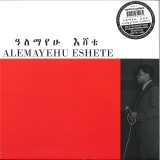
"Alèmayèhu Eshèté is no less than one of the great voices of the heyday of modern Ethiopian music, the swinging sixties which, in this country, went on until the fall of the Emperor Haile Sellassie 1 in 1974. On a par with Tlahoun Gèssèssè, Bzunèsh Bèqèlè or Mahmoud Ahmed, Alèmayèhu is a star at the top level of the constellation that once lit up the wild nights in the capital."
