Suche:house gospel choir

Styles
Alle
  • 1
House Gospel Choir - Love is the Message

House Gospel Choir is a London-based vocal group which debuted in
2014 at Glastonbury Festival Founded by Creative Producer and vocalist,
Natalie Maddix, the choir combines two distinct musical genres - House
and Gospel (It's literally in the name!)
House Gospel Choir is a voice for those that can sing but...don't always know the
words. It's a home for anyone who has ever found themselves lost in music at a
festival, or in a night club... or on the tube on the way to work. Their mantra
applies to the audience too, who are always encouraged to join in with call and
response, handclapping, dancing and simply having a good old time. So next time
the invitation goes out, come along to a HGC show and witness an authentic and
electrifying House meets Gospel experience like no other.
2024 brings a brand new album of dance/R&B/gospel music including featured
artists Rudimental, Afronaut Zu, Joe Smooth, Janice Robinson and Beverley
Knight. A very special studio recording.
UK national and regional radio servicing of two singles in advance of album
release
Specialist dance/R&B radio stations airplay
Singles are "You" (May) and "Glow" (July)
Social media campaign Digital marketing with Ads across Facebook/
Instagram
Press reviews, articles across general music mags and newspapers
Online music blogs and websites reviews and news items etc.
Live headline shows and festival over the summer Club promotion

Auf Lager

Bei uns am Lager und sofort versandfertig

DJ Yoda ft House Gospel Choir - Feel Like Home

Taken from the forthcoming album ‘Prom Nite’. The opening single of ‘Prom Nite’ is a sermon perfect for log cabin lock-ins and losing yourself across the Balearics: 'Feel Like Home' is spirited, euphoric and thoroughly satisfying, not to mention an advertising executive’s dream. London’s House Gospel Choir, endorsed by Annie Mac and The Blessed Madonna, provide the salvation that everyone is looking for right now, their heavenly harmonies aligned to Yoda’s gentle grooves and keys leading you to the light, encouraging the linkage of arms and for its soulful soothing properties to wash over you. Cover Art by ENDLESS..

Auf Lager

Bei uns am Lager und sofort versandfertig

House Gospel Choir Ft Todd Terry - Re//Choired

MEET THE CHOIR THAT HOUSE BUILT

The late great Frankie Knuckles once called house music: “church for people that have fallen from grace.” Anyone who has been caught up in the rapture of a true house classic can testify to its power to unify and uplift.

HGC is an electrifying House meets Gospel experience that never fails to get audiences clapping, dancing and singing along. HGC shows bring together a group of outstanding singers, a full house band and DJ, creating an effortless live fusion of the biggest house and gospel tunes that never fail to raise the roof!

House Gospel Choir’s magic is their ear for production, thanks to the songwriters, producers, vocal arrangers and selectors who make up the collective. The choir have been bubbling away in studios across London, working with a roll call of iconic dance music producers, from global house icons Todd Terry, DJ Spen, Grammy Award winner Alex Metric, to Toddla T and UK gospel icon Nicky Brown. Their monthly public Mass Choir open rehearsal, at Rich Mix in East London, has featured guest appearances from house and techno icon The Black Madonna, and electro pop singer Georgia.

The current House Gospel Choir has grown to over 150 members of all religions and backgrounds. They take us to church, literally and metaphorically and remind us, whatever spiritual inclination we may have, of the sonic swells in our ribcage that truly great harmonies can inspire.

We Are One has become the choirs mantra, Founder & Creative Director Natalie Maddix explains “We can’t all speak at the same time and have our voices heard, but we can sing together as one voice and be understood”.

“The choir have a really unique energy. Beyond the uplifting vibes of Gospel Music…they’re like family” Annie Mac

“I’m so crazy about them” – THE BLACK MADONNA

nicht am Lager

Bestelle jetzt und wir bestellen den Artikel für dich beim Lieferanten.


Last In: vor 5 Jahren
Soweto Gospel Choir and Groove Terminator - History of House

Celebrating dance music's roots in Africa, global music superstars SOWETO GOSPEL CHOIR and renowned Australian DJ GROOVE TERMINATOR team up with Grammy- winning producer LATROIT to present 'History of House', an expertly crafted re-imagination of the iconic dance music classics that defined the genre at its inception and continue to influence it today.

Featuring vocal performances in Zulu and English, collaborations with Southern Africa's top emerging music producers, and live musical performances throughout, History of House is a cultural and musical celebration, authentically and effortlessly blending global beats, Afro house, Amapiano, and house music into a sublime listening experience that elevates any environment. This is a special project, and we are proud to share it with you. FEATURING: World Hold On, Good Life, You Got The Love, Everybody's Free, and More

nicht am Lager

Bestelle jetzt und wir bestellen den Artikel für dich beim Lieferanten.


Last In: vor 11 Monaten
Soweto Gospel Choir & Groove Terminator - History of House

Celebrating dance music’s roots in Africa, global music superstars Soweto Gospel Choir and renowned Australian DJ Groove Terminator team up with Grammy-winning producer Latroit to present ‘History of House,’ a global reimagination of the iconic dance music classics that defined a generation.

Featuring exquisite multilingual vocal performances and collaborations with some of Southern Africa's most promising emerging artists, "History of House" stands as a vibrant celebration of music and culture. This album transcends boundaries, effortlessly connecting diverse cultures across generations with an authentic fusion of global beats, Afro house, Amapiano, and house music.

nicht am Lager

Bestelle jetzt und wir bestellen den Artikel für dich beim Lieferanten.


Last In: vor 12 Monaten
Purple Disco Machine - Exotica Deluxe Purple Edition + Bonus Tracks 2x12"
vorbestellen03.04.2026

erscheint voraussichtlich am 03.04.2026


Last In: vor 13 Monaten
Floorplan - fabric presents Floorplan LP 2x12"

Motor city royalty Floorplan, aka Detroit techno pioneer and creator of minimal techno Robert Hood and his DJ/producer daughter Lyric Hood, announce their forthcoming inclusion in the deeply respected ‘fabric presents’ mix series with the release of their new single ‘You’re A Shining Star’, out now. The full mix drops on digital/vinyl/CD via fabric records on 28th November.

Robert has been a long-standing fabric favourite since the institution's earliest years, clocking up over 20 sets in Room 2, including a live session on New Year's Eve, 2012. In 2008, he'd turn in Fabric 39 which is among the most revered contributions to the fabric mix canon. Now, with the forthcoming ‘fabric presents Floorplan’ mix, the story comes full circle - marking both the duo’s debut on the iconic mix series and a monumental moment for the family project.

About Floorplan: Emerging from a musically rich Detroit upbringing steeped in Motown and vinyl culture, Robert Hood became an early member of the seminal ’90s collective Underground Resistance, helping to spearhead the rise of techno. Going solo, Hood created minimal techno with his Minimal Nation LP. Groundbreaking productions, acclaimed performances, and his own M-plant label followed, until in ’96 he formed Floorplan - an alter ego to expand beyond minimal techno into gospel, soul and house-infused techno. Immersed in music from an early age, Lyric eventually caught the same electronic spark that’s driven her father for decades. In 2014, after the release of Hood’s debut Floorplan album Paradise, the project evolved as the then-16-year-old Lyric joined him to perform as Floorplan, including a supreme closing set at Dekmantel’s Boiler Room stage. Two years later, Lyric officially became a full member of Floorplan, cementing their father–daughter collaboration, and they’d release their co-produced album Victorious on M-Plant that same year.

Auf Lager

Bei uns am Lager und sofort versandfertig

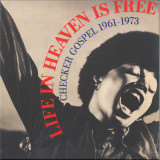
Life In Heaven Is Free - Checker Gospel 1961-1973 LP 2x12"
 
25

Gospel melts into Soul in this dazzling collection of sides originally released by the Chess subsidiary.


Devised by the same team supporting the likes of Muddy Waters and Etta James at Chess, the vintage of Checker Gospel celebrated here is distinguished by its expertly raw, rugged, live feel — thumping bass and pounding drums, bluesy guitar and horns — and its keen engagement with contemporary realities and politics, with an underlying, unwavering commitment to the Civil Rights movement. Not forgetting its sheer, startling, richly diverse soulfulness.

Key architects of the Chicago Sound and Motown are amongst the scores of contributors: Charles Stepney, Gene Barge, Eddie Kendricks, and Leonard Caston Jr. are in the house… Morris Jennings, drummer on Curtis’ Superfly and Terry Callier’s What Color Is Love… Louis Satterfield from The Pharaohs and Earth Wind & Fire… Ramsey Lewis’ guitarist Byron Gregory… Phil Upchurch… Laura Lee…

Producer Monk Higgins joined Checker in 1967, bringing his experience of R&B and Gospel hit-making for the labels One-derful and Satellite, together with a loyal cohort of musicians. A protege of Willie Dixon, engineer Malcolm Chisholm set up the Ter Mar studio as if preparing for a live gig, carefully teasing measures of bleed into the microphones. With Ralph Bass from King Records running A&R, they knew exactly what they were after. ‘I’m using horns and an R&B sound in gospel recordings,’ said Bass. ‘We have no charts. All the musicians are given the chord changes. I want the cats to think when we’re cutting. I want spontaneity, and that’s what we’re getting.’ And: ‘There is more to gospel than just finding solace in the church. This follows the same message of Martin King, who was fighting for a new way of life. Kids are tired of hearing Jesus Give Us Help. They want a positive message.’

Focussed on the late sixties and early seventies, the twenty-five recordings here are all killer no filler, but try these four, random entry points: the heavy funk ostinato of the Violinaires’ Groovin’ With Jesus, working itself up into a post-James-Brown brass frenzy, sure to knock your socks off; Cleo Jackson Randle’s title track, for those who like their Gospel straight-up and hard-core; Eddie Kendricks’ achingly timely choral call-to-arms, Stand Up America, Don’t Be Afraid; the East St Louis Gospelettes’ heart-stopping, fathoms-deep rendition of Bobby Bland’s I’ll Take Care Of You.
A beautiful gatefold sleeve; a full-colour booklet with excellent notes by Robert Marovich; top-notch sound. Another knockout selection by Greg Belson and David Hill.

A shoo-in for soul compilation of the year.

Auf Lager

Bei uns am Lager und sofort versandfertig

M&S Presents The Girl Next Door - Salsoul Nugget (20th Anniversary Remixes)

Now celebrating 20 years since the original release of 'Salsoul Nugget' in April 2001, M&S enlists Mighty Mouse and Mark Knight for some amazing remix to celebrate this milestone anniversary.

Mighty Mouse pulls out all the stops with expertly chopped vocals and loops that builds intensity with a breakdown that is equal parts intense and euphoric and is sure to get the club absolutely heated.

With a career that spans across two decades, DJ & Grammy-nominated producer and Toolroom head honcho Mark Knight jumps on board the Salsoul Nugget mix package. It's fair to say Mark Knight knows his way around creating records that connect with house music lovers. 2020 highlighted Mark Knight’s more soulful house roots and follows his desire to create timeless dance records that stand the test of time, including the Sunday Shouting sampling 'All 4 Love' (feat Tasty Lopez). 2021 saw the release of ‘Everything’s Gonna Be Alright’ with Beverly Knight and the London Community Gospel Choir. For his mix of Salsoul Nugget, Mark beefs up the drums for the main rooms while being respectful to the original.

The original vocal and original extended vocal mix and original extended Klub Mix are on the flip.

Auf Lager

Bei uns am Lager und sofort versandfertig

Various - COMPASSION CREW PRESENTS 'COMPASSION CUTS, SINS & DOLLAR BINS' LP 2x12"
Auf Lager

Bei uns am Lager und sofort versandfertig

Purple Disco Machine - Hands to the Sky / Money Money EP

The gift that keeps on giving, Purple Disco Machines’ ‘Exotica (Deluxe Album)’ is being treated to some epic remixes of your favourite songs now available on vinyl.

This vinyl includes a remix of ‘Hands to the Sky’ by Floorplan Justified and a remix from Italy’s own The Cube Guys of ‘Money Money’.

Auf Lager

Bei uns am Lager und sofort versandfertig

ANNIE & THE CALDWELLS - WRONG / I MADE IT REMIXES

ANNIE & THE CALDWELLS

WRONG / I MADE IT REMIXES

12inchLBOP5053
LUAKA BOP
13.03.2026out soon

The history of house and disco music is full of gospel soul singers creating anthemic bangers for the dance floor. Annie and the Caldwells, a family band from West Point, Mississippi, are the latest to join their ranks.

============================

This collection — featuring remixes from musclecars, Kornél Kovács, Alexis Taylor (of Hot Chip), and disco icons Nicky Siano and Justin Strauss — follows the release of the Caldwells’ wildly acclaimed debut Can’t Lose My (Soul) Luaka Bop, Spring 2025. Hailed as “a masterpiece” by The Guardian (★★★★★), and one of the best albums of the year by The Times, MOJO, UNCUT, and The Economist, Can’t Lose My (Soul) found fans all over the world — like Sir Elton John, who called their album “A great, great record that I insist you go out and buy.”

“I was blown away when I first heard the original version of ‘Wrong’,” says Kornel Kovács, whose remix of “Wrong” appears on this white label. “Deborah’s voice floored me, as well as the background singers. One of the greatest vocal performances I’ve heard, let alone worked with. The result is a club-ready take that’s become a highlight in my recent DJ sets.”

Producers Brandon Weems and Craig Handfield (of musclecars) had a similar experience when they heard the family for the first time: “We quickly fell in love with the groovy bassline [and] the choir vocals,” said Craig. “We thought it’d be fitting to put our own spin on it, while paying homage to those jive brothers from Tulsa. The uplifting keys paired with the punch of the drums, rounded out with that organ…this one is sure to bring a joyful noise!”

Annie Caldwell and her family have since performed in more than twenty countries on four continents, and recently made a star turn on the UK's preeminent music program Later... with Jools Holland. They’re hitting the road again in 2026. Watch this space.


[c] Wrong [You Dropped a Bomb] - Extended Wooden Dance Floor Mix (A Nicky Siano Production) 6:48

vorbestellen

Der Artikel ist noch nicht erschienen. Du kannst den Artikel jetzt vorbestellen, dieser ist nach Wareneingang für dich versandbereit.


Last In: vor 2026 Jahren
LCGC feat. Annette Bowen - Rather Be

Lcgcfeat.Annette Bowen

Rather Be

7"-VinylPAPA156V
Papa Records
21.01.2025

Coming up next on Papa Records is something truly special – a limited edition 7” of The London Community Gospel Choir (LCGC) with their uplifting new single, "Rather Be" remixed by talented producer/DJ - Ayce. A release to surely joyously ignite dancefloors.

As one of the most dynamic and inspiring forces in the UK music scene, LCGC is Europe's premier contemporary Gospel choir. Their sound seamlessly blends Soul, Funk, House and R&B while maintaining a powerful message of God’s love, peace, and unity through their refreshing and vibrant take on Gospel music.

LCGC has shared the stage with a long list of music icons, such as Elton John, Madonna, Sam Smith, Ellie Goulding, Jessie J, Adele, Gorillaz, Blur, Gregory Porter, Justin Timberlake, and Mariah Carey, and their collaborations continue to expand.

Originally from Hackney, East London, Ayce 'The Beat Junkie' is a skilled DJ, musician, and producer. His early success as a highly sought-after keyboard player paved the way to working with major artists such as Jessie J, Tinie Tempah, Duffy, Wretch 32, and Paul Carrack, among others. Ayce creates a brand of house music that's soulful and funky, crafted to get you moving. Focusing on powerful, often choral-style vocals in both his original tracks and remixes, his music not only energises but also leaves you feeling uplifted.

nicht am Lager

Bestelle jetzt und wir bestellen den Artikel für dich beim Lieferanten.


Last In: vor 14 Monaten
Jean Carn - Was That All It Was / Don't Let It Go to Your Head

Repress!

Two of Jean Carn's seminal hits combined. 'Was That All It Was' is a big hitting disco exploration with hints of Jean's gospel choir background coming to the fore. The flip houses the classic 'Don't Let It Go To Your Head' - covered on many an occasion since it's release back in '78.

nicht am Lager

Bestelle jetzt und wir bestellen den Artikel für dich beim Lieferanten.


Last In: vor 11 Monaten
DJ Yoda - Prom Nite LP

Dj Yoda

Prom Nite LP

12inchLEWIS1121LP
Lewis Recordings
15.11.2022

Dressed in a powder blue suit with the frilly shirt to match, DJ Yoda invites you to be his +1 for ‘Prom Nite’, his new album promising retro Americana full of daydreaming reverie, international megastar guests, trip hop acknowledging the likes of Morcheeba and Nightmares on Wax, and the turntable extraordinaire’s bread and butter of cuts, beats and rhymes.

Certainly no stranger to retro sounds having famously peppered his DJ and AV sets with the unexpected the world over, and his ‘How to Cut n Paste’ mix series going all the way back to the 30s, Yoda’s harp-laden puppy love vibe spreads from the sweet and mellow sound of 2019’s ‘Home Cooking’, an album described as ‘boundary-breaking’ by Mojo upon slotting nicely into the UK’s blooming jazz canon. Think deliciously harmonised doo-wop murmuring ‘Goodnight Sweetheart’ with an eye for dreamboats en route to Makeout Point – on ‘My Energy’, Eva Lazarus takes the form of an earth angel, with Yoda on jukebox cut-ups, taking it back to starry-eyed, clean cut days of wonder (or more recently, Little Mix’s ‘Love Me Like You’).

Beginning enigmatically with the assistance of Hollywood A-lister (and former next-door neighbour) Lily James, ‘Breathe’ demonstrate Yoda’s continued evolution as a musician (not to mention shrewd decision maker), with James’ vocal confidence - a little Lana del Rey to her breathiness - returning on the velvet-smooth ‘Airplane Mode’. It’s a smartly executed soundclash accentuated by LA rapper Choosey, the star of the album’s straightest hip-hop shooter ‘Harder I Rock’. Homeboy Sandman adds some kick to the prom punch with typical wordplay sent down ‘Coconut Grove’, and Liam Bailey is perfectly cast for the darkly cinematic sway of ‘Don’t Even Try It’.

On an album of many talking points, the LP’s crowning glory is opening single ‘Feel Like Home’: featuring the vocal comforts of the House Gospel Choir, it’s your go–to pick-me-up when the chips are down, targeting the hairs on the backs of necks like a softer focus version of Jamie xx’s ‘Loud Places’. Extended into an alternative, equally uplifting form by Beardyman’s ‘Don’t Mean Thing’, summer festival season already has its homecoming anthem.

With tongues wagging, the twists and turns step away from Heartbreak Ridge when O Love tucks into the mouthwatering shopping list funk of ‘Way Home’; and ‘Lesson 1956’, featuring Jamie Cullum and DJ Woody, jauntily pays homage to classic Cut Chemist alchemy, Yoda’s celebrated turntable tomfoolery back in full effect and extending the flavours found in ‘Home Cooking’.

Again maximising the experience and enjoyment gained from recording live instruments and prioritising songs over beats, Yoda continues to progress with a mixture of risk-taking, elite musicianship, nostalgia brought bang up to date, and ultimately, good clean fun capable of stirring your soul, making ‘Prom Nite’ a date to remember.

Magpie artwork supplied by London’s ENDLESS, whose signature style has tagged Liberty and Lagerfeld as but two high profile clients, Yoda again maximises the experience and enjoyment gained from recording live instruments and prioritising songs over beats. His continued progress mixes risk-taking, elite musicianship, nostalgia brought bang up to date, and ultimately, good clean fun capable of stirring your soul, making ‘Prom Nite’ a date to remember.

Featured 7” Vinyl singles:
Feel Like Home (feat. The House Gospel Choir)/ Don’t Mean A Thing (feat. Beardyman)
My Energy (feat. Eva Lazarus)/Lesson 1956 (feat. Jamie Cullum & DJ Woody)

nicht am Lager

Bestelle jetzt und wir bestellen den Artikel für dich beim Lieferanten.


Last In: vor 3 Jahren
Lee Tracy & Isaac Manning - Is it What You Want

As the sun sets on a quaint East Nashville house, a young man bares a piece of his soul. Facing the camera, sporting a silky suit jacket/shirt/slacks/fingerless gloves ensemble that announces "singer" before he's even opened his mouth, Lee Tracy Johnson settles onto his stage, the front yard. He sways to the dirge-like drum machine pulse of a synth-soaked slow jam, extends his arms as if gaining his balance, and croons in affecting, fragile earnest, "I need your love… oh baby…"

Dogs in the yard next door begin barking. A mysterious cardboard robot figure, beamed in from galaxies unknown and affixed to a tree, is less vocal. Lee doesn't acknowledge either's presence. He's busy feeling it, arms and hands gesticulating. His voice rises in falsetto over the now-quiet dogs, over the ambient noise from the street that seeps into the handheld camcorder's microphone, over the recording of his own voice played back from a boombox off-camera. After six minutes the single, continuous shot ends. In this intimate creative universe there are no re-takes. There are many more music videos to shoot, and as Lee later puts it, "The first time you do it is actually the best. Because you can never get that again. You expressing yourself from within."

"I Need Your Love" dates from a lost heyday. From some time in the '80s or early '90s, when Lee Tracy (as he was known in performance) and his music partner/producer/manager Isaac Manning committed hours upon hours of their sonic and visual ideas to tape. Embracing drum machines and synthesizers – electronics that made their personal futurism palpable – they recorded exclusively at home, live in a room into a simple cassette deck. Soul, funk, electro and new wave informed their songs, yet Lee and Isaac eschewed the confinement of conventional categories and genres, preferring to let experimentation guide them.

"Anytime somebody put out a new record they had the same instruments or the same sound," explains Isaac. "So I basically wanted to find something that's really gonna stand out away from all of the rest of 'em." Their ethos meant that every idea they came up with was at least worth trying: echoed out half-rapped exhortations over frantic techno-style beats, gospel synth soul, modal electro-funk, oddball pop reinterpretations, emo AOR balladry, nods to Prince and the Fat Boys, or arrangements that might collapse mid-song into a mess of arcade game-ish blips before rallying to reach the finish line. All of it conjoined by consistent tape hiss, and most vitally, Lee's chameleonic voice, which managed to wildly shape shift and still evoke something sincere – whether toggling between falsetto and tenor exalting Jesus's return, or punctuating a melismatic romantic adlib with a succinct, "We all know how it feels to be alone."

"People think we went to a studio," says Isaac derisively. "We never went to no studio. We didn't have the money to go to no studio! We did this stuff at home. I shot videos in my front yard with whatever we could to get things together." Sometimes Isaac would just put on an instrumental record, be it "Planet Rock" or "Don't Cry For Me Argentina" (from Evita), press "record," and let Lee improvise over it, yielding peculiar love songs, would-be patriotic anthems, or Elvis Presley or Marilyn Monroe tributes. Technical limitations and a lack of professional polish never dissuaded them. They believed they were onto something.

"That struggle," Isaac says, "made that sound sound good to me."

In the parlance of modern music criticism Lee and Isaac's dizzying DIY efforts would inevitably be described as "outsider." But "outsider" carries the burden of untold additional layers of meaning if you're Black and from the South, creating on a budget, and trying to get someone, anyone within the country music capital of the world to take your vision seriously. "What category should we put it in?" Isaac asks rhetorically. "I don't know. All I know is feeling. I ain't gonna name it nothing. It's music. If it grabs your soul and touch your heart that's what it basically is supposed to do."

=

Born in 1963, the baby boy of nine siblings, Lee Tracy spent his earliest years living amidst the shotgun houses on Nashville's south side. "We was poor, man!" he says, recalling the outhouse his family used for a bathroom and the blocks of ice they kept in the kitchen to chill perishables. "But I actually don't think I really realized I was in poverty until I got grown and started thinking about it." Lee's mom worked at the Holiday Inn; his dad did whatever he had to do, from selling fruit from a horse drawn cart to bootlegging. "We didn't have much," Lee continues, "but my mother and my father got us the things we needed, the clothes on our back." By the end of the decade with the city's urban renewal programs razing entire neighborhoods to accommodate construction of the Interstate, the family moved to Edgehill Projects. Lee remembers music and art as a constant source of inspiration for he and his brothers and sisters – especially after seeing the Jackson 5 perform on Ed Sullivan. "As a small child I just knew that was what I wanted to do."

His older brother Don began musically mentoring him, introducing Lee to a variety of instruments and sounds. "He would never play one particular type of music, like R&B," says Lee. "I was surrounded by jazz, hard rock and roll, easy listening, gospel, reggae, country music; I mean I was a sponge absorbing all of that." Lee taught himself to play drums by beating on cardboard boxes, gaining a rep around the way for his timekeeping, and his singing voice. Emulating his favorites, Earth Wind & Fire and Cameo, he formed groups with other kids with era-evocative band names like Concept and TNT Connection, and emerged as the leader of disciplined rehearsals. "I made them practice," says Lee. "We practiced and practiced and practiced. Because I wanted that perfection." By high school the most accomplished of these bands would take top prize in a prominent local talent show. It was a big moment for Lee, and he felt ready to take things to the next level. But his band-mates had other ideas.

"I don't know what happened," he says, still miffed at the memory. "It must have blew they mind after we won and people started showing notice, because it's like everybody quit! I was like, where the hell did everybody go?" Lee had always made a point of interrogating prospective musicians about their intentions before joining his groups: were they really serious or just looking for a way to pick up girls? Now he understood even more the importance of finding a collaborator just as committed to the music as he was.

=

Isaac Manning had spent much of his life immersed in music and the arts – singing in the church choir with his family on Nashville's north side, writing, painting, dancing, and working various gigs within the entertainment industry. After serving in the armed forces, in the early '70s he ran The Teenage Place, a music and performance venue that catered to the local youth. But he was forced out of town when word of one of his recreational routines created a stir beyond the safe haven of his bohemian circles.

"I was growing marijuana," Isaac explains. "It wasn't no business, I was smoking it myself… I would put marijuana in scrambled eggs, cornbread and stuff." His weed use originated as a form of self-medication to combat severe tooth pain. But when he began sharing it with some of the other young people he hung out with, some of who just so happened to be the kids of Nashville politicians, the cops came calling. "When I got busted," he remembers, "they were talking about how they were gonna get rid of me because they didn't want me saying nothing about they children because of the politics and stuff. So I got my family, took two raggedy cars, and left Nashville and went to Vegas."

Out in the desert, Isaac happened to meet Chubby Checker of "The Twist" fame while the singer was gigging at The Flamingo. Impressed by Isaac's zeal, Checker invited him to go on the road with him as his tour manager/roadie/valet. The experience gave Isaac a window into a part of the entertainment world he'd never encountered – a glimpse of what a true pop act's audience looked like. "Chubby Checker, none of his shows were played for Black folks," he remembers. "All his gigs were done at high-class white people areas." Returning home after a few years with Chubby, Isaac was properly motivated to make it in Music City. He began writing songs and scouting around Nashville for local talent anywhere he could find it with an expressed goal: "Find someone who can deliver your songs the way you want 'em delivered and make people feel what you want them to feel."

One day while walking through Edgehill Projects Isaac heard someone playing the drums in a way that made him stop and take notice. "The music was so tight, just the drums made me feel like, oh I'm-a find this person," he recalls. "So I circled through the projects until I found who it was.

"That's how I met him – Lee Tracy. When I found him and he started singing and stuff, I said, ohhh, this is somebody different."

=

Theirs was a true complementary partnership: young Lee possessed the raw talent, the older Isaac the belief. "He's really the only one besides my brother and my family that really seen the potential in me," says Lee. "He made me see that I could do it."

Isaac long being a night owl, his house also made for a fertile collaborative environment – a space where there always seemed to be a new piece of his visual art on display: paintings, illustrations, and dolls and figures (including an enigmatic cardboard robot). Lee and Issac would hang out together and talk, listen to music, conjure ideas, and smoke the herb Isaac had resumed growing in his yard. "It got to where I could trust him, he could trust me," Isaac says of their bond. They also worked together for hours on drawings, spreading larges rolls of paper on the walls and sketching faces with abstract patterns and imagery: alien-like beings, tri-horned horse heads, inverted Janus-like characters where one visage blurred into the other.

Soon it became apparent that they didn't need other collaborators; self-sufficiency was the natural way forward. At Isaac's behest Lee, already fed up with dealing with band musicians, began playing around with a poly-sonic Yamaha keyboard at the local music store. "It had everything on it – trumpet, bass, drums, organ," remembers Lee. "And that's when I started recording my own stuff."

The technology afforded Lee the flexibility and independence he craved, setting him on a path other bedroom musicians and producers around the world were simultaneously following through the '80s into the early '90s. Saving up money from day jobs, he eventually supplemented the Yamaha Isaac had gotten him with Roland and Casio drum machines and a Moog. Lee was living in an apartment in Hillside at that point caring for his dad, who'd been partially paralyzed since early in life. In the evenings up in his second floor room, the music put him in a zone where he could tune out everything and lose himself in his ideas.

"Oh I loved it," he recalls. "I would really experiment with the instruments and use a lot of different sound effects. I was looking for something nobody else had. I wanted something totally different. And once I found the sound I was looking for, I would just smoke me a good joint and just let it go, hit the record button." More potent a creative stimulant than even Isaac's weed was the holistic flow and spontaneity of recording. Between sessions at Isaac's place and Lee's apartment, their volume of output quickly ballooned.

"We was always recording," says Lee. "That's why we have so much music. Even when I went to Isaac's and we start creating, I get home, my mind is racing, I gotta start creating, creating, creating. I remember there were times when I took a 90-minute tape from front to back and just filled it up."

"We never practiced," says Isaac. "See, that was just so odd about the whole thing. I could relate to him, and tell him about the songs I had ideas for and everything and stuff. And then he would bring it back or whatever, and we'd get together and put it down." Once the taskmaster hell bent on rehearsing, Lee had flipped a full 180. Perfection was no longer an aspiration, but the enemy of inspiration.

"I seen where practicing and practicing got me," says Lee. "A lot of musicians you get to playing and they gotta stop, they have to analyze the music. But while you analyzing you losing a lot of the greatness of what you creating. Stop analyzing what you play, just play! And it'll all take shape."

=

"I hope you understood the beginning of the record because this was invented from a dream I had today… (You tell me, I'll tell you, we'll figure it out together)" – Lee Tracy and Isaac Manning, "Hope You Understand"

Lee lets loose a maniacal cackle when he acknowledges that the material that he and Isaac recorded was by anyone's estimation pretty out there. It's the same laugh that commences "Hope You Understand" – a chaotic transmission that encapsulates the duality at the heart of their music: a stated desire to reach people and a compulsion to go as leftfield as they saw fit.

"We just did it," says Lee. "We cut the music on and cut loose. I don't sit around and write. I do it by listening, get a feeling, play the music, and the lyrics and stuff just come out of me."

The approach proved adaptable to interpreting other artists' material. While recording a cover of Whitney Houston's pop ballad "Saving All My Love For You," Lee played Whitney's version in his headphones as he laid down his own vocals – partially following the lyrics, partially using them as a departure point. The end result is barely recognizable compared with the original, Lee and Isaac having switched up the time signature and reinvented the melody along the way towards morphing a slick mainstream radio standard into something that sounds solely their own.

"I really used that song to get me started," says Lee. "Then I said, well I need something else, something is missing. Something just came over me. That's when I came up with 'Is It What You Want.'"

The song would become the centerpiece of Lee and Isaac's repertoire. Pushed along by a percolating metronomic Rhythm King style beat somewhere between a military march and a samba, "Is It What You Want" finds Lee pleading the sincerity of his commitment to a potential love interest embellished by vocal tics and hiccups subtlely reminiscent of his childhood hero MJ. Absent chord changes, only synth riffs gliding in and out like apparitions, the song achieves a lingering lo-fi power that leaves you feeling like it's still playing, somewhere, even after the fade out.

"I don't know, it's like a real spiritual song," Lee reflects. "But it's not just spiritual. To me the more I listen to it it's like about everything that you do in your everyday life, period. Is it what you want? Do you want a car or you don't want a car? Do you want Jesus or do you want the Devil? It's basically asking you the question. Can't nobody answer the question but you yourself."

In 1989 Lee won a lawsuit stemming from injuries sustained from a fight he'd gotten into. He took part of the settlement money and with Isaac pressed up "Saving All My Love For You" b/w "Is It What You Want" as a 45 single. Isaac christened the label One Chance Records. "Because that's all we wanted," he says with a laugh, "one chance."

Isaac sent the record out to radio stations and major labels, hoping for it to make enough noise to get picked up nationally. But the response he and Lee were hoping for never materialized. According to Isaac the closest the single got to getting played on the radio is when a disk jock from a local station made a highly unusual announcement on air: "The dude said on the radio, 107.5 – 'We are not gonna play 'Is It What You Want.' We cracked up! Wow, that's deep.

"It was a whole racist thing that was going on," he reflects. "So we just looked over and kept on going. That was it. That was about the way it goes… If you were Black and you were living in Nashville and stuff, that's the way you got treated." Isaac already knew as much from all the times he'd brought he and Lee's tapes (even their cache of country music tunes) over to Music Row to try to drum up interest to no avail.

"Isaac, he really worked his ass off," says Lee. "He probably been to every record place down on Music Row." Nashville's famed recording and music business corridor wasn't but a few blocks from where Lee grew up. Close enough, he remembers, for him to ride his bike along its back alleys and stumble upon the occasional random treasure, like a discarded box of harmonicas. Getting in through the front door, however, still felt a world away.

"I just don't think at the time our music fell into a category for them," he concedes. "It was before its time."

=

Lee stopped making music some time in the latter part of the '90s, around the time his mom passed away and life became increasingly tough to manage. "When my mother died I had a nervous breakdown," he says, "So I shut down for a long time. I was in such a sadness frame of mind. That's why nobody seen me. I had just disappeared off the map." He fell out of touch with Isaac, and in an indication of just how bad things had gotten for him, lost track of all the recordings they'd made together. Music became a distant memory.

Fortunately, Isaac kept the faith. In a self-published collection of his poetry – paeans to some of his favorite entertainment and public figures entitled Friends and Dick Clark – he'd written that he believed "music has a life of its own." But his prescience and presence of mind were truly manifested in the fact that he kept an archive of he and Lee's work. As perfectly imperfect as "Is It What You Want" now sounds in a post-Personal Space world, Lee and Isaac's lone official release was in fact just a taste. The bulk of the Is It What You Want album is culled from the pair's essentially unheard home recordings – complete songs, half-realized experiments, Isaac's blue monologues and pronouncements et al – compiled, mixed and programmed in the loose and impulsive creative spirit of their regular get-togethers from decades ago. The rest of us, it seems, may have finally caught up to them.

On the prospect of at long last reaching a wider audience, Isaac says simply, "I been trying for a long time, it feels good." Ever the survivor, he adds, "The only way I know how to make it to the top is to keep climbing. If one leg break on the ladder, hey, you gotta fix it and keep on going… That's where I be at. I'll kill death to make it out there."

For Lee it all feels akin to a personal resurrection: "It's like I was in a tomb and the tomb was opened and I'm back… Man, it feels so great. I feel like I'm gonna jump out of my skin." Success at this stage of his life, he realizes, probably means something different than what it did back when he was singing and dancing in Isaac's front yard. "What I really mean by 'making it,'" he explains isn't just the music being heard but, "the story being told."

Occasionally Lee will pull up "Is It What You Want" on YouTube on his phone, put on his headphones, and listen. He remembers the first time he heard his recorded voice. How surreal it was, how he thought to himself, "Is that really me?" What would he say to that younger version of himself now?

"I would probably tell myself, hang in there, don't give up. Keep striving for the goal. And everything will work out."

Despite what's printed on the record label, sometimes you do get more than one chance.

nicht am Lager

Bestelle jetzt und wir bestellen den Artikel für dich beim Lieferanten.


Last In: vor 3 Jahren
Lee Tracy & Isaac Manning - Is it What You Want LP

As the sun sets on a quaint East Nashville house, a young man bares a piece of his soul. Facing the camera, sporting a silky suit jacket/shirt/slacks/fingerless gloves ensemble that announces "singer" before he's even opened his mouth, Lee Tracy Johnson settles onto his stage, the front yard. He sways to the dirge-like drum machine pulse of a synth-soaked slow jam, extends his arms as if gaining his balance, and croons in affecting, fragile earnest, "I need your love… oh baby…"

Dogs in the yard next door begin barking. A mysterious cardboard robot figure, beamed in from galaxies unknown and affixed to a tree, is less vocal. Lee doesn't acknowledge either's presence. He's busy feeling it, arms and hands gesticulating. His voice rises in falsetto over the now-quiet dogs, over the ambient noise from the street that seeps into the handheld camcorder's microphone, over the recording of his own voice played back from a boombox off-camera. After six minutes the single, continuous shot ends. In this intimate creative universe there are no re-takes. There are many more music videos to shoot, and as Lee later puts it, "The first time you do it is actually the best. Because you can never get that again. You expressing yourself from within."

"I Need Your Love" dates from a lost heyday. From some time in the '80s or early '90s, when Lee Tracy (as he was known in performance) and his music partner/producer/manager Isaac Manning committed hours upon hours of their sonic and visual ideas to tape. Embracing drum machines and synthesizers – electronics that made their personal futurism palpable – they recorded exclusively at home, live in a room into a simple cassette deck. Soul, funk, electro and new wave informed their songs, yet Lee and Isaac eschewed the confinement of conventional categories and genres, preferring to let experimentation guide them.

"Anytime somebody put out a new record they had the same instruments or the same sound," explains Isaac. "So I basically wanted to find something that's really gonna stand out away from all of the rest of 'em." Their ethos meant that every idea they came up with was at least worth trying: echoed out half-rapped exhortations over frantic techno-style beats, gospel synth soul, modal electro-funk, oddball pop reinterpretations, emo AOR balladry, nods to Prince and the Fat Boys, or arrangements that might collapse mid-song into a mess of arcade game-ish blips before rallying to reach the finish line. All of it conjoined by consistent tape hiss, and most vitally, Lee's chameleonic voice, which managed to wildly shape shift and still evoke something sincere – whether toggling between falsetto and tenor exalting Jesus's return, or punctuating a melismatic romantic adlib with a succinct, "We all know how it feels to be alone."

"People think we went to a studio," says Isaac derisively. "We never went to no studio. We didn't have the money to go to no studio! We did this stuff at home. I shot videos in my front yard with whatever we could to get things together." Sometimes Isaac would just put on an instrumental record, be it "Planet Rock" or "Don't Cry For Me Argentina" (from Evita), press "record," and let Lee improvise over it, yielding peculiar love songs, would-be patriotic anthems, or Elvis Presley or Marilyn Monroe tributes. Technical limitations and a lack of professional polish never dissuaded them. They believed they were onto something.

"That struggle," Isaac says, "made that sound sound good to me."

In the parlance of modern music criticism Lee and Isaac's dizzying DIY efforts would inevitably be described as "outsider." But "outsider" carries the burden of untold additional layers of meaning if you're Black and from the South, creating on a budget, and trying to get someone, anyone within the country music capital of the world to take your vision seriously. "What category should we put it in?" Isaac asks rhetorically. "I don't know. All I know is feeling. I ain't gonna name it nothing. It's music. If it grabs your soul and touch your heart that's what it basically is supposed to do."

=

Born in 1963, the baby boy of nine siblings, Lee Tracy spent his earliest years living amidst the shotgun houses on Nashville's south side. "We was poor, man!" he says, recalling the outhouse his family used for a bathroom and the blocks of ice they kept in the kitchen to chill perishables. "But I actually don't think I really realized I was in poverty until I got grown and started thinking about it." Lee's mom worked at the Holiday Inn; his dad did whatever he had to do, from selling fruit from a horse drawn cart to bootlegging. "We didn't have much," Lee continues, "but my mother and my father got us the things we needed, the clothes on our back." By the end of the decade with the city's urban renewal programs razing entire neighborhoods to accommodate construction of the Interstate, the family moved to Edgehill Projects. Lee remembers music and art as a constant source of inspiration for he and his brothers and sisters – especially after seeing the Jackson 5 perform on Ed Sullivan. "As a small child I just knew that was what I wanted to do."

His older brother Don began musically mentoring him, introducing Lee to a variety of instruments and sounds. "He would never play one particular type of music, like R&B," says Lee. "I was surrounded by jazz, hard rock and roll, easy listening, gospel, reggae, country music; I mean I was a sponge absorbing all of that." Lee taught himself to play drums by beating on cardboard boxes, gaining a rep around the way for his timekeeping, and his singing voice. Emulating his favorites, Earth Wind & Fire and Cameo, he formed groups with other kids with era-evocative band names like Concept and TNT Connection, and emerged as the leader of disciplined rehearsals. "I made them practice," says Lee. "We practiced and practiced and practiced. Because I wanted that perfection." By high school the most accomplished of these bands would take top prize in a prominent local talent show. It was a big moment for Lee, and he felt ready to take things to the next level. But his band-mates had other ideas.

"I don't know what happened," he says, still miffed at the memory. "It must have blew they mind after we won and people started showing notice, because it's like everybody quit! I was like, where the hell did everybody go?" Lee had always made a point of interrogating prospective musicians about their intentions before joining his groups: were they really serious or just looking for a way to pick up girls? Now he understood even more the importance of finding a collaborator just as committed to the music as he was.

=

Isaac Manning had spent much of his life immersed in music and the arts – singing in the church choir with his family on Nashville's north side, writing, painting, dancing, and working various gigs within the entertainment industry. After serving in the armed forces, in the early '70s he ran The Teenage Place, a music and performance venue that catered to the local youth. But he was forced out of town when word of one of his recreational routines created a stir beyond the safe haven of his bohemian circles.

"I was growing marijuana," Isaac explains. "It wasn't no business, I was smoking it myself… I would put marijuana in scrambled eggs, cornbread and stuff." His weed use originated as a form of self-medication to combat severe tooth pain. But when he began sharing it with some of the other young people he hung out with, some of who just so happened to be the kids of Nashville politicians, the cops came calling. "When I got busted," he remembers, "they were talking about how they were gonna get rid of me because they didn't want me saying nothing about they children because of the politics and stuff. So I got my family, took two raggedy cars, and left Nashville and went to Vegas."

Out in the desert, Isaac happened to meet Chubby Checker of "The Twist" fame while the singer was gigging at The Flamingo. Impressed by Isaac's zeal, Checker invited him to go on the road with him as his tour manager/roadie/valet. The experience gave Isaac a window into a part of the entertainment world he'd never encountered – a glimpse of what a true pop act's audience looked like. "Chubby Checker, none of his shows were played for Black folks," he remembers. "All his gigs were done at high-class white people areas." Returning home after a few years with Chubby, Isaac was properly motivated to make it in Music City. He began writing songs and scouting around Nashville for local talent anywhere he could find it with an expressed goal: "Find someone who can deliver your songs the way you want 'em delivered and make people feel what you want them to feel."

One day while walking through Edgehill Projects Isaac heard someone playing the drums in a way that made him stop and take notice. "The music was so tight, just the drums made me feel like, oh I'm-a find this person," he recalls. "So I circled through the projects until I found who it was.

"That's how I met him – Lee Tracy. When I found him and he started singing and stuff, I said, ohhh, this is somebody different."

=

Theirs was a true complementary partnership: young Lee possessed the raw talent, the older Isaac the belief. "He's really the only one besides my brother and my family that really seen the potential in me," says Lee. "He made me see that I could do it."

Isaac long being a night owl, his house also made for a fertile collaborative environment – a space where there always seemed to be a new piece of his visual art on display: paintings, illustrations, and dolls and figures (including an enigmatic cardboard robot). Lee and Issac would hang out together and talk, listen to music, conjure ideas, and smoke the herb Isaac had resumed growing in his yard. "It got to where I could trust him, he could trust me," Isaac says of their bond. They also worked together for hours on drawings, spreading larges rolls of paper on the walls and sketching faces with abstract patterns and imagery: alien-like beings, tri-horned horse heads, inverted Janus-like characters where one visage blurred into the other.

Soon it became apparent that they didn't need other collaborators; self-sufficiency was the natural way forward. At Isaac's behest Lee, already fed up with dealing with band musicians, began playing around with a poly-sonic Yamaha keyboard at the local music store. "It had everything on it – trumpet, bass, drums, organ," remembers Lee. "And that's when I started recording my own stuff."

The technology afforded Lee the flexibility and independence he craved, setting him on a path other bedroom musicians and producers around the world were simultaneously following through the '80s into the early '90s. Saving up money from day jobs, he eventually supplemented the Yamaha Isaac had gotten him with Roland and Casio drum machines and a Moog. Lee was living in an apartment in Hillside at that point caring for his dad, who'd been partially paralyzed since early in life. In the evenings up in his second floor room, the music put him in a zone where he could tune out everything and lose himself in his ideas.

"Oh I loved it," he recalls. "I would really experiment with the instruments and use a lot of different sound effects. I was looking for something nobody else had. I wanted something totally different. And once I found the sound I was looking for, I would just smoke me a good joint and just let it go, hit the record button." More potent a creative stimulant than even Isaac's weed was the holistic flow and spontaneity of recording. Between sessions at Isaac's place and Lee's apartment, their volume of output quickly ballooned.

"We was always recording," says Lee. "That's why we have so much music. Even when I went to Isaac's and we start creating, I get home, my mind is racing, I gotta start creating, creating, creating. I remember there were times when I took a 90-minute tape from front to back and just filled it up."

"We never practiced," says Isaac. "See, that was just so odd about the whole thing. I could relate to him, and tell him about the songs I had ideas for and everything and stuff. And then he would bring it back or whatever, and we'd get together and put it down." Once the taskmaster hell bent on rehearsing, Lee had flipped a full 180. Perfection was no longer an aspiration, but the enemy of inspiration.

"I seen where practicing and practicing got me," says Lee. "A lot of musicians you get to playing and they gotta stop, they have to analyze the music. But while you analyzing you losing a lot of the greatness of what you creating. Stop analyzing what you play, just play! And it'll all take shape."

=

"I hope you understood the beginning of the record because this was invented from a dream I had today… (You tell me, I'll tell you, we'll figure it out together)" – Lee Tracy and Isaac Manning, "Hope You Understand"

Lee lets loose a maniacal cackle when he acknowledges that the material that he and Isaac recorded was by anyone's estimation pretty out there. It's the same laugh that commences "Hope You Understand" – a chaotic transmission that encapsulates the duality at the heart of their music: a stated desire to reach people and a compulsion to go as leftfield as they saw fit.

"We just did it," says Lee. "We cut the music on and cut loose. I don't sit around and write. I do it by listening, get a feeling, play the music, and the lyrics and stuff just come out of me."

The approach proved adaptable to interpreting other artists' material. While recording a cover of Whitney Houston's pop ballad "Saving All My Love For You," Lee played Whitney's version in his headphones as he laid down his own vocals – partially following the lyrics, partially using them as a departure point. The end result is barely recognizable compared with the original, Lee and Isaac having switched up the time signature and reinvented the melody along the way towards morphing a slick mainstream radio standard into something that sounds solely their own.

"I really used that song to get me started," says Lee. "Then I said, well I need something else, something is missing. Something just came over me. That's when I came up with 'Is It What You Want.'"

The song would become the centerpiece of Lee and Isaac's repertoire. Pushed along by a percolating metronomic Rhythm King style beat somewhere between a military march and a samba, "Is It What You Want" finds Lee pleading the sincerity of his commitment to a potential love interest embellished by vocal tics and hiccups subtlely reminiscent of his childhood hero MJ. Absent chord changes, only synth riffs gliding in and out like apparitions, the song achieves a lingering lo-fi power that leaves you feeling like it's still playing, somewhere, even after the fade out.

"I don't know, it's like a real spiritual song," Lee reflects. "But it's not just spiritual. To me the more I listen to it it's like about everything that you do in your everyday life, period. Is it what you want? Do you want a car or you don't want a car? Do you want Jesus or do you want the Devil? It's basically asking you the question. Can't nobody answer the question but you yourself."

In 1989 Lee won a lawsuit stemming from injuries sustained from a fight he'd gotten into. He took part of the settlement money and with Isaac pressed up "Saving All My Love For You" b/w "Is It What You Want" as a 45 single. Isaac christened the label One Chance Records. "Because that's all we wanted," he says with a laugh, "one chance."

Isaac sent the record out to radio stations and major labels, hoping for it to make enough noise to get picked up nationally. But the response he and Lee were hoping for never materialized. According to Isaac the closest the single got to getting played on the radio is when a disk jock from a local station made a highly unusual announcement on air: "The dude said on the radio, 107.5 – 'We are not gonna play 'Is It What You Want.' We cracked up! Wow, that's deep.

"It was a whole racist thing that was going on," he reflects. "So we just looked over and kept on going. That was it. That was about the way it goes… If you were Black and you were living in Nashville and stuff, that's the way you got treated." Isaac already knew as much from all the times he'd brought he and Lee's tapes (even their cache of country music tunes) over to Music Row to try to drum up interest to no avail.

"Isaac, he really worked his ass off," says Lee. "He probably been to every record place down on Music Row." Nashville's famed recording and music business corridor wasn't but a few blocks from where Lee grew up. Close enough, he remembers, for him to ride his bike along its back alleys and stumble upon the occasional random treasure, like a discarded box of harmonicas. Getting in through the front door, however, still felt a world away.

"I just don't think at the time our music fell into a category for them," he concedes. "It was before its time."

=

Lee stopped making music some time in the latter part of the '90s, around the time his mom passed away and life became increasingly tough to manage. "When my mother died I had a nervous breakdown," he says, "So I shut down for a long time. I was in such a sadness frame of mind. That's why nobody seen me. I had just disappeared off the map." He fell out of touch with Isaac, and in an indication of just how bad things had gotten for him, lost track of all the recordings they'd made together. Music became a distant memory.

Fortunately, Isaac kept the faith. In a self-published collection of his poetry – paeans to some of his favorite entertainment and public figures entitled Friends and Dick Clark – he'd written that he believed "music has a life of its own." But his prescience and presence of mind were truly manifested in the fact that he kept an archive of he and Lee's work. As perfectly imperfect as "Is It What You Want" now sounds in a post-Personal Space world, Lee and Isaac's lone official release was in fact just a taste. The bulk of the Is It What You Want album is culled from the pair's essentially unheard home recordings – complete songs, half-realized experiments, Isaac's blue monologues and pronouncements et al – compiled, mixed and programmed in the loose and impulsive creative spirit of their regular get-togethers from decades ago. The rest of us, it seems, may have finally caught up to them.

On the prospect of at long last reaching a wider audience, Isaac says simply, "I been trying for a long time, it feels good." Ever the survivor, he adds, "The only way I know how to make it to the top is to keep climbing. If one leg break on the ladder, hey, you gotta fix it and keep on going… That's where I be at. I'll kill death to make it out there."

For Lee it all feels akin to a personal resurrection: "It's like I was in a tomb and the tomb was opened and I'm back… Man, it feels so great. I feel like I'm gonna jump out of my skin." Success at this stage of his life, he realizes, probably means something different than what it did back when he was singing and dancing in Isaac's front yard. "What I really mean by 'making it,'" he explains isn't just the music being heard but, "the story being told."

Occasionally Lee will pull up "Is It What You Want" on YouTube on his phone, put on his headphones, and listen. He remembers the first time he heard his recorded voice. How surreal it was, how he thought to himself, "Is that really me?" What would he say to that younger version of himself now?

"I would probably tell myself, hang in there, don't give up. Keep striving for the goal. And everything will work out."

Despite what's printed on the record label, sometimes you do get more than one chance.

nicht am Lager

Bestelle jetzt und wir bestellen den Artikel für dich beim Lieferanten.


Last In: vor 3 Jahren
Kylie Minogue - Infinite Disco LP

Fans are invited to return to ‘Infinite Disco’, Kylie’s globally successful live spectacular broadcasted in 2020. Released alongside Kylie’s record-breaking album ‘DISCO’, the 50-minute special performance was met with widespread acclaim and deemed ‘a true joy’ by The i. The ‘Infinite Disco’ vinyl features tracks from DISCO, alongside much loved hits ‘In Your Eyes’, ‘Light Years’, ‘Slow’ (a mash up with Donna Summer’s iconic ‘Love To Love You Baby’) and ‘Say Something’, performed with the House Gospel Choir.

nicht am Lager

Bestelle jetzt und wir bestellen den Artikel für dich beim Lieferanten.


Last In: vor 3 Jahren
Alogte Oho & His Sounds of Joy - Doose Mam

Alogte Oho & His Sounds of Joy are back with a new single release after their album debut "Mam Yinne Wa", which can be seen as a harbinger of the second album. You can hear another Frafra Gospel masterpiece by the king of this genre.

"Doose Mam" is a soulful piece that goes straight to the limbs with its repetitive rhythm. The jubilant middle section, in which the wind instruments and the choir pass the balls to each other, is to be emphasized. "Gure Yose Me" ties in with the Frafra Gospel tradition of making use of reggae rhythms. Here we hear a stepper played by Josie Coppola, Europe's No.1 reaggae drummer. Both pieces were produced both in Berlin and in Kumasi by Max Weissenfeldt in Philophon's in-house Joy Sound Studios.

nicht am Lager

Bestelle jetzt und wir bestellen den Artikel für dich beim Lieferanten.


Last In: vor 4 Jahren
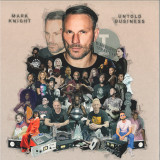
Mark Knight - Untold Business LP

Toolroom founder and Grammy-nominated producer Mark Knight announces his new album Untold Business: 13-track collection of vocal house music which aims to inject a much-needed dose of meaning and longevity into the world of dance music.

Mark Knight has gone back to his roots on his new album Untold Business, reprising the sounds and records that made him the artist he is today. Diving through his extensive collection of classic Funk, House, Soul and Disco records from the 1970s and 80s has provided the bedrock for the album, which is an homage to the soulful, vocal-led house music that Mark first fell in love with in the 90s.

Step forward Mark Knight with a collection of meticulously crafted, positive, life-affirming records with a focus on real instrumentation and properly crafted songs that will stand the test of time. Untold Business is the antithesis of the functional, cookie-cutter dance music that has become increasingly ubiquitous over the years, and it sounds absolutely glorious.

Lead single ‘Everything’s Gonna Be Alright’ features vocals from Beverley Knight as well as the London Community Gospel Choir, who together bring a powerful message of positivity, solidarity and hope: themes that echo throughout the rest of the album.

“I wanted to write a song of hope as we come out of this incredibly tough time. I feel that musicians and producers have a responsibility to provide the soundtrack to people’s lives, and with this glimmer of hope on the horizon, I wanted this song to be a moment of positivity for the future ahead.” Mark Knight

From the string section, to the 14-piece London Community Gospel Choir, to the incomparably brilliant Beverley Knight on lead vocals – Mark worked with some incredible musicians on the single: an approach that informs his approach for the entire album. Untold Business features further collaborations with the likes of Shingai (Noisettes), Michael Gray, Robert Owens and many more.

In addition to the 10 new tracks recorded especially for the album, Untold Business also includes three of Mark’s singles from 2020, including one of the biggest releases of his career to date. All 4 Love was a collaboration with Rene Amesz and Tasty Lopez which became firmly lodged on the Radio 1 A list for six weeks with worldwide success following soon after. Picking up more than 10 million streams on Spotify it was without doubt one of the biggest house records of the year. Also included here are ‘If It’s Love’ - a joyous celebration of a soulful house sound that came to prominence in the 90s – and ‘Tonight’, which took inspiration from the brisk, looping, filtered house music of the early 00s.

nicht am Lager

Bestelle jetzt und wir bestellen den Artikel für dich beim Lieferanten.


Last In: vor 11 Monaten
Turn It Loose, Ain’t No Good - Savoy Gospel 1970-1979
 
20

The second volume brings sublime crossings of gospel with the soul, funk and jazz of the Black Power era. Twenty rapturous cuts dot dazzlingly between Muscle Shoals soul, screwed breakbeat, Mizells-style fusion, disco and proto-house. Triumphant re-workings of Sly Stone, Donny Hathaway and Herbie Hancock’s Head Hunters will have listeners throwing their pew cushions into the air.

Full-size booklet; beautifully designed, with stunning, rare photographs and original Savoy artwork.

nicht am Lager

Bestelle jetzt und wir bestellen den Artikel für dich beim Lieferanten.


Last In: vor 4 Jahren
The Hanging Stars - A New Kind Of Sky

London-based folk-psych-country band The Hanging Stars return with their eclectic third studio album, A New Kind Of Sky, due out on 21 February 2019. Carrying on their exploration of transatlantic psychedelic folk and cosmic country, the new album blends twelve-string, harmony-laden lullabies with soft rock anthems to create a guilded box of bucolic folk-rock. As well as the band’s signature wistful pastoral escapism, there are lyrical concerns about the recent past; the systematic division of people, values, facts and humanity in The West in general - and the UK in particular. The band weave the same thread they have always woven but this time with a more unified vision, creating a kaleidoscopic poncho for these times.

The Hanging Stars comprise songwriter, singer and guitarist Richard Olson, Sam Ferman on bass, Paulie Cobra on drums, Patrick Ralla on guitars, keys and vocals, and renowned pedal steel player Joe Harvey-Whyte. Returning guest Collin Hegna from Brian Jonestown Massacre plays an instrument called a Marxophone on “Choir of Criers”. They also welcome Sean Read of The Rockingbirds and Dexy's Midnight Runners, who adds horns to “Three Rolling Hills” and “I Was A Stone”.

The main bulk of the recording for the new album was done live in the studio at Echozoo in Eastbourne with Dave Lynch. For the first time, the band decided to dive straight in to the recording studio following their German tour in 2018. Having lived in each other’s pockets and playing their new songs every night, the band were as tight and primed as they could possibly be. There ensued a few, very long, days of recording, capturing the essence of the band in their element.

The songwriting process was even more collaborative for this album, with the usual co-writes between Richard Olson, Sam Ferman and Patrick Ralla enhanced by Joe Harvey-White’s arrangements and Paulie Cobra’s harmonies. The biggest difference is that Sam Ferman sings lead on the first single “‘(I’ve Seen) The Summer in Her Eyes”, a song about lost love and self doubt channeled through two and a half minutes of garage pastoralism.

The album’s title track “A New Kind of Sky” tells a story from the point of view of somebody who idealises a past that never existed. The band go glam-rock on the stand-out track “I Will Please You”, a tale of a cult leader/world leader and his irresistible (for some) charm from the point-of-view of his most recent victim and “Heavy Blue” is a country music tale of drunken debauchery seen through the eyes of an inexperienced young man. The triumphant trumpet-driven song “These Rolling Hills” is a minor-key tale of a journey into the hills of Marin County, California undertaken by Paulie and Richard to visit friends Asteroid No. 4, with a most interesting outcome.

The Hanging Stars released their debut album Over the Silvery Lake in 2016, which received plaudits from broadsheets such as The Times, who described it as; "An album with enough of a hazy, sun-dappled charm to make the capital's dreariest weather bearable”, as well as The Guardian, who said; “Mersey-laced harmonies and just a whiff of the Gun Club.” They picked up a good amount of support at 6 Music and “The House on the Hill” scored a much-coveted 10/10 by John Robb on Steve Lamacq’s Roundtable.

Their second album Songs For Somewhere Else in 2017 received critical acclaim from the likes of Uncut (Revelations article), Shindig (several features and 4* review) as well as The Quietus and The Line Of Best Fit, plus radio support from Gideon Coe and Bob Harris (they performed an Under the Apple Tree Session for Bob Harris in January 2019).

Whilst playing their own successful sold-out headline dates, the band were invited to share the stage with Teenage Fanclub, The Clientele, Wolf People, The Long Ryders and GospelbeacH, as well as playing festivals such as Liverpool’s International Festival of Psychedelia, Red Rooster, Ramblin' Roots, UK Americana Festival and The Long Road.

nicht am Lager

Bestelle jetzt und wir bestellen den Artikel für dich beim Lieferanten.


Last In: vor 6 Jahren
Girls of the Internet - When U Go

Originally released digitally on Luke Solomon & Derrick Carter's Classic Music Company last summer; Girls of the Internet's deep-house-dub-techno-afro ballad 'When U Go' is now being pressed up to vinyl on RAMP Recordings. Since it's release, 'When U Go' has been burning up some of the more discerning dancefloors worldwide, with club support from DJ's as diverse as Mark Farina, Stacey Pullen, Eli Escobar, Oliver $, François K, Soul Clap, Roger Sanchez, Carl Craig, Booker T, Serverino, Riva Star, Doc Martin, Karizma, Marco Carola, Tensnake & Mousse T. Peckham's finest pervayers of Deep House, Bradley Zero approved duo FYI Chris, turn in an exclusive dubby West Coast-vibed remix of the track available only on this vinyl.

The B side is a brand new track from Girls of the Internet - 'Running' featuring Nattlie Maddix, of the House Gospel Choir. Mixing live instruments with synths and drum machines, 'Running' is a soulful yet driving disco tinged deep house track. To finish off this massive package, Local Action's Finn delivers a genre-straddling remix of 'Running'.

nicht am Lager

Bestelle jetzt und wir bestellen den Artikel für dich beim Lieferanten.


Last In: vor 4 Jahren
  • 1
Artikel pro Seite:
N/ABPM
Vinyl