Search:his magic bands

Styles
All
RINGO STARR - LIVE AT THE GREEK THEATER 2019 LP 2x12"

Ringo & his All-Starr Band recorded live in October 2019 at the iconic Greek Theater in Los
Angeles featuring Greg Rolie (Santana), Steve Lukather (Toto), Hamish Stuart (Average
White Band), Colin Hay (Men at Work) and Ringo, performing all the classic hits these artists
and bands have made famous such as “Black Magic Woman” (Santana), “Rosanna” (Toto),
“Pick Up The Pieces” (Average White Band), “Who Can It Be Now?” (Men At Work) and of
course “Yellow Submarine”, “Photograph”, “It Don’t Come Easy” and many more from the
man himself, Ringo Starr!

pre-order now24.11.2023

expected to be published on 24.11.2023

Ashtar - Wandering Through Time LP

Ashtar

Wandering Through Time LP

12inchEISEN234LPG
EISENWALD
21.11.2023

Fire and water collide again: On her latest album "Wandering Through Time", Swiss sorceress ASHTAR opens up a menacing yet ethereal world of opposing forces, fans of emotional yet dirty Blackened Doom Metal should willingly enter. ASHTAR - a duo at first - emerged on the scene in 2015 with their critically acclaimed debut album, "Ilmasaari", voted by Tom G Warrior (Celtic Frost, Triptykon) as one of his favorite albums of the year in Deaf Forever magazine The follow-up, "Kaikuja", released in 2020, took the project's unique blend of black and doom metal to the next level. Since then, ASHTAR has shared the stage with renowned bands such as Inter Arma, Primordial, Bell Witch, Bolzer, and Schammasch.

Now, with "Wandering Through Time", frontwoman Witch N. takes the helm as a one-woman band, pushing the limits of her creative expression to new heights. On her latest offering, she aims to express the darkness, power, and magic of most notably female forces in nature in a saturnine and poetic way. The deeply personal songs take listeners on a journey through the darkest corners of the human soul while embracing the beauty of the natural world. They never fail to showcase Witch N.'s accomplished songwriting and her talents in delivering tortured, gritty screams as well as super- heavy, leaden guitar riffs. Consequently, she names metal masters such as Winter, Darkthrone, and Black Sabbath as her major influences.

From the gloomy and depressive "Into the Gloom" to the tragic tale of the Waterman in "The Submerged Empire", each track is a cathartic work of art. The lyrics transcend metal-cliches of fantasy and lore by telling stories about personal growth, finding soulmates within a cold world, and keeping one's own inner black flame alive. Recording and mixing of the album were handled by V. Noir at Inferno Studio in Switzerland. He also provided additional guitars and jaw harp. The album was mastered by Greg Chandler (Esoteric) at Priory Recording Studios in Birmingham, UK. The front cover photo was captured by Raphael Wolf, while Anti Graphic laid his skilled hands on the new logo design. For Fans of: Oranssi Pazuzu, Wolvserpent, Mizmor, Mantar, Blut aus Nord, Dark Buddha Rising, Eagle Twin, Glorior Belli

pre-order now21.11.2023

expected to be published on 21.11.2023

Young James Long - Orogeny LP

It is with great fanfare that we proudly announce the return of the esteemed improvisational chainsaw blues trio Young James Long. Young James Long formed in Dallas in 2003 with a weekly residency at a local (and appropriately named) dive bar called Muddy Waters. PW Long (guitar, vocals) and Kirkland James (guitar) had known each other socially since the 90s when Long was fronting Quarterstick Records’ Mule, and James was playing with Tenderloin. Long would go onto make a series of incredible solo records under his own name and that of PW Long’s Reelfoot and James would play with Alejandro Escovedo (among many others) before their paths finally crossed again. They recruited Taylor Young (Hi-Fi Drowning, Young Heart Attack, The Polyphonic Spree) on drums and a raw, blues-punk-rock-and-roll band emerged fully formed, songs flying out of them with enthusiasm and ease. They recorded the You Ain’t Know The Man EP with their friend (and eventual Grammy winner) Stuart Sikes not long after. The EP came out via Southern Records in 2007, and thanks to the tasteful ears of the people this side of the pond, a European tour followed. If you saw that tour, you’ll agree that it felt like the band were really hitting their stride. However, here we are in 2023, so what happened? Answer: geography - the age-old enemy of creativity. One member left Texas and the others (being the extremely able and skilled musicians that they are) were perpetually wooed away to play in other bands. Everyone’s got bills to pay, right? And with that, things just kind of fizzled out. Long even insists he quit playing music around 2010. One of the most recognisable voices in underground music: out of the game. Incredible. Inconceivable.
Then, last year we at Wrong Speed got an email asking if we’d be interested in some new music Young James Long had been working on. We thought it might be a joke. They sent some mixes through, and it became very quickly apparent that it was anything but. Turns out the trio had started chatting about music again in 2020 (before the world had other plans) and had finally made their first full-length album Orogeny in the summer of 2021. Orogeny sounds live and thrillingly immediate, as though all obstacles between their delivery and your ears have been removed and discarded as irrelevant. There is no filler, no treading of water at any point. Amps buzz, songs teeter on the edge of collapse, you feel like you’re sitting in the middle of the band as they play and it’s a pretty sweet place to be. The album contains a whopping 17 songs, most under 2 minutes long. They don’t want to waste your time, or most importantly (after sixteen years away), theirs. If you’re familiar with Long’s previous bands, you’ll know he has a rare gift for pairing extreme volume with extreme tenderness and it’s thrilling to find that gift present and correct after over a decade away. And that voice – holy shit, that voice. He can go from a Beefheart howl to the sweetest country baritone in the space of a single line. In James and Young he’s found the perfect foils, a power trio of instinctive and soulful musicians able to conjure shining gems of magic out of the grit and the dirt. Young James Long is risen from the ashes – it’s a miracle!

pre-order now06.10.2023

expected to be published on 06.10.2023

A.R. Kane - A.R. Kive LP 4x12"

A.r. Kane

A.R. Kive LP 4x12"

4x12inchRGIRL133
ROCKET GIRL
08.09.2023

A.R. Kive collates the three most astonishing works from that most miraculous of duos - A.R. Kane - comprising the ‘Up Home’ EP from 1988 that signified the band’s dawning realisation of their own powers and possibilities, their legendary debut LP ‘sixty nine’ (1988) and its kaleidoscopic, prophetic double-LP follow up ‘i’ (1989).

In founder-member Rudy Tambala’s new remastering, the music on these pivotal transmissions from the birth of dream pop, have been reinvigorated and re-infused with a new power, a new depth and intimacy, a new height and immensity. Vivid, timeless and yet always timely whenever they’re recalled, these records still force any listener to realise that despite the habits of retrospective myth-making and the
safe neutering effects of ‘genre’, thirty years have in no way dimmed how resistant and dissident to critical habits of categorisation A.R. Kane always were. Never quite ‘avant-pop’ or ‘shoegaze’ or ‘post-rock’ or any of those sobriquets designed to file and categorise, A.R. Kive is a reminder that those genres had to be coined, had to be invented precisely to contain the astonishing sound of A.R. Kane, because
previous formulations couldn’t come close to their sui generis sound and suggestiveness. This is music that pointed towards futures which a whole generation of artists and sonic explorers would map out. Now beautifully repackaged, remastered and fleshed out with extensive sleeve notes and accompanying materials, ‘A.R. Kive’ reveals that 35 years on it’s still a struggle to defuse the revolutionary and inspirational possibility of A.R. Kane’s music.

A.R. Kane were formed in 1986 by Rudy Tambala and Alex Ayuli, two second-generation immigrants who grew up together in Stratford, East London. From the off the pair were outsiders in the culturally mixed (cockney/Irish/West Indian/Asian) milieu of the East End, with Alex and Rudy’s folks first generation immigrants from Nigeria and Malawi, respectively. The two of them quickly developed and fostered an innate and near-telepathic mutual understanding forged in musical, literary and artistic exploration. Like a lot of second-generation immigrants, they were ferocious autodidacts in all kinds of areas, especially around music and literature. Diving deep into the music of afro-futurist luminaries such as Sun Ra, Miles Davis, Lee Perry and
Hendrix, as well as devouring the explorations of lysergic noise and feedback from contemporaries like Sonic Youth and Butthole Surfers, they also thoroughly immersed themselves in the alternate literary realities of sci-fi and ancient history (the fascination with the arcane that gave the band their name), all to feed their voracious cultural thirsts and intellectual curiosity.

It was seeing the Cocteau Twins performing on Channel 4 show the Tube that spurred A.R. Kane into being - “They had no drummer. They used tapes and technology and Liz Fraser looked completely otherworldly with those big eyes. And the noise coming out of Robin’s guitar! That was the ‘Fuck! We could do that! We could express ourselves like that!’ moment”, recalls Tambala - and through a mix of
confidence, chutzpah, ad hoc almost-mythical live shows and sheer innocent will the duo debuted with the astonishing ‘When You’re Sad’ single for One Little Indian in 1986. Immediately dubbed a ‘black Jesus & Mary Chain’ by a press unsure of WHERE to put a black band clearly immersed in feedback and noise, what was immediately apparent for listeners was just how much more was going on here - a
tapping of dub’s stealth and guile, a resonant umbilicus back to fusion and jazz, the music less a conjuration of past highs than a re-summoning of lost spirits.
The run of singles and EPs that followed picked up increasingly rapt reviews in the press, but it was the ‘Up Home EP’ released in 1988 on their new home, Rough Trade that really suggested something immense was about to break. Simon Reynolds noted the EP was: Their most concentrated slab of iridescent awesomeness and a true pinnacle of an era that abounded with astounding landmarks of guitar-reinvention, A.R. Kane at their most elixir-like.

If anything, the remastered ‘Up Home’ that forms the first part of ‘A.R. Kive’ is even more dazzling, even more startling than it was when it first emerged, and listening now you again wonder not just about how many bands christened ‘shoegaze’ tried to emulate it, but how all of them fell so far short of its lambent, pellucid wonder. This remains intrinsically experimental music but with none of the frowning orthodoxy those words imply. A.R. Kane, thanks to that second generation auto-didacticism were always supremely aware about the interstices of music and magic, but at the same time gloriously free in the way they explored that connection within their own sound, fascinated always with the creation of ‘perfect mistakes’ and the possibilities inherent in informed play.

‘sixty nine’ the group’s debut LP that emerged in 1988 had
critics and listeners struggling to fit language around A.R. Kane’s sound. As a title it was telling - the year of ‘Bitches Brew’, the year of ‘In A Silent Way’, the erotic möbius between two lovers - and as originally coined by the band themselves, ‘dream pop’ (before it became a free-floating signifier of vague import) was entirely apposite for the music A.R. Kane were making. Crafted in a dark small basement studio in which Tambala recalls the duo had “complete freedom - We wanted to go as far out as we could, and in doing so we discovered the point where it stops being music”. There was an irresistibly dreamy, somnambulant, sensual and almost surreal flow to ‘sixty nine’s sound, but also real darkness/dankness, the ruptures of the primordial and the reverberations of the subconscious, within the grooves of remarkable songs like ‘Dizzy’ and ‘Crazy Blue’. Alex’s plangent vocals floated and surged amidst exquisite peals of refracted feedback but crucially there was BASS here, lugubrious and funky and full of dread, sonic pleasure and sonic disturbance crushed together to make music with a center so deep it felt subcutaneous, music constructed from both the accidental and the deliberate, generous enough to dance with both serendipity and chaos. ‘sixty nine’ remains - especially in this remastered iteration - ravishing, revolutionary.

The final part of this ‘A.R. Kive’ contains 1989’s astonishing double-LP ‘i’ which followed up on ‘sixty nine’s promise and saw the duo fully unleash their experimental pop sensibilities over 26 tracks, plunging the A.R. Kane sound into a dazzlingly kaleidoscopic vision of pop experiment and play. Suffused with new digital technologies and combining searingly sweet and danceable pop with perhaps the duo’s strangest and boundary-pushing compositions, the album did exactly what a great double-set should do - indulge the artists sprawling pursuit of their own imaginations but always with a concision and an ear for those moments where pop both transcends and toys with the listeners expectations. Jason Ankeny has noted that “In retrospect, ‘i’ now seems like a crystal ball prophesying virtually every major musical development of the 1990s; from the shimmering techno of ‘A Love from Outer Space’ to the liquid dub of ‘What’s All This Then?’, from the alien drone-pop of ‘Conundrum’ to the sinister shoegazer miasma of ‘Supervixens’ — it’s all here, an underground road map for countless bands to follow.” Perhaps the most overwhelmingly all-encompassing transmission from A.R. Kane, ‘i’ bookended a three year period in which the duo had made some of the most prophetic and revelatory music of the entire decade.

After ‘i’ the duo’s output became more sporadic with Tambala and Ayuli moving in different directions both geographically and musically, with only 1994’s ‘New Clear Child’ a crystalline re-fraction of future and past echoes of jazz, folk and soul, before the duo went their separate ways. Since then, A.R. Kane’s music has endured, not thanks to the usual sepia’d false memories that seem to maintain interest in so much of the musical past, but because those who hear A.R. Kane music and are changed irrevocably, have to share that universe which A.R. Kane opened up, with anyone else who will listen. Far more than other lauded documents of the late 80s it still sounds astonishingly fresh, astonishingly livid and vivid and necessary and NOW.

pre-order now08.09.2023

expected to be published on 08.09.2023

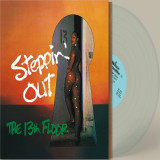
The 13th Floor - Steppin' Out LP

The 13Th Floor

Steppin' Out LP

12inchRG-013NATURALTR
ReGrooved Records
08.09.2023

Originally released on Blue Candle Records in 1977, Steppin' Out by the 13th Floor is a true treasure that deserves a cherished place in the collection of every soul and funk connoisseur. This long-awaited reissue brings back the original magic, preserving the essence and impact it had on the music scene.

Its profound influence on bands like the Red Hot Chili Peppers is undeniable, solidifying its status as an essential gem in the annals of musical history. Now, with this reissue, you have the opportunity to experience the same captivating rhythms and infectious melodies that captivated audiences decades ago.

Are you ready to awaken your boogie spirit and infuse your living room with the long-lost spark of the mid-seventies? Brace yourself for an immersive experience as you surrender to the timeless grooves and soulful vibes that will transport you to a bygone era of musical
enchantment. Allow the music to ignite your soul, reigniting the vibrant energy of the past and instilling in you an irresistible urge to groove like never before.

pre-order now08.09.2023

expected to be published on 08.09.2023

Attarazat Addahabia & Faradjallah - Al Hadaoui LP

Attarazat Addahabia & Faradjallah's album came to us as quite a mystery. Our friends from Radio Martiko got access to the studio archive of the Boussiphone label and a reel labeled “Faradjallah” was among the items they had found there. After listening to the selection of reels they borrowed, Radio Martiko felt it was not a fit for their label and helped us licensing it from Mr. Boussiphone instead. We knew nothing about the band. We just had the reel with the music but very little information. What we knew was that the music was incredible and very unique. Gnawa sounds were combined with funky electronic guitars, very dense layers of percussions and female backing vocals more reminiscent of musical styles further south than Morocco. We started asking around whether anyone knew the band with no immediate success until we asked Tony Day, a musician from Morocco who helped us during our search for Fadoul’s family. His sharp memory came through once again, remembering all the names of the Attarazat Addahabia band members and even how to contact the bands singer and leader Abdelakabir Faradjallah. After visiting him at his home in Casablanca with our Moroccan colleague Sabrina multiple times, he shared his personal story. His father arrived in Casablanca from Aqqa at the age of six and his mother came from Essaouira. Abdelakabir was born in the neighbourhood of Benjdia in 1942. Abdelakabir Faradjallah studied fine arts in Casablanca, graduating in 1962. He also played soccer in the second team of "Jeunesse Societe One". His brother-in-law Ibrahim Sadr worked for one of the biggest football teams of the time in Morocco called "Moroco Sportive Union", which allowed him to travel to France occasionally. While Ibrahim was never part of the band he brought along a few instruments from trips.


Yet the majority of the instruments they could not afford to buy were build by Faradjallah and Abderrazak, Faradjallah's brother who passed away early. For instance they had built a Spanish guitar and a drum made of wood barrel and sheepskin by themselves.During the 1950s Faradjallah was booked as a singer for surprise parties with friends. He started to write his first songs including "L’gnawi" in 1967 and wanted to make people discover Gnawa culture, or maybe rather his take on the culture to be more exact. Faradjallah recalls his first interaction with the genre in the streets of the Dern neighbourhood, where he used to go to elementary school. Gnawa is one of the essential musical genres of Morocco. It combines ritual poetry with traditional dances and music linked with a spiritual foundation. Musically a lot of influences originated from West Africa as well as Sudan. Gnawa is usually played by a selection of specific instruments such as the qaraqab (large iron castanets centrally associated with the music), the hajhouj (a three string lute), guembri loudaâ (a three stringed bass instrument) and the tbel (large drums). People would put shells on their clothes and instruments and use incense at their parties. "Sidi darbo lalla - lala derbo khadem..." came from Gnawa verses Faradjallah used to sing when he was 14. The lyrics tackle a global (im)balance of power and the question of social status in this course. The band Attarazat Addahabia was formed in 1968. The original line-up included 14 members, all from the same family. They played their first small concerts here and there starting in 1969. Later in 1973 they performed bigger shows for instance at the Municipal Theatre followed by the "Al Massira Show" at Velodrome Stadium in downtown Casablanca. Their first album "Al Hadaoui" (the one you are listening to) was recorded at Boussiphone studios in 1972 and was never released before. Nobody seems to remember the exact reason why Boussiphone ended up deciding not to put the album out. The album's title track also served as the basis for Fadoul's "Maktoub Lah", who frequented the same circles as the band for some time.

Their shows sometimes could go as long as 12 hours, starting at 5pm in the afternoon, with an occasional break here and there. In the 1980s the band took a brief break. Faradjallah recalled the reason for that break like this: "Zaki, the bands drummer, had fallen in love with a young girl from Mohammedia. Soon after, he fell very ill. The group members were convinced that the girl had given him ‘s'hor’ (a kind of local Moroccan version of "black magic"). For four years, the whole group stopped playing. It was unthinkable to find another drummer to replace Zaki, even temporarily." So they waited four years for Zaki to "get back on his feet" before going back on stage. Apart from very few gigs here and there Faradjallah stopped playing music in the mid 1990s. Some members from the younger generations formed a new band and still play frequently to this day. Faradjallah runs a television repair shop coupled offerings beverages and snacks in the Belevedere /Ains Sbaa district of Casablanca. While Faradjallah was primarily a musician, he would work for the local cinema and paint their posters for new movies by hand and he designed all artworks and cover posters of the band.

And this eventually led to him participating actively in our first exhibition dealing with Habibi Funk’s work in Dubai 2018. He helped us by creating calligraphic complementations on large photo prints for that show.

out of Stock

Order now and we will order the item for you at our supplier.


Last In: 6 years ago
Errol Stubbs - Turning It Out LP

Rare 1986 Funk/Soul From Alabama.

Originally released as a private pressed cassette tape only.

First Time On Vinyl.

Released in collaboration with the Numero Group.

180g BLACK vinyl limited to 500 copies w/obi strip. Non-Returnable.

Armed with little more than his Peavey T-60 guitar and a Jumbo Fuzz pedal, Errol Stubbs and his bar-band cohorts cranked out a self-released tape of funked-up disco soul in 1986. With no label or distribution to speak of, Errol would simply put on his best suit and sell the cassettes by hand. The tape languished into obscurity…until now!

The story of Errol Stubbs begins in Birmingham, Alabama in 1959. The youngest of five, he was surrounded by music as a child–his aunt taught piano at Daniel Payne College while his older brother, Avery Beavers, was an accomplished jazz trumpeter. Under the guidance of Avery, Errol started playing trumpet at the age of nine, though he gravitated toward songwriting and quickly picked up the guitar. Inspired by blues greats the likes of Albert King, Buddy Guy, and Little Milton, 12-year-old Errol began mimicking the sounds that filled southern airwaves. As a teenager, he played at barbecues, fish fries, and dive bars across the Magic City. After a brief stint at Jefferson State studying music, Errol’s passion for songwriting beckoned him away from the classroom.

Stubbs bounced around bar bands before settling on a live lineup and saving enough dough to take his vision to the recording studio. Over the course of two days, his well-rehearsed band recorded Turning it Out mostly live to tape at the Sound Of Birmingham Studio. Located on Birmingham’s east side, the state-of-the-art studio kept the lights on by recording commercial jingles but was more than happy to open their doors to local talent.

Taking notes from guitar god Ernie Isley and funk legend Rick James, the resulting recordings are drenched in cosmic phaser-fuzz guitar work, slapping bass lines, and sexual disco innuendos. Big brother Avery lends a hand on Clavinet for “Sweat,” while studio owner/engineer Don Mosley adds a tasteful dose of Moog synthesizer across a handful of cuts.

Soon after the Sound Of Birmingham sessions, Errol released the private pressed EP “Dancin’ Fancy,” b/w “Spaced Out On Your Love,” the latter of which was featured on Numero Group’s 2019 compilation Visible and Invisible Persons Distributed In Space.

The seven-song cassette Turning It Out was sold in local record stores and from night club stages, but only a few copies made their way out of Birmingham.

pre-order now04.08.2023

expected to be published on 04.08.2023

SWAMI JOHN REIS - RIDE THE WILD NIGHT LP

Swami John Reis celebrates his 100th year in rock ’n’ roll with a brand new band and record! “Ride The Wild Night” is neither completely similar nor dissimilar to his previous bands (Hot Snakes, Night Marchers, The Sultans, Rocket From The Crypt, Drive Like Jehu, etc).

Yet the sound is immediately familiar and assuring (like an old friend you lost touch with that comes back into your life only to ask to borrow money).

The music is an amalgam of ’60s folk-punk, ’70s punk-punk and pre-Vietnam War rock ’n’ roll, filtered through the Reis’ unregistered, trademark sensibilities. “I wanted to celebrate some of my favorite rock n roll in its transitional periods. Flaming Groovies, Paul Revere and the Raiders, The Kinks, The Saints and others created some of the most exciting recordings while also connecting the musical past to its future. That really appeals to me”.

Although titled a “solo” record it is predominantly in name only. The record is built on stentorian bedrock of savage drumming by J. Sinclair K. of Hot Snakes and the pounding acoustic piano of Joe Guevara. Also adding their expertise to the mix is Chris Prescott (Pinback) Gar Wood (Hot Snakes), Glen Galloway (Truman’s Water), Jacob Turnbloom (Mrs. Magician) and Jordan Clark (PLOSIVS). With this backing, Swami John Reis finalizes it with his throaty basso and weaponizes the files with roaring electric guitars, rapid acoustic guitar strum and bass.

Hear his defiant, croak-howl in what might be his most autobiographical work yet. “All of these stories are real. They just might not be completely true.” Reis adds, ”The words come from what I overhear through my fence, what I see across the street, pictures I see in my head, experiences that I can’t forget or am grateful to remember.” If there is a loose theme throughout the record he offers, “Musically and lyrically there is a motivation to surrender to a restless and impulsive spirit that can only be satisfied by breaking things. Creating rubble for better or worse. “

Music critics and fans alike have long referred to Reis’s signature voice as “The Velvet Yawn” and never has that description been more apt. “Ride The Wild Night” was recorded by Reis at City Of Refuge (Night Marchers, Black Lips, The Spits) and mixed by Ben Moore (Hot Snakes, Diamanda Galas) at Singing Serpent.

pre-order now31.07.2023

expected to be published on 31.07.2023

Teleclere - Affection/Defection

A central figure in Seattle’s fading disco scene, radio DJ, producer, engineer, writer and multi-instrumentalist…Tony Benton was the driving force behind the Seattle soul-funk sound during the late 70s & 80s. Starting off his career at the age of ten he learned how to play the piano and then finally got to take a music class in the 7th grade. Having access to an electric piano made him fall in love with the thought that he could make his own music. At the age of 16 Tony and his friends already formed their first band called ‘Crystal Clear’ and were making up songs in his basement.
Things would really start off when Tony Benton teamed up with his group to form the avant-boogie group Teleclere who went on to release their first single in 1982 (Fantasy Love / Ultra Groove). That’s when Tony started playing all of the other instruments and thus earning him the title ‘multi-instrumentalist’. Teleclere was all about creating and performing original music, there was no music scene in Seattle at that time for a black artist or group who played original compositions. Rap-music was also emerging and clubs slowly started to switch from live performances to deejays.
Through the success of their independent EP release, Teleclere followed up a year later with their Affection/Defection album which created a serious hype. This gave them the chance to regularly open at concerts for national artists in halls and clubs. They played at nightclubs, bars, festivals, private parties and did mini tours in the Washington State cities & Canada…including opening for Grammy-award winning soul-star Peabo Bryson (performing for a crowd of 3,000 in their hometown Seattle)
Sadly, radio would not play their music so folks never really had the chance to hear it unless they saw them perform live (they always won the crowd over). To add insult to injury, venues and the likes started to mainly book cover bands playing top 40 music. Disappointed by this Tony Benton became a radio personality but would continue to record and perform under the name ‘Teleclere’ with various players and vocalists for many years to come. Only a handful of his tracks recorded were released in the end.
Thankfully we are left with the unique audio-document that is the Affection/Defection LP. The album took the scene by storm in 1983 and sounds like a sci-fi space odyssey unfolding on an intergalactic dance floor…a chopped and slapped slice of 80ies electro-funk, sensual soulful serenades, pulses of Innervisions-worthy bass, top of the line vocals and a plethora of vocoder magic. Also included is the hit ‘Steal Your Love’ that was featured on the acclaimed 2014 Light In The Attic compilation ‘Wheedle’s Groove Volume II: Seattle Funk, Modern Soul And Boogie 1972-1987’.
Tidal Waves Music (in collaboration with the Numero Group) now proudly presents the first ever vinyl reissue of this fantastic private pressed Seattle electronic soul/funk album (originally released in 1983 on Telemusic Productions). This rare record (original copies tend to go for large amounts on the secondary market) is now finally back available as a limited 180g vinyl edition (500 copies) complete with the original artwork and obi strip.

pre-order now28.07.2023

expected to be published on 28.07.2023

PROCESSMAN & CADY - ADUPE / SOU BAIANA

Welcome to the modern Brazilian disco world of Processman and Cady. We know you're going to love it here.

DJ and producer Processman is from Salvador, Bahia. A passionate and talented musician, he has played in a number of bands in his city, which is famous for artists such as his heroes Gilberto Gil, Joao Gilberto and Jorge Amado.

Processman was introduced to Cady, a fellow Baiana and a very fine solo artist in her own right, by a mutual friend.
The connection was instant and they started making music that very day.

Fast forward to when Dicky Trisco was passing through Salvador after playing the magnificent Mareh festival in Bahia. Processman drove Dicky and a group of friends to local hot spot Pelourinho, and the first track he played in the car that night was 'Adupe'. Dicky was blown away by the track. The brilliant Brazilian percussion, the beautiful layered vocals, the spiritual, synth boogie-laden vibes and those delightful melodies. He was absolutely hooked. The second track Processman played was 'Sou Baiana' and a record deal was already a sure thing. They hadn't even made it to the bar yet.

A year later and the release is ready to let loose its magical, spiritual, boogie-laden vibes.

NYC Brazilian aficionado JKriv, the perfect choice for a remixer for this sound, has delivered an essential, cosmic disco dub of 'Adupe'.
While Dicky Trisco takes on 'Sou Baiana', stripping it down and pumping it up into a truly rocking dance floor bomb.

File it under Modern Brazilian Disco. A truly International sound.

LET'S VAMOS!

out of Stock

Order now and we will order the item for you at our supplier.


Last In: 22 months ago
Una Luz Y El Zigui - Buenos Días Juventud

First time reissue of mega rare 1972 psych-folk album from Venezuela.
180g LP.
One of the most obscure records ever released in Venezuela that was originally distributed in tiny quantities as a promo-only album.

A magic blend of protest songwriting, with a strong environmentalist statement, and folky pop with psych ingredients —such as the use of sitar sounds— recorded by the collective of artists “Una Luz”, and “El Zigui” who was once described as the local Bob Dylan.

The late ‘60s was a short period of time, long enough to turn the world upside down.

Music, paying attention to the ancient Greeks who said that changes in society are also reflected in it, also undergoes violent transformations in its structure. The turbulent joy of rock and roll and twist gives way to the meditative sounds of the waves of the sea contained in surf to finally welcome music of soft and delicate harmonies with songs full of references in their lyrics to the state of society and their relationships with the environment.

On the other hand, in Venezuela, although the expansive wave of May 68 had not reached it, a certain degree of dissatisfaction began to be perceived, especially through the music of a singer-songwriter from the countryside of Venezuela known as Ali Primera, El Cantor del Pueblo. Thanks to a scholarship from the German government, he studied for a few years in that country, and it was there that he recorded his first album, with songs whose lyrics reflect the essence of authors such as Bob Dylan and Atahualpa Yupanqui. And Ali Primera becomes one of the greatest influences of our artist: El Zigui.

Guillermo Sánchez Corao —known as El Zigui for some strange reason— was born in the Venezuelan city of Maracay, capital of the State of Aragua, on January 13, 1948. From a very young age he began to study guitar playing and, already in his teens, we can find him as part of the duo El Zigui & Franklin together with Franklin Laudelino Mejías, another young man with a great musical pedigree.

It is during his bohemian phase as a troubadour, in the surroundings of the Ateneo de Caracas, when his music caught the attention of producer Mario Tepedino, the most important youth music producer at the time. Mario takes him to his TV show “2001 Juvenil”. With the incorporation of other musicians such as Rubén "Micho" Correa —who would later become a great arranger and record producer— he created the group El Zigui y Una Luz, which would later be joined by musicians such as Carlos "Nene" Quintero and Alfredo Padilla, members of the amazing Grupo Pan. Later on, another outstanding singer would also join Una Luz: Guillermo Carrasco.

With this formation they made it into a recording studio in 1972 where they managed to record, in just 30 hours, a long-playing album of which only 60 copies were pressed and has therefore gained cult status among collectors. As expected, the strong content of the lyrics was not supported by the media, making the promotion of the album impossible to accomplish. However, it was with the help of Mario Tepedino that they made it to television, with appearances on “2001 Juvenil” and “Antesala Lunar”, a show that was especially produced for the broadcast of the arrival of man on the Moon.

That was probably one of the main reasons for El Zigui to move to Canada and then France until 1978 when he returns to Venezuela. He would then join bands like Xabañón, Fogón and De Vuelta al Futuro, a 12-member super group. The former members of Una Luz had become well known musicians in the country, especially Guillermo Carrasco who was one of the greatest ballad artists in the ‘80s and targeted by the biggest record companies at the time. El Zigui died in a traffic accident on June 22, 1999. If he had lived through these crazy times... where would he have gone?

pre-order now31.05.2023

expected to be published on 31.05.2023

Various - A Tribute To Spacemen 3(2x12")

First repress since its original release in May 1998

Celebrating twenty-five years since its release as rgirl2 – the label’s first LP – Rocket Girl is reissuing its seminal compilation A Tribute to Spacemen 3 on double vinyl with spot varnish sleeve in May 2023.

Widely acclaimed at the time of its release (garnering rave reviews in the UK, US, Canadian and European music weeklies and monthlies), the collection sounds as fresh and inventive as it did three decades ago. Launched at a time when tribute albums were prevalent, A Tribute to Spacemen 3 stands apart from other covers albums in that it not only redecorates S3’s songs in a bold new palette of colours, but also acts as a time capsule documenting a very specific wave of 90s US and UK bands that shared many sensibilities – ‘post-rock’ might be the catch-all genre, but their music also encompassed psych, slowcore, analogue electronica, dream pop and space rock to varying degrees – and many of whom (Mogwai, Low, Arab Strap, Bardo Pond) have gone on to reap major critical and commercial success, and are still thriving today. In 1998 the LP was a gateway for fans of Spacemen 3 to discover these relatively unknown experimental artists operating on small independent labels either side of the Atlantic – today it is a celebration of the timeless innovation and longevity of that scene.

As author Richard Milward states in Rocket Girl 20, the 2019 book illuminating the history of the label: ‘In no way is the LP a collection of imitators simply regurgitating Spacemen 3’s songs sound-for-sound – rather, the compilation celebrates the purity and bravery of Pierce’s and Kember’s song writing (themselves never averse to a transformative cover version) while showcasing the originality and diversity of those bands they have inspired.’ It is the simultaneous simplicity and otherworldliness of S3’s songs that make them perfect fodder for reinterpretation, the band’s ‘three chords good, two chords better, one chord best’ mantra providing a solid, tantalising foundation for these bands to experiment with freely. Throbbing and humming with equal parts euphoria and melancholia, over the course of the album’s 69 minutes the tracks slide from slithering stoner psych (Asteroid #4’s ‘Losing Touch With My Mind’) to hymnal delicacy (Amp’s ‘So Hot (Wash Away All of My Tears)’ and Mogwai’s crisp, glockenspiel-chiming ‘Honey’) to zero-gravity lounge jazz (Transient Waves’ closer, ‘Billy Whizz’). There are radical reworkings: the oozing fuzztone lava of Bardo Pond’s ‘Call the Doctor’, and not least Arab Strap’s startling take on S3 live mainstay ‘Revolution’, replete with aggressive, crunching drum machine and the lyrics delivered down the telephone in Aidan Moffatt’s laconic Falkirk drawl – ‘a change, a solution, a wee… a wee revolution’ – before its explosive climax.

out of Stock

Order now and we will order the item for you at our supplier.


Last In: 3 years ago
Runemagick - Beyond The Cenotaph Of Mankind LP

Swedish Doom/Death Metal from the Champions League of that genre!
Runemagick mines the darkest seams of crushing Death/Doom Metal for unremitting headbanging groove. Runemagick are among the most
underrated bands in the history of Metal. Their relative obscurity is hard to pin down. Musically, in terms of songcraft, atmosphere, and immersion into the unearthly realms of the occult, they are basically without peers. Yet despite a prolific thirty-year existence, their reputation exists on the fringes: highly regarded by some but not highly enough considering the overall quality of their output.

From start to finish Runemagick plays well done ancient Death/Doom metal, very slow and heavy, but the balance between Death and Doom Metal is very well chosen! This will relive the glory days of the good old 90’s stuff from the United Kingdom! Deep and intense grunts, the freezing thick guitars and the intense bass lines really spread a gloomy frightening atmosphere. Runemagick have written an album against all kinds of trends hailing a style which.

pre-order now28.04.2023

expected to be published on 28.04.2023

Various - SCRAP METAL VOL 2

Various

SCRAP METAL VOL 2

12inchEZRDR143
Riding Easy
31.03.2023

If you were smart enough to get your grubby paws on the first Scrap Metal compilation, you probably have a pretty good idea of what you’re in for with our second installment. Featuring long-lost gems from ultra-rare 45s and private press singles—plus one previously unreleased banger—Scrap Metal 2 maintains a steady NWOBHM course. Packed with infectious outliers and supremely talented one-and-done metal warriors from the crucial British movement of the late ’70s and early ’80s (and some killer American obscurities inspired by them), this collection delivers all the fist-pumping, riff-mongering and flashy solos of heavy metal’s golden age. As always, every track has been officially licensed and every artist gets paid. As a late entry into the NWOBHM sweepstakes, JJ’s Powerhouse was formed in Merseyside, England, by guitarist Jon “J.J.” Cox with members of his previous band, Quad. Much like the opener to the original Scrap Metal comp, you can hear early Metallica coursing through this legendary ripper. Coincidentally, this ultra-rare 45 was released in ’83, the same year as Kill ’Em All. Taking their name from a 1978 sci-fi novel by Marion Zimmer Bradley, Welsh super troopers Storm Queen reveled in animal-print clothing and flying Vs. The Motörhead-meets-Priest anthem “Raising the Roof” is the flipside to their only single, which the band self-released in 1982. Led by guitarist Dave Morse, Storm Queen’s earliest lineup included bassist Bryn Merrick (RIP), who would go on to join The Damned. Roaring out of Birmingham, England, in 1975, Jameson Raid palled around with fellow Brummies Black Sabbath and named themselves after a failed 19th century attack that helped kick off South Africa’s Second Boer War. Their three-song 1979 debut featured the infectious “It’s a Crime,” which comes across like a deadly hard-glam version of Budgie. Still fronted by vocalist Terry Dark, they’re going strong as of 2022. A.R.C., a punky proto-metal group from the UK, released the boozy single “Home Made Wine” b/w “The Chase” in 1979 and—as far as we know—were never heard from again. They’re not to be confused with a gang of Tolkien enthusiasts also called A.R.C., who released two NWOBHM singles in the early ’80s and actually were heard from again. Nonetheless, the A.R.C. we have here was led by a thirsty lad named Klaus Brunnenkant, who liked to rock n’ roll all night and party every day. Both sides of Metropolis’ sole single bear the legend, “Unauthorized duplication shall result in getting your ass beat.” This San Jose metal squad released their only single in 1986 and dedicated it to Metallica bassist Cliff Burton, who had recently been killed in a bus accident. “The Raven” is the serpentine NWOBHM- and Edgar Allan Poe-influenced flipside to “Time Heals Everything,” and yeah, you can hear the guitars going out of tune on the solo, but that’s part of the charm. Of the two dozen or so metal bands that have called themselves Prowler over the years, we’re pretty sure this particular Prowler is the only one from San Diego. These dudes take a thrashier approach than most of the bands here on Scrap Metal 2: “Temporary Insanity” strikes a deft balance between early Anthrax and early Testament, with just enough hard rock swing to keep it from getting overly staccato. Self-released in ’86 as the band’s only single, the song is the flip to “I Love It.” Not much is known about Christian Steel beyond this: They put out their only single in 1983, which boasted “Need Your Love” as the flip to “I Don’t Want To.” The former, included here, sounds kinda like a dizzy, more metallic version of ’70s Jersey rockers Starz, who famously influenced the likes of Mötley Crüe, Poison and Twisted Sister. Ohio guitarist/vocalist Marty Soski’s career dates back to at least 1969 with the Inside Experience track “Be On My Way,” which we unearthed for our own Brown Acid: The Third Trip. This time, we’ve got a monster Soski cut that he recorded under the name Black Rose. Released in 1982, the absolutely smokin’ “Sidewinder” was the A-side on the band’s sole single. The main riff isn’t far off from Y&T’s major-label banger “Mean Streak,” which was released the following year. When Dark Age titled their 1987 album The Youngest Metal Band in the World, they weren’t even sort of kidding. Legend has it that “Star Trippin’,” which was released as a single a year earlier, was written by guitarist CJ Rininger when he was just 12 years old. His brother Dave, the vocalist, was two years younger. Old photos of the band—complete with pineapple haircuts—seem to bear this story out. Either way, the song is pure flash metal, conjuring Sunset Strip sleaze all the way from Ohio. By now, all you heads know Los Angeles magic men Sorcery from their storied appearance in—and soundtrack for—the death-defying Ozploitation flick Stunt Rock. What we have here in “Whales” is a previously unreleased track from the same 1978 recording sessions. It’s a little bit Zeppelin, a little bit prog, and a whole lotta thundering riffage. Why this languished in the vaults for so long is anyone’s guess. Better late than never!

pre-order now31.03.2023

expected to be published on 31.03.2023

Various - SCRAP METAL VOL 2

Various

SCRAP METAL VOL 2

12inchEZRDR143B
Riding Easy
31.03.2023

If you were smart enough to get your grubby paws on the first Scrap Metal compilation, you probably have a pretty good idea of what you’re in for with our second installment. Featuring long-lost gems from ultra-rare 45s and private press singles—plus one previously unreleased banger—Scrap Metal 2 maintains a steady NWOBHM course. Packed with infectious outliers and supremely talented one-and-done metal warriors from the crucial British movement of the late ’70s and early ’80s (and some killer American obscurities inspired by them), this collection delivers all the fist-pumping, riff-mongering and flashy solos of heavy metal’s golden age. As always, every track has been officially licensed and every artist gets paid. As a late entry into the NWOBHM sweepstakes, JJ’s Powerhouse was formed in Merseyside, England, by guitarist Jon “J.J.” Cox with members of his previous band, Quad. Much like the opener to the original Scrap Metal comp, you can hear early Metallica coursing through this legendary ripper. Coincidentally, this ultra-rare 45 was released in ’83, the same year as Kill ’Em All. Taking their name from a 1978 sci-fi novel by Marion Zimmer Bradley, Welsh super troopers Storm Queen reveled in animal-print clothing and flying Vs. The Motörhead-meets-Priest anthem “Raising the Roof” is the flipside to their only single, which the band self-released in 1982. Led by guitarist Dave Morse, Storm Queen’s earliest lineup included bassist Bryn Merrick (RIP), who would go on to join The Damned. Roaring out of Birmingham, England, in 1975, Jameson Raid palled around with fellow Brummies Black Sabbath and named themselves after a failed 19th century attack that helped kick off South Africa’s Second Boer War. Their three-song 1979 debut featured the infectious “It’s a Crime,” which comes across like a deadly hard-glam version of Budgie. Still fronted by vocalist Terry Dark, they’re going strong as of 2022. A.R.C., a punky proto-metal group from the UK, released the boozy single “Home Made Wine” b/w “The Chase” in 1979 and—as far as we know—were never heard from again. They’re not to be confused with a gang of Tolkien enthusiasts also called A.R.C., who released two NWOBHM singles in the early ’80s and actually were heard from again. Nonetheless, the A.R.C. we have here was led by a thirsty lad named Klaus Brunnenkant, who liked to rock n’ roll all night and party every day. Both sides of Metropolis’ sole single bear the legend, “Unauthorized duplication shall result in getting your ass beat.” This San Jose metal squad released their only single in 1986 and dedicated it to Metallica bassist Cliff Burton, who had recently been killed in a bus accident. “The Raven” is the serpentine NWOBHM- and Edgar Allan Poe-influenced flipside to “Time Heals Everything,” and yeah, you can hear the guitars going out of tune on the solo, but that’s part of the charm. Of the two dozen or so metal bands that have called themselves Prowler over the years, we’re pretty sure this particular Prowler is the only one from San Diego. These dudes take a thrashier approach than most of the bands here on Scrap Metal 2: “Temporary Insanity” strikes a deft balance between early Anthrax and early Testament, with just enough hard rock swing to keep it from getting overly staccato. Self-released in ’86 as the band’s only single, the song is the flip to “I Love It.” Not much is known about Christian Steel beyond this: They put out their only single in 1983, which boasted “Need Your Love” as the flip to “I Don’t Want To.” The former, included here, sounds kinda like a dizzy, more metallic version of ’70s Jersey rockers Starz, who famously influenced the likes of Mötley Crüe, Poison and Twisted Sister. Ohio guitarist/vocalist Marty Soski’s career dates back to at least 1969 with the Inside Experience track “Be On My Way,” which we unearthed for our own Brown Acid: The Third Trip. This time, we’ve got a monster Soski cut that he recorded under the name Black Rose. Released in 1982, the absolutely smokin’ “Sidewinder” was the A-side on the band’s sole single. The main riff isn’t far off from Y&T’s major-label banger “Mean Streak,” which was released the following year. When Dark Age titled their 1987 album The Youngest Metal Band in the World, they weren’t even sort of kidding. Legend has it that “Star Trippin’,” which was released as a single a year earlier, was written by guitarist CJ Rininger when he was just 12 years old. His brother Dave, the vocalist, was two years younger. Old photos of the band—complete with pineapple haircuts—seem to bear this story out. Either way, the song is pure flash metal, conjuring Sunset Strip sleaze all the way from Ohio. By now, all you heads know Los Angeles magic men Sorcery from their storied appearance in—and soundtrack for—the death-defying Ozploitation flick Stunt Rock. What we have here in “Whales” is a previously unreleased track from the same 1978 recording sessions. It’s a little bit Zeppelin, a little bit prog, and a whole lotta thundering riffage. Why this languished in the vaults for so long is anyone’s guess. Better late than never!

pre-order now31.03.2023

expected to be published on 31.03.2023

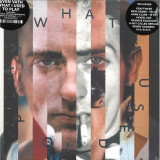
Sven Väth - What I Used To Play (12x12" boxset)
 
36

For this uniquely personal retrospective spread over twelve vinyl discs, Sven Väth takes us back to the early days of his DJ career. On What I Used To Play we meet great pioneers of electronic music, gifted percussionists, obscure wave bands, and innovative producers of a bygone 'new electronic' era. Rough beats and irresistible grooves from the identification stage of house, techno, and acid remind us not just how far electronic music has evolved over the past four decades, but how great it was to dance to EBM, techno, and house for the very first time.

If there is one protagonist of the electronic music scene who has remained curious, innovative and at the very cutting edge of music for over four decades, it's Sven Väth. His multi-layered artist albums and Sound of the Season mix compilations have been defining the genre for over two decades, and even today, he is constantly on the lookout for the next top tune to add to the highlights of his next set. At least, that's the case when he's not producing them himself as an artist or remixer. "Actually, it's always been part of my DNA to think ahead," and nothing had been further from his mind than looking back at his past, but when in spring of 2020 the international DJ circuit had to be scaled down to virtually zero, the 'restless traveler' suddenly had time. Time to stop and reflect on "how it actually was back then, at the very beginning of my career..."

"It was a great trip and with every track, beautiful memories came flooding back".
In the London apartment, he had just moved into, Sven has set up a "little music room", where he cocooned himself for several days, "to look way back for the first time and review my musical journey through the eighties, so to speak."

The interim result was six thematically oriented playlists with a grand total of 120 tracks from 'early 80s' to 'Balearic late 80s', together with excursions into afrobeat, European new wave, and EBM sounds and a few epochal techno/house tracks from the USA in between. From these 'Best of Sven Väth's favorites', the project What I Used To Play crystallized. Sven remembers how the Cocoon team reacted to his proposal: "They found the idea of making a compilation out of it MEGA from the beginning and everyone said 'Sven, go for it', but then, of course, the work really started, namely, to clear the rights and to get clean sounding masters of the up to 40-year-old tracks. There was also disappointment, of course. We couldn't clear certain titles because the rights holders in the USA had fallen out with each other or simply disappeared from the scene. In short, it wasn't easy, but now I can safely say we got the most important tracks."

Finally, after two years of research, curation, design, and administrative fine-tuning, the "little retrospective" from 1981 to 1990 is available. The exquisitely packaged, and three-kilo heavy box set is not only physically impressive, WIUTP is also the definitive record of Sven Väth's musical development. On each of the twenty-four sides of vinyl, you can trace track by track, what influenced him during which phase, and how he took off as a DJ from his parents' Queen's Pub straight into the spotlight at Dorian Gray. There and at Vogue (later OMEN), Sven became the style-defining player in the DJ booth that he still is today.


1981 - 1990: Future Sounds of Now

In the early eighties, the crowd in clubs like Vogue and Dorian Gray danced to what nowadays we call 'dance classics' - mainly disco, funk, soul, and chart pop. It was up to a new generation of DJs, including Sven Väth, the youngest protagonist in the Rhine-Main area at the time, to create their own club-ready music mix. Good new tracks and potential floor-fillers were rarities that had to be sought out and found, in order to prove oneself worthy.
Without MP3s, internet streaming, or other digital download possibilities, music didn't just gravitate to the DJ, instead, it had to be tracked down. In well-stocked record stores in Frankfurt and Wiesbaden or even in Amsterdam, London, or New York, Sven and friends sourced the material for countless magical nights. On WIUTP we can follow Sven's very personal journey through this wild, innovative era in which synth-pop, funk, hip-hop, and disco were successively replaced as 'club music' by house, techno, acid, and breakbeat. By the end of the decade, it was clear to see that these once exotic 'fringe' phenomena would soon become 'mass' phenomena.


Early 80s

Dirty Talk by the Italian-American duo Klein & M.B.O. represents the most innovative phase of the Italo-disco genre in the early eighties like no other track. Mario Boncaldo (I) and Tony Carrasco relied entirely on the original synthetic drum and percussion sounds of the Roland TR-808, coupled with the raunchy vocals of Rossana Casale and guitar accents of Davide Piatto. Of course, other tracks from this period were also influential in style, most notably Unit by Logic System, which worked as the perfect soundtrack to the laser lighting system at the legendary Dorian Gray club. With stomping beats and robotic rap interludes, Bostich by Yello also belongs on Sven's eternal playlist - after all, it caught the attention of Afrikaa Bambaataa, who invited the Swiss duo to perform at the Roxy in New York in 1983.


EBM Wave - Mid 80s

From today's point of view, the almost ten-minute-long, downtempo track Giant by Matt Johnson's band project The The, would probably not be considered an obvious club classic. However, a closer (re)listen reveals the rhythmic intricacies of the percussion overdubs by JG Thirlwell (aka Foetus) on Johnson's composition, and it becomes clear why this exceptional piece of music is one of Sven's absolute favorites. Other classics from this phase include Kaw-Liga by the mysterious The Residents, the hypnotic-synthetic Our Darkness by Anne Clark (and David Harrow), and last but not least, the somber, monotonous anthem Where Are You? by 16Bit, one of Sven Väth's projects together with Michael Münzing, Luca Anzilotti from 1986.


US House - Late 80s

You certainly can't talk about Chicago house without mentioning Frankie Knuckles. The resident DJ at the Warehouse not only gave the name to an entire genre, but also produced epochal floor fillers on the Trax label like the timeless Your Love, sung (and moaned) by Jamie Principle. Acid house protagonists Phuture also hail from Chicago, and on We Are Phuture (also released on Trax) we hear the chirping acid sounds of the legendary Roland TB-303 in full effect. Another featured classic is No UFO's by Detroit's Model 500 aka Juan Atkins, who is rightly considered the 'Godfather of Techno' even if the genre-defining track from 1985 still breathes with the spirit of hip-hop and electro from the first breakdance era.


Afrobeat

Le Serpent, by Algerian-born Abdelmadjid Guemguem, is a track that sounds completely different from everything else on WIUTP. Made in 1978, it's a monumental, rousing groove created without bass or synths, just with five congas! Even though Guem sadly passed away in 2021, his immortal, acoustic beats are understood all over the world and will continue to enrich many thousands of DJ sets for years to come. Another classic that not only Sven appreciates beyond measure is Hugh Masekela's Don't Go Lose it, Baby. In addition to being one of the most important jazz pioneers, the trumpeter and freedom fighter from Johannesburg was very experimental, integrating electronic sounds into his music in later years, in a similar vein to Miles Davis and Herbie Hancock. Dutch jazz pianist Jasper van't Hof's afrobeat project Pili Pili has also aged well. The trance-like, almost sixteen-minute-long track of the same name, manages to fill a whole side on the seventh of twelve vinyl discs in the WIUTP box.


UK-US-Euro - Late 80s

Time for a change of scene, in the truest sense of the word, and from a musical perspective, this section is like landing on another planet. First up is Andrew Weatherall's classic remix of Primal Scream's Loaded, featuring the iconic Peter Fonda sample (lifted from the 1966 biker film Wild Angels) that came to personify the mood triggered by the British Second Summer of Love in the late eighties: "We wanna be free to do what we wanna do, and we wanna get loaded...". This period also saw the emergence of M/A/R/R/S whose only single, 1987's Pump Up The Volume, became a club classic with support from DJ legend CJ Mackintosh. In this most eclectic of sections, we also encounter New York house and reggae producer Bobby Konders and his seminal Nervous Acid.


Balearic - Late 80s

Those who know him, know that Sven had already lost his heart to the 'magic island' of Ibiza as a teenager, so with that in mind, the WIUTP project couldn't end without a Balearic chapter. Inspired by Manuel Göttsching's E2-E4, the immortal, eponymously titled Sueño Latino belongs in there without question. Equally popular on the island was, and still is Break 4 Love by Raze, which thinking about it, would also fit perfectly into the house chapter. Last, but not least, there's an overdue reunion with Sven Väth himself, in his role as frontman of the successful Frankfurt trio OFF. Together with Michael Münzing and Luca Anzilotti (later of Snap!) this 'Organization For Fun' created the off-the-wall club hit Electric Salsa in 1986 which incidentally turned into an international chart smash, putting Sven in the enviable position of having to decide between pop stardom and a DJ career. Well, we all know how that decision turned out and the rest, as they say, is history. A not insignificant part of his story is What I Used To Play. Enjoy!

out of Stock

Order now and we will order the item for you at our supplier.


Last In: 10 months ago
A Blaze Colour - Against The Dark Trees Beyond

The Belgian minimal synth band's three releases – a cassette and two vinyl EPs – were all titled »Against The Dark Trees Beyond«. This compilation collects the songs from these records.

"They were interesting times, the early eighties. Against a backdrop of cold war and economic crises, the DIY attitude of the earlier punk movement had spawned near countless new genres where artists and bands broke the three-chord guitar mould and experimented with new content matter, singular song structures and – in many cases – new instruments. Synthesizers became affordable and were no longer the sole privilege of rock millionaires. All around the globe, musical creativity boomed as never before, and Belgium was no exception: Digital Dance, Snowy Red, The Names, Pseudocode, Marine, 1000 Ohm, De Kommeniste, M.Bryo & D.M.T., De Brassers, Struggler, Siglo XX are but a few legendary names of bands and artists who started making a name for themselves.

In Leuven, things were happening as well. Until then, the music scene in this rather provincial town had been dominated by straightforward rock and blues acts. Not for much longer, though: in places like Arno'z and (later) The Gladhouse, where young budding artists met with kindred spirits, bands were often formed on the spot and, more importantly, started to make ripples.

Ludo Camberlin and Karel 'Bam' Saelemaekers already had a certain track record in Leuven's burgeoning music microcosm. But what they shared would become the cornerstone of A Blaze Colour (Against The Dark Trees Beyond): a fascination for new forms and instruments, a penchant for sonic adventure and a profound love for gripping songs. The full band name, by the way, was inspired by a phrase from the Irish-American novelist J.P. Donleavy, a writer who belongs in the definitely-worth-checking-out section.

After appearing on the first No Big Business LP (1981) with the instrumental 'Fisk', A Blaze Colour's first proper release, as was so often the case in those days, was a self-produced cassette. The music – which would later be dubbed 'minimal' – was characterized by the use of basic rhythm machines (Boss Dr. 55, mainly) and analog synthesizers (for the synth geeks: Korg Delta and MS20, Roland SH-2 and Jupiter IV, and the infamous Casio VL-1). Camberlin’s vocals, meanwhile, displayed an aloofness totally in sync with the zeitgeist. Equally important, though: all five tracks on this cassette were bona fide songs with a clear sense of structure, aided by a sonic mastery that demonstrated a high level of experience: 'Means To An End' started out as a proto-industrial track before bursting out into a moroderesque finale. The remix of 'Fisk' was as sprightly as the next river salmon, while 'Or Lie Again' proved the perfect soundtrack to a nightly walk through wet deserted streets. On the other hand, 'Through With Life', rife with disturbing sound effects countered by a slow portamento, could have been a prize track on a post punk 'Lamb Lies Down On Broadway'. And in true dramatic fashion, 'Follow The Signs' was the perfect ending of this five-song cycle: a driving sequencer and gripping chord progression coupled with a simple but powerful vocal line. Considering the limited technical means the duo was working with, this was no less than a triumph.

A few months later, the band released a seven-inch single on its own ABLACO label. 'Dark Trees Beyond', a quirky pop song, was coupled with 'Addict Of Time', a dark and brooding spoken word piece. Not the kind of single to storm hit parades, but it didn't go unnoticed. The Minny Pops' Wally van Middendorp, who had founded the Plurex label in 1978, invited A Blaze Colour to his studio in the Netherlands, to record an EP. It would prove to be a massive step forward: recording in a semi-professional studio offered great possibilities, the recently acquired TR-808 drum machine allowed for a broader rhythm palette, and the three new tracks (next to the re-recording of 'Through With Life') showed a band on the top of their game: 'The New Ones' was a wry and haunting song built around a live drum loop and an ominous bass pattern, while 'Nowhere Else' was a near-pop track with very un-minimal vocal harmonies. And it's a mystery why 'Altitude' – another instrumental – was never used in a stylized, high-profile detective soundtrack.

Another song from these sessions, the revved-up 'Cold As Ever' turned up on the high-profile Plurex "Hours" compilation, where it shone brightly, next to songs of a.o. X-Mal Deutschland, Nasmak, Minny Pops and Section XXV.

Meanwhile, Camberlin had already carved out a bit of a reputation for himself as a producer, while Saelemaekers was a respected graphic designer. It remains uncertain if this played a big part in the end of A Blaze Colour, but the fact remains: as studio recordings go, 'The Ultimate Fight' on the "No Big Business 2" compilation, was to be their swan song. What a way to go, though: maybe their best song ever, this was a synthetic bastard funk groove, complete with shout-out chorus and punch-drunk middle-eight. It shut a door, for sure, but it did so with a resounding bang.

So there it is and there it was. Short, sweet, visionary, pioneering and highly influential. And as anybody listening to this first ever compilation will be able to assess probably one of the most colourful electronic acts of its time.

On a more a personal note, A Blaze Colour proved to be instrumental in my own coming of age as a lyric writer, when Ludo and Bam graciously adopted some of my earlier writings, warts and all. To hear them translated into songs was no less than magic, and it certainly gave me the confidence to start our own band a bit later. And the magic continued when Ludo became our producer and Bam designed our record sleeves. But that’s another story, obviously. Because this is the place and the time to dive back into the wondrous world of A Blaze Colour!"

Bart Azijn (Aimless Device)

out of Stock

Order now and we will order the item for you at our supplier.


Last In: 3 years ago
DENIZ CUYLAN - RINGS OF JUNIPER

Deniz Cuylan set out to explore his own distinctive sound on his 2021 solo debut album 'No Such Thing As Free Will.' The album signaled the Turkish musician's first bold step into the spotlight following a winding 15-year path in the music industry playing in multiple bands with home bases dotted all over the globe - Stockholm, NYC, Istanbul - and tackling a wide array of styles both on the stage and in the studio. Now settled into his current home in Los Angeles, Deniz lends his instrumental talents to create scores for independent films and recurring Netflix original series, yet these projects inevitably fulfill the sonic backdrop for another artist's vision. Looking inward on his own for the first time, 'No Such Thing As Free Will' laid the groundwork for his own personal soundtrack, one that fused his love of classical guitar, introspective jazz, and ambient expressionism with his whimsical compositional ear. Over a magical 6-track journey, 'No Such Thing As Free Will' painted a lush cinematic narrative with Deniz's guitar as its guide, delivering an album that "seems to invent new languages for the guitar" (The Guardian) and receiving glowing comparisons to legends like Steve Reich, The Durutti Colum's Vini Reilly, Glenn Branca, and Bert Jansch. With such a singular foundation exposed on a debut album, many artists would stay true to their inventive winning formula and find out if lightning could strike twice. Deniz is not one of those artists. An explorer at heart, Deniz unveils a beautifully alluring and lightly adjusted language on his mesmerizing second album 'Rings Of Juniper.' The record continues to spotlight Deniz's exquisite guitar work and hypnotic compositional skills, yet it boasts a punchier, refined, and more immediate tone right from the start. Accented by a desire to once again uncover a new shade of his sonic palette with the support of a talented cast of friends and artistic collaborators, 'Rings Of Juniper' lays bare a rich, dynamic, and evocative sound that Deniz lovingly refers to as Mediterranean Minimalism.

pre-order now16.12.2022

expected to be published on 16.12.2022

Southside Johnny & The Asbury Jukes - Live In Cleveland '77 (2LP)

Before Southside Johnny and the Asbury Jukes even had an album on the shelves, they were being played on the radio in Cleveland. That’s how far back the New Jersey band’s relationship goes with the city. As the “Jukes” part of their name would suggest, Southside Johnny and his group were spiritually a band from another time. They had a big sound (and a full horn section, courtesy of The Miami Horns) that conjured a vision of a large band, jammed together on the bandstand. Which was hardly far from the truth on a number of nights. Mixing carefully chosen blues and soul covers with their own originals (and some choice songwriting contributions from Bruce Springsteen), they had a live show that was even more potent than w hat had been laid to tape in the studio. This 1977 performance at the Cleveland Agora was the group’s second outing at the legendary venue in less than a year. Live in Cleveland ‘77, the recorded evidence of that night, presented here for the first time by Cleveland International Records, shows exactly why they would become frequent visitors and really, honorary Clevelanders. Songs like “I Don’t Want to Go Home,” Springsteen’s “The Fever,” “Havin’ a Party” and “Without Love” were already well-loved favorites with the local audience, thanks to frequent airplay on WMMS long before they even had an album. Cleveland got a special bonus round that other cities would have killed for. Ronnie Spector had joined the group in the studio as they recorded that debut and came to Cleveland to share the stage with the Jukes, sharing her soon-to-be-legendary take on Billy Joel’s “Say Goodbye to Hollywood” with the Agora crowd. As she did with so many songs, Spector made it her own. Southside Johnny and the Jukes continue to thrill audiences with their live performances worldwide to this day. Now, thanks to the release of Live in Cleveland ‘77, you can be in the audience to hear a bit of the early magic as they were on their way to the top.

pre-order now25.11.2022

expected to be published on 25.11.2022

Southside Johnny & The Asbury Jukes - Live In Cleveland '77 (2LP)

Before Southside Johnny and the Asbury Jukes even had an album on the shelves, they were being played on the radio in Cleveland. That’s how far back the New Jersey band’s relationship goes with the city. As the “Jukes” part of their name would suggest, Southside Johnny and his group were spiritually a band from another time. They had a big sound (and a full horn section, courtesy of The Miami Horns) that conjured a vision of a large band, jammed together on the bandstand. Which was hardly far from the truth on a number of nights. Mixing carefully chosen blues and soul covers with their own originals (and some choice songwriting contributions from Bruce Springsteen), they had a live show that was even more potent than what had been laid to tape in the studio. This 1977 performance at the Cleveland Agora was the group’s second outing at the legendary venue in less than a year. Live in Cleveland ‘77, the recorded evidence of that night, presented here for the first time by Cleveland International Records, shows exactly why they would become frequent visitors and really, honorary Clevelanders. Songs like “I Don’t Want to Go Home,” Springsteen’s “The Fever,” “Havin’ a Party” and “Without Love” were already well-loved favorites with the local audience, thanks to frequent airplay on WMMS long before they even had an album. Cleveland got a special bonus round that other cities would have killed for. Ronnie Spector had joined the group in the studio as they recorded that debut and came to Cleveland to share the stage with the Jukes, sharing her soon-to-be-legendary take on Billy Joel’s “Say Goodbye to Hollywood” with the Agora crowd. As she did with so many songs, Spector made it her own. Southside Johnny and the Jukes continue to thrill audiences with their live performances worldwide to this day. Now, thanks to the release of Live in Cleveland ‘77, you can be in the audience to hear a bit of the early magic as they were on their way to the top.

pre-order now04.11.2022

expected to be published on 04.11.2022

Cerberus Shoal - Cerberus Shoal (Anniversary Edition) LP

Remastered reissue of the eponymous debut album by legendary genre scramblers, Cerberus Shoal. Available on vinyl for the first time in over 25 years. Limited edition Toasted Peach colored vinyl, 500 only pressed. The long out-of-print, eponymous debut album by the prescient, genre-scrambling collective, Cerberus Shoal, showcases their humble beginnings as a progressive punk band with extraordinary promise. Recorded in 1994 and originally released the following year, Cerberus Shoal disTRR024LPC1 is an Indie Retail Exclusive on Rouge Colored Vinyl, 500 only while supplies last. The long out-of-print breakthrough third album by the forever forward-thinking New England collective, Cerberus Shoal, is rightfully considered a high-water mark for the band, and a quintessential example of what would eventually be commonly defined as “post-rock.” The first studio album to feature the members of fellow local experimental rock troupe, Tarpigh, Homb exemplifies the transitional magic and mystery that marked Cerberus Shoal’s brilliant early era. Unraveling their various influences – early 90s post-hardcore, shoegaze, avant-rock, psych-folk, early New Age – and weaving them into something uniquely rich and resonant seemed almost effortless to Cerberus Shoal, and perhaps no album epitomized that more than the lush tapestry of Homb. Finally available on vinyl for the first time ever, Homb Anniversary Edition is packaged in restored artwork with extensive new liner notes written by the band. The record has been newly mastered for vinyl by Bob Weston at Chicago Mastering Service, and pressed onto audiophile-grade vinyl. “It’s another milestone for the always intriguing Cerberus Shoal.” Pitchfork // “Formed in the early 90s, this six-piece collective has steadily gained a name for themselves as one of the most interesting and original bands coming out of the North American indie scene today.” tilled the band’s earliest creative and philosophical influences – the rhythmic post-hardcore of Dischord Records; the disarming histrionics of Ebullition and Gravity Records; and the ominous, patient dynamics of Slint and Moss Icon – into a concise six-song document that is as much a snapshot of an era as a blueprint for much that followed. Cerberus Shoal Anniversary Edition is packaged in restored artwork with extensive new liner notes and newly uncovered photos from the earliest era of the band. The record has been newly mastered for vinyl by Bob Weston at Chicago Mastering Service, and pressed onto audiophile-grade vinyl. The enclosed digital download coupon includes a massive 30-minute instrumental bonus track not available on the LP. Track Listing 1. Rain (2:44) 2. Daddy As Seen From Bar Harbor (11:25) 3. Elena (4:56) 4. Change (7:31) 5. Breakaway Terminal Cable (6:24) 6. Rain (Reprise) (5:34)

pre-order now30.10.2022

expected to be published on 30.10.2022

Hexvessel - No Holier Temple

“If you can imagine a late 1960s folk-rock approach allied to a doomy atmosphere with added touches of lo-fi psychedelia, then you’re getting close to the timbre of Finland’s Hexvessel. There are clearly nods towards King Crimson, Black Sabbath, the Beatles, HP Lovecraft and The Doors, but what the band have managed to do is create something that belongs specifically to them.” – Malcolm Dome, Prog Magazine Hexvessel’s fan-favorite album from 2012, No Holier Temple, gets a luxury 10-year anniversary reissue via Svart Records! No Holier Temple was Psychedelic Forest Folk band Hexvessel’s second full-length album, released to critical acclaim, cult status and some of their biggest sales figures to date. The Finnish “mushroom-devouring pixies” follow up to 2011’s critically acclaimed debut album, Dawnbearer, was described by Roadburn Festival as “a passionate, urgent and gorgeously strange musical spell.” Hexvessel’s break-through album No Holier Temple reached new heights for the band with two Emma Gala (Finnish Grammy Awards) nominations. No Holier Tample also won two Femma awards, which is the Alternative Finnish Grammy Awards. Hexvessel played the prestigious Roadburn Festival in The Netherlands for the first time that year in the church venue of Het Patronaat. The festival sold out in 7 minutes. No Holier Temple also landed in the Main Finnish Charts at #20 and in Alternative charts at #7. No Holier Temple fuses the acoustic 70s folk vibe of its predecessor into a more psychedelic, electric, doom-folk sound with Manzarek-like keys, screeching rhythmic Velvet Underground violins, Miles Davis trumpets and hypnotic freakouts. Weaving the uncanny songs together are the narrative vocals of Mat McNerney, who on this album has matured into the bastard child of Burke Shelley, young Jon Anderson and Paul Simon. Inspired by the progressive, spaced-out haze of bands like Amon Düül II, Van Der Graaf Generator and Ultimate Spinach, whose song “Your Head Is Reeling” they cover with religious abandon. Their sound now expands outward from their eerie, signature, ritual-esque intros into a genre-twisting cauldron of otherworldly rock and the late-night, dreamy spoken-word of artists such as Jim Morrison (An American Prayer) and Ken Nordine.

pre-order now07.10.2022

expected to be published on 07.10.2022

Marxist Love Disco Ensemble - MLDE LP

Sounding simultaneously from the past, the present, and the future, the debut album 'MLDE' by Marxist Love Disco Ensemble seeks to eradicate both the trite from disco and the sobriety from political music. Half poetic, half tongue-in-cheek, this stunning compact eight-track album is influenced by Eastern European and Mediterranean 70s disco records. In the words of band member Paolo, ''it was written in response to hearing 'I love America' by Patrick Juvet. The song prompted the question: why does disco, a genre originally created by oppressed minorities, eventually become synonymous with American capitalist excess?" MLDE seeks to break this connection.

Merging disco, post-disco 80s pop, and boogie into the fold, 'MLDE' was recorded using only analogue instruments, giving it warmth and space. Recorded on cassette, ¼ and ½ inch tape, this gives moments of lo-fi abstraction between the beats of an aggressive, tight drum kit. Instruments used for this recording range from saxophone, trumpet, harpsichord, guitar, and rare analogue synthesisers. The bass sound is shaped by early 80s boogie records, whilst the influence of artists such as Hamlet Minassian can be heard in some of MLDE's more driving-disco outings, such as 'Hues of Red'. In the tradition of Soviet vocal group records, which the band has studied, some songs are sung by a vocal quartet in homage to this tradition.

Tracks such as '1905' and 'Brumaire' have a greater pop aesthetic, with Paolo's vocal style on these more pop-driven songs evoking early 80s bands such as Orange Juice and Chas Jankel.

The format and message of pop and disco are commonly viewed just to entertain and move bodies around a dancefloor; however, lyrically, the subjects range from dialectical and historical materialism, class struggle, Marxist theory and praxis, as well as the concept of Marxist disco music.

Adding the icing to the cake, mastering don Joker aka Liam McLean dusted the album with his magic, giving the songs space where the room is needed, as well as the kick and punch demanded by the modern dancefloor.

Yes, this is a press release, and they are always full of hype, but we were blown away when we heard this album, and we hope it enriches you too.

out of Stock

Order now and we will order the item for you at our supplier.


Last In: 3 years ago
Marxist Love Disco Ensemble - MLDE LP

Sounding simultaneously from the past, the present, and the future, the debut album 'MLDE' by Marxist Love Disco Ensemble seeks to eradicate both the trite from disco and the sobriety from political music. Half poetic, half tongue-in-cheek, this stunning compact eight-track album is influenced by Eastern European and Mediterranean 70s disco records. In the words of band member Paolo, ''it was written in response to hearing 'I love America' by Patrick Juvet. The song prompted the question: why does disco, a genre originally created by oppressed minorities, eventually become synonymous with American capitalist excess?" MLDE seeks to break this connection.

Merging disco, post-disco 80s pop, and boogie into the fold, 'MLDE' was recorded using only analogue instruments, giving it warmth and space. Recorded on cassette, ¼ and ½ inch tape, this gives moments of lo-fi abstraction between the beats of an aggressive, tight drum kit. Instruments used for this recording range from saxophone, trumpet, harpsichord, guitar, and rare analogue synthesisers. The bass sound is shaped by early 80s boogie records, whilst the influence of artists such as Hamlet Minassian can be heard in some of MLDE's more driving-disco outings, such as 'Hues of Red'. In the tradition of Soviet vocal group records, which the band has studied, some songs are sung by a vocal quartet in homage to this tradition.

Tracks such as '1905' and 'Brumaire' have a greater pop aesthetic, with Paolo's vocal style on these more pop-driven songs evoking early 80s bands such as Orange Juice and Chas Jankel.

The format and message of pop and disco are commonly viewed just to entertain and move bodies around a dancefloor; however, lyrically, the subjects range from dialectical and historical materialism, class struggle, Marxist theory and praxis, as well as the concept of Marxist disco music.

Adding the icing to the cake, mastering don Joker aka Liam McLean dusted the album with his magic, giving the songs space where the room is needed, as well as the kick and punch demanded by the modern dancefloor.

Yes, this is a press release, and they are always full of hype, but we were blown away when we heard this album, and we hope it enriches you too.

out of Stock

Order now and we will order the item for you at our supplier.


Last In: 3 years ago
Lacrimosa - Leidenschaft 2LP

LACRIMOSA was the first band combining Gothic with Metal, flooded by classical orchestrations when they released their groundbreaking “Schakal” back in 1994!
Two years later, LACRIMOSA was headlining the Dark Winter Nights Festivals, the first Festival-Tour ever bringing together Gothic and Metal bands on one stage, such as THE GATHERING, SENTENCED or DREAMS OF SANITY.
The rest is history: Many bands from the Metal as well as from the Gothic scene followed their example and Gothic-Metal and Symphonic-Metal became established music styles until the very day.

In the meantime, LACRIMOSA elaborated and improved their musical proficiency, while staying independent from any major label since day one until today, playing shows around the world from Argentina to China since more than 20 years, and now bringing it all together in this masterpiece: Passion meets perfection, pain meets salvation, and darkness meets the guiding light of love! “Leidenschaft” is more than a new album, it is a magical achievement of pure passion!

• 20-page vinyl booklet included

pre-order now12.08.2022

expected to be published on 12.08.2022

Pulselovers - Circles Within Circles

Pulselovers is the recording moniker of Doncaster's electronic music polymath - Mat Handley. In recent times, Mat's restless enthusiasm and boundless talent has seen him excel in a variety of related fields: as a much-loved broadcaster (presenting 'You, the Night and the Music'); dispensing his electronic magic as a member of the bands Floodlights and Vert:x; and founding the essential Woodford Halse tape label. While recording as Pulselovers, he has produced a string of impressive releases, including titles on Castles in Space, Sensory Leakage, Polytechnic Youth, Misophonia, Russian Library, Do It Thissen, as well as regular contributions to the iconic A Year In The Country album series. Mat explains how reviewing these AYITC contributions gave rise to the possibility of compiling a retrospective collection as a stand alone album: "Circles Within Circles contains tracks that have previously appeared on albums released by A Year in the Country between 2017 and 2020. Each collection had a particular theme which gave me an opportunity to experiment and develop the way I work by incorporating field recordings, tape loops and enrichments from additional instrumentation played by friends and kindred souls (guitar, bass, saxophone, flute, violin, vocals etc). For example, the track “Brodsworth” is built around a four track tape loop of different synth tones to create a rudimentary (and very lo-fi) Mellotron, played using the sliders on the Tascam 414 in place of keys. For “Fuggles”, my partner and I broke into an abandoned brewery in Sheffield and made recordings of the empty space and crumbling concrete. For “Beat Her Down” I assembled a virtual choir lead by Katje Janisch to sing a simple but disturbing folk nursery rhyme. It was my friend (and Floodlights main man) John Alexander who suggested collecting the AYITC tracks into a single volume and after several different permutations (around 5 pieces were excluded from this compilation), I think we’ve managed to put together something that feels like a coherent stand alone album. I’ve enjoyed revisiting these works, some of which I’ve not listened to in 5 years. Thanks to Steve Prince of AYITC for his inspirational concepts and to Dan at Subexotic for giving these pieces a second home.” Circles Within Circles will be released on 12th August, via digital platforms and limited edition pressed vinyl.

pre-order now12.08.2022

expected to be published on 12.08.2022

Selofan - Partners In Hell

A match made in heaven and hell, since forming in the cradle of Europe Athens, back in 2012, dark synth duo Selofan have paved their own perditious way, reinventing the modern Darkwave scene throughout the continent and worldwide with their prolific creativity and work ethic over the past decade. Through varied experimental synth-scapes conjured with keen ears for sound design, production, and theatrical aesthetics, Selofan rest not on the laurels of just creating highly danceable coldwave infused music, but with together with Joanna Pavlidou's haunting vocals, and Dimitris Pavlidis' throbbing bass guitar, and modular synth compositions, the pair conjure whole other worlds and narratives throughout each album and music video they create. Thus far the Selofan have released 5 studio albums, issued through their own legendary label they curate themselves: Fabrika Records. Through their Fabrika family, Selofan have championed such acts as Lebanon Hanover, and She Past Away, aiding these bands in becoming two of the most popular Darkwave acts worldwide. Drab Majesty even cameoed in a She Past Away video while being hosted by Selofan during one of the band's frequent stays in Athens, and Kaelan Mikla, a handpicked favorite of The Cure, were first championed by Selofan, through the release of the Icelandic Trio's self-titled debut in 2016. In the Spring of 2020, Selofan released the video for the hopelessly plaintive "There Must Be Somebody", the first single from their forthcoming sixth studio album Partners In Hell, the follow-up to 2018's widely popular Vitrioli LP. "There Must be Somebody" is a discordant composition, mimicking the startled song of birds after a disturbance in a wooded enclave on a mountainside, while a magick ritual unfolds. The album itself opens with "Grey Gardens", a menagerie of morose melodies setting a sombre tone for the rest of a bleak record whose sound design and dreamscapes evoke the best sounds of British and German post-punk of the 80s. "Almost Nothing" is a brooding bell-driven track with a dark and pirouetting melody that is the perfect soundtrack to a figurine twirling in a music box. The German language "Nichts" means No, and this song is both sinister and cinematic with sighing keys, shuddering drum machines, and German lyrics sung with sorrowful conviction. "Zusamen", is a word often asked if you are together, or separate, is a dark ballad whose shadowy keys weave a nightmarish delirium, evoking the soundscapes of a lullaby sung in a haunted dollhouse. "4am" is a restless rhythm, whose soft percussive melody tosses and turns alongside subtle bass and string accents overlaid with despondent vocals. "Happy Consumers" sounds like the swirling of a finger drawn upon the edge of crystalline glass, with vocals and drum machines coming emanating from an adjacent room with echoing acoustics, collectively evoking the sound like lingers when the somnambulist wakes from his dream. "Absolutely Absent" hums onward like a phantom train ride that is a one-way ticket to madness, and with the next track "Metalic Isolation" the locomotive beats gather more steam, propelled forward with anachronistic melody. The album closes with "Auf Dein Haut", which translates as on your skin, and the song is both tactile and tenebrous with sensuously dark synth textures amidst howling German vocals that take flight like witches during a sabbat. Partner's In Hell was mixed and produced by Serafim Tsotsonis, and mastered by Doruk Ozturkcan. Genre: Alternative / Post-Punk / Cold Wave

pre-order now05.08.2022

expected to be published on 05.08.2022

Zacht Automaat - P is for Progress

FP030F pressed in half black half purple vinyl 500 copies hand-numbered. FP030G pressed in black with red splatter vinyl 500 copies hand-numbered. A match made in heaven and hell, since forming in the cradle of Europe Athens, back in 2012, dark synth duo Selofan have paved their own perditious way, reinventing the modern Darkwave scene throughout the continent and worldwide with their prolific creativity and work ethic over the past decade. Through varied experimental synth-scapes conjured with keen ears for sound design, production, and theatrical aesthetics, Selofan rest not on the laurels of just creating highly danceable coldwave infused music, but with together with Joanna Pavlidou's haunting vocals, and Dimitris Pavlidis' throbbing bass guitar, and modular synth compositions, the pair conjure whole other worlds and narratives throughout each album and music video they create. Thus far the Selofan have released 5 studio albums, issued through their own legendary label they curate themselves: Fabrika Records. Through their Fabrika family, Selofan have championed such acts as Lebanon Hanover, and She Past Away, aiding these bands in becoming two of the most popular Darkwave acts worldwide. Drab Majesty even cameoed in a She Past Away video while being hosted by Selofan during one of the band's frequent stays in Athens, and Kaelan Mikla, a handpicked favorite of The Cure, were first championed by Selofan, through the release of the Icelandic Trio's self-titled debut in 2016. In the Spring of 2020, Selofan released the video for the hopelessly plaintive "There Must Be Somebody", the first single from their forthcoming sixth studio album Partners In Hell, the follow-up to 2018's widely popular Vitrioli LP. "There Must be Somebody" is a discordant composition, mimicking the startled song of birds after a disturbance in a wooded enclave on a mountainside, while a magick ritual unfolds. The album itself opens with "Grey Gardens", a menagerie of morose melodies setting a sombre tone for the rest of a bleak record whose sound design and dreamscapes evoke the best sounds of British and German post-punk of the 80s. "Almost Nothing" is a brooding bell-driven track with a dark and pirouetting melody that is the perfect soundtrack to a figurine twirling in a music box. The German language "Nichts" means No, and this song is both sinister and cinematic with sighing keys, shuddering drum machines, and German lyrics sung with sorrowful conviction. "Zusamen", is a word often asked if you are together, or separate, is a dark ballad whose shadowy keys weave a nightmarish delirium, evoking the soundscapes of a lullaby sung in a haunted dollhouse. "4am" is a restless rhythm, whose soft percussive melody tosses and turns alongside subtle bass and string accents overlaid with despondent vocals. "Happy Consumers" sounds like the swirling of a finger drawn upon the edge of crystalline glass, with vocals and drum machines coming emanating from an adjacent room with echoing acoustics, collectively evoking the sound like lingers when the somnambulist wakes from his dream. "Absolutely Absent" hums onward like a phantom train ride that is a one-way ticket to madness, and with the next track "Metalic Isolation" the locomotive beats gather more steam, propelled forward with anachronistic melody. The album closes with "Auf Dein Haut", which translates as on your skin, and the song is both tactile and tenebrous with sensuously dark synth textures amidst howling German vocals that take flight like witches during a sabbat. Partner's In Hell was mixed and produced by Serafim Tsotsonis, and mastered by Doruk Ozturkcan.

pre-order now05.08.2022

expected to be published on 05.08.2022

Phill Reynolds - A Ride

Phill Reynolds

A Ride

12inchBR012/022
BRONSON RECORDINGS
22.07.2022

A Ride is the new dark alt-country concept album on the road by Phill Reynolds, to be released on June 17th, 2022 by Bronson Recordings; Like all the best concept albums, A Ride takes you on a journey. This one concerns the last three days of an American runaway’s life. Part road-trip, part engrossing mystery, part search for redemption, it’s the fictional tale of a troubled man whose past comes back to haunt him. Via eleven intimate, chronologically-sequenced songs, we travel with him. There are epiphanies and dream sequences, drunken dive-bar nights and chats with Jesus and Lucifer. As the narrator battles with his dark side, it is ultimately we, the listeners, who must weigh-up and flesh-out his story. According to its creator Phill Reynolds, AKA Italian alt-country singer-songwriter Silva Martino Cantele, the key to The Ride’s mystery might lie within its fifth song, A Clockwork Dream. “That’s where we discover that, because of some kind of courtroom trial, the narrator has lost someone who was very important to him”, Reynolds explains. “But we never find out her name or her relationship to the main character. Is she a blood relative? Is she his wife or someone else?”. The origins of A Ride go back to 2015. On tour in the US, Reynolds took in the shifting landscapes, the people he met and their stories. All of this fed into the album he recorded at the all-analogue TUP Studio in Brescia, near Milan. Reynolds played almost all of the instruments himself and co-produced A Ride with long-term collaborator Bruno Barcella. If A Clockwork Dream features a full band arrangement – “I think of it as the kind of thing Neil Young & Crazy Horse might do on a Sunday morning”, says Reynolds – other songs are sparer, more intimate. Banjo, Fender Rhodes, harmonica and glistening slide guitar all feature as Reynolds delivers haunting confessionals such as Run, Run Away and The Fault Is Mine, songs likely to appeal to fans of artists such as Damien Jurado, Strand Of Oaks or For Emma, Forever Ago-era Bon Iver. Intricate, rapid-fire fingerpicking on the first single This Isn’t Me and The Call of The Dark demonstrates Reynolds’ dexterity, while his voice is a rich, fully-lived in instrument seasoned with the salt of experience,and strengthened by the 120 or so gigs a year he used to do before COVID took his one-man show off the road. Long an inhabitant of picturesque Italian towns in the Vicenza province, Phill Reynolds was born in Marostica and currently lives in Zugliano. He was only five when The Beach Boys’ Barbara Ann worked its magic upon him via the radio. Later a fan of ‘90s Californian punk bands, Reynolds was writing and performing in his own post-hardcore bands by 13, but didn’t make it to the nearest big city, Milan, until he was 19. Bands still matter deeply to him. But his love for folk music has deepened over the last decade or so, hence his solo act alter-ego. Where did the name Phill Reynolds come from? “Everybody asks me this,” he smiles. “Especially in the UK. The truth is I needed an alternative name for a gig I was doing, and at the time I was in love with the music of Phil Ochs and Malvina Reynolds. Malvina Ochs didn’t sound too good to me, so I became Phill Reynolds, and I like that, because it sounds like a normal person”. The esteemed Italian label Bronson Recordings will release his fourth solo album A Ride on June 17th, 2022, on CD, vinyl and digital. A Ride is the most ambitious and fully-realised Phill Reynolds album to date. He was assisted by Stefano Pilia (lead guitar on Dive Bar Oblivion), IOSONOUNCANE (backing vocals, synth, bass and field recordings on World On Fire), and C+C=Maxigross (bass, drums and backing vocals on In The Dark). The record’s story is a dark one, but not one without hope. “Every end is a new beginning”, says Reynolds. “One of the main themes here is that life can be a sort of trap unless you recognise your own demons and try to deal with him. So we must be prepared and try to live well”.

pre-order now22.07.2022

expected to be published on 22.07.2022

Niney The Observer - At King Tubbys Dub Plate Specials 1973-1975

Winston 'Niney' Holmes AKA The Observer, must be one of Reggaes finest Roots Rebel producers. Capable of making some of the heaviest, innovative music, not only in sound but also in the Cultural/Political sense.
Born George Boswell, Montego Bay, Jamaica 1951, and name checked 'Niney' due to losing a thumb in a workshop accident. He began his career in music by organising bands to play at school dances. But his first steps learning the musical ropes came working under the tutelage of producer Bunny Lee around 1967, organising sessions for Bunny's stable of artists. He moved on to work alongside Lee Perry at Joe Gibb's 'Amalgamated' label setup, where on Lee Perry's leaving in 1969 to start his own 'Upsetter' label, Niney became chief engineer.
Inspired by Perry's success it wasn't long before his own 'Destroyer' label was under way. It was 1970, and his first production entitled 'Mr Brown' by DJ's Dennis Alcapone and Lizzy, proved to be a minor hit, but his own 'Blood and Fire' track released in December of that year would become a major hit. After initial problems with it's likeness to Bob Marley's track ' Duppy Conqueror' being ironed out, it's reissue on his now named 'Observer' label, saw it go on to become, Jamaican Record of the Year 1971. Far out selling Bob Marley's track to the tune of 30,000 copies in Jamaica alone. A roots classic...
Niney's reputation for building great roots tracks, was furthered with more success working with singer Max Romeo. Issuing cuts such as 'Beard Man Feast', the great 'Reggae Matic' and 'Aily Ailaloo' and renewing his friendship with Lee Perry on the track 'Rasta Band Wagon', who's production credit read Perry, Niney, Maxie. In 1973, Niney began working with Dennis Brown, who was already an established star from an early age, they found a chemistry that went on to produce some of Dennis' finest work. The 1973 hit 'Westbound Train' was followed in 1974 by 'Cassandra', 'I am the Conqueror' and the timeless 'No More Shall I rOam'. Another important connection around this time was the great King Tubby who Niney would take his tapes along to and even record some of his tracks at Tubby's house, 18 Drummlie Avenue, Kingston, which doubles as his Studio of Dub.
It's these tracks that we are concentrating on here. Tubby would strip the tracks back to the bone and rebuild then sometimes leaving off the hook line. Whether that be the horn line or keyboard line and adding effects over the top that could disguise the cut even more. Even Niney stating that when Tubby had finished with a cut, he found it hard to recognise the track himself. Its these tracks as dub plate specials that Tubby would play on his Hometown HI-FI Sound System and it's these such tracks that we have compiled for this release. Dub Plated that have not seen the light of day since tragically the great Osborne Ruddock AKA King Tubby was gunned won and murdered on the 06th December 1989. For a few dollars and a gold chain, reggae music has lost one of it's most creative, inventive forces.

Niney also cut tracks with many other Reggae giants such as Gregory Issacs, Michael Rose, Junior Delgado, Horace Andy and Delroy Wilson to name but a few. As in house producer at the legendry Channel Studios and supervising sessions at Dynamic and Randy's Studio 17, his magic touched many. DJ, Arranger, Producer, his Roots Rebel music still stands the test of time.
Hope you enjoy the set.....

out of Stock

Order now and we will order the item for you at our supplier.


Last In: 3 years ago
A.B. CRENTSIL'S AHENFO BAND - OBI BAA WIASE

A.B. Crentsil is a heavyweight of Highlife music and the main vocalist of Sweet Talks, one of the most popular Ghanaian bands of the 1970’s. In 1992, musician Charles Amoah and producer Richie Osei Kuffour offered him the opportunity to explore a new popular sound: Bürger Highlife. Little did he know these studio sessions would give birth to the biggest song of his career.
Charles Amoah, who had released his Sweet Vibrations LP in 1984 to great acclaim, extensively toured in Europe with bands such as Black Earth and Saraba, was eager to bring a new sound to Crentsil, an artist he had admired for years. Throughout the 1980’s, Highlife had been changing pretty radically, following the same evolution as Congolese Soukous, Caribbean Zouk and most popular black music
genres of that era: Heavy use of drum machines, synths and digital technology was conveniently replacing big bands and expensive
analog studios and equipments. Mostly recorded, produced or mixed in Germany, this new breed of electric Highlife dubbed ‘Bürger Highlife’ could be defined as a fusion of Disco, Jazz, Funk and Pop with the popular Highlife beats, rhythms and lyrics.
According to A.B. Crentsil, the name was a reference to the ever present American cultural influence on Ghanaian musicians. Charles
Amoah has his own take: “I initially called this particular kind of Highlife ‘Ethno Pop’. Bürger is the German word for citizen, and that’s how Ghanaian musicians living and working in Germany were calling each other”.
The music for both “Obi Baa Wiase'' and “Sika Be Ba” was entirely composed and played by Charles Amoah, using minimal equipment: a
DX7 synth, a Korg M1, a Yamaha RX5 drum machine, and an Akai 1000 sampler. A.B. Crentsil provided the lyrics for both tunes on the spot. Obi Ba Wiase’s message is one of gratitude and faith: it says we should appreciate our life way more and follow the example of people who have a lot less but still praise God all day.
Charles remembers fondly Crentsil’s larger than life personality: "A.B. slept a lot, he really loved sleeping. His lack of punctuality was easily dismissed by his wonderful sense of humour and it wasn't uncommon to find musicians rolling with laughter on the studio floor."
Charles also remembers vividly the "Obi Baa Wiase" session: he could feel the magic in the air while working on the soon to be hit, and
knew something special was happening. A.B. asked for a break in the middle of the session, which Charles adamantly refused until the song was finished and the magic fully captured.
Success was not immediate, and Charles was first a little concerned by the lack of buzz following the immediate release of the Gyae Me
Life Ma Me album. But a few months down the line, the situation took a new turn. "Obi Baa Wiase" was making its way into radio playlists,
weddings and festive celebrations. It was covered by local bands, and soon most of Ghana and its European and American diasporas were hooked. It became A.B. Crentsil’s most requested song at live events for the following decades.
As producer Richie Moore wrote on the album back cover : "A perfect integration of two musical geniuses, the result of which are the
scintillating tracks of music on this record… so all you party fans go onto the floor and dance the body music"

out of Stock

Order now and we will order the item for you at our supplier.


Last In: 3 years ago
Jackie Mittoo - Organ Super Powered

Jackie Mittoo, organ and piano maestro, was not only a founding member of the legendary Jamaican Ska group The Skatalites, but through the course of Jamaican music’s long history has produced a body of work under his own name and of that with his various group incarnations, The Soul Brothers, Soul Vendors and the Sound Dimension. His distinctive organ and piano sound and musical arrangements have all played a major part in Jamaica's musical history.

Jackie Mittoo (born 1948, Kingston, Jamaica) began playing musical instruments at a very early age. Taught piano by his grandmother he was performing live by the age of 10 and recording by the age of 15. Two Kingston bands that he played with the Rivals and the Sheiks brought him to the attention of Studio 1's founder Coxsone Dodd. Who at the time was putting a group of musicians together to be his studio band. Impressed by his skills on both the organ and the piano, Jackie was asked to join in what would become Jamaica's foremost band The Skatalites. The fellow band members were Lloyd Brevett (bass), Lloyd Knibbs (drums), Don Drummond (trombone), Tommy McCook, Roland Alphonso and Lester Sterling (Sax), Johnny Moore (trumpet), Jah Jerry(guitar) and Mr Mittoo (piano). This line up ruled the Jamaican scene between 1964 - 1965 as well as inventing the Ska sound, they also performed the backing duties for the other top labels of the time including Duke Reid's Treasure Isle and Justin Yap's Top Deck label.

1965 saw The Skatalites disband, and Jackie Mittoo move on to his next musical project The Soul Brothers. Formed with fellow Skatalite Roland Alphonso,this band would back all the hits coming out of Studio 1 for the next three years with Jackie Mittoo working as band leader and musical arranger. Around this time Jackie also had his own single released, a Ska underground classic called 'Got My Bugaloo'. Rare, as it also features Jackie in the unusual role for him, as lead singer!!!!. 1966 saw the Ska sound evolve into Rocksteady, again with Jackie's band at the helm, and his first hit single the Rocksteady cut 'Ram Jam'. The success of which would lead to a solo career and album releases under his own name such as 'Now', 'Macka Fat', 'Evening Time', 'In London' and 'Keep on Dancing', to name but a few. In 1967 the hits at Studio 1 were still flowing when The Soul Brothers morphed into The Soul Venders and began backing such luminaries as Ken Boothe, Alton Ellis, Delroy Wilson, The Heptones, The Cables, The Wailers and many other of the label’s solo artists.

By 1968 Jamaican music was ready for another change and Rocksteady rolled into a slower groove soon to be called Reggae. Jackie Mittoo would be at the forefront with his latest band The Sound Dimension. A line-up that included Leroy Sibbles (bass),Roland Alphonso and Cedric Brooks (saxophone),Eric Frater and Ernest Ranglin (guitar) and Bunny Williams (drums). Being the house band at Studio 1 they backed all the leading names of the time, John Holt, Horace Andy and Alton Ellis, all of Studio 1's output carried his sound. Jackie Mittoo emigrated in the late 60's to Canada but travelled to Jamaica and London to record with many of the big new names, who were trying to redress Studio 1's supremacy and needed his magic touch. Such producers as Bunny Lee used Jackie Mittoo on many of his sessions,Sugar Minott among others were always glad of his services.

For this release we have put together a selection of some of his finest recordings done with legendary reggae producer Bunny Lee. 1970’s cuts that feature Jackie’s numerous talents, showing his ability to embellish tracks with a feel few could better. Musical arranger, band leader and all around studio ace.

We hope you enjoy this great set with Jackie Mittoo in fine style and his organ super powered indeed…

out of Stock

Order now and we will order the item for you at our supplier.


Last In: 3 years ago
Pneumatic Tubes - A LETTER FROM TREETOPS
  • 1: Summer's Children
  • 2: Joyous Lake
  • 3: Treetops
  • 4: The Big Deep
  • 5: Mumbly-Peg
  • 6: Slow Fawns
  • 7: Camp Sunfrost
  • 8: Overlook Mountain House
  • 9: Saw Teeth
  • 10: Witch Water
  • 11: Magic Meadow
  • 12: Summer's End

A Letter from TreeTops is the debut album from Pneumatic Tubes, the solo project of multi-instrumentalist Jesse Chandler. Grounded here in his own bucolic makings, Chandler opens his imagination to the world with this very personal and contemplative album. It’s a kind of American Kosmiche Music, a paean to the wild landscapes of the Adirondacks and Catskills of Upstate New York where he grew up. (TreeTops is the name of a summer camp, fondly remembered by several generations of the Chandler family.)

The album came to Chandler almost as an automatic transmission. Shortly after the death of his father, he holed up alone in the old family home with a few synths, a couple of vintage keyboards, percussion instruments and of course his beloved flutes and clarinets - the “pneumatic tubes” of his nom de plume. Channelling raw memory and landscape, Chandler laid down most of the material for this mystical and elegiac suite of music in just a few days. He later called on some talented friends to flesh out the final recordings; Paul Alexander on bass, Bill Campbell on drums, Marissa Nadler backing vocals and Robert Gomez on electric guitar.

The result is a series of beautifully faded musical photographs. Gentle melodies are propelled along by synth arpeggiators or laidback sidestick and felt beater drums. Chandler’s wind instruments are woven throughout like wild vines binding the elements together. Towards the end of the album an underlying note of melancholy swells into grief during the very moving Witch Water, which is subtly underpinned with Marissa Nadler’s haunting voice. The clouds soon clear, the mountains reappear, and the wheel of the year and of the generations turns again as A Letter from TreeTops signs off with the same lilting melody on which it began.

Originally hailing from Woodstock, New York and now living in Denton, Texas, Jesse Chandler is the keyboard and woodwinds player for the bands Midlake and Mercury Rev. His particular warmth as a composer and improviser is informed by a childhood ensconced in the mystical Catskill mountains, where he absorbed the area’s rich musical history and developed a fascination with keyboard and woodwind instruments.

A Letter from TreeTops is not his first appearance on Ghost Box, he also contributed organ and flute on the Soundcarriers’ incredible Entropicalia album.

Evocative liner notes are provided by Justin Hopper, author of Old Weird Albion and writer of the Ghost Box spoken word album Chanctonbury Rings. By happy coincidence Hopper also grew up in New York State and has his own deep connection to the landscapes there.

pre-order now25.02.2022

expected to be published on 25.02.2022

Roman Flügel - Mega EP

Roman Flügel

Mega EP

12inchRB105
Running Back
14.02.2022

Even if Ancient Greek isn’t part of general knowledge anymore, the word mega is. Hence, you might admire our modesty to say that Roman Flügel’s first outing on Running Back in 2022 is perfectly headed. Greta, large, mighty and somewhat the love- or brainchild of his earlier Garden Party and the previous D.I.S.C.O., Mega pulls out all the stops: hi-nrg melodies, circus bells, cowboy funk and honey hooks at 140 beats per minute. While it is nearly impossible not to take this bait or decorate it with the Bobby-O medal of honor, Roman proves one more that you can be catchy and classy at the same time.
Rules on the other hand, puts some of these stylistic devices in reverse or down-tempo mode and feels like brushing your teeth after an extended feast or the perfect hors d’oeuvre.
Completing the picture with Film 1, Film 2 and Film 3, Flügel flexes his freethinking muscles and lands in-between art school new wave bands and soundscape science. Music that is masterly made, magical in its impact and perfectly described with a misquoted line from Get The Balance Right: it’s never predictable.

out of Stock

Order now and we will order the item for you at our supplier.


Last In: 3 years ago
Various - British Mod Sounds Of the 1960s

Pressed on 140g Black Vinyl Including a signed print from Eddie Piller, limited to 750.
Demon are proud to release “Eddie Piller Presents British Mod Sounds Of the 1960s”, the follow up the “The
Mod Revival”. Featuring 100 original tracks across 6LPs, its a deep dive into the Mod scene in '60s Britain.
Including a selection of classic and rare tracks, tracing the scene from its R&B rootsto a soulful finale
Curated by Acid Jazz Records and Modcast founder Eddie Piller, and featuring new sleeve notes from
respected author and broadcaster Paul 'Smiler' Anderson.
As Eddie Piller points out in the forward to the extensive sleeve notes that accompany this collection, he
chose the word 'Sounds' carefully, reflecting the variety of talent contained here, from uncool session
musicians without an ounce of style in them, acts who saw an opportunity to jump on the Mod bandwagon
and bands who whole heartedly embraced Mod way of life.
And so this new collection mixes the Mod mainstays (Small Faces, The High Numbers The Action, The Fleur
De Lys), with a generous selection of future superstars (David Bowie, Rod Stewart, Elton John, Marc Bolan,
Jeff Beck and Graham Gouldman of 10cc are all represented here), and a few artists so obscure, so rare, that
they never got to release a record in the '60s, but Eddie has tracked down the tapes nonetheless.
"Be in with the In Crowd once more."
Every great youth cult deserves a great soundtrack, and when the '60s Mods adopted classic American R&B,
with a side order of hip Jazz, they undoubtedly found the right music for their exuberant and stylish way of
life. And yet, buying expensive imports, hoping for a local release or praying for a rare visit from overseas
talent was never going to be enough to satisfy British youth with a thirst for the latest sounds. Certainly not
those on the dancefloor and definitely not those with their own musical ambitions.
It was a music scene that began with imitation, before skill and imagination lead curious minds to innovation,
a scene that evolved from average (at best) copies of releases on the Chess, Motown and Stax labels, to
become something more sophisticated,something quite unique, something very British.
All formats are stylishly packaged (of course) and include new sleeve notes by Paul 'Smiler' Anderson, author
of the best-selling and highly regarded books'Mods: The New Religion' and 'Mod Art'.

pre-order now04.02.2022

expected to be published on 04.02.2022

Caravan - Caravan

Caravan

Caravan

12inchTPT213
Tapestry
06.12.2021

For their first album, Caravan was surprisingly strong. While steeped in the same British psychedelia that informed bands such as Love Children, Pink Floyd, and Tomorrow, Caravan relates a freedom of spirit and mischief along the lines of Giles, Giles & Fripp or Gong. The band's roots can be traced to a British blue-eyed soul combo called the Wilde Flowers. Among the luminaries to have passed through this Caravan precursor were Robert Wyatt, Kevin Ayers, and Hugh Hopper and Brian Hopper (pre-Soft Machine, naturally). The Caravan album never sold in serious numbers, and for much of 1968 and early 1969, the members were barely able to survive -- at one point they were literally living in tents. Suddenly, Caravan was an up-and-coming success on the college concert circuit, even making an appearance on British television's Top of the Pops. With national exposure and a growing audience, the group was at a make-or-break moment in their history. They rose to the occasion with their second Decca LP, In the Land of Grey and Pink, which showed off a keen melodic sense, a subtly droll wit, and a seductively smooth mix of hard rock, folk, classical, and jazz, intermingled with elements of Tolkien-esque fantasy.

pre-order now06.12.2021

expected to be published on 06.12.2021

The Ethiopians - Freedom Train

The Ethiopians are one of the great vocal groups to come out of Jamaica. Singing songs of life and times as they found them, themes that resonated with the people of the Island that made them such a treasured group. Lenard Dillon (b. 9 December, 1942, Port Antonio, Jamaica) the founding member of the Ethiopians began his singing career at Clement 'Coxonne' Dodd's Studio One. Initially he recorded under the name of Jack Sparrow, and backed by the Wailers, cutting 'Ice Water' and 'Suffering In The Land'. Under The Wailers encouragement, he went on to form his
own vocal group. Recruiting singers Stephan Taylor (b.1944, Portland, Jamaica) and Aston 'Charlie' Morris to become The Ethiopians. They cut 'Live Good', 'Why You Gonna Leave Me Now' and 'Owe Me No Pay Me'. Although receiving favourable response, Aston Morris decided to leave the band and the remaining pair carried on and cut 'I'm A Free
Man' and 'Don Dead Already' and 'For You'. On meeting contract builder Leebert Robertson who had recently returned to live in Jamaica, ashad he wanted to get into the music business, a session was booked for Treasure Isle Studios. The session produced their seminal 'Train To Skaville' track, which became an immediate hit in Jamaica and in the UK, when in 1967 it reached number 40 in the charts. They also cut 'Engine 54', which became the title of their debut album. Its
follow up 'I Need You / Do It Sweet', did not fare so well and the band moved over to Sonia Pottinger's stable, where they cut 'The Whip / Cool It Amigo' which revived their fortunes and proved another big hit for the band. Two more hits followed 'Stay Loose Mama' and 'The World Goes Ska', after which the band decided to return to a trio, adding
Melvin 'Mellow' Reid to the line up. The band now hit another run of successes with producer JJ Johnson 'Everything Crash, 'Gun Man', 'Hong Kong Flu' and 'The Selah'. Many hits followed leading the band to work with a variety of Jamaican producers. Such tracks as 'I Want To Be a Better Man, ' Conquering Lion', 'Fire A Mus Mus' Tail', and the timeless 'Reggae Hit The Town' to name a few. Two albums 'Reggae Power' (1969) and 'Woman Capture Man' (1970), pulled a lot of these tunes together. Sadly Taylor was killed in 1975 after been struck by a van in a road accident. Dillon returned to Port Antonio till 1977, when he was persuaded to return to Treasure Isle studios with producer Niney The
Observer and cut the Rasta based album 'Slave Call'. Additional members who joined for this album were Bro Fatty, Bro Ewing, Bro T, Mello and Hychi Dread. An album that showed all the Ethiopians magic had not been lost.
For this release we have included the full 'Slave Call' set, 'Ethiopian National Anthem', 'Slave Call', 'Guilty Conscience', 'Hurry On', 'Mus Follow Babylon'(on CD Edition), 'Train To Skaville (1977 version, on CD Edition), 'Culture', 'Obeah Book', 'Let It Be' and 'I Love Jah'. Alongside some of the bands early hits including the original version of 'Train To Skaville', 'Engine 54', the great and poignant 'Everything Crash', 'Reggae Hit The Town' and 'The Selah'. An interesting set to remind us what a great group the Ethiopians really were.

out of Stock

Order now and we will order the item for you at our supplier.


Last In: 3 years ago
HOUR OF 13 - BLACK MAGICK RITES

Shadow Kingdom Records is proud to present Hour of 13’s long-awaited
fourth album, ‘Black Magick Rites’, on CD and vinyl LP.
‘Black Magick Rites’ is the sweet sound of salvation...through damnation.
Hour of 13’s first full-length offering in over eight years, ‘Black Magick Rites’
was available digitally on the first of November 2020 for only 24 hours. Just as
uniquely, ‘Black Magick Rites’ also marks the first Hour of 13 album where he
handles not only all instruments, but also all vocals.
Indeed, Davis’ vocals evoke an ancient nostalgia, of doom metal before it was
“”doom metal”” - of the days when bands like Black Sabbath, Pagan Altar, and
Witchfinder General simply followed their respective muses wherever it took
them. And for Davis, ‘Black Magick Rites’ sees him taking his Hour of 13 muse
toward a rougher, more rock ‘n’ roll expression and yet tinged with an emotive
melancholy that resonates deeply within the soul.
No, no flavor-of-the-week “”occult rock”” cliches here, for Davis still prizes
blue-collared authenticity in his doom, but he likewise never lets it hamper his
immediately recognizable songwriting, which here ever so subtly inches closer
to classic deathrock territory (think the likes of early Christan Death and Voodoo Church).
Naturally, with a title like ‘Black Magick Rites’, an indulgence in occultism is expected, and you can literally feel the fingers of the black beyond reaching out
to you across every electric minute of this 44-minute monolith.

pre-order now27.08.2021

expected to be published on 27.08.2021

Susanna & David Wallumrød - Live

Susanna&David Wallumrød

Live

12inchSONATA065
SusannaSonata
13.08.2021

Susanna is now releasing a live album of covers with a unique history. Recorded in Oslo and Asker (Norway) in 2019 and 2020
right before the pandemic hit, Live by Susanna and David Wallumrød is a collaboration by the Norwegian and her cousin David, also a prolific musician, whose seeds were unknowingly sown over 20 years ago.“We played a lot together in our childhood and youth, being cousins, growing up in the same small town Kongsberg,” says Susanna. After being highly active musicians for many years, they decided to do a concert together in 2017, at a tiny cocktail-bar concert series in Oslo. It was so much fun they decided to do some more shows. They did, and out of this came Live. The songs on Live are the same covers Susanna and David played together 20 years ago, with a few new additions. They are instantly recognisable classics by Leonard Cohen, Joni Mitchell, Emmylou Harris and Tom
Waits, played in the way Susanna and David know best - voice and keys. Pure, simple, and stunning. David Wallumrød is one of Norway’s most used piano/keyboard-players, he has participated on over 150 albums and been a regular member in the bands of artists like Knut Reiersrud, Odd Nordstoga, Jonas Alaska, Band of Gold and Torun Eriksen. He has his own band called Spirit in the Dark. Susanna is the woman behind Susanna and the Magical Orchestra, a creator of bold, original and enrapturing music, capable of
building worlds to lose yourself in and collaborator with artists such as Jenny Hval and Bonnie ‘Prince’ Billy. Alongside this Susanna has also long been an interpreter of other people’s works, from AC/DC to Dolly Parton, Joy Division to Henry Purcell. Susanna has an ability to transform these works into music that sits comfortably next to her own work while never losing what made the original - and the original composer of the song - so special.

pre-order now13.08.2021

expected to be published on 13.08.2021

SPENCER DAVIS - ONE FINE DAY

Spencer Davis

ONE FINE DAY

12inch4260494436259
MAGIC OF VINYL
30.06.2021

Limited coloured marbled vinyl edition of this album
Spencer Davis was born in Wales in 1939. He studied languages and spoke fluent German, French and
Spanish. This was one of the reasons why he was later called „Professor“ in music circles. While studying
in Birmingham, he began performing as a musician and was together with Christine Perfect, who later
became a world star with Fleetwood Mac. Together with Steve and Muff Winwood and Pete York, he
formed his first Spencer Davis Group, with which he had numerous hits in Europe and the United States.
At the end of the 1960s, the four musical geniuses parted ways and each went his own way. Spencer
Davis continued as a solo artist, founded several new bands, including other Spencer Davis Groups with
different lineups, reworked old and new songs and released numerous other records. In the meantime, he
taught at the University of California. He also hosted a talk show and was in the management of Island
Records. He collaborated with Bob Marley, Robert Palmer and Eddie and the Hot Rods, and also
promoted the solo career of former Spencer Davis Group member Steve Winwood. On October 19, 2020,
Spencer Davis died of pneumonia in Los Angeles at the age of 81.

pre-order now30.06.2021

expected to be published on 30.06.2021

Items per Page:
N/ABPM
Vinyl