Search:hippi

Styles
All
CATHY HAMER - LADY FULL OF DREAMS
  • 1: Lady Full Of Dreams
  • 2: Ththe Hurt Is Still Ththere
  • 3: I'm Missing You
  • 4: Confusion Blues
  • 5: December Dreaming
  • 6: When I Fall In Love
  • 7: Hypnotise
  • 8: Promises
  • 9: Untalkable Ththoughts
  • 10: Loving At The Feeling
  • 11: Jackson Browne
also available

CRYSTAL CLEAR VINYL


Eingeklemmt zwischen dem Canyon und der Karibik gingen Cathy Hamers zwei privat gepresste LPs in den Hippie-Nachwehen der Me-Decade unter. Aufgenommen 1979 und 1980 bei Threshold Recordings, dem bekannten Bluegrass-Poerhouse aus Roanoke, Virginia, zeigen diese 11 Originalsongs die ganze Bandbreite des kosmischen amerikanischen Regenbogens - von Folk über Country bis hin zu Yacht Rock. Die remasterte LP kommt in einer Tip-On-Hülle mit einem Begleitheft mit Notizen und den wenigen wertvollen Fotos, die aus Hamers kurzer Zeit als Lady des Canyons überlebt haben, voller Träume und ohne Ziel.

pre-order now05.06.2026

expected to be published on 05.06.2026

CATHY HAMER - LADY FULL OF DREAMS

Eingeklemmt zwischen dem Canyon und der Karibik gingen Cathy Hamers zwei privat gepresste LPs in den Hippie-Nachwehen der Me-Decade unter. Aufgenommen 1979 und 1980 bei Threshold Recordings, dem bekannten Bluegrass-Poerhouse aus Roanoke, Virginia, zeigen diese 11 Originalsongs die ganze Bandbreite des kosmischen amerikanischen Regenbogens von Folk über Country bis hin zu Yacht Rock. Die remasterte LP kommt in einer Tip-On-Hülle mit einem Begleitheft mit Notizen und den wenigen wertvollen Fotos, die aus Hamers kurzer Zeit als Lady des Canyons überlebt haben, voller Träume und ohne Ziel.

pre-order now05.06.2026

expected to be published on 05.06.2026

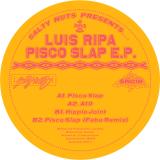
Luis Ripa, Fabe - Pisco Slap EP

Luis Ripa, Fabe

Pisco Slap EP

12inchSN018
Salty Nuts
12.06.2026

Luis Ripa is already making big waves, with a number of his tracks receiving support from someof the most respected DJs in the underground house music scene. As part of Amsterdam’s Naked collective, he is one of the most promising talents carrying theflag for raw, stripped-back grooves and drum aesthetics. Pisco Slap EP marks his debut on Salty Nuts and showcases his ability to create energy and atmosphere without overproducing. Elegant yet edgy drum programming, combined with innovative sample chops, adds a special essence to his outstanding grooves. The title track, Pisco Slap, is already gaining support from some of the biggest names in the scene and has already caused serious damage on dancefloors worldwide. Accompanied by two more high-end grooves, A10 and Hippie Joint, the release is completed on the flip side by Fabe’s twist on Pisco Slap - a deeper stomper that delivers the well-known signature groove Fabe is known for.

pre-order now12.06.2026

expected to be published on 12.06.2026

Cory Wong - Lost In The Wonder LP

Cory Wong's eagerly awaited new studio album, Lost In The Wonder! The collection spotlights Wong's remarkable gifts as a producer, writer, arranger, band leader, and master of modern pop craftsmanship, while of course never losing sight of his trademark guitar virtuosity. Lost In The Wonder further affirms Wong's enduring love of musical collaboration, boasting a truly eclectic range of guest artists that includes Taylor Hanson, Devon Gilfillian, Stephen Day, Cody Fry, Yam Haus, Louis Cato, Ellis, Elysia Biro, Benny Sings, Theo Katzman, and Magic City Hippies.

In Stock

On Stock and ready to ship

Various - Child Of Nature

Various

Child Of Nature

12inchFOR-LP007
Forager Records
13.03.2026

2026 Repress

A further exercise in musical curation, Child Of Nature is our latest sonic confluence of self-released tracks from the loners, hippies and outsiders of the 70s and early 80s. A collection of privately pressed music, able to breathe and be created free from the constraints of heavy handed commercialism, yielding a pure vision of artistic expression. Child Of Nature features ten songs of brooding soft rock and psychedelic folk steeped in melancholia. Some ache for better times or past lovers, while others seek spiritual fulfilment or social progress.
A compilation to evoke the raw and unobstructed, to summon the occult, to fundamentally conjure a vivid portrait of our untamed natural environment. Recorded on the north coast of California, Luellen Reese’s ethereal “Silvery Waterfalls” drifts and swirls with electric guitar as her unearthly vocals transcend across a seven minute opus, fit for the golden age of labels like 4AD or Dedicated. “The flowers are dancing just for you …”, Reggie Russell croons over glistening Key Of Creek’s title track “Child Of Nature”, evoking a utopian world of natural harmony free from the present day realities of industrial decay.
Tap into your inner primal being, to embrace wholeheartedly, with frivolity and without reserve, your own child of nature.

In Stock

On Stock and ready to ship

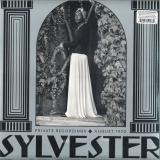
Sylvester - Private Recordings, August 1970 LP

Disco legend Sylvester comes to Dark Entries with Private Recordings: August 1970, an intimate collection of vintage jazz, blues, and gospel. While Sylvester is best known for his chart-topping collaborations with producer Patrick Cowley, such as “You Make Me Feel (Mighty Real),” this release reveals his passion for the sounds of the 30s and 40s. In 1970 a 22-year-old Sylvester had moved to San Francisco and found himself involved with the Cockettes, the infamous psychedelic performance art troupe. Among this milieu was Peter Mintun, a pianist and record collector living in a commune devoted to retro culture. According to Mintun, “We were like hippies who lived in the twenties. We lived in a house that didn’t have anything modern in it. Nothing in it was made after World War II.” Mintun and Sylvester bonded over their love of Black singers of yore and were allotted a slot during Cockettes performances reviving the music of the Prohibition Era. One afternoon, Sylvester and Mintun recorded a number of their shared favorites using a high-end microphone a friend had acquired. Private Recordings features 9 songs from this session, including standards like “Stormy Weather,” “Happy Days Are Here Again,” and “God Bless the Child.” Sylvester’s unmistakable falsetto brings depth and a dash of camp to these familiar tunes. The recordings are casual and intimate, even capturing banter between Sylvester and Mintun; their brief rendition of “When My Dreamboat Comes Home” has the duo working out a melody in real time. In addition to their sonic explorations of decades past, Sylvester and Mintun also staged photographic shoots in vintage couture. Private Recordings comes with a 16-page booklet on firm cardstock featuring images from these never-before-seen shoots as well as liner notes from Mintun detailing his friendship with Sylvester and their experiences recording. All this is housed in a metallic silver sleeve designed by Eloise Leigh featuring a 1920’s Art Deco aesthetic. The record will be released on September 6th which would have been Sylvester’s 76th birthday, and all proceeds from Private Recordings will go to the two charities that Sylvester left his royalties after his death: Project Open Hand and PRC (formerly AIDS Emergency Fund). This essential release documents the earliest known recordings from one of disco’s greatest talents.

In Stock

On Stock and ready to ship

Sepalot - closer (LP)

Sepalot

closer (LP)

12inchESK211
Eskapaden
30.01.2026

The second chapter after “neverlost”, “closer” blends samplebased production with classic songwriting – like a sonic mosaic of warmth and groove. Lyrically “hippiesque,” Sepalot explores natural beauty, unity, equality, and self-determination. Guest features shine: Blu delivers sharp lyricism, and Illa J surprises
with soulful vocals on “My Own Way.” For fans of The Avalanches, Caribou, and Madlib – Closer is lush, human, and unforgettable.

Sepalot is one of those rare artists whose sonic palette refuses to be boxed in. His music exists in the fertile space between multi-layered sophistication and playful unpredictability – a quality rooted in his eclectic upbringing. From skate-punk beginnings to soul all-nighters, from obsessive vinyl digging to
deep immersion in hip-hop’s golden era, Sepalot has carried the art of sampling like a badge of honor. His beats are mosaics – meticulously pieced together fragments of sound forming an intricate whole. Beyond the studio, he’s explored these influences as DJ, producer, and live performer, leading the
Sepalot Quartet across Europe’s jazz festivals, and more recently with his experimental band Tikhet alongside Angela Aux

With “closer”, the upcoming second chapter following his 2023 album “neverlost”, Sepalot distills his broad musical world into a sample-based yet song-driven statement. The production feels warm and tactile – think needle-on-vinyl crackle meeting modern songwriting clarity. Lyrically, it’s “hippiesque” in the best
way: themes of natural beauty, unity, democratic awareness, equality, and spiritual introspection weave through the tracklist.

The guest list is just as inspired: legendary wordsmith Blu delivers razor-sharp verses, while Illa J – brother of the late J Dilla – steps away from his signature rap to surprise with soulful vocals on “My Own Way.” Together, they amplify the album’s humanist core, balancing groove-heavy production with
lyrical depth.

Fans of artists like The Avalanches, Caribou, DJ Shadow, or Madlib will find plenty to love here, but Closer carries its own unique fingerprint – a testament to Sepalot’s ability to merge hip-hop grit with songwriting grace. If “Neverlost” was a map, “Closer” is the destination: lush, thoughtful, and deeply human.
Highly recommended for anyone ready to hold hands, open their mind, and let the beat guide them.

In Stock

On Stock and ready to ship

Upadhmaniya - Hasiya 2025

Upadhmaniya

Hasiya 2025

12inchCASAM005
Casa Meganika
28.11.2025

In the late summer of 1994, Upadhmanyia (John Mackaay & Michel Rehatta) invited Leo Verhoef (LFU) to collaborate on a track. They met a few more times afterward at a power station converted into a studio in IJsselstein, The Netherlands. "Hasiya" was quickly born and was already in stores by early November 1994. John & Leo drove to house club iT in Amsterdam, where they gave the track to DJ Marcello, resulting in an iT hit! The track was quickly picked up by DJs worldwide, and Richie Hawtin used it in a live set in Denver on November 19th of that year, which can be heard on SoundCloud (Hasiya is mixed around 43:00). The track was also a huge hit on dance floors in England and Spain.
In late 1994, Hasiya appeared on a CNR Music EP titled "Welcome To The Club," along with four other hits from producers like Pete Lazonby, The Shaker, and Drum Club. A double CD of the same name followed in early 1995, released in Belgium, featuring Hasiya alongside artists like Robert Miles, Digital Express, Aura, Natural Born Grooves, and other hits of the era. In early 1995, Arcade released "House Party '95 the Kinky Klubmixx," mixed by Koen Groeneveld & Addy van der Zwan. The same CD was released in Scandinavia as "House Party '95 (5)." Hasiya flourished among the most popular house tracks of the time. The record spent three weeks in the Dance Music Mega Top 30 and peaked at number 22 around the holidays of late 1994.
For 31 years, Hasiya was only available on record, CD, tape, or YouTube. Starting November 21, 2025, it will be resurrected from the underground into the world of digital downloads and streaming. The 2025 Remaster, along with five new mixes, will be widely available, including a limited vinyl release of 350 copies. The 30 test pressings have already been received with open arms by various DJs and received immediate support from Eris Drew and Octa Octa during ADE.
Because Hasiya was created in 1994, the only available remix material is the original DAT tape, which, thankfully, was still stored in an old box in a dusty attic. Most of the sounds for the new versions have been recreated and re-recorded.
Rehatta's Reanimated Mix:
This remix - created by one of the two founders of Upadhmaniya - combines driving, percussive beats with a thrilling, progressive break featuring ascending, dizzying strings. This trick returns shortly afterward to rev things up again. An accessible remix for dance floors worldwide.
LFU 2025 Version:
This straightforward, raw techno version with a touch of acid is ready to rock dance floors. LFU's updated version of the 1994 original, which he created with Michel & John, will undoubtedly remain a head shaker from here on out.
John Consemulder Metaphysical Mix:
With a pumping groove and a funky bassline as an intro, John Consemulder's remix immediately strikes a chord. A refined and elegant approach to the original, with sounds as mysterious and exciting as the flowing lava in the 'Gruta das Torres' - a cave in the Azores - the setting where this tech-trance remix was created.
Davje Remix:
Davje's version begins with the typical club and hard-trance bassline of the late '90s. You're drawn into a trance journey where beat changes sometimes try to throw you off track. Davje's creative Hammond organ interpretation of the Hasiya theme surprises and transports you back to the hippie era by the end of his remix.
Bojcot Remix:
Junglist Bojcot creates an exciting, nuanced, and mathematical remix with a beat that feels like jungle and half-tempo. He conjures up the sounds of LFU's 2025 Version, creates a bassline that sounds like a disturbed bumblebee, and adds a surprising string section. Massive!

In Stock

On Stock and ready to ship

Selected by DJ Alfredo - PARAISO - The True Spirit of Ibiza (2x12")
 
16

2025 Repress

In 2022, Daniele “Shield” Contrini of Rebirth Records proposed Paraíso to the great man himself, a compilation honouring Alfredo’s legacy. After Alfredo’s passing in December 2024, the project was final; with artists rallying to honour his vision and memory.

Before becoming a global clubbing hotspot, Ibiza embodied freedom—a place where sunrises blurred into sunsets and music became a way of life. In the 1950s and '60s, the island drew artists, hippies, and outsiders seeking escape and creative liberty.

In 1976, Alfredo Fiorito, fleeing political repression in Argentina, arrived in Ibiza and stayed. A former music journalist, he soon began DJing at Amnesia, a farmhouse-turned-club where time bent and boundaries dissolved. With eclectic, genre-defying sets, Alfredo blended reggae, flamenco, soul, rock, and early house, crafting a hypnotic energy that captivated a generation.

British DJs like Trevor Fung, Paul Oakenfold and Danny Rampling brought this “Balearic Beat” back home. But Balearic wasn’t a style it was a mindset. As DJ Leo Mas said, it was “a state of mind,” where rhythm, spirit, and psychedelia merged.

Other clubs like KU, Es Paradis, Pacha, and Lola’s amplified the movement. Visual artists such as Yves Uro gave it a striking identity, and DJs like César de Melero, DJ Pippi, and Jon Sa Trinxa carried the sound into a new era. José Padilla’s sunset sessions at Café del Mar birthed chill-out music as breath, not just beat.

But the 1990s brought change. Laws requiring roofs on clubs altered the open-air magic. Commercialisation followed; freedom became luxury, and many pioneers left.

Still, the Balearic spirit lives—raw and untamed. It pulses in hidden parties, intimate venues like Pikes and Hostal La Torre, and sacred places like Benirrás and Las Dalias.

Featuring 16 tracks of classic and true Balearic sound; alongside House & proto-House tracks that Mr Fiorito spun, the album also includes an unreleased Alfredo track and stands as a tribute to the man, the music, and the enduring spirit of true Ibiza.

In Stock

On Stock and ready to ship

Eden Ahbez - Wild Boy: The Lost Songs Of Eden Ahbez LP

“Wild Boy …” is a reissue of the well-known 2016 release curated by Brian Chidester, renowned researcher and biographer of Eden Ahbez. Especially for this album, Brian wrote an interesting text about Abi’s life, which definitely became the decoration of the release.
With the new 2020 re-release, we went a little further and kept what is commonly referred to as studio cuts. It’s a few more minutes in the studio with ahbez himself, full of emotion and life. In addition, to the delight of fans, the edition includes an additional composition Nature Boy (Mantovani Orchestra).
Especially, it is worth noting the outstanding mastering prepared from practically decomposed tapes by the Grammy-nominated Jessica Thompson, which guarantees the deepest and warmth possible sound. Jessica a huge ahbez fan and we’re highly appreciated for what she has done to save his music for the future.
Eden Ahbez is definitely at the origin of psychedelic music and this release can be taken as further proof. Over the past twenty years, the iconic figure of the world’s first hippie Eden ahbez has become famous primarily for his 1948 song “Nature Boy”, praising universal love, and his amazingly solo album from the 1960s called “Eden’s Island” – one from the first concept albums in the history of music and probably the first psychedelic music album. “Wild Boy: The Lost Songs Of Eden Ahbez” deepens understanding of the origins of the psychedelic movement in the 1950s.
The disc contains a musical selection of works by Eden ahbez himself, written by him in the period after Nature Boy. The inclusion of songs such as “Palm Springs” – Ray Anthony Orchestra and “Hey Jacques” by Erta Kitt gives the listener the chance to discover for the first time the little-known recordings of world-famous artists composed by Eden ahbez. Through “Wild Boy” and “Surfer John” you can hear the author’s handling of absurd rock and exotic experimentation, as well as sweet psychedelic pop like Monterey (with Paul Horn on flute). Overall, Wild Boy: The Lost Songs Of Eden Ahbez offers an overview of the lost works of 1949-1971 with seven unpublished recordings and eight rare singles.
If in 2020 you are missing the hallucinogenic content in Eden Ahbez, it amazingly makes up for that deficiency with simple chords, expansive arrangements, and lyrics about travel, relaxation, free love, and spirituality. Thus creating the standard of psychedelic music. Eden Ahbez’s songs weren’t only fantasy and his personal philosophy was the real thing that he lived.

reviews:

“This carefully and extensively researched compilation culls covers by top notch mainstream artists juxtaposed with unreleased Eden recordings. What might sound like a mixed bag is actually more like a chronological, musical non-fiction novel about Eden Ahbez. While Eden was writing hundreds of songs and performing live and making recordings in various styles, his songs were also being picked up by popular artists like Nat King Cole and Eartha Kitt who recorded with a more polished mainstream style. There are also some early rock n roll style recordings here. Eden’s professionally recordings often end up as Novelty Pop records such as “Child of Nature” and “The Clam Man” but if you read between the lines and listen to the lyrics it is pretty eye-opening that he is singing about Eastern-religion-style and pre-hippie philosophies about being at one with the planet Earth.
All of this is explained in the lengthy liner notes inside the lp along with a few choice photos that establish Eden as a founding father of Southern California mystic/psychedelic music.” – Tiki_News
“Eden Ahbez’s life philosophy was summed up in the lyrics of his most famous song, “Nature Boy,” a 1948 hit for Nat King Cole: the song describes a “strange enchanted boy” who wanders the world in search of truth. “The greatest thing you’ll ever learn,” he concludes, “is to love and be loved in return.” Ahbez was a pre-cursor of California’s beatniks and hippies, and an exalted icon of ex-otica via his rare 1960 album Eden’s Island. Beyond “Nature Boy” and Eden’s Island, though, there were nu-merous lesser-known Ahbez record-ings. Ahbez biographer Brian Chidester has been doing an exemplary job of archiving and documenting that catalog of work. The Exotic World of Eden Ahbez (reviewed in UT#38) appeared a few years ago, gathering together 14 Ahbez-related rarities” – Ugly Things

In Stock

On Stock and ready to ship

Energize - Piece of Class / Star of The Disco

2026 Repress

Rain&Shine proudly present ENERGIZE, a band out of Marin County, California in 1979. Previously unobtainable even for top DJs due to rarity, Rain&Shine gives this double A side modern soul/disco 45 an official re-issue treatment. About ENERGIZE (words by Dan Hays - Guitarist, Songwriter):

ENERGIZE came to age in a post-hippie era, where musicians went back to playing covers in bars. However Marin was still inexpensive and it was possible to pool money together to buy studio time.

That's how ENERGIZE formed - working musicians led by the superb producer and guitar player, Archie Williams (son of Archie Williams Sr - a passionate educator, WWII air force pilot and 1936 Olympic champion) Dan Hayes - songwriter and guitarist, and John Isabeau - lyrics and our executive producer.

John is now a successful Hollywood producer, Oscar documentary award winner, and resides in James Brown's former house in Las Vegas.

The record also features a hugely successful blues vocalist who has asks to remain uncredited. Archie, John and I now have grown children and a few grandkids as well and getting a kick that 40 years later, our self-produced record has found an audience. Far Out

In Stock

On Stock and ready to ship

Be.Lanuit - Hippie Picasso LP

Over the past decade, Be.lanuit has made a name for himself in Ibiza, both as a DJ, artist and fashion designer. Across disciplines he radiates a deep-rooted bohemian spirit harkening back to the philosophy on which the Ibiza-scene was originally founded. This creative hearth of soulful hedonism has now borne a full-length album, one that reveals a sprawling composing talent and complete mastery of the melodic downtempo terrain.

Be.lanuit says:

“Hippie Picasso is an album inspired by the life of a hypothetical Pablo Picasso with a hippie soul. I have a deep interest in Picasso that sparked when a work by him caught my eye at the Louisiana in Denmark, incidentally on a trip with Kenneth Bager who runs Music For Dreams. Since then, reading his biographies and visiting Malaga where he was born, where the Mediterranean culture, especially through music, spreads out to the world.

The tracks revolve around Picasso’s artworks and moments in his life, all from the point of view of a dream of an imagined life on the island of Ibiza. The melodies are all reminiscent of the Mediterranean with flamenco airs, sometimes melancholic. Jazz has a subtle presence alongside the electronics. The Spanish classical guitar as well, one of his favorite instruments.”

The album features a range of artists from around the world such as the legendary multi-instrumentalist Tupac Peralta, DJ Pippi, Melón Jimenez, Lara Wong, The Swan and The Lake, Jonas Krag, WALTHER and OliO.

In Stock

On Stock and ready to ship

Kölsch - I Talk To Water LP 2x12"

I Talk To Water, the fifth album for Kompakt by Danish producer Kölsch, is the artist’s most personal statement yet. While all the trademarks that make his music so popular and powerful are still present – lush, melodic techno; swooping, trance-like figures; sensuous, shivery texturology – I Talk To Water is also a deep and intimate rapprochement with family and history, a beautiful, finely detailed document of loss and memory, and a tracing of the long, unbroken thread of grief that runs through our lives once we’ve lost those we loved.

The emotional core of I Talk To Water, then, is a cache of recordings by Kölsch’s father, Patrick Reilly, who passed away in 2003 from brain cancer. With time rendered elastic by the pandemic and its associated lockdowns, its sudden, alienating shifts in everyday living, Kölsch found himself reflecting on his father’s passing and ongoing spiritual presence, thinking about how best to memorialise such a significant figure in his own life. Those recordings opened a gateway, of sorts, for Kölsch to move through – a way to bring past and present together and entwine them in a sensitive, poetic manner.

Kölsch’s father was a musician – “touring in the sixties and seventies, in the Middle East especially, he was doing the whole hippy trail, playing guitar, and wrote some songs over the years,” he recalls. “But all in all, he decided to focus on family rather than pursue a musical career.” Reilly kept playing and writing music over the years, though Kölsch hadn’t listened to the material for some time: “I’d never had the guts to listen to it, because I just felt too fragile listening to his voice. It’s such a tough thing to go through.”

During the pandemic, though, Kölsch listened through the fragmented body of work that his father had produced over the years. “I decided I’m gonna finally release my dad’s music twenty years after his passing,” he reflects. “This whole album is about the process of loss, and for me it’s been one of my main driving forces in my musical life, the whole emotional aspect of whatever I’ve done has been based in that feeling that he’s not there anymore.”

Recordings of Reilly appear on three songs across I Talk To Water. His guitars drift pensively across “Grape”, offering a lush thread of melody that Kölsch wraps with clicking, driftwood rhythms and droning, melancholy bass. “Tell Me” is a lovely three-minute art song, a sadly beautiful reflection, minimally adorned with gentle keys and a muted pulse. And on the closing “It Ends Where It Began”, Kölsch lets his father’s acoustic guitar take centre stage for a lament that’s unexpectedly folksy, a guitar soli dream, which Reilly originally recorded in 1996. “He actually recorded it for my first album that never came out,” Kölsch reveals, “and I had it sitting around forever. That is purely him.”

These three imagined collaborations between father and son are poised and delicate. But their relationship also marks the gorgeous music Kölsch has made across the rest of I Talk To Water, from the itchy yet lush “Pet Sound” (titled in tribute to one of Reilly’s favourite albums), the flickering synths and yearning vocal samples that slide through “Khenpo”, the ecstatic shuddering that marks “Only Get Better”, or “Implant”’s slow-motion pans and subtle reveals.

There’s also the title song, where Kölsch is joined by guest Perry Farrell (Jane’s Addiction, Porno For Pyros), singing a mantra for internal reflection: “I talk to water / Searching for myself / Looking for answers / Oceans of you.” Farrell’s appearance brings another timbre, another spirit to the album, aligning neatly with his recent interest in electronic music. “He was completely taken by this idea of talking to water,” Kölsch says, thinking about the ways we collectively lean towards the natural world as a comfort and a listener, a guide through mourning, a way to map out the terrain of the heart. This mapping is something that Kölsch has proven remarkably adept at through the years; dance music for both body and mind, but also both for the here-and-now, and for the hereafter.

“I Talk To Water”, das fünfte Album des dänischen Produzenten Kölsch für Kompakt, ist zweifellos das persönlichste Statement des Künstlers bislang. Während alle Markenzeichen, die seine Musik so beliebt und kraftvoll machen, immer noch präsent sind – üppige, melodische Techno-Tracks; schwebende, tranceartige Elemente; sinnliche, fiebrige Texturen – ist “I Talk To Water” auch eine tiefe und intime Annäherung an Familie und Geschichte. Es ist ein wunderschönes, fein ausgearbeitetes Dokument des Verlusts und der Erinnerung, und es verfolgt den langen, ungebrochenen Faden der Trauer, der durch unser Leben läuft, sobald wir diejenigen verloren haben, die wir liebten.

Der emotionale Kern von “I Talk To Water” besteht aus Aufnahmen von Kölschs Vater, Patrick Reilly, der 2003 an Hirnkrebs verstarb. Durch die Pandemie und ihre damit verbundenen Lockdowns, die plötzlichen, entfremdenden Veränderungen im Alltag, fand Kölsch sich in Gedanken an den Tod seines Vaters und seine fortwährende spirituelle Präsenz wieder. Er überlegte, wie er eine so bedeutende Figur in seinem eigenen Leben am besten verewigen könnte. Diese Aufnahmen öffneten ihm sozusagen ein Portal, um Vergangenheit und Gegenwart miteinander zu verbinden und sie auf sensible und poetische Weise zu verweben.

Kölschs Vater war Musiker – “er tourte in den sechziger und siebziger Jahren, vor allem im Nahen Osten, auf dem Hippie Trail, spielte Gitarre und schrieb im Laufe der Jahre einige Songs”, erinnert sich Kölsch. “Aber alles in allem entschied er sich, sich auf die Familie zu konzentrieren, anstatt eine musikalische Karriere zu verfolgen.” Reilly spielte und schrieb jedoch im Laufe der Jahre weiterhin Musik, obwohl Kölsch das Material lange Zeit nicht angehört hatte: “Ich hatte nie den Mut, es anzuhören, weil ich mich einfach zu zerbrechlich fühlte, seine Stimme anzuhören. Es ist so schwer, das durchzustehen.”

Während der Pandemie hörte sich Kölsch jedoch durch das fragmentierte Werk, das sein Vater im Laufe der Jahre produziert hatte. “Ich beschloss, die Musik meines Vaters zwanzig Jahre nach seinem Tod endlich zu veröffentlichen”, reflektiert er. “Dieses ganze Album handelt von dem Verlustprozess, welcher für mich generell eine der Hauptantriebskräfte in meinem musikalischen Leben ist. Der ganze emotionale Aspekt von dem, was ich getan habe, basierte auf dem Gefühl, dass er nicht mehr da ist.”

Auf “I Talk To Water” sind Aufnahmen von Reilly in drei Songs zu hören. Seine Gitarren ziehen nachdenklich durch “Grape”, bieten einen üppigen Melodiefaden, den Kölsch mit klickenden, treibenden Rhythmen und dröhnendem, melancholischem Bass umwickelt. “Tell Me” ist ein schönes dreiminütiges Kunstlied, eine traurig-schöne Reflexion, minimal geschmückt mit sanften Tasten und einem gedämpften Puls. Und auf dem Abschlusstrack “It Ends Where It Began” lässt Kölsch die akustische Gitarre seines Vaters im Mittelpunkt stehen, ein überraschend folkiger Klagegesang, den Reilly ursprünglich 1996 aufgenommen hatte. “Er hat es tatsächlich für mein erstes Album aufgenommen, das nie veröffentlicht wurde”, enthüllt Kölsch, “und ich hatte es ewig liegen.”

Diese drei erdachten Kollaborationen zwischen Vater und Sohn sind ausgewogen und zart. Aber ihre Beziehung prägt auch die wunderschöne Musik, die Kölsch im Rest von “I Talk To Water” geschaffen hat, angefangen bei dem nervösen, aber üppigen “Pet Sound” (benannt als Hommage an eines von Reillys Lieblingsalben), den flimmernden Synthesizern und sehnsüchtigen Vocal-Samples in “Khenpo”, den ekstatischen Erschütterungen in “Only Get Better” oder den langsamen Schwenks und subtilen Enthüllungen in “Implant”.

Es gibt auch den Titelsong, in dem Kölsch von Gast Perry Farrell (Jane’s Addiction, Porno For Pyros) begleitet wird, der ein Mantra für die innere Reflexion singt: “I talk to water / Searching for myself / Looking for answers / Oceans of you.” Farrells Auftritt bringt eine weitere Klangfarbe, einen weiteren Geist in das Album, der gut zu seinem jüngsten Interesse an elektronischer Musik passt. “Er war völlig fasziniert von der Idee, mit Wasser zu sprechen”, sagt Kölsch und denkt darüber nach, wie wir kollektiv zur Natur als Trost, Zuhörer, Führer durch die Trauer neigen, um die Gelände des Herzens zu kartieren. Diese Kartierung ist etwas, in dem Kölsch im Laufe der Jahre erstaunlich geschickt war; Tanzmusik für Körper und Geist, sowohl für das Hier und Jetzt, als auch für das Leben danach.

In Stock

On Stock and ready to ship

Optica & Optic Eye - Tribute to Jake Stephenson

re:discovery records is happy and proud to honor a beloved and missed amazing electronic producer Jake Stephenson. Sadly, Jake passed away in 2005 but his music lives on with us forever. A prolific producer with hundreds of credits under many names and many styles. On the record insert inside this EP, his brother Silas and fellow producer and friend Brian Trower share some special stories of Jake as a person and a musician. An eccentric hippie of sorts, music historian and audio savant certainly, Jake was truly a unique, talented and special person. While a 5 track EP hardly scratches the surface, we at re:discovery wanted to honor an artist who impacted the label owner and the history of chill out music more than maybe some know. 50% of the proceeds to go the charity Silas picked to honor his late brother.

In Stock

On Stock and ready to ship

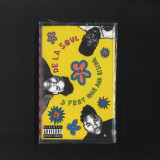
De La Soul - 3 Feet High and Rising (TAPE)

Finally back on tape, officially reissued. Must have! 3 Feet High and Rising is the debut studio album by hip hop trio De La Soul and was released on March 3, 1989 It marked the first of three full- length collaborations with producer Prince Paul, which would become the critical and commercial peak of both parties. Critically, as well as commercially, the album was a success. It contains the singles, "Me Myself and I", "The Magic Number", "Buddy", and "Eye Know". The album title came from the Johnny Cash song "Five Feet High and Rising". It is listed on Rolling Stone's 200 Essential Rock Records and The Source's 100 Best Rap Albums. When Village Voice held its annual Pazz & Jop Critics Poll for 1989, 3 Feet High and Rising was ranked #1. It was also listed on the Rolling Stone's The 500 Greatest Albums of All Time. Released amid the 1989 boom in gangsta rap, which gravitated towards hardcore, confrontational, violent lyrics, De La Soul's uniquely positive style made them an oddity beginning with the first single, "Me, Myself and I". Their positivity meant many observers labeled them a 'hippie' group, based on their declaration of the 'D.A.I.S.Y. Age' (Da. Inner. Soul. Yall). Sampling artists as diverse as Hall & Oates, Steely Dan and The Turtles, 3 Feet High and Rising is often viewed as the stylistic beginning of 1990s alternative hip hop (and especially jazz rap).

In Stock

On Stock and ready to ship

u.r.trax - third ear

U.r.trax

third ear

12inchTRP040
TRIP
21.04.2023

third ear is u.r.trax's third ever release and first full ep on Trip after her contribution to "all his decisions".

throughout the seven tracks she plays with vocals creating textures, sounds and melodies and above all a clear aesthetic.

"I feel like this release faithfully represents my musical identity. I see and hear my sound becoming clearer and that's very satisfying. If I try to define the overall vibe of the record, I would say that it is like a mood swing, from deep, dark and cold atmospheres to uplifting, higher, sometimes ethereal energies." - u.r.trax

In Stock

On Stock and ready to ship

De La Soul - 3 Feet High and Rising MC LP (Tape)

Finally back on tape, officially reissued. Must have! 3 Feet High and Rising is the debut studio album by hip hop trio De La Soul and was released on March 3, 1989 It marked the first of three full- length collaborations with producer Prince Paul, which would become the critical and commercial peak of both parties. Critically, as well as commercially, the album was a success. It contains the singles, "Me Myself and I", "The Magic Number", "Buddy", and "Eye Know". The album title came from the Johnny Cash song "Five Feet High and Rising". It is listed on Rolling Stone's 200 Essential Rock Records and The Source's 100 Best Rap Albums. When Village Voice held its annual Pazz & Jop Critics Poll for 1989, 3 Feet High and Rising was ranked #1. It was also listed on the Rolling Stone's The 500 Greatest Albums of All Time. Released amid the 1989 boom in gangsta rap, which gravitated towards hardcore, confrontational, violent lyrics, De La Soul's uniquely positive style made them an oddity beginning with the first single, "Me, Myself and I". Their positivity meant many observers labeled them a 'hippie' group, based on their declaration of the 'D.A.I.S.Y. Age' (Da. Inner. Soul. Yall). Sampling artists as diverse as Hall & Oates, Steely Dan and The Turtles, 3 Feet High and Rising is often viewed as the stylistic beginning of 1990s alternative hip hop (and especially jazz rap).

In Stock

On Stock and ready to ship

Oden & Fatzo & Thurman - ENDZ049

Oden&Fatzo&Thurman

ENDZ049

12inchENDZ049
Eastenderz
17.08.2022

Eastenderz welcomes French party starters Oden & Fatzo and Thurman for a double dose of debuts on the label, with this funk-fuelled, punchy, summertime house four tracker. Part feel-good, part hazy deepness, part heads down heat, there’s a cut here for every occasion, giving a glimpse into why these two acts are on the trajectory they are.

Essential business as always from Eastenderz.

In Stock

On Stock and ready to ship

Devils Cigarette - Meet Me On The Floor Tonight LP
  • 01: Meet Me On The Floor Tonight
  • 02: Im Bored
  • 03: Bright Red Eyes
  • 04: Dirty Fingers
  • 05: A-A-A 06. Radio Baby
  • 07: This Is A Hippie Killing Device
  • 08: Come On To Me
  • 09: Ordinary Man
  • 10: The Greyhound Race

"With raw energy and uncompromising attitude, Devil's Cigarette has quickly become a rising force on Sweden's rock scene. Their music blends the nerve of classic garage rock with fresh, modern intensity - delivering big choruses, blazing riffs, and irresistible grooves.
On stage, they are more than a band: they are an explosive statement. Sweaty, intense, and unforgettable, their shows turn every night into a party where the audience is part of the chaos.
Their new album Meet Me On The Floor Tonight, recorded by Otto Perrin and refined by Robert Pehrsson (The Hellacopters, Thunder Express, Tribulation), captures youthful passion with sharper focus and dynamic sound. It proves Devil's Cigarette is not only a powerful live act but a band pushing rock'n'roll into the future.

pre-order now15.05.2026

expected to be published on 15.05.2026

M.I.A. (US) - WE MUST FIGHT

USA Hardcore/Punk Geschichte! M.I.A. wurden 1980 in Las Vegas gegründet, zogen 1981 nach Orange County und begannen im berüchtigten Cuckoo's Nest zusammen mit Fear, Shattered Faith, T.S.OL. u.a. Shows zu spieln. Ende '81 gingen sie in ein lokales Tonstudio in Costa Mesa und nahmen an einem Nachmittag neun Songs auf, bis ihnen das Geld ausging - 300 Dollar gut angelegt! Eine Kassette wurde rasch kopiert und herumgereicht. Eine Kopie der Kassette wurde KevinSeconds bei einem Gig mit 7 Seconds in Reno gegeben. Kevin gab sie an Tim Yohannan von Maximum Rocknroll weiter. Schließlich gelangte sie in die Hände von Felix Alanis von Smoke Seven und Greg Shaw von Bomp. Mitte 1982 waren M.I.A. dann auf drei Vinyl-Veröffentlichungen vertreten: "Tell Me Why" auf der Compilation American Youth Report von Bomp, "New Left" auf Maximum Rocknroll Presents: Not So Quiet On the Western Front von Alternative Tentacles und acht der neun Tracks landeten auf der berüchtigten Split-LP mit Last Rites auf Smoke Seven. Alle 9 Tracks des ersten Tapes sind hier versammelt, zum ersten Mal richtig abgemischt. Der Begin von M.I.A. (US) und gleichzeitig das letzte Lapitel der Moder City Records-Reissue-Reihe zur Band. « ...In one corner is M.I.A., a band originally from Las Vegas, the champions of punk's positive side. They've managed to fuse a super tight thrash sound with enlightened attitudes_"I Hate Hippies" is obviously meant as a satire with a moral, and the results are absolutely stunning. » _Jeff Bale's 1982 review of the Last Rites for...-Split-LP in Maximum Rocknroll #2 2.Auflage, Cover Metallic Blue, Vinyl Dirty Turquoise, plus 24seitigem Booklet.

pre-order now08.05.2026

expected to be published on 08.05.2026

Dompe - Reload EP

Dompe

Reload EP

12inchDEF2602
Definitive Recordings
24.04.2026

Dompe Delivers Peak-Time House Energy on New Reload EP.
Definitive Recordings welcomes a brand-new three-track EP from Dompe, showcasing his unmistakable blend of classic house foundations, driving grooves, and modern club attitude.

Dompe aka Dominic Wagner is a DJ and producer driven by relentless passion and an instinctive feel for the dancefloor.
Known for pairing distinctive vocals with finely crafted basslines and arrangements, his sound is always moving forward while staying rooted in house tradition. Based in Berlin since 2011, Dompe founded Jackfruit Recordings in 2017 as his personal creative playground, releasing a steady stream of music that has earned both national and international attention. His doublevinyl album ‘Hippie Crack’ sold out quickly and charted strongly on Beatport, followed by ‘French Collection’. In 2025, Dompe made his debut on Definitive Recordings with a standout remix of the label classic ‘Let It Go’ by John Acquaviva, Olivier Giacomotto and Dan Diamond further cementing his connection to the imprint.
Now returning with a full EP, Dompe opens with ‘Reload’, a classic house groover built around a tight rhythm, a looping piano motif, and a chopped, repeated male spoken-word vocal that locks into the groove. It’s raw, hypnotic, and instantly effective on the floor. ‘Wave’ shifts into more percussive territory, drawing on classic tech house energy. Built almost entirely around drums, the track evolves through rolling percussion, catchy vocal snippets, and sharp house synth work before snapping back into a full percussive drive designed for late-night momentum. Closing the EP, ‘Sundown’ delivers a no-nonsense house stomper. Big 909 drums, a 90s-inspired piano theme, and a vocal sample declaring ‘ecstasy’ capture the peak-time feeling of a packed club
in full flow: direct, euphoric, and unapologetically house.

out of Stock

Order now and we will order the item for you at our supplier.


Last In: 35 days ago
Guilty Razors - Complete Recordings 1977 - 1978

UILTY RAZORS, BONA FIDE PUNKS.


Writings on the topic that go off in all directions, mind-numbing lectures given by academics, and testimonies, most of them heavily doctored, from those who “lived through that era”: so many people today fantasize about the early days of punk in our country… This blessed moment when no one had yet thought of flaunting a ridiculous green mohawk, taking Sid Vicious as a hero, or – even worse – making the so-called alternative scene both festive and boorish. There was no such thing in 1976 or 1977, when it wasn’t easy to get hold of the first 45s by the Pistols or the Clash. Few people were aware of what was happening on the fringes of the fringes at the time. Malcolm McLaren was virtually unknown, and having short hair made you seem strange. Who knew then that rock music, which had taken a very bad turn since the early 1970s, would once again become an essential element of liberation? That, thanks to short and fast songs, it would once again rediscover that primitive, social side that was so hated by older generations? Who knew that, besides a few loners who read the music press (it was even better if they read it in English) and frequented the right record stores? Many of these formed bands, because it was impossible to do otherwise. We quickly went from listening to the Velvet Underground to trying to play the Stooges’ intros. It’s a somewhat collective story, even though there weren’t many people to start it.
The Guilty Razors were among those who took part in this initial upheaval in Paris. They were far from being the worst. They had something special and even released a single that was well above the national average. They also had enough songs to fill an album, the one you’re holding. In everyone’s opinion, they were definitely not among the punk impostors that followed in their wake. They were, at least, genuine and credible.

Guilty Razors, Parisian punk band (1975-1978). To understand something about their somewhat linear but very energetic sound, we might need to talk about the context in which it was born and, more broadly, recall the boredom (a theme that would become capital in punk songs) coupled with the desire to blow everything off, which were the basis for the formation of bands playing a rejuvenated rock music ; about the passion for a few records by the Kinks or the early Who, by the Stooges, by the Velvet mostly, which set you apart from the crowd.
And of course, we should remember this new wave, which was promoted by a few articles in the specialized press and some cutting-edge record stores, coming from New York or London, whose small but powerful influence could be felt in Paris and in a handful of isolated places in the provinces, lulled to sleep by so many appalling things, from Tangerine Dream to President Giscard d’Estaing...
In 1975-76, French music was, as almost always, in a sorry state ; it was still dominated by Johnny Hallyday and Sylvie Vartan. Local rock music was also rather bleak, apart from Bijou and Little Bob who tried to revive this small scene with poorly sound-engineered gigs played to almost no one.
In the working class suburbs at the time, it was mainly hard rock music played to 11 that helped people forget about their gruelling shifts at the factory. Here and there, on the outskirts of major cities, you still could find a few rockers with sideburns wearing black armbands since the death of Gene Vincent, but it wasn’t a proper mass movement, just a source of real danger to anyone they came across who wasn't like them. In August 1976, a festival unlike any other took place in Mont-de-Marsan – the First European Punk Festival as the poster said – with almost as many people on stage as in the audience. Yet, on that day, a quasi historical event happened, when, under the blazing afternoon sun, a band of unknowns called The Damned made an unprecedented noise in the arena, reminiscent of the chaotic Stooges in their early adolescence. They were the first genuine punk band to perform in our country: from then on, anything was possible, almost anything seemed permissible.

It makes sense that the four+1 members of Guilty Razors, who initially amplified acoustic guitars with crappy tape recorder microphones, would adopt punk music (pronounced paink in French) naturally and instinctively, since it combines liberating noise with speed of execution and – crucially – a very healthy sense of rebellion (the protesters of May 1968 proclaimed, and it was even a slogan, that they weren’t against old people, but against what had made them grow old. In the mid-1970s, it seemed normal and obvious that old people should now ALSO be targeted!!!).
At the time, the desire to fight back, and break down authority and apathy, was either red or black, often taking the form of leafleting, tumultuous general assemblies in the schoolyard, and massive or shabby demonstrations, most of the time overflowing with an exciting vitality that sometimes turned into fights with the riot police. Indeed, soon after the end of the Vietnam War and following Pinochet’s coup in Chile, all over France, Trotskyist and anarcho-libertarian fervour was firmly entrenched among parts of the educated youth population, who were equally rebellious and troublemakers whenever they had the chance. It should also be noted that when the single "Anarchy in the UK" was first heard, even though not many of us had access to it, both the title and its explosive sound immediately resonated with some of those troublemakers crying out for ANARCHY!!! Meanwhile, the left-wing majority still equated punks with reckless young neo-Nazis. Of course, the widely circulated photos in the mainstream press of Siouxsie Sioux with her swastikas didn’t necessarily help to win over the theorists of the Great Revolution. It took Joe Strummer to introduce The Clash as an anti-racist, anti-fascist and anti-ignorance band for the rejection of old-school revolutionaries to fade a little.

The Lycée Jean-Baptiste Say at Porte d’Auteuil, despite being located in the very posh and very exclusive 16th arrondissement of Paris, didn’t escape these "committed" upheavals, which doubled as the perfect outlet for the less timid members of this generation.
“Back then, politics were fun,” says Tristam Nada, who studied there and went on to become Guilty Razors’ frontman. “Jean-Baptiste was the leftist high-school in the neighbourhood. When the far right guys from the GUD came down there, the Communist League guys from elsewhere helped us fight them off.”
Anything that could challenge authority was fair game and of course, strikes for just about any reason would lead to increasingly frequent truancy (with a definitive farewell to education that would soon follow). Tristam Nada spent his 10th and 11th unfinished grades with José Perez, who had come from Spain, where his father, a janitor, had been sentenced to death by Franco. “José steered my tastes towards solid acts such as The Who. Like most teenagers, I had previously absorbed just about everything that came my way, from Yes to Led Zeppelin to Genesis. I was exploring… And then one day, he told me that he and his brother Carlos wanted to start a rock band.” The Perez brothers already played guitar. “Of course, they were Spanish!”, jokes their singer. “Then, somewhat reluctantly, José took up the bass and we were soon joined by Jano – who called himself Jano Homicid – who took up the rhythm guitar.” Several drummers would later join this core of not easily intimidated young guys who didn’t let adversity get the better of them.

The first rehearsals of the newly named Guilty Razors took place in the bedroom of a Perez aunt. There, the three rookies tried to cover a few standards, songs that often were an integral part of their lives. During a first, short gig, in front of a bewildered audience of tough old-school rockers, they launched into a clunky version of the Velvet Underground's “Heroin”. Challenge or recklessness? A bit of both, probably… And then, step by step, their limited repertoire expanded as they decided to write their own songs, sung in a not always very accurate or academic English, but who cared about proper grammar or the right vocabulary, since what truly mattered was to make the words sound as good as possible while playing very, very fast music? And spitting out those words in a language that left no doubt as to what it conveyed mattered as well.
Trying their hand a the kind of rock music disliked by most of the neighbourhood, making noise, being fiercely provocative: they still belonged to a tiny clique who, at this very moment, had chosen to impose this difference. And there were very few places in France or elsewhere, where one could witness the first stirrings of something that wasn’t a trend yet, let alone a movement.

In the provinces, in late 1976 or early 1977, there couldn’t be more than thirty record stores that were a bit more discerning than average, where you could hear this new kind of short-haired rock music called “punk”. The old clientele, who previously had no problem coming in to buy the latest McCartney or Aerosmith LP, now felt a little less comfortable there…
In Paris, these enlightened places were quite rare and often located nex to what would become the Forum des Halles, a big shopping mall. Between three aging sex workers, a couple of second-hand clothes shops, sellers of hippie paraphernalia and small fashion designers, the good word was loudly spread in two pioneering places – propagators of what was still only a new underground movement. Historically, the first one was the Open Market, a kind of poorly, but tastefully stocked cave. Speakers blasted out the sound of sixties garage bands from the Nuggets compilation (a crucial reference for José Perez) or the badly dressed English kids of Eddie and the Hot Rods. This black-painted den was opened a few years earlier by Marc Zermati, a character who wasn’t always in a sunny disposition, but always quite radical in his (good) choices and his opinions. He founded the independent label Skydog and was one of the promoters of the Mont-de-Marsan punk festivals. Not far from there was Harry Cover, another store more in tune with the new New York scene, which was amply covered in the house fanzine, Rock News (even though it was in it that the photos of the Sex Pistols were first published in France).
It was a favorite hang-out of the Perez brothers and Tristam Nada, as the latter explained. “It’s at Harry Cover’s that we first heard the Pistols and Clash’s 45s, and after that, we decided to start writing our first songs. If they could do it, so could we!”
The sonic shocks that were “Anarchy in the UK”, “White Riot” or the Buzzcocks’s EP, “Spiral Scratch” – which Guilty Razors' sound is reminiscent of – were soon to be amplified by an unparalleled visual shock. In April 1977, right after the release of their first LP, The Clash performed at the Palais des Glaces in Paris, during a punk night organised by Marc Zermati. For many who were there, it was the gig of a lifetime…
Of course, Guilty Razors and Tristam were in the audience: “That concert was fabulous… We Parisian punks were almost all dressed in black and white, with white shirts, skinny leather ties, bikers jackets or light jackets, etc. The Clash, on the other hand, wore colourful clothes. Well, the next day, at the Gibus, you’d spot everyone who had been at this concert, but they weren’t wearing anything black, they were all wearing colours.”

It makes sense to mention the Gibus club, as Guilty Razors often played there (sometimes in front of a hostile audience). It was also the only place in Paris that regularly scheduled new Parisian or Anglo-Saxon acts, such as Generation X, Siouxsie and the Banshees, the Slits, and Johnny Thunders who would become a kind of messed-up mascot for the venue. A little later, in 1978, the Rose Bonbon – formerly the Nashville – also attracted nightly owls in search of electric thrills… In 1977, the iconic but not necessarily excellent Asphalt Jungle often played at the Gibus, sometimes sharing the bill with Metal Urbain, the only band whose aura would later transcend the French borders (“I saw them as the French Sex Pistols,” said Geoff Travis, head of their British label Rough Trade). Already established in this small scene, Metal Urbain helped the young and restless Guilty Razors who had just arrived. Guitarist for Metal Urbain Hermann Schwartz remembers it: “They were younger than us, we were a bit like their mentors even if it’s too strong a word… At least they were credible. We thought they were good, and they had good songs which reminded of the Buzzcocks that I liked a lot. But at some point, they started hanging out with the Hells Angels. That’s when we stopped following them.”

The break-up was mutual, since, Guilty Razors, for their part, were shocked when they saw a fringe element of the audience at Metal Urbain concerts who repeatedly shouted “Sieg Heil” and gave Nazi salutes. These provocations, even still minor (the bulk of the skinhead crowd would later make their presence felt during concerts), weren’t really to the liking of the Perez brothers, whose anti-fascist convictions were firmly rooted. Some things are non-negotiable.
A few months earlier (in July 1978), Guilty Razors had nevertheless opened very successfully for Metal Urbain at the Bus Palladium, a more traditonally old-school rock night-club. But, as was sometimes the case back then, the night turned into a mass brawl when suburban rockers came to “beat up punks”.

Back then, Parisian nights weren’t always sweet and serene.

So, after opening as best as they could for The Jam (their sound having been ruined by the PA system), our local heroes were – once again – met outside by a horde of greasers out to get them. “Thankfully,” says Tristam, “we were with our roadies, motorless bikers who acted as a protective barrier. We were chased in the neighbouring streets and the whole thing ended in front of a bar, with the owner coming out with a rifle…”
Although Tristam and the Perez brothers narrowly escaped various, potentially bloody, incidents, they weren’t completely innocent of wrongdoing either. They still find amusing their mugging of two strangers in the street for example (“We were broke and we simply wanted to buy tickets for the Heartbreakers concert that night,” says Tristam). It so happened that their victims were two key figures in the rock business at the time: radio presenter Alain Manneval and music publisher Philippe Constantin. They filed a complaint and sought monetary compensation, but somehow the band’s manager, the skilful but very controversial Alexis, managed to get the complaint withdrawn and Guilty Razors ended up signing with Constantin with a substantial advance.

They also signed with Polydor and the label released in 1978 their only three-track 45, featuring “I Don't Wanna be A Rich”, “Hurts and Noises” and “Provocate” (songs that exuded perpetual rebellion and an unquenchable desire for “class” confrontation). It was a very good record, but due to a lack of promotion (radio stations didn’t play French artists singing in English), it didn’t sell very well. Only 800 copies were allegedly sold and the rest of the stock was pulped… Initially, the three tracks were to be included on a LP that never came to be, since they were dropped by Polydor (“Let’s say we sometimes caused a ruckus in their offices!” laughs Tristam.) In order to perfect the long-awaited LP, the band recorded demos of other tracks. There was a cover of Pink Floyd's “Lucifer Sam” from the Syd Barrett era – proof of an enduring love for the sixties’ greats –, “Wake Up” a hangover tale and “Bad Heart” about the Baader-Meinhof gang, whose actions had a profound impact on the era and on a generation seeking extreme dissent... On the album you’re now discovering, you can also hear five previously unreleased tracks recorded a bit later during an extended and freezing stay in Madrid, in a makeshift studio with the invaluable help of a drummer also acting as sound engineer. He was both an enthusiastic old hippie and a proper whizz at sound engineering. Here too, certain influences from the fifties and sixties (Link Wray, the Troggs) are more than obvious in the band’s music.

Shortly after a final stormy and rather barbaric (on the audience’s side) “Punk night” at the Olympia in June 1978, Tristam left the band ; his bandmates continued without him for a short while.

But like most pioneering punk bands of the era, Guilty Razors eventually split up for good after three years (besides once in Spain, they’d only played in Paris). The reason for ceasing business activities were more or less the same for everyone: there were no venues outside one’s small circuit to play this kind of rock music, which was still frightening, unknown, or of little interest to most people. The chances of recording an LP were virtually null, since major labels were only signing unoriginal but reassuring sub-Téléphone clones, and the smaller ones were only interested in progressive rock or French chanson for youth clubs. And what about self-production? No one in our small safety-pinned world had thought about it yet. There wasn’t enough money to embark on that sort of venture anyway.

So yes, the early days of punk in France were truly No Future!

out of Stock

Order now and we will order the item for you at our supplier.


Last In: 47 days ago
Cory Wong - Lost In The Wonder LP

Cory Wong's eagerly awaited new studio album, Lost In The Wonder! The collection spotlights Wong's remarkable gifts as a producer, writer, arranger, band leader, and master of modern pop craftsmanship, while of course never losing sight of his trademark guitar virtuosity. Lost In The Wonder further affirms Wong's enduring love of musical collaboration, boasting a truly eclectic range of guest artists that includes Taylor Hanson, Devon Gilfillian, Stephen Day, Cody Fry, Yam Haus, Louis Cato, Ellis, Elysia Biro, Benny Sings, Theo Katzman, and Magic City Hippies.

out of Stock

Order now and we will order the item for you at our supplier.


Last In: 49 days ago
Dimension - Flatline EP

Dimension

Flatline EP

12inchVFS088
Vinyl Fanatiks
18.03.2026

This is another big moment for us, and if you have read the story on how the Psychology EP came to be, you will know that we spent a long time trying to track Dimension with the Fozbee & Cooz brothers.

This is my era of music, these are the tunes that I was raving to once I first got my driving license in 90/91. Its a style of music that has influenced pretty much my whole musical career. I find it fascinating that this music was basically by hip hop heads who only a year or two before would of discovered rave. A truly unique musical style and culture that could of only come out of the UK.

Check the soundfiles below and take yourself back to an illegal rave in a secret woodland in Wiltshire in 1991 where ravers, b-boys, hippies and new age travellers all partied together.

out of Stock

Order now and we will order the item for you at our supplier.


Last In: 62 days ago
HIPPIE DEATH CULT - CIRCLE OF DAYS
  • 1: Red Meat Tricks
  • 2: Hornet Party
  • 3: Walk Within
  • 4: Circle Of Days
  • 5: Eye In The Sky

Repress on neon magenta vinyl, limited to 200 copies. Portland, Oregon based quartet Hippie Death Cult present their sophomore album "Circle Of Days". An album that serves as a musical bridge to their critically acclaimed debut "111", while being a fresh exploration of sound and vision. "Circle Of Days" is a pensive reflection of frustration and hope, experienced as we evolve from the confinements of self indulgence and into a more altruistic mindset. Listeners new to HDC can expect to hear a band that feels familiar yet also unique. Hippie Death Cult are a group with their own musical identity. One that manages to be influenced by great rock and metal bands of the past while not becoming a blueprint of them.

pre-order now17.03.2026

expected to be published on 17.03.2026

HIPPIE DEATH CULT - HELICHRYSUM

Repress on purple vinyl. Limited to 250 copies. "Our upcoming album, titled "Helichrysum," delves deep into the human experience, exploring the wounds we carry and the transformative power that lies within us. It serves as a culmination of the countless creative and personal choices we have made, leading us to a place of greater harmony within ourselves, with each other, and with our collective intentions. Musically speaking, the new album is a testament to our commitment to delivering a sonic experience that is unapologetically raw, adventurous, heavy, groovy and psychedelic. The choice to name the album after the Helichrysum plant, holds a significance as the plant symbolizes endurance, healing, immortality, and the power to overcome adversity, which mirror many of the themes throughout the record."

pre-order now17.03.2026

expected to be published on 17.03.2026

Remigio Ducros - America Giovane LP
  • 01: Country Feeling
  • 02: Black Not Coloured
  • 03: Ride On
  • 04: Hendrix Memento
  • 05: Week-End Down Town
  • 06: Sunday In Central Park
  • 07: On The West Road
  • 08: Village Blues
  • 09: Black Congregation
  • 10: The New Phylosophy
  • 11: Campus Sit In
  • 12: Rock - H
  • 13: Lonesome Voice
  • 14: The State Of Harlem

America Giovane is part of a reissue series produced in collaboration with Edizioni Leonardi (Milan, Italy), dedicated to extremely rare library music LPs originally released between the late 1960s and early 1970s — most of which had never been reissued until now. These recordings are finally made available again for collectors and library music enthusiasts.

Remigio Ducros, pianist and composer and author of around 20 library music LPs, presents with America Giovane ("Young America") a heterogeneous compendium of musical styles drawn from the United States — perfectly suited as a soundtrack to late '60s and early '70s hippie gatherings and countercultural events.

pre-order now06.03.2026

expected to be published on 06.03.2026

Cheeba’s Funky Rock Ensemble - Drug-Crazed London Hippies / You Wanna Ride? (7")

Cheeba’s Funky Rock Ensemble are back with two sides of funky rock breaks for hairy b-boys !

After the great feedback of their debut release 18 months ago, they went back into the studio soon afterwards to record some more slices of hip-hop orientated funky-psyche beats aimed at the dancefloor. Since then, both new tracks have been on a one-off dubplate and getting aired all over the country to an enthusiastic reception - so it’s about time we got them out there for everyone else to, like , just dig, maaaaan !

DRUG-CRAZED LONDON HIPPIES takes you down to the seedy back street clubs of late 60s swinging Soho - to the early discotheque scene and the psychedelic experience of numerous young rock groups and their fans. With heavy fuzz, funky beats and dirty flute loops this takes you straight to those hedonistic dancefloors in the early hours.

YOU WANNA RIDE ? Stays in the same era and same counter-culture, but on the other side of the Atlantic with the free festival vibe of alternative lifestyles in California. More fuzz-rock sounds, blended with heavy beats , screaming hammond and wordless female vocals to take you on a deep trip - to lose yourself in a field as the sun rises.

out of Stock

Order now and we will order the item for you at our supplier.


Last In: 84 days ago
Blundetto - Cousin Zaka Vol. 3
  • A1: Les Marie Louise
  • A2: Ces Gredins De Légumes
  • A3: Le Rêve De La Maison Dans La Maison
  • A4: Coteau Caché
  • A5: La Paix Du Dimanche
  • B1: Ce Que Le Chien Veut
  • B2: A Qui N'a Rien
  • B3: Le Jus D'une Cerise
  • B4: Sur Les Chemin De Contrebande
  • B5: Les Morsures D'escargo
also available

Vol.2


With the album Cousin Zaka Vol. 3, Blundetto is closing the series he began in 2019, ending it on a psychedelic note.

A voodoo spirit of harvests, Zaka is the guardian of agricultural activities and, by extension, a protector of nature.


It is under his protection that Max Guiguet delivers his wandering music and instrumental escapades — those in-between states he strives to capture in his notebooks, mood journals composed between each album and collaboration.

Rooted in the landscape and nourished by long observation, it allows itself to distort, stretch and blur the outlines of this peaceful scenery.

For this last volume of Cousin Zaka, the atmosphere is psychedelic, hippie, and free.


A freedom drawn as much from the poetry of Francis Picabia as from that of musicians Pierre Barouh, Moondog, and Eden Abhez — free spirits whose work informed the composition of this record. The idea is to take a path and let oneself be carried away, to drift as one would during a long walk in the forest.

Cousin Zaka, Vol. 3 is a wide, gentle experience, reminiscent of 1970s freedoms.

pre-order now27.02.2026

expected to be published on 27.02.2026

TEMPTRESS - HEAR

TEMPTRESS

HEAR

12inchBFRLP48
BLUES FUNERAL
06.02.2026
  • Into
  • Narrows
  • Edge
  • These Walls
  • Now Or Never
  • Be Still
  • Downfall
  • Out Of

Bombastic yet delicate, crushing yet ethereal, driving yet dark, Temptress fuse drone, doom, grunge and hardcore into an obliterating molten blend. Temptress are a jigsaw of sonic touchstones with no audible seams. Bombastic yet delicate, crushing yet ethereal, driving yet dark, the trio fuse drone, doom, post-rock, grunge and hardcore into a molten blend that creeps and obliterates like a liquid metal assassin. With 200+ shows played in their relatively short tenure, Temptress' endless ideas and nuances slide perfectly into place thanks to its members' vast live experience. New album hear churns with searing hooks and dissonant grooves in an irresistible confluence of ideas, and fans of multi-voiced, genre-tag resistant bands like Heavy Temple, The Well and Hippie Death Cult should prepare to be drawn in by Temptress' unyielding allure. Multicolored LP (Molten Smoke Ed., pressed on transparent sepia, clear and black marbled vinyl, w/ lyrics sheet) & digipaked CD on offer!

pre-order now06.02.2026

expected to be published on 06.02.2026

Various - Wizzz! French Psychorama Volume 5 (67-75)

The journey through French-speaking pop archives continues with this fifth volume, packed with fuzz, gimmicks, and dissent. Far from the charts, the selected tracks display a great creative freedom, often backed by corrosive humor. Welcome to the surprising, kaleidoscopic, and colorful world of the late sixties and early seventies, Wizzz!
Born in Montauban, Robert Pico stumbled into music by chance when he met René Vaneste, then artistic director at Pathé-Marconi. René brought him to Paris to record his first 45 RPM EP in 1964. A year later, Pierre Perret introduced him to Vogue, where he recorded his second album with Claude Nougaro’s orchestra. Sylvie Vartan then introduced him to RCA, where he recorded four singles, including the astonishing "Chien Fidèle," a track backed by a hair-rising fuzz guitar. Alongside his solo career, he also composed for other artists like Alain Delon (the song was recorded but remains unreleased), Magali Noël, Bourvil, and Georges Guétary. In the Paris of the sixties, he mingled with Mireille Darc, Elsa Martinelli, Marie Laforêt, France Gall, Françoise Hardy, Petula Clark, Régine, Dani, Serge Gainsbourg, Joe Dassin, Franck Fernandel, Charles Level, and Roland Vincent. Despite his efforts and winning a Grand Prix Sacem for his final record, Robert Pico didn’t achieve the expected success in show business and decided to leave Paris and return to the Southwest, where he devoted himself to writing. He is the author of 23 books (including Delon et Compagnie, Jean-Marc Savary Editions 2025, a memoir about his youth and his many encounters). Today, he is relieved to never have become a celebrity and devotes himself to his work with passion.
In 1969, the Franco-Italian movie Erotissimo was released, directed by Gérard Pirès (who later directed Taxi in 1998, written and produced by Luc Besson). This pop comedy features Annie Girardot, Jean Yanne, Francis Blanche, Serge Gainsbourg, Nicole Croisille, Jacques Martin, and Patrick Topaloff. The soundtrack was written by Michel Polnareff and William Sheller, with lyrics by Jean-Lou Dabadie. "La Femme Faux-cils," performed by Annie Girardot. It recounts the feelings of a rich CEO's wife who seeks to develop her sex appeal under the influence of advertisement and magazines. Groovy, sparkling and light, this track, with ITS lush arrangements humorously critiques consumer society and feminine beauty standards.
“Je suis l’Etat” (1967) is the flagship track of the first EP by singer-songwriter Spauv Georges, aka Georges Larriaga, better known as Jim Larriaga (1941-2022). Born into a family of bakers, the young man was initially planning to become a hairdresser when he discovered English-speaking music through Elvis Presley and the Beatles. After this revelation, he decided he would become a songwriter and gave himself five years to succeed. He recorded his first two EP’s independently for RCA under the pseudonym Spauv Georges; meaning “that poor George”, a nickname given to him by the mother of her friend Jean-Pierre Prévotat (future drummer of the Players, Triangle, or Johnny Hallyday). Portraying a depressed and eccentric young man, Spauv Georges created corrosive and amusing songs that didn’t reach a wide audience, despite a TV appearance with Jean-Christophe Averty.
Supported by his loyal friend and fellow songwriter Jean-Max Rivière, Georges Larriaga met the future singer Carlos in the early '70s, then Sylvie Vartan’s assistant. He wrote songs for Carlos, including the popular "La vie est belle," "Y’a des indiens partout," and "La cantine", which went onto become a huge hit in 1972. He also composed for Claude François (“Anne-Marie”, 1971), Charlotte Julian (“Fleur de province”, 1972), helped launch child singer Roméo (who sold 4 million records), and later wrote the hit "Pas besoin d’éducation sexuelle" (1975) for the young Julie Bataille. In 1971, Jim recorded an album for Disc'Az: “L’univers étrange et fou de Jim Larriaga”, which featured pop gems like “La maison de mon père”.
The story of the song "Zoé" began when Pierre Dorsay, artistic director at Vogue Records, asked Swiss singer and musician Pierre Alain to write a song for a new female singer. The inspiration came when he realized that Zoé (the artist's name) was also the name of France's first atomic battery, created in 1948, which consisted of uranium oxide immersed in heavy water! The lyrics reflect a bubbling energy that must be handled with caution, while the instrumentation echoes this atomic theme, notably with the use of a theremin.
Zoé’s career lasted only as long as a single 45 RPM, but it seems Christine Fontane was the vocalist behind this pseudonym, who is known for several EPs, a good "popcorn" album in 1964, and a handful of children’s singles in the '70s. Regardless, the photograph on the cover is of a different girl entirely.
Later, Pierre Alain continued his career, writing songs for himself, Marie Laforêt, Danièle Licari, Alice Dona, Arlette Zola (3rd place in Eurovision 1982), and achieving multiple gold and platinum records in Canada. Also an inventor with several patents, president of the Romande Academy, and head of the French Alliance in Geneva, he now composes atonal music, books, and poetry. Moreover, he is also the host of "Les Mardis de Pierre Alain" at "Le P'tit Music'Hohl" in Geneva.
Filled with oriental choruses and fuzz guitar, "Fou" is from Jacques Da Sylva's only EP released by Vogue in 1967. Despite the quality of this recording, all traces of this singer disappear after this first effort.
Valentin is a baroque pop singer born in Belgium. He is the songwriter and composer of most of the tracks on his three singles released in the late 60s in Canada. A legend says that he reincarnated himself as Jacky Valentin during the 1970s for a rock'n'roll revival career in Belgium, but his older brother sadly debunked this story. Valentin's first two singles were arranged by Claude Rogen, a Parisian session pianist who had come to Canada to promote the song “Mister A Gogo”, a cover of David Bowie’s “Laughing Gnome”, adapted by singer Delphine, his wife at the time. Far from his usual network, Claude Rogen arranged music for Polydor, including the arrangements for “Je suis un vagabond” in 1969, a jerk tune with string arrangements and a furious optimism.
Jacques Malia wrote, composed, and recorded his only 45 EP for Festival in 1966. “Histoire de gitan” is an incredible beat track with bohemian scat that tells the story of a gypsy musician who came to Paris to make it in the Music-Hall, to no avail. The hero of the song and its author probably shared a similar fate, as Jacques Malia faded into anonymity after this remarkable attempt.
Bernard Jamet recorded two EPs for Barclay in the late sixties and co-wrote several songs with Christine Pilzer, Pascal Danel, and prolific songwriters Michel Delancray and Mya Simile. The track “Raison Légale” (1968), his masterpiece, immerses the listener in a courtroom right when a murderer is being judged, with jerk rhythm and free arrangements. A unique, paranoid, judicial, and psychedelic oddity.
Jean-Pierre Lebrot-Millers started his career in show business in 1967 as a singer and songwriter for the Philips label. After three singles, he wrote several songs of a new kind with his friend Pierre Halioche, in the midst of the sexual liberation movement and the democratization of drugs. With provocative lyrics, “Les filles du hasard” and “Barbara au Chapeau Rose” were released on a Philips singles in 1968. The character of Barbara was inspired by a queen of Parisian nightlife during the psychedelic years: model Charlotte Martin, who dated Eric Clapton from 1965 to 1968, then Jimmy Page from 1970 to 1983. Jean-Claude Petit’s arrangements, with a table-filled intro, soul brass, and Hendrixian guitar, emphasize the flamboyance of a hedonistic and sexy character, whose dog is named Junkie because “Junkie est un nom exquis”! The track was recorded live in three takes with a full orchestra.
Upon its release, the record was censored by Europe 1 and RTL due to its references to drug use. Jean-Pierre Lebrot was then banned from the airwaves and later dismissed by his record label. He changed his artist name to Jean-Pierre Millers, while his companion Pierre Halioche became D. Dolby for a new dreamy composition, “Chilla”, which Jean-Pierre produced himself with arrangements by Jean Musy. Once again, the song was immediately censored everywhere. After this setback, he decided to stop singing and started taking on odd jobs to support his Swedish wife and their son until the day he met Jean-Pierre Martin, then production manager at Decca, who had worked with Manu Dibango. Martin offered Jean-Pierre Lebrot-Millers, then employed at Rank Xerox, the position of artistic director at Decca. He accepted and became, a year later, promotion director (radio, press, TV). He worked on Julio Iglesias’s first album for Decca, which became a massive hit and allowed him to meet Claude Carrère. The latter asked him to write new songs and find their performers, much like a “talent scout.” It’s through him that Jean-Pierre discovered Julie Pietri and Corinne Hermès. He composed “Ma Pompadour” for Ringo, Sheila’s husband, and took the microphone again for the syncope hit “Rendez-Vous” in 1982.
That same year, Jean-Pierre Lebrot-Millers tried to release a track for which he had heavily gone into debt: “Si la vie est un cadeau”. Having recorded it in London, he presented it to numerous professionals, all of whom refused to get involved. The same thing happened with Antenne 2 and the Sacem when he proposed the song as France’s entry for Eurovision. He then met Haïm Saban, who was producing cartoon soundtracks and had just launched the Goldorak theme song. Saban, having listened to the song, declared it had the potential to become a hit. He sent Jean-Pierre and Corinne Hermès to meet the CEO of the Luxembourg radio and television network. The latter received them, asked to hear a verse and chorus a cappella in his office, and immediately hired them to represent Luxembourg at Eurovision 1983. They reworked the arrangements and recorded a new version with Haïm Saban as co-producer. The song ended up winning Eurovision 1983, a great comeback for our hero. He continued producing and hung out with the band Nacash in Belgium when a couple came to introduce their daughter for an impromptu audition in a hotel room. The girl sang “Les démons de minuit” while dancing to a radio cassette. Impressed, he had her take singing lessons for a year and composed a song for her (for which he had the melody and title, but no lyrics). This required him to go on the hunt for a lyricist, who ended up being Guy Carlier. They recorded the song, which was initially a ballad, at Bernard Estardy’s CBE studio, and gave the singer a new name: Melody. They showed the song around their industry network without success. Later, Estardy called Jean-Pierre to suggest changing the rhythm and making it pop-rock. Orlando, Dalida’s brother, liked the result and decided to co-produce the track. “Y’a pas que les grands qui rêvent » became a classic hit. The song has since been covered by Juliette Armanet (as a ballad, like the original) and Valentina.

Born into an aristocratic Breton family, Hervé Mettais-Cartier worked as a DJ at Queen Kiss, a nightclub in Poitiers, where he formed the band Les Concentrés with Michel (an actor) and Christian (a radio technician). Together, they created a repertoire of whimsical songs (“Ma bique est morte”, “J’suis un salaud”, “Fils de dégénéré”...) that they performed on stage dressed in white (in homage to “concentrated milk”). They performed at Bliboquet and Olympia in 1968 for the 10th edition of the “Relais de la chanson Française” organized by L’Humanité-Dimanche and Nous les Garçons et les Filles, sponsored by Pepsi Cola. Winners in the author-composer category, alongside Danish singer Dorte, their visibility allowed them to record a 45, and appear on television in Jean-Christophe Averty’s show. The A-side of the disc features Bruno le ravageur, a casatchok dedicated to Bruno Caquatrix, the director of Olympia, nicknamed in the song “Coq Atroce” or “croque-actrices”. The B-side is dedicated to “Fils de dégénéré”, a quirky tribute to Hervé's aristocratic roots, mixing absurdity with sophisticated vocal harmonies.
After Les Concentrés, Hervé Mettais-Cartier formed the duo La Paire et sa Bêtise with his friend Olivier Robert. They performed in Parisian cabarets and toured with Pierre Vassiliu. In the late 1970s, Hervé began a solo career. He recorded two albums for the Motors label in 1978 and 1979, which did not achieve their anticipated success due to lack of promotion. In 1980, he met Bernadette, with whom he started a family and created a “Chansons à voir” (songs to see) show that he performed until his death at the end of 2024.

Publicité comes from the final EP by the Missiles (Ducretet Thomson, 1966), a disc that also includes “La (nouvelle) guerre de cent ans”, featured on Volume 4 of our Wizzz! series. Please refer to the booklet for the story of the band.

“He’s 1.82 meters tall, 28 years old, weighs 135 kg, is black and Belgian”: this is the description of singer Hegesippe on the back of his sole single (Decca, 1967). He appears on the album cover wearing a Greek toga, like a hippie gag – we are at the end of the year 1967. In “Le crédo d’Hegesippe”, this former bodyguard of Antoine and the Charlots plays the delightful card of the thick brute converted to Flower-Power and non-violence, with arrangements by Jean-Daniel Mercier, aka Paul Mille.
“Ethéro-disco” was released on a promotional record for clients of the Maréchal company (Liège, Belgium) for the New Year 1979. Over a funky rhythm, celebrity impersonations (Brigitte Bardot, Jacques Dutronc, Fernandel…) deliver an enigmatic text about pharmaceutical products like ether, bismuth, and aspartate. The track was composed by Dan Sarravah (responsible for Joanna's “Hold-up inusité” featured on Wizzz! Volume 3) and Tony Talado, who was also a singer (one 45 in 1967), songwriter (with over a dozen credits between 1964 and 1985 in various styles from surf music to disco), author (Devenez Végétarien, Dricot Editions, 1985), ad designer, and psychologist.

Décollez-les is on the A-side of Mamlouk's only single, a pseudonym for Marsel Hurten, who is known for his work on several EPs in the late sixties, as well as composing music for Hervé Vilard’s “Capri, c’est fini”, Claude Channes' “La Haine”, Annie Philippe’s “On m’a toujours dit”, and Nancy Holloway’s “Panne de Cœur”.
This strange song, with Afrobeat horns and absurd dialogues between a chef and his kitchen staff, is the result of a collaboration between Marsel Hurten and one of his neighbors, a photographer from Pavillon-sous-Bois (93), where the musician settled after returning from the Algerian War. A music video was shot to promote the record.
Marsel Hurten was born in Tourcoing (59) into a musical family. At a young age, he joined the brass band founded by his grandfather, playing the piston before studying trumpet at the conservatory, as well as teaching himself how to play the guitar. As an orchestra musician, he toured in France, Belgium, Germany, and England. He released a series of solo 45’s between 1965 and 1968 for the DMF and Az labels before stopping recording to focus on working for other artists (Gilles Olivier, Noëlle Cordier…).
“L’amour nu” (Vogue, 1971) is the work of the short-lived Belgian band Mozaïque. The track, written by singer Jacques Albin, closely resembles another of his compositions, “Carré Blanc”, which he recorded in 1969 for Disc’AZ.
Represented by the Lumi Son micro-label based in Marignane (Côte d'Azur), Jean-Marc Garrigues released two 45 RPMs in the late sixties, defending the French jerk sound. The song “Je dis Non” is a short, joyful ode to youth, pop music, and rebellion.
Songwriter and performer Jacques Penuel released three singles. The first one, “Astronef 328” (Fontana, 1969), features a dizzying series of chords punctuated by sound effects, a sci-fi story, and arrangements by Jean-Claude Vannier.

We would like to sincerely thank Pierre Alain, Moon Blaha, Marsel Hurten, Bastien Larriaga, Jean-Pierre Lebrot-Millers, Bernadette Mettais-Cartier, Robert Pico, Olivier Robert, Claude Rogen, Micky Segura.

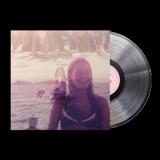
out of Stock

Order now and we will order the item for you at our supplier.


Last In: 3 months ago
Trouble - Trouble (35th Anniversary) (2x12")
  • 1: At The End Of My Daze
  • 2: The Wolf
  • 3: Psychotic Reaction
  • 4: A Sinner’s Fame
  • 5: The Misery Shows (Act Ii)
  • 6: R.i.p
  • 7: Black Shapes Of Doom
  • 8: Heaven On My Mind
  • 9: E.n.d
  • 10: All Is Forgiven
  • 1: R.i.p
  • 2: Black Shapes Of Doom
  • 3: Psalm 9
  • 4: The Wolf
  • 5: At The End Of My Daze
  • 6: Assassin
  • 7: The Misery Shows (Act Ii)
  • 8: Psychotic Reaction
  • 9: Bastards Will Pay
  • 10: The Tempter
  • 11: All Is Forgiven

Trouble’s absolute classic: the legendary album from 1990 and the pinnacle of Trouble’s impressive career. Heavy Metal was never better than this! Includes a live bonus CD recorded in Dallas, Taxas (USA)! Trouble’s debut album did great things for Metal and remains one of the darkest, thrashiest Doom albums to date. A lot of things can change in six years, especially when you’re talking Metal and the dates are 1984 and 1990. The decade may have changed them, but not in a way that suggests decay or a decline in the quality of their resolve or their skill as musicians and performers. On the contrary, Trouble’s 1990 self-titled release is arguably their most mature, boasting a fleshed out sound with unparalleled songwriting, a great production, and the time-crafted vocals of Eric Wagner which had improved major in the years since their previous efforts. All of this culminates in what is my mind the most “complete” thing Trouble ever created. From the mid-paced chug of a killer opener in “At the End of My Daze” to the last notes of “All Is Forgiven”, I can’t see filler or anything resembling a weak link. The riffs here are some of the best ever written, by Trouble or anyone else; every song has a manically awesome main riff that demands a display of headbanging. Riffs are undoubtedly the point of focus here; they make the songs, and they’re a timeless variety of great. Also, the interplay between guitarists Bruce Franklin and Rick Wartell is some of the best lead work you will ever hear in Metal. Trouble basically reinvented themselves with this release, and while I think it was a fantastic rebirth, those who aren’t so keen on the laid back stoner vibe they chose to adopt may not see it as a rejuvenation, but a step back (they did go from doom and gloom to collectively embracing their inner acid dropping free love hippie, after all). But the Metal remained fully intact! And as I’ve said, I think this is Trouble at their best. This is originality and innovation at its best, it is supreme quality. A leader of bands paves the way and then steps aside to create something that will serve as an example of how to improve upon an established formula: that is, by doing it really damn well.

pre-order now09.01.2026

expected to be published on 09.01.2026

M.I.A. (US) - WE MUST FIGHT
  • Tell My Why
  • Gas Crisis
  • Cold Sweat
  • New Left
  • I Hate Hippies
  • Angry Youth
  • All The President's Skin
  • Fucking Zones
  • (I Can't Take It) No More

USA Hardcore/Punk Geschichte! M.I.A. wurden 1980 in Las Vegas gegründet, zogen 1981 nach Orange County und begannen im berüchtigten Cuckoo's Nest zusammen mit Fear, Shattered Faith, T.S.OL. u.a. Shows zu spieln. Ende '81 gingen sie in ein lokales Tonstudio in Costa Mesa und nahmen an einem Nachmittag neun Songs auf, bis ihnen das Geld ausging - 300 Dollar gut angelegt! Eine Kassette wurde rasch kopiert und herumgereicht. Eine Kopie der Kassette wurde KevinSeconds bei einem Gig mit 7 Seconds in Reno gegeben. Kevin gab sie an Tim Yohannan von Maximum Rocknroll weiter. Schließlich gelangte sie in die Hände von Felix Alanis von Smoke Seven und Greg Shaw von Bomp. Mitte 1982 waren M.I.A. dann auf drei Vinyl-Veröffentlichungen vertreten: "Tell Me Why" auf der Compilation American Youth Report von Bomp, "New Left" auf Maximum Rocknroll Presents: Not So Quiet On the Western Front von Alternative Tentacles und acht der neun Tracks landeten auf der berüchtigten Split-LP mit Last Rites auf Smoke Seven. Alle 9 Tracks des ersten Tapes sind hier versammelt, zum ersten Mal richtig abgemischt. Der Begin von M.I.A. (US) und gleichzeitig das letzte Lapitel der Moder City Records-Reissue-Reihe zur Band. « ...In one corner is M.I.A., a band originally from Las Vegas, the champions of punk's positive side. They've managed to fuse a super tight thrash sound with enlightened attitudes_"I Hate Hippies" is obviously meant as a satire with a moral, and the results are absolutely stunning. » _Jeff Bale's 1982 review of the Last Rites for...-Split-LP in Maximum Rocknroll #2 Farbiges Vinyl plus 24seitigem Booklet.

pre-order now12.12.2025

expected to be published on 12.12.2025

M.I.A. (US) - WE MUST FIGHT

M.I.A. (US)

WE MUST FIGHT

12inchMCRLTD20
MODERN CITY
12.12.2025

USA Hardcore/Punk Geschichte! M.I.A. wurden 1980 in Las Vegas gegründet, zogen 1981 nach Orange County und begannen im berüchtigten Cuckoo's Nest zusammen mit Fear, Shattered Faith, T.S.OL. u.a. Shows zu spieln. Ende '81 gingen sie in ein lokales Tonstudio in Costa Mesa und nahmen an einem Nachmittag neun Songs auf, bis ihnen das Geld ausging - 300 Dollar gut angelegt! Eine Kassette wurde rasch kopiert und herumgereicht. Eine Kopie der Kassette wurde KevinSeconds bei einem Gig mit 7 Seconds in Reno gegeben. Kevin gab sie an Tim Yohannan von Maximum Rocknroll weiter. Schließlich gelangte sie in die Hände von Felix Alanis von Smoke Seven und Greg Shaw von Bomp. Mitte 1982 waren M.I.A. dann auf drei Vinyl-Veröffentlichungen vertreten: "Tell Me Why" auf der Compilation American Youth Report von Bomp, "New Left" auf Maximum Rocknroll Presents: Not So Quiet On the Western Front von Alternative Tentacles und acht der neun Tracks landeten auf der berüchtigten Split-LP mit Last Rites auf Smoke Seven. Alle 9 Tracks des ersten Tapes sind hier versammelt, zum ersten Mal richtig abgemischt. Der Begin von M.I.A. (US) und gleichzeitig das letzte Lapitel der Moder City Records-Reissue-Reihe zur Band. « ...In one corner is M.I.A., a band originally from Las Vegas, the champions of punk's positive side. They've managed to fuse a super tight thrash sound with enlightened attitudes_"I Hate Hippies" is obviously meant as a satire with a moral, and the results are absolutely stunning. » _Jeff Bale's 1982 review of the Last Rites for...-Split-LP in Maximum Rocknroll #2 Handgedrucktes Lithographie-Sleeve, farbiges Vinyl plus 24seitigem Booklet (weltweite Limitierung 300 Stück).

pre-order now12.12.2025

expected to be published on 12.12.2025

LEROY & ANGELA AUX - ES GIBT DINGE

Leroy&Angela Aux

ES GIBT DINGE

12inchUS5331
Trikont
07.11.2025
  • Hippie Be I Wanna
  • Löwenzahn
  • Eckige Welle
  • Es Gibt Dinge
  • Surfer Girl
  • Ende Der Weltausstellung
  • Blood & Jewels
  • Fischermann
  • Zukunftsphysik
  • Easy Tuna
  • Nichts War Um Der Ecke

wieder lieferbar Wer ist Angela Aux, die mit langen blonden Haaren, Bart und sanften Songs am Rande des Nervenzusammenbruchs die Münchner Szene mit einer Eigenwilligkeit bezirzt, der man sich schwer entziehen kann? Süddeutsche Zeitung Das ist die Geschichte eines unwahrscheinlichen Tonträgers mit einem unwahrscheinlichen Cover. Und sie beginnt am Meer. Am Atlantik genauer, der kühl flirrt und von dessen Wellenkämmen es im Gegenlicht neoprenschwarze Silhouetten in die Gischt spült. "Easy Tunas", Etüden im Fallenlassen. Sommer 2020. Kurzer Logout vom Lockdown. Hier am Meer in Südfrankreich blödeln Florian Kreier (Angela Aux, Aloa Input) und Leo Hopfinger (Das Hobos) mit Gitarren in jener verdröhnten Surfcamp-Melancholie aus Salz, Gras und Abendsonne. Eine Woche Künstler-Residency am Ozean. Ein Konzert, viel Freizeit. 28 Songs nehmen die beiden in diesen Tagen auf. 28 Songs, ohne Auftrag in den Sand gejammt. Ein Soundtrack der Sorglosigkeit, der später - völlig unerwartet -zu musikalischer Hyaluronsäure mutiert . Als Straffungsmittel in der Sorgenfaltenzeit. Aber der Reihe nach: "Es gibt Dinge" taufen die zwei diesen, am Ende auf elf Stücke kondensierten Surfcamp-Impressionismus. Die Songs - zart hingetupfte Fantasien über diese südfranzösische Surfer-Parallelwelt. Über die "Wanna be hippies", die "Fishermen", das "Surfer Girl". Aber natürlich ist das kein Surf-Album. Die Wellenreiterhofidylle ist nur Ausgangspunkt für Exkursionen, die explizit das finden wollen, wonach sie nicht suchen.

pre-order now07.11.2025

expected to be published on 07.11.2025

ARNAUD FOURNIER - 100 % BLACK PUZZLE

ARNAUD FOURNIER

100 % BLACK PUZZLE

12inchIDALP171
ICI D'AILLEURS
31.10.2025

For more than thirty years, Arnaud Fournier has been shaping the landscape of the French expe-rimental scene. First within the duo HINT, a singular fusion of experimental, noise and indie music, he released three studio albums in the late 1990s and has continued to perform regularly ever since, including a live album with EZ3kiel in 2009. With La Phaze (1999), Dead Hippies (2013) and later Atonalist (2017), he has always instinctively sought to cross genres and stage dialogues bet-ween extremes. In 2025, with 100% Black Puzzle, he delivers his very first album under his own name, a work where saturated guitars, saxophones, trumpet, hypnotic loops and vast layers of drone meet. Mixed and mastered by Olivier "Cali" Fournier at Studioscope in Angers, 100% Black Puzzle gathers familiar faces around it. Its title resonates as an intentional echo, directly referencing 100% White Puzzle, HINT's debut album. Thirty years on, Arnaud Fournier rediscovers the same spirit of absolute freedom across these five tracks: no format constraints, no compromise on length. The title track, an eight-minute instrumental, sets the tone - a raw, urgent gesture, cap-tured in the moment. In his own words, it was about "finding myself once more in that first-song state of mind, without any confinement." With 100% Black Puzzle, Arnaud Fournier fully embraces signing the work under his own name. No pseudonym, no mask, but an unveiling: a profoundly intimate record, steeped in family and friendship, where noise and beauty constantly collide and entwine. Thirty years after shaking up the French indie scene with HINT, he delivers a body of work that is at once retrospective and forward-looking - a black puzzle that resounds like a rebirth. And what better way to "close the circle" than by heading back on tour?

pre-order now31.10.2025

expected to be published on 31.10.2025

RC SUCCESSION - Single Man Delux Edition
  • Disc 1 "Single Man" 2025 Remaster
  • A1: Gift From A Fan
  • A2: Big Haruko
  • A3: Kindness
  • A4: I'm For Myself
  • A5: Recording Man (Relaxing Or Rushing To A Decision)
  • A6: Wanna Take A Night Walk?
  • A7: Dedicated To The Hippies
  • A8: Absentminded
  • A9: Why I Was Cold
  • A10: It's Already Autumn On The Koshu Kaido
  • A11: Slow Ballad
  • Disc 2: Single & Rare Tracks
  • B1: Slow Ballad (Single Version) 1976/1/21 Single
  • B2: Kindness (Single Version) 1976/1/21 Single
  • B3: You'll Understand Me 1976/10/11 Single
  • B4: Hello With A Dirty Face 1976/10/11 Single
  • B5: The Terrible Generation Difference (Oh, Ya!) *First Recording Version
  • B6: It's Already Autumn On Koshu Kaido ~Another Mix~ *First Recorded Version
  • B7: The Terrible Generational Difference (Oh, Ya!) (Tvk "Young Impulse" Studio Live 1976/4/25)
  • B8: Slow Ballad (Tvk "Young Impulse" Studio Live 1976/4/25)
  • B9: Wanna Take A Night Walk? (Tvk "Young Impulse" Studio Live 1976/4/25)
  • B10: Good Morning Darling (Tvk "Young Impulse" Studio Live 1976/4/25)
  • B11: Where I Sleep (Tvk "Young Impulse" Studio Live 1976/4/25) *Unreleased Song
  • B12: I'm For Myself (Tvk "Young Impulse" Studio Live 1976/4/25)

Congratulations! 55th anniversary of debut

The third album "Single Man", released on April 21, 1976, was an album with many controversies from the production stage.
It was discontinued less than a year after its release, and then a movement to re-release "Single Man" arose, and it finally re-released in 1980, so it has
a twisted story.

The album features a variety of performances due to the transition period from the folk period to the electric arrangement period, and above all, many
masterpieces that can be said to be representative of the entire RC period, such as "Slow Ballad". The driving force just before the rapid climb to
"KING OF ROCK" after 1980 is already boiling in this album.

In addition to the latest remastered sound source from the original master tape of the album, this deluxe edition includes single songs from that time,
versions not included on the album, and a studio live sound source from tvk's "Young Impulse" at the time of the album's release.
It is a deluxe edition packed with the overflowing talent of RC Succession at that time.

The booklet includes for the first time all 17 images from the original jacket illustration, "Pictures for the Test of Painting Apperception of Infants and Children."

・Remastered by zAk
・Disc 1: Half-speed cutting / Disc 2: Normal cutting by Miles Showell at ABBEY ROAD
・180g heavyweight clear vinyl
・Booklet (17 images of "Pictures for the Test of Painting Apperception of Infants and Children" (illustrations by Minamioji Hajime), commentary, lyrics)
・Liner notes: Imai Tomoko, Sakai Hiroki

pre-order now15.10.2025

expected to be published on 15.10.2025

Primal Scream - Maximum Rock & Roll: The Singles (2x12")
  • A1: Velocity Girl
  • A2: Gentle Tuesday
  • A3: Imperial
  • A4: Ivy Ivy Ivy
  • A5: Loaded
  • B1: Come Together
  • B2: Higher Than The Sun
  • B3: Don't Fight It, Feel It
  • B4: Movin’ On Up
  • C1: Gentle Tuesday
  • C2: Imperial
  • C3: Ivy Ivy Ivy
  • C4: Kowalski
  • D1: Star
  • D2: Burning Wheel
  • D3: Swastika Eyes
  • D4: Kill All Hippies

Formed in the early 1980s, Primal Scream paid their indie rock dues and experimented with their sound for almost a decade before finding their feet with the era-defining dance/rock hybrid Screamadelica album. It spawned their first hit singles, ‘Loaded’, ‘Come Together’ and ‘Movin’ On Up’, after which they became a chart regulars for over a decade. This carefully curated 17-track collection, first issued in 2019, covers their fascinating journey from 1986 to 2000, taking in their most successful period but also detailing the evolution of their sound before they broke into the mainstream.

pre-order now12.09.2025

expected to be published on 12.09.2025

FERRE GRIGNARD - CAPTAIN DISASTER (1968)

FERRE GRIGNARD

CAPTAIN DISASTER (1968)

12inchSMR034
STARMAN Records
12.09.2025

Born in Antwerp in 1939, Ferre became a true icon in the sixties, adored by youngsters and hippies and hated by the establishment. His successful debut album in 1966, which featured the hits “Ring Ring, I’ve Got to Sing,” “Crucified Jesus,” and “Drunken Sailor,” brought him an international breakthrough with concerts in Paris, London, and Hamburg, leading to a contract with the famous French Barclay label. The next three albums did not equal the initial commercial success — a pressure the music business was happy to put on his shoulders. Still, these three albums, reissued in their original packaging and artwork on vinyl for the very first time, are loaded with hidden gems, combining folk, blues, and psychedelics in Ferre’s original songs.

Grignard sadly succumbed to throat cancer in 1982 at the early age of 43.

pre-order now12.09.2025

expected to be published on 12.09.2025

FERRE GRIGNARD - FERRE GRIGNARD (1972)

FERRE GRIGNARD

FERRE GRIGNARD (1972)

12inchSMR035
STARMAN Records
12.09.2025

Born in Antwerp in 1939, Ferre became a true icon in the sixties, adored by youngsters and hippies and hated by the establishment. His successful debut album in 1966, which featured the hits “Ring Ring, I’ve Got to Sing,” “Crucified Jesus,” and “Drunken Sailor,” brought him an international breakthrough with concerts in Paris, London, and Hamburg, and led to a contract with the famous French Barclay label. The next three albums did not match the initial commercial success — a pressure the music business was happy to put on his shoulders. Still, these three albums, reissued in their original packaging and artwork on vinyl for the very first time, are loaded with hidden gems, combining folk, blues, and psychedelics in Ferre’s original songs.

pre-order now12.09.2025

expected to be published on 12.09.2025

Items per Page:
N/ABPM
Vinyl