Cerca:havana club

Generi
Tutto
  • 1
VARIOUS - MAMBO CALYPSO (2025 SLEEVE ART)
  • Yambere
  • O' Look Misery
  • Se Formó El Bochinche
  • Shrimp & Gumbo
  • Santa Isabel De Las Lajas
  • A Pali Papá
  • Mambo Calypso
  • Cumbia Sobre El Mar
  • Cumbia Del Caribe
  • Jamaicuba
  • Strip Tease
  • Baila Yemayá
  • Peanut Vendor
  • Ahora Sí Hay Melao
  • Besitos De Coco
  • Los Chucos Suaves

Zombie Club presents a re-edition (new sleeve art) of "Mambo Calypso" another volume of sonic Caribbean Cruise. Following the approach of the first volume and understanding the Caribbean as a region is not limited to a strictly geographical demarcation but rather a demographic and cultural space where countries, islands and coastal areas may fall into a common Mare Nostrum even arrives in New Orleans. The influence of African drum and the "Cuban clave" makes different music beyond its specific components be they Latinos, Anglos or Frenchie's - look at themselves and recognize a certain family. This is not a coincidence, since the slave trade brought African music from the port of Havana to Cartagena de Indias, Nassau, Port-au-Prince, Salvador de Bahía and the southern United States. The same Blackness, the same rhythm, the same festive mood, spirit of resistance and struggle. And so, Arsenio Rodriguez can be heard without jumps next to a Calypso of Blind Blake, or a tasty Pacho Galán's coastal Cumbia crossover with Dave Bartholomew's Mambo or a Latin Swing of Lalo Guerrero, where the Dominican Merengue sounds Joseíto Mateo in line with that of its Haitian neighbor Nemour Jean Baptiste. A very spicy musical "melting pot," a gumbo of percussion and languages, to enjoy and dance. Re-board the Zombie Club Cruise, mixing different genres of Caribbean music with a high dance and rhythmic component. This selection designed for collectors, Dj's & calypsofied zombie dancers.

pre-ordina ora23.01.2026

dovrebbe essere pubblicato su 23.01.2026

Various - Dolores: Salsa & Guaracha From 70's French West Indies

In Guadeloupe, many people think that jazz and ka music are like a ring and a finger. To some extent, the same could be said about so called Latin music and the music played in the French West Indies.

Both aesthetics were born in the Caribbean and bear so many connections that they can easily be considered cousins. In constant dialogue, there are lots of examples of their fruitful alliance and have been for a while. The English country dance that used to be practiced in European lounges came to be called kadrille in Martinique and contradanza in Cuba. They both featured additional percussion instruments inherited from the transatlantic deportation. Drawing from shared feelings about the same traumatized identity – later to be creolized – it would be hard not to assume that they were meant to inspire each other. The golden age of the orchestras that graced the Pigalle nights during the interwar period further proves the point. As soon as the 1930s, Havana-born Don Barreto naturally mixed danzón and biguine music in a combo based at Melody's Bar. In the following decade, Félix Valvert, a conductor who was born and raised in Basse-Terre in Guadelupe, also worked wonders in Montparnasse with La Coupole, which was an orchestra made up of eclectic musicians. Afro- Caribbean performers of various origins were often hired on rhythm and brass sections in jazz bands, which used to enliven the typical French balls of the capital. In the 1930s and onwards, Rico’s Creole Band was one of them.


Martinican violinist-clarinettist Ernest Léardée, who would become the king of biguine music as well as the main figure of French Uncle Ben's TV commercials (a dark stigma of post-colonial stereotypes), had musicians from the whole Caribbean sphere play at his Bal Blomet – and they all enchanted "ces Zazous-là" (according the words of Léardée's biguine-calypso piece). In les Antilles (French for French West Indies), music history started to speed up in the 1950s, when trade expanded and radio stations grew bigger. The Guadelupean and Martiniquais youth tuned in their old galena radio sets to South American and Caribbean music. As for the women traders, les pacotilleuses, they bought and sold goods across different islands (the "passing of items through various hands" was thought to be most pleasurable) and brought back countless sounds in their luggage. Such was the case of Madame Balthazar, who once returned from Puerto Rico with the first 45rpm and 33rpm to ever enter Martinique.

Out of this adventure was created the famous Martinican label La Maison des Merengues, a music business she opened and undertook with her husband and which proved to be a major landmark. At the end of the 1950s, in Puerto Rico, Marius Cultier competed in the Piano International Contest playing a version of Monk's Round 'Midnight. He won the first prize and this distinction foreshadowed everything that was to come. Cultier, the heretic Monk of jazz, was quickly praised for writing superb melodies, always tinged with a twist that conferred a unique sound to his music. It didn't take long for the gifted self-taught musician to get to play with Los Cubanos, making a name for himself thanks to his impressive maestria on merengues.

The rest is history. Besides, in the late 1950s, Frantz Charles-Denis, born into the upper middle class in Saint-Pierre and better known by his first name Francisco, went back home after working at La Cabane Cubaine – a club located rue Fontaine where he had caught the Latin fever. Francisco's music was therefore heavily marked by his Cuban cousins' influence, which gave the combos he led a specific style and also led to renewal. Things were swinging hard in La Savane, located in the main square in Fort-de-France. He set up the Shango club close by and tested out the biguine lélé there, a new music formula spiced up with Latin rhythms. Soon afterwards, fate had him fly to Puerto Rico and Venezuela.

As for percussionist Henri Guédon (percussions were only a part of his many talents), he was born in Fort-de-France in May 22nd 1944, the day marking the celebration of the abolition of slavery. As an old man, he could remember that in " his father's Teppaz, a lot of hectic 6/8 music was constantly playing...". In the opening lines of his Lettre à Dizzy, a small illustrated collection of writings published by Del Arco, he highlighted the huge impact that cubop had on him as a teenage boy, around 1960. He eventually turned out to be the lider maximo in La Contesta, a big band steeped in Latin jazz. He was also the one who originated the word zouk to describe music which brought the sound of the New York barrio to Paris. It was the culmination of a journey that started in Sainte-Marie: "a mythical place for bélé, the equivalent of Cuban guaguancó". In the early 1960s, the tertiary economy developed to the detriment of agriculture. Yet rural life was where roots music emerged in Martinique and in Guadeloupe.

Record companies played a major part in the process of Latin versions sweeping across the islands – before reaching everywhere else. Producer Célini, boss of the great Aux Ondes label, and Marcel Mavounzy, both the head of Émeraude records - a firm which was founded in 1953 - as well as the brother of famous saxophonist Robert Mavounzy, were big names to bear in mind. Although there were many of them - all of whom are featured on this record - Henri Debs was definitely the major figure in the recording adventure. He proved to be so influential that he even got compared to Berry Gordy. In the mid 1950s, when he acquired his first Teppaz, he worked on his first compositions: a bolero and a chachacha. Then, he became the one man who made people discover Caribbean music, from calypso to merengue. He was among the first ones to rush out to San Juan, Puerto Rico, to buy records and distribute them through a store run by one of his brothers in Fort-de-France. He had members of the Fania All Star come and perform there, which he was madly proud about. He was also the first one to pay attention to Haitian music, such as compas direct and various other rhythms which would soon flood the market. As a result, many of the combos hitting his legendary studio would end up boosted by widespread "Afro-Latin" rhythms. However, he never denied his identity: gwo ka drums were given a major role, although they were instruments which had long been banned from the "official" music spheres. The present selection bears witness to such a creative swarming. Here are fourteen tracks of untimely yet unprecedented cross-fertilization: all types of music rooted in the Creole archipelago have found their way, whatsoever, to the tracklisting. Whether originating from the city or being more rural, they all go back to what Edouard Glissant, in an interview about the place of West Indian music in the Afro-American scope, called "the trace of singing, the one which got erased by slavery." "It is so in jazz, but also in reggae, calypso, biguine, salsa... This trace also manifests through the drums, whether Guadelupean, Dominican, Jamaican or Cuban... None of them being quite the same. They all point to the idea of a trace, seeking it out and connecting to each other through it. This is the hallmark of the African diaspora: its ability to create something new, in relation to itself, out of a trace. It may be the memory of a rhythm, the crafting of a drum, a means of expression which doesn't resort to an old language but to the modalities of it." The opening track features one of the emblematic orchestras of this aesthetic identity, criscrossing many music types from the archipelago. The 1974 Ray Barretto guajira – Ray Barretto was a major New York drummer influenced by Charlie Parker and Chano Pozzo – is magnificently performed by Malavoi, a legendary Fayolais group (i.e from Fort-de-France). Additionally, the compilation ends on a piece by Los Martiniqueños de Francisco. It symbolically closes the circle as it is a genuine potomitan of Martinique culture which also functions as a tireless campaigner for Afro-Caribbean music. Practicing the danmyé rounds (a kind of capoeiria) to the rhythm of the bèlè drum, it delivers a terrific Caterete, a kind of champeta of Afro- Colombian obedience which was originally composed by Colombian Fabián Ramón Veloz Fernández for the group Wgenda Kenya. The icing on the cake is Brazilian Marku Ribas, who found refuge in Martinique in the early 1970s, bringing his singing to the last trance-inducing track. These two "versions" convey the whole tone of a selection composed of rarities and classics of the tropicalized genre, swarming with tonic accents and convoluted rhythms. It is the sort of cocktail that the West Indians never failed to spice up with their own ingredients. For instance, the Los Caraïbes cover of Dónde, a famous Cuban theme composed by producer Ernesto Duarte Brito, has a typical violin and features renowned Martinique singer Joby Valente and his piquant voice.


The track used to be – or so we think – their only existing 45rpm. The meaningful Amor en chachachá by L'Ensemble Tropicana, a band which included Haitian musicians among whom was composer and leader Michel Desgrotte, also recalls how Latin music was pervasive in the tropics in the mid-1960s. They were the ones keeping people dancing at Le Cocoteraie in Guadelupe and La Bananeraie in Martinique. Around the same time, another "foreign" band, Congolese Freddy Mars N'Kounkou's Ryco Jazz, achieved some success on both islands by covering Latin jazz classics – such as their adaptation of Wachi Wara, a "soul sauce" by Dizzy Gillespie and Chano Pozo whose interweaving of strings and percussions can have anyone hit the dancefloor. How can you resist Dap Pinian indeed, a powerful guaguancó by Eugene Balthazar, performed by the Tropicana Orchestra and published by the Martinique-founded La Maison des Merengues? It also acts as a symbol of the maelstrom at work. Going by the name Paco et L'orchestre Cachunga, Roger Jaffory used to play guaguancó too: his Fania-inspired Oye mi consejo is one example of his style. Baila!!!!! Dancing was also one of the Kings' focus points. Oriza is a Puerto Rican bomba and a "classic" originally composed by Nuevayorquino trumpeter Ernie Agosto, which reserves major space for brasses, giving it a special sheen.

Emerging from the New York barrios crucible was also La Perfecta, a Martinique group originating from Trinidad, whose name directly references the totemic Eddie Palmieri figure as well as his own band, also called La Perfecta. Here they borrow Toumbadora from Colombian producer and composer Efraín Lancheros and interpret it by emphasizing percussions, which set fire to the track even more than the wind instruments. The same goes for Martinique's Super Jaguars, who use Tatalibaba – a composition by Cuban guitarist Florencio "Picolo" Santana which was made famous by Celia Cruz & La Sonora Matencera – as a pretext for sending their cadences into a frenzy. In a more typically salsa vein, the Super Combo, a famous Guadelupean orchestra from Pointe-Noire that was formed around the Desplan family and had Roger Plonquitte and Elie Bianay on board, adapt Serana, a theme by Roberto Angleró Pepín, a Puerto Rican composer, singer and musician also known for his song Soy Boricua. Here again, their vision comes close to surpassing the original. In the 1970s, L'Ensemble Abricot provided a handful of tracks of different syles, hence reaching the pinnacle of the art of achieving variety and giving pleasure. They played boleros, biguines, compas direct, guaguancó and even a good old boogaloo - the type they wanted to keep close to their hearts for ever, "pour toujours", as they sang along together in one of their songs. Léon Bertide's Martinican ensemble excelled at the boogaloo which had been composed by Puerto Rican saxophonist Hector Santos for the legendary El Gran Combo.


Three years later, in 1972, Henri Guédon, with the help of Paul Rosine on the vibraphone, tackled the Bilongo made famous by Eddie Palmieri. Such a classic!!!!! And so were the Aiglons, the band from Guadelupe: choosing to execute Pensando en tí, a composition by Dominican Aniceto Batista, on a cooler tempo than the original, they noticeably used a wonderfully (un)tuned keyboard in place of the accordion. On the high-value collectible single – the first one released by Les Aiglons under the Duli Disc label – there is a sticker classifying the track under the generic name "Afro". Now that is what we call a symbol. Jacques Denis

non in magazzino

Ordina ora e ordineremo l'articolo per te presso il nostro fornitore.


Last In: 81 days ago
BUENA VISTA SOCIAL CLUB - BUENA VISTA SOCIAL CLUB 4x12"

Transport yourself to the vibrant streets of Havana with the Buena Vista Social Club's eponymous album, a captivating journey into the heart of Cuban music! Recorded in 1996 by acclaimed producer Ry Cooder, this timeless masterpiece celebrates the rich tapestry of Afro-Cuban rhythms and soulful melodies that have enchanted audiences for generations.

Buena Vista Social Club is both the name given to this extraordinary group of musicians and the album, recorded in just seven days in 1996 in Havana's 1950s vintage EGREM studios. From the infectious energy of "Chan Chan" to the heartfelt nostalgia of "Dos Gardenias," each track immerses listeners in the intoxicating blend of son, bolero, and guajira styles. Led by legendary musicians such as Ibrahim Ferrer, Compay Segundo, and Omara Portuondo, the Buena Vista Social Club ensemble delivers performances that are as exuberant as they are intimate, capturing the essence of a bygone era while igniting a passion for Cuban music that knows no bounds.

The acclaim of the original album has elevated the artists (including Ibrahim Ferrer, Rubén González and Omara Portuondo) to superstar status, inspired an award-winning film by Wim Wenders, and has contributed to popularizing Cuba's rich musical heritage. Produced by Ry Cooder for World Circuit, the timeless quality of the music and the sheer verve of the veteran performers have ensured that this will go down as one of the landmark recordings of the 20th century.

This 45 RPM Analogue Productions reissue pressed by Quality Record Pressings on four dead-silent LPs makes every note a transcendent experience. Meticulously crafted using the finest materials and exacting standards, this reissue pays homage to the golden age of vinyl, capturing the warmth and depth of the original recording in stunning detail. The package includes a 12-page booklet with lyrics and stunning studio images, topped off by a tip-on old style gatefold double pocket jacket made by Stoughton Printing.

Embark on a musical odyssey filled with warmth, joy, and the irresistible allure of Havana nights!

pre-ordina ora31.03.2025

dovrebbe essere pubblicato su 31.03.2025

AFRO-CUBAN ALL STARS - A Toda Cuba Le Gusta
  • A1: Amor Verdadero
  • A2: Alto Songo
  • B1: Habana Del Este
  • B2: A Toda Cuba Le Gusta
  • C1: Fiesta De La Rumba
  • C2: Los Sito' Asere
  • C3: Pío Mentroso
  • D1: María Caracoles
  • D2: Clasiqueando Con Rubén
  • D3: Elube Changó

'A Toda Cuba le Gusta', the classic debut album by the Afro-Cuban All Stars. The frst in a trilogy of extraordinary albums recorded by World Circuit in a single two-week session
at Havana's EGREM studios, 1996. The other albums, which share many of the same personnel, were 'Buena Vista Social Club' and 'Introducing Rubén González'. Remastered by Bernie Grundman from the original analogue tapes and now available
for the frst tme on double 180gm heavyweight vinyl, housed in a gatefold sleeve and presented alongside a 32 page booklet as part of World Circuit's classic album series. Plays at 45rpm.

non in magazzino

Ordina ora e ordineremo l'articolo per te presso il nostro fornitore.


Last In: 14 months ago
ESTRELLAS DE BUENA VISTA - LIVE IN HAVANA
  • Chan Chan
  • La Negra Tomasa "Bilongo
  • De Camino A La Vereda
  • Veinte Anos
  • El Carretero
  • Popurri De Danzones
  • Dos Gardenias
  • Son Para Mi Abuelo
  • El Cuarto De Tula
  • Lagrimas Negras
  • Candela

Estrellas de Buena Vista was formed to continue the tradition of Buena Vista Social Club. The band features 16 musicians, including 8 original members of the Buena Vista Social Club. The singers Carlos Calunga and Lazaro Villa are from the new generation, and sparks a fresh energy to the Cuban evergreens. The repertoire will recall the golden age of Cuban music, fusing traditional rhythms and songs with contemporary influences. When the group performs in Cuba, the theaters are full of loving enthusiastic audiences, as can be heard on this live recording. And exactly to transmit this authentic Cuban feeling, the band decided to record one of their shows last year. For this album the band invited special guests, the singers Alain Perez and Mayito Rivera. The group has gained national and international recognition for its virtuosity and for transmitting the joy and vibrant spirit of Cuban music, transporting the listeners to the warmth and contagious rhythm of the island. LIVE IN HAVANA presents classical songs in authentic relation to the live audience.

pre-ordina ora07.03.2025

dovrebbe essere pubblicato su 07.03.2025

Various - Latin Broken Beats

Eclectic Beats Music release number 6 comes in the form of a vinyl 7” single with two Latin broken beat cuts!
The A side is a collaborative remix from Born74 and Fradinho, twisting Jorge Ivan Martin’s original track “Yo Tambien Baile La Conga” into a broken beat remix, enhancing the Latin flavours with a dance floor direction, topped up with Frank Santiuste’s trumpet solos.
On the B side, Fradinho digs out one of his earlier unreleased Latin tracks and gives it a broken beat flavour, with a Funk fusion through the bass line and synth solos and brass hits.

Jorge Ivan Martin bio

Cuban musician, composer, arranger and music teacher, Jorge Ivan Martin, spent 13 years teaching Tres in Cuba.
He is now based in Spain and still lectures at some universities in Madrid.
As a musician, Jorge blends Bossa, Reggae, traditional Cuban music with Jazz and Funk and is a Latin Grammy nominated artist with several other nominations and awards.
He has collaborated with a plentitude of Latin artists and also invited the trumpet player Frank Santiuste to add some flare to the Born74 and Fradinho remix on the “Latin Broken Beats” release.

Born74 bio

Andrew Nicholas, known as Born74, delves into the fusion of funk and Nu Jazz.
His music has been released on various labels such as Tru-Thoughts, Acid Jazz, Eclectic Beats Music, Ramrock Records, and Colin Colin presents.
Born74 has collaborated with Arema Arega (Havana Cultura), ONJ (jazz re-freshed, Tru-Thoughts), and Mark Norton (The Fantastics, BBE Records).
Additionally, Born74 is a member of The Earthsouls.
Noteworthy remix credits include Str4ta (Gilles Peterson), Nimbus Sextet (Acid Jazz), and Fradinho (Eclectic Beats).
Born74's tracks have been featured on jazz compilations like Jazz Dance Fusion (Z Records) and Sol Vibrations (MJDC).

Fradinho bio

Fradinho (Rui Fradinho) is Lisbon born Portuguese, having lived in London for 12 years and returning to Portugal in 2020.
Rui's musical base stems from a diverse range of music: rock to pop, house to techno, through jazz, soul, funk, world music, hip hop, drum and bass and from breakbeat to his main passion and current music production focus, broken beat / bruk / nu jazz.
Rui runs his own record label, Eclectic Beats Music, with 6 vinyl releases, and has released remixes for artists like Sentinel793 (Universal Magnetic), Deborah Jordan (Futuristica Music), Str4ta (Colin Curtis Presents), David Borsu (Broadcite) amongst other artists and labels.
Highlights of his DJ career so far (other than his 6-year residency at Sociedade Anonima), are the Bicaense Cafe and Lux club in Lisbon. Earlier in 2017, he did a stint on London’s Back2BackFM, playing at Dalston’s Club Makossa, the BBE Store in East London, closing the Chill Out Gardens stage in Portugal’s Boom Festival 2018, DJ’ed at Gilles Peterson’s first edition of We Out Here festival in 2019, played Lisb-On festival in 2022 and currently guests at Birmingham’s BrukUp broken beat night (having played there 5 times with Adam Rock, Laura Crossley, Bruk Boogie Kru, Marcia Carr & Kwai and Yoofee).

non in magazzino

Ordina ora e ordineremo l'articolo per te presso il nostro fornitore.


Last In: 2 years ago
Various - House of Limbo Vol.1 (2x12")

Glasgow’s iconic and highly influential progressive house label Limbo Records celebrates it’s 30th anniversary. An incredible compilation across two 12”s in an expertly designed gatefold sleeve with a poster insert that takes a look back at some of the biggest tracks that graced the label over the past three decades.

A true collector’s item, showcasing the power and presence of this Scottish stalwart, lovingly remastered by Davie Forbes and reissued for a whole new generation of listeners. The compilation kicks off with Havana - Schtoom, the record that started it all given the remix from legendary Scottish duo Slam, before the party anthem ‘Buruchacca’ from Mukkaa aka Kiltie and Crichton gets a signature remix Apollo 440.

Elsewhere Gypsy hit with undeniably one of the highlight tracks in the Limbo catalogue ‘I Trance You’ and Sublime serve up another of Limbo’s classic releases, the dance floor banger ‘Transamerican’ which topped all the charts at the time.

Take to side 3 and you’ll find the second release on Limbo a percussive drum laden epic from Havana entitled ‘Shift’ that planted Limbo firmly in the must buy section of record shops across the UK. Another highlight on side 4 sees legendary Glasgow DJ Harri of Sub Club fame with his debut on Limbo – a superb slice of hard to house.

All in all, this is a serious slice of history that every collection should have nestled in its racks.

non in magazzino

Ordina ora e ordineremo l'articolo per te presso il nostro fornitore.


Last In: 6 months ago
As December Falls - Join The Club

Neue, limitierte, dreifarbige (weiß-pink-gelb) Vinyl-Tour-Ausgabe des jüngsten As December Falls-Albums, das auf Platz 1 der UK-Rock-Charts, der Indie-Album-Charts und der Download-Charts landete und auf Rang #11 in die UK Album-Charts einstieg.

Das UK-Pop-Punk-Quartett As December Falls blieb stets seiner unabhängigen Selbstvermarktung treu. Angefangen bei dem selbstbetitelten Debütalbum (2019) über den von John Mitchell (Enter Shikari, You Me At Six, Architects) produzierten Nachfolger 'Happier' (2020) bis zu 'Mayday', der ersten Single aus dem neuen Album 'Join The Club'. Es ist ihr bislang ehrgeizigster Track mit einer härteren Soundrichtung, die man von der Band bisher nicht kannte. Produziert von Alex Copp (Frank Carter & The Rattlesnakes), abgemischt von Stevie Knight (Stand Atlantic, Yours Truly) und gemastert von Grant Berry (All Time Low, Hot Milk, Deaf Havana) leitet 'Mayday' das dritte As December Falls-Album ein, mit dem die Band einen weiteren Riesenschritt nach vorne macht.

pre-ordina ora20.10.2023

dovrebbe essere pubblicato su 20.10.2023

As December Falls - Join The Club

Das UK-Pop-Punk-Quartett As December Falls blieb stets seiner unabhängigen Selbstvermarktung treu. Angefangen bei dem selbstbetitelten Debütalbum (2019) über den von John Mitchell (Enter Shikari, You Me At Six, Architects) produzierten Nachfolger 'Happier' (2020) bis zu 'Mayday', der ersten Single aus dem neuen Album 'Join The Club'. Es ist ihr bislang ehrgeizigster Track mit einer härteren Soundrichtung, die man von der Band bisher nicht kannte. Produziert von Alex Copp (Frank Carter & The Rattlesnakes), abgemischt von Stevie Knight (Stand Atlantic, Yours Truly) und gemastert von Grant Berry (All Time Low, Hot Milk, Deaf Havana) leitet 'Mayday' das dritte As December Falls-Album ein, mit dem die Band einen weiteren Riesenschritt nach vorne macht.

- "As December Falls are an exciting prospect for the future of British Rock." - Jack Saunders, BBC Radio 1

pre-ordina ora21.07.2023

dovrebbe essere pubblicato su 21.07.2023

As December Falls - Join The Club

Das UK-Pop-Punk-Quartett As December Falls blieb stets seiner unabhängigen Selbstvermarktung treu. Angefangen bei dem selbstbetitelten Debütalbum (2019) über den von John Mitchell (Enter Shikari, You Me At Six, Architects) produzierten Nachfolger 'Happier' (2020) bis zu 'Mayday', der ersten Single aus dem neuen Album 'Join The Club'. Es ist ihr bislang ehrgeizigster Track mit einer härteren Soundrichtung, die man von der Band bisher nicht kannte. Produziert von Alex Copp (Frank Carter & The Rattlesnakes), abgemischt von Stevie Knight (Stand Atlantic, Yours Truly) und gemastert von Grant Berry (All Time Low, Hot Milk, Deaf Havana) leitet 'Mayday' das dritte As December Falls-Album ein, mit dem die Band einen weiteren Riesenschritt nach vorne macht.

- "As December Falls are an exciting prospect for the future of British Rock." - Jack Saunders, BBC Radio 1

pre-ordina ora21.07.2023

dovrebbe essere pubblicato su 21.07.2023

As December Falls - Join The Club

Das UK-Pop-Punk-Quartett As December Falls blieb stets seiner unabhängigen Selbstvermarktung treu. Angefangen bei dem selbstbetitelten Debütalbum (2019) über den von John Mitchell (Enter Shikari, You Me At Six, Architects) produzierten Nachfolger 'Happier' (2020) bis zu 'Mayday', der ersten Single aus dem neuen Album 'Join The Club'. Es ist ihr bislang ehrgeizigster Track mit einer härteren Soundrichtung, die man von der Band bisher nicht kannte. Produziert von Alex Copp (Frank Carter & The Rattlesnakes), abgemischt von Stevie Knight (Stand Atlantic, Yours Truly) und gemastert von Grant Berry (All Time Low, Hot Milk, Deaf Havana) leitet 'Mayday' das dritte As December Falls-Album ein, mit dem die Band einen weiteren Riesenschritt nach vorne macht.

- "As December Falls are an exciting prospect for the future of British Rock." - Jack Saunders, BBC Radio 1

pre-ordina ora21.07.2023

dovrebbe essere pubblicato su 21.07.2023

Camilo Azuquita & Panama Brass - Borombon | Con La Mano En La Biblia

"Matasuna Records" musical journey takes the listener this time to "Panama" - a country in Central America, which offers a rich and breath-taking variety of musical treasures. In a first reissue, two songs from the legendary "Loyola Records" label were selected, both released in 1969: one by "Camilo Azuquita" and one by the group "Panama Brass". Two super-rare tunes that fetch crazy prices, if you're lucky enough to find a copy at all. Available for the first time as an official remastered reissue on 7inch vinyl - the song by Panama Brass even makes its 7inch premiere. Don't sleep on it!

The A-side features the killer boogaloo tune "Borombon" by "Camilo Azuquita". Its take of the song composed by "Javier Vasquez" is undoubtedly the best version of this song. The striking piano, driving bass and rich horns are fueled by percussive accompaniment and especially by Azuquita's powerful voice. A terrific song that has also recently gained new notoriety in movies and series - such as "Better Call Saul".

The B-side features the instrumental Latin Jazz/Guaracha tune "Con La Mano En La Biblia" by "Panama Brass" - an orchestra led by the excellent organist "Cristobal Munoz Jr." and consisting of Panama's best musicians. A no less energetic and furious song composed by "G. Garcias". The musicians of the orchestra combine a great musicality and diversity in the song, delivering a special delicacy.

"Camilo Luis Argumédez" is a singer and composer born in "Colon (Panama)" on February 18th 1945. He became world famous under his stage name Camilo Azuquita. He began his career at a young age, when he participated in various competitions organized by local radio stations. He left Panama for the first time for an engagement in "Lima (Peru)" - the prelude tocountlesstrips.

After returning to Panama, another engagement in 1966 took him to "Puerto Rico", where he also recorded music. Due to a tour he was involved in, he ended up in "New York City" where he made new & fruitful acquaintances with other artists that resulted in some more recordings.

In 1968 he returned again to Puerto Rico, where he joined a band to record an album. In the following years, tours and concerts followed, as well as an engagement in a club where he musically accompanied many stars of Latin American music.

Between 1972 and 1976 he spent four years in "Los Angeles", where he performed in night clubs, recorded two albums and toured California with his own band "Melao". In LA, through a brother of the "Fania" boss, he got a contract with "Vaya Records", a subsidiary of the Fania label, which brought him back to New York City in 1976. There he joined the band "Tipica'73" and their two following albums brought him much success.

A tour led him to "Paris", where he met the journalist "Pierre Goldman". A proposed project became reality two years later: Azuquita opened the first Parisian Salsa Club. As this became a complete success and the audience filled the club on each of the evenings, a first engagement of one month was extended to several years. In France, he performed at the world-famous "Olympia Theater "or played at the "Old Bourget airport", opening for a live concert by reggae legend "Bob Marley" in front of 75,000 people. From France, he traveled throughout Europe, where the performances in front of European audiences brought him enormous prestige.

From 1985 to 1987, "Azuquita y su Melao" toured extensively in "California", where he signed a 1-year contract at "Club Candilejas" in "Hollywood" in 1988. In the following decades, he recorded many more albums - in NYC, Cali (Colombia), France or Havana (Cuba), among others. In addition, he was still very active on tours, festivals and concerts around the globe. An extremely remarkable artist, whose activity has brought him to the top.

---

"Panama Brass" was an orchestra directed and orchestrated by the excellent organist "Cristobal Munoz Jr." The orchestra consisted of one of the best musicians of Panama at that time. Munoz was an exclusive artist of "Loyola Records" at the time and was considered a promising or up-and-coming conductor. That this album could be realized at all had only been possible thanks to Hubert J. Pretto. Pretto, then Assistant Vice President & General Manager of "Coca Cola Panama" arranged the funds necessary for the realization of this album and supported the campaign to promote music culture in Panama. This album would remain the only one released by this group.

non in magazzino

Ordina ora e ordineremo l'articolo per te presso il nostro fornitore.


Last In: 2 years ago
Various - Future Trance 100 LP 4x12"
 
51

The last flight – we have arrived! Fasten your seatbelt and buckle up – Denn die erfolgreichste Dance- & Trance-Compilation unseres Planeten setzt einmalig zu ihrem letzten Landeanflug an.

Anlässlich des 100. Jubiläums erscheint die beliebte Produktreihe als galaktische Sonderausgabe und Fans dürfen sich neben der 3CD und dem eAlbum auf eine streng limitierte Fan-Box mit 3CD, galaktischem Comic-Poster, Fan-Socken und Schlüsselanhänger freuen. Damit aber noch nicht genug: Diese letzte Ausgabe unserer FUTURE TRANCE erscheint am 25.11.2022 zudem exklusiv als 4LP inkl. Comic-Poster!
Echte Fans werden zudem bei der besonderen Optik ein Flashback erleben – das erste Mal seit der Landung der FUTURE TRANCE Vol. 60 erlebt die Reihe wieder ein Alien-Revival und erscheint in außerirdischem Design.

Die FUTURE TRANCE 100 besticht durch ein randvolles Aufgebot mit den größten Stars der Szene und ihren aktuellen Bangern. Ein letztes Mal zünden wir die Trance-Booster - mit dabei sind z.B. Scooter,
Pulsedriver, Armin van Buuren, Rocco und und und. Abgerundet wird dieser Senkrechtstarter mit einem exklusiven FUTURE TRANCE UNITED Mix „The last flight – we have arrived!“ Hier ist Gänsehaut vorprogrammiert!

non in magazzino

Ordina ora e ordineremo l'articolo per te presso il nostro fornitore.


Last In: 9 days ago
COMPRO ORO - BUY THE DIP LP

Compro Oro

BUY THE DIP LP

12inchSDBANULP24LTD
SDBAN ULTRA
21.09.2022

Ghent based psych jazz collective Compro Oro, are set to release new album 'Buy The Dip' on the 2nd September via the groove-obsessed Sdban Ultra label. Having received critical acclaim for their 2020 album 'Simurg' - a collaboration with Murat Ertel, co-founder and frontman of Istanbul's cult psychedelic folk band BaBa ZuLa and his singer partner Esma Ertel - the band's fifth album is less ethno- and more techno-logy, both on a musical and conceptual level.

With tastemaker fans including BBC 6 Music's Gilles Peterson and Stuart Maconie alongside Jazz FM's Jez Nelson, the band's spontaneous quest for psychedelic sounds and jazz grooves has not stopped expanding since their formation in 2014.

After imaginative musical trips to Havana, Mogadishu and Istanbul for previous releases, Compro Oro went looking for sounds and inspirations from other corners of the globe for 'Buy The Dip'. Synthesizers and electronic effects spice up Compro Oro's distinctive musical marriage of vibraphones, electric guitars, jazzfunk rhythms, exotic percussions and dubby bass patterns. Band leader and composer Wim Segers created these new compositions often on piano or vibes in a more analogue way, leaving enough room for his band mates to colour each track when fine tuning the song.

Segers was inspired by the world of crypto markets and the specific concept of 'buying the dip': bitcoin diggers who play the markets at specific 'low' moments to gain higher profits when prices go up again. Are we all reduced to consuming creatures, seeking for nothing more than the thrill of pointless spending and endless profits? It's a fairly philosophical question - especially for an instrumental album - but it's key for the punchy and eclectic sounds on 'Ben Hur' and 'Bitcoins'.

Apart from those synths and fx, a fair bunch of neo-noir western vibes sprout up on this album as well - think detuned piano's, flamenco-like guitars, rattling snare drums, and imminent whistles. Add to that some laid back sunny pop sounds ('Kayak'), off-hook and swaying Turkish psychedelica ('Karsilama') and even some haunted, kraut-ish vocal parts ('Dungeon'), it's evident Compro Oro has a musical voice without any equal in Belgium and beyond.

Compro Oro released their first album 'Transatlantic' in 2015, an ode to jazz vibraphonist Cal Tjader, an icon of the 1950's Latin jazz movement. The release received critical acclaim back home, lauded in the press as a drunken mix of Buena Vista Social Club and guitarist Marc Ribot's, Cubanos Postizos. Subsequent live shows have been called a celebration for the hips, the ear and the soul.

2017 saw the release of 'Bombarda', a bold EP that sailed South and East of Cuba, incorporating different ethnic rhythms and melodies in elaborate jams. No palm trees and cocktails in Havana this time, but instead dingy basements and LSD in West African cities. The critically acclaimed 'Suburban Exotica' followed in 2019 with 'Simurg', released in 2020, earning the band global success.

non in magazzino

Ordina ora e ordineremo l'articolo per te presso il nostro fornitore.


Last In: 3 years ago
Various - DUSTY BALLROOM 03 - SOMETHING'S GOING ON IN MY ROOM!! LP

Es geschah gegen Ende des Jahres 2008, als drei Liebhaber der 7"-Single beschlossen, in Berlin eine neue Vinyl-only Clubnacht zu starten. Mit dem Ziel, die Fixierung auf einen speziellen Musikstil, den bis dahin die anderen Vintage Dances zelebrierten, zu durchbrechen. Es sollte keine Grenzen geben, also begaben unsere drei sich auf eine lange Reise, immer auf der Suche nach neuem schwarzem Kleinvinyl für die Sammlung, möglichst oskur, aber mit der Prämisse, den Tanzboden zu füllen. Und hier nun findet sich die 3. Sammlung aus dem Dusty Ballroom Schatzkästchen - eine spannende, aber eklektische Mischung aus 40er Jahre Jump Blues, 50er Jahre Exotica, einer Prise DooWop, Surf mit Eastern Vibe, Rock & Roll aus Hawaii, Burlesque Tunes und mehr. Funktioniert in jeder Lebenslage!

pre-ordina ora09.09.2022

dovrebbe essere pubblicato su 09.09.2022

COMPRO ORO - BUY THE DIP LP

Compro Oro

BUY THE DIP LP

12inchSDBANULP24
SDBAN ULTRA
02.09.2022

Ghent based psych jazz collective Compro Oro, are set to release new album 'Buy The Dip' on the 2nd September via the groove-obsessed Sdban Ultra label. Having received critical acclaim for their 2020 album 'Simurg' - a collaboration with Murat Ertel, co-founder and frontman of Istanbul's cult psychedelic folk band BaBa ZuLa and his singer partner Esma Ertel - the band's fifth album is less ethno- and more techno-logy, both on a musical and conceptual level.

With tastemaker fans including BBC 6 Music's Gilles Peterson and Stuart Maconie alongside Jazz FM's Jez Nelson, the band's spontaneous quest for psychedelic sounds and jazz grooves has not stopped expanding since their formation in 2014.

After imaginative musical trips to Havana, Mogadishu and Istanbul for previous releases, Compro Oro went looking for sounds and inspirations from other corners of the globe for 'Buy The Dip'. Synthesizers and electronic effects spice up Compro Oro's distinctive musical marriage of vibraphones, electric guitars, jazzfunk rhythms, exotic percussions and dubby bass patterns. Band leader and composer Wim Segers created these new compositions often on piano or vibes in a more analogue way, leaving enough room for his band mates to colour each track when fine tuning the song.

Segers was inspired by the world of crypto markets and the specific concept of 'buying the dip': bitcoin diggers who play the markets at specific 'low' moments to gain higher profits when prices go up again. Are we all reduced to consuming creatures, seeking for nothing more than the thrill of pointless spending and endless profits? It's a fairly philosophical question - especially for an instrumental album - but it's key for the punchy and eclectic sounds on 'Ben Hur' and 'Bitcoins'.

Apart from those synths and fx, a fair bunch of neo-noir western vibes sprout up on this album as well - think detuned piano's, flamenco-like guitars, rattling snare drums, and imminent whistles. Add to that some laid back sunny pop sounds ('Kayak'), off-hook and swaying Turkish psychedelica ('Karsilama') and even some haunted, kraut-ish vocal parts ('Dungeon'), it's evident Compro Oro has a musical voice without any equal in Belgium and beyond.

Compro Oro released their first album 'Transatlantic' in 2015, an ode to jazz vibraphonist Cal Tjader, an icon of the 1950's Latin jazz movement. The release received critical acclaim back home, lauded in the press as a drunken mix of Buena Vista Social Club and guitarist Marc Ribot's, Cubanos Postizos. Subsequent live shows have been called a celebration for the hips, the ear and the soul.

2017 saw the release of 'Bombarda', a bold EP that sailed South and East of Cuba, incorporating different ethnic rhythms and melodies in elaborate jams. No palm trees and cocktails in Havana this time, but instead dingy basements and LSD in West African cities. The critically acclaimed 'Suburban Exotica' followed in 2019 with 'Simurg', released in 2020, earning the band global success.

pre-ordina ora02.09.2022

dovrebbe essere pubblicato su 02.09.2022

Soul Jazz Records Presents - CUBA: Music and Revolution: Culture Clash in Havana: Experiments in Latin Music 1975-85 Vol. 2
 
22

Cuba: Music and Revolution: Culture Clash in Havana: Experiments in Latin Music 1975-85 Vol. 2 is the new album compiled by Gilles Peterson and Stuart Baker (Soul Jazz Records) that takes off in exactly the same vein as the much-acclaimed Vol. 1 – exploring the many styles that came out of Cuba in the 1970s as Latin and Salsa mixed with heavy doses of Jazz, Funk, and Disco to create some of the most dancefloor-friendly music ever made!

The album comes as a heavyweight 3xLP and deluxe 2xCD set, complete with extensive sleeve notes, and is jam-packed with heavy bass lines, synth and Wah-Wah guitar funk combined with the heavyweight percussion, powerful brass lines and the all-encompassing Latin rhythms of Cuban music known
throughout the world.

Much of the music on this album is featured in the deluxe large format book ‘Cuba: Music and Revolution: Original Cover Art of Cuban Music: Record Sleeve Designs of Revolutionary Cuba 1959-90’, released by Soul Jazz Books and also compiled by Gilles Peterson and Stuart Baker (Soul Jazz Records),
featuring the music and record designs of Cuba, made in the 30-year period following the Cuban Revolution.

The music on this new album features a host of rarities from legendary Cuban artists such as Los Van Van, alongside Grupo De Experimentación, Farah Maria, Ricardo Eddy Martinez, Juan Pablo Torres, Grupo Sintesis and Orquesta Riverside, most of whose names remain largely unknown outside of Cuba but have long been favourite club tracks and secret-weapons in Gilles Peterson’s record boxes!
The music on this album reflects the most cutting-edge of Cuban groups that were recording in Cuba in the 1970s and 1980s – all searching for a new Cuban identity and new musical forms reflecting both the Afro-Cuban cultural heritage of a nation that gave birth to Latin music and its new position as a socialist state. Most of the music featured on this album has never been heard outside of Cuba.
Both Gilles Peterson and Stuart Baker have been involved in Cuban music for more than two decades – Gilles Peterson with his many Havana Cultura projects for his Brownswood label and Stuart Baker with a number of Soul Jazz Records albums recorded in Cuba. This Soul Jazz Records album is released in conjunction with Egrem, the Cuban state record company, and has been put together after the many crate-digging trips that both compilers have made on the streets of Havana and beyond in Cuba stretching over a 20-year period, searching out rare and elusive original Cuban vinyl records

non in magazzino

Ordina ora e ordineremo l'articolo per te presso il nostro fornitore.


Last In: 4 years ago
Mambo Man - Original Sound Track to the film Mambo Man

Re-mastering by: Ray Staff at Air Mastering, Lyndhurst Hall, London

With the Buena Vista Stars, including Candido Fabre. Based on a true story and filmed in the exotic countryside outside Havana, this remarkable and engaging film will move both your spirit and your feet with its unforgettable passion and intoxicating music. The soundtrack and live performances in the film include some of the legendary Cuban artists who appeared in the box office smash, Buena Vista Social Club.

MAMBO MAN is packed with musical contributions from Cuban legends including; Candido Fabre, Maria Ochoa, Alma Latina, David Alvarez, Arturo Jorge, Omara Portuondo, Eliades Ochoa, Juan De Marcos Gonzalez and the Afro-Cuban All Stars.

REVIEWS Rome Prisma Independent Film Awards

“There is rather the mature and conscious gaze of two authors who want to represent Cuba, and the story of the protagonist, with truth and love. With this awareness, each shot conveys a charm superior to that of a good staging. This film, made with passion, penetrates the audience to the rhythm of music and tells us about a whole, small, precious universe, absorbing its beauty and misery. “Mambo Man” is a bit like Cuba: beautiful, kind and melancholic.”

J.B. Spins, Joe Bendel

“It’s a dynamic, colourful film, with bustling markets, lively clubs, friendly outdoor cafes, and—best of all—a remarkable soundtrack of classic Cuban music, which is a focal point of the film.”

pre-ordina ora30.07.2021

dovrebbe essere pubblicato su 30.07.2021

DJ MAD A & DR. STEVIE THE AMBIENT GURU - THE MAD VIBE E.P.

DJ Mad A (Adam Embleton) & Dr. Stevie The Ambient Guru (Stevie Hewitt) originally met when Adam picked up the Saturday shift at 'Record Mart', a record store run by Stevie back in the late 80's. They quickly bonded over shared tastes and enthusiasm for the growing dance club culture in England.

'Balearic Beat' had arrived from Ibiza, house music was taking over, and clubs were pushing boundaries, encouraging DJs to experiment with the dancefloor. Stevie was a regular selector at classic venues like 'Club Havana' and 'Flixx', where he blended house, electro & techno for the loaded English youth. Adam had signed to Island records, at 17, the first signee for newly appointed A&R rep Darcus Beese. Their collaborations in the Island studio is where the early 'Mad A' production techniques were cultivated.

With Adam behind the programming and Stevie on guitar, the two assembled a few songs to add to their explorative DJ sets. They printed a white label tiny pressing of 'The Mad Vibe', four tracks, "sending out waves that shock", their sound was a frantic blend of electro and house. The E.P. sold out fast locally, with their tune, 'Levitating Pharaohs' catching the attention of Drum 'n' Bass duo 'Spring Heel Jack' and labels like Mo'wax. As the 90's rolled on, the two continued to DJ as residents at clubs like Corner House, Brody's, Arena & Dickens.

Smiling C 2019 repress of this cult 12". Remastered and housed in a die-cut 12" jacket with pharaoh's head sticker.

"Play The Trax. Feel The Vibes. Mad as....."

non in magazzino

Ordina ora e ordineremo l'articolo per te presso il nostro fornitore.


Last In: 6 years ago
ARIWO - QUASI

Ariwo

QUASI

2x12inchMANANAL6 / MANANA006LP
Manana
15.05.2019

'Quasi' is Ariwo's second album, after the release of
their first self-titled album in 2017:
Despite Ariwo's diverse mix of musicians
(Cuba/Iran/Canada/UK) their music doesn't belong to any specific genre. In
''Quasi', Ariwo use the building blocks of deep bass, afro-Cuban polyrhythms,
carnival melody and immersive live electronics as a starting point to engage
with key players on London's jazz scene.

The result is a hypnotic journey for the listener from techno
to avant-garde jazz via West Africa and the Caribbean. 'Quasi' aims to mirror
the evolved direction of Ariwo's live set, which after extensive touring over
the past three years has gradually become more stripped back and club-oriented.
Many of the building blocks for this album started life as improvisations in
live sets and have been developed into full tracks on 'Quasi'.
The album features guest appearances from MOBO winning saxophonist
Binker Golding (Binker & Moses) and acclaimed UK keys player Joe Armon-Jones
(keys). Cuban trumpet players Thommy Lowry Garcia and Yelfris Valdes also
feature on the album, bringing carnival melodies that interweave through the
percussion and electronics.

Ariwo have used songs from 'Quasi' to create the music
for 'Portals' - a tour of Carlos Acosta's new contemporary dance company
'Acosta Danza' in Havana.

non in magazzino

Ordina ora e ordineremo l'articolo per te presso il nostro fornitore.


Last In: 7 years ago
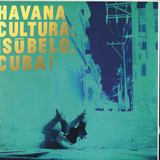
¡Súbelo, Cuba! - Havana Cultura: ¡Súbelo, Cuba!

For A Long Time, Electronic Music Has Been Understood In Terms Of Sounds Rooted In Particular Places: The Styles Of House And Techno Inextricably Wedded To Detroit, Or The Early '90s Jungle Sound Which Carries Echoes Of London. But That's Something Which Is Changing - In Latin America More Than Anywhere Else. A New Project, Led By Gilles Peterson And Rum Maker Havana Club (that Created The Havana Cultura Platform In 2007 To Promote The Island's Contemporary Culture), Shines A Light On Cuba's Fast-mutating, Rhythmically-adventurous Underground. It's A Scene Where Old Ideas Are Transplanted Into New Contexts, And Like-minded Scenes Are Brought Together In New Dialogues.

Havana Cultura: ¡su´belo, Cuba! Showcases An Extended Network Of Like-minded, Forward-thinking Musicians Driving Cuba's Music Forward. Following Repeated Trips To Connect With Venues, Collectives And Djs, Peterson And Will Lv - One Half Of Lv, Who've Released On Hyperdub And Keysound Amongst Others - Linked Up With Dj Jigu¨e, A Much-respected Producer And Dj, Whose Guampara Label Has Charted New Directions For Cuban Music. He's Been Profiled By The Fader And Vice, And The Album Features His Extended Network Of Collaborators, Connecting Afro-cuban Traditions With Contemporary Movements And Ideas.

The Album Provides A Snapshot Of A Unique Club Culture That's Fast Evolving. On The One Hand, It's Indebted To Cuba's Unique Characteristics, Where Regularly-practised Traditions Are Coloured By Intermittently-experienced Cultures From Outside. On The Other, It's Part Of A Global Shift Toward De-centred Club Music, With Homegrown, Influence-grabbing Dance Cultures Tilting Attention From Club Culture's Traditional Epicentres. It Offers A New Side To Havana That's Firmly Rooted In Its Past.

non in magazzino

Ordina ora e ordineremo l'articolo per te presso il nostro fornitore.


Last In: 7 years ago
Buena Vista Social Club - Buena Vista Social Club

Double 180gm vinyl LP pressing. The original Buena Vista Social Club album became a surprise international best seller and the most successful album in the history of Cuban music.

It was recorded for World Circuit Records by Ry Cooder over seven days in Havana in 1996,

bringing together many of the great names of the golden age of Cuban music in the 1950s, several of whom were coaxed out of retirement for the sessions.

In the years that followed the original release, Buena Vista veterans toured the world and were the subject of a celebrated feature film directed by Wim Wenders.

2015 REMASTERED 180g VERSION

non in magazzino

Ordina ora e ordineremo l'articolo per te presso il nostro fornitore.


Last In: 6 years ago
Buena Vista Social Cluc - Lost & Found

Buena Vista Social Club release 'Lost and Found,' a new rarities compilation packed with previously unheard live and in-studio material.

Coming almost two decades after the release of the original Grammy-winning, self-titled LP, the new album is a collection of previously unreleased tracks—some of which were recorded during the original album's sessions in Havana and others from the years that followed. Lost and Found is available to pre-order in iTunes and the Nonesuch Store (and outside of North America in the World Circuit Store) with an instant download of the album track "Macusa."

The studio tracks on Lost and Found were recorded at the 1996 Egrem studio sessions in Havana and during a period of rich and prolific creativity stretching into the early 2000s following the recording of the original album. Lost and Found also features live recordings from the world tours of Buena Vista's legendary veterans.

"Over the years we were often asked what unreleased material was left in the vaults," says World Circuit's Nick Gold. "We knew of some gems, favorites amongst the musicians, but we were always too busy working on the next project to go back and see what else we had. When we eventually found the time, we were astonished at how much wonderful music there was."

The original Buena Vista Social Club album became a surprise international best seller and the most successful album in the history of Cuban music. It was recorded for World Circuit Records by Ry Cooder over seven days in Havana in 1996, bringing together many of the great names of the golden age of Cuban music in the 1950s, several of whom were coaxed out of retirement for the sessions.

pre-ordina ora23.03.2015

dovrebbe essere pubblicato su 23.03.2015

  • 1
Articoli per pagina:
N/ABPM
Vinyl