Buscar:gus brown

Estilos
Todo
  • 1
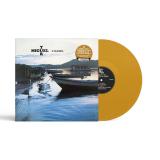
Miguel Tur - Junto Al Mar (Deluxe Edition) (LP)

LP Gold Galaxy Vinyl in Picture Sleeve

A Balearic holy grail reborn — Miguel Tur’s Junto Al Mar captures Mediterranean sunshine through a lens of synth-pop, jazz, and gentle soul. Originally released in Venezuela in 1981, it’s become a favourite among collectors of breezy, coastal grooves but selling for over £150 for an original. For Record Store Day 2026, Deja Vu Kid presents a Deluxe Edition, Remastered with archival photos and liner notes from Micky Browne. Pure escapism and emotional warmth — the perfect soundtrack to RSD digging adventures. "Galaxy" Gold Vinyl, Remastered, Reimagined Sleeve.

Envíar a partir de18.04.2026

El artículo ya está en camino a nosotros y se espera que sea enviado desde 18.04.2026.

Horace Martin - Sound Boy Style (7")

The legendary Youthman riddim traces back to Glen Brown's 1977 cut 'Wicked Can't Run Away' and took its iconic name after the 1979 Wayne Jarrett classic 'Youth Man'. A decade later, Horace Martin carved his mark with Sound Boy Style, recorded in one take at Gussie Clarke's Music Works with Sly & Robbie in full stride. Known as "The Man With The Biggest Shoes," Martin's career spans over 400 songs, three acclaimed albums and worldwide tours across 24 countries. Blending roots, dancehall and his love for comedy, Martin is a proper champion of Jamaican music and culture.

Disponible

En el almacen y preparando para el envío

Cosmic Ear - TRACES LP

Cosmic Ear

TRACES LP

12inchWJLP76B
WE JAZZ
10.04.2026
  • 01: Father And Son
  • 02: Traces Of Brown Rice
  • 03: Love Train
  • 04: Right Here Right Now
  • 05: Do It (Again) – For Sofia Jernberg

2ND LP PRESSING

Cosmic Ear is a new group bringing together Christer Bothén, Mats Gustafsson, Goran Kajfeš, Kansan Zetterberg and Juan Romero. Their debut album TRACES is released by We Jazz Records on 23rd of May, 2025. Including 6 deep cuts, TRACES is an album that sees Cosmic Ear tracking down the "traces" of the legendary Don Cherry's legacy while paving their own way in contemporary creative music expression.

Christer Bothén, a collaborator with Don Cherry during his Swedish period in the 1970s, brings depth to the history of the band, while his bandmates each belong at the top of the game in Scandinavian jazz. Their music is meditative and deep, much recommended for fans of the likes of Don Cherry, Alice Coltrane, and Pharoah. That being said, listeners should approach Cosmic Ear only with openness and curiosity, without set stylistic boundaries, as it's the group's natural flow and togetherness that brings their music into a fresh territory of their own.

As John Corbett writes in his liner notes:

"The Cosmic Ear. Five souls, sometimes six, on the same road. The pied piper path of Mr. Cherry. Christer Bothén, one of Cherry's main collaborators in his Swedish period and one of the most beautiful bass clarinetists on planet earth, together with next-gen saxophonist Mats Gustafsson, who has carried so many torches in Cherry's procession, and younger Swedish stars trumpeter Goran Kajfes, bassist Kansan Zetterberg, and percussionist Juan Romero. Together a tempo is set, a path is charted. There are global grooves. A berimbau, a karignan (metal scraper from Guinea), donso n'goni. There are ET grooves. Synth, live-electronics, slide flute. The globe is a glove, a hand warmer that radiates with extraterrestrial power, returning the fingers to their place at the center of the galaxy; the Cherry path is a balm that restores essential moisture to the lips that blow life back into the megacosm. Let us all praise warm fingers and moist mouths."

Reservar10.04.2026

debe ser publicado en 10.04.2026

Mighty Diamonds - Leaders Of Black Countries

The Mighty Diamonds are one of the most famous vocal groups to come out of the Jamaican Reggae scene.
Their perfect harmonies ride over the wholesome and Garveyite influenced lyrics to such great effect that they will always evoke memories of that time and place, but also like all great music never seems to date.

The Mighty Diamonds consist of Donald ‘Tappy’ Shaw (lead vocals) Fitzroy ‘Bunny’ Simpson and Lloyd ‘Judge’ Ferguson providing those fantastic harmonies.
They began their recording career working with producers Stranger Cole and Rupie Edwards but found their breakthrough success with producer Joseph ‘Joe Joe’ Hookim at the legendary Channel One Studios recording ‘Hey Girl’ and covering two foreign tunes namely ‘Country Living’ (The Stylistics) and ‘Stoned Out of Mind’ (The Chi-lites) which suited their vocal styles perfectly.

The vocal group also cut tracks with other famous producers of the time Joe Gibbs ,Gussie Clarke and Mr.Tappa Zukie of which we focus this release on.On listening, these tunes work perfectly with harmonies weaving together and lifting the songs to another level.
The group also leave some room for a history lesson in the shape of ‘Morgan the Pirate’ and the thought provoking ‘Do You Want to Spend Your Time Wasting Time’.
Well waste no more and enjoy this set by one of Jamaica’s finest vocal groups….

No en stock

Haga su pedido ahora y le encargaremos el artículo en nuestro proveedor.


Ültimo hace: 4 Meses
WE JAZZ MAGAZINE - ISSUE 15:

We Jazz Magazine, Issue 15 / Summer 2025 "Forfolks" for Jeff Parker. 128 pages, 170 x 240 mm in size and printed on 140g Edixion paper with laminated 300g Invercote covers. All articles presented in English. Jeff Parker by Andy Beta, Peter Margasak & Scott McNiece, Elaine Brown by Pierre Crépon, David Murray by Bret Sjerven, Adele Sauros by Wif Stenger, Rafael Toral by HT Nuotio, Lush Life by Seymour Wright, The Connection by Patrick Preziosi, Nels Cline by Bret Sjerven, Discaholic Column by Mats Gustafsson, album reviews, book reviews, live reviews, photo essay & more.

Reservar30.07.2025

debe ser publicado en 30.07.2025

Ibex Band - Stereo Instrumental Music LP 2x12"

The Ibex Band, with Giovanni Rico and Selam Woldemariam at the creative helm, provided the musical backbone for legends like Aster Aweke, Girma Beyene, Tilahun Gessesse, Mulatu Astatke, and Mahmoud Ahmed, including the iconic album Ere Mela Mela, shaping modern Ethiopian music as we know it today. This 1976 album (Ge’ez Year 1968) played a pivotal role in that legacy and has now resurfaced to set the record straight.

There’s a tendency to talk about the seventies as a golden age of Ethiopian music. There are good reasons for that, and just as good reasons against it. However, the notion of a golden past privileges the role of Western explorers and suggests that the pinnacle of Ethiopia’s musical culture is something only a foreigner can appreciate and unearth. It downplays the complexities of Ethiopia’s culture and history, creating an artificial divide between then and now. And it underestimates the constantly evolving sound that has followed.

The legendary musical outfit The Ibex Band, later metamorphosed into The Roha Band, has played a central role in defining the sound of many of the greatest stars on the music scene of Ethiopia from the mid-seventies onwards–but their golden output has never really waned. The story of the origins of the band that provided the musical backbone for greats such as Aster Aweke, Girma Beyene, Tilahun Gessesse, backing the solo career of group member Mahmoud Ahmed as well as backing Mulatu Astatke and many others has yet to be properly told.

Two misconceptions plague the image of Ethiopian music, one is that the music is pure because it is, by some notion, unexploited, the other is that it is all traditional. To begin with, a combination of political changes between the late sixties and the mid-nineties created an environment where only the most dedicated and skilled musicians struggled on and pursued a musical career against fierce odds. The whole Ibex Band, with Giovanni Rico and Selam “Selamino” Seyoum Woldermarian at the creative helm, are arguably the origo of the vibrant scene in the mid-seventies, and the said pair are foremost responsible for not only navigating the band through troubled times, but also modernizing the 6/8 chickchicka rhythm to a contemporary form. Giovanni laid the rhythmic foundation with heavy looped basslines that reinvented traditional melodies as dance music, and with Selamino’s innovative guitar work they influenced scores of musicians from Abegaz Kibrework Shiota to Henock Temesgen. Even Giovanni’s Fender bass and Selamino’s Gibson guitar inspired younger musicians in their choice of instruments. Not only in choice of instruments but also in sound–even as the digital revolution hit Ethiopian music, a lot of popular music still took its cue from the masters from Ibex and Roha.

Ibex emerged out of the ashes of the sixties group the Soul Echos band, adding Giovanni and Selamino to their ranks and taking their cues from a slew of influences, such as Motown and The Beatles, fused with traditional music. A tighter-knit unit than most bands at the time – Ibex has remained six to seven members throughout their whole career, compared to many bands that were as large as fifteen or sixteen men strong when Ibex set out. Their playing has been viciously focused, economical yet heavy. Just a year before the recording sessions of the album in your hands, Giovanni and Selamino made a contribution to the popular musical lexicon of Ethiopia that was simply defining the popular sound: their arrangement and recording of bandmate Mahmoud Ahmed’s solo effort and real commercial breakthrough tune and eponymous album, Ere Mela Mela, from 1975.

Selamino has never limited himself to being an adroit lead guitarist, but has always been a scholar of history, and as such he has probably contributed as much to modern Ethiopian music with his guitar playing and compositions as with a deepened understanding of modern or contemporary – Zemenawi – Ethiopian music. Selamino’s contributions serve as a metaphor for those of the whole band, at one and the same time creating and defining a new, danceable and updated sound anchored in Giovanni’s bass, whilst also elevating the broader scene through their support for others on the scene and on top of that, increasing the understanding of the music.

There is an understandable desire to romanticize the musical heyday Ibex and Roha were at the forefront of, because so much of the output is sorrowfully hard to come by. Ibex creativity was nothing short of ridiculously fierce compared to many of their Western contemporaries. Based on their sheer recorded output alone they could have usurped the title “hardest working in show business” from James Brown, recording more than 250 albums or 2500 songs in the seventies and eighties. Some only surface as cassettes today, others were never given full LP release, and some are simply impossible to find today. In the light of that, it’s nothing short of a miracle that the recording Stereo Instrumental Music from 1976 (Ge’ez Year 1968) has resurfaced. Unearthed in perfect condition on a chrome cassette, this is musical history comes alive–to set the future straight. Stereo Instrumental Music was recorded in collaboration with Karl-Gustav Lundgren, a Swedish national working for the Radio Voice of the Gospel. It took two sessions at the Ras Hotel ballroom in Addis Ababa. The Ibex Band was the first band in Ethiopia to employ a four-track recorder for their recording (the first available in the country, lent by Karl-Gustav). Later the same week, Giovanni and Selamino realized that, lengthwise, the recorded material fell short of what they wished for, so they recorded four more tracks in one more session on a single-track recorder. The Ras Hotel and Ghion Hotel, where the Ibex Band held musical residencies were to Ethiopia in general and Addis Ababa in particular what Motown was to the USA and Detroit a few years earlier – a hotbed of musical creativity and showmanship.

The most astonishing thing about Ethiopian music of the last half century is how tradition and modernity are intertwined. Because of this feature, it’s kind of hard to tell when there ever was or when we are in a “golden age”. So much of music from the past has been criminally neglected, but because of the hardships in the past, it would be an oversimplification to say that said past was a golden age. Probably, the golden age is what we are approaching, because for the first time both the past and future are accessible, and the monumental contributions from before can lay a firm foundation for a thriving music scene today. The Ibex Band stands firmly in the past, present and the future. That, if anything, is golden.

The detailed history of Stereo Instrumental Music is in many ways unique. To begin with, it couldn’t have been recorded earlier (there were no four-track recorders available) and it really couldn’t have been recorded afterwards either, at least not in the years directly following, because of the toll the musical scene took from the unfavorable political climate that followed when the nascent Derg regime and rival groups tried to assert themselves, the musical equipment lent from The Voice of Gospel Radio simply disappeared from Ethiopia when the radio station folded in 1977. Karl-Gustav Lundgren,
the Swedish foreign national who assisted during the recording, worked with the Ethiopian Evangelical Church Mekane Yesus at the time, recalls how they only had about fifteen minutes to get the microphones in place for the recording as to not alert neither the management at Ras Hotel nor the authorities and most importantly, to complete the recording before the curfew came into effect at midnight. In leaping to the opportunity to use previously unavailable equipment to push their sound forward and improvising to meet the logistical challenges, the Ibex Band displayed the very avant-gardism and adaptability that explains their longevity as a band through the years. The recording of Stereo Instrumental Music is from a given time in history, but it sounds as beyond time.
Much of the energy that burst out of the scene that Stereo Instrumental Music came out of dissipated or got sidetracked during the societal changes Ethiopia went through in the 1970s and 80s. Whilst leaders might have professed to be revolutionary, the work ethic of the Ibex Band can truly be described as that. They never called it quits, but adapted, toured extensively abroad in Africa, Europe, and the Middle East, and found ways to work even in the face of the curfew that curtailed a lot of musical life. They even played major arenas in the nineteen eighties, despite said curfew and restrictions. The whole extent of their legacy has never been told, but their music speaks louder than words, so therefore… tune in to the Ibex Band’s Stereo Instrumental Music.
No en stock

Haga su pedido ahora y le encargaremos el artículo en nuestro proveedor.


Ültimo hace: 9 Meses
Savoy Brown Blues Band - Shake Down LP

Shake Down, the debut album from the much-respected London-based Savoy Brown Blues Band was originally released on Decca Records in September 1967 - It was produced by the influential team of Mike Vernon and Gus Dudgeon - This re-issue faithfully replicates the original 1967 Decca UK stereo release and is pressed onto high quality 180g vinyl Led by Kim Simmonds, Savoy Brown were one of the UK's most successful and exportable outfits. Shake Down is viewed as one of the strongest and most respectful captures of the US blues they worshipped, bringing songs by Albert King, Willie Dixon and John Lee Hooker to eager UK purists. Recorded in West Hampstead rather than Chicago, the 11 covers showcased the remarkably tight playing of the band, which had formed in Battersea two years earlier. Savoy Brown on this recording comprised Trinidad born Brice Portius on vocals (his only album with the group), Simmonds and Martin Stone trading blues licks on their guitars, underpinned by the rhythm section of Ray Chappell on bass and Leo Mannings on drums. US critic Dave Marsh was to say that Shake Down was "as sympathetic a rendering of the blues as any English group has managed to lay down."

Shake Down by Savoy Brown Blues Band, released 26 April 2024, includes the following tracks: "Black Night", "Rock Me Baby", "Oh! Pretty Woman", "The Doormouse" and more.

This version of Shake Down comes as a 1xLP.

Reservar26.04.2024

debe ser publicado en 26.04.2024

VARIOUS - BROWN ACID: THE EIGHTEENTH TRIP
También disponible

Coloured


EIGHTEEN AND I LIKE IT… (MISC. COLOURED VINYL))if you survived trips 1-17 with one tiny speck of psychedelic sunshine intact, Brown Acid The 18th Trip will be your coming of age nightmare. Vintage underground '70s hard rock, coming at you from bizarre angles, local scene wasteland America when everybody was out for themselves and the drugs went bleak. The guitars kill, the attitude is twisted, even the sex is headed down the wrong road. Real people, no compromise, pure and potent. Get stoked, take the 18th Trip and know that the artists will get paid for pulverizing your soul! "People… are you ready?, 'cause the music now is getting so heavy"… Back Jack out of St. Louis, Missouri in 1974 launch our trip with "Bridge Waters Dynamite". It's an invocation to rock flashing on Mark Farner whooping up a Grand Funk crowd, then getting to the point quickly with berserk guitar assaults. Heavy riff with power chord stalks beneath as you take their advice… get loose and blow up the past. Smokin' Buku Band dropped my jaw with the audacious track "Hot Love" coming on like some fractured fever dream burlesque of Led Zep moves out of Hollywood in 1980. Swooping elongated vocals above, a total Zep chord move at the end of each verse. Writer/producer Steve Shauger aka Shag Stevens gets a brilliantly messed up sound quality here, the ideal polar opposite of slick. The extended guitar break is an epitome of serendipitously crude virtuosity, simply outrageous! Coming at you from way outta left field is "Moby Shark" by Atlantis, a hilarious and strange Baltimore pre-punk vibed dose of D.I.Y. meets hard rock. Lon Talbot is the mastermind, the flip side of this impossibly rare Mekon Records label single was featured in an obscure 1978 B-movie titled "The Alien Factor". Follow the lyrics closely, when the ominous jaws jaws jaws start coming after you you you… the song's big hook is so preposterously catchy the shark attack feels like good news. Inquiring minds should know that the band formerly known as Atlantis can now be found by searching for the Lon Talbot Group! Tommy Stuart and the Rubberband's "Peeking Through Your Window" from 1970 opens with a spooky organ riff, slips into a gushy fuzz/organ groove akin to "Mustache In Your Face” by Pretty. The singer creates downright creepy vibes, a stalker peeking through the girl's mind like a peeping Tom at the window up to no good. The lyrics evoke a disturbing scenario. Tommy Stuart also made a strange LP titled Hound Dog Man in 1977 and some terrific rare garage singles under the names Magnificent Seven and The Omen & Their Love in the mid '60s. Nothing better than an angry two chord guitar attack with cowbell to set the stage for this rant about getting "Ripped Off" by love. Taken from their rare 1977 LP on Dynamite Records, Chicago Triangle was Marvey Esparza, Dave Guereca, Jose 'Tarr' Perez and Robert Aguilera. They unleash such strong brain-scrubbing wah wah frenzy in the guitar break here that it seems to perversely mock it's own intensity! Like I said, Brown Acid the 18th Trip comes at you from all kinds of uncanny angles. Damnation of Adam Blessing out of Cleveland, Ohio unleashed a stone killer psychedelic hard rock classic "Cookbook" in the late '60s, this track "Nightmare" from 1973 has them cooking again at full power. A different singer, name change to Damnation and then Glory, unleashing a deadly dose of dark progressive heavy rock drama peaking when spooky 'oooo-wa-oooo' background vocals emerge during a bizarre spoken bit. It unfolds like a mini-epic and includes some remarkably brutal guitar and turbulent organ, too. "Swing your sword, all aboard… bid farewell to the dreamer" Dalquist exclaims. Cynical view of human nature, idealism is over, war is coming, it always does. Opens with a cold menacing riff and atmosphere reminiscent of "Synthezoid Heartbreak" by Maya. Mournful despondent vocals ride an insistent churning groove, gnarly guitar break moves into free noise territory. This rare track is from a local various artists benefit album titled Kangaroo Jam issued for the Waco Family Abuse Center in Texas circa 1980. The Pawnbrokers "Realize" is prime proto heavy rock emerging out of psychedelic garage roots in 1968 Fargo, North Dakota. Unusual arrangement, terrific sustain guitar tones like on the first Blue Cheer LP, even a rip on Hendrix "Manic Depression" with unison voice and guitar ascent near the end. They made three 45s and were active from '65 to '69. Hats off to Blake English, Kent Richey, Paul Rogne and Steve Harrison, you nailed it in just a hair over two minutes! As pure and creative as the original psychedelic garage hard rock gets. Parchment Farm from Union, Missouri gigged with the likes of ZZ Top and Foghat back in the day and unleashed the amazing "Songs Of The Dead" in 1971. Primitive riff/chord pattern dosed with some funky prog moves, sky turning black, 'is this heaven or hell' type disoriented confusion… may as well grab your guitar and sing songs to the dead. Robert 'Ace' Williams on bass, Paul Cockrum on guitar, Gary Reed on keys and Micky Waterman on drums, replacing Mike Dulany (R.I.P.) Cool that they use the Blue Cheer misspelling from Vincebus Eruptum for the band name! Ominous organ, thick minimalist fuzz riff, funky psychedelic wah wah flashes and freaky sex combine in one twisted dance titled "Rockin' Chair" by Brothers Of The Ghetto. Out of Chicago in 1975 with some Santana atmospherics and a delicious fuzz wah screamin' guitar break, the groove is highlighted by an off the wall vocal which sounds eerily detached in a subtly sleazy way. Rene Maxwell is the writer of this hard-rock boogie-down hybrid straight out of the twilight zone. It was issued on Ghetto, a subsidiary of the peculiar Kiderian label that released the Creme Soda LP. Now that your head is totally skewered, go Back Jack and play side one again! (Words by Paul Major)

Reservar19.04.2024

debe ser publicado en 19.04.2024

VARIOUS - BROWN ACID: THE EIGHTEENTH TRIP
También disponible

Black


EIGHTEEN AND I LIKE IT… (MISC. COLOURED VINYL))if you survived trips 1-17 with one tiny speck of psychedelic sunshine intact, Brown Acid The 18th Trip will be your coming of age nightmare. Vintage underground '70s hard rock, coming at you from bizarre angles, local scene wasteland America when everybody was out for themselves and the drugs went bleak. The guitars kill, the attitude is twisted, even the sex is headed down the wrong road. Real people, no compromise, pure and potent. Get stoked, take the 18th Trip and know that the artists will get paid for pulverizing your soul! "People… are you ready?, 'cause the music now is getting so heavy"… Back Jack out of St. Louis, Missouri in 1974 launch our trip with "Bridge Waters Dynamite". It's an invocation to rock flashing on Mark Farner whooping up a Grand Funk crowd, then getting to the point quickly with berserk guitar assaults. Heavy riff with power chord stalks beneath as you take their advice… get loose and blow up the past. Smokin' Buku Band dropped my jaw with the audacious track "Hot Love" coming on like some fractured fever dream burlesque of Led Zep moves out of Hollywood in 1980. Swooping elongated vocals above, a total Zep chord move at the end of each verse. Writer/producer Steve Shauger aka Shag Stevens gets a brilliantly messed up sound quality here, the ideal polar opposite of slick. The extended guitar break is an epitome of serendipitously crude virtuosity, simply outrageous! Coming at you from way outta left field is "Moby Shark" by Atlantis, a hilarious and strange Baltimore pre-punk vibed dose of D.I.Y. meets hard rock. Lon Talbot is the mastermind, the flip side of this impossibly rare Mekon Records label single was featured in an obscure 1978 B-movie titled "The Alien Factor". Follow the lyrics closely, when the ominous jaws jaws jaws start coming after you you you… the song's big hook is so preposterously catchy the shark attack feels like good news. Inquiring minds should know that the band formerly known as Atlantis can now be found by searching for the Lon Talbot Group! Tommy Stuart and the Rubberband's "Peeking Through Your Window" from 1970 opens with a spooky organ riff, slips into a gushy fuzz/organ groove akin to "Mustache In Your Face” by Pretty. The singer creates downright creepy vibes, a stalker peeking through the girl's mind like a peeping Tom at the window up to no good. The lyrics evoke a disturbing scenario. Tommy Stuart also made a strange LP titled Hound Dog Man in 1977 and some terrific rare garage singles under the names Magnificent Seven and The Omen & Their Love in the mid '60s. Nothing better than an angry two chord guitar attack with cowbell to set the stage for this rant about getting "Ripped Off" by love. Taken from their rare 1977 LP on Dynamite Records, Chicago Triangle was Marvey Esparza, Dave Guereca, Jose 'Tarr' Perez and Robert Aguilera. They unleash such strong brain-scrubbing wah wah frenzy in the guitar break here that it seems to perversely mock it's own intensity! Like I said, Brown Acid the 18th Trip comes at you from all kinds of uncanny angles. Damnation of Adam Blessing out of Cleveland, Ohio unleashed a stone killer psychedelic hard rock classic "Cookbook" in the late '60s, this track "Nightmare" from 1973 has them cooking again at full power. A different singer, name change to Damnation and then Glory, unleashing a deadly dose of dark progressive heavy rock drama peaking when spooky 'oooo-wa-oooo' background vocals emerge during a bizarre spoken bit. It unfolds like a mini-epic and includes some remarkably brutal guitar and turbulent organ, too. "Swing your sword, all aboard… bid farewell to the dreamer" Dalquist exclaims. Cynical view of human nature, idealism is over, war is coming, it always does. Opens with a cold menacing riff and atmosphere reminiscent of "Synthezoid Heartbreak" by Maya. Mournful despondent vocals ride an insistent churning groove, gnarly guitar break moves into free noise territory. This rare track is from a local various artists benefit album titled Kangaroo Jam issued for the Waco Family Abuse Center in Texas circa 1980. The Pawnbrokers "Realize" is prime proto heavy rock emerging out of psychedelic garage roots in 1968 Fargo, North Dakota. Unusual arrangement, terrific sustain guitar tones like on the first Blue Cheer LP, even a rip on Hendrix "Manic Depression" with unison voice and guitar ascent near the end. They made three 45s and were active from '65 to '69. Hats off to Blake English, Kent Richey, Paul Rogne and Steve Harrison, you nailed it in just a hair over two minutes! As pure and creative as the original psychedelic garage hard rock gets. Parchment Farm from Union, Missouri gigged with the likes of ZZ Top and Foghat back in the day and unleashed the amazing "Songs Of The Dead" in 1971. Primitive riff/chord pattern dosed with some funky prog moves, sky turning black, 'is this heaven or hell' type disoriented confusion… may as well grab your guitar and sing songs to the dead. Robert 'Ace' Williams on bass, Paul Cockrum on guitar, Gary Reed on keys and Micky Waterman on drums, replacing Mike Dulany (R.I.P.) Cool that they use the Blue Cheer misspelling from Vincebus Eruptum for the band name! Ominous organ, thick minimalist fuzz riff, funky psychedelic wah wah flashes and freaky sex combine in one twisted dance titled "Rockin' Chair" by Brothers Of The Ghetto. Out of Chicago in 1975 with some Santana atmospherics and a delicious fuzz wah screamin' guitar break, the groove is highlighted by an off the wall vocal which sounds eerily detached in a subtly sleazy way. Rene Maxwell is the writer of this hard-rock boogie-down hybrid straight out of the twilight zone. It was issued on Ghetto, a subsidiary of the peculiar Kiderian label that released the Creme Soda LP. Now that your head is totally skewered, go Back Jack and play side one again! (Words by Paul Major)

Reservar19.04.2024

debe ser publicado en 19.04.2024

Charles Bradley - Victim Of Love

VINYL REPRESS FINALLY ON THE WAY..

*Since the release of 2011’s award winning debut, 'No Time for Dreaming', Charles Bradley has transformed from a rising star in the Daptone galaxy into a bona-fide headliner, now affectionately known across the globe as "The Screaming Eagle of Soul."

*The popularity of 'No Time For Dreaming' resulted in an appearance on 'Later With Jools Holland' in 2012 and such glowing reviews as:

-LEAD 4/5 BOXED REVIEW IN MOJO : “THE GRIT AND GUSTO OF OTIS REDDING, THE RAW POWER OF JAMES BROWN, THE SMOULDER AND SHUDDER OF JAMES CARR, TOGETHER THEY MAKE AN INTOXICATING SOUND.
-LEAD 4/5 REVIEW IN Q MAGAZINE : “THERE'S A NEW/OLD SOUL MAN ON THE BLOCK. 'NO TIME FOR DREAMING' HAS THE GRITTY FEEL OF THE REAL THING, A MAN WHO HAS KNOWN MOSTLY HARD TIMES AND TELLS IT WITH A PLEADING, THROATY ROAR AND BLOOD-CURDLING SCREAM WORTHY OF JAMES BROWN . A REAL FIND.”

*The raw emotion and soulfulness of Bradley's voice lifts him up among the greats of the golden age of Soul - Otis, JB, Wilson Pickett, and Darrell Banks. Anyone who has had the privilege of hearing him sing has experienced how Bradley can captivate an entire audience with a simple "Ooooo..."

*Bradley and writer/producer/multi-instrumentalist Thomas “TNT” Brenneck returned to Dunham studios and recorded the most exciting Daptone release to date, Victim of Love. On this album, Bradley moves past his "Heartaches and Pain" to the great promise of hope and love. Though quite at home among the music that has affirmed Daptone as the world’s #1 authority on Soul Music, Victim of Love proves to be a genre-bending masterpiece, picking up where the early 70’s Temptations left off and edging boldly forward into psychedelic soul exploration.

Reservar04.09.2022

debe ser publicado en 04.09.2022

Various - King of The Dub Rock 3

The legendary soundman and record producer, Lloyd Coxsone, began his career in the 1960’s soon after arriving from Jamaica. He was one of the first soundmen to play at West End clubs where a generation of British pop stars like the Beatles and the Rolling Stones first heard music from Jamaica. Sir Coxsone sound then dominated the seventies, when Bob Marley & Dennis Brown were among his greatest allies, as heard on unforgettable dub-plates from that era.


He formed the Tribesman Label and issued King of the Dub Rock before recording the likes of Fredlocks, Willy Stepper & Jimmy Lindsay. King of the Dub Rock 1 & 2 are recognized as reggae classics. They not only feature Lloydie’s own productions but also riddims by Jamaican producer Gussie Clarke and heavyweight dubs by mix master Scientist. On King of the Dub Rock 3, Lloydie teams up with Jahsolid Rock Music, who’s albums with Brinsley Forde, Apple Gabriel and Earl 16 were regularly heard on Sir Coxsone playlists. This album features exclusive dub mixes and vocal tracks from these artists plus brand new tunes by Mutabaruka, Chezidek, Micah Shemaiah, Var & Ras Teo.


King of the Dub Rock 3 is an essential companion for all Coxsone fans wanting to complete the trilogy. It delivers such a high standard of musical quality that it promises to be a modern day classic!

Reservar30.06.2021

debe ser publicado en 30.06.2021

Vibration Black Finger - Can You See What I'm Trying to Say LP

Lascelle 'Lascelles' Gordon - the driving force behind Vibration Black Finger – astonishes us yet again with a magnificent second album. Once more his inspiration is drawn from the obscure spiritual jazz collectives of the 1970s where he employs a vast array of like-minded collaborators to create a listening experience infused with an ever-present undercurrent of personal expression and cultural empowerment that's as enriched with ideas as it is progressive in its form.

Having earned his chops as founding member of the Brand New Heavies, Campag Velocet and Heliocentric World, Lascelle's latest album Can You See What I'm Trying to Say bursts with energy and vivid contrasts, flowing effortlessly between beat-laden grooves, oscillating improvisations, soulful recitations, audio verité and moody atmospherics. The album drops like a post-hip-hop reimagining of foundational genres, with a prayer to the future.

''Can You See What I'm Trying to Say' is a quote from Marion Brown, the great alto saxophonist' explains Gordon. 'The album was put together over the last three years, not in the conventional way of going into the recording studio with musicians, but starting from ideas I had on various formats (cassettes, mini disc, DATs & reel to reel). I also used field recordings. I did a lot of home recording with long time musical friends Ben Cowen & Diana Gutkind, some of them going back 20 years. The voices of my nieces (heard on Law of the Universe) were recorded 25 years ago. 'Only in a Dream' and 'Empty Streets' are the only songs that were recorded live in the studio.'

'I was blown away by the New Life Trio 'Empty Streets' (from 1978) and was fascinated by the vocals' continues Lascelles. 'I always thought it would be great to cover this tune'. Such is the power of this song, it's used to open the album, with vocalist Ebony Rose turning in a thoroughly haunting vocal performance. While not a concept album as such, Lascelles has nonetheless conceived and presented Can You See What I'm Trying to Say to be heard as a complete listening experience, with each track blending into the next, resulting in a seamless expression of music.

Following 'Empty Streets', some instrumental interludes segue into a dimensional drift of beats, space synths, horns and electronics; there's a vocal reprise of 'Acting For Liberation', sung with gusto by Maggie Nichols, and then there's the album's momentous finale, 'Only In A Dream', which takes off as an ominous drone before a delicious bassline from the late Ken Kambayashi transforms it into an intense, soaring epic which finally descends onto another world.

In a career spanning several decades, Lascelle Gordon remains an omnivorous musical force, whether as DJ, collaborator or radio broadcaster. As amply demonstrated on Can You See What I'm Trying to Say, he refuses to rest on his laurels and continues to impress with music that is as rich, vital and contemporary as anything he's done before, covering an incredible amount of musical ground in the process.

No en stock

Haga su pedido ahora y le encargaremos el artículo en nuestro proveedor.


Ültimo hace: 5 Años
WYNDER K. FROG - OUT OF THE FRYING PAN

First Ever Vinyl Reissue, Limited Edition To 500 Copies Only, Bonus Tracks Not On The Original Lp, Remastered Sound, Insert With Liner Notes By Nick Rossi And Photos, Beautifully Housed In Three Back-flapped 1960s Uk Style Picture Sleeve ! The Wynder K. Frog Story Evolves Around Mick Weaver. After He Switched From Piano To Organ He Joined A Band Named The Chapters That Would Soon Be Renamed Wynder K. Frog And Perform Material From James Brown's Flames, Booker T. And The Mgs Or Even Songs Learned Through Georgie Fame's Recordings And Graham Bond's Repertoire. Wynder K. Frog Moved To London And Became Regulars In The City's R&b Scene Playing At Swingin' London's Clubs Like The Tiles Or The Marquee. A Contract With Island Records Was Secured And -under The Wings Of Producers Like Chris Blackwell, Guy Stevens, Jimmy Miller Or Gus Dudgeon- Wynder K Frog, A Name That Would Eventually Be Used As A Pseudonym For Weaver More Than A Proper Band Name, Did Some Some Amazing Hammond Organ-ized Recordings And Issued In Three Lps And A Bunch Of Cool 45s.

At The End Of The 1960s, Weaver Would Quit The "band Scene" To Become One Of The Most In Demand Session Musicians And Throughout His Career He'd Be Heard Backing Names Such As Eric Burdon, Roger Chapman, Dave Gilmour, Keef Hartley, Alexis Korner, Ralph Mctell, Taj Mahal Or Otis Rush A.o, But His Lps As Wynder K Frog Are Classic Hammond Sound From The 1960s Uk And Will Appeal To Those Into Brian Auger, Graham Bond, The Artwoods, Zoot Money, Jimmy Mcgriff, Booker T. & The Mgs And The Likes.

Out Of The Frying Pan

Released At The End Of The Summer Of 1968, And With A Host Of Session Musicians That Included The Brass Section Of John Mayall's Bluesbreakers, Producer Gus Dudgeon Helped Weaver / Wynder K Frog To Improve The Results Obtained On The Debut Lp And Get One Step Closer To The Live Action. The Formula Was More Or Less The Same, Instrumental Hammond A Go Go Covers Of Hits From The Era, Including The Rolling Stones' "jumping Jack Flash", A Funked Up Version Of The Classic Tommy Tucker Blues Number "hi Heel Sneakers", An Exploding Cover Of "tequila" Or The Standard "green Door", But It Also Included The Sensational Weaver-penned "harpsichord Shuffle".

No en stock

Haga su pedido ahora y le encargaremos el artículo en nuestro proveedor.


Ültimo hace: 7 Años
  • 1
Artículos por página
N/ABPM
Vinyl

