
pre-ordina ora18.09.2026
dovrebbe essere pubblicato su 18.09.2026
dovrebbe essere pubblicato su 18.09.2026

Ever since the late 1950s bossa-nova revolution, Brazil’s influence on French music has been undeniable. Pierre Barouh, Georges Moustaki and a vast array of lesser known artists, all made the Musica Popular Brasileira (MPB) an axis of promotion at the service of a cool and metaphysical, modern and mixed Brazilian lifestyle. Some were seduced by the poetic languors of the bossa, some were looking for fun, and others just loved the American hybridization of jazz-bossa, jazz-samba.
What is bossa nova? One of its creators, Joao Gilberto said: "Its style, cadence, everything is samba. At the very start, we didn't call it bossa nova, we sang a little samba made up of a single note - Samba de uma nota so .... The discussion around the origins of bossa nova is therefore useless”. It is nevertheless useful to remember that these magnificent Brazilian songs, which the guitarist describes as samba, were shifted and balanced around improbable chords. "I like things that lean, the in-betweens that limp with grace," said Pierre Barrouh, quoting Jean Cocteau.
With emotion, arrangements for violin and supple guitar licks, bossa nova rapidly changed. A transformation that can be heard in the Tchic, tchic, French Bossa Nova 1963-1974 compilation, the result of a cultural reappropriation, which traveled through the United States and supplemented itself in France.
A musical revolution that has remained significant, bossa nova was born in Rio. From 1956 to 1961, Brazil lived through its golden years. In five years, the country had invented its modernist style. Elected president in 1956, Juscelino Kubitschek de Oliveira, an elegant man with a broad forehead, brandished a promising slogan: "Fifty years of progress in five years". He quickly got to work. Not worried about increasing debt, he launched the project for a new federal capital, Brasilia, designed by the communist architect Oscar Niemeyer. Volkswagen opened state-of-the-art factories and created the “fusquinha”, the Beetle. In Rio, the Vespa made its first appearance. The Arpoador Surf Club crew run into the “girl” from Ipanema, Helô Pinheiro - the tanned garota ("chick"), between a flower and mermaid, who at 17 walked by the Veloso bar, where the fiery author and composer, Tom Jobim and Vinicius de Moraes, were getting drunk on whiskey. From then on, bossa symbolized cool.
In 1958, Joao Gilberto recorded Chega de Saudade, which the directors of Philips denied, calling it "music for fagots". The marketing director, who believed in it, secretly pressed 3000 78-inch vinyls and distributed them at schools around Rio, creating a tidal wave.
American jazzmen then took over. In particular, trumpeter Dizzy Gillespie and guitarist Charlie Byrd. In November 1962, the Brazilian Ministry of Foreign Affairs funded a "Bossa-Nova" concert at Carnegie Hall in New York, inviting the genre’s pioneers. Unprepared, the show soon turned to disaster. But the troupe was invited to the White House by Jackie Kennedy. The first lady loved "the new beat" and in particular Maria Ninguem, a song by Carlos Lyra, later covered by Brigitte Bardot.
In Brazil, the 1964 military coup quickly ended this euphoria. The destructive atmosphere that ensued pushed many Brazilian musicians to leave, if not to exile. Thus, Tom Jobim, Sergio Mendes and Joao Gilberto arrived to the United States. In New York, Joao Gilberto met saxophonist Stan Getz. At the time, he was married to the Bahianese Astrud Weinert Gilberto, who had a German father. She had never sung before, but she knew how to speak English. Getz therefore asked her to replace her husband on The Girl From Ipanema. The Getz/Gilberto record with Tom Jobim on piano, was released in March 1964. Phil Ramone, the "pope of pop" was in charge of sound.
Bossa nova arrived in Paris through the classic “guitar-voice” channel (Pierre Barouh, Baden Powell, Moustaki…) But France loved jazz and Paris had already welcomed its American contributors. All these good people were to pass through Saint-Germain-des-Prés. The cabaret l'Escale became the Mecca of Latin American sound where one could find Pierre Barrouh and his friends, such as the Camara Trio, samba-jazz aces, whose only record was published by the Saravah label. With a band strangely called Les Masques (a band that included Nicole Croisille and Pierre Vassiliu, among others), the Camara Trio recorded an interesting Brazilian Sound, including the track Il faut tenir which is present on this tasty compilation of rarities.
Other enlightened musicians can also be found on the compilation, such as Jean-Pierre Sabar (songwriter for Hardy, Auffray, Leforestier ...) and the French pop rock organist Balthazar. In 1975, Sabar recorded Aurinkoinen Musiikkimatka on a Finnish label, which featured the crazy Vai, Vai, included on this record. We are now following the footsteps of Brazilian electronic musicians such as Sergio Mendes, Eumir Deodato or Marcos Valle who created funk and disco sounds on their keyboards and synthesizers. A style that influenced Véronique Sanson when she wrote Jusqu’à la Tombée de la nuit in 1969 for Isabelle de Funès, the niece of Louis and a great friend of Michel Berger - Sanson did end up singing this track on her 1992 Sans Regret record.
The pinnacle of exoticism and travel, Sylvia Fels’ Corto Maltese includes bongos, sea mist and ocean sounds. The title was taken from Jacky Chalard’s concept album written in 1974, Je suis vivant, mais j’ai peur (I am alive, but I am scared), based on Gilbert Deflez’s science fiction novel.
However, bossa nova extended the scope of popularity. "In the 1970s, I was a fan of Sergio Mendes, Getz / Gilberto. I fell in love with this music that I knew because I had been an orchestral singer, " explained Isabelle Aubret, who in 1971 delivered a composite record of covers by the very funky Jorge Ben, Orfeu Negro, Tom Jobim, Vinicius de Morais and Jean Ferrat. "I recorded this album for Meys Records in Paris, far from Brazil, with wonderful musicians, François Raubert, Roland Vincent, Alain Goraguer...". The latter wrote the arrangements for Casa Forte, a very percussive title borrowed from Edu Lobo, one of the initiators of the bossa who spent time in California. "Jazz and bossa came together and produced very rhythmic music. I love singing, it allows me to dream, to have fun, to feel a high on stage, and these songs brought me joy, made me swing, my singing felt like a dance.”
The world tours of French singers and their desire for the tropics, often brought them to Rio with its hills, forests, caipirinhas and tanned bodies. There are surprises though, like this Iemenja (Iemenja is the goddess of the sea in the Afro-Brazilian candomblé religion). Not unlike the composer and musician Jean-Pierre Lang, based in Sao Paulo, Claire Chevalier taught Brazil to Brazil. In 1970, the singer and painter published a 45-inch vinyl, Mon mari et mes amants (My husband and my lovers), under the improbable pseudonym of Clarinha (little Claire). She was then living in Rio, with her husband, Joël Leibovitz, who founded a band called Azimuth, and who owned a record label specialized in "sambas enredos" songs for samba school parades.
For its B side, she asked Pierre Perret to come up with lyrics for a song composed by Carlos Imperial: "Oh goddess of the sea, o goddess Iemenja, I bring a white rose to adorn your long hair ..." . "Perret came to see us, and we had fun, remembers Joël Leibovitz. We wrote Lemenja for fun, we recorded it at the Havaí studio, behind the Central do Brasil the central station. Erlon Chaves, the arranger who worked with Elis Regina, joined us" adding his share of Afro-Brazilian percussions and funky brass to the mix.
There is a common misunderstanding in Franco-Brazilian history: that bossa, admittedly hedonistic, is perceived as funny, even though the poets who wrote the texts are often philosophizing on the human condition. Its French interpreters pull it towards a carnival inspired universe, far removed from its fundamental essence. Thus, Jean Constantin covered the famous Samba da minha terra, an ode to the art of samba written by the classic Bahian composer Dorival Caymmi, renaming it with the enticing title of Pas tant de tchi tchi pompon: "On your pier there is no tchi tchi / when you arch your back, you know everything is alright ”(lyrics by Gérard Calvi). This expedited bossa aims for the absurd, but retains a certain elegance.
Indeed, Jean Constantin was not an idiot, the rather large man had a huge mustache and liked fantasy, (Les pantoufles à papa, Le pacha, inspired by cha-cha-cha-cha, salsa and jazz) but he was also the lyricist of Mon manège à moi interpreted by Edith Piaf, the composer of Mon Truc en plume by Zizi Jeanmaire and the soundtrack of François Truffaut’s 400 Blows. Le Poulpe, published in 1970, from which this bossa is extract, was arranged by Jean-Claude Vannier, an accomplice of Serge Gainsbourg’s Melody Nelson. In short: "There is enough of samba / By looking at the parasol / Because my poor cabeza / Is going to die in the sun".
Even the American actress Marpessa Down, who was at the heart of the bossa nova revolution with her role as Euridyce in Marcel Camus’ film Orfeu Negro, winner of the 1959 Cannes Palme d'or, fed the clichée with Je voudrais parler au petit cuica - "Tell me how you manage to always make people want to dance / It's true, I must admit that I cannot resist your magic" - in consequence, once can hear the cuica, a little drum inherited from the Bantu.
But bossa nova had many angles. Societal, of course, pushing actresses who were symbols of women's liberation like Brigitte Bardot, Jeanne Moreau, or Sophia Loren to engage in the exercise of accelerated bossa. In February of 1963, Sophia Loren made a record in French in Rome, Je ne t'aime plus, featuring the song De jour en jour, a bossa written by two Italians, Armando Trovajoli and Tino Fornai, which was released a little later by Barclay. Bossa accompanied the 1960s, a decade of moral liberation. Ann Sorel, who interpreted La Poupée des favellas, caused a sensation with L’amour à plusieurs, a provocative song written by Frédéric Bottom and Jean-Claude Vannier. As for the actress Andrea Parisy, she displayed her bourgeois cheekiness in Marcel Carné's Les Tricheurs before interpreting Les mains qui font du bien. And Magalie Noël, the friend of Boris Vian, who sung Johnny fais-moi mal, was hired to sing Une énorme Samba, composed by Alain Goraguer (arranger to Gainsbourg, Bobby Lapointe and Jean Ferrat) with lyrics by Frédéric Botton.
But in the end, of what wood is bossa nova made of? The answer is given by Christianne Legrand, daughter of Raymond the conductor, and sister to Michel the composer: "With me, with jà" - jà means "immediately" in Portuguese. In 1972, the singer, an expert in vocal jazz and a member of the Double Six, published Le Brésil de Christianne Legrand. Two songs included on the Tchic Tchic compilation that demonstrate how bossa, jazz, funk, rock, etc. work like a swiss army knife: the music is used to denounce broken systems, or miracles, HLM et ciné roman, Cent mille poissons dans ton filet, two songs from the O Cafona soundtrack, a successful telenovela broadcast, at the time in black and white, on TV Globo. The first was adapted in French by the fighter and friend of the Legrand tribe, Agnès Varda. The second is content with a play on words, jostling them into a summer fun.
Véronique Mortaigne
Ordina ora e ordineremo l'articolo per te presso il nostro fornitore.
Presse: Eclipsed Interview, Jazzthing, Folker, OX, TAZ World Music, Bad Alchemy, Westzeit, Stadtrevue, Saarbrücker Zeitung, TIP Berlin, Zitty Konzert Tipp, Musikexpress, Choices, Journal Frankfurt, Süddeutsche Zeitung, FAZ, ...
Radio: WDR Cosmo, ByteFM Tour presentation, DLF Kultur Tonart Interview, BR 2 Nachtmix & Kulturwelt, DLF Corso, DLR Kultur Tonart, Radioeins Planet Fruit and other shows, BR 2 Zündfunk, NDR Info Nachtclub Radio Globo and Domingo, Radio Bremen Nordwestradio Sounds, SR 2 Voyages, NDR Kultur Neo, WDR 3 tba, HR 2 Hörbar, MDR Kultur, RBB kulturradio Musik der Kontinente, ByteFM, M94,5 Transglobal Express, Radio Querfunk Orsinos Lied, Oldenburg 1, Radio Dreyeckland, Freies Radio Stuttgart, Radio Darmstadt, tide Radio, Radio Corax, bermudafunk, Radio X, Radio Lora....
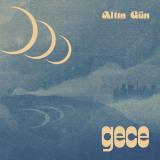
Türkischer Folk-Psych-Rock aus Amsterdam der brennt und funkt und treibt und unwiderstehlich außergewöhnlich ist. Wenn türkische Folk-Music Psych-Rock und Elektro-Pop trifft entstehen Altin Gün. Mit ihrem außergewöhnlichen Spagat zwischen scheinbar komplett unterschiedlichen Stilen gelingt dieser Band, die türkisch klingt, von deren sechs Mitglieder aber nur eines in der Türkei geboren wurde, etwas wirklich Außergewöhnliches. Als türkischen Psych Folk bezeichnen sich diese Niederländer selbst, und betonen, dass sie ihre Musik im Kern als Folk verstehen, freilich ein solcher, dem man die tiefe Liebe zur Musik der funkigen 60er und 70er anmerkt. Sehr groovig, elektrisch und voll explosiver psychedelischer Strukturen kommen die türkischen Stücke daher. Lieder, die zum Teil schon unzählige Male gehört und interpretiert wurden, die zur musikalischen Vergangenheit der Türkei gehören, ihr Erbe sind, aber völlig neu klingen. Bandgründer und Bassist von Altin Gün, Jasper Verhulst, betont, wie wichtig das identitätsstiftende Potential der Lieder ist, dass man diesem aber etwas Einzigartiges hinzufügen wollte, was die Hörer innehalten lässt. "Die Lieder stammen aus einer langen Tradition. Das ist Musik, die versucht, eine Stimme für Viele zu sein. (... Und dann) brauchen wir etwas, das die Leute dazu bringt zuzuhören, als wäre es das erste Mal." Der Sound von Altin Gün klingt gleichermaßen traditionell wie vollständig zeitgenössisch und zeigt auf fast schon märchenhafte Art und Weise, dass Musik ein kulturell durchlässiges, experimentelles Medium ist, in dem uns immer wieder wunderschöne Überraschungen begegnen. Mit "Gece", ihrem zweiten Album, hat sich die Band nun endgültig als unverzichtbarer Interpret des anatolischen Rock- und Folk-Erbes etabliert und ist eine absolut unverwechselbare Stimme in der aufstrebenden globalen Psych-Rock-Szene geworden.
Ordina ora e ordineremo l'articolo per te presso il nostro fornitore.

*Repress*
180gr) 10 YEARS ON, ARTHUR VEROCAI'S ENCORE GETS A VINYL RELEASE. The highly anticipated follow up to Arthur's eponymous debut album from 1972, Encore saw Arthur joining the dots over 35 years to createa modern classic of Brazilian music that, like his debut, combined Brazilian influences with his take on American soul and cinematic experimentation, and shows Arthur's sound is as poignant now as it ever was.
To celebrate the album's 10th anniversary, Far Out Recordings announces the first ever vinyl edition of Arthur Verocai's 2007 masterpiece Encore. Remastered from the original tapes, Encore features 11 original compositions from Arthur with guest musicians including Azymuth, Ivan Lins and a nine-piece string section. The highly anticipated follow up to Arthur's eponymous debut album from 1972, Encore saw Arthur joining the dots over 35 years to create a modern classic of Brazilian music that, like his debut, combined Brazilian influences with his take on American soul and cinematic experimentation, and shows Arthur's sound is as poignant now as it ever was.
In the mid-2000's, following on from Marcos Valle, Joyce and of course Azymuth, Arthur Verocai joined the long-line of Brazilian musicians whose music was to be introduced to a whole new legion of fans by Far Out. The story of 'Encore' of course begins with Joe Davis, Far Out's head honcho who stumbled upon Arthur's debut in a dusty record store in downtown Rio in the late 80s. At the time of its release in 1972 critics panned Arthur's debut and both the album and artist subsequently vanished into obscurity. Fast forward to winter 2004 and Joe's at the studio of Far Out Recording artists Harmonic 313 - aka production duo Mark 'Troubleman' Pritchard and Dave Brinkworth - playing them some of his favourite Brazilian albums. Dave recalls the moment Joe put on Arthur's debut, 'As soon as the needle hit the record and we heard the fantastic arrangements, songs and sounds, Arthur completely blew our minds'.
Three months later and Dave was in Brazil with Arthur Verocai, and the plans for what was to become 'Encore' were being laid down. Produced by Dave, 'Encore' sees Arthur on incredible form, the 35 plus years between the recording of his debut and this the follow-up just melting away as Arthur picked up the (conductor's) baton once again to create 11 epic tracks of stirring samba-soul and experimental cinematic movements that sees him creating a record to rival his debut.
Born in Rio de Janeiro on 17 June 1945, Arthur Verocai began his professional music career in 1969 and over the next few years he was responsible for the orchestration of albums by Ivan Lins, Jorge Benjor, Elizeth Cardoso, Gal Costa, Quarteto em Cy, MPB 4 and Marcos Valle, among others. In the 1970s he was hired by Brazil's biggest TV station, TV Globo, as musical director and wrote the arrangements for many of the stations biggest shows. In 1972, following the success Arthur had with the production of Ivan Lins 1971 album "Agora", Arthur recorded his self-titled debut album on Continental Records. 'Arthur Verocai' challenged the musical conventions of the day, combining Brazilian influences with folksy soul and lo-fi electronic experimentations of American artists like Shuggie Otis or the orchestration of producer Charles Stepney.
Ordina ora e ordineremo l'articolo per te presso il nostro fornitore.

"Ela", Dom La Nena's first album, was released in 2013. Co-produced with the complicity of Piers Faccini, the album received the highest praise from the international press (New York Times, NPR, Les Inrocks, Wall Street Journal, etc). On the occasion of the 10th anniversary of its release, here is a reissue of the record, now available on vinyl.
Dom La Nena is a Brazilian singer, cellist, songwriter and producer based in Paris. Having accompanied artists such as Jane Birkin, Jeanne Moreau, Etienne Daho and collaborated with the likes of Marcelo Camelo, Julieta Venegas and Piers Faccini, Dom's solo work has drawn comparisons as disparate as “a young Brian Wilson” (Wall Street Journal), “a bossa Joanna Newsom” (Time Out New York) and “Cat Power’s lost sister” (Pop Dose).
Dom sings in Portuguese, Spanish, French and English. Her lyrics touch upon feelings of longing, melancholy, and nostalgia of a childhood spent living in Brazil, Argentina and France. Performing in a solo capacity alone on stage with her cello, ukulele, electric guitar, keyboard and percussions, Dom employs sophisticated looping techniques, layering vocals and instrumental tracks, building audio soundscapes that create a full band atmosphere in each venue.
Dom’s debut solo album, “Ela”, was released during 2013 and immediately praised by the international music press including the New York Times, Wall Street Journal, Le Figaro, Les Inrockuptibles, Voir, O Globo and many other media outlets. Dom's second album “Soyo”, an internationally flavored collection of indie-folk songs with wandering melodies and lightly layered vocals, was released in 2015 and co-produced with Brazilian musician Marcelo Camelo (Los Hermanos).
Dom's third full length album, titled "Tempo", was self produced and mixed by Noah Georgeson (Devendra Banhart, The Strokes, Rodrigo Amarante) and is scheduled for a spring 2019 worldwide release.
dovrebbe essere pubblicato su 10.03.2023

A Series Of Rare And Sought After 'Golden Era' 1960s/70s Brazilian Dancefloor Essentials For DJs And Collectors Previously Unreleased As Singles Or Only Available On Quieter LP Pressings Mastered Cut At High Quality & Packaged In Lovingly Produced Brazil45 Sleeves, Key Track From Their All-Time Classic Self-Titled 1975 LP On Som Livre, Lush Percussion Laden, Rhodes Driven Jazz-Fusion Groover b/w "America Latina" Taken From The Soundtrack To The Rede Globo Soap Opera "Selva De Pedra', Released On Som Livre In 1972, A Cheerful, Upbeat MPB Song With A Killer Chorus Drop
Ordina ora e ordineremo l'articolo per te presso il nostro fornitore.

“Experimental trio Giraffe crystalize time on ‘Desert Haze’, their new LP on Marionette. Giraffe is the musical project of Sascha Demand (guitar), Jürgen Hall (keys), and Charly Schöppner (percussion). Sascha Demand is a composer that comes from a contemporary and improvised musical background, collaborating with the likes of Ensemble Integrales and Vinko Globokar. Jürgen Hall works in electroacoustic experimental projects, theatre and film scores, with releases on Staubgold and Edition Stora. Charly Schöppner is known for his popular music releases such as Boytronic on major production companies in the 1980´s and composes for theatre, dance, and film scores. With only a couple of releases to date on the wonderful Meakusma imprint as well as an EP on Marmo, little is known about Giraffe. After letting go of other artistic projects, the trio now focuses solely on Giraffe by continuously searching for and finding their own unique language.
Sascha, Jürgen and Charly have quite diverse musical backgrounds, though morphing into Giraffe they tower into one single composer. Their music is a critical statement, not in a political sense but rather an artistic one. Being mindful about what it means to create and how to position themselves as artists nowadays (without the constant hassle of being en vogue and short-lived trends) shaped their rather rare and stoic artistic stance. It is refreshingly honest to see their expression develop so naturally.
On Desert Haze, they’ve created a vibrant and minimalistic tribal sound that feels inspired by the Saharan traditional music of the Tuareg, Jazz, and German psychedelic krautrock. Giraffe themselves also list the radical music of the Viennese School (Schoenberg along with his pupils Berg and Webern) as well as the Köln School with its early electronic experiments as their main influence and inspiration. More precisely the composition process and the organization of musical material within space and time, where a conceptual and intellectual approach melds with an experimental yet expressive sound searching method.
Side A focuses on the trios studio work; it is built around tone color and pitch analysis of resonating prepared guitar sounds. Through a unique mixture of free improvisation and a serialism "rule set”, they develop instrumental layers and structures to form their tracks. Side B sees Giraffe playing more freely with a reduced setup - representative of what you may hear when listening to them live.
Desert Haze, along with its track-titles, showcases an almost mimetic approach to art. The haptic music grabs the listener not as a passive recipient but as an active resonant body to vibrate through. One can almost feel the Elements, pressure and heat forming a diamond, hypnotic overtones ringing through windy caves, shamanistic rhythms conjuring up mysterious and ancient landscapes - where the constant cycle of sedimentation and erosion reveals structures of fragile beauty - always gentle to the hand’s touch and the mind’s eye.”
Ordina ora e ordineremo l'articolo per te presso il nostro fornitore.

Repetentes 2008 is 26 year old Brazilian multi instrumentalist, session super star, Globo Television soap opera jingle up-and-comer, 40% Foda label boss and Botafogo FR football hooligan Gabriel Guerra. Known affectionately as Guerrinha amongst his friends, Guerrinha - or as he’s referred to officially - Gabriel, turns in Superconscious Records’ 13th edition. After his absurd debut LP on Future Times and his more recent outings on his own 40% Foda and PAN records, Guerrinha keeps things relatively straight up with 4 absurdly fast but not furious club friendly tracks.
Ordina ora e ordineremo l'articolo per te presso il nostro fornitore.

After several hot releases on Labels like Cadenza, Kling Klong, Globox, Capsula and his own imprint called Andes Music Chile based Producer Francisco Allendes is back on the street and debuting for Phaze Records. Two great tribalistic tracks with hot remixes from Someone Else (Foundsound, Resopal, Glückskind, Microcosm) and the Bad Boys !!
Ordina ora e ordineremo l'articolo per te presso il nostro fornitore.
