quête:georges

Genres
Tout
GEORGES BIZET - THE MASTERPIECES OF

Die renommierte Klassikreihe "The Masterpieces of..." widmet sich in dieser Ausgabe dem französischen Komponisten Georges Bizet - einem Meister der Melodie und Dramatik. Diese sorgfältig kuratierte Zusammenstellung vereint ikonische Werke aus Bizets Opern- und Orchesterrepertoire, interpretiert von zwei der größten Dirigenten des 20. Jahrhunderts: Sir Thomas Beecham und Herbert von Karajan. Im Mittelpunkt stehen unvergessliche Auszüge aus der Oper Carmen, darunter die berühmte Habanera "L"Amour est un oiseau rebelle", das temperamentvolle Toréador-Lied "Votre toast, je peux vous le rendre" sowie das dramatische Finale. Ergänzt wird das Programm durch die farbenreichen Suiten Nr. I & II aus L"Arlésienne, die Bizets Gespür für Atmosphäre und französischen Esprit eindrucksvoll unter Beweis stellen. "The Masterpieces of Georges Bizet" ist Teil einer 13-teiligen Sammlung, die die größten Namen der klassischen Musik vereint - von Bach bis Brahms, von Chopin bis Debussy. Ideal für Klassikliebhaber, Sammler und alle, die in die Welt der großen Meister eintauchen möchten.

En stock

Disponible en stock et prêt pour l'expédition

Anthony Georges Patrice - X5NRG

Anthony Georges Patrice

X5NRG

12inchABLK004
AUSBLICK
26.10.2023

Supported by Roger Gerressen, Andrey Pushkavev, E.Wan, Hermanez, youANDme, Philipp Priebe, Ohm, Jason Kendig, Barbara Preisinger

French Berlin-based producer and DJ Anthony Georges Patrice returns to his own Ausblick imprint this October with 5NRG accompanied by a remix from the much loved Playhouse artist LoSoul.
Throughout the past decade France's Anthony Georges Patrice has been steadily unveiling his productions on the likes of Berlin's Lossless, Ghetto Rhythms Records and of course his own Ausblick where he returns here, all the while honing his skills as a DJ through regular appearances on his adopted home turf of Berlin and further afield to Amsterdam, Paris and beyond.
Here, Anthony makes awelcome return to Ausblick with a new 12" release and leading the way is on the a-side is the original mix of ‘X5NRG’, a DJ tool like clubcut fuelled by trippy vocal loops, murky atmospherics, a throbbing bass groove and resonant synth sweeps all underpinned by a crisp4/4 rhythm.
On the flip-side Germany's groove maestro LoSoul flips the original with his own unique twist, laying down a near twelveminutes of subtly unfurlinghypnotisminhis signature fashion. Fragments of the originals atmospherics and vocals are dubbed out while LoSoul's raw, skippy rhythmic style and unfaltering drive keeps listeners locked in
throughout.

En stock

Disponible en stock et prêt pour l'expédition

Anthony Georges Patrice - Over The Leap EP

Standing firm on a steady driving rhythmic section, Over The Leap symbolizes the awakening of the life on Earth, the arrival of the morning sun. A deep chord brings in the necessary warmth to prepare the ground for the life on earth to emerge, a bright uplifting pad signs in the beginning of a new day as the light surely gains intensity. Steve O Sullivan adds his signature steady sound to the original track. Emphasizing the comfort and warmth of the early hours of a summer day; extending time as if to focus the attention on the beauty of a world not yet awakened but ready to be. Original hovering over, remix going deep into the leap that the world is about to take every single day when the birds sing. Original Behold, Begin will be available as free download, which offer the necessary well deserved space to Heavenchord to fully express his deeper interpretation of it, giving a massive push to the Jazz influences of the track to then introduce to the audience the depth of a reshape that could only come from one of the most profound artists that Dub Techno has in store today. A release aiming to bring together the two principles of life according to ancient Philosophy : ground the feet on the soil, extend to the sky, and come back to being with a deeper focus on the feeling of being alive.

En stock

Disponible en stock et prêt pour l'expédition

GEORGES BRASSENS - Ses Plus Belles Chansons
  • 1: Chanson Pour L‘auvergnat
  • 2: La Mauvaise Reputation
  • 3: Les Amoureux Des Bancx Publics
  • 4: U Ne Jolie Fleur
  • 5: Les Sabots D‘helene
  • 6: Le Gorille
  • 7: J‘ai Rendez-Vous Avec Vous
  • 8: Il N‘y A Pas D‘amour Heureux
  • 9: L‘orage
  • 10: Le Parapluie
  • 11: Le Petit Cheval
  • 12: La Chasse Aux Papillons
  • 13: Brave Margot
  • 14: Le Mauvais Sujet Repenti
  • 15: La Cane De Jeanne
  • 16: Ballae Des Dames Du Temps Jadis
  • 17: Le Temps Ne Fait Rien A L‘affaire
  • 18: Je Me Suis Fait Tout Petit

Der weltbekannte französische Dichter, Schriftsteller und
Chansonnier Georges Brassens mit seinen schönsten
Werken!
Jetzt auch als Vinyl erhältlich !
U.a. mit La Mauvaise Réputation, Les Sabots d’Hélène, Je
me suis fait tout petit, und vielen mehr!

pré-commande30.05.2025

il devrait être publié sur 30.05.2025


Last In: 2026 years ago
Georges Delerue - L'été Meurtrier
  • A1: Lello Et Son Piano
  • A2: Le Samedi Soir
  • A3: Elle
  • A4: Pin Pon Console Elle
  • A5: Nue Dans La Grange
  • A6: L Enfance
  • A7: Les Souvenirs De Cognata
  • A8: Chez L Ophtalmo
  • A9: Elle Pleure
  • B1: Le Viol
  • B2: Apres Le Viol
  • B3: La Course Cycliste
  • B4: Elle Malade
  • B5: Gabriel Et Elle
  • B6: La Determination
  • B7: L Hopital Et La Mort
  • B8: Chez Ferraldo

L'Été meurtrier is a French drama film directed by Jean Becker, based on the novel of the same name by Sébastien Japrisot, released in 1983. The film was a box office success and won four César Awards, including Best Screenplay and Best Actress. Georges Delerue composed the music for this drama by Jean Becker, who returned to directing 17 years after Tendre voyou.

pré-commande28.03.2025

il devrait être publié sur 28.03.2025


Last In: 2026 years ago
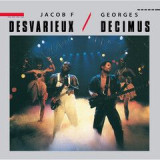
Jacob Desvarieux & Georges Decimus (Kassav') - Yelele

S
Brand new vinyl reissue to celebrate the 40th anniversary of seminal
album Yelele by Georges Decimus and Jacob Desvarieux, from zouk
pioneers Kassav', includes the massive worldwide crossover hit "Zouk-la
se sel medikaman nou ni"
Whether in concert, or on the radio or TV, the image of Kassav' remains vivid in
the minds of listeners and spectators. The group, founded in 1979 by Jacob
Desvarieux, Georges and Pierre-Edouard Decimus, has become legendary, putting
Guadeloupe and Martinique on the musical map of the world. Touring the world
with zouk, a musical movement introduced and popularized by Kassav', their
albums have repeatedly been rewarded with both gold and platinum discs.
A victim of Covid in 2021, the loss of Jacob Desvarieux leaves a huge void.
The mix of Jacob Desvarieux and George Decimus with Jocelyne Beroard, JeanPhilippe Marthely, Patrick Saint-Eloi and Jean-Claude Naimro has played sold out
concerts in 82 countries. With texts recounting real life in the Caribbean world
their lively music draws on the rhythms of Guadeloupe's gwo-ka and Martinique's
ti-bwa. Transcending the well-defined codes of Caribbean music, they have turned
the 1980s and all the succeeding decades into a fabulous ballroom.
They have been welcomed in Japan and the USSR, where they became the first
group of black musicians to tour. Forty years after the group's creation, their
timeless hits continue to resonate

pré-commande09.08.2024

il devrait être publié sur 09.08.2024


Last In: 2026 years ago
KASSAV' (JACOB DESVARIEUX & GEORGES DECIMUS) - YÉLÉLÉ LP

" Brand new vinyl reissue to celebrate the 40the anniversary of zouk pioneers Kassav’ .

Who hasn’t retained at least one memory of the group Kassav’ from their youth? For whether in concert, or onthe radio or TV, the image of Kassav’ remains vivid inthe minds of listeners and spectators.

The group,founded in 1979 by Jacob Desvarieux, Georges andPierre-Edouard Décimus, has become legendary, putting Guadeloupe and Martinique on the musicalmap of the world. Touring the world with zouk, amusical movement introduced and popularized by Kassav’, their albums have repeatedly been rewarded with both gold and platinum discs .A victim of Covid in 2021, the loss of Jacob Desvarieux leaves a huge void. The mix of Jacob Des varieux and George Decimus with Jocelyne Béroard, Jean-Philippe Marthély, Patrick Saint-Éloi and Jean-Claude Naimro has played soldout concerts in 82 countries. With texts recounting reallife in the Caribbean world their lively music draws on the rhythms of Guadeloupe’s gwo-ka and Martinique’sti-bwa. Transcending the well-defined codes of Caribbean music, they have turned the 1980s and all the succeeding decades into a fabulous ballroom.

They have been welcomed in Japan and the USSR, where they became the first group of black musicians to tour. Forty years after the group’s creation, their timeless hits continue to resonate. "

pas en stock

Commandez maintenant et nous commanderons l'article pour vous chez notre fournisseur.


Last In: 18 months ago
Nathan Davis with Georges Arvanitas Trio - Live in Paris - The ORTF Recordings 1966-1967

"Live in Paris" - Nathan Davis, (sax); Georges Arvanitas (p, org); Jack Diéval (p); Jacky Samson, Jacques Hess (b); Franco Manzecchi, Charles Saudrais (dr)

Style is not a given. Not many musicians reach the level of artistic personality where you can unmistakably recognize them. It takes character, roots, honesty, soulfulness. Nathan Davis had style.

His tone on tenor was unique. So was his soprano sound and his distinctive approach to flute. His musical world was equally original and knew no boundaries.

This concert in Paris is audible proof that as a performer, his fluid phrasing, distinct articulation, booming bottom register, growls and shrieks were fuelled by tremendous drive and furious invention - the man was on fire!

These live sessions demonstrate the limitless invention of Nathan’s solos. Holding no punches, weaving signature phrases, shouts and riffs into his solos, he was a fierce and fervid performer. With a sort of hollow resonance at the heart of his reedy and warm sound, Nathan Davis was a highly original artist, from an era when having a distinct sound on your instrument was the grail of jazz artistry. Harold Land, Jimmy Heath, John Gilmore, Paul Gonsalves, Charlie Rouse, George Coleman, Booker Ervin, Clifford Jordan ... Jazz is made of such giants and Nathan Davis was one of them.

pré-commande25.11.2022

il devrait être publié sur 25.11.2022


Last In: 2026 years ago
Nathan Davis & Georges Arvanitas Trio: - Live in Paris

"Live in Paris" - Nathan Davis, (sax); Georges Arvanitas (p, org); Jack Diéval (p); Jacky Samson, Jacques Hess (b); Franco Manzecchi, Charles Saudrais (dr)

Style is not a given. Not many musicians reach the level of artistic personality where you can unmistakably recognize them. It takes character, roots, honesty, soulfulness. Nathan Davis had style.

His tone on tenor was unique. So was his soprano sound and his distinctive approach to flute. His musical world was equally original and knew no boundaries.

This concert in Paris is audible proof that as a performer, his fluid phrasing, distinct articulation, booming bottom register, growls and shrieks were fuelled by tremendous drive and furious invention - the man was on fire!

These live sessions demonstrate the limitless invention of Nathan’s solos. Holding no punches, weaving signature phrases, shouts and riffs into his solos, he was a fierce and fervid performer. With a sort of hollow resonance at the heart of his reedy and warm sound, Nathan Davis was a highly original artist, from an era when having a distinct sound on your instrument was the grail of jazz artistry. Harold Land, Jimmy Heath, John Gilmore, Paul Gonsalves, Charlie Rouse, George Coleman, Booker Ervin, Clifford Jordan ... Jazz is made of such giants and Nathan Davis was one of them.

pré-commande12.11.2021

il devrait être publié sur 12.11.2021


Last In: 2026 years ago
Anthony Georges Patrice, Son Dos - Outbound.4

DJ Support and positive Feedback by the likes of
Laurent Garnier, Dixon, Ame, Adriatique, Ian Pooley, Timo Maas, Trikk, Frankey & Sandrino, Sacha, The Drifter, Severino (Horse Meet Disco), Alex Dallas (Zukunft Zürich),
Yør Kultura, Lehar, Denis Horvat, BOG, Echonomist, Fred Everything, Luca Bachetti, Karotte, Roberto Rodriguez…

We're happy to announce the fourth chapter of our sought-after Outbound series which also marks Lossless' second release in 2020. After two extended chapters of Outbound, fully showcasing our labels artist roster, Outbound.4 is a crisp double A-Side affair - featuring two killer Techno workouts courtesy of our French stalwart Anthony George Patrice followed up by two Deep/Dub House delights delivered by Son Dos.

Without a doubt, Berlin based frenchman Anthony George Patrice steadily adjusted and developed his sound to a higher level over the last years. His contribution on Side A - "DBZU (Eine Brücke Zum Übermenschen)" and "Crowned Eagle" exposing new artistic shades and Anthony's ability to take you on a sonic journey and soak you into his rich and driving deeper Techno soundscapes.

Side AA belongs to Son Dos - a creative power plant by two Sweden born men: Barcelona based Marco Gegenheimer and Tapia J. Arriagada living in Malta. The duo already caused a stir with their debut "Children Of Almost" on Outcast Oddity. Marco also released some great music on Studio Barnhus as one half of MLiR!
On our Outbound.4 the guys showcase two amazing cuts originated from fruitful studio jams.

The beautiful "Cala" is hypnotizing us in deep, meditative balearic territories while her powerful brother "Maffio" might have had a little testosterone injection along the way and moves us straight onto the dancefloor. Both tunes are capable to unveil their power outdoors just as much as they will in a sweaty basement!

Son Dos quoting on Anthony George Patrice's tracks:
"These songs sound like a Movie score to us, a soundtrack taking you further and further into an unexplored forest: ...you are on a mission ... chugging drums, haunting strings and rolling percussion guide you... your heartbeat intensifies, with each step that you take...
all of a sudden, the floor underneath you turns into flowing geometrical patterns and you start falling...
a voice tells you "Happiness Is A Miisunderstanding", and the fear you had leaves your mind...you connect yourself with a higher power and realise why you started this mission in the first place"

Anthony George Patrice quoting on Son Dos tracks:
"Lovely balearic yet powerful atmosphere on "Cala"… Head flies and shoes get used. All that you wish for!" ...
"Hands in the air for "Maffio"! Here comes the peaktime booming system. Simple, efficient yet super interesting and deeply rooted dance floor killer. This is ace!

pas en stock

Commandez maintenant et nous commanderons l'article pour vous chez notre fournisseur.


Derniere entrée: 69 jours
Anthony Georges Patrice - Nujan Ep

Anthony Georges Patrice is back with a whole EP on Lossless and it sounds like an overall artistic start over. Fantastic variety on all tracks and he opens a new part in his musical universe with electrofied and africanized tracks...really refreshing and great to play!

pas en stock

Commandez maintenant et nous commanderons l'article pour vous chez notre fournisseur.


Last In: 5 months ago
Various - Funky Chimes: Belgian Grooves From The 70's Part 2 (2x12")

2024 Repress

2LP gatefold with liner notes, 180gr vinyl. 'Funky Chimes' is a two-hour collection of excellent and unique grooves. It contains 27 of the most interesting yet long forgotten Belgian dance tracks from the seventies.

'Funky Chimes' is a two-hour collection of excellent and unique grooves. It contains 27 of the most interesting yet long forgotten Belgian dance tracks from the seventies, when a generation of extremely gifted and versatile musicians experimented with funk, jazz, latin and other grooves.
'Funky Chimes' is in many ways the logical follow up to 2014's highly acclaimed compilation 'Funky Chicken'. Uncovering a blind spot in Belgium's musical heritage and unearthing a diverse collection of hidden treasures. 'Funky Chicken' has induced a renewed interest in Belgium's rare grooves from the seventies, which until then had never been regarded a genre worth mentioning. Having said that, this second instalment is much more than just a fast sequel or a batch of leftovers. The music's quality matches that of its predecessor, but the treasure hunt was even more adventurous, and the stories behind some of the nuggets even more gripping.

En stock

Disponible en stock et prêt pour l'expédition

Lucien & The Kimono Orchestra - Horizon

With their new Horizon EP, Lucien & The Kimono Orchestra open a music box which transports you in a blue and dawnish atmosphere, a morning spent on walking in an old cinematic Paris.

First step in the eighties, Connection starts as a film opening. Then arrives the single, Fresh Start, full of indelible voices and gimmicks. Horizon, sung in French, is a delicate reference to the French songwriting tradition inherited from Michel Berger, Alain Chamfort or Alain Souchon. To get some breath back between two songs, Georges, offers a strong instrumental interlude. Almost at the end, the English-spoken Shell extends the panel of influences with it's downtempo emotion. With its spontaneous declamations and slick guitar riff, Asile closes the journey, as the splendid climax of the foursome's second EP.

pas en stock

Commandez maintenant et nous commanderons l'article pour vous chez notre fournisseur.


Last In: 6 years ago
Monomite - Pondicherry

Monomite

Pondicherry

12inchVRTV002
Vertv
13.07.2016

After a refreshing and sold-out opening release by Mad Rey (Hotel La Chapelle), VERTV returns with Pondicherry, the second EP of another incredible young French newcomer: Monomite.

The multifaceted musician is sneaking around genres like House, Broken Beat, Hip Hop and Breaks revealing his signature sense of groove (Gimme Da Lighta Plez, Whatchulookinat), humor (Flying Saucers), depth ($$$) and his ability to funk, playing sensual hypnotic bass-lines and syncopated drums (Lovindabass Mon Frer, Les Baffes de Georges Moustaki).
VERTV is really proud to introduce you to this touching artist, Monomite's Pondicherry EP is an open window to his complex personality.
RIYL : Dego, Kaidi Tatham, Theo Parrish, Glenn Astro, Funkineven

pas en stock

Commandez maintenant et nous commanderons l'article pour vous chez notre fournisseur.


Last In: 6 years ago
Various - Tchic Tchic: French Bossa Nova 1963-1974  Colored Edition LP 2x12"
  • A1: Les Masques - Il Faut Tenir (1969)
  • A2: Isabelle Aubret - Casa Forte (1971)
  • A3: Christianne Legrand - Hlm Et Ciné Roman (1972)
  • A4: Jean Constantin - Pas Tant D'chichi Ponpon (1972)
  • A5: Billy Nencioli & Baden Powell - Si Rien Ne Va (1969)
  • B1-: Marpessa Dawn - Le Petit Cuica (1963)
  • B2: Jean-Pierre Sabar - Vai Vai (1974)
  • B3: Sophia Loren - De Jour En Jour (1963)
  • B4: Isabelle - Jusqu’à La Tombée Du Jour (1969)
  • B5: Sylvia Fels - Corto Maltesse (1974)
  • C1: Frank Gérard - Comme Une Samba (1972)
  • C2: Ann Sorel - La Poupée Des Favellas (1971)
  • C3: Charles Level - Un Enfant Café Au Lait (1971)
  • C4: Andrea Parisy - Les Mains Qui Font Du Bien (1970)
  • C5: Audrey Arno - Quand Jean-Paul Rentrera (1969)
  • C6: Aldo Frank - T’as Vu Ce Printemps (1970)
  • D1: Christianne Legrand - Cent Mille Poissons Dans Ton Filet (1972)
  • D2: Clarinha - Lemenja (1970)
  • D3: Hit Parade Des Enfants - Aquarela (1976)
  • D4: Jean-Pierre Lang - Tendresse (1965)
  • D5: Magalie Noël - Une Énorme Samba (1970)
  • D6: Françoise Legrand - La Lune

Ever since the late 1950s bossa-nova revolution, Brazil’s influence on French music has been undeniable. Pierre Barouh, Georges Moustaki and a vast array of lesser known artists, all made the Musica Popular Brasileira (MPB) an axis of promotion at the service of a cool and metaphysical, modern and mixed Brazilian lifestyle. Some were seduced by the poetic languors of the bossa, some were looking for fun, and others just loved the American hybridization of jazz-bossa, jazz-samba.


What is bossa nova? One of its creators, Joao Gilberto said: "Its style, cadence, everything is samba. At the very start, we didn't call it bossa nova, we sang a little samba made up of a single note - Samba de uma nota so .... The discussion around the origins of bossa nova is therefore useless”. It is nevertheless useful to remember that these magnificent Brazilian songs, which the guitarist describes as samba, were shifted and balanced around improbable chords. "I like things that lean, the in-betweens that limp with grace," said Pierre Barrouh, quoting Jean Cocteau.


With emotion, arrangements for violin and supple guitar licks, bossa nova rapidly changed. A transformation that can be heard in the Tchic, tchic, French Bossa Nova 1963-1974 compilation, the result of a cultural reappropriation, which traveled through the United States and supplemented itself in France.

A musical revolution that has remained significant, bossa nova was born in Rio. From 1956 to 1961, Brazil lived through its golden years. In five years, the country had invented its modernist style. Elected president in 1956, Juscelino Kubitschek de Oliveira, an elegant man with a broad forehead, brandished a promising slogan: "Fifty years of progress in five years". He quickly got to work. Not worried about increasing debt, he launched the project for a new federal capital, Brasilia, designed by the communist architect Oscar Niemeyer. Volkswagen opened state-of-the-art factories and created the “fusquinha”, the Beetle. In Rio, the Vespa made its first appearance. The Arpoador Surf Club crew run into the “girl” from Ipanema, Helô Pinheiro - the tanned garota ("chick"), between a flower and mermaid, who at 17 walked by the Veloso bar, where the fiery author and composer, Tom Jobim and Vinicius de Moraes, were getting drunk on whiskey. From then on, bossa symbolized cool.

In 1958, Joao Gilberto recorded Chega de Saudade, which the directors of Philips denied, calling it "music for fagots". The marketing director, who believed in it, secretly pressed 3000 78-inch vinyls and distributed them at schools around Rio, creating a tidal wave.

American jazzmen then took over. In particular, trumpeter Dizzy Gillespie and guitarist Charlie Byrd. In November 1962, the Brazilian Ministry of Foreign Affairs funded a "Bossa-Nova" concert at Carnegie Hall in New York, inviting the genre’s pioneers. Unprepared, the show soon turned to disaster. But the troupe was invited to the White House by Jackie Kennedy. The first lady loved "the new beat" and in particular Maria Ninguem, a song by Carlos Lyra, later covered by Brigitte Bardot.

In Brazil, the 1964 military coup quickly ended this euphoria. The destructive atmosphere that ensued pushed many Brazilian musicians to leave, if not to exile. Thus, Tom Jobim, Sergio Mendes and Joao Gilberto arrived to the United States. In New York, Joao Gilberto met saxophonist Stan Getz. At the time, he was married to the Bahianese Astrud Weinert Gilberto, who had a German father. She had never sung before, but she knew how to speak English. Getz therefore asked her to replace her husband on The Girl From Ipanema. The Getz/Gilberto record with Tom Jobim on piano, was released in March 1964. Phil Ramone, the "pope of pop" was in charge of sound.

Bossa nova arrived in Paris through the classic “guitar-voice” channel (Pierre Barouh, Baden Powell, Moustaki…) But France loved jazz and Paris had already welcomed its American contributors. All these good people were to pass through Saint-Germain-des-Prés. The cabaret l'Escale became the Mecca of Latin American sound where one could find Pierre Barrouh and his friends, such as the Camara Trio, samba-jazz aces, whose only record was published by the Saravah label. With a band strangely called Les Masques (a band that included Nicole Croisille and Pierre Vassiliu, among others), the Camara Trio recorded an interesting Brazilian Sound, including the track Il faut tenir which is present on this tasty compilation of rarities.

Other enlightened musicians can also be found on the compilation, such as Jean-Pierre Sabar (songwriter for Hardy, Auffray, Leforestier ...) and the French pop rock organist Balthazar. In 1975, Sabar recorded Aurinkoinen Musiikkimatka on a Finnish label, which featured the crazy Vai, Vai, included on this record. We are now following the footsteps of Brazilian electronic musicians such as Sergio Mendes, Eumir Deodato or Marcos Valle who created funk and disco sounds on their keyboards and synthesizers. A style that influenced Véronique Sanson when she wrote Jusqu’à la Tombée de la nuit in 1969 for Isabelle de Funès, the niece of Louis and a great friend of Michel Berger - Sanson did end up singing this track on her 1992 Sans Regret record.


The pinnacle of exoticism and travel, Sylvia Fels’ Corto Maltese includes bongos, sea mist and ocean sounds. The title was taken from Jacky Chalard’s concept album written in 1974, Je suis vivant, mais j’ai peur (I am alive, but I am scared), based on Gilbert Deflez’s science fiction novel.


However, bossa nova extended the scope of popularity. "In the 1970s, I was a fan of Sergio Mendes, Getz / Gilberto. I fell in love with this music that I knew because I had been an orchestral singer, " explained Isabelle Aubret, who in 1971 delivered a composite record of covers by the very funky Jorge Ben, Orfeu Negro, Tom Jobim, Vinicius de Morais and Jean Ferrat. "I recorded this album for Meys Records in Paris, far from Brazil, with wonderful musicians, François Raubert, Roland Vincent, Alain Goraguer...". The latter wrote the arrangements for Casa Forte, a very percussive title borrowed from Edu Lobo, one of the initiators of the bossa who spent time in California. "Jazz and bossa came together and produced very rhythmic music. I love singing, it allows me to dream, to have fun, to feel a high on stage, and these songs brought me joy, made me swing, my singing felt like a dance.”


The world tours of French singers and their desire for the tropics, often brought them to Rio with its hills, forests, caipirinhas and tanned bodies. There are surprises though, like this Iemenja (Iemenja is the goddess of the sea in the Afro-Brazilian candomblé religion). Not unlike the composer and musician Jean-Pierre Lang, based in Sao Paulo, Claire Chevalier taught Brazil to Brazil. In 1970, the singer and painter published a 45-inch vinyl, Mon mari et mes amants (My husband and my lovers), under the improbable pseudonym of Clarinha (little Claire). She was then living in Rio, with her husband, Joël Leibovitz, who founded a band called Azimuth, and who owned a record label specialized in "sambas enredos" songs for samba school parades.


For its B side, she asked Pierre Perret to come up with lyrics for a song composed by Carlos Imperial: "Oh goddess of the sea, o goddess Iemenja, I bring a white rose to adorn your long hair ..." . "Perret came to see us, and we had fun, remembers Joël Leibovitz. We wrote Lemenja for fun, we recorded it at the Havaí studio, behind the Central do Brasil the central station. Erlon Chaves, the arranger who worked with Elis Regina, joined us" adding his share of Afro-Brazilian percussions and funky brass to the mix.

There is a common misunderstanding in Franco-Brazilian history: that bossa, admittedly hedonistic, is perceived as funny, even though the poets who wrote the texts are often philosophizing on the human condition. Its French interpreters pull it towards a carnival inspired universe, far removed from its fundamental essence. Thus, Jean Constantin covered the famous Samba da minha terra, an ode to the art of samba written by the classic Bahian composer Dorival Caymmi, renaming it with the enticing title of Pas tant de tchi tchi pompon: "On your pier there is no tchi tchi / when you arch your back, you know everything is alright ”(lyrics by Gérard Calvi). This expedited bossa aims for the absurd, but retains a certain elegance.

Indeed, Jean Constantin was not an idiot, the rather large man had a huge mustache and liked fantasy, (Les pantoufles à papa, Le pacha, inspired by cha-cha-cha-cha, salsa and jazz) but he was also the lyricist of Mon manège à moi interpreted by Edith Piaf, the composer of Mon Truc en plume by Zizi Jeanmaire and the soundtrack of François Truffaut’s 400 Blows. Le Poulpe, published in 1970, from which this bossa is extract, was arranged by Jean-Claude Vannier, an accomplice of Serge Gainsbourg’s Melody Nelson. In short: "There is enough of samba / By looking at the parasol / Because my poor cabeza / Is going to die in the sun".

Even the American actress Marpessa Down, who was at the heart of the bossa nova revolution with her role as Euridyce in Marcel Camus’ film Orfeu Negro, winner of the 1959 Cannes Palme d'or, fed the clichée with Je voudrais parler au petit cuica - "Tell me how you manage to always make people want to dance / It's true, I must admit that I cannot resist your magic" - in consequence, once can hear the cuica, a little drum inherited from the Bantu.


But bossa nova had many angles. Societal, of course, pushing actresses who were symbols of women's liberation like Brigitte Bardot, Jeanne Moreau, or Sophia Loren to engage in the exercise of accelerated bossa. In February of 1963, Sophia Loren made a record in French in Rome, Je ne t'aime plus, featuring the song De jour en jour, a bossa written by two Italians, Armando Trovajoli and Tino Fornai, which was released a little later by Barclay. Bossa accompanied the 1960s, a decade of moral liberation. Ann Sorel, who interpreted La Poupée des favellas, caused a sensation with L’amour à plusieurs, a provocative song written by Frédéric Bottom and Jean-Claude Vannier. As for the actress Andrea Parisy, she displayed her bourgeois cheekiness in Marcel Carné's Les Tricheurs before interpreting Les mains qui font du bien. And Magalie Noël, the friend of Boris Vian, who sung Johnny fais-moi mal, was hired to sing Une énorme Samba, composed by Alain Goraguer (arranger to Gainsbourg, Bobby Lapointe and Jean Ferrat) with lyrics by Frédéric Botton.

But in the end, of what wood is bossa nova made of? The answer is given by Christianne Legrand, daughter of Raymond the conductor, and sister to Michel the composer: "With me, with jà" - jà means "immediately" in Portuguese. In 1972, the singer, an expert in vocal jazz and a member of the Double Six, published Le Brésil de Christianne Legrand. Two songs included on the Tchic Tchic compilation that demonstrate how bossa, jazz, funk, rock, etc. work like a swiss army knife: the music is used to denounce broken systems, or miracles, HLM et ciné roman, Cent mille poissons dans ton filet, two songs from the O Cafona soundtrack, a successful telenovela broadcast, at the time in black and white, on TV Globo. The first was adapted in French by the fighter and friend of the Legrand tribe, Agnès Varda. The second is content with a play on words, jostling them into a summer fun.


Véronique Mortaigne

pré-commande17.04.2026

il devrait être publié sur 17.04.2026


Last In: 2026 years ago
Rebecca Goldberg - A Trip to the Moon

Celebrating a decade since its live debut, Detroit-based artist Rebecca Goldberg announces the first-ever vinyl release of her original score for A Trip to the Moon, the iconic 1902 silent film by Georges Méliès. Composed in 2016, Goldberg’s reimagining of the groundbreaking film—originally titled Le Voyage dans la Lune—translates early cinema fantasy into a minimalist electronic soundscape shaped by synthesis, texture, and composed foley.

Goldberg’s approach honors the wonder and theatricality of Méliès’ vision while grounding it in Detroit’s lineage of forward-thinking electronic music. The score premiered in Paris in 2016 with live performances at Silencio, the club founded by David Lynch, and at Bar à Bulles, located above the legendary Moulin Rouge. The Paris events were produced by Why So Serious Productions and marked a rare convergence of experimental electronic performance and historic cinematic space. Goldberg also presented the live score in her native Detroit, reinforcing the transatlantic bridge that has long shaped her conceptual record projects.

Now, ten years later, the score will be released for the first time on vinyl in a limited edition of 300 copies. The pressing captures the nuance of the original live compositions while offering listeners a new way to experience the interplay between silence, rhythm, and sonic illusion. As with Goldberg’s previous conceptual 12" releases, the vinyl format serves not only as a medium but as an artifact that preserves and reframes cultural memory.

pré-commande23.05.2026

il devrait être publié sur 23.05.2026


Last In: 2026 years ago
Ezéchiel Pailhès - SOL (LP)
  • A1: C’est Loin
  • A2: Là Où Tu Veux (Deixa A Gira Girá)
  • A3: Pas Tant De D'chichi Ponpon
  • A4: Assez
  • A5: Le Soleil En Haut
  • A6: Tout L’or
  • B1: Désillusion
  • B2: Attends-Moi
  • B3: O Sapo
  • B4: Horssaison
  • B5: Presque Rien
  • B6: Vou Festejar
 
1

For his sixth solo album, Ezéchiel Pailhès returns with a new collection of songs infused by a sunny wandering spirit.
Within each of the twelve songs on SOL is a thread of melancholic happiness that has permeated much of Pailhès’ music and songwriting. He addresses love, the passing of time, hope, lost illusions, fleeting moments of grace, the temptation of forgetting, a need to escape, and desire. All this is
insulated by understated orchestrations that blend acoustic and electronic instrumentation with deft confidence.
The Portuguese and Brazilian concept of saudade—a form of melancholic longing and nostalgia— pervades, thanks in part to Pailhès decision to record the album in Rio de Janiero and to reinterpret some of the finest works of Música Popular Brasileira (MPB). In particular, he revisits a handful of
lesser known classics from the mid-century samba and bossa nova era—originally written or performed by talents including Vinícius de Moraes, João Gilberto, Tom Zé, Dorival Caymmi, João Donato, Os Tincoãs, and Ataulfo Alves.
The shift from Brazilian Portuguese to French and the decision to adapt rather than perform a straightforward cover versions, allows Pailhès to invent a form of prosody and euphony (the musicality and harmonious combination of words) that feels vibrant and unlike anything else in today’s French
chanson landscape.
“Some lyrics are simple translations from Portuguese, in what I’d call an expanded version. For others, I started from a single word or a single phrase and embroidered an entirely new text that carried me elsewhere,” explains Pailhès. “I allowed myself great interpretive freedom, while preserving the humanist dimension of the original songs. I’ve always been deeply moved by the way Brazilians transfigure reality through heightened emotion. I love this visceral and spontaneous country, which always seems to live through emotion. And above all, I love its music both popular and unifying,
bringing together all social classes. In that sense, it’s very political music, but even more so utopian, made by the people and for the people.”
On this new album, however, the French artist was keen to avoid cliché. Each song is therefore built around a carefully balanced interplay between Pailhès’ piano and synthesizers, alongside restrained arrangements of percussion, brass, bass, and cavaquinho (a small four-string plucked guitar). These parts were recorded in Rio de Janeiro with two musicians who regularly perform alongside the legendary Caetano Veloso—Kainã Do Jêje and Alberto Continentino—joined by Thomas Harres, Antônio Neves, Eduardo Neves, and Gabriel Loddo.
Since the 1960s, France and Brazil have shared a long-standing cultural and musical relationship. Some Brazilian artists, most famously Gilberto Gil, took refuge in France during the dictatorship years (1964–1985). But above all, French chanson quickly fell in love with the richness and ingenuity of
bossa nova and samba, translating and reinventing them in the language of Molière. Throughout the 1960s and 1970s, albums and hits by Henri Salvador, Georges Moustaki, Pierre Barouh, Pierre Vassiliu, and Claude Nougaro all drew from the MPB repertoire.
Fifty years later, with SOL, Ezéchiel Pailhès reinvents this rich Franco-Brazilian musical legacy, bringing to it a personality and modernity that stand confidently alongside those of his forbears.

pré-commande12.06.2026

il devrait être publié sur 12.06.2026


Last In: 2026 years ago
Various - OHM Series #14

Various

OHM Series #14

12inchOHM014
OHM Series
29.07.2025

The 14th release on Ohm Series features tracks by Bluetrain aka Steve O'Sullivan, Fletcher, Rai Scott and Anthony Georges Patrice!
This is one of the strongest releases so far on the series, curated again by label boss Bjarnar Jónsson aka OHM.
Don't miss!

En stock

Disponible en stock et prêt pour l'expédition

Various - Roller Cluster

Various

Roller Cluster

12inchFRPP002V
Frappé Records
11.07.2025

Frappé's classic jazzy and funky house EP is FINALLY available on vinyl. 5 tracks from Art Of Tones, Georges, Robby&Stupid Flash, Basile de Suresnes and Ten Fingerz tilting towards the historical influences at the very roots of House music: jazz, piano and funk.

En stock

Disponible en stock et prêt pour l'expédition

Apples - Mind Twister LP

Apples

Mind Twister LP

12inchODILIV003LP
Odion livingstone
15.01.2025

70s Nigerian psychedelic soul rock to be filed next to Shuggie Otis’ Inspiration Information. Some albums are more than the sum of their parts. This is one of them. Nothing quite explains the luscious layers of sounds. The wholesome feeling that exudes from the first note to the last. Shuggie Otis meets Grotto/Ofege is what comes to mind.

The band was a ragtag band of teenage musicians who hung around Federal Palace Hotel in classy Victoria Island, listening to the resident band, led by the incomparable Yom Yem with Papa Doe and Gboyega Adelaja on keys. Frank who had some experience stringing around studios in Lagos, approached the George Veira (Vocals, Guitar), Nadi brothers (Clifford and Gerrard) with the idea of making a record. Odion Iruoje had enjoyed massive success with Ofege and Frank knew he might be open to the idea of producing the band. “It happened very fast, as Georges had songs already written or half completed. We started jamming with a few gigs at Surulere Night Club, which was run by Tee Mac at the time. Odion heard the material and did not need any convincing. We Then we went into the studio to lay the vocals, drums and guitars. The keys and further production was done in London.

“My routine at the time was to finish records in London, at Abbey Road Studios. It was the best way to get the sound I wanted and allowed my use London based musicians which brought a special flavour. I liked to lay the rhythm tracks and vocals at our Wharf road studio in Lagos. That was the core of the work”. Mr Odion Iruoje

(Resident A&R exec/Producer, EMI Nigeria)

En stock

Disponible en stock et prêt pour l'expédition

Tomislav Simovic - The Zagreb School Of Animated Film (Original Soundtracks 1961-1982) (OST)

A collection of unreleased themes and scores from 18 short animated films from the world famous Zagreb School Of Animated Film. Includes Oscar winning short cartoon Ersatz / Surogat by Dusan Vukotic (1961) and many other jazz, electronica and experimental scores by composer Tomislav Simovic. Coined by the famed film theorist Georges Sadoul at the 1959 Cannes Festival, The Zagreb School of Animated Film(s) or The Zagreb School of Animation, was defined as an artistic and philosophical world-view that set its mark on the history of animation in the 60's and 70's. The key feature of the Zagreb School (not educational facility in any kind), was commitment to stylization in contrast with the Disney-style canon of realistic animation. Among many composers that worked in Zagreb Film productions, the name of Tomislav Simovic (1931 - 2014) stands out. In his oeuvre of 300+ film scores (not counting compositions and arrangements for pop singers and jazz orchestras), many were made exclusively for Zagreb film documentaries, fiction shorts, features and animation. Simovic was particularly adept at writing music for cartoons. He skillfully synchronized movement and sound and mixed different musical genres, although, like his peers at the time, he leaned towards jazz. 'The Zagreb School of Animated Film (Original Soundtracks 1961-1982)' is compiled by Leri Ahel (Mutant Disco Radio Show) and Zeljko Luketic (Electronic Jugoton, Ex-Yu Electronica III). Master tapes were considered lost, now found and restored for this epic 2 x LP release celebrating Yugoslavia's animated art shorts. Double vinyl gatefold with extensive liner notes, photographs from the films and exclusive cover artwork by Dejan Krsic (NEP / Nova Evropa).

En stock

Disponible en stock et prêt pour l'expédition

Iggy Pop - Apres LP

Iggy Pop

Apres LP

12inchGME999
GM Editions
21.08.2023

10th year anniversary reissue of Iggy Pop's Après cover album with a bonus track, Sacha Distel's La Belle Vie and new artwork, and an exclusive poster. Originally released only in France in 2012, Après is being reissued for the first time and is now finally available outside of France.

En stock

Disponible en stock et prêt pour l'expédition

George Semper - Knowbody’s Gonna Love You

Dynamite cuts release a first-time masterpiece The George Semper Music Archives & Dynamite Cuts Records
“Knowbody’s Gonna Love You” is a masterpiece vocal demo written by George Semper almost 50 years ago. Lost and almost forgotten, lying dormant on a master tape recorded late 60s. Such a wonderful and fresh song, perfect swing and groove.
Finding this demo completed the puzzle with an unknown one-off press acetate record. That was within Georges collection, now we know he had wrote it. The acetate was titled “Knowbody’s Gonna Love You” Joanne. With a little more investigation Joanne became the lesser known soul singer Joanne Vent. She recorded one LP on the label A&M back in the late 60s, which just happened to be the same time George worked for the label… One off press limited edition x400 copies with heavy card sleeve

En stock

Disponible en stock et prêt pour l'expédition

Mirco Magnani + Ernesto Tomasini - Madame E. LP 2x12"

Madame E. is a musical setting of Georges Bataille's 'Madame Edwarda', a short novel that interlaces themes of eroticism, religiosity and death, and was written under the pseudonym Pierre Angelique in 1941, during the occupation of Paris.
Composer Mirco Magnani wrote eleven electronic pieces and presented them to actor/singer Ernesto Tomasini. They turned them into songs by adding vocal melodies and together they produced a libretto based on Bataille's French text. The result of their dynamic interpretation is a hypnotically spellbinding performance where the audience is transported through worlds - ancient and new - and where Tomasini's haunting falsetto conveys the tormented emotions in Bataille's work and becomes the instrument that articulates the writer's famously obscure themes.
The experimental operatic performance captures the atmosphere of heightened human passion, reminiscent of opera seria and revisited through hazy and minimalistic lens. The resulting dark and twitchy mood amalgamates old vintage electronic devices, string piano and Stella Veloce´s touching violoncello. The stage becomes a space where Eros and Thanatos, real and virtual, analogue and digital, cluster and melody, spirituality and technology are intermixed and turned unidentifiable, hence collapsing the binary logic of dualism.
Written by Magnani/Tomasini and produced by Mirco Magnani, with lyrics taken from "Madame Edwarda" by Georges Bataille, Madame E. was developed between Berlin and London where Magnani and Tomasini are respectively based. Recorded in Berlin, mastered by Murcof and released by Magnani's label Undogmatisch, a collective that also includes Nicolas Defawe (Urban Spree) and Valentina Bardazzi, the painter responsible for the album artwork.

En stock

Disponible en stock et prêt pour l'expédition

Nat "King" Cole - GREATEST HITS LP 2x12"
  • 1: Nat "King" Cole - Unforgettable
  • 1: 2Nat "King" Cole - (I Love You) For Sentimental Reasons
  • 1: 3Nat "King" Cole - Nature Boy
  • 1: 4Nat "King" Cole - (Get Your Kicks On) Route 66!
  • 1: 5Nat "King" Cole - Silent Night
  • 1: 6Nat "King" Cole - At Last
  • 1: 7Nat "King" Cole - When I Fall In Love
  • 1: 8Nat "King" Cole - Stardust
  • 1: 9Nat "King" Cole - Mood Indigo
  • 1: 0Nat "King" Cole - Don't Get Around Much Anymore
  • 1: Nat "King" Cole - When You're Smiling
  • 1: 2Nat "King" Cole - Straighten Up And Fly Right
  • 2: 1Nat "King" Cole - Smile
  • 2: Nat "King" Cole & Georges Shearing - Let There Be Love
  • 2: 3Nat "King" Cole - Calypso Blues
  • 2: 4Nat "King" Cole - Answer Me, My Love
  • 2: 5Nat "King" Cole - Pretend
  • 2: 6Nat "King" Cole - The More I See You
  • 2: 7Nat "King" Cole & Georges Shearing - Fly Me To The Moon
  • 2: 8Nat "King" Cole - Mona Lisa
  • 2: 9Nat "King" Cole - Ramblin' Rose
  • 2: 10Nat "King" Cole - Too Young
  • 2: 11Nat "King" Cole - Orange Colored Sky
  • 2: 1Terez Montcalm - L-O-V-E

Alle größten Hits von Nat King Cole jetzt auf hochwertigem Doppel-Vinyl! Diese Edition vereint 24 zeitlose Klassiker des legendären Crooners - ein Muss für Liebhaber eleganter Jazz- und Popmusik. Mit seiner unverwechselbaren Stimme prägte Cole Generationen und schuf unvergessene Standards. Enthalten sind Meilensteine wie "Unforgettable", "When I Fall in Love", "Stardust" und viele weitere Songs, die Musikgeschichte geschrieben haben.

pré-commande13.03.2026

il devrait être publié sur 13.03.2026


Last In: 2026 years ago
George Harrison - Wonderwall Music

Als direkte Folge des großen Interesses der Beatles an experimenteller Musik und anderen avantgardistischen
Kunstformen gründete Apple Records im Februar 1969 das kurzlebige Tochterlabel Zapple. Es sollte ein Forum für ungezügelte Klangexperimente bieten, oder, wie es damals hieß, für „noch abgefahrenere Sounds“.
Georges „Electronic Sound“ und John Lennons und Yoko Onos „Unfinished Music No. 2: Life With the
Lions“, beide im Mai 1969 erschienen, waren Zapples einzige Veröffentlichungen vor der Schließung des
Labels. Das von George gemalte Cover von „Electronic Sound“ zeigt seinen Moog IIIp (der später von den
Beatles auf vier Stücken ihres Albums „Abbey Road“ verwendet wurde) mit den vier Modulen, aus denen
der Klang synthetisiert wurde. Jede Seite der LP „Electronic Sound“ enthielt ein experimentelles, längeres
Werk.
George Harrisons „Wonderwall Music“, erschienen im November 1968, war das erste Soloalbum eines
Beatles-Mitglieds und die erste LP, die von Apple Records veröffentlicht wurde. Der Soundtrack zu Joe
Massots Spielfilmdebüt „Wonderwall“ ist ein überwiegend instrumentales Album, das einen komplexen und
lebendigen Klangteppich aus westlicher Rockmusik und Kompositionen im Stil der indischen Klassik bildet.
1992 erinnerte sich George: „Ich entschied mich für eine Art Mini-Anthologie indischer Musik, weil ich die
Öffentlichkeit für indische Musik begeistern wollte.“

pré-commande20.02.2026

il devrait être publié sur 20.02.2026


Last In: 2026 years ago
George Harrison - Electric Sound

Als direkte Folge des großen Interesses der Beatles an experimenteller Musik und anderen avantgardistischen
Kunstformen gründete Apple Records im Februar 1969 das kurzlebige Tochterlabel Zapple. Es sollte ein Forum für ungezügelte Klangexperimente bieten, oder, wie es damals hieß, für „noch abgefahrenere Sounds“.
Georges „Electronic Sound“ und John Lennons und Yoko Onos „Unfinished Music No. 2: Life With the
Lions“, beide im Mai 1969 erschienen, waren Zapples einzige Veröffentlichungen vor der Schließung des
Labels. Das von George gemalte Cover von „Electronic Sound“ zeigt seinen Moog IIIp (der später von den
Beatles auf vier Stücken ihres Albums „Abbey Road“ verwendet wurde) mit den vier Modulen, aus denen
der Klang synthetisiert wurde. Jede Seite der LP „Electronic Sound“ enthielt ein experimentelles, längeres
Werk.
George Harrisons „Wonderwall Music“, erschienen im November 1968, war das erste Soloalbum eines
Beatles-Mitglieds und die erste LP, die von Apple Records veröffentlicht wurde. Der Soundtrack zu Joe
Massots Spielfilmdebüt „Wonderwall“ ist ein überwiegend instrumentales Album, das einen komplexen und
lebendigen Klangteppich aus westlicher Rockmusik und Kompositionen im Stil der indischen Klassik bildet.
1992 erinnerte sich George: „Ich entschied mich für eine Art Mini-Anthologie indischer Musik, weil ich die
Öffentlichkeit für indische Musik begeistern wollte.“

pré-commande20.02.2026

il devrait être publié sur 20.02.2026


Last In: 2026 years ago
Various - Wizzz! French Psychorama Volume 5 (67-75)

The journey through French-speaking pop archives continues with this fifth volume, packed with fuzz, gimmicks, and dissent. Far from the charts, the selected tracks display a great creative freedom, often backed by corrosive humor. Welcome to the surprising, kaleidoscopic, and colorful world of the late sixties and early seventies, Wizzz!
Born in Montauban, Robert Pico stumbled into music by chance when he met René Vaneste, then artistic director at Pathé-Marconi. René brought him to Paris to record his first 45 RPM EP in 1964. A year later, Pierre Perret introduced him to Vogue, where he recorded his second album with Claude Nougaro’s orchestra. Sylvie Vartan then introduced him to RCA, where he recorded four singles, including the astonishing "Chien Fidèle," a track backed by a hair-rising fuzz guitar. Alongside his solo career, he also composed for other artists like Alain Delon (the song was recorded but remains unreleased), Magali Noël, Bourvil, and Georges Guétary. In the Paris of the sixties, he mingled with Mireille Darc, Elsa Martinelli, Marie Laforêt, France Gall, Françoise Hardy, Petula Clark, Régine, Dani, Serge Gainsbourg, Joe Dassin, Franck Fernandel, Charles Level, and Roland Vincent. Despite his efforts and winning a Grand Prix Sacem for his final record, Robert Pico didn’t achieve the expected success in show business and decided to leave Paris and return to the Southwest, where he devoted himself to writing. He is the author of 23 books (including Delon et Compagnie, Jean-Marc Savary Editions 2025, a memoir about his youth and his many encounters). Today, he is relieved to never have become a celebrity and devotes himself to his work with passion.
In 1969, the Franco-Italian movie Erotissimo was released, directed by Gérard Pirès (who later directed Taxi in 1998, written and produced by Luc Besson). This pop comedy features Annie Girardot, Jean Yanne, Francis Blanche, Serge Gainsbourg, Nicole Croisille, Jacques Martin, and Patrick Topaloff. The soundtrack was written by Michel Polnareff and William Sheller, with lyrics by Jean-Lou Dabadie. "La Femme Faux-cils," performed by Annie Girardot. It recounts the feelings of a rich CEO's wife who seeks to develop her sex appeal under the influence of advertisement and magazines. Groovy, sparkling and light, this track, with ITS lush arrangements humorously critiques consumer society and feminine beauty standards.
“Je suis l’Etat” (1967) is the flagship track of the first EP by singer-songwriter Spauv Georges, aka Georges Larriaga, better known as Jim Larriaga (1941-2022). Born into a family of bakers, the young man was initially planning to become a hairdresser when he discovered English-speaking music through Elvis Presley and the Beatles. After this revelation, he decided he would become a songwriter and gave himself five years to succeed. He recorded his first two EP’s independently for RCA under the pseudonym Spauv Georges; meaning “that poor George”, a nickname given to him by the mother of her friend Jean-Pierre Prévotat (future drummer of the Players, Triangle, or Johnny Hallyday). Portraying a depressed and eccentric young man, Spauv Georges created corrosive and amusing songs that didn’t reach a wide audience, despite a TV appearance with Jean-Christophe Averty.
Supported by his loyal friend and fellow songwriter Jean-Max Rivière, Georges Larriaga met the future singer Carlos in the early '70s, then Sylvie Vartan’s assistant. He wrote songs for Carlos, including the popular "La vie est belle," "Y’a des indiens partout," and "La cantine", which went onto become a huge hit in 1972. He also composed for Claude François (“Anne-Marie”, 1971), Charlotte Julian (“Fleur de province”, 1972), helped launch child singer Roméo (who sold 4 million records), and later wrote the hit "Pas besoin d’éducation sexuelle" (1975) for the young Julie Bataille. In 1971, Jim recorded an album for Disc'Az: “L’univers étrange et fou de Jim Larriaga”, which featured pop gems like “La maison de mon père”.
The story of the song "Zoé" began when Pierre Dorsay, artistic director at Vogue Records, asked Swiss singer and musician Pierre Alain to write a song for a new female singer. The inspiration came when he realized that Zoé (the artist's name) was also the name of France's first atomic battery, created in 1948, which consisted of uranium oxide immersed in heavy water! The lyrics reflect a bubbling energy that must be handled with caution, while the instrumentation echoes this atomic theme, notably with the use of a theremin.
Zoé’s career lasted only as long as a single 45 RPM, but it seems Christine Fontane was the vocalist behind this pseudonym, who is known for several EPs, a good "popcorn" album in 1964, and a handful of children’s singles in the '70s. Regardless, the photograph on the cover is of a different girl entirely.
Later, Pierre Alain continued his career, writing songs for himself, Marie Laforêt, Danièle Licari, Alice Dona, Arlette Zola (3rd place in Eurovision 1982), and achieving multiple gold and platinum records in Canada. Also an inventor with several patents, president of the Romande Academy, and head of the French Alliance in Geneva, he now composes atonal music, books, and poetry. Moreover, he is also the host of "Les Mardis de Pierre Alain" at "Le P'tit Music'Hohl" in Geneva.
Filled with oriental choruses and fuzz guitar, "Fou" is from Jacques Da Sylva's only EP released by Vogue in 1967. Despite the quality of this recording, all traces of this singer disappear after this first effort.
Valentin is a baroque pop singer born in Belgium. He is the songwriter and composer of most of the tracks on his three singles released in the late 60s in Canada. A legend says that he reincarnated himself as Jacky Valentin during the 1970s for a rock'n'roll revival career in Belgium, but his older brother sadly debunked this story. Valentin's first two singles were arranged by Claude Rogen, a Parisian session pianist who had come to Canada to promote the song “Mister A Gogo”, a cover of David Bowie’s “Laughing Gnome”, adapted by singer Delphine, his wife at the time. Far from his usual network, Claude Rogen arranged music for Polydor, including the arrangements for “Je suis un vagabond” in 1969, a jerk tune with string arrangements and a furious optimism.
Jacques Malia wrote, composed, and recorded his only 45 EP for Festival in 1966. “Histoire de gitan” is an incredible beat track with bohemian scat that tells the story of a gypsy musician who came to Paris to make it in the Music-Hall, to no avail. The hero of the song and its author probably shared a similar fate, as Jacques Malia faded into anonymity after this remarkable attempt.
Bernard Jamet recorded two EPs for Barclay in the late sixties and co-wrote several songs with Christine Pilzer, Pascal Danel, and prolific songwriters Michel Delancray and Mya Simile. The track “Raison Légale” (1968), his masterpiece, immerses the listener in a courtroom right when a murderer is being judged, with jerk rhythm and free arrangements. A unique, paranoid, judicial, and psychedelic oddity.
Jean-Pierre Lebrot-Millers started his career in show business in 1967 as a singer and songwriter for the Philips label. After three singles, he wrote several songs of a new kind with his friend Pierre Halioche, in the midst of the sexual liberation movement and the democratization of drugs. With provocative lyrics, “Les filles du hasard” and “Barbara au Chapeau Rose” were released on a Philips singles in 1968. The character of Barbara was inspired by a queen of Parisian nightlife during the psychedelic years: model Charlotte Martin, who dated Eric Clapton from 1965 to 1968, then Jimmy Page from 1970 to 1983. Jean-Claude Petit’s arrangements, with a table-filled intro, soul brass, and Hendrixian guitar, emphasize the flamboyance of a hedonistic and sexy character, whose dog is named Junkie because “Junkie est un nom exquis”! The track was recorded live in three takes with a full orchestra.
Upon its release, the record was censored by Europe 1 and RTL due to its references to drug use. Jean-Pierre Lebrot was then banned from the airwaves and later dismissed by his record label. He changed his artist name to Jean-Pierre Millers, while his companion Pierre Halioche became D. Dolby for a new dreamy composition, “Chilla”, which Jean-Pierre produced himself with arrangements by Jean Musy. Once again, the song was immediately censored everywhere. After this setback, he decided to stop singing and started taking on odd jobs to support his Swedish wife and their son until the day he met Jean-Pierre Martin, then production manager at Decca, who had worked with Manu Dibango. Martin offered Jean-Pierre Lebrot-Millers, then employed at Rank Xerox, the position of artistic director at Decca. He accepted and became, a year later, promotion director (radio, press, TV). He worked on Julio Iglesias’s first album for Decca, which became a massive hit and allowed him to meet Claude Carrère. The latter asked him to write new songs and find their performers, much like a “talent scout.” It’s through him that Jean-Pierre discovered Julie Pietri and Corinne Hermès. He composed “Ma Pompadour” for Ringo, Sheila’s husband, and took the microphone again for the syncope hit “Rendez-Vous” in 1982.
That same year, Jean-Pierre Lebrot-Millers tried to release a track for which he had heavily gone into debt: “Si la vie est un cadeau”. Having recorded it in London, he presented it to numerous professionals, all of whom refused to get involved. The same thing happened with Antenne 2 and the Sacem when he proposed the song as France’s entry for Eurovision. He then met Haïm Saban, who was producing cartoon soundtracks and had just launched the Goldorak theme song. Saban, having listened to the song, declared it had the potential to become a hit. He sent Jean-Pierre and Corinne Hermès to meet the CEO of the Luxembourg radio and television network. The latter received them, asked to hear a verse and chorus a cappella in his office, and immediately hired them to represent Luxembourg at Eurovision 1983. They reworked the arrangements and recorded a new version with Haïm Saban as co-producer. The song ended up winning Eurovision 1983, a great comeback for our hero. He continued producing and hung out with the band Nacash in Belgium when a couple came to introduce their daughter for an impromptu audition in a hotel room. The girl sang “Les démons de minuit” while dancing to a radio cassette. Impressed, he had her take singing lessons for a year and composed a song for her (for which he had the melody and title, but no lyrics). This required him to go on the hunt for a lyricist, who ended up being Guy Carlier. They recorded the song, which was initially a ballad, at Bernard Estardy’s CBE studio, and gave the singer a new name: Melody. They showed the song around their industry network without success. Later, Estardy called Jean-Pierre to suggest changing the rhythm and making it pop-rock. Orlando, Dalida’s brother, liked the result and decided to co-produce the track. “Y’a pas que les grands qui rêvent » became a classic hit. The song has since been covered by Juliette Armanet (as a ballad, like the original) and Valentina.

Born into an aristocratic Breton family, Hervé Mettais-Cartier worked as a DJ at Queen Kiss, a nightclub in Poitiers, where he formed the band Les Concentrés with Michel (an actor) and Christian (a radio technician). Together, they created a repertoire of whimsical songs (“Ma bique est morte”, “J’suis un salaud”, “Fils de dégénéré”...) that they performed on stage dressed in white (in homage to “concentrated milk”). They performed at Bliboquet and Olympia in 1968 for the 10th edition of the “Relais de la chanson Française” organized by L’Humanité-Dimanche and Nous les Garçons et les Filles, sponsored by Pepsi Cola. Winners in the author-composer category, alongside Danish singer Dorte, their visibility allowed them to record a 45, and appear on television in Jean-Christophe Averty’s show. The A-side of the disc features Bruno le ravageur, a casatchok dedicated to Bruno Caquatrix, the director of Olympia, nicknamed in the song “Coq Atroce” or “croque-actrices”. The B-side is dedicated to “Fils de dégénéré”, a quirky tribute to Hervé's aristocratic roots, mixing absurdity with sophisticated vocal harmonies.
After Les Concentrés, Hervé Mettais-Cartier formed the duo La Paire et sa Bêtise with his friend Olivier Robert. They performed in Parisian cabarets and toured with Pierre Vassiliu. In the late 1970s, Hervé began a solo career. He recorded two albums for the Motors label in 1978 and 1979, which did not achieve their anticipated success due to lack of promotion. In 1980, he met Bernadette, with whom he started a family and created a “Chansons à voir” (songs to see) show that he performed until his death at the end of 2024.

Publicité comes from the final EP by the Missiles (Ducretet Thomson, 1966), a disc that also includes “La (nouvelle) guerre de cent ans”, featured on Volume 4 of our Wizzz! series. Please refer to the booklet for the story of the band.

“He’s 1.82 meters tall, 28 years old, weighs 135 kg, is black and Belgian”: this is the description of singer Hegesippe on the back of his sole single (Decca, 1967). He appears on the album cover wearing a Greek toga, like a hippie gag – we are at the end of the year 1967. In “Le crédo d’Hegesippe”, this former bodyguard of Antoine and the Charlots plays the delightful card of the thick brute converted to Flower-Power and non-violence, with arrangements by Jean-Daniel Mercier, aka Paul Mille.
“Ethéro-disco” was released on a promotional record for clients of the Maréchal company (Liège, Belgium) for the New Year 1979. Over a funky rhythm, celebrity impersonations (Brigitte Bardot, Jacques Dutronc, Fernandel…) deliver an enigmatic text about pharmaceutical products like ether, bismuth, and aspartate. The track was composed by Dan Sarravah (responsible for Joanna's “Hold-up inusité” featured on Wizzz! Volume 3) and Tony Talado, who was also a singer (one 45 in 1967), songwriter (with over a dozen credits between 1964 and 1985 in various styles from surf music to disco), author (Devenez Végétarien, Dricot Editions, 1985), ad designer, and psychologist.

Décollez-les is on the A-side of Mamlouk's only single, a pseudonym for Marsel Hurten, who is known for his work on several EPs in the late sixties, as well as composing music for Hervé Vilard’s “Capri, c’est fini”, Claude Channes' “La Haine”, Annie Philippe’s “On m’a toujours dit”, and Nancy Holloway’s “Panne de Cœur”.
This strange song, with Afrobeat horns and absurd dialogues between a chef and his kitchen staff, is the result of a collaboration between Marsel Hurten and one of his neighbors, a photographer from Pavillon-sous-Bois (93), where the musician settled after returning from the Algerian War. A music video was shot to promote the record.
Marsel Hurten was born in Tourcoing (59) into a musical family. At a young age, he joined the brass band founded by his grandfather, playing the piston before studying trumpet at the conservatory, as well as teaching himself how to play the guitar. As an orchestra musician, he toured in France, Belgium, Germany, and England. He released a series of solo 45’s between 1965 and 1968 for the DMF and Az labels before stopping recording to focus on working for other artists (Gilles Olivier, Noëlle Cordier…).
“L’amour nu” (Vogue, 1971) is the work of the short-lived Belgian band Mozaïque. The track, written by singer Jacques Albin, closely resembles another of his compositions, “Carré Blanc”, which he recorded in 1969 for Disc’AZ.
Represented by the Lumi Son micro-label based in Marignane (Côte d'Azur), Jean-Marc Garrigues released two 45 RPMs in the late sixties, defending the French jerk sound. The song “Je dis Non” is a short, joyful ode to youth, pop music, and rebellion.
Songwriter and performer Jacques Penuel released three singles. The first one, “Astronef 328” (Fontana, 1969), features a dizzying series of chords punctuated by sound effects, a sci-fi story, and arrangements by Jean-Claude Vannier.

We would like to sincerely thank Pierre Alain, Moon Blaha, Marsel Hurten, Bastien Larriaga, Jean-Pierre Lebrot-Millers, Bernadette Mettais-Cartier, Robert Pico, Olivier Robert, Claude Rogen, Micky Segura.

pas en stock

Commandez maintenant et nous commanderons l'article pour vous chez notre fournisseur.


Derniere entrée: 54 jours
AUDREY HEPBURN - BREAKFAST WITH AUDREY LP
  • A1: Audrey Hepburn – Moon River
  • A2: Audrey Hepburn – How Long Has This Been Going On
  • A3: Audrey Hepburn, Fred Astaire, Kay Thompson – Bonjour, Paris!
  • A4: Audrey Hepburn, Kay Thompson – On How To Be Lovely
  • A5: Audrey Hepburn, Fred Astaire – ’S Wonderful
  • A6: Audrey Hepburn – La Vie En Rose (Taken From “Sabrina”)
  • B1: Henry Mancini And His Orchestra & Chorus – Moon River (Breakfast At Tiffany’s)
  • B2: Fred Astaire, George & Ira Gershwin – He Loves, She Loves (Funny Face)
  • B3: Nino Rota – Natasha's Waltz (War And Peace)
  • B4: Georges Auric – Main Title (Roman Holiday)
  • B5: Friedrich Hollaender – Sabrina (Main Title)
  • B6: Henry Mancini And His Orchestra & Chorus – Moon River Cha Cha (Breakfast At Tiffany’s)
pré-commande05.12.2025

il devrait être publié sur 05.12.2025


Last In: 2026 years ago
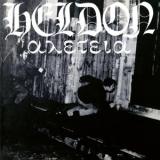
HELDON - ALLEZ-TEIA(HELDON II)

Heldon

ALLEZ-TEIA(HELDON II)

12inchBBLE2811
Bureau B
01.08.2025
  • In The Wake Of King Fripp
  • Aphanisis
  • Omar Diop Blondin
  • Moebius
  • Fluence (Continuum Mobile/ Disjonction Inclusive)
  • St Mikael Samstag Abends
  • Michel Ettori

Schon bevor Richard Pinhas Anfang der 70er begann, Musik zu machen, war er Fan von King Crimson. Bis heute hat ihn die Musik der britischen Band nicht losgelassen, aber am größten war deren Einfluss sicherlich ganz am Anfang. Auf dem zweiten Heldon-Album "Allez-Teia" wird das besonders deutlich. Es erschien 1975 auf Pinhas" eigenem Label Disjuncta. Der Eröffnungssong, eine schwebende Mischung aus Mellotronklängen und einer verwischten Gitarre, trägt den Titel "In The Wake Of King Fripp". Diese doppelte Anspielung bezieht sich einerseits auf den Bandgitarristen Robert Fripp und andererseits auf "In The Wake Of Poseidon", das zweite King-Crimson-Album. Das meditative "Omar Diop Blondin" mit seinen frei schwebenden Tönen über einer repetitiven Gitarrenfigur ist ausdrücklich Brian Eno und Fripp gewidmet. Ebenfalls großen Einfluss auf Pinhas übte Robert Wyatt von Soft Machine aus. Trotzdem ist "Allez-Teia" kein Tribut-Album. Die Stücke, die Pinhas zusammen mit seinem Partner Georges Grunblatt erarbeitete, erscheinen auf den ersten Blick freudig-schön, tragen jedoch alle eine angespannte Unterströmung in sich. Sie bilden ein Wechselspiel aus federleichter Akustikgitarre, Mellotron-Teppichen, Fuzz-Sounds und schweren, sphärischen Synthesizer-Klängen.

pré-commande01.08.2025

il devrait être publié sur 01.08.2025


Last In: 2026 years ago
Giorgio Lopez - Giorgio Lopez Presents Sud Des Îles LP

Neapolitan composer, producer, and keyboardist Giorgio Lopez sets sail on Berlin-based label Cosmic Romance with his “Sud des Îles”. Navigating between 80s-inspired grooves, French boogie, and sun-kissed atmospheres, the record unfolds like a musical travelogue, following fictional skipper Georges Taty and his crew of musicians aboard the sailboat “Sud des Îles”, caught between racing waves, late-night jams, and dockside dreams.

From the whirling groove of "Voyager Sans Bouger" to the breezy atmosphere of "Toujours Distante", the eight tracks on Sud des Îles invite listeners to drift away in rhythm and reverie through a songwriting that is both infectious and evocative. Stories of escapes (real or imagined), romantic illusions, and nostalgia-tinted euphoria weave together, propelled by Giorgio Lopez’s arrangements and distinctive keyboard work, as well as by the well-crafted production, carried out together with Executive Producer and label owner Ed Longo.

Featuring lead vocals by Stella, Master Phil, Amanda Roldan, and Bernardino Femminielli, together with the “équipage de Sud des Îles” itself - a tight-knit ensemble of acclaimed musicians from Berlin and Naples – “Sud des Îles” is an invitation to ride the waves to a neon-lit night on a faraway island: no passport required.

pas en stock

Commandez maintenant et nous commanderons l'article pour vous chez notre fournisseur.


Last In: 5 months ago
George Harrison - Let It Roll - Songs of George Harrison LP 2x12"

Über Jahrzehnte hinweg erwarb sich George Harrison den Ruf eines der rätselhaftesten und kreativsten
Rock’n’Roll-Menschen. Wie bei jedem ehemaligen Beatle wurde Georges Loslösung von der Band durch
die anhaltende und manchmal obsessive Liebe der Welt zu den Beatles als eigenständiger Einheit gebremst.
Doch wie die Veröffentlichung seines epischen Albums „All Things Must Pass“ im Jahr 1970 zeigte, war
er ein Mann mit einer ganz eigenen Geschichte. Songs wie „My Sweet Lord“ und „What Is Life“ fanden
Eingang in eine umfangreiche Sammlung, die bis heute zu den großen Werken der Album-Ära zählt. Heute
erinnert man sich an George als jemanden, der seinen Leidenschaften bis zu bemerkenswerten Schlussfolgerungen folgte, als einen Mann der Widersprüche, dessen ungewöhnliche Balance aus spiritueller Hingabe,
trockenem Humor und echtem Mitgefühl das Leben vieler Menschen berührte.

pré-commande11.07.2025

il devrait être publié sur 11.07.2025


Last In: 2026 years ago
Jeff The Fool - French Lessons LP

With French Lessons, Jeff The Fool delivers a dazzling display of musical diversity, exploring a myriad of styles and influences. From the melancholic rain of Paris to the warm rays of the Californian sun, each track showcases remarkable technical precision and infectious energy.


Set for release in 2025, this album stands out with its array of international guest artists such as Fleur de Mur, Oden & Fatzo, Mangabey, and Phat Kat. It brings together singers and rappers from Lagos, Detroit, and Atlanta, infusing the work with a unique cosmopolitan dimension. On compositions imbued with French accents, these artists lend their voices to traverse house, hip-hop, jungle, trap, and afro-soul. French Lessons is a true ode to innovation, illustrating Jeff The Fool’s determination to push genre boundaries and reinvent himself alongside talented collaborators. This album pays tribute to the electronic music scene while asserting his unique artistic identity.


Here, Jeff The Fool continues his creative journey, marked by a subtle blend of underground house sounds and more accessible grooves. Since his notable debut with the Pay Your House EP in 2018, he has consistently expanded the horizons of house music, skillfully combining soulful samples and deep rhythms, crafting tracks designed for the dance floor.
Building on the success of his 2022 album Russian Dolls, released under Nowadays Records and amassing millions of streams, Jeff The Fool continues to captivate house music purists while drawing in a broader audience. His live performances, intense and eclectic, blending house, techno, disco, and electro, have taken him to international stages, showcasing the breadth and richness of his talent.

pas en stock

Commandez maintenant et nous commanderons l'article pour vous chez notre fournisseur.


Last In: 10 months ago
Articles par page:
N/ABPM
Vinyl