
No en stock
Haga su pedido ahora y le encargaremos el artículo en nuestro proveedor.
Ültimo hace: 3 Años
Haga su pedido ahora y le encargaremos el artículo en nuestro proveedor.

F
ourth record already here, new Triptych being scooped out of the drawers. This one is heavily video game inspired and marks a turning point for me. I’ve somehow been very much drawn to what I call “boss fight techno”, this is the result of this cogitation.
Total Debauchery kicks off the record with truculence. The title says it all, we’re very far away from warm up time, all hell let loose, big energy discharge, weird stereo bassline, pure madness. Gate Middletone certainly is wonky. It sounds like an anesthetized telephone call. I don’t know if we can refer to this as techno, but who cares, groove is spotless. Absolute Buffoonery started off as a joke with hoover sounds in mind. Turns out it is very danceable and weird enough to be on the record. It still is a foolery.
The B side starts with Demonic Shine. This one is purely dedicated to zombie games. I’ve been thinking about how techno could be interpreted for this kind of stuff. Turns out you can shoot dead people and dance at the same time. Good time. Zany Ditherings is a hard drive that keeps crashing. It disrupts the track, making it spasmodic. You are in a convulsive loop of data being thrown out the window. dc11 accepted this remix operation. His work acts as counterpoint to the record, bringing flawless techno tunneling. Buckle up mate.
El artículo ya está en camino a nosotros y se espera que sea enviado desde 20.05.2026.

We are pleased to announce the first FEX live album, Don't Look Back. The release features selected recordings from two concerts in Paderborn and Uelzen, both captured in 1985. All tracks on the album are previously unissued, including entirely unheard songs such as It's a Hard Life, Just Get Back, Legend, and Waiting Song, alongside a previously unreleased version of Subways of Your Mind, widely known as "The Most Mysterious Song on the Internet."
One of the most striking aspects of the album is the remarkable sound quality of the live recordings, as well as the strength of the performances themselves - particularly given that FEX were still considered a newcomer band at the time. The four-piece lineup consisted of singer, guitarist, and primary songwriter Ture Rückwardt, Michael Hädrich on keyboards and occasional second guitar, Norbert Ziermann on bass, and Hans-Reimer Sievers on drums. In 1985, the band was preparing for broader exposure through a nationwide tour organized by the small promotion company HBM-Musikbüro.
The album opens with the psychedelic Skyscraper, a track Rückwardt reportedly regarded as a personal favorite to perform. Hädrich contributes dynamic synthesizer layers, while Ziermann underpins the track with a distinctive slap bass groove. This is followed by the energetic rock number It's a Hard Life, which once again demonstrates that the band possessed multiple songs capable of matching the impact of their best known track Subways of Your Mind.
After this energetic opening, the album shifts into a more restrained mood with the synth-pop ballad I Got My Eyes On You. It is followed by Strange Feeling, presented here in a particularly compelling live version that arguably surpasses the previously released studio demo featured on the Skyscraper LP, with Rückwardt delivering one of his most expressive vocal performances. On Goldrush, another fan favorite, it is Hädrich's DX7 synthesizer work that stands out.
Don't Look Back continues to flow seamlessly, moving between styles such as new wave, synth pop, and a blues-influenced form of classic rock. On It's Good To Know, a song addressing the theme of stardom, the band returns to a heavier rock sound. In contrast, the synth-driven Just Get Back reflects on the conflict in Northern Ireland, then ongoing at the time. Lines such as "It's the money, it's the money why they come along" are directed at mercenary soldiers, while "even Sunday's a killing time" directly references Sunday Bloody Sunday by U2.
Previously known songs such as Dirty Slapstick and Heart in Danger lead into We Don't Want It No More, perhaps the band's most striking pop ballad. It is easy to imagine that the track had the potential to achieve radio success in the 1980s. The following piece, the epic Legend, explores themes of loneliness and love simultaneously. With poetic and abstract lines such as "some isolate in the falling rain" and "that's why I count all the reasons they call out for living, sadness is falling inside," it builds an almost eerie atmosphere.
One of the final highlights of the album is Subways of Your Mind, recorded in Uelzen. In this version, Rückwardt's vocal performance is even more on point than on the previously issued recording from Paderborn. Another notable moment is the driving, 1970s-inspired rock 'n' roll track Waiting Song. Both the composition and its live performance carry an energy that could easily stand alongside the repertoire of bands such as AC/DC. It was usually the track that FEX ended their concerts with, calling out each band member at the end of the song.
This leads to a broader reflection: it is striking that FEX did not achieve a wider breakthrough at the time. The performances captured here suggest a band capable of delivering consistently, song by song, note by note. It is not difficult to imagine FEX performing in large venues and engaging sizeable audiences. In reality, however, most performances in 1985 took place in front of relatively small crowds. The recordings featured on this album originate from the Roxy club in Paderborn and a small, unknown venue in Uelzen, likely in front of fewer than fifty attendees.
An essential figure behind these recordings is the engineer known only under his nickname Hase (German for "rabbit"), who was responsible for capturing not only these concerts but many other surviving FEX recordings. Bringing his own mixing desk to performances, he developed a deep familiarity with the band's material and was able to shape the live sound with precision, including the timely use of vocal effects. The original recordings existed only on cassette and required careful and extensive restoration work. Zoey Cairs was finally responsible for bringing them to their present quality.
This album marks the beginning of the Live Waves series, following the rediscovery of additional recordings that have gained international attention since November 2024, when they surfaced through what has been described as the largest "lost wave" music search to date. The title of this first live LP Don't Look Back carries a certain paradox. While the album invites listeners to revisit recordings from forty years ago, FEX themselves were always oriented toward the future. In that spirit, further releases of brand new material are already planned.
The cover artwork is once again based on an image by Magnussen from the Kiel archive, depicting the Prinz-Heinrich-Brücke. The bridge, once located in the northern part of the city, no longer exists. As a symbol, however, it remains fitting: a bridge stands for movement and connection - qualities that FEX sought to embody on tour, bringing their music to different places and audiences.
debe ser publicado en 22.05.2026

2026 Repress
Deadbeat & Tikiman's occasional collaborative performances have since blown the minds of many audiences
Deadbeat. Tikiman. Infinity. Dub. A quadrangle of such obvious statement and perfect musical inference may very well never have been uttered for those of the wholly weeded out persuasion. Indeed, when the great book of Dub music is written the names Scott Monteith and Paul St Hilaire will undoubtedly figure highly in its chapters devoted to recent years. Monteith, the last great prodigal son of the doctrine handed down from the Blue Mount of Lord Scratch and King Tubby, St Hilaire the undisputed voice of a generation, those fanatical warrior monks, followers of the most Holy House of Ernestus and Von Oswald incarnate.
Having developed a fast friendship from their very first meeting in Montreal at the premier Micro Mutek event a decade ago, Deadbeat and Tikiman's occasional collaborative performances have since blown the minds of audiences from Berlin to Tokyo and many points in between. No great surprise then that their first album length venture is a Tour de Force of Dub music of the highest order.
Nearly a year in the making, the genetic code of Deadbeat's Infinity Dubs series gets shot through with a Dreader than Dread Kingstonian logic, hi hats dropping back from the three to the one, Tikiman at his most militant, poetic, fierce, and flowing. These are the recordings of two lions uncaged, and none who bare witness shall escape their fiery judgement.
If music is truly eternal, here be two voices which shall echo in infinity with all the weight, reverence, and dire power unleashed with every tectonic bass hit, and every whimsical turn of phrase. And if these eight burnt offerings are any indication of what happens when these two sit down for a session of smoke and reasoning, here's hoping they choose to do it frequently. Dub without end. Ad Infinitum.
debe ser publicado en 22.05.2026
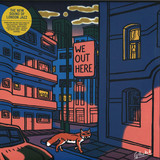
Repress of 2018’s classic compilation from Brownswood.
A primer on London’s bright-burning young jazz scene, this new compilation brings together a collection of some of its sharpest talents. A set of nine newly-recorded tracks, We Out Here captures a moment where genre markers matter less than raw, focused energy. Looking at the album’s running order, it could easily serve as a name-checking exercise for some of London’s most-tipped and hardworking bands of the past couple of years. Recorded across three long, fruitful days in a North West London studio, the crossover between each of the groups speaks to the close-knit circles which make up the scene.
Surveying the way that London’s jazz-influenced music had spread outside of its usual spaces in recent years, this album bottles up some of the vital ideas emanating from that burgeoning movement. Giving a platform to a scene where mutual cooperation and a DIY spirit are second-nature, it’s a window into the wide-eyed future of London’s musical underground.
Ubiquitous, much-lauded saxophonist Shabaka Hutchings is the project’s musical director. His own recent projects span from South Africa-connected, spiritually-minded jazz players Shabaka and the Ancestors to Sons of Kemet, who match diasporically-connected compositions with viscerally-direct live shows. His entry on the album, ‘Black Skin, Black Masks’, is typically difficult-to-define: with an off-kilter, shifting rhythmic backbone, repeated phrases – mirrored between clarinet and bass clarinet – shape the track with an alluring hue. His input ties together a deft, genre-agnostic sensibility that’s shared through all the players on the record.
Theon Cross – who’s also part of Sons of Kemet with Hutchings – starts his track, ‘Brockley’, with the solo, distinctive low rumble of his tuba. Winding and mesmeric, it sees tuba and sax lines winding together in rhythmic and melodic parallels. Ezra Collective – whose drummer and bandleader Femi Koleoso has toured with Pharaohe Monch – run a tight, Afrobeat-tipped rhythm on ‘Pure Shade’, with the final third changing gear into a melodic, momentous closing stretch.
Joe Armon-Jones, whose ludicrous chops on the piano have seen him touring with the likes of Ata Kak, showcases earworm-like, insistent motifs on ‘Go See’, balanced with a playful, improvisatory approach with room for ad-libbing and solos a-plenty. Taking a softer tact than many of the other entries, Kokoroko – whose guitarist Oscar Jerome has been making waves with his solo material – spin a lyrical, steady-paced meditation on ‘Abusey Junction’, matching chanted vocals with gently-played guitar.
Nodding to spiritual jazz influences, Maisha’s ‘Inside The Acorn’ is a wandering, explorative rumination, balancing delicate washes of piano and percussion with sharp interplay between flute and bass clarinet. In contrast, Nubya Garcia’s ‘Once’ is taut and carefully-poised, her tenor sax guiding a carefully-built energy to an explosive conclusion. And finally, Triforce’s ‘Walls’ is a performance in two parts: starting with Mansur Brown’s languorous, lyrical guitar, the second half switches up to a low-slung, g-funk-tipped groove.
debe ser publicado en 22.05.2026
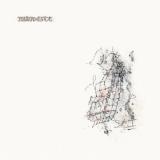
Australian composer-performers Judith Hamann and James Rushford have worked together in countless projects for two decades, perhaps most notably in Golden Fur, their trio with Sam Dunscombe. Black Truffle is pleased to announce Midmeste, their first work as a duo. Its title is Middle English for ‘the middlemost point’, alluding to how the piece builds on the points of overlap between the highly personalised musical languages Hamann and Rushford have developed in recent years. Performed on cello and a variety of pipe organs, Midmeste is a spacious, sometimes unsettling exploration of their shared interest in alternative tunings, psychoacoustic phenomena, the physical properties of their instruments, and the usually peripheral sounds generated by the performing body.
Beginning with a sequence of austerely vibrato-less harmonics from Hamann's cello, trailed by Rushford's whistling portative organ tones, the music soon expands into a slow-moving melodic wander, pausing at times to linger over an uncomfortable harmony or particularly resonant cello tone. Hamann and Rushford have long histories of engagement with pre-Classical European musical traditions, having in past projects performed and radically extended the work of Solage, Louis Couperin, Johann Conrad Beissell and other composers. Here they use a 15th century song by John Dunstaple, ‘O rosa bella’, which returns throughout the piece, distorted, aerated and splayed into new forms.
Developed while the two shared residencies at Akademie Schloss Solitude, Stuttgart in 2020 and La Becque on Lake Geneva in 2023, Midmeste integrates recordings made (at at the invitation of the Biennale Son) on the organ of the Basilica St Valere in Sion, Switzerland—the world’s oldest playable organ, built in the early 15th century. Played by both Rushford and Hamann, the instrument’s idiosyncratic features, including bellows pumped manually using massive wooden beams, are integrated into the music through amplification. Creaks and thumps locate the music physically both in the performers’ bodies and the specific site of its making. Moving through a series of distinct episodes across its forty-minute span, Midmeste makes space for near-silent duets of high harmonics and hissing air, moments where twittering high tones and rumbling sub-bass could be electronic, and static fields that unexpectedly blossom into almost Romantic harmonies.
Listeners familiar with Hamann and Rushford’s work will find many familiar features here: the stunningly rich cello tones, their patient sustain allowing heightened awareness of the inner life of sound and its interactions with the environment; the care with which acoustic space is activated, becoming at times a third instrumental voice; the attention to fragile, unstable sonorities that sometimes have a comic edge. A major work from two key figures in contemporary experimental music, Midmeste synthesises rigorous exploration of fundamental questions of sound and performance with an unapologetic embrace of beauty.
debe ser publicado en 22.05.2026

Tucked in the heart of Koreatown, Los Angeles, lies The Libra Hotel—the titular architecture of Nick Malkin's new album and site of his musical and psychogeographic exploration. Unlike most musical "site-specific" studies, Malkin remains wholly ambivalent to the documentarian approach, instead sharpening an auteur-like focus on the site as a conceptual and highly expressive backdrop. The Libra is musically explored as a space that houses a noir fragmentation of identity—the exhausted trope of a complicated protagonist walking through rain-soaked street corners and fumy neon lights—where an inner monologue is rendered in both miniature and at a cosmic scale. Casting aside stifling tropes around field recording, ambient, and improvised music, Malkin's work finds its own unique fidelity and emotional core through the assembly and reassembly of memory. Nearly every sound on the album—from frayed saxophones, lambent pianos, and dissected jazz drum kits—are multiplied, shattered, and reconstituted into shapes that adorn The Libra in a motion-blurred fog. The narrative of the Hotel suddenly appears as if out of the mist, with intersecting characters interacting within its walls by happenstance. Adminst the languid set pieces, wraith-like sonic grains gravitate around wide subbass beams that give structural form to The Libra, a narrative tension like when a scene is shot from hundreds of different perspectives: an image both luminous and veiled.
Much like Frank Sinatra's own spatial residency immortalized on "Live at The Sands," "At The Libra Hotel" showcases an exuberant view of entertainment, hospitality, and a form of masculinity, one that can quickly detourn into darkness. Knowing this, Malkin extracts a melancholic core out of The Libra locale. The flickering shadows of American decadence are shown in their ephemeral honesty, lines that trace how even in everyday life virtue is tested, sanity is tested, even reality is tested within the confines of desire, within the night. The album is draped in fleeting textures, carefully arranged with a trance-like microtonality, the faint inflections and articulations of a jazz band cascading into dissipated stillness. Voicemails about changed locations and covert eavesdropping on guests' whispered conversations provide an atmosphere of missed connection and voyeurism—a purloined letter of desire receding into a vanishing point. Like the music itself, The Hotel, a chapel perilous at the intersection of desolation row, the center of it all, yet simultaneously at the edge of town, becomes a structure between libidinous virtuality and actuality—our inevitable half-light.
Ultimately, the pensive atmosphere of "At The Libra Hotel," powerfully asserts a plea for the kinds of intimacy only possible in transient spaces. Here, memory cascades into a force that feels like something supernatural, perhaps even religious, yet always subject to the infidelity of our imagination. Here, the album opens into its primary psychodrama, the transient nature of subjectivity itself and how this becomes fractured in the tumult between our commitments and desires. Within this nocturnal space, to quote Louise Bourgeois, "you pile up associations the way you pile up bricks. Memory itself is a form of architecture."
debe ser publicado en 22.05.2026

Alex Wann & JUNO combine for ‘Allo’ on Crosstown Rebels.
Out on 8th May 2026, the two in-demand talents combine for a cinematic label debut on Damian Lazarus’ imprint. Parisian DJ/producer Alex Wann joins forces with German talent JUNO for a brooding two-track EP arriving via Crosstown Rebels on 8th May. Alex has become a formidable force within the melodic house landscape, performing at festivals and venues from Tomorrowland to Pacha Ibiza, while holding a Las Vegas residency at Wynn’s XS Nightclub. His reach extends far beyond the booth, with multiple Beatport chart-topping releases on renowned imprints and notable support from Keinemusik, Diplo, John Summit, BLOND:ISH, and more. Here he collaborates with JUNO, who comes off a breakout 2025 marked by his standout hit ‘Last Dance’ on Magnifik Music and a Hot Mix for Pete Tong on BBC Radio 1, delivering an impressive label debut for the pair.
Title track ‘Allo’ sees the pair lock into a deep, groove-led collaboration that balances warmth and intensity, built around a driving low end and a steadily rising sense of pressure as its growling basslines, echoing synth textures, and razor-sharp percussion slowly unfold. On the fl ip, ‘IDONE’ fi nds Alex Wann stepping out solo with an introspective fi nish, featuring pulsing riff s and pensive, elongated piano chords, threaded by a winding, gritty synth line that gradually builds toward a powerful climax.
debe ser publicado en 22.05.2026

Bahamadia’s 1996 debut album Kollage is rightly regarded as one of the greatest rap albums of the 1990s. For the first time ever, Be With present the definitive double LP version of this eternal hip-hop classic, including the legendary "Path To Rhythm" which never appeared on the original LP or on vinyl, anywhere. An indelible VIBE from start-to-finish, Kollage presents Bahamadia's swirling rhymes delivered with an irresistibly butter flow and razor-sharp assuredness over a steady slew of smoothed-out, jazzed-up, blunted beats. Achingly cool and effortlessly funky throughout, it's an absolute must for true 90s hip-hop fanatics.
The entire Kollage project was recorded at D&D Studios and the ties to Gang Starr are keenly felt, with DJ Premier producing five tracks in addition to the killer songs Guru had already produced with her. Working with the cream of the mid-90s East Coast sound, Kollage is, accordingly, a record that demonstrates a varied musical taste with disparate influences, as Bahamadia has previously stated: “The title Kollage was a reflection of my state of mind. I first got interested in music from playing my parents’ and grandparents’ records, as well what I heard on the radio. I wanted Kollage to reflect that diversity both lyrically and sonically."
With intelligent, poetic lyricism and a laconic verbal style bursting with both warm texture and deceptive energy, Bahamadia’s flow was as inspired by Aretha and Nancy Wilson as it was Q-Tip, Schoolly D and Lady B. Swaggering out the gate, "WordPlay" finds Bahamadia confidently showcasing her considerable old-school battle-rhyme skills over a Guru beat that utilises an infectiously bouncy bassline with splashes of sultry jazz horns and a Jeru vocal snatch for the hook. Up next, the quietly shimmering and ruggedly beautiful "Spontaneity" is one of the most alluring on the record, Da Beatminerz crafting a brilliantly soulful and jazzy soundscape for Bahamadia's effortless vocals to float across. It's followed by "Rugged Ruff", where the rapper carefully constructs a swift off-beat flow over Premier's raw jazzy fire.
With smooth spacey synth vibes overseen by former Geto Boys producer N.O. Joe, "I Confess" is, without question, a fly love song and soothing (p)-funk groove. "UKNOWHOWWEDU" is an airy, chilled tribute to her hometown. Produced by Ski Beatz & DJ Redhanded, it rides a gloriously mellow break. It's a true Philly anthem, shouting out a who’s who of the entire city’s scene. Early banger "Total Wreck" follows, presenting a murky Guru instrumental elevated by jazzy horns. Bahamadia invokes the title's suggestion, firing her brilliant bars more aggressively than we’re accustomed to. More Beatminerz-brilliance comes in the way of "Innovation", an opportunity for the MC to invoke Freestyle Fellowship in her forward-thinking and literary verses. "Da Jawn" features hometown buddies The Roots, with Black Thought gliding into a back-and-forth with Bahamadia over ?uestlove’s warm, snapping percussion. With the strut club banger "True Honey Buns (Dat Freak Sh*t)", DJ Premier provides some laidback vibrant boom bap for Bahamadia to share a wild, cautionary tale about a night out with her girl, Kia.
Fan favourite "3 Tha Hard Way" is a hypnotically sinister cut, with Bahamadia, K-Swift and Mecca Star taking star turns to coast over DJ Premier’s raw beat whilst the tender "Biggest Part Of Me" is a heartfelt stunner dedicated to her son. Incredibly, only the European and Japanese CD versions of Kollage was released with the brilliantly breezy “Path To Rhythm”, featuring Ursula Rucker. Whilst ostensibly a "bonus track", it's anything but, to our ears. Very much in sonic conversation with KRS-One's stretched-out sleeper classic "Higher Level", it's absolutely essential so we had to include it, appearing on wax for the first time here, exclusively. Quite a coup.
Somewhat predictably, whilst Kollage was released to significant critical acclaim, it suffered from disappointing sales. In the intervening years - and for far too long - it was a criminally underrated record, an increasingly hidden gem. We hope this double LP reissue - which looks and sounds amazing - will go some way to correct this. This 2024 Be With double LP re-issue has been mastered for vinyl by Simon Francis, cut by Cicely Balston and pressed at Record Industry. It's too bold and beautiful to remain overlooked and underserved.
debe ser publicado en 22.05.2026

A DJ, producer and significant figure in contemporary electronic music, Marcel Dettmann steps forward to contribute to Running Back’s ongoing Mastermix series. Whereas previous editions of Mastermix have taken an ear to the sound of lapsed, legendary clubs such as Wild Pitch and Front, Dettmann’s curation deftly captures the man himself in ongoing perpetual motion, raiding the vault for his own precision-tooled edits, long-employed on dancefloors to devastating effect. Alongside a continuous mix, this release arrives as a 3LP gatefold, and as a limited edition cassette.
Closely associated with Berlin’s techno landscape, Dettmann was born and raised in the former GDR, then later immersed in the bleary-eyed counter cultural landscape of post-unification Berlin. Initially oriented by post-punk, industrial and new-wave music, Dettmann has been DJing since 1993, always expanding and perfecting his repertoire. He later began working behind the counter at the city’s tastemaking rave boutique Hard Wax, and a decade after he first dropped a needle, became (and remains) resident at notable local nightspot Berghain/Panorama Bar, where his instincts have helped sculpt the signature sound of both main dancefloors.
Of course, you’re probably not asking, “Who is Marcel Dettmann?” More importantly, you might want to know; just what treats has he gifted us here? The trip begins with a simple pitch-shift skywards, transforming Identified Patient’s creeping ‘The Female Medical College of Pennsylvania’ into a peak-time freakout, before an alternate take on Toctronic’s ‘Bis uns das Licht vertreibt’ emerges from the vaults for the first time. Dating from 1995, and one of Dettmann’s all-time favourites, Cristian Vogel’s ‘Untitled’ clambers back into the box with respectable cuts, while John Bender’s ‘Victims of A Victimless Crime’ kicks off the flip sporting a new arrangement, transporting us back to the foundations of a confident, stripped-back sound.
A few subtle edits to Clark’s perilously funky ‘Dirty Pixie’ takes us to Dettmann’s remix of Junior Boys. Produced in 2010, it transposes the Canadian duo’s sophisticated pop with our curator in his minimal prime, and has since become an irresistible prize for high-minded diggers. The same can be said for Experimental Products’ explosive proto-electro anthem ‘Who Is Kip Jones?’, empowered from pricey Discogs purgatory with just the slightest of tweaks. It’s deservedly sandwiched between the guiding influences of Chicago and Detroit in the form of Mutant Beat Dance’s raw ‘The Human Factor’ and a shimmering new version of previous solo production ‘Water’, featuring close friend and Ostgut Ton ally, Ryan Elliot.
The second half of the Mastermix seamlessly connects the mechanical past and digital present of EBM and industrial in the dance, with Dettmann’s instincts as a guiding hand. Severed Heads’ iconic ‘We Have Come To Bless This House’ emerges with mere nips and tucks, while Nitzer Ebb’s ‘Shame’ is significantly reimagined as a highwire act of rhythm and tension, setting up a sensual second take on a 2017 remix of ‘Limbo’ from Swiss synth heroes, Yello.
Core musical memories are shaken and stirred with a context-shifting take on Frank Duval’s emotional classic ‘Ogon’, while Ian North’s ‘Sex Lust You’ and Ford Proco’s notable Coil collaboration ‘Expansion Naranja’ effectively throb with only minor adjustments, respectfully imagined as “shadow versions”. Meanwhile, a simple breakbeat lifts Albert Kuningas’s ‘Astraalprojektio’ in the direction of wide-eyed dancefloors, while a fresh take on K-Alexi Shelby’s ‘Season of The Real’ inexplicably emerges somehow even funkier than before.
The conclusion of the compilation leads back to Das Tier from the prolific experimentalist Conrad Schnitzler, whose swirling synths and hypnotic vocals are duly tightened by Dettmann, but only as he puts it, “in conversation with the original.” Concluding three discs and thirty years of commitment to the dancefloor, this Mastermix not only offers us the opportunity to eavesdrop on this endless exchange, but to gain some sought-after material for our own record collections.
debe ser publicado en 22.05.2026

The 12th studio album from Death Metal Veterans, JUNGLE ROT. DAVE MATRISE (Vocals/Guitars): "Let's start off by saying what an amazing accomplishment it is to hit 12 releases in my career. Never would I think I'd still be doing this 30+ years later. I guess be careful what you wish for I'm very grateful to all of our fans that have supported us for so many years and for never giving up on us. To my bandmates for all of their hard work and dedication to me and JRot over all these year’s. Cruel Face Of War will not disappoint. It's full of crushing grooves and violent hooks that will surely break anyone’s neck. We have stood the test of time. We are still here playing our trademark style of Oldschool Death Metal that has carved a legendary name for us in the underground scene today." Produced by Chris Djuricic at Bell City Sound Company. Mixed and Mastered by Dan Swano at Unisound Studio. Artwork and design by Gyula Havancsak
debe ser publicado en 22.05.2026

Ten years ago, in a sharehouse on Chapel Street, four 20-year-olds with zero expectations wrote and recorded an EP in a single afternoon. Those six blistering minutes of music became Giddy Up. An hour later, Amyl and The Sniffers had a name, a Bandcamp upload, and the beginnings of a legacy.
Following a year of backyard gigs, playing for friends and partying across Melbourne's sticky carpet music scene, the band released their iconic second EP Big Attraction in 2017.
Now, to celebrate a decade of raw power and reckless spirit, Giddy Up/Big Attraction returns in a definitive 10th anniversary 12-inch vinyl edition — fully remastered for maximum punch.
Featuring early classics like “I’m Not A Loser” and “Stole My Pushbike,” plus enduring live favourites “Balaclava Lover Boogie” and “Westgate,” this is the sound of Amyl and The Sniffers before the world caught up — feral, funny, and unstoppable.
The LP is housed in a gatefold sleeve showcasing Chris Sutherland’s iconic 2017 band photo, alongside an exclusive new essay from Amy Taylor and a heap of never-before-seen behind-the-scenes shots from the band’s earliest days by Jamie Wdziekonski. As Amy recalls: “We recorded and wrote over the afternoon… we’d never played together before that day… it’s spontaneous, and fun and achievable in that time because to us it sounded more than good and we weren’t perfectionists and it didn’t matter.”
From DIY house shows in Melbourne to international stages, it all started here.
debe ser publicado en 22.05.2026
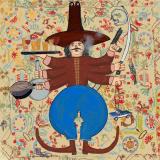
Be The Mountain (2026) is the latest release from Detroit-based musician STS. The record explores a serene and introspective world shaped by organically morphed textures and slowly evolving soundscapes.
While largely drumless, the album maintains a subtle rhythmic backbone - not through traditional percussion, but through modulated pads, shifting synths, and carefully sculpted ambience. The music moves and breathes without overt propulsion, finding tension and momentum through tone, density, and motion rather than beats.
Much of the record was written during a period of sustained physical and mental strain. A time when daily effort fought against perceived limits. Instead of responding with heavier or more aggressive material, the music became a quiet counterweight to the intensity. These tracks function as an escape from chaos. They are built from patience, repetition, and a gradual transformation.
The title reflects a central idea behind the record: confronting something that initially feels insurmountable, only to realize that the enduring force is the one within us all.
Be The Mountain is about endurance, not as struggle, but as presence.
debe ser publicado en 22.05.2026

Ten years ago, Anderson .Paak didn't just release an album; he staged a full-scale takeover of the soul and hip-hop landscape. Released on January 15, 2016, Malibu served as the definitive arrival of an artist who had spent years grinding in the underground before a star-making turn on Dr. Dre’s Compton. While his previous work hinted at his potential, Malibu was the moment the world met the "Cheeky Andy" persona in full—a virtuosic drummer, a raspy-voiced crooner, and a sharp-witted rapper all rolled into one. The album is a sprawling, sun-drenched journey through the Southern California coast, blending 1970s funk, church-reared gospel, and gritty boom-bap into something that feels both nostalgic and entirely futuristic. With a heavyweight production lineup including 9th Wonder, Madlib, Kaytranada, and Hi-Tek, the record maintains a warm, analog texture that was a breath of fresh air in an increasingly digital era. It’s an album that breathes, full of intentional imperfections and the kind of "in-the-pocket" groove that can only come from a seasoned live performer. Beyond the infectious, dance-floor-ready energy of tracks like "Am I Wrong" and "Come Down," the album is a deeply autobiographical masterwork. .Paak uses the 65-minute runtime to unpack his life story with startling clarity, touching on his mother’s gambling addiction, his father’s incarceration, and his own brushes with homelessness with a sense of resilience that never feels heavy-handed. He weaves these heavy themes through a lens of triumph, grounded by vintage surfing documentary samples that give the project its cinematic, coastal atmosphere. It’s a celebratory record born out of struggle, anchored by his impeccable technicality on the drums and a guest list—featuring ScHoolboy Q, Rapsody, and The Game—that feels hand-picked to complement his specific brand of West Coast swagger. A decade later, Malibu stands as a modern classic and the blueprint for the soulful revivalism that would eventually lead .Paak to global superstardom and Grammy-winning heights. It remains a testament to the idea that the most profound music often comes from the most personal places, proving ten years on that the best way to move forward is to stay rooted in the groove.
debe ser publicado en 22.05.2026

Ten years ago, Anderson .Paak didn't just release an album; he staged a full-scale takeover of the soul and hip-hop landscape. Released on January 15, 2016, Malibu served as the definitive arrival of an artist who had spent years grinding in the underground before a star-making turn on Dr. Dre’s Compton. While his previous work hinted at his potential, Malibu was the moment the world met the "Cheeky Andy" persona in full—a virtuosic drummer, a raspy-voiced crooner, and a sharp-witted rapper all rolled into one. The album is a sprawling, sun-drenched journey through the Southern California coast, blending 1970s funk, church-reared gospel, and gritty boom-bap into something that feels both nostalgic and entirely futuristic. With a heavyweight production lineup including 9th Wonder, Madlib, Kaytranada, and Hi-Tek, the record maintains a warm, analog texture that was a breath of fresh air in an increasingly digital era. It’s an album that breathes, full of intentional imperfections and the kind of "in-the-pocket" groove that can only come from a seasoned live performer. Beyond the infectious, dance-floor-ready energy of tracks like "Am I Wrong" and "Come Down," the album is a deeply autobiographical masterwork. .Paak uses the 65-minute runtime to unpack his life story with startling clarity, touching on his mother’s gambling addiction, his father’s incarceration, and his own brushes with homelessness with a sense of resilience that never feels heavy-handed. He weaves these heavy themes through a lens of triumph, grounded by vintage surfing documentary samples that give the project its cinematic, coastal atmosphere. It’s a celebratory record born out of struggle, anchored by his impeccable technicality on the drums and a guest list—featuring ScHoolboy Q, Rapsody, and The Game—that feels hand-picked to complement his specific brand of West Coast swagger. A decade later, Malibu stands as a modern classic and the blueprint for the soulful revivalism that would eventually lead .Paak to global superstardom and Grammy-winning heights. It remains a testament to the idea that the most profound music often comes from the most personal places, proving ten years on that the best way to move forward is to stay rooted in the groove.
debe ser publicado en 22.05.2026

Celebrating 30 years of the legendary label, we pick legendary bombs and unreleased gems from Black Vinyl Records rich catalogue. From its inception back in 1996 Black Vinyl Records has always been a label for the serious DJs. Tony Humphries, Paul Trouble Anderson, Ricky Morrison, Justin Berkman, David Morales, Bobby & Steve and most serious Underground DJ’s supported the original vinyl release of Kerri Chandler’s early masterpiece ‘My Old Friend Alan’, dedicated to label founder Alan Russell, and it gained many more supporters following its recent digital re-Master. The David Harness remix of Tedd Patterson’s ‘Roots’ appears on vinyl for the first time here and was featured in no less than 25 Traxsource DJ charts after it’s digital release in 2022, including luminaries such as DJ Pope, Quentin Harris, Kevin Yost, Charles Dockins, and many more. The vocal mix of ‘Fever Tension’ by Fresh & Low has always been a sought after gem, only ever appearing on a ‘Re:Cuts’ release in early noughties, and ‘Rising Into Joy’ by Arnold Jarvis was championed by Danny Rampling, Paul Trouble Anderson, Andy Ward, Deli G and all the 'heads' and is the definition of a Soulful House Classic.
debe ser publicado en 22.05.2026

For decades, Dan Penn’s mid 60s Muscle Shoals demos were the Holy Grail among southern soul fans, feted by the likes of Rick Hall and Jerry Wexler as being better than the hit versions. When they finally became accessible to all, 40-plus years after they were recorded, they turned out to be just as good as had been stated.
Further acclaim awaits the recent discovery by Soul-4-Real of two more demo masterpieces, written and performed by Dan and Spooner Oldham while working in Memphis at American Studio in 1967-68. The tape box shows who they were intended for, and it’s a real shame that James Carr never recorded either as both would have been perfect for him. At least we got to hear fine versions of “Cheaters Never Win” from Tony Borders and Bobby Boseman in due course. The lovely “I’m Believing In You” seems to exist only in the version you hear here.
New ‘old’ music from Dan is always worth hearing and having. These wonderful performances are no exception…
debe ser publicado en 22.05.2026

For decades, Dan Penn’s mid 60s Muscle Shoals demos were the Holy Grail among southern soul fans, feted by the likes of Rick Hall and Jerry Wexler as being better than the hit versions. When they finally became accessible to all, 40-plus years after they were recorded, they turned out to be just as good as had been stated.
Further acclaim awaits the recent discovery by Soul-4-Real of two more demo masterpieces, written and performed by Dan and Spooner Oldham while working in Memphis at American Studio in 1967-68. The tape box shows who they were intended for, and it’s a real shame that James Carr never recorded either as both would have been perfect for him. At least we got to hear fine versions of “Cheaters Never Win” from Tony Borders and Bobby Boseman in due course. The lovely “I’m Believing In You” seems to exist only in the version you hear here.
New ‘old’ music from Dan is always worth hearing and having. These wonderful performances are no exception…
debe ser publicado en 22.05.2026

Over the last two decades, The Field has refined a language of repetition that feels not assembled but uncovered. His loops don’t just cycle; they gather weight over time, so the tracks seem set in motion rather than composed – patterns established early, then
gently altered, their emotional temperature shifting almost imperceptibly.
On this five-track EP for Studio Barnhus, the Swedish producer’s first solo release in 8 years, The Field returns to the sonic architecture that defined his seminal debut From Here We Go Sublime, but with a (dare we say
Studio Barnhus-esque) looseness that allows the structures to breathe.
Tracks like In Our Dreams and 333 706 move forward on meditative chords, harmonies stretching their reach until the tracks feel elated by their own momentum.
The B-side tilts the frame. Another Day introduces some melodic immediacy, folding a tender vocal presence into The Field’s glittering matrix of sound, softening the grid without dissolving it. Now You Exist is a grand finale radiating with restrained euphoria.
The Field’s music never insists, it just draws you in and keeps you there. In a landmark crossing of paths for the Stockholm label, Studio Barnhus proudly presents Now You Exist, out May 15 on vinyl and all digital platforms.
debe ser publicado en 22.05.2026

DYING VICTIMS PRODUCTIONS is proud to present the striking debut EP of Spain’s FABLE, Long Hath the Night Dwelt, on CD and 12” vinyl formats. FABLE started as a solo-project by Jose Soler (Phantom Spell, Chantrice) influenced by ‘70s and ‘80s hard rock and heavy metal – a list as varied and idiosyncratic as Thin Lizzy, Whitesnake, Pagan Altar, Ashbury, and Hällas – along with hints of old US metal. Duly girded, the band bring forth their public debut, Long Hath the Night Dwelt. An actually-narrated prelude sets the stage for a cautionary tale about class struggle and revolution, FABLE indeed using fables and stories as a medium to tell an expansive story of the woodsfolk dominated under the iron claw of “The Owl.” Despite that, the band’s debut EP is exceptionally compact at five tracks in 22 minutes, moving with a simmering patience that’s heavy on mood and dynamic in its restraint. Never overdriven nor busy, warm and intimate but with a psychic distance that seems impossibly ancient, FABLE very much evoke the perhaps-centuries-old folklore that seems so central to their rustic rock; the wise-sage vocals almost seem an afterthought when the narrative flow of the music starts winding and wending like smoke from a tavern fireplace, so illustrative is its hushed power. However, each element here is equally important, and all work together to form a totality that’s unfussy but hewn with class and care. And this is just the start of this FABLE: discover for yourself how Long Hath the Night Dwelt!
debe ser publicado en 22.05.2026

Last year Ace Records were delighted to reissue The Brides of Funkenstein’s debut LP from 1978, “Funk Or Walk”. Featuring their hit single ‘Disco To Go’, this album put the Brides on the map and sold strongly.
Before sessions commenced for a second album, Lynn Mabry left the group before sessions commenced for a second album, leaving Dawn Silva alone at the altar. George Clinton added P-Funk backing singers Jeanette McGruder and Sheila Horne to the mix, creating a three-pronged vocal attack.
Sessions featured the cream of the P-Funk players including keyboard wizard Bernie Worrell, bassist Bootsy Collins and guitarist Garry Shider. The resulting album, released in 1979, was even better that their debut.
The title track ran for over 15 minutes on side one, showcasing the vocal and musical prowess of all concerned. Other tracks included ’Party Up In Here’, ‘Smoke Signals’, ‘Mother May I?’ and the gorgeous ballad ‘Didn’t Mean To Fall In Love’.
Although it did not spawn a hit single, “Never Buy Texas From A Cowboy” sold as strongly as “Funk Or Walk” and over time has been hailed as a classic P-Funk album.
With liner notes from Ace’s Ian Shirley, we are delighted to release it on orange vinyl and CD. You don’t need your mother’s permission to buy it either.
debe ser publicado en 25.05.2026
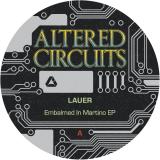
"Over the past three decades, Philipp Lauer has produced an incredible body of work, deploying a myriad of aliases, both as a solo artist and as a part of collaborative projects. From his hardware-steeped Frankfurt studio Pyramide 2, he has built this catalogue through original material and remix commissions, taking on the full spectrum of electronic music while retaining an unmistakable signature. He combines a hands-on approach to rhythm and composition with a DIY MO and a love of big hooks. The level of expertise at hand seems to facilitate a playfulness that subtly permeates all layers of his work. He's a pop melody natural who just so happens to love fiddling with synthesizers, drum machines, and effects an equal amount. All of these qualities are exemplified on "Embalmed In Martino": Lauer's four-track ode to the Belgian Martino sauce, a spicy tomato-based condiment, and arguably the essential ingredient to top off the namesake raw meat sandwich. On "Embalmed", which makes use of instrumentation that would fit right in on an early eighties Manchester cut, and "Martino", where a sturdy, electroclash flavored arp bass provides the stamina, a slew of big and small riffs easily work their way in, thirsting for our ears. On the other side, "Transactional" combines Miami basslines and similarly electro-fundamental twinkling synth work with a flanger-laced 4/4 beat, while "Don't You Know" features soaring synthwave patterns and the only vocal samples on the EP. Both sport rich arrangements as well, right down to the cowbell overdubs. Lauer's often lauded for his "summery sound". In this light ALT026 lands right on time - yet we might disagree here, as it's suited for all seasons, and all terrains, both the shiny festival grounds and the dim-lit club floors."
debe ser publicado en 25.05.2026

Mysticisms’ returns to the music of the Conscious Sounds label and their short-lived but highly prized Dub meets Funk project, Dub Specialists. Created by label head Dougie Waldrop and Chris Petter (Love Grocer) to explore their interest in samplers and a love of Funk and Jazz.
A hugely respected “Digital” and “Roots Reggae” label, Conscious Sounds has been a mainstay of the East London digidub sound for over 30 years. Dub Specialists released 3 albums on the Crispy Music sub label, they have recently gained considerable interest in digger circles, with rising prices to match.
As with their first Dubplate outing, the release features extended re-edits by the label and friends, this time featuring versions by Lexx, Miles J Paralysis, Chuggy and Vanity Project. Working with the simplicity and skill of his studio craft, Dougie utilised the Atari 1040, Cubase and Soundcraft mixer to effect. Petters’ chords sit atop reggae basslines, funk samples, loops and this time, a heavy dose of cut up vocals in to the mix.
While the first EP came from their debut album, Breat To Break, here the source material for the re-edits comes, in the main, from their second outing “Dub To Dub Beat To Beat”. A more expansive album that also dipped in to 4/4 rhythms and touches of House / Techno.
Opening track Dynamic Duo is a 4/4 stepper bomb – with samples from Adam West’s iconic interpretation of Batman – expertly extended by long-standing DJ, producer and edit master, Zurich’s own Alex Storrer aka Lexx, who dials things to max for a club stop. A new name on many lips, Miles J Paralysis takes it all back down with a beautifully drawn out, acid-tinged tripper. Bumpin’, the mid-tempo groove sucks you in, psychedelic and mind expanding.
The flip returns to the more traditional Dub Specialist vibes of Breaks’n’Funk’ cut ups, first with (co-)label head Chuggy’s faithful extension of Heavy Dub. Featuring the classic Ijahman Levi’s vocal, the breaks flow and piano / horns stab, a dance floor shaker for the discerning. To close, secret studio fixer to many, Matt Bruce again dons his Vanity Project moniker to perfectly tease and live dub (out) the half-stepper, Reality Dub and close this latest in the Dubplate series.
Beat The Mystery.
En el almacen y preparando para el envío

NO “ORDINARY JOE”!!! Our finest double-hearder ever… TERRY CALLIER was born in Chicago in the shadows of Curtis Mayfield, Major Lance,Ramsey Lewis and his mentor Jerry Butler. He would become one of the greatest Soul/Jazz voices of all time, although he barely new it in his own lifetime. Both his debut album, ‘The New Folk Sound’, and single, “Look At Me Now” had failed commercially when he was contracted by JERRY BUTLER to his Songwriters Workshop. It was here that he wrote his timeless masterpiece “Ordinary Joe” which first appeared on Butler’s 1970 Mercury album ‘You & Me’. Butler’s version of the song has been largely overlooked, underrated and undervalued, until now, 50 years on when it finally makes its 7-inch single debut! Callier’s definitive rendition of “Ordinary Joe” appeared a couple of years later, in 1972, on the second of his three critically acclaimed Cadet albums ‘Occasional Rain’. The ’72 single was taken from the album and now commands a hefty £700+ price tag.
En el almacen y preparando para el envío
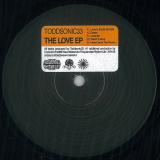
Toddsonic33 lands on Frequencies Rhythm Life with The Love EP, a refined continuation of his journey through punchy drum machines and soulful disco samples, all shaped by his distinctive and forward-thinking production style.
Five expertly crafted tracks, features a special contribution from Code 90 on A1, each rooted in the unmistakable spirit of Chicago house while pushing the sound in fresh, contemporary directions. Packed with groove, warmth, and energy, The Love EP is built for the dancefloor—an essential weapon for DJs and house music lovers alike:
debe ser publicado en 28.05.2026
Felipe Gordon is back on Shall Not Fade with his new album Tezeta and f*ck is it special.
Felipe Gordon is SNF label mainstay... (we released his triple repressed debut album "A Landscape Onomatopeya" in 2022 as well as 7 x 12" EPs on SNF over the years plus an extra 12" on Lost Palms)... so given his consistent and exceptional output on our record label you'd probably forgive some complacency with this write up, you might even afford us license to assume we're preaching to the choir and allow us to rest easy knowing that at this stage Felipe Gordon's records sell themselves.... Well none of those things are happening here because when an artist makes a record this complete, this good, you have to try to find the words. You use words like "timeless", "complete and "special". Words that can carry the weight. Because when you've listened to an album dozens of times, and not once, in any part, on any listen in any way has it fatigued you, you need to say. When a record felt so wonderfully familiar from the first listen and just kept on giving you the same feels ever since, you need to say. When a record makes you think about you how you feel about certain Air & St Germain albums (even when you know what it means to put that in a press release), you need to say. So here we are, saying these things.. Tezeta is a special record, one that exists in the rarefied air. A proper album. A record that every time you press play you will immediately remember why you own it and why you love it. A record that your subconscious will know so well that if shuffle is on you will know in an instant. An album that when it's in your collection and the first track starts you get a twinge of annoyance because you didn't listen again sooner and when the final track stops you stop too.
Given paint and a canvas we can most of us paint a picture, but only those that are gifted can paint something that makes us feel. Tezeta makes you feel. Feel familiarity when it's playing, yearning when its not, and absence when it ends. This alone would be enough to make the argument as to why this album is special and justify the gushing opening paragraph of this press release. But we're not done yet.
We don't really have a word in english for what Felipe Gordon has created with this album and how it makes you feel. "Tezeta" that word.
Tezeta is a one of four musical modes within the traditional Ethiopian modal music system known as Qiñit. Mulatu Astatke, the father of Ethio-jazz, frequently uses this mode, often translating it as "nostalgia" or "longing". Gordon says Mulatu's own tezeta recordings convey to him "feelings of melancholy and longing from a point of affection". This is exactly the feeling Gordon has captured. It is what he has woven through every recording on this album. Tezeta is the prime ingredient. It's the base note in recipe, it's sprinkled over the signature jazz-sampled house tracks. It powers the vast array of synthesizers Gordon deploys. It underpins the explorations into trip-hop. It's present in Gordon's varied vocal deliveries and it tunes his guitar. It's in the running order. It's the flow. Tezeta is tezeta in electronic music form, with 4/4, breakbeats, samples and synths.
Gordon says a big part of what differentiates this album from from his previous albums is that is was recorded in a period where he allowed himself to create music without the constraints of time or self-pressure which coincided with a moment of heavy personal growth which allowed him to reflect deeply on his work.
There is a word in Portuguese "Saudade" that Gordon says has a similar meaning to Tezeta - Saudade is defined as a deep, sometimes bittersweet, longing or nostalgia for someone or something that is absent or lost. But here at SNF we think that in Tezeta nothing has been lost. Quite the opposite. Through Felipe Gordon's artistic explorations we have all gained something very special indeed.
debe ser publicado en 29.05.2026
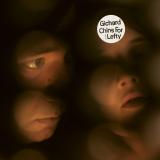
Chins For Lefty is the debut album and first recording by Gichard, a new duo chronicling the absurdities of end-stage capitalism and mouldering social rituals from their vantage point in Glasgow, Scotland. Recorded primarily in the band’s home studio straight to tape, Chins For Lefty combines gorgeous, ramshackle melody, DIY kosmische punk, drum machine + synth and, in vocalist/lyricist Lisa Jones, an absurdist commentator on the human condition as it navigates the anxieties of the modern world. Instrumentalist Chas Lalli’s swirling music accompaniment stitches an evocative mix of musical styles, the ragged wind beneath the lyrics’ wings.
Although the duo first collaborated in their previous group Dragged Up, their disparate musical and artistic backgrounds make for an alluring mix in Gichard. Lalli has spent the last 20 years in the Glasgow underground, most notably in the noise rock group VOM, while Lisa Jones’s practice was in poetry and spoken word. Beginning as co vocalist in her previous band, in Gichard her lyrics are centre stage; the vision concocted alongside Lalli amounts to a total world-build.
Chins For Lefty scans almost like a novel, with each track elucidating a skewed universe that bears only some resemblance to the one you and I partake in. Like all works of fiction Gichard’s songs are rooted in reality and the lived experiences of its authors, but here characters are exaggerated, social mores and habits are pulled apart to reveal their inherent alienness. Universal emotions are laid bare, the bright light of anxious examination searching out every hairline fracture in our relationships. Distorted and cracked, the mirror that Gichard hold up to our world is also pretty damn funny.
Opener Cholesterol Test launches an expansive, cosmic guitar and synth intro that belies the Tascam-tape recorder it was recorded onto, like a Chromatics cut substituting anxiety for overt sexuality. Here Jones intones an apology to a non-responsive recipient, in the medium of a long voice note forensically deconstructing an interaction from the night before. Over punk guitars and shuffling, lo-fi drum machine splutters, the narrator in Asking The Apes “prefers things to people” before being taken hostage in the city zoo to confess an obsession which consumes the protagonist, ending with the immortal two liner “I sleep in a cocoon of old newspapers at the end of your street / And I think I have been fired from my job,” On album standout Posthumous Hologram, the narrator is faced with a human simulacra, in this case an undead pop star; the face of the encroaching technological singularity. Yes, it does requests, it can do My Way in 200 different language options. But what are the implications? While you’re left pondering, the alternating deadpan verse delivery and undeniably catchy chorus keep you company.
By the time Break Up With Johnny Dogbirth rattles into view, the band are satirising a suburban inanity blown up to cartoon proportions, soundtracked with a drawled musicality that recalls Rowland S. Howard’s post-Birthday Party balladeering. This approach is furthered on Human Resources: over an angular guitar+bass track, Jones’s short story recalls Dry Cleaning’s erudite lyrical post punk. On Soft Face, Lalli’s guitar and drum machine are swathed in echo and delay, as Jones dissects dating rituals with a west of Scotland drollness. Hamming It Up brings a porcine perspective in a short story that begins with the line “I was breastfeeding discreetly in the service station. She didn’t mind.” What follows is a passage punctured with canned laughter and a narrative involving tribute acts, modern farming techniques.
Brilliant first single Your Private Hell closes the album, the closest the group get to earnest perhaps, filtered through a surreal central Scottishness. While Your Private Hell might seem like a sardonic take down of romance, perhaps it’s the very distillation of love in all its awkwardness, selflessness and weirdness. Here there’s a distinctive Glasgow-ness to this doomed romance: the protagonist falls for an outsider, offers them cheap jarred hot dogs and carbolic soap (the infamous, excoriating soap dished out in schools and government buildings throughout Scotland), offers to cover up a murder, stalks them in the all-night Spar. It’s a short story of intrigue, murder and the irresistible pull of self-sacrifice to share in someone else’s suffering. If that’s not love, what is it? You can see this vision mapped out in black and white on their video for 'Your Private Hell'.
debe ser publicado en 29.05.2026
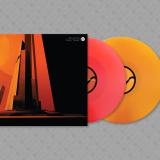
Enter the debut LP of the now Spatial regular Chronicle - Expect a joyous, varied blend of old school brand new atmospherics from one of the scene’s most talented producers. A1 - 20th Century Man Straight into the beats for the deliciously cheery opening, 20th Century Man encapsulates so much of what Chronicle does best - old school breakbeat sensibilities delivered with an inimitable atmospheric charm, strongly reminiscent of that peak Good Looking era we all adored. Incredible synthwork and analogue drums layered with danceable 2-step breaks and melodies take your mind exactly where you want to be. A2 - Terraformers Seminal synths and birdsong effects prepare us for an impossibly crisp breakbeat and 808 bassline to drive this track along, coloured by a myriad of subtle blips and bleeps, delicately flecked across a detailed and optimistic soundscape. Very DJ-friendly from the first to the final bar, the purity of Chronicle’s approach to atmospheric drum & bass is once again at its best here on Spatial. B1 - Boundless Space Playful twittering birds, gentle hi-hats and panning synths introduce Boundless Space, a blissful, serene treat for the senses which soon kicks into flourishing life with the timeless Circles break. Vocal samples punctuate the soothing breakdown with exquisitely programmed effects dotted here, there and everywhere, completing a stunning composition that both reflects on the past and looks forward in equal measure. B2 - Ephemeral Style A light, delicately calming pad-laden intro with echoing melodies opens Ephemeral style, soon punctuated by a sublime 808 bassline preceding the drop. Chronicle showcases his dancefloor breakbeat prowess with an energetic 2-step break pattern, expertly programmed and riddled with detail and density, creating a wonderful collage of sound and a perfect addition to any era-spanning atmospheric set. C1 - Modular Expansion Eerily reminiscent tones harking back to the golden, ultra-classic Good Looking era introduce us to Modular Expansion, a track which quickly adds layer upon layer of original identity to the vibe with crisp breaks, a wonderful metallic backdrop snare and subtle vocal samples. The joyously retrospective breakdown complements the energy of the track beautifully, capping off another gem for the record box. C2 - Limbic System Chronicle introduces Limbic System with swathes of swirling pads and synths, straddled with a subtle yet enigmatic melody carrying us through the drop, where we are treated to a lusciously constructed old school break pattern with a modern twist. Enter the breakdown and the keen ear will spot sampled quotes from Total Recall, which fit the vibe perfectly. “You went to Recall?” - yes, we sure did. And we enjoyed the trip! D1 - Non-Euclidian Continuing the blissful retrospective atmospheric tone of the album, Chronicle serves up Non-Euclidian which opens with a wonderfully synthy intro flecked with old school break samples and an earworm melody, before the onslaught of layered breaks provides variety as well as a thoroughly danceable pattern to unleash on the discerning dancefloor. Trademark dotted effects punctuate the track throughout. D2 - Deep Thought Capping off the LP we have Deep Thought, setting a calming and quietly brooding vibe before impossibly crisp beats kick in and elevate proceedings nicely. Chronicle effortlessly leads the listener through the drop with an analogue punch, earthy basslines and fluttering effects with the kind of flair we’ve come to love from such a vastly experienced and talented producer - perfectly complementing the vibe here at Spatial. Words by Chris Hayes (Spatial / Red Mist)
debe ser publicado en 29.05.2026
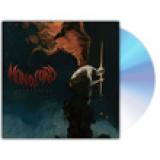
For well over a decade, MONOLORD have caused mass riff hypnosis with longform epics steeped in repetition, volume, and heaviness. One of heavy music’s most consistent and beloved bands, MONOLORD are gearing up for their next chapter with a new album titled Neverending. In looking for a new take on the genre, MONOLORD approached the legendary producer Sylvia Massy, known for her work with Tool, System of a Down, and Johnny Cash, among many more. The payoff from this new process is undeniable. Neverending feels like the culmination of 13 years of heavy, molten music, with a keen eye towards creating a sharper album. “The recording of this album is an example of the spirit of MONOLORD’s camaraderie,” says bassist Mika Häkki. “We’ve looked back and seen for the first time how much we have done as a band collectively, and realized what an intense 13 years it has been.” "The lyrics on this album are more personal than before because I went through some major life changes in the last couple of years,” guitarist/vocalist Thomas Jäger says. “I usually write about religion and how people are superstitious, but this record is more about relationships between people. But it’s not all about me. Sometimes I’m writing from another person’s perspective.” Neverending’s lead single “You Bastard” offers listeners a sharp contrast: A propulsive groove offset by lyrics about suicide. There’s two sides to suicide,” Jäger points out. “There’s the person who commits suicide and the people who gets left behind...The choruses represent the person left behind, and that person is calling the other a bastard—but it’s not pointing fingers or saying, ‘You suck.’ It’s more like, ‘You left me here with all the bullshit.’ It’s an understanding that life is not easy." Though it might not be immediately obvious, album opener “Iodine” was inspired by 70's rock epics like Lynyrd Skynyrd’s “Free Bird,” The Eagles’ “Hotel California,” and Led Zeppelin’s “No Quarter." Elsewhere, album closer “It’s Neverending” is the first MONOLORD song that Jäger doesn’t sing on. Instead, the death-metal style vocals are performed by former Entombed bassist Jörgen Sandström, (also of Grave, Domedagen and Firespawn.) 13 years on, MONOLORD’s path takes a new turn, and Neverending becomes the band’s most befitting album title. “It's been a wild ride and still is,” says drummer Esben Willems. “I've spent a quarter of my life in this band. Looking back, I'm incredibly proud of what we've accomplished along the way, and in many ways, this album feels like the essence of everything we've done so far. My mindset is the same it's always been, to be the absolute best the three of us can be.”
debe ser publicado en 29.05.2026

Forever Records
Music springs eternal. Recognising the enduring power of timeless albums to guide us through life, Forever Records is a reissue series dedicated to rediscovering lost musical treasures from across the spectrum of head-feeding, heart-rending electronic music.
Established by Rush Hour co-founder Christiaan Macdonald and Delsin founder Marsel van der Wielen, Forever Records places heartfelt faith in a carefully curated sequence of seminal, largely forgotten records from disparate eras, scenes and spaces within electronic music history. Tipped towards the mellow and introspective, these are albums that stop time when the needle hits the groove, stirring only when it's time to flip over before you sink back into the experience. That's what albums were always meant to be about, back then, right now, always and forever.
The Release:
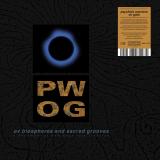
Dancing on the wildest edge of the 90s outsider techno zeitgeist while proudly independent of any so-called scene, Ov Biospheres And Sacred Grooves: A Document Ov New Edge Folk Classics is both of its time and out of time. Rooted in the experiments of electronic music pioneers, industrial culture and ethnic music from around the globe while responding to the house and techno explosion, Robbert Heynen, Reinier Brekelmans, Reinoud van den Broek and Tim Freeman's freewheeling masterpiece takes in lush electronica and murky abstraction on its singular voyage through parts unknown.
Forever Records presents an extensive reissue edition of the first 'fully released' Psychick Warriors Ov Gaia album. Originally released in 1992, this is the first time the full, previously CD-only, version of Ov Biospheres and Sacred Grooves will be pressed on vinyl. The original LP and CD artwork from the various editions released in the early 90s has been combined and designed by the band, and the audio has been remastered with their full approval. As well as a new LP edition of the album, there will also be a uniquely numbered, limited edition available housed in a gatefold sleeve that comes with a bonus 10" featuring two previously unreleased tracks.
Press response to Ov Biospheres and Sacred Grooves - A Document Ov New Edge Folk Classics:
“That’s Magick! The Psychick Warriors Ov Gaia are Holland’s best kept secret.”
Sherman, NME, UK 1992
“PWOG’s debut LP is an organic invocation rite — the soundtrack to a new world coming to life, an odyssey. Cross-cultural rhythms, ambiences and environmental samples segue into one another like a fluid relay, and unlike the majority of dance records, it never settles into a routine. It’s always evolving, always unpredictable, an indefinitely religious experience.”
John Selzer, Melody Maker, UK 1992.
"Grown men, who snorted their first ecstasy to this record, stammered with tears in their eyes about divine experiences and the cosmos, man."
Peter Erik Hillenbach, Marabo Magazine, Germany 1992.
Sacred Grooves’ introduces tribal dance music for the mind, body music leaning on the avant garde. Its ripples of sound drift through tranced out ritualistic beats into ambience and serenity resembling something akin to The Orb meeting Klaus Schulze at a brain tuning session.
Sherman, NME, UK 1992
"There's still dance for a moment, in the opening track "The Challenge," then Psychick Warriors roam the earth, where African drummers, tropical sounds, and science-fiction chords have found their place in a spiralling interplay of rhythms and sounds. A captivating, almost magical ritual." Corné Evers, Oor Magazine, Netherlands 1992.
"It's truly astonishing what these Dutchmen have come up with for their first LP. Their roots might explain the enigma, for Psychick Warriors are more in the tradition of Psychic TV than in the desolate temples of techno-house fetishists, to which they are wrongly relegated. Here, chromosomes dance, not instincts." CMK, Tip, Germany 1992.
"The transcendental essence of this album is spread throughout, with musical gravitations emerging unexpectedly from sonic experiments that are sometimes primitive, sometimes
futuristic in intention… But there is always an aura of cosmic magic that constantly puts all the parts involved in conflict and which, upon closer analysis, ends up being the main reason for the final result." Blitz Magazine, Portugal 1992.
debe ser publicado en 29.05.2026
Forever Records
Music springs eternal. Recognising the enduring power of timeless albums to guide us through life, Forever Records is a reissue series dedicated to rediscovering lost musical treasures from across the spectrum of head-feeding, heart-rending electronic music.
Established by Rush Hour co-founder Christiaan Macdonald and Delsin founder Marsel van der Wielen, Forever Records places heartfelt faith in a carefully curated sequence of seminal, largely forgotten records from disparate eras, scenes and spaces within electronic music history. Tipped towards the mellow and introspective, these are albums that stop time when the needle hits the groove, stirring only when it's time to flip over before you sink back into the experience. That's what albums were always meant to be about, back then, right now, always and forever.
The Release:
Dancing on the wildest edge of the 90s outsider techno zeitgeist while proudly independent of any so-called scene, Ov Biospheres And Sacred Grooves: A Document Ov New Edge Folk Classics is both of its time and out of time. Rooted in the experiments of electronic music pioneers, industrial culture and ethnic music from around the globe while responding to the house and techno explosion, Robbert Heynen, Reinier Brekelmans, Reinoud van den Broek and Tim Freeman's freewheeling masterpiece takes in lush electronica and murky abstraction on its singular voyage through parts unknown.
Forever Records presents an extensive reissue edition of the first 'fully released' Psychick Warriors Ov Gaia album. Originally released in 1992, this is the first time the full, previously CD-only, version of Ov Biospheres and Sacred Grooves will be pressed on vinyl. The original LP and CD artwork from the various editions released in the early 90s has been combined and designed by the band, and the audio has been remastered with their full approval. As well as a new LP edition of the album, there will also be a uniquely numbered, limited edition available housed in a gatefold sleeve that comes with a bonus 10" featuring two previously unreleased tracks.
Press response to Ov Biospheres and Sacred Grooves - A Document Ov New Edge Folk Classics:
“That’s Magick! The Psychick Warriors Ov Gaia are Holland’s best kept secret.”
Sherman, NME, UK 1992
“PWOG’s debut LP is an organic invocation rite — the soundtrack to a new world coming to life, an odyssey. Cross-cultural rhythms, ambiences and environmental samples segue into one another like a fluid relay, and unlike the majority of dance records, it never settles into a routine. It’s always evolving, always unpredictable, an indefinitely religious experience.”
John Selzer, Melody Maker, UK 1992.
"Grown men, who snorted their first ecstasy to this record, stammered with tears in their eyes about divine experiences and the cosmos, man."
Peter Erik Hillenbach, Marabo Magazine, Germany 1992.
Sacred Grooves’ introduces tribal dance music for the mind, body music leaning on the avant garde. Its ripples of sound drift through tranced out ritualistic beats into ambience and serenity resembling something akin to The Orb meeting Klaus Schulze at a brain tuning session.
Sherman, NME, UK 1992
"There's still dance for a moment, in the opening track "The Challenge," then Psychick Warriors roam the earth, where African drummers, tropical sounds, and science-fiction chords have found their place in a spiralling interplay of rhythms and sounds. A captivating, almost magical ritual." Corné Evers, Oor Magazine, Netherlands 1992.
"It's truly astonishing what these Dutchmen have come up with for their first LP. Their roots might explain the enigma, for Psychick Warriors are more in the tradition of Psychic TV than in the desolate temples of techno-house fetishists, to which they are wrongly relegated. Here, chromosomes dance, not instincts." CMK, Tip, Germany 1992.
"The transcendental essence of this album is spread throughout, with musical gravitations emerging unexpectedly from sonic experiments that are sometimes primitive, sometimes
futuristic in intention… But there is always an aura of cosmic magic that constantly puts all the parts involved in conflict and which, upon closer analysis, ends up being the main reason for the final result." Blitz Magazine, Portugal 1992.
debe ser publicado en 29.05.2026

Brazilian duo DEAFKIDS returns with a vital and combustive new album, CICATRIZES DO FUTURO (SCARS OF THE FUTURE).
This nine-track sonic assault forges a path beyond the conventions and boundaries of static musical genres. Here, electronic fury and feverish organic percussion collide with a relentless Latin American punk spirit.
Vinyl is opaque orange with black dot splatter. Limited
PRESS FOR PREVIOUS ALBUM ‘METAPROGRAMACAO’ (NR113)
LEAD REVIEW IN WIRE MAGAZINE: 'BRAZIL'S DEAFKIDS PERFECT AN UNHOLY COLLISION OF DUB, METAL AND PSYCH ON THEIR CACOPHONOUS NEW ALBUM'
'OPENER 'MENTE BICAMERAL' SOUNDS LIKE BAD-TRIP MINISTRY AND THE SEVEN MINUTE CENTREPIECE 'RAIZ NEGATIVA' IS ABSOLUTELY HUGE' 4.5/5 NARC
“ONE OF THE MOST INDIVIDUAL ENDEAVOURS OUR COMMUNITY WILL DELIVER THIS YEAR” ZERO TOLERANCE.
9/10 REVIEW IN LOUDER THAN WAR: “. IT'S NOISY, IT'S INDUSTRIAL, IT'S PUMMELLING AND ULTIMATELY, IT'S COMPLETELY SATISFYING..
Conceptually, the album is a visceral diagnosis of a world intoxicated by its own fictions
of power, tracing the anatomy of a systemic grand deception and exploring its mechanics
of psychological, social, and material domination, the indelible marks imprinted on bodies
and minds and its catastrophic consequences.
It is a journey from the poisoned and addicted collective psyche to the desperate search for an antidote, while the future seems to be already cursed by the very forces that pretend to build it. Yet, for all its thematic weight, CICATRIZES DO FUTURO is hypnotically danceable - physical and ritualistic music that demands body movement as a form of mental cleansing. The album doesn’t just reflect a fractured and violent world — it breathes desire to live and resist through new sonic paths
debe ser publicado en 29.05.2026
Maybe it was inevitable that Vilhelm Bromander and Fredrik Rasten would find each other. A symbiotic musical alliance of suggestive combinatory magic that stretches back to the interstitial two day space that separates their dates of birth and manifests here as the movement between ‘perfect’ or ‘just’ intonation and the ragged, psychoactive energy of the slippages from and towards that togetherness that render otherwise simple patterns or generally understood repetitions as wildly other and alive.
Astral Twins shares ‘twin’ works by each composer. The patiently unfolding real time retuning of Fredrik Rasten’s guitars on the a-side’s Sojourns and Vilhelm Bromander’s quickened steps and spry looping melodies on the flip’s Partially Dancing.
Both artists have history of going deep into the aesthetic and acoustic impact of intonation (how you think about what is ‘in tune’). Where their first LP (...for some reason that escapes us, 2019, Differ Records) shared a gorgeous set of sustained tone colour fields, this time they lean more explicitly into the folk music traditions of Scandinavia and further afield, whilst echoing the zoned minimalist atmosphere of Arthur Russell’s classic Instrumentals.
Recorded up close and in real time at Fylkingen’s soon-to-be-abandoned temporary location in Stockholm’s southern suburb of Bredäng, Astral Twins sings with the possibility that one plus one can equal more than two.
Fredrik Rasten:
Sojourns explores the live retuning of guitar and double bass in a sequence of just intonation harmonies. A guitar ostinato runs throughout the piece where the retuning becomes an integral part of the composition. The slow pace reveals every detail in the transition from one harmonic arpeggio to another — how interfering waves emerge and disappear as the tonal interactions settle in electric clarity. The double bass shadows the guitar's process and comments with occasional pizzicato tones and register jumps, at times providing a low foundation for the sound and sometimes soaring together with the guitar. This is music that is deeply listening; experimental and at the same time humbly inviting many kinds of being with sound.
Vilhelm Bromander:
As the title suggests, this song has a partially dancing character. The title also has a double meaning with reference to the partials and harmonics that dance together. The basic idea was to write music in just intonation that instead of being drone-based is reminiscent of a lightly dancing folk music, where the joyous feeling of just being in the music — “musicking" — is allowed to lead the way.
The double bass plays repeated overtone double stops in an open harmonic progression with subtle modulations that is inspired in equal parts by Steve Lacy's persistent repetition of phrases as east-asian khaen music. The guitars and mandolin have a freer role, with plucked retuned strings that enhance the bass's modulations and provide forward movement. The music invites to both melodic and spectral listening, suddenly halting so that other focal points can reveal themselves. For example, a chord sequence suddenly transitions to a more spectral part where Fredrik is playing a bowed guitar with a chain, several plucking guitars, voices, and pitch pipes. I wanted to make something ‘orchestral’ with just two people and no overdubs: a dance of overtones and open resonant strings, where we seamlessly take turns standing in the foreground.
debe ser publicado en 29.05.2026
London Jazz Classics originally came out in 1993 - the first album ever to be released on Soul Jazz Records. The album brought together rare and obscure dance tracks in a unique mix of jazz dance and fusion, funk, Brazilian and Latin grooves.
The album was ironically titled - none of the music was from London, none of the music was traditionally classified as jazz, and all of the tracks were at the time practically unknown to most people. Instead these were tracks that were filling dancefloors in a nascent jazz dance scene in London being created by a small group of DJs – Paul Murphy, Gilles Peterson, Sylvester, Patrick Forge and a few others.
As demand for these rare groove jazz tracks grew, previously unknown records such as Alive!’s ‘Skindo Le Le’, Doug Richardson’s ‘Salsa Mama’, Carlos Franzetti’s ‘Cocoa Funk’ and Emilio Santiago’s ‘Bananeira’ became sort after and even-harder-to-find items with original copies going for £100s of pounds.
These tracks became part of the soundtrack to this jazz dance scene which has now spread across the world. This music paved the way for the arrival of many of the UK’s new wave of current artists such Shabaka Hutchings, Nubya Garcia and Ezra Collective who today offer a uniquely London sensibility of fusing jazz with wide-ranging cultural influences – everything from afrobeat to soul.
London Jazz Classics was the first album to bring this jazz dance music featured here to a wider audience. More than 30 years since its initial release Soul Jazz Records are releasing this new 2026 edition, bringing the music once more to a new generation of listeners.
debe ser publicado en 29.05.2026
Genieße jetzt die Musik aus der Emmy-nominierten PBS-Kids-Serie ,Carl The Collector"! ,Sound Spectrum: A Collection of Themes From Carl The Collector" präsentiert die einzigartige Musik von Eraserhood Sound aus Philadelphia. Auf 34 Titeln, darunter der unvergessliche Titelsong der Serie, bekommst du einen Vorgeschmack auf Funk, Soul, Rare Groove, Jazz, Samba, R&B, New Wave und mehr - alles im typischen Synth-&-Soul-Stil von Eraserhood Sound. Die bahnbrechende Serie, die Carl, einen autistischen Waschbären, und seine Freunde begleitet, ist eine der ersten großen Serien, in denen Figuren mit Autismus vorkommen. Serienschöpfer Zachariah OHora wusste, dass er eine einzigartige Musikkomposition brauchte, um das Potenzial der Serie voll auszuschöpfen. Er wandte sich an Eraserhood Sound aufgrund ihres italienischen Library-Music-Albums ,Ribelle Di Mare" und bat um einen ähnlichen Synth-&-Soul-Ansatz. OHora sagt: ,Ich wollte keine typische Kindermusik. Ich wollte nuancierte, emotional reichhaltige Musik, die von und für Plattenliebhaber gemacht wurde." Die Musik, die vollständig von Vincent John und Maxwell Perla komponiert, produziert und eingespielt wurde, fängt die raffinierte Soulfulness von Vince Guaraldis klassischen Peanuts-Soundtracks ein und klingt dabei dennoch absolut frisch und modern. Jeder Song auf dem Album stammt direkt aus Episoden der unvergesslichen ersten Staffel von Carl The Collector. Von funkigen Fuzz-Freakouts bis hin zu düsteren, introspektiven Balladen - genieße einige von Vincents und Maxwells liebsten musikalischen Momenten aus der Serie.
debe ser publicado en 29.05.2026

When funk music exploded onto the global pop scene in the late sixties, many of Jamaica's leading music-makers were inspired to incorporate elements of the exciting sound into their work. The result was the fascinating and compelling funky reggae style that proved immensely popular with record buyers on both sides of the Atlantic throughout the early ‘70s.
Pioneers of the sound included such celebrated producers as Lee ’Scratch’ Perry and Lloyd Charmers, whose recordings are heavily represented on both the CD and LP versions of this irresistible collection.
Collected here are some of the finest examples of the funky reggae, performed by some of reggae music’s most accomplished artists, from Ken Boothe and Lee Perry’s Upsetters to British-based acts, Greyhound and The Marvels.
debe ser publicado en 29.05.2026

The Illegal Disco Limited series never misses. It's all about the king of cheeky edits adding his own spin to a carefully curated mix of disco and funk nuggets and, once again, here Monsieur Van Pratt is back with the goods. Though he always nods to the past with these reworks, he beefs them up with grooves designed for loud systems and to move floors. This one opens with the funk licks and disco stylings of 'Watcha Gonna Do' then gets celebratory with the feel good hands in the air vibes of 'The Contest'. Last but not least, 'Dance With Me' explores a more lavish sound with big vocals and lavish string stabs for good times only. Another doozy from Mr Pratt.
debe ser publicado en 29.05.2026
This is it ! GetAFix Records is 23 years!! Owner and wellknown artist: "Bad Boy Pete" (UK) wants to celebrate this with his fans & followers and has put together this amazing 2x12" vinyl with friends and fellow artists from the Acid Techno scene. The biggest names appear on this release! To make this complete: 1 vinyl has been added for FREE. So you pay for 1 vinyl instead of both! This is to thank you all!! Without you, we are nothing! Together with the support of Stay Up Forever & the Flatlife Records Labelgroup we are strong !
debe ser publicado en 29.05.2026
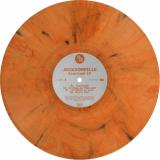
Nightcode EP finds UK deep-house craftsman Jacksonville in full control, lacing warm chords, swinging drums and basslines built for red-lit basements. Across “Nightcode”, “Ecstasy in Starlight”, “Octobers in Love” and “Blind Spot”, he fuses classic Detroit/UK house textures with his own emotional, story-telling touch—timeless deep house for DJs who play past sunrise.
Feedbacks:
Laurent Garnier : Octobers in Love <3 <3 <3
Nick Holder : dope
Gina Breeze (Classic / Get Up / Homoelectric) : Feeling the deepness! Look forward to playing.
Nightmares On Wax (Warp Records) : Ecstasy in starl;ight and Blind spot are my jams !
Josh Wink (Ovum) : Deep, old old school flavored with new school production.
Alexkid (Rawax / FUSE / NG Trax) : Lovely
Lauren Lo Sung (LOLiFE records, e1even records) : Octobers in love is nice!
Dj Hutch (Ambers / Rinse FM) : grooves
Louise Chen (NTS) : This is so so sooo good! Can't wait to play on the radio!
Rob Pearson (Evasive Records / Sine 102.6fm) : Nightcode is the standout for me, will play tonight on Evasive
Eviltron / Paul Donton (Bombis / Triangle) : Blind Spot and Ecstasy in Starlight are the ones on the
D'Julz (Bass Culture) : feeling night code and blind spot . merci!
Junior Sanchez (Strictly Rhythm / Cube Recordings) : Really Cool EP!
DJ Three : this is all very high quality house that feels very much a
nd_baumecker (Ostgut Ton) : Nightcode and Octobers In Love for me. Quality as usual.
Sasha (Last Night On Earth) : Downloading for Sasha
William Kiss (Rekids) : very nice!
Monty Luke (Rekids / Black Catalogue) : thx for this...
Mystic Bill (Classic / Trax / Relief) : Will try some of these out, thanks!
Carista : beautiful
Crackazat (Freerange / Local Talk) : Sick sick sick
Jhobei (Bizarre Trax / FUSE / Felon 5) : Nice smooth deep
Khadija (Rek'd / Rafiki Collective) : Danke
Ben Sims : Now downloading - will check asap!
DJ Bone (FURTHER) : Very nice tunes here, thanks
Bake (All Caps/Rinse FM) : thank you!
Dj Deep (Deeply Rooted) : very nice tracks!
Oliver $ (Classic Music Company / Play It Down) : nice one!
Tripmastaz (Plant 74) : Nightcode is tight
Harvey Sutherland (MCDE / PPU / Voltaire Records) : couple of nice tunes here!
Anthony Collins (Frank & Tony / Scissor & Thread) : super nice deep tunes
Marcel Dettmann : thx
Voigtmann (Subsequent) : Ecstacy in Starlight is the one!
Gerd (4Lux / Clone) : dope house trax from the phonogramme crew once again!
Groove Armada : Great EP - Love Nightcode, Ocotber is love so good too±
Harri (Sub Club) : nice, will play and support
Jorkes (Freeride Millenium) : ecstasy in starlight..yes yes yes yes
DJ Minx (Women On Wax Recordings) : Every one of these...top tier! I'm on 'em!
DJ Rocca (Nang Records, Mantra Vibes) : Great EP. Nightcode is great, super bassline indeed
Jacques Renault : Ectasy In Starlight for me here!
Geir Aspenes (G-Ha (Sunkissed)) : Thank u
Mark Farina : dig it
Âme (Innervisions) : thanks
Djebali ( ( djebali ) / INFUSE / Freak n Chic) : Love it ! thanks for sharing. Blind Spot is my fav
Jaye Ward (Dalston Super Store / Netil Radio) : wicked release!! night code is a belter!!! thx
Iron Curtis (Mule Musiq, Morris Audio) : thank you!
debe ser publicado en 30.05.2026
Genie In A Bottle is back with strong EP from my Italian Hermano - Shkedul.
“Secret Society” is the last track of the record, but definitely far from least. One of the best examples of Shkedul’s dark and confident production. This time also with perfect marching kicks, acidic arpeggios, and kinda familiar story that is being narrated through the track. The name here goes straight from the story, by the way.
“Meditative State” at the B1 also tells us the story, this time with a bit calmer voice. The track is calmer too, the kicks are still marching, don’t assume. “Confidence” lays very hard on the acid part, easily the most acidic track here. Finally, the opener, “Change Is Coming”. With the story again (damn, I like those conversations over the track so much) and the most interesting bassline of all.
Powerfull Support from : Quest , Anthea , Gabbs , Jane Fitz…
Grab your copy !
Ordena ahora - una vez que hayan recibido suficientes pedidos, el artículo se reimprimirá.
