
Сделать предзаказ22.03.2024
он должен быть опубликован на 22.03.2024
он должен быть опубликован на 22.03.2024

он должен быть опубликован на 22.03.2024

* 180 gram audiophile vinyl
* Gatefold sleeve
* High quality PVC Protective Sleeve
* 4 page booklet with liner notes and photos
* Selection of easy listening songs, includes "Ticket To Ride", "Rainy Days and Mondays", "Please Mr. Postman", "Yesterday Once More" and solo songs by Karen's "Still Crazy After All These Years" and Richard's "Karen's Theme"
* Limited first pressing of 3.000 individually numbered copies on white vinyl
The Collected album by the Carpenters brings a beautiful collection from the immense popular soft-pop duo. From their humble beginnings in the late '60s until today, siblings Karen and Richard Carpenter are one of the most successful duos in musical history. With Karen's absolutely perfect vocal delivery and Richard's creative arrangements, they are unstoppable.
This 2LP set inside a gatefold sleeve brings together their hits, album tracks and more. It delivers the best selection of easy listening songs in a nutshell. Glorious pop nuggets by the Carpenters will melt the heart and uplift the soul, including "Close to You", "Ticket to Ride", "We've Only Just Begun", "Superstar", "Rainy Days And Mondays", "Bless the Beasts And the Children", "Hurting Each Other" and many more.
An Easter egg is the track "Karen's Theme" by Richard Carpenter, who dedicated this song to Karen after her tragical death in 1983.
Producing a distinctively soft musical style, they became one of the best-selling music artists of all time. During their 14-year career, the Carpenters recorded 11 albums, 31 singles, five television specials, and a short-lived television series.
The Carpenters had three No. 1 singles and five No. 2 singles on the Billboard Hot 100 and fifteen No. 1 hits on the Adult Contemporary chart. In addition, they had twelve top 10 singles. To date, the Carpenters' album and single sales total more than 100 million units.
он должен быть опубликован на 10.07.2026

Grammy-winning singing sensation Gregory Porter - one of the most successful jazz artists of his generation - is back with a new album, 'Nat King Cole & Me', to be released on Decca/Blue Note on 27th October. It is a deeply personal tribute to Nat King Cole - the legendary crooner who ignited Gregory's love of music. It's only natural that I go to the root of my inspiration and where I come from. And that root would be my mother and gospel music and Nat King Cole,' he says.
Recorded at London's AIR Studios, the 12-track album features some of Gregory's favourite Nat King Cole tunes including 'Smile', 'L-O-V-E' and 'Nature Boy'. There is also a Nat-inspired arrangement of Gregory's own song 'When Love Was King', originally released on his million-selling hit album, 'Liquid Spirit'.
For Gregory Porter, the influence of Nat King Cole on his life and music runs deep, a through-line that reaches back into some of his earliest childhood memories, and culminates in the release of his new album 'Nat King Cole & Me'. Gregory explains, At five or six years old, Nat's music filled a void in me. My father wasn't in my life and wasn't showing interest in me or raising me and Nat's words were the life lessons, words of wisdom and fatherly advice I needed.'
Gregory's love for Nat's music blossomed so much that he wrote a semi-autobiographical musical, also called 'Nat King Cole & Me', which premiered in 2004. After the play, I felt a lighter feeling about my father and a deeper appreciation for both my mother and the great music of Nat King Cole,' says Gregory. He also found his voice through his own songwriting - It wasn't until I wrote the musical that I was fit to call myself a songwriter. Before that, I would write different poems but they had no music.'
'Nat King Cole & Me' is the follow-up to his Grammy-winning albums 'Liquid Spirit' (2013) and 'Take Me to the Alley' (2016). 'Liquid Spirit' took Gregory from being the biggest name on the jazz scene to being one of the most sought-after singers around today, performing sell-out shows across the UK and being invited to perform on high profile TV programmes including The Graham Norton Show, Strictly Come Dancing and the BBC Music Awards. He has become an adopted national treasure in the UK, having sung for the Queen multiple times, as well as major music festivals including Glastonbury, where he performed on the Pyramid Stage alongside the likes of Muse, Adele and Coldplay. Gregory's ability to transcend genres even extends to his surprise dance hit 'Liquid Spirit Claptone Remix' which became one of the most popular tracks in Ibiza.
After winning over audiences with his rich and soulful voice, there can be no better time for Gregory to return to the music which first inspired him to become a singer. On Nat's legacy and influence Gregory affirms, He was one of a kind. He left such great music - such beautiful things to listen to that you can't help but be influenced by that extraordinary timbre, style, and ultimate cool.'
Закажите сейчас, и мы закажем товар для вас у нашего поставщика.

Закажите сейчас, и мы закажем товар для вас у нашего поставщика.

Eno Williams, frontwoman of Ibibio Sound Machine, uses both English and the Nigerian language from which her band's name is derived for the dazzling new album Doko Mien. Long lauded for jubilant, explosive live shows, Ibibio Sound Machine fully capture that energy on Doko Mien, the followup to their Merge debut Uyai.
In a glowing piece in the New York Times, those songs were praised for following 'in the tradition of much African music, [making] themselves the conscience of a community.' By pulsing the mystic shapes of Williams' lines through further inventive, glittering collages of genre, Ibibio Sound Machine crack apart the horizon separating cultures, between nature and technology, between joy and pain, between tradition and future. That propensity for duality and paradox seems common in people whose lives span continents.
Williams was born in the UK, but grew up in Nigeria, always steeped in her family heritage. She obsessed over West African electronic music, highlife, and the like, but was equally empowered by Western genres such as post-punk, disco, and funk. The London octet have enveloped themselves in that maximalist quilt proudly since their 2013 formation. Though it can often bring with it news of stress and uncertainty, the modern world further brings all these disparate traditions into connection.
'Everyone has everything now,' says multi-instrumentalist Max Grunhard. 'Everyone has immediate access to every genre, picking things up from everywhere—like magpies.' And while they haven't suddenly left their African roots behind, Doko Mien does find increased representation of English lyrics in the ratio. By sharing more directly with more universal lyrics, the record feels more anthemic, reaching for grander heights.
'We wanted to give people a reason to sing along, to find their soundtrack every day,' Williams says. 'We wanted everyone to feel as if they're part of the music as well.'
Late album highlight 'Guess We Found a Way' addresses the change with a coy smile. 'Guess we found a way to speak to you/ Guess we found a way to say what's true/ To say what's real,' Williams coos over glistening chains of reverberant synth and diamond dust percussion, before returning to Ibibio in the chorus. Perhaps the best example of the group's ability to convey meaning across language and tradition, to blend past and future into a singular present comes on 'She Work Very Hard'. The traditional Ibibio folk tale bobs over the waves of tuned percussion, chunky synth, and pinprick highlife-esque guitar, while Jose Joyette's drums and Derrick McIntyre's bass funk groove bring everyone to the dance floor. 'These stories won't be forgotten. Feel the music: it speaks to everybody,' Williams says. 'We can travel back in time together, while convening on a futuristic, present tense. We hope that we can give people that reason to wake up, that one song to sing and dance and be happy.'
Doko Mien: Tell me everything. On their new album, Ibibio Sound Machine provide the perfect companion, ready to digest as much as possible and then further unfurl beauty and hope. They remember and honor the past and charge forward toward the future, all while intensely expanding the present.
Закажите сейчас, и мы закажем товар для вас у нашего поставщика.

15 Jahre nach seinem frühen Tod feiert - The 20th Century Records Albums (1973-1979)' Barry White als einen der größten Künstler / Songwriter / Produzenten der 70er Jahre. Er etablierte den neuen Klang der Orchesterseele, der über das Jahrzehnt und darüber hinaus zu einem Grundbestandteil wurde. Das Vinyl-Box-Set enthält alle 9 LP-Alben, die Barry White über das Label 20th Century Records veröffentlicht hat und werden hier zum ersten Mal zusammengestellt. Alle neun Alben wurden zum ersten Mal seit ihrer Veröffentlichung in den 70er Jahren von den originalen analogen Masterbändern remastert und werden hier mit ihrem originalen Sleeve und Label Art präsentiert. Die Alben wurden in den Abbey Road Studios in London auf hochwertigem 180g Vinyl geschnitten, um die höchstmögliche Audioqualität zu garantieren.
[ZZA] q4 | Oh Me, Oh My (I'm Such a Lucky Guy)
[ZZB] r1 | I Can't Leave You Alone
[ZZC] r2 | Call Me, Baby
[ZZD] r3 | How Did You Know It Was Me
Закажите сейчас, и мы закажем товар для вас у нашего поставщика.

holds vocal versions of the See Mi Yah riddim series w/ Sugar Minott, Willi Williams a.o.
Закажите сейчас, и мы закажем товар для вас у нашего поставщика.
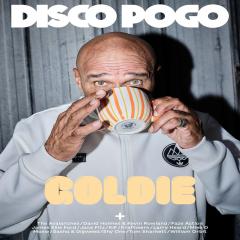
For Autumn/Winter 2026/2027 our tenth issue is possibly our best ever with three heavyweight cover stars in the shape of Goldie, Mike D and The Avalanches. Issue 10 also features: Kevin Rowland and David Holmes - Two of the most dapper chaps in music go for a walk through London. William Orbit - We pay tribute to the producer who was simply ahead of his time. Sasha and John Digweed - The Man Like and Diggers reflect upon 30 years of their seminal ‘Northern Exposure’ mix. Larry Heard - Can you feel the genius of the man with his Mr. Fingers in many musical pies? Kraftwerk and Sheffield - How a group of German futurists turned the Steel City on its head. The Warehouse Project - The revolutionary Mancunian clubbing institution turns 20. We bring the cake. They blow out the candles. Shy One - It’s been a long and winding road for the artist also known as Mali Larrington-Nelson. Tom Sharkett - The one-man disco has a groove machine and he’s going to use it. Moxie - Moxie by name; moxie by nature. All hail the On Loop leader. KiF - Teenage friends collate an album dedicated to the life of the passion flower. Plus… loads more across 192 pages.
он должен быть опубликован на 30.09.2026
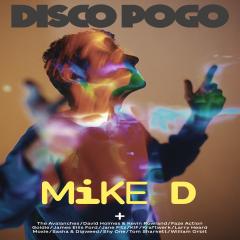
For Autumn/Winter 2026/2027 our tenth issue is possibly our best ever with three heavyweight cover stars in the shape of Goldie, Mike D and The Avalanches. Issue 10 also features: Kevin Rowland and David Holmes - Two of the most dapper chaps in music go for a walk through London. William Orbit - We pay tribute to the producer who was simply ahead of his time. Sasha and John Digweed - The Man Like and Diggers reflect upon 30 years of their seminal ‘Northern Exposure’ mix. Larry Heard - Can you feel the genius of the man with his Mr. Fingers in many musical pies? Kraftwerk and Sheffield - How a group of German futurists turned the Steel City on its head. The Warehouse Project - The revolutionary Mancunian clubbing institution turns 20. We bring the cake. They blow out the candles. Shy One - It’s been a long and winding road for the artist also known as Mali Larrington-Nelson. Tom Sharkett - The one-man disco has a groove machine and he’s going to use it. Moxie - Moxie by name; moxie by nature. All hail the On Loop leader. KiF - Teenage friends collate an album dedicated to the life of the passion flower. Plus… loads more across 192 pages.
он должен быть опубликован на 30.09.2026
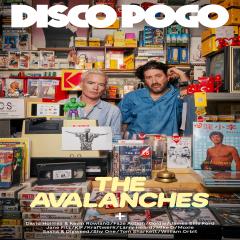
For Autumn/Winter 2026/2027 our tenth issue is possibly our best ever with three heavyweight cover stars in the shape of Goldie, Mike D and The Avalanches. Issue 10 also features: Kevin Rowland and David Holmes - Two of the most dapper chaps in music go for a walk through London. William Orbit - We pay tribute to the producer who was simply ahead of his time. Sasha and John Digweed - The Man Like and Diggers reflect upon 30 years of their seminal ‘Northern Exposure’ mix. Larry Heard - Can you feel the genius of the man with his Mr. Fingers in many musical pies? Kraftwerk and Sheffield - How a group of German futurists turned the Steel City on its head. The Warehouse Project - The revolutionary Mancunian clubbing institution turns 20. We bring the cake. They blow out the candles. Shy One - It’s been a long and winding road for the artist also known as Mali Larrington-Nelson. Tom Sharkett - The one-man disco has a groove machine and he’s going to use it. Moxie - Moxie by name; moxie by nature. All hail the On Loop leader. KiF - Teenage friends collate an album dedicated to the life of the passion flower. Plus… loads more across 192 pages.
он должен быть опубликован на 30.09.2026

Never Sleep charity spins through The City of Big Shoulders via Butlins Minehead for an electric live recording and history lesson.
Certified foe nem DJ Funk forecasts disorder with a retrospective of Booty, Ghetto and Club.. A mission statement featuring anthemic discography, lauded signature quotables and the rawest of machine funk.
Synergising live 909, 303 and 808 alongside an encyclopedic knowledge of genres that he practically invented, the mix moves at breakneck speed and does not relent for one minute. Funk keeps the crowd sweating and reminds them on the mic that this party is for now and forever. A non stop roller rink of hit after hit and delivered with such panache it would make anyone's Aunt start weighing up the dancefloor.
DJ Funk is known worldwide for his contribution to Dance musics diaspora and remains a huge influence on that the freedom of expressionism isn't to be curtailed
All proceeds go to DJ Funks family as this recording is released posthumously.
он должен быть опубликован на 30.09.2026

STRICTLY CONFIDENTIAL: WE WRITE TO YOU WITH ALARMING NEWS ABOUT THE EXTRA-TERRESTRIAL SPECIMEN DISCOVERED IN THE FORBIDDEN FOREST IN JULY 2017. THIS LIFEFORM, CODE-NAME “DARLING”, ESCAPED FROM THE TOP-SECRET SAFE TRIP ORGANISATION HOLDING FACILITY LATE LAST NIGHT.
ALL THAT WAS LEFT INSIDE THE SUBJECT’S ENCLOSURE WAS A PRESSED POLYVINYL DISC CONTAINING TWO PIECES OF ELECTRONIC MUSIC. THE FIRST, WHICH WE HAVE TITLED “WHEN SHE HATES ME”, SOUNDS LIKE A CALL TO A DISTANT MATE OR PARTNER, COMPOSED AT SUNRISE AND SHOT THROUGH WITH BLISSFUL POSITIVITY. THE OTHER, NOW KNOWN AS “ISLE OF RED”, COMBINES SURGING DRUMS WITH POIGNANT AND MELANCHOLIC SOUNDS THAT ARE CLEARLY UNEARTHLY IN ORIGIN.
он должен быть опубликован на 30.09.2026

Big welcome to Time is Now for J Wax for a bit of a statement EP and I am coming out swinging here cos this is a really good record. There’s good, and then there’s this, the kind of good that stays good.
You know that feeling when something’s just right. When flow state becomes clarity. Well listening to this EP from J Wax gives me that feeling. This is proper Goldilocks business. It’s equal parts Gun Fingers and Loved up hugs. Just right.
By now we all know that something very special happens when Speed Garage collides with 1st wave UK Hard House - but - what makes this just right is that J Wax didn’t stop there, just like the Dutch 2nd Wave of Hard House he’s slid onwards into euphoric trance and oh boy am I here for it. In 1997 we got Double99’s Rip Groove and Nalin & Kane’s Beach Ball and for me this EP has as much in common with perfectly formed ‘97 Trance as it does with Speed Garage. Who says you can’t have it all!
We’ve been following J Wax’s output for years. He has been grafting hard. And for me he’s already firmly a part of the long lineage of globally significant Scottish party starting producers and DJ’s. So when we signed this EP to Time is Now I was gassed. Four big tunes. Sick EP. For me it’s crystal. J Wax is now a producer operating in rarefied air.
Run the Tracks….
A1. The dubplate of ’Peaches’ has been causing mayhem for a minute. Gliding in smooth before that big diva vocal screams down the bassline.
A2. J Wax tags in Edinburgh local RUA.DJ. The pair double up on ‘Shift’ for a slice of Trance infused but no-nonsense Speedy G. Reece bass & gun shots + bouncy synthline & ethereal chords. Lose it and yourself.
B1. ‘Soul Movement’ is a big room weapon. Serious levels on this one that leave no doubt - this is a producer at the top of his game, writing high energy weapons to destroy the dance.
B2. ‘Smokin’ is peak time bizness. Harder darker house with a diiirty dirty south vocal chop. This one is heads down & lock in…
Goldilocks.
он должен быть опубликован на 01.10.2026
Rapidly gaining momentum, Drumcode’s new DC4 series returns to serve up a collaborative feast for its fourth edition.
Since debuting in summer 2025, DC4 has done exactly what it says on the tin: serving up four elite tracks that deserve the spot to shine.
You know you’re going to get A+ quality when you cue up a Victor Ruiz & Alex Stein collaboration. The Brazilians have a long history of studio jaunts and they deliver the goods via ‘Core’, a brilliant brain-scrambling outing with a strong dramatic arc.
Charles D & Weska follow up last year’s ‘The Answer’ on 1001 Recordings with ‘Can’t Get Enough’ feat. Bexxie. With a foot in prog and techno alike, this is driven by low-slung grooves and Bexxie’s sexy vox, packing an exhilarating energy throughout.
Enter two Drumcode debutants – SCRIPT & OKAYVAL. The former is a fast-rising American artist who is coming off collaborating with Brazilian superstar ALOK, while the latter is a Colombian born, US-based artist whose earned gigs at EDC Vegas and Tomorrowland this year. ‘LIKE THAT’ is a high-energy jam marked by tight rolling percussion and a sharp vocal loop designed for peak-time impact.
Another pair of fresh faces land on the comp as Martin Costas & Gabriel Gil drop ‘It’s All Around’. Lock in for a pulsating slice of prog driven by hypnotic rhythms and lush melodic textures. A versatile cut fit for a variety of party situations.
Есть у нас в наличии и готов к отправке

Nu Vision is a modern salon for visionary leaders, fighting for their art, standing by truths, defending voices, honoring progenitors, whilst pushing forwards towards a new paradigm. The band all have their own stories and extensive discographies, records released on labels you might know, gigs played in places you might have attended but none of that matters. This is a new beginning. A group. A collective.A movement. Nu Vision is a band in the classic do-you-believe-in-alchemy sense. Equal parts rhythm, damage, and deep feeling. Their friends at DFA noted that the album “sounds like Depeche Mode scoring a Michael Mann montage: brooding,motorik, and shot through with black-and-blue beauty.” this idea is taken further in the first video from the album for track one / side one “Time” that launches the project publically along with the albums announcement. The palette of ‘The Seed’ is defined and refined in the best way. It’s an album that opens up many pathways. Brisker, freakier tracks like “Shadow In The Dark,” “R U Serious?” and “Humanity” run towards a softer finish with “Somedays” and the seven-minute, eyeliner-smearing closing ballad, “Lullaby Garden.” These are proper songs made with vintage machines, with a sound that carries obvious influences. ’ The Seed’ pulses forward as the body of the beast is turned inside out, wearing a beating heart on its sleeve, honoring those who left us too soon - DAF’s Gabi Delgado, Nitzer Ebb’s Douglas McCarthy, Depeche Mode’s Andrew Fletcher, and Sandwell District’s Juan Mendez. It’s important to note the emotional core of ‘The Seed’ album is the song ‘Synchronicity’ that is filled with both love and regret, the story of losing a friend without properly making amends. It is unquestionably heartbreaking, but is also delivered with a pang of hope, the feeling that with so many sunrises caught, so many additions and subtractions in life, a perspective has been gained. This is no freshman effort; but rather, a masterclass in continuing sonic education, delivering a unified experience from beginning to end. A New Vision
Товар уже находится на пути к нам и, как ожидается, будет доставлен из 01.10.2026.
New remix series from the Veteran New York City producer / DJ / keyboardist Scott Wozniak.
2 Killer remixes of well-known artists given a new house music twist for the floors, evoking the golden era of The DFA (Darryl James, Fred McFarlane and Allen George) remixes on Fall Out Records in early to mid 00’s.
Limited Stock act fast!
Есть у нас в наличии и готов к отправке

On Last Night At Marienbad's latest, the imprint brings together three of the brightest souls found within the realms of Jazz, namely Mauricesax, 9ick and Milan93, with their collective talents synergising effortlessly on 'A Garden Between Us', alongside a stellar cast of remixers who add even further delight between the grooves….
As a genre, Jazz has perhaps lent itself the most to other musical universes, in that its curious heart, endlessly experimental nature, and parameter-defying spirit have wrapped itself deep within the core of countless albums, scenes, and music makers. It's a genre that welcomes reinvention, consistently defying its contents and always reaching out to find new methods of expressionism. Electronic music, in its many forms, has truly embraced Jazz perhaps like no other movement of music has, with a truly astonishing array of records surfacing in the past 40 years which have blended Jazz's unique motifs with grooves, chords, and emotive excellence. From 90s Jazz house and UR Techno, through to Future Jazz, downtempo, and Hip Hop, and around many other suns, there remains such an intrinsic and symbiotic relationship between the two musical realms that caters to those who wish to live music both within and out with themselves.
As practitioners of blending electronica and Jazz, few do it like the trio of Mauricesax, 9ick, and Milan93. All three are known for their distinctive soundscapes, yet share commonalities in terms of musical language, feel, and sense of progression. Bringing them together allows for overlaps in their sounds to emerge, and just like Jazz itself, this is where the intrinsicness of sound begins to blossom. 9ick brings his softly evolving vibe to the table, one which was so prevalent and celebrated on his 2025 album 'SMIL'; Milan93 draws from his focal point of exploring fill-laden grooves and a myriad of emotive sensibilities; and Mauricesax draws up his extensive musicality that exists at the corner of jazz, electronic, and experimental music, along with running musical workshops all over the globe.
'A Garden Between Us' represents the trio's core tenets, with this immediately obvious from the record's opener, 'Rhodora'. A gentle solo piano quickly evolves into a series of powerful rhythmic pulses, with brass lines bringing vitality and feel to proceedings. The track shifts gears with purpose, transitioning between musical vignettes of the highest order, with the synth work doing much to bind the transitions together. 'Tulip' emerges slightly differently, with glossy Rhodes tones and an unravelling rhythmic undercurrent setting an enthralling stage. The track flourishes amongst sweeping textures, coming up for air amongst a deeply hypnotic rhythmic section that holds on and never lets up. 'Honeysuckle' lands next, which sees the trio emerge with a boundless, dynamic soundscape. The drums shift within the undertones, as keys, chords, horns and hip-hop vocal samples dance around the pulse, capturing the imagination with their narrative-like placement. Wrapping up the A side comes 'Camellia'. A dazzling array of harmonic sounds converges around the transfixing rhythm section, which emerges from deep below to lavishly roll out over the midsection, with the delicateness of the instrumentation a real highlight here.
The B side features two exquisite remixes, with Pacific Coliseum's version of 'Tulip' landing first. Beginning with a signature four to the floor to get things going, his careful handling of the source material is seen in the tactful introduction of the blissful elements that made the original cut so impactful, with great focus placed on emotive fidelity. The result is a summer-bound house number that reimagines the original in all the right ways, flipping it into a euphoria-driven jazz-laden pacer that reaches for the heavens as much as it drives right into the heart. Teuteu then showcases their take on 'Honeysuckle', and at 9 minutes long, represents the longest cut on the record - and the experience is all the richer for it. Leaning heavily into dance music flavours, Teuteu shifts perspective totally into the realm of the club, with the walls beating hard to the kicks. The sax lines that drift ethereally up top keep eyes closed and souls full, as the dance shifts into the next phase.
An experience that drifts from the daydreaming, to soul-warming through to the club shaking - what else is left to experience, except for 'A Garden Between Us' and how it will brighten up life itself….
он должен быть опубликован на 02.10.2026

For the label's latest, Oath is proud to present 'Honey Tangerine', the newest mini-album from producer extortionaire Olsvangèr, who serves up his signature blend of hyper-kinetic, ever-shifting dance music.
Olsvangèr's sound and musical journey are forever rooted in the liminal spaces that make up the broad-reaching and ever-shifting electronic music landscape, with his records consistently channeling that in-betweenness that imprints lasting impressions. A classically trained musician with a profound passion for house and techno, Olsvangèr's sonic palette is one of both broad and delicate brush strokes, applying an array of compelling motifs within amorphous arrangements that blend and blur perspectives. His records seek out the faraway fringes as much as focusing on the intensity found in the detail, creating cavernous soundscapes that are impeccably tuned and effortlessly free-flowing. Seemingly genreless, his records are anchored in all that is known and loved, yet due to the music's perspective situated at the intersectionality of electronica, a beautiful anticipation resides within every stanza of his tracks at what may come next. His musical language has found him releasing on the likes of Kalahari Oyster Cult, Hooj Choons and Craigie Knowes, and follows through within his imprint Tofistock, which has been pushing some of the most forward-thinking dance music of recent times.
'Honey Tangerine' touches upon the classic motifs of Olsvangèr's sound, and as always, the room for growth within the record's parameters remains truly endless. Over six tracks, Olsvangèr lays bare the directions of travel, with paths unravelling that feel well trodden yet with some that branch out towards new horizons. 'Source of Thought' opens up proceedings with a captivating ambience, where twinkling hues and lively tones paint the parameters of sound. The chuggy breaks that land deep within the mix drop in and out of view, allowing a deft balance between pure ambiance and rhythm to exchange dialogue between one another. 'In a Nutshell' shifts gears in atmosphere and energy, with all eyes placed upon the club. The shifting rhythm section lifts the acidic melodic features up above, with driving bass notes and a euphoric vocal like lead linking the depths to the heavens. 'Tulpa Nine' swings into heads-down territory, where the drums swing slow and the throbbing bass hits heavy. The auto-tune vocal line up above creates an atmosphere of hazy, smoke-filled rooms, where the party yearns for downtime in anticipation of the next shift in energy.
'Sunrise on the Lips' gives over further chill out room vibrations, where the lights remain low, and smiles reside all around. The enriching drums provide the basis for sitars and glossy keys to glide across the top ends, with the mind invited to dip deep within this enthralling ensemble. 'Zoom It Out' provides the release into the room, with the ante upped. A breaky house leaning number, this cut grooves through its chiming melodic section and groove-laden bass line, with the polyrhythmic drumming pattern doing much to keep the energy residing very high indeed. The record is wrapped up with 'Some Air', which gives over one final jaunt through the airy, slowed-down slipstreams. A wondrous beat is complemented by melodic elements that chime, absorb and quiver, glowing through the night with such charm and feel. An engrossing composition that demonstrates what Olsvangèr is all about - a crafter of sound, where adventure is sought and found, never wavering but curating new connections, feelings, and tones, with an eye on what might come next.
Whether softly undulating or boundlessly expressive, Olsvangèr's music remains a beautiful enigma that serves up both the glorious knowns and the captivating unknowns - 'Honey Tangerine' is yet another chapter in his glorious discography.
он должен быть опубликован на 02.10.2026

Battlefield sees No Ice Cream Sound knock on the door of the real foundations of Roots Reggae and Dancehall culture with a heavyweight, riddim-focused multi-vocalist release.
The release perfectly balances a bold and fresh contemporary sound while retaining the spirit; energy and rawness of the classic riddims we all know and love. Battlefield creates a sturdy platform for the carefully curated selection of vocalists to showcase their respective styles and patterns.
At the heart of the release is a unique vocal link-up that reflects the ever-growing globalisation of the Reggae Sound-system culture. Each of the men behind the microphones invites us to embark on a journey; connecting the dots on the map that represent the places they call home. We start in The South West of England and track across country to Southend-on-Sea; from here we make the mission all the way down to Madrid before taking a bearing on the North Star to guide us over hills and valleys to Scotland.
Where the riddim creates a constant, the vocals provide variety. Made by design the track allows them a spacious environment for the individual styles and messages to come across with precision and clarity.
Hailing from different backgrounds; accents of different origins, insights and perspectives drawn from their own stories all come together over one sound. This could be seen as an analogy of the ethos and motivation behind Reggae music itself. Reggae music as a genre tells the same story, Reggae artists tell their version of the story. Via this timeless format we are always building on the teachings of yesteryear while simultaneously learning something new. The gift that will forever more continue to give!
он должен быть опубликован на 02.10.2026
With her 3rd Blue Note album Synonym, Meshell Ndegeocello presents a remarkable album of duets on classic songs that are known, loved, and diverse in tone, “genre”, intent, and BPM. This is an album about joy, love, selfhood, individual representation and universal experience that explores expressions of desire, care, heartbreak, friendship, disappointment, and love in all the forms. All the songs feature two singers who identify as the same gender, wherever that might be on the continuum, and are musically matched for contrast or compliment including Cynthia Erivo, Cat Power, Robert Glasper, Chaka Khan, Madison Cunningham, Laura Lee (Khruangbin), Emily King, Lizz Wright, Lianne La Havas, Moses Sumney, Brandi Carlile, ANOHNI, WILLOW, Bill Callahan, Chris Thile, and more.
он должен быть опубликован на 02.10.2026
Phill Niblock completed BLK+LND in late November 2023. It is one of Phill Niblock's final compositions and was commissioned by bassist Robert Black (who passed away in the summer of 2023). The piece is based on recordings of acoustic bass and bass clarinet performed by Neil Leonard and Robert Black under Niblock's direction in 2021.
Phill Niblock (1933-2024) as an artist whose fifty-year career spanned minimalist and experimental music, film and photography. He has been a maverick presence on the fringes of the avant-garde. In the history books he is the forgotten Minimalist. Since 1985, he served as director of Experimental Intermedia, a foundation for avant-garde music based in New York with a branch in Ghent, and curator of the foundation's record label XI. Known for his thick, loud drones of music, his signature sound is filled with microtones of instrumental timbres that generate many other tones in the performance space. He said: 'What I am doing with my music is to produce something without rhythm or melody, by using many microtones that cause movements very, very slowly.' In 2013, his diverse artistic career was the subject of a retrospective realized in partnership between Circuit (Centre d'art contemporain Lausanne) and Musée de l'Elysée (Paris). The following year he was honored with the prestigious Foundation for Contemporary Arts John Cage Award. Since 1968 he also put on over 1000 concerts in his loft space in New York.
"On January 6, 2024, two days before his passing, Phill called me to discuss the premiere and tour of BLK+LND. To distract him from his rapid decline, I engaged in his touring plan, only for him to reveal that all the details were still in his head and none of the events had been confirmed. He was entrusting the project to me. Phill would have been thrilled and honored by this concert at the Donaueschinger Musiktage. The thought of one more performance with Robert Black, whom he greatly admired, presenting his new work for low-pitched instruments that he was particularly fond of, andreconnecting with old and new friends in Donaueschingen would have meant the world to him." - Neil Leonard, Berklee College of Music, Boston
он должен быть опубликован на 02.10.2026
Written in collaboration with British jazz pianist and organist Kit Downes, the album was recorded in the hushed, reverberant atmosphere of Bragernes Kirke in Norway in November 2024 - a setting that lends the record an intimate, almost sacred stillness. The album was mixed and mastered by Jorgen Traeen. The album takes its title from the landmark 14th- century mystical text by Julian of Norwich - the first book known to have been written in English by a woman. Sundfor encountered Julian's writing around the same time she and Downes were performing together in churches in 2024, and the timing felt fated. Drawn to the text's extraordinary themes of hope, resilience, and its quietly radical feminine perspective, she found in Julian's words a natural spiritual and artistic continuation from her acclaimed 2023 album Blomi . The connection felt so immediate and profound that she invited Downes to join her as a full collaborator on the project.
он должен быть опубликован на 02.10.2026
Kukangendai are the innovative three-piece Kyoto based experimental rock band formed in 2006 with Junya Noguchi on guitar and vocals, Keisuke Koyano on bass, and Hideaki Yamada on drums. Since 2016 the band have set up shop in their studio and venue space, Soto, which houses an incredibly well tuned and powerful sound system that has become a well known destination for touring musicians. In March of 2025, Marionette was celebrating a belated 10 years of activity with label showcases across Japan in collaboration with Dotei Records, and Soto was inevitably one of the stops as many label alumni have set foot in the venue over the years. This is where I got to experience Kukangendai perform for the very first time and knew right then we were destined to work together.
Kukangendai embody an undeniable sense of timing and precision through collage-like repetition of minimalist phrases that manifest as a single unified rhythm. Their latest offering for Marionette, titled Baquet Wheel, is a purely acoustic endeavor, remarkably recorded live using Taku Unami's special binaural microphone. The trio seamlessly twist polyrhythms and melodies rooted in jazz, krautrock, blues, and Tuareg producing a timeless sound that preserves the primitive and memory evoking narratives buried deep within the music. Over the course of five tracks, the visceral nature of Kukangendai’s dynamic evolves from playful riffs that are seemingly familiar yet strikingly original, making it impossible to discern exactly when this material was conceived.
Kukangendai have maintained a prolific yet relatively low profile for the last two decades, with a handful of self-released editions on their own labels (Soto and Leftbrain) as well as a collaborative album with pioneering electronic music composer Ryuichi Sakamoto in 2018, then venturing outside Japan in 2019 to release their first widely distributed album on Ideologic Organ, a label curated by Sunn O)))’s Stephen O'Malley. Other collaborative projects to date include an album produced with rap group Moe and ghosts, live performances with Keiji Haino and with poet Gozo Yoshimasu, productions with the Chiten theater company, and most recently a remix album of their works featuring Carl Stone and Madteo.
он должен быть опубликован на 02.10.2026
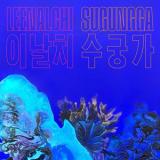
This is the first full-length release from South Korea"s beloved pansori psych-pop band available worldwide. The release follows an extremely successful and eventful year for LEENALCHI. They had their first-ever North American tour, opening for Japanese Breakfast at Stern Grove, sessions at KCRW and (rumor has it) KEXP, and in the fall, they"ll be on the East Coast, including opening for Geese at Forest Hills on the very same date this record comes out. LEENALCHI is led by the great composer Jang Young-Gyu, who has undoubtedly scored all your favorite Korean horror movies, including The Wailing, Train To Busan, and the Good, The Bad, The Weird. Sugungga sounds like animals talking to each other over tripped-out bass lines. It gets its name from the old Korean folk tale about a clever and loyal turtle who tries to lure a rabbit underwater and into the lair of a Dragon King who has come down with an illness that can only be cured by the rabbit"s liver. What is the fate of the rabbit? This fall, you will find out.
он должен быть опубликован на 02.10.2026
TECH043 brings A.B.E.L. and Eluna Vex together through a shared sense of rhythm and purpose.
Both authors have already developed a clear and confident approach, even if wider recognition has yet to catch up. Their music is ready to reach beyond the circles that already know their work.
Across both sides of the record, firm drums, driving percussion and deep atmosphere keep the motion steady. Each track has its own shape and detail, while the shared weight and mood allow the four tracks to be heard as one complete work. DJs get four reliable cuts that can build tension, hold the groove or move a set forward without a break in tone.
The difference between the artists is clear, but never disruptive. Eluna Vex and A.B.E.L. bring separate ideas to the record, yet their tracks feel closely related in character, depth and attitude. This balance gives TECH043 range without losing focus: two artists and one consistent physical drive.
A1. “Unsafe Road” opens the record by setting its rules: full pressure, forward drive and several lines developing at once. It tests the listener’s attention, offering a choice between following the whole structure or focusing on one thread within it.
A2. “Getting Away” works like a spell that pulls the dancefloor together. It follows one clear narrative and a direct sequence of events, building towards a climax where every element lands as one shared impulse.
B1. “Test And Run” opens a more exploratory side of the record. It moves through changing forms and gradually reveals its language, without showing the full picture at once. Structurally complete on its own, the track invites the listener into less predictable territory.
B2. “Subconscious” is built on balance, giving equal weight to every part of the sound without allowing one element to take control. It makes no loud statement, but closes the record with a complete and carefully held form.
он должен быть опубликован на 02.10.2026
Early DJ Support: Moxie, Grant Dell, and Saoirse
HUMAN is a vinyl-only electronic music label based in Manchester, focused on music, art, fashion, and culture. We press records we believe in with no shortcuts.
HUM001 is the label's debut release, featuring E-Funk / Twisty by Scarper.
Scarper is a London-based producer and DJ known for blending melodic electronica, broken rhythms and left-field club ideas into a sound that’s entirely his own. Over the past decade, a deep catalogue of albums, EPs and remixes has taken shape, alongside work in advertising, gaming, TV and short film.
‘E-Funk’ is a hybrid club weapon - part 2-step, part house, part breaks, all energy. A certified floor starter that lives in the bag and lands every time, especially when the room hits its stride.
‘Twisty’ is probably the most dancefloor-ready cut, but the solid broken grooves dancing around acid bass lines and bleeps on each of these nine thumping tracks could work any room at the right moment.
Товар уже находится на пути к нам и, как ожидается, будет доставлен из 02.10.2026.
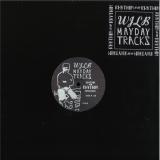
The year was 1989, and Derrick May was at a creative peak as both a DJ and producer. Under his Rhythim Is Rhythim moniker, he released a string of landmark records on Transmat, while his residency at Detroit's The Music Institute showcased the distinctive DJ style that would soon take him onto the international stage. Around the same time, he hosted a weekly radio show on Detroit radio station WJLB, alongside influential programs by The Electrifying Mojo and The Wizard (Jeff Mills).
For one of these broadcasts, May assembled a 15-minute megamix in his studio during the week leading up to the show. He opened his radio set with this continuous mix, blending his own tracks and versions into a seamless introduction that reflected his approach to DJing at the time. It includes unreleased versions of classics such as ‘Nude Photo 88’ and ‘Strings Of Life’.
‘All of this is unreleased because I made it as I was playing it on the spot as a special Mayday Mix for my show on the radio station WJLB in 1989, edited together straight from the keyboards live to tape. There is no other recording of these tracks in this form, only here’.
The original WJLB master tapes have since been lost, and no official recording is known to survive. Fortunately, many listeners recorded the broadcasts at home. One such cassette, preserved by Richie Hawtin, eventually made it our way. It has been carefully restored and mastered, with the artist’s approval.
To highlight this remarkable document of techno history, the recording is now available as a limited-edition, one-sided 12-inch release. The mix has been cut as a continuous side, visually divided into eight sections, while the reverse features a custom engraving.
он должен быть опубликован на 02.10.2026

Elastica’s iconic self-titled debut album is set to be reissued by Rough Trade Records on 2 October in a new edition boasting rarities and b-sides.
Striking their own, distinct path in March 1995, Elastica proved uniquely fresh-sounding as the London four-piece delivered on the reputation they had built up gigging around the capital beyond in the months ahead its release.
Home to the likes of Line Up, Waking Up and Connection, singles at once timeless yet in the moment, Elastica’s debut captured the fraying emotions, hazy experience and burning energy of life, love and after-hours adventure.
Absorbing atmospheres and attitudes of their post-punk and new wave forbears, Justine Frischmann (vocals, guitar), Annie Holland (bass), Donna Matthews (guitar, vocals) and Justin Welch (drums) poured their own identities into the album’s 15 tracks which balancing youthful swagger, with sage-like observation and a knowing cool that made Elastica and their debut effortlessly timeless.
он должен быть опубликован на 02.10.2026
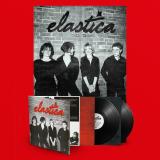
Elastica’s iconic self-titled debut album is set to be reissued by Rough Trade Records on 2 October in a new edition boasting rarities and b-sides.
Striking their own, distinct path in March 1995, Elastica proved uniquely fresh-sounding as the London four-piece delivered on the reputation they had built up gigging around the capital beyond in the months ahead its release.
Home to the likes of Line Up, Waking Up and Connection, singles at once timeless yet in the moment, Elastica’s debut captured the fraying emotions, hazy experience and burning energy of life, love and after-hours adventure.
Absorbing atmospheres and attitudes of their post-punk and new wave forbears, Justine Frischmann (vocals, guitar), Annie Holland (bass), Donna Matthews (guitar, vocals) and Justin Welch (drums) poured their own identities into the album’s 15 tracks which balancing youthful swagger, with sage-like observation and a knowing cool that made Elastica and their debut effortlessly timeless.
он должен быть опубликован на 02.10.2026

Did you know that Judy Freeman and Blackrock cut more songs than the 4 that were put out in 1971? We know of at least one.
"I Know Where You're Coming From" is a 70s funky Northern Soul masterpiece. We've rescued a lost, never heard before, track by the group for the A-Side here. Fans of their music will immediately connect with this blistering anthemic Northern Soul monster. Go ahead and grab the talcum powder, and prepare to dance up a storm to this one.
We've selected the completely unrelated, previously unreleased Marshall Hooks "She Is All I Need" for the B-Side on this one. A relatively straight ahead Otis Redding-styled Soul original that thumps and a nice compliment to the A-Side. If you aren't familiar, Marshall released one LP on Blue Horizon and a monster R&B 7" in 1965 on the Muriel label.
он должен быть опубликован на 05.10.2026
Riva Starr teams up with Australian duo Close Counters for a sun-soaked debut on Heist.
What do you get when you put an Italian house legend in the studio with 2 of the most talented artists from Melbourne? Have a listen to the newest release on Heist and you’ll find out. On their ‘Push your luck’ EP, Riva Starr, Close Counters and UK soul singer Andre Espeut bring a heavy dose of jazz & soul and most of all, upbeat dancefloor energy. Whether it’s the deep soulful vibe of the title track or the house meets jazz-funk energy of ‘Gearbox’, this EP brings together everything we love about house music.
‘Push your luck’ comes right in the middle of Close Counters’ world tour, just after Riva Starr’s album ‘Keep me on the dancefloor’ and is the follow up to their recent collab ‘Jinga’ on Riva Starr’s own Snatch Records. We all know Riva Starr from his 2013 Fatboy Slim collab ‘Eat sleep rave repeat’, his work with Groove Armada, and more recently his collab with Prunk on his PIV records debut album. Close Counters have already worked with Heist mainstays Fouk and had their breakthrough moment with their 2023 album ‘Soulacousta II’, which got wide support ranging from Gilles Peterson to Jyoto and Folamour.
Their ‘Push your luck’ EP kicks off with the title track featuring the silky vocals of Andre Espeut. When we first heard this song, we immediately got transported to the soulful sound of the mid 2000s led by Recloose’s unique track ‘Dust’ with Fat Freddy’s Drop singer Joe Dukie. It’s moody, stripped back, and bouncy at the same time. The lush chords, disco bassline, and vocal harmonies all make for a track that goes beyond genres and trends. This is a future classic.
‘Gearbox’ is a disco-tinged piano jam full of live elements, rolling congas and disco bleeps, where the musicality of the Close Counters boys comes in at full speed. This song takes its inspiration from the Brazilian jazz-funk of legends Marcos Valle and Azymuth, with a clear sense of modern-day dancefloors and a love for electronic noise. Also; 10/10 for creatively naming the track after the glitchy electronic sound that freaks & funks throughout the track.
On the flip, ‘Dizzy’ sees the trio go more into disco-house territory, again teaming up with Andre Espeut for a track that blends catchy vocal loops with a tight groove and lush chords. The EP finishes with a club dub of ‘Push your luck’ for those in favor of more groove and less vocals.
We’ve had Riva Starr and the Close Counters boys on our radar for a while, and they landed on Heist with the perfect combination of musicality and dancefloor power. We hope you like this release as much as we do!
As always, play it loud and share the music.
Lars & Maarten
Есть у нас в наличии и готов к отправке
Djrum's first release since 2019, the Meaning’s Edge EP is an introduction to a whole new world. For the artist also known as Felix Manuel, it was created in the final stretches of six rather traumatic years work. Having carefully honed his techniques and aesthetics, and learned some hard-won emotional lessons over this time, finally he began to work in a quicker, lighter fashion – and to cleanse his palate a little by bringing in a fresh ingredient: his own flute playing. For listeners, though, it will serve as an appetiser, a way into the delights and complexities of this new phase of his creativity.
It’s a serious work in its own right, mind. The use of flutes – including Bansuri, Shakuhatchi, Western Classical, and synthesised all blending and blurring into one another – gives it a coherence and a sense of airiness that unites the five tracks over half an hour, however divergent their beats get. And as in all his music, Felix’s whole life is in here. Ethnomusicology studies, untold hours of DJing everywhere from the gnarliest squat raves to the most rarefied deep house clubs, explorations of his own neurological and emotional makeup, and the technical finesse of someone who is never not creating music or art, all roll into an experience that’s dazzling, delightful and keeps on giving.
Just the opening track ‘Codex’ alone touches on OG dubstep, Aphex Twin-like braindance, post-classical exploration, movie themes and more. The gentle tones and melodies that rise up out of it perfectly conjure Felix’s running theme of a protective bubble that provides a sense of safety and tranquillity even as the beats and acid gurgles and spurts all around it conjure up the slings and arrows of life’s difficulties.
The tone set, the EP moves through ultra-rarefied glass-like percussion in an almost ambient setting, hints of grime’s counterintuitive patterns, and even more hectic patterns influenced by Tanzania’s hyperspeed singeli style of dance music – but always with that perfect balance of chaos and control, unpredictability and protection. It rewards playing and replaying endlessly, it’s a profound and often joyous experience… and it’s only just the beginning. This is the return of a master craftsperson more focused than ever on his vision and vocation and ready to blow your mind all over again.
Mastered and cut on 140g black vinyl by legendary mastering engineer Matt Colton at Metropolis Studios, London. Pressed at optimal media, Germany.
он должен быть опубликован на 05.10.2026

Slacker and Seth Troxler presents He Ain’t Here. 15 tracks by Slackers for Slackers. All exclusives.
Featuring exclusive music from: Seth Troxler, O.bee & Tomas Station, Audion, Jonny Rock, Dr Dunks, Krystal Klear, Marc Houle, Hiroko Yamamura and more. This is our dysfunctional family – and this will get weird.
Seth Troxler:
"When I created Slacker I wanted to make something to remind me of my youth in the ’90s. Being born in ’85, the ’90s was a decade that defined me. Culturally America was at a pivotal point. Post Reaganism of the ’80s, the ’90s was defined by the anti-hero. The idea that we had had enough. From grunge to hip hop, house and techno.
"This was the time of independence and indie music. Life without boundaries. A world where everything felt possible and a belief that the future was coming. Home game consoles, futuristic new sports like the X Games. It was about being radical. Living life on the edge and turning away from the imaginary cookie cutter American dream.
"I feel we are in similar times. The future we were promised every day seems more like a nightmare than a utopian dream. And all we have left are our minds and bodies, but who knows how long our freedom to be an individual will exist.
"This compilation is protest – from fight songs to moments of joy. It’s about living, dancing and being. It’s for the freaks, perverts, for the rebels, for those who forever were other, and dared the impossible to just be themselves in a world where everyone wants to be the same. The revolution will not be televised because it’s within ourselves. It’s about being unapologetically individual.
"Freedom is a state of mind as well as a state of being. Being a slacker is as much about pushing, as it is about being. Not giving a f#ck about the rules and making your own. I’m a slacker, you’re a slacker, a loser and nobody. History will forget me, history forgot Elvis.
"The world is about to change. Might as well have a bit of fun while it burns. Welcome to our dysfunctional family. Join us for the bonfire, I promise you things are going to get weird, in the best possible way. HE AIN’T HERE."
он должен быть опубликован на 05.10.2026

The Nu’rons were a family group consisting of two sets of brothers and cousins, the four young men in question being brothers Daryl Howard and Raymond Gibson (Daryl’s mother registered him under his father’s surname of Howard and Raymond under her maiden name of Gibson) together with Otho Bateman and Charles Bateman. They were all born and raised in Salem, New Jersey and from the age of ten and eleven began singing with a fifth member and Gibson brother Rudolph as a group called The Gospel 5. They eventually decided to crossover to secular music and as a group known for their energetic dance routines they came up with the new performing name of ‘The Nu’rons’ (taken from the word ‘Neuron’ which is a cell that transmits nerve impulses). However Rudolph was soon to leave the group due to physical illness. Also Daryl Howard and Charles Bateman had also been part of a working group known as The Devotions prior to becoming The Nu-Ron’s.Following hours of practice The Nu’rons eventually felt confident enough to put their own shows together and began to perform at local dances and parties around New Jersey and Philadelphia, often being used as a non-paid warm up act for bigger named artists. They moved between several different managers including Jimmy Bishop (Duo Dynamic Productions) until they came under the tutelage of WDAS radio DJ Georgie Woods (his wife Gilda, being the owner of the Philadelphia Gil, Dion and Top & Bottom record Labels). It was Georgie who introduced them to Manny Campbell who in turn invited them to an audition at his and partner Charles Bowen’s Emandolynn Music studio in Chester P.A. The song The Nu’rons chose to audition with was the self penned “I’m A Loner”, the audition went well, as during late January/early February of 1970 Manny and Charles took The Nu’rons into the Sigma Sound Studio’s with Tom Bell and the TSOP musicians to record “I’m A Loner” and “All My Life” which was released on the Nu-Ron label in April of the same year. The two studio takes presente don this release came short after the band moved on from the collaboration with producer Emanuel Campbell to take music matters in their own hands. Beside recording "Disco Hustle" to be part of the disco boom in Philly of the times, they recorded also “You Came Thru”, a rough yet beautiful heavy bassline driven soul funk recording, and the just amazing “Hurry Up Tomorrow”, here presented in one of the original Studio takes.
он должен быть опубликован на 05.10.2026
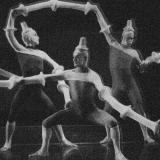
Often credited as the father of multi-media theatre, Alwin Nikolais (1910-1993) took complete creative control over his productions - including cutting-edge approaches to lighting and costume that transformed human bodies into shifting sculptural shapes, while also composing wildly innovative electro-acoustic and synth-based audio as accompaniment.
After initially experimenting with musique concrète and tape manipulation (as demonstrated on the 1959 LP Choreosonic Music of the New Dance Theatre of Alwin Nikolais) Nikolais became the first owner of Robert Moog's synthesizer at the Audio Engineering Society convention in New York in late 1964. Relying heavily on the Moog and later the Synclavier synth/sampler, these 21 tracks document Nikolais' highly-prescient compositions across the mid 1960s through to the late 1980s - existing not only as extensions of his other-worldly choreographic productions, but standalone pieces of foundational mid-century American electronic and experimental music.
"Born in Southington, Connecticut in 1910, Nikolais’s early years and early career were in acting, music and puppetry. It was not until the late 1930s that he began his work as dancer/choreographer in Hartford, Connecticut, where he was commissioned by the Avery Memorial Theatre, a part of the Wadsworth Atheneum, to create an evening-length work to the music of Ernst Krenek. Previously his work and study as a pianist-organist found him accompanying silent films. This sort of accompaniment required from the musician not only a playing skill but also a versatility in improvisation, matching movement to sound, and evoking mood to situation.
Nik was drawn initially to dance by his involvement with the percussion scores used by the illustrious early twentieth century German dancer Mary Wigman. In trying to learn more about percussion, he was lured into dance class and thus his career began. His development of music and dance occurred simultaneously. His introduction to the twelve-tone technique opened his mind to the expanding areas of atonal music, and his dealing with music as sound per se. In 1948, after being appointed director of the Henry Street Playhouse in New York, Nikolais formed the Playhouse Dance Company, later known as the Nikolais Dance Theater, and began his aesthetic orientation toward dance as a study of motion. By the 1950s, he had ceased creating literal dances and began his explorations and eventual milieu as an abstractionist.
Sound became an important part of his abstract theatre. For his first dances, which involved his new thinking of dance as both a visual and kinetic art, he used live percussion scores in which he directed his dancers to play instruments of all nature. There was a combination of children’s toy instruments as well as harsh and resonant automobile brake drums, and other pitched auto parts which he also used to accompany classes. Once he installed his own tape recording machines, he quickly used the limited range these instruments provided in a new way, slowing and increasing speed and reversing sound. He also made the sounds adhere to the choreographic structure (not the other way around), thereby giving the dance its independence from the musical phrasing. But the real need remained: the search for new sound. Nik made a sound library, recording noises and percussion and vocal sounds, which the French aptly called musique concrète. Needless to say, he became a master at splicing bits and pieces.
From 1956 to 1962 Nikolais composed eleven major scores for his theatre pieces using such techniques. In 1963, James Seawright, who at the time was assisting Nik in his productions and also working at the Columbia-Princeton Center for Electronic Music, recorded a sound bank for the production Imago (1963). With this material, Nikolais created his first synthesizer score. Imago won the Paris Grand Prix in 1968 and launched the Nikolais Dance Theatre towards its national and primarily international acclaim.
During the same period, Seawright came to Nik and told him of a young man who had invented and constructed a simplified synthesizer and insisted that Nik visit the electronic fair currently being held in New York. Nik did so and met Robert Moog. He was completely taken by the new machine and after making some suggestions to Moog, (which Moog made), Nik bought the inventor’s first machine with the aid of a Guggenheim Fellowship. Moog himself was astonished by what his machine could produce for Nik. This machine was later acquired by the Museum of Musical Instruments at the University of Michigan at Ann Arbor as the first Moog synthesizer. The Synclavier was Nik’s next source of sound and since the mid-1970s remained the major instrument in the Nikolais soundroom.
Alwin Nikolais has been honored and awarded throughout the world. He has received the French Legion of Honor, the Kennedy Center Honors, National Medal of the Arts, two Guggenheim Fellowships, as well as Mellon, Ford, and Rockefeller grants. He has been a recipient of NEA grants since 1966, been awarded five honorary doctorates, all for his remarkable achievements in Dance Theater. His genius has influenced several generations of artists."
—Murray Louis
он должен быть опубликован на 05.10.2026

Accomplished trumpeter, composer, bandleader and educator, Kamal Abdul-Alim has been actively involved in creative music for decades. He has toured Africa, Europe, the Caribbean and the United States. He has recorded with all kinds of bands, large and small, and performed in festivals all over the world. “He takes the postbop of the 50s and free-form jazz of the 60s and turns it into an even balance of fine textures. Alim, who is highly underrated, has one of the most beautiful tones and concepts of jazz. A master of improvisation, he knows the art of weaving different ideas, whether they stem from Manhattan’s lower East Side or Europe” (Hugh Wyatt, New York Daily News). “Dance” was recorded in 1983 but first released on vinyl in 1987. Rhythm section includes drummer Idris Muhammad. Original pressings are extremely rare and expensive. “Brotherhood” is a much sought after track on the jazz dance scene. There is a high demand for this title again on vinyl and pressings are limited to 1000 copies, all individually hand numbered.
он должен быть опубликован на 05.10.2026

Split System, the Aussie group featuring Jackson Reid Briggs (Jackson Reid Briggs & The Heaters) on vocals and Arron Mawson (Stiff Richards) on guitar, took the punk world by storm with its debut EP this past spring. That was hardly surprising given the talent involved. But whatever my expectations were for Split System, the Melbourne-based outfit far exceeded them. Not just another "super group" (also on board are guitarist Ryan Webb Speed Week, bassist Deon Slaviero, and drummer Mitch McGregor [No Zu]), Split System is straight-up one of the most powerful and exciting punk rock and roll bands of recent memory. The band's EP was a smasher, and now debut album Vol. 1 emphatically follows suit. My god, this record is a monster! Essentially Split System's sound is classic Aussie punk. That may sound like nothing new, but this band executes the style with a force and fury rarely heard these days. It doesn't hurt that Jackson Reid Briggs is one of the best rock and roll screamers going. He's got a fire inside of him. Meanwhile, Mawson and Webb form one hell of a guitar tandem. And that rhythm section is insane. These are all brilliant players who come together to make an extraordinary band. Vol. 1 comes storming out of the gates with "The End" and never lets up. Of course we knew some of the previously-released tracks ("Hit Me," "Demolition," "Climbing") were going to rip. But the newer material is just as good and will just about melt your face off. Songs like "Ringing In My Head" and "Grip" are pure energy and ferocity, while closing track "Feelings" has a mellowed-out Saints feel. This band knows how to rock and roll, and there are literally no songs on this album that don't entirely kick ass. Sometimes we think of these all-star groups as "side projects," but such categorization would sell Split System woefully short. If we're talking about the top three or four punk bands in Australia right now, this has to be one of them! Josh Rutledge/ Faster and Louder
он должен быть опубликован на 05.10.2026

Limited Edition ( 300 )
Heavy 180g Vinyl & Download Token Inside & Hype Sticker.
Full Colour Inners & Contextual Images
Curated & Sleevenotes By John Kertland Of CTR (English & French)
France-the 1980s. A local radio and studio system almost unsurpassed in Europe - add brilliantly inventive labels and producers with a sense of fun & adventure & the result ?
A golden age of Synth-Pop – Post-Disco..inventing the future ..celebrating the chanson of the past. Updating that for a new generation & a new dancefloor.
Virtually neglected until now - only the heads knowing...
Presented in the classic 45 (Quarante Cinq) 7" format - the way that these great records were produced for the radio and were meant to be heard at that moment..
Now, the "savoir" is yours also.
Hard to find 7"s by elusive artistes...
Glorious vocals ,soaring synths and irresistible basslines it’s all here ..
Bon écoute !
он должен быть опубликован на 05.10.2026
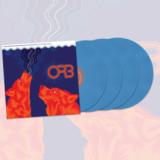
In 2000, after almost two decades of hibernation under the ambient waves and dub currents of the Sargasso Sea, LSD revived the seminal ‘Auntie Aubrey's' series, an Orb Remix Project. Released as a 2 x CD compilation, Part 3 is a veritable smorgasbord of classic, new and unreleased labour-of love remixes that span three decades yet still transcend space and time.
Many influential artists have been involved with The Orb since the beginning, and the project keeps evolving and adapting. Dr. Alex Paterson, the gravitation centre of the Orb is known for his playfully subversive remixes and true to form this album highlights the diversity of his musical mind.
We see the good doctor remix the melancholy and evocative “The Last Lighthouse Keeper” from The Transit Kings, an early British electronic music group that included Jimmy Cauty of The KLF, one of the original members of The Orb. The remix of ‘Davy Jones’ Locker’ from System 7 takes you surfing on a sun-dappled sea of ambient dance nostalgia, while Killing Jokes’ ‘European Super State’ remix (in which LSD label founder Martin ‘Youth’ Glover plays bass guitar) sounds like the soundtrack for an imaginary spy thriller with the powerful lyrics and hypnotizing voice of Jaz Summers.
Legendary producer Youth teams up with Lx yet again on a psychedelic rocker with spellcasting vocals by Lara Smiles, and this is just the beginning! Boasting an all-star lineup, the compilation includes many of our scenes most esteemed electronic music producers such as Coldcut, David Harrow, Sendelica and Gaudi as well as the ambient blissed out vibes from the enigmatic DF Tram, Duende India Collective and The Gyuto Monks of Tibet, this collection offers up such the variety to appease even the most dedicated Orbsessives and music connoisseurs
он должен быть опубликован на 05.10.2026
