Поиск:flexi

Стили
Все
Black Ox Orkestar - Everything Returns

RIYL: A Hawk And A Hacksaw, Leonard Cohen, Daniel Kahn, Xylouris White, Arooj Aftab, Tindersticks, Nick Cave, Alasdair Roberts, Geoff Berner, The Klezmatics. Deluxe 180gLP with 350gsm Arktika jacket/inner + 36”x12” art/lyrics fold-out + DL. CD in gatefold jacket + art/lyrics fold-out. Recorded by Greg Norman (Jason Molina, Nina Nastasia, Electrical Audio). Everything Returns reunites the original Black Ox Orkestar lineup following a 15-year hiatus. Arising from the fertile Montréal post-punk agit-prop scene of the early 2000s, the band comprises Scott Gilmore, Jessica Moss and Thierry Amar of Thee Silver Mt. Zion (Amar also continues to compose and play bass for Godspeed You! Black Emperor) and Gabriel Levine of Sackville. Black Ox made two acclaimed albums of roiling acoustic avant-folk in the mid-2000s, exploring Eastern European and North African folkways through the lens of a gritty, resonant indie rock sensibility, juxtaposing interpretations of instrumentals from various Jewish, Romani and Arabic traditions with originals led by Gilmore’s politically-charged Yiddish vocals. These early albums have since become lodestars for many among a new generation of Yiddish, Klezmer and radical Jewish diasporic music practitioners and fans. First revealing its resurrection in February 2022 with a surprise flexi 7” single issued by left journal Jewish Currents as a gift to its thousands of subscribers, Black Ox has indeed fully and fruitfully reunited. Exquisitely recorded by Greg Norman (Jason Molina, Nina Nastasia, Electrical Audio), Everything Returns picks up right where the band left off: an incisively atmospheric, melancholic yet resolute album of uniquely modern Jewish folk music, with piano, violin, upright bass, clarinet and cymbalom making up the core instrumentation, and the vocal tunes sung primarily in Yiddish, alongside album centerpiece “Viderkol” and closer “Lamed-Vovnik” where English also features. This is not fusion music, but diaspora music: a cross-cultural call and response of musical lexicons, emerging from the history of Jewish persecution and displacement, the musicology of 19th century repertoire from Jewish shtetls, the improvisational traditions of nusakh in Jewish music and taqsim in Arabic music, and a wider polyglot dialogue of Jewish, Slavic, Arabic, and Central Asian musical traditions. Lyrically and stylistically, Everything Returns connects key current issues from refugees forced to leave their homes, to the return of fascism and exclusionary nationalism—with the legacy of modernist Yiddish poetry and song. The new Black Ox Orkestar album is a sublime, poetic, politically-informed statement of re-energized diasporic musical intent, where Gilmore’s voice and the band’s simmering arrangements conjure an ardent, doleful balladry that echoes the sound and sensibility of artists like Tindersticks, The National, Nick Cave and Leonard Cohen. Everything Returns is a haunting, richly textured, darkly sparkling song cycle at once from a vanished world and very much of our time and place. Tracklist: 1 Tish Nign 2 Perpetual Peace 3 Oysgeforn / Bessarabia Hora 4 Mizrakh Mi Ma’arav 5 Skotschne 6 Viderkol (Echo) 7 Epigenetik 8 Moldovan Zhok 9 Lamed-Vovnik

Сделать предзаказ02.12.2022

он должен быть опубликован на 02.12.2022

Plus One - We Out Here EP

We Out Here is the highly anticipated debut EP from Dublin’s Plus One on First Second Label. The prolific musical polymath lays down 4 sub-wrenching club tracks indebted to hardcore futurism with a canny pop sensibility.

Plus One is an alias of cultishly adored producer Matt Finnegan, a veteran beatsmith behind multiple productions for Irish rapper Kojaque, amongst other impressive credits on an expansive CV. He concurrently eyed up the dancefloor, stocking an impressive hard drive of unreleased club tracks that were subsequently rinsed heavily by the likes of Ben UFO, re:ni and EMA to name but a few.

This is his solo debut proper, and comes impressively fully formed from the off. We Out Here starts the engines with a deliciously sub-y stepper of epic big room potential, with a fittingly large bassline to boot. Hood Up Head Down is suspended in an aqueous ambient-drowned RnB bath before unfurling into lush 2-step in romantic fashion. Kiki bobs assuredly along a breaks-y techno pulse amongst a twinkling twilight melody and an emotive reese-bass stunner of a line. Me concludes the EP on a necessary 160 tip, flexing a modern jungle rinse out with sharp amens and soaring melodic subs to round off this statement of intent. - Nevan Jio

нет на складе

Закажите сейчас, и мы закажем товар для вас у нашего поставщика.


Последний логин: 3 г. назад
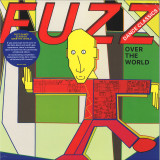
Various - Fuzz Dance Classics Over The World

Pioneers, that’s what we call them. Not properly a giant team, but a bunch of forward thinking producers. In the heyday of the italo disco there was some forward thinking, a new way to address the club scene. 1985 is the golden year and if you want to get to the core of the synth-pop experience look no further ! This previously unreleased compilation collects a series of unbelievable tracks. An outstanding vision featuring la crème de la crème of the early 80s scene. All the way from electro wizard Alexander Robotnick to the astonishing performance of vocalist Mya Fracassini, through the French connection of Bigazzi brothers of Mon Bijou.

нет на складе

Закажите сейчас, и мы закажем товар для вас у нашего поставщика.


Последний логин: 3 г. назад
Matters Unknown - We Aren't Just

Matters Unknown

We Aren't Just

12inchNS0025LP
New Soil
18.11.2022

MATTERS UNKNOWN is the new project led by multi-instrumentalist and
composer Jonny Enser.We Aren't Just is the debut album from MATTERS
UNKNOWN – Jonny Enser from Nubiyan Twist's solo project
Over 14 tracks, it travels through Afro- jazz, celestial blues, soulful funk,
electronica, hip hop referencing influences such as Mulatu Astatke, Pat Thomas
and Tony Allen all of whom he has worked with via Nubiyan Twist.This album
features some of the UK's finest young players including members of Nerija, Noya
Rao, Golden Mean and COLECTIVA. For fans ofJazz is Dead and Emma- Jean
Thackray. Every track on the album is inspired by a facet of Jonny's personal
development; drawing from his relationship to the city, whether in the delta
regions of the Mississippi river or along London's arterial Thames. The album is a
material testament to the flexibility inherent to MATTERS UNKNOWN; it can be
orchestrated to accommodate a 15-strong orchestra, replete with a string section
to move you to the dancefloor as Jazz originally intended, or stripped down to the
bare bones of a trumpet and tuba- led quartet whose intentions remain all the
same; to pierce into the audience's soul.
Jonny is honest, often laying bare his personal plights with his physical disability
and mental health, and the steep – yet rewarding – uphill climb as a musician and
Jazz instrumentalist. We Aren't Just is a multi- faceted study of the self, one's
relationship with the external world; the material, and the living within the inert.

Сделать предзаказ18.11.2022

он должен быть опубликован на 18.11.2022

THE RABBITS - THE RABBITS LP

The Rabbits

THE RABBITS LP

12inchMKY031
MESH-KEY
15.11.2022

Twisted and irreverent, The Rabbits combined ear-splitting guitar shrapnel with one of punk’s greatest-ever snot-nosed vocalists. With hints of PIL or Chrome, but beamed in from a parallel dimension and filtered through the warped lens of visionary loner Syoichi Miyazawa. First-ever vinyl release, fully remastered from the band’s original early ’80s cassette releases, and housed in a sturdy tip-on sleeve. Includes a double-sided, printed insert. Edition of 500

Singer-songwriter Syoichi Miyazawa’s tale is a confounding one.

He grew up in a small town in Yamagata Prefecture (in northern Japan), loved Dylan and The Beatles, and had very little exposure to, or interest in, underground music. And yet, shortly after 24-year-old Miyazawa arrived in Tokyo in 1978, he began performing solo shows at tiny clubs in the city, singing and playing guitar. His performances quicky devolved from brisk acoustic jaunts to lengthy, heavy dirges sung in a snot-nosed wail over a blown-out electric guitar detuned to produce a kind of sonic sludge.

At one of his earliest gigs, a mutual friend introduced him to Endo Michiro, who would soon become the legendary front man of Japanese punk icons The Stalin. It turned out Miyazawa and Endo had attended Yamagata University at the same time just a few years earlier, but hadn’t known each other at school. In Tokyo, they became fast friends, moved into the same apartment building, and for years were inseparable. Endo played guitar and drums on Miyazawa’s debut release, the “Christ Was Born in a Stable” flexi disc. But while Endo was social and outgoing, Miyazawa preferred to be alone, avoiding concerts unless he was performing.

Despite these antisocial tendencies, Miyazawa came to despise playing solo. In 1982, an eccentric high school student named Chika introduced herself at one of Miyazawa’s gigs, and Miyazawa asked if she’d play bass. She agreed and drafted two of her friends to play second guitar and drums. The Rabbits were born.

Miyazawa wrote the tunes, and had a clear vision for the group, but struggled to get the sound he wanted from the other members. His second guitarist was more of a fusion player, and Miyazawa took great pains to get him to tone down the shredding. The group quickly went through multiple line-up changes. Frustrated with the sound of their first proper recording (self-released as the “X1(x)” cassette), Miyazawa spent a full year mixing their second cassette, “Winter Songs,” on his own.

The hard work paid off — the sound of “Winter Songs” is striking, and unlike anything the band’s peers produced. There’s liberal use of delay on the vocals, giving the music a psychedelic feel, but the guitars are caustic, cutting through the mix like metal shrapnel. The rhythm section seems on the verge of teetering out of control throughout, an overdriven and pummeling current below abrasive slabs of guitar and vocals. Even at their most aggressive, though, The Rabbits had strong pop sensibilities, complete with cooing backing vocals and the occasional harmonica solo. Miyazawa delivers his borderline nonsensical lyrics with equal amounts of menace and gaiety, consistently riding that fine line as only a natural oddball can. At times, the band sounds like a distant cousin of PiL, Chrome or The Homosexuals, but beamed in from a parallel dimension and filtered through Miyazawa’s warped lens.

Although The Rabbits briskly sold all 500 copies of the "Winter Songs" tape, live audiences at the time seemed dumbfounded by the group, and would stare at them in silence. After two years together, The Rabbits called it quits in 1984.

When asked if any of the many legendary groups (Les Rallizes Desnudes, G.I.S.M., etc.) he shared stages with left an impression, Miyazawa recently revealed that he always left the venue as soon as he finished performing, so he never caught any of the other bands…

All of which is to say —

The Rabbits are one of the great punk bands of the early ’80s, but their leader had no interest in the punk scene and always thought he was making “normal” music. They rubbed shoulders with a slew of notable groups of the era, and their singer was best friends with arguably the most famous Japanese punk of all time, but Miyazawa shunned fraternization and purposefully distanced himself from his peers.

Could this be why so few underground music fans are familiar with the group, even in Japan? Why they seem to have been written out of the official history of Japanese punk? One can never know for sure, but Mesh-Key hopes to remedy this travesty by offering this compilation, the first-ever official LP by The Rabbits, to a new generation of punk and psychedelic music connoisseurs.
credits

Сделать предзаказ15.11.2022

он должен быть опубликован на 15.11.2022

Lowfish / Solvent - suction001

Lowfish/Solvent

suction001

12inchSUCTION001
Suction Records
07.11.2022

2022 marks the 25th anniversary of Suction Records, the Toronto-based electro/IDM label founded in 1997 by two emerging producers, Lowfish (aka Gregory De Rocher) and Solvent (aka Jason Amm), the latter still overseeing the label to this day. The label’s inaugural release was a split Lowfish/Solvent 12”, marking both artists’ debut vinyl appearance.

Gregory and Jason had known each other since high-school, but a deeper friendship was forged during their university years, after Gregory introduced Jason to early Rephlex releases by Aphex Twin and µ-Ziq. Gregory had been making electronic music in his bedroom for more than a decade, but it was those Rephlex releases that ignited Jason’s passion to do the same. After several years of obsessive gear buying, music making, and playing tracks for each other, Lowfish and Solvent had hit their stride, and their demos even attracted the interest of legendary early IDM labels labels Skam (for Lowfish), and Isophlux (for Solvent). But things were slow-moving in those days — letters, faxes, phone calls… nothing was panning out. So that’s when they decided to start their own label, and put out 300 copies of this 12”, suction001.

The label was heavily inspired by contemporary artists like AFX, Autechre, and Panasonic, but on suction001, those influences collided with their ‘80s synth-pop and industrial roots to create something unique. 25 years later, it still sounds fresh, and like nothing else out there. On suction001, 808 drum machines are run through distortion and breakbeats are chopped and mangled, contrasting with melodic OMD-style leads and catchy synth-pop basslines — a sound the label would refer to as ‘distortion pedal new wave.’

Over the past 25 years, Suction’s sound has morphed and evolved, but in recent years has shifted back to it’s original Rephlex-inspired roots. That makes 2022 the perfect year to revisit this wild, 1997 debut, now reissued in a new, expanded edition for it’s 25th anniversary. The reissue adds 2 bonus tracks — a 1999 remix by Detroit electro-punk duo ADULT., along with a previously-unreleased version of Lowfish’s A1 cut, and also features new and improved artwork, including an insert with full label discography.

Limited to 500 copies, and comes with a Bandcamp download card.

нет на складе

Закажите сейчас, и мы закажем товар для вас у нашего поставщика.


Последний логин: 2 г. назад
DJ Plead - Quick E.P.

Two years since his Going For It EP, Livity Sound is pleased to welcome back Sydney’s DJ Plead for a second round of versatile, psychedelic club variations. Since debuting around 2018 Plead has forged a distinctive sound which focuses on inventive use of percussion and elegant melodic hooks that draw lines between global dance music cultures without adhering to any fixed formula.

From the carnival futurism of lead track ‘Come Quick’ to the infectious reggaeton lilt and understated trance synths of ‘El Es’, Plead presents a sound as playful as it is serious, predominantly exploring the 100 bpm tempo range. Shaped out by acutely angled rhythms, shifting time signatures and bold licks, Quick EP further establishes him as a vital, individual talent with the kind of flexible club tracks that bend between scenes and inject vibrant energy into the dance.

Livity Sound is a label set up by Peverelist in 2011 as a vehicle for a raw and exploratory strain of UK techno, rooted in the heritage of UK dance music and sound system culture. It has since become one of the UK's foremost protagonists for cutting edge underground electronic music.

нет на складе

Закажите сейчас, и мы закажем товар для вас у нашего поставщика.


Последний логин: 22 мес. назад
Second Woman - S/w

Second Woman

S/w

12inchSP043LPX
Spectrum Spools
25.10.2022
 
9
также имеющийся в продаже

Black Vinyl


Clear Vinyl

Future music duo Second Woman's sophomore full-length for Spectrum Spools further hones their distinctive fusion of shapeshifting software sculpture and tessellated footwork. Shivering digital textures oscillate with and against algorithmically mapped percussion samples, smeared synthetic chords levitate in the distance, stabs of digital noise punctuate the mix in twitchy, time-distorting patterns. Their anamorphosis verges on ascetic: stark, splintered waveforms rendered into unique fiber optic hieroglyphs.
Multi-instrumentalists Josh Eustis and Turk Dietrich share a deep history going back to their days in the New Orleans ambient electronic community, as part of Telefon Tel Aviv and Belong, respectively. Even so, S/W pushes beyond their combined discographies to date, flexing impossibilities, building rhythms from arrhythmia, teasing veiled emotion from bold iterations of cold code.

нет на складе

Закажите сейчас, и мы закажем товар для вас у нашего поставщика.


Последний логин: 3 г. назад
Second Woman - S/w

Second Woman

S/w

12inchSP043LP
Spectrum Spools
21.10.2022
 
9
также имеющийся в продаже

Black Vinyl


Future music duo Second Woman's sophomore full-length for Spectrum Spools further hones their distinctive fusion of shapeshifting software sculpture and tessellated footwork. Shivering digital textures oscillate with and against algorithmically mapped percussion samples, smeared synthetic chords levitate in the distance, stabs of digital noise punctuate the mix in twitchy, time-distorting patterns. Their anamorphosis verges on ascetic: stark, splintered waveforms rendered into unique fiber optic hieroglyphs.
Multi-instrumentalists Josh Eustis and Turk Dietrich share a deep history going back to their days in the New Orleans ambient electronic community, as part of Telefon Tel Aviv and Belong, respectively. Even so, S/W pushes beyond their combined discographies to date, flexing impossibilities, building rhythms from arrhythmia, teasing veiled emotion from bold iterations of cold code.

нет на складе

Закажите сейчас, и мы закажем товар для вас у нашего поставщика.


Последний логин: 8 г. назад
VARIOUS - ZYX Italo Disco: Best Of Vol. 4 (2x12")
нет на складе

Закажите сейчас, и мы закажем товар для вас у нашего поставщика.


Последний логин: 10 мес. назад
Lee Tracy & Isaac Manning - Is it What You Want

As the sun sets on a quaint East Nashville house, a young man bares a piece of his soul. Facing the camera, sporting a silky suit jacket/shirt/slacks/fingerless gloves ensemble that announces "singer" before he's even opened his mouth, Lee Tracy Johnson settles onto his stage, the front yard. He sways to the dirge-like drum machine pulse of a synth-soaked slow jam, extends his arms as if gaining his balance, and croons in affecting, fragile earnest, "I need your love… oh baby…"

Dogs in the yard next door begin barking. A mysterious cardboard robot figure, beamed in from galaxies unknown and affixed to a tree, is less vocal. Lee doesn't acknowledge either's presence. He's busy feeling it, arms and hands gesticulating. His voice rises in falsetto over the now-quiet dogs, over the ambient noise from the street that seeps into the handheld camcorder's microphone, over the recording of his own voice played back from a boombox off-camera. After six minutes the single, continuous shot ends. In this intimate creative universe there are no re-takes. There are many more music videos to shoot, and as Lee later puts it, "The first time you do it is actually the best. Because you can never get that again. You expressing yourself from within."

"I Need Your Love" dates from a lost heyday. From some time in the '80s or early '90s, when Lee Tracy (as he was known in performance) and his music partner/producer/manager Isaac Manning committed hours upon hours of their sonic and visual ideas to tape. Embracing drum machines and synthesizers – electronics that made their personal futurism palpable – they recorded exclusively at home, live in a room into a simple cassette deck. Soul, funk, electro and new wave informed their songs, yet Lee and Isaac eschewed the confinement of conventional categories and genres, preferring to let experimentation guide them.

"Anytime somebody put out a new record they had the same instruments or the same sound," explains Isaac. "So I basically wanted to find something that's really gonna stand out away from all of the rest of 'em." Their ethos meant that every idea they came up with was at least worth trying: echoed out half-rapped exhortations over frantic techno-style beats, gospel synth soul, modal electro-funk, oddball pop reinterpretations, emo AOR balladry, nods to Prince and the Fat Boys, or arrangements that might collapse mid-song into a mess of arcade game-ish blips before rallying to reach the finish line. All of it conjoined by consistent tape hiss, and most vitally, Lee's chameleonic voice, which managed to wildly shape shift and still evoke something sincere – whether toggling between falsetto and tenor exalting Jesus's return, or punctuating a melismatic romantic adlib with a succinct, "We all know how it feels to be alone."

"People think we went to a studio," says Isaac derisively. "We never went to no studio. We didn't have the money to go to no studio! We did this stuff at home. I shot videos in my front yard with whatever we could to get things together." Sometimes Isaac would just put on an instrumental record, be it "Planet Rock" or "Don't Cry For Me Argentina" (from Evita), press "record," and let Lee improvise over it, yielding peculiar love songs, would-be patriotic anthems, or Elvis Presley or Marilyn Monroe tributes. Technical limitations and a lack of professional polish never dissuaded them. They believed they were onto something.

"That struggle," Isaac says, "made that sound sound good to me."

In the parlance of modern music criticism Lee and Isaac's dizzying DIY efforts would inevitably be described as "outsider." But "outsider" carries the burden of untold additional layers of meaning if you're Black and from the South, creating on a budget, and trying to get someone, anyone within the country music capital of the world to take your vision seriously. "What category should we put it in?" Isaac asks rhetorically. "I don't know. All I know is feeling. I ain't gonna name it nothing. It's music. If it grabs your soul and touch your heart that's what it basically is supposed to do."

=

Born in 1963, the baby boy of nine siblings, Lee Tracy spent his earliest years living amidst the shotgun houses on Nashville's south side. "We was poor, man!" he says, recalling the outhouse his family used for a bathroom and the blocks of ice they kept in the kitchen to chill perishables. "But I actually don't think I really realized I was in poverty until I got grown and started thinking about it." Lee's mom worked at the Holiday Inn; his dad did whatever he had to do, from selling fruit from a horse drawn cart to bootlegging. "We didn't have much," Lee continues, "but my mother and my father got us the things we needed, the clothes on our back." By the end of the decade with the city's urban renewal programs razing entire neighborhoods to accommodate construction of the Interstate, the family moved to Edgehill Projects. Lee remembers music and art as a constant source of inspiration for he and his brothers and sisters – especially after seeing the Jackson 5 perform on Ed Sullivan. "As a small child I just knew that was what I wanted to do."

His older brother Don began musically mentoring him, introducing Lee to a variety of instruments and sounds. "He would never play one particular type of music, like R&B," says Lee. "I was surrounded by jazz, hard rock and roll, easy listening, gospel, reggae, country music; I mean I was a sponge absorbing all of that." Lee taught himself to play drums by beating on cardboard boxes, gaining a rep around the way for his timekeeping, and his singing voice. Emulating his favorites, Earth Wind & Fire and Cameo, he formed groups with other kids with era-evocative band names like Concept and TNT Connection, and emerged as the leader of disciplined rehearsals. "I made them practice," says Lee. "We practiced and practiced and practiced. Because I wanted that perfection." By high school the most accomplished of these bands would take top prize in a prominent local talent show. It was a big moment for Lee, and he felt ready to take things to the next level. But his band-mates had other ideas.

"I don't know what happened," he says, still miffed at the memory. "It must have blew they mind after we won and people started showing notice, because it's like everybody quit! I was like, where the hell did everybody go?" Lee had always made a point of interrogating prospective musicians about their intentions before joining his groups: were they really serious or just looking for a way to pick up girls? Now he understood even more the importance of finding a collaborator just as committed to the music as he was.

=

Isaac Manning had spent much of his life immersed in music and the arts – singing in the church choir with his family on Nashville's north side, writing, painting, dancing, and working various gigs within the entertainment industry. After serving in the armed forces, in the early '70s he ran The Teenage Place, a music and performance venue that catered to the local youth. But he was forced out of town when word of one of his recreational routines created a stir beyond the safe haven of his bohemian circles.

"I was growing marijuana," Isaac explains. "It wasn't no business, I was smoking it myself… I would put marijuana in scrambled eggs, cornbread and stuff." His weed use originated as a form of self-medication to combat severe tooth pain. But when he began sharing it with some of the other young people he hung out with, some of who just so happened to be the kids of Nashville politicians, the cops came calling. "When I got busted," he remembers, "they were talking about how they were gonna get rid of me because they didn't want me saying nothing about they children because of the politics and stuff. So I got my family, took two raggedy cars, and left Nashville and went to Vegas."

Out in the desert, Isaac happened to meet Chubby Checker of "The Twist" fame while the singer was gigging at The Flamingo. Impressed by Isaac's zeal, Checker invited him to go on the road with him as his tour manager/roadie/valet. The experience gave Isaac a window into a part of the entertainment world he'd never encountered – a glimpse of what a true pop act's audience looked like. "Chubby Checker, none of his shows were played for Black folks," he remembers. "All his gigs were done at high-class white people areas." Returning home after a few years with Chubby, Isaac was properly motivated to make it in Music City. He began writing songs and scouting around Nashville for local talent anywhere he could find it with an expressed goal: "Find someone who can deliver your songs the way you want 'em delivered and make people feel what you want them to feel."

One day while walking through Edgehill Projects Isaac heard someone playing the drums in a way that made him stop and take notice. "The music was so tight, just the drums made me feel like, oh I'm-a find this person," he recalls. "So I circled through the projects until I found who it was.

"That's how I met him – Lee Tracy. When I found him and he started singing and stuff, I said, ohhh, this is somebody different."

=

Theirs was a true complementary partnership: young Lee possessed the raw talent, the older Isaac the belief. "He's really the only one besides my brother and my family that really seen the potential in me," says Lee. "He made me see that I could do it."

Isaac long being a night owl, his house also made for a fertile collaborative environment – a space where there always seemed to be a new piece of his visual art on display: paintings, illustrations, and dolls and figures (including an enigmatic cardboard robot). Lee and Issac would hang out together and talk, listen to music, conjure ideas, and smoke the herb Isaac had resumed growing in his yard. "It got to where I could trust him, he could trust me," Isaac says of their bond. They also worked together for hours on drawings, spreading larges rolls of paper on the walls and sketching faces with abstract patterns and imagery: alien-like beings, tri-horned horse heads, inverted Janus-like characters where one visage blurred into the other.

Soon it became apparent that they didn't need other collaborators; self-sufficiency was the natural way forward. At Isaac's behest Lee, already fed up with dealing with band musicians, began playing around with a poly-sonic Yamaha keyboard at the local music store. "It had everything on it – trumpet, bass, drums, organ," remembers Lee. "And that's when I started recording my own stuff."

The technology afforded Lee the flexibility and independence he craved, setting him on a path other bedroom musicians and producers around the world were simultaneously following through the '80s into the early '90s. Saving up money from day jobs, he eventually supplemented the Yamaha Isaac had gotten him with Roland and Casio drum machines and a Moog. Lee was living in an apartment in Hillside at that point caring for his dad, who'd been partially paralyzed since early in life. In the evenings up in his second floor room, the music put him in a zone where he could tune out everything and lose himself in his ideas.

"Oh I loved it," he recalls. "I would really experiment with the instruments and use a lot of different sound effects. I was looking for something nobody else had. I wanted something totally different. And once I found the sound I was looking for, I would just smoke me a good joint and just let it go, hit the record button." More potent a creative stimulant than even Isaac's weed was the holistic flow and spontaneity of recording. Between sessions at Isaac's place and Lee's apartment, their volume of output quickly ballooned.

"We was always recording," says Lee. "That's why we have so much music. Even when I went to Isaac's and we start creating, I get home, my mind is racing, I gotta start creating, creating, creating. I remember there were times when I took a 90-minute tape from front to back and just filled it up."

"We never practiced," says Isaac. "See, that was just so odd about the whole thing. I could relate to him, and tell him about the songs I had ideas for and everything and stuff. And then he would bring it back or whatever, and we'd get together and put it down." Once the taskmaster hell bent on rehearsing, Lee had flipped a full 180. Perfection was no longer an aspiration, but the enemy of inspiration.

"I seen where practicing and practicing got me," says Lee. "A lot of musicians you get to playing and they gotta stop, they have to analyze the music. But while you analyzing you losing a lot of the greatness of what you creating. Stop analyzing what you play, just play! And it'll all take shape."

=

"I hope you understood the beginning of the record because this was invented from a dream I had today… (You tell me, I'll tell you, we'll figure it out together)" – Lee Tracy and Isaac Manning, "Hope You Understand"

Lee lets loose a maniacal cackle when he acknowledges that the material that he and Isaac recorded was by anyone's estimation pretty out there. It's the same laugh that commences "Hope You Understand" – a chaotic transmission that encapsulates the duality at the heart of their music: a stated desire to reach people and a compulsion to go as leftfield as they saw fit.

"We just did it," says Lee. "We cut the music on and cut loose. I don't sit around and write. I do it by listening, get a feeling, play the music, and the lyrics and stuff just come out of me."

The approach proved adaptable to interpreting other artists' material. While recording a cover of Whitney Houston's pop ballad "Saving All My Love For You," Lee played Whitney's version in his headphones as he laid down his own vocals – partially following the lyrics, partially using them as a departure point. The end result is barely recognizable compared with the original, Lee and Isaac having switched up the time signature and reinvented the melody along the way towards morphing a slick mainstream radio standard into something that sounds solely their own.

"I really used that song to get me started," says Lee. "Then I said, well I need something else, something is missing. Something just came over me. That's when I came up with 'Is It What You Want.'"

The song would become the centerpiece of Lee and Isaac's repertoire. Pushed along by a percolating metronomic Rhythm King style beat somewhere between a military march and a samba, "Is It What You Want" finds Lee pleading the sincerity of his commitment to a potential love interest embellished by vocal tics and hiccups subtlely reminiscent of his childhood hero MJ. Absent chord changes, only synth riffs gliding in and out like apparitions, the song achieves a lingering lo-fi power that leaves you feeling like it's still playing, somewhere, even after the fade out.

"I don't know, it's like a real spiritual song," Lee reflects. "But it's not just spiritual. To me the more I listen to it it's like about everything that you do in your everyday life, period. Is it what you want? Do you want a car or you don't want a car? Do you want Jesus or do you want the Devil? It's basically asking you the question. Can't nobody answer the question but you yourself."

In 1989 Lee won a lawsuit stemming from injuries sustained from a fight he'd gotten into. He took part of the settlement money and with Isaac pressed up "Saving All My Love For You" b/w "Is It What You Want" as a 45 single. Isaac christened the label One Chance Records. "Because that's all we wanted," he says with a laugh, "one chance."

Isaac sent the record out to radio stations and major labels, hoping for it to make enough noise to get picked up nationally. But the response he and Lee were hoping for never materialized. According to Isaac the closest the single got to getting played on the radio is when a disk jock from a local station made a highly unusual announcement on air: "The dude said on the radio, 107.5 – 'We are not gonna play 'Is It What You Want.' We cracked up! Wow, that's deep.

"It was a whole racist thing that was going on," he reflects. "So we just looked over and kept on going. That was it. That was about the way it goes… If you were Black and you were living in Nashville and stuff, that's the way you got treated." Isaac already knew as much from all the times he'd brought he and Lee's tapes (even their cache of country music tunes) over to Music Row to try to drum up interest to no avail.

"Isaac, he really worked his ass off," says Lee. "He probably been to every record place down on Music Row." Nashville's famed recording and music business corridor wasn't but a few blocks from where Lee grew up. Close enough, he remembers, for him to ride his bike along its back alleys and stumble upon the occasional random treasure, like a discarded box of harmonicas. Getting in through the front door, however, still felt a world away.

"I just don't think at the time our music fell into a category for them," he concedes. "It was before its time."

=

Lee stopped making music some time in the latter part of the '90s, around the time his mom passed away and life became increasingly tough to manage. "When my mother died I had a nervous breakdown," he says, "So I shut down for a long time. I was in such a sadness frame of mind. That's why nobody seen me. I had just disappeared off the map." He fell out of touch with Isaac, and in an indication of just how bad things had gotten for him, lost track of all the recordings they'd made together. Music became a distant memory.

Fortunately, Isaac kept the faith. In a self-published collection of his poetry – paeans to some of his favorite entertainment and public figures entitled Friends and Dick Clark – he'd written that he believed "music has a life of its own." But his prescience and presence of mind were truly manifested in the fact that he kept an archive of he and Lee's work. As perfectly imperfect as "Is It What You Want" now sounds in a post-Personal Space world, Lee and Isaac's lone official release was in fact just a taste. The bulk of the Is It What You Want album is culled from the pair's essentially unheard home recordings – complete songs, half-realized experiments, Isaac's blue monologues and pronouncements et al – compiled, mixed and programmed in the loose and impulsive creative spirit of their regular get-togethers from decades ago. The rest of us, it seems, may have finally caught up to them.

On the prospect of at long last reaching a wider audience, Isaac says simply, "I been trying for a long time, it feels good." Ever the survivor, he adds, "The only way I know how to make it to the top is to keep climbing. If one leg break on the ladder, hey, you gotta fix it and keep on going… That's where I be at. I'll kill death to make it out there."

For Lee it all feels akin to a personal resurrection: "It's like I was in a tomb and the tomb was opened and I'm back… Man, it feels so great. I feel like I'm gonna jump out of my skin." Success at this stage of his life, he realizes, probably means something different than what it did back when he was singing and dancing in Isaac's front yard. "What I really mean by 'making it,'" he explains isn't just the music being heard but, "the story being told."

Occasionally Lee will pull up "Is It What You Want" on YouTube on his phone, put on his headphones, and listen. He remembers the first time he heard his recorded voice. How surreal it was, how he thought to himself, "Is that really me?" What would he say to that younger version of himself now?

"I would probably tell myself, hang in there, don't give up. Keep striving for the goal. And everything will work out."

Despite what's printed on the record label, sometimes you do get more than one chance.

нет на складе

Закажите сейчас, и мы закажем товар для вас у нашего поставщика.


Последний логин: 3 г. назад
Hugh Cornwell - Moments Of Madness LP

Widely regarded as the poet laureate of the punk era (from his early career fronting the Stranglers to his transition as a solo artist), Hugh Cornwell has built a substantial and singular body of impressive solo albums. His tenth solo opus, Moments of Madness, continues his illustrious output by experimenting with musical genres as his enviable reputation as a wordsmith resounds across this album's songs.

Self-produced, and playing all of the instruments himself, Moments of Madness' ten incredible tracks finds Hugh flexing his musical muscles with a stripped down, offbeat, reverberating sixties vibe ringing from the seductive melodies and lyrically distinctive perceptions that are indelibly stamped with Hugh’s trademark imagination. Vocally and lyrically a career-best, Hugh has never sounded so good on his tenth solo album.

A high watermark and a modern-day masterpiece, Moments of Madness is being tipped as the most significant album of Hugh’s career.

Сделать предзаказ07.10.2022

он должен быть опубликован на 07.10.2022

Caustic Casanova - Glass Enclosed Nerve Center LP
также имеющийся в продаже

Random Color Vinyl


CAUSTIC CASANOVA, die psychedelischen Heavy-Riffonauten aus Washington, DC nutzen auf ihrem fünften, das Gehirn schmelzenden Album die starke Kernkraft ihres hyperkinetischen Zentrums, um diverse Soundpartikel in die musikalische Wechselwirkung einzubinden und in einer kaleidoskopischen Heavy-Rock-Extravaganz explodieren zu lassen. Im Jahr 2005 als Trio gegründet, schlagen Schlagzeugerin und Sängerin Stefanie Zaekner, Bassist und Sänger Francis Beringer sowie Gitarrist Andrew Yonki, mit CAUSTIC CASANOVA immer wieder neue Wege ein, um ihre ebenso packende wie unvorhersehbare Musik spannend zu verfeinern. In ihren Klangräumen verbindet sich sardonischer Noise-Rock und proggiger Sludge im Stile von BARONESS, RED FANG und TORCHE mit der gewaltigen Wucht der MELVINS, der Experimentierfreude von BORIS und flottem Gitarren-Heldentum sowie einem Hauch von verdunkeltem Post-Punk. Mit der Aufnahme eines zweiten Gitarristen in der Person von Jake Kimberley im Jahr 2019 machte sich das nunmehrige Quartett auf eine Abenteuerreise mit dem erklärten Ziel, das waghalsigste und rockigste CAUSTIC CASANOVA Album aller Zeiten zu erschaffen. Dabei nutzen die Amerikaner geschickt alle erweiterten Möglichkeiten, die sich aus ihrer Verstärkung mit einer zweiten Gitarre ergeben. Gleichzeitig unterstreichen die Vier auf "Glass Enclosed Nerve Center" auch all ihre bisherigen Stärken: Beringers straffer, melodischer Bass pumpt heftig die beiden heiß-bruzzelnden Gitarren auf, die den gesanglichen Dreiklang flankieren. Zaenkers flexibles Schlagzeugspiel treibt die fünf mäandrierenden Songs des Albums einfallsreich an und fühlt sich sowohl im swingenden Bill-Ward-Stomp als auch in der Hibbeligkeit des Math-Rock wohl. Langjährige Reisende in CAUSTIC CASANOVAs Fahrwasser dürfen "Glass Enclosed Nerve Center" als eine Art von berauschender Rückkehr empfinden, zu der auch das ehrgeizig ausufernde, 22-Minuten-Epos 'Bull Moose against the Sky' erheblich beiträgt, welches die gesamte B-Seite des Albums in Beschlag nimmt. Doch auch wer den massiven Sound dieser galoppierenden Psychedelic-Sludge-Büffel noch nicht kennt, bekommt hier herausragendes Songhandwerk und eine reiche lyrische Erzählkultur geschenkt, die jede Sekunde und unzählige Wiederholungen wert sind. Drei, zwei, eins... nun geht es rund!

Сделать предзаказ07.10.2022

он должен быть опубликован на 07.10.2022

Caustic Casanova - Glass Enclosed Nerve Center LP
также имеющийся в продаже

Transparent Blue Vinyl


CAUSTIC CASANOVA, die psychedelischen Heavy-Riffonauten aus Washington, DC nutzen auf ihrem fünften, das Gehirn schmelzenden Album die starke Kernkraft ihres hyperkinetischen Zentrums, um diverse Soundpartikel in die musikalische Wechselwirkung einzubinden und in einer kaleidoskopischen Heavy-Rock-Extravaganz explodieren zu lassen. Im Jahr 2005 als Trio gegründet, schlagen Schlagzeugerin und Sängerin Stefanie Zaekner, Bassist und Sänger Francis Beringer sowie Gitarrist Andrew Yonki, mit CAUSTIC CASANOVA immer wieder neue Wege ein, um ihre ebenso packende wie unvorhersehbare Musik spannend zu verfeinern. In ihren Klangräumen verbindet sich sardonischer Noise-Rock und proggiger Sludge im Stile von BARONESS, RED FANG und TORCHE mit der gewaltigen Wucht der MELVINS, der Experimentierfreude von BORIS und flottem Gitarren-Heldentum sowie einem Hauch von verdunkeltem Post-Punk. Mit der Aufnahme eines zweiten Gitarristen in der Person von Jake Kimberley im Jahr 2019 machte sich das nunmehrige Quartett auf eine Abenteuerreise mit dem erklärten Ziel, das waghalsigste und rockigste CAUSTIC CASANOVA Album aller Zeiten zu erschaffen. Dabei nutzen die Amerikaner geschickt alle erweiterten Möglichkeiten, die sich aus ihrer Verstärkung mit einer zweiten Gitarre ergeben. Gleichzeitig unterstreichen die Vier auf "Glass Enclosed Nerve Center" auch all ihre bisherigen Stärken: Beringers straffer, melodischer Bass pumpt heftig die beiden heiß-bruzzelnden Gitarren auf, die den gesanglichen Dreiklang flankieren. Zaenkers flexibles Schlagzeugspiel treibt die fünf mäandrierenden Songs des Albums einfallsreich an und fühlt sich sowohl im swingenden Bill-Ward-Stomp als auch in der Hibbeligkeit des Math-Rock wohl. Langjährige Reisende in CAUSTIC CASANOVAs Fahrwasser dürfen "Glass Enclosed Nerve Center" als eine Art von berauschender Rückkehr empfinden, zu der auch das ehrgeizig ausufernde, 22-Minuten-Epos 'Bull Moose against the Sky' erheblich beiträgt, welches die gesamte B-Seite des Albums in Beschlag nimmt. Doch auch wer den massiven Sound dieser galoppierenden Psychedelic-Sludge-Büffel noch nicht kennt, bekommt hier herausragendes Songhandwerk und eine reiche lyrische Erzählkultur geschenkt, die jede Sekunde und unzählige Wiederholungen wert sind. Drei, zwei, eins... nun geht es rund!

Сделать предзаказ07.10.2022

он должен быть опубликован на 07.10.2022

Hugh Cornwell - Moments Of Madness LP

Limited Arctic Moss coloured vinyl LP version. New solo LP from The Stranglers' Hugh Cornwell, Moments of Madness is an album of acute, pithy, and witty observations and social commentary across ten singular songs!

Widely regarded as the poet laureate of the punk era (from his early career fronting the Stranglers to his transition as a solo artist), Hugh Cornwell has built a substantial and singular body of impressive solo albums. His tenth solo opus, Moments of Madness, continues his illustrious output by experimenting with musical genres as his enviable reputation as a wordsmith resounds across this album's songs.

Self-produced, and playing all of the instruments himself, Moments of Madness' ten incredible tracks finds Hugh flexing his musical muscles with a stripped down, offbeat, reverberating sixties vibe ringing from the seductive melodies and lyrically distinctive perceptions that are indelibly stamped with Hugh’s trademark imagination. Vocally and lyrically a career-best, Hugh has never sounded so good on his tenth solo album.

A high watermark and a modern-day masterpiece, Moments of Madness is being tipped as the most significant album of Hugh’s career.

Сделать предзаказ07.10.2022

он должен быть опубликован на 07.10.2022

Lee Tracy & Isaac Manning - Is it What You Want LP

As the sun sets on a quaint East Nashville house, a young man bares a piece of his soul. Facing the camera, sporting a silky suit jacket/shirt/slacks/fingerless gloves ensemble that announces "singer" before he's even opened his mouth, Lee Tracy Johnson settles onto his stage, the front yard. He sways to the dirge-like drum machine pulse of a synth-soaked slow jam, extends his arms as if gaining his balance, and croons in affecting, fragile earnest, "I need your love… oh baby…"

Dogs in the yard next door begin barking. A mysterious cardboard robot figure, beamed in from galaxies unknown and affixed to a tree, is less vocal. Lee doesn't acknowledge either's presence. He's busy feeling it, arms and hands gesticulating. His voice rises in falsetto over the now-quiet dogs, over the ambient noise from the street that seeps into the handheld camcorder's microphone, over the recording of his own voice played back from a boombox off-camera. After six minutes the single, continuous shot ends. In this intimate creative universe there are no re-takes. There are many more music videos to shoot, and as Lee later puts it, "The first time you do it is actually the best. Because you can never get that again. You expressing yourself from within."

"I Need Your Love" dates from a lost heyday. From some time in the '80s or early '90s, when Lee Tracy (as he was known in performance) and his music partner/producer/manager Isaac Manning committed hours upon hours of their sonic and visual ideas to tape. Embracing drum machines and synthesizers – electronics that made their personal futurism palpable – they recorded exclusively at home, live in a room into a simple cassette deck. Soul, funk, electro and new wave informed their songs, yet Lee and Isaac eschewed the confinement of conventional categories and genres, preferring to let experimentation guide them.

"Anytime somebody put out a new record they had the same instruments or the same sound," explains Isaac. "So I basically wanted to find something that's really gonna stand out away from all of the rest of 'em." Their ethos meant that every idea they came up with was at least worth trying: echoed out half-rapped exhortations over frantic techno-style beats, gospel synth soul, modal electro-funk, oddball pop reinterpretations, emo AOR balladry, nods to Prince and the Fat Boys, or arrangements that might collapse mid-song into a mess of arcade game-ish blips before rallying to reach the finish line. All of it conjoined by consistent tape hiss, and most vitally, Lee's chameleonic voice, which managed to wildly shape shift and still evoke something sincere – whether toggling between falsetto and tenor exalting Jesus's return, or punctuating a melismatic romantic adlib with a succinct, "We all know how it feels to be alone."

"People think we went to a studio," says Isaac derisively. "We never went to no studio. We didn't have the money to go to no studio! We did this stuff at home. I shot videos in my front yard with whatever we could to get things together." Sometimes Isaac would just put on an instrumental record, be it "Planet Rock" or "Don't Cry For Me Argentina" (from Evita), press "record," and let Lee improvise over it, yielding peculiar love songs, would-be patriotic anthems, or Elvis Presley or Marilyn Monroe tributes. Technical limitations and a lack of professional polish never dissuaded them. They believed they were onto something.

"That struggle," Isaac says, "made that sound sound good to me."

In the parlance of modern music criticism Lee and Isaac's dizzying DIY efforts would inevitably be described as "outsider." But "outsider" carries the burden of untold additional layers of meaning if you're Black and from the South, creating on a budget, and trying to get someone, anyone within the country music capital of the world to take your vision seriously. "What category should we put it in?" Isaac asks rhetorically. "I don't know. All I know is feeling. I ain't gonna name it nothing. It's music. If it grabs your soul and touch your heart that's what it basically is supposed to do."

=

Born in 1963, the baby boy of nine siblings, Lee Tracy spent his earliest years living amidst the shotgun houses on Nashville's south side. "We was poor, man!" he says, recalling the outhouse his family used for a bathroom and the blocks of ice they kept in the kitchen to chill perishables. "But I actually don't think I really realized I was in poverty until I got grown and started thinking about it." Lee's mom worked at the Holiday Inn; his dad did whatever he had to do, from selling fruit from a horse drawn cart to bootlegging. "We didn't have much," Lee continues, "but my mother and my father got us the things we needed, the clothes on our back." By the end of the decade with the city's urban renewal programs razing entire neighborhoods to accommodate construction of the Interstate, the family moved to Edgehill Projects. Lee remembers music and art as a constant source of inspiration for he and his brothers and sisters – especially after seeing the Jackson 5 perform on Ed Sullivan. "As a small child I just knew that was what I wanted to do."

His older brother Don began musically mentoring him, introducing Lee to a variety of instruments and sounds. "He would never play one particular type of music, like R&B," says Lee. "I was surrounded by jazz, hard rock and roll, easy listening, gospel, reggae, country music; I mean I was a sponge absorbing all of that." Lee taught himself to play drums by beating on cardboard boxes, gaining a rep around the way for his timekeeping, and his singing voice. Emulating his favorites, Earth Wind & Fire and Cameo, he formed groups with other kids with era-evocative band names like Concept and TNT Connection, and emerged as the leader of disciplined rehearsals. "I made them practice," says Lee. "We practiced and practiced and practiced. Because I wanted that perfection." By high school the most accomplished of these bands would take top prize in a prominent local talent show. It was a big moment for Lee, and he felt ready to take things to the next level. But his band-mates had other ideas.

"I don't know what happened," he says, still miffed at the memory. "It must have blew they mind after we won and people started showing notice, because it's like everybody quit! I was like, where the hell did everybody go?" Lee had always made a point of interrogating prospective musicians about their intentions before joining his groups: were they really serious or just looking for a way to pick up girls? Now he understood even more the importance of finding a collaborator just as committed to the music as he was.

=

Isaac Manning had spent much of his life immersed in music and the arts – singing in the church choir with his family on Nashville's north side, writing, painting, dancing, and working various gigs within the entertainment industry. After serving in the armed forces, in the early '70s he ran The Teenage Place, a music and performance venue that catered to the local youth. But he was forced out of town when word of one of his recreational routines created a stir beyond the safe haven of his bohemian circles.

"I was growing marijuana," Isaac explains. "It wasn't no business, I was smoking it myself… I would put marijuana in scrambled eggs, cornbread and stuff." His weed use originated as a form of self-medication to combat severe tooth pain. But when he began sharing it with some of the other young people he hung out with, some of who just so happened to be the kids of Nashville politicians, the cops came calling. "When I got busted," he remembers, "they were talking about how they were gonna get rid of me because they didn't want me saying nothing about they children because of the politics and stuff. So I got my family, took two raggedy cars, and left Nashville and went to Vegas."

Out in the desert, Isaac happened to meet Chubby Checker of "The Twist" fame while the singer was gigging at The Flamingo. Impressed by Isaac's zeal, Checker invited him to go on the road with him as his tour manager/roadie/valet. The experience gave Isaac a window into a part of the entertainment world he'd never encountered – a glimpse of what a true pop act's audience looked like. "Chubby Checker, none of his shows were played for Black folks," he remembers. "All his gigs were done at high-class white people areas." Returning home after a few years with Chubby, Isaac was properly motivated to make it in Music City. He began writing songs and scouting around Nashville for local talent anywhere he could find it with an expressed goal: "Find someone who can deliver your songs the way you want 'em delivered and make people feel what you want them to feel."

One day while walking through Edgehill Projects Isaac heard someone playing the drums in a way that made him stop and take notice. "The music was so tight, just the drums made me feel like, oh I'm-a find this person," he recalls. "So I circled through the projects until I found who it was.

"That's how I met him – Lee Tracy. When I found him and he started singing and stuff, I said, ohhh, this is somebody different."

=

Theirs was a true complementary partnership: young Lee possessed the raw talent, the older Isaac the belief. "He's really the only one besides my brother and my family that really seen the potential in me," says Lee. "He made me see that I could do it."

Isaac long being a night owl, his house also made for a fertile collaborative environment – a space where there always seemed to be a new piece of his visual art on display: paintings, illustrations, and dolls and figures (including an enigmatic cardboard robot). Lee and Issac would hang out together and talk, listen to music, conjure ideas, and smoke the herb Isaac had resumed growing in his yard. "It got to where I could trust him, he could trust me," Isaac says of their bond. They also worked together for hours on drawings, spreading larges rolls of paper on the walls and sketching faces with abstract patterns and imagery: alien-like beings, tri-horned horse heads, inverted Janus-like characters where one visage blurred into the other.

Soon it became apparent that they didn't need other collaborators; self-sufficiency was the natural way forward. At Isaac's behest Lee, already fed up with dealing with band musicians, began playing around with a poly-sonic Yamaha keyboard at the local music store. "It had everything on it – trumpet, bass, drums, organ," remembers Lee. "And that's when I started recording my own stuff."

The technology afforded Lee the flexibility and independence he craved, setting him on a path other bedroom musicians and producers around the world were simultaneously following through the '80s into the early '90s. Saving up money from day jobs, he eventually supplemented the Yamaha Isaac had gotten him with Roland and Casio drum machines and a Moog. Lee was living in an apartment in Hillside at that point caring for his dad, who'd been partially paralyzed since early in life. In the evenings up in his second floor room, the music put him in a zone where he could tune out everything and lose himself in his ideas.

"Oh I loved it," he recalls. "I would really experiment with the instruments and use a lot of different sound effects. I was looking for something nobody else had. I wanted something totally different. And once I found the sound I was looking for, I would just smoke me a good joint and just let it go, hit the record button." More potent a creative stimulant than even Isaac's weed was the holistic flow and spontaneity of recording. Between sessions at Isaac's place and Lee's apartment, their volume of output quickly ballooned.

"We was always recording," says Lee. "That's why we have so much music. Even when I went to Isaac's and we start creating, I get home, my mind is racing, I gotta start creating, creating, creating. I remember there were times when I took a 90-minute tape from front to back and just filled it up."

"We never practiced," says Isaac. "See, that was just so odd about the whole thing. I could relate to him, and tell him about the songs I had ideas for and everything and stuff. And then he would bring it back or whatever, and we'd get together and put it down." Once the taskmaster hell bent on rehearsing, Lee had flipped a full 180. Perfection was no longer an aspiration, but the enemy of inspiration.

"I seen where practicing and practicing got me," says Lee. "A lot of musicians you get to playing and they gotta stop, they have to analyze the music. But while you analyzing you losing a lot of the greatness of what you creating. Stop analyzing what you play, just play! And it'll all take shape."

=

"I hope you understood the beginning of the record because this was invented from a dream I had today… (You tell me, I'll tell you, we'll figure it out together)" – Lee Tracy and Isaac Manning, "Hope You Understand"

Lee lets loose a maniacal cackle when he acknowledges that the material that he and Isaac recorded was by anyone's estimation pretty out there. It's the same laugh that commences "Hope You Understand" – a chaotic transmission that encapsulates the duality at the heart of their music: a stated desire to reach people and a compulsion to go as leftfield as they saw fit.

"We just did it," says Lee. "We cut the music on and cut loose. I don't sit around and write. I do it by listening, get a feeling, play the music, and the lyrics and stuff just come out of me."

The approach proved adaptable to interpreting other artists' material. While recording a cover of Whitney Houston's pop ballad "Saving All My Love For You," Lee played Whitney's version in his headphones as he laid down his own vocals – partially following the lyrics, partially using them as a departure point. The end result is barely recognizable compared with the original, Lee and Isaac having switched up the time signature and reinvented the melody along the way towards morphing a slick mainstream radio standard into something that sounds solely their own.

"I really used that song to get me started," says Lee. "Then I said, well I need something else, something is missing. Something just came over me. That's when I came up with 'Is It What You Want.'"

The song would become the centerpiece of Lee and Isaac's repertoire. Pushed along by a percolating metronomic Rhythm King style beat somewhere between a military march and a samba, "Is It What You Want" finds Lee pleading the sincerity of his commitment to a potential love interest embellished by vocal tics and hiccups subtlely reminiscent of his childhood hero MJ. Absent chord changes, only synth riffs gliding in and out like apparitions, the song achieves a lingering lo-fi power that leaves you feeling like it's still playing, somewhere, even after the fade out.

"I don't know, it's like a real spiritual song," Lee reflects. "But it's not just spiritual. To me the more I listen to it it's like about everything that you do in your everyday life, period. Is it what you want? Do you want a car or you don't want a car? Do you want Jesus or do you want the Devil? It's basically asking you the question. Can't nobody answer the question but you yourself."

In 1989 Lee won a lawsuit stemming from injuries sustained from a fight he'd gotten into. He took part of the settlement money and with Isaac pressed up "Saving All My Love For You" b/w "Is It What You Want" as a 45 single. Isaac christened the label One Chance Records. "Because that's all we wanted," he says with a laugh, "one chance."

Isaac sent the record out to radio stations and major labels, hoping for it to make enough noise to get picked up nationally. But the response he and Lee were hoping for never materialized. According to Isaac the closest the single got to getting played on the radio is when a disk jock from a local station made a highly unusual announcement on air: "The dude said on the radio, 107.5 – 'We are not gonna play 'Is It What You Want.' We cracked up! Wow, that's deep.

"It was a whole racist thing that was going on," he reflects. "So we just looked over and kept on going. That was it. That was about the way it goes… If you were Black and you were living in Nashville and stuff, that's the way you got treated." Isaac already knew as much from all the times he'd brought he and Lee's tapes (even their cache of country music tunes) over to Music Row to try to drum up interest to no avail.

"Isaac, he really worked his ass off," says Lee. "He probably been to every record place down on Music Row." Nashville's famed recording and music business corridor wasn't but a few blocks from where Lee grew up. Close enough, he remembers, for him to ride his bike along its back alleys and stumble upon the occasional random treasure, like a discarded box of harmonicas. Getting in through the front door, however, still felt a world away.

"I just don't think at the time our music fell into a category for them," he concedes. "It was before its time."

=

Lee stopped making music some time in the latter part of the '90s, around the time his mom passed away and life became increasingly tough to manage. "When my mother died I had a nervous breakdown," he says, "So I shut down for a long time. I was in such a sadness frame of mind. That's why nobody seen me. I had just disappeared off the map." He fell out of touch with Isaac, and in an indication of just how bad things had gotten for him, lost track of all the recordings they'd made together. Music became a distant memory.

Fortunately, Isaac kept the faith. In a self-published collection of his poetry – paeans to some of his favorite entertainment and public figures entitled Friends and Dick Clark – he'd written that he believed "music has a life of its own." But his prescience and presence of mind were truly manifested in the fact that he kept an archive of he and Lee's work. As perfectly imperfect as "Is It What You Want" now sounds in a post-Personal Space world, Lee and Isaac's lone official release was in fact just a taste. The bulk of the Is It What You Want album is culled from the pair's essentially unheard home recordings – complete songs, half-realized experiments, Isaac's blue monologues and pronouncements et al – compiled, mixed and programmed in the loose and impulsive creative spirit of their regular get-togethers from decades ago. The rest of us, it seems, may have finally caught up to them.

On the prospect of at long last reaching a wider audience, Isaac says simply, "I been trying for a long time, it feels good." Ever the survivor, he adds, "The only way I know how to make it to the top is to keep climbing. If one leg break on the ladder, hey, you gotta fix it and keep on going… That's where I be at. I'll kill death to make it out there."

For Lee it all feels akin to a personal resurrection: "It's like I was in a tomb and the tomb was opened and I'm back… Man, it feels so great. I feel like I'm gonna jump out of my skin." Success at this stage of his life, he realizes, probably means something different than what it did back when he was singing and dancing in Isaac's front yard. "What I really mean by 'making it,'" he explains isn't just the music being heard but, "the story being told."

Occasionally Lee will pull up "Is It What You Want" on YouTube on his phone, put on his headphones, and listen. He remembers the first time he heard his recorded voice. How surreal it was, how he thought to himself, "Is that really me?" What would he say to that younger version of himself now?

"I would probably tell myself, hang in there, don't give up. Keep striving for the goal. And everything will work out."

Despite what's printed on the record label, sometimes you do get more than one chance.

нет на складе

Закажите сейчас, и мы закажем товар для вас у нашего поставщика.


Последний логин: 3 г. назад
NO AGE - PEOPLE HELPING PEOPLE LP

First thought, best thought. Until the next thought: a guiding principle for No Age in the 16ish years they've been around. Constantly responding to their own streams of consciousness with reductive flexibility, they've taken the basic duo of guitar and drums with vocals WAY farther than anyone listening in halcyon Weirdo Rippers days could have guessed. Expounding on those larval possibilities, they've zig-zagged in serpentine precision, in and out of the teeth of the wringer - ranging outside and back in again, as befits the present thought. And now, six albums into it, these principles have led them to make People Helping People. Composed in their studio of ten years in the "pre pandemic" times, then an eviction from said space, and finished deep in the midst at their new basecamp: Randy's Garage. It starts with an instrumental, too. First counter-intuition, best counter intuition! Nearly five minutes prelude Dean's debut vocal interjection - a zoom in from the upper atmosphere, Randy's guitar clouds pulsing with radiation, paced by spare, percussive accents. When the first song with singing ("Compact Flashes") bounces in on an insane synthetic beat, the only recognizable sound of No Age is a sputtering of enchanted clicks and creaks - muted guitar strings and drumkit rattlings that cycle for a full minute before voice song and snare fall into place. This is the sound of People Helping People: No Age, deep in the lab, scraping available nuclii together to see what new compound they find next. Erasing the starting points, reordering the pieces and beginning anew. It's an everyday mindset - and as the first No Age album recorded entirely by No Agee, People Helping People is a broadcast of entirely lived-in proportions. Side one ricochets expertly back and forth between magisterial instrumentals and sing-song forms cut up on the mixing desk, as with the undeniable hitness of "Plastic (You Want It)", winningly rewired to MIDI-mangled beat squelches. They don't really land on a straight up punk-style riff until it's almost time to flip the side, and even once they've got off on a run of rockers on side B, their aesthetic choices continuously reframe the norms, enhancing their inherent power. People Helping People finds their disparate desires operating in perfect sync; prolegomenic weirdness fused immaculately to classic rock propulsion, transforming the energy pouring out from their hands and feet with electronics. Dean's lyrics are like pieces taken off the belt at the factory and put together into a John Chamberlin-esque sculpture, meant to sit out in the rain. Randy's guitars, collaged into arrangements that reflect, again, boundless curiosity and exquisite restraint. This is People Helping People: unpretentious, suspicious, inviting, confident, left field. The most accurate display of the No Age ethos put to record. Yet!

Сделать предзаказ16.09.2022

он должен быть опубликован на 16.09.2022

Rishin Singh with Martin Sturm - Mewl Infans

Deep-listening organ piece from Malaysia-born, Berlin-based composer Rishin Singh, performed by Martin Sturm on the Lizst organ in Thuringia, Germany. RIYL: Kali Malone, Anna von-Hausswolff - "An endless and captivating exploration of one organ's timbres and tones. Both whispered and shouted, large and small, close and far, Singh's work is both unsettling and a balm, and has invited me to reconsider pitch, consonance, dissonance, tension and release." – Clarice Jensen, artistic director of the American Contemporary Music Ensemble (ACME) In the 1850s the influential composer Franz Liszt, who was living in Weimar, Germany at the time, carried out, with the famous cantor Alexander Wilhelm Gottschalg, a series of “ländlichen Orgelexperimente” (rural organ experiments) in Thuringia – investigating various instruments and their capabilities for contemporary music. They eventually settled on the organ in Denstedt because of its high quality. Many years later, award-winning organist Martin Sturm would invite the Berlin-based composer Rishin Singh to repeat these “ländlichen Orgelexperimente” with him and they again chose the organ at Denstedt, now named in honour of Liszt, as the best instrument – the most flexible and expressive – to perform and record Singh's music for organ. mewl infans is a contemporary classical piece that invites modern listeners to ponder the enduring pull of an instrument that was first conceived more than 2,000 years ago and has, in recent years, been rediscovered by a new generation of composers and listeners. Throughout the larger architecture of the four movements, melodic motifs return over and over, fractured by noise, fragmented by carefully calibrated alternate tunings, dissolving into thin air, and generating drones which then transform into new melodic variations. Over the 44 minutes of the piece the organist at times attempts to exert complete control over the instrument, and at other times relinquishes all control entirely. Conceptually rigorous and emotionally charged, mewl infans rewards deep listening and patience. At times conjuring a sense of doom, at other times suspense, pastoral drift, or aquatic submersion, the album is a universe of tiny details comprised of noise and air, of the journey each tone takes from birth to expiration. HIGHLIGHTS: – Singh has been commissioned by the GRAMMY-nominated JACK Quartet. Premiere in NYC Spring 2023 – Collaborations between Singh and Sturm are ongoing: Sturm will premiere Singh’s concerto for organ, timpani, and string orchestra later this year – Sturm is the youngest professor of organ in German history – The debut album from Singh‘s ensemble Leider, A Fog Like Liars Loving, was released by Beacon Sound in May of 2021 Bios: Martin Sturm, born 1992 in South Germany, in an International award-winning organist (ION, Schwäbisch Gmünd, Festival St Albans, Haarlem, Bavarian Culture Prize, and Keck-Köppe Foundation). He performs regularly as an interpreter and organ improviser at festivals, churches, and concert halls around the world. In 2019 he was appointed Professor for Organ and Organ Improvisation at the University of Music “Franz Liszt” in Weimar (Germany), after teaching at the Universities of Music in Würzburg and Leipzig. Rishin Singh (b. Kuala Lumpur, Malaysia) is a composer and trombonist living in Berlin. He has been commissioned to compose for the JACK Quartet (US), Piano+ (US), Claire Edwardes (AUS), DNK Ensemble (NL), Prof. Martin Sturm (DE), the Amsterdam Wandelweiser Festival (NL), Quiet Music Ensemble (IE), and others. Upcoming premieres include “every day” a concerto for organ, timpani, and string orchestra (Martin Sturm, Thuringia, 2022), and “melancholy objects” a string quartet (the JACK Quartet, New York, Spring 2023). He is currently working on his first chamber opera and is the composer and lyricist for the art song ensemble Leider.

Сделать предзаказ16.09.2022

он должен быть опубликован на 16.09.2022

Pretty Girl - Middle Ground / Sun Phase EP

Pretty Girl is in some sort of purple patch. Storming off the back of stellar releases ‘Arc’ and ‘Sun Phase’, the Naarm neophyte has officially arrived with her debut EP ‘Middle Ground’. What is now becoming somewhat of a signature, the artist lathers the debut in her very own saintly vocals. This is a four-track exposé of emotive dance music. 


The A1 ‘Arc’ sets the tone. Flexing her muscles in sound design, PG pieces together a shimmering house runner. Featuring laser-like chords and delectable drum patterns, ‘Arc’ sends you skyward. Racking up giant streaming numbers and snaring features on more than 20 Spotify Editorial playlists, this one’s an underground bullseye. 


'Empathy’ is the next to arrive. A call and response record that walks a lovely tightrope, perfectly balanced in both vocals and production. As the name suggests, the piece is stacked with deep motif’s that act as a window into Pretty Girl’s day-to-day. Her standout vocal production to date is met with her distinctive driving percussion and melancholic chord progressions. 


'Lavender’ is a sharp percussive creation and a fitting welcome to the B-side. A one-line affair that burrows deeper and deeper. Once again, showing off her prowess in production, PG plays masterfully with sub-bass and glitchy drums resulting in a stellar display of late-night audio. 


Although devoid of lyrics ‘The Only Way Is Through’, brims with feeling and is the perfect climax. Here’s a record full of hope and promise. Manipulating an array of judiciously chosen synths, PG shapes a vast interstellar space. Over the 8 minute trip, a palette of tight drum patterns come knocking, pleasantly surprising you with each visit. With time on her side, the producer gives each sonic element its moment in the spotlight. And girl do they shine! Where there is light, there is darkness and PG plays with both moods to perfection. Listen closely and you can almost hear the concentration involved in piecing this moving galaxy together. 


With staggering streaming numbers across multiple platforms along with additions to some of the world’s most sought-after playlists, the time is now for Pretty Girl and the release of ‘Middle Ground’.

нет на складе

Закажите сейчас, и мы закажем товар для вас у нашего поставщика.


Последний логин: 2 г. назад
Sherrie B - Nah Tek It

Sherrie B

Nah Tek It

7"-VinylRHYTHMDISCS003
Rhythm Discs!
05.09.2022

Sherrie B's super rare Nah Tek It gets the remix treatment from Interplanetary Criminal - flexing acid tinged basslines & 2-step FWD drums.

нет на складе

Закажите сейчас, и мы закажем товар для вас у нашего поставщика.


Последний логин: 3 г. назад
MONTEL PALMER - WAYBACK

Montel Palmer

WAYBACK

7"-VinylTAXFLEX221FLEXFREE1
Tax Free Records
31.08.2022

U.S. pressed 7" flexi album sampler + foldout poster + full album (10 tracks) download code....

"As friends deep into the forest roamed,
they heard a low and wretched moan.

A pack of starkloons, savage and wild,
whooped and danced and drummed beguiled.

Til they faced each other, in dead of night:
a drum battle! To claim the right

Of soul and body to wander free,
beyond the clearing and the lands of tree."

Сделать предзаказ31.08.2022

он должен быть опубликован на 31.08.2022

RADIO DIASPORA - NEGRO HUMOR LP

Radio Diaspora works on the concept of cultural identity, which is flexible and dynamic. This provocation is generated by referring to all African ancestry moved by the diaspora and its sonorous, vocal, polyrhythmic, and polyphonic codes - all the ancestral heritage that has spread throughout the world following expropriations, genocide, and slavery - sampling and amplifying references that become triggers of energetic approaches. A heavy core of representations and senses aims to exorcize through noise and strangeness all secular violence against people of the African diaspora. In the title song of this album, 'Negro Humor', the respected Brazilian actor Grande Otelo highlights the contradiction of the clown, which awakens joy in everyone but is a sorrowful, lonely figure, ridiculing himself and putting himself in the most embarrassing situations. Relieved, loud laughter echoes in the audience because it is not the target of ridicule. In 'Despacho', Radio Diaspora explores the dichotomy of society by introducing a speech by Brazilian lawyer Hédio Silva Júnior specialised in Afro-Brazilian religion. He questions a rule under discussion in Brazil's Congress that would prohibit the use of chickens in Candomblé and Umbanda rituals. Silva Júnior points out that everyone takes a stand to protect the rights of animals, but the same cannot be said of the defense of young black people and outlying societies. The track 'Meia-Noite' evokes a celebrated point of Umbanda, an Afro-Brazilian religious syncretic cult, permeated by free jazz and electronic atmospheres developed by the duo. The other songs on the album are divided into two parts. They feature the voices of North American icons of the black struggle for civil rights: The tracks 'A.H.M. Al-Shabazz 1 and 2', amid sonic dissonances, use extracts from speeches by the American leader Malcolm X, and in 'Muhammad Ali 1 and 2' we hear quotes from famous interviews given by the boxer and activist. Ali ironizes the questions he asked his mother as a child, why all good and positive things are associated with white. "Mother, how come is everything white? Why is Jesus white with blonde hair and blue eyes? Angels are white, the Pope, Mary, and even the angels. When we die, will we go to heaven? She said naturally we go to heaven. So, I said, what happened to all the black angels they took from the pictures." His Inquiry, however, is seen as a joke by the white audience present at the TV show, which laughs off Ali's scathing criticism. Radio Diaspora uses art as an instinctive force to reject submission to traditions and culture as taming. Music is the weapon. "The (album) sound means to exorcise racism out of our minds and make us ready to act". - Rômulo Alexis
Сделать предзаказ26.08.2022

он должен быть опубликован на 26.08.2022

Various - COD3 QR 012

Various

COD3 QR 012

12inchCOD3QR012
COD3 QR
25.08.2022

Latest release in the ‘Artist Code’ series as always a focus on eclecticism, open-mindedness, divergence and non-conformity. Expect to hear a wide range of electronic music from house, techno, electronica, spoken word, hip hop cherry picked by Laurent Garnier & Scan X

COD3 QR wants to remain free of all expectations and all prejudices because only one thing counts for us: the music, The Music, THE MUSIC in every shape and form!

Incase you missed the announcement 010 artist reveals were: Laurent Garnier, Speaking Minds & Amarcord, Scan X, Diego Infanzon.

Previous releases have included tracks from the likes of Agents of Time, JoeFarr, Nicolas Bougaieff, Madben, CYRK, Biz, Sagitario, Kmyle, Marco Bailey and rising talents Works of Intent fka R.O.S.H, LOIS, Softly Voltaire, Joaquim Plossu, Loloman, Prequel, Athven, City 2 City, LOIS.

Cod3QR’s profile is steadily growing as a label releasing quality music. With music being the main focus you'll have to wait another 2 months to find out who is behind this latest release. Who could be behind these latest track ??? The curiosity continues…..

нет на складе

Закажите сейчас, и мы закажем товар для вас у нашего поставщика.


Последний логин: 6 мес. назад
Daniel Barenboim - Mendelssohn: Lieder ohne Worte LP (3x12")

Rechtzeitig zum 80. Geburtstag von Daniel Barenboim am 15. November erscheint diese wunderschöne limitierte 3er Vinyl-Edtion seiner Aufnahme von Mendelssohns kompletten Zyklus der ”Lieder ohne Worte” aus den 70er Jahren im originalen Artwork der damaligen LP-Box sowie mit den Texten der damaligen Ausgabe, die schon damals von der Presse hochgelobt wurde: FonoForum 7/1986: ”Daniel Barenboims Einspielung zeigt die bis heute unveränderten Qualitäten seines Klavierspiels; die Melodik entwickelt sich unverkrampft und doch plastisch, der ’Ton’ hat Prägnanz und ist dabei einigermaßen flexibel; alles fließt,selten ist etwas gegen den Strich gebürstet.”

Сделать предзаказ29.07.2022

он должен быть опубликован на 29.07.2022

Depeche Mode - Speak & Spell 12" Single Box

Depeche Mode - Speak & Spell 12" Single Box

Depeche Mode realized the format's potential and embraced the power of 12" vinyl and the avenues of innovation it opened up. The 12" single allowed the band to explore new sonic possibilities while the physical beauty of the packaging gave Depeche Mode room to develop a sophisticated and commanding visual aesthetic. Depeche Mode used their singles discography as a means of offering left field remixes and other delights for their fans.
Each box set in the series will contain the singles from each Depeche Mode album on audiophile-quality 12' vinyl, with audio remastered from the original tapes and cut at the legendary Abbey Road Studios. The artwork for the exterior of each of the new box sets draws on street art iconography inspired by the original releases, while the vinyl sleeves themselves feature the original vinyl single artwork.
Speak & Spell | The 12' Singles contains a facsimile reproduction of the rare Flexi Disc 'Sometimes I Wish I Was Dead' b/w 'King of the Flies' (the Fad Gadget track as on the original release); Dreaming Of Me 12': 'Dreaming of Me' b/w 'Ice Machine'; New Life 12': 'New Life (Remix)' b/w 'Shout! (Rio Mix)'; Just Can't Get Enough 12': 'Just Can't Get Enough (Schizo Mix)' b/w 'Any Second Now (Altered)'; original single poster reproduction; download card.


Сделать предзаказ20.07.2022

он должен быть опубликован на 20.07.2022

TUMI MOGOROSI - Group Theory: Black Music

Tumi Mogorosi

Group Theory: Black Music

12inchMHNSLP33010002 / M3H10NS23LP
Mushroom Hour Half Hour
08.07.2022

Group Theory: Black Music is a stunning new statement from South African drummer and composer Tumi Mogorosi who is one of the foremost drummers working anywhere in the world, with a flexible, powerful style that brings a distinctive South African inflection to the polyrhythmic tradition of Elvin Jones, Max Roach and Art Blakey.

Сделать предзаказ08.07.2022

он должен быть опубликован на 08.07.2022

Jeshi - Universal Credit

Jeshi

Universal Credit

12inchBEC5610383
Because Music
04.07.2022

"Tipped as one of the most exciting voices in UK rap to listen out for in 2022 by the likes of Vogue, Clash Magazine and Mixmag, Jeshi releases new single ‘3210’ and announces debut album ‘Universal Credit’ (May 27). Enlighting Jeshi’s sonic flexibility with his distinctive and candid social commentary in his lyrics. "

нет на складе

Закажите сейчас, и мы закажем товар для вас у нашего поставщика.


Последний логин: 3 г. назад
Mick Ronson - Hey Ma Get Papa (C'mon Let's do it again) 2x7"

Limited edition 400 copies double pack 7” single presented in a deluxe gatefold sleeve • Includes unique edit of the only song ever credited as co-written by Bowie & Ronson • Includes fully remastered contents of the promotional flexi disc issued in 1974 as well as 2 tracks recorded on Mick’s ‘Slaughter on 10th Ave’ tour at the Rainbow Theatre in London. Record 1 1/Hey Ma Get Papa (C'mon let's do it again) 2/Original 1974 Promotional Flexi Disc - Spoken word and extracts of Love Me Tender Record 2 1/Leave My Heart Alone (Live at The Rainbow) 2/Slaughter on 10th Ave (Live at The Rainbow)

Сделать предзаказ24.06.2022

он должен быть опубликован на 24.06.2022

Haress - Ghosts

Haress

Ghosts

12inchWSR016
Wrong Speed Records
20.05.2022
  • 1: White Over
  • 2: Time To Drink
  • 3: Rites Of Spring
  • 4: Interlude
  • 5: I Think, I Think
  • 6: Litres Into Metres/Susurrus
  • 7: Ghost Story (Flexidisc - Bonus)
также имеющийся в продаже

Repress


This is the second Haress album, a five piece from Shropshire. They channel the sounds of Fairport Convention, Lungfish, Papa M, Earth, Robert Wyatt, John Fahey, and Talk Talk. Taking influence and making it their own. The first vinyl press comes with a bonus flexi disc telling the story of the week the band spent recording the album, the weirdness, the positively supernatural happenings. On this album the core duo of Elizabeth Still and David Hand are joined by David Smyth (Mind Mountain, Kling Klang) on drums, Chris Summerlin (Hey Colossus, Kogumaza) on guitar, Thomas House (Sweet Williams, Charlottefield) on vocals and Nathan Bell (Lungfish, Human Bell) on trumpet. In early 2020 the group travelled to a disused water mill in North Wales for a week to record with engineer Phil Booth (JT Soar) and his mobile studio. The stories of what occurred are told on the flexi disc that accompanies the LP but the group’s plans for a relaxing break in the country were scuppered by events that were either highly unusual, or positively supernatural (depending on your own beliefs in such things). Well-made plans were abandoned and the recording was forced to develop according to the location it was being made in. Chance and accident were welcomed as a collaborator rather than a saboteur and the group exited the sessions extremely freaked-out but with the makings of an album. Ghosts is an incredible piece of work and posits Haress on their own when it comes to developing new approaches to traditional musical forms. The music contains many moments of immediate joy - the relative pop of House’s vocals on White Over, the wild horns of I Think I Think, the rush of warmth as Time To Drink morphs into focus. But it also stretches the sound Haress have carefully developed almost to breaking point with sections of music that feel like somebody - something - else is steering the ship. The 2 final songs – Litres Into Metres and Sussurus – are joined together by a collage of site-specific sound. It was decided to add the output from a detuned long wave radio to this section on the final night of recording. Static hissed from the device but as soon as the record light illuminated, a rich male baritone voice sang loud and clear from the radio, taking a solo right where it was needed and then disappearing into space forever like the Ghosts of the title.

Сделать предзаказ20.05.2022

он должен быть опубликован на 20.05.2022

Postman - Seeds of Light

Postman

Seeds of Light

12inchKRXN022
Keroxen
17.05.2022

After more than two decades flexing his muscles on the local underground scene and gaining a legendary cult status on his Tenerife home turf, the island’s most famous postman, as he’s affectionately known by his consorts, Tomás de la Rosa aka Postman breaks radio silence to bulldoze his way through the canyons surrounding his hometown of Santa Cruz into an unknown and unsuspecting world. We present thus, Postman’s first ever album of original bangers, micro chopped two steppers and rage induced breakbeat anthems.

Constructed over the course of global confinement, Seeds of Light marks a return to creative activity from the man who regularly delivers your post (its not just a random artist name). Postman aka Tomás de la Rosa has taken his time, compiling sketches and unfinished songs, rummaging through the deep ends of his hardrive, stitching early production sketches with recent compositions, revising, reediting and rebuilding with a more mature and concise attitude, eventually completing, almost unintentionally, the perfect self referential retrospective album. Far from being just a compilation album, Tomás managed to create an explosive document, suspended in time, in which styles are intertwined regardless of fashions and fads – letting go of the ‘modern’ or ‘up to date’ burden - so common these days in electronic music.

It is not an easy album, like many of his previous work it demands extra attention to experience the full crystallization of his complex sound structures. We find ourselves in front of a truly surgically precise work of art whose result comes as a waterproof war machine, refined and incisive, resonating deep with soul and groove.

Postman develops his sound palette throughout the album from very basic sound snippets into a concrete dance world of synthetic sounds eventually creating a parallel reality where J. Dilla could be living in Chemnitz instead of Detroit and releasing records for a label called Raster-Throw. Glitch sampladelics!

Incursions into Grime are also abundant with nods to the ineffable East Man, reunions with his beloved Funkstörung or many other stimulating revisions of lifelong genres and breaks populate this multidimensional sound space, see soul, dancehall, breakbeat, two step and the UK hardcore continuum.

Special mention to the magnificent fluid artwork by the very talented Catalan visual artist Alba de Corral. A still photo from one of her kinetic AI systems programmed directly in code, which matches perfectly the essence of Postman's brutalist alien sound.

Vinyl limited to 200 copies

нет на складе

Закажите сейчас, и мы закажем товар для вас у нашего поставщика.


Последний логин: 3 г. назад
Broadside Hacks - Barbry Allen

7" Black Vinyl in Kraft Board Company Sleeve (300 made). Broadside Hacks release their brand new single “Barbry Allen”, a fresh take on the traditional folk ballad which has its earliest recorded reference in a 17th century diary entry. Broadside Hacks means many different things. It is a sprawling collective of young musicians who meet regularly for casual, open-to-all jam sessions at a South London pub. It is their live iteration, a more fixed – but nevertheless still flexible group of players who have been performing acclaimed shows across Britain for the last year, bringing in local musicians as they go. There is also the Broadside Hacks record label, which put out the compilation ‘Songs Without Authors Vol. 1’ last September: a diverse array of left field artists injecting fresh life into songs whose original authors have been lost in time. Beyond even that, there is the film ‘The Broadside Hack’, exploring a wider network of London musicians employing traditional folk influences in vastly different ways, from caroline’s multi-genre experimentalism to Shovel Dance Collective’s forthright politics, of which Broadside Hacks are just one crucial part.

Сделать предзаказ15.05.2022

он должен быть опубликован на 15.05.2022

DREAMLOGICC - PTDM1

After lurking on the internet as an outlet for Dreamlogicc's solo and collaborative work, cheeky Peak Time Dance Music launches its physical imprint with a half dozen tracks of drum-driven madness. Drawing raw rhythms and rugged sound design from gqom, integrating elements of electro, grime, and techno, these flexible beats absolutely stomp. While the core sound remains, the moody grooves from his Kimochi Sound releases and bassy halftime from Main Drain Studios take the back seat here: it's a 12" for the club.

нет на складе

Закажите сейчас, и мы закажем товар для вас у нашего поставщика.


Последний логин: 3 г. назад
Emeli Sandé - Let's Say For Instance

Internationally-renowned British singer-songwriter Emeli Sandé with her forthcoming album Let’s Say For Instance, and her first release on an independent label, and it marks a new era of Emeli’s expansive artistry after a decade on stage and on the airwaves. Exploring new sonic territory through shades of classical, disco, nostalgic R&B and more, it sees Emeli freeing herself from the expectations of others, flexing her holistic skills as a songwriter, producer and vocalist in new, versatile ways. In her words: “‘an ode to resilience, rebirth, and renewal”.

Сделать предзаказ06.05.2022

он должен быть опубликован на 06.05.2022

The Source - ...BUT SWINGING DOESN'T BEND THEM DOWN

The Source - nearly 30 years in the tradition of the infinite peculiar. The Source is a quartet with a long history. Actually started in 1993, with the founding members Ingebrigt Håker Flaten (bass), Per Oddvar Johansen, Trygve Seim og Oyvind Brække, who all by then studied at the Jazz Course at the Trondheim Music Conservatory. The new quartet album; " ... but swinging doesn`t bend them down" will be published in October on the legendary record label Odin. The title is an excerpt from the poem "Birches" by the American poet Robert Frost, a title that encompass a child's dream of climbing the treetops and swinging birch branches. It could be read as a reflection over the conflict between the free play in nature and the boundaries of adult life awaiting on the ground_ But maybe the ground can wait? Just join the sheer joy of climbing the trees and the careful balance that is needed not to fall and be at one with the flexibility of nature. After several season-related albums, like "The Source: of Christmas" and "The Source: of Summer", it is now a pure quartet display out in the tube, only based on original music. The pieces are all signed by the quartet members and covers a vast register; raga, shuffle, swing, lyrical spots, improv and even a rough trombone/drum outing, and more.The Source: Oyvind Brække, trombone Trygve Seim, saksofon Per Oddvar Johansen, trommer Mats Eilertsen, bass.

Сделать предзаказ29.04.2022

он должен быть опубликован на 29.04.2022

Kareem El Moor - Super Illegal Revolution Trax

Munich’s most flexible shapeshifter comes equipped with three new weapons. Needless to mention he’s got full support of the RFR squad for his subversive revolutionary plans.
„Don’t try this at home“- a warning that has always been more of an encouragement to do forbidden things than inspire cautiousness. But basically correct, and for want of a booming club life, you better enjoy this Detroit burner with a proper car system or in an abandoned warehouse that is gettin cut into pieces by stroboscope lightning. Of course, under the correct appliance of all hygiene measures.
No, this ain’t a Trumpesque call to arms in order to charge for the Reichstag. On the contrary, it shows how any stable foundation can be undermined with a healthy dose of 90s acid. If you don’t believe it, just listen to Rakim’s „Stay in bed remix“ of „How to bring down your government“.
For the end of our adventure we are given a nice „Sidequest“. As for the reward, there’s a shiny loot box with legendary items, beautifully wrapped in trancey techno. Lovers of Aril Brikha might find some valuable treasure here.

нет на складе

Закажите сейчас, и мы закажем товар для вас у нашего поставщика.


Последний логин: 2 г. назад
Walt Disco - Unlearning Deluxe LP
также имеющийся в продаже

Transparent blue


Deluxe Moon Phase version includes a gatefold sleeve, poster and an extra track on a flexidisc.
Unlearning, the breathtaking debut from Glasgow’s Walt Disco, is steeped in metamorphoses, a stage show in two acts. It covers flings and romances, identities and bodies and change, profound familial love, and - of course - Hollywood glamour. The album plays out like a musical, with an emotional arc and even an instrumental interlude, winkingly titled ‘The Costume Change’.


While the themes of the album are universally relatable, Walt Disco’s gift is in the unique experience of discovery and heartbreak between queer people - something that frontperson James explores in depth on songs such as ‘Weightless’, ‘Be An Actor’ and ‘Hold Yourself As High As Her’. In Walt Disco’s eyes, it’s never too late to become what you might have been and there are plenty of possibilities to explore on Unlearning.

Сделать предзаказ01.04.2022

он должен быть опубликован на 01.04.2022

Cypress Hill - Back In Black LP

Cypress Hill shifts culture. Since releasing its eponymous debut album in 1991, the California rap group has regularly revolutionized rap. B-Real and Sen Dog’s innovative lyrics, distinctive voices and poignant street-centered subject matter catapulted the group to superstar status. Its first LP sold more than 2 million units and its second album, 1993’s Black Sunday, pushed another 3 million units thanks to the Grammy-nominated singles “Insane In The Brain” and “I Ain’t Goin’ Out Like That”.

Along the way, Cypress Hill earned a star on the Hollywood Walk of Fame, sold more than 9 million albums, and were nominated for three Grammy Awards. During a time increasingly defined by singles of the moment, rappers B-Real and Sen Dog wanted to make a statement by releasing an album. Back in Black, the group’s forthcoming tenth studio project, finds the group flexing its musical muscles and pushing itself creatively. With a mesmerizing mix of celebratory, confrontational, inspirational, reflective, and rugged songs, Cypress Hill shines throughout Back in Black. Entirely produced by Black Milk (Slum Village, Lloyd Banks, Pharoahe Monch), the LP is an homage to Cypress Hill’s return and its collaboration with Black Milk.

нет на складе

Закажите сейчас, и мы закажем товар для вас у нашего поставщика.


Последний логин: 3 г. назад
Gábor Lázár - Boundary Object LP

Gábor Lázár’s “Boundary Object” is a collection of eight real-time recorded, unedited tracks made in Budapest and Prague between 2020 and 2022 using a self-designed compositional interface. It's Gábor Lázár’s second album for Planet Mu following “Source” in 2020. The title comes from the idea of a Boundary object as a flexible concept of sociology and computation of how collaborations could happen between groups of people who have different kinds of backgrounds and different levels of knowledge. A Boundary object could be anything which translates between these groups to make a collaboration happen. Boundary objects are plastic, interpreted differently across communities but with enough common identity across social words and contexts to maintain integrity. This is a neat summary of how Gábor’s approach and working process led to his music on this album. Prismatic, flexible, and functioning on different levels of interpretation. On “Boundary Object”, the shiny surfaces and uniformity of “Source” have collapsed inward, leaving intact the recognisable pulse and frames of his music. While each individual track has a non-linear structure, the album as a whole has a strong narrative. Passages that start out Trance-like and familiar warp and weft into different shapes as if Gábor is examining the music like a 3d object, pulling at the edges, breaking and rebuilding what he examines, turning expectations inside-out. “Boundary Object” is intense, full-spectrum and a lot of fun.

нет на складе

Закажите сейчас, и мы закажем товар для вас у нашего поставщика.


Последний логин: 3 г. назад
CARMEN VILLAIN - ONLY LOVE FROM NOW ON EP

The US-born, Norwegian-Mexican musician and producer Carmen Villain, real name Carmen Hillestad, has spent the last nine years and four albums gently unraveling song into the sound of emotional impulse. From the tilt and croon of her first two albums to the expansive warmth that flows and pulses beyond ambient in her more recent output, Hillestad's journey is artful musical deconstruction but also somehow spiritual growth.Hence new album Only Love From Now On, her fourth full-length and the culmination of a build-up that really began with the turn in sound evident from third album Both Lines Will Be Blue (2019, Smalltown Supersound) and the subsequent releases Affection In A Time Of Crisis (2020, Longform Editions) and Sketch For Winter IX: Perlita (2021, Geographic North). While the seed of her aesthetic was planted earlier, it has blossomed into something unexpected, benevolent in its composure and altogether luxuriant in its sensuality. If her themes, especially now, are wide, philosophical, and occasionally abstract, the emotional tenor of Hillestad's music is clear and purposeful. Makes sense that her key musical touchstones are dub, ambient, and cosmic jazz - flexible vehicles for tranquil wonder. While it may not contain voice or lyrics, as her two earliest records do, she describes it as, "wishing to maintain a sense of careful optimism for the future, while on the cusp of something unknown." Listening to Only Love From Now On is simultaneously comforting and alluringly strange. Partly it's the contributions of guests Arve Henriksen (trumpet, electronics) and Johanna Scheie Orellana (flutes). Partly it's the fluidity between instruments - such as clarinets - field recordings, the studio, jam, and careful composition. She calls the process a conversation with sound that occurs in her deliberate attempts to experiment with new methods, like granular synthesis, for her music-making. But mostly that strange comfort is in the peace and grateful contentment she has found via the stark recognition of her own privilege - laid bare by the pandemic. Only Love From Now On is fueled by the sense of scale in feeling small in the face of things so large, the contemplation of how the biggest impact we can have is in the people close to us, the attempt to make sure that impact is a positive one, and the choice to try to focus on love instead of fear.

нет на складе

Закажите сейчас, и мы закажем товар для вас у нашего поставщика.


Последний логин: 19 мес. назад
Продуктов на странице:
N/ABPM
Vinyl