
- 1: Propaganda
- 2: Embracing Difference
- 3: Evening Rite
- 4: Fire City
- 5: Domain
- 6: Fantome
- 7: Astral
- 8: Thereupon
- 9: The Night Before
pre-order now08.09.2025
expected to be published on 08.09.2025
expected to be published on 08.09.2025

Ken Jacobs, an essential figure of avant-garde cinema, developed the »Nervous Magic Lantern« in the 1960s — a self-made apparatus containing a spinning shutter, a light source, and lenses set in a wooden frame. Hand-painted circular slides, gently moved by hand, produce flickering imagery: geometric patterns, Rorschach-like inkblots, and three-dimensional forms that seem to float beyond the screen. These hallucinatory visions challenge perception and suggest what Jacobs once called »a whole new play of appearances«.
Unlike Jacobs’ politically charged works, the »Nervous Magic Lantern« is patently abstract, examining how the brain regulates perception. For these performances, Jacobs requested »sounds of daily life« — environmental recordings that anchor the phantasmagoria in reality. Field tapes of Chinatown streets, conversations, and other uncategorisable sounds became the material for Aki Onda’s sonic compositions, adding narrative resonance to the abstract visuals and creating an almost documentary dimension.
This album documents a performance of »Nervous Magic Lantern« at Spiral Hall, organised by Sound Live Tokyo on November 3, 2015. Jacobs’ selection and sequencing of slides offered improvisatory space, mirrored by Onda’s flexible arrangement of cassette recordings. The result is a work where life and art dissolve into one another — a soundtrack for life in the depth of illusion.
Music by Aki Onda Cassette field recordings by Ken Jacobs
expected to be published on 05.09.2025

It"s been six years since LA DISPUTE released their last album, Panorama. Since then, the Michigan post-hardcore band-made up of Jordan Dreyer on vocals, Brad Vander Lugt on drums, Chad Morgan-Sterenberg and Corey Stroffolino on guitar, and Adam Vass on bass-dealt with the stagnance of the pandemic, celebrated the ten-year anniversaries of Wildlife and Rooms Of The House, and began working on NO ONE WAS DRIVING THE CAR. The fifth studio LP is the first entirely produced by the group, and it came together in Grand Rapids and Detroit, the United Kingdom, Australia, and the Philippines: "I think the change in environment was really helpful to breathing new life into the process each time we came back to it," Dreyer says. Partly inspired by the 2017 psychological thriller First Reformed, NO ONE WAS DRIVING THE CAR reckons with malaise in the shadow of the looming apocalypse, which has noticeably been worsened by the advancement of tech. The title comes from a quote from a police officer Dreyer read in a news article about a lethal self-driving Tesla crash, an absurd event which raises questions about the amount of control we have in our own lives. In fourteen dynamic tracks, the band grapples with the existential topic and the human need to find comfort and a sense of security in an existence where we"re often thrust into chaos without permission.
expected to be published on 05.09.2025

Gastr del Sol"s second album returns at last to the vinyl format - its first physical manifestation in well over a decade. Once again, a drop of the needle may ignite any number of queries, summed simply in one: What IS this music? Such is the potent energy of Crookt, Crackt, or Fly, retaining its otherworldly qualities some 32 years and countless musical movements since. Crookt, Crackt, or Fly expands upon The Serpentine Similar"s minimalist stance in unexpected ways, imposing further austerity in the soundscape but for an unpredictable expansive quantity periodically overflowing, waves of blood sluicing through the elevator doors. This is partially due to a change within the group dynamic: the departure of bassist Ken "Bundy" Brown and the arrival of a new partner for guitarist and singer David Grubbs - guitarist and sound fuckerer Jim O"Rourke. O"Rourke"s initial work with Gastr involved editing and recomposing recordings of the Grubbs-Brown-&-sometimes-John-McEntire lineup, producing an utterly outré collage of cut-ups and other types of tape processing. This became the "20 Songs Less" single, after which he was invited to play with the group. It was a time of flux; Brown recalls playing a Gastr show at the Metro around this time featuring himself, John McEntire, Grubbs and O"Rourke - and one of the pieces played was a Tortoise song! Throughout these shifts, Gastr del Sol"s music was never less than fully considered and composed, even in moments redolent with the suggestion of the random and the non-sequitur. Grubbs and O"Rourke made no attempt to replicate Serpentine"s arrangement of thick, scaly drones and hypnotic song-visions in their own partnership, finding Crookt, Crackt,"s sound instead in spiny, gamelan-like interactions between their (mostly acoustic) guitars, played precisely in and out of formation with bright, fleet-fingered abandon. O"Rourke"s fondness for field recordings and his capacity for tape manipulation intersected with Grubbs" sensibilities, edifying his evolving song style: written with increased sharpness and sly surreal humor, sung closer to silence. Halfway into "Work from Smoke", the sudden collapse of the sound-walls around us signals Crookt, Crackt"s major departure. From the thicket of guitars, a swell of drones and free-jazz squeals, made up of bass clarinet, vibraphone and organ, pulls the listener into an entirely other acoustic space. "Every Five Miles" derails in similarly tactile fashion: a guitar duet boils up thunderously, then fragments and spirals apart. As a free electric guitar part crops up, improbably holding the center, the acoustic space around it continues to disintegrate in ambient stereo. A wedding of folk music idioms to classical, improvised and modern compositional modes (including Gastr"s own formative post-punk mode), Crookt, Crackt, or Fly is a song-based reality steadily giving way to its alternative alchemies playing out within.
expected to be published on 05.09.2025

Dies ist das achte Album von DESTROYER, das ursprünglich 2008 erschien. Hier etabliert sich Dan Bejar aus Vancouver als ein Künstler, der so verschroben und rätselhaft wie DAVID BOWIE, so symphonisch und bombastisch wie SCOTT WALKER und so fantastisch literarisch wie BOB DYLAN ist. Eine Sammlung von Songs, die frisch und neu ist und dennoch wie die Faust aufs Auge in das Werk von DESTROYER passt. ,Von allen zeitgenössischen Schreibern ist er der größte Einfluss und die größte Inspiration. Weil er anmaßend ist, aber anmaßend auf die Art und Weise, die es zu einem Spiel macht, uns vorzumachen, wie grandios wir alle sind." - Will Sheff, OKKERVIL RIVER
expected to be published on 05.09.2025

Rivet’s new album for Editions Mego is an uplifting and joyous affair coming in the wake of tragedy and disenchantment. It is yet another rebirth from an artist willing to take a step back and reprise the current situation he is in. Mika Hallbäck has a long credible history in the Swedish underground. First recognised for his industrial techno works under the Grovskopa moniker he worked privately on more experimental works that eventually came out as On Feather and Wire, an album released on Editions Mego in 2020. After much acclaim for this bold new direction that blended electronic abstraction, pop and industrial forms into a heavy synthetic trip two tragedies struck. One was the passing of label boss Peter Rehberg and then the passing of his dog Lilo, who was as close as a companion one could have. These events led to the release of the more unsettling follow up L+P-2 (Lilo and Pita minus two) on Midnight Shift Records in 2023. Peck Glamour sees Rivet return to the reawakened Editions Mego with an album of optimism inspired by reconciliation with loss and further explorations of new mental/sonic realms.
Hallbäck defines his approach as not being married to any particular machine, instrument, process or genre. However he holds a particular affinity to sampling, of which, he says, provides the dirt and grit amongst what would otherwise be pristine, generic machine music. The contemporary crate digging method of scouring obscure download music bogs for unique sounds was his preferred research practice.
Peck Glamour is an album full of tracks brimming with the excitement of exploration. It's the results of a mind informed by punk, industrial, techno, dancefloor, disappointment, trauma and rebirth. Here the synthetic and authentic is viewed simply as the same means of human rationale and expression.
The opening, ‘Catch Up to Light’, sets the scene with ecstatic and odd fluorescent vocals sliding amongst crystalline likembe whilst synths swirl amongst the external festivities. ‘Orbiting Empty Cocoon’ is somewhat a homage to the alien sound worlds of The Orb, one which takes the listener deeper into a mind melting array of teased potential as visual elements are executed in a mask of audio wizardry and euphoric staccato rhythms, the later being a nod to Singeli music. ‘Patitur Butcher’ is more dance frontal utilising the Ghatam drum and a YouTube rip of a Chinese language lesson. ‘Plastic Bag Putain’ was made during the beginning of Russia's invasion of Ukraine and should be clear of its intent. ‘All that Heaven Allows’ is a marimba cover of an imaginary Love Parade anthem. 'Kyrie Geire’ potentially briefly fills the void left by the demise of Coil. The entire trip of Peck Glamour is sewn up with ‘We left before we came’ whereby extraneous recordings of double bass player Gregory Vartian-Foss (tuning/strumming/moving the bass) are superimposed with local field recordings to create a gorgeous bed of sounds acting as an exciting exit music to this sharp collection of cinematic ear excursions.
Order now and we will order the item for you at our supplier.

Marja Ahti is a Swedish artist living in Turku, Finland. She works with found sounds, objects and electronics, creating auditory assemblages that reveal a profound sensitivity to sound’s tactile potential. This new record sees her palette expand to include more recognisable acoustic instrumentation, albeit working in collaboration with musicians who are already reconfiguring how those instruments can sound.
Touch This Fragrant Surface of Earth has its roots in a tape piece presented at Lampo in Chicago. Ahti then started working with Isak Hedtjärn (clarinet), Ryan Packard (percussion) and My Hellgren (cello) at the electronic music studios (EMS) in Stockholm. Incorporating recordings from those sessions, Ahti presented a new iteration of the work at the Seventh Edition Festival for Other Music in February 2024 with the trio performing live on stage whilst Ahti helmed the mixing desk, spatialising a specially made tape part through the INA GRM’s Acousmonium speaker orchestra. The piece has since gone through several further iterations before arriving at the version we have here on the LP's B-side where immense bass pressure and high frequency tones buffer restless amplified breath and scrape that folds over itself with extraordinary dynamics and subterranean activity before giving way to gorgeous resonant forms and passages of ritual purpose and sheer, unmistakeable beauty.
The A-side is Touch This Fragrant Surface of Earth’s gentle double. Still Life with Poppies, Mirror and Two Clouds offers a companion reconfiguration of Ahti’s resynthesised percussion sustain and the same recordings of Hedtjärn and Hellgren from EMS, but here they’re nestled in a sonic landscape of calm and restraint that gives them a wholly other character. Ahti also draws on older recordings she’d made of Sholto Dobie’s diy pipe organs and uses these to create repeating patterns and flourishes of sliding pitches that emerge unexpected out of cycling passages of Ahti’s clear struck metal, destabilising electronic interventions and minimal piano figures.
Marja Ahti: “I’ve been fascinated with the kind of elemental quality the sounds I'm using have such as airy sounds or earthy, wooden sounds. These qualities can also be found in wind instruments and percussion and the musicians I worked with on Touch This Fragrant Surface of Earth are really good at enhancing these qualities in their playing. I wanted to have this connection between found sounds, field recordings, or pre-recorded sounds, objects, and material, and see where these sounds might meet each other, and hopefully blend is a natural way without a divide between instrumental music, or acoustic music, or electronic music. But also, when you bring in people they come with their personalities and their ideas which is also energizing and brings surprising things into the collaboration that I couldn't come up with myself. I was really interested in making this a proper collaboration and not just coming up with the piece and giving it to them. We had the sessions at EMS where we could share ideas and Isak, Ryan and My could bring in their own ideas. Making recordings there gave me time to process these ideas and to also approach them in the same way that I would work with any other sound.”
Order now and we will order the item for you at our supplier.

'Heavy Metal' ist das Debüt-Soloalbum von Geese-Frontmann Cameron Winter. Es ist eine unerwartete klangliche Kehrtwende von Geeses unverkennbar Jam-ähnlichem Indie-Twang undverzichtet größtenteils auf Stadiongitarren zugunsten eines sanfteren Anschlags, der seinen mystischen, fantasievollen lyrischen Stil voll zur Geltung bringt. Gelegentlich verwirrend, doch unendlich bereichernd, enthüllt 'Heavy Metal' Winter als Chamäleon-artigen Meister seines Fachs, einen wandlungsfähigen Singer-Songwriter im Stil von Größen wie Dylan, Cohen und Nilsson.
Order now and we will order the item for you at our supplier.

Das neueste Album der neuseeländischen Indie-Rock-Helden The Beths, Straight Line Was A Lie, ist ein eingängiger, sofortiger Klassiker. Geschrieben in Los Angeles und selbst aufgenommen in der Heimatstadt der Band, Auckland, folgt Straight Line Was A Lie (ihre erste Veröffentlichung für ANTI-) auf die von der Kritik gefeierte LP Expert in A Dying Field aus dem Jahr 2022. Leadsängerin und Songwriterin Liz Stokes taucht tiefer in ihre Psyche ein, um alles zu thematisieren, von Umwegen über die körperliche und geistige Gesundheit Herausforderungen und belastende Familiendynamiken. Inspiriert von The Go-Go"s, Olivia Rodrigo, dem Filmemacher Akira Kurosawa und Stephen King"s On Writing, hat Stokes" Songwriting eine verblüffende neue Tiefe der Einsicht und Verletzlichkeit erreicht. Fans werden zustimmen, dass Straight Line Was A Lie das bisher am schärfsten beobachtete, wahrhaftigste und poetischste Beths-Projekt ist.
expected to be published on 29.08.2025

Das neueste Album der neuseeländischen Indie-Rock-Helden The Beths, Straight Line Was A Lie, ist ein eingängiger, sofortiger Klassiker. Geschrieben in Los Angeles und selbst aufgenommen in der Heimatstadt der Band, Auckland, folgt Straight Line Was A Lie (ihre erste Veröffentlichung für ANTI-) auf die von der Kritik gefeierte LP Expert in A Dying Field aus dem Jahr 2022. Leadsängerin und Songwriterin Liz Stokes taucht tiefer in ihre Psyche ein, um alles zu thematisieren, von Umwegen über die körperliche und geistige Gesundheit Herausforderungen und belastende Familiendynamiken. Inspiriert von The Go-Go"s, Olivia Rodrigo, dem Filmemacher Akira Kurosawa und Stephen King"s On Writing, hat Stokes" Songwriting eine verblüffende neue Tiefe der Einsicht und Verletzlichkeit erreicht. Fans werden zustimmen, dass Straight Line Was A Lie das bisher am schärfsten beobachtete, wahrhaftigste und poetischste Beths-Projekt ist.
expected to be published on 29.08.2025

A“This album is about what it means to be human, and its creation is my offering. I attempt to tell a tale of the human experience in the reflection of my own.”
‘In the Andean mythology, condors are believed to be immortal. It is said that once they feel old, without energy, and useless, they climb to the highest peak and let themselves fall to death.’
The Allegorist is a visionary, enigmatic, transmedia, and boundary-pushing artist known for crafting deep, immersive dark sonic tales. Embracing a wide array of influences, weaving together the mysteries, art and spirituality, the art project defies categorisation, resonating with those who seek the unconventional.
From Birth Until Death is an introspective and immersive concept album that reflects on the essence of the human experience. Crafted over six years by The Allegorist (aka Anna Jordan), the album traces the arc of life—from its fragile beginnings to its inevitable end—using sound art to explore existential and philosophical terrain. Inspired by the Andean mythology of the condor – a symbol of immortality – the album blends electronic soundscapes with raw field recordings, evoking a deep sense of connection between the natural world and human existence.
The album’s progression mirrors the stages of life, starting with the birth of new beginnings and culminating in death, with each track offering a unique reflection on the moments in between. From the dynamic energy of Momentum, to the ethereal, illusionary world of Fata Morgana, the tracks guide the listener through emotions, perceptions, and experiences that shape the human condition.
A distinctive feature of From Birth Until Death is its intricate production. The album incorporates field recordings from Grunewald Forest, a distant roar of a jet, barking dogs, blending the sounds of nature – footsteps in the snow, birdsong, ocean waves – with layered synthesisers and electronic beats. The bass and ambient textures are crafted using an array of analog hardware, while all vocals, both lead and backing, are performed and recorded by Jordan. Some of the vocal takes were intentionally left raw, capturing the spontaneous energy of early recordings, while others were re-recorded to balance the album’s organic yet polished feel. Each element is meticulously crafted, revealing its deeper meaning as the album unfolds like a multidimensional, living sculpture.
At its core, From Birth Until Death is a meditation on the full spectrum of life. The album’s title track, From Birth Until Death, encapsulates this journey, reflecting on the passage of time and the unique experience of being human. The final track, Death, offers a melancholic yet beautiful exploration of endings, not as finalities, but as moments in the grand cycle of life. With its combination of evocative sound design and deeply personal themes, From Birth Until Death invites listeners to contemplate their own lives, offering a moving experience of reflection, growth, and transformation.
About From Birth Until Death
Words By Robin Rimbaud (Scanner)
From Birth Until Death is a deeply personal and reflective album and beautifully crafted. A detailed listen reveals that Jordan was in search of a profoundly human and authentic expression. In an era when so much around us seems defined by speed, Anna Jordan, aka The Allegorist, stands apart – aware that skimming the surface of life is neither sufficient nor rewarding. She reminds us of the value of deep, authentic listening.
The track Andean Condor seductively draws us into a smoky, blurred rhythmic soundscape, capturing the essence of the darkest Berlin nightclub, while Birth pulses with an almost shamanic transformation of sound, moving from the organic to the musical. It features a recording of Jordan’s footsteps in the snow in Grunewald Forest, Germany.
At times, the music feels almost sculptural in shape and tone – lifting, pushing, lilting, opening, and closing – where each piece is given room to fully develop. Many of the works blend synthetic sound with the natural, incorporating the human voice alongside environmental recordings: the wild waves of the ocean, a jet flying overhead, and barking dogs.
With From Birth Until Death, Jordan, like an alchemical architect revealing in the process of getting lost and relinquishing control, leaves us with a taut, immersive soundtrack in which to lose ourselves.
About the album ‘From Birth Until Death’
words by The Allegorist
“The album From Birth Until Death did not come easily to me. I started working on it in 2019, and it underwent many alterations over the years. I produced multiple versions of the tracks each year, but the album name, the track titles, and the album cover art stayed the same for 6 years. Not everything I did fit into the album’s final form, but I hope the heavy selection just made it better. I played this piece live in my techno live set between 2019 and 2020, and in the years after, I performed different art, ambient, and vocal versions of it, most notably the one at the church St. Marienkirche in Berlin in 2022. It just wanted to live and didn’t want to be finished. As I aged, this album aged with me. And now I’m ready to let it go.”
Order now and we will order the item for you at our supplier.

A1 FORWARD
Was inspired by the revolution of the year of 1988 also referred to as the 2nd summer of love. Revolutions great and small are happening all around us all the time, and they take place in the minds of individuals.
A2 CHARANJIT DRIVE
Describes the revolution i 've got in mind, angelic bass-string harmonic notes flying left and right, Indian-vocals, sudden sped-up dancehall baselines and breaks. Imagine a hippie a homeboy and a funky dread, hugging and dancing and telling their mates how much they love each other in a nice green field while this plays.
B1 HONDA WANDERER
A man in a blue honda civic is traveling through a misty world at a high velocity. Seeking that which is just hiding behind the next bend. I made this after a beautiful misty, raining/sunshine rainbow ride on the autobahn. I had just picked up a cheap mutron bi-phase which was sitting beside me in the passenger seat. It was amazing.
B2 MISTY VALLEY
It's time to get a little bit serious, this one feels like the place where i made all of this music, the village of Ruigoord, covered in a thick winter fog. The remnants of a possible previous reincarnation of myself as an 80s new-beat producer are haunting this music.
all music & artwork by Mozes Meijer, mastering: Wouter Brandenburg, cut: Dubplates & Mastering a&r: Arne Cinema Royale Visser.
Order now and we will order the item for you at our supplier.

LP comes with 24 page 8.5x11 full color booklet. In the blurred and memorial hallways of bygone time, to remember is to wander between the rooms of our own experiences, to appear and disappear, like a play of overlapping shadows. In music set drifting through the architecture of his own memories, Moses Brown weaves a story that oscillates between the past and the present, like a mason turning over stones to reconstruct his childhood home in this beautiful and disquieting soundtrack to growing up. On Stone Upon Stone, Moses' first solo LP attributed to his given name after several releases under the brilliant and despondent "Peace de Resistance" moniker, he moves sidelong into the realm of soundtracks with this score to the construction of his childhood home in a story spanning 1993-2023. Laid out in lush and provocative minimalist instrumentals, the album unfolds a story about the planning, partial construction, and dissolution of a home in constant state of becoming through the lens of its only child, coming of age under flux. Influenced by the approach of friends and collaborators Straw Man Army's OST to Charles Darwin's Voyage of the Beagle, Stone Upon Stone was originally intended as a soundtrack to a novel of the same name by Wieslaw Mysliwski, an epic set in Poland about a family's construction of a mausoleum. Struck by the story's parallels with his own family's project, he got the idea to complete the work as a personal narrative. Created from layers of different mellotron voices then separated, re-amplified, and recorded as if they were a sitting chamber orchestra, the music eerily blurs the line between human and synthetic, giving way to something akin to a memory with it's blurriness of fact and fiction. In the same spirit of association, this record is certainly influenced by other minimalists working within the confines of "soundtrack", like Philip Glass' North Star and the film work of Michael Nyman. But Brown's soundtrack works within its own peculiar depth of field, living in the listener's imagination, thriving in its own sense of loneliness, aspiration, and confusion that only childhood can evoke. Listeners will feel the entropy of aging in Stone Upon Stone, like a memoir in cascading tones, that sets it apart from so much else in DIY music, and rewards with repeated listens. For Fans of Philip Glass, Kali Malone, Julius Eastman, Mica Levi, Roedelius.
expected to be published on 22.08.2025

Brenda (Hudson Whitlock of Surprise Chef / Karate Boogaloo / The Pro-Teens) presents new album 'Bath Time', a suite of heartbreaking, cinematic indie-soul ballads from the hotbed of Melbourne, Australia.
Brenda encompasses the left-field soul sensibilities for which Whitlock has come to be recognised in cult instrumental groups Surprise Chef, Karate Boogaloo and The Pro-Teens, alongside heartfelt, introspective lyricism delivered in a sincere, delicate falsetto. Stylistically, lines can be drawn to the 1960s sweet soul ballads of The Delfonics, Jean-Claude Vannier's vivid arrangements for Serge Gainsbourg, and, of course, the unmistakable flavour of Melbourne's cinematic soul movement à la other Whitlock exploits Surprise Chef and Karate Boogaloo.
'Bath Time' contains ten entrancingly melancholic ballads that earnestly express Whitlock's dramatic indie-soul sensibilities; encompassing the classically introspective nature of the poetic lyricist and the idiosyncratic use of soulful instrumental arrangements. The songs encompass themes of old romantic habits dying hard, familial rifts and unrequited love.
True to his modest vagabond nature, Whitlock has 'released' six Brenda albums to date, each uploaded exclusively to bandcamp, gladly resigning the music to the underground. Whilst he created theses albums in solitude, playing each instrument himself, 'Bath Time' sees Whitlock relinquishes the isolationism of previous works in favour of including his trusted inner circle of friends and collaborators: Surprise Chef's Lachlan Stuckey and Jethro Curtin on guitar and keyboard respectively, Karate Boogaloo's Darvid Thor on bass, and production from Henry Jenkins (Surprise Chef, Karate Boogaloo, Frollen Music Library).
AVAILABLE IN BLACK ICE WITH ORANGE AND BLUE SPLATTER (COK015WW)
expected to be published on 22.08.2025

Brenda (Hudson Whitlock of Surprise Chef / Karate Boogaloo / The Pro-Teens) presents new album 'Bath Time', a suite of heartbreaking, cinematic indie-soul ballads from the hotbed of Melbourne, Australia.
Brenda encompasses the left-field soul sensibilities for which Whitlock has come to be recognised in cult instrumental groups Surprise Chef, Karate Boogaloo and The Pro-Teens, alongside heartfelt, introspective lyricism delivered in a sincere, delicate falsetto. Stylistically, lines can be drawn to the 1960s sweet soul ballads of The Delfonics, Jean-Claude Vannier's vivid arrangements for Serge Gainsbourg, and, of course, the unmistakable flavour of Melbourne's cinematic soul movement à la other Whitlock exploits Surprise Chef and Karate Boogaloo.
'Bath Time' contains ten entrancingly melancholic ballads that earnestly express Whitlock's dramatic indie-soul sensibilities; encompassing the classically introspective nature of the poetic lyricist and the idiosyncratic use of soulful instrumental arrangements. The songs encompass themes of old romantic habits dying hard, familial rifts and unrequited love.
True to his modest vagabond nature, Whitlock has 'released' six Brenda albums to date, each uploaded exclusively to bandcamp, gladly resigning the music to the underground. Whilst he created theses albums in solitude, playing each instrument himself, 'Bath Time' sees Whitlock relinquishes the isolationism of previous works in favour of including his trusted inner circle of friends and collaborators: Surprise Chef's Lachlan Stuckey and Jethro Curtin on guitar and keyboard respectively, Karate Boogaloo's Darvid Thor on bass, and production from Henry Jenkins (Surprise Chef, Karate Boogaloo, Frollen Music Library).
AVAILABLE IN BLACK ICE WITH ORANGE AND BLUE SPLATTER (COK015WW)
Order now and we will order the item for you at our supplier.

The quietest voices can be the most durable.
American Football’s original triumph, on their 1999 self-titled debut, was to reunite two shy siblings: emo and post-rock. It was a pioneering album where lyrical clarity was obscured and complicated by the stealth musical textures surrounding it.
Like Slint’s Spiderland, or Codeine’s The White Birch, even Talk Talk’s Laughing Stock, American Football asked far more questions than it cared to answer. But there wasn’t a band around anymore to explain it, anyway. The three young men who made the album – Mike Kinsella, Steve Holmes, and Steve Lamos – split up pretty much on its release.
Fifteen years later, American Football reunited (now as a four-piece, with the addition of Nate Kinsella). They played far larger shows than in their original incarnation and recorded their long-anticipated second album, 2016’s American Football (LP2). The release was widely praised, but the band members still felt like their best work was yet to come.
‘I feel like the second album was us figuring it out,’ says Nate. ‘For me, it wasn’t quite done. I knew there was still more.’
Enter American Football (LP3). ‘We put a lot of time and a lot of energy into it,’ says Mike. ‘We were all thoughtful about what we wanted to put out there. Last time, it was figuring out how to use all of our different arms. This time, we were like – Ok we have these arms, let’s use them.’ The band used the same producer, Jason Cupp, and recorded the album at the same studio (Arc Studios in Omaha, Nebraska) as its predecessor – yet they approached it in a markedly different way. There was a determination to let the songs breathe, to trust in ideas finding their own pace. The final result is a definite, and deliberate, stretching of the band.
As a result, LP3 is less obviously tethered to the band’s past than the second album. An immediate contrast between LP3 and its two predecessors is its cover. The two previous albums featured the exterior and interior of a residence in the band’s original hometown of Urbana, Illinois (now attracting fans for pilgrimages and photo opportunities), by the photographer Chris Strong. But American Football knew that LP3 was an outside record. Instead of the familiar house, this time the cover photo (again by Strong) features open, rolling fields on Urbana’s borders. It is a sign of the album’s magnitude in sound, and of the band’s boldness in breaking away from home comforts.
American Football also joked that LP3’s genre was ‘post-house’, because of this very conscious visual break. But, in a strange way, there are links in LP3 with an actual post-house genre: shoegaze. The more exploratory members of the original British shoegaze scene were inspired by the dreamtime and circularity of house music (ambient house in particular), cherishing its sonic possibilities. That spirit drips into LP3, most obviously on ‘I Can’t Feel You’, a collaboration with Rachel Goswell of Slowdive.
The album also features Hayley Williams from Paramore on the album’s catchiest moment, ‘Uncomfortably Numb’, and Elizabeth Powell, of the Québécoise act Land Of Talk. Mike wrote lyrics in French especially for her.
LP3 is contemplative, rich, expressive, yet with a queasy undercurrent. It is heavy with expectancy, revealing its ideas slowly, eliciting the hidden stories people carry around with them. ‘I feel like my lyric writing has changed a lot over the years,’ says Mike. ‘The goal is to be conversational, maybe to state something giant and heavy, but in a very plain way. But, definitely in this record, I keep things a little more vague.’ As on the first album, the lyrics on LP3 may seem confessional and concentrated, but the more you scrutinize them, the further their meaning slinks away. Or, as Mike tellingly sings on ‘I Can’t Feel You”: I’m fluent in subtlety.
‘Somewhere along the way we moved from being a reunion band to just being a band,’ says Steve Holmes. American Football is now a bona fide ongoing focus, and they are making some of the best music of their lives. American Football (LP3) stands with two other rare reunion successes – Slowdive and My Bloody Valentine’s mbv – as a fine example of how a band refinding one another can augment, rather than taint, their legacy.
‘I think that there are those albums, or the music that you heard when you were younger, and they imprint on you,’ says Nate. ‘And no matter where you go, or what you do they’re always there.’ He is talking of Steve Reich – an early and ongoing influence on American Football – but he might as well be reflecting what is said of his own band, and the ardent following they inspire. American Football stands as an enduring symbol of elusive emotional landscapes, where introspection can be as dramatic as confrontation
expected to be published on 15.08.2025

Old-time and traditional music stay exciting for their contrasts. Exacting instrumentation honed through mentorships and late-night jams at fiddler's conventions tangles with a community-sourced inventiveness that influences variants and new sounds. Joseph Decosimo is a master of this genre for this very reason, blending deep technique with an openness and curiosity that keep his music crackling with life. A "marvelous fiddler" (No Depression) and banjo player who braids "exultation and veneration" (INDY Week) into his music, on his third solo album Fiery Gizzard Decosimo gathers a close-knit ensemble of friends from his musical career to infuse his interpretations of fiddle and banjo pieces with a contagious communal joy. As an artist working with traditional music from the South and Appalachia, Decosimo chooses songs based not only on historical significance and lineage but also his own sensory approach. For Fiery Gizzard, his ear was tuned to otherworldly tones and mystery, sourcing from field recordings such as Virginia fiddler Luther Davis' hypnotic version of "Shady Grove" while amping up the music's psychedelic potential. On the middle Tennessee banjo composition "Flowery Girls," a VHS of bluesman Abner Jay inspired Decosimo to rig up a pickup inside a fretless banjo and play it thr ough a tube amp to capture some of Jay's edge and funkiness. But to round out the sound and keep it kinetic meant galvanizing a genre-eschewing crew to jam out - and not in a "spaced-out drooly" kind of way, he laughs, but as a sort of "responsive conversation." Decosimo has always been a community-minded artist. He began playing as a seventh graderin Tennessee, fostering relationships with older players at jams and in homes, a learning mode natural to his inquisitive nature and desire for musical connection. A folklorist by intuition, he later became one by profession, studying with old-time legend Clyde Davenport, teaching in East Tennessee State University's renowned bluegrass program, and receiving his PhD at the University of North Carolina with a dissertation titled "Catching the `Wild Note': Listening, Learning, and Connoisseurship in Old-Time Music." In North Carolina, Decosimo kicked about in the verdant environment of Durham and Chapel Hill's folk and indie scenes, collaborating with artists including Alice Gerrard, Hiss Golden Messenger, and Jake Xerxes Fussell. This community has influenced his own music, including his "sublime and strangely heartening" (Bandcamp Daily) 2022 release While You Were Slumbering and Beehive Cathedral, Decosimo's 2024 "Appalachian mountain music treasury" (New Commute) trio album with Luke Richardson and Cleek Schrey for Dear Life Records. Continuing on this path, Fiery Gizzard is home base for a loose outfit of mostly Tarheel-based musicians from within and beyond traditional music. Inspired by a tour with fiddler Stephanie Coleman (Nora Brown), guitarist Jay Hammond, and synth builder and multi-instrumentalist Matthew O'Connell, Decosimo assembled studiomates based on close friendships and comfort. Coleman, O'Connell, and Hammond contribute to Fiery Gizzard, along with bassist and producer Andy Stack (Helado Negro, Wye Oak), horn player Kelly Pratt (Beirut, David Byrne), Mipso and Fust's Libby Rodenbough, Joseph O'Connell (Elephant Micah), andtrad/experimental artist Cleek Schrey. Decosimo's fiddle and banjo work is virtuosic, intricate and simple simultaneously, a testament to his many years of study. On some tracks, his playing or lovely, plain-hearted singing is the centerpiece, such as on his interpretations of Texan street preacher Washington Phillips' 1929 recording "I Had a Good Father and Mother" or the Eastern Kentucky fiddle barn-burner "Glory in the Meetinghouse," famously played by Luther Strong for Alan Lomax. But there's also a trusting open-door policy, like where Southern Appalachian tune "Ida Red" relaxes into Coleman's sweet, confident fiddling and Hammond's loping guitar. As a bandleader, Decosimo's confidence and enthusiasm for the music reveal the heart of traditional music and how it can come to life through community. Fiery Gizzard is Joseph Decosimo as a powerful champion of traditional music - a sponge who soaks up as much as he squeezes out, a responsive artist who makes his genre accessible, and a magnet who can bring musicians of all sorts into his orbit with his same passion.
expected to be published on 15.08.2025

"Tonky" ist Lonnie Holleys fünftes Studioalbum und enthält Gastauftritte von Isaac Brock, Angel Bat Dawid, Billy Woods, Alabaster de Plume, Mary Lattimore und anderen. Bei der Leadsingle "Protest With Love" ist Jacknife Lee, der auch das gefeierte Vorgängeralbum "Oh Me Oh My" produziert hat, als Bassist, Keyboarder, Synthesizer, Schlagzeuger, Programmierer, Flötist, Percussionist und Sänger zu hören. Weitere Mitwirkende sind The Legendary Ingramettes am Gesang, Kelly Pratt an den Bläsern und Flöten, Jordan Katz an den Bläsern und natürlich Holley am Gesang. Holley fordert die Zuhörer auf, "mit Liebe zu protestieren" und "die Liebe zu deiner Waffe zu machen". Es gibt Dichter wie die große Mary Oliver, die vorschlagen, dass die Hauptfunktion des Menschen, wenn er sich durch die Welt bewegt, solange er Leben und die Fähigkeit hat, sich durch die Welt zu bewegen, darin besteht, dem Aufmerksamkeit zu schenken, was andere törichterweise als klein oder alltäglich bezeichnen mögen. Das Gehirn und das Herz sind beides Gefäße, die so viel Platz haben, wie man ihnen zugestehen möchte, und zu leben bedeutet, Sammlungen von gefundenen Zuneigungen zu schaffen. Die Geräusche der geliebten und vertrauten Häuser, die Bewegungen der Bäume und der Menschen unter ihnen, die Art und Weise, wie jemand, den man verehrt, einen ein paar Sekunden lang umarmt, bevor er sich aus der Umarmung löst und in einer überfüllten Fußgängerzone verschwindet. Wenn wir unser Leben, unser Schaffen und unsere Liebe auf diese Weise betrachten, bedeutet das, dass wir, zumindest für einige von uns, durch die Aussicht auf das, was als Nächstes kommt, vorwärts getrieben werden können. Welchen Moment wir festhalten und in unsere überquellenden Taschen stecken können. Die Arbeit von Lonnie Holley ist ein Werk dieser Art von Anhäufung und genauer Aufmerksamkeit. Das Vergnügen, einen Klang zu finden und ihn gegen einen anderen gefundenen Klang und einen weiteren zu pressen, bis der Hörer, bevor er es merkt, von einer Klangsinfonie überflutet wird, die sich anfühlt, als würde sie sich zusammenfügen, während sie über einen hinwegspült. "Tonky" ist ein Album, das seinen Namen von einem Spitznamen aus der Kindheit hat, der Holley anhaftete, als er einen Teil seiner Kindheit in einem Honky Tonk verbrachte. Lonnie Holleys Leben des Überlebens und der Ausdauer erforderte - und erfordert zweifellos immer noch - eine Art Erfindung. Eine Erfindung, die auch in Holleys Liedern reichhaltig und präsent ist, die auf "Tonky" voll und eindringlich sind, einem Album, das mit seinem längsten Lied beginnt, einem neunminütigen, erschöpfenden Marathon eines Stücks namens "Seeds", das mit einem einzigen spärlichen Klang beginnt und sich dann ausdehnt. Gesänge, schwache Tasten, Streicher und als Krönung Holleys Stimme, die nicht singt, sondern klar und deutlich von der Arbeit auf der Erde erzählt, als er jung war, und von der Gewalt, die er dabei ertragen musste, als er blutig und mit Schmerzen von Schlägen ins Bett ging. Der Song weitet sich zu einer Metapher über den Ort aus, über das Versagen des Zuhauses oder eines Ortes, der einen beschützen soll, der nicht das hält, was er zu sein vorgibt, selbst wenn man unermüdlich daran arbeitet, daran arbeitet, daran arbeitet, etwas Sinnvolles daraus zu machen. "Seeds" gibt nicht nur den Ton für ein Album an, das sich um Wiedergeburt, Erneuerung und die Grenzen von Hoffnung und Glaube dreht, sondern unterstreicht auch, was Holleys größte Stärke als Musiker ist, nämlich sein Engagement für Fülle und Großzügigkeit. Er ist ein unglaublich begabter Geschichtenerzähler, der sich der mündlichen Tradition verschrieben hat, so dass viele Hörer völlig zufrieden wären, wenn sie zu Füßen einer Lonnie-Holley-Platte säßen und seinen robusten, ausladenden Erzählungen lauschen könnten. Aber "Tonky" ist ein Album, das sowohl klanglich als auch in Bezug auf die vielen verschiedenen Künstler, die auf dem Album vertreten sind, einen Platz bietet, an dem sie sich zu Hause fühlen können, ganz gleich, wie sie die Zeit verbringen, die sie für einen Song brauchen.
Order now and we will order the item for you at our supplier.

A Study of Losses", das siebte Studioalbum von Beirut, ist eine Odyssee mit 18 Tracks. Das Projekt entstand im Frühjahr 2023, als Viktoria Dalborg, Direktorin des schwedischen Zirkus Kompani Giraff, Condon fragte, ob er Interesse hätte, die Musik für ihr nächstes Projekt zu liefern, eine Show, die auf einer Adaption eines Romans der deutschen Autorin Judith Schalansky basiert. Die Hauptthemen in Schalanskys Buch "Verzeichnis einiger Verluste" und in der Adaption für die Zirkusshow befassen sich mit dem Konzept des Verlusts und der Vergänglichkeit von allem, was uns bekannt ist: von ausgestorbenen Tierarten, verlorenen architektonischen und literarischen Schätzen bis hin zu abstrakteren Konzepten des Verlusts durch den Prozess des Alterns. "A Study of Losses" reist durch elf Songs und sieben erweiterte instrumentale Themen, die nach den Mondmeeren benannt und von der erschreckenden Geschichte eines Mannes inspiriert sind, der davon besessen ist, alle verlorenen Gedanken und Schöpfungen der Menschheit zu archivieren. Musikalisch jedoch taucht er wieder in Chorgesang, Renaissance und andere Stile ein, die seine frühe Arbeiten inspiriert haben, sowie in Variationen von Klängen und Ideen, die sich auf eine seiner Lieblingsplatten, "69 Love Songs" von The Magnetic Fields, beziehen. Mit einer Länge von fast einer Stunde ist es das bei weitem umfangreichste Album, das Beirut je gemacht hat, und es gehört fraglos zu Condons bisher schönsten Arbeiten. "A Study of Losses" ist das zweite neue Beirut-Album innerhalb von nur zwei Jahren und die Fortsetzung eines weiteren, charakteristisch produktiven Kapitels für Zach Condon. Nach einem halben Jahrzehnt, das er damit verbrachte, sich von hartnäckigen Halsproblemen und einem drohenden mentalen Zusammenbruch zu erholen - was ihn daran zweifeln ließ, ob er jemals wieder vor Publikum auftreten würde - folgt "A Study of Losses" auf "Hadsel", das "einen neuen Anfang für Beirut" markierte, lobte Pitchfork und nannte es "eine aus Verzweiflung und Einsamkeit geborene Platte, die sich dennoch voller Leben anfühlt". Während sich "Hadsel" um eine gewaltige, antike Kirchenorgel drehte, die Condon während eines dunklen arktischen Winters in Nordnorwegen entdeckte, wird "A Study of Losses" durch Streichquartette und Arrangements der Cellistin und "No No No"-Mitarbeiterin Clarice Jensen aufgehellt. Geschrieben und aufgenommen von Zach Condon in Berlin (DE) und Stokmarknes (NO), wobei die Wurzeln des Albums in Schweden und Deutschland liegen, erweitert "A Study of Losses" auch die weite Welt, die er durch die Musik von Beirut aufgebaut hat, seit er das Projekt als neugieriger und umherziehender 14-Jähriger begonnen hat. "Als ich zum ersten Mal angesprochen wurde, einen Soundtrack für einen Zirkus zu schreiben, kam zunächst ein gewisses Trauma der 'Elephant Gun'-Ära hoch", erklärt Condon, als er Ende 2024 ,Caspian Tiger' von "A Study of Losses" vorstellt. "Ich war jahrelang in eine Schublade gesteckt worden, in der ich ein skurriles Zirkuskind war, voller sepiafarbener Bilder von Groschenromanen und vielleicht Löwendompteuren mit Schnurrbärten. Es hätte nicht weiter davon entfernt sein können, wie ich mir die Musik vorstellte, die ich machte. Es ist also eine Ironie, dass ich das Projekt von Kompani Giraff so verlockend fand."
Order now and we will order the item for you at our supplier.

2025 Repress
Laurie Torres is a Canadian musician and composer raised in Montréal, Québec by Haitian parents. Since 2008, she has been a trusted stage and studio performer for Julia Jacklin, Pomme, and Land of Talk, as well as being a founding member of Folly & The Hunter, with whom she recorded four studio albums and toured Canada, Europe and the UK.
In 2023, Laurie shifted focus to work on her own creations, a process of making time - the will and the need becoming omnipresent. Drawing creative inspiration from contemporary artists like Tirzah, Gia Margaret, Valentina Magaletti, Tara Clerkin Trio and ML Buch, 'Après coup' finds Torres intersecting at a pivotal moment where artists whose marginalized identities are at the forefront in creating a beautiful array of "other options".
"Being othered and tokenized as a woman who plays music, as well as a queer and black person, takes a toll, while also positively feeding a strong urge to push and be seen."
Centering around piano, drums and synthesizer with interweaving field recordings, 'Après coup' follows the precursor ep 'Correspondances' in the form of a sprawling 11-track album. Translating directly from French - afterwards, after the event - its title subliminally points at something deeper between the lines. Recorded in 2023 between tours in a small window of time where 'normal' life hadn't quite recommenced, Torres meticulously crafted her debut solo material in view of surrounding nature, all providing the perfect nourishment for long streams of improvisation. Built right up to the edge of a lake, Studio Wild in St-Zénon, Québec offered an unparalleled location and set up for her freeform creativity.
Instrumental music seemed like a natural response and evolution for Torres who had long basked in the world of "pop music" as she elaborates: "I had an urge to use creativity as a sort of resting place, a place where things can unfold slowly and take time to reveal themselves. In other worlds words, I felt the need to make something slower, more elusive"
The immediacy of Torres' recorded takes doubled with minimal overdubs create a fiercely direct, intimate and unpolished lo-fi beauty. 'Après coup' then is self-reflective, open and inclusive with Torres allowing herself to be fully seen. An album to be felt at close distance with unrivalled authenticity. This album stands as a testament to Laurie's artistic evolution and serves as a beacon, inspiring her to continue nurturing her own creative pursuits and finding exhilarating freedom.
Order now and we will order the item for you at our supplier.

18 tracks pressed across three vinyls. A limited-run tee. Seven digital relics, unearthed for Bandcamp only.
As always, dance floor-focused with a clear nod to the ’90s — Progressive, deep & dubby, transcending, 303s. Immersive, but never drifting. Direct, but never dry. Forward thinking, expansive.
Direct, 303s, raw — this lane’s locked down by Roza Terenzi, Cybernet, Aju, Kalani, Ash Is and Xupid, each carving out their space with raw, floor-focused energy. On A2, Xupid slips in Raindanc94 — a long-lost gem some might recognise from D.Dan’s 2021 Boiler Room. Unreleased until now, it’s finally getting the drop it deserves.
Transcending? You know it. Trance mind-melters? Always. Plastic GRNchannels that classic 90s Xpander sound, Alfred Czital drops a dance floor annihilator, while Dutch duo Match Box keeps it as bright and club-ready as ever. It’s a full spectrum of sound, each track weaving into the next with peak energy and timeless hooks.
Progression, progression, progression — it’s shaped our sound from the start. Uplifting, expanding, always pushing into the outer zones. DJ Life, Aiden Francis, Jeku, Tifra, Cosmic G and Laars are back on the label and doing the business. Whether it’s a floor-heating bopper by DJ Life or emotive, widescreen territory by Aiden Francis, this release has it all.
And of course, no 6-year celebration of ND would be complete without a deep dive. Dubbed-out rollers and hypnotic house cuts come courtesy of Baumb, Glen S, and Harrison BDP. Fresh off his second EP last month, Baumb returns with those trademark low-end orbs, guiding us through the fog with finesse. Glen S strips it back and locks into a tech-deep groove. BDP lands on F1. Sublime, heads-down deep house with that unmistakable sample finesse — pure signature gear.
A nod to the 9 incredible artists who feature on the release through digital exclusives — Astro alongside Ash Is, Rounds & Plastic GRN, Primitive Needs, Hotpretty, Tourman, Skinner (making his way through the Pyramid Fields portal), and Wigs — whose Trigger Step track has been getting heavy rotation from Spray and Roza Terenzi, to name a few.
Order now and we will order the item for you at our supplier.
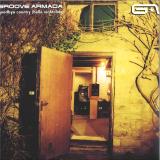
s its title suggested, Groove Armada’s third studio album, issued in September 2001, was a more upbeat statement than its predecessor, Vertigo, and spawned two singles - the certified banger ‘Superstylin’’ and the slyly funky ‘My Friend’ - alongside a series of accomplished grooves featuring guests of the calibre of Richie Havens, Nile Rodgers and rapper Jeru the Damaja.
Now approaching platinum status in the UK, this is a seamless journey through the many moods of clubland, encompassing house, hip-hop, left-field and disco-funk
Order now and we will order the item for you at our supplier.

'exclusive tour tapes' limited quantity available for distribution
Limited split tape collaboration between like-minded pranksters Lagoss & Babau. Co-released by Sucata tapes & Artetetra in July 2025.
‘’The chars were emerging as some chunk of makeshift swamp coolers blasted the soil surrounding our motorbikes. Sunburn vapours floating grey all around, licking our necks with heavy hazy tongues. Just oppressive and gross. Blah.
Someone says heat waves are among the most dangerous natural hazards. I guess that the magnetic tides did not help at all. For sure, recreational sleep deprivation aside, it was days of relentlessly documented tipsy headaches, thermometric cicada noises and weird-ass hallucinations. It is what it is. The age of earthquakes. We drink from our black plastic bags with a straw pushing a bit of oxygen thru our reptile brains. Just half a pack of synthetic tobacco for the ride. No internet. Whatever.
She looks at me behind the war metal glasses and the silicone frog mask high on desert dust. Sweaty pools on her shoulders. Eyes purple with adrenaline. Map on the scratched screen. “It says that at this point we should be hearing that fucking flute”. We stop amidst the geysers. We can see the monoliths and stone gods ready to eat up all the solar storms and the thunder. Towards the horizon, second moon is up. Damn. Water rises to our knees, green with bloating sounds. Just what we needed. We’re stuck. "Turn up the radio. Let’s hope it lasts five minutes." After trashing a bunch of fake subtropical signals, the radio plays a flute. She takes off the mask and explodes in a grin: “This is it man, we made it! No man’s land. The real fucking thing.” I light one up and let the sight get blurred: “You betcha.”’’
expected to be published on 08.08.2025

Hamburg-born composer, pianist and producer Niklas Paschburg announces his latest project, 'Mexican Alps' EP due for release on July 11th. 'La Hormiga' is a rhythmic exploration of life in motion. Pulsing beats and textured synths create forward momentum, echoing the journey through the winding paths of Oaxaca's mountainous surroundings, where tradition and nature intertwine. 'Mexican Alps' combines inspirations gathered from the picturesque mountains of southern Mexico and the majestic peaks of the Swiss Alps. The EP is a mesmerizing journey through those landscapes; drawing inspiration from nature's grandeur and the vibrancy of Día de los Muertos, Niklas blends electronic textures, atmospheric samples, and innovative instrumentation to create a soundscape that is both grounding and transcendent. Without relying on his signature piano, this EP explores new creative territories, evoking deep emotional resonance and moments of introspection. -- If his first album, 'Oceanic '(2018), was conceived as an ode to the Baltic Sea, for his next release, 'Svalbard' (2020), produced with Andy Barlow of Lamb, the Hamburg-born musician, now a Berliner by adoption, sought refuge on an island in the Arctic Ocean, surrounded by snow, ice, darkness and breathtaking landscapes. This time, however, the setting is completely different. "It all started with an invitation to play at a festival in Oaxaca," Niklas says. "Since I had never been to Latin America, I began considering how to take advantage of the opportunity to stay for a while and write something there. I started looking for houses, but I quickly realized it was almost impossible to find one with a piano—it's not a common instrument in Mexican culture. I thought, why not try immersing myself in a writing process that doesn't involve one? I was so excited about the idea that I jumped in." 'Mexican Alps' is the result of a challenge in which Paschburg harnessed his collection of synths and effects to create an ambient-electronic record. On the one hand, an evolution of the work primarily carried out in 'Svalbard' and 'Panta Rhei'; on the other hand, an episode in its own right, distinct from its predecessors due to the absence of the piano and the greater role played by improvisation, by coincidence, it became his first work created without his signature instrument. "Not having the opportunity to write chords, harmonies, and everything else on the piano, I improvised more, focusing on the sound. This was the approach I used to record demos in Mexico, which I then brought with me to Switzerland, where I carried on working on the EP. In addition to my usual setup (the OB-6 by Dave Smith and Tom Oberheim and the OP-1 by Teenage Engineering, plus my ever-beloved Hohner accordion, inherited from my grandfather), I was also guided by the purchase of a new Moog Matriarch with a unique delay. All this helped me build the sound I had in mind: a spacious, abstract, 3D sound that is definitely immersive." He expands. It is an emotional landscape that translates into music. In some of the tracks, Paschburg has also included field recordings collected during the Día de los Muertos, a deeply felt Mexican holiday: "A great celebration, a colorful parade of skeletons, skulls, flowers, and decorated altars, so engaging and intoxicating that I felt compelled to use its sounds in my music." It was precisely from this blend of influences that the fourth track, "Oaxaca de Juárez", emerged—a single characterized by a catchy funk procession and enhanced by the guitar work of Tal Arditi, a rising European jazz artist and singer-songwriter based between Basel and Berlin. 'Mexican Alps' is his new calling card, featuring an enveloping sound crafted by Paschburg in collaboration with Gijs van Klooster, who mixed the EP in a studio specifically designed for Atmos music. Mastering was handled by Bo Kondren at Calyx Studio in Berlin.
Order now and we will order the item for you at our supplier.

Following releases on labels like Inner Islands, Home Normal and Muzan Editions, Japanese composer and sound artist Kenji Kihara is back with a new album that expertly channels the tranquil surroundings of his coastal hometown, Hayama, which is nestled between sea and mountains. What comes out is an immersive ambient work that is indebted to nature, marbled with field recordings of rustling leaves, waves and birdsong, and serene compositions that exude warmth through meticulous tonal layers. His music reflects the patient rhythm of daily life and the quiet shift of seasons, and is a great invitation to calm the mind and reflect. This is ambient that is in direct dialogue with the natural world.
Order now and we will order the item for you at our supplier.

expected to be published on 03.08.2025

Silence present a reissue of legendary live album from Sweden's own Woodstock, Gärdesfesterna, the start of the Swedish alternative music movement. It's hard to imagine an album with a greater symbolic significance than the 2LP set "Festen på Gärdet", recorded at the second of the two festivals held at the Gärdet field in Stockholm in 1970, with Träd Gräs Och Stenar and especially Bo Anders Persson as the driving force behind them both. Those festivals are often regarded as the starting point of the music movement. It's convenient having a fixed date of course, but as with any historical event, it was the product of a process, with one thing evolving into something else. So while the date isn't historically valid, the Gärdet festivals' importance to the music movement is unquestionable. This was the first time that several of the soon to be most important bands presented themselves to a larger audience. Most bands didn't have a record contact at the time, and some of them would never get one, such as Det Europeiska Missnöjets Grunder and Låt Tredje Örat Lyssna In & Tredje Benet Stampa Takten.
expected to be published on 02.08.2025

For his first Mondoj release, Finnish musician Olli Aarni journeys to the wide oblique, where shapes are implied by slants of light previously thought impossible, coming from sources dispersed and hidden. The paranoid eye turns them into phantasms: distant pop songs, fields of fair folk spinning vocoded fudge, an exquisite tasting menu, the shiny towers of an inflatable castle protruding from underground. Scientific inquiry reveals spoken word, diatonic harmony, wide stereo fields, spectral shenanigans, strong scores of wonder and tenderness on the Geneva Emotional Music Scale.
Bubblegum as they are, it's imperative to take these phantasms at face value. The real is elusive; they are all we have. And yet it's also imperative to question them with the greatest scrutiny, because what is wonder and tenderness worth if artificial? Cotton candy can be damned to the void by a single drop of rain. Lucky thing it's drought season. It's up to you, now, whether and how to partake.
And for the hidden truth: among these mirages hide true wonders, the likes of which you've never seen, undiscovered insectile joys, passionate hearts, berries blue to black, rasp to lingon. They are never to be disregarded.
expected to be published on 01.08.2025

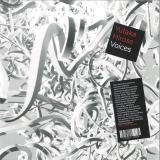
WRWTFWW Records is very excited to announce its third release from visionary Japanese ambient/experimental/environmental composer/producer Yutaka Hirose, this time with brand new album Voices, available on limited edition heavyweight-sleeved double LP as well as double CD, both with liner notes from the artist.
Voices finds Yutaka Hirose expanding his signature spatial layering into a three-dimensional videography of sound, blending field recordings, electronic manipulations, and abstract narratives. The 12-track album is a journey through a crumbling library where books whisper, history collides, and sonic textures weave new realities. Chaos, memory, and transformation – Hirose’s voices echo throughout the space, creating a fully immersive sonic experience.
The pioneering experimental and abstract electronic piece with deep hints of ambient and IDM is beautifully represented by the original artwork by Koji Shiroshita and Mifuku gracing the double LP and double digipack CD sleeves.
Voices marks Yutaka Hirose’s third full-length release on WRWTFWW Records, following his kankyõ ongaku classics Nova + 4 (an expanded version of his genre defining Soundscape 2: Nova album) and archival compilation TRACE: Sound Design Works 1986-1989, both available in vinyl, CD, and digital formats.
Order now and we will order the item for you at our supplier.

SIDE B returns with the second installment of its newly established label, this time with Rill at the helm. Staying true to effect, the young German producer has honed his percussively forward style with a string of steady releases and performances over the past three years. In his EP 'Friss', Rill delivers three highly concentrated club tracks with a Beste Hira remix closing out the project, assembling a record destined for unforgiving sound systems and frenzied dance floors.
Driving and mental, Rill brews up a viscous first track 'Silky Stones' to make his intentions clear. Shooting through a bubbling lead with percussive stabs wide in the stereo field, the producer uses the element of surprise by sharpening the edge with a sharp key sequence, doubling down on tension to an already hypnotic cut. With no time to waste, the needle slides to 'Rakija', with an imposing groove and quick, dry hats. Characteristically, a dystopian melody warbles over a robust rhythm to ensure maximum movement. Two tracks in and Rill already proves to balance his tools with attitude. Taking a turn on the record flip, the B1 ups the audacity with the title track 'Friss'. Techno usually prioritising kicks is a rule that Rill sweeps aside in exchange for an intimidating bassline with an ecosystem of high frequency ambiance. A testament to balance and spatial definition, the German adopts in fitting chord stabs in the second half to up the ante in a contained manner. To conclude, celebrated Beste Hira puts her spin on the latter for a drum forward eye roller, versatile for almost any dancefloor. Reconceptualizing the rhythmic identity of 'Friss', Beste Hira is able to weather the far off atmospheres while maintaining an emphasized festivity. Combining the best of groove-focused club music with a touch of niche psychedelia, Rill and SIDE B prove that techno is very much alive no matter what side of Europe you search for it.
Words by Noah Hocker
Order now and we will order the item for you at our supplier.
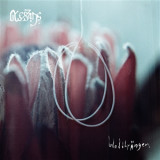
Blodsträngen, the third from Gothenburg's inimitable fourpiece Blessings, begins and ends in the same space: the safety and familiarity of their rehearsal room. In between these moments however, the album knows no boundaries; it rampages through your inner sanctum, upending everything it can, razing everything you hold dear and drawing on the walls whilst panting, drooling and muttering to itself in strange tongues_ Blodsträngen is Blessings fine-tuning their deliberately dissonant sound whilst simultaneously casting their net wide for ever more left-field, experimental influences; a disparate collection of idiosyncrasies that the band somehow manage to pull into something cohesive, captivating and empowering. The band leave the messages and meanings behind their music open to interpretation as a means of sharing this attitude of openness with their audience because, when all is said and done, all that matters is all playing disgustingly loud music together in a room. FOR FANS OF Unsane, Breach, Young Widows, Black Flag, Trap Them, Converge, Old Man Gloom, At The Drive In, Swans, The Jesus Lizard
expected to be published on 01.08.2025

“Rob wanted the world of The Northman to feel harsh and uncomfortable, and for everything to feel like it was caked in mud and dry blood, so it was crucial for the score to mirror that.” Composers Robin Carolan (Tri-Angle Records) and Sebastian Gainsborough (Vessel) were given a task of epic proportions when director Rob Eggers (The VVitch, The Lighthouse) asked them to create the score for his ambitious and highly anticipated new film The Northman, releasing on April 22nd. They needed to make a score that both honored the immense research that had gone into the authenticity of this Viking era period piece and complimented the cinematic maximalism of the film for a modern audience. The artists stretched themselves to the depths of their creativity and the resulting album is a gorgeous sonic tableaux that places the listener right in the center of the film.
While arranging the score the composers consulted musician and ethnographer Poul Høxbro for inspiration and insight into the history of Viking music. Having backgrounds in left field electronic music, Robin and Sebastian felt liberated by the constraint of using a small selection of musical tools for this piece. “Electronic music has almost limitless potential when it comes to making sounds and that’s obviously an incredible thing, but you can also go down the wormhole and get lost in it sometimes. There’s no risk of that happening when you only have a few primary instruments to draw upon.” Robin remarked.
They utilized traditional instruments such as the tagelharpa, langspil, kravik lyre, and säckpip to build the cinematic world of The Northman but they also took creative freedoms in adding instruments likes drums, which some academics believe wouldn’t have played a big part in Viking musical culture, simply due to the lack of archaeological evidence of actual drums. “One of the pieces we wrote was intended to emulate the sound of a bullroarer; an ancient instrument used in sacred rituals or in battle to intimidate enemies. It makes a really disorienting roaring vibrato sound and low frequencies capable of traveling insane distances.” Robin says when asked about one of the more unique aspects of the score. Everyone involved put so much effort into both their research and their creativity and this richness is evident in every track. The album as a whole is a cinematic masterpiece of sound and ambiance, both gorgeous and disturbing, like the film it so beautifully accompanies.
expected to be published on 01.08.2025
The discovery of Doris Dennison's score represents a genuine musicological breakthrough—what once would have been "a tree falling in the woods" thirty years ago now holds the potential to render "a thunderous clap in our minds." While researching Anna Halprin's lesser-known collaborators, scholar Tom Welsh uncovered the archives of AA Leath, one of Halprin's principal dancers. Buried within these materials was Dennison's handwritten score for Earth Interval, dated May 1956. Born in Saskatchewan, Canada, in 1908, and raised near Seattle, Dennison (1908-2009) encountered John Cage while teaching Dalcroze eurythmics at the Cornish College of the Arts. She joined Cage's earliest percussion quartet—alongside Margaret Jansen, the composer and his wife Xenia—in the group widely regarded as having performed the first complete concert of percussion music in the United States. This historic December 1938 concert was followed by tours and the landmark May 1941 performance at the California Club, comprising Cage and Lou Harrison's Double Music, the premiere of Cage's Third Construction, and Harrison's 13th Simfony.
As Bradford Bailey observes in his extensive liner notes, Earth Interval demonstrates "an extraordinary balance of elements that imbues the piece with a sense of clarity, directness, and constraint that is both distinct and ahead of its time." The work's most remarkable innovation lies in its approach to extended techniques, particularly Dennison's notation for the central movement: "In 2nd movement, 1st player lowers + raises a gong into a tub of water while beating." This technique, absorbed from Cage's experimental vocabulary, generates what Bailey describes as "fields of acoustic abstraction that bend and warp time through sustained resonances, beat, and space." The temporal sophistication of these manipulations anticipated Karlheinz Stockhausen's Mikrophonie I (1964) and Annea Lockwood's water-based sound investigations by over a decade. After joining Mills College as dance accompanist, Dennison maintained crucial connections to the Bay Area's experimental scene, collaborating with figures like Merce Cunningham and programming Cage's music throughout the 1950s.
Comprising three movements—Land Form, Air Tide, and Earth Play—Earth Interval is scored for recorder, drums, gongs, maracas, muted gongs, and bowl gongs. In total, the piece is just under eight minutes: "a fleeting glimmer of moment in time, a life spent at the cutting edge, and a singular creative vision that packs a powerful punch." When viewed in historical context, placed in contrast to roughly contemporaneous avant-garde percussion works by Cage, Harrison, Louis Thomas Hardin (Moondog), and Harry Partch, or important precursors like Edgard Varèse's Ionisation (1931) and Henry Cowell's Ostinato Pianissimo (1934), it's clear that Dennison was following her own path. Earth Interval is not derivative. It is a precursor to what was yet to come, alluding to developments of avant-garde and experimental music that wouldn't begin to appear on the cultural landscape until the 1970s and '80s, with the emergence of Post-Minimalism and more idiosyncratic artists and ensembles like Midori Takada, Ros Bandt, Peter Giger, Frank Perry, Christopher Tree, Michael Ranta, Gamelan Son of Lion, and Niagara.
This recording by Chicago's Third Coast Percussion, captured in March 2022, represents the first complete documentation of this pioneering work. The ensemble's interpretation reveals the piece's remarkable contemporaneity while maintaining its historical specificity. Where Cage, Harrison, and Partch employed "self-consciously off-kilter polyrhythms," Dennison's rhythmic sensibility anticipates minimalist developments by nearly a decade, yet integrates "forceful rests, as well as sharp shifts in sonic character, tempo, and meter, that break the momentum and breathe a sense of life into the piece's structure." This positions her work closer to Post-Minimalism decades before its emergence. The architectural approach demonstrates Dennison's understanding that "the composer almost entirely disappears" in favor of phenomenological listening experience, creating what might be called an egoless music that places its realities and meaning entirely in the ear of the beholder. The present recording, realized by Chicago's distinguished Third Coast Percussion ensemble, represents a significant achievement in experimental music scholarship and performance practice. As specialists in the Cage tradition and contemporary percussion repertoire, Third Coast Percussion approached Earth Interval with the historical sensitivity and technical precision required to illuminate Dennison's subtle compositional innovations. The March 2022 recording sessions, engineered by Colin Campbell, capture both the work's intimate chamber music qualities and its bold exploration of extended techniques. The ensemble's interpretation reveals the piece's remarkable contemporaneity—its ability to speak directly to current musical concerns while maintaining its historical specificity.
This recording serves multiple scholarly functions: it provides the first complete documentation of Dennison's compositional voice, offers insight into the broader network of experimental music practitioners surrounding Cage and Harrison, and demonstrates the sophisticated level of compositional thinking that was occurring within the Bay Area's dance-music collaborations of the 1950s. The work's emphasis on phenomenological listening—what might be called an "egoless" approach to musical experience—places it within a lineage of American experimental music that prioritizes perceptual process over compositional personality. The work's original obscurity—limited to AA Leath's performances at venues like the 1957 Pacific Coast Arts Festival at Reed College—paradoxically allowed it to remain "entirely on its own terms," free from the constraints of historical categorization. Drawing on Jacques Derrida's Archive Fever, the argument emerges that "the archive can acknowledge, celebrate, and resurrect" overlooked voices, transforming our understanding of experimental music history. The present Blume edition, featuring Third Coast Percussion's authoritative interpretation, includes a lavishly illustrated 16-page booklet designed by Bruno Stucchi / dinamomilano, containing complete scholarly apparatus, historical photographs, and detailed production notes. This recording enables "cross-temporal intersectionality," allowing Dennison to "belong to a newly formed and more dynamic understanding of the present and past," demonstrating how forgotten voices can reshape entire historical narratives when given proper scholarly attention and performance advocacy.
expected to be published on 01.08.2025
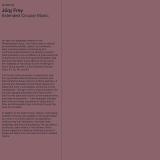
Since its founding back in 2014, Blume has carved a unique place in cultural landscape, issuing free-standing works, spanning the historical and contemporary, that represent singular gestures of creativity within the field of experimental sound. Joining their broad efforts in building networks of context and understanding that already includes the works by Werner Durand, Sarah Hennies, Bruce Nauman, John Butcher, Jocy de Oliveira, Mary Jane Leach, Valentina Magaletti, Alvin Curran, Julius Eastman, Alvin Lucier, and following the first ever vinyl release to attend to James Tenney's legendary Postal Pieces, the label now presents the first LP published by the visionary Swiss composer Jürg Frey. Drawing from the transformative power of breath and resonance, this release represents one of the most profound explorations of musical metamorphosis to emerge from the contemporary experimental landscape.
The completed work represents a "conjunction of these two artists" that has "activated a transformative form of experimentalism." These renderings "dance with an airy lightness, humour, and play, imbuing them with a beauty and emotiveness that can be rare within experimental music." They exist as "breaths, carrying the curiosities of life, belonging to no time and all time, to no one and everyone: a human music to be inhaled and pondered, for which the outcome remains unknown." In this liminal space between composition and interpretation, between breath and resonance, Zurria and Frey have created something that transcends the boundaries of experimental music itself, offering what might be called a metaphysical cartography of sound in its most essential form. As Bradford Bailey observes in his penetrating liner notes, "music is rarely a fixed entity," existing instead in a state of perpetual flux, "taking on the influences of its interpreters and performers." This fundamental truth finds its most eloquent expression in the transformative collaboration between Italian flutist Manuel Zurria and Frey, longtime member of the Wandelweiser Group. Where conventional recordings might preserve a definitive version, this release activates what Bailey calls "states of unknowing and continued experimentation," allowing Frey's compositions to evolve into entirely new dimensional territories. The original string quartet and piano works dissolve into breath-carried architectures of sound, where "the original remains in a constant dialogue with its transformation." This is not mere arrangement but ontological metamorphosis - an alchemical process through which crystalline harmonies are reborn as atmospheric phenomena.
The metaphysical dimensions of this transformation become clear through detailed analysis of the musical result. Where Frey's original compositions operate through what he calls "basic confidence in the clear and restricted material," Zurria's interpretation activates entirely new perceptual territories. Space holds almost atomic sense of weight against the airy punctuations of timbres, textures, and tones, creating "suspensions of time within which questions and identities posed by instrumentation fade." The Extended Circular Music pieces - each comprising "a small number of bars to be repeated an undetermined number of times" - become organizations of sound that defy being definitive or fixed. Originally scored for different combinations of violin, viola, cello, and piano, these works now exist as pure phenomena of breath and resonance, where "hanging, breath-length utterances dance and intertwine amongst complex harmonic clusters and conjunctions."
The philosophical implications of this transformation illuminate a lineage of composers who have moved "away from abstraction and responding to the need to create" something beyond mere technique. Drawing parallels to Morton Feldman's understanding of non-functional harmony, Zurria's approach represents "a transformative form of experimentalism" that activates what Frey calls the "thaumaturgic power" of music - its capacity to heal and transform consciousness itself. The result is "a radical reimagining of ambience: sprawling sonorities and resonances adrift in space, carrying the liberated traces of the work's former incarnations and their truths." In Zurria's interpretation, Frey's String Quartet n.3 becomes something approaching "an organ played in slow motion, its seals leaking," while the Extended Circular Music pieces transform into "glacial chords from a diverse palette of voicings, harmonies, timbres, and tones."
Performed by Manuel Zurria. Recorded and mixed by Zurria at BigCardo, Catania between 2022-2024, with mastering by Bruno Germano at Vacuumstudio, Bologna, this Blume release represents a profound exploration of musical transformation.
expected to be published on 01.08.2025

Journeys are never just about distance. They stretch time, reshape perception, and demand transformation. With its latest vinyl split EP, Standard Deviation presents four tracks by Nastya Vogan and Phase Fatale that serves as a vessel for tracing displacement, memory, and the liminality of return. These melancholic yet powerful techno cuts serve both the concrete dance floor and moments of intimate self-reflection. Two artists--Nastya Vogan and Phase Fatale--approach Kyiv from different trajectories, but they both keep returning to the city. Vogan, a Ukrainian musician and resident DJ of Kyiv, and Phase Fatale (Hayden Payne), Berlin-based producer, Berghain and Khidi resident and founder of BITE Records, share a longstanding musical friendship. They've played B2B sets at K41 and Vogan, appeared on BITE's ''Shedding Skin'' compilation in 2023, and they share a vision for music selection, from aesthetics to philosophy. Vogan's 'Transitioning Territory' and 'This Is Not a Love Song' unravel the psycho-geography of transition. The first track captures the 24-hour journey to Kyiv as a rite of passage where 'time seems to fold; you are profoundly present yet paradoxically far from the world you left.' In this suspended state, memories surface and ordinary life recedes as the train's rhythm becomes its own meditation. Her second track explores Lacanian limerence--consciously falling for something not fully known, filling absences with personal projections as a way to discover what lies within oneself. Phase Fatale's contributions capture movement and distance with mechanical precision. 'Kekkai,' takes its name from the Japanese word for boundary, echoing 'respect my borders' ethos while reflecting on crossing into wartime Ukraine. The term also suggests a protective force field in Buddhist thought--much like Kyiv's current aura of resistance. 'Neosyazhna Rosa' (Unreachable Rose) honors Payne's Ukrainian grandmother Rose, weaving family history into his present connection with Ukraine. Both pieces balance melancholy with light, their sound palette of lush pads and rhythmic breaks crafted with K41's dance floor in mind.
Order now and we will order the item for you at our supplier.

Madlib’s WLIB AM: King of the Wigflip Returns on Double Vinyl via BBE Music BBE Music is thrilled to announce the long-awaited rerelease of WLIB AM: King of the Wigflip, the final installment in the legendary Beat Generation series from none other than Madlib. Originally released in 2008, this masterful collage of dusty loops, raw beats, and left-field soundscapes remains a high-water mark in the Stones Throw producer’s sprawling discography.
Now, for the first time in years, fans can experience the album in all its analog glory with this deluxe double vinyl edition, carefully remastered to preserve Madlib’s signature warmth and grit. A tribute to pirate radio culture and late-night airwaves, WLIB AM weaves together a rich tapestry of hip-hop, jazz, and soul, featuring an all-star cas t of collaborators, including Talib Kweli, Guilty Simpson, MED, and Oh No. Each track showcases Madlib’s uncanny ability to blur the lines between genres, effortlessly flipping obscure samples into hypnotic, off-kilter rhythms. From the hypnotic bounce of “Blow the Horns on ‘Em” to the smoked-out groove of “The Plan Pt. 1,” this is Madlib at his most playful, unpredictable, and inspired.
This special double vinyl edition, released exclusively via BBE Music, brings one of the Beat Generation series’ most celebrated albums back into circulation for crate-diggers and collectors alike. With original artwork and a high-quality pressing, this rerelease is a must-have for Madlib aficionados and vinyl lovers who appreciate raw, unfiltered beat craftsmanship. Don’t miss your chance to own a piece of hip-hop history—WLIB AM: King of the Wigflip is back and sounding better than ever.
expected to be published on 29.07.2025

After impressions of Unguja and Borneo islands, Discrepant's chieftain Gonçalo F. Cardoso continues his sonic travelogue on insularity with 'Impressões de Várias Ilhas’.
Literally translated as "impressions from various islands", this third tome dwells on recordings and inspirations from three archipelagos of Macaronésia. Soaking in the sounds and recollections from Azores, Cape Verde and Canary Islands these diaristic endeavours spread throughout a number of real environments, from water caves and black stone beaches and lagoons to small harbours and everyday life scenarios, to project them into this not quite imaginary but not quite real memory haze that goes from a deeply personal impression to a resonating one.
Melding raw field recordings with processed ones and synthesized landscapes, Cardoso never falters into sonic tourism, conjuring small-ish takes both vivid and dreamy, infused with a sense of wonder that feels both bewildering, comforting and escapist. The breaking waves of 'Bufadeiros de São Vicente' soothing in their irregular pattern, mingling with the lone echoing tones not completely removed from Black Dice's 'Beaches & Canyon's most pensive passages, flow into the underwater ambience and suspended pads of 'La Cueva Scuba Livre', as reflections of the same sea crashing in on different lands, nature’s psychogeography. Further on, the queasy warm chord and scraping murmurs of 'Noite em Rabo de Peixe' mirror their nighttime framing while 'Rãs em Xoxo' veers closer to pure musique concréte, crossed by a subdued feeling of unease that lingers in the nostalgia of 'Cozido da Caldeira Velha', brimming within the haze of a Boards of Canada vignette. Summoning the past lives and future hauntings of its scenery, 'Salinas de Pedra Lume' is like the quiet epic of the album, meandering into the unknown among crackling field recordings, decaying synths and flute-like howls - or is it howl-like flutes? - recurring as glimpses from foregone existences, not necessarily Gonçalo’s own. Maybe ours?
Music & Photography by Gonçalo F. Cardoso
Artwork layout by Jeroen Wille
Master by Rashad Becker
Discrepant 2025
Pressed in Spain
expected to be published on 25.07.2025

Massi NPL’s EP debut on House on the Strand’s label 'Herah' is a wonderful cluster of ambient club adjacent works
Producer and sound artist Massi NPL has spent close to a decade honing his craft as a producer with an impressive growing list of accolades that have seen him try his hand at everything from scoring award winning video games and theatre productions at the Zurich theater to DJ at events and radio stations around the globe.
While the producer’s output may be slim it is considered and precise. His new Fragments EP is a deeply personal project that is the product of years of work.
These select 3 pieces are crafted from a series of field recordings spanning 3 cities that have shaped much of the producers life. These ambient club adjacent works are equally promising at decibel sound system shaking volumes as they are within tucked away headphone and home listening environments. They exude expansive soundscapes, featuring a rich array of washed out synth backdrops and percussions.
As featured on Alex Ruder’s Pacific Notions on KEXP
Mastered by artist engineer Adam Badí Donova (ulla, mu-tate, dj lostboi, Torus)
expected to be published on 25.07.2025

Nachdem sie auf dem SXSW, New Colossus und Spot Festival für Furore gesorgt haben, veröffentlicht das Berliner Indie-Pop-Trio Matching Outfits ihr erstes Album bei Bar/None Records in Zusammenarbeit mit Dreams of Field Recordings erscheint. Auf "Ditch Me" erzählt die schwedische Frontfrau Linnea Mårtensson mit einer Mischung aus trockenem Humor und roher Verletzlichkeit von dem Jahr nach einer Trennung. Vom Schock, der Trauer und der Wut bis hin zur grimmigen Akzeptanz, wieder in den Dating-Pool zu springen, bleibt kein Gefühl unausgelebt, kein Detail unkommentiert. Die Bandmitglieder Rachel Glassberg und Leah Corper passen sich dem Wirbelwind der Emotionen auf Schritt und Tritt an und wechseln blitzschnell von mäandernden Melodien zu kontrolliertem Chaos, während die reduzierte Produktion von Chad Matheny (Emperor X) die Texte in den Mittelpunkt stellt. Was passiert in diesem Jahr? Die Zeit vergeht, die Vogelkirsche blüht, Geburtstage kommen und gehen und die Alltäglichkeit des Lebens geht weiter - nur mit einem riesigen Loch in der Mitte, das niemand sonst zu bemerken scheint. Richtet man den mikroskopischen Fokus auf diese Leere, malt sie in Pastellfarben, fügt einen Hauch von Velvet Underground und international akzentuierte dreistimmige Harmonien hinzu, dann erhält man so etwas wie "Ditch Me". Die Geschichte von Matching Outfits beginnt auf einem Bauernhof außerhalb von Mjöbäck, Schweden, wo Linnea - Saxophonistin einer Marschkapelle, Chorsängerin und autodidaktische Pianistin - die Musik von The Moldy Peaches und Belle and Sebastian entdeckte und begann, eigene Songs zu schreiben. Nachdem sie nach Berlin gezogen war, ging sie zu einer Open-Mic-Nacht und traf dort Rachel, eine amerikanische Kollegin, die sich bereit erklärte, Schlagzeug auf ihrem Song zu spielen, in dem es darum ging, in einer Karaoke-Bar abgewimmelt zu werden. Leah, eine Bassistin und geheimnisvolle Frau aus Großbritannien, vervollständigte das Trio und Matching Outfits war geboren. Nachdem sie ihr erstes Tape "Band Made Out Of Sand" auf dem Berliner Kassettenlabel Kitchen Leg veröffentlicht hatten, tourte die Band durch Deutschland und Skandinavien, wurde aber auch vom Kult-Radiosender WFMU aus New Jersey eingeladen, ein Syd-Barrett-Cover für eine Fundraising-Compilation aufzunehmen. Matching Outfits tragen keine passenden Outfits, außer wenn sie es tun.
expected to be published on 25.07.2025
