Buscar:father

Estilos
Todo
Living Death - Vengeance Of Hell LP
  • 1: You And Me
  • 2: Living Death
  • 3: Night Light
  • 4: My Victim
  • 5: Labyrinth
  • 6: Heavy Metal Hurricane
  • 7: Hellpike
  • 8: Riding A Virgin
  • 9: Vengeance Of Hell
  • 10: Watch Out! (Bonus Track)

When asked about the founding fathers of German thrash metal, band names such as Kreator, Sodom, and Destruction come to mind. Perhaps even Tankard. The name Living Death is usually not among them. There is a simple reason for this. Similar to the Swiss band Hellhammer, Living Death from Velbert were simply a tad too extreme for most fans and the press. Thorsten “Toto” Bergmann's truly shrill vocals and the poor production of the first two (legendary) albums did not make it easy for the public to adequately assess the band's musical significance. Living Death was founded in 1981 by the two Kelch brothers, Reiner on guitar and Dieter on bass. In the early days, guest drummer Eric sat behind the drums. The line-up was completed by Frank Fricke on second guitar and the aforementioned singer Thorsten “Toto” Bergmann. Living Death recorded their first demo with three tracks in 1981, which earned them a deal with the Belgian label Mausoleum Records. A year later, their debut album “Vengeance of Hell” was released, which actually suffered from its very thin (and treble-heavy) production (in 1985, the record was re-released as a remix – with slightly improved results). However, the below-average production should not obscure the fact that “Vengeance of Hell” offers a few timeless thrash metal classics with “My Victim,” “Heavy Metal Hurricane,” “Hellpike,” and the title track “Vengeance of Hell.” The raw, unpolished sound of Living Death sounds more contemporary than ever today, 30 years after its initial release. This only proves that it took the music world three decades to catch up with Living Death.

Reservar24.04.2026
debe ser publicado en 24.04.2026
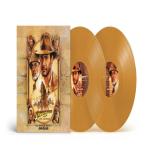
DIONISOS - TRILOGY

DIONISOS

TRILOGY

12inchLVRSYCHT001
LOVERS YACHT
17.04.2026
Amsterdam's Dionisos' (also known for his collaborations with Pete Blaker for LL & Hot Biscuit Recordings) debut 12" on his own Lovers Yacht imprint.

Dionisos, the project’s producer, possesses a solid foundation in live music, which is clearly reflected in the way the grooves evolve, resonate, and gradually heighten in intensity. The tracks “Mother Earth”, “Father Sky,” and “Bon Voyage” form an exciting trilogy—a daring journey into the musical universe. Captured in a single take, they were subsequently methodically overdubbed and layered, preserving the essence of musicians interacting in real time.

Instead of pursuing drops or studio glitz, the music focuses on capturing the spirit, interacting only with the original vibrations of the one take. These songs flow with the precision of musicians in a band. They develop organically, demonstrating their strength gradually; music for dancing that relies on emotion rather than spectacle.

No en stock

Haga su pedido ahora y le encargaremos el artículo en nuestro proveedor.


Ültimo hace: 17 Días
Various - Tchic Tchic: French Bossa Nova 1963-1974  Colored Edition LP 2x12"
  • A1: Les Masques - Il Faut Tenir (1969)
  • A2: Isabelle Aubret - Casa Forte (1971)
  • A3: Christianne Legrand - Hlm Et Ciné Roman (1972)
  • A4: Jean Constantin - Pas Tant D'chichi Ponpon (1972)
  • A5: Billy Nencioli & Baden Powell - Si Rien Ne Va (1969)
  • B1-: Marpessa Dawn - Le Petit Cuica (1963)
  • B2: Jean-Pierre Sabar - Vai Vai (1974)
  • B3: Sophia Loren - De Jour En Jour (1963)
  • B4: Isabelle - Jusqu’à La Tombée Du Jour (1969)
  • B5: Sylvia Fels - Corto Maltesse (1974)
  • C1: Frank Gérard - Comme Une Samba (1972)
  • C2: Ann Sorel - La Poupée Des Favellas (1971)
  • C3: Charles Level - Un Enfant Café Au Lait (1971)
  • C4: Andrea Parisy - Les Mains Qui Font Du Bien (1970)
  • C5: Audrey Arno - Quand Jean-Paul Rentrera (1969)
  • C6: Aldo Frank - T’as Vu Ce Printemps (1970)
  • D1: Christianne Legrand - Cent Mille Poissons Dans Ton Filet (1972)
  • D2: Clarinha - Lemenja (1970)
  • D3: Hit Parade Des Enfants - Aquarela (1976)
  • D4: Jean-Pierre Lang - Tendresse (1965)
  • D5: Magalie Noël - Une Énorme Samba (1970)
  • D6: Françoise Legrand - La Lune

Ever since the late 1950s bossa-nova revolution, Brazil’s influence on French music has been undeniable. Pierre Barouh, Georges Moustaki and a vast array of lesser known artists, all made the Musica Popular Brasileira (MPB) an axis of promotion at the service of a cool and metaphysical, modern and mixed Brazilian lifestyle. Some were seduced by the poetic languors of the bossa, some were looking for fun, and others just loved the American hybridization of jazz-bossa, jazz-samba.


What is bossa nova? One of its creators, Joao Gilberto said: "Its style, cadence, everything is samba. At the very start, we didn't call it bossa nova, we sang a little samba made up of a single note - Samba de uma nota so .... The discussion around the origins of bossa nova is therefore useless”. It is nevertheless useful to remember that these magnificent Brazilian songs, which the guitarist describes as samba, were shifted and balanced around improbable chords. "I like things that lean, the in-betweens that limp with grace," said Pierre Barrouh, quoting Jean Cocteau.


With emotion, arrangements for violin and supple guitar licks, bossa nova rapidly changed. A transformation that can be heard in the Tchic, tchic, French Bossa Nova 1963-1974 compilation, the result of a cultural reappropriation, which traveled through the United States and supplemented itself in France.

A musical revolution that has remained significant, bossa nova was born in Rio. From 1956 to 1961, Brazil lived through its golden years. In five years, the country had invented its modernist style. Elected president in 1956, Juscelino Kubitschek de Oliveira, an elegant man with a broad forehead, brandished a promising slogan: "Fifty years of progress in five years". He quickly got to work. Not worried about increasing debt, he launched the project for a new federal capital, Brasilia, designed by the communist architect Oscar Niemeyer. Volkswagen opened state-of-the-art factories and created the “fusquinha”, the Beetle. In Rio, the Vespa made its first appearance. The Arpoador Surf Club crew run into the “girl” from Ipanema, Helô Pinheiro - the tanned garota ("chick"), between a flower and mermaid, who at 17 walked by the Veloso bar, where the fiery author and composer, Tom Jobim and Vinicius de Moraes, were getting drunk on whiskey. From then on, bossa symbolized cool.

In 1958, Joao Gilberto recorded Chega de Saudade, which the directors of Philips denied, calling it "music for fagots". The marketing director, who believed in it, secretly pressed 3000 78-inch vinyls and distributed them at schools around Rio, creating a tidal wave.

American jazzmen then took over. In particular, trumpeter Dizzy Gillespie and guitarist Charlie Byrd. In November 1962, the Brazilian Ministry of Foreign Affairs funded a "Bossa-Nova" concert at Carnegie Hall in New York, inviting the genre’s pioneers. Unprepared, the show soon turned to disaster. But the troupe was invited to the White House by Jackie Kennedy. The first lady loved "the new beat" and in particular Maria Ninguem, a song by Carlos Lyra, later covered by Brigitte Bardot.

In Brazil, the 1964 military coup quickly ended this euphoria. The destructive atmosphere that ensued pushed many Brazilian musicians to leave, if not to exile. Thus, Tom Jobim, Sergio Mendes and Joao Gilberto arrived to the United States. In New York, Joao Gilberto met saxophonist Stan Getz. At the time, he was married to the Bahianese Astrud Weinert Gilberto, who had a German father. She had never sung before, but she knew how to speak English. Getz therefore asked her to replace her husband on The Girl From Ipanema. The Getz/Gilberto record with Tom Jobim on piano, was released in March 1964. Phil Ramone, the "pope of pop" was in charge of sound.

Bossa nova arrived in Paris through the classic “guitar-voice” channel (Pierre Barouh, Baden Powell, Moustaki…) But France loved jazz and Paris had already welcomed its American contributors. All these good people were to pass through Saint-Germain-des-Prés. The cabaret l'Escale became the Mecca of Latin American sound where one could find Pierre Barrouh and his friends, such as the Camara Trio, samba-jazz aces, whose only record was published by the Saravah label. With a band strangely called Les Masques (a band that included Nicole Croisille and Pierre Vassiliu, among others), the Camara Trio recorded an interesting Brazilian Sound, including the track Il faut tenir which is present on this tasty compilation of rarities.

Other enlightened musicians can also be found on the compilation, such as Jean-Pierre Sabar (songwriter for Hardy, Auffray, Leforestier ...) and the French pop rock organist Balthazar. In 1975, Sabar recorded Aurinkoinen Musiikkimatka on a Finnish label, which featured the crazy Vai, Vai, included on this record. We are now following the footsteps of Brazilian electronic musicians such as Sergio Mendes, Eumir Deodato or Marcos Valle who created funk and disco sounds on their keyboards and synthesizers. A style that influenced Véronique Sanson when she wrote Jusqu’à la Tombée de la nuit in 1969 for Isabelle de Funès, the niece of Louis and a great friend of Michel Berger - Sanson did end up singing this track on her 1992 Sans Regret record.


The pinnacle of exoticism and travel, Sylvia Fels’ Corto Maltese includes bongos, sea mist and ocean sounds. The title was taken from Jacky Chalard’s concept album written in 1974, Je suis vivant, mais j’ai peur (I am alive, but I am scared), based on Gilbert Deflez’s science fiction novel.


However, bossa nova extended the scope of popularity. "In the 1970s, I was a fan of Sergio Mendes, Getz / Gilberto. I fell in love with this music that I knew because I had been an orchestral singer, " explained Isabelle Aubret, who in 1971 delivered a composite record of covers by the very funky Jorge Ben, Orfeu Negro, Tom Jobim, Vinicius de Morais and Jean Ferrat. "I recorded this album for Meys Records in Paris, far from Brazil, with wonderful musicians, François Raubert, Roland Vincent, Alain Goraguer...". The latter wrote the arrangements for Casa Forte, a very percussive title borrowed from Edu Lobo, one of the initiators of the bossa who spent time in California. "Jazz and bossa came together and produced very rhythmic music. I love singing, it allows me to dream, to have fun, to feel a high on stage, and these songs brought me joy, made me swing, my singing felt like a dance.”


The world tours of French singers and their desire for the tropics, often brought them to Rio with its hills, forests, caipirinhas and tanned bodies. There are surprises though, like this Iemenja (Iemenja is the goddess of the sea in the Afro-Brazilian candomblé religion). Not unlike the composer and musician Jean-Pierre Lang, based in Sao Paulo, Claire Chevalier taught Brazil to Brazil. In 1970, the singer and painter published a 45-inch vinyl, Mon mari et mes amants (My husband and my lovers), under the improbable pseudonym of Clarinha (little Claire). She was then living in Rio, with her husband, Joël Leibovitz, who founded a band called Azimuth, and who owned a record label specialized in "sambas enredos" songs for samba school parades.


For its B side, she asked Pierre Perret to come up with lyrics for a song composed by Carlos Imperial: "Oh goddess of the sea, o goddess Iemenja, I bring a white rose to adorn your long hair ..." . "Perret came to see us, and we had fun, remembers Joël Leibovitz. We wrote Lemenja for fun, we recorded it at the Havaí studio, behind the Central do Brasil the central station. Erlon Chaves, the arranger who worked with Elis Regina, joined us" adding his share of Afro-Brazilian percussions and funky brass to the mix.

There is a common misunderstanding in Franco-Brazilian history: that bossa, admittedly hedonistic, is perceived as funny, even though the poets who wrote the texts are often philosophizing on the human condition. Its French interpreters pull it towards a carnival inspired universe, far removed from its fundamental essence. Thus, Jean Constantin covered the famous Samba da minha terra, an ode to the art of samba written by the classic Bahian composer Dorival Caymmi, renaming it with the enticing title of Pas tant de tchi tchi pompon: "On your pier there is no tchi tchi / when you arch your back, you know everything is alright ”(lyrics by Gérard Calvi). This expedited bossa aims for the absurd, but retains a certain elegance.

Indeed, Jean Constantin was not an idiot, the rather large man had a huge mustache and liked fantasy, (Les pantoufles à papa, Le pacha, inspired by cha-cha-cha-cha, salsa and jazz) but he was also the lyricist of Mon manège à moi interpreted by Edith Piaf, the composer of Mon Truc en plume by Zizi Jeanmaire and the soundtrack of François Truffaut’s 400 Blows. Le Poulpe, published in 1970, from which this bossa is extract, was arranged by Jean-Claude Vannier, an accomplice of Serge Gainsbourg’s Melody Nelson. In short: "There is enough of samba / By looking at the parasol / Because my poor cabeza / Is going to die in the sun".

Even the American actress Marpessa Down, who was at the heart of the bossa nova revolution with her role as Euridyce in Marcel Camus’ film Orfeu Negro, winner of the 1959 Cannes Palme d'or, fed the clichée with Je voudrais parler au petit cuica - "Tell me how you manage to always make people want to dance / It's true, I must admit that I cannot resist your magic" - in consequence, once can hear the cuica, a little drum inherited from the Bantu.


But bossa nova had many angles. Societal, of course, pushing actresses who were symbols of women's liberation like Brigitte Bardot, Jeanne Moreau, or Sophia Loren to engage in the exercise of accelerated bossa. In February of 1963, Sophia Loren made a record in French in Rome, Je ne t'aime plus, featuring the song De jour en jour, a bossa written by two Italians, Armando Trovajoli and Tino Fornai, which was released a little later by Barclay. Bossa accompanied the 1960s, a decade of moral liberation. Ann Sorel, who interpreted La Poupée des favellas, caused a sensation with L’amour à plusieurs, a provocative song written by Frédéric Bottom and Jean-Claude Vannier. As for the actress Andrea Parisy, she displayed her bourgeois cheekiness in Marcel Carné's Les Tricheurs before interpreting Les mains qui font du bien. And Magalie Noël, the friend of Boris Vian, who sung Johnny fais-moi mal, was hired to sing Une énorme Samba, composed by Alain Goraguer (arranger to Gainsbourg, Bobby Lapointe and Jean Ferrat) with lyrics by Frédéric Botton.

But in the end, of what wood is bossa nova made of? The answer is given by Christianne Legrand, daughter of Raymond the conductor, and sister to Michel the composer: "With me, with jà" - jà means "immediately" in Portuguese. In 1972, the singer, an expert in vocal jazz and a member of the Double Six, published Le Brésil de Christianne Legrand. Two songs included on the Tchic Tchic compilation that demonstrate how bossa, jazz, funk, rock, etc. work like a swiss army knife: the music is used to denounce broken systems, or miracles, HLM et ciné roman, Cent mille poissons dans ton filet, two songs from the O Cafona soundtrack, a successful telenovela broadcast, at the time in black and white, on TV Globo. The first was adapted in French by the fighter and friend of the Legrand tribe, Agnès Varda. The second is content with a play on words, jostling them into a summer fun.


Véronique Mortaigne

Reservar17.04.2026
debe ser publicado en 17.04.2026
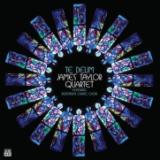
LOS RETROS - ODISEA LP 2x12"

LOS RETROS

ODISEA LP 2x12"

2x12inchSTH2522LP
Stones Throw
17.04.2026
  • 1: Odisea
  • 2: The World
  • 3: Shape Of Things To Come
  • 4: Cielos
  • 5: Doves (Ft. Hikari)
  • 6: Sobre Las Ruinas
  • 7: Outskirts
  • 1: Just Us
  • 2: Joven Pobre Y Sabio
  • 3: Monte Calvario
  • 4: Secret Admirer
  • 5: Things That Burst" (Ft. Hitomitoi)

Odisea is the new album, actually the real debut from Los Retros, out in April on Stones Throw. It draws inspiration from 1980s Japanese City Pop, and marks a new creative chapter from Mauri Tapia shaped by growth, reflection, and renewed purpose. It's been a journey since Tapia first captured hearts with the lo-fi magic of "Someone To Spend Time With", recorded at the age of 17 on a humble four-track in his parents' living room. Now 25, the Oxnard native has stepped into an entirely new season of life - he married his high school sweetheart, became a father to two daughters, and embraced spiritual faith. Earlier this year, he revisited his start with Early Days (2016-2019), a compilation of unreleased music from Mauri's teen years. "Jazz fusion has become my favorite genre and greatest inspiration of all time," Mauri says. "I made this album for the version of me that first fell in love with music. It's my full-circle moment - a sonic hat tip to my beginnings - as well as a nod to the forefathers of jazz fusion and city pop for leaving us with great music." Through it all, he's kept the same DIY spirit, writing and recording every note himself, only now in a home studio of his own. On Odisea, Tapia blends neon-lit City Pop with the melodic sensibility of Latin American soft rock. Mauri's deep love for 70s and 80s jazz fusion records anchors the album, yet Tapia filters those influences through a modern lens. Odisea features two Japanese vocalists, - Hikari and HITOMITOI. Also check out Los Retros new compilation "Early Days" released simultaneously. RIYL soul, bedroom pop, indie, modern jazz, downtempo, soft rock, Mac DeMarco, Thee Sacred Souls, Skinshape, Men I Trust

Reservar17.04.2026

debe ser publicado en 17.04.2026

Stephan Eicher - Spielt Noise Boys

2025 Reissue.


Münchenbuchsee, a suburb of Bern, Switzerland. Stephan Eicher is the youngest of three children. His father, a radio and TV repairman, is also a jazz violinist and a sound tinkerer in his spare time. In the family home's converted fallout shelter turned studio, Mr. Eicher experiments with homemade sequencers, tortures handcrafted drum machines, and abuses reel-to-reel tape recorders—all under the fascinated gaze of young Stephan.

The boy quickly develops a musical curiosity, exploring sound through various experiments and wanderings. Alongside his younger brother Martin, Stephan crafts audio plays on a homemade multi-track recorder (essentially several cassette decks hooked together!), which they write, record, add sound effects to, and perform for family and friends. Just a couple of nice kids, really...

Then comes 1972, and Lou Reed's Transformer album changes everything for the Eicher kids. For 13-year-old Stephan, it's a revelation—especially "Vicious", the opening track, which he plays on repeat for months. He convinces his father to buy him an electric guitar. Not stopping there, his father also builds him a tube amp using an old radio.

Then comes adolescence. A rough one. Stephan leaves home at 16 and moves to Zurich. With obvious artistic talent, he persuades his art teacher to help him get into F+F, a radical, alternative art school—despite his young age. Accepted, he starts learning video techniques, determined to become a filmmaker.

At F+F, Stephan organizes Dada-style happenings and concerts with a group of friends known as the Noise Boys. Among them: one of his teachers on bass, Veit Stauffer on drums (who would later found ReR/Recommended Records), his girlfriend Sacha on vocals, and Stephan on guitar. In one of their early performances, they release a remote-controlled mouse covered in dull razor blades into the audience to create panic and chaos. Keeping with this aggressive, confrontational spirit, they once played a concert while wearing headphones blasting Tristan and Isolde, trying to perform their own songs simultaneously—to maximize the cacophony. The goal was always the same: clear the room.

Their “songs,” if you can call them that, followed suit. Take "Hungeriges Afrika", for instance—performed entirely with power drills and some drum feedback.

To make ends meet, Stephan returns to Bern on weekends to work as a waiter at the Spex Club, the city’s main punk venue. On September 16, 1980, during a show by proto-electro group Starter, the police raid the club and arrest everyone. Stephan, who manages to avoid arrest, seizes the opportunity to “borrow” Starter’s gear left behind. He suddenly finds himself in possession of a Roland Promars synth, a Korg MS20, and a gorgeous CR78 drum machine, which he runs through a Big Muff distortion pedal to get that perfect gritty sound.

He then sets out to reinterpret some Noise Boys tracks, reworking them during impromptu sessions recorded on a dictaphone (yes, a dictaphone—now the lo-fi sound makes more sense, doesn’t it?). He ironically titles the resulting cassette "Stephan Eicher spielt Noise Boys" ("Stephan Eicher plays Noise Boys"). This gem features seven tracks, which are the ones reissued here.

Back in Zurich, he visits his friends Andrew Moore and Robert Vogel, who have a DIY cassette duplication setup. They make 25 copies of Stephan Eicher spielt Noise Boys for Stephan and his friends. Robert encourages him to visit Urs Steiger of Off Course Records and play him the tape.

Without much hope, Stephan shows up at Urs’s office. But Urs is instantly hooked and suggests releasing a 7” single. Due to space constraints, they reluctantly drop two of the seven tracks ("Hungeriges Afrika" and "One Second"). As for the musical score featured on the cover—it was randomly chosen and remains a mystery to this day. Calling all music theory nerds!

The 7-inch is pressed in 750 copies and released in the first week of December 1980—a date Stephan remembers well, as it’s the same week John Lennon was killed. Smartly, Urs sends a promo copy to François Murner, Switzerland’s answer to John Peel, who hosts a show on alternative station Sounds. Murner falls in love with the record and starts giving it airtime. To Stephan’s surprise, sales follow—and people actually seem interested in his music.

Even this modest underground success scares Stephan a bit. He stops making music for a year and moves to Bologna, where he works as a programmer at Radio Città, a feminist radio station.

Meanwhile, Stephan’s younger brother Martin, who’s also involved in the punk scene, joins the band Glueams as a singer and guitarist. Glueams, named after the fanzine run by two of its members (drummer Marco Repetto and bassist GT), eventually rebrands as Grauzone. Stephan is invited to their shows to project hacked Super 8 visuals live on stage.

Urs Steiger, now working on a compilation titled Swiss Wave – The Album, asks Grauzone to contribute alongside bands like Liliput, Jack and the Rippers, The Sick, and Ladyshave (Fall 1980).

For the album, Martin tasks Stephan with producing their recording sessions. Under Stephan's artistic direction, two tracks emerge: "Raum" and "Eisbär". During "Eisbär", Martin plays a minimalist bass line borrowed from post-punk band The Feelies (just an open string). Drummer Marco Repetto struggles to keep time. Later that evening, unhappy with the takes, Stephan builds a four-bar drum loop from a ¼-inch tape and uses it instead of the flawed original. He then adds bleepy synths and wind sounds to complete the track’s icy vibe before handing it over to Urs.

The Swiss Wave – The Album compilation is released quietly at first, but things snowball thanks to "Eisbär", which eventually becomes a smash hit—selling over 600,000 singles.

Meanwhile, Stephan plays in a rockabilly band called SMUV (named after Switzerland’s social security agency) and begins producing artists, including the debut album of Starter (1981), which includes a more pop-oriented version of "Minijupe".

By early 1982, Stephan starts spending time with the post-punk girl band Liliput (formerly Kleenex). They’re older than him, and he happily drives them around in his Renault Major, acting as their roadie.

By 1983, Grauzone—signed to the major label EMI, which turned out to be a misstep—is falling apart. Stephan begins to pivot toward a more mainstream pop sound with his debut solo album Les Chansons Bleues.

But that... is already another story.

No en stock

Haga su pedido ahora y le encargaremos el artículo en nuestro proveedor.


Ültimo hace: 11 Días
Cosmic Ear - TRACES LP

Cosmic Ear

TRACES LP

12inchWJLP76B
WE JAZZ
10.04.2026
  • 01: Father And Son
  • 02: Traces Of Brown Rice
  • 03: Love Train
  • 04: Right Here Right Now
  • 05: Do It (Again) – For Sofia Jernberg

2ND LP PRESSING

Cosmic Ear is a new group bringing together Christer Bothén, Mats Gustafsson, Goran Kajfeš, Kansan Zetterberg and Juan Romero. Their debut album TRACES is released by We Jazz Records on 23rd of May, 2025. Including 6 deep cuts, TRACES is an album that sees Cosmic Ear tracking down the "traces" of the legendary Don Cherry's legacy while paving their own way in contemporary creative music expression.

Christer Bothén, a collaborator with Don Cherry during his Swedish period in the 1970s, brings depth to the history of the band, while his bandmates each belong at the top of the game in Scandinavian jazz. Their music is meditative and deep, much recommended for fans of the likes of Don Cherry, Alice Coltrane, and Pharoah. That being said, listeners should approach Cosmic Ear only with openness and curiosity, without set stylistic boundaries, as it's the group's natural flow and togetherness that brings their music into a fresh territory of their own.

As John Corbett writes in his liner notes:

"The Cosmic Ear. Five souls, sometimes six, on the same road. The pied piper path of Mr. Cherry. Christer Bothén, one of Cherry's main collaborators in his Swedish period and one of the most beautiful bass clarinetists on planet earth, together with next-gen saxophonist Mats Gustafsson, who has carried so many torches in Cherry's procession, and younger Swedish stars trumpeter Goran Kajfes, bassist Kansan Zetterberg, and percussionist Juan Romero. Together a tempo is set, a path is charted. There are global grooves. A berimbau, a karignan (metal scraper from Guinea), donso n'goni. There are ET grooves. Synth, live-electronics, slide flute. The globe is a glove, a hand warmer that radiates with extraterrestrial power, returning the fingers to their place at the center of the galaxy; the Cherry path is a balm that restores essential moisture to the lips that blow life back into the megacosm. Let us all praise warm fingers and moist mouths."

Reservar10.04.2026

debe ser publicado en 10.04.2026

Esa Williams - Dala What We Must LP 2x12"

Esa Williams

Dala What We Must LP 2x12"

2x12inch199350128066
BBE Music
10.04.2026out soon
  • A1: Ita Ayelala
  • A2: Yanga
  • B1: Kwanini
  • B2: Nakupenda
  • C1: Summerskin
  • C2: Vanguard Drive
  • D1: Cruisin Kruga
  • D2: Dala What We Must

Marking twenty years since South African producer and DJ Esa Williams left Cape Town, Dala What We Must is a deeply personal and expansive debut LP, an exploration of movement, memory, and sound shaped by two decades of creative evolution.

Co-created with collaborator and multi-instrumentalist Robin G. Breeze, the album deftly combines field recordings, layered instrumentation, and emotionally resonant compositions into a nuanced, globally influenced body of work. It also stands as Esa’s most collaborative release to date, featuring contributions from musicians across London, Oaxaca, Nairobi, and Cape Town, each adding their own creative energy to a project built on openness, trust, and shared experience.

The album draws inspiration from Esa’s recent ventures into documentary scoring and soundtracking, with projects like Cursed (Audible) and The Invisible Hand teaching him to listen differently, to honour space, to serve the story. That sensibility permeates the album, resulting in music that breathes, lingers, and listens as much as it speaks.

The title, Dala What We Must, is a South African call to action: a reminder to do what’s necessary, even in uncertainty. Finalised in the months leading up to Esa’s transition into fatherhood, the record carries a sense of grounding, care, and quiet transformation.

Dala What We Must is a sonic reflection of journey and community, a deeply collaborative project rooted in connection and guided by intention.

Reservar

El artículo no se ha publicado. Tú puedes reservar ahora el artículo y después de ser pagado se te será enviado.

Esa Williams - Dala What We Must (2x12")
  • A1: Kwanini
  • A2: Ita Ayelala
  • A3: Yanga
  • A4: Nakupenda
  • B1: Summerskin
  • B2: Cruisin Kruga
  • B3: Vanguard Drive
  • B4: Dala What We Must

Marking twenty years since South African producer and DJ Esa Williams left Cape Town, Dala What We Must is a deeply personal and expansive debut LP, an exploration of movement, memory, and sound shaped by two decades of creative evolution. Co-created with collaborator and multi-instrumentalist Robin G. Breeze, the album deftly combines field recordings, layered instrumentation, and emotionally resonant compositions into a nuanced, globally influenced body of work. It also stands as Esa’s most collaborative release to date, featuring contributions from musicians across London, Oaxaca, Nairobi, and Cape Town, each adding their own creative energy to a project built on openness, trust, and shared experience. The album draws inspiration from Esa’s recent ventures into documentary scoring and soundtracking, with projects like Cursed (Audible) and The Invisible Hand teaching him to listen differently, to honour space, to serve the story. That sensibility permeates the album, resulting in music that breathes, lingers, and listens as much as it speaks.

The title, Dala What We Must, is a South African call to action: a reminder to do what’s necessary, even in uncertainty. Finalised in the months leading up to Esa’s transition into fatherhood, the record carries a sense of grounding, care, and quiet transformation. Dala What We Must is a sonic reflection of journey and community, a deeply collaborative project rooted in connection and guided by intention.

Reservar10.04.2026

debe ser publicado en 10.04.2026

Forndom - Faþir LP

Forndom

Faþir LP

12inchLPNVP123
NORDVIS
10.04.2026

The cycle of life and nature is a precious and wondrous thing. We are born. We learn. We live. We die. And after death, another life awaits. When the world succumbs to the cold, dark grasp of winter, the promise of a spring birthing everything anew keeps hope alive. Such is the journey we make, and such is the lifespan of “Faþir”. Heaving, pulsating, filled with contrasts: ardent hostility and fiery revenge, blossoming life and lush fertility, soul-wrenching grief and deep anguish. Such is the path we walk under the guidance of the deities – the helping hand of a father, the nurturing wisdom in times of need. But sometimes, a treacherous god leads us into death and despair, albeit always with an underlying purpose. Such is “Faþir”.

With eloquence, elegance, and emotion, L. Swärd has created another monolith of sublime art to add to Forndom’s impeccable discography. This highly awaited follow-up to 2016’s “Dauðra Dura” is nothing short of a modern masterpiece, rooted in ancient ways. Expressive vocals and strings soar atop a foundation of unyielding drums, like spirits dancing in the skies yet bound to the human pulse. Never surrendering its strong connection to our mortal world, “Faþir” carries a deeply sacred dimension – a glimpse of the divine, seen through a lens of devotion and veracity. The joining of death and life, if you will.

The thick atmospheres and vast inner landscapes Forndom creates are more prevalent than ever, and from the first trembling string introduction of “Jakten” to the last wistful beat of “Hemkomst”, one is transported to another time, another place, and another mindset – leaving behind the calamity, stress, and superficiality of the modern world, and rediscovering the lost wisdom hidden behind the veil of passing years.

Reservar10.04.2026

debe ser publicado en 10.04.2026

Guilty Razors - Complete Recordings 1977 - 1978

UILTY RAZORS, BONA FIDE PUNKS.


Writings on the topic that go off in all directions, mind-numbing lectures given by academics, and testimonies, most of them heavily doctored, from those who “lived through that era”: so many people today fantasize about the early days of punk in our country… This blessed moment when no one had yet thought of flaunting a ridiculous green mohawk, taking Sid Vicious as a hero, or – even worse – making the so-called alternative scene both festive and boorish. There was no such thing in 1976 or 1977, when it wasn’t easy to get hold of the first 45s by the Pistols or the Clash. Few people were aware of what was happening on the fringes of the fringes at the time. Malcolm McLaren was virtually unknown, and having short hair made you seem strange. Who knew then that rock music, which had taken a very bad turn since the early 1970s, would once again become an essential element of liberation? That, thanks to short and fast songs, it would once again rediscover that primitive, social side that was so hated by older generations? Who knew that, besides a few loners who read the music press (it was even better if they read it in English) and frequented the right record stores? Many of these formed bands, because it was impossible to do otherwise. We quickly went from listening to the Velvet Underground to trying to play the Stooges’ intros. It’s a somewhat collective story, even though there weren’t many people to start it.
The Guilty Razors were among those who took part in this initial upheaval in Paris. They were far from being the worst. They had something special and even released a single that was well above the national average. They also had enough songs to fill an album, the one you’re holding. In everyone’s opinion, they were definitely not among the punk impostors that followed in their wake. They were, at least, genuine and credible.

Guilty Razors, Parisian punk band (1975-1978). To understand something about their somewhat linear but very energetic sound, we might need to talk about the context in which it was born and, more broadly, recall the boredom (a theme that would become capital in punk songs) coupled with the desire to blow everything off, which were the basis for the formation of bands playing a rejuvenated rock music ; about the passion for a few records by the Kinks or the early Who, by the Stooges, by the Velvet mostly, which set you apart from the crowd.
And of course, we should remember this new wave, which was promoted by a few articles in the specialized press and some cutting-edge record stores, coming from New York or London, whose small but powerful influence could be felt in Paris and in a handful of isolated places in the provinces, lulled to sleep by so many appalling things, from Tangerine Dream to President Giscard d’Estaing...
In 1975-76, French music was, as almost always, in a sorry state ; it was still dominated by Johnny Hallyday and Sylvie Vartan. Local rock music was also rather bleak, apart from Bijou and Little Bob who tried to revive this small scene with poorly sound-engineered gigs played to almost no one.
In the working class suburbs at the time, it was mainly hard rock music played to 11 that helped people forget about their gruelling shifts at the factory. Here and there, on the outskirts of major cities, you still could find a few rockers with sideburns wearing black armbands since the death of Gene Vincent, but it wasn’t a proper mass movement, just a source of real danger to anyone they came across who wasn't like them. In August 1976, a festival unlike any other took place in Mont-de-Marsan – the First European Punk Festival as the poster said – with almost as many people on stage as in the audience. Yet, on that day, a quasi historical event happened, when, under the blazing afternoon sun, a band of unknowns called The Damned made an unprecedented noise in the arena, reminiscent of the chaotic Stooges in their early adolescence. They were the first genuine punk band to perform in our country: from then on, anything was possible, almost anything seemed permissible.

It makes sense that the four+1 members of Guilty Razors, who initially amplified acoustic guitars with crappy tape recorder microphones, would adopt punk music (pronounced paink in French) naturally and instinctively, since it combines liberating noise with speed of execution and – crucially – a very healthy sense of rebellion (the protesters of May 1968 proclaimed, and it was even a slogan, that they weren’t against old people, but against what had made them grow old. In the mid-1970s, it seemed normal and obvious that old people should now ALSO be targeted!!!).
At the time, the desire to fight back, and break down authority and apathy, was either red or black, often taking the form of leafleting, tumultuous general assemblies in the schoolyard, and massive or shabby demonstrations, most of the time overflowing with an exciting vitality that sometimes turned into fights with the riot police. Indeed, soon after the end of the Vietnam War and following Pinochet’s coup in Chile, all over France, Trotskyist and anarcho-libertarian fervour was firmly entrenched among parts of the educated youth population, who were equally rebellious and troublemakers whenever they had the chance. It should also be noted that when the single "Anarchy in the UK" was first heard, even though not many of us had access to it, both the title and its explosive sound immediately resonated with some of those troublemakers crying out for ANARCHY!!! Meanwhile, the left-wing majority still equated punks with reckless young neo-Nazis. Of course, the widely circulated photos in the mainstream press of Siouxsie Sioux with her swastikas didn’t necessarily help to win over the theorists of the Great Revolution. It took Joe Strummer to introduce The Clash as an anti-racist, anti-fascist and anti-ignorance band for the rejection of old-school revolutionaries to fade a little.

The Lycée Jean-Baptiste Say at Porte d’Auteuil, despite being located in the very posh and very exclusive 16th arrondissement of Paris, didn’t escape these "committed" upheavals, which doubled as the perfect outlet for the less timid members of this generation.
“Back then, politics were fun,” says Tristam Nada, who studied there and went on to become Guilty Razors’ frontman. “Jean-Baptiste was the leftist high-school in the neighbourhood. When the far right guys from the GUD came down there, the Communist League guys from elsewhere helped us fight them off.”
Anything that could challenge authority was fair game and of course, strikes for just about any reason would lead to increasingly frequent truancy (with a definitive farewell to education that would soon follow). Tristam Nada spent his 10th and 11th unfinished grades with José Perez, who had come from Spain, where his father, a janitor, had been sentenced to death by Franco. “José steered my tastes towards solid acts such as The Who. Like most teenagers, I had previously absorbed just about everything that came my way, from Yes to Led Zeppelin to Genesis. I was exploring… And then one day, he told me that he and his brother Carlos wanted to start a rock band.” The Perez brothers already played guitar. “Of course, they were Spanish!”, jokes their singer. “Then, somewhat reluctantly, José took up the bass and we were soon joined by Jano – who called himself Jano Homicid – who took up the rhythm guitar.” Several drummers would later join this core of not easily intimidated young guys who didn’t let adversity get the better of them.

The first rehearsals of the newly named Guilty Razors took place in the bedroom of a Perez aunt. There, the three rookies tried to cover a few standards, songs that often were an integral part of their lives. During a first, short gig, in front of a bewildered audience of tough old-school rockers, they launched into a clunky version of the Velvet Underground's “Heroin”. Challenge or recklessness? A bit of both, probably… And then, step by step, their limited repertoire expanded as they decided to write their own songs, sung in a not always very accurate or academic English, but who cared about proper grammar or the right vocabulary, since what truly mattered was to make the words sound as good as possible while playing very, very fast music? And spitting out those words in a language that left no doubt as to what it conveyed mattered as well.
Trying their hand a the kind of rock music disliked by most of the neighbourhood, making noise, being fiercely provocative: they still belonged to a tiny clique who, at this very moment, had chosen to impose this difference. And there were very few places in France or elsewhere, where one could witness the first stirrings of something that wasn’t a trend yet, let alone a movement.

In the provinces, in late 1976 or early 1977, there couldn’t be more than thirty record stores that were a bit more discerning than average, where you could hear this new kind of short-haired rock music called “punk”. The old clientele, who previously had no problem coming in to buy the latest McCartney or Aerosmith LP, now felt a little less comfortable there…
In Paris, these enlightened places were quite rare and often located nex to what would become the Forum des Halles, a big shopping mall. Between three aging sex workers, a couple of second-hand clothes shops, sellers of hippie paraphernalia and small fashion designers, the good word was loudly spread in two pioneering places – propagators of what was still only a new underground movement. Historically, the first one was the Open Market, a kind of poorly, but tastefully stocked cave. Speakers blasted out the sound of sixties garage bands from the Nuggets compilation (a crucial reference for José Perez) or the badly dressed English kids of Eddie and the Hot Rods. This black-painted den was opened a few years earlier by Marc Zermati, a character who wasn’t always in a sunny disposition, but always quite radical in his (good) choices and his opinions. He founded the independent label Skydog and was one of the promoters of the Mont-de-Marsan punk festivals. Not far from there was Harry Cover, another store more in tune with the new New York scene, which was amply covered in the house fanzine, Rock News (even though it was in it that the photos of the Sex Pistols were first published in France).
It was a favorite hang-out of the Perez brothers and Tristam Nada, as the latter explained. “It’s at Harry Cover’s that we first heard the Pistols and Clash’s 45s, and after that, we decided to start writing our first songs. If they could do it, so could we!”
The sonic shocks that were “Anarchy in the UK”, “White Riot” or the Buzzcocks’s EP, “Spiral Scratch” – which Guilty Razors' sound is reminiscent of – were soon to be amplified by an unparalleled visual shock. In April 1977, right after the release of their first LP, The Clash performed at the Palais des Glaces in Paris, during a punk night organised by Marc Zermati. For many who were there, it was the gig of a lifetime…
Of course, Guilty Razors and Tristam were in the audience: “That concert was fabulous… We Parisian punks were almost all dressed in black and white, with white shirts, skinny leather ties, bikers jackets or light jackets, etc. The Clash, on the other hand, wore colourful clothes. Well, the next day, at the Gibus, you’d spot everyone who had been at this concert, but they weren’t wearing anything black, they were all wearing colours.”

It makes sense to mention the Gibus club, as Guilty Razors often played there (sometimes in front of a hostile audience). It was also the only place in Paris that regularly scheduled new Parisian or Anglo-Saxon acts, such as Generation X, Siouxsie and the Banshees, the Slits, and Johnny Thunders who would become a kind of messed-up mascot for the venue. A little later, in 1978, the Rose Bonbon – formerly the Nashville – also attracted nightly owls in search of electric thrills… In 1977, the iconic but not necessarily excellent Asphalt Jungle often played at the Gibus, sometimes sharing the bill with Metal Urbain, the only band whose aura would later transcend the French borders (“I saw them as the French Sex Pistols,” said Geoff Travis, head of their British label Rough Trade). Already established in this small scene, Metal Urbain helped the young and restless Guilty Razors who had just arrived. Guitarist for Metal Urbain Hermann Schwartz remembers it: “They were younger than us, we were a bit like their mentors even if it’s too strong a word… At least they were credible. We thought they were good, and they had good songs which reminded of the Buzzcocks that I liked a lot. But at some point, they started hanging out with the Hells Angels. That’s when we stopped following them.”

The break-up was mutual, since, Guilty Razors, for their part, were shocked when they saw a fringe element of the audience at Metal Urbain concerts who repeatedly shouted “Sieg Heil” and gave Nazi salutes. These provocations, even still minor (the bulk of the skinhead crowd would later make their presence felt during concerts), weren’t really to the liking of the Perez brothers, whose anti-fascist convictions were firmly rooted. Some things are non-negotiable.
A few months earlier (in July 1978), Guilty Razors had nevertheless opened very successfully for Metal Urbain at the Bus Palladium, a more traditonally old-school rock night-club. But, as was sometimes the case back then, the night turned into a mass brawl when suburban rockers came to “beat up punks”.

Back then, Parisian nights weren’t always sweet and serene.

So, after opening as best as they could for The Jam (their sound having been ruined by the PA system), our local heroes were – once again – met outside by a horde of greasers out to get them. “Thankfully,” says Tristam, “we were with our roadies, motorless bikers who acted as a protective barrier. We were chased in the neighbouring streets and the whole thing ended in front of a bar, with the owner coming out with a rifle…”
Although Tristam and the Perez brothers narrowly escaped various, potentially bloody, incidents, they weren’t completely innocent of wrongdoing either. They still find amusing their mugging of two strangers in the street for example (“We were broke and we simply wanted to buy tickets for the Heartbreakers concert that night,” says Tristam). It so happened that their victims were two key figures in the rock business at the time: radio presenter Alain Manneval and music publisher Philippe Constantin. They filed a complaint and sought monetary compensation, but somehow the band’s manager, the skilful but very controversial Alexis, managed to get the complaint withdrawn and Guilty Razors ended up signing with Constantin with a substantial advance.

They also signed with Polydor and the label released in 1978 their only three-track 45, featuring “I Don't Wanna be A Rich”, “Hurts and Noises” and “Provocate” (songs that exuded perpetual rebellion and an unquenchable desire for “class” confrontation). It was a very good record, but due to a lack of promotion (radio stations didn’t play French artists singing in English), it didn’t sell very well. Only 800 copies were allegedly sold and the rest of the stock was pulped… Initially, the three tracks were to be included on a LP that never came to be, since they were dropped by Polydor (“Let’s say we sometimes caused a ruckus in their offices!” laughs Tristam.) In order to perfect the long-awaited LP, the band recorded demos of other tracks. There was a cover of Pink Floyd's “Lucifer Sam” from the Syd Barrett era – proof of an enduring love for the sixties’ greats –, “Wake Up” a hangover tale and “Bad Heart” about the Baader-Meinhof gang, whose actions had a profound impact on the era and on a generation seeking extreme dissent... On the album you’re now discovering, you can also hear five previously unreleased tracks recorded a bit later during an extended and freezing stay in Madrid, in a makeshift studio with the invaluable help of a drummer also acting as sound engineer. He was both an enthusiastic old hippie and a proper whizz at sound engineering. Here too, certain influences from the fifties and sixties (Link Wray, the Troggs) are more than obvious in the band’s music.

Shortly after a final stormy and rather barbaric (on the audience’s side) “Punk night” at the Olympia in June 1978, Tristam left the band ; his bandmates continued without him for a short while.

But like most pioneering punk bands of the era, Guilty Razors eventually split up for good after three years (besides once in Spain, they’d only played in Paris). The reason for ceasing business activities were more or less the same for everyone: there were no venues outside one’s small circuit to play this kind of rock music, which was still frightening, unknown, or of little interest to most people. The chances of recording an LP were virtually null, since major labels were only signing unoriginal but reassuring sub-Téléphone clones, and the smaller ones were only interested in progressive rock or French chanson for youth clubs. And what about self-production? No one in our small safety-pinned world had thought about it yet. There wasn’t enough money to embark on that sort of venture anyway.

So yes, the early days of punk in France were truly No Future!

No en stock

Haga su pedido ahora y le encargaremos el artículo en nuestro proveedor.


Ültimo hace: 30 Días
Coil - Astral Disaster (Prescription Edition) LP 3x12"
  • 1: The Avatars
  • 2: The Mothership & The Fatherland
  • 3: 2Nd Sun Syndrome
  • 4: The Sea Priestess
  • 5: I Don't Want To Be The One
  • 6: The Avatars (Alternative Mix)
  • 7: The Mothership And The Fatherland (Part 2)
  • 8: 2Nd Son Syndrome (Early Mix)
  • 9: The Sea Priestess (Early Mix)
  • 10: I Don't Want To Be The One (Instrumental)
  • 11: Cosmic Disaster
  • 12: I Don't Want To Be The One (Unissued Mix 2)
  • 13: The Mothership (First Version - Dungeon Mix)
  • 14: 2Nd Son Syndrome (Longer Alternative Mix)
  • 15: The Sea Priestess (Alternative Mix)
  • 16: I Don't Want To Be The One (Early Mix)
  • 17: The Mothership And The Fatherland (Early Mix)
También disponible

Clear Vinyl


-3LP triple set featuring all the Prescription versions and the newly created AD II artworks by Steven Stapleton.


The booklet features all lyrics, extensive liner notes and sheds light on the interesting circumstances of the creation of this Coil release by Gary Ramon who not only instigated the sessions but also provided the haunting location for their recordings.


Has been respectfully and expertly remastered by grammy-nominated Jessica Thompson. Artwork by Steven Stapleton design & layout by Oleg Galay.

Reservar

El artículo no se ha publicado. Tú puedes reservar ahora el artículo y después de ser pagado se te será enviado.

Coil - Astral Disaster (Prescription Edition) LP 3x12"

-3LP triple set featuring all the Prescription versions and the newly created AD II artworks by Steven Stapleton.


The booklet features all lyrics, extensive liner notes and sheds light on the interesting circumstances of the creation of this Coil release by Gary Ramon who not only instigated the sessions but also provided the haunting location for their recordings.


Has been respectfully and expertly remastered by grammy-nominated Jessica Thompson. Artwork by Steven Stapleton design & layout by Oleg Galay.

Reservar03.04.2026

debe ser publicado en 03.04.2026

BON IVER - VOLUMES: ONE "SELECTIONS FROM MUSIC CONCERTS 2019-2023"
  • A1: Intro - The Forum, Los Angeles, Ca Sep 15 2019
  • A2: Man Like U - The Forum, Los Angeles, Ca Sep 15 2019
  • A3: We (Feat Bizhiki) - Xcel Energy Center, St Paul, Mn. Oct 03 2019
  • A4: Jelmore - Tennis Indoor Senayan, Jakarta, Id Jan 19 2020
  • A5: 666 - The Pavilion At Toyota Music Factory, Irving, Tx Apr 03 2022
  • A6: Heavenly Father - Mediolanum, Milan, It Nov 05 2022
  • B1: P | D.l.i.f. - Red Hill Auditorium, Perth, Au. Feb 26 2023
  • B2: Hey, | Ma - Pitchfork Music Festival, Chicago, Il July 23 2023
  • B3: A Satisfied Mind - State Theatre, Portland, Me Dec 08 2017
  • B4: 33 "God" - Womadelaide Festival, Adelaide, Au Mar 10 2023
  • B5: Sh'diah (Boardmix) - Scotiabank Arena, Toronto, Ca Oct 06 2019

VOLUMES: ONE startet eine neue Archivreihe mit Live-Shows, Demos, unveröffentlichten Aufnahmen und anderem bisher unbekannten Material, das die vielen Epochen und Facetten von Bon Iver zeigt. VOLUMES: ONE "SELECTIONS FROM MUSIC CONCERTS 2019-2023 BON IVER 6 PIECE BAND" ist die erste Folge und vereint 10 Auftritte, die Bon Iver von ihrer wildesten, wärmsten und kraftvollsten Seite zeigen. "Diese 10 Songs sind so etwas wie ,Hier, wenn du Bon Iver noch nie gehört hast oder wenn du es gehört hast und es dir nicht gefallen hat, könnte das hier was für dich sein.' Das ist das, was wir geworden sind. Das ist wirklich unser Bestes. Das ist es", sagt Justin Vernon, der 2020 mit der Arbeit an VOLUMES: ONE begann und Dutzende von Stunden Live-Aufnahmen durchforstete, um die ultimative Trackliste zusammenzustellen. VOLUMES: ONE "SELECTIONS FROM MUSIC CONCERTS 2019-2023 BON IVER 6 PIECE BAND" ist das erste Nicht-Studioalbum von Bon Iver, aber es ist mehr als nur eine Compilation oder ein Live-Album. Die Bandmitglieder Andrew Fitzpatrick, Jenn Wasner, Justin Vernon, Matthew McCaughan, Michael Lewis und Sean Carey sind eine eigene Einheit. Gemeinsam liefern sie sowohl für Neulinge als auch für eingefleischte Fans die definitiven Versionen dieser Songs und lassen die Tracks durch die essentielle Live-Technik von Xandy Whitesel in ihrer reichhaltigsten Form explodieren. Aufgenommen zwischen 2019 und 2023, als Bon Iver ihr bisher letztes Live-Konzert gaben, hebt VOLUMES: ONE die Musik von "22, A Million" aus dem Jahr 2016 und "i,i" aus dem Jahr 2019 hervor, ergänzt durch drei wichtige Stücke. Der COVID-Hymnus "P.D.L.I.F." steht für eine neue Phase von Bon Iver; ein Cover von Mahalia Jacksons "A SATISFIED MIND" erinnert an die frühen Tage von DeYarmond Edison, als Vernon während privater Bandproben sein Falsett entdeckte; und nun endlich kehrt mit "HEAVENLY FATHER" ein beliebter Fan-Favorit zurück. Die berauschende, introvertierte und innovative Seite von Bon Iver, die die Studioalben ausmacht, kann ohne die Live-Band nicht existieren, und VOLUMES: ONE ist wie eine Zeitkapsel - ein prismatischer Blick auf einen alten Freund, der zeigt, wer sie waren und wer sie sind, all das Gute, zu dem sie fähig sind, aber manchmal vielleicht zu schüchtern sind, um es zu zeigen.

No en stock

Haga su pedido ahora y le encargaremos el artículo en nuestro proveedor.


Ültimo hace: 39 Días
Coil - Astral Disaster (TTH Edition) LP 2x12"
  • 1: The Avatars
  • 2: The Mothership & The Fatherland
  • 3: 2Nd Sun Syndrome
  • 4: The Sea Priestess
  • 5: I Don't Want To Be The One
  • 6: Mu-Ur
También disponible

Clear Vinyl


At the turn of the millenium the original „Astral Disaster“ subcription-only vinyl release was somewhat of an Unholy Grail for Coil collectors!


Virtually unobtainable in its original fiercely limited format of only 99 copies, it is the only album apart from the original „Musick to play in the
Dark“ record to combine the genius of Balance and Sleazy with both Drew McDowall and Thighpaulsandra's talents.

Like „Musick“ it is an essentially tidal/lunar record with literal washes of sound enveloping the listener. Intensely engaging tracks like „The Avatars“ and the later concert tour-de-force „I don't want to be the one“ owe equal amounts to drone and kraut, but are quintessentially Coil.

The record was re-imagined and enhanced a short time later, but even this more widely available re-edition on Coil's own Thresholdhouse imprint has been unavailable for too long now.

Reservar03.04.2026

debe ser publicado en 03.04.2026

Coil - Astral Disaster (TTH Edition) LP 2x12"

At the turn of the millenium the original „Astral Disaster“ subcription-only vinyl release was somewhat of an Unholy Grail for Coil collectors!


Virtually unobtainable in its original fiercely limited format of only 99 copies, it is the only album apart from the original „Musick to play in the
Dark“ record to combine the genius of Balance and Sleazy with both Drew McDowall and Thighpaulsandra's talents.

Like „Musick“ it is an essentially tidal/lunar record with literal washes of sound enveloping the listener. Intensely engaging tracks like „The Avatars“ and the later concert tour-de-force „I don't want to be the one“ owe equal amounts to drone and kraut, but are quintessentially Coil.

The record was re-imagined and enhanced a short time later, but even this more widely available re-edition on Coil's own Thresholdhouse imprint has been unavailable for too long now.

Reservar03.04.2026

debe ser publicado en 03.04.2026

Chris Acker - Famous Lunch LP

Chris Acker

Famous Lunch LP

12inchLPGRHL024C2
GAR HOLE RECORDS
03.04.2026

Chris Acker’s latest collection of songs, Famous Lunch, is in his words, a “growing pains album.” When writing the record, the New Orleans' based folk musician found himself hunting for a voice that wasn’t just an imitation of the one he’d been using on the last 30 songs he’d made. “At the same time, I worked hard to find a certain voice for myself over the previous 3 records and I didn’t want to abandon that.”

While the album finds him continuing to transcribe life’s fleeting and provocative banalities with refreshing grace, the songs on Famous Lunch are intentionally more absurd, stylizing his lyricism as both poetic and disarming simultaneously— commencing with “Sh*t Surprise”—an earworm with a vernacular that stays true to its title. Inspired by George Saunders and Sasha Pearl (and wanting to make a song that sounds like Eagles saying the word “sh*t” over and over), “Sh*t Surprise” is the most Chris Acker song possible, in that its earnestness arrives in spades and comes varnished with a one-of-a-kind, spectacular gnarliness. “We’d match our breath in the upstairs room and we’d hold together ‘til I smelled like you,” Acker sings, before nose-diving into that unforgettable chorus about stepping in a smelly, disgusting pile of sh*t.

More than anything else, Famous Lunch finds Chris Acker at his most sentimental and grateful, as he sings about Bunn coffee machines, gas pumps smelling like “the underside of a fingernail” in August, “10-inching” bread, stealing country club lawn-mower motors, father-son fables, impatient buffet lines, and a broom that “hasn’t been used since the last time I used it.” Acker’s eye for detail remains, and his lexicon includes phrasings that spin out like a hypnotic wash cycle. Seeing the world through his eyes, language remains something worth falling into—growing pains and all.

Reservar03.04.2026

debe ser publicado en 03.04.2026

YAMASUKI - LE MONDE FABULEUX DES YAMASUKI

In the spring of 1971, somewhere between Brussels, Paris and a collective pop fever dream, Le Monde Fabuleux Des Yamasuki landed on vinyl. It sounded like nothing else then and it still does not today. More than half a century later, Sdban Records proudly presents a reissue of this singular cult album, available from April 3, 2026 on vinyl.

The album was produced by Jean Kluger and written both by Jean and Daniel Vangarde (aka Bangalter, later the father of Thomas Bangalter of Daft Punk), who were alreadywell ahead of their time, long before electronic music rewrote the rules of pop culture.

Released under the name Yamasuki, also referred to as The Yamasuki Singers, or The Yamasuki's, the project was never intended as a conventional band. It was a studio-born fantasy, a concept album disguised as a pop record. What began as a standalone single quickly expanded into a full-blown pan-cultural pop opera that ignored genres and common sense with joyful abandon.

Musically, the album sits at a delirious crossroads. Psychedelic pop collides with funk rhythms, samba and bubblegum melodies, full of chants and choruses in a phonetic pseudo-Japanese, written with the help of a dictionary. Kluger and Vangarde famously recruited a children's choir to perform the vocals, and for added spectacle, they brought in a Japanese judo grandmaster, whose ritualistic shouts and battle cries erupt throughout the record.

Several singles were released. One of them, Yamasuki, with accompanying dance move, appeared in the United Kingdom and France on John Peel's Dandelion label, a fitting home for a record that thrived on the margins of pop culture. Its B-side, Aieaoa, proved even more potent. In 1975, the song was reborn as A.I.E. (A Mwana) by Black Blood, an African group recording in Belgium, this time sung in Swahili. That melody would travel even further. Aie a Mwana became the debut single of English pop group Bananarama, and in 2010 it resurfaced once more as Helele, an official song of the FIFA World Cup, recorded by South African singer Velile Mchunu with Danish percussion duo Safri Duo. That version became the most widely known incarnation of the song. With Jean Kluger directly involved, it was less a cover than a continuation of the original idea.

The album's afterlife did not stop there. Over the years, Yamasuki has been quietly sampled, covered, and featured across media far beyond the realm of novelty pop. Kono Samourai was sampled in The Healer by Erykah Badu (2007), produced by Madlib, while Yama Yama has found its way into recent pop culture as well: appearing in the television series Fargo, on Angus Stone's project Dope Lemon, and on the 2008 Late Night Tales compilation curated by Arctic Monkeys drummer Matt Helders. Proof, if any were needed, that this strange little record carries a deeper musical DNA than its playful exterior might suggest.

This new reissue of Le Monde Fabuleux Des Yamasuki proves the renewed interest and respect for this cult album, faithful to the original spirit while finally giving it back the physical presence it deserves. In an era obsessed with genres and algorithmic neatness, Yamasuki still laughs, dances and karate-kicks its way past definitions. It reminds us that pop music can be playful without being disposable, strange without being cynical and joyfulwithout explanation. The world of Yamasuki was always fabulous, we are just lucky it found its way back to us!

No en stock

Haga su pedido ahora y le encargaremos el artículo en nuestro proveedor.


Ültimo hace: 38 Días
CONNIE CONVERSE - HOW SAD, HOW LOVELY
  • A1: Talkin' Like You (Two Tall Mountains)
  • A2: Johnny's Brother
  • A3: Roving Woman
  • A4: Down This Road
  • A5: The Clover Saloon
  • A6: John Brady
  • A7: We Lived Alone
  • A8: Playboy Of The Western World
  • A9: Unknown (A Little Louder, Love)
  • B1: One By One
  • B2: Father Neptune
  • B3: Man In The Sky
  • B4: Empty Pocket Waltz
  • B5: Honeybee
  • B6: There Is A Vine
  • B7: How Sad, How Lovely
  • B8: Trouble
  • B9: I Have Considered The Lillies
  • A1: House
  • B1: Playboy Of The Western World (The Online Parades Mix)
También disponible

Cassette

LP+7" Silver Vinyl


Die Wiederveröffentlichung von Connie Converses How Sad, How Lovely auf Third Man Records erscheint fast 51 Jahre nach dem Verschwinden der Singer-Songwriterin und ist damit die erste Neuauflage dieses Albums seit beinahe zehn Jahren - und das in jedwedem Format. Die Veröffentlichung umfasst 20 Tracks (darunter eine Bonus-7"-Single mit dem bislang unveröffentlichten Stück ,House" sowie einem neuen Remix von ,Playboy of the Western World", beigesteuert von Dirick Cummins), die nichts von ihrer Eindringlichkeit und Kraft verloren haben. Sie präsentieren eine Künstlerin, die ihrer Zeit um Lichtjahre voraus war.

No en stock

Haga su pedido ahora y le encargaremos el artículo en nuestro proveedor.


Ültimo hace: 39 Días
CONNIE CONVERSE - HOW SAD, HOW LOVELY (TAPE)

Die Wiederveröffentlichung von Connie Converses How Sad, How Lovely auf Third Man Records erscheint fast 51 Jahre nach dem Verschwinden der Singer-Songwriterin und ist damit die erste Neuauflage dieses Albums seit beinahe zehn Jahren - und das in jedwedem Format. Die Veröffentlichung umfasst 20 Tracks (darunter eine Bonus-7"-Single mit dem bislang unveröffentlichten Stück ,House" sowie einem neuen Remix von ,Playboy of the Western World", beigesteuert von Dirick Cummins), die nichts von ihrer Eindringlichkeit und Kraft verloren haben. Sie präsentieren eine Künstlerin, die ihrer Zeit um Lichtjahre voraus war.

Reservar27.03.2026

debe ser publicado en 27.03.2026

CONNIE CONVERSE - HOW SAD, HOW LOVELY

Die Wiederveröffentlichung von Connie Converses How Sad, How Lovely auf Third Man Records erscheint fast 51 Jahre nach dem Verschwinden der Singer-Songwriterin und ist damit die erste Neuauflage dieses Albums seit beinahe zehn Jahren - und das in jedwedem Format. Die Veröffentlichung umfasst 20 Tracks (darunter eine Bonus-7"-Single mit dem bislang unveröffentlichten Stück ,House" sowie einem neuen Remix von ,Playboy of the Western World", beigesteuert von Dirick Cummins), die nichts von ihrer Eindringlichkeit und Kraft verloren haben. Sie präsentieren eine Künstlerin, die ihrer Zeit um Lichtjahre voraus war.

Reservar27.03.2026

debe ser publicado en 27.03.2026

Queen - Queen II LP

Queen

Queen II LP

12inch7843852
EMI
27.03.2026
  • A1: Procession
  • A2: Father To Son
  • A3: White Queen (As It Began)
  • A4: Some Day One Day
  • A5: The Loser In The End
  • B1: Ogre Battle
  • B2: The Fairy Feller's Master-Stroke
  • B3: Nevermore
  • B4: The March Of The Black Queen
  • B5: Funny How Love Is
  • B6: Seven Seas Of Rhye

Over half a century after it set them on the path to superstardom, Queen’s regal second album, Queen II, has been remixed and remastered.

Arguably the heaviest Queen album, Queen II was originally released in 1974 and widely heralded as their first true masterpiece. With Brian May and Roger Taylor as executive producers, the album has been stunningly mixed by the team of Justin Shirley-Smith, Joshua J Macrae and Kris Fredriksson.

Reservar27.03.2026

debe ser publicado en 27.03.2026

WOLF PARADE - APOLOGIES TO THE QUEEN MARY
  • You Are A Runner And I Am My Father's Son
  • Modern World
  • Grounds For Divorce
  • We Built Another World
  • Fancy Claps
  • Same Ghost Every Night
  • Shine A Light
  • Dear Sons And Daughters Of Hungry Ghosts
  • I'll Believe In Anything
  • It's A Curse
  • Dinner Bells
  • This Heart's On Fire

Sub Pop und Wolf Parade bringen eine neue Pressung ihres legendären Albums ,Apologies to the Queen Mary" auf pinkfarbenem Vinyl raus. Diese Ausgabe lässt das lange vergriffene Album wieder in seinem ursprünglichen Single-LP-Format erscheinen, kurz nachdem die TV-Serie ,Heated Rivalry" in 2025 die Single ,I'll Believe in Anything" aus dem Album einem riesigen neuen Publikum vorgestellt hat, wodurch der Song zu einem echten Viral-Hit wurde. Wolf Parade wurde 2003 in Montreal, Quebec, gegründet. Nach zwei selbstbetitelten EPs veröffentlichte die Band - Hadji Bakara (Elektronik), Dan Boeckner (Gitarre, Gesang), Spencer Krug (Keyboard, Gesang) und Arlen Thompson (Schlagzeug) - im September 2005 ,Apologies to the Queen Mary", das auf breite Zustimmung stieß. Das Album wurde von Modest Mouse-Frontmann Isaac Brock und Toningenieur Chris Chandler bei Audible Alchemy in Portland, Oregon, aufgenommen. ,Apologies to the Queen Mary" stürmt mit voller Kraft und atemlos durch Songs, die in den ersten Jahren der Band Wolf Parade geschrieben wurden. Die eingängige, energiegeladene Dringlichkeit des Albums machte sie sofort zu einer der prägenden Kräfte des Indie-Rock der 2000er Jahre. Es wurde 2006 für den renommierten kanadischen Polaris Music Prize nominiert; The Guardian schwärmte: ,insgesamt großartig"; Pitchfork gab ihm eine Bewertung von 9,2 und meinte: ,Das wahre Talent von Wolf Parade besteht darin, das Alltägliche in etwas Beispielloses zu verwandeln." Später schloss sich Pitchfork dem Chor der Kritiker an, die es zu den besten Alben der 2000er Jahre zählten. Zwei Jahrzehnte später hat "Apologies to the Queen Mary" nichts von seiner Lebendigkeit eingebüßt und gewinnt weiterhin neue Generationen von Fans für sich.

Reservar27.03.2026

debe ser publicado en 27.03.2026

Armin van Buuren - Piano (2x12")

“There’s something about sitting there—just me, the keys, and the silence. No beats, no drops. Only raw emotion.”

Containing 15 intimate piano songs, this album shows a different side to the world-famous DJ and producer:

more personal, more emotional. First recorded on his Steinway, then arranged into proper scores alongside piano teacher

Geronimo, this body of work is saturated with the vulnerability of stepping beyond his comfort zone.

Piano is available on a 2LP set, complete with 16-page booklet including pictures and liner notes by Armin.

No en stock

Haga su pedido ahora y le encargaremos el artículo en nuestro proveedor.


Ültimo hace: 47 Días
DaemöniK Fonce - DF II LP
  • A1: Oh Corita
  • A2: Test Tube Grappelli
  • A3: Speck
  • A4: On The Skids
  • A5: Solar Man
  • A6: My Fathers Banana
  • B1: Chippin' Away
  • B2: The Human Leech
  • B3: Night Terrors
  • B4: Provincial Bohemian
  • B5: The Great Epiphany
Reservar20.03.2026

debe ser publicado en 20.03.2026

Flo Naegelie - Lush Life EP
  • A1: Shake
  • A2: Freedom
  • A3: Closer
  • B1: Quiet Power
  • B2: Colorblind
  • B3: Love By The Hour

Lush Life is the Sonar Kollektiv debut EP by German singer, songwriter and multi-instrumentalist Flo Naegeli.

Originally hailing from the Bavarian forests of southeastern Germany, Naegeli began his musical journey at the age of seven as a folk accordionist, later switching to electric guitar and developing a disciplined approach to songwriting and musicianship that led to formal music studies and a professional career. After moving to eastern Germany, he gradually stepped away from band projects to focus on solo work, embracing self-production tools to realise a sound that blends soulful songwriting with warm, organic instrumentation.

Written and largely recorded by Naegeli himself, Lush Life is a deeply personal yet accessible collection of songs reflecting on fatherhood, family relationships and friendship.

Reservar20.03.2026

debe ser publicado en 20.03.2026

VARIOUS - HELP (2) LP 2x12"
 
24

HELP(2) ist die Neuauflage einer der beeindruckendsten Charity-Aktionen der jüngeren Musikgeschichte. Bereits 1995 schlossen sich die Größen der britischen Musikszene zusammen, um mit den Erlösen der gemeinsamen HELP-Compilation Kindern in Kriegsgebieten zu helfen. Auch 2026 ist die globale Lage verheerend. Inspiriert vom legendären Charity-Sampler HELP aus dem Jahr 1995 hat sich in Großbritannien erneut ein Community-Projekt formiert, getragen von einigen der wichtigsten Musikerinnen und Musiker unserer Zeit. Ziel ist es, in bewegten Zeiten einen würdigen Nachfolger aufzunehmen: HELP(2). Wie schon beim Original, an dem unter anderem Radiohead, Oasis, Portishead, The Chemical Brothers, Massive Attack und Blur beteiligt waren, bringt auch HELP(2) Menschen zusammen, um die lebenswichtige Arbeit von War Child zu unterstützen: schnelle Nothilfe, Bildungsangebote, spezialisierte psychosoziale Betreuung sowie Schutz für Kinder, die weltweit von Krieg und Konflikten betroffen sind. Das Album macht auf den dramatischen Umstand aufmerksam, dass heute jedes fünfte Kind auf der Welt in einem Kriegsgebiet lebt. Entstanden ist das neue Album während einer außergewöhnlichen Aufnahmewoche im November 2025 in enger Zusammenarbeit mit den Abbey Road Studios. Als Executive Producer fungierte der vielfach ausgezeichnete Produzent James Ford. HELP(2) vereint eine beeindruckende Liste internationaler Künstlerinnen und Künstler, darunter Anna Calvi, Arctic Monkeys, Arlo Parks, Arooj Aftab, Bat For Lashes, Beabadoobee, Beck, Beth Gibbons, Big Thief, Black Country, New Road, Damon Albarn, Depeche Mode, Foals, Fontaines D.C., Graham Coxon, Greentea Peng, Kae Tempest, King Krule, Nilüfer Yanya, Olivia Rodrigo, Pulp, Sampha, The Last Dinner Party, Wet Leg, Young Fathers - sowie viele weitere helfende Hände. Die kreative Leitung des Projekts liegt in den Händen des renommierten Filmemachers und Oscar-Preisträgers Jonathan Glazer und seines Teams von Academy Films, die sowohl die visuelle Umsetzung als auch die künstlerische Gestaltung von HELP(2) maßgeblich prägten. Sämtliche Erlöse des Albums kommen War Child UK zugute und unterstützen den Einsatz für Schutz, Bildung und die Rechte von Kindern in Konfliktgebieten weltweit. HELP(2) steht für Hoffnung - für Kinder, deren Leben durch Krieg zerstört wurde - und für die Kraft gemeinschaftlichen Handelns. Es ist ein eindrucksvolles Zeichen der Solidarität von Künstlerinnen und Künstlern für eine sicherere und gerechtere Zukunft. Denn kein Kind sollte jemals Teil eines Krieges sein.

No en stock

Haga su pedido ahora y le encargaremos el artículo en nuestro proveedor.


Ültimo hace: 11 Días
Peter Gabriel - In The Big Room LP 2x12"
  • A1: Burn You Up, Burn You Down 04:23
  • A2: More Than This 6:12
  • A3: Games Without Frontiers 5:01
  • A4: Downside Up 5:30
  • B1: Mercy Street 6:39
  • B2: Darkness 6:45
  • B3: Digging In The Dirt 6:31
  • B4: The Tower That Ate People 5:01
  • C1: San Jacinto 8:24
  • C2: Shock The Monkey 5:26
  • C3: Signal To Noise 8:04
  • D1: Secret World 8:26
  • D2: Father, Son 4:26
  • D3: In Your Eyes 10:00

"In The Big Room" enthält Aufnahmen von Peter Gabriel und seiner Band, die am 23. November 2003 live im Big Room der Real World Studios aufgenommen wurden.

Dieses intime Konzert war für Mitglieder von Peter Gabriels Full Moon Club und fand während einer kurzen Reihe von Live-Shows im November 2003 statt, zu denen auch ein Auftritt für die britische Wohltätigkeitsorganisation Children in Need im Cyfarthfa Castle in Merthyr Tydfil, eine Show im Brighton Centre und das Nelson Mandela 46664 Concert in Kapstadt gehörten.

Das 14 Songs umfassende Set enthält Material, sowohl aus der "Growing Up" Live-Tournee von 2002/2003 – Gabriels erster Tournee seit 10 Jahren, die mit der Veröffentlichung seines Albums "UP" einherging – als auch aus der anschließenden "Still Growing Up" Live-Tour, die sich über einen Großteil des Jahres 2004 erstreckte. Besonders bemerkenswerte Ergänzungen zum "Growing Up" Live-Set sind "Burn You Up, Burn You Down", "Games Without Frontiers" und "The Tower That At People".

Reservar13.03.2026

debe ser publicado en 13.03.2026

CRYPTOPSY - NONE SO LIVE

CRYPTOPSY

NONE SO LIVE

12inchBOBVLP1224
Back on Black
13.03.2026
  • Intro
  • Crown Of Horns
  • White Worms
  • We Bleed
  • Open Face Surgery
  • Cold Hate, Warm Blood
  • Phobophile
  • Shroud
  • Graves Of The Fathers
  • Drum Solo
  • Defenestration
  • Slit Your Guts

Reissue of the highly-regarded 2003 live album by Canadian technical death metal masters Cryptopsy. Capturing a crushing 2002 Montreal performance featuring their then-new vocalist Martin Lacroix and a career-spanning setlist including tracks from None So Vile, Blasphemy Made Flesh, and Whisper Supremacy, showcasing incredible energy, technicality, and a notable drum solo by Flo Mounier. It's considered by many fans to be a definitive live death metal album, representing their best material from previous albums in one powerful recording.

Reservar13.03.2026

debe ser publicado en 13.03.2026

John Pizzarelli - Dear Mr. Bennett LP
  • A1: Watch What Happens
  • A2: The Best Is Yet To Come
  • A3: It Amazes Me
  • A4: Firefly
  • A5: The Boulevard Of Broken Dreams
  • A6: Because Of You
  • B1: It Don't Mean A Thing (If It Ain’t Got That Swing)
  • B2: Waltz For Debby
  • B3: Young And Foolish
  • B4: When In Rome
  • B5: (I Left My Heart) In San Francisco
  • B6: Shakin’ The Blues Away

John Pizzarelli returns with one of his finest albums yet, Dear Mr. Bennett—a heartfelt tribute to the legendary Tony Bennett, whom he knew personally. The cover even features artwork drawn by Mr. Bennett himself. A celebrated name in jazz, Pizzarelli has collaborated with music’s biggest stars and toured for years with Frank Sinatra. This release follows his acclaimed tributes Dear Mr. Sinatra, Dear Mr. McCartney, and Dear Mr. Cole.

This will be a two-project series based on the music of Tony Bennett. John is a well-known artist in the Jazz space and a staple in the NY scene. His father was a renowned studio musician and go-to person for years. Tony Bennett came to a show of John's and sketched a picture of him performing on a napkin during the show. That picture will serve as the cover of the album.

Reservar06.03.2026

debe ser publicado en 06.03.2026

TULIPA RUIZ - Habilidades Extraordinarias LP

Tulipa Ruiz is a Latin Grammy Award-winning singer, songwriter, and illustrator from Sao Paulo. Born in a family of musicians (her father, Luiz Chagas, played with Itamar Assumpçao, and her brother, Gustavo Ruiz, is her longtime producer), she followsthe footsteps of the Vanguarda Paulista and offersa bold, genre-bending sound. Fusing MPB, soul, pop, and rock, her music is joyful, rich, and one of a kind. Since her debut album, Efêmera (2010), Tulipa has become one of Brazil"s most distinctive voices, with five critically acclaimed albums, collaborations with Elza Soares and Milton Nascimento, and performances at international festivalssuch as the Montreux Jazz Festival and Lollapalooza. From the hypnotic "Samaúma" to the infectious "Estardalhaço," Habilidades Extraordinarias seamlessly blends improvisation and groove. The duet "Disco Voador" with Joao Donato, one of her last recordings, bridges generations, combining bossa-jazz swing and the warmth of Donato"s Fender Rhodes with Tulipa"s luminous vocals. "Pluma Black" (feat. Negro Leo) explores pre-jazz abstraction, while "Novelos" and the album"s title track evoke the soul-jazz of the Hermeto Pascoal and Stevie Wonder era. Acclaimed throughout Brazil, Habilidades Extraordinarias established Tulipa Ruiz as a leading figure in modern MPB, combining melodic sophistication, humour, and emotional depth. Ten years after her spectacular climb to success and her Latin Grammy Award victory, she continues to enrich the Brazilian pop and jazz scene.

Reservar06.03.2026

debe ser publicado en 06.03.2026

La Compagnie Créole & The Reflex Revision - Le Bal Masqué / La Nuit Des Requins

Welcome to the second instalment of the collaboration between THE REFLEX’ DISCOLIDAYS label and BECAUSE MUSIC in Paris, remixing gems from the ZAGORA catalogue.

Created in 1975 by producer Daniel Vangarde (father of Daft Punk’s Thomas Bangalter), the Zagora label created some of the most exciting disco music in France, ranging from cult underground artists Who’s Who and Starbow, to massive international hits by the Gibson Brothers, la Compagnie Créole and Black Blood.

On this 12’’, we’ve got two first time ever remixes from LA COMPAGNIE CREOLE, one of the most successful acts in France during the 80’s who expertly mixed tropical sounds from the West Indies with pop and disco to staggering record sales.

With tapes thought to be long lost, a chance find of stems from two of their songs not only makes this release possible, but also perfectly showcases two sides of the band with ‘Le Bal Masqué’ which was a huge hit commercially in 1984 and ‘La Nuit Des Requins’ which is probably their least known and most underground track, both masterminded by songwriters DANIEL VANGARDE and JEAN KLUGER.

‘LE BAL MASQUE’, now devoid of its cheesiest sections, puts the focus on that infectious groove adorned with percussions and electronics but with its singalong chorus intact and stronger than ever. A guaranteed tropical disco floor filler at 122bpm, regardless of your knowledge of the French language!

‘LA NUIT DES REQUINS’, an ode to session musicians found regularly in Paris studios back in the day, gets a complete overhaul by putting the exhilarating drums and killer bass line of the original to the fore into a brand new 124bpm version that is destined to rock the most discerning dance floors the world over.

Released on 180g vinyl with custom artwork on card sleeve designed by AL KENT / MILLION DOLLAR DISCO.

No en stock

Haga su pedido ahora y le encargaremos el artículo en nuestro proveedor.


Ültimo hace: 19 Días
ADMIRAL FREEBEE - RAW FUN

ADMIRAL FREEBEE

RAW FUN

12inchNL004
NOORDERLAAN
27.02.2026

Uw energieboost in plaatvorm: zo klinkt de nieuwe Admiral Freebee. Geboren uit een oerdrive om samen met zijn vrienden slash helden muziek te maken en de studio in te duiken. Openingstrack Seeking A Friend zet meteen de toon: drums zwellen aan, een snedige riff valt in en Tom Van Laere giet er een rauw ‘Armageddooon’ over uit. De wereld staat in brand en Admiral Freebee is er niet blind voor, maar het spelplezier staat voorop. Uptempo, groovy, dansbaar zelfs, met synths en welgemikte opzwepende HEY’s: negen songs lang spatten good times uit de muziek, van eerste single Q&A With Myself over knallers als Future Fathers Of Utopia en The Hunger. Zoals we van Admiral Freebee gewend zijn, is er ook ruimte voor humor en een introspectieve blik. Maar vergis je niet, een schoothondje is hij niet (No One’s Puppy). In slottrack Dog That Never Dies gaat de voet van het gaspedaal en legt het enige ingetogen nummer het album neer, als een synthese van alle thema’s die aan bod komen. En we mogen gerust zijn: met Admiral Freebee gaat het goed, en zowel hij als zijn muziek lopen over van het plezier. Even alle zorgen vergeten en genieten van pure fun.

——————————————————

Your energy boost in record form: that’s how the new Admiral Freebee album sounds. Born from a primal desire to make music with his friends aka heroes and dive into the studio. Opening track Seeking A Friend sets the tone: drums swell, a sharp riff takes centre stage and Van Laere lets out a raw ‘Armageddooon’. The world is on fire and Admiral Freebee does not turn a blind eye, but first we have some fun. Uptempo, groovy, danceable even, with funky synths and a bunch of infectious HEYs: for nine songs good times are all over the place, from first single Q&A With Myself to bangers like Future Fathers Of Utopia and The Hunger. As always with Admiral Freebee, there’s also room for humor and he doesn’t shy away from introspection either. And make no mistake: Tom Van Laere is no lapdog (No One’s Puppy). Closing track Dog That Never Dies is the only intimate song on the album and sounds like a synthesis of all the album’s themes. And rest assured: Admiral Freebee is doing fine, and both him and his music are bursting with joy. So leave your worries behind for a moment and have some raw fun.

Picture by Ed Templeton/ Courtesy Tim Van Laere Gallery

Artwork by Jelle Jespers

Admiral Freebee is Tom Van Laere – Tim Coene, Senne Guns en Laurens Billiet. Recorded in summer 2025.

Reservar27.02.2026

debe ser publicado en 27.02.2026

ADMIRAL FREEBEE - RAW FUN

ADMIRAL FREEBEE

RAW FUN

12inchNL004LTD
NOORDERLAAN
27.02.2026

Uw energieboost in plaatvorm: zo klinkt de nieuwe Admiral Freebee. Geboren uit een oerdrive om samen met zijn vrienden slash helden muziek te maken en de studio in te duiken. Openingstrack Seeking A Friend zet meteen de toon: drums zwellen aan, een snedige riff valt in en Tom Van Laere giet er een rauw ‘Armageddooon’ over uit. De wereld staat in brand en Admiral Freebee is er niet blind voor, maar het spelplezier staat voorop. Uptempo, groovy, dansbaar zelfs, met synths en welgemikte opzwepende HEY’s: negen songs lang spatten good times uit de muziek, van eerste single Q&A With Myself over knallers als Future Fathers Of Utopia en The Hunger. Zoals we van Admiral Freebee gewend zijn, is er ook ruimte voor humor en een introspectieve blik. Maar vergis je niet, een schoothondje is hij niet (No One’s Puppy). In slottrack Dog That Never Dies gaat de voet van het gaspedaal en legt het enige ingetogen nummer het album neer, als een synthese van alle thema’s die aan bod komen. En we mogen gerust zijn: met Admiral Freebee gaat het goed, en zowel hij als zijn muziek lopen over van het plezier. Even alle zorgen vergeten en genieten van pure fun.

——————————————————

Your energy boost in record form: that’s how the new Admiral Freebee album sounds. Born from a primal desire to make music with his friends aka heroes and dive into the studio. Opening track Seeking A Friend sets the tone: drums swell, a sharp riff takes centre stage and Van Laere lets out a raw ‘Armageddooon’. The world is on fire and Admiral Freebee does not turn a blind eye, but first we have some fun. Uptempo, groovy, danceable even, with funky synths and a bunch of infectious HEYs: for nine songs good times are all over the place, from first single Q&A With Myself to bangers like Future Fathers Of Utopia and The Hunger. As always with Admiral Freebee, there’s also room for humor and he doesn’t shy away from introspection either. And make no mistake: Tom Van Laere is no lapdog (No One’s Puppy). Closing track Dog That Never Dies is the only intimate song on the album and sounds like a synthesis of all the album’s themes. And rest assured: Admiral Freebee is doing fine, and both him and his music are bursting with joy. So leave your worries behind for a moment and have some raw fun.

Picture by Ed Templeton/ Courtesy Tim Van Laere Gallery

Artwork by Jelle Jespers

Admiral Freebee is Tom Van Laere – Tim Coene, Senne Guns en Laurens Billiet. Recorded in summer 2025.

Reservar27.02.2026

debe ser publicado en 27.02.2026

Derek Hunter Wilson - Sculptures

Scupltures is composer and pianist Derek Hunter Wilson’s third solo album, an ode to the ancient and contested shorelines of the Pacific Northwest. Deeply embedded in place, the six longform pieces that make up the album reflect the artist’s journey through grief (including losing his father) and the passage of time, each one built upon loops created from extended sessions with harpist Joshua Ward. Like the foggy, moss-encrusted locations that inspired the album, Sculptures has a timeless feel to it, shadowed by the rumblings of a colonial system in decay.

Award-winning poet Mathias Svalina composed a poem for the album, entitled “A Dream for Sculptures”. It is reproduced on an insert that accompanies each LP.

Derek Hunter Wilson is a composer and multi-instrumentalist based in Portland. He has released two solo albums on Beacon Sound (Travelogue, 2017; Steel, Wood, & Air, 2019), as well as a collaborative album with Location Services entitled Wake (2022). In 2018 he collaborated with visual artist Gregory Euclide for his Thesis Project label, resulting in a split 10" with Spanish musician Rauelsson. He has additionally worked with poets Zachary Schomburg and Brandi Katherine Herrera for several sound and performance pieces, and has performed live on the West Coast and in Berlin, sharing the stage with artists such as Colleen, Amulets, Patricia Wolf, Pulse Emitter, and Liima.

Reservar27.02.2026

debe ser publicado en 27.02.2026

Deux Filles - Silence & Wisdom / Double Happiness

The short, mysterious career of the female French duo Deux Filles is bookended by tragedy. Gemini Forque and Claudine Coule met as teenagers at a holiday pilgrimage to Lourdes, during which Coule's mother died of an incurable lung disease and Forque's mother was killed and her father paralyzed in an auto accident. The two teens bonded over their shared grief and worked through their bereavement with music. However, after recording two critically acclaimed albums and playing throughout Europe and North America, Forque and Coule disappeared without a trace in North Africa in 1984 during a trip to visit Algiers. The short and terribly unhappy lives of Forque and Coule are at the root of the small but fervent cult following the mysterious duo have gained since their disappearance, not least because the placid, largely instrumental music on the duo's albums betrays no hint of the sorrow that framed their personal lives.

This would be a terribly sad story if a word of it were true. In reality, Deux Filles were Simon Fisher Turner, former child star/teen idol and future soundtrack composer, and his mate Colin Lloyd Tucker. Turner and Tucker left an early incarnation of The The in 1981 to pursue another musical direction. Turner claims that the idea of Deux Filles came to him in a dream, and he and Tucker strictly maintained the fiction throughout the duo's career. Not only did they pose in drag for the album covers, the duo once even played live without the audience realizing that the tragic French girls on-stage were actually a pair of blokes from south London. Deux Filles released two albums through Turner and Tucker's Papier Mache label, 1982's Silence & Wisdom' and 1983's Double Happiness'. Both albums are included here and blend watery piano, occasionally ghostly vocals, sheets of synthesizers, heavily processed guitars and the barest minimum of percussion. Drifting and wistful, they're a pair of lost ambient gems from a time when the genre had yet to mature, an excellent example of post-Eno, pre-Orb ambient music.

All songs have been remastered for vinyl by George Horn at Fantasy Studios in Berkeley. The vinyl comes housed in gatefold sleeve with original front covers of both albums, and a centerfold of archive images and the original liner notes. Each LP includes a sticker of the Lino cuts by Adrian Gill that was included with the original pressing.

"Like an early French film soundtrack with melodramatic overtones, the sound is jagged and disjointed but never harsh. Lilting guitars and ample use of echo smack of Vini Reilly, relying on the hypnotic qualities of the sound rather than abrasive noise" (Sounds, 03/1983)

No en stock

Haga su pedido ahora y le encargaremos el artículo en nuestro proveedor.


Ültimo hace: 76 Días
Charly Garcia - La Hija de la Lagrima (2x12")
  • B1: Calle
  • A1: Overture
  • A2: Víctima
  • A3: Jaco Y Chofi
  • A4: Atlantis
  • A5: La Sal No Sala
  • A6: Chipi-Chipi
  • B2: Love Is Love
  • B3: Tema De Amor
  • B4: Fax U
  • B5: Lament
  • B6: Interludio De La Lágrima
  • C1: Workin' In The Morning
  • C2: Waitin
  • C3: Kurosawa
  • C4: Chiquilin
  • C5: Andan (Excerpt)
  • C6: James Brown
  • D1: Intraterreno
  • D2: No Sugar
  • D3: Atlantis (Parte Ii)
  • D4: Locomotion
  • D5: Andan (Complete)

Carlos Alberto García Moreno, better known by his stage name Charly García, is an Argentine singer-songwriter, multi-instrumentalist, composer and record producer, considered one of the most important rock musicians in Argentine and Latin American music.
Named "the father of rock nacional", he is known for the complexity of his compositions covering genres like folk rock, progressive rock, symphonic rock, jazz, new wave and many others.

a conceptual rock opera featuring experimental passages and two big hits, "Chipi Chipi" and "La Sal No Sala".

La Hija De La Lágrima is available as a limited edition of 1000 individually numbered copies on silver coloured vinyl.


g B1. Calle Taxi


[g] B1. Calle [Taxi]


[g] B1. Calle [Taxi]

Reservar27.02.2026

debe ser publicado en 27.02.2026

George Michael - Faith LP 2x12"

George Michael

Faith LP 2x12"

12inch19658834241
Sony Music
20.02.2026
  • A1: Faith
  • A2: Father Figure
  • A3: I Want Your Sex
  • B1: One More Try
  • B2: Hard Day
  • B3: Hand To Mouth
  • B4: Look At Your Hands
  • C1: Monkey
  • C2: Kissing A Fool
  • D1: I Want Your Sex (Monogamy Mix)
También disponible

19658834251

19802930811


Nur wenige Alben haben eine Ära und eine Generation von Popmusik so sehr geprägt wie "Faith", George Michaels bahnbrechendes Solo-Debütalbum von 1987. Fast vollständig von George selbst geschrieben, arrangiert, produziert und interpretiert, enthält es die Hitsingles "Faith", "Father Figure", "One More Try" und "Monkey". Diese Doppel-LP mit 10 Titeln ist nun erstmals seit über einem Jahrzehnt wieder auf Vinyl erhältlich und enthält unter anderem "I Want Your Sex - Pts. 1, 2 & 3, The Monogamy Mix".

Reservar20.02.2026

debe ser publicado en 20.02.2026

Bryan Senti - La Marea LP

Bryan Senti

La Marea LP

12inchBRY0001LP
Bryan Senti
20.02.2026

Bryan Senti’s La Marea, out on 10th October, is a poignant new work for string orchestra that moves like the ocean. Written as a tribute to his father’s journey from Cuba to the United States, the music carries the listener across waters filled with memory, loss, and hope. Performed by the Czech National Symphony, La Marea is both intimate and cinematic, guiding the listener through a story that transports us from the mountain to the sea.

“The image that repeatedly came to mind was that of the proverbial raft, of being alone and adrift at sea. I can imagine the internal struggle: anchoring oneself to memories of the past while hoping, desperately so, to be reborn in a foreign land. That singular combination of grief and faith that brings someone to surrender to inevitable change”

The album brings together collaborators including bassist Spencer Zahn, cellist Noah Hoffeld, and Grammy-winning baritone Edward Parks, whose moving performance of Saloma (Tierra en Movimiento), set to the words of Chilean poet Antonia Torres Aguëro, is paired with a moving short film by Jared Malik Royal.

Co-produced with Grammy winner Justin Moshkevich and mixed by Francesco Donadello (Chernobyl, Tàr, The Joker).

La Marea is both a personal reflection and a universal meditation on migration and transformation.

Reservar20.02.2026

debe ser publicado en 20.02.2026

Artículos por página
N/ABPM
Vinyl