Suche:extended organ

Styles
Alle
Brijean - Angelo LP

Brijean

Angelo LP

12inchGI412LPC1
Ghostly International
06.04.2023

Angelo is an LP, named after a car, featuring nine songs Brijean have crafted and carried with them through a period of profound change, loss, and relocation. It finds percussionist/singer Brijean Murphy and multi-instrumentalist/producer Doug Stuart processing the impossible the only way they know how: through rhythm and movement. The months surrounding the acclaimed release of Feelings, their full-length Ghostly International debut in 2021 which celebrated tender self-reflection and new possibilities, rang bittersweet with the absence of touring and the sudden passing of Murphy’s father and both of Stuart’s parents. In a haze of heartache, the duo left the

Bay Area to be near family, resetting in four cities in under two years. Their to-go rig became their traveling studio and these tracks, along with Angelo, became their few constants. Whereas Feelings formed over collaborative jams with friends, Angelo’s sessions presented Murphy and Stuart a chance to record at their most intimate, “to get us out of our grief and into our bodies,” says Murphy. They explored new moods and styles, reaching for effervescent dance tempos and technicolor backdrops, vibrant hues in contrast to their more somber human experiences. Angelo beams with positivity and creative renewal — a resourceful, collective answer to “what happens now?”

Angelo the car is a 1981 Toyota Celica they got off Craigslist during their first stint in Los Angeles, where Murphy and Stuart have since settled. “Such a bro-y, ‘80s dude car, it’s been super fun to drive around in a new town,” Murphy says. “He’s older than us, he’s a classic, he’s got a story.” It is a spiritual vehicle with a cinematic appeal, first dropping them off in an alleyway for the scene-setting intro, “Which Way To The Club.” The question is quickly resolved by “Take A Trip” as a cruising bassline mingles with crowd sounds, hand-claps, cuíca hiccups, whip-cracks, even a horse neigh. Brijean have found some club on this cross-dimensional trip — the kind of

imagined space or chamber within one’s self capable of “shifting a fraction of who you are,” says Murphy. They wrote the track with the simple intention to be “as free as we could be,” adds Stuart, likening the flip on the B section to a realm unlocked: ”What if the world changed completely? You open the door to a new room.”

Next is “Shy Guy,” a motivational anthem for the wallflowers among us. Murphy sets up the daydream: “We are in junior high, we’re on the dance floor, what’s going down, who is dancing, who is not, how are we gonna make them dance?” The narrator, the MC, hypes up the room as conga-driven rhythms bounce between languid synth and guitar lines. “Show me how to move...I feel something...I know you feel it too,” Murphy sings sweetly, calling back to the opening lines of Feelings, and this time the audience chants it back. It is easy to picture Brijean performing this one — something they only got to do a handful of times until more recently, opening shows for Khruangbin and Washed Out, an experience they found informative. Murphy explains, “It was inspiring to be out there and let loose more. To see how people can expand their expression on stage gave me more liberty with how I viewed my musicianship. My role for so long was to be a backup percussionist, so why would I ever leave the drums, you know? But then after playing all these runs, you see these artists and realize you can, you have permission.”

“Angelo” and “Ooo La La” deliver the danciest stretch in Brijean’s catalog to date. The title track adopts a deep house pulse replete with strings, hi-hats, and kicks. The latter opts for a funkier groove that foregoes verses in favor of warbled hums and extended breakdowns. What follows is perhaps the duo’s dreamiest run, a comedown initiated with the honey-hued interlude “Colors” drifting into “Where Do We Go?”, a tropicália reverie where Murphy contemplates the passage of time and space.

It all culminates in “Caldwell’s Way,” a fond farewell to their Bay Area community — “a part of my life that I knew couldn’t come back,” says Murphy. Above shimmering organ sounds, lush strings, and the birdcall of their former neighborhood, she wistfully articulates the uncertainty of moving on by remembering the characters dear to them. There’s the wisdom of their neighbor, Santos, who refused payment when helping them move out: “I’d rather have 100 friends than 100 dollars.” And the song’s namesake, Benjamin Caldwell Brown, a friend and club night cohort for many years. “I’m only miles away, maybe I’m just feeling lonely,” the line resigns to warm nostalgia, and “Nostalgia” runs the closing credits to this healing and transportive collection.

Auf Lager

Bei uns am Lager und sofort versandfertig

Robert Tylutki - Darkest Hour Before Dawn

As the artwork on the EP depicts, "Darkest hour before dawn" is a dusky scenario representing the Dutch environment known as "the polder" in the lower lands. It questions all kinds of actions taken or not taken to protect, restore, conserve, innovate, or modestly leave the landscape to its own more murky outcome. The darkest hour, full of gloom, will be available around the spring equinox?

Portrait of tracks separately:


"Darkest Hour before dawn"

Is this piece supposed to be an ode to the ancient Dutch hardcore movement, that once and probably only then would be experienced to such intensity or is this still maybe just a little near reminder of it? Anyway starts this unlit track slowly and remains that way but maintains a fat-pumping pulse, possibly reminding of a soldier walking a death march. Settling up those launch pads further down the piece, near the bridge for shooting off some drum-fire 909 snares as if it rocketed. Then, suddenly, the extended delay of that snare turns into a psychedelic drone beside, attending to, or paranoidly chasing comrades soul in his journey throughout and above like a trustful partner?

Arp's LFO that is out of sync with the beat and is being outpaced by it seems to slow everything down even more; meantime creating a pulling, buggy-like effect to the due of all this.

The ascending and descending ghost-pad drawing into the grid of the (tone) key, thereafter parking in them for a while and cycling out again, creating a spatial flow of disturbance and anxiety.

Finishes it with a mountain-big reverberation of organized destruction and chaos. What at first sight seems like simply an innocent route appears to actually be a bit more complex one.


"Lovely memories"

The quite monotonous structure of Lovely memories catchy and groovy song is scanning through your brain files; revisiting, memorizing, and purposely lacking these few "dots above the I" that in some cases you'd gladly be feeling like to square fit it in yourself, of course, when necessary. Connecting the puzzling, dazzling flashbacks together to finally wrap up and perpetuate the pictured events for good, leaving traces of melancholy, loveliness, and perhaps even faith to it.


"24 hours"

Dinginess of 24 hours supposes to be felt in the guts.
The beat, steady with that snare on the 4 & 12, might not be one of the greatest inventions. However, the TR-08's drum line here lays a solid and fertile foundation for a reasonable house track.

Slightly detuned synths weave a scarf pattern around your upper body, and the lower layers carry a warm blanket for the underbelly, providing you with that cozy sense of consolation. Acidy pokes wring itself sneaky and penetrable around, slicing through the song's already solid flesh. Therefore, balancing its bitter sweetness throughout with these soft-hard saw-tooth drops of sourness.

"24 hours" conveys a dispatch or intercommunication that there is little time left to take actions/charge to fix and restore. Something big is about to come if it hasn't arrived already...


"At night"

This remarkable story is a bit out of ordinary.
At night appeared in the artist's dream just the night before his sick father was raised from death in the hospital and got just another year to live before actually passing away completely and anyway. ; ))
And thus also dedicated to the man.

Auf Lager

Bei uns am Lager und sofort versandfertig

SPF 50 - SOCIAL LIFE EP

Spf 50

SOCIAL LIFE EP

12inchBP007
Bliss Point
27.02.2023

SPF 50, real name Stephan Kimbel Olson, has graced New York’s finest sound systems with his deep, rolling club sets. In his numerous roles – DJ, engineer, party promoter, label head, producer and dancer – Stephan has become an essential contributor to New York’s nightlife culture, a fixture in the city’s extended sonic community.

On Social Life, his first release with NY label Bliss Point, Stephan has channeled two booming club workouts, each with modular synthesis evoking the organic: an unruly bassline snakes through the aural fauna of “Body Concept”, while breaks and acid fly by on “Liquid USB”, an intricate sonic constellation propelling through space, culminating in the release of classic house chords midway.

On the B side, Stephan takes us deeper into the unknown. “Grove Map” is world-building club ambiance aptly named after The Grove, a stage deep in the woods at New York’s Sustain-Release festival, where portals have long been known to be opened. “Iris (Bad Water Version)”, rounds out the offering, a drippy dub that time seems to slip off of, perfect for a melted warm up or come down.

Auf Lager

Bei uns am Lager und sofort versandfertig

Connie Price & They Keystones - For The Wicked

Red Splatter Vinyl (feat. Rakaa Iriscience)


New Orleans and Cali unite on this onslaught of gris-gris funk from Connie Price & Keystones featuring legendary MC, Rakaa Iriscience, of Dilated Peoples. The Crescent City label, Superjock Records puts forth another gem in the ongoing NOLA Breaks series (V.12)...

This time around they’ve enlisted the multi-talented Jay "J-Zone” Mumford on the drums, Dan Ubick on guitar (Breakestra, Big Daddy Kane), Julius Augustus on bass (The Sandollars), Dan Hastie on organ (Orgone, Alicia Keys), Steve McCormick on dobro and Professor Shorthair on the cuts and edits. Mastered by Dave Cooley (J Dilla, Madlib).

“The soundtrack to keep the wicked in flames” in both words and sounds, this 45rpm will leave you equally angered by the wrongs of the past but with a dip in your hip as you saunter through Congo Square!

Produced, recorded and mixed by Dan Ubick for DanUbe Productions at Lions Den Studios, Topanga, CA.

Auf Lager

Bei uns am Lager und sofort versandfertig

Placid Angles - Touch The Earth Remixes

One year after its original release, the Placid Angles album Touch The Earth is being remixed by an impressive array of artists from the extended Figure family. With John Beltran being a distinct voice within the electronic music scene for over thirty years now, Figure is thrilled to reveal a whole LP’s worth of reinterpretations, including two works by the original artist himself.

Opening up is Marcel Dettmann, who seamlessly has integrated the lush soundscapes of the original album into a beat-driven but equally serene journey. Picking up on the LP’s underlying dark garage tropes, Planet Mu headmaster M-ziq infuses his rework with even more rolling drums and ethereal vocal chops. The also inherent IDM roots of Touch The Earth have been kept close by Warp-veterans Plaid who deliver a shuffling flurry full of horns, synths and syncopated rhythms. More straightforward interpretations include Dauwd’s dazzling piece of feathery, fast, atmospheric techno; a gorgeous melodic house remix by Baltra and Cassy who turns in a rigid UK stomper.

Amidst all the reworks, John Beltran himself makes two appearances across the record. As Placid Angles he adds another heads-down percussive/ambient swirl, which represents exactly what the producer has been hailed for since more than three decades now. His own remix finishes the record on an epic note, with an organic drum track that celebrates life and the necessity for communal gathering in order to dance.
Beltran’s own additions to this LP are like the essential glue that makes it all bind together, forging the old and the new into something equally exciting as already intimately familar.

Auf Lager

Bei uns am Lager und sofort versandfertig

Mr. K - Edits by Mr. K- Marbles / Shoot You Down

The new batch from the bottomless edit archives of Danny Krivit is an uptempo, guitar-heavy excursion into two cuts of danceable rock from opposite sides of a decade.

“Marbles” originally came out late in 1970, the result of a collaboration between the fiery British guitarist John McLaughlin and drummer Buddy Miles. Miles was hot off his time with Jimi Hendrix, and producer Alan Douglas, who’d been instrumental in putting together the Band of Gypsys group, attempted another crossover combination with a brand new, blazing guitar god. Also on the date was Larry Young, an organ player best known for his expansive jazzy albums on Blue Note, and several veterans of Buddy Miles’ funk-rock combos. The resulting mixture produced in “Marbles” a powerful, driving rhythm anchoring an addictive riff that steamrolls through the cut in a fashion not unlike the motorik sound of Velvet Underground or Can. Mr. K’s edit leans heavily on the drums, naturally, with a long, tailor-made intro and a mesmerizing focus on the main riff, extending things well past the seven-minute mark.

Ten years later, the world of music was in an entirely different place but a good guitar riff coupled with a driving beat was still powerful currency on the dancefloor. This time, the group was Scottish new wave-punk group APB, whose single “Shoot You Down” had garnered unexpected peak time play in cutting edge NYC hotspots Danceteria, the Peppermint Lounge, the Ritz and the Mudd Club. “Shoot You Down” combines the urgency of the Clash with the free for all vibe that characterized the downtown scene (and throws in a chant borrowed from P-Funk for good measure). Mr. K has created a long instrumental opening that leads into the vocals, giving the tightly-wound 7-inch single a proper extended 12-inch treatment it deserved but never had before.

The sound is crisply remastered for club play, and stretched over the breadth of a 12-inch single. Both of these tracks are appearing on the long-format player for the first time.

Auf Lager

Bei uns am Lager und sofort versandfertig

Jackie McLean & Michael Carvin / Chris McGregor’s Brotherhood Of Breath - Melodies Record Club 001:  Four Tet selects

We’re excited to be launching a new release series: “Melodies Record Club”, a string of DJ and artist curated mini compilations in loud 12” format.

The first instalment was put together by Four Tet, selecting two big peak-time Jazz tracks he used to spin regularly at Plastic People.

On one side, we’ve got all time jazz greats Jackie McLean and Michael Carvin’s De I Comahlee Ah, taken from their seminal album Antiquity recorded in Denmark back in 1975. A year and a half ago, we visited Steeplechase, the original label in the outskirts of Copenhagen. They informed us that at the time, the track was cut short as it didn’t fit on the full LP. They were kind enough to provide us with the tape of the full original recording, allowing us to release for the first time the full extended version capturing twelve and a half minutes of studio magic. Speaking with Michael back in November, he told us that every song on that album was recorded without any overdubs. They had taken their shoes off and organised the studio in such a way that they could move from instrument to instrument during the take (!!)

On the flip, we have Chris McGregor’s Brotherhood of Breath – MRA. Back in 70s London, the Brotherhood had brought together musicians who had sought refuge from South Africa’s apartheid regime and the best of a new generation of British jazz musicians. Music journalist Richard Williams, who had originally reviewed the band in the 1970s tell us: “They made music that appealed in equal measure to the head, the heart and the feet, taking the jazz legacy of Duke Ellington and Charles Mingus and adding to it the fantastic dance rhythms and gorgeous harmonies of the townships and untethered collective improvisations of the new free music”.

Four Tet’s instalment is out early May in 12” format and digitally (stream & download), first press comes with a folded A2 insert with words from and about the artists. Graphic design by Studio ChoqueLeGoff, illustration and animation by Nevil Bernard and for the audiophiles out there, remastered and cut at half speed by Matt Colton at Metropolis Studios!

The second instalment curated by Ben UFO is scheduled shortly, which will be followed over time by a string of releases including selections from Hunee, Mafalda, Floating Points, Anya & Julia from Javybz, Daphni, Josey Rebelle, Charlie Bones, Gilles Peterson… and more, stay tuned!

Auf Lager

Bei uns am Lager und sofort versandfertig

Cleymoore / Loopdeville - Mini Rotations I

To Celebrate The 5th Anniversary Of The Agency, Rotate Has A Hefty 2xlp Compilation Coming, Featuring Its In-house Artists As A Follow-up To rotations I' From 2016. In The Meantime, The Imprint Prepared A 10" Split-ep Teaser, Appropriately Named mini Rotations I', Featuring Cleymoore And Loopdeville. This Release Will Also Kickstart A Series Of Split 10" Records For In-house Artists To Explore Their Solo Music Identities. The A-side 'how Far Would You Go' Brings Cleymoore Back To Rotate, And While It May Sound Very Different From What He Has Been Creating Over The Years, His Extended Storytelling Techniques, Attention To Detail And Peculiar Mind-body Targetting Are Still Identifiable, And Slightly Matured. Deeply Swung Basslines, Echoes Of Detailed, Syncopated Drum-arrangements, Nostalgia-drenched Pads And Spellbinding Melodies Are His Ingredients For Hypnosis, Bending Time, Space And Musical Genres. Loopdeville's 'why So Dark' Fills The B-side With A Lighter, More Playful Tone. Sparkling Modular Glitches, Synthesizer Stabs And Vocal Snippets Fill The Space Like A Micro-cosmos That Is As Colorful As It Is Dreamy, While The Roaring Bassline And The Tight, But Slightly Shuffled Hi-hats Keep Everything Groovy And Strangely Jazzy. Echoing Piano Loops In The Background Ensuring The Mind's Need For Something Organic And Warm, And Further Enabling The Effectiveness Of Syncopated Dance Moves So Familiar To Micro-house Aficionados. "mini Rotations I" Is A Versatile Start For This Series Of Split 10" Eps Where Artists Can Be Themselves, Loyal To Their Own Sound And Their Very Distinct Personalities. Artwork And Design By Max Binski.

Auf Lager

Bei uns am Lager und sofort versandfertig

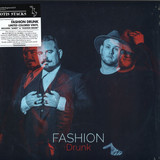
OTIS STACKS - Fashion Drunk LP

Otis Stacks, three syllables. A name and a first name that recall a mythical singer as much as the Memphis music label that got him to it's days of glory. A name that evokes him in particular and soul music in general. Behind a name that sounds familiar are Elias Wallace and Justmike, two men united to become one: Otis Stacks. In truth, the optimized version of a work started long ago, when Justmike was producing the Danish hip-hop sound of Dafuniks and decided to get in touch with Elias after hearing his voice on a friend's tune. He first wanted him to lay his voice on a
chorus, then a verse, and ended letting him take over the lyrics of 'All I Want', the song that would later bring Dafuniks on air and around Europe. After traveling miles and miles across the ocean and the seas separating California from Denmark, Elias undeniably became a member of the group. As gigs went on, stages after stages, Justmike got inspired by Elias's voice and presence. Thus, the idea of a duo collaboration between the two men geminated and grew in his mind. As the evidence of their getting along, 'Fashion Drunk' became the first tune to
infiltrate Nova and FIP radio playlists, as its music video reached 8 million views. This now obvious complicity as extended in the form of an album, also called Fashion Drunk, released by Underdogs Records. With this French stopover, the line between California and Denmark is now completed. The result is an artistic fusion in which Justmike has plugged his instruments to the machines he uses to compose, letting Elias in charge of the
lyrics and singing. Here, the soul music is printed as a guideline in an organic and digital composite matter. In an ethereal and aerial production that perches its arrangements in the air of the mix or buries them in its bases, letting electro music spread on a groove punched with black and white keys. Each element intervenes with discretion to let Elias stories be related with elegance. Frustrated, disappointed or aborted love stories.

Auf Lager

Bei uns am Lager und sofort versandfertig

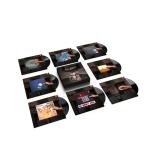
DJ Shadow - The Mo'Wax Singles 1993-1997 (LP 8x12")
  • #1 - In/Flux
  • (Side A, Track 1) Dj Shadow - In/Flux - (Side B, Track 1) Dj Shadow - Hindsight
  • #2 - Lost And Found (S.f.l.)
  • (Side A, Track 1) Dj Shadow - Lost And Found (S.f.l.) - (Side B, Track 1) Dj Shadow - Hardcore (Instrumental) Hip-Hop - (Side B, Track 2) Dj Shadow - Last Stop
  • #3 - What Does Your Soul Look Like
  • (Side A, Track 1) Dj Shadow - What Does Your Soul Look Like - (Part 2 - Original Standalone Version) - (Side A, Track 2) Dj Shadow - What Does Your Soul Look Like - (Part 3 - Original Standalone Version) - (Side B, Track 1) Dj Shadow - What Does Your Soul Look Like (Part 4 - Original Standalone Version) - (Side B, Track 2) Dj Shadow - What Does Your Soul Look Like - (Part 1 - Original Standalone Version)
  • #4 - Midnight In A Perfect World (U.k. Version)
  • (Side A, Track 1) Dj Shadow - Midnight In A Perfect World (Radio Vision) - (Side A, Track 2) Dj Shadow - Midnight In A Perfect World (Gab Mix) - (Side B, Track 1) Dj Shadow - Midnight In A Perfect World (Extended Vision) - (Side B, Track 2) Dj Shadow - Mutual Slump (Album Version)
  • #5 - Stem
  • (Side A, Track 1) Dj Shadow - Stem (Cops 'N' Robbers) - (Side A, Track 2) Dj Shadow - Red Bus Needs To Leave! - (Side B, Track 1) Dj Shadow - Stem/Long Stem (Earlier Version) - (Side B, Track 2) Dj Shadow - Soup
  • #6 - High Noon
  • (Side A, Track 1) Dj Shadow - Hypnotist Intro - (Side A, Track 2) Dj Shadow - High Noon (Alternative Mix) - (Side B, Track 1) Dj Shadow - Devil's Advocate (Alternative Version) - (Side B, Track 2) Dj Shadow - Organ Donor
  • (Extended Overhaul - Original Version)
  • #7 - Camel Bobsled Race
  • (Side A) Dj Shadow - Camel Bobsled Race (Original Unedited Version) (Part 1) - (Side B) Dj Shadow - Camel Bobsled Race (Original Unedited Version) (Part 2)
  • #8 - Bonus Disc For This Box Set
  • (Side A, Track 1) Dj Shadow - In/Flux (First Ever Mpc Version) - (Side A, Track 2) Dj Shadow - Lost And Found (S.f.l.) (First Ever Mpc Version) - (Side B, Track 1) Dj Shadow - What Does Your Soul Look Like (Part 2 - First Ever Mpc Version) - (Side B, Track 2) Dj Shadow - What Does Your Soul Look Like (Part 4 - First Ever Mpc Version)

Zum ersten Mal seit Jahrzehnten erscheinen DJ Shadows legendäre Mo’Wax-Singles wieder offiziell – in einem umfassenden 8-teiligen Vinyl-Set, das mehrere Stunden bahnbrechender Musik enthält.
Die Aufnahmen wurden in den Abbey Road Studios von Miles Showell halbspeed-remastered und klingen so klar und kraftvoll wie nie zuvor. Die Box enthält zahlreiche bisher unveröffentlichte Mixe und Edits sowie eine exklusive Bonus-LP mit den ursprünglichen Demos von vier Tracks – ein einzigartiger Einblick in die Entstehungsgeschichte des Shadow-Sounds.
Abgerundet wird das Set durch neue Fotografien von Brian Cross (B+), DJ Shadows langjährigem visuellen Wegbegleiter.
Ein essenzielles Sammlerstück für Fans, Vinyl-Liebhaber und alle, die die Wurzeln moderner Beat-Kultur feiern wollen.

"This box wasn’t made for the casual listener,it was made with the hardcore fan in mind. I’ve always felt, if something is worth doing, it’s worth doing right, and every step of the process was
made with this philosophy firmly in mind. I had fun locating and resurrecting these songs, some of which still feel close to my consciousness as though they were made yesterday.”
-DJ Shadow

vorbestellen

Der Artikel ist noch nicht erschienen. Du kannst den Artikel jetzt vorbestellen, dieser ist nach Wareneingang für dich versandbereit.

Stand High Patrol - Skanking and Jacking LP 2x12"

New Stand High Patrol album, featuring Joe Yorke, Nazamba, Jah Thomas - and remixes from Mad Professor, Androo & Jeanville.


Dub and House Music. Two aesthetics born in the shadows, shaped far from the mainstream music industry. Two underground cultures where independence is often a necessity and ingenuity is essential. Two scenes rooted in the margins of society, with dance, sound systems and minorities at their heart.
From the Jamaican sound system sessions of the late sixties, through the nights at Chicago's Warehouse, to the murmurings of the New York house scene in the early eighties — history shows that house, reggae and dub share far more than many people may assume. Collective action, resistance as a driving force, music moving straight from studio to turntable, shared messages: these are the threads that bind these landmark musical movements together. It is at this crossroads, driven by the spirit of experimentation that defines them, that the members of Stand High Patrol found yet another territory worth mapping.
"Skanking & Jacking", the new Musketeerz album, reveals a side of the Dubadub sound never heard on record before. Built for the dancers and for DJs, the LP brings together the pulse of house music and the vibrant groove of reggae. Uncharted territory, never interfaced like this before. The result of a meticulous blending of styles, house, reggae and dub intertwine across 12 extended tracks. The sound is carefully crafted. Built on immersive loops and interlaced with micro-variations that give it an organic texture. Born from the interaction between being and machine. This is not about simply bringing worlds closer together; it's about mobilising influences to chart a new sonic galaxy.


Beyond it's aesthetic statement, "Skanking & Jacking" also stands out for its international cast. The most extensive Stand High Patrol have ever assembled on an album. From England, Italy, Switzerland and Jamaica, the guest vocalists, producers and MCs deepen the sense of dialogue between cultures and styles. At the mic, Joe Yorke, Marina P, Nazamba and Jah Thomas join the Dubadub Musketeerz on their explorations. Each appearance subtly reshaping the contours of the project.
Never fixed, always in motion, "Skanking & Jacking" pays tribute to the traditions that shaped it and closes, as a final nod, with remixes from Jeanville, Androo and the legendary Mad Professor. The album stands as further proof of a crew that shows no signs of stopping its reinvention. Available on stream, digital and double LP on May 29th.

nicht am Lager

Bestelle jetzt und wir bestellen den Artikel für dich beim Lieferanten.


Last In: vor 4 Tagen
Judith Hamann & James Rushford - Midmeste LP

Australian composer-performers Judith Hamann and James Rushford have worked together in countless projects for two decades, perhaps most notably in Golden Fur, their trio with Sam Dunscombe. Black Truffle is pleased to announce Midmeste, their first work as a duo. Its title is Middle English for ‘the middlemost point’, alluding to how the piece builds on the points of overlap between the highly personalised musical languages Hamann and Rushford have developed in recent years. Performed on cello and a variety of pipe organs, Midmeste is a spacious, sometimes unsettling exploration of their shared interest in alternative tunings, psychoacoustic phenomena, the physical properties of their instruments, and the usually peripheral sounds generated by the performing body.

Beginning with a sequence of austerely vibrato-less harmonics from Hamann's cello, trailed by Rushford's whistling portative organ tones, the music soon expands into a slow-moving melodic wander, pausing at times to linger over an uncomfortable harmony or particularly resonant cello tone. Hamann and Rushford have long histories of engagement with pre-Classical European musical traditions, having in past projects performed and radically extended the work of Solage, Louis Couperin, Johann Conrad Beissell and other composers. Here they use a 15th century song by John Dunstaple, ‘O rosa bella’, which returns throughout the piece, distorted, aerated and splayed into new forms.

Developed while the two shared residencies at Akademie Schloss Solitude, Stuttgart in 2020 and La Becque on Lake Geneva in 2023, Midmeste integrates recordings made (at at the invitation of the Biennale Son) on the organ of the Basilica St Valere in Sion, Switzerland—the world’s oldest playable organ, built in the early 15th century. Played by both Rushford and Hamann, the instrument’s idiosyncratic features, including bellows pumped manually using massive wooden beams, are integrated into the music through amplification. Creaks and thumps locate the music physically both in the performers’ bodies and the specific site of its making. Moving through a series of distinct episodes across its forty-minute span, Midmeste makes space for near-silent duets of high harmonics and hissing air, moments where twittering high tones and rumbling sub-bass could be electronic, and static fields that unexpectedly blossom into almost Romantic harmonies.

Listeners familiar with Hamann and Rushford’s work will find many familiar features here: the stunningly rich cello tones, their patient sustain allowing heightened awareness of the inner life of sound and its interactions with the environment; the care with which acoustic space is activated, becoming at times a third instrumental voice; the attention to fragile, unstable sonorities that sometimes have a comic edge. A major work from two key figures in contemporary experimental music, Midmeste synthesises rigorous exploration of fundamental questions of sound and performance with an unapologetic embrace of beauty.

vorbestellen22.05.2026

erscheint voraussichtlich am 22.05.2026

VARIOUS - BROWN ACID: THE TWENTY-SECOND TRIP LP

Just as you were getting your head straight coming off the 21st Trip … Brown Acid dose # 22 drops, continuing to fry your mind in a revolving trap-door Twilight Zone alternate world of early hard rock… populated by real life characters so far out they can look like a cheesy wedding band but sound like Blue Cheer! Uncanny! This music comes at you from many angles. Teens in a garage colliding with booze, drugs and girls for the first time, lounge lizard hustlers with snazzy stage clothes and fuzz boxes… gnarly backwoods troublemakers meet blow dried glam rock wannabes here, seamlessly clobbering your head with sound rather than each other! An electric post-psychedelic bar brawl for your mind awaits, unfasten your seat belt, crank it up and fly! Sounds Synonymous "Babylon" out of Flint, Michigan 1969 rip the devastating Blue Cheer classic a new one, immediately swarming you with organ swells and distortion before collapsing into a tuff funk groove, a psychedelic James Brown vibe shot through with dirty howling fuzz guitar, vocals nailing the messed up but confident relaxed sneering attitude of the original Cheer eruption. The Bumps "Shining" from Seattle 1969 resides right at the transition of ‘60s psych into early prog, well constructed, no diluting things artsy fartsy style, a compelling heavy riff, spacious vocal harmony hook floating above a turbulent take on getting your shit together and shining like a star. Fat chance, but you can dream, the band did and their dreams kick ass across time to right now or you wouldn’t be here.

Coulda been a hit back then, definitely a hit now. Riverside "Farmer" explodes out of Austin, Texas 1974, economical but brilliantly structured riffs and power chords, intense dynamic tension/release, fantastic screaming leads over shifting angles of attack during the middle break… it’s all here with a detached confidence in the vocal that swaggers back in time to the late ‘60s in its proto-heavy psych adjacent assault. Cincinnati Joe & Mad Lydia "Get It Together" for real in Cincinnati, Ohio 1970. The song says everything you need to know: “You may think that you’re the very best, miles and miles ahead of the rest, but be sure when you’re put to the test you get it together!” These words are deployed in a manner similar to Peter Green’s “Oh Well”, intermittently stated between killer gnarly guitar and gushy organ attacks. Bar band heaven and hell rolled up into one big ball, the vocals get all the way out there! Straight Up "Fire" takes the monster 1968 Crazy World Of Arthur Brown hit into faithfully executed but surreally minimalist territory, Minneapolis, Minnesota 1974. Genius version of a key song that presciently cuts to the chase regarding Brown Acid’s incinerations of psychedelic idealism, you’re gonna burn, burn, burn… as that moment climaxes you can gawk at their preposterous flashy lounge band stage outfits and realize side one must end because everything is totally scorched into eternity. Scrap Iron "Poopsie" is a primitive two chord stomper with spiraling fuzz and organ riffs, singer marking his territory caveman style. “Poopsie, you’re my woman” he commands, but gets weirdly insecure she’ll blow him off at the altar by the end of each verse. Snarly wah-wah ices this toxic cake out of Carteret, New Jersey 1973. Focused delivery so single-mindedly crude it creates an inescapable instant brain-worm. Lady "Live Show Tigers" is amongst the most potently life affirming trash rockers you’ll ever hear, one outrageously triumphant but fiercely sloppy anthem about living it up like a star, strutting the stage glammed up New York Dolls drag style but with a Dictators sense of humor. Tasty slightly off kilter guitar leads all through, going serendipitously berserk on the fade. Picture disc single out of L.A. 1980. Fantastic fun rock star rock at a very raw local street level where any time is party time.

Killer Frog "Hard Times" on Masochist Records from Chicago, Illinois 1972 takes less than two minutes, an action packed James Gang style bar band rocker with a bit of punky sneer in the face of misfortune. These guys never even heard of flower power. They are killer frogs. Good Humore "Killer" does kill in stripped down hard rock trio style, Warren, Michigan 1976. No frills guitar, bass and drums groove tight, snaky primordial riff, snarly licks. “She’s a killer of a woman, knows just what she’s doing…” The singer knows she’s a femme-fatale roadhouse predator but she’s so hot the inevitable wreckage seems a bargain. Ride it out like the extended jam on the fade knowing she’ll be back for more! Sarawest "Space Rider" winds up the 22nd Trip lost in a twisted two chord space adventure from the point of view of an alien visiting our planet seeking knowledge but finding out we are stupidly destroying ourselves, so he gotta split sneering back at us like we wasted his time “I got no time for loving… I wanna be a space rider, space rider”. Toronto, Canada 1974, a vibe lurking in some strange but funny void between late ‘60s outsider garage psychedelic rock complete with reverb-y acid guitar leads and late ‘70s retro-futuristic D.I.Y wisecracking from inner space… taking the piss out of outer space!

vorbestellen12.05.2026

erscheint voraussichtlich am 12.05.2026

VARIOUS - BROWN ACID: THE TWENTY-SECOND TRIP LP
  • A1: Sounds Synonymous ? Babylon
  • A2: Flint, Michigan ? 1969
  • A3: The Bumps ? Shining
  • A4: Seattle, Washington ? 1969
  • A5: Riverside ? Farmer
  • A6: Austin, Texas ? 1974
  • A7: Cincinnati Joe And Mad Lydia ? Get It Together
  • A8: Cincinnati, Ohio ? 1970
  • A9: Straight Up ? Fire
  • A10: Minneapolis, Minnesota ? 1974
  • B1: Scrap Iron ? Poopsie
  • B2: Carteret, New Jersey ? 1973
  • B3: Lady ? Live Show Tigers
  • B4: Los Angeles, California ? 1980
  • B5: Killer Frog ? Hard Times
  • B6: Chicago, Illinois ? 1972
  • B7: Good Humore ? Killer
  • B8: Warren, Michigan ? 1976
  • B9: Sarawest ? Space Rider
  • B10: Toronto, Ontario ? 1974
auch erhältlich

RANDOM COLOUR VINYL


Just as you were getting your head straight coming off the 21st Trip … Brown Acid dose # 22 drops, continuing to fry your mind in a revolving trap-door Twilight Zone alternate world of early hard rock… populated by real life characters so far out they can look like a cheesy wedding band but sound like Blue Cheer! Uncanny! This music comes at you from many angles. Teens in a garage colliding with booze, drugs and girls for the first time, lounge lizard hustlers with snazzy stage clothes and fuzz boxes… gnarly backwoods troublemakers meet blow dried glam rock wannabes here, seamlessly clobbering your head with sound rather than each other! An electric post-psychedelic bar brawl for your mind awaits, unfasten your seat belt, crank it up and fly! Sounds Synonymous "Babylon" out of Flint, Michigan 1969 rip the devastating Blue Cheer classic a new one, immediately swarming you with organ swells and distortion before collapsing into a tuff funk groove, a psychedelic James Brown vibe shot through with dirty howling fuzz guitar, vocals nailing the messed up but confident relaxed sneering attitude of the original Cheer eruption. The Bumps "Shining" from Seattle 1969 resides right at the transition of ‘60s psych into early prog, well constructed, no diluting things artsy fartsy style, a compelling heavy riff, spacious vocal harmony hook floating above a turbulent take on getting your shit together and shining like a star. Fat chance, but you can dream, the band did and their dreams kick ass across time to right now or you wouldn’t be here.

Coulda been a hit back then, definitely a hit now. Riverside "Farmer" explodes out of Austin, Texas 1974, economical but brilliantly structured riffs and power chords, intense dynamic tension/release, fantastic screaming leads over shifting angles of attack during the middle break… it’s all here with a detached confidence in the vocal that swaggers back in time to the late ‘60s in its proto-heavy psych adjacent assault. Cincinnati Joe & Mad Lydia "Get It Together" for real in Cincinnati, Ohio 1970. The song says everything you need to know: “You may think that you’re the very best, miles and miles ahead of the rest, but be sure when you’re put to the test you get it together!” These words are deployed in a manner similar to Peter Green’s “Oh Well”, intermittently stated between killer gnarly guitar and gushy organ attacks. Bar band heaven and hell rolled up into one big ball, the vocals get all the way out there! Straight Up "Fire" takes the monster 1968 Crazy World Of Arthur Brown hit into faithfully executed but surreally minimalist territory, Minneapolis, Minnesota 1974. Genius version of a key song that presciently cuts to the chase regarding Brown Acid’s incinerations of psychedelic idealism, you’re gonna burn, burn, burn… as that moment climaxes you can gawk at their preposterous flashy lounge band stage outfits and realize side one must end because everything is totally scorched into eternity. Scrap Iron "Poopsie" is a primitive two chord stomper with spiraling fuzz and organ riffs, singer marking his territory caveman style. “Poopsie, you’re my woman” he commands, but gets weirdly insecure she’ll blow him off at the altar by the end of each verse. Snarly wah-wah ices this toxic cake out of Carteret, New Jersey 1973. Focused delivery so single-mindedly crude it creates an inescapable instant brain-worm. Lady "Live Show Tigers" is amongst the most potently life affirming trash rockers you’ll ever hear, one outrageously triumphant but fiercely sloppy anthem about living it up like a star, strutting the stage glammed up New York Dolls drag style but with a Dictators sense of humor. Tasty slightly off kilter guitar leads all through, going serendipitously berserk on the fade. Picture disc single out of L.A. 1980. Fantastic fun rock star rock at a very raw local street level where any time is party time.

Killer Frog "Hard Times" on Masochist Records from Chicago, Illinois 1972 takes less than two minutes, an action packed James Gang style bar band rocker with a bit of punky sneer in the face of misfortune. These guys never even heard of flower power. They are killer frogs. Good Humore "Killer" does kill in stripped down hard rock trio style, Warren, Michigan 1976. No frills guitar, bass and drums groove tight, snaky primordial riff, snarly licks. “She’s a killer of a woman, knows just what she’s doing…” The singer knows she’s a femme-fatale roadhouse predator but she’s so hot the inevitable wreckage seems a bargain. Ride it out like the extended jam on the fade knowing she’ll be back for more! Sarawest "Space Rider" winds up the 22nd Trip lost in a twisted two chord space adventure from the point of view of an alien visiting our planet seeking knowledge but finding out we are stupidly destroying ourselves, so he gotta split sneering back at us like we wasted his time “I got no time for loving… I wanna be a space rider, space rider”. Toronto, Canada 1974, a vibe lurking in some strange but funny void between late ‘60s outsider garage psychedelic rock complete with reverb-y acid guitar leads and late ‘70s retro-futuristic D.I.Y wisecracking from inner space… taking the piss out of outer space!

vorbestellen12.05.2026

erscheint voraussichtlich am 12.05.2026

Various Artists - MELODIC NIGHTS LP

A label compilation can be the first sign of a new cycle. After years shaped by individual trajectories, it brings the focus back to what made scenes powerful in the first place: shared language, mutual influence and a sense of collective movement.
For a label built on deep rhythm, organic textures and emotional drive, this carries an even stronger meaning. These musical spaces hold connection, memory and exchange at their core.

In this light, a compilation becomes more than a format: it becomes a statement of identity, a meeting point where different voices contribute to one evolving vision.
“MoBlack presents: MELODIC NIGHTS” marks the start of this new MoBlack path guided by careful curation and artistic exchange, blending percussive depth with a more melodic approach.

The result is a four-track selection navigating different shades of introspection and release, held together by a strong and recognizable sonic character.
Klement Bonelli – “It’s My Life” sets the tone with a bold, emotionally charged cut that balances melodic lift with a club-focused pulse. it’s jud, MR.FULLTIM€ – “Jackfruit” adds a distinctive twist to the journey, playful in texture yet precise in its impulse, widening the palette with character and movement. Jay’ (CH) – “Our Fire” leans into atmosphere and intensity, building momentum through evocative harmonies and a steady emotional current. Max Zotti, Blaxx – “Release Your Pain” closes the collection with a cathartic, rhythm-led energy, delivering what feels both intimate and dancefloor-ready. More than a one-off release, “MELODIC NIGHTS” introduces a collection designed to highlight converging sensibilities, where each track stands on its own while contributing to a wider narrative.

Artwork by Rachael D’Alessandro. Executive producer Mimmo Falcone. Distribution by Muting The Noise.

nicht am Lager

Bestelle jetzt und wir bestellen den Artikel für dich beim Lieferanten.


Last In: vor 4 Tagen
Living Legends - The Gathering LP

Living Legends

The Gathering LP

12inchERE1232
EMPIRE
17.04.2026
  • A1: The Gathering
  • A2: She Wants Me
  • A3: Pants On Fire
  • A4: War & Peace
  • B1: Luva Changer
  • B2: Samba
  • B3: After Hours (Extended Euro Mix)

In the vibrant, post-millennial landscape of independent hip-hop, few collective names commanded as much respect as the Living Legends. A monumental alliance of some of the West Coast's most respected solo artists—including Murs, The Grouch, Eligh, Aesop, Bicasso, Luckyiam, Sunspot Jonz, and Arata—the crew's 2008 album, The Gathering, served as a powerful declaration of their unity and enduring relevance.

The Gathering was a snapshot of a legendary crew working at the peak of their collaborative power. The project masterfully weaves together the diverse styles of its eight members, moving effortlessly from the conscious storytelling of Murs to the soulful, introspective flow of The Grouch and Eligh, and the abstract lyrical dexterity of Aesop. The production, handled largely within the collective, provides a lush, sample-heavy, and distinctly West Coast soundscape that perfectly complements the lyrical fireworks. Tracks like the anthemic title track "The Gathering" and the legendary posse cut "After Hours" showcase the organic chemistry that made the Living Legends a seminal force in underground music.

For the first time ever, this pivotal album is being officially pressed on vinyl. This highly anticipated Record Store Day 2026 release finally delivers The Gathering to the format its rich, soulful production has always deserved. This limited edition pressing is presented on striking Coke Bottle Clear Vinyl, a perfect visual complement to the album's crisp, refreshing sound.

A crucial artifact of independent hip-hop history, The Gathering on vinyl is an essential addition for fans who have supported the Living Legends for decades and a must-have for vinyl collectors looking to own a tangible piece of the era's best crew collaborations. Don't miss the chance to own this definitive, first-ever vinyl pressing of a true underground classic.

vorbestellen17.04.2026

erscheint voraussichtlich am 17.04.2026

Various - Tchic Tchic: French Bossa Nova 1963-1974  Colored Edition LP 2x12"
  • A1: Les Masques - Il Faut Tenir (1969)
  • A2: Isabelle Aubret - Casa Forte (1971)
  • A3: Christianne Legrand - Hlm Et Ciné Roman (1972)
  • A4: Jean Constantin - Pas Tant D'chichi Ponpon (1972)
  • A5: Billy Nencioli & Baden Powell - Si Rien Ne Va (1969)
  • B1-: Marpessa Dawn - Le Petit Cuica (1963)
  • B2: Jean-Pierre Sabar - Vai Vai (1974)
  • B3: Sophia Loren - De Jour En Jour (1963)
  • B4: Isabelle - Jusqu’à La Tombée Du Jour (1969)
  • B5: Sylvia Fels - Corto Maltesse (1974)
  • C1: Frank Gérard - Comme Une Samba (1972)
  • C2: Ann Sorel - La Poupée Des Favellas (1971)
  • C3: Charles Level - Un Enfant Café Au Lait (1971)
  • C4: Andrea Parisy - Les Mains Qui Font Du Bien (1970)
  • C5: Audrey Arno - Quand Jean-Paul Rentrera (1969)
  • C6: Aldo Frank - T’as Vu Ce Printemps (1970)
  • D1: Christianne Legrand - Cent Mille Poissons Dans Ton Filet (1972)
  • D2: Clarinha - Lemenja (1970)
  • D3: Hit Parade Des Enfants - Aquarela (1976)
  • D4: Jean-Pierre Lang - Tendresse (1965)
  • D5: Magalie Noël - Une Énorme Samba (1970)
  • D6: Françoise Legrand - La Lune

Ever since the late 1950s bossa-nova revolution, Brazil’s influence on French music has been undeniable. Pierre Barouh, Georges Moustaki and a vast array of lesser known artists, all made the Musica Popular Brasileira (MPB) an axis of promotion at the service of a cool and metaphysical, modern and mixed Brazilian lifestyle. Some were seduced by the poetic languors of the bossa, some were looking for fun, and others just loved the American hybridization of jazz-bossa, jazz-samba.


What is bossa nova? One of its creators, Joao Gilberto said: "Its style, cadence, everything is samba. At the very start, we didn't call it bossa nova, we sang a little samba made up of a single note - Samba de uma nota so .... The discussion around the origins of bossa nova is therefore useless”. It is nevertheless useful to remember that these magnificent Brazilian songs, which the guitarist describes as samba, were shifted and balanced around improbable chords. "I like things that lean, the in-betweens that limp with grace," said Pierre Barrouh, quoting Jean Cocteau.


With emotion, arrangements for violin and supple guitar licks, bossa nova rapidly changed. A transformation that can be heard in the Tchic, tchic, French Bossa Nova 1963-1974 compilation, the result of a cultural reappropriation, which traveled through the United States and supplemented itself in France.

A musical revolution that has remained significant, bossa nova was born in Rio. From 1956 to 1961, Brazil lived through its golden years. In five years, the country had invented its modernist style. Elected president in 1956, Juscelino Kubitschek de Oliveira, an elegant man with a broad forehead, brandished a promising slogan: "Fifty years of progress in five years". He quickly got to work. Not worried about increasing debt, he launched the project for a new federal capital, Brasilia, designed by the communist architect Oscar Niemeyer. Volkswagen opened state-of-the-art factories and created the “fusquinha”, the Beetle. In Rio, the Vespa made its first appearance. The Arpoador Surf Club crew run into the “girl” from Ipanema, Helô Pinheiro - the tanned garota ("chick"), between a flower and mermaid, who at 17 walked by the Veloso bar, where the fiery author and composer, Tom Jobim and Vinicius de Moraes, were getting drunk on whiskey. From then on, bossa symbolized cool.

In 1958, Joao Gilberto recorded Chega de Saudade, which the directors of Philips denied, calling it "music for fagots". The marketing director, who believed in it, secretly pressed 3000 78-inch vinyls and distributed them at schools around Rio, creating a tidal wave.

American jazzmen then took over. In particular, trumpeter Dizzy Gillespie and guitarist Charlie Byrd. In November 1962, the Brazilian Ministry of Foreign Affairs funded a "Bossa-Nova" concert at Carnegie Hall in New York, inviting the genre’s pioneers. Unprepared, the show soon turned to disaster. But the troupe was invited to the White House by Jackie Kennedy. The first lady loved "the new beat" and in particular Maria Ninguem, a song by Carlos Lyra, later covered by Brigitte Bardot.

In Brazil, the 1964 military coup quickly ended this euphoria. The destructive atmosphere that ensued pushed many Brazilian musicians to leave, if not to exile. Thus, Tom Jobim, Sergio Mendes and Joao Gilberto arrived to the United States. In New York, Joao Gilberto met saxophonist Stan Getz. At the time, he was married to the Bahianese Astrud Weinert Gilberto, who had a German father. She had never sung before, but she knew how to speak English. Getz therefore asked her to replace her husband on The Girl From Ipanema. The Getz/Gilberto record with Tom Jobim on piano, was released in March 1964. Phil Ramone, the "pope of pop" was in charge of sound.

Bossa nova arrived in Paris through the classic “guitar-voice” channel (Pierre Barouh, Baden Powell, Moustaki…) But France loved jazz and Paris had already welcomed its American contributors. All these good people were to pass through Saint-Germain-des-Prés. The cabaret l'Escale became the Mecca of Latin American sound where one could find Pierre Barrouh and his friends, such as the Camara Trio, samba-jazz aces, whose only record was published by the Saravah label. With a band strangely called Les Masques (a band that included Nicole Croisille and Pierre Vassiliu, among others), the Camara Trio recorded an interesting Brazilian Sound, including the track Il faut tenir which is present on this tasty compilation of rarities.

Other enlightened musicians can also be found on the compilation, such as Jean-Pierre Sabar (songwriter for Hardy, Auffray, Leforestier ...) and the French pop rock organist Balthazar. In 1975, Sabar recorded Aurinkoinen Musiikkimatka on a Finnish label, which featured the crazy Vai, Vai, included on this record. We are now following the footsteps of Brazilian electronic musicians such as Sergio Mendes, Eumir Deodato or Marcos Valle who created funk and disco sounds on their keyboards and synthesizers. A style that influenced Véronique Sanson when she wrote Jusqu’à la Tombée de la nuit in 1969 for Isabelle de Funès, the niece of Louis and a great friend of Michel Berger - Sanson did end up singing this track on her 1992 Sans Regret record.


The pinnacle of exoticism and travel, Sylvia Fels’ Corto Maltese includes bongos, sea mist and ocean sounds. The title was taken from Jacky Chalard’s concept album written in 1974, Je suis vivant, mais j’ai peur (I am alive, but I am scared), based on Gilbert Deflez’s science fiction novel.


However, bossa nova extended the scope of popularity. "In the 1970s, I was a fan of Sergio Mendes, Getz / Gilberto. I fell in love with this music that I knew because I had been an orchestral singer, " explained Isabelle Aubret, who in 1971 delivered a composite record of covers by the very funky Jorge Ben, Orfeu Negro, Tom Jobim, Vinicius de Morais and Jean Ferrat. "I recorded this album for Meys Records in Paris, far from Brazil, with wonderful musicians, François Raubert, Roland Vincent, Alain Goraguer...". The latter wrote the arrangements for Casa Forte, a very percussive title borrowed from Edu Lobo, one of the initiators of the bossa who spent time in California. "Jazz and bossa came together and produced very rhythmic music. I love singing, it allows me to dream, to have fun, to feel a high on stage, and these songs brought me joy, made me swing, my singing felt like a dance.”


The world tours of French singers and their desire for the tropics, often brought them to Rio with its hills, forests, caipirinhas and tanned bodies. There are surprises though, like this Iemenja (Iemenja is the goddess of the sea in the Afro-Brazilian candomblé religion). Not unlike the composer and musician Jean-Pierre Lang, based in Sao Paulo, Claire Chevalier taught Brazil to Brazil. In 1970, the singer and painter published a 45-inch vinyl, Mon mari et mes amants (My husband and my lovers), under the improbable pseudonym of Clarinha (little Claire). She was then living in Rio, with her husband, Joël Leibovitz, who founded a band called Azimuth, and who owned a record label specialized in "sambas enredos" songs for samba school parades.


For its B side, she asked Pierre Perret to come up with lyrics for a song composed by Carlos Imperial: "Oh goddess of the sea, o goddess Iemenja, I bring a white rose to adorn your long hair ..." . "Perret came to see us, and we had fun, remembers Joël Leibovitz. We wrote Lemenja for fun, we recorded it at the Havaí studio, behind the Central do Brasil the central station. Erlon Chaves, the arranger who worked with Elis Regina, joined us" adding his share of Afro-Brazilian percussions and funky brass to the mix.

There is a common misunderstanding in Franco-Brazilian history: that bossa, admittedly hedonistic, is perceived as funny, even though the poets who wrote the texts are often philosophizing on the human condition. Its French interpreters pull it towards a carnival inspired universe, far removed from its fundamental essence. Thus, Jean Constantin covered the famous Samba da minha terra, an ode to the art of samba written by the classic Bahian composer Dorival Caymmi, renaming it with the enticing title of Pas tant de tchi tchi pompon: "On your pier there is no tchi tchi / when you arch your back, you know everything is alright ”(lyrics by Gérard Calvi). This expedited bossa aims for the absurd, but retains a certain elegance.

Indeed, Jean Constantin was not an idiot, the rather large man had a huge mustache and liked fantasy, (Les pantoufles à papa, Le pacha, inspired by cha-cha-cha-cha, salsa and jazz) but he was also the lyricist of Mon manège à moi interpreted by Edith Piaf, the composer of Mon Truc en plume by Zizi Jeanmaire and the soundtrack of François Truffaut’s 400 Blows. Le Poulpe, published in 1970, from which this bossa is extract, was arranged by Jean-Claude Vannier, an accomplice of Serge Gainsbourg’s Melody Nelson. In short: "There is enough of samba / By looking at the parasol / Because my poor cabeza / Is going to die in the sun".

Even the American actress Marpessa Down, who was at the heart of the bossa nova revolution with her role as Euridyce in Marcel Camus’ film Orfeu Negro, winner of the 1959 Cannes Palme d'or, fed the clichée with Je voudrais parler au petit cuica - "Tell me how you manage to always make people want to dance / It's true, I must admit that I cannot resist your magic" - in consequence, once can hear the cuica, a little drum inherited from the Bantu.


But bossa nova had many angles. Societal, of course, pushing actresses who were symbols of women's liberation like Brigitte Bardot, Jeanne Moreau, or Sophia Loren to engage in the exercise of accelerated bossa. In February of 1963, Sophia Loren made a record in French in Rome, Je ne t'aime plus, featuring the song De jour en jour, a bossa written by two Italians, Armando Trovajoli and Tino Fornai, which was released a little later by Barclay. Bossa accompanied the 1960s, a decade of moral liberation. Ann Sorel, who interpreted La Poupée des favellas, caused a sensation with L’amour à plusieurs, a provocative song written by Frédéric Bottom and Jean-Claude Vannier. As for the actress Andrea Parisy, she displayed her bourgeois cheekiness in Marcel Carné's Les Tricheurs before interpreting Les mains qui font du bien. And Magalie Noël, the friend of Boris Vian, who sung Johnny fais-moi mal, was hired to sing Une énorme Samba, composed by Alain Goraguer (arranger to Gainsbourg, Bobby Lapointe and Jean Ferrat) with lyrics by Frédéric Botton.

But in the end, of what wood is bossa nova made of? The answer is given by Christianne Legrand, daughter of Raymond the conductor, and sister to Michel the composer: "With me, with jà" - jà means "immediately" in Portuguese. In 1972, the singer, an expert in vocal jazz and a member of the Double Six, published Le Brésil de Christianne Legrand. Two songs included on the Tchic Tchic compilation that demonstrate how bossa, jazz, funk, rock, etc. work like a swiss army knife: the music is used to denounce broken systems, or miracles, HLM et ciné roman, Cent mille poissons dans ton filet, two songs from the O Cafona soundtrack, a successful telenovela broadcast, at the time in black and white, on TV Globo. The first was adapted in French by the fighter and friend of the Legrand tribe, Agnès Varda. The second is content with a play on words, jostling them into a summer fun.


Véronique Mortaigne

vorbestellen17.04.2026

erscheint voraussichtlich am 17.04.2026

Wired - Kyoto 1970

Wired

Kyoto 1970

12inchMETAPHON028
Metaphon
17.04.2026

Wired was an ephemeral improvisational music project formed by Michael Ranta, Karl-Heinz Böttner, and Mike Lewis. On 28 April 1970, the trio recorded an extended studio session of approximately 140 minutes, in collaboration with Conny Plank, who engineered and mixed the recording in real time, incorporating elements of live electronics. This session was subsequently edited to album length and released in 1974 as part of the Free Improvisation 3LP box set issued by Deutsche Grammophon, alongside recordings by Iskra and New Phonic Art.

Owing to its exploratory electric sound world and Plank’s distinctive spatial production techniques, the Wired recording acquired a degree of underground cult status, particularly among listeners associated with krautrock and psychedelic improvisation.

Shortly after the studio session, Ranta and Böttner travelled to Japan, where they spent approximately six months performing with Karlheinz Stockhausen at Expo ’70 in Osaka. In addition to these activities, they engaged in various independent musical projects and performances.

The present release, sourced from the personal archive of Michael Ranta, documents a live duo performance by Ranta and Böttner, recorded on 27 July 1970 in an outdoor setting in Kyoto (the exact location remains unknown), before an audience of approximately 200 music teachers. The recording exhibits sonic and aesthetic characteristics closely aligned with the previously recorded studio material, retaining the distinctive “Wired” sound while situating it within a live, site-specific context.

Michael Ranta: percussion, voice, home-made instruments, tapes, tape delay, effects Karl-Heinz Böttner: guitar, organ, ocarina, voice, effects

vorbestellen17.04.2026

erscheint voraussichtlich am 17.04.2026

ANNIE & THE CALDWELLS - WRONG / I MADE IT REMIXES

The history of house and disco music is full of gospel soul singers creating anthemic bangers for the dance floor. Annie and the Caldwells, a family band from West Point, Mississippi, are the latest to join their ranks.

============================

This collection — featuring remixes from musclecars, Kornél Kovács, Alexis Taylor (of Hot Chip), and disco icons Nicky Siano and Justin Strauss — follows the release of the Caldwells’ wildly acclaimed debut Can’t Lose My (Soul) Luaka Bop, Spring 2025. Hailed as “a masterpiece” by The Guardian (★★★★★), and one of the best albums of the year by The Times, MOJO, UNCUT, and The Economist, Can’t Lose My (Soul) found fans all over the world — like Sir Elton John, who called their album “A great, great record that I insist you go out and buy.”

“I was blown away when I first heard the original version of ‘Wrong’,” says Kornel Kovács, whose remix of “Wrong” appears on this white label. “Deborah’s voice floored me, as well as the background singers. One of the greatest vocal performances I’ve heard, let alone worked with. The result is a club-ready take that’s become a highlight in my recent DJ sets.”

Producers Brandon Weems and Craig Handfield (of musclecars) had a similar experience when they heard the family for the first time: “We quickly fell in love with the groovy bassline and the choir vocals,” said Craig. “We thought it’d be fitting to put our own spin on it, while paying homage to those jive brothers from Tulsa. The uplifting keys paired with the punch of the drums, rounded out with that organ…this one is sure to bring a joyful noise!”

Annie Caldwell and her family have since performed in more than twenty countries on four continents, and recently made a star turn on the UK's preeminent music program Later... with Jools Holland. They’re hitting the road again in 2026. Watch this space.


[c] Wrong [You Dropped a Bomb] - Extended Wooden Dance Floor Mix (A Nicky Siano Production) 6:48

nicht am Lager

Bestelle jetzt und wir bestellen den Artikel für dich beim Lieferanten.


Last In: vor 46 Tagen
Guilty Razors - Complete Recordings 1977 - 1978

UILTY RAZORS, BONA FIDE PUNKS.


Writings on the topic that go off in all directions, mind-numbing lectures given by academics, and testimonies, most of them heavily doctored, from those who “lived through that era”: so many people today fantasize about the early days of punk in our country… This blessed moment when no one had yet thought of flaunting a ridiculous green mohawk, taking Sid Vicious as a hero, or – even worse – making the so-called alternative scene both festive and boorish. There was no such thing in 1976 or 1977, when it wasn’t easy to get hold of the first 45s by the Pistols or the Clash. Few people were aware of what was happening on the fringes of the fringes at the time. Malcolm McLaren was virtually unknown, and having short hair made you seem strange. Who knew then that rock music, which had taken a very bad turn since the early 1970s, would once again become an essential element of liberation? That, thanks to short and fast songs, it would once again rediscover that primitive, social side that was so hated by older generations? Who knew that, besides a few loners who read the music press (it was even better if they read it in English) and frequented the right record stores? Many of these formed bands, because it was impossible to do otherwise. We quickly went from listening to the Velvet Underground to trying to play the Stooges’ intros. It’s a somewhat collective story, even though there weren’t many people to start it.
The Guilty Razors were among those who took part in this initial upheaval in Paris. They were far from being the worst. They had something special and even released a single that was well above the national average. They also had enough songs to fill an album, the one you’re holding. In everyone’s opinion, they were definitely not among the punk impostors that followed in their wake. They were, at least, genuine and credible.

Guilty Razors, Parisian punk band (1975-1978). To understand something about their somewhat linear but very energetic sound, we might need to talk about the context in which it was born and, more broadly, recall the boredom (a theme that would become capital in punk songs) coupled with the desire to blow everything off, which were the basis for the formation of bands playing a rejuvenated rock music ; about the passion for a few records by the Kinks or the early Who, by the Stooges, by the Velvet mostly, which set you apart from the crowd.
And of course, we should remember this new wave, which was promoted by a few articles in the specialized press and some cutting-edge record stores, coming from New York or London, whose small but powerful influence could be felt in Paris and in a handful of isolated places in the provinces, lulled to sleep by so many appalling things, from Tangerine Dream to President Giscard d’Estaing...
In 1975-76, French music was, as almost always, in a sorry state ; it was still dominated by Johnny Hallyday and Sylvie Vartan. Local rock music was also rather bleak, apart from Bijou and Little Bob who tried to revive this small scene with poorly sound-engineered gigs played to almost no one.
In the working class suburbs at the time, it was mainly hard rock music played to 11 that helped people forget about their gruelling shifts at the factory. Here and there, on the outskirts of major cities, you still could find a few rockers with sideburns wearing black armbands since the death of Gene Vincent, but it wasn’t a proper mass movement, just a source of real danger to anyone they came across who wasn't like them. In August 1976, a festival unlike any other took place in Mont-de-Marsan – the First European Punk Festival as the poster said – with almost as many people on stage as in the audience. Yet, on that day, a quasi historical event happened, when, under the blazing afternoon sun, a band of unknowns called The Damned made an unprecedented noise in the arena, reminiscent of the chaotic Stooges in their early adolescence. They were the first genuine punk band to perform in our country: from then on, anything was possible, almost anything seemed permissible.

It makes sense that the four+1 members of Guilty Razors, who initially amplified acoustic guitars with crappy tape recorder microphones, would adopt punk music (pronounced paink in French) naturally and instinctively, since it combines liberating noise with speed of execution and – crucially – a very healthy sense of rebellion (the protesters of May 1968 proclaimed, and it was even a slogan, that they weren’t against old people, but against what had made them grow old. In the mid-1970s, it seemed normal and obvious that old people should now ALSO be targeted!!!).
At the time, the desire to fight back, and break down authority and apathy, was either red or black, often taking the form of leafleting, tumultuous general assemblies in the schoolyard, and massive or shabby demonstrations, most of the time overflowing with an exciting vitality that sometimes turned into fights with the riot police. Indeed, soon after the end of the Vietnam War and following Pinochet’s coup in Chile, all over France, Trotskyist and anarcho-libertarian fervour was firmly entrenched among parts of the educated youth population, who were equally rebellious and troublemakers whenever they had the chance. It should also be noted that when the single "Anarchy in the UK" was first heard, even though not many of us had access to it, both the title and its explosive sound immediately resonated with some of those troublemakers crying out for ANARCHY!!! Meanwhile, the left-wing majority still equated punks with reckless young neo-Nazis. Of course, the widely circulated photos in the mainstream press of Siouxsie Sioux with her swastikas didn’t necessarily help to win over the theorists of the Great Revolution. It took Joe Strummer to introduce The Clash as an anti-racist, anti-fascist and anti-ignorance band for the rejection of old-school revolutionaries to fade a little.

The Lycée Jean-Baptiste Say at Porte d’Auteuil, despite being located in the very posh and very exclusive 16th arrondissement of Paris, didn’t escape these "committed" upheavals, which doubled as the perfect outlet for the less timid members of this generation.
“Back then, politics were fun,” says Tristam Nada, who studied there and went on to become Guilty Razors’ frontman. “Jean-Baptiste was the leftist high-school in the neighbourhood. When the far right guys from the GUD came down there, the Communist League guys from elsewhere helped us fight them off.”
Anything that could challenge authority was fair game and of course, strikes for just about any reason would lead to increasingly frequent truancy (with a definitive farewell to education that would soon follow). Tristam Nada spent his 10th and 11th unfinished grades with José Perez, who had come from Spain, where his father, a janitor, had been sentenced to death by Franco. “José steered my tastes towards solid acts such as The Who. Like most teenagers, I had previously absorbed just about everything that came my way, from Yes to Led Zeppelin to Genesis. I was exploring… And then one day, he told me that he and his brother Carlos wanted to start a rock band.” The Perez brothers already played guitar. “Of course, they were Spanish!”, jokes their singer. “Then, somewhat reluctantly, José took up the bass and we were soon joined by Jano – who called himself Jano Homicid – who took up the rhythm guitar.” Several drummers would later join this core of not easily intimidated young guys who didn’t let adversity get the better of them.

The first rehearsals of the newly named Guilty Razors took place in the bedroom of a Perez aunt. There, the three rookies tried to cover a few standards, songs that often were an integral part of their lives. During a first, short gig, in front of a bewildered audience of tough old-school rockers, they launched into a clunky version of the Velvet Underground's “Heroin”. Challenge or recklessness? A bit of both, probably… And then, step by step, their limited repertoire expanded as they decided to write their own songs, sung in a not always very accurate or academic English, but who cared about proper grammar or the right vocabulary, since what truly mattered was to make the words sound as good as possible while playing very, very fast music? And spitting out those words in a language that left no doubt as to what it conveyed mattered as well.
Trying their hand a the kind of rock music disliked by most of the neighbourhood, making noise, being fiercely provocative: they still belonged to a tiny clique who, at this very moment, had chosen to impose this difference. And there were very few places in France or elsewhere, where one could witness the first stirrings of something that wasn’t a trend yet, let alone a movement.

In the provinces, in late 1976 or early 1977, there couldn’t be more than thirty record stores that were a bit more discerning than average, where you could hear this new kind of short-haired rock music called “punk”. The old clientele, who previously had no problem coming in to buy the latest McCartney or Aerosmith LP, now felt a little less comfortable there…
In Paris, these enlightened places were quite rare and often located nex to what would become the Forum des Halles, a big shopping mall. Between three aging sex workers, a couple of second-hand clothes shops, sellers of hippie paraphernalia and small fashion designers, the good word was loudly spread in two pioneering places – propagators of what was still only a new underground movement. Historically, the first one was the Open Market, a kind of poorly, but tastefully stocked cave. Speakers blasted out the sound of sixties garage bands from the Nuggets compilation (a crucial reference for José Perez) or the badly dressed English kids of Eddie and the Hot Rods. This black-painted den was opened a few years earlier by Marc Zermati, a character who wasn’t always in a sunny disposition, but always quite radical in his (good) choices and his opinions. He founded the independent label Skydog and was one of the promoters of the Mont-de-Marsan punk festivals. Not far from there was Harry Cover, another store more in tune with the new New York scene, which was amply covered in the house fanzine, Rock News (even though it was in it that the photos of the Sex Pistols were first published in France).
It was a favorite hang-out of the Perez brothers and Tristam Nada, as the latter explained. “It’s at Harry Cover’s that we first heard the Pistols and Clash’s 45s, and after that, we decided to start writing our first songs. If they could do it, so could we!”
The sonic shocks that were “Anarchy in the UK”, “White Riot” or the Buzzcocks’s EP, “Spiral Scratch” – which Guilty Razors' sound is reminiscent of – were soon to be amplified by an unparalleled visual shock. In April 1977, right after the release of their first LP, The Clash performed at the Palais des Glaces in Paris, during a punk night organised by Marc Zermati. For many who were there, it was the gig of a lifetime…
Of course, Guilty Razors and Tristam were in the audience: “That concert was fabulous… We Parisian punks were almost all dressed in black and white, with white shirts, skinny leather ties, bikers jackets or light jackets, etc. The Clash, on the other hand, wore colourful clothes. Well, the next day, at the Gibus, you’d spot everyone who had been at this concert, but they weren’t wearing anything black, they were all wearing colours.”

It makes sense to mention the Gibus club, as Guilty Razors often played there (sometimes in front of a hostile audience). It was also the only place in Paris that regularly scheduled new Parisian or Anglo-Saxon acts, such as Generation X, Siouxsie and the Banshees, the Slits, and Johnny Thunders who would become a kind of messed-up mascot for the venue. A little later, in 1978, the Rose Bonbon – formerly the Nashville – also attracted nightly owls in search of electric thrills… In 1977, the iconic but not necessarily excellent Asphalt Jungle often played at the Gibus, sometimes sharing the bill with Metal Urbain, the only band whose aura would later transcend the French borders (“I saw them as the French Sex Pistols,” said Geoff Travis, head of their British label Rough Trade). Already established in this small scene, Metal Urbain helped the young and restless Guilty Razors who had just arrived. Guitarist for Metal Urbain Hermann Schwartz remembers it: “They were younger than us, we were a bit like their mentors even if it’s too strong a word… At least they were credible. We thought they were good, and they had good songs which reminded of the Buzzcocks that I liked a lot. But at some point, they started hanging out with the Hells Angels. That’s when we stopped following them.”

The break-up was mutual, since, Guilty Razors, for their part, were shocked when they saw a fringe element of the audience at Metal Urbain concerts who repeatedly shouted “Sieg Heil” and gave Nazi salutes. These provocations, even still minor (the bulk of the skinhead crowd would later make their presence felt during concerts), weren’t really to the liking of the Perez brothers, whose anti-fascist convictions were firmly rooted. Some things are non-negotiable.
A few months earlier (in July 1978), Guilty Razors had nevertheless opened very successfully for Metal Urbain at the Bus Palladium, a more traditonally old-school rock night-club. But, as was sometimes the case back then, the night turned into a mass brawl when suburban rockers came to “beat up punks”.

Back then, Parisian nights weren’t always sweet and serene.

So, after opening as best as they could for The Jam (their sound having been ruined by the PA system), our local heroes were – once again – met outside by a horde of greasers out to get them. “Thankfully,” says Tristam, “we were with our roadies, motorless bikers who acted as a protective barrier. We were chased in the neighbouring streets and the whole thing ended in front of a bar, with the owner coming out with a rifle…”
Although Tristam and the Perez brothers narrowly escaped various, potentially bloody, incidents, they weren’t completely innocent of wrongdoing either. They still find amusing their mugging of two strangers in the street for example (“We were broke and we simply wanted to buy tickets for the Heartbreakers concert that night,” says Tristam). It so happened that their victims were two key figures in the rock business at the time: radio presenter Alain Manneval and music publisher Philippe Constantin. They filed a complaint and sought monetary compensation, but somehow the band’s manager, the skilful but very controversial Alexis, managed to get the complaint withdrawn and Guilty Razors ended up signing with Constantin with a substantial advance.

They also signed with Polydor and the label released in 1978 their only three-track 45, featuring “I Don't Wanna be A Rich”, “Hurts and Noises” and “Provocate” (songs that exuded perpetual rebellion and an unquenchable desire for “class” confrontation). It was a very good record, but due to a lack of promotion (radio stations didn’t play French artists singing in English), it didn’t sell very well. Only 800 copies were allegedly sold and the rest of the stock was pulped… Initially, the three tracks were to be included on a LP that never came to be, since they were dropped by Polydor (“Let’s say we sometimes caused a ruckus in their offices!” laughs Tristam.) In order to perfect the long-awaited LP, the band recorded demos of other tracks. There was a cover of Pink Floyd's “Lucifer Sam” from the Syd Barrett era – proof of an enduring love for the sixties’ greats –, “Wake Up” a hangover tale and “Bad Heart” about the Baader-Meinhof gang, whose actions had a profound impact on the era and on a generation seeking extreme dissent... On the album you’re now discovering, you can also hear five previously unreleased tracks recorded a bit later during an extended and freezing stay in Madrid, in a makeshift studio with the invaluable help of a drummer also acting as sound engineer. He was both an enthusiastic old hippie and a proper whizz at sound engineering. Here too, certain influences from the fifties and sixties (Link Wray, the Troggs) are more than obvious in the band’s music.

Shortly after a final stormy and rather barbaric (on the audience’s side) “Punk night” at the Olympia in June 1978, Tristam left the band ; his bandmates continued without him for a short while.

But like most pioneering punk bands of the era, Guilty Razors eventually split up for good after three years (besides once in Spain, they’d only played in Paris). The reason for ceasing business activities were more or less the same for everyone: there were no venues outside one’s small circuit to play this kind of rock music, which was still frightening, unknown, or of little interest to most people. The chances of recording an LP were virtually null, since major labels were only signing unoriginal but reassuring sub-Téléphone clones, and the smaller ones were only interested in progressive rock or French chanson for youth clubs. And what about self-production? No one in our small safety-pinned world had thought about it yet. There wasn’t enough money to embark on that sort of venture anyway.

So yes, the early days of punk in France were truly No Future!

nicht am Lager

Bestelle jetzt und wir bestellen den Artikel für dich beim Lieferanten.


Last In: vor 53 Tagen
Tobias. Doltz. - Frontiers of Science

Building upon the striking elegance of their first collaboration, Tobias Freund and Shun Watanabe reunite as Tobias. Doltz. for another extended excursion into designer electronica with a warm, dubby glow at its centre. Their first album Versus arrived on Delsin in early 2025 as a result of a chance meeting at Eden Festival the year before. The spark of inspiration led quickly to a complete and coherent first body of work, and the same can be said for its prompt, equally inspired follow-up. Dealing in the gentle hum of digitally sculpted ambience and needlepoint micro-pulses, Freund and Watanabe evoke the experimental spirit and mellow immersion of golden-era clicks n' cuts techno. While that early 00s phenomenon sometimes cracked around the edges of its DSP limitations, here a rich and porous sound world blooms out from the crisply defined structure of each track. At times the palette opens up to more organic sound matter, and there is ample space for full-bodied synths to ratchet down the rhythm, but a strong digital core of granular processing and exacting sound design form the bedrock of the album's subtle, sublime sound. Even though its calm demeanour radiates an instant charm, like all great electronica Frontiers Of Science is an album of hidden depths to be absorbed steadily over subsequent trips.

nicht am Lager

Bestelle jetzt und wir bestellen den Artikel für dich beim Lieferanten.


Last In: vor 50 Tagen
Various - THUNDERLAB COLLECTIVE

Leading voices in contemporary Organic House anchor LS001 V.A-Thunderlab Collective, the inaugural vinyl-only edition from Life Signal. This first chapter introduces Life Signal as a curated imprint dedicated to presenting standout works from modern electronic music-pieces selected for their lasting impact and now pressed exclusively for listeners who value both sound and physical format.

These tracks have earned significant attention within the digital space, and this release brings them to vinyl for the first time, giving collectors a chance to experience them in a new, tactile form.

A1-Volen Sentir & PROFF-"Luna Amazonia (PM Mix)"
The record opens with a signature blend of organic textures and melodic flow, shaping an atmosphere that sets the tone for the edition.

A2-Krasa Rosa-"
Kaftan"A refined balance of acoustic nuance and electronic drive, building toward a standout breakdown and a sharp, vocal-chopped lead.

B1-Jiminy Hop-"Cavalier (Extended)"
Marked by Jiminy Hop's characteristic phrasing and evolving percussive movement, this version extends the melodic narrative with precision.

B2-Audiense-"Winterfell (Extended)"
A steadily rising finale combining psychedelic touches and ethno-vocal textures, rounding out the collection with an expansive sense of lift.With LS001, the Life Signal vision arrives on vinyl: curated electronic works preserved for collectors who follow music not only by sound, but by legacy.

nicht am Lager

Bestelle jetzt und wir bestellen den Artikel für dich beim Lieferanten.


Last In: vor 69 Tagen
Julinko - Naebula LP
  • Osmos
  • Peace Of The Unsaid
  • Cloudmachine
  • Skin Dress
  • Unleash
  • Jeanne De Rien
  • Kiss The Lion's Tongue
  • Throw Ashes!
  • Samadhi
  • Hora Et Devoura

Devotional music most often gets distilled into earthy chants and ancient folklore, it doesn't always ascend to the sky like Julinko’s ‘Naebula’ an album that from the first organ note clearly trades in terrestrial dreams for ethereal visions. A feverish quality permeates the whole record, as if a ritualistic performance was being captured from start to finish, a collection of hallucinatory doom, synthetic neo-folk hymns and ghostly art-rock.

Julinko, stage name for Giulia Parin Zecchin, has long been one of the best kept secrets of the experimental community in North-East Italy, with three records that helped define her unique blend of heavy psychedelia, slowcore and dark ambient. On ‘Naebula’ what really stands out is how powerful and soaring her voice is, a weapon of undeniable force that can transform into a vessel of raw fervour or glide effortlessly as a delicate lament. Her unconventional approach shines through on tracks like ‘Jeanne De Rien’, where a marching pulse acts as a pillar for an extended mantra, almost verging into powwow territory. ‘Peace Of The Unsaid’ uses its arrhythmical structure to create space, a crepuscular night ode that reaches the heights of Sinead O’Connor’s most intimate force-fulness while retaining a sweet composure. Whether it’s glacial murderous shrieks or gospel-esque vitality, songs like ‘Cloudmachine’ or ‘Kiss The Lion’s Tongue’ seem to draw as much from a tradition of European minimalism, the use of drones and repetition, to the tradition of folksongs as hymns, where modal harmonies make way for an apparent stasis. Another key element in Julinko’s songwriting is the seamless blend of her minimalistic approach with these dense textures borrowed from a distant outsider metal heritage, Lynchean noir on steroids or wordless exorcisms with deep undercurrents.

vorbestellen20.03.2026

erscheint voraussichtlich am 20.03.2026

The Leaf Library - After The Rain, Strange Seeds LP
  • A1: ) Colour Chant
  • A2: ) Still & Moving
  • A3: ) The Reader’s Lamp
  • A4: ) Sun In My Room
  • A5: ) Carry A River In Your Mouth
  • B1: ) Catch Up, Isobel
  • B2: ) A Ship In The Sky
  • B3: ) Some Circling
  • B4: ) There Was Always A Golden Age

London quartet The Leaf Library return with their bold new album After The Rain, Strange Seeds. A luminous collection of pastoral indiepop, drawing inspiration from suburban isolation, unreliable memories and the surreality of the weather. Their most immediate and melodic work to date, the richly evocative songs brim with chiming guitars, buzzing organs and warm, dulcet strings, evoking Yo La Tengo’s more contemplative moments, The Clientele’s autumnal jangle pop and early Stereolab’s motorik melodicism. The sound of the album is defined by mixer John McEntire, whose work with Stereolab and Yo La Tengo (as well as a member of Tortoise/The Sea And Cake) have been major inspirations to the band.
The album explores themes of memory and place, albeit through an abstract haze – returning again and again to specific moments frozen in time: midsummer bright hot days in the Chilterns (“Sun In My Room”), meteorology and the strange movement of the weather (“Colour Chant”), red kites circling over suburban motorways (“Some Circling”), and the uncanny feeling of dusk and nighttime creatures on “The Reader’s Lamp” (titled by celebrated film director Peter Strickland). The lyrics are vivid yet elliptical, strung with abstract ideas and imagery, conjuring a gently unsettling, though never unwelcoming atmosphere. Not quite trusting your own recollection of things, while marvelling at the oddness of the natural world, the album’s title a good summation of the mix of strangeness and hope contained within.

As on past albums the band - founded by singer Kate Gibson and ex-Saloon guitarist Matt Ashton in the mid 2000s, and now completed by drummer Lewis Young and bassist Gareth Jones - have involved their extended musical family, including guitarist Mike Cranny (of fellow drone pop travellers Firestations) and keyboardist Irina Shtreis, both members of the Leaf Library live band. The album also sees the return of James Underwood’s Iskra Strings, a quartet that features on 4 tracks, with sumptuous arrangements by Daniel Fordham, as well as regular contributor Melinda Bronstein on vocals and Will Twynham (Dimorphodons) on harpsichord. They also welcomed Paddy Milner (on Hammond organ) and Scott McKeon (guitar) – both current members of Tom Jones’ band – for a startlingly delicate rolling crescendo to closing track “There Was Always A Golden Age”.
After The Rain, Strange Seeds is their 4th studio album. The result is The Leaf Library’s most accomplished and affecting work, John McEntire’s mix bringing a bold clarity to the band’s meticulous arrangements – closer to how they sound live than anything they’ve done before.

vorbestellen20.03.2026

erscheint voraussichtlich am 20.03.2026

Brian Jackson - EP Two LP 2x12"

Brian Jackson

EP Two LP 2x12"

2x12inchBBE800ELP2
BBE Music
11.03.2026

EP2 Limited 2 x 12" Vinyl & Digital Release The second digital and vinyl EP from Brian Jackson and Masters At Work’s highly anticipated ‘Now More Than Ever’ project is a masterclass in soulful innovation, musical legacy, and collaborative excellence. Carefully curated and expertly packaged for true fans, this release brings together extended versions and rare cuts that were simply too expansive, deep, and powerful to fit on the forthcoming triple LP — but far too important not to be heard. The double pack also includes the title track off the forthcoming album ‘Now More Than Ever’, a brand-new, never-before-heard track birthed organically during the energy and creative momentum of the recording sessions. It stands as a testament to the spontaneous brilliance of Jackson, MAW and their collaborators, capturing a moment of pure musical inspiration. The EP features seven tracks, including reimagined and extended versions of classics such as Kenlou Cult Classic ‘Moonshine’, Jackson and Heron’s ‘Lady Day and John Coltrane’, and ‘Home Is Where the Hatred Is’, plus a deep focus on ‘Racetrack in France’ — first recorded by Brian Jackson and Gil Scott-Heron in 1977 for their landmark Bridges album. Highlights include: The MAW (Masters at Work) Live Mix of ‘Moonshine’, featuring former Midnight Band/Amnesia Express multi-instrumentalist Carl Cornwell on saxophone. A sprawling 12" version of ‘Home Is Where the Hatred Is’ — a jazz-fuelled dancefloor reinterpretation blending political fire with sonic elegance. The 12” version of ‘Lady Day and John Coltrane’, featuring Rahsaan Patterson’s soulful vocal performance set against a lush, cinematic arrangement. A masterful reworking of ‘Racetrack in France’ featuring legends Josh Milan, J. Ivy, and Moodymann, each bringing their distinct voice and flavour to this seminal piece. The instrumental version is also included in this 2 x 12” EP. Whether you're a long-time devotee of Brian Jackson and Gil Scott-Heron’s influential catalogue, a DJ or collector chasing rare wax, or a new listener drawn to future-leaning soul and jazz, Now More Than Ever ‘EP Two’ is an essential release — a bridge between the past, present, and the music still to come.

nicht am Lager

Bestelle jetzt und wir bestellen den Artikel für dich beim Lieferanten.


Last In: vor 25 Tagen
Disco Combine - Feel The Light / Further Tales Of Ladybug (Dave Lee Mixes)

Dave Lee invites everyone to congregate at the piece of waste land behind his church where he also parks his combine harvester from time to time. Leading proceedings is 'Feel The Light' an extended super uplifting Gospel cut, filled with rousing horns, scorching organ solos and top tier sing-a-long vocal chants. The kind of record that really brings people together, much like the house of god. Flip the record and you're whisked away to the sunny shores of Rio with the Latin Jazz-Funk-tastic 'Further Tales Of Ladybug' a Wayne Henderson of The Crusaders fame piece that has, like the opposite side track been lovingly re-crafted from the stems by Mr Lee.

nicht am Lager

Bestelle jetzt und wir bestellen den Artikel für dich beim Lieferanten.


Last In: vor 54 Tagen
Kapote presents - Wildstyle House Vol. 1 (LP 2x12")

Kapote presents

Wildstyle House Vol. 1 (LP 2x12")

2x12inchTOYT180
TOY TONICS
27.02.2026

WILDSTYLE HOUSE is a new compilation series where Toy Tonics invites producers and DJs that have a very special, funky, unique sound to make one new track. The compilation should show the variability and diversity of house and disco TODAY. Like the wild music mix you can hear at the Toy Tonics events and the way Toy Tonics DJs combine many different styles of "4 to the floor" music into one new soulful, multi-style, and warm-sounding blended "genre." It's about the groove, about a new soul sound, the human feel, the organic and Y2K-inspired dance music that is growing and appeals to a new generation of dance music lovers.

This first part of the compilation includes unreleased music by:

Afro-funk and salsa-house producer talents ELADO, MUSTA, and ALMA NEGRA.

Garage house maestros MELON BOMB and Italian musician DANIEL MONACO (known for his New Wave disco and proto-house releases on Rush Hour and his work for Antal).

MARLA KETHER, the London bass player and DJ, who is known for her work with Little Simz, Oscar Jerome, and Loyle Carner, and has now started to release her own tracks.

Argentinian singer, musician, and DJ ALOT, combining proto-house vibes with Spanish rap.

Funk house producer and edit maestro PAUL OLDER, who is starting to become one of the key names of the new soul house scene (supported by DJs like Folamour, David Penn, Seth Troxler, Kirollus, Breakbot...).

And also Toy Tonics' own GEE LANE, KAPOTE, and ARPY BROWN contributed new tracks.

nicht am Lager

Bestelle jetzt und wir bestellen den Artikel für dich beim Lieferanten.


Last In: vor 3 Monaten
Nick Holder - Dance, Dance, Dance

Nick Holder’s Iconic ‘Dance, Dance, Dance’ Finally Arrives Digitally with New Remixes from Jason Hodges and Trackheadz.
Definitive Recordings proudly presents a long-awaited milestone: the first-ever digital release of ‘Dance, Dance, Dance’ by Nick Holder’s Fruit
Loops project, originally released in 1995 and repressed countless times on vinyl since. This timeless house anthem, a pure expression of discodriven groove, now returns remastered and refreshed — accompanied by two brand-new remixes from fellow Toronto house legends Jason
Hodges and Trackheadz.

The original version of ‘Dance, Dance, Dance’ captures the raw magic of mid-90s house — a stripped yet irresistible jam that fuses classic 70s
disco sampling with a deep, rolling bassline and a straight house groove. It’s simple, it’s soulful, and it’s pure disco-house sexiness.
Jason Hodges delivers a playful rework that modernizes the cut while keeping its soul intact. His remix adds shuffled percussion, chopped vocals,
and a subtly reworked bassline — injecting a fresh rhythmic twist that stays true to the track’s roots while enhancing its dancefloor punch.
Trackheadz then takes the track into deeper territory, layering lush synth chords, organ lines, and sweeping strings over a steady, hypnotic build
— a masterclass in musicality and atmosphere for the late-night crowd.

A true veteran of Toronto’s house scene, Nick Holder rose to international acclaim in the late ’90s and early 2000s with releases on Definitive,
NRK, Stickmen, and Studio K7, shaping the sound of deep and soulful house. As the founder of DNH Records, he’s been a driving force behind
countless underground classics, including ‘Da Sambafrique’, ‘Trying to Find Myself’, and ‘Summer Daze’.
Jason Hodges, another staple of the Toronto underground, is known for his tough yet groovy sound that bridges New York swing and Chicago
grit. Having remixed the likes of DJ Sneak, Derrick Carter, DJ Heather, and Kaskade, Hodges continues to be a name synonymous with timeless,
floor-filling house. Trackheadz, helmed by Kaje Trackheadz, brings decades of experience in blending sweet strings, soulful brass, and deep club
energy. Responsible for underground staples like ‘Our Music’ and ‘Feel’, he has remixed everyone from Todd Terry to The Sunburst Band, and
continues to expand his vision through Trackheadz Records.

Nearly three decades on, ‘Dance, Dance, Dance’ still grooves as hard as ever — now revitalized for the next generation of house lovers.

nicht am Lager

Bestelle jetzt und wir bestellen den Artikel für dich beim Lieferanten.


Last In: vor 3 Monaten
Eva Novoa - The Freedom Suite, Novoa / Carter / Mela Trio, Vol. 2

"Brooklyn-based pianist Eva Novoa returns with The Freedom Suite: Novoa / Carter / Mela Trio, Vol. 2 — the second radiant release from her compelling trio with saxophone icon Daniel Carter and celebrated drummer Francisco Mela. This marks Novoa’s sixth album with 577 Records. The trio first came together live in 2021, followed by a series of performances, including appearances in Cambridge (Boston) and later at the Brooklyn edition of the NY Forward Festival.
"The Freedom Suite is an homage to jazz titan Duke Ellington — particularly his masterful big band suites and legendary orchestra featuring Johnny Hodges and other luminaries who helped define an era of jazz greatness. In contrast, Novoa presents her Suite in a more intimate format: the piano trio. The album comprises twelve pieces — mostly brief — with a few extended tracks such as Free to Be Free and Cyborgs.
"For this recording, Novoa also steps in as a vocalist on several tracks, including Mainstream Media, Big Grande, Global, Free to Be Free, Dream, and Cyborgs. These pieces often feature a vocal dialogue between Novoa and Mela, whose expressive, word-infused style draws from rich Cuban traditions.
'Words are powerful,' says Novoa. 'They define who we are, where we come from, and who we hope to become. Without words, there is no conversation — and without conversation, there is no real sense of time, space, or connection.'
The Freedom Suite emerged from deep philosophical and creative conversations — spoken, written, and improvised — between Novoa, Carter, and Mela. In the studio, Novoa introduced printed texts that served as thematic foundations for spontaneous, in-the-moment musical interpretation. The result is an urgent and organic interplay, where instruments speak to one another in a language as fluid as it is fearless.
"Standout track Cyborgs begins with Novoa’s percussive piano, exemplifying the trio’s dynamic, conversational energy. Creative Destruction features Novoa on electric harpsichord in a wild, electric exchange. While Free to Be Free stands out as the album’s leading single, it also captures the essence and message of the entire Suite.
"Recorded in 2021 at New York City’s legendary Sear Sound Studio, the album captures a creative explosion of sound and spirit. Novoa dazzles on piano, Fender Rhodes, electric harpsichord, Chinese gongs — even whistle — showcasing her expansive sonic palette. Together, the trio embodies the power of free improvisation and emotional storytelling.
"Originally from Barcelona, Spain, Eva Novoa has been cultivating her distinctive voice since childhood. Now a staple of the New York creative music scene, she has performed across the globe and collaborated with some of the most adventurous voices in jazz and beyond."

vorbestellen30.01.2026

erscheint voraussichtlich am 30.01.2026

Tiago Sousa - Organic Music Tapes Vol. 4 (TAPE)

In keeping with tradition, the new year brings another offering from Portuguese pianist and composer Tiago Sousa.

The fourth volume of the Organic Music Tapes series concludes this cycle that has significantly transformed Tiago Sousa’s music. Compositions in a fluid state, forming nebulae of sounds with vague contours for piano, organ, and tape loops, based on techniques pioneered by American minimalism, particularly by composers such as Steve Reich, Terry Riley, and Charlemagne Palestine.

While throughout this series the electric organ has played a more prominent role in contrast with pre-recorded loops, this is the moment when this technique is extended to the piano compositions. New opportunities arise for the repetition and variation of small motifs to induce subtle perceptions and psychoacoustic effects. This final edition represents the maturation of the Portuguese composer’s intentions surrounding the idea of organic music. In music, too, the organic world is quite different from the one built on the rules of syntax and grammar. It refers instead to a type of interdependent relationships and patient, repetitive processes that are simultaneously spontaneous and unpredictable, which shape rivers and mountains, the grain of wood, muscle fibers, or marks on a jade stone.

Enter then the fourth volume and be locked in a new theatre of eternal music by an artists that keeps pushing his own style to ebullient highs.

nicht am Lager

Bestelle jetzt und wir bestellen den Artikel für dich beim Lieferanten.


Last In: vor 4 Monaten
Don Cherry & Latif Khan - Music / Sangam LP

Don Cherry, armed with a voracious musical appetite and boundless imagination, first made a name for himself - though not always fully understood - alongside Ornette Coleman, playing trumpet or cornet. In Los Angeles and then New York, he stood at the heart of a revolutionary approach to improvisation based on melody rather than harmony, later baptized "Free Jazz," the final structural development of American jazz. Over time, he became a champion of improbable fusions - gradually integrating into his style a whole array of "exotic" instruments, and more importantly, the cultures from which they originated. Among them: India, Brazil, Africa, Indonesia, and even China. The time had come for the emergence of "world music": in hindsight, a patchwork rich in imagination and seduction, but once the novelty wore off, often lacking in substance.

In Don Cherry's case, however, the commitment ran deep - tied to his personal engagement with a global vision of art and the human condition. Ustad Ahmed Latif Khan, from the Delhi gharana (a musical lineage), was part of a new generation of accompanists - percussionists, sarangi players, flutists, etc. - who had extended both the technical and conceptual possibilities of their predecessors to gain recognition as soloists and soon to venture onto the international scene. Among them, Latif stood out for his taste for irregular, highly syncopated rhythmic patterns - rich in variety and originality. Don and Latif had never met before the recording session, but the two quickly recognised one another as kindred spirits - calm, focused... and full of laughter. Don clearly knew what he wanted to create, and nothing seemed to pose a challenge for Latif, who grasped the American's intentions immediately, warmed up his fingers at astonishing speed, and with his perfect pitch, naturally took on the role of tuning Don's diverse instrument collection to match whatever was found in the studio - from concert piano and Hammond B3 organ to chromatic orchestral timpani.

nicht am Lager

Bestelle jetzt und wir bestellen den Artikel für dich beim Lieferanten.


Last In: vor 69 Tagen
POLYPORES - HUNGRY VORTEX LP

Final LP of a productive year for Feral Child is an absolute cracker. The latest of a long line of superb full lengths from Stephen James Buckley's incendiary Polypores project. This one is arguably his most adventurous outing to date, the undeniably psychedelic “Hungry Vortex”. Four extended pieces exploring polyrhythmic fixations and cosmic jazz-prog freak-outs. Percussion-heavy opener ‘The Body Is The Spaceship’ is a fine example of the sort of seamless organic growth we tend to see in Polypores’ music, with slewed synth blips and rolling polyrhythms gradually twisting into unrecognisable strands of melody and unconventional groove before your very ears.

The prog-heavy ‘Wizards!’ sees Buckley’s trademarked playful use of time-signature changes, providing such a wealth of emotional and stylistic variance and immeasurable enjoyment without changing key once (honestly, who needs keys). It’s brilliantly evocative too and could indeed perfectly soundtrack a mushroom-trip wizard march. As we flip the record over, the flutey flourishes and minimalist clicks of the title track draw the listener into a trancelike state, repeated movements spiralling like myriad creatures crawling over a candy-coloured horizon, echoing forth into an inviting sonic oblivion. It’s ostensibly electronic, yet somehow more natural organism than machine, with little concern for the grid, or indeed, the rules. Finally, we end on something a little more subdued - the reassuring classicism of the beautiful ‘Void High’, with washes of warm noise and wobbly delay lines whirring and twinkling away, closing the record with an experience that is undeniably emotional, spiritual and as always, uniquely Polypores. This is a wonderful record with which to close the year out, it comes in a magnificent, spot varnished Jake Blanchard sleeve. A superb record released as a one time only vinyl pressing.

vorbestellen12.12.2025

erscheint voraussichtlich am 12.12.2025

Matthias Puech - La Traversée

»La Traversée« (»The Crossing«) is Matthias Puech’s second album for Hallow Ground and follows up on 2023’s »Mt. Hadamard National Park.« Profoundly inspired by re-reading »The Odyssey,« the French composer, instrument designer, and scholar used a Eurorack modular synthesizer to create four pieces that are by far the most intuitive and emotionally charged in his ever-expanding catalogue. Puech’s masterful command of sound comes to the forefront with even more urgency on this record. A wandering meditation on the human condition, »La Traversée« is an album that is constantly in motion—complex electronic music at its most gripping and evocative.

The foundation for »La Traversée« was laid when Puech prepared a live set for a tour organised in collaboration with Hallow Ground in support of »Mt. Hadamard National Park.« Before writing the first three pieces—»Ennosigaios,« »Polyphármakos,« »Nekuia«—the 18½-minute-long »Ithâké« was composed in near-total isolation in the South of France at the end of 2023. Puech performed the material live several times before taking a step black from it for a while. He revisited the pieces when preparingthem for a release. »I was struck by how the technical process and the intention behind the music had completely vanished from my memory,« he says.

What remained intact, however, was Puech’s association of the material with one of the most influential texts of Western literature. Reading a graphic novel adaptation of »The Odyssey« with his two four-year-olds, he noticed the effect that it had on them and himself. »Its themes of longing, fear of and attraction to the unknown, unresolved quests, and the struggle for control felt topical,« he says. »I was completely taken. Every story ever told seemed contained in this ancient tale; every story I have ever tried to tell as a composer seemed inscribed in this framework.« This also extended to formal motifs such as the repetition of incidents, narrative developments, or dramatic effects that also mark »La Traversée.«

Puech says that he perceived Homer’s writing as musical, »like an old Delta blues or a Renaissance counterpoint,« which inspired his writing process. »With a couple of knobs on my Eurorack system, I could control the unfolding of a story,« he notes. »This made me pass through different emotional statesand led to moments in which everything made sudden sense—when you as an artist get a glimpse atsomething essential, can touch upon something universal.« This shines through »La Traversée,« a wildly imaginative album that is deeply personal while also telling a story far more wide-reaching than that of its creator.

nicht am Lager

Bestelle jetzt und wir bestellen den Artikel für dich beim Lieferanten.


Last In: vor 6 Monaten
ALTZ - ESCAPE; THE RECONSTRUCTION OF ISOPHONIC BOOGIE WOOGIE

Osaka-based producer and beat-maker Altz reinterprets and remixes Roland P. Young's spiritual jazz classic, Isophonic Boogie Woogie for the EM label!Intergenerational gene-splicing from EM. Roland Young's Isophonic Boogie Woogie, tripped-out minimalist spiritual free jazz from 1980 (previously reissued by EM as EM1045CD/LP), is here mutated, masticated and machined by Altz, renowned "organic electronicist" from Osaka. Maintaining and magnifying the cosmic bliss-vibe of the original release, Altz lovingly massages Young's sounds into the year 2009. Sounds are layered and treated, atmospheres extended, and propulsive elements from Young's original recordings are bolstered (there is some fine drumming here from former Boredoms drummer Muneomi Senju). Altz also respects Young's more absract side, following the elder master into atmospheres of freedom, unrestrained by the gravity of the beat and the conventions of the dance floor.

vorbestellen14.11.2025

erscheint voraussichtlich am 14.11.2025

NILS FRAHM - DAY

NILS FRAHM

DAY

12inchLTR36
Leiter
05.11.2025

Repress!

200 COPIES ONLY

Nils Frahm has unexpectedly confirmed details of a new collection of solo piano music, his first album since 2022’s three-hour Music For Animals. Day will be released by LEITER on March 1st, 2024, and it will be available on limited edition vinyl as well as via all digital platforms. Recorded in the summer of 2022 in complete solitude and away from his studio at Berlin’s famed Funkhaus complex, it is preceded by a single, ‘Butter Notes’, out on January 19. Day may come as a surprise to those who, over the last decade, have watched Frahm shift slowly away from the piano compositions with which he first made his name in favour of a nonetheless still-distinctive approach that’s considerably more instrumentally complex and intricately arranged. In addition, in 2021, having spent the early part of the pandemic arranging his archives, he released the 80 minute, 23-track Old Friends New Friends, a compilation of previously unreleased piano music intended to enable him to ”start over” with a clean slate. Judging from the extended, ambient nature of Music For Animals, it proved a successful gambit, but Frahm has never been able to resist returning to his first love, and those who enjoyed earlier acclaimed albums like The Bells, Felt and Screws will once again revel in Day’s familiar, personal style. Day, which contains six tracks, three over the six-minute mark, is the first in a pair of albums Frahm has lined up for 2024. In keeping with their nature, however, he won’t be making a song and dance about the release. Instead, he’ll resume his ongoing world tour, which has already included fifteen sold-out dates at Berlin’s Funkhaus as well as a show at Athen’s Acropolis. It will continue with shows all over the world, among them several sold-out dates at London’s Barbican in July 2024, where he previously curated a weekend of music, film and art, Possibly Colliding, in 2016. The album is best enjoyed in the manner in which it was recorded, in the intimacy of a peaceful, cosy room. There are muffled pedal creaks on the cyclical, quietly jazzy ‘You Name It’ and, during the palliative ripples of ‘Butter Notes’’ arpeggios, the sound of dogs barking in the streets outside. The compassionate, hesitant ‘Tuesdays’ and emotionally ambiguous ‘Towards Zero’ linger with the poignant persistence of Harold Budd’s earliest work, while ‘Hands On’ is a sometimes brighter, airier tune that sets its own, deliberate pace, and, as he has on occasions before, ‘Changes’ sees Frahm employing elements of his instrument’s construction in a ‘prepared piano’ fashion. Characterised by its confidential mood, Day confirms that, while Frahm is arguably now best known for elaborate, celebratory concerts calling upon an arsenal of pianos, organs, keyboards, synths, even a glass harmonica, he’s still a prolific master of affecting simplicity, tenderness and romance.

nicht am Lager

Bestelle jetzt und wir bestellen den Artikel für dich beim Lieferanten.


Last In: vor 6 Monaten
BJ Smith - Dedications to the Greats Four  'Don't Be Cruel' featuring Joe Harvey-Whyte

Long-time NuNorthern Soul contributor, B.J. Smith is a man in demand, dividing his time between solo work, playing guitar in Crazy P man James Baron’s popular JIM outfit, collaborating in a variety of well-regarded projects (Smith & Mudd, Bison and White Elephant amongst them) and composing for TV. Due to this impressive list of musical commitments, solo releases have been few and far between of late, with Smith’s most recent NuNorthern Soul release, a stripped back version of his Big Sur single, dropping late 2023.

It's been ever longer since he delivered a volume in his popular and ongoing Dedications To The Greats series, where the singer-songwriter and composer successfully turns his hand to other people’s songs. Since debuting the series on NuNorthern Soul in 2013 via revelatory and inspired covers of tracks by Mos Def and the Pharcyde, Smith has covered cuts by Outkast, Prefab Sprout and Soul II Soul.

On volume four, Smith’s first volume in the series for five years, he delivers a “cover of a cover” – a revolutionary and imaginative interpretation of Billy Swan’s ‘Don’t Be Cruel’, itself a version of a song first made famous by Elvis Presley. It was their mutual love of Swan’s version that brought Smith together with the release’s most prominent guest artist, Joe Harvey-Whyte, whose lilting, bittersweet and deeply emotive pedal steel performances can be heard across the EP.

Smith provides three contrasting takes. The EP is led by the ‘Mother Earth’ version, a slowly unfurling epic in which waves of effects-laden pedal steel and sun-splashed picking acoustic guitars usher in Smith’s eyes-closed vocalisations, settling into a groove reminiscent of his collaborative work with long-time friend and collaborator Paul ‘Mudd’ Murphy that showcases Harvey-Whyte centre stage to joyful effect. As the 14-minute epic progresses, we’re treated to long, languid electric guitar solos, percussion-laden slow-motion builds and hazy, stretched-out organ solos. It’s a breathlessly brilliant concoction that’s a million miles away from either Swan or Presley’s versions.

In contrast, the similarly epic ‘Earth Heart’ version – available in full vocal and instrumental takes – pushes the song front and centre. Following an extended build up, where Tamar Osborn’s gorgeous and fluid flute motifs rub shoulders with languid guitar solos and Harvey-Whyte’s pedal steel, Smith takes to the mic, delivering an emotive performance of the song’s heartfelt lyrics over a hushed, slow-motion groove. The track builds in waves as it progresses, with Smith layering up instrumentation as it rolls towards a fine conclusion.

Completing a superb package is the ‘Root Heart Version’, a Balearic-meets-Americana take built around shuffling drums, toasty bass guitar, extended pedal steel instrumentation, flashes of flute and Smith’s sun-bright acoustic guitar. Loved-up and more than a little saucer-eyed, it’s a bona-fide sunset delight.

nicht am Lager

Bestelle jetzt und wir bestellen den Artikel für dich beim Lieferanten.


Last In: vor 14 Tagen
Mark Fell - Nite Closures EP

Mark Fell inaugurates his new label – The National Centre for Mark Fell Studies – with his first solo electronic material in years; a slinky, ravishing volley of unique dance drills that have been in the works for over a decade, feeling somehow like Derek Bailey dissecting Singeli, or Autechre and Hermeto Pascoal dancing in hyperspace. There’s nothing else quite like it.

Back on the floor for the first time since dealing a pair of deep house 12”s with DJ Sprinkles, sending a contemporary classic in »Protogravity« with Errorsmith, plus a lauded collab with Gábor Lázár – all in 2015 – Fell taps back into core club concerns last explored to this uncompromising extent on his string of »Sensate Focus« EPs released between 2012–2013. He’s hardly been slacking since then, with a slew of far-reaching avant collabs with everyone from Rian Treanor to Limpe Fuchs, Okkyung Lee to Pat Thomas, Explore Ensemble to Will Guthrie – each one blurring distinctions between producer, composer, and conductor.

The »Nite Closures« EP is worth the wait – and then some. As ever, Fell manages to retain a highly distinctive, instantly identifiable sound while also tracing and mapping new bends in the continuum. His exploration of contemporary styles and patterns is here distilled and articulated with a rare, daring playfulness and sinuous intricacy – for over half an hour he flows from frantic to almost emotional at the drop of a snare. Trust it’s not your everyday / everynight club music, with an asymmetric angularity bound to wrong-foot fresher feet, but also the type of absolutely future-facing, skewed machine funk that clubs are crying out for, even if they don’t quite realise it.

As someone who’s witnessed the dominance of colouring-book Jive Bunny DJs recycle tested ideas ad infinitum, the message is a firm do-one to myopic ravers in »Nite Closures«. From the displaced anticipations tested in its extended dub and ravishing, tweaked polymetrics on its version, through a »Large Modulos #3« teeming with organismic details, to the hair-kissing swang of »auchterhouse (inversion)« and its clipped, cascading 2.1-step reprise, Fell offers thrilling new options for the loosey-gooseyest dancers at each turn. For us, it’s perhaps his greatest record this century.

vorbestellen17.10.2025

erscheint voraussichtlich am 17.10.2025

TWILIGHT SEQUENCE - OUTLINE OF NATURE
  • In The Rural Pattern
  • What To Look For Outside
  • Birds In General: And The Rook
  • Outline Of Nature
  • Moths That Rally To A Soundless Call
  • Rotating Seasons
  • All The Animals Under A Fractal Sky

First released on August 18, 2023, "Outline of Nature" started as an experiment in building a modular synthesizer system and ended up as a voltage controlled outpouring of love for the natural world. Sylvan-born and pastoral-powered, sap-blooded and lightning-charged, this album grew out of the damp florescent corners of the woods, each note and sound, a fractal extension of their seedling sounds. It was nurtured into being at The Twilight Research Centre, a studio facility situated on the border of Somerset and Dorset. During Covid lockdown 1.0, I spent the outdoor hours we were permitted, wandering through the centre's surroundings, in the green lanes, woodlands and corridors of the wilds with their wary and flickering inhabitants, beneath the distant eyes of the soaring buzzards and the hulking red kites. I didn't expect it, but it was in the quiet, ferociously vibrant dens of nature, that I found a deeply profound connection with the natural world. It once again made sense to feel as much a part of the woods as the trees were; I felt like a natural entity in its habitat again, not something I'd properly felt since running wild through the gullies, dells and fells of the Midlands as a child. And I became afflicted with a powerful urge to build strange electronic sound systems that were organic, chaotic, fractal and in some way reflective of the awesome natural systems that surround us and surround the centre. I plugged in the modular, and went searching for signs of life. Adding to this, just before the lockdowns, I stumbled across a three volume nature encyclopedia in a local charity shop, called "Outline of Nature in the British Isles" by Sir John Hammerton. The sub-heading reads "A Comprehensive Photo-Survey of the Varied Life of Field and Hedgerow, Moor and Mountain, River, Pond and Sea", and it's a stunning collection of grainy photographs, beautiful illustrations and wondrously poetic writing, some of which inspired track titles and of course, the album title. I also rekindled my love of Ladybird nature books such as the "What to Look for in Spring/Summer/Autumn/Winter" series, "Birds and How They Live" and "Butterflies, Moths and Other Insects", rebuilding a small collection I had as a child and discovering numerous volumes new to me. Between the two literary sources, I had a rich well of imagery, writing and pastoral nostalgia to draw from; and coupled with the extended sessions of blissing out in my own heavily ecstatic awe descended on me in the sheer grandness of the wilderness, I set about enticing out of the woods an album of phosphorescent electrical music, abundant with comparatively microscopic, but persistent and wild life-forces.

vorbestellen19.09.2025

erscheint voraussichtlich am 19.09.2025

Jürg Frey - Extended Circular Music

Jürg Frey

Extended Circular Music

12inchBLUME026
Blume Editions
01.08.2025

Since its founding back in 2014, Blume has carved a unique place in cultural landscape, issuing free-standing works, spanning the historical and contemporary, that represent singular gestures of creativity within the field of experimental sound. Joining their broad efforts in building networks of context and understanding that already includes the works by Werner Durand, Sarah Hennies, Bruce Nauman, John Butcher, Jocy de Oliveira, Mary Jane Leach, Valentina Magaletti, Alvin Curran, Julius Eastman, Alvin Lucier, and following the first ever vinyl release to attend to James Tenney's legendary Postal Pieces, the label now presents the first LP published by the visionary Swiss composer Jürg Frey. Drawing from the transformative power of breath and resonance, this release represents one of the most profound explorations of musical metamorphosis to emerge from the contemporary experimental landscape.

The completed work represents a "conjunction of these two artists" that has "activated a transformative form of experimentalism." These renderings "dance with an airy lightness, humour, and play, imbuing them with a beauty and emotiveness that can be rare within experimental music." They exist as "breaths, carrying the curiosities of life, belonging to no time and all time, to no one and everyone: a human music to be inhaled and pondered, for which the outcome remains unknown." In this liminal space between composition and interpretation, between breath and resonance, Zurria and Frey have created something that transcends the boundaries of experimental music itself, offering what might be called a metaphysical cartography of sound in its most essential form. As Bradford Bailey observes in his penetrating liner notes, "music is rarely a fixed entity," existing instead in a state of perpetual flux, "taking on the influences of its interpreters and performers." This fundamental truth finds its most eloquent expression in the transformative collaboration between Italian flutist Manuel Zurria and Frey, longtime member of the Wandelweiser Group. Where conventional recordings might preserve a definitive version, this release activates what Bailey calls "states of unknowing and continued experimentation," allowing Frey's compositions to evolve into entirely new dimensional territories. The original string quartet and piano works dissolve into breath-carried architectures of sound, where "the original remains in a constant dialogue with its transformation." This is not mere arrangement but ontological metamorphosis - an alchemical process through which crystalline harmonies are reborn as atmospheric phenomena.

The metaphysical dimensions of this transformation become clear through detailed analysis of the musical result. Where Frey's original compositions operate through what he calls "basic confidence in the clear and restricted material," Zurria's interpretation activates entirely new perceptual territories. Space holds almost atomic sense of weight against the airy punctuations of timbres, textures, and tones, creating "suspensions of time within which questions and identities posed by instrumentation fade." The Extended Circular Music pieces - each comprising "a small number of bars to be repeated an undetermined number of times" - become organizations of sound that defy being definitive or fixed. Originally scored for different combinations of violin, viola, cello, and piano, these works now exist as pure phenomena of breath and resonance, where "hanging, breath-length utterances dance and intertwine amongst complex harmonic clusters and conjunctions."

The philosophical implications of this transformation illuminate a lineage of composers who have moved "away from abstraction and responding to the need to create" something beyond mere technique. Drawing parallels to Morton Feldman's understanding of non-functional harmony, Zurria's approach represents "a transformative form of experimentalism" that activates what Frey calls the "thaumaturgic power" of music - its capacity to heal and transform consciousness itself. The result is "a radical reimagining of ambience: sprawling sonorities and resonances adrift in space, carrying the liberated traces of the work's former incarnations and their truths." In Zurria's interpretation, Frey's String Quartet n.3 becomes something approaching "an organ played in slow motion, its seals leaking," while the Extended Circular Music pieces transform into "glacial chords from a diverse palette of voicings, harmonies, timbres, and tones."

Performed by Manuel Zurria. Recorded and mixed by Zurria at BigCardo, Catania between 2022-2024, with mastering by Bruno Germano at Vacuumstudio, Bologna, this Blume release represents a profound exploration of musical transformation.

vorbestellen01.08.2025

erscheint voraussichtlich am 01.08.2025

Various - Kapote presents Italomania Vol. 3 (2x12")

Toy Tonics ITALOMANIA Vol. 3 is a compilation dedicated to NEW ITALIAN DISCO. (Not Italo Disco.) 14 young contemporary Italian producers made new organic disco, indie dance, pop house tracks with Italian vocals. Everything on this compilation has been produced in 2024. Fresh dance music by Italian artists Paul Older, Riva Starr, Valentino Vivace, Sam Ruffillo & Fimiani, Kymono, Mille Punti, Mind Enterprises, Bruno Belissimo and legendary cosmic disco pioneer Daniele Baldelli + french italo hitmakers Dov'e Liana. The ITALOMANIA compilation was initiated by Toy Tonics boss Kapote. Italo-German producer, DJ, keyboarder and head of Toy Tonics and Gomma records. ITALOAMNIA is a MANIFESTO to show the status of Italian Disco of today. Kapote invited the most relevant Italian producers to make new tracks with Italian vocals and show different styles of modern Italian disco with Italian vocals.

Italian Disco is not Italo Disco. The last years the trashy pop music of the 1980’s called Italo Disco (with English lyrics) had a big revival. But this compilation is about something else: It’s about this Italian Disco. Because the popularity of good Italian pop music is rising all over the world. And Toy Tonics want to show a new way to combine Italianity with dance culture. Its funny that also in France, Swiss and Germany there are new artists singing in Italian. Let’s not forget: The culture of party, dancing, show bizness and pop music would be unimaginable without the heritage and creativity that Italians contributed Italy is not just the country of good food, beaches and high fashion, but it’s also the original country of dance music. Since the ancient roman times the Italians have been the kings of entertainment. And if it comes to music; The DISCO wave of the 1970ies and the Pop music of the 1980ies has been co-created by Italians (and Italoamericans in New York).

nicht am Lager

Bestelle jetzt und wir bestellen den Artikel für dich beim Lieferanten.


Last In: vor 34 Tagen
Artikel pro Seite:
N/ABPM
Vinyl