quête:even flow

Genres
Tout
Various - Synthetic Water Music (2xTAPE)
 
51

There is a pivotal scene in “August in the Water” (dir. Sōgo Ishii, 1995) where the surface of a pool turns into a stone wall. The water that gave the protagonist's life its meaning becomes a threat. As you fall through this stone wall, you appear in a set of underwater coral-reef corridors, and one of the most beautiful musical themes begins to play: Aquatic Ambience, composed by David Wise for Donkey Kong Country (1994). It's a theme that represents the weightless vibe of your new deep-sea life, where you go about your mundane errands, collecting bananas while driving on a swordfish, or, as HerzMayhem put it: "Poor monkey... always swimming, never going anywhere..."

Synthetic Water Music is the second of three compilations, following Synthetic Bird Music and timed to mappa's 10th anniversary. As with the birds, it gathers friends of the label, artists who have released with mappa or played our shows. Most of the music is new, made to measure for this compilation, much of it from Central and Eastern European hands. Birds and water mix well, so please feel invited to play them together, creating your own environments.

Where the birds were in one flock, water is dispersed across four chapters. You live your life as a droppity drop: vapour in the heavens, condensing in clouds, falling into a swamp, trickling into the deepest sea.

Tlālōcān (Cassette 1, Side A)
A place of eternal spring, of aquatic energy that nourishes everything and allows all things to bloom. Bubbly and splishy-sploshy, it is full of dripping sounds and moist caverns (“Emerald Pool” by Pauline Anna Strom), a landscape filled with living fountains (“Oh, to be a Fountain” by Eva Sajanová) and winding streams that flow through the area, forming part of its organic architecture. It is also a paradise reserved for those whose deaths were water-related, where the aquatic and terrestrial beings live in symbiosis and perspectives shift rapidly, from observing a single droplet (Shakali, Lau Nau) to dew (Feronia Wennborg & Lucy Duncombe) and on to flowing currents (Visible Cloaks) that gradually transform into river music (Ursula K. Le Guin & Todd Barton).

Nephelora (Cassette 1, Side B)
A celestial anti-gravity sound world made of evaporation, steam and the formation of clouds, as if looking at “The Sky At The Bottom of the Well” (by Natalia Beylis) or at “The Cloud That Never Rains” (by Henrique Vaz).

If a cloud never rains,
it is not a cloud at all, but a veil that parches the earth with its gaze.
It generates only its own shadow —
a looming mass of suspended longing,
a sky that hoards but never yields,
a reservoir that swallows every river and returns nothing but echoes.

The water in this world is often invisible but sometimes all the more present, as Bint Mbareh describes it: “Recently been obsessed with invisible waters because I come from a place where you have to imagine the water is there even though you cannot see a river, a sea, usually no rain, so water is in the air, the voice and the imaginal realm, drought is imagined to be negotiable.”

Žaboglach Zha-bo-glahch (Cassette 2, Side A)
A fusion of Scottish lochs and Slovak ponds: a misty, foul-smelling, swampy realm, the kind of place that swallowed Artax from The NeverEnding Story. Stagnant waters full of decay become a blooming habitat for sirens (“thereby losing the weightless delight of being swept along with it” by Adam Badí Donoval) and beings straddling the line between fauna and flora, inventing their own communication systems (“Water-lily phase” by Action Pyramid).

R'lyeh (Cassette 2, Side B)
A brooding sunken city at the bottom of the ocean. It’s a journey to get there. Let this chapter guide you, from the shore down to the depths, to the gates of an unexplored world that is inherently dark, unfathomable, and beyond the limits of human perception: starting with seasickness ("Seasick" by Nikolaienko), passing through a classic Poe-esque maelstrom ("Flurry at the Whirl-pull" by Atte Elias Kantonen), a gateway into the darkness and emptiness of the ocean floor, and finally traversing the city itself (“last waves of 2025” by Jules Reidy).
But what is pulling you to a place like this that only a few explore and even fewer leave? Maybe “the darkness that water can contain, the expanse of things we don't know and that can trigger fear instincts even as we try to rationalise them and think we are in control of the rest of nature” (“supercritical fluids” by Diane Barbé).

Dive in and surface wherever you like. Always swimming, never going anywhere. Just don’t forget to take water breaks.

P.S. Birds, then water, can you guess what comes next? Synthetic Soil Music, an elegy for insects and worms? Synthetic Glaciers, or maybe Pollinators? Which sounds would you miss the most if they disappeared? Or what if the third one never comes at all, and somebody, or something, makes Synthetic mappa Music instead. Don't you worry, with the right training data, it can all be replicated, better than the real thing.

pré-commande11.09.2026

il devrait être publié sur 11.09.2026

Paris Paloma - The Fatal Flaw LP
  • Miyazaki
  • Rothko
  • Stem the Flow
  • Bleeding Part of Me
  • get her the fucking flowers
  • Pre- Raphaelite
  • Good Girl
  • Pyrrhus (you go where I cannot)
  • Silhouette on the Hill
  • Good Boy
  • Beautiful Birds
  • I Cry in Front of Paintings

Love as Art, Love under the Patriarchy, Love as a political and radical act - in short 'The Fatal Flaw' examines Love from a deeper and philosophical perspective. Even the songs that aren't about Love, also are. They are about the absence of love, and what happens in those spaces, so they are songs about the necessity of love, and the consequences of its absences.

pré-commande04.09.2026
il devrait être publié sur 04.09.2026

Jive Talk - NFY008

Jive Talk

NFY008

12inchNFY008
Not for You
02.09.2026

NFY008 lands courtesy of label co-founders Jive Talk, serving up a two-track platter built for dancefloors and delectable dietary choices.

A1: Complimentary Dipping Waffles
A high-energy, bass-heavy peak-time weapon, loaded with shuffling garage hats, live percussion, and infectious vocal chops. Sweet, crispy, and dangerously moreish, it’s hard to believe the waffles haven’t been added to your bill!

B1: Snarah Connor (Dubment Day Mix)
Keeping the syrup flowing, the B-side takes a deeper route, cruising on a smooth, low-slung groove with skippy drums, hypnotic synth work, and a rolling low end. Equal parts heads-down and hands-up, it’s the kind of after-hours ammunition that would have Arnie saying, “I’ll be back” before the record’s even finished.

pas en stock

Commandez maintenant et nous commanderons l'article pour vous chez notre fournisseur.

Derniere entrée: 6 jours
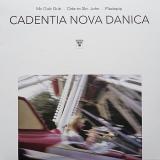
Cadentia Nova Danica - Mc Gub Gub / Ode To Skt. John / Pladepip

John Tchicai (1936 – 2012) was one of the most important free improvising saxophonists of the 20th Century: an artist of rare vision and aptitude whose lines soared and stood out even in the most hallowed company, and whose body of work as a leader / composer is among the most singular and distinct within the entire canon of that music. But Tchicai’s importance doesn’t end there. Born in Copenhagen, Denmark, to a Danish mother and a Congolese father, his life and career represent a crucial bridge between the European and American traditions of free jazz. Initially trained on violin as a child, Tchicai shifted his focus to the clarinet and alto saxophone during his mid-teens, and began touring Europe as a professional musician by his early 20s, which landed him at a socialist youth festival in Helsinki, Finland, where he met the trumpeter Bill Dixon and saxophonist Archie Shepp. Impressed by what they heard, Dixon and Shepp encouraged the young saxophonist to move to New York, and in so doing changed the history of jazz forever.

Tchicai’s arrival in New York marks the rare occurrence of a European player joining the intimate circle that was first wave of American free jazz. Following his landing in the city in November of 1962, in addition to regularly sitting in with Don Cherry’s group, Tchicai began playing with Bill Dixon's band alongside Archie Shepp and Roswell Rudd, forming the nucleus of the foundation of the New York Contemporary Five - one of the most important groups of the era - which counted Tchicai, Shepp, Cherry, Don Moore, and J. C. Moses as its members. From the ashes of this group, Tchicai would go on to found the legendary ensemble, New York Art Quartet, with Roswell Rudd, Milford Graves, and Lewis Worrell, as well as working within Albert Ayler's band, recording “New York Eye and Ear Control”, Shepp’s band, recording “Four for Trane”, the ensemble that recorded John Coltrane's “Ascension”, and the Jazz Composer's “Orchestra”.

By the time he decided to return to Denmark in 1966, had Tchicai chosen to record little else, his legacy within the history of music would have been ensured. Incredibly ambitious, his arrival home marked the beginning of an incredible period of activity which saw him radically expanding his creative explorations, which by the end of the decade would include becoming a founding member of Amsterdam's Instant Composers Pool and helping to record John Lennon and Yoko Ono's “Unfinished Music No.2: Life with the Lions”. This, however, was proceeded the formation of a new orchestra, Cadentia Nova Danica, led by Tchicai, dedicated to radical cross-disciplinary exploration. Remaining together between 1966 and 1971, the group and its shifting membership regularly fell into collaboration with artists and composers, notably Musica Elettronica Viva, who existed beyond the realms of jazz, as well as participating within multi-media events that incorporated the visual realms.

Cadentia Nova Danica’s only two LPs - “Cadentia Nova Danica” (Polydor, 1968), and “Afrodisiaca” (MPS, 1969) - are effectively Tchicai recorded efforts as a leader, and are legendary. There’s little mystery, once heard, why the later landed on Thurston Moore’s iconic “Top Ten from the Free Jazz Underground”, published by Grand Royal in 1996. Sadly, despite playing extensively during their five year run, with exception of a CD documenting a performance at Jazzhus Montmartre, in 1966, until now there has been no other publicly available recordings that allow us to capture a glimpse of this astounding band at work. Alga Marghen / Formalibera’s vinyl pressing of a never before released body of recordings, made in Copenhagen between 1969 and 1970, changes that in the most exciting of ways.

Comprising three pieces - “Mc Gub Gub, (I–VIII)”; “Ode to Skt. John”; and “Pladepip” - the material on this stunning LP comes from two specific events. The first, which encompasses the first side, “Mc Gub Gub, (I–VIII)” was recorded by Cadentia Nova Danica - in this instance, Tchicai, Sune Weimar, Theo Rahbek, Christian Kyhl, Niels Holt, Jørgen Thorup, Michael Schou, Morgens Bollerup, Allan Gregersen, Ole Matthiessen, Pierre Dørge, Willy Jaegert, Anthony Barnett, and Jon Finsen - on May 29th, 1969, at the ABC-Theatre in Copenhagen. Penned by Tchicai, the piece is a sprawling, evolutionary composition at the outer reaches of free jazz, rooted in large blocks of colliding tonality and rhythm - a sound only accessible to larger ensembles - that push territories explored by Charles Mingus to previously unimagined heights, threaded by moments of hard blown fire. Writhing like a stormy sea - skronking and devilish - “Mc Gub Gub, (I–VIII)” is a work of profound complexity that singlehandedly illuminates not only Tchicai’s singular vision as a composer, but also the power and uniqueness of Cadentia Nova Danica during the band’s most vital period.

The two pieces - “Ode to Skt. John” and “Pladepip” - taking up the flip side, were recorded on February 21st, 1970, at the Danish Broadcasting Corporation’s Radio House, and are the outcome of Cadentia Nova Danica’s extended residency there between 1969 and 1970. In many ways, these two recordings offer some of the best insights into the broad collaborative approaches that defined the band, in this case encountering them working with Danish experimental composer, Svend Erik Werner, who was among the earliest in his country to embrace stylistic pluralism and the use historical forms within a modern context. “Ode to Skt. John” - based on aspects of Gregorian music - was penned by Werner, incorporating heady improvisation by the members of Cadentia Nova Danica, this time made up by Tchicai, Sune Weimar, Hugh Steinmetz, Theo Rahbek, Christian Kyhl, Michael Schou, Morgens Bollerup, Ole Kühl, Torben Enghoff, Mauritz Tchikai, Kjeld Ipsen, Willy Jaegert, Ole Matthiessen, Ole Thilo, Pierre Dørge, Steffen Andersen, Jon Finse, and Clause Bøje. The piece is a fascinating binary of the composed and improvised, utilising the band’s large scale to introduce a remarkable sound within its slow progressions and furious, driving free moments, in this incredible meeting of worlds.

The album’s final piece, “Pladepip”, is arguably its most historically significant: an entirely singular piece, unlike anything in Tchicai’s recorded canon as his foray into musique concréte. Drawing upon two recordings of full-band improvisations by Cadentia Nova Danica, for its creation Tchicai also gouged the surfaces of 78rpm records in his collection to skip and create repeated phrases and patterns, creating a stunning sound collage of hard angles and abrupt phrase, that creates a striking counterpoint to the band’s flowing improvisations that bookend those passages. The result is an engrossing listen and easily one of the most unique and culturally important gestures in the entire history of musique concréte.

Truly incredible, Alga Marghen / Formalibera’s vinyl pressing of this never before released body of recordings, made by John Tchicai’s Cadentia Nova Danica, in Copenhagen between 1969 and 1970, offers an unprecedented window into one of the most important groups working in Europe during that period, significantly expanding their rare and slim discography to date. Accompanied by extensive exploratory liner notes by veteran jazz writer, Ed Hazell, this is easily one of the most historically important archival releases of the year and is impossible to recommend enough. Absolutely essential on every count.

pré-commande28.08.2026

il devrait être publié sur 28.08.2026

Robag Wruhme - Fumaxohn

Robag Wruhme

Fumaxohn

12inchCOR12183
Cocoon Records
21.08.2026

Robag Wruhme is the solo alias of Gabor Schablitzki, a quietly singular voice in minimal and house music since the early 2000s. His sound is built on precision without ever feeling rigid. Instead of chasing big moments, he lets tracks unfold through subtle movement and carefully balanced tension, always evolving but never rushing.

That same approach runs through this EP. It's about letting momentum emerge naturally, allowing each element to settle into place while the energy continues to build.

Across four tracks, Robag creates a world where rhythm and atmosphere constantly shape one another. The arrangements are rich with detail, yet nothing competes for attention. Even in the densest passages, every sound feels deliberate.

OLAHNI opens patiently, with ghostly textures and hypnotic vocal fragments setting the tone before the bassline slowly comes into focus. The arrangement keeps evolving, with subtle details drifting in and out as the groove steadily deepens.
IFTHAH takes things into darker territory, driven by a heavy rolling bassline and a looping motif that never quite loosens its grip, adding weight without disrupting the flow.

On FUMAXOHN, the groove remains tight while the mood shifts. A warm harmonic layer gradually emerges as the vocals dissolve into texture, drawing the track towards something more melancholic.
PENTHO closes the EP in its most direct form. Stripped back and driving, it lands with quiet confidence, bringing the journey to a close while holding onto the hypnotic tension that defines the record.

It's been a pleasure bringing this EP together, and we're excited to finally share it with you. We hope these four tracks draw you into Robag's world as much as they have us.

pas en stock

Commandez maintenant et nous commanderons l'article pour vous chez notre fournisseur.

Derniere entrée: 41 jours
BRS - Spring Dom EP

BRS

Spring Dom EP

12inchWOLFEP047
WOLF MUSIC
18.08.2026

2026 Repress

If there's one thing WOLF Music know a thing or two about, it's house music. So it's no surprise then that they've decided to reissue a golden 2003 deep house nugget in the form of BRS (British Rhythm Services) - 'Spring Dom'.

Reissued from the original DAT tapes 'Spring Dom' is one of those timeless records that even 15 years on sounds as soulful as it did when it first hit the racks. Echoed sweeping stabs, chunky drum loops and powerful synth flurries alongside those mesmerising vocal refrains, all tied together with a driving bassline - this is deep, deep goodness of the highest degree. Reworking 'Spring Dom' for the present day, WOLF mainstay Medlar provides a rave tinged remix, chopping the vocals and reworking the synth lines to give it a peak time, dancefloor demeanour.

The flip houses the other two tracks from the original '03 release - 'Clubtronic' with it's UKG flavoured beat, M1 pads and jazzy free flowing melodies and 'Miss You' combining a bumping groove, dynamic bass melody and stirring Rhodes chords.

A much-welcomed reissue package from the WOLF camp and a chance to own this house treasure without feeding the sharks.

pas en stock

Commandez maintenant et nous commanderons l'article pour vous chez notre fournisseur.

Derniere entrée: 6 jours
Michaela Turcerová - šumum

Michaela Turcerová’s compositions unfold in slow motion. The saxophonist and composer’s glacial music zeroes in on the granularities of each note as it rings, soaking in every subtle shift in texture and pitch.

Šumum exemplifies this patient approach to writing music, branching out from themes of loss and togetherness into an intricate tapestry of introspective sound. These four pieces invite deep collaboration between performers, who together shape the music through the shared process of listening and interpreting Turcerová’s relatively open scores. And while these works often grow from long, stretched-out tones, they also foreground forward direction: no note stays in one place, no melody is without action. Instead, Šumum chronicles how the tiniest shifts can lead to major transformation.

Šumum builds from Turcerová’s longheld interests in place and minimalism. Many of the composer’s works explore perception: how a room can shape the music we hear, and how repetition alters a melody. Like the music of Éliane Radigue, Šumum embraces the rainbow of colors that appear when close listening with the wave-like flow of looped melodic and rhythmic patterns. All the album’s pieces observe the subtle changes that happen as music grows.

Group communication yields the constant evolution that defines Šumum. The album feels like a conversation, with each instrumentalist swapping phrases or trading places when the moment feels right. “Straty” builds from a series of strongly accented drones that appear as quickly as they fade away; underneath them is a perpetual rhythm that drives the color of each long held note, from melancholy into radiance and back again. With “Vlny,” pitch eventually disappears, leaving a delicate rhythm, and with “Masy,” a matrix of brassy tones link together and eventually burst. No matter where the music goes, one thing remains true: Šumum invites close listening, and in the process, reveals the beauty of continual motion.

pré-commande14.08.2026

il devrait être publié sur 14.08.2026

Christer Bothén / Oren Ambarchi / Johan Berthling / Andreas Werliin - Serpentine LP

After the wild Afro-jazz fusion of Trancedance (reissued as BT118) and the meditative solo Christer Bothén Donso n’goni (BT133), legendary Swedish multi-instrumentalist Christer Bothén returns to Black Truffle as part of a dream quartet completed by the three members of Ghosted: Oren Ambarchi (guitar), Johan Berthling (bass) and Andreas Werliin (drums). Recorded at a rustic studio built by Werliin and Hans Fredriksson in the sylvan surrounds of Hamburgsund, Sweden across a few days in September 2023, Serpentine offers up four generous slices of hypnotic repetition and shimmering resonance, cut through with wild bursts of Bothén’s bass clarinet.

The depth and ease of the quartet’s rapport is evident from the first moments of the opening title-track. Berthling’s resonant upright bass locks into a head-nodding ostinato that makes sensitive use of a prominent end-of-phrase rest, opening spaces through which Werliin’s continually shifting statements of the pulse shine through. Having worked together in various groups for many years, Berthling and Werliin are masters at playing subtle games of difference and repetition, creating a driving rhythmic flow animated by perpetually changing details: here, you can never step in the same groove twice. Weaving through it all is Ambarchi’s now-signature Leslie-cabinet guitar tone, sounding out long chords at times strikingly close to a Hammond, while also creating intricate cross-rhythms through the play of his tremolo modulations against the bass and drums. When Bothén enters five minutes in, the growl of his bass clarinet at first works deep in the collective brew, carving off brief staccato phrases and twisting them into fragmented melodies. As he moves into the instrument’s higher registers, Bothén’s playing becomes wilder, twinning with Ambarchi’s guitar in shimmering arcs like a 21st century update of the Garbarek-Rypdal pairing immortalised on Sart.

Each of the four pieces explore different possibilities of a shared language. On ‘Antigorite’, another hypnotic bass riff emerges gradually from an atmospheric haze, eventually developing into a frenetic rhythmic workout propelled by Werliin’s cowbell. Berthling sits out for ‘Lizardite’, while Bothén moves from bass clarinet to the Donso n’goni, the sacred Wassoulou hunter’s harp he has studied for half a century; the resulting performance streamlines the approach heard on other tracks into pure modal propulsion, sparkling with harp-like arpeggios from Ambarchi’s guitar. On the closing ‘Chrysotile’, the bottom drops out, leaving a swampy, churning mass of wavering organ-like chords, roaming bass runs, and distant toms, over which Bothén floats bass clarinet figures by turns bluesy and abstract, the whole thing landing somewhere between classic ECM and the most blasted freeform moments of early Amon Düül II. Bearing a delicate calligraphic abstraction by Bothén on its cover and beautiful documentation of the recording sessions on its inner sleeve, Serpentine is a powerful reminder of the magic that can happen when inventive musicians just get together and play.

pré-commande14.08.2026

il devrait être publié sur 14.08.2026

THE EIGHTEENTH DAY OF MAY - THE EIGHTEENTH DAY OF MAY LP 2x12"

“Released on Joe Boyd’s Hannibal label here was a band rooted in Thompson/Swarbrick Fairport but also a snatch of the Velvet Underground and a sprig of The Byrds. The Eighteenth Day Of May evoked a legendary era, and now they are a justifiably legendary band too.” – KLOF Mag

Beginning life as a trio in London, 2003, the original line-up consisted of Allison Brice (vocals, flute), Richard Olson (acoustic guitar) and Ben Phillipson (guitar, mandolin) before expanding the following year to include the rhythm section of Mark Nicholas (bass) and Karl Sabino (drums, autoharp) and finally Alison Cotton (viola).
This being the mid zeros, the independent music scene in the UK was reluctant to embrace a sun-dazed folk band but this, their sole album, has gradually feathered a bed of affection amongst international folk fans. Twenty years on, the album is now rightfully seen as a trailblazer for the myriad alternative/psych folk bands that emerged in its wake.
Andy Childs who signed the band originally takes up the story. “I first heard their music on a cover mounted CD with the much missed Comes With A Smile magazine and as far as I could tell no-one was making music like this anymore, certainly not with such panache and confidence. To my jaded ears it all sounded so uninhibited - old weird folk songs, Americana, original psych-folk, minimalist drones. Great melodies and all six of them could sing! A joyous, unfettered sound that could in one moment conjure up flashes of The Byrds and then effortlessly the spirit of Velvet Underground would drift through. They even covered a Spacemen 3 song. I loved the fact that they had the aplomb to tackle traditional folk songs like Lady Margaret and Flowers In The Forest and not be afraid to stamp their own identity on them.
Signing them to the Hannibal label was straightforward. If anything the album somehow sounds fresh and undated, even better than it did in the day when perhaps eclecticism was out of synch with the times; its subtleties have become more apparent.”
“Their rendition of Lady Margaret builds to a headswirling crescendo that challenges anyone who claims Shirley Collins, Buffy Sainte-Marie or Trees have recorded the definitive version and the hallucinatory The Waterman’s Song To His Daughter raises an already brilliant album to an unholy level” - IT’S PSYCHEDELIC, BABY Magazine

pré-commande31.07.2026

il devrait être publié sur 31.07.2026

I Am An Instrument - Vol. 2 & 3

The recordings on Volume II were captured in Copenhagen, Denmark on January 18, 2020. Guided as much by human instinct as by musical intention, the ensemble moved through the evening with a shared sensitivity…listening, responding, and trusting the moment as it unfolded. Though Morten McCoy admits to having felt quite ill that evening, nothing in the music suggests restraint. Instead, what remains is a vivid, playful exchange, where McCoy and Johannes Wamberg carry both Part I and Part II as a flowing conversation, speaking through sound rather than words.

Part I begins abruptly, almost throwing the listener back in time to the exact moment the improvisation was born. Jonathan Bremer steps to the forefront, providing a solid, melodic bassline as Kristoffer and Eliel, perfectly in sync, lay down a steady foundation for whichever voice chooses to rise above the rhythm.

This is also one of the few I Am An Instrument recordings to feature two guitarists. Johannes Wamberg leads the way, shaping the harmonic direction, while Steven Jess Borth II adds subtle rhythmic textures through muted palm work, deepening the groove without ever stepping into the foreground.

Part II unfolds with Morten McCoy on his Moog One, delivering a beautiful, expansive solo. Using a carefully chosen patch, the sound pulses through the rhythm, moving with the groove rather than above it, riding the beat like a wave through the ocean.
Shaped by trust, presence, and collective improvisation, Volume II captures a group deeply attuned to one another, allowing intuition and momentum to guide the unfolding form.
——
Volume III was recorded in Copenhagen on March 5, 2020. Little did anyone know that only days later, the world would be placed on pause for years. Captured just before that moment of global stillness, this session carries a heightened sense of presence, a final gathering before silence reshaped everything. Recorded in a space more commonly associated with a club atmosphere, the music draws on a different kind of energy and immediacy. With Eliel Lazo unable to attend, the group invited Victor Dybbroe of Girls In Airports to join on percussion, subtly reshaping the ensemble while preserving its core spirit. Part I opens with Steven Jess Borth II calling out on tenor saxophone, answered by Morten McCoy on Wurlitzer electric piano. The piece gradually unfolds into a meditative groove, patient and expansive, carrying the listener through an eight-minute journey of layered rhythm and restraint.

Part II begins with Jonathan Bremer on stand up bass, slowly joined by the rest of the ensemble as each voice enters with intention. Midway through, an unexpected vocal melody from Borth emerges, drenched in reverb and delay, later reappearing as a melodic line on the tenor saxophone.

Part III is led by Morten McCoy on Wurlitzer electric piano. His signature melodic language sets the direction, guiding the ensemble while leaving ample space for the music to breathe and evolve through collective improvisation. Reprise returns to the closing moments of Part II, its title reflecting its origin. The familiar groove reappears, transformed into a distinctly Jamaican-influenced rhythm, over which Borth delivers a final tenor saxophone solo, bringing the conversation to rest.

Any questions about any of these products feel free to get in touch and we'll help you out!

a a1. Part I [Vol.2]
[b] a2. Part II [Vol.2]
[c] a3. Part I [Vol.3]
[d] b1. Part II [Vol.3]
[e] b2. Part III [Vol.3]
[f] b3. Reprise [Vol.3]

pas en stock

Commandez maintenant et nous commanderons l'article pour vous chez notre fournisseur.

Derniere entrée: 59 jours
Johnny Coley - As I Slip into the Sky

'As I Slip Into the Sky reflects a particularly small sliver of time compared to Where the Smoke Goes, with recordings taking place in early 2025, while Johnny was bed-bound in an assisted living facility with multiple sclerosis. Alabama born, Portland based artist Joel Nelson helms the nearly entirely electronic backdrop, posing a new canvas for Johnny, with Buchla Music Easel bubbling up between Johnny’s lines. This album captures Johnny in a remarkably tender and emotive form. Love and all its permutations. The tangled, but caring nature of familial love, (“But you and me, we can talk on the phone every day. I would never leave you behind”), to the anguish and euphoria of romantic connection. Johnny has a remarkable ability to pose questions, ("What is real love like?), and provide answers that reflect the truest of realities, absent cliche ("I don't know. His curly hair, short on his head, his smile, his smile, his smile...that is what real love is like").
'Joel Nelson's nimble work across a small array of analog synthesizers creates a flowing backdrop to Johnny's stream of consciousness. At times, Broadcast's fuzzed out ballads come to mind, while at others, early Oneohtrix Point Never's gauzy, distant drones anchor beneath Johnny's slippery syntax.
'Johnny recorded his poems while confined to a hospital bed, through an iPhone laid gently on his chest. Assisted by the caring presence of friends John Albea and Lauren Jones, we can hear through these recordings Johnny immersed in his world of words, taking in the world of sounds Joel had provided for him. We hear his breath, at times we hear the harsh sibilance captured by the iPhone microphone, but more than anything, we hear the tenderness and poetic resolve of his caring soul. He was incredibly grateful for the past years of connecting with the small cohort of Birmingham-affiliated musicians and artists who upheld him as the unofficial poet laureate of "The Magic City", Birmingham, AL. Perhaps most appropriately, Johnny closes the album out in a state of gratitude:'

"My funeral was perfect
I was buried wearing a very charming jacket
A very charming jacket I just happened to have on when i died
He was always the lucky one, Mary-Ellen said
I've been looking for a nice casual jacket like that I could wear to casual little outdoor parties and to my funeral all my life
But Johnny just had one
Probably someone left it in his car
He was so lucky
It doesn't even make sense
But its true
He really was that lucky"

pré-commande30.07.2026

il devrait être publié sur 30.07.2026

Torpor - Dungeon Descent

[artist]Torpor [/artist]

Dungeon Descent

12inchDVP394LP
Dying Victims Productions
24.07.2026
  • 1: Polybolos
  • 2: Entrance
  • 3: Trespassing the Sanctuary
  • 4: Return to the Surface
  • 5: Scythian Chase - Last of Raids
  • 6: Armoured Skeleton
  • 7: Dungeon Dwellers

DYING VICTIMS PRODUCTIONS is proud to present the highly anticipated debut album of Poland’s TORPOR, Ɖungeon Ɖescent, on CD and vinyl LP formats. TORPOR were formed in Warsaw by three school friends and music fans under the huge influence of Bathory. While recording their first release, Burning Realms / Behold the Spell of Black Fortress, in dusk of 2017, the band were laying their music foundations inspired by the epic side of black and the haunted / melancholic side of early ‘80s heavy metal. Since their last release – 2021’s The Ancient Tales EP, which was actually recorded in 2019 – TORPOR parted ways with their drummer, who alongside Mike Magister I.V. and Franciszek Archont, was a founding member of the trio. Upon the arrival of a new drummer and long-time friend, Bloodhammer, they recorded their debut album. It marks the result of their work and path undertaken. "We knew it was our direction to follow and polish, so now, after some time, we can happily present our debut album, Ɖungeon Ɖescent,” the band state. “It is our first real record that pictures our vision exactly how we liked to. After years of wandering around basement rehearsal rooms and two self-released demos, we are finally coming out of our lairs with this LP under the banners of DYING VICTIMS." Their past connections with fellow labelmates ARMAGH and FUKKIN’ VENGEANCE somewhat explains TORPOR’s link to the idiosyncratic side of ancient heavy metal, which has taken far more prominence on Ɖungeon Ɖescent over the first-wave black metal side – but that’s only part of the picture. Some might call it “cleaning up,” others might liken it to a harnessing of feral energies, but TORPOR’s emphatic-yet-stoic strut conveys equal amounts of energy and mystery, finesse and fine-tuning. Of course, the power-trio can kick into high gear when they want to, be it heroic gallop or even hypnotic blast, but their sense of movement from one moody segment to the next imparts a narrative flow that’s part and parcel of their lyrical imagery. Or, perhaps it’s true swords & sorcery metal without belaboring the point – no “COOL IMAGERY DUDE” without the music & atmosphere to back it up, more specifically – that harkens to a glorious, sadly bygone era. However you approach this Ɖungeon Ɖescent, TORPOR have surely delivered a cult classic in the making. Passion, authenticity, the reverberating ring of truth…ancient powers arise from time immemorial

pré-commande24.07.2026

il devrait être publié sur 24.07.2026

Patricia Wolf - Music To Watch Seeds Grow By 009: Patricia Wolf (Yarrow) (Tape)

‘Yarrow’ is a bouquet of new music by Portland, Oregon-based musician and field recordist Patricia Wolf, marking the label’s ninth release and the third of Season Two. These works are her reflections on the life cycle of plants and their dynamic ecological relationships.

Wolf created the album in response to her artist residency at the Rocky Mountain Biological Laboratory in Gothic, Colorado, as part of the Art-Science Exchange Project in the summer of 2024. She worked closely with ecologists Dr Paul CaraDonna, Dr Amy Iler, Dr Jane Ogilvie, Dr Nickolas Waser, Dr Mary Price, and Dr Will Petry, spending weeks engaged in long-term research on plants, pollinators, and their interactions as the climate changes.

Each track on Yarrow looks at a different part of a plant’s life. The songs touch on the conditions that plants need to grow, the quiet life of roots, how flowers attract pollinators, and the strength of seeds. The first single, 'Inflorescence', the scientific name for the floral display that a plant makes in an effort to reproduce, captures this event in song. The music slowly builds layers, reflecting the album’s overall feel. The album ends with the majestic Boards of Canada-esque 'Adapted for Extreme Conditions', and the entire b-side features Patricia’s field recordings from around Gothic, Colorado, and a guided meditation by Dr Paul CaraDonna, whose research inspired the project, inviting listeners to tune into the sounds and activities of the ecosystem.

En stock du02.10.2026

Derniere entrée: 19 jours
Abul Mogard & Rafael Anton Irisarri - Where Light Pauses in the Silence of the Sun

In spring 2025, Abul Mogard and Rafael Anton Irisarri created the source material for their second album, Where Light Pauses in the Silence of the Sun, during a three-day residency at Morphine Raum in Berlin. Functioning as both recording studio and performance venue, the space has no stage, with the audience gathered around the performers. Working within an open framework, the duo reshaped the music each evening while recording the performances live to multitrack. Rotary speakers, modular synthesizers and bowed guitar formed the core of their sonic language, captured through a 1970s mixing console and microphones placed around the room.

Back in Mogard’s studio in Rome, the material was further crafted as motifs were stretched, fragments isolated, and tempos dissolved. Irisarri recorded additional guitar textures and treatments in New York, while passages recorded by Martina Bertoni and Andrea Burelli in Berlin reinforced the harmonic centres and brought breath, refinement and a new sensibility to their compositions. The process continued as Mogard’s layering and subtraction reassembled everyone’s parts into the final arrangement.

The album opens with “In the Eastern Wild,” building from a sparse outline into a monumental formation of low-frequency weight, its internal motion shaped by the rotating Leslie speaker. “Over the Domes” widens into a broader acoustic field, where sustained modular tones meet waves of softly plucked guitar. The music then turns inward with “A Blue Descent,” centred on Bertoni’s cello, whose growling timbre introduces a melancholic depth.

At the album’s centre, “In a Quiet Radiance” unfolds around a slow guitar ostinato, its luminous stillness opening into a more expansive and reflective state. Across its ten-minute span, Burelli’s violin lines and Bertoni’s lower cello phrases gradually surface, weaving through the harmonic field. Mogard brings Burelli’s processed voice to the fore, its emotive, operatic presence becoming one of the record’s pivotal moments. “Of Blessed Ages” suspends the sonic flow, shifting between parallel major and minor chords as lingering, slowly decaying melodies shape the music’s internal drift. The closing “Among Shadows” settles into a darker resonance as layered textures recede.

Mogard and Irisarri’s shared language balances restraint and maximalism. UK magazine Crack describes the music as “a tidal wave held in suspension,” while Dutch newspaper de Volkskrant writes, “What a colossal sound, and how this music strikes at the emotions.” Reflecting on the residency sessions, Irisarri recalls: “At moments I genuinely couldn’t tell if a sound was coming from me or from Abul. It stopped feeling like two people making decisions and began to feel like we were inside a system moving on its own."

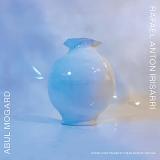
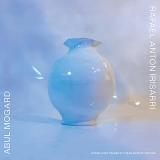
Marja de Sanctis’ cover artwork revisits the vessel sculpture from the duo’s first album, Impossibly Distant, Impossibly Close. There it appeared as raw, unfired clay. Here it has been fired in the kiln and finished with a glaze. Light gathers on its polished surface and spills into the surrounding space. As she explains, “I wanted to convey the idea of continuity within the duo, and the vessel became a kind of container for that idea. However, their music felt different this time, and with the collaboration of Martina and Andrea, I felt it should have a sleeker, softer, more glamorous look, very distant from the first raw appearance.” The transformation of the vessel from raw clay to fired form suggests a passage from immediacy toward permanence, mirroring the music’s gradual expansion.

pas en stock

Commandez maintenant et nous commanderons l'article pour vous chez notre fournisseur.

Derniere entrée: 75 jours
Abul Mogard & Rafael Anton Irisarri - Where Light Pauses in the Silence of the Sun

In spring 2025, Abul Mogard and Rafael Anton Irisarri created the source material for their second album, Where Light Pauses in the Silence of the Sun, during a three-day residency at Morphine Raum in Berlin. Functioning as both recording studio and performance venue, the space has no stage, with the audience gathered around the performers. Working within an open framework, the duo reshaped the music each evening while recording the performances live to multitrack. Rotary speakers, modular synthesizers and bowed guitar formed the core of their sonic language, captured through a 1970s mixing console and microphones placed around the room.

Back in Mogard’s studio in Rome, the material was further crafted as motifs were stretched, fragments isolated, and tempos dissolved. Irisarri recorded additional guitar textures and treatments in New York, while passages recorded by Martina Bertoni and Andrea Burelli in Berlin reinforced the harmonic centres and brought breath, refinement and a new sensibility to their compositions. The process continued as Mogard’s layering and subtraction reassembled everyone’s parts into the final arrangement.

The album opens with “In the Eastern Wild,” building from a sparse outline into a monumental formation of low-frequency weight, its internal motion shaped by the rotating Leslie speaker. “Over the Domes” widens into a broader acoustic field, where sustained modular tones meet waves of softly plucked guitar. The music then turns inward with “A Blue Descent,” centred on Bertoni’s cello, whose growling timbre introduces a melancholic depth.

At the album’s centre, “In a Quiet Radiance” unfolds around a slow guitar ostinato, its luminous stillness opening into a more expansive and reflective state. Across its ten-minute span, Burelli’s violin lines and Bertoni’s lower cello phrases gradually surface, weaving through the harmonic field. Mogard brings Burelli’s processed voice to the fore, its emotive, operatic presence becoming one of the record’s pivotal moments. “Of Blessed Ages” suspends the sonic flow, shifting between parallel major and minor chords as lingering, slowly decaying melodies shape the music’s internal drift. The closing “Among Shadows” settles into a darker resonance as layered textures recede.

Mogard and Irisarri’s shared language balances restraint and maximalism. UK magazine Crack describes the music as “a tidal wave held in suspension,” while Dutch newspaper de Volkskrant writes, “What a colossal sound, and how this music strikes at the emotions.” Reflecting on the residency sessions, Irisarri recalls: “At moments I genuinely couldn’t tell if a sound was coming from me or from Abul. It stopped feeling like two people making decisions and began to feel like we were inside a system moving on its own."

Marja de Sanctis’ cover artwork revisits the vessel sculpture from the duo’s first album, Impossibly Distant, Impossibly Close. There it appeared as raw, unfired clay. Here it has been fired in the kiln and finished with a glaze. Light gathers on its polished surface and spills into the surrounding space. As she explains, “I wanted to convey the idea of continuity within the duo, and the vessel became a kind of container for that idea. However, their music felt different this time, and with the collaboration of Martina and Andrea, I felt it should have a sleeker, softer, more glamorous look, very distant from the first raw appearance.” The transformation of the vessel from raw clay to fired form suggests a passage from immediacy toward permanence, mirroring the music’s gradual expansion.

pas en stock

Commandez maintenant et nous commanderons l'article pour vous chez notre fournisseur.

Derniere entrée: 75 jours
Abul Mogard & Rafael Anton Irisarri - Where Light Pauses in the Silence of the Sun

In spring 2025, Abul Mogard and Rafael Anton Irisarri created the source material for their second album, Where Light Pauses in the Silence of the Sun, during a three-day residency at Morphine Raum in Berlin. Functioning as both recording studio and performance venue, the space has no stage, with the audience gathered around the performers. Working within an open framework, the duo reshaped the music each evening while recording the performances live to multitrack. Rotary speakers, modular synthesizers and bowed guitar formed the core of their sonic language, captured through a 1970s mixing console and microphones placed around the room.

Back in Mogard’s studio in Rome, the material was further crafted as motifs were stretched, fragments isolated, and tempos dissolved. Irisarri recorded additional guitar textures and treatments in New York, while passages recorded by Martina Bertoni and Andrea Burelli in Berlin reinforced the harmonic centres and brought breath, refinement and a new sensibility to their compositions. The process continued as Mogard’s layering and subtraction reassembled everyone’s parts into the final arrangement.

The album opens with “In the Eastern Wild,” building from a sparse outline into a monumental formation of low-frequency weight, its internal motion shaped by the rotating Leslie speaker. “Over the Domes” widens into a broader acoustic field, where sustained modular tones meet waves of softly plucked guitar. The music then turns inward with “A Blue Descent,” centred on Bertoni’s cello, whose growling timbre introduces a melancholic depth.

At the album’s centre, “In a Quiet Radiance” unfolds around a slow guitar ostinato, its luminous stillness opening into a more expansive and reflective state. Across its ten-minute span, Burelli’s violin lines and Bertoni’s lower cello phrases gradually surface, weaving through the harmonic field. Mogard brings Burelli’s processed voice to the fore, its emotive, operatic presence becoming one of the record’s pivotal moments. “Of Blessed Ages” suspends the sonic flow, shifting between parallel major and minor chords as lingering, slowly decaying melodies shape the music’s internal drift. The closing “Among Shadows” settles into a darker resonance as layered textures recede.

Mogard and Irisarri’s shared language balances restraint and maximalism. UK magazine Crack describes the music as “a tidal wave held in suspension,” while Dutch newspaper de Volkskrant writes, “What a colossal sound, and how this music strikes at the emotions.” Reflecting on the residency sessions, Irisarri recalls: “At moments I genuinely couldn’t tell if a sound was coming from me or from Abul. It stopped feeling like two people making decisions and began to feel like we were inside a system moving on its own."

Marja de Sanctis’ cover artwork revisits the vessel sculpture from the duo’s first album, Impossibly Distant, Impossibly Close. There it appeared as raw, unfired clay. Here it has been fired in the kiln and finished with a glaze. Light gathers on its polished surface and spills into the surrounding space. As she explains, “I wanted to convey the idea of continuity within the duo, and the vessel became a kind of container for that idea. However, their music felt different this time, and with the collaboration of Martina and Andrea, I felt it should have a sleeker, softer, more glamorous look, very distant from the first raw appearance.” The transformation of the vessel from raw clay to fired form suggests a passage from immediacy toward permanence, mirroring the music’s gradual expansion.

pas en stock

Commandez maintenant et nous commanderons l'article pour vous chez notre fournisseur.

Derniere entrée: 75 jours
Various - Tchic Tchic: French Bossa Nova 1963-1974  Colored Edition LP 2x12"
 
22

Ever since the late 1950s bossa-nova revolution, Brazil’s influence on French music has been undeniable. Pierre Barouh, Georges Moustaki and a vast array of lesser known artists, all made the Musica Popular Brasileira (MPB) an axis of promotion at the service of a cool and metaphysical, modern and mixed Brazilian lifestyle. Some were seduced by the poetic languors of the bossa, some were looking for fun, and others just loved the American hybridization of jazz-bossa, jazz-samba.


What is bossa nova? One of its creators, Joao Gilberto said: "Its style, cadence, everything is samba. At the very start, we didn't call it bossa nova, we sang a little samba made up of a single note - Samba de uma nota so .... The discussion around the origins of bossa nova is therefore useless”. It is nevertheless useful to remember that these magnificent Brazilian songs, which the guitarist describes as samba, were shifted and balanced around improbable chords. "I like things that lean, the in-betweens that limp with grace," said Pierre Barrouh, quoting Jean Cocteau.


With emotion, arrangements for violin and supple guitar licks, bossa nova rapidly changed. A transformation that can be heard in the Tchic, tchic, French Bossa Nova 1963-1974 compilation, the result of a cultural reappropriation, which traveled through the United States and supplemented itself in France.

A musical revolution that has remained significant, bossa nova was born in Rio. From 1956 to 1961, Brazil lived through its golden years. In five years, the country had invented its modernist style. Elected president in 1956, Juscelino Kubitschek de Oliveira, an elegant man with a broad forehead, brandished a promising slogan: "Fifty years of progress in five years". He quickly got to work. Not worried about increasing debt, he launched the project for a new federal capital, Brasilia, designed by the communist architect Oscar Niemeyer. Volkswagen opened state-of-the-art factories and created the “fusquinha”, the Beetle. In Rio, the Vespa made its first appearance. The Arpoador Surf Club crew run into the “girl” from Ipanema, Helô Pinheiro - the tanned garota ("chick"), between a flower and mermaid, who at 17 walked by the Veloso bar, where the fiery author and composer, Tom Jobim and Vinicius de Moraes, were getting drunk on whiskey. From then on, bossa symbolized cool.

In 1958, Joao Gilberto recorded Chega de Saudade, which the directors of Philips denied, calling it "music for fagots". The marketing director, who believed in it, secretly pressed 3000 78-inch vinyls and distributed them at schools around Rio, creating a tidal wave.

American jazzmen then took over. In particular, trumpeter Dizzy Gillespie and guitarist Charlie Byrd. In November 1962, the Brazilian Ministry of Foreign Affairs funded a "Bossa-Nova" concert at Carnegie Hall in New York, inviting the genre’s pioneers. Unprepared, the show soon turned to disaster. But the troupe was invited to the White House by Jackie Kennedy. The first lady loved "the new beat" and in particular Maria Ninguem, a song by Carlos Lyra, later covered by Brigitte Bardot.

In Brazil, the 1964 military coup quickly ended this euphoria. The destructive atmosphere that ensued pushed many Brazilian musicians to leave, if not to exile. Thus, Tom Jobim, Sergio Mendes and Joao Gilberto arrived to the United States. In New York, Joao Gilberto met saxophonist Stan Getz. At the time, he was married to the Bahianese Astrud Weinert Gilberto, who had a German father. She had never sung before, but she knew how to speak English. Getz therefore asked her to replace her husband on The Girl From Ipanema. The Getz/Gilberto record with Tom Jobim on piano, was released in March 1964. Phil Ramone, the "pope of pop" was in charge of sound.

Bossa nova arrived in Paris through the classic “guitar-voice” channel (Pierre Barouh, Baden Powell, Moustaki…) But France loved jazz and Paris had already welcomed its American contributors. All these good people were to pass through Saint-Germain-des-Prés. The cabaret l'Escale became the Mecca of Latin American sound where one could find Pierre Barrouh and his friends, such as the Camara Trio, samba-jazz aces, whose only record was published by the Saravah label. With a band strangely called Les Masques (a band that included Nicole Croisille and Pierre Vassiliu, among others), the Camara Trio recorded an interesting Brazilian Sound, including the track Il faut tenir which is present on this tasty compilation of rarities.

Other enlightened musicians can also be found on the compilation, such as Jean-Pierre Sabar (songwriter for Hardy, Auffray, Leforestier ...) and the French pop rock organist Balthazar. In 1975, Sabar recorded Aurinkoinen Musiikkimatka on a Finnish label, which featured the crazy Vai, Vai, included on this record. We are now following the footsteps of Brazilian electronic musicians such as Sergio Mendes, Eumir Deodato or Marcos Valle who created funk and disco sounds on their keyboards and synthesizers. A style that influenced Véronique Sanson when she wrote Jusqu’à la Tombée de la nuit in 1969 for Isabelle de Funès, the niece of Louis and a great friend of Michel Berger - Sanson did end up singing this track on her 1992 Sans Regret record.


The pinnacle of exoticism and travel, Sylvia Fels’ Corto Maltese includes bongos, sea mist and ocean sounds. The title was taken from Jacky Chalard’s concept album written in 1974, Je suis vivant, mais j’ai peur (I am alive, but I am scared), based on Gilbert Deflez’s science fiction novel.


However, bossa nova extended the scope of popularity. "In the 1970s, I was a fan of Sergio Mendes, Getz / Gilberto. I fell in love with this music that I knew because I had been an orchestral singer, " explained Isabelle Aubret, who in 1971 delivered a composite record of covers by the very funky Jorge Ben, Orfeu Negro, Tom Jobim, Vinicius de Morais and Jean Ferrat. "I recorded this album for Meys Records in Paris, far from Brazil, with wonderful musicians, François Raubert, Roland Vincent, Alain Goraguer...". The latter wrote the arrangements for Casa Forte, a very percussive title borrowed from Edu Lobo, one of the initiators of the bossa who spent time in California. "Jazz and bossa came together and produced very rhythmic music. I love singing, it allows me to dream, to have fun, to feel a high on stage, and these songs brought me joy, made me swing, my singing felt like a dance.”


The world tours of French singers and their desire for the tropics, often brought them to Rio with its hills, forests, caipirinhas and tanned bodies. There are surprises though, like this Iemenja (Iemenja is the goddess of the sea in the Afro-Brazilian candomblé religion). Not unlike the composer and musician Jean-Pierre Lang, based in Sao Paulo, Claire Chevalier taught Brazil to Brazil. In 1970, the singer and painter published a 45-inch vinyl, Mon mari et mes amants (My husband and my lovers), under the improbable pseudonym of Clarinha (little Claire). She was then living in Rio, with her husband, Joël Leibovitz, who founded a band called Azimuth, and who owned a record label specialized in "sambas enredos" songs for samba school parades.


For its B side, she asked Pierre Perret to come up with lyrics for a song composed by Carlos Imperial: "Oh goddess of the sea, o goddess Iemenja, I bring a white rose to adorn your long hair ..." . "Perret came to see us, and we had fun, remembers Joël Leibovitz. We wrote Lemenja for fun, we recorded it at the Havaí studio, behind the Central do Brasil the central station. Erlon Chaves, the arranger who worked with Elis Regina, joined us" adding his share of Afro-Brazilian percussions and funky brass to the mix.

There is a common misunderstanding in Franco-Brazilian history: that bossa, admittedly hedonistic, is perceived as funny, even though the poets who wrote the texts are often philosophizing on the human condition. Its French interpreters pull it towards a carnival inspired universe, far removed from its fundamental essence. Thus, Jean Constantin covered the famous Samba da minha terra, an ode to the art of samba written by the classic Bahian composer Dorival Caymmi, renaming it with the enticing title of Pas tant de tchi tchi pompon: "On your pier there is no tchi tchi / when you arch your back, you know everything is alright ”(lyrics by Gérard Calvi). This expedited bossa aims for the absurd, but retains a certain elegance.

Indeed, Jean Constantin was not an idiot, the rather large man had a huge mustache and liked fantasy, (Les pantoufles à papa, Le pacha, inspired by cha-cha-cha-cha, salsa and jazz) but he was also the lyricist of Mon manège à moi interpreted by Edith Piaf, the composer of Mon Truc en plume by Zizi Jeanmaire and the soundtrack of François Truffaut’s 400 Blows. Le Poulpe, published in 1970, from which this bossa is extract, was arranged by Jean-Claude Vannier, an accomplice of Serge Gainsbourg’s Melody Nelson. In short: "There is enough of samba / By looking at the parasol / Because my poor cabeza / Is going to die in the sun".

Even the American actress Marpessa Down, who was at the heart of the bossa nova revolution with her role as Euridyce in Marcel Camus’ film Orfeu Negro, winner of the 1959 Cannes Palme d'or, fed the clichée with Je voudrais parler au petit cuica - "Tell me how you manage to always make people want to dance / It's true, I must admit that I cannot resist your magic" - in consequence, once can hear the cuica, a little drum inherited from the Bantu.


But bossa nova had many angles. Societal, of course, pushing actresses who were symbols of women's liberation like Brigitte Bardot, Jeanne Moreau, or Sophia Loren to engage in the exercise of accelerated bossa. In February of 1963, Sophia Loren made a record in French in Rome, Je ne t'aime plus, featuring the song De jour en jour, a bossa written by two Italians, Armando Trovajoli and Tino Fornai, which was released a little later by Barclay. Bossa accompanied the 1960s, a decade of moral liberation. Ann Sorel, who interpreted La Poupée des favellas, caused a sensation with L’amour à plusieurs, a provocative song written by Frédéric Bottom and Jean-Claude Vannier. As for the actress Andrea Parisy, she displayed her bourgeois cheekiness in Marcel Carné's Les Tricheurs before interpreting Les mains qui font du bien. And Magalie Noël, the friend of Boris Vian, who sung Johnny fais-moi mal, was hired to sing Une énorme Samba, composed by Alain Goraguer (arranger to Gainsbourg, Bobby Lapointe and Jean Ferrat) with lyrics by Frédéric Botton.

But in the end, of what wood is bossa nova made of? The answer is given by Christianne Legrand, daughter of Raymond the conductor, and sister to Michel the composer: "With me, with jà" - jà means "immediately" in Portuguese. In 1972, the singer, an expert in vocal jazz and a member of the Double Six, published Le Brésil de Christianne Legrand. Two songs included on the Tchic Tchic compilation that demonstrate how bossa, jazz, funk, rock, etc. work like a swiss army knife: the music is used to denounce broken systems, or miracles, HLM et ciné roman, Cent mille poissons dans ton filet, two songs from the O Cafona soundtrack, a successful telenovela broadcast, at the time in black and white, on TV Globo. The first was adapted in French by the fighter and friend of the Legrand tribe, Agnès Varda. The second is content with a play on words, jostling them into a summer fun.


Véronique Mortaigne

pas en stock

Commandez maintenant et nous commanderons l'article pour vous chez notre fournisseur.

Derniere entrée: 81 jours
RUDI J - I GUESS I'M NOT IN TUNE AFTER ALL

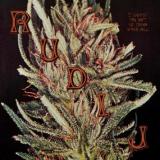
Straight from the weedy fields of swampville Bruxelles we bring you 8 ‘tranches de vie’ of deep zone-hall by weirdtronic bass veteran Michael Crabbé’s best fitting sound costume to date: the mighty Rudi J! You might know him from earlier outfits but that’s not the main issue here. Rudi J is!

When this swamp thing touches the pads, it’s off-road after three seconds, even if you’re in the middle of Europe’s capital. Mixing analog dirt and digital sound bits in a very loose and personal take on dancehall, we’re pretty far away from the dance floor but definitely swinging. It’s a trippy affair wandering around concrete flowers with a deep ambient flavor, but it’s edgy.

A hot summer fever dream following his own lusty path, full of life and wonder but with something sinister hiding around every corner. Often reaching for the stars, a deeper shade of bass keeps things nicely grounded. These sounds are built with a sound system in mind and bass culture at heart. Even if you can definitely surf on it from your couch, picking out all of its ear-pricking details, it will very much come alive on a big sound.

A layered affair with almost jazzy and orchestral elements peeping through the stereo-field, spectral and dissonant but also playful. Like early dubstep, some of these tunes can destroy a clubsound, keeping you skunking out in pedestrian mode and snorting up the atmospherics, finally forgetting about that damn phone.

pas en stock

Commandez maintenant et nous commanderons l'article pour vous chez notre fournisseur.

Derniere entrée: 83 jours
Low End Activist - Engineers Origins

The shape-shifting sound of Low End Activist continues to pivot around an axis of bassweight pressure with the launch of their self-titled label – the appropriate vessel to take them deeper into sci-fi scented sonics with an ‘ardcore swagger. Previous drops on Sneaker Social Club and Seagrave have seen the shadowy technician mangling grime, jungle and dubstep tropes with all the grit and flair of the most visionary sample sorcerers. At times, they’ve built their beatscapes up around fierce MC spots from such legends as Flowdan and Trim, but while there’s more to come on the vocal tip for the LEA series, this first installment works in a strictly instrumental fashion.

Hi-tech breakbeat de/re-construction is the focus across all three tracks on LEA001, with atmospheres so densely rendered you can feel them sticking to your skin like the sweat of a well-slicked basement session. ‘Engineers Origins’ emits pure darkcore energy and icy stabs of future-shock industrialism, while ‘Look Up’ shivers with off-key orchestrations. ‘Probability 1’ gets deep in the break edit and throws in an iconic low end rumble that should spark intense reveries amongst anyone with even a passing appreciation for bass. Like the most potent foundational jungle, all three tracks swerve regimented structure in favour of moody exploration around a suite of themes and sounds, slipping time in style and setting up the LEA series for further intense sonic treatments to come.

pas en stock

Commandez maintenant et nous commanderons l'article pour vous chez notre fournisseur.

Derniere entrée: 88 jours
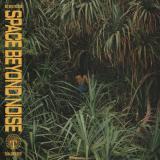
not even noticed - space beyond noise LP

Frankfurt am Main -- Leipzig duo not even noticed deliver their long-awaited debut album space beyond noise - a 12-track journey balancing club functionality with immersive, long-form listening.

Shaped by years of touring and a shared ritual of visiting botanical gardens around the world, the album blends shapely grooves, field recordings and warm melodic textures into a cohesive, lived- in sound. Subtle environmental details run throughout, creating a natural flow between tracks.

Musically, it moves between electro-funk, breakbeat and hip-hop- inflected cuts, with downtempo and dubby excursions. Highlights include the driving “chrone,” the sundown groove of “diras,” the acid-tinged “plune,” and the hazy two-step moment “skum.”

Designed with warmer months in mind, space beyond noise captures the balance between dancefloor energy and home listening depth.

pas en stock

Commandez maintenant et nous commanderons l'article pour vous chez notre fournisseur.

Derniere entrée: 39 jours
SPIRIT CARAVAN - ELUSIVE TRUTH
  • 1: SPIRIT CARAVAN
  • 2: BLACK FLOWER
  • 3: RETROMAN
  • 4: FIND IT
  • 5: FUTILITY'S REASONS
  • 6: CLOUDY MIRROR
  • 7: ELUSIVE TRUTH
  • 8: DARKNESS & LONGING
  • 9: LIFER CITY
  • 10: OUTLAW WIZARD
  • 11: THE DEPARTURE (OF QUETZALCOATL)
également disponible

Black Vinyl


Purple vinyl, limited to 300 copies. On this, Spirit Caravan's second foray into the long-player format, the band has collectively slowed down the tempo, and dropped the mood into even more contemplative territory. As the grandfather of modern stoner rock, Wino has certainly dipped his guitar picks in LSD this time around. Even though the engineering and production is bone dry and bottom heavy, Wino's psychedelic guitar work -- especially his stinging, busy leads -- has been ratcheted up a few clicks, even if the overall aesthetic is darker, and the superb musicianship from the trio simplified. The listener may be reminded of Hawkwind powered by an enormous diesel engine. As a title, Elusive Truth may indicate Wino's searching nature as a musician, and his attempt to continue down the sonic path through darkness, and through light. With this album, the listener is most certainly in darker territory. - All Music

pré-commande26.06.2026

il devrait être publié sur 26.06.2026

SPIRIT CARAVAN - ELUSIVE TRUTH
  • 1: SPIRIT CARAVAN
  • 2: BLACK FLOWER
  • 3: RETROMAN
  • 4: FIND IT
  • 5: FUTILITY'S REASONS
  • 6: CLOUDY MIRROR
  • 7: ELUSIVE TRUTH
  • 8: DARKNESS & LONGING
  • 9: LIFER CITY
  • 10: OUTLAW WIZARD
  • 11: THE DEPARTURE (OF QUETZALCOATL)
également disponible

LTD. PURPLE VINYL


Reissue. On this, Spirit Caravan's second foray into the long-player format, the band has collectively slowed down the tempo, and dropped the mood into even more contemplative territory. As the grandfather of modern stoner rock, Wino has certainly dipped his guitar picks in LSD this time around. Even though the engineering and production is bone dry and bottom heavy, Wino's psychedelic guitar work -- especially his stinging, busy leads -- has been ratcheted up a few clicks, even if the overall aesthetic is darker, and the superb musicianship from the trio simplified. The listener may be reminded of Hawkwind powered by an enormous diesel engine. As a title, Elusive Truth may indicate Wino's searching nature as a musician, and his attempt to continue down the sonic path through darkness, and through light. With this album, the listener is most certainly in darker territory. - All Music

pré-commande26.06.2026

il devrait être publié sur 26.06.2026

Eric Silverman - Bitter Honey LP

Eric Silverman

Bitter Honey LP

12inchDE0072ROLP
Royal Oakie
26.06.2026
  • 1: Anthropocene
  • 2: Living the Dream
  • 3: Trapped In Reverse
  • 4: New Life
  • 5: Light Me Up
  • 6: Sun Won’t Wait
  • 7: Get In Where You Fit In
  • 8: Other Side of the Street
  • 9: Always Time For Love
  • 10: Bitter Honey

Bitter Honey is the new album by Eric Silverman. Produced in collaboration with Damien Lewis, the album finds Silverman leaving behind the acid-fried desert rock of 2023’s Stay In It for something far more lush and expansive—a collection of ten psychedelic rock, pop, and folk tracks inspired by Peter Gabriel, John Cale, and Jeff Tweedy. Fittingly, the album is named after the “mad honey” of the rhododendron flower, a rare and potent hallucinogenic found high in the Himalayas.
The process of writing and recording the album started in early 2023, when Silverman and longtime collaborator Lewis retreated to a cabin near Nevada City, CA. Over the course of a week they sketched out the bones of nearly half the album, with Silverman recording the guitar solo for album opener “Anthropocene” live in one take during a particularly inspired moment. Meanwhile, “Get In Where You Fit In”, inspired by a bumper sticker Silverman saw heading up the mountain, was recorded on Jerry Garcia’s old 8-track tape machine and features pedal steel by Jake (Freeman) DeJongh. While at the cabin they also captured the field recordings that bookend the album, starting with the intro of “Anthropocene” and ending with the outro of “Bitter Honey” - an infinite loop.

Later on they decamped to Palomino Sound in LA for a round of sessions – tracking “Light Me Up” and “Trapped In Reverse” while making use of the prodigious assortment of vintage instruments at their disposal, including a 65’ Wurlitzer electric piano that became the centerpiece of a number of tracks. Eventually the pair ended up at 2200 Studios (formerly The Record Plant) in Sausalito, CA—a legendary studio where Prince, The Grateful Dead, and Fleetwood Mac made classic records. It was there that they tracked “New Light”, featuring strings by brothers Graham and Lewis Patzner; recorded all of Adam MacDougall’s (The Black Crowes, Circles Around the Sun) overdubs, including his synth leads on “Living the Dream”; and mixed the album in Studio A.

In a lot of ways Bitter Honey is Silverman’s first proper studio album. It’s also the first time Silverman has sat in the producer’s chair, this time around sharing the credit with Lewis. While his debut album was a product of its environment, all first takes and raw energy, Bitter Honey is thoughtful and focused, the best work Silverman has done and the culmination of his decade plus creative partnership with Lewis.
Highly anticipated sophomore album from Eric Silverman. Press coverage includes reviews and features in Raven Sings the Blues, and more.
“...threading the quicksilver needle of psych, AOR, and ‘70s Cocaine Cowboy territory.” - Raven Sings the Blues.

pré-commande26.06.2026

il devrait être publié sur 26.06.2026

Laid Back - Born To Fly LP

Laid Back

Born To Fly LP

12inchBMVI011
BROTHER MUSIC
26.06.2026

Laid Back in Top Form: New Music Flowing After 47 Years
After 47 years together, the iconic Danish duo Laid Back continue to defy expectations, entering a new and remarkably productive creative phase.
Their upcoming album, Born to Fly, captures their unmistakable sound while showcasing a renewed sense of energy and inspiration

“We feel like we are meant to make music. And when we play music, it feels like we’re flying,” says John Guldberg, reflecting on the album’s title and spirit.

Long known for their unhurried approach to releasing music, Laid Back now find themselves in unfamiliar territory. Guldberg describes a surge in creativity that has
turned their process on its head.
“It’s kind of funny — Laid Back has always taken its time making records. We’ve been behind schedule for most of our career. Now it’s the opposite:
I’m actually starting to worry about whether I’ll have time to release everything I’ve got in me,” he says.

Their current workflow reflects this momentum. Guldberg develops initial ideas,which he shares with Tim Stahl, who then brings them to life with vocals and instrumentation.
“When he sends me something and I start singing and playing on it, that’s when it really becomes Laid Back,” says Stahl.

The duo’s creative output has accelerated to such an extent that even ahead of the release of Born to Fly, they already have enough material prepared for more than a double album for their next project.

“It’s about making the most of the time you have left. I used to feel there was plenty of time and no need to rush. Now time feels much more valuable,” Guldberg adds
.
Alongside their creative resurgence, Laid Back are also seeing a shift in their audience demographics. Streaming data and live performances indicate a growing younger fanbase — a development that has taken the duo by surprise.
“I’m really looking forward to getting back out on stage. We still have the urge to perform, and we love making people happy. That’s what our music is for,” says Stahl.
Born to Fly is set for release across CD, vinyl, and digital formats. Laid Back will also perform in selected cities across Europe later this year 2026.

“We hope people can hear that we’ve grown — and that it still makes sense for us to make new music,” says Guldberg.

pas en stock

Commandez maintenant et nous commanderons l'article pour vous chez notre fournisseur.

Derniere entrée: 28 jours
Adrian Rew - Slot Machine Music, Vol. 1 & 2: Field Recordings from Middle American Casinos (Tape)
  • 01: 3/31/23 - Horseshoe Casino, Cleveland, OH
  • 02: 6/23/2013 - Horseshoe Casino, Hammond, IN
  • 03: 7/3/2013 - Grand Victoria Casino, Elgin, IL
  • 04: 1/1/2014 - Greektown Casino, Detroit, MI
  • 05: 1/11/2014 - Majestic Star Casino, Gary, IN
  • 06: 1/1/2014 - MotorCity Casino, Detroit, MI

"Chance animates the smallest parts of the universe: the scintillation of the stars is its power, a wildflower its incantation."
—Georges Bataille, Le Petit

"Even on my way to the gambling hall, as soon as I hear, two rooms away, the clink of the scattered money I almost go into convulsions." —Fyodor Dostoevsky, The Gambler

Video gambling addicts, academic researchers, and industry professionals alike describe the trancelike state into which problem gamblers suspend themselves with remarkable consistency: they unanimously call it the machine “zone,” a kind of inner experience during which the rhythmic flow of human-machine collusion borders on mysticism. Time is abolished in the act of contemporary video gambling —simulated slot reels roll, virtual poker decks deal, and all worldly concerns are lost—leaving only the aura of total zone immersion in its wake. Sometimes characterized as the crack cocaine of gambling, the intensity of the machine zone is a symptom of casino ergonomics: emotionally manipulative fragrance-saturation, mesmerizing lights, subtly controlling walkways and, as captured here, meticulously engineered sonic environments all play a role in evoking the timeless void of the zone.

Although I was not yet aware of the extent to which casinos tailor their environments for maximum comfort (and, correspondingly, profit), I did know as I crossed the threshold of my first casino floor last year that I would be back for more. Hit by a cornucopia of slot machine tones, triggering aleatorically and coalescing into shimmering masses, I was struck by the need to return and record the sounds that so entranced me. It wouldn't prove to be easy—casino security is intense—and due to the clandestine nature of the operation, my recording techniques were by no means sophisticated. Equipped with nothing but an Olympus LS-11 recorder's internal microphone stashed in a sweaty coat pocket, I allowed the lure of the zone to guide me through a series of ambling recording sessions, the best of which are included here.

I learned a lot about casino sonics in the process: game designers, for example, once tuned all their machines to the key of C major in order to optimize harmonic cohesion (strict adherence to the key is no more but C still dominates the game floor); one team of designers, the story goes, even spent a month perfecting a single 'ding' sound on one machine. In the interest of preserving the true ambient sounds of the casino these recordings are untreated, but lost in the sea of chance I did exert some affirmative control by means of meandering intent and my actual playing of the machines. And by participating in the games myself I got a taste of the financially debilitating consequences that accompany the enchantment of video gambling. The cassette in your hands represents my endeavor to bring you the zone experience without the harsh comedown of its unfortunate reality.

—Adrian Rew

pré-commande19.06.2026

il devrait être publié sur 19.06.2026

LOST IN KYIV - WE'RE ALL GOING TO BE FINE

Over the course of more than a decade, the French quartet Lost in Kyiv have refined a sound that fuses cinematic ambition, electronic precision, and visceral live energy into something unmistakably their own. With their new album, `We're All Going To Be Fine', they push that identity further than ever; sharpening their production, intensifying their dynamics, and embracing a darker, more immersive sonic architecture. Lost in Kyiv's music has always thrived on tension between the organic and the synthetic. On `We're All Going To Be Fine', that integration reaches a new level of clarity and depth. The writing and production process was long and exacting, allowing the band to refine every transition and tonal detail. Songs unfold with architectural precision, motifs are introduced subtly before expanding into vast, multi-layered climaxes. Dynamics are handled with patience and control, silence and minimalism are deployed as strategically as explosive crescendos. This careful pacing gives the album a cinematic flow and larger narrative in which struggle and compassion coexist. Guitars surge and recede in wide, panoramic arcs. At moments they shimmer and support, at others they thrash violently, accumulating layers of distortion and harmonic overtones. Acoustic instrumentation is interwoven with sequenced synth lines, pulsing arpeggiators, and carefully sculpted electronic textures that give the band's sound a sense of forward propulsion. Rhythm plays a central role in Lost in Kyiv's identity. The drums provide impact and structure, locking into intricate patterns that interact with bass-driven synth pulses. At times the groove feels almost mechanical, echoing the steady insistence of electronic music; at others, it breathes and swells with human elasticity. This interplay creates a powerful sense of movement, an impression that the music is always advancing, even in its most introspective passages. "We almost consider this album as the first record of a new version of the band. That's why we decided to use the name Lost in Kyiv now. We don't want to erase the past, but it really feels like a new direction. Artistically, I think this album marks the beginning of a new direction, louder and more metal-oriented than what we did before." (Lost in Kyiv) FOR FANS OF Russian Circles * P.G.Lost * The Ocean * Cult of Luna * Brutus * This Will Destroy You

pré-commande19.06.2026

il devrait être publié sur 19.06.2026

LOST IN KYIV - WE'RE ALL GOING TO BE FINE
  • ENLIGHTENED
  • BURST
  • MANTRA
  • ECLIPSE
  • BECOMING
  • EUPHORIA
  • LIMINALITY
également disponible

AFTERNOON LIGHT ED.


Over the course of more than a decade, the French quartet Lost in Kyiv have refined a sound that fuses cinematic ambition, electronic precision, and visceral live energy into something unmistakably their own. With their new album, `We're All Going To Be Fine', they push that identity further than ever; sharpening their production, intensifying their dynamics, and embracing a darker, more immersive sonic architecture. Lost in Kyiv's music has always thrived on tension between the organic and the synthetic. On `We're All Going To Be Fine', that integration reaches a new level of clarity and depth. The writing and production process was long and exacting, allowing the band to refine every transition and tonal detail. Songs unfold with architectural precision, motifs are introduced subtly before expanding into vast, multi-layered climaxes. Dynamics are handled with patience and control, silence and minimalism are deployed as strategically as explosive crescendos. This careful pacing gives the album a cinematic flow and larger narrative in which struggle and compassion coexist. Guitars surge and recede in wide, panoramic arcs. At moments they shimmer and support, at others they thrash violently, accumulating layers of distortion and harmonic overtones. Acoustic instrumentation is interwoven with sequenced synth lines, pulsing arpeggiators, and carefully sculpted electronic textures that give the band's sound a sense of forward propulsion. Rhythm plays a central role in Lost in Kyiv's identity. The drums provide impact and structure, locking into intricate patterns that interact with bass-driven synth pulses. At times the groove feels almost mechanical, echoing the steady insistence of electronic music; at others, it breathes and swells with human elasticity. This interplay creates a powerful sense of movement, an impression that the music is always advancing, even in its most introspective passages. "We almost consider this album as the first record of a new version of the band. That's why we decided to use the name Lost in Kyiv now. We don't want to erase the past, but it really feels like a new direction. Artistically, I think this album marks the beginning of a new direction, louder and more metal-oriented than what we did before." (Lost in Kyiv) FOR FANS OF Russian Circles * P.G.Lost * The Ocean * Cult of Luna * Brutus * This Will Destroy You

pré-commande19.06.2026

il devrait être publié sur 19.06.2026

PT Musik - Consumação

PT Musik

Consumação

12inchP062EP
Príncipe
12.06.2026

"Consumação" marks a major change in Domingos' life, a break with his old self. A new found spiritual awareness is channeled into music as often as he is able. Broken and missing relationships, broken PC, but the music still flows in his mind and with the tools at hand: tablet and cellphone. The EP is therefore a transitional document, beginning to show that "my current thoughts are not the same as before". The traditional ID punctuating the music now often proclaims "Solta!". Let go.

The music, though, stays consistent with a left-field vibe, even while the appeal is pretty much universal. "Não Acredito" and especially our longtime favourite "Hot Girl" come out as monuments to loneliness and disillusionment but still with enough room to feel good about oneself. To receive all that as part of the natural course of life. None of these considerations break new ground. "Não Acredito" is simply the very human exclamation of disbelief in face of a ton of bad things happening cumulatively.

"Coração de Pedra" is about a common sentimental feature in contemporary love life: hearts of stone. Face them or develop one. "Leave Me Alone" is simply that: get lost, give me space. But one listens to the song and there's hope in there. Not even buried deep. All these contradictory feelings are played out throughout the EP and become a compositional tool, a signature, although the producer confides he's not too bothered with making the titles correspond to the mood. It just happens. The music is its (and his) own self.

pré-commande12.06.2026

il devrait être publié sur 12.06.2026

J and the Woolen Stars - Puff

J and the Woolen Stars

Puff

12inch28912-3
28912
12.06.2026

New from Ulla’s 28912 label comes a gorgeous bouquet of lowercase wonders from Justin Cantrell aka J and the Woolen Stars, part of Picnic, and the brains behind the excellent Daisart and se Dessaisir Publishing labels.

»Puff« is a glistening pool of lush refractions and music-box lullabies, featuring an array of acoustic instruments and fragile foley sounds that are gently peeled away until all we’re left with are the faded outlines of half-remembered songs.

A sound that roots itself in the prophetic machinations of artists like Fennesz and the languid Japanese minimalism of Fourcolour or Moskitoo, »Puff« strikes a delicate balance, sounding as bewitchingly informal as a Tenniscoats set, but also consistently muddling the perception of high and low-brow sound. Cantrell’s skill lies in a sort of sonic conjuration, bamboozling the brains of those of us who grew up listening to stepped-on audio via ramshackle RealMedia streams by alchemising the content, turning found sound into gold. Just tell us you don’t get chills from hearing the bitrate-impaired acoustic guitar on »Dirty like an angel«, set against a backdrop of windy, harmonic detritus. It’s both meticulously contrived and gloriously off-the-cuff, like one of Vincent Gallo’s classic »When«-era demos reduced down to 96kbps.

Similarly, »She knows just what to say« provokes faint memories of folk music, with impromptu fiddle parts gently steamrolled to create a sound that’s nothing short of exquisite, like pressed flowers rediscovered in an old, discarded book. Even the more palpably electronic elements are hand sculpted in a way that belies the era we’re living in - it’s music for a digital age that sounds oddly unplugged, flawed and human. An unmistakably lovely antidote to the opiating nostalgia of our time.

pré-commande12.06.2026

il devrait être publié sur 12.06.2026

Elijah Minnelli - Clams As A Main Meal

Even in these most turbulent of times, dub musician and fatigued onlooker Elijah Minnelli remains an inexplicable stalwart on the lower rungs of the Breadminster County Council.

His latest record ‘Clams As A Main Meal’ continues his astute siphoning of council funds, this time with help from the Breadminster Board of Abstinence. As a further mark of respect, the original head of the Board, Dr. K'houldoux, graces the cover art in his infamous ‘Looming Moon of Desire’ guise.*

As fine a backdrop as any for Minneli’s off-brand dub experiments, and ‘Clams...’ is the truest representation of his varied wheelhouse yet...

We find vocal appearances from dub goliath Dennis Bovell and Welsh-language singer Carwyn Ellis. A pair of tracks which build on 2024’s acclaimed ‘Perpetual Musket’, a collection of folk songs reworked alongside reggae vocalists, released by FatCat Records. It garnered glowing reviews, with nods from The Guardian and The Quietus concluding with prominent appearances on their respective yearly round-up lists.

Elsewhere, the album finds Minnelli in a more experimental mode, all wheezing contraptions and cockeyed bass, creaking with the weight of creation, a satisfying tactility laid seam-side up.

As well as ‘Perpetual Musket’, the new album follows years of sold out 7" singles, handmade and self-released. Online, the tracks have amassed global streams numbering in the millions. His tracks have found play across an eclectic range of radio mixes and dance floors, most notably the likes of Andrew Weatherall, Batu, Optimo and Zakia Sewell (BBC6Music).

It is perhaps worth mentioning that this everbuilding interest in his work is at great odds with the growing suspicions amongst his fellow townsfolk, who see his Breadminster County Council Music Initiative as nothing more than an empty cash-grab.

Further Reading on the Breadminster Board of Abstinence

In the late 70s, Breadminster was awash with the last vestiges of the hippy era. Though the flared silhouette of the lower leg remained, the utopian ideals that had once flowed merrily around the youth's shaded ankles had begun to wane. LSD and free love had led to a sharp spike in population and a generation of children raised by air-headed psychonauts unprepared for the bleary-eyed strictures of parenthood.

Aware of the crisis, the County Council entrusted Dr. Paulinque K'houldoux to spearhead a pushback, and it was his pro-abstinence movement - a mixture of education initiatives and radical renutrition campaigns - that came to impact Breadminster's census deep into the new millennium.

Being a pseudo-archipelago Breadminster has fundamentally limited resources, however deep-seated ties to distant coastal villages meant that oysters were a regular part of the local diet. K'houldoux pinpointed this as a factor in the town's overpopulation, and believed that simply replacing these with clams (a “lesser mollusk”) would help lower the erotic urges of the people. It was his “anti-aphrodesia” movement that first championed the idea of “Clams As A Main Meal,” and the slogan “Consider Abstinence” carried the message yet further.

The Breadminster Board of Abstinence soon became involved in all cultural happenings in the area, with K'houldoux MCing at prominent festivals and performances, sometimes dressed as the “Looming Moon of Desire” - an idea of his relating to the tide, seafood, menstrual cycles, and his privately held celestial predilections.

It was in 1981 that it was revealed Dr. K'houldoux had never fully qualified as a doctor and was seeking exile in Breadminster due to a series of botched bracelet heists in which he had previously been involved. K'houldoux was subsequently extradited to Basingstoke, where he served 3 of a 12-year sentence, owing to the lunar-oriented prisoner health campaigns he helped implement.

It has been a strange twist of bureaucratic fate that the Breadminster Board of Abstinence has never stopped receiving public funding, despite its lack of clear utility. And while its roots are tied to a rose-tinted past, the Board continues to sponsor cultural events and projects to this day.

An extract from: Eugeniq Schooner's article in Sydney Parishioner: “Clams, Breadminster and Countercultural Abstinence Trends” (2008)

pas en stock

Commandez maintenant et nous commanderons l'article pour vous chez notre fournisseur.

Last In: 3 months ago
Sammy Virji - Same Day Cleaning LP

Re issue of the album on LP as previous versions had all sold out and were deleted.
Global Dance phenomenon Sammy Virji’s sophomore album ‘Same Day Cleaning’ sees the renowned party starter deliver UK Garage to the world like no one before. The new album is rooted in Sammy’s unmissable club ready production style and features a slew of legendary rappers & producers. The project lands after an insane year of global festival and headline touring for Sammy. ‘Same Day Cleaning’ follows Sammy’s hugely successful ‘If U Need It’ and his follow up singles including club mainstay ‘Damager’, with Interplanetary Criminal. The album also features Sammy’s massive link up with British icon Skepta, ‘Cops & Robbers’. ‘Same Day Cleaning’ is bigger, bolder and promises to propel Sammy Virji even further onto the global dance-music stage

pas en stock

Commandez maintenant et nous commanderons l'article pour vous chez notre fournisseur.

Last In: 3 months ago
DJ Pone - Bass Culture

DJ Pone

Bass Culture

12inchPONLP26001
Ponar
05.06.2026
  • A1: Level 1
  • A2: Piano 90
  • A3: Chroma
  • A4: Roza
  • A5: Moogs
  • A6: Santana
  • A7: La Pau
  • A8: Dirty Soap
  • A9: Continuity
  • A10: Bass Culture

DJ Pone returns to his roots with Bass Culture (out March 6, 2026), a new 19-minute mixtape. A renowned turntablist, DJ Pone delivers an immersive and mesmerizing mix. Following his success with Birdy Nam Nam, he has released several genre-blurring projects, including the cinematic Radiant and the deeply introspective 1978. These albums showcase a producer with a meticulous ear for detail, atmosphere, texture, and storytelling—at times overshadowing the full extent of his talent and charisma behind the decks. With this new release, he reconnects with his first love: sound collage, razor-sharp cuts, and the magic of real-time manipulation. The mix fuses a burst of tracks into a seamless journey, punctuated by precise breaks and UK and tropical inflections. The sound design feels both cathartic and transient—a subtle blend of beats and sonic landscapes that echo and dissolve into one another with remarkable finesse. From an opening manifesto paying tribute to DJ Shadow and DJ Qbert to a rawer section infused with urbex textures, recalling the energy of Company Flow, Pone crafts a narrative that is as thoughtful as it is intensely joyful—yet paradoxically soothing. Mostly instrumental but never lacking soul, Bass Culture is filled with glitched melodies and vocal samples, echoes of his recent travels to Barcelona and beyond. The project stands as a personal, tactile canvas—instinctive and unembellished—pushing back against an era dominated by digital excess. It resonates as a true statement of faith in the art of DJing, reminding us that, even as a producer, DJ Pone’s touch on vinyl remains grounded and almost magnetic, far removed from today’s passing trends.

pré-commande05.06.2026

il devrait être publié sur 05.06.2026

Lifted - Movie (TAPE)

Lifted

Movie (TAPE)

CassetteOT007CS
Outside Time
05.06.2026

Filmmaking and music-making share a common element of worldbuilding. Whole cloth, environments are raised in which a perspective can be placed; the viewer, the listener, is taken on a ride into the unknown for a time. Movie, the newest album by DMV-based duo Lifted, is like a film shot with microphones rather than cameras, using the pacing, spatialization, and semiotics of cinematic sound design to lead us through a surreal soundworld that draws as much from Foley artistry as dub, jazz, and electronic music. Musical elements and field recordings shift in and out of focus, collaged in spontaneous improvisation sessions on CDJs by the core duo of Andrew Field-Pickering (Max D, Dolo Percussion, Beautiful Swimmers) and Matt Papich (Co La, Ecstatic Sunshine). We may not see where we are, but our ears give us all the information we need.

We open on a pedal steel, played by More Eaze, but it’s been warped and slowed, gradually pitching upward until it's met by drums and electronics. Imagine the THX logo emerging onscreen. Movie is bookended by two related themes, “The Ice Chewers (Opening Credits), ” and “Midnight Snack (End Credits), ” giving the spatial experiments at the heart of the record form and focus. If there’s a broader narrative to latch onto, it’s in the transition moments, the juxtaposition of various field recordings that indicate movement of characters through space and life happening at its own pace. Tracks are defined by other thematic elements: a wandering piano in "Repossessed, " the drone of Duncan Moore’s bagpipe on “Melts Very Nasty, ” the delicate dance of Dustin Wong’s guitar over Jeremy Hyman’s drums on “Midnight Snack. ” Even with such an expansive ensemble cast, the focus remains squarely on the flow from one scene to the next.

Robert Altman’s use of sonic perspective shifting, as well as Apichatpong Weerasethakul’s intricate construction of environmental ambience and aural representations of the unknown, were both inspirational for Lifted’s focus on sound as a way to establish set and setting in film. We hear Altman especially in the way dialogue emerges and recedes: as Papich puts in a sandwich order, as Field-Pickering browses the grocery store. These techniques have been a part of the duo’s arsenal in Lifted and their own projects for years, but here, without the mandate to make something overtly musical, they are foregrounded and placed in crisp focus. Here is another way to listen to the world, to understand how time, place, and personality are communicated through sound as Lifted closes the gap between artforms. What you can’t see only drives the imagination to more brilliantly invent.

pré-commande05.06.2026

il devrait être publié sur 05.06.2026

Laurence Pike - Possible Utopias For Jazz Quintet  LP

Sometimes the title of an album tells you everything you need to know. Laurence Pike’s Possible Utopias for Jazz Quintet is like that: The music within represents a search for freedom, potentiality—liberatory strategies that transcend the ego and the solitary, atomized figure.

But in this case, the album title is also a red herring, because there is no jazz quintet here—just Pike, his drums, and his machines, not so much an ersatz ensemble as a purely notional one, a thought experiment equipped with drumsticks, circuitry, and the desire to go beyond hardwired limits.

And the results, strictly speaking, aren’t really jazz, though they incorporate the vocabulary of jazz, along with that of ambient, electronica, and post-rock. They are some other thing, cognizant of genre but never beholden to it. Again, we’re talking about a search for freedom here.

The Sydney-based musician has a long history of coloring outside the lines, not just in his solo recordings—including four albums for the Leaf label between 2018 and 2024—but also in the trio Pivot (later PVT); Szun Waves (alongside saxophonist Jack Wyllie and Border Community’s Luke Abbott); Triosk, which recorded an album with Jan Jelinek in 2003; and even post-punk titans Liars, whom he joined in late 2018.

Of his first album for Balmat, Pike says, “My loose concept was: What does music sound like when the expectations of late capitalism are removed from it? How might a jazz musician from an idealised culture of the future, or even another world, utilise musical language when the conventions of style and marketing are no longer a factor in music making?”

That inquiry, he says, connects to his “guiding principle: that the purpose of music is to access something bigger than the individual, and reveal a sense of possibility and freedom in the world to the listener. To create an understanding that the future can be something other than what we imagined or expect, even unconsciously.”

Heady ideas, but plug into his stream-of-metaconsciousness flow and you may start to intuit what motivates him. There is a deeply lyrical expression in these pieces—in the ruminative piano of opener “Guardians of Memory,” for example—but also a sense of exploded perspective, of ideas approached from more angles than any one mind could dream up. Of a collectivized consciousness, of mycelial networks branching across tone and rhythm and timbre, of ideas articulated in distributed fashion, nodal points dancing across drum heads.

Pike’s imaginary quintet is hardly without precedent; it’s a continuation of concepts floated across Jan Jelinek’s Loop-Finding-Jazz-Records, Burnt Friedman’s many guises, and much of the recombinant improv of the International Anthem roster, not to mention the far corners of ECM’s catalog in the late 1970s and 1980s, which Pike says have been integral to his development since he was a teenager. Possible Utopias for Jazz Quintet is a point in a continuum, a voice in a conversation, a question with no obvious answer: How can the search for otherness in music manifest something true about ourselves?

pas en stock

Commandez maintenant et nous commanderons l'article pour vous chez notre fournisseur.

Derniere entrée: 46 jours
Upupayāma - Honesty Flowers LP 2x12"
  • 1: Fliiim / Laliīmph
  • 2: Gilded Meditations
  • 3: Mystic Chords of Memory
  • 4: Oyob
  • 5: In the Solstice Sun
  • 6: Sound Mirrors
  • 7: Mokushō
  • 8: Old Sky, Wandering Clouds
  • 9: Yuya
  • 10: Baobab
  • 11: Morning Temple

'Honesty Flowers' is the fourth studio album from Italian multi-instrumentalist Alessio Ferarri under the Upupayāma moniker. An epic double album set due for release May 29th 2026 on Fuzz Club, 'Honesty Flowers' finds Upupayāma's ever mind-blowing brew of organic psychedelic rock meets global grooves at its most percussive, lively and distorted. Equally hedonistic and heady, it courses through rhythmic funk grooves, doubled-down scorched fuzz riffing, winding motorik jams, tranquil drones and pastoral acid-folk across its seventy minute run time. A six-piece band live, where things take a more ever-evolving improvisation-based approach (see their recent 'Live At Fuzz Club Festival '25' LP), on the recordings Ferarri writes, plays and records everything himself – guitars, keys, flute, sitar, and an arsenal of percussion all feature. Never not working on new music, Ferarri started laying down these new tracks in his home barn studio in a small mountain village overlooking the city of Parma before its 2024 predecessor 'Mount Elephant' even hit the racks. The result was mixed by Chris Smith at Kluster Sounds (Kikagaku Moyo, Wax Machine) and mastered by Joseph Carra (King Gizzard, Babe Rainbow, ORB) On the new record, Ferarri says: "Honesty Flowers was born from listening to lots of funk music from all over the world, lots and lots of African music, and from listening to myself as I spent whole nights playing all kinds of percussion instruments. I would fall into a sort of trance and play the same rhythm for hours on congas or on a djembe. It's an album that was born above all from the beauty of being able to narrate the unknown and recognise yourself in it, which could translate into telling stories and bringing them to life.

pré-commande29.05.2026

il devrait être publié sur 29.05.2026

Masta Ace & MF DOOM - MA DOOM : Son Of Yvonne

Repress incoming!

Following the success of two collaborative releases (EMC “The Show”/2008 and Ace & Edo G “Arts & Entertainment” /2009), Masta Ace joins forces with the metal faced MF Doom for Son of Yvonne, a highly personal concept album that celebrates the life and legacy of Ace’s recently departed Mother. Like his 2004 landmark Disposable Arts, Son of Yvonne is meticulously constructed with stories, settings, and characters that resonate with flesh and bone humanity. Interstitial vignettes provide a thematic backbone to the experience, and each track complements and completes the previous to form a narrative whole: a sometimes visceral, sometimes nostalgic slice of Ace’s young life in Brownsville, Brooklyn. Entirely underscored by MF Doom’s iconic Special Herbs instrumentals, Son of Yvonne features the Juice Crew general Big Daddy Kane, new comers Pav Bundy (The Bundies), Reggie B and even MF Doom on the mic. It’s Masta Ace’s no frills flow, however, that looms largest above the dusty samples and digger loops that define Doom’s production. Ace’s photo-realistic rhymes about stick-up kids, spraycan artists and wack emcees add extra gravity to his already celebrated reputation as “truly an under-appreciated rap veteran and underground luminary” (Allmusic Guide). Like Eminem recalls in his 2008 autobiography The Way I Am, “Masta Ace had amazing storytelling skills. His thoughts were so vivid.” TRACKLIST: A1. DJ Ski's Intro A2. Ninteen Seventy Something A3. Son Of Yvonne B1. Da Pro B2. Store Frontin B3. Me & My Gang B4. Crush Hour feat Pav Bundy C1. Think I Am feat Big Daddy Kane & Mf Doom C2. Fresh Fest Reggie B C3. Hoe-Tel-leftovers C4. Slow Down D1. Home Sweet Home feat Pav Bundy D2. Dedication D3. I Did It D4. In Da Spot feat Milani The Artis D5. Outtakes

pré-commande18.05.2026

il devrait être publié sur 18.05.2026

Errorsmith - Le Trilliardaire Mix [Oct 2005] (TAPE)

Never Sleep charity tape series lands in the Athens on Spree for an era defying multi genre workout from 2005.

Prototype Reaktor methodologist Errorsmith blows the dub techno expectations away with a mix released on his website and limited CDR that aligns itself as much with early Jackmaster or Diplo sensibilities as much as it does "Ron Hardy - Live at the AKA" purist panache.

Recorded rapid fire Errorsmith sets the trends with liquid gold Dancehall, Jitterbug club, Grime and acidic Ragga.

Challenging any Traxsource ambassadorship, complex concordance for the Soulsee pundit. Covalent bonding tones with granular paced blends, mystical loop rearrangements, combilising genre metamorphosis and "DANCE ON THE KITCHEN TABLE" NRG. Errorsmith switches gears, sets the expectations high and flows like the river Fuldas on a summer's evening

A beautiful nano moment that allowed Berlin to breathe from a different musical atmosphere and dance to a less fixated rhythm.

All proceeds go to Médecins Sans Frontières (MSF) who provide humanitarian care in crisis situations across the globe.

pré-commande15.05.2026

il devrait être publié sur 15.05.2026

VARIOUS - BROWN ACID: THE TWENTY-SECOND TRIP LP

Just as you were getting your head straight coming off the 21st Trip … Brown Acid dose # 22 drops, continuing to fry your mind in a revolving trap-door Twilight Zone alternate world of early hard rock… populated by real life characters so far out they can look like a cheesy wedding band but sound like Blue Cheer! Uncanny! This music comes at you from many angles. Teens in a garage colliding with booze, drugs and girls for the first time, lounge lizard hustlers with snazzy stage clothes and fuzz boxes… gnarly backwoods troublemakers meet blow dried glam rock wannabes here, seamlessly clobbering your head with sound rather than each other! An electric post-psychedelic bar brawl for your mind awaits, unfasten your seat belt, crank it up and fly! Sounds Synonymous "Babylon" out of Flint, Michigan 1969 rip the devastating Blue Cheer classic a new one, immediately swarming you with organ swells and distortion before collapsing into a tuff funk groove, a psychedelic James Brown vibe shot through with dirty howling fuzz guitar, vocals nailing the messed up but confident relaxed sneering attitude of the original Cheer eruption. The Bumps "Shining" from Seattle 1969 resides right at the transition of ‘60s psych into early prog, well constructed, no diluting things artsy fartsy style, a compelling heavy riff, spacious vocal harmony hook floating above a turbulent take on getting your shit together and shining like a star. Fat chance, but you can dream, the band did and their dreams kick ass across time to right now or you wouldn’t be here.

Coulda been a hit back then, definitely a hit now. Riverside "Farmer" explodes out of Austin, Texas 1974, economical but brilliantly structured riffs and power chords, intense dynamic tension/release, fantastic screaming leads over shifting angles of attack during the middle break… it’s all here with a detached confidence in the vocal that swaggers back in time to the late ‘60s in its proto-heavy psych adjacent assault. Cincinnati Joe & Mad Lydia "Get It Together" for real in Cincinnati, Ohio 1970. The song says everything you need to know: “You may think that you’re the very best, miles and miles ahead of the rest, but be sure when you’re put to the test you get it together!” These words are deployed in a manner similar to Peter Green’s “Oh Well”, intermittently stated between killer gnarly guitar and gushy organ attacks. Bar band heaven and hell rolled up into one big ball, the vocals get all the way out there! Straight Up "Fire" takes the monster 1968 Crazy World Of Arthur Brown hit into faithfully executed but surreally minimalist territory, Minneapolis, Minnesota 1974. Genius version of a key song that presciently cuts to the chase regarding Brown Acid’s incinerations of psychedelic idealism, you’re gonna burn, burn, burn… as that moment climaxes you can gawk at their preposterous flashy lounge band stage outfits and realize side one must end because everything is totally scorched into eternity. Scrap Iron "Poopsie" is a primitive two chord stomper with spiraling fuzz and organ riffs, singer marking his territory caveman style. “Poopsie, you’re my woman” he commands, but gets weirdly insecure she’ll blow him off at the altar by the end of each verse. Snarly wah-wah ices this toxic cake out of Carteret, New Jersey 1973. Focused delivery so single-mindedly crude it creates an inescapable instant brain-worm. Lady "Live Show Tigers" is amongst the most potently life affirming trash rockers you’ll ever hear, one outrageously triumphant but fiercely sloppy anthem about living it up like a star, strutting the stage glammed up New York Dolls drag style but with a Dictators sense of humor. Tasty slightly off kilter guitar leads all through, going serendipitously berserk on the fade. Picture disc single out of L.A. 1980. Fantastic fun rock star rock at a very raw local street level where any time is party time.

Killer Frog "Hard Times" on Masochist Records from Chicago, Illinois 1972 takes less than two minutes, an action packed James Gang style bar band rocker with a bit of punky sneer in the face of misfortune. These guys never even heard of flower power. They are killer frogs. Good Humore "Killer" does kill in stripped down hard rock trio style, Warren, Michigan 1976. No frills guitar, bass and drums groove tight, snaky primordial riff, snarly licks. “She’s a killer of a woman, knows just what she’s doing…” The singer knows she’s a femme-fatale roadhouse predator but she’s so hot the inevitable wreckage seems a bargain. Ride it out like the extended jam on the fade knowing she’ll be back for more! Sarawest "Space Rider" winds up the 22nd Trip lost in a twisted two chord space adventure from the point of view of an alien visiting our planet seeking knowledge but finding out we are stupidly destroying ourselves, so he gotta split sneering back at us like we wasted his time “I got no time for loving… I wanna be a space rider, space rider”. Toronto, Canada 1974, a vibe lurking in some strange but funny void between late ‘60s outsider garage psychedelic rock complete with reverb-y acid guitar leads and late ‘70s retro-futuristic D.I.Y wisecracking from inner space… taking the piss out of outer space!

pré-commande12.05.2026

il devrait être publié sur 12.05.2026

VARIOUS - BROWN ACID: THE TWENTY-SECOND TRIP LP
  • A1: Sounds Synonymous ? Babylon
  • A2: Flint, Michigan ? 1969
  • A3: The Bumps ? Shining
  • A4: Seattle, Washington ? 1969
  • A5: Riverside ? Farmer
  • A6: Austin, Texas ? 1974
  • A7: Cincinnati Joe and Mad Lydia ? Get It Together
  • A8: Cincinnati, Ohio ? 1970
  • A9: Straight Up ? Fire
  • A10: Minneapolis, Minnesota ? 1974
  • B1: Scrap Iron ? Poopsie
  • B2: Carteret, New Jersey ? 1973
  • B3: Lady ? Live Show Tigers
  • B4: Los Angeles, California ? 1980
  • B5: Killer Frog ? Hard Times
  • B6: Chicago, Illinois ? 1972
  • B7: Good Humore ? Killer
  • B8: Warren, Michigan ? 1976
  • B9: Sarawest ? Space Rider
  • B10: Toronto, Ontario ? 1974
également disponible

RANDOM COLOUR VINYL


Just as you were getting your head straight coming off the 21st Trip … Brown Acid dose # 22 drops, continuing to fry your mind in a revolving trap-door Twilight Zone alternate world of early hard rock… populated by real life characters so far out they can look like a cheesy wedding band but sound like Blue Cheer! Uncanny! This music comes at you from many angles. Teens in a garage colliding with booze, drugs and girls for the first time, lounge lizard hustlers with snazzy stage clothes and fuzz boxes… gnarly backwoods troublemakers meet blow dried glam rock wannabes here, seamlessly clobbering your head with sound rather than each other! An electric post-psychedelic bar brawl for your mind awaits, unfasten your seat belt, crank it up and fly! Sounds Synonymous "Babylon" out of Flint, Michigan 1969 rip the devastating Blue Cheer classic a new one, immediately swarming you with organ swells and distortion before collapsing into a tuff funk groove, a psychedelic James Brown vibe shot through with dirty howling fuzz guitar, vocals nailing the messed up but confident relaxed sneering attitude of the original Cheer eruption. The Bumps "Shining" from Seattle 1969 resides right at the transition of ‘60s psych into early prog, well constructed, no diluting things artsy fartsy style, a compelling heavy riff, spacious vocal harmony hook floating above a turbulent take on getting your shit together and shining like a star. Fat chance, but you can dream, the band did and their dreams kick ass across time to right now or you wouldn’t be here.

Coulda been a hit back then, definitely a hit now. Riverside "Farmer" explodes out of Austin, Texas 1974, economical but brilliantly structured riffs and power chords, intense dynamic tension/release, fantastic screaming leads over shifting angles of attack during the middle break… it’s all here with a detached confidence in the vocal that swaggers back in time to the late ‘60s in its proto-heavy psych adjacent assault. Cincinnati Joe & Mad Lydia "Get It Together" for real in Cincinnati, Ohio 1970. The song says everything you need to know: “You may think that you’re the very best, miles and miles ahead of the rest, but be sure when you’re put to the test you get it together!” These words are deployed in a manner similar to Peter Green’s “Oh Well”, intermittently stated between killer gnarly guitar and gushy organ attacks. Bar band heaven and hell rolled up into one big ball, the vocals get all the way out there! Straight Up "Fire" takes the monster 1968 Crazy World Of Arthur Brown hit into faithfully executed but surreally minimalist territory, Minneapolis, Minnesota 1974. Genius version of a key song that presciently cuts to the chase regarding Brown Acid’s incinerations of psychedelic idealism, you’re gonna burn, burn, burn… as that moment climaxes you can gawk at their preposterous flashy lounge band stage outfits and realize side one must end because everything is totally scorched into eternity. Scrap Iron "Poopsie" is a primitive two chord stomper with spiraling fuzz and organ riffs, singer marking his territory caveman style. “Poopsie, you’re my woman” he commands, but gets weirdly insecure she’ll blow him off at the altar by the end of each verse. Snarly wah-wah ices this toxic cake out of Carteret, New Jersey 1973. Focused delivery so single-mindedly crude it creates an inescapable instant brain-worm. Lady "Live Show Tigers" is amongst the most potently life affirming trash rockers you’ll ever hear, one outrageously triumphant but fiercely sloppy anthem about living it up like a star, strutting the stage glammed up New York Dolls drag style but with a Dictators sense of humor. Tasty slightly off kilter guitar leads all through, going serendipitously berserk on the fade. Picture disc single out of L.A. 1980. Fantastic fun rock star rock at a very raw local street level where any time is party time.

Killer Frog "Hard Times" on Masochist Records from Chicago, Illinois 1972 takes less than two minutes, an action packed James Gang style bar band rocker with a bit of punky sneer in the face of misfortune. These guys never even heard of flower power. They are killer frogs. Good Humore "Killer" does kill in stripped down hard rock trio style, Warren, Michigan 1976. No frills guitar, bass and drums groove tight, snaky primordial riff, snarly licks. “She’s a killer of a woman, knows just what she’s doing…” The singer knows she’s a femme-fatale roadhouse predator but she’s so hot the inevitable wreckage seems a bargain. Ride it out like the extended jam on the fade knowing she’ll be back for more! Sarawest "Space Rider" winds up the 22nd Trip lost in a twisted two chord space adventure from the point of view of an alien visiting our planet seeking knowledge but finding out we are stupidly destroying ourselves, so he gotta split sneering back at us like we wasted his time “I got no time for loving… I wanna be a space rider, space rider”. Toronto, Canada 1974, a vibe lurking in some strange but funny void between late ‘60s outsider garage psychedelic rock complete with reverb-y acid guitar leads and late ‘70s retro-futuristic D.I.Y wisecracking from inner space… taking the piss out of outer space!

pré-commande12.05.2026

il devrait être publié sur 12.05.2026

Space Ghost - Dance Planet (Be Free Edition)  LP

Space Ghost returns with Dance Planet – Be Free Edition, a remastered, recut and expanded edition of his beloved 2022 album. Featuring refreshed artwork, newly remastered audio, and a brand-new digital remix package from not even noticed, RAMZi, Crystalline Reality, and Space Ghost himself, this is the definitive version of a modern house classic.

Rooted in uplifting, soulful 4/4 traditions inspired by forebears like Larry Heard and Blaze, Dance Planet flows effortlessly between ambient reflection and warm, driving club cuts. The remaster brings added depth and clarity — from the lush swells of “Afterglow” and the tripped-out breaks of “Dream Weaver” to the R&B-tinged groove of “UFO. ” Dancefloor staples like “Back To The Source” and “Soul Shower” retain their warmth and punch, while “Emotional Healer” and “Be Yourself (Motivational Mix)” continue to deliver Space Ghost’s signature affirmation: don’t be afraid to be yourself, don’t be afraid to let go.

Pressed on 140g black vinyl with new artwork and including a download code for the full extended album + remixes. A timeless, feel-good house LP — restored and expanded for collectors and selectors alike

pas en stock

Commandez maintenant et nous commanderons l'article pour vous chez notre fournisseur.

Last In: 3 months ago
Articles par page:

Language

N/ABPM
Vinyl