
pré-commande07.08.2026
il devrait être publié sur 07.08.2026
il devrait être publié sur 07.08.2026

Recorded April 17 and 18, 1993, at the Union Grove Baptist Church, Ozark, Alabama.
The Wiregrass Singers' Dewey Williams began learning the shape-note tradition in his childhood. He studied under Judge Jackson, who authored the landmark 1934 hymnbook The Colored Sacred Harp. In 1971, Williams formally organized The Wiregrass Sacred Harp Singers to preserve the music full-time. This unified troupe began touring nationally and leading workshops, which ultimately launched them onto stages at the Smithsonian and Newport folk festivals up until Williams' passing in 1995 when the group disbanded. The African-American Sacred Harp tradition in the Wiregrass region has steeply declined since the start of the 21st century, due to an aging generation of singers, and today it is largely sustained through archival preservation and occasional multi-book singing meetups.
This raw recording, made at the Union Grove Baptist Church, Ozark in mid-April 1993 finds the group singing from B. F. White’s The Sacred Harp (1844), which together with his brother-in-law William Walker’s Southern Harmony (1835) formed the musical backbone of generations of Southern music and Southern musical styles.
"On almost any Sunday between the months of March and October, the season most conducive to travel and outdoor dinner-on-the- grounds, Sacred Harp devotés join with fellow songsters at the County Line Church in Slocomb, or the Mount Sinai Church in Henry County, or the Union Grove Baptist Church in Dale County, or at any one of a dozen or so churches in the southeast Alabama counties of Barbour, Coffee, Dale, Geneva, Houston and Pike, to form the square and sing fa-sol-la. Approximately fifteen African-American Sacred Harp singings occur annually in the Wiregrass region of southeast Alabama. A singing tradition characteristically associated with white culture in the Deep South, southeast Alabama has enjoyed a vibrant African-American Sacred Harp tradition for well over a century.
On a day of a typical African-American Sacred Harp Singing, the participants arrive casually in the late morning, seat themselves in the square according to voice part, and begin to sing. A dinner break occurs in the early afternoon, and the singers enjoy a covered-dish "dinner-on-the-grounds" (or in the church basement) prepared by the women. The most intense and emotional singing typically occurs after the dinner break. Each singer takes a turn leading the song of his choice. He walks to the middle of the square, calls out the song's page number and waits for the designated tuner to key the song. Singers are discouraged by the other singers from repeating a song that has already been sung, or "used." This proscription is often dispensed with, however, if the singer is particularly young, particularly old, or if the song has special significance to the individual song leader (perhaps the favorite song of a recently deceased relative).
Every singer is given an opportunity to lead a song. Often, older or more infirm singers will request younger singers to lead their songs for them. The motions of the song leaders are highly stylistic and often emotional. Young children are taught in singing school to mark time with their right arm while holding the book in their left. Typically, a singer will stand in place at the center of the square while leading the singing of the notes. When he begins to lead the lyrics portion of the song, he will often begin to "walk time," rhythmically pacing from one side of the square to the other, being careful never to turn his back on the tenor section. This "walking time" is unique to the African-American tradition. As a singer grows more confident he develops his own distinctive leading style. During fuguing songs in particular, he may gesture to each section of the square as its part joins in. Skilled song leaders often elicit applause or other emotional responses from the group. Occasionally a singer may fall into a state of spiritual ecstasy and "get happy." The episode might include a personal testimonial followed by a repeat of the last verse or refrain from the previous song. The singings break up around 5 P.M."
—Henry Willett, 1997 credits
il devrait être publié sur 07.08.2026

il devrait être publié sur 31.07.2026

Consolidated, the political dance/industrial music band from the early 90ties joined again for a studio session in San Francisco last summer, resulting in a new album. 'We're Already There'. The first release on Consolidated's own label 'The End Of Records'. What else to expect, the new recordings are an innovating mix of industrial, to hip-hop, to rock and funk with mixtures of live instruments and electronics. Topped with left political activism and politically radical lyrics address issues such as America, Covid and ecocide with song The Flood, demand *'Free Music, Stop America'* with Musica Sin Frontieras & welcome guest vocalist GRETA THUNBERG on the track The 'ol Mass Extinction Blues. The album starts in 'traditional Consolidatedgroove' with the song 'Capitalism A.F.', a mix of beats, industrial sounds and hiphop. Followed by funkypop songs, danceable industrial jams, techno beats, reggae and blues influences plus a remarkable noise track. Main musicians are Adam Sherburne (guitar/vocals) and Mark Pistel (synths/beats) backed by Lynn Farmer (Meat Beat Manifesto) on drums, who replaces the original drummer Phil Steir. The complete album is recorded, mixed and mastered by Mark Pistel at 'Room 5' in San Francisco. The cover shows art paintings from Ayelet Hay (front) and William Kendall (back). On 'We're Already There' Consolidated plays more music than ever. "I have zero interest in being in a band, especially my own_" "I had to develop a different way to be involved with music for aesthetic and mental health reasons_" "FREE MUSIC! is not to the detriment of artists, it's literally the end of artists-as anyone perceives them in the last 500 years" -Adam Sherburne - Consolidated are known for their live performances, in which a microphone is passed among audience members to discuss, rebut, argue or elaborate on song topics. Consolidated: Adam Sherburne & Mark Pistel.
il devrait être publié sur 24.07.2026
il devrait être publié sur 03.07.2026

il devrait être publié sur 03.07.2026
The shape-shifting sound of Low End Activist continues to pivot around an axis of bassweight pressure with the launch of their self-titled label – the appropriate vessel to take them deeper into sci-fi scented sonics with an ‘ardcore swagger. Previous drops on Sneaker Social Club and Seagrave have seen the shadowy technician mangling grime, jungle and dubstep tropes with all the grit and flair of the most visionary sample sorcerers. At times, they’ve built their beatscapes up around fierce MC spots from such legends as Flowdan and Trim, but while there’s more to come on the vocal tip for the LEA series, this first installment works in a strictly instrumental fashion.
Hi-tech breakbeat de/re-construction is the focus across all three tracks on LEA001, with atmospheres so densely rendered you can feel them sticking to your skin like the sweat of a well-slicked basement session. ‘Engineers Origins’ emits pure darkcore energy and icy stabs of future-shock industrialism, while ‘Look Up’ shivers with off-key orchestrations. ‘Probability 1’ gets deep in the break edit and throws in an iconic low end rumble that should spark intense reveries amongst anyone with even a passing appreciation for bass. Like the most potent foundational jungle, all three tracks swerve regimented structure in favour of moody exploration around a suite of themes and sounds, slipping time in style and setting up the LEA series for further intense sonic treatments to come.
Commandez maintenant et nous commanderons l'article pour vous chez notre fournisseur.

Manchester-based poet, writer and producer Antony Szmierek has announced the release of his debut album, Service Station At The End Of The Universe. The past few years have been a wild ride for the artist. Cutting his teeth on the Manchester spoken word scene and gaining notoriety for his seamless flow skewering everything from the hardships of contemporary British life to finding the unexpected beauty in the everyday, it was the 2023 release of his single ‘The Hitchhiker’s Guide To The Fallacy’ that kicked off his meteoric ascent.
Commandez maintenant et nous commanderons l'article pour vous chez notre fournisseur.

Mind-bending, face-melting desert rock & heavy psych vibes from London - Okay You Win (ft. members of Empty Friend and Cavalli) are ready to unleash a double deployment of heavy riffs and soaring vocals on their debut LP End of Days! Deploying a double hit of heavy riffs and soaring vocals, OKAY YOU WIN have quickly built a solid reputation in the UK underground, bringing their blend of driving rock with stoned psychedelics and doomy breakdowns to a string of shows and festivals across England and further afield. Drawing heavily on Seattle Grunge, California Desert Rock, 90s alt-rock and classic British metal, the four-piece caught the attention of fellow UK rockers Psychlona, who offered enthusiastic support and guided their new friends toward producer Andy Hawkins and The Nave studio in Leeds for their debut album. Following a year that saw performances in London, Edinburgh, Norwich, Birmingham, and a short tour around Spain, Okay You Win are ready to unleash End of Days in June 2026 on the heels of a DesertFest London slot, with lots more live appearances to follow this year. The band's debut album of driving, soaring fuzz-fueled heavy rock power is pressed on limited blue vinyl with black splatter, digipak CD available too!
il devrait être publié sur 26.06.2026

il devrait être publié sur 26.06.2026

il devrait être publié sur 26.06.2026

"Chance animates the smallest parts of the universe: the scintillation of the stars is its power, a wildflower its incantation."
—Georges Bataille, Le Petit
"Even on my way to the gambling hall, as soon as I hear, two rooms away, the clink of the scattered money I almost go into convulsions." —Fyodor Dostoevsky, The Gambler
Video gambling addicts, academic researchers, and industry professionals alike describe the trancelike state into which problem gamblers suspend themselves with remarkable consistency: they unanimously call it the machine “zone,” a kind of inner experience during which the rhythmic flow of human-machine collusion borders on mysticism. Time is abolished in the act of contemporary video gambling —simulated slot reels roll, virtual poker decks deal, and all worldly concerns are lost—leaving only the aura of total zone immersion in its wake. Sometimes characterized as the crack cocaine of gambling, the intensity of the machine zone is a symptom of casino ergonomics: emotionally manipulative fragrance-saturation, mesmerizing lights, subtly controlling walkways and, as captured here, meticulously engineered sonic environments all play a role in evoking the timeless void of the zone.
Although I was not yet aware of the extent to which casinos tailor their environments for maximum comfort (and, correspondingly, profit), I did know as I crossed the threshold of my first casino floor last year that I would be back for more. Hit by a cornucopia of slot machine tones, triggering aleatorically and coalescing into shimmering masses, I was struck by the need to return and record the sounds that so entranced me. It wouldn't prove to be easy—casino security is intense—and due to the clandestine nature of the operation, my recording techniques were by no means sophisticated. Equipped with nothing but an Olympus LS-11 recorder's internal microphone stashed in a sweaty coat pocket, I allowed the lure of the zone to guide me through a series of ambling recording sessions, the best of which are included here.
I learned a lot about casino sonics in the process: game designers, for example, once tuned all their machines to the key of C major in order to optimize harmonic cohesion (strict adherence to the key is no more but C still dominates the game floor); one team of designers, the story goes, even spent a month perfecting a single 'ding' sound on one machine. In the interest of preserving the true ambient sounds of the casino these recordings are untreated, but lost in the sea of chance I did exert some affirmative control by means of meandering intent and my actual playing of the machines. And by participating in the games myself I got a taste of the financially debilitating consequences that accompany the enchantment of video gambling. The cassette in your hands represents my endeavor to bring you the zone experience without the harsh comedown of its unfortunate reality.
—Adrian Rew
il devrait être publié sur 19.06.2026

A collection of spellbinding, melismatic vocal improvisations taken from 78s cut between the mid 1920s to mid '30s - a period defined by the aftermath of the Ottoman Empire’s partition, the Greco-Turkish War and the compulsory population exchange that followed.
This same period also represented a time of intense efforts, following the establishment of the Republic, to westernise the new nation's music - coupled with a ban on traditional music education in schools, and later a complete ban on broadcasting Ottoman-Turkish classical music on the radio. As such these performances seem shrouded in an even more distant past, and feel quite intimately connected with forms of Greek amanes and rebetiko - having stemmed from the same Ottoman makam system, both with a subject-matter focussed on heartbreak, yearning, and pain.
il devrait être publié sur 12.06.2026

A collection of spellbinding, melismatic vocal improvisations taken from 78s cut between the mid 1920s to mid '30s - a period defined by the aftermath of the Ottoman Empire’s partition, the Greco-Turkish War and the compulsory population exchange that followed.
This same period also represented a time of intense efforts, following the establishment of the Republic, to westernise the new nation's music - coupled with a ban on traditional music education in schools, and later a complete ban on broadcasting Ottoman-Turkish classical music on the radio. As such these performances seem shrouded in an even more distant past, and feel quite intimately connected with forms of Greek amanes and rebetiko - having stemmed from the same Ottoman makam system, both with a subject-matter focussed on heartbreak, yearning, and pain.
il devrait être publié sur 12.06.2026

il devrait être publié sur 05.06.2026

Death Is Not The End issue a 14-track tape of vintage and archival Cajun ft. tracks from Segura Brothers, Amede Ardoin, Blind Uncle Gaspard, Sydney Landry & more.
il devrait être publié sur 05.06.2026

il devrait être publié sur 05.06.2026

il devrait être publié sur 05.06.2026

DINTE present a 14-track tape pulling together rural Greek demotika recordings from the late 1930s to the mid-1950s. Soaring pentatonic improvisations, odd-metered rhythms, and vocal performances oscillate between heartbreaking laments and ecstatic celebrations.
Artwork adapted from Edward Lear's Agia Paraskevi, Epirus, Greece (1857)
il devrait être publié sur 05.06.2026

a 1.1 KAKUMEI DOUCHUU - ON THE WAY FROM "DANDADAN"
b 1.2 DAIJOUBU FROM "MOONRISE"
c 1.3 HANA MUSOU - PEERLESS FLOWERS FROM "MONONOKE THE MOVIE: THE ASHES OF RAGE"
[d] 1.4 KATSUBOU [FROM "MONONOKE THE MOVIE: THE ASHES OF RAGE"]
[e] 1.5 LOVE SICK [FROM "MONONOKE THE MOVIE: THE ASHES OF RAGE"]
[f] 1.6 AIKOTOBA - THE SPELL [FROM "THE APOTHECARY DIARIES"]
[g] 1.7 RED:BIRTHMARK [FROM "MOBILE SUIT GUNDAM: THE WITCH FROM MERCURY"]
[h] 1.8 HOUSEKI NO HIBI [FROM "MOBILE SUIT GUNDAM: THE WITCH FROM MERCURY"]
[a] 1.1 KAKUMEI DOUCHUU - ON THE WAY [FROM "DANDADAN"]
[b] 1.2 DAIJOUBU [FROM "MOONRISE"]
[c] 1.3 HANA MUSOU - PEERLESS FLOWERS [FROM "MONONOKE THE MOVIE: THE ASHES OF RAGE"]
[d] 1.4 KATSUBOU [FROM "MONONOKE THE MOVIE: THE ASHES OF RAGE"]
[e] 1.5 LOVE SICK [FROM "MONONOKE THE MOVIE: THE ASHES OF RAGE"]
[f] 1.6 AIKOTOBA - THE SPELL [FROM "THE APOTHECARY DIARIES"]
[g] 1.7 RED:BIRTHMARK [FROM "MOBILE SUIT GUNDAM: THE WITCH FROM MERCURY"]
[h] 1.8 HOUSEKI NO HIBI [FROM "MOBILE SUIT GUNDAM: THE WITCH FROM MERCURY"]
[a] a1 KAKUMEI DOUCHUU - ON THE WAY [FROM "DANDADAN"]
[b] a2 DAIJOUBU [FROM "MOONRISE"]
[c] a3 HANA MUSOU - PEERLESS FLOWERS [FROM "MONONOKE THE MOVIE: THE ASHES OF RAGE"]
[d] a4 KATSUBOU [FROM "MONONOKE THE MOVIE: THE ASHES OF RAGE"]
[e] b1 LOVE SICK [FROM "MONONOKE THE MOVIE: THE ASHES OF RAGE"]
[f] b2 AIKOTOBA - THE SPELL [FROM "THE APOTHECARY DIARIES"]
[g] b3 RED:BIRTHMARK [FROM "MOBILE SUIT GUNDAM: THE WITCH FROM MERCURY"]
[h] b4 HOUSEKI NO HIBI [FROM "MOBILE SUIT GUNDAM: THE WITCH FROM MERCURY"]
[a] a1 | KAKUMEI DOUCHUU - ON THE WAY [FROM "DANDADAN"]
[b] a2 | DAIJOUBU [FROM "MOONRISE"]
[c] a3 | HANA MUSOU - PEERLESS FLOWERS [FROM "MONONOKE THE MOVIE THE ASHES OF RAGE"]
[d] a4 | KATSUBOU [FROM "MONONOKE THE MOVIE THE ASHES OF RAGE"]
[e] b1 | LOVE SICK [FROM "MONONOKE THE MOVIE THE ASHES OF RAGE"]
[f] b2 | AIKOTOBA - THE SPELL [FROM "THE APOTHECARY DIARIES"]
[g] b3 | RED BIRTHMARK [FROM "MOBILE SUIT GUNDAM: THE WITCH FROM MERCURY"]
[FROM "MOBILE SUIT GUNDAM THE WITCH FROM MERCURY"]
il devrait être publié sur 01.05.2026

il devrait être publié sur 24.04.2026

il devrait être publié sur 24.04.2026

il devrait être publié sur 24.04.2026

Death Is Not The End collaborate with Uzbek label Maqom Soul to deliver an LP counterpart to last year's mixtape of the same title, compiling specially picked & fully licensed individual belters from the ex-soviet studios of Central Asian republics between 1978 and 1989 - incl. Uzbek, Tajik, Kurdish & Uyghur artists pulling traditional folk motifs together with pop & rock and psych elements.
"These recordings do not form a smooth or coherent history. They feel more like a sequence of discoveries made at different moments and in different circumstances. Songs and instrumental pieces that once lived inside specific contexts radio broadcasts, philharmonic programs, touring routes now sit side by side, revealing hidden connections as well as clear fractures between them.
Nasiba Abdullaeva appears here as a voice from the end of an era. Trained within a conservatory system, she worked inside the format of the Soviet pop song while filling it with melodic logic that did not come from Moscow or Leningrad. Her voice is soft and sustained, shaped by Eastern melisma, and it never functions as decoration. Even in tightly structured songs there is a sense of resistance, an effort to preserve a musical language rooted in Uzbek tradition rather than fully adapted to an all Union standard.
The ensemble Sintez, later renamed Navo, represents a different path. Beginning as a student rock group, the band was gradually absorbed into the official VIA system with all its limitations and compromises. Yet it was precisely within those boundaries that Sintez and Navo developed a recognizable sound. Electric guitars and jazz rock harmonies do not overpower the folk material but remain in tension with it. Their recordings feel like negotiations between what the musicians wanted to play and what they were allowed to perform.
The Tajik ensemble Gulshan reflects an institutional approach carried to a high professional level. Formed under television and radio structures, the group treated folk material almost as a written score. Carefully constructed arrangements, close attention to orchestration, and restrained use of pop techniques define their sound. There is less spontaneity here, but a strong sense of discipline and structure, where national melody becomes part of a carefully controlled sonic framework.
Koma Wetan occupies a very different space. Formed in the 1970s, this Kurdish rock group approached poetry and folklore as tools of cultural assertion. Their psychedelic rock never feels like a stylistic borrowing. Instead it functions as a contemporary vessel for language and themes that might otherwise have remained unheard. Even today these recordings sound fragile and stubborn at the same time.
The Uyghur ensemble Yashlik, closely connected to a musical drama theatre, operated somewhere between stage performance and popular music. Their songs are built on folk melodies but shaped for wide audiences. What emerges is a constant attempt to preserve the recognizability of Uyghur musical identity without freezing it in a folkloric frame. Yashlik's music exists in a state of balance between representation and development.
Digging Central Asia does not attempt to establish hierarchies or offer a single wayof listening. Names and dates matter less than the sound itself. Tape noise, abrupt transitions, and unexpected timbres remain part of the material rather than flaws to be corrected. This music existed at the crossroads of multiple routes geographic, cultural, and ideological. Heard today in a new context, it no longer feels peripheral. Instead it stands as a reminder that the history of popular music is far more fragmented, layered, and polyphonic than it is usually allowed to be."
Commandez maintenant et nous commanderons l'article pour vous chez notre fournisseur.

In den letzten zehn Jahren haben sich Portrayal of Guilt als feste Größe in der extremen Underground-Musikszene etabliert. Mit unerbittlich konsequenten Veröffentlichungen wie dem orchestralen Albtraum ,Devil Music" aus dem Jahr 2023 und ganzjährigen Welttourneen mit Bands wie Deafheaven, Uniform und Pg. 99 haben POG zweifellos ihren eigenen Weg eingeschlagen. Seit ihrer Gründung lassen sie sich nicht in eine bestimmte Kategorie stecken. Das Trio mischt Elemente aus Black, Death und Nu Metal mit Crust, Screamo, Powerviolence und Hardcore, wobei ,The Beginning of The End" die Genregrenzen weiter verwischt. Die Band hebt die verstörende Disharmonie in den Album-Highlights ,Ecstasy" und ,Human Terror" auf die nächste Stufe, mit KoRn-ähnlichen Gitarrendissonanzen, gnadenlosen Death-Metal-Tiefen und eindringlichen gesprochenen Passagen, die selbstbewusst die Grenze zwischen ,Life is Peachy" und ,Scum" überschreiten.
il devrait être publié sur 24.04.2026
In den letzten zehn Jahren haben sich Portrayal of Guilt als feste Größe in der extremen Underground-Musikszene etabliert. Mit unerbittlich konsequenten Veröffentlichungen wie dem orchestralen Albtraum ,Devil Music" aus dem Jahr 2023 und ganzjährigen Welttourneen mit Bands wie Deafheaven, Uniform und Pg. 99 haben POG zweifellos ihren eigenen Weg eingeschlagen. Seit ihrer Gründung lassen sie sich nicht in eine bestimmte Kategorie stecken. Das Trio mischt Elemente aus Black, Death und Nu Metal mit Crust, Screamo, Powerviolence und Hardcore, wobei ,The Beginning of The End" die Genregrenzen weiter verwischt. Die Band hebt die verstörende Disharmonie in den Album-Highlights ,Ecstasy" und ,Human Terror" auf die nächste Stufe, mit KoRn-ähnlichen Gitarrendissonanzen, gnadenlosen Death-Metal-Tiefen und eindringlichen gesprochenen Passagen, die selbstbewusst die Grenze zwischen ,Life is Peachy" und ,Scum" überschreiten.
il devrait être publié sur 24.04.2026
Over the last decade, Portrayal of Guilt have solidified themselves as a pillar in the extreme underground music scene. With relentlessly consistent releases like 2023’s orchestral nightmare Devil Music, and year-round world touring with the likes of Deafheaven, Uniform and Pg. 99, POG have unquestionably carved their own path.
Defying accurate categorization since formation, the three piece blends elements of black, death and nu metal with crust, screamo, powerviolence and hardcore, with the bands forthcoming LP …The Beginning of The End” continuing to further obscure genre lines. The band takes the unhinged discordance to the next level on album standouts “Ecstasy” and “Human Terror”, with KoRn-like guitar dissonance, punishing death metal lows, and haunting spoken passages confidently riding the line between Life is Peachy and Scum.
il devrait être publié sur 24.04.2026

66 pages, 175 x 129mm paperback w/ litho printed cover & french flaps.
The second outing for our short run book publishing imprint, The End books, takes the form of a reprint of Spanish Cante Jondo and Its Origin in Sindhi Music, originally published in Spanish in 1955 under the name Cante Jondo: Su Origen y Evolución and later in this English translation.
Aziz Balouch here presents his theory on the roots of flamenco's 'deep song' in modern-day Pakistan, a cultural journey that mimics the routes of his own life, having been brought up among the Islamic mysticism and devotional songs of Sindh before travelling to Gibraltar in the early 1930s and becoming transfixed with the cante jondo across the border in southern Spain. Positing this concept through personal accounts rather than solid theoretical backing, this text provides a valuable account of an extraordinary existence that crossed remarkable geographical, musical, and spiritual boundaries. Issued here with a new introduction from anthropologist of sound, the senses and Islam, Stefan Williamson Fa.
"It would be easy to place Balouch on the fringes, as an eccentric footnote in flamenco history. But that misses the shape of his life and work. He was a figure who moved intuitively across boundaries that our present categories of nation, genre, discipline tend to fix in place. His work predates the founding of the academic discipline of ethnomusicology, the global circuits of world music, and the marketplace logic of fusion projects by decades. He was not an ethnographer or a proto–world musician, but someone for whom the deep song of Andalusia and the devotional song of the subcontinent resonated along the same fault lines of feeling, and who spent his life trying to trace them.
This book is one of the few surviving traces of that attempt. To read it now is to encounter a perspective that resists tidy narratives of influence or origin, despite its title and what he claims to do. It stands instead as evidence of an idiosyncratic musical imagination, one that relied less on proof than on listening, and on the belief that certain echoes carry farther than history can easily explain."
— Stefan Williamson Fa
il devrait être publié sur 10.04.2026

Moumneh (Jerusalem In My Heart) und Oberland (Oiseaux-Tempête) festigen mit diesem Debüt-Studioalbum als Duo ihre langjährige Zusammenarbeit: eine überzeugende Synthese ihrer jeweiligen und gemeinsamen Sensibilität. Durch die Verschmelzung von elektronischen Klängen mit akustischen Instrumenten wie Bouzouki, Rababa, Clarineau und Saxophon, ergänzt durch Moumnehs arabischen Gesang, entsteht ein Album, das von Empörung und Klage über unsere suprematistische und rassistische Gesellschaft geprägt ist. Das Album verbindet vibrierende Elektronik mit akustischen Instrumenten wie Bouzouki, Rababa, Clarineau und Saxophon, gewürzt mit Moumnehs arabischem Gesang, und ist geprägt von Empörung und Klage über unsere supremacistische und genozidale politische Gegenwart. Radwan Ghazi Moumneh und Frédéric D. Oberland wechseln zwischen Sinnlichem und Unterdrücktem und schaffen mit ihrem Debütalbum eine poetische musikalische Verkündigung der verwandelten Realität und sozialen Amnesie. Diese sieben Titel entstanden in zweijähriger Zusammenarbeit und begannen als eine Reihe von Duetten, die Moumneh im Sommer 2023 im Studio Hotel2Tango in Montréal initiierte. Der arabische Titel von Eternal Life No End lässt sich wörtlich mit ,Eine dunkle, verfluchte Nacht, wie die Suchenden selbst" übersetzen. Das Album ist ein Aufschrei inmitten der Ozeane der Ungerechtigkeit, die die SWANA-Region überschwemmen und das Leben und die Visionen der Suchenden selbst heimsuchen. Der arabische Titel von Eternal Life No End lässt sich wörtlich übersetzen mit ,Eine dunkle, verfluchte Nacht, wie die Suchenden selbst" und das Album ist ein Aufschrei inmitten der Ozeane der Ungerechtigkeit, die die SWANA-Region überschwemmen und das Leben und die Visionen großer Bevölkerungsgruppen verfolgen. Wie Dante und Vergil in Dantes ,Inferno" zeichnen die Kompositionen von Oberland und Moumneh einen emotionalen Strudel nach, während Traumzeit in tranceartige Percussion und hypnotische Melodien einfließt und kollektive Dringlichkeiten kanalisiert, die sich durch Radwans Stimme und arabische Texte ziehen. Oberlands Passagen auf dem Saxophon und der Klarinette beschwören schamanische Beschwörungen des Bösen herauf, während Moumnehs Buzuk oft durch elektronische Bearbeitung und Schwärme mit stürmischer Trauer über sich entfaltende Tragödien untermalt wird. Eine Reihe von Instrumenten vervollständigt die Klanglandschaften: Daf (eine Rahmentrommel aus dem Nahen Osten) und Bongos, eine modifizierte elektrische Rababa, bebender Bass und andere synthetische Filigranarbeiten von Oberland. Eine Reihe von Instrumenten vervollständigt die breiteren Klanglandschaften: Daf (eine nahöstliche Rahmentrommel) und Bongos, eine modifizierte elektrische Rababa, bebender Bass und andere synthetische Filigranarbeiten von Oberlands Buchla- und Deckard's Dream-Synthesizern. ,Es ist in gewisser Weise ein Heilungsprozess", sagt Oberland über das Werk. ,Seit Beginn des Völkermords hatte ich eine komplette künstlerische Blockade und war unfähig, das auszudrücken, was die Menschen durchleben", erklärt Moumneh, der schließlich ,die Worte der Opfer" in seine Texte einfließen ließ. ,Es ist in gewisser Weise ein Heilungsprozess", sagt Oberland über das Werk. ,Seit Beginn des Völkermords hatte ich eine völlige künstlerische Blockade und war unfähig, das auszudrücken, was die Menschen durchleben", erklärt Moumneh, der schließlich seine Instrumente und seine Ausrüstung zusammenpackte und im Sommer 2024 nach Paris flog , um mit seinem langjährigen Freund ernsthaft an dem Album zu arbeiten. Die beiden hatten bereits mehrfach zusammengearbeitet, mit Oberlands Hauptband Oiseaux-Tempête und durch Moumnehs Arbeit als Jerusalem In My Heart und als Produzent/Toningenieur bei verschiedenen anderen Projekten. Eternal Life No End baut auf ihrer langjährigen Freundschaft auf, während Oberland und Moumneh auf neue Weise mit Energien und emotionalen Veränderungen umgehen, ihre Sensibilitäten verschmelzen und tiefere Resonanzen entdecken. , Wir haben Tag und Nacht zusammengearbeitet und gemeinsam klare Entscheidungen getroffen", erklärt Oberland. Dennoch übernahm er auch die Führung, um Moumnehs Stimme in diesen Kompositionen zur Geltung zu bringen - vier der sieben Titel des Albums enthalten Gesang. Das Duo tauschte gewissermaßen die Rollen und wagte sich an neue kreative Prozesse, wobei Moumneh offen Anweisungen von Oberland annahm und seine übliche Rolle als Hauptproduzent von Jerusalem In My Heart beiseite ließ. ,Squeal of Swine" und ,Dagger Eyes" eröffnen das Album mit einem doppelten Schlag in die Magengrube, während Handpercussion, tiefe Synth-Klänge und abprallende Buzuq- und Rababa-Klänge die Bühne für Moumnehs klagenden arabischen Gesang bereiten, der ein Meer von Krankheit widerspiegelt, das derzeit den Zustand der Menschheit überschwemmt. Auf dem Instrumentalstück ,A Dream That Never Arrived" verankert ein Lo-Fi-Beat mit Dancehall-Einflüssen überirdische Melodielinien vor dem Hintergrund eines elektroakustischen Sounddesigns in räumlich-zeitlicher Verschiebung. Eternal Life No End wird von einem audiovisuellen Essay zum elektronischen (und vokalen) Song ,The Serpent" begleitet, der von Oberland zusammengestellt und mit einer Super-8-Kamera in Montréal, Paris und Beirut gedreht wurde, einschließlich Aufnahmen von Gaza-Protesten in Paris und von Oberlands Auftritt beim 25-jährigen Jubiläum des Irtijal Festivals in Beirut. Die libanesische Grafikdesignerin, Druckgrafikerin und Kalligraphin Farah Fayyad steuert ein talismanartiges Kunstwerk mit ineinander verschlungenen Schlangen bei, das ebenfalls von diesem zentralen Albumtrack inspiriert ist.
il devrait être publié sur 03.04.2026

Acclaimed songwriter Maria Taylor, best known for her work with Azure Ray, returns with her forthcoming album ‘Story’s End’, a hushed,
cinematic collection that unfolds like an intimate narrative of loss, healing and quiet transformation.
Featuring contributions from Mike Mogis, Conor Oberst, Nate Walcott and Ben Brodin, the album pairs Taylor’s intimate vocals with widescreen strings, bell-like piano and atmospheric arrangements
il devrait être publié sur 03.04.2026
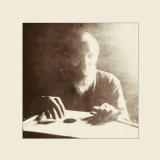
Death Is Not The End present a further volume of Arja Kastinen's eerie amalgamations of 110 year old wax cylinders with her own meticulously transcribed takes, this time focussing in on Armas Otto Väisänen's field recordings of kantele player Iivana Mišukka (b. 1861 d.1919).
"Ivana Mišukka (1861–1919) was one of the Karelian kantele players recorded by the folk music researcher Armas Otto Väisänen on wax cylinders in 1916 and 1917. In the early 20th century, the remote areas of Border Karelia were undergoing the final phase of a transformation in musical culture, with the ancient runo song tradition giving way to newer forms of music. This transition is reflected in Mišukka's repertoire and choice of instrument. The ancient small kantele, hollowed out of a single piece of wood, was already rare at the turn of the century. Mišukka's kantele was a new type of instrument with 26 strings, constructed of several parts, but he played it using the traditional plucking technique. Like other Border Karelian kantele players, his repertoire consisted of music rooted in runosong culture, as well as newer dances and songs from the east and west. Most of the recorded material falls into the latter category.
Ivan Bogdanov Mišukka was born out of wedlock in Suursara village, Suistamo, on 1 May 1861. He began playing the kantele at the age of five or six, quickly mastering the instrument. In adulthood, he was considered one of the area's best master players. Mišukka was landless for most of his life and lived in different parts of the Suistamo parish. His first wife, Tekla Markintytär, died in 1897 at the age of 40, and his second wife, Jevdokia Filipintytär Jeminen, died in 1907 at the age of 50. Seven children were born from the first marriage, two of whom died young. The third wife, Maria Ignatintytär Gurnan (Kuurnanen), was a well-known master of lamentations. Together with Maria, Iivana Mišukka worked as a tenant farmer in the village of Suursara. Mišukka suffered from rheumatism, which prevented him from participating in physical work like Maria. This was apparently partly the reason why Iivana Mišukka went to earn extra money by playing the kantele on gig trips. He often had other traditional artists from Suistamo as his travelling companions, such as the runosingers Konstantin Kuokka and Iivana Onoila. Iivana Mišukka died in Leppäsyrjä village, Suistamo, on 18 May 1919 at the age of 58, and his kantele was donated to Teppana Jänis.
Mišukka only used 14 of the 26 strings on his kantele, playing the same tunes either a fourth higher or lower. He tuned his kantele to the major scale using fifths, except for a low seventh scale degree on the upper strings, but not below the fundamental. Since he did not use the seventh note of the scale on the upper strings at all, he could use the major scale both lower and a fourth higher with this tuning. According to Mišukka, the sound of higher, or 'finer', strings is 'more beautiful', while that of lower ones is 'greater'. Among runosingers, the size of the thirds varied, ranging from major to minor to neutral. A similar phenomenon can be observed in kantele tunings, where the third, sixth and seventh scale degrees vary in a comparable way.
During a meeting, Väisänen suggested that Mišukka play the smaller kantele belonging to Konstantin Kuokka. The idea was to bring it closer to the horn to improve the recording quality. However, the kantele was completely out of tune, and now Mišukka tuned it to the Lydian scale (track 18).
Using the old plucking technique, Mišukka placed his right middle finger on the fundamental tone, his right index finger on the second scale degree, his left middle finger on the third scale degree and his left index finger on the fourth scale degree, and his right thumb on the fifth. The thumb also played the notes above the fifth note of the scale. As Mišukka remarked to Väisänen: 'Peigaloll' tuloo enemb ruadoa' (the thumb has to do more work). However, he did not use the seventh note of the scale on the upper strings at all. Below the fundamental note, he played the seventh and sixth notes of the scale with his right middle finger of and the fifth note of the scale with his right ring finger. This fifth scale degree below the fundamental is almost always used as a drone. Sometimes, when the melody required it, Mišukka, like other players, also varied the fingering. He would also occasionally strike the same string with the side of his fingernail after plucking it.
The wax cylinder recordings of Karelian kantele players are kept in the archives of the Finnish Literature Society in Helsinki, Finland. Copies were made of them onto reel-to-reel tapes in both the 1960s and 1980s. The 1960s copies are mono and the 1980s copies are stereo. However, not all kantele recordings from these decades have survived.
The sound of the kantele is difficult to hear in wax cylinder recordings due to its low volume, and it occasionally becomes completely obscured by noise. During the copying process, the cylinder sometimes rotates unevenly, resulting in breaks or jumps in the music. Additionally, the rotation speed of the cylinder in the copies does not correspond to the performance speed of the original music, which alters the pitch. However, since Väisänen's precise notes are available in the archive, it is possible to deduce the melodies, their speed, and the tuning level of the kantele in the recordings. Of the copies of the original recordings from the 1960s and 1980s, I have selected the one that best met the requirements of this publication and adjusted the speed of the recording to align with Väisänen's notes. To enhance the listening experience, I have replayed the songs, which now partly overlap the old recordings on this release."
— Arja Kastinen
il devrait être publié sur 27.03.2026
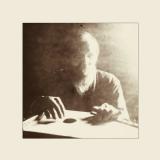
Death Is Not The End present a further volume of Arja Kastinen's eerie amalgamations of 110 year old wax cylinders with her own meticulously transcribed takes, this time focussing in on Armas Otto Väisänen's field recordings of kantele player Iivana Mišukka (b. 1861 d.1919).
"Ivana Mišukka (1861–1919) was one of the Karelian kantele players recorded by the folk music researcher Armas Otto Väisänen on wax cylinders in 1916 and 1917. In the early 20th century, the remote areas of Border Karelia were undergoing the final phase of a transformation in musical culture, with the ancient runo song tradition giving way to newer forms of music. This transition is reflected in Mišukka's repertoire and choice of instrument. The ancient small kantele, hollowed out of a single piece of wood, was already rare at the turn of the century. Mišukka's kantele was a new type of instrument with 26 strings, constructed of several parts, but he played it using the traditional plucking technique. Like other Border Karelian kantele players, his repertoire consisted of music rooted in runosong culture, as well as newer dances and songs from the east and west. Most of the recorded material falls into the latter category.
Ivan Bogdanov Mišukka was born out of wedlock in Suursara village, Suistamo, on 1 May 1861. He began playing the kantele at the age of five or six, quickly mastering the instrument. In adulthood, he was considered one of the area's best master players. Mišukka was landless for most of his life and lived in different parts of the Suistamo parish. His first wife, Tekla Markintytär, died in 1897 at the age of 40, and his second wife, Jevdokia Filipintytär Jeminen, died in 1907 at the age of 50. Seven children were born from the first marriage, two of whom died young. The third wife, Maria Ignatintytär Gurnan (Kuurnanen), was a well-known master of lamentations. Together with Maria, Iivana Mišukka worked as a tenant farmer in the village of Suursara. Mišukka suffered from rheumatism, which prevented him from participating in physical work like Maria. This was apparently partly the reason why Iivana Mišukka went to earn extra money by playing the kantele on gig trips. He often had other traditional artists from Suistamo as his travelling companions, such as the runosingers Konstantin Kuokka and Iivana Onoila. Iivana Mišukka died in Leppäsyrjä village, Suistamo, on 18 May 1919 at the age of 58, and his kantele was donated to Teppana Jänis.
Mišukka only used 14 of the 26 strings on his kantele, playing the same tunes either a fourth higher or lower. He tuned his kantele to the major scale using fifths, except for a low seventh scale degree on the upper strings, but not below the fundamental. Since he did not use the seventh note of the scale on the upper strings at all, he could use the major scale both lower and a fourth higher with this tuning. According to Mišukka, the sound of higher, or 'finer', strings is 'more beautiful', while that of lower ones is 'greater'. Among runosingers, the size of the thirds varied, ranging from major to minor to neutral. A similar phenomenon can be observed in kantele tunings, where the third, sixth and seventh scale degrees vary in a comparable way.
During a meeting, Väisänen suggested that Mišukka play the smaller kantele belonging to Konstantin Kuokka. The idea was to bring it closer to the horn to improve the recording quality. However, the kantele was completely out of tune, and now Mišukka tuned it to the Lydian scale (track 18).
Using the old plucking technique, Mišukka placed his right middle finger on the fundamental tone, his right index finger on the second scale degree, his left middle finger on the third scale degree and his left index finger on the fourth scale degree, and his right thumb on the fifth. The thumb also played the notes above the fifth note of the scale. As Mišukka remarked to Väisänen: 'Peigaloll' tuloo enemb ruadoa' (the thumb has to do more work). However, he did not use the seventh note of the scale on the upper strings at all. Below the fundamental note, he played the seventh and sixth notes of the scale with his right middle finger of and the fifth note of the scale with his right ring finger. This fifth scale degree below the fundamental is almost always used as a drone. Sometimes, when the melody required it, Mišukka, like other players, also varied the fingering. He would also occasionally strike the same string with the side of his fingernail after plucking it.
The wax cylinder recordings of Karelian kantele players are kept in the archives of the Finnish Literature Society in Helsinki, Finland. Copies were made of them onto reel-to-reel tapes in both the 1960s and 1980s. The 1960s copies are mono and the 1980s copies are stereo. However, not all kantele recordings from these decades have survived.
The sound of the kantele is difficult to hear in wax cylinder recordings due to its low volume, and it occasionally becomes completely obscured by noise. During the copying process, the cylinder sometimes rotates unevenly, resulting in breaks or jumps in the music. Additionally, the rotation speed of the cylinder in the copies does not correspond to the performance speed of the original music, which alters the pitch. However, since Väisänen's precise notes are available in the archive, it is possible to deduce the melodies, their speed, and the tuning level of the kantele in the recordings. Of the copies of the original recordings from the 1960s and 1980s, I have selected the one that best met the requirements of this publication and adjusted the speed of the recording to align with Väisänen's notes. To enhance the listening experience, I have replayed the songs, which now partly overlap the old recordings on this release."
— Arja Kastinen
il devrait être publié sur 27.03.2026

With their third album, Inanimate Objects of the 21st Century, Newcastle’s The Pale White prove once again that there’s no slowing them down. Following the success of their introspective sophomore album The Big Sad, brothers Adam (vocals/guitar) and Jack Hope (drums) return louder, sharper, and more defiant than ever. This third full-length is their most expansive yet: a record that blends the anthemic punch of classic rock with the urgency and edge of modern alternative.The title, Inanimate Objects of the 21st Century, is a nudge to the uncomfortable irony of our time – as technology accelerates, humanity feels increasingly frozen in place. Lead singer Adam Hope says: “Technology is moving, but we are not. Human civilization entered the 21st century wide-eyed and naive with mobile phones that would barely fit in our pockets. Fast forward a few decades and we’re so far from where we were that it almost looks like a bad 80’s sci-fi movie. Back then, that film would be watched in packed-out cinemas after an eagerly anticipated release, but now they stand emptier than they once were, attended mainly as a nostalgic experience in the age of Netflix and doomscrolling.
The birth of AI, algorithms, cryptocurrency, drones, holographic concerts, autonomous cars… we’re living in a strange transitional period which is both fascinating and terrifying in equal measure. We humans have now in fact become the inanimate objects - mannequins.After our softer, melancholic second album ‘The Big Sad’, we felt it was only right to move as fast as our world is moving and release our next within the year. ‘Inanimate Objects of the 21st Century’ is the evil twin, the Yin to The Big Sad’s Yang.”
il devrait être publié sur 27.03.2026

The Activist returns to Sneaker Social Club with a fresh double-drop of mutant grime futurism featuring deadly flows from Tia Talks and Jammz.
Low End Activist first came through centred on link-ups with grime MCs before widening the scope of his sound with purely instrumental, conceptually-charged albums. This sure-shot double single reaffirms his affinity for outsider grime production as a vessel for deft bars from breakthrough talent and seasoned mic veterans alike.
On 'False Idols' and 'Atomic Clock' there's an emphasis on sharply angled, glitchy production that bends and warps well outside the established formula of MC-focused beats. Constantly shifting, hyper-detailed and front-loaded with walloping slabs of bass, both cuts are devastating in either vocal or instrumental form. Tia Talks pulls no punches stating her truth on the former, while Jammz muses on the endless battle against time on the latter, continuing the peerless run of avant-grime that courses through the Activist's back catalogue.
Commandez maintenant et nous commanderons l'article pour vous chez notre fournisseur.

The definition of the word 'fado' is technically 'fate', though the Portuguese meaning bound up with this term is more complex. The music itself can be fairly closely compared with that of Greek rebetika - also the American blues or the original working-class tango music of Argentina and Uruguay - and similarly takes it's common subject matter from the various cruel realities of the world. Though perhaps what distinguishes fado in character is it's often poised acceptance of the pains of life rather than protestation or resistance - as writer Paul Vernon says "It speaks with a quiet dignity born of the realisation that any mortal desire or plan is at risk of destruction by powers beyond individual control"
Death Is Not The End compile here a spine-tingling collection of fado recordings, taken from records issued in the mid 1910s through to the 1930s. The fado's Lisbon and Coimbra variants are presented here by some of the music's earliest recorded stars - spanning a time period leading up to the emergence of the fado's all-conquering star, Amália Rodrigues.
il devrait être publié sur 20.03.2026
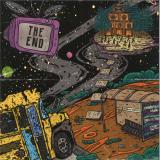
Commandez maintenant et nous commanderons l'article pour vous chez notre fournisseur.

Death Is Not The End reissue Mark Vernon's sought-after 2013 collection Sounds of a Modern Hospital on vinyl & cassette formats.
Whilst every effort has been made to record the subject in as great a degree of isolation as possible, the sound recordings you will hear on this record were made in a real working hospital and not under controlled conditions. Therefore, on occasion, you may hear some unavoidable background noise, conversations and other extraneous sounds.
All recordings were made by Mark Vernon at Forth Valley Royal Hospital, Larbert, Stirling Community Hospital and Falkirk Community Hospital between 2011 and 2013.
Commandez maintenant et nous commanderons l'article pour vous chez notre fournisseur.

Death Is Not The End present a compilation gathering a cross-section of early gospel choirs and vocal harmony groups recorded between late 1920s and the mid-1950s - a period when spirituals & jubilee traditions merged with blues, jazz and early rhythm and blues, providing the musical routes for the coalescence of the civil rights movement born out of the black church. In the modern world these perennially vital recordings provide a fitting tonic for the near-dystopia we find ourselves living through.
Commandez maintenant et nous commanderons l'article pour vous chez notre fournisseur.
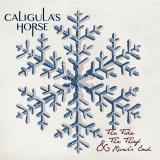
Caligula's Horse is a progressive metal band from Brisbane, Australia, and named after the trusted steed of the assassinated Roman emperor Caligula. This band should surely be on the radar of any Opeth, Karnivool and Haken fan.
The Tide, The Thief & River's End is their second record, originally from 2013, and contains everything you'd want of a progressive metal album: heavy riffs, melodic hooks and of course unbelievable technical prowess. The album once again proves that the prog scene down under is a force to be reckoned with.
The Tide, the Thief & River's End is available as a limited edition on blue vinyl and includes a 4-page booklet.
The small print:
• Due to rights restrictions, this item is only available in the EU.
il devrait être publié sur 06.03.2026

Death Is Not The End reissue Mark Vernon's sought-after 2013 collection Sounds of a Modern Hospital on vinyl & cassette formats.
Whilst every effort has been made to record the subject in as great a degree of isolation as possible, the sound recordings you will hear on this record were made in a real working hospital and not under controlled conditions. Therefore, on occasion, you may hear some unavoidable background noise, conversations and other extraneous sounds.
All recordings were made by Mark Vernon at Forth Valley Royal Hospital, Larbert, Stirling Community Hospital and Falkirk Community Hospital between 2011 and 2013.
il devrait être publié sur 27.02.2026
