Suche:emergence one remix

Styles
Alle
  • 1
Run DMC - Down With The King LP 2x12"

Run Dmc

Down With The King LP 2x12"

2x12inchGET51509GLP
GET ON DOWN
18.10.2024

RUN-DMC DOWN WITH THE KING 30th ANNIVERSARY Pressed On Red, White and Black Double Colored Vinyl With Commemorative Numbered OBI Limited To 2000 Copies Thirty years ago on May 4, 1993, Run-DMC made one of the greatest comebacks in Hip-Hop history with the release of their 6th studio album Down With The King. To understand the significance of this feat we have to go back a few years. Coming off an amazing four-album run ending with the platinum album Tougher Than Leather, Run-DMC released their 5th studio album, Back From Hell, to lackluster sales. Did Run-DMC fall off? Did the emergence of gangsta rap push them off to the side? It was sad to see your Hip-Hop heroes take a fall. Then in 1991, a 12-inch remix came out for the single "Back From Hell" featuring Chuck D and Ice Cube and fans took notice. It would be two more years before anyone would hear from Run-DMC again. In March of 1993, a new single and video “Down With The King” debuted on Yo! MTV Raps featuring the new Hip-Hop Gods Pete Rock and CL Smooth paying homage to The Kings calling back verses from Sucker MCs over a dope signature Pete Rock beat. The video would be in constant rotation on Ralph McDaniels Video Music Box, YO!, BET’s Rap City and more. Fans watched it over and over to catch all the cameos, everyone from Eazy-E to the Native Tongues Family of De La Soul and A Tribe Called Quest. The anticipation was building, but would the album live up to the lead single that knocked it out of the park? On May 4, 1993, the album dropped on CD, Cassette, and Vinyl. Run-DMC enlisted The Bomb Squad from Public Enemy, Q-Tip, EPMD, Jermaine Dupri, Kay Gee of Naughty By Nature, and Pete Rock to produce the album with a special appearance by Tom Morello rocking out his guitar emulating DJ scratches he made famous with Rage Against The Machine. Their rhyming was as enthusiastic and powerful as they were on their debut album 10 years prior. Run-DMC, the self-proclaimed Kings of Rock and original Kings of Hip Hop were indeed back. The album debuted at #1 on the R&B/Hip-Hop charts and #7 on the Billboard 200 and would go Gold within two months. Get On Down is proud to present for the first time on vinyl since its original release, a 30 Year Anniversary pressing on double-colored vinyl with numbered OBI in a gatefold jacket.

vorbestellen18.10.2024

erscheint voraussichtlich am 18.10.2024

Nia Archives - Silence Is Loud LP

Nia Archives

Silence Is Loud LP

12inch6500353
Island
12.04.2024

Nia Archives is the star at the forefront of the latest era of jungle. Since her emergence in 2020, her collagist soundscapes have helped bring the sound to a new generation of clubgoers (though fair warning: don’t call her a “revivalist” – she’s the first to point out that the scene never went away). So when it comes to talk of the 24-year-old producer, DJ, singer and songwriter’s much-anticipated debut album, the odds are you’re thinking of a full-length record of weightless jungle tracks with basslines so intense they’ll leave your ears ringing.

But the reality of the Bradford-born, Leeds-raised artist’s first ever album – while very much replete with that exquisite jungle sound she does so well – is also doing something a little different. On the thrilling and freeing Silence Is Loud, Nia Archives is looking to make music for beyond the rave. As she explains: “I think music can be experienced in different ways, and there’s different kinds of music for different scenarios. Say you’re at a festival listening to music with thousands of other people, that can feel really uniting. But then you might listen to an album on your own in the bus, or in a taxi; and this project is definitely more a record to sit and listen to than a collection of club tracks.” Nia is intent that Silence Is Loud is taken in as a full body of work of something “more song-focussed, putting interesting sounds on jungle.” It means that this is a record which finds gloomy Britpop, warm Motown, soaring indie, a love for Kings of Leon’s Aha Shake Heartbreak, skittering IDM, Madchester, classic rock, old skool hardcore and more, woven and fused into her ragga and junglist tapestry, all layered with feeling, imbued with her songwriterly lyricism about loneliness, relationships, family, navigating her 20s, and the intense potential power of silence.

The vast sonic palette on Silence Is Loud comes down to Nia’s broad array of influences through her life. With her Jamaican heritage, Nia remembers hearing jungle as a child via her nana, as well as at Bradford Carnival, where she was drawn to the soundsystem culture, dancing carefree on the floats in the parade. The first album she ever bought was Rihanna’s debut, Music of the Sun, and she also went to Pentecostal church back then, and was obsessed with gospel. Aged 16, she moved to Manchester, where she didn’t really know anybody: and so, her solution to meeting people was going out. “Partying was a huge part of my life,” she says, “They used to do little freestyle cyphers at the house parties and I would join in – that’s kind of how I got into singing.” She had found music boring at school, but in meeting all these new people she became interested in making her own music as a hobby. “I was making boom-bap kind of stuff which I didn’t really like in the end,” she laughs, “My lyrics are quite deep, so on a hip-hop beat it all sounds really depressing. I wanted people to dance to my music.” And so she began experimenting with faster tempos alongside that melancholy songwriting, teaching herself how to make beats on Logic: “It’s all been a lot of trial and error, really.”

Nia went to study music in London, and was also interested in visual art, making collages and VHS: “Before the music, I was trying to make a visual archive of my life and the people around me,” she explains, “And then my music was like my diary, and a sonic archive, as well.” Hence, she paired the word “archives” with her middle name, Nia. To this day, in her spare time she’s working on pulling together a documentary on the global nature of the jungle scene.

Back on those first two EPs, Headz Gone West (2021) and Forbidden Feelingz (2022), she honed that junglist sound, painting it with new flecks of colour and vibrance. It was only after she started releasing work that she realised pursuing music could be a viable life path for her. The decision has been paying off ever since. Nia Archives placed third in the prestigious BBC Sound Poll for 2023, alongside garnering a nomination for the Brit Awards’ Rising Star prize, plus wins at the DJ Mag, NME, the MOBOs and Artist and Manager Awards. She has also toured the world – be it North America, Europe or Asia – and even opened a show in London as part of a little something called Beyoncé’s Renaissance World Tour. She’s renowned as a party-starter in her own right, too, with takeovers at Glastonbury, Warehouse Project and her own Bad Gyalz day event. She’s done official remixes for the likes of Jorja Smith, had a huge summer hit with her Yeah Yeah Yeahs rework ‘Off Wiv Ya Headz’, and worked with brands like Corteiz, Nike, Flannels, Burberry, FIFA and Apple. In just three years, it’s fair to say that Nia Archives has become a need-to-know name in dance music.

But Nia is not interested in being one fixed thing. Building on the terrain from her third EP, Sunrise Bang Ur Head Against Tha Wall, the universe of Silence Is Loud is not totally unfamiliar territory; but it’s still emblematic of a bolder scope than we’ve heard from the artist before. Working with Ethan P. Flynn (the songwriter and producer known for his work with FKA twigs and David Byrne), the resulting record is an impressive feat of deftly-sculpted textures; sometimes big and euphoric, like the wobbly, lusty bass of ‘Forbidden Feelingz’, or elsewhere notably gentle and quiet – see: the gorgeous, surprisingly drumless ‘Silence Is Loud (Reprise)’, a heartfelt number that sits somewhere in the school of Adele. “I really sharpened my songwriting skill on this project,” Nia says, “I was really intentional about what I was writing about, and I really loved co-producing with Ethan. His process is so different to anyone I’ve worked with before, and he’s got a kind of DIY set-up like me.” Flynn’s flat overlooks the Barbican, adding that unquantifiable futurist urban quality that the area holds to the music. The pair enjoyed the collaborative process so much that the album was done within three and a half months.

Perhaps this is why Silence Is Loud maintains an exuberant immediacy while still being sleek and spacious, interspersed with flourishes of metallic beats, lush melody and topped with her sugary but powerful vocal, floating over it all. There is an intimacy to the record, perhaps in part due to Nia writing most of her lyrics while sitting in bed in her flat in Bow (once a bedroom producer, always a bedroom producer). You can hear it on the refrain for lead single ‘Crowded Roomz’, which finds rippling guitar lines cutting taut through the beats as Nia refrains: “I feel so lonely crowded rooms.” The song is an examination of life on tour, constantly surrounded by people, but not necessarily those she can be herself around; more than that, the track is exemplary in the category of sad bangers.

Silence Is Loud often finds itself in that push and pull between melancholy and euphoria. There’s a celebration of her unconditional love for her younger brother (the title track), a rumination of an evening with an Irish boy she met by Temple Bar (‘Cards On The Table), or a letter to herself on the light and airy ‘Unfinished Business’, even coming to terms with a lover having a past they haven’t quite processed yet (“nobody comes with a clean slate”). The latter was recorded the week after a music festival, and accordingly captures Nia’s vocal in its not quite healed, husky state.

Nia’s work is always a snapshot of where she’s at when she’s making it. This might not be the debut album you were expecting, but that’s what makes Silence Is Loud so special. Nia Archives has learned the rules of her sound, and is unafraid to break them, pushing jungle and herself into new, unchartered territories that, in turn, go some way to map the history of the greats of British dance music. More than that, it plants her firmly in that lineage.

nicht am Lager

Bestelle jetzt und wir bestellen den Artikel für dich beim Lieferanten.


Last In: vor 10 Monaten
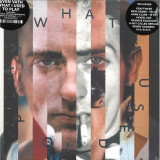
Sven Väth - What I Used To Play (12x12" boxset)
 
36

For this uniquely personal retrospective spread over twelve vinyl discs, Sven Väth takes us back to the early days of his DJ career. On What I Used To Play we meet great pioneers of electronic music, gifted percussionists, obscure wave bands, and innovative producers of a bygone 'new electronic' era. Rough beats and irresistible grooves from the identification stage of house, techno, and acid remind us not just how far electronic music has evolved over the past four decades, but how great it was to dance to EBM, techno, and house for the very first time.

If there is one protagonist of the electronic music scene who has remained curious, innovative and at the very cutting edge of music for over four decades, it's Sven Väth. His multi-layered artist albums and Sound of the Season mix compilations have been defining the genre for over two decades, and even today, he is constantly on the lookout for the next top tune to add to the highlights of his next set. At least, that's the case when he's not producing them himself as an artist or remixer. "Actually, it's always been part of my DNA to think ahead," and nothing had been further from his mind than looking back at his past, but when in spring of 2020 the international DJ circuit had to be scaled down to virtually zero, the 'restless traveler' suddenly had time. Time to stop and reflect on "how it actually was back then, at the very beginning of my career..."

"It was a great trip and with every track, beautiful memories came flooding back".
In the London apartment, he had just moved into, Sven has set up a "little music room", where he cocooned himself for several days, "to look way back for the first time and review my musical journey through the eighties, so to speak."

The interim result was six thematically oriented playlists with a grand total of 120 tracks from 'early 80s' to 'Balearic late 80s', together with excursions into afrobeat, European new wave, and EBM sounds and a few epochal techno/house tracks from the USA in between. From these 'Best of Sven Väth's favorites', the project What I Used To Play crystallized. Sven remembers how the Cocoon team reacted to his proposal: "They found the idea of making a compilation out of it MEGA from the beginning and everyone said 'Sven, go for it', but then, of course, the work really started, namely, to clear the rights and to get clean sounding masters of the up to 40-year-old tracks. There was also disappointment, of course. We couldn't clear certain titles because the rights holders in the USA had fallen out with each other or simply disappeared from the scene. In short, it wasn't easy, but now I can safely say we got the most important tracks."

Finally, after two years of research, curation, design, and administrative fine-tuning, the "little retrospective" from 1981 to 1990 is available. The exquisitely packaged, and three-kilo heavy box set is not only physically impressive, WIUTP is also the definitive record of Sven Väth's musical development. On each of the twenty-four sides of vinyl, you can trace track by track, what influenced him during which phase, and how he took off as a DJ from his parents' Queen's Pub straight into the spotlight at Dorian Gray. There and at Vogue (later OMEN), Sven became the style-defining player in the DJ booth that he still is today.


1981 - 1990: Future Sounds of Now

In the early eighties, the crowd in clubs like Vogue and Dorian Gray danced to what nowadays we call 'dance classics' - mainly disco, funk, soul, and chart pop. It was up to a new generation of DJs, including Sven Väth, the youngest protagonist in the Rhine-Main area at the time, to create their own club-ready music mix. Good new tracks and potential floor-fillers were rarities that had to be sought out and found, in order to prove oneself worthy.
Without MP3s, internet streaming, or other digital download possibilities, music didn't just gravitate to the DJ, instead, it had to be tracked down. In well-stocked record stores in Frankfurt and Wiesbaden or even in Amsterdam, London, or New York, Sven and friends sourced the material for countless magical nights. On WIUTP we can follow Sven's very personal journey through this wild, innovative era in which synth-pop, funk, hip-hop, and disco were successively replaced as 'club music' by house, techno, acid, and breakbeat. By the end of the decade, it was clear to see that these once exotic 'fringe' phenomena would soon become 'mass' phenomena.


Early 80s

Dirty Talk by the Italian-American duo Klein & M.B.O. represents the most innovative phase of the Italo-disco genre in the early eighties like no other track. Mario Boncaldo (I) and Tony Carrasco relied entirely on the original synthetic drum and percussion sounds of the Roland TR-808, coupled with the raunchy vocals of Rossana Casale and guitar accents of Davide Piatto. Of course, other tracks from this period were also influential in style, most notably Unit by Logic System, which worked as the perfect soundtrack to the laser lighting system at the legendary Dorian Gray club. With stomping beats and robotic rap interludes, Bostich by Yello also belongs on Sven's eternal playlist - after all, it caught the attention of Afrikaa Bambaataa, who invited the Swiss duo to perform at the Roxy in New York in 1983.


EBM Wave - Mid 80s

From today's point of view, the almost ten-minute-long, downtempo track Giant by Matt Johnson's band project The The, would probably not be considered an obvious club classic. However, a closer (re)listen reveals the rhythmic intricacies of the percussion overdubs by JG Thirlwell (aka Foetus) on Johnson's composition, and it becomes clear why this exceptional piece of music is one of Sven's absolute favorites. Other classics from this phase include Kaw-Liga by the mysterious The Residents, the hypnotic-synthetic Our Darkness by Anne Clark (and David Harrow), and last but not least, the somber, monotonous anthem Where Are You? by 16Bit, one of Sven Väth's projects together with Michael Münzing, Luca Anzilotti from 1986.


US House - Late 80s

You certainly can't talk about Chicago house without mentioning Frankie Knuckles. The resident DJ at the Warehouse not only gave the name to an entire genre, but also produced epochal floor fillers on the Trax label like the timeless Your Love, sung (and moaned) by Jamie Principle. Acid house protagonists Phuture also hail from Chicago, and on We Are Phuture (also released on Trax) we hear the chirping acid sounds of the legendary Roland TB-303 in full effect. Another featured classic is No UFO's by Detroit's Model 500 aka Juan Atkins, who is rightly considered the 'Godfather of Techno' even if the genre-defining track from 1985 still breathes with the spirit of hip-hop and electro from the first breakdance era.


Afrobeat

Le Serpent, by Algerian-born Abdelmadjid Guemguem, is a track that sounds completely different from everything else on WIUTP. Made in 1978, it's a monumental, rousing groove created without bass or synths, just with five congas! Even though Guem sadly passed away in 2021, his immortal, acoustic beats are understood all over the world and will continue to enrich many thousands of DJ sets for years to come. Another classic that not only Sven appreciates beyond measure is Hugh Masekela's Don't Go Lose it, Baby. In addition to being one of the most important jazz pioneers, the trumpeter and freedom fighter from Johannesburg was very experimental, integrating electronic sounds into his music in later years, in a similar vein to Miles Davis and Herbie Hancock. Dutch jazz pianist Jasper van't Hof's afrobeat project Pili Pili has also aged well. The trance-like, almost sixteen-minute-long track of the same name, manages to fill a whole side on the seventh of twelve vinyl discs in the WIUTP box.


UK-US-Euro - Late 80s

Time for a change of scene, in the truest sense of the word, and from a musical perspective, this section is like landing on another planet. First up is Andrew Weatherall's classic remix of Primal Scream's Loaded, featuring the iconic Peter Fonda sample (lifted from the 1966 biker film Wild Angels) that came to personify the mood triggered by the British Second Summer of Love in the late eighties: "We wanna be free to do what we wanna do, and we wanna get loaded...". This period also saw the emergence of M/A/R/R/S whose only single, 1987's Pump Up The Volume, became a club classic with support from DJ legend CJ Mackintosh. In this most eclectic of sections, we also encounter New York house and reggae producer Bobby Konders and his seminal Nervous Acid.


Balearic - Late 80s

Those who know him, know that Sven had already lost his heart to the 'magic island' of Ibiza as a teenager, so with that in mind, the WIUTP project couldn't end without a Balearic chapter. Inspired by Manuel Göttsching's E2-E4, the immortal, eponymously titled Sueño Latino belongs in there without question. Equally popular on the island was, and still is Break 4 Love by Raze, which thinking about it, would also fit perfectly into the house chapter. Last, but not least, there's an overdue reunion with Sven Väth himself, in his role as frontman of the successful Frankfurt trio OFF. Together with Michael Münzing and Luca Anzilotti (later of Snap!) this 'Organization For Fun' created the off-the-wall club hit Electric Salsa in 1986 which incidentally turned into an international chart smash, putting Sven in the enviable position of having to decide between pop stardom and a DJ career. Well, we all know how that decision turned out and the rest, as they say, is history. A not insignificant part of his story is What I Used To Play. Enjoy!


nicht am Lager

Bestelle jetzt und wir bestellen den Artikel für dich beim Lieferanten.


Last In: vor 8 Monaten
Spectrasoul - Delay No More 10 Year Anniversary Edition 2x12"

Ten years on from a remarkable debut album that traversed genres and put the duo’s trademark melodic mastery on display for the world to see, 2022 sees Spectrasoul’s ‘Delay No More’ album more than deservedly receive its 10 Year Anniversary Repress. Now being pressed to vinyl in it’s entirety for the first time, this milestone release highlights just how in-keeping Spectrasoul’s earliest album was with the forward-thinking, energetic, and beautifully deep ethos that has gone on to define their astounding career in music. 

A diverse, experimental, and genre-bending debut offering, ‘Delay No More’ cemented itself as one of 2012’s finest electronic albums and a Shogun Audio bestseller. Fast forward ten years and the impact of the album on Spectrasoul, Shogun, and the wider electronic music scene is still one of meteoric proportions. 

Receiving mass support from Mixmag, DJ Mag, BBC Radio 1, and countless other press outlets at the time, ‘Delay No More’ went on to be remixed the following year, with the reworked project featuring Calibre’s remix of ‘Away With Me’, a release which has gone it to
become one of the most iconic drum and bass tracks of the past decade. 

Since their emergence in 2006, SpectraSoul have carved a truly unique position, not only in Drum & Bass, but electronic music as a whole. The 10 Year Anniversary Repress of ‘Delay No More’ is not only a celebration of this, but a reminder of the stunning sonic soundscape that the albums alluring, enthralling and irrevocably charming sound still exists in to this day.

nicht am Lager

Bestelle jetzt und wir bestellen den Artikel für dich beim Lieferanten.


Last In: vor 21 Tagen
Azu Tiwaline - Draw Me a Silence Remixes (Flore, Laksa, Don't DJ)

The first Azu Tiwaline's album, after been acclaimed by DJs like Lena Willikens, upsammy, Shanti Celeste and a bunch of electronic medias (Bandcamp, RA, Crack), is now remixed by a Lyon-Bristol-Berlin trifecta of similarly minded rhythmic innovators - twisting and warping her work into new shapes, featuring Don't DJ, Laksa & Flore reinterpretations.

Nothing happens overnight. Behind every emergence, there’s years of work, thought and preparation - both intentional and unconscious - that’s gone unseen.

So the past year might have been a ‘breakout’ year for Azu Tiwaline, but it was really built over two decades of experimentation, soul-searching - both creative and personal - and exploration. “A new name for a new spirit” as she likes to say, but with an unmistakable identity rooted in her history and ancestry.

On her debut album as Azu Tiwaline, Draw Me A Silence, a record released in two parts with her family at I.O.T. , she fused together two halves of her own heritage, inspired by a new home in the desert. Personal history collided with family heritage: half step rhythms from a career in bass music met the warm winds and wide open silence of El Djerid in Tunisia.

When music is sincere and honest, it tends to reverberate more widely, and deeply. The tracks written for the Magnetic Service EP were sent to one label and one label only, Livity Sound, who picked it up instantly. Something about the spacious, yet dense sonics - crafted with the help of percussionist Cinna Peyghamy - resonated with listeners starved of both the community of the dancefloor and the space of the outside world. The EP became one of the Bristol label’s most heralded releases of 2020, featuring in end of year coverage from Bandcamp to Resident Advisor.

Beneath the calm of her productions, a restless spirit inhabits Azu, born out of months and years spent on the road. In 2020, it was her music that took her places. She put together a series of podcast mixes that echoed the percussive, rhythmic curves of her own productions, for Boiler Room, Dekmantel and Crack Mag. She distilled Fazer Drums’ percussive experiments into dubby downtempo with a remix, and contributed her most rooted track yet - Violet Curves with Cinna Peyghamy - to On the Corner’s Door to The Cosmos compilation.

This will be followed by the Extended version of the album with a gorgeous ambient bonus track “Eyes of the Wind”, accompanied by a video clip directed by Azu Tiwaline, shot in her desert lands. This track will be appearing in a digital reupload reunifying Draw Me A Silence Part.I and II. As a sort of final chapter of this debut album.

As for the rest? We’ll see what 2021 has to offer for both the world and Azu Tiwaline. In the meantime, take inspiration from her music: keep the tempo steady, let some light in, and listen for the silence.

nicht am Lager

Bestelle jetzt und wir bestellen den Artikel für dich beim Lieferanten.


Last In: vor 10 Monaten
Man Friday - Love Honey Love Heartache

Vinylmania: As classic disco came bounding through the late '70s and into the electronically orientated sounds of the '80s, New York was one of the undisputed frontiers for the latest developments in dance music culture, nightclubs and the art of DJing. At the center of this seminal time for vinyl culture was a store called Vinylmania, set up by Charlie Grappone in the heart of Greenwich Village, Manhattan, just as the culture of 12-inch singles and promo copies was taking hold. From supplying Levan, Tony Humphries and many more with the latest imports to championing the emergence of house music in the mid-'80s, Grappone and his staff played a significant role in New York's own dance music story. Through the '90s and up until closing in 2007, Vinylmania was a store that catered to DJs from across the complex mixture of racial, social and sexual demographics that made up New York and its legendary nightlife. Man Friday: As the NYC Peech Boys came to an end, Man Friday became Larry Levan's newest production project. Fronted by Kofi Morny and Brodie Williams, their dubut single 'Love Honey, Love heartache' was released by Vinyl Mania in 1986 with Larry Levan at the helm of the mix. Love Money: In the spirit of most dance music borrowing elements from other sources, 'Love Honey' was heaviliy inpired by another Paradise Garage & Loft classic from 1980 and its remix in 1981 by UK Outfit Funk Masters / TW Funkmasters. A dubbed out track big in the Jazz-Funk scene in the UK, it became a hit among underground Deejays in Both NYC & Chicago. Love Honey: No matter what list you look at. 'Love Honey' is always attached to Larry Levan's tenure at the Paradise Garage. All the elements of a Garage Track are here; Dub Echoes, Synth Basslines, Percussions that linger, FX -that one can only dream of hearing on a Richard Long System- and an Organ, because after all, they say the Garage was like going to Church. Remember when you'd buy a record after hearing it at the Club We miss that. As a result, We are proud to Introduce Get On Down Sound with the aim to bring back our favorite Dance 12's to a new generation of Vinyl-DJs. Re-mastered for optimal club use, these are official re-issues of some of Dance Music's most influential cuts.

nicht am Lager

Bestelle jetzt und wir bestellen den Artikel für dich beim Lieferanten.


Last In: vor 7 Jahren
  • 1
Artikel pro Seite:
N/ABPM
Vinyl