Search:eccentric soul

Styles
All
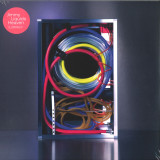
LOLA'S DICE - PURA MALDAD LP

Edition of 500 copies. Comes with download code and insert.

' Funkadelic touring the vast Caribbean coastline of Venezuela, together with Afrosound and Grupo Bota, with endless supplies of Aguardiente and other substances, in a “Back to the future” setting. ' ....?

Lola's Dice's debut album is the result of a radical musical transmutation, marked by the phenomenon of massive Venezuelan emigration. The songs contained in "Pura maldad" expose the current point of that process with amazing detail. Rhythms that were considered exclusively "traditional" and almost untouchable back home (Tamborera, Gaita) get twisted, stretched and pushed beyond any imaginary limit, while being combined with healthy doses of Disco, Funk, Electro, Techno and their Caribbean counterparts, Merengue, Salsa and Compass.

Having taken their first steps in the key of Funk-Rock, things first took a turn after the leader Javier Bohorquez met Venezuelan producer Alex Figueira (Fumaça Preta, Conjunto Papa Upa, etc) at a show and he handed him a business card. The tropical psychedelic sound Figueira was specialized on spoke immediately to Javier, as it did combine many of the crazy and groovy elements he loved from the most "out there" Funk (a la Funkadelic), with the countless Caribbean rhythms he had been exposed to, having grown up in Venezuela.

After the first EP "Viaje al centro del ritmo", where everything acquired a decisive tropical tone, a further eccentric exploration of the music of their homeland became inevitable. The subsequent single "Cacri 'e Playa / Sr Cartujo" clearly showed where things were moving towards.

“Pura Maldad” is a true tropical lysergic trip, and while you see vibrant colors and things move in very strange ways, the sun never seizes to shine. Despite its profoundly experimental character, the album proves very useful to anyone in need of getting a party started, maintained or fully blown up, depending at what point of the evening it’s played.

Artwork by Colombian artist Kevin Simón Mancera.

Produced by Alex Figueira at Heat Too Hot, Amsterdam.

In Stock

On Stock and ready to ship

The Krash Band / Oneness - So, I Can Make This Change / Hard To Know

Two tracks from Numero’s Eccentric Soul compilation which documented Bob Abrahamian’s passion and devotion to celebrating unknown Chicagoland group harmony music. His untimely passing in 2014 left a huge hole for many music devotees. SO, I CAN MAKE THIS CHANGE was THE KRASH BAND’s only record, it came out in 1976 and is a revered 45 amongst serious collectors. With it’s crisp bass, phased harmonies and the crowning accomplishment, the seraphic falsetto by Evelyn Holder!ONENESS previously known as The Audition’s recorded HARD TO KNOW in 1977 for Cincinnati’s AMG label, alas this sweet harmony jewel never got released and was only heard by those who tuned into Bob’s Sitting in the Park radio shows until the compilation put that to rights.

Please note this song was rescued / restored and there is tape damage in parts.

In Stock

On Stock and ready to ship

Jimmy Edgar - Liquids Heaven LP

JIMMY EDGAR's latest release for Innovative Leisure, LIQUIDS HEAVEN, is a psychedelic canvas of future R&B, euphoric bass, mutant tear-theclub-up rap, foundation-splintering noise, and gossamer soul.
On a surface level, it is a starburst of avant-garde fusion, collecting a diverse cast of eccentric geniuses and re- configured into an anthology of n - musique concrete.

As with all of his work, there is a deeper and subversive intent.
Do not mistakenly believe that LIQUIDS HEAVEN is merely a technicolor dream of ethereal abstractions. It bangs as hard as anything to ever bump from a subwoofer.

Over a polychromatic blast of crunk, bounce on Everybody like a rap
rave inside a 31st century space station. Bite That 2 finds Trinidad James spitting flames over booty- shaking, wall- crumbling bass. On Ya, 645AR chirps over a metallic chassis of booming industrial funk.For all the high energy propulsion, there is a counter-balance of melancholic beauty.

The album's opener, Euphoria features a Liz Y2K vocal that levitates with plaintive longing. The Milk- aided Dreams 1000000 sounds like the chimerical soundtrack to a manga utopia that needs to be imagined. Milk also appears on the finale, Never Leave, which
captures a bittersweet sadness, the wistful emotion of the tide slipping away.


Jimmy's career has been a series of fascinating left- turns. Signed to Warp Records as a teenage electronic music prodigy, his work needs a scholarly bibliography to properly assess. He's recorded for the world's most respected imprints (Warp, K7, Hotflush, Innovative Leisure and his own New Reality Now).

Raised in Detroit, there have been stints soaking up inspiration in Berlin, Atlanta, LA, and New York. His list of close collaborators includes the most innovative musicians of the millennium, including Hudson Mohawke, Danny Brown, SOPHIE, DAWN, Mykki Blanco, Vince Staples, and several full projects with Machinedrum
as J-E-T-S.

In Stock

On Stock and ready to ship

Kurtiss - The Curtis Vodka Ep

Kurtiss is a shadowy and enigmatic figure working on the boundaries of civilization. A sporadic figure on the House music scene with eccentric habits, Kurtiss’ music is a rarified sonic experience for those who seek it out. The Ameri-can artist is hard to pin down and his music is a tantalizing little secret only for adept diggers who appreciate the style of Hi-Def House music that the artist has cultivated. Although he’s a known Soundcloud fixture, he’s only put out a handful of digital singles as Curtis Vodka in the past, with Mutual Intentions facilitating his latest and immortalizing his music on their next set of releases. A nomadic artist, who’s worked on music ranging from Ghetto Tech to House, his music has spanned the known musical spectrum, forging uncanny relationships with everything from 50 Cent to Mall Grab. Under the pseudonym Kurtiss (or Curtis Vodka), he’s all about HIGH-Fi House, life, aliens, Jazz and no trends. It’s an attitude that he lays bare on this rare contribution to the physical, recorded format for Mutual Intentions on ‘The Curtis Vodka EP’. The EP weaves classic House music influences through a penchant for vintage sound machines and arrangements that evoke a solemn air. Elements of Gospel and New York’s deeper inclinations in House music seep through his sound as archived vocal samples and noisy machines give his work its defining character. Glistening keys and strings that slither through airy textures create dense aural experiences on ‘The Curtis Vodka EP’, calling to mind the musical masterpieces of House music’s golden era when the likes of Kerri Chandler and Mas-ters At Work were producing som

In Stock

On Stock and ready to ship

Various - Wizzz! French Psychorama Volume 5 (67-75)

The journey through French-speaking pop archives continues with this fifth volume, packed with fuzz, gimmicks, and dissent. Far from the charts, the selected tracks display a great creative freedom, often backed by corrosive humor. Welcome to the surprising, kaleidoscopic, and colorful world of the late sixties and early seventies, Wizzz!
Born in Montauban, Robert Pico stumbled into music by chance when he met René Vaneste, then artistic director at Pathé-Marconi. René brought him to Paris to record his first 45 RPM EP in 1964. A year later, Pierre Perret introduced him to Vogue, where he recorded his second album with Claude Nougaro’s orchestra. Sylvie Vartan then introduced him to RCA, where he recorded four singles, including the astonishing "Chien Fidèle," a track backed by a hair-rising fuzz guitar. Alongside his solo career, he also composed for other artists like Alain Delon (the song was recorded but remains unreleased), Magali Noël, Bourvil, and Georges Guétary. In the Paris of the sixties, he mingled with Mireille Darc, Elsa Martinelli, Marie Laforêt, France Gall, Françoise Hardy, Petula Clark, Régine, Dani, Serge Gainsbourg, Joe Dassin, Franck Fernandel, Charles Level, and Roland Vincent. Despite his efforts and winning a Grand Prix Sacem for his final record, Robert Pico didn’t achieve the expected success in show business and decided to leave Paris and return to the Southwest, where he devoted himself to writing. He is the author of 23 books (including Delon et Compagnie, Jean-Marc Savary Editions 2025, a memoir about his youth and his many encounters). Today, he is relieved to never have become a celebrity and devotes himself to his work with passion.
In 1969, the Franco-Italian movie Erotissimo was released, directed by Gérard Pirès (who later directed Taxi in 1998, written and produced by Luc Besson). This pop comedy features Annie Girardot, Jean Yanne, Francis Blanche, Serge Gainsbourg, Nicole Croisille, Jacques Martin, and Patrick Topaloff. The soundtrack was written by Michel Polnareff and William Sheller, with lyrics by Jean-Lou Dabadie. "La Femme Faux-cils," performed by Annie Girardot. It recounts the feelings of a rich CEO's wife who seeks to develop her sex appeal under the influence of advertisement and magazines. Groovy, sparkling and light, this track, with ITS lush arrangements humorously critiques consumer society and feminine beauty standards.
“Je suis l’Etat” (1967) is the flagship track of the first EP by singer-songwriter Spauv Georges, aka Georges Larriaga, better known as Jim Larriaga (1941-2022). Born into a family of bakers, the young man was initially planning to become a hairdresser when he discovered English-speaking music through Elvis Presley and the Beatles. After this revelation, he decided he would become a songwriter and gave himself five years to succeed. He recorded his first two EP’s independently for RCA under the pseudonym Spauv Georges; meaning “that poor George”, a nickname given to him by the mother of her friend Jean-Pierre Prévotat (future drummer of the Players, Triangle, or Johnny Hallyday). Portraying a depressed and eccentric young man, Spauv Georges created corrosive and amusing songs that didn’t reach a wide audience, despite a TV appearance with Jean-Christophe Averty.
Supported by his loyal friend and fellow songwriter Jean-Max Rivière, Georges Larriaga met the future singer Carlos in the early '70s, then Sylvie Vartan’s assistant. He wrote songs for Carlos, including the popular "La vie est belle," "Y’a des indiens partout," and "La cantine", which went onto become a huge hit in 1972. He also composed for Claude François (“Anne-Marie”, 1971), Charlotte Julian (“Fleur de province”, 1972), helped launch child singer Roméo (who sold 4 million records), and later wrote the hit "Pas besoin d’éducation sexuelle" (1975) for the young Julie Bataille. In 1971, Jim recorded an album for Disc'Az: “L’univers étrange et fou de Jim Larriaga”, which featured pop gems like “La maison de mon père”.
The story of the song "Zoé" began when Pierre Dorsay, artistic director at Vogue Records, asked Swiss singer and musician Pierre Alain to write a song for a new female singer. The inspiration came when he realized that Zoé (the artist's name) was also the name of France's first atomic battery, created in 1948, which consisted of uranium oxide immersed in heavy water! The lyrics reflect a bubbling energy that must be handled with caution, while the instrumentation echoes this atomic theme, notably with the use of a theremin.
Zoé’s career lasted only as long as a single 45 RPM, but it seems Christine Fontane was the vocalist behind this pseudonym, who is known for several EPs, a good "popcorn" album in 1964, and a handful of children’s singles in the '70s. Regardless, the photograph on the cover is of a different girl entirely.
Later, Pierre Alain continued his career, writing songs for himself, Marie Laforêt, Danièle Licari, Alice Dona, Arlette Zola (3rd place in Eurovision 1982), and achieving multiple gold and platinum records in Canada. Also an inventor with several patents, president of the Romande Academy, and head of the French Alliance in Geneva, he now composes atonal music, books, and poetry. Moreover, he is also the host of "Les Mardis de Pierre Alain" at "Le P'tit Music'Hohl" in Geneva.
Filled with oriental choruses and fuzz guitar, "Fou" is from Jacques Da Sylva's only EP released by Vogue in 1967. Despite the quality of this recording, all traces of this singer disappear after this first effort.
Valentin is a baroque pop singer born in Belgium. He is the songwriter and composer of most of the tracks on his three singles released in the late 60s in Canada. A legend says that he reincarnated himself as Jacky Valentin during the 1970s for a rock'n'roll revival career in Belgium, but his older brother sadly debunked this story. Valentin's first two singles were arranged by Claude Rogen, a Parisian session pianist who had come to Canada to promote the song “Mister A Gogo”, a cover of David Bowie’s “Laughing Gnome”, adapted by singer Delphine, his wife at the time. Far from his usual network, Claude Rogen arranged music for Polydor, including the arrangements for “Je suis un vagabond” in 1969, a jerk tune with string arrangements and a furious optimism.
Jacques Malia wrote, composed, and recorded his only 45 EP for Festival in 1966. “Histoire de gitan” is an incredible beat track with bohemian scat that tells the story of a gypsy musician who came to Paris to make it in the Music-Hall, to no avail. The hero of the song and its author probably shared a similar fate, as Jacques Malia faded into anonymity after this remarkable attempt.
Bernard Jamet recorded two EPs for Barclay in the late sixties and co-wrote several songs with Christine Pilzer, Pascal Danel, and prolific songwriters Michel Delancray and Mya Simile. The track “Raison Légale” (1968), his masterpiece, immerses the listener in a courtroom right when a murderer is being judged, with jerk rhythm and free arrangements. A unique, paranoid, judicial, and psychedelic oddity.
Jean-Pierre Lebrot-Millers started his career in show business in 1967 as a singer and songwriter for the Philips label. After three singles, he wrote several songs of a new kind with his friend Pierre Halioche, in the midst of the sexual liberation movement and the democratization of drugs. With provocative lyrics, “Les filles du hasard” and “Barbara au Chapeau Rose” were released on a Philips singles in 1968. The character of Barbara was inspired by a queen of Parisian nightlife during the psychedelic years: model Charlotte Martin, who dated Eric Clapton from 1965 to 1968, then Jimmy Page from 1970 to 1983. Jean-Claude Petit’s arrangements, with a table-filled intro, soul brass, and Hendrixian guitar, emphasize the flamboyance of a hedonistic and sexy character, whose dog is named Junkie because “Junkie est un nom exquis”! The track was recorded live in three takes with a full orchestra.
Upon its release, the record was censored by Europe 1 and RTL due to its references to drug use. Jean-Pierre Lebrot was then banned from the airwaves and later dismissed by his record label. He changed his artist name to Jean-Pierre Millers, while his companion Pierre Halioche became D. Dolby for a new dreamy composition, “Chilla”, which Jean-Pierre produced himself with arrangements by Jean Musy. Once again, the song was immediately censored everywhere. After this setback, he decided to stop singing and started taking on odd jobs to support his Swedish wife and their son until the day he met Jean-Pierre Martin, then production manager at Decca, who had worked with Manu Dibango. Martin offered Jean-Pierre Lebrot-Millers, then employed at Rank Xerox, the position of artistic director at Decca. He accepted and became, a year later, promotion director (radio, press, TV). He worked on Julio Iglesias’s first album for Decca, which became a massive hit and allowed him to meet Claude Carrère. The latter asked him to write new songs and find their performers, much like a “talent scout.” It’s through him that Jean-Pierre discovered Julie Pietri and Corinne Hermès. He composed “Ma Pompadour” for Ringo, Sheila’s husband, and took the microphone again for the syncope hit “Rendez-Vous” in 1982.
That same year, Jean-Pierre Lebrot-Millers tried to release a track for which he had heavily gone into debt: “Si la vie est un cadeau”. Having recorded it in London, he presented it to numerous professionals, all of whom refused to get involved. The same thing happened with Antenne 2 and the Sacem when he proposed the song as France’s entry for Eurovision. He then met Haïm Saban, who was producing cartoon soundtracks and had just launched the Goldorak theme song. Saban, having listened to the song, declared it had the potential to become a hit. He sent Jean-Pierre and Corinne Hermès to meet the CEO of the Luxembourg radio and television network. The latter received them, asked to hear a verse and chorus a cappella in his office, and immediately hired them to represent Luxembourg at Eurovision 1983. They reworked the arrangements and recorded a new version with Haïm Saban as co-producer. The song ended up winning Eurovision 1983, a great comeback for our hero. He continued producing and hung out with the band Nacash in Belgium when a couple came to introduce their daughter for an impromptu audition in a hotel room. The girl sang “Les démons de minuit” while dancing to a radio cassette. Impressed, he had her take singing lessons for a year and composed a song for her (for which he had the melody and title, but no lyrics). This required him to go on the hunt for a lyricist, who ended up being Guy Carlier. They recorded the song, which was initially a ballad, at Bernard Estardy’s CBE studio, and gave the singer a new name: Melody. They showed the song around their industry network without success. Later, Estardy called Jean-Pierre to suggest changing the rhythm and making it pop-rock. Orlando, Dalida’s brother, liked the result and decided to co-produce the track. “Y’a pas que les grands qui rêvent » became a classic hit. The song has since been covered by Juliette Armanet (as a ballad, like the original) and Valentina.

Born into an aristocratic Breton family, Hervé Mettais-Cartier worked as a DJ at Queen Kiss, a nightclub in Poitiers, where he formed the band Les Concentrés with Michel (an actor) and Christian (a radio technician). Together, they created a repertoire of whimsical songs (“Ma bique est morte”, “J’suis un salaud”, “Fils de dégénéré”...) that they performed on stage dressed in white (in homage to “concentrated milk”). They performed at Bliboquet and Olympia in 1968 for the 10th edition of the “Relais de la chanson Française” organized by L’Humanité-Dimanche and Nous les Garçons et les Filles, sponsored by Pepsi Cola. Winners in the author-composer category, alongside Danish singer Dorte, their visibility allowed them to record a 45, and appear on television in Jean-Christophe Averty’s show. The A-side of the disc features Bruno le ravageur, a casatchok dedicated to Bruno Caquatrix, the director of Olympia, nicknamed in the song “Coq Atroce” or “croque-actrices”. The B-side is dedicated to “Fils de dégénéré”, a quirky tribute to Hervé's aristocratic roots, mixing absurdity with sophisticated vocal harmonies.
After Les Concentrés, Hervé Mettais-Cartier formed the duo La Paire et sa Bêtise with his friend Olivier Robert. They performed in Parisian cabarets and toured with Pierre Vassiliu. In the late 1970s, Hervé began a solo career. He recorded two albums for the Motors label in 1978 and 1979, which did not achieve their anticipated success due to lack of promotion. In 1980, he met Bernadette, with whom he started a family and created a “Chansons à voir” (songs to see) show that he performed until his death at the end of 2024.

Publicité comes from the final EP by the Missiles (Ducretet Thomson, 1966), a disc that also includes “La (nouvelle) guerre de cent ans”, featured on Volume 4 of our Wizzz! series. Please refer to the booklet for the story of the band.

“He’s 1.82 meters tall, 28 years old, weighs 135 kg, is black and Belgian”: this is the description of singer Hegesippe on the back of his sole single (Decca, 1967). He appears on the album cover wearing a Greek toga, like a hippie gag – we are at the end of the year 1967. In “Le crédo d’Hegesippe”, this former bodyguard of Antoine and the Charlots plays the delightful card of the thick brute converted to Flower-Power and non-violence, with arrangements by Jean-Daniel Mercier, aka Paul Mille.
“Ethéro-disco” was released on a promotional record for clients of the Maréchal company (Liège, Belgium) for the New Year 1979. Over a funky rhythm, celebrity impersonations (Brigitte Bardot, Jacques Dutronc, Fernandel…) deliver an enigmatic text about pharmaceutical products like ether, bismuth, and aspartate. The track was composed by Dan Sarravah (responsible for Joanna's “Hold-up inusité” featured on Wizzz! Volume 3) and Tony Talado, who was also a singer (one 45 in 1967), songwriter (with over a dozen credits between 1964 and 1985 in various styles from surf music to disco), author (Devenez Végétarien, Dricot Editions, 1985), ad designer, and psychologist.

Décollez-les is on the A-side of Mamlouk's only single, a pseudonym for Marsel Hurten, who is known for his work on several EPs in the late sixties, as well as composing music for Hervé Vilard’s “Capri, c’est fini”, Claude Channes' “La Haine”, Annie Philippe’s “On m’a toujours dit”, and Nancy Holloway’s “Panne de Cœur”.
This strange song, with Afrobeat horns and absurd dialogues between a chef and his kitchen staff, is the result of a collaboration between Marsel Hurten and one of his neighbors, a photographer from Pavillon-sous-Bois (93), where the musician settled after returning from the Algerian War. A music video was shot to promote the record.
Marsel Hurten was born in Tourcoing (59) into a musical family. At a young age, he joined the brass band founded by his grandfather, playing the piston before studying trumpet at the conservatory, as well as teaching himself how to play the guitar. As an orchestra musician, he toured in France, Belgium, Germany, and England. He released a series of solo 45’s between 1965 and 1968 for the DMF and Az labels before stopping recording to focus on working for other artists (Gilles Olivier, Noëlle Cordier…).
“L’amour nu” (Vogue, 1971) is the work of the short-lived Belgian band Mozaïque. The track, written by singer Jacques Albin, closely resembles another of his compositions, “Carré Blanc”, which he recorded in 1969 for Disc’AZ.
Represented by the Lumi Son micro-label based in Marignane (Côte d'Azur), Jean-Marc Garrigues released two 45 RPMs in the late sixties, defending the French jerk sound. The song “Je dis Non” is a short, joyful ode to youth, pop music, and rebellion.
Songwriter and performer Jacques Penuel released three singles. The first one, “Astronef 328” (Fontana, 1969), features a dizzying series of chords punctuated by sound effects, a sci-fi story, and arrangements by Jean-Claude Vannier.

We would like to sincerely thank Pierre Alain, Moon Blaha, Marsel Hurten, Bastien Larriaga, Jean-Pierre Lebrot-Millers, Bernadette Mettais-Cartier, Robert Pico, Olivier Robert, Claude Rogen, Micky Segura.

out of Stock

Order now and we will order the item for you at our supplier.


Last In: 4 months ago
VARIOUS - Eccentric Disco LP

VARIOUS

Eccentric Disco LP

12inchNUM503LP-C3
Numero Group
29.12.2025

"Compiling 17 handpicked gems from across the Numeroverse, this album keeps the faith for both newcomers and veterans alike. Soaring vocals, driving beats, and syrupy strings... expect a blend of classic Motown-inspired sounds with a unique British flair that is sure to get your feet moving. The only northern soul record you’ll ever need. "

out of Stock

Order now and we will order the item for you at our supplier.


Last In: 5 months ago
PENNY & THE QUARTERS - YOU AND ME / YOU ARE GIVING ME SOME OTHER LOVE
  • You And Me
  • You Are Giving Me Some Other Love

Transparent Purple vinyl. Sometime in 2005, a lone box of master tapes escaped an estate sale and made its way through a network of collectors, record dealers, and "junkers" into the hands of leading Ohio soul expert Dante Carfagna, who linked them to Columbus, Ohio's mysterious Prix label (See: Eccentric Soul: The Prix Label). A bit of research turned up Prix proprietor George Beter, who identified most of the unlabeled material. All it took was an endless series of phone calls and letters and two fields trips in Columbus. But one complete mystery wended its way onto our final Prix compilation. "You and Me," a simple but irrepressible demo credited only to Penny & the Quarters, was found tacked onto a mixed studio reel. Our survey of every willing lifer left on the Columbus soul scene, including retired DJs, producers, and important local artists, produced not so much as a glimmer of recognition at the name Penny & the Quarters. Though we loved the song from the first play, it may've ended up a bit buried on our original compilation, as #18 of 19 tracks.Four years later, Eccentric Soul: The Prix Label hadn't exactly become a huge seller, although listeners had repeatedly told us that the unfiltered studio demos that fill out the record's back half were true diamonds in the rough. But neither Penny nor her Quarters had appeared to claim credit for their efforts. Then, completely out of left field, we heard from respected screen actor and avowed Numero fan Ryan Gosling that Penny's piercing bit of stripped down doo-wop was being considered for inclusion in Derek Cianfrance's indie-weeper film Blue Valentine. What we didn't know was that "You and Me" had won a major role in what became an indie circuit hit, and that Penny & the Quarters would instantly assume the role of world's most famous unknown doo-wop group.Every week is a slow news week in Columbus, Ohio, and early January 2011 found the city recovering from the thrill of elevating Ted Williams_the formerly homeless guy with the awesome voice for radio_into a national news sensation. But both major daily newspapers in town, as well as the city's alternative weekly, also ran stories about how a lost and unknown Columbus soul group had become the musical centerpiece of a film already garnering Oscar buzz. That mainstream spotlight aimed at Blue Valentine and Penny & the Quarters did the trick: we finally made contact with the widow of Jay Robinson, lead Quarters' singer and songwriter. Robinson, it turned out, had also been the leader of Columbus doo-wop pioneers The Supremes (later known as "The Columbus Supremes," for reasons which should be obvious). Jay Robinson never did give up on the dream of writing a hit record; even so, the posthumous realization of his dream is cold comfort for his widow and daughter. With their blessings, we returned to those estate sale masters and pulled down another neglected track ("You Are Giving Me Some Other Love") from the still-unknown Penny and her now-partly-known Quarters. "You and Me" is a song that could not be suppressed: not when Prix failed to release it; not when Penny & the Quarters were forgotten; not when Numero stuck it at the bitter end of a much overlooked compilation. Its evolution from estate sale trash to silver-screen gold has finally returned it to big-hole 45, where it probably should have lived all along.

pre-order now05.12.2025

expected to be published on 05.12.2025

Various - Spiritual Soul

Various

Spiritual Soul

12inchNUMLPC2524
Numero Group
05.09.2025
  • 1: Spunk - La Bimin
  • 2: Kalima - (Where Is The) Sunshine Pt. 1
  • 3: Calvin Keys - You Are All I Need
  • 4: Lenny White - Sweet Dreamer
  • 5: Steve Parks - Still Thinking Of You (Instrumental)
  • 1: Steve Harvey - Island In The Sky
  • 2: Father’s Children - Linda Movement
  • 3: The Chronicle Church - Mystery
  • 4: 2 Carat Black, Larhonda Legette - Speak Low
  • 5: General Lee & Lost Weekend - Little Black Child

Spiritual Soul ist das nächste Ziel auf der Reise der Eccentric Soul Serie und bietet einen seltenen Groove mit einem transzendenten, introspektiven Flair. Gespickt mit üppigen Bläserarrangements und verankert durch warme, reflektierende Rhythmen, kanalisiert diese Compilation den meditativen Puls einer spirituellen Seele. Ein solider Begleiter für die stille Kontemplation - ob Sie nun in eine Sonntagslektüre vertieft sind oder durch die stillen Predigten der Natur wandern.

pre-order now05.09.2025

expected to be published on 05.09.2025

JOHNSON, HAWKINS, TATUM & DURR - YOU CAN'T BLAME ME
  • You Can't Blame Me
  • You're All I Need To Make It

Auf dem Weg zur 100. Eccentric Soul 45 widmet sich die Numero Group ihren Wurzeln in Ohio mit drei Replika 45s aus dem Capsoul-Universum. Capsouls Kronjuwel, das Harmonie-Quartett Johnson, Hawkins, Tatum & Durr, haben in ihrer kurzen Zeit nur zwei Platten aufgenommen, aber der Song "You Can't Blame Me" des Quartetts gilt als ein klassisches Beispiel für den rauen und ungestümen Soul-Sound, für den Numero bekannt ist. Eccentric Soul from the heart of it all.

pre-order now25.07.2025

expected to be published on 25.07.2025

JOHNSON, HAWKINS, TATUM & DURR - YOU CAN'T BLAME ME

Auf dem Weg zur 100. Eccentric Soul 45 widmet sich die Numero Group ihren Wurzeln in Ohio mit drei Replika 45s aus dem Capsoul-Universum. Capsouls Kronjuwel, das Harmonie-Quartett Johnson, Hawkins, Tatum & Durr, haben in ihrer kurzen Zeit nur zwei Platten aufgenommen, aber der Song "You Can't Blame Me" des Quartetts gilt als ein klassisches Beispiel für den rauen und ungestümen Soul-Sound, für den Numero bekannt ist. Eccentric Soul from the heart of it all.

pre-order now25.07.2025

expected to be published on 25.07.2025

Johnson, Hawkins, Tatum & Durr - You Can't Blame Me b/w You're All I Need To Make It
  • A1: You Can’t Blame Me
  • B1: You’re All I Need To Make It
also available

Grass Green


For our 100th Eccentric Soul 45, Numero returns to our Ohio roots with three replica 45s from the Capsoul universe. Marion Black’s timeless two-sider “Who Knows” b/w “Go On Fool” made a few blipsupon its 1970 release, but has taken on a life of its own soundtracking prestige TV and car commercials around the globe and finally going gold after 65 years. We discovered Ron Harrington’s “Because You’re Mine” demo amongst the Capsoul tapes, a demo cut for founder Bill Moss that never escaped greater Columbus. The mid-tempo harmony joint “It Happened To Me Again” adorns the flip, with a lo-fi funk backbeat tossed in for good measure. Capsoul’s crown jewel group harmony quartet Johnson, Hawkins, Tatum & Durr cut just two records in their short time together, but the quartet’s “You Can’t Blame Me” has endured as a classic example of the raw and unhinged soul sound that Numero is known for. Eccentric Soul from the heart of it all.

pre-order now25.07.2025

expected to be published on 25.07.2025

Johnson, Hawkins, Tatum & Durr - You Can't Blame Me b/w You're All I Need To Make It

For our 100th Eccentric Soul 45, Numero returns to our Ohio roots with three replica 45s from the Capsoul universe. Marion Black’s timeless two-sider “Who Knows” b/w “Go On Fool” made a few blipsupon its 1970 release, but has taken on a life of its own soundtracking prestige TV and car commercials around the globe and finally going gold after 65 years. We discovered Ron Harrington’s “Because You’re Mine” demo amongst the Capsoul tapes, a demo cut for founder Bill Moss that never escaped greater Columbus. The mid-tempo harmony joint “It Happened To Me Again” adorns the flip, with a lo-fi funk backbeat tossed in for good measure. Capsoul’s crown jewel group harmony quartet Johnson, Hawkins, Tatum & Durr cut just two records in their short time together, but the quartet’s “You Can’t Blame Me” has endured as a classic example of the raw and unhinged soul sound that Numero is known for. Eccentric Soul from the heart of it all.

pre-order now25.07.2025

expected to be published on 25.07.2025

MARION BLACK - GO ON FOOL

Marion Black

GO ON FOOL

7"-VinylESLPC1100
Numero Group
25.07.2025
 
2
also available

Black Vinyl


Für die 100. Eccentric Soul 45 widmet sich Numero Group ihren Wurzeln in Ohio mit drei Replika 45s aus dem Capsoul-Universum. Eine dieser Singles, Marion Blacks zeitloser Two-Sider ,Who Knows" b/w ,Go On Fool`, wurde bei Veröffentlichung 1970 fast übersehen, hat aber ein Eigenleben entwickelt und wurde nach 65 Jahren Soundtrack für prestigeträchtige Fernseh- und Autowerbung rund um den Globus wiederentdeckt. Eccentric Soul from the heart of it all.

pre-order now25.07.2025

expected to be published on 25.07.2025

RON HARRINGTON - IT HAPPENED TO ME AGAIN
  • It Happened To Me Again
  • Because You're Mine
also available

MAROON VINYL


Auf dem Weg zur 100. Eccentric Soul 45 widmet sich die Numero Group ihren Wurzeln in Ohio mit drei Replika 45s aus dem Capsoul-Universum. Ron Harringtons "Because You're Mine"-Demo war unter den Capsoul-Bändern, das für den Gründer Bill Moss aufgenommen wurde und nie veröffentlicht worden ist. Die Mid-Tempo-Harmonie-Nummer "It Happened To Me Again" ziert die A-Seite mit einem Lo-Fi-Funk-Backbeat. Eccentric Soul from the heart of it all.

pre-order now25.07.2025

expected to be published on 25.07.2025

RON HARRINGTON - IT HAPPENED TO ME AGAIN

Auf dem Weg zur 100. Eccentric Soul 45 widmet sich die Numero Group ihren Wurzeln in Ohio mit drei Replika 45s aus dem Capsoul-Universum. Ron Harringtons "Because You're Mine"-Demo war unter den Capsoul-Bändern, das für den Gründer Bill Moss aufgenommen wurde und nie veröffentlicht worden ist. Die Mid-Tempo-Harmonie-Nummer "It Happened To Me Again" ziert die A-Seite mit einem Lo-Fi-Funk-Backbeat. Eccentric Soul from the heart of it all.

pre-order now25.07.2025

expected to be published on 25.07.2025

Penguin Cafe Orchestra - Penguin Cafe Orchestra LP

Penguin Cafe Orchestra’ is the second studio album by the Penguin Cafe Orchestra, released in 1981, and recorded between 1977 and 1980.  By this album, the line-up for the band had expanded greatly, with contribution including Simon Jeffes, Helen Leibmann, Steve Nye and Gavyn Wright of the original quartet, as well as Geoff Richardson, Peter Veitch, Braco, Giles Leamna, Julio Segovia and Neil Rennie.
All pieces were composed by Simon Jeffes, except for ‘Paul’s Dance’ (Jeffes and Nye), ‘Cutting Branches’ (traditional), and ‘Walk Don’t Run’ (by Johnny Smith).
The cover painting is by Emily Young.
‘Cutting Branches For A Temporary Shelter’ is based on the traditional Zimbabwean song, ‘Nhemamusasa’, a field recording of which can be heard played on mbira on the Nonesuch Records album ‘The Soul of the Mbira’.

The Boston Globe opined that “this is one of the most eccentric records released this or any year... It’s also one of the most delightful.”
In 2021, ‘Penguin Cafe Orchestra’ was named among The Fifty Best Albums Of 1981 by Spin.
This repress uses the 2008 remaster.

Pressed on apricot vinyl.

out of Stock

Order now and we will order the item for you at our supplier.


Last In: 10 months ago
Gnarls Barkley - St. Elsewhere LP
  • A1: Go-Go Gadget Gospel
  • A2: Crazy
  • A3: St Elsewhere
  • A4: Gone Daddy Gone
  • A5: Smiley Faces
  • A6: The Boogie Monster
  • A7: Feng Shui
  • B1: Just A Thought
  • B2: Transformer
  • B3: Who Cares?
  • B4: Online
  • B5: Necromancer
  • B6: Storm Coming
  • B7: The Last Time

In 2006, Danger Mouse is King Midas of the music world. He has an uncanny knack for creating jagged, dense, frenzied beats and odd, eerie, vivid soundscapes that never compromise the music's natural flow. Meanwhile, rapper and singer Cee-Lo, a veteran of Atlanta's Dirty South scene, has never been one to be constrained by hip-hop conventions, and is a willing partner in adventure. The result is an intrepid psychedelic blend of pop, hip-hop, soul, and rock that consistently challenges and delights. It's no wonder that "Crazy," with its modest riff, irresistible hook, and disarming opening line ("I remember when, I remember, I remember when I lost my mind") became a worldwide Internet sensation a full six months before the official release of St. Elsewhere. But that relatively simple soul-pop gem is the tamest track on this wide-ranging, often dark and introspective collaboration. (In fact, the duo considers Gnarls Barkley to be a wholly new creation, as opposed to a collaboration of existing artists.) "Everybody is somebody, but nobody wants to be themselves," Cee-Lo croons on "Who Cares?" He and Danger Mouse try very hard not to be their old selves as they creatively and confidently break down boundaries, but the brilliant cores of their musical personae Cee-Lo's eccentric spiritual soul man and Danger's bold sonic explorer remain. Marc Greilsamer.

pre-order now11.07.2025

expected to be published on 11.07.2025

HOME IS WHERE - I BECAME BIRDS
  • L Ron Hubbard Was Way Cool
  • Long Distance Conjoined Twins
  • Sewn Together From The Membrane Of The Great Sea Cucumber
  • The Scienti_Ic Classi_Ication Of Stingrays
  • Assisted Harakiri
  • The Old Country

"I Became Birds feels like emo once again flipping the switch on its eternal energy source." - PITCHFORK // "One of the most arresting and interesting rock albums in recent memory." - SPIN // "Composed of self-deprecating wails, crashing guitar riffs, and a flicker of lyrical hope that almost feels naive _ in other words, the perfect foundation for classic emo catharsis." - STEREOGUM //// With I Became Birds, Florida's Home Is Where push their unique blend of whirlwind hardcore aggression and warm, open-hearted folksy melancholy to even further heights. Frontperson Brandon MacDonald's Dylan-esque eccentricities are on full display here, from the occasional blast of harmonica (like on early standout "Long Distance Conjoined Twins" or the disaffected, despondency-soaked closer "The Old Country") to their knack for abstractly evocative neurosis-as-poetry. But far from being a copycat act, Home Is Where's wearily raw-throated aesthetic and dynamically vivid compositions feel idiosyncratic and vital. The bittersweet folk melodies seep deeply into the band's DNA, adding an element of accessibility and immediate nostalgia to otherwise churning and angular song structures and sonic assaults. Vocals range from an intimate, gentle, and disarming croon to a full-bodied expectoration of the soul, oftentimes in the same song (like "Sewn Together from the Membrane of the Great Sea Cucumber," which splits the difference between mournful, gothic post-punk and staccato-heeled screamo with aplomb). A devastating rhythm section and nimble, versatile, yet powerful guitar work assist with the record's genre-bending, which ranges from maniacal chemical mixtures to gymnastic flips, twists, and turns. And yet, even amid the din, Home Is Where find ample time for hooks-- the oddball effervescence of lead single "Scientific Classification of Stingrays" and the shimmering, propulsive, delightfully off-kilter late-album stunner "Assisted Harakiri" are more than proof of that. Ultimately, I Became Birds shows Home Is Where hitting an early high-water mark. A brisk record-- six songs in roughly 17 minutes-- it never takes a dip in enthusiasm and inventiveness. Home Is Where's inexhaustible creativity and restless energy is bound to serve them well, and I Became Birds is all the proof anyone needs.

pre-order now11.07.2025

expected to be published on 11.07.2025

Peter Cat Recording Co. - Bismillah LP 2x12"

REPRESS

New Delhi-based Peter Cat Recording Co. will release their debut album, ‘Bismillah’ on June 14, 2019 via French independent label Panache Records. Debut UK live shows are soon also to be announced by the band.


Peter Cat Recording Co. could almost have a question mark on the end of its name. Not least as founder & frontman Suryakant Sawhney refuses to explain where that name really comes from or what it means (perhaps a reference to the Tokyo jazz club owned by Haruki Murakami), but also since the very existence of the band itself raises a raft of questions. When was the last time we fell for an indie rock band for the right reasons? Not because the band in question nostalgically imitate a perceived ‘golden age’ but because they innately embody the fundamentals of such music: fantasy, sincerity and the freedom to make music without rules or career aspi- rations. And when was the last time this kind of band sounded like Sinatra, Barry White, the sweetest doo-wop, humid fanfares and a psychedelic wedding band, all at once? And all of this coming from India?
In truth, the story of Peter Cat Recording Co. was written within the triangle of San Francisco, Delhi and Paris.
In the first of these cities, Sawhney (a native of Delhi) pitched up to study film-making. More distracted by the city’s peaking live scene of the early noughties, this is where he started to make music and to sketch out an idea for the band.“
The people I lived with supported my idea of writing music, they introduced me to great mu-
sic. There used to be a great garage scene in San Francisco, like The Oh Sees also Ty Seagall, Mikal Conin, all those bands. This is a world I had never seen in my entire life. A big inspiration from San Francisco was that you could record yourself. You don’t need to be in a studio and spend a lot of money to make an album. You can do it”.


At the end of the 2000s, Suryakant returned home to New Delhi, and started his band for real, more or less the same band that plays today. “I wasn’t so concerned about will we be performing, will we be the greatest band, will we be trendy. I just wanted to make something that was consequential and important for us, I think. Something which would last, something people could listen to and be like « this is life changing ». It was for the sake of beauty”.


For the first few years and in India alone, this is exactly what Peter Cat Recording Co. did, in total indifference to the rest of the world. This was until young Parisian label Panache stumbled across the band online via Vice’s THUMP subsidiary, stupefied by the band’s cosmic video for seven-minutes-and-counting track, ‘Love De- mons’. And so in spring of 2018, ‘Portrait Of A Time: 2010-2016’ was released on Panache - making the first international release from Peter Cat Recording Co., bizarrely enough, an anthology of re-mastered, hidden gems from the band’s ramshackle back catalogue, previously recorded in Suryakant’s own living room. With Peter Cat’s off-kilter charm hitherto unheard of beyond the fringes of India, the release provided a gateway op-
Whilst the title track found its way onto Tracks Of The Year lists at the Guardian & NME, it was tricky for new PCRC enthusiasts to get a firm grip on the startling push/pull between the immediate, uncanny music this release gathered, and the cultural backdrop of New Delhi at which it was so startlingly at odds.


Opportunity for a wider fanbase to fall in love with their cloud-like, drunken songs for the first time.
If discovering your favourite new band via a ‘Best Of’ feels a curious premise, then ‘Bismillah’ does more than hint towards the promise of Peter Cat Recording Co’s future. Blending gypsy jazz, psychedelic cabaret, space disco, bossa supernova, Bollywood and uneasy listening with kaleidoscopic ease, in many senses, the band’s knack hasn’t altered. Always different, paradoxical, unpredictable yet somehow familiar. The new album opens to the strains of bird chatter, the whisper of a city’s soundscape and the first few notes from an instrument which seem to be calling us to the departure lounge, a fore-shadow of the flight ‘Bismillah’ launches its listener
on. Suryakant sings with the detached, rueful elegance of Sinatra marooned on a desert island, whilst his band create small space-time capsules which navigate their way through genres and eras – including the future – and between nostalgia and eccentricity.


Peter Cat recently trailed ‘Bismillah’ with the release of ‘Floated By’, an appositely titled musing on failure & missed opportunities, punctuated by the fulsome brass section which weaves through so much of the album.


The languid, blue quality to the track is offset by the attendant music video, created with footage shot, implau- sibly enough, at Suryakant’s own marriage ceremony (needless to say, the wedding band hired for the day was of course, Peter Cat Recording Co.) Sawhney dryly notes; “Hopefully it’s not a many-a-times-in-a-lifetime event. You can’t fake that set, those people actually having a good time, being really emotional and intense.” ‘Bismillah’’s colour-drenched album cover also captures Suryakant’s father-in-law making his wedding toast on that same day - a nod back towards the cover of ‘Portrait Of A Time’, itself a black & white image taken at the wedding ceremony of Suryakant’s own father.


A stumbling but gracious collection of songs rooted in a kind of drunken soul music, the melancholy nature of some of the songs on ‘Bismillah’ renders them almost liquid, before they develop into more dance-like shapes. Suryakant’s rangy voice swoops from the falsetto glide of ‘I’m This’ to the beat-up baritone blown along by the warm breeze of ‘Soulless Friends’. The elliptical structure of album opener ‘Where The Money Flows’ also al-
lows for the use of brief bursts of autotune effect on his vocal without feeling incongruous, whilst the desultory lyrics of ‘Heera’ (a Hindi word for diamond) - sharing something with the Morricone school of grand storytelling - have an emotional weight that would impress even coming from a native English speaker. Perhaps the most gleefully unpredictable moment on ‘Bismillah’ comes with the illusory, vocal loops on the intro to ‘Memory Box’, errupting into 8 exhilarating minutes worth of unbridled, string-backed disco joy. A cat might have nine lives, but on ‘Bismillah’ and beyond, Peter Cat Recording Co. are hinting towards an un- knowable multitude of dimensions. Throw them all together, and it equates less to a listening experience and more to an out-of-body experience.


Peter Cat Recording Co. are: Suryakant Sawhney (vocals/guitar/organ), Dhruv Bhola (bass), Kartik S Pillai (organ/guitar/electronics), Rohit Gupta (horns), Karan Singh (drums)

out of Stock

Order now and we will order the item for you at our supplier.


Last In: 77 days ago
Solo Moderna - DAISM LP

Solo Moderna

DAISM LP

12inchSOLOMODERNA-DAISM
Galletas Calientes
11.03.2025

Eurorack tweaker, 8-bit master, king of carnival madness, Dutch producer Solo Moderna is back with his female alter ego singer Krage, for a perfect fusion of Afro-Latin and Caribbean rhythms with modern synth pop. Highly entertaining, Clever and unique blend of organic sounds, samples and vintage synths tweaking, "Daïsm" is a fun and enjoyable journey to the frontiers between electro, mento, dub, rocksteady, contemporary African rhythms and cumbia with a twist.

Certainly not your average tropical music. This new album is definitely a step up for the eccentric artist, as he's now reached the next level of mastering the fusion of genres and the art of blending organic sounds with electronic elements. Solo Moderna is one of the few “electro” artists you can immediately recognise when you hear one of his songs. In the creative process of “Daïsm”, Solo Moderna met his soulmate singer, Krage, who sings in a delightful mixture of English, French, Spanish and Jamaican Patois. Together, they found their very own way of expressing their love for nature and diversity through universal language.

out of Stock

Order now and we will order the item for you at our supplier.


Last In: 14 months ago
PENNY & THE QUARTERS - YOU AND ME / YOU ARE GIVING ME SOME OTHER LOVE

Blue Valentine Vinyl. Sometime in 2005, a lone box of master tapes escaped an estate sale and made its way through a network of collectors, record dealers, and "junkers" into the hands of leading Ohio soul expert Dante Carfagna, who linked them to Columbus, Ohio's mysterious Prix label (See: Eccentric Soul: The Prix Label). A bit of research turned up Prix proprietor George Beter, who identified most of the unlabeled material. All it took was an endless series of phone calls and letters and two fields trips in Columbus. But one complete mystery wended its way onto our final Prix compilation. "You and Me," a simple but irrepressible demo credited only to Penny & the Quarters, was found tacked onto a mixed studio reel. Our survey of every willing lifer left on the Columbus soul scene, including retired DJs, producers, and important local artists, produced not so much as a glimmer of recognition at the name Penny & the Quarters. Though we loved the song from the first play, it may've ended up a bit buried on our original compilation, as #18 of 19 tracks.Four years later, Eccentric Soul: The Prix Label hadn't exactly become a huge seller, although listeners had repeatedly told us that the unfiltered studio demos that fill out the record's back half were true diamonds in the rough. But neither Penny nor her Quarters had appeared to claim credit for their efforts. Then, completely out of left field, we heard from respected screen actor and avowed Numero fan Ryan Gosling that Penny's piercing bit of stripped down doo-wop was being considered for inclusion in Derek Cianfrance's indie-weeper film Blue Valentine. What we didn't know was that "You and Me" had won a major role in what became an indie circuit hit, and that Penny & the Quarters would instantly assume the role of world's most famous unknown doo-wop group.Every week is a slow news week in Columbus, Ohio, and early January 2011 found the city recovering from the thrill of elevating Ted Williams_the formerly homeless guy with the awesome voice for radio_into a national news sensation. But both major daily newspapers in town, as well as the city's alternative weekly, also ran stories about how a lost and unknown Columbus soul group had become the musical centerpiece of a film already garnering Oscar buzz. That mainstream spotlight aimed at Blue Valentine and Penny & the Quarters did the trick: we finally made contact with the widow of Jay Robinson, lead Quarters' singer and songwriter. Robinson, it turned out, had also been the leader of Columbus doo-wop pioneers The Supremes (later known as "The Columbus Supremes," for reasons which should be obvious). Jay Robinson never did give up on the dream of writing a hit record; even so, the posthumous realization of his dream is cold comfort for his widow and daughter. With their blessings, we returned to those estate sale masters and pulled down another neglected track ("You Are Giving Me Some Other Love") from the still-unknown Penny and her now-partly-known Quarters. "You and Me" is a song that could not be suppressed: not when Prix failed to release it; not when Penny & the Quarters were forgotten; not when Numero stuck it at the bitter end of a much overlooked compilation. Its evolution from estate sale trash to silver-screen gold has finally returned it to big-hole 45, where it probably should have lived all along.

pre-order now14.02.2025

expected to be published on 14.02.2025

Penny & The Quarters - You And Me / You Are Giving Me Some Other Love
  • A. You And Me
  • B. You Are Giving Me Some Other Love
also available

Blue Valentine Vinyl


Sometime in 2005, a lone box of master tapes escaped an estate sale and made its way through a network of collectors, record dealers, and “junkers” into the hands of leading Ohio soul expert Dante Carfagna, who linked them to Columbus, Ohio’s mysterious Prix label (See: Eccentric Soul: The Prix Label). A bit of research turned up Prix proprietor George Beter, who identified most of the unlabelled material. All it took was an endless series of phone calls and letters and two fields trips in Columbus. But one complete mystery wended its way onto our final Prix compilation. “You and Me,” a simple but irrepressible demo credited only to Penny & the Quarters, was found tacked onto a mixed studio reel. Our survey of every willing lifer left on the Columbus soul scene, including retired DJs, producers, and important local artists, produced not so much as a glimmer of recognition at the name Penny & the Quarters. Though we loved the song from the first play, it may’ve ended up a bit buried on our original compilation, as #18 of 19 tracks.

pre-order now14.02.2025

expected to be published on 14.02.2025

Penny & The Quarters - You And Me / You Are Giving Me Some Other Love

Sometime in 2005, a lone box of master tapes escaped an estate sale and made its way through a network of collectors, record dealers, and “junkers” into the hands of leading Ohio soul expert Dante Carfagna, who linked them to Columbus, Ohio’s mysterious Prix label (See: Eccentric Soul: The Prix Label). A bit of research turned up Prix proprietor George Beter, who identified most of the unlabelled material. All it took was an endless series of phone calls and letters and two fields trips in Columbus. But one complete mystery wended its way onto our final Prix compilation. “You and Me,” a simple but irrepressible demo credited only to Penny & the Quarters, was found tacked onto a mixed studio reel. Our survey of every willing lifer left on the Columbus soul scene, including retired DJs, producers, and important local artists, produced not so much as a glimmer of recognition at the name Penny & the Quarters. Though we loved the song from the first play, it may’ve ended up a bit buried on our original compilation, as #18 of 19 tracks.

pre-order now14.02.2025

expected to be published on 14.02.2025

MARTIN CIRCUS - EVOLUTION FRANCAISE - 1969/1985
  • Tout Tremblant De Fièvre (1969, Single "Tout Tremblant De Fièvre")
  • Fac,On De Parler (1971, Album "Acte Ii")
  • Annie, Christine Ou Patricia (1972, Single "Il Faut Rêver")
  • A Bas Tous Les Privilèges (1973, Compilation "La Révolution Française")
  • Les Indiens Du Dernier Matin (1974, Album "Acte Iii")
  • Mon Premier Hold-Up (1975,Album "N°1 Usa Hits Of The 60'S")
  • Disco Circus (François K Edit) (1978, 12" Single)
  • Bains Douches (1980, Album "De Sang Froid")
  • J't'ai Vu Dans Le Canoe' (1983, Single "Solange")
  • Pourquoi Tu M'la^ches Pas? (1985, Single "Trop Sentimental")

As soon as Martin Circus was born in 1969, the band laid foundations for the French "Pop Musique" genre, deliberately turning its back on both French yéyés and rock'n'roll to better embrace psychedelia and the French language. In 1971, they were a pioneering, innovative group moving as fast as a speeding train, building upon everything they found on the way. However, faced with band members changing often, management issues and music evolution, Martin Circus ended up trying to fit in every style: soul, R&B, glam rock, disco, new wave, 80s mainstream music. To follow their journey is to listen to the world shifting along music charts. Behind the scenes, since the very first days of the band, one man had been pulling all the strings. Manager and artistic director Gérard Hugé used to work for both the band and the label - this has never been good news. What he cared about the most was getting records out, no matter who played on them. In the mid-70s, he registered the Martin Circus name, granting himself full power over the band. Deciding that it no longer had either a lyricist or a composer, he made the remaining musicians embark on a series of American 60s hits adaptations. As a result, they made tons of money : "Marylène" was a huge hit and gave them a new impulse. The Martins adopted a new look by wearing shiny Courrèges-style suits and platform boots, and on stage they performed dance moves choreographed by the eccentric Amadeo. They completely fit into the disco craze which was about to take over. Still, their music blended doo-wop and rockabilly with glam rock and funk music. They eventually hit disco with a soundtrack in the mannerof French disco groups such as Space and Voyage. Effortlessly, they released the epic 14- minute "Disco Circus", a track which was to become a real underground gem. DJ and remixer François Kevorkian then released it on the American Prelude label in a self-edited version, shortened to 7 minutes while retaining all the dazzling passages of the original track. It came to be a hit in the clubs of New York and Chicago, making a lasting impression on everyone who heard it. It got sampled on at least 40 tracks over the following decades and featured in dozens of bootlegs and prestigious compilations - by Laurent Garnier, Carl Craig, Juan Atkins, Joey Negro, The Beatnuts, The Rapture, and by Danny Krivit in the DJ culture film Maestro. As the 80s arrived, Martin Circus once again changed the way they looked and their style. Inspired by Devo and their cold dance music, by Buggles' synthpop and Plastic Bertand's postpunk. Throughout their career full of ups and downs, Martin Circus nonetheless managed to keep up with one stable element: contrary to what they seemed, the musicians never took the easy way out. Their playing and arrangements were consistently flawless and polished, they relentlessly dedicated themselves to playing quality music and this can only compel admiration. As Coco Chanel once said, "Fashion goes out of fashion, style never does."

pre-order now14.02.2025

expected to be published on 14.02.2025

GNARLS BARKLEY - ST. ELSEWHERE LP
  • Go-Go Gadget Gospel
  • Crazy
  • St. Elsewhere
  • Gone Daddy Gone
  • Smiley Faces
  • The Boogie Monster
  • Feng Shui
  • Just A Thought
  • Transformer
  • Who Cares
  • Online
  • Necromancer
  • Storm Coming
  • The Last Time

In 2006, Danger Mouse is King Midas of the music world. He has an uncanny knack for creating jagged, dense, frenzied beats and odd, eerie, vivid soundscapes that never compromise the music's natural flow. Meanwhile, rapper and singer Cee-Lo, a veteran of Atlanta's Dirty South scene, has never been one to be constrained by hip-hop conventions, and is a willing partner in adventure. The result is an intrepid psychedelic blend of pop, hip-hop, soul, and rock that consistently challenges and delights. It's no wonder that "Crazy," with its modest riff, irresistible hook, and disarming opening line ("I remember when, I remember, I remember when I lost my mind") became a worldwide Internet sensation a full six months before the official release of St. Elsewhere. But that relatively simple soul-pop gem is the tamest track on this wide-ranging, often dark and introspective collaboration. (In fact, the duo considers Gnarls Barkley to be a wholly new creation, as opposed to a collaboration of existing artists.) "Everybody is somebody, but nobody wants to be themselves," Cee-Lo croons on "Who Cares?" He and Danger Mouse try very hard not to be their old selves as they creatively and confidently break down boundaries, but the brilliant cores of their musical personae--Cee-Lo's eccentric spiritual soul man and Danger's bold sonic explorer--remain. --Marc Greilsamer

pre-order now22.11.2024

expected to be published on 22.11.2024

CONJUNTO PAPA UPA - FRUTA MADURA LP

Comes with insert and download coupon.

Imagine a Latin remake of Back to the Future. The mad scientist is Arsenio Rodriguez (the godfather of salsa) and the young student who travels through time with him is Eblis Alvarez (Meridian Brothers). This album can only be described as the perfect soundtrack for that movie that never was.

After the massive buzz generated by his first solo album, Mentallogenic, Alex Figueira got back in the studio to work in a more collective fashion this time, carefully assembling the second album of his largest project to date, Conjunto Papa Upa; a team of 6 musicians, spanning 3 generations of some of the best talent in the Latin and avant-garde scenes.

In an era where tropical music is dominated by purely electronic and rhythmically uniform sounds, the ten songs encompassed in “Fruta Madura” (“Ripe Fruit”) wander through the most diverse tempos, rhythms, and motifs effortlessly. A real breath of fresh air that gracefully incorporates soul, funk, jazz, psychedelia, and electronics into a solid tropical, irresistibly polyrhythmic foundation, without ever succumbing to the many genre clichés.

The distinctive production and catchy songwriting of Figueira shine in a very distinctive light on this second full-length. Living up to his reputation (Miles Cleret, founder of Soundway Records, called him “one of the scene's truly authentic and eccentric producers”), he takes the opportunity to show he’s not afraid to keep walking his own path.

Taking the band for a wild ride through the traditions of Africa, America, and the Caribbean; contrasting them with a ridiculously wide plethora of vintage, contemporary, and futuristic sounds, and pivoting on the exuberant musicality displayed by his musicians; the result leaves no doubt: this album is destined to be considered a future classic of the exciting tropical psychedelic music of the 21st century.

Addressing the most diverse themes in this new collection of songs, things take on a much more mature tone, as the title clearly suggests.

The opening track “El segundo es más sabroso” (“The second one is tastier”) sets the tone in the most assertive way imaginable, with the band boldly declaring, through multiple metaphorical references (laid upon a crazy mix of Dominican merengue, Detroit techno, classic and free jazz, dub, and electro), that the bar will be set higher with this second album.

The remaining compositions touch upon the most diverse subjects, with a fair dose of humor, sarcasm, and postmodern “magic realism”. “El Algoritmo” (The Algorithm) is a parranda-cumbia hybrid (for lack of a specific term) about the omnipresence of technology in our lives. The sophisticated Latin soul of the titling track “Fruta Madura” makes a case for the beauty of the maturity process. Some key philosophical teachings of Marcus Aurelius (the role of causality, the impositions of “the logos” and the importance of self-control) get a twisted cumbia treatment on “Reos del Deseo” (Prisoners of Desire). “No le pongas Coca-Cola” (“Don’t put Coca Cola in it”) shows us the most satirical side of the band, accusing those who mix Coca Cola with Rum of committing "sacrilege", on a powerful base of Dem Bow (the grandfather of Reggaeton), intertwined with touches of soul, salsa, and Cuban comparsa.

"Háblame Claro" (“Talk to me clearly”) is a story of heartbreak that evokes in its first part the spirit of the erotic salsa of the 80s (a subgenre deeply despised by purists), and after an unexpected samba interlude, leads to the hardest salsa of the 70s (a subgenre adored by purists), to end up in the surprising form of pure Afro-Cuban ceremonial music.

“Tu mamá tenía razón” ("Your Mom Was Right") is an attempt to exalt the spirit of the Latin American soap opera in the key of “acid bachata”, to recount a real-life case, witnessed by the band on countless occasions: the partying woman who arrives at the show accompanied by her bitter husband, who obviously does not like to dance. A very cheeky song to talk about the very serious and pertinent topic of female empowerment.

“La misma vaina” (“The same thing”) with its indescribable blend of bantú, candomblé, and Mozambique rhythms with abstract synthesizers, is an ode to adventure in favor of the aversion to taking risks and seeking predictability.

“Amigas picadas” (“Salty friends”) is another humorous song recounting another real-life case witnessed by the band on countless occasions: a love encounter sabotaged by the girlfriend's friends, who all happen to fancy the same guy. A jazzy take on the ancient Dominican rhythm of pambiche (grandfather of merengue), with generous psychedelic touches, resembling the classy late 60s releases of Guadeloupe's legendary producer / label owner Henri Debs.

“Vinimos a hablar” (“We came to talk”) takes sarcasm to the highest level, to ridicule the absurdity (also experienced by the band firsthand) seen in live music venues where people pay a ticket to go and have conversations that could be carried out much better on any bar, where no band is playing. The music alternates between a delicate melody with loose, sparse percussion and a full-on, pumping Angolan semba, with a techno kick drum included; bringing things to an apotheotic grooving finale, where the peculiar swing of Venezuelan calypso from the Callao region is thrown on top of all the precedent elements; closing the album in the most uplifting, “end of the carnival parade” feel.

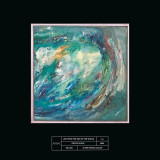
The artwork is a delicate and impactful oil painting by Colombian artist Kevin Simón Mancera, who has collaborated many times with the label before (“Maracas, tambourines and other hellish things” tape and the Lola’s Dice LP).

What the experts are saying:

“Alex (Figueira) dove into this work with a brutal cohesion between lyrics and synths. Timbre poetry, sound poetry (you name it). And that, superimposed on his always impeccable percussive base, confirms the title of “avant-garde visionary of our beautiful Latin music”".
EBLIS ALVAREZ (MERIDIAN BROTHERS)
“Papa Upa's infectious quirkiness is a balm against boredom. A mature album, but without an expiration date”.
GLADYS PALMERA

“Here there is a lot of strength, drum, cadence and psychedelia, lost dance rhythms, united in an intercontinental Latin/African/and Caribbean journey, a unique winning combination that we could consider the new “Ritmo Figueira”.
DISCODELIC

Conjunto Papa Upa are: 


Alex Figueira - Timbales, percussion, vocals. 

Gerardo Rosales - Congas, percussion, vocals. 

Ramón Mendeville - Bongos, percussion, vocals. 

Randy Winterdal - Bass.

Andrew Moreno - Guitar.

Nico Chientarolli - Organ, piano, synths.


All songs written by Alex Figueira. 
Arranged and performed by Conjunto Papa Upa. 

Recorded, produced, mixed and mastered by Alex Figueira at Heat Too Hot, Amsterdam.


pre-order now01.08.2024

expected to be published on 01.08.2024

PLUSH - MORE YOU BECOMES YOU LP

In a joint venture with Weird Vacation, fmd is pleased to announced the long overdue reissue of the classic Plush debut album, More You Becomes You. Originally released in 1998, More You Becomes You was revered upon release and has been remastered from the original tapes by Jason Hillier with new Digital and DL masters created by Bob Weston who also recut new lacquers for the vinyl reissue. Described by Uncut magazine as “One of the most charismatic and eccentric pop craftsmen of the past twenty years”, Liam Hayes has been making critically acclaimed records since the 90’s. His first single “Three-Quarters Blind Eyes b/w Found a Little Baby” released under the moniker Plush, was cited by the NME as being “..one of those rare records - and incredibly rare debuts - that instantly seems a classic..” Although he emerged from the Chicago indie-rock scene, Hayes is often compared with artists such as Jimmy Webb, Brian Wilson, Laura Nyro and Harry Nilsson. Like some of the best folk-pop or soft soul from the 1960’s and 1970’s there is a timeless quality to his music. Re-release of debut album More You Becomes You is remastered from the original analogue tapes by Jason Hillier and recut for vinyl by Bob Weston, who also remastered the CD and Streaming formats. A deluxe 12 page full size booklet comes with the LP version (which also comes packaged as close to the original as possible, with a printed outer envelope/bag) and a 20 page booklet comes with the CD version put together by Liam and Jason Harvey, with Sleeve Notes by John Mulvey.

out of Stock

Order now and we will order the item for you at our supplier.


Last In: 23 months ago
Old Saw - Dissection Maps LP

Old Saw, the enigmatic New England collective led by Henry Birdsey (Tongue Depressor), return with their third long-playing record, Dissection Maps. It is not enough to trace the fields. The choreo-cartographic demands the casting of stone, a grassfire, a carnival; something with which to rupture the horizontality of existence and imagine the vertical. Earth is the eighth morning, folded against the week's work. The field is a line drawing of oblivion. The house is a forest in the shape of a womb. America is a quarry in the image of god. (Aidan Patrick Welby – 2024) “The band captures the American stretch, the spaces in-between and the hollowness that haunts us along those routes…fades the radio to static to let the nothingness linger among the soul.” (Raven Sings the Blues) “evokes an ambience of prayer-like solemnity that celebrates something decidedly terrestrial, what the label describes as “a rusted and granular shadow world where the dive bar meets the divine.” It recalls one of those junkyard shrines built by some sincere eccentric, improbably wonderful forms of weathered stone and scrap metal standing like totems to an unrecognised religion rooted in the earth around us.” (Various Small Flames)

pre-order now30.06.2024

expected to be published on 30.06.2024

LEON BRIDGES  & PASTOR T.L. BARETT - LIKE A SHIP
 
2
also available

Black Vinyl


Numero's second bundle of cover 45s is all things soulful. The Rotterdam-based Another Taste electrifies Maxx Traxx's 1984 Chicago boogie grail "Don't Touch It," which makes its debut on the 7" format here. Colemine Records' Say She She delivers a glamorous rendition of Jim Spencer's yacht-disco hit "Wrap Myself Up In Your Love." Columbia Recording artist Leon Bridges effortlessly transforms Pastor T.L. Barrett's "Like A Ship," updating the 50 year old gospel soul classic for the 21st century. All three are housed in a newly imagined Numero custom sleeve, reflecting the many shades of our ongoing Eccentric Soul 45 imprint.

pre-order now14.06.2024

expected to be published on 14.06.2024

Aural Imbalance - Infinity Spectrum 2x12"

Aural Imbalance has enjoyed a colourful and celebrated journey through music over the years, taking in ambient soundscapes, deep house and of course, a pioneering role in atmospheric drum & bass. With Spatial, he has unearthed a pure, varied musical prowess seldom seen, with the ability to control both the lighter aspects of the mix as well as expert breakbeat craft. Infinity Spectrum showcases the breadth of talent Aural Imbalance possesses in one incredible package, not to be missed.

A1 - Aurealis
Opening the album with a wonderfully serene track, Aural Imbalance delicately rolls out his trademark smooth ambience with building cymbals and an energetic break merging perfectly in the mix - along with a great, pounding undertone of bass. Riddled with old-school sensibilities, Aurealis layers the building blocks until the track opens up further through a superbly lush breakdown, blooming like a flower in the summer sun before the breaks return.

A2 - Glistening Stars
Washing strings and the chitter-chatter of playful effects introduce Glistening Stars, before familiar, crisp old school breaks steal the limelight. A happy earworm melody soon reveals itself, and the breaks are gradually filtered back in following an other amazing breakdown before the melody takes on new life. Packed with detail and soul, this track will repeat on you long after you've moved on.

B1 - Alpha
Curious, apprehensive tones punctuate a fascinating intro, with a deep old school bassline creeping out first to greet us, before the hi-hat laden break loses its inhibitions and roams free.
Crafting a deliciously textured atmosphere, Aural Imbalance continues to showcase the breadth of his production techniques in his Spatial form, flecking the track with sumptuous melodies to create yet another gem.

B2 - Stargazers
This piece opens with a special blend of quiet, epic serenity, evoking hope and wonder as amen cymbal work and a stabbing snare-heavy break pattern rise and fall in the surrounding symphony. The quietly musical bassline plays a key role in the aural world-building here, complementing the breaks it harmonises with superbly. Aural Imbalance allows the composition to breathe and flourish for a superbly executed final act. Delightful.

C1 - Slow Motion
Introduced with quietly filtered breaks, Slow Motion dials back the pace with a break pattern which relaxes the snare while still maintaining a playful energy as the kicks and bass bumble along below. A uniquely atmospheric yet eccentric melody takes shape with dreamy pads filling the backdrop, and calming scatterings of echoing effects colliding and combining to generate a blissful collage of sound.

C2 - Apparition
Switching up the vibe we have Apparition, which boldly utilises long, tranquil yet purposeful pad work before an immense break pattern riddled with stark snares and a jumpy bassline which rides the smothered kickdrums so well, they appear to be fused as one. The breaks on this are truly special and will move the discerning dancefloor for sure, Aural Imbalance continuing to reveal a never-ending depth to his sound.

D1 - Artificial Satellite
Introduced with smooth synths and DJ-friendly hi hats, Artificial Satellite sees Aural Imbalance laying down a fresh showcase of old-school breakbeats, laced with that inimitable Spatial flavour. A swirling low-key sci-fi vibe punctuates the breakdown before the beats re-emerge. A deep, brooding bassline pulses beneath throughout, while the perfectly executed breaks enjoy their final flourish.

D2 - Unknown Forces
Finally, up steps Unknown Forces for a blistering finale to the LP. Aural Imbalance is at his amen-editing best here with a truly superb showcase of analogue break patterns to nourish the ears and set pulses racing on the dancefloor. Deep bass elevates the gentle intro before thumping kicks begin an epic workout, chopped to perfection with synths and strings flying gracefully above. We couldn't have a Spatial LP without an amen banger could we? What a way to end

Words by Chris Hayes (Spatial/Red Mist)

out of Stock

Order now and we will order the item for you at our supplier.


Last In: 12 months ago
LAUGHING BASTARDS - Fetish LP

Laughing Bastards

Fetish LP

12inchWERF246LP
DE W.E.R.F.
26.04.2024

Ever since their auspicious beginnings, more than a decade ago, Laughing Bastards have giddily delighted in impurity. Initially a reeds-guitar-bass trio modeled after the classic Jimmy Giuffre 3, the band has remained truthful to its original spirit. Saxophone player Michel Mast and guitarist Jan-Sebastiaan Degeyter have remained its core, but the band went through several permutations, first welcoming Eline Duerinck (cello) and Marcos Della Rocha (for Unanimal in 2019) and solidifying its present-day line-up with bassist Cyrille Obermüller.

Bastards. It's kind of a rude word to throw around carelessly, but there has always been that element of being irregular, being too stubborn to comply with what is expected, that has set them apart. This is nowhere more evident than in the material contributed by Degeyter, who wrote more than half of the album's compositions. A talented illustrator and designer (he created a few of their striking album covers) as well as a versatile guitarist, Degeyter always manages to add a strong visual component to his material. In combination with his knack for pulling exotic influences into the band's overall sound, it leads to a playful, cinematic eccentricity.

"Tigraman" and "Black Spoon" are examples of this. Both are infused with an Ethiopian-tinged sound, but while the first one develops the catchy throbbing of a trance-like soul/rock tune, the second exudes the lush cadence of Golden Age Ethio jazz, the kind that gets under your skin with those sensual, irrepressible rhythms. They are a nice match with the increasing drama of the Slavic-tinged "Red Lemon", the slow, dreamy flow of the Jamaican dance hall-inspired "Sand", a strong feature for Duerinck, and "Dosi", that shows Obermüller's knack for propulsive melody.

The synesthete in Degeyter gets free reign in "Calliope", chamber jazz in which sweeping sax and cello are kept grounded by guitar, bass and drums. Mast's odd meter-song "Fetish" is another showcase for the band's effortless dancing and some gorgeous tenor schmooze. Della Rocha's "Turquoise" starts off in brooding, contemplative way and keeps simmering on a low, glowing fire. To top it off, there are a few covers that remind you of the band's origins. A new take on Giuffre's rootsy "The Train and the River" stresses their loose flexibility with an Americana style somewhat reminiscent of Charlie Haden, while Carla Bley's evergreen "Vashkar" gets a carefully constructed makeover to close out the album with grace.

On their latest album, Laughing Bastards prove they are a quintessential Belgian band - soaking up sounds and influences from all over the place while maintaining a tight unity - with an international appeal. Combining jazz and chamber music with ideas from pop music and multi-colored strains does not only give their music an iridescent edge, but also keeps the interplay fresh and inspired, something to return to while waiting to see them live on stage.

pre-order now26.04.2024

expected to be published on 26.04.2024

Klein - STAR IN THE HOOD LP

The vinyl edition of Klein's 2022 album: »STAR IN THE HOOD« plays like a cracked, tarnished mirror of contemporary numbing music, replacing long-form expression with tighter, more explosive and sometimes completely freeform transmissions that will wake you up from your overly comfortable environmental music slumber. Opening with cycling ghost drones, dialog and piano motifs that blur into heartfelt noise, »black star« is all loping, looping piano and chthonic vocals spiked with cheese-grater noise and chipmunked chirps. It’s Klein’s delirious vocal runs that push the album to the next level though; like her style-defining »Lagata« and the Hyperdub-released »Tommy,« she subverts the raw material that makes up R&B, turning memorable hooks into blurry impressions that will glue to your mind like a diva moment on a Suburban Bass cut.

She keels into longform on »schooled,« fogging organ drones into hazed clouds that gust into imposing shapes over a 10-minute duration, rekindling the dialog between contemporary noise and gospel music. Grandiose classical sounds receive a similar treatment on ‘Friend in the Mirror’, pulled into disorienting shapes that dispel any notions of class gatekeeping; in the final third, Klein’s voice interrupts the mood, before machine-gun percussion reminds us not to get too comfortable. If yr in search of beauty, »postcode wars« finds Klein fuzzing euphoric chords into an afterparty woosh of half-heard voices and dribbling synths. She simultaneously channels rapture and wrath, poignantly torching the contemporary societal skeleton without losing her near-at-hand community in the process.

Midway through the album there’s a thematic pivot signalled by the brief »shorty alert,« a trilling mass of carnivalesque vocal quirks that sound like spiders spitting DMT into yr eardrums. From here, things get darker and more unsettling: there’s doomed subterranean ambience on »signed and delivered«, Disney-esque piano motifs, blown-out lo-fi outsider rawk on »Swerve,« and speaker garbling free eccentric soul on »brand new day,« each struck through with that unmistakable high-vs-low culture posturing. It all brings us to the album’s unsettling one-two punch of ‘haha hehe business’, maybe the foamiest track we’ve heard from her this year, and the zonked »winter« - a piece that’s as crystal clear as Klein gets, an unprocessed heartstring-tugging vocal performance over acoustic guitar twangs.

pre-order now26.01.2024

expected to be published on 26.01.2024

Buddy & Julie Miller - In The Throes LP

After forty years of marriage, Buddy and Julie Miller have learned to welcome a song however it arrives, questioning only where the song is taking them rather than where it originated - There's no process, no assembly-line procedure, just an openness to those bursts of inspiration and those hours of refinement, which means their fourth album together, In the Throes, sounds lively and diverse, eccentric and slightly askew: a deeply soulful collision of mournful gospel, dusty country, cosmic blues, lusty rockabilly, ecstatic r&b, and anything else that crosses their minds

pre-order now29.09.2023

expected to be published on 29.09.2023

Otto Willberg - The Leisure Principle

Black Truffle is pleased to announce The Leisure Principle, a new solo LP from London-based bassist and sound artist Otto Willberg. A key player in the London underground, Willberg is often heard on acoustic and electric bass in free improv settings and bands with Laurie Tompkins (Yes Indeed) and Charles Hayward (Abstract Concrete), as well as the fractured No Wave unit Historically Fucked. His previous solo releases have ranged from extended technique double bass to explorations of the acoustics of a 19th century artillery fort. But nothing Willberg has committed to wax so far prepares a listener for The Leisure Principle, six unashamedly melodic improvisational workouts created almost entirely with heavily filtered bass harmonica and electric bass. On the opening ‘Reap What Thou Sow’, a single-note bass harmonica loop pulses along underneath a roaming bass solo, the side-chained envelope filtering (where the dynamic behaviour of the bass determines the filter for both bass and harmonica) fusing the two instruments into a single stream of burbling shifts in resonance. After several minutes of patient exploration of this low-end landscape, the music suddenly opens up in widescreen with the entrance of Sam Andreae’s graceful melodica chords, spreading out across the stereo field. From this epic opener, each of the remaining pieces goes on to explore a slightly different aspect of the terrain. On ‘Shadow Came into the Eyes as Earth Turned on its Axis’, a similarly buoyant harmonica bass line provides the foundation, but this time playing a soulful descending riff, its almost R&B feel abstracted and half-obscured by the filtering. On ‘Mollusk’, echoed bass arpeggios skitter between elegiac chords somewhat reminiscent of the opening of John Abercrombie’s ‘Timeless’, before settling into a hypnotic groove. On the record’s second half, Willberg pushes further into the possibilities of his idiosyncratic instrumentation. On ‘Wetter’, bass and harmonica come together into a monstrous, growling jaw harp; on ‘Had we but world enough and more time’, the subtly shifting pulsating patterns start to feel almost like a kind of evaporated, drum-less dub techno until an eruption of wheezing bass harmonica gives the piece a comically folkish turn. Willberg’s melodically inventive and virtuosic bass performance calls to mind any number of fusion touchstones, from Jaco Pastorius to Mark Egan’s singing tone in the early Pat Metheny Group—even Anthony Jackson’s work with Steve Kahn. But with its radically reduced instrumentation, The Leisure Principle is also an exercise in minimalism, and the absence of percussion gives even its funkiest moments a strangely abstracted quality. At times, its uncanny blend of the abstruse and the immediate suggests the fried pop experiments of David Rosenboom or the skewed but deeply musical DIY of 80s underground groups like De Fabriek. Both easy on the ear and profoundly strange, The Leisure Principle proudly takes its place among the most eccentric offerings on the Black Truffle menu.

out of Stock

Order now and we will order the item for you at our supplier.


Last In: 2 years ago
Stuck - Freak Frequency LP

Freak Frequency was a fitting title for the new material Greg Obis was planning for Stuck, the frenetic and twisted post-punk outfit he formed in 2018. Inspired by the doomy social economics of Mark Fisher’s Capitalist Realism, the bleak worldbuilding of horror games Demon’s Souls and Bloodborne, and the bombastic yet arty satire of Devo, Obis channelled his audio analogy into Freak Frequency, an album ringing out with explosive sounds and ideas.

Stuck formed after Obis’ previous projects, Yeesh and Clearance, called it quits in short proximity. Obis is on guitar and vocals, which span from booming theatrics to ecstatic yelps. The project’s rhythm section is completed by shoegaze guitarist-turned-chugging bassist David Algrim and tightly wound drummer Tim Green—also a graphic designer, and the artist responsible for Stuck’s distinctively unified visual aesthetic. Original co-guitarist Donny Walsh contributed freely inventive lines for the first few years of the project, including on Freak Frequency; Ezra Saulnier of Red Tunic, the newest member of the band, now brings calculated contrapuntal riffs to match Obis’ parts.

The building blocks of Stuck include the egg punk eccentricities of Uranium Club and The Coneheads filtered through noise rock power, à la Jesus Lizard or Slint; that melange is glittered with the precision microtones of Unwound and Women. “I want the feeling of immersion and chaos and tension, with a big guitar amp playing a big chord,” says Obis of his inspirations, citing friends and peers Cloud Nothings and Preoccupations. “But I want it delivered by having a lot of smaller points of light poking through.”

In fact, writing for Freak Frequency began while Content’s recording was still underway—beginning with “Scared,” which features acoustic layers under feedback squalls. “Time Out,” with motoric guitars in the sputtering lineage of Wire, was also composed in late 2019. Obis wrote it about the cycles of compulsion and shame woven into social media use, and the way negativity drives algorithmic engagement. It became an exciting exercise for the group in ramping up speed; “I thought I knew how far I could push Tim’s tempos,” Obis recalls. “But Tim kept insisting we do it 20 bpm faster than what I had. He is an absolute monster for playing that.”

Album opener “The Punisher,” a spiral staircase of disembodied guitars and rhythmic slams over a 2/4 beat, came in the aftermath of the January 6 insurrection. It felt immediately emblematic to Freak Frequency, and Obis describes it as his favorite Stuck track: one he wishes he could write again and again. “It hits all the boxes that Stuck can do: it’s goofy, but there’s a lot of intricate guitar interplay, and at the end, there’s a big payoff,” he explains. The last song written was “Do Not Reply,” a pre-album single that came to Obis after engineering for Melkbelly and channelling their earworm melodies. Algrim wouldn’t let it on the record unless Melkbelly’s front person Miranda Winters dueted on vocals; she was happy to oblige, and the gritty epic closes Freak Frequency.

With slippery snark, percussive heft, and funhouse mirrors of sludge, Freak Frequency delivers its needed screeds with gratifying nuance. If Stuck’s interpretation of this messed-up world goes down like a bitter pill, it’s only because its sugar coating is too delicious to keep from eating.

out of Stock

Order now and we will order the item for you at our supplier.


Last In: 2 years ago
Fatlip & Blu - Live From The End Of The World LP

As a member of seminal hip-hop group The Pharcyde, Fatlip helped expand the boundaries of the 1990s L.A. rap scene, releasing classic albums steeped in eccentric creative excursions rather than hard-edged gangsta bravado.

Following in those footsteps, acclaimed emcee Blu has been at the forefront of the independent hip-hop landscape since the late 2000s, narrating the full range of experience in the City of Angels with impressive lyrical ingenuity.

These two famed artists recently joined forces for the collaborative album Live From The End Of The World, a dazzling rhyme whirlwind boasting an overwhelming collection of West Coast lyrical talent, including Del The Funky Homosapien, Gift Of Gab, MC Eiht, and Ras Kass, along with members of iconic groups Jurassic 5, Tha Alkaholiks, Souls Of Mischief, Freestyle Fellowship, and Digital Underground. With production by Madlib, Nottz, Sa-Ra, Knxwledge, and Exile, the album is now available in physical form for the first time ever. This deluxe release includes two new bonus tracks featuring Slimkid3 (of The Pharcyde) and Pigeon John.

pre-order now23.06.2023

expected to be published on 23.06.2023

Michael O'shea - Michael O'shea

Michael O'shea

Michael O'shea

12inchACMOSLPX1
ALLCHIVAL
20.04.2023

Repress!

Using an old door, 17 strings, chopsticks and combining them with phasers, echo units and amplification, the new device was to become his signature sound, mixing Irish folk influences with Asian and North African sounds in a mesmerising and soulful new way that brought him to the attention of the leading improvisers of his day - Alice Coltrane, Ravi Shankar, Don Cherry and more.

A logical follow up to AllChival's recent reissue of Stano's debut LP, Michael O'Shea's self titled LP was originally released on Wire's Dome Imprint in 1982.

The background to the album is as interesting and inspiring as the artist who created it - born in Northern Ireland but raised in the Republic, O'Shea was keen to travel and escape the troubles of his home.

Wandering throughout Europe and the Middle East, O'Shea found himself living and working as a relief aid in Bangladesh in the mid Seventies where he learned to play sitar while recovering from a bout of hepatitis. A later period spent busking in France accompanied on zelochord by Algerian musician Kris Hosylan Harp led to O'Shea's idea of combining both instruments as a homebuilt instrument - Mo Chara (Irish for "My Friend").

He later described the process on the back of the LP himself saying:

"Having sold my sitar in Germany and being desperate for money to travel to Turkey, I conceived of the idea of combining both sitar and zelochord. The first Mo Cara was born, taken from the middle of a door, which was rescued from a skip in Munchen"

A combination of dulcimer, zelochord and sitar, O Shea would play it with a pair of chopsticks, striking the strings softly using Irish folk rhythms mixed with the rich, nostalgic sounds of of the many Asian artists he'd encountered on his travels.

It was a pan cultural sound standing at an unusual crossroads of folk, traditional, rock, progressive, jazz, electronic and post-punk worlds without hesitation.

Perfecting the instrument on the streets, there were further spells spent busking in the underground stations and cafes of London's West End and Covent Garden during the heady days of the 1970s when they were full of eccentric street entertainers, jazz improvisers and musical pioneers.

His work with Rick Wakeman never saw the light of day but O'Shea's contact with the world of post-punk London ensured his name would live on.

Introduced to Wire's Bruce Gilbert and Graham Lewis via cartoonist Tom Johnston, O'Shea eventually acquiesced to an open invite to record at their studio. Turning up unannounced in the summer of 1981 the LP was recorded in a day in the legendary Blackwing Studios and released on Dome the year after.

The first side features the fifteen minute masterpiece "No Journeys End" with the B side featuring more input from Wire in processing the Mo Chara sound.

Lewis himself said years later of the forgotten masterpiece: 'I always said it was the best job we ever did.'

After an aborted LP with The The's Matt Johnson the following year, O'Shea quietly disappeared from the formal recording world and his brief but unique contribution to the music world came to a sad end in 1991 when O'Shea was struck by a post van and died a few days later in hospital in London.

This repress on All City's AllChival imprint has been remastered and reissued with the approval of both Dome and his surviving siblings.

out of Stock

Order now and we will order the item for you at our supplier.


Last In: 3 years ago
ALEX FIGUEIRA - MENTALLOGENIC LP

Edition OF 500 copies, Comes with insert and download code.

An album that sounds like The Menahan Street Band playing in a tropical jungle, at dawn, right at the point when the first rays of sunlight penetrate the dark depths of the forest. During the 2022 summer of natural disasters, under an unprecedented heatwave, and haunted by news reports of ancient relics, sunken ships, and hunger stones resurfacing as rivers dried-up all-over Europe, Amsterdam based multi-instrumentalist producer Alex Figueira started to hear uncanny metallic vibrations And eerie melodies of untraceable origins, day and night. He recalls nightmares of winged creatures inside timeless structures of Escherian architectures playing cosmic instruments amidst tropical storms
and acid rains. As the visions came more often, his wife reported that he babbled during his sleep about South American demon Yurupari. Soon, Alex found himself in a sleepless state and decided to cleanse the studio, with hallowed rites and
the intense burning of Palo Santo. After almost burning the studio down, he turned to his neighbourhood’s most experienced psychic, seeking answers. He was told there were “cosmic entities” trying to manifest a message “too complex for us to understand in this dimension” and the only way he could find peace was to deliver those messages in a decipherable form. It was then he decided to transmute his hallucinations into music, an all-or-nothing cathartic solution.

Alex entered a feverish dream, fuelled by the kaleidoscopic motion of the cosmos, ancient meteor showers, and visions of forgotten interstellar South American gods. He remembers very little of the work, but the outcome is this record. Entirely composed, recorded, produced, and mixed in a frenetic nine-day studio stint.

How the experts describe it:

”Just when outernational vinyl vampires thought they had it all sewn up, the metronomic makeshift
magician known as Alex Figueira unravels the entire fabric of your record collection to expose a gaping
hole where PUNKUMBIA and Transplant-Tropicalia should be. Reducing an expansive palette of
influences to a recipe that tastes wildly exotic but comfortably over-familiar, Alex’s roles as both
scavenger and chef, bookend a whole ensemble of other highly adept musical personalities in between.
Discover this record NOW, or wait until all your friends (or enemies) recommend it to you later.”
Andy Votel (Finders Keepers)

“Incendiary, lysergic takes on South American and Caribbean music from one of the scene's truly
authentic and eccentric producers. You can always count on Venezuelan-born, Amsterdam-based,
multi-instrumentalist, music-fanatic Alex Figueira to surprise and innovate, whilst consistently keeping it
true and real. The former Fumaça Preta drummer & front-man's debut solo album does not disappoint!”
Miles Cleret (Soundway)

“The one man band Alex Figueira comes through with some major flavors on this one. Cumbia beats and
psychedelic elements with that Latin touch of soul & Funk!”
Kenny Dope (Masters at Work)

“I really respect Alex Figueira’s DIY ethos. From running his own little funky recordstore to running his
own label and making his own music by playing every instrument himself. I was already a fan of the song
“Aprende” which he released on 7 inch and with“Mentallogenic” he takes it a step further in that same
vibe. From songs like “La Culebra” making use of a vocoder in his typical latin sound to songs like
“Serious” playing with rhythmic changes and topping it off with some synth flavors. A lovely and fun
album”.
Antal (Rush Hour).

out of Stock

Order now and we will order the item for you at our supplier.


Last In: 3 years ago
Various - Happy Land (A Compendium Of Electronic Music From The British Isles 1992-1996 Volume 1

Future Jazzers, notorious experimentalists and outfield eccentrics stumble onto the dancefloor. In the 90s. In the UK.

From an electronic music perspective, the period 1992 to 1996 in the UK that this compilation celebrates, was one of dizzying sonic diversification.

It was also a particularly turbulent time in the UK, not only politically and economically, but also culturally too. Economic catastrophe in ‘92 was followed by widespread poverty, a cost of living crisis and countless political scandals. Meanwhile, John Major’s Tory government pandered to its political base via unpleasant, authoritarian legislation that seemingly sought to crush rave culture, alternative lifestyles, and traveller communities. The UK was not so much a ‘Happy Land’ – to quote the name of this compilation – as an angry and divided one. Sounds familiar, doesn’t it?

Throughout, the music created by producers based across these Isles remained uniquely British, speeding up a process begun in the late 1980s through the emergence of street soul, bleep & bass and breakbeat hardcore – musical styles whose roots in multicultural inner-city communities made them distinctly different from the Black American sounds that had inspired their creators. It was here, rather than in the indie pubs of Camden, that real musical revolutions were taking place.

This deep diving selection brings together some truly adventurous and original electronic music from this period, much of it very hard to find. Major label outings connect with white label oddities with ease. Perhaps it could even be argued that many of these unearthed gems fit more easily into DJ sets in 2023 than they ever did at the time. The off-kilter swing of Richard D James’ obscure and highly sought after Strider B outing, ‘Bradley’s Robot’ is joined by further rare cuts from Cabaret Voltaire and the Black Dog, and artists as diverse as Ultramarine, Herbert, Fretless AZM, and Radioactive Lamb, amongst others.

This collection has been lovingly selected, compiled and mastered for maximum sonic playback. This very special release boasts sublime pastoral themed artwork, as well as informative and passionate liner notes by celebrated music scribe Matt Anniss (‘Join The Future’).

out of Stock

Order now and we will order the item for you at our supplier.


Last In: 2 years ago
Items per Page:
N/ABPM
Vinyl