Search:east west

Styles
All
Piero Umiliani - Il Ponta Dell’Asia LP
  • A2: Vento Dall'oriente
  • A3: Mura Di Bisanzio
  • A4: Il Ponte Dell'Asia
  • A5: Mito Asiatico
  • A6: Fortezza Medioevale
  • A7: Vestigia Elleniche
  • B1: Ballata Turca
  • B2: La Valle Di Corem
  • B3: Pastorale Armana
  • B4: Festa Al Villaggio
  • B5: Ballo Popolare
  • B6: Dolce Anatolia
  • B7: Vita Nei Campi
  • B8: Vita Cittadina
  • B9: Giovani Di Ankara

A captivating deep cut from the golden age of Italian library music, Il Ponte Dell’Asia stands as one of Piero Umiliani’s most evocative and exotic soundscapes. Originally released in 1967 as a private pressing for Italian the TV documentary by Corrado Sofia, this elusive gem blends Far Eastern motifs with the elegance of mid-century European jazz and the textured experimentation that defines Umiliani’s best work.

On Il Ponte Dell’Asia, Umiliani constructs a cinematic bridge between continents, layering modal melodies, sinuous flutes, shimmering vibraphones, and richly orchestrated strings over hypnotic rhythms and subtly psychedelic touches. The result is a masterful fusion of East-meets-West that channels both travelogue fantasy and avant-garde sophistication — a rare synthesis of traditional instrumentation and modernist sensibility.

Exported from the original tapes, pressed on high-quality vinyl and with faithfully restored artwork, this reissue offers a long-overdue return to one of Umiliani’s most immersive sonic journeys, an essential for fans of Italian library music, film scores, and genre-defying jazz.

Rediscover a lost jewel from the vault of one of Italy’s most visionary composers — where bamboo forests, smoky clubs, and dreamlike landscapes converge in sound.

©℗ 1967, Liuto Edizioni Musicali / Licensed to Holy Basil Records by Liuto Edizioni Musica

pre-order now08.08.2025

expected to be published on 08.08.2025

DJ Narciso - Capítulo Experimental

This new "Experimental Chapter" by DJ Narciso comes as no surprise, really. Autonomous in the motorization of his music, pushing for progress within the framework of an undeniable (inescapable?) heritage. Twisting and bending sound every step of the way, Narciso definitely keeps in touch with the dancefloor, offering the always much needed transcendence through distinctive, non-linear melodies and patterns. The artist pursues a direct link with bodies in motion but seldom in the expected, institutionalized way club culture is being largely promoted.

This is challenging dance music, proud statements of difference. Narciso's previous record was named "Diferenciado". Now we get "Dificuldades", a track that simultaneously carries the weight of being somewhat odd and the difficulties of life. Check how the piano is venting, freestyle, communicating a feeling, and then lets itself get stuck in a loop, but that's exactly when the groove really starts flowing. And then another layer. It's like direct speech.

A common assertion of pride is found in the origin of the artists. The ghetto as a place where any transformation projects more power precisely because of... inherent difficulties. As others (including himself) did in more or less obvious ways, Narciso clearly states "I come from the ghetto" ( "Não Sabes" ). Twice the value. At least. Almost every segment of music in this album ends up sounding heavily emotional, reaffirming what may be - perversely - a well-known characteristic of Portuguese music: melancholy.

"Não Quero" begins side B as a march maybe more significant than a thousand words, such is the ominous tone of its texture. Next track is another lunar tarraxo, pulling down the shades. Then, "Dor de Barriga" lets things loose again, steering clearly off road, shouting this way and that until a peaceful resolution comes. In "Livra-me Desta", vocal snippets blend into synth snippets, disembodied voices abandon all traces of humanity and finally mutate into different entities that, towards the end, again sound vaguely human but now we find ourselves doubting. Closer "Bob" is a rather classic percussion track with plenty of echo, reverb and an unconscious nod to dodecaphonic music. Unlikely? No, the structural ADN of this music is made up of elements western and eastern, southern and northern. To say all-over-the-place is usually not flattering but in this case the expression translates as wonder, surprise, The Unexpected, and reveals Narciso perfectly at ease inside the nucleus of creation.

pre-order now01.08.2025

expected to be published on 01.08.2025

Kool and The Gang - Rated X

Kool and The Gang

Rated X

7"-VinylDYNAM7150
Dynamite Cuts
16.07.2025

Oh so happy - A first time on 7" for the Superist Funkist band the one and only Kool & the Gang. We have picked Two Timesless club floor smashers. From the Good times LP " Rated X" which is just fire on the dance floor, and this is the first time for this killer kool & the gang track to make its way to a 45rpm, for years ..... booom!!!!
On the flip is North East South West a perfect Kool and the Gang funk vibes groove.

out of Stock

Order now and we will order the item for you at our supplier.

Last In: 14 months ago
Madlib / Georgia Anne Muldrow - Seeds
  • 1: Seeds
  • 2: Wind
  • 3: Calabash
  • 4: Kali Yuga
  • 5: The Birth of Petey Wheatstraw
  • 6: Best Love
  • 7: Husfriend Intro
  • 8: Husfriend
  • 9: Kneecap Jelly
  • 10: The Few
  • 11: Remember
  • 12: Poet
  • 13: Illicit Funk
  • 14: Dirty Dude
  • 15: East Meets West
  • 16: Sally
  • 17: Young Spirit
  • 18: Cake Boss
  • 19: Violet Sky
  • 20: Cops Still Ain’t Shit
  • 21: Travlin’
  • 22: Fonky Soul

The original Madlib instrumentals to Georgia Anne Muldrow’s critically acclaimed album; “Seeds” which was released in 2012 on SomeOthaShip Connect. Heralded as one of her most captivating and immediate front-to-back statements of purpose, a deeply spiritual collection of songs. It was the first time in her career where she handed over all production duties to someone other than herself, that someone being the legendary Madlib.
The beats on “Seeds” are naturally heavy, funky, soulful, abrupt yet hypnotic. All the characteristics of Madlib’s signature sound we know and love.

On the B Side of the vinyl is a collection of Georgia Anne Muldrow instrumentals from across 3 Dudley Perkins albums, “Young Spirit”, “Self Study”, and “Holy Smokes.” Beats with synths reminiscent of J Dilla’s electronic era but with enough G-Funk influence to melt your Raiders hat. Bass lines that could get The Click back together. Georgia Anne Muldrow is a master of her craft on the beats and the microphone. This record is a testament to that. Rediscover “Seeds”, the magical powers of Madlib, and why beat tapes will never go out of style.

pre-order now11.07.2025

expected to be published on 11.07.2025

SEX KINO - DEFCON ONE EP

SEX KINO

DEFCON ONE EP

12inchSOIL031
Soil Records
07.07.2025

Following their now cult debut EP, ‘Scream In The City’ and a host of European shows, retro synth provocateurs Sex Kino are back with their latest offering, DEFCON ONE on the highly vaunted Spanish underground label, SOIL Records.

From the explosive electronic disco sounds of such tracks as ‘Space is the Place’ & ‘U-Bahn, to the soaring synths of the formidable ‘East Meets West’, Sex Kino whacks the judges gavel calling to order 50 years of dance music and offers 4 fully realised tracks of poptastic synth wizardry on limited edition vinyl.

out of Stock

Order now and we will order the item for you at our supplier.

Last In: 13 months ago
Elias Rahbani - Mosaic of the Orient

Beautiful mix of eastern sounds and western rhythms, with haunting melodies, nice drum breaks and using traditional arabian instruments alongside organs and drums.

Compilation of tracks from the two Mosaic of the Orient LPs released in the 70's - beautiful psychedelic funk gems.

Right Track is a specialized music label based in Beirut - Lebanon. As an IFPI certified member they are the exclusive Licensee and distributor of multiple international and regional labels in addition to a range of Lebanese Artists. From Omar Khorshid’s arabian-funk to Fairuz’s eerie songs, from Ziad Rabani’s proto-disco to lebanese traditional Wadih Al Safi compositions, Right Track is committed to re-releasing the Immortal Arabic music repertoire on 180 g vinyls, delivering the highest possible quality from remastered audio to satisfy the demanding audiophile connoisseurs.

out of Stock

Order now and we will order the item for you at our supplier.

Last In: 14 months ago
DIRE STRAITS - COLOGNE

DIRE STRAITS

COLOGNE

2x12inchPARA616LP
Parachute
27.06.2025
  • A1: Down To The Waterline
  • A2: Six Blade Knife
  • A3: Once Upon A Time In The West
  • A4: Lady Writer
  • B1: Single Handed Sailor
  • B2: Water Of Love
  • B3: In The Gallery
  • B4: Follow Me Home
  • C1: News
  • C2: What's The Matter Baby?
  • C3: Lions
  • C4: Sultans Of Swing
  • D1: Wild West End
  • D2: Where Do You Think You’re Going?
  • D3: Eastbound Train
  • D4: Sultans Of Swing
pre-order now27.06.2025

expected to be published on 27.06.2025

GRAHAM HUNT - TIMELESS WORLD FOREVER
  • I JUST NEED ENOUGH
  • EAST SIDE SCREAMER
  • ROBOT WORLD
  • SPIRITUAL PROBLEMS
  • BEEN THERE DONE THAT
  • POWER OBJECT
  • FROG IN THE SHOWER
  • CAVE ART
  • CRC
  • MOVIE NIGHT

Graham Hunt hat die intuitive Fähigkeit, sich seinen eigenen Platz in der langen, verwirrenden Geschichte der amerikanischen Popmusik zu schaffen. Der Songwriter aus Wisconsin hat in den letzten vier Jahren hart an Platten gearbeitet, die zeitlosen Gitarren-Pop mit einem vielschichtigen Produktionsansatz und einem schlauen lyrischen Auge verbindet. Seine Musik verbindet das Surreale mit dem Alltäglichen, das Melodische mit dem Rhythmischen, das Kryptische mit dem Triumphalen - und beweist oft, dass Slacker Verspieltheit und Heartland-Ehrlichkeit sich nicht gegenseitig ausschließen. "Timeless World Forever" - die erste Veröffentlichung von Hunt für Run For Cover - bildet den Abschluss einer beeindruckenden Reihe von Songs und öffnet die Tore für eine neue Phase in der langen, produktiven Karriere des Künstlers. Seit Jahren ist Hunt eine feste Größe in der Indie-Rock-Welt des Mittleren Westens, seit seiner Zeit als Kopf von Midnight Reruns und Auftritten mit Künstlern wie Mike Krol und Disq. 2019 veröffentlichte er sein erstes Soloalbum "Leaving Silver City", aber es war 2022 das Album "If You Knew Would You Believe It?", mit dem er seinen Durchbruch hatte. Das 2023er Album "Try Not To Laugh" folgte schnell, und jetzt nimmt "Timeless World Forever" diese Fäden wieder auf. Die drei Platten sind aus einem Guss: alle entstanden im selben Keller in Madison mit einer Beat-getriebenen Dichte und einer klanglichen Fantasie, die Rap und Rave ebenso zu verdanken ist wie dem Power Pop. Es ist schwer, gleichzeitig nach hinten und nach vorne zu schauen, ohne mit den Rädern in einem schlammigen, zeitlosen Schlamm stecken zu bleiben. "Timeless World Forever" ist der Sound eines eines Lebenskünstlers, der einen höheren Gang einlegt, den Fuß auf das Pedal drückt und den Highway in Angriff nimmt.

pre-order now13.06.2025

expected to be published on 13.06.2025

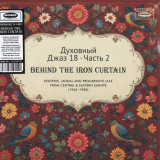
Various - Spiritual Jazz 18: Behind the Iron Curtain PART 2 2x12"

One of the most politically charged terms of the 20th century, the Iron Curtain was a metaphor for political and cultural division. In a post-war telegram Winston Churchill referred to the fault line that ran through Europe between East and West as "an Iron Curtain is drawn down upon their front. We do not know what is going on behind".


In this two-part album, as far as jazz is concerned, we will showcase, describe and celebrate exactly what was 'going on behind'. We see that music is the power supreme, with the ability to transcend all barriers, be they physical, political or metaphorical.


Our liner notes illustrate the complex and contradictory history of Soviet jazz, and the tracks we've chosen cover the key period of the early 1960s to the 1980s. It was during these dark years of the Cold War that the Soviet Union and its satellite states produced a number of outstanding artists playing in a variety of styles. The impact of modernism, from hard bop and Latin to modal and cool jazz, had found its way through cracks in the curtain. The deeply-felt ancestral strains of traditional European folk music were combined with the exciting new and progressive sounds of the West, and a radical, intoxicating brew was created that no amount of guns, tanks or polonium tea could overcome.


We chronicle the triumph of jazz at a time of extreme geopolitical conflict. What went on behind the Iron Curtain in these countries was once mysterious and unknown to the West, but the perseverance of their artists provided sound and light amid the secretive, dark days of the communist-capitalist standoff. There was no end of life-affirming spiritual jazz behind the Iron Curtain.


"Whether it's by improvisation in the African-American jazz tradition, or by a village kobza player standing on top of a damn hill - he feels connected to the stars."

out of Stock

Order now and we will order the item for you at our supplier.

Last In: 3 months ago
COFFIN PRICK - LOOSE ENCHANTMENT
  • Follow You Where You’re Talking
  • Shortly Forgotten Pleasure
  • Loose Enchantment
  • Exile In Exile
  • Work (feat. Steven Brown of Tuxedomoon)
  • Soap
  • Spy v Spy
  • Theme From “Other People’s Lives”
  • Window In Your Eye
  • Western Folly: Floating Love/ Drying Off In The Rain/How Seconds Work

Over and through the hot cement of North East L.A., an almost-dry riverbed winds like a snake through the city. Coyotes lap at its trickling stream by moonlight, as pedestrians rush past it by day without a second glance, their thoughts tangled up in the distractions of life in a sprawling metropolis. Here, amongst the many avenues and gentle hills, we find Coffin Prick (alias: Ryan Weinstein).

Loose Enchantment, this latest Coffin Prick record, is music conceived of in a different frame of mind for humans living in a world nearly-disenchanted with itself. The album consists of eleven new pieces of music recorded by Coffin Prick himself at his home in Los Angeles, a great city of quicksand-like commitments and those who love them enough to uphold the ends of their collective bargains. A record as much about the confusion of modern life as it is endeavored to expose the lusts in the very loins of creation. Sounds enchanting enough for you? Let’s look a little more closely…

On the heels of 2023’s Laughing (Sophomore Lounge), Coffin Prick got busy. And fast. Playing shows into the year with a newly minted live band, while simultaneously working day and night in his home studio laying the ground for what would become Loose Enchantment. Whereas he was essentially a recording know-nothing at the inception of his last LP, he’d learned a thing or two about better capturing his ideas by this point, taking the sidesteps and victories born of the experience Laughing provided and turning the bright lights on them. As many of Los Angeles’s drivers choose to do, it was time to take some surface roads. Odes to self-delusion, the mysteries of creation, cleanliness, and the secrets in other people’s lives.

A little Loose Enchantment for everyone, basically.

pre-order now22.05.2025

expected to be published on 22.05.2025

J.H. GURAJ - THE FLIP SIDE
  • 1: Leap Of No Faith
  • 2: Ask The River
  • 3: Way Too Long Goodbye
  • 4: Spleen On Speed
  • 5: You Got It All Wrong So Did I
  • 6: Fake AF
  • 7: Slowdown Attempts
  • 8: Nothing I Can Do But Flow
  • 9: Everything Sideways
  • 10: Us As Ghosts

Sometimes records reflect life with an unsettling precision, your own breath sticking to a mirror, confounding or transforming reality. J.H. Guraj, real name Dominique Vaccaro, is back with ‘The Flip Side’, an accomplished work of grace and sprawling elegance documenting struggle and a near-death experience that summons ghosts of Western primitive masters, rollicking free folk, minimalist orchestrations, weeping guitars and smooth psychedelics.

Time stopped for J.H. Guraj in 2021 following a brush with mortality, extensive forced recovery and subsequent hints of depression after an almost fatal bike crash, leaving our wandering soul, once again, at the edges. While his previous record ‘Introspection / Migration’ hinted at Middle-Eastern influences and merged the artists’ Arbëreshë upbringing with stoic ecstasis, free-form structures and guitar wizardry under sepia tone curtains, ‘The Flip Side’ twists, turns, falls down and rises to new heights, the widescreen breadth of Dominique Vaccaro’s cinematic vision projects new colours, a stark contrast of pastoral emerald green and pitch black asphalt, urban decay and mercurial mystery.

Like passages from some archaic songbook what astonishes is how detailed the new compositions are, a warm embrace like ‘Way To Long Goodbye’, counterpoint pianos leading the way down a Gershwin avenue; ‘You Got It All Wrong So Did I’ with its Van Dyke Parks arrangement; the 9 minute epic ‘Us As Ghosts’ a haunting ballad that resolves into kosmische landscapes; the muted symphony of ‘Fake Af’ and the spectral disorientation of ‘Nothing I Can Do But Flow’. Gentle drumming from collaborator Gianluca Panici augment the eeriness of ‘The Flip Side’, motions that create a sense of suspension and yearning.

pre-order now16.05.2025

expected to be published on 16.05.2025

Too Short - Short Dog's In The House
  • A1: Short Dog’s In The House
  • A2: It’s Your Life
  • A3: The Ghetto
  • A4: Short But Funky
  • A5: Dead Or Alive
  • B1: Punk Bitch
  • B2: Ain’t Nothin But A Word To Me feat Ice Cube
  • B3: Hard On The Boulevard
  • B4: Paula & Janet
  • B5: Rap Like Me

“In my category, I’m the one and only,” proclaimed Oakland legend Too $hort on his 1990 single “Short But Funky.” Few disagreed then, and even fewer would do so decades later. First appearing in the mid-1980s, slinging homemade tapes out of his car trunk, the man born Todd Shaw has always stayed true to himself. Although he is known more for the dirty side of his rap game, on “Short But Funky,” he also reminds listeners of an important fact: “There’s a serious side to everything I say.” Short Dog’s In The House, was $hort’s sixth studio album, and his second for the Jive label. By the time it hit, he was a West Coast legend, but his rep was growing Eastwards, as the rest of the country started opening its ears to new sounds. Peaking at #20 on the national Billboard 200 chart, the album was exactly what his dedicated fans expected funky, 70s drenched beats made for cars on the boulevard, and no nonsense lyrics that made more sense and dropped more knowledge than he was ever given credit for. For examples of his conscious side, look no further than the P-Funk fueled “It’s Your Life” or the album’s lead single, “The Ghetto.” The album’s second single “Short But Funky” landed somewhere in the middle of $hort and Todd Shaw, talking about where he was at as the new decade broke, and making it clear that he wasn’t going anywhere. His mortality was mainly on his mind after rumors had surfaced the year before that he had died in a crack house. He speaks directly to this crazy episode on “Dead Or Alive.” And although it’s mostly a solo affair, he brings in some heavy artillery and a lot of not for the kids profanity on “Ain’t Nothin’ But A Word To Me,” featuring none other than Ice Cube In between, $hort distributed plenty of tales and charisma for fans to eat up, continuing to build his legendary status as one of the rap trailblazers of the era. Get On Down has repressed this 1990 Bay Area classic album on Blue and Ruby Color-In-Color vinyl

pre-order now16.05.2025

expected to be published on 16.05.2025

SOICHI TERADA - APE ESCAPE ORIGINAPE SOUNDTRACKS IN A BOX (Boxset 4x12")
 
44

4XLP. Hardcover slipcase box. Liner notes from Soichi Terada, Colour: translucent red, clear, blue, and yellow vinyl

It has been 25 years since the release of Saru Get You (サルゲッチュ), known stateside and in the UK as Ape Escape. Ape Escape marked a significant milestone for the PlayStation, as it was the first game to require use of the PlayStation's DualShock (analog) controller. In Ape Escape, the use of the analogue sticks goes beyond camera rotation and acts as an extension of Kakeru's (Spike's) own character, controlling his many gadgets like the stun club, time net, and sky flyer. It's a unique form of control that, really, didn't become popularized until the release of the Nintendo Wii. It feels like a distinctly Japanese design, the sort of off-the-wall design that is either embraced or rejected on a global scale. In Ape Escape's case, the mechanic caught on.

Ape Escape is fast, frantic, and—at times—downright frustrating. Pipo monkeys dash, taunt, and swim away from your advances. They ride water monsters, fly UFOs, and even shoot uzis! Whether it's Kakeru, his friends, or the monkeys themselves, the characters are always running across the levels. This mad dash is enhanced by the game's soundtrack, composed by legendary composer Soichi Terada. As he recalls, the director of the production said, "Spike and his friends always have the image of running." In response, Terada happily produced fast songs with an average speed of over 170bpm. The resulting gameplay and audio is a match made in heaven.

Ape Escape is the first game soundtrack Mr. Terada ever created. The producers of the game heard one of his singles, "Sumo Jungle," and thought his frenetic drum-and-bass (Jungle) would be perfect for the game. The marriage of Ape Escape's charming overworld and Soichi's upbeat compositions is nothing short
of sublime. Especially now, it is difficult to separate the mischievous Pipos and fast-paced action from Soichi Terada's silky smooth synthesizer and heart-pounding bass. Earlier this year (2024), Soichi Terada's Ape Escape work was celebrated by the six-track EP Apes in the Net, which includes music from Ape Escape 1 and 3 (Terada did not compose the series' second installment). The label, Rush Hour Music, has prestigiously championed almost all of Soichi Terada's music, especially his (specifically non-VGM) house, jungle, and drum and bass releases (Sounds from the Far East, Asakusa Light, and more).
Before Apes in the Net, Terada's Ape Escape music was only available on CD, released in Japan around 2010. This release featured reconstructed tracks created by Mr. Terada himself, identical to the music arrangements featured in the game. The biggest difference, of course, was that they were of higher fidelity than was originally available on the PS1 disk format. Completing all of the aforementioned releases is this box set, released by Far East Recording in partnership with Cartridge Thunder and officially licensed by Sony Computer Entertainment. This box set release includes four LPs, housed individually by a hardcover slipcase. This box set includes every song from Ape Escape 1, except those available on Apes in the Net. This box set release also includes one bonus song, previously unreleased anywhere else (including the game itself!).

The music on this box set was meticulously mastered by Justin Perkins of Mystery Room Mastering. Using Mr. Terada's premastered source files, the music was completely and specifically mastered for vinyl. Rounding out the audio is absolutely stunning artwork created by Gobo3D. CT worked with Gobo to recreate some of Ape Escape's most iconic characters, referencing the original Japanese guidebook and other promotional materials. The result is visually delicious 300dpi artwork that takes you straight back to 1999. As uber-fans of the original PlayStation game, Cartridge Thunder and Far East Recording are proud to celebrate Soichi Terada's music and pay our respects to such a legendary PlayStation franchise—on the original hardware's 30th anniversary no less! It's with a happy heart, then, that Far East Recording and CT present to you Soichi Terada's Ape Escape Originape Soundtracks in a Box.

Please note: due to licensing exclusivity, this release does not include tracks previously released on Apes in the Net

out of Stock

Order now and we will order the item for you at our supplier.

Last In: 17 months ago
Ibex Band - Stereo Instrumental Music LP 2x12"

The Ibex Band, with Giovanni Rico and Selam Woldemariam at the creative helm, provided the musical backbone for legends like Aster Aweke, Girma Beyene, Tilahun Gessesse, Mulatu Astatke, and Mahmoud Ahmed, including the iconic album Ere Mela Mela, shaping modern Ethiopian music as we know it today. This 1976 album (Ge’ez Year 1968) played a pivotal role in that legacy and has now resurfaced to set the record straight.

There’s a tendency to talk about the seventies as a golden age of Ethiopian music. There are good reasons for that, and just as good reasons against it. However, the notion of a golden past privileges the role of Western explorers and suggests that the pinnacle of Ethiopia’s musical culture is something only a foreigner can appreciate and unearth. It downplays the complexities of Ethiopia’s culture and history, creating an artificial divide between then and now. And it underestimates the constantly evolving sound that has followed.

The legendary musical outfit The Ibex Band, later metamorphosed into The Roha Band, has played a central role in defining the sound of many of the greatest stars on the music scene of Ethiopia from the mid-seventies onwards–but their golden output has never really waned. The story of the origins of the band that provided the musical backbone for greats such as Aster Aweke, Girma Beyene, Tilahun Gessesse, backing the solo career of group member Mahmoud Ahmed as well as backing Mulatu Astatke and many others has yet to be properly told.

Two misconceptions plague the image of Ethiopian music, one is that the music is pure because it is, by some notion, unexploited, the other is that it is all traditional. To begin with, a combination of political changes between the late sixties and the mid-nineties created an environment where only the most dedicated and skilled musicians struggled on and pursued a musical career against fierce odds. The whole Ibex Band, with Giovanni Rico and Selam “Selamino” Seyoum Woldermarian at the creative helm, are arguably the origo of the vibrant scene in the mid-seventies, and the said pair are foremost responsible for not only navigating the band through troubled times, but also modernizing the 6/8 chickchicka rhythm to a contemporary form. Giovanni laid the rhythmic foundation with heavy looped basslines that reinvented traditional melodies as dance music, and with Selamino’s innovative guitar work they influenced scores of musicians from Abegaz Kibrework Shiota to Henock Temesgen. Even Giovanni’s Fender bass and Selamino’s Gibson guitar inspired younger musicians in their choice of instruments. Not only in choice of instruments but also in sound–even as the digital revolution hit Ethiopian music, a lot of popular music still took its cue from the masters from Ibex and Roha.

Ibex emerged out of the ashes of the sixties group the Soul Echos band, adding Giovanni and Selamino to their ranks and taking their cues from a slew of influences, such as Motown and The Beatles, fused with traditional music. A tighter-knit unit than most bands at the time – Ibex has remained six to seven members throughout their whole career, compared to many bands that were as large as fifteen or sixteen men strong when Ibex set out. Their playing has been viciously focused, economical yet heavy. Just a year before the recording sessions of the album in your hands, Giovanni and Selamino made a contribution to the popular musical lexicon of Ethiopia that was simply defining the popular sound: their arrangement and recording of bandmate Mahmoud Ahmed’s solo effort and real commercial breakthrough tune and eponymous album, Ere Mela Mela, from 1975.

Selamino has never limited himself to being an adroit lead guitarist, but has always been a scholar of history, and as such he has probably contributed as much to modern Ethiopian music with his guitar playing and compositions as with a deepened understanding of modern or contemporary – Zemenawi – Ethiopian music. Selamino’s contributions serve as a metaphor for those of the whole band, at one and the same time creating and defining a new, danceable and updated sound anchored in Giovanni’s bass, whilst also elevating the broader scene through their support for others on the scene and on top of that, increasing the understanding of the music.

There is an understandable desire to romanticize the musical heyday Ibex and Roha were at the forefront of, because so much of the output is sorrowfully hard to come by. Ibex creativity was nothing short of ridiculously fierce compared to many of their Western contemporaries. Based on their sheer recorded output alone they could have usurped the title “hardest working in show business” from James Brown, recording more than 250 albums or 2500 songs in the seventies and eighties. Some only surface as cassettes today, others were never given full LP release, and some are simply impossible to find today. In the light of that, it’s nothing short of a miracle that the recording Stereo Instrumental Music from 1976 (Ge’ez Year 1968) has resurfaced. Unearthed in perfect condition on a chrome cassette, this is musical history comes alive–to set the future straight. Stereo Instrumental Music was recorded in collaboration with Karl-Gustav Lundgren, a Swedish national working for the Radio Voice of the Gospel. It took two sessions at the Ras Hotel ballroom in Addis Ababa. The Ibex Band was the first band in Ethiopia to employ a four-track recorder for their recording (the first available in the country, lent by Karl-Gustav). Later the same week, Giovanni and Selamino realized that, lengthwise, the recorded material fell short of what they wished for, so they recorded four more tracks in one more session on a single-track recorder. The Ras Hotel and Ghion Hotel, where the Ibex Band held musical residencies were to Ethiopia in general and Addis Ababa in particular what Motown was to the USA and Detroit a few years earlier – a hotbed of musical creativity and showmanship.

The most astonishing thing about Ethiopian music of the last half century is how tradition and modernity are intertwined. Because of this feature, it’s kind of hard to tell when there ever was or when we are in a “golden age”. So much of music from the past has been criminally neglected, but because of the hardships in the past, it would be an oversimplification to say that said past was a golden age. Probably, the golden age is what we are approaching, because for the first time both the past and future are accessible, and the monumental contributions from before can lay a firm foundation for a thriving music scene today. The Ibex Band stands firmly in the past, present and the future. That, if anything, is golden.

The detailed history of Stereo Instrumental Music is in many ways unique. To begin with, it couldn’t have been recorded earlier (there were no four-track recorders available) and it really couldn’t have been recorded afterwards either, at least not in the years directly following, because of the toll the musical scene took from the unfavorable political climate that followed when the nascent Derg regime and rival groups tried to assert themselves, the musical equipment lent from The Voice of Gospel Radio simply disappeared from Ethiopia when the radio station folded in 1977. Karl-Gustav Lundgren,
the Swedish foreign national who assisted during the recording, worked with the Ethiopian Evangelical Church Mekane Yesus at the time, recalls how they only had about fifteen minutes to get the microphones in place for the recording as to not alert neither the management at Ras Hotel nor the authorities and most importantly, to complete the recording before the curfew came into effect at midnight. In leaping to the opportunity to use previously unavailable equipment to push their sound forward and improvising to meet the logistical challenges, the Ibex Band displayed the very avant-gardism and adaptability that explains their longevity as a band through the years. The recording of Stereo Instrumental Music is from a given time in history, but it sounds as beyond time.
Much of the energy that burst out of the scene that Stereo Instrumental Music came out of dissipated or got sidetracked during the societal changes Ethiopia went through in the 1970s and 80s. Whilst leaders might have professed to be revolutionary, the work ethic of the Ibex Band can truly be described as that. They never called it quits, but adapted, toured extensively abroad in Africa, Europe, and the Middle East, and found ways to work even in the face of the curfew that curtailed a lot of musical life. They even played major arenas in the nineteen eighties, despite said curfew and restrictions. The whole extent of their legacy has never been told, but their music speaks louder than words, so therefore… tune in to the Ibex Band’s Stereo Instrumental Music.

out of Stock

Order now and we will order the item for you at our supplier.

Last In: 15 months ago
Mekons - Horror

Mekons

Horror

12inchFIRELP770C
Fire Records
04.04.2025
  • A1: The Western Design
  • A2: Sad and Sad and Sad
  • A3: Glasgow
  • A4: Fallen Leaves
  • A5: War Economy
  • A6: Mudcrawlers
  • B1: A Horse Has Escaped
  • B2: Private Defense Contractor
  • B3: Sanctuary
  • B4: Surrender
  • B5: You're Not Singing Any More
  • B6: Before The Ice Age
also available

Red Vinyl


Legendary postmodern, post punk, post human, past caring collective Mekons return with a brand-new album for 2025. Their first release on Fire Records, ‘Horror’ a collection of songs written in late 2022 but providing a horribly prescient reflection of the world in its current miasma and how we got here. ‘Horror’ looks at history and the legacies of British imperialism with mashed up lyrics set against a typically eclectic sound that amalgamates everything from dub, country, noise, rock & roll, electronica, punk, music hall, polka and you can even take your partner for a nice waltz on ‘Sad And Sad And Sad’. The roots of their global sound reflect their nomadic journey through time and space from Leeds to California in the West and Siberia in the East and is woven into the fabric and intricacies of their song creation… Sounding like The Chills and R.E.M circa the I.R.S Records years, ‘Mudcrawlers’ sees just about the whole band joining Jon Langford on vocals speaking of Irish famine and refugees journeying to Wales. ‘War Economy’ shivers in the cold of such Boroughs spiked one-liners: “Clinical coercion will not achieve dominance!” Sounding like its straight off a Jenny Holzer neon sign (she of Abuse Of Power Comes As No Surprise), it’s held together by a disgruntled swaggering riff that underpins an explosion of disquiet. Meanwhile, Rico takes the lead on the maliciously luscious ‘Fallen Leaves’ an appalled and appalling Hammer Horror take on climate breakdown reminiscent of Rolling Thunder Dylan, that recalls The Pogues at their most introspective, its Celtic twilightism augmented by Susie Honeyman’s keening violin as the dying sun sinks down and the river Styx flows on in the pitch black night. Almost 50 years in the making, these Mekons continue to astound, their sound, sentiment and method of delivery blended to perfection by bass player and studio wizard, Dave Trumfio. The Mekons are Jon Langford, Sally Timms, Tom Greenhalgh, Dave Trumfio, Susie Honeyman, Rico Bell, Steve Goulding, and Lu Edmonds. "Effortlessly eloquent post-punks" Pitchfork // “The Mekons are still vital” Rolling Stone // “The most revolutionary group in the history of rock ‘n’ roll,” Lester Bangs // UK Tour 8-15 May 2025 (including London, Manchester, Glasgow, and more).

pre-order now04.04.2025

expected to be published on 04.04.2025

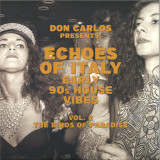
Various - ECHOES OF ITALY – THE BIRDS OF PARADISE – EARLY 90S HOUSE VIBES VOL.2 (2x12")

Googling “paradise house”, the first results to pop up are an endless list of European b&b’s with whitewashed lime façades, all of them promising “…an unmatched travel experience a few steps from the sea”. Next, a little further down, are the institutional websites of a few select semi-luxury retirement homes (no photos shown, but lots of stock images of smiling nurses with reassuring looks). To find the “paradise house” we’re after, we have to scroll even further down. Much further down.

It feels like yesterday, and at the same time it seems like a million years ago. The Eighties had just ended, and it was still unclear what to expect from the Nineties. Mobile phones that were not the size of a briefcase and did not cost as much as a car? A frightening economic crisis? The guitar-rock revival?! Certainly, the best place to observe that moment of transition was the dancefloor. Truly epochal transformations were happening there. From America, within a short distance one from the other, two revolutionary new musical styles had arrived: the first one sounded a bit like an “on a budget” version of the best Seventies disco-music – Philly sound made with a set of piano-bar keyboards! – the other was even more sparse, futuristic and extraterrestrial. It was a music with a quite distinct “physical” component, which at the same time, to be fully grasped, seemed to call for the knotty theories of certain French post-modern philosophers: Gilles Deleuze, Félix Guattari, Paul Virilio... Both those genres – we would learn shortly after – were born in the black communities of Chicago and Detroit, although listening to those vinyl 12” (often wrapped in generic white covers, and with little indication in the label) you could not easily guess whether behind them there was a black boy from somewhere in the Usa, or a girl from Berlin, or a pale kid from a Cornish coastal town.

Quickly, similar sounds began to show up from all corners of Europe. A thousand variations of the same intuition: leaner, less lean, happier, slightly less intoxicated, more broken, slower, faster, much faster... Boom! From the dancefloors – the London ones at least, whose chronicles we eagerly read every month in the pages of The Face and i-D – came tales of a new generation of clubbers who had completely stopped “dressing up” to go dancing; of hot tempered hooligans bursting into tears and hugging everyone under the strobe lights as the notes of Strings of Life rose up through the fumes of dry ice (certain “smiling” pills were also involved, sure). At this point, however, we must move on to Switzerland.

In Switzerland, in the quiet and diligent town of Lugano, between the 1980s and 1990s there was a club called “Morandi”. Its hot night was on Wednesdays, when the audience also came from Milan, Como, Varese and Zurich. Legend goes that, one night, none less than Prince and Sheila E were spotted hiding among the sofas, on a day-off of the Italian dates of the Nude Tour… The Wednesday resident and superstar was an Italian dj with an exotic name: Don Carlos. The soundtrack he devised was a mixture of Chicago, Detroit, the most progressive R&B and certain forgotten classics of old disco music: practically, what the Paradise Garage in New York might have sounded like had it not closed in 1987. In between, Don Carlos also managed to squeeze in some tracks he had worked on in his studio on Lago Maggiore. One in particular: a track that was rather slow compared to the BPM in fashion at the time, but which was a perfect bridge between house and R&B. The title was Alone: Don Carlos would explain years later that it had to be intended both in the English meaning of “by itself” and like the Italian word meaning “halo”. That wasn’t the only double entendre about the song, anyway. Its own very deep nature was, indeed, double. On the one hand, Alone was built around an angelic keyboard pattern and a romantic piano riff that took you straight to heaven; on the other, it showcased enough electronic squelches (plus a sax part that sounded like it had been dissolved by acid rain) to pigeonhole the tune into the “junk modernity” section, aka the hallmark of all the most innovative sounds of the time: music that sounded like it was hand-crafted from the scraps of glittering overground pop.

No one knows who was the first to call it “paradise house”, nor when it happened. Alternative definitions on the same topic one happened to hear included “ambient house”, “dream house”, “Mediterranean progressive”… but of course none were as good (and alluring) as “paradise house”. What is certain is that such inclination for sounds that were in equal measure angelic and neurotic, romantic and unaffective, quickly became the trademark of the second generation of Italian house. Music that seemed shyly equidistant from all the rhythmic and electronic revolutions that had happened up to that moment (“Music perfectly adept at going nowhere slowly” as noted by English journalist Craig McLean in a legendary field report for Blah Blah Blah magazine). Music that to a inattentive ear might have sounded as anonymous as a snapshot of a random group of passers-by at 10AM in the centre of any major city, but perfectly described the (slow) awakening in the real world after the universal love binge of the so-called Second Summer of Love.

For a brief but unforgettable season, in Italy “paradise house” was the official soundtrack of interminable weekends spent inside the car, darting from one club to another, cutting the peninsula from North to centre, from East to West coast in pursuit of the latest after-hours disco, trading kilometres per hour with beats per minute: practically, a new New Year’s Eve every Friday and Saturday night. This too was no small transformation, as well as a shock for an adult Italy that was encountering for the first time – thanks to its sons and daughters – the wild side of industrial modernity. The clubbers of the so-called “fuoriorario” scene were the balls gone mad in the pinball machine most feared by newspapers, magazines and TV pundits. What they did each and every weekend, apart from going crazy to the sound of the current white labels, was linking distant geographical points and non-places (thank you Marc Augé!) – old dance halls, farmhouses and business centres – transformed for one night into house music heaven. As Marco D’Eramo wrote in his 1995 essay on Chicago, Il maiale e il grattacielo: “Four-wheeled capitalism distorts our age-old image of the city, it allows the suburbs to be connected to each other, whereas before they were connected only by the centre (…) It makes possible a metropolitan area without a metropolis, without a city centre, without downtown. The periphery is no longer a periphery of any centre, but is self-centred”.

“Paradise house” perfectly understood all of this and turned it into a sort of cyber-blues that didn’t even need words, and unexpectedly brought back a drop of melancholic (post?)-humanity within a world that by then – as we would wholly realise in the decades to come – was fully inhuman and heartless. A world where we were all alone, and surrounded by a sinister yellowish halo, like a neon at the end of its life cycle. But, for one night at least, happy."

out of Stock

Order now and we will order the item for you at our supplier.

Last In: 3 months ago
VOLANTIS FEAT. HIROKO - YOKAI PARADE EP

Ancient Japanese spirits meet contemporary electronic music in *Yokai Parade EP*, a mystical collaboration between Italian producer Volantis and Japanese artist Hiroko. Inspired by a psychedelic experience in Kobe where train sounds summoned supernatural visitors, this four-track journey merges folklore with modern dance music through a unique blend of hardware synthesis and haunting vocals.

The title track “Yokai Parade” leads listeners into a shadowy realm where Hiroko’s Italian narration intertwines with Japanese train announcements, calling forth ancient spirits. Eden Burns transforms this nocturnal tale into a hypnotic, percussion-driven remix that deepens its ceremonial essence. On “La Kappa,” Hiroko embodies a playful water spirit, her accented Italian dancing over dreamlike sequences. Fabrizio Mammarella’s Italorama Version injects classic Italo disco energy, creating a perfect bridge between Japanese mythology and Mediterranean dance floors.

Co-produced with Niccolò Barozzi, this vinyl and digital release captures a unique moment where East meets West, and traditional folklore dissolves into electronic rhythms.

out of Stock

Order now and we will order the item for you at our supplier.

Last In: 15 months ago
Zy The Way / Mark De Clive Lowe - Ten Acres

Zy The Way hail from Taiwan and are recognised as pioneers of the jazz scene in Asia. Their signature style is to infuse their work with ancient Chinese poetry and their first outing 'A Different Destiny,' reimagined 3,000-year-old poems curated by Confucius and earned them plenty of plaudits. Now, they unveil two EPs as a prelude to their upcoming album. Collaborating with renowned remixers who operate at the jazz-electronic crossroads, they present 'Ten Acres' with a remarkable remix by Mark de Clive Lowe. Maintaining jazz's essence while igniting the dancefloor, this EP bridges East and West, past and present and shows Zy The Way as a transformative musical force who are pushing boundaries.

out of Stock

Order now and we will order the item for you at our supplier.

Last In: 18 months ago
Soul Supreme & Jay Mumford - 9th Wonder / Crown Ones
  • 01: 9th Wonder
  • 02: Crown Ones

Amsterdam-based keyboardist, producer, arranger and DJ Soul Supreme reached out to NYC drummer Jay Mumford in 2021 to lay the down groove on his re-imagining of Q-Tip and J-Dilla's "Let's Ride". That paved the way for future collaborations: a cover of A Tribe Called Quest's "Award Tour (We Gettin' Down)" and two tunes on Soul Supreme's Poetic Justice LP. But when the pair began doing brief covers of their favorite funk, jazz and hip-hop tunes on Instagram just for fun, followers of both musicians - and often, the covered artists themselves - began to take note. Two of those 20+ covers were particularly well-received, and the duo decided to answer the peoples' call for a 7" release with the songs pushed to their full potential. Similar to "Award Tour" and "Let's Ride", a hip-hop classic and a fan favorite are pushed to their full potential here. This installment goes coast to coast and explores Digable Planets' "9th Wonder" (the "East" side) and People Under the Stairs' (PUTS) "Crown Ones" (the "West" side).

The iconic synth intro of "9th Wonder" makes way for Jay's thunderous ode to a slowed down Clyde Stubblefield groove. Sure to be a favorite with DJs, Jay eventually detours into a syncopated New Orleans funk break, before getting back to the groove for Soul Supreme's funky wah wah clavinet work. Throughout, the arrangement expands beyond both that of the original and all of its DNA. The addition of cascading horns (featuring a trumpet solo by Lourens van der Zwaag) and a second, more aggressive break from Jay bring it back full circle, completing a modern update of a classic that manages to pay homage to '70s jazz-funk, breakbeats and '90s hip-hop - all while staying both modern and raw.

Diehard PUTS fans will recognize Soul Supreme's catchy Rhodes line as soon as the needle drops, but Jay's heavy funk groove quickly separates it from the original and takes it from hip-hop cover to heavy funk tune. Soul Supreme's Rhodes solo pushes it far beyond the confines of instrumental funk as the groove intensifies, while his chops as an arranger are on full display: his horn parts - featuring van der Zwaag, trombonist Olav Schloorlemmer and Job Chajes' Contra-Alto Clarinet that channels The Headhunters - counter his synth melodies in a discussion that completes the record as a heavy slice of uncut jazz-funk.

pre-order now21.02.2025

expected to be published on 21.02.2025

Various - Street Born

Various

Street Born

2x12inchFF0029
MPO Records
14.02.2025

Born as a culture and art movement that began in the Bronx in New York city in 1973, Hip Hop emerged from neigh- borhood block parties thrown by the Black Spades, an African-American group that at the time was describes a being a gang, a club, and a music group. Since then, and for the last fifty years, Hip hop culture has spread to both urban and suburban communities throughout the United States and subsequently the world, Furthermore, it has become a phenomenon that influenced music, fashion and pop culture as a whole. An album that features many of the most influential artists of the genre, including Run DMC, LL Cool J, Grandmaster Melle Mel, Ice-T, Slick Rick, Eric B, & Rakim, Naughty By Nature and Big Daddy Kane among many others. It also includes a curated selection extrac- ted from the Rap Mania: The Roots Of Rap event, which was a bi-coastal simulcast concert that brought together some of the most popular Hip Hop artists of that era for a one-time-only show. East Coast Hip Hop meets West Coast Hip Hop before the gangsta craze and east vs west rivalry really got started. The show was a celebration of the 15th Anniversary of Hip Hop and took place simultaneously at the Apollo Theater in New York City and The Palace Theater in Hollywood. With fantastic artwork and remastered sound, this is essential collection, that any hip hop fan will treasure and that will help as an introduction to those interested in knowing more about a movement that changed the course of pop culture. Also, remember that this is not available on streaming platforms.

pre-order now14.02.2025

expected to be published on 14.02.2025

POTHAMUS - ABUR

Pothamus

ABUR

12inchPELV272
Pelagic Records
14.02.2025
  • ZHIKARTA
  • RAVUS
  • DE-VARIUM
  • SAVARTUUM AVAR
  • YKAVUS
  • ABUR
also available

LTD RAVUS EDITION


A maelstrom of music and metaphysics, a crushing conduit for connection, contemplation and catharsis; ritualistic sludge-metal juggernauts Pothamus return to this plane of existence with new album `Abur', the highly anticipated spiritual successor to their colossal debut, `Raya'. The search for meaning stands central as a pillar of belief in the enigmatic world of Pothamus. Whilst blending eastern philosophy and western esotericism into a unique ontology, the band stay true to the fundamentals of music: sounds, instruments and bodies coming together just as they too drift away. To experience Pothamus is to open yourself to an immersive, out-of-body experience that transcends the ordinary and delves deep into the profound. `Abur', Pothamus' sophomore full-length is an odyssey of truly epic proportions. As well as honing their already formidable live sound in the intervening years, the band have widened their musical palette in order to explore a truly original take on heavy music that steers them ever further away from well-trodden post-metal paths. On `Abur' the Pothamus' signature ritualistic sound is elevated by the glacial sounds of the Surpeti, an drone instrument originating from the Indian subcontinent traditionally used for mantra singing, whilst drummer Van Hulle adds his voice in harmony with guitarist Coussens' to create an astounding richness and depth. Capturing Pothamus at their creative zenith was musical contemporary and close friend Chiaran Verheyden (Psychonaut, Hippotraktor) who recorded, mixed and mastered `Abur'. A 44-minute pilgrimage through nature, animism and the depths of the human soul, `Abur' is Pothamus' answer to the big, existential questions that keep us all awake at night. Titanic, all-consuming heaviness is met with ethereal, airy beauty as the band contemplates the interconnectedness of all things, creating a singular sonic universe balanced perfectly between cosmic creation and absolute destruction. FOR FANS OF: Amenra, Heilung, Om, Wardruna, Briqueville, The Black Heart Rebellion 3-panel gatefold CD + 28 pages booklet, gatefold LP + 28 pages booklet

pre-order now14.02.2025

expected to be published on 14.02.2025

POTHAMUS - ABUR

Pothamus

ABUR

12inchPELVC272
Pelagic Records
14.02.2025

Ivory coloured vinyl! A maelstrom of music and metaphysics, a crushing conduit for connection, contemplation and catharsis; ritualistic sludge-metal juggernauts Pothamus return to this plane of existence with new album `Abur', the highly anticipated spiritual successor to their colossal debut, `Raya'. The search for meaning stands central as a pillar of belief in the enigmatic world of Pothamus. Whilst blending eastern philosophy and western esotericism into a unique ontology, the band stay true to the fundamentals of music: sounds, instruments and bodies coming together just as they too drift away. To experience Pothamus is to open yourself to an immersive, out-of-body experience that transcends the ordinary and delves deep into the profound. `Abur', Pothamus' sophomore full-length is an odyssey of truly epic proportions. As well as honing their already formidable live sound in the intervening years, the band have widened their musical palette in order to explore a truly original take on heavy music that steers them ever further away from well-trodden post-metal paths. On `Abur' the Pothamus' signature ritualistic sound is elevated by the glacial sounds of the Surpeti, an drone instrument originating from the Indian subcontinent traditionally used for mantra singing, whilst drummer Van Hulle adds his voice in harmony with guitarist Coussens' to create an astounding richness and depth. Capturing Pothamus at their creative zenith was musical contemporary and close friend Chiaran Verheyden (Psychonaut, Hippotraktor) who recorded, mixed and mastered `Abur'. A 44-minute pilgrimage through nature, animism and the depths of the human soul, `Abur' is Pothamus' answer to the big, existential questions that keep us all awake at night. Titanic, all-consuming heaviness is met with ethereal, airy beauty as the band contemplates the interconnectedness of all things, creating a singular sonic universe balanced perfectly between cosmic creation and absolute destruction. FOR FANS OF: Amenra, Heilung, Om, Wardruna, Briqueville, The Black Heart Rebellion 3-panel gatefold CD + 28 pages booklet, gatefold LP + 28 pages booklet

pre-order now14.02.2025

expected to be published on 14.02.2025

Various - ECHOES OF ITALY - ARTISTS IN WONDERLAND – EARLY 90S HOUSE VIBES VOL.1 LP 2x12"

Volume 1 of this expertly curated project of 90s Italian House - put together by Don Carlos.

If Paradise was half as nice… by Fabio De Luca.

Googling “paradise house”, the first results to pop up are an endless list of European b&b’s with whitewashed lime façades, all of them promising “…an unmatched travel experience a few steps from the sea”. Next, a little further down, are the institutional websites of a few select semi-luxury retirement homes (no photos shown, but lots of stock images of smiling nurses with reassuring looks). To find the “paradise house” we’re after, we have to scroll even further down. Much further down.

It feels like yesterday, and at the same time it seems like a million years ago. The Eighties had just ended, and it was still unclear what to expect from the Nineties. Mobile phones that were not the size of a briefcase and did not cost as much as a car? A frightening economic crisis? The guitar-rock revival?! Certainly, the best place to observe that moment of transition was the dancefloor. Truly epochal transformations were happening there. From America, within a short distance one from the other, two revolutionary new musical styles had arrived: the first one sounded a bit like an “on a budget” version of the best Seventies disco-music – Philly sound made with a set of piano-bar keyboards! – the other was even more sparse, futuristic and extraterrestrial. It was a music with a quite distinct “physical” component, which at the same time, to be fully grasped, seemed to call for the knotty theories of certain French post-modern philosophers: Gilles Deleuze, Félix Guattari, Paul Virilio... Both those genres – we would learn shortly after – were born in the black communities of Chicago and Detroit, although listening to those vinyl 12” (often wrapped in generic white covers, and with little indication in the label) you could not easily guess whether behind them there was a black boy from somewhere in the Usa, or a girl from Berlin, or a pale kid from a Cornish coastal town.

Quickly, similar sounds began to show up from all corners of Europe. A thousand variations of the same intuition: leaner, less lean, happier, slightly less intoxicated, more broken, slower, faster, much faster... Boom! From the dancefloors – the London ones at least, whose chronicles we eagerly read every month in the pages of The Face and i-D – came tales of a new generation of clubbers who had completely stopped “dressing up” to go dancing; of hot tempered hooligans bursting into tears and hugging everyone under the strobe lights as the notes of Strings of Life rose up through the fumes of dry ice (certain “smiling” pills were also involved, sure). At this point, however, we must move on to Switzerland.

In Switzerland, in the quiet and diligent town of Lugano, between the 1980s and 1990s there was a club called “Morandi”. Its hot night was on Wednesdays, when the audience also came from Milan, Como, Varese and Zurich. Legend goes that, one night, none less than Prince and Sheila E were spotted hiding among the sofas, on a day-off of the Italian dates of the Nude Tour… The Wednesday resident and superstar was an Italian dj with an exotic name: Don Carlos. The soundtrack he devised was a mixture of Chicago, Detroit, the most progressive R&B and certain forgotten classics of old disco music: practically, what the Paradise Garage in New York might have sounded like had it not closed in 1987. In between, Don Carlos also managed to squeeze in some tracks he had worked on in his studio on Lago Maggiore. One in particular: a track that was rather slow compared to the BPM in fashion at the time, but which was a perfect bridge between house and R&B. The title was Alone: Don Carlos would explain years later that it had to be intended both in the English meaning of “by itself” and like the Italian word meaning “halo”. That wasn’t the only double entendre about the song, anyway. Its own very deep nature was, indeed, double. On the one hand, Alone was built around an angelic keyboard pattern and a romantic piano riff that took you straight to heaven; on the other, it showcased enough electronic squelches (plus a sax part that sounded like it had been dissolved by acid rain) to pigeonhole the tune into the “junk modernity” section, aka the hallmark of all the most innovative sounds of the time: music that sounded like it was hand-crafted from the scraps of glittering overground pop.

No one knows who was the first to call it “paradise house”, nor when it happened. Alternative definitions on the same topic one happened to hear included “ambient house”, “dream house”, “Mediterranean progressive”… but of course none were as good (and alluring) as “paradise house”. What is certain is that such inclination for sounds that were in equal measure angelic and neurotic, romantic and unaffective, quickly became the trademark of the second generation of Italian house. Music that seemed shyly equidistant from all the rhythmic and electronic revolutions that had happened up to that moment (“Music perfectly adept at going nowhere slowly” as noted by English journalist Craig McLean in a legendary field report for Blah Blah Blah magazine). Music that to a inattentive ear might have sounded as anonymous as a snapshot of a random group of passers-by at 10AM in the centre of any major city, but perfectly described the (slow) awakening in the real world after the universal love binge of the so-called Second Summer of Love.

For a brief but unforgettable season, in Italy “paradise house” was the official soundtrack of interminable weekends spent inside the car, darting from one club to another, cutting the peninsula from North to centre, from East to West coast in pursuit of the latest after-hours disco, trading kilometres per hour with beats per minute: practically, a new New Year’s Eve every Friday and Saturday night. This too was no small transformation, as well as a shock for an adult Italy that was encountering for the first time – thanks to its sons and daughters – the wild side of industrial modernity. The clubbers of the so-called “fuoriorario” scene were the balls gone mad in the pinball machine most feared by newspapers, magazines and TV pundits. What they did each and every weekend, apart from going crazy to the sound of the current white labels, was linking distant geographical points and non-places (thank you Marc Augé!) – old dance halls, farmhouses and business centres – transformed for one night into house music heaven. As Marco D’Eramo wrote in his 1995 essay on Chicago, Il maiale e il grattacielo: “Four-wheeled capitalism distorts our age-old image of the city, it allows the suburbs to be connected to each other, whereas before they were connected only by the centre (…) It makes possible a metropolitan area without a metropolis, without a city centre, without downtown. The periphery is no longer a periphery of any centre, but is self-centred”.

“Paradise house” perfectly understood all of this and turned it into a sort of cyber-blues that didn’t even need words, and unexpectedly brought back a drop of melancholic (post?)-humanity within a world that by then – as we would wholly realise in the decades to come – was fully inhuman and heartless. A world where we were all alone, and surrounded by a sinister yellowish halo, like a neon at the end of its life cycle. But, for one night at least, happy.

out of Stock

Order now and we will order the item for you at our supplier.

Last In: 68 days ago
STAVROZ - GOLD TOWN EP

Stavroz

GOLD TOWN EP

12inchMFV001
MOODFAMILY
05.02.2025

(repress on black vinyl, originally released in 2019) Supported by many deejays worldwide, most notably Solomun. Moodfamily's favourite four-piece returns home after many journeys. Impatient as we are, we had to hear their stories. Skilfully combining influences, sounds and experiences from east and west, they translated their stories into a new EP oozing with drama, melancholy and determination. The EP describes itself as the soundtrack for an adventure to mysterious outskirts around the globe, starting with 'Whale Parade'.


This prelude takes you to a hidden land after wandering through forests for many months. Guitar, piano and percussion gently move in and carry you away. By the second track, 'All Day I Zama', a slow beat dictated by a banket of percussion evolves to a vigorous and groovy track with moaning vocals as the main theme. In title track 'Gold Town' you will settle yourself in a covered wagon, heading for dodgy settlements on a misty mountain range, accompanied by a grieving trumpet. As the wagon slows to a crawl, 'Ghajar' emerges; a downtempo emotion-filled song, where the piano and a scorching synth interchange melodies and tales.

out of Stock

Order now and we will order the item for you at our supplier.

Last In: 4 months ago
Rami Imam - Safara

Rami Imam

Safara

12inchPONDA001
Ponda Records
05.02.2025

DJ Support: Carlita, Dar Disku, Disco Arabesquo & Moving Still

Melbourne-based producer Rami Imam unveils Safara, the latest release on his own label, Ponda Records, which he founded in 2020 as a platform for his cross-cultural sound explorations. Drawing from the rich traditions of the Middle East, North Africa, and the Mediterranean, Safara is a six-track odyssey of energetic and euphoric house and disco house, deeply rooted in both nostalgia and innovation. Safara is the culmination of Imam's immersion into the golden eras of global music, channelling the soulful rhythms and melodies of Afro-Funk, West African Highlife, Arab Disco, Bollywood, Afro-Cuban Jazz, Libyan Reggae, and Algerian Rai. By blending these timeless influences with a modern, dancefloor-oriented focus, Imam creates a sound that is both steeped in history and refreshingly new.

With a sonic palette that includes iconic synths such as the Juno 106, Super 6, SH 101, Moog Model D, and the 303, Imam weaves the analog warmth of these instruments into lush, modern productions. Piano and strings—his favourite classical instruments—add an organic layer of emotional depth, connecting the pulse of the dancefloor with the timeless elegance of traditional composition.

Safara is more than a collection of tracks; it is a journey across continents and eras, where the pulse of the past meets the driving force of the present. Recorded in Melbourne but influenced by sounds from around the world, Safara invites listeners to traverse vast musical landscapes—from the hypnotic grooves of North African rhythms to the sun-drenched melodies of Mediterranean shores—culminating in a transportive experience that lingers long after the final beat fades.

By balancing the ancient with the futuristic, Imam has crafted a record that feels both comfortingly familiar and daringly innovative. Safara is a testament to the endless possibilities of blending cultures, genres, and eras into something that is not just heard but felt—music for the soul as much as for the dancefloor.

out of Stock

Order now and we will order the item for you at our supplier.

Last In: 47 days ago
The Jazz Workshop - Mezare Isreal Yekabtzenu LP

East meets west on this long-lost and super rare 1973 jazz album from Israel. Headed by Albert Piamenta, 'The Jazz workshop' was a group of jazz pioneers from the Middle East who sought to make the connection between the countries of their up-bringing and the hardcore New-York jazz sound of the 60's. Druze, Arab and Jewish folk compositions interpreted in a deep, mystical yet thumping manner, making this an absolute gem for jazz collectors and dj's alike.

out of Stock

Order now and we will order the item for you at our supplier.

Last In: 14 months ago
Gary Kemp - This Destination

Gary Kemp

This Destination

12inchRHINO
Rhino US
31.01.2025

"Gary Kemp will be releasing his brand new album This Destination through East West records on the 31st January 2025. This Destination is a collection of all new songs all written and co-produced by Gary.

Lyrically, the album marks a journey in discovery for Kemp and is his most personal body of work to date.

pre-order now31.01.2025

expected to be published on 31.01.2025

Josey Wales - The Outlaw

Josey Wales

The Outlaw

12inchGREL55
Greensleeves
10.01.2025

Wiederveröffentlichung des Albumklassikers von 1983. Der Longplayer wurde seinerzeit mit den Roots Radics im Channel One Studio eingespielt, Soldgie aka Cedrica Anthony Hamilton saß dabei am Mischpult, als Produzent fungierte Henry 'Junjo' Lawes. Der Künstler Josey Wales (bürgerlich Joseph Winston Sterling) ist neben Yellowman der wichtigste Deejay der 80er Jahre, er benannte sich nach dem '76er Western mit Clint Eastwood 'The Outlaw' (deutscher Titel 'Der Texaner'). Für das gleichnamige Album kamen u.a. die zwei Studio One Riddims 'Full Up', 'A Love I Can Feel', sowie 'Fat She Fat' und 'Youth In the Ghetto' zum Einsatz.

pre-order now10.01.2025

expected to be published on 10.01.2025

VENEDIKTOS TEMPELBOOM - SYNE VUYLE HACKS

The Ghentian skyline has low peaks and hides its horrors in full view ~ walk streamside and you’ll quickly be confronted with façades that leer with their tales and secrets, the angels and demons that built this city holding up its mortar and stone in an inextricable embrace. It is within this incongruous backdrop that Benoît Monsieurs has fostered the Venediktos Tempelboom persona. Using the 12-string guitar as his main instrument, the self-taught musician creates passages that take fingerpicking Americana and Eastern transcendence into the Flanders fields, with winding compositions that distill the essence of giants like John Fahey, Robbie Basho and Jack Rose and folds them into the dark drone melancholia of Funeral Folk/KRAAK stalwarts like Silvester Anfang, Helvete and Ignatz. The results are ringing meditations of awe and terror, flamboyant and grotesque yet utterly mesmerizing in their unrooted sonic imagery.

In his debut LP, Syne Vuyle Hoeck, the Tempelboom amalgamates his influences - East, West and deep Flanders alike - into a flurry of acid-drenched tracks that spread out into a distinctive musical iconography. Each composition carries a facet, highlighting angel and demon in equal measure: the solemn opener “De woelige rit op een roze wolkje” is a threading of melodies that carry pensive heft and hopeful asides, as hints of ragtime buoyancy lead into sullen ruminations in a fully lucid change of course; “Ocharme Ochgod” is a sober penitence, slowly and almost imperceptibly building up into a tangle of lines that inexorably coil back into their brooding backbone; the echoing tape loop of “In Flock” reverberates and torments, steel sharpness and frayed magnetic disintegration finding improbable common ground; “El Contrario” swerves unforgivingly in an Eastern-infused openness reminiscent of Six Organs’ rawer days and unnervingly giving way to a forceful - dare we say upbeat - conclusion. And so one treks into the depths of the Tempelboomian universe, a place of high drama and low morals inhabited by a prankster creator who deploys euphoria and distress in equal measure. Just as the strings of his guitar are left to echo like sparkles in the dark, so his music lingers in the soil of our humanity, redolent of the kind of peace one can only make with the demons of the self.

pre-order now

This item has not yet been released. You can pre-order the product now.

Fashawn - Carte Blanche LP

Fashawn

Carte Blanche LP

12inchLV001
Orena
13.12.2024
  • Crown Vic (Intro)
  • One Eyed King
  • Pearly Gates Feat. Rasheed Chappell
  • Autumn In New York
  • 168:
  • Victim
  • A5: Wagyu
  • Mac & Cheese
  • Capo Feat. Little Vic
  • Spaghetti Western

This album is a gritty yet sophisticated journey through life’s harsh realities and ultimate triumphs. Hailing from two vastly different worlds, Fashawn and Little Vic bring unique stories and sounds that blend the raw with the refined. Fashawn, raised amidst the gangs and struggles of Fresno, California, brings an unapologetic realism to his verses, detailing the roads that took him from survival to success. Meanwhile, Little Vic’s roots trace back to Long Island, New York, where he grew up with the influence of the Orena family’s notorious reputation. Known for his lyricism and mastery of the MPC, Vic’s production is the perfect companion to Fashawn’s storytelling, layering gritty boom bap beats with live instruments that add richness and texture.

The theme of the album is like a fine dining experience—a nod to elegance—while peeling back the layers to reveal the raw, often darker realities simmering behind the scenes. Little Vic’s production flexes between hard-hitting rhythms and delicate, soulful sounds, creating a soundscape that mirrors the rags-to-riches journey both artists represent.

Brought together on the East Coast by executive producer Ricky Grey, Fashawn and Little Vic spent an intense week creating this project, crafting a work that feels as alive and textured as the streets that shaped them. Each track is an experience, serving up an unfiltered taste of both struggle and success, designed to leave listeners both stirred and inspired.

pre-order now13.12.2024

expected to be published on 13.12.2024

Terry Riley - Shri Camel

Terry Riley

Shri Camel

12inchRGM1826
REAL GONE MUSIC
06.12.2024
  • Anthem of the Trinity
  • Celestial Valley
  • Across the Lake of the Ancient Word
  • Desert of Ice

In C and Rainbow in Curved Air get all the ink (inc?), but its own somewhat subtle way, 1980’s Shri Camel, the last of the three brilliant albums Terry Riley recorded for CBS, is every bit as groundbreaking as its hallowed predecessors. Not content to rest on his laurels as a minimalist master, Riley studied with Hindustani classical singer Pandit Pran Nath during the ‘70s; by blending that Eastern influence with his own experiments in just intonation (where tuning is dictated by equal mathematical intervals rather than the “tempered” tuning familiar to Western music), Riley made an album whose shimmering textures (played through a specially modified Yamaha organ) seem to change with one’s own breath or thought, like the reflection of rippling water on rock. And while Shri Camel is far more demanding and ultimately rewarding than any “New Age” recording, one definitely gets the sense that its ever-evolving, ecstatically hypnotic rhythmic and harmonic patterns are massaging the brain’s neural circuitry, leaving one refreshed, relaxed, and, yes, maybe even a little smarter than before listening. First LP reissue and long overdue!

pre-order now06.12.2024

expected to be published on 06.12.2024

Doro, Warlock - Rare Diamonds

Universal Music hat in den Archiven einen wundervollen Schatz wiederentdeckt und wiederveröffentlicht
„Rare Diamonds“, das erste offzielle Best Of-Werk von DORO & WARLOCK, welches ursprünglich im
März 1991 beim berühmt-berüchtigten Vertigo-Label erschien.
Der Re-Release erscheint – in streng limitierter Auflage - erstmalig als Picture-Vinyl. Die kraftvollen,
wunderschönen Titel bilden die ersten acht Jahre der großartigen Karriere von DORO Pesch ab.
14 Songs für die Ewigkeit, inklusive der Mega-Kracher „All We Are“, „Für Immer“ und „True As Steel“ –
bis heute Fixsterne einer jeden DORO-Setliste. DORO kommentiert: „Auch auf der kommenden WinterTour durch Deutschland werden wir jede Menge Songs von der ‚Rare Diamonds‘ im Programm haben!“
Und weil DORO auch auf der Bühne schon immer eine Wucht war, glänzt „Rare Diamonds“ zudem mit
raren Live-Aufnahmen aus New York von Hits wie „East Meets West“ und „Rare Diamond“.
Auch „Unholy Love“ darf auf diesem Meisterwerk nicht fehlen – einer der Top-Songs aus DOROs Soloalbum
von 1990. Produziert von keinem Geringeren als KISS-Bassist und Doro-Idol Gene Simmons.
DORO hat in ihrer 40-jährigen Karriere über 3500 Konzerte in über 60 Ländern absolviert. Sie verkaufte
bis heute über 12 Mio. Tonträger und konnte für ihre Alben legendäre Musiker-Kollegen wie Gene Simmons (KISS), Lemmy Kilmister (Motörhead), Russ Ballard, Slash (Guns N‘ Roses), Pete Steele (Type O
Negative) und unlängst Rob Halford (Judas Priest) gewinnen.

pre-order now06.12.2024

expected to be published on 06.12.2024

The Hempolics - ‘Kiss, Cuddle & Torture Volume 3 (LP 2x12")

* Limited to 500 copies, Double Neon green Vinyl LPs in a 5mm Album sleeve printed with colour on the front and tracklist on the back is printed in glossy ink, 2 x printed inner sleeves

"KCT 3" marks a new chapter for The Hempolics, showcasing their growth as musicians and their commitment to pushing musical boundaries. With each track carefully crafted to perfection, the album offers a mix of infectious rhythms and soulful melodies that are sure to get you grooving.
From upbeat anthems to introspective ballads, "KCT 3" takes listeners on a musical journey through a variety of sounds and styles. Drawing inspiration from a diverse range of influences, the album invites listeners to explore new sonic landscapes and embrace the unexpected.

out of Stock

Order now and we will order the item for you at our supplier.

Last In: 21 months ago
Kamalesh Maitra - Raag Kirwani on Tabla Tarang LP

Carrying on a string of stunning archival releases from major figures of Indian classical tradition (including releases from members of the Dagar family and Amelia Cuni), Black Truffle is pleased to announce an unheard recording from tabla master Kamalesh Maitra (1924-2005). For over fifty years, Maitra devoted himself to the rare tabla tarang, a set of between ten and sixteen hand drums tuned to the notes of the raga to be performed. While the tabla tarang has its origins in the late 19th century, Maitra was the first to recognise its potential as a solo concert instrument, using the set of tuned drums to perform full-length raags. Seated behind a semi-circular array of drums, Maitra produced stunning waves of melodic improvisation enlivened with the rhythmic invention of a master percussionist.

Across his career, Maitra performed in ensembles led by Ravi Shankar, collaborated with George Harrison, and led his own East-West fusion group, the Ragatala Ensemble. However, it is in the solo setting that his remarkable artistry and the otherworldly timbral qualities of the tabla tarang are most strikingly on display. Recorded during the same 1985 Berlin sessions that produced Maitra’s self-released solo LP Tabla Tarang: Ragas on Drums, on Raag Kirwani on Tabla Tarang we are treated to Maitra stretching out for over forty minutes on the late night Raag Kirwani, accompanied by Laura Patchen on tabla and Mila Morgenstern and Marina Kitsos on tanpura. The performance begins with the traditional free-floating exposition section, where Maitra’s spacious melodic improvisation at times almost resembles a plucked string instrument (like the sarod, which Maitra also played). For the listener unaccustomed to the tabla tarang, the sound of these microtonally inflected melodic patterns played on drums has a magic quality. As Maitra begins to imply the rhythmic cycles more strongly, Patchen joins on tabla, beginning half an hour of rhythmic-melodic exploration, where virtuosity sits side by side with delicacy and meditative attention. Accompanied by beautiful archival images and extensive liner notes from Laura Patchen, for many listeners Raag Kirwani on Tabla Tarang will be the perfect introduction to the magical world of Kamalesh Maitra, released to coincide with the hundredth anniversary of the master musician’s birth.

out of Stock

Order now and we will order the item for you at our supplier.

Last In: 20 months ago
Sussan Deyhim & Richard Horowitz - The Invisible Road: Original Recordings, 1985–1990 LP

The Invisible Road: Original Recordings, 1985–1990 compiles an unheard, previously unreleased body of recordings by Sussan Deyhim and Richard Horowitz, dissidents from diametric backgrounds who met during the heady days of Downtown New York in the 1980s. This collection reveals the creative and life partners’ radical shared vision of avant-garde pop in all of its boundary pushing freedom, combining Deyhim’s singular approach to vocalization, Horowitz’s invention of new musical languages, and touchstones of traditional music from around the world, creating a new music that ultimately retains a voice entirely its own. Despite their difference in backgrounds and respective journeys, at the time of their meeting in the early 1980s in New York City, Sussan Deyhim and Richard Horowitz were both products of the search for freedom and understanding (and resultant awakenings) that swept the globe and helped culturally define the late 1960s and 70s. Deyhim, born and raised in Tehran, spent her teens dancing with Iran’s Pars National Ballet company, performing weekly on Iranian national television, and travelling her home country studying with master folk musicians and dancers, before relocating to Belgium and joining Maurice Béjart’s prestigious Béjart Ballet of the 20th Century. Horowitz, born and raised in Buffalo, New York, had spent much of the decade before abroad, first departing for Paris under the shadows of the Vietnam War, where he studied piano, Eastern philosophy, and became entrenched the city’s free jazz scene, playing with the likes of Steve Lacy, Anthony Braxton, and Alan Silva, before embarking south to Morocco where his friendship with Paul Bowles helped cultivate a deep passion for the country’s musical traditions and a shift in his musical practice.


The pair met by chance sometime in 1981 at Noise New York, a small studio on West 34th Street founded by the musician and recording engineer, Frank Eaton, as a utopian creative laboratory that beckoned artists and bands like Arthur Russell, Christian Marclay, Liquid Liquid and Butthole Surfers into its orbit. Both artists had recently relocated to the city, Horowitz having recently released his debut album, Oblique Sequences (Solo Nai Improvisations), on the legendary Paris based imprint Shandar, and fallen in with members of New York avant-garde like La Monte Young, Jon Hassell, David Byrne, and Brian Eno, and Deyhim having begun to more actively incorporate singing into her practice, notably recording a vocal score for choreography she was doing at La MaMa Experimental Theatre.


Initially bonding over a cassette tape of field recordings made by Paul Bowles that had been given to mutual friend and writer Brian Cullman (seeking answers for Ornette Coleman’s question “what is the sound of sound”), their earliest collaboration was documented on Horowitz’s 1981 album, Eros In Arabia, with Deyhim contributing vocals to the track “Queen Of Saba.” Over the coming years, their deep connection would routinely gravitate them into the studio, culminating in the body of recordings that would appear on their 1986 album for Crammed Discs, Desert Equations: Azax Attra. Unknown to nearly all but the artists, laying in wait over the decades on numerous multi-track and stereo reels, DAT tapes, and reference cassettes, were a vast array of recordings made by Deyhim and Horowitz bookending Desert Equations. The 13 pieces represented on The Invisible Road: Original Recordings, 1985–1990 were recorded largely between Noise New York and Daylight Studio in Brussels, during a period that Deyhim describes the partnership between herself and Horowitz’s as seeking a music “free of any specific cultural reference, with a personal musical signature,” blossoming into a body of sonority that embraced the energy of contemporary boundary pushing pop and the avant garde, filtered through their mutual love and study of various musical traditions from across the globe and deep engagement with the ideas and tactics of experimental music.


Undeniably rooted in Horowitz’s study of the North Africa ney and the music of the Berber and Gnawa cultures during his time in Morocco, Deyhim’s deep engagement with the folk traditions of Iran, and the couple’s immersion in the interconnected Downtown underground music scenes, each piece on The Invisible Road offers its own vision creative and cultural hybridity. Deyhim sings in both English and Farsi, as well as a composite tongue that she developed by drawing upon numerous indigenous vocal techniques from around the world, intuitively responding to Horowitz’s simultaneous sound syntax forming and combining a wide range synthetic and acoustic instrumentation, and experimental tape techniques, within a visionary series of free-standing expressions.

out of Stock

Order now and we will order the item for you at our supplier.

Last In: 19 months ago
JOE SANDERS - PARALLELS LP 2x12"

Just as his basslines never stay within the limits of the obvious, so Joe Sanders" life as a bassist, composer, band-leader and educator has never followed the single, most discernible pathway. A Midwest native, he"s studied and played jazz on the opposite coasts of California and New York: a master of the acoustic bass, he"s equally at home producing in the digital realm; embedded deep in the living tradition of American jazz; and living, teaching and creating in Europe. All these separate strands come together on his third headline release, "Parallels". The album presents a set of live recordings from a dream line-up that matches the leader"s full-bodied acoustic bass presence with Seamus Blake, Logan Richardson and Gregory Hutchinson in performances that capture all the daring and drive of the East coast scene. Alongside them is a set of studio self-productions with guests Jure Pukl and Taylor Eigisti that capture the laid-back dreamy adventurousness of the West Coast.

pre-order now22.11.2024

expected to be published on 22.11.2024

Snoop Doggy Dogg - Murder Was The Case: The Soundtrack 2x12"

Now celebrating its 30th anniversary, and arriving as a specially expanded edition to mark the occasion, the Murder Was The Case soundtrack remains an iconic work in hip-hop history. Originally accompanying the short film directed by Dr. Dre and Fab Five Freddy, this album embodies the essence of West Coast gangsta rap of the 90s. Featuring tracks from legends of the game like Snoop Dogg, Tha Dogg Pound, and more, it captures the gritty realities of street life with raw lyricism and infectious beats. From the haunting title track to the catchy grooves of 'Natural Born Killaz,' each song immerses you in the vivid world of the film and the era's burgeoning rap scene.

out of Stock

Order now and we will order the item for you at our supplier.

Last In: 18 months ago
Golden Earring - N.E.W.S.

Golden Earring

N.E.W.S.

12inchMOVLP3769
Music On Vinyl
15.11.2024

Founded in 1961 by George Kooymans and Rinus Gerritsen, Dutch rock band Golden Earring (or Golden Earrings, until 1969) started off as a beat band, experimented as a psychedelic quartet and finally became a heavy rock group in the early 70s. Their ninth album ‘Moontan’ (1973) hit the international album charts and is the band's most successful album in the United States, while the single ‘Radar Love’ reached #10 on the Cash Box Top 100 and #13 in Billboard in the United States and became a bonafide international classic rock song. Their current line-up has been constant since 1970. They have had over 40 hits and released about 30 albums, many achieving either gold or platinum status in their home country, The Netherlands.

In 1984 the band released the album N.E.W.S. (North, East, West, South). It features the song ‘When The Lady Smiles’ which became an international hit in 1984, reaching #3 in Canada and becoming the band's fifth #1 hit in The Netherlands.

Music On Vinyl celebrates the 40th anniversary of this landmark album with fully restored and remastered audio from the original master tapes.

pre-order now15.11.2024

expected to be published on 15.11.2024

Bill Laurance & Michael League - Keeping Company LP

Bill Laurance and Michael League, longtime friends and collaborators, have released their second duo album “Keeping Company,” which contrasts with the larger scale of Snarky Puppy. The album showcases an intimate musical partnership, with Laurance focusing on acoustic piano and League on fretless bass and oud, creating a rich, sparse sound that blends Western and Middle Eastern influences. Building on their successful debut, “Where You Wish You Were,” they emphasize deeper exploration and personality while prioritizing live recordings to capture organic spontaneity. Laurance’s use of a lightly prepared piano adds texture, while League's self-taught approach to the oud introduces exotic timbres and expressive nuances. Their partnership thrives on experimentation, with Laurance’s clear, compact melodies complementing League's unique ornaments. “Keeping Company” serves as a snapshot of their evolving friendship and artistic dialogue, highlighting spontaneity and shared humor in their music.

pre-order now08.11.2024

expected to be published on 08.11.2024

BRUNO BERLE - NO REINO DOS AFETOS

Blue vinyl repress

With a voice of pure gold and a startling sensitivity for heartfelt pop songwriting, on No Reino Dos Afetos (In the Realm of Affections), Berle firmly embraces earnestness, through starry-eyed Brazilian love songs, ambient vignettes, warm, home-cooked beats and gentle strokes of MPB genius.

Maceió, the capital of Brazil’s Alagoas state on its sprawling east-coast, is home to pastel coloured colonial houses, white sand beaches and a brilliant young composer, poet and multi-instrumentalist named Bruno Berle.

With a voice of pure gold and a startling sensitivity for heartfelt pop songwriting, on No Reino Dos Afetos (In the Realm of Affections), Berle firmly embraces earnestness, through starry-eyed Brazilian love songs, ambient vignettes, warm, home-cooked beats and gentle strokes of MPB genius.

“It’s an album that was built from my desire to find beauty”, Berle explains - his simple, graceful words mirroring the graceful simplicity in his music. But amongst the simplicity, the compositions, arrangements and productions on No Reino Dos Afetos tingle with nuance and detail.

On the contemporary R&B inspired lead single “Quero Dizer” - produced by Berle and longtime friend and collaborator Batata Boy - the swirling, lo-fi, kalimba and guitar-fronted beat is turned into a feel-good hit by the ingenuity of Berle’s honey-soaked vocal melody.

Powerfully intimate, “O Nome Do Meu Amor” (My Love’s Name) is a guaranteed tearjerker, with Berle’s stunning voice soaring over gently plucked acoustic guitar and the textural flutter of soft movement, as if we hear him writing the song in the moment.

Drawing upon a close-knit, collaborative scene of Maceió artists and musicians, (of which Berle and Batata Boy are vital members), Berle also recorded some of his friends songs on the album, including João Menezes’ “Até Meu Violao”, the album’s beautifully laid back sunshine soul opener, which has all the charm of early-70s João Donato.

Having cut his teeth in soft-rock group Troco em Bala, and more recently finding himself embedded in both Rio and Sao Paulo’s contemporary music scenes - collaborating with the likes of Ana Frango Eletrico, who took the photo for the album cover - No Reino Dos Afetos is as musically diverse as Bruno himself. It’s hazy indie rock (“É Preciso Ter Amor”), calming ambient and field recording (“Virginia Talk”) as well as Berle’s own take on West African High Life (“Som Nyame”).

Instantly recognisable as a truly special artist, Berle’s character fills every corner of the sound, which is unsurprising considering he played most of the instruments.

out of Stock

Order now and we will order the item for you at our supplier.

Last In: 22 months ago
Items per Page:

Language

N/ABPM
Vinyl