Search:east west connection

Styles
All
  • 1
FARHOT - RAQS

FARHOT

RAQS

12inchKF27
KABUL FIRE RECORDS
12.06.2026

"raqs", which translates to the Dari noun for "dance" is written the same way like its Arabic original made of the three root letters: ra qa sa - to dance. under this premise of cultural kinship Afghan-German producer artist Farhot is about to addanother sonic layer to his discography, this time designed for the dance floor - a space, where culture can be shared by many, which invites movement and connection.while his earlier work was heavily influenced by the various traditions of hiphop, which later was enfused with sounds inspired by his Afghan roots, on "Raqs" he explores the vibrant musical heritage of mostly Arabic speaking regions from North Africa to West Asia, where as his fascination for Somali music also took him to East Africa. Like a well versed HipHop producer Farhot"s approach to "raqs" was guided by a virtual sampling journey which allowed him to connect and fuse sounds from Egypt, Lebanon or Somalia carefully woven into an EP that stands apart from his previous work but nevertheless carries his sonic signature: productions, that can sound as complex and immense as they sound playful and simple or creating intensity through unconventional ways of chopping and distorting vocals - amongst others one will find samples of Lebanese legend Fairuz dressed in an almost experimental uptempo production. Whoever followed Farhot"s work around the release of his sophomore LP Kabul Fire Vol. 2 via his own label Kabul Fire Records will know that he releases music intentionally alway ensuring a new quality to music, especially when he samples from cultures that are often times overshadowed by conflict or simply forgotten. With "raqs" he reminds us of the rich musical traditions that always existed beyond the west. he also reminds us of the ways that music can connect beyond borders, like an Afghan producer from Germany, who loves Somali music and Fairuz.

pre-order now12.06.2026

expected to be published on 12.06.2026

Phoenician Drive - Live in Brussels '23
  • 1:
  • Holy Security (Live In Brussels '23)
  • Glow (Live In Brussels '23)
  • Aguas Del Ovido
  • Urban Sailors (Live In Brussels '23)
  • Fat Bill (Live In Brussels '23)
  • Two Coins (Live In Brussels '23

Phoenician Drive is a six-piece band from Brussels, blending Western rock with traditional Eastern music into a style they describe as Dune Krautrock. Oud, darbuka, and riq meet distorted guitars and pop textures, weaving connections across the Mediterranean. Inspired by East–West fusions from the 1970s (like Erkin Koray and Orient Express) and the German krautrock scene (Neu!, Can, Faust…), their music explores borderless, hypnotic landscapes rooted in both rhythm and experimentation.

Following a debut EP released on EXAG' Records in 2017, the band put out a self-titled LP and collaborated with choreographer Wim Vandekeybus in 2018. In 2019, Phoenician Drive reimagined their sound in an acoustic format, which they toured extensively for two years throughout the post-Covid period.

Between 2021 and 2022, the group returned to electric instrumentation and recorded Glow, an EP released in June 2023 via EXAG' Records. The release was celebrated with a powerful live show at Brasserie Illegaal in Brussels — a performance captured in the live album Live in Brussels '23. The record channels the band’s raw stage energy and deepens their sonic exploration of trance, tension, and Mediterranean melodies.

pre-order now26.09.2025

expected to be published on 26.09.2025

POTHAMUS - ABUR

Pothamus

ABUR

12inchPELVC272
Pelagic Records
14.02.2025

Ivory coloured vinyl! A maelstrom of music and metaphysics, a crushing conduit for connection, contemplation and catharsis; ritualistic sludge-metal juggernauts Pothamus return to this plane of existence with new album `Abur', the highly anticipated spiritual successor to their colossal debut, `Raya'. The search for meaning stands central as a pillar of belief in the enigmatic world of Pothamus. Whilst blending eastern philosophy and western esotericism into a unique ontology, the band stay true to the fundamentals of music: sounds, instruments and bodies coming together just as they too drift away. To experience Pothamus is to open yourself to an immersive, out-of-body experience that transcends the ordinary and delves deep into the profound. `Abur', Pothamus' sophomore full-length is an odyssey of truly epic proportions. As well as honing their already formidable live sound in the intervening years, the band have widened their musical palette in order to explore a truly original take on heavy music that steers them ever further away from well-trodden post-metal paths. On `Abur' the Pothamus' signature ritualistic sound is elevated by the glacial sounds of the Surpeti, an drone instrument originating from the Indian subcontinent traditionally used for mantra singing, whilst drummer Van Hulle adds his voice in harmony with guitarist Coussens' to create an astounding richness and depth. Capturing Pothamus at their creative zenith was musical contemporary and close friend Chiaran Verheyden (Psychonaut, Hippotraktor) who recorded, mixed and mastered `Abur'. A 44-minute pilgrimage through nature, animism and the depths of the human soul, `Abur' is Pothamus' answer to the big, existential questions that keep us all awake at night. Titanic, all-consuming heaviness is met with ethereal, airy beauty as the band contemplates the interconnectedness of all things, creating a singular sonic universe balanced perfectly between cosmic creation and absolute destruction. FOR FANS OF: Amenra, Heilung, Om, Wardruna, Briqueville, The Black Heart Rebellion 3-panel gatefold CD + 28 pages booklet, gatefold LP + 28 pages booklet

pre-order now14.02.2025

expected to be published on 14.02.2025

POTHAMUS - ABUR

Pothamus

ABUR

12inchPELV272
Pelagic Records
14.02.2025
  • Zhikarta
  • Ravus
  • De-Varium
  • Savartuum Avar
  • Ykavus
  • Abur
also available

LTD RAVUS EDITION


A maelstrom of music and metaphysics, a crushing conduit for connection, contemplation and catharsis; ritualistic sludge-metal juggernauts Pothamus return to this plane of existence with new album `Abur', the highly anticipated spiritual successor to their colossal debut, `Raya'. The search for meaning stands central as a pillar of belief in the enigmatic world of Pothamus. Whilst blending eastern philosophy and western esotericism into a unique ontology, the band stay true to the fundamentals of music: sounds, instruments and bodies coming together just as they too drift away. To experience Pothamus is to open yourself to an immersive, out-of-body experience that transcends the ordinary and delves deep into the profound. `Abur', Pothamus' sophomore full-length is an odyssey of truly epic proportions. As well as honing their already formidable live sound in the intervening years, the band have widened their musical palette in order to explore a truly original take on heavy music that steers them ever further away from well-trodden post-metal paths. On `Abur' the Pothamus' signature ritualistic sound is elevated by the glacial sounds of the Surpeti, an drone instrument originating from the Indian subcontinent traditionally used for mantra singing, whilst drummer Van Hulle adds his voice in harmony with guitarist Coussens' to create an astounding richness and depth. Capturing Pothamus at their creative zenith was musical contemporary and close friend Chiaran Verheyden (Psychonaut, Hippotraktor) who recorded, mixed and mastered `Abur'. A 44-minute pilgrimage through nature, animism and the depths of the human soul, `Abur' is Pothamus' answer to the big, existential questions that keep us all awake at night. Titanic, all-consuming heaviness is met with ethereal, airy beauty as the band contemplates the interconnectedness of all things, creating a singular sonic universe balanced perfectly between cosmic creation and absolute destruction. FOR FANS OF: Amenra, Heilung, Om, Wardruna, Briqueville, The Black Heart Rebellion 3-panel gatefold CD + 28 pages booklet, gatefold LP + 28 pages booklet

pre-order now14.02.2025

expected to be published on 14.02.2025

The Jazz Workshop - Mezare Isreal Yekabtzenu LP

East meets west on this long-lost and super rare 1973 jazz album from Israel. Headed by Albert Piamenta, 'The Jazz workshop' was a group of jazz pioneers from the Middle East who sought to make the connection between the countries of their up-bringing and the hardcore New-York jazz sound of the 60's. Druze, Arab and Jewish folk compositions interpreted in a deep, mystical yet thumping manner, making this an absolute gem for jazz collectors and dj's alike.

out of Stock

Order now and we will order the item for you at our supplier.


Last In: 10 months ago
Sussan Deyhim & Richard Horowitz - The Invisible Road: Original Recordings, 1985–1990 LP

The Invisible Road: Original Recordings, 1985–1990 compiles an unheard, previously unreleased body of recordings by Sussan Deyhim and Richard Horowitz, dissidents from diametric backgrounds who met during the heady days of Downtown New York in the 1980s. This collection reveals the creative and life partners’ radical shared vision of avant-garde pop in all of its boundary pushing freedom, combining Deyhim’s singular approach to vocalization, Horowitz’s invention of new musical languages, and touchstones of traditional music from around the world, creating a new music that ultimately retains a voice entirely its own. Despite their difference in backgrounds and respective journeys, at the time of their meeting in the early 1980s in New York City, Sussan Deyhim and Richard Horowitz were both products of the search for freedom and understanding (and resultant awakenings) that swept the globe and helped culturally define the late 1960s and 70s. Deyhim, born and raised in Tehran, spent her teens dancing with Iran’s Pars National Ballet company, performing weekly on Iranian national television, and travelling her home country studying with master folk musicians and dancers, before relocating to Belgium and joining Maurice Béjart’s prestigious Béjart Ballet of the 20th Century. Horowitz, born and raised in Buffalo, New York, had spent much of the decade before abroad, first departing for Paris under the shadows of the Vietnam War, where he studied piano, Eastern philosophy, and became entrenched the city’s free jazz scene, playing with the likes of Steve Lacy, Anthony Braxton, and Alan Silva, before embarking south to Morocco where his friendship with Paul Bowles helped cultivate a deep passion for the country’s musical traditions and a shift in his musical practice.


The pair met by chance sometime in 1981 at Noise New York, a small studio on West 34th Street founded by the musician and recording engineer, Frank Eaton, as a utopian creative laboratory that beckoned artists and bands like Arthur Russell, Christian Marclay, Liquid Liquid and Butthole Surfers into its orbit. Both artists had recently relocated to the city, Horowitz having recently released his debut album, Oblique Sequences (Solo Nai Improvisations), on the legendary Paris based imprint Shandar, and fallen in with members of New York avant-garde like La Monte Young, Jon Hassell, David Byrne, and Brian Eno, and Deyhim having begun to more actively incorporate singing into her practice, notably recording a vocal score for choreography she was doing at La MaMa Experimental Theatre.


Initially bonding over a cassette tape of field recordings made by Paul Bowles that had been given to mutual friend and writer Brian Cullman (seeking answers for Ornette Coleman’s question “what is the sound of sound”), their earliest collaboration was documented on Horowitz’s 1981 album, Eros In Arabia, with Deyhim contributing vocals to the track “Queen Of Saba.” Over the coming years, their deep connection would routinely gravitate them into the studio, culminating in the body of recordings that would appear on their 1986 album for Crammed Discs, Desert Equations: Azax Attra. Unknown to nearly all but the artists, laying in wait over the decades on numerous multi-track and stereo reels, DAT tapes, and reference cassettes, were a vast array of recordings made by Deyhim and Horowitz bookending Desert Equations. The 13 pieces represented on The Invisible Road: Original Recordings, 1985–1990 were recorded largely between Noise New York and Daylight Studio in Brussels, during a period that Deyhim describes the partnership between herself and Horowitz’s as seeking a music “free of any specific cultural reference, with a personal musical signature,” blossoming into a body of sonority that embraced the energy of contemporary boundary pushing pop and the avant garde, filtered through their mutual love and study of various musical traditions from across the globe and deep engagement with the ideas and tactics of experimental music.


Undeniably rooted in Horowitz’s study of the North Africa ney and the music of the Berber and Gnawa cultures during his time in Morocco, Deyhim’s deep engagement with the folk traditions of Iran, and the couple’s immersion in the interconnected Downtown underground music scenes, each piece on The Invisible Road offers its own vision creative and cultural hybridity. Deyhim sings in both English and Farsi, as well as a composite tongue that she developed by drawing upon numerous indigenous vocal techniques from around the world, intuitively responding to Horowitz’s simultaneous sound syntax forming and combining a wide range synthetic and acoustic instrumentation, and experimental tape techniques, within a visionary series of free-standing expressions.

out of Stock

Order now and we will order the item for you at our supplier.


Last In: 15 months ago
Yemen Blues - Only Love Remains LP

Only Love Remains is Yemen Blues’ boldest offering yet. The eleven-track album embraces the strengths of all four accomplished musicians and the richness of their individual cultures – the traditional to the modern and the sounds of the East to the West.

Co-produced by the band and New York-based Yemen Blues’ bassist Shanir Ezra Blumenkranz, known for his avant-garde work with John Zorn and Yo-Yo Ma, Only Love Remains is simultaneously a very direct and visceral emotional connection and an enigmatic spiritual quest, both enlightening and questioning.

At a time of dangerous political, religious, and cultural polarization and xenophobia, Yemen Blues and Only Love Remains lead by example, creating a color-blind, all-embracing celebration of gyrating togetherness with love firmly at its pulsing core.

pre-order now01.11.2024

expected to be published on 01.11.2024

A.R. Kane - Up home!

A.r. Kane

Up home!

12inchRGIRL134
ROCKET GIRL
24.06.2024

*REMASTERED ROUGH TRADE 4 TRACK E.P LIMITED TO JUST 500 COPIES*

Everything on “Up Home!” is bigger, richer; the guitars are huge, as though they’re being played through the clouds, massive gusts of blue-green noise that move across the stereo spectrum like weather systems. “Baby Milk Snatcher” is built around face-flattening dub bass, with glinting piano and shards of guitar ricocheting through the song. “W.O.G.S.” is delirious to the point of expiration; “One Way Mirror” is their attempt at weird, lopsided ‘anti-funk’, the song’s melody crushed by avalanches of six-string interference. And the closing “Up” is AR Kane’s masterpiece, a disembodied thud pulsing at its heart as a six-note guitar melody spirals ever onward, Ayuli’s voice lost in its own reverie, hymning escapism via references to Jamaican political activist Marcus Garvey’s ‘black star line’.
• Jon Dale, lead review in Uncut Magazine
who grew up together in Stratford, East London. From the off the pair were outsiders in the culturally mixed (cockney/Irish/West Indian/Asian) milieu of the East End, with Alex and Rudy’s folks first generation immigrants from Nigeria and Malawi, respectively. The two of them quickly developed and fostered an innate and near-telepathic mutual understanding forged in musical, literary and
artistic exploration. Like a lot of second-generation immigrants, they were ferocious autodidacts in all kinds of areas, especially around music and literature. Diving deep into the music of afro-futurist luminaries such as Sun Ra, Miles Davis, Lee Perry and Hendrix, as well as devouring the explorations of lysergic noise and feedback from contemporaries like Sonic Youth and Butthole Surfers, they also thoroughly immersed themselves in the alternate literary realities of sci-fi and ancient history (the fascination with the arcane that gave the band their name), all to feed their voracious cultural thirsts and intellectual curiosity.

It was seeing the Cocteau Twins performing on Channel 4 show the Tube that spurred A.R. Kane into being - “They had no drummer. They used tapes and technology and Liz Fraser looked completely otherworldly with those big eyes. And the noise coming out of Robin’s guitar! That was the ‘Fuck! We could do that!
The duo debuted with the astonishing ‘When You’re Sad’ single for One Little Indian in
1986. Immediately dubbed a ‘black Jesus & Mary Chain’ by a press unsure of WHERE to put a black band clearly immersed in feedback and noise, what was immediately apparent for listeners was just how much more was going on here – a tapping of dub’s stealth and guile, a resonant umbilicus back to fusion and jazz, the music less a conjuration of past highs than a re-summoning of lost spirits.

The run of singles and EPs that followed picked up increasingly rapt reviews in the press, but it was the ‘Up Home EP’ released in 1988 on their new home, Rough Trade that really suggested something immense was about to break. SimonReynolds noted the EP was: Their most concentrated slab of iridescent awesomeness and a true pinnacle of an era that abounded with astounding
landmarks of guitar-reinvention, A.R. Kane at their most elixir-like.

If anything, the remastered ‘Up Home’ is even more dazzling, even more startling than it was when it first emerged, and listening now you again wonder not just about how many bands christened ‘shoegaze’ tried to emulate it, but how all of them fell so far short of its lambent, pellucid wonder. This
remains intrinsically experimental music but with none of the frowning orthodoxy those words imply. A.R. Kane, thanks to that second generation auto-didacticism were always supremely aware about the interstices of music and magic, but at the same time gloriously free in the way they explored that connection within their own sound, fascinated always with the creation of ‘perfect mistakes’ and the possibilities inherent in informed play.

out of Stock

Order now and we will order the item for you at our supplier.


Last In: 23 months ago
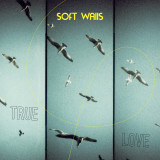
Soft Walls - True Love LP

Soft Walls is the solo recording project of Dan Reeves, who has spent his entire adult life kicking around in the dust of the UK's underground music scenes. Cutting his teeth in the South West's post-hardcore scene; centred around Exeter's The Cavern club, before moving to the South East and forming his own record label; Faux Discx, and the propulsive post-punk band: Brighton via London's Cold Pumas. Projects have come and gone over the years, but Reeves' Soft Walls has remained, an outlet for whatever musical whim takes his fancy.

'True Love' is Soft Walls' 4th album. Written and recorded at home, during breaks in work. During the aftermath of you-know-what.

For this album Dan leaned heavily in to his guitar playing, searching for those purest moments of true emotion and connection. Aiming to strike an instant blow. "Emotional guitar music. But not Emo." The result of falling in love with an instrument again and playing for the joy of it, much like he did as a teenager. Just older, wiser(?) and certainly more world-weary / teary-eyed.

Thematically, 'True Love' revels in stating its love for everything that is dear to Reeves. Odes to marriage, romance, unconditional love, parenthood and creativity pierce through the record's down-swings that tackle existential crisis and the feeling of falling in to depression. Each song attempts to encapsulate a vivid feeling, be it positive or negative. It's all part of a life worth living.

Although recorded at home, this album marks a leap in to digital mid-fidelity for Soft Walls, embracing a wider, richer sound beyond the tape hiss of earlier releases. That same spirt is still in the mix, but is presented wide-eyed and caffeinated in to clarity. Elevated by the input of a handful of collaborators contributing to the performances and helping to shape it sonically, 'True Love' ends up being the truest version of Soft Walls committed to (digital) tape thus far.

pre-order now03.03.2024

expected to be published on 03.03.2024

Liliane Chlela - Safala LP

With her distinct sound treatment and signature improvised performances, Liliane Chlela has been pushing forward the boundaries of ‘Experimental and Electronic Music’ in Lebanon and the Middle East/West Asia and North Africa for over a decade both as a solo artist and via her various local and international collective projects. One of the most versatile female producers/musicians in the Middle East/West Asia and North Africa, Chlela constructs a characteristic sound both as a composer/producer and as a live musician. She further explores the connections between improvisation and sound treatment by approaching numerous musical genres with her signature techniques. Relentless and heavy dark electronic beats mingle with anger and anguish on Liliane Chlela’s album “Safala”. The Lebanese producer and hybrid DJ tapped into her personal memories to bring forth a sonic concoction anchored in the inherited oral epistemologies of her ancestors. Memories intertwine with Beirut, using incantations inherited from Chlela’s grandmother as building blocks to build an eight track album. From warding off the evil eye to protest sounds from the past year of events in Lebanon, the album haunts the listener to invoke a striking elegy on terror and anger, while inducing a rollercoaster of sonic eruptions.

pre-order now26.01.2024

expected to be published on 26.01.2024

Various - Glitzerbox 2

Various

Glitzerbox 2

12inchJIMMYDRAHT9
Jimmy Draht
17.11.2023

Music compilation and art book. We open the GLITZERBOX again and look into a glittering kaleidoscope of music and illustration. Crossing genres, in handmade editions and with great attention to detail, Jimmy Draht fuses artistic ideas into a new whole.

The vinyl contains beautiful folk songs, experimental collages, field recordings and lo-fi pop. All tracks are exclusive or have never been released on vinyl before.

Featuring music by: Maxine Funke, Tenniscoats, Mouth Harp Ensemble, How to count planets, A Happy Return, Benoit Pioulard, New North Wales, Dump, My Two Toms, Oro Swimming Hour, Matthew de Gennaro, The Gentlist, Andersens, Jam Money, Michael Tanner.

The artists, whether they paint, draw, scribble or cut, whether analogue or digital, whether they are graphic artists, illustrators or visual artists: they combine image and sound, discover connections and show that music can create images and vice versa.

Art by Petra Péterffy, Laurent Impeduglia, Nadine Spengler, Michael Dumontier, Tomoko Mori and Nicholas Stevenson.

A limited and numbered edition of 300, with hand-printed 3 color silkscreen book. Compiled by Markus Acher (The Notwist) and Jimmy Draht.

Since the late 90s JIMMY DRAHT publishes elaborately designed music-graphic-comic-text hybrids, most of them handmade and screenprinted. Initiated by Marion Epp, often in cooperation with a music label, artists from various genres are invited to participate. Each release is accompanied by exhibitions and music events.

Bands such as Calexico, The Notwist, Lali Puna, Neoangin, Pram, Otomo Yoshihide, A Million Mercies, Ted Milton, MS John Soda, Schwermut Forrest, Tied & Tickled Trio have participated (to name a few).
In terms of design we were lucky to showcase the works of ATAK, Anna Sommer, Knust, CX Huth, Katz & Goldt, Judith Zaugg, Thomas Ott, Jochen Gerner, Martin tom Dieck, Jim Avignon, Le Denier Cri, Elvisstudio and many more.

ALIEN TRANSISTOR was founded in 2003 by Markus & Micha Acher of The Notwist. The concept of the label is to produce music that has a musical or personal reference to the Notwist microcosm: From electronic soundscapes to abstract hip-hop to laptop-treated contemporary, from processed oriental music to Nick Drake-inspired songwriting. Alien Transistor respects no musical boundaries.

pre-order now17.11.2023

expected to be published on 17.11.2023

A.R. Kane - A.R. Kive LP 4x12"

A.r. Kane

A.R. Kive LP 4x12"

4x12inchRGIRL133
ROCKET GIRL
08.09.2023

A.R. Kive collates the three most astonishing works from that most miraculous of duos - A.R. Kane - comprising the ‘Up Home’ EP from 1988 that signified the band’s dawning realisation of their own powers and possibilities, their legendary debut LP ‘sixty nine’ (1988) and its kaleidoscopic, prophetic double-LP follow up ‘i’ (1989).

In founder-member Rudy Tambala’s new remastering, the music on these pivotal transmissions from the birth of dream pop, have been reinvigorated and re-infused with a new power, a new depth and intimacy, a new height and immensity. Vivid, timeless and yet always timely whenever they’re recalled, these records still force any listener to realise that despite the habits of retrospective myth-making and the
safe neutering effects of ‘genre’, thirty years have in no way dimmed how resistant and dissident to critical habits of categorisation A.R. Kane always were. Never quite ‘avant-pop’ or ‘shoegaze’ or ‘post-rock’ or any of those sobriquets designed to file and categorise, A.R. Kive is a reminder that those genres had to be coined, had to be invented precisely to contain the astonishing sound of A.R. Kane, because
previous formulations couldn’t come close to their sui generis sound and suggestiveness. This is music that pointed towards futures which a whole generation of artists and sonic explorers would map out. Now beautifully repackaged, remastered and fleshed out with extensive sleeve notes and accompanying materials, ‘A.R. Kive’ reveals that 35 years on it’s still a struggle to defuse the revolutionary and inspirational possibility of A.R. Kane’s music.

A.R. Kane were formed in 1986 by Rudy Tambala and Alex Ayuli, two second-generation immigrants who grew up together in Stratford, East London. From the off the pair were outsiders in the culturally mixed (cockney/Irish/West Indian/Asian) milieu of the East End, with Alex and Rudy’s folks first generation immigrants from Nigeria and Malawi, respectively. The two of them quickly developed and fostered an innate and near-telepathic mutual understanding forged in musical, literary and artistic exploration. Like a lot of second-generation immigrants, they were ferocious autodidacts in all kinds of areas, especially around music and literature. Diving deep into the music of afro-futurist luminaries such as Sun Ra, Miles Davis, Lee Perry and
Hendrix, as well as devouring the explorations of lysergic noise and feedback from contemporaries like Sonic Youth and Butthole Surfers, they also thoroughly immersed themselves in the alternate literary realities of sci-fi and ancient history (the fascination with the arcane that gave the band their name), all to feed their voracious cultural thirsts and intellectual curiosity.

It was seeing the Cocteau Twins performing on Channel 4 show the Tube that spurred A.R. Kane into being - “They had no drummer. They used tapes and technology and Liz Fraser looked completely otherworldly with those big eyes. And the noise coming out of Robin’s guitar! That was the ‘Fuck! We could do that! We could express ourselves like that!’ moment”, recalls Tambala - and through a mix of
confidence, chutzpah, ad hoc almost-mythical live shows and sheer innocent will the duo debuted with the astonishing ‘When You’re Sad’ single for One Little Indian in 1986. Immediately dubbed a ‘black Jesus & Mary Chain’ by a press unsure of WHERE to put a black band clearly immersed in feedback and noise, what was immediately apparent for listeners was just how much more was going on here - a
tapping of dub’s stealth and guile, a resonant umbilicus back to fusion and jazz, the music less a conjuration of past highs than a re-summoning of lost spirits.
The run of singles and EPs that followed picked up increasingly rapt reviews in the press, but it was the ‘Up Home EP’ released in 1988 on their new home, Rough Trade that really suggested something immense was about to break. Simon Reynolds noted the EP was: Their most concentrated slab of iridescent awesomeness and a true pinnacle of an era that abounded with astounding landmarks of guitar-reinvention, A.R. Kane at their most elixir-like.

If anything, the remastered ‘Up Home’ that forms the first part of ‘A.R. Kive’ is even more dazzling, even more startling than it was when it first emerged, and listening now you again wonder not just about how many bands christened ‘shoegaze’ tried to emulate it, but how all of them fell so far short of its lambent, pellucid wonder. This remains intrinsically experimental music but with none of the frowning orthodoxy those words imply. A.R. Kane, thanks to that second generation auto-didacticism were always supremely aware about the interstices of music and magic, but at the same time gloriously free in the way they explored that connection within their own sound, fascinated always with the creation of ‘perfect mistakes’ and the possibilities inherent in informed play.

‘sixty nine’ the group’s debut LP that emerged in 1988 had
critics and listeners struggling to fit language around A.R. Kane’s sound. As a title it was telling - the year of ‘Bitches Brew’, the year of ‘In A Silent Way’, the erotic möbius between two lovers - and as originally coined by the band themselves, ‘dream pop’ (before it became a free-floating signifier of vague import) was entirely apposite for the music A.R. Kane were making. Crafted in a dark small basement studio in which Tambala recalls the duo had “complete freedom - We wanted to go as far out as we could, and in doing so we discovered the point where it stops being music”. There was an irresistibly dreamy, somnambulant, sensual and almost surreal flow to ‘sixty nine’s sound, but also real darkness/dankness, the ruptures of the primordial and the reverberations of the subconscious, within the grooves of remarkable songs like ‘Dizzy’ and ‘Crazy Blue’. Alex’s plangent vocals floated and surged amidst exquisite peals of refracted feedback but crucially there was BASS here, lugubrious and funky and full of dread, sonic pleasure and sonic disturbance crushed together to make music with a center so deep it felt subcutaneous, music constructed from both the accidental and the deliberate, generous enough to dance with both serendipity and chaos. ‘sixty nine’ remains - especially in this remastered iteration - ravishing, revolutionary.

The final part of this ‘A.R. Kive’ contains 1989’s astonishing double-LP ‘i’ which followed up on ‘sixty nine’s promise and saw the duo fully unleash their experimental pop sensibilities over 26 tracks, plunging the A.R. Kane sound into a dazzlingly kaleidoscopic vision of pop experiment and play. Suffused with new digital technologies and combining searingly sweet and danceable pop with perhaps the duo’s strangest and boundary-pushing compositions, the album did exactly what a great double-set should do - indulge the artists sprawling pursuit of their own imaginations but always with a concision and an ear for those moments where pop both transcends and toys with the listeners expectations. Jason Ankeny has noted that “In retrospect, ‘i’ now seems like a crystal ball prophesying virtually every major musical development of the 1990s; from the shimmering techno of ‘A Love from Outer Space’ to the liquid dub of ‘What’s All This Then?’, from the alien drone-pop of ‘Conundrum’ to the sinister shoegazer miasma of ‘Supervixens’ — it’s all here, an underground road map for countless bands to follow.” Perhaps the most overwhelmingly all-encompassing transmission from A.R. Kane, ‘i’ bookended a three year period in which the duo had made some of the most prophetic and revelatory music of the entire decade.

After ‘i’ the duo’s output became more sporadic with Tambala and Ayuli moving in different directions both geographically and musically, with only 1994’s ‘New Clear Child’ a crystalline re-fraction of future and past echoes of jazz, folk and soul, before the duo went their separate ways. Since then, A.R. Kane’s music has endured, not thanks to the usual sepia’d false memories that seem to maintain interest in so much of the musical past, but because those who hear A.R. Kane music and are changed irrevocably, have to share that universe which A.R. Kane opened up, with anyone else who will listen. Far more than other lauded documents of the late 80s it still sounds astonishingly fresh, astonishingly livid and vivid and necessary and NOW.

pre-order now08.09.2023

expected to be published on 08.09.2023

Seikatsu Kojyo Iinkai - Seikatsu Kojyo Iinkai

Ferocious JP / US free jazz bomb. A rare meeting between the NYC free jazz scene and the Japanese free music scene. Old-style Gatefold LP, with rare photographs & liner notes by Alan Cummings.

Following hot on the heels of the first, mid-sixties generation of Japanese free jazz players like Kaoru Abe, Masayuki Takayanagi, Yōsuke Yamashita, Motoharu Yoshizawa, etc., an exciting second wave of younger players began to emerge in the seventies. Two of its leading members were the saxophonist Kazutoki Umezu and multi-instrumentalist Yoriyuki Harada. Both were post-war babies and immigrants to the city, Umezu from Sendai in the north and Harada from Shimane in the west. They first met as students in the clarinet department at the Kunitachi College of Music, a well-known conservatory in western Tokyo. Harada was already securing sideman gigs on bass with professional jazz groups and was active in student politics, making good use of his connections to set up jazz concerts on campus. It was around this time that the two began to play together in an improvised duo, with Umezu on clarinet and bass clarinet and Harada on piano. They also experimented with graphic scores and prepared piano.

These experiments eventually led to the creation of a trio, with a high-school student called Tetsuya Morimura on drums, that they decided to name Seikatsu Kōjyō Iinkai (Lifestyle Improvement Committee) in joking reference to the Marxist discourse of the student radicals of the time. Around 1973, Umezu and Harada decided to call it a day and go their separate ways. Umezu began playing with the Toshinori Kondo Unit and Harada with the Tadashi Yoshida Quintet. In 1974 Harada formed his own trio and began to play at jazz coffeehouses across Japan.

Then, in September 1974 Umezu travelled alone to New York, where he set about building connections with the loft jazz scene in the city. It was a fortuitous moment to arrive in New York. Rents were cheap in the Lower East Side, possibilities for squatting existed, so many musicians and artists had moved to the area. Umezu soon became known on the scene as Kappo and he started to make connections with some of the young musicians like David Murray, Arthur Blythe, and Oliver Lake. He recalls making the rounds of the lofts every evening, checking out the performances, and getting the chance to sit in with many groups including Juma Sultan’s Aboriginal Music Society and trumpeter Ted Daniel’s orchestra.

Things were going so well that Umezu wrote to Harada and invited him to come to New York. He accepted and arrived in the city in July 1975. Harada and Umezu took the opportunity to resume their artistic collaboration. Their first concert together in over two years took place on July 20th at another loft, Sunrise Studios at 122 2nd Avenue. Umezu remembers Sunrise as an unusually sunny loft with the rarest of things, a grand piano. He invited along Ahmed Abdullah, a trumpeter he had got to know while playing with Ted Daniel. Abdullah led his own group and was a long-term Sun Ra sideman. William Parker, one of the key figures in the loft jazz scene of the period, was on bass. Abdullah also brought along Rashid Sinan on drums. Sinan drummed in Abdullah’s units throughout the seventies, but he had also played on Frank Lowe’s immortal Black Beings album and collaborated with Arthur Doyle, playing on Doyle’s Alabama Feeling album. By all accounts the evening was a huge success, with speed and dynamism of Harada’s piano playing gaining him lots of support.

Since they had managed to save some money from their day jobs, Umezu and Harada decided to set up a recording session with the same line-up on August 11 at Studio We, where there was a well-equipped studio on the third floor. Umezu recalls the session as follows, Of course, we recorded our performances in one take, with zero retakes as far as I remember. On all the tracks we recorded, we moved as one unit, sharp and fast. That was the nature of Lifestyle Improvement Committee, New York Branch.

Umezu and Harada would later become known for the elements of parody and entertainment that they brought to their music, a freewheeling blend of pastiche, humour and on-stage performativity that paralleled the approaches of the Art Ensemble, Sun Ra, and Holland’s ICP. But here, on their first recordings, the humour element is not yet present. Instead, there is a febrile sense of joy in creation and connection. On the Umezu-penned “Kim”, for example, Harada opens the piece with a speedy exploration of the full-range of the keyboard, hitting hard on the bass keys to create a rhythmic bed out of which patterns begin to emerge. Umezu enters at a much slower pace, longer held notes that at first float weightlessly over the urgency of the piano before they begin in splinter and accelerate. When Parker and Sinan kick in, it’s a rollicking tempo with Parker plucking deep and hard and the left-handed Sinan skittering hard across the topside of his kit. Abdullah kicks in a glorious solo twelve minutes in, bright and breathy at once. The piece slows and grows more spacious towards the end, giving Parker a chance to showcase some arco work that shades beautifully into the air against Abdullah’s trumpet.

pre-order now06.05.2022

expected to be published on 06.05.2022

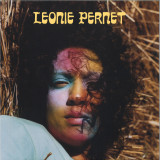
LEONIE PERNET - Le Cirque de Consolation

Léonie Pernet's second album Le Cirque de Consolation, to be released November 19th on InFiné & CryBaby, inhabits a world where borders dissolve and everyone makes their own unique and singular utopia. Hereby, the record questions the links between pop music, African cultures and electronic music, neo-classical music or the role of voice, whether human or synthetic. Sophomore albums can be a painful process for an artist - how refreshing it is to hear one so decidedly optimistic.

Textextext - (add your write up)

The sought after whirlwind of French Pop that exploded onto the scene with her debut "Crave", Leonie Pernet, returns with her second album, "Le Circque de Consolation", a sort of double negative of her first. While the yearning that sat at the center of "Crave"might not have been resolved, the young multi-instrumentalist and singer has found a new perspective - a more open and positive outlook on her own life and work. Perhaps telling, then, that the title was the first element of the album to exist: as it is and has always been a journey of personal (and collective) consolation first, a musical confrontation with the self.

"This record parallels my life's journey," confirms Léonie, "it reflects what has happened in my life since 'Crave' came out and how I feel today. There's still a lot of melancholy, but a lot more sunshine and light. In four years, I've become sober, which has saved me; I've worked a lot on my voice, which is a part of a desire to speak, to address my audience more directly, and also a more pronounced pop desire." In line with her new-found "openness", Leonie invites another musician into her creative process for the first time on "Le Cirque de Consolation": Jean Sylvain le Gouic, who lended his coproduction and perspective to her, while Leonie still plays almost all instruments herself with an astounding prowess.

Leonie's voice oozes with a new-found self-confidence and takes center stage amidst eclectic, distinctively fun and open-minded production. Sometimes she sings in English, mostly in French: "I worked a lot on my voice," confirms Léonie, "I didn't dare to sing before, neither live, nor on record, nor in the studio." Surrounding her astounding, intoxicating voice are forays into any direction imaginable: from harsh, experimental electronics to the more sombre, organic and quiet moments - and everywhere, there is the vision of Africa, (also Middle East) it's many sonic gifts and cultures.

Leonie has found a universal utopia that she craves for - a musical, cultural amalgamation that is decidedly non-western, political and poetic, rooted in self-discovery and the connection with other humans: African and oriental percussion, synthesizers, drum-machines; Léonie mixes genres and instruments with ease and precision. The French novelist and philosopher Édouard Glissant - whose work and writing had a big influence on Pernet - coined the term "Creolization ", the "bringing together of several cultures or at least several elements of distinct cultures, in one part of the world, resulting in new data, totally unpredictable in relation to the sum or the simple synthesis of these elements."

From "Hard Billy ", a techno-influenced rebellious anthem, to "Les Chants de Maldoror," a club and dance song propelled forward by feverish derboukas, to the deeply moving "A rebours" and its Afro-electronic rock. Léonie Pernet inhabits a world where borders dissolve and everyone makes their own unique and singular utopia. Hereby, the record questions the links between pop music, African cultures and electronic music (Intérieur Négro), neo-classical music (Le Cirque de consolation, Dandelion), or the place of the voice, whether human or synthetic as in the atmospheric "Vowel". Sophomore albums can be a painful process for an artist - how refreshing it is to hear one so decidedly optimistic.

out of Stock

Order now and we will order the item for you at our supplier.


Last In: 4 years ago
IPEK YOLU - Tropical Anatolia

Ipek Yolu is the Turkish name for the Silk Road which connected the East and the West. This band does not deal in silk but they connect flavors, smells and sounds from different corners of the globe, connecting the world.

The band merges bass-heavy electro-tinged cumbia grooves, saz riffs and surf guitar into a multicultural melting pot of South American rhythms, Anatolian folk music and 60s psychedelic rock. A unique universe of sound that bridges the tropical jungles and the dusty deserts in a kaleidoscopic blend of music. Ipek Yolu has used 2020 to write their debut album Tropical Anatolia and are ready to hit the venues and festivals.

The members of Ipek Yolu first got together for an improvised jam session during the Aarhus Roots & Hybrid Festival in 2018. The show was set up as a special one-time-only show merging members from the bands Hudna & Junglelyd. The show ended up lasting for almost three hours. It didn’t take them long to discover they were onto something special. If you know any of these bands mentioned you know you’re in for a body-shaking party, characterized by musical curiosity and improvisation.

The three members of Ipek Yolu have all been part of the Danish music scene for several years. The band leader, Orhan Özgür Turan, is a well-known and respected saz player all over Denmark, and has made a name for himself through his efforts in the Anatolian Folk band Hudna. In 2018 he won an award as Global Roots Artist of the year at The Danish World Music Awards. Olaf Brinch and Lasse Aagaard have worked together for many years making high energy cumbia with their band Junglelyd and Afrobeat with their band African Connection. Olaf is also an integral part of the Danish band AddisAbabaBand. In addition, Olaf and Lasse have toured and recorded with great musicians such as CC Yoyo, former drummer of Fela Kuti, in both Ghana and Denmark. All of the past experiences collided to create Ipek Yolu.

pre-order now03.09.2021

expected to be published on 03.09.2021

House of Ho - Ai Ai Ai / Please Hold

At the end of a crooked, narrow alley, tucked away behind a cluster of spindly palm trees that protect it from the intense, direct Southern California sun and shield it from the persistent dusty haze is the lair of Zen 2000, a new project from a Los Angeles native who's been intimately involved in the city's latest wave of electronic music and Nik Mercer, creative lead behind Let's Play House.

The imprint has set out to, through a tight and concise series of 7-inches, explore spacey textures and ambient colors from an amorphous cast of friends and family members, all either also from L.A. or with a deep spiritual connection to the city.

House of Ho, the name behind this debut single, is a little bit of both, stuck somewhere between the island of Hong Kong and the City of Angels; the pair of tracks included here were written, recorded, and produced between the two cities. Perhaps as a result of claiming both Western and Eastern Hemispheres as their place of origin, the songs sound fundamentally “in between”: in between sprawled-out, wandering ambient and sharply scored instrumental exercises; in between late-night trumpet figurations that twinkle around the Canyons and neon-lit karaoke-bar backing tracks that hit with a particular, sugary snap.

out of Stock

Order now and we will order the item for you at our supplier.


Last In: 4 years ago
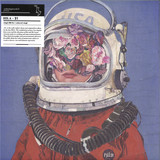
Hila (Artyom Manukian & Dawatile) - 21

"21" is the well-crafted, sharp and original first album by the duo HILA, composed by American cellist Artyom Manukyan (who already worked with Kamasi Washington, Daedalus, Flying Lotus, Run DMC, Gretchen Parlato, Raphael Saadiq, Clive Lowe Mark...) and french producer Dawatile.

The combination of jazz, Los Angeles beat-scene and the vibrations of 80s and 90s Soviet Armenia make it a striking and unprecedented fusion. These kind of nostalgic and unconventional references forcefully shake the codes of mainstream culture to create a sincere, raw and intimate expression.

"HILA" was born from a spontaneous and intense creative impulse between Artyom Manukyan, a Los Angeles-based Armenian celloist and his partner in crime, David Kiledjian aka Dawatile, a French multi-instrumentist of Armenian descent. This project is proving to be a true master stroke given that it only took 21 days for the duo to make it a reality.

"HILA" was made in less a moon cycle but captivates and electrifies audiences upon its first outings. "H.I.L.A" colors the warmth of the Californian "High" with Armenian vibes. The artists chose this name for their creation since both have a close and valuable connection to these locales. This journey began in 2007, on the day Dawatile went to Yerevan, the capital of this small country in the Caucasus mountain to realize a first fusion project centered around local folkloric music genres.

There he was introduced to local musicians including the Armenian Navy Band, one of the country's foremost groups in which Artyom played the bass and cello. In this context, he also met many musicians such as Tigran Hamasyan and Norayr Kartashyan. This will be the beginning of connections between Lyon, Yerevan and Los Angeles. The following year, the two artists will be be seen performing next to Taylor Mc Ferrin at the Jazz à Vienne festival. More recently, they partnered up again when the cellist, who had freshly relocated in California, invited Dawatile to produce his album. As soon as the studio’s threshold was crossed, they decided to postpone this record and create a joint project: Hay (as the Armenians call themselves) / High In Los Angeles. HILA was born at the end of these 21 days of intense creation. The association of Artyom Manukyan and Dawatile is the combination of two visions, two versions of Armenia, two personalities, the reunion of the Eastern and Western blocs.

One grew up nurtured by the sounds of hip-hop and jazz in Europe and the other by art music and Russian-influenced 1980s Armenian folkloric music before moving to L. A., Ca. The cornerstone of it all, the glue that unites everything : Armenia and music. They generate a new identity synthesizing two perceptions, their complicity transcending these cultural discrepencies. To achieve this, they will scour through images of Artyom’s childhood, within the popular culture of Soviet Armenia. Together, they revisit this decidedly retro vibe, based on the work of Caucasian groups inspired by African American music. This background is rehashed and fused with ancestral Armenian sounds. The DNA of the album "21" is molded by these dear influences.

We can also hear the ancestral sounds of Armenia, a country at the edges of both Europe and Asia. The presence on two tracks of Armenian music Master Norayr Kartashyan, infuses the languor of past melodies and traditions. These purposeful anachronistic sounds offer a fantastic depth to this powerful opus. Listening to the album, one can appreciate the successful fusion of styles and influences. Those combinations, however, manage to preserve individual identities only to enhance the art through an adamant musical dialogue.

Being driven by the urge to transpose Armenian musical traditions into a unique universe, the daring artists, offer an innovative combination by blending, for the first time, these ancestral sounds with the world of Los Angeles beat-scene and jazz. An invention largely fueled by the magic strings of Artyom and maestro Miguel Atwood-Ferguson, a pillar of the genre in Los Angeles combined. These associations resonate with a triumphant equilibrium. HILA is musical uncharted territory in which Artyom's cello strings intertwine to ignite the harmonies of keyboards, the machines, the vocals and electronic layers Dawatile pieced together. HILA plays the soundtrack of an adventure set between Armenia around the end of the Soviet era and a mysterious near future.

Artyom Manukyan grew up in Armenia in the 90s. At the time, he studied Russian classical music while learning jazz with assistance by his father, a music journalist. Being an unconditional music lover, he went on to sharpen his skills at the prestigious Berkelee College of Music. Subsequently, he’s been lucky enough to travel the world touring with numerous acts and mainly with the Armenian Navy Band. The group has fostered alacritous success honored by a BBC Award as a crowning achievement. He moved on 10 years ago and made his way to L.A. with his cello on his back. In the City of Angels, he quickly became a popular figure of the jazz and hip-hop scenes thanks to his first album "Citizen". He’s accompanied prestigious musicians such as Kamasi Washington, Melody Gardot, Daedalus, Flying Lotus, Run DMC, Gretchen Parlato, Raphael Saadiq, Clive Lowe Mark, or Vulfpeck. He released his solo album on the cello, "Alone" in October 2019.

Dawatile is a bold producer and multi-instrumentist as well as a passionate and resolute musician molded by jazz. As a versatile artist, he handles and juggles the saxophone, the keys, the bass and composition. Simultaneously, Dawatile produces cross-over projects and soundtracks for the movie industry. He, as well, has had the opportunity to be a part of many tours, including with his electro hip-hop band, Fowatile and more recently with the "Future Kreyol" trio, Dowdelin. Being the ever workaholic, he has under his belt a string of prestigious collaborations with the likes of Talib Kweli, Foreign Beggars, Roy Ayers, Tigran Hamasyan, Mathieu Boogaerts, Voodoo Game and Piers Faccini. His taste for developing new musical recipes and his know-how in production make him a much sought-after album producer. In concert, the HILA duo offers a sober, precise and rhythmic performance. "21" is an aerial and lively album taking the audience on an at times joyous and sometimes melancholic dreamlike journey. The magic of "HILA" operates at the speed of light and positions it already as an avoidable group.

out of Stock

Order now and we will order the item for you at our supplier.


Last In: 6 years ago
Ananda Shankar - Ananda Shankar And His Music

If you read the name Shankar you may right away think of Ravi Shankar, the grand master of contemporary Indian folk music who was very popular in the 60s due to his connection with the music industry in the United States despite staying away from the pure pop music by maintaining his classic sitar and tabla style ragas to express himself musically. Ananda Shankar used to be his nephew who also made a journey to the USA to gather inspirations from rock artists like Jimi Hendrix among others. His first album from 1970, a conglomerate of classic Indian folk tunes and instrumental versions of the hottest rock songs of the day clothed in a veil of sitar melodies and backed up with tabla drum grooves, was an attempt to combine the spiritual approach of his cultural origins with the light minded blissful attitude of western psychedelic pop music. It worked well in the sense that it is still, nearly fifty years later on, a groovy little album that leaves nobody sitting around at any random hippie party. He took a five year break from recording to create what should become his second album and this is what I am about to present to you now. The cover-tunes were replaced by all original compositions with a lush instrumentation that features the typical sitar, tabla and bowed string instruments such as sarong and sera arrangements mixed with sounds that have a definite western origin such as rock guitars, Hammond organ and moog synthesizers plus full drum kits that take care to enhance the actual groove. Psychedelic rock, raga, fusion-jazz and funk flow into each other quite naturally giving birth to something fresh and exciting I would label as Bengali pop'. The borders between eastern and western music get abrogated here. If it was not for a few deeply mythical chants on a bed of drones here and there you could not even tell this was a record by an Indian artist. This album is quite accessible most of the time and comes with a certain slickness that makes it easy for the listener to understand and appreciate what is going on. Still there is the other side of the coin, the depth pop music often lacks. So in the end this might have been too far out for the average western mainstream fanatic back in 1975 when disco began to rule but it is an awesome sound trip for fans of psychedelic dance music like INCREDIBLE BONGO BAND and all eastern influenced popular rock.

out of Stock

Order now and we will order the item for you at our supplier.


Last In: 7 years ago
Various - Rogue Style Ep

Various

Rogue Style Ep

12inchDICA004
Defrostatica
18.05.2017

* Includes a DIN A2long poster inside the 12" sleeve with edition number and music download code

* Rogue Style 1 EP is an international homage to b-boy culture, where the worlds of breakbeat music and breakdance collide. Sinistarr (USA), Kiat (Singapore), Kabuki (Germany) and HomeSick (Canada) are connected in many ways, now they lay bare their hip-hop roots and give something back with a fresh take through the eyes of drum & bass and juke/footwork. Here is what they have to say:

Sinistarr: "As a teenager I grew up as a b-boy, dancing anywhere I could: schools, parks, festivals, you name it, my crew was there with cardboard and a speaker. I eventually got deeper into DJing and making music and learned to bring a sound that's not just for the crowds and the purists, but also for all the dancers!"

Kiat: "Hip Hop has taught me to keep evolving, to explore new forms in all my art. Progression is the key to evolution. -- I met Sinistarr online thru myspace and we had a musical connection which led to our first collaboration 'Black Diamonds' which is still one of my personal favourite tunes I've been fortunate to be part of it's creation. With Kabuki, i've always been a fan of his work since his 'Makai' alias on No U-Turn, despite meeting him only recently thru the label.I've always known him to be constantly progressing his ideas in his music which I respect alot."

Kabuki: "B-boy culture has always been a strong influence on how I pursued my art, mainly because of its DIY ethos and attitude of perfecting your craft. Incidentally these were also the aspects that drew me to Jungle when I first discovered it in the nineties. -- I'm happy to rub shoulders with Kiat, Sinistarr and HomeSick on this release, as I'm a fan of their music foremost, but also because we became friends through the music."

HomeSick: "I was only a child in the 90s and as a result I feel like my understanding of b-boy culture was experienced second hand thanks to 90s/early 2000s hip hop music. I appreciate the parallels I can see with footwork culture, particularly the similarities to the community mentality of break dancing. -- I know Sinistarr through booking him for our local party night in Alberta, Canada called Percolate. Our city must have left an impression on him because a year later he made the move here from Detroit. Had the pleasure of hosting him as a room mate for a little over half a year, the home was a very potent creative space during this time. Kabuki hit me up a few years ago and we very quickly got to sharing tracks and collaborating together. Mans a master of production and a super important part of the global scene."

The idea for a reminiscence of b-boy culture stem from label owner Booga:

"Why am I interested in this so much I grew up in East Germany and as the movie "Beat Street" premiered in 1985 over here I was age 13 and blown away by the energy, the music, the wit, the style - everything in this movie was better than everyday life in Leipzig. So I started saving for a cassette recorder and taped music shows from West German radio and prepared tapes for school disco gigs to the hope somebody would do the "robot" to Arthur Baker "Breaker's Revenge". Unfortunately that never worked out hahaha. But I was hooked since then and as the wall came down in 1989 I travelled to West Berlin just to buy the Beats, Breaks and Scratches 1-4 vinyl box by Simon Harris. The fascination for breakbeats never stopped and before I discovered Jungle around '94 I was down with the British cut up house thing from the likes of Marrs, Krush and Coldcut as another form of breakbeat music. The "do it yourself" spirit from hip hop culture inspired me to start a local website called breaks.org in 2000 to locally promote the drum and bass scene with emerging producers, djs and mcs for a wider audience and I threw in some interviews with Storm, Kabuki, Rob Playford, Klute and John B. That turnt into a multi author blog called itsyours.info in 2004 which still exists - that is where I had the pleasure to introduce Kiat and Ash in 2007. All these years I was listening and playing drum and bass tunes when the occasional "bboy tune" came up, some were obvious like Alex Reece "B-Boy Flavour", Lemon D "B Boyz", Commix "Change" and some were not so much self-explanatory like Digital & Spirits "Phantom Force" and the remixes by T-Power & Codeine or Fracture's Astrophonica Edit - but I felt the hidden force of breakdancing nevertheless. With the Rogue Style series I have the first class opportunity to ask established and new Defrostatica artists to present a current interpretation of b-boy culture. This is a dream coming true."

out of Stock

Order now and we will order the item for you at our supplier.


Last In: 9 years ago
Various - Norman Jay Mbe Presents Skank & Boogie

Norman Jay MBE presents his latest compilation, titled 'Good Times Skank & Boogie', set for release 9th October 2015 on Sunday Best Recordings. This is his first compilation since 2011's Good Times 30th Anniversary Addition and follows on from his hotly anticipated Good Times Goes East party at St John Church at Hackney on 29th August.
Norman Jay is undoubtedly one of the finest and highly respected DJs in the world today and yet again pulls from his impressive collection to provide the ultimate eclectic selection.
For this 12th compilation, for those of you counting, Norman kicks off with St Germain's version of Henry Mancini's Pink Panther Theme. A cult favourite from 2004s Pink Panther Penthouse Party album, it of course immediately brings Peter Sellers to mind and a smile to your face. Next up former Uniques front man Slim Smith's Everybody Needs Love is a classic from 1968, cut at the legendary Duke Reid's Treasure Isle studio. Penned originally by Motown heroes Norman Whitfield and Eddie Holland and covered by household names including The Temptations and Glady's Knight & The Pips, Slim's version became something of a signature tune until his mysterious death in 1971. Sticking with Motown, Stevie Wonder's Living For The City is up next but it's the Michael McDonald rendition from his 2008 album Soul Speak, which proves the man who gave us the sublime Sweet Freedom had lost none of his class 20 plus years on.
D-Influence's Good Lover takes things up and brings them closer to home, to the streets of London infact. After a couple of independent releases the band, who had strong connections to the London Jazz and Soul scenes, served up this contemporary boogie tune as part of their 1992 debut long player for East West. They would subsequently score hits as a production team for a number of British R&B acts. Homegrown soul continues with Paul Johnson's Better Than This, released here via longstanding UK soul imprint Expansion to deserved acclaim last year. It's quality and appeal are simply timeless, whilst master Dego and Kaidi's mix adds a classic 80s soul dimension to proceedings.
The Chi-Lites I Keep Comin' Back To You and The Real Thing's Love Takes Tears continue and expand the 80s theme, bringing in 2-step and boogie, as does Deodato's Never Knew Love from the same period.
We switch again with Delroy Wilson's Better Must Come, a massively popular sufferers lament from 1971 by this former Jamaican child star, it would go on to be used in election campaigns by various Jamaican political parties. Kent People by Laurel Aitken & The Gruvy Beat is the next one out the box and was the flip to the 1969 anthem Skinhead Train. It features the UK's top reggae band of the era The Rudies, who along with Aitken, the widely-proclaimed Godfather of Ska, comprised of Earl Dunn (lead guitar), Trevor White (bass), Sonny Binns (keyboards) and Danny Smith (drums). They would go on to enjoy UK chart success backing singer Freddie Notes before they evolved into Greyhound. From the same year Splash Down by The Crystalites is another slate that ignited dance floors in both Jamaica and the UK upon release. Some of you will have noticed the rhythm track is the same as that of the earlier Kingstonians' best-seller, Sufferer, which came courtesy of legendary producer Derrick Harriott.
As the end draws close The Stone City Band featuring Rick James serve up some hard edged boogie, hotly followed by a classic Tom Moulton slice of late 70s disco courtesy of The Fantastic Four and their I Got To Have Your Love. If that doesn't have you dancing then Chanson's superb Don't Hold Back featuring James Jamerson Jr. on bass will leave you no choice. Classic Good Times indeed.

out of Stock

Order now and we will order the item for you at our supplier.


Last In: 8 years ago
Kink - Under Destruction Lp 2x12"

Kink

Under Destruction Lp 2x12"

2x12inchMACROM38LP 2X12"
Macro Recordings
06.05.2014

#3 Live Act of 2013 at Resident Advisor, one of the most in demand remixers around, a total of 156 gigs in 2013, releases for Rush Hour, Ovum, Macro; booked out months in advance from Berghain to Ibiza to the main electronic festivals ... KiNK: Arguably the world of dance music has not witnessed anyone else rising so clearly from bottom to top just by the centrifugal force of sheer talent. Being based in Sofia, Bulgaria, without a support network, a campaign or any media hype, his music alone - live and in the studio - created a momentum whose end we have yet to see. Lenin said: 'Communism is Soviet power + electrification of the whole country.' Hardly did Lenin suspect what an inspired take on these words could do: post-socialist techno. A child of 80's late socialism, KiNK grew up on the home computers Bulgaria's IT scientists had created by backwards-engineering Western technology. Fueled by nuclear energy on the edge of desaster, a whole generation of kids was trained to hack. Dance music gradually dripping in through early dial-up internet connections, the acoustic fingerprints of distant parties put Eastern producers from KiNK to Nina Kraviz to Vakula under a spell. Yet KiNK spent years of backwards-engineering the sounds of Detroit, Chicago and early Warp.

out of Stock

Order now and we will order the item for you at our supplier.


Last In: 6 years ago
  • 1
Items per Page:
N/ABPM
Vinyl