Search:ear drum

Styles
All
Axel Boman - From Riches to Rags EP

Mercurial Swede Axel Boman debuts on Aus Music with four spellbinding deep house beauties

Swedish artists pbeatgirl and Joakim Åhlund & Jockum Nordström feature on one track each
Axel Boman has brought playful charm to the underground for nearly two decades. His colourful, emotive sound marries melodic whimsy with warm, cuddly grooves and is underpinned by invention and experimentation in sound design, rhythm and mood. The Studio Barnhus co-founder is an artist who can make you laugh and cry at the same time, as continually shown across more than 20 EPs and four full-length albums on a tasteful array of labels. He strides into 2026 with a first EP for Aus that embodies everything that makes him easy to love and hard to pin down.

First up is 'Night Blooming' feat pbeatgirl - a provocative figure in Sweden's post-pop underground. The sensual late-night lullaby has soft drums and even softer spoken words whispered in your ear. Add in the dreamy synths, and you have perfect house hypnosis. 'Someone Stop Me' slows the tempo but ups the texture with raw, tumbling drum loops, incidental guitar licks and sustained pads that help you zone out and gaze into the distance on a summer's afternoon.

'Svalor Radiosignal (Axel's Dub)' features Joakim Åhlund, who is currently on tour of Australia with his band Les Big Byrd, and is also a guitarist and lead singer in the Caesars band he founded, as well as being a prolific producer. World-renowned multi-disciplinary artist Jockum Nordström works across painting, sculpture and collage and also features. There's a signature Boman innocence and charming naivety to the melodies here. They leave wispy, painterly trails above the smooth, dubby groove and fill you with warmth and comfort. Closer 'Spooky' journeys later into the night with a more rickety, edgy mood, but beautiful, shape-shifting synths are like a tender hand guiding you into darkness.

This is Axel Boman at his most intimate and expressive, a quietly powerful EP for heads-down moments and after-hours warmth.

pre-order now08.05.2026

expected to be published on 08.05.2026


Last In: 2026 years ago
Gun Outfit - Process and Reality LP 2x12"
  • A1: Unfelt Loss
  • A2: So Easy To Love
  • A3: Teardrops (Classic Hell On Earth)
  • A4: Whiplash
  • A5: Morning Doctor
  • B1: Cherry Blossoms In Leschi
  • B2: Southward Equinox
  • B3: Velvet Rope
  • B4: Backward Path
  • B5: Don’t Remind Me
  • C1: Season Of The Wish C2. The Last Resort
  • C3: Two Rivers
  • C4: A Little Game
  • C5: Lilies Of The Field
  • D1: Lifelong Sellout
  • D2: Out Of My Mind
  • D3: Golden Era
  • D4: Sweet Routine

For two decades, Gun Outfit has been a band defined less by genre than by continuity, patience, and a commitment to making music that reflects their lived experience.
Formed in Olympia, Washington in 2006 but long since rooted in Los Angeles, the group has evolved from a raw duo into a quietly formidable five-piece, their sound growing from scrappy post-punk beginnings into something spacious yet intimate, and always underpinned by an experimental edge.
On Process & Reality, Gun Outfit return with their most ambitious and immersive work to-date, a sprawling 80-minute double album shaped by time, environment, and philosophy. Recorded over the course of a single month in the late summer of 2020, on an 80-acre ranch in Pine Flat, California, while a massive forest fire burned less than ten miles away, the seeds of these songs were stark and strange.
Its title, Process & Reality, draws from the central work of philosopher Alfred North Whitehead, whose philosophy places intuition, experience, creativity, and relationality at the center of existence.
The band’s current lineup reflects both longevity and openness. Sharp and Keith remain the band’s primary architects, joined by longtime drummer Daniel Swire, multi-instrumentalist Henry Barnes, and bassist Kayla Cohen. Additional collaborators include Chris Cohen, Warren Lee, and Danny Sasaki all of whom add further depth, leaving subtle fingerprints across the album.
Musically, the album expands the band’s palette without abandoning its core sensibility. Dulcimer, autoharp, sitar, melodica, keyboards, homemade electronics, and a wide range of acoustic and electric textures appear throughout. The sound is mellow yet expansive, songs move between fragility and hefty atmospheric passages.
Influences surface obliquely rather than overtly. Elements of reggae and dub inform the production’s spatial sensibility. Echoes of long-form European jam bands coexist with sharp post-punk. British folk traditions, American country, and classic West Coast songwriting drift in and out of focus; the band is never afraid to lead or follow.

pre-order now08.05.2026

expected to be published on 08.05.2026


Last In: 2026 years ago
LAURIE ANDERSON & SEXMOB - Let X=X (Live) (3x12")

LAURIE ANDERSON & SEXMOB

Let X=X (Live) (3x12")

3x12inch0075597893304
NONESUCH
08.05.2026
  • 1: From The Air
  • 2: Good Evening
  • 3: Cloud
  • 4: Let X=X
  • 5: It Tango
  • 6: Drum Solo
  • 7: Teachers
  • 8: Story To No One
  • 9: Gravity’s Angel
  • 10: Ramon
  • 11: New Angels
  • 12: Walk The Dog
  • 13: Looking At The Moon
  • 14: Church Of Panic
  • 15: Dog Show
  • 16: Junior Dad
  • 17: O Superman
  • 18: The Lake
  • 19: Swimming
  • 20: It’s Not The Bullet That Kills You
  • 21: Only An Expert
  • 22: What Are Days For?
  • 23: How To Feel Sad Without Being Sad

Nonesuch Records releases Let X=X, by Laurie Anderson with Sexmob. This triple-LP/double-CD set was recorded live during a 2023 tour by Anderson and the jazz band Sexmob – Steven Bernstein and Briggan Krauss on brass, Kenny Wollesen on percussion, Douglas Wieselman on winds and guitar, and Tony Scherr on bass. Its cover and interior packaging feature paintings by Anderson. The album features 23 songs, including many favourites from throughout Anderson’s career, performed in new arrangements – plus one by Lou Reed and Metallica, ‘Junior Dad’. Anderson and Sexmob play more US and international dates this spring and summer (details below).

The New York Times said Anderson and Sexmob’s concert at the Brooklyn Academy of Music (BAM) ‘wasn’t a historical recreation of past recordings; Sexmob’s sound is a beefier one than on Anderson’s albums. With musicians who can double on electric guitar and bass clarinet, its members offered a rich range of textural variation throughout the evening.’

Laurie Anderson is one of America’s most renowned – and daring – creative pioneers. Her work, which encompasses music, visual art, poetry, film, and photography, has challenged and delighted audiences around the world for more than 40 years. In a recent 60 Minutes profile, Anderson Cooper said she ‘is a pioneer of the avant-garde, but... that doesn’t begin to describe what she creates... It’s experienced by audiences who come to see her perform: singing, telling stories, and playing strange violins of her own invention... she blends the beautiful and the bizarre, challenging audiences with homilies and humor. She blurs boundaries across music, theater, dance, and film.’ The Washington Post has said she ‘doesn’t just tell stories; she draws out every word with a kind of physical pleasure, tasting its flavor as she probes the everyday mysteries of life.’

Anderson released her first album with Nonesuch Records, the critically lauded Life on a String, in 2001. Her subsequent releases on the label include Live in New York (2002); Homeland (2010); the soundtrack to her acclaimed film Heart of a Dog (2015); and her Grammy-winning collaboration with Kronos Quartet, Landfall (2018). Nonesuch released a re-mastered edition of Big Science in 2007 for its 25th anniversary, followed by a vinyl LP re-issue in 2021; the album includes Anderson’s beloved, surprise hit, song, ‘O Superman’, which also is featured on Let X=X. Her recent Nonesuch release was 2024’s Amelia, about renowned female aviator Amelia Earhart’s tragic last flight.

Anderson’s virtual-reality film La Camera Insabbiata, with Hsin-Chien Huang, won the 2017 Venice Film Festival Award for Best VR Experience, and, in 2018, Skira Rizzoli published her book All the Things I Lost in the Flood: Essays on Pictures, Language and Code, the most comprehensive collection of her artwork to date. Recent exhibitions and installations of Anderson’s work include Habeas Corpus at New York’s Park Avenue Armory; her largest exhibition to date, The Weather, at Washington, DC’s Smithsonian’s Hirshhorn Museum of Modern Art; and Looking into a Mirror Sideways at Stockholm’s Moderna Museet, which was her largest European exhibition to date.

Laurie Anderson was awarded the 2024 Stephen Hawking Medal for Science Communication, along with Christopher Nolan and David Attenborough, and the International Astronomical Union named a minor planet in her honour: Asteroid 270588, Laurieanderson. That same year, she was awarded a Grammy Lifetime Achievement Award.

pre-order now08.05.2026

expected to be published on 08.05.2026


Last In: 2026 years ago
Jerod S. Rivera feat. Cat Lauigan - Seamstress Clock Remixes

In early 2025 Oakland-based Jerod S. Rivera released his second full length Dot-Dash, featuring a collaboration with CST co-founder Cat Lauigan and Jonathan James Carr. From the beginning we were mesmerized with the result, a perfect melding of Cat's processed spoken-word and Jerod's Buchla experimentations.

The thought of remixes presented immediately, the material extra ripe for interpolation. Enlisting friends from geographically and sonically disparate locations to present an ideal remix 12". Something for everyone, something for every setting, a tool with multiple functions...

The mysterious dub/techno/leftfield mastermind behind False Aralia dives further into territory explored on iri.gram, uptempo and dancefloor-ready in a more maximal Perlon-ish way while still embracing a half-time dub feel. Philipp Otterbach (Music from Memory, Offen, RIO) goes deeper into the guitar zone he’s been exploring, channeling Earth 2, Boris, and the like for some heavy drone. Oakland duo DJ ML and Wonja adopt their Motoko & Myers moniker (Future Times, Soda Gong), zeroing in on some choice vocal snippets that mesh perfectly with a live drum break and bassline for a Seefeel-esque version that could have come from a 90’s UK studio. Finally, Slowfoam embraces the more experimental elements of the original with a remix that starts sparse and minimal but builds into a glitchy rhythmic climax.

The 12” includes a 2-sided riso insert and a download code with access to an additional remix by close collaborator Jon Carr that twists the vocals into a throbbing industrial caucaphony.

In Stock

On Stock and ready to ship

ROBERT HOOD - SOUL SONIC FORCE EP

M-Plant's 2026 schedule starts as it means to go on with a blistering, adrenaline-charged Techno EP from the minimal master, Robert Hood.

Robert Hood's minimalist approach helped define Techno's evolution in the early 1990s, as he's continued to push a stripped-down, hypnotic sound. His solo work, marked by precise drum programming and deep grooves, has become hugely influential across modern Techno. While he continues to innovate through projects like Floorplan (with daughter, Lyric) here he returns to his roots on the "Soul Sonic Force EP".

From A-side opener "Insurrection" that blends a tough peak-time Techno sound with sweeping strings, to the reverberating tonal "Black Ops". Then flip to the AA-side for the relentless pared down groove of "Soul Protector", before "Warfare" with its layered precision. This is classic Hood in action; unparalleled.

In Stock

On Stock and ready to ship

CHURCH - HOW LONG / DA DA SONG 7"

Indiana Jones never dug this deep.
Church – the brainchild of Joe Washington – were a band both lucky and cursed to come up in the seventies. Lucky, because they rode a wave of community activism, uplifting messages and a moment when music truly mattered. Cursed, because those same times meant their tight, heartfelt output went overlooked.
Mid-sixties to circa 1980 soul and funk were extraordinarily rich. The era’s big releases have aged like fine wine, yet countless hidden gems remain buried. Church’s only single was one of them. Their hypnotic 1976 release “How Long” b/w “Da Da Song” arrived the same year as Stevie Wonder’s Songs in the Key of Life, Marvin Gaye’s I Want You, Diana Ross’s Diana, and at a time when Black mainstream music was shifting toward disco. Church, however, sounded like Sly & The Family Stone in an alternate timeline — gritty, focused, stripped of additives.
“Da Da Song” is pure grits and gravy: furious, tight drums and lyrics that sound like both a plea to DJs to play their record and an insistence to keep the party alive, noticed or not. It cooks from start to finish in just two and a half minutes.
“How Long” is its own universe. Where “Da Da Song” is skeletal, “How Long” blends key strands of Black music in under three minutes: touches of spiritual jazz with a Gary Bartz-like sax, gospel-blues undertones, and echoes of the era’s flower-power-tinged Black creativity — The Undisputed Truth, The Family Stone, even the poetic freedom of Nikki Giovanni. The lyrics are a timeless plea for love.
Church formed in the Bay Area in the early seventies, shaped by the movement, culture and activism of the time. Joseph Washington, based in San Jose, never chased a music career — for him, music was a way to bring people together. Before Church, he led a backing band called Wash, then added gospel singer Linda Williams (née Stephens) and New York–born Joel Como on xylophone to complete the group.
They rehearsed in Joe’s garage, spread through word of mouth and played every gig they could: Black colleges, opening slots for The Whispers, neighbourhood house parties. Some members studied at Nairobi Junior College in East Palo Alto, then a hotbed of Black community activism, with revolution in the air and messages woven naturally into the music.
This single is a message from that era, resurfacing at last — ready to be sampled just as another Joe Washington track, “Look Me in the Eyes”, was on Drake and J. Cole’s “First Person Shooter”. These rare, spirited tunes are begging for new life through samplers, again and again.

In Stock

On Stock and ready to ship

GUY J - MILLION YEARS FROM NOW / JUST RAIN

2026 Repress

One of the leading names in contemporary underground music, Guy J, embarks on a new journey. As a dedicated futurist and sound enthusiast who pushes boundaries akin to science fiction, Guy delivers the first track on his new label with an abstract vision of the layered future of sound. This 15-minute preview of Guy J's forward-thinking, innovative work indicates a promising future for his label. Experience the birth and transformation of a new era in sound from day one!


Every beginning carries excitement and unpredictability, requiring something extraordinary. Whether rooted in creationism, biblical narratives, or the Big Bang Theory, both theological and scientific origin stories resonate with events echoing millions of years into the future. One of the leading names in contemporary underground music, Guy J, embarks on a new journey. As a dedicated futurist and sound enthusiast who pushes boundaries akin to science fiction, Guy delivers the first track on his new label with an abstract vision of the layered future of sound.

From the opening patterns till the end, A Million Years From Now offers an adventure, blending moments of free-flowing thought with a perfectly engineered audio collage that evokes a spectrum of abstract emotions-from melancholia and psychedelia to breathless excitement and, ultimately, pure euphoria.
The layered creativity transcends realism, leading listeners into a state of trance. The second piece, Just Rain, kicks off with a bass-heavy, pumping kick drum that vibrates speakers on any sound system.
However, Guy J transforms this from a rhythm-based track into a melodic epic. Its power lies in the seamless transitions and manipulation of effects and in the compositional structure that evolves over the eight-minute arrangement. Despite its subtle atmosphere, the melody culminates in an explosion of emotions that stimulate every frequency of the audible sound spectrum.

This 15-minute preview of Guy J's forward-thinking, innovative work indicates a promising future for his label. Experience the birth and transformation of a new era in sound from day one!

In Stock

On Stock and ready to ship

Blake Baxter - Dream Sequence X

Blake Baxter

Dream Sequence X

12inchTRESOR002X
Tresor
02.02.2026

2026 Repress

Throughout 2025, Tresor Records will reactivate Detroit house and techno originator Blake Baxter's vast Tresor catalogue digitally in chronological order, starting with 1992’s Dream Sequence, closely followed by his 1995 album, Endless Reflection. To inaugurate and celebrate this retrospective of one the genre’s true founders, an artist whose connections to Tresor go back to the very beginning, the label announces a special 12” release, Dream Sequence X, featuring remastered tracks from the early days and highlighting the harder side of his output.
Initially inspired by post-punk and funk, Baxter started making music as early as 1985. By 1991 he had already released several seminal records on classic labels like Underground Resistance, KMS, and Incognito, as well as providing multiple tracks to the groundbreaking UK compilation Techno! The New Dance Sound of Detroit, which was many European listeners’ introduction to the genre, solidifying the term techno, and launching the international careers of many of the contributors.
1992 saw Baxter make the first trip to play Tresor, on the first UR Europe tour ever, thereby pioneering the now legendary Berlin-Detroit Connection. This visit led to a long and fruitful partnership with the club’s new-fledged label beginning with Mills', Banks' & Hood’s X-101 and Baxter’s Dream Sequence, from which the first four tracks on the new 12” come.
Whilst he would become more renowned for his signature seductive vocals and a smoother music style closer to house music, these early tracks are heavier, classic 90s techno, revealing the influence of industrial, post-punk and pop of the time. Indeed the collection is something of a time capsule: jacking 909 drums, intense, ravey synth stabs, samples from classic soul breakbeat and the Speak & Spell voice synthesizer; classic sounds and styles of the era all make appearances on the record. All tracks have been remastered by Manmade Mastering breathing a new vitality and sharpness for the modern dancefloor.
In a world where longevity is difficult and superlatives are too easily deployed, it is still difficult to overstate the long-lasting influence that Blake Baxter has had on modern music. His visionary output can be heard across modern electronic and pop to this day and with this series of remasters, there has never been a better time for the world to hear it at source.

In Stock

On Stock and ready to ship

ARBILLA - THE RISE EP (Incl. Gerald Mitchell Remix)

Xistence Records is destroying the boundaries between house and techno. The Rise E.P. simply goes to show you a good label does not lose it's competency after 4 years of releasing music. This 4 tracker sounds sublime! If you like deep emotional melodic music, you should have this 12”.
Difficult to pick a standout track as they all offer something different…

The original version of Resilience is a stunning track, reminds of the early Octave One sound with a great mixture of percussion, classy bassline, nice layering of textures and melodies.

While Gerald Mitchell (Underground Resistance/Los Hermanos) retouch is a soulful stripped back tune with elegant drum work, linked together by a uplifting synth pattern.

Sunset To Sunrise, a delightful piece of haunting electronica. It’s a real journey back to the birth of Los Hermanos. Class!

Meteoric Rise original version came out as digital earlier on the label, Journey Around The Sun Mix here has the UR sound. It’s more complex, Detroit lesson in syncopation and rhythmic programming with chord stabs and shuffling drum work drives this one forward..epic!

“Without Hope None Of Us Have Anything “

pre-order now15.05.2026

expected to be published on 15.05.2026


Last In: 2026 years ago
Various - 7 years of Sounds Benefit 2x12"

Tom Joyce’s sought after Sounds Benefit label marks their milestone tenth release with “7 Years Of Sounds Benefit”, a carefully curated selection of essential artists and rising talents presented as a double vinyl LP. The two slabs of wax manoeuvre between innovative electro and refined flavours of house and techno for trained ears.

First up is a reissue from S-Max, New Delhi Projects, previously released on Below back in ‘99. A chugging display of sounds that were way ahead of their time. After featuring on SND002, Ben Cohen makes his comeback on the label with Short Night, a breakbeat journey which boasts beautiful and emotive chord progressions. The B side features somewhat of a rarity as Etienne shares a track, Gateway Experience, futuristic energy from the accomplished producer, layered with subtle yet effective acid tones. Label head Tom Joyce delivers 7:15pm, a dreamy quest through melt in your mind synths and punchy electro drum patterns.

As we approach the second vinyl, we uncover further gems from the archive as Lowtec kindly shares his unreleased La Java 2014, which was created circa. 2000. Javier Carballo and Aniano have been making positive movements with their Hdz moniker in recent times, and Moog is another stamp of approval, a warm bass line converses with the crisp drums and spaced out elements. On the flip, Berlin based Englishman Rob Amboule turns out a killer elasticated groove which takes you for a late night shuffle in Scrap It. Huge fun for the hazy hours on the dance floor. Nuversion, formerly known as Juliano, showcases his debut track under this name with Crepuscule, addressing further pensive moods with his classy production. Ending the fantastic release in a meditative state of mind, cruising on sweet melodies.

In Stock

On Stock and ready to ship

Various - Hot Creations Summer Sampler 2025

Hot Creations Summer Vinyl Sampler featuring four of the Hottest recent release on Hot Creations.

Straight from the heart of Amsterdam’s vibrant club scene, PIV founder Prunk and RED 87 offer up a first-time collaboration with ‘Express’, bringing together lush synth pads, simmering hi-hats, and echoed vocal snippets, crafting a warm, hypnotic energy that reflects the pair’s signature sound. Next up and hotly tipped DJ/producer Rafael linking up with fellow countryman Mishell, whose psychedelic take on House and Indie Dance, together, they make their label debut on Jones’ Hot Creations with ‘Naughty’, bringing a fresh burst of House energy as they blend their distinctive styles.

On the flip and a name ascending from the Netherlands’ thriving house scene, Easttown makes his debut on ‘Rocking To The Rhythm’ which sets the pace with tight drums, grooving bass, and a clear-cut sense of movement. Hooky as hell. Finally rising Dutch talent Jamback has been turning heads with his energetic style, earning support from house music heavyweights like Toman, Chris Stussy and East End Dubs. ‘Is That OK?’ is a cheeky infectious slice of hot house pie!

In Stock

On Stock and ready to ship

FLML - HEAVY LAND

FLML

HEAVY LAND

12inchALV013
Alley Version
02.02.2026

Uncompromising 2 tracker from the duo FLML, recorded live in their studio through the use of analog synthesizers and drum machine. Both tracks draw influences from early Detroit techno and Chicago acid, moving towards wild trippy and gloomy sonic palette. Vinyl is recommended for the powerful 12″ 45rpm experience. Limited to 150 copies.

In Stock

On Stock and ready to ship

Various - Various Artists 002

Federsen’s Alt/Dub imprint returns with its second instalment of its Artist Series featuring Forward Memory, Thomas + James, Gradient and Beppu.

Federsen, known for his deep Dub Techno sound, launched his label Alt Dub in 2024. The imprint focuses on warm and spacious dub aesthetics, carrying the torch for Dub Techno’s origins. Since its debut release in early 2024, Alt Dub has expanded with collaborations and artist series featuring names like cv313 and Fletcher, establishing itself as a forward- thinking force in modern Dub Techno.

Forward Memory’s ‘Scholz’s Star’ leads the release, laying down organic percussion and twitchy, oscillating synth grooves alongside, subtly evolving textural components and evolving bottom end swells.

Glaswegian duo Thomas + James follow next with ‘Chosen Colour’, a deep immersive journey fuelled by billowing ethereal pads, bumpy bass stabs and a raw, reduced rhythm section.

Respected Dub Techno artist Gradient follows next on the flip side with ‘Vibes Realm’, delivering his signature floaty style via shimmering dub stabs, crisp drums and a swaying bottom end drive.

Beppu’s ‘Conversions’ then concludes the EP, shifting gears once again as spiralling dub echoes, hissy atmospherics and wide bass intertwines with delayed, broken rhythms.

In Stock

On Stock and ready to ship

Brooklyn Funk Essentials - Black Butterfly LP
  • 77: Blackout
  • Bust The Bust Stop
  • Never Give Up
  • Voodoo Gates
  • Come Back 4 Real Love
  • Shameless
  • Life During Wartime
  • The Girl From Outer Space
  • Black Butterfly

‘Black Butterfly’ is Brooklyn Funk Essentials eighth studio album and includes the bands recent hits ‘Never Give Up’, ‘Bust The Bus Stop’ and ‘Life During Wartime’. Playlisted on BBC Radio 2 and Jazz FM and supported by Craig Charles and Cerys Matthews at 6 Music as well as many stations across Europe and the Americas. The album was produced and co-written by bassist Lati Kronlund and features Alison Limerick, Ebba Åsman and Desmond Foster on vocals.

Kronlund and Limerick have been enjoying the recent renewed interest in ‘Where Love Lives’. Kronlund wrote and produced it for Limerick in 1990, it was remixed by Frankie Knuckles and David Morales and became a club classic and was featured in this year’s John Lewis Christmas TV Ad. Arthur Baker heard the original in a club in 1991 that he contacted Kronlund about working together and they then formed Brooklyn Funk Essentials.

Since then, Brooklyn Funk Essentials have built a devoted international following and notched up over 100 million streams. Fusing Soul, Hip Hop, Spoken Word, Jazz, Latin, and, of course,
Funk, the band’s journey began experimenting with drum machines and loops in Baker’s Shakedown Sound Studio in Jersey City—hunting for that perfect beat. The early recordings featured greats such as Maceo Parker, Lenny Pickett, Tower of Power Horns, Michigan & Smiley, and Dizzy Gillespie, leading to the acclaimed debut ‘Cool & Steady & Easy’ (1994). Fast-forward to April 2024, when Kronlund reunited with Baker in Miami, rediscovering recordings featuring percussion prodigy Bashiri Johnson, which inspired new creative sparks for the next chapter of Brooklyn Funk Essentials.

pre-order now15.05.2026

expected to be published on 15.05.2026


Last In: 2026 years ago
MRS MAGICIAN - SPIRITUAL HANGOVER LP
  • 1: Die In Cleveland
  • 2: High Resolution
  • 3: Don?T Wear Me Out
  • 4: Fear Of The Living
  • 5: Sanctuary
  • 6: Dead Alive
  • 7: Public Meltdown
  • 8: Depression Song
  • 9: One And Only Girl
  • 10: Pill
  • 11: The World Doesn?T Need Your Jive

San Diego’s Mrs. Magician has always bent surf music and punk into something delightfully off-kilter — sun-soaked, hook-heavy power pop with a lyrical fixation on life’s darker undercurrents. Their 2012 debut, Strange Heaven, was a nihilistic pop statement that grew into a cult classic. The 2016 follow-up, Bermuda, sharpened the edges with punchy, nervy songwriting. Both records were produced by John Reis (Rocket From The Crypt, Hot Snakes, Drive Like Jehu), cementing the band’s place in Southern California’s underground lineage. Now, in 2026, Mrs. Magician reemerges with their long-awaited third LP, Spiritual Hangover. Recorded at Dave Grohl’s Studio 606 and Singing Serpent Studios with producer Christian Cummings, Spiritual Hangover finds songwriter Jacob Turnbloom trading youthful nihilism for something more reflective. Where earlier records wrestled with existential dread through anthemic defiance, this new collection embraces uncertainty — an admission of ignorance in the face of the human condition, paired with a genuine longing for connection and understanding. The humor remains. The hooks are sharper than ever. But the perspective has shifted.

These songs feel less like a declaration of dominance and more like a celebration of fragility — an acknowledgment that life is fleeting, confusing, and still worth enjoying. The album features Andrew Montoya (drums) and Mark Rivera (bass) of The Sess, Ian Fowles (guitar) of The Aquabats, and John Reis (guitar). Spiritual Hangover channels the bright urgency of late-’70s power pop through a distinctly Californian lens — warm, melodic, and irresistibly alive. “Super fun, well crafted, with great melodies. It gives me that late ’70s power pop energy I loved so much as a kid. Every track has something joyous to grab onto. In a world full of bleak news, Spiritual Hangover is a warming blast of California sunshine.” — Walter Schreifels (Gorilla Biscuits/Quicksand)

pre-order now15.05.2026

expected to be published on 15.05.2026


Last In: 2026 years ago
THE EIGHTEENTH DAY OF MAY - THE EIGHTEENTH DAY OF MAY LP 2x12"
  • A1: Eighteen Days
  • A2: Sir Casey Jones
  • A3: The Highest Tree
  • A4: Deed I Do
  • A5: Hide And Seek
  • B1: Twig Folly Close
  • B2: Lady Margaret
  • B3: Cold Early Morning
  • B4: Monday Morning’s No Good Coming Down
  • B5: The Waterman’s Song To His Daughter
  • C1: Seven Dials
  • C2: Up The Hill
  • C3: Quiet Joys
  • C4: Would Be King
  • C5: Stone Cold
  • D1: Tell Me Tomorrow
  • D2: Mary Anne
  • D3: Dawn
  • D4: Cod’ine
  • D5: Flowers Of The Forest

“Released on Joe Boyd’s Hannibal label here was a band rooted in Thompson/Swarbrick Fairport but also a snatch of the Velvet Underground and a sprig of The Byrds. The Eighteenth Day Of May evoked a legendary era, and now they are a justifiably legendary band too.” – KLOF Mag

Beginning life as a trio in London, 2003, the original line-up consisted of Allison Brice (vocals, flute), Richard Olson (acoustic guitar) and Ben Phillipson (guitar, mandolin) before expanding the following year to include the rhythm section of Mark Nicholas (bass) and Karl Sabino (drums, autoharp) and finally Alison Cotton (viola).
This being the mid zeros, the independent music scene in the UK was reluctant to embrace a sun-dazed folk band but this, their sole album, has gradually feathered a bed of affection amongst international folk fans. Twenty years on, the album is now rightfully seen as a trailblazer for the myriad alternative/psych folk bands that emerged in its wake.
Andy Childs who signed the band originally takes up the story. “I first heard their music on a cover mounted CD with the much missed Comes With A Smile magazine and as far as I could tell no-one was making music like this anymore, certainly not with such panache and confidence. To my jaded ears it all sounded so uninhibited - old weird folk songs, Americana, original psych-folk, minimalist drones. Great melodies and all six of them could sing! A joyous, unfettered sound that could in one moment conjure up flashes of The Byrds and then effortlessly the spirit of Velvet Underground would drift through. They even covered a Spacemen 3 song. I loved the fact that they had the aplomb to tackle traditional folk songs like Lady Margaret and Flowers In The Forest and not be afraid to stamp their own identity on them.
Signing them to the Hannibal label was straightforward. If anything the album somehow sounds fresh and undated, even better than it did in the day when perhaps eclecticism was out of synch with the times; its subtleties have become more apparent.”
“Their rendition of Lady Margaret builds to a headswirling crescendo that challenges anyone who claims Shirley Collins, Buffy Sainte-Marie or Trees have recorded the definitive version and the hallucinatory The Waterman’s Song To His Daughter raises an already brilliant album to an unholy level” - IT’S PSYCHEDELIC, BABY Magazine

pre-order now15.05.2026

expected to be published on 15.05.2026


Last In: 2026 years ago
Nathan Dawidowicz - Fluff LP

After a longtime interest in the beguiling music of Nathan Dawidowicz, Hell Yeah now hooks up with the leftfield downtempo producer for their second full-length album, FLUFF. The immersive record features three long, winding and mystical soundscapes that blend trance and experimental into spiritual and ritualistic escapes.

Dawidowicz was born in Milan to a Polish-Lithuanian mother and a Cameroonian father, but grew up in an ultra-Orthodox Jewish community in Jerusalem. Because of that, their sound is deeply rooted in childhood experiences playing the piano at religious ceremonies, as well as taking inspiration from their father’s DJing throughout the '80s and '90s. Now based in Berlin, Dawidowicz has explored expression through music on labels like Luspoderosa, where they released their debut solo album, Sanctuary of Ideas.

It was when Calm and David Holmes started playing the epic, 23-minute 'Capricorn Rising Over Jerusalemite Temple' from that album that Hell Yeah founder Marco was encouraged to get in touch with Dawidowicz. A few months later, talk turned to releasing this new album, which comes with artwork by Spain's Alicia Carrera.

'Skeptic Afro Jr.' kicks off and soon sinks you into slinky, ever-evolving rhythms. It's a slowly evolving work of sound where the focus shifts from snaking basslines to lumpy drums, cosmic leads to life-affirming chords. 'Scintilla (Feat. Hannah Schraven)' is a deep and downtempo trip into dub and techno, with undulating drums and exotic melodies that escort you into otherworldly realms of spiritualism. Last of all are 'Deep Fluff' and a hidden track (Feat. Leo Börger), two cinematic explorations of deep space where acoustic frequencies and molten synths rewire your brain and connect you to a higher power.

FLUFF is another deeply personal and inward journey packed with transcendental experiences.

DJ FEEDBACK:

"That's such an outstanding piece of work - played two at the beginning on Saturday. Probably my favourite release of the year so far!" Sean Johnston ALFOS

"this is great! 3rd repeat. It’s so nice" Vladimir Ivkovic

"Just listened to Nathan's record and it really sounds amazing... Probably the best thing you've put out to my ears ;-) I love the way he bridges the sounds of the past with contemporary storytelling, taking you on a very long trip which you never want to leave!" Alexis Le Tan

"yeah Fluff is a wonderful weird one!" Axel Boman

"I love him" David Holmes

In Stock

On Stock and ready to ship

Joey Beltram - Volume 2

Joey Beltram

Volume 2

12inchRS9104X
R&S Records
29.01.2026

There are techno classics, and there are techno classics! It’s without doubt that Joey Beltram has played a pivotal role in the growth of the techno sound that gestated in Detroit and was lapped up in Europe during those early years. Beltram spearheaded a darker sound that became a staple in the UK and European rave scene in the early 90s, and a sound that continues to come back around for revival and a new twist on the genre from the producers and DJs of the day.

‘Beltram Volume 2’ was first released on R&S Records in 1991, and despite the huge success of the ‘Energy Flash’ single, released a year prior, ‘Volume 2’, some say, is ‘Beltram’s definitive release on R&S’. Deep, dark and deliciously hypnotic, all four cuts on this EP still sound as raw and devastating 30 years later. Big tunes at seminal clubs like Rage (Fabio & Grooverider) and the network of UK raves soundtracked by the likes of Carl Cox, Colin Faver, Eddie Richards et al, Beltram’s unique sound help spawn the bass heavy drum & bass genre that was also burgeoning at the time.

‘Beltram Volume 2’ has been remastered by Beau Thomas at Ten Eight Seven Mastering, and the release comes in an updated sleeve, faithfully recreating the 1991 packaging featuring Christel Brodahl’s now legendary oil painting.

‘Beltram Volume 2’ by Joey Beltram is available on R&S Records from 9th December 2022.

In Stock

On Stock and ready to ship

Cristi Cons - Give Me Love EP

Cristi Cons makes his Crosstown Rebels debut with his latest EP, ‘Give Me Love’.

The three-track exploration of rhythm, tension, and hypnotic club craft lands on 16th January 2026.
Damian Lazarus’ Crosstown Rebels imprint opens its 2026 release schedule with a special label debut from Romanian favourite Cristi Cons, as he delivers a magnetic three-tracker in the form of his ‘Give Me Love’ EP. Known for his precise, minimal-infl ected approach and unwavering command of groove, Cristi’s arrival onto the label brings a release that distils his signature tension-and-release architecture into some of its most direct club form yet.

The title track, ‘Give Me Love’, unfolds with subtle vocal refrains, shadowy atmospheres, and a rolling, elastic groove built for late-night momentum. On the B-side, ‘Can You Hear Me’ channels a sleeker, more hypnotic pulse, with dubby textures, restrained bass pressure, hooky vocals, and a snaking groove to keep dancers moving. Closing the EP, ‘You Ain’t Got Nothin’ brings vibrant synths, tight drum programming, and more captivating vocal use into a head-down trip that leans into Cons’s innate ability to craft late-night and early-hours journeys.

A longstanding architect of Romania’s influential underground, Cristi Cons has carved a reputation through his solo work, his collaborative SIT project with Vlad Caia, and their shared imprint, Amphia, which now stands as a true force within the minimal landscape. Alongside regular appearances across Europe’s key institutions and collaborations with revered names, including Raresh as part of their Verico project along with Caia, Cristi continues to evolve with each release - and ‘Give Me Love’ delivers yet another side to his diverse sound as he steps into the Crosstown Rebels fold to open the year.

In Stock

On Stock and ready to ship

CAY - Another Life (2x12")

CAY unveils his personal side on Another Life, a debut album rich in melancholic euphoria

The expressive, multi-faceted 10 tracker comes on Mind Against's HABITAT label in January 2026

Cologne-born producer CAY explores beyond the dancefloor with Another Life, a debut album that trades peak-time pressure for an ambitious and artful exploration of self. Far from being rooted in one genre, the record weaves his own honest vocals with a wide range of powerful rhythms that pull from progressive, broken beat, techno and trance.

For CAY, making music has always offered refuge and a place to calm his mind, process life’s chaos and channel personal experiences into sound. His journey started in the clubs of Cologne, in illegal forest raves and with trips to Berlin to soak up big room techno. His search for more purpose, away from mental demons and the darker side of the party lifestyle, led him to production. DJing followed after a push from his brother turned Manager, and while those experiences around Europe shaped his understanding of dance floor dynamics, he was never in a rush to release his early experiments.

Instead, CAY took private time to evolve into an accomplished artist with his own musical voice. Label heads Mind Against were so impressed when they heard what he sent to their demo inbox, they both reached out to collaborate, and he has since released on their label HABITAT.

With Another Life, he is making music that is multilayered and rich in narrative, rather than defined purely by big moments. It is drawn from years of writing, with more than 60 tracks whittled down to one concise, impactful statement. "There wasn't one big concept,” says CAY “but there was direction. It's a big risk for me, but I wanted to introduce people who like club music to something deeper. I want the music to say something real.”

Because of that, Another Life introduces CAY the vocalist. For the first time, he sings on several tracks. The subjects are real, whether that's an important friend, a moment with his girlfriend or, on 'Runaway', the thought of giving up and escaping everything. The lyrics are honest but often slightly oblique, so they invite your own readings rather than spelling everything out.

Sonically, the album moves between optimistic grandeur and introspective reality. It's cinematic but personal and bridges the gap between dancefloor drive and vulnerable storytelling. There is a grand scale to many of the tracks, with arching synths reaching and heavyhearted drums anchoring a groove: you'll dance, you'll cry, maybe both at the same time.

Another Life is the sound of a producer granting himself permission to sing, turn inwards and risk audience expectations. It’s intimate without being insular, club-capable without being confined, and a compelling first chapter for an artist who has spent years building toward this moment of truth.

In Stock

On Stock and ready to ship

The Necessaries - Completely Necessary (Anthology 1978-1982) (LP 3x12")

“The group has no niche, it doesn’t fit in anywhere,” explains Necessaries drummer Jesse Chamberlain in a 1980 Melody Maker interview. “We just state the facts about life in America, like The Clash did about England, but we’re not so heavy about it.” The Necessaries rose from the ashes of Harry Toledo & The Rockets, a little-known New York art-rock band playing gigs at Max’s Kansas City during glam’s metamorphosis into punk. —From the liner notes by Michael IQ Jones The Necessaries came together in 1978 and in the too-brief lifespan of the band counted among their members, Ed Tomney (Rage To Live, Luka Bloom), Jesse Chamberlain (Red Crayola), Ernie Brooks (Modern Lovers), Arthur Russell (The Flying Hearts), Randy Gun (Love Of Life Orchestra). First championed by John Cale on the strength of Tomney’s songs, Cale produced their first single for Spy Records (under the I.R.S. umbrella) which was released in 1979. With the forward momentum brought about by the single, the band set about tracking demos intended for Warner Bros., but The Necessaries ultimately would sign to Seymour Stein’s Sire Records. These rough demo basic tracks lacked overdubs, mixes and any finishing touches that would have made them viable for commercial release, but due to tour commitments, the band had to put the sessions on hold to hit the road. While on tour, the band was shocked to discover that Sire had issued the unfinished tracks as their debut album Big Sky (issued in 1981). The band had Big Sky withdrawn and replaced with Event Horizon (issued in 1982) which included half the original tracks from Big Sky and continued to record throughout 1982 aiming for a follow-up. It was not to be and their final studio sessions remained unissued until now. Completely Necessary (Anthology 1978–1982) is the first authorized collection of recordings by The Necessaries and includes 37 tracks, 28 of which are previously unissued. Completely Necessary represents the most accurate musical history of the band laid out across three albums. Disc one is the band-approved first album Event Horizon, followed by Pilots Facing North, a disc collecting studio recordings spanning 1978–1981 and disc three finally sees the release of their final sessions, Songs From The Blue Colony. Album notes by Michael IQ Jones trace the history of the band for this compilation produced by The Necessaries’ Ed Tomney and Cheryl Pawelski (Omnivore Recordings). The audio has been restored and mastered by Michael Graves at Osiris Studio, and both the 3-LP and 2-CD sets feature previously unseen photos across the package. Finally, an essential missing piece of the late ’70s/early ’80s New York scene that was just slightly ahead of the college alt-rock soon to come, is finally available to rediscover—this time it’s authorized and absolutely necessary. BUY! HERE’S WHY! • The first authorized and comprehensive anthology by The Necessaries. • Mid-’70s/early ’80s New York rock/punk/art scene band included members: Ed Tomney, Ernier Brooks, Arthur Russell, Jesse Chamberlain, and Randy Gun. • 37 tracks, 28 previously unissued. • Liner notes by Michael IQ Jones, plus unseen photos.

In Stock

On Stock and ready to ship

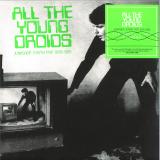
VARIOUS - ALL THE YOUNG DROIDS: JUNKSHOP SYNTH POP 1978-1985 (LP 2x12")
 
24

2025 REPRESS ON TRANSPARENT GREEN VINYL


Compiled by Philip King “And then came the rise of synth pop : blokes with dodgy haircuts hunched over keyboard-operated machines stuffed with wires and do-it-yourself tone oscillators making sounds like a brood of geese passing gas in a wind tunnel. Whoopee! This is the way the ‘70s ended : not with a blood-curdling bang bang but with a cheap, synthesized, emasculating whimper.” NICK KENT, NME. All The Young Droids: Junkshop Synth Pop 1978-1985 is a new compilation that charts the underbelly of the epoch-defining sound of the synthesiser in 80s popular music. Compiled by Philip King (previously seen compiling All The Young Droogs, Glitterbest and Boobs - The Junkshop Glam Discotheque), the music here connects the dots between DIY synth enthusiasts grappling with new, cheap synthesisers at the tail-end of punk and wannabe, jobbing songwriters enthral to the new music pioneered by Gary Numan, Depeche Mode and Daniel Miller’s Mute Records. Featuring rare tracks of auto-didactic progressive pop music, proto-techno punk, shoot-for-the-stars-land-in-the-gutter chart flops and heralded, underground synth classics, School Daze paints a picture of beautiful failure. Complete with extensive sleeve notes written by King and never before seen imagery, all 24 tracks were remastered by RPM in-house engineer Simon Murphy, many from vinyl copies due to lost master tapes. The story told on All The Young Droids is one of the dawning opportunity presented by both the emergence to the market of cheaper analog synthesisers and the distribution networks plus indie labels that exploded with the advent of punk music in 1976. While the music that sprouted out all over the globe in the wake of these factors was decried as fake, plastic, a refutation of punk’s guitar-led revolution, it’s telling that much of the music on All The Young Droids.. was created in bedrooms, ramshackle studios and home-made set ups with often borrowed equipment. In the era of record labels jumping to capitalise on the success of The Sex Pistols, The Clash (both on major labels, of course) these artists struggled to stand out from a new gold-rush with next to no budget or PR team. With radio and labels desperate for the new Yazoo, what resulted was a testament to necessity being the mother of invention. At the time, the synthesiser was the music of the future, a shiny new machine that could paint like an orchestra with a single finger and a 4-track. In the hands of Manchester avant-pranksters Gerry & The Holograms it’s a pulsing, sardonic weapon.. the only instrument on the Messthetics classic lampooning of New Wave fashion. In Hamburg, a 16 year old Andreas Dorau used it to write and record (with his female classmates on vocals) a global smash in Fred Vom Jupiter (later licensed to Mute Records). The hard-to-find English version (Fred From Jupiter, natch) is included here. Many artists with alreadystoried careers caught the bug and recorded synthesiser-fuelled peons to space, computers, the future and, of course, love-interests. Harry Kakoulli, late of Squeeze, recorded a solo album in 1979 that included the incredible power-synth-pop smash-that-never-smashed I’m On A Rocket. Similarly, Ian North of Neo and American Power Pop stalwarts Milk ’n’ Cookies bought a Korg MS20 and used a tape machine to record We’re Not Lonely, an absolute lost-classic of minimal synth pop. We’re Not Lonely also features on the Junkshop Synth Pop sampler 7” twinned with John Howard unreleased track You Will See, released April 12th 2025. There are plenty of compilation debuts in evidence. Sole Sister were a mysterious trio who were featured on the Scaling Triangles compilation of female-fronted, queer-adjacent post-punk / underground music that also featured The Petticoats. Selwin Image were from San Francisco and featured members of the recently defunct power pop/punk group The Pushups. Their stupidly catchy The Unknown fizzes with New Wave energy - think XTC to Sparks but remains unreleased until now. Dream Unit’s A Drop In The Ocean is an early synth wave cut, positively teaming with Joy Division instrumentation, previously only released on a long-forgotten and super rare, self-released EP. Incandescent Luminaire’s Famous Names belies an archetypal struggle of a small-town trying to make it in a cruel industry but is a thrilling New Romantic-Synth Wave cross over with a OMD gloominess that’s a joy to hear. Feminist Minimal Wave track I Am A Time Bomb by performance artist Peta Lilly and Michael Chance is a revelation destined for new found cult status. It was released on 7” and lost until now. The flipside to the subterranean, never-made-it synth pop mentioned above are the ambitious, even fruity attempts at success that have a perennial elegance to their confidence. New Jersey-ite Billy London (real name Ed Barth) tried to cash in on the synth boom with Woman, released by a major label, a lurching new wave track built on the Louie Louie rhythm and a wonderfully camp Lou Reedstyle sleazy vocal before exploding in the synthesised chorus. The song bombed but with a chorus like this, you have to wonder why? Ex-Glitter Band member John Springate’s My Life is truly epic, with doomed chord progressions and massive sounding drums turning into at least 3 different songs in the course of the track. Before you wonder what’s going on the song resolves with a glorious return to the main refrain. The dry-ice-dressed dance floor is well catered for too. Design’s Premonition and Vision’s Lucifer’s Friend are stone-cold minimal synth bangers, well loved but given a new lease of life here. The Warlord’s The Ultimate Warlord was released in 1978, a homespun proto Hi NRG banger that was later re-recorded by The Immortals in Canada who had a club hit with it. One-man- band Disco Volante’s No Motion was re-issued by Synth wave label Medical in 2012 but makes its first vinyl compilation appearance here. Close your eyes and you can imagine what Lawrence of Felt would have sounded like with some cheap Korgs a little earlier in his career. Gibraltar-based trio The Microbes imagined a computer programming people to dance - how prescient - and ended up with a propulsive, robo-funk track with splendid rubbery bass playing over a tectonic drum machine. Previously picked up by Belgian label Stroom TV, Dee Jay Bert & Eagle’s heavily Euro-accented I Am Your Master demands the listener to “come to paradise!” In a frankly terrifying manner. All The Young Droids is the first compilation to peel away from the narrative that dour, Minimal Synth and Cold Wave were the only musical children of the first rush of synth pop. Philip King and School Daze Records describe a much more complicated world: along with the austere, Brutalist children of Daniel Miller (who produced Alan Burnham’s Bowie-Low-influenced Science Fiction here) was a plethora of desperate cash-ins, accidental mainstream hits, ambitious pop dramas and major label punts that went nowhere. Crucially, the compilation blurs the line between junk and treasure. What if the two things are interchangeable. What if it’s all science fiction?

In Stock

On Stock and ready to ship

Guilty Razors - Complete Recordings 1977 - 1978
  • A1: Hurts And Noises
  • A2: Wake Up
  • A3: I Don't Wanna Be A Rich
  • A4: Terrorist Bad Heart
  • A5: Provocate
  • A6: Lucifer Sam (Pink Floyd)
  • B1: Happy!?
  • B2: So Lazy
  • B3: I Feel Down
  • B4: Stupido
  • B5: Guilty
  • B6: Caroline Says (Loo Reed)

UILTY RAZORS, BONA FIDE PUNKS.


Writings on the topic that go off in all directions, mind-numbing lectures given by academics, and testimonies, most of them heavily doctored, from those who “lived through that era”: so many people today fantasize about the early days of punk in our country… This blessed moment when no one had yet thought of flaunting a ridiculous green mohawk, taking Sid Vicious as a hero, or – even worse – making the so-called alternative scene both festive and boorish. There was no such thing in 1976 or 1977, when it wasn’t easy to get hold of the first 45s by the Pistols or the Clash. Few people were aware of what was happening on the fringes of the fringes at the time. Malcolm McLaren was virtually unknown, and having short hair made you seem strange. Who knew then that rock music, which had taken a very bad turn since the early 1970s, would once again become an essential element of liberation? That, thanks to short and fast songs, it would once again rediscover that primitive, social side that was so hated by older generations? Who knew that, besides a few loners who read the music press (it was even better if they read it in English) and frequented the right record stores? Many of these formed bands, because it was impossible to do otherwise. We quickly went from listening to the Velvet Underground to trying to play the Stooges’ intros. It’s a somewhat collective story, even though there weren’t many people to start it.
The Guilty Razors were among those who took part in this initial upheaval in Paris. They were far from being the worst. They had something special and even released a single that was well above the national average. They also had enough songs to fill an album, the one you’re holding. In everyone’s opinion, they were definitely not among the punk impostors that followed in their wake. They were, at least, genuine and credible.

Guilty Razors, Parisian punk band (1975-1978). To understand something about their somewhat linear but very energetic sound, we might need to talk about the context in which it was born and, more broadly, recall the boredom (a theme that would become capital in punk songs) coupled with the desire to blow everything off, which were the basis for the formation of bands playing a rejuvenated rock music ; about the passion for a few records by the Kinks or the early Who, by the Stooges, by the Velvet mostly, which set you apart from the crowd.
And of course, we should remember this new wave, which was promoted by a few articles in the specialized press and some cutting-edge record stores, coming from New York or London, whose small but powerful influence could be felt in Paris and in a handful of isolated places in the provinces, lulled to sleep by so many appalling things, from Tangerine Dream to President Giscard d’Estaing...
In 1975-76, French music was, as almost always, in a sorry state ; it was still dominated by Johnny Hallyday and Sylvie Vartan. Local rock music was also rather bleak, apart from Bijou and Little Bob who tried to revive this small scene with poorly sound-engineered gigs played to almost no one.
In the working class suburbs at the time, it was mainly hard rock music played to 11 that helped people forget about their gruelling shifts at the factory. Here and there, on the outskirts of major cities, you still could find a few rockers with sideburns wearing black armbands since the death of Gene Vincent, but it wasn’t a proper mass movement, just a source of real danger to anyone they came across who wasn't like them. In August 1976, a festival unlike any other took place in Mont-de-Marsan – the First European Punk Festival as the poster said – with almost as many people on stage as in the audience. Yet, on that day, a quasi historical event happened, when, under the blazing afternoon sun, a band of unknowns called The Damned made an unprecedented noise in the arena, reminiscent of the chaotic Stooges in their early adolescence. They were the first genuine punk band to perform in our country: from then on, anything was possible, almost anything seemed permissible.

It makes sense that the four+1 members of Guilty Razors, who initially amplified acoustic guitars with crappy tape recorder microphones, would adopt punk music (pronounced paink in French) naturally and instinctively, since it combines liberating noise with speed of execution and – crucially – a very healthy sense of rebellion (the protesters of May 1968 proclaimed, and it was even a slogan, that they weren’t against old people, but against what had made them grow old. In the mid-1970s, it seemed normal and obvious that old people should now ALSO be targeted!!!).
At the time, the desire to fight back, and break down authority and apathy, was either red or black, often taking the form of leafleting, tumultuous general assemblies in the schoolyard, and massive or shabby demonstrations, most of the time overflowing with an exciting vitality that sometimes turned into fights with the riot police. Indeed, soon after the end of the Vietnam War and following Pinochet’s coup in Chile, all over France, Trotskyist and anarcho-libertarian fervour was firmly entrenched among parts of the educated youth population, who were equally rebellious and troublemakers whenever they had the chance. It should also be noted that when the single "Anarchy in the UK" was first heard, even though not many of us had access to it, both the title and its explosive sound immediately resonated with some of those troublemakers crying out for ANARCHY!!! Meanwhile, the left-wing majority still equated punks with reckless young neo-Nazis. Of course, the widely circulated photos in the mainstream press of Siouxsie Sioux with her swastikas didn’t necessarily help to win over the theorists of the Great Revolution. It took Joe Strummer to introduce The Clash as an anti-racist, anti-fascist and anti-ignorance band for the rejection of old-school revolutionaries to fade a little.

The Lycée Jean-Baptiste Say at Porte d’Auteuil, despite being located in the very posh and very exclusive 16th arrondissement of Paris, didn’t escape these "committed" upheavals, which doubled as the perfect outlet for the less timid members of this generation.
“Back then, politics were fun,” says Tristam Nada, who studied there and went on to become Guilty Razors’ frontman. “Jean-Baptiste was the leftist high-school in the neighbourhood. When the far right guys from the GUD came down there, the Communist League guys from elsewhere helped us fight them off.”
Anything that could challenge authority was fair game and of course, strikes for just about any reason would lead to increasingly frequent truancy (with a definitive farewell to education that would soon follow). Tristam Nada spent his 10th and 11th unfinished grades with José Perez, who had come from Spain, where his father, a janitor, had been sentenced to death by Franco. “José steered my tastes towards solid acts such as The Who. Like most teenagers, I had previously absorbed just about everything that came my way, from Yes to Led Zeppelin to Genesis. I was exploring… And then one day, he told me that he and his brother Carlos wanted to start a rock band.” The Perez brothers already played guitar. “Of course, they were Spanish!”, jokes their singer. “Then, somewhat reluctantly, José took up the bass and we were soon joined by Jano – who called himself Jano Homicid – who took up the rhythm guitar.” Several drummers would later join this core of not easily intimidated young guys who didn’t let adversity get the better of them.

The first rehearsals of the newly named Guilty Razors took place in the bedroom of a Perez aunt. There, the three rookies tried to cover a few standards, songs that often were an integral part of their lives. During a first, short gig, in front of a bewildered audience of tough old-school rockers, they launched into a clunky version of the Velvet Underground's “Heroin”. Challenge or recklessness? A bit of both, probably… And then, step by step, their limited repertoire expanded as they decided to write their own songs, sung in a not always very accurate or academic English, but who cared about proper grammar or the right vocabulary, since what truly mattered was to make the words sound as good as possible while playing very, very fast music? And spitting out those words in a language that left no doubt as to what it conveyed mattered as well.
Trying their hand a the kind of rock music disliked by most of the neighbourhood, making noise, being fiercely provocative: they still belonged to a tiny clique who, at this very moment, had chosen to impose this difference. And there were very few places in France or elsewhere, where one could witness the first stirrings of something that wasn’t a trend yet, let alone a movement.

In the provinces, in late 1976 or early 1977, there couldn’t be more than thirty record stores that were a bit more discerning than average, where you could hear this new kind of short-haired rock music called “punk”. The old clientele, who previously had no problem coming in to buy the latest McCartney or Aerosmith LP, now felt a little less comfortable there…
In Paris, these enlightened places were quite rare and often located nex to what would become the Forum des Halles, a big shopping mall. Between three aging sex workers, a couple of second-hand clothes shops, sellers of hippie paraphernalia and small fashion designers, the good word was loudly spread in two pioneering places – propagators of what was still only a new underground movement. Historically, the first one was the Open Market, a kind of poorly, but tastefully stocked cave. Speakers blasted out the sound of sixties garage bands from the Nuggets compilation (a crucial reference for José Perez) or the badly dressed English kids of Eddie and the Hot Rods. This black-painted den was opened a few years earlier by Marc Zermati, a character who wasn’t always in a sunny disposition, but always quite radical in his (good) choices and his opinions. He founded the independent label Skydog and was one of the promoters of the Mont-de-Marsan punk festivals. Not far from there was Harry Cover, another store more in tune with the new New York scene, which was amply covered in the house fanzine, Rock News (even though it was in it that the photos of the Sex Pistols were first published in France).
It was a favorite hang-out of the Perez brothers and Tristam Nada, as the latter explained. “It’s at Harry Cover’s that we first heard the Pistols and Clash’s 45s, and after that, we decided to start writing our first songs. If they could do it, so could we!”
The sonic shocks that were “Anarchy in the UK”, “White Riot” or the Buzzcocks’s EP, “Spiral Scratch” – which Guilty Razors' sound is reminiscent of – were soon to be amplified by an unparalleled visual shock. In April 1977, right after the release of their first LP, The Clash performed at the Palais des Glaces in Paris, during a punk night organised by Marc Zermati. For many who were there, it was the gig of a lifetime…
Of course, Guilty Razors and Tristam were in the audience: “That concert was fabulous… We Parisian punks were almost all dressed in black and white, with white shirts, skinny leather ties, bikers jackets or light jackets, etc. The Clash, on the other hand, wore colourful clothes. Well, the next day, at the Gibus, you’d spot everyone who had been at this concert, but they weren’t wearing anything black, they were all wearing colours.”

It makes sense to mention the Gibus club, as Guilty Razors often played there (sometimes in front of a hostile audience). It was also the only place in Paris that regularly scheduled new Parisian or Anglo-Saxon acts, such as Generation X, Siouxsie and the Banshees, the Slits, and Johnny Thunders who would become a kind of messed-up mascot for the venue. A little later, in 1978, the Rose Bonbon – formerly the Nashville – also attracted nightly owls in search of electric thrills… In 1977, the iconic but not necessarily excellent Asphalt Jungle often played at the Gibus, sometimes sharing the bill with Metal Urbain, the only band whose aura would later transcend the French borders (“I saw them as the French Sex Pistols,” said Geoff Travis, head of their British label Rough Trade). Already established in this small scene, Metal Urbain helped the young and restless Guilty Razors who had just arrived. Guitarist for Metal Urbain Hermann Schwartz remembers it: “They were younger than us, we were a bit like their mentors even if it’s too strong a word… At least they were credible. We thought they were good, and they had good songs which reminded of the Buzzcocks that I liked a lot. But at some point, they started hanging out with the Hells Angels. That’s when we stopped following them.”

The break-up was mutual, since, Guilty Razors, for their part, were shocked when they saw a fringe element of the audience at Metal Urbain concerts who repeatedly shouted “Sieg Heil” and gave Nazi salutes. These provocations, even still minor (the bulk of the skinhead crowd would later make their presence felt during concerts), weren’t really to the liking of the Perez brothers, whose anti-fascist convictions were firmly rooted. Some things are non-negotiable.
A few months earlier (in July 1978), Guilty Razors had nevertheless opened very successfully for Metal Urbain at the Bus Palladium, a more traditonally old-school rock night-club. But, as was sometimes the case back then, the night turned into a mass brawl when suburban rockers came to “beat up punks”.

Back then, Parisian nights weren’t always sweet and serene.

So, after opening as best as they could for The Jam (their sound having been ruined by the PA system), our local heroes were – once again – met outside by a horde of greasers out to get them. “Thankfully,” says Tristam, “we were with our roadies, motorless bikers who acted as a protective barrier. We were chased in the neighbouring streets and the whole thing ended in front of a bar, with the owner coming out with a rifle…”
Although Tristam and the Perez brothers narrowly escaped various, potentially bloody, incidents, they weren’t completely innocent of wrongdoing either. They still find amusing their mugging of two strangers in the street for example (“We were broke and we simply wanted to buy tickets for the Heartbreakers concert that night,” says Tristam). It so happened that their victims were two key figures in the rock business at the time: radio presenter Alain Manneval and music publisher Philippe Constantin. They filed a complaint and sought monetary compensation, but somehow the band’s manager, the skilful but very controversial Alexis, managed to get the complaint withdrawn and Guilty Razors ended up signing with Constantin with a substantial advance.

They also signed with Polydor and the label released in 1978 their only three-track 45, featuring “I Don't Wanna be A Rich”, “Hurts and Noises” and “Provocate” (songs that exuded perpetual rebellion and an unquenchable desire for “class” confrontation). It was a very good record, but due to a lack of promotion (radio stations didn’t play French artists singing in English), it didn’t sell very well. Only 800 copies were allegedly sold and the rest of the stock was pulped… Initially, the three tracks were to be included on a LP that never came to be, since they were dropped by Polydor (“Let’s say we sometimes caused a ruckus in their offices!” laughs Tristam.) In order to perfect the long-awaited LP, the band recorded demos of other tracks. There was a cover of Pink Floyd's “Lucifer Sam” from the Syd Barrett era – proof of an enduring love for the sixties’ greats –, “Wake Up” a hangover tale and “Bad Heart” about the Baader-Meinhof gang, whose actions had a profound impact on the era and on a generation seeking extreme dissent... On the album you’re now discovering, you can also hear five previously unreleased tracks recorded a bit later during an extended and freezing stay in Madrid, in a makeshift studio with the invaluable help of a drummer also acting as sound engineer. He was both an enthusiastic old hippie and a proper whizz at sound engineering. Here too, certain influences from the fifties and sixties (Link Wray, the Troggs) are more than obvious in the band’s music.

Shortly after a final stormy and rather barbaric (on the audience’s side) “Punk night” at the Olympia in June 1978, Tristam left the band ; his bandmates continued without him for a short while.

But like most pioneering punk bands of the era, Guilty Razors eventually split up for good after three years (besides once in Spain, they’d only played in Paris). The reason for ceasing business activities were more or less the same for everyone: there were no venues outside one’s small circuit to play this kind of rock music, which was still frightening, unknown, or of little interest to most people. The chances of recording an LP were virtually null, since major labels were only signing unoriginal but reassuring sub-Téléphone clones, and the smaller ones were only interested in progressive rock or French chanson for youth clubs. And what about self-production? No one in our small safety-pinned world had thought about it yet. There wasn’t enough money to embark on that sort of venture anyway.

So yes, the early days of punk in France were truly No Future!

pre-order now22.05.2026

expected to be published on 22.05.2026


Last In: 2026 years ago
Loraine James - Detached From The Rest Of You LP
  • A1: A Long Distance Call
  • A2: The Book Of Self Doubt
  • A3: In A Rut Ft Sydney Spann
  • A4: Score Ft Anysia Kym
  • A5: Seems Like I A6. Flatline Ft Miho Hatori
  • B1: Peak Again Ft Alan Sparhawk
  • B2: Habits And Patterns Ft Tirzah
  • B3: Wish I Was Like U
  • B4: Ending Us All Ft Le3 Black X Fyn Dobson
  • B5: Forever Still (Steel)
  • B6: See Through
 
1

Forged from the fire of internal struggles, Loraine James was wrestling with confidence and a desire for change when she embarked on “Detached From The Rest Of You”. A guiding hand came through producing 2025's “Clandestine” EP with singer Anysia Kym, which gave her the experience of a more 'pop' setting and the tools and insight to work her instrumentals into more conventional shapes; a shift from club driven sounds and winding instrumentals into more precise song forms.


Loraine’s production is stripped to the bone, soundscapes of clicks and glitches inspired by Aoki Takamasa, Ryoji Ikeda, and the early-00s Clicks & Cuts school. Here, often with not much more than sparse keyboard chords to fill in with subtle colouring, she uses the space around the sounds and vocals to draw the listener in to a succinct and direct album, her most confident yet.


Guest contributors include vocalist Sydney Spann on “In a Rut”, Alan Sparkhawk (Low) on downcast anthem “Peak Again”, Miho Hatori (Cibo Matto) on “Flatline”, Anysia Kim on “Score”, and Tirzah on “Habits and Patterns”. Finally her old spar, the rapper Le3 bLACK returns to spit fire with the jazz-indebted track “Ending Us All” with Fyn Dobson backing on tumbling drums.

pre-order now22.05.2026

expected to be published on 22.05.2026


Last In: 2026 years ago
Eusebeia - Critical Impact EP

UK DJ and producer Eusebeia makes his Aquaregia debut with Critical Impact, a four-track EP drawing on the house, techno and trance records that shaped him in the 90s and early 2000s. Bass-heavy and cosmic in atmosphere, the record moves through dark electro, evolving trance and driving techno, with flashes of acid running throughout. Eusebeia's low-end instincts, honed in drum & bass, give each track a heaviness and punch that hits hard on the floor, as his synth work draws us up into the cosmos.

pre-order now22.05.2026

expected to be published on 22.05.2026


Last In: 2026 years ago
Lungfish - The Unanimous Hour LP

Lungfish's seventh album, released in 1999.

This pressing of the LP is on Translucent Lime Green.

This album was re-issued on both CD and LP+MP3 in June 2011.

Daniel Higgs vocals Asa Osborne guitar Nathan Bell bass Mitchell Feldstein drums

Recorded At
Inner Ear Studios
Mixed By
Ian MacKaye and Lungfish

In Stock

On Stock and ready to ship

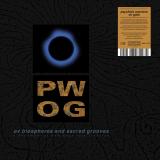
Psychick Warriors Ov Gaia - Ov Biospheres And Sacred Grooves: A Document Ov New Edge Folk Classics - LP 2x12"

Forever Records

Music springs eternal. Recognising the enduring power of timeless albums to guide us through life, Forever Records is a reissue series dedicated to rediscovering lost musical treasures from across the spectrum of head-feeding, heart-rending electronic music.

Established by Rush Hour co-founder Christiaan Macdonald and Delsin founder Marsel van der Wielen, Forever Records places heartfelt faith in a carefully curated sequence of seminal, largely forgotten records from disparate eras, scenes and spaces within electronic music history. Tipped towards the mellow and introspective, these are albums that stop time when the needle hits the groove, stirring only when it's time to flip over before you sink back into the experience. That's what albums were always meant to be about, back then, right now, always and forever.


The Release:
Dancing on the wildest edge of the 90s outsider techno zeitgeist while proudly independent of any so-called scene, Ov Biospheres And Sacred Grooves: A Document Ov New Edge Folk Classics is both of its time and out of time. Rooted in the experiments of electronic music pioneers, industrial culture and ethnic music from around the globe while responding to the house and techno explosion, Robbert Heynen, Reinier Brekelmans, Reinoud van den Broek and Tim Freeman's freewheeling masterpiece takes in lush electronica and murky abstraction on its singular voyage through parts unknown.

Forever Records presents an extensive reissue edition of the first 'fully released' Psychick Warriors Ov Gaia album. Originally released in 1992, this is the first time the full, previously CD-only, version of Ov Biospheres and Sacred Grooves will be pressed on vinyl. The original LP and CD artwork from the various editions released in the early 90s has been combined and designed by the band, and the audio has been remastered with their full approval. As well as a new LP edition of the album, there will also be a uniquely numbered, limited edition available housed in a gatefold sleeve that comes with a bonus 10" featuring two previously unreleased tracks.

Press response to Ov Biospheres and Sacred Grooves - A Document Ov New Edge Folk Classics:

“That’s Magick! The Psychick Warriors Ov Gaia are Holland’s best kept secret.”
Sherman, NME, UK 1992

“PWOG’s debut LP is an organic invocation rite — the soundtrack to a new world coming to life, an odyssey. Cross-cultural rhythms, ambiences and environmental samples segue into one another like a fluid relay, and unlike the majority of dance records, it never settles into a routine. It’s always evolving, always unpredictable, an indefinitely religious experience.”
John Selzer, Melody Maker, UK 1992.

"Grown men, who snorted their first ecstasy to this record, stammered with tears in their eyes about divine experiences and the cosmos, man."
Peter Erik Hillenbach, Marabo Magazine, Germany 1992.

Sacred Grooves’ introduces tribal dance music for the mind, body music leaning on the avant garde. Its ripples of sound drift through tranced out ritualistic beats into ambience and serenity resembling something akin to The Orb meeting Klaus Schulze at a brain tuning session.
Sherman, NME, UK 1992

"There's still dance for a moment, in the opening track "The Challenge," then Psychick Warriors roam the earth, where African drummers, tropical sounds, and science-fiction chords have found their place in a spiralling interplay of rhythms and sounds. A captivating, almost magical ritual." Corné Evers, Oor Magazine, Netherlands 1992.

"It's truly astonishing what these Dutchmen have come up with for their first LP. Their roots might explain the enigma, for Psychick Warriors are more in the tradition of Psychic TV than in the desolate temples of techno-house fetishists, to which they are wrongly relegated. Here, chromosomes dance, not instincts." CMK, Tip, Germany 1992.

"The transcendental essence of this album is spread throughout, with musical gravitations emerging unexpectedly from sonic experiments that are sometimes primitive, sometimes
futuristic in intention… But there is always an aura of cosmic magic that constantly puts all the parts involved in conflict and which, upon closer analysis, ends up being the main reason for the final result." Blitz Magazine, Portugal 1992.

pre-order now29.05.2026

expected to be published on 29.05.2026


Last In: 2026 years ago
Psychick Warriors Ov Gaia - Ov Biospheres And Sacred Grooves: A Document Ov New Edge Folk Classics - LP 2x12" + 10”

Forever Records

Music springs eternal. Recognising the enduring power of timeless albums to guide us through life, Forever Records is a reissue series dedicated to rediscovering lost musical treasures from across the spectrum of head-feeding, heart-rending electronic music.

Established by Rush Hour co-founder Christiaan Macdonald and Delsin founder Marsel van der Wielen, Forever Records places heartfelt faith in a carefully curated sequence of seminal, largely forgotten records from disparate eras, scenes and spaces within electronic music history. Tipped towards the mellow and introspective, these are albums that stop time when the needle hits the groove, stirring only when it's time to flip over before you sink back into the experience. That's what albums were always meant to be about, back then, right now, always and forever.


The Release:
Dancing on the wildest edge of the 90s outsider techno zeitgeist while proudly independent of any so-called scene, Ov Biospheres And Sacred Grooves: A Document Ov New Edge Folk Classics is both of its time and out of time. Rooted in the experiments of electronic music pioneers, industrial culture and ethnic music from around the globe while responding to the house and techno explosion, Robbert Heynen, Reinier Brekelmans, Reinoud van den Broek and Tim Freeman's freewheeling masterpiece takes in lush electronica and murky abstraction on its singular voyage through parts unknown.

Forever Records presents an extensive reissue edition of the first 'fully released' Psychick Warriors Ov Gaia album. Originally released in 1992, this is the first time the full, previously CD-only, version of Ov Biospheres and Sacred Grooves will be pressed on vinyl. The original LP and CD artwork from the various editions released in the early 90s has been combined and designed by the band, and the audio has been remastered with their full approval. As well as a new LP edition of the album, there will also be a uniquely numbered, limited edition available housed in a gatefold sleeve that comes with a bonus 10" featuring two previously unreleased tracks.

Press response to Ov Biospheres and Sacred Grooves - A Document Ov New Edge Folk Classics:

“That’s Magick! The Psychick Warriors Ov Gaia are Holland’s best kept secret.”
Sherman, NME, UK 1992

“PWOG’s debut LP is an organic invocation rite — the soundtrack to a new world coming to life, an odyssey. Cross-cultural rhythms, ambiences and environmental samples segue into one another like a fluid relay, and unlike the majority of dance records, it never settles into a routine. It’s always evolving, always unpredictable, an indefinitely religious experience.”
John Selzer, Melody Maker, UK 1992.

"Grown men, who snorted their first ecstasy to this record, stammered with tears in their eyes about divine experiences and the cosmos, man."
Peter Erik Hillenbach, Marabo Magazine, Germany 1992.

Sacred Grooves’ introduces tribal dance music for the mind, body music leaning on the avant garde. Its ripples of sound drift through tranced out ritualistic beats into ambience and serenity resembling something akin to The Orb meeting Klaus Schulze at a brain tuning session.
Sherman, NME, UK 1992

"There's still dance for a moment, in the opening track "The Challenge," then Psychick Warriors roam the earth, where African drummers, tropical sounds, and science-fiction chords have found their place in a spiralling interplay of rhythms and sounds. A captivating, almost magical ritual." Corné Evers, Oor Magazine, Netherlands 1992.

"It's truly astonishing what these Dutchmen have come up with for their first LP. Their roots might explain the enigma, for Psychick Warriors are more in the tradition of Psychic TV than in the desolate temples of techno-house fetishists, to which they are wrongly relegated. Here, chromosomes dance, not instincts." CMK, Tip, Germany 1992.

"The transcendental essence of this album is spread throughout, with musical gravitations emerging unexpectedly from sonic experiments that are sometimes primitive, sometimes
futuristic in intention… But there is always an aura of cosmic magic that constantly puts all the parts involved in conflict and which, upon closer analysis, ends up being the main reason for the final result." Blitz Magazine, Portugal 1992.

pre-order now29.05.2026

expected to be published on 29.05.2026


Last In: 2026 years ago
THE WOODLEIGH RESEARCH FACILITY - Anamchara LP 2x12"

W.R.F. was formed in 2015 by Nina and late studio partner Andrew Weatherall to help wrangle the vast output recorded together beyond his solo releases.
Spotlighting nine tracks from the Apparently Solo series of EPs recorded between 2016- 2019 and released on Bandcamp in 2023, this lustrous time capsule marks the culmination of Walsh and Weatherall’s creative relationship born after they clicked at London’s earliest acid house clubs, becoming partners then managers of their Sabres Of Paradise/Sabrettes labels before taking different paths by the late '90s.
An accomplished musician, Nina had learned the art of studio technology by the time they reunited and started working together in 2012. Created at her Facility 4 Studio situated in the dangerous, gang-ridden no man’s land between Streatham and Mitcham, Anamchara captures the super-prolific creative stretch starting in 2015 that produced Weatherall’s Convenanza and Qualia solo sets, W.R.F.’s The Phoenix Suburb (And Other Stories) plus a whole lot more. According to Nina, Andrew envisioned the spectacular ‘Borderland’ as natural successor to ‘Smokebelch’, his most revered track. When it came to his remix, Nina enlisted renowned viola virtuoso Sarah Sarhandi and composed new harmonies with Pachelbel’s Canon in D Minor in mind.
The set also catches the breakthrough period when, through Nina’s careful coaxing, Andrew started using the computer system she’d set up to better express his musical visions by arranging the elements, grooves and melodies she sent him. Still considered the UK’s greatest DJ-producer, Andrew’s arrangements were inspired by his club-igniting sets. “This allowed me to mix the colours for his palette whilst he was painting the picture,” says Nina. Anamchara straddles the gamut of musical styles explored by W.R.F. at this time, from slower paced psychedelic “drug chug” outings ‘We Two’. ‘Heat To Meat Ratio’, ‘Hidden Watchers Part 1’ to banging acid house and techno sometimes inspired by the violence outside the studio door, including ‘SCHLAP’, ‘Crack-Ed’ and churning acid juggernaut ‘Yacidik’ (“After much dangling of the acid carrot, Andrew took a bite and, after one familiar raised eyebrow, never looked back,” says Nina).
Many tracks fly elements from the enormous sonic library Nina inherited from late partner Erick Legrand that she called The Akashic Library of Sound. Marking Andrew’s 2016 admission into the vault, ‘Rattly Old Puffin’ boasts Erick’s psychedelic guitar and tumbling drum loop Weatherall would run with, including on ‘Borderland’. “Erick was like our third member,” says Nina.
Bringing down the curtain, ‘Alma’’s exquisitely poignant melody that unfolds over thirteen time-stopping minutes was composed by Nina while navigating Erick’s birth and departure date anniversaries to accompany Andrew’s reading from Gordon Burn’s 1991 same-named novel at 2018’s Durham Literary Festival. Burn’s novel imagines early 60s popstrel Alma Cogan, who succumbed to cancer in 1966 surviving to reflect on fame. “Now it just makes me think of Erick. And every time I hear those well-placed cymbal crashes I can only think of the Captain himself.”
A beautiful grand finale for this astonishing selection of pure gold from the vaults.
Kris Needs / 2026

pre-order now29.05.2026

expected to be published on 29.05.2026


Last In: 2026 years ago
Voices From The Lake - Voices From The Lake (2023 Edition) 4x12"

2023 Repress


Voices From the Lake (consisting of Donato Dozzy and Neel) mark the 10th anniversary of their influential self-titled album with a fully remastered reissue on Spazio Disponibile. It arrives in full on vinyl for the first time, as well as on digital formats, first quarter of 2023 as the pair continues to play select live shows around the world. The release will see the light of day as a 4-set vinyl LP release, including download. Italians Dozzy and Neel have been friends united by a shared vision of music since their teenage years. They are immaculate sculptors of sound who fuse evocative ambient and leftfield techno into multi-layered soundscapes. For many years they worked as established solo artists but came together in 2011 to craft what is now regarded as one of techno's most pure and absorbing listening experiences. It's often said that the best music comes about as a happy accident, and that is certainly true of Voices From the Lake. The career-defining album first arose in the thoughts of Dozzy and Neel when the latter was preparing a mix for the former's wedding and named it Voices From The Lake. It was a pertinent title that stuck in the mind: both grew up by waters around the coast of Italy, and in their early days the pair even held private parties on the shores of a lake. Fittingly, Japan's celebrated Labyrinth festival at that time was also held by a river and a lake in the middle of a forest on a serene mountainside. It was that exact setting the pair envisaged when making music to play live on stage. During preparations, they "accidentally" wrote an entire album. It has only ever been performed live a few times - once at Japan's Labyrinth festival in 2011, at London's Barbican, Barcelona's Mira Festival, Paris' Marathon Festival and once during 2022's Amsterdam Dance Event. Those shows saw the pair using banks of analogue and digital equipment to improvise in the moment and essentially remix the album live on stage. That spontaneity is captured in the original Voices From the Lake recordings and on later LPs such as Live at Maxxi in 2015, and the most recent EP Quarto Freddo from 2020. But the debut album remains a standout achievement. A decade on, it's quiet intensity, musical storytelling and slowly unfolding tension remain in a class of one. Each sound is meticulously designed and placed, and the spaces left behind are just as important in conveying such a captivating mood and emotion. Rather than traditional kick drums, hi-hats or snares, this is music crafted from layers of real-world sound - dripping water, chirping birds, rustling leaves or a distant breeze - and it's that which defines the album's organic allure. From deeply contemplative to cautiously optimistic, pastoral organic scenes to more underwater worlds, Voices From the Lake is a cohesive collection of tracks that add up to one inseparable whole.

pre-order now30.05.2026

expected to be published on 30.05.2026


Last In: 2 years ago
Mood Ii Swing - Do It My Way (remixes) LP 2x12"

Mood II Swing are bona fide legends of early house who fomented their own uniquely raw, dark, but soulful and swinging sound. They have got a ton of classics to their name, one of which is 1996's 'Do It My Way', which now gets reworked by a selection of talented house peers on Ira James' Vessel Recordings. The opening Andrew Macari mix keeps it deep and loopy with many original motifs left in place. The Do It Sneaks Way mix leans into the trackiness of the drums, then Joshua Iz turns up the dubby low end for a gliding groove with garage-y percussion. Nonfiction strips away some of the swing and goes for a big, driving wall of drums and Natural Rhythm offers the most playful take with wobbly synths and plenty of air in the drums.

pre-order now01.06.2026

expected to be published on 01.06.2026


Last In: 2026 years ago
Hidde Van Wee - Ebullience 002

Hidde Van Wee

Ebullience 002

12inchEBULLIENCE002
Ebullience
16.01.2026

Hidde Van Wee hails from the Netherlands and is an emerging house talent who does it all from electro to minimal, always with a future-facing outlook. After outings on PIV and Heavy House Society, he lands here on Ebullience with four stylish and fresh house sounds. 'Seduction' is sleek and synoptic with cosmic pads and space-tech energy, 'Use Me' layers heartfelt chords onto crispy and softer-edged drums with a balmy mix of bass and pads. The flip brings the bouncy tech of 'Another Day,' and 'Dig This' shuts down with some moody bass but radiant synth smears that hark back to early Gs like Danny Howells.

In Stock

On Stock and ready to ship

NALBANDIAN THE ETHIOPIAN & EITHER/ORCHESTRA - NALBANDIAN THE ETHIOPIAN (ETHIOPIQUES)

The Éthiopiques series returns! Essential archive recordings from an extremely fruitful period in Ethiopian music.

Before “Swinging Addis” took over the world, there was Moussié Nerses Nalbandian — the Armenian-born composer who shaped modern Ethiopian music. Mentor, arranger, and pioneer, he laid the foundations of Ethio-jazz.

This Éthiopiques volume revives his forgotten legacy, recorded live by Either/ Orchestra First issue ever with new exclusive photos and in depth liner 8-page insert.

“Ethiopian jazzmen are the best musicians that we have seen so far in Africa.
They really are promising handlers of jazz instruments.”

Wilbur De Paris
(1959, after a concert in Addis Ababa)

አዲስ፡ዘመን። *Addis zèmèn* **A new era.**
The time is the mid-1950s and early 1960s, just before "Swinging Addis" bloomed – or rather boomed – onto the scene. Brass instruments are still dominant, but the advent of the electric guitar, and the very first electronic organs, are just around the corner. Rock’n'Roll, R’n’B, Soul and the Twist have not yet barged their way in. Addis Ababa is steeped in the big band atmosphere of the post-war era, with Glenn Miller's *In the* *Mood* as its world-wide theme song, neck and neck with the Latin craze that was in vogue at the same period. Life has become enjoyable once again, with the return of peace after the terrible Italian Fascist invasion of Ethiopia (1935-1941). The redeployment of modern music is part and parcel of the postwar reconstruction. *Addis zèmèn* – a new era – is the watchword of the postwar period, just as it was all across war-torn Europe.
The generation who were the young parents of baby boomers** were the first to enjoy this musical renaissance, before the baby boomers themselves took over and forever super-charged the soundtrack of the final days of imperial reign. Music is Ethiopia's most popular art form, and very often serves as the best barometer for the upsurge of energy that is critical for reconstruction. Whether it be jazz in Saint-Germain-des-Prés or the *zazous* who revolutionised both jazz and French *chanson* after the *Libération*, be it Madrid's post-Franco Movida, or Dada, the Surrealists and *les années folles* that followed World War I, the periods just after mourning and hardship always give rise to brighter and more tuneful tomorrows. Addis Ababa, as the country's capital, and the epicentre of change, was no exception to this vital rule.

**Two generations of Nalbandian musicians**
Nersès Nalbandian belonged to a family of Armenian exiles, who had moved to Ethiopia in the mid-1920s. The uncle Kevork arrived along with the fabled "*Arba Lidjotch*", the** "*40 Kids*", young Armenian orphans and musicians that the Ras Tafari had recruited when he visited Jerusalem in 1924, intending to turn their brass band into the official imperial band. If Kevork Nalbandian was the one who first opened the way of modernism, pushing innovation so far as to invent musical theatre, it was his nephew Nersès who would go on to become, from the 1940s and until his death in 1977, a pivotal figure of modern Ethiopian music and of the heights it. Going all the way back to the 1950s. Nothing less. And it is Nersès who is largely to thank for the brassy colours that so greatly contributed to the international renown of Ethiopian groove. While the younger generations today venture timidly into the genealogy of their country's modern music, often losing their way amidst a distinctly xenophobic historiographical complacency, many survivors of the imperial period are still around to bear witness and pay tribute to the essential role that "Moussié Nersès" played in the rise of Abyssinia's musical modernity.
Given the year of his birth (15 March 1915), no one knows for sure if Nersès Nalbandian was born in Aintab, today Gaziantep (Turkiye/former Ottoman Empire) or on the other side of the border in Alep, Syria... What is certain is that his family, like the entire Armenian community, was amongst the victims of the genocide perpetrated by the Turks. Alep, the place of safety – today in ruins.
Before Nersès then, there was uncle Kevork (1887-1963). For a quarter of a century, he was a whirlwind of activity in music teaching and theatrical innovation. *Guèbrè Mariam le Gondaré* (የጎንደሬ ገብረ ማርያም አጥቶ ማግኘት, 1926 EC=1934) is his most famous creation. This play included "ten Ethiopian songs" — a totally innovative approach. According to his autobiographical notes, preserved by the Nalbandian family, Kevork indicates that he composed some 50 such pieces over the course of his career. This shows just how much he understood, very early on, the critical importance of song as Ethiopia's crowning artistic form. Indeed, for Ethiopian listeners, the most important thing is the lyrics, with all their multifarious mischief, far more than a strong melody, sophisticated arrangements or even an exceptional voice. (This is also why Ethiopians by and large, and beginning with the artists and producers themselves, believed for a long time — and wrongly — that their music could not possibly be exported, and could never win over audiences abroad, who did not speak the country's languages).

Last but not least, one of Kevork's major contributions remains composing Ethiopia's first national anthem – with lyrics by Yoftahé Negussié.
Nersès Nalbandian moved to Ethiopia at the end of the 1930s, at the behest of his ground-breaking uncle. Proficient in many instruments (pretty much everything but the drums), conductor, choir director, composer, arranger, adapter, creator, piano tuner, purveyor of rented pianos,... he was above all an energetic and influential teacher. From 1946 onwards, thanks to Kevork's connexion, Nersès was appointed musical director of the Addis Ababa Municipality Band. In just a few years, Nersès transformed it into the first truly modern ensemble, thanks to the quality of his teaching, his choice of repertoire, and the sophistication of his arrangements. It was this group that would go on to become the orchestra of the Haile Selassie Theatre shortly after its inauguration in 1955, which was a major celebration of the Emperor's jubilee, marking the 25th anniversary of his on-again-off-again reign.

At some point or other in his long career, Nersès Nalbandian had a hand in the creation of just about every institutional band (Municipality Band, Police Orchestra, Imperial Bodyguard Band, Army Band, Yared Music School…), but it was with the Haile Selassie Theatre – today the National Theatre – that his abilities were most on display, up until his death in 1977. To this must be added the development of choral singing in Ethiopia, hitherto unknown, and a sort of secret garden dedicated to the memory of Armenian sacred music, and brought together in two thick, unpublished volumes. Shortly before his death (November 13, 1977), he was appointed to lead the impressive Ethiopian delegation at Festac in Lagos, Nigeria (January-February 1977).

His status as a stateless foreigner regularly excluded him from the most senior positions, in spite of the respect he commanded (and commands to this day) from the musicians of his era. Naturally gifted and largely self-taught, Nerses was tirelessly curious about new musical developments, drawing inspiration from the very first imported records, and especially from listening intensely to the musical programmes broadcast over short-wave radio – BBC *First*. A prolific composer and arranger, he was constantly mindful of formalising and integrating Ethiopian parameters (specific “musical modes”, pentatonic scale, and the dominance of ternary rhythms) into his “modernisation” of the musical culture, rather than trying to over-westernise it. It even seems very probable that *Moussié* Nerses made a decisive contribution to the development of tighter music-teaching methods, in order to revitalise musical education during this period of prodigious cultural ferment. Flying in the face of all the historiographical and musicological evidence, it is taken as sacrosanct dogma that the four musical modes or chords officially recognised today, the *qǝñǝt* or *qiñit* (ቅኝት), are every bit as millennial as Ethiopia itself. It would appear however that some streamlining of these chords actually took place in around 1960. It was only from this time onward that music teaching was structured around these four fundamental musical modes and chords: *Ambassel*, *Bati*, *Tezeta* and *Antchi Hoyé*. A historical and musical “details” that is, apparently, difficult to swallow, especially if that should honour a *foreigner*. Modern Ethiopian music has Nersès to thank for many of its standards and, to this day, it is not unusual for the National Radio to broadcast thunderous oldies that bear unmistakable traces of his outrageously groovy touch.

In Stock

On Stock and ready to ship

MAEDON - Entelechy I-IV

A year after her rebirth on the 2.0 EP, Maedon returns to her Rant & Rave imprint with the intentions of her previous release now distilled and focused into bold new forms. Whereas before the artist was transitioning from her earlier work towards new directions, Matter & Form arrives as an extended concept piece featuring four variations on a bracing, developed sound, an equally impressive remix from Lady Starlight, and a contrasting mix of the opening track. Where 2.0 charted emergence, 'Entelechy I-IV' unites to actualize this potential into a single-minded purpose behind fundamental principles.

Immediately launching into territory her last release only hinted at, 'Entelechy I' is a showcase for her now-mature approach. Her rhythmic dexterity and groove focus remains, with drum programs subtly evolving phrase by phrase, but they now form the basis for layered, complex compositions in a decidedly contemporary vein. 'Entelechy II' shifts focus towards the arrangement while keeping its drums steadily driving, drawing attention to details in its densely designed sounds through deliberate, gradual processing. Relaxing the tempo slightly, 'Entelechy III' fills in the extra space with more dark atmospherics and finely detailed soundscapes, finding a heavy medium between dark ambience and hammering techno. Another deeper effort, 'Entelechy IV' counterbalances insistent, finely-tooled percussive bleeps and equally persistent bass figures against another sweeping bass pulse, at times breaking down into carefully-controlled atonal aggression. Lady Starlight's remix is skeletal in comparison, deploying its parts sequentially over ticker hi hats and a massive kick while using small shifts to incrementally build tension. 'Entelechy I (Bent Mix)' is more accurately described as hellbent, stripping out the original's harmonic elements to grind the heavy rhythmic workout against an unrelenting acid line.

In Stock

On Stock and ready to ship

BABY FORD - Bford 14

BABY FORD

Bford 14

12inchSL04
Pal SL
08.06.2026

Baby Ford perfected the minimal sound with his impeccable early run of releases. Now, one of them gets reissued many years on and it still sounds as strikingly new as ever, not least because it has been remastered by the legendary Dubplates & Mastering in Berlin. The sought-after EP from Peter Adshead emerged during his shift toward stripped-back techno and tech-house and captures a deeper, more hypnotic side of his craft. 'Serpentine Tale' coils through hissing rhythms and shadowy bass pressure, while 'Night D3 Died' pairs crunchy drums with mournful synth chords. Closing cut 'The Introducer' drifts into warm, spacious territory.

pre-order now08.06.2026

expected to be published on 08.06.2026


Last In: 4 years ago
BOBBY LEES - NEW SELF

BOBBY LEES

NEW SELF

12inch881571
Epitaph Europe
12.06.2026
  • 1: Give
  • 2: Napoleon
  • 3: The End
  • 450: Ft
  • 5: New Self
  • 6: All I Got
  • 7: Got Me Good
  • 8: Red Hot

For The Bobby Lees, their fourth album and Epitaph debut New Self marks a thrilling new chapter for the band while doubling down on what"s always made them so magnetic. The Bobby Lees don"t need much in the way of introduction. Within a few seconds of exposure to their furnace-blast live shows or their bottled-lightning studio records, it"s easy to hear why they"ve earned fans in legendary musicians like Iggy Pop, Debbie Harry, and Henry Rollins. They"re as uncompromising in their sound and generous with their energy as any of their punk ancestors who first rewrote the rules of engagement back in the 1970s. Led by singer and guitarist Sam Quartin, drummer Macky Bowman, and bassist Kendall Wind, The Bobby Lees bring wildness and danger back into punk rock. You can hear the band easing into a new confidence -- one that"s both looser and more towering -- all throughout New Self, from the seething, fiery "Napoleon" to the rambunctious, offbeat take on PJ Harvey"s "50ft Queenie." This is the sound of a band who"s scrambled over shaky ground only to come back stronger than ever: more confident, more connected, louder and fiercer and secure in their own skin.

pre-order now12.06.2026

expected to be published on 12.06.2026


Last In: 2026 years ago
Shep' - Reach For The Tongs EP

Shep is back on his People Pleaser's label with a fourth transmission of groovy tech house that blends drive, cosmic atmospheres and just the right amount of vocal and melodic hookiness. 'Reach For The Tongs' is warm and dubby, one to get the head down and lock into. 'Pulver Zimmer' has warped synths and glassy percussion, bringing the early Terry Francis style drums to life and 'Rave Gravel Drive' gets more unhinged. The synths are wonky, the sound designs more trippy and abstract and the groove is minimal and synthetic. 'Mutzki' closes with a subtle, warming rush of low-key joy thanks to the muted chords that ride a slick groove.

pre-order now15.06.2026

expected to be published on 15.06.2026


Last In: 2026 years ago
Gaudi & The Brixton Heights Orchestra - Am I The Same Man?

Brixton Heights Records proudly presents the brand new single ‘Am I the Same Man?’, a soulful roots-reggae gem featuring a heavyweight all-star lineup including: Mafia & Fluxy on drum and bass respectively, the Ital Horns on brass, Gussie Clarke on mastering and Gaudi on falsetto vocals + BVs, dub mixing, piano and co-production alongside The Brixton Heights Orchestra.

Drawing inspiration from the timeless instrumental groove ‘Soulful Strut’ by Young-Holt Unlimited, the track channels vintage soul through a deep lovers-rock lens. A fresh and earnest reinterpretation of Barbara Acklin’s 1968 classic ‘Am I the Same Girl?’, this version flips the narrative with an adaptation on the lyrics voiced by none other than Gaudi singing in falsetto, resulting with a smooth, dub-infused love song that combines classic soul and international reggae into a modern masterpiece.
Gaudi is not stranger to falsetto-singing and backing vocals, in fact he has lent his distinctive vocal talent to albums by reggae giants such as Steel Pulse, Horace Andy, Lee “Scratch” Perry, Don Letts, Johnny Clarke, Mad Professor, Hollie Cook, Michael Rose, Creation Rebel, Africa Unite, Awa Fall, African Head Charge, Lion D & Capleton.

Mixed and co-produced by Gaudi at his Metatron Studio in London UK and mastered by Gussie Clarke at Anchor Studios in Kingston Jamaica, ‘Am I the Same Man?’ is more than a cover version, it’s a heartfelt transformation that captures the emotional core of the original song while creating a whole new vibe that speaks to today’s lovers and soul seekers alike.

The B-side presents a meticulously crafted dub version by Gaudi, produced exclusively with analogue equipment and vintage studio hardware. The mix brings forward the intricacies of the original instrumentation and enhances the lyrical elements through spacious delays and warm, analogue textures. Last but not least, in order to maintain the highest level of authenticity and an organic sonic texture, all recordings were done at 432Hz, tuned to resonate naturally.

Earl Grey & Aroma Nice - Polymania

Polymania is a collaboration between Earl Grey and Aroma Nice, both of whom hail from the North West of the UK and are known for their genre-pushing productions in and around the overlapping modern Drum & Bass, Jungle and Drumfunk spheres. This record is a euphoric ravey jungle affair with strong acidic inflections, extrovert and dancefloor-focussed, where effortlessly slick percussive flair shines and rolling acid lines squirt out through the seams - the result of two long-time friends with heaps of production experience having a lot of fun.

A-side opener 'Farce of Nature' sets the tone with high energy stabs and a big grooving bassline, rooted in 90s jungle techno but rendered in full high definition, while 'Happy Slaps' continues the theme with crisp drums dancing over an undulating resonant acid line. 'Tank Ammo' deftly ramps up the euphoria with a spiralling melody rising towards a lethal switch-up midway, using filtered choppage to burst the tension with extreme precision. Bouncy acid breaks bubbler 'Give U Up' closes the EP slowing the tempo a touch and dialling up the funk - a refreshing palate cleanser laced with rich braindance melodies and an infectious vocal hook.

In Stock

On Stock and ready to ship

Items per Page:
N/ABPM
Vinyl