Suche:dudu pukwana

Styles
Alle
  • 1
Dudu Pukwana, Han Bennink, Misha Mengelberg - Yi Yole

Founded in Amsterdam in 1967 by saxophonist Willem Breuker, pianist Misha Mengelberg, and percussionist Han Bennink, Instant Composers Pool (or ICP) was an independent free jazz label and orchestra that would go on to release over fifty albums featuring such pillars of the scene as Derek Bailey, Peter Brötzmann, Evan Parker, Jeanne Lee, John Tchicai, and Steve Lacy. Based around the concept that improvisation was, in fact, an act of instantaneous composition, ICP's legacy on improvised and free music is impossible to overstate.

Yi Yole – recorded in 1978 – was the first time the legendary South African saxophonist Dudu Pukwana had worked with the ICP. An innovator in the genre of Cape Jazz with the Blue Notes – which also featured Chris McGregor, Louis Moholo, and Johnny Dyani – who fled the apartheid regime for London in 1964, Pukwana's style is the perfect complement to ICP co-founders Han Bennink and Misha Mengelberg, who round out the trio here.

Relaxed and somewhat understated for the ICP catalog, Yi Yole is the one and only time these leaders in European free improvisation would record together in a trio setting. This limited reissue marks the first time the album has been in print on vinyl since its initial release.

vorbestellen15.10.2021

erscheint voraussichtlich am 15.10.2021


Last In: vor 2026 Jahren
Dudu Pukwana and the Spears - MM115

Dudu PukwanaandThe Spears

MM115

2x12inchMM115
Matsuli Music
27.07.2020

Pressure Cooker South African Township Jazz and Mbaqanga

• Dudu Pukwana’s 1968 debut album, recorded in London, released only in South Africa.

• A second album of mostly unreleased 1969 recordings featuring Richard Thompson, Simon Nicol, Joe Mogotsi, Chris McGregor, Mongezi Feza, Louis Moholo, members of Osibisa, and others.

• Originally produced by Joe Boyd.

• Re-mastered audio, double gatefold album, heavyweight 180g vinyl.

nicht am Lager

Bestelle jetzt und wir bestellen den Artikel für dich beim Lieferanten.


Last In: vor 5 Jahren
Harry Beckett - The Modern Sound Of Harry Beckett

Erstmals auf Vinyl: Das On-U Sound-Album des legendären Trompeters Harry Beckett, einer Schlüsselfigur der britischen und europäischen Jazzszene, das 2008 nur als CD erschien. Kein geringerer als Charles Mingus nahm Beckett in seine Band auf, es kam zu Kollaborationen mit Zeitgenossen wie Dudu Pukwana, Graham Collier, Mike Westbrook und Ian Carr, Beckett inspirierte eine ganze Generation jüngerer Musiker (Courtney Pine) und Trendsetter (Gilles Peterson). Teilnehmende Musiker waren Junior Delgado (mit starker Vocalperformance), Carlton "Bubblers" Ogilvie (Veteran der UK-Reggae-Szene) und Alan Glen (Yardbirds!).

- "Becketts Genialität besteht darin, dass er sich selbst immer treu bleibt, egal mit wem er auftritt. Seine sprudelnden, sprudelnden, improvisierten Melodien heben immer die Stimmung. „The Modern Sound Of Harry Beckett“ ist ein großartiger Klanggenuss." - The Guardian

- "Sherwoods Produktionsstil schafft hier eine perfekte Balance zwischen klanglicher Kreativität und respektvoller Zurückhaltung, und Beckett selbst ist brillant und kreiert Bläserlinien, die sich durch die Rillen schlängeln und schlängeln, anstatt auf ihnen zu reiten. Etablierte On-U Sound-Fans werden dies als unterhaltsame Kuriosität empfinden; Harry Beckett-Fans werden es vielleicht aufschlussreich finden."

nicht am Lager

Bestelle jetzt und wir bestellen den Artikel für dich beim Lieferanten.


Last In: vor 17 Monaten
The Malombo Jazz Makers - Down Lucky's Way LP

'Malombo music is an indigenous kind of music. If you listen to it, you can feel that it can heal you, if you’ve got something wrong. It’s healing music.'
Lucky Ranku

"Lucas ‘Lucky’ Madumetja Ranku (1941-2016) was one of the greatest African guitarists of his generation. He first made his name with the Malombo Jazz Makers – the successor group to the legendary Malombo Jazzmen, formed in Mamelodi township by guitarist Philip Tabane, drummer Julian Bahula and flautist Abbey Cindi. When Tabane left the Jazzmen in 1965, Bahula and Cindi called on Lucky to replace him, and the Malombo Jazz Makers were born. Building on the popularity and success of the original Malombo Jazzmen, the Malombo Jazz Makers become immensely popular, touring widely, winning numerous jazz competitions, and recording two successful albums for the Gallo label.

The deep and hypnotic Down Lucky’s Way was their third album. Recorded in 1969, it was the first Malombo Jazz Makers album to feature additional instruments, and the first to feature Abbey Cindi on soprano saxophone as well as flute. But more than anything else, Down Lucky’s Way is a transfixing showcase for Lucky Ranku’s sui generis guitar virtuosity. Quite different from their previous recordings, the album shifted the Jazz Makers’ sound toward hypnotic, extended compositions, layered by organ bass and guitar overdubs. Of all the Malombo Jazz Makers recordings, Down Lucky’s Way is the deepest of mood, and the richest of vision.

However, through one of the erasures that are ubiquitous in South African musical history under apartheid, it seems that the record may not ever have been properly issued. Original copies are outrageously rare – only a few are known among collectors. When we asked Lucky about the album, he was unaware it had ever been released, and had never seen a copy. Perhaps it was pulled; perhaps it was pulped; perhaps Gallo simply took their eye off the ball. Nobody knows, but it is not impossible that the apartheid authorities were involved, for by 1969, the Malombo Jazz Makers were well known to them.

Julian Bahula’s introduction of malopo drums to the music of the original Malombo Jazzmen was a moment of crucial political and cultural radicalism for South African jazz. Traditionally used by BaPedi people for healing, the malopo drums of Malombo music re-centered jazz
around indigenous sounds and culture, and over the next decade, the Malombo Jazz Makers became deeply involved in political opposition to apartheid. Their recovery of indigenous sounds made them the musical standard bearer for the Black Consciousness movement, and they toured South Africa clandestinely with the writer and anti-apartheid activist Steve Biko. They also broke apartheid laws by playing with the white rock group Freedom’s Children, sometimes appearing on stage in masks or made up with UV paint to avoid detection by the authorities; they appeared regularly at the rule-bending Free People’s Concerts organized by David Marks, where Marks’ clever exploitation of a loophole – mixed audiences were prohibited from attending ticketed concerts where anyone was being paid, but the law said nothing about private functions played by artists for free – meant people could come together in defiance of apartheid laws. The notorious Special Branch would raid their concerts; Lucky remembered police storming an auditorium, throwing smoke bombs.

Eventually the political situation became too dangerous, and the band were being actively sought by the police. Though Abbey Cindi remained in South Africa, both Julian Bahula and Lucky Ranku went into political exile in the UK, where Bahula founded the group Jabula with Lucky and former members of Cymande, Steve Scipio and Michael ‘Bami’ Rose. With Jabula, Julian and Lucky worked tirelessly for the anti-apartheid movement, raising funds and awareness all over Europe and in the US. They played with Dudu Pukwana’s Spear in the joint formation Jabula-Spear, and worked together in Bahula’s Jazz Afrika formation, and Bahula organized the first Concert for Mandela in 1984 (it was Jabula that supplied the chorus for The Special A.K.A.’s hit single ‘Nelson Mandela’). Lucky also played and recorded with Chris McGregor’s South African Exiles Thunderbolt group. After the fall of apartheid, they both remained living and working in the UK. In 2012 the South African government awarded Julian Bahula the Gold Order of Ikhamanga for his cultural work during the struggle against apartheid.

Until his death in 2016, Lucky continued to play with countless groups and musicians. putting together the band Township Express with Pinise Saul, and leading his own African Jazz Allstars. The influence of his playing on the international perception of South African township music was immense, and he was held in the highest regard by his peers – ‘Lucky was a guitarist who could bring any house down’, said Michael ‘Bami’ Rose.

But despite his continuous presence on the UK live circuit over four decades, Lucky Ranku never recorded an album as leader. And so as well as restoring an important lost piece of South African musical heritage, Down Lucky’s Way is a precious opportunity to hear one of Africa’s foremost guitarists stretching out, in focus and in his element."

First issue since 1969 of the Malombo Jazz Maker’s unknown third album.
Liner notes featuring interviews with Julian Bahula and Lucky Ranku.
Fully licensed from Julian Bahula.

vorbestellen02.06.2023

erscheint voraussichtlich am 02.06.2023


Last In: vor 2026 Jahren
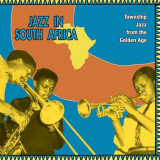
Various - Jazz In South Africa - Township Jazz  From The Golden Age

South Africa is in fact the only country in the whole African continent that has developed a strong Jazz tradition. Initially influenced by the great American stylists, (Ellington, Gillespie...) South Africa gradually developed its own soulful style based on a distinctive taste for melody and a deep sense of groove. Masterfully selected from the so-called Golden Age of the genre, (late Fifties / early Sixties), this compilation represents the best introduction to the work of a large and varied body of musicians and composers who inevitably developed their music as part of the historical Anti-Apartheid struggle, and as means of self expression in the dark times of exile. Kippie Moeketsi, Hugh Masekela, Dollar Brand, Chris McGregor, Dudu Pukwana, Mongesi Feza, Barney Rabachan, Nick Moyake and of course the queen Miriam Makeba are just some of the main voices represented here. A bunch of true warriors. in one word: A must!

vorbestellen28.01.2022

erscheint voraussichtlich am 28.01.2022


Last In: vor 2026 Jahren
Tete MBAMBISA - Tete’s Big Sound

Tete Mbambisa has performed and recorded with many of the giants of South African Jazz (Bazil ‘Manenberg’ Coetzee, Johnny Dyani, Dick Khoza, Duku Makasi, Gideon Nxumalo, Dudu Pukwana, etc...), and is one of the very few South African jazz musicians that can claim to have played with the three jazz generations of the last fifty years. His work as a pianist, vocalist, composer and arranger is a landmark on South African jazz history.

After a recording hiatus, Mbambisa returned in 1974 with an octet album, 'Tete's Big Sound' released on a newly formed label, As Shams or The Sun, established by South African record store owner and independent producer Rashid Vally. 'Tet's Big Sound' included tracks like 'Unity' and the 'Black Heroes Lamentation', now considered a classic in the South African jazz underground. The sound that Mbambisa carved in this period was wholly acoustic, and is a style that now is often loosely labelled spiritual jazz, a sound that alludes to deep African textures and rhythms balanced with clear nods to American hard bop and modal jazz, sometimes edging toward free improvisation in echoes of John Coltrane and Pharaoh Sanders.

nicht am Lager

Bestelle jetzt und wir bestellen den Artikel für dich beim Lieferanten.


Last In: vor 4 Jahren
  • 1
Artikel pro Seite:
N/ABPM
Vinyl