
pre-order now25.02.2022
expected to be published on 25.02.2022
expected to be published on 25.02.2022

Fifteen track completion of deep biguines and Gwo Ka from the '60s French West Indies. The vinyl edition included a 4 page booklet + download code.
Biguine is a rhythmic style of music that originated in Guadeloupe and Martinique in the 19th century, which fuses 19th-century French ballroom
dance steps with African rhythms. Gwo Ka is found among all ethnic and religious groups of Guadeloupean society.
It combines responsorial singing in Guadeloupean Creole, rhythms played on the Ka drums and dancing. Gwo Ka is the musical and cultural product of the
region's African ancestry, forcibly brought to the Caribbean through slavery. Gwo Ka exists only in Guadeloupe, which is a very different island from much of
the Caribbean, in that it remains a 'department' of its original colonial master, France. Here the currency is the Euro and the baker sells croissants and café
au lait. This constant 'European-ising' of the island means that Gwo Ka plays a fundamental and important role in the defining of Guadeloupean identity.
'Antilles' Méchant Bateau', a low-tempo number with a bolero feel, indeed a pure case of the blues, and a terrific saxophone solo. What else would you
expect to set the tone for this selection, in which beguine regains its original colours, in the darkness of the Gwo Ka drums. This 45 by André Mahy, released
under the Aux Ondes sublabel, was recorded in the 1960s at Célini's, one of Guadeloupe's two main houses. Through its drum rolls and harrowing chant, it
recalled how, long before the mid-1960s, the Antilles' history was written in an ocean of teardrops - namely the Black Atlantic.
Order now and we will order the item for you at our supplier.

Order now and we will order the item for you at our supplier.

Newly remastered and repackaged, Soul Jazz Records’ Gipsy Rhumba was first released to much-critical acclaim around the world in 2012, the album is a stunning mix of Latin, Funk, Flamenco and Rhumba rhythms. The album is being released on deluxe double vinyl, complete with large text and lush photography across two inner sleeves. Also new limited-edition new-card sleeved CD, out of print for more than ten years. The album is like no other and remains the first album ever outside of Spain to seriously focus on the history of Gipsy Rhumba, one of the most interesting musical culture clashes ever that first took place in the early 1960s.
In the Catalan region of Spain, Gypsies primarily known as the creators of Flamenco, came up with a fascinating hybrid style – Gipsy Rhumba – which blended together Latin and Rhumba music of Cuba and the Caribbean together with their own Flamenco as well as the emerging Rock and Roll from America. The album tells this unique story of how this Latin-tinged music came about in the heart of Spain's gypsy community. The album comes with extensive sleevenotes, exclusive and stunning photography from the celebrated French photographer Jacques Leonard. The album is put together by two of Spain's most important Gipsy Rhumba specialists - compiler David El Indio and sleevenotes by Jose Manuel Gómez (Gufi).
expected to be published on 12.06.2026
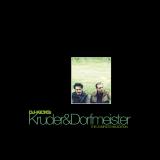
For its 30th anniversary, Kruder & Dorfmeister’s DJ-Kicks is available for the first time in mixed form on 3LP, remastered by Bernie Grundman and packaged in a special box set including original imagery. Kruder & Dorfmeister's rendition of the series created an era defining moment, which tied together a glowing array of musical registers. The Viennese downtempo royalty blended a fusion of slowed down moments across many genres with rolling Drum and Bass from the likes of Aquasky, the melting acid lines of deep Hardfloor and the 90s boom bap sampling, smoked out atmospherics of Thievery Corporation amongst many more.
These masters of mood channeled the sound of a moment with their DJ-Kicks, which still retains a certified cinematic sheen, the patina of the real – curation and mixing at its most playful and refined. It remains to this day one of the most recognizable DJ-Kicks and mixes of all time. Containing two certified cuts from K&D themselves; the wooze is strong on “High Noon” with Dorfmeister's intoxicating jazz flute licks and a trembling harmonica atop a mirage of breaks. Their DJ-Kicks original and legendary tune “Black Baby” closes the mix providing a piece of grandeur, riding off into the distance deep to the vanishing point.
When the mix dropped in 1996, the slo-beat pioneers were among the hottest producers in the dance universe. Even though they only produced two unreleased maxis, names like Count Basie, Bomb The Bass, Alex Reece or United Future Organization had some of their tracks remixed by these exceptional producers. Rumour has it during the work for DJ-Kicks and their debut album they refused doing remixes for U2, Grace Jones, Elvis Costello and the Fantastic Four! ‘DJ-Kicks: Kruder & Dorfmeister’ took its place in the pantheon a long while back, effortless in its ability to traverse sounds, styles and tempos while retaining a selection which remains timelessly recognisable as: Kruder & Dorfmeister.
expected to be published on 19.06.2026

expected to be published on 19.06.2026

On Stock and ready to ship

With Morocco Palace, Cybercafé aka Adam Dirk’heim delivers his very first full EP on Sequence Records - a record that balances raw energy and melancholy, blending emotional depth with a strong, forward-thinking dancefloor edge.
The EP opens with Electroskit, driven by an electric, almost extraterrestrial voice, before diving into raw electronic textures that set the tone. Dance & Control marks a first shift with its slow tempo, massive modulated synths and stretched tension. Then comes Nightshade, where the energy rises further through a rhythmic and emotional build-up carried by deep, melancholic, yet dancefloor-oriented synth lines.
On the B-side, Don Dolor flirts with instrumental EBM influence, while What Am I Talking About? closes the record with a hypnotic groove that stays with you long after the last note.
Morocco Palace lays the foundations of Cybercafé’s universe: a subtle balance between introspection, intensity, and dancefloor energy.
On Stock and ready to ship

From the dark, reverberating echoes of Kadinjaca Hill to the relentless march of Odjek Koraka, each track reverberates with an intense energy that speaks of defiance and unity in the face of adversity. Pad Okova is driven by a haunting chord that cuts through the pounding beat like a sharpened blade, while Tebi, Moja Dolores brings a haunting melancholy to the battlefield, encapsulating the unyielding spirit of the resistance movement.
Every beat in this EP is infused with the underground force of techno, laced with the struggle for freedom, equality, and justice. The artwork - stark, militant, and gritty - reflects the uncompromising ethos of the partisan fighters, drawing a direct line between the sounds of today and the ideals ofthose who fought for a better tomorrow.
On Stock and ready to ship

Spirituelle Musik mit tiefer Resonanz, übertragen durch Klavier, Orgel und Harmonium von der geliebten Komponistin und äthiopischen orthodoxen Nonne Emahoy Tsege Mariam Gebru. "Church of Kidane Mehret" versammelt das gesamte musikalische Werk von Emahoys gleichnamigem Privatpress-Album von 1972 sowie zwei zusätzliche unveröffentlichte Klavieraufnahmen mit Emahoys ,Äthiopischer Kirchenmusik". Die Aufnahmen entstanden in Kirchen in ganz Jerusalem. Zum ersten Mal hören wir Emahoy auf dem Harmonium und der massiven, dröhnenden Pfeifenorgel, neben einigen ihrer bewegendsten Klavierstücke. Bei ,Ave Maria" hallt ihr läutendes Klavier gegen alte Steinmauern. Ihre vertrauten melodischen Linien erhalten eine neue Resonanz, wenn sie in ,Spring Ode - Meskerem" durch das Harmonium gespielt werden. Zwei überragende Orgelstücke bilden die B-Seite, die Emahoys klassische europäische Ausbildung mit ihrem lebenslangen Studium der äthiopischer religiöser Musik kombinieren. Nirgendwo ist Emahoys einzigartige Kombination von Einflüssen deutlicher als bei ,Essay on Mahlet", einem meditativen Dauerbrenner, in dem Emahoy die freien Verse der orthodoxen Liturgie Note für Note auf dem Klavier interpretiert. Dieses aufschlussreiche Stück stammt, neben der dramatischen Klavierkomposition ,The Storm", von einem anderen selbstveröffentlichten Album, "Der Sang Des Meeres" von 1963. Eines der einzigen bekannten Exemplare wurde vor dem Müll gerettet und von einer Mitschwester aus Emahoys Kloster am Rande von Emahoys Beerdigung im März 2023 an Mississippi Records weitergegeben. Die Vinylausgaben kommen im Oldschool Tip-On-Jacket mit metallischer Silberfolienprägung und einem 12-seitigen Booklet mit ausführlichen Linernotes des Gelehrten und Pianisten Thomas Feng.
On Stock and ready to ship

"Dame café", originally released on Discos Fuentes in 1965 to meet the tropical music demand of the time, features a mix of traditional rhythms like vallenato and cumbia, alongside more experimental beats. The vibrant musical scene of the 1960s in Colombia owes much to a group of versatile accordionists who blended genres such as cumbia, charanga, guaracha, vallenato, and Cuban-influenced rhythms. This group included notable figures like Andrés Landero, Aníbal Velásquez, Lisandro Meza, and Alfredo Gutiérrez, among others. A prime example of their diverse musical styles is the album "Dame café", released in November 1965, which features a mix of traditional rhythms like vallenato and cumbia, alongside more experimental beats such as paseaíto and pasaje. The album includes six previously released singles composed by José Castro, Policarpo Calle, and others. The album highlights the commercial strategy of Discos Fuentes, which often created short-lived studio bands to meet the tropical music demand of the time. Los Gavilanes de la Costa, the band behind "Dame café", had a brief existence but left a lasting impact, especially in Mexico's sonidero scene. The group's creation was driven by the high demand for tropical music in the 1960s, with many musicians adjusting to market trends. Most of the members, including composers Campillo and Castro, vanished from the scene, while others, like Calle and Zambrano, went on to have notable careers in music. Calle, in particular, became a cumbia legend, later settling in Mexico City. The album "Dame café" has gained cult status due to its rarity and the intrigue surrounding its origins. The album features a remarkable contribution from Colombian jazz legend Justo Almario, who, at just 16 years old, played tenor sax on the track 'Pues no da pa' más'. Over the years, pirate editions and elusive original copies have made it a highly sought-after collector's item. The album's lively sound, combining accordion melodies, deep bass, and vibrant guacharaca rhythms, continues to resonate in the tropical music scene.
On Stock and ready to ship

"Acid Floresta" is the result of a process of sonic recognition and translation. A term that has taken shape over the past few years to name a search that, in reality, began more than a decade ago: the intersection between foreign rhythms and the music that inhabits the streets, with its social dynamics and its irreducible vitality.
This album is born from the observation and listening of the everyday sounds that shape the sonic identity of the neighborhood: the corner store, the metro, the billiard hall, the street corner. Spaces where music is not a choice but a constant pulse of life. The percussion of the street, the echo of a distant radio, the spontaneous phrasing of a conversation—these become raw material. From there, the process moves to the studio, where bass, synthesizers, drum machines, and samplers serve as tools of translation: what begins as a documentation of reality transforms into a musical interpretation.
At this point, a tension emerges between what is learned and what is felt. For years, tropical music and vallenato were part of a sonic landscape that coexisted with external influences, generating both distance and affinity. But within that push and pull—between the familiar and the unknown—a common thread was revealed: sabor. Not as a genre, but as an essence, a vital and irreplace able force.
"Acid Floresta" is structured in three and the performative stage, where music returns to the streets, closing the cycle. It is in this final moment that its true nature emerges: in the shared vibration, in danceability, in what connects beyond geography and context.
The album proposes a dialogue between intimacy and collective experimentation, between latineo and electronic music, between the raw and the processed. A space where the music of the streets and the music of the floresta converge to create a new sonic memory.
On Stock and ready to ship

NEWLY REMASTERED SOUNDTRACKS FROM MORRICONE’S INCREDIBLE BACK CATALOGUE! DEDICATED TO CULT SOUNDTRACKS COLLECTORS.
On Stock and ready to ship
expected to be published on 29.05.2026

Zuukou Mayzie, rapper and member of the 667 collective, continues to push his "Wok Music" — a free universe where everything blends together without limits.
The most love-driven and experimental artist of 667, returns after three years of absence with “19h19”, his 4th album, made up of 20 bold tracks filled with risk-taking. By taking the time to live and feed his experiences, Zuukou delivers a personal and positive project designed to share a sincere energy.
Featurings: Baaba Maal Bleue Electrique Freeze Corleone Jolagreen23 Oxmo Puccino Roi Heenok So La Lune Surkin Wit. Yamê
expected to be published on 10.04.2026

Celebrating the 30th anniversary of Enlace Funk magazine, they present the world's first Flamenco-Jazz compilation, featuring 16 tracks from between 1978 to 2025, released on vinyl for the first time. A musical dialogue between Flamenco and Jazz, unique in the world, a journey through some of the most important artists of this style, starting with the seminal work of the group Dolores in 1978, and continuing to examples of the current sound of this exciting fusion. Includes tracks never before released on vinyl by artists such as Jorge Pardo, Chano Dominguez, Pedro Ojesto, and Marc Miralta. The first volume of Flamenco-Jazz aims to showcase this unique style that has proven to be a bridge of communication and dialogue between flamenco and jazz musicians, creating an inimitable sound that is constantly evolving and transcending barriers. We take as our starting point a 1978 recording by Dolores, featuring Paco de Lucía, which later led to the formation of her legendary sextet with musicians who had participated in this recording. Of course, this first volume wouldn't be complete without other masters like Josemi Carmona, Pedro Ojesto, and Marc Miralta. And of course, a new generation of names that have elevated the genre to its current status, such as flautists Trinidad Jiménez and Sergio De Lope, Juanfe Pérez and Juan Pérez Rodríguez from Huelva, Pablo Martín Caminero from Vitoria, and Miquel Alvarez from Valencia. Not forgetting innovators like Antonio Lizana and Enriquito, who are crossing borders and sharing their unique style. Ltd ed.classic black vinyl double LP in gatefold sleeve
expected to be published on 27.03.2026

expected to be published on 20.03.2026

expected to be published on 27.02.2026

The Godfather Of Salsa - HAVANNA & NYC RECORDINGS 1946-1962! Grosso! again presents this compilation from "El Ciego Maravilloso", the authentic godfather of salsa. His early Havana & NYC recordings. The tracks have been remastered and restored and some are available on vinyl after many years. Format and selection designed for DJs, collectors and latin lovers. Ignacio de Loyola Rodríguez Scull aka Arsenio Rodríguez (30 August, 1911, Güira de Macurijes, Matanzas, Cuba - 30 December, 1970, Los Angeles, CA, USA) was a Cuban musician, bandleader and prolific composer who developed the son montuno and other Afro-Cuban-based rhythms. Today he is seen as one of the most important figures in Latin music, with his influence reaching beyond the Spanish speaking world to also include African popular music of the 20th Century, though when he died he was not widely known by the public for his contributions and influence. He is also recognized (along with Israel 'Cachao' López and Dámaso Pérez Prado) as one of the creators of mambo, what Rodríguez himself often referred to as "ritmo diablo". Some of his best-known, and most-often covered recordings from the 1950s and early 1960s are included here, among them "Dame un cachito pa' huele'," "Dundunbanza," "El reloj de pastora," "Cambia El Paso," and "Hay Fuego En El 23."
expected to be published on 13.01.2026

Dieses spezielle Vinyl-Boxset enthält den kompletten Original-Soundtrack des Spiels sowie die DLC-Musik für Stir of Dawn und Wounds of Eventide. Der 4LP-Schuber in limitierter Auflage ist mit einem maßgeschneiderten Coverartwork von Diego Minguez sowie bedruckten Innenhüllen mit Artwork von Jesús Campos „Nerkin“ verziert.
Blasphemous präsentiert eine alptraumhafte Variante des mystischen Katholizismus und der gotischen Architektur der Heimatstadt von The Game Kitchen, Sevilla. Das angesehene Metroidvania-Spiel ist voll von verdrehter religiöser Ikonografie und esoterischer Symbolik. Die eindringliche Musik des Komponisten Carlos Viola ist untrennbar mit der einzigartigen Atmosphäre des Spiels verbunden. Er übersetzt Themen wie Leid, Schuld und Einsamkeit in eine tief emotionale Musik, die von der Tragödie zur Transzendenz drängt.
Der Soundtrack beschwört ein spezifisches Gefühl von Ort und Zeit herauf und schöpft aus den Traditionen der spanischen Folkgitarre, mittelalterlichen Chorälen und orchestralen Verzierungen, um eine Art okkulte Kammermusik zu schaffen. Geschmeidige Streicher und schwebender Gesang kreuzen Wellen kolossaler Drones, bevor sie wieder im Morast versinken. Hypnagogische Passagen pulsieren mit übernatürlicher Kraft, während klagende, beunruhigende Klavierstücke für Momente des Alleinseins inmitten des Gemetzels sorgen. Violas prächtige Kompositionen werden durch Beiträge der Instrumentalisten Sergio Carmona (Bass) und Manuel Soto "Noly" (Gitarre) sowie durch die mitreißenden Gesangseinlagen von Nadia Torres und Dolores Berg unterstützt.
Wie das Spiel selbst ist auch die Musik von Blasphemous beunruhigend und von Leid durchdrungen, aber dennoch seltsam schön und fesselnd. Schnappen Sie sich Ihr Schwert und Ihren Rosenkranz, bevor Sie eintauchen - Sie werden beides gebrauchen können.
expected to be published on 28.11.2025

Jesse Harris’ Freund und Arrangeur Maycon Ananias hatte zusätzliche Aufnahmezeit mit einem estnischen Orchester und lud Harris ein, ein Stück beizusteuern. Das erste Experiment, Dolores, entfachte eine neue kreative Richtung. Obwohl Harris – Grammy-Preisträger und langjähriger Wegbegleiter von Norah Jones, Willie Nelson und Cat Power – bereits mehr als zwanzig Alben veröffentlicht hatte, war es seine erste Aufnahme mit Orchester. Beflügelt von dieser Erfahrung schrieb Harris innerhalb von nur fünf Wochen acht weitere Songs – detailreiche Kompositionen, die von Beginn an für symphonische Arrangements gedacht waren. Entstanden ist ein Album, das zwischen New York, Rio und Talinn aufgenommen wurde und hochkarätige Gäste wie Norah Jones, den brasilianischen Gitarristen Guilherme Monteiro, Jake Sherman sowie Marine Quéméré von Nouvelle Vague vereint.Mit seinen opulenten, zugleich feinfühligen Arrangements taucht If You Believed In Me in Themen wie Erinnerung, Sehnsucht und imaginierte Möglichkeiten ein – in die „Was-wäre-wenns“, die jeden Träumer begleiten. Herausgekommen ist orchestraler Pop voller Wärme, Melancholie und leiser Überraschungen – ausgelöst durch eine einzige Einladung.
expected to be published on 07.11.2025

“…I still don’t understand what is the meaning of these Poppers records, please unsubscribe me from this newsletter.”
• Hans Zimmer
If you’ve ever been in the countryside and happened to lift a larger rock that might have been laying about for a while only to find an entourage of many different insects scrambling about in awe of the existence of sunlight and wondered what music they might have been listening to in that moment, the A-side tries to explore ways of responding to such curiosities. While the B-side, to end things on a good note, offers a convenient edit of live Japanese cover version of Paul McCartney’s “Silly Love Song” along with the quintessential prelude (or interlude) to a Horse Meat Disco party with the opening monologue of Sidney Lumet’s Equus. All in all, a Swiss Army knife packed with an assortment of most likely useless tools, courtesy of DJ Dipshit.
Order now and we will order the item for you at our supplier.

In-Correcto 15–25 marks the first vinyl compilation by Bogotá’s independent label InCorrecto, created in collaboration with Austrian imprint discos elgozo. Celebrating ten years of sonic exploration and creative resistance from the Global South, this special edition brings together a vibrant constellation of artists that define the label’s sound: La Muchacha, Ana María Vahos, Felipe Orjuela, Mau Gatiyo, Conjunto Media Luna, Briela Ojeda, Zarigüeya, Buha 2030, and many more. Between mutant cumbia, Latin American folk, introspective electronics, and borderless sonic experiments, 15–25 is both a party and a statement: a manifesto of the in-correct as an artistic and collective force.
Since 2015, In-Correcto has grown from a cultural magazine into one of Latin America’s most vital independent hubs, operating as a record label, publishing house, and creative collective. With more than 160 releases ranging from punk and ambient to trip-hop and experimental cumbia, the label has supported a generation of artists whose work is as socially engaged as it is sonically daring. Through compilations, anniversary concerts, and political projects, In-Correcto has solidified its reputation as a catalyst for collaboration, solidarity, and cultural cross-pollination in Bogotá and beyond. Based in Vienna with roots on Colombia’s Caribbean coast, discos elgozo shares this vision. Founded in 2024, the label works with Colombian artists and their diaspora, releasing music that fuses ancestral knowledge, queer-feminist expression, sonic experimentation, and joy as a political force—as a way to resist cultural erasure, reactivate traditions, and recover collective vitality. Its catalog spans salsa brava, bullerengue, psychedelic cumbia, and experimental jazz, with a strong focus on vinyl as an act of listening, memory, and resistance.
Carefully pressed, In-Correcto 15–25 is more than a record: it is a bridge between Bogotá’s underground and a global network of listeners. A sonic archive and an invitation to dance, it reaffirms that joy, experimentation, and community remain powerful tools to imagine the world otherwise.
Order now and we will order the item for you at our supplier.

In Guadeloupe, many people think that jazz and ka music are like a ring and a finger. To some extent, the same could be said about so called Latin music and the music played in the French West Indies.
Both aesthetics were born in the Caribbean and bear so many connections that they can easily be considered cousins. In constant dialogue, there are lots of examples of their fruitful alliance and have been for a while. The English country dance that used to be practiced in European lounges came to be called kadrille in Martinique and contradanza in Cuba. They both featured additional percussion instruments inherited from the transatlantic deportation. Drawing from shared feelings about the same traumatized identity – later to be creolized – it would be hard not to assume that they were meant to inspire each other. The golden age of the orchestras that graced the Pigalle nights during the interwar period further proves the point. As soon as the 1930s, Havana-born Don Barreto naturally mixed danzón and biguine music in a combo based at Melody's Bar. In the following decade, Félix Valvert, a conductor who was born and raised in Basse-Terre in Guadelupe, also worked wonders in Montparnasse with La Coupole, which was an orchestra made up of eclectic musicians. Afro- Caribbean performers of various origins were often hired on rhythm and brass sections in jazz bands, which used to enliven the typical French balls of the capital. In the 1930s and onwards, Rico’s Creole Band was one of them.
Martinican violinist-clarinettist Ernest Léardée, who would become the king of biguine music as well as the main figure of French Uncle Ben's TV commercials (a dark stigma of post-colonial stereotypes), had musicians from the whole Caribbean sphere play at his Bal Blomet – and they all enchanted "ces Zazous-là" (according the words of Léardée's biguine-calypso piece). In les Antilles (French for French West Indies), music history started to speed up in the 1950s, when trade expanded and radio stations grew bigger. The Guadelupean and Martiniquais youth tuned in their old galena radio sets to South American and Caribbean music. As for the women traders, les pacotilleuses, they bought and sold goods across different islands (the "passing of items through various hands" was thought to be most pleasurable) and brought back countless sounds in their luggage. Such was the case of Madame Balthazar, who once returned from Puerto Rico with the first 45rpm and 33rpm to ever enter Martinique.
Out of this adventure was created the famous Martinican label La Maison des Merengues, a music business she opened and undertook with her husband and which proved to be a major landmark. At the end of the 1950s, in Puerto Rico, Marius Cultier competed in the Piano International Contest playing a version of Monk's Round 'Midnight. He won the first prize and this distinction foreshadowed everything that was to come. Cultier, the heretic Monk of jazz, was quickly praised for writing superb melodies, always tinged with a twist that conferred a unique sound to his music. It didn't take long for the gifted self-taught musician to get to play with Los Cubanos, making a name for himself thanks to his impressive maestria on merengues.
The rest is history. Besides, in the late 1950s, Frantz Charles-Denis, born into the upper middle class in Saint-Pierre and better known by his first name Francisco, went back home after working at La Cabane Cubaine – a club located rue Fontaine where he had caught the Latin fever. Francisco's music was therefore heavily marked by his Cuban cousins' influence, which gave the combos he led a specific style and also led to renewal. Things were swinging hard in La Savane, located in the main square in Fort-de-France. He set up the Shango club close by and tested out the biguine lélé there, a new music formula spiced up with Latin rhythms. Soon afterwards, fate had him fly to Puerto Rico and Venezuela.
As for percussionist Henri Guédon (percussions were only a part of his many talents), he was born in Fort-de-France in May 22nd 1944, the day marking the celebration of the abolition of slavery. As an old man, he could remember that in " his father's Teppaz, a lot of hectic 6/8 music was constantly playing...". In the opening lines of his Lettre à Dizzy, a small illustrated collection of writings published by Del Arco, he highlighted the huge impact that cubop had on him as a teenage boy, around 1960. He eventually turned out to be the lider maximo in La Contesta, a big band steeped in Latin jazz. He was also the one who originated the word zouk to describe music which brought the sound of the New York barrio to Paris. It was the culmination of a journey that started in Sainte-Marie: "a mythical place for bélé, the equivalent of Cuban guaguancó". In the early 1960s, the tertiary economy developed to the detriment of agriculture. Yet rural life was where roots music emerged in Martinique and in Guadeloupe.
Record companies played a major part in the process of Latin versions sweeping across the islands – before reaching everywhere else. Producer Célini, boss of the great Aux Ondes label, and Marcel Mavounzy, both the head of Émeraude records - a firm which was founded in 1953 - as well as the brother of famous saxophonist Robert Mavounzy, were big names to bear in mind. Although there were many of them - all of whom are featured on this record - Henri Debs was definitely the major figure in the recording adventure. He proved to be so influential that he even got compared to Berry Gordy. In the mid 1950s, when he acquired his first Teppaz, he worked on his first compositions: a bolero and a chachacha. Then, he became the one man who made people discover Caribbean music, from calypso to merengue. He was among the first ones to rush out to San Juan, Puerto Rico, to buy records and distribute them through a store run by one of his brothers in Fort-de-France. He had members of the Fania All Star come and perform there, which he was madly proud about. He was also the first one to pay attention to Haitian music, such as compas direct and various other rhythms which would soon flood the market. As a result, many of the combos hitting his legendary studio would end up boosted by widespread "Afro-Latin" rhythms. However, he never denied his identity: gwo ka drums were given a major role, although they were instruments which had long been banned from the "official" music spheres. The present selection bears witness to such a creative swarming. Here are fourteen tracks of untimely yet unprecedented cross-fertilization: all types of music rooted in the Creole archipelago have found their way, whatsoever, to the tracklisting. Whether originating from the city or being more rural, they all go back to what Edouard Glissant, in an interview about the place of West Indian music in the Afro-American scope, called "the trace of singing, the one which got erased by slavery." "It is so in jazz, but also in reggae, calypso, biguine, salsa... This trace also manifests through the drums, whether Guadelupean, Dominican, Jamaican or Cuban... None of them being quite the same. They all point to the idea of a trace, seeking it out and connecting to each other through it. This is the hallmark of the African diaspora: its ability to create something new, in relation to itself, out of a trace. It may be the memory of a rhythm, the crafting of a drum, a means of expression which doesn't resort to an old language but to the modalities of it." The opening track features one of the emblematic orchestras of this aesthetic identity, criscrossing many music types from the archipelago. The 1974 Ray Barretto guajira – Ray Barretto was a major New York drummer influenced by Charlie Parker and Chano Pozzo – is magnificently performed by Malavoi, a legendary Fayolais group (i.e from Fort-de-France). Additionally, the compilation ends on a piece by Los Martiniqueños de Francisco. It symbolically closes the circle as it is a genuine potomitan of Martinique culture which also functions as a tireless campaigner for Afro-Caribbean music. Practicing the danmyé rounds (a kind of capoeiria) to the rhythm of the bèlè drum, it delivers a terrific Caterete, a kind of champeta of Afro- Colombian obedience which was originally composed by Colombian Fabián Ramón Veloz Fernández for the group Wgenda Kenya. The icing on the cake is Brazilian Marku Ribas, who found refuge in Martinique in the early 1970s, bringing his singing to the last trance-inducing track. These two "versions" convey the whole tone of a selection composed of rarities and classics of the tropicalized genre, swarming with tonic accents and convoluted rhythms. It is the sort of cocktail that the West Indians never failed to spice up with their own ingredients. For instance, the Los Caraïbes cover of Dónde, a famous Cuban theme composed by producer Ernesto Duarte Brito, has a typical violin and features renowned Martinique singer Joby Valente and his piquant voice.
The track used to be – or so we think – their only existing 45rpm. The meaningful Amor en chachachá by L'Ensemble Tropicana, a band which included Haitian musicians among whom was composer and leader Michel Desgrotte, also recalls how Latin music was pervasive in the tropics in the mid-1960s. They were the ones keeping people dancing at Le Cocoteraie in Guadelupe and La Bananeraie in Martinique. Around the same time, another "foreign" band, Congolese Freddy Mars N'Kounkou's Ryco Jazz, achieved some success on both islands by covering Latin jazz classics – such as their adaptation of Wachi Wara, a "soul sauce" by Dizzy Gillespie and Chano Pozo whose interweaving of strings and percussions can have anyone hit the dancefloor. How can you resist Dap Pinian indeed, a powerful guaguancó by Eugene Balthazar, performed by the Tropicana Orchestra and published by the Martinique-founded La Maison des Merengues? It also acts as a symbol of the maelstrom at work. Going by the name Paco et L'orchestre Cachunga, Roger Jaffory used to play guaguancó too: his Fania-inspired Oye mi consejo is one example of his style. Baila!!!!! Dancing was also one of the Kings' focus points. Oriza is a Puerto Rican bomba and a "classic" originally composed by Nuevayorquino trumpeter Ernie Agosto, which reserves major space for brasses, giving it a special sheen.
Emerging from the New York barrios crucible was also La Perfecta, a Martinique group originating from Trinidad, whose name directly references the totemic Eddie Palmieri figure as well as his own band, also called La Perfecta. Here they borrow Toumbadora from Colombian producer and composer Efraín Lancheros and interpret it by emphasizing percussions, which set fire to the track even more than the wind instruments. The same goes for Martinique's Super Jaguars, who use Tatalibaba – a composition by Cuban guitarist Florencio "Picolo" Santana which was made famous by Celia Cruz & La Sonora Matencera – as a pretext for sending their cadences into a frenzy. In a more typically salsa vein, the Super Combo, a famous Guadelupean orchestra from Pointe-Noire that was formed around the Desplan family and had Roger Plonquitte and Elie Bianay on board, adapt Serana, a theme by Roberto Angleró Pepín, a Puerto Rican composer, singer and musician also known for his song Soy Boricua. Here again, their vision comes close to surpassing the original. In the 1970s, L'Ensemble Abricot provided a handful of tracks of different syles, hence reaching the pinnacle of the art of achieving variety and giving pleasure. They played boleros, biguines, compas direct, guaguancó and even a good old boogaloo - the type they wanted to keep close to their hearts for ever, "pour toujours", as they sang along together in one of their songs. Léon Bertide's Martinican ensemble excelled at the boogaloo which had been composed by Puerto Rican saxophonist Hector Santos for the legendary El Gran Combo.
Three years later, in 1972, Henri Guédon, with the help of Paul Rosine on the vibraphone, tackled the Bilongo made famous by Eddie Palmieri. Such a classic!!!!! And so were the Aiglons, the band from Guadelupe: choosing to execute Pensando en tí, a composition by Dominican Aniceto Batista, on a cooler tempo than the original, they noticeably used a wonderfully (un)tuned keyboard in place of the accordion. On the high-value collectible single – the first one released by Les Aiglons under the Duli Disc label – there is a sticker classifying the track under the generic name "Afro". Now that is what we call a symbol. Jacques Denis
Order now and we will order the item for you at our supplier.

Los Angeles trio Faetooth sophomore album Labyrinthine is a deeply felt exploration of emotional weight: grief, memory, uncertainty, and the quiet work of growing around your own wounds. Following the band's 2022 debut Remnants of the Vessel, which introduced the band’s signature blend of heaviness and mysticism, Labyrinthine pushes further inward. True to its name, the album winds through a maze of feeling and form, where meaning is never handed over easily. It’s rooted in self-discovery through disorientation, the idea that understanding comes not from escape, but from getting lost. Ari May (guitars and vocals), Jenna Garcia (bass and vocals), and Rah Kanan (drums) manage to stay grounded in the immediate in parallel with fantasy themes of the band's namesake. Labyrinthine holds space for this contradiction; tenderness and intensity, restraint and release. The band's self-branded “fairy doom” sound fits between shoegaze, doom, and grunge. It isn’t just texture; it’s a framework for navigating the unsaid. Like the myth that inspired its title, Labyrinthine doesn’t end in victory, but in confrontation—not with escape, but with the Minotaur. Only here, the Minotaur isn’t a monster. It’s something quiet and more familiar: unresolved feelings, old memories, and sadness that refuse to stay buried. The album winds like a maze, sometimes heavy, sometimes hushed, always intentional. Faetooth isn’t chasing catharsis. They’re creating space to reflect, to feel, and maybe to get a little lost along the way.
Artist quote: "White Noise" emerged from a diary entry, and is a relentless and intense reflection on inner turmoil. We’re often drawn to the familiar, even when we don’t realize we’re reaching out for it. It is an emotional upheaval, carrying harsh truths that weigh heavily on the heart. Guitarist, Ari May mentions, “Performing the song always takes me back to a specific place, even if just for a moment.”
“Riffs and melodies brimming with loneliness and longing… this band’s incantations affect my mood the whole day after listening.” — The Sleeping Shaman
“Bringing otherworldly hazy doom goodness… dreamy clean vocals, echoing harsh vocals, entrancing riffs, meditative shoegaze melodies.” — Nine Circles
“Slow, lumbering behemoths of great weight… couched in a melancholy atmosphere and explosions of crushing heaviness.” - Where Strides The Behemoth
expected to be published on 05.09.2025

Los Angeles trio Faetooth sophomore album Labyrinthine is a deeply felt exploration of emotional weight: grief, memory, uncertainty, and the quiet work of growing around your own wounds. Following the band's 2022 debut Remnants of the Vessel, which introduced the band’s signature blend of heaviness and mysticism, Labyrinthine pushes further inward. True to its name, the album winds through a maze of feeling and form, where meaning is never handed over easily. It’s rooted in self-discovery through disorientation, the idea that understanding comes not from escape, but from getting lost. Ari May (guitars and vocals), Jenna Garcia (bass and vocals), and Rah Kanan (drums) manage to stay grounded in the immediate in parallel with fantasy themes of the band's namesake. Labyrinthine holds space for this contradiction; tenderness and intensity, restraint and release. The band's self-branded “fairy doom” sound fits between shoegaze, doom, and grunge. It isn’t just texture; it’s a framework for navigating the unsaid. Like the myth that inspired its title, Labyrinthine doesn’t end in victory, but in confrontation—not with escape, but with the Minotaur. Only here, the Minotaur isn’t a monster. It’s something quiet and more familiar: unresolved feelings, old memories, and sadness that refuse to stay buried. The album winds like a maze, sometimes heavy, sometimes hushed, always intentional. Faetooth isn’t chasing catharsis. They’re creating space to reflect, to feel, and maybe to get a little lost along the way.
Artist quote: "White Noise" emerged from a diary entry, and is a relentless and intense reflection on inner turmoil. We’re often drawn to the familiar, even when we don’t realize we’re reaching out for it. It is an emotional upheaval, carrying harsh truths that weigh heavily on the heart. Guitarist, Ari May mentions, “Performing the song always takes me back to a specific place, even if just for a moment.”
“Riffs and melodies brimming with loneliness and longing… this band’s incantations affect my mood the whole day after listening.” — The Sleeping Shaman
“Bringing otherworldly hazy doom goodness… dreamy clean vocals, echoing harsh vocals, entrancing riffs, meditative shoegaze melodies.” — Nine Circles
“Slow, lumbering behemoths of great weight… couched in a melancholy atmosphere and explosions of crushing heaviness.” - Where Strides The Behemoth
expected to be published on 05.09.2025

Los Angeles trio Faetooth sophomore album Labyrinthine is a deeply felt exploration of emotional weight: grief, memory, uncertainty, and the quiet work of growing around your own wounds. Following the band's 2022 debut Remnants of the Vessel, which introduced the band’s signature blend of heaviness and mysticism, Labyrinthine pushes further inward. True to its name, the album winds through a maze of feeling and form, where meaning is never handed over easily. It’s rooted in self-discovery through disorientation, the idea that understanding comes not from escape, but from getting lost. Ari May (guitars and vocals), Jenna Garcia (bass and vocals), and Rah Kanan (drums) manage to stay grounded in the immediate in parallel with fantasy themes of the band's namesake. Labyrinthine holds space for this contradiction; tenderness and intensity, restraint and release. The band's self-branded “fairy doom” sound fits between shoegaze, doom, and grunge. It isn’t just texture; it’s a framework for navigating the unsaid. Like the myth that inspired its title, Labyrinthine doesn’t end in victory, but in confrontation—not with escape, but with the Minotaur. Only here, the Minotaur isn’t a monster. It’s something quiet and more familiar: unresolved feelings, old memories, and sadness that refuse to stay buried. The album winds like a maze, sometimes heavy, sometimes hushed, always intentional. Faetooth isn’t chasing catharsis. They’re creating space to reflect, to feel, and maybe to get a little lost along the way.
Artist quote: "White Noise" emerged from a diary entry, and is a relentless and intense reflection on inner turmoil. We’re often drawn to the familiar, even when we don’t realize we’re reaching out for it. It is an emotional upheaval, carrying harsh truths that weigh heavily on the heart. Guitarist, Ari May mentions, “Performing the song always takes me back to a specific place, even if just for a moment.”
“Riffs and melodies brimming with loneliness and longing… this band’s incantations affect my mood the whole day after listening.” — The Sleeping Shaman
“Bringing otherworldly hazy doom goodness… dreamy clean vocals, echoing harsh vocals, entrancing riffs, meditative shoegaze melodies.” — Nine Circles
“Slow, lumbering behemoths of great weight… couched in a melancholy atmosphere and explosions of crushing heaviness.” - Where Strides The Behemoth
expected to be published on 05.09.2025

Charles Aznavour schuf mit seinem außergewöhnlichen Talent Werke, deren Originalität ein großes Publikum verführten. Seine Einflüsse waren vielfältig – armenische Familie, jüdische Kindheit, Idole, die Jazzmusiker waren und Mentoren des Chansons. Dieser illustrierte Bildband samt LP vereint 14 Highlights seiner Frühzeit, in der er sein Temperament formte, sein Talent verfeinerte und seinen eigenen Weg aus Rhythmus, Sinnlichkeit und Nostalgie fand. Aznavour bleibt mit über 100 Millionen Verkäufen der bekannteste französische Sänger der Welt.
Order now and we will order the item for you at our supplier.

expected to be published on 18.07.2025

Spirituelle Musik mit tiefer Resonanz, übertragen durch Klavier, Orgel und Harmonium von der geliebten Komponistin und äthiopischen orthodoxen Nonne Emahoy Tsege Mariam Gebru. "Church of Kidane Mehret" versammelt das gesamte musikalische Werk von Emahoys gleichnamigem Privatpress-Album von 1972 sowie zwei zusätzliche unveröffentlichte Klavieraufnahmen mit Emahoys ,Äthiopischer Kirchenmusik". Die Aufnahmen entstanden in Kirchen in ganz Jerusalem. Zum ersten Mal hören wir Emahoy auf dem Harmonium und der massiven, dröhnenden Pfeifenorgel, neben einigen ihrer bewegendsten Klavierstücke. Bei ,Ave Maria" hallt ihr läutendes Klavier gegen alte Steinmauern. Ihre vertrauten melodischen Linien erhalten eine neue Resonanz, wenn sie in ,Spring Ode - Meskerem" durch das Harmonium gespielt werden. Zwei überragende Orgelstücke bilden die B-Seite, die Emahoys klassische europäische Ausbildung mit ihrem lebenslangen Studium der äthiopischer religiöser Musik kombinieren. Nirgendwo ist Emahoys einzigartige Kombination von Einflüssen deutlicher als bei ,Essay on Mahlet", einem meditativen Dauerbrenner, in dem Emahoy die freien Verse der orthodoxen Liturgie Note für Note auf dem Klavier interpretiert. Dieses aufschlussreiche Stück stammt, neben der dramatischen Klavierkomposition ,The Storm", von einem anderen selbstveröffentlichten Album, "Der Sang Des Meeres" von 1963. Eines der einzigen bekannten Exemplare wurde vor dem Müll gerettet und von einer Mitschwester aus Emahoys Kloster am Rande von Emahoys Beerdigung im März 2023 an Mississippi Records weitergegeben. Die Vinylausgaben kommen im Oldschool Tip-On-Jacket mit metallischer Silberfolienprägung und einem 12-seitigen Booklet mit ausführlichen Linernotes des Gelehrten und Pianisten Thomas Feng.
Order now and we will order the item for you at our supplier.

Spirituelle Musik mit tiefer Resonanz, übertragen durch Klavier, Orgel und Harmonium von der geliebten Komponistin und äthiopischen orthodoxen Nonne Emahoy Tsege Mariam Gebru. "Church of Kidane Mehret" versammelt das gesamte musikalische Werk von Emahoys gleichnamigem Privatpress-Album von 1972 sowie zwei zusätzliche unveröffentlichte Klavieraufnahmen mit Emahoys ,Äthiopischer Kirchenmusik". Die Aufnahmen entstanden in Kirchen in ganz Jerusalem. Zum ersten Mal hören wir Emahoy auf dem Harmonium und der massiven, dröhnenden Pfeifenorgel, neben einigen ihrer bewegendsten Klavierstücke. Bei ,Ave Maria" hallt ihr läutendes Klavier gegen alte Steinmauern. Ihre vertrauten melodischen Linien erhalten eine neue Resonanz, wenn sie in ,Spring Ode - Meskerem" durch das Harmonium gespielt werden. Zwei überragende Orgelstücke bilden die B-Seite, die Emahoys klassische europäische Ausbildung mit ihrem lebenslangen Studium der äthiopischer religiöser Musik kombinieren. Nirgendwo ist Emahoys einzigartige Kombination von Einflüssen deutlicher als bei ,Essay on Mahlet", einem meditativen Dauerbrenner, in dem Emahoy die freien Verse der orthodoxen Liturgie Note für Note auf dem Klavier interpretiert. Dieses aufschlussreiche Stück stammt, neben der dramatischen Klavierkomposition ,The Storm", von einem anderen selbstveröffentlichten Album, "Der Sang Des Meeres" von 1963. Eines der einzigen bekannten Exemplare wurde vor dem Müll gerettet und von einer Mitschwester aus Emahoys Kloster am Rande von Emahoys Beerdigung im März 2023 an Mississippi Records weitergegeben.
Order now and we will order the item for you at our supplier.

expected to be published on 04.07.2025

WOW. Daniel O'Sullivan's transcendent new album, Eros, is one of the greatest things we've ever heard. A simply stunning song cycle of hypnotic, experimental contemporary chamber music composed for a 14-piece ensemble. Combining minimalism, complex syncopation, detailed acoustic textures, weird intervals and samurai precision, this record will elegantly blow your mind. When Daniel first sent us this, he pitched it as “Liquid Swords meets Michael Nyman”. Trust us, he wasn't wrong. A "unique hybrid orchestral music", it presents a confluence of Daniel's longstanding fixations; indeed, there's elements of Nyman, Antonio Carlos Jobim, Magma, Aaron Copland and RZA. But this is wholly O'Sullivan's. Originally commissioned for the Sonoton Music Library in Munich, Eros now receives a deluxe vinyl release courtesy of Be With Records, bringing this meticulously crafted work to a wider audience. Limited to just 500 copies for the world, these are gonna fly.
An English composer and multi-instrumentalist, Daniel O'Sullivan’s career has been marked by versatility and innovation. In addition to his work with Sonoton, he has composed extensively for the legendary KPM music library, contributing to its storied legacy of production music. As a deep virtuoso and collaborator, O'Sullivan has also played in a number of influential projects, including Ulver, Sunn O))), This Is Not This Heat, Grumbling Fur and Miracle (with Steve Moore), leaving an indelible mark on the contemporary experimental music landscape.
O’Sullivan’s first foray into classically informed chamber music, Eros is a culmination of his long-standing fixations and expansive musical influences. The album features arrangements that are as detailed as they are emotionally resonant, showcasing his unparalleled ear for intervals and mastery of counterpoint. The music brims with complex rhythmic syncopation and a sensitivity to texture and space, resulting in a soundscape that is both intoxicating and dauntingly precise.
Recorded June 2023 and February 2024, in Brussels, London and Carmarthenshire, Wales, Eros features members of Echo Collective (Neil Leiter and Margaret Hermant), Thighpaulsandra (from seminal post-industrial band Coil), and jazz pioneer Oren Marshall. Daniel's sonic weapons of choice, in his own inimitable words, were "Big Bad Drum, Pee Anne Oh, Low End Brass, Willowy Winds & Samurai Strings." You get the picture. As a cyclical suite, this is a record that really needs to be heard in its entitreity, from start to finish, to truly appreciate the genius at work here.
A jaw-dropping statement of intent, the minimalist "Golden Verses" sets the tone with its complex cue which has your neck snapping right when it feels like it needs to. Listen and you'll understand. A syncopated tangle of sharp strings, crunchy bass, drums percussion and bright piano and mallets vie for position with French horn and woodwind melody in the most compelling and unexpected ways. Quite simply, it's one of the finest album openers I've ever heard. It's followed by the atmospheric rippling minimalism of "Lyre Lyre", a gorgeous gem with shimmering chimes, bright melody, human percussion and syncopated pizzicato strings. It kinda comes on like a less-abstract Boards Of Canada, bursting with typical wonderment. The piano and string-drenched "Dolorous Stroke" effortlessly builds its warm, pastoral orchestration with flowing piano arpeggio, steadfast drums, expressive string quartet, rich low brass, woodwind and lyrical flute. Just sublime.
The insistent frenetic propulsion of "Plain Paper" is utterly beguiling, featuring a determined string motif, urgent drums and percussion, driving low brass and breathless, energetic flute. The haunting, interweaving string arpeggios that propel "Grapes Draped" presents a claustrophobic minimalism for chaos and darkness, with growling low woodwind and brass, spiky harpsichord, skittering flutes and tight drums. Up next, "Xanix Annum" is a stately minimalist waltz with expressive lyrical string quartet and delicate woodwind, anchored by drums and percussion. "Painting Rose" is a bouncy stop-start track with angular syncopated strings and a piano pulse underneath bright harpsichord and flutes. "Rotunda Garden" presents ethereal textural minimalism for landscapes and reflection with flowing string arpeggios, warm, low woodwind drones, floating choir and cymbal swells. Closing out this extraordinary side of music, the glowing, flowing minimalism of "Flowry Orb" features urgent organ, piano and woodwind arpeggios, half-time drums with shimmering cymbals, a soaring, beautiful violin solo and hypnotic vocal chant.
Side 2 opens with "Theia Mania" a determinedly off-kilter, angular track featuring low wind, brass and drum stomp in dialogue with lively string trio, woodwind and solo horn. The light, airy minimalism of "Painting Percy" is built around an interplay of rhythmic motifs for piano, low brass, bassoon, fluttering flutes, urgent strings, drums and percussion whilst "For Archetypes" is a delicate, gently syncopated chamber cue for nostalgia, nature, reflection and moments of calm, with steady piano motif, intimate woodwind and French horn, and warm, graceful strings. The urgent Ars Memoriae is a propulsive march for progress, processes and industry, underpinned by driving tuba, with determined strings, resolute drums, and vivid, expressive flute, clarinet and French horn.
The syncopated energetic minimalism of "Mirrored Seven" presents layers of melodic and cyclical piano, drums, low brass, harp, flute and strings. "Pure Ornament" follows, a slowly evolving chamber cue with flowing clarinet, string and harp arpeggio, plodding tuba and percussion, fluttering flute and graceful, lyrical solos. Stunning! Up next, "Brave Boy" moves from its tender, warm, lullaby-like intro with lyrical flute, clarinet and strings before opening into a playful backend driven by a bouncy tuba riff and syncopated piano, woodwind, string trio, and drums and percussion. Rounding out this astonishing piece, "Waxen Waned" is a warm, pastoral chamber cue with light lyrical woodwind, tender French horn and subtly pulsing string trio.
The album's title is a reference to Plato’s conception of Eros, which is more than romantic or physical desire. It is a dynamic and creative force that drives individuals to seek perfection whether in art, relationships, philosophy or the pursuit of truth. Wholly appropriate, here, we think. When asked what his influences were in making this astounding record, he answered thusly: "Non-musical: Householding, Pythagoras, Goethe, Grail romances, Hermeticism, Doctrine of Signatures (Parcelsus, Bohme, Pliny), Eric Rohmer, John Stezaker, Yasujiro Ozu. Musical: Duke Ellington (late suites), Smile-era Brian, early RZA, Wagner (Parsifal Overture), Magma, Mancini, Axelrod, YMO, Hildegard, Nyman, Penguin Cafe Orchestra, Jobim (Stone Flower), Alessandro Alessandroni, Tavener, Moondog, Orthodox Music, Secular Music." That's some pretty deep shit. Makes you want to dive in, no?
Mastering for this vinyl edition was overseen by Be With regular Simon Francis, and it was cut by the esteemed Cicely Balston at Abbey Road Studios to be pressed in the Netherlands by Record Industry. Truly, Eros is a work of extraordinary depth and sophistication. It invites listeners to immerse themselves in its intricate layers, to lose themselves in its hypnotic rhythms, and to marvel at the precision of its execution. With this release, O’Sullivan reaffirms his position as one of the most inventive and uncompromising voices in contemporary music. Do. Not. Sleep.
expected to be published on 23.05.2025
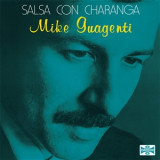
"Salsa con charanga" is really a feast for all salsa music lovers, a true jewel, which deserved much better when it originally came out in 1978. In addition to being a great salsa album, has the distinction that was released on Orfeon, a Mexican record label, due to the diligent work of the extraordinary producer Bobby Marin, and which miraculously received air play when powerhouse Fania label and few others ruled radio in the salsa music world. It comprises eight great, solid tracks; some, new interpretations from other albums in which Mike Guagenti participated with his handsome and captivating voice - a crooner with a salsero soul -, that, at times, could remind us of the late Tito Rodríguez, and even Ray Ramos. "The Mike Guagenti album," as indicated by Marin, "is a compilation of recordings by other artists. Originally a salsa album, I brought in Cuban Pupi Legarreta (violin and flute) and [Panamanian] Mauricio Smith (flute) to give it a charanga sound." With the exception of the cut 'Salsa con charanga,' which is an instrumental, the rest feature vocals by Guagenti. "Salsa con charanga" has developed a cult following, and finding a copy of the original could be quite expensive. Luckily, this officially licensed and restored edition will fill that void.
expected to be published on 25.04.2025

Marina y su Melao is a band from Barcelona led by Puerto Rican Marina Molina. After a period of live activity, in 2025 they will release their debut album, "Rezo al agua", where Puerto Rico's bomba, an eminently rhythmic genre, expands to fuse with the colours and flavours of other Afro-Caribbean sounds. Tradition and folklore are embodied in a powerful and innovative conception.
In "Rezo al agua", Marina Molina expresses an attachment to the land, the landscape, the culture, the beliefs and the environment where she was born, Puerto Rico. She does this through bomba, one of the country's most identifying musical expressions. Bomba is as old as the slavery of those who gave birth to it in order to tell their tribulations and hopes, armed with the instrument they had at hand: the drums. It is a kind of meta-genre that includes a multitude of rhythmic varieties.
But Marina is something more than bomba, the legacy she received from her elders and which she does not wish to turn into a frozen object of veneration, an untouchable totem, mystical and ruled by norms bequeathed by the years. Marina, who has Colombian blood in her veins, is an artist of today, of a world in which cultures can mix, people migrate, influence each other, travel, exchange their cultural traces, can see online what happens at the other end of the world and thus open the window that facilitates the mixing of identities. These mixtures redraw borders and genres, allowing popular music to avoid its fossilization.
Marina grows in this fertile territory. She has a ductile and powerful voice, as clear as her strong, independent mindset. This is a remarkable element in the lyrics of the album, which despite being written from a current perspective, contain the sense that popular lyrics have always had: they explain life with the small letters of the everyday. And all this is presented in the bomba genre. Impure. There is an African guitar, a pedal steel guitar, a Wurlitzer, an accordion and everything that Marina and Miguelito Superstar, the album's producer, thought was necessary to accentuate the musicality of a full voice and drums that resonate raw with the vibration of tradition. A tradition now in the hands of a woman who aspires to her own space in life, to write her own chapter.
expected to be published on 25.04.2025

For the first time on vinyl, a pressing of this legendary tape released in 1993 in Colombia, documenting Ultra Metal, the country's early extreme Metal scene. Volume 1 of 2 of the vinyl release of The Colombian Awakening tape, released in 1993 by Schizophrenia Records, a comprehensive collection of face melting, raw recordings from the early Colombian extreme Metal scene, known as Ultra Metal, with styles ranging from Death Metal to Thrash and Grindcore. A savage and powerful document of one of the most intense underground scenes of the era, kickstarted by the infamous Parabellum. A must for fans of underground Metal! Includes remastered audio, new cover and a foldout inner sleeve with extensive liner notes. Limited edition of 300 copies.
expected to be published on 18.04.2025

Yann Tiersen veröffentlicht sein mit Spannung erwarteten neuen Albums 'Rathlin from a Distance | The Liquid Hour' am 4. April 2025 auf Vinyl, CD und digital via Mute.
'Rathlin from a Distance | The Liquid Hour' ist ein Album, das in zwei unterschiedliche, jedoch miteinander verbundene Teile gegliedert ist, die jeweils ihre eigenen klanglichen Merkmale aufweisen: 'Rathlin from a Distance' besteht aus acht vornehmlich instrumentalen, introspektiven Klavierstücken, 'The Liquid Hour' dagegen ist ein ausgedehnter, genreübergreifender Hybrid aus elektronischen Klängen und psychedelischen Rhythmen.
expected to be published on 04.04.2025

Carrying the torch of psychedelic cumbia, with a healthy dose
of surf guitar and Amazonian dancefloor flourishes from Peru
and Brazil alike, Fiesta en la Jungla by Los Dexter’s de Uchiza
is the first release from the newly formed London-label Ritmo
del Barrio. Originally released in 1982, it captures the finest
cumbia being made in Peru at the time, decked out with
frenetic surf-rock guitar riffs, rhythms floating on crisp
cumbia percussion and occasionally punctuated by carimbó
breakdowns native to the Pará region of north-eastern Brazil.
The album is filled with energy, a gem that was always
intended to animate any dancefloor. Peruvian cumbia came to national attention in the late 60s
through the recordings of Juaneco y su Combo, Los Destellos
and Los Wembler’s de Iquitos, but it’s had many revivals, and
Fiesta en la Jungla arrived when the style was going through a
major transition. In 1977, a passenger plane carrying most of
the members of Juaneco y su Combo crashed, killing everyone
on board. In 1980, Los Destellos retired, and Los Wembler’s
released their tenth and final record, they were ready for a
break. This left a big void in Peruvian music. Wasting no time,
Los Dexter’s Emerson Ruiz Mosquera took the opportunity and
gave his band new life, filling the band’s ranks with young and
energetic musicians who were hungry for success. He built the
new band around a solid base of dexterous guitars, a dynamite
rhythm section, and added oodles of percussion and an electric
organ, giving them a powerful psychedelic sound that called
back to the sounds of the original chichamasters, but added a
new sheen. Along with bands like Los Shapis and Los Walkers
de Huánuco, Peruvian cumbia was reborn as chicha in the
1980s, and was now the sound of Peru’s barrios up and down
the country.
Based in the city of Uchiza, on the edges of the Amazon basin,
Los Dexter’s were uniquely located in central Peru, closer to the
largest urban centres of the country than Amazonian outposts
like Pucallpa or Iquitos, and therefore better positioned to
travel to the furthest reaches of the country with ease. In a
sense, Los Dexter’s were a bridge between the Amazon and the
rest of Peru, a bridge over which the sounds of Amazonian
cumbia could travel to the rest of the country on their way to
becoming one of the most ubiquitous elements of Peru’s musical
identity. Fiesta en la Jungla represents Los Dexter’s in their third
iteration. Led by Emerson Ruiz Mosquera, who was just a
young boy in 1970 when his older brother founded the group
with four of his friends, the ensemble by the time of Fiesta en la
Jungla included Orlando Abad on the timbales and lead vocals,
Lucho Bendezú on lead guitar, Javier Quiroz as second
guitarist, Alejandro Almeira on bass, Rufino Bustamante on
keyboard, Ramon Siu on bongos and bells, Ivan Rios on conga,
and Emerson as musical director and composer. Remarkably,
most of the group’s members helped to write at least one
track, Los Dexter’s were a collective endeavour.
Reissued on vinyl for the first time by Ritmo del Barrio, this
record is essential for any collector of Peruvian cumbia.
Showcasing the unique sound of Los Dexter’s, it carries hits
like “Fuga en la Selva” and “El Shiringuero”, which are sure to
set any dancefloor on fire, combined with slower, carimbó-
infused cumbias like “Fiesta en la Jungla,”and “Agua de
Cachilde.” Its closing track, “Tragedia en Uchiza'', is a key
piece of local history and tells of the flooding of the
Chontayacu River in 1982, a mortal tragedy that affected
thousands of people. Despite the subject matter, the album
maintains a joyful vibe throughout, with high energy riffs and
irresistible rhythms, contrasted with terse love ballads, like “A
Jhenny.” It is both a piece of musical history, and a sure-fire
tool for the dance floor.
Los Dexter’s became a fixture of festivals and celebrations in
the provinces of San Martin and Huánuco, and from expanded
across the country, taking Amazonian cumbia from the
Peruvian Amazon, to the heights of the Peruvian sierra, the
coastal plains, and the capital city of Lima.
expected to be published on 28.02.2025

Originally released on a Partial 10” in 2019, `Mediation’ became a hit on the underground roots and dub sound system scene with regular plays from the late Jah Shaka, amongst others.
This 12” reissue features the original vocal and dub cut, but also contains two previously unreleased dubplate cuts.
Hailing from Limerick, Ireland, Eva Keyes has a very bright and distinctive voice with an undeniable hint of Sinead O’ Connor and Dolores O’Riordan.
Produced by Dublin-based Dan Taliras.
Order now and we will order the item for you at our supplier.

Built on the powerful songwriting of Christopher Owens and ethereal production of Chet "JR" White, Girls recorded Album in a mix of bedrooms and studios in their adopted hometown of San Francisco. The resulting 12 tracks evoke a narcotic, sunny afternoon in Dolores Park, yet promising the eventual hangover of summer's departure. Album is self-described as "honest, loose, ethereal, obnoxious, perfect." It’s a sincere tribute to the majesty of great pop music and healing power of rock and roll.
expected to be published on 06.12.2024
