Suche:district one

Styles
Alle
International Music - Endless Ruttenscheid LP

We welcome you, Endless Rüttenscheid", sing International Music in the title track of their third studio album, which will be released on 6 September 2024. The album title "Endless Rüttenscheid" is likely to be a real challenge for fans outside the German-speaking world. "Endless", of course, but then: a rolling R followed by an umlaut, a double T and a hard pronounced D at the end: Rüttenscheid. This is the name of the flourishing district of Essen in the centre of Europe, which stands for lucrative growth in the Ruhr region, but also for the well-known problem of gentrification. But as is usual with international music, such socio-political subjects mainly form spaces in which to fall in love, dream and part again, only to meet again one day. "Heart is the trump card", to quote the cult band TRIO, who have more than just the size of their line-up in common with International Music.

vorbestellen30.08.2024

erscheint voraussichtlich am 30.08.2024

Various - ITALO (Re)Funk+Head Kutz

Samosa Records cranks up the summer groove with another sizzling release in the outstanding (Re) Funk+Head series – a collection of juicy tracks from the Samosa back-catalogue selected and re-edited by the man himself, De Gama.

This sumptuous vinyl cut of ITALO Funk and Boogie kicks off with Mexico’s finest, The Funk District and the enigmatic ‘La Rapina’. This is pure, unfiltered Funk District chemistry from the first bar. Snake hips guitar, rolling bass and that super-solid 4-4-4 beat pound into your consciousness whilst the hypnotic chant and Latino-infused vocal tempt you into sin.

Next up on the A-side is Samosa head honcho DeGama and his deliciously refreshing ‘Piňa Colada’ - a new edit of the original 2011 version never previously released on Samosa. And what a mystery box it is. Tight beats, punchy bass, looped synth and house-tinged high-hat lead us to a haunting, melodic vocal breakdown. There’s a subtle Afro flavour to this one, definitely for sipping cocktails in a hammock or Caribbean beach bar.

On Side B Italian Maestro Paul Older takes the beats down several notches with the explosive ‘Daboom’ – the DeGama Re-Groove of Paul’s first vinyl release way back in 2019. This is a straight up, mid-tempo peacock strut down Funksville Boulevard. Possibly wearing a Zoot Suit. Imagine having breakfast with Herbie Hancock and you might get an idea of just how funky this tune is. He’s passing you the eggs and you’re buttering the toast.

The last track sees DeGama delve into his dark magic box for the mind-melting, film noir themed ‘Higher’. The tempo is scaled right back to 92bpm for this portrait of pain, joy, lust and hallucinogenic dreams. ‘Higher’ reveals a side of DeGama that we know lurks in there, but only sometimes makes it to the surface. Smokey, sassy and sultry, this is definitely one for the dimly-lit after party.

The latest episode in the (Re) Funk+Head has set the Samosa bar even higher. This simply has to be in your summer record box and don’t you dare leave home without it.

nicht am Lager

Bestelle jetzt und wir bestellen den Artikel für dich beim Lieferanten.


Last In: vor 48 Tagen
LOS YORK'S - ABRAZAME

Los York's

ABRAZAME

7"-VinylMR7368
MUNSTER
07.06.2024

Los York's became the epitome of Peruvian garage sound. 'Abrázame' features a beat-influenced go-go twang guitar garage psych tone throughout and the unique voice of the iconic frontman of the band resulting an irresistible Latin garage hipshaker! Set the dance floor on fire with this first time 45 reissue of the Latin garage anthem 'Abrázame'! Los York's became the epitome of Peruvian garage sound, and the kings of the multi-group concerts which teenagers flocked to on Saturday and Sunday mornings in Lima's main movie theaters. The group was in tune with the youth from popular districts who were gradually turning morning concerts into dynamic gigs as the fashion for solo rock-ballads waned and garage sounds by bands like Los Shain's, Los Derbys, Los Juniors, Los Flyers and, of course, Los York's took over. Their supportive fans would follow them to every gig. After releasing their three first singles on MAG, featuring covers of popular hits, it took them a year to turn their ideas into songs for their first LP that was successfully released at Christmas in 1967. The original version of 'Abrázame' was included in this album and also released as a single. Although clearly based on Don Covay & The Goodtimers' r&b classic 'Mercy Mercy', the recording features a beat influenced go-go twang guitar garage psych tone throughout and the unique voice of the iconic frontman of the band, Pablo Luna, resulting an irresistible Latin garage hipshaker! A rawer, fuzzier version of the same song was released one year later and renamed as 'Abrázame baby'. How cool and handy is to have both versions together on one single artifact? Set the dance floor on fire with this first time 45 reissue of the Latin garage anthem 'Abrázame'!

vorbestellen07.06.2024

erscheint voraussichtlich am 07.06.2024

The Black Watch - The Morning Papers Have Given Us The Vapours LP

The Morning Papers Have Given Us the Vapours was made with the black watch bandmates and producers/engineers Rob Campanella (Brian Jonestown Massacre, The Tyde, The Warlocks) and Andy Creighton (The World Record, Parson Red Heads). Ben Eshbach, formerly of The Sugarplastic, arranged the strings. Kesha Rose guests on lead vocals on the second single, Oh Do Shut Up. And the great Lindsay Murray once again lends her beautiful backing vox to a number of tracks.

the black watch songwriter/frontman John Andrew Fredrick wrote the ten songs on this, his Los Angeles-based band's latest album, entirely unselfconsciously, with no set goal in mind other than to revel in the joy of songwriting, and, eventually, the luxury of recording his music with his more-than-accomplished band. The Morning Papers Have Given Us the Vapours, produced separately and together by Rob Campanella and Andy Creighton evinces the black watch's often stunning ability to, as Andy Gill once observed in The Independent, "find chaos in the calm, melody in the miasma."

Fredrick, who has also published four comedic novels and a book on the early films of Wes Anderson, jovially describes himself as "a recovering Anglophile--one who'll never, one hopes, fully recover." From his home studio in the Angeleno Heights district of L.A., he waxes eloquent about how being branded, as it were, as a too-ardent lover of British music, film, and literature has left him as bemused as has the tag "prolific" that is often affixed to reviews of his work.

"I just don't think it's all that interesting to note that we've made so many records. Looked at one way, it's a sort of deflection from talking about the timbre if not the quality of the individual songs. Though I know it can be intimidating for fans who've just discovered us--a sort of 'My goodness, where do I start with this band that has put out LPs since 1988?' I get it. I do. I picture someone standing at our slot at a bin at a record store becoming overwhelmed at the prospect of picking the 'wrong' title. And then walking away and not picking up anything from us!" Fredrick laughs. "What can you do indeed?"

He started his career as a songwriter as a result of an American Football injury that left him bedridden in the home he grew up in in Santa Barbara, California. The year The Beatles immortal double-album came out at Christmastime he broke his leg so badly that he had to be home-schooled for an entire year. His parents, ex-teachers themselves, refused to let him watch telly for more than an hour a day. He propped a Silvertone acoustic on top of the massive cast that screamed all the way up to his thigh from his toes, and began to write little melodies and lyrics that, doubtless, did not in the least mask his love for the Fabs, The White Album in especial.

And he read and read and read--histories of the American Revolution and Civil War, mostly, and as many Dickens novels as his mum and dad could bring him. "That year," Fredrick observes, "surely made me who I am today. Proof that intensely unfortunate-seeming events can prove most fortunate. As a sport-mad kid, it made me absolutely mental that I was exiled from the activities I loved most and the school teams I played on. What a blessing undisguised that injury was! Not that I'd like to experience anything like it ever again, mind you."

Fredrick can even recall a few of the melodies he wrote as boy ("Utterly trite, of course, completely jejune"); and in a way, The Morning Papers Have Given Us the Vapours showcases a kind of get-back-to-where-you-once-belonged sensibility. "I didn't intend, this time, to make an album per se. I write both songs and fiction in order to find out what happens, to find out what I might want to say," he notes. "Rob often asks me what a particular song is about; and I often reply that I either don't know, or would prefer that others say. Same thing goes for when people ask me where they should start with our discography. I never know what to say. Our LP from 2011, Led Zeppelin Five (remastered in 2021 for its tenth anniversary), has been our best seller, I think--but that may be because some stoned Zepheads thought their gods had perhaps put out a record they'd missed!"

Despite being deadly serious about music-making, TBW's been known to either whimsically or perversely title their albums. Examples: Jiggery-Pokery (an allusion to John Lennon assessing George Martin's productions), After the Gold Room (a pun on the Neil Young classic plus a local eastside L.A. watering hole), Sugarplum Fairy, Sugarplum Fairy (echoing Lennon's famous count-off to A Day in the Life), Fromthing Somethat (a garbled spoonerism/lyric while doing a vocal), Brilliant Failures (the 2020 release that, along with Fromthing Somethat, was named Album of the Year by venerable indie rock magazine The Big Takeover), and the aforementioned LZ5.

For the new LP, the band recruited longtime friends and allies Ben Eshbach (the Emmy-Award-winning frontman of The Sugarplastic) and Lindsay Murray (Gretchens Wheel) to compose and arrange strings and sing heaps of lovely backing vocals, respectively.

And the result? A collection of songs that Fredrick, in his quite-but-not-quite self-deprecatory way, might call another set of brilliant failures. "Every song, every LP we do, is a failure of sorts--no matter how powerful or beautiful or pleasing-to-us it turns out," John concludes. "I have often said that my aim is to write songs as good as anything on The Beatles... and I will never achieve my goal. And thus I'll have to keep at it, keep trying. And chin-chin to that!"

And now your attention's been brought to a band (or you've heard of them or heard a track or two down the years) that has been pegged by The L.A. Weekly as "a national treasure" as well as "the most criminally-neglected indie pop group imaginable."

So here's to the prospect of that ostensible neglect becoming as much of a thing of the past as John Andrew Fredrick's year-long stint in bed.

vorbestellen20.04.2024

erscheint voraussichtlich am 20.04.2024

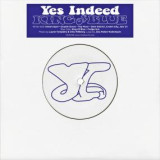
YES INDEED - KING OF BLUE LP

Yes Indeed

KING OF BLUE LP

12inchMEA050
Meakusma
01.04.2024

King Of Blue by Yes Indeed sees Laurie Tompkins and Otto Wilberg take their eclectic stance on cosmic jazz and electronics to further uncharted and dreamlike territory, encompassing a unique logic of what is harmoniously absurdist.

King of Blue by Yes Indeed sees members Laurie Tompkins and Otto Willberg further dive into their melismatic take on cosmic jazz and new electronics, by way of their highly eclectic and at times nonsensically sensical modus operandi. Their work is defined by an eloquent flurry of ideas, spheres, and signifiers, creating a musical universe of surprising longevity and depth. Treating musical convention with gentle disdain, Yes Indeed take on a variety of genres and moods and switch them around into a beautifully melismatic and dreamlike state of being. King Of Blue is a mini- album of fragmented beauty and warmth. It puts the illogical center stage and gives space to abruptly miniaturist musical ideas, allowing them to take on a meaning bigger than one would expect. It is cosmic music for modern times. A brazen descent into the execution of a fundamentally diversified musical stance.

'Yes Indeed' are Laurie Tompkins & Otto Willberg. Live, they play keys, bouncy bass and sing over tactile, emotive samples. Their music is epic and also somehow wrong, with space for delicacy, straight-up joy and soaring licks. Since 2022’s ‘Rotten Luck’ - their first proper album, on Bison - YI have played across the UK and Europe. Solo, Laurie co-ran the Slip label and has put out CDs on Entr’acte, 33-33 and Hyperdelia. Otto is a roaming bassist in groups like Historically Fucked and Abstract Concrete and his LP of “wildly singular, wickedly trippy and sensual set of fusion jams” (Boomkat) was recently out on Black Truffle.

vorbestellen01.04.2024

erscheint voraussichtlich am 01.04.2024

Lee Perry - 'Skanking With The Upsetter “Rare Dubs 1971- 1974”

Mr Lee Perry who in no uncertain terms defines the words musical genius, recorded some of the most inspiring, soulful, funny and weird / wild reggae music ever put down on tape. Working through all the manifestations of reggae from Ska to Roots and Dub, where his ground breaking 1973 ‘Blackboard Jungle’ LP, set the standards, he was an innovator. If this was not enough his recordings of THE WAILERS, many believe to be their finest work. Born Rainford Hugh Perry, 28 March 1936, Hanover, Jamaica. He began his career at the grand age of 16, working for Clement ‘Coxone’ Dodd’s sound system, rising quickly to the position of record scout and organising recording sessions during his 3 year period 1963-1966. Restlessness and unsatisfied with credit he felt due to him he moved on to work with Producers J.J. Johnson and Clancy Eccles, the later of which would help him set up his ‘Upsetter’ label in 1968,which would see his first of many recordings telling the injustices done to him by previous employees. ‘The Upsetter’ track itself pointed at Mr Dodd but reflected back to Perry when he inherited it as a nick name along side many others during the coarse of his career, including ‘Scratch’, again taken from one of his recordings ‘Chicken Scratch’ recorded in 1965/1966. Perry’s work in 1968 with producer Joe Gibbs was fruitful and resulted in many successfulreleases, but again lack of credit and itchy feet, it was time to move on. But not without leaving his trademark recording summing up his feelings at the time ‘People Funny Boy’ this time aimed at Mr Gibbs. Still not having a studio of his own, Perry recorded at the various Kingston establishments of the time, Randy’s Studio 17 on North Parade, Dynamics on Bell Road and Harry J’s on Roosevelt Avenue where the bulk of the aforementioned recordings with The Wailers were carried out. During this time and the years that followed Perry has built up a vast catalogue of backing tracks / instrumentals, he had cut over a 100 releases on his ‘Upsetter’ label alone. A library of music that he has an uncanny knack of reutilising to work into something new when put against a new song / singer. This collection of rare and unreleased dubs stems from his 1971-1974 period. We can here on tracks like ‘Perry’s Jump Up’ Ska-ish up tempo chopping guitar cuts leading through to organ laden tracks like ‘Roots Rock Dub’. The sound moving to a slowed down rhythm on ‘Perry in Dub’ which would predominate his sound, when in mid 1974 he’d open his own studio at his home in the Washington Gardens district of Kingston. We hope this selection of lost treasures will add to the jigsaw that makes Mr Perry’s output now spanning over 5 decades so remarkable.
RESPECT.... JAH FLOYD.

nicht am Lager

Bestelle jetzt und wir bestellen den Artikel für dich beim Lieferanten.


Last In: vor 2 Jahren
Black Angels - Directions To See A Ghost LP 3x12"

- The Black Angels' classic sophomore album - Special color edition pressed on Metallic Silver Wax. - Triple LP housed in a Stoughton tri-fold gatefold jacket // "The Black Angels bring the aura of mid-1966 the drilling guitars of early Velvet Underground shows, the raga inflections of late-show Fillmore jams, the acid-prayer stomp of Austin avatars the 13th Floor Elevators everywhere they go, including the levitations on their second album, Directions to See a Ghost. Mid-Eighties echoes of Spacemen 3 and the Jesus and Mary Chain also roll through the scoured-guitar sustain and Alex Maas' rocker-monk incantations. But he knows what time it is. 'You say the Beatles stopped the war," Maas sings in `Never/Ever.' `They might've helped to find a cure/But it's still not over.' Even so, this medicine works wonders." - David Fricke, Rolling Stone Last time we met The Black Angels, they were staring into the desert sun somewhere outside of Austin, Texas. Two years later, night has fallen and the spirits have come out. It's time for The Black Angels to provide Directions On How To See A Ghost. If you're familiar with Passover, the band's 2006 debut, you'll know that The Black Angels's music alone is enough to invoke spirits. There's a name for the band's sound; they call it `hypno-drone 'n roll'. It's the sound of long nights on peyote, of dreams of a new world order, and of half-invented memories of the seamy side of '60s psychedelia. While the Iraq war is still a major influence on the band's lyrics, there are new forces at work here, including Eugene Zamyatin's dystopian novel We and in Christian Bland's words "psychic information from the past and future." See, The Black Angels really are in contact with ghosts. "Civil War battlefields are prime spots for seeing ghosts," says Bland. "One time at Kennesaw mountain in Georgia, I was climbing the mountain in the middle of June and it must have been close to 100 degrees, but in this one particular spot it was very cold. The hairs on my neck stood up and I knew something strange was happening. Then the wind whispered something like `retreat,' and I did. I later learned that the spot where I was on the battlefield was known as `the dead angle', the place where the fiercest fighting took place. The confederates ended up retreating from the mountain towards Peachtree Creek." The Black Angels formed in Austin, Texas, in 2004, comprising from six people (now five) from very different backgrounds. Singer/vocalist Christian Bland is the son of a Presbyterian Pastor and was raised in a devoutly religious household. Bassist / guitarist Nate Ryan was born on a cult compound and drummer Stephanie Bailey claims she's a descendent of Davy Crocket. She and Alex Maas (vocals/guitar) believe a little girl in a red linen dress haunts the group's home. The band released Passover in 2006 to critical acclaim for both the album and the song "The First Vietnamese War". Most of all, Passover established The Black Angels as a band with brains, balls and a strong message. And this time around, the message is there to read in a 16-page booklet that comes with the album. "Our central theme is that people need to open up their minds and let everything come through, and to learn from past mistakes," says Christian. "Only then will we understand the reality of this world and progress beyond where we are now as humans. We've built upon that theme with Directions to See a Ghost. We want people to study the booklet we are providing with the album in hopes that they will be able to relate each song to something in their life." _"War is Peace. Freedom is Slavery. Ignorance is Strength. Keep Music Evil."_

vorbestellen23.02.2024

erscheint voraussichtlich am 23.02.2024

That's Why - The Best Of That's Why LP

Sublime Christian folk jazz from 1970s Norway. In the '60s and '70s churches throughout Europe had serious competition for the attention of its younger members. The ecclesiastical establishment was shocked to hear teenagers expressing 'Sympathy for the Devil' rather than sympathy for Christ and his teachings. In Norway at this time the same situation was prevalent as was happening across Europe; teenagers were turning their back on the church and embracing the temptations and pleasures of the flourishing new pop culture. Priest Olaf Hillestad was all to aware of what was going on, and instead of relying on the floundering traditional methods of rounding up his flock, he embraced the musical aspirations of his younger followers. In so doing he founded the Forum Experimentale in Oslo, an organisation that promised in its statutes to "boldly work for a renewal in service life, church music and church art". It was here in the late '60s where That's Why founder members Jan Simonsen and Per Arne Løvold became responsible for the jazz masses at Forum Experimentale's chapel. Together with some top-notch musicians from other Christian music centres around the Oslo district, they recorded two albums in 1970 and 1971 under the moniker That's Why. That's Why blended deep acoustic and electric jazz with elements of Norwegian folklore and Christianity. They also included interpretations of young and old transcendental Norwegian poets such as Sidsel Mørck Krogdahl, Alfred Hauge and Aslaug Vaa, as well as introducing English and Swedish songwriters such as Åke Rosenstrøm and Charles Wesley and even William Blake's "Children of the Future Age" into the mix. This highly original fusion of secular rhythmic music, jazz improvisation and a distinguished selection of transcendental lyrics is one of the standout qualities of That's Why, separating them from more programme-orientated Christian music. The unique mix leads the listener to think they are hearing among the record grooves the tightness of grey, sober Protestantism along with the ecstasy of a lay preacher. This listener, for one, has never heard anything quite like it.

nicht am Lager

Bestelle jetzt und wir bestellen den Artikel für dich beim Lieferanten.


Last In: vor 10 Monaten
Regis / Re:Group - Asbestos (Sleeparchive Remix) / Left

A snapshot in time...Where all the madness began... Sandwell District. In the summer of 2004 David Sumner (Function), then living in his native New York City, was over in Europe playing some shows. When passing through Berlin to play the old Tresor location at Potsdamer Platz, he stayed with long term friend and collaborator, Karl O'Connor (Regis). One afternoon the two head over to Hardwax and T++ puts on a copy of Sleeparchive Elephant Island. After months of discussions regarding the flavor of the moment ''Minimal'', everything changed in that instant...They looked at each other and said ''now this changes everything!'' Finally, a way forward! Later that night at Tresor - as Function is playing, Regis is behind him organizing a mic...As Dave mixes Regis Guiltless with Elephant Island, Karl starts singing a punk cover version of Buddy Holly Peggy Sue over his set. It's all there in that one moment! Sandwell District. Dave goes back to New York inspired. He sees there's no information on the record apart from an email address. So, he gets in touch...He gets a reply from Roger, the two hit it off and organize the first ever Sleeparchive remix - Regis Asbestos (Sleeparchive Remix). On the B-side comes a cut-up version of Karl and Dave's Portion Reform classic Closing In, where they collaborate with Detroit Underground's Kero to form Re:Group. Adding deep 808 rhythms combined with Kero's signature Max MSP IDM madness, Left provides the perfect counterpart that made this EP the instant classic it became 18 years ago. Now, remastered in all its glory, sounding fresh, massive and better than ever - available on BandCamp for the first time - Infrastructure presents; Regis Asbestos (Sleeparchive Remix) b/w Re:Group Left.

nicht am Lager

Bestelle jetzt und wir bestellen den Artikel für dich beim Lieferanten.


Last In: vor 10 Monaten
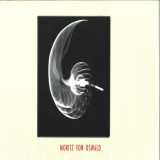
Moritz von Oswald - Silencio LP 2x12"

Moritz Von Oswald

Silencio LP 2x12"

2x12inchTRESOR339LP
Tresor
10.11.2023

What are the differences and similarities between human and artificial sound, between oscillations generated by vocal cords and synthesizer voices, voltage amplified by speakers? On Silencio, his latest album for Tresor Records, Moritz von Oswald works with a 16-voice choir to explore this concept.
Drawing from the ensemble works of long-standing inspirations Edgard Varèse, György Ligeti and Iannis Xenakis, von Oswald and Vocalconsort Berlin delve into the space between sounds, creating a deeply textured collection that shifts between light & ethereal and
dark & dissonant.
As masterfully demonstrated in the early work of von Oswald and Mark Ernestus’ influential Basic Channel project, repetition and reduction are key elements here, much in the tradition of techno and minimalism. The vast dynamism of the human voice adds to the
profound weight of electronics while offering up a rhythmic source and sonic noise palette unexplored in von Oswald’s repertoire. In Silencio, von Oswald dredges a dank murk, pulling clouds over a distant pulse. It hangs, ready to take on new forms.
The compositions were written in von Oswald’s Berlin studio on classic synthesizers, such as the EMS VCS3 & AKS, Prophet V, Oberheim 4-Voice and the Moog Model 15. These abstract recordings were transcribed to sheet music for choir by Berlin-based Finnish composer and pianist, Jarkko Riihimäki and performed by Vocalconsort Berlin in Ölberg church in the city’s Kreuzberg district, only few metres down the road from where Dubplates & Mastering and Hard Wax opened their doors for music enthusiasts for many years so long. The recordings of the choral versions were then incorporated into the synthesized parts of the album and brought into anew electronic context; in Silencio, the focus is not on using one means to imitate the other, but to sonically discuss the tensions and harmonies between the two worlds and create a dialogue between them.
The relationship between von Oswald and Tresor Records goes back thirty years, all the way to Blake Baxter’s Dream Sequence in 1991 - which von Oswald engineered alongside Thomas Fehlmann. The collaboration with Fehlmann lived on, seeing the duo team up as 3MB with Eddie Fowlkes or Juan Atkins. More recently, the Detroit-Berlin connection continued as Juan Atkins & Moritz von Oswald present Borderland.
For von Oswald, Tresor Records and also the participating guest musicians of the choir, this release brings together audiences from other musical areas, cross-pollinating; Silencio is an album that stands for itself beyond the musical genre boundaries.

nicht am Lager

Bestelle jetzt und wir bestellen den Artikel für dich beim Lieferanten.


Last In: vor 13 Monaten
Sneaky Jesus - For Chaching Taphed LP

Polish jazz rebels sneaky jesus are back with their second studio album For Chaching Taphed.The highly imaginative quartet out of Wroclaw comprising Maciej Forreiter (Guitar), Matylda Gerber (Saxophones), Ben Łasiewick i(Bass) and Filip Baczyński (Drums) have won fans around the world for their restless, quirky brand of jazz which takes in breakbeats, twisting chord progressions and improvisation as well as a wealth of musical influences.

The band have been touring their asses off ever since they surprised the world with their debut album For Joseph Riddle in 2021. From out of nowhere their debut LP of 500 copies sold out in a month and they quickly went on to sell close to 1,000 CDs of the album. Fast-forward to 2023 and the band are sharing stages with artists such as Ill Considered and Theon Cross.

For Chaching Taphed was created in complete isolation. The group locked itself in a barn at the Museum of Agricultural Technology in Piotrowice Świdnickie. It worked on its sophomore output surrounded by machinery, trucks and carriages. These new compositions mirror the abstract conversations which the group frequently has just for fun. Contrary to For Joseph Riddle, this album is simple and does not rely on ongoing grooves. This enabled the group to be much more experimental. The band was joined by friends Flautist Mariya Mavko on Piękno Niemożliwe (Impossible Beauty) and her playing is sampled in Hipotetyczny Taras (Hypothetical Terrace). Pięciu Pszczelarzy (Five Beekeepers) closes the album featuring EABS' Jakub Kurek on trumpet. His fiery solo is one of the most intense moments of the album.

Spacer Po Nadodrzu (A walk around Nadodrze) opens the album and is inspired by one of the districts of Wrocław. It is a sonic story depicting a walk through Nadodrze late at night. A steady bass rhythm imitates a careful pace and the responding sax line is a spooky theme that might pop to oneʼs head in a moment of uncertainty.

The album's first single Krztusiec (Whooping Cough) finds the group diving head first into their most recent influences. The trackstarts with drum improvisation, rolling into a solid hip-hop backbeat provided by Ben Łasiewicki on Bass and Drummer Filip Baczyński. Sax and Guitar weave steady but dissonant lines, written by Maciej Forreiter after many hours spent listening to the Ethiopian jazz greats. The track takes off right after that. Matylda Gerber delivers a fiery Sax solo, while the group picks up the tempo and quickens the groove. The essence is the middle section, a dubby collective improvisation. Forreiter, Gerber and Baczyński take turns playing both classic dub phrases and fierce avant grade lines. Łasiewicki keeps everybody in check with a steady bassline. The energy slows down until Baczyński's drum solo, which explores phrasing detached from the rest of the tune.

Second single Chiński Sprzedawca Smażonych Kasztanów (Chinese roasted chestnut seller) is a fusion of breakbeats, energized songo rhythms and motifs inspired by South African melodies. Presenting the group with spacious and rhythmic horn lines, guitarist Maciej Forreiter wrote a chord progression while Beniamin Łasiewicki and Filip Baczyński took care of the rhythm section. This first part of the track suddenly drops out and explodes into the dramatic main motif which includes double sax and fierce guitar playing in harmony, plus the rhythm section playing more and more jungle-esque. Powerful guitar and sax solos feature before we return to the main theme with a completely different rhythmic backdrop.

W Klatce z Bykiem (In a cage with a Bull), starts like a race. The music plays with an incredible nerve and when the theme is right on edge it suddenly stops. It is followed by an animalistic growl on the saxophone and a doom metal-esque bash of downtuned, distorted guitars and heavy drums. In this heavy fashion it slowly approaches the finishing line hitting one final metallic clang.

Piękno Niemożliwe (Impossible Beauty) features wonderful flute playing of Mariya Mavko (Kadabra Dyskety Kusaje). Her work in the opening motif evokes sounds of Polish and Ukrainian folklore. This brief mellow moment serves as a contrast to the usual frantic sounds of sneaky jesus. It is an appreciation of thepolish jazz music of the past, intrinsically-linked to folklore. The band took this idea and reworked it into their own unique style.

Hipotetyczny Taras (Hypothetical Terrace) is built on top of a lengthy vamp in an unusual 7/8 time-signature. The bass anchors the quartet in a simple line, while the rest of the quartet share an emotional conversation. This track is the most open of the whole project and it ends accordingly. The final burst is a call back to the basics ofspiritual jazzand the whole band shows every emotion simultaneously and gracefully fades out.

Pięciu Pszczelarzy (Five Beekeepers) is For Chaching Taphed's conclusion and is a non stop assault of heavy horn lines, punk rhythms and noise. The band is joined by the extraordinary trumpeter Jakub Kurek from EABS, who blends in perfectly with sax and guitar. His exchange of solos with Maciej Forreiter is a combination of classic jazz phrasing and discordant clatter. In the same fierce manner the whole group works within the motif, switching up accents and breaks.

In the short space of two years, sneaky jesus has gone from ambitious upstart looking to break out from its home city playing spit and sawdust venues, to touring Europe as well as prestigious Jazz clubs such as Jassmine in Warsaw. In the process, it has delivered two full-length albums that don't stay in lane or pander to established jazz sub-genres as so many groups do. Some artists make the same record twice or even more than that, but not sneaky jesus. For Chaching Taphed shows the band as restless, experimental, fun, irreverent but purposeful as never before.

“A lot of over-hyped improv / jazz projects out there at the moment and Sneaky Jesus are genuinely excellent and out on their own. Drawing on the expansive atmospherics of a barn as the recording's setting, the album immediately pulls you in with the unsettling 'Spacer Po Nadodrzu' and lifts off on 'Krztusiec', effortlessly moving from angular, abrasive jazz to trippy dub and cinematic intrigue. Tempos shift and intensities shift naturally. The whole set warrants a deep listen from start to finish and watch out for two great guest features from flautist Mariya Mavko and Jakub Kurek bringing some mad fuzz licks to the boisterous closer. Brilliant album.”
Quinton Scott — Strut Records

nicht am Lager

Bestelle jetzt und wir bestellen den Artikel für dich beim Lieferanten.


Last In: vor 5 Monaten
Mal-One - Punk Rock Is Back! LP

‘Hey don’t touch that dial, good news Punk Rock Is Back!’ Mal-One

Mal-One’s new album starts with running through the radio dial, looking for some suitable music to listen to. These snippets are actually samples of songs from his previous album ‘It’s All Punk Rock’. Leading the listener nicely into a new set of songs to get their Punk Rock teeth into.

Songs that cover… the great New York punk scene of the 1970’s that grew out of a little bar in the Bowery District of New York City called CBGB’s ‘New York City Punk’. The Clash’s first album discussed in ‘When The Two 77’s Clashed’. The excitement of London’s Roxy Club revisited with its one line chant ‘Down The Roxy’. Those great ‘Punk Rock Fanzines‘, that kept us all so well informed. An early Sex Pistols gig at the Chelsea School of Art, ‘Machine Bubble Disco’. So named after what was to be the main event of that nights entertainment!!!.’45 Random Punk Memories’ sprang from Mal-One’s own reminisces. Talking of memories ‘Looking At The Decals On Steve Jones Guitar’, the recollection of Steve Jones, future guitarist of the Sex Pistols, stealing Mal-One’s bike when he was the tender age of seven years old. An incident that might have triggered this whole road of discovery in the first place.

A reflection on London’s harsh setting in those heady Punk times in ‘Corrugated London’ alongside a call and response to remember that ‘London’s Turning’ all the time for better or worse and that we can’t always pick and choose the bits we want to keep. The self-explanatory, ‘We Will All Lose Some Good Friends Along The Way’. ‘Shakespeare Meets Chuck Berry On Shepherds Bush Green’, a great story when Joe Strummer was asked by a reporter what he was up to and what he might call The Clash’s next album, which would turn out to be the timeless ‘London Calling’. Joe’s rather
tongue in cheek answer was “Shakespeare Meets Chuck Berry On Shepherds Bush Green’’.
A place close to Mal-One’s heart and a great title, that was crying out to be reused. Which Mal-One does via what he calls his Punk Art Poetry. Sometimes these lines are turned into lyrics and reworked into songs.

The album ends with such a call, ‘An Open Letter To…’ all those people who helped influence us all along the way. As the lyric states often without thought of financial gain, but done so, quiet simply because it had to be done.Maybe some young guns might in some small way, be inspired and find in Mal-One’s current efforts that ‘anything is possible’ and the true meaning of Punk was in fact, ‘Do It Yourself’.

The vinyl version of this release includes a poster that is part of Mal-Ones continuing Street Art project that involves putting up posters around London. This time declaring the news ‘Punk Rock Is Back!’. Included in the album packaging also is a signed and blind stamped limited print of one of Mal-One’s works ‘What Is It About Punk That’s So Different So Appealing’. A punk collage that just carries one word in among its multiple punk images and that word is PUNK. We hope you enjoy the indulgence.

vorbestellen20.10.2023

erscheint voraussichtlich am 20.10.2023

Odd Nosdam - End Is Important

Odd Nosdam really doesn’t need an introduction, unless you’ve been living under a rock for the last 20 years then undoubtedly you’ll know what’s up, and what an absolute humbling pleasure it is to now introduce Nosdam to the Where To Now? catalogue with two new cuts that flow from ethereal, meditative contemplation through to downtown abstracted machine damage..

The record opens with ‘End is Important’, A looping, spiritual lament which forces observation, or resolution around the concept of ‘Endings.’ Passages from Tsunetomo Yamamoto’s ‘Hagakure’ seep in and out of the mix throughout, where spiraling and glistening arpeggios dance across a glorious choral mantra, intended to elevate minds towards some kind of plume of awakening. This is a heady and deep cut which finds Odd Nosdam in full introspection mode.

‘Here to Know’ recalls the work of Patrick Cowley in his best downtown ultra slow swinging funk suit, or the more obvious nods to John Carpenter’s Assault on Precinct 13 OST. However, this is far from a straight up ode to creeping machine funk - Nosdam’s injection of energetic, pulsing synth stabs move the piece into a more surreal territory, creating a masterful and experimental injection of life and colour into an otherwise smoked out landscape.

“Where I found myself when Where To Now? reached out - asking if I'd consider a vinyl release with the label - was over in Barcelona spending time with loved ones at my family's apartment in the district of Sant Gervasi.

After my initial contact with WTN?, I ventured north to Cadaqués to visit Salvador Dalí's house in Port Lligat, where Gala & Dalí spent some 50 summers. While inspired asf touring the glorious property, I captured recordings from a looping video screening in an open air theater. These recordings became the foundation of Here To Know.

Sometimes there’s a break in the road. End Is Important was realized after re-watching the Jim Jarmusch film, Ghost Dog. Stealthy and evanescent, a familiar voice carries this slow-diver with a message to the world warped cruiser in all of us.” - Odd Nosdam

nicht am Lager

Bestelle jetzt und wir bestellen den Artikel für dich beim Lieferanten.


Last In: vor 2 Jahren
Attarazat Addahabia & Faradjallah - Al Hadaoui LP

Attarazat Addahabia & Faradjallah's album came to us as quite a mystery. Our friends from Radio Martiko got access to the studio archive of the Boussiphone label and a reel labeled “Faradjallah” was among the items they had found there. After listening to the selection of reels they borrowed, Radio Martiko felt it was not a fit for their label and helped us licensing it from Mr. Boussiphone instead. We knew nothing about the band. We just had the reel with the music but very little information. What we knew was that the music was incredible and very unique. Gnawa sounds were combined with funky electronic guitars, very dense layers of percussions and female backing vocals more reminiscent of musical styles further south than Morocco. We started asking around whether anyone knew the band with no immediate success until we asked Tony Day, a musician from Morocco who helped us during our search for Fadoul’s family. His sharp memory came through once again, remembering all the names of the Attarazat Addahabia band members and even how to contact the bands singer and leader Abdelakabir Faradjallah. After visiting him at his home in Casablanca with our Moroccan colleague Sabrina multiple times, he shared his personal story. His father arrived in Casablanca from Aqqa at the age of six and his mother came from Essaouira. Abdelakabir was born in the neighbourhood of Benjdia in 1942. Abdelakabir Faradjallah studied fine arts in Casablanca, graduating in 1962. He also played soccer in the second team of "Jeunesse Societe One". His brother-in-law Ibrahim Sadr worked for one of the biggest football teams of the time in Morocco called "Moroco Sportive Union", which allowed him to travel to France occasionally. While Ibrahim was never part of the band he brought along a few instruments from trips.


Yet the majority of the instruments they could not afford to buy were build by Faradjallah and Abderrazak, Faradjallah's brother who passed away early. For instance they had built a Spanish guitar and a drum made of wood barrel and sheepskin by themselves.During the 1950s Faradjallah was booked as a singer for surprise parties with friends. He started to write his first songs including "L’gnawi" in 1967 and wanted to make people discover Gnawa culture, or maybe rather his take on the culture to be more exact. Faradjallah recalls his first interaction with the genre in the streets of the Dern neighbourhood, where he used to go to elementary school. Gnawa is one of the essential musical genres of Morocco. It combines ritual poetry with traditional dances and music linked with a spiritual foundation. Musically a lot of influences originated from West Africa as well as Sudan. Gnawa is usually played by a selection of specific instruments such as the qaraqab (large iron castanets centrally associated with the music), the hajhouj (a three string lute), guembri loudaâ (a three stringed bass instrument) and the tbel (large drums). People would put shells on their clothes and instruments and use incense at their parties. "Sidi darbo lalla - lala derbo khadem..." came from Gnawa verses Faradjallah used to sing when he was 14. The lyrics tackle a global (im)balance of power and the question of social status in this course. The band Attarazat Addahabia was formed in 1968. The original line-up included 14 members, all from the same family. They played their first small concerts here and there starting in 1969. Later in 1973 they performed bigger shows for instance at the Municipal Theatre followed by the "Al Massira Show" at Velodrome Stadium in downtown Casablanca. Their first album "Al Hadaoui" (the one you are listening to) was recorded at Boussiphone studios in 1972 and was never released before. Nobody seems to remember the exact reason why Boussiphone ended up deciding not to put the album out. The album's title track also served as the basis for Fadoul's "Maktoub Lah", who frequented the same circles as the band for some time.

Their shows sometimes could go as long as 12 hours, starting at 5pm in the afternoon, with an occasional break here and there. In the 1980s the band took a brief break. Faradjallah recalled the reason for that break like this: "Zaki, the bands drummer, had fallen in love with a young girl from Mohammedia. Soon after, he fell very ill. The group members were convinced that the girl had given him ‘s'hor’ (a kind of local Moroccan version of "black magic"). For four years, the whole group stopped playing. It was unthinkable to find another drummer to replace Zaki, even temporarily." So they waited four years for Zaki to "get back on his feet" before going back on stage. Apart from very few gigs here and there Faradjallah stopped playing music in the mid 1990s. Some members from the younger generations formed a new band and still play frequently to this day. Faradjallah runs a television repair shop coupled offerings beverages and snacks in the Belevedere /Ains Sbaa district of Casablanca. While Faradjallah was primarily a musician, he would work for the local cinema and paint their posters for new movies by hand and he designed all artworks and cover posters of the band.

And this eventually led to him participating actively in our first exhibition dealing with Habibi Funk’s work in Dubai 2018. He helped us by creating calligraphic complementations on large photo prints for that show.

nicht am Lager

Bestelle jetzt und wir bestellen den Artikel für dich beim Lieferanten.


Last In: vor 6 Jahren
Various - 75008 EP

Various

75008 EP

12inchLMR005
La Menace
07.07.2023

5th release coming next, the 8th district is now the subject.

We're super excited to welcome estonian duo Abdul Raeva for the first time on the label and to have close friends like Ginko, Max Cohle, MLM and Takadoum

First nug is the Abdul's bomb, Concorde, which is a track with a lot of energy and starts the release with high notes. Synths, drums and the rumbling techy loops give an original energy to this track.

Second one is the Ginko's track Jungle Palazzo which is a very nice and powerful house track.

To close this side, we welcome our friend Takadoum with a very melancholy track, almost like a lo-fi track but very fast.

On the other hand, murdering tracks with MLM & Max Cohle and their acid groovy track, and the Ginko's one which is a breaky dancefloor killer.
We hope you'll enjoy it :)

nicht am Lager

Bestelle jetzt und wir bestellen den Artikel für dich beim Lieferanten.


Last In: vor 2 Jahren
Function - Green EP

Known for its groundbreaking techno releases, Infrastructure New York, is relaunched! Celebrating 27 years of Function releases this year and the label's 25th anniversary, the label will serve as an outlet for his new material, reissues of out-of-print classics from Synewave, Sandwell District and Ostgut Ton (and of course, Infrastructure), as well as developing new artists. As a member of the Sandwell District collective, David Sumner aka Function, from 2007 onward was instrumental in cultivating and ushering in a new sound of dark, cerebral hypnotica - forcing the hand of change in global techno. Green EP serves as a testament to this, further exploring these depths. The EP pays homage to the day when David arrived in Berlin with his green suitcase where his record "Isolation" on Sandwell District was released, hitting the ground running and springboarding into an incredibly successful career, becoming a stalwart DJ/producer, after years as a struggling artist. Green EP encapsulates the same raw power and hypnotic energy of his genre-defining Sandwell District releases Isolation, Anticipation and Variance, updated with a modern flair. Subject f (Function) has clearly transcended, as expressed through the opening track "Initiation" arriving at his "New Designation". On the b-side Function communicates his divine alignment through the broken beat, etheric "Aeternum (Meridian)". Finally, Function closes Green EP with a live extraction of "Desire and Memory", a brooding club stormer in contrast to the more experimental leanings of the original version, which appeared on Rrose's label Eaux. One thing is clear: Function is back on track and more on form than ever!

nicht am Lager

Bestelle jetzt und wir bestellen den Artikel für dich beim Lieferanten.


Last In: vor 16 Monaten
Move D - Solitaire 2x12"

Move D

Solitaire 2x12"

2x12inchMULE285
Mule Musiq
26.05.2023

mule musiq dives into the archives of humanoid ambient music history, bringing the vinyl premiere of a masterwork by german dj, producer, and musician david moufang, globally known as move d. released in 1995 on pete namlook’s fabled fax +49-69/450464 label, the album marks his only output as solitaire, featuring heroic, supple ambient music, that some folks call one of the best works by move d.

just three years before he dropped it, moufang launched with jonas grossmann the celebrated label source records, active from 1992 to 2005. it was the platform for his first move d album “kun-ststoff”, likewise released in 1995, highlighting diverse genres like techno, house, idm, ambient, electro, and downtempo.

“solitaire” works with pulsating rhythms, too. gentle ones, that cater sensations beyond the propel-ling dance sectors. a spiritual album. recorded at the resource studios/heidelberg in july/august 1994. it reaches out to higher ground, never leaving the sediment.

still state of the art. not a single melody, note, tone has aged. all sparkle, all innocence is still there, somewhere deep in the arpeggiated space, absorbing time. an exploratory early electronic work by an artist, who still had his most prolific years to come.

and yet, “solitaire” sounds like being shaped by a fully mature creative mind, that defined his sonic language already profoundly. six epic tunes between five and 16 minutes, listening to emblematic titles like “damaskus/dakar, “sergio leone’s wet dream”, or “indian mantra”, while opening ambient into investigative textural layer landscapes, that subtly incorporate acid, downbeat, idm, or early techno districts.

for those who have been around in the electronic music sphere for a while, “solitaire” is a classic. for those who are young at heart, it opens new horizons. each new passive or active listing loop fresh ones. hidden in the harmonies. hidden in the melodies. somewhere inside the sound. leading outside into a visual texture, where you can almost see the music!

nicht am Lager

Bestelle jetzt und wir bestellen den Artikel für dich beim Lieferanten.


Last In: vor 2 Jahren
Digitalism - Back To Haus

Dial D for Digitalism. The return of Hamburg’s most prolific and bewitching production duo is a two-sided one. Back To Haus is their second outing for Running Back after Reality 2 in 2020. And on top of that, it does what it says on the tin. Based on the roots of house, which was the sound that Ismail Tuefekci and Jens Moelle started their DJ careers with, their modern day interpretation of it is far from nostalgic, boring or conservative.

Take the title track for instance. Now a track-id favorite, it was meant to be a sound test. It’s recipe is as simple as it is infectious. Mix some Roland drum machines with a few piano chords and expertly arrange the rest with a marathon intro and a corresponding break down. Voilá! Patience might be bitter, but its fruits are sweet.

Chicagostrasse is not only an existing street in the warehouse district of Hamburg’s harbor, but also a nod to all-time heroes Johnny D and Nicky P of Henry Street fame and their samplers-and-beats approach. Heavy hypno house.

4TH Floor sees the duo sampling themselves (again) for a fast paced and open-airy party jam the references one of their favorite New York labels, when they met at Hamburg’s late house music record store institution Underground Solution beginning of this millennium. Happiness is just a state of mind.

Closing it all off, but not winding it down is Warehaus and its convoying beat tool Empty Warehaus. Like Todd Terry visiting a Summer of Love rave in the UK. Descriptive and positively destructive. All in all, a worthy double, a DJ’s delight and a dancer’s delight.

nicht am Lager

Bestelle jetzt und wir bestellen den Artikel für dich beim Lieferanten.


Last In: vor 16 Monaten
TM Solver - Subtraktiv Additiv LP 2x12"

I was dancing when I was out, I was dancing when I was in. Is it strange to dance so late? Is it strange to dance so soon? Cosmic dancers always ball. Dancing with themselves, dancing space away. Right into the smallest hole a human brain can create: the inner cosmos, a psychedelic region, where time gets space and space turns to haze.

Berlin based producer TM Solver is such a kind of cosmic dancer. He has danced late. And so soon. Since 2008 he released yearly one, sometimes two albums via the German Berlin School dedicated label Syngate and its experimental subdivision Luna. Intensely meandering synthesizer journey music, that is pirouetting on inner universes, genuinely crafted in the tradition of Berlin School and Krautrock. You can catch the unearthly nuances of Can and the spaciously swinging psychedelic corners of Amon Dül, Embryo, Tangerine Dream, or Klaus Schulze. As TM Solver has been a lover of analog synthesizers for almost 30 years, all pulsates on analogue sound orbs under the zigzagging guidance of machines like Moog Prodegy, Korg MS20 and GRP A4, as well as state-of-the-art systems as ASM Hydrasynth and Korg Wavestate. When he got in touch with the Berlin club scene and all its propelling grooves in 2006, a new rhythmic universe joined his vast musical space of sound latitudes. “Tinkering around with sound structures is my thing. Leading the listener into a combination of music and sound spaces.“ he reveals on his emotive musical art. How affecting it works, is now displayed with four epic compositions for R.i.O., Berlin Wedding’s label of novel ways for caved rhythmic patterns. Grooving between 90 to 240 BPM, they offer a vast variety of emotional landscapes, slowing down, rolling up, drifting into genuinely layered tonality magic. Headspace music for vigilant wanderers. Utterly psychedelic and yet so clear. His R.i.O. debut “Subtraktiv Additiv“ comes with five additional remixes, fashioned by R.i.O. conspirator Benedikt Frey, Amsterdam based DJ and producer Mayo, “Die Orakel” magician O-Wells from Frankfurt, Siamese Twin Records co-runner Sunju Hargun, and the versatile club and beyond production duo Red Axes. They all respect TM Solver’s analogue zones and pitch them into the 115 to 130 BPM districts, while transcending his absorbing synth compositions into the world of nervous acid-laden ambient, slow-mo techno, industrial bass, post-trance, and all that hallucinogenic echo house. Nine subtle energy vibrations, epic and full of countless facets, shaped to turn on, tune in, and drop out.

nicht am Lager

Bestelle jetzt und wir bestellen den Artikel für dich beim Lieferanten.


Last In: vor 9 Monaten
ALTIN GÜN - ASK

ALTIN GÜN

ASK

12inchGBLP138
Glitterbeat Records
31.03.2023

The first thing that grabs you about Altin Gün"s new album is the energy. With Ask, the Amsterdam-based sextet turn away from the electronic, synth-drenched sound of their 2021 albums, Alem and Yol. While those two, created at home during the pandemic, paid homage to the electronic pop of the 80s and early 90s, Ask, marks an exuberant return to the 70s Anatolian folk-rock sound that characterised Altin Gün"s first two albums, On (2018) and Gece (2019). But there"s development here too. Ask is the closest the band have come so far to capturing the infectious energy of their live performances. "It"s definitely connecting more with a live sound - almost like a live album," says bassist Jasper Verhulst. "We, as a band, just going into a rehearsal space together and creating music together instead of demoing at home." "We didn"t record it like we did the last album," agrees vocalist Merve Dasdemir. "We basically produced that one at home because of the pandemic. Now we"ve gone back to recording live on tape." How many more worlds do Altin Gün visit in this joyful expedition? "Rakiya Su Katamam" is glowering space rock as though Gong had taken a stopover on the Bosphorus. "Canim Oy" is a psychedelic freak-beat stomper from a world where Istanbul"s Kadiköy district was the Carnaby Street of the east. "Güzelligin On Para Etmez" is a dreamy acid-folk anthem. And the finale, "Doktor Civanim," is an irresistible slice of sci-fi disco camp with lava-lamp synth squiggles that wouldn"t sound out of place next to Baris Manço"s "Ben Bilirim." Fresh yet timeless. Rooted in antiquity yet yearning for heavenly futures. Ask wants to take you places. All you have to do is strap yourself in

nicht am Lager

Bestelle jetzt und wir bestellen den Artikel für dich beim Lieferanten.


Last In: vor 8 Monaten
Daniel Wang - DSDN EP

Daniel Wang

DSDN EP

12inchPALOMA008C
Paloma
27.02.2023

repress, blue marbled limited version

The label imprint of the beloved Berlin based club Paloma delivers its eighth release, and it was created by none other than a vogueing encyclopedia of musical and club culture knowledge (plus a cherished Paloma resident DJ). The disco professor: Daniel Wang.
It is his first original production under his own name in many years, and you can easily tell that this is not a tool to join in with dancefloor conformity (after all, his first album was called Idealism for a reason). Daniel Wang had already evolved from innocently enthusiastic sampling to synth wizardry during the heyday of his legendary Balihu label, and while studying the masters, he became one himself.
DSDN is an ode to nocturnal Berlin and its party community, a city that never left the centre of international attention for its vital and influential scene. Daniel Wang is a part of it since twenty years, and he was influenced by what he experienced as much as he left his mark on many nights, both as a DJ, and as a producer.
Of course, this release follows the traditional structure of a Disco EP by using a main tune DSDN with complementing dubs and instrumentals. Four to be exact, because four is the magic number with this format. DSDN reflects the internationality of the clubs across town in English and German words and pays homage to all the districts, and it effortlessly manages to unite sounds of both 80s NYC and Italo disco, 90s NYC and Italo house, synthpop and rap before it became too successful, balearic vibes before they became a mere excuse, and then it just majestically unfolds into both a charming summer hit and a complex opus magnum, but all an aural sunbeam that blows a kiss to those who emerge from recent sensations in clubs, bars, parks, and streets. Alone or together, happy or sad, resolute or irresolute, tired or energized, or all at once.

nicht am Lager

Bestelle jetzt und wir bestellen den Artikel für dich beim Lieferanten.


Last In: vor 2 Jahren
HAILU MERGIA & DAHLAK BAND - WEDE HARER GUZO 2x12"

Hailu Mergia & Dahlak Band's Wede Harer Guzo is the third release on Awesome Tapes From Africa for Ethiopian keyboard and accordion maestro. In the years since Shemonmuanaye, Mergia has revamped his touring career, playing festivals and clubs worldwide, including a recent tour supporting Beirut. By 1978, Addis Ababa's nightlife was facing challenges. The ruling Derg regime imposed curfews, banning citizens from the streets after midnight until 6:00 am. But that didn't stop some people from dancing and partying through the night. Bands would play from evening until daybreak and people would stay at the clubs until curfew was lifted in the morning. One key denizen of Addis' musical golden age, Hailu Mergia, was preparing a follow-up to his seminal Tche Belew LP with the famed Walias Band. It was the band's only full-length record and it had been a success. But his Hilton house band colleagues were a bit tied up recording cassettes with different vocalists. Still Mergia, amidst recording and gigs with the Walias, was also eager to make another recording of his instrumental-focused arrangements. So he went to the nearby Ghion Hotel, another upmarket outpost with a popular nightclub. Dahlak Band was the house band at Ghion at the time. Together they made this tape Wede Harer Guzo right there in the club during the band's afternoon rehearsal meetings, with sessions lasting three days. Dahlak Band catered to a slightly more youthful, local audience, while Mergia's main gig with the Walias at Addis' swankiest hotel had a mixed audience that included wealthy Ethiopians, foreign diplomats and older folks from abroad. Therefore, their sets featured lighter fare during dinnertime and a less rollicking selection of jazz and r&b. Meanwhile, Dahlak was known more for the mainly soul and Amharic jams they served up for hours two nights a week to a younger crowd. Mergia released Wede Harer Guzo ("Journey to Harer," a city in eastern Ethiopia) with Sheba Music Shop, which was located in the Piazza district but has long since shut down. His cassette copy is the only known source we could find. Jessica Thompson at Coast Mastering managed to restore the recording to clean up layers of hiss, flutter and distorted frequencies, made worse by years of storage. Although there are some remaining sonic artifacts of the era's recording and cassette duplicating quality, this reissue captures the band's inimitable vibe. Recalling the audience's positive reaction to Wede Harer Guzo's novel arrangements, he says it sold well and found many fans. However, as no trace of the tape can be found online, there's no indication as to why the cassette appears largely forgotten until now

nicht am Lager

Bestelle jetzt und wir bestellen den Artikel für dich beim Lieferanten.


Last In: vor 3 Jahren
Various - Tele Music, 26 Classics French Music Library, Vol. 3
 
26

Welcome to the third part of the TELE MUSIC saga, the label founded by Roger Tokarz. He deeply marked the era with his audacity and his vision of music on film. This irresistible new selection tells the story from 1968 to 1985 of a prolific label that sometimes produced ten albums a year, and which delighted many French and foreign film directors who, to 'flavour' their films, drew on this sumptuous catalogue.
In this volume 3 TELE MUSIC, we have highlighted legendary artists who have left an indelible mark on the history of the music bookshop and on the history of music in general:

• Janko Nilovic (also known as Yanko Nilovic, Anady Loore, E. Orti or Alan Blackwell),
• Jean-Jacques Debout with his irresistible “Mitsuko” released in 1967 and re-released in 1969 on “Music Bazaar”, • Bernard Lubat, the impressive percussionist, vibraphonist, multi-instrumentalist and very good “scator” (Bernard played in the Doubles Six with Quincy Jones and Eddy Louiss),
• Gabriel Yared, the man with a hundred film scores. Arranger and composer for Johnny Hallyday and Charles Aznavour, among others!
• Hervé Roy conductor and writer for Nancy Holloway,
• George Chatelain, pianist, guitarist, clarinettist, founder of the famous studio “CBE” created in 1966 with his sister Janine Bisson and his high school friend Bernard Estardy.

All these composers were renowned for their acute sense of composition, arrangement, conducting and inter- pretation, and in their own way left their mark on many sound recordings of musical illustration "made in France!
CBE, the Chatelain, Bisson and Estardy studio is located in the 18th arrondissement of Paris. Still in operation and run by Julie Estardy, it has been receiving major artists for over half a century. It is a place of reference. At the time: Johnny Hallyday, Claude François, Sheila, Carlos, Françoise Hardy, Nino Ferrer recorded their hits there.
Now it's the turn of Sebastien Tellier, Bertrand Burgalat, Keziah Jones, Tony Allen, Jeff Miles to name but a few. CBE and its giant Bernard Estardy put TELE MUSIC in the best conditions to produce an atypical and powerful sound.
Bernard Estardy had a custom- built mixing console built by his German friend Gunther Loof, offering the perfect tool for recording 4 and then 32-track Arp 2000, Moog, Korg, Prophet synthesizers and all acoustic instruments. The field of experi- mentation was limitless.
Until now, the titles of this collection were only available in vinyl format, via rare and expensive prints that collectors sell for a high price on dedicated websites. This volume 3 gives you access to the "crème de la crème" of the legendary repertoire made in France!

nicht am Lager

Bestelle jetzt und wir bestellen den Artikel für dich beim Lieferanten.


Last In: vor 3 Jahren
Tricky - Adrian Thaws LP 2x12"

Tricky

Adrian Thaws LP 2x12"

2x12inchK7317LPC
!K7 Records
17.02.2023

Repress !

One of music's most unpredictable characters Tricky is back with his new album Adrian Thaws, released in conjunction with !K7 Records and his imprint False Idols.
'Calling it Adrian Thaws is saying you don't really know me,' says Tricky, explaining the title of his 11th album. 'So many times people have tried to put a finger on me and every album I
go to a different place.'It's typical of one of music's most unpredictable characters that the first album to bear his
birth name is one of his least introspective. Adrian Thaws is a vivid, attention-grabbing set of songs which roamfrom hip hop to house, jazz to blues, rock to reggae. It was recorded in
Tricky's home studio in London, where he's living again after almost two decades in New York, Los Angeles and Paris, and features an international crew of collaborators: Francesca
Belmonte, Nneka, Mykki Blanco, Bella Gotti, Tirzah, Blue Daisy and Oh Land. It's designed to be played loud.
'I suppose this is my club/hip hop album,' he says. 'I've only heard my music a few times in a club but I grew up in clubs from when I was 14: blues parties, hip hop clubs, a few raves. I'm
not known for doing club music but this album has some club tracks on it — well, what I would consider club music.'
Tricky makes complicated music because Adrian Thaws has had a complicated life. Born in 1968, he grew up in an extended family that was both black and white, urban and rural, containing strong women and volatile men. His choice of cover versions is revealing. Janet Kaye's 1979 lovers rock classic Silly Games reminds him of his childhood in Bristol's Knowle West district. London Posse's 1990 track Gangster Chronicle harks back to his musical apprenticeship with the Wild Bunch and Massive Attack under the name Tricky Kid before he launched his solo career with 1995's startling Maxinquaye. Tricky has always used music to explore the different, sometimes contradictory facets of his
background and personality. 'I can be anything I want when I do an album,' he says. 'I could be a woman, I could bea man. It's great to be able to be all these different things.'

vorbestellen17.02.2023

erscheint voraussichtlich am 17.02.2023

Phran - Aprieta

Phran

Aprieta

12inchVMN001
Vimana
09.02.2023

Vimana takes flight with Aprieta: a collection of polyrhythmic dance tracks produced by Phran. The EP is the physical manifestation of a movement started in 2015 with gatherings in Barcelona and Berlin and was composed in collaboration with friends and artists residing around Barcelona’s Poblenou district.

The tracks on side A contain restrained grooves with deep dembow jams. ‘Aprieta’, ‘Mazatech’ and ‘Sons’ feature collaborations from oma totem (Hivern Discs), Tunik (My Own Jupiter) and
Ribes.

Side B starts off with a remix of the title track ‘Aprieta’ by Dengue Dengue Dengue, before providing the mystical club cuts ‘Faylan’ and ‘Syntorama’, featuring ELO (aka DJ Leeon) and Ribes.

Mixed by Ribes & Phran. The Vimana label image was crafted by Planet Luke (Klasse Wrecks, Graffiti Tapes). Vimana is distributed by One Eye Witness.

nicht am Lager

Bestelle jetzt und wir bestellen den Artikel für dich beim Lieferanten.


Last In: vor 2 Jahren
PERKUTAO - MIS ANCESTROS

Perkutao

MIS ANCESTROS

12inchBUHRLP143
BUH RECORDS
30.12.2022

If, among the Afro-Peruvian music groups that have emerged in recent years, there is one that has dared to take the sound to new dimensions, it is Perkutao. Heirs to the best Afro-Peruvian tradition, they have been able to integrate Afro-Cuban elements and various contemporary popular styles, which they play with amazing with speed and precision. "Mis ancestros", is their debut album for Buh Records. Perkutao is an Afro-Peruvian percussion ensemble founded in 2005, directed by Percy Chinchilla, musician, percussionist, zapateador and teacher of young generations of percussionists. "Mis Ancestros" (My ancestors) is their first record under the production of Manongo Mujica and is the fourth title of the collection "Perspectivas de la Música Afroperuana" (Perspectives on Afro-Peruvian Music). Chinchilla shares the artistic direction of Perkutao with William Nicasio 'Makarito', another outstanding percussionist. Both grew up in the famous Callejón del Buque, in the district of La Victoria, a spot preferred by bohemians and known by local music partying -jaranas criollas. Both were also formed in Perú Negro, an emblematic Afro-Peruvian ensemble, and both carry in their blood the cult of percussion and Afro tradition. Chinchilla comes from a family of Afro-Peruvian musicians including Caitro Soto and Ronaldo Campos. And Makarito is the son of Macario Nicasio and grandson of El Niño, legendary Cuban percussionist in charge of introducing congas and bongo to Afro-Peruvian rhythms. Perkutao arose precisely from the merging of these traditions, Afro-Peruvian, Afro-Cuban and Caribbean music, and have become one of the most sought-after percussion ensembles due to the intensity of their sound and their powerful performances that include stage movements and surprising acrobatic skills. In addition to Chinchilla and Makarito, the ensemble is completed by Edu Campos, Andree Liendo and Víctor Sánchez Pitín. "I follow in the footsteps of my ancestors, to the beat of the cajita, the quijada and the cajón, to the rhythm of a zamacueca, a festejo and a good landó". This is an excerpt of the lyrics of "Poema", the opening track of the album, the rhythmic base accompanies Chinchilla's voice and then increases in a crescendo that announces the paths to be explored by Perkutao. "Azañero Colorao", "Trucutum Kiti Pa" and "Cancha con Sabor", composed based on minor percussion (cajita, quijada), zapateo and cajón, respectively, are compositions that serve as an introduction, a tribute to the essential instruments of the Afro-Peruvian tradition. The last one in particular already defines Perkutao's style: a trepidant and orgiastic rhythm, hypnotic and hard hitting, Dionysian and cathartic. With "Madre Africa" and "Al Tayta Bukense", for djembes and congas, respectively, we find Perkutao retaking the Afro-Cuban heritage embedded to the Afro-Peruvian sounds, abakuá and festejo. "Lloraré", a version of a famous Cuban song, mirror the ensemble's fascination with Caribbean music (salsa is another genre cultivated by its members). "Mis ancestros" is an album about a tradition, but it is also a renewal. Perkutao opens a new direction for Afro-Peruvian music, its sound is an evocation and the here and now, it is deep-rooted but freely flowing percussion. Perkutao are Percy Chinchilla, William Nicasio "Makarito", Edu Campos, Andree Liendo y Víctor Sánchez Pitín. Produced by Manongo Mujica y Daniel Mujica. Recorded and mixed by Juan José Salazar at La Encía del Leopardo Estudio, Chorrillos, Lima, Perú. Mastered by Mario Breuer en Sensei Mastering, Córdoba, Argentina. Cover and Design by Yerko Zlatar.

vorbestellen30.12.2022

erscheint voraussichtlich am 30.12.2022

HAILU & DAHLAK BAND MERGIA - WEDE HARER GUZO

Tape
Hailu Mergia & Dahlak Band's Wede Harer Guzo is the third release on Awesome Tapes From Africa for Ethiopian keyboard and accordion maestro. In the years since Shemonmuanaye, Mergia has revamped his touring career, playing festivals and clubs worldwide, including a recent tour supporting Beirut. By 1978, Addis Ababa's nightlife was facing challenges. The ruling Derg regime imposed curfews, banning citizens from the streets after midnight until 6:00 am. But that didn't stop some people from dancing and partying through the night. Bands would play from evening until daybreak and people would stay at the clubs until curfew was lifted in the morning. One key denizen of Addis' musical golden age, Hailu Mergia, was preparing a follow-up to his seminal Tche Belew LP with the famed Walias Band. It was the band's only full-length record and it had been a success. But his Hilton house band colleagues were a bit tied up recording cassettes with different vocalists. Still Mergia, amidst recording and gigs with the Walias, was also eager to make another recording of his instrumental-focused arrangements. So he went to the nearby Ghion Hotel, another upmarket outpost with a popular nightclub. Dahlak Band was the house band at Ghion at the time. Together they made this tape Wede Harer Guzo right there in the club during the band's afternoon rehearsal meetings, with sessions lasting three days. Dahlak Band catered to a slightly more youthful, local audience, while Mergia's main gig with the Walias at Addis' swankiest hotel had a mixed audience that included wealthy Ethiopians, foreign diplomats and older folks from abroad. Therefore, their sets featured lighter fare during dinnertime and a less rollicking selection of jazz and r&b. Meanwhile, Dahlak was known more for the mainly soul and Amharic jams they served up for hours two nights a week to a younger crowd. Mergia released Wede Harer Guzo ("Journey to Harer," a city in eastern Ethiopia) with Sheba Music Shop, which was located in the Piazza district but has long since shut down. His cassette copy is the only known source we could find. Jessica Thompson at Coast Mastering managed to restore the recording to clean up layers of hiss, flutter and distorted frequencies, made worse by years of storage. Although there are some remaining sonic artifacts of the era's recording and cassette duplicating quality, this reissue captures the band's inimitable vibe. Recalling the audience's positive reaction to Wede Harer Guzo's novel arrangements, he says it sold well and found many fans. However, as no trace of the tape can be found online, there's no indication as to why the cassette appears largely forgotten until now

vorbestellen09.12.2022

erscheint voraussichtlich am 09.12.2022

THE PINKS AND PURPLES REDS - SUMMER AT LAND'S END (CLASSIC BLACK VINYL)

Summer at Land's End is not an interlude or tangent for The Reds, Pinks & Purples but rather a perfect fourth movement following the albums Anxiety Art, You Might Be Happy Someday, and Uncommon Weather. As with these self-recorded records (the primary work of songwriter Glenn Donaldson), the songs on Summer at Land's End were crafted slowly and then drawn together to make a unified statement. But here, and more than before, Summer at Land's End combines Donaldson's rueful pop sensibility with a parallel musical universe, one composed of pictures, dreams, and feelings without words. Even if the underlying theme of this collection is one of conflict or unhappiness, the vision of the music presents an escape to a new world, always fading in and out of sight. For listeners who may not be familiar with Donaldson's corner of San Francisco--the Richmond district--or the current wave of hazy, melodic DIY pop groups performing in the city, Summer at Land's End pulls in images and scenes that feel like a collision of the mundane and the sublime of this present landscape. With this record, The Reds, Pinks & Purples give less focus to the vanities of a subculture and more to the challenge of connecting with someone, to the ordinary goals of being human and finding harmony with others. This deliberate saturation in drama and ambiance, along with some of Donaldson's best songwriting to date, is what gives Summer at Land's End its special class in the project's discography. Of the album's cinematic mood, Donaldson refers to films like Summer of '42 and the influence of the classic 4AD catalogue of the 1990s. This style informs much of Donaldson's prior and current ventures of course (The Ivytree, Vacant Gardens, and a dozen projects in between) but now The Reds, Pinks & Purples have taken the mantle, embracing this instinct for instrumental or dreamier modes of pop songwriting. It's a pleasure to experience Summer at Land's End, as this record finds a thrilling balance between songs and sounds, instruments and voices, and the ironic twin poles of art and life.

vorbestellen02.12.2022

erscheint voraussichtlich am 02.12.2022

THE PINKS AND PURPLES REDS - SUMMER AT LAND'S END (PALE GREEN STARS VINYL)

PALE GREEN STARS VINYL

Summer at Land's End is not an interlude or tangent for The Reds, Pinks & Purples but rather a perfect fourth movement following the albums Anxiety Art, You Might Be Happy Someday, and Uncommon Weather. As with these self-recorded records (the primary work of songwriter Glenn Donaldson), the songs on Summer at Land's End were crafted slowly and then drawn together to make a unified statement. But here, and more than before, Summer at Land's End combines Donaldson's rueful pop sensibility with a parallel musical universe, one composed of pictures, dreams, and feelings without words. Even if the underlying theme of this collection is one of conflict or unhappiness, the vision of the music presents an escape to a new world, always fading in and out of sight. For listeners who may not be familiar with Donaldson's corner of San Francisco--the Richmond district--or the current wave of hazy, melodic DIY pop groups performing in the city, Summer at Land's End pulls in images and scenes that feel like a collision of the mundane and the sublime of this present landscape. With this record, The Reds, Pinks & Purples give less focus to the vanities of a subculture and more to the challenge of connecting with someone, to the ordinary goals of being human and finding harmony with others. This deliberate saturation in drama and ambiance, along with some of Donaldson's best songwriting to date, is what gives Summer at Land's End its special class in the project's discography. Of the album's cinematic mood, Donaldson refers to films like Summer of '42 and the influence of the classic 4AD catalogue of the 1990s. This style informs much of Donaldson's prior and current ventures of course (The Ivytree, Vacant Gardens, and a dozen projects in between) but now The Reds, Pinks & Purples have taken the mantle, embracing this instinct for instrumental or dreamier modes of pop songwriting. It's a pleasure to experience Summer at Land's End, as this record finds a thrilling balance between songs and sounds, instruments and voices, and the ironic twin poles of art and life.

vorbestellen02.12.2022

erscheint voraussichtlich am 02.12.2022

Tonico 70 - Antonico LP

Tonico 70

Antonico LP

12inchFLIES57
Four Flies
22.11.2022

TONICO 70'S SOULFUL SIDE SHINES THROUGH IN NEW ALBUM CO-PRODUCED WITH PEPPE MAIELLANO (BANDA MAJE)

The cover of the new album by musician, rapper, DJ/producer and Banda Maje's co-founder Tonico 70 features an honest, unfiltered photo his mother took of him with a disposable camera – a photo that is as blunt and sassy as hip hop, but at the same time filled with the sweetness of soul music. The style of Antonico is all there, in that shot of a nine-year-old kid that was just beginning to discover and love music – a passion that, as he says now, "has been driving me for over thirty years."

Coming after many years of songwriting, beatmaking, MCing, live performances and collaborations, this new album, his first released on Four Flies Records, connects the dots between past, present and future, presenting Tonico 70 as a fully-rounded artist rather than just a rapper, and one aware of his own many facets.

Co-produced with Peppe Maiellano, Banda Maje's other founder, Antonico offers an intimate portrait of Tonico 70, who has put his 'tough-music-smuggler' persona aside to let his soulful side shine through, giving us a warm, funk-inspired and very original take on the so-called 'Napoli power' sound.


Lyrically too, the album takes us deeper into his world. Here, Tonico 70 evaluates his personal history, speaking about his joys and disappointments, his highs and lows, and the friends and lovers who are or were in his life.

Sometimes his flow is confidential and nocturnal – in "Vic'l", for instance, where the sound is smooth and sweet, rife with contrapuntal notes and harmonies that are clearly reminiscent of 70s soul, but also in the bluesy rap of "Doppia Chance" and the prayer-like song "For For". Other times he gets bolder and brasher, like in the reggae-inspired in "Quaqquara Qua", or in "The Revolution Will Not Be Telefonin", which is obviously a (cheeky) tribute to Gil Scott Heron.

A number of tracks feature long-time friends and collaborators: rapper Morfuco in "Italia 90" (a funky uptempo song with powerful gospel vocals in the chorus), the Funky Pushertz crew in "Sai Com'è" and, perhaps most importantly, the Salifornian soul-funk collective Banda Maje, who give new life to three songs from the artist's previous discography: "Vir Buon", "Gente Antica" and "Fantasie".

This album shows that Tonico 70 has reached a stage of maturity in his career, one where his music extends beyond rap and hip-hop to incorporate rich instrumentals and multiple genres that carry the echoes of his experiences and encounters in the lively alleys of Salerno's historic district, and of the people whose lives unfold there, in the heart of the Mediterranean.

nicht am Lager

Bestelle jetzt und wir bestellen den Artikel für dich beim Lieferanten.


Last In: vor 2 Jahren
Colorado - Colorado / Para Ti

"Matasuna Records" returns to Mexico for a third time to dig for rare treasures. They got their hands on a special gem - two obscure Latin/Jazzfunk tunes by a band called "Colorado" from "Mexico City". The songs were released in 1976 on the Mexican label Peerless and the super rare original 7inch is virtually unavailable. Fortunately, the release is finally available for the first time as an official reissue in a remastered edition. An unjustly under-the-radar Latin jazzfunk highlight!

The song "Colorado", named after the band, opens the "A-side" of the single. The hypnotic fender rhodes puts the listener in the right mood right from the start, before the drums and percussion set the rhythm. The horns also add depth and melodiousness before the song takes a turn and reveals its funky side with guitars, synths and bass. A nice guitar solo also reveals the affinity for rock music without losing sight of the vibe of the song or tipping it a different direction. Definitely a fabulous song that comes up with a lot of ideas and inspirations, offering an unexpected richness in the under 3-minute running time.

The "B-side" also continues musically energetic in the same way with "Para Ti". Here, too, you can feel and hear the playfulness and experimentation of these extraordinary musicians. Atmospherically dense passages alternate with quieter phases and solo parts, before the tension rises again and literally explodes. As in the song "Colorado", rhodes, brass, guitars & bass offer a great and varied interplay. The secret highlight, however, might be the drum and percussion parts in the middle of the track, which will surely enchant not only the B-Boys and B-Girls.

Artist info:

The internet, a source of almost endless knowledge, offers no information about the band Colorado. All the more fortunate that one of the band's founding members, "Emilio Espinosa Becerra", provides detailed info for the reissue.

In 1968 the three brothers "Luis", "Francisco" and "Emilio Espinosa Becerra" from Mexico City started to rehearse together to play wellknown rock & pop songs at friends or family parties. At first, they played on Japanese guitars and a Teisco bass borrowed from a school friend. They saved up money to then buy guitar & bass amps and a microphone, which they always had to rent until then. However, the budget was only enough for Mexican replicas of the legendary Fender Bassman and the Fender Super Reverb. Original equipment was simply unaffordable.

Shortly thereafter, more members joined the band. Three musicians from the school band "Tepeyac": "Marco Nieto Bermudez" (trumpet), "Raymundo Mier Garza" (tenor saxophone) and "Alfonso Romero" (trombone). Another classmate named "Carlos Mauricio Fernández Ordóñez", who studied piano, also joined the group. His father had a chemical factory in the United States and helped bring equipment (amplifiers and a Farfisa Fast 5 organ) - hidden in the back of a truck - to Mexico. In the time that followed, more instruments were acquired, including bass and guitars (from Gibson, Rickenbacher and Fender) and microphones (from Shure) for vocals and horns.

With a larger band and new equipment, they played many parties in their district of "Lindavista" in "Mexico City" and neighboring areas from 1970 to 1973, as well as gigs at various festivals and school events. The group's band name at the time was "Sound Core Brass". However, more and more often people with turntables and speakers showed up at parties, which were also able to heat up. The so-called "Sonideros", a sound system culture that was emerging in the 1960s, charged less than a multi-piece live band, so the band's performances declined.

During those years, three other "Espinosa Becerra" family members joined the band: "Jorge Rafael" (trombone), "Sergio Alejandro" (tenor saxophone) and "Felipe de Jesus" (drums and percussion).

A brother of the musicians, "Carlos Espinosa Becerra", studied electrical engineering at the University. Together with another fellow student, he designed and built a 10-channel console with a variety of functions and features that far surpassed the devices available at the time. They also went to the US again to buy JBL speakers & tweeters to build their own sound system. On another trip to Los Angeles, they bought Phase Linear amplifiers, which offered enormous power by the standards of the time and had an extremely low distortion factor. With this equipment they could turn up the volume really loud and noise-free.

This was also the time when they stopped playing music from English bands & youth groups and changed their repertoire completely. They played mambos, chachachas, pasodobles and tangos on special occasions in big ballrooms and halls. Also, every now and then they hired a string quartet of well-known Mexican violinists to provide the musical entertainment at dinner events.

During those years, classmate "Pablo Rached Diaz" joined the band, playing tenor saxophone. Pablo was very active and organized many parties. He was also the one who helped the band to record on the Mexican label "Peerless". So in 1975 they were asked by Peerles Records to record their own songs. They had recorded a total of 12 songs - six of these songs were released on three vinyl singles (45rpm). Most of the songs were composed by "Gustavo Ruiz de Chavez Sr.". The band was asked to adopt a more commercial name, and so they had chosen the band name "Colorado". In the course of the releases, the band made some promotional tours and appeared in shows on "Televisa", the most important television station in Mexico in those years.

Later, several members of "Colorado" graduated and began to pursue regular professions. They didn't stop playing at events, but priority was given to more formal duties and the band was no longer as active as it had been in its heyday.

About 8 years ago, the band got back together to play again. The next generation of musicians also joined the band: two sons, a nephew and a brother-in-law of the original band members. Currently, they are back playing at friends' parties and family gatherings in Mexico City.

nicht am Lager

Bestelle jetzt und wir bestellen den Artikel für dich beim Lieferanten.


Last In: vor 3 Jahren
The New Lucky Seven - Woodhead Pt.1/2

NEW 45 BY DEEP-FUNK PIONEER LUCKY BROWN RECORDED DURING THE MYSTERY ROAD SESSIONS!

"Funk is a living, breathing, creative and generative entity and The New Lucky Seven celebrate its life with a mysterious and authentic sonic snapshot from the iconic Mystery Road sessions: WOODHEAD!"

Woodhead is a steady medium groover built around an acute chanky guitar part that Joel Ricci aka Lucky Brown composed while living in the "Woodhood" district of Bellingham Washington, USA in the fallout shadow of an industrial area on the outskirts of town. The Woodhood was so named because the streets were all named after different kinds of trees; Cottonwood, Alderwood, Birchwood, etc. Though members of the band had been performing Woodhead since as early as 2004, it had never been officially committed to tape. So during the 2013-2014 span of living room "Magik Carpet" sessions at drummer, Oliver Klomp's house in West Seattle, the combo dubbed by Lucky as "The New Lucky Seven" casually hit the head a couple times before calling it a night as Lucky rolled tape.

Opening with the now world-famous guitar player, Jabrille "Jimmy James" Williams dropping deftly into his rhythmic part, Lucky chants in the background the words "don't stop" as the tension builds up into the moment the whole band comes in. With Bob Heinemann on bass, Marc Hager on Rhodes and Oliver Klomp on drums, the thick but honest groove is instantly palpable. Trombone player Mars Lindgren and Sax player Thomas Deakin, along with Lucky on Trumpet lay down the 'head' to the tune right off the bat with everyone in the band giving that hard hit on the 4 count of the last bar of the repeated figure. This 'hit' returns again to form the breakpoint between soloists Jimmy James, Marc Hager, and on side B, Thomas Deakin, and Lucky Brown on the flute. The horn section microphone was situated on the dining room table and Lucky just had to lean over to reach it with his instrument! Michael Iris of Bell Creek Studio transferred and mixed these two tunes from Lucky Brown's cassette machine.

This tune was left off of the Mystery Road compilation album but comprises one of the last tracks created during those sessions therefore the concept, vibe, style, and intention should resonate and be interchangeable with the rest of the 45s from that epic Box Set TR-9043 released by Tramp Records on May 4, 2015.

As you spin and interact with the Mystery Road recordings, you are invited to allow Woodhead to take its rightful place specifically alongside the other "The New Lucky Seven" recordings and generally as a part of the suite of crude and naive living-room "Magik Carpet" funk of the rest of the Mystery Road.

As illuminated before in Lucky's artist statement regarding the Mystery Road sessions, the music contained therein was always intended to put emotion, vibe, feeling, and spirit before technical, spatial, or even performance constraints and to serve as a gift of discovery to lovers and aficionados of the deep funk idiom and the rare 45rpm format. Funk is a living, breathing, creative and generative entity and The New Lucky Seven celebrate its life with a mysterious and authentic sonic snapshot from the iconic Mystery Road sessions: WOODHEAD!

nicht am Lager

Bestelle jetzt und wir bestellen den Artikel für dich beim Lieferanten.


Last In: vor 3 Jahren
Carlos Fire Aguasvivas - Eclipse of The City LP

First ever repress of the sought after psychedelic tinged funk rock private press album 'Eclipse of the City' from 1980 New York. Originally recorded between 1975 and 1977 in Manhattan's garment district. Eclipse of the City lay dormant on a reel to reel player whilst frontman Carlos Fire Aguasvivas muddled through life working as a data entry clerk away from his fellow band members. It wasn't till he rediscovered the tapes that a sudden life affirming moment drove him to get the music pressed. Putting pen to paper Carlos created the artwork as a homage to his love of comic art and brought the band to life on the reverse with his spindly characters engrossed in the jam. Only 300 copies were pressed at the time leading to eye-watering prices for a copy. with a recent digital re-release from Indian Summer's Anthology Records, Sticky Buttons stepped up to repress the record with a limited run of 500, lovingly manufactured in the UK in all its vinyl glory.

Arriving in the Bronx from the civil unrest of Santo Domingo in the early 60's Aguasvivas was surrounded by the raucous sounds of rock, jazz and prog. Absorbing the humdrum atmosphere of life in New York, Eclipse of the City came from the minds of close friends Carlos Aguasvivas, Steve Garcia and Eddy Garcia. Meeting at Monroe High School the three of them quickly formed a strong bond over their shared interest in music. It wasn't long after that they began rehearsing in a basement under a neighbourhood cleaners and in the attic of Steve and Eddy's family home piecing together their extended sessions of tripped out cinematic psychedelia.

Recording got off to a rocky start as a car accident left the three band members in A&E after taking an early morning cab ride through Manhattan to watch the sunrise on their way into the studio (a theatrical artistic statement of intent conceived by Steve Garcia) - as Eddy mentioned "Eclipse was forged from a lot of pain". Their recording sessions were postponed but a few weeks later they were back and with the added energy of John Ortega on Bass and Vincent Anderson on electric piano and organ - with just a few microphones and a reel to reel recorder, Eclipse of the City was laid down as the stark bold homage to New York's downtown.

Influences ranged from the cinematic behemoth Jaws to the UK prog rock bands of Genesis, Yes and Emerson Lake & Palmer but only could Eclipse of the City take its unique form in the attics and basements of New York with the full band adding their Puerto Rican and Dominican slanted New York energy. Side one includes 3 fully formed tracks breaking out into eerie moments of calm before diving into well timed jolts of reprise as each element weaves over the top of one another whilst side two presents a 30 minute narrative work following the night adventures of a young group of friends exploring the vibrant nightlife of downtown New York. A rumbling half hour of wobbling guitar, tight drumming and synth organ licks jutting out from the glistening lights of the night before the sun rises down Manhattan's East-West axis as the lilt changes and the organ lulls the friends back home. A truly idiosyncratic take on the heady world of New York in the 70's and one that still resonates with our urban landscapes and love for the nights they bring today.

a 01: Think Positive (Live) feat. Steve Garcia, Edward Garcia & John Ortega
b 02: Jennifer (Live) feat. Steve Garcia, Edward Garcia, Vincent Anderson & John Ortega
c 03: Try It All Again (Live) [feat. Vincent Anderson, John Ortega, Edward Garcia & Steve Garcia]
[d] 04: Eclipse A (Beginnings) [Live] [feat. Vincent Anderson, John Ortega, Edward Garcia & Steve Garcia]
[e] 05: Eclipse B (First Movement) [Live] [feat. John Ortega, Steve Garcia & Edward Garcia]
[f] 06: Eclipse C (Hustle Bustle) [Live] [feat. Vincent Anderson, John Ortega, Steve Garcia & Edward Garcia]
[g] 07: Eclipse D (Funky Side of Town) [Live] [feat. Vincent Anderson, John Ortega, Steve Garcia & Edward Garcia]
[h] 08: Eclipse E (Midnight) [Live] [feat. John Ortega, Steve Garcia & Edward Garcia]
[i] 09: Eclipse F (First Movement Continued) [Live] [feat. Vincent Anderson, John Ortega, Steve Garcia & Edward Garcia]
[j] 10: Eclipse G (Home) [Live] [feat. Vincent Anderson, John Ortega, Steve Garcia & Edward Garcia]

nicht am Lager

Bestelle jetzt und wir bestellen den Artikel für dich beim Lieferanten.


Last In: vor 3 Jahren
Iona Lane - Hallival LP

Iona Lane

Hallival LP

12inchILR001LP
Hudson Records
07.07.2022

'Hallival' is the long awaited debut album from Leeds based folk singer
and songwriter Iona Lane, Having found herself fascinated by folklore
and folk stories from across the UK 'Hallival' is inspired by natural
landscapes, scientific discoveries, equality, human relationships and the
supernatural, all tied together by a strong sense of place and a love for
being in wild places - creating something truly special.The name 'Hallival'
is taken after one of the mountains on the Isle of Rum, which inspired the
writing for the opening track 'Western Tidal Swell'
Karine Polwart and Julie Fowlis, amongst others, selected 'Western Tidal Swell' to
win Feis Rois'/NatureScots' In Tune With Nature competition in 2020.With Andy
Bell on production, Iona and her band ventured to Watercolour Music (Ardgour,
Highlands) for a week of recording in April 2020. The studio was chosen due to
it's stunning location - every day the team woke up to herds of deers guarding the
studio, ever changing weather and phenomenal views over to Ben Nevis 'Hallival'.
The lead single from the album 'Humankind', featuring Jenny Sturgeon on
backing vocals, was written from the depths of the Lake District in Wasdale just
before the first lockdown. Being the closing track on the album, it reflects on how
important humans are to each other and the kindness that we can bring
particularly whilst feeling isolated, a feeling that we all know too well after the
past couple of years.
'Schiehallion' was written after discovering the Schiehallion Experiment that was
carried out in 1774. During the experiment scientists from the Royal Society used
the shape and location of Schiehallion to calculate the mass of the Earth for the
first time. After a summer of calculations on the hill, the scientists and locals had
a party in a nearby bothy. The fiddler got so drunk that they burnt their violin and
the bothy to the ground. 'Schiehallion' features Lauren MacColl on fiddle and
Rachel Newton on harp.
Stemmed from being read 'Stone Girl Bone Girl, The Life of Mary Anning' by
Laurence Ann Holt as a child, Iona's song 'Mary Anning' focuses on the life of the
groundbreaking paleontologist who lived and worked in Lyme Regis in the 1800s.
Mary made vast contributions to the scientific world, however, due to her being a
woman she was unable to present her findings and would often end up selling
them to her male colleagues. Up until very recently Mary Anning has had little
credit for her work.
Having studied under the tuition of Nancy Kerr, Jim Moray and Stuart McCallum,
Iona has been praised throughout the scene for her delicate yet powerful vocals,
which have captivated audiences up and down the country.
Iona was chosen by Karine Polwart to receive the Taran Guitars Young Players
Bursary 2020. Since receiving the bursary luthier Rory Dowling, of Taran Guitars,
has designed and built a bespoke instrument for Iona's music.

vorbestellen07.07.2022

erscheint voraussichtlich am 07.07.2022

Ginger Root - City Slicker

Ginger Root

City Slicker

12inchACRO1071LP
Acrophase Records
30.06.2022

What would it sound like if Ginger Root was asked to make the soundtrack to an American adaptation of a fictitious Japanese film from 1981 entitled, “街のやつ” (Machi No Yatsu) You’d get their new EP, “City Slicker” While the previous Ginger Root albums have had themes of introspectiveness and observations on past personal experiences, this upcoming release is the first collection of songs written from an outside perspective. The first collection of songs that live in a fabricated world. A short 19-minute escape to a metropolis that never was. Following a protagonist whose neighbors call him the “City Slicker”. On this EP, Ginger Root continues to pioneer their self-proclaimed genre: “Aggressive Elevator Soul”. By blending the bones and blueprints from the works of Yacht Rock and City Pop, with textures from the ever-evolving Bedroom Pop scene, glueing them all together fruitions something uniquely Ginger Root. One may argue that the best way to listen to “City Slicker” is not by vinyl, nor by cassette, but by VHS (if such a merch item were to be created). major label,

vorbestellen30.06.2022

erscheint voraussichtlich am 30.06.2022

Ferkat Al Ard - Oghneya LP

Ferkat Al Ard

Oghneya LP

12inchHABIBI019-1
HABIBI FUNK RECORDS
22.06.2022

An absolutely legendary album from Lebanon by Issam Hajali’s group Ferkat Al Ard, “Oghneya” stands out as one of the great musical gems of the Arab world. A groundbreaking release from 1978 that represents the meeting point of Arab, jazz, folk and Brazilian styles with the talent of Ziad Rahbani, who did the albums arrangements. Filled with a variety of sounds and genres, from Baroque Pop to Psych-Folk to flashes of Bossa Nova, Tropicalia and MPB, “Oghneya” is like if Arthur Verocai took a trip to Beirut in the 70’s to record an album.

In 2015 we heard Ferkat Al Ard’s music for the first time, a Lebanese trio compromised of Issam Hajali, Toufic Farroukh and Elia Saba. It was a stunningly unique release that blends traditional Arabic elements, jazz and Brazilian rhythms hand in hand with poetic-yet-politically engaged lyrics. The band was active in the left-wing movement of Lebanon of the time and they communicated their political ideas candidly through their songwriting.

In our mind the idea was to see whether Issam was interested in re-releasing “Oghneya.” He was not opposed to it, but also made it clear that it was not his priority for a first project. He suggested we start with his first album, before Ferkat Al Ard was formed, “Mouasalat Ila Jacad El Ard,” which was recorded in 1977 in Paris together with his friend Roger Fakhr (whose work we have been privileged to re-release in the meantime as well.) “Mouasalat Ila Jacad El Ard” is melancholic, stripped-down, guitar-based folk intertwined with jazz-fused breaks, and the unique sound of the santour glistens through. While the music is very accessible, some song structures are rather atypical, neglecting common patterns of verse, hook, verse, hook. The lyrics mostly trace back to the poetic work of Palestinian author Samih El Kasem, with one song also written by Issam, who composed the music for the whole album.

We re-released Issam’s “Mouasalat Ila Jacad El Ard” in 2019 to a great reception, with positive reviews all over the place and an ongoing appreciation for the album. This meant it was time for us to undertake an “Oghneya” re-release again!

If you compare “Mouasalat Ila Jacad El Ard” and “Oghneya,” one apparent distinction is the strong Brazilian influence in the music. Issam Hajali explained that you can already hear traces of this influence on his debut, but it’s “Oghneya” where this musical relationship really peaks. Lebanon and Brazil have had a strong connection for nearly a century due to the continuous flow of immigrants from one country to the other. Today, Brazil has the largest Lebanese diaspora in the world, the “Brasilibanês”. The migratory route was not a one-way street, however, and some Lebanese returned to their home country, taking recordings of the music they learned to love in Brazil with them. They were followed by Brazilian musicians who visited primarily Beirut during the 1960’s and the first half of the 1970’s, just like many other musicians from around the world. In these years between the independence and the beginning of the civil war, Beirut became even more of a cultural center and regional hub than it already was.

Bossa Nova, at that time, was one of the defining sounds of Brazilian popular music. Issam Hajali remembers hearing it at a bar in Beirut’s Hamra district in 1974, which hosted musicians from Brazil playing the occasional gig. When Issam had returned from Paris in 1976 he got to know Ziad Rahbani, son of Fairouz, who had a shared passion with Issam for a lot of things, among them Brazilian music. Issam showed him some of the tracks he was working on, and Ziad agreed to help with arranging. The music that evolved from this cooperation between Ferkat Al Ard and Ziad Rahbani’s arrangement is, to put it lightly, outstanding. Issam’s singing is embedded into the uniquely beautiful string arrangements backed by the band’s poignant, swinging groove. The lyrics of the songs on “Oghneya” are based on poems by Mahmoud Darwish, Samih Al Qasem and Tawfiq Ziad, three pillars of Palestinian poetry within the last century, and their influence on “Oghneya” was itself a strong political statement during the Lebanese war.

“Oghneya” was eventually released in 1978 by the band themselves on cassette tapes. Finding a blank tape that fit the playing time proved to be impossible during the war so they needed to open up the case of each cassette to physically cut down the tape and customize it to the playing time. The album was well received, though some cultural critics deemed it too “occidental” in its sound. While the cassette was circulating, Ziad Rahbani started a label called Zida, together with Khatchik Mardirian. They decided to help the band with a re-release on vinyl in 1979, a year after “Oghneya” was originally released on cassette.

Sadly, there are two tracks from the original release of “Oghneya” that did not make it onto the reissue. “Ghfyara Ghaza” was replaced by the song “Juma’a 6 Hziran.” while “Huloul” was taken off without a replacement. This happened as a precondition from the band for this reissue to happen. We would have loved to include all tracks, but the decision ranged between having either a reissue like the one we put out or no reissue at all. Thus, an easy choice for us.

As always both vinyl and CD come with an extensive booklet with an interview with Issam as well as unseen photos from the recording sessions.

nicht am Lager

Bestelle jetzt und wir bestellen den Artikel für dich beim Lieferanten.


Last In: vor 3 Jahren
TV PRIEST - MY OTHER PEOPLE

Tv Priest

MY OTHER PEOPLE

12inchSPLP1487
Sub Pop
17.06.2022

Without a brutal evaluation of their own becoming, TV Priest might have never made their second album. Heralded as the next big thing in post-punk, they were established as a bolshy, sharp-witted outfit, the kind that starts movements with their political ire. There was of course truth in that, but it was a suit that quickly felt heavy on its wearer's shoulders, leaving little room for true vulnerability. "A lot of it did feel like I was being really careful and a bit at arm's length," says vocalist Charlie Drinkwater. "I think maybe I was not fully aware of the role I was taking. I had to take a step back and realize that what we were presenting was quite far away from the opinion of myself that I had. Now, I just want to be honest." Having made music together since their teenage years, the London four-piece piqued press attention in late 2019 with their first gig as a newly solidified group, a raucous outing in the warehouse district of Hackney Wick. Debut single "House of York" followed with a blistering critique of monarchist patriotism, and they were signed to Sub Pop for their debut album. When Uppers arrived in the height of a global pandemic, it reaped praise from critics and fans alike for its "dystopian doublespeak," but the band - Drinkwater, guitarist Alex Sprogis, producer, bass and keys player Nic Bueth and drummer Ed Kelland - were at home like the rest of us, drinking cups of tea and marking time via government-sanctioned daily exercise. As such, the personal and professional landmark of its release felt "both colossal and minuscule" dampened by the inability to share it live. "It was a real gratification and really cathartic, but on the other hand, it was really strange, and not great for my mental health" admits Drinkwater. "I wasn't prepared, and I hadn't necessarily expected it to reach as many people as it did." As such, My Other People maintains a strong sense of earth-rooted emotion, taking advantage of the opportunity to physically connect. Using "Saintless" (the closing song from Uppers) as something of a starting point, Drinkwater set about crafting lyrics that allowed him to articulate a deeper sense of personal truth, using music as a vessel to communicate with his bandmates about his depleting mental health. "Speaking very candidly, it was written at a time and a place where I was not, I would say, particularly well," he says. "There was a lot of things that had happened to myself and my family that were quite troubling moments.Despite that I do think the record has our most hopeful moments too; a lot of me trying to set myself reminders for living, just everyday sentiments to try and get myself out of the space I was in." "It was a bit of a moment for all of us where we realised that we can make something that, to us at least, feels truly beautiful," agrees Bueth. "Brutality and frustration are only a part of that puzzle, and despite a lot of us feeling quite disconnected at the time, overwhelmingly beautiful things were also still happening." This tension between existential fear born from the constant uncertainties of life, and an affirmative, cathartic urge to seize the moment, is central to My Other People, a record that heals by providing space for recognition, a ground zero in which you're welcome to stay awhile but which ultimately only leads up and out. For TV Priest, it is a follow-up that feels truly, properly them; free of bravado, unnecessary bluster or any audience pressure to commit solely to their original sound.

vorbestellen17.06.2022

erscheint voraussichtlich am 17.06.2022

TV PRIEST - MY OTHER PEOPLE

Tv Priest

MY OTHER PEOPLE

12inchSPLOSER1487
Sub Pop
17.06.2022

Without a brutal evaluation of their own becoming, TV Priest might have never made their second album. Heralded as the next big thing in post-punk, they were established as a bolshy, sharp-witted outfit, the kind that starts movements with their political ire. There was of course truth in that, but it was a suit that quickly felt heavy on its wearer's shoulders, leaving little room for true vulnerability. "A lot of it did feel like I was being really careful and a bit at arm's length," says vocalist Charlie Drinkwater. "I think maybe I was not fully aware of the role I was taking. I had to take a step back and realize that what we were presenting was quite far away from the opinion of myself that I had. Now, I just want to be honest." Having made music together since their teenage years, the London four-piece piqued press attention in late 2019 with their first gig as a newly solidified group, a raucous outing in the warehouse district of Hackney Wick. Debut single "House of York" followed with a blistering critique of monarchist patriotism, and they were signed to Sub Pop for their debut album. When Uppers arrived in the height of a global pandemic, it reaped praise from critics and fans alike for its "dystopian doublespeak," but the band - Drinkwater, guitarist Alex Sprogis, producer, bass and keys player Nic Bueth and drummer Ed Kelland - were at home like the rest of us, drinking cups of tea and marking time via government-sanctioned daily exercise. As such, the personal and professional landmark of its release felt "both colossal and minuscule" dampened by the inability to share it live. "It was a real gratification and really cathartic, but on the other hand, it was really strange, and not great for my mental health" admits Drinkwater. "I wasn't prepared, and I hadn't necessarily expected it to reach as many people as it did." As such, My Other People maintains a strong sense of earth-rooted emotion, taking advantage of the opportunity to physically connect. Using "Saintless" (the closing song from Uppers) as something of a starting point, Drinkwater set about crafting lyrics that allowed him to articulate a deeper sense of personal truth, using music as a vessel to communicate with his bandmates about his depleting mental health. "Speaking very candidly, it was written at a time and a place where I was not, I would say, particularly well," he says. "There was a lot of things that had happened to myself and my family that were quite troubling moments.Despite that I do think the record has our most hopeful moments too; a lot of me trying to set myself reminders for living, just everyday sentiments to try and get myself out of the space I was in." "It was a bit of a moment for all of us where we realised that we can make something that, to us at least, feels truly beautiful," agrees Bueth. "Brutality and frustration are only a part of that puzzle, and despite a lot of us feeling quite disconnected at the time, overwhelmingly beautiful things were also still happening." This tension between existential fear born from the constant uncertainties of life, and an affirmative, cathartic urge to seize the moment, is central to My Other People, a record that heals by providing space for recognition, a ground zero in which you're welcome to stay awhile but which ultimately only leads up and out. For TV Priest, it is a follow-up that feels truly, properly them; free of bravado, unnecessary bluster or any audience pressure to commit solely to their original sound.

vorbestellen17.06.2022

erscheint voraussichtlich am 17.06.2022

TV Priest - My Other People

Tv Priest

My Other People

12inchSP1487
Sub Pop
17.06.2022

Second Sub Pop album by acclaimed UK act TV Priest finds them building on the
post-punk of their early material and maturing into a powerhouse of tense, politically
caustic, and thoughtful rock music.
Without a brutal evaluation of their own becoming, TV Priest might have never made
their second album. Heralded as the next big thing in post-punk, they were
established as a bolshy, sharp-witted outfit, the kind that starts movements with their
political ire. There was of course truth in that, but it was a suit that quickly felt heavy
on its wearer’s shoulders, leaving little room for true vulnerability. “A lot of it did feel
like I was being really careful and a bit at arm's length,” says vocalist Charlie
Drinkwater. “I think maybe I was not fully aware of the role I was taking. I had to take
a step back and realize that what we were presenting was quite far away from the
opinion of myself that I had. Now, I just want to be honest.”
Having made music together since their teenage years, the London four-piece piqued
press attention in late 2019 with their first gig as a newly solidified group, a raucous
outing in the warehouse district of Hackney Wick. Debut single ‘House of York’
followed with a blistering critique of monarchist patriotism, and they were signed to
Sub Pop for their debut album. When ‘Uppers’ arrived in the height of a global
pandemic, it reaped praise from critics and fans alike for its “dystopian doublespeak,”
but the band - Drinkwater, guitarist Alex Sprogis, producer, bass and keys player Nic
Bueth and drummer Ed Kelland - were at home like the rest of us, drinking cups of
tea and marking time via government-sanctioned daily exercise. As such, the
personal and professional landmark of its release felt “both colossal and minuscule”
dampened by the inability to share it live. “It was a real gratification and really
cathartic, but on the other hand, it was really strange, and not great for my mental
health,” admits Drinkwater. “I wasn’t prepared, and I hadn’t necessarily expected it to
reach as many people as it did.”
As such, ‘My Other People’ maintains a strong sense of earth-rooted emotion, taking
advantage of the opportunity to physically connect. Using ‘Saintless’ (the closing
song from ‘Uppers’) as something of a starting point, Drinkwater set about crafting
lyrics that allowed him to articulate a deeper sense of personal truth, using music as
a vessel to communicate with his bandmates about his depleting mental health.
“Speaking very candidly, it was written at a time and a place where I was not, I would
say, particularly well,” he says. “There was a lot of things that had happened to
myself and my family that were quite troubling moments. Despite that I do think the
record has our most hopeful moments too; a lot of me trying to set myself reminders
for living, just everyday sentiments to try and get myself out of the space I was in.”
“It was a bit of a moment for all of us where we realised that we can make something
that, to us at least, feels truly beautiful,” agrees Bueth. “Brutality and frustration are
only a part of that puzzle, and despite a lot of us feeling quite disconnected at the
time, overwhelmingly beautiful things were also still happening.”
This tension between existential fear born from the constant uncertainties of life, and
an affirmative, cathartic urge to seize the moment, is central to ‘My Other People’, a
record that heals by providing space for recognition, a ground zero in which you’re
welcome to stay awhile but which ultimately only leads up and out. For TV Priest, it is
a follow-up that feels truly, properly them; free of bravado, unnecessary bluster or
any audience pressure to commit solely to their original sound.

vorbestellen17.06.2022

erscheint voraussichtlich am 17.06.2022

Artikel pro Seite:
N/ABPM
Vinyl