Buscar:disco club

Estilos
Todo
Madison Avenue - Don’t Call Me Baby EP

2026 Repress

Four standout remixes to celebrate the 20th anniversary of iconic Australian duo Madison Avenue’s classic, ‘Don’t Call Me Baby’ from Patrick Topping, Spencer Parker, Mousse T and Super Disco Club. Be prepared as one of the world’s most prominent vocal tracks just got bigger.

Australia’s Madison Avenue continue to celebrate their 20th anniversary of ‘Don’t Call Me Baby’ a certified UK, European and US Billboard hit that returned late 2019 to cement no.1 positions across Aria Charts, Beatport and Traxsource. Now Patrick Topping, Spencer Parker, Mousse T and Super Disco Club take it to a higher level that’ll see it dominating clubs for many years to come!

A tale of two halves the A side see’s man of the moment Patrick Topping and veteran of the scene Spencer Parker provide two tech-y interpretations, the former an acid tweaked destructive whirlwind and the later a looped-up dub stomper. On the flip it’s nu disco at its best with a pair of remixes from Mousse T and Super Disco Club.

On Patrick Topping / Spencer Parker remixes:

Ben UFO - Very Nice Acid Mix
Danny Howard (BBC Radio 1) - Absolutely ripped it to shreds and turned into an absolute club weapon for 2020 (Patrick Topping’s Remix)
Annie Nightingale BBC R1 - Great reworks!
Black Madonna - Nice! | Change Underground - Premiere
Hannah Wants - Both bangaaaaaaaas. nice packageeeeeee

Disponible

En el almacen y preparando para el envío

Borusiade - Fortunate Isolation LP

We are proud to release ‘Fortunate Isolation’ the sophomore album from Borusiade. Born and raised in Bucharest, Romania, Borusiade aka Miruna Boruzescu started DJ-ing in 2002 as one of the very few female DJs in the city’s emerging alternative clubbing scene. Influenced by a classical musical education, a bachelor in film direction and fascinated by raw electronic sounds, Borusiade first combined these universes in the construction of her DJ sets and starting 2005 also in her music production. A sound of her own has slowly crystallized, often dark with poignant bass lines, obsessive themes and by all means melodic. She has released EPs on labels like Pinkman, Unterton, Cititrax, Correspondant and Cómeme, who released her debut album ‘A Body’ in 2018.

‘Fortunate Isolation’ is perhaps Borusiade’s most personal release to date. Eight songs that capture a bystander witnessing the world as it undergoes drastic changes. We have disconnected ourselves from ecology, humanity, preservation, care for what surrounds us, for what is still alive. Borusiade adds, “| know that this place, our home has went through so many other extinctions, but | believe things will find their own way on this planet only once we are gone. Entropy creates a time-line but also a transformation - a new beginning.” The album’s sound is gloomy and powerful mixing sonic film sequences, rhythmic excursions and soothing yet obsessive vocals that touch one’s deepest senses. Lyrically the songs tackle themes of forgotten memories, spirituality, mortality, and destruction. All songs have been mastered by George Horn at Fantasy Studios in Berkeley. Each copy is housed in a jacket designed by Eloise Leigh with decaying daguerreotypes against a rust color palette and includes an insert with lyrics.

Disponible

En el almacen y preparando para el envío

EASY GOING - Easy Going LP (REMASTERED 2019)

For the first time ever repressed on FullTime Production the iconic disco record "Easy Going" by Easy Going!
That's a brand-new great landmark for the label as "Easy Going" set a milestone in the italian Disco culture.
If at the end of the Seventies you were at Piazza Barberini in Rome at night, you would have come across a small but crowded club half-hidden in the ascent of Via della Purificazione, a trendy gay club with elegant Fassbinderian furniture, but also a night crossroads for many prominent characters of the cultural and artistic life of the eternal city and a regular stop for the most popular national DJs at the time. Easy Going creature was founded by Claudio Simonetti (Goblin), as a homage to the place mentioned above.

The homonymous 33 rpm debut of 1978 is remastered and repressed on a glossy white vinyl and due next December 13th on FullTime Production!
It features the original LP cover highlighting the mosaic of masculine struggle between a sailor and a strictly naked policeman , photographed in the Roman club.

The music explodes with the piece that will define the group par excellence: "Baby I Love You" also released as the first single, sung by a very filtered voice on a hypnotic rug of keyboards and a captivating melody that define a real masterpiece of italian disco and beyond. The same goes for the remaining three tracks of the album, which are also set to set the dance floor on fire: "Do It Again" is pure dance from Studio 54 and on the flip side, Creedence Clearwater Revival's cover "Suzie Q" and the ballad "Little Fairy".

Disponible

En el almacen y preparando para el envío

FREE YOUTH - WE CAN MOVE

Free Youth

WE CAN MOVE

12inchSNDW12034
SOUNDWAY RECORDS
12.07.2019

Back in stock!!


Reissue of this HEAVY Ghana disco / rap / boogie tune..., BIIG one!! Comes with a instrumental cover version by Welsh group Drymbago on the flip..

Soundway Records reissues Free Youth’s long sought-after 1985 single “We Can Move”, their only release - fully restored, remastered and available for the first time on digital and 12” vinyl. “We Can Move” is the first known iteration of Ghanaian hip hop, emerging at the dawn of ‘hip-life’ (hip hop meets highlife).

Free Youth comprised three main members: Terry “Sir Robot” Bright, Lenny “Nii Addy” Dimple, and Abednego “King Abed” Ayim Bright. In the early 80s they began performing in clubs and parties across Accra, with friends and other dancers occasionally joining them on stage – including Reggie Rockstone, who later went on to find commercial success.

In 1985, the band were approached by a producer and invited to record at a local studio. Without having written down any music, Terry, Lenny and Abed sang the parts and beatboxed the rhythms to the session musicians prior to recording. Out of this session came “We Can Move”, a blend of hip-hop and Afro-funk with a proto disco-boogie beat, punchy trumpet riffs and melodic rapping.
Included in the Soundway reissue is an exclusive instrumental cover version of “We Can Move” from Welsh ensemble Drymbago. This replaces the original B side track “Freedom Video Centre”, which was an advertising jingle for a business associated with their former producer.

Disponible

En el almacen y preparando para el envío

Exos - Ingo

Exos

Ingo

12inchPX001
Planet X
12.07.2019

Discovered, curated and managed by Exos, Planet X is the latest discovery in our solar system. Little is known about this mystical planet other than that it radiates sound waves on the rougher side of the galactic spectrum. This first release comes from Exos himself where he fuses together old and new material with remixes from his astro pals, Ben Sims and Antigone. The release takes off with an old 90’s Exos track which is then warped and mixed by Ben Sims in his signature hardgroove style. Next in orbit is Bingo, a brand new track for interstellar clubbing that sounds like a country theme where Exos sampled a live guitar from his father’s rock band. The outcome is a dark and raw mixture of a 909 beat with a dark space cowboy riff from the blackest hole of our galaxy. The Antigone remix takes us near the event horizon where there is absolute chaos between dimensions.
The second release from Planet X will launch off next autumn with fellow space cadet Lafontaine on a 4 track storming missile and signs off with a nuclear remix by the one and only Matrixxman.
Start the countdown for our journey to the center of the galactic dancefloor!

Disponible

En el almacen y preparando para el envío

Veerus - Hypnosis

Veerus

Hypnosis

12inchDC203
Drumcode
14.05.2019

Veerus makes his Drumcode debut, after an impressive contribution to Truesoul's VA EP in 2017.

The Italian has built up an impressive discography over the last decade, dropping records on labels including Terminal M, Octopus, Filth on Acid and his own Le Club imprint. His collaborative with Maxie Devine 'My Train' was a highlight of Solomun's classic Boiler Room in Tulum, which has clocked 37 million views. In late 2017 he linked up with Brits OC & Verde for the fantastic 'Naaki' that featured on Truesoul's first Various Artists EP, ensuring he was an artist well and truly in Adam Beyer's sights.

His maiden outing for Drumcode mines 20 years of history, taking inspiration from classic trance and acid from the '90s, which he distils to create powerful modern techno works. 'Hypnosis' was a huge highlight of Beyer's Awakenings show at Gashouder during ADE. It's characterised by an engrossing call-and-response dynamic Veerus builds between the 303 acid warbles and the melodic stabs that run throughout. A track custom made for big moments. 'Apocalypse', like its name, is more menacing. Veerus constructs the work to mimic the dramatic theatre of a gladiatorial scene in a film, as heart-fluttering chord progressions, a piercing synth line and dystopian melody mark this memorable track.

Disponible

En el almacen y preparando para el envío

Powerline - Journey / Double Journey

Classic jazz/funk/disco cut that became an instant anthem on all discerning dance floorswhen it was originally released, and for decades to follow. Includes the previously commercially unreleased Sax Mix of 'Journey', cut loud at 45rpm.

Championed by DJs including Francois Kevorkian, David Mancuso, Larry Levan and more, it's a record that, alongside tracks like Atmosfear's 'Dancing In Outer Space', become synonymous with the UK influence on US club music at the time.A sound that many forward thinking DJs in New York, Chicago etc. embraced to stand out from the crowd and bring depth to the dance floor.

Driving jazz/funk, legato bass, grooving beats, subtle keys, dubbed out percussion and guitar licks that bring you to a simple but infectious piano melody.

A collaboration between Andy Sodjka and Jerry Pike, mastered by Herb Powers.

Disponible

En el almacen y preparando para el envío

RICHENEL - PERFECT STRANGER LP

Music From Memory return with a further six tracks from Dutch musician Richenel. Continuing with recordings taken from his debut album 'La Diferencia', originally released in 1982 on the cult Amsterdam cassette only label Fetisj, the tracks on Music From Memory's second EP 'Perfect Stranger' includes alternate takes drawn from Richenel's personal copy of the album alongside a further composition which didn't make it onto the original Fetisj cassette.
.
Studying set and costume design whilst making a name for himself as a singer and performer in Amsterdam's underground clubs, Richenel played with several disco acts and cultivated an extravagant cross-gender stage persona before connecting with members of the local label. Hooking up through their time together at the Rietveld art academy in Amsterdam, Fetisj was an experimental multi media collective which revolved around a loose mix of various young artists and musicians. Having developed a house band with artists going by a number of different pseudonyms the label set up their own small makeshift studio and would produce and sell the cassettes through their distribution network and at events across the city. Recorded amongst the turmoiled punk and squatter scene of Amsterdam against a backdrop of drugs and social unrest, the 'La Diferencia' sessions reflect a unique mix of punk aesthetics with a synthesized bedroom funkiness.

A somewhat illustrious figure in Dutch pop history with his flamboyant appearance as well as having one of the more exceptional male voices to come out of the country, Richenel would go on to record a number of successful albums and hit singles in the Netherlands and beyond. This largely unknown album on Fetisj however, seems to embody the spirit of another time; a particularly unique and richly creative moment in Amsterdam's musical and cultural history and one that is deserving of a much wider audience.

'Perfect Stranger' is co-compiled by Orpheu De Jong

Disponible

En el almacen y preparando para el envío

Leonidas & Hobbes - The Rags Of Time Ep

Eight releases in, Leonidas & Hobbes have honed a mutual love of soundtracks, disco, jazz, house, techno, acid, psychedelic, African and dub sounds.
Web Of Intrigue is one part tribute to lost 70s soundtracks, when music was created on the finest analogue hardware, featuring full bands, session players and lush orchestrations, one part tribute to 70s disco gods Nile Rodgers and Bernard Edwards (Chic) and one part mid-tempo but nonetheless cosmic house. The three parts fuse to form an instrumental track sounding as fresh as a whole meadow of daisies in 2017 and one that's been going down extremely well with international DJs who have road-tested the material.
Heavy Weather flips the script for a deeper workout in a 3/4 time signature - more of a cosmic waltz. Taking its main cue from 70s jazz fusion heroes Weather Report and The Doors' Ray Manzarek, it incorporates rich African percussion, spaced-out flourishes exhibiting the duo's love for the dubs of Lee Perry, King Tubby et al, and a good old fashioned arpeggio of an acid line - definitely a more esoteric number, all told.
The 'Dawn' and 'Acid Rain' mixes push different buttons for the heads, as suits the mood. It all adds up to a very Balearic confection, fitting snugly in with the burgeoning revival for this somewhat ineffable sound - a trend that seems to be getting stronger/bigger every year, popping up every time the sun gets his hat on and we all remember how to party like the lucky residents of that infamous White Isle....
MORE INFO
London/Edinburgh analogue electronic duo Leonidas & Hobbes released debut EP "Machines, Tapes & Electronic Setups" via the Hobbes Music label back in May 2013, picking up plaudits and support from the likes of Resident Advisor, Mixmag, Erol Alkan, Ashley Beedle, Alan Braxe, Shadow Child, Jimpster, Nick Warren, M.A.N.D.Y., Leftside Wobble, Mr G, Auntie Flo, Sasha, John Digweed and many more... The duo were consequently commissioned to remix the Pet Shop Boys.
Second EP "Mo' Machines" came out on the label in April 2014 and received equally high praise, with i-D Magazine inviting the duo to record a DJ mix which has to date chalked up a whole lot of love on Soundcloud.
Leonidas has released two other collaborative EPs with London-based Japanese DJ/producer Kay Suzuki via his Round In Motion imprint, equally winning fans worldwide, with a track now forthcoming on new label YAM Records' You And Music Volume 1 EP plus much more in the pipeline for 2017. Leonidas also has his own lovetoparty label, releasing edits of much-loved disco tunes on limited edition 12" vinyl format and free download. Previously, Leonidas made a name for throwing word-of-mouth parties around east London on his audiophile 'lovetoparty' sound system (providing some of the inspiration for much-admired late-night watering hole Brilliant Corners).
Equally, Hobbes ran the widely acclaimed Trouble nights for ten years in Edinburgh/Scotland, working with the great and the good from across the soul/jazz/dance spectrum since '02, and championed up-and-coming live talent via his Limbo 'gig-in-a-club' nights at The Voodoo Rooms for nine years since '07. Hobbes has toured his DJing style to the various corners of the dancing planet, including gigs in the Far East, much of Europe and across the UK. The Hobbes Music label has otherwise featured artists as diverse as Auntie Flo, JD Twitch (Optimo), Neil Landstrumm, Craig Smith (6th Borough Project), Ali Renault, iO Sounds, Joe Howe, Debukas, Fudge Fingas, Marco Bernardi, Dimitri Veimar, Mick Wills and Nightwave, with further support from Ben UFO, Justin Robertson, Motor City Drum Ensemble, KiNK, The Revenge, T.E.E.D, Kiki, Groove Armada, Maceo Plex, OOFT!, Domenic Capello (Sub Club), XDB, Ben Mono, Masa Sutela, Bawrut/Scuola Furano, Numbers, John Heckle and many more...

Disponible

En el almacen y preparando para el envío

Various - A Decade Ilian Tape

Various

A Decade Ilian Tape

3x12inchITLP03
Ilian Tape
22.02.2017

When we started Ilian Tape 10 years ago in 2007, we were both basically kids at the ages of 23 (Dario) and 18 (Marco). There was no plan behind it, no concept, no promotion campaign or any budget, but just an early vision of where it could go. We wanted to build something that lasts. After a few years of playing at parties and producing music, it was the next logical step to start a label. You can clearly see us growing up through the label in terms of artwork, compiling the records and handling things. We made some mistakes along the way and there are surely things we could have done better, but looking back after 10 years now it all makes sense as it was a natural and human development with all its ups and downs.It was always a very personal project, never about making money, but about creating a platform for music we believe in and building relationships with artists in a transparent and fair way. We really appreciate that we were able to work with so many great artists, who shared the same vision and trusted in us, over all the years. A while ago we moved away from the ordinary release info write ups, because in general writing about music is tricky and who isn't tired of the typical, full of praise for every detail of a record, release textsBut this might be starting to get boring for you too, so just buy this lovely triple vinyl package including a poster and download code, light one up and turn up the volume!One last thing though - we want to deeply thank our parents for teaching us to live our dreams and find out who we really are, our friends for the vibes and honesty, all the artists releasing on the label, all the supporters & fans for buying vinyl and files, all the DJ's playing out the stuff, all the diggers selling the stuff overpriced on Discogs, all the dancers working out on the dancefloors & all the clubs doing label nights over all the years.

Disponible

En el almacen y preparando para el envío

Dj Hmc - 6am / Maurader

Dj Hmc

6am / Maurader

12inchR001
REFLECTOR
09.07.2015

Propelling Down Under techno and house into the world's clubs with classics such as Phreakin', LSD and 6AM in the mid-90s, djhmc (Cam Bianchetti) is rightly hailed as the 'godfather of Australian techno'.

Now with more than 30 years experience of transcendentally moving dancefloors - and 20 years with his productions, remixes and edits; djhmc is back with a new label - reflector.

This will be an all new platform to showcase totally remastered versions of his back catalogue as well as to provide a vehicle to bring his current and previously unreleased
work to his already loyal following and to new believers.
Cam Bianchetti is a man of many talents who is very much in demand as a DJ and a producer, and he applies the same meticulous attention to detail and knowledge of what works a dancefloor across both disciplines. Under his djhmc alias, it isa very broad church that covers disco, house and techno, whilst his other monikor, Late Nite Tuff Guy focuses more on his love of Funk & Soul. When it comes to giving a classic sound a new contemporary twist, there is simply no-one better.

With the arrival of the 'reflector' label the world is his, and he has embraced it whole-heartedly as in the past the world embraced djhmc; once again its time to prove why he is one of the most talented techno and house producers and DJs to ever grace the turntables....the Godfather is back!

Disponible

En el almacen y preparando para el envío

L' Atelier - The Cobalt Ep

L' Atelier

The Cobalt Ep

exclRFBCOLOURS002
RFB Colours
13.03.2015

repressed !

RFBCOLOURS 002 bring L'Atelier on board. This pair from Amsterdam bring you a 4 track EP with a digi only bonus. It starts off with Again, which hits that great sample hard and gets the party started on a disco vibe with a house twist. Then theres XTC which carries on where the A1 left off. On the flip we see a serious piano workout on top of a a grooving drum arragement. To finish off the vinyl package we see Times Are Ruff take the remix on a deeper tip with some seriously crunchy basslines and rolling groove. Then if that wasnt enough theres a digital bonus that will warm up any willing club room.

Feedback:

Telonius (Gomma)
'thanks nice one'

Laurin Fedora (Sleazy McQueen (Morris Audio / Paper Recordings))
'I'm looking forward to this vinyl. Nice return to late 90s filter disco!'

kostas tassopoulos (Ekkohaus (2020 vision, morris audio, cargo edition, liebe detail))
'Solid house record, loving it, thanks....'

Harri (Sub Club)
'liking afew of these'

Gameboyz (Clouded Vision / Relish)
'we dont usually play this kind of house music, but this is very nice! will try! thanks!'

Sebastian Wilck (Sebastian Wilck, Watergate)
'times are ruff remix is strong! support'

Jonny Cade (2020 Vision / Leftroom)
'great house ep'

Tensnake
'wow, that's quite a killer, downloading thanks!'

Lauhaus Lanting (Polder / Intacto)
'nice ep guys, also diging the times are ruff mix. thanx!'

Julien Barthe (Plaisir de France, Pro-Zak Trax)
'yeah remmeber 2000'years'

Julien Sandre (Morris Audio)
'nice music'

Doc Martin (none)
'XTC for Me!!!!'

Tom Findlay (Groove Armada)
'great EP, a little bit of everything and in all the right places....'

Andrew Claristidge (Acid Washed (Records makers))
'good stuff...'

Mihai Popoviciu (Highgrade, Fear Of Flying, Hudd Traxx)
'again is cool for me!'

Dorian Paic (Raum Musik)
'xtc times are ruff remix is the one for me ! cheers Dorian.'

Hector Couto (Tribal Sessions)
'full support for this release! good music!!!'

Gianluca Pandullo (I-Robots)
'LAtelier - XTC (Times Are Ruff Remix) ! I-Robots approved!'

Recogiendo

Ordena ahora - una vez que hayan recibido suficientes pedidos, el artículo se reimprimirá.


Ültimo hace: 7 Años
Eros01x - Eros01x

Eros01X

Eros01x

12inchEROS01X
EROS
26.02.2015

The mysterious EROS return !

Their initial 3 part series from a few years back became buy-on-sight homages to the raw, decadent & formative birth of club music. And while the first series concentrated on the darker, more electronic & mind-bending side of nightlife, the 'X' series works up an altogether more strobe-lit and full-tilt take on the glorious Disco supernova from whence we all came.

Disponible

En el almacen y preparando para el envío

Late Night Tuff Guy - Edits

Late Nite Tuff Guy is a new breed of disco vigilante, prowling the neon streets on a mission from God / David Mancuso to reclaim the clubs and fuck shit up. The scandalous alter-ego of genuine techno legend HMC (known to his momma as Cam Bianchetti), Late Nite Tuff Guy (LNTG) puts the acrimony in acronym, the oh in disco, the amp in camp and the dang in dangerous. His shit's controversial, but it don't stink

Disponible

En el almacen y preparando para el envío

Boogie Vice, N-You-Up - Decadisco EP

Boogie Vice & N-You-Up Return to Definitive Recordings with 'Decadisco EP'

Definitive Recordings continues its run of forward-thinking house releases with DEF2603, the new four-track 'Decadisco EP' from Boogie Vice and N-You-Up. Following their 2025 collaboration 'Come On Closer', the duo returns to the label with a fresh collection of groove-driven club tools that balance modern energy with classic house foundations. Recent releases on sister label Get Physical Music further underline the duo's strong creative momentum.

Boogie Vice is a French DJ and producer known for his groove-led house sound that blends funk, soul, and percussive club energy. With releases on labels such as Get Physical, Rekids, and Definitive Recordings, he has built a reputation for warm, dancefloor-focused productions supported by tastemakers worldwide. Now based in Cape Town, Boogie Vice has expanded his creative work into film scoring and executive production, adding new depth to his already rich musical palette.

N-You-Up, Southern France native Nick, brings decades of DJ experience and a deep-rooted love for jazz, funk, and disco. Formerly known as The Beatangers, he now channels those influences into a refined house fusion under his N-You-Up alias. Alongside Boogie Vice, his collaborative releases have appeared on labels such as Nervous Records and Get Physical Music, with their joint productions receiving support from key artists including Solomun, Dennis Ferrer, Jamie Jones, Pete Tong, Laurent Garnier, Radio Slave or Mita Gami, firmly establishing the duo as a reliable source of dancefloor-ready house music.

The EP opens with 'Game Concept', a driving house cut built on percussive drums, a rolling classic house bassline, and catchy vocal samples. Dreamy, deep synth chords float above the groove, creating a hypnotic yet energetic opener. 'Wurkin Like Dat' follows with a disco-infused house vibe, stacking groove upon groove as vocal snippets and disco elements take center stage, delivering pure dancefloor momentum. Rounding out the EP are two DJ-focused versions of 'Wurkin Like Dat'. The Invasion Tool strips the track back into a flexible club weapon, while the Drumapella isolates the rhythm and percussion, offering maximum versatility for creative mixing.

With 'Decadisco EP', Boogie Vice and N-You-Up once again showcase Definitive Recordings' ability to deliver modern house weapons that honor the genre's past while pushing the sound firmly forward.

Reservar

El artículo no se ha publicado. Tú puedes reservar ahora el artículo y después de ser pagado se te será enviado.

ColorJaxx - In Between LP

ColorJaxx

In Between LP

12inchFLIPS009
Flipsight
01.05.2026

As one of the foundational artists of Flipsight, it is only fitting that ColorJaxx gives the first major 2 x 12" gatefold statement on the label. The debut album 'In Between' of the Belgian producer gives a full overview of his trademark deep grooves with a re-invention of his club sound.

The first record is your invitation to the beach. The A-side kicks off with the ambient "Playamer", setting a scene of salt air and warm breeze. The shoreline waves combine with an electric piano groove to "Out The Door". This is where a slick trumpet gets the parole and cuts through the atmosphere, signalling to the dancefloor. "Never Enough" serves as a spiritual successor of his first EP on the label "Tales of never": shimmering guitar samples, a warm, everlasting groove, and that unmistakable "ColorJaxx" swing that we fell in love with initially.

The B-side is where Jordy catches the first hints of Spring with "Just Around" by blending uplifting trumpets and sax melodies with a fresh forward-moving baseline. "Higher" elevates the mood further with smooth rhodes keys and a jazzy piano lead. As the evening chill sets in, the first disc concludes with the literal end of the day: "The Beach Is Closed".

Time to grab the second wax out of your gatefold: leave the sand behind for the strobe light as this is where the maestro gets in club mode. "Back Then" serves as the bridge into "Discotheques," a heavy-hitting wink to the old-school Belgian club scene that shaped the underground of the early 2000's. This vibe created "Moving On," a sophisticated French-like house tune with Chris Farmer where the vocalist enters into a constant conversation with rhythmic elements, creating a versatile track that fits in any part of a DJ set.

The finale is reserved for heavy hitters: "This This" and "Disco Trouble" are pure, pumpy club rollers. Peak-time bangers designed for maximum impact, before the album dissolves into the hazy, cinematic outro of "Blurred Lines."

Reservar01.05.2026

debe ser publicado en 01.05.2026

Purple Disco Machine - In The Dark / Can’t Get Enough EP

Collecting Orders For 2025 Repress

The gift that keeps on giving, Purple Disco Machines’ ‘Exotica (Deluxe Album)’ is being treated to some epic remixes of your favourite songs now available on vinyl.

First up a Club Dub version of ‘In The Dark’ and Monte Remix of ‘Can’t Get Enough’ which are both guaranteed to get you on your feet.

No en stock

Haga su pedido ahora y le encargaremos el artículo en nuestro proveedor.


Ültimo hace: 3 Años
Purple Disco Machine - Soulmatic LP 2x12"
No en stock

Haga su pedido ahora y le encargaremos el artículo en nuestro proveedor.


Ültimo hace: 14 Meses
Marcel Dettmann - Running Back Mastermix: Marcel Dettmann - Edits & Cuts (Cassette)
 
18
También disponible

LP 3x12"


A DJ, producer and significant figure in contemporary electronic music, Marcel Dettmann steps forward to contribute to Running Back’s ongoing Mastermix series. Whereas previous editions of Mastermix have taken an ear to the sound of lapsed, legendary clubs such as Wild Pitch and Front, Dettmann’s curation deftly captures the man himself in ongoing perpetual motion, raiding the vault for his own precision-tooled edits, long-employed on dancefloors to devastating effect. Alongside a continuous mix, this release arrives as a 3LP gatefold, and as a limited edition cassette.

Closely associated with Berlin’s techno landscape, Dettmann was born and raised in the former GDR, then later immersed in the bleary-eyed counter cultural landscape of post-unification Berlin. Initially oriented by post-punk, industrial and new-wave music, Dettmann has been DJing since 1993, always expanding and perfecting his repertoire. He later began working behind the counter at the city’s tastemaking rave boutique Hard Wax, and a decade after he first dropped a needle, became (and remains) resident at notable local nightspot Berghain/Panorama Bar, where his instincts have helped sculpt the signature sound of both main dancefloors.

Of course, you’re probably not asking, “Who is Marcel Dettmann?” More importantly, you might want to know; just what treats has he gifted us here? The trip begins with a simple pitch-shift skywards, transforming Identified Patient’s creeping ‘The Female Medical College of Pennsylvania’ into a peak-time freakout, before an alternate take on Toctronic’s ‘Bis uns das Licht vertreibt’ emerges from the vaults for the first time. Dating from 1995, and one of Dettmann’s all-time favourites, Cristian Vogel’s ‘Untitled’ clambers back into the box with respectable cuts, while John Bender’s ‘Victims of A Victimless Crime’ kicks off the flip sporting a new arrangement, transporting us back to the foundations of a confident, stripped-back sound.

A few subtle edits to Clark’s perilously funky ‘Dirty Pixie’ takes us to Dettmann’s remix of Junior Boys. Produced in 2010, it transposes the Canadian duo’s sophisticated pop with our curator in his minimal prime, and has since become an irresistible prize for high-minded diggers. The same can be said for Experimental Products’ explosive proto-electro anthem ‘Who Is Kip Jones?’, empowered from pricey Discogs purgatory with just the slightest of tweaks. It’s deservedly sandwiched between the guiding influences of Chicago and Detroit in the form of Mutant Beat Dance’s raw ‘The Human Factor’ and a shimmering new version of previous solo production ‘Water’, featuring close friend and Ostgut Ton ally, Ryan Elliot.

The second half of the Mastermix seamlessly connects the mechanical past and digital present of EBM and industrial in the dance, with Dettmann’s instincts as a guiding hand. Severed Heads’ iconic ‘We Have Come To Bless This House’ emerges with mere nips and tucks, while Nitzer Ebb’s ‘Shame’ is significantly reimagined as a highwire act of rhythm and tension, setting up a sensual second take on a 2017 remix of ‘Limbo’ from Swiss synth heroes, Yello.

Core musical memories are shaken and stirred with a context-shifting take on Frank Duval’s emotional classic ‘Ogon’, while Ian North’s ‘Sex Lust You’ and Ford Proco’s notable Coil collaboration ‘Expansion Naranja’ effectively throb with only minor adjustments, respectfully imagined as “shadow versions”. Meanwhile, a simple breakbeat lifts Albert Kuningas’s ‘Astraalprojektio’ in the direction of wide-eyed dancefloors, while a fresh take on K-Alexi Shelby’s ‘Season of The Real’ inexplicably emerges somehow even funkier than before.

The conclusion of the compilation leads back to Das Tier from the prolific experimentalist Conrad Schnitzler, whose swirling synths and hypnotic vocals are duly tightened by Dettmann, but only as he puts it, “in conversation with the original.” Concluding three discs and thirty years of commitment to the dancefloor, this Mastermix not only offers us the opportunity to eavesdrop on this endless exchange, but to gain some sought-after material for our own record collections.

Reservar

El artículo no se ha publicado. Tú puedes reservar ahora el artículo y después de ser pagado se te será enviado.

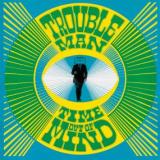
TROUBLEMAN - TIME OUT OF MIND (2026 EXPANDED EDITION) LP 2x12"

2026 RSD Release - GREEN Vinyl

Mark Pritchard (Global Communication / Africa Hi-Tech / Reload / Harmonic 313) produced gem from 2004. Featuring Eska, Nina Miranda and other vocalists. TIP!

An expanded edition of a long out of print Far Out classic. This double vinyl edition will include the track 'Strikehard' for the first time, which was omitted from the original pressing, only released on a separate 12" and CD.

=========================================================

Far Out Recordings announces the Record Store Day 2026 deluxe double LP reissue of Troubleman’s Time Out of Mind. Originally released in 2004, the album marked a distinctive turn in Mark Pritchard’s expansive career, channeling his pioneering electronic instincts through a filter of Brazilian grooves, African rhythms, and global soul. This special edition includes the underground club classic “Strike Hard” (previously unavailable on the original vinyl), alongside the album’s flawless blend of early-noughties space-age bossa, broken beat, future soul, and psychedelic downtempo.

Under the Troubleman alias, Pritchard stretched his focus outward in every direction. From the UK rave continuum to Brazil, the US, Africa, and beyond, he drew on the psychedelic soul of Dorothy Ashby and David Axelrod, the Afrobeat drive of Fela Kuti and Tony Allen, and the samba-doido energy of Azymuth. Filtering golden-era seventies influences through early-2000s pop, club, and rave lenses, the album moves effortlessly between club-ready tracks like “Strike Hard,” and more laid-back, tripped-out moments that highlight Pritchard’s range, shifting seamlessly from dancefloor heat to outer-bongolian cloud watching.

Featuring vocal contributions from Nina Miranda (Smoke City, Da Lata), Steve Spacek (Spacek, !K7), and Eska (New Sector Movements), the record captures Pritchard at a pivotal moment, exploring how electronic production could absorb and expand the rhythmic complexity of global sounds.

One half of Global Communication and Jedi Knights with Tom Middleton, and Harmonic 313 with Dave Brinkworth, Pritchard has since built a dense, acclaimed discography across numerous aliases and labels. His work on Warp Records has included collaborations with Thom Yorke, and his remix portfolio spans Depeche Mode, PJ Harvey, Underworld, Aphex Twin, Lamb, KRS-One, A Tribe Called Quest, The Orb, and The Beloved.

Remastered from the original sources and pressed to vinyl exclusively for Record Store Day 2026, this edition also faithfully reproduces the album’s psychedelic artwork by renowned British artist and designer Swifty.

Reservar

El artículo no se ha publicado. Tú puedes reservar ahora el artículo y después de ser pagado se te será enviado.

Hardt Antoine ft. Charlotte OC - One More Night (Incl. Echonomist Remix)

Hardt Antoine returns to Crosstown Rebels with emotive new release ‘One More Night’, featuring Charlotte OC. Set for release on 24th April 2026, the French-Jamaican artist links with the UK singer-songwriter, backed by a remix from Echonomist.

A warm, late-night glow pulses through ‘One More Night’, as Hardt Antoine returns to Damian Lazarus’ Crosstown Rebels for his first original release on the label, adding to his captivating remix of Henri Bergmann & Wentink’s ‘Guardian Angel’ in 2024. Anchored by Charlotte OC’s striking delivery, the track draws on the pull of classic disco and modern club sensibilities, balancing introspection with pure dancefloor drive.

On remix duties, Greek DJ/producer Echonomist reshapes the original into a blissful voyage, layering skippy rhythms and shadowy textures for an emotive late-night ride. Rounding out the release, ‘Dreamstate’ offers a complementary original from Hardt Antoine, leaning further into his melodic instincts with a fluid, atmospheric groove.

Hardt Antoine’s output and sound draws on his French and Jamaican heritage, weaving house, techno, soul, and 80s influences into a sonic identity defi ned by rich melodies and groove-led songwriting with recent releases on the likes of Innervisions and KompaktMeanwhile, Charlotte OC brings her distinct vocal talents to Crosstown for the very first time. Following a return to her hometown of Blackburn and a renewed creative focus, her recent work leans into raw, self-assured songwriting, blending vulnerability with strength - qualities that sit at the heart of ‘One More Night’.

No en stock

Haga su pedido ahora y le encargaremos el artículo en nuestro proveedor.


Ültimo hace: 3 Días
Anané - It Looks Like Love
 
2

Anané’s colourful life in music has seen her do everything from singing at the famous pre-game show at Super Bowl XLI as part of the group Elements of Life, DJ at hotspots like Hi Ibiza, Pacha NYC and Ushuaïa to name a few, while also curating her own monthly residency Nulu Movement, now ten years strong at Le Bain NYC, release unique blends of Afro, house, and pop on labels like Vega Records, and head up her own imprints, Nulu Music and Nulu Electronic. The Cape Verdean-born DJ, producer, vocalist, and songwriter has had countless club hits and has released acclaimed albums like ‘Ananésworld’ and ‘Chapters Of Becoming’, often with a lush, live, and orchestrated style that is truly unique.

With this release, Anané steps forward with her first solo production to date. Here she serves up the sumptuous ‘It Looks Like Love’, a poised, elegant house sound with her own smoking, soulful vocals and classy strings bringing colour to an Afro groove packed with infectious bounce. Neat guitar riffs and silky synths all enrich this most sophisticated sound. The first mix sees Anané link up with veteran Italian Christian Mantini, who has hosted Sunset Ritual parties with Anané and Louie Vega since 2013. Their dub is rooted in warm, rubbery drums that are even deeper and more immersive than the original.

Manda Moor & Sirus Hood are a red-hot contemporary pair who run the Mood label and are defining the contemporary underground. Their remix is more driving, but it retains the soulful vibe with breezy pads and jazzy motifs drifting in and out above the swaggering groove.

Rotterdam-based Chicagoan Jamie 3:26 is a master at blending disco, soul, and house into timeless sounds, and here he delivers a loopy rework that pairs deep drive and sun-kissed vibes with funky, Chic-style bass guitar motifs.

No en stock

Haga su pedido ahora y le encargaremos el artículo en nuestro proveedor.


Ültimo hace: 3 Días
lovetempo - There Is a Light LP

lovetempo

There Is a Light LP

12inchLOVELP001
lovetempo
28.04.2026

lovetempo is the solo project of Mattie Safer, former member of the beloved New York electroclash band The Rapture, now channeling his club-rooted background into contemporary disco and electronic soul. The album features a strong cast of collaborators including Dougie Stu (Brijean), Toribio, Kate Mattison (79.5), and multi-instrumentalist Izaak Mills, with mixing and additional production by Carlos Truly (Ava Luna, Juan Wauters, Frankie Cosmos). The project has received tastemaker support from Gilles Peterson and Laurent Garnier, airplay on BBC 6Music, KEXP, and KCRW, and editorial placement on Spotify playlists including Pollen, Metropolis, and Jazz House.

No en stock

Haga su pedido ahora y le encargaremos el artículo en nuestro proveedor.


Ültimo hace: 4 Días
Various - ZYX Italo Disco History: 1984 LP 2x12"
  • Fokewulf 190 - Body Heat (Vocal)
  • The Voyagers - Distant Planet (Vocal)
  • Frank Tavaglione - Tumidanda (English Version)
  • P. Lion - Dream (Vocal Version)
  • A.g.f. - Loved By You (Vocal Version)
  • Raggio Di Luna (Moon Ray) - Comanchero (Vocal Extended)
  • Ranko - Happy World (Vocal Version)
  • Clay Pedrini - New Dream (Vocal)
  • Cyber People - Polaris
  • Scotch - Disco Band (Remix By Mach 2 Vocal Version)
  • Jaco - Spanish Run (Vocal)
  • Valerie Dore - The Night (Original Mix)
  • G.j. Lunghi - Acapulco Nights (Maxi Version)
  • Raggio Di Luna (Moon Ray) - Megamix By Flemming Dalum(Comanchero)
  • The Voyagers - Megamix By Flemming Dalum (Distant Planet)
  • Fokewulf 190 - Megamix By Flemming Dalum (Body Heat)
  • P. Lion - Megamix By Flemming Dalum (Dream)
  • Valerie Dore - Megamix By Flemming Dalum (The Night)
  • Scotch - Megamix By Flemming Dalum (Disco Band)
  • G.j. Lunghi - Megamix By Flemming Dalum (Acapulco Nights)
  • A.g.f. - Megamix By Flemming Dalum (Loved By You)
  • Ranko - Megamix By Flemming Dalum (Happy World)
  • Clay Pedrini - Megamix By Flemming Dalum (New Dream)
  • Frank Tavaglione - Megamix By Flemming Dalum (Tumidanda)
  • Cyber People - Megamix By Flemming Dalum (Polaris)
  • Jaco - Megamix By Flemming Dalum (Spanish Run)

Erleben Sie das pulsierende Lebensgefühl der 80er Jahre mit der farbigen 2LP-Compilation „ZYX Italo Disco History 1984“. Diese exklusive Vinyl-Ausgabe entführt Sie direkt in das goldene Zeitalter der Italo Disco und vereint die größten Dancefloor-Hits eines unvergesslichen Jahres.

Freuen Sie sich auf ikonische Tracks von Künstlern wie P. Lion, Scotch und Valerie Dore – Namen, die für eingängige Melodien, treibende Beats und den unverwechselbaren Sound der Italo Disco stehen. Jeder Song dieser Sammlung spiegelt die Energie und den Glamour der internationalen Clubszene von 1984 wider. Ein besonderes Highlight ist der enthaltene 15-minütige Megamix der Italo-Disco-Legende Flemming Dalum. Mit seinem einzigartigen Gespür für Rhythmus und Atmosphäre verbindet er die größten Hits zu einem mitreißenden Mix, der nahtlos durch die Klangwelt der 80er führt. Die farbige Doppel-LP macht diese Compilation nicht nur musikalisch, sondern auch optisch zu einem echten Sammlerstück – perfekt für Vinyl-Liebhaber und Fans elektronischer Klassiker

Reservar24.04.2026

debe ser publicado en 24.04.2026

NO WAY BACK MAGAZINE - BETTER WAYS FORWARD THROUGH MUSIC AND SUBCULTURE STORIES, 1979-1994 - LEARNING FROM, NOT LONGING FOR

After all of the fun had - and, if we may brag a bit - the acclaim for NWB001, we're back with a follow-up.

So here's NWB002. Our start and end points shift this time (1979–1997 vs 1977-1989) but again the focus is on revolutionary moments in music and subculture.

We've got pieces from The Face, i-D, Time Out, Village Voice, Rolling Stone, Mixmag, The Observer and - a particularly big pleasure - Collusion magazine. We've got brilliant photography, too, documenting seminal afterdark moments. And we've put it all together with much love, craft and attention to detail.

This is material that lets us experience culture in its rawest form. In-the-moment and before endless layers of post-rationalisation have kicked in. Breakthrough events in dance music, hip-hop and pop – and parallel shifts in art, design and fashion. Inspirational, ground-level creativity and enterprise that set the scene(s) for subsequent decades.

We hope you enjoy reading NWB002 as much as we enjoyed bringing it together.

Inside No Way Back 002

Behind The Groove - the epic 1983 feature by Steven Harvey in David Toop's Collusion magazine, charting the NYC disco underground

Photographer Steve Eichner documenting the club kids scene at The Limelight, Palladium, Tunnel and Club USA

Year zero reporting as The Face's Sheryl Garratt visits Chicago in 1986, witnessing the emergent house sound

The Mudd Club - 'disco for punks' as Rolling Stone put it; the Lower East Side party which arguably spawned a thousand indie discos

In the 'socialist city' of Sheffield, meanwhile, Jon Savage heads for a night of sharp clothes and even sharper moves at Jive Turkey

Paul Morley writing in Time Out in 1988 on the tension materialising between glossy style mags and the the monochrome music press

The House That Rap Built - Village Voice celebrates the short but sweet glory years of hip-house

Mixmag in 1992 on the 'return of sex' to clubs like Roxy and the Sound Factory

Images and commentary from Eddie Otchere, rewinding to jungle's halcyon days

Kodwo Eshun reporting on jungle's full-throttle ascent for i-D in 1994

+ Editor’s notes, supporting commentary, playlists, and covers, spreads and imagery from original titles

ISSN - 2977-8530

Reservar24.04.2026

debe ser publicado en 24.04.2026

Stevie Cox and Ansboy - Twice Like Rice LP

Stevie Cox and Ansboy: two powerhouses of the Glaswegian club scene join forces for their collaborative debut EP on Rhythm Section INTL- ‘Twice Like Rice’. It’s a weighty four-track EP designed for the dancefloor, taking in myriad influences from dub techno, breaks, trance and good old fashioned house music. The Ep is full of deep, pulsating rhythms, lush textures and emotive peaks - all road tested in Stevie’s Iconic home turf: Sub Club.

Stevie Cox has long been a name long ruminating on everyone's lips, as a resident DJ of the iconic ‘Sub Club’ with an ever-growing tour schedule and back catalogue of releases via the likes of Klasse Wrecks and Optimo. Whilst the name Ansboy may be new to some, it is a fresh alias for the grammy nominated producer and mixdown engineer Robert Etherson who has long been a staple in the Scottish scene with an international touring repertoire under his belt.

The two friends met in their hometown of Glasgow and began their musical journey together last year after Robert taught Stevie how to do mixdowns. The pair clicked effortlessly, quickly discovering they shared the same passion for emotive, deep and progressive dance music. Their first track together - which took shape in the form of ‘Drift’ - a high-energy synth led anthem, came out with a special selection of tracks curated by Bradley Zero for his exclusive SHOUTS Summer sampler in 2025.

For the Twice Like Rice EP, their work evokes all corners of the dancefloor, kicking things off with ‘GC’ - a peak time breaks-infused trancey-heater - a master class in building dancefloor tension which gives way into a searing crescendo. Things spin towards a darker percussive focus on the more intense ‘Twice Like Rice’.

On the b-side things return to blissful euphoria with ‘Virgil’ - a warm up dub-techno ballad, before the emotional release of ‘Subculture closure’ inspired ‘Carter21’.

Disponible a partir del05.05.2026


Ültimo hace: 8 Días
The Martinez Brothers - H2DAIZZO (Incl. Josh Baker / Peggy Gou / Butch Remixes)

Originally released on vinyl in 2012, H2DAIZZO quickly became one of the NYC duo’s most sought-after records, with original copies fetching over $100 on Discogs. Now widely considered a timeless club essential, this deep, minimal house cut returns via a long-awaited repress on Defected Records.

The release is further elevated by three standout remixes, each bringing a distinct perspective: Peggy Gou delivers a signature 2017 rework, slicing and reshaping the groove with her unmistakable flair; Butch injects his 2018 remix with driving, dancefloor-focused energy; and Josh Baker offers a fresh, contemporary take, rounding out the package with a modern club sensibility.

No en stock

Haga su pedido ahora y le encargaremos el artículo en nuestro proveedor.


Ültimo hace: 4 Días
Luke Lund - Peel The Scab

Luke Lund

Peel The Scab

12inchEXR0002
Explorations
24.04.2026

Luke Lund is a self-taught producer and sound artist from Finland. Over the past eighteen years, his work has absorbed influences ranging from the darkest fringes of club culture and the most caustic strains of industrial noise, to the subtlety of musique concrète and the rawness of rock.

It all started when he discovered that abstract sound design could stand as music in its own right, a revelation that ignited his enduring commitment to noise, sound art, dub techniques, and experimentation.

“Peel the Scab” emerges from this premise as a visceral and frenetic immersion into his “lo tech” facet, a term the artist himself employs to define the album’s style.

Allergic to programming, these are pure dub-blooded sessions pushed straight to tape, twisted until they yield under their own weight. It is a work constructed upon dense, disjointed rhythms: brutalist grime infused with a suffocating mutation of dub.

Reservar24.04.2026

debe ser publicado en 24.04.2026

Another Taste - Another Taste II LP

Another Taste is back with their follow up album: Another Taste II delivers eight new cuts of boogie, funk, and obscure disco influenced productions, recorded live to tape. Comes with Download code.

After lighting up renowned clubs like KOKO London, Jazz Café London,Tresor Berlin, New Morning Paris, and festivals like Love Supreme (UK), Lost Village (UK), Nuits Sonores (FR), Hamburg Jazz (DE), Lowlands (NL), ADE Amsterdam - the band has surfaced from the studio anew, mixing myth with music.

If their debut record in 2024 was an introduction to their musical range, Another Taste II is the full immersion. The two-sided album plays like a neon-lit cab ride where the radio is set to groove. Expanding their palette with sharper songwriting, denser arrangements, and a fictional universe.

The album showcases Another Taste’s collective at full strength: Barend Lippens, Bobby van Putten, Bob Roche, Teun van Zoggel, Sarina Voorn, Diogo Carvalho, and Florian Verhagen. Together they summon a sound that is electrifying, communal, and unmistakably theirs, joined on “Peace Call” by Arp Frique and the Perpetual Singers, and bolstered throughout by a dedicated brass section.

Another Taste II is engineered and mixed by Bobby van Putten, mastered at The Carvery by Frank Merritt, with artwork and design by Timo ter Braak, Walt van der Veen and Robert Reinartz.

The new album presents a collaborative creation that’s both timeless and unpredictable, pulling listeners deeper into the band’s universe with every spin.

No en stock

Haga su pedido ahora y le encargaremos el artículo en nuestro proveedor.


Ültimo hace: 8 Días
BOBBY THORPE & PSYCHEDEREK - A LITTLE EMOTION

Second release on Via Jupiter from label boss Psychederek this time teaming up with Behind The Groove's Bobby Thorpe for a full pelt Dancefloor 4-way
Born from a series of studio jams throughout the winter, the Manchester-based artists deliver a slick EP inspired by late 80's club joints and driven by a clean, stripped-back approach.

Artwork and label design by Ben Brumpton. Limited to 250 copies (of which we're allocated 150 - so be quick !!)

No en stock

Haga su pedido ahora y le encargaremos el artículo en nuestro proveedor.


Ültimo hace: 11 Días
jazzbois - Still Blunted LP

Having established themselves as one of the leading live bands in Europe, grooving to improvised jazz motifs and hip-hop beats, Budapest trio Jazzbois return with their fourth LP, Still Blunted, which sees them touch base with their beat-tape roots.

Now situated in the heart of Buda at their new studio above a club, the Hungarian trio of Bencze Molnár (Rhodes/synth), Viktor Sági (bass) and Tamás Czirják (drums) take a more considered approach to Still Blunted and offer a snapshot into the jams, sessions, and shows they have played over the past year. Still Blunted was released after the band performed at the legendary Montreux Jazz Festival in 2024 summer, but before they sold out The Jazz Cafe, London, and three more venues (Paris, Antwerp, Utrecht) on their album release tour in October 2024.

No en stock

Haga su pedido ahora y le encargaremos el artículo en nuestro proveedor.


Ültimo hace: 11 Días
BODYSYSTEM - Flowerbed

BODYSYSTEM

Flowerbed

12inchKIN-TU003
KIN-TU Records
20.04.2026

BODYSYSTEM is the solo project of Finlay McCarthy (synth player for Glasgow art-pop innovators Walt Disco). "Flowerbed" is his debut EP on KIN-TU Records, blending melodic electronics, skittering breakbeats, rave textures, and emotionally charged songwriting.

The EP includes collaborations with Tiger Cohen-Towell (Divorce) and Pearling, bringing two distinct vocal turns to the record. "I’m Still Available" lands as a yearning pop-dance cut with restless breakbeats and rave pressure, while "When I See You" (feat. Pearling) leans into a luminous, emotionally warm club feel. The EP closes out the KIN-TU003 campaign and marks a strong debut statement from a Glasgow artist already known for his work in Walt Disco.

Reservar20.04.2026

debe ser publicado en 20.04.2026

Various - What Dance Is This? UK Post Punk Dancefloor Vol.1 (1979-1983)
También disponible

Vol.2


Straight from an alternative dancefloor, a recollection of stone cold classics from huge & influential post-punk pioneers. They called it white funk once, but here you can even catch echoes of latin, dub and club influences, a mutant disco manifesto from a series of British champions such as Medium Medium, Jah Wobble, Animal Magic, Blue Rondo' A La Turk, Nightmares In Wax, Tappa Zukie and many more.

Tracklist Side A:
Blue Rondo A La Turk - Sarava
Medium Medium - Serbian Village
Jah Wobble - Invaders Of The Heart (Mix One)
Perfect Zebras - What Dance Is This?
Splat! - Yeah... The Dum Du

Tracklist Side B:
Dancing Did - Ballad Of The Dying Sigh
Animal Magic - Get It Right
Nightmares In Wax - Black Leather
Tappa Zukie – Freak

Reservar

El artículo no se ha publicado. Tú puedes reservar ahora el artículo y después de ser pagado se te será enviado.

Various - What Dance Is This? UK Post Punk Dancefloor Vol.1 (1979-1983)
También disponible

Vol.1


Straight from an alternative dancefloor, a recollection of stone cold classics from huge & influential post-punk pioneers. They called it white funk once, but here you can even catch echoes of latin, dub and club influences, a mutant disco manifesto from a series of British champions such as Normil Hawaiians, Glaxo Babies, Playgroup, C Cat Trance, Suns of Arqa & Prince Far I and many more.

Tracklist Side A:
Normil Hawaiians - Obedience
Vee VV - Keep Beat
Spit Like A Paint - For The Life Of Me
Group Therapy - Arty-Fact
C Cat Trance - Hypnotised

Tracklist Side B:
The Chicken Granny - Quit The Body
Machine Gunn Hogg And Co - Bed Bound Saga
Playgroup - Hoggs Might Fly
Glaxo Babies - Shake (The Foundations)
Suns of Arqa feat. Prince Far I - G.D. Magik

Reservar18.04.2026

debe ser publicado en 18.04.2026

Various - Tchic Tchic: French Bossa Nova 1963-1974  Colored Edition LP 2x12"
  • A1: Les Masques - Il Faut Tenir (1969)
  • A2: Isabelle Aubret - Casa Forte (1971)
  • A3: Christianne Legrand - Hlm Et Ciné Roman (1972)
  • A4: Jean Constantin - Pas Tant D'chichi Ponpon (1972)
  • A5: Billy Nencioli & Baden Powell - Si Rien Ne Va (1969)
  • B1-: Marpessa Dawn - Le Petit Cuica (1963)
  • B2: Jean-Pierre Sabar - Vai Vai (1974)
  • B3: Sophia Loren - De Jour En Jour (1963)
  • B4: Isabelle - Jusqu’à La Tombée Du Jour (1969)
  • B5: Sylvia Fels - Corto Maltesse (1974)
  • C1: Frank Gérard - Comme Une Samba (1972)
  • C2: Ann Sorel - La Poupée Des Favellas (1971)
  • C3: Charles Level - Un Enfant Café Au Lait (1971)
  • C4: Andrea Parisy - Les Mains Qui Font Du Bien (1970)
  • C5: Audrey Arno - Quand Jean-Paul Rentrera (1969)
  • C6: Aldo Frank - T’as Vu Ce Printemps (1970)
  • D1: Christianne Legrand - Cent Mille Poissons Dans Ton Filet (1972)
  • D2: Clarinha - Lemenja (1970)
  • D3: Hit Parade Des Enfants - Aquarela (1976)
  • D4: Jean-Pierre Lang - Tendresse (1965)
  • D5: Magalie Noël - Une Énorme Samba (1970)
  • D6: Françoise Legrand - La Lune

Ever since the late 1950s bossa-nova revolution, Brazil’s influence on French music has been undeniable. Pierre Barouh, Georges Moustaki and a vast array of lesser known artists, all made the Musica Popular Brasileira (MPB) an axis of promotion at the service of a cool and metaphysical, modern and mixed Brazilian lifestyle. Some were seduced by the poetic languors of the bossa, some were looking for fun, and others just loved the American hybridization of jazz-bossa, jazz-samba.


What is bossa nova? One of its creators, Joao Gilberto said: "Its style, cadence, everything is samba. At the very start, we didn't call it bossa nova, we sang a little samba made up of a single note - Samba de uma nota so .... The discussion around the origins of bossa nova is therefore useless”. It is nevertheless useful to remember that these magnificent Brazilian songs, which the guitarist describes as samba, were shifted and balanced around improbable chords. "I like things that lean, the in-betweens that limp with grace," said Pierre Barrouh, quoting Jean Cocteau.


With emotion, arrangements for violin and supple guitar licks, bossa nova rapidly changed. A transformation that can be heard in the Tchic, tchic, French Bossa Nova 1963-1974 compilation, the result of a cultural reappropriation, which traveled through the United States and supplemented itself in France.

A musical revolution that has remained significant, bossa nova was born in Rio. From 1956 to 1961, Brazil lived through its golden years. In five years, the country had invented its modernist style. Elected president in 1956, Juscelino Kubitschek de Oliveira, an elegant man with a broad forehead, brandished a promising slogan: "Fifty years of progress in five years". He quickly got to work. Not worried about increasing debt, he launched the project for a new federal capital, Brasilia, designed by the communist architect Oscar Niemeyer. Volkswagen opened state-of-the-art factories and created the “fusquinha”, the Beetle. In Rio, the Vespa made its first appearance. The Arpoador Surf Club crew run into the “girl” from Ipanema, Helô Pinheiro - the tanned garota ("chick"), between a flower and mermaid, who at 17 walked by the Veloso bar, where the fiery author and composer, Tom Jobim and Vinicius de Moraes, were getting drunk on whiskey. From then on, bossa symbolized cool.

In 1958, Joao Gilberto recorded Chega de Saudade, which the directors of Philips denied, calling it "music for fagots". The marketing director, who believed in it, secretly pressed 3000 78-inch vinyls and distributed them at schools around Rio, creating a tidal wave.

American jazzmen then took over. In particular, trumpeter Dizzy Gillespie and guitarist Charlie Byrd. In November 1962, the Brazilian Ministry of Foreign Affairs funded a "Bossa-Nova" concert at Carnegie Hall in New York, inviting the genre’s pioneers. Unprepared, the show soon turned to disaster. But the troupe was invited to the White House by Jackie Kennedy. The first lady loved "the new beat" and in particular Maria Ninguem, a song by Carlos Lyra, later covered by Brigitte Bardot.

In Brazil, the 1964 military coup quickly ended this euphoria. The destructive atmosphere that ensued pushed many Brazilian musicians to leave, if not to exile. Thus, Tom Jobim, Sergio Mendes and Joao Gilberto arrived to the United States. In New York, Joao Gilberto met saxophonist Stan Getz. At the time, he was married to the Bahianese Astrud Weinert Gilberto, who had a German father. She had never sung before, but she knew how to speak English. Getz therefore asked her to replace her husband on The Girl From Ipanema. The Getz/Gilberto record with Tom Jobim on piano, was released in March 1964. Phil Ramone, the "pope of pop" was in charge of sound.

Bossa nova arrived in Paris through the classic “guitar-voice” channel (Pierre Barouh, Baden Powell, Moustaki…) But France loved jazz and Paris had already welcomed its American contributors. All these good people were to pass through Saint-Germain-des-Prés. The cabaret l'Escale became the Mecca of Latin American sound where one could find Pierre Barrouh and his friends, such as the Camara Trio, samba-jazz aces, whose only record was published by the Saravah label. With a band strangely called Les Masques (a band that included Nicole Croisille and Pierre Vassiliu, among others), the Camara Trio recorded an interesting Brazilian Sound, including the track Il faut tenir which is present on this tasty compilation of rarities.

Other enlightened musicians can also be found on the compilation, such as Jean-Pierre Sabar (songwriter for Hardy, Auffray, Leforestier ...) and the French pop rock organist Balthazar. In 1975, Sabar recorded Aurinkoinen Musiikkimatka on a Finnish label, which featured the crazy Vai, Vai, included on this record. We are now following the footsteps of Brazilian electronic musicians such as Sergio Mendes, Eumir Deodato or Marcos Valle who created funk and disco sounds on their keyboards and synthesizers. A style that influenced Véronique Sanson when she wrote Jusqu’à la Tombée de la nuit in 1969 for Isabelle de Funès, the niece of Louis and a great friend of Michel Berger - Sanson did end up singing this track on her 1992 Sans Regret record.


The pinnacle of exoticism and travel, Sylvia Fels’ Corto Maltese includes bongos, sea mist and ocean sounds. The title was taken from Jacky Chalard’s concept album written in 1974, Je suis vivant, mais j’ai peur (I am alive, but I am scared), based on Gilbert Deflez’s science fiction novel.


However, bossa nova extended the scope of popularity. "In the 1970s, I was a fan of Sergio Mendes, Getz / Gilberto. I fell in love with this music that I knew because I had been an orchestral singer, " explained Isabelle Aubret, who in 1971 delivered a composite record of covers by the very funky Jorge Ben, Orfeu Negro, Tom Jobim, Vinicius de Morais and Jean Ferrat. "I recorded this album for Meys Records in Paris, far from Brazil, with wonderful musicians, François Raubert, Roland Vincent, Alain Goraguer...". The latter wrote the arrangements for Casa Forte, a very percussive title borrowed from Edu Lobo, one of the initiators of the bossa who spent time in California. "Jazz and bossa came together and produced very rhythmic music. I love singing, it allows me to dream, to have fun, to feel a high on stage, and these songs brought me joy, made me swing, my singing felt like a dance.”


The world tours of French singers and their desire for the tropics, often brought them to Rio with its hills, forests, caipirinhas and tanned bodies. There are surprises though, like this Iemenja (Iemenja is the goddess of the sea in the Afro-Brazilian candomblé religion). Not unlike the composer and musician Jean-Pierre Lang, based in Sao Paulo, Claire Chevalier taught Brazil to Brazil. In 1970, the singer and painter published a 45-inch vinyl, Mon mari et mes amants (My husband and my lovers), under the improbable pseudonym of Clarinha (little Claire). She was then living in Rio, with her husband, Joël Leibovitz, who founded a band called Azimuth, and who owned a record label specialized in "sambas enredos" songs for samba school parades.


For its B side, she asked Pierre Perret to come up with lyrics for a song composed by Carlos Imperial: "Oh goddess of the sea, o goddess Iemenja, I bring a white rose to adorn your long hair ..." . "Perret came to see us, and we had fun, remembers Joël Leibovitz. We wrote Lemenja for fun, we recorded it at the Havaí studio, behind the Central do Brasil the central station. Erlon Chaves, the arranger who worked with Elis Regina, joined us" adding his share of Afro-Brazilian percussions and funky brass to the mix.

There is a common misunderstanding in Franco-Brazilian history: that bossa, admittedly hedonistic, is perceived as funny, even though the poets who wrote the texts are often philosophizing on the human condition. Its French interpreters pull it towards a carnival inspired universe, far removed from its fundamental essence. Thus, Jean Constantin covered the famous Samba da minha terra, an ode to the art of samba written by the classic Bahian composer Dorival Caymmi, renaming it with the enticing title of Pas tant de tchi tchi pompon: "On your pier there is no tchi tchi / when you arch your back, you know everything is alright ”(lyrics by Gérard Calvi). This expedited bossa aims for the absurd, but retains a certain elegance.

Indeed, Jean Constantin was not an idiot, the rather large man had a huge mustache and liked fantasy, (Les pantoufles à papa, Le pacha, inspired by cha-cha-cha-cha, salsa and jazz) but he was also the lyricist of Mon manège à moi interpreted by Edith Piaf, the composer of Mon Truc en plume by Zizi Jeanmaire and the soundtrack of François Truffaut’s 400 Blows. Le Poulpe, published in 1970, from which this bossa is extract, was arranged by Jean-Claude Vannier, an accomplice of Serge Gainsbourg’s Melody Nelson. In short: "There is enough of samba / By looking at the parasol / Because my poor cabeza / Is going to die in the sun".

Even the American actress Marpessa Down, who was at the heart of the bossa nova revolution with her role as Euridyce in Marcel Camus’ film Orfeu Negro, winner of the 1959 Cannes Palme d'or, fed the clichée with Je voudrais parler au petit cuica - "Tell me how you manage to always make people want to dance / It's true, I must admit that I cannot resist your magic" - in consequence, once can hear the cuica, a little drum inherited from the Bantu.


But bossa nova had many angles. Societal, of course, pushing actresses who were symbols of women's liberation like Brigitte Bardot, Jeanne Moreau, or Sophia Loren to engage in the exercise of accelerated bossa. In February of 1963, Sophia Loren made a record in French in Rome, Je ne t'aime plus, featuring the song De jour en jour, a bossa written by two Italians, Armando Trovajoli and Tino Fornai, which was released a little later by Barclay. Bossa accompanied the 1960s, a decade of moral liberation. Ann Sorel, who interpreted La Poupée des favellas, caused a sensation with L’amour à plusieurs, a provocative song written by Frédéric Bottom and Jean-Claude Vannier. As for the actress Andrea Parisy, she displayed her bourgeois cheekiness in Marcel Carné's Les Tricheurs before interpreting Les mains qui font du bien. And Magalie Noël, the friend of Boris Vian, who sung Johnny fais-moi mal, was hired to sing Une énorme Samba, composed by Alain Goraguer (arranger to Gainsbourg, Bobby Lapointe and Jean Ferrat) with lyrics by Frédéric Botton.

But in the end, of what wood is bossa nova made of? The answer is given by Christianne Legrand, daughter of Raymond the conductor, and sister to Michel the composer: "With me, with jà" - jà means "immediately" in Portuguese. In 1972, the singer, an expert in vocal jazz and a member of the Double Six, published Le Brésil de Christianne Legrand. Two songs included on the Tchic Tchic compilation that demonstrate how bossa, jazz, funk, rock, etc. work like a swiss army knife: the music is used to denounce broken systems, or miracles, HLM et ciné roman, Cent mille poissons dans ton filet, two songs from the O Cafona soundtrack, a successful telenovela broadcast, at the time in black and white, on TV Globo. The first was adapted in French by the fighter and friend of the Legrand tribe, Agnès Varda. The second is content with a play on words, jostling them into a summer fun.


Véronique Mortaigne

Reservar17.04.2026

debe ser publicado en 17.04.2026

VARIOUS - TEN YEARS OF GALA LP 2x12"

Various

TEN YEARS OF GALA LP 2x12"

2x12inchGALA10LP
GALA Records
17.04.2026out soon

GALA announce Ten Years of GALA – a compilation marking a decade of independent culture

Ten Years of GALA is both an archive and a horizon: a reflection on where GALA has come from, and a signal of what lies ahead.

Founded in 2016 as a one-day gathering in South London, GALA has grown into a global point of reference for dancers, artists and collectives drawn together by a shared commitment to independence, collaboration and underground music culture. Rather than charting success through scale alone, the festival has consistently prioritised integrity, community and musical curiosity – values that underpin this release.

Spanning fifteen tracks, Ten Years of GALA unfolds as a considered journey. It opens with an intimate spoken contribution from Charlie Dark, grounding the compilation firmly in GALA’s home of Peckham before gradually expanding outward into fuller, club-focused terrain. From there, the record moves between moods and tempos, tracing a path from reflective moments into the physical language of the dancefloor.

The compilation brings together longtime friends of the festival alongside newer voices drawn into its orbit in recent years. Each artist contributes a distinct perspective, but collectively the tracks form a coherent portrait – not of a single sound, but of a shared ethos shaped over ten years of gatherings, collaborations and days spent dancing together.

Rather than a retrospective in the conventional sense, Ten Years of GALA functions as a living document. It captures fragments of past editions, scenes and relationships, while remaining firmly oriented toward the future. These are not museum pieces, but records designed to be played, shared and folded back into the spaces from which they came.

Together, the compilation holds a piece of GALA’s first decade – not as a closed chapter, but as a foundation for what comes next.

Reservar

El artículo no se ha publicado. Tú puedes reservar ahora el artículo y después de ser pagado se te será enviado.

ANNIE & THE CALDWELLS - WRONG / I MADE IT REMIXES

The history of house and disco music is full of gospel soul singers creating anthemic bangers for the dance floor. Annie and the Caldwells, a family band from West Point, Mississippi, are the latest to join their ranks.

============================

This collection — featuring remixes from musclecars, Kornél Kovács, Alexis Taylor (of Hot Chip), and disco icons Nicky Siano and Justin Strauss — follows the release of the Caldwells’ wildly acclaimed debut Can’t Lose My (Soul) Luaka Bop, Spring 2025. Hailed as “a masterpiece” by The Guardian (★★★★★), and one of the best albums of the year by The Times, MOJO, UNCUT, and The Economist, Can’t Lose My (Soul) found fans all over the world — like Sir Elton John, who called their album “A great, great record that I insist you go out and buy.”

“I was blown away when I first heard the original version of ‘Wrong’,” says Kornel Kovács, whose remix of “Wrong” appears on this white label. “Deborah’s voice floored me, as well as the background singers. One of the greatest vocal performances I’ve heard, let alone worked with. The result is a club-ready take that’s become a highlight in my recent DJ sets.”

Producers Brandon Weems and Craig Handfield (of musclecars) had a similar experience when they heard the family for the first time: “We quickly fell in love with the groovy bassline and the choir vocals,” said Craig. “We thought it’d be fitting to put our own spin on it, while paying homage to those jive brothers from Tulsa. The uplifting keys paired with the punch of the drums, rounded out with that organ…this one is sure to bring a joyful noise!”

Annie Caldwell and her family have since performed in more than twenty countries on four continents, and recently made a star turn on the UK's preeminent music program Later... with Jools Holland. They’re hitting the road again in 2026. Watch this space.


[c] Wrong [You Dropped a Bomb] - Extended Wooden Dance Floor Mix (A Nicky Siano Production) 6:48

No en stock

Haga su pedido ahora y le encargaremos el artículo en nuestro proveedor.


Ültimo hace: 15 Días
Guilty Razors - Complete Recordings 1977 - 1978

UILTY RAZORS, BONA FIDE PUNKS.


Writings on the topic that go off in all directions, mind-numbing lectures given by academics, and testimonies, most of them heavily doctored, from those who “lived through that era”: so many people today fantasize about the early days of punk in our country… This blessed moment when no one had yet thought of flaunting a ridiculous green mohawk, taking Sid Vicious as a hero, or – even worse – making the so-called alternative scene both festive and boorish. There was no such thing in 1976 or 1977, when it wasn’t easy to get hold of the first 45s by the Pistols or the Clash. Few people were aware of what was happening on the fringes of the fringes at the time. Malcolm McLaren was virtually unknown, and having short hair made you seem strange. Who knew then that rock music, which had taken a very bad turn since the early 1970s, would once again become an essential element of liberation? That, thanks to short and fast songs, it would once again rediscover that primitive, social side that was so hated by older generations? Who knew that, besides a few loners who read the music press (it was even better if they read it in English) and frequented the right record stores? Many of these formed bands, because it was impossible to do otherwise. We quickly went from listening to the Velvet Underground to trying to play the Stooges’ intros. It’s a somewhat collective story, even though there weren’t many people to start it.
The Guilty Razors were among those who took part in this initial upheaval in Paris. They were far from being the worst. They had something special and even released a single that was well above the national average. They also had enough songs to fill an album, the one you’re holding. In everyone’s opinion, they were definitely not among the punk impostors that followed in their wake. They were, at least, genuine and credible.

Guilty Razors, Parisian punk band (1975-1978). To understand something about their somewhat linear but very energetic sound, we might need to talk about the context in which it was born and, more broadly, recall the boredom (a theme that would become capital in punk songs) coupled with the desire to blow everything off, which were the basis for the formation of bands playing a rejuvenated rock music ; about the passion for a few records by the Kinks or the early Who, by the Stooges, by the Velvet mostly, which set you apart from the crowd.
And of course, we should remember this new wave, which was promoted by a few articles in the specialized press and some cutting-edge record stores, coming from New York or London, whose small but powerful influence could be felt in Paris and in a handful of isolated places in the provinces, lulled to sleep by so many appalling things, from Tangerine Dream to President Giscard d’Estaing...
In 1975-76, French music was, as almost always, in a sorry state ; it was still dominated by Johnny Hallyday and Sylvie Vartan. Local rock music was also rather bleak, apart from Bijou and Little Bob who tried to revive this small scene with poorly sound-engineered gigs played to almost no one.
In the working class suburbs at the time, it was mainly hard rock music played to 11 that helped people forget about their gruelling shifts at the factory. Here and there, on the outskirts of major cities, you still could find a few rockers with sideburns wearing black armbands since the death of Gene Vincent, but it wasn’t a proper mass movement, just a source of real danger to anyone they came across who wasn't like them. In August 1976, a festival unlike any other took place in Mont-de-Marsan – the First European Punk Festival as the poster said – with almost as many people on stage as in the audience. Yet, on that day, a quasi historical event happened, when, under the blazing afternoon sun, a band of unknowns called The Damned made an unprecedented noise in the arena, reminiscent of the chaotic Stooges in their early adolescence. They were the first genuine punk band to perform in our country: from then on, anything was possible, almost anything seemed permissible.

It makes sense that the four+1 members of Guilty Razors, who initially amplified acoustic guitars with crappy tape recorder microphones, would adopt punk music (pronounced paink in French) naturally and instinctively, since it combines liberating noise with speed of execution and – crucially – a very healthy sense of rebellion (the protesters of May 1968 proclaimed, and it was even a slogan, that they weren’t against old people, but against what had made them grow old. In the mid-1970s, it seemed normal and obvious that old people should now ALSO be targeted!!!).
At the time, the desire to fight back, and break down authority and apathy, was either red or black, often taking the form of leafleting, tumultuous general assemblies in the schoolyard, and massive or shabby demonstrations, most of the time overflowing with an exciting vitality that sometimes turned into fights with the riot police. Indeed, soon after the end of the Vietnam War and following Pinochet’s coup in Chile, all over France, Trotskyist and anarcho-libertarian fervour was firmly entrenched among parts of the educated youth population, who were equally rebellious and troublemakers whenever they had the chance. It should also be noted that when the single "Anarchy in the UK" was first heard, even though not many of us had access to it, both the title and its explosive sound immediately resonated with some of those troublemakers crying out for ANARCHY!!! Meanwhile, the left-wing majority still equated punks with reckless young neo-Nazis. Of course, the widely circulated photos in the mainstream press of Siouxsie Sioux with her swastikas didn’t necessarily help to win over the theorists of the Great Revolution. It took Joe Strummer to introduce The Clash as an anti-racist, anti-fascist and anti-ignorance band for the rejection of old-school revolutionaries to fade a little.

The Lycée Jean-Baptiste Say at Porte d’Auteuil, despite being located in the very posh and very exclusive 16th arrondissement of Paris, didn’t escape these "committed" upheavals, which doubled as the perfect outlet for the less timid members of this generation.
“Back then, politics were fun,” says Tristam Nada, who studied there and went on to become Guilty Razors’ frontman. “Jean-Baptiste was the leftist high-school in the neighbourhood. When the far right guys from the GUD came down there, the Communist League guys from elsewhere helped us fight them off.”
Anything that could challenge authority was fair game and of course, strikes for just about any reason would lead to increasingly frequent truancy (with a definitive farewell to education that would soon follow). Tristam Nada spent his 10th and 11th unfinished grades with José Perez, who had come from Spain, where his father, a janitor, had been sentenced to death by Franco. “José steered my tastes towards solid acts such as The Who. Like most teenagers, I had previously absorbed just about everything that came my way, from Yes to Led Zeppelin to Genesis. I was exploring… And then one day, he told me that he and his brother Carlos wanted to start a rock band.” The Perez brothers already played guitar. “Of course, they were Spanish!”, jokes their singer. “Then, somewhat reluctantly, José took up the bass and we were soon joined by Jano – who called himself Jano Homicid – who took up the rhythm guitar.” Several drummers would later join this core of not easily intimidated young guys who didn’t let adversity get the better of them.

The first rehearsals of the newly named Guilty Razors took place in the bedroom of a Perez aunt. There, the three rookies tried to cover a few standards, songs that often were an integral part of their lives. During a first, short gig, in front of a bewildered audience of tough old-school rockers, they launched into a clunky version of the Velvet Underground's “Heroin”. Challenge or recklessness? A bit of both, probably… And then, step by step, their limited repertoire expanded as they decided to write their own songs, sung in a not always very accurate or academic English, but who cared about proper grammar or the right vocabulary, since what truly mattered was to make the words sound as good as possible while playing very, very fast music? And spitting out those words in a language that left no doubt as to what it conveyed mattered as well.
Trying their hand a the kind of rock music disliked by most of the neighbourhood, making noise, being fiercely provocative: they still belonged to a tiny clique who, at this very moment, had chosen to impose this difference. And there were very few places in France or elsewhere, where one could witness the first stirrings of something that wasn’t a trend yet, let alone a movement.

In the provinces, in late 1976 or early 1977, there couldn’t be more than thirty record stores that were a bit more discerning than average, where you could hear this new kind of short-haired rock music called “punk”. The old clientele, who previously had no problem coming in to buy the latest McCartney or Aerosmith LP, now felt a little less comfortable there…
In Paris, these enlightened places were quite rare and often located nex to what would become the Forum des Halles, a big shopping mall. Between three aging sex workers, a couple of second-hand clothes shops, sellers of hippie paraphernalia and small fashion designers, the good word was loudly spread in two pioneering places – propagators of what was still only a new underground movement. Historically, the first one was the Open Market, a kind of poorly, but tastefully stocked cave. Speakers blasted out the sound of sixties garage bands from the Nuggets compilation (a crucial reference for José Perez) or the badly dressed English kids of Eddie and the Hot Rods. This black-painted den was opened a few years earlier by Marc Zermati, a character who wasn’t always in a sunny disposition, but always quite radical in his (good) choices and his opinions. He founded the independent label Skydog and was one of the promoters of the Mont-de-Marsan punk festivals. Not far from there was Harry Cover, another store more in tune with the new New York scene, which was amply covered in the house fanzine, Rock News (even though it was in it that the photos of the Sex Pistols were first published in France).
It was a favorite hang-out of the Perez brothers and Tristam Nada, as the latter explained. “It’s at Harry Cover’s that we first heard the Pistols and Clash’s 45s, and after that, we decided to start writing our first songs. If they could do it, so could we!”
The sonic shocks that were “Anarchy in the UK”, “White Riot” or the Buzzcocks’s EP, “Spiral Scratch” – which Guilty Razors' sound is reminiscent of – were soon to be amplified by an unparalleled visual shock. In April 1977, right after the release of their first LP, The Clash performed at the Palais des Glaces in Paris, during a punk night organised by Marc Zermati. For many who were there, it was the gig of a lifetime…
Of course, Guilty Razors and Tristam were in the audience: “That concert was fabulous… We Parisian punks were almost all dressed in black and white, with white shirts, skinny leather ties, bikers jackets or light jackets, etc. The Clash, on the other hand, wore colourful clothes. Well, the next day, at the Gibus, you’d spot everyone who had been at this concert, but they weren’t wearing anything black, they were all wearing colours.”

It makes sense to mention the Gibus club, as Guilty Razors often played there (sometimes in front of a hostile audience). It was also the only place in Paris that regularly scheduled new Parisian or Anglo-Saxon acts, such as Generation X, Siouxsie and the Banshees, the Slits, and Johnny Thunders who would become a kind of messed-up mascot for the venue. A little later, in 1978, the Rose Bonbon – formerly the Nashville – also attracted nightly owls in search of electric thrills… In 1977, the iconic but not necessarily excellent Asphalt Jungle often played at the Gibus, sometimes sharing the bill with Metal Urbain, the only band whose aura would later transcend the French borders (“I saw them as the French Sex Pistols,” said Geoff Travis, head of their British label Rough Trade). Already established in this small scene, Metal Urbain helped the young and restless Guilty Razors who had just arrived. Guitarist for Metal Urbain Hermann Schwartz remembers it: “They were younger than us, we were a bit like their mentors even if it’s too strong a word… At least they were credible. We thought they were good, and they had good songs which reminded of the Buzzcocks that I liked a lot. But at some point, they started hanging out with the Hells Angels. That’s when we stopped following them.”

The break-up was mutual, since, Guilty Razors, for their part, were shocked when they saw a fringe element of the audience at Metal Urbain concerts who repeatedly shouted “Sieg Heil” and gave Nazi salutes. These provocations, even still minor (the bulk of the skinhead crowd would later make their presence felt during concerts), weren’t really to the liking of the Perez brothers, whose anti-fascist convictions were firmly rooted. Some things are non-negotiable.
A few months earlier (in July 1978), Guilty Razors had nevertheless opened very successfully for Metal Urbain at the Bus Palladium, a more traditonally old-school rock night-club. But, as was sometimes the case back then, the night turned into a mass brawl when suburban rockers came to “beat up punks”.

Back then, Parisian nights weren’t always sweet and serene.

So, after opening as best as they could for The Jam (their sound having been ruined by the PA system), our local heroes were – once again – met outside by a horde of greasers out to get them. “Thankfully,” says Tristam, “we were with our roadies, motorless bikers who acted as a protective barrier. We were chased in the neighbouring streets and the whole thing ended in front of a bar, with the owner coming out with a rifle…”
Although Tristam and the Perez brothers narrowly escaped various, potentially bloody, incidents, they weren’t completely innocent of wrongdoing either. They still find amusing their mugging of two strangers in the street for example (“We were broke and we simply wanted to buy tickets for the Heartbreakers concert that night,” says Tristam). It so happened that their victims were two key figures in the rock business at the time: radio presenter Alain Manneval and music publisher Philippe Constantin. They filed a complaint and sought monetary compensation, but somehow the band’s manager, the skilful but very controversial Alexis, managed to get the complaint withdrawn and Guilty Razors ended up signing with Constantin with a substantial advance.

They also signed with Polydor and the label released in 1978 their only three-track 45, featuring “I Don't Wanna be A Rich”, “Hurts and Noises” and “Provocate” (songs that exuded perpetual rebellion and an unquenchable desire for “class” confrontation). It was a very good record, but due to a lack of promotion (radio stations didn’t play French artists singing in English), it didn’t sell very well. Only 800 copies were allegedly sold and the rest of the stock was pulped… Initially, the three tracks were to be included on a LP that never came to be, since they were dropped by Polydor (“Let’s say we sometimes caused a ruckus in their offices!” laughs Tristam.) In order to perfect the long-awaited LP, the band recorded demos of other tracks. There was a cover of Pink Floyd's “Lucifer Sam” from the Syd Barrett era – proof of an enduring love for the sixties’ greats –, “Wake Up” a hangover tale and “Bad Heart” about the Baader-Meinhof gang, whose actions had a profound impact on the era and on a generation seeking extreme dissent... On the album you’re now discovering, you can also hear five previously unreleased tracks recorded a bit later during an extended and freezing stay in Madrid, in a makeshift studio with the invaluable help of a drummer also acting as sound engineer. He was both an enthusiastic old hippie and a proper whizz at sound engineering. Here too, certain influences from the fifties and sixties (Link Wray, the Troggs) are more than obvious in the band’s music.

Shortly after a final stormy and rather barbaric (on the audience’s side) “Punk night” at the Olympia in June 1978, Tristam left the band ; his bandmates continued without him for a short while.

But like most pioneering punk bands of the era, Guilty Razors eventually split up for good after three years (besides once in Spain, they’d only played in Paris). The reason for ceasing business activities were more or less the same for everyone: there were no venues outside one’s small circuit to play this kind of rock music, which was still frightening, unknown, or of little interest to most people. The chances of recording an LP were virtually null, since major labels were only signing unoriginal but reassuring sub-Téléphone clones, and the smaller ones were only interested in progressive rock or French chanson for youth clubs. And what about self-production? No one in our small safety-pinned world had thought about it yet. There wasn’t enough money to embark on that sort of venture anyway.

So yes, the early days of punk in France were truly No Future!

No en stock

Haga su pedido ahora y le encargaremos el artículo en nuestro proveedor.


Ültimo hace: 22 Días
Stephan Eicher - Spielt Noise Boys

2025 Reissue.


Münchenbuchsee, a suburb of Bern, Switzerland. Stephan Eicher is the youngest of three children. His father, a radio and TV repairman, is also a jazz violinist and a sound tinkerer in his spare time. In the family home's converted fallout shelter turned studio, Mr. Eicher experiments with homemade sequencers, tortures handcrafted drum machines, and abuses reel-to-reel tape recorders—all under the fascinated gaze of young Stephan.

The boy quickly develops a musical curiosity, exploring sound through various experiments and wanderings. Alongside his younger brother Martin, Stephan crafts audio plays on a homemade multi-track recorder (essentially several cassette decks hooked together!), which they write, record, add sound effects to, and perform for family and friends. Just a couple of nice kids, really...

Then comes 1972, and Lou Reed's Transformer album changes everything for the Eicher kids. For 13-year-old Stephan, it's a revelation—especially "Vicious", the opening track, which he plays on repeat for months. He convinces his father to buy him an electric guitar. Not stopping there, his father also builds him a tube amp using an old radio.

Then comes adolescence. A rough one. Stephan leaves home at 16 and moves to Zurich. With obvious artistic talent, he persuades his art teacher to help him get into F+F, a radical, alternative art school—despite his young age. Accepted, he starts learning video techniques, determined to become a filmmaker.

At F+F, Stephan organizes Dada-style happenings and concerts with a group of friends known as the Noise Boys. Among them: one of his teachers on bass, Veit Stauffer on drums (who would later found ReR/Recommended Records), his girlfriend Sacha on vocals, and Stephan on guitar. In one of their early performances, they release a remote-controlled mouse covered in dull razor blades into the audience to create panic and chaos. Keeping with this aggressive, confrontational spirit, they once played a concert while wearing headphones blasting Tristan and Isolde, trying to perform their own songs simultaneously—to maximize the cacophony. The goal was always the same: clear the room.

Their “songs,” if you can call them that, followed suit. Take "Hungeriges Afrika", for instance—performed entirely with power drills and some drum feedback.

To make ends meet, Stephan returns to Bern on weekends to work as a waiter at the Spex Club, the city’s main punk venue. On September 16, 1980, during a show by proto-electro group Starter, the police raid the club and arrest everyone. Stephan, who manages to avoid arrest, seizes the opportunity to “borrow” Starter’s gear left behind. He suddenly finds himself in possession of a Roland Promars synth, a Korg MS20, and a gorgeous CR78 drum machine, which he runs through a Big Muff distortion pedal to get that perfect gritty sound.

He then sets out to reinterpret some Noise Boys tracks, reworking them during impromptu sessions recorded on a dictaphone (yes, a dictaphone—now the lo-fi sound makes more sense, doesn’t it?). He ironically titles the resulting cassette "Stephan Eicher spielt Noise Boys" ("Stephan Eicher plays Noise Boys"). This gem features seven tracks, which are the ones reissued here.

Back in Zurich, he visits his friends Andrew Moore and Robert Vogel, who have a DIY cassette duplication setup. They make 25 copies of Stephan Eicher spielt Noise Boys for Stephan and his friends. Robert encourages him to visit Urs Steiger of Off Course Records and play him the tape.

Without much hope, Stephan shows up at Urs’s office. But Urs is instantly hooked and suggests releasing a 7” single. Due to space constraints, they reluctantly drop two of the seven tracks ("Hungeriges Afrika" and "One Second"). As for the musical score featured on the cover—it was randomly chosen and remains a mystery to this day. Calling all music theory nerds!

The 7-inch is pressed in 750 copies and released in the first week of December 1980—a date Stephan remembers well, as it’s the same week John Lennon was killed. Smartly, Urs sends a promo copy to François Murner, Switzerland’s answer to John Peel, who hosts a show on alternative station Sounds. Murner falls in love with the record and starts giving it airtime. To Stephan’s surprise, sales follow—and people actually seem interested in his music.

Even this modest underground success scares Stephan a bit. He stops making music for a year and moves to Bologna, where he works as a programmer at Radio Città, a feminist radio station.

Meanwhile, Stephan’s younger brother Martin, who’s also involved in the punk scene, joins the band Glueams as a singer and guitarist. Glueams, named after the fanzine run by two of its members (drummer Marco Repetto and bassist GT), eventually rebrands as Grauzone. Stephan is invited to their shows to project hacked Super 8 visuals live on stage.

Urs Steiger, now working on a compilation titled Swiss Wave – The Album, asks Grauzone to contribute alongside bands like Liliput, Jack and the Rippers, The Sick, and Ladyshave (Fall 1980).

For the album, Martin tasks Stephan with producing their recording sessions. Under Stephan's artistic direction, two tracks emerge: "Raum" and "Eisbär". During "Eisbär", Martin plays a minimalist bass line borrowed from post-punk band The Feelies (just an open string). Drummer Marco Repetto struggles to keep time. Later that evening, unhappy with the takes, Stephan builds a four-bar drum loop from a ¼-inch tape and uses it instead of the flawed original. He then adds bleepy synths and wind sounds to complete the track’s icy vibe before handing it over to Urs.

The Swiss Wave – The Album compilation is released quietly at first, but things snowball thanks to "Eisbär", which eventually becomes a smash hit—selling over 600,000 singles.

Meanwhile, Stephan plays in a rockabilly band called SMUV (named after Switzerland’s social security agency) and begins producing artists, including the debut album of Starter (1981), which includes a more pop-oriented version of "Minijupe".

By early 1982, Stephan starts spending time with the post-punk girl band Liliput (formerly Kleenex). They’re older than him, and he happily drives them around in his Renault Major, acting as their roadie.

By 1983, Grauzone—signed to the major label EMI, which turned out to be a misstep—is falling apart. Stephan begins to pivot toward a more mainstream pop sound with his debut solo album Les Chansons Bleues.

But that... is already another story.

No en stock

Haga su pedido ahora y le encargaremos el artículo en nuestro proveedor.


Ültimo hace: 3 Días
Buenobueno Soundsystem - Etxeberri EP

In September 2024, Nacho Piek, Rapha Mundi, Odd Signals and Ibai Machín gathered for four days in a beautiful house in Etxeberri, a small village in Navarre with barely 50 inhabitants. Isolated from everyday rhythm and surrounded by nature, the goal was clear: to create a production camp dedicated exclusively to club music.

The result is Etxeberri EP, the debut of Buenobueno Soundsystem — a work that captures that coexistence in the form of direct and timeless music, designed for the dancefloor. An organic crossing of influences ranging from House, Techno and late-90s Minimal Trance to contemporary UK Bass.

Etxeberri EP will be released on March 13 exclusively on vinyl, in a limited edition of 200 copies. Each record includes an inlay with photographs of the creative process and private access to an audiovisual piece shot by Jesús Iriarte documenting the experience and the spirit behind the project

Disponible a partir del07.05.2026


Ültimo hace: 18 Días
Artículos por página
N/ABPM
Vinyl