Search:different heads

Styles
All
Cristalli Liquidi with Deux Control - Rosso Carnale

After whetting our appetites with the new italo "classic" Volevi Una Hit repress, Bottin and his Cristalli Liquidi project team up with the French-Italiano electro pair Deux Control (aka Justine Forever & Rodion) for a double take of this sweaty song about the colour red and the gentle carnal forces of nature. You might want to pick up some Italian to enjoy the lyrics. Along with two entirely different main versions, Bottin's sped-up dub and Deux Control's vocally sparse mix will serve electro-funk heads and low-cheese/high-energy italo lovers alike.

out of Stock

Order now and we will order the item for you at our supplier.


Last In: 22 months ago
Various - Heavenly Remixes 8 (2x12")

Heavenly Recordings release the next two volumes in their series of remixed classics and unreleased versions. ‘Heavenly Remixes 7 & 8’ sees the label going back into the archive, as well as picking off some more recent remixes, and both albums primarily feature either previously unreleased versions or re-workings available for the first time on vinyl and CD.

Heavenly have always seen immense value in the remix, a value way beyond what it might bring commercially. Since their first release in 1990 (where Andrew Weatherall overhauled a one-off single by club kids Sly and Lovechild) Heavenly remixes have been carefully curated and treated as a key part of the A&R process. It’s an opportunity to view an artist through a different prism, to play out a musical ‘what if’ scenario. It’s the kind of exploration that’s happened consistently through the thirty plus years the label has released music.

The ‘Heavenly remixes’ series continues to showcase the very best remixes, versions, meditations, re-rubs and dubs from all around the world of artists right across the roster of the country’s most exciting record label. In most cases, the albums offer the first physical release for a remix, elevating them from streaming playlists to their rightful, spiritual home on super heavy vinyl (or shiny, super-packed compact disc).

Heavenly remixes 7’ heads to Belfast, where David Holmes - a producer who first appeared on Heavenly in 1994 amping up the acid on Saint Etienne’s ‘Like A Motorway’ - appears as solo artist and as one third of Unloved, who get a lift right to the heart of a Vauxhall sweatbox by Horse Meat Disco. It draws a line between Amsterdam and Frankfurt as Ludwig A.F. amps up the electronics on Pip Blom’s ‘Keep It Together’. It stops off in a south London studio where super producer Dan Carey plays the desk with Toy, then relocates LA psych rock band Fever The Ghost to an Ibizan shoreline as the sun sets on the horizon. It cements Sheffield’s reputation as the home of modern British techno with the return of true originators Forgemasters. And it pitches up in front of a renegade soundsystem late night at Glastonbury as Erol Alkan’s mighty rework of Con Man gets its third rewind of the night.


‘Heavenly remixes 8’ opens with Space Afrika’s lush, ambient reimagining of the Orielles’ ‘BEAM/S’ before Justin Robertson stretches Amber Arcades’ ‘Turning Light’ into eight minutes of electronic dub. Elsewhere, Baxter Dury’s peerless ‘Miami’ becomes a string-laden electro skank in the hands of French producer Pilooski; Edinburgh’s bedroom techno genius Eyes of Others’ ‘Safehouse’ turns into an East End bathhouse courtesy of disco deviants Decius; Ashley Beedle’s Black Science Orchestra turns Unloved’s heartworn torch song into seven minutes of glimmering dreamlike percussive house and Katy J. Pearson’s freak flag is flown high thanks to The Umlauts’ throbbing filtered electro mix. It ends similarly to how it began as TONE takes

Fran Lobo’s ‘All I Want’ on a gorgeous slow motion spacewalk.

out of Stock

Order now and we will order the item for you at our supplier.


Last In: 2 years ago
Glok - Pattern Recognition LP 2x12"

Glok

Pattern Recognition LP 2x12"

2x12inchBYTES14LPX
Bytes
29.09.2023

LTD ORANGE VINYL

GLOK is the electronic alter ego of Andy Bell; best-known as the guitarist in venerated shoegazers Ride, alongside stints in other famous groups, with a noteworthy solo careertoo. This October his first album proper as GLOK - 'Pattern Recognition' - is released via Ransom Note Records' sisterlabel Bytes. Although usually renowned for purveying the finest quality jangle, drone and general guitar-based magic, Bell's forayinto dance music should come as less of a surprise than immediately meets the eye. There are parallels between the genres within the sonically-deep layers, hypnotic sound and trance-like headspaces, or, as he puts it more succinctly: "GLOK is all about the push and pull between electronic and psych in my music." Although not a full-blown concept album, 'Pattern Recognition' has a loose thread which takes in a week of life, from weekend to weekend, with each of the vinyl's four sides capturing different mind states across that transition. Each side has a distinct feel that's different to the last but inherently cohesive - much like the changes an individual goes through over 7 days. Across the album with loving craft Andy weaves together throbbing dubbed-out acid, steamy jack trax, levitational psychedelia, sparkling Balearic, techno, Kosmische, shoegaze, art rock and Compass Point-style post punk -with just a hint of ambient, new age and contemporary classical too.

out of Stock

Order now and we will order the item for you at our supplier.


Last In: 3 years ago
Mr. G & Duncan Forbes - Time To Dip EP

UK house icon Mr. G makes his FUSE debut alongside longtime friend and collaborator Duncan Forbes, with the two partnering for their excellent ‘Time To Dip’ EP.

An artist truly regarded as one of UK house music’s greats, Colin McBean, aka Mr. G, stands today as an individual at the pinnacle of the genre as his trademark sound and legendary live sets continue to tantalise crowds across the globe. A special guest at FUSE’s final show at London’s iconic Printworks in March, the event that went on to influence the EP’s curation, the UK mainstay heads to Enzo Siragusa’s globally renowned imprint for the very first time this September as he delivers his ‘Time To Dip’ EP alongside longstanding friend and regular collaborator, Duncan Forbes. Friends for many years, having known one another since Forbes’ Animated project, their collaborations on Phoenix G and 49North and recent LP have seen the duo uncover a selection of high- quality cuts from across the house spectrum - and here they showcase their innate chemistry across four tracks loaded with quality.

“Gotta say, this EP really is born outta standing on the stage before my set at FUSE at Printworks and listening to what was being played. When I got back I said to D that I wanted do something based around what I had heard, never really thinking Enzo or FUSE would get it, but how wrong we were. It’s another fab meeting of minds with D, which makes this joint EP so different yet special... I feel it covers many different bases and tempos, a real gem. Looking forward to see what folk make of it.” - Mr. G.

Title track ‘Time To Dip’ is classy house music that packs a punch typical of that trademark sound we’ve come to know and love. It’s heavy and tough yet stripped back and unquestionably dancefloor focused, all softened by hooky female vocals and hazy textures. Duncan’s ‘Sherbert Dip’ mix highlights the vocal and brings it to the fore as shuffling drums and sweeping melodies build around the elements. The flip welcomes ‘All Night’, a delightfully vibrant track pairing rich rhodes, swirling leads and sharp hats with an abundance of subtle jazzy textures, before Forbes’ ‘In The Zone’ remix delivers an immersive, heady and dubby late-night voyage for a mesmerising final ride.

out of Stock

Order now and we will order the item for you at our supplier.

Ryuichi Sakamoto - Hidari Ude No Yume LP 2x12"

RYUICHI SAKAMOTO'S LANDMARK 1981 ALBUM REISSUED FOR THE FIRST TIME IN DECADES OUTSIDE OF JAPAN. THE ALBUM WILL BE REISSUED IN ITS RARE JAPANESE EDITION TOGETHER WITH A 2-LP LIMITED EDITION FEATURING THE ALBUM PLUS A 2ND LP FEATURING ITS NEVER-RELEASED FULL INSTRUMENTAL MIX, ALL REMASTERED BY BERNIE GRUNDMAN.

Wewantsounds is proud to announce the reissue of Ryuichi Sakamoto's third solo album "Hidari Ude No Yume" (Left Handed Dream), originally released in 1981 on the Alfa label. Save for a small-scale Dutch vinyl release in 1981, it is the first time the album's original Japanese edition is released outside of Japan (the European release on Epic Records included significantly different tracks and mixes). Newly remastered from the original tapes by renowned engineer Bernie Grundman, this LP edition comes with original artwork featuring a striking cover shot by famous photographer Masayoshi Sukita (sourced from the original negative), OBI strip and 4-page insert with new introduction by journalist Anton Spice. The album will also be released as a 2-LP limited edition gatefold including the album's full instrumental mix.
Ryuichi Sakamoto's third album, "Hidari Ude No Yume" was recorded at the legendary Alfa Studio 'A' in Tokyo during the Summer of 1981. it came after "B-2 Unit" in 1980 and his debut album "Thousand Knives Of" in 1978, the very year Sakamoto was invited by Haruomi Hosono to join Yellow Magic Orchestra alongside Yukihiro Takahashi. In the process, they became global stars as the group rewrote the rules of electronic pop and toured around the world, yet Sakamoto was keen to remain active as a solo artist.
?In 1981, the musician decided to record an album rooted in Pop, following "B-2 Unit" which had a more of an experimental edge and his landmark electro debut from 1978. For this new album entitled "Hidari Ude No Yume," Sakamoto invited British producer Robin Scott, who had had huge hit with 'Pop Muzik,' to co-produce. They entered the Alfa studio in July 1981, accompanied by a handful of musicians. These included his fellow YMO musicians Haruomi Hosono and Yukihiro Takahashi, keyboard programmer extraordinaire Hideki Matsutake who'd been on Sakamoto's first two albums and became YMO's unofficial fourth member, violinist Kaoru Sato, saxophonist Satoshi Nakamura and American guitarist Adrian Belew who'd played with David Bowie, The Talking Heads' "Remain In Light" and more recently, Tom Tom Club’s debut (co-writing 'Genius Of Love').
?Together, they created a fascinating mix of pop, ambient and electronic music with elements of avant garde and traditional Japanese music, the whole firmly rooted in a solid groove. Sakamoto wanted to give the album a spontaneous feel and decided to let ideas flow and evolve organically during the sessions as musicians would develop them together. From the funk of 'Relâché' to the new wave feel of 'Venezia' and the ambient minimalism of 'Slat Dance,' the album is remarkably consistent while displaying a wealth of global influences as shown by the diversity of instruments featured on the credits: Marimba, didgeridu, traditional Japanese instruments such as the Sho and Hichiriki flutes.
?The album was released in Japan in 1981 and Epic Records picked it up for Europe a year later but decided to release it in a significantly altered version. The sequencing was completely reshuffled and two tracks, 'Saru No Ie' and 'Living In The Dark' were completely dropped while three others, ‘Relâché’, ‘Tell 'em To Me’, ‘Venezia’ were heavily remodelled with english lyrics and became 'Just About Enough', 'Once In A Lifetime' and 'The Left Bank'. Last but not least, a new English-sung track, 'The Arrangement,' was added, making the album nine tracks instead of ten for the Japanese edition.
Altogether this International version called "Left-Handed Dream" was a very different album from the Japanese one and although both were successful at the time and further established Ryuichi Sakamoto as a global solo artist, the Japanese edition of "Hidari Ude No Yume" remains largely unknown to international ears.
Wewantsounds is now delighted to release this original Japanese edition for the first time in decades as a single LP together with a 2-LP limited-edition set adding, as a bonus, its fascinating instrumental mix, discovered in the label's vaults a few years ago (Note that 'The Garden Of Poppies', 'Slat Dance' and 'Saru No Ie' are instrumentals but for the consistency of the album we kept them on the Instrumental Mix). "Hidari Ude No Yume" is an essential album in Ryuichi Sakamoto's rich discography. It is now available in its purest original Japanese form.

out of Stock

Order now and we will order the item for you at our supplier.


Last In: 3 years ago
A Giant Dog - Bite LP

A Giant Dog

Bite LP

12inchMRG829LP
Merge Records
03.09.2023

Indies Only LP is opaque green vinyl. Both LPs come with a download. The moment the needle drops on Bite, the new A Giant Dog record, one’s conception of what an A Giant Dog record sounds like bends like space and time around a starship running at lightspeed. The biggest point of departure is that Bite is a concept album, concerning characters who find themselves moving in and out of a virtual reality called Avalonia. A Giant Dog’s first album of original songs since 2017’s Toy, Bite finds the band Sabrina Ellis, Andrew Cashen, Danny Blanchard, Graham Low, and Andy Bauer at their peak as musicians, challenging themselves with more complex arrangements and subject matter that forced them out of their heads and into those of the characters who occupy this supposed paradise. “We had to find ourselves within, or project ourselves into, the principal characters. We developed them, got to know their minds, emotions, and motivations, and then expressed those in nine songs,” Ellis explains. Themes of addiction, gender fluidity, living ethically in a capitalist society, physical autonomy, avarice, grief, and consent bubble beneath the promised happiness of Avalonia. This is evident in songs like “Different Than,” where Ellis sings, “My body can’t explain the things my mind don’t comprehend” as if societal gender pressure is squeezing its protagonist out of their skin. The songs on Bite are full of bombast, at turns calling to mind the spacefaring operatic rock of Electric Light Orchestra and the high drama of an Ennio Morricone film score. The album’s narrative sweep is epic in scope, its characters facing impossible odds and certain doom, existing as comfortably with the sci-fi grandiosity of Thin Lizzy’s Jailbreak as it does with the high fantasy of Dio and Iron Maiden. Appropriately, A Giant Dog came to this narrative armed to the teeth with new ideas, unleashing synthesizers and string sections to create what Ellis describes as orchestral, symphonic, futuristic punk. To achieve this, they left their home turf of Austin, Texas, for La Cuve Studio, just outside of Angers, France. Living in the French countryside, A Giant Dog laid down their vision of the future against a decidedly pastoral backdrop. On walks from Angers to La Cuve, Ellis says that they “would see many things, and also nothing at all. Swans on the river. Romani people living in little trailers, with a side hut built for their dog. A juggler on a unicycle—not fucking with you.” “We thought we wouldn’t be allowed back in France after this trip, to be honest,” they continued. “Five loud, stomping, clapping, rowdy Americans who ran through the streets of Angers for three weeks in November 2022.” The experience capped two years of planning and writing, fleshing out the universe of Avalonia beyond the bounds of most concept albums. The resulting nine songs do not merely occupy this space: They’ve lived in it, and they want out.

pre-order now03.09.2023

expected to be published on 03.09.2023


Last In: 2026 years ago
Ryuichi Sakamoto - Hidari Ude No Yume

RYUICHI SAKAMOTO'S LANDMARK 1981 ALBUM REISSUED FOR THE FIRST TIME IN DECADES OUTSIDE OF JAPAN. THE ALBUM WILL BE REISSUED IN ITS RARE JAPANESE EDITION TOGETHER WITH A 2-LP LIMITED EDITION FEATURING THE ALBUM PLUS A 2ND LP FEATURING ITS NEVER-RELEASED FULL INSTRUMENTAL MIX, ALL REMASTERED BY BERNIE GRUNDMAN.

Wewantsounds is proud to announce the reissue of Ryuichi Sakamoto's third solo album "Hidari Ude No Yume" (Left Handed Dream), originally released in 1981 on the Alfa label. Save for a small-scale Dutch vinyl release in 1981, it is the first time the album's original Japanese edition is released outside of Japan (the European release on Epic Records included significantly different tracks and mixes). Newly remastered from the original tapes by renowned engineer Bernie Grundman, this LP edition comes with original artwork featuring a striking cover shot by famous photographer Masayoshi Sukita (sourced from the original negative), OBI strip and 4-page insert with new introduction by journalist Anton Spice. The album will also be released as a 2-LP limited edition gatefold including the album's full instrumental mix.
Ryuichi Sakamoto's third album, "Hidari Ude No Yume" was recorded at the legendary Alfa Studio 'A' in Tokyo during the Summer of 1981. it came after "B-2 Unit" in 1980 and his debut album "Thousand Knives Of" in 1978, the very year Sakamoto was invited by Haruomi Hosono to join Yellow Magic Orchestra alongside Yukihiro Takahashi. In the process, they became global stars as the group rewrote the rules of electronic pop and toured around the world, yet Sakamoto was keen to remain active as a solo artist.
?In 1981, the musician decided to record an album rooted in Pop, following "B-2 Unit" which had a more of an experimental edge and his landmark electro debut from 1978. For this new album entitled "Hidari Ude No Yume," Sakamoto invited British producer Robin Scott, who had had huge hit with 'Pop Muzik,' to co-produce. They entered the Alfa studio in July 1981, accompanied by a handful of musicians. These included his fellow YMO musicians Haruomi Hosono and Yukihiro Takahashi, keyboard programmer extraordinaire Hideki Matsutake who'd been on Sakamoto's first two albums and became YMO's unofficial fourth member, violinist Kaoru Sato, saxophonist Satoshi Nakamura and American guitarist Adrian Belew who'd played with David Bowie, The Talking Heads' "Remain In Light" and more recently, Tom Tom Club’s debut (co-writing 'Genius Of Love').
?Together, they created a fascinating mix of pop, ambient and electronic music with elements of avant garde and traditional Japanese music, the whole firmly rooted in a solid groove. Sakamoto wanted to give the album a spontaneous feel and decided to let ideas flow and evolve organically during the sessions as musicians would develop them together. From the funk of 'Relâché' to the new wave feel of 'Venezia' and the ambient minimalism of 'Slat Dance,' the album is remarkably consistent while displaying a wealth of global influences as shown by the diversity of instruments featured on the credits: Marimba, didgeridu, traditional Japanese instruments such as the Sho and Hichiriki flutes.
?The album was released in Japan in 1981 and Epic Records picked it up for Europe a year later but decided to release it in a significantly altered version. The sequencing was completely reshuffled and two tracks, 'Saru No Ie' and 'Living In The Dark' were completely dropped while three others, ‘Relâché’, ‘Tell 'em To Me’, ‘Venezia’ were heavily remodelled with english lyrics and became 'Just About Enough', 'Once In A Lifetime' and 'The Left Bank'. Last but not least, a new English-sung track, 'The Arrangement,' was added, making the album nine tracks instead of ten for the Japanese edition.
Altogether this International version called "Left-Handed Dream" was a very different album from the Japanese one and although both were successful at the time and further established Ryuichi Sakamoto as a global solo artist, the Japanese edition of "Hidari Ude No Yume" remains largely unknown to international ears.
Wewantsounds is now delighted to release this original Japanese edition for the first time in decades as a single LP together with a 2-LP limited-edition set adding, as a bonus, its fascinating instrumental mix, discovered in the label's vaults a few years ago (Note that 'The Garden Of Poppies', 'Slat Dance' and 'Saru No Ie' are instrumentals but for the consistency of the album we kept them on the Instrumental Mix). "Hidari Ude No Yume" is an essential album in Ryuichi Sakamoto's rich discography. It is now available in its purest original Japanese form.

out of Stock

Order now and we will order the item for you at our supplier.


Last In: 4 years ago
EXISTENCE - GO TO HEAVEN

The story of Existence dates back to 2016 when a group of young Stockholm hardcore heads wanted to get into some good old Cro-Mags worship. After some changes in personnel, the current line-up of deranged idiots has been paving the way for a violent future since early 2017. They currently share members with several other bands, including Blood Sermon and Speedway and are all active in the local DIY community in different ways, for example running Alive and Well Fest. With an EP under their belt in 2018, several tours across Europe and beyond, as well as appearances on such stages as Outbreak, the sound began to evolve leading up to the masterpiece that is the debut LP, ‘Go to Heaven’. Clocking in at nearly 40 minutes we don't think anyone can truly be prepared for this insanely epic body of work. From Slayer, to Merauder, to H8000, to Arkangel to Integrity, this is a masterclass in metallic hardcore songwriting by the strong beating heart of Stockholm HC. Songs that take you on a journey from a classic metallic breakdown riff to acoustic guitar sections to sword samples needed a hand that was not afraid of the complexity, leading to Jonah Falco of Fucked Up on mixing duties giving this the depth that it deserved. At times introspective, and at other times classic brute force, the themes of the lyrics are well summed up with the painted artwork by Nora Löwenberg of a face behind shattered glass, exploring the multifaceted nature of humanity and the ever changing place of the self in today’s global world. So if this all sounds like your kind of hardcore, then listening to this LP will truly be… heaven.

pre-order now31.08.2023

expected to be published on 31.08.2023


Last In: 2026 years ago
Boys Be Kko - Pico EP

Japanese producer boys be kko returns to Labyrinth Records for his latest EP 'Pico'. Elegantly dance-centric, Pico and Kanari focus on textured drum work and richly layered melodies, underpinning these elements with club-ready energy and dynamics.

With its tribal beats, Japanese-inspired instrumentation and infectious energy, every element of the track 'Pico' has been crafted for summer festivals & parties through its euphoric blending of different styles - creating something unique and unforgettable.

The title track ‘Pico’ blends organic drum work with effortlessly unique and compelling synths to create a detailed sonic landscape, presenting new discoveries upon every re-listen.

‘Kanari’ adopts a darker edge with growling bass, haunting melodies and pulsating FX. A true heads-down roller likely to transport dancers to new realms.

out of Stock

Order now and we will order the item for you at our supplier.


Last In: 2 years ago
Raz Fresco & Figub Brazlevic - 777

Raz Fresco&Figub Brazlevic

777

12inchKREKPEK012
KREKPEK
14.07.2023

777 is a captivating collaboration between rapper Raz Fresco and producer Figub Brazlevic that takes listeners on a remarkable musical journey. Released to critical acclaim, the album seamlessly blends Raz Fresco's introspective lyricism with Figub Brazlevic's masterful production skills, resulting in a project that pushes the boundaries of contemporary hip-hop. 5 different color pressings sold randomly (Purple, Lime, Orange, Red, Green).

out of Stock

Order now and we will order the item for you at our supplier.


Last In: 2 years ago
Koshiro Hino - GEIST II

Koshiro Hino

GEIST II

12inchNKD07
NAKID
01.07.2023

One of Japan’s most riveting artists follows that KAKUHAN mindmelt from last year (our number 5 album, 2022) with an engrossing suite of wild field recordings and polymetric percussion featuring a whole raft of additional players weaving drums, wind and brass instruments, cello and electronics into a bewildering Acousmatic matrix. Highly recommended listening if you’re into Marginal Consort, Beatrice Dillon, Will Guthrie, Mark Fell, François Bayle.

Having made his mark on these pages over the last few years with appearances as part of Japan’s cult entities Goat and YPY, Koshiro Hino’s turn last year as KAKUHAN took things to a whole other level with an album that felt like some alchemical mix of elements borrowed from Autechre, Photek, Arthur Russell and Mica Levi - a complete stylistic futureshock that worked as well in the club as it did fuelling extended flights of the imagination.

For 2023, Hino takes us into a completely different headspace, assembling a cast of 11 players - the mighty Joe Talia and KAKUHAN’s other half Yuki Nakagawa among them - for a suite of untamed field recordings, clanging percussion, brass and synthesis that are about as far removed from the diaristic ambient de jour as you could possibly imagine. Instead, the ensemble conjure vibrant sound ecologies teeming with detail, mirroring the natural world and communal traditions to form shapeshifting, organismic soundworlds.

‘Geist II’ was written for 20 speakers, referencing François Bayle’s acousmatic music and David Tudor’s electro-acoustic environments. It paints a richly detailed scene of a nocturnal rainforest, replete with avian hoots and a skin-crawling patina of insectoid chatter that moves around the soundfield, stealthily growing in density with a more “musical” presence of super low end drone and drums converging form the peripheries to a ritualistic climax. In the second part, focus shifts to remarkably pure percussion-like tropical rain, invaded by swarms of scuttling and winged invertebrates that give way to a water music-like polymetric slosh, resolving to ringing tones and more mellifluous gestures that hark back to GRM’s most poetic, romantic urges.

It's a deeply psychedelic experience that harmonises tiny electronic fluctuations with bird calls and scraped, resonant drones that phase in-and-out of the mix. It's sound you can practically chew, and another crucial despatch from the contemporary Japanese avant-garde.

pre-order now01.07.2023

expected to be published on 01.07.2023


Last In: 2026 years ago
Decisive Pink - Ticket to Fame

Angel Deradoorian and Kate NV are Decisive Pink - Ticket To Fame is their highly anticipated debut. After teasing the single 'Haffmilch Holiday' the duo amassed a rapturous response, with The Guardian calling it "a space-age-dancefloor swoon that brings to mind Kate Bush's Waking the Witch" and the New York Times highlighting the single as "substantive and thoroughly hypnotic". On their first LP they do not disappoint, calling on Kate NV's experimental pop leanings and Angel Deradoorian's taste for atmosphere and otherworldliness, Decisive Pink have created a playful and abstract album designed for escape and enchantment. Electronic pop at it's finest, the debut points to the fact that life is a puzzle, but you can still get a lot from living it. 'Destiny' is a smart take on the nature of belief, built on a question-and-answer format, where Angel plays a role as the seer, and Kate the enquirer. The poppy beat is reminiscent of Talking Heads' 'The Great Curve', from Remain in Light. There again, it could be a sinister take on Will Powers' 'Kissing with Confidence'. The synth squeaks, squelches and toots sound like the timid affirmation of the initiate. Ticket to Fame is also unashamedly romantic in atmosphere and tone. Romance is to be found in the simple pleasures, such as listening to a blackbird on the instrumental 'Rodeo', where warm synths, a melancholic guitar pattern and hissing rhythm combine with some vocal snippets to form a soothing contemplation. Then there is 'Ode to Boy'; a perfect pop track. The walking into the room of "more than just an ordinary boy" (doubtless "drunk with fire") allows a set of initially different, and shortened synth patterns to build to a glorious affirmation of the power of love. "Perfect pop music" Marc Riley, BBC6 Music And guess what? The vinyl comes in pink!

pre-order now23.06.2023

expected to be published on 23.06.2023


Last In: 2026 years ago
Various - Banana Jam

Various

Banana Jam

12inchMOISSWAX007
Moiss Music
15.06.2023

It's a sizzling seven up for Moiss Music here as they draw together four different artists to offer up one cut each for this new various artists collection.

Boogietraxx goes heavy on the filter vibes on 'S N T' which is French touch disco-house of the highest order. Kellit's 'Pryscoks Sockin Socks' is all about sultry sax lines and loose-limbed disco house beats while C Da Afro gets heads up with the streaming sunshine synths of 'Don't Be Quiet.' Groovemasta shut down with the funky Afro-disco stylings of 'Gonna Make U Rock.'

out of Stock

Order now and we will order the item for you at our supplier.


Last In: 2 years ago
DECISIVE PINK (KATE NV & ANGEL DERADOORIAN) - TICKET TO FAME

Angel Deradoorian and Kate NV are Decisive Pink - Ticket To Fame is their highly anticipated debut. After teasing the single 'Haffmilch Holiday' the duo amassed a rapturous response, with The Guardian calling it "a space-age-dancefloor swoon that brings to mind Kate Bush's Waking the Witch" and the New York Times highlighting the single as "substantive and thoroughly hypnotic". On their first LP they do not disappoint, calling on Kate NV's experimental pop leanings and Angel Deradoorian's taste for atmosphere and otherworldliness, Decisive Pink have created a playful and abstract album designed for escape and enchantment. Electronic pop at it's finest, the debut points to the fact that life is a puzzle, but you can still get a lot from living it. 'Destiny' is a smart take on the nature of belief, built on a question-and-answer format, where Angel plays a role as the seer, and Kate the enquirer. The poppy beat is reminiscent of Talking Heads' 'The Great Curve', from Remain in Light. There again, it could be a sinister take on Will Powers' 'Kissing with Confidence'. The synth squeaks, squelches and toots sound like the timid affirmation of the initiate. Ticket to Fame is also unashamedly romantic in atmosphere and tone. Romance is to be found in the simple pleasures, such as listening to a blackbird on the instrumental 'Rodeo', where warm synths, a melancholic guitar pattern and hissing rhythm combine with some vocal snippets to form a soothing contemplation. Then there is 'Ode to Boy'; a perfect pop track. The walking into the room of "more than just an ordinary boy" (doubtless "drunk with fire") allows a set of initially different, and shortened synth patterns to build to a glorious affirmation of the power of love. "Perfect pop music" Marc Riley, BBC6 Music And guess what? The vinyl comes in pink!

pre-order now09.06.2023

expected to be published on 09.06.2023


Last In: 2026 years ago
THANKSMATE - YOUR FRIEND

Thanksmate have been working together for over a decade and are pioneers of their local scene. They run the notorious Soul Express event and their experiences of keeping its dance floor vibrant and bouncing feeds into this first new EP. It's a bright mix of disco, house and Italo that brings the party in a classy fashion.

Brilliant opening track and lead single 'Your Friend' showcases what Thanksmate is all about - buoyant grooves, big bass drums, lush synth work and a touch of '90s house class with some cult r&b vocals from the early 2000s. It's an irresistibly feel-good record that is well-executed and full of fun. 'M8s On LSD' is a more intense, heads down but just as characterful track with ravey melodic riffs and unrelenting drums run through with flashes of acid. 'Feelings' offers a third different look with exquisite synth craft glowing with plenty of Detroit warmth and soul over super-charged drums. An emotive vocal and cosmic keys finish this new school Italo anthem in style.

Thanksmate's unique mix of charm and colour is a perfect way to kick off what is sure to be an essential label from the tastemaking Marvin & Guy.

out of Stock

Order now and we will order the item for you at our supplier.


Last In: 21 months ago
De Fabriek - Music For Hippies 2x12"

Platform 23 again explores to the dense voids, this time with a touch of the funk, with a reissue of Dutch experimentalists De Fabriek and two tracks from their "Music For" cassette series, this time calling all Hippies.

Featuring both original and reinterpretations from modern-day heads, Dunkeltier and Khidja, this double-pack is something of an oddity, showcasing the bands' expansive range, moving away from the noise, drone and industrial soundscape releases they had become known for and crafting here, free flowing, groovy longform jams.

Active since the late 70s to today, De Fabriek (The Factory) have never considered themselves a real band - being also a label too - with an evolving and irregular line up centred around Richard van Dellen, they present their music and output as a kind of work-union.

With literally four decades and dozens of releases across all formats, 1988's cassette release, 'Music For Hippies', has become something of a cult curio, with the long improvisational tracks, Lullabye and Coming Down eschewing the rougher, industrial experience for something completely different.

In opener Lullabye, we go full leftfield P-Funk meets Motorik undertones. An incessant beat is laid from the start and doesn't cease for over 10 minutes, while spoken vocals call closer to the Krautrock realms of Can and hark to Liebezeit's stylised grooving best.

Analog, echo washed, with touches of glam and wrapped in simple effects pedal work, the secrets are passed to Dresden / Berlin inhabitant Dunkeltier aka Sneaker DJ aka Thomas Smorek. His darker moniker, appearing on obscure edits for Macadam Mambo and the much-missed Bahnsteig 23, his 'Hey Robot' mix adds bass, percussion, strings and synth to remold Lullabye into a late night, red light, basement denzien. This is followed by an additional, bonus reimagining, creating an all-new time piece, an ear worm of the best kind with Tik Tok Goes The Clock.

The second slab presents in Come Down, a more resembling De Fabriek werk. Edited to fit, the darkness is entered as snapshot vocal quips, oscillations and synthesised mutations are laid over a lazy, relentless ostinato rhythm where cymbals crash on the bar. Inviting, calling, De Fabriek's aptly titled downer is in fact, a joyous journey.

To complete, label affiliates, Khidja take a break from finalising their debut album to unfold their 'Psychebabble Mix', a dozen plus minutes of warped, twisted, cassette machinations that suck the listener further along the trip. Added bass propels their edit suddenly to a new direction, a hook for mind and for the open willed, the body. De Fabriek's "coming down lullabye" arriving on vinyl for the first time, with a twist and shake, calling deeper to acceptance.

out of Stock

Order now and we will order the item for you at our supplier.


Last In: 2 years ago
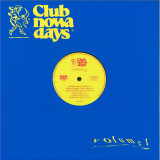
Various - Club Nowadays Volume 1 & 2 LP

Nowadays Records has never lost its taste for compilations. And after having released dozens of them to date, the label is planning to release new ones for the occasion, directly from the Club Nowadays' aerial nights, where artists from different scenes, lesser-known heads and label figures are mixed together, always with this key word: openness.

More than just a name for a party or a compilation, Club Nowadays is also becoming a real artists' collective.

On the 1st compilation "Club Nowadays, Vol. 1" released in June 2022, we found house and techno sounds in the Nowadays style by the artists Chien Méchant, Grand Soleil, La Fine Equipe, Fulgeance, Trifouille1er, Ténéré and Vect (who also signed the whole visual DA of the project).

Nowadays is back with "Club Nowadays, Vol. 2", with other artists such as Phantom Traffic, Le Bag, Jeff The Fool,... In a word, Nowadays gives us its definition of club music. It may not be universal, but it is unique and inseparable from the label's image.

out of Stock

Order now and we will order the item for you at our supplier.


Last In: 2 years ago
Isabassi - Speaking Things

C75 Cassette Tape


‘Speaking Things’, the new album from Isabassi, is a collection of highly detailed industrial music examining her singular perspective on rhythm and texture. Through brittle percussion, supernatural atmospheres and astonishing bass power, the Brazilian composer and artist explores a conversational narrative on the first full length Super Hexagon release.

About Isabassi:

Isabassi is a Brazilian electronic music composer and DJ based in Berlin. Highly influenced by industrial and rough sounds from the surroundings of Sao Paulo and the German capital, her musicality translates this aggressive environment through harsh and erratic drummings and dark textures. Aiming a sort of ritualistic experience, she explores different rhythms patterns to move body and soul, letting visceral impulses come to the surface.

pre-order now24.03.2023

expected to be published on 24.03.2023


Last In: 2026 years ago
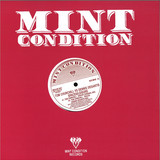
Tom Churchill VS. Dennis DeSantis ‎ - Spaces/Leisure

Mint Condition - A record label focused on excavating the outer fringes of classic House and Techno. Unreleased mixes, classics and overlooked gems mined from the last 20+ of contemporary dance music are the order of the day. From Chicago, Detroit and New York to London and beyond, Mint Condition have got their expert digging hats on to bring you exclusive heat and those rarer than rare jams that have been on your wants list for years! Dig in....

Back to 2002, the beginning of the new millennium. Tom Churchill's Headspace Recordings label had already been making an impact on the deeper strains of techno emanating from within the UK. With releases from detroit's Sean Deason, CiM, Hanna, Vince Watson and many more, Headspace was already a 'must check' label within record buying and DJ circles. This stellar split EP with NYC's Dennis DeSantis saw the pair remix each others tracks, both turning in very different, but equally complimentary sonic excursions. Churchill's 'Spaces' is surefire deep-space techno boogie of the highest order, swinging and funky and melodic in equal measure. The DeSantis remix of 'Spaces' is also a total winner, a stripped back exercise in expert minimalism, full of feeling and a perfect partner to the original mix. On the flip is Dennis DeSantis' 'Leisure', a sprawling and laconic broken house jam. Brilliant and teasing melodic synth motifs sit atop nagging acidic basslines and space. Again, the remix follows the original and Tom Churchill dials the track down into chasm deep shuffling drums and basslines and dubbed out FX. It's hard to think of an EP where two artists can remix each others music in such a compelling way, and for it to work so well. This is truly an excellent release and it's a real pleasure to see these tracks back on the streets. Sublime, and essential.

'Spaces / Leisure' has been legitimately re-released with the full involvement of Headspace Recordings for 2020 and remastered by London's Curve Pusher from the original sources especially for Mint Condition. 100% legit, licensed and released. Dug, remastered, repackaged and brought to you by the caring folks at your favourite reissue label - Mint Condition!

out of Stock

Order now and we will order the item for you at our supplier.


Last In: 3 months ago
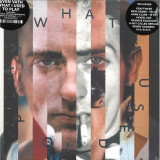
Sven Väth - What I Used To Play (12x12" boxset)
 
36

For this uniquely personal retrospective spread over twelve vinyl discs, Sven Väth takes us back to the early days of his DJ career. On What I Used To Play we meet great pioneers of electronic music, gifted percussionists, obscure wave bands, and innovative producers of a bygone 'new electronic' era. Rough beats and irresistible grooves from the identification stage of house, techno, and acid remind us not just how far electronic music has evolved over the past four decades, but how great it was to dance to EBM, techno, and house for the very first time.

If there is one protagonist of the electronic music scene who has remained curious, innovative and at the very cutting edge of music for over four decades, it's Sven Väth. His multi-layered artist albums and Sound of the Season mix compilations have been defining the genre for over two decades, and even today, he is constantly on the lookout for the next top tune to add to the highlights of his next set. At least, that's the case when he's not producing them himself as an artist or remixer. "Actually, it's always been part of my DNA to think ahead," and nothing had been further from his mind than looking back at his past, but when in spring of 2020 the international DJ circuit had to be scaled down to virtually zero, the 'restless traveler' suddenly had time. Time to stop and reflect on "how it actually was back then, at the very beginning of my career..."

"It was a great trip and with every track, beautiful memories came flooding back".
In the London apartment, he had just moved into, Sven has set up a "little music room", where he cocooned himself for several days, "to look way back for the first time and review my musical journey through the eighties, so to speak."

The interim result was six thematically oriented playlists with a grand total of 120 tracks from 'early 80s' to 'Balearic late 80s', together with excursions into afrobeat, European new wave, and EBM sounds and a few epochal techno/house tracks from the USA in between. From these 'Best of Sven Väth's favorites', the project What I Used To Play crystallized. Sven remembers how the Cocoon team reacted to his proposal: "They found the idea of making a compilation out of it MEGA from the beginning and everyone said 'Sven, go for it', but then, of course, the work really started, namely, to clear the rights and to get clean sounding masters of the up to 40-year-old tracks. There was also disappointment, of course. We couldn't clear certain titles because the rights holders in the USA had fallen out with each other or simply disappeared from the scene. In short, it wasn't easy, but now I can safely say we got the most important tracks."

Finally, after two years of research, curation, design, and administrative fine-tuning, the "little retrospective" from 1981 to 1990 is available. The exquisitely packaged, and three-kilo heavy box set is not only physically impressive, WIUTP is also the definitive record of Sven Väth's musical development. On each of the twenty-four sides of vinyl, you can trace track by track, what influenced him during which phase, and how he took off as a DJ from his parents' Queen's Pub straight into the spotlight at Dorian Gray. There and at Vogue (later OMEN), Sven became the style-defining player in the DJ booth that he still is today.


1981 - 1990: Future Sounds of Now

In the early eighties, the crowd in clubs like Vogue and Dorian Gray danced to what nowadays we call 'dance classics' - mainly disco, funk, soul, and chart pop. It was up to a new generation of DJs, including Sven Väth, the youngest protagonist in the Rhine-Main area at the time, to create their own club-ready music mix. Good new tracks and potential floor-fillers were rarities that had to be sought out and found, in order to prove oneself worthy.
Without MP3s, internet streaming, or other digital download possibilities, music didn't just gravitate to the DJ, instead, it had to be tracked down. In well-stocked record stores in Frankfurt and Wiesbaden or even in Amsterdam, London, or New York, Sven and friends sourced the material for countless magical nights. On WIUTP we can follow Sven's very personal journey through this wild, innovative era in which synth-pop, funk, hip-hop, and disco were successively replaced as 'club music' by house, techno, acid, and breakbeat. By the end of the decade, it was clear to see that these once exotic 'fringe' phenomena would soon become 'mass' phenomena.


Early 80s

Dirty Talk by the Italian-American duo Klein & M.B.O. represents the most innovative phase of the Italo-disco genre in the early eighties like no other track. Mario Boncaldo (I) and Tony Carrasco relied entirely on the original synthetic drum and percussion sounds of the Roland TR-808, coupled with the raunchy vocals of Rossana Casale and guitar accents of Davide Piatto. Of course, other tracks from this period were also influential in style, most notably Unit by Logic System, which worked as the perfect soundtrack to the laser lighting system at the legendary Dorian Gray club. With stomping beats and robotic rap interludes, Bostich by Yello also belongs on Sven's eternal playlist - after all, it caught the attention of Afrikaa Bambaataa, who invited the Swiss duo to perform at the Roxy in New York in 1983.


EBM Wave - Mid 80s

From today's point of view, the almost ten-minute-long, downtempo track Giant by Matt Johnson's band project The The, would probably not be considered an obvious club classic. However, a closer (re)listen reveals the rhythmic intricacies of the percussion overdubs by JG Thirlwell (aka Foetus) on Johnson's composition, and it becomes clear why this exceptional piece of music is one of Sven's absolute favorites. Other classics from this phase include Kaw-Liga by the mysterious The Residents, the hypnotic-synthetic Our Darkness by Anne Clark (and David Harrow), and last but not least, the somber, monotonous anthem Where Are You? by 16Bit, one of Sven Väth's projects together with Michael Münzing, Luca Anzilotti from 1986.


US House - Late 80s

You certainly can't talk about Chicago house without mentioning Frankie Knuckles. The resident DJ at the Warehouse not only gave the name to an entire genre, but also produced epochal floor fillers on the Trax label like the timeless Your Love, sung (and moaned) by Jamie Principle. Acid house protagonists Phuture also hail from Chicago, and on We Are Phuture (also released on Trax) we hear the chirping acid sounds of the legendary Roland TB-303 in full effect. Another featured classic is No UFO's by Detroit's Model 500 aka Juan Atkins, who is rightly considered the 'Godfather of Techno' even if the genre-defining track from 1985 still breathes with the spirit of hip-hop and electro from the first breakdance era.


Afrobeat

Le Serpent, by Algerian-born Abdelmadjid Guemguem, is a track that sounds completely different from everything else on WIUTP. Made in 1978, it's a monumental, rousing groove created without bass or synths, just with five congas! Even though Guem sadly passed away in 2021, his immortal, acoustic beats are understood all over the world and will continue to enrich many thousands of DJ sets for years to come. Another classic that not only Sven appreciates beyond measure is Hugh Masekela's Don't Go Lose it, Baby. In addition to being one of the most important jazz pioneers, the trumpeter and freedom fighter from Johannesburg was very experimental, integrating electronic sounds into his music in later years, in a similar vein to Miles Davis and Herbie Hancock. Dutch jazz pianist Jasper van't Hof's afrobeat project Pili Pili has also aged well. The trance-like, almost sixteen-minute-long track of the same name, manages to fill a whole side on the seventh of twelve vinyl discs in the WIUTP box.


UK-US-Euro - Late 80s

Time for a change of scene, in the truest sense of the word, and from a musical perspective, this section is like landing on another planet. First up is Andrew Weatherall's classic remix of Primal Scream's Loaded, featuring the iconic Peter Fonda sample (lifted from the 1966 biker film Wild Angels) that came to personify the mood triggered by the British Second Summer of Love in the late eighties: "We wanna be free to do what we wanna do, and we wanna get loaded...". This period also saw the emergence of M/A/R/R/S whose only single, 1987's Pump Up The Volume, became a club classic with support from DJ legend CJ Mackintosh. In this most eclectic of sections, we also encounter New York house and reggae producer Bobby Konders and his seminal Nervous Acid.


Balearic - Late 80s

Those who know him, know that Sven had already lost his heart to the 'magic island' of Ibiza as a teenager, so with that in mind, the WIUTP project couldn't end without a Balearic chapter. Inspired by Manuel Göttsching's E2-E4, the immortal, eponymously titled Sueño Latino belongs in there without question. Equally popular on the island was, and still is Break 4 Love by Raze, which thinking about it, would also fit perfectly into the house chapter. Last, but not least, there's an overdue reunion with Sven Väth himself, in his role as frontman of the successful Frankfurt trio OFF. Together with Michael Münzing and Luca Anzilotti (later of Snap!) this 'Organization For Fun' created the off-the-wall club hit Electric Salsa in 1986 which incidentally turned into an international chart smash, putting Sven in the enviable position of having to decide between pop stardom and a DJ career. Well, we all know how that decision turned out and the rest, as they say, is history. A not insignificant part of his story is What I Used To Play. Enjoy!

out of Stock

Order now and we will order the item for you at our supplier.


Last In: 8 months ago
THE LOFT - GHOST TRAINS & COUNTRY LANES STUDIO, STAGE & SESSIONS 1984-2015 3x12"

Triple coloured vinyl version (Each disc is a different colour) of the double CD that came out on Cherry Red in 2021 Presented in Tri-fold gatefold sleeve with 16 page 12x12 colour booklet, poster & photograph.
ONLY 350 COPIES WORLDWIDE
Among the first crop of Creation Records bands in the mid-1980s, THE LOFT seemed the most likely to break through. Following the success of The Smiths, guitar-based independent pop was in vogue, Alan McGee’s Creation label was turning heads – its bands blending 60s psychedelia, the melodic end of punk and a new sound which would soon be immortalised on NME’s C86 cassette. And in this London quartet, Creation had their answer to bands like Television, The Only Ones or early Modern Lovers, offering taut, off-kilter songs with an irresistibly deadpan cool.
Sadly, after just two singles, 1984’s downbeat debut ‘Why Does The Rain’ and the punchier sequel, ‘Up The Hill And Down The Slope’ – an indie hit which the band performed live on TV show The Oxford Road Show, The Loft dissolved, with various members founding new bands The Weather Prophets, The Caretaker Race and The Wishing Stones. They left behind seven studio tracks, a BBC Radio 1 session for Janice Long and one track from a Creation LP documenting the scene’s roots in small club The Living Room.
However, The Loft’s legend endured, eventually prompting a reunion in the early 2000s with all four original members – singer/songwriter/guitarist Pete Astor, guitarist Andy Strickland, bassist Bill Prince and drummer Dave Morgan. Alongside various well-received live shows, that led to a new single, ‘Model Village’ (2006) and more recently a session for Gideon Coe on BBC 6 Music (2015). The Loft’s reputation as founding fathers of a new breed of mid-80s indie pop continues to grow to this day, with the band often cited as an influence.
Compiled and coordinated by the band, Ghost Trains & Country Lanes expands on previous retrospectives of The Loft, adding those reunion recordings (including three previously unissued tracks), the Gideon Coe session and several live recordings from that historic performance at The Living Room back in 1984. (including many exclusive songs which were never recorded in the studio).
With new sleeve-notes by Danny Kelly, this is the definite tribute to The Loft

pre-order now20.01.2023

expected to be published on 20.01.2023


Last In: 2026 years ago
Moscoman - Adventura

Moscoman

Adventura

12inchCRM280
Crosstown Rebels
18.01.2023

Israeli artist Moscoman returns to Damian Lazarus' Crosstown Rebels imprint with Adventura, featuring a collaboration with alternative and electroclash band Zoot Woman and a remix from Love Attack label bass Alan Dixon. Transmitting twinkling house to emotive indie dance, each artist leaves a stellar stamp on Moscoman's sinuous release.

As summer draws to a close, Moscoman looks forward to the next chapter in his trajectory, undeterred by the change of seasons. The title track opens with a muscular kickdrum and organic percussion before an enchanting melody glide between the beats, igniting a dreamy, tripped-out feel. It's made for an open-minded dancefloor. Moscoman collaborates with Zoot Woman on Reinvention feat. Zoot Woman, blending the airy vocals of Johnny Blake with a shimmering synthline. One for the indie heads. Alan Dixon's remix follows suit with a cosmic disco offering, reworking the stems with verve and serving a slice of strut energy.

Moscoman is a producer, DJ and label boss. He heads up the imprint Disco Halal, showcasing the sounds of house, nu-disco and post-punk supplied by artists from all walks of life. With an ear to merge traditional tones from different dance music cultures worldwide, Moscoman garners an explorative approach to Disco Halal. So far, the label's discography boasts tunes by Simple Symmetry, Red Axes, Trikk and Auntie Flo. His DJ sets slink into long, storytelling sessions of low-slung grooves and post-punk flavoured beats, as heard in Space Miami, Panorama Bar, Glastonbury and Pacha Ibiza, amongst other iconic spots. British act Zoot Woman consists of seminal producers Adam Blake, Johnny Blake and Stuart Price. Since the mid-90s, the group have produced and performed electronica, alternative, electroclash, rock and synthpop. Acclaimed for their scintillating live shows, the group remains one of the most remarkable bands from the UK. London-based Alan Dixon is a producer and DJ celebrated for his disco edits. Labels like Watergate, Life and Death, Keinemusik and Pets Recordings have released his tunes alongside his own imprint, Love Attack.

out of Stock

Order now and we will order the item for you at our supplier.


Last In: 9 months ago
Gustaf - Audio Drag For Ego Slobs

Formed in 2018, Brooklyn’s Gustaf have built a kind of buzz that feels like it comes from a different era. The art punk 5 piece rapidly established a reputation and early excitement about their danceable, ESG-inspired post punk expanded outside of their city with remarkable effect despite having released no recorded music and barely having an online presence. As a result of their magnetic live show the band found unlikely early champions, catching the attention of luminaries like Beck – who had the band open for him at a secret loft party he played around the release of his latest album – the New York no wave legend James Chance, and shared stages with buzzing indie acts like Omni, Tropical Fuck Storm, Dehd and Bodega, while word of mouth led to sell out shows when they played their first LA headline dates in late 2019. They finally released recorded music in the form of their debut 7 inch at the end of 2020, which only furthered the growth of their reputation, earning them comparisons to acts like Television, The Talking Heads, The B-52s and LCD Soundsystem. Now, the band release their debut LP, the magnificently titled Audio Drag For Ego Slobs, on Toronto’s Royal Mountain Records (Wild Pink, Alvvays, Mac DeMarco).

out of Stock

Order now and we will order the item for you at our supplier.


Last In: 3 years ago
Curd Duca - Waves 3

Curd Duca

Waves 3

12inchMAGAZINEWAVES3
Magazine
28.10.2022

Magazine is glad to announce the album Waves 3 by Curd Duca, 
 the third and last part of the trilogy Waves: Austrian electronic composer Curd Duca is widely known for his 1990es series of critically acclaimed easy listening 1-5 (Normal) and elevator 1-3 (Mille Plateaux).

After a long break from the studio, Duca has issued part 1 of the Waves series in late 2020 on Magazine. This was in fact his first album in 20 years. The Waves recordings pick up the thread of his 90s work and open up a new chapter. Again, everything is shifting constantly and all tracks are quite different (soft, rough, melodic, abstract ... ), but complement each other in a surprisingly coherent way to form an idiosyncratic universe.

While other experimental artists can sound as if they're attempting to lift lead weights over their heads, Duca is content flicking feathers into their faces. After his impressive 1990s/00s run on Normal and Mille Plateaux, Curd Duca had disappeared for 20 years before emerging from the aether last year.

The albums of the new "Waves" Trilogy represent a flawless examination of sound and texture. The Vienna-based producer still straddles high and low culture, but approaches his sonics with a more historically aware ear. So plain and resonant gong recordings are placed next to pop music loops and DSP-fractured cut-ups, and icy electronic jams nudge up against cassette warped instrumental sketches.

Waves 3 is a continuation and culmination of the series. In the final chapter, we’re drawn in with church bells on dome, but quickly transported to another era entirely with the crackly bläser and absurd zither, a tongue-in-cheek plunderphonic experiment assembled from zither samples. Duca follows this evocative run of tracks with a machine-gun blast of experimental sound, from the percussive 500 GRM to the ferric ASMR birdsong of ziegenmelker.

This is Duca at his most uncompromising, grabbing central European culture and dragging it through his array of processes. Playing the album from beginning to end opens up a weightless cut-and-paste mixtape, stitched together with expert foresight and a knowing wink to camera.

Like the best psychedelic experiences, memories are triggered and turned inside-out, and knowledge is allowed to blossom. Curd Duca has been refining his process for three decades now, and few artists have quite the same ability to challenge, provoke, and inspire.

out of Stock

Order now and we will order the item for you at our supplier.


Last In: 3 years ago
Lee Tracy & Isaac Manning - Is it What You Want

As the sun sets on a quaint East Nashville house, a young man bares a piece of his soul. Facing the camera, sporting a silky suit jacket/shirt/slacks/fingerless gloves ensemble that announces "singer" before he's even opened his mouth, Lee Tracy Johnson settles onto his stage, the front yard. He sways to the dirge-like drum machine pulse of a synth-soaked slow jam, extends his arms as if gaining his balance, and croons in affecting, fragile earnest, "I need your love… oh baby…"

Dogs in the yard next door begin barking. A mysterious cardboard robot figure, beamed in from galaxies unknown and affixed to a tree, is less vocal. Lee doesn't acknowledge either's presence. He's busy feeling it, arms and hands gesticulating. His voice rises in falsetto over the now-quiet dogs, over the ambient noise from the street that seeps into the handheld camcorder's microphone, over the recording of his own voice played back from a boombox off-camera. After six minutes the single, continuous shot ends. In this intimate creative universe there are no re-takes. There are many more music videos to shoot, and as Lee later puts it, "The first time you do it is actually the best. Because you can never get that again. You expressing yourself from within."

"I Need Your Love" dates from a lost heyday. From some time in the '80s or early '90s, when Lee Tracy (as he was known in performance) and his music partner/producer/manager Isaac Manning committed hours upon hours of their sonic and visual ideas to tape. Embracing drum machines and synthesizers – electronics that made their personal futurism palpable – they recorded exclusively at home, live in a room into a simple cassette deck. Soul, funk, electro and new wave informed their songs, yet Lee and Isaac eschewed the confinement of conventional categories and genres, preferring to let experimentation guide them.

"Anytime somebody put out a new record they had the same instruments or the same sound," explains Isaac. "So I basically wanted to find something that's really gonna stand out away from all of the rest of 'em." Their ethos meant that every idea they came up with was at least worth trying: echoed out half-rapped exhortations over frantic techno-style beats, gospel synth soul, modal electro-funk, oddball pop reinterpretations, emo AOR balladry, nods to Prince and the Fat Boys, or arrangements that might collapse mid-song into a mess of arcade game-ish blips before rallying to reach the finish line. All of it conjoined by consistent tape hiss, and most vitally, Lee's chameleonic voice, which managed to wildly shape shift and still evoke something sincere – whether toggling between falsetto and tenor exalting Jesus's return, or punctuating a melismatic romantic adlib with a succinct, "We all know how it feels to be alone."

"People think we went to a studio," says Isaac derisively. "We never went to no studio. We didn't have the money to go to no studio! We did this stuff at home. I shot videos in my front yard with whatever we could to get things together." Sometimes Isaac would just put on an instrumental record, be it "Planet Rock" or "Don't Cry For Me Argentina" (from Evita), press "record," and let Lee improvise over it, yielding peculiar love songs, would-be patriotic anthems, or Elvis Presley or Marilyn Monroe tributes. Technical limitations and a lack of professional polish never dissuaded them. They believed they were onto something.

"That struggle," Isaac says, "made that sound sound good to me."

In the parlance of modern music criticism Lee and Isaac's dizzying DIY efforts would inevitably be described as "outsider." But "outsider" carries the burden of untold additional layers of meaning if you're Black and from the South, creating on a budget, and trying to get someone, anyone within the country music capital of the world to take your vision seriously. "What category should we put it in?" Isaac asks rhetorically. "I don't know. All I know is feeling. I ain't gonna name it nothing. It's music. If it grabs your soul and touch your heart that's what it basically is supposed to do."

=

Born in 1963, the baby boy of nine siblings, Lee Tracy spent his earliest years living amidst the shotgun houses on Nashville's south side. "We was poor, man!" he says, recalling the outhouse his family used for a bathroom and the blocks of ice they kept in the kitchen to chill perishables. "But I actually don't think I really realized I was in poverty until I got grown and started thinking about it." Lee's mom worked at the Holiday Inn; his dad did whatever he had to do, from selling fruit from a horse drawn cart to bootlegging. "We didn't have much," Lee continues, "but my mother and my father got us the things we needed, the clothes on our back." By the end of the decade with the city's urban renewal programs razing entire neighborhoods to accommodate construction of the Interstate, the family moved to Edgehill Projects. Lee remembers music and art as a constant source of inspiration for he and his brothers and sisters – especially after seeing the Jackson 5 perform on Ed Sullivan. "As a small child I just knew that was what I wanted to do."

His older brother Don began musically mentoring him, introducing Lee to a variety of instruments and sounds. "He would never play one particular type of music, like R&B," says Lee. "I was surrounded by jazz, hard rock and roll, easy listening, gospel, reggae, country music; I mean I was a sponge absorbing all of that." Lee taught himself to play drums by beating on cardboard boxes, gaining a rep around the way for his timekeeping, and his singing voice. Emulating his favorites, Earth Wind & Fire and Cameo, he formed groups with other kids with era-evocative band names like Concept and TNT Connection, and emerged as the leader of disciplined rehearsals. "I made them practice," says Lee. "We practiced and practiced and practiced. Because I wanted that perfection." By high school the most accomplished of these bands would take top prize in a prominent local talent show. It was a big moment for Lee, and he felt ready to take things to the next level. But his band-mates had other ideas.

"I don't know what happened," he says, still miffed at the memory. "It must have blew they mind after we won and people started showing notice, because it's like everybody quit! I was like, where the hell did everybody go?" Lee had always made a point of interrogating prospective musicians about their intentions before joining his groups: were they really serious or just looking for a way to pick up girls? Now he understood even more the importance of finding a collaborator just as committed to the music as he was.

=

Isaac Manning had spent much of his life immersed in music and the arts – singing in the church choir with his family on Nashville's north side, writing, painting, dancing, and working various gigs within the entertainment industry. After serving in the armed forces, in the early '70s he ran The Teenage Place, a music and performance venue that catered to the local youth. But he was forced out of town when word of one of his recreational routines created a stir beyond the safe haven of his bohemian circles.

"I was growing marijuana," Isaac explains. "It wasn't no business, I was smoking it myself… I would put marijuana in scrambled eggs, cornbread and stuff." His weed use originated as a form of self-medication to combat severe tooth pain. But when he began sharing it with some of the other young people he hung out with, some of who just so happened to be the kids of Nashville politicians, the cops came calling. "When I got busted," he remembers, "they were talking about how they were gonna get rid of me because they didn't want me saying nothing about they children because of the politics and stuff. So I got my family, took two raggedy cars, and left Nashville and went to Vegas."

Out in the desert, Isaac happened to meet Chubby Checker of "The Twist" fame while the singer was gigging at The Flamingo. Impressed by Isaac's zeal, Checker invited him to go on the road with him as his tour manager/roadie/valet. The experience gave Isaac a window into a part of the entertainment world he'd never encountered – a glimpse of what a true pop act's audience looked like. "Chubby Checker, none of his shows were played for Black folks," he remembers. "All his gigs were done at high-class white people areas." Returning home after a few years with Chubby, Isaac was properly motivated to make it in Music City. He began writing songs and scouting around Nashville for local talent anywhere he could find it with an expressed goal: "Find someone who can deliver your songs the way you want 'em delivered and make people feel what you want them to feel."

One day while walking through Edgehill Projects Isaac heard someone playing the drums in a way that made him stop and take notice. "The music was so tight, just the drums made me feel like, oh I'm-a find this person," he recalls. "So I circled through the projects until I found who it was.

"That's how I met him – Lee Tracy. When I found him and he started singing and stuff, I said, ohhh, this is somebody different."

=

Theirs was a true complementary partnership: young Lee possessed the raw talent, the older Isaac the belief. "He's really the only one besides my brother and my family that really seen the potential in me," says Lee. "He made me see that I could do it."

Isaac long being a night owl, his house also made for a fertile collaborative environment – a space where there always seemed to be a new piece of his visual art on display: paintings, illustrations, and dolls and figures (including an enigmatic cardboard robot). Lee and Issac would hang out together and talk, listen to music, conjure ideas, and smoke the herb Isaac had resumed growing in his yard. "It got to where I could trust him, he could trust me," Isaac says of their bond. They also worked together for hours on drawings, spreading larges rolls of paper on the walls and sketching faces with abstract patterns and imagery: alien-like beings, tri-horned horse heads, inverted Janus-like characters where one visage blurred into the other.

Soon it became apparent that they didn't need other collaborators; self-sufficiency was the natural way forward. At Isaac's behest Lee, already fed up with dealing with band musicians, began playing around with a poly-sonic Yamaha keyboard at the local music store. "It had everything on it – trumpet, bass, drums, organ," remembers Lee. "And that's when I started recording my own stuff."

The technology afforded Lee the flexibility and independence he craved, setting him on a path other bedroom musicians and producers around the world were simultaneously following through the '80s into the early '90s. Saving up money from day jobs, he eventually supplemented the Yamaha Isaac had gotten him with Roland and Casio drum machines and a Moog. Lee was living in an apartment in Hillside at that point caring for his dad, who'd been partially paralyzed since early in life. In the evenings up in his second floor room, the music put him in a zone where he could tune out everything and lose himself in his ideas.

"Oh I loved it," he recalls. "I would really experiment with the instruments and use a lot of different sound effects. I was looking for something nobody else had. I wanted something totally different. And once I found the sound I was looking for, I would just smoke me a good joint and just let it go, hit the record button." More potent a creative stimulant than even Isaac's weed was the holistic flow and spontaneity of recording. Between sessions at Isaac's place and Lee's apartment, their volume of output quickly ballooned.

"We was always recording," says Lee. "That's why we have so much music. Even when I went to Isaac's and we start creating, I get home, my mind is racing, I gotta start creating, creating, creating. I remember there were times when I took a 90-minute tape from front to back and just filled it up."

"We never practiced," says Isaac. "See, that was just so odd about the whole thing. I could relate to him, and tell him about the songs I had ideas for and everything and stuff. And then he would bring it back or whatever, and we'd get together and put it down." Once the taskmaster hell bent on rehearsing, Lee had flipped a full 180. Perfection was no longer an aspiration, but the enemy of inspiration.

"I seen where practicing and practicing got me," says Lee. "A lot of musicians you get to playing and they gotta stop, they have to analyze the music. But while you analyzing you losing a lot of the greatness of what you creating. Stop analyzing what you play, just play! And it'll all take shape."

=

"I hope you understood the beginning of the record because this was invented from a dream I had today… (You tell me, I'll tell you, we'll figure it out together)" – Lee Tracy and Isaac Manning, "Hope You Understand"

Lee lets loose a maniacal cackle when he acknowledges that the material that he and Isaac recorded was by anyone's estimation pretty out there. It's the same laugh that commences "Hope You Understand" – a chaotic transmission that encapsulates the duality at the heart of their music: a stated desire to reach people and a compulsion to go as leftfield as they saw fit.

"We just did it," says Lee. "We cut the music on and cut loose. I don't sit around and write. I do it by listening, get a feeling, play the music, and the lyrics and stuff just come out of me."

The approach proved adaptable to interpreting other artists' material. While recording a cover of Whitney Houston's pop ballad "Saving All My Love For You," Lee played Whitney's version in his headphones as he laid down his own vocals – partially following the lyrics, partially using them as a departure point. The end result is barely recognizable compared with the original, Lee and Isaac having switched up the time signature and reinvented the melody along the way towards morphing a slick mainstream radio standard into something that sounds solely their own.

"I really used that song to get me started," says Lee. "Then I said, well I need something else, something is missing. Something just came over me. That's when I came up with 'Is It What You Want.'"

The song would become the centerpiece of Lee and Isaac's repertoire. Pushed along by a percolating metronomic Rhythm King style beat somewhere between a military march and a samba, "Is It What You Want" finds Lee pleading the sincerity of his commitment to a potential love interest embellished by vocal tics and hiccups subtlely reminiscent of his childhood hero MJ. Absent chord changes, only synth riffs gliding in and out like apparitions, the song achieves a lingering lo-fi power that leaves you feeling like it's still playing, somewhere, even after the fade out.

"I don't know, it's like a real spiritual song," Lee reflects. "But it's not just spiritual. To me the more I listen to it it's like about everything that you do in your everyday life, period. Is it what you want? Do you want a car or you don't want a car? Do you want Jesus or do you want the Devil? It's basically asking you the question. Can't nobody answer the question but you yourself."

In 1989 Lee won a lawsuit stemming from injuries sustained from a fight he'd gotten into. He took part of the settlement money and with Isaac pressed up "Saving All My Love For You" b/w "Is It What You Want" as a 45 single. Isaac christened the label One Chance Records. "Because that's all we wanted," he says with a laugh, "one chance."

Isaac sent the record out to radio stations and major labels, hoping for it to make enough noise to get picked up nationally. But the response he and Lee were hoping for never materialized. According to Isaac the closest the single got to getting played on the radio is when a disk jock from a local station made a highly unusual announcement on air: "The dude said on the radio, 107.5 – 'We are not gonna play 'Is It What You Want.' We cracked up! Wow, that's deep.

"It was a whole racist thing that was going on," he reflects. "So we just looked over and kept on going. That was it. That was about the way it goes… If you were Black and you were living in Nashville and stuff, that's the way you got treated." Isaac already knew as much from all the times he'd brought he and Lee's tapes (even their cache of country music tunes) over to Music Row to try to drum up interest to no avail.

"Isaac, he really worked his ass off," says Lee. "He probably been to every record place down on Music Row." Nashville's famed recording and music business corridor wasn't but a few blocks from where Lee grew up. Close enough, he remembers, for him to ride his bike along its back alleys and stumble upon the occasional random treasure, like a discarded box of harmonicas. Getting in through the front door, however, still felt a world away.

"I just don't think at the time our music fell into a category for them," he concedes. "It was before its time."

=

Lee stopped making music some time in the latter part of the '90s, around the time his mom passed away and life became increasingly tough to manage. "When my mother died I had a nervous breakdown," he says, "So I shut down for a long time. I was in such a sadness frame of mind. That's why nobody seen me. I had just disappeared off the map." He fell out of touch with Isaac, and in an indication of just how bad things had gotten for him, lost track of all the recordings they'd made together. Music became a distant memory.

Fortunately, Isaac kept the faith. In a self-published collection of his poetry – paeans to some of his favorite entertainment and public figures entitled Friends and Dick Clark – he'd written that he believed "music has a life of its own." But his prescience and presence of mind were truly manifested in the fact that he kept an archive of he and Lee's work. As perfectly imperfect as "Is It What You Want" now sounds in a post-Personal Space world, Lee and Isaac's lone official release was in fact just a taste. The bulk of the Is It What You Want album is culled from the pair's essentially unheard home recordings – complete songs, half-realized experiments, Isaac's blue monologues and pronouncements et al – compiled, mixed and programmed in the loose and impulsive creative spirit of their regular get-togethers from decades ago. The rest of us, it seems, may have finally caught up to them.

On the prospect of at long last reaching a wider audience, Isaac says simply, "I been trying for a long time, it feels good." Ever the survivor, he adds, "The only way I know how to make it to the top is to keep climbing. If one leg break on the ladder, hey, you gotta fix it and keep on going… That's where I be at. I'll kill death to make it out there."

For Lee it all feels akin to a personal resurrection: "It's like I was in a tomb and the tomb was opened and I'm back… Man, it feels so great. I feel like I'm gonna jump out of my skin." Success at this stage of his life, he realizes, probably means something different than what it did back when he was singing and dancing in Isaac's front yard. "What I really mean by 'making it,'" he explains isn't just the music being heard but, "the story being told."

Occasionally Lee will pull up "Is It What You Want" on YouTube on his phone, put on his headphones, and listen. He remembers the first time he heard his recorded voice. How surreal it was, how he thought to himself, "Is that really me?" What would he say to that younger version of himself now?

"I would probably tell myself, hang in there, don't give up. Keep striving for the goal. And everything will work out."

Despite what's printed on the record label, sometimes you do get more than one chance.
out of Stock

Order now and we will order the item for you at our supplier.


Last In: 3 years ago
EMERALDS - SOLAR BRIDGE LP

Emeralds _ musicians John Elliott, Steve Hauschildt, and Mark McGuire _ emerged from the rust-pocked, post-millennial Midwest drone/noise scene seemingly unable or uninterested in keeping up with themselves. Their proliferation of material was intimidating; mountains of improvised, home-recorded music were released on limited-edition tapes, CD-Rs, and split LPs. There is and was a sense that the Ohio trio was after something beyond physical mediums. By 2008, their sprawling live sets were a known can't-miss at any underground experimental event. Tiny Mix Tapes reviewed that year's appearance at No Fun Fest: "No one's sawtooths, sines, and other various waveforms were so beautifully sculpted and beamed out into the Plejades as Emeralds'." These basement dwellers were shaping meditative, psychedelic, arpeggiated electronic music in the veins of German kosmische forebears like Ash Ra Tempel, Klaus Schulze, and Tangerine Dream. Made primarily with synthesizers and guitar, Emeralds' music possessed the same astral psyche with a home-crafted punk edge, a distant descendant of that pioneering era, and a bridge to someplace new, someplace scorched. Released on Aaron Dilloway's (Wolf Eyes, etc.) Hanson imprint, Solar Bridge was the first Emeralds album to receive any kind of proper distribution and represents the first attempt to archivally preserve their fluid craft. The first of an inimitable five-LP run before the band dissolved in 2013, Solar Bridge is a moment of glistening primacy that boots up a catalog and legacy that the heads still grapple with. Emeralds begin to make sense of it in the fall of 2022 with a remas- tered Solar Bridge LP release on Ghostly International. Emeralds materialized as a fully formed entity radiating cosmic potential. Their discography evolved and incorporated different qualities and vocabularies, but hearing where it started will always feel different. The density, the patience, and the sheer refinement presented on Solar Bridge legibly demonstrates how and why Emeralds has become a legendary part of the contemporary electronic music canon.

out of Stock

Order now and we will order the item for you at our supplier.


Last In: 3 years ago
EMERALDS - SOLAR BRIDGE LP

Emeralds _ musicians John Elliott, Steve Hauschildt, and Mark McGuire _ emerged from the rust-pocked, post-millennial Midwest drone/noise scene seemingly unable or uninterested in keeping up with themselves. Their proliferation of material was intimidating; mountains of improvised, home-recorded music were released on limited-edition tapes, CD-Rs, and split LPs. There is and was a sense that the Ohio trio was after something beyond physical mediums. By 2008, their sprawling live sets were a known can't-miss at any underground experimental event. Tiny Mix Tapes reviewed that year's appearance at No Fun Fest: "No one's sawtooths, sines, and other various waveforms were so beautifully sculpted and beamed out into the Plejades as Emeralds'." These basement dwellers were shaping meditative, psychedelic, arpeggiated electronic music in the veins of German kosmische forebears like Ash Ra Tempel, Klaus Schulze, and Tangerine Dream. Made primarily with synthesizers and guitar, Emeralds' music possessed the same astral psyche with a home-crafted punk edge, a distant descendant of that pioneering era, and a bridge to someplace new, someplace scorched. Released on Aaron Dilloway's (Wolf Eyes, etc.) Hanson imprint, Solar Bridge was the first Emeralds album to receive any kind of proper distribution and represents the first attempt to archivally preserve their fluid craft. The first of an inimitable five-LP run before the band dissolved in 2013, Solar Bridge is a moment of glistening primacy that boots up a catalog and legacy that the heads still grapple with. Emeralds begin to make sense of it in the fall of 2022 with a remas- tered Solar Bridge LP release on Ghostly International. Emeralds materialized as a fully formed entity radiating cosmic potential. Their discography evolved and incorporated different qualities and vocabularies, but hearing where it started will always feel different. The density, the patience, and the sheer refinement presented on Solar Bridge legibly demonstrates how and why Emeralds has become a legendary part of the contemporary electronic music canon.

pre-order now30.09.2022

expected to be published on 30.09.2022


Last In: 2026 years ago
Yiannis Iliakis - Mountainmouth

Clear Vinyl + DL Code

Yiannis Iliakis is a multi instrumentalist and composer from Athens. He is mainly known as a drummer. As such he is a member of the free jazz band Outward Bound as well as a member of the successful Greek progressive rock band Ciccada. However, that's only one side of Iliakis' creative efforts. In April 2021, he released his first full length electronic album entitled Vertical Horizon on the Submersion Records, which mostly is an ambient work. Now, with Mountainmouth he opens another chapter for his musical talents.

The EP is one of the most thrilling and adventurous takes on what the IDM term usually would suggest. The key song might be the title track "Mountainmouth" - an extremely energetic composition which won't leave you unaffected. As per most of Iliakis' songs it is based on originally recorded drums that were heavily edited. In the next step, these were combined with chords, melodies, bass and harmonies on top. The musical result is simply breathtaking - one might even call this track electronica for prog-rock heads. Surely a perfect opener for the release.

The next song is Carbonated Soap on which Iliakis is going straight forward. The catchy melody and a fresh uptempo beat are offering something that could even fit well into a club-friendly DJ set. Next up, comes "Infected Walkman". According to Iliakis, it was the first one he made for this project when he participated in an art exhibition. This track, as well as the following "Sad Plants", are both down tempo and chilled, yet keeping an experimental vibe without loosing a soulful and human touch. Coming closer to the end, "Exodus Denied" is a brilliant experimental ambient piece, more similar to the works on the Vertical Horizon LP. Finally, the EP ends with a short edit of "Carbonated Soap" that jumps right to the more energetic parts after the first break.

Mountainmouth may not be an easy listen at start - but we are sure the music has the power to be another classic release from our catalogue. The EP will be released in July 2022 on a very limited 12" vinyl as well as digitally. The cover artwork was done by Iliakis himself. We are very excited to present a new artist to you on Equinox with so many different talents.

pre-order now30.09.2022

expected to be published on 30.09.2022


Last In: 2026 years ago
Yiannis Iliakis - Mountainmouth

Violet Vinyl + DL Code

Yiannis Iliakis is a multi instrumentalist and composer from Athens. He is mainly known as a drummer. As such he is a member of the free jazz band Outward Bound as well as a member of the successful Greek progressive rock band Ciccada. However, that's only one side of Iliakis' creative efforts. In April 2021, he released his first full length electronic album entitled Vertical Horizon on the Submersion Records, which mostly is an ambient work. Now, with Mountainmouth he opens another chapter for his musical talents.

The EP is one of the most thrilling and adventurous takes on what the IDM term usually would suggest. The key song might be the title track "Mountainmouth" - an extremely energetic composition which won't leave you unaffected. As per most of Iliakis' songs it is based on originally recorded drums that were heavily edited. In the next step, these were combined with chords, melodies, bass and harmonies on top. The musical result is simply breathtaking - one might even call this track electronica for prog-rock heads. Surely a perfect opener for the release.

The next song is Carbonated Soap on which Iliakis is going straight forward. The catchy melody and a fresh uptempo beat are offering something that could even fit well into a club-friendly DJ set. Next up, comes "Infected Walkman". According to Iliakis, it was the first one he made for this project when he participated in an art exhibition. This track, as well as the following "Sad Plants", are both down tempo and chilled, yet keeping an experimental vibe without loosing a soulful and human touch. Coming closer to the end, "Exodus Denied" is a brilliant experimental ambient piece, more similar to the works on the Vertical Horizon LP. Finally, the EP ends with a short edit of "Carbonated Soap" that jumps right to the more energetic parts after the first break.

Mountainmouth may not be an easy listen at start - but we are sure the music has the power to be another classic release from our catalogue. The EP will be released in July 2022 on a very limited 12" vinyl as well as digitally. The cover artwork was done by Iliakis himself. We are very excited to present a new artist to you on Equinox with so many different talents.

pre-order now30.09.2022

expected to be published on 30.09.2022


Last In: 2026 years ago
Lee Tracy & Isaac Manning - Is it What You Want LP

As the sun sets on a quaint East Nashville house, a young man bares a piece of his soul. Facing the camera, sporting a silky suit jacket/shirt/slacks/fingerless gloves ensemble that announces "singer" before he's even opened his mouth, Lee Tracy Johnson settles onto his stage, the front yard. He sways to the dirge-like drum machine pulse of a synth-soaked slow jam, extends his arms as if gaining his balance, and croons in affecting, fragile earnest, "I need your love… oh baby…"

Dogs in the yard next door begin barking. A mysterious cardboard robot figure, beamed in from galaxies unknown and affixed to a tree, is less vocal. Lee doesn't acknowledge either's presence. He's busy feeling it, arms and hands gesticulating. His voice rises in falsetto over the now-quiet dogs, over the ambient noise from the street that seeps into the handheld camcorder's microphone, over the recording of his own voice played back from a boombox off-camera. After six minutes the single, continuous shot ends. In this intimate creative universe there are no re-takes. There are many more music videos to shoot, and as Lee later puts it, "The first time you do it is actually the best. Because you can never get that again. You expressing yourself from within."

"I Need Your Love" dates from a lost heyday. From some time in the '80s or early '90s, when Lee Tracy (as he was known in performance) and his music partner/producer/manager Isaac Manning committed hours upon hours of their sonic and visual ideas to tape. Embracing drum machines and synthesizers – electronics that made their personal futurism palpable – they recorded exclusively at home, live in a room into a simple cassette deck. Soul, funk, electro and new wave informed their songs, yet Lee and Isaac eschewed the confinement of conventional categories and genres, preferring to let experimentation guide them.

"Anytime somebody put out a new record they had the same instruments or the same sound," explains Isaac. "So I basically wanted to find something that's really gonna stand out away from all of the rest of 'em." Their ethos meant that every idea they came up with was at least worth trying: echoed out half-rapped exhortations over frantic techno-style beats, gospel synth soul, modal electro-funk, oddball pop reinterpretations, emo AOR balladry, nods to Prince and the Fat Boys, or arrangements that might collapse mid-song into a mess of arcade game-ish blips before rallying to reach the finish line. All of it conjoined by consistent tape hiss, and most vitally, Lee's chameleonic voice, which managed to wildly shape shift and still evoke something sincere – whether toggling between falsetto and tenor exalting Jesus's return, or punctuating a melismatic romantic adlib with a succinct, "We all know how it feels to be alone."

"People think we went to a studio," says Isaac derisively. "We never went to no studio. We didn't have the money to go to no studio! We did this stuff at home. I shot videos in my front yard with whatever we could to get things together." Sometimes Isaac would just put on an instrumental record, be it "Planet Rock" or "Don't Cry For Me Argentina" (from Evita), press "record," and let Lee improvise over it, yielding peculiar love songs, would-be patriotic anthems, or Elvis Presley or Marilyn Monroe tributes. Technical limitations and a lack of professional polish never dissuaded them. They believed they were onto something.

"That struggle," Isaac says, "made that sound sound good to me."

In the parlance of modern music criticism Lee and Isaac's dizzying DIY efforts would inevitably be described as "outsider." But "outsider" carries the burden of untold additional layers of meaning if you're Black and from the South, creating on a budget, and trying to get someone, anyone within the country music capital of the world to take your vision seriously. "What category should we put it in?" Isaac asks rhetorically. "I don't know. All I know is feeling. I ain't gonna name it nothing. It's music. If it grabs your soul and touch your heart that's what it basically is supposed to do."

=

Born in 1963, the baby boy of nine siblings, Lee Tracy spent his earliest years living amidst the shotgun houses on Nashville's south side. "We was poor, man!" he says, recalling the outhouse his family used for a bathroom and the blocks of ice they kept in the kitchen to chill perishables. "But I actually don't think I really realized I was in poverty until I got grown and started thinking about it." Lee's mom worked at the Holiday Inn; his dad did whatever he had to do, from selling fruit from a horse drawn cart to bootlegging. "We didn't have much," Lee continues, "but my mother and my father got us the things we needed, the clothes on our back." By the end of the decade with the city's urban renewal programs razing entire neighborhoods to accommodate construction of the Interstate, the family moved to Edgehill Projects. Lee remembers music and art as a constant source of inspiration for he and his brothers and sisters – especially after seeing the Jackson 5 perform on Ed Sullivan. "As a small child I just knew that was what I wanted to do."

His older brother Don began musically mentoring him, introducing Lee to a variety of instruments and sounds. "He would never play one particular type of music, like R&B," says Lee. "I was surrounded by jazz, hard rock and roll, easy listening, gospel, reggae, country music; I mean I was a sponge absorbing all of that." Lee taught himself to play drums by beating on cardboard boxes, gaining a rep around the way for his timekeeping, and his singing voice. Emulating his favorites, Earth Wind & Fire and Cameo, he formed groups with other kids with era-evocative band names like Concept and TNT Connection, and emerged as the leader of disciplined rehearsals. "I made them practice," says Lee. "We practiced and practiced and practiced. Because I wanted that perfection." By high school the most accomplished of these bands would take top prize in a prominent local talent show. It was a big moment for Lee, and he felt ready to take things to the next level. But his band-mates had other ideas.

"I don't know what happened," he says, still miffed at the memory. "It must have blew they mind after we won and people started showing notice, because it's like everybody quit! I was like, where the hell did everybody go?" Lee had always made a point of interrogating prospective musicians about their intentions before joining his groups: were they really serious or just looking for a way to pick up girls? Now he understood even more the importance of finding a collaborator just as committed to the music as he was.

=

Isaac Manning had spent much of his life immersed in music and the arts – singing in the church choir with his family on Nashville's north side, writing, painting, dancing, and working various gigs within the entertainment industry. After serving in the armed forces, in the early '70s he ran The Teenage Place, a music and performance venue that catered to the local youth. But he was forced out of town when word of one of his recreational routines created a stir beyond the safe haven of his bohemian circles.

"I was growing marijuana," Isaac explains. "It wasn't no business, I was smoking it myself… I would put marijuana in scrambled eggs, cornbread and stuff." His weed use originated as a form of self-medication to combat severe tooth pain. But when he began sharing it with some of the other young people he hung out with, some of who just so happened to be the kids of Nashville politicians, the cops came calling. "When I got busted," he remembers, "they were talking about how they were gonna get rid of me because they didn't want me saying nothing about they children because of the politics and stuff. So I got my family, took two raggedy cars, and left Nashville and went to Vegas."

Out in the desert, Isaac happened to meet Chubby Checker of "The Twist" fame while the singer was gigging at The Flamingo. Impressed by Isaac's zeal, Checker invited him to go on the road with him as his tour manager/roadie/valet. The experience gave Isaac a window into a part of the entertainment world he'd never encountered – a glimpse of what a true pop act's audience looked like. "Chubby Checker, none of his shows were played for Black folks," he remembers. "All his gigs were done at high-class white people areas." Returning home after a few years with Chubby, Isaac was properly motivated to make it in Music City. He began writing songs and scouting around Nashville for local talent anywhere he could find it with an expressed goal: "Find someone who can deliver your songs the way you want 'em delivered and make people feel what you want them to feel."

One day while walking through Edgehill Projects Isaac heard someone playing the drums in a way that made him stop and take notice. "The music was so tight, just the drums made me feel like, oh I'm-a find this person," he recalls. "So I circled through the projects until I found who it was.

"That's how I met him – Lee Tracy. When I found him and he started singing and stuff, I said, ohhh, this is somebody different."

=

Theirs was a true complementary partnership: young Lee possessed the raw talent, the older Isaac the belief. "He's really the only one besides my brother and my family that really seen the potential in me," says Lee. "He made me see that I could do it."

Isaac long being a night owl, his house also made for a fertile collaborative environment – a space where there always seemed to be a new piece of his visual art on display: paintings, illustrations, and dolls and figures (including an enigmatic cardboard robot). Lee and Issac would hang out together and talk, listen to music, conjure ideas, and smoke the herb Isaac had resumed growing in his yard. "It got to where I could trust him, he could trust me," Isaac says of their bond. They also worked together for hours on drawings, spreading larges rolls of paper on the walls and sketching faces with abstract patterns and imagery: alien-like beings, tri-horned horse heads, inverted Janus-like characters where one visage blurred into the other.

Soon it became apparent that they didn't need other collaborators; self-sufficiency was the natural way forward. At Isaac's behest Lee, already fed up with dealing with band musicians, began playing around with a poly-sonic Yamaha keyboard at the local music store. "It had everything on it – trumpet, bass, drums, organ," remembers Lee. "And that's when I started recording my own stuff."

The technology afforded Lee the flexibility and independence he craved, setting him on a path other bedroom musicians and producers around the world were simultaneously following through the '80s into the early '90s. Saving up money from day jobs, he eventually supplemented the Yamaha Isaac had gotten him with Roland and Casio drum machines and a Moog. Lee was living in an apartment in Hillside at that point caring for his dad, who'd been partially paralyzed since early in life. In the evenings up in his second floor room, the music put him in a zone where he could tune out everything and lose himself in his ideas.

"Oh I loved it," he recalls. "I would really experiment with the instruments and use a lot of different sound effects. I was looking for something nobody else had. I wanted something totally different. And once I found the sound I was looking for, I would just smoke me a good joint and just let it go, hit the record button." More potent a creative stimulant than even Isaac's weed was the holistic flow and spontaneity of recording. Between sessions at Isaac's place and Lee's apartment, their volume of output quickly ballooned.

"We was always recording," says Lee. "That's why we have so much music. Even when I went to Isaac's and we start creating, I get home, my mind is racing, I gotta start creating, creating, creating. I remember there were times when I took a 90-minute tape from front to back and just filled it up."

"We never practiced," says Isaac. "See, that was just so odd about the whole thing. I could relate to him, and tell him about the songs I had ideas for and everything and stuff. And then he would bring it back or whatever, and we'd get together and put it down." Once the taskmaster hell bent on rehearsing, Lee had flipped a full 180. Perfection was no longer an aspiration, but the enemy of inspiration.

"I seen where practicing and practicing got me," says Lee. "A lot of musicians you get to playing and they gotta stop, they have to analyze the music. But while you analyzing you losing a lot of the greatness of what you creating. Stop analyzing what you play, just play! And it'll all take shape."

=

"I hope you understood the beginning of the record because this was invented from a dream I had today… (You tell me, I'll tell you, we'll figure it out together)" – Lee Tracy and Isaac Manning, "Hope You Understand"

Lee lets loose a maniacal cackle when he acknowledges that the material that he and Isaac recorded was by anyone's estimation pretty out there. It's the same laugh that commences "Hope You Understand" – a chaotic transmission that encapsulates the duality at the heart of their music: a stated desire to reach people and a compulsion to go as leftfield as they saw fit.

"We just did it," says Lee. "We cut the music on and cut loose. I don't sit around and write. I do it by listening, get a feeling, play the music, and the lyrics and stuff just come out of me."

The approach proved adaptable to interpreting other artists' material. While recording a cover of Whitney Houston's pop ballad "Saving All My Love For You," Lee played Whitney's version in his headphones as he laid down his own vocals – partially following the lyrics, partially using them as a departure point. The end result is barely recognizable compared with the original, Lee and Isaac having switched up the time signature and reinvented the melody along the way towards morphing a slick mainstream radio standard into something that sounds solely their own.

"I really used that song to get me started," says Lee. "Then I said, well I need something else, something is missing. Something just came over me. That's when I came up with 'Is It What You Want.'"

The song would become the centerpiece of Lee and Isaac's repertoire. Pushed along by a percolating metronomic Rhythm King style beat somewhere between a military march and a samba, "Is It What You Want" finds Lee pleading the sincerity of his commitment to a potential love interest embellished by vocal tics and hiccups subtlely reminiscent of his childhood hero MJ. Absent chord changes, only synth riffs gliding in and out like apparitions, the song achieves a lingering lo-fi power that leaves you feeling like it's still playing, somewhere, even after the fade out.

"I don't know, it's like a real spiritual song," Lee reflects. "But it's not just spiritual. To me the more I listen to it it's like about everything that you do in your everyday life, period. Is it what you want? Do you want a car or you don't want a car? Do you want Jesus or do you want the Devil? It's basically asking you the question. Can't nobody answer the question but you yourself."

In 1989 Lee won a lawsuit stemming from injuries sustained from a fight he'd gotten into. He took part of the settlement money and with Isaac pressed up "Saving All My Love For You" b/w "Is It What You Want" as a 45 single. Isaac christened the label One Chance Records. "Because that's all we wanted," he says with a laugh, "one chance."

Isaac sent the record out to radio stations and major labels, hoping for it to make enough noise to get picked up nationally. But the response he and Lee were hoping for never materialized. According to Isaac the closest the single got to getting played on the radio is when a disk jock from a local station made a highly unusual announcement on air: "The dude said on the radio, 107.5 – 'We are not gonna play 'Is It What You Want.' We cracked up! Wow, that's deep.

"It was a whole racist thing that was going on," he reflects. "So we just looked over and kept on going. That was it. That was about the way it goes… If you were Black and you were living in Nashville and stuff, that's the way you got treated." Isaac already knew as much from all the times he'd brought he and Lee's tapes (even their cache of country music tunes) over to Music Row to try to drum up interest to no avail.

"Isaac, he really worked his ass off," says Lee. "He probably been to every record place down on Music Row." Nashville's famed recording and music business corridor wasn't but a few blocks from where Lee grew up. Close enough, he remembers, for him to ride his bike along its back alleys and stumble upon the occasional random treasure, like a discarded box of harmonicas. Getting in through the front door, however, still felt a world away.

"I just don't think at the time our music fell into a category for them," he concedes. "It was before its time."

=

Lee stopped making music some time in the latter part of the '90s, around the time his mom passed away and life became increasingly tough to manage. "When my mother died I had a nervous breakdown," he says, "So I shut down for a long time. I was in such a sadness frame of mind. That's why nobody seen me. I had just disappeared off the map." He fell out of touch with Isaac, and in an indication of just how bad things had gotten for him, lost track of all the recordings they'd made together. Music became a distant memory.

Fortunately, Isaac kept the faith. In a self-published collection of his poetry – paeans to some of his favorite entertainment and public figures entitled Friends and Dick Clark – he'd written that he believed "music has a life of its own." But his prescience and presence of mind were truly manifested in the fact that he kept an archive of he and Lee's work. As perfectly imperfect as "Is It What You Want" now sounds in a post-Personal Space world, Lee and Isaac's lone official release was in fact just a taste. The bulk of the Is It What You Want album is culled from the pair's essentially unheard home recordings – complete songs, half-realized experiments, Isaac's blue monologues and pronouncements et al – compiled, mixed and programmed in the loose and impulsive creative spirit of their regular get-togethers from decades ago. The rest of us, it seems, may have finally caught up to them.

On the prospect of at long last reaching a wider audience, Isaac says simply, "I been trying for a long time, it feels good." Ever the survivor, he adds, "The only way I know how to make it to the top is to keep climbing. If one leg break on the ladder, hey, you gotta fix it and keep on going… That's where I be at. I'll kill death to make it out there."

For Lee it all feels akin to a personal resurrection: "It's like I was in a tomb and the tomb was opened and I'm back… Man, it feels so great. I feel like I'm gonna jump out of my skin." Success at this stage of his life, he realizes, probably means something different than what it did back when he was singing and dancing in Isaac's front yard. "What I really mean by 'making it,'" he explains isn't just the music being heard but, "the story being told."

Occasionally Lee will pull up "Is It What You Want" on YouTube on his phone, put on his headphones, and listen. He remembers the first time he heard his recorded voice. How surreal it was, how he thought to himself, "Is that really me?" What would he say to that younger version of himself now?

"I would probably tell myself, hang in there, don't give up. Keep striving for the goal. And everything will work out."

Despite what's printed on the record label, sometimes you do get more than one chance.

out of Stock

Order now and we will order the item for you at our supplier.


Last In: 3 years ago
Bitchin Bajas - Bajascillators

Bitchin Bajas

Bajascillators

CassetteDC781C
DRAG CITY
23.09.2022

‘Amorpha’, a side-long shower of synthetic bells and bass, as
patterns interlock and repeat and the beat within the bar lines
shifts constantly, forms a new, latest miniature of infinity. You flip
it, and ‘Geomancy’ resets you, starting anew, with heavy drift and
drone leading into a space of shorter broken lines and Middle
Eastern tonalities, that roll back into ether again - new spaces, but
mysteriously consonant with the vibe.
 ‘Bajascillators’ arrives almost five years since their last official fulllength, 2017’s ‘Bajas Fresh’. In the eight years prior to ‘Bajas
Fresh’, Bitchin Bajas issued seven albums, plus cassettes, EPs,
singles… wave after wave of analogue synth tones and zones
extending into a stratospheric arc. Each release its own
headspace, shape and timbre, each one sliding naturally into their
implacable, eternal gene pool.
 Following the flow, always, the Bajas went ever-deeper-and-higher
on these records, whether making soundtracks or collaborating
with Bonnie ‘Prince’ Billy, using only fortune cookie fortunes as a
libretto. Plus engagement, with a steady stream of shows and
tours around the world; live re-airings and expansions of the space
captured in their records as they continued to grow and flow - all
the way through, really, to the present moment.
 Plus, there have been releases since 2017 - a split 12”, a 7”
single, digital track release and two ‘Cuts’ cassettes, plus the allcovers cassette release ‘Switched On Ra’. But the overall number
of releases, plus the five years between long players, implies a
potential distance between phases, a new line in the sand. The
sound of Bajascillators bear this out. How couldn’t it? Compared to
2017, this is a different world.
 Mastered directly from half-inch analogue tape, ‘Bajascillators’
floats transparently from the speakers, its expansive grooves
gathering resonance and building momentum over the four sides,
from genesis to re-conclusion, cascading ecstatically. The elastic
magic of time at its brightest. As the world keeps turning, so too do
Bitchin Bajas, in the same unknowable way. You can’t explain it -
just keep turning.

out of Stock

Order now and we will order the item for you at our supplier.


Last In: 3 years ago
King Gizzard & The Lizard Wizard - K.G. LP

King Gizzard & The Lizard Wizard are repressing their sixteenth album, K.G. n 2010. In the wake of a global pandemic, it’s a collection of songs that saw the six members of the band retreating to their own homes scattered around Melbourne, Australia to compose and record remotely. But have no fear! Not a drop of that unnamed alchemical something that makes this band so special is missing. This is the Gizz firing on all sonic cylinders, for if ever a band were built to swiftly adapt to adverse circumstance then it is them. Hell, on paper Covid-19, with its monstrous yet unseen face, ecological implications and new language, even sounds like an abandoned concept for a King Gizzard & the Lizard Wizard album.

Truth be told, the practicalities of the creation of K.G. is a side-issue. It is the contents and the sheer visceral power of music that matters. Music that will live on long after a virus has passed. Back in 2017 the band released Flying Microtonal Banana, now one of their most highly regarded albums. That it was the first of five released by the band that year and was only part the story – a story made all the remarkable by the fact it was recorded using a microtonal musical scale that requires quarter tone tunings, on instruments custom-made for the occasion. It spawned a plethora of live favourites such as ‘Rattlesnake’, ‘Sleep Drifter’, ‘Nuclear Fusion’ and ‘Billabong Valley’ and showed the wider world that the Gizz paint from a palette that extends far beyond the musical colours of western rock. Here were songs in tunings more common in traditional Turkish or Arabic music.

“FMB was one of the purest and most enjoyable recording experiences we’ve had, and the ideas just kept coming” explains de facto band leader and multi-instrumentalist Stu Mackenzie. “But we didn’t think we would play it live as the music dictated a new medium that requires different instruments, new flight cases and so. It was a liberating studio-based experiment which surprisingly translated seamlessly and spawned some of favourite songs to play live.”

So now they return to the microtonal tunings on K.G., an album best described as a pure distillation of the King Gizzard sound, one that cherry picks the best aspects of previous albums and contorts them into new shapes and via defiantly non-Western rock scales. There’s walk-on theme song ‘K.G.L.W’, the celestial disco-funk of ‘Intrasport’, the righteous life-giving staccato rock of ‘Ontology’, epic stoner-sludge closer ‘The Hungry Wolf Of Fate’, which ends the album in abrupt burst of white noise. All come together to represent the next-level of the expanding Gizz sound.

K.G. is both a stand-alone work and also part of a bigger musical picture. More news on that shall be forthcoming – fans of the band know by now that King Gizzard don’t do things by halves. If music were organic matter, then their albums are ever-changing entities: initial highlights are often superseded on further exploration, favourite tracks replaced by less obvious moments, while riffs or bursts of noise from four or five albums back might suddenly rear their heads again.

pre-order now02.09.2022

expected to be published on 02.09.2022


Last In: 2026 years ago
THE HEADS - RELAXING WITH... LP 2x12"

The Heads

RELAXING WITH... LP 2x12"

2x12inchROOSTER15BLACK
ROOSTER
26.08.2022

BLACK VINYL REPRESS

ITS 25 YEARS Since the first Heads album was released.. .so.. for 2021..Rooster has decided to get the album back in print on vinyl.. but changing the artwork. With some silver foiling and bordering, the single sleeve has been boosted to a sweet gatefold, Rooster also got the Radio 1 sessions from the time remastered, and re-cut along with the huge b-side to their Television 7” “Jellystoned Park”.
So there you have it, a double vinyl silver jubilee reissue of a fantastic debut album!

From the original reissue sales notes:
“The Heads had self-released a couple of 7"', and then Cargo Uk's inhouse label Headhunter UK got to release a further 7", and then the Debut album in 1996. Amidst a world suffocating in Britpop smarm, the Heads cut a timely swathe with their unkempt rock psychedelique. The album contained 10 tracks of guitar driven, amp destroying rock, with cues taken straight from the US underground, Stooges, MC5, Mudhoney, Pussy Galore, early Monster Magnet too but with a disitinctly British stamp, some of the drone and fuzz from Loop / Spacemen 3, some of the attitude of the Fall, Pink Fairies and Walking Seeds and overlaid with the spaced rock of early Hawkwind. It was obvious that the four members of the Heads were music obsessives. The debut album was recorded at Foel studios (owned by Dave Anderson from Hawkwind) and engineered by Corin Dingley, it was mastered by John Dent at LOUD.”


We’ve asked for some new appraisal of the Heads for the Silver Jubilee edition from good friends....

Stewart Lee February 2021
“The Halley's Comet victory orbits of historic heavy artefacts from Detroit, like The Stooges or The MC5, leave grateful onlookers aghast. But, hidden away in Bristol, The Heads are still with us now, our homegrown acid-garage godfathers, an ongoing thirty-two year old concern with a back catalogue arguably more consistent than the super-dense psyche-rock groups that inspired them. The Heads arrived fully formed and have spent three decades becoming more like themselves, a musical black hole that sucks in all surrounding matter. I love The Heads “

Phil Alexander February 2021
“The Heads make music for freaks in the know. If you were there in 1996, you’ll know just what that means…

Back then, they were gloriously out of step with the pop-cheese of the time and geezerly lumpiness of Britpop. Theirs was an altogether different take on music – a take inspired by the glorious burn-out of the ‘60s, the sonic overdrive of the ‘70s and the axis of joy created by the combination of excess volume and repetition.

We could name-check some inspirations and kindred spirits: The Stooges, Hawkwind, Floyd, Loop, Sabbath, Amon Düül II, Spacemen 3, Walking Seeds, Mudhoney, Monster Magnet among them... But in all honesty, The Heads have always existed in a world of their own, surfacing as and when the mood takes them, before returning to their subterranean rehearsal room to jam their way through yet more mind-altering riffs and mood-altering rhythms.

Relaxing With The Heads is their first defining statement. It is also possibly their most straight-forward release, the sound of a band attempting to find structure in their playing rather than abandoning themselves to their wildest impulses. That would come later…

And yet, 25 years on, this album blasts forth like few records from that time, its slacker charm welded to super-fuzzed riffs that propel its 10 tracks ever onwards. Righteous is probably the only word for it…”

pre-order now26.08.2022

expected to be published on 26.08.2022


Last In: 2026 years ago
Kid Who - Warez House EP

Kid Who

Warez House EP

12inchDS005
Dawn State
15.08.2022

UK label Dawn State continue their hot streak this summer with further eclectic moods for the dance floor and beyond. On the tools for the fifth outing on the label is KIDWHO, a blossoming talent who through the last years whilst enduring the pandemic found light by burying himself in his studio experiencing new creative flows. The “Warez House” EP varies in tastes, similar to the highs and lows of the times that just passed us by.

Diving into the deep end is the title track, “Warez House”, loopy and hypnotic, swaying between shades of low end leaned house and techno. Off kilter synths and pads maneuver their way around the driving force of the track. “It came together layer by layer, eventually turning into a dense (and at times, unruly!) groove. A final touch
of atmospherics from an old Roland ROMpler and the track was done - bar a generous helping hand in mixdown from Joel Kane (who also turned out a heads-down dub version which might make an appearance!).”

Leaning in a more hazy direction is the blissful cruiser, “Leploop Lagoon”, a deep and emotive vibe crafted especially for the early mornings. A sophisticated deep house energy from the talented producer. “‘Leploop Lagoon’ is the oldest track on the EP, a cleaned-up version of a rough jam I made around four years back. It takes its name from the Leploop, a quirky semi-modular analogue groovebox of sorts, hand-built in Italy. A very unique and unpredictable machine, it’s on bass duties here as well as providing some percussion sounds via the MPC sampler.”

On the flip side lies “Spectral Pattern”, and it packs a certain punch. The rolling arrangement converses in harmony with icy hi-hats that flash in and out teasing the energy, all of the elements having space to breathe and work their magic.“‘Spectral Pattern’ came together quickly one very productive weekend in the studio last year. It developed from the bass sequence, which comes from a Yamaha TG-33, an unassuming 80s digital synth known for its glassy mix of ROM samples and FM tones - very New Age sounding, or 90s computer game soundtracks. But when you strip it back to basics, it punches hard in the low-end.”

Slipping on to the B side is a five minute transcendental trip, offering yet another series of textures to this otherworldly EP. The final track “At Least We Hav Music” is an ethereal soundscape waiting to be explored, wandering amongst ambient realms throughout. “The label was keen to include an ambient track on the release, and I wanted to record something specially for them. At first I had in mind something droning and melancholic, but after a few experiments with cassette
loops and reverb pedals this was the one that stood out. It was recorded during one of the lockdowns, and I guess I needed to create something that sounded more hopeful than brooding. I messaged DS boss Tom Haus with a rough version, and we went on to have a grumble about the gloomy state of things, locked-down in our respective cities and missing friends, family, activities… At some point I wrote ‘at least we have music’ - and almost as soon as I had sent it I knew I had found the track’s title. I’m very lucky to have had my home studio as a refuge through the long months of lockdown, and I’m honoured to have the chance share some of my output from this period on this record.”
KIDWHO fitting the Dawn State ethos to a tee here as they set up shop for what looks to be another fantastic release. “Each of these tracks came about in quite different ways. Like many creative people, I had moments of struggle during the pandemic, where the lack of variety and day-to-day stimulation lead to periods of writer’s block, and so I used those times to focus on smaller, more manageable projects such as making synth patches, recording sounds and and throwing together short loops in my samplers for later use. A number of
these short loops eventually laid the foundations for title track ‘Warez House’. Big thanks to Dawn State, Joel Kane, El Choop and everyone else who has helped make this happen.” -

KIDWHO

out of Stock

Order now and we will order the item for you at our supplier.


Last In: 3 years ago
Ploy - Unit 18 EP

Ploy

Unit 18 EP

12inchDT002
Deaf Test
11.07.2022

On July 1st Ploy's ascendance continues with 'Unit 18' – a new EP dedicated to his record label and club night Deaf Test's spiritual home – Venue MOT Unit 18 in Bermondsey, South London. With an already loyal following and fabled atmosphere, the parties inform Ploy's productions and vice versa. "These are three rave tracks, all influenced by sound system culture, with my take on different styles, made for various times of the early hours in our sweaty venue", he comments. Maintaining the floor-focused approach of his previous, acclaimed 'Rayhana' EP, here Ploy brings more organized chaos. Sound waves blast away cobwebs with gale-force power, and jolt you awake, like an intravenous shot from the mains. These forthright, no-nonsense workouts appear simple, but are incredibly well-made, revealing discreetly clever touches likely to provoke 'how did he do that?’ scrutiny from other producers. With ten-ton-kick-drum pressure, snares like booted dustbins and an intense build of energy, on 'Stinky' a soundclash turns into a back alley brawl... with lazers. Influenced by drill bass lines, UK bass music and soundsystem culture, the 'stink and perspiration’ lyric will be surely be apt, especially with a July release date. Imagine the scene: whilst a deranged, malfunctioning robot MC yaps and undulates, vampires chase their victim through a packed rave, before feasting on flesh. Ravey and riotous, with horror flick tropes and a touch of electro, the 138bpm wallop of 'Ninety One' is an ode to his year of birth, when magpie like, sample heavy tracks made for innocent, non-overthought, but compelling anthems. Grimey like the dance after which it's named, title track ‘Unit 18’ is a 155bpm half-time stomper, with nods to bounce, 00s hip hop, UK drill and dubstep. Combining flying congas, wookie moans and a classic DMZ stye flute line, this low slung, personality filled throbber will stand out and turn heads.

out of Stock

Order now and we will order the item for you at our supplier.


Last In: 2 years ago
Various - In Trux We Pux 01

140g Black vinyl LP – Printed inner sleeve - Sealed plastic sleeve

In Trux We Pux is an editorial project organized by the Porto based label and collective Favela Discos. Focusing on the city’s thriving experimental and improvised music scene, it sets out to portrait in a series of four volumes some of the characteristic sounds and collaborative practices that have been in development in Porto during the last few years.

In Trux We Pux 01, the first record of the collection, is focused on the electronic side of the eclectic but characteristic experimental and improvised scene in Porto, and contains a selection of 23 musicians that have been developing their own take on whatever niche genre they dwell in. Among the list of musicians are Filipe Silva (HHY & The Macumbas), Crónica Electrónica’s heads @c, ocp, coletivo vandalismo and several others that populate a thriving scene that spans a wide gamut of sounds, from delicate to abrasive.

As the tracks themselves, the different approaches to composition and production add to this compilation’s schizophrenia. The first side of the record offers us a spacious and abstract scenery, starting with a collage of field recordings, banjos, and fans, narrated by google translate’s voice. The following two tracks flow along the granular tide of ambient spaces and atmospheres slowing down a bit before the second side turns around 180º and heads towards more rhythmic fields.

Coletivo vandalismo & querido lider present us with their exploration of half balearic, half german-synth-music pulsing away at the beat of broken down dancehallish drums and reggae breaks. Challenger & Lorr No’s track is a trainwreck heading down a break driven jungle that lead us to the album’s closing arguments: MOSCXS’ sludged beat goth-step exploration around the poem “Poema Agreste” by Glória de Sant’Anna.

pre-order now10.06.2022

expected to be published on 10.06.2022


Last In: 2026 years ago
John Shima - CPU Modular 1 EP

It started, as it so often does, with two old friends hanging out.

John Shima and C P Smith were joking around one evening in their home city of Sheffield. At some point, Smith challenged Shima that, if the latter could produce a record using nothing more than a small modular synth setup, then Smith would release it on his Central Processing Unit label. As heads will know, while Shima has drops on imprints like FireScope and Subwax Excursions to his name, he had never previously released anything via CPU. Shima accepted, and thus we now have his CPU debut, the four-track EP CPU Modular 1.

The specific setup that Shima worked with for these tracks was Smith's Doepfer A-100P6 Suitcase, a small but mighty combination of modules and programmers. It's no surprise that Shima was able to familiarise himself with the equipment in double-quick time - after all, Shima was an early adopter of the Eurorack modular format back in the day. What emerged from the CPU Modular 1 sessions was a quartet of devastatingly effective DJ tools, mid-set rollers which will get the dance moving something crazy.

Opener '003' kicks the EP off as it means to go on. There's something at once stiff-necked and buoyant about the rhythms here, all thwacking Roland tones and snares which crack like someone whipping a length of sheet metal. While the beat barrels unyieldingly onwards, the programming in the tuned modulars is more exploratory and even trippy, full of delay-laced bleeps and flighty rhythmic motifs. It comes together for a cracking mix in the vein of artists like Jerome Hill and London Modular Alliance. Second A-side cut '010' is no different, the street-beat groove and grumbling low-ends underpinning all manner of modular wizardry.

CPU Modular 1 is really timeless stuff, a set of percussion-heavy, future-focussed beats which recalls Smith's own CPU drop 'DJ Tools Vol.1 - 808 Tracks'. '011' kicks of CPU Modular 1's second-half with a dose of Drexciyan dystopia, playing an atonal loop off of an insistent bass wiggle and neurotic hi-hats. Even when Shima tightens or slackens the modulars here, '011' remains unyielding, a dose of pure 'Wip3out' energy that you could happily groove to all day long. The EP closes out with '005', a gnarled, gurgling production which still retains the dancefloor punch of the rest of the record.

For his Central Processing Unit debut, John Shima was tasked to produce four tracks using a single small modular setup. Unsurprisingly given the pedigree of this seasoned machine-funk pro, Shima aced the assignment.

out of Stock

Order now and we will order the item for you at our supplier.


Last In: 3 years ago
RAFRAM - In The Grow EP

Stunning debut release from RAFRAM aka Irdial legend Ramjac Corporation and the Toronto legend (& honorary Glaswegian) Raf Reza.
300 copies only, full printed sleeves plus riso insert.

Orphic Apparition is a new label born out of a transatlantic meeting of minds. Facilitated by a long, hedonistic party in one of present-day London’s ‘meanwhile use’ venues Grow Tottenham, Canadian producer Raf Reza and British acid house luminary Paul Chivers spent a precious day in the studio to record a 3 hour straight to DAT session before Reza's return to Canada. The result of this spontaneous yet intuitive collaboration blurs the lines between Chiver’s long-standing Ramjac Corporation alias and Reza’s genre-spanning approach to dub, breaks and house styles. Part of the early 90s rave scene and an important member of the blueprint-setting Irdial label, Ramjac locks heads with the self-professed ‘lazy music guy from Toronto’ to adapt their studio session into five separate mixdowns.

‘In The Grow’ begins with a bouncy, cut-up sounding Errorsmith-esque rhythm, the recurring fright night melody that distinguishes the record coming in all quick and powerful. The A2 ‘Rotten Mix’ offers a more traditional house approach in its composition, with dub FX and a nice DJ friendly outro. On the final uptempo choice the pair opt for a head-scrambling electro take. Choose your fighter! The ‘Swampy Dub’ on the flip really dismantles everything we’ve heard prior, slo-mo drums allowing a much different DJ experience and altering the freaky synthetic propulsion into an almost modern classical sound. A little like Paul Dresher’s eternal ‘Channels Passing’ (tip). Combined with the other edits this version almost becomes a totally different track. The final ‘Rootless Dub’ gives its clues in the title, removing all the tough drum sounds and allowing for an ambient decompression.

Orphic Apparition will return soon.

out of Stock

Order now and we will order the item for you at our supplier.


Last In: 3 years ago
Josh Caffe - Do You Want To Take Me Home EP

Introducing Josh Caffe’s second single on Phantasy, ‘Do You Wanna Take Me Home?’ is a sensual yet gritty return, a keen document of just one of the many stories of desire always occurring in the shadows, just beyond the strobes. Produced in collaboration with Quinn Whalley, one half of Paranoid London, ‘Do You Wanna Take Me Home?’ also features a headsy interpretation from Steffi & Virginia, marking their first ever collaborative remix.

Inspired by the rawest shades of early Chicago house music, ‘Do You Wanna Take Me Home?’ finds Caffe in thirsty pursuit of pleasure and recognition, eyes locked on an unidentified but all-too enticing individual in the club. Whereas previous single ‘According To Jacqueline’ turned the heads of dancers with it’s outrageous sexuality, Caffe’s follow-up finds him switched by a different strain of lust, head down in a blend of analogue jack and vocal vulnerability.

Steffi & Virginia have long since established themselves as distinct individual forces in contemporary dance music. Here, reunited in the studio together in the first instance since 2019’s ‘Work A Change’ EP on Ostgut Ton, the duo transplant Caffe’s yearning invitation into a sensuous reverie that touches on the deeper, tripper ends of their house and techno heritage. Driven by creeping organ chords and a powerful shuffling bassline, the result is a sophisticated reimagining primed for the heat of the function.

out of Stock

Order now and we will order the item for you at our supplier.


Last In: 16 months ago
King Gizzard & The Lizard Wizard - Made In Timeland LP

KGLW made the colloquially-dubbed 'Timeland' furtively and in semi-secrecy around the time of their 2019 Red Rocks show, and intended it for use as an intermission piece for said three-hour marathon set. Made up of a thoroughly different palette of inspirations to their usual speedy psych-rock, the LP operates in strange surrealist dance music and instrumental beats, oddly peppered by Gizzard's classic nasal vocal twirls and hooks. Guitar rarely features. Now, this weirdo's oddball remains shrouded behind secrecy and conspiracy theories, and as such, will not feature on any DSPs. So get on it while you can, because this cream coloured vinyl version won't be around much longer before the heads snaffle it up. Just in case you vomit at its glory, it comes in and with a brown paper bag.

pre-order now15.04.2022

expected to be published on 15.04.2022


Last In: 2026 years ago
Items per Page:
N/ABPM
Vinyl