
non in magazzino
Ordina ora e ordineremo l'articolo per te presso il nostro fornitore.
Last In: 3 years ago
Ordina ora e ordineremo l'articolo per te presso il nostro fornitore.

Limited to 100 copies!
For the second release on Subject To Restrictions Discs’ White Series, Los Pashminas from Fribourg deliver a four-track sound experience for dance floors.
The complexity of the human experience has led to many theories, which tried to explain the emotional activity of our everyday experiences. In the ’60s Paul MacLean formulated the ‘Triune Brain’ model. This theory proposes a very simplistic organisation of our brain, which would be too easy to accept since the very notion of ‘change’ is difficult to give credence to. The wiring between our primary and emotional behaviour is much more complex and subject to plasticity and transformations. What if the very essence of music could follow the same path? Maybe music could take conscience of its own environment and develop its own wave, independently from the human will.
This EP is an essay in which symbolic samples are organising themselves into the genesis of a new form of conscience, a result of a survival-mode experience that pushes the music itself to create its new form. This sound journey was created during the 2020 Pandemic.
Ordina ora e ordineremo l'articolo per te presso il nostro fornitore.

Back by popular demand is DJ Crisps with his third solo contribution to the Time Is Now catalogue: the fierce 4-tracker which explores the many flavours of garage and justifies the Rotterdam producer's ever-growing ubiquity in today's UKG circuit.
Kicking off proceedings is "Keep It Up" - a high-octane speed garage banger, prepped with intervals of slamming reverse sweeps which carry their own rhythm. After "Alright's" unique blend of old skool grime samples and diva-esque vocals which play in dialogue beneath a sharp two-step beat, "Today" strips things back a little with a modest bassline melody and ragga vocals. Finally, with pitched-up, syrup smooth vocal licks "Bounce" captures UKG at its most soulful.
Ordina ora e ordineremo l'articolo per te presso il nostro fornitore.
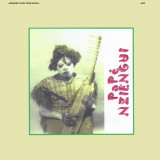
Kadi Yombo, published in 1989, is the most successful album in the quest for a fusion between tradition and modernity in Bwiti harp music of the Tsogho people of Gabon. Combining beating rattles with a layer of synthesizers, Papé Nziengui blends in a contrapuntal dialogue characteristic of harp playing: male song in appeal and female choir in response, male voice of the musical arc and rhythms of female worship. But above all it’s Tsogho ritual music and modern studio orchestration. The result is an initiatory itinerary of 10 musical pieces which are all milestones likely to be simultaneously listened to, danced, meditated on, and soon acclaimed. In the years since, Nziengui has traveled he world from Lagos to Paris, from Tokyo to Cordoba, from Brussels to Mexico City to become a true icon, the emblem of Gabonese music.
Like Bob Dylan, "electrifying" folk and Bob Marley mixing rock with reggae, some purists have criticized Nziengui for having distorted the music of harp by imposing a cross with modern instruments. They even went so far as to claim that Nziengui was just an average harpist covering his shortcomings with stunts that were only good for impressing neophytes; like playing a harp placed upside down behind his back or playing two or three harps simultaneously. Sincere convictions or venomous defamations, in any case, Nziengui never gave in to such attacks, imposing himself on the contrary to pay homage to the elders (Yves Mouenga, Jean Honoré Miabé, Vickoss Ekondo) while instructing the maximum of young people. He is thus the promoter of many young talents, the most prominent of which is certainly his nephew Jean Pierre Mingongué. In a conservative society where the sacred is confused with secrecy, exposing the mysteries of Bwiti in broad daylight can be punished by exclusion or even execution.
Papé Nziengui has always claimed that he faces such risks because he never felt enslaved to a community that governs his life, that regulates his conduct, that has a right of censorship over his activities. Like Ravi Shankar, the famous sitarist, Papé Nziengui is a man of rupture but also of openness, a transmitter of culture. As proof, he has established himself in Libreville, Gabo’s capital, as the main harpist for sessions and concerts, accompanying the greatest national artists (Akendengué, Rompavè, Annie-Flore Batchiellilys, Les Champs sur la Lowé, etc.) as well as foreign artists (Papa Wemba, Manu Dibango, Kassav', Toups Bebey, etc.). In 1988, he was the first harpist to release an album in the form of a cassette produced by the French Cultural Center (Papé Nziengui, Chants et Musiques Tsogho). At the same time, he created his own group (Bovenga), combining traditional music instruments (musical bow, drums, various percussion instruments, etc.) in the framework of a true national orchestra, which gave the first concert and the first tours of a traditional music that was both modern and dynamic, thus "democratizing" the harp, to the dismay of certain purists.
On the other hand, in modern music, dominated by the logic of profit or even commercialism, artistic creation must often be adjusted for a specific audience based on reason rather than heart. But instead of allowing himself to be distorted, Papé Nziengui has always tried to produce music that is not a caricature, worthy in its expression as in its content, of the sacredness and transcendence of the music of the Origins. This is what makes Nziengui not only the musician, but the man someone whose age hasn’t altered any of his freshness or authenticity
dovrebbe essere pubblicato su 08.04.2022

Kadi Yombo, published in 1989, is the most successful album in the quest for a fusion between tradition and modernity in Bwiti harp music of the Tsogho people of Gabon. Combining beating rattles with a layer of synthesizers, Papé Nziengui blends in a contrapuntal dialogue characteristic of harp playing: male song in appeal and female choir in response, male voice of the musical arc and rhythms of female worship. But above all it’s Tsogho ritual music and modern studio orchestration. The result is an initiatory itinerary of 10 musical pieces which are all milestones likely to be simultaneously listened to, danced, meditated on, and soon acclaimed. In the years since, Nziengui has traveled he world from Lagos to Paris, from Tokyo to Cordoba, from Brussels to Mexico City to become a true icon, the emblem of Gabonese music.
Like Bob Dylan, "electrifying" folk and Bob Marley mixing rock with reggae, some purists have criticized Nziengui for having distorted the music of harp by imposing a cross with modern instruments. They even went so far as to claim that Nziengui was just an average harpist covering his shortcomings with stunts that were only good for impressing neophytes; like playing a harp placed upside down behind his back or playing two or three harps simultaneously. Sincere convictions or venomous defamations, in any case, Nziengui never gave in to such attacks, imposing himself on the contrary to pay homage to the elders (Yves Mouenga, Jean Honoré Miabé, Vickoss Ekondo) while instructing the maximum of young people. He is thus the promoter of many young talents, the most prominent of which is certainly his nephew Jean Pierre Mingongué. In a conservative society where the sacred is confused with secrecy, exposing the mysteries of Bwiti in broad daylight can be punished by exclusion or even execution.
Papé Nziengui has always claimed that he faces such risks because he never felt enslaved to a community that governs his life, that regulates his conduct, that has a right of censorship over his activities. Like Ravi Shankar, the famous sitarist, Papé Nziengui is a man of rupture but also of openness, a transmitter of culture. As proof, he has established himself in Libreville, Gabo’s capital, as the main harpist for sessions and concerts, accompanying the greatest national artists (Akendengué, Rompavè, Annie-Flore Batchiellilys, Les Champs sur la Lowé, etc.) as well as foreign artists (Papa Wemba, Manu Dibango, Kassav', Toups Bebey, etc.). In 1988, he was the first harpist to release an album in the form of a cassette produced by the French Cultural Center (Papé Nziengui, Chants et Musiques Tsogho). At the same time, he created his own group (Bovenga), combining traditional music instruments (musical bow, drums, various percussion instruments, etc.) in the framework of a true national orchestra, which gave the first concert and the first tours of a traditional music that was both modern and dynamic, thus "democratizing" the harp, to the dismay of certain purists.
On the other hand, in modern music, dominated by the logic of profit or even commercialism, artistic creation must often be adjusted for a specific audience based on reason rather than heart. But instead of allowing himself to be distorted, Papé Nziengui has always tried to produce music that is not a caricature, worthy in its expression as in its content, of the sacredness and transcendence of the music of the Origins. This is what makes Nziengui not only the musician, but the man someone whose age hasn’t altered any of his freshness or authenticity
dovrebbe essere pubblicato su 08.04.2022

Reissue of the Count Basie Orchestra's 1970 album 'High Voltage',
arranged by Chico O'Farrill and featuring Eddie "Lockjaw" Davis, Cecil
Payne, Joe Newman, Freddie Green and Harold Jones among others
When in January, 1970 Count Basie entered the studio with his 17-piece big band
to record 'High Voltage', he ushered in the last full decade as bandleader of his
Orchestra. The Orchestra had left its imprint on the sixties by recording with the
likes of Frank Sinatra and Ella Fitzgerald. There would be more great albums with
star vocalists in the seventies, but the band's purely instrumental works, which
had begun in 1965, would also continue. Back then Basie had engaged acclaimed
Cuban composer/arranger Chico O'Farrill to arrange the music for such concept
albums as "Basie Meets Bond" and "Basie's Beatle Bag", transforming them into
crossover gems.
On 'High Voltage' O'Farrill demonstrates his affinity to Basie's big band sound, this
time with a repertoire of standards. For this album, Basie specifically chose
pieces the band had never recorded in their more than 30-year existence. This is
saying something, since the band covers such an impressive span of jazz history,
from the beginning of the swing era to the bop-influenced bands of the 50's on
through to the present album.
The Count's new drummer Harold Jones propels Fred Fisher's "Chicago" with a
tremendous drive. The Rogers and Hart classic "Have You Met Miss Jones"
features beguilingly dense deep- register horn lines and an almost languorous
piano, and Eric Dixon's tasty flute solo spices up "The Lady Is A Tramp". With its
smoky sophistication, Eddie Lockjaw Davis' Tenor dominates "Bewitched",
whereas guest trumpeter Joe Newman's muted tongue-in-cheek solo highlights
"Day In Day Out". Of course, Basie himself also steps forward: for instance, on the
Fats Waller-like intro to "I'm Getting Sentimental Over You", and with the playful
grace notes on "If I Were A Bell"." Reminiscent of the Las Vegas shows the band
performed with Frank Sinatra, "Get Me To The Church On Time" is also a
masterful dialogue between the horn sections.
dovrebbe essere pubblicato su 08.04.2022
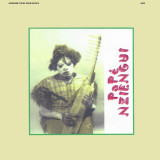
Kadi Yombo, published in 1989, is the most successful album in the quest for a fusion between tradition and modernity in Bwiti harp music of the Tsogho people of Gabon. Combining beating rattles with a layer of synthesizers, Papé Nziengui blends in a contrapuntal dialogue characteristic of harp playing: male song in appeal and female choir in response, male voice of the musical arc and rhythms of female worship. But above all it’s Tsogho ritual music and modern studio orchestration. The result is an initiatory itinerary of 10 musical pieces which are all milestones likely to be simultaneously listened to, danced, meditated on, and soon acclaimed. In the years since, Nziengui has traveled he world from Lagos to Paris, from Tokyo to Cordoba, from Brussels to Mexico City to become a true icon, the emblem of Gabonese music.
Like Bob Dylan, "electrifying" folk and Bob Marley mixing rock with reggae, some purists have criticized Nziengui for having distorted the music of harp by imposing a cross with modern instruments. They even went so far as to claim that Nziengui was just an average harpist covering his shortcomings with stunts that were only good for impressing neophytes; like playing a harp placed upside down behind his back or playing two or three harps simultaneously. Sincere convictions or venomous defamations, in any case, Nziengui never gave in to such attacks, imposing himself on the contrary to pay homage to the elders (Yves Mouenga, Jean Honoré Miabé, Vickoss Ekondo) while instructing the maximum of young people. He is thus the promoter of many young talents, the most prominent of which is certainly his nephew Jean Pierre Mingongué. In a conservative society where the sacred is confused with secrecy, exposing the mysteries of Bwiti in broad daylight can be punished by exclusion or even execution.
Papé Nziengui has always claimed that he faces such risks because he never felt enslaved to a community that governs his life, that regulates his conduct, that has a right of censorship over his activities. Like Ravi Shankar, the famous sitarist, Papé Nziengui is a man of rupture but also of openness, a transmitter of culture. As proof, he has established himself in Libreville, Gabo’s capital, as the main harpist for sessions and concerts, accompanying the greatest national artists (Akendengué, Rompavè, Annie-Flore Batchiellilys, Les Champs sur la Lowé, etc.) as well as foreign artists (Papa Wemba, Manu Dibango, Kassav', Toups Bebey, etc.). In 1988, he was the first harpist to release an album in the form of a cassette produced by the French Cultural Center (Papé Nziengui, Chants et Musiques Tsogho). At the same time, he created his own group (Bovenga), combining traditional music instruments (musical bow, drums, various percussion instruments, etc.) in the framework of a true national orchestra, which gave the first concert and the first tours of a traditional music that was both modern and dynamic, thus "democratizing" the harp, to the dismay of certain purists.
On the other hand, in modern music, dominated by the logic of profit or even commercialism, artistic creation must often be adjusted for a specific audience based on reason rather than heart. But instead of allowing himself to be distorted, Papé Nziengui has always tried to produce music that is not a caricature, worthy in its expression as in its content, of the sacredness and transcendence of the music of the Origins. This is what makes Nziengui not only the musician, but the man someone whose age hasn’t altered any of his freshness or authenticity
dovrebbe essere pubblicato su 08.04.2022

dutch sound artist albert van abbe now joins the raster family, with an unexpected collaboration with founder olaf bender aka byetone titled DUAL. having spent time working side by side in ’s-hertogenbosch at the willem twee studio, the result of their collaboration is both smooth and haptic, rounding out as an expressive camaraderie between the two veteran producers. jovial and innocent, DUAL alludes to the experimental research process of finding common ground. fully embracing the haphazard richness of live recordings, the result is a remarkable fusion of contrasting outputs; intricate collaborative efforts and byproducts woven together with an eager indifference towards expectation. the artists embrace a skewed navigation through pronounced highlights, intricate lulls and moments of temporal stasis, intermittently punctuated as a means of intentionally avoiding notions of rigid perfection. with ‘real-time’ approach directing DUAL’s creation, the pair effectively shies away from any meticulous planning, and the music runs free and negates any rigid parameters one might have expected. quirky titles exude the collaged form of the release, and underline its innocent charm. as a whole, DUAL focuses on the creative process and fully engages listeners with its own dialogue, though it is very outspoken, at times even abrasive.
Ordina ora e ordineremo l'articolo per te presso il nostro fornitore.

If now the time for voodoo amulets and protective talismans, sharpened swords and unbreakable shields, it’s also a moment for music to assume its highest form as a healing art, a source of benevolent spells, and a refuge from the chaos. After all, the best creators are always those that tap into the telluric current that exists below the surface. Those who delve into the collective unconscious so that timeliness is a happy accident; timelessness was always the intent. If Quelle Chris and Chris Keys’ Innocent Country 2 sounds like an antidote for a moment of surreal anxiety, the same could be said of it a decade from now. It’s an album best understand in a dialogue with the first volume of the series. Released in 2016, the initial Innocent Country focused on isolation, pessimism, and the notion of finding peace within pain. At a time when those feelings convey the mood of the moment, Quelle and Keys have responded with a soundtrack that offers soothing light in a bleak timeline. A hopeful record in a hopeless moment, precisely when it’s needed most.
dovrebbe essere pubblicato su 01.04.2022

For Susanna, nothing happens in a vacuum. Every creative act responds to what's come before. And by exploring this dialogue, we can learn new things about ourselves and the world. This idea has inspired the Norwegian artist throughout her near two1decade career. It's behind her unforgettable covers of classic songs and her interpretations of the paintings of Hieronymous Bosch. And it found its purest expression on 2020's Baudelaire & Piano, a stripped back song cycle setting texts from the 19th century French poet's The Flowers of Evil. In Elevation, its followup, Susanna's engagement with Baudelaire's work blossoms into a collaborative enterprise, combining tape, spoken word and song. The result is a unique musical conversation spanning centuries and disciplines; a "time travelling" project, as Susanna puts it, that moves between creative dimensions. She brings collaborators back into the process, nurturing connections made over a series of Baudelaire & Piano live shows presented in 2020 and 2021. Composer1improviser Delphine Dora offers teasing renditions of the original French texts, layering spoken recitation and otherworldly singing in a set of atmospheric vignettes. And tape recorder soundscapes from Stina Stjern-familiar from Susanna's Hieronymous Bosch project Garden of Earthly Delights (2019)-frame the album with hiss, hum and soft fingers of melody, like mist settling on a landscape. These contributions deepen the album's mystery and its evocative power. The result is an engrossing interleaving of sounds and registers; and, as Susanna describes it, "an intuitive and collective ceremony of the ethereal and mystical in life." Elevation features work by American occultist artist Cameron (1922-1995), an adherent of Aleister Crowley's Thelema movement. Her illustrations "Witch Woman", "Pan" and "Danse" adorn the release, which will be available on cassette as well as in the usual digital, CD and vinyl formats.Oslo-based artist Susanna has released music as Susanna and the Magical Orchestra and 'just' Susanna since 2004, through labels like Rune Grammofon, ECM Records and her own outlet SusannaSonata. She has collaborated with artists like Jenny Hval, Bonnie 'Prince' Billy and John Paul Jones, highly active with different projects, songwriting/composing, and making personal interpretations of other people's songs.
dovrebbe essere pubblicato su 25.03.2022

Constructions seeks to explore the world of pulsing rhythms, gritty synth lines and corny vocals. Through a nostalgic glance towards the 80’s italo disco era Love a la Carte attempts to recreate the almost naive atmosphere that was unavoidable through 80’s music charts, while Over These Hills is a contemporary boogie tune partly inspired by the likes of Sade, Chic and even Tears For Fears. Assault, a synth dominated piece of storytelling, samples dialogue from John Carpenter’s 1976 cult classic Assault on Precinct 13, and Mechanical Bird is an instrumental journey through various electronic soundscapes.
Ordina ora e ordineremo l'articolo per te presso il nostro fornitore.

Song Education brings together some of the pivotal songs from these series, showcasing great music from the Sixties until the Nineties resurrecting through trending series like La Casa De Papel, American Horror Story, Sex Education and Breaking Bad. And what’s a better way to rediscover old gems than by listening to them on a classic vinyl record
dovrebbe essere pubblicato su 25.03.2022

Suzanne Santo has never been afraid to blur the lines. A tireless creator, she's built her sound in the grey area between Americana, Southern-gothic soul, and forward-thinking rock & roll. It's a sound that nods to her past — a childhood spent in the Rust Belt; a decade logged as a member of the L.A.-based duo HoneyHoney; the acclaimed solo album, Ruby Red, that launched a new phase of her career in 2017; and the world tour that took her from Greece to Glastonbury as a member of Hozier's band — while still exploring new territory. With Yard Sale, Santo boldly moves forward, staking her claim once again as an Americana innovator. It's an album inspired by the past, written by an artist who's only interested in the here-and-now. And for Suzanne Santo, the here-and-now sounds pretty good. Yard Sale, her second release as a solo artist, finds Santo in transition. She began writing the album while touring the globe with Hozier — a gig that utilized her strengths not only as a vocalist and multi-instrumentalist, but as a road warrior, too. "We never stopped," she says of the year-long trek, which often found her pulling double-duty as Hozier's opening act and bandmate. "Looking back, I can recognize how much of a game-changer it was. It raised my musicianship to a new level. It truly reshaped my career." “Defiant” - American Songwriter “a bluesy ripper that gets its sizzle not just from her dynamic vocals but from a dirty, undulating guitar line from Gary Clark Jr” - Buzzbands “On “Fall For That,” she digs deep to sing about the push and pull between needing human connection and solitude, chaos and calm” - Buzzbands “bold storytelling and introspective reflection” - CMT “Catchy-as-hell” - Glide “she digs deep” - KCRW “Suzanne Santo is one of those musicians that come along every once in a blue moon.” - National Rock Review “Santo takes ownership and power back with crass and candor, introducing shameless, self aware dialogue that opens the door for conversation that leads to real healing.” - Paste "spunky" - Premier Guitar “Southern-gothic soul” - Rolling Stone Country “vivid musical portraits” - San Diego Union-Tribune
dovrebbe essere pubblicato su 25.03.2022

Fiat Lux is the debut album by Tarta Relena, a Barcelona-based project featuring Marta Torrella and Helena Ros. The group approaches the oral traditions of the Mediterranean from a contemporary perspective using a unique combination of ancient vocal melodies and subtle electronic textures.
Tarta Relena’s inspiration for Fiat Lux comes from historical characters, such as the Virgin Mary and Hildegard of Bingen, and timeless verses that deal with the cyclic nature of the human experience: “E suïcidi i el cant” (1) is an adaptation of a traditional poem by Pashtun women in Afghanistan; “Esta montanya d’enfrente” (3) is a traditional Sephardic song; “Safo” (9) is based on the love poems by Sappho of Lesbos.
Singing in Catalan, Spanish, Greek, Latin, English, and even Sephardi, the language of Hispanic jews, Tarta Relena explore a complex array of Latin cultures through the simplicity of voice. They draw from vocal techniques that range from flamenco to jazz, introducing elements of electronic music to redefine the melodies.
In January 2019, Tarta Relena released their first EP, Ora Pro Nobis: eight a cappella songs with minimal electronics. In April 2020, they released their second EP, Intercede Pro Nobis: a five-song dialogue between voice and electronics.
Fiat Lux expands on past experimentations, moving away from organic harmonies to embrace digital textures and distortions. The musical production of Juan Luis Batalla and Òscar Garrobé is remnant of Holly Herndon or Eartheater.
Tarta Relena have perhaps been best described by Pitchfork in their review of Pack Pro Nobis: “Tarta Relena is a celebration of musical exchange. At a time of rising nationalisms across Europe, Tarta Relena’s songs are a testament both to the porousness of borders and the ideas that unite disparate cultures, running beneath the centuries like a pedal tone”.
dovrebbe essere pubblicato su 18.03.2022

Reissue of George Duke's classic 1976 jazz-funk-fusion album 'Liberate Fantasies'
This 1976 album, the last one of the MPS fusion series, continues George Duke's tendency to couple his fusion world with accessible R&B songs. Once again, he shows a discernible vocal development. In "Tryin' And Cryin" the Californian together with rock singer Napoleon Brock overlays multiple vocal tracks.
On "Seeing You" Duke lays on a glaze of soulful tenderness, whereas "What The…" is 30 seconds of frivolous funning around. "Back to Where We Never Left" is a witty gem in which Duke bundles his pool of synthesizers into a united groove, whereas "I C'n Hear That" shows off synth and marimba tonal colors in dialogue, with the bass riffing on the bottom.
The album flows into the final bend carrying along the sonorous richness of Brazil. "After the Love" plays with the languorous erotic colours of the tropics, whereas all the band members are allowed to shine on the epic circa ten minute title track with its hot samba flair: the rhythm section with "Ndugu", Al Johnson, and Airto Moreira's percussion arsenal, Daryl Stuermer with his rock interludes on guitar, and Duke himself with inspired virtuosity on all sorts of synths and
keyboards.
Ordina ora e ordineremo l'articolo per te presso il nostro fornitore.

The Equations Collective is an experimental sound project formed by a multi-disciplinary group of artists, active in the fields of music, photography, sound design & software development.
In 2018, the collective set up a temporary outdoor recording studio, 1130 meters above sea level, on the slopes of Mount Helicon in Greece, with the ambition of recording their work in a natural environment. A 'mobile and modular' construction, fully powered by solar panels, the design of the studio showcases the possibilities of a progressive, environmentally sustainable future through renewable energy.
Embodying ecological incentives, and representing an immersive engagement with the landscape, the 'Helicon Sessions' document this extraordinary residency, capturing a profound dialogue with the eponymous mountain region.
Situated in Boeotia, Central Greece, Mount Helicon has a prominent archaic significance. A historic location where stories of sacred springs and the epic origins of the Muses and Narcissus converge. Steeped in the heritage of ancient narratives, Helicon is seen as a principal symbol of poetic inspiration.
On the 'Helicon Sessions' the collective draw upon the inspiring topography and fabled mythological resonances of the area, unfurling an expansive, hypnotic suite of abstract electronics. Liberated by an open-ended, improvisational dynamic, the collective move through a mysterious, elemental cycle that mirrors the imposing scale and dramatic atmospheres of the setting.
Across an entrancing, fluid sequence of five designated 'cuts', the collective traverse the borderlands of drone, techno, dub, and acid, amplifying the acoustic traces of Helicon by integrating field recordings collected at the site into this arresting body of work. With these recordings, the collective delineate an odyssey of subverted 303s, sputtering drum machines and formidable, oscillating low end that drifts and coalesces like an amorphous mirage; a spellbinding sound world of clarity and shadow.
The 'Helicon Sessions' signify a symbiosis (between the terrestrial and the engineered, between wildlife and futurism, between the intrinsic and the synthetic, between the innate and the manmade) And with their conception of a portable, eco-friendly studio The Equations Collective focalize valuable ideas centred on ingenuity and evolution. The outcome of this project illustrates a unique collaborative exchange which acknowledges the deep nuances of environment and the enduring echoes of history.
The Equations Collective is a collaboration between Artefakt, Aroma Pitch, Aphelion and Sphera De Noumenon across Berlin, Amsterdam, Cologne and Hamburg. Together they have established an all night long live event in Berlin, starting at Sameheads and Acud Macht Neu, which eventually lead to their residency at OHM (Tresor).
For this format they have collaborated with the following artists: Alex The Fairy, Anna Z, D-IX, Eliad Wagner, Jón Friđgeir Sigurđsson, Orson Wells, Phillip Jondo, Philipp Matalla, PRSMC, Rabih Beaini, Sabrina Gricourt, Sébastien Robert, and Vida Vojić.
The respective members of The Equations Collective have released a range of output on the likes of Field Records, Delsin, Semantica Records, De Stijl, & Soul People Music.
Since 2018 their visual identity has been shaped by Elias Hanzer.
The 'Helicon Sessions' is their debut release.
Ordina ora e ordineremo l'articolo per te presso il nostro fornitore.

Reissue of Oscar Peterson's 1969 album 'Motions & Emotions' pressed
on blue vinyl
On 'Motions & Emotions' Oscar Peterson presents jazz versions of popular pieces
from pop, easy listening and classic songwriters, as the quartet of long- time
companions are washed in rich orchestral colours. Arranged and conducted by a
magician of the guild, the great Claus Ogerman, who had previously worked for
Tom Jobim. The Brazilian is also represented with his standard "Wave", in which
the orchestra builds a luminous tropical backdrop for Peterson's fantastically
dragged phrasing. Peterson and Ogerman pay tribute to another great orchestra
leader, Henry Mancini, in "Sally's Tomato" with feather- light trilling brilliance.
Jimmy Webb's "By The Time I Get To Phoenix" experiences a metamorphosis
almost into the classical - Ogerman opens infinite sound spaces here with the
distantly indulging strings. Bobby Gentrys "Ode To Billy Joe" cleverly abducts
Countryfolk into Bigband Jazz by means of fiery keyboard playing.
Finally the hits: from soul comes Bobby Hebb's "Sunny", whose theme the pianist
here cleverly harmonises out to then decorate it bluesy in dialogue with the wind
instruments. Burt Bacharach's "This Guy's In Love With You" shines with a
leisurely late night mood and a pompous finale. Yesterday" is provided with a
sparkling bossa substructure, while the second Beatles homage "Eleanor Rigby"
oscillates between loose groove, deep melancholy and swing. Peterson plus
quartet plus orchestra: Enthusiastic detail work also in the popular sector.
"The question about favourite albums is basically not an easy one, except in my
case, because Motions & Emotions by Oscar Peterson is actually my absolute
favourite album. I think Motions & Emotions might even be the perfect
instrumental album." - Till Brönner (German Jazz trumpeter and professor)
dovrebbe essere pubblicato su 04.03.2022

Reissue of Oscar Peterson's 1969 album 'Motions & Emotions' pressed
on blue vinyl
On 'Motions & Emotions' Oscar Peterson presents jazz versions of popular pieces
from pop, easy listening and classic songwriters, as the quartet of long- time
companions are washed in rich orchestral colours. Arranged and conducted by a
magician of the guild, the great Claus Ogerman, who had previously worked for
Tom Jobim. The Brazilian is also represented with his standard "Wave", in which
the orchestra builds a luminous tropical backdrop for Peterson's fantastically
dragged phrasing. Peterson and Ogerman pay tribute to another great orchestra
leader, Henry Mancini, in "Sally's Tomato" with feather- light trilling brilliance.
Jimmy Webb's "By The Time I Get To Phoenix" experiences a metamorphosis
almost into the classical - Ogerman opens infinite sound spaces here with the
distantly indulging strings. Bobby Gentrys "Ode To Billy Joe" cleverly abducts
Countryfolk into Bigband Jazz by means of fiery keyboard playing.
Finally the hits: from soul comes Bobby Hebb's "Sunny", whose theme the pianist
here cleverly harmonises out to then decorate it bluesy in dialogue with the wind
instruments. Burt Bacharach's "This Guy's In Love With You" shines with a
leisurely late night mood and a pompous finale. Yesterday" is provided with a
sparkling bossa substructure, while the second Beatles homage "Eleanor Rigby"
oscillates between loose groove, deep melancholy and swing. Peterson plus
quartet plus orchestra: Enthusiastic detail work also in the popular sector.
"The question about favourite albums is basically not an easy one, except in my
case, because Motions & Emotions by Oscar Peterson is actually my absolute
favourite album. I think Motions & Emotions might even be the perfect
instrumental album." - Till Brönner (German Jazz trumpeter and professor)
dovrebbe essere pubblicato su 04.03.2022

Oh Yeah" - Charles Mingus (p, voc); Booker Ervin (ts); Roland Kirk (fl, ts, siren, manzello, stritch); Jimmy Knepper (tb); Doug Watkins (b); Dannie Richmond.
Commenting on this album in 1962, Billboard magazine wrote: »He seems to be everywhere, everywhere that is but on his usual instrument«. Charles Mingus, one of the most impressive musicians in the history of jazz, doesn’t play a single note on the bass for a change, but leads the band from his (blues-)piano – the instrument that he always used for composing. He hits the keys, he sings the blues, he shouts and he encourages – apparently Mingus really found the need to express himself loudly in this album. (Doug Watkins stood in for him on the contrabass.) "Oh Yeah" is definitely Mingus’s most powerful and passionate album. He calls on two hot, intensive saxophonists – Roland Kirk and Booker Ervin – as well as Jimmy Knepper on the trombone. Kirk is the main soloist, but all three wind-players deliver expressive improvisations, carrying out a non-stop dialogue with one another, and pushing one other to achieve maximum energy. The music is wild and ecstatic, but it’s not free jazz, remaining – as it does – grounded in blues and gospel. "Hog Callin’ Blues" is an enthralling shuffle with a wealth of riffs, "Devil Woman" a clever slow blues with inventive wind figures. "Ecclusiastics", with its constant change of rhythm and expression alternating between gospel and blues has the most complex form. Blues has always been a part of a black church service, said Mingus. "Eat That Chicken" (a homage to Fats Waller and his favourite food) even plays around with an old-time, Dixie feeling. Humour is never far away. Even in the atomic bomb song (this too, a sort of churchy blues) one hears the words: »Don’t let ’em drop it! Stop it! Be-bop it!«
dovrebbe essere pubblicato su 28.02.2022

4 Hands, an intimate and surreal musical conversation on the piano from German sound pioneer Hans-Joachim Roedelius and American composer Tim Story, is an example of all the warm yet otherworldly beauty that can come from approaching a shared love for a singular instrument from overlapping directions.
Recorded sequentially but on one and the same grand piano, Roedelius laid down a few impromptu piano études in May 2019 whilst visiting his transatlantic friend Story. Tim then learned all their intricate phrasings to add his own parts in the following months.
"Together we shaped the basic compositions, sometimes carefully preparing the piano with various materials (including my own hands), and Achim’s performances were committed to tape. I continued to compose and refine my parts in the following months. Because it was all recorded on the same piano, the result has a very appealing consistency of sound, and hopefully blurs our individual contributions into a single integrated voice,” Story explains.
4 Hands encapsulates rippling minimalistic patterns and delicate, ghostly interactions with surprising harmonic twists. Roedelius’ intuitive and instinctive approach based in improvisation, paired hand in hand with Story’s deliberate distilling of ideas over time, creates two sides of an engaging and thought provoking conversation that seems to evolve and deepen with each successive listen.
"4 Hands is not just a new album — the logical continuation of the long-standing friendship between two composers. It’s our tribute to awareness and listening, coaxing a new sound language from the endless possibilities of a single piano played by our four hands. For me, these pieces express a different kind of beauty, they evoke more than the sum of their parts, they are a wordless dialogue, a bridge across the great water that separates our cultures from one another. Allons enfants des deux patrie, haha!” adds Roedelius.
dovrebbe essere pubblicato su 25.02.2022

Reissue of George Duke's classic 1975 jazz-funk-fusion album 'Feel'
This album with the strange psychedelic sci-fi cover draws a tighter circle around
Duke's fusion language. The keyboard master ventures deep into his synthesizer
laboratory. Their textures become a more essential component of his pieces,
attaining orchestral dimensions, as evidenced in the opener, Funny Funk, with its
smacking, squishing tongue- in- cheek dialogue between the synths. A virtuoso
layering of the keyboards is also central to Cora Joberge, and on Rashid, Duke's
electronic orchestra explodes over the stormy drums of Leon "Ndugu" Chancler.
Duke shows himself to be a singer with a soulful sound. Shortly before this
recording he had shelved his trombone so that he could communicate more
directly with the audience, as can be heard in the hymnal, dreamlike title piece.
The guest list of players make for an especially exciting concoction. No less than
Duke's playing companion Frank Zappa, under the cryptic pseudonym Obdewl'l X,
performs some adventuresome guitar passages on Love and Old Slippers. On the
California- sunshine pop samba, Yana Aminah, we have a surprise visit by
Brazilian Flora Purim, wife of percussionist Airto Moreira, who opens up his bag
of tricks on The Once Over, and plays on three more tracks.
dovrebbe essere pubblicato su 25.02.2022

Array expresses the experience of a remote Antarctic research station through the convergence of sound, site and performance. The result is an immersive and affective experience of the spaces, protocols and conditions comprising the bracing polar environment. Array is a companion piece to Polar Force, a performance-installation work by Philip Samartzis and Eugene Ughetti, presented by Speak Percussion.
Array features recordings of radar and scientific instrumentation used for upper atmospheric research and terrestrial communication. These sounds reveal the sophisticated technology and architecture used and heard within the Australian Antarctic Territory. Many of the recordings focus on the way the built environment is transformed through stress and fatigue caused by extreme climate and weather events including freezing temperatures and high velocity winds.
Together with the field recordings are layers of live performance using custom built instrumentation to produce a unique series of textures, rhythmic cycles, resonances and timbral phenomena. The application of tension and pressure upon the assorted instruments recalls the distressed state of highly specialised infrastructure found within the perimeters of a research station.
A polar research station comprises many types and volumes of prefabricated space. In dialogue with this are the unique spaces used to record the instrumental performance. By merging different spaces Array brings into focus various industrial resonances, spatial characteristics, timbres of metal and concrete, and sonic artefacts produced by hard and permeable materials and surfaces.
In three parts, Array presents Antarctica as a liminal space oscillating between representation and abstraction to challenge often repeated tropes. The intent is to blur the relationship between the recorded and performed to produce a hyper-realistic encounter of the powerful forces that operate at the margins of our planet. One hears the precariousness of a remote research station contorted by unrelenting stress, compressed air forced through waterborne fipples and the volatility of weather events.
Life on remote research stations is progressively resembling the broader contemporary experience, in which strict protocols are used to govern and preserve life. The resilient communities who live and work in these places have learnt how to co-exist with an increasingly hostile environment, along with its unknowns and necessity for hyper-vigilance. Rather than consider it as a place on the edge of elsewhere, Antarctica and its assemblage of durable, super modern colonies provides an archetype for an uncertain future in anticipation of the volatility that awaits.
dovrebbe essere pubblicato su 18.02.2022

Tape
The occult and folk music have been friends for a while. In the 21st century, hauntology and the resurface of some cult soundtracks from the 1970s and 1980s helped to create a new sense of folk, not associated with the typical acoustic feeling, but more relatable with library, krautrock/kosmische and industrial music. João Kyron and Tony Watts, long time collaborators since the late 1990s with their band Hipnótica, and more recently with Beautify Junkyards (Ghost Box) are well acquainted with this friendship. Hidden Horse is their new project as a duo and “Opala” their first release.
With eight tracks and almost thirty minutes, their first release explores dense and greyish urban utopias. The song titles explore ideas that mix sci-fi, horror, science, space and urban phobia, and the music Kyron and Watts create delivers, using electronics and drums with great relish. Their relationship as musicians, which spans more than two decades, can be felt in the way their music flows with a continuous dialogue.
“Opala” is always keen to take you to another dimension. It lives in its own twilight zone, where the obscure entangles the most obvious senses of reality. It sounds like Jacques Tati “Playtime” with a hauntology soundtrack: it kind of feels that this imaginary world is real, but it’s not. And it sucks you in to be a part of it and enjoy it: close your eyes and let yourself go while listening to “Levitação Magnética” or “Fantasmas do Planeta”. You will feel like a foreigner in a new city.
dovrebbe essere pubblicato su 18.02.2022

"Même Soleil" is the result of a dialog between the French photographer Gaël Bonnefon and the French musician Frédéric D. Oberland initiated by IIKKI, between December 2019 and June 2021.
Self-taught multi-instrumentalist & photographer, Frédéric D. Oberland finds himself at the crossroads of image and sound, favoring a synesthetic approach. He articulates different modes of narration, combining the raw character of the documentary form with the transfigured reality of myth and poetry, allowing him to question notions such as the sacred, the monstrous, the fraternity, while at the same time returning to the political news of the present. Attentive to the pulse of the body, his work is willingly itinerant, modulating between the ripples of dreams, watching the points of incandescence and the bursts of electricity that act as revelations of our presence in the world, here and now. He’s the co-founder of leading bands such as Oiseaux-Tempête, FOUDRE!, Le Réveil des Tropiques, FareWell Poetry and is co-curating the label NAHAL Recordings.
"Fueled by travels and their emanations, Frédéric D. Oberland’s music had to build new horizons this year, outlined by the curves of semi-modular synthesizers, the avalanches of effect pedals and the zigzagging paths of electric circuits. Même Soleil, his third solo album, manages to merge mystical visions of the unconscious and the absurdity of an apocalyptic present in a sensory whirlwind, operating an astonishing mutation with tones still unexplored in his previous releases. A visual as well as a musical journey that takes shape in a book and a record of the same title, Même Soleil is the result of a collaboration with the photographer Gaël Bonnefon. Seeking the tension between the blinding light of day and the glittering visions of saturated night skies, the two pieces in dialogue transcend reality to deliver their own truth, as bright as the first light of the sought-after morning." (Alice Butterlin)
Gaël Bonnefon graduated with highest honours from the Fine Arts School of Toulouse (Isdat) in 2008. He has exhibited at Villa Pérochon, at the Eté photographique in Lectoure, at the 104 in Paris during Jeune Création 2012, at Rencontres Internationales de la Photographie d’Arles and at PhotoEspaña, at the Abattoirs Museum in Toulouse in 2014, at the Château d’Eau Gallery in 2012 and 2019 and in the Vitrine of Frac Île-de-France in 2020. His work is part of the collections of Frac Midi-Pyrénées, Château d'Eau gallery, Kulturamt in Dusseldorf and Kiyosato Museum in Japan ; he participated in Temps Zero projects Berlin, Braga, Rome, Bucarest, Groningen and Thessaloniki. He has also been granted artist’s residencies in Germany, France and Israel. His first book Elegy for the Mundane was published by La Main Donne in 2019. He continues his intimate and dense journey and presents his second publishing, Même Soleil with photographic works from 2009 to 2021.
"At first brutal and declining, the substance of Gaël Bonnefon's photography is just like a gaze that fears being one day extinguished and that is always looking to be born again. In photography as in love, recoil and desire, tension and easement, repetition, wandering and rest, flight and pursuit. Here photography allows itself to be traversed by flashes of life, renewed forces, echoes of far-off kindnesses and lost joys. It sings silently, lover of a thousand faces from which the thread of a single and same image is born, followed without relent, from the snowy peaks of childhood to the lost worlds of the present." (Michaël Soyez)
Ordina ora e ordineremo l'articolo per te presso il nostro fornitore.

50 Jahre nach seiner Erstveröffentlichung wird der Original-Soundtrack zu Hal Ashbys Kultfilmklassiker
„Harold and Maude“ aus dem Jahr 1971 am 11. Februar als 1LP und 1CD veröffentlicht.
Der Erfolg und der Kultstatus des Films wurden durch den skurrilen und ergreifenden Soundtrack verstärkt, bei dem alle Lieder von Cat Stevens gesungen werden. Die neueste Ausgabe des Soundtracks wird
erstmals die 9 Originalsongs von Cat Stevens sowie zusätzliche Dialoge und Instrumentalmusik aus dem
Film kombinieren. Für „Don’t Be Shy“ und „If You Want To Sing Out, Sing Out“ wurden im Archiv von
Island Records bisher ungehörte Audio-Master entdeckt, und der gesamte Ton wurde in den weltberühmten
Abbey Road Studios neu gemastert. Diese Ausgabe enthält außerdem eine verbesserte Verpackung mit
Linernotes, Songtexten, Transkription der Filmdialoge und Fotos von der Paramount Pictures Produktion.
dovrebbe essere pubblicato su 11.02.2022

"Social injustices are implanted into our society, and the powerful are not willing to make way for real change. Urgency is the force driving us both in musical improvisation and life. Our sounds are war sirens against an ongoing disaster."- Simon Grab & Francesco Giudici
Simon Grab & Francesco Giudici's 'No Surrender' is a strong and uncut manifest against social injustices, packed into screaming feedbacks and towering drones. Grab lures tender noises and pulsating frequencies from his fragile no-input-mixing-setup, while Giudici adds linear and visceral guitar drones, opening a dialogue between the two musicians, the room, and the surrounding context. Together, they create a uniquely soft but angry musical creature that feeds from emotions of loss and anger to become a haunting call for change.
The album's cover presents a portrait of 'Madame Rochat' by photographer and film maker Aline d'Auria. The seemingly indestructible concierge was stripped from her home of half a century on the day of her retirement. Still, she persistently continued to fight for the working class' rights. '
Focusing on reduction and the peculiarity of self-referential systems, Simon Grab plays fragile feedbacks, pulsating drones and opulent outbursts of noise on a no-input-mixing setup. His has previously released"Posthuman Species" and "Extinction" on -OUS, while "Diamonds", a collaboration with Togolese rapper Yao Bobby and Asian Dub Foundation's Dhangsha, came out via LavaLava.
Experimental musician and sociologist Francesco Giudici plays guitar in bands and creates music for films, installations and theatre pieces. He has released three albums with his band 'Black Fluo' on PulverUndAsche Records. His research as sociologist and demographer focuses on social and economic inequalities, social gradient in health, gender inequalities, occupational and familiar life trajectories.
Ordina ora e ordineremo l'articolo per te presso il nostro fornitore.

Originally released on CD in 2000, the expanded soundtrack edition of John Carpenter's classic 1981 thriller included over 20 minutes of previously unreleased music plus music from scenes deleted from the final print. The masters were re-mixed from the original multi-track session tapes by long-time John Carpenter associate Alan Howarth.This is the first time the expanded edition has appeared on vinyl in its complete form, including original dialogue highlights
dovrebbe essere pubblicato su 04.02.2022

The new album by the Peruvian-born / Berlin-based experimental artist Ale Hop was conceived in a context of immobility and provides six sonic vignettes that wonder about location, circularity, rootedness and experience. In collaboration with Ana Quiroga,
Concepcion Huerta, Daniela Huerta, Elsa M'balla, Felicity Magan, Fil Uno, Ignacio Briceño, KMRU, Manongo Mujica, Moises Horta, Nicole L'huillier, Raul Jardín, Sukitoa Onamau, Tomas Tello.
Following her explorations on music's inherent fixation to geographic space and time, be it through the longing of home ("Apophenia" 2019) or scientific magnification of invisible worlds ("The Life of Insects" 2020), Berlin-based Peruvian-born experimental composer Ale Hop's fourth album, "Why Is It They Say a City Like Any City?", was conceived in a context of immobility. During the lockdown
months, she started a process of remote collaboration, by sending messages, posted from various cities along a South American trip, to thirteen musicians from around the world. She journaled her impressions upon these places to an intimate fictional character while reflecting on matters of time,
sound, space, cosmology and colonial memory. The thirteen musicians dialogued with this voice by taking upon the challenge of responding to the messages with sound collaborations.
Field recordings, mouth drumming, drone cellos, electronic loops, arrhythmic rhythms and voices came back from this experiment. Ale assembled them, by layering, twisting and turning, into sonic vignettes that wonder about location, circularity, rootedness and experience, making it the first time she's set her guitar aside. Expect no answers to the album's title question, but an innermost psychedelic rumination.
"Despite the technological resources that appear to dilute distances, the simulation of closeness mirrored on the digital space is an emptied body, a state of precarity, a flat surface; unable to withhold an experience of exchange," Ale states. "So, I began this project by asking myself, how can we escape from the reduced experience of the virtual? The idea behind this experiment was that my messages and the places they describe could drive the composition, be a catalyzer, a
score. Thus, to use geography as a tool to remember and imagine, to allow new soundscapes to emerge."
"Memory, diffuse and divergent, sometimes reaches out to the future in its search for form, taking shape from the reflections and echoes that come back … like throwing a rock in a pond and having a rock thrown back at you."
Ordina ora e ordineremo l'articolo per te presso il nostro fornitore.

After more than a year of strengthening our bodies through workout, our poetic endeavors via the discovery of our inner worlds, and also the life of plants and mushrooms, insects, arachnids, birds and wild mammals, after a year and a half that saw us in lockdown, shattered around the planet, after one a and a half year in which we deepened our production skills and also the meaningfulness of our work, Cómeme returns to a new planet with new music.
The beginning is this unique collaboration between Medellín based musician and DJ Julianna, and Matias Aguayo aka “The Don” himself.
In this deep therapeutical exploration of rhythm and sound, these artists established a magical dialogue on distance, leading up to this EP called “Que si el mundo”, roughly translated: “What if the world”.
Between soulful industrial expressions, emotional breakdowns but also discoveries free of any grids and algorithms, Julianna and Aguayo have created a beautiful piece of work, intense as the movements that we had to experience mentally and economically. “Que si el mundo” is state of the art electronic music of today, a work that is both introspective but also extremely open to the outside world and the universe. Compositions reminiscent of Coil, Angelo Badalamenti, Closer Musik, Steve Pointdexter or Mark Broom, shaped this EP that can be considered a short album in its conceptual layout and narrative. Let’s dive into it...
A1. Hiedra
One of the more danceable tunes, ideal for both a sensual warmup or the very late night to the rising sun sensitivity, is polyrhythmical melancholy and hypnotic inevitability, slow dance, deep trance.
A2. Primer Paso
A fat, slick and modern synth sequence, accompanied by heavy drumming and celestial drops that seem to fall onto the body of the listener or dancer, this post EBM stomper is a manifestation of elegant minimalism and reason. As if Liaisons Dangereuses reincarnated in a cloudy forest, to then pause towards the end of the track, with sentimental and gloomy synth chords that open the view towards the horizon.
B1. Que Si El Mundo
The title track keeps up the more melodic approach - somewhere between ambient, avant- garde and late night jazz. Morphing melodies that are both disturbing and soothing at a time encounter smooth free jazz drumming with drums that seem to have travelled from the sixties to today’s world.
B2. Bajo Tierra
This track continues the deep drumming experience that this record means, between laid back rides and intense taikoesque drumming. Distorted dark pads and subterranean choirs build up to a heavy sadness and intensity. Again, a therapeutical track to send those demons fly.
B3. Micelio
A more hopeful conclusion of the EP is “Micelio”. Open chords, soothing and melancholic, spread over profound drum grooves of champed and house. Nothing seems as it was before. A new life has begun.
Ordina ora e ordineremo l'articolo per te presso il nostro fornitore.

Black Truffle is pleased to announce For McCoy, a new work by Eiko Ishibashi dedicated to the widely loved character of Jack McCoy, portrayed by Sam Waterston in Law & Order. Following on from Hyakki Yagyō (BT064), For McCoy finds Ishibashi further exploring the unique space she has carved out in recent years, bringing together musique concrète techniques, ECM-inspired jazz, lush layers of synths and hints of pop into immersive and affecting structures crafted in her home studio, aided by a group of close collaborators.
Beginning with overlapping layers of descending flute lines, the expansive ‘I Can Feel Guilty About Anything’ (whose two parts stretch out over more than thirty minutes) unfolds with a free-associative logic, embracing dreamlike transitions and unexpected cinematic cuts. As a hovering cloud of synthetic tones and multi-tracked voices fans out from the spare opening moments, Joe Talia’s skittering cymbals settle into a gently propulsive groove, soon joined by melodic fragments performed by Daisuke Fujiwara on multi-tracked saxophone. As the drums cede to field recordings and ominous synth figures, the uncommon meeting of saxophone and electroacoustic techniques call to mind the more spacious moments of Michel Redolfi and André Jaume’s Synclavier-propelled oddity Hardscore or the early work of Gilbert Artman’s Urban Sax. As the piece continues on the LP’s second side, distant dialogue rumbles beneath a surface of processed flutes, blurring into a cavernously reverberant backdrop for stark ascending lines performed by MIO.O on violin. Eventually, the piece settles into a gorgeous passage of abstracted dream pop, where Ishibashi’s multitracked vocal harmonies glide atop synth chords, errant pings and snatches of outdoor sound.
Fragments of melodic material reappear throughout the spacious opening piece, finally stepping to the forefront on the closing track, ‘Ask Me How I Sleep at Night’. Here, over a shuffling groove supplied by Jim O’Rourke on double bass and Tatsuhisa Yamamoto on drums, layers of flutes, saxophones and guitars sound out melodies whose combination of twisting irregularity and soulful immediacy calls up prime Keith Jarrett, while their closely voiced harmonies suggest Kenny Wheeler or even Wayne Shorter’s Atlantis. In a classical gesture of closure, the web of melodic lines eventually leads back to the descending flute figures with which the record began. Presented in an immersive, impeccably detailed mix by Jim O’Rourke and arriving in a sleeve featuring Ishibashi’s beautiful drawings of Jack McCoy, For McCoy is an essential release for anyone following the enchanted and unique path being forged by Eiko Ishibashi.
Ordina ora e ordineremo l'articolo per te presso il nostro fornitore.

Zeitgeber is a project that sees Lucy and Speedy J exploring roots and limits. The duo have both indulged their experimental sides from time to time. Perhaps most notably Speedy J with his mid-'90s run on Novamute, and Lucy on his 2011 full-length for Stroboscopic Artefacts. But Zeitgeber is something more, with two artists pushing each other to go further. SA018 is a single that gives only a slight hint as to what is to come in the shape of a complete LP. 'Body Out' is floor-ready techno with a twist. The textures that lie beneath feel like they're just as important (if not more), slithering and twittering away in constant dialogue with the just-slightly-off-the-grid beat. 'Body In' is the inverse of the A-side, a slow-moving chorus of indescribable ambience. As a precursor to the forthcoming album, it's a perfect taster of the uncompromising sounds yet to be heard. - Zeitgeber is a new project run by Lucy (Stroboscopic Artefacts' label head) and Speedy J (Electric Deluxe's boss). ' - 'Body Out Body In' is the Single that precedes Zeitgeber upcoming Album.
Ordina ora e ordineremo l'articolo per te presso il nostro fornitore.

“Thunderous, and yet somehow also reflective, this album offers a haunting dialogue between the musicians. Betamax drives the music with motoric rhythm, while Bell is seemingly searching for something more sophisticated.”
London’s avant-garde, attempted to master in his youth the delicate art of the Shakuhachi - the infamously difficult-to-play bamboo flute that whiffs of a certain Japanese Zen aroma. After many years of travelling south east Asia in the 70s, seeking out the teachings of many flute and reed traditions, Clive Bell eventually gave up his quest and returned to London exhausted and confused. Horrified by the omnipresent egos of popular music, he was drawn back towards the dark currents of London’s free-improv gutter, where upon he was encouraged by his peers to live in a squat, and participate in abrasive noise experiments typical of the London improvising epidemic that persisted throughout the 80s.
Whilst immersed by this subculture, Bell was to bear his only child that we know of to this day - Maxwell Hallett, later to be known as ‘Betamax’. Bell immediately refused to teach any music to Betamax, hoping greater things and opportunities might lead Max away to a more financially comfortable and spiritually rewarding occupation. Alas Clive was unable to protect his son from the strong seductive forces of London’s prevalent musical subcultures.
Ordina ora e ordineremo l'articolo per te presso il nostro fornitore.

From its earliest utterances, experimental music has been particularly disposed to transnational and cross-cultural collaboration. Seeking the answer for a fundamental problem - how to transcend the boundaries of difference, distance, and time - it presents a means to find common ground and communicate through the elemental form of sound. Over the last 5 years, this precisely what the duo of Félicia Atkinson & Jefre Cantu-Ledesma has achieved, intertwining sublime sonorities across the geographic expanses between their respective homes in France and the United States. Their third album for Shelter Press, ‘Un hiver en plein été’ (‘A winter in the middle of summer’) - the first to have been largely recorded by Atkinson and Cantu-Ledesma together in the same space - distills a mesmerizing pallet of acoustic and electronic sources into an open discourse of radically poetic forms, offering glimpses of warmth and intimacy waiting in the post-covid world to come.
Both veteran experimentalists with celebrated bodies of solo work behind them - each traversing the challenges of electroacoustic practice in their own singular ways - prior to their first recorded outing in 2016, Félicia Atkinson and Jefre Cantu-Ledesma had only crossed paths in person once, initially meeting in San Fransisco during 2009. The mutual bond formed during that brief encounter flowered into their first LP, ‘Comme Un Seul Narcisse’, followed two years later by 2018’s ‘Limpid As The Solitudes’. Both recorded remotely - sending files back and forth, fortified by conversations on a vast range of subjects - these two albums were guided by impassioned conceptual nods to Guy Debord, Baudelaire, Brion Gysin and Sylvia Plath, while seeking resolutions for the challenges and unique possibilities that working at a distance provoked.
Where the triumphs of its predecessors rose from the bridging of disparate moments and divergent spaces, ‘Un hiver en plein été’ culminates as a celebration of closeness, a result of Atkinson and Cantu-Ledesma working together in the studio, responsively in real time, for the first time. Recorded in Brooklyn during August of 2019 - a handful of months before the pandemic would impose chasmic distances across the globe - its six discrete works, carefully crafted and finalized over the ensuing year, evolve seamlessly across the album’s two sides, weaving a sprawling tapestry of sonority, within which both artists retaining their own voices and visions, while drawing each other towards uncharted ground.
Atkinson likens the recording of ‘Un hiver en plein été’ to have been akin to “a playground”, each artist “hungry for each sound, a bit like the rush in the Louvre in Godard’s Bande à part”, to which Cantu-Ledesma adds that the process seemed to have had “a mind of its own”, with both “along for the ride”. This organic sense of entropy and enthusiasm - a joyous exploration of the unknown - guides the momentum of the album’s evolving arc, as unfolding chasms of ambient space ripple with humanity, life, and fleeting glimpses of the actions that led to its material core.
Crafted from deconstructed melodic elements and drifting long-tones - laden with subtle nods to Indian classical ragas and free jazz - searching patterns of speech, textural elements captured within the studio and the outside world, and searching tonal and percussive interventions, ‘Un hiver en plein été’ coheres as a multi-faceted series of electroacoustic dialogues; nesting conversations between two artists working at the juncture of abstraction and narration, field recording and harmony, and the philosophical and phenomenological, in search for the meaning of friendship, and its manifestation in pure sound.
dovrebbe essere pubblicato su 14.01.2022

In 1958 the painter Isson Tanaka (22 July 1908 – 11 September 1977) moved to Amami Ōshima, an island in the Ryukyus. There, in self-chosen isolation, he committed himself exclusively to his art until his sudden passing in 1977. In 2018 Seiha Kurosawa, Kanako Azuma and Hideki Umezawa visited Amami Ōshima to create a video installation about Tanaka’s insular life. The work, entitled “Dokkyaku” (tr. The Lone Visitor), shifts between the texture and materiality of Tanaka’s paintings in relation to the natural world of Amami Ōshima and its people. The video invites viewers to understand—poetically—the artist’s sensitivity to nature and the expressivity of his works.
During his stay on Amami Ōshima, Hideki Umezawa recorded a lot of natural sounds to recreate a sort of simulated ecology of Tanaka’s mind – or: of the painter’s mind. On this long playing record these recordings are blended with electronically generated sounds. Next, Andrew Pekler, who has never actually visited Amami Ōshima, upon hearing Umezawa’s field recordings creates - in the spirit of Isson Tanaka - a complementary dreamscape of the island’s phenomena. Of what could be.
This is a work that doubts between site specific and creative imagination. With sounds echoing between the anecdotic and the imaginary. It is a sensitive and highly stylized interpretation of a world that Isson Tanaka had also carefully studied. A painter at work; a way of seeing. So, after Christophe Piette’s ‘Six Tableaux de Quelpaert’, released by Edições CN in 2019, we again moore an island in the nautical footsteps of a painter. While Piette drew a story through – among other things - recording dialogues at his island home, at the restaurant table, et al. Pekler and Umezawa paint their pictures in a more musical fashion. Where natural sounds evaporate into electronic clouds of imagination.
Hideki Umezawa (b.1986, Gunma) is Japanese artist / composer. He won 1st prize at Luc Ferrari’s international competition – Presque Rien Prize 2015 (France), and the Contemporary Computer Music Concert 2015 (Japan). “Dokkyaku” was originally created for "Fukami – Une plongée dans l'esthétique japonaise", an exhibition at Hôtel Salomon de Rothschild in Paris, France as part of ‘Japanismes 2018’.
Andrew Pekler (b. 1973, Samarkand) works with techniques of digital sampling and analog synthesis to re– contextualize found sounds and archival musical materials. In addition to numerous album releases, Pekler has also produced a number of video, installation and web-based works, as well as music for theater, dance, and film.
Ordina ora e ordineremo l'articolo per te presso il nostro fornitore.

**LIMITED BLACK VINYL** Rival Consoles returns with a resonant
and explorative soundscape of original
music, composed for renowned
choreographer Alexander Whitley’s
contemporary dance production
Overflow.
Exploring themes of the human and emotional
consequences of life surrounded by data, the piece
echoes the concept of social media, advertising,
marketing companies and political factions
exploiting our data to gain wealth, political
advantage and sow division. Key reading for the
project was based around the contemporary
philosophical work Psychopolitics: Neoliberalism
and New Technologies of Power by Byung-Chul
Han.
“The piece opens with Monster which has a kind of
drunken madness to it, highly repetitive to mirror the
repetitive nature of how we as humans engage with
technology such as social media. It’s sometimes
edging towards chaos but yet always returning back
to the same starting point, but eventually giving way
to exhaustion. I wanted to create a bold opening
piece for Overflow,” states West.
I Like features the mapping of data from dancer Tia
Hockey’s personal monologue, which allows chords
to be heard - but only based on the activity of her
voice, drawing attention to things happening behind
the curtain, invisible systems, algorithms.
The album also features the previously released
standalone slice of euphoria, Pulses of Information
— described by UK mag Clash as “typically
entrancing, Pulses of Information seems to
encourage a form of internal dialogue, between our
inner and outer selves.”
Overflow was premiered by the Alexander Whitley
Dance Company in May 2021 at the Sadler’s Wells
in London and is scheduled to tour through theatres
in Europe in spring 2022. The score will be released
by Erased Tapes on limited edition vinyl and CD as
well as digital formats on December 3.
Ordina ora e ordineremo l'articolo per te presso il nostro fornitore.

‘Zola’ (Original Motion Picture Soundtrack), featuring
incredible original score by Mica Levi (‘Monos’, ‘Under
The Skin’, ‘Jackie’) intertwined with dialogue from the
Janicza Bravo film.
Pressed on white vinyl, the soundtrack comes housed
in a deluxe spined sleeve featuring original cover
artwork by Kezia Harrell, with the records themselves
housed in a double sided printed inner sleeve.
Includes digital download card.
Mica Levi is a musician and composer born in
Guildford and living in South East London. They are
currently a member of the groups CURL, Good Sad
Happy Bad and Tirzah.
From acclaimed writer / director Janicza Bravo, Zola’s
stranger-than-fiction saga, which she first told in a
now-iconic series of viral, uproarious tweets, comes to
dazzling cinematic life. Zola (newcomer Taylour
Paige), a Detroit waitress, strikes up a new friendship
with a customer, Stefani (Riley Keough), who seduces
her to join a weekend partying in Florida. What at first
seems like a glamorous trip full of ‘hoeism’ rapidly
transforms into a 48-hour journey involving a nameless
pimp, an idiot boyfriend, some shady guys in Tampa,
and other unexpected adventures in this wild, see-it-tobelieve-it tale.
dovrebbe essere pubblicato su 03.12.2021

Truly adventurous and life enhancing music that invigorates your soul. TIP!
Press Release:
Gordan join traditional Serbian singing with abstraction, energy and minimalism. Their music is marked by radical reduction, seemingly endless ascension and a passion for experiments.
The Serbian singer Svetlana Spajić is an internationally recognized and acclaimed artist. She, like almost no other contemporary singer, is a master of all the complex local stylistic variations of singing from Balkan music. Guido Möbius plays bass and various electronic sound generators. Additionally he uses guitar amps, microphones and effects to provoke feedback which either harmonize or are juxtaposed with the song. It is a dialogue between sound and noise which is accentuated or fragmented by means of Andi Stecher’s expressive drumming. With a rich pool of ideas the percussionist drives the sound forward breathlessly and grounds it. Together the trio form a dynamic body of sound.
Gordan recorded their debut during the first wave of the Covid19 pandemic in Europe in March 2020. Due to the lockdown in Berlin at that time the city didn’t have many distractions to offer, so the trio just concentrated on work. The atmosphere of being isolated in a recording studio had a big impact on the musical results. All three band members came up with ideas for new pieces, which were immediately tested, worked out and recorded. On abstract instrumentals provided by Stecher and Möbius, Svetlana Spajic sometimes reacted with personal interpretations of serbian traditionals, and the other way around. Most of the time it was as if the music just happend to the band; playing together felt natural from the first moment on.
Some of the old serbian traditional songs that Spajic sang are extinct forms with a specific local melodic mode. The skillful improvisation of their lyrics and ornaments was of great importance and very estimated among village singers. The title song Down In The Meadow for instance originally is a love song from the village of Odevce in eastern Kosovo, Serbia. The singing manner is of a great intensity and sonority, with lots of specific local ornaments. It disappeared along with the village communities from the area. Oh, my Rose flowers is from the region of Kopaonik mountain (southwest Serbia) and the mode, scale is known as ”kopaonički glas” (Kopaonik mountain air). Svetlana adopted the style from the late singer Veličko Veličković from the village of Ostraće. It is an old mountain solo chant, rich in fast ornamentation movements and microtonal intervals. Don’t ask how I live is Svetlana’s homage to the new popular folk music movement from the 80ies known as Južni Vetar (Southern Wind) led by a musician and composer Mile Ilić, known as Mile Bas (“Mile the Bass”) which revolutionized popular music introducing tabooed oriental music and original arrangements.
All music by Spajic Stecher Möbius except ‘Don’t Ask How I Live’ by Miodrag M. Ilić, original title Što me pitaš
All lyrics are traditional, except ‘Don’t Ask How I Live’
Svetlana Spajic — vocals
Andi Stecher — drums & percussion
Guido Möbius — bass, feedback, electronics
Recorded by Alberto Lucendo at UFO sound studios Berlin in March 2020 mixed by Morphosis
Mastering by Neel at Enisslab, Rome
Artwork by Lorenzo Mason Studio
Ordina ora e ordineremo l'articolo per te presso il nostro fornitore.

Revolutionary in its time, ‘The Firebird’ is a story in musical textures and dynamics perfectly suited to the Mercury technique. Dorati and The LSO present each nuance in perfect scale and balance. Recorded in Watford Town Hall, near London UK, June 7 and 9, 1959 with three Schoeps M201 microphones.
dovrebbe essere pubblicato su 26.11.2021

A unique live performance at Issue Project Room gathered the former Sonic Youth member and artist Kim Gordon and the legendary minimal blues master and artist Loren Connors in 2014.
In December 2014, the Issue Project Room venue in New York City offered the first-time duo with the legendary Brooklyn- based guitarist Loren Connors and the rock icon Kim Gordon. From this almost 1 1⁄2 hour set, Kim and Loren decided to archive their favourite movement on a physical record which is a 12” vinyl now available from the french label Alara.
Through this long improvised session, Kim and Loren do dialogue and browse between installations of deep soundscapes at the limit of drone, and distorted, abrasive sonic attacks wrapped in reverberated harmonics. In this unprecedented exchange between two legends, the languages are as borrowed from one to the other: Kim Gordon plays on the land of the first inventions of Loren in rumbling / growling “unaccompanying” strings pinch, when Loren Connors envelops the entire hall of distorted harmonics that Kim would not have denied in her loudest attacks within her solo or group experiences from decades.
Just through the story of each of the protagonists and thanks to the quality of the recording and the mastering that bring the intensity of this meeting to life as if we were physically attending to the show, this album is a unique opportunity to witness the exceptional meeting between two legends of sonic and experimental music.
dovrebbe essere pubblicato su 26.11.2021

Revolutionary in its time, ‘The Firebird’ is a story in musical textures and dynamics perfectly suited to the Mercury technique. Dorati and The LSO present each nuance in perfect scale and balance. Recorded in Watford Town Hall, near London UK, June 7 and 9, 1959 with three Schoeps M201 microphones.
dovrebbe essere pubblicato su 26.11.2021
