Search:deep sixty

Styles
All
  • 1
Deep Sixty - Mme Hayo

Deep Sixty

Mme Hayo

12inchHLANG002
Hlanganani Music
06.07.2015

Hlanganani Music proudly presents its second release from young fast-rising producer Deep Sixty. Although his name is little known outside of Soweto and Johannesburg, already Thabiso Mamogwa has shown the determination to reach beyond his immediate world and make his musical message heard. In 2010 he made it to London to take part in the Red Bull Music Academy, which is when the HLANG team first heard the tracks that make up the Mme Hayo EP. From the same momentous trip, Mamogwa managed to get into a studio with Todd Osborn (a.k.a. Osborne, Soundmurderer), resulting in the "Thursday Nights" track which Mamogwa has self-released.
The purpose of Hlanganani is to provide a channel for the talented producers of South Africa to present their craft beyond the limited reach of their own country, opening their music up to collaboration and cultural crossover in the process. With his tenacious attitude and distinctive fusion of African traditions and contemporary techno influences, Mamogwa represents the perfect example of what the label is striving for, hence they waited five years to be able to release Mme Hayo.

out of Stock

Order now and we will order the item for you at our supplier.


Last In: 10 years ago
Rose Mcdowall - Cut With The Cake Knife LP

Cut The With The Cake Knife was recorded by Rose McDowall in 1988/89 following the break up of her group Strawberry Switchblade. Produced with the aid of several musicians in several studios, the album features songs written for the fabled second Strawberry Switchblade album. More importantly perhaps it showcases the honest, direct and life-affirming songs of one of the greatest unsung songwriters of the modern pop era at a tumultuous time in her career.

Tibet opens the set and could be one of the best pop songs you've never heard. The innate sadness of the songs' content - the loss of a friendship, impending sorrow - is heightened to heart-melting level by McDowall's pop nous and melodic sensibility. Choruses and hooks are everywhere on Cake Knife, from the outsider take on stadium 80s pop in Wings Of Heaven to the spiraling, ecstatic So Vicious, a glorious anthem that highlights the human fragility in McDowall's vocal performance, an instrument that has never lost the naïve purity it first exemplified in Strawberry Switchblade's early 80s recordings. The centerpiece of the album, the title-track, is the greatest Switchblade pop chart hit that never was. Like the veiled melancholy of her former group's hits, Cut With The Cake Knife hints at a darkness beneath the gloss, a darkness that saw McDowall delve into more esoteric territory with her subsequent recordings and collaborations. Cut With The Cake Knife serves as the bridge between the pop music McDowall had been making with her friends Jill Bryson, Lawrence from Felt and Primal Scream to what became a more extreme, deep sound informed by neo-folk and post industrial music.

Rose McDowall's role in the canon has always been one of an outsider. Beginning in Glasgow's East End in the avant proto-noise group The Poems, achieving fame briefly in the 80s and then disappearing into counter-cultural folklore, the emphasis in the internet-age has been skewed towards her image and cultural significance. Unseen to many, her solo work, her groups Sorrow and Spell and her collaborations with a whole host of underground luminaries have still touched lives. As McDowall elucidates: 'They're real sad songs, about real life. I've had people come up to me to say I'd connected with them and helped them. I remember a gig in America when we made a whole room cry. It was bizarre. A couple at the front of the stage started crying and then these two boys beside and suddenly everyone was crying. And I thought, "that's power."

Night School's issue of Cut With The Cake Knife includes unpublished photographs, extensive sleeve notes from Rose McDowall and 2 bonus tracks culled from the bootleg 7' 'Don't Fear The Reaper.' First vinyl pressing is Clear w/ Black swirl; 500 only / has DL card and booklet, with a poster
CD has extensive booklet and is packaged in anO-Card.

pre-order now26.06.2026

expected to be published on 26.06.2026


Last In: 2026 years ago
MICHIEL SEKAN - SOUNDWRITERS

MICHIEL SEKAN

SOUNDWRITERS

Books978909040730
JIWA JIWA
15.03.2026

Soundwriters maps a hidden chapter of postwar music history. Sixty two rare and overlooked releases by Indonesian diaspora artists recorded in the Netherlands and Suriname, from soul and funk to reggae and pop. Built from deep archive work and crate digging, this book traces how migration shaped sound, scenes, and record culture between 1969 and 1989.

An homage to the unsung heroes of the underground and deserved recognition for the diaspora pioneers.

Michiel Sekan (Amsterdam, 2025)

Soundwriters: The Incomplete Guide to Indonesian Diaspora Music (1969–1989) is a book and catalogue devoted to artists whose work shaped the cultural life of postcolonial Netherlands, yet rarely entered official archives.
Written by Michiel Sekan with additional research by Harry “Munir” Septiandry, the book combines historical analysis with personal reflection. Essays move between migration histories, colonial legacies, family memory, and music culture. At its core sits a catalogue of sixty two releases that document the range of sounds created by Indo-European, Moluccan, Papuan, Javanese Surinamese, Peranakan, and broader Indonesian diaspora communities.
Soul, funk, pop, reggae, rock, and protest songs appear side by side. Together they form an aural record of resistance, adaptation, and creativity across continents.
Printed in Jakarta and published by Jiwa Jiwa in three languages, Dutch, English, and Indonesian, Soundwriters positions music as both archive and testimony. It asks how sound preserves stories when written records fall short, and how listening can reconnect personal memory with shared history.

The project extends beyond the page through exhibitions, listening rooms, documentaries, and public programs in the Netherlands and Indonesia.

SHORT ABOUT THE AUTHOR
Michiel Sekan is an Amsterdam based DJ, curator, and multidisciplinary artist. Through his platform Jiwa Jiwa he researches and presents music from the Indonesian archipelago and diaspora across radio, exhibitions, publishing, and club culture. His work links record collecting with archival study and personal history. Soundwriters is his first book.

pre-order now15.03.2026

expected to be published on 15.03.2026


Last In: 2026 years ago
MARCOS VALLE - TUNEL ACUSTICO LP

Marcos Valle

TUNEL ACUSTICO LP

12inchFARO246LPORANGE
FAR OUT RECORDINGS
04.11.2024

No one has lived a life quite like Marcos Valle. He became an overnight international sensation, fled a military dictatorship, dodged the Vietnam war draft, had his music sung by Homer Simpson, made enemies with Marlon Brando, and became an unsuspecting fitness guru for multiple generations. But to truly understand the great Brazilian composer, arranger, singer and multi instrumentalist, one must listen to his music.

Lead Single (Life Is What It Is) : Between the release of his first album in 1962 and today, Marcos Valle has released twenty-two studio albums traversing definitive bossa nova, classic samba, iconic disco pop, psychedelic rock, nineties dance and orchestral music. He has also had his songs recorded by some of the all time greats, including Frank Sinatra, Sarah Vaughn, Sergio Mendes, Elis Regina, and (last but not least), Emma Button of the Spice Girls. He has also had his music sampled by Jay-Z, Kanye West, Pusha T and many more.


With his twenty-third studio album Túnel Acustico, Valle set out to bring it all together.

“I believe my music is many things. It goes in different directions. I have many different ways of writing music, sometimes it’s melodies and harmony, sometimes the groove is the focus. But all the music I have made over my sixty year career is unified. It is all natural and it is all sincere. And this is what I wanted to bring to my new album.”

A prominent feature of Valle’s career has been his dual residence between Brazil and the USA. Originally moving over in the mid-sixties on the back of bossa nova’s international proliferation, Valle toured with Sergio Mendes and became hugely in demand as a composer and arranger. But the Vietnam War loomed and the threat of being drafted saw him return to Brazil. He spent the following years in Rio writing music for TV and film, as well as four cult favourite albums in collaboration with some of Brazil’s most groundbreaking musicians including Milton Nascimento, Azymuth, Som Imaginario and O Terco.

By 1975, Brazil's military dictatorship was at its most oppressive, making living and working increasingly difficult. Valle moved back to the US where he would reside in LA, writing songs for, and collaborating with the likes of Eumir Deodato, Airto Moreira, Chicago, Sarah Vaughn and Leon Ware, amongst others.

Túnel Acústico features two songs originally conceived during Valle’s time on the West Coast: “Feels So Good”, a stirring two-step soul triumph written in 1979 with soul icon Leon Ware, and the sublime AOR disco track “Life Is What It Is”, composed around the same time, with percussionist Laudir De Oliveira from the group Chicago.

Built around an unfinished demo Marcos found on a shelf in his house 44 years after it was made, the “Feels So Good” demo was restored with the help of producer Daniel Maunick, who also utilised AI stem-separation to remove the placeholder vocal ad-libs. Valle added Portuguese lyrics to sit alongside Ware’s vocal hook, as well as extra keyboards and percussion.

Also written in late seventies LA, “Life Is What Is It” was co-penned by Laudir De Oliveira from the band Chicago and first released on the bands’ Chicago 13 album with lyrics by Robert Lamb. Another nod to his good times in LA, Valle recorded his own version for Túnel Acústico, upping the tempo and deepening the groove for a blast of irresistible summer soul.

On Túnel Acústico, Valle's core band features two members of the renowned Brazilian jazz-funk group Azymuth: Alex Malheiros on bass and Renato Massa on drums. The rhythm section is completed by percussionist Ian Moreira, with additional contributions from guitarist Paulinho Guitarra and trumpeter Jesse Sadoc.

The contemporarily composed music on Túnel Acústico features an impressive lineup of guest lyricists, including renowned Brazilian artists: Joyce Moreno (Bora Meu Vem), Céu (Nao Sei), and Moreno Veloso (Palavras Tão Gentis) as well as Valle's brother Paulo Sergio Valle (Tem Que Ser Feliz).

The album closes with "Thank You Burt (For Bacharach)", a tribute to the legendary composer who passed away in 2023.

Túnel Acústico will be released on 20th September 2024 via Far Out Recordings. Valle is set to tour Europe and America in support of the album.

out of Stock

Order now and we will order the item for you at our supplier.


Last In: 12 months ago
MARCOS VALLE - TUNEL ACUSTICO (TAPE)

No one has lived a life quite like Marcos Valle. He became an overnight international sensation, fled a military dictatorship, dodged the Vietnam war draft, had his music sung by Homer Simpson, made enemies with Marlon Brando, and became an unsuspecting fitness guru for multiple generations. But to truly understand the great Brazilian composer, arranger, singer and multi instrumentalist, one must listen to his music.

Lead Single (Life Is What It Is) : Between the release of his first album in 1962 and today, Marcos Valle has released twenty-two studio albums traversing definitive bossa nova, classic samba, iconic disco pop, psychedelic rock, nineties dance and orchestral music. He has also had his songs recorded by some of the all time greats, including Frank Sinatra, Sarah Vaughn, Sergio Mendes, Elis Regina, and (last but not least), Emma Button of the Spice Girls. He has also had his music sampled by Jay-Z, Kanye West, Pusha T and many more.


With his twenty-third studio album Túnel Acustico, Valle set out to bring it all together.

“I believe my music is many things. It goes in different directions. I have many different ways of writing music, sometimes it’s melodies and harmony, sometimes the groove is the focus. But all the music I have made over my sixty year career is unified. It is all natural and it is all sincere. And this is what I wanted to bring to my new album.”

A prominent feature of Valle’s career has been his dual residence between Brazil and the USA. Originally moving over in the mid-sixties on the back of bossa nova’s international proliferation, Valle toured with Sergio Mendes and became hugely in demand as a composer and arranger. But the Vietnam War loomed and the threat of being drafted saw him return to Brazil. He spent the following years in Rio writing music for TV and film, as well as four cult favourite albums in collaboration with some of Brazil’s most groundbreaking musicians including Milton Nascimento, Azymuth, Som Imaginario and O Terco.

By 1975, Brazil's military dictatorship was at its most oppressive, making living and working increasingly difficult. Valle moved back to the US where he would reside in LA, writing songs for, and collaborating with the likes of Eumir Deodato, Airto Moreira, Chicago, Sarah Vaughn and Leon Ware, amongst others.

Túnel Acústico features two songs originally conceived during Valle’s time on the West Coast: “Feels So Good”, a stirring two-step soul triumph written in 1979 with soul icon Leon Ware, and the sublime AOR disco track “Life Is What It Is”, composed around the same time, with percussionist Laudir De Oliveira from the group Chicago.

Built around an unfinished demo Marcos found on a shelf in his house 44 years after it was made, the “Feels So Good” demo was restored with the help of producer Daniel Maunick, who also utilised AI stem-separation to remove the placeholder vocal ad-libs. Valle added Portuguese lyrics to sit alongside Ware’s vocal hook, as well as extra keyboards and percussion.

Also written in late seventies LA, “Life Is What Is It” was co-penned by Laudir De Oliveira from the band Chicago and first released on the bands’ Chicago 13 album with lyrics by Robert Lamb. Another nod to his good times in LA, Valle recorded his own version for Túnel Acústico, upping the tempo and deepening the groove for a blast of irresistible summer soul.

On Túnel Acústico, Valle's core band features two members of the renowned Brazilian jazz-funk group Azymuth: Alex Malheiros on bass and Renato Massa on drums. The rhythm section is completed by percussionist Ian Moreira, with additional contributions from guitarist Paulinho Guitarra and trumpeter Jesse Sadoc.

The contemporarily composed music on Túnel Acústico features an impressive lineup of guest lyricists, including renowned Brazilian artists: Joyce Moreno (Bora Meu Vem), Céu (Nao Sei), and Moreno Veloso (Palavras Tão Gentis) as well as Valle's brother Paulo Sergio Valle (Tem Que Ser Feliz).

The album closes with "Thank You Burt (For Bacharach)", a tribute to the legendary composer who passed away in 2023.

Túnel Acústico will be released on 20th September 2024 via Far Out Recordings. Valle is set to tour Europe and America in support of the album.

pre-order now30.09.2024

expected to be published on 30.09.2024


Last In: 2026 years ago
MARCOS VALLE - TUNEL ACUSTICO LP

No one has lived a life quite like Marcos Valle. He became an overnight international sensation, fled a military dictatorship, dodged the Vietnam war draft, had his music sung by Homer Simpson, made enemies with Marlon Brando, and became an unsuspecting fitness guru for multiple generations. But to truly understand the great Brazilian composer, arranger, singer and multi instrumentalist, one must listen to his music.

Lead Single (Life Is What It Is) : Between the release of his first album in 1962 and today, Marcos Valle has released twenty-two studio albums traversing definitive bossa nova, classic samba, iconic disco pop, psychedelic rock, nineties dance and orchestral music. He has also had his songs recorded by some of the all time greats, including Frank Sinatra, Sarah Vaughn, Sergio Mendes, Elis Regina, and (last but not least), Emma Button of the Spice Girls. He has also had his music sampled by Jay-Z, Kanye West, Pusha T and many more.


With his twenty-third studio album Túnel Acustico, Valle set out to bring it all together.

“I believe my music is many things. It goes in different directions. I have many different ways of writing music, sometimes it’s melodies and harmony, sometimes the groove is the focus. But all the music I have made over my sixty year career is unified. It is all natural and it is all sincere. And this is what I wanted to bring to my new album.”

A prominent feature of Valle’s career has been his dual residence between Brazil and the USA. Originally moving over in the mid-sixties on the back of bossa nova’s international proliferation, Valle toured with Sergio Mendes and became hugely in demand as a composer and arranger. But the Vietnam War loomed and the threat of being drafted saw him return to Brazil. He spent the following years in Rio writing music for TV and film, as well as four cult favourite albums in collaboration with some of Brazil’s most groundbreaking musicians including Milton Nascimento, Azymuth, Som Imaginario and O Terco.

By 1975, Brazil's military dictatorship was at its most oppressive, making living and working increasingly difficult. Valle moved back to the US where he would reside in LA, writing songs for, and collaborating with the likes of Eumir Deodato, Airto Moreira, Chicago, Sarah Vaughn and Leon Ware, amongst others.

Túnel Acústico features two songs originally conceived during Valle’s time on the West Coast: “Feels So Good”, a stirring two-step soul triumph written in 1979 with soul icon Leon Ware, and the sublime AOR disco track “Life Is What It Is”, composed around the same time, with percussionist Laudir De Oliveira from the group Chicago.

Built around an unfinished demo Marcos found on a shelf in his house 44 years after it was made, the “Feels So Good” demo was restored with the help of producer Daniel Maunick, who also utilised AI stem-separation to remove the placeholder vocal ad-libs. Valle added Portuguese lyrics to sit alongside Ware’s vocal hook, as well as extra keyboards and percussion.

Also written in late seventies LA, “Life Is What Is It” was co-penned by Laudir De Oliveira from the band Chicago and first released on the bands’ Chicago 13 album with lyrics by Robert Lamb. Another nod to his good times in LA, Valle recorded his own version for Túnel Acústico, upping the tempo and deepening the groove for a blast of irresistible summer soul.

On Túnel Acústico, Valle's core band features two members of the renowned Brazilian jazz-funk group Azymuth: Alex Malheiros on bass and Renato Massa on drums. The rhythm section is completed by percussionist Ian Moreira, with additional contributions from guitarist Paulinho Guitarra and trumpeter Jesse Sadoc.

The contemporarily composed music on Túnel Acústico features an impressive lineup of guest lyricists, including renowned Brazilian artists: Joyce Moreno (Bora Meu Vem), Céu (Nao Sei), and Moreno Veloso (Palavras Tão Gentis) as well as Valle's brother Paulo Sergio Valle (Tem Que Ser Feliz).

The album closes with "Thank You Burt (For Bacharach)", a tribute to the legendary composer who passed away in 2023.

Túnel Acústico will be released on 20th September 2024 via Far Out Recordings. Valle is set to tour Europe and America in support of the album.

out of Stock

Order now and we will order the item for you at our supplier.


Last In: 12 months ago
A.R. KANE - Sixty Nine

A.r. Kane

Sixty Nine

12inchRGIRL135
ROCKET GIRL
19.07.2024

*REMASTERED ROUGH TRADE DEBUT LP LIMITED TO JUST 500 COPIES WITH EMBOSSED OUTER SLEEVE AND ORIGINAL INNER SLEEVE ON BLACK VINYL*

Dream POP, they called it. Given AR Kane’s Alex Ayuli once worked for advertising agency Saatchi & Saatchi, it’s no surprise that he and collaborator Rudy Tambala invented their own genre before critics could stick their oar in. It was a canny move, but more importantly, it was accurate: the music of AR Kane was made for dreamers, by dreamers, and its languor and longing made it particularly bewitching listening; their music is often smeared and blurry, happily lost in its own indefinable pleasures. “We wanted dream pop,” Tambala says, “that feeling of a dream where the rules are different. Dream logic.”
-UNCUT REISSUE OF THE MONTH

"A.R. Kane carved out a unique musical path, welding elements of pop, psych, dub, electronica, funk, noise, jazz, ambient and more in a way that had never been done before. Or since. Their debut in particular is a work of unbridled brilliance."
*Electronic Sound*

‘Sixty Nine’ the group’s debut LP that emerged in 1988 had critics and listeners struggling to fit language around A.R. Kane’s sound. As a title it was telling - the year of ‘Bitches Brew’, the year of ‘In A Silent Way’, the erotic möbius between two lovers - and as originally coined by the band themselves, ‘dream pop’ (before it became a free-floating signifier of vague import) was entirely apposite for the music A.R. Kane were making. Crafted in a dark small basement studio in which Tambala recalls the duo had “complete freedom - We wanted to go as far out as we could, and in doing so we discovered the point where it stops being music”. There was an irresistibly dreamy, somnambulant, sensual and almost surreal flow to ‘sixty nine’s sound, but also real darkness/dankness, the ruptures of the primordial and the reverberations of the subconscious, within the grooves of remarkable songs like ‘Dizzy’ and ‘Crazy Blue’. Alex’s plangent vocals floated and surged amidst exquisite peals of refracted feedback but crucially there was BASS here, lugubrious and funky and full of dread, sonic pleasure and sonic disturbance crushed together to make music with a center so deep it felt subcutaneous, music constructed from both the accidental and the deliberate, generous enough to dance with both serendipity and chaos. ‘sixty nine’ remains - especially in this remastered iteration - ravishing, revolutionary – Neil Kulkarni


"A.R. Kane made some of the most exciting, forward-thinking, and science fictional music of their era".s*

out of Stock

Order now and we will order the item for you at our supplier.


Last In: 20 months ago
A.R. KANE - I LP 2x12"

A.r. Kane

I LP 2x12"

2x12inchRGIRL136
ROCKET GIRL
08.07.2024

*REMASTERED ROUGH TRADE DEBUT LP LIMITED TO JUST 500 COPIES WITH EMBOSSED OUTER SLEEVE AND ORIGINAL INNER SLEEVE ON BLACK VINYL*

Dream POP, they called it. Given AR Kane’s Alex Ayuli once worked for advertising agency Saatchi & Saatchi, it’s no surprise that he and collaborator Rudy Tambala invented their own genre before critics could stick their oar in. It was a canny move, but more importantly, it was accurate: the music of AR Kane was made for dreamers, by dreamers, and its languor and longing made it particularly bewitching listening; their music is often smeared and blurry, happily lost in its own indefinable pleasures. “We wanted dream pop,” Tambala says, “that feeling of a dream where the rules are different. Dream logic.”
-UNCUT REISSUE OF THE MONTH

"A.R. Kane carved out a unique musical path, welding elements of pop, psych, dub, electronica, funk, noise, jazz, ambient and more in a way that had never been done before. Or since. Their debut in particular is a work of unbridled brilliance."
*Electronic Sound*

‘Sixty Nine’ the group’s debut LP that emerged in 1988 had critics and listeners struggling to fit language around A.R. Kane’s sound. As a title it was telling - the year of ‘Bitches Brew’, the year of ‘In A Silent Way’, the erotic möbius between two lovers - and as originally coined by the band themselves,
‘dream pop’ (before it became a free-floating signifier of vague import) was entirely apposite for the music A.R. Kane were making. Crafted in a dark small basement studio in which Tambala recalls the duo had “complete freedom - We wanted to go as far out as we could, and in doing so we discovered the point where it stops being music”. There was an irresistibly dreamy, somnambulant, sensual and almost surreal flow to ‘sixty nine’s sound, but also real darkness/dankness, the ruptures of the primordial and the reverberations of the subconscious, within the grooves of remarkable songs like ‘Dizzy’ and ‘Crazy Blue’. Alex’s plangent vocals floated and surged amidst exquisite peals of refracted feedback but crucially there was BASS here, lugubrious and funky and full of dread, sonic pleasure and sonic disturbance crushed together to make music with a center so deep it felt subcutaneous, music constructed from both the accidental and the deliberate, generous enough to dance with both serendipity and chaos. ‘sixty nine’ remains - especially in this remastered iteration - ravishing, revolutionary – Neil Kulkarni


"A.R. Kane made some of the most exciting, forward-thinking, and science fictional music of their era".
*Reissue Of The Week In The Quietus*

out of Stock

Order now and we will order the item for you at our supplier.


Last In: 20 months ago
Mo Kolours - Original Flow 2x12"

We Release JAZZ is very happy to announce an exciting new body of work by Joseph Deenmamode aka Mo Kolours. The singular musical spirit’s new 21-track album Original Flow is available as a double LP housed in a heavy 350gsm sleeve with original artwork by Mo Kolours himself and the classic WRJ obi strip, as well as in digipack CD and digital formats.

A catalog of critically acclaimed records, including his self-titled debut (2014), ‘Texture Like Like Sun’ (2015), 2018 album ‘Inner Symbols’ and three companion EPs, established Deenmamode as a prodigious musician and vocalist. Pitchfork extolled his “hypnotic, tribal-infused dance grooves”, DJ Mag appreciated the “colourful celebration of soundsystem culture”, and Resident Advisor advocated that “no one sounds quite like Mo Kolours”. Musical analogies were drawn by The Guardian as “The best album Curtis Mayfield never made with A Tribe Called Quest and Lee Perry” and Mojo as “like Marvin Gaye produced by J Dilla”.

Five years ago, Deenmamode moved to the Japanese countryside. Far away from familiarity, he contemplated his place and further questioned his identity. “I had none of my ‘own’ people around. I had time to really find what makes me tick musically. Japan has helped me go back to those subconscious leanings, really go deep, and reflect the aspects that make up my story”.

The tracks on ‘Original Flow’ have been constructed from sessions, improvisations and soundbites captured around the world during this time; collecting contributions from musicians including Deenamode’s brothers Reginald Omas Mamode and Jeen Bassa plus Andrew Ashong, Charles Bullen, Dwaye Kilvington, Eddie Hick, Stefan Asanovic, Myele Manzanza, Ross Hughes, and Tom Dreissler. Deenamode says “I’m proud of this album’s creative process. Coming from a tradition of scouring through hours of records, I wanted to create my own samples, to find that perfect loop that no other producer could put their hands on. I decided to invite a group of friends and acquaintances, who also happen to be incredible musicians, to a studio in Crystal Palace to improvise based on some loose ideas I had. We spent all day, and recorded everything”.

‘Original Flow’ is an album of UK street-soul nouveau, future indigenous jazz fusion, Rasta Segga, Nyahbinghi jazz, Malagasy Hebrew hip hop. While retaining a spirit of exploration and improvisation, it sees Deenmamode grow and flex beyond beat tape brevity, expanding composition and stretching his musical muscle to play live with other musicians. Themes of empowerment, overcoming adversity, and mental liberation coexist with notes from ancient history, futurism, and science, as well as musings on family and togetherness.

‘Magik Momentum’ springs from a discussion that features at the start of the song, an inspiring mentor answering a question from Deenmamode about improvisation and what role it plays in life when planning and manifesting the future. ‘Rockets to Mars’ questions the lack of care for the billions of people with nothing, while governments plan to explore space. “This sparked a comparison in my mind to a Sonny Okuson song that I would reference when performing. Okuson’s song talked of the lack of resources in many communities in the world, while governments go to the moon”.

He says the music behind ‘The News These Days’ is “possibly my favourite on the album”. Looped like he would a late sixty jazz-fusion sample, there was nothing added and the track was complete within a matter of minutes. “It was the first and best moment from the entire Crystal Palace session”, he adds. The album’s contrasting title track with minimal instrumentation played solo by Deenamode. While frustratingly searching for gems in past recordings, he thought in a burst of ego, “I don’t need no-one else to make a dope beat!” picked up his ravanne, (the traditional frame drum of his fathers home-land of Mauritius), pressed record, and started to play. He says, “In my thoughts were the rhythms of the Nubians in Upper-Egypt and Sudan, the swing of the huge drums played by Mauritanian women, of-course the Sega beat of Mauritius, and the ever inspiring beat of James Yancey”.

Driven by UK broken beat, Cuban congas, Nigerian and Mauritian inflections, ‘Love Vibration’ follows the concept that all emotions carry a vibratory frequency and pays homage to the frequency of creation and the power of love. The two part ‘Tatamaka’ tells of the history of Deenmamode’s ancestors, the maroons of Mauritius. “We are people who managed to run from our oppressors and find refuge in a corner of the island called ‘Le Morne’ where they could not reach us. One bloody day they came in numbers to re-capture, to revenge. Many of us chose to jump to our deaths, rather than be taken back into subjugation. The poem by Creole Richard Sedley Assonne says; “there were hundreds of them, but my people, the maroons chose the kiss of death over the chains of slavery”. Tatamaka was the name of a famed maroon leader who was murdered for claiming his, and our people’s freedom. The song is the imagined journey of escape and freedom by an ancestor of the maroons of Le Morne”.

Born in the west midlands and raised on the traditional sega music of his father’s Indian Ocean homeland of Mauritius alongside records by the likes of Jimi Hendrix, Santana and Michael Jackson; his influences expanded with late 90s jungle and drum and bass nights in Bristol, experiments at art college in Camberwell, and the rich culture of Peckham, “at the time we called it the Afro Quarters of London” says Deenmamode, adding hip hop, dub, soul and soundsystem styles to his individual sound.

He explains, “I love drum music, from hand-drums to 808s. I love music from the ancient past, heritage music, indigenous music, traditional music passed down from the beginning of time. Music from the body, hand claps, grunts and foot stomps. Music with audible depth, busy, bustling, highly charged. Music from the soul, the music from beyond. I love music from the islands and the mountains. The music of the streets, hustle music, alleyway beats. Club music”.

He describes the creative process as thinking in images. “The visual world and the world of sound seem to intermingle in my thought process. When I play the drum with my eyes closed, a world of imagery dances and moves with beat. Improvised drumming feels like I am listening to what I want to hear, rather than trying to play what I want to hear. Following the rhythm and finding new pathways to walk within the patterns is what I experience. In this way I often feel I am just a listener, instead of the player”.
Original Flow is pressed on biovinyl, a sustainable alternative to traditional vinyl. Biovinyl replaces petroleum in S-PVC by recycling used cooking oil or industrial waste gases, resulting in 100% CO2 savings in bio-based S-PVC production. Furthermore, it is 100% recyclable and reusable, embracing the circular economy ideology.

out of Stock

Order now and we will order the item for you at our supplier.


Last In: 22 months ago
A.R. Kane - A.R. Kive LP 4x12"

A.r. Kane

A.R. Kive LP 4x12"

4x12inchRGIRL133
ROCKET GIRL
08.09.2023

A.R. Kive collates the three most astonishing works from that most miraculous of duos - A.R. Kane - comprising the ‘Up Home’ EP from 1988 that signified the band’s dawning realisation of their own powers and possibilities, their legendary debut LP ‘sixty nine’ (1988) and its kaleidoscopic, prophetic double-LP follow up ‘i’ (1989).

In founder-member Rudy Tambala’s new remastering, the music on these pivotal transmissions from the birth of dream pop, have been reinvigorated and re-infused with a new power, a new depth and intimacy, a new height and immensity. Vivid, timeless and yet always timely whenever they’re recalled, these records still force any listener to realise that despite the habits of retrospective myth-making and the
safe neutering effects of ‘genre’, thirty years have in no way dimmed how resistant and dissident to critical habits of categorisation A.R. Kane always were. Never quite ‘avant-pop’ or ‘shoegaze’ or ‘post-rock’ or any of those sobriquets designed to file and categorise, A.R. Kive is a reminder that those genres had to be coined, had to be invented precisely to contain the astonishing sound of A.R. Kane, because
previous formulations couldn’t come close to their sui generis sound and suggestiveness. This is music that pointed towards futures which a whole generation of artists and sonic explorers would map out. Now beautifully repackaged, remastered and fleshed out with extensive sleeve notes and accompanying materials, ‘A.R. Kive’ reveals that 35 years on it’s still a struggle to defuse the revolutionary and inspirational possibility of A.R. Kane’s music.

A.R. Kane were formed in 1986 by Rudy Tambala and Alex Ayuli, two second-generation immigrants who grew up together in Stratford, East London. From the off the pair were outsiders in the culturally mixed (cockney/Irish/West Indian/Asian) milieu of the East End, with Alex and Rudy’s folks first generation immigrants from Nigeria and Malawi, respectively. The two of them quickly developed and fostered an innate and near-telepathic mutual understanding forged in musical, literary and artistic exploration. Like a lot of second-generation immigrants, they were ferocious autodidacts in all kinds of areas, especially around music and literature. Diving deep into the music of afro-futurist luminaries such as Sun Ra, Miles Davis, Lee Perry and
Hendrix, as well as devouring the explorations of lysergic noise and feedback from contemporaries like Sonic Youth and Butthole Surfers, they also thoroughly immersed themselves in the alternate literary realities of sci-fi and ancient history (the fascination with the arcane that gave the band their name), all to feed their voracious cultural thirsts and intellectual curiosity.

It was seeing the Cocteau Twins performing on Channel 4 show the Tube that spurred A.R. Kane into being - “They had no drummer. They used tapes and technology and Liz Fraser looked completely otherworldly with those big eyes. And the noise coming out of Robin’s guitar! That was the ‘Fuck! We could do that! We could express ourselves like that!’ moment”, recalls Tambala - and through a mix of
confidence, chutzpah, ad hoc almost-mythical live shows and sheer innocent will the duo debuted with the astonishing ‘When You’re Sad’ single for One Little Indian in 1986. Immediately dubbed a ‘black Jesus & Mary Chain’ by a press unsure of WHERE to put a black band clearly immersed in feedback and noise, what was immediately apparent for listeners was just how much more was going on here - a
tapping of dub’s stealth and guile, a resonant umbilicus back to fusion and jazz, the music less a conjuration of past highs than a re-summoning of lost spirits.
The run of singles and EPs that followed picked up increasingly rapt reviews in the press, but it was the ‘Up Home EP’ released in 1988 on their new home, Rough Trade that really suggested something immense was about to break. Simon Reynolds noted the EP was: Their most concentrated slab of iridescent awesomeness and a true pinnacle of an era that abounded with astounding landmarks of guitar-reinvention, A.R. Kane at their most elixir-like.

If anything, the remastered ‘Up Home’ that forms the first part of ‘A.R. Kive’ is even more dazzling, even more startling than it was when it first emerged, and listening now you again wonder not just about how many bands christened ‘shoegaze’ tried to emulate it, but how all of them fell so far short of its lambent, pellucid wonder. This remains intrinsically experimental music but with none of the frowning orthodoxy those words imply. A.R. Kane, thanks to that second generation auto-didacticism were always supremely aware about the interstices of music and magic, but at the same time gloriously free in the way they explored that connection within their own sound, fascinated always with the creation of ‘perfect mistakes’ and the possibilities inherent in informed play.

‘sixty nine’ the group’s debut LP that emerged in 1988 had
critics and listeners struggling to fit language around A.R. Kane’s sound. As a title it was telling - the year of ‘Bitches Brew’, the year of ‘In A Silent Way’, the erotic möbius between two lovers - and as originally coined by the band themselves, ‘dream pop’ (before it became a free-floating signifier of vague import) was entirely apposite for the music A.R. Kane were making. Crafted in a dark small basement studio in which Tambala recalls the duo had “complete freedom - We wanted to go as far out as we could, and in doing so we discovered the point where it stops being music”. There was an irresistibly dreamy, somnambulant, sensual and almost surreal flow to ‘sixty nine’s sound, but also real darkness/dankness, the ruptures of the primordial and the reverberations of the subconscious, within the grooves of remarkable songs like ‘Dizzy’ and ‘Crazy Blue’. Alex’s plangent vocals floated and surged amidst exquisite peals of refracted feedback but crucially there was BASS here, lugubrious and funky and full of dread, sonic pleasure and sonic disturbance crushed together to make music with a center so deep it felt subcutaneous, music constructed from both the accidental and the deliberate, generous enough to dance with both serendipity and chaos. ‘sixty nine’ remains - especially in this remastered iteration - ravishing, revolutionary.

The final part of this ‘A.R. Kive’ contains 1989’s astonishing double-LP ‘i’ which followed up on ‘sixty nine’s promise and saw the duo fully unleash their experimental pop sensibilities over 26 tracks, plunging the A.R. Kane sound into a dazzlingly kaleidoscopic vision of pop experiment and play. Suffused with new digital technologies and combining searingly sweet and danceable pop with perhaps the duo’s strangest and boundary-pushing compositions, the album did exactly what a great double-set should do - indulge the artists sprawling pursuit of their own imaginations but always with a concision and an ear for those moments where pop both transcends and toys with the listeners expectations. Jason Ankeny has noted that “In retrospect, ‘i’ now seems like a crystal ball prophesying virtually every major musical development of the 1990s; from the shimmering techno of ‘A Love from Outer Space’ to the liquid dub of ‘What’s All This Then?’, from the alien drone-pop of ‘Conundrum’ to the sinister shoegazer miasma of ‘Supervixens’ — it’s all here, an underground road map for countless bands to follow.” Perhaps the most overwhelmingly all-encompassing transmission from A.R. Kane, ‘i’ bookended a three year period in which the duo had made some of the most prophetic and revelatory music of the entire decade.

After ‘i’ the duo’s output became more sporadic with Tambala and Ayuli moving in different directions both geographically and musically, with only 1994’s ‘New Clear Child’ a crystalline re-fraction of future and past echoes of jazz, folk and soul, before the duo went their separate ways. Since then, A.R. Kane’s music has endured, not thanks to the usual sepia’d false memories that seem to maintain interest in so much of the musical past, but because those who hear A.R. Kane music and are changed irrevocably, have to share that universe which A.R. Kane opened up, with anyone else who will listen. Far more than other lauded documents of the late 80s it still sounds astonishingly fresh, astonishingly livid and vivid and necessary and NOW.

pre-order now08.09.2023

expected to be published on 08.09.2023


Last In: 2026 years ago
Constantijn Lange - Liquide

Constantijn Lange

Liquide

12inchHMLLPV004
Heimlich Musik
17.03.2023

Creating an introverted version of restrained electronic music Berlin-based artist Constantijn Lange releases his second album 'Liquide' on Heimlich Musik. The album is based on sketches created in isolation during the second pandemic year. The compositions are characterized by self-reflection and an attempt to translate the abstract experience of listening to oneself into a concrete form. The sound of personal isolation, the necessary withdrawal from the world and the restriction of all social contacts is, therefore, less club oriented and focused on functionality than an expressive concept of ideas, rather oriented on Trip Hop, Breakbeat, Ambient and Jazz. The collective rediscovery of shared experience results in arrangements of melancholic but optimistic melodies recorded with vintage synthesizers, supported by complex drum patterns and diverse percussions that create a signature sound as a new liquid amalgam.


Constantijn Lange is an electronic music composer originally from Ostfriesland now based in Berlin. Besides several releases on Laut & Luise since the early days, his productions appear on labels like Get Physical, Traum Schallplatten, Sinnbus, Platon Records, Egoplanet
and many more.
His passion for thick layered synth melodies, jazzy and kraut – like vibes, atmosphere recordings, deep basslines and selfmade percussion designs give his music a recognizable vibe which can be heard on nearly every production he was involved in so far. He spends a lot of time in his studio in Berlin, working on new music, remixing other artists and also engineering for other sound projects in the art scene. On top of that, he performs as a liveact in clubs and on festivals all over the planet where his music can be described as very emotional and personal. Repeatedly this amazed people in countries like Germany, Russia, Poland, Switzerland, South Africa, Austria, Belgium, Mexico and
many more.
Constantijn’s ambition as an artist is to constantly evolve his productions and create music
which carries emotions and energies into the clubs, to festivals and living rooms alike.

out of Stock

Order now and we will order the item for you at our supplier.


Last In: 3 years ago
Phenomena - Psycho Fantasy LP

Phenomena

Psycho Fantasy LP

12inchMV0333V
Metalville
23.09.2022

Tom Galley begann das Projekt Phenomena in den 80er Jahren und auf den ersten 3 Ausgaben gab es große Namen der Hardrock Szene (unter anderem Glenn Hughes, Cozy Powell, Don Airey, Neil Murray, Brian May, Mel Galley, John Wetton) zu bestaunen.

Auch bei dem vierten Phenomena Album (welches im Jahre 2006 erschien) hatte Galley wieder illustre Namen wie Tony Martin (u. a. BLACK SABBATH), Keith Murrell (MAMA´S BOYS) und Glenn Hughes (u. a. DEEP PURPLE), die AOR der besten Klasse abliefern!

pre-order now23.09.2022

expected to be published on 23.09.2022


Last In: 2026 years ago
Cleveland Francis - Beyond The Willow Tree 2x12"

Beyond The Willow Tree is a hauntingly beautiful anthology of folk songs chronicling the experience of a young black man growing up in the segregated south. A balanced mix of covers and originals, Cleveland Francis’ body of work seamlessly blends deep, soulful vocals with the stripped-down acoustic instrumentation of folk. In the late 60’s Francis coined the term “soulfolk”, playing his genre bending music across college campuses and coffee shops while earning a medical degree at William & Mary.

These songs serve as a missing link between soul and folk music, suppressed by the harsh political landscape of a music industry heavily influenced by racial stereotypes. “If you were black, you played blues or soul music … I wanted to play folk music,” Cleveland professed.

Included in this double LP set is Cleveland Francis’ entire 1970 self-released album Follow Me, featuring the original artwork and liner notes printed inside the gatefold. The second LP takes you Beyond The Willow Tree with unreleased demos recorded in 1968 along with one 45 only single recorded in 1970.

“These recordings are a look into my soul through a long and lonely journey to understand feelings of my childhood, poverty, racial segregation, bigotry, war, love and hope. It represents my attempt to express and come to terms with all that I have seen and felt as a Black man growing up in America.” - Cleveland Francis

out of Stock

Order now and we will order the item for you at our supplier.


Last In: 2 years ago
Taj Mahal & Ry Cooder - Get On Board

Taj Mahal&Ry Cooder

Get On Board

12inch75597913552
Nonesuch
22.04.2022

“They were so solid. They meant what they said, they did what they did… here’s two guys, a guitar player and a harmonica player, and they could make it sound like a whole orchestra.” – Taj Mahal

“It was perfect. What else can you say?” – Ry Cooder

Nearly sixty years after they first played together, Ry Cooder and Taj Mahal, longtime friends and collaborators, reunite with an album of music from two Piedmont blues masters who have inspired them all their lives: GET ON BOARD: THE SONGS OF SONNY TERRY & BROWNIE MCGHEE, on Nonesuch Records.

With Taj Mahal on vocals, harmonica, guitar, and piano and Cooder on vocals, guitar, mandolin, and banjo – joined by Joachim Cooder on drums and bass – the duo recorded eleven songs drawn from recordings and live performances by Terry and McGhee, who they both first heard as teenagers in California.

Explaining where Terry and McGhee took him musically, Cooder says, “Down the road, away from Santa Monica. Where everything was good. ‘I have got to get out of here,’ was all I could think. What do you do, fourteen, eighteen years old? I was trapped. But that first record, Get on Board, the 10” on Folkways, was so wonderful, I could understand the guitar playing.”

Taj Mahal adds, “I started hearing them when I was about nineteen, and I wanted to go to these coffee houses, ‘cause I heard that these old guys were playing. I knew that there was a river out there somewhere that I could get into, and once I got in it, I’d be all right. They brought the whole package for me.”

Taj Mahal and Ry Cooder originally joined forces in 1965, forming The Rising Sons when Cooder was just seventeen. The band was signed to Columbia Records but an album was not released and the group disbanded a year later. The 1960s recording sessions, widely bootlegged, were finally issued officially in 1992. GET ON BOARD is Taj Mahal and Ry Cooder’s first recording together since then.

Harmonica player Sonny Terry and guitarist Brownie McGhee, both originally from the southeastern United States, had active solo careers as well as collaborating with some of the most celebrated musicians of their time. But they were best known for their forty-five-year partnership, which began in 1939 and included mesmerising live performances around the world and numerous acclaimed recordings.

Their Piedmont blues style became popular during the folk music revival of the 1940s and ’50s, centered in New York City’s flourishing club scene for jazz, boogie-woogie, blues and folk music. Terry and McGhee traveled in the same circles as Woody Guthrie, Pete Seeger, Leadbelly, and Josh White, among others in a rich mix of writers, actors and musicians. As a new generation emerging in the 1960’s drew inspiration from folk and blues, Terry and McGhee toured the world as the foremost exponents of the acoustic music of the Piedmont. They were named National Heritage Fellows in 1982 in recognition of their distinctive musical contributions and accomplishments.

“You got the south on steroids, when you got the music of the south, the culture of the south, the beauty of the south, through Brownie and Sonny,” Taj Mahal says. He describes McGhee as a “solid rhythm player. To really play behind the harp like that. He would set stuff up. He wasn’t making many notes. Sonny had all the notes, running around. But Brownie, he laid it down.” Cooder adds: “This thing of squeezing the thumb and first finger and a little bit of the second finger, which I still do. I’d forgotten where it came from. That’s what Brownie did. I saw him do that and said, ‘I think I can do that.’”

Taj Mahal calls Terry “a wizard harmonica player”. Cooder says, “Sonny had incredible rhythm for one thing. Making sounds with his voice and the harmonica so you couldn’t tell quite which was which. He was good at that.”

“We’ve been doing this a while,” Cooder says. “Perhaps we’ve earned the right to bring it back. Taj Mahal concludes. “We’re now the guys that we aspired toward when we were starting out. Here we are now… old timers. What a great opportunity, to really come full circle.”

pre-order now22.04.2022

expected to be published on 22.04.2022


Last In: 2026 years ago
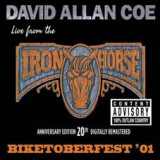
David Allan Coe - Biketoberfest '01: Live From the Iron Horse Saloon (20th Anniversary Edition LP)

If there’s ever been a way to describe David Allan Coe, it’s got to be his ability to defy categorization. With over six decades of following his musical muse wherever it’s led, this craggy voiced outlaw has crossed the panorama of American roots music. As well as being a singer, guitarist, songwriter, David is also a magician and a ventriloquist, deep sea treasure hunter, and movie star. His movies included Stagecoach, The Last Days Of Frank and Jesse James, Lady Grey, Buckstone County Prison, Take This Job and Shove It, to mention a few. David signed with Sun Records in 1968 and recorded his first album Penitentiary Blues, all songs that David had written in prison. In 1973, Columbia Records bought David’s contract from Sun Records and he recorded his first Columbia album, titled “The Mysterious Rhinestone Cowboy”, several years before Glen Campbell had a hit with the song, “Rhinestone Cowboy.” Much has been written about David’s past and his lifestyle, but not much about his achievements over the years. From performing on Farm Aid to touring with Neil Young, Kid Rock and Willie Nelson. David’s song, “Take This Job and Shove It” has received multi-million airplays certificate from BMI. His “Greatest Hits” album is multi-platinum and his “First Ten Years” album is gold. David has had sixty three songs on the Billboard Singles Charts, including, “Mona Lisa Lost Her Smile”, “The Ride”, “Please Come To Boston”, “Willie, Waylon and Me”, “Jack Daniels If You Please” and “You Never Even Called Me By My Name” to name a few. David has written songs for Johnny Paycheck, Tanya Tucker, George Jones, Willie Nelson, Leon Russell, Charlie Louvin, Del Reeves, Tamy Wynette, Melba Montgomery, Stoney Edwards, The Oak Ridge Boys and Kid Rock. Both “Would You Lay With Me” and “Take This Job and Shove It” are multi- million seller songs penned by David. Johnny Cash has also recorded David’s songs including “Would You Lay With Me” on his chart topping album entitled, Cash. David has been through a lot in his life but has managed to put his past behind him and move forward with his life. This album was recorded in 2001 live from the Iron Horse Saloon in Daytona, Beach Florida and includes the only recorded version of, I’m An Ohio Boy.

pre-order now21.05.2021

expected to be published on 21.05.2021


Last In: 2026 years ago
POPA CHUBBY - TINFOIL HAT

Popa Chubby

TINFOIL HAT

12inchDFG016
DixieFrog
12.03.2021

Be assured that even dawning on sixty and with a career spanning more than 30 years, Popa Chubby continues to fight against the injustices of this world !
And the least we can say about 2020 and the COVID-19 pandemic is that it offered him the “magnificent” inspiration that fed into the creation of his new album “Tinfoil Hat”! As he writes himself, this record’s creation was self-evident from the beginning of the first lockdown in March.
Back at his base in the Hudson Valley and following his last show played in Florida, our man immediately wanted to send a message of empathy and support to his fans, and that’s how the song “Can I Call You My Friends?” was conceived. The reaction was so sudden, warm, and intense that he found there was enough material for continuing this “dialogue” by composing other songs that today form the framework for “Tinfoil Hat.”
The whole thing was entirely “homemade,” recorded and played by Popa Chubby with the extra Guts and Soul that great causes often bring to life. “Tinfoil Hat” and the 11 songs that make it up were born from a mixture of love, despair, fear, frustration, pain, joy, sorrow, resolution and the leap into the great unknown imposed by the coronavirus that has been with all of us all since last
March. The Trump administration’s chaotic and reckless management of the crisis provided Popa Chubby with the inspiration for uncompromising lyrics. Like those of the title song (supported by, to say the least, an explicit clip) or themes such as “You Ain’t Said Shit,” “No Justice, No Peace,” or “Another Day In Hell.”
Without forgetting to pass on messages of hope (“Someday Soon, Change Is Gonna Come”) or even for good behavior in the face of the virus with “Baby Put On Your Mask.” In the album notes, he writes, “Like all of you, this pandemic has pushed me to the very edge of my humanity. But the music, the sweet music, has put me back on the right path once again. So I offer this work with humility and the deep devotion I have for you!”. That says it all!

pre-order now12.03.2021

expected to be published on 12.03.2021


Last In: 2026 years ago
Roscoe Weathers - I'll Remember

Roscoe Weathers

I'll Remember

12inchJMANLP123
Jazzman
04.09.2020

For every celebrated name in jazz, soul and related music, there are probably another 1000 musicians who had all the talent and potential but for whom widespread recognition remained elusive. Roscoe Weathers is one such figure, a jazzman who earned his chops the hard way, a sideman in smoky clubs from Memphis to Seattle, before finally settling in LA. He recorded a significant amount of music through the 1960s, but never found the slightest modicum of commercial acclaim nor the success that comes with it.

Overlooked by all but the tiniest of record labels, Weathers' released much of his material himself. Indeed, we can lay claim to be the first outside label to release any of his music since the early 1960s. That's sixty years of being overlooked by the record industry, so we are delighted to release this first full length album of his music in a first attempt at righting that historic wrong.

A multi-instrumentalist, Weathers mainly led on the flute in his recorded output. The music here spans the course of the 1960s, and moves from laid back beatnik jazz stylings through to percussion heavy Afro-Latin influenced workouts. As usual with Jazzman, we have not only dug deep to unearth Weathers' music but also his background and biographical details, shining much deserved light on this enigmatic and largely unheralded figure for the first time.

pre-order now04.09.2020

expected to be published on 04.09.2020


Last In: 2026 years ago
SIXTYONE - The Locks (Stojche/Hive mix)

Joe Lucas creates music under a few monikers most often as Causa and notably has appeared on Tusk Wax, Boogie Box and Birdie.

The Causa sound elegantly touches on deep house grooves and melodic techno but with contemporary style and is an obvious choice for the Verdant family. The Locks EP is released as Sixtyone leaning towards Detroit flavours with intricate percussion layered with warm soulful keys.

Previous releases have attracted high profile remixes from Kuniyuki, Luv Jam and Young Marco and that trend continues. On the flip of The Locks Stojche provides a burly, peak time reshape of Zelo upping the Detroit vibes. Hiver's reshape of the delicate Tregnanton original adds a firm kick, swinging bassline and heady 303 sparkle with dazzling effectiveness.

out of Stock

Order now and we will order the item for you at our supplier.


Last In: 6 years ago
The Sahib Shihab Quintet - Seeds

Back in stock!

Some friends think that Shihab the man owes the balance of his soul to his beautiful Danish wife. They may be right; for Eros is the very essence of what Shihab plays.Yet Eros is a god with many a face. A tale of tender mournings Shihab's flute is telling in MAUVE - a piece that translates its title into delicately changing colors of sound. In UMA FITA DE TRES CORES he has his instrument wooing with the proud self-reliance of Latin grandezza. Calmly, softly, almost blandishly Shihab blows the solo flute in the Jimmy Woode composition MY KINDA WORLD. Serene and somewhat playful his own title ANOTHER SAMBA comes along - a most uncommon composition by the way: lasting for sixty bars as if growing independent out of itself, with solos that appear to be additional spinnings rather than improvised choruses; and yet; a perfect, self sustaining melody no element of which is superfluous. In the last of the pieces for flute, in Klook Clarke's THE WILD MAN, which is based on a flourish of trumpets, Shihab for the first time reminds of the sombre, the demon-like face of God Eros. He contrasts flawlessly intoned passages with challenging phrases, phrases raucously sung into the flute - really, he is a 'wild man' who is playing like that. This raucous challenging sound prevails throughout the four baritone-titles ('Shihab never withholds long to caress', Campi says). Shihab blows the instrument the same way he speaks: without any delay, directly coming to the point. And he treats it like a voice, not aiming at an artificially homogeneous sound in all the registers, but at their different modes of expression. In the high pitches the horn gains a brilliant tenor-like quality - for instance in PETER'S WALTZ, dedicated to Shihab's son Peter, and in Kenny Clarke's simple drum fills comprising theme JAY-JAY. In the deep register Shihab produces snotty sounds filling lady's ears with horrors like Pan - thus in JAY-JAY and in the boppy blues SET UP . Shihab's sense of a scurrilous humor breaks through in SEEDS (which reminds of the West-African heritage of jazz with its multiple rhythms and its renunciation of harmonious development - only the eight bars of the bridge base on a progression of chords): not only does he omit the notorious bombastic chord by the ensemble after his own final cadenza, he even ends with a minor second above the keynote. Seems as if Shihab now unrestrictedly conveys to his music all the experiences and emotions he formerly did not deal with in a musical way. Shihab the man need not be disturbed so that Shihab the musician may improvise passionate choruses. It would be unjust, however, to forget the choruses of the four other musicians for those by the 'born leader'. Francy Boland, taciturn and always introverted: he plays an extrovert, a masculine piano. Even with spare single note lines he produces a piercing and ringing sound that hitherto nobody except him has discovered, a bluesy sound bespeaking the very element of frustration that lies within the title of the trio number WHO'LL BUY MY DREAM. The unfailing feeling for rhythm the musicians of the CBBB praise with the arranger Boland, becomes manifest in the piano solo on SET UP. Francy's improvisation is rhythmically styled in a Monk-like manner, and yet no accent could be set differently. Maybe this is the secret of the Shihab-Combo. 'Rhythm is our business', this credo of Jimmy Lunceford could be the one of the five musicians as well. Sadi hits his vibes as dryly as if wanting to bring its ancestors to memory, the wooden chimes of West Africa's coastal tribes. To reach the fullest poignancy possible, he intentionally calms down even the resonance in MY KINDA WORLD. In UMA FITA DE TRES CORES Jimmy Woode bears out the crispy jazz beat against Sadi's Bongos and Klook's Latin-American percussion all by himself. Moreover - and that, too, is connected with the school of the Duke who was the first in the history of jazz to discover the instrument's potential as a melody instrument - Woode rips a marvelous counterpoint to the inventions of the other melody instruments, take for example PETER'S WALTZ. And then there is Kenny Clarke. Klook. On the entire record he only uses his brushes. Means by which different drummers only know to bring forward impressionistically blending noises: He drums a vigorous beat with them, fanciful fills, a solo, melodious and at once skillfully playing with cross rhythms in JAY-JAY. The 'born leader', the 'outstanding baritone saxophonist of modern jazz' (Joachim-Ernst Berendt), he could not wish himself different sidemen for this record overdue since some years.

pre-order now05.08.2013

expected to be published on 05.08.2013


Last In: 2026 years ago
  • 1
Items per Page:
N/ABPM
Vinyl