Texas-raised, NYC-based Ben Hixon continues to be one of deep house's most essential new voices. His dusty, lo-fi take on the genre feels instinctive and raw but always carries serious emotion under the surface. After a fine outing announced already on NDTAL this month, he's back on his own Dolfin with another crucial three tracker. 'Purpouse (Jubilee)' is a swinging sound with classic Midwestern vibes, 'Look At Me' spins out into high-paced juke and footwork drum patterns with eerie pads and 'Read Between The Lines' is a low-lit, low-key basement house groove with conscious mutterings adding serious depth. Another doozy from Hixon.
Cerca:deep patterns
I wrote this album in prison. I went to the music room every week to play on their keyboards. I studied different styles of beat patterns and sound recording to be a recording engineer. I wanted to create this new sound, so I took go-go, hip-hop, house, and drum and bass to blend up a new pattern of beats with a DJ sway. So I rapped on it. I need a perfect mix sound so I used a reverb gate, small room because I was in a small room. I used my moms blankets to trap the sound waves in the room. I use a digital mic from radio shack and was rapping with a blanket over my head to trap the sound waves. I played my keys in F flat to deepen the tone. I put tom toms on it to fill the spaces with handclaps to have that snap. Then I put a reverb gate on every instrument to get the lo-fi audio sound. I mastered it with all knobs on zero. Equalizer on zero. I mastered my own sound by tweeking and listening with cheap headphones. So that's why I call myself Mix-0-Rap because I master my mix and DJ rap style with a touch go-go rapping. Thank you for supporting me and my music, I hope you enjoy this.
Ordina ora e ordineremo l'articolo per te presso il nostro fornitore.
The latest tape from Captured Visions offers up smoky, low-key deepness that is perfectly suited to the imperfections of the format. Arcade, aka Nathan Stephenson, opens up this compact but potent collection with 'Grace 01', a dreamy house sound for calm and reflection with a gentle smattering of toms and smeared chords soothing the soul. 'Grace 02' moves more but remains well below the surface, with liquid pads and cuddly kicks. '03' spins out into electro drum patterns with bleeping digital synths and crunchier hits, and '04' closes with ghostly chords that drift in and out of focus over a cavernous and dubby low end from late 90s Berlin.
dovrebbe essere pubblicato su 30.03.2026
For our first EP and 12", we're joined by Italian sound artist and long-time Goodness friend Yraki for 5 tracks of sonic hypnosis on a bass-heavy theme: ‘Tendril’ is meditative future-techno meticulously constructed through an experimental, high-poly lens.
Detailed, tactile sound design with deep, hypnotic momentum, it shapeshifts between stripped-back bass pressure and elastic, experimental flow in one costant, evolving, unravelling thread.
--
The shadowed interstice between root and circuit, Tendrils creep through soil and signal alike, tracing patterns unseen, carrying memory and mutation. Time folds in layers of sediment and data; decay becomes growth, fracture becomes connection.
Tendrils are the pulse of the unseen, a meditation on growth, entropy, and the uncanny geometry of becoming.
Ordina ora e ordineremo l'articolo per te presso il nostro fornitore.
“Tectonic” is a concise portrait of SIMON BERZ’s geological sound explorations across continents over the last 15 years: drums, electronics, and a set of electronically manipulated basalt stones from Iceland.
SIMON BERZ is a transdisciplinary drummer, sound artist, and music educator based in Switzerland and Berlin. Working at the intersection of improvised music, sound art, and performance, and deliberately crossing boundaries between disciplines, his aesthetics are shaped by a sustained engagement with natural materials, particularly stone, and their sonic transformation through electronic manipulation. Beyond his performance work, BERZ founded BADABUM as an art label and a music school.
For the last 30 years, BERZ has been performing in Japan, China, Russia, the USA, Cuba, Iceland, Turkey, and across Europe. He has collaborated with artists including BILL LASWELL,BABY SOMMER, DAMO SUZUKI (CAN), JAMES TURRELL, JIMI TENOR, JOHN SINGLAIR, JOJO MAYER (NERVE), KONDO TOSHINORI, KIDD JORDAN, LAUREN NEWTON, LEE “SCRATCH“ PERRY, MAURO PAWLOWSKI (dEUS), NILS PETTER MOLVÆR, NIKI GLASPIE, NORBERT MÖSLANG, PAUL LOWENS, PFADFINDEREI, ROB MAZUREK, SKÚLI SVERRISSON, and he was the live drummer for APPARAT. As BERZ understands artistic practice as energy emerging from nature and through dialogue with people, his recorded output is intentionally selective, with one highlight being “Beats versus Breath” with KONDO and LASWELL (2023). Alongside a regular drumkit and electronics, he has developed his own instruments such as the “Lithophon” in which resonating stones are turned into amplified sound through water drops, and “Tectonic”, a set of Icelandic basalt stones shaped through electronic manipulation. These self- built instruments form the material basis for his performances, installations, and sound recordings.
“Tectonic” is also the title of BERZ’s latest work: a summary of his geological sound explorations across continents. From Iceland to Indonesia and Bali, from New Orleans to China, in caves and at shores, BERZ carried his millions-of-years-old basalt stones as both instrument and collaborator. On Java, he met Baron, a builder of stone gamelan instruments. At the Pacitan Tabuhan Cave (Indonesia) he performed with MISBACH BILOK and WUKIR SURYADI (SENYAWA) who work with corals as instruments. BERZ brought these encounters and “field recordings” to the Stöðvarfjörður studio in Iceland, where he recorded with his “Tectonic” set-up, drums, and electronics. The music was later mixed in Berlin by DIRK DRESSELHAUS (SCHNEIDER TM). The resulting album moves from club-driven tracks to ambient passages, from gamelan-inspired textures to HipHop-like beat patterns. It resists easy categorization while staying direct and physical in its impact.
Ordina ora e ordineremo l'articolo per te presso il nostro fornitore.
Introducing the 4th instalment of the Pacific Coast House rebirth. We bring back another much sought-after 12” from The Coastal Commission & Jesse Outlaw. “Bring down the Walls” was a nod to Raze’s “Break for Love”, Robert Owens “Bring Down the Walls” and Ritchie Hawtin’s use of the Roland 606 throughout “Sheet One”. Long out of reach and fetching $100+ on Discogs, Atjazz’s freshly remastered editions are finally available .. “Let it Go” was never mastered & only ever cut to dub-plate. It has now been mastered & available in all it’s glory.
Coastal Commission “Bring Down the Walls” “Bring down the Walls” was a nod to Raze’s “Break for Love”, Robert Owens “Bring Down the Walls” and Ritchie Hawtin’s use of the Roland 606 throughout “Sheet One.” We gave the tune a Californian psychedelic twist with conga laden drums, a moody synth, low pulsing 303 patterns + Benjamin Zephaniahs patois call to “Move the Body Rhythmwize!” The first PCH releases had dropped Worldwide to International acclaim from DJ’s far and wide across the Globe with support in London, Paris & New York. However the local scene here in L.A that preached “Love, inclusion & Unity” was anything but that. L.A at that time was very tribal & divided up into 3 camps. If you weren’t affiliated with any of them (aka independent) then you were pretty much locked out of getting any kind of gig support or the Dj’s from those camps actually playing the music. The local feedback from Dj’s was that what we were making wasn’t “house,” but “Techno” which was absurd to me. “Bring Down the Walls” was a mantra to “move the bod”y and in doing so “bring down the walls” of separation not just in L.A but throughout society in general. Thank goodness for support from people like Terry Francis, Eddie Richards, DJ Deep & Philly Stalwart King Britt. After years of copies going for upward of $100+ on Discogs the now freshly remastered copies by At Jazz’s Martin Iveson are finally hitting the platters this Spring.
Jesse Outlaw “Let it Go” I met Jesse at Beatnonstop Records on Melrose Ave with Miguel Placencia in the late 90’s. Miguel (RIP) was a mainstay in the Underground scene and had always been very supportive of my endeavors. He had had success with a huge release on Yellow Orange and was working with Jesse under the moniker “When Worlds Collide.” I signed “Brighter Days” & “Set you Free” from them and released the tracks on my Seductive imprint. They told me that they were making the tracks on a Sony Playstation “Music Now” program and I was like FFS “What.s more Underground than that!?” Later Jesse gave me some of his solo work. The track “Let it Go” was never mastered & only ever cut to Dub-plate and featured on my 1st PCH mix “Pacific Coast House Sounds.” It has now been mastered by Martin Iveson and is available in all it’s glory. The dreamy vocal “You need to let it go” beckons over the top of driving percussive Latin beats and church organ which is a great compliment to the flip side of “Bring down the Walls.” All in all two West Coast stompers now finally available remastered on PCH in Orange vinyl.
Ordina ora e ordineremo l'articolo per te presso il nostro fornitore.
2026 Repress
Trickpony rightfully return with their sensual sophomore record, a six track tip of downtempo anthems elaborating on the sonic blueprint established through Pillow Talk (STEP11). Contemporary trip hop revivalists at the core; the trio specialise in new age pop collages, stripped, subbed and dubbed for your pleasure. With whispered secrets tangled over atmospheric decay and hooks that tug at heartstrings, the trickpony DNA is embedded deep in the musical discourse; “24/7 Heaven” elevates even the most devious to a divine higher place.
From top to tail slung breaks crash like waves, rolling and seeping into opulent synthesis which fills the room. Sometimes music can say a thousand words without a single lyric; Ripple and Trick Trick fixating on textural constructions, layers of harmonic delight working in unison with forward thinking percussion patterns. Angel and No/Direction delve deeper into a more sparse, stripped back landscape; delayed fragments with room to breathe between vocal stylings that will lodge themselves into your memory one word at a time.
Closing with a psychedelic exploration, Memphis Light derails structure formula and drum&bass starts to feel technicolour. With an understated maturity exuding from all angles, STEP17 offers an introspective assortment of illustrious songs ready to reach into your subconscious.
Ordina ora e ordineremo l'articolo per te presso il nostro fornitore.
So… what are we actually supposed to tell you about HCL? Honestly, it’s a pretty nice story. A collaboration the way it’s meant to be.
HCL stands for Horkheimer, Consti aka Zeitstill, and Delenz — not hydrochloric acid, but liquid music. One shared idea of sound, without a fully mastered plan. Most of the tracks were born during long studio sessions — long nights, extended jams, ideas taking shape naturally. No big concept, just working it out together and seeing where things go (or not).
After the first two HCL tracks found their way onto various samplers — including the 25 Years of Live at Robert Johnson compilation and Freeride Millennium’s own Queer Base Vol. 2 — it felt like the right moment to take the next step and release the first pattern. Not as a conclusion, but more as a checkpoint. This is far from the end. There are more patterns, more sessions, more ideas already waiting to be published.
Describing the genre is, as always, not that easy. It drifts somewhere between techno and all the other things orbiting around it. Purely electronic music, rooted in the club, but not obsessed with functionality. In a way, it reminds us of the early 2000s — deep, slightly twisted, hypnotic, driving but never aggressive. Music that takes its time, creates space, and pulls you in rather than pushing you forward.
For moments that are meant to last — tracks you don’t want to hear mixed out. For getting lost on the dancefloor, for forgetting the noise and madness outside for a while, for drifting into yourself and letting time fly. Honest club music, built for immersion.
Enjoy the music. Enjoy yourself. Love.
Yours, HCL
Ordina ora e ordineremo l'articolo per te presso il nostro fornitore.
Aedis debuts on Dzungla, pushing his sound forward while staying grounded in rhythm and movement.
The 4-tracker moves from percussive, driving techno into deeper, groove-led territory, centred around basslines and tightly structured patterns. Across the EP, impact gives way to flow, with tracks built around momentum, space, and subtle variation rather than peak intensity.
The closing track shifts the focus toward harmony and arrangement, opening the spectrum while maintaining a steady, dancefloor-oriented framework.
Ordina ora e ordineremo l'articolo per te presso il nostro fornitore.
- A1: Reset Series Part I
- B1: Reset Series Part II
Iñigo Medina aka M4 explores the profound convergence of two disciplines that share a common foundation: the manipulation of vibration and resonance to transform consciousness and space: Yoga and Electronic Music.
While Yoga balances the body's energetic vibrations through breath, posture, and meditation, electronic music employs sustained tones, slowly shifting sequences, and atmospheric textures that induce trance states and align with meditative brainwave patterns.
"Reset Series" is characterized by atmospheric, non-danceable soundscapes built on repetitive sequences and arpeggios that slowly evolve, often processed through delay and reverb. Both yoga sequences and M4 compositions (the full track is almost an hourlong, divided into two parts) unfold gradually over extended durations . Each practice invites a journey inward, guiding the practitioner or listener through layers of repeating motifs that subtly transform, revealing deeper states of awareness with patient attention.
Time becomes elastic; space becomes internal; vibration becomes the universal language connecting body, environment, and sound.
dovrebbe essere pubblicato su 27.02.2026
Samurai Music offshoot SAIBAI welcomes legendary producer ASC to expand upon the label's widescreen strain of electronic music plumbing the depths between techno, electronica and broken beat.
ASC is the flagship project for James Clements, a prolific veteran of the scene who started releasing his distinctive twist on drum & bass back in the late 90s. Across a variety of aliases and many different label projects and collaborations, Clements has retained a strong artistic identity defined by steely atmospherics, rhythmic intrigue and precisely sculpted sound design. He brings those qualities to SAIBAI3.
On 'Raijin' the tempo prowls at 90 BPM, all the better to carry the bass snarls and haunted melodies hovering in the middle distance. 'Rasetsu' meanwhile hides its much sprightlier 150 pace behind a half time construction punctuated by a tactile, almost organic set of percussion. 'Kyubi' sinks into a deep, inky well of spatial sound design with just a light smattering of percussion and a weighty kick for guidance. 'Shigure' completes the picture with a mesmeric tapestry of shifting textures and brooding melancholy.
Clements has devoted much time recently to his ambient output, and it shows in the richness of the space he shapes around his needlepoint patterns, while his roots in more propulsive club music show their hand in subtle, understated ways. It's this balance that makes the release the perfect addition to SAIBAI's evolving story.
Limited to 200 copies
Ordina ora e ordineremo l'articolo per te presso il nostro fornitore.
Directions Out Of Town is the latest and teased as (possibly) the last LP by DIY electronic abstract pop wizard Finlay Shakespeare.
Directions Out Of Town is a fierce mix of headstrong pop bangers. Fact. There is simply no one else traversing the field that Shakespeare is exploring. It can be lonely in the desert, Simon says. Lyrically, Directions Out Of Town is dealing with loss; personally, geographically, politically, culturally - a general decay of everything.
This new record is heavily inspired by structural film where the results unravel a method where metaphor is removed from the act of sound synthesis, production and mix of the tracks. Fiercely independent and brimming with integrity this is a deeply effective journey through machines of the human experience.
The track titles are telling: 'Away', 'Get', 'Direction', 'I go for a walk', etc
This is sentiment via complex synthesis wrung through patterns of pop. One also finds ways out that only turn out to be false/untrue.
"I essentially don't know where I belong any more. This record is the precursor to that."
What is ostensibly an electro pop record reveals a multitude of layers and depth as one man and his machines wrestle with the reality of this tangled matrix. If the charts had brains this would be album of the year.
Finlay Shakespeare is an electronic musician working in the UK. His fascination for synthesized sound was born out of his parents' record collection, leading him to explore the electronic music of decades past throughout his teenage years. While starting to write and record his own tracks, he also began learning analogue electronics, which led him to design and build his own equipment. To date, he has released work on Editions Mego, Superpang, and his own GOTO Records.
Ordina ora e ordineremo l'articolo per te presso il nostro fornitore.
A chance meeting in Mexico City set Points of Inaccessibility into motion. When Ibero-American composer Rafael Anton Irisarri crossed paths with Dutch media artist Jaco Schilp at MUTEK in 2024, a conversation about how technology shapes perception revealed an unexpected common ground. Schilp invited Irisarri to a spring 2025 residency at Uncloud, the Utrecht-based collective he co-founded, where Irisarri's sound began to take form amid an environment shaped by Schilp’s visual research.
The Uncloud studio was located inside the former Pieter Baan Centre, a forensic psychiatric prison where suspects of violent crimes were once confined. Its long history of silence and containment shaped the atmosphere in which the project developed. Within this setting, Irisarri coaxed long bowed-guitar tones through a network of pedals and looping systems. The raw gestures thickened into a vaporous and architectural field of sound. Schilp processed the material through a custom point-cloud software patch that produced images in continuous flux. The visuals flickered, dissolved and reformed like memories that resist coherence, functioning as a digital Rorschach that reflected the observer’s own perception.
Amid these spectral echoes, the project evolved into an examination of how the past persists within present signals. Memory endures as residue and interference, continually shaping perception even when its source has faded.
Schilp’s visual process required a continuous stream of sound in real time. Irisarri improvised throughout the residency, generating material that allowed the visuals to develop in parallel. Once back in his New York studio, he began shaping the recordings by carving pathways through the improvisations and mapping selected passages into MIDI. This process allowed him to build outward from the bowed-guitar material with minimal overdubs, adding Prophet 5 textures, Moog bass and strings that expanded the harmonic field while keeping the original performances at the center. To refine the structure, Abul Mogard provided editorial input, working with Irisarri’s stems to guide transitions and strengthen the overall pacing. The material, originally created under conditions of immediacy and constraint, evolved into a fully realized work through careful revision, patience and sustained reworking.
The title engages the geographic concept of the Poles of Inaccessibility, locations defined solely by their distance from all surrounding points. Irisarri adapts this idea to the conditions of digital life, where new forms of inaccessibility arise through the informational enclosures that structure perception. What appears to be a fully connected network often produces a deeper kind of separation, one shaped by the filtering logic of the systems that mediate experience. In this sense, the digital sphere mirrors its geographic counterpart. We inhabit spaces saturated with signals, yet the possibility of genuine contact becomes increasingly remote.
At its core, Points of Inaccessibility considers what can be understood as the new rituals of capitalist realism. Irisarri uses the term digital shamanism to describe the forms of simulated connection that organize contemporary life. These systems promise comfort through algorithms, influencers and AI interlocutors, yet they often reproduce the same conditions that generate loneliness in the first place. What appears as connection becomes the echo of connection, a sequence of gestures that imitate solidarity while withholding it. Like the geographic poles, these rituals are defined by distance. They pull us into environments where everything is illuminated, yet meaningful proximity becomes increasingly rare. In this sense, the work approaches a hauntology of the present, a reflection on futures that have stalled and intimacies that have been thinned by the algorithmic infrastructures that surround us.
This thematic tension unfolds across the album’s four movements. Faded Ghosts of Clouds introduces the work with textures that rise and dissipate in slow cycles, creating an atmosphere that resists clear definition. Breaking the Unison occupies a pivotal position in the sequence and focuses on the moment when the individual and the system fall out of alignment. Its shifting patterns trace the scattering of signals that once suggested connection, revealing the instability at the heart of contemporary perception. Signals from a Distant Afterglow forms the center of the album and features vocals by Karen Vogt, whose presence enters the sound field like a fragile transmission shaped by distance and delay. The closing piece, Memory Strands, follows motifs that appear, recede and briefly intersect before returning to quiet. Across these movements, the album outlines a landscape in which emergence and disappearance continually inform one another.
Listening to Points of Inaccessibility is an encounter with a sound field that is constantly in flux. Elements surface briefly, shift position and recede, creating a sense of motion that resists stable interpretation. The music moves between closeness and vastness, carrying traces of memory while withholding a clear point of resolution.
The album’s visual identity completes the project’s conceptual arc. In Mexico City, where Irisarri and Schilp first met, Daniel Castrejón transformed stills from Schilp’s point-cloud visuals into the cover image. The final artwork captures a single suspended frame of the digital material, a moment extracted from a field that is normally in constant motion. Its surface recalls the texture and abstraction found in the work of Catalan artist Antoni Tàpies, where material presence and erasure coexist within the same plane.
What emerges is a work that examines the tension between technological systems and human presence. Points of Inaccessibility asks whether connection is still possible within environments shaped by mediation and delay, or whether we have become isolated points within the very networks that promise proximity. What possibilities for relation persist within environments organized by algorithms and interruption? And how are we meant to understand presence when so much of it is constructed at a distance?
Points of Inaccessibility will be released on BioVinyl on February 6, 2026, with audiovisual performances planned throughout 2026.
Mastered by Stephan Mathieu
Artwork by Jaco Schilp
Design and layout by Daniel Castrejón
Artist photo by Iulia Alexandra Magheru.
Ordina ora e ordineremo l'articolo per te presso il nostro fornitore.
With Dark Matter EP, Rambal Cochet continues his exploration of the fringes of electronic music, where ritual, cosmic and hypnotic sounds create a soundscape between mysticism and science fiction. The EP moves naturally between rhythms, atmospheres and synthetic lines from a lost rave futurism.
Each track has its own journey in a single narrative, with deep bass, percussive patterns oscillating between trance, downtempo and global influences, and a melodic sensibility that is both distinctive and accessible.
Dark Matter EP is a work that celebrates the visionary and cinematic side of Rambal Cochet, mixing mystery, spirituality and club pulsation for the dance floor and listener.
Perfect for seeking emotional intensity and imagination, or for an immersive, timeless listening experience.
Jaime Fennelly, as Mind Over Mirrors, makes music that pushes the known to the lip of the unknown, where it rocks precariously and in exhilaration. He scrambles the familiar and tweaks the comfortable, not through aggression, but a throbbing estrangement. When placed at a distance, these require longer reaches to grasp. The reward for this effort is an enlarged field of perspective, experience, and also of feeling. This is deeply feeling music to feel deeply.
In all of Jaime’s records—and, arguably, especially in Particles, Peds, & Pores—there’s a seed of the pastoral, some ancient shepherd’s song ringing through nearby hills and groves, but one also yearning to plumb the uncanny and the creative possibilities of disintegration. “Farewell to woods,” the grieving Damon sings in Virgil’s eighth Eclogue. “Let all be ocean now.” Fennelly sounds vast, enveloping wildernesses and the thrilling disquiet of their echoless grandeur. (Maybe Burroughs speaks to the borders of these zones: “Pulsing mineral silence as word dust falls from demagnetized patterns.”) There’s something of the heroic at work here, too, although the hero’s instinct has been suitably tempered—or awed—to know not to fly too close to the sun.
dovrebbe essere pubblicato su 06.02.2026
'In 2023, sound artist and composer Weston Olencki toured across the American South. Beginning in their hometown in South Carolina, they snaked a circuitous path from the mountains of West Virginia to the banks of the Mississippi River. As the miles accumulated, so did the initial seeds of new work.
'Instruments and artifacts they acquired hitched a ride in the backseat, while songs and sounds filled their portable recorder: water in its various states, the familiar insectoid buzz of those summer nights, trains cutting through the landscape, the traditional music that lived alongside the communities that kept it. Olencki took it all in, and over time, found ways that these experiences coalesced into a bramble-like perspective of time, where past, present, and future intersect in ways both barbed and beautiful.
'Broadsides, Olencki’s newest solo full-length is the multilayered result of this journey. The album follows their landmark release Old Time Music from 2022, which presented radical interpretations of traditional tunes from Appalachia and throughout the South alongside original compositions that drew significantly on archival recordings. On Broadsides, Olencki rejects delineations between the unmoored avant-garde and the rootedness of one’s cultural heritage, revealing their porous and intertwined nature. “My mother was a quilter. Her mother before that,” they write in the album’s liner notes. “Quilting, like music, is a practice of embedding knowledge and remembrance into the very core of the thing you are making. It’s not just about the materials, but how they’re reassembled, recontextualized, stitched, woven to form new patterns - the minutiae of craft holding significance to those looking to find it. Stories woven from stories, never told the same way twice.”
'Like all great road trips, Broadsides unfolds slowly and continuously, with moments of dramatic reverie punctuating the endless melt of highway in the rearview. We’re immediately confronted by the uncanniness of revisiting old haunts, as Southern storms break through the initial churn of the freight locomotives of Alabama. Olencki’s interpretation of the bluegrass standard “Foggy Mountain Breakdown” captures the euphoria of melancholy in motion. The permutational plucks of banjo are bounced around the frame by a computer, its pitches determined within algorithmic sequences and transcriptions of classic three-finger licks. The tonalities of old-time are smeared and stretched until all that’s audible is the insistence that Heaven might be real.
'In the album’s second half, “Omie Wise,” a murder ballad made famous by Doc Watson, follows an interlude recorded on the river in North Carolina in which the titular character’s body was laid. Ghostly echoes of a dozen other renditions float through the substrata as Tongue Depressor’s Henry Birdsey accompanies them on the pedal steel guitar. The album’s central composition, “all my father’s clocks,” is a profound meditation on entropy and impermanence. The sound of their father’s extensive clock collection ticks away as Olencki pulls a bow across the length of an autoharp sourced from a rural strip mall. The instrument was left as detuned as it was found, the resonance of its deep bass drone and clanging high-end the result of years of neglect and the warping effects of Southern humidity.
'Historically, broadsides were an early form of broadcasting, an often- musicalized telling of current news pasted in the public square. The name was later taken up by Sis Cunningham and Gordon Friesen in the 1960s, whose Broadside magazine published songs and social commentary when American folk music resurfaced as an urgent way of communicating the multifaceted politics of its time.
'Olencki borrows the phrase to recall both this old form of songmaking and that later prominent reexamination of traditional music’s role in modern life, but also to draw attention to the fragmented and machine- mediated way heritage is diffused in this very different, but no less pivotal, moment.
'As a sanitized past is used as justification for current violence and domination, we can turn to these artifacts to better understand the history of ourselves, but only if they are consciously pushed to evolve. Broadsides represents one personal, striking vision of what far-flung futurisms could be respun from = these high, lonesome sounds: a reflection of the unbridled joy and deep sorrow inherent to living together through time, and a desire to push further into the untold and unknown.'
dovrebbe essere pubblicato su 30.01.2026
Chicago producer Ellery Cowles lands on Apnea Records with three tracks that draw from the city's foundational rhythms while reaching for something more devotional. Walking by Faith isn't chasing nostalgia--it's after deeper ground. "Fall of Jericho" kicks things off with syncopated Chicago swing colliding with latin percussion and acid basslines that curl and bite in equal measure. "Fly" builds around a looped vocal fragment, letting raw drum patterns stretch and breathe as the track slowly reveals itself. Closer "Crying of Yahweh" is the most patient of the three--seven minutes of hypnotic techno coiling around latin rhythms, carrying a quiet spiritual weight that lingers long after it fades. Cowles moves between reference points with ease--Chicago house, devotional threads, latin heat--but never forces the connection. The music feels like it's been lived in rather than simply constructed, generous with its time and intentional with its space. Out now on Apnea Records.
Ordina ora e ordineremo l'articolo per te presso il nostro fornitore.
Announcing Perseverance Flow, the latest album from acclaimed Chicago-based ensemble Natural Information Society (NIS), release date 2024-10-24. After a trilogy of double LPs by expanded manifestations of the band that began in 2018 with Mandatory Reality & continued through Since Time Is Gravity (a Pitchfork Best Jazz & Experimental Album of the Year selection & Mojo’s #1 Underground Album of 2023), NIS returns to its core formation of Lisa Alvarado on harmonium, Mikel Patrick Avery on drums, Jason Stein on bass clarinet, & composer/multi-instrumentalist Joshua Abrams on guimbri for one continuous 37 minute composition across a single LP. As the rocket boosters on spaceship earth sputter closer to burnout, lower your stylus into a soundfield that grows stronger the deeper you travel into it; a dose of the medicine many of us look to music to deliver awaits you inside.
One of the deep contemplations of this natural information (thanks Bill Callahan) is the wide range of source materials Abrams draws from over the band’s more than 15 year history: Ideas from minimalism, modal jazz & traditional musics are regularly reimagined in these compositions. The 2021 double LP descension (Out of Our Constrictions), with guest soloist Evan Parker, reflected aspects of Abrams’ love of party music, Chicago house, & John Coltrane. *But even veteran travelers with the NIS best brace themselves for the Perseverance Flow.
Speaking to the history & the inspirations behind the album, Abrams offers: “We played the piece for a year in concert before the recording. At Electrical (Audio Studios, Chicago) we went in at 11 & were done in time to pick our kids up from school.” Abrams continues: "In a reference world, I imagine Perseverance Flow like a live extended realization of a Jaylib lost instrumental as remixed by Kevin Shields. Or vice versa. I also think it has sympathies to some of the more rhythmically intricate dance musics out of Chicago & Lisbon.”
The core NIS ensemble heard on Perseverance Flow always address Abrams’ writing with the discipline of orchestra musicians & the creativity of improvisers. But this time around, instead of inviting living legend status musicians Evan or William Parker or Ari Brown as honored guests to solo freely over the composed materials, Abrams’ invited guest collaborator was the medium of the recording studio itself. Situated at the board with engineer Greg Norman, Abrams pushed post production techniques found only sporadically on earlier NIS records deep into the heart of the music, distorting & reshaping instruments to subtly &, at times, aggressively mutate timbre & texture, color & time.
Refracting the band’s signature mesmerizing chains of overlapping rhythmic patterns through the sonic funhouse of dub makes Perseverance Flow the most formally experimental NIS album to date. Now a soundworld fully unique to itself is listening to itself, consoling & humoring itself, & consoling & humoring you. A destruction myth & a creation myth of a soundworld together at once —”energetically nutritious” (October 2025 Issue 500 The Wire) supernatural information society.
“Perseverance Flow is skipping rope in slo-mo. A dance of co-operation to rally guts & humors & keep marching through pouring tears” (Abrams).
Ordina ora e ordineremo l'articolo per te presso il nostro fornitore.
- Somewhere, Nowhere
- Angles Mortz
- False Prophet
- Fluoride Stare
- The Void
- Ascension
- Just a Kid
- Host
- Landslide
- Renaissance
- 7: am
- Blue In Grey
2026 Repress
Flickering in ultraviolet, there is an elusive place where blue pill meets red, ups become downs, and day merges with night. Those liminal spaces where anything is possible is where you’ll find Nightbus and their hypnotic debut album Passenger. Doom, uncertainty, and opportunity lurk in the shadowy corners of their murky existence with stops at disassociation, co-dependency, and addiction before reaching its final destination - a glimmer of hope.
The in-between of Nightbus’ own Gotham lies where Manchester’s city pulse meets Stockport’s outer realm. An audio-visual entity formed among a musical family of friends, freaks, and foes in messy mills and after hours on dancefloors alike, their sound bleeds from tension where collective creative forces are bound together and collide with the fallout of being torn apart. Before even playing a show, their So Young released single ‘Mirrors’ – a knowing nod of respect to some well-known gloomy Northerners - may have made old school indie heads shimmy at shows in Salford’s The White Hotel but also signalled the duo’s knack for offering listeners a Bandersnatch approach to hitchhiking their own personal Nightbus in whatever direction they choose to take. “Everyone can have their moment with our songs; the music is our response to who we are as young people, living in the city full of this energy right now,” they say.
Whilst reverb hefty melodies and dread-filled loops embody isolation from writing at each of their home studio set-ups, magic happens in the ether across 90s trip-hop, indie sleaze and electronica; Jake’s production layers Olive’s pop sentimentality with drums and samples whilst tales of a cast of faceless characters place Olive as puppet master; her severed self’s perspective manipulating their stringed limbs at arm’s length to see how their stories play out when scenes reflecting her own lie close to the bone. “It’s a bit fucked; like having this out of body experience with a made-up movie running through my head,” she says. “As I write I can see they’re all from a similar world, but they allow me to explore different feelings without giving away part of myself.”
Recorded at The Nave in Leeds with producer-engineer Alex Greaves (Heavy Lungs, Working Men’s Club), surprise and danger lies in every crevice. Brooding whispers turn to chants on 6-minute opus ‘Host.’ Improvised when performed live, its immersive shift in tempo leads to hefty dub courtesy of Jake’s pedals. Even then, you won’t know shit’s hit the fan until its mid-point reveal when ominous bass blasts a thunderous soundtrack as its protagonist defiantly walks away after committing the perfect crime. “It makes you wait, and more songs should have sirens,” Olive grins.
Leaning deeper into alter-egos via the video game-psychological horror of a Silent Hill dystopia, the band’s Fight Club moment ‘Angles Mortz’ turns its literal translation of death angles on its head as it reflects upon kink and internalised shame reincarnated as pride. Elsewhere the ice cool ‘Landslide’ is a Requiem for a Dream about the addiction of being in a band; ‘The Void’ explores co-dependency and estranged relationships; and carefully selected samples revive house track ‘Just A Kid’ from the band’s early incarnation. Passenger’s every direction is to face challenges head on. “That is what’s so great about horror; you can see through predictable patterns so when the unexpected occurs it's more realistic and uncomfortable… I want to own the dark stuff!”
As for Passenger’s first single, the pulsating ‘Ascension’ is a spiralling deep dive into death, suicide, and legacy around who or what we leave behind. A noughties club banger by way of NYC beats - ergonomically designed for those who like to stay out a little too often and too late - it throbs like a house party’s partition wall as the literal levelling up undergoes a neon transformation; blue glitching to pink, diffusing the white construct of the Nightbus Matrix. “It really does feel like the end of something and was purposely written that way,” they say, “the ascension is like a firework going off!”
With wheels in motion, Nightbus has become a movement surpassing sonic realms. Between shows from Porto to Brighton taking in The Great Escape, Rotterdam’s Left Of The Dial and Paris’ Supersonic; DJing; remixing; guesting (BDRMM’s Microtonic album); and even enlisting talented like-minds to craft a 3-part queer coming-of-age music video series which ties in with a new ‘hyperpop’ phase in the evolution of their popular Nightbus Soundsystem club night, heads are now being turned from sports brands to high-end fashion designers. “There are things we can’t reveal just yet,” tells Olive, “but we’re excited about the direction this beast we’ve created is heading.” As the album philosophises and asks one ultimate question; what does it truly mean to be ‘Passenger’? Nightbus may not claim to offer a definitive answer, but it might make you feel a bit better about those demons.
dovrebbe essere pubblicato su 16.01.2026
Bristol via NYC's DJ Nature makes house and beatdown so raw, dusty and dishevelled it feels like it's been put together in an old shed with rudimentary hand tools and might just collapse at any moment. But it is also brilliantly soulful and real, with synths infusing each loose arrangement with real heat and the drum patterns connecting deeply. Across four cuts here, he layers up those signature low ends with different motifs - funkier drums and watery melodies on 'Shattering Myths,', r&b vocal swirls on 'One' and unusual synth incantations on 'Medusa Weed', while 'Eternal Winter' is a subtle celebration with gentle charm. Another superb EP from a unique producer.
Ordina ora e ordineremo l'articolo per te presso il nostro fornitore.
- 1: Workaround One
- 2: Workaround Two
- 3: Workaround Three
- 4: Workaround Four
- 5: Workaround Five
- 6: Clouds Strum
- 7: Workaround Six
- 8: Workaround Seven
- 9: Workaround Eight
- 10: Workaround Nine
- 11: Square Fifths
- 12: Workaround Bass
- 13: Pause
- 14: Workaround Ten
‘Workaround’ is the lucidly playful and ambitious solo debut album by rhythm-obsessive musician and DJ, Beatrice Dillon for PAN. It combines her love of UK club music’s syncopated suss and Afro-Caribbean influences with a gamely experimental approach to modern composition and stylistic fusion, using inventive sampling and luminous mixing techniques adapted from modern pop to express fresh ideas about groove-driven music and perpetuate its form with timeless, future-proofed clarity. Recorded over 2017-19 between studios in London, Berlin and New York, ‘Workaround’ renders a hypnotic series of polymetric permutations at a fixed 150bpm tempo.
Mixing meticulous FM synthesis and harmonics with crisply edited acoustic samples from a wide range of guests including UK Bhangra pioneer Kuljit Bhamra (tabla); Pharoah Sanders Band’s Jonny Lam (pedal steel guitar); techno innovators Laurel Halo (synth/vocal) and Batu (samples); Senegalese Griot Kadialy Kouyaté (Kora), Hemlock’s Untold and new music specialist Lucy Railton (cello); amongst others, Dillon deftly absorbs their distinct instrumental colours and melody into 14 bright and spacious computerised frameworks that suggest immersive, nuanced options for dancers, DJs and domestic play. ‘Workaround’ evolves Dillon’s notions in a coolly unfolding manner that speaks directly to the album’s literary and visual inspirations, ranging from James P. Carse’s book ‘Finite And Infinite Games’ to the abstract drawings of Tomma Abts or Jorinde Voigt as well as painter Bridget Riley’s essays on grids and colour. Operating inside this rooted but mutable theoretical wireframe, Dillon’s ideas come to life as interrelated, efficient patterns in a self-sufficient system.
With a naturally fractal-not-fractional logic, Dillon’s rhythms unfold between unresolved 5/4 tresillo patterns, complex tabla strokes and spark-jumping tics in a fluid, tactile dance of dynamic contrasts between strong/light, sudden/restrained, and bound/free made in reference to the notational instructions of choreographer Rudolf Laban. Working in and around the beat and philosophy, the album’s freehand physics contract and expand between the lissom rolls of Bhamra’s tabla in the first, to a harmonious balance of hard drum angles and swooping FM synth cadence featuring additional synth and vocal from Laurel Halo in ‘Workaround Two’, while the extruded strings of Lucy Railton create a sublime tension at the album’s palatecleansing denouement, triggering a scintillating run of technoid pieces that riff on the kind of swung physics found in Artwork’s seminal ‘Basic G’, or Rian Treanor’s disruptive flux with a singularly tight yet loose motion and infectious joy. Crucially, the album sees Dillon focus on dub music’s pliable emptiness, rather than the moody dematerialisation of reverb and echo. The substance of her music is rematerialised in supple, concise emotional curves
and soberly freed to enact its ideas in balletic plies, rugged parries and sweeping, capoeira-like floor action. Applying deeply canny insight drawn from her years of practice as sound designer, musician and hugely knowledgable/intuitive DJ, ‘Workaround’ can be heard as Dillon’s ingenious solution or key to unlocking to perceptions of stiffness, darkness or grid-locked rigidity in electronic music. And as such it speaks to an ideal of rhythm-based and experimental music ranging from the hypnotic senegalese mbalax of Mark Ernestus’ Ndagga Rhythm Force, through SND and, more currently, the hard drum torque of DJ Plead; to adroitly exert the sensation of weightlessness and freedom in the dance and personal headspace.
dovrebbe essere pubblicato su 05.12.2025
Musician and visual artist by day, bat researcher by night: Mathilde Nobel brings both worlds together on her new album Guadirikiri on Nous'klaer Audio. Unlike the first album, Guadirikiri features (almost) no vocals. Instead, its compositions took shape through Mathilde's deep fascination for bats. Creatures that, much like her, navigate and make sense of the world through sound. By night, Mathilde travels across the Netherlands to study their calls, movements, and patterns. Using ultrasonic detectors and thermal cameras, she's been gathering and archiving recordings and visuals, gradually building what she calls an orchestra of bats - shaping and inspiring what became Guadirikiri.
dovrebbe essere pubblicato su 01.12.2025
A collection of earlier and newer works by LFU
combined in one EP.
On November 14, 2025 !K7 Records released DJ-Kicks by Eris Drew. She chose 'Oh Echt' by LFU as the opening track of her mix.
The style of 'Oh Echt' is not easy to categorize. Electronic breakbeats with Detroit hi-hat patterns and a typically pushy four-to-the-floor kick. The funky, staccato bassline and mysterious strings take you back to the eighties and the added funky organs and stabs complete the story. The "Oh Echt" Main Mix is the instrumental mix of the 'Vogel Mix' in which the 'Oh Echtapella' is incorporated.
The first design of 'Boom Boom Tracking' was in 2011 for a DJ/DRUM performance that LFU did. He picked it up again in 2014, but did not finish it until 2024. This big beat floor filler contains chemical beats accompanied by electrostabs and a deep, dark bassline. If you listen intently to this song on a regular audio device, you might notice a thump on every 1 of the 4 beats, but when it's played on a good, big sound system, you can't miss this tension in your stomach. 'Boom Boom Tracking' it is!
Downtempo percussive track 'Tjeetje' is the first track LFU has made in North Coast Studio in 2001. 'Slow Forward' was the third song he completed there in 2003, the same place where he met Ben Baan of Fruitcake, who played the piano part.
Initially, 'Queen Cubana' did not make it as a remix of Eddy Zoey's 'No Soy Cubano' in 2017. In this new version, LFU removed his vocals, except for "Step". LFU took inspiration from Katy Perry's 'Bon Appetit' and turned it into a rhythmic slow jam with carefully programmed beats, resulting in a spectacular funky joint.
Ordina ora e ordineremo l'articolo per te presso il nostro fornitore.
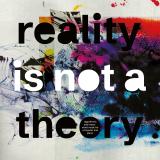
Recorded in concert at the University of Sheffield in March 2025, Reality Is Not A Theory is the first collaboration between Mark Fell and Pat Thomas. Major figures in British experimental music since the 1990s, Fell and Thomas have developed their rigorous practices from radically different backgrounds and perspectives: where Fell’s singular take on synthetic abstraction emerged from Sheffield’s electronic underground, Thomas is a virtuoso improvising pianist steeped in jazz and modernist art music who has simultaneously worked with sampler-based electronics for decades. As the record’s wonderfully academic subtitle explains, we are presented here with two sides of ‘algorithmic and improvised music for computer and piano’, exemplifying both players’ insatiable search for new (and sometimes uncomfortable) playing situations.
The performance begins with Fell’s electronics close to the timbres of acoustic percussion, attacks that suggest wood, metal or glass threaded along a rapid pulse while Thomas focuses on the lowest registers of the piano, deadening the strings. As Fell’s electronics start to ring out and occupy more harmonic space, Thomas turns to wide, repeated clusters, which slowly expand into patterns of chords. Like in his recent solo recordings and his trio work with Joel Grip and Anton Gerbal, Thomas’ playing combines extreme dissonance with a deep lyrical sense. Fell’s work gradually shifts its focus toward drum sounds, drawing on the microtemporal processes that have characterized his practice in recent decades. Heard together with Thomas’ probing piano, the computer sounds call up unexpected associations with the klangfarben antics of improv drummers like Paul Lovens or Tony Oxley. Throughout its second half, the music grows increasingly frenetic, as Thomas sounds out rapid, irregularly repeated figures and beautifully sour chords in the upper register, while Fell’s percussion develops into angular pan-pipe-like feedback and waves of glissandi.
With great confidence and patience, Fell and Thomas often let their individual contributions remain rhythmically distinct and unsynchronised, allowing unexpected correspondence and coincidence to guide the music’s development. Recorded in a hall named after Sheffield steel manufacturer and Master Cutler Mark Firth, the location might suggest a model for understanding how Fell and Thomas interact here: two workers in the same workshop, each immersed in their own part of the production process. Arriving in a striking sleeve designed by Mark Fell, with liner notes by Francis Plagne, Reality Is Not A Theory is an invigorating document of the meeting of two mavericks of contemporary music.
dovrebbe essere pubblicato su 21.11.2025
- 1: Stormdrummer
- 2: The Caveman
- 3: Changes
- 4: Limbo
- 5: Black Flames
- 6: Starrus
- 7: Take Me To The Stars
- 8: Morning Epitaph
- 9: Night Lights
France's most unique fire-driven hard psych duo return with their sophomore masterpiece. Written between 2022 and 2024, "DEUX" marks a bold evolution in Moundrag's sound - nine meticulously crafted tracks that balance raw power with intricate storytelling, creating their most ambitious work yet. What makes Moundrag special: Two brothers. No guitars. Just vintage organ, thunderous drums, and hypnotic call-and-response vocals that forge epic soundscapes. Drawing from Deep Purple, King Crimson, and Emerson Lake & Palmer while channeling modern acts like Motorpsycho, they've created something fiercely contemporary. From the hard-hitting assault of "Stormdrummer" to the psychedelic crescendos of "Take Me To The Stars," DEUX is both a nostalgic nod to 70s prog and a modern manifesto. The album blends dystopian fantasy, sci-fi, and Celtic myth into a cry against old patterns - an invitation to reshape a freer world. Featuring stunning cover art by contemporary Polish artist Justyna Kozikzak - a surrealist interpretation of Dante's journey through hell. Co-released with our friends Spinda Records
dovrebbe essere pubblicato su 21.11.2025
Things Gotta Change is the fourth release by Austrian soul band SLADEK, following their debut album and
two EPs. With Loveless (2024), the group redefined their sound and secured a unique place in contemporary
soul. This new ten-track album builds on that breakthrough, blending the spirit of Curtis Mayfield, Donny
Hathaway and Marvin Gaye into a style distinctly their own.
At the core of SLADEK are David Sladek (vocals, guitar), Alvis Reid (bass) and Raphael Vorraber (drums),
joined by longtime producer Mathias Garmusch. Passionate about late-’60s soul and analog recording, they
craft a warm, deep sonic palette enriched by Taineh (backing vocals, keys), Yvonne Moriel (flute) and Tobias
Meissl (vibraphone).
The opener “Weight of the World” moves from heaviness to hope over guitar riffs, Mellotron flutes and a
powerful outro. “Stranger”, the first single, turns romantic miscommunication into an uplifting groove. “Wait for
Me” reflects on tough choices before drifting into a meditative guitar and flute mantra. “What a Little Love Can
Do” delivers a calm yet urgent call for compassion. “Here to Stay”, the second single, pairs emotional
uncertainty with steadfast resolve.
Instrumental “Lotus Eater” offers a dreamlike pause, inspired by mythic forgetfulness. The title track “Things
Gotta Change” is a heartfelt plea to break harmful patterns. “Beacon”, the ballad, urges kindness in a cruel
world. “Waking Dream” brings minor-key blues and abstract introspection, while “Bye Bye” closes with highenergy farewells and fresh perspectives.
Things Gotta Change stands as a rich, analog-crafted statement—blending timeless influences, vivid
storytelling, and a deep emotional range into one cohesive, soulful journey.
Ordina ora e ordineremo l'articolo per te presso il nostro fornitore.
- A1: A Slow Dancing Society (feat. Flitz&Suppe)
- A2: B-Stone (feat. Franz Bumm)
- A3: Cruisin (feat. Malev Da Shinobi)
- A4: Routines
- A5: Green Roses (feat. Novine & Leavv)
- A6: Downtown
- A7: Reconnect
- B1: Melange (feat. YAN NAY & Franz Bumm)
- B2: Sunday Afternoon (feat. J-Tek & Christian JaLon)
- B3: Home Valleys
- B4: Now You Know (feat. Cloudhead)
- B5: Come Up
- B6: Synthesis (feat. Kenji)
- B7: Sirocco (feat. YAN NAY)
Infotext ENG
After establishing himself as one of Europe's most distinctive voices in instrumental hip-hop, Mr. Käfer is ready to tell a different story. His third solo album, A Past Sense, arriving via Melting Pot Music on 11th November, shows a bold creative evolution from his signature lo-fi aesthetic into lush, collaborative territory that spans continents and genres.
His sixth project for Melting Pot Music marks a creative leap from the mood-driven, jazz-tinged instrumentals that built his reputation on releases like Lost Reflections (2019), Orientation (2020), and Now/Again I and II (2021, 2023). Now he's orchestrating a 14-track journey that weaves together hip-hop, soul, jazz, and North African rhythms through collaborations with carefully selected artists including Novine (GER), J-Tek (US), Kenji (US) and Cloudhead (AT).
Thematically, the album explores how memory reshapes identity, questioning the gap between who we were and who we've become. The visual side comes courtesy of acclaimed photographer and art director Robert Winter, capturing this nostalgic-yet-progressive spirit. A Past Sense will also be released on LP.
With A Past Sense, Mr. Käfer steps out from behind the boards and into the spotlight—trading lo-fi playlist comfort and algorithm-driven streams for something deeper. A past sense, maybe. But definitely a future sound.
Infotext DE
Europas instrumentaler Hip-Hop bekommt einen neuen Sound. Mit seinem dritten Soloalbum „A Past Sense“ verabschiedet sich Mr. Käfer von seiner lo-fi-geprägten Vergangenheit und erschafft ein Werk, das über Genres und Kontinente hinausgeht.
Wo frühere Veröffentlichungen wie „Orientation“ (2020) und die „Now/Again“-Serie (2021/2023) durch intime, jazzgetränkte Instrumentals bestachen, öffnet sich „A Past Sense" neuen Horizonten. Auf 14 Tracks verschmelzen Hip-Hop-Fundamentals mit Soul-Harmonien, Jazz-Improvisationen und nordafrikanischen Rhythmus-Patterns.
Die Kollaborationen mit Novine (Deutschland), J-Tek und Kenji (beide USA) sowie Cloudhead (Österreich) sind dabei keine Gastauftritte, sondern organische Begegnungen, die Mr. Käfers Musik in unerwartete Richtungen lenken. Er bricht bewusst aus der Blase algorithmusgetriebener Lo-Fi-Playlists aus und setzt auf echte musikalische wie menschliche Verbindungen.
Thematisch kreist „A Past Sense" um die Macht der Erinnerung und die Frage, wie Vergangenheit unsere Gegenwart formt. Diese konzeptionelle Tiefe spiegelt sich auch in der visuellen Umsetzung wider: Fotograf und Art Director Robert Winter entwickelte eine Bildsprache, die Nostalgie und Zukunftsvision in perfekter Balance hält.
Mit „A Past Sense" positioniert sich Mr. Käfer neu im internationalen Beat-Kosmos. Das Album erscheint am 11. November über Melting Pot Music – digital und auf Vinyl.
dovrebbe essere pubblicato su 14.11.2025
Analog Decay 001 Artist: Translate Remix by Jonas Kopp Format: 12" Vinyl & Digital Release Date: 14.11.2025 Analog Decay proudly announces its debut release: a powerful statement of intent from the label, rooted in raw aesthetics and a deep reverence for the analog medium. For this first chapter, the imprint calls upon Argentine producer Translate, whose distinctive take on sci-fi-infused techno sets the tone for what's to come. The A-side opens with "RAD-100", a hypnotic journey into mechanical rhythm and spectral textures, followed by a forceful reinterpretation by the legendary Jonas Kopp, whose remix brings heightened tension and propulsion to the original narrative. On the B-side, "Pyramids" explores geometric pulse patterns and atmospheric depth, while "Infrared" closes the EP with a dense, pulsating groove designed for late-night transcendence. This release has been meticulously mastered by Giuseppe Tillieci (Neel) at Enisslab (Rome), ensuring a dynamic and immersive sound experience. The visual identity is completed by artwork from Mauricio Atencia, with photography by Paula Romero, reflecting the label's commitment to brutalist minimalism and analog imperfection.
Ordina ora e ordineremo l'articolo per te presso il nostro fornitore.
For our ninth offering we have ventured out of our small but fertile swamp in search of another source of magick. Meandering across boggy pastures new, we crossed paths with Steevio, who sat hovering serenely in the fern covered shade of a nearby valley. Instantly recognising the singular vision of this fabled artist, we hastily gathered our nets and cast them under Steevio’s branches, capturing four beautiful offerings as they wriggled towards us. Upon the return to our mulch, it became clear that we could not contain Steevio’s creations, so willful was their vitality. It was therefore all we could do to release them back to the universal dance from whence they came.
The dance germinates with the writhing polyrhythmic ‘Apricity’. Hearing the crunch of frost laden grass beneath our webbed toes, we look above us to search for the sun. Angular beams of light escape over the horizon, as the warmth of Steevio’s machines coalesce. A glistening hi hat breaks through the membrane to bind his creation and anchor its ever shifting arms.
‘Octopus’ glides gracefully through a sun-dappled kelp forest. Sub frequencies rumble up from the shadowy darkness below, rippling along the fronds as they ascend. As the ocean begins to churn, a wriggling melodic tentacle parts the foliage, gleaming with primordial energy. Its joyful visit to the surface realm leaves us with a brief yet powerful reminder of the mystery beneath.
The glow of the midwinter sun warms our bones on ‘Apricity (Sunrise Mix)’. Percussive elements bubble out of the depths, forming intricate cascading patterns as they grow over the perfectly formed kicks. The moog filter tames the brew with Steevio’s intuitive restraint , until he releases its mighty power upon the gleeful forest dwellers, to their rapturous gratitude.
With ‘Adref’ we return home. The sedate tempo provides oceanic space for a melody which inhales and exhales over a familiar landscape of perfectly tuned percussion. With each breath the melody seems to increase its reach, until it’s buried deep within our bones, its memory resonating on long after it’s gone.
Steevio’s music reflects the universal moments where seemingly chaotic and disparate elements are suddenly revealed to be perfectly harmonious. Of course examples of this are always universally present in nature, and have been eternally, but we have to be reminded to appreciate them. In the same way that a wave deposits a perfect line of shells on a beach, dew freezes on grass, or individual strands of mycelial hyphae bind together to form incredible patterns, Steevio’s music is likewise; effortlessly considered. For us, it has more in common with the unrelenting flow of a river than it does with dance music. It is psychedelic music in the same sense that nature is intuitively psychedelic; without ever leaning into any tried tropes of what is culturally considered ‘psychedelic’ music.
Ordina ora e ordineremo l'articolo per te presso il nostro fornitore.
Dark Entries release 'A Boy Alone', a double LP set from Manchester electronic music pioneer Eric Random. Best known for his early recordings for New Hormones and Les Disques du Crépuscule and collaborations with Pete Shelley (Buzzcocks), Cabaret Voltaire and Nico.
As an original member of The Tiller Boys with Shelley, Random injected a healthy dose of Krautrock into the dour Manchester post-punk scene in 1978/79 before going solo the following year. Random's first 7' 'Subliminal'/'23 Skidoo' was released in 1981 via Les Disques du Crépuscule and explored ominous sonic surrounds. That same year also saw the release of a second 7" single on New Hormones, 'Dow Chemical Company'/ 'Skin Deep'. Both tracks offered bubbling, rhythmic sound patterns, and were the first to feature other musicians that would become know as The Bedlamites. Consisting of Lynn Walton on vocals, Ian Runacres and Andy Diagram of Dislocation Dance, and bassist Wayne Worm, aka Wayne Sedgeman. Their debut 12' single 'Subliminal Seduction'/'Bedlam-a-Go-Go' was released in 1982 through Plurex, mixing arid funk textures and sparse melodies. That same year the group contributed proto chill-out track '6.55' to Plurex compilation 'Hours' and the highly filmic track 'In Cassette Conference' to the Touch cassette package 'Feature Mist'. In 1983, Random spent several months in the Himalayas with a group of musicians from the Kulu Valley and studied non-Western instruments such as tabla. On returning to Manchester, Random convened a new group of Belamites including Walton, Sedgeman and drummer Graham Dowdall aka Dids of Ludus. They released the 12' single 'Mad As Mankind'/'Dream Web Of Maya' in 1984 on Cabaret Voltaire's Doublevision, embracing electronic, industrial and dub styles. In 1985 they contributed the soothing 'Pure Power' to Food Records' 'Imminent Episode One' compilation.
Our reissue also includes 4 unreleased bonus tracks from Eric's archives recorded between 1981-1984. The whole set adds up to 115 minutes of sinister, somnambulant Random music. All songs have been remastered by George Horn at Fantasy Studios. Each copy is housed in a gatefold jacket designed by Eloise Leigh featuring a spread of ephemera, photos with liner notes by James Nice of LTM.
Ordina ora e ordineremo l'articolo per te presso il nostro fornitore.
- A1: Jah Golden Throne Dub (3:13)
- A2: Strictly Rodigan Style (2:51)
- A3: Straight To Black Echoes Head (3:07)
- A4: Tribute To Moa Ambassa (2:53)
- A5: Danny Allen Style (3:22)
- B1: Tribute To Penny Reel (4:08)
- B2: Sir Covin Meets Sir Ansil (3:56)
- B3: Straight To Thatchers Head (2:53)
- B4: Raasclaat Dub (3:32)
- B5: Tribute To King Shaka (3:44)
Two titanic forces in reggae history — Roots Radics and The Mighty Revolutionaires — unite for a powerful dubwise journey on Outernational Riddim. This long-anticipated collaboration blends heavyweight rhythms, militant drum patterns, and deep, atmospheric dubs that channel the essence of Jamaican roots music with a forward-thinking production style.
The Roots Radics, known for backing icons like Gregory Isaacs, Barrington Levy, and Israel Vibration, bring their unmistakable heavyweight style to this session. Meanwhile, The Revolutionaires, studio legends behind countless Channel One classics, lace the tracks with their tight arrangements and classic rockers grooves.
Produced and mixed in true dubwise tradition, Outernational Riddim delivers:
Authentic Studio Vibes – Mixed on analog boards with vintage effects and tape echo for that raw, immersive sound.
dovrebbe essere pubblicato su 31.10.2025
Sunny Crypt reaches double digits on their release catalogue with a fully remastered new edition of the now sought after debut EP from Most Significant Beat. M.S.B. is an electronic music project active since the early 90s, formed by Maurizio Martinucci and Saverio Evangelista; their first record - originally released by Marco Passarani’s Nature Records in 1994 - is a masterclass in hypnotic patterns, pulsating rhythms and mind-bending leftfield techno. While “Heart Thinks Wide” and “A Flux To Follow” on A side give more breath to lushy textures and classy, dreamy pads, B side
reflects more carefully another aspect of the duo’s background with a rawer, electro leaning, percussion driven sound palette; in fact, both Martinucci and Evangelista have deep roots in the industrial and experimental music scenes. Martinucci has been a member of Clock DVA since 2010, while also working on a wide array of projects including The Anti Group and his solo Pragma alias. Evangelista, on the other hand, has been a core member of the cult industrial outfit Esplendor Geométrico since 1990.
Ordina ora e ordineremo l'articolo per te presso il nostro fornitore.
Debuting on Curvature with an impressively deep EP, Reviver delivers a sound that aligns perfectly with the core ethos of the Spatial family - incredible atmospherics and classic breakbeats.
A1 - Call From Space
Opening the EP we are treated to a DJ-friendly intro with thick breaks and crackly backdrops reminiscent of classic sci-fi movies with a slightly oppressive aura. A tapestry of melodies created from intertwining synths and samples follows, as Reviver tells a story of intrigue and redemption through this wonderful medium - a
stunning, rousing melody soon develops and elevates things to otherworldly levels for the latter stages. Quite simply, you've got to hear this.
A2 - Way Of Paradox
Old-school, finely edited breaks open a DJ-friendly intro to Way Of Paradox, a track which quickly builds a darkly suspenseful vibe through synths and pads, rising and swirling across the soundscape with mystique and a sullen vigor, before a mournfully intense earworm melody joins the proceedings. The atmosphere builds and envelops the listener like gathering storm clouds leaving this one etched firmly in the memory.
B1 - Define Or Destroy
Strap in as there is no let up with the intensity - Reviver unleashes Define or Destroy which sees that classic amen break deftly programmed with a variety of filtering and editing techniques on show, while sumptuous operatic female vocals add further depth along with melodic keys. This track rolls and rolls with the best of
them as you appreciate the subtleties of Reviver's varied edits with each listen.
B2 - Journey Alone
Generating an immediate sense of unease straight out of The X Files with delicate pads and synths, Reviver closes the EP in style, serving up a track dripping with atmosphere and intrigue. A wonderfully old-school breakbeat drives proceedings along with sparse kicks and excitable snares, patterns filtered to perfection with swirling micro melodies adding layer upon layer to an already impressive piece. A fitting end to an incredibly intense EP.
Ordina ora e ordineremo l'articolo per te presso il nostro fornitore.
Mark Fell inaugurates his new label – The National Centre for Mark Fell Studies – with his first solo electronic material in years; a slinky, ravishing volley of unique dance drills that have been in the works for over a decade, feeling somehow like Derek Bailey dissecting Singeli, or Autechre and Hermeto Pascoal dancing in hyperspace. There’s nothing else quite like it.
Back on the floor for the first time since dealing a pair of deep house 12”s with DJ Sprinkles, sending a contemporary classic in »Protogravity« with Errorsmith, plus a lauded collab with Gábor Lázár – all in 2015 – Fell taps back into core club concerns last explored to this uncompromising extent on his string of »Sensate Focus« EPs released between 2012–2013. He’s hardly been slacking since then, with a slew of far-reaching avant collabs with everyone from Rian Treanor to Limpe Fuchs, Okkyung Lee to Pat Thomas, Explore Ensemble to Will Guthrie – each one blurring distinctions between producer, composer, and conductor.
The »Nite Closures« EP is worth the wait – and then some. As ever, Fell manages to retain a highly distinctive, instantly identifiable sound while also tracing and mapping new bends in the continuum. His exploration of contemporary styles and patterns is here distilled and articulated with a rare, daring playfulness and sinuous intricacy – for over half an hour he flows from frantic to almost emotional at the drop of a snare. Trust it’s not your everyday / everynight club music, with an asymmetric angularity bound to wrong-foot fresher feet, but also the type of absolutely future-facing, skewed machine funk that clubs are crying out for, even if they don’t quite realise it.
As someone who’s witnessed the dominance of colouring-book Jive Bunny DJs recycle tested ideas ad infinitum, the message is a firm do-one to myopic ravers in »Nite Closures«. From the displaced anticipations tested in its extended dub and ravishing, tweaked polymetrics on its version, through a »Large Modulos #3« teeming with organismic details, to the hair-kissing swang of »auchterhouse (inversion)« and its clipped, cascading 2.1-step reprise, Fell offers thrilling new options for the loosey-gooseyest dancers at each turn. For us, it’s perhaps his greatest record this century.
dovrebbe essere pubblicato su 17.10.2025
"The twentieth Altered Circuits entry comes courtesy of Attack & Disperse, the moniker Cooper runs in parallel with his Reflex Blue project. It focuses on darker, deeper moods, with a hardware-based, imperfection-embracing approach--and sits on the axis of electro, Detroit techno, and progressive. DiscoNnect revolves around a murky, slightly unstable bass with strong sub presence and a thickly accented vocal sample. Distorted synth brass interludes enable the bare-bones sections to punch as hard as they do. Higher Places works with the same energy, but channels it in a bolder way thanks to its snappy palette. The tune is indebted to the after hours, yet carries enough crossover appeal to set off any club setting. On Power Of Overthink the current shifts somewhat toward the effervescent. Its flanged square lead is surrounded by fidgetty arps and acid squelches, and feels sturdy enough to carry a dozen tracks' weight. Closer Beat from E is a composition of IDM-inspired drum patterns laced with a brash mixture of samples - pitched-down vocals, vocoders, and scratch salvos all make their way in - and propelled by a fat MS20-type bass. Cooper has been on a steady tear with his sleekly balanced, club-oriented releases, and we are delighted he's now joined our catalog with The Second Contact EP."
Ordina ora e ordineremo l'articolo per te presso il nostro fornitore.
Scintillating, alchemical kosmische; visionary, deep, and luminous; and beautifully sleeved, with gold foiling and silver ink.
Works In Metal fans out a set of acid treatments and finely sharpened blades — cutting, shaping, suspending form. Sounds are melted down and forged as if liquid metal.
The works are paired. Arc’s Blue Flame previews the smoking volatility at the album’s core. Echoes and resonance soften the dissonant, bright textures; all overlaid with Fofana’s signature, percussive kick drums. Welding drills into the discordant thrills and spills of metamorphosis. Sparks fly and the bittersweet arc of change unfolds.
Fofana discreetly folds in text, poetry, and field recordings, spooring their decomposition and recomposition with a prismatic point of view. The coupling Obscure Light (Decomposition) and Obscure Light (Recomposition) marks something new in his music. The pulse is brightly honed, cascading beyond the dancefloor, exultingly eluding musical genre.
Works in Metal is perhaps Fofana’s most narrative album. At its heart is the killer, extended Lure of the Fragment / So Another Sound Suggests Itself. Melodies circle in call-and-response patterns, balancing proximity and distance, signalling the inward gravity required to work with metal. A nested story-line, with birds flying in; an album within an album. Dredging up memories and associations, Fofana filters in selections from his sound-archives. Layered with synths, field recordings become instruments in their own right. The last three minutes proffer precious clarity — a memory, in miniature, flashed onto molten metal.
In 1943 Suzanne Césaire declared that ‘our surrealism will then supply them the leaven from their very depths. It will be time finally to transcend the sordid contemporary antinomies: Whites-Blacks, Europeans-Africans, civilized-savage: the powerful magic of the mahoulis will be recovered, drawn from the very wellsprings of life. Colonial idiocies will be purified by the welding arc’s blue flame. The mettle of our metal, our cutting edge of steel, our unique communions — all will be recovered’. Works in Metal is a tribute to her prophecy; its enactment, sculpted in sound.
Ordina ora e ordineremo l'articolo per te presso il nostro fornitore.
Celebrated DJ, producer, and sonic explorer Auntie Flo (aka Brian d’Souza) — described by The Guardian as “one of global club culture’s most vital voices” — returns this autumn with ‘Birds of Paradise’: a rhythmically rich, emotionally resonant, and ecologically grounded new album, out 23 October via his A State of Flo imprint. The album will be launched with a special live show at London’s Jazz Caféon the same day.
‘Birds of Paradise’ draws on d’Souza’s global club experience while deepening his connection with the natural world. Built around classic Roland drum machines and iconic vintage synths, the record is a joyful, body-driven celebration of rhythm and movement, but one grounded in ecology and place. The album’s spiritual centre lies in Saligao, Goa, near d’Souza’s maternal homeland where his Auntie Florie (where the name is derived from) is buried. Where he found his ‘paradise’ nearby, staying in a converted fisherman’s hut and recorded dawn choruses from a riverside studio overlooking mangrove-lined waters. Environmental textures from Japan also make their way into the music, creating a sonic map rooted in lived experience.
“Birds of Paradise is about finding beauty and rhythm in a chaotic world. It’s about listening, to nature, to our bodies, to what’s real. It’s a reminder that dance music can be both joyful and grounded.” The album blends Afro-Latin polyrhythms with Western 4/4 patterns, fusing instinctive, dancefloor energy with field recordings that anchor the music in the earth. Described by d’Souza as “tropical with a few deeper edges, a balance of light and dark.”
The new record follows the acclaimed ‘In My Dreams, I’m A Bird and I’m Free’, which earned 4 stars and Global Album of the Month from The Guardian, featured in Disco Pogo’s Albums of the Year, and received support from Luke Una, Resident Advisor, Juno, Bandcamp, Mixmag, DJ Mag, Electronic Sound, The Skinny, Beatport, Ban Ban Ton Ton, and more. The album’s launch show at Omeara London sold out. Other recent projects include the ‘Outernational Dance’ EP on cult label Multi Culti, event series ‘Plants Can Dance (and Mushroom’s Sing)’ which explore plant and fungi bioelectricity as a means of live composition, and ‘Black Beacon’, a haunting cassette release and soundwalk series recorded on the abandoned military island of Orford Ness. There, d’Souza explored the eerie intersection of nature, decay, and deep time, gaining special access to restricted buildings to capture long-form soundscape compositions.
Alongside his production work, d’Souza has emerged as a leading voice at the intersection of sound and science. He curated music for Imperial College’s groundbreaking psychedelic therapy trials, developing six-phase playlists to guide participants through psilocybin-assisted sessions treating conditions such as fibromyalgia and gambling addiction. His five-hour ambient set at Watching Trees Festival, selected as Resident Advisor’s Mix of the Day, continued this exploration into the therapeutic potential of sound in altered states. He also spent six months collaborating with BBC producer Tom Raine on a documentary for BBC World Service, centred on a two-week journey through Kenya and Goa. There, he performed live, led plant music workshops, and joined a deep listening retreat rooted in field recording. “I realised my studio isn’t just four soundproofed walls filled with instruments — it’s the journey itself. It’s the people I meet, the natural world I listen to, and the connections I feel.”
This same commitment to deep listening fuels his live concept Plants Can Dance, a project that combines the biosonification of plants and fungi with modular synthesis. The next event, on 14 September at Hideout Hackney Wick, will feature performances by Stella Z and Lapalace, with d’Souza and resident Lamine playing live alongside responsive plants in collaboration with Repot Hackney Wick and the label Music To Watch Seeds Grow By. “I’ve spent years exploring how electronic music can connect us, not just to each other, but to the natural world. Whether it’s translating mushroom data into melody or capturing birdsong at dawn, it’s about finding resonance across bodies, ecosystems, and machines.”
Rooted in his Goan and Kenyan heritage and shaped by years of travel and collaboration, d’Souza’s creative mission is simple: to reconnect the electronic world with the natural one. Through A State of Flo, he continues to blur the boundaries between club culture, sound art, and ecological awareness.
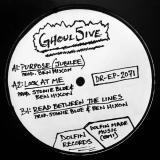
Followed by the first release last year Chinese label Motivation, curated by B.ai, comes back with its second V.A. featuring Ilkay Yeler, J6, SMEV and NAE. The vinyl attributes in progressive house, electro house and electro.
Opening track “Destiny” ‘s morphing main motif gets kept in check by a steady pulse of snappy bass. Enigmatical vocal samples add to the ambiguous atmosphere, so the sets of twinkling mallets J6 sleekly includes, bring a touch of subtle lightness.
A-2 Ilkay Yeler’s sound is fueled by endless nights of groove, and on “Frontliner” this translates to a hypnotic trip into the deep end. Underneath its dreamlike current of silky chords a steady bass riff propels everything forward, allowing a restless arp to zone in and out.
Flipping to the side B, Sev’s Miami-inspired 808 patterns have “Clearing The Fog” come out of the gates swinging. Bright flutes and big basslines provide this slab of machine funk with a tapestry of melody, and fluorescent synth solos top it off.
Nay ends affairs on a melancholic note with “Silent River”. The leads sound like they ran through an eighties wave pedal chain, and as pondering chords and choirs work their way in, a Juno 6 bass adds extra depth. Still firmly directed at the club, the track escapes easy classification - and suitably closes a diverse yet coherent EP.
- A1: Echoes of Disintegration
- A2: Language of Beings
- A3: Static Meditation
- A4: Irreversible Flow
- A5: Scattered Information
- A6: Crystalline Dissolution
- A7: Closed System
- B1: The Observer’s Dance
- B2: Animistic Resonance
- B3: The Assemblage
- B4: Living Systems
- B5: Sentient Horizons
- B6: Patterns of Reciprocity
- B7: Stillness Beneath
Animistic Resonance marks a new stage for artist and electronic musician Leslie García, as it is her first album under her own name, following several releases as Microhm and her parallel work as founder of the contemporary art studio Interspecifics, where she has developed an extensive body of sonic projects presented in major museums and programs around the world. The album is the culmination of a profound and extended exploration of sound as language. It is also a statement against the classicism of long-form ambient pieces. Narratively, each track is conceived as a finely detailed work that functions as a condensed temporal fragment, each with its own individuality while simultaneously forming part of a broader universe.
The compositional language of the album draws on minimalist structures, deep listening strategies, and experimental approaches to electronic sound. Each track offers a meditation on repetition, density, and micro-variation, unfolding like a sonic landscape shaped by temporal tension and perceptual ambiguity. Animistic Resonance resists categorization, situating itself between ambient, noise, and abstract rhythm, while grounding its aesthetic in a Latin American sensibility that embraces technological poetics, affective depth, and critical imagination.
The album invites listeners to move beyond the surface and inhabit a world of vibrational and animistic temporalities. It offers a refuge in sound, a suspended space where calm can emerge. In the midst of contemporary turbulence, Animistic Resonance opens the door to imagining new ways of listening and feeling, demanding an embodied and visceral form of engagement.
Composition sound synthesis and programming by Leslie García. Composed between 2022—2024 in Mexico City.
Mastered by Rafael Anton Irisarri at Black Knoll Studio, NY. Artwork by Daniel Castrejón.
Ordina ora e ordineremo l'articolo per te presso il nostro fornitore.
Some things simply need time to brew. Loek Frey returns to Omen Wapta with his third release on the label: Nayan. The Amsterdam-based artist shares a long-standing friendship with label head Woody92 - keeping each other in motion as artistic peers since the label's inception. Over time, they've built a shared archive of material: sound sketches, tracks, and sonic touchpoints - an ever-evolving third space where their paths continue to meet as they move in parallel. Nayan emerges from this deep-rooted exchange: a distilled six-track release that fuses Frey's cerebral intricacy with the label's primordial uncanniness, reaffirming both as key voices in a yet-to-be-defined sonic realm. Diving into the release, Frey's signature remains intact - tactile, spatial, and rhythmically precise - but a subtle shift is at play. A paring down. A move toward something more reduced, maybe even more patient, yet no less absorbing. The A side leans inward: deep pressure, spectral traces, and an undercurrent of tension that never quite resolves. It's music for staying with, not escaping from. Flip to the B side and the palette widens - kicks land heavier, patterns loosen, textures fill the full frequency field. Still deeply rooted in the Wapta world, but with an assertiveness that whispers rather than shouts. Somewhere between absence and force. With Nayan, Loek Frey carries his Omen Wapta narrative into new territory - merging restless experimentation with dancefloor intention.
Ordina ora e ordineremo l'articolo per te presso il nostro fornitore.